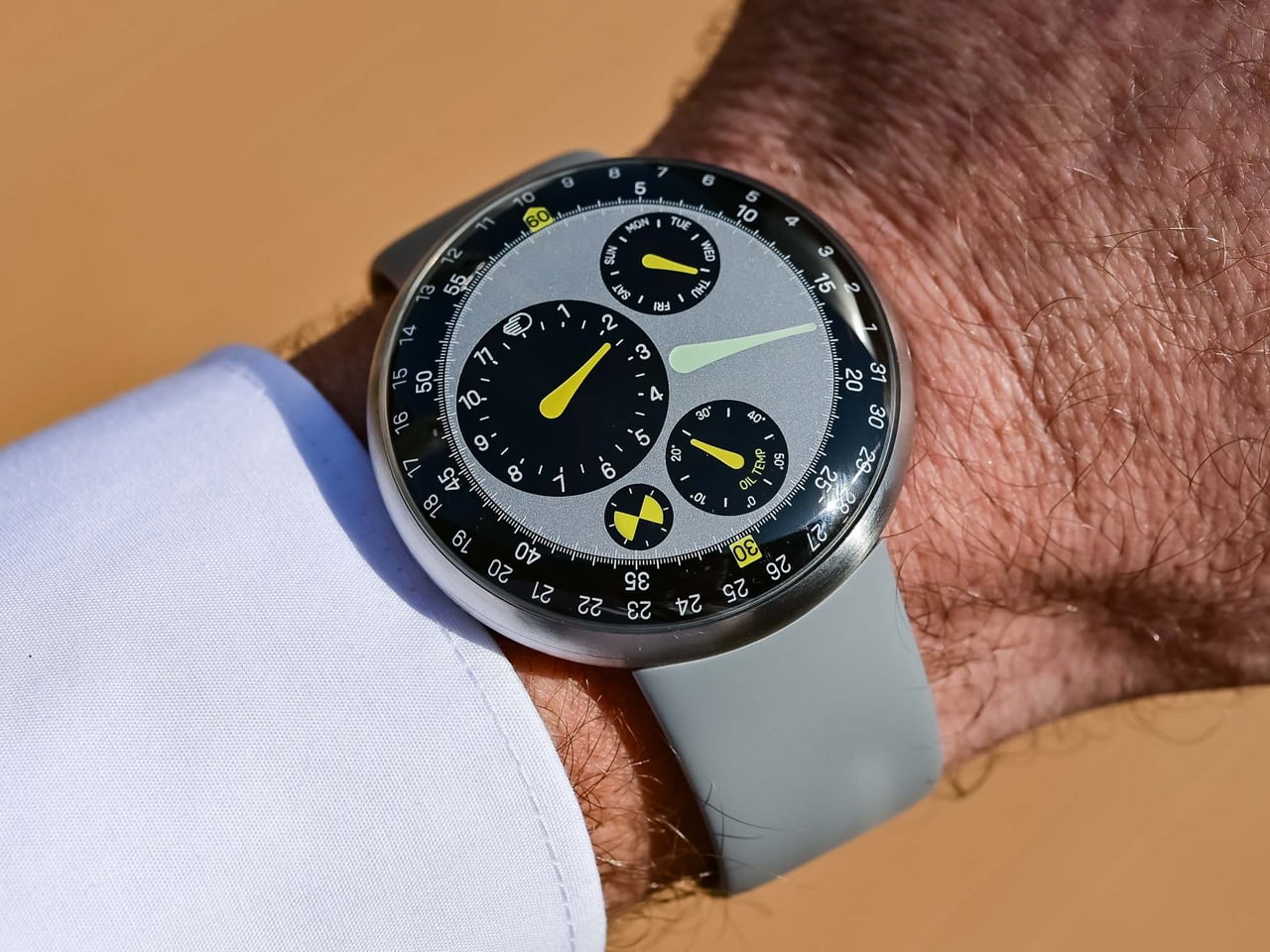
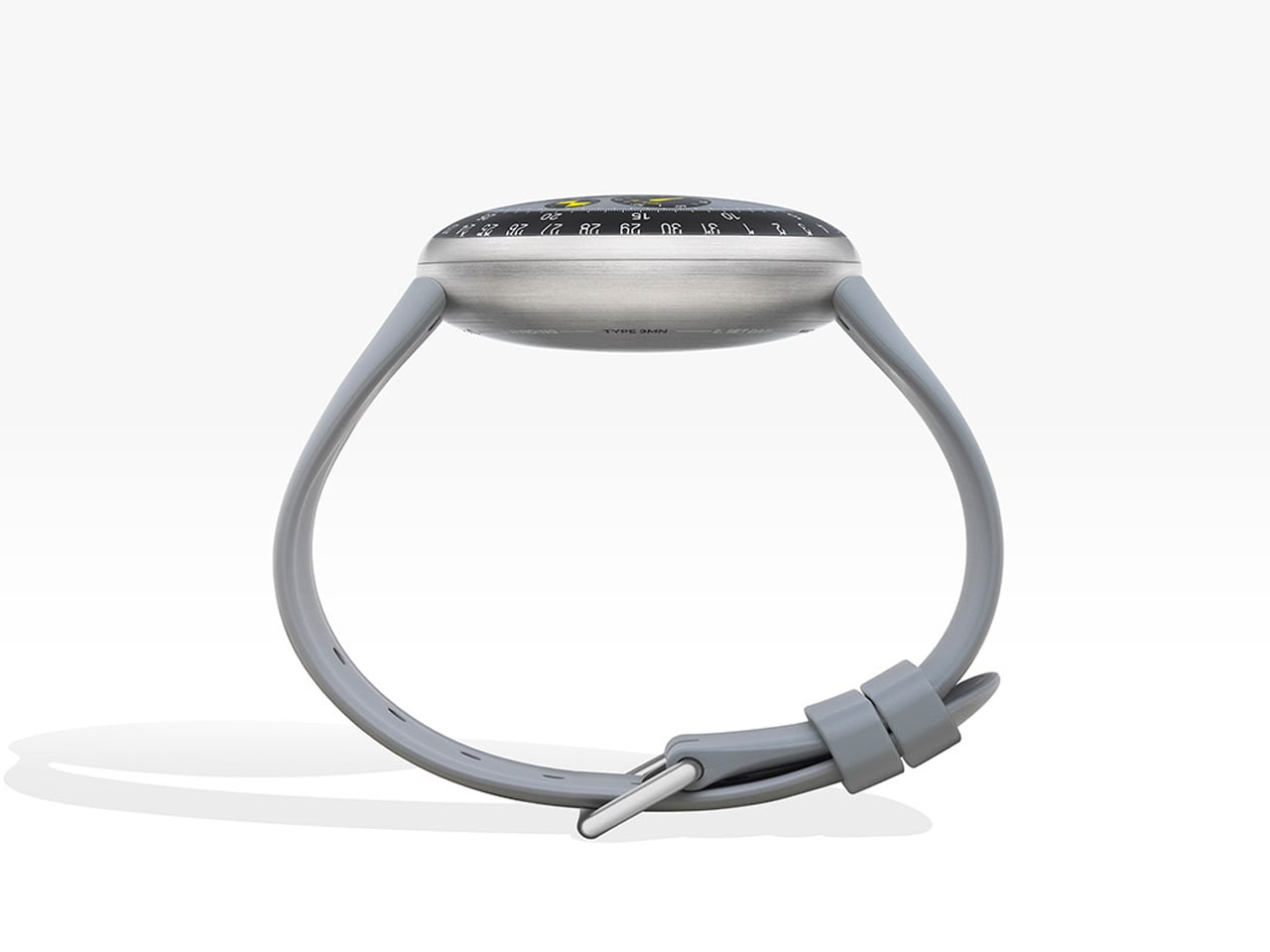
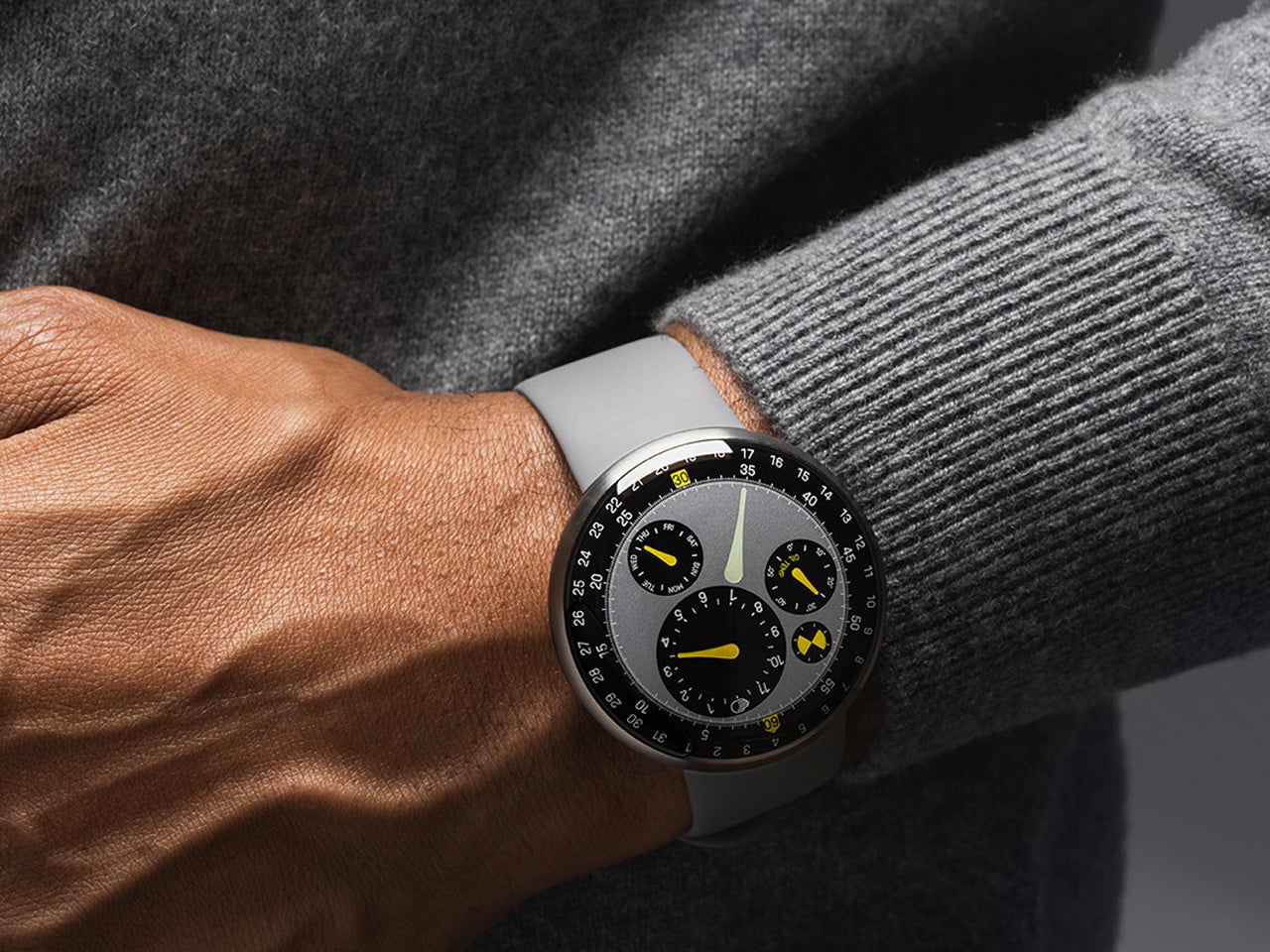
You can easily recognize Ressence, an independent watchmaker, from the crowd with its uncanny watches that make time telling unique, detailed, and exceptionally designed. For its latest iteration, the Type 3 MN, Ressence founder Benoît Mintiens has collaborated with Australian design genius, Marc Newson (a name we know from the first Apple Watch), and the result is easily the most intriguing watch in the industry.
The Type 3 MN is referenced as a result of “meeting of two design icons.” It’s a rare collective where two designers choose “to work together on one product.” Mintiens notes, “In my eyes, one plus one can become more than the sum of its parts.” And that reflects in the Type 3 Marc Newson edition, which is a true representation of the original Type 3 with nuances to behold.
Of course, Type 3 MN is a Ressence, but unlike the Type 8 with handwoven Indigo-dyed silk dial or its sibling with geometric display and a joyful palette, it has Newson’s design approach reflected in it. Marc Newson was inducted into Apple by the good old Jony Ive. Both are known for their amazing projects at the Cupertino company, including the first Apple Watch. The duo has now co-founded a creative collective called LoveFrom.
The Newson-design Type 3 has an elliptical design, a striking color palette, domed sapphire, and graphic hands all echoing Apple’s design language, which is paired with Ressence’s own oil-filled chamber dial and the ROCS-driven rotating Grade 5 titanium discs. It has a unique time-telling experience: the mechanism allows the accessory discs to revolve around the dial on multiple axis, instead of the usual hand movement.
The floating time
According to Ressence, the Type 3 MN features magnets to drive the movement of the discs. The watch separates the dial and the movement chambers, with the upper one filled with 3.57 ml of silicone oil, and the lower chamber (that holds the movement) is filled with air. Owing to oil’s capability to remove the refraction of light inside the watch, the time on the rotating disc appears closer to the domed sapphire glass, making the time appear to be floating on the dial.
The crown-less watch, Mintiens say’s is designed to connect with “those for whom purity of form, quality of material, and complex engineering” are a priority. The watch display depicts a celadon green and vibrant yellow accents under its soft elliptical silhouette, which highlights this combination watch that’s a reflection of Newson’s industrial design approach and Ressence unique time display. The Type 3 MN comes paired to a light grey silicone strap to match its dial and is limited to strictly 80 examples, going for $54,500 each.
How can a troubled media company survive today? The answer seems to be further consolidation. Amazon's $8.45 billion MGM takeover in 2022 heralded future deals, like Skydance's $8 billion acquisition of Paramount . But Netflix's WB deal goes even further: It could fundamentally reshape the media industry as we know it, from theatrical movie-going to the existence of physical media.
What will the Netflix and Warner Bros. deal include?
After next year's already-announced separation of Warner Bros. and Discovery, Netflix says it plans to acquire all of Warner Bros. remaining assets — including its film and TV studios, HBO Max and HBO — for $82.7 billion. According to Game Developer, representatives also say Warner Bros. Games, which includes Mortal Kombat developers NetherRealm, will also be part of the deal.
Will the Netflix and Warner Bros. deal be approved by regulators?
Even before the deal was formally announced, it was clear that whoever bought WB would be facing government opposition from every side. Yesterday, Paramount sent WB a letter questioning the "fairness and adequacy" of the acquisition bidding process (which also included Comcast as a potential buyer). Afterwards, the New York Post reported that Paramount CEO David Ellison, son of the Trump-boosting Oracle CEO Larry Ellison, met with administration officials to make his case for buying Netflix. As of this morning, the Trump administration views the Netflix/WB deal with "heavy skepticism," an official tells CNBC.
On the other side of the aisle, Senator Elizabeth Warren (D-MA) has called the Netflix/WB deal an "anti-monopoly nightmare." She added, "A Netflix-Warner Bros. would create one massive media giant with control of close to half of the streaming market. It could force you into higher prices, fewer choices over what and how you watch, and may put American workers at risk."
At this point, it's too early to tell if the Netflix/WB deal will make it past regulators, but it's clear that both companies should prepare for a rocky approval process.
What does the Netflix and Warner Bros. deal mean for streaming video?
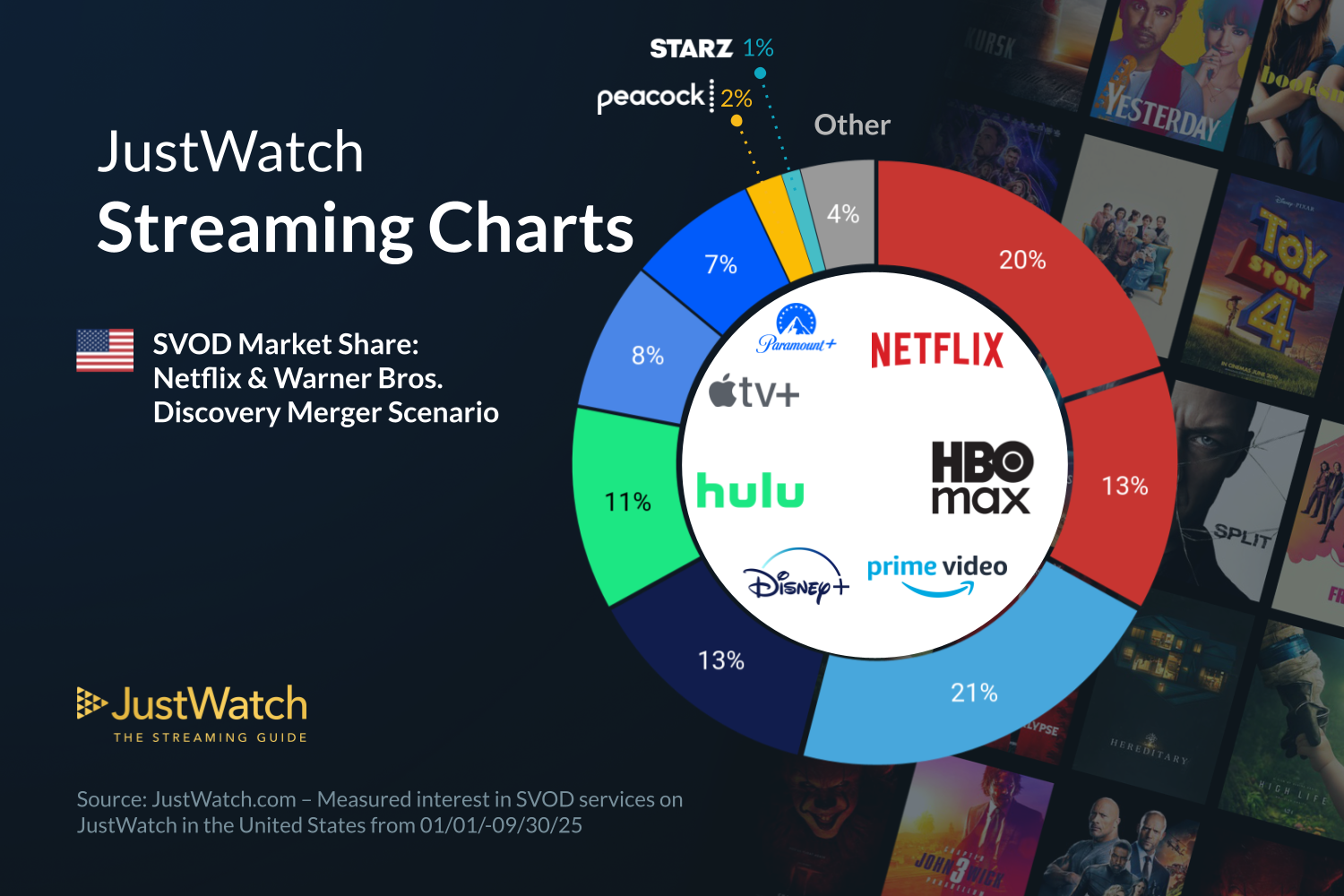
According to data from JustWatch, a combined Netflix and HBO would account for 33 percent of the US streaming video market, putting it ahead of Prime Video's 21 percent share. As for how the two media companies would co-exist, Netflix says it will "maintain Warner Bros. current businesses," which includes HBO Max and HBO, theatrical releases for films and well as movie and TV studio operations.
JustWatch streaming video market stats.
JustWatch
"We think it’s too early to talk specifics about how we’re going to tailor this offering for consumers," Netflix co-CEO Greg Peters said in an investor call this morning, when asked if HBO would remain a separate service. "Needless to say, we think the HBO brand is very powerful, and would constitute part of our plan for consumers. That then gives us a lot of options to figure out how to package things to offer the best options for consumers."
At the very least, we can expect increased prices across the board for HBO and Netflix. There's also potential for the company to offer combination subscriptions, similar to how Disney juggles Disney+, Hulu and ESPN.
What does the Netflix and Warner Bros. deal mean for theaters?
In short, a combined Netflix/WB wouldn't be great for theaters. Previous mergers, like Disney and Fox's union, led to fewer theatrical releases, not more. Since its transformation into a streaming-first company, Netflix has also been primarily focused on increasing subscriptions and engagement, with theatrical releases of its original content treated as an afterthought.
"We’ve released about 30 films into theaters this year, so it’s not like we have opposition to theatrical release," Netflix Co-CEO Ted Sarandos said in the investor call (without specifying how short some of those theatrical releases were). "It’s the longer windows that aren’t consumer friendly. Life cycle that starts in the movie theater, we’ll continue that. Over time, the windows will evolve to be much more consumer friendly, to meet the audience where we are."
He added: "All things that are going to theaters through WB will continue to do so. Our primary goal is to bring first-run movies to consumers, and we intend to continue with that." In an April interview at the Time100 Summit, Sarandos also famously called the theatrical model "outdated," since most people in the US can't easily walk to a multiplex.
Cinema United, a trade group representing over 30,000 movie theater screens in the US, is unsurprisingly against the entire deal. “The proposed acquisition of Warner Bros. by Netflix poses an unprecedented threat to the global exhibition business. The negative impact of this acquisition will impact theatres from the biggest circuits to one-screen independents in small towns in the United States and around the world,” Cinema United President and CEO Michael O’Leary said in a statement.
“Cinema United stands ready to support industry changes that lead to increased movie production and give consumers more opportunities to enjoy a day at the local theatre,” he added. “But Netflix’s stated business model does not support theatrical exhibition. In fact, it is the opposite. Regulators must look closely at the specifics of this proposed transaction and understand the negative impact it will have on consumers, exhibition and the entertainment industry.”
What do artists think of the Netflix and WB deal?
Writers, directors and producers are already having a tough time getting projects off the ground, so having one less place to pitch isn't going to help. There are also a handful of artists, including former WB darling Christopher Nolan, who have refused to work with Netflix entirely.
"The end goal of these consolidations is to limit choices in entertainment to a select handful of providers, so they can capture our whole attention, and thus our every available dollar," C. Robert Cargill, the screenwriter behind Doctor Strange and The Black Phone, said in a statement to Engadget. "The result will be a gutting of diversity and fresh voices in the industry, sending thousands, if not tens of thousands, of people back to their home towns to start their lives over, as there simply isn't a place for them in Hollywood any more, while homogenizing film and television into the "content" word we all grumble about hearing."
"WB has made so many daring choices this year, with executives taking big risks that made real cultural and financial impacts at the box office," he added. "And HBO, constant name changes be damned, is still making some of the best television there is, bar none. Will those creative environments survive the merger, or will many of those brilliant execs be sent packing along with the writers, directors, and crews?"
"In short, it's a very scary and heartbreaking time to be a filmmaker. No shade on Netflix and the people that work there; it's just that less choice in entertainment always makes for fewer winners and more people on the outside looking in."
What about physical media?
Other than noting that Netflix used to be a DVD-by-mail company, there was no mention of physical media on the acquisition's press release or investor call. That’s not too surprising, as physical releases have always been an afterthought for Netflix. A few of its films, like Roma and Frances Ha, are available as discs through the Criterion Collection, and some shows like Stranger Things are also on DVD and Blu-ray.
Netflix claims it'll continue to run WB's businesses as usual if the deal goes through, which should include physical media, but those sorts of pre-acquisition promises rarely last for long. WB's home video business isn't entirely its own, either: In 2020, it formed the joint venture Studio Distribution Services with Universal, which also handles physical media distribution for Sony Pictures, PBS and Neon.
Given the slowing demand for physical media, it’s likely one of the first things a combined Netflix/WB would eventually drop. But there’s also been a resurgence of premium physical releases from distributors like Arrow Video, so there’s a chance Netflix may want to keep it around for special releases.
Steve Dent contributed to this report.
This article originally appeared on Engadget at https://www.engadget.com/entertainment/streaming/the-netflix-and-warner-bros-deal-might-be-great-for-shareholders-but-not-for-anyone-else-183000247.html?src=rss
Looking to switch music streaming platforms for no real reason? Apple Music is holding one heck of a sale right now. You can get three months of use for just $1. There are some caveats, as this is only for new users on the individual plan. Students and family plans don't count for this.
Also, this has to be redeemed on iPhone, iPad or Mac. When you click the link it'll open up the Apple Music app, so click it from an Apple product to get the deal. Finally, it auto-renews after 90 days at $11 per month. Make sure to cancel ahead of time if you aren't enjoying the service.
As for Apple Music, it's one of the best music streaming platforms out there and certainly a perfect choice for those already tied to the Apple ecosystem. It lets you import your own files, which is great for anyone still hanging on to an iTunes library. Otherwise, it offers streaming access to millions upon millions songs like all the rest. It does, however, include some live radio stations staffed by actual people, which is cool.
The app works with Android devices, but it's really designed for Apple products. We also found the spatial audio to sound unnatural at times, but that's partly a limitation of the tech.
Check out our coverage of the best streaming deals for more discounts, and follow @EngadgetDeals on X for the latest tech deals and buying advice.
This article originally appeared on Engadget at https://www.engadget.com/deals/get-three-months-of-apple-music-for-only-1-right-now-180536582.html?src=rss
IMAX and animation distributor GKids are bringing more 4K Studio Ghibli restorations to the largest screens in 2026. The announcement follows the IMAX release of Princess Mononoke this year, with the ongoing restorations being directly supervised by Studio Ghibli’s Atsushi Okui, who’s been with the company since 1993.
Okui was the Director of Digital Imaging on 2023’s The Boy and the Heron, which was also the first Ghibli picture to get the IMAX treatment. The likes of My Neighbour Totoro and Spirited Away have also had theatrical re-releases in recent years. GKids heads up distribution in North America for the Japanese animation giant’s films across all platforms, and has been working with IMAX on various projects since 2021.
It sounds like the remaining Ghibli titles set for theatrical IMAX releases in the US will arrive one at a time, and GKids is not saying how many we can expect, or what it’s following Princess Mononoke with next year. I did a quick check for notable upcoming anniversaries, and 2026 does mark 40 years of Castle in the Sky, but one of the studio’s newer films might be a more obvious guess for a 4K refurb. Time will tell.
This article originally appeared on Engadget at https://www.engadget.com/entertainment/tv-movies/more-studio-ghibli-4k-restorations-are-coming-to-imax-in-2026-174508476.html?src=rss
You know what they say: If at first you don't succeed at mass government surveillance, try, try again. Only two days after India backpedaled on its plan to force smartphone makers to preinstall a state-run "cybersecurity" app, Reutersreports that the country is back at it. It’s said to be considering a telecom industry proposal with another draconian requirement. This one would require smartphone makers to enable always-on satellite-based location tracking (Assisted GPS).
The measure would require location services to remain on at all times, with no option to switch them off. The telecom industry also wants phone makers to disable notifications that alert users when their carriers have accessed their location. According to Reuters, India's home ministry was set to meet with smartphone industry executives on Friday, but the meeting was postponed.
India's Prime Minister Narendra Modi appears on a screen to deliver a speech remotely as other leaders attend the 22nd ASEAN - India Summit during the 47th Association of Southeast Asian Nations (ASEAN) Summit in Kuala Lumpur on October 26, 2025. (Photo by Rafiq Maqbool / POOL / AFP) (Photo by RAFIQ MAQBOOL/POOL/AFP via Getty Images)
RAFIQ MAQBOOL via Getty Images
Predictably, proponents claim the plan is about helping law enforcement keep you safe from the bad guys. (See also: Orwell's Nineteen Eighty-Four.) The administration of Prime Minister Narendra Modi has long been concerned that law enforcement agencies can’t obtain precise enough locations during investigations. Cell tower data alone can be off by several meters. And hey, what's the privacy of 1.4 billion people next to tracking criminals with an extra 10 ft. or so of accuracy, right?
Apple, Google and Samsung are said to oppose the move and have urged the Modi government to reject it. The lobbying group India Cellular & Electronics Association (ICEA), which represents them, reportedly wrote in a confidential letter this summer that the proposal has no precedent anywhere in the world. The group's letter described the measure as a "regulatory overreach," which is probably putting it mildly. They warned that it could compromise military personnel, judges, corporate executives and journalists.
In a statement sent to Engadget, the Electronic Frontier Foundation (EFF) sounded the alarm on the proposal. "Requiring phones to have A-GPS enabled all the time would be a horrifying decision by the Indian government with significant impacts on the privacy of everyone in the country,” EFF Senior Staff Technologist Cooper Quintin said. “With this change, the phone company and law enforcement get your exact location at any time, potentially even without legal due process."
This article originally appeared on Engadget at https://www.engadget.com/cybersecurity/india-is-reportedly-considering-another-draconian-smartphone-surveillance-plan-173500327.html?src=rss
Home gyms have become unavoidable lately, creeping into corners with smart mirrors bolted to walls, fold‑out benches wedged behind sofas, and dumbbells scattered under coffee tables. Apartments keep shrinking, hotel suites need to multitask, and most fitness gear still looks like fitness gear rather than furniture. Even the sleekest mirror can’t pretend it belongs next to a credenza when a countdown timer starts blinking, and someone begins doing burpees in the reflection.
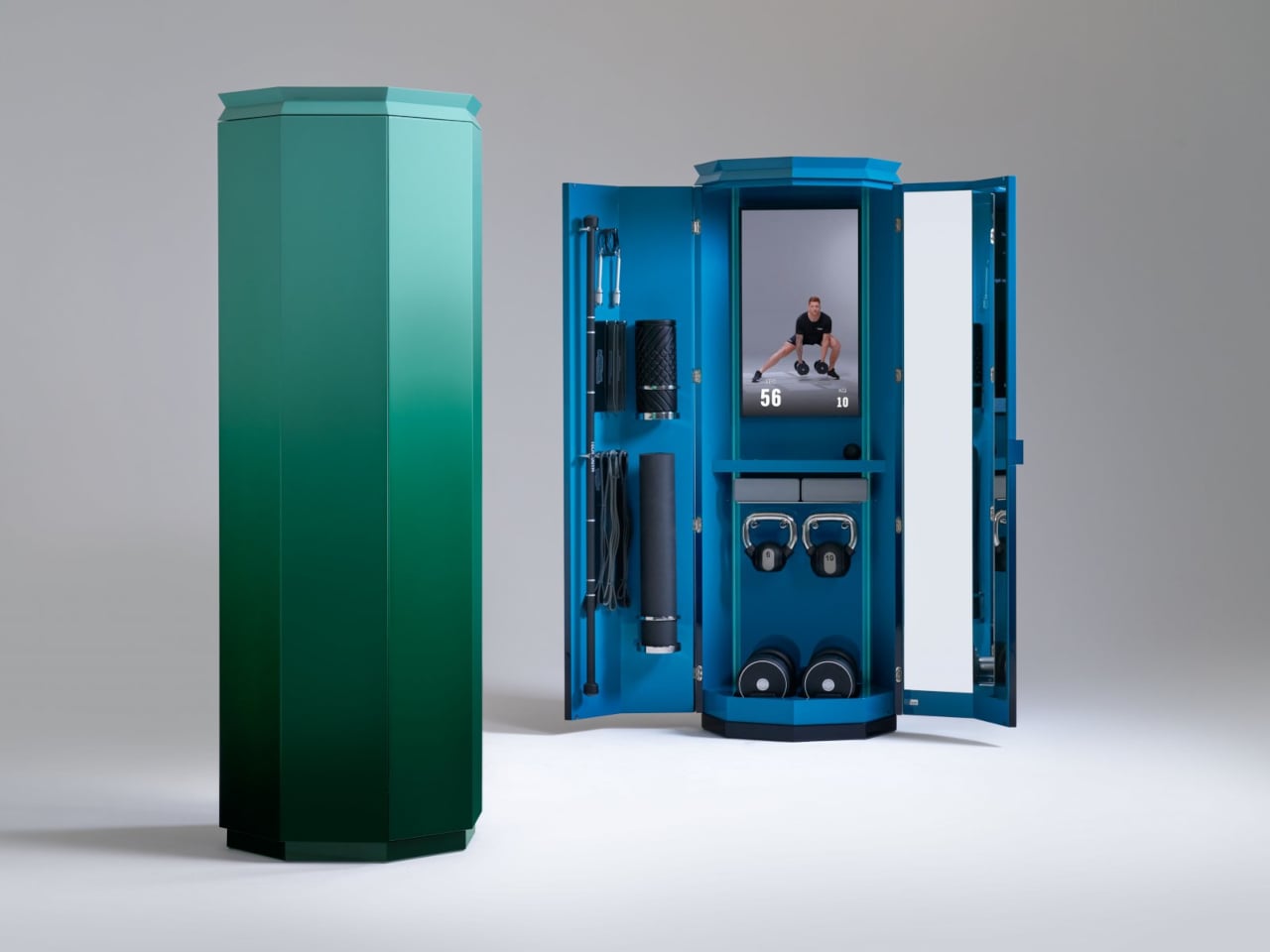
Ottagono by architect Giulia Foscari for Cassina Custom Interiors offers a different answer. It looks like a tall octagonal column, occupies less than one square meter, and hides a complete Technogym-powered workout behind faceted doors. Designed in collaboration with Technogym, it debuted during Milan Design Week and will be installed at Hotel du Cap Eden Roc in Antibes, positioning it squarely in the luxury hospitality world where space costs money and objects need to earn their floor area.
When closed, Ottagono reads like a sculptural floor lamp rather than a cabinet full of kettlebells. The exterior is finished in gradient tones, deep blue fading lighter toward the top or emerald green transitioning upward, with clean facets and minimal seams. At its summit, an integrated uplight washes the ceiling in soft ambient glow. In a living room or suite, it sits quietly under that halo, looking more like art than utility, which seems to be exactly what Foscari and Cassina intended.
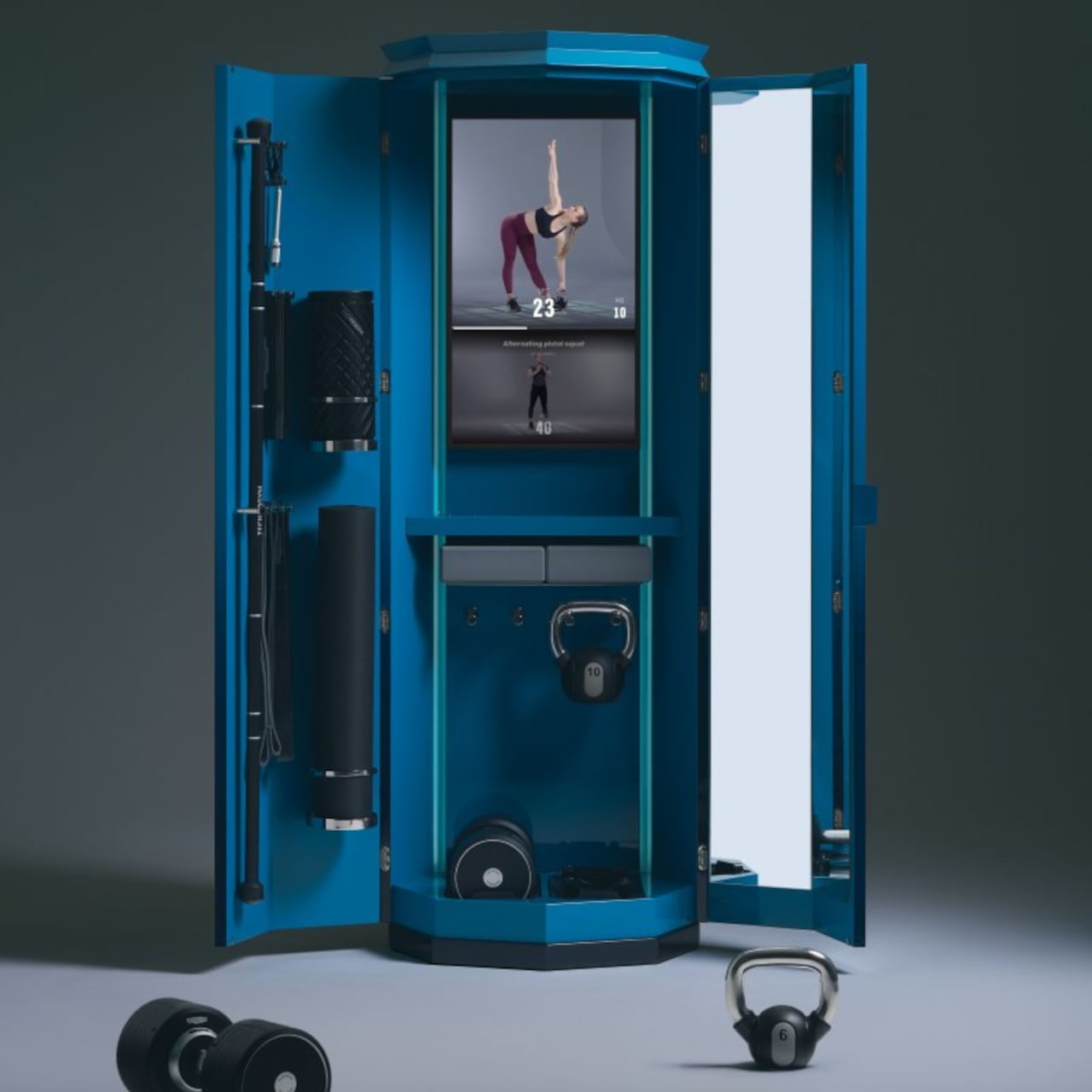
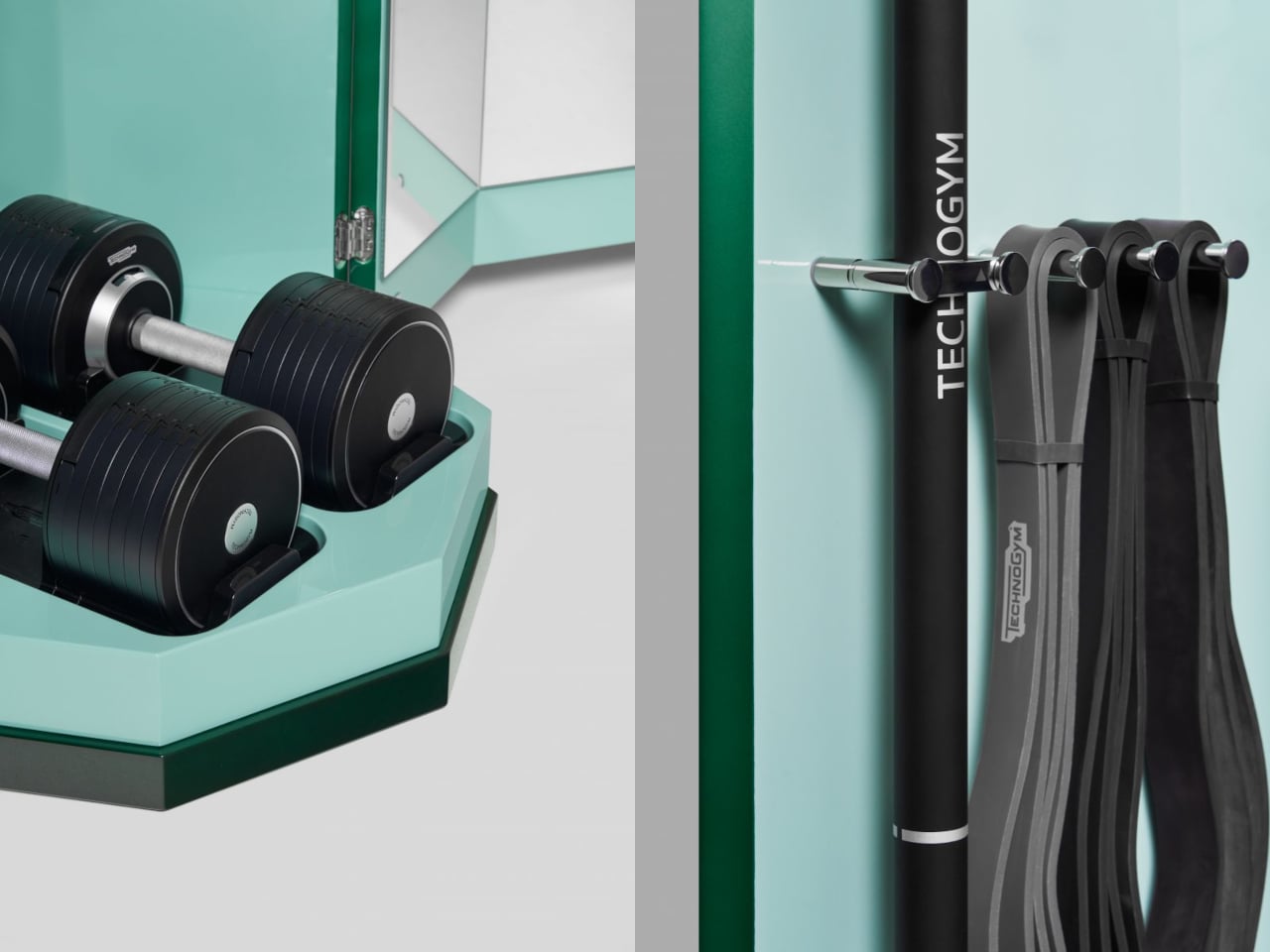
Open the doors, and the mood shifts completely. The interior glows in bright turquoise, with a vertical screen at eye level streaming Technogym workouts and a mirror on one door for checking form. Adjustable dumbbells nestle into octagonal cradles at the base, kettlebells hang on polished hooks, resistance bands drape from pegs, and a foam roller stands vertically alongside mobility balls. Foscari calls it “opening a room within a room,” which feels accurate because the inside genuinely reads like a micro gym carved from a single piece of furniture.
A typical session unfolds quickly. You roll out a mat, face the screen, and follow guided strength or mobility work using whatever equipment the program calls for, all stored within arm’s reach. When finished, everything returns to its slot, the doors swing shut, and the column becomes a lamp again. The entire footprint is smaller than a dining chair, which makes dedicating a spare bedroom to a treadmill and rack feel suddenly excessive when something this compact handles a full training cycle.
Ottagono is designed for contexts where space is scarce and expensive. Hotel du Cap Eden Roc will install it in suites, giving guests a Technogym experience without a visible gym. Cassina Custom Interiors positions itself for private residences, superyachts, and boutique hotels where clients expect wellness amenities but want them hidden until needed. It fits the current trend toward fluid, multifunctional spaces where every object does more than one job and looks presentable while idle.
The broader implication is that Ottagono hints at wellness furniture behaving like micro architecture. It treats the gym as a spatial program that can compress into a vertical volume, and it suggests that as homes and hotels juggle more functions per square meter, we might see more objects that act as rooms in disguise. The column becomes forgettable infrastructure when closed, which might be the most useful thing a piece of fitness equipment can do in a living room that needs to function as six different spaces by Thursday.
Philo has a decent discount for newcomers who are looking for a solid bundle of live TV channels and on-demand streaming services. New subscribers can get their first month of access to the Core plan for $25. That's a discount of $8.
For your 25 bucks, you'll gain access to more than 70 channels, including AMC, BBC America, Comedy Central, Food Network, Hallmark Channel, several MTV stations, Nickelodeon and TLC. AMC+, HBO Max basic with ads and Discovery+ are included at no extra cost.
Philo is our pick for the best cheap live TV streaming service. Having unlimited DVR is welcome and recordings expire after one year, which is three months longer than many competing platforms. There's no contract either, so you can cancel at any time.
The platform also offers more than 110 free channels, but unfortunately there are no local channels and there's not much in the way of sports programming. Other notable channels, such as Bravo and Freeform are missing too. However, if the lineup of channels and streaming services covers all your needs, Philo is a solid streaming option, especially with the discount.
This article originally appeared on Engadget at https://www.engadget.com/deals/new-philo-subscribers-can-get-their-first-month-of-access-for-25-171033925.html?src=rss
Meta has cut several deals with news publishers to help provide real-time data for its AI chatbot services, as reported by Axios. The commercial agreements will allow its Meta AI chatbots to better answer user queries about news and current events.
These are multiyear deals where publishers will be compensated for the use of their content, but we don't have any monetary specifics. The contracts do stipulate that Meta's chatbots will link out to articles when answering news queries, potentially offering a slight traffic boost to publishers.
The news partners include USA Today, People, Le Monde and CNN. However, there are also a whole lot of conservative outlets included in today's announcement, such as Fox News, The Daily Caller and Washington Examiner. It's a good thing Meta's AI will provide the aforementioned links, just in case a chatbot says something crazy about whatever nonsense culture war topic is going on that day.
This article originally appeared on Engadget at https://www.engadget.com/big-tech/meta-cuts-deals-with-several-news-publishers-for-ai-use-163404107.html?src=rss
Death is the only permanent truth. We all have to go on, but how we depart depends on our choices in life. Some leave behind a legacy, others their organs, but when it comes to the last rites, we all leave only carbon emissions and pollution. Dutch firm Loop Biotech wants to change that with the Living Cocoon, the world’s first mushroom-based coffin built completely emissions-free and safe for the environment after life.
A casket made from mushroom mycelium decomposes and enriches the surrounding soil in the process. The invention of a decomposable coffin is beneficial for the environment since the traditionally used velvet-lined wooden coffins are not very kind.
The wooden ones generally take decades to decompose and release toxins into the soil. The Loop Living Cocoon is believed to take roughly 45 to completely decompose and become nutrients for the soil. With the use of mycelium and hemp fibers for its construction, Loop has been able to fully eliminate the use of chemicals, glues, and metals in making the Living Cocoon. Yet, the coffin is durable and usable in all types of weather conditions.
Loop Living Cocoon is offered in a calm or wild color option and is certified for ‘natural burials, traditional burials, and cremations.’ According to Loop, it has also created an EarthRise urn from similar mycelium material, offering a biodegradable way to part with the ashes.
Loop informs that a 100 percent decomposable coffin can be sustainably grown in a week’s time. It is made in one size, measuring 85 × 30 × 18 inches, which the company says should fit 98 percent of adults weighing up to 200 kg. Storing the casket can seem tricky, but according to the FAQs on the company’s website, the Living Cocoon can remain safe “as long as it’s kept dry” and stored in a “ventilated space above the ground.” The coffin only starts decomposing when it comes in contact with the soil.
Unlike the velvet-lined wooden caskets, the Cocoon is lined with moss. Moss is the standard material, but family members have the choice to order it lined with any other natural material. The biodegradable construction also makes a considerable difference to the dry weight of the Cocoon. It weighs only 30 kg, which is almost three times less than a traditional wooden coffin.
The lightweight construction, paired with six jute handles, makes it safe and secure to lift or shoulder the Living Cocoon, which is compatible with mechanical lifts and ropes, used for lowering the coffin. Basically, using the Cocoon doesn’t require any special accommodations; it’s usable just like any traditional casket, but unlike them, it leaves nothing more than a cleaner future behind. Sustainability doesn’t come cheap. The Loop Living Cocoon is priced just under $4000.
The European Commission has fined Elon Musk’s X €120 million (around $140 million) for breaching its transparency rules under the Digital Services Act. The European Union’s executive arm announced that it was investigating the social media company’s blue checkmarking verification system — first introduced when it was still known as Twitter — last year, along with other alleged DSA violations. Today’s verdict concerns the "deceptive design" of the checkmark, as well as "the lack of transparency of [X's] advertising repository, and the failure to provide access to public data for researchers."
The Commission's issue with X’s verification system is that where blue checkmarks were once something that Twitter that Twitter vetted, they can now be bough by anyone. According to the EU, this puts users at risk of scams and impersonation fraud, as they can’t tell if the accounts they’re engaging with are authentic. "While the DSA does not mandate user verification, it clearly prohibits online platforms from falsely claiming that users have been verified, when no such verification took place," it wrote in a statement.
The EU has also ruled that X’s advertisement repository employs "design features and access barriers" that make it difficult for good faith actors and the general public to determine the source of online ads and spot scams or threat campaigns. It says that X fails to provide information pertaining to both the content of an ad and the entity paying for its placement.
The third alleged infringement concerns the public data that companies are required by the DSA to make available to qualifying researchers. The European Commission claims that X’s practices in this area are unnecessarily prohibitive, therefore "effectively undermining research into several systemic risks in the European Union."
X has 60 working days to respond to the EU’s non-compliance decision — the first of its nature — on blue checkmarks, and 90 days to submit an "action plan" of how it will address the alleged breaches relating to its advertising repository and access to public data. Failure to comply could result in financial penalties.
This article originally appeared on Engadget at https://www.engadget.com/big-tech/x-hit-with-140-million-fine-from-the-eu-161259324.html?src=rss