A Monkey-Shaped Cat House That Turns Comfort Into Playful Living Sculpture

In a market saturated with predictable pet furniture, minimal cubes, beige scratching posts, and standard enclosed beds, this monkey-shaped cat house arrives as a refreshing disruption. It is not just a product, it is a presence. Something between furniture sculpture and quiet theater, it redefines what it means to design for animals while speaking directly to human emotion and curiosity.

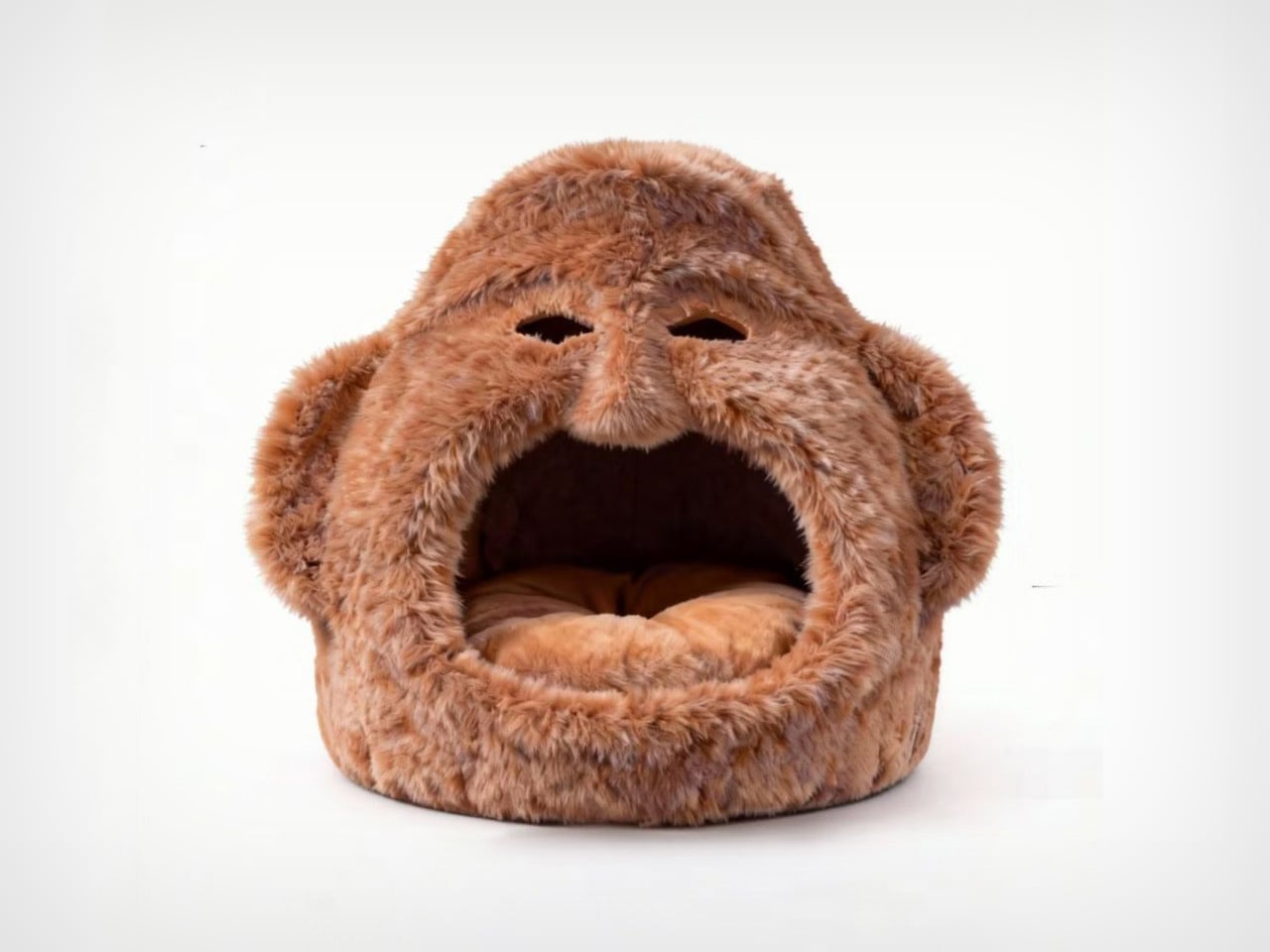
At first glance, it feels almost surreal. A giant monkey head sits unapologetically in a living space, its exaggerated features soft and inviting rather than imposing. It does not try to blend in. It does not apologize for existing. Instead, it leans fully into character. And that is where the design begins to reveal its intelligence.

Designer: 175****6003 (via Puxiang)

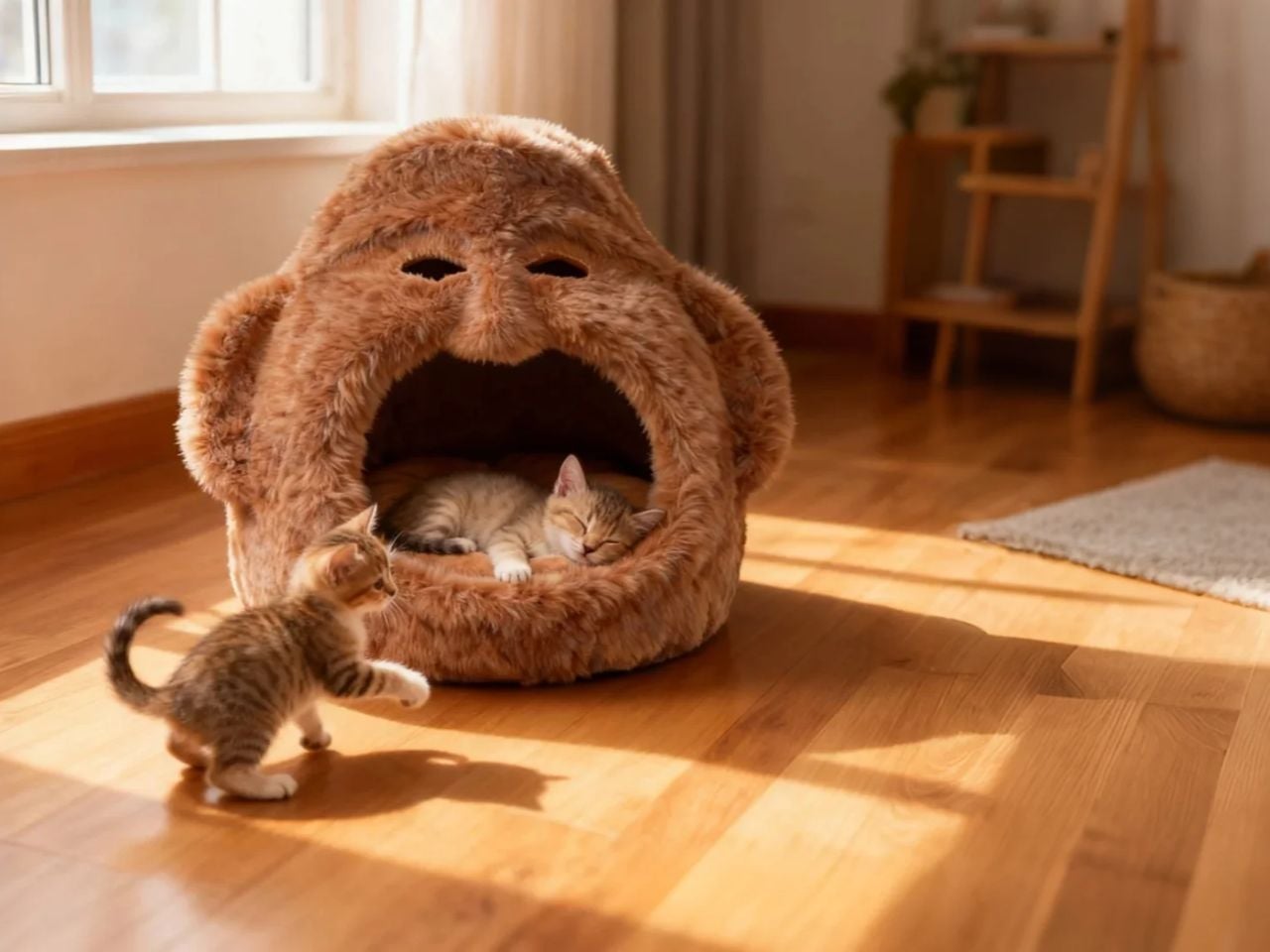
The entry point is its most striking gesture. A wide open mouth that transforms into a sheltered interior where a kitten can curl up and disappear. This is not just visual drama; it is deeply aligned with instinct. Cats are drawn to enclosed cave-like environments that offer warmth, security, and a sense of control over their surroundings. What could have been a novelty form becomes a highly intuitive behavioral response. The object understands the user even if the user is a cat.

Materiality plays a critical role in softening the boldness of the form. The plush exterior carries the familiarity of a large teddy bear, inviting touch even before interaction. It diffuses the visual intensity of the oversized head and replaces it with warmth. Inside the cushioning creates a cocoon-like environment, one that absorbs light sound and movement. It becomes a quiet pocket within an otherwise active home. A retreat disguised as play.

What makes this piece particularly compelling is how it negotiates attention. Most pet furniture is designed to disappear to sit quietly in corners and serve without being seen. This object does the opposite. It becomes a focal point. It sparks conversation. It asks to be noticed. And yet it does not compromise on comfort or usability. Instead, it suggests that functional objects in a home do not have to be invisible to be successful. They can be expressive and still be deeply considerate.

There is also an emotional layer embedded within its form. The oversized features, the softness, and the almost anthropomorphic presence create a strange sense of companionship. It is not just a house for a pet but an object that feels alive within a space. It participates in the environment rather than simply occupying it.

This is where the design moves beyond utility and into storytelling. It reflects a shift in how we think about products in our homes. They are no longer passive tools but active contributors to atmospheric identity and memory. The monkey cat house becomes a marker of personality. It signals a willingness to embrace playfulness, humor, and a certain irreverence in domestic space.

The post A Monkey-Shaped Cat House That Turns Comfort Into Playful Living Sculpture first appeared on Yanko Design.
A $500 Cat Scratcher That Looks Like a Floating Shelf

Most cat owners have made peace with a certain kind of compromise. You get the cat, the cat gets the furniture, and whatever mass-produced scratching post comes in the box gets wedged into a corner where you try not to look at it. It wobbles. It sheds sisal like it’s molting. And after three months, it leans at a fifteen-degree angle that tells you something about both your cat’s enthusiasm and the product’s build quality. We accepted this because we assumed pet furniture just couldn’t do better.

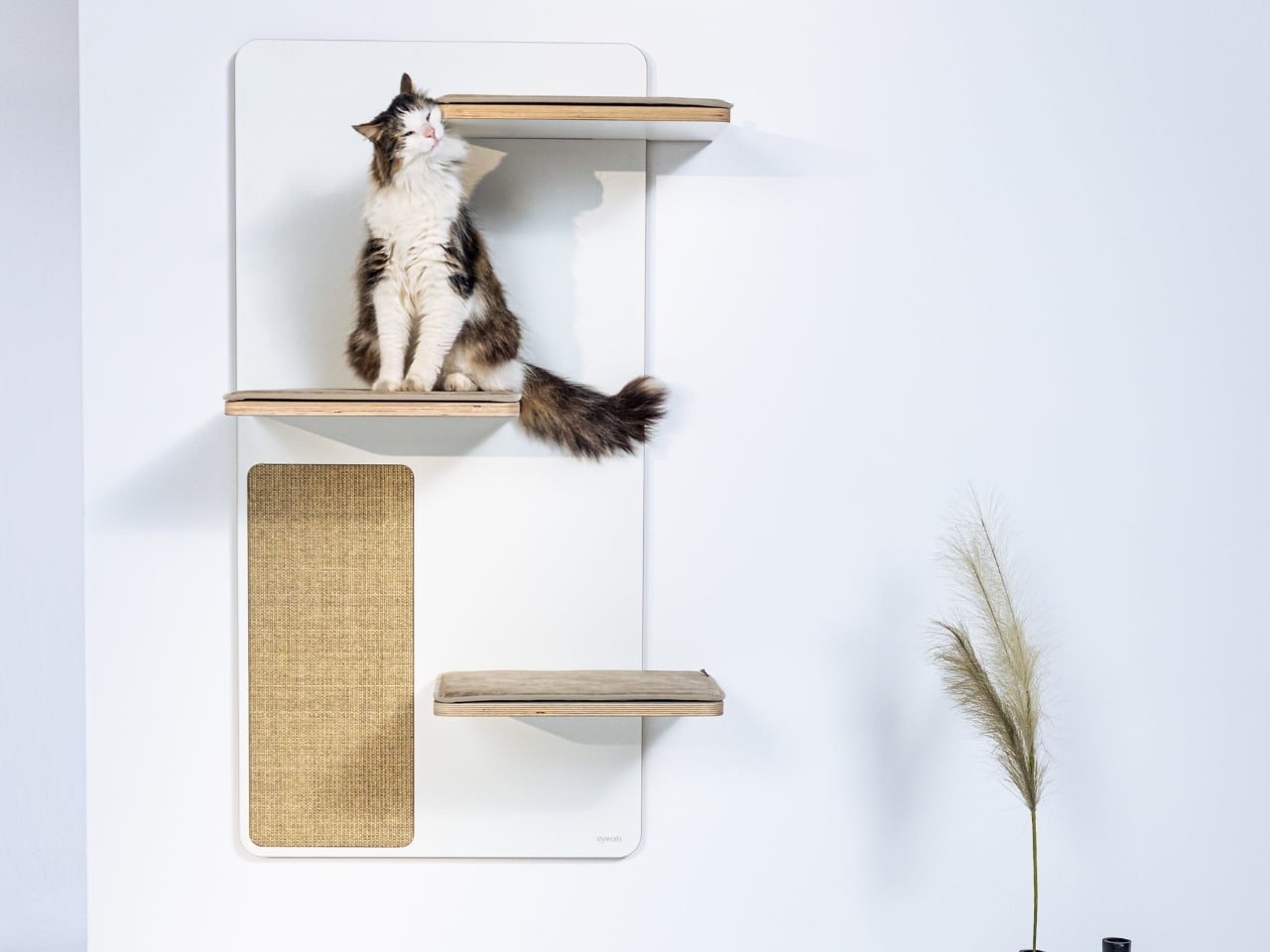
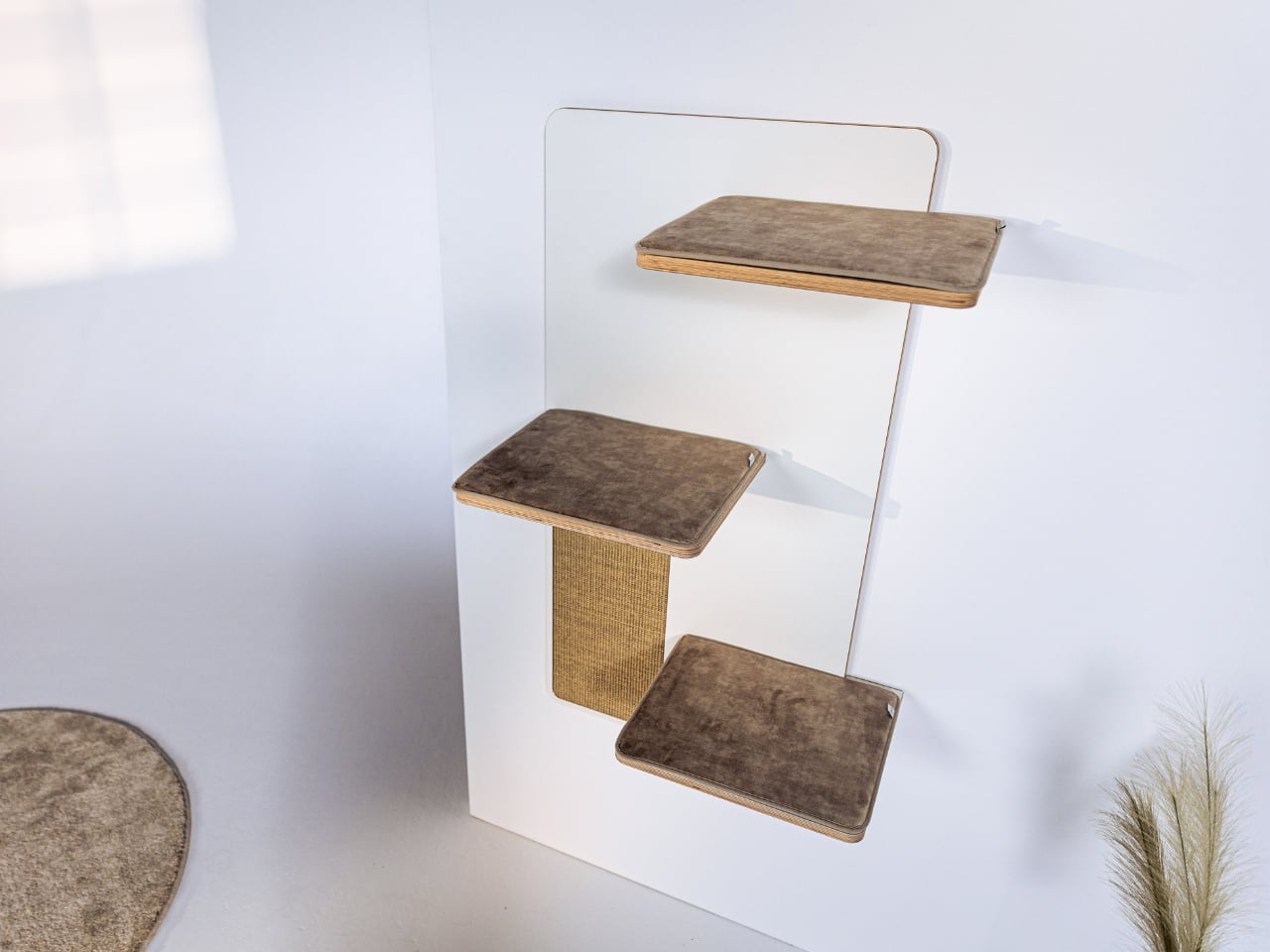
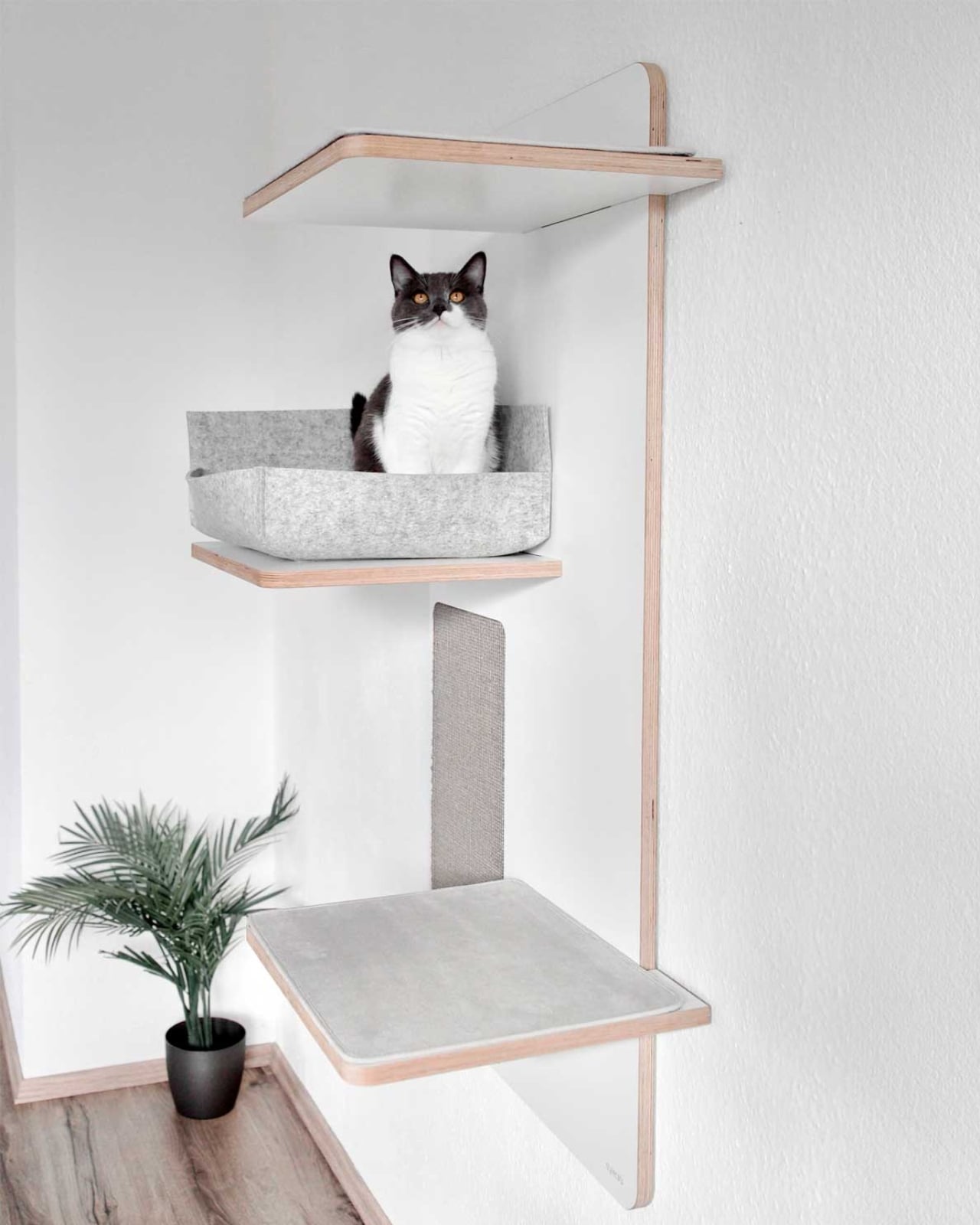
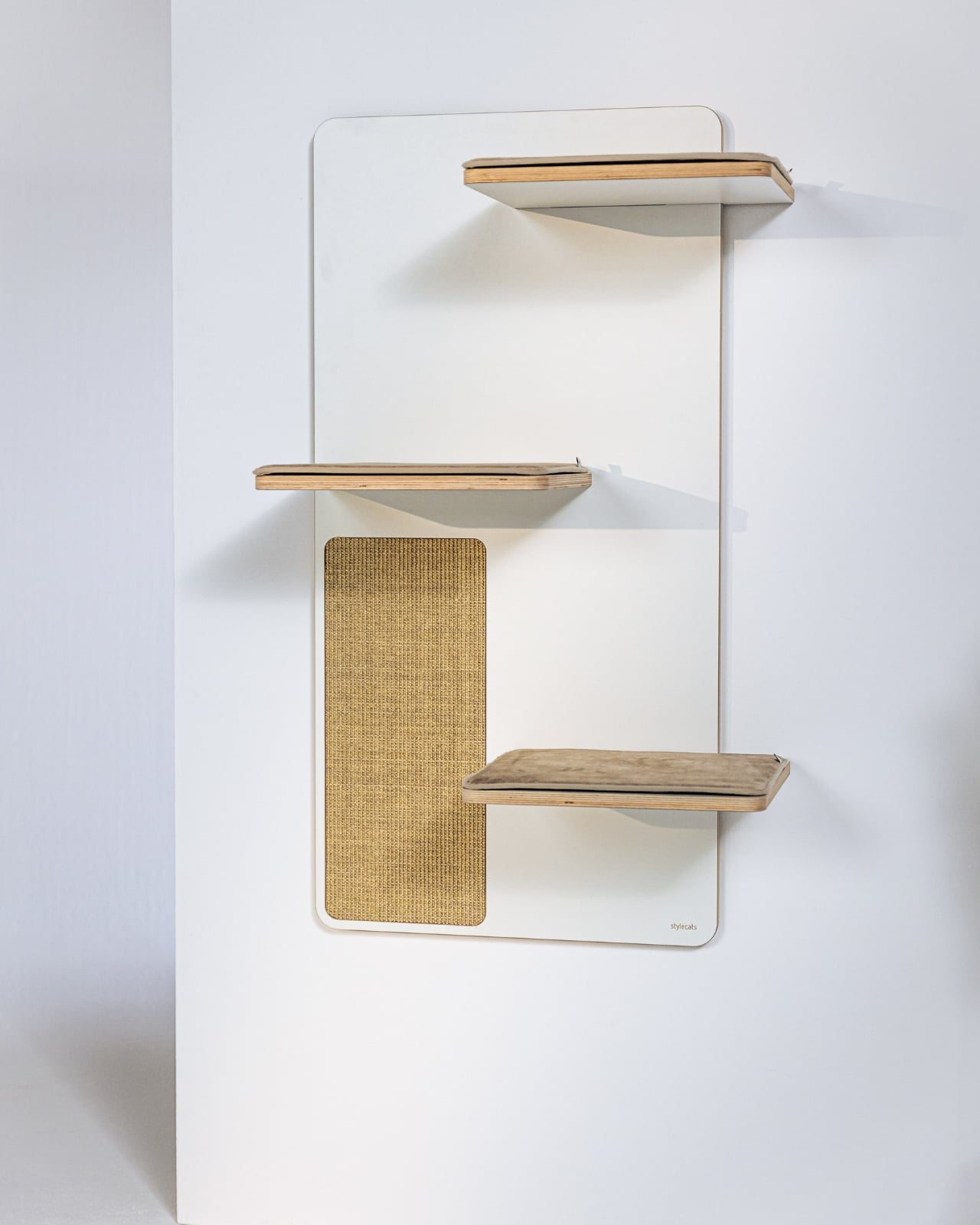
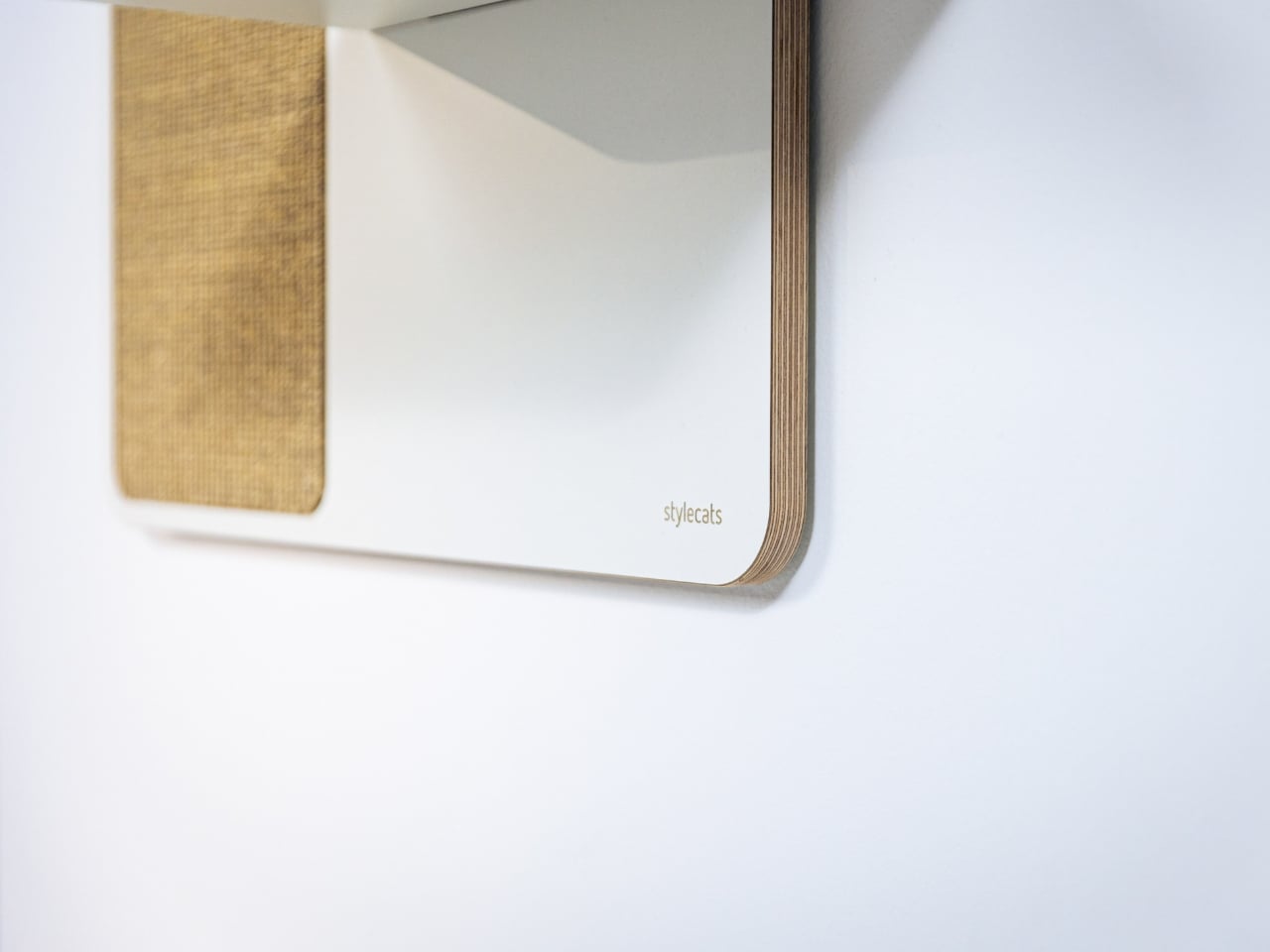
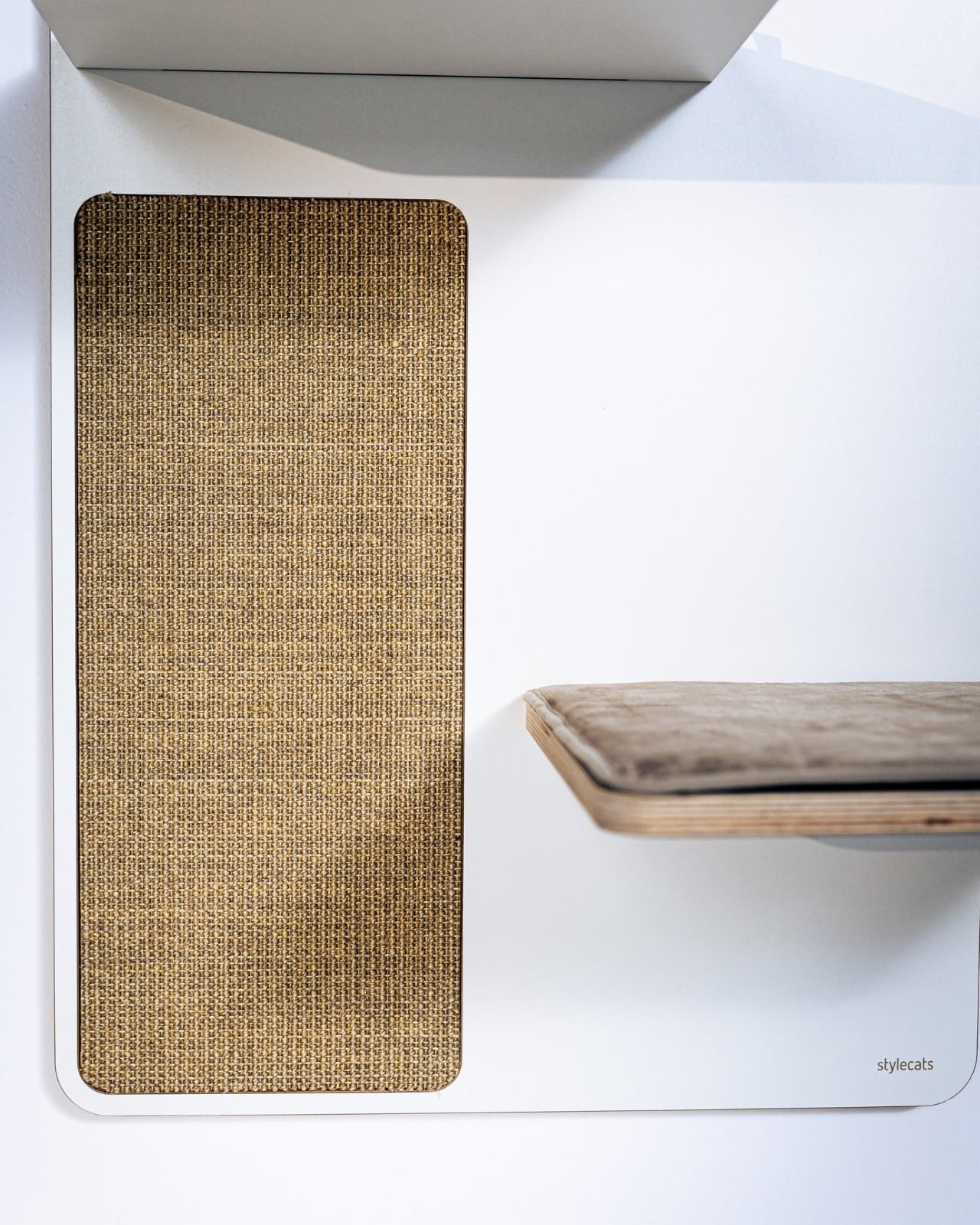
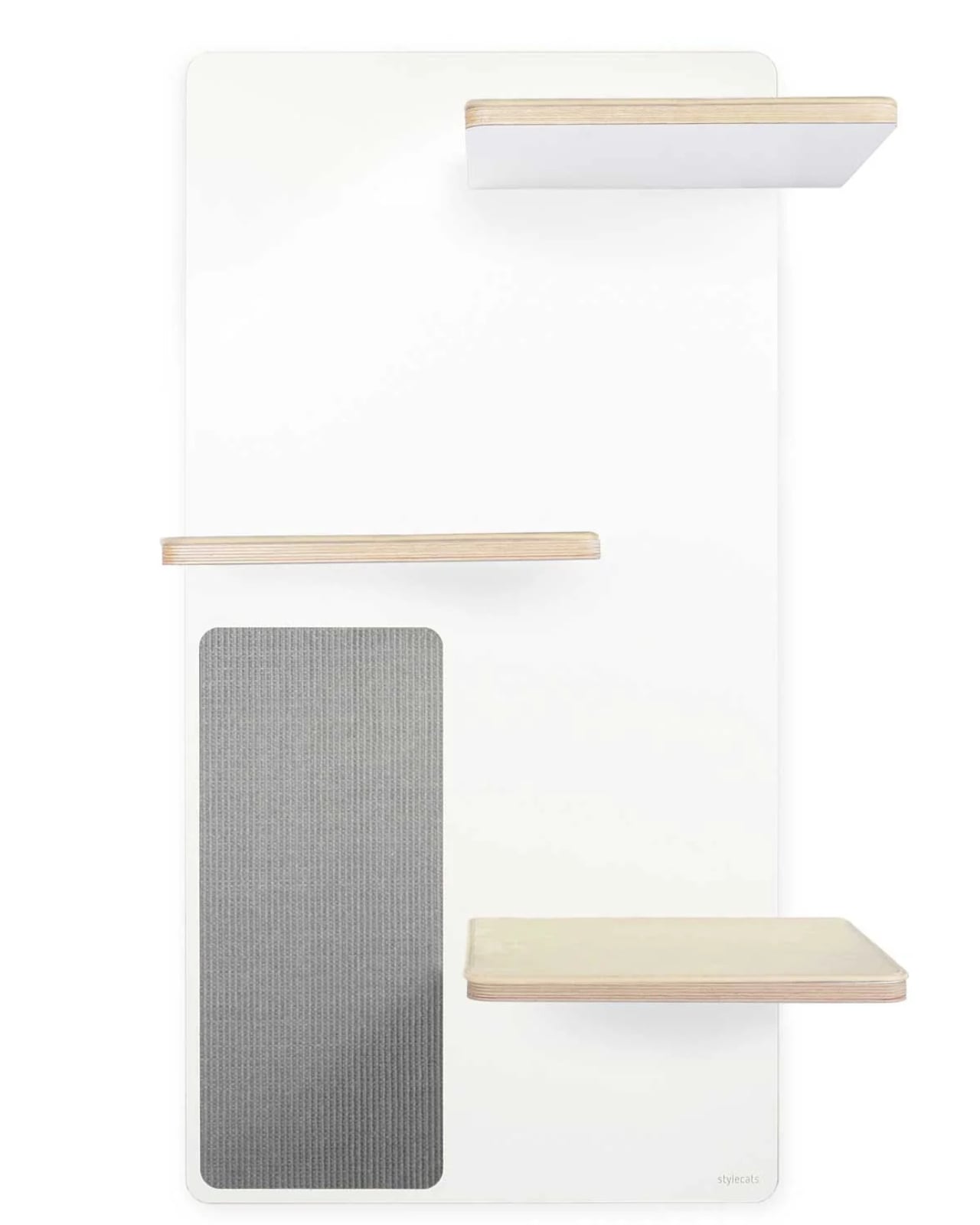
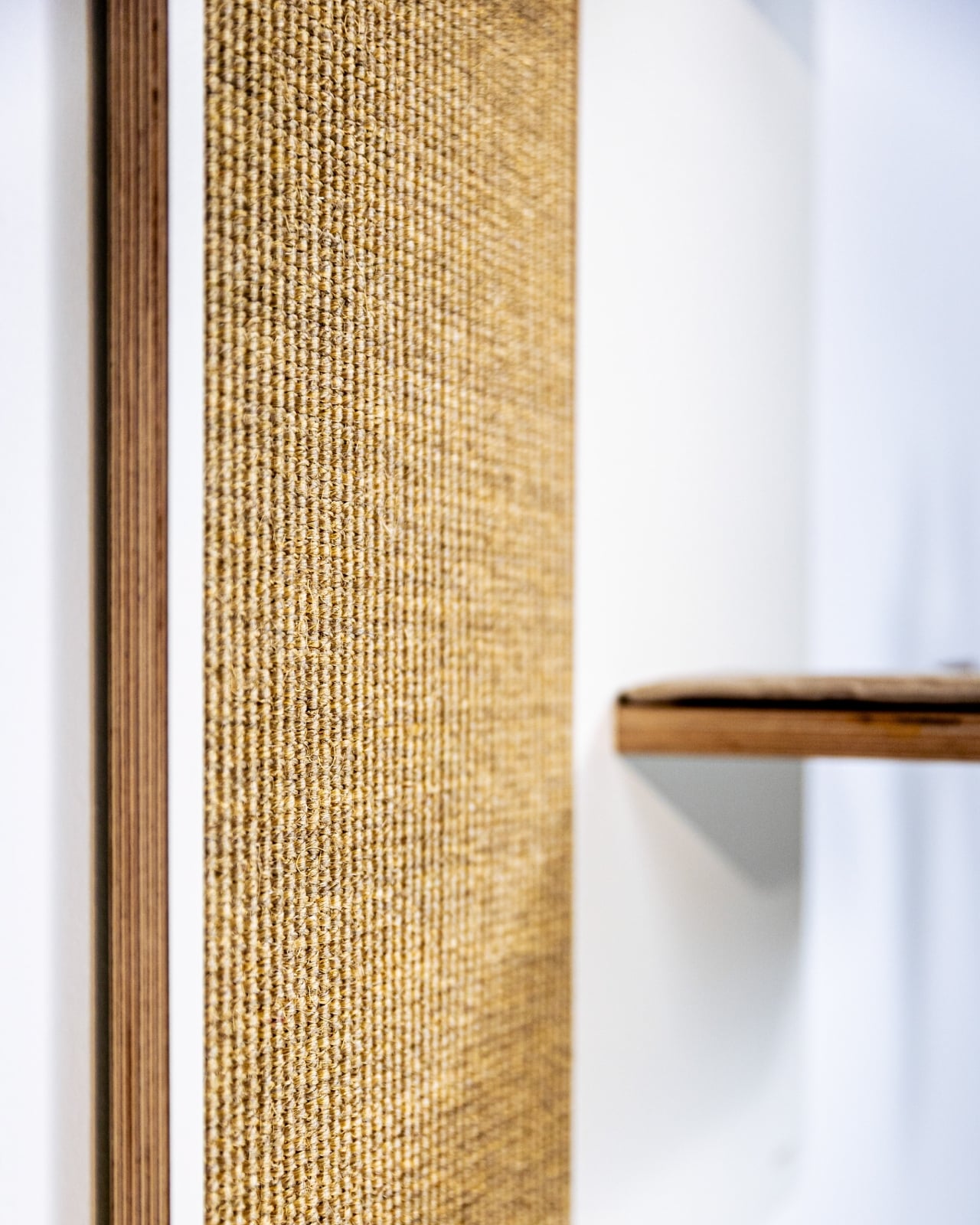
The RELEX wall panel by stylecats is a direct challenge to that assumption, and it makes a pretty convincing case. Designed by the stylecats Design-Team and a winner of the 2025 European Product Design Award, the RELEX is a wall-mounted cat scratching and lounging system that, at first glance, reads more like a floating shelf unit than pet furniture. That’s entirely intentional. The panels are made from birch plywood with an HPL coating, the hardware mounts are completely hidden behind the panel, and the whole structure sits flush against the wall like it was always supposed to be there. If you swapped the sisal for a few hardcover books, guests might not even ask. That’s a sentence I never thought I’d write about a cat scratcher.

Designer: stylecats Design-Team

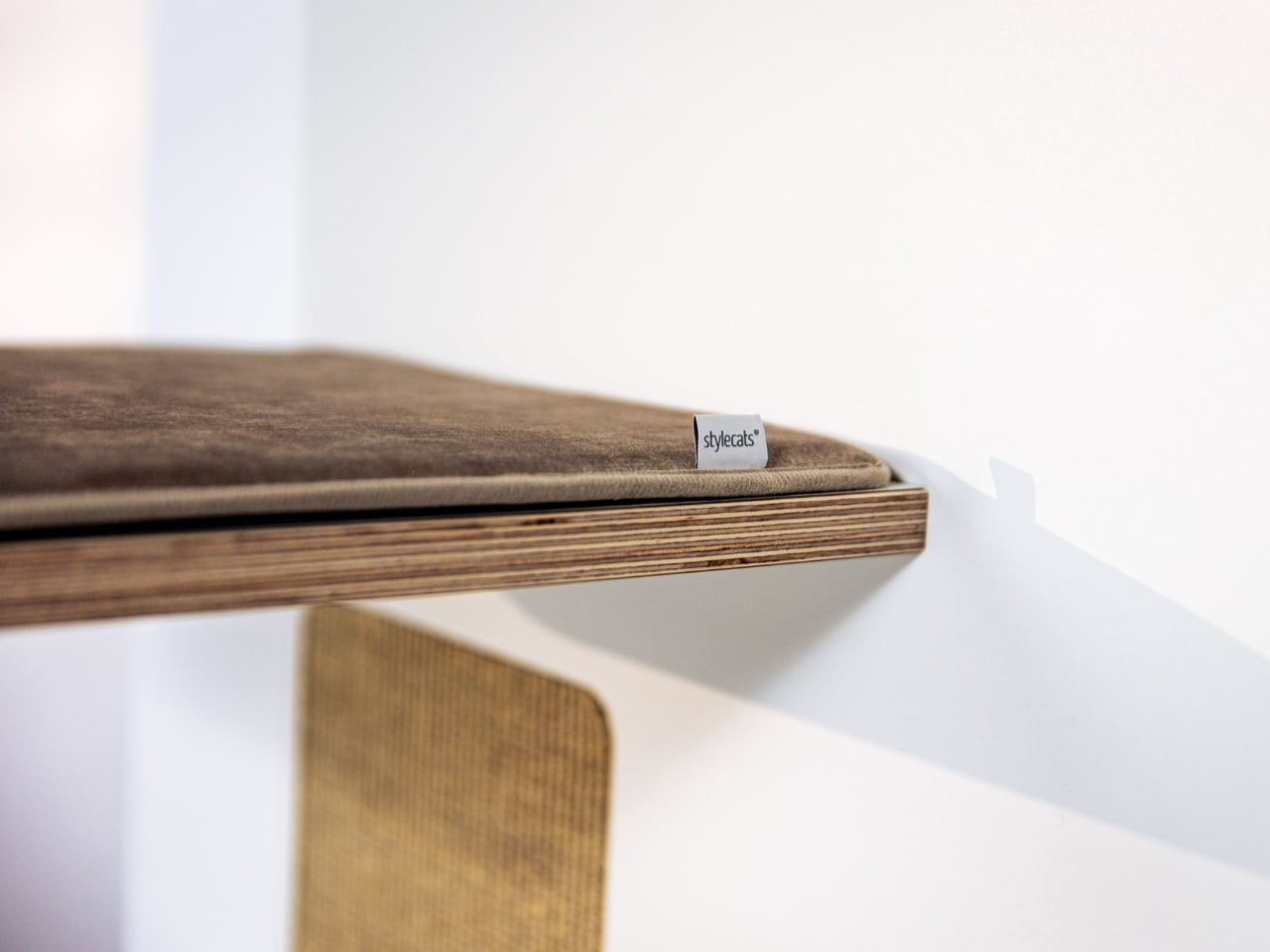
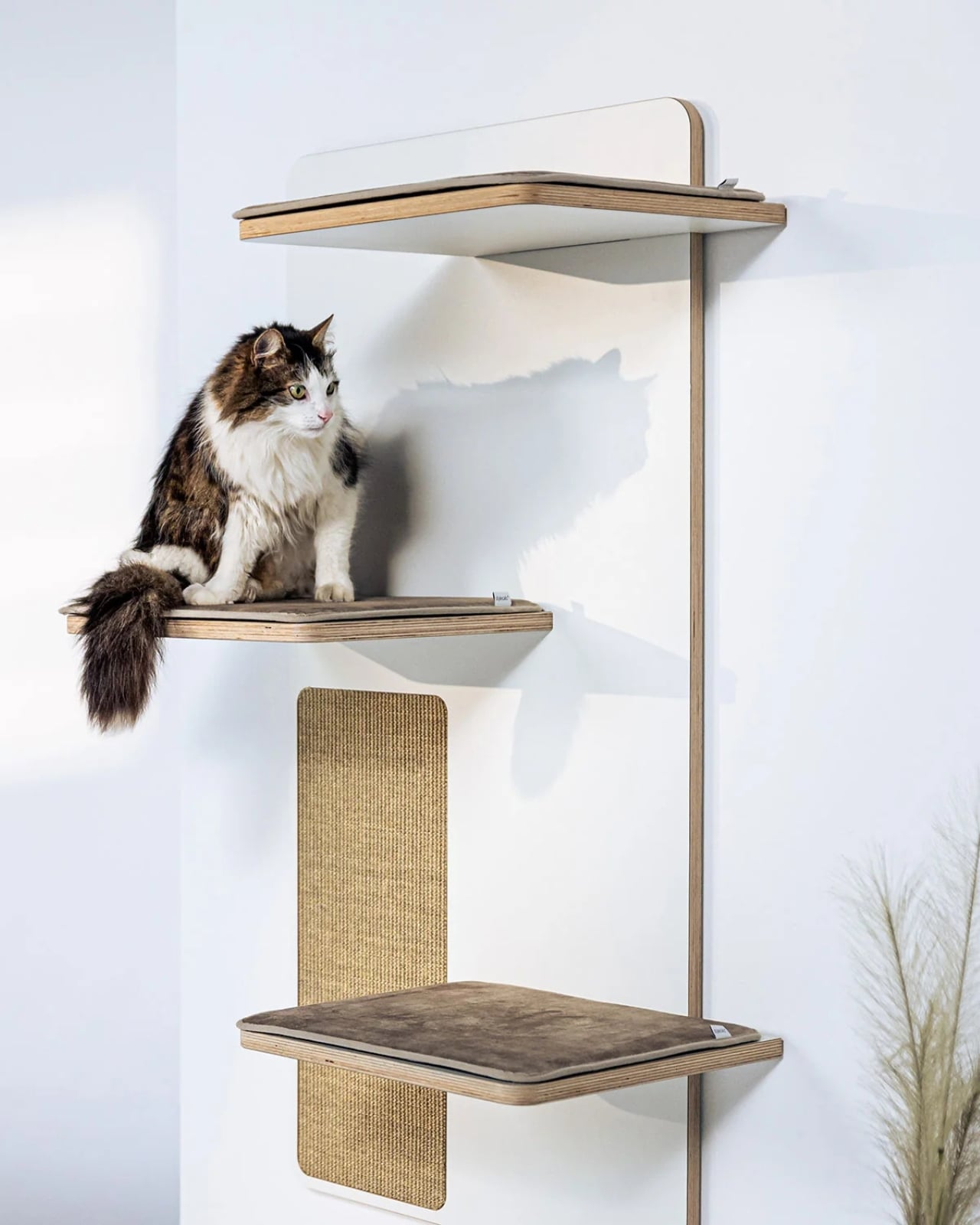
The three-platform version, the RELEX 3, measures 70 x 37.5 x 120 cm and offers three staggered lounging surfaces, each rated to hold up to 15 kilograms. That’s enough for even a particularly confident Maine Coon. The platforms themselves are cushioned with a microfiber sandwich construction: a durable top layer, a middle foam layer for actual comfort, and a velor base that retains body heat. The covers are washable at 40 degrees on a gentle cycle, which, if you’ve ever owned a cat, you know is not a minor detail. The integrated sisal scratching surface is also replaceable when it wears out, which extends the lifespan of the whole unit considerably.

What the design gets right, beyond the aesthetics, is understanding what a cat actually needs from its environment. Cats want height. They want varied vantage points. They want to scratch something that isn’t your sofa. The RELEX gives them all three in a format that takes up wall space rather than floor space, which is, for anyone living in a flat or a smaller home, a genuinely meaningful distinction.

I’ll admit I have a bias here. I’ve long been irritated by how the pet industry has historically treated design as an afterthought. Function got the priority, and style was whatever was left over. That’s slowly changing, and the RELEX feels like part of that shift rather than just a single clever product. The European Product Design Award jury, which drew from more than 30 design leaders across the globe, clearly saw the same thing. Awards don’t automatically validate a product, but they do confirm that people who think seriously about design paid attention.

The price reflects the seriousness of the build. The three-surface version starts at €499.99, and the four-surface configuration goes up to €599.99. That’s not impulse-purchase territory. It’s the kind of number that makes you pause, think about how much you’ve already spent replacing sofa corners, and then proceed anyway.

Stylecats is a brand under HUNTER International GmbH, a German manufacturer, and the “Made in Germany” label isn’t just marketing on this one. The material choices and construction quality back it up. Birch plywood, 100% sisal, proper load ratings per shelf, and concealed hardware are not the specs of something designed to be cheap.

The RELEX line is available in two, three, or four lounging surface configurations. It’s currently offered with a white coating and works particularly well positioned near a window, where a cat’s need to observe the world and your need to look at something decent can finally, peacefully, coexist.

The post A $500 Cat Scratcher That Looks Like a Floating Shelf first appeared on Yanko Design.
A $500 Cat Scratcher That Looks Like a Floating Shelf

Most cat owners have made peace with a certain kind of compromise. You get the cat, the cat gets the furniture, and whatever mass-produced scratching post comes in the box gets wedged into a corner where you try not to look at it. It wobbles. It sheds sisal like it’s molting. And after three months, it leans at a fifteen-degree angle that tells you something about both your cat’s enthusiasm and the product’s build quality. We accepted this because we assumed pet furniture just couldn’t do better.

The RELEX wall panel by stylecats is a direct challenge to that assumption, and it makes a pretty convincing case. Designed by the stylecats Design-Team and a winner of the 2025 European Product Design Award, the RELEX is a wall-mounted cat scratching and lounging system that, at first glance, reads more like a floating shelf unit than pet furniture. That’s entirely intentional. The panels are made from birch plywood with an HPL coating, the hardware mounts are completely hidden behind the panel, and the whole structure sits flush against the wall like it was always supposed to be there. If you swapped the sisal for a few hardcover books, guests might not even ask. That’s a sentence I never thought I’d write about a cat scratcher.

Designer: stylecats Design-Team

The three-platform version, the RELEX 3, measures 70 x 37.5 x 120 cm and offers three staggered lounging surfaces, each rated to hold up to 15 kilograms. That’s enough for even a particularly confident Maine Coon. The platforms themselves are cushioned with a microfiber sandwich construction: a durable top layer, a middle foam layer for actual comfort, and a velor base that retains body heat. The covers are washable at 40 degrees on a gentle cycle, which, if you’ve ever owned a cat, you know is not a minor detail. The integrated sisal scratching surface is also replaceable when it wears out, which extends the lifespan of the whole unit considerably.

What the design gets right, beyond the aesthetics, is understanding what a cat actually needs from its environment. Cats want height. They want varied vantage points. They want to scratch something that isn’t your sofa. The RELEX gives them all three in a format that takes up wall space rather than floor space, which is, for anyone living in a flat or a smaller home, a genuinely meaningful distinction.

I’ll admit I have a bias here. I’ve long been irritated by how the pet industry has historically treated design as an afterthought. Function got the priority, and style was whatever was left over. That’s slowly changing, and the RELEX feels like part of that shift rather than just a single clever product. The European Product Design Award jury, which drew from more than 30 design leaders across the globe, clearly saw the same thing. Awards don’t automatically validate a product, but they do confirm that people who think seriously about design paid attention.

The price reflects the seriousness of the build. The three-surface version starts at €499.99, and the four-surface configuration goes up to €599.99. That’s not impulse-purchase territory. It’s the kind of number that makes you pause, think about how much you’ve already spent replacing sofa corners, and then proceed anyway.

Stylecats is a brand under HUNTER International GmbH, a German manufacturer, and the “Made in Germany” label isn’t just marketing on this one. The material choices and construction quality back it up. Birch plywood, 100% sisal, proper load ratings per shelf, and concealed hardware are not the specs of something designed to be cheap.

The RELEX line is available in two, three, or four lounging surface configurations. It’s currently offered with a white coating and works particularly well positioned near a window, where a cat’s need to observe the world and your need to look at something decent can finally, peacefully, coexist.

The post A $500 Cat Scratcher That Looks Like a Floating Shelf first appeared on Yanko Design.
This Wavy Sculptural Cat Post Turns Feline Play Into Living Room Art

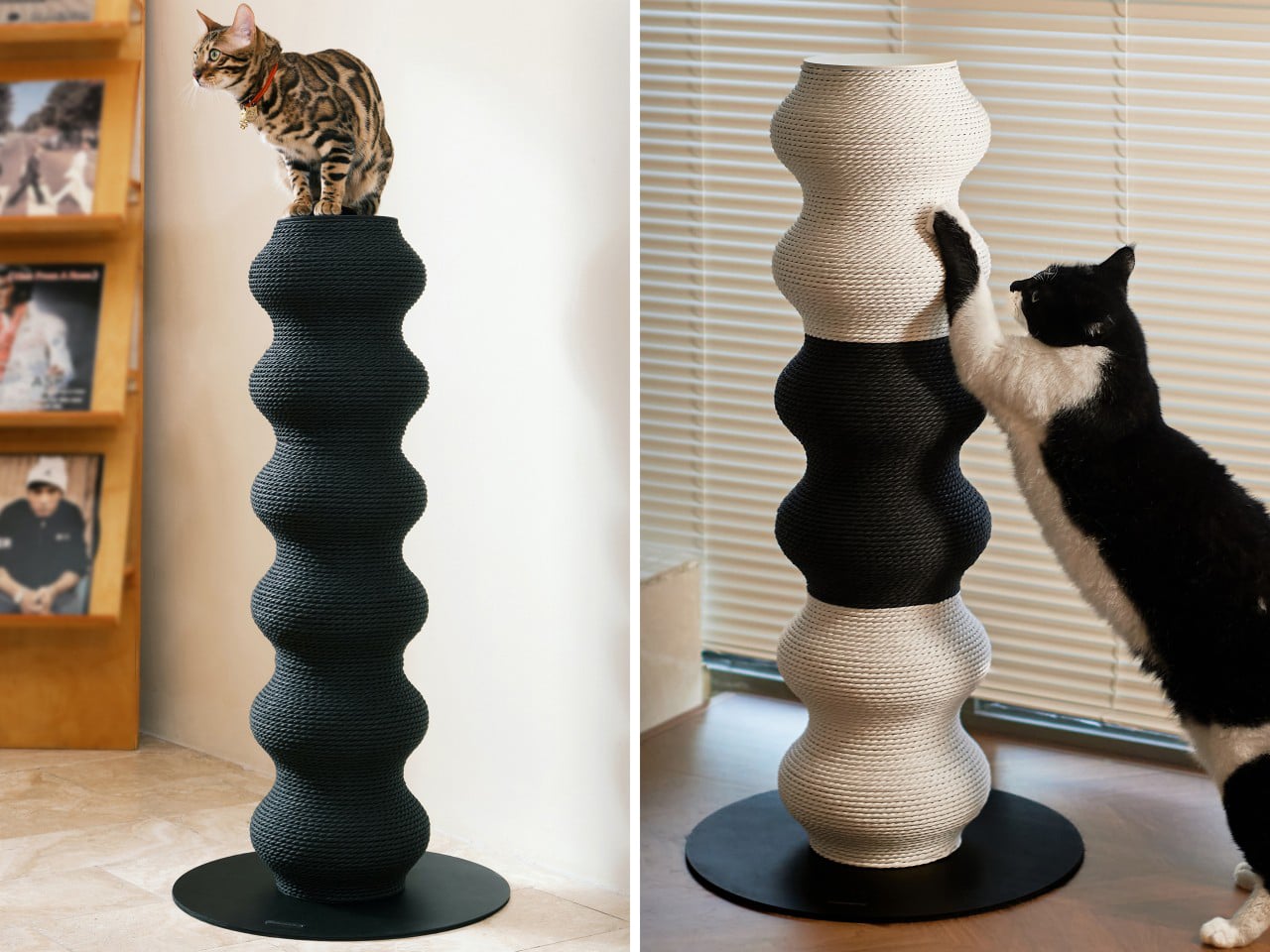
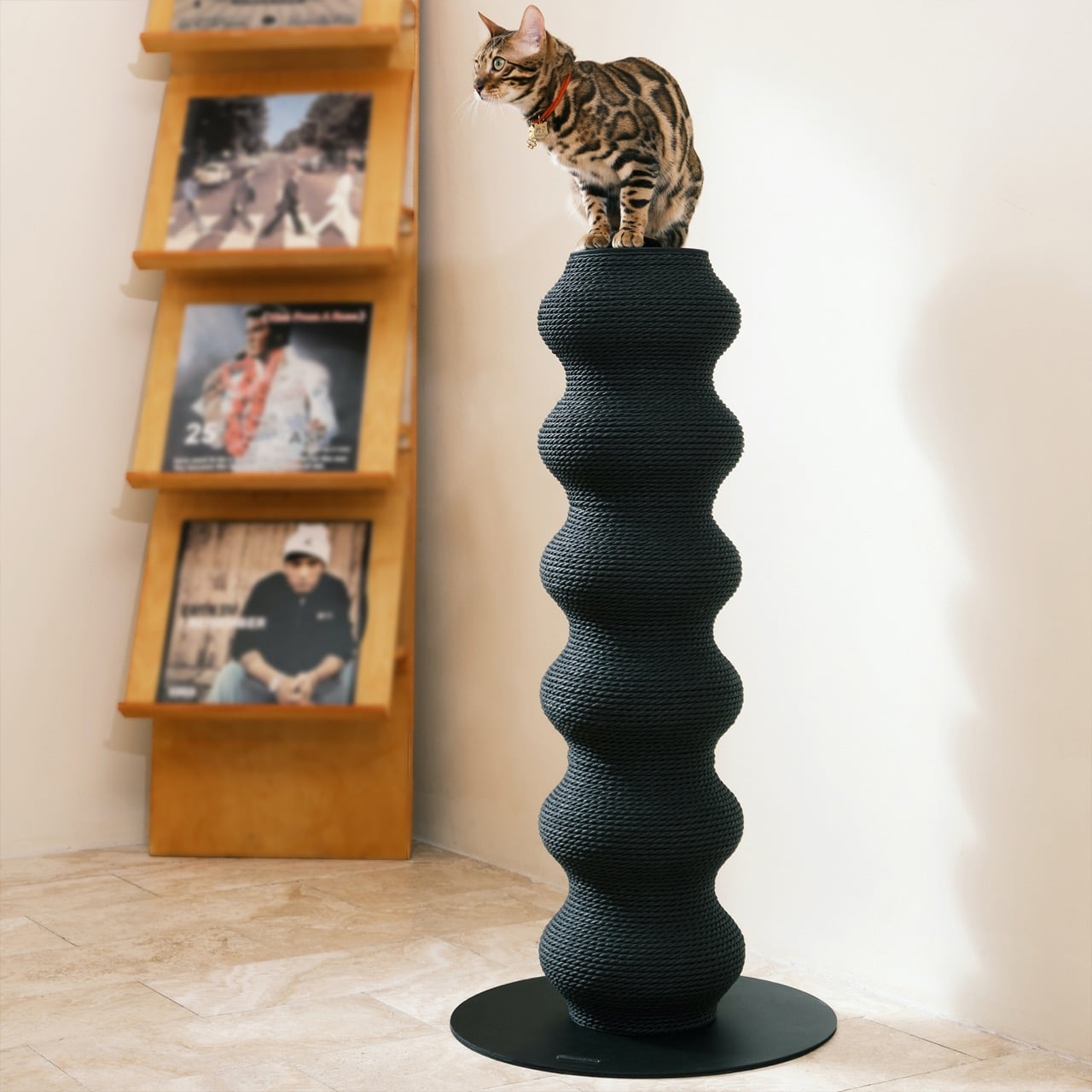
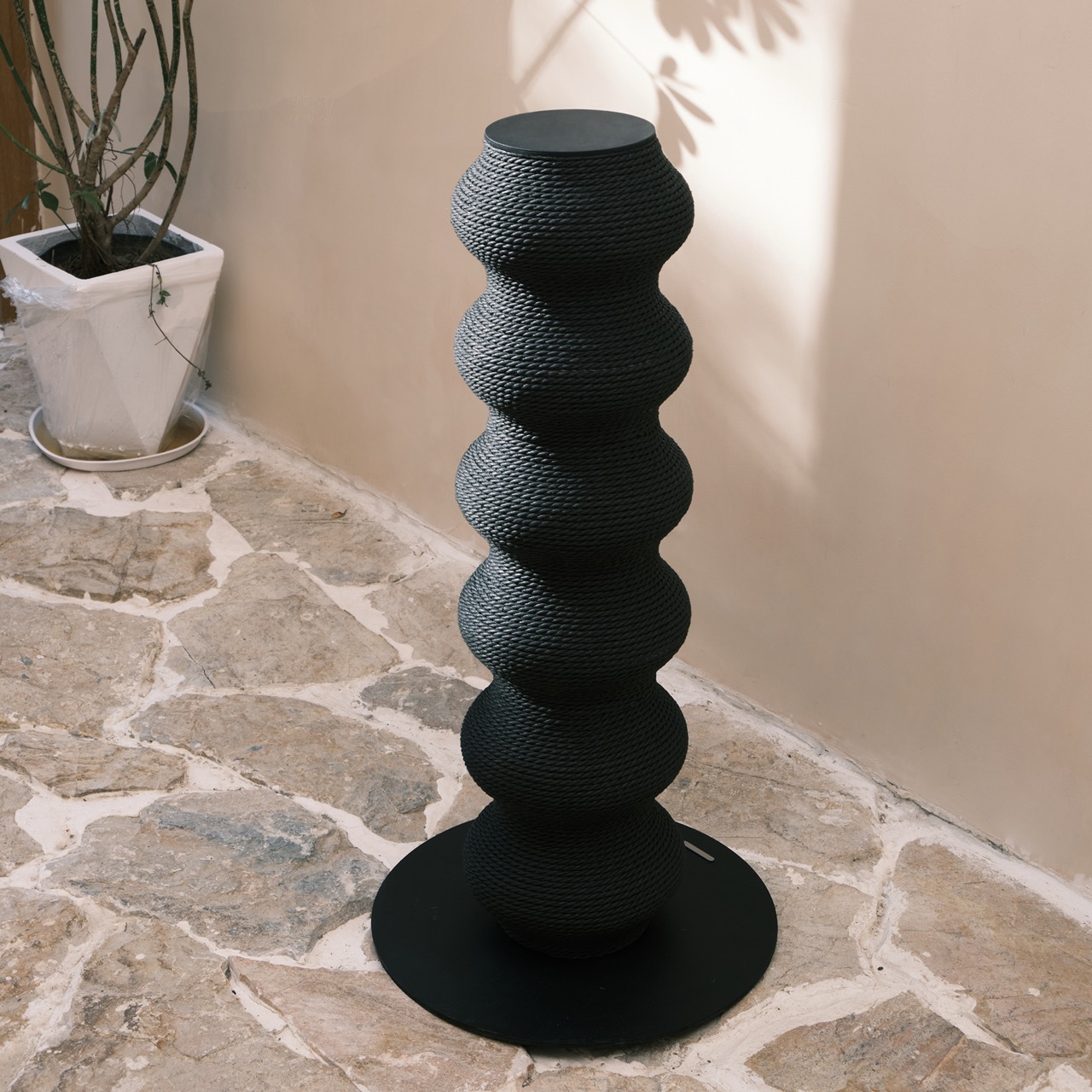
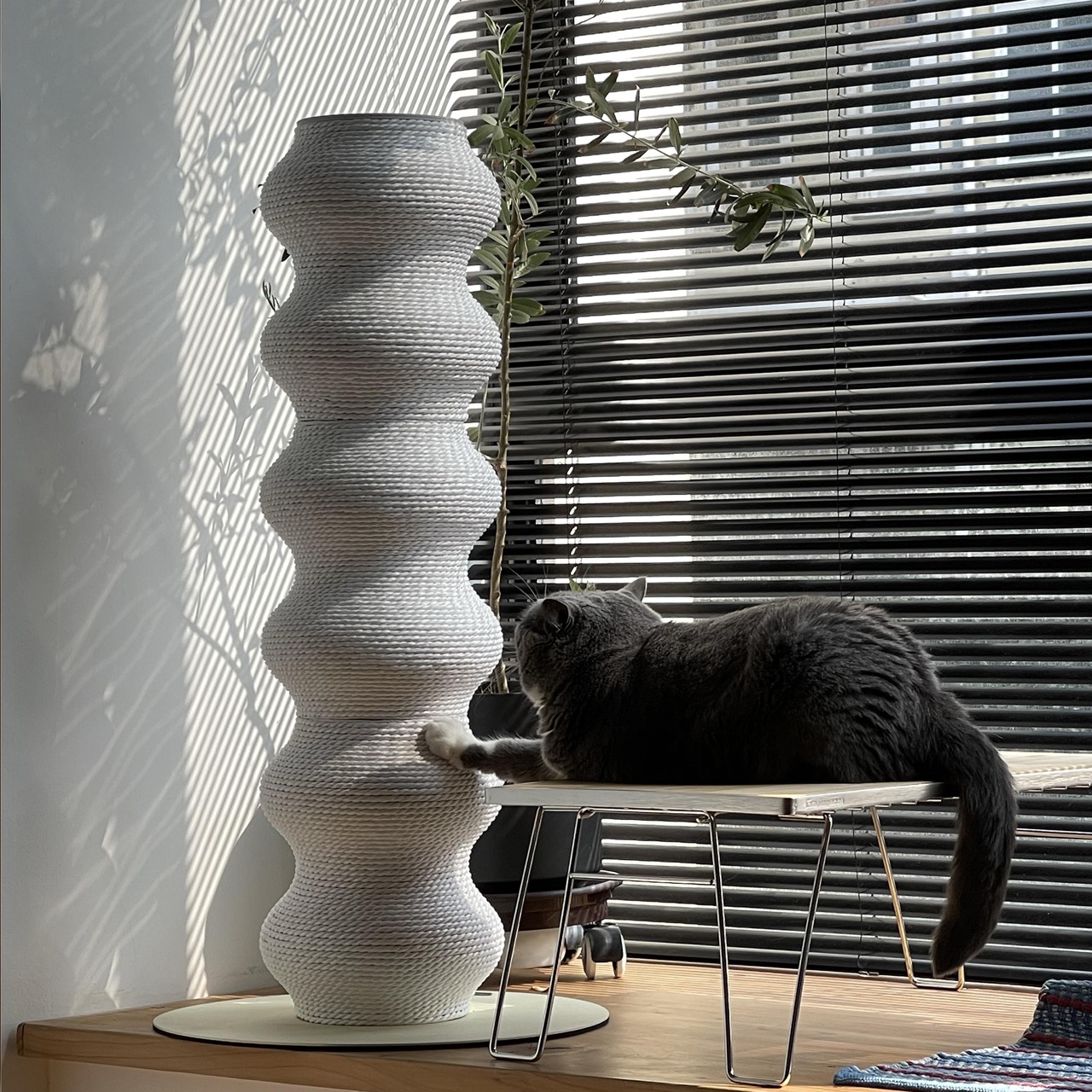
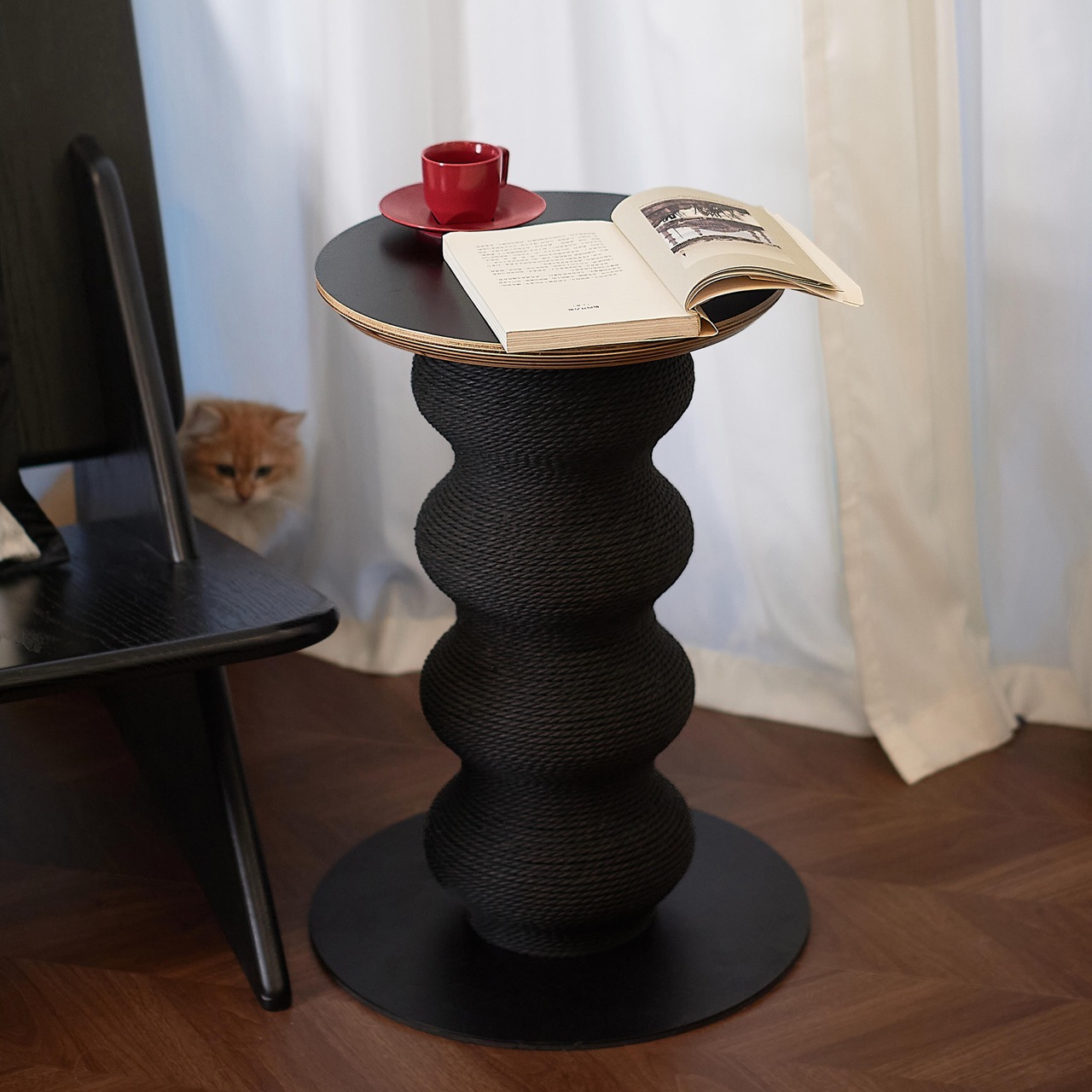
Bringing together nature, functionality, and contemporary living, this innovative cat scratching post reimagines what pet furniture can be. The product transforms a conventional vertical scratching post into a sculptural centerpiece inspired by coral formations and the fluid movement of ocean waves. The result is an object that satisfies feline instincts while elevating the aesthetic quality of the home.

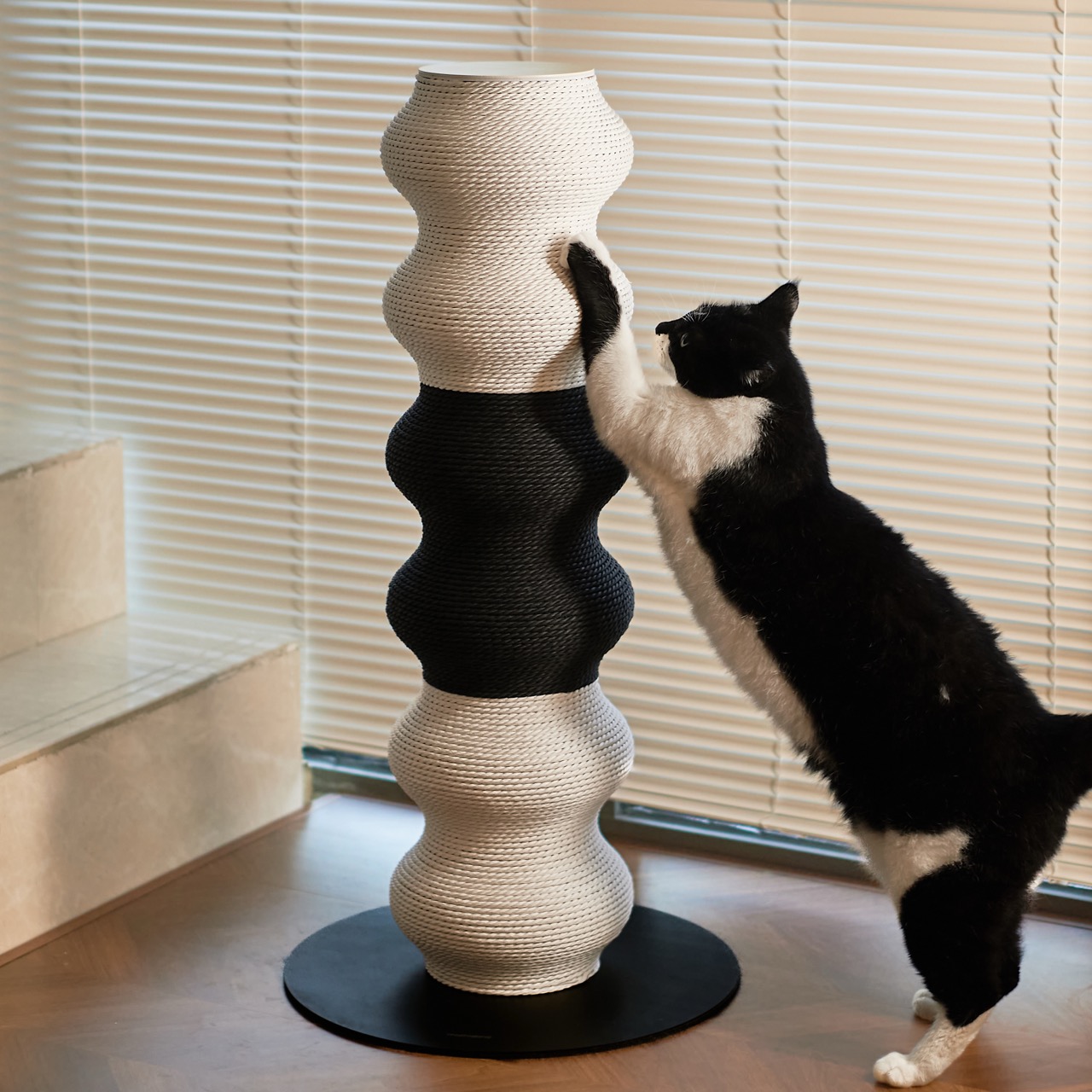
At first glance, the form distinguishes itself from traditional scratching posts. Instead of the standard cylindrical column wrapped in rope, this design adopts a branching silhouette reminiscent of coral structures, paired with flowing contours that echo the rhythm of waves. These biomorphic shapes are not merely decorative; they serve a functional purpose by creating footholds that encourage cats to climb naturally. This detail acknowledges feline instincts. Scratching, stretching, and ascending are essential behaviors for physical health, territorial marking, and mental stimulation. By translating these instincts into form, the product becomes an interactive environment rather than a static object.

Designer: Hangzhou Owls Technology Co., Ltd.

Equally significant is its visual language. The minimalist black and white palette intentionally rejects the brightly colored, cartoon-style aesthetic common in pet products. This restrained scheme allows the piece to integrate seamlessly into contemporary interiors, appealing to design-conscious owners who prefer their pet furniture to harmonize with their living spaces. In doing so, the scratching post transcends its utilitarian category and enters the realm of modern home décor.

Versatility is another defining feature. The structure is modular, allowing users to adjust its height according to their cat’s age, agility, or physical condition, as well as spatial constraints within the home. This adaptability ensures accessibility for a wider range of cats, including those who are overweight, older, or short-legged. Even less agile pets can climb gradually and safely to the top, where they are rewarded with an elevated resting platform. This top surface doubles as a side table for owners, suitable for holding books, magazines, or remote controls, effectively transforming the object into shared furniture that benefits both human and animal.

The engineering behind the product reflects the same clarity as its visual design. Assembly is simplified through a single threaded rod that connects individual modules, eliminating complicated installation. The magnetic top attachment replaces traditional screw mounting, preventing visible hardware marks and preserving the product’s clean aesthetic. Material selection also reflects careful consideration. The main body is constructed from environmentally friendly paper wicker, chosen for its durability, scratch resistance, and ease of shedding, while the base and top are made from plastic-coated cold-rolled steel, providing stability and long-term strength.

Underlying the design is research into market trends and user behavior. The team observed that most conventional scratching posts focus solely on scratching functionality and rarely address aesthetic integration or multifunctionality. Many adopt playful, cute styling that clashes with modern interiors, forcing owners to compromise between their décor preferences and their pets’ needs. This project responds directly to that gap by combining practicality, sculptural elegance, and adaptability in a single object.

The central design challenge lay in balancing visual refinement with feline usability, ensuring the piece remained visually striking without sacrificing climbability. The coral and wave concept solved this problem elegantly, providing naturalistic footholds that invite movement while maintaining a cohesive sculptural form. The result is a harmonious fusion of art, architecture, and animal ergonomics.

More than a scratching post, this product represents a new category of pet furniture, one that treats animals as co-inhabitants of designed spaces rather than afterthoughts. By integrating natural inspiration, modular engineering, and minimalist aesthetics, it creates a shared environment where pets and owners can coexist comfortably and beautifully.

The post This Wavy Sculptural Cat Post Turns Feline Play Into Living Room Art first appeared on Yanko Design.
Accordion-shaped Cat Shelter Brilliantly Folds Into A Slim Book When Not In Use

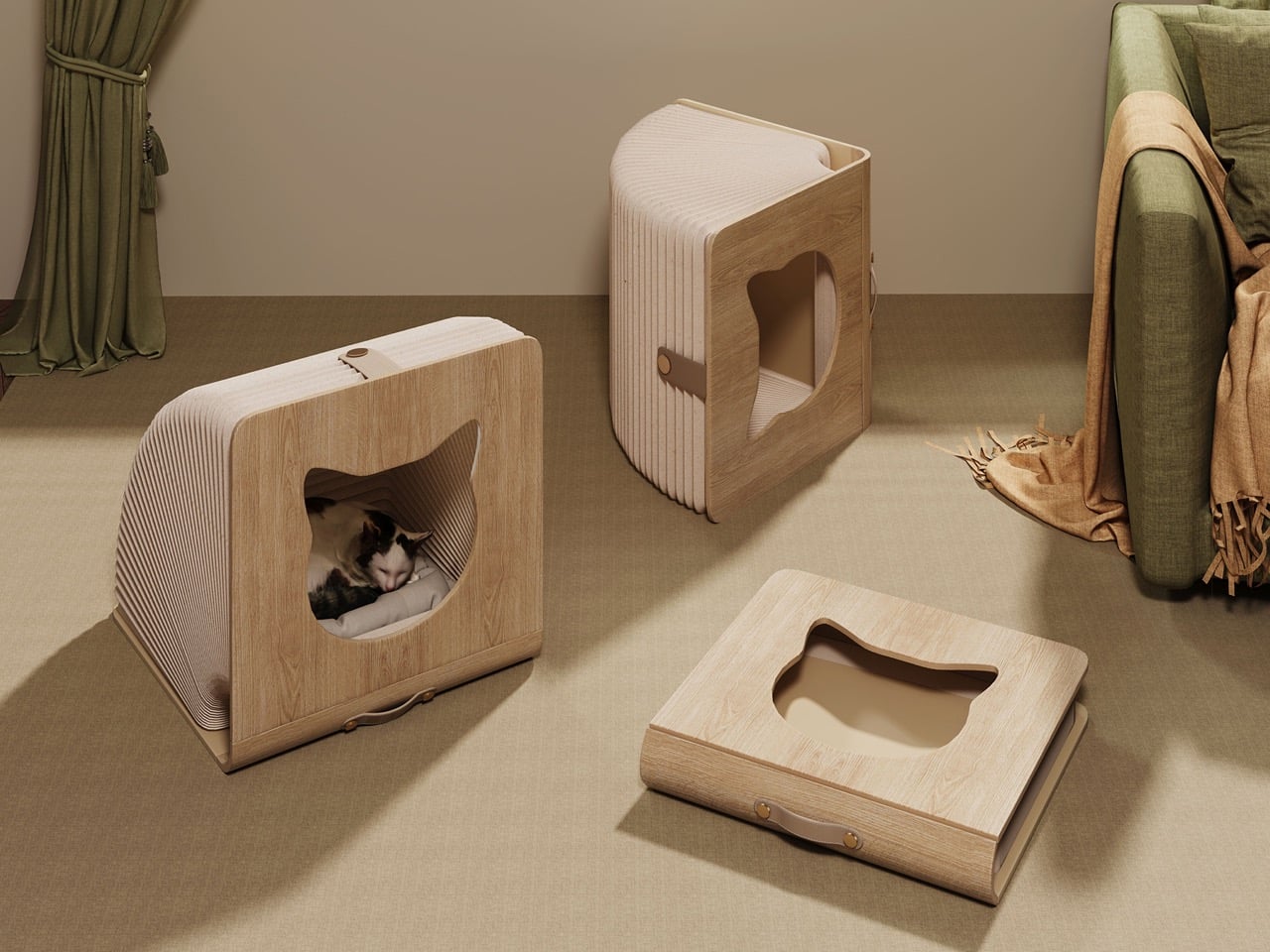
In recent years, design has begun to pay closer attention to a user group long overlooked in product innovation: pets. Not as accessories to human lifestyles but as primary users with emotional, behavioral, and environmental needs of their own. The FurBallRetreat emerges within this shift as a quietly radical object, one that reframes the question of portability not for humans traveling with animals but for animals traveling with humans.

Most portable pet products approach the problem from a logistics standpoint. They focus on containment, restraint, and transport efficiency. FurBallRetreat instead approaches portability as an experience question. What does it mean for a cat to feel at home outside the home? That reframing drives the entire design language of the product.

Designer: Yu Ren

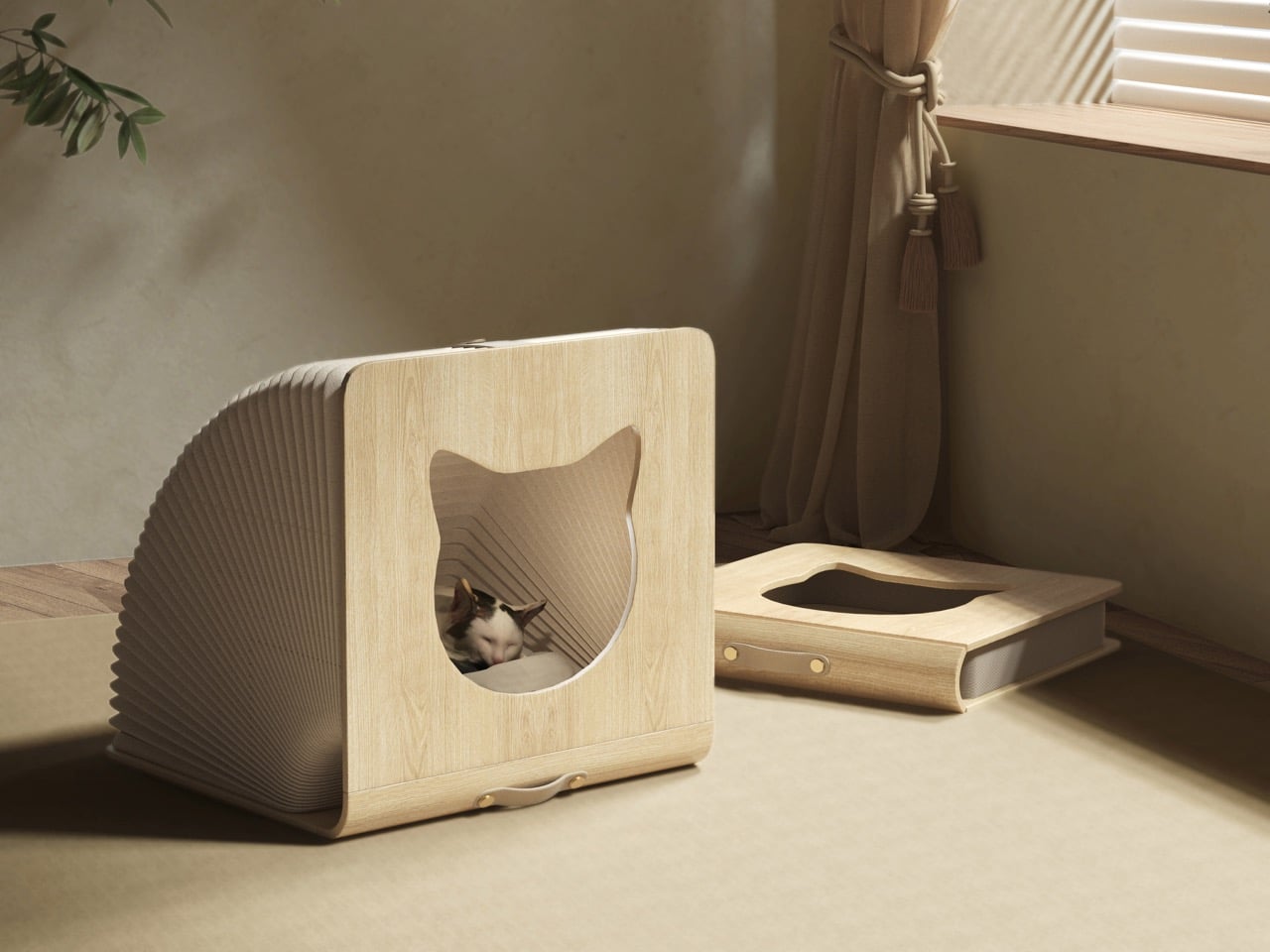
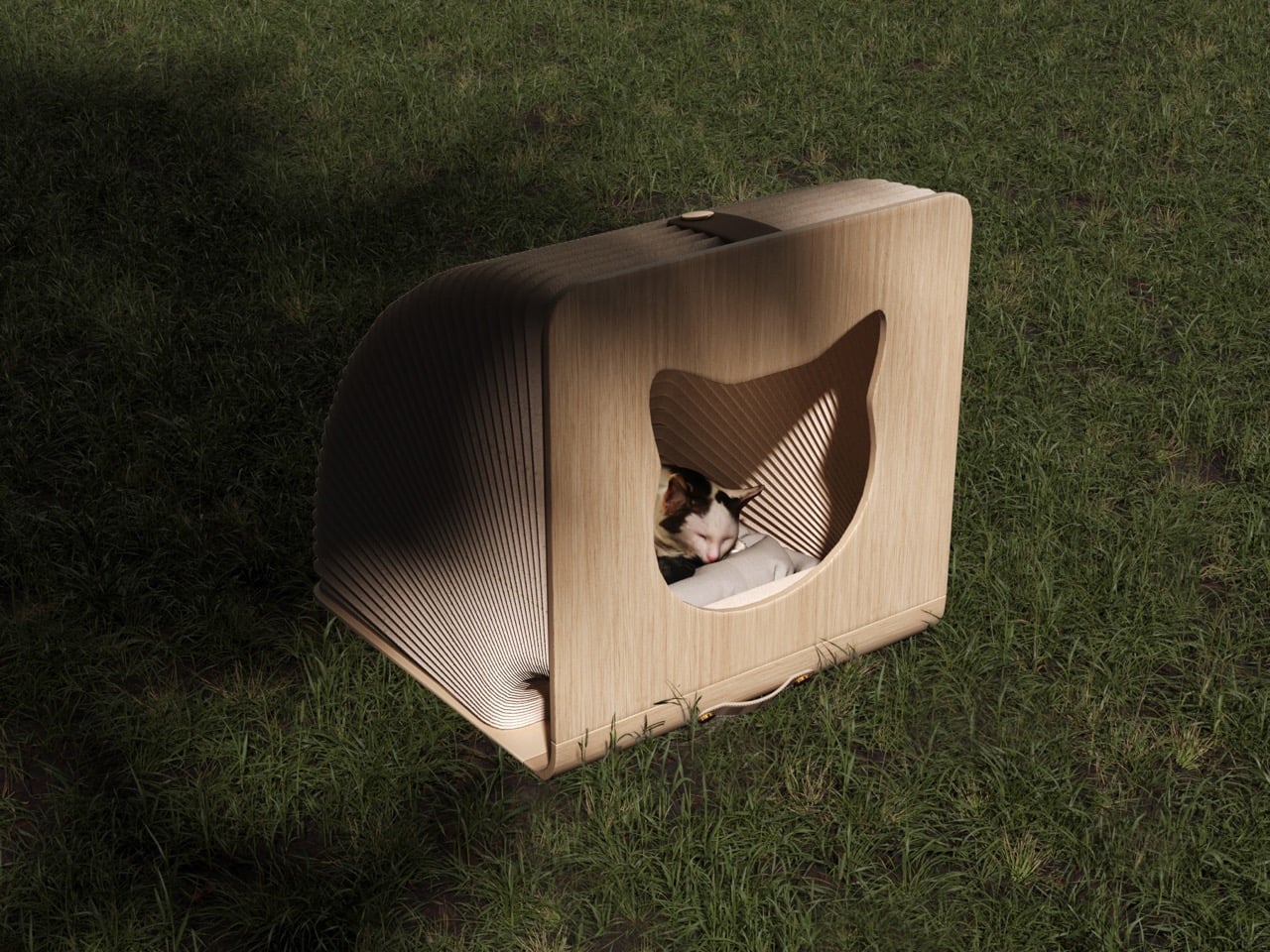
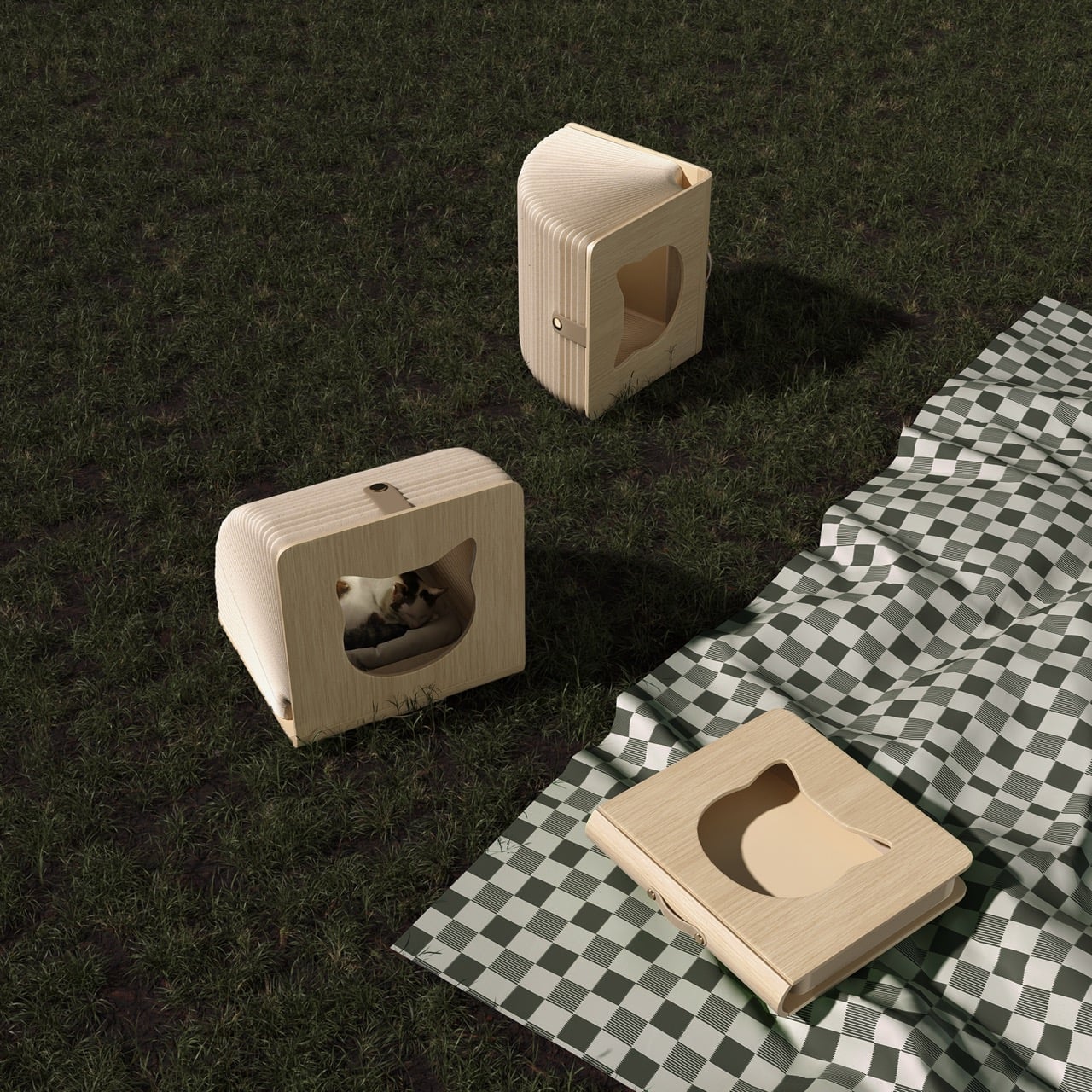
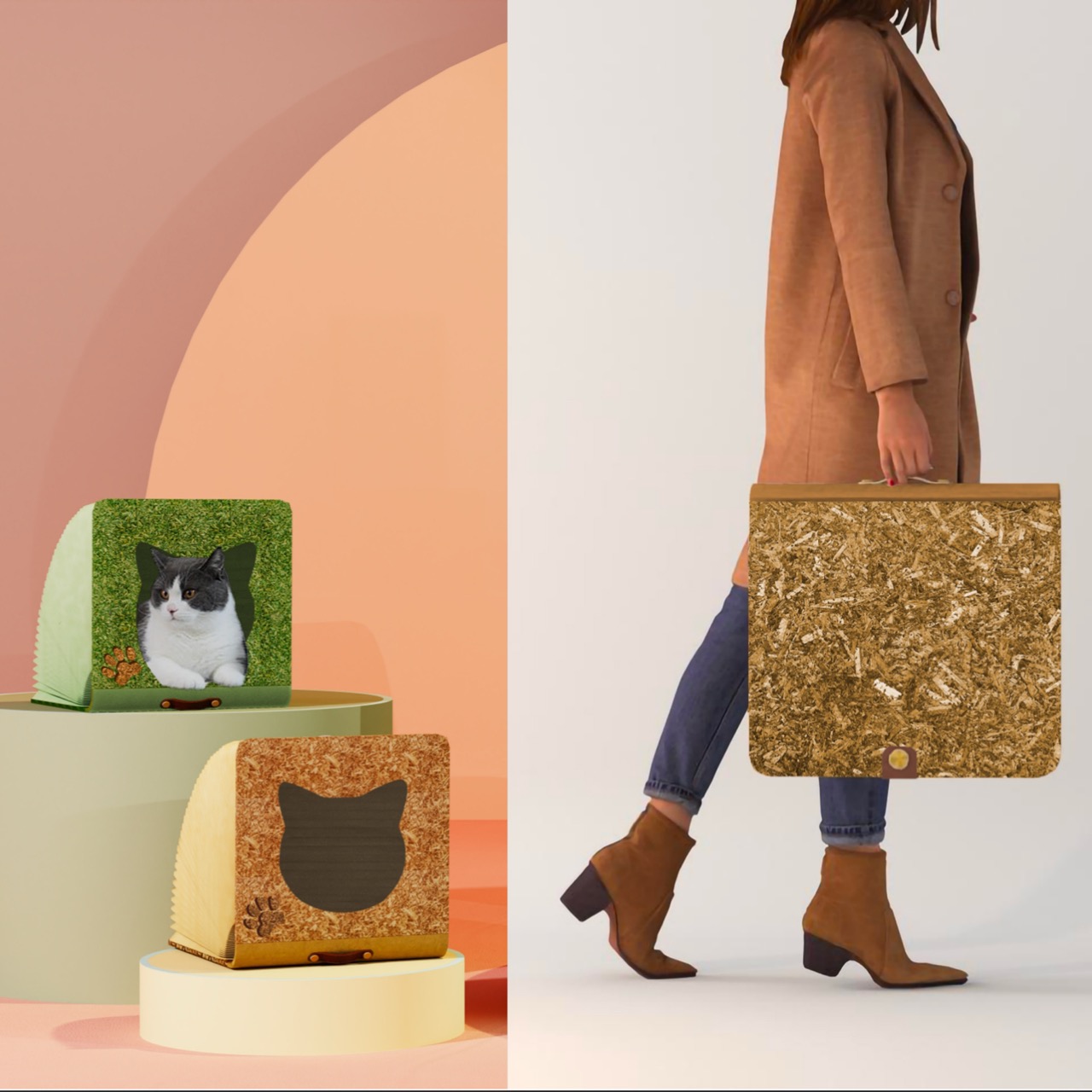
At first glance, the object resembles a slim book rather than a piece of pet equipment. This is not merely an aesthetic gesture but a conceptual one. Books travel easily, store effortlessly, and integrate naturally into domestic space. By adopting this familiar typology, the design dissolves the visual and spatial burden typically associated with pet carriers. When unfolded, the structure expands into a sheltered resting nook that creates a soft boundary between the cat and its surroundings. This transformation is enabled by an accordion-inspired construction that balances flexibility with stability, allowing the shelter to open and close with minimal effort.

The emotional intelligence embedded in this mechanism is notable. Cats are creatures of territory and routine. New environments often trigger anxiety because they lack recognizable spatial cues. By providing a consistent portable enclosure, FurBallRetreat functions as a psychological anchor. It becomes a familiar micro territory that can travel across gardens, patios, campsites, and other unfamiliar landscapes. In this sense, the product is less a bed and more a movable sense of place.

Material choice reinforces this philosophy. Constructed from DuPont paper and recycled board, the shelter embodies a lightweight yet durable architecture that supports both structural integrity and environmental responsibility. The components can be detached and replaced, allowing for cleaning, repair, and long-term use. This modularity aligns with contemporary sustainable design thinking, where longevity and adaptability are valued over disposability. Instead of producing another short-lived pet accessory, the designers have created an object meant to evolve alongside its user.

User research played a defining role in shaping the concept. Surveys revealed that a large majority of cat owners already carry some form of travel bag when going out with their pets. However, these bags often become dormant objects once the outing ends, occupying space and serving little purpose at home. FurBallRetreat addresses this inefficiency by collapsing into a compact form that integrates seamlessly into everyday living environments. It does not demand storage solutions because it behaves like an ordinary household object when idle.

Perhaps the most compelling aspect of FurBallRetreat is how it blurs typological boundaries. It is at once furniture, carrier, shelter, and environmental buffer. This hybridity reflects a broader movement in contemporary product design where single-function objects are giving way to adaptable systems that respond to multiple contexts. Rather than designing for a specific scenario, the creators designed for transitions between scenarios.

For design observers, FurBallRetreat signals an emerging category worth watching: products that treat mobility as a shared condition between humans and animals. As lifestyles become more flexible and outdoor experiences more integrated into daily routines, the demand for such solutions will likely grow. What distinguishes this project is not simply its clever folding structure or sustainable materials but its empathetic premise. It recognizes that when we travel with animals, we are not just transporting them. We are transporting their sense of security.

The post Accordion-shaped Cat Shelter Brilliantly Folds Into A Slim Book When Not In Use first appeared on Yanko Design.
The Modular Cat Habitat That Turns Playful Curiosity Into Living Architecture

What if we designed homes the way cats would design them? Not human homes with a token scratching post in the corner but true spatial systems built around curiosity, vertical exploration, territorial comfort, and play. The N Plus Magic House begins precisely at that question, reframing pet furniture not as an accessory but as architecture scaled for feline psychology. Instead of treating a cat house as a static object, this project treats it as a living spatial framework, one that evolves alongside its inhabitant.

Today’s pet owners increasingly see their cats as emotional companions rather than animals that merely coexist in domestic space. That shift has quietly created a design problem. Traditional cat houses, even elaborate ones, tend to be fixed structures. They may be visually impressive, but they impose constraints on placement, adaptability, and long-term usability. The N Plus Magic House flips that paradigm by introducing modularity as its core philosophy. Rather than selling a finished form, it offers a system of standardized units that can be assembled, rearranged, expanded, or reduced as needed. The result is less like furniture and more like a customizable habitat kit.

Designer: Taizhou Hake Technology Co., Ltd

The genius of the design lies in its simplicity. Each module functions independently yet connects securely through precision-engineered connectors. Owners assemble structures by inserting panels into slots and stacking them like building blocks. No technical expertise, tools, or installation manuals are required. This intuitive construction method does something subtle but powerful. It turns pet care into participation. Instead of buying a finished object, users become co-designers of their cat’s environment. That interaction strengthens the emotional bond among the owner, the pet, and the space.

Material choices reinforce the system’s practicality. The structure combines impact-resistant PP resin, transparent PET panels for visibility, and carbon steel mesh for structural integrity. These materials balance durability with safety while allowing owners to monitor their pets without disturbing them. The manufacturing processes, such as injection molding and automatic wire welding, ensure consistency, precision, and reliability across units. Every element reflects careful alignment with feline behavior and safety requirements.

Behind the scenes, the development team approached the project with a research-driven mindset. They studied cats’ behavioral patterns, analyzed existing products on the market, and mapped owner expectations. One of the biggest technical challenges was maintaining structural stability while preserving modular flexibility. The solution was a custom connector engineered to withstand pressure and weight while preventing slippage. Its textured surface increases friction, ensuring modules remain firmly locked during use. This small component is arguably the system’s unsung hero. It transforms a playful concept into a reliable architectural structure.

Developed in Taizhou, Zhejiang Province, between July 2023 and November 2024 and later exhibited internationally, the N Plus Magic House represents a broader shift in product design thinking. It signals a move away from static ownership toward adaptive systems, objects that respond to changing needs over time. In a world where personalization defines modern consumer expectations, this approach feels less like a novelty and more like a glimpse into the future of domestic product design.

The post The Modular Cat Habitat That Turns Playful Curiosity Into Living Architecture first appeared on Yanko Design.
This Fold-Out Office Desk Acknowledges the Furry Friend Under Your Feet

Office design has long focused on the visible: posture, productivity, aesthetics, and efficiency at eye level. But Central Bark, a desk designed by Chrissy Fehan for DARRAN, asks a quieter and more unusual question: what happens in the space beneath the desk?

At its surface, Central Bark looks exactly like what you would expect from a contemporary workplace system. The lines are clean, the proportions restrained, the materials warm yet professional. It belongs comfortably in a modern office without trying to announce itself. And that is precisely the point. The design does not rely on spectacle. Its intelligence lives in the details.

Designer: Chrissy Fehan

Integrated seamlessly into the desk is a built-in pet nook, a sheltered and intentional space designed for a dog to rest while their human works. Importantly, this is not an accessory or a playful add-on. There is no novelty bed clipped on at the last moment, no awkward cushion pushed beneath a workstation. The pet space is conceived as part of the desk from the very beginning and treated with the same seriousness as legroom, surface depth, or cable management.

The thinking behind Central Bark reflects a broader shift in how we understand work environments today. As offices become more flexible and as the line between home and workplace continues to blur, dogs are increasingly present. In creative studios, startups, and hybrid offices, they are already there, curled up under desks, navigating chair legs, occupying borrowed corners. Central Bark does not invent this reality. It is simply designed for it.

What makes the solution compelling is its restraint. There is no attempt to over-engineer the experience or turn pet-friendly design into a visual statement. Instead, the desk quietly absorbs this need into its form, maintaining a professional aesthetic while acknowledging that workspaces are lived-in and shared environments.

There is also a deeper layer of inclusivity embedded in the design. By accommodating dogs in a natural and integrated way, Central Bark supports people who rely on service animals, offering a workspace that adapts without drawing attention. It removes the need for special adjustments or explanations, allowing both human and canine to coexist comfortably within the same footprint.

One of the most thoughtful aspects of the design is the flexibility of the pet nook itself. The bed is not fixed in place. It can slide forward to give a dog more room to stretch or shift during the day, then tuck neatly back into alignment with the desk edge when not needed. This small gesture keeps the workspace visually tidy and spatially efficient, preserving the desk’s clean silhouette while offering adaptability where it matters.

Rather than proposing a radical reimagining of office furniture, Central Bark offers something subtler and arguably more impactful. It reframes good design as responsive design, attentive to how people actually live, work, and bring their whole lives into shared spaces. It is a reminder that inclusivity does not always require bold statements or complex systems. Sometimes, it is as simple as designing for the quiet presence under the desk, the one that is already there, waiting to be acknowledged.

In that sense, Central Bark is not just a desk for people with dogs. It is a case study in empathetic design, showing how small and thoughtful decisions can make workplaces feel more humane, grounded, and real.

The post This Fold-Out Office Desk Acknowledges the Furry Friend Under Your Feet first appeared on Yanko Design.
Your Dog Can Now Turn On the Lights (No, Really)

We’re living through a strange moment where our refrigerators are smarter than ever, our thermostats learn our habits, and now, apparently, dogs can control household appliances. The Dogosophy Button, developed by researchers at The Open University’s Animal-Computer Interaction Laboratory, is a wireless switch designed specifically for canine use. Think of it as a smart home device, but instead of asking Alexa, you’re teaching your golden retriever.

This isn’t some novelty gadget cooked up to go viral on TikTok. The button is the result of years of serious research led by Professor Clara Mancini, who runs the ACI Lab. Initially created for assistance dogs who need to help their owners turn on lights, fans, or kettles, the button has now been launched to the public for any dog owner who wants to give their pet a bit more agency. The philosophy behind it, called “Dogosophy,” centers on designing technology around how dogs actually experience the world, rather than forcing them to adapt to our human habits.

Designer: The Open University’s Animal-Computer Interaction Laboratory

So what makes this button dog-friendly? Start with color. Dogs see the world differently than we do, and blue happens to be one of the colors they can recognize most clearly. The button’s push pad is a bright blue, set against a white casing that creates high contrast, making it easier to spot against floors, walls, or furniture. The slightly curved, raised shape means dogs can press it from various angles without needing pinpoint accuracy, which anyone who’s watched a dog enthusiastically miss their water bowl can appreciate.

The button itself is built to handle the reality of being used by an animal. The outer casing is sturdy plastic designed to withstand repeated nose-booping and paw-whacking. The push pad has a textured surface that helps dogs grip without slipping, whether they’re using their snout or paw. Inside, a small light flashes when the button is pressed, soft enough not to hurt their eyes but clear enough to confirm the action worked. It’s the kind of thoughtful design that comes from actually studying how dogs interact with objects, not just shrinking human tech down to pet size.

The system is refreshingly simple. Each set includes the button, a receiver, and basic mounting hardware. The receiver plugs into whatever appliance you want your dog to control, from a lamp to a fan to a kettle. The button connects wirelessly up to 40 meters away, giving you flexibility in where you place it. Press the button once, the appliance turns on. Press it again, it turns off. No app required, no monthly subscription, no “please update your firmware” notifications.

For assistance dogs, this kind of tool is genuinely useful. A dog trained to help someone with mobility issues could turn on a light when their owner enters a dark room or switch on a fan during hot weather. But the public release opens up more playful possibilities. Your dog could theoretically learn to turn on a fan when they’re overheated, activate a toy dispenser when they’re bored, or signal when they want attention by flipping a lamp on and off like a furry poltergeist.

Of course, training matters. Professor Mancini tested the button with her own husky, Kara, noting that huskies are notoriously stubborn compared to more biddable breeds like Labradors. The button works if your dog is motivated and you’re patient. This isn’t plug-and-play; it’s more like plug-and-train-with-treats-and-repetition.

The Dogosophy Button is priced at £96 (including VAT) and is currently available through retailers like Story & Sons. Whether it becomes a legitimate tool for pet owners or just an interesting experiment in animal-computer interaction remains to be seen. But there’s something appealing about the idea of designing technology that considers more than just human needs. Professor Mancini puts it plainly: humans have built a world measured for ourselves, often pushing other species out. A button that meets dogs on their terms feels like a small step toward sharing space more thoughtfully.

The post Your Dog Can Now Turn On the Lights (No, Really) first appeared on Yanko Design.
This Intelligent Pet Exoskeleton Helps Injured Dogs Relearn Movement on Their Own Terms

Watching a dog struggle to walk is quietly heartbreaking. Movement, for animals, is not just mobility. It is freedom, confidence, and joy. The Pet Power Assistive Exoskeleton was born from this understanding, blending emotional insight with advanced engineering to create a rehabilitation solution that truly listens to the animal it supports.

The project’s inspiration traces back to a news report on prosthetic limbs designed for disabled pets. While well-intentioned, many of these solutions revealed clear shortcomings. They were passive, rigid, and often uncomfortable, offering limited support beyond basic mobility. This realization became deeply personal when the designer cared for their own dog after a hindlimb injury. Seeing firsthand how difficult recovery could be for an animal exposed a larger issue. Modern rehabilitation technology has evolved rapidly for humans, yet animal care continues to rely on simplified, often outdated aids. This gap sparked a mission to extend intelligent, humane rehabilitation into veterinary practice.

Designer: Leijing Zhou

Instead of forcing movement, the Pet Power Assistive Exoskeleton focuses on understanding intention. Borrowing principles from active exoskeleton systems used in stroke rehabilitation, the device uses surface electromyographic sensors to read muscle signals from a dog’s healthy forelimb. As the dog initiates movement, these signals are analyzed in real time to predict how the impaired hindlimb should move. The system then activates precise mechanical assistance, synchronizing the injured leg with the dog’s natural gait.

This approach transforms rehabilitation into a cooperative process rather than a mechanical correction. The dog leads, and the technology follows, creating movement that feels natural, fluid, and instinctive. By aligning assistance with intention, the exoskeleton reduces strain, encourages correct gait patterns, and supports faster, more confident recovery.

Personalization is central to the design philosophy. Every dog has a unique body, posture, and injury profile, so the exoskeleton is created using advanced 3D printing based on individual body scans. This ensures a tailored fit that distributes weight evenly and avoids discomfort. Carefully selected materials such as lightweight structural components, soft memory foam padding, and non slip contact surfaces prioritize comfort, stability, and long term wearability. This makes the device suitable not only for clinical rehabilitation but also for everyday use.

Developed between 2023 and March 2025 in Hangzhou, the project required extensive research and experimentation. One of the greatest challenges was interpreting muscle signals in animals, an area with little existing data or standardized methods. Translating raw biological signals into reliable movement predictions demanded repeated field testing, iterative modeling, and close observation of real canine behavior. Equally complex was balancing strength and comfort, designing a structure robust enough to assist movement while remaining gentle and non restrictive.

Ultimately, the Pet Power Assistive Exoskeleton represents more than a technical innovation. It reflects a shift in how we think about animal care, recognizing pets not as passive recipients of aid, but as active participants in their own recovery. By merging empathy with intelligent technology, this project restores more than mobility. It protects dignity, independence, and the simple joy of movement.

The post This Intelligent Pet Exoskeleton Helps Injured Dogs Relearn Movement on Their Own Terms first appeared on Yanko Design.
This Dinosaur-Shaped Cat Bowl Reimagines Feeding as a Thoughtful Daily Ritual

In a market saturated with look-alike pet products, the Decopark Dino Bowl stands out by asking a deceptively simple question: What does feeding actually look like, for both cats and their humans? From that question emerges a ceramic object that blends ergonomics, storytelling, and quiet functional innovation into a single, memorable form.

At first glance, the Dino Bowl reads as charming and whimsical. Its silhouette resembles a small dinosaur mid-stride, with its neck arched forward and its spine visible along the back. However, this visual identity is not decorative excess; it is a design serving multiple purposes simultaneously. The bowl’s cylindrical form is bent at the center to create a slanted feeding surface, improving a cat’s eating posture. The “spine” at the back, meanwhile, is not just an aesthetic flourish: it is a fully integrated stir stick, transforming a playful metaphor into a practical tool.

Designer: Xueyong Liang

The designers behind the Dino Bowl began with observation. Research revealed two critical gaps in existing ceramic pet bowls: visual homogeneity and a lack of consideration for real feeding routines. Many cat owners regularly feed canned food, which requires mixing, yet most bowls offer no solution for this step. The result? Extra tools, cluttered countertops, and frequently misplaced stir sticks.
The Dino Bowl addresses this head-on by merging bowl and tool into one cohesive unit. The attached stir stick slots neatly into an insertion hole at the rear of the bowl, always returning to the correct orientation regardless of how it is placed. During feeding, it assists with mixing; afterward, it wipes clean and stores seamlessly back into the form. No extra parts, no visual disruption.

This integration is where the project’s core innovation lies: recognizing that usability is not just about the primary function (holding food), but about the entire micro-ritual surrounding it. Material choice plays a crucial role in translating this idea into a durable object. The bowl itself is made from high-temperature fired ceramic, giving it weight, stability, and a premium tactile quality. At 1kg, the bowl resists sliding during use, another subtle nod to feline behavior. The stir stick, crafted from PP, balances durability with ease of cleaning.

Designing a slanted ceramic rim, however, introduced a technical challenge. During firing, asymmetrical forms are prone to deformation. To counter this, the designers engineered a double-layer rim structure, reinforcing the edge while preserving the intended silhouette. Multiple iterations were required to refine both the curvature of the bowl and the fit between the stir stick and its housing, ensuring harmony not only in appearance but also in manufacturing reliability. The result is a one-piece ceramic form that feels intentional from every angle, cute, yes, but also structurally resolved.

Pet products occupy a unique space in design: they must satisfy animals ergonomically while appealing emotionally to humans. The Dino Bowl leans into this duality. User research indicated that owners are strongly drawn to playful shapes, especially in objects that live openly in the home. By referencing a dinosaur, an instantly recognizable, almost universally beloved figure, the bowl becomes more than a utility item. It becomes a character.

Yet the designers were careful not to let novelty overpower function. Every line, proportion, and junction was calibrated to maintain unity between bowl and stir stick, ensuring the product reads as a single, holistic object rather than an accessory-laden gimmick. With overall dimensions of 168 × 140 × 164 mm and a bowl capacity of 115 ml, the Dino Bowl is compact yet substantial, suited to everyday feeding without overwhelming a space. More importantly, it demonstrates how even the most ordinary household objects can be reimagined through careful attention to behavior, context, and form.

The post This Dinosaur-Shaped Cat Bowl Reimagines Feeding as a Thoughtful Daily Ritual first appeared on Yanko Design.