Amazfit T-Rex Ultra 2: Titanium Built for Extremes
Amazfit T-Rex Ultra 2 delivers titanium durability, global maps, and 30-day battery life for serious outdoor exploration.
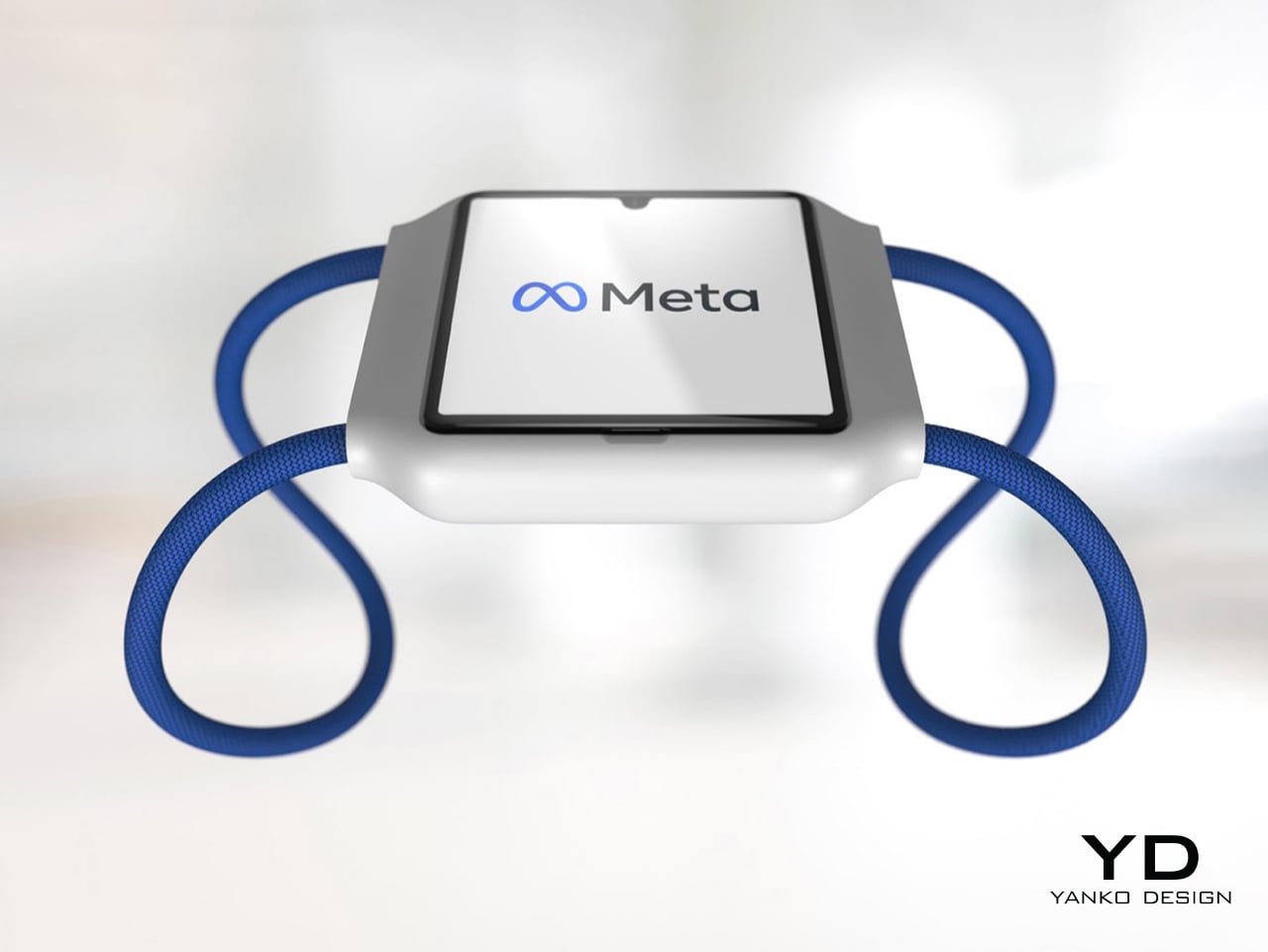
Meta is building a smartwatch, and it wants to know your heart rate, your sleep patterns, your activity levels, and whatever else it can pull from a sensor pressed against your skin all day. The device is codenamed Malibu 2, it’s targeting a 2026 launch, and by most accounts it sounds like a perfectly competent health wearable. The problem isn’t the hardware. The problem is the company attached to it.
This is the same Meta that just faced congressional scrutiny over social media addiction today. The same Meta whose smart glasses are reportedly inching toward facial recognition. The same Meta that filed a patent for Project Lazarus, a system designed to generate posthumous content from deceased users, because apparently your data doesn’t stop being useful to them just because you do. Handing your most intimate biometric information to that company is a case study in one.
Designer: Meta
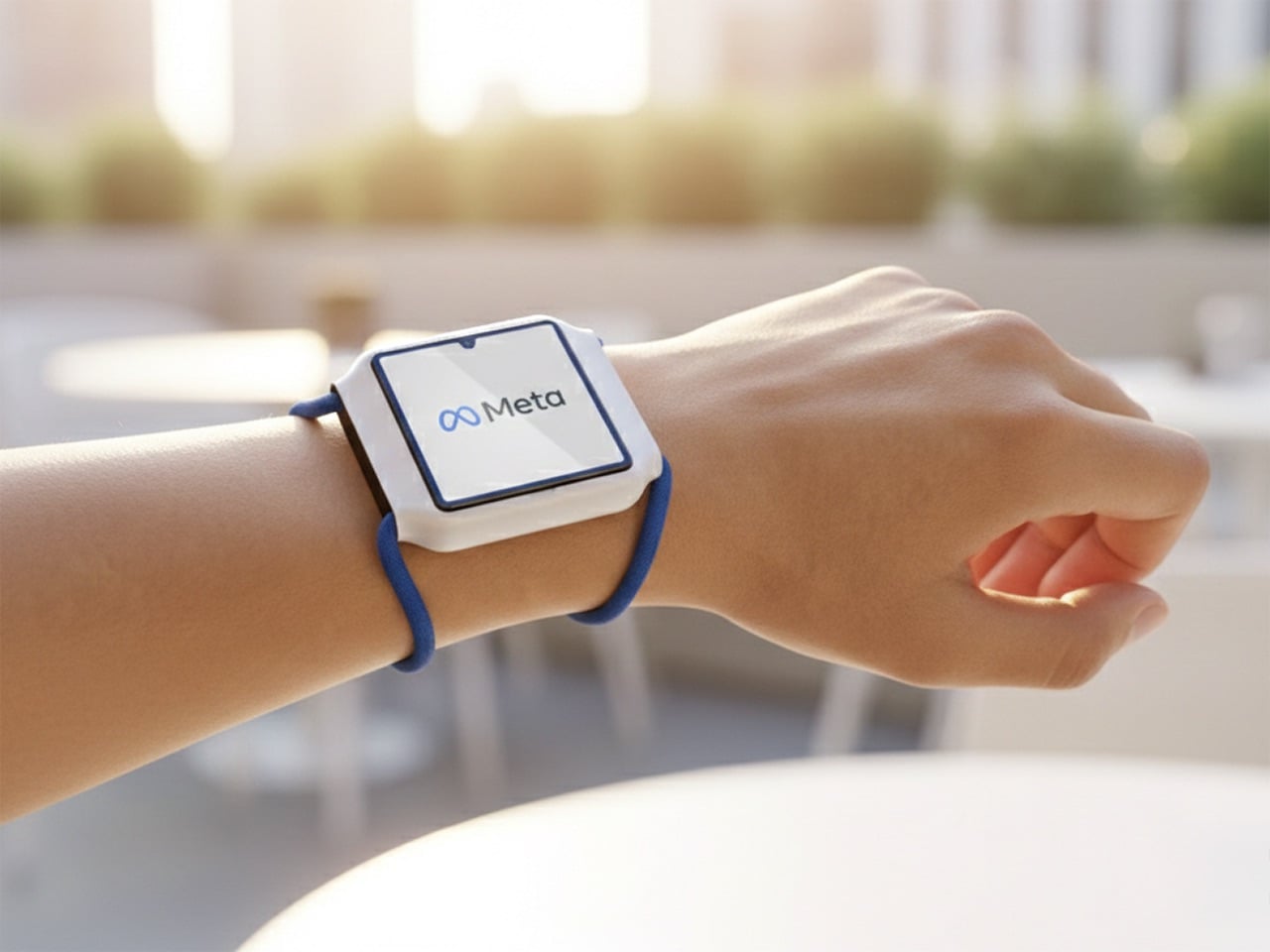
To be fair, the product itself has a coherent logic behind it. Meta’s Ray-Ban Display glasses have been received surprisingly well by the press, and the neural wristband that ships with them, which uses electromyography to read muscle signals and translate them into gestures, only works with those glasses. That’s a real limitation. A smartwatch that absorbs that gesture-control functionality while adding health tracking and a persistent AI assistant would close a gap that currently makes the whole setup feel incomplete. From a pure product strategy standpoint, Malibu 2 makes sense.
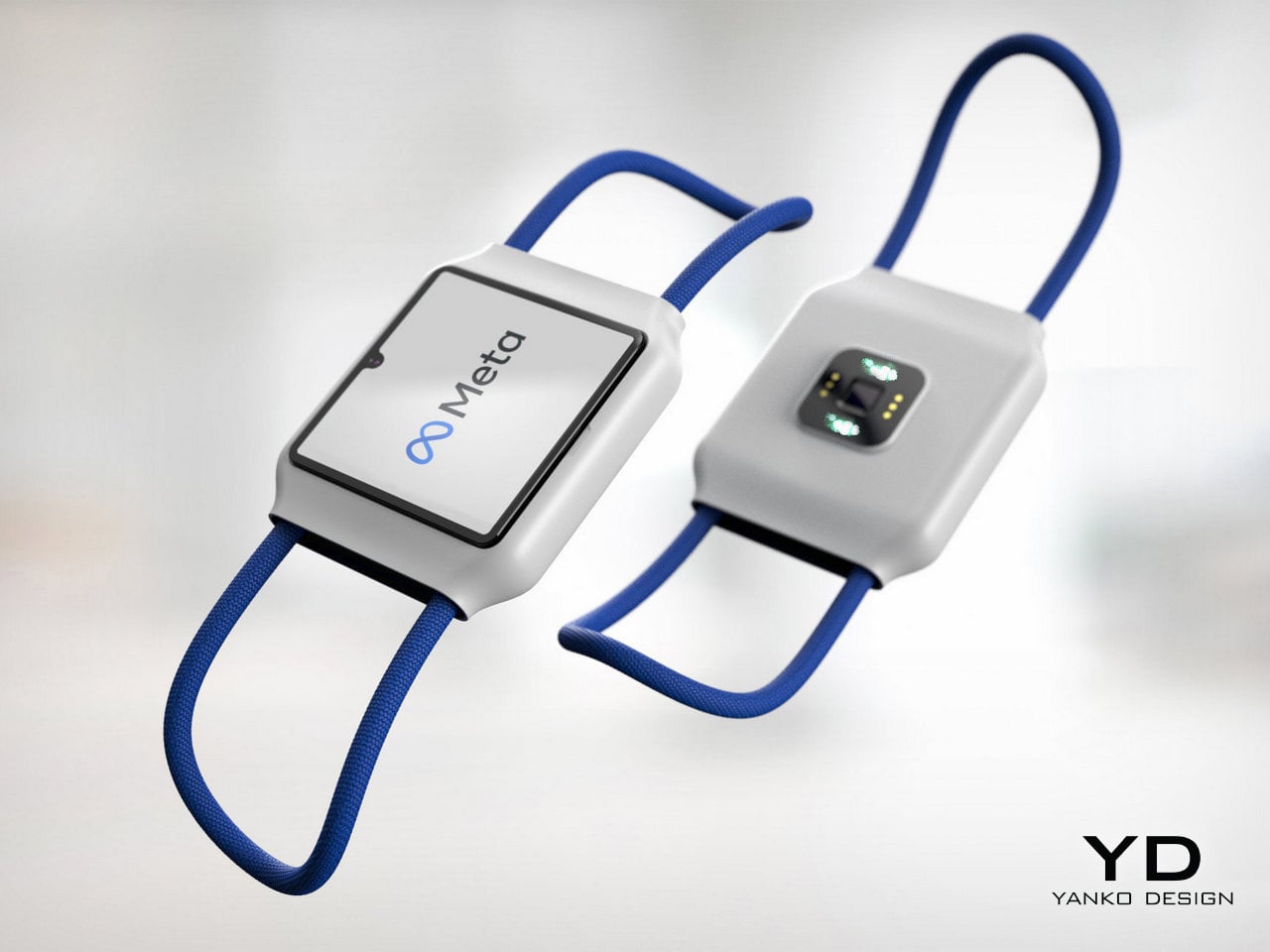
The hardware ambitions have also matured since Meta’s first attempt at a smartwatch, which was scrapped in 2022 after accumulating plans for detachable cameras and metaverse tie-ins that never quite added up to a coherent device. Malibu 2 is reportedly focused on health tracking and Meta AI integration, which is a much cleaner pitch. The company already has a working partnership with Garmin, visible in the Oakley Vanguard sports glasses and a neural band demo at CES 2026 inside a Garmin-powered car concept. If there’s a natural manufacturing and platform partner for this watch, Garmin is the obvious candidate.
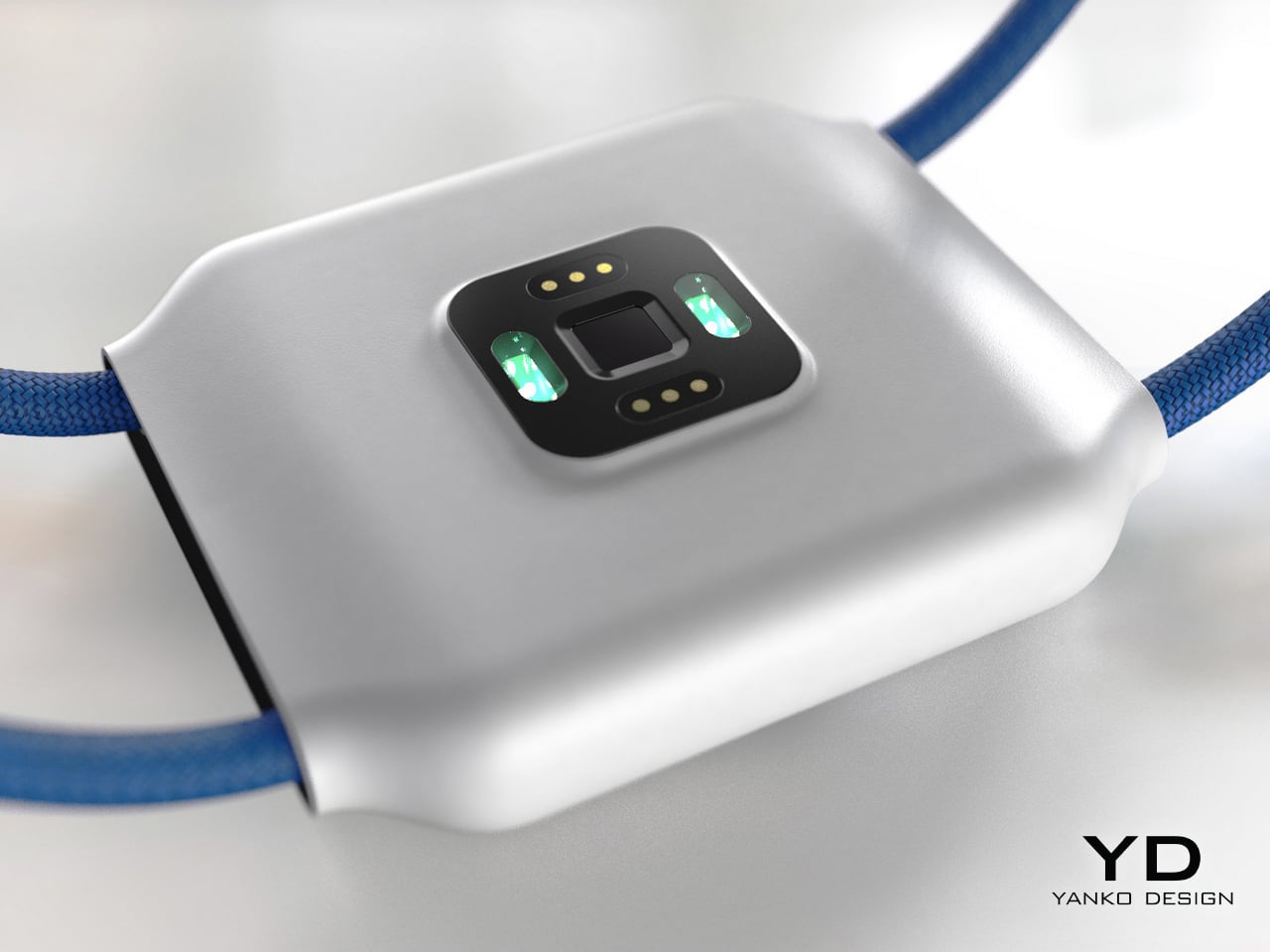
Meta is also reportedly developing the watch to sit alongside updated Ray-Ban Display glasses, internally called Hypernova 2, with both devices likely to be unveiled at Meta Connect in September. The Phoenix mixed reality glasses, meanwhile, have been pushed to 2027 partly because Meta’s executives were concerned about releasing too many devices at once and confusing consumers. That’s a reasonable concern. It’s also a little rich coming from a company whose current product lineup already includes smart glasses with a separate neural band that only controls one device.
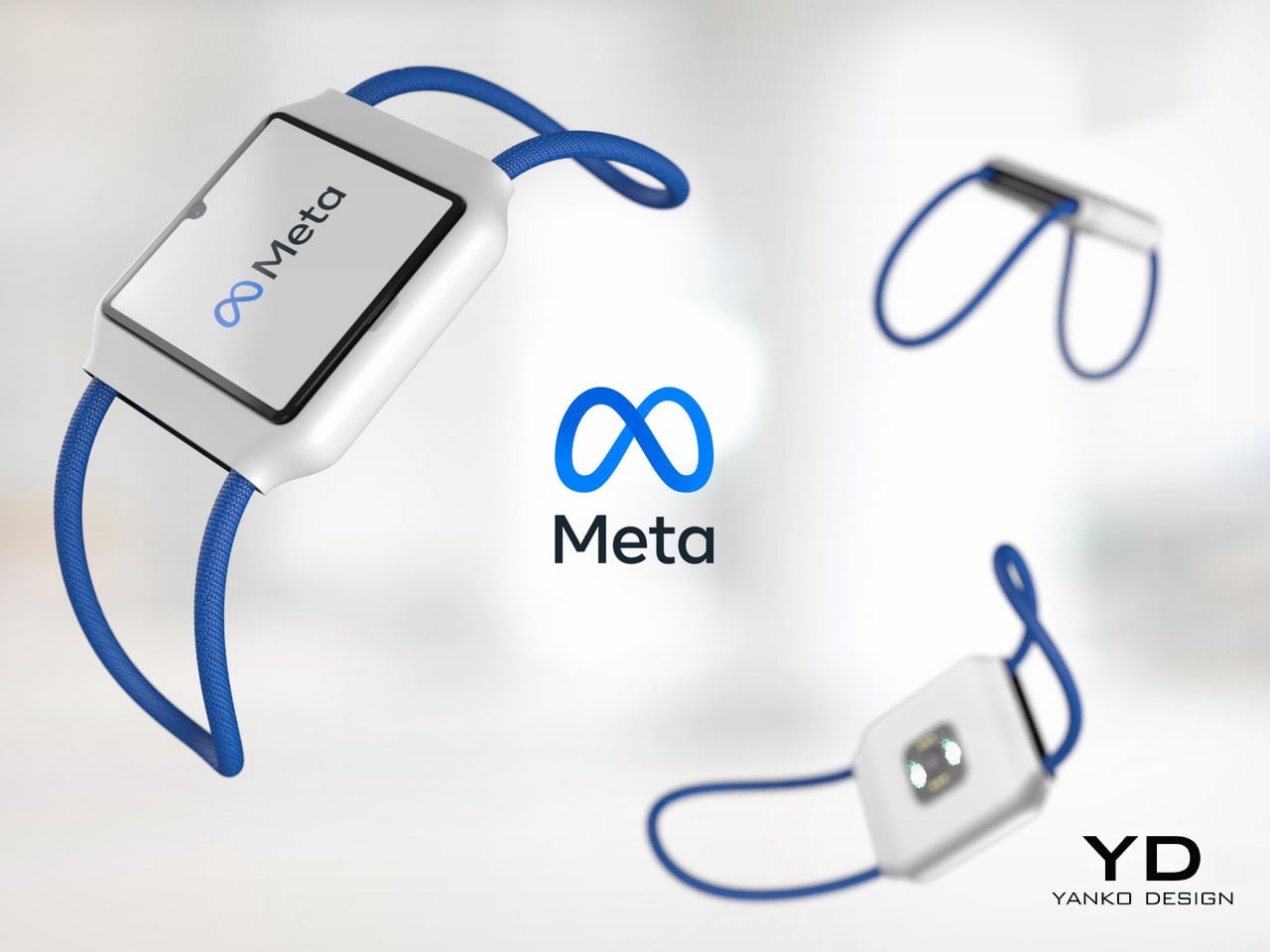
The wearables market is genuinely ready for a credible third competitor alongside Apple and Samsung, and Meta has the AI infrastructure and the existing glasses ecosystem to make Malibu 2 compelling from launch. But compelling and trustworthy are different things, and Meta has spent twenty years demonstrating which one it prioritizes. Your Apple Watch data sits in Apple’s ecosystem, behind a company that has made privacy a marketing pillar and a legal battleground. Your Malibu 2 data sits with a company that patented a way to keep monetizing you after you die.
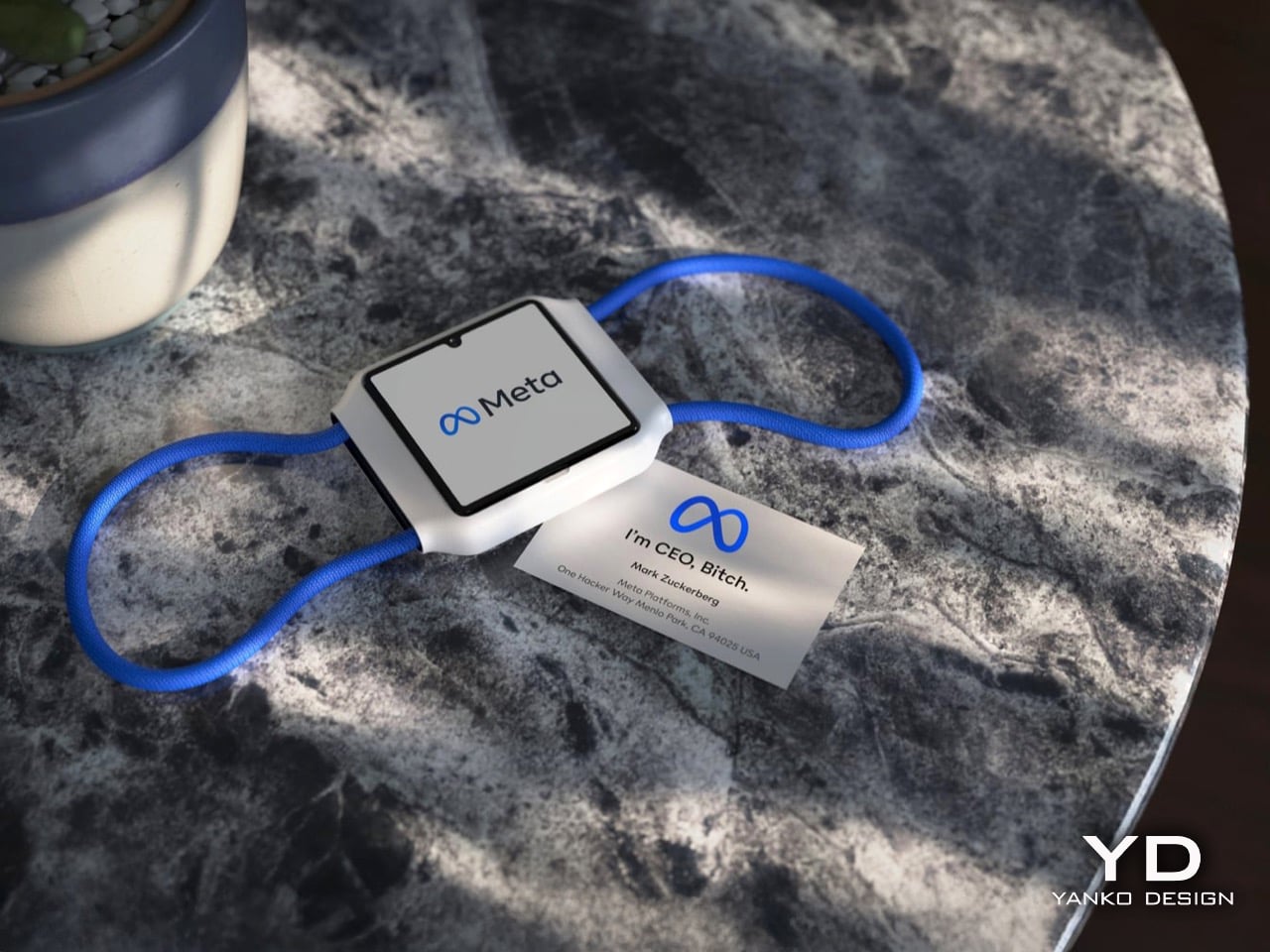
The post Meta Wants to Put an AI Health Tracker on Your Wrist in 2026. What Could Go Wrong?? first appeared on Yanko Design.
Meta is building a smartwatch, and it wants to know your heart rate, your sleep patterns, your activity levels, and whatever else it can pull from a sensor pressed against your skin all day. The device is codenamed Malibu 2, it’s targeting a 2026 launch, and by most accounts it sounds like a perfectly competent health wearable. The problem isn’t the hardware. The problem is the company attached to it.
This is the same Meta that just faced congressional scrutiny over social media addiction today. The same Meta whose smart glasses are reportedly inching toward facial recognition. The same Meta that filed a patent for Project Lazarus, a system designed to generate posthumous content from deceased users, because apparently your data doesn’t stop being useful to them just because you do. Handing your most intimate biometric information to that company is a case study in one.
Designer: Meta
To be fair, the product itself has a coherent logic behind it. Meta’s Ray-Ban Display glasses have been received surprisingly well by the press, and the neural wristband that ships with them, which uses electromyography to read muscle signals and translate them into gestures, only works with those glasses. That’s a real limitation. A smartwatch that absorbs that gesture-control functionality while adding health tracking and a persistent AI assistant would close a gap that currently makes the whole setup feel incomplete. From a pure product strategy standpoint, Malibu 2 makes sense.
The hardware ambitions have also matured since Meta’s first attempt at a smartwatch, which was scrapped in 2022 after accumulating plans for detachable cameras and metaverse tie-ins that never quite added up to a coherent device. Malibu 2 is reportedly focused on health tracking and Meta AI integration, which is a much cleaner pitch. The company already has a working partnership with Garmin, visible in the Oakley Vanguard sports glasses and a neural band demo at CES 2026 inside a Garmin-powered car concept. If there’s a natural manufacturing and platform partner for this watch, Garmin is the obvious candidate.
Meta is also reportedly developing the watch to sit alongside updated Ray-Ban Display glasses, internally called Hypernova 2, with both devices likely to be unveiled at Meta Connect in September. The Phoenix mixed reality glasses, meanwhile, have been pushed to 2027 partly because Meta’s executives were concerned about releasing too many devices at once and confusing consumers. That’s a reasonable concern. It’s also a little rich coming from a company whose current product lineup already includes smart glasses with a separate neural band that only controls one device.
The wearables market is genuinely ready for a credible third competitor alongside Apple and Samsung, and Meta has the AI infrastructure and the existing glasses ecosystem to make Malibu 2 compelling from launch. But compelling and trustworthy are different things, and Meta has spent twenty years demonstrating which one it prioritizes. Your Apple Watch data sits in Apple’s ecosystem, behind a company that has made privacy a marketing pillar and a legal battleground. Your Malibu 2 data sits with a company that patented a way to keep monetizing you after you die.
The post Meta Wants to Put an AI Health Tracker on Your Wrist in 2026. What Could Go Wrong?? first appeared on Yanko Design.
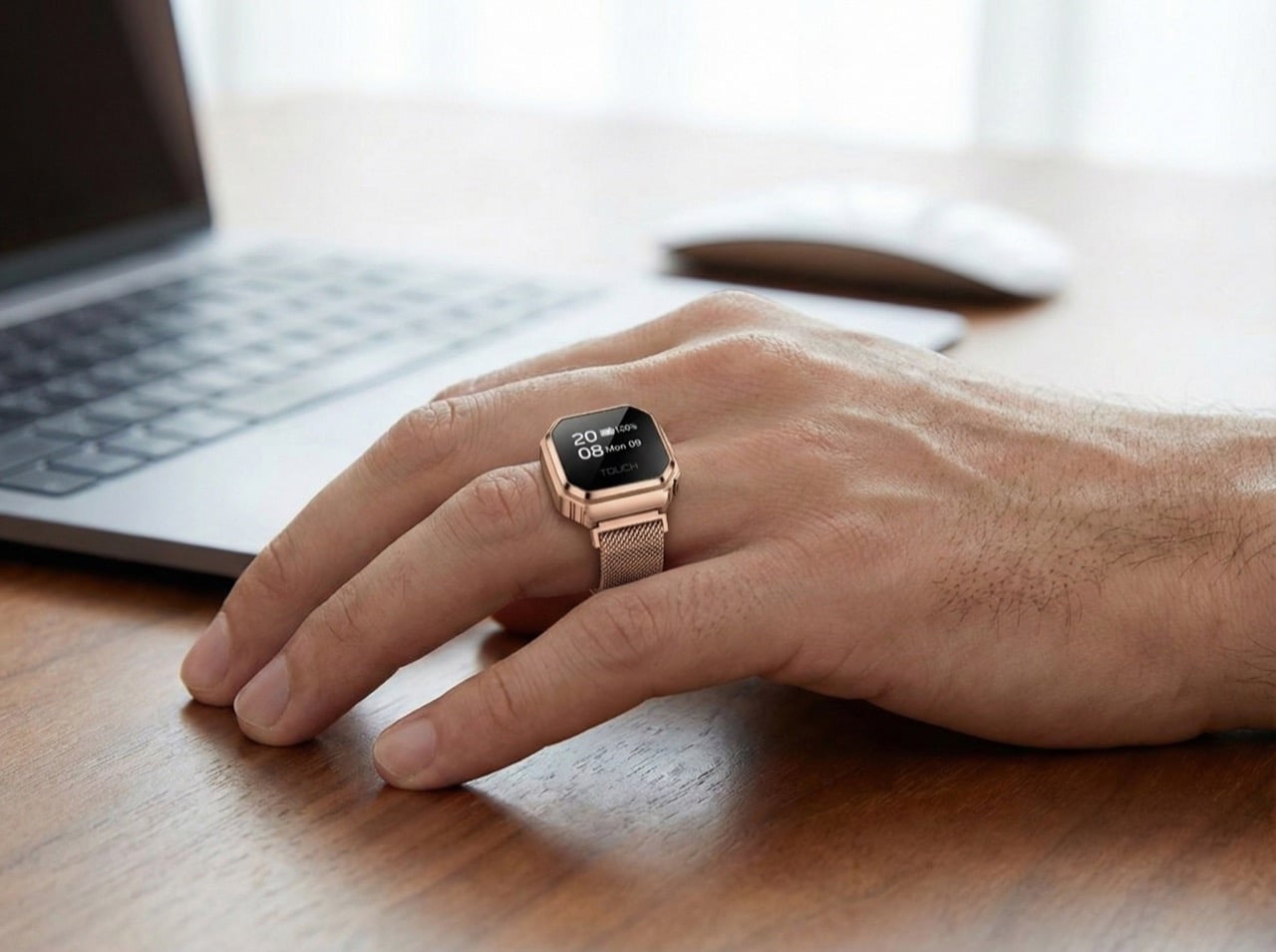
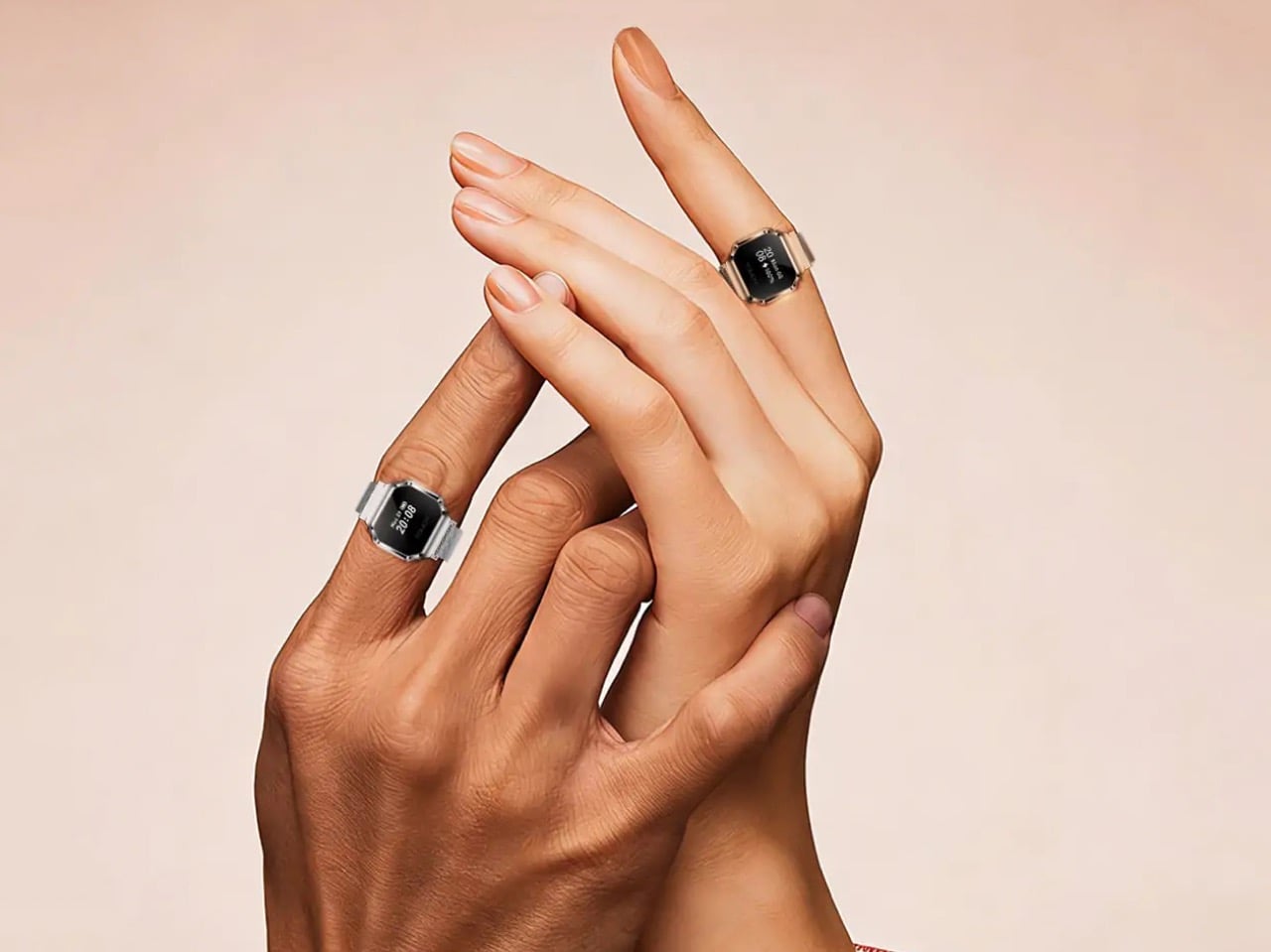
The smartwatch got smaller. Then the smart ring arrived. Now Rogbid has released something that splits the difference and costs less than a nice dinner: the Fusion, a hybrid device that looks like someone shrunk a fitness tracker and stuck it on a ring band. For fifty dollars, you get a legitimate OLED display, actual health sensors, and the ability to wear your technology on whichever body part feels right that day.
This is more than just miniaturization for the sake of novelty. The Fusion measures 20.6 x 21 x 8.2mm and weighs about as much as three quarters stacked together, yet it monitors heart rate, tracks sleep, measures blood oxygen levels, and survives underwater thanks to 5ATM water resistance. Rogbid includes both a finger-sized adjustable strap and a wrist band, turning the device into whatever you need depending on your outfit, activity, or tolerance for questions from strangers. Battery life hits five days with regular use, which means this tiny screen actually pulls its weight between charges.
Designer: Rogbid
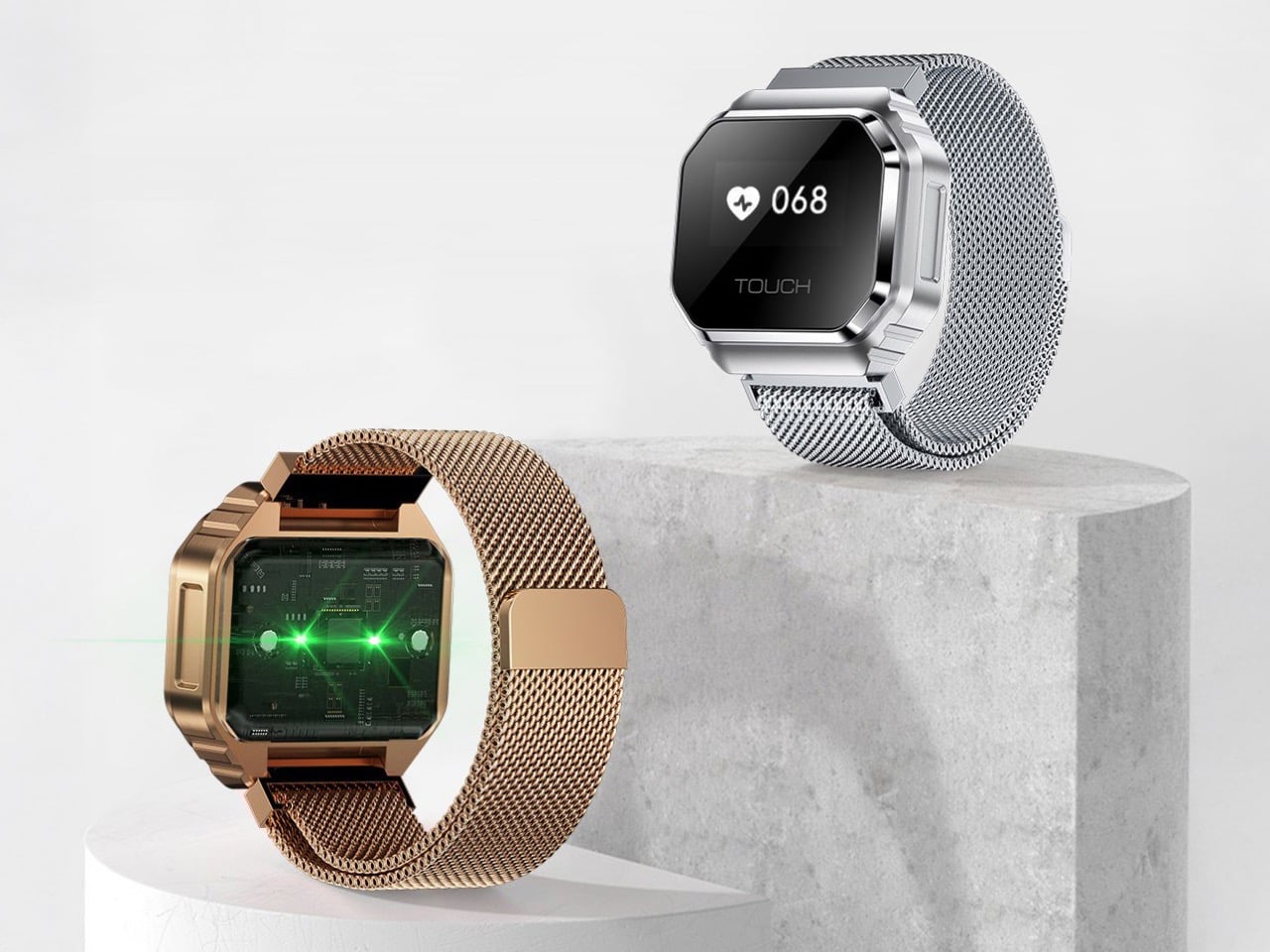
You have to give Rogbid credit for seeing Casio’s G-Shock ring sell out and thinking, “we can do that, but with actual tech inside.” That Casio piece was pure nostalgia, a fun gimmick that proved a market existed for finger-watches. Rogbid’s move feels like the logical, if slightly unhinged, next step: taking the novelty and injecting actual utility.
We’re talking over 100 sports modes, which is a software problem I don’t even want to think about navigating on a half-inch screen. But the hardware is there: an optical heart rate sensor, blood oxygen monitoring, and all the usual motion tracking. They even added prayer time reminders and a “couple interaction mode” for sharing codes, which feels like they just kept adding features from a hat until they ran out of room. It’s the kind of feature creep that’s almost admirable in its audacity, especially when most competitors are still trying to get basic step counting right in the ring form factor.
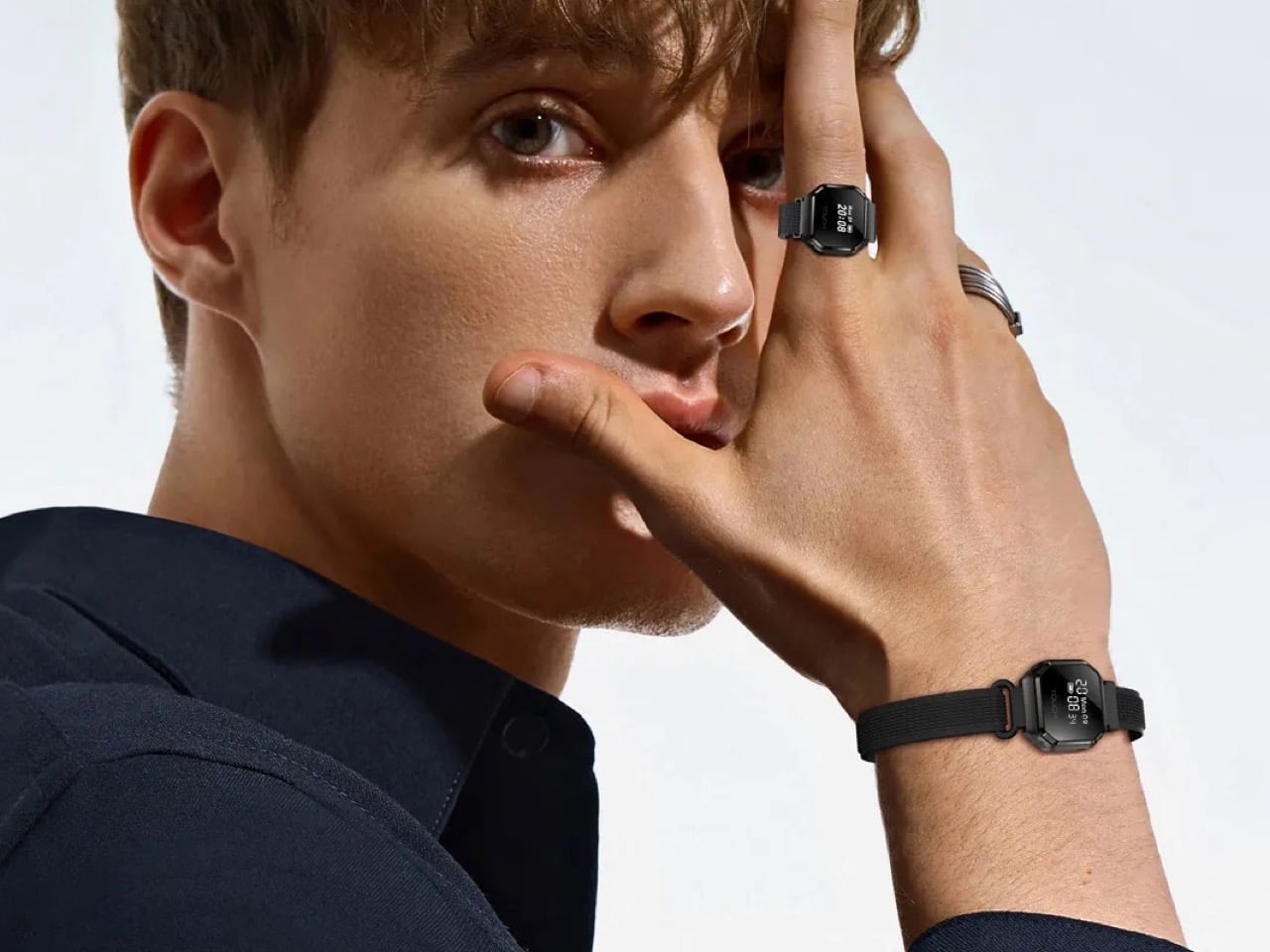
This whole thing is a fascinating gamble on what people want from a smart ring. The entire appeal of the Oura and its competitors is their subtlety; they disappear into your daily life. The Fusion, however, plants a glowing OLED screen right on your knuckle and demands attention. It’s a complete rejection of the minimalist aesthetic that defined the category. Maybe that’s the point. For fifty bucks, Rogbid isn’t trying to compete with the thousand-dollar jewelry pieces. They’re creating an entirely new, wonderfully weird sub-category of wearable that’s too cheap and too interesting to ignore.
The post This $50 Smart Ring Has a Screen (And Works Like A Tiny Smartwatch) first appeared on Yanko Design.
Full smartphones often feel like overkill, but the Apple Watch on your wrist is still awkward for anything beyond quick glances. There’s also the complication of wanting to wear a mechanical or analog watch without giving up notifications, Apple Pay, and quick replies. Stacking both on one arm feels ridiculous, and choosing between connectivity and wearing the watch you actually like is the kind of small annoyance that lingers.
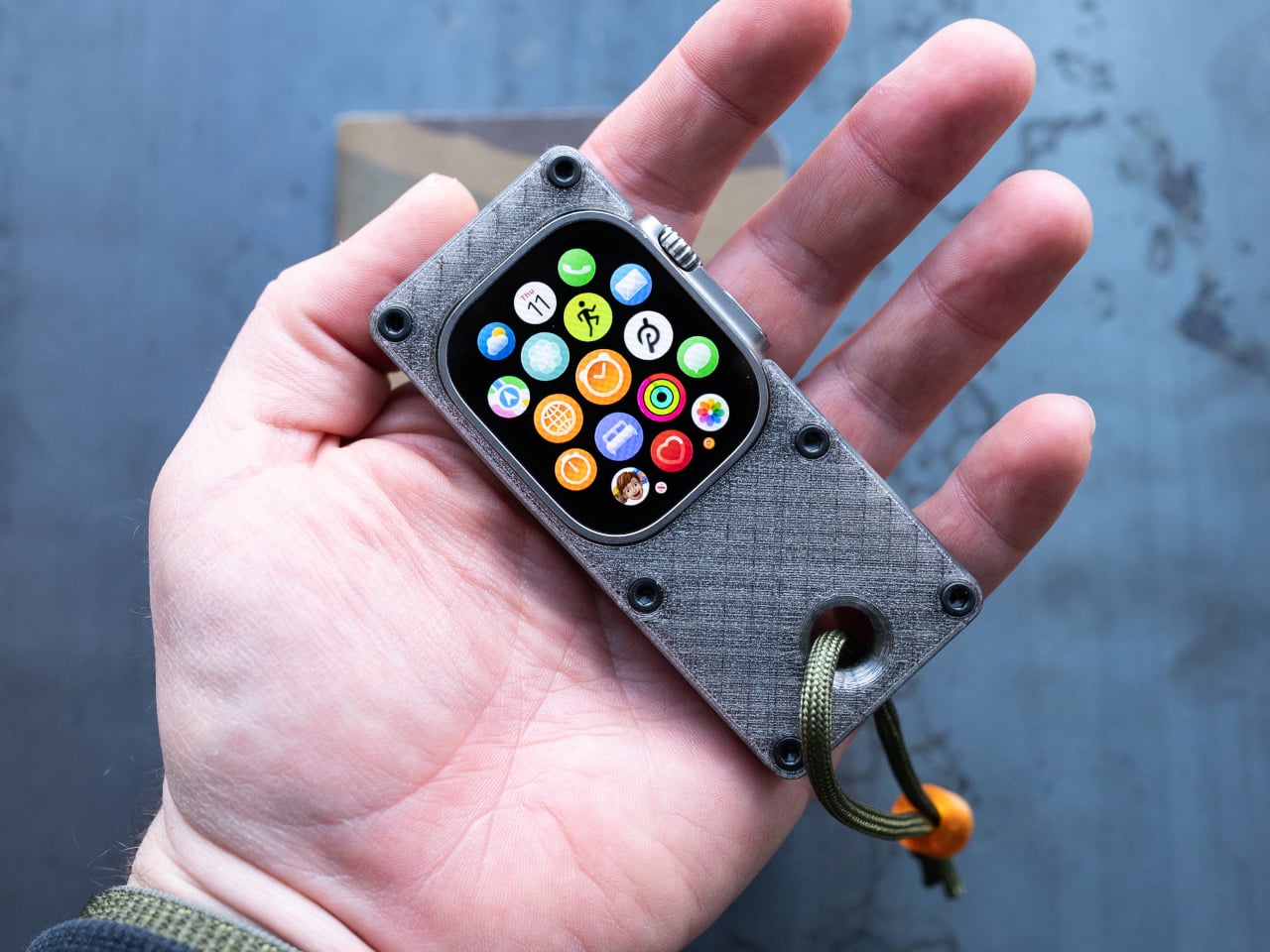
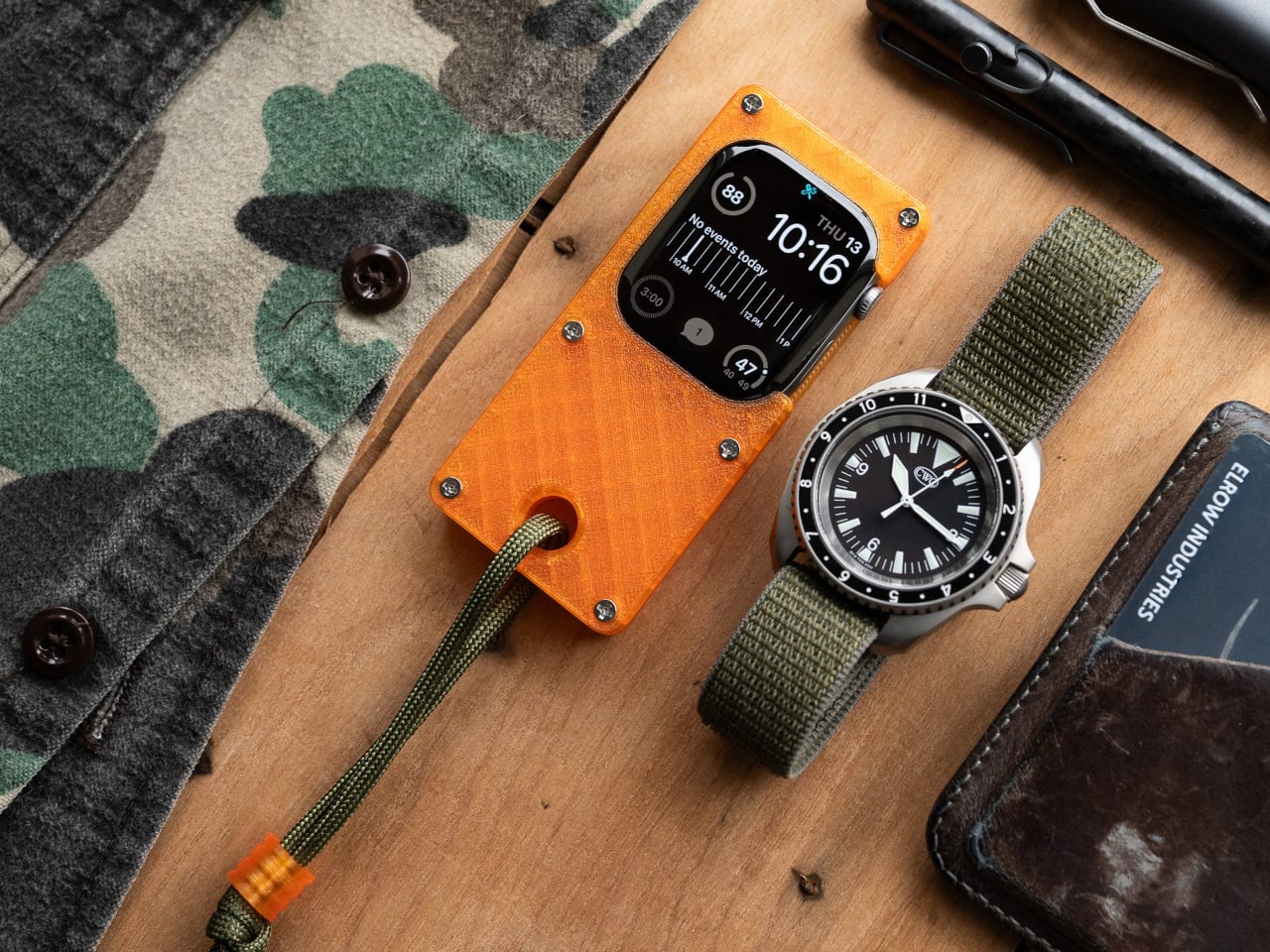
elrow’s miniphone Standard and miniphone Ultra are 3D-printed cases that turn an Apple Watch into a narrow, palm-sized device with a lanyard. The Standard fits the 46mm Series 10 and 11, while the Ultra fits the Apple Watch Ultra 1, 2, and 3. Both are about 95mm tall, with textured translucent bodies, visible screws, and an open back so you can charge without disassembling the case.
Designer: elrow industries
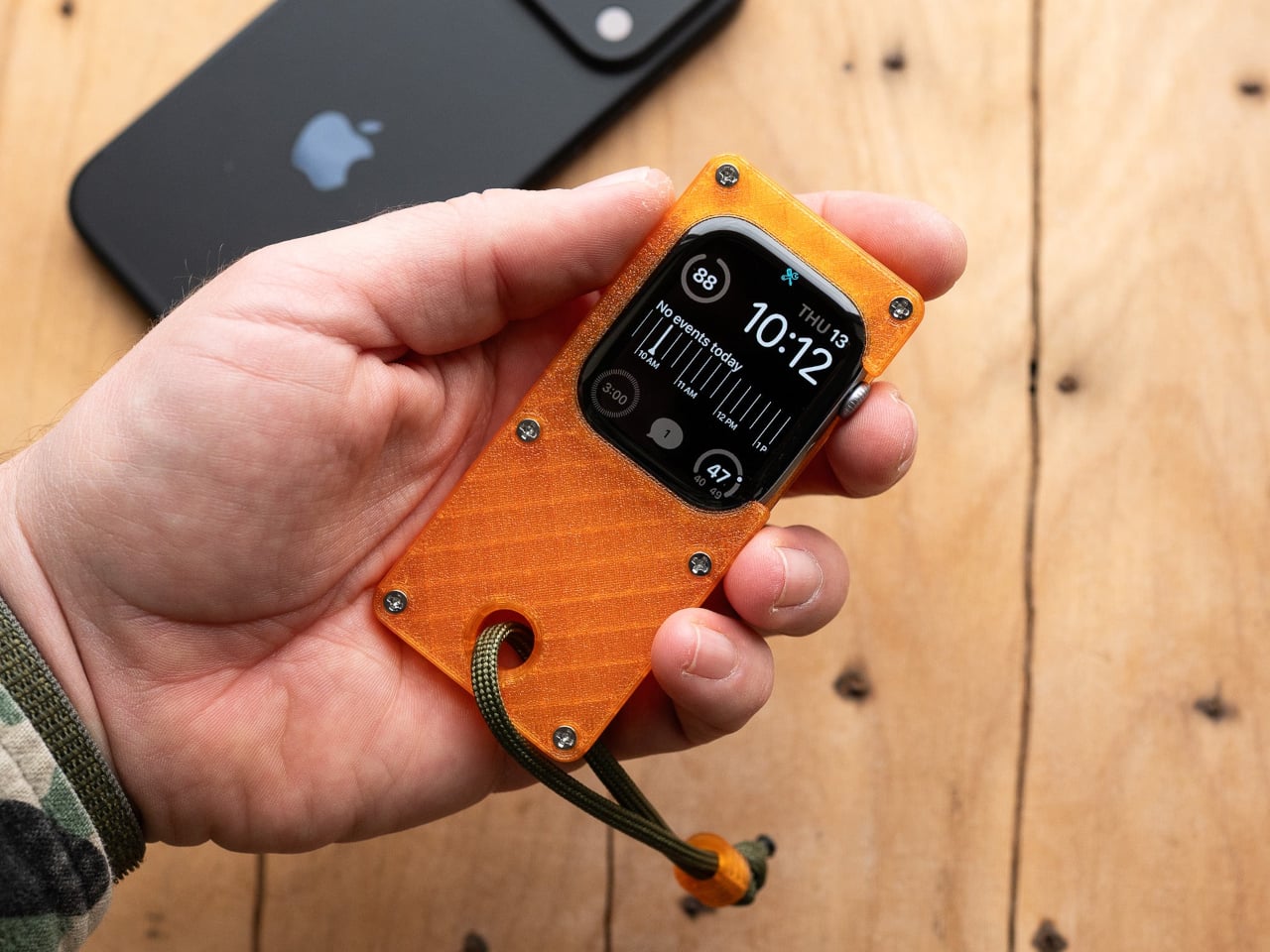
Leaving your iPhone in a bag and carrying the miniphone instead means you still get calls, messages, and Apple Pay, but you are not staring at a six-inch screen every time a notification pings. Holding the watch in a slightly larger body makes tapping icons feel more like using an old iPod than pecking at your wrist, and clipping it to a pocket means it stays out of sight until you need it.
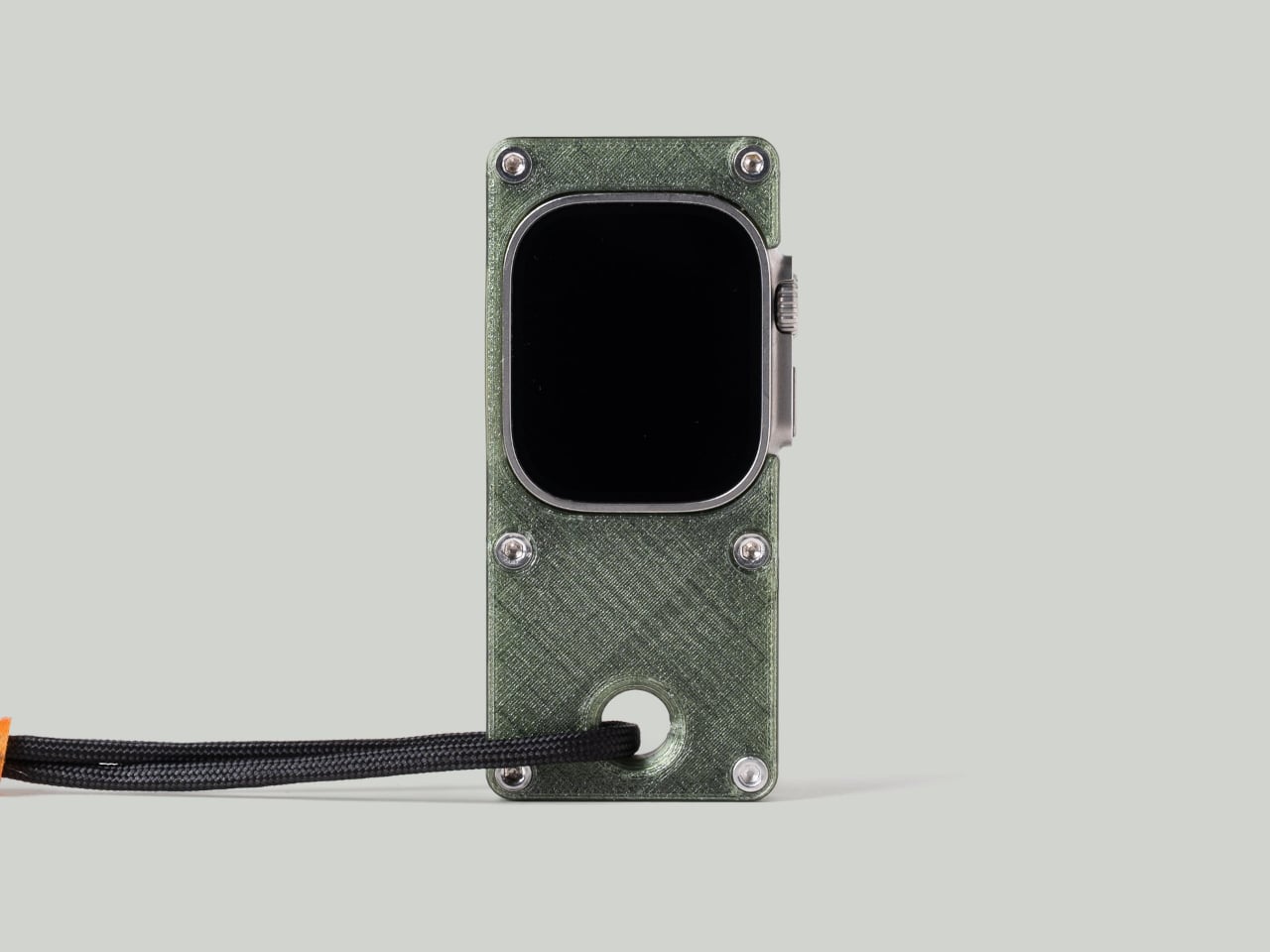
The translucent PLA+ on the Standard and PETG on the Ultra, textured surfaces, and stainless or black-coated steel hardware give the cases a rugged, workshop vibe. The integrated lanyard hole and included paracord with an orange bead make it easy to carry without pockets. It feels more like a small tool than a fashion case, which suits the “tool  watch” idea of keeping your mechanical watch on.
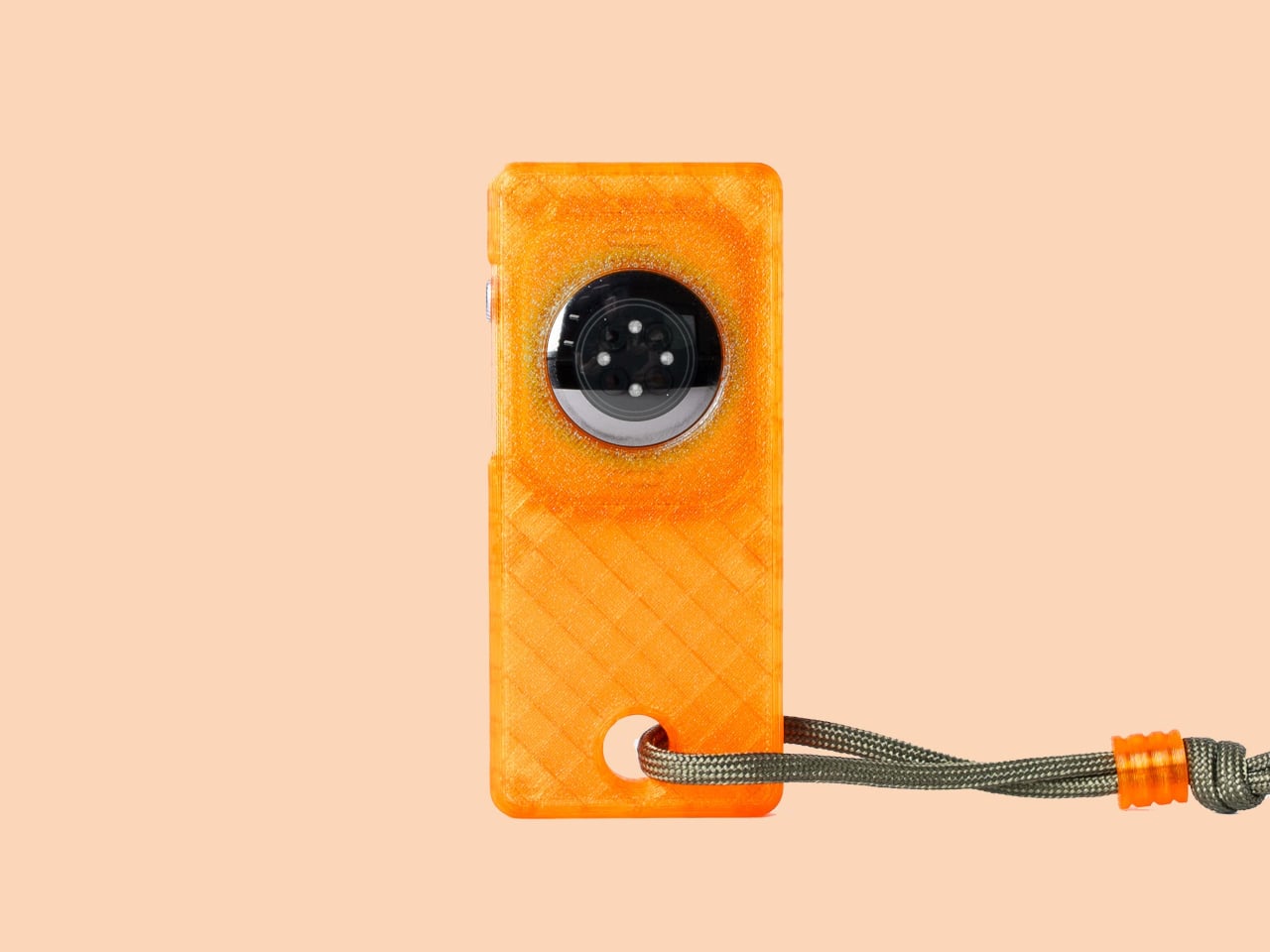
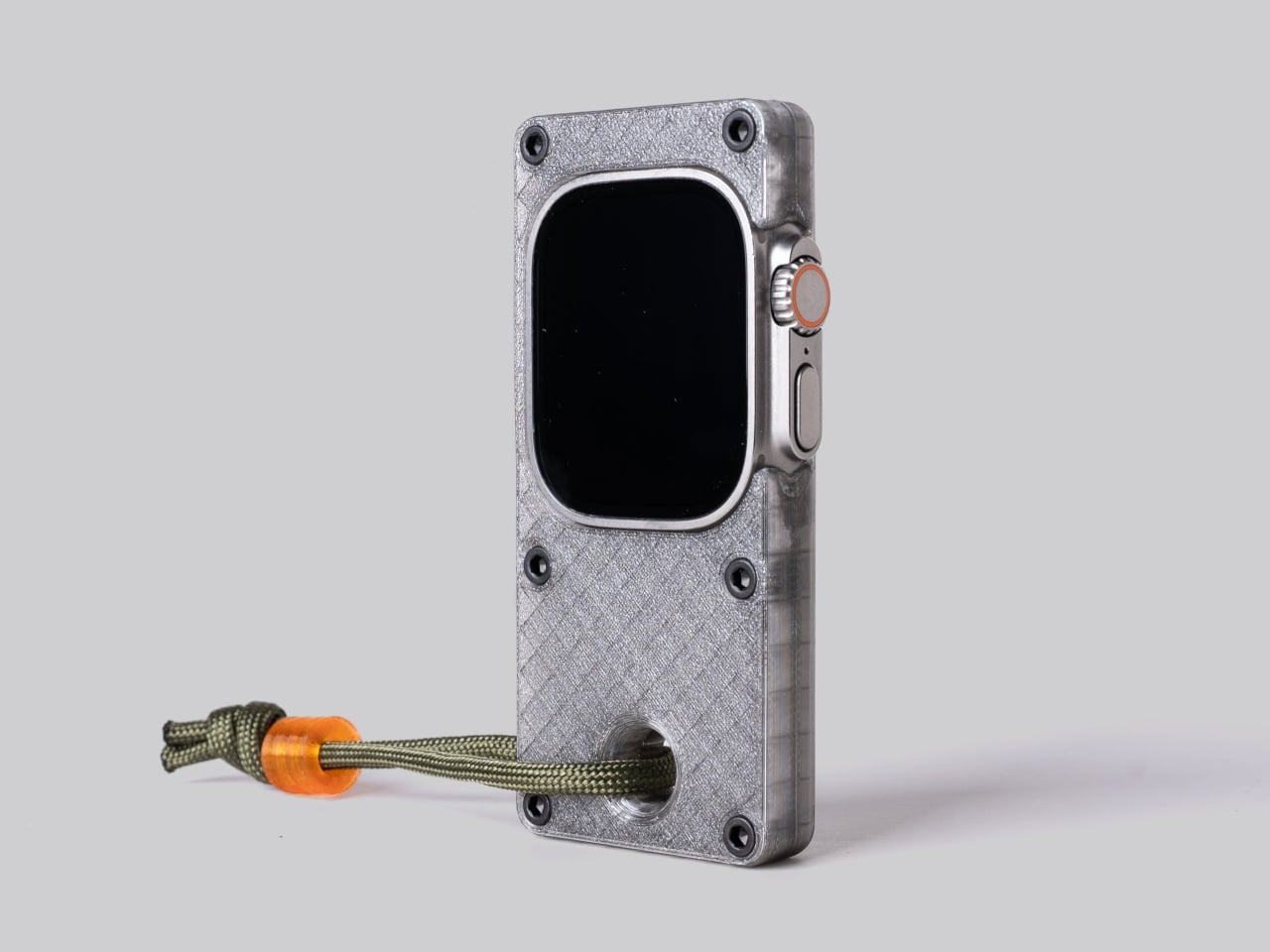
Moving the watch off your wrist means that continuous heart rate, ECG, blood oxygen, and sleep tracking are basically gone. You are also told to turn off wrist detection for better battery and notifications, which changes how Apple Pay, auto-lock, and some security features behave. Activity rings and step counts become unreliable when the watch lives in a pocket or on a lanyard, and fall detection may not work as intended.
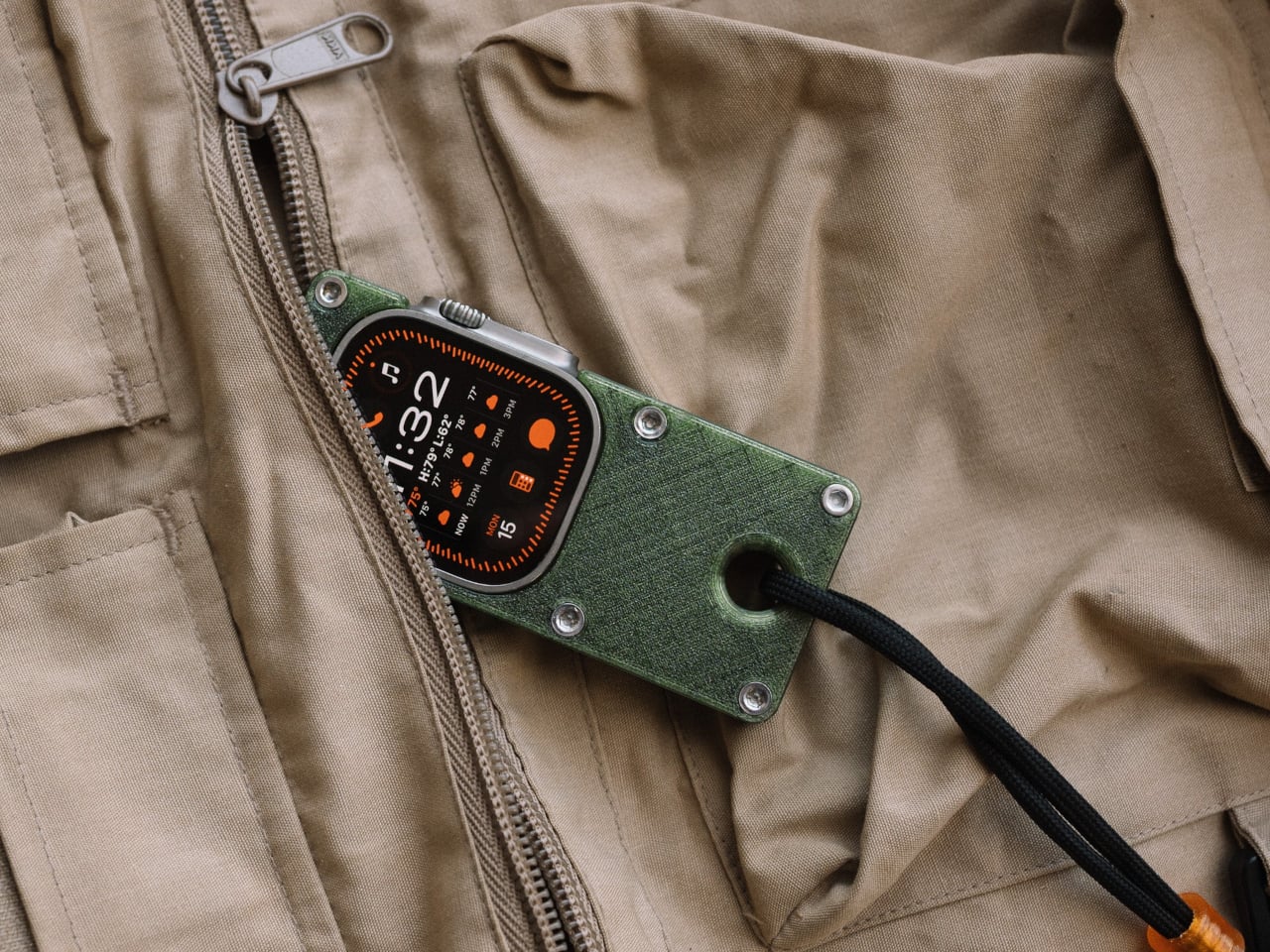
WatchOS assumes a wrist, from raise-to-wake gestures to how workouts and reminders work. In a miniphone case, some of that feels off or becomes less useful. You are treating the Apple Watch as a tiny connected widget for notifications and quick controls, not as a health tracker logging your life, which is fine if that is what you wanted in the first place.
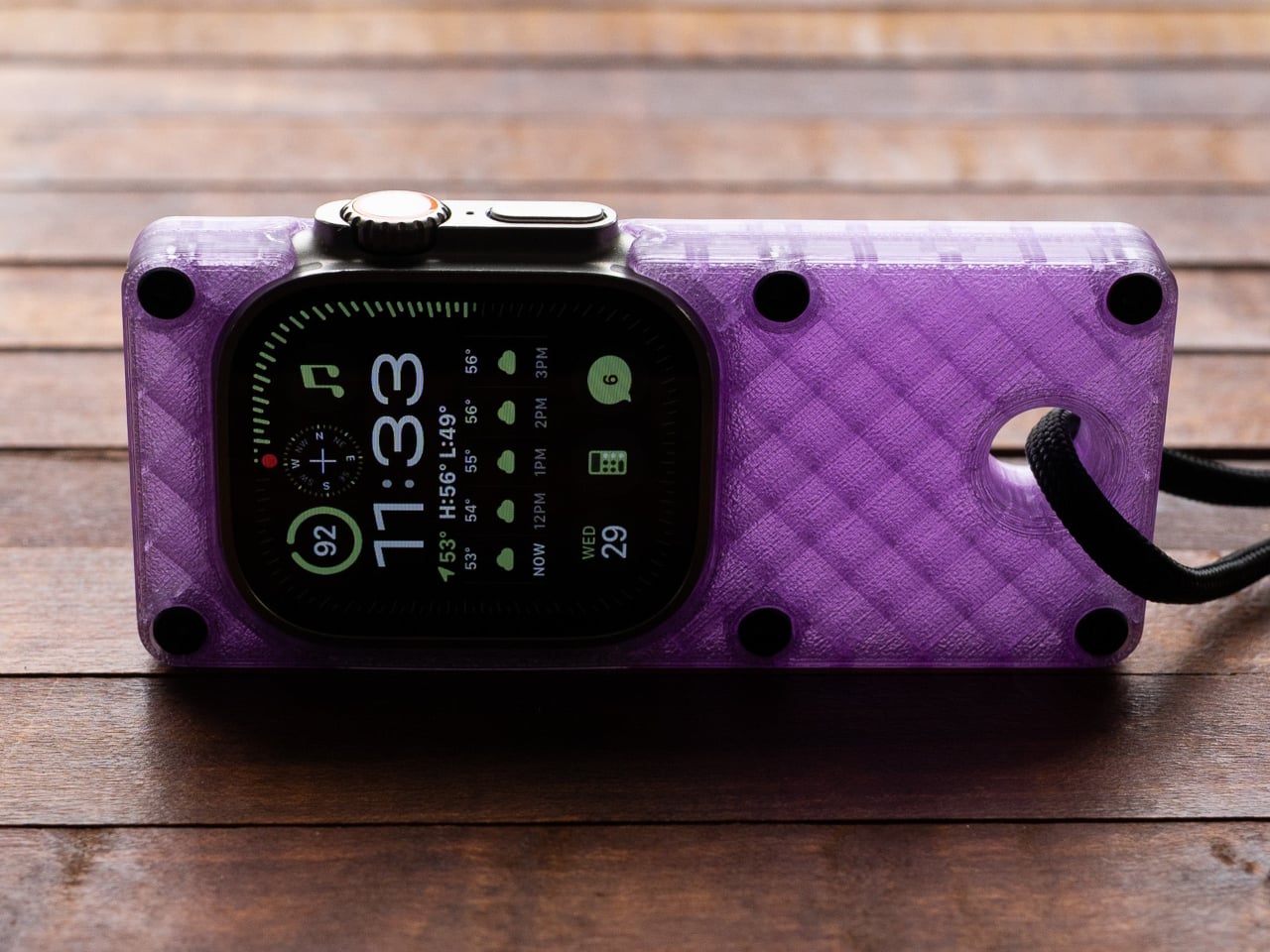
The miniphone cases make the most sense if you already use the Apple Watch as a lightweight communicator and remote, not as a medical device. If you love wearing a mechanical watch while still having a pocketable slice of watchOS nearby, or you want less phone without going fully offline, a 3D-printed case that trades sensors for simplicity is a strangely logical, if niche, step.
The post Wear Your Real Watch: This Case Turns Apple Watch into a Mini Handheld first appeared on Yanko Design.
The 2015 Pebble Time Round stole a lot of hearts by looking like a real analog watch and still being a Pebble, but it shipped with a tiny screen, a huge bezel, and battery life that lagged behind its siblings. It remained the thinnest smartwatch ever made, yet always felt like a beautiful compromise waiting for a second chance, the kind of product people kept wearing despite its flaws because it looked better than anything else on their wrist.
Pebble Round 2 is that second chance, part of the broader Pebble relaunch. It keeps the same ultra-slim stainless-steel profile, just 8.1 mm thick, but fixes the two big complaints: the bezel is gone, and the battery now lasts around two weeks. It is framed as the most stylish Pebble ever, but this time without the asterisk or the mental math about whether style was worth the compromises.
Designer: Pebble
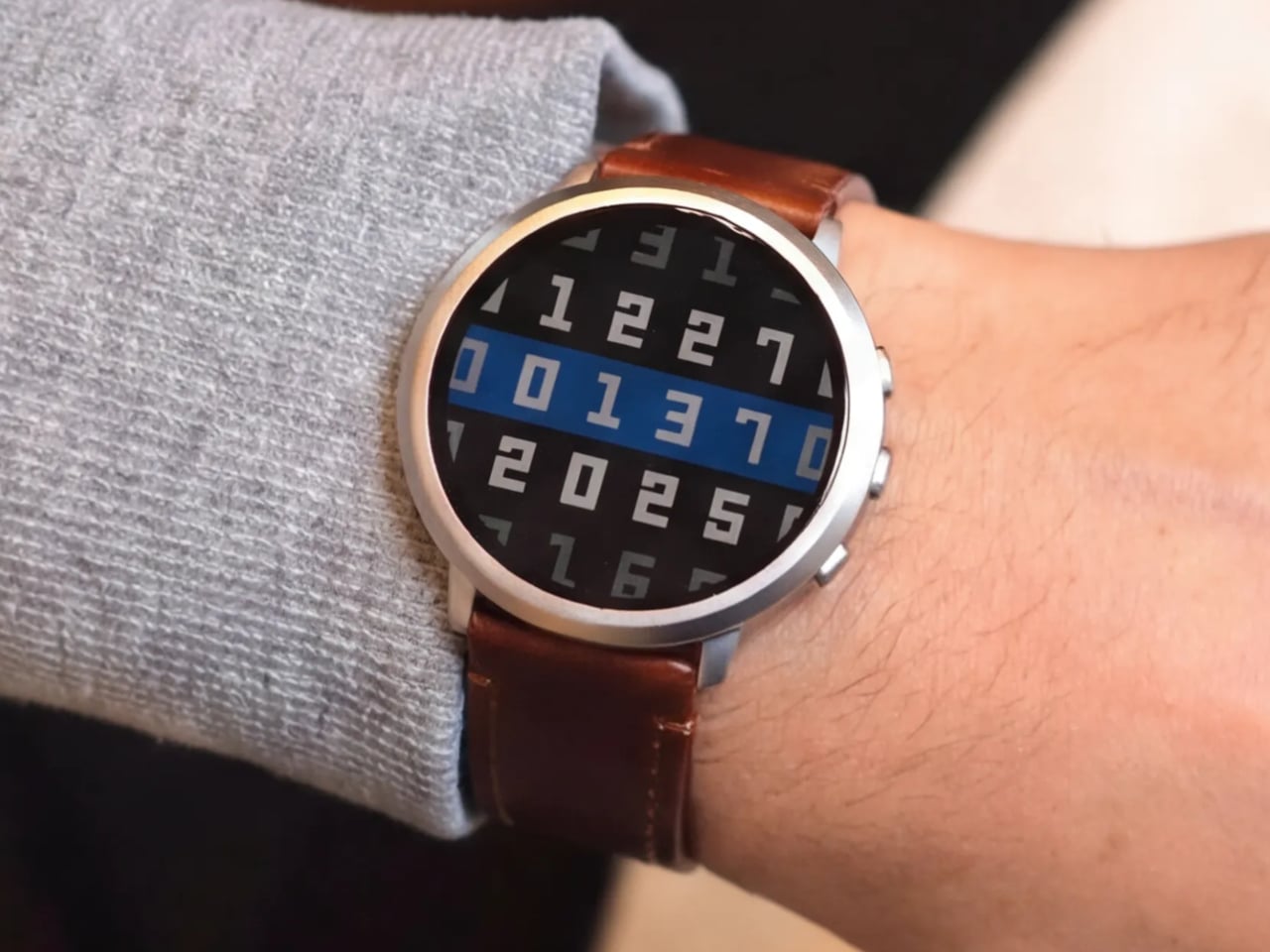

The new 1.3-inch color e-paper display covers the entire face, 260 × 260 pixels at 283 DPI, twice the resolution of the original. The always-on, reflective screen still behaves like a classic Pebble, readable in sunlight and gentle indoors, but finally looks proportionally right. Wrap that in a stainless-steel frame, and you get something that reads as a watch first, gadget second, which has always been the goal.
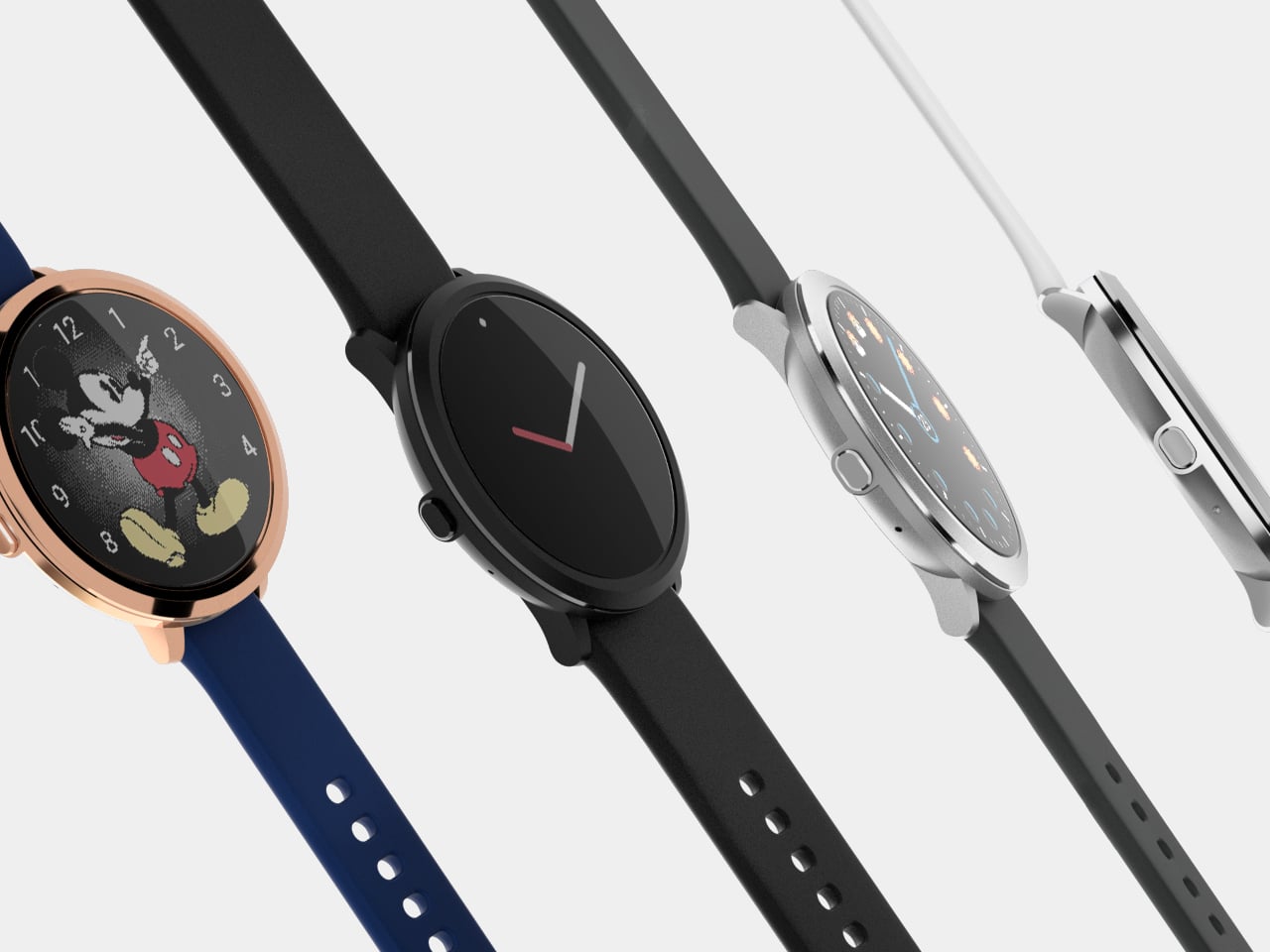
The two-week estimated battery life, made possible by newer Bluetooth chips and Pebble’s frugal OS, brings the Round in line with the rest of the lineup. Interaction stays very Pebble, four physical buttons you can use without looking, plus a touchscreen you do not have to rely on. There is a backlight for night glances, but the default state is that calm, always-on face that does not glow at you during meetings.
The software side stays fun, quirky, and open source. PebbleOS powers everything, with an open-source mobile app that works with iOS and Android. The Pebble app store has over 15,000 apps and watchfaces, and the SDK is there if you want to build your own. Health tracking covers steps and sleep, enough for everyday awareness without pretending to be a hardcore fitness or sports watch.

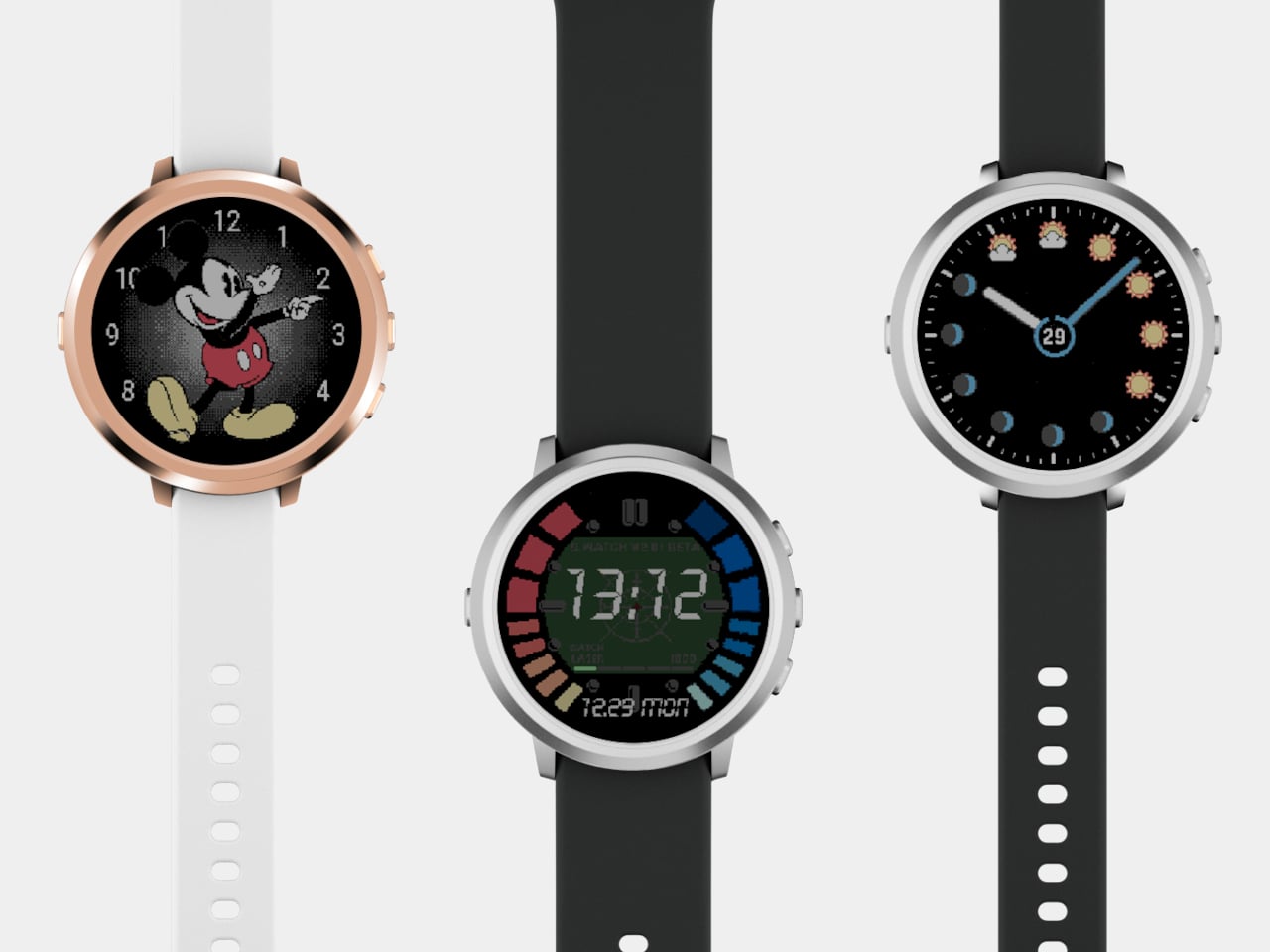
Dual microphones handle speech input, from interacting with AI agents to replying to messages on Android, with iOS support coming in some regions. Water resistance is targeted at 30 m, enough for daily life. Style-wise, you get matte black with a 20 mm band, brushed silver in 14 mm or 20 mm, and polished rose gold in 14 mm, all with quick-release bands and room for standard straps.
Pebble Round 2 speaks to people who miss glancing at a watch that is always on, who like the idea of weeks-long battery life and tactile buttons, and who want something that looks good with a shirt cuff as well as a hoodie. It is not chasing the latest sensor arms race; it is doubling down on the idea that a smartwatch can still feel like a watch, just one that happens to run PebbleOS in 2026, with a full-face display and enough battery to forget about charging for 14 days.

The post Pebble Round 2 Fixes the Bezel and Battery After an 11-Year Wait first appeared on Yanko Design.
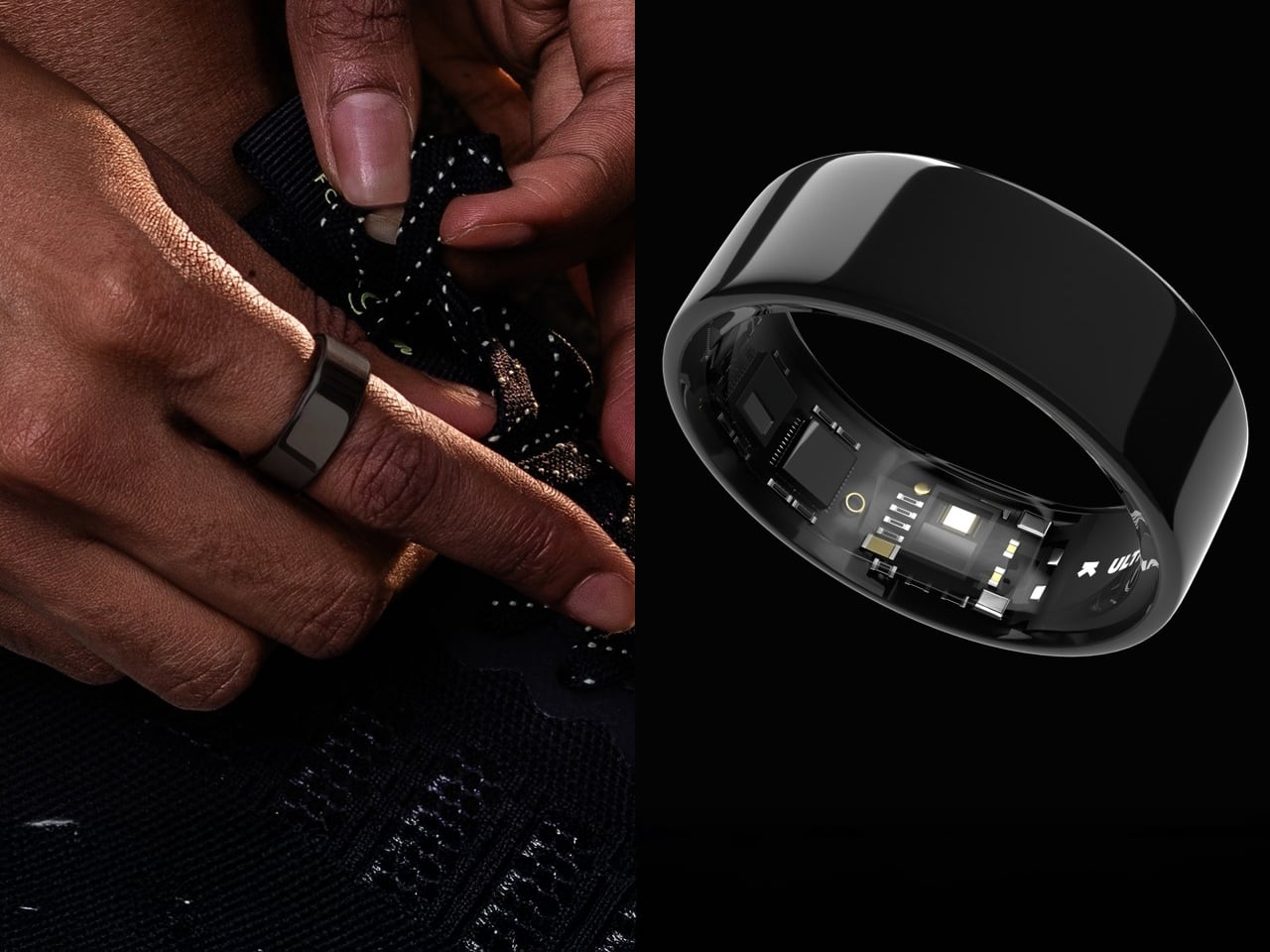
As technology evolves, new gadgets constantly emerge, and one such device that has seamlessly integrated into our daily lives is the fitness tracker. Over time, such devices have become essential in tracking our health and fitness goals. However, fitness trackers have now leaped forward, transforming into the smart ring. These sleek, electronic bands worn on the finger act as wearable devices, just like jewelry, but can monitor health metrics such as heart rate, sleep patterns, oxygen level, exercise monitoring, and more.
The global smart ring market was valued at USD 340.9 million in 2024 and is expected to expand from USD 416.9 million in 2025 to USD 2,525.5 million by 2032, reflecting a growth rate of 29.3% during the forecast period. Smart rings offer a more compact alternative to larger devices, yet provide powerful tracking capabilities and are often launched and backed by premium brands.
Smart rings are conventional rings that are equipped with different types of sensors and advanced technologies like Bluetooth and Near-Field Communication (NFC) used to monitor health and fitness metrics. Since the smart ring does not have screens, they sync wirelessly with smartphones or tablets, allowing users to access and analyze their health data in real time easily.
Many smart rings also feature haptic signals that vibrate the ring during a call or notification when the paired device is out of range, ensuring users stay connected. This combination of convenience and functionality makes smart rings an effortless way to track and manage health information on the go.
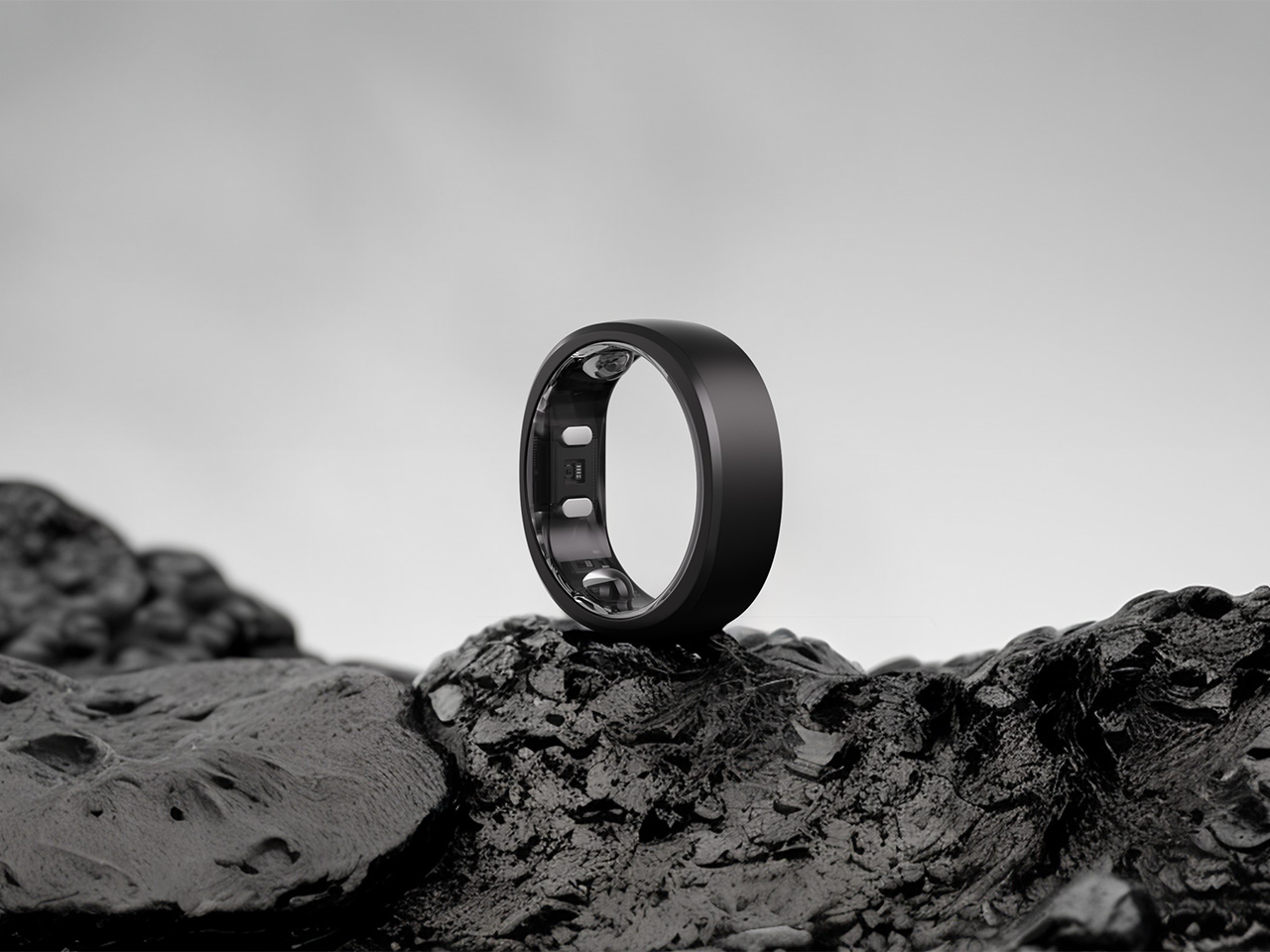

The RingConn Gen 2 is a smart ring that stands out with its sleek design, AI-powered health tracking, and impressive battery life. With a weight of just 2g and 2mm thick, it’s the lightest and thinnest smart ring on the market, providing precise health monitoring through sensors like 3D accelerometers, PPG (photoplethysmography), and temperature sensors. By tracking key metrics such as heart rate, heart rate variability, and blood oxygen levels, it offers a complete picture of your well-being.
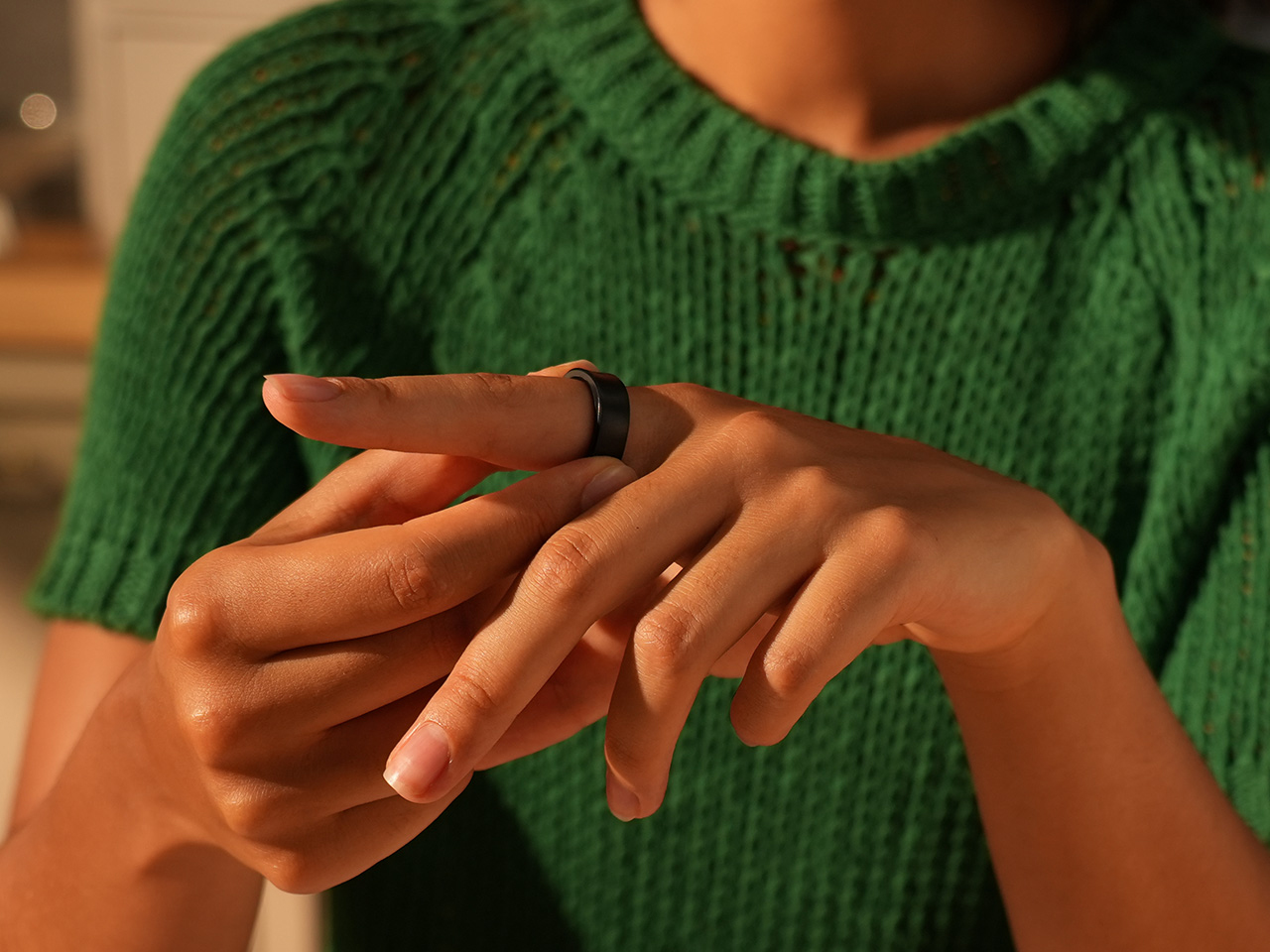
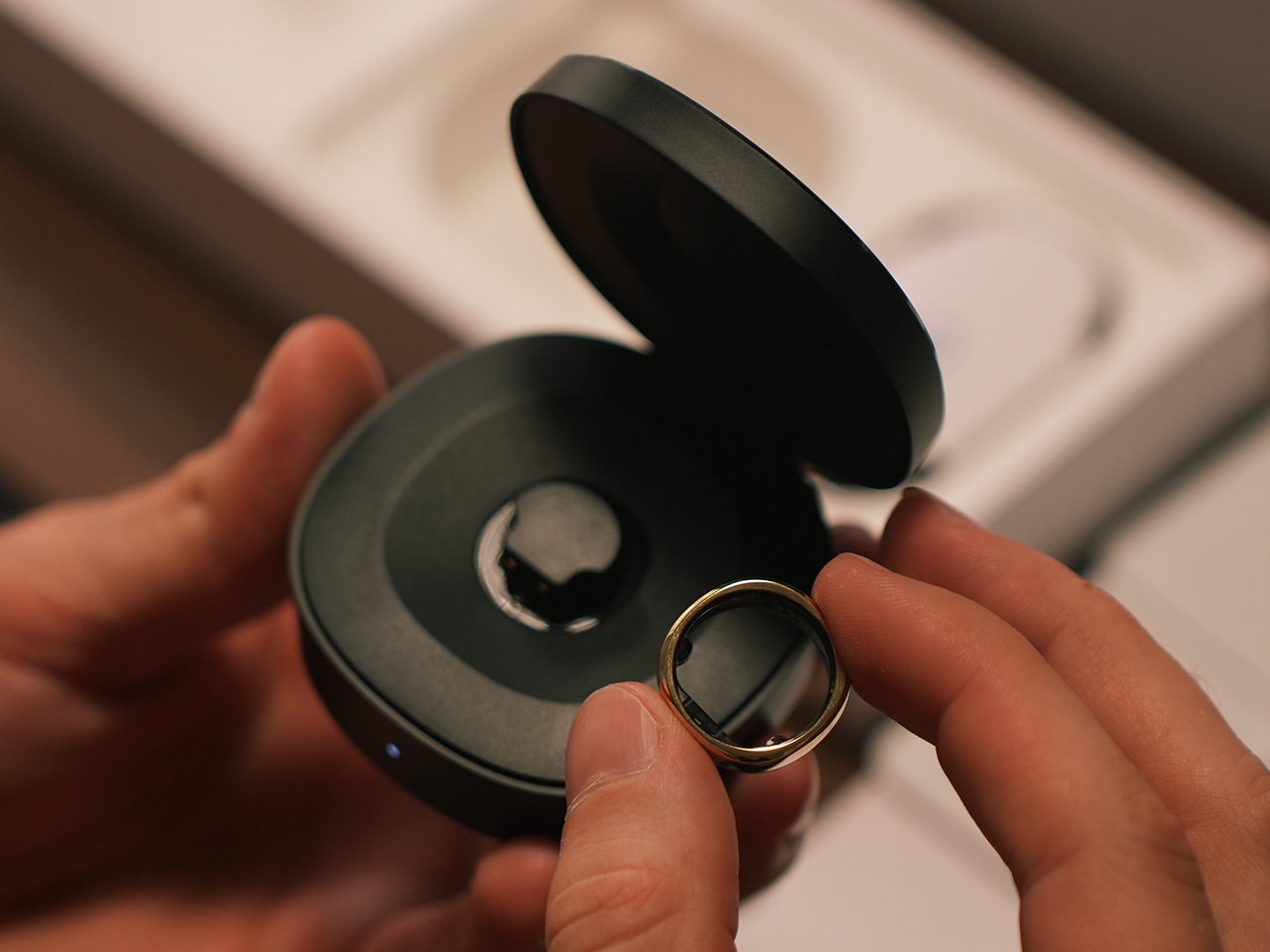
The RingConn app syncs this data, including stress levels and sleep patterns, with no hidden subscription fees. One of its most notable features is AI-powered sleep tracking, which monitors breathing, sleep stages, and overall efficiency to help detect issues like sleep apnea. With up to 12 days of battery life and 150 days of use with its charging case, the RingConn Gen 2 delivers comprehensive health tracking, empowering you to live a healthier, more informed life.
Together, these sensors work in tandem to offer comprehensive data for health and fitness tracking.
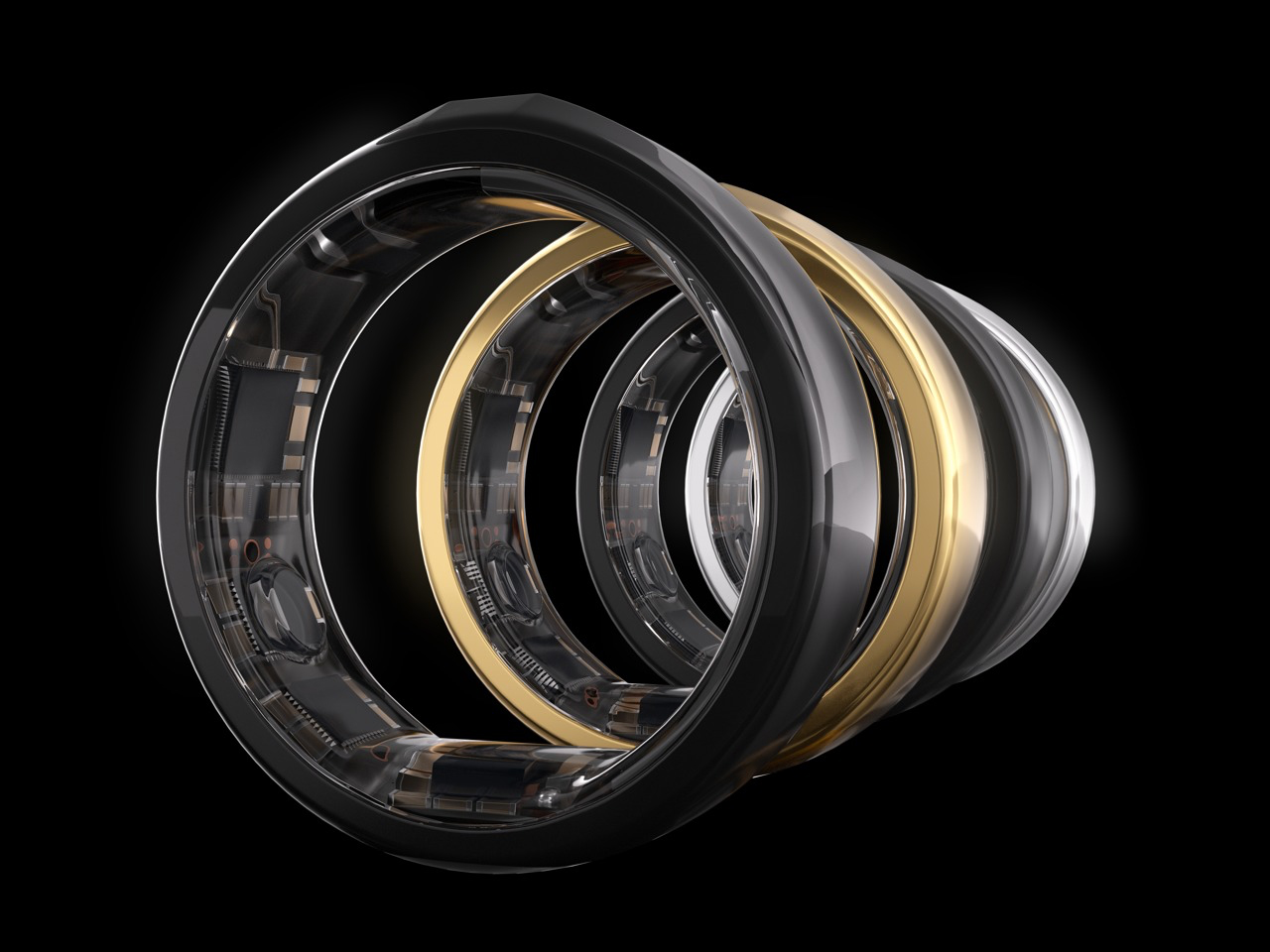

The Ultrahuman Ring combines sleek design with advanced health tracking, offering insights into your overall well-being. Unlike traditional wearables, it doesn’t just measure basic metrics like heart rate and steps—it interprets them into actionable insights. With features like the Movement Index, Sleep Index, and Recovery Score, it provides a deeper understanding of your daily energy expenditure, sleep quality, and stress levels, helping you make informed decisions for better health.


Crafted with durability and style in mind, the Ultrahuman Ring is made from a titanium outer shell and is coated with Tungsten carbide, and a hypoallergenic medical-grade interior for providing maximum comfort to the user. These rings are available in a variation of elegant colors, they are water-resistant and designed to withstand everyday activities. The Ultrahuman Ring offers a compact, fashionable way to monitor your health and improve your lifestyle without the bulk of traditional wearables.
The smart ring is a convenient alternative to smartwatches, with the key advantage being its portability as it allows you to remain hands-free while wearing jewelry. You can wear the smart ring comfortably even while sleeping, as its compact size ensures it doesn’t cause any discomfort.
The smart ring is designed for optimal data collection, and many models are made from non-corrosive materials like zirconia or feature a Physical Vapor Deposition (PVD) coating. Additionally, the smart ring is purpose-driven as it removes the distractions of extra features typically found in smartwatches, making it perfect for those who need a device focused on specific tasks.
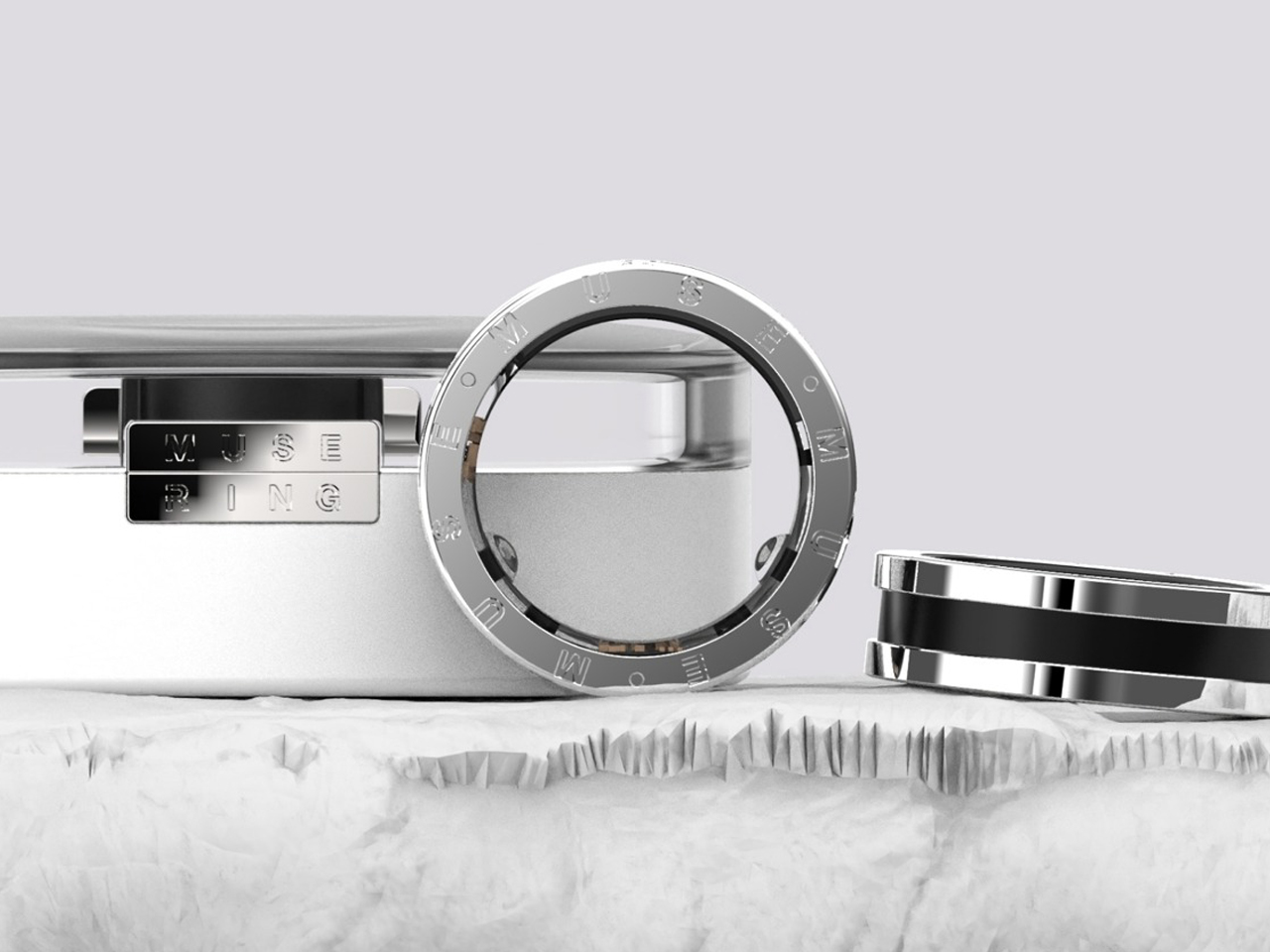
The Ring One represents a radical departure from bulky wrist-worn wearables, shrinking smartwatch functionality into an elegant piece of finger jewelry that’s 80% smaller yet delivers 99% of the features. This sleek titanium ring disguises powerful health-tracking technology beneath its minimalist exterior, monitoring your heart rate, HRV, SpO2, blood pressure, skin temperature, and all four sleep stages with research-grade optical PPG sensors. What makes it truly ingenious is the rotating Turn Wheel that replaces the traditional smartwatch crown—simply twist the ring’s bezel to cycle through workout tracking, sleep analysis, NFC payments, and even car unlocking modes. It’s the perfect solution for those who want comprehensive health insights without the screen-induced distraction or the wrist real estate commitment of traditional smartwatches.

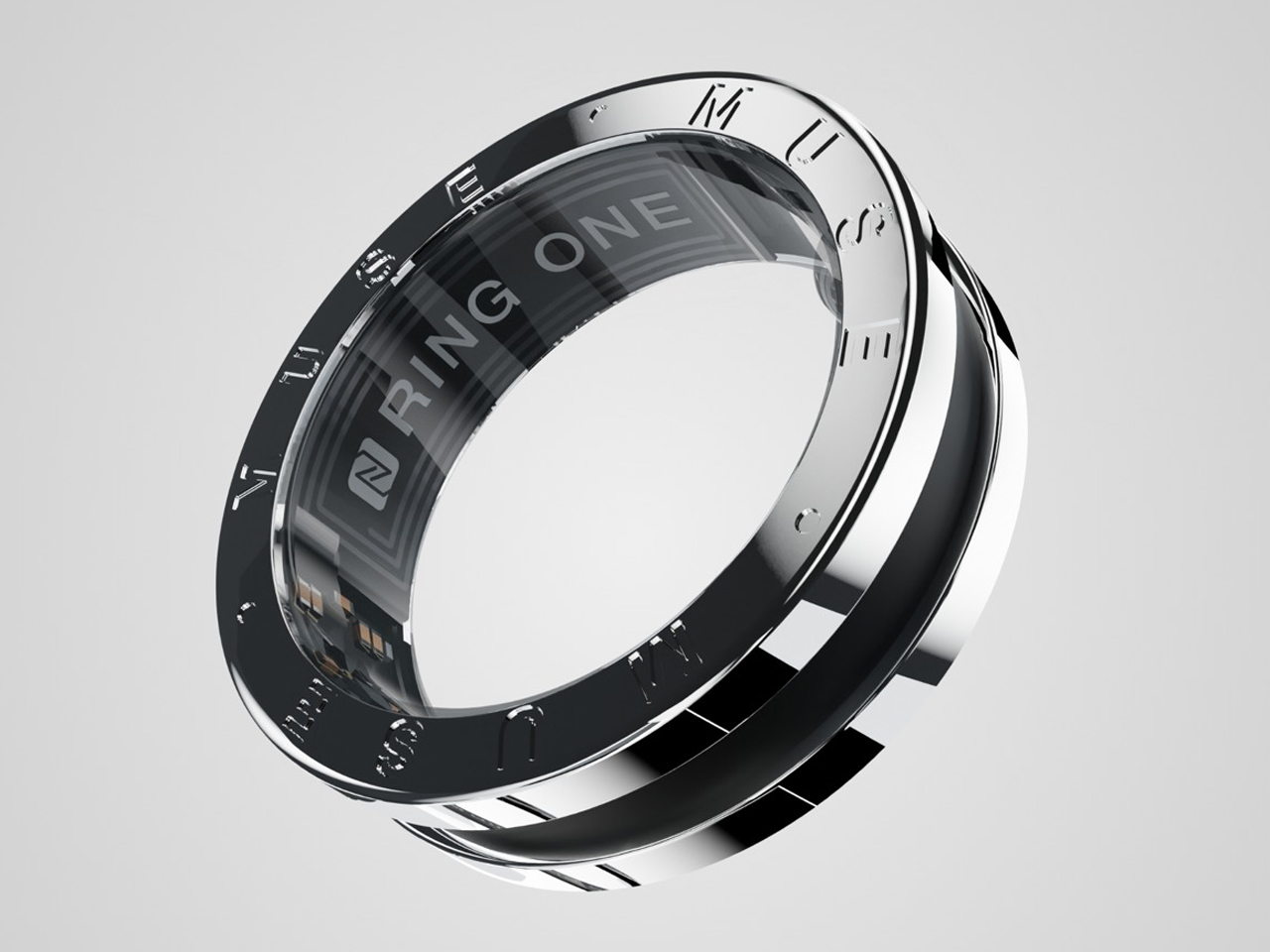
Beyond its health-tracking prowess, the Ring One seamlessly integrates into your digital lifestyle with thoughtful features that extend its utility. The NFC functionality transforms it into a tap-to-pay device that stores all your cards and enables secure transactions at any POS terminal, while Digital Key 2.0 support lets you unlock compatible vehicles with a simple gesture. Despite packing accelerometers, gyroscopes, temperature sensors, and wireless connectivity into a hypoallergenic Grade-2 titanium shell that’s 10x lighter than a smartwatch, it still manages an impressive 7-day battery life with real-time data syncing. The proprietary wireless charging dock even includes a “find my ring” tweeter—because losing something this small and powerful would be a tragedy. Available in finishes from understated steel to luxe 18-carat gold, the Ring One proves that the future of wearables isn’t on your wrist—it’s on your finger.
The main disadvantage of a smart ring is its limited functionality and lack of a screen, meaning it can’t fully replace a smartwatch or smartphone. Additionally, smart rings typically have small batteries, which can limit their usage time. When purchased online, the ring may not fit perfectly as it might not be tailored to your finger size.
High-quality smart rings can also be expensive due to the advanced technology required to pack so many features into such a compact device. They are exposed to water, dust, sweat, and food particles, so regular maintenance is necessary. Another factor is that these rings must be compatible with existing devices to get real-time data.


The Ultrahuman Ring AIR takes a more holistic approach and emphasizes the importance of sleep, recovery, stress management, and even factors like coffee consumption in our daily lives. Designed to be lightweight and comfortable, it provides a seamless experience, tracking vital metrics like sleep efficiency, restfulness, and consistency. The ring also measures stress levels through heart rate variability (HRV) and skin temperature, offering personalized recommendations to help you manage stress effectively improve your overall well-being, and live a healthier, more balanced life.
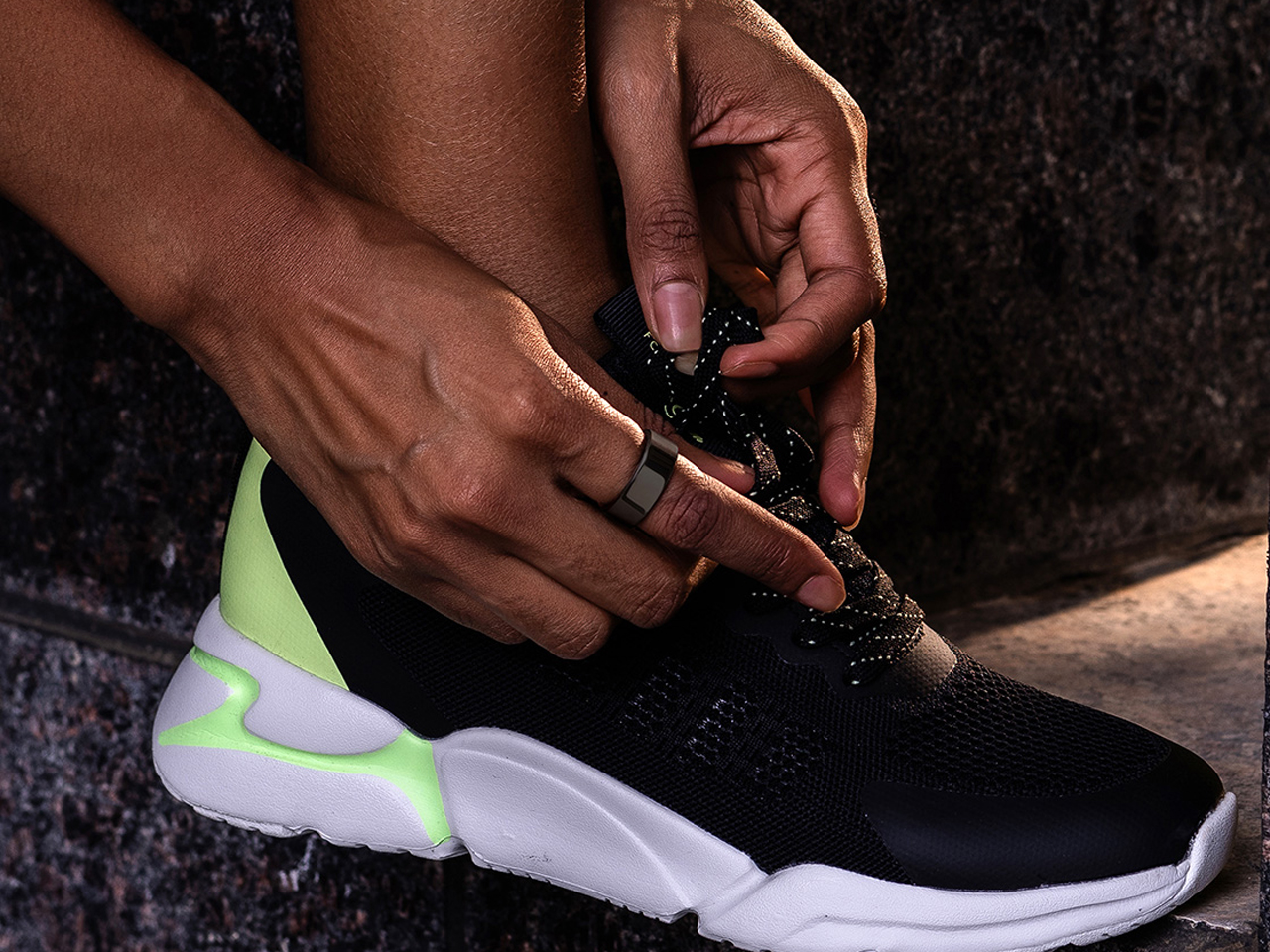

What sets the Ultrahuman Ring AIR apart is its range of advanced features, such as Circadian Phase Alignment, which optimizes your sleep-wake cycle, and the Stimulant Window Recommender to suggest the best times for coffee. With a durable titanium shell coated in tungsten carbide, the ring is built to last, with water resistance that allows you to wear it during swims or shallow dives. the Ultrahuman Ring AIR offers up to six days of battery life, ensures continuous health tracking, helps you make informed decisions to improve your overall well-being and live a healthier, more balanced life.
Smart ring technology is surely revolutionizing health monitoring by offering a discreet, compact, and efficient way to track vital health metrics. With advanced sensors and AI-powered insights, these rings empower users to monitor their heart rate, sleep patterns, and stress levels, promoting a healthier lifestyle with both convenience and style
The post Why Smart Rings Track Your Health Better And Are Quietly Replacing Other Fitness Trackers first appeared on Yanko Design.
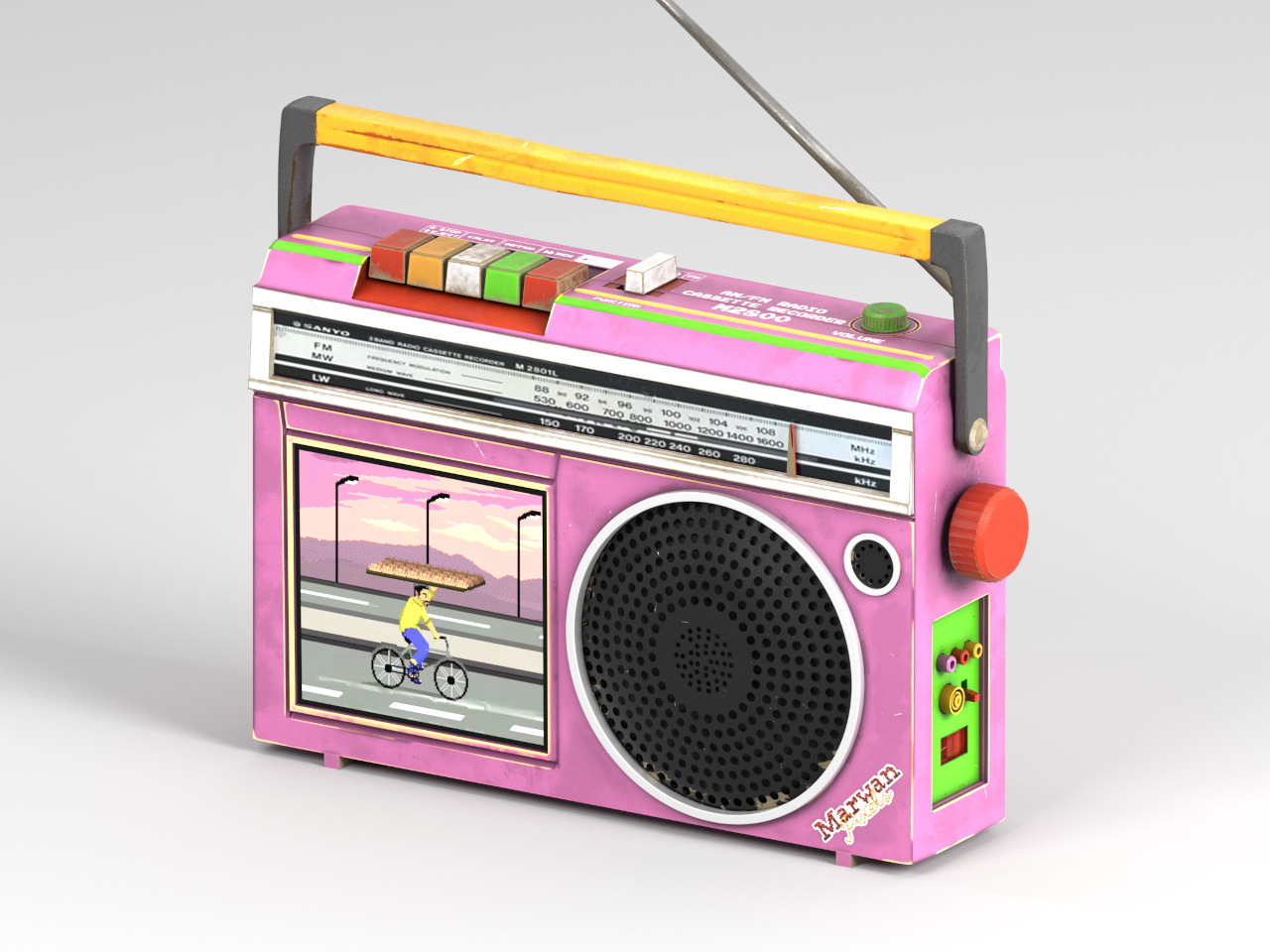
Retro designs in technology continue to be a strong trend, from retro consoles to instant cameras to record players. Most of these products try to update the classic aesthetics to modern standards, reinterpreting them without straying too far from the original. In other words, they’re mostly modern devices simply paying homage to the past.
There might be times, however, the original designs still have a lot of pull, especially for eyes that have never seen them before. This series of concepts tries to imagine some of those with completely classic designs, save for the addition of 16-bit displays and a splash of 80s colors that make them funky and hip in their own unique ways.
Desigers: Ahmed Esmael, Marwan Abbass


Music streaming has pretty much replaced the radio for most people, but the medium hasn’t completely died out. Radios, however, have become rarer outside of vehicles, and most designs these days tend to make the device almost invisible. This concept, in contrast, is as loud as it can be, both in sound and in appearance with its pink body and clashing color combinations.
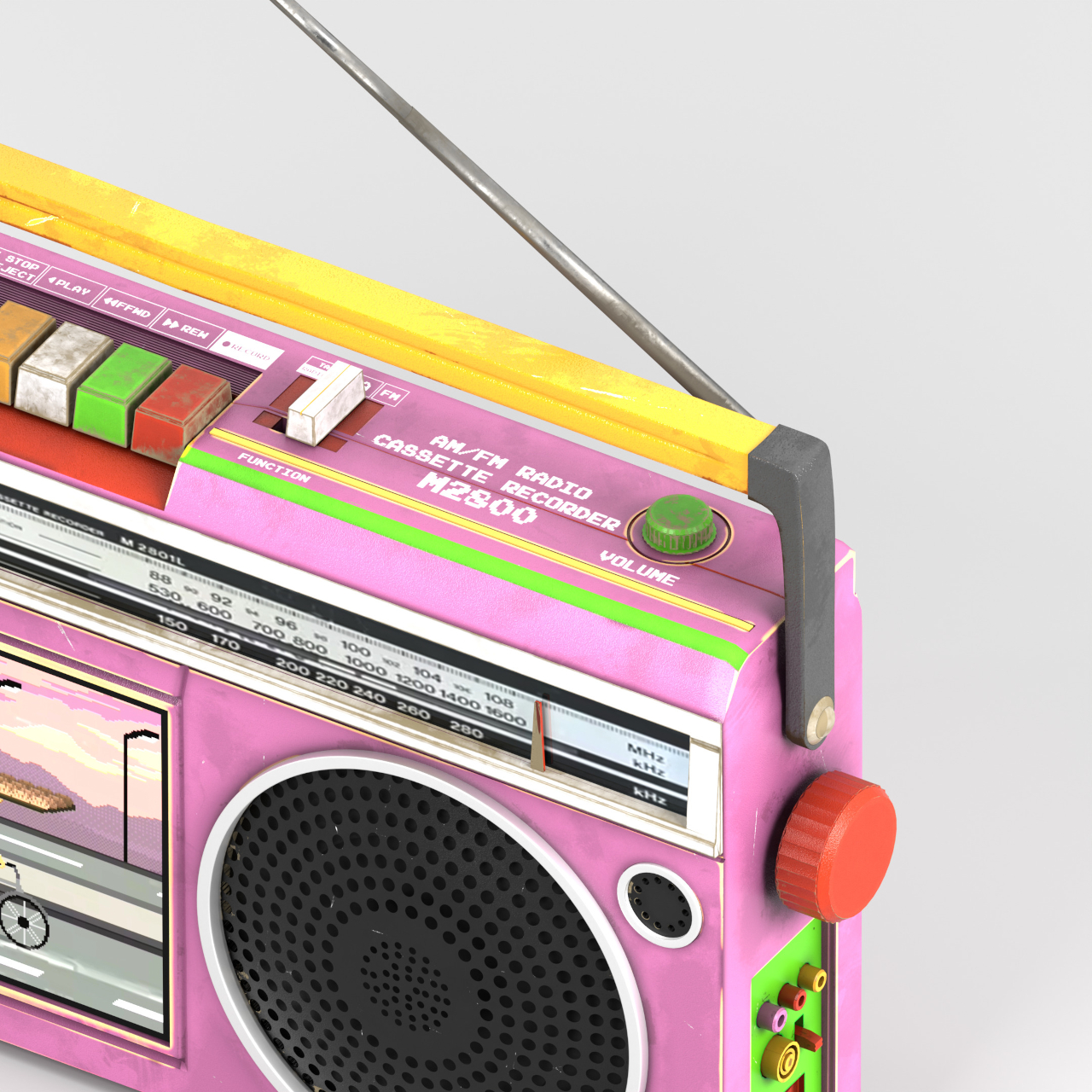
What sets it apart, however, is the square display beside the circular front speaker. It’s not a modern touch screen for controlling the radio, but more of a useless but fun embellishment to the experience. It displays a 16-bit video that looks at home in games of that era, rendering an accompanying visual to the audio, whether it makes sense or not.

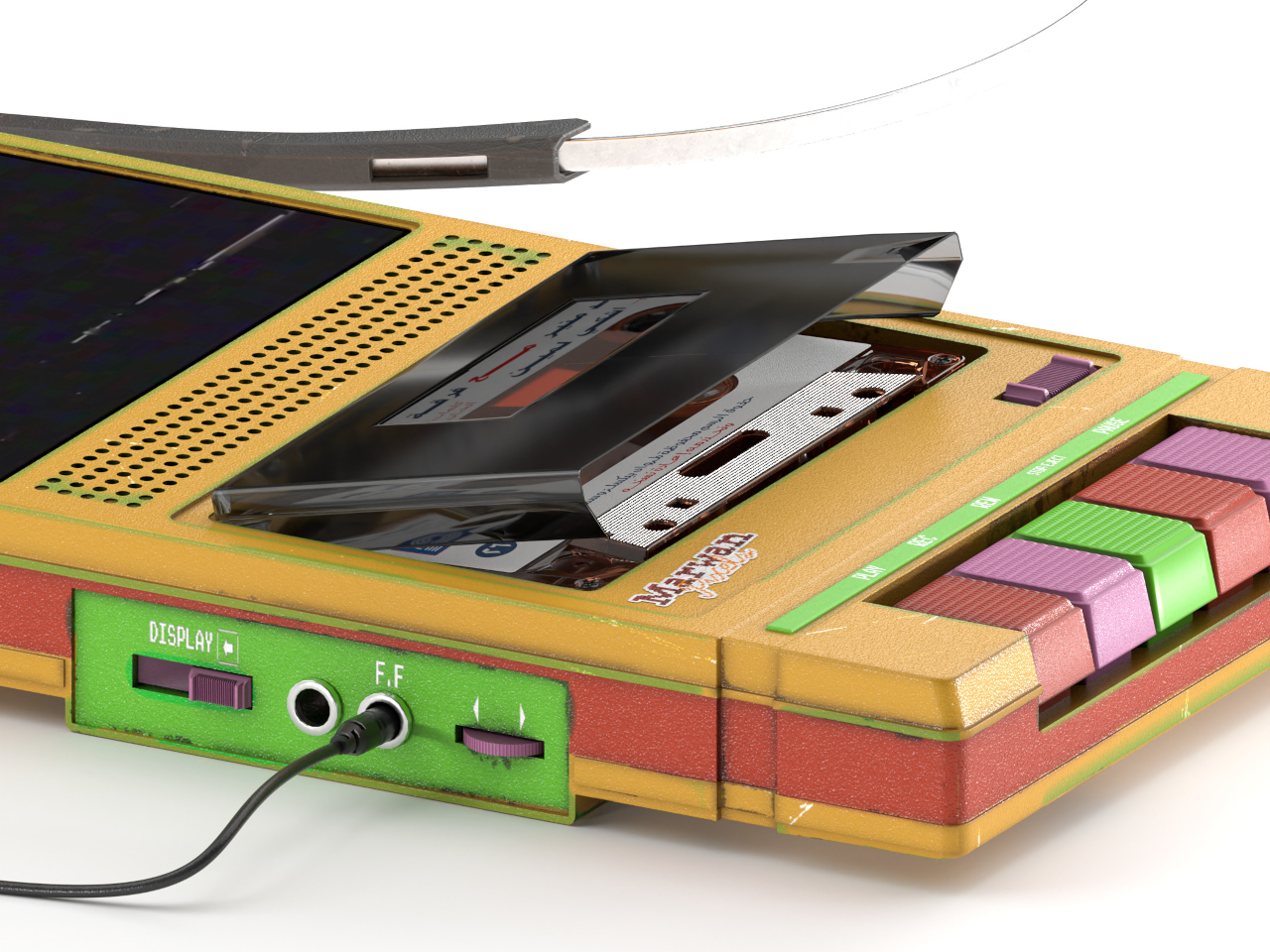
Very few people these days listen to cassette tapes. Unlike vinyl records, there’s almost no special audio quality to these small rectangular containers for brown tape that all too often gets tangled up. That said, some people still have a collection of these tapes, and this cassette player concept adds a unique twist to the device without twisting those tapes.
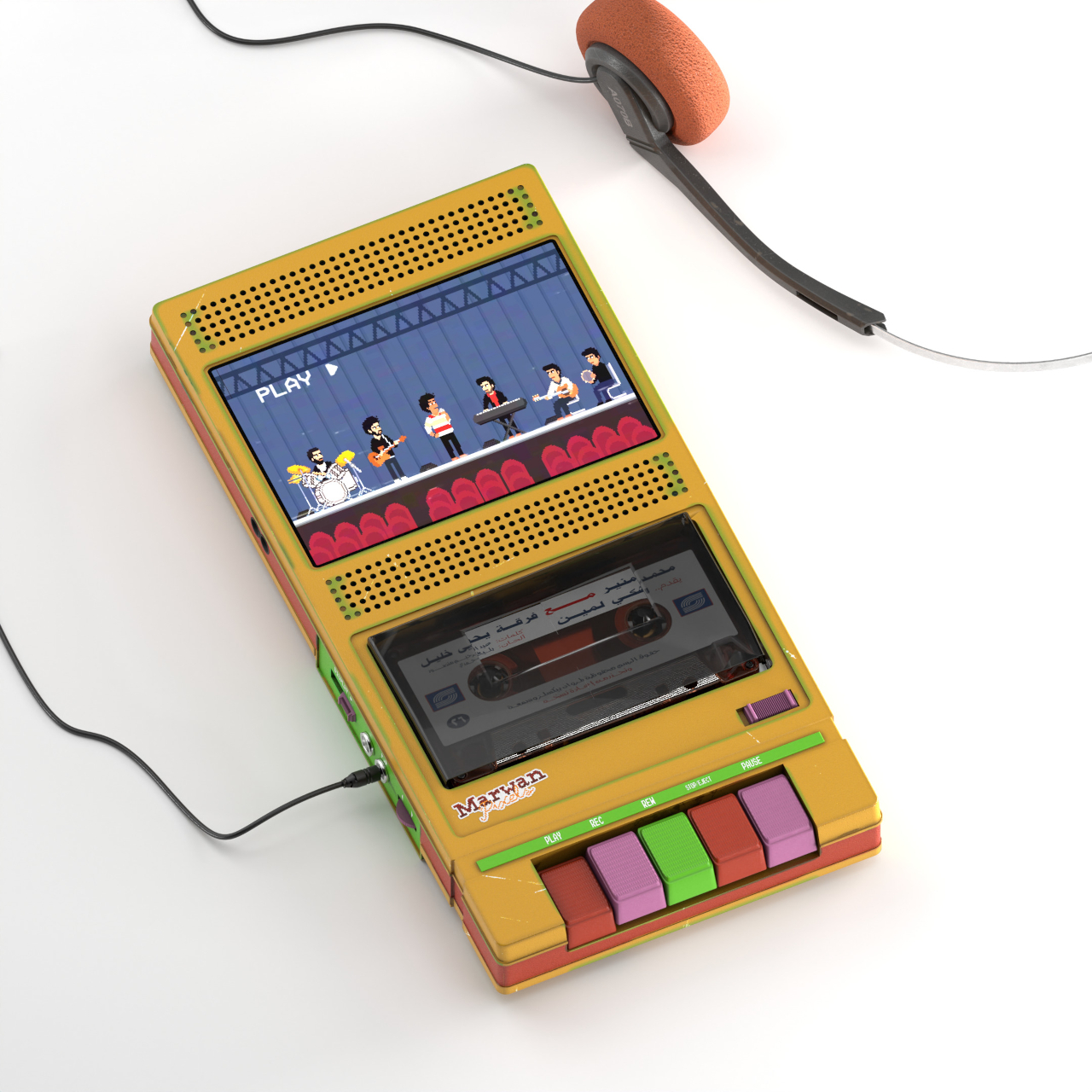
The color scheme for the device this time is a faded yellow, complete with green streaks of corrosion. But just like the radio above, the flat tape player integrates a screen that can play 16-bit videos. Although it doesn’t serve any practical function, it adds a bit of fun flavor to the music being played, making you want to look at the device even when it’s lying on the table.
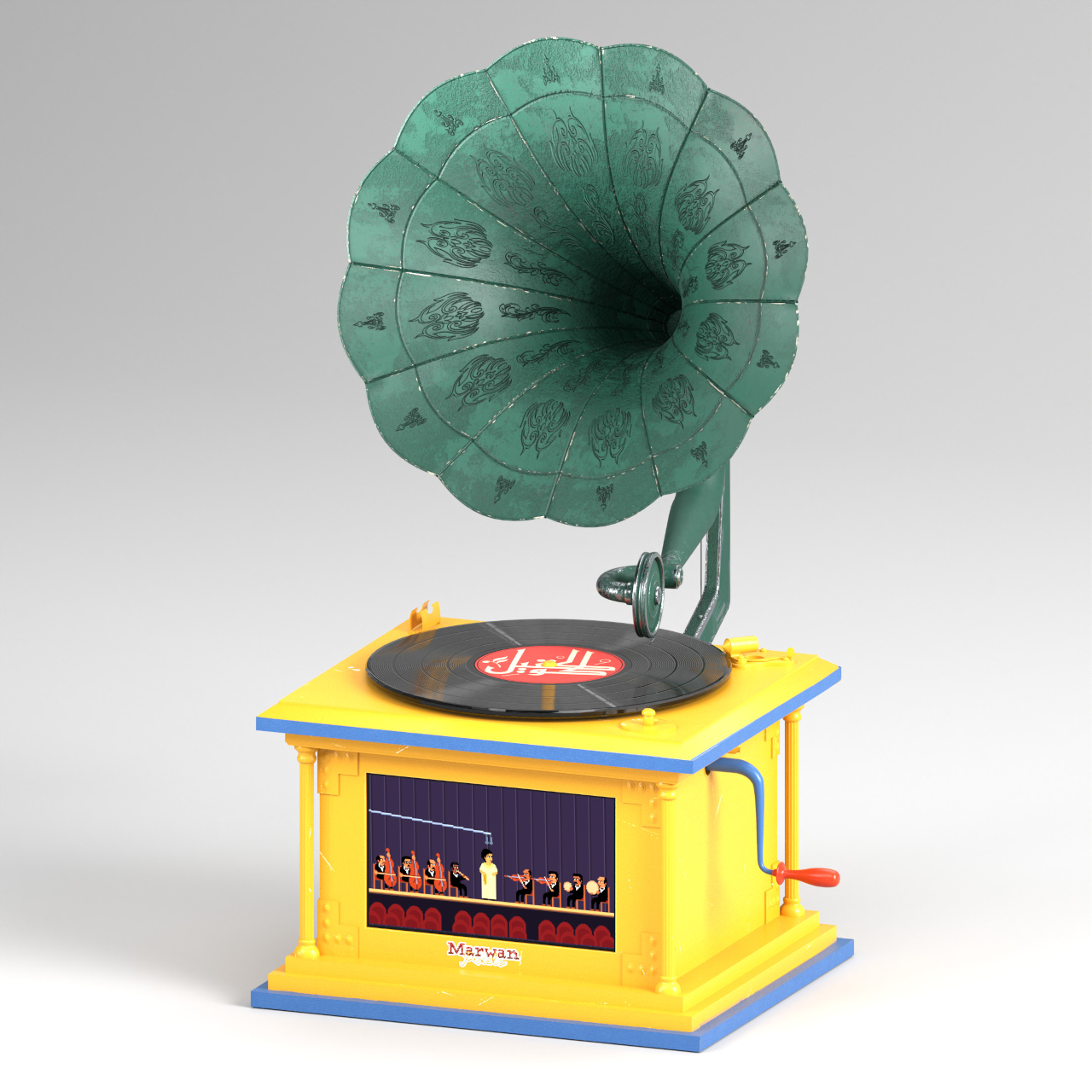

The record player in this Timeless Treasure collection steps farther back in time, adopting the form of a 40s gramophone. Its green, flower-shaped sound horn looks like copper that has aged over time, while the boxy platform has a mix of industrial and Art Deco details. Only the dominantly yellow color motif looks out of place and out of time, giving it an odd anachronistic flavor.
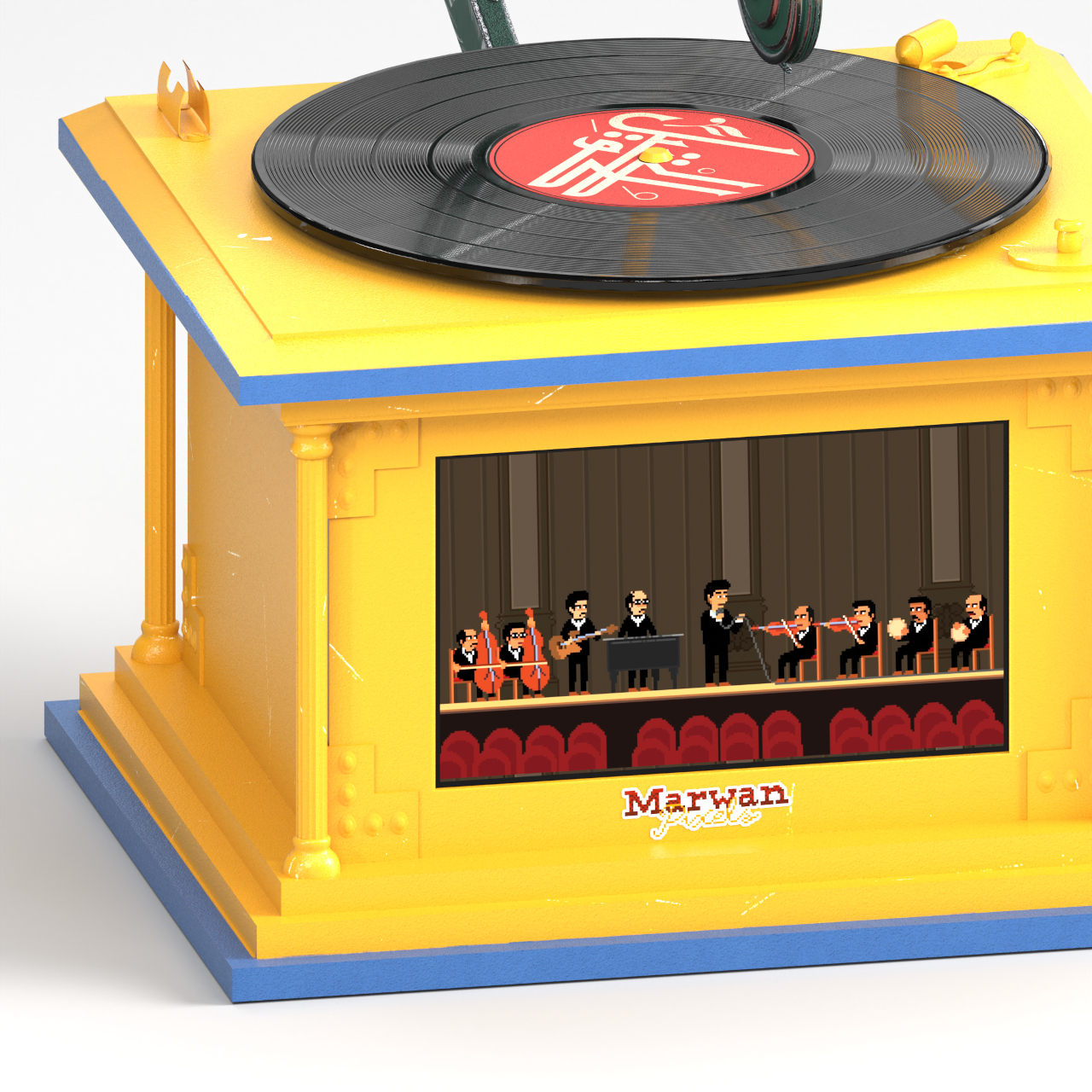
The large 16-bit display is again the center of attraction here, playing a pixelated video of an opera or orchestra performance. It could be related to the track being played, though it’s more likely a very generic clip for any and all kinds of records. It would probably be nice if each video was customized for different kinds of music, perhaps using some AI magic to make it happen.

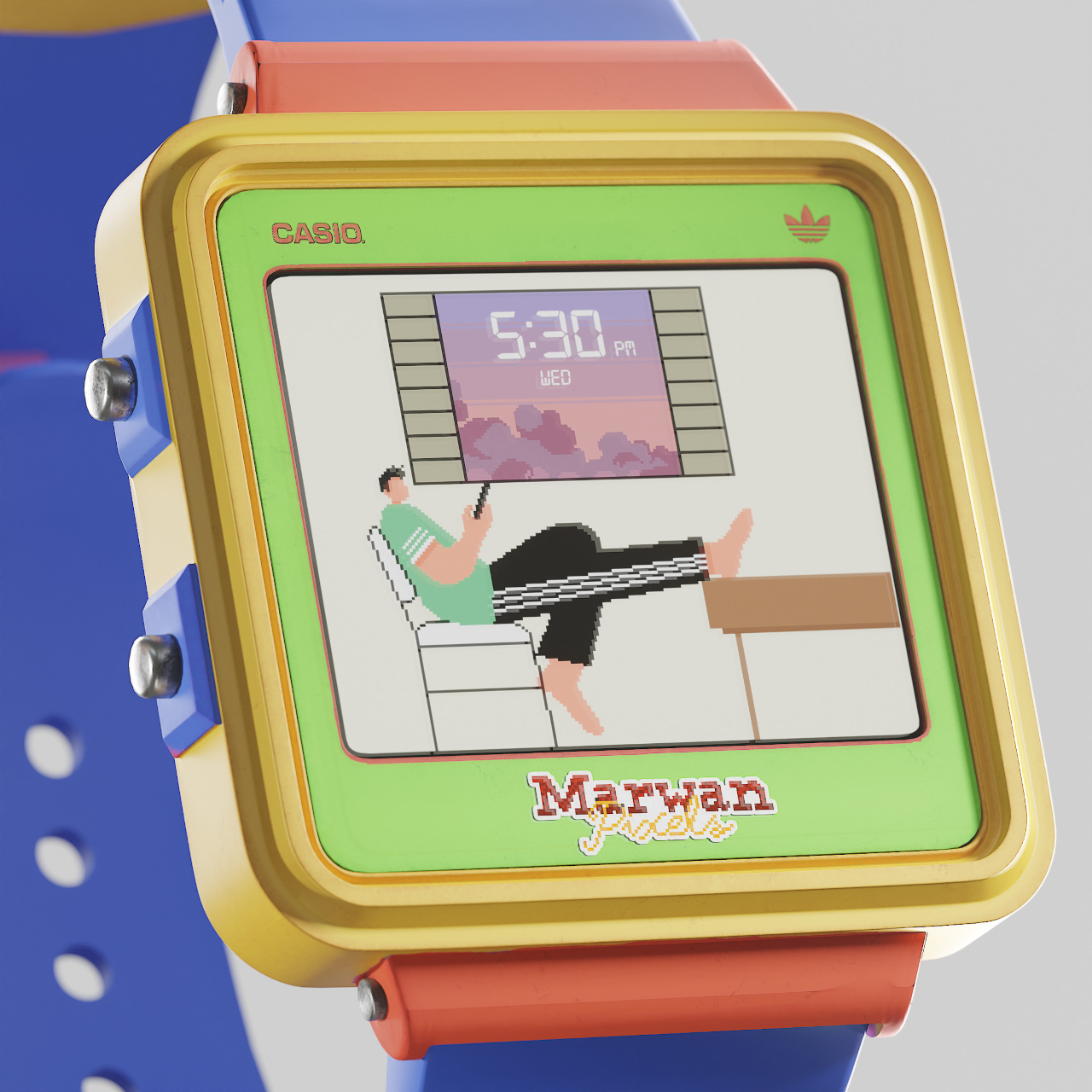
Old-school audio devices aren’t the only ones getting this 80s retro facelift, though a watch is hardly that old to qualify. More like an old-fashioned kids’ digital watch, this particular concept adds a lo-fi feel to this somewhat modern wearable, particularly when an alarm plays. Like the rest of the collection, it’s a fun touch that doesn’t add any functional advantage but gives the designs a new flavor.
The post Retro devices reimagined with fun 16-bit displays first appeared on Yanko Design.
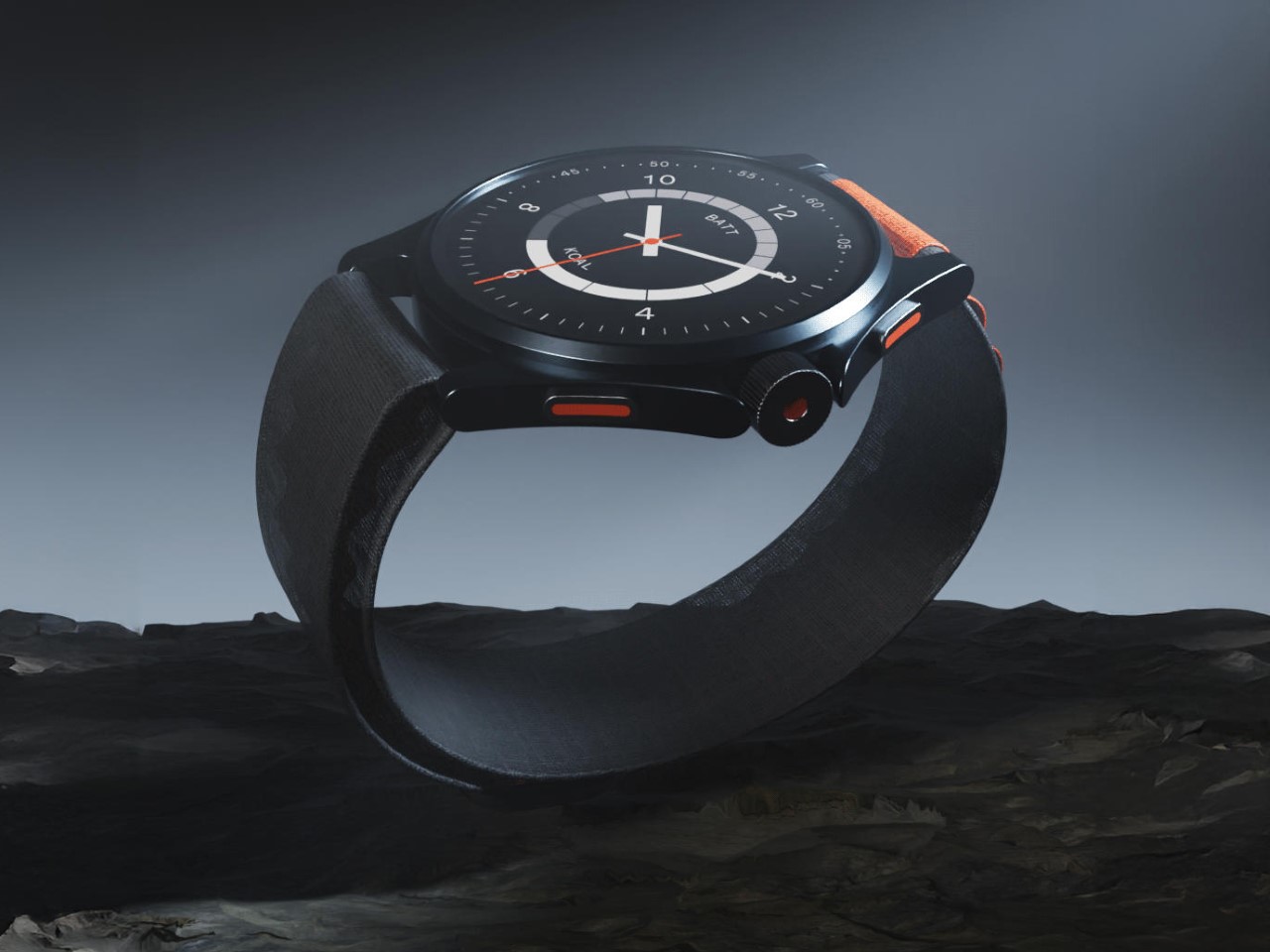
While Nothing doesn’t have a smartwatch in its portfolio, it certainly could add one – considering CMF’s Watch Pro already set the perfect foundation. Meet the Nothing Watch (Ultra) concept – a watch that brings the company’s minimalism-meets-fun approach to the world of smartwatches.
Designed by Abdelrahman Shaapan, the Watch (Ultra) takes the smartwatch to its logical next level, with a design that bridges digital experiences with a fairly analog-inspired design. The watch face is a mirror of the phone’s analog Glyph Interface, while the watch itself comes not with one button but three (including the crown of course).
Designer: Abdelrahman Shaapan
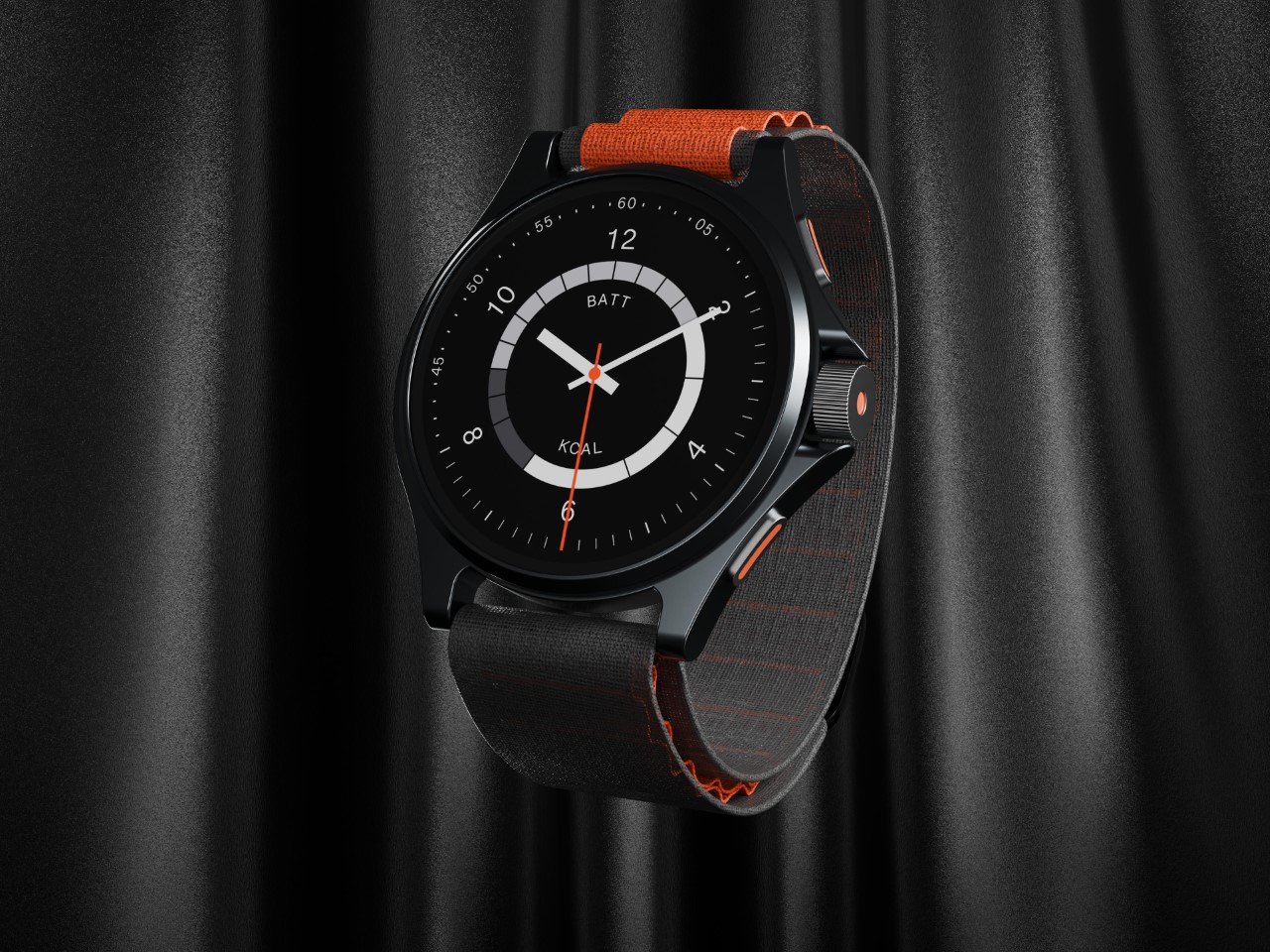
The Nothing Watch (Ultra) blurs the lines between Nothing and CMF, with a design that combines black and orange. Sure, with a watch this minimal, you really can’t do much with transparency, which is why the Watch (Ultra) ditches transparency entirely. It comes with a solid metal frame, supported by an Alpine Loop-inspired band that secures the watch around your wrist.

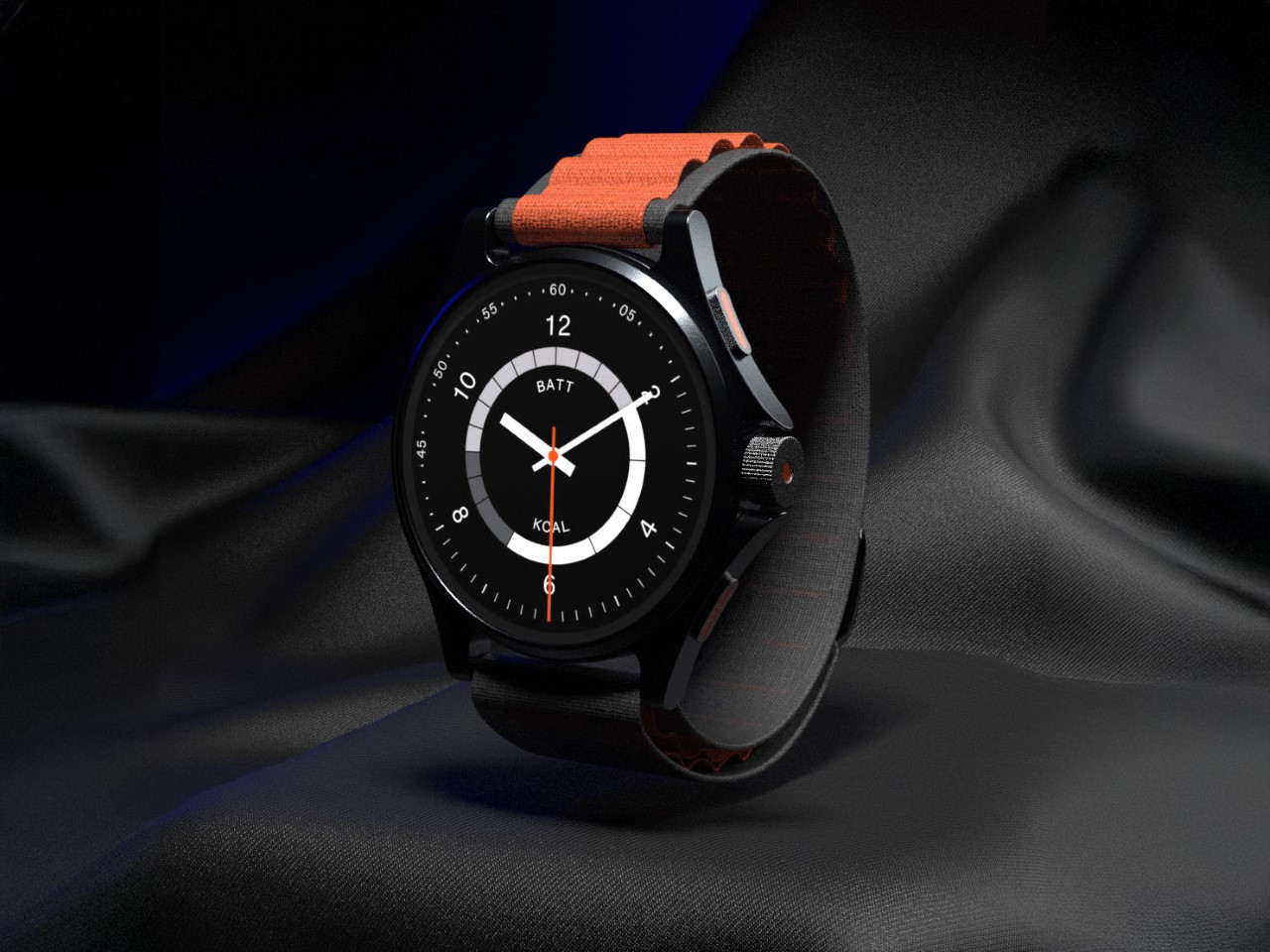
The Glyph goes missing too, but it manifests itself in the form of a Glyph OS – using white bars an strips to turn timekeeping into a Nothing-powered meaningful experience. The digital display has a minimal clock face, and a Glyph ring around the center that tells you both your battery level as well as the kilocalories burnt during the day. Sort of like activity rings on the Apple Watch, but interpreted differently.
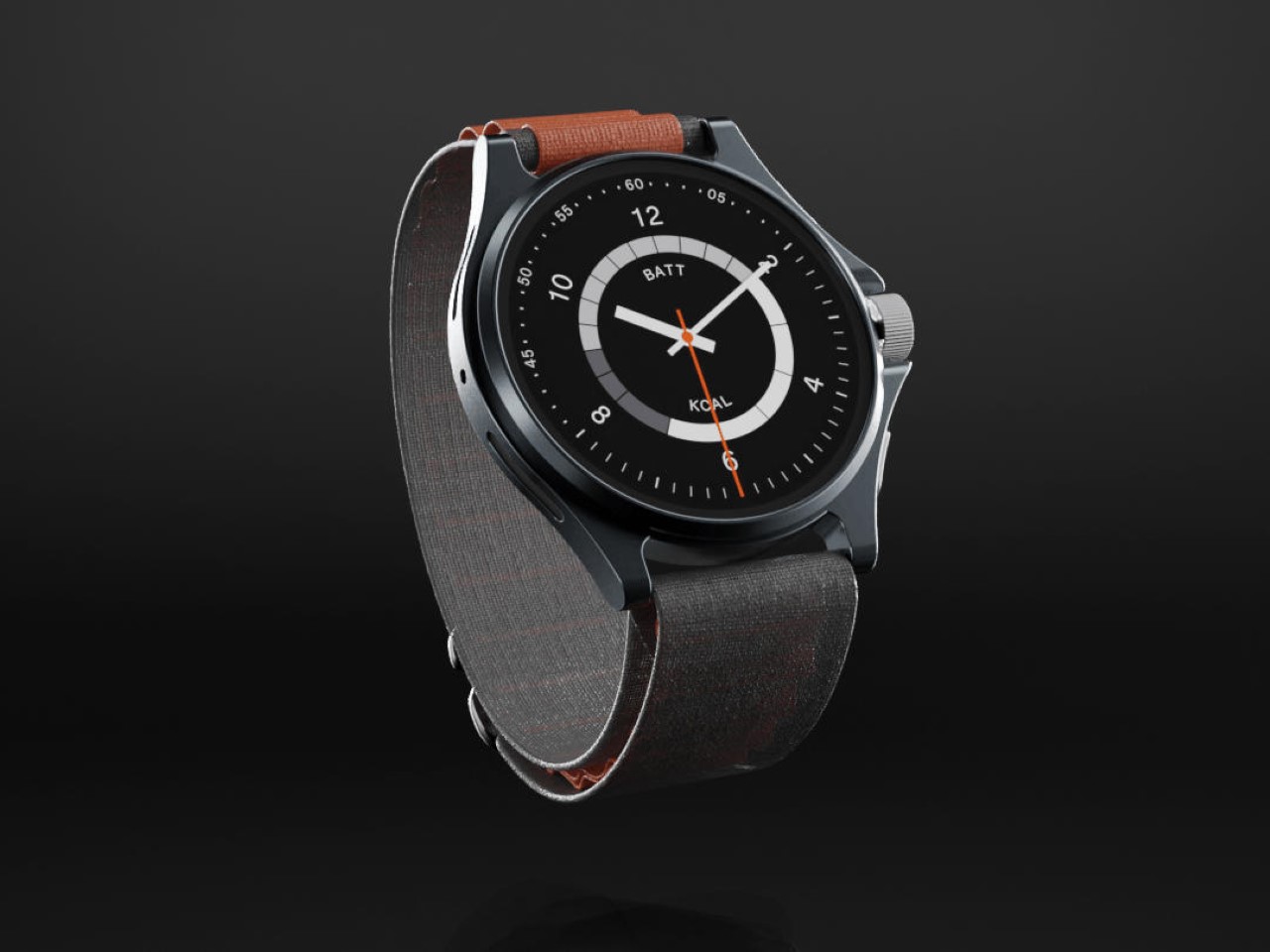
The Watch (Ultra) concept leaves a lot to be desired – especially in the form of context and detail. The designer added a fair bit of detail in the form of a watch body with pushers and a crown on one side, and side-firing speakers on the other – but the OS still only shows just one screen. Maybe a little more detail in terms of a more comprehensive Glyph OS experience could really seal the deal – and although it might be too much to ask, I could DEFINITELY use one transparent variant!
The post The Nothing Watch (Ultra) may not have a Glyph Interface, but it makes up with a minimal Glyph OS first appeared on Yanko Design.
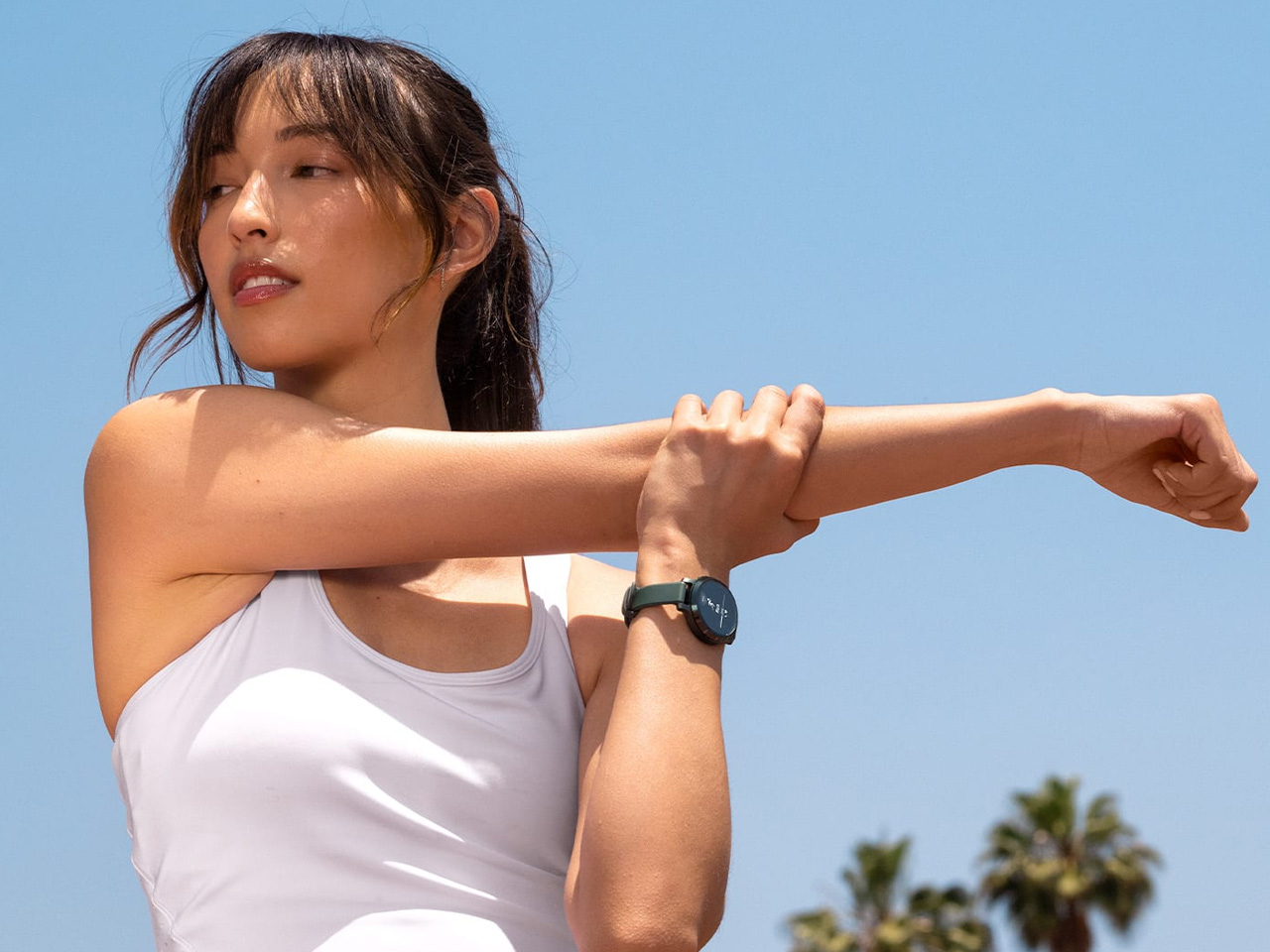
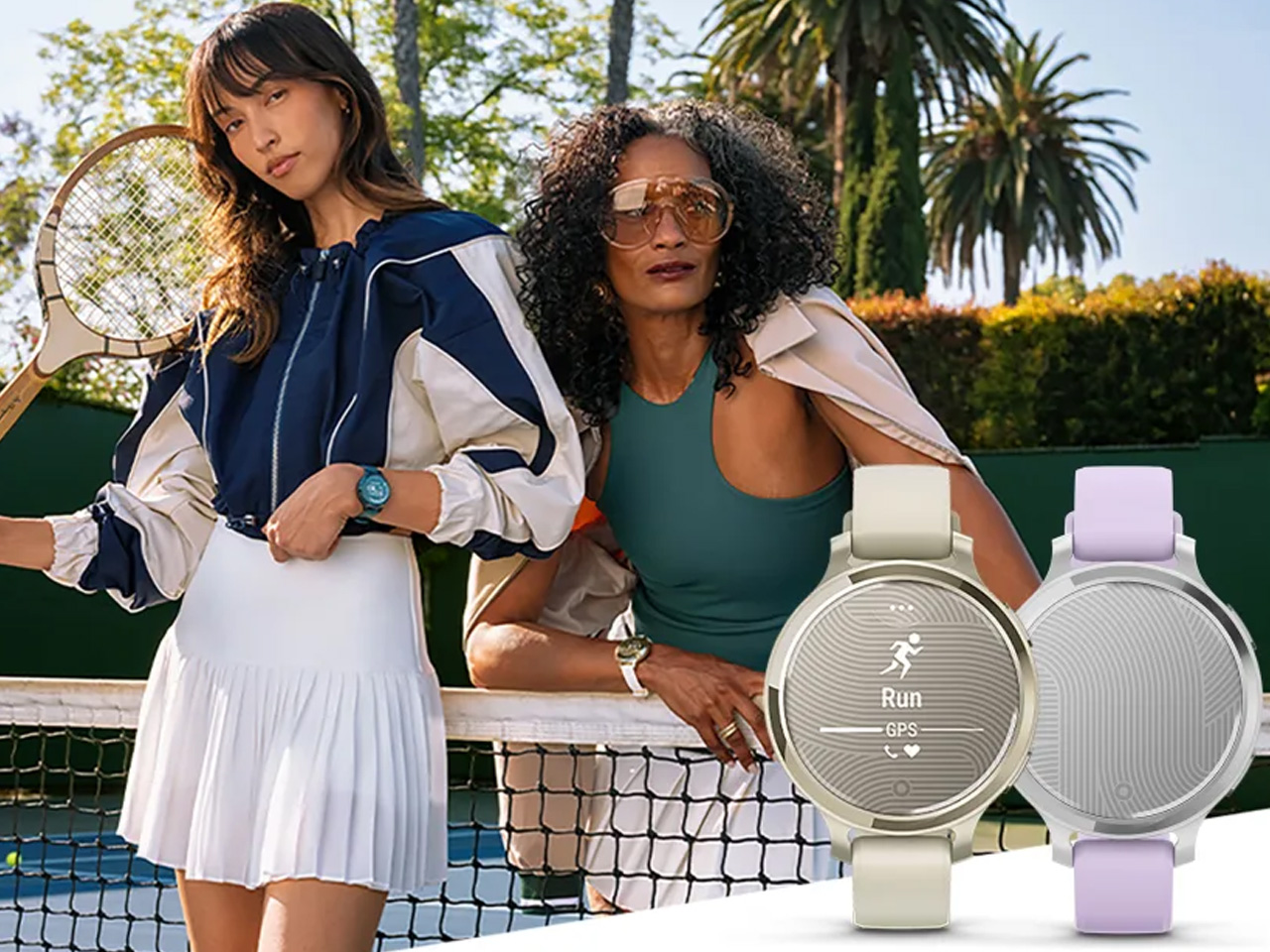
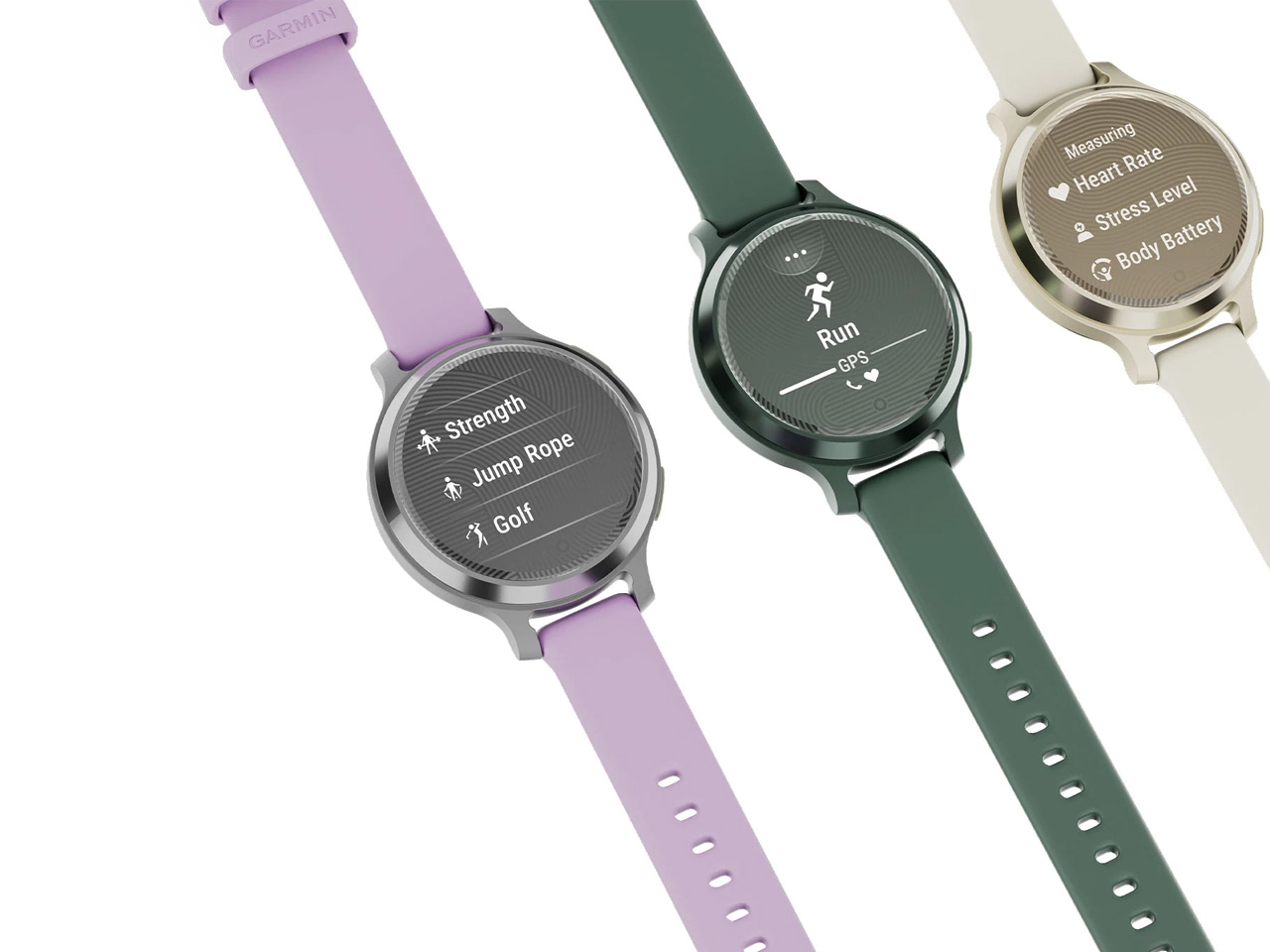
It is not easy for new players to penetrate the otherwise competitive smartwatch arena. But Garmin is no outsider. Arguably, it is amid the top few in the industry. No wonder, the GPS-enabled consumer tech specialist is increasing its profile with the addition of a women-first watch that’s stylish, features built-in GPS, and comes with all the health and wellness features of a connected smartwatch.
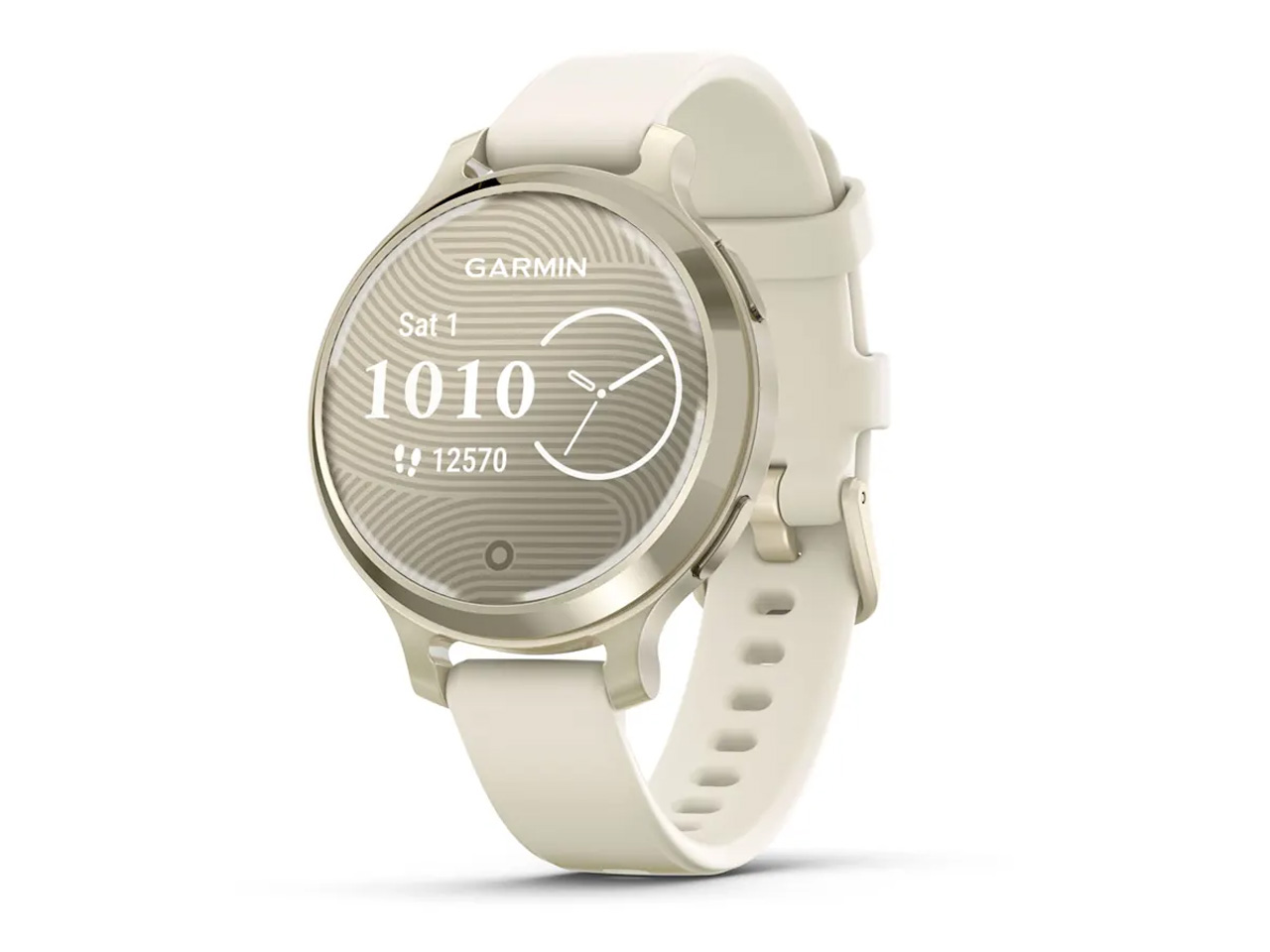
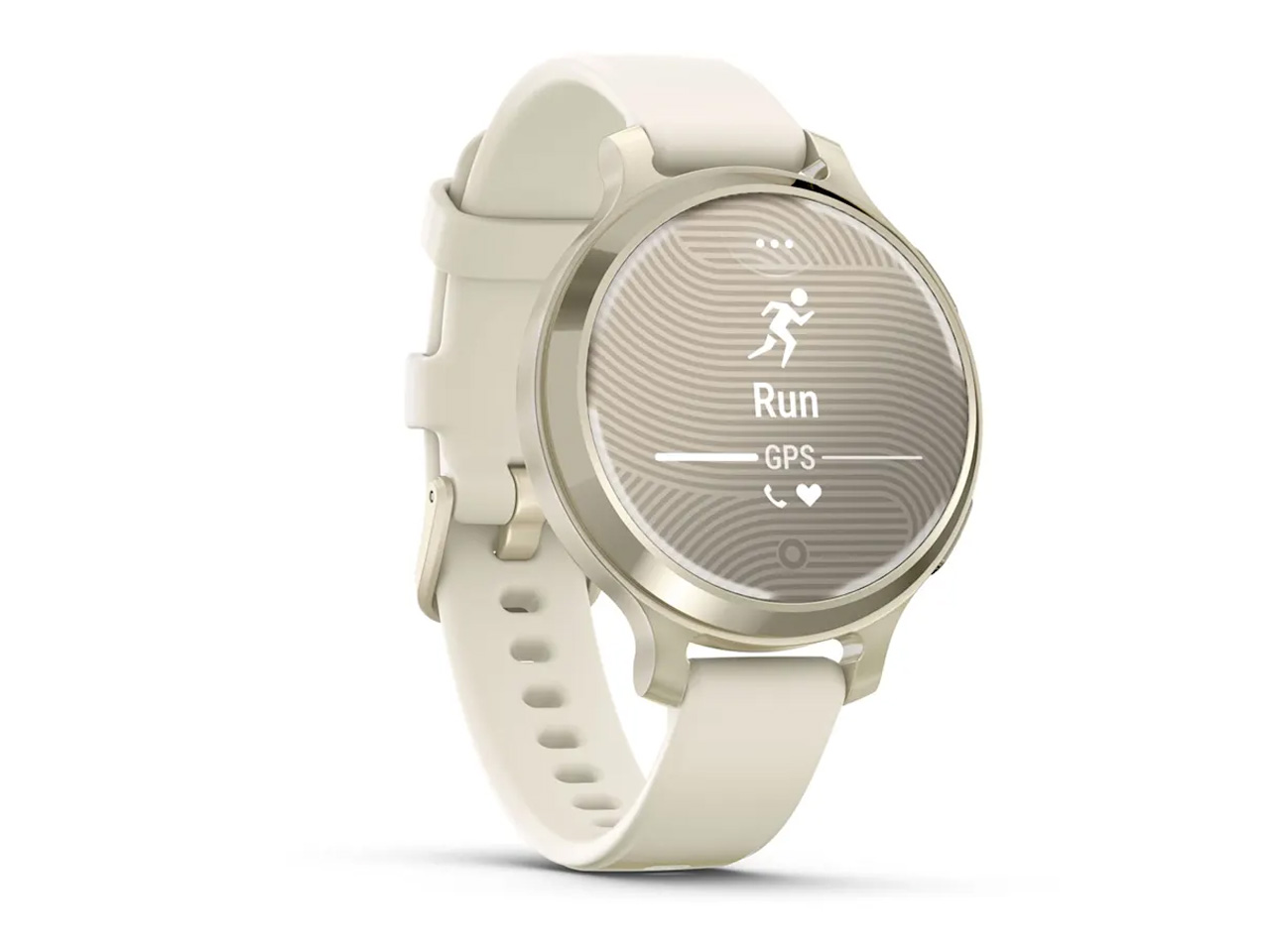
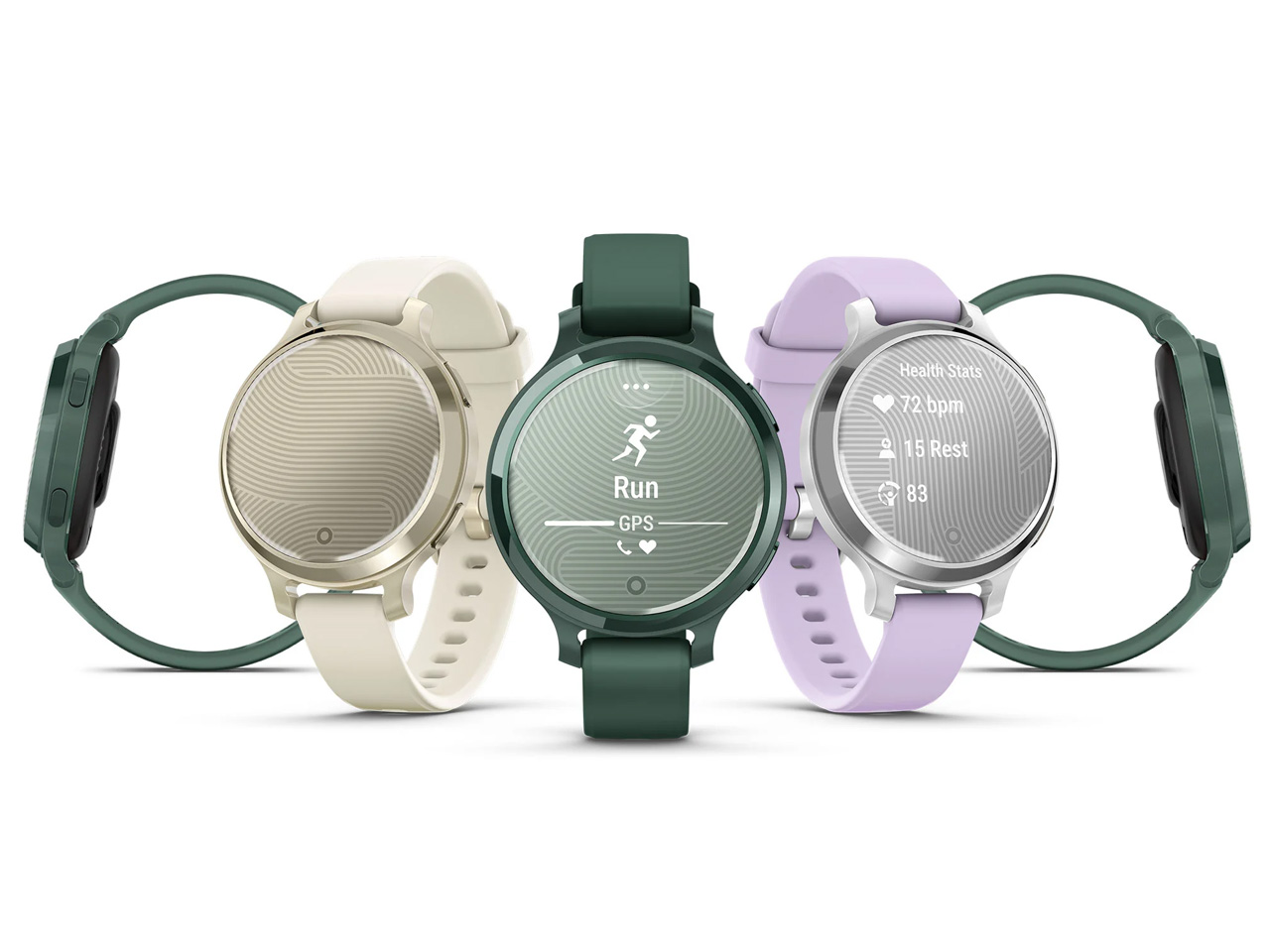
Called the Lily 2 Active, this is the smallest GPS-enabled smartwatch in the Garmin family. Perhaps for some that could mean the Lily 2 Active cuts corners, but it’s far from the fact. It’s a small, but fashionable feature-focused smartwatch that comes with nine days of battery life – if you are not using the GPS. With the GPS running all the time, the watch will trim the usage down to nine hours before requiring a recharge.
Designer: Garmin
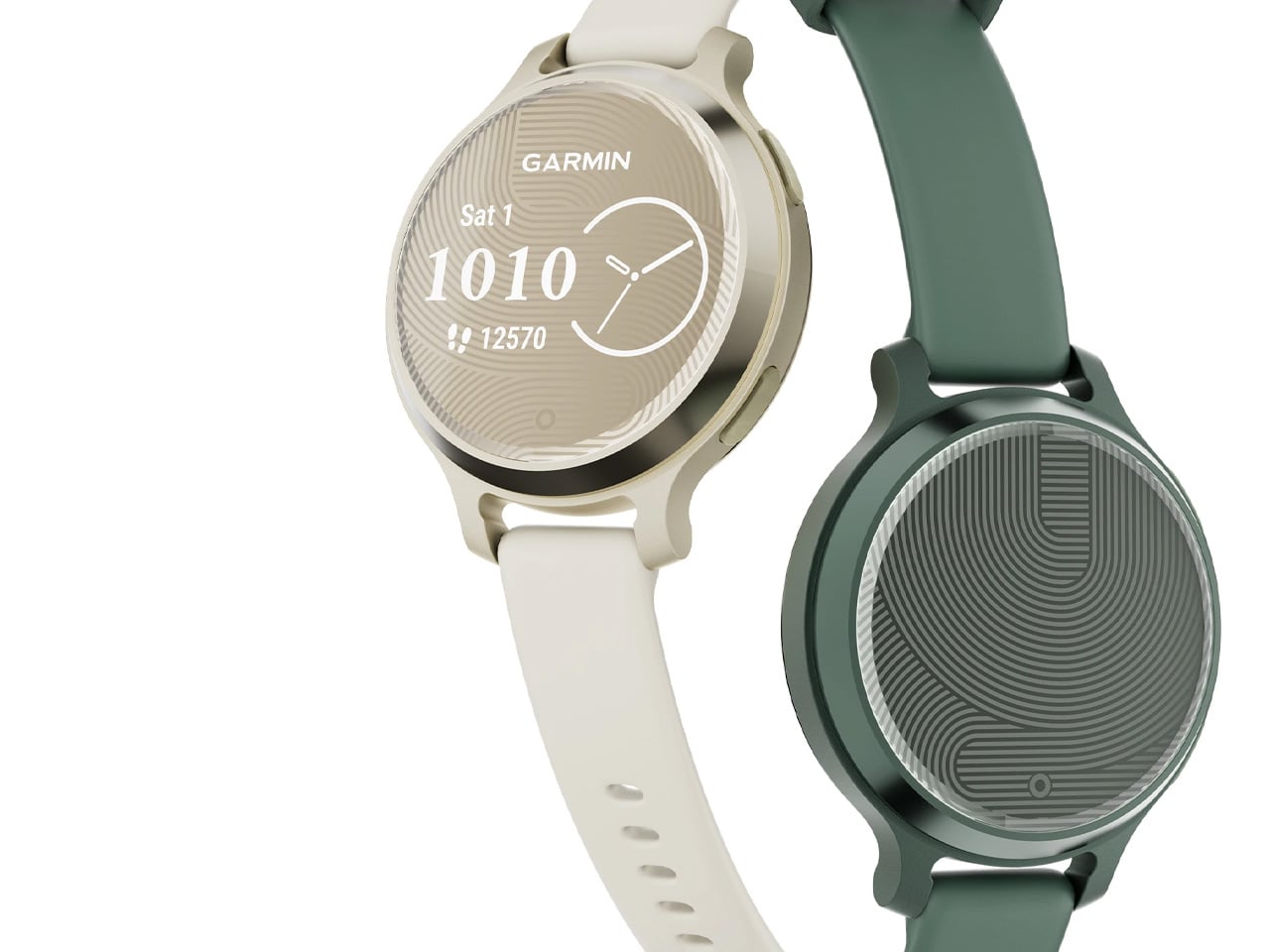
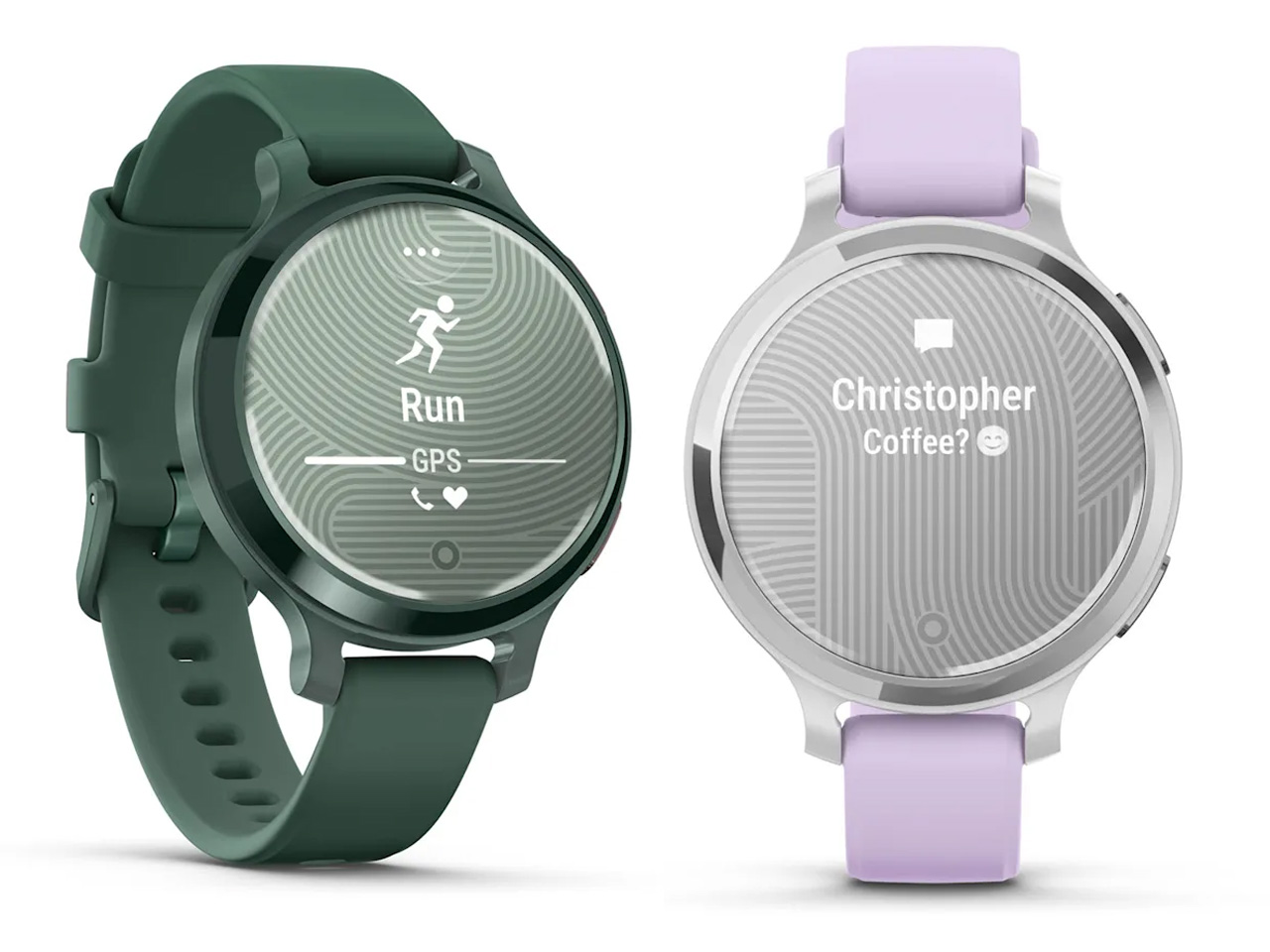
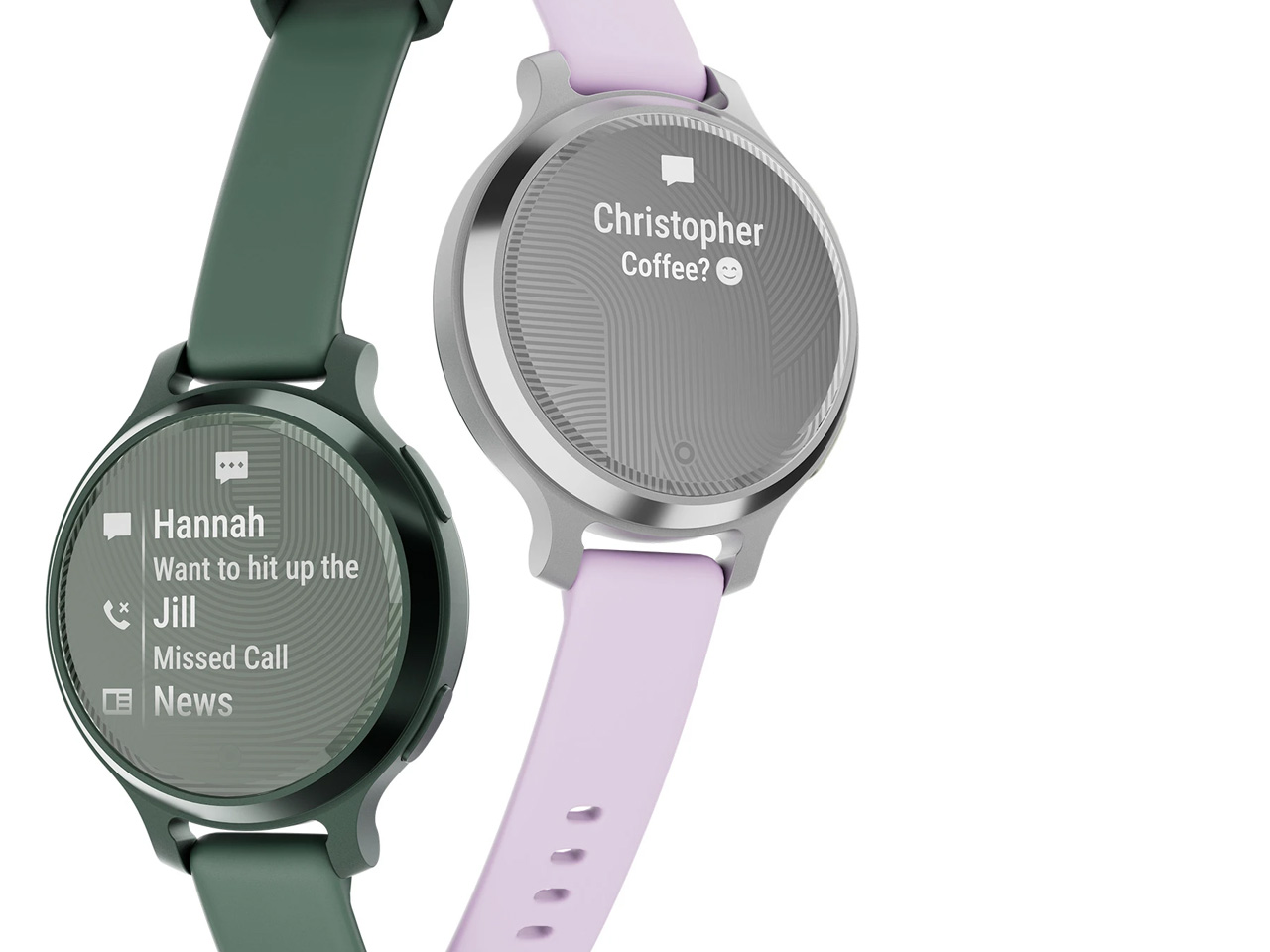
Of course, the Lily 2 Active has been created with a primary emphasis on women’s health tracking features. So, the watch can be used to keep track of the menstrual cycles, pregnancies, and also monitor the different sleep stages. Small but durable the watch has a metal casing and a hidden display that comes to life on a tap or with movement of the wrist.
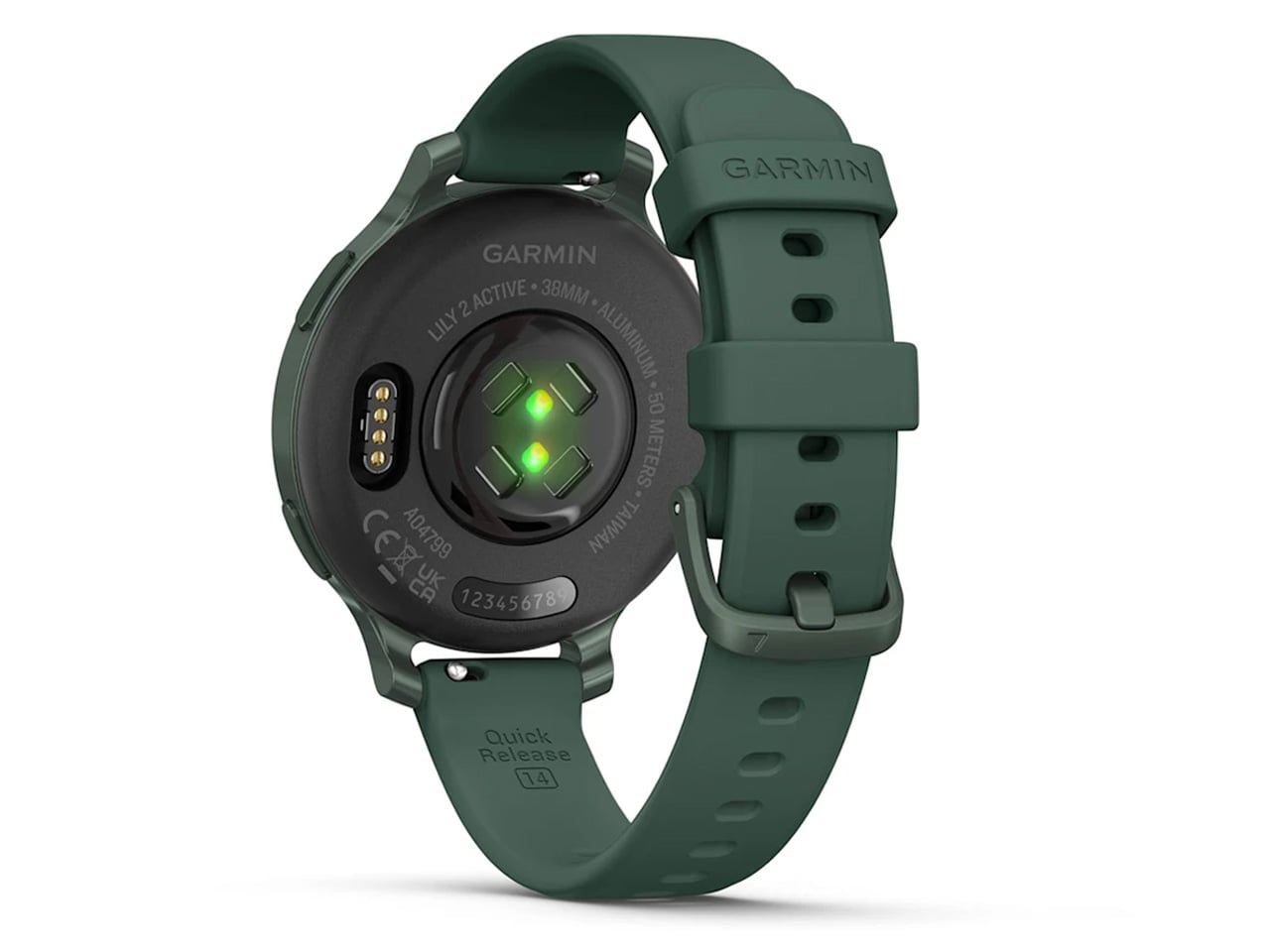
The watch is provided with two push buttons to select activities or toggle between screens. It comes preinstalled with workout features for cardio, yoga, tennis, dance fitness, strength training and more. Interestingly, the user can download the high-intensity interval training (HIIT) and yoga sessions to view the workout on the Lily 2 Active’s screen. With the videos playing directly on the wrist, you can ensure to follow the workout correctly even when you are outdoors without access to a larger screen device.
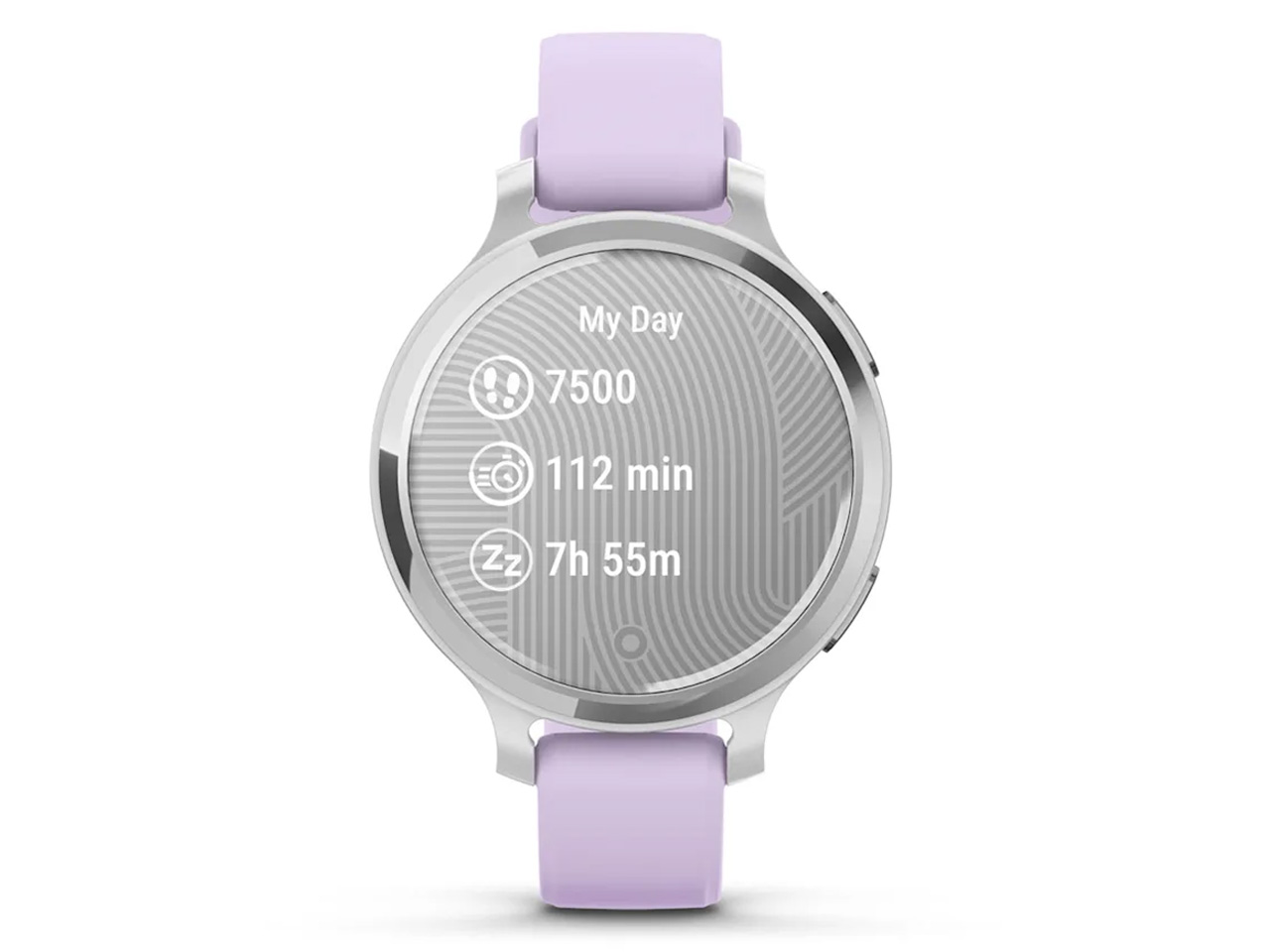
Since it is designed with all the health monitoring and wellness features, the smartwatch allows the wearer to keep track of their different sleep stages along with the continuous monitoring of the heart rate, Pulse Ox2, stress, and respiration. It accumulates information about the user’s night sleep and grants insight into their sleep quality with other wellness details in the morning. Built-in GPS can keep track of your outdoor activities, including walks, runs and more.

Lily 2 Active is compatible with Garmin’s Connect smartphone app and lets you make contactless payments using Garmin Pay. The watch works error-free with iOS and Android and comes in three color variants: Lunar Gold with Bone silicon strap, Silver with a Purple Jasmine silicon strap, and Jasper Green with a Jasper Green silicone strap for $300 apiece.
The post Garmin’s smallest GPS smartwatch ‘Lily 2 Active’ is designed for active women first appeared on Yanko Design.