Next week we will get to see the new Samsung Galaxy Watch 7 and Galaxy Watch 7 Ultra Ultra. Detailed renders and specifications have surfaced, showcasing a device designed to compete head-to-head with the Apple Watch Ultra. Adventure enthusiasts and tech-savvy users alike can look forward to a wearable that promises exceptional performance, durability, and […]
Imagine we’ve come so far that we can fit an entire movie theater into a device that’s essentially the same size as a brick. After launching the Screeneo U5 in the end of 2022, Philips is back with its smallest, most advanced UST projector yet. Dubbed the Screeneo UL5 Smart, it builds on the success of Philips’ past projectors, while focusing on being a budget-friendly gadget to help people convert from TVs to something a little more immersive. Measuring just over 8 inches long, 3.7 inches wide, and 3.4 inches tall, the Screeneo UL5 Smart outputs an impressive 100-inch screen when kept just 20 inches away from a wall. The tiny device produces a display that’s rich in color, has a 550 ANSI lumen brightness, and has a Full HD resolution of 1080p. Sure, it’s no 4K projector… but at a sub-$1000 price tag, it’s probably the best ultra-short throw projector you can get your hands on. Oh, it also comes bundled with its own OS that let you run popular streaming services, pitching it well into smart projector territory.
While the UL5 Smart departs from the 4K resolution of its predecessor, the U5 model, it maintains a respectable Full HD 1080p resolution – ideal for enjoying movies, shows, and games in crisp detail. The projector utilizes a DLP chip alongside a triple-laser light source, separating red, blue, and green colors for an exceptionally rich and vibrant visual experience. The impressive 0:23:1 ultra-short throw ratio means you don’t need to keep the device multiple feet away from the projection surface, the way most traditional projectors need to be kept. A simple 20 inches away from a wall or screen gives you a staggering projection that measures 100 inches diagonally. Adjust the distance to adjust the size of the projection – the UL5 Smart can pull off 120 inches with absolutely no discernible drop in brightness or clarity. It also automatically keystones and focuses itself, so you spend less time setting up and more time enjoying content.
The compact form factor allows the Screeneo UL5 Smart to be used as more than just a movie-watching device. Sure, projectors and movies are practically synonymous – and the Screeneo UL5 Smart does come with Philips’ LuminOS, which lets you natively run Netflix, Hulu, Disney+, Apple TV, HBO Max, and a whole slew of other apps – but an abundance of ports lets you use your Screeneo UL5 Smart to do things like extend your laptop/desktop/tablet screen, or directly hook your gaming console to the projector for larger-than-life gameplay.
Rest the UL5 Smart on its back the way it’s designed to be placed and you’ve got a projected image on the wall. Flip the UL5 Smart over and stand it vertically, and it projects a bright 35-inch display onto the floor or a table, letting you watch content on the tabletop like recipe videos, the game, or even project drawings onto a piece of paper and allow you to sketch directly. AI-driven auto-focus and keystone kicks in immediately, fixing the image to make it perfectly focused and rectangular.
Spec-nerds will have little to complain about what the UL5 Smart offers. With a peak of 550 ANSI lumens, the projector is ideally suited for dimly lit or dark environments. However, this is balanced by exceptional color reproduction. The UL5 Smart boasts coverage exceeding 200% of the Rec.709 color gamut, 108% of Rec.2020, and a remarkable 150% of the DCI-P3 color space. Additionally, it supports HDR10, ensuring vibrant visuals with deeper blacks and brighter whites for compatible content.
Running on an Android-based operating system, the UL5 Smart comes pre-loaded with popular streaming apps like Netflix and Youtube, eliminating the need for external devices. Built-in dual-band Wi-Fi and Bluetooth connectivity allow for seamless streaming and connection to external speakers for an even more powerful audio experience. For wired connections, the UL5 Smart offers an HDMI port, a USB Type-A power port, and two USB-C ports for data and video. The projector also features integrated 3-watt Dolby speakers, providing a decent audio solution for casual viewing.
At a price of $789, the Philips Screeneo UL5 Smart is quite the bargain. It’s compact, smart, outputs screen sizes up to 120-inches, and builds on Philips Projection’s UST capabilities. You’ve got an abundance of ports, along with a built-in OS for a whole lot of variety – and the projector even ships with its own remote control, letting you easily browse through content and enjoy movies, sports, and games larger than life. The Screeneo UL5 Smart begins shipping September 2024 for backers on Indiegogo.
MadeiGuincho, the Portuguese woodworking experts strike again with the Terra m1_Tiny House on Wheels, one of their latest tiny homes! The home featured a clever space-saving interior amped with a visually appealing curving roof which contains a terrace area for relaxation. Nestled in a rural space in the Alentejo area of Portugal, the home was built for couples or solo travelers who prefer short cozy vacations. Measuring 16.4 ft in length, and featuring a cladding of cork and timber, the home is based on a double-axle trailer. A small yet comfy deck area is connected to the exterior of the home, while the roof has a unique barrel vault form.
As you enter the home, you are welcomed by a space that is intended for a vacation. It features a finish of wood and is marked by a simple yet functional layout, with most of the space occupied by a massive combined seating/storage area. A compact kitchen and wood-burning stove are placed close to offer warmth.
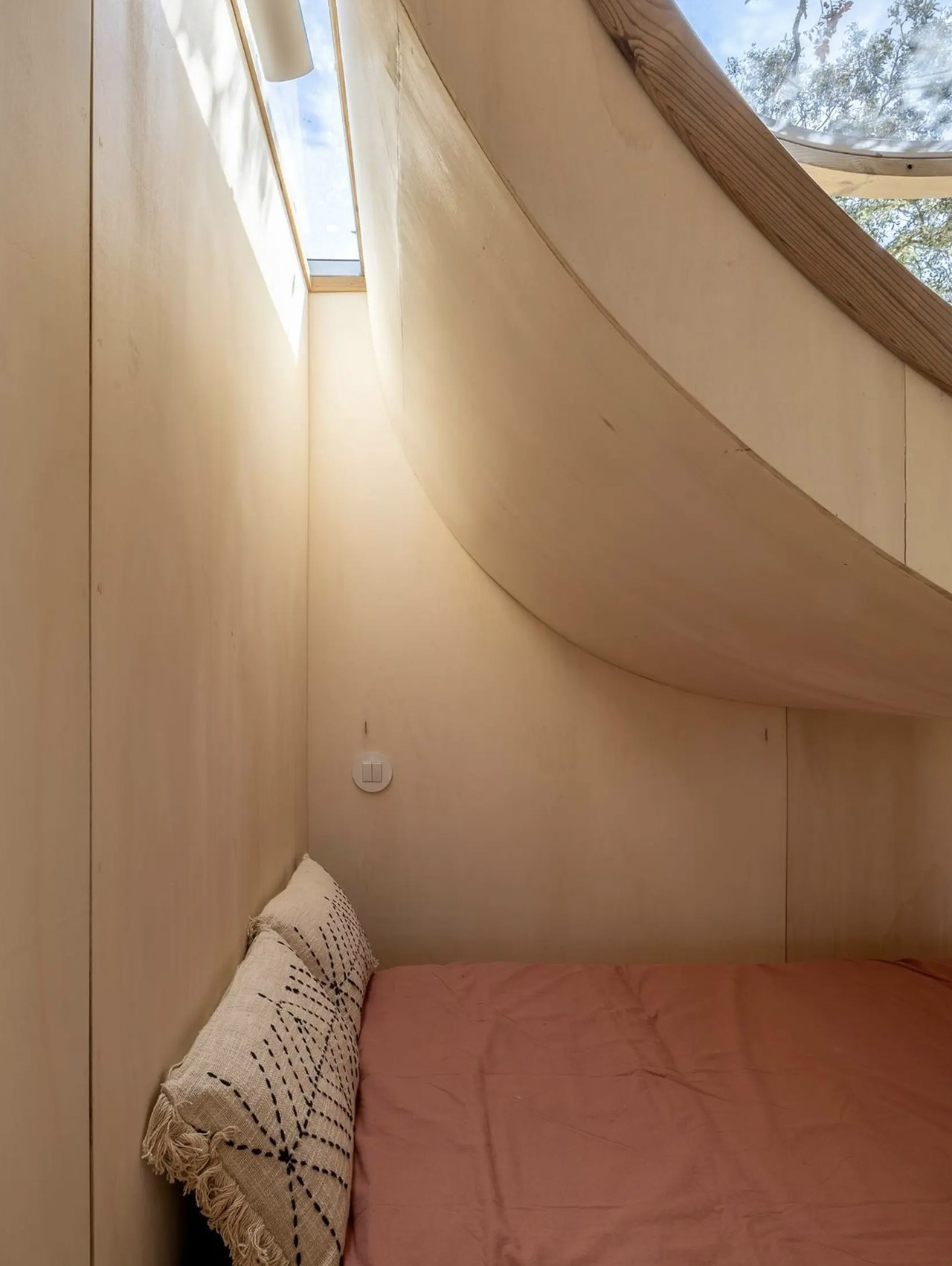
Separate toilet and shower rooms are located near the entrance. The main sleeping section is on the ground floor, and it includes a double bed. Wooden steps offer access to an additional loft space above the entrance, and this can be utilized as a bedroom or a storage area, depending on the visitors’ needs and requirements.
The comfy little home is equipped with porthole-style windows, and the largest window is placed directly above the main sleeping section. This window is operable, and you can enter the roof terrace area through it. Some removable steps lead you up to the terrace. The terrace is quite snug and cozy-looking and seems like an ideal place to sit with your favorite book and unwind. A nearby tree offers shade, allowing you to lounge about without discomfort. MadeiGuincho is known for its homes that seem to have bespoke wooden style, one that sets its home apart, allowing them to have a unique identity of their own, and the Terra m1_Tiny House on Wheels is no exception!
It’s one thing seeing a transparent Nothing phone and completely another when it’s a car. Looking something straight out of the Marvel universe, this cool Volkswagen ID 3 EV is a custom sedan you don’t want to ride if you prefer privacy.
The car originally owned by a Chinese automobile influencer Dog Bro Fast Dog has been customized to have a see-through form achieved with modding that seems absolutely bonkers. It’s not every day that you come across a transparent car on the streets. To complete the distinct appeal of the VW ID 3, LED lighting has been put to good use.
The Chinese automotive influencer draws his inspiration from the Nothing Phone (not surprising) which traversed normal conventions to create a mobile device that stands out from the crowd when it comes to pure form factor. The idea was good but executing it to achieve the desired look is another challenge altogether. Major sections of the vehicle were cut out including the door panels and plastic bumpers. They were replaced with vacuum-formed transparent plastic to achieve the see-through look of the clear acrylic panels.
The C-pillars and other structurally important parts of the frame were kept intact but etched with circuit boards and working computer fans to maintain the futuristic theme and aesthetics. Surprises don’t end there as the interiors are a cool little world on their own. The white theme carries the clean theme to the inside. There’s a racing seat for the driver and the passenger seat is replaced with a secondary battery for those extra 18 odd miles and feeding the power-hungry electronics.
The influencer has one more surprise in there, a PlayStation 5 console complete with a gaming setup including dual monitors, desks and an acrylic rack for all the peripherals in the rear section. The gaming setup is for real to enjoy as the influencer managed to fit a gaming chair in there too.
This is one of the craziest car modifications we’ve seen in a long time and the coolest without a doubt. A perfect show-stopper for the Japanese drifting scene in the dark hours!
Update, July 5, 5:25PM ET: The same day it posting a tweet thread about Apple's app submission processes, Epic now says its game store has been accepted by Apple. The company offered no further commentary beyond a single tweet noting that “Apple has informed us that our previously rejected Epic Games Store notarization submission has now been accepted.”
Thirty minutes later, Epic CEO Tim Sweeney said "Apple is now telling reporters that this approval is temporary and are demanding we change the buttons in the next version - which would make our store less standard and harder to use. We'll fight this."
Guess this saga's got more legs to run.
The original story chronicling Epic's moody tweets follows unedited.
Epic says that Apple has once again rejected its submission for a third-party app store, according to a series of posts on X. The company says that Apple rejected the latest submission over the design and position of the “install” button on the app store, claiming that it too closely resembles Apple's own “get” button. Apple also allegedly said that Epic’s “in-app purchases” label is too similar to its own label, used for the same reason.
The maker of Fortnite suggests that this is just another salvo in the long-running dispute between the two companies. Epic says that it’s using the same “install” and “in-app purchases” naming conventions found “across popular app stores on multiple platforms.” As for the design language, the company states that it's “following standard conventions for buttons in iOS apps” and that they’re “just trying to build a store that mobile users can easily understand.”
1/3 Apple has rejected our Epic Games Store notarization submission twice now, claiming the design and position of Epic’s “Install” button is too similar to Apple's "Get" button and that our "In-app purchases" label is too similar to the App Store's "In-App Purchases" label.
— Epic Games Newsroom (@EpicNewsroom) July 5, 2024
Epic has called the rejection “arbitrary, obstructive and in violation of the DMA.” To that end, it has shared concerns with the European Commission in charge of tracking potential Digital Markets Act (DMA) violations. The company still says it's ready to launch both the Epic Games Store and Fortnite on iOS in the EU in “the next couple of months” so long as Apple doesn’t put up “further roadblocks.”
This is just the latest news from a rivalry that goes back years. The two companies have been sparring ever since Epic started using its own in-app payment option in the iOS version of Fortnite, keeping Apple away from its 30 percent cut.
This led to a lengthy legal battle in the US about Apple’s walled-garden approach to its app store. Epic sued Apple and Apple banned Epic. A judge issued a permanent injunction as a way to allow developers to avoid Apple’s 30 percent cut of sales. This didn’t satisfy anyone. Apple wasn’t happy, for obvious reasons, and Epic contested the language of the injunction, which didn’t call out Apple for having a monopoly. Both companies appealed, eventually making its way to the Supreme Court. The court decided not to hear the case. The justices must have had other things to do.
This article originally appeared on Engadget at https://www.engadget.com/epic-says-that-apple-rejected-its-third-party-app-store-for-the-second-time-183914413.html?src=rss
Sergii Gordieiev is well known for his unique creations, showcasing his DIYs on the YouTube channel ‘The Q’ for people who love things out of the box. The wheel-less bicycle and square-wheeled ride are the prime examples. His love for customizing an ordinary bicycle is not going to fade away soon, as the slipper bicycle proves it all right.
As weird as it sounds, wait until you see the full video transcript. Sergii manages to slap the tarmac with this unusual ride one slipper at a time and that trippy sound is so irritatingly addictive. Everything apart, the level of detail and the amount of creative intent that the DIYer brings to each of his DIYs is worth appreciating. What next is he going to do with a bicycle is anybody’s guess, but for now, enjoy this one.
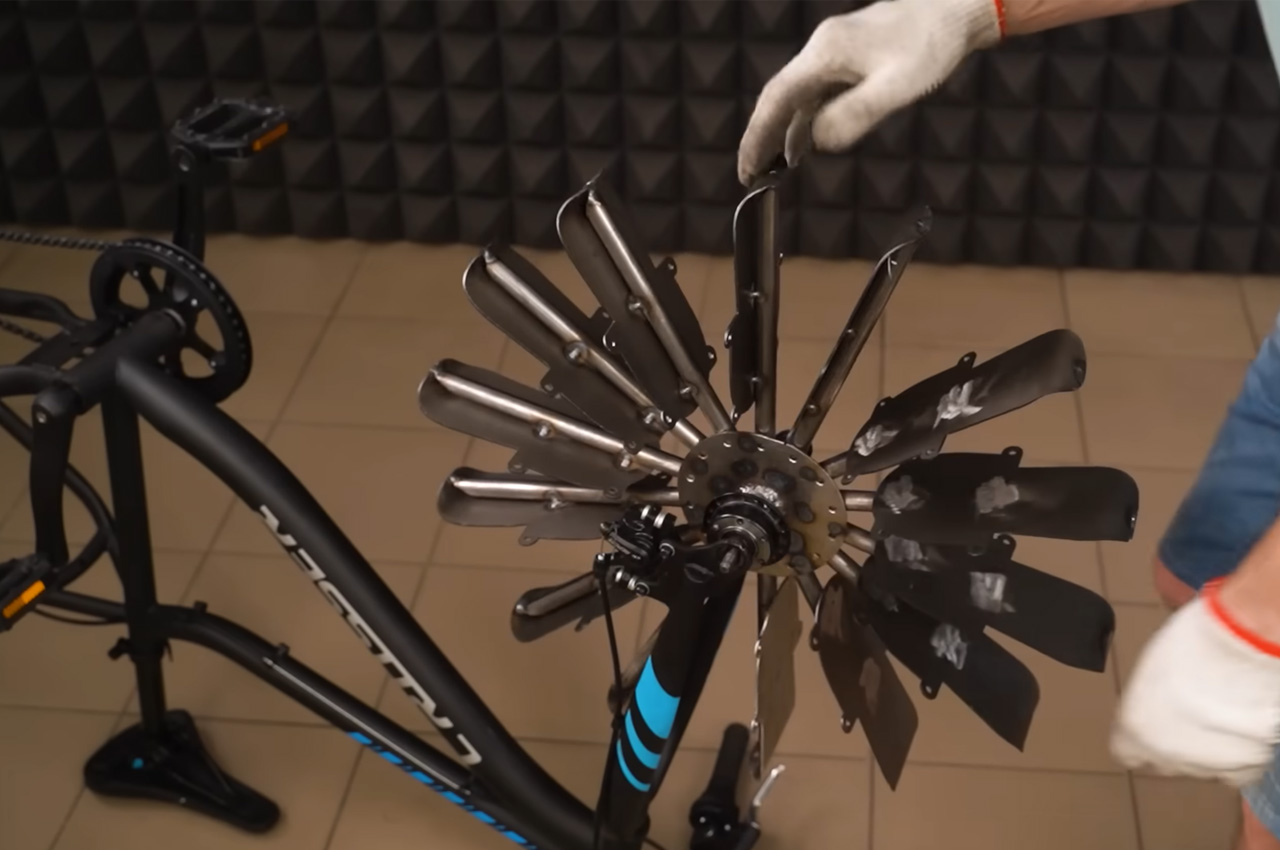
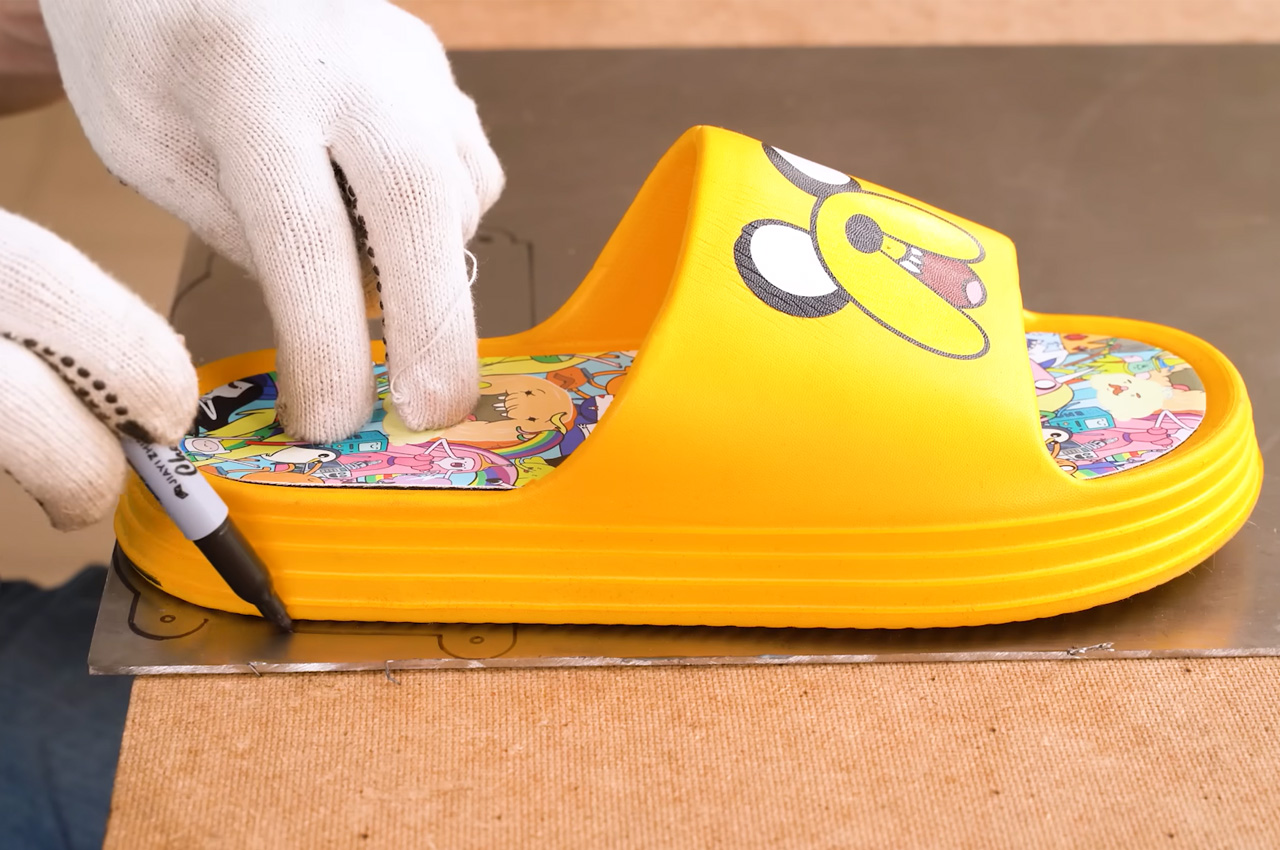
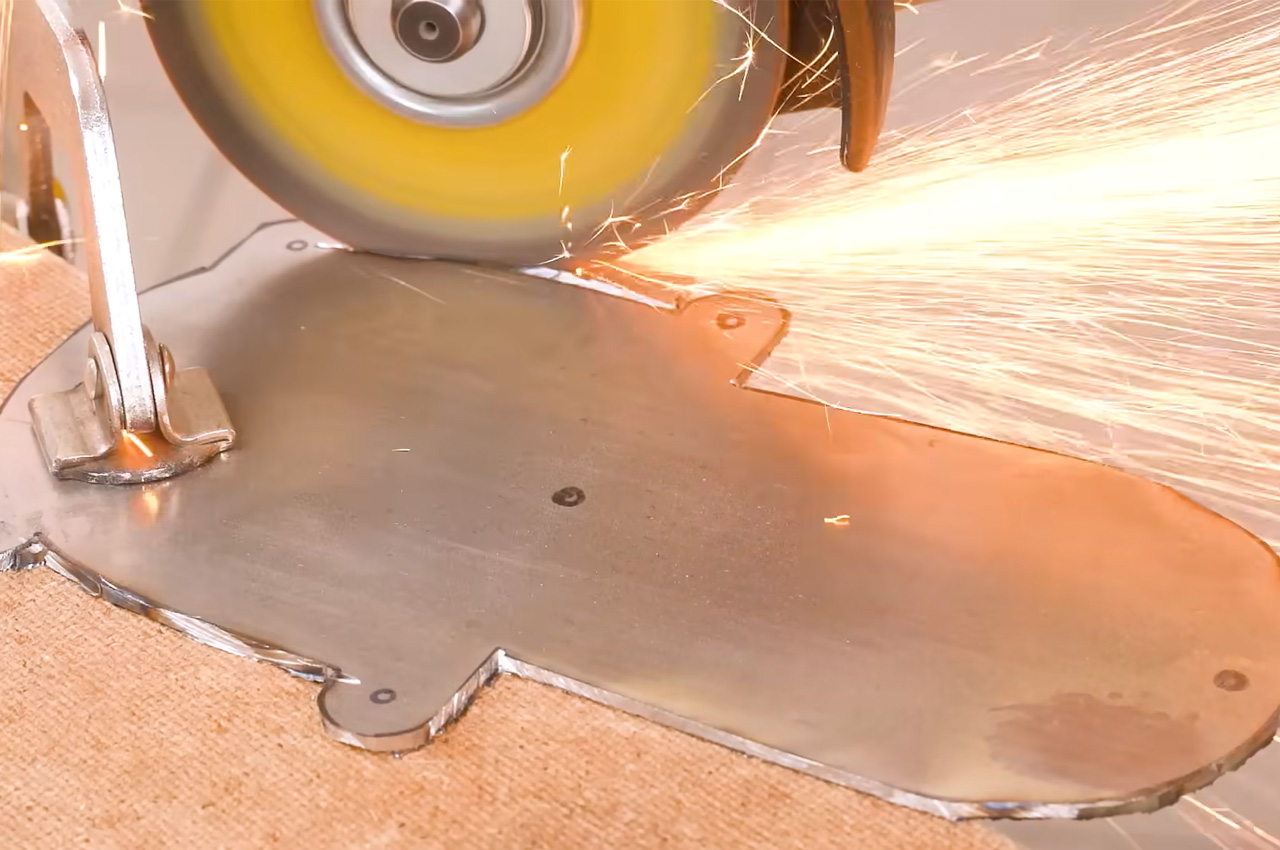
On first look, it seems the slippers will wear out from all the spanking on the road but there are 14 metal cutouts to take all the weight and contact force when the bicycle is paddled forward. These metal cutouts become the base for an outrageous-looking set of wheels for an adult bike. Both the wheel frames are designed from scratch with meticulous cutting and molding of the metal. Thereafter the wheels are attached to the bicycle frame.
The final step involves sliding on the rubber slippers onto each of these metal struts. Sergii fits each of the wheels with 12 yellow slippers and two black slippers to create a contrasting look when the wheels turn. The best thing about his creations is that no matter how much non-functional the bikes look, they glide on the road beyond anyone’s expectations. This one is no different as he takes a casual ride in the park to onlookers’ amazement.
Earlier this year, LEGO revised their R2D2 model and honestly, my first reaction was to ask ‘why?’ The new R2D2 was smaller than the original, and it seems its reason was so that LEGO could debut a scale-matching C3PO to complete the set. Its 15-inch build matches the R2D2 perfectly, so you can pair them together on a mantelpiece and create the iconic duo. The LEGO C3PO build also marks 25 years since LEGO and the Star Wars franchise first collaborated together. The first-ever collab between the two behemoths was back in 1999, when LEGO released a X-wing fighter model alongside the launch of the Phantom Menace movie. Two and a half decades later, their partnership is still going strong, with multiple builds (and even LEGO movies) to mark the successful partnership.
Standing at over 15 inches (38 centimeters) tall, the C-3PO droid is constructed from a staggering 1,138 LEGO pieces. The intricate design captures every iconic detail of the character, from his golden plating and expressive head to his posable arms that can be adjusted to recreate classic poses. Fans can relive their favorite Star Wars moments by turning C-3PO’s head or making him gesture with his arms.
The entire build comes with a C3PO minifigure, a plaque with C3PO’s stats, and a small poster commemorating 25 years of LEGO Start Wars
Standing at over 15 inches (38 centimeters) tall, the C-3PO droid is constructed from a staggering 1,138 LEGO pieces. The intricate design captures every iconic detail of the character, from his golden plating and expressive head to his posable arms that can be adjusted to recreate classic poses. Fans can relive their favorite Star Wars moments by turning C-3PO’s head or making him gesture with his arms.
This isn’t a completely static display model either. The C-3PO figure features a posable head and arms, allowing you to recreate classic poses from the Star Wars saga. There’s even a fun detail for die-hard fans – one of the arms can be repositioned to mimic C-3PO’s well-known gesture of patting R2-D2 on the head.
The set comes complete with a display stand featuring an information plaque about C-3PO and a spot for the included C-3PO minifigure. To top it all off, a special LEGO Star Wars 25th-anniversary brick is included, adding a touch of collectability.
The LEGO Star Wars C-3PO (75398) is priced at US$139.99, and is now available for pre-order, with deliveries commencing August 1st, 2024.
Update, July 5, 5:25PM ET: The same day it posting a tweet thread about Apple's app submission processes, Epic now says its game store has been accepted by Apple. The company offered no further commentary beyond a single tweet noting that “Apple has informed us that our previously rejected Epic Games Store notarization submission has now been accepted.”
Thirty minutes later, Epic CEO Tim Sweeney said "Apple is now telling reporters that this approval is temporary and are demanding we change the buttons in the next version - which would make our store less standard and harder to use. We'll fight this."
Guess this saga's got more legs to run.
The original story chronicling Epic's moody tweets follows unedited.
Epic says that Apple has once again rejected its submission for a third-party app store, according to a series of posts on X. The company says that Apple rejected the latest submission over the design and position of the “install” button on the app store, claiming that it too closely resembles Apple's own “get” button. Apple also allegedly said that Epic’s “in-app purchases” label is too similar to its own label, used for the same reason.
The maker of Fortnite suggests that this is just another salvo in the long-running dispute between the two companies. Epic says that it’s using the same “install” and “in-app purchases” naming conventions found “across popular app stores on multiple platforms.” As for the design language, the company states that it's “following standard conventions for buttons in iOS apps” and that they’re “just trying to build a store that mobile users can easily understand.”
1/3 Apple has rejected our Epic Games Store notarization submission twice now, claiming the design and position of Epic’s “Install” button is too similar to Apple's "Get" button and that our "In-app purchases" label is too similar to the App Store's "In-App Purchases" label.
— Epic Games Newsroom (@EpicNewsroom) July 5, 2024
Epic has called the rejection “arbitrary, obstructive and in violation of the DMA.” To that end, it has shared concerns with the European Commission in charge of tracking potential Digital Markets Act (DMA) violations. The company still says it's ready to launch both the Epic Games Store and Fortnite on iOS in the EU in “the next couple of months” so long as Apple doesn’t put up “further roadblocks.”
This is just the latest news from a rivalry that goes back years. The two companies have been sparring ever since Epic started using its own in-app payment option in the iOS version of Fortnite, keeping Apple away from its 30 percent cut.
This led to a lengthy legal battle in the US about Apple’s walled-garden approach to its app store. Epic sued Apple and Apple banned Epic. A judge issued a permanent injunction as a way to allow developers to avoid Apple’s 30 percent cut of sales. This didn’t satisfy anyone. Apple wasn’t happy, for obvious reasons, and Epic contested the language of the injunction, which didn’t call out Apple for having a monopoly. Both companies appealed, eventually making its way to the Supreme Court. The court decided not to hear the case. The justices must have had other things to do.
This article originally appeared on Engadget at https://www.engadget.com/epic-says-that-apple-rejected-its-third-party-app-store-for-the-second-time-183914413.html?src=rss
Waves the size of skyscrapers explode beneath me as I creep across a busted metal beam in the middle of the North Sea, suspended at the base of an oil rig that’s in the process of collapsing. I’m crawling swiftly but carefully, knees sliding on the wet metal and eyes locked on the platform in front of me. Don’t look down.
I look down. The cold sea is boiling just inches from my beam, white spray reaching up, threatening to pull me under miles of suffocating darkness and pressure. Fuck.
The Chinese Room
In Still Wakes the Deep, horror comes in multiple forms. Violent creatures stalk the walkways on thin, too-long limbs that burst from their bodies like snapping bungee cords. Human-sized pustules and bloody ribbons grow along the corridors, emitting a sickly cosmic glow. The ocean is an unrelenting threat, wailing beneath every step. And then there’s the Beira D oil rig itself, a massive and mazelike industrial platform supported by slender tension legs in the middle of a raging sea, groaning and tilting as it’s ripped apart from the inside. Each of these elements is deadly; each one manifests a unique brand of terror.
Still Wakes the Deep is a first-person horror game from The Chinese Room, the studio behind Amnesia: A Machine for Pigs, Dear Esther and Everybody’s Gone to the Rapture. The game is set in the winter of 1975 and its action is contained to the Beira D, a hulking metal maze that offers mystery, a growing familiarity and death at every turn. The rig is filled with a rich cast of characters from the British Isles, most of them Scottish. Players assume the role of Caz, an electrician on the rig whose best friend is Roy, the cook.
The Chinese Room
Still Wakes the Deep feels like a hit from the PS3 and Xbox 360 era, devoid of modern AAA bloat. It’s restrained like the original Dead Space, with a core loop that serves the narrative and vice versa. The mechanics steadily evolve without becoming repetitive or cumbersome. Its monsters are murderous but not overplayed. In Still Wakes the Deep, the horror is unrelenting but its source is constantly shifting — vicious eldritch beasts, the crumbling rig, the angry North Sea — and this diversity infuses the game with a buzzing tension until the breathtaking final scene.
The game is fully voice acted and its crew members are incredibly charming. An undercurrent of good-natured ribbing belies every interaction, and the dialogue is earnest and legitimately funny, even in life-or-death situations. This skillful sense of character development only makes the carnage more disturbing once the monsters board the Beira D.
After the oil rig drills through a mysterious substance deep in the North Sea, a giant eldritch organism takes over the structure, crunching its metal corridors and infesting the bodies of some crew members. Caz is on a mission to survive the creatures and escape the rig — and help save Roy, whose body is fading fast because he can’t get to his insulin.
The Chinese Room
Gameplay in Still Wakes the Deep is traditional first-person horror fare, executed with elegance and expertise. The action involves leaping across broken platforms, balancing on thin ledges, running down corridors, climbing ladders, swimming through claustrophobic holes and hiding from monsters in vents and lockers. There are no guns on the Beira D, and Caz has just a screwdriver to help him break open locks and unscrew metal panels, placing the focus on pure survival rather than combat. Interactive materials tend to be highlighted in yellow, so it’s never a question of what to do or where to go, but rather how to get there without falling prey to the monsters, the sea or the rig.
Each input feels perfectly precise and responsive. Climbing a ladder, for instance, requires holding RT and pressing the analog stick in the proper direction — but if Caz slips, players need to suddenly press and hold LT as well, so he can regain his grasp in a quicktime event. In these moments of sudden panic, squeezing both triggers feels like the natural thing to do. It’s deeply satisfying to clasp the gamepad as tightly as Caz is holding the rungs of the ladder, player and character completely in sync in the aftermath of a sudden scare. Still Wakes the Deep is a prime example of intuitive game design.
The Chinese Room
It’s also just a gorgeous game. I stopped short multiple times while playing Still Wakes the Deep simply to admire the crisp lines, complex lighting and photorealism of specific scenes, but every frame is dense with thoughtful and well-rendered details. The otherworldly structures littering the rig cause Caz’s vision to bubble like a melting film reel, and multicolored circles overtake the screen every time he passes too close to a pustule — it’s disorienting and eerily pretty, much like the rest of the game.
Still Wakes the Deep is an instant horror classic. It’s filled with heart-pounding terror and laugh-out-loud dialogue, and it all takes place in a setting that’s rarely explored in interactive media. Amid the sneaking, swimming, running and climbing on the Beira D, Still Wakes the Deep manages to tell a heartfelt and powerful story about relationships and sacrifice. Caz and Roy have a special friendship, but they also have family back on shore and returning to these people — alive, ideally — is a constant driving force.
The Chinese Room
Still Wakes the Deep is available now on PC, PS5 and Xbox Series X/S, and it’s included in Game Pass. It’s developed by The Chinese Room and published by Secret Mode.
This article originally appeared on Engadget at https://www.engadget.com/still-wakes-the-deep-is-a-modern-horror-classic-175304800.html?src=rss