Tiny But Mighty: The Ultimate EDC Flashlight with 32-Meter Beam Range

Get ready to start your next adventure with the ultimate pocket-sized flashlight. Crafted from Grade 5 titanium, this flashlight is durable, lightweight, and fits in your pocket like a coin. No more fumbling in the dark; the tritium slot design ensures it can be found instantly. If you’re looking for a flashlight that’s both tough and tiny, this is the ideal choice.

Click Here to Buy Now: $59 $89 (34% off). Hurry, only 26/200 left! Raised over $58,000.
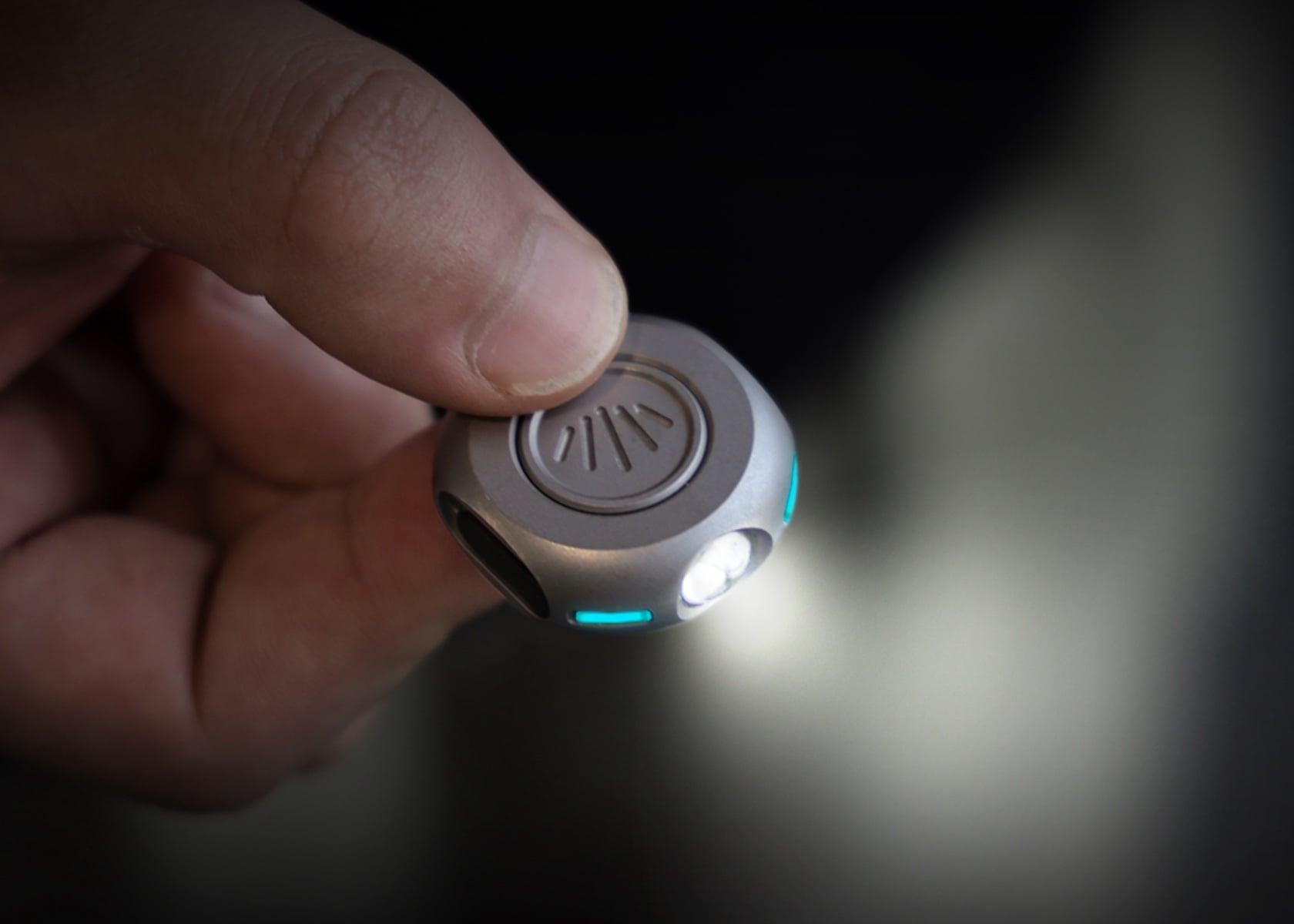
Imagine having a light that attaches to any gear without being noticed. Thanks to its coin-sized body and keychain hole, this compact flashlight can be clipped onto a backpack, keys, or even worn as a necklace. It’s always within reach when you need it most. With an IPX-8 waterproof rating, it can handle any weather condition, working rain or shine.
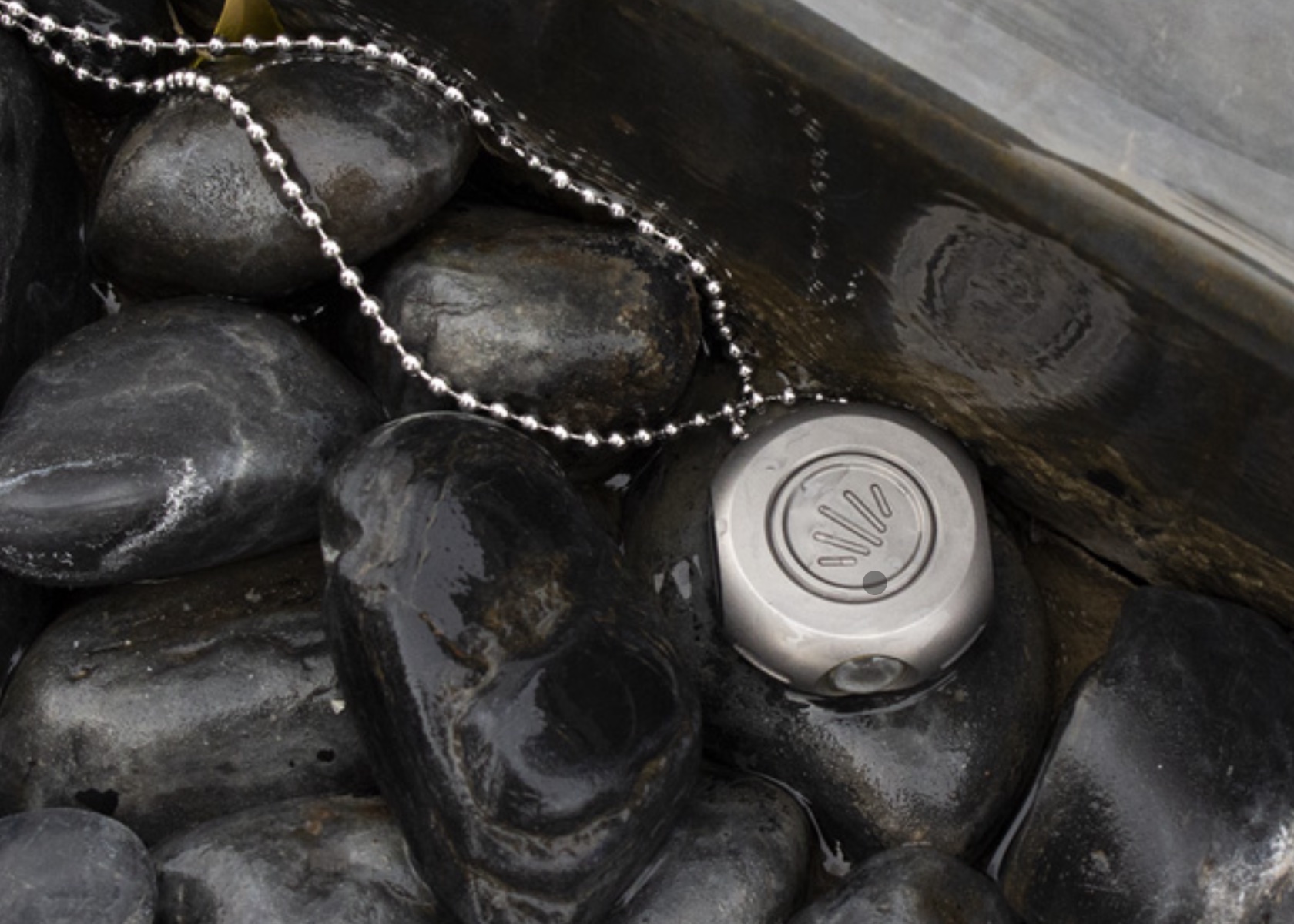
MiCoin: Titanium Coin-Sized Rechargeable Flashlight is IPX-8 waterproof rated

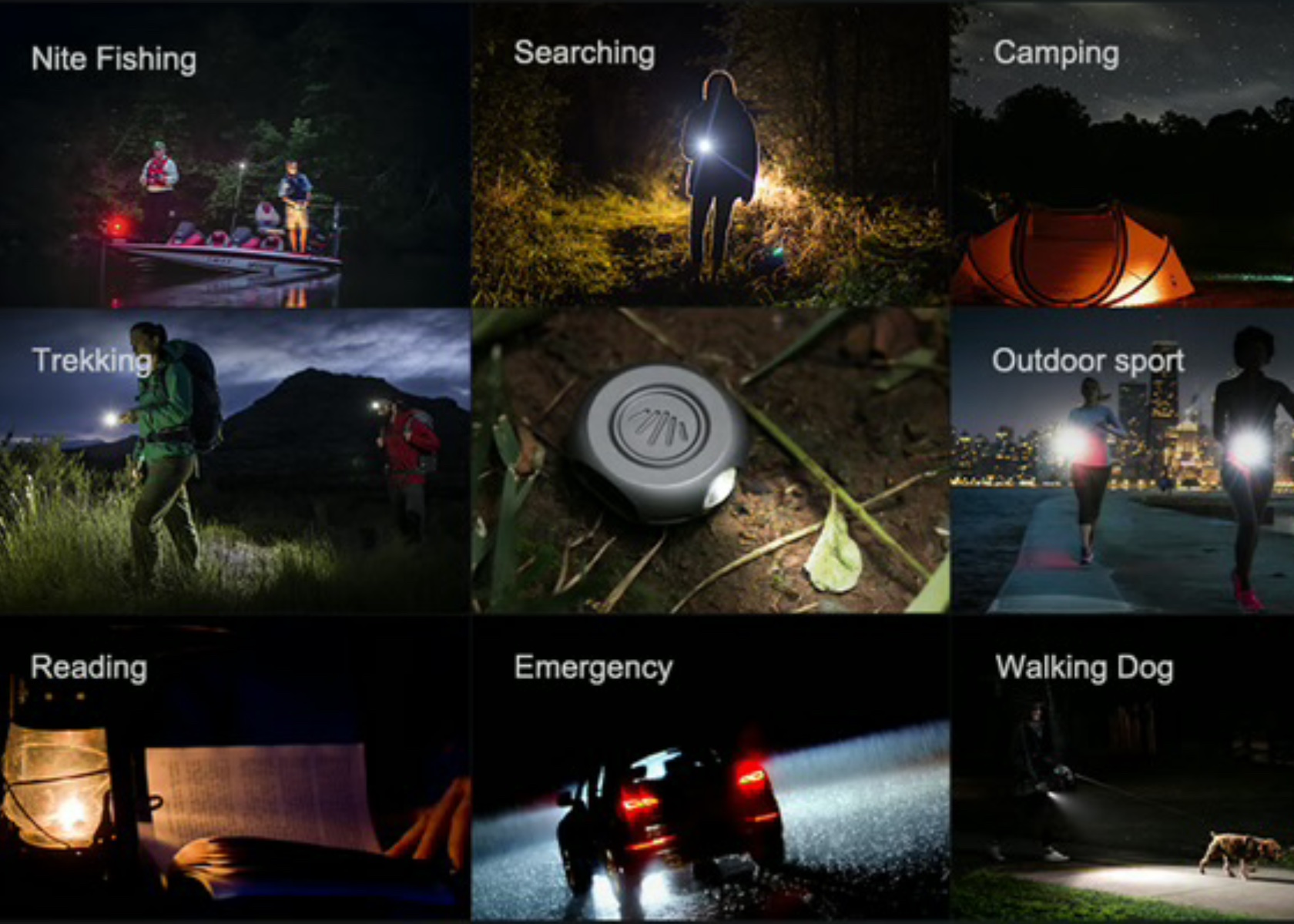
The real magic lies in its versatility. With five integrated lighting modes, it’s prepared for any situation. Whether hiking through dense forests, navigating unfamiliar terrains, or just finding your way at night, this tiny powerhouse is a discreet and reliable guide. Compact, lightweight, and built to last, it’s perfect for all your adventures.
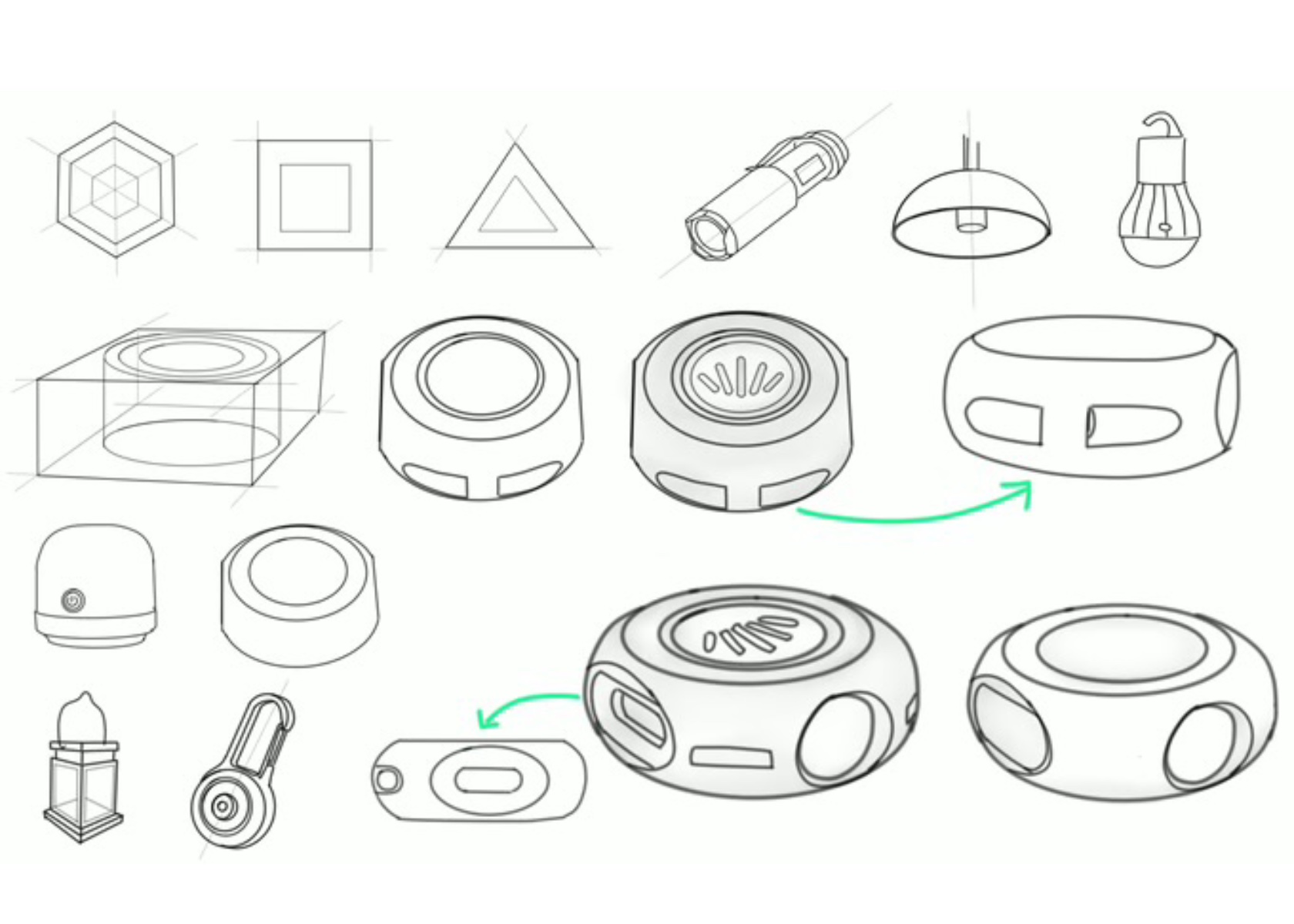
Creating a flashlight that improves the everyday carry experience was no easy feat. Countless shapes were tested to maintain its minimalist look while ensuring it remains incredibly practical. The result? A flashlight that combines multiple brightness modes and a strobe feature, making it as versatile as needed.
With its coin-sized dimensions and featherweight build, this flashlight breaks away from traditional designs. It features a large, easy-to-press button and an eye-catching appearance. This form factor allows for multiple carrying options, making it the perfect companion for daily adventures.
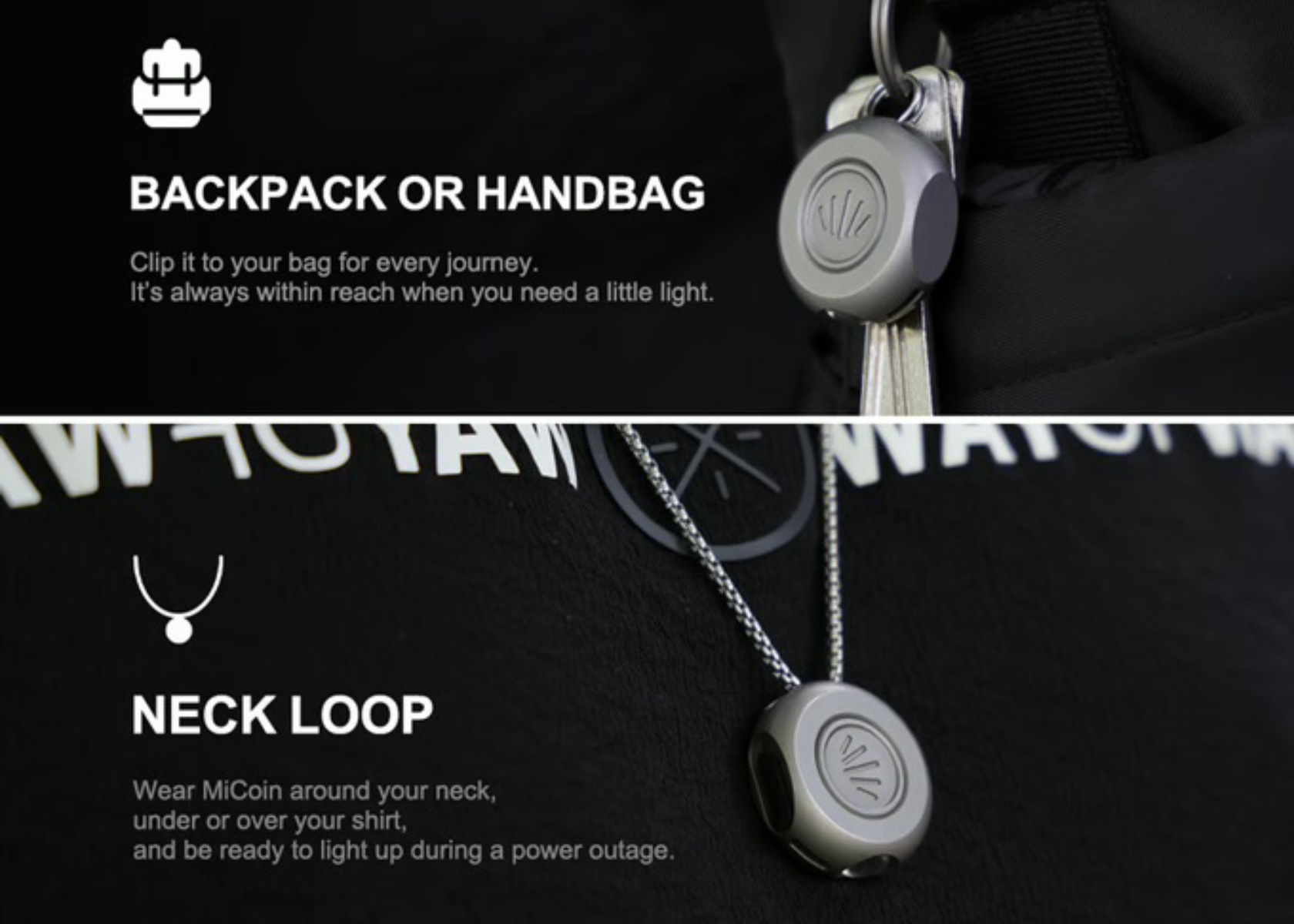
Convenience is redefined with an integrated keyring hole. Hang it on a keychain, backpack, or even wear it as a pendant. It fits seamlessly into everyday carry routines, offering multiple ways to keep it handy.
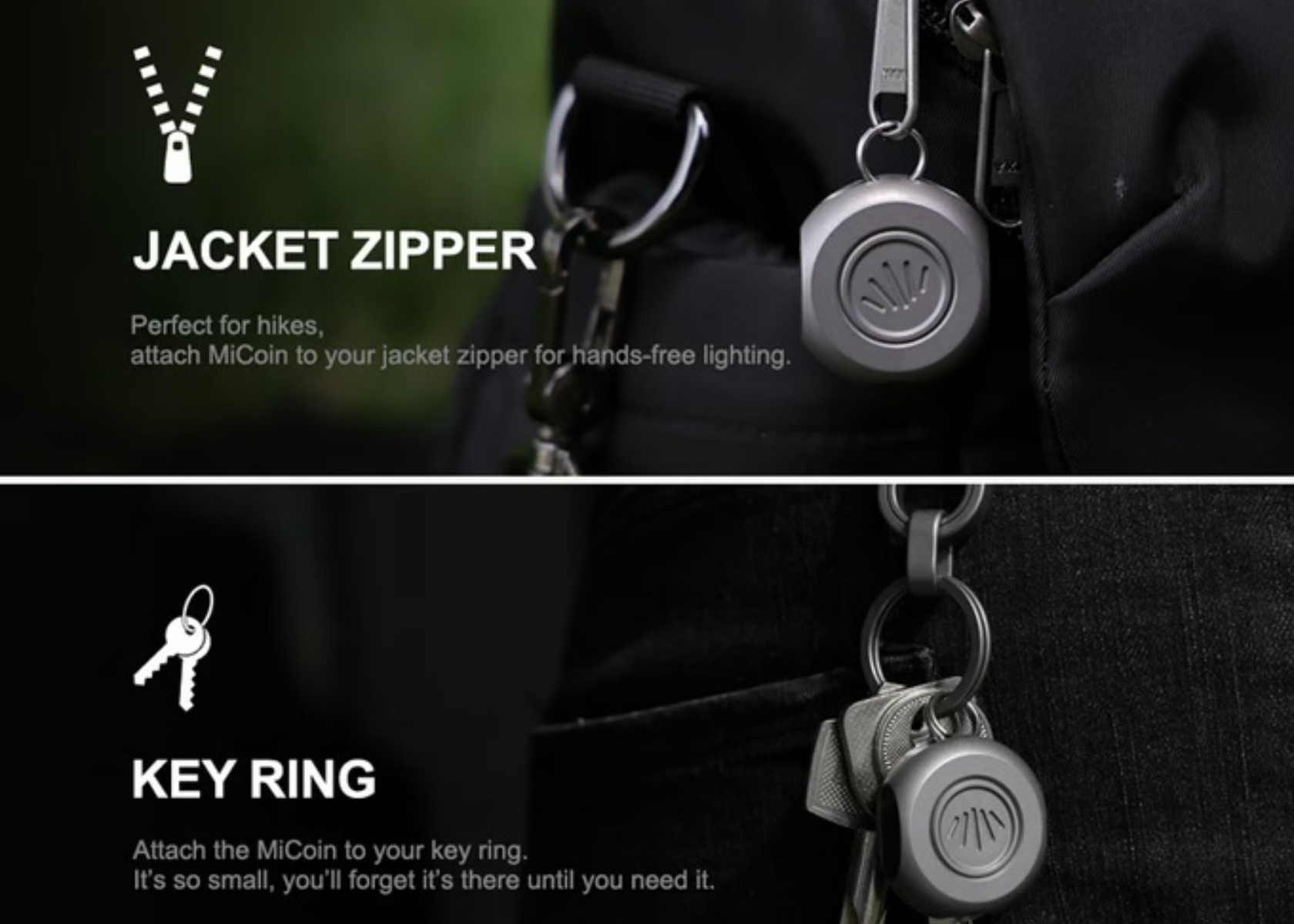
Made from Grade 5 titanium, it is incredibly strong yet lightweight, built to handle the toughest adventures without adding extra weight. Its natural corrosion resistance ensures it looks and performs like new, even in harsh conditions. Nearly indestructible, means that it can survive drops from up to a meter and even being run over by an SUV.

MiCoin: Survive drops from up to 1 meter & being run over by an SUV

Weatherproof and crafted to endure, this light can be submerged underwater for up to five minutes without compromising its seals. Whether it’s rain, sleet, hail, snow, or heat, it will keep shining, ensuring you have light when you need it most.

MiCoin: Waterproof

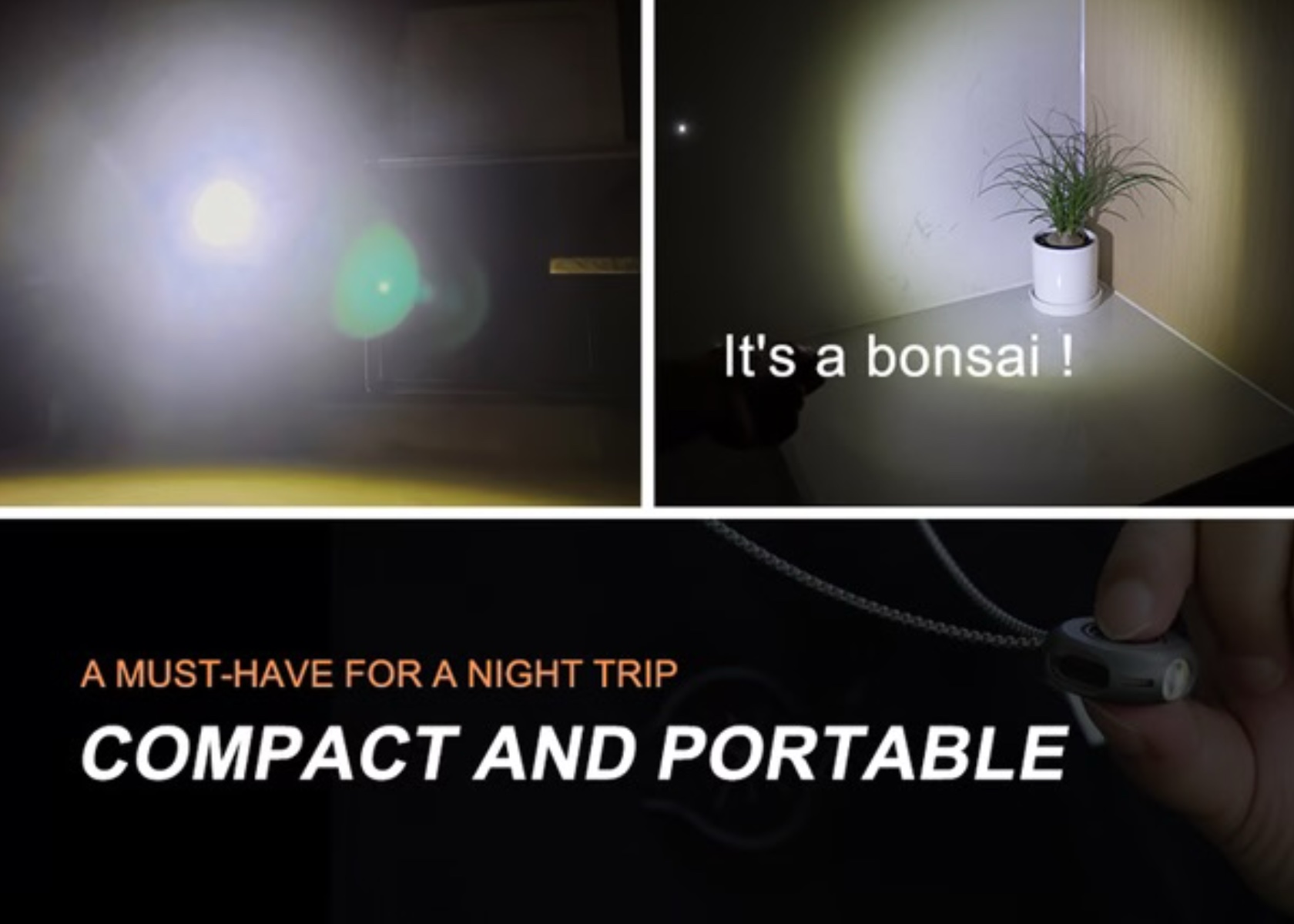
Enjoy bright illumination with this handy tool. It offers three default brightness levels—low, medium, and high—and two stealth modes: ultra-high and strobe. It fits your needs in any situation. Navigate through the dark with ease, whether you’re adjusting brightness for a casual walk or using the ultra-high and strobe modes for emergencies.
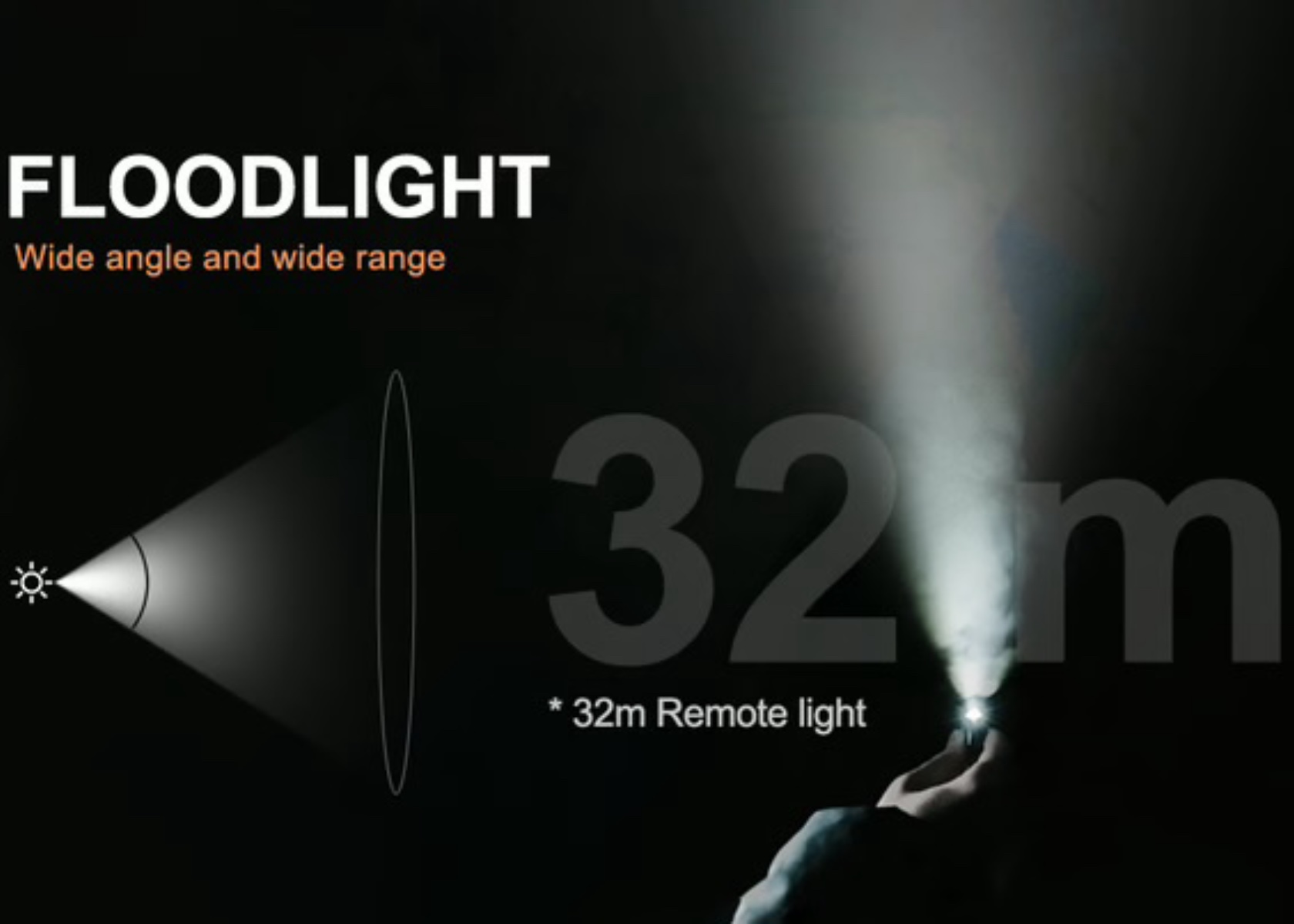
With a 32-meter beam range, this flashlight lights up every detail, giving you confidence during your outdoor adventures.

MiCoin: 3 brightness levels

Operation is convenient and user-friendly with top switches controlling both on/off functionality and brightness levels. Charging is fast and easy with the USB Type-C port, compatible with a computer or power bank. Charging times range from 35 to 60 minutes, depending on the charger used. A red/green LED indicator lets you know if it’s charging or fully charged.

This flashlight uses an included rechargeable 501015 Li-Ion battery, providing up to four and a half hours of runtime on a full charge. Say goodbye to repeatedly buying batteries.

No more searching blindly or fumbling for your light in the dark. A tritium slot enhances visibility in low light conditions, ensuring you can effortlessly locate your flashlight when you need it most.
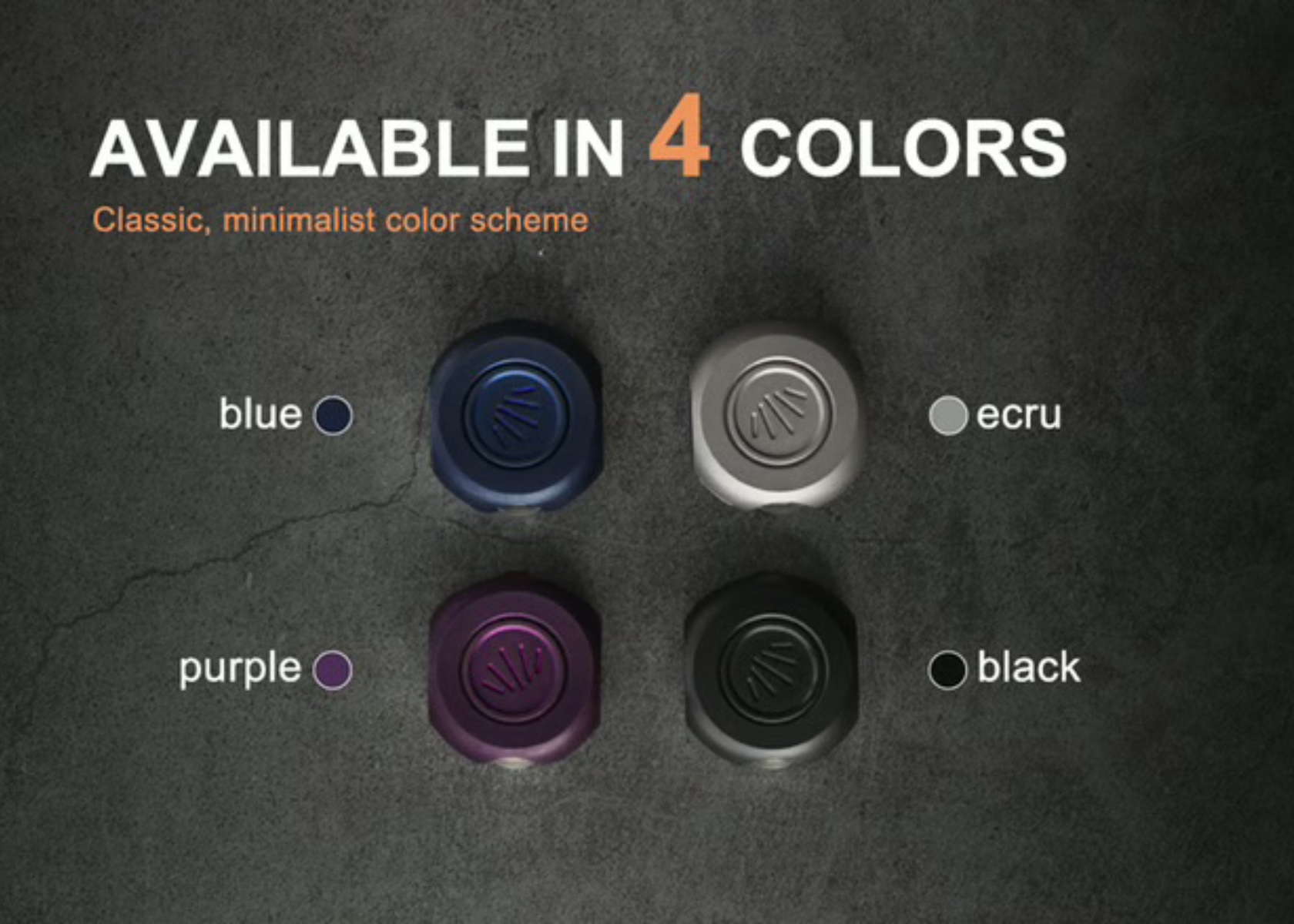
Available in four colors—classic black, vibrant blue, striking purple, and natural titanium finish—each color evokes a distinct feeling and aesthetic, catering to individual preferences and allowing you to choose the one that best represents your style.
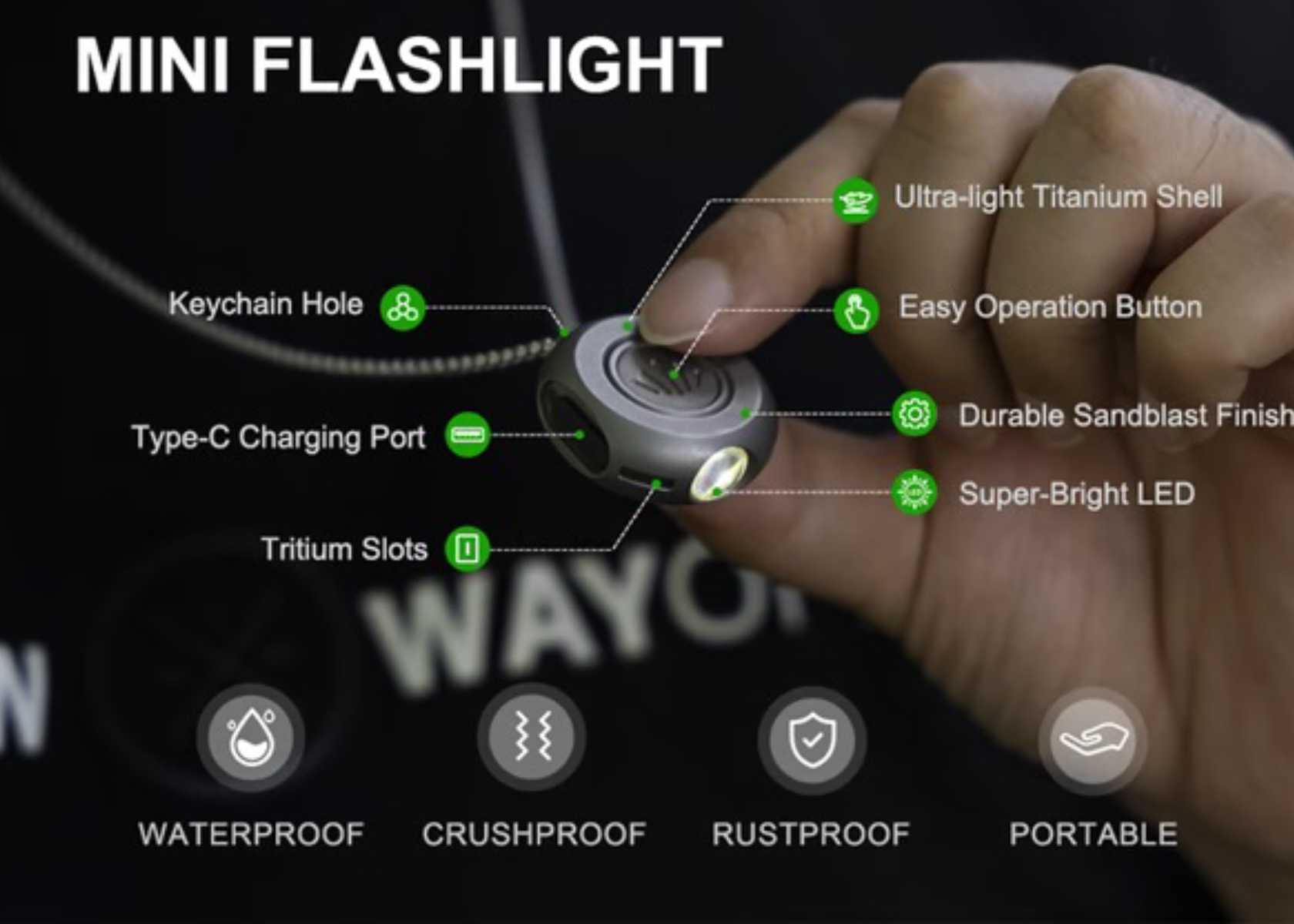
Waterproof, crushproof, rustproof, and portable, it is the perfect EDC companion. Featuring an ultra-light titanium shell, easy operation button, durable sandblast finish, super-bright LED, keychain hole, Type-C charging port, and tritium slots, it is designed to meet all your needs.
All rewards include the flashlight in its natural sandblasted finish, accompanied by a USB Type-C charging cable. Free worldwide shipping is available. For further personalization options, additional choices will be available in the add-on section, allowing you to customize your flashlight to your preferences. Don’t wait—make your pledge now and shine a light on your next adventure!

Click Here to Buy Now: $59 $89 (34% off). Hurry, only 26/200 left! Raised over $58,000.

The post Tiny But Mighty: The Ultimate EDC Flashlight with 32-Meter Beam Range first appeared on Yanko Design.

How Bluetooth Works: Exploring the Invisible Symphony of Wireless Communication

Wireless connectivity has become an invisible thread woven into the fabric of our daily lives. From streaming music to our earbuds to connecting keyboards and printers, Bluetooth technology has replaced a tangle of wires with seamless, invisible magic. Sure, we all lamented the day Apple killed the headphone jack (it’s been 8 long years since that day), but try and imagine a life without Bluetooth. Wires wires everywhere, data cables to transfer files between machines, and requiring to load all your songs on USB drives to play on your car stereo or home theater. Sounds like a pretty awful life, doesn’t it?? But how exactly does this magical thing called Bluetooth work? Let’s take a closer look at the fascinating world of wireless Bluetooth communication and explore the science behind its seemingly effortless operation.

Bluetooth’s roots trace back to 1994, when Ericsson’s Jaap Haartsen aimed to create a short-range wireless connection for mobile phones, booming in popularity at the time. This technology, using low-power UHF radio waves, would eliminate the need for bulky cables. The name, inspired by 10th-century Viking king Harald Bluetooth, aimed to reflect how the technology would unite devices like those once-warring kingdoms. The Bluetooth Special Interest Group, formed in 1998 by Ericsson, IBM, Intel, Nokia, and Toshiba, ensured standardization and widespread adoption.

Bluetooth utilizes radio waves for communication, but unlike the visible light we perceive, it operates on a specific and invisible range of the electromagnetic spectrum. This range falls between 121mm and 124mm in wavelength, significantly longer than the radio waves used for Wi-Fi. This longer wavelength allows Bluetooth signals to pass through walls, making it suitable for short-range data transfer within a room or a few meters.

The magic of transforming these radio waves into music or data streams lies in a clever manipulation of their properties. Bluetooth transmits information by altering the radio waves themselves. To send a binary 1, the Bluetooth antenna emits a specific radio wave with a particular wavelength. Conversely, to send a 0, it transmits a different wavelength within the designated range. This seemingly simple approach allows for incredibly rapid data transmission. In fact, Bluetooth can send and receive information at a million times per second, ensuring smooth audio streaming or data transfer without any noticeable lag.

But with so many Bluetooth devices around us, how do our earbuds differentiate between our phone’s signal and everyone else’s in a crowded space? This is where Bluetooth’s genius truly shines. It doesn’t rely on a single channel for communication. Within the designated wavelength range, there are actually 79 individual channels available. To avoid interference and ensure smooth communication, Bluetooth devices constantly hop between these channels at a staggering rate of 1,600 times per second. Imagine a crowded room filled with people having multiple conversations simultaneously, each conversation happening on a different frequency – that’s the essence of how Bluetooth avoids interference and ensures clear communication even in environments saturated with Bluetooth signals.

An additional layer of security is implemented through a process called pairing. When you connect your phone to your earbuds for the first time, they exchange a unique encryption key. This key acts like a secret handshake between the two devices. Only the phone’s signal with the matching encryption key can be decrypted by your earbuds. Even if someone intercepts the data stream being transmitted via Bluetooth, they wouldn’t be able to decipher it without the specific key, protecting the privacy of your communication.

But what if multiple devices in close proximity try to use the same channel at the same time? This is where Bluetooth prioritizes established connections. Your earbuds will recognize your phone’s unique encryption key and prioritize its signal, effectively filtering out unwanted audio or data from nearby devices attempting to connect. This ensures a clear and uninterrupted connection, even in crowded environments.

Beyond music streaming and connecting peripherals, Bluetooth continues to evolve and expand its capabilities. Bluetooth Low Energy (BLE) is a newer iteration of the technology specifically designed for internet-of-things (IoT) applications. BLE offers lower power consumption compared to traditional Bluetooth, making it ideal for battery-powered devices like smartwatches and fitness trackers. Additionally, advancements in Bluetooth technology have led to the development of Bluetooth mesh networks, which enable a network of devices to communicate with each other, opening doors for innovative applications in smart homes and industrial automation.

So next time you lose yourself in music with your wireless earbuds, take a moment to appreciate the invisible symphony of radio waves, hopping frequencies, and clever encryption that keeps the magic of Bluetooth alive. It’s truly a marvel of science and a major pat on the back for the engineers who have harnessed the invisible forces of the electromagnetic spectrum and transformed them into a ubiquitous technology that shapes the way we interact with our devices and the world around us. After all, we wouldn’t want to be stuck in the dark ages of the 2000s with infrared-based data-transfer capabilities… do you remember those times?!

The post How Bluetooth Works: Exploring the Invisible Symphony of Wireless Communication first appeared on Yanko Design.

The Beyond Good and Evil remaster will be released next week (for real)

After a bit of a false start, Ubisoft has released a trailer for its remake of the cult classic game Beyond Good and Evil. The video first appeared in a tweet from the game studio that was later deleted. But the new announcement seems to be sticking around, and that means we really will be getting the Beyond Good and Evil - 20th Anniversary Edition on June 25. It will be available on PC, PlayStation 5, PlayStation 4, Nintendo Switch, Xbox One and Xbox Series X/S. Limited Run Games will also be selling physical copies of the remaster starting July 12; those will be for PlayStation 5, PlayStation 4, Xbox Series X/S and Switch.

The two-minute long trailer showcases the newly updated art assets. The remaster will run at up to 4K and 60 FPS, and it has a re-orchestrated soundtrack. Plus it also promises "exclusive new content," but it's unclear what that might include. Check out the whole video for yourself:

Today's back-and-forth on X echoes back to how the world learned about the planned remaster in the first place. A listing for it appeared on the Xbox Store and an incomplete version was briefly on Ubisoft Plus back in 2023 thanks to a technical glitch. Also, any time Beyond Good and Evil comes up, regular readers might find themselves wondering about the sequel that has been revealed and teased and promised and seen for more than a decade. No, this update doesn't seem to bring any new information about that project.

What a long, strange development cycle it's been.

This article originally appeared on Engadget at https://www.engadget.com/the-beyond-good-and-evil-remaster-will-be-released-next-week-for-real-230001749.html?src=rss

Sony will terminate its Sony Rewards program

Sony has announced that it will be ending its rewards program at the end of this year. No, it’s not PlayStation Stars, the loyalty program that rewards you digital collectibles for completing certain gameplay tasks. Nor is it the defunct PlayStation Rewards program, which offered PSN bonuses for the most voracious PlayStation gamers. It’s terminating the Sony Rewards program offered through the Sony and PlayStation-branded Visa credit cards.

The company updated the FAQ and Terms and Conditions pages to reflect that it will sunset the Sony Rewards website and mobile app on December 31, 2024, and new members will no longer be accepted into the program effective immediately. Pre-existing Sony and PlayStation cardholders will still be able to redeem points, access their account and submit bonus points and purchase credit request forms through the app between now and New Year’s Eve. However, they cannot send physical bonus points and credit request points by mail after July 21.

Additionally, members can no longer earn points through offers or partner offers, and they can’t link their accounts to the Sony Store or Movies Anywhere. The Sony Rewards customer service will cease operation on February 14, 2025. As far as the Sony and PlayStation credit cards are concerned, cardholders will be contacted by Comenity Bank in due time about changes to the credit card programs but they can keep using them until December 31.

The Sony Rewards program launched in 2017, allowing you to accrue enough points through your Sony or PlayStation credit card to redeem items only from the Sony brand. Redeeming points for PlayStation games seems like a great perk at first glance, but the redemption process is inflexible and the APR for purchases sits at a high 27.99%. The Xbox Mastercard, which Microsoft introduced last year, has the same issue but the APR can be 20.99%, 26.99% or 31.99%, depending on your balance. Plus, there’s no cash back.

This article originally appeared on Engadget at https://www.engadget.com/sony-will-terminate-its-sony-rewards-program-224538912.html?src=rss

3D Printed Filter Cap Delivers Clean Drinking Water To Millions In Drought-Stricken Colombia

In Colombia, the dire reality of 3.7 million people lacking access to clean and safe drinking water has been aggravated by a severe drought in 2024. Many of these individuals reside in remote areas, where they endure extreme heat and scarce water sources, often contaminated and leading to thousands of deaths annually. In response to this critical situation, Filsa Water, a scientific company dedicated to developing infrastructure and technology solutions, has partnered with Ogilvy, Baylor International, and the Colombian Red Cross to introduce a groundbreaking product; the 3D printed Filter Cap. This innovative device transforms a universal bottle cap into a powerful water filtration system, providing an immediate and practical solution to the world’s water crisis.

Designer: Filsa Water, Baylor International Ogilvy,  and Colombian Red Cross

The Filter Cap is a compact, lightweight device weighing just 24 grams, designed to be attached to any standard PET bottle. Utilizing advanced 3D additive technology, the cap is composed of a mix of minerals, metals, and natural extracts. This ingenious design allows the cap to purify water as it flows through, effectively turning any PET bottle into a portable water treatment plant. The filtration system increases the water’s pH, adds hydrogen, reduces impurities by 70%, and eliminates 90% of heavy metals, making it a vital tool for ensuring safe drinking water in areas where it is scarce or unavailable.

The introduction of the Filter Cap comes at a critical time for Colombia, where the drought of 2024 has highlighted the vulnerability of remote communities. The compact nature of the Filter Cap makes it an ideal solution for humanitarian efforts and disaster relief. It offers a simple yet effective way to purify water, reducing the risk of waterborne diseases and improving the overall health and well-being of affected populations.

The device is designed to be environmentally responsible. Its casing, also 3D printed from cornstarch-based resin, is compostable after use. This feature not only promotes the reuse of plastic bottles but also aligns with sustainable practices, addressing both the water crisis and environmental concerns.

The impact of the Filter Cap extends beyond immediate water purification. By reclaiming over 300,000 liters of water in just two months, the device demonstrates its potential to significantly improve access to safe drinking water in underserved areas. This level of efficiency and effectiveness underscores the importance of innovative solutions in tackling global challenges.

Filsa Water and its partners have envisioned the Filter Cap as more than just a product; it is a lifeline for communities in need. By making clean water accessible and affordable, the Filter Cap has the potential to transform lives, offering hope and relief to millions of people. Its ease of distribution ensures that even the most remote populations can benefit from this technological advancement, marking a significant step forward in the global effort to provide safe drinking water for all.

The post 3D Printed Filter Cap Delivers Clean Drinking Water To Millions In Drought-Stricken Colombia first appeared on Yanko Design.

Amazon says it’s cut down on those plastic air pillows in packages

You know those little plastic air bags in your more fragile Amazon purchases that make perfect popping noise makers when you crush them? Amazon says it's reduced its usage of them and plans to completely eliminate using them by the end of the year.

The ecommerce behemoth announced on its news blog that it has reduced the use of plastic air pillows by 95 percent and switched to crumbled paper filler instead. Amazon also says it plans to use paper filler for “nearly all” of its customer deliveries on Prime Day.

The company says its decision to phase out the use of plastic air cushions at its distribution centers aims to eliminate unnecessary waste and focus more on using recycled materials.

Plastic pollution has always been a concern when it comes to our environment but it has dramatically increased as a result of Amazon’s meteoric rise especially during the COVID pandemic. The nonprofit ocean conservation group Oceana released a study in 2021 showing that Amazon produced 599 million pounds of plastic waste in 2020. The group also estimated that the waste produced from plastic air pillows alone “would circle the Earth more than 600 times.”

This article originally appeared on Engadget at https://www.engadget.com/amazon-says-its-cut-down-on-those-plastic-air-pillows-in-packages-222953642.html?src=rss

New York Governor signs two new bills into law protecting kids from social media

New York has passed two new laws restricting how social media companies interact with and collect data from users under the age of 18.

New York Governor Kathy Hochul signed two bills into law on Thursday including the Stop Addictive Feeds Exploitation (SAFE) for Kids Act and the New York Child Data Protection Act.

SAFE requires social media companies like Facebook and X to restrict addictive feeds to minors on its platforms. These include feeds that are “algorithmically driven” to prevent “unhealthy levels of engagement,” according to a press release.

The New York Child Data Protection Act also prevents online sites and devices from collecting, sharing or selling the personal data of anyone under the age of 18.

Both laws require companies to obtain consent from parents before allowing kids to access feeds driven by algorithms or collecting data from them. The new laws also require social media companies to create age verification and parental consent controls for its platforms based on guidelines set by New York’s Attorney General.

New York passed two new laws restricting how social media companies interact with and collect data from users under the age of 18. Governor Hochul said in a released statement that these new policies will “provide a safer digital environment, give parents more peace of mind and create a brighter future for young people across New York.”

Other parts of the country have passed laws restricting or limiting children’s access to phones and online platforms. The California State Senate approved a bill similar to New York’s SAFE Act that would also prevent social media apps from sending notifications to minors during school hours and from midnight to 6 a.m. throughout the year. The Los Angeles Unified School District instituted a ban that restricts students’ phone usage during school hours. California Governor Gavin Newson responded to the decision by promising to work with lawmakers on a similar statewide law.

These new policies and laws aren’t just about keeping kids off of their phone while they’re in school. They are designed to address mental health issues caused by social media platforms. The New York Times published an op-ed on Monday from US Surgeon General Vivek Murthy calling social media an “important contributor” to the detriment of mental health in teenagers and called for social media companies to post a warning label for adolescents on its platforms and apps.

This article originally appeared on Engadget at https://www.engadget.com/new-york-governor-signs-two-new-bills-into-law-protecting-kids-from-social-media-211935749.html?src=rss

The Webb Telescope’s dazzling nebula image supports a long-held theory

The image of the Serpens Nebula you see above, taken by NASA’s James Webb Space Telescope (JWST), not only looks mesmerizing but also captures a never-before-seen phenomenon. The aligned, elongated “protostellar outflows” visible in the top left support a longstanding theory. As suspected, the jets shoot out in alignment from the swirling disks of surrounding material, showing evidence that clusters of forming stars spin in the same direction.

NASA says the bright and clumpy streaks in the image’s upper-left area, which somewhat resemble JJ Abrams-style lens flare, represent shockwaves caused by outward-shooting jets that emerge when the interstellar gas cloud collapses inwards. As forming stars condense and twirl more rapidly, some material shoots out perpendicular to the disk.

“Astronomers have long assumed that as clouds collapse to form stars, the stars will tend to spin in the same direction,” Klaus Pontoppidan of NASA Jet Propulsion Laboratory wrote in a blog post. “However, this has not been seen so directly before. These aligned, elongated structures are a historical record of the fundamental way that stars are born.”

Perpendicular jets (seen as thin beams of light, similar to lens flare) beaming out from a reddish forming cluster of stars.
The aligned jets (which look a bit like JJ Abrams-style lens flare) indicate the forming stars spin in the same direction.

The Serpens Nebula is only one or two million years old and sits around 1,300 light years from Earth. NASA says the dense cluster of protostars at the image’s center includes stars less than 100,000 years old. Serpens is a reflection nebula, meaning the gas and dust cloud shines by reflecting light from stars inside or nearby.

The JWST’s Near-Infrared Camera (NIRCam) captured the image, which covers about 16 trillion miles by 11 trillion miles. The black rectangles you see at the full image’s lower left and upper left represent missing data. NASA says its next step is to use the telescope’s Near-Infrared Spectrograph (NIRSpec) to study the Serpens Nebula’s chemical breakdown.

You can check out NASA’s instructional video below for a closer look at specific details from the glorious image.

This article originally appeared on Engadget at https://www.engadget.com/the-webb-telescopes-dazzling-nebula-image-supports-a-long-held-theory-210229206.html?src=rss

The US will ban sales of Kaspersky antivirus software next month

The Biden administration has taken a sweeping action to ban Kaspersky Labs from selling its antivirus products to US customers. The Russian software company will not be able to sell to new customers starting in July and cannot provide service to current customers after September.

Ahead of the official news, a source told Reuters that the company's connections to the Russian government made it a security risk with the potential to install malware, collect privileged information, or withhold software updates on American computers. US Secretary of Commerce Gina Raimondo announced the ban at a briefing today.

"You have done nothing wrong, and you are not subject to any criminal or civil penalties," she said to current Kaspersky customers. "However, I would encourage you, in as strong as possible terms, to immediately stop using that software and switch to an alternative in order to protect yourself and your data and your family."

The Russian company has been the topic of cybersecurity questions many times over the years. The Federal Communications Commission put Kaspersky on its list of companies posing unacceptable security risks in 2022. In 2017, Kaspersky products were banned from use in US federal agencies, and the business also drew scrutiny from the UK's cybersecurity leadership.

This level of presidential order to block or limit access to tech and software from countries deemed foreign adversaries dates from the Trump administration. In 2020, he made an effort to ban TikTok and WeChat on the grounds that the Chinese-owned apps could be a security risk. That action was overturned in 2021, but it sparked a review of the apps that has culminated in legislation Biden signed in April that could force TikTok to find a new owner to continue operating in the States.

This article originally appeared on Engadget at https://www.engadget.com/the-us-will-ban-sales-of-kaspersky-antivirus-software-next-month-205106837.html?src=rss