This Actually Playable LEGO Tetris Set Celebrates the Digital Game’s 40th Anniversary

Not only does this LEGO set let you slide bricks into place, it comes with a randomized brick generator, and even a scoreboard to capture your score!

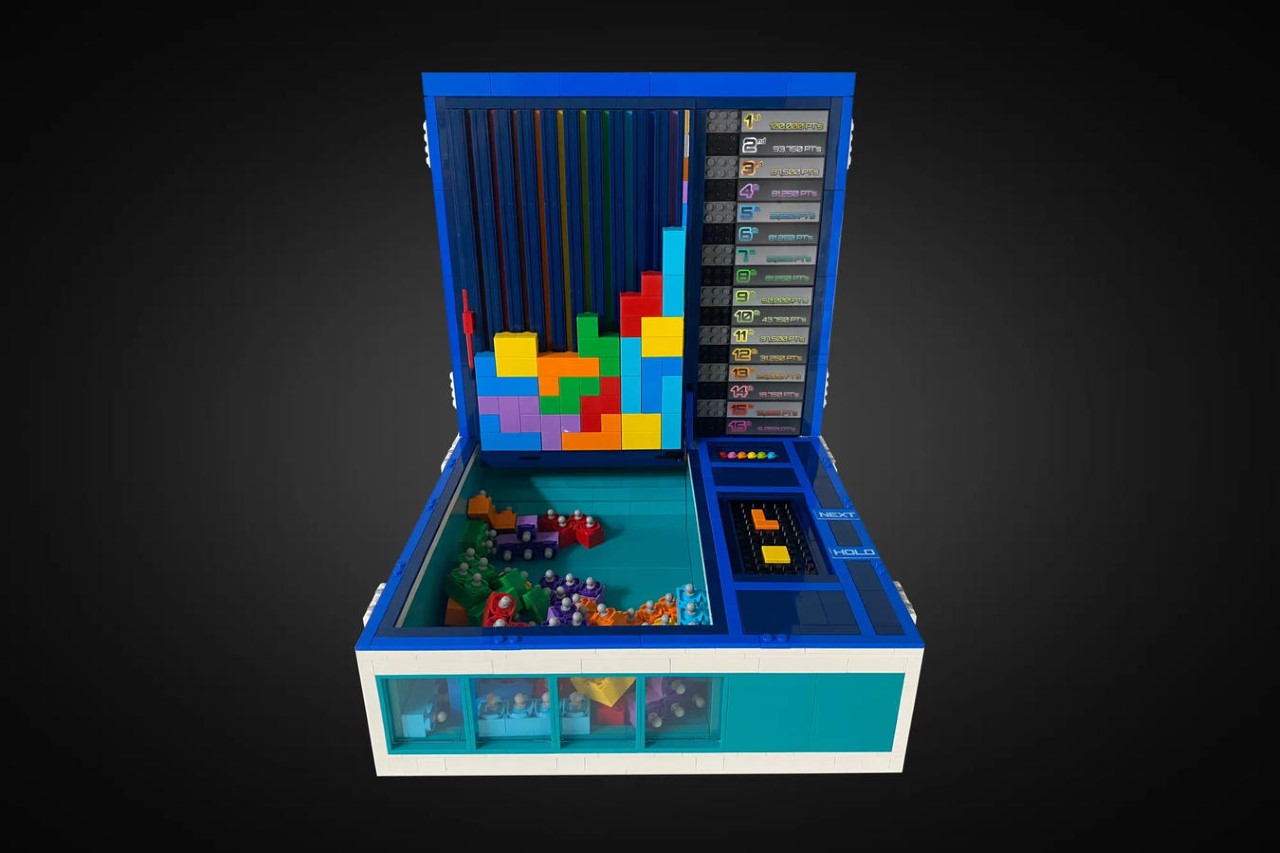
A perfect tribute to one of the world’s most influential digital games (with perhaps the most riveting backstory of any game ever), this LEGO Ideas set comes from the mind of LEGO Builder ‘victorvey300’ who wanted to pay a hat-tip to Tetris on its 40th anniversary which first made its appearance in Russian game circles back in the early 80s, finally finding its way to Nintendo’s first Game Boy in 1985. The LEGO set comes in the form of a box with a lid that doubles as the game’s screen. Bricks sit in a container below, controls can be found on the bottom right, and the top right acts as a leaderboard. When all’s done, the box closes shut, ensuring that bricks don’t get lost.

Designer: victorvey300
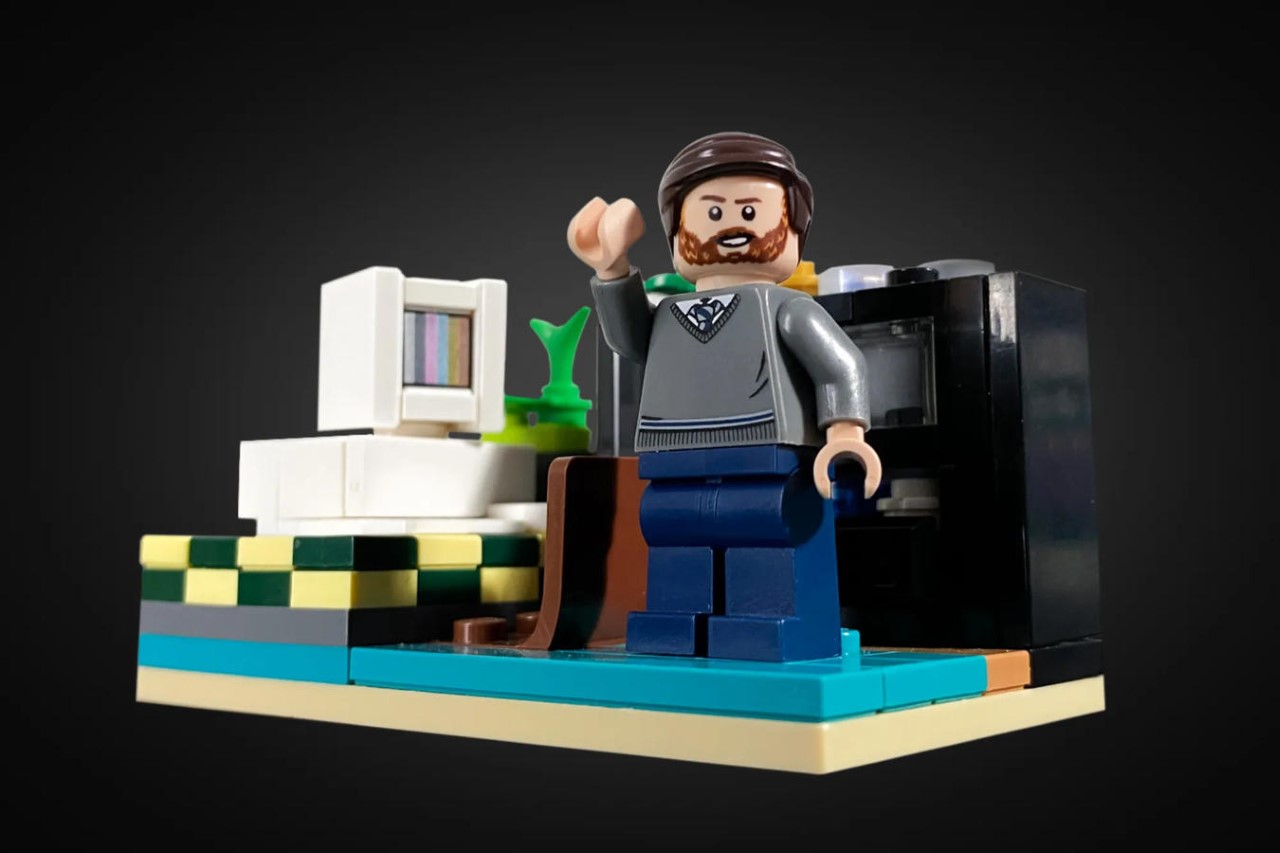
Not to spoil the AppleTV+ movie for you, but the Tetris game has one of the most nail-biting backstories of all time. Developed by Alexey Pajitnov, a resident of the Soviet Republic in the 80s, Tetris was circulated heavily within the USSR on bootlegged floppy disks and finally made its way to an American sales representative for a gaming company. What ensued was literally Cold War espionage at its best. Henk Rogers, the American rep who discovered Tetris tried to buy the rights to the game on behalf of Nintendo, which was working on the first Game Boy handheld console. Tetris was to be a part of this revolutionary portable gaming device, but the Soviets weren’t ready to sell Tetris to any outsider without putting up a fight (all hardware and software sales outside the Union were controlled/authorized by a government agency). In the end, Pajitnov managed to escape Russia and also ended up selling the rights to Tetris, which featured on the first Game Boy, becoming the global sensation it is today. As a tribute to this story and to Alexey himself, the LEGO Ideas kit also comes with a minifigure of Pajitnov standing beside an old-school computer!
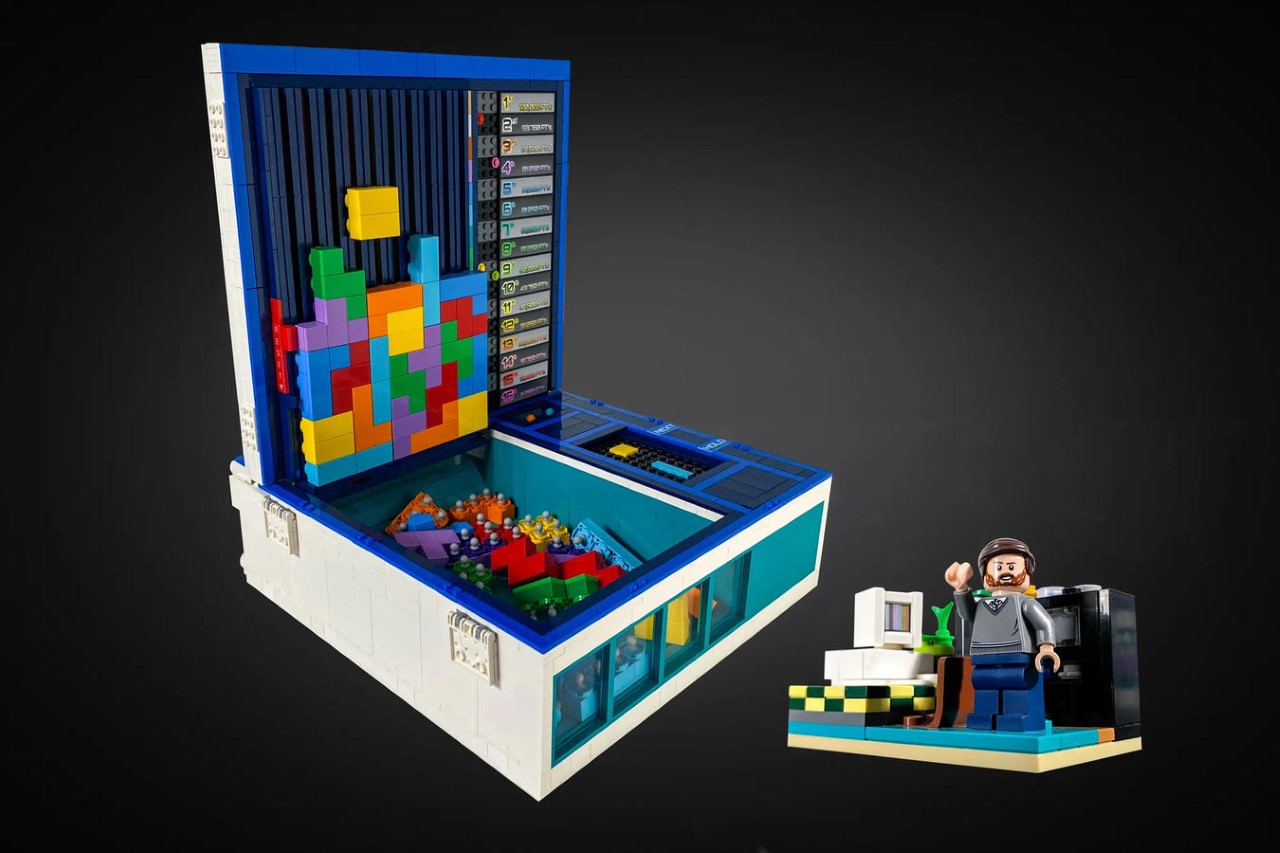
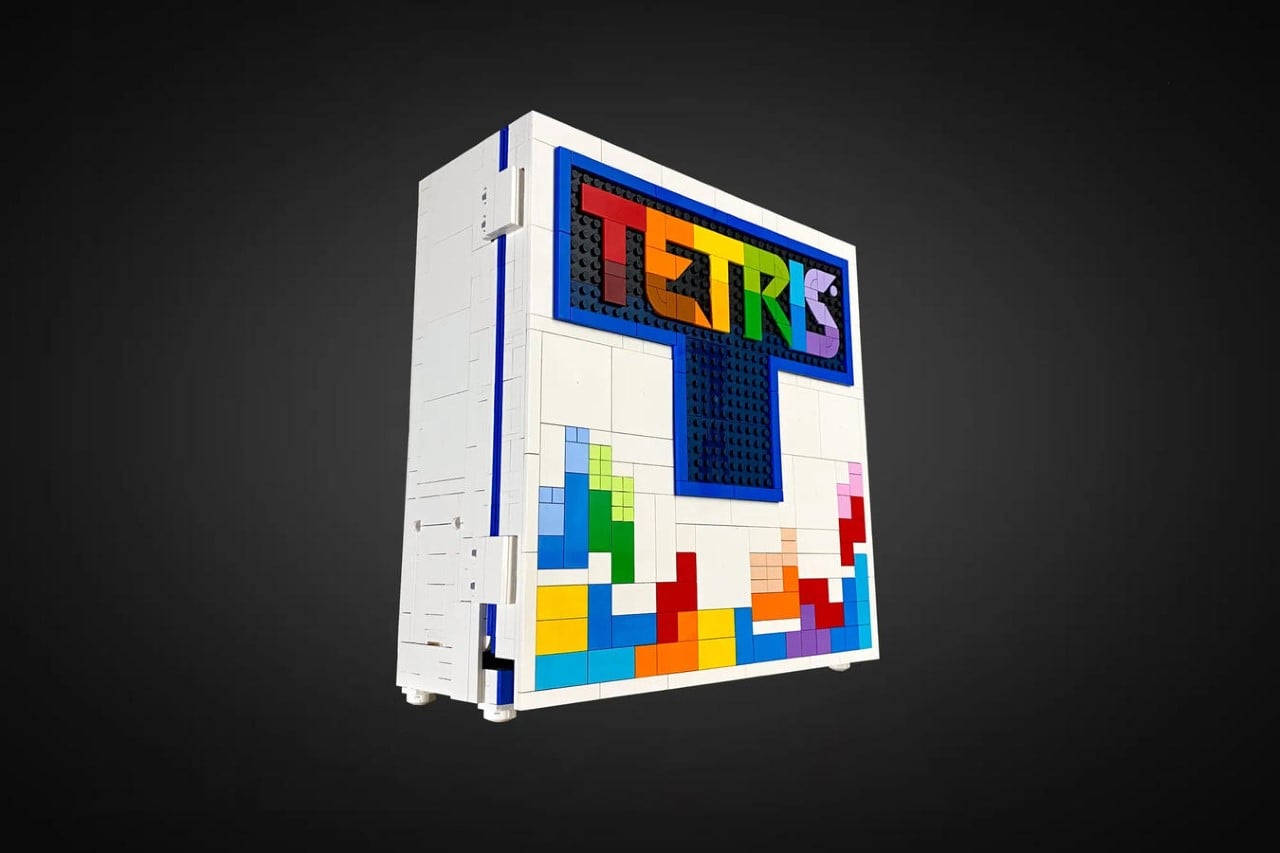
The beauty of this LEGO build lies in just how much attention to detail it has. The vault-shaped kit has Tetris graphics on the outside (with branding), and the inside is simply filled with features and details that allow as many as 6 players to actually play a full game of Tetris, complete with brick generators that tell you what the next brick should be.
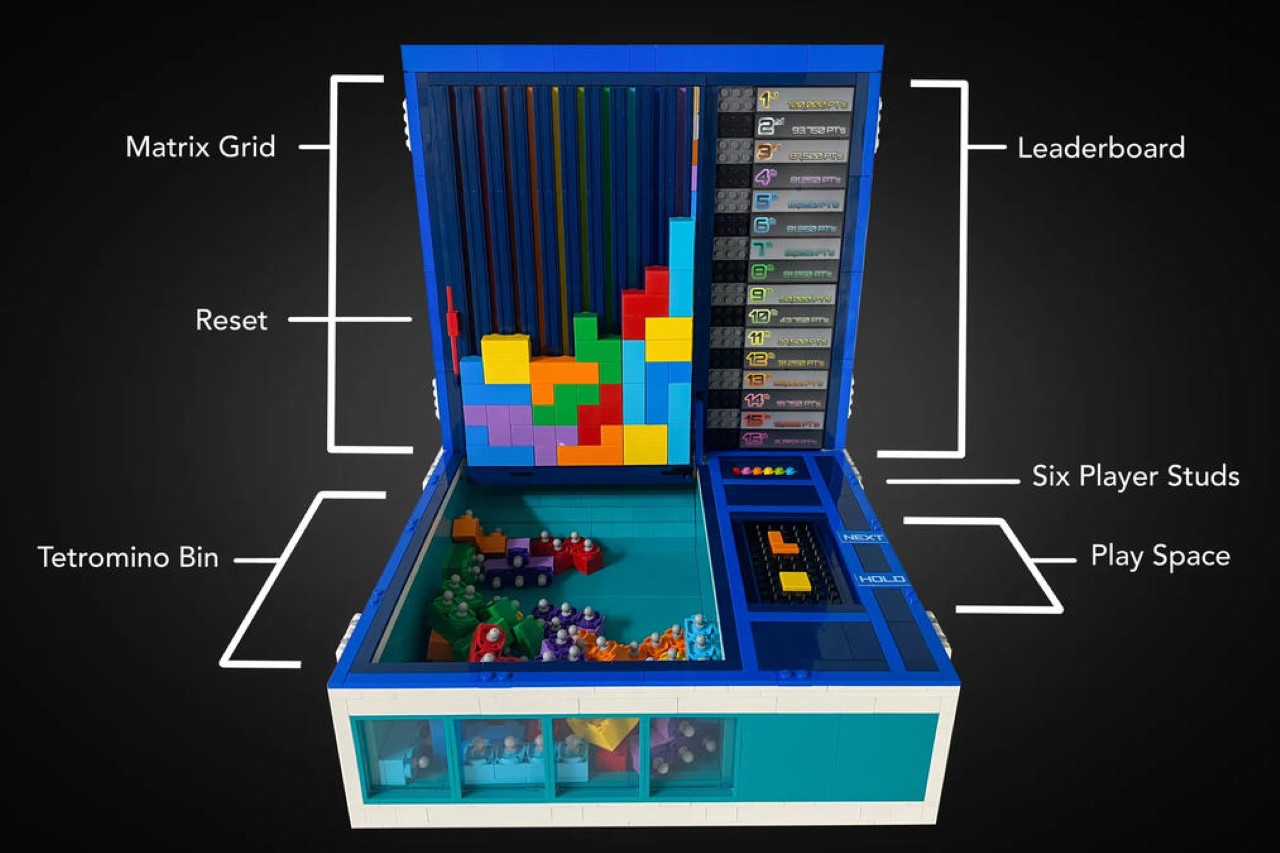
Playing the game is delightfully simple. Bricks sit in a bin at the bottom, the playable area or the matrix grid is right in front with vertical channels to slide bricks down, and a treadmill-shaped panel on the bottom right lets you scroll to see what your next brick should be. Scroll with your right hand, find the corresponding brick with your left and drop it down the channel of your choice. It slides down instantly, landing in place just the way it would in a game. The only real difference is that you need to choose each brick’s orientation and position before you drop it into the channel. Pieces don’t rotate or move once they’ve been slid in.

A game of digital Tetris can go on for HOURS because every time you complete a row, it disappears, helping clear out a part of the screen for more gameplay. That feature doesn’t exist in this LEGO version, which makes for a fairly shorter game… but calculating scores is much easier, allowing you to correspond the uppermost complete row to the line on the scoreboard right beside it. You can, however, reset the entire game in a flash by hitting the red Reset button on the left side of the matrix grid and have all the bricks drop down into the bin below. The alternative would be to manually lift each brick out of the lid, which sounds a little too problematic…
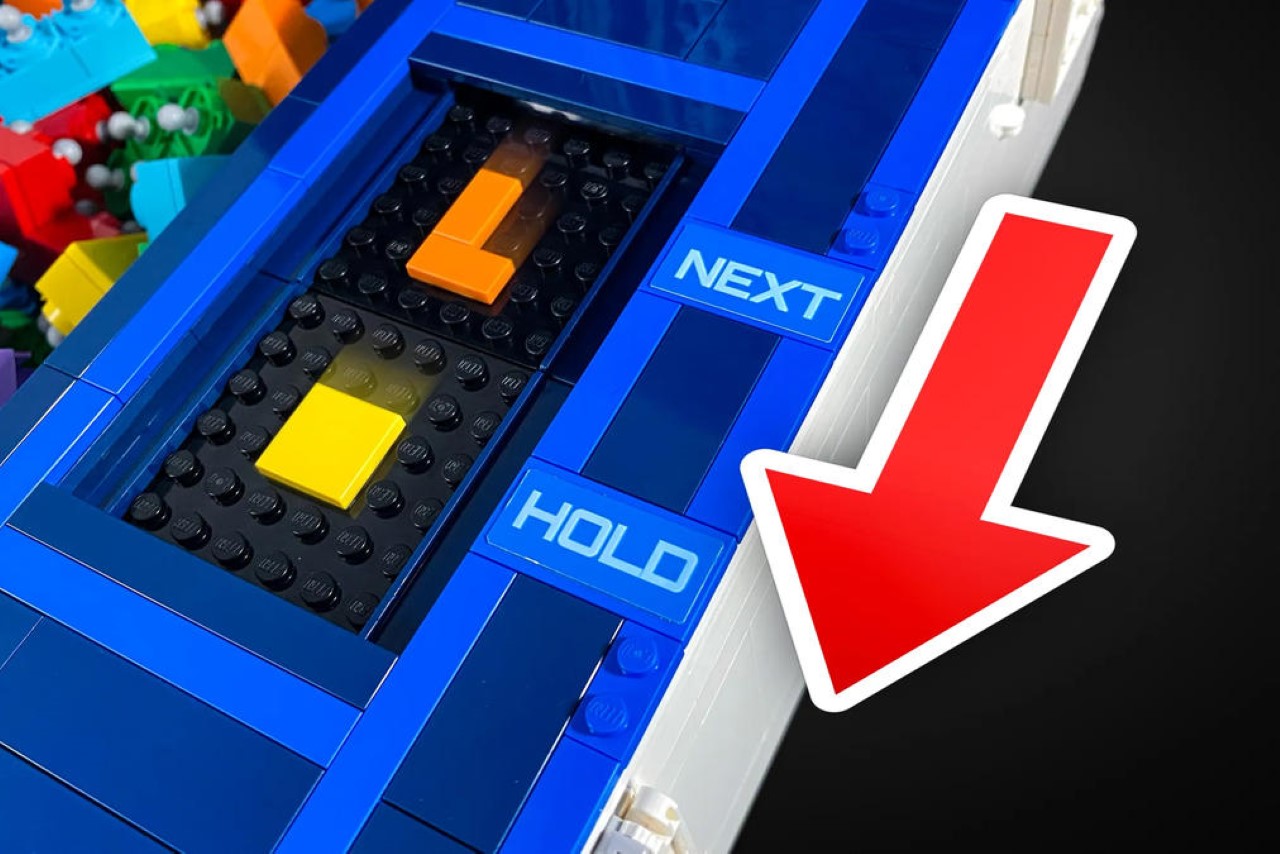
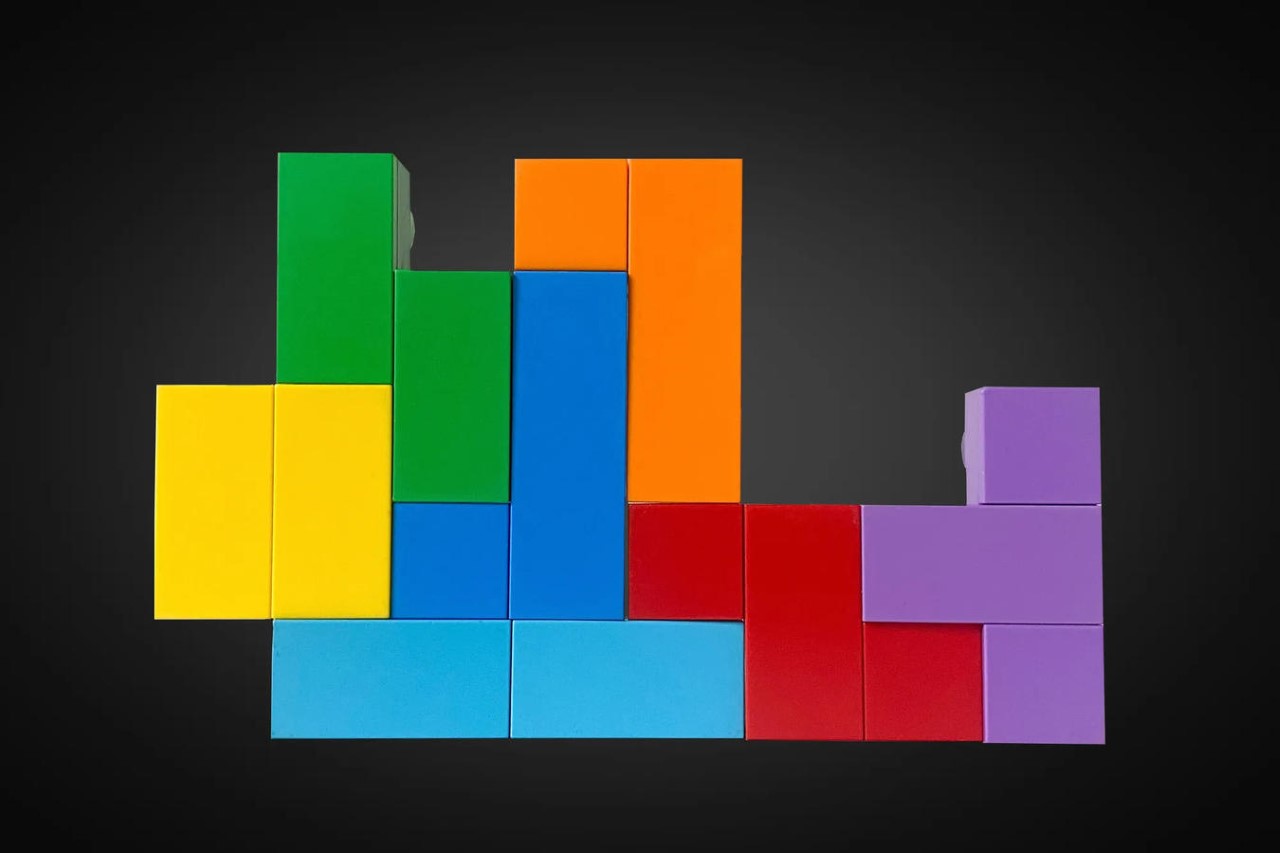
The Tetris bricks are referred to as tetrominoes, and come in 7 shapes that correspond with letters of the alphabet (I, O, T, J, L, S, and Z). The bricks are color-coded to make things easier to understand (after all, we recognize colors MUCH faster than we do shapes) for all people, and the game allows as many as 6 players, with colorful studs that you can press into the scoreboard to mark your highest scores.
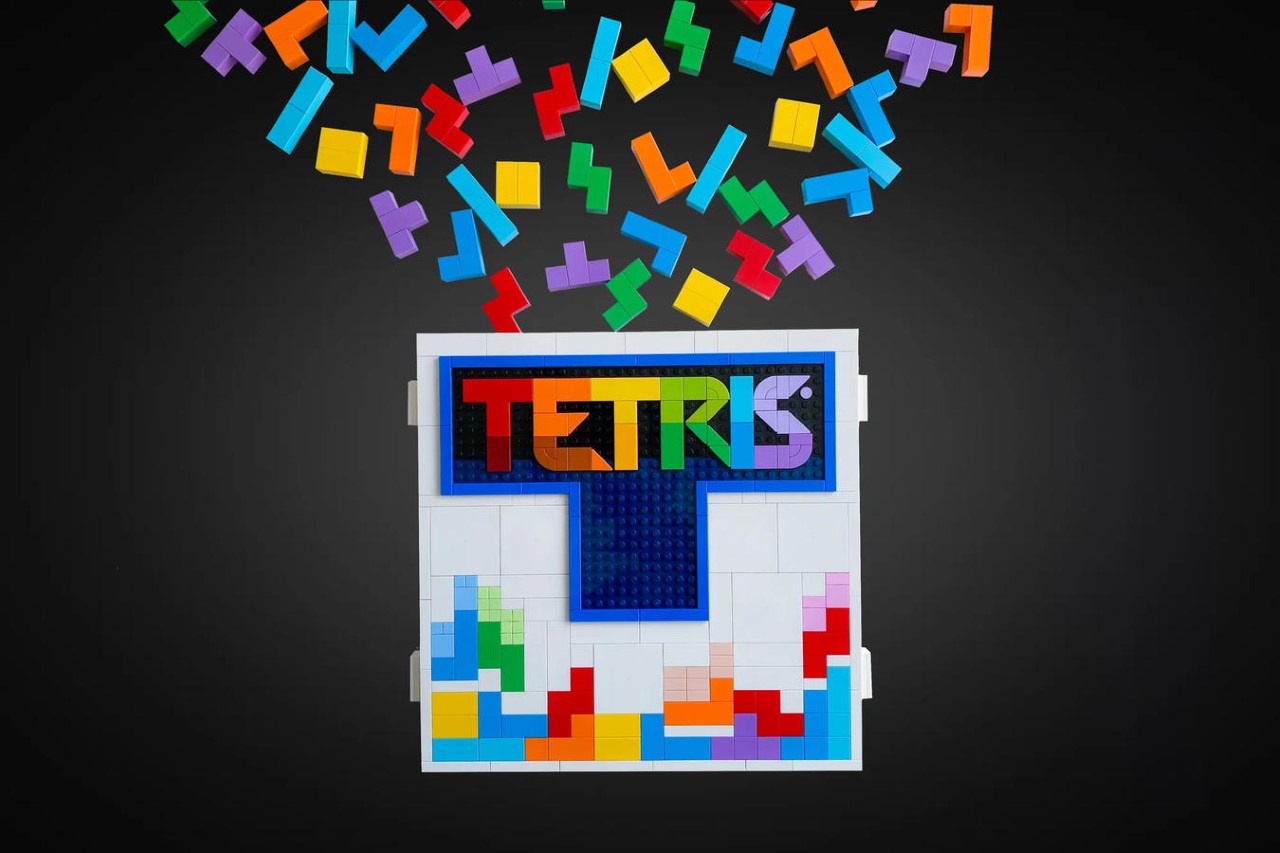
This LEGO kit comes from the mind of independent builder victorvey300, who put his passion for LEGO and his love for Tetris together to create this incredibly comprehensive MOC (my own creation). Victor’s submission is a part of LEGO’s Ideas forum, a community-driven site where passionate LEGO creators build their own structures and users vote for their favorite ones. With over 5000 votes, this LEGO Tetris set is cruising comfortably to hit the 10,000 vote mark, which is then followed by LEGO’s own internal team reviewing the submission before turning it into a retail set. If you want, you can vote for the LEGO Ideas Tetris set too simply by visiting the LEGO Ideas website here.
The post This Actually Playable LEGO Tetris Set Celebrates the Digital Game’s 40th Anniversary first appeared on Yanko Design.

Quilt Mini-Split Cool and Heat Your Home with Stunning Design Inside and Out

Aiming to transform the heating and cooling industry with sleek, smart designs, Quilt was founded by former Google employees. The company raised $9 million in a seed round in May 2023, led by Lowercarbon Capital and Gradient Ventures, positioning itself to scale operations and bring innovative products to market. Inspired by design principles from Apple, Tesla, and Nest, Quilt targets consumers seeking both aesthetics and functionality in their home HVAC systems.

Designer: Quilt

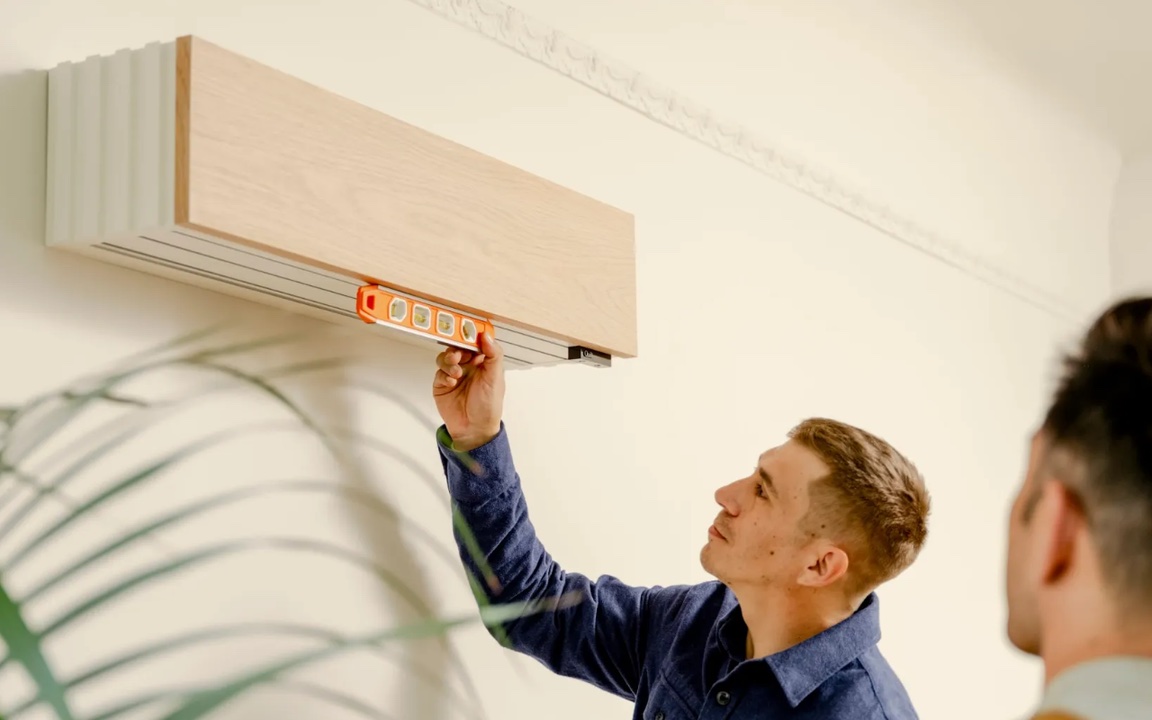
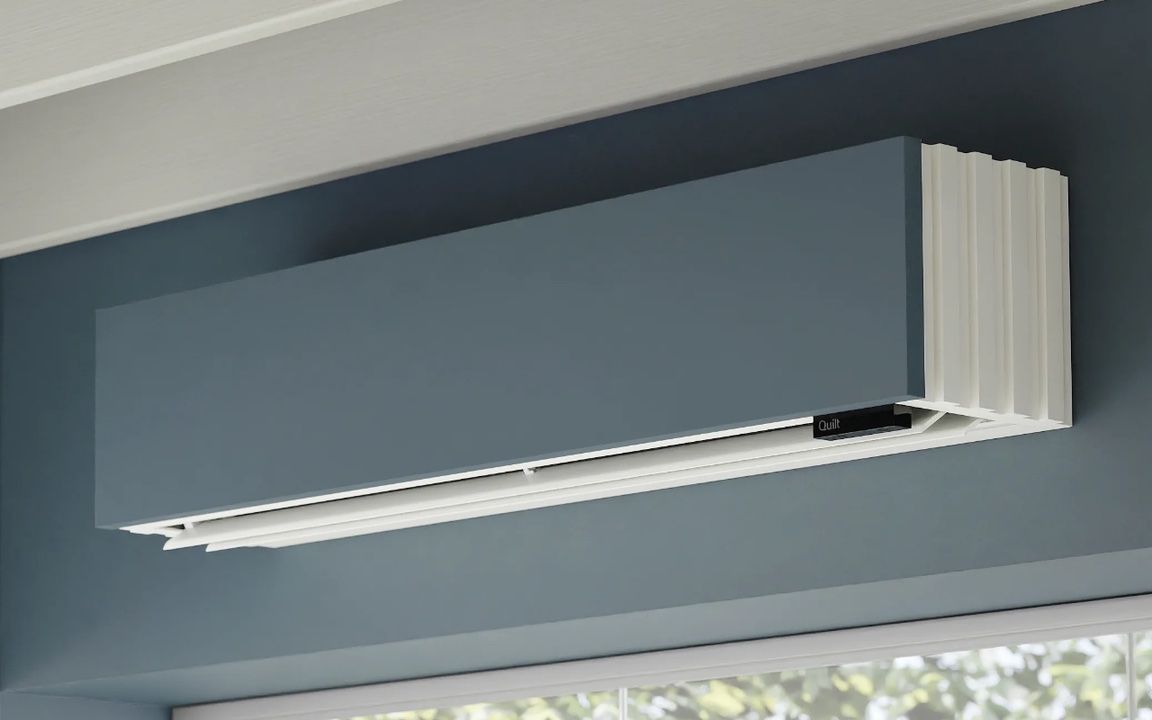
The indoor units are compact in size and feature customizable front panels. Unlike the bulky designs found in traditional mini-splits, Quilt offers options such as oak wood veneer or surfaces that can be painted or wallpapered to match any interior decor. This flexibility allows the units to either blend seamlessly with or enhance home aesthetics. Moreover, the inclusion of color-customizable accent lighting adds a personal touch, serving as a nightlight or mood light.

The exterior unit, often a significant drawback for potential buyers due to its unattractive appearance, has been reimagined with a sleek, unobtrusive design. Quilt’s outdoor unit is compact and aesthetically pleasing, ensuring it doesn’t detract from a home’s exterior.

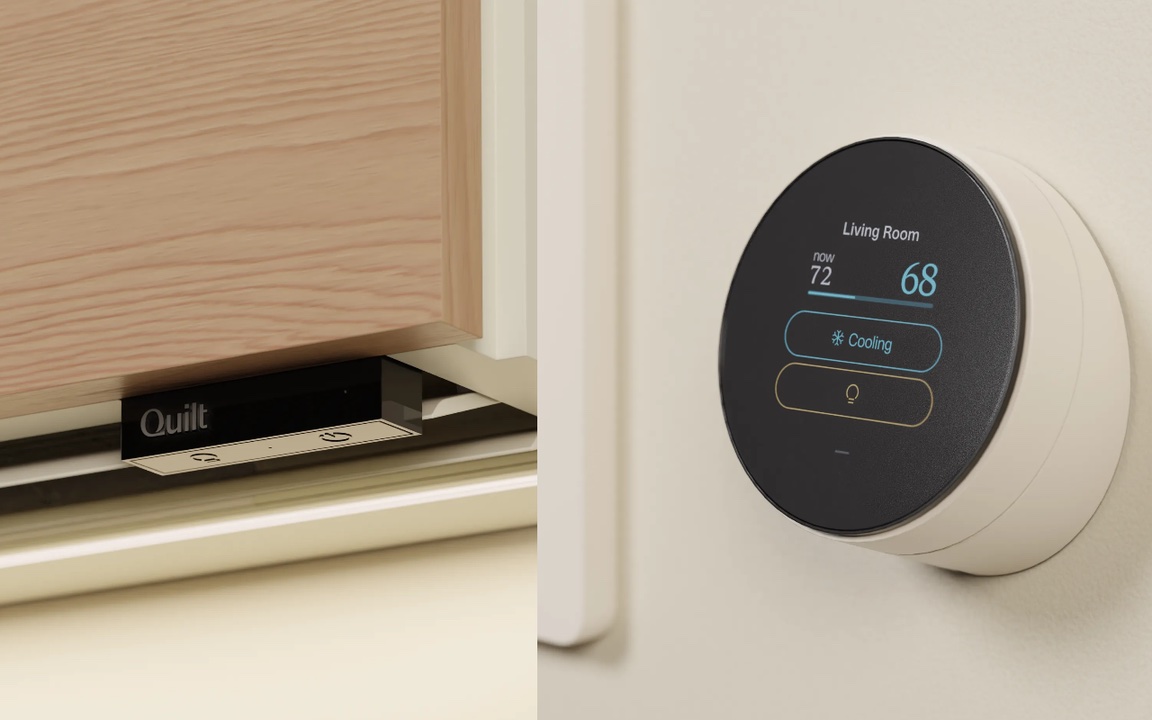
These heat pumps are packed with smart features designed to optimize comfort and efficiency. The Dial, a central control device, combines a touchscreen with a rotary control, providing an intuitive user interface. Compatible with Thread and Matter smart home communication protocols, the Dial ensures seamless integration with other smart devices. The Sense module, featuring a millimeter-wave occupancy sensor, accurately detects room occupancy, optimizing energy use and maintaining comfort levels.

The system’s zoning capability allows for precise temperature control in individual rooms, maximizing energy efficiency. With the ability to maintain 90% of its heating capacity down to -13 degrees F and utilizing R-32 refrigerant, which has a lower global warming potential than R-410a, Quilt’s heat pumps are both powerful and environmentally friendly.

The design and functionality make it ideal for various use cases, especially in regions with older buildings where central air installation is impractical. For instance, in Europe and Asia, where many buildings lack central air conditioning, Quilt’s ductless mini-splits offer an efficient, aesthetically pleasing solution. In the U.S., homeowners with rooms that are difficult to heat or cool, such as an upstairs office above a garage, can benefit from Quilt’s smart and attractive units. The customizable design and efficient performance make Quilt an appealing option for those who have avoided traditional mini-splits due to their unattractive exterior units.

Quilt’s customizable front panel blend in with your decor unlike other white mini-split.

Quilt distinguishes itself from competitors like Mitsubishi, Daikin, and Carrier with its focus on design and smart features. While traditional units may offer similar functionality, Quilt’s emphasis on aesthetics and user experience sets it apart. The customizable front panels and sleek exterior unit provide a significant visual upgrade, appealing to consumers who value both form and function. Additionally, Quilt’s smart technology, including the intuitive Dial and advanced occupancy sensing, enhances the user experience, making it a more attractive option for tech-savvy homeowners.

The ability to integrate seamlessly into smart home ecosystems and a commitment to sustainability with the use of R-32 refrigerant further bolster its competitive edge. With the global heat pump market expected to grow significantly, Quilt is well-positioned to capture a share of this expanding market by offering a product that combines beauty, intelligence, and efficiency.

Innovative design and smart features redefine the residential HVAC market by addressing both aesthetic and functional concerns. With a strong foundation and backing from notable investors, Quilt is poised to lead the next wave of HVAC innovation, providing consumers with a product that is as beautiful as it is efficient.

The post Quilt Mini-Split Cool and Heat Your Home with Stunning Design Inside and Out first appeared on Yanko Design.

Mercedes-Benz supercar concept is the first automobile to have a music instrument built into its exterior

Mercedes-Benz as an automotive icon has set the tone for the 21st century with supercars like AMG GT and the CLA concept. The German marque has pushed the limits of automotive technology, design aesthetics and luxurious comfort for purists who desire nothing but the best with the least strings attached.

Lately, we had a fancy for wild concepts like the Dresscode which is inspired by the smooth silhouettes of a classy suit and now we’ve tripped over another Mercedes-Benz supercar concept that derives inspiration from the beauty of silent luxury. This core idea is combined with the shapes of musical instruments (a Harp to be precise) to create a concept that harmonizes the pure and geometric form. Thus the namesake, Mercedes-Benz Harp!

Designer: ByeongIn Oh

The front of the concept Mercedes car is inspired by the W196R Formula-1 racing car developed for the 1954 and 1955 seasons. Of course, the front grille is not that open and is streamlined along the front seam for a more modern aesthetic look. This is combined with the asymmetric windshield panel to the rear which has a polygon and pure sculpture shape. The contrast between the contoured front and the sharp rear gives the HARP a distinct persona. It’s just like a god-like figure draped in the most beautiful costume.

The way those strings are aligned with the rear explains the asymmetric shape of the rear which when viewed from the top looks like a Harp in motion. Even the rear lights are shaped like strings which I think should trickle down to a real car coming from Mercedes Benz. Moving on to the interiors, they have two contrasting sections – a silent compartment for people who seek solitude and an open compartment for people who want to socialize.

The Mercedes-Benz Harp concept is an interesting take on silent luxury, artist forms and the pleasure of driving. And yes, I almost forgot to mention the contrasting color hues of matte silver and glossy black!

The post Mercedes-Benz supercar concept is the first automobile to have a music instrument built into its exterior first appeared on Yanko Design.

Motorola’s 2024 Razr lineup may include a bigger cover screen for the budget model

We may have a good look at Motorola’s next foldable phones. Separate leaks from 91Mobiles (via 9to5Google) and longtime device-leaking insider Evan Blass show the entry-level Moto Razr 50 and high-end Razr 50 Ultra (likely branded as the 2024 Razr and Razr+ in the US) in various colors from all sorts of angles.

Leaks point to the high-end Razr+ (2024) — aka Razr 50 Ultra — running on a Snapdragon 8s Gen 3 chip with 12GB of RAM and 256GB storage. It’s expected to have a 6.9-inch OLED display at 2,640 x 1,080 resolution on the inside and a 3.6-inch cover display on the outside. A 50MP wide-angle camera paired with a 50MP telephoto lens, a 32MP front sensor and a 4,000mAh battery round out the (alleged) specs.

Leaked images of the flagship model show dark blue, dark green, peach and pink color options.

Meanwhile, the entry-level Razr (2024) — likely branded as the Razr 50 outside the US — will supposedly run on a MediaTek Dimensity 7300 processor, a departure from the Snapdragon 7 Gen 1 found in its 2023 equivalent. Another apparent change from its predecessor is its reported 3.63-inch cover display, quite a step up from the piddly 1.5-inch outward-facing screen on last year’s budget model.

The leaks show no sign of the snazzy wood option Motorola included in the Edge 50 phone series unveiled last month. Old-school smartphone buffs will remember that as a throwback to the Moto X from way back in 2013, when the company was under Google ownership. (It’s been under Lenovo’s umbrella since 2014.)

You can check out a gallery of the leaked images below, courtesy of Blass and 91Mobiles.

This article originally appeared on Engadget at https://www.engadget.com/motorolas-2024-razr-lineup-may-include-a-bigger-cover-screen-for-the-budget-model-203745181.html?src=rss

PPSSPP PSP Emulator Now Available on iOS App Store

PPSSPP, a popular app for emulating PSP games, has made its debut on the iOS App Store, joining the expanding roster of retro game emulators available for iOS users. Despite being around for nearly 12 years, PPSSPP was previously accessible only through unofficial methods. Developer Henrik Rydgård announced the release, expressing gratitude to Apple for easing its policies to allow retro game console emulators on the store. This change follows Apple’s update to its developer guidelines in early April, which has since seen the approval of emulators for Game Boy, DS, and PS1 games.

Free and Paid Versions

The PPSSPP app is free to download, but Rydgård has mentioned to The Verge that a $5 gold version is in the works. While the paid version on Android includes a few extra features, its primary purpose is to support Rydgård’s continued development of the emulator. The current iOS version does not support the Magic Keyboard for iPad due to initial compatibility being achieved via an undocumented API. Additionally, the Retro Achievements feature is not available yet, but Rydgård plans to reintroduce it in future updates.

Performance and Limitations

Unlike its counterparts on other platforms, the App Store version of PPSSPP does not support the Just-in-time (JIT) compiler, which enhances code execution efficiency. This limitation is due to Apple’s current rules, which, unless changed, will prevent JIT support in the iOS version. However, Rydgård reassures users that most iOS devices are sufficiently powerful to run nearly all PSP games at full speed, so performance differences may be minimal.

Game Availability

As with other emulators, PPSSPP on iOS includes only the emulator software. Users must source their own game files, as Apple prohibits the distribution of games without proper licensing. This means players will need to find their own PSP game files to use with the emulator.

With the launch of PPSSPP on the iOS App Store, fans of retro gaming now have more options for enjoying classic PSP titles on their iPhones and iPads. The continued development and updates promise to enhance the user experience and functionality over time.

The post PPSSPP PSP Emulator Now Available on iOS App Store appeared first on OhGizmo!.

Posted in Uncategorized | Tagged

The OpenAI team tasked with protecting humanity is no more

In the summer of 2023, OpenAI created a “Superalignment” team whose goal was to steer and control future AI systems that could be so powerful they could lead to human extinction. Less than a year later, that team is dead.

OpenAI told Bloomberg that the company was “integrating the group more deeply across its research efforts to help the company achieve its safety goals.” But a series of tweets from Jan Leike, one of the team’s leaders who recently quit revealed internal tensions between the safety team and the larger company.

In a statement posted on X on Friday, Leike said that the Superalignment team had been fighting for resources to get research done. “Building smarter-than-human machines is an inherently dangerous endeavor,” Leike wrote. “OpenAI is shouldering an enormous responsibility on behalf of all of humanity. But over the past years, safety culture and processes have taken a backseat to shiny products.” OpenAI did not immediately respond to a request for comment from Engadget.

Jan Leike
X

Leike’s departure earlier this week came hours after OpenAI chief scientist Sutskevar announced that he was leaving the company. Sutskevar was not only one of the leads on the Superalignment team, but helped co-found the company as well. Sutskevar’s move came six months after he was involved in a decision to fire CEO Sam Altman over concerns that Altman hadn’t been “consistently candid” with the board. Altman's all-too-brief ouster sparked an internal revolt within the company with nearly 800 employees signing a letter in which they threatened to quit if Altman wasn’t reinstated. Five days later, Altman was back as OpenAI’s CEO after Sutskevar had signed a letter stating that he regretted his actions.

When it announced the creation of the Superalignment team, OpenAI said that it would dedicate 20 percent of its computer power over the next four years to solving the problem of controlling powerful AI systems of the future. “[Getting] this right is critical to achieve our mission,” the company wrote at the time. On X, Leike wrote that the Superalignment team was “struggling for compute and it was getting harder and harder” to get crucial research around AI safety done. “Over the past few months my team has been sailing against the wind,” he wrote and added that he had reached “a breaking point” with OpenAI’s leadership over disagreements about the company’s core priorities.

Over the last few months, there have been more departures from the Superalignment team. In April, OpenAI reportedly fired two researchers, Leopold Aschenbrenner and Pavel Izmailov, for allegedly leaking information.

OpenAI told Bloomberg that its future safety efforts will be led by John Schulman, another co-founder, whose research focuses on large language models. Jakub Pachocki, a director who led the development of GPT-4 — one of OpenAI’s flagship large language models — would replace Sutskevar as chief scientist.

Superalignment wasn’t the only team at OpenAI focused on AI safety. In October, the company started a brand new “preparedness” team to stem potential “catastrophic risks” from AI systems including cybersecurity issues and chemical, nuclear and biological threats.

Update, May 17 2024, 3:28 PM ET: In response to a request for comment on Leike's allegations, an OpenAI PR person directed Engadget to Sam Altman's tweet saying that he'd say something in the next couple of days.

This article originally appeared on Engadget at https://www.engadget.com/the-openai-team-tasked-with-protecting-humanity-is-no-more-183433377.html?src=rss

Meet The Twisted Brick Shell Library – A Surreal Pavilion For Visitors To Read In

Designed by architecture practice HCCH Studio, this shell-like brick pavilion in Longyou Country, China is truly a unique sight to behold. The structure is inspired by its agricultural surroundings and is dubbed the Twisted Brick Shell Library (quite accurately). The rustic pavilion is located on farmland, with the Quijiang River running between it and the city of Quzhou. The structure is designed to be a multifunctional space – a peaceful place where visitors can read, relax, or simply gaze at their surroundings.

Designer: HCCH Studio

“[It is] an abstract, revolving space to cuddle visitors in the wide-open field like a spiritual shelter,” said HCCH Studio founder Hao Chen. “The function is an installation to arouse visitors’ awareness of reading and its surroundings,” he added. Besides serving as a space to read and rest, the Twisted Brick Library is also designed to represent its surreal position between urban and rural settings. The Twisted Brick Library comprises two brick-hemispheres which are linked via a twisting section of wall. The wall is made from perforated steel plates, and concrete cast in situ. The concrete almost looks like mortar between the bricks, and resembles typical brick buildings seen in the town located closely to the pavilion.

“The structure is in a semi-rural area very close to a town,” said Chen. “You can strongly feel the approaching of urbanisation on this seemingly still idyllic area. That’s why we propose a semi-fabricated, semi-handmade way of construction, to reflect this reality,” he continued. The interior of the pavilion is lined with 24 small acrylic domes which have been integrated at eye level. Each dome features ‘visual poetry’ by Japanese artist Yoichiro Otani, and you’re supposed to read the work with the landscape as a lovely backdrop.

Slim, concrete-framed openings are placed beneath the dome, and they provide views of the landscape. Below the openings is a brick bench which offers seating. The Twisted Brick Shell Library not only functions as a multipurpose space for tourists and locals, but it also hosts reading workshops by artist Shaomin Shen.

The post Meet The Twisted Brick Shell Library – A Surreal Pavilion For Visitors To Read In first appeared on Yanko Design.

The best sous vide machines for 2024

For those looking to elevate their cooking, a sous vide machine might be the perfect addition to your toolkit. Previously, these gadgets were almost exclusively used by high-end restaurants. But more recently, prices have come down to where they can be relatively affordable additions to your kitchen. These devices make preparing perfectly cooked steaks a breeze while taking all the guesswork and hassle out of dishes like pulled pork or brisket. And it’s not just for meat either, as a sous vide machine can make easy work out of soft-boiled eggs, homemade yogurt or fish. And while some may say you need a lot of accessories like vacuum sealers or special bags to get the best results, starting with the right appliance will get you 90 percent of the way. So to help you figure out which sous vide machine is right for you, we’ve assembled a list of our favorite gadgets on sale right now.

While they might have a fancy name, the main things we look for in a quality sous vide device are quite straightforward: ease-of-use, reliability and a good design. It should be easy to clean and have clear, no-nonsense controls. It should also have some way of attaching to a tank or pot, whether by magnet or adjustable clamp, so it doesn’t become dislodged during use. And most importantly, it should have a strong heating element and motor that can deliver consistent water temperatures to ensure your food hits the correct level of doneness every time without overcooking.

This article originally appeared on Engadget at https://www.engadget.com/best-sous-vide-133025288.html?src=rss