Design Meets Culture: The Porsche x Almond Surfboard Collection

When Porsche partnered with Almond Surfboards to create a limited-edition surfboard collection, it was an inspired fusion of German engineering and California surf culture. This collaboration merges precision design and a laid-back lifestyle in a collection that balances craftsmanship with bold, iconic aesthetics.

Designers: Porsche + Almond collection

Each board is hand-shaped in Costa Mesa, California, and showcases the iconic Porsche 911 colors from the 1960s: Bahama Yellow, Irish Green, and Polo Red. These bold, classic hues evoke the timeless appeal of Porsche’s storied motorsport past. Additionally, the Pink Pig livery, famously featured on the 917/20 at Le Mans, injects a sense of playful rebellion, bridging a connection between race tracks and ocean waves.

The attention to detail extends beyond color. Each board is meticulously numbered with 63, paying homage to the debut year of the first Porsche 911. These boards are designed for peak performance, crafted to carve through waves with the same finesse that a Porsche car cuts through corners.

Iconic Liveries: A Visual Legacy

Porsche’s racing liveries have left an indelible mark on motorsport culture. The Pink Pig livery, first introduced at Le Mans in 1971, caused a sensation with its butcher-style markings, a nod to fun and boldness in racing design. While it didn’t take first place, the livery remains unforgettable. Porsche’s knack for creating visual identities that speak beyond speed is part of what makes its designs iconic.

Other liveries, such as Gulf Racing and Martini Racing, tell their own stories of endurance and triumph on tracks like Le Mans and the World Endurance Championship. These designs represent Porsche’s relentless pursuit of innovation and excellence, and now, those same livery styles are reflected in the surfboard collection—offering Porsche fans a chance to connect with the brand in an entirely new way.

Numbers That Matter: The Significance of 63

The number 63 carries deep significance for Porsche, symbolizing the birth of the 911 in 1963. This number isn’t merely a historical reference—it reflects Porsche’s enduring philosophy of design and innovation. On the surfboards, the 63 serves as a reminder of Porsche’s legacy and how that spirit has been translated into everything from cars to lifestyle products.

Personally, the number 911 has long been significant in my life. Over a decade ago, I managed to score a mobile phone number that starts with 917 and ends with 911—a perfect numerical tribute to one of Porsche’s most famous models. Every time I give out my number or see it on my business card, it feels like a small but meaningful connection to Porsche’s history.

Crafting the Boards: Surf Meets Precision Engineering

The shaping process of the surfboards in the Porsche x Almond collection mirrors the craftsmanship seen in Porsche’s cars. Each board is shaped from polyurethane foam, reinforced with basswood stringers, and wrapped in fiberglass cloth. The combination of these materials delivers durability, performance, and aesthetic beauty. Just like Porsche’s vehicles, each board is crafted with purpose, delivering on form and function.

Almond’s influence is felt deeply here, as their approach to surfboard crafting draws on the traditions of California surf culture. Known for their hand-shaped boards and commitment to craftsmanship, Almond brings a design ethos rooted in authenticity, simplicity, and a connection to the ocean. This influence transforms the boards into more than sporting equipment—they represent a lifestyle. Almond’s surf culture emphasizes longevity and timeless style, blending seamlessly with Porsche’s commitment to performance and precision.

The hand-foiled fiberglass fins are a nod to Porsche’s engineering precision. Crafted from 36 layers of fiberglass, these fins reflect a focus on fine detail, much like the assembly of a high-performance car engine. The inclusion of custom wooden wall brackets for display reminds us that these surfboards, much like Porsche’s vehicles, are as much art as they are machines for performance.

A Personal Connection: Pikes Peak and Porsche’s Racing Spirit

In 2016, I was fortunate to experience firsthand Porsche’s racing heritage on a drive I’ll never forget. While scaling Pikes Peak in a Macan GTS, wrapped in liveries designed to reflect Porsche’s racing history, I had the surreal honor of seeing my own name emblazoned on the car. This wasn’t just a typical drive—it was a full immersion into Porsche’s racing spirit, taking me from Pikes Peak to Mount Evans, a journey that pushed the Macan GTS and my own driving skills to their limits.

The livery on the Macan GTS was designed to reflect Porsche’s legacy at Pikes Peak. It’s a vivid reminder of how Porsche integrates its heritage into every aspect of its modern vehicles, creating a sense of continuity between the brand’s past, present, and future. Porsche’s emphasis on precision, balance, and driver engagement could be felt in every twist and turn of the climb.

Surfboards as Lifestyle: Porsche’s Expanding Design Language

What makes the Porsche x Almond surfboards special is how they expand Porsche’s design language beyond the road. These boards are an extension of Porsche’s identity. The Bahama Yellow, Irish Green, and Polo Red colors signify past 911 models and represent Porsche’s ability to merge motorsport heritage with contemporary design aesthetics.

Almond’s surf culture influences the design of these boards by bringing a sense of authenticity, simplicity, and connection to nature. The boards are shaped by hand, emphasizing craftsmanship, just as Porsche’s vehicles are assembled with precision. This collaboration showcases how Porsche’s design philosophy can transcend its automotive roots and enter new realms, like surfing, while staying true to the brand’s core values.

Porsche’s visual identity has always been about creating a lasting impression, from racing stripes to the Pink Pig motif. The Porsche x Almond collection is the next step in that journey, extending the brand’s influence from the race track to the waves of California.

The post Design Meets Culture: The Porsche x Almond Surfboard Collection first appeared on Yanko Design.

Apple’s Smart Home Display: Redefining Design, AI, and Everyday Convenience Powered by homeOS

Apple is preparing to introduce a smart home device that blends the capabilities of an iPad, Apple TV, and HomePod. While we’ve seen hints of this over the past year, it’s clear that Apple is aiming to offer something more streamlined and familiar for those looking to automate their homes. These new devices are set to roll out in 2025 and are powered by Apple’s homeOS, an operating system specifically designed to simplify home management.

Designer: Apple

At the heart of these products is Apple’s design philosophy: simplicity, usability, and seamless integration with everyday life. For instance, one of the upcoming models will focus on essential tasks like FaceTime, controlling smart home devices, and using apps. It’s not overcomplicated or cluttered with unnecessary features—it’s practical. The goal is clear: offer consumers a device that fits easily into their routine without feeling like they’re learning a whole new system. The design reflects that, with a clean, intuitive interface that works well for families or anyone who wants to manage their home easily.

For those looking for something a bit more premium, Apple has a model that takes things a step further. This version includes a robotic arm that automatically tilts and adjusts the screen for optimal viewing, creating a hands-free experience. Whether you’re in the middle of a FaceTime call or watching something while moving around the kitchen, the device adapts without needing constant attention. This sort of design choice speaks to Apple’s focus on making technology work around the user, not the other way around. Its functional design is meant to simplify, not complicate.

Apple’s homeOS ties everything together, offering a smarter, more intuitive way to control devices. It’s a natural extension of what Apple already does with products like the iPhone and iPad, but homeOS is explicitly designed to manage smart homes. This isn’t just about setting up timers for lights or adjusting the thermostat—Apple Intelligence learns your habits, automating tasks without you even thinking about it. It adjusts based on your routine, handling everything from lighting to temperature so the home feels like it’s working for you.

Design plays a significant role here, too. For instance, one of the models will have a magnetic mount, making it easy to place wherever you need it, whether on the wall or a table. It’s simple, and that’s precisely the point. You don’t have to redesign your home to fit this device; it adapts to your space. With its adjustable screen, the premium model’s robotic arm offers even more flexibility. It’s a device that can move with you, keeping convenience and usability front and center.

Apple’s approach to smart homes feels different because they’ve always been about creating an ecosystem that works together. This new device is no exception. If you’re already using an iPhone, Mac, or Apple TV, this product will slot right into your life. You won’t need to learn a new platform or jump through hoops—it’s designed to be intuitive for anyone already familiar with Apple’s ecosystem. And for those who aren’t, it’s still easy to use.

As we move toward the 2025 launch, it’s clear that Apple is focusing on making home automation feel more natural. These new devices are not just about throwing in more features but offering a thoughtful design that blends into everyday life. Whether it’s the magnetic mount or the robotic arm, Apple’s design choices always come back to one thing: how can this make the consumer’s life easier? And that’s why their approach makes sense.

The post Apple’s Smart Home Display: Redefining Design, AI, and Everyday Convenience Powered by homeOS first appeared on Yanko Design.

Apple’s Smart Home Display: Redefining Design, AI, and Everyday Convenience Powered by homeOS

Apple is preparing to introduce a smart home device that blends the capabilities of an iPad, Apple TV, and HomePod. While we’ve seen hints of this over the past year, it’s clear that Apple is aiming to offer something more streamlined and familiar for those looking to automate their homes. These new devices are set to roll out in 2025 and are powered by Apple’s homeOS, an operating system specifically designed to simplify home management.

Designer: Apple

At the heart of these products is Apple’s design philosophy: simplicity, usability, and seamless integration with everyday life. For instance, one of the upcoming models will focus on essential tasks like FaceTime, controlling smart home devices, and using apps. It’s not overcomplicated or cluttered with unnecessary features—it’s practical. The goal is clear: offer consumers a device that fits easily into their routine without feeling like they’re learning a whole new system. The design reflects that, with a clean, intuitive interface that works well for families or anyone who wants to manage their home easily.

For those looking for something a bit more premium, Apple has a model that takes things a step further. This version includes a robotic arm that automatically tilts and adjusts the screen for optimal viewing, creating a hands-free experience. Whether you’re in the middle of a FaceTime call or watching something while moving around the kitchen, the device adapts without needing constant attention. This sort of design choice speaks to Apple’s focus on making technology work around the user, not the other way around. Its functional design is meant to simplify, not complicate.

Apple’s homeOS ties everything together, offering a smarter, more intuitive way to control devices. It’s a natural extension of what Apple already does with products like the iPhone and iPad, but homeOS is explicitly designed to manage smart homes. This isn’t just about setting up timers for lights or adjusting the thermostat—Apple Intelligence learns your habits, automating tasks without you even thinking about it. It adjusts based on your routine, handling everything from lighting to temperature so the home feels like it’s working for you.

Design plays a significant role here, too. For instance, one of the models will have a magnetic mount, making it easy to place wherever you need it, whether on the wall or a table. It’s simple, and that’s precisely the point. You don’t have to redesign your home to fit this device; it adapts to your space. With its adjustable screen, the premium model’s robotic arm offers even more flexibility. It’s a device that can move with you, keeping convenience and usability front and center.

Apple’s approach to smart homes feels different because they’ve always been about creating an ecosystem that works together. This new device is no exception. If you’re already using an iPhone, Mac, or Apple TV, this product will slot right into your life. You won’t need to learn a new platform or jump through hoops—it’s designed to be intuitive for anyone already familiar with Apple’s ecosystem. And for those who aren’t, it’s still easy to use.

As we move toward the 2025 launch, it’s clear that Apple is focusing on making home automation feel more natural. These new devices are not just about throwing in more features but offering a thoughtful design that blends into everyday life. Whether it’s the magnetic mount or the robotic arm, Apple’s design choices always come back to one thing: how can this make the consumer’s life easier? And that’s why their approach makes sense.

The post Apple’s Smart Home Display: Redefining Design, AI, and Everyday Convenience Powered by homeOS first appeared on Yanko Design.

Modular In-car Coat Hanger Concept Doubles as a Tablet Holder and Stand

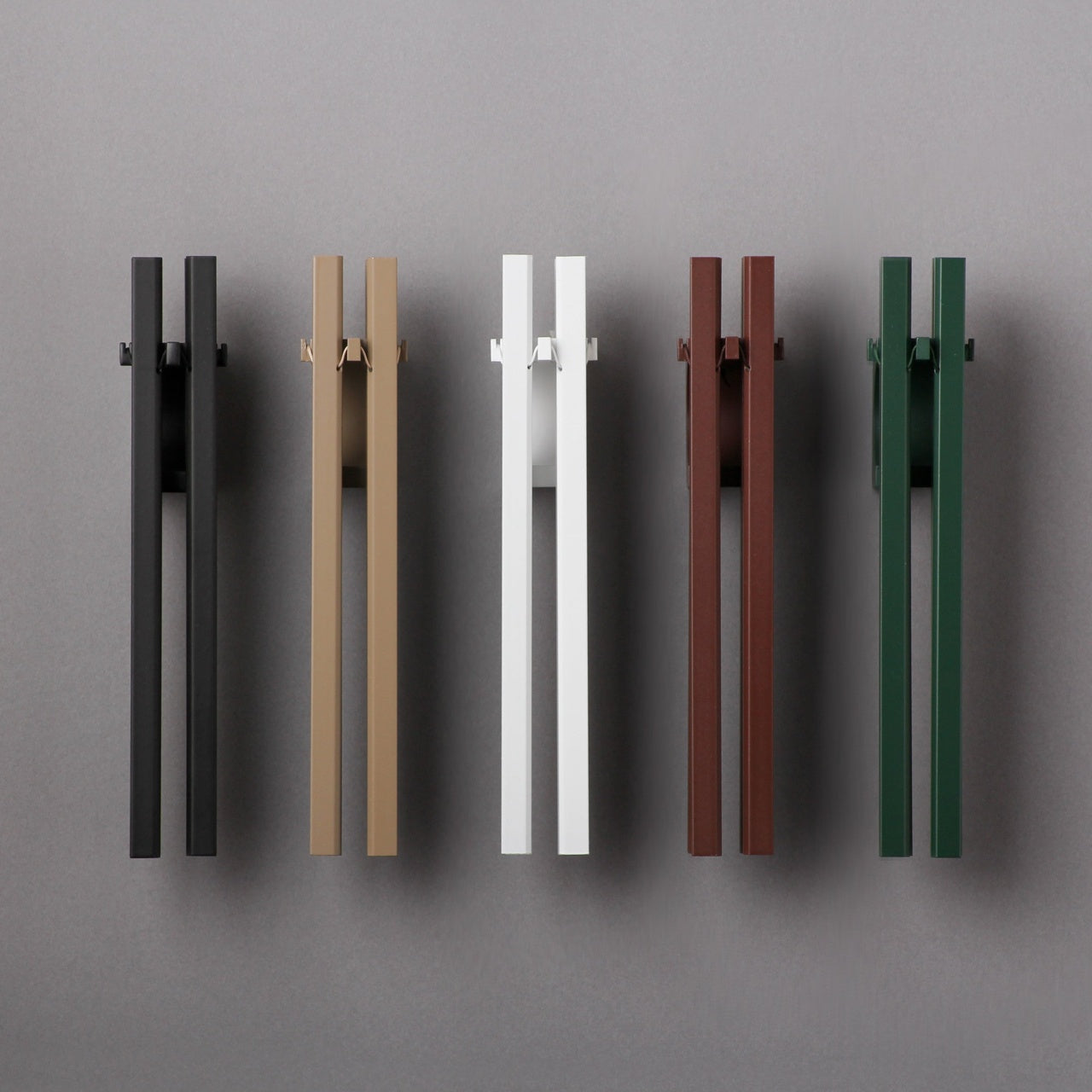
Vehicles like cars and vans have a variety of storage solutions for almost everything you might want to bring with you except for coats, dress shirts, and dresses. It’s not uncommon for people to bring certain clothes they need to hang, but even after decades, the majority of cars don’t have a proper solution to that problem. At the same time, it might be a waste of precious space to have a permanent fixture just for hanging clothes you might bring occasionally, so this accessory concept utilizes a modular design that adds a hanger in your car when you need it or any other thing you need to hang from the back of a car seat, like a tablet, for example.

Designer: BKID co

Theoretically, you could always hang clothes from the car’s grab handles or assist grips, but they’re obviously not designed for that purpose. It doesn’t align the hanger with the car’s cabin, making it awkward, cumbersome, and space-consuming. This Hyundai Multi Hanger, in contrast, uses the space right behind the driver or front passenger seats, using a hanger design that doesn’t get in the way when you don’t need it or can even be used for some other purpose.

The secret to this multi-functional feat is the modular design of the hanger. The hanger itself has “wings” that can fold inside its body, conserving space even while it’s still attached to the seat. The base of the hanger clamps onto the rods of the seat’s headrest, which means you will need to raise that headrest a bit, which could be uncomfortable for the person sitting in front. Alternatively, the hanger itself can be hooked somewhere else, presuming there’s a bar thin enough to fit inside the very small hook.

If you do remove the hanger from the holder, you can attach other parts instead. One of these is a clamp for holding tablets, which transforms the hanger into an entertainment panel, which kids might enjoy. That clamp can also be used standalone, with the connector at the back acting as a stand for the tablet.

In theory, plenty of other things can be attached to this modular system, like a pocket or basket for small items or maybe even a holder for food and drinks. It’s a simple yet effective solution that takes advantage of an often overlooked area of cars, made possible thanks to the creative use of foldable mechanisms.

The post Modular In-car Coat Hanger Concept Doubles as a Tablet Holder and Stand first appeared on Yanko Design.

Folding Travel Toothbrush Concept Keeps Your Teeth and the Planet Clean

Dental hygiene is already quite the tiresome chore at home, so you can probably imagine how some people use travel as an excuse to conveniently “forget” brushing their teeth. Of course, you can always bring your own toothbrush, or hope your hotel provides one, but not all travel toothbrushes seem to be designed for travel. Conventional toothbrushes take up plenty of space with their long bodies while folding designs feel flimsy, unreliable, and always disposable. For those who really want to keep their teeth healthy even when far from home, they’ll need this kind of toothbrush that can keep them company for years to come, thanks to a modular design that also ensures that the planet’s health isn’t sacrificed for the sake of yours.

Designer: Uladzislau Patapchyk

The vast majority of toothbrushes, whether those for the home or for travel, are made from plastic. Given how people are advised to replace their toothbrushes regularly, the accumulated waste from all these dental hygiene tools is staggering. In reality, what you really need to replace is just the bristles of the brush, something that this concept design takes into heart.

More than just its compact foldable form, the IO travel toothbrush concept embraces a modular design that lets you swap out those bristles as needed. It helps reduce the amount of waste from toothbrushes that are thrown out as a whole object when you really need to only replace the head. It also makes the toothbrush more hygienic and convenient, since you can replace the bristles anytime, especially after an accidental drop or brush (no pun intended) with unsanitary surfaces.

The body of the toothbrush itself is also designed to last and is made using surgical steel or other durable metals. The smooth, edge-free design prevents that metal from cutting into your mouth or skin. It has an elegant minimalist design that not only makes it aesthetically pleasing but also reduces the space it takes up in your bag or kit. Like the bristles, it actually also has a modular design that lets you separate the two parts, in case you need to replace one or the other.

This IO toothbrush concept is designed for sustainability from every angle. Even the packaging is supposed to be biodegradable and can even be dissolved in water. You can easily just dissolve the packaging rather than throw it away, ensuring that you won’t be leaving any trash behind. With some outside-the-box thinking, this toothbrush concept proves that human health and convenience don’t have to come at the expense of the planet.

The post Folding Travel Toothbrush Concept Keeps Your Teeth and the Planet Clean first appeared on Yanko Design.

VocaEase 360° MagSafe AI Translation Ring Revolutionizes Global Communication

The Internet has made the world a smaller place, but it hasn’t completely taken down the language barriers that divide us. Translation services, both traditional and those now powered by AI try to bridge those gaps, but many of them require fumbling with apps on phones or computers. With more people from around the globe now communicating with each other, whether online or in person, we need a translation tool that isn’t just instant and seamless but also integrates with our modern lifestyles. That’s the value that VocaEase is bringing to the table, offering a slim and compact AI-powered translation device that easily snaps to the back of your phone, translating more than 138 languages with just a press of a button.

Designers: Louis Yan, Roger Law and Linko

Click Here to Buy Now: $79 $139 ($60 off). Hurry, only 8/200 left! Raised over $37,000.

Anyone who has worked with languages will know that supporting 138 languages is no easy feat, especially when it also takes into account regional dialects and local expressions. Thanks to ChatGPT, that’s exactly what VocaEase does, providing the speed and accuracy you need to hold a conversation in another language in real time. Whether you’re making friends in other countries, holding an international business meeting, or simply enjoying videos or music in other lanugages, this comprehensive linguistic tool has all your language bases covered.

VocaEase isn’t just some voice translation gadget, though. It can work in different modes, handle languages in different formats, and meet the needs of anyone dealing with both spoken and written languages. Voice and Video Call translation enables smooth-flowing and natural conversations that are automatically transcribed and translated into subtitles. Cross-App translation covers your social media needs, translating text and voice messages with a super-fast 0.5-second response time. VocaEase can also record and translate meeting transcripts that you can share with other people in the team. And with Dialogue Translation, you don’t even have to press the ring’s button and simply touch the voice button on the screen for that same convenient and speedy translation.

Best of all, you don’t have to bring a bulky and blocky recorder to enjoy all these features. VocaEase comes in the form of a thin magnetic ring that you can stick on the back of phones or even laptops. Constructed using lightweight aluminum alloy, the resilient yet elegant ring can turn 360 degrees to provide your phone with a reliable grip or a stand for watching videos or doing voice calls, maybe in other languages as well. It also boasts an impressive battery life and a 10-minute charge is enough to last up to 30 days on standby.

Say goodbye to the days of manually copying and pasting text between apps or carrying and fumbling with a separate device just for translations. Powered by ChatGPT AI and supporting over 138 languages, this linguistic tool offers fast and accurate translations that keep the conversation flowing. Whether for business, travel, education, or fun, the VocaEase 360° MagSafe AI Translation Ring not only brings people closer together but also delivers a stylish and versatile accessory for your smartphone.

Click Here to Buy Now: $79 $139 ($60 off). Hurry, only 8/200 left! Raised over $37,000.

The post VocaEase 360° MagSafe AI Translation Ring Revolutionizes Global Communication first appeared on Yanko Design.

Louis Vuitton’s Bed Trunk gets contemporary update by Nicolas Ghesquière and Pharrell Williams

When you see the words “globetrotting explorers” now, you probably think of rich people hopping on and off airplanes and moving from one luxurious hotel to another. But back in the 19th century, Louis Vuitton thought of a portable bed that still had some creature comforts for frequent travelers and even military officers that were always on the go. Thus the iconic Malle Lit or Bed Trunk was born. Now it has been updated with a modern touch by two of LV’s artistic directors.

Designers: Nicolas Ghesquière and Pharrell Williams

A few months ago, the Bed Trunk was re-introduced to a new generation of Louis Vuitton fans and was meant to be a supplementary bed or a daybed in the living room. Even though the use of it may have evolved already, the updated version still retains some aspects of this traveling trunk, like the foldable aluminum and beech wood structure as well as the internal mattress and mattress cover elements. Aesthetically though, and maybe purpose-wise, it has been elevated so to speak to more contemporary standards. And of course, expect the price tag to be astronomical.

Nicolas Ghesquière, the women’s creative director, has a more futuristic take on the iconic bed, adding engrave metal plates, modernized corner pieces, and an outer shell that is inspired by the 2023 Cruise collection. But inside the trunk, you get a floral-patterned mattress which is actually a version of a jacket from the 2018 Spring/Summer collection.

Renowned musician Pharrel Williams, who is also the Men’s Creative Director for LV, was inspired by the classic Bed Trunk designs, putting distressed striped paterns on the outside and red and white stripes on the inside. He has his LV Lovers brand embroidered on the jacquard mattress and pillow and put on blond wood elements and black aluminum hardware to show ooff the contrast.

The post Louis Vuitton’s Bed Trunk gets contemporary update by Nicolas Ghesquière and Pharrell Williams first appeared on Yanko Design.

Mirrored tabletop accessories create illusions that have you questioning your sanity

We put a lot of things on top of our desks, dining tables, and shelves, whether for functionality or decoration. Over time, we get so used to their presence that they become almost invisible, at least until something changes that shocks us awake to reality. Being mindful of the things around us isn’t so bad a thing, especially when it causes you to stop and think, even for a brief moment. Things that give us pause don’t have to be outlandish, loud, or unsettling. They just have to be unusual enough for our minds to be puzzled and stomped. This tabletop collection does that effectively not with sophisticated mechanisms or intricate designs but my simple shapes and materials create an illusion of something that isn’t what it seems at first glance.

Designer: Bo Zhang

Optical illusions work by making our eyes and our brains disagree with each other. Something that isn’t logical but clearly looks that way could send our heads in a loop. Most of these illusions use diagrams and illustrations on flat paper, but there are times when they can also be made with solid, three-dimensional objects. You just need some creative thinking and a devious use of forms, colors, and mirrors.

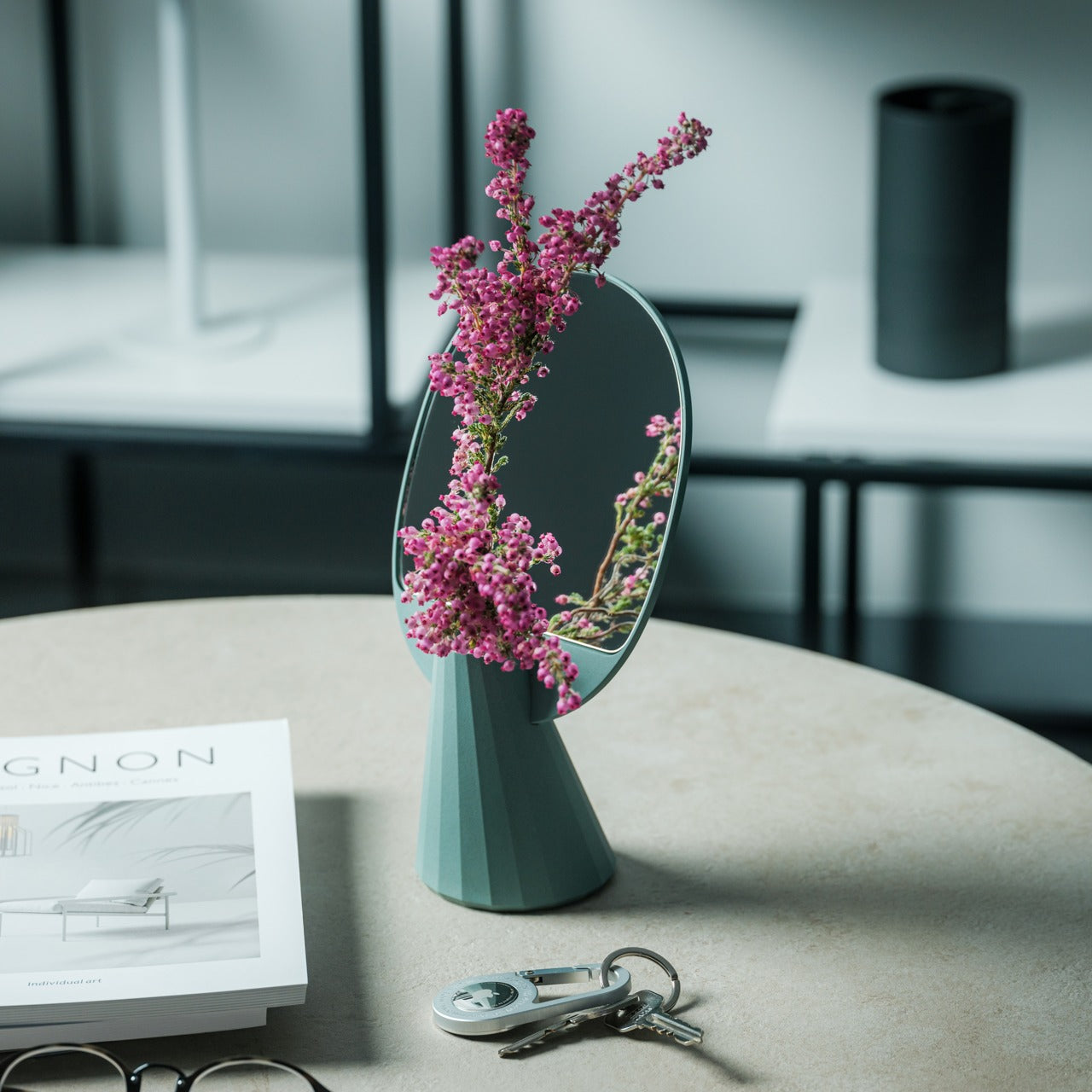
The Zig/Zag collection is a pair of table accessories, namely a vase and a tray, that sport the eponymous shape. That alone is enough to call attention to them because of their uncommon design, but that novelty doesn’t last really long. A properly placed mirror on the edge of these objects, however, reveals a whole new dimension you might have not seen before, almost literally. The wave that you see reflected on those discs doesn’t seem to be the same one standing before you, definitely not the same color, at least.

Imagine seeing a reflection that is the same yet slightly different. The shape of the vase or tray is exactly the same, and so are the objects that they hold. Everything’s mirrored perfectly as you would expect, except for the color of the tray. Orange is yellow, black is hot pink, and green is pale peach. It’s almost as if you’re peering into an alternate reality instead of looking at a mirror, but in truth, the design is just messing with your head. The secret is actually simple: The “zig” side in front is painted with a different color from the “zag” behind it. Unless you’re looking at the objects from a specific angle, you wouldn’t even know that they have two different colors. Only that mirror reveals this duality in a way that seems mysterious and magical.

Mirrors are often seen as functional objects, but the Zig/Zag tabletop collection design transforms it into an art object. The vase and the tray don’t lose nor gain any functionality, but they do gain new value as aesthetic pieces that straddle the line between form and function. It’s a simple gimmick that urges you to take another look, perhaps to solve the mystery that you never knew existed. It makes your mind zig-zag between reality and fantasy, making you pause and simply enjoy the moment of being there.

The post Mirrored tabletop accessories create illusions that have you questioning your sanity first appeared on Yanko Design.

Top 10 Designs Inspired by Nothing’s Minimalist Aesthetic That We Want To See On The Market

In today’s world, tech tends to run complex rather than simple, and this is where the brand ‘Nothing’ has been marking its presence, and distinguishing itself. Founded in 2020 by Carl Pei, Nothing has adopted a refreshing design philosophy that focuses on transparency, minimalism, and a seamless user experience. Nothing’s flagship products merge a distinctive aesthetic with innovative functionality, and they are a source of major inspiration for the design and tech community. Conceptual designs centered around Nothing’s approach and philosophy are currently running rampant on the internet, and we’ve curated some of our favorites. We hope to see these concepts as real tangible Nothing products someday!

1. Nothing x AIAIAI Headphones

Called the Nothing x AIAIAI Headphones, this cool concept perfectly represents how two companies’ visions can be combined to create one functional and good-looking product. The headphones incorporate individual details like the AirPods Max, but they also retain the transparent beauty of Nothing. The accessory is built of modular parts that can be replaced and swapped as needed.

2. Nothing Power Bank

Dubbed the Nothing power bank, this handy little gadget is the perfect companion for your jet-setting adventures. It boasts a transparent aesthetic, which showcases the innards in all their glory. The insides are illuminated with little warm-toned LEDs, which provide the design with a futuristic and Cyberpunkish aesthetic, on the inside and out. It is designed to complement the Nothing Phone (2), making it a great fit for Nothing’s growing line of products.

3. Nothing Phone (3)

Designed by AndroidLeo as a visual exercise, the Nothing Phone (3) is a deeper refinement of Nothing’s iconic style. The Glyph interface’s shape has been modified, without compromising on the character. The Glyph has an O-shaped arc, placed around the wireless charging coils, as well as inside them. The camera is equipped with a redesigned LED array and a 3-lens setup, while the phone features an almost clover-meets-fidget-spinner type layout.

4. Nothing CMF Speaker

This conceptual CMF speaker breaks the conventional of a typical portable speaker design, and it merges function and form beautifully. The speaker displays the playback information including Albumart, now playing controls, and track selection buttons on the touchscreen. It has a Bluetooth toggle and volume knob on one side. A frosted cover panel maintains a semi-transparent surface on the innards, while a USB-C charging port is placed on the rear section to ensure visual integrity.

5. Head.Phone (1)

Dubbed Head.Phone (1), these conceptual headphones use the Glyph interface pretty smartly. The Glyph is physically moving, and it can be customized to send cool messages to the on-lookers. It offers a more aggressive appearance, and the texture is pretty cool too. The materials have an impressive color and finish, accentuated by the right detailing in the right places. Transparent design elements have been incorporated, retaining the typical DNA of the brand.

6. Nothing Bass (1)

Named the Nothing Bass (1), this portable speaker is designed in Black or White color, making it an excellent conversation starter for a house party. The speaker pairs up with the power of LED lighting, which syncs perfectly to the rhythm of beats, ensuring the device captures everyone’s attention. The speaker’s cone is transparent, protecting the innards from the outside elements. The appeal of the speaker is pretty classy, and it will elevate the vibe of any living room.

7. Nothing Sound (1)

Named the Nothing Sound (1), this portable speaker has a fantastic visual design language inspired by Nothing. It has the style that a real Nothing portable speaker would adopt. It is a fashion accessory designed for home and outdoor use, and it is also pretty practical as well. It is designed to be portable, and easy to use, and is a refreshing change from the typical portable speakers we often find on the market.

8. The Nokia N90 x Nothing Concept

This conceptual design gives the outdated Nokia N90 design a whole new makeover. It borrows inspo from Nothing’s iconic translucent glass design and focuses on three important concepts: mechanical precision, the spirit of exploration, and a minimalist design language. The phone adopts a clean and minimal appearance, ensuring the details are focused only on the essentials while ditching the noisy details that were often seen in Nokia’s design language.

9. Nothing Npod (1)

Named the Nothing Npod (1), this resurrected iPod by Shreyansh Onial and Aditya Pandharpure draws inspiration from Apple’s iPod Shuffle, and Nothing’s iconic transparent aesthetic and glyph interaction. The Npod (1) features a signature control panel on the front, while a matching circular glyph interface is placed on the back. This innovative product is the perfect mix of tech and nostalgia and could be a unique undertaking for Nothing.

10. Nothing headset (1)

The Nothing headset (1) concept is designed to deliver high-fidelity audio right to your ears. It has a detachable amplifier to amp the quality as and when needed. You simply need to attach the amplifier to the outside of the headphones, and it instantly elevates your audio experience. You don’t need any steeply-priced AMPs, DACs, or high-fidelity cables.

The post Top 10 Designs Inspired by Nothing’s Minimalist Aesthetic That We Want To See On The Market first appeared on Yanko Design.
Should you upgrade to the new Ray-Ban Meta Wayfarer Limited-Edition Transparent Model?

Ray-Ban’s Meta Wayfarer glasses have quickly become the intersection of fashion and technology, combining classic style with advanced smart features. Recently, Ray-Ban and Meta unveiled the new Shiny Transparent Wayfarer, featuring exposed internal components and Clear to Sapphire Transitions lenses. While this new model pushes the boundaries of what smart glasses can look like, the big question is: should you upgrade, especially if you already own a pair? Let’s break it down.

Designer: Ray-Ban + Meta

If Money Is No Object, Then Yes—Go for It

If price isn’t a barrier, the decision to upgrade is straightforward. At $429 USD, the Shiny Transparent Wayfarer offers a visually striking design that showcases the internal technology, creating a futuristic look that stands apart from the Matte Black version. The Clear to Sapphire Transitions lenses add another layer of sophistication, adapting to light conditions and giving the glasses a sleek sapphire tint when outdoors. This is an easy yes for those who enjoy staying at the forefront of wearable tech.

If You Want the New Lens Transition, It’s Worth Considering

If your current Ray-Ban Meta Wayfarer comes with standard clear lenses or basic non-adaptive sunglasses, upgrading to the new Transitions lenses could make a big difference in how you use the glasses day-to-day. The Clear to Sapphire Transitions lenses offer a smooth transition between indoor and outdoor settings, making it easier to adapt to different lighting conditions without needing to switch eyewear. When you’re indoors, the lenses remain clear, providing a natural and unobstructed view. However, once you step outside, they automatically darken to a sleek sapphire tint, adding a touch of style and protecting your eyes from harsh sunlight. For anyone who finds themselves frequently moving between environments, this flexibility could be a major convenience.

On the other hand, if you already own a pair with Clear to Green Transitions lenses, the upgrade may not offer enough of a difference to justify the change. Both lenses provide the same adaptive functionality, adjusting to light to enhance your vision while adding a color tint. The real difference lies in the aesthetic—whether you prefer the cooler sapphire tint or the more classic green hue. If you’re satisfied with the current performance and look of your lenses, there may be little reason to make the leap unless the sapphire color truly appeals to you.

If You Want a New Design with Exposed Tech, Then Yes

The most noticeable difference in the new model is the Shiny Transparent frame. This design exposes the inner workings of the glasses, giving them a high-tech look that contrasts with the more traditional Matte Black frame. The transparent frame brings an aesthetic shift, showcasing the cutting-edge technology that powers the glasses in a more visually pronounced way. It’s an intriguing design choice for those who appreciate a bold, futuristic look.

If you’re drawn to a more tech-forward, modern aesthetic, this new design is worth considering. The transparent frame is eye-catching and adds a fresh dimension to the Ray-Ban Meta Wayfarer collection. For those who want their eyewear to make a visual statement, the exposed components are a step forward in wearable tech design. However, if you prefer a more classic and understated look of the Matte Black Wayfarer, you might find that the new frame doesn’t offer enough reason to make the switch.
For Me, It’s a Hard No

For anyone who already owns the Matte Black Wayfarer with Clear to Green Transitions lenses, upgrading to the new Shiny Transparent model may not be necessary. Your current pair offers the same core features—AI-powered assistance, a 12MP camera, open-ear speakers, and a touchpad for easy control. The Clear to Green Transitions lenses provide excellent functionality, and if you’re happy with the design and tech you already have, there’s no pressing need to make the switch.

The Introduction of AI-Powered Features

With the recent updates, Ray-Ban and Meta have significantly improved the AI capabilities of the glasses. Now, you can use voice commands by simply saying “Hey Meta” and follow up with additional commands without repeating the wake word. The glasses can also remember important details like where you parked your car or set reminders for when you land after a flight. The ability to send voice messages via WhatsApp or Messenger while your hands are occupied adds an extra layer of convenience for staying connected on the go.

One of the more impressive AI features is real-time video assistance. Whether you’re exploring a new city or browsing the aisles of a grocery store, Meta AI can offer real-time help by identifying landmarks or suggesting meals based on the ingredients you’re looking at. Additionally, real-time language translation for Spanish, French, and Italian can remove language barriers, and future updates will likely support more languages.

Expanding Partnerships with Major Platforms

The glasses also support deeper integrations with platforms like Spotify and Amazon Music, but Ray-Ban has expanded these offerings to include Audible and iHeart as well. Now, you can use voice commands to search and play music or audiobooks without touching your phone. This makes the listening experience even more seamless, allowing you to ask questions like “What album is this from?” while on the move. These expanded partnerships deepen the glasses’ role in day-to-day media consumption.
The collaboration with Be My Eyes is another significant step in making the glasses more accessible. This app, designed for individuals who are blind or have low vision, pairs users with sighted volunteers who provide real-time assistance. The glasses’ camera allows the volunteer to see what the wearer sees, enabling them to help with tasks like reading mail or navigating new environments.
Are You Going for It?

Ultimately, the decision to upgrade comes down to personal preference and how much you value the new design and lens options. If money isn’t an issue or you’re drawn to the transparent frame and sapphire lenses, the upgrade makes sense. However, if you’re content with your current Matte Black Wayfarer with Clear to Green Transitions lenses, there’s no pressing reason to switch. The new features and design are exciting, but your existing pair still holds up as a stylish, highly functional piece of wearable tech.

The post Should you upgrade to the new Ray-Ban Meta Wayfarer Limited-Edition Transparent Model? first appeared on Yanko Design.