5 Best Automotive Designs From May 2026 That Actually Solved Something

Automotive design in May 2026 is being shaped less by motor show stages and more by individual designers working outside traditional studio systems. The most compelling concepts this month didn’t arrive with manufacturer press releases. They arrived with a point of view, a specific problem to solve, or a visual language worth paying close attention to. That independence is producing some of the most focused design thinking the industry has seen in years.

The five designs below span endurance racing prototypes, road hypercars, a reimagined icon, a utility e-bike, and a resurrected nameplate. What connects them isn’t a shared aesthetic; it’s intentionality. Each one either solves something real or pushes a visual language somewhere it hasn’t traveled before. These aren’t mood board exercises. They’re the kind of design thinking that eventually turns into the vehicles you actually want to own.

1. Renault Double Barrel Le Mans Hypercar Concept

The Double Barrel arrives with a premise so clean it makes most motorsport concepts look timid. Designer Kim reached back to the 1955 Nardi Giannini ND750 Bisiluro, an Italian streamliner that split its driver and engine across two separate fuselages connected by a central spine, and repurposed that architecture entirely. Where the Bisiluro used twin bodies for straight-line speed, the Double Barrel uses them to solve endurance racing’s most persistent safety problem: the pit stop. Two independent pods, one for the driver and one for the hydrogen powertrain, each replaceable in ten seconds.

The engineering logic is tight. The hydrogen module integrates the fuel cell stack, electric motors, power electronics, and thermal management into a single cartridge that loads into the left fuselage through a shotgun-inspired breech mechanism. The driver pod on the right contains the safety cell, steering column, and pedal box as a self-contained unit. A central carbon monocoque spine handles both structural loads and aerodynamic surfaces. For anyone who follows endurance racing and its history of pit lane accidents, this is the concept that makes Le Mans’ darker chapters feel like a problem finally approaching a structural answer.

What we like:

  • The twin-fuselage architecture solves a real safety problem through engineering rather than regulation, making it one of the few motorsport concepts this year that’s genuinely consequential in its thinking rather than purely formal
  • The hydrogen powertrain module treating propulsion as a replaceable cartridge is a significant conceptual shift, with the potential to bring refueling closer to a ten-second operation under pit lane conditions

What we dislike:

  • Splitting mass across two fuselages introduces aerodynamic and structural complexity that existing endurance racing regulations weren’t written to accommodate, which means the concept would require a regulatory framework to be built around it
  • The specialized pit equipment required for module swaps places significant infrastructure demands on teams, essentially asking the entire paddock to standardize around a system that currently exists only as sketches

2. Aston Martin Veil Concept

Hyunwoo Kim’s Veil asks a question Aston Martin’s own studio probably can’t ask while managing current production timelines: what happens to the brand’s visual language when you trade angular carbon fiber aggression for something closer to organic sculpture? The result is a hypercar where every surface transition is so smooth you’d need calipers to find the break points. The teal finish, a near-match for Aston’s current F1 team livery, doesn’t just reference the brand’s motorsport presence; it makes every curve feel like light bending around water.

Kim developed the concept through physical paper mock-ups before committing anything to CAD, and the proportions show it. From above, the Veil reads like a manta ray, with massive rear fender volumes extending from a central spine that bisects the cockpit. The process produced surface relationships that feel discovered rather than designed. The concept was subsequently photographed alongside Aston Martin F1 team members, suggesting Gaydon took notice. For design followers, this is the kind of work that maps where a brand’s visual language might be heading in a decade.

What we like:

  • The paper mock-up development process is rare in an era of pure CAD workflows, and it produced proportions and surface relationships that feel genuinely spatial in a way that screen-first design rarely achieves
  • The teal livery reference creates a coherent visual link between Aston’s motorsport identity and its road car future without resorting to obvious badging or explicit F1 call-outs

What we dislike:

  • The ultra-smooth surface language, while visually striking, raises real questions around cooling and downforce that a functional prototype would need to resolve before the form could survive contact with actual track conditions
  • The concept exists as a personal exploration without confirmed manufacturer involvement, which limits how directly it can influence what Gaydon’s advanced studio is working on right now

3. McLaren F1 Concept

Kevin Andersson’s reimagining of the McLaren F1 operates in the most demanding space in automotive design: the icon reboot. Gordon Murray’s original was shaped by specific constraints, 1990s carbon fiber manufacturing limits, and aerodynamic understanding that three decades of Formula 1 development have since transformed completely. Andersson’s concept strips those constraints away while keeping the design philosophy intact. The long hood, the cab-forward greenhouse, the rear haunches that read as muscle rather than theater. Everything that made the original feel inevitable still does, translated into a contemporary surface language.

The renders, produced in Blender and presented in both glossy white and dark gray, show a car McLaren’s design studio could plausibly release today if the brand decided to revisit its analog past. The naturally aspirated engine placement stays legible in the hood proportions, and the whole form reads as a single cohesive object rather than an assembly of surfaces. For anyone who grew up wanting an F1 and couldn’t get close to owning one, this is the version that proves the original’s proportions remain the most elegant answer to the question of what a driver’s car should look like.

What we like:

  • The long hood and cab-forward stance preserve the original F1’s spatial logic in a completely contemporary surface language, showing that Murray’s proportional decisions were correct beyond their era
  • The Blender workflow produces photoreal renders that communicate design intent with enough clarity to evaluate the concept seriously, rather than treating it as a sketch exercise

What we dislike:

  • As a personal study completed without McLaren’s involvement, there is no direct pathway for the concept to influence actual product direction at Woking, which limits its reach beyond the design community
  • The dark gray render obscures surface detail in areas where the concept’s nuance lives, making certain transitions harder to read and the full quality of the work more difficult to assess

4. Segway Muxi E-Bike

First introduced at CES 2026, the Muxi is Segway’s first short-tail utility e-bike, and it makes its case through restraint rather than specification sheets. It carries a payload of up to 418 pounds and accommodates optional accessories, including a child kit, but it doesn’t look like a cargo barge doing it. The step-through frame keeps access easy, integrated frame storage maintains a clean silhouette, and the whole package reads as a practical daily tool rather than a conspicuous statement about urban mobility values.

The 750W rear hub motor produces 80 Nm of torque, paired with a 48V, 716Wh battery delivering up to 80 miles of range per charge. Riders can toggle between Class 1 and Class 2 modes depending on terrain and local regulations. For urban commuters who need to carry real loads without a car, the Muxi offers something genuinely useful: a vehicle that handles groceries, gear, or a child passenger without requiring a license or a parking permit. The design keeps that utility from reading as a compromise, which is a harder problem to solve than it looks.

What we like:

  • The 80-mile range paired with 418-pound payload capacity makes the Muxi a credible car replacement for short-range urban logistics without the bulk or visual weight of traditional long-tail cargo bikes
  • The step-through frame and integrated storage keep the silhouette honest and uncluttered, which reflects thoughtful design decision-making rather than feature stacking

What we dislike:

  • The short-tail format, while visually leaner, does limit rear cargo platform length compared to long-tail alternatives, which matters for riders carrying larger or less stackable loads regularly
  • Class 1 and Class 2 mode flexibility is useful, but the cap on assisted speed that comes with staying below Class 3 territory will frustrate commuters who need to keep pace with faster urban traffic

5. Freelander Electric SUV

The Freelander nameplate’s return arrives as a JLR and Chery co-development, and the design treats its heritage with more precision than most revivals manage. The boxy silhouette, upright stance, and angled D-pillar all reference the original three-door Freelander from the late 1990s without tipping into pure nostalgia. The rugged proportions stay consistent with classic Land Rover SUV design, while modern lighting elements and a more contemporary design language prevent the whole thing from reading as a tribute act rather than a genuine successor with something new to offer.

The technical foundation centers on an 800-volt platform supporting fully electric, plug-in hybrid, and range-extended electric configurations across a planned lineup of six models. Production takes place at the Chery-Jaguar Land Rover joint-venture facility in Changshu, China, combining British design direction with Chinese EV platform technology. For buyers who want a compact, capable off-roader with genuine electrification credentials and a nameplate that carries weight, the new Freelander’s combination of design heritage and modern platform engineering gives it a strong opening argument before a single production car rolls out.

What we like:

  • The angled D-pillar and upright stance respect the original Freelander’s design DNA without reducing the new car to a retro exercise, striking a balance that most nameplate revivals fail to find
  • The 800-volt platform supporting multiple powertrain configurations gives buyers real flexibility across six planned model variants rather than locking the lineup into a single electrification strategy

What we dislike:

  • The Chery co-development structure raises legitimate questions about how much of JLR’s build quality reputation will translate across a manufacturing partnership, regardless of how strong the design direction is
  • Six models across a freshly relaunched lineup is an ambitious target that risks diluting design consistency before the Freelander brand identity has had time to re-establish itself in a competitive EV market

The Best Design Always Starts With a Problem Worth Solving

What the strongest designs this month share is a willingness to treat constraints as creative material rather than obstacles. Whether that means engineering a Le Mans pit stop into a ten-second module swap, developing a hypercar form from physical paper before touching a computer, or bringing back a beloved nameplate through a cross-continental manufacturing partnership, the best work here didn’t arrive from playing safe.

Design is always a negotiation between ambition and reality. The concepts at the top of this list lean hardest into ambition, and the production-bound entries use real engineering constraints to sharpen rather than limit their vision. If these five designs reflect the direction automotive culture is moving, the next few years should produce some of the most considered vehicles the industry has attempted in a long time.

The post 5 Best Automotive Designs From May 2026 That Actually Solved Something first appeared on Yanko Design.
8 Memorial Day Weekend Gadgets for the Man Who’d Rather Be Outside

The campsite is not a compromise. For a certain kind of person, the space between the trees gets the same deliberate attention as a living room — gear chosen for how it looks before dawn and how it performs after midnight. Memorial Day weekend is the season’s first real test of that instinct. These eight products are for the man who sets up camp with the same consideration he’d give a well-arranged shelf.

None of these are impulse buys. They’re the objects that earn a permanent spot in the pack — things you reach for every trip, not things that get forgotten in the garage. The sequence here runs from what you carry in your pocket, a titanium cylinder that glows for a quarter century without a battery, to what you use to cut the final rope of the night. A full campsite, deliberately assembled.

1. NoxTi

The NoxTi is a 45mm titanium cylinder that glows in the dark for 25 years without a battery, a charge, or any maintenance beyond replacing the tritium vial when it eventually dims two decades from now. The physics are not LED and not phosphorescent. Tritium is a radioactive isotope whose decay generates light continuously — the same principle behind military watch lume and nuclear exit signs. Xedge has machined this process into something that lives on your keychain.

The body is Grade 5 titanium — Ti-6Al-4V, the aerospace alloy — CNC-machined to tight tolerances with two silicone O-rings securing a quartz-protected vial that transmits 92% of available light. A ceramic-tipped glass breaker sits at one end. At 10.7 grams, it registers on the keychain the way a quality key does: present but not intrusive. Six color options run from Ice Blue to Sunset Orange. At camp, it tells you exactly where your keys are without reaching for your phone. That is the entire point.

What We Like:

  • Twenty-five years of continuous glow with zero batteries is a design achievement no other consumer lighting product can match
  • CNC-machined Grade 5 titanium with a field-replaceable vial system makes this effectively a permanent carry object
  • Six colorway options mean it reads as a design choice, not a utility clip

What We Dislike:

  • The glow is intentionally faint — it’s an orientation tool, not a navigation light, and expecting it to illuminate a path is a misreading of what it is

2. RetroWave 7-in-1 Radio

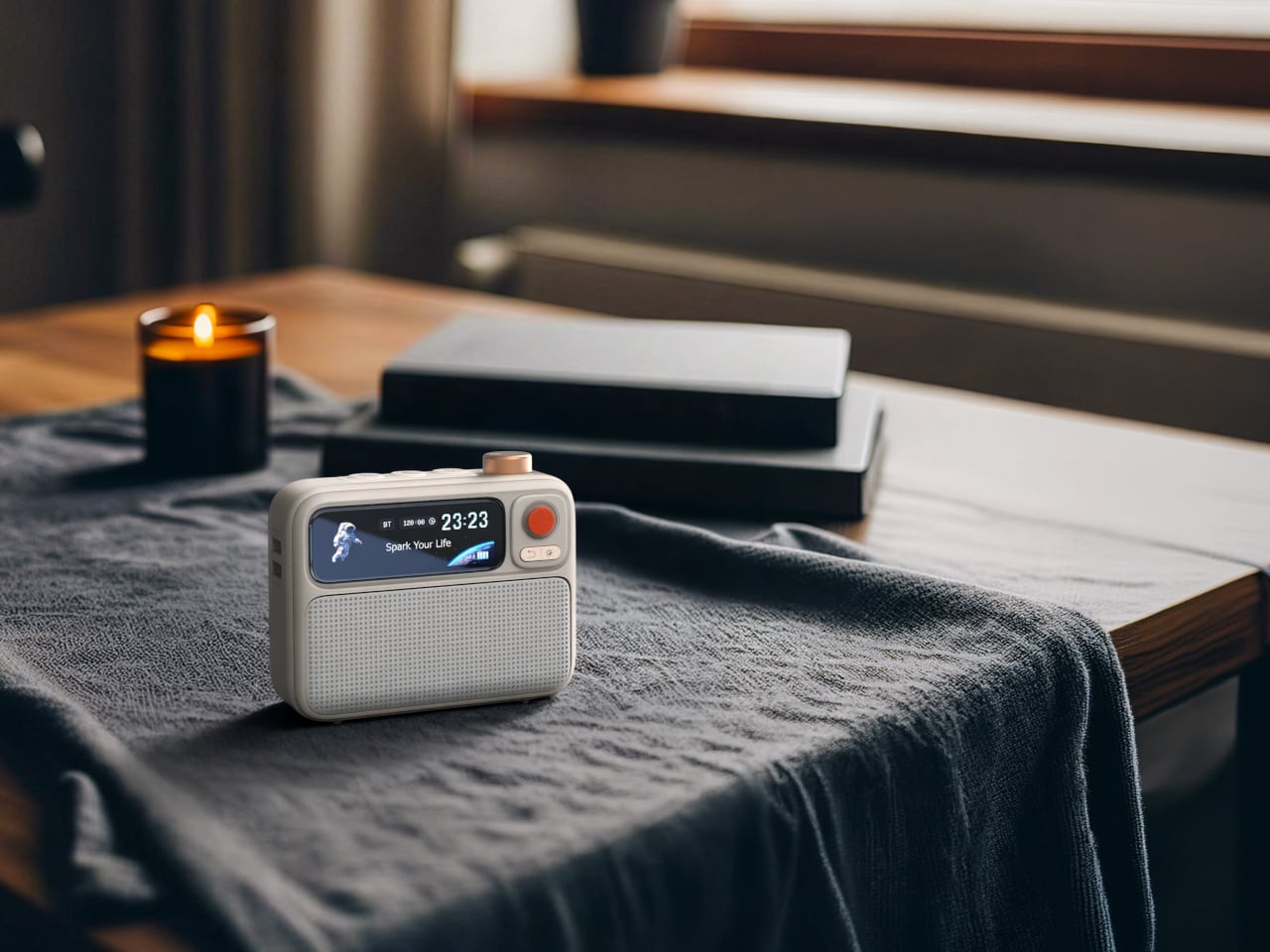
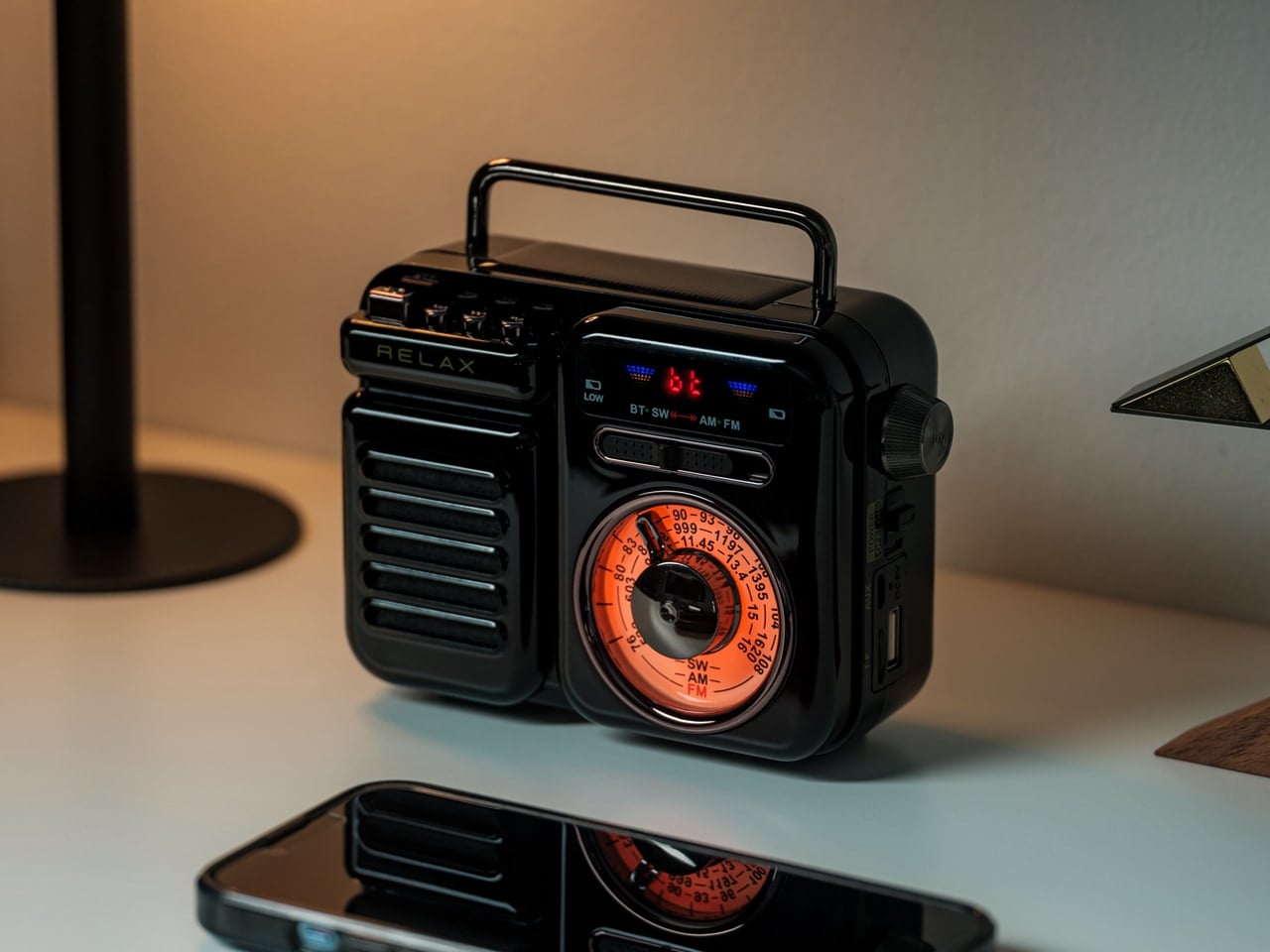
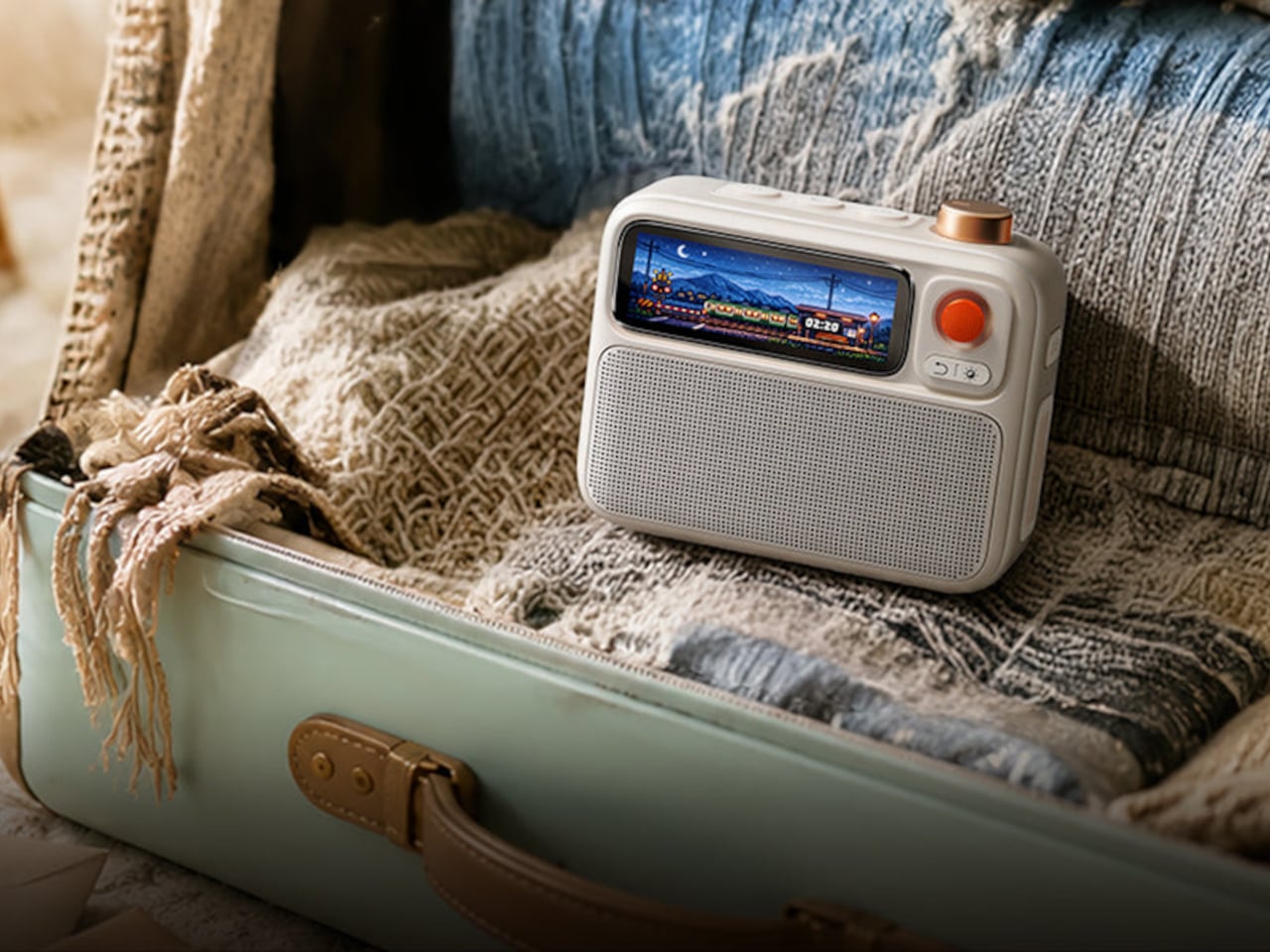
The RetroWave is seven things in one body: AM/FM/NOAA weather radio, Bluetooth speaker, USB charger, flashlight, reading lamp, SOS beacon, and clock. What makes it relevant for this list isn’t the feature count — it’s the form. The body is warm, compact, and tactile in a way that most multi-function gadgets simply aren’t. It looks like something discovered in a well-curated mountain cabin rather than panic-bought before a storm. That quality of looking chosen rather than grabbed is the distinction that matters here.

The hand-crank and solar charging panel mean the RetroWave can generate its own power, shifting it from a convenience item to a genuine piece of off-grid infrastructure. Up to 20 hours of radio playback on a full charge gives you a real entertainment window across the whole weekend. At $89, it sits at exactly the right price for a camp staple — the kind of thing that earns a permanent place in the bag because removing it would feel like forgetting something essential.

Click Here to Buy Now: $89.00

What We Like:

  • Hand-crank and solar charging make this fully self-sufficient — no cables, no wall outlet, no dependency on a power bank that itself needs charging
  • The warm retro form makes it the one piece of gear on the table that reads as a design decision rather than a utility purchase
  • NOAA weather radio is genuinely useful emergency infrastructure, not a gimmick

What We Dislike:

  • The Bluetooth speaker is functional, but won’t satisfy audiophiles

3. Haven Spectre

The Haven Spectre solves the problem every hammock sleeper knows: the banana curve. Traditional hammocks fold your body into a shape your lumbar tolerates for an hour and resents for the rest of the trip. The Spectre uses carbon fiber spreader bars and Monolite mesh panels to hold you flat — the same sleep position as a proper bed, suspended between two trees. At 4 pounds 4 ounces for the full kit, it’s lighter than most sleeping bags at a fraction of the pack footprint.

The Spectre includes a Silpoly rainfly, interior mesh pockets, an internal ridgeline for hanging gear, and an external sling for footwear. The mesh walls give you a full 360-degree view of wherever you’ve camped, which is either the point or not — the Spectre doesn’t decide that for you. Haven prices this from $485 with a 285-pound weight capacity and a packed size of 16 by 7 by 5 inches. For the man who considers where he sleeps as carefully as where he sits, this is the right answer to the right question.

What We Like:

  • Carbon fiber spreader bars deliver a genuinely flat sleep position that no conventional hammock can replicate — this is the difference between sleeping in a hammock and sleeping on one
  • The full kit, coming in under 4.5 pounds, is a meaningful spec for anyone packing in on foot
  • 360-degree mesh walls make wherever you camp feel worth waking up inside

What We Dislike:

  • From $485, this is the most expensive item on the list and reflects a very specific solution to a very specific problem — it’s not the entry point for casual hammock camping
  • Setup requires two trees at appropriate spacing, which means the terrain selects you as much as you select it

4. All-in-One Grill

The All-in-One Grill is made in Japan from stainless steel, and it carries that origin in its proportions. This is not a portable grill that apologizes for being portable — the construction is taut, the lines are clean, and the 11.8-inch base feels proportioned rather than compromised. It functions as a grill, a pot, and a smoker through a modular lid system, which means the same object that handles your morning eggs can be doing low-and-slow work by mid-afternoon. That’s a significant range for one piece of equipment.

At $449, this is the investment piece of the list, and it earns that position through longevity rather than novelty. Stainless steel built to Japanese manufacturing standards doesn’t warp, doesn’t corrode, and doesn’t develop the hot spots that ruin cheaper grills after a single season. The thick plate grill net and included pot lid for steaming and smoking mean you’re not returning for accessories down the line. Compact enough for a car boot, deliberate enough for a kitchen shelf once camping season ends.

Click Here to Buy Now: $449

What We Like:

  • Three distinct cooking modes — grilling, pot cooking, and smoking — from a single compact body is the kind of functional intelligence that makes you question why other portable grills are built the way they are
  • Japanese stainless steel construction is built for decades of use, not seasons
  • The proportions are clean enough that this sits on a kitchen counter without embarrassment when camping season ends

What We Dislike:

  • The compact dimensions are ideal for two; feeding a larger group requires patience between rounds and a considered approach to sequencing what cooks when

5. Olight Baton 4

The campsite flashlight is the object most people under-invest in, and the one they most regret the moment the sun drops. The Olight Baton 4 is the correction to that habit. At 1,300 lumens from a body not much larger than a lighter, it puts out more light than most people realize is possible at this price. The magnetic charging case doubles as a 5,000mAh power bank, meaning the Baton arrives at the campsite charged and stays that way across the full weekend without drama.

What earns the Baton 4 its place here over cheaper alternatives is Olight’s attention to the carry experience. The clip sits deep in the pocket, the button has a deliberate texture that works with gloves, and the machined body feels significantly more expensive than $54.99. Five brightness modes cover everything from reading in a tent to lighting a path fifty meters out in total darkness. It disappears into your pocket until the moment it becomes the most important thing at your site.

What We Like:

  • 1,300 lumens from a body small enough to forget about until needed is a remarkable engineering result at this price
  • The charging case solving two problems — storage and backup power — with one purchase is exactly the kind of design thinking that creates long-term loyalty
  • Five brightness modes mean the Baton handles reading light and trail light from the same pocket object

What We Dislike:

  • The charging case adds bulk that doesn’t sit comfortably alongside the light in a single pocket — you carry them separately or leave the case in the bag
  • USB-C charging is reserved for the newer Pro model; the base Baton 4 uses a proprietary magnetic connector

6. Stanley Perfect Pour Over Brew Set

The Pour Over Brew Set strips the morning ritual down to its essentials: a stainless steel cone filter, a cup base that doubles as your vessel, and nothing disposable. No paper filters, no waste, no fragile glass sitting at risk on a folding table. You grind your beans, pour your water, and the coffee lands in a Stanley cup ready for the day. The whole thing stacks into itself, making it one of the most compact brewing systems available for outdoor use.

What separates this from the sea of portable coffee gadgets is Stanley’s refusal to compromise the cup. The base isn’t an afterthought — it’s the same vacuum-insulated construction as the tumblers the brand built its reputation on. Your coffee stays genuinely hot for hours, which matters less at a kitchen counter and considerably more at a campsite at 6 am with the temperature still in the low thirties. At $79.99, it’s one of the most honest objects on this list: built to last, built to be used every single morning.

What We Like:

  • The metal cone filter eliminates disposables — no paper filters, no emergency store runs mid-trip
  • The vacuum-insulated base keeps coffee hot well past the pour, which at altitude and in cold morning air is less a luxury than a necessity
  • The whole system stacks into itself with nothing left over — it’s one of the tidiest pack-and-go brewing solutions available

What We Dislike:

  • This is a single-cup system — group camping requires multiple sequential pours, and the output speed depends heavily on grind size, which takes some practice to dial in correctly
  • It’s a ritual for one, not a breakfast solution for four

7. CIVIVI Button Lock Elementum II

A camp knife earns its place not through drama but through frequency: the rope that needs cutting, the package that won’t open, the branch that wants trimming. The Elementum II handles all of that without demanding attention. At 3.12 ounces with a 3-inch Nitro-V steel blade, it carries like it isn’t there until the moment you need it. The button lock opens single-handed — a detail that sounds minor until you’re holding something else with the other hand.

CIVIVI’s design language is where this knife punches well above its price point. The G10 handle scales sit flush against titanium-anodized liners, and the overall profile is lean enough to disappear in a front pocket without printing. Nitro-V holds an edge longer than the VG-10 steel found in knives twice the cost.

What We Like:

  • The button lock deploys cleanly one-handed every time, and the deep-carry clip keeps the knife invisible in a pocket without shifting during a full day of activity
  • Nitro-V edge retention is genuinely better than anything in this price bracket has any right to deliver
  • The slim profile and anodized liner finish make this look like a $150 knife in hand

What We Dislike:

  • At 3 inches, the blade sits at the shorter end for heavier camp tasks — batoning or breaking down larger cuts of food will show its limits quickly
  • G10 color options are conservative for a knife that otherwise looks this considered

8. Marshall Kilburn III

The Kilburn III is what happens when a speaker brand takes outdoor audio seriously without abandoning the aesthetic identity that made it recognizable. The guitar amp proportions, the gold script logo, the herringbone strap — these aren’t cosmetic decisions bolted onto a utility product. They’re what make the Kilburn the speaker people leave sitting on the picnic table rather than packing back into a bag. At 40 hours of battery life, you don’t need to manage it across a long weekend. It simply plays.

Where the RetroWave Radio earns its place through versatility, seven functions, self-sufficient power, and emergency utility, the Kilburn earns its place through one thing done exceptionally well. If music is the reason you’re packing a speaker at all, this is the one that justifies the weight. The Kilburn III adds reverse charging to its feature set, meaning it can top up your phone or flashlight from its own battery, a practical outdoor function that speakers at this price point rarely bother to include. The sound is tuned for open space rather than indoor rooms: the wider the environment, the more the Kilburn opens up and fills it.

What We Like:

  • Forty hours of battery across a weekend means you set it down Friday afternoon and don’t think about charging it until Monday
  • Reverse charging turns the speaker into backup power for other gear — a thoughtful outdoor feature that makes the price easier to justify
  • The design holds up on a picnic table the way it does on a shelf — it looks like it belongs wherever you put it

What We Dislike:

  • At 2.6 kilograms, the Kilburn III is a car-camping speaker — backpackers need not apply
  • The $379.99 price demands a committed relationship with good outdoor audio; this is not the speaker you buy casually

Pack Well, Camp Better

The best campsite doesn’t happen by accident. It’s the result of eight or ten or twenty decisions made before you leave the driveway — what you bring, how it’s designed, and whether the sum of those choices creates something that feels assembled with genuine intention. Every product on this list earns its place through that logic: not because it has the most features or the most impressive spec sheet, but because it’s worth carrying, worth using, and worth looking at.

Memorial Day weekend is three days. That’s enough time for coffee at dawn, a full day over the grill, an evening of music around a fire, and a night spent flat in a hammock looking at whatever sky you drove to find. These objects exist to make those three days feel less like roughing it and more like the kind of life you’d choose if you designed one deliberately. Pack well.

The post 8 Memorial Day Weekend Gadgets for the Man Who’d Rather Be Outside first appeared on Yanko Design.
9 Best Travel Gadgets & Gear That Make Summer 2026 Actually Worth Packing For

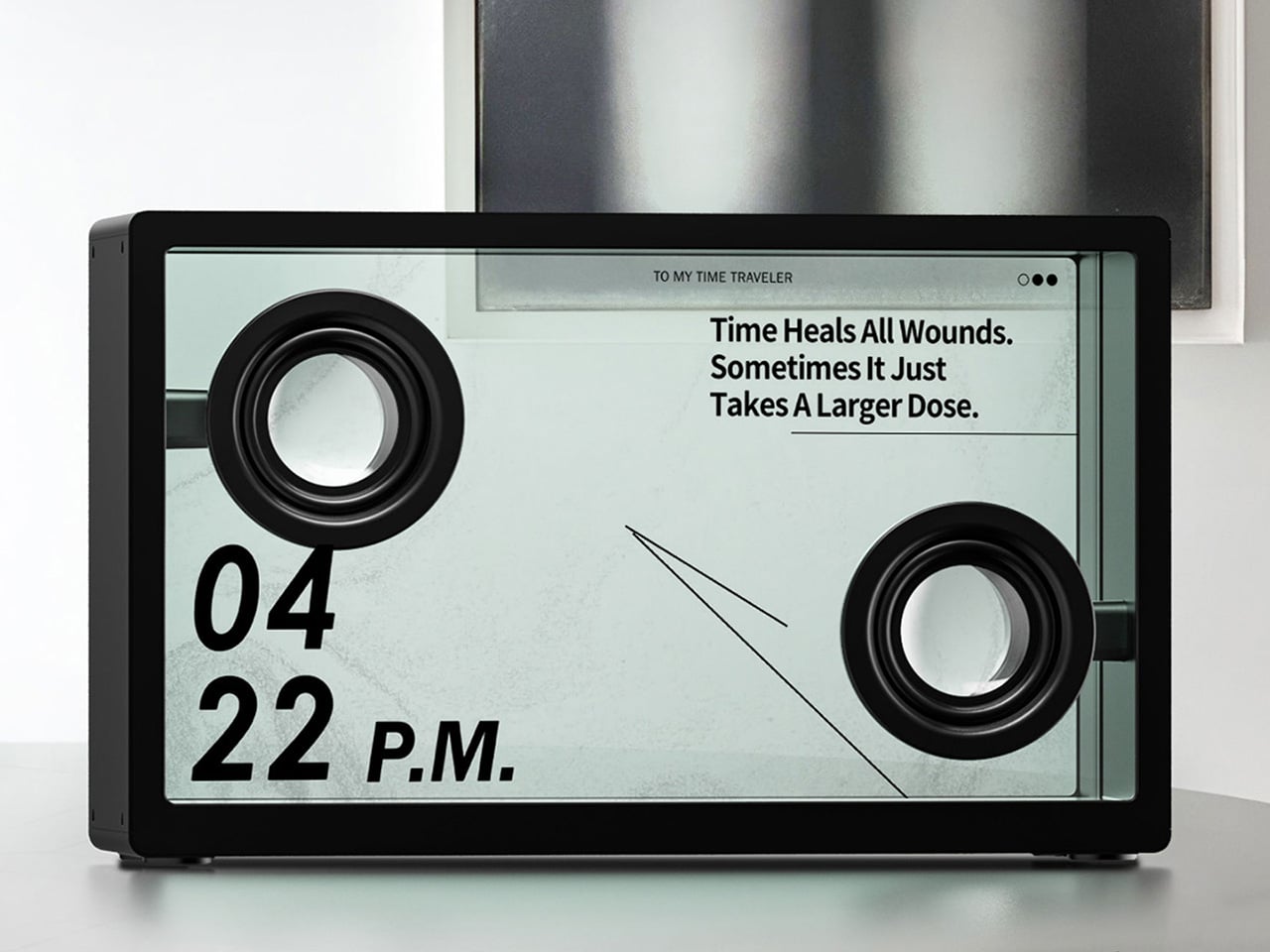
Transparent display of an OPT90 cassette speaker in a clear case, with 'CASSette SPEAKER' and 'Bluetooth Connection' labels visible.

The best travel packing lists have always been exercises in subtraction. What earns its weight. What survives a summer of trains, guesthouses, and long airport mornings? The objects that endure are the ones designed with enough intention that they feel better used than new. This year, that edit has gotten easier. A handful of products have arrived that understand travel not as a logistics problem but as a mode of living worth designing for.

There is a particular pleasure in a bag that weighs nothing and contains everything you need. The nine objects below represent that standard. They range from a pressure brewer disguised as a travel mug to a titanium pen that barely exists. What they share is the belief that good design removes friction from the day rather than adding features to it. Pack all nine, and you will still have room for a change of clothes.

1. Side A Cassette Speaker

The Side A is a cassette tape that plays music, which makes it one of the quietest pieces of industrial design to land on a travel shelf in years. The form is exact: the dimensions of a 1970s compact cassette, the weight of an afterthought, and a sound quality that has no business coming from something this small. It fits in the coin pocket of your jeans, clips to a bag strap, and starts a conversation with everyone who notices it in a hostel common room or on a beach towel.

For travel, the emotional dimension matters as much as the functional one. The Side A is the object you pull out at a guesthouse in Lisbon or a rented apartment in Kyoto and place on a windowsill while you unpack. It signals something about the kind of traveler you are before you say a word. It runs wirelessly via Bluetooth and charges via USB-C, so the retro aesthetic is purely visual. The ritual of pressing play on something shaped like a tape deck turns any room temporarily yours.

Click Here to Buy Now: $49.00

What We Like

  • The cassette form factor fits in places no other speaker can, including pockets, passport holders, and the side mesh of a water bottle sleeve.
  • Wireless Bluetooth and USB-C charging mean the vintage look carries none of the vintage inconvenience.

What We Dislike

  • Sound projection is directional and intimate rather than room-filling, which large outdoor spaces tend to expose.
  • The compact size means battery life is capped shorter than bulkier travel speakers in the same price range.

2. MokaMax

The hotel room coffee situation has not improved. The MokaMax accepts this and brings its own solution: a ridged stainless steel travel mug that contains a full pressure brewer inside its body. You fill the chamber, add grounds, apply pressure through the integrated mechanism, and have something approximating an espresso in under three minutes using nothing but boiling water from the kettle on the credenza. It is a singular piece of design that treats a genuine travel problem with the seriousness it deserves.

The ridged stainless exterior gives it a profile that belongs on the shelf of a Scandinavian kitchenware shop rather than in a carry-on bag. It travels as a sealed container with no separate parts to lose across time zones. The lid doubles as a cup. The whole thing weighs 400 grams fully loaded and fits in the front pocket of most travel backpacks. For coffee people who have tried every in-room alternative and arrived at the same disappointing conclusion every morning, this ends the conversation.

What We Like

  • The integrated brewer and mug in a single sealed body means no separate components, no loose parts, and no compromises across a summer of movement.
  • The ridged stainless exterior is visually distinctive enough to qualify as an object worth owning well beyond its function.

What We Dislike

  • Cleaning the pressure chamber on the road requires access to a proper sink and a few spare minutes that airport transit rarely provides.
  • The 400g weight, while justified, is noticeable in a carry-on where every gram has already been negotiated.

3. AirTag Carabiner

The AirTag Carabiner treats Apple’s tracking disc the way a good frame treats a painting: it makes the object inside worth looking at. Machined aluminum, a clean gate mechanism, and a profile that clips to bag straps, belt loops, and zipper pulls without reading as gear. Most AirTag cases are either cases or carabiners. This one is genuinely both, and the design is considered enough that you clip it on and forget it exists entirely until the moment you need it.

For travel, the peace of mind is architectural. You clip one to your checked bag and one to your day pack, and the anxiety of watching a baggage carousel empty while your luggage doesn’t arrive shifts from dread to information. The form is compact enough that it adds nothing to the weight profile of a bag. The aluminum patinas naturally over months of use into something that looks earned rather than bought. It is the category of object whose value you only understand the first time it does its job.

Click Here to Buy Now: $149.00

What We Like

  • The machined aluminum gate and clean profile make it one of the few AirTag carriers that genuinely improve the look of whatever bag it attaches to.
  • The combination of carabiner utility and tracking function eliminates the need for a separate clip and a separate case simultaneously.

What We Dislike

  • The AirTag itself is sold separately, which means the full experience requires an additional purchase; most listings bury this in fine print.
  • Aluminum gates can feel stiff in cold weather, and the opening requires two hands during the first weeks of regular use.

4. Comes

Siwoo Kim’s Comes is a small AI companion device designed specifically for solo travel, and the premise is more considered than it sounds. It sits in your palm, connects to your phone, and acts as a conversational layer between you and unfamiliar places: translating menus, suggesting detours, and responding to the low-stakes questions that feel embarrassing to search for in public. The design is rounded and quiet, built to stay in a pocket rather than demand a wrist, a screen, or a face to look at.

What makes Comes worth including in any honest travel list is what it refuses to do. It is not a phone. It has no screen. It does not try to replace anything except the particular loneliness of standing in a new city without anyone to ask. For solo travelers who find the performance of looking confident in unfamiliar places genuinely tiring, Comes offers a private layer of support without the social cost of visibly consulting a device. It turns navigation into conversation, which is a different kind of travel entirely.

What We Like

  • The screenless, pocket-sized form means it assists without demanding attention, which is the rarest quality in any device designed for travel.
  • The AI layer is built specifically for travel contexts, making it meaningfully more useful than a repurposed general-purpose assistant.

What We Dislike

  • Connectivity depends entirely on your phone’s data plan, which in rural or international contexts can make the experience inconsistent.
  • The concept is stronger than the current feature set, and early adopters will encounter limits that future firmware will eventually address.

5. Kinto Travel Tumbler

KINTO has been making drinkware in Japan since 1972, and the Travel Tumbler is the product that explains why the brand has a following among people who pay attention to objects. Matte stainless steel, a one-handed screw lid with a silicone seal, and an opening wide enough to drink from without tipping your head back. There is no rubber gasket on the exterior. No logo beyond a debossed stamp. No color options are engineered to attract attention. It disappears into your morning routine and becomes difficult to travel without.

The 500ml capacity is the most considered part of the design. It is enough for a double espresso topped with hot water, or a full cup of whatever the guesthouse kitchen offers, without being the oversized vessel that forces you to drink fast or carry heavy. It keeps liquids at a temperature for six hours in either direction. For a summer of early trains and long afternoons in cities you are still learning, the Kinto becomes the object you reach for more often than any other in your bag.

What We Like

  • The matte stainless exterior and restrained detailing place it closer to Japanese tableware than outdoor gear, which is a genuine category distinction.
  • The 500ml capacity hits the precise middle ground between espresso-sized and inconveniently large for everyday carry.

What We Dislike

  • The screw lid takes slightly longer to open than a flip-top, which becomes apparent when you are holding a tray and a boarding pass simultaneously.
  • The matte finish marks with fingerprints in warmer climates and requires more frequent wiping than a polished surface would.

6. Casabeam Everyday Flashlight

The Casabeam occupies the specific design territory between a tool and an object worth keeping on a desk. The body is machined to a clean cylindrical profile with a pocket clip that doubles as a satisfying fidget mechanism, and the beam output is serious enough for actual use without the tactical overdesign that plagues most EDC lights. It charges via USB-C and remembers its last mode, which sounds minor until you have spent thirty seconds cycling through strobe mode in a dark guesthouse corridor at 2 am.

Travel reveals how often you need a light that is not your phone. Cobblestone streets with broken lamp posts. Power cuts in cheaper accommodation. Reading in a top bunk without waking the rest of the room. The Casabeam handles all of it from a body that fits alongside a pen without adding bulk. The light quality is warm enough to be comfortable and bright enough to be useful. It earns more appreciation the longer you carry it, because it keeps solving problems you had quietly given up on solving.

Click Here to Buy Now: $50.00

What We Like

  • USB-C charging and mode memory remove the two most common sources of friction in EDC flashlight ownership entirely.
  • The machined cylindrical body is refined enough to sit alongside design objects rather than tools without any visual apology.

What We Dislike

  • The warm beam color, while pleasant for ambient use, is less useful for reading text at a distance than a cooler 5000K alternative.
  • The pocket clip was clearly designed for trouser pockets rather than shirt pockets, and the thinner fabric requires deliberate re-positioning.

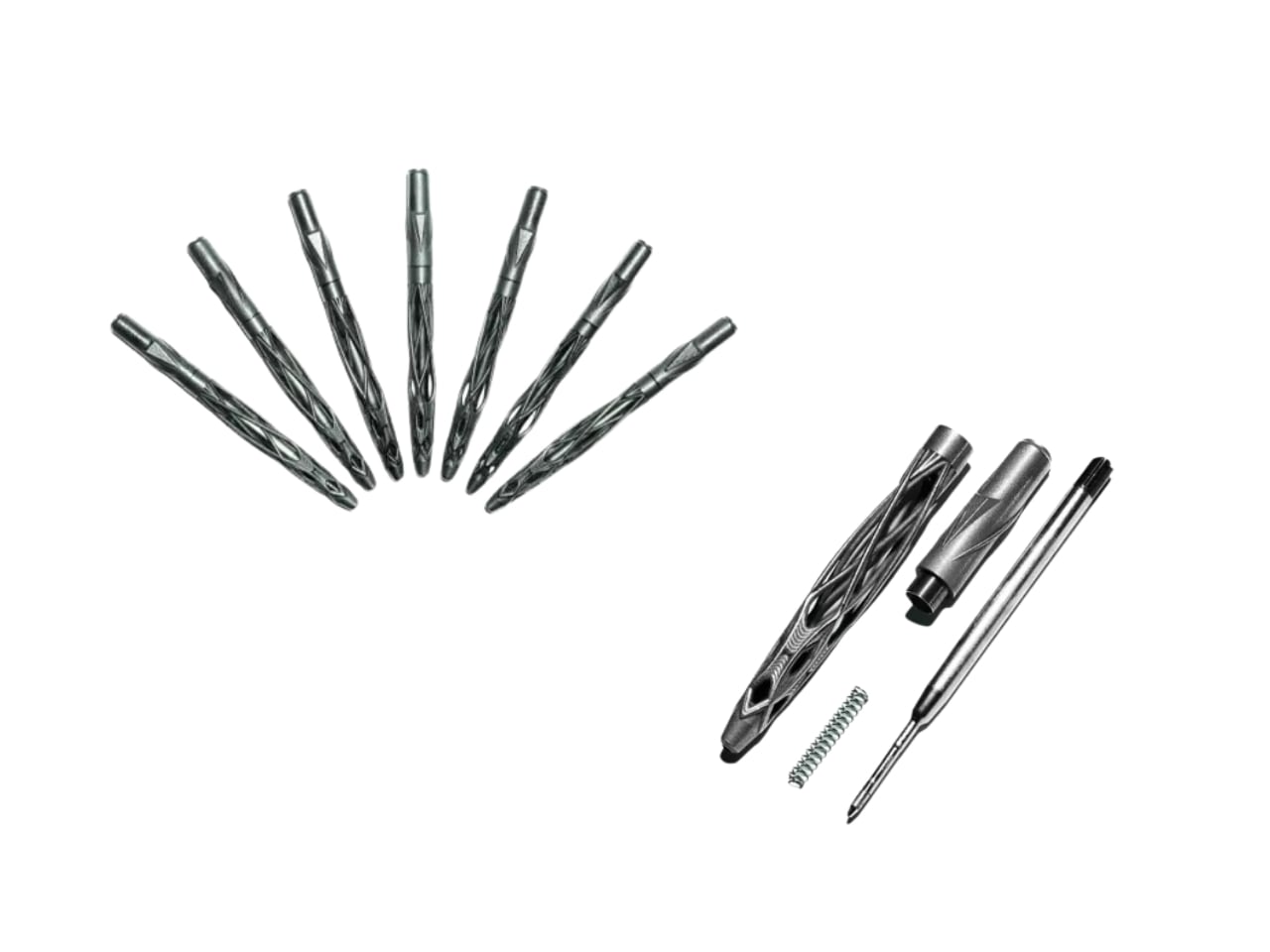
7. CW&T Pen Type-C Ultra — gnuhr Edition

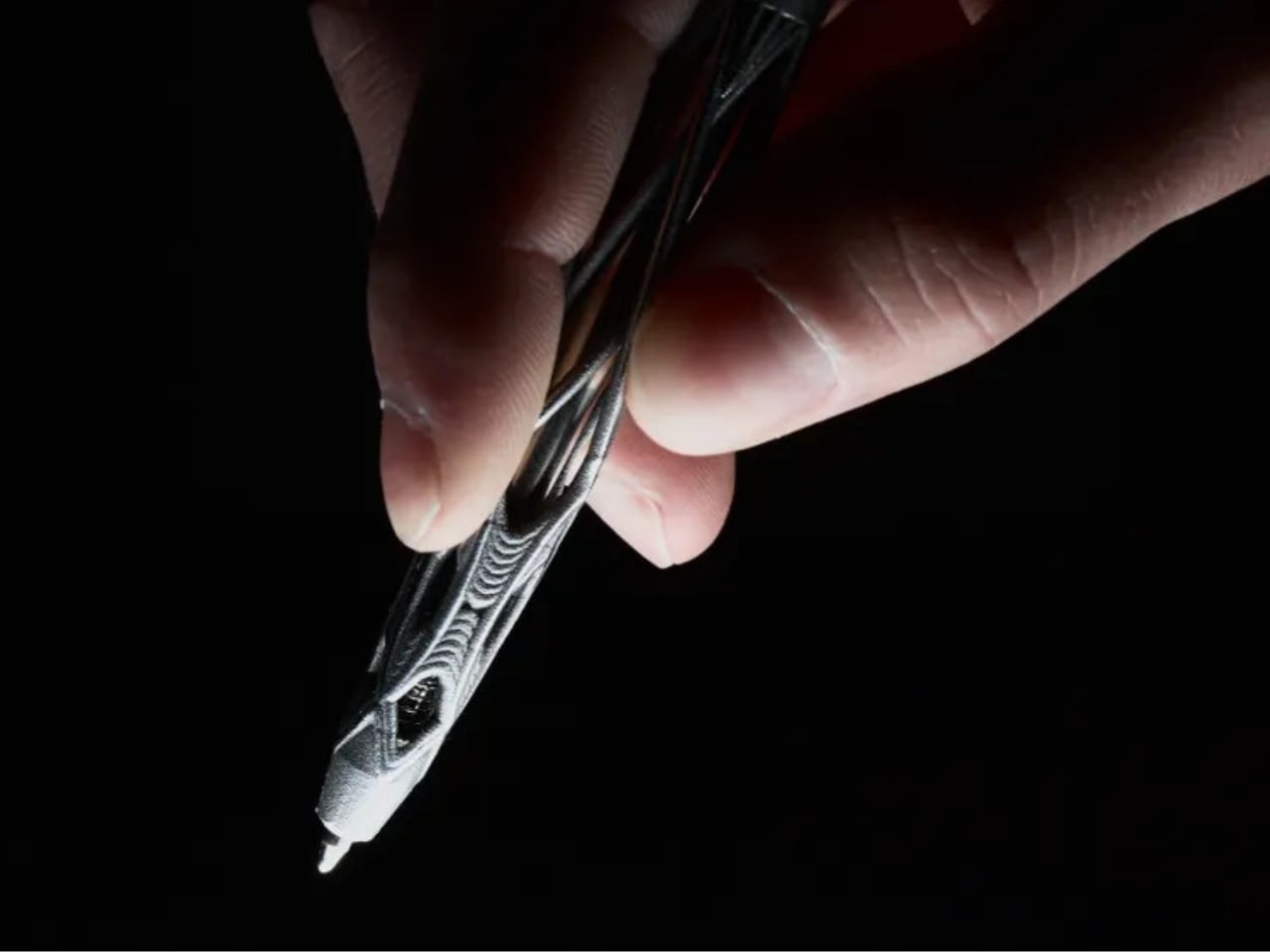
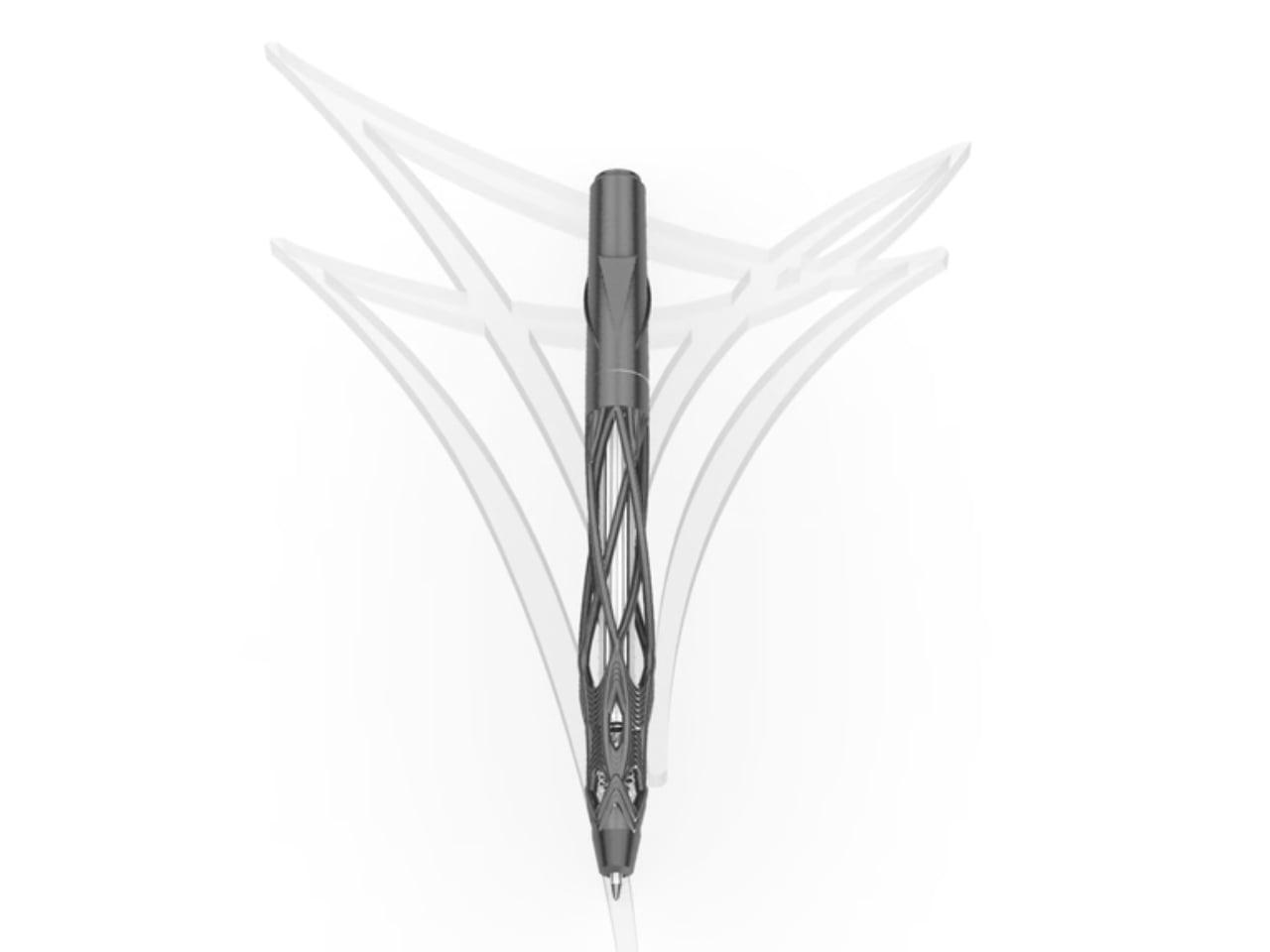
CW&T is a small New York studio that produces objects in limited runs for people who pay close attention to manufacturing. The Pen Type-C Ultra gnuhr Edition is Grade 5 titanium, hollowed and precision-milled to a skeletal profile that removes every gram that does not need to exist. It weighs almost nothing. It looks like it belongs next to aerospace hardware in a design archive. It takes a standard ballpoint refill and writes exactly as a pen should, with no drama and no compromise in either direction.

Traveling with this pen converts the act of writing into something you notice. Filling in a form at a hotel desk, signing a restaurant receipt, sketching a street corner in a notebook: these are the moments when an object of this quality distinguishes itself from everything else in your pocket. It does not perform its material. It simply is the material, in a form tight enough to disappear on a keychain or in the spine of a notebook. For a summer of movement, something is clarifying about carrying a pen that will outlast every passport you own.

What We Like

  • Grade 5 titanium construction and skeletal precision milling place this in a different category from every other writing instrument at any price point.
  • Standard ballpoint refill compatibility means the most beautifully made pen you own is also the easiest to maintain anywhere in the world.

What We Dislike

  • The skeletal body offers minimal grip surface, which becomes fatiguing during longer writing sessions on bumpy transport.
  • CW&T produces in limited runs, so availability can disappear without notice, and restock timelines are rarely predictable.

8. PROOF Wallet

The PROOF Founder pairs an aerospace-grade aluminum plate with top-grain leather and a wide elastic strap in a form that reads as professional rather than tactical. Most minimalist wallets solve their problem by holding less. This one solves it by holding more without growing. The Founder handles anywhere from one to twenty-five cards, with the elastic strap compressing the stack and the leather wrap keeping it contained. It sits flat in a jacket pocket and does not announce itself, which, for travel, where your wallet becomes a daily tool rather than a background object, is the entire point.

The aluminum plate is the structural element that separates this from fabric-only alternatives: it prevents the flex and collapse that plagues elastic wallets after months of use and creates a satisfying resistance when fanning through cards. The leather wrap patinas over a summer into something that looks considered rather than worn. There is no branding on the exterior beyond the material itself. For the kind of traveler who finds the Ridge wallet slightly too aggressive in a formal setting, the Founder is the obvious alternative that nobody else at the table will recognize.

What We Like

  • Aerospace aluminum structure paired with top-grain leather produces a material combination that improves with use rather than degrading with it.
  • The one-to-twenty-five card capacity range makes it genuinely flexible across the context shifts that define summer travel without structural compromise.

What We Dislike

  • The elastic strap shows its age before the leather or aluminum does, and replacement options require contacting the brand directly.
  • The profile, while slim, is wider than card-only holders, which feels unnecessary on short day trips when you carry two cards and nothing else.

9. Traveler’s Notebook

The Traveler’s Notebook has been in continuous production since 2006 and has changed almost nothing about itself, which is as strong an endorsement as any product can receive. The black edition is oiled buffalo leather stretched over a brass clip and elastic cord, aging into something that looks genuinely lived-in after a single trip. The passport size fits a shirt pocket. The paper is cream-colored, fountain-pen-friendly MD stock that resists bleed-through with quiet success. The inside becomes whatever you need it to be: journal, sketchpad, receipt keeper, boarding pass sleeve.

In a list built partly around technology and connectivity, the Traveler’s Notebook earns its place by doing nothing digital. It is the object that captures the parts of a trip that photographs miss: the light on a piazza at seven in the morning, the menu item you want to remember, the address someone wrote down for you on a napkin now tucked into the inner fold. Travel writing done by hand in a book that costs less than a meal has a particular relationship to memory that no app has yet replaced. This is the pocket-sized argument for why.

What We Like

  • Oiled buffalo leather and brass clip construction will outlast every phone, charger, and piece of luggage in the bag by a significant margin.
  • The refillable insert system means the notebook’s physical character accumulates across years while the interior renews for each new destination.

What We Dislike

  • The elastic cord binding requires an initial period of loosening before the inserts sit flat, which new users consistently find frustrating in the first week.
  • The narrow passport format can feel constrained for wider handwriting styles, particularly for left-handed writers working on moving transport.

Pack Less. Pay Attention.

Nine objects across nine categories, and the through-line is identical across all of them. Each one was made by someone who asked a specific question about how a thing should work rather than how it should be marketed. That specificity is what makes a bag lighter, a morning better, and a new city feel less like a problem to manage and more like the reason you left home in the first place.

The best travel gear does not make travel easier in the way a better suitcase wheel makes transport easier. It makes travel richer in the way a good book makes a long flight disappear. These nine objects will not tell you where to go. They will make you pay closer attention once you get there, which is the only travel advice worth taking.

The post 9 Best Travel Gadgets & Gear That Make Summer 2026 Actually Worth Packing For first appeared on Yanko Design.
5 Best Products For A Minimalist Coffee Table That Does More By Doing Less

The coffee table is the hardest surface in the living room to get right. Put too much on it, and it looks like a staging mistake. Put too little and the room reads unfinished. The minimalist approach settles this by demanding each object justify its place twice — once as something useful, once as something worth looking at. Every product on this list earns on its own terms.

These five objects were chosen because they share a logic rather than a matching aesthetic. A kinetic toy, a modular ceramic, a structural tray, a floating mobile, a handpoured candle vessel — different categories, different price points, one consistent standard. Each one does more than its category suggests, and none of them requires anything around it to look complete. That is the whole point of a surface that does more by doing less.

1. ClearMind Kendama

Wooden yoyo with string resting on a white design magazine page, partly covered by a gray knitted blanket/rug in the foreground.

The ClearMind Kendama is the object on this list that will raise the most eyebrows and earn the most genuine conversation. Crafted in Tokyo from solid, unpainted walnut and maple, it’s a Japanese skill toy that sits on a minimalist coffee table the way a chess set sits on a side table — quietly suggesting a way of spending time that isn’t a screen. The two-tone wood grain reads as sculpture when it’s at rest, and the proportions are tight enough that it occupies almost no footprint while contributing significant material presence and warmth to the surrounding surface.

What makes the Kendama work as a coffee table object rather than just a novelty is the quality of its materials and the honesty of its finish. Walnut and maple at this weight don’t look like toys — they look like considered objects, which is exactly what they are. The practice itself is deliberately simple: the ball catches on the cup, the spike, the base plate. Each successful catch requires a small act of focus that pulls you out of passive consumption and toward something genuinely present. On a minimalist table, it functions as an invitation — to pick up, play, put down — and every time it rests, it returns to being a beautiful wooden form that needs no explanation.

Click Here to Buy Now: $59.00

What we like:

  • The unpainted natural wood reads as a sculpture at rest
  • The meditative play pattern offers something no other object on this list provides

What we dislike:

  • The cup-and-ball proportions are an acquired taste for anyone who associates kendamas with children’s toys
  • The string can feel visually busy if left extended rather than gathered

2. Torre Modular Ceramic Vase

The Torre Modular Ceramic Vase by Scott Newlin for Dudd Haus is the most expensive object on this list by a significant margin, and the one that earns that price most transparently. Each piece is hand-thrown at Powerhouse Arts in Brooklyn and arrives as a set of stackable ceramic modules — two, three, or four components depending on the configuration — that interlock through consistent diameters and lipped rims. The forms are architectural, muted, and deliberately quiet: off-white, sand, stone. On a coffee table, they read as a composed sculpture from any angle, at any height.

What sets the Torre apart from a standard ceramic vase is that it offers a choice every time you approach the table. Stack the modules high for a vertical moment, separate them into a low cluster, or pull one aside entirely and set a dried stem inside the remaining piece. The act of rearranging them is part of the object’s value — it rewards attention in a way that static objects never can. For a minimalist surface, the price demands justification, and it finds it here: the Torre is three objects in one, each configuration as resolved as the last, none of them requiring anything around them to look finished. It is the closest thing on this table to pure design.

What we like:

  • Each reconfiguration creates a genuinely different visual read
  • The hand-thrown ceramic carries natural variation that improves with close attention

What we dislike:

  • At $1,200, it is a significant commitment for a surface object
  • The off-white and sand palette, while intentional, can disappear on lighter table materials

3. Sail Away Tranquility Mobile

The Sail Away Tranquility Mobile is the only object on this list that moves, and movement is precisely why it belongs here. Three balanced triangular forms — drawn from the geometry of sailboats — hang in calibrated tension and respond to the slightest air current in the room. On a coffee table, it introduces a kinetic quality that no static object can replicate: the table becomes the most animated surface in the living room without adding any visual weight. The proportions are compact enough for a tabletop, the construction is clean, and the physics are genuinely surprising the first time you see it shift in still air.

What makes the Sail Away work as a minimalist object is its restraint. The movement is subtle rather than theatrical — a slow drift rather than a spin — and it never demands attention so much as rewards it, which is the correct register for a surface meant to feel considered rather than performed. At $145, it occupies a different design category from every other object on this list: not sculpture exactly, not functional exactly, but somewhere between the two that feels honest rather than decorative. Set at the far edge of the Platform Tray, it creates a vertical moment that anchors the whole composition without competing with anything around it.

Click Here to Buy Now: $129.00

What we like:

  • The kinetic movement brings a living quality to the table that no static object can match
  • The geometric forms hold their visual logic from any angle

What we dislike:

  • The mobile requires a stable surface — consistent vibrations from foot traffic or sound can overanimate it
  • The string suspension looks considered but feels delicate in a high-use living room

4. Simple Candle Co. Concrete Vessel

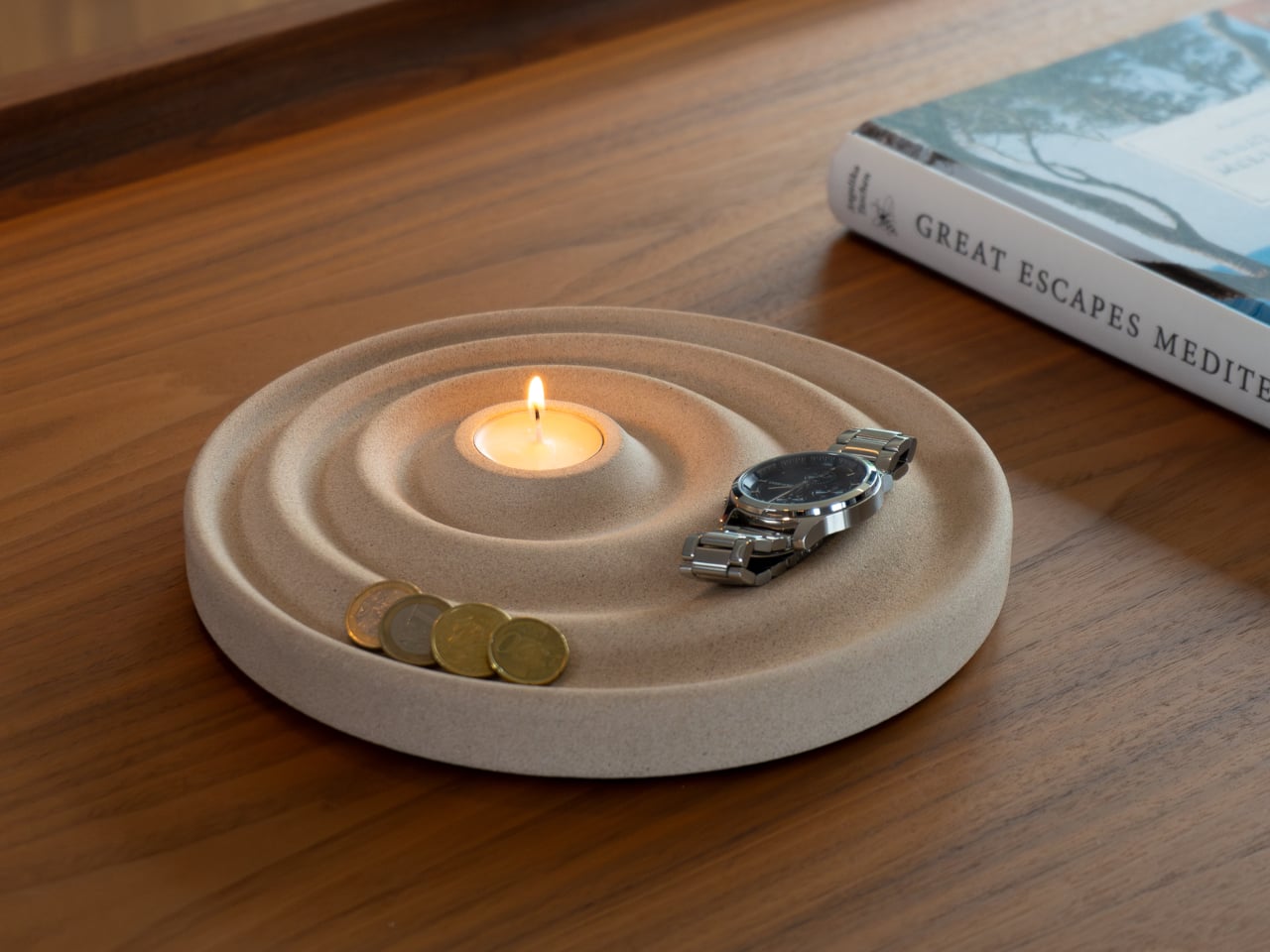
The Simple Candle Co. Concrete Vessel is the most affordable object on this list and the one that punches furthest above its price. Each vessel is hand-poured in small batches from a grey concrete body with a short soy wax wick and no label. The scent runs deliberately clean — white linen, cashmere cedar, or unscented — and the vessel itself is the product as much as the candle inside it. At $20, it brings concrete’s material seriousness to the table at a price that makes it easy to keep two: one lit, one resting, both earning their place on the surface.

The concrete body doesn’t get hot to the touch during burning, which is a practical advantage that most candle vessels at three times the price can’t claim. Burn time runs approximately 25 to 30 hours, and when the wax is finished, the bowl stays. Rinse it out, and it becomes a catch-all for a matchbox, a small stone, a ring. That second life is built into the object from the first glance — the vessel was always the point, and the candle is what justifies buying it for $20 rather than considerably more. Alongside the Kendama’s natural wood and the Torre’s matte ceramic, the concrete introduces a third material that completes the tactile range without competing for visual dominance.

What we like:

  • The vessel earns its place before and after the candle burns
  • The concrete stays cool during use, which is a genuine functional advantage over glass and ceramic alternatives

What we dislike:

  • The scent throw is intentionally subtle and reads as ambient rather than strongly aromatic
  • The hand-pour process means each vessel varies slightly, so a replacement may not match an existing piece exactly

5. Muuto Platform Tray — Grey

The Muuto Platform Tray is the object that makes every other object on this list look better. Available at Finnish Design Shop for $109 in grey, it’s a round tray with an oak veneer surface and small metal legs that lift it just enough off the table to create a clear visual boundary between the objects inside and the surface beneath. That boundary does more compositional work than it should — it turns a group of objects into a considered arrangement rather than a collection of things that happen to be sitting on the same surface. The grey metal and warm oak read well together, and the form is simple enough to disappear.

In practical terms, the Platform Tray is the anchor. The candle vessel sits inside it. The Kendama rests at its edge. The mobile grounds one end. The tray doesn’t organize these objects so much as it frames them, and the difference between a frame and a container is the difference between editorial and domestic. The oak veneer surface develops warmth over time, and the small legs mean it can be lifted off the table intact when the surface needs to be cleared without disturbing the composition it holds. At $109, it is the least visually dramatic piece on this list and almost certainly the most indispensable one.

What we like:

  • The oak veneer surface brings warmth to a mixed material setup
  • The raised legs separate the composition from the table surface with minimal visual noise

What we dislike:

  • The round form can feel restrictive on a narrow or strongly rectangular table
  • It comes in one size, so there’s no option to scale up for a larger surface

The Only Five Objects Your Coffee Table Needs

Five objects, five categories, one shared logic. The tray frames. The candle grounds. The mobile moves. The Kendama invites you to participate. The Torre rewrites what a vase can be. Together they fill a coffee table without crowding it, and none of them needs the others to look resolved. That is the discipline a minimalist surface asks for, and these five meet it.

The full build comes to $1,444, with the Torre carrying most of that weight. Buy the other four first — at $344 combined, they build one of the strongest minimalist coffee table setups available at that price — and treat the Torre as the object you earn over time. Start with the Platform Tray. Everything else finds its place from there.

The post 5 Best Products For A Minimalist Coffee Table That Does More By Doing Less first appeared on Yanko Design.
5 Gifts for the Person Who Takes Beer More Seriously Than Anyone Else You Know

Some people drink beer. Others study it, serve it with real intention, and actually feel the difference between a proper pour and a careless one. For that person in your life — the one who owns a specific glass for a specific brew and can tell you exactly why foam matters — a six-pack isn’t enough. What they need is something that matches the level of care they bring to every drink.

These five picks range from precision glassware engineered in Japan to a machine that replicates a professional draft tap at home. Each was designed with the same quiet seriousness your beer person applies to every single pour. If they treat drinking as a practice rather than a pastime, these are the gifts that speak their language — objects built with intention for someone who notices the difference between good and exceptional.

1. DraftPro Top Can Opener

There’s a version of drinking from a can, and then there’s the DraftPro version. Designed by award-winning Japanese designer Shu Kanno, this tool removes the entire top of a can with one clean motion, transforming it into something far closer to drinking from a proper glass. The wide-mouth opening lets aroma escape freely and allows the beer’s full range of flavor to come through completely unobstructed. For someone who selects their beer thoughtfully and actually wants to taste what they chose, this simple tool changes the nature of the experience entirely. It’s quiet, precise, and turns the ordinary act of cracking a can into something that feels far more considered and deliberate.

Beyond the drinking experience itself, the DraftPro functions as a capable bar tool in the most compact form possible. With the top removed, ice goes directly into the can for fast chilling on a hot day, or the can becomes the vessel for a quick cocktail with no shaker and no extra glass to clean afterward. It’s lightweight, portable, and compatible with both domestic and international can sizes, so it works wherever the drinking happens to be. The kind of object that earns a permanent place in a bag or kitchen drawer because it quietly solves problems you didn’t know you had until the first time you actually put it to use.

Click Here to Buy Now: $60.00

What We Like

  • Removes the entire top to create an open, aroma-forward experience that genuinely mirrors drinking from a glass
  • Universal compatibility with domestic and international can sizes makes it useful at home or anywhere else

What We Dislike

  • Designed exclusively for cans, with no application for bottles or other containers
  • The fully open-top format may feel less practical or contained depending on the setting

2. Prism Titanium Beer Glass

Most beer glasses do one thing: hold the beer. The Prism Titanium Beer Glass does something more carefully considered. Lined with 99.9% pure aerospace-grade titanium, it neutralizes metallic aftertastes and gently breaks down off-notes, leaving only the true, refined flavor of what’s been poured. Its gently flared rim softens texture and guides beer across the palate in a way that feels deliberate rather than incidental. Available in the timeless Silver with its quiet luster, or the Infinite with its shifting aurora of color, each version is finished with symbolic patterns that evoke longevity and prosperity. It’s the kind of glass that quietly resets the standard you hold everything else to.

This is a glass for someone who treats drinking as a ritual rather than a reflex. Clear glass meets softly reflective titanium inside, creating a visual interplay that reveals the beer’s true color with a quiet, elegant glow. The combination of material and shape means what you’re tasting stays as close to the brewer’s original intention as possible, without interference from the vessel itself. Japanese precision runs through every detail, from the balance of it in your hand to the way light plays across its surface at the table. For the person who thinks carefully about what they drink and how, this is the glass they’ve been looking for without quite knowing what to call it.

Click Here to Buy Now: $100.00

What We Like

  • Aerospace-grade titanium lining preserves pure flavor by neutralizing metallic aftertastes and off-notes that would otherwise interfere
  • The gently flared rim simultaneously improves both aroma delivery and mouthfeel for a more complete tasting experience

What We Dislike

  • Premium material and Japanese craftsmanship come at a higher price point than conventional glassware
  • The titanium interior may feel unfamiliar to those accustomed to standard glass or ceramic vessels

3. Hodi

The hodi is what happens when someone asks what a travel mug could genuinely be if it actually tried harder. Its unique two-part design splits into two separate glasses — one for hot drinks, one for cold — while an airtight lid doubles as a snack container and a built-in mesh filter handles all the brewing on the go. Coffee, tea, beer, wine, juice, milkshakes: hodi takes all of it, making it the kind of object a serious drinker carries without compromise.

What makes hodi visually impossible to ignore is the shape. Its curvy, tapered silhouette is directly reminiscent of the iconic Guinness glass — one of the most recognizable beverage vessels ever made —, and that’s entirely the point. Carry it anywhere, and it reads as intentional, not utilitarian. Functionally engineered to handle everything from a cold craft beer to a hot brew, yet portable enough to go wherever a standard travel mug would, hodi doesn’t ask you to trade form for function.

What We Like

  • The two-part split design offers two separate glasses for hot and cold drinks, making it genuinely versatile for every drink in a beer person’s rotation
  • Its Guinness-inspired silhouette carries the visual language of fine glassware into a portable, travel-ready format

What We Dislike

  • The multi-part construction means more components to keep track of and clean after every use
  • Its Swiss Army Knife versatility may feel like overkill for someone who wants a single-purpose, dedicated beer vessel

4. Fizzics DraftPour

The Fizzics DraftPour does something most people assume requires a full bar setup: it turns any can or bottle of beer into a creamy, nitro-style draft pour without leaving the house. Using patented Micro-Foam technology, it converts the beer’s existing carbonation into uniformly sized micro-bubbles that enhance aroma, flavor, and mouthfeel in a way a straight hand pour simply can’t replicate. It works across every beer style from IPAs and lagers to porters and stouts, and fits cans up to 32oz and bottles up to 750ml. No beer is excluded, and no special additives or gas cartridges are required to get that result at home.

What makes it exceptional as a gift is that it asks nothing extra from the beer itself. No CO2 cartridges, no nitro canisters, no complicated setup. Plug it in or run it on two AA batteries and take it wherever the occasion calls. The technology optimizes all three phases of foam production: nucleation, beading, and disproportionation — the same metrics brewers and cicerones rely on when evaluating the quality of a proper draft pour. For the person who knows what those words mean and cares enough to apply them at home, this is the most meaningful upgrade their home bar has ever seen.

What We Like

  • No CO2 or nitro cartridges required — the machine works entirely with the beer’s own existing carbonation
  • Compatible with all beer styles and most standard can and bottle sizes, making it broadly and consistently useful

What We Dislike

  • Requires a power source via plug or AA batteries, which adds a layer of setup compared to more passive tools on this list
  • Functions as a countertop appliance rather than a compact or easily portable bar accessory

5. Nendo Perfect 3Way Beer Glass

Japanese design firm Nendo built the Perfect 3Way Glass specifically around the flavor and aroma of Sapporo’s Kuro Label draft beer, and the result is one of the most intentional drinking vessels ever produced. The glass is asymmetrical by design, with three distinct zones that each deliver a different mouthfeel when you drink from them. Start at the straight side: the beer travels to the center of the tongue and flows toward the back of the mouth, delivering the initial crisp, clean finish that defines a well-served draft. That first side is the foundation, and what follows on the other two makes this glass genuinely unlike anything else on the market.

Move to the left side, where the curvaceous, wider rim fills the mouth with a mellow, rich aroma and bouquet of liquid. Then shift to the right, where the bulbous shape hits the middle of the tongue and controls the flow for a third, completely distinct sensation. Three sides, three moments, one glass. This isn’t a novelty. It’s a precision instrument for someone who understands that how beer enters the mouth shapes what they ultimately taste. For anyone who takes draft beer seriously, the Perfect 3Way Glass turns a single pour into three separate, considered experiences without ever needing to refill the glass or reach for something else.

What We Like

  • Three distinct mouthfeel zones deliver three genuinely different tasting experiences from a single pour
  • Built with draft beer specifically in mind, making it a meaningful and focused tool for serious enthusiasts

What We Dislike

  • The asymmetrical shape requires some orientation before the full experience lands as intended, which takes practice
  • Conceived around a specific style of draft beer, which may feel limiting for drinkers with broader or more varied tastes

The Right Gift for the Right Pour

The best gifts for a beer person aren’t about quantity. They’re about showing you understand exactly how they think about what they drink — the attention they give to temperature, aroma, foam, and the weight of a glass in the hand. Every pick here reflects that same level of care in how it was designed and what it was built to achieve. One thoughtful gift says more than any case could.

Pick one, and let the presentation carry the message. These aren’t items you grab from a shelf because the occasion demands something wrapped. They’re tools built by craftspeople and designers who understand what it means to give a drink the respect it deserves. For the person who brings that same respect to every pour, that’s a language they’ll recognize immediately — and appreciate far longer than anything else you could choose.

The post 5 Gifts for the Person Who Takes Beer More Seriously Than Anyone Else You Know first appeared on Yanko Design.

5 Over-Ear Headphones That Look as Good When They’re Around Your Neck as When They’re on Your Head

The headphone has become something it was never originally designed to be: a silhouette. Worn around the neck on a subway platform or draped over a chair at a coffee shop, a great pair of over-ears communicates taste in much the same way a watch or a well-chosen bag does. The best ones are now designed with that resting moment in mind, not as an afterthought, but as a deliberate part of the brief.

What separates a good headphone from a great one is increasingly less about frequency response and more about how the object behaves when it’s not in use. The five pairs on this list earn their place on both counts. Worn on the head, they deliver. Worn around the neck, they still look like they were built by people who thought carefully about that exact resting moment, collarbone and all.

1. StillFrame Headphones

Most headphones achieve lightness by sacrificing material quality somewhere along the way. StillFrame achieves it by rethinking the entire structure from scratch. At 103 grams, it sits on your head with the kind of effortless presence most pairs spend an entire product page trying to claim. The ultra-minimal design, clean lines, no exposed hardware, and no decorative flourish anywhere on the frame is the kind of restraint that reads as confidence rather than budget constraint.

Around the neck, StillFrame does what minimal design always promises and rarely delivers: it disappears into your outfit rather than competing with it. The 24-hour battery means you’ll reach for these in the early morning and still have charge well into the evening without thinking about a cable. For anyone who wants headphones that age well, that look as right in three years as they do today, this is where the search ends.

Click Here to Buy Now: $245.00

What We Like

  • At 103 grams, this is one of the lightest over-ear headphones available without any sacrifice in build integrity, and the weightlessness is felt the moment you put them on
  • A 24-hour battery life means this pair genuinely runs from morning to night on a single charge, removing the low-battery anxiety that comes with most wireless headphones on the market

What We Dislike

  • Minimal colorway options are a direct consequence of the same design restraint that makes the StillFrame look this considered, and that trade-off is real and visible
  • With so little on the frame to grab visual attention, this pair asks you to commit fully to its design language, which rewards patience but does not suit every aesthetic

2. Meze Audio Strada

Romanian audio atelier Meze has spent two decades treating headphones as craft objects, and the Strada makes that philosophy fully explicit. Hand-carved walnut and ebony ear cups, each unique in grain and tone, sit alongside a magnetic ear pad system that snaps on and off cleanly, making them the first pair that genuinely anticipates its own aging. The leather headband drapes naturally against the collarbone. At $799, you’re investing in the idea that daily objects deserve this level of material care.

Worn around the neck, the Strada does something genuinely rare: it makes you look considered rather than plugged in. Those hand-carved wood cups catch light in a way that aluminum never quite manages, and the closed-back design delivers warmth and isolation without the clinical precision of most audiophile gear.

What We Like

  • The hand-carved wood ear cups make every unit genuinely one-of-a-kind, an unusual distinction in a product category that typically prizes consistency and uniformity above everything else
  • The magnetic ear pad system solves a real longevity problem that most headphone manufacturers still choose to ignore, making the Strada feel genuinely built for the long term from the start

What We Dislike

  • The warm, closed-back tuning leans toward intimacy over accuracy, which won’t satisfy listeners who prefer a flat, analytical sound profile for critical or reference listening sessions
  • No active noise cancellation at $799 is a deliberate aesthetic choice, but it will not suit everyone who regularly listens in open, noisy, or busy urban environments

3. Bang & Olufsen Beoplay H95

 Bang & Olufsen has been designing objects that make a room better simply by existing in it since 1925. The Beoplay H95 carries that logic to your ears. Brushed aluminum arcs support lambskin ear cushions with the quiet authority of something that was never trying to impress anyone. Custom 40mm titanium drivers deliver an expansive, unhurried soundstage, and 38 hours of battery life with ANC active means you rarely need to think about charging. At $1,250, it reads as inevitable rather than expensive.

Around the neck, the H95 makes its strongest case. The slim profile rests cleanly against the collarbone, the aluminum catches light without glare, and the lambskin ages into something better than what you started with. Vogue Scandinavia named it the headphone that pairs best with the softest cashmere roll-neck and a cocooning wool coat, which is not exactly a mid-range endorsement. The tactile control dial and hard carrying case complete the picture of a brand that hasn’t needed to shout for a century.

What We Like

  • Lambskin ear cushions and brushed aluminum give the H95 a material quality that makes every other pair on this list look like it is working a little harder to impress you
  • 38-hour ANC battery life is class-leading and genuinely difficult to match at any price point, making this the pair most likely to outlast a long-haul journey without any hesitation

What We Dislike

  • At $1,250, this is a significant investment for a product category where $400 already delivers very strong audio performance from multiple well-regarded and respected manufacturers
  • The control dial is elegant but carries a subtle learning curve that takes several days of regular use to feel completely intuitive and second-nature in the hand

4. Bowers & Wilkins Px8 S2

The Px8 S2 looks like it was designed by someone who spent too much time around luxury automobiles and not enough time worrying about what people thought. Diamond-quilted Nappa leather ear cups sit inside angular aluminum driver housings that don’t apologize for taking up space. Bowers & Wilkins built their reputation on speaker cabinets in British living rooms, and that obsession with material quality is fully present in the Px8 S2. At $799, it’s the most visually assertive pair on this entire list.

Worn on the head, the 40mm Carbon Cone drivers deliver a focused sound that rewards careful listening. Worn around the neck, the quilted leather and aluminum geometry create a silhouette that reads closer to jewelry than consumer electronics.

What We Like

  • The diamond-quilted Nappa leather ear cups are a genuinely distinctive design move that no other headphone brand at this price point is executing with this level of craft and conviction
  • 40mm Carbon Cone drivers bring the kind of focused sound detail that makes streaming audio feel like it might be holding something back, consistently rewarding attentive listeners on every session

What We Dislike

  • The angular form does not fold into a compact carry position, making the included case noticeably bulkier than most direct competitors when packed into a bag for daily commuting use
  • The firm clamping force is necessary for the acoustic seal, but it makes itself felt during extended listening sessions, which matters for anyone who wears headphones for several consecutive hours at a time

5. Sonos Ace

Sonos spent two decades being the most thoughtfully designed speaker company in the world before ever touching headphones. The Ace is what happens when a brand famous for restraint and material quality finally commits to an entirely new product category. Stainless steel arms, memory foam ear cushions, and a clean form in Midnight or White carry the same quiet authority as Sonos’s best home equipment. At $449, it sits below the B&O and B&W while fully matching them on design character and material coherence.

What makes the Ace genuinely stand out is what you don’t notice: no visible seams on the headband, no mismatched materials, no hardware that apologizes for itself. Active noise cancellation and a 30-hour battery complete a pair that wears as well around a neck as it sounds through the drivers, making it the most versatile pick on this list.

What We Like

  • The material cohesion across every surface, every finish, and every seam speaks one consistent and considered design language, which is an unusually disciplined achievement at the $449 price point
  • Active noise cancellation combined with a 30-hour battery puts the Ace ahead of most competitors on the two specifications that matter most for daily and travel listening

What We Dislike

  • The body is predominantly high-quality plastic rather than metal, which is a material trade-off that some buyers will feel at this price point relative to the B&O and B&W alternatives
  • Head-tracking spatial audio is most effective when paired with a Sonos home speaker system, limiting the feature’s full appeal for listeners who don’t already own Sonos hardware at home

The Best Headphones Are the Ones You Never Want to Take Off

What all five of these pairs share is a seriousness of intent that goes well beyond frequency response. They were built by companies that think about how objects live in the world, not just during a listening session, but on a train platform, at a desk, hanging around a neck. That’s a harder problem to solve than noise cancellation, and the brands that crack it tend to stay relevant far longer than those that don’t.

The range here runs from $449 to $1,250, but the price gaps matter less than they appear at first. What you’re really choosing between is design language: Romanian craft warmth, Scandinavian restraint, British precision, speaker-first material thinking, or clean minimalism that genuinely disappears. Any of these pairs earns the right to hang around your neck. The question is which one earns it in a way that feels made for how you actually move through the world/

The post 5 Over-Ear Headphones That Look as Good When They’re Around Your Neck as When They’re on Your Head first appeared on Yanko Design.

8 Best Graduation Gifts for Him in 2026 — Picked by a Design Editor, Not Amazon

Every graduation season produces the same list: engraved flasks, monogrammed padfolios, whiskey decanters carrying someone’s initials. None of it survives the second apartment move. Good design travels differently. A well-made object built around a clear idea doesn’t date. It earns its place on the desk, in the pocket, and on the wrist because it was never chasing a trend to begin with. These eight picks operate by that principle.

They share a common quality: they function as well as they look, and they look better over time. From an ice-blue automatic watch with a dial in seven layers of gloss to a leather pen roll that converts into a desk tray in under two seconds, each one is the kind of thing a graduate will still be reaching for a decade from now, probably wondering why nobody gave them this sooner.

1. Inseparable Notebook Pen

The problem with most notebook pens isn’t the pen. It’s the separation. You put the notebook down, the pen goes somewhere else, and the next time an idea arrives, you’re excavating a bag. The Inseparable Notebook Pen fixes this with a magnetic clip that holds the pen flush against the cover, releasing with zero resistance when you need it. A silencer deadens the magnetic snap so the attachment feels deliberate, not accidental.

For a graduate stepping into environments where showing up prepared matters, this is the friction-eliminating object that earns its keep quietly. The minimalist barrel keeps the profile slim enough to disappear into a coat pocket alongside the notebook it belongs to. Available in black, white, blue, and orange, it works as a thoughtful standalone or as an intentional pairing with an existing journal. At $19.95, it’s the kind of small, considered gift that actually gets used every single day.

Click Here to Buy Now: $19.95

What we like

  • The magnetic clip holds securely through bag movement but releases with zero effort when the pen is needed
  • The silencer gives the attachment a tactile quality that makes it feel considered rather than incidental

What we dislike

  • The slim barrel goes unaccommodated for anyone who prefers a wider grip pen
  • Ink cartridge options are limited, restricting personalization for heavier writers with specific ink preferences

2. Seiko Men’s SRPB41 Presage Cocktail Time

The SRPB41’s dial stops people mid-sentence. Seven layers of gloss over a pressed ice-blue sunburst pattern, inspired by the surface of a cocktail, shifts between silver and pale blue depending on where you’re standing. It runs on a 4R35 automatic movement with manual winding capability, and the screwdown see-through caseback turns a glance at the time into a reminder that something genuinely mechanical is alive on the wrist. The 40.5mm case sits slim at 11.8mm.

Watches make sense as graduation gifts because they mark time in the most literal way. The SRPB41 earns the occasion. It’s a proper automatic at a price that doesn’t require financing, with enough craft in the dial to hold attention long after the novelty fades. It belongs on the wrist at a first job interview, at a Friday dinner, and thirty years from now at someone else’s graduation. At $475, that’s the right criteria for a gift worth giving.

What we like

  • Seven layers of gloss over the pressed dial create depth that shifts visibly with every change in light
  • A proper automatic movement at this price point is genuinely rare and mechanically satisfying to own over time

What we dislike

  • The integrated bracelet limits strap customization compared to watches built with standard lug widths
  • Hardlex crystal is durable, but won’t match sapphire glass for scratch resistance over the long term

3. Burnt Titanium Ridge Wallet

The Ridge in Burnt Titanium makes every other wallet feel like a compromise. Two Grade 2 titanium plates joined by an elastic band, RFID-blocking, expanding to hold up to twelve cards with a cash strap for bills. The color gradient on the burnt finish shifts between copper, bronze, and near-black. It isn’t paint or coating. It’s the result of heat treatment, which means every wallet’s colors slightly differ, and the finish is permanent by definition.

For a graduate learning what it means to carry less and own more, this is the wallet that changes the standard. It comes backed by a lifetime guarantee. At $150, it’s the EDC object that, once in rotation, makes every previous wallet feel embarrassing in retrospect. The burnt finish ensures no two are exactly alike.

What we like

  • The heat-treated titanium finish is unique to each piece; every wallet’s colors slightly differently during production
  • A lifetime guarantee backs a construction that already doesn’t need much backing up

What we dislike

  • No coin pocket, which matters depending on where the graduate is headed geographically
  • The elastic band requires eventual replacement, though Ridge makes the process accessible and the parts available

4. Fellow Stagg EKG Electric Kettle

The Stagg EKG+ by Fellow earned a Red Dot Design Award by doing something most kettles never attempt: treating the pour as a design problem worth solving properly. The precision gooseneck spout controls flow rate to the gram. The counterbalanced handle distributes weight so the pour stays steady at the end of the arc, where most kettles get heavy and sloppy. Variable temperature holds to the exact degree. A built-in stopwatch runs from the base. At $199.95, it’s a kettle that functions like a piece of equipment.

For a graduate setting up a first kitchen worth caring about, this is the object that signals the difference between a space assembled and a space considered. It lives on the counter permanently because it’s too good-looking to put away. Coffee, tea, pour-over, French press — every ritual that starts with hot water improves when the water temperature is controlled, and the pour is precise. The Stagg EKG+ doesn’t ask for much counter space and gives back more than most objects twice its price.

What we like

  • The counterbalanced handle keeps the pour steady and controlled at full capacity, where cheaper kettles become difficult to manage
  • Variable temperature held to the exact degree changes every hot beverage ritual that was previously just guesswork

What we dislike

  • The 0.9L capacity is standard for a gooseneck kettle, but limiting for anyone boiling water for multiple people at once
  • No audible alert when the target temperature is reached, which requires staying attentive during the heat cycle

5. Fujifilm Instax Mini Evo

The Instax Mini Evo is the camera that rewards people who think photography stopped being interesting somewhere around the smartphone. It’s a hybrid instant camera with 10 lens effects and 10 film effects, controlled by physical dials that reference analog film camera controls from the 1970s. The black anodized body stays restrained while the mechanism underneath is genuinely expressive. Via the companion app, smartphone photos become instant prints without the camera needing to enter the picture at all.

Graduation is the moment when everyone you know starts scattering. The physical print the Mini Evo produces ends up on refrigerators, in wallets, and pinned to apartment walls, not buried in a camera roll nobody opens. For a graduate who already shoots film or values the analog object, this is either a natural entry point or a meaningful upgrade. It’s the rare tech gift that produces something you can hand directly to another person and watch them keep.

What we like

  • Physical dial controls give creative decisions a tactile quality that touchscreen menus simply cannot replicate
  • The hybrid app integration means smartphone photos become instant prints without needing the camera in hand

What we dislike

  • Ongoing film costs accumulate and are worth factoring into the total investment when giving this as a gift
  • The mini print format is charming but limiting for anyone expecting larger output from the camera

6. Nomatic Travel Bag 40L

The Nomatic Travel Bag answers one question: what does someone who travels often and travels well actually need? The result is a 40-liter pack with a clean exterior that reads professional in any context, a dedicated laptop sleeve, lockable zippers, and a magnetic compression system that reduces the bag to carry-on dimensions when it isn’t at capacity. It moves through airports without the visual noise of most technical bags, which matters when the destination is a first impression.

For a graduate handed a life that requires moving between places, this is the bag that makes the transition feel managed rather than improvised. It holds four days of gear without looking like it does. The organizational system inside separates clothing, documents, and tech without requiring a guide to navigate. Nomatic builds it to survive overhead bins repeatedly. The exterior branding stays minimal. At $199, the bag communicates its quality through use, not through logos on the face.

What we like

  • The clean exterior reads professional in any environment, from an airport gate to a first-day office
  • Magnetic compression allows the bag to adjust its volume intelligently as contents change throughout a trip

What we dislike

  • The 40-liter size is deliberate but may feel oversized for strictly urban, daily carry situations
  • Water resistance is solid but not fully waterproof, which matters in sustained heavy rain

7. StillFrame Headphones

StillFrame approaches audio with a design philosophy borrowed from the deliberate era of physical media, when albums were objects you held, and listening was an intentional act. The result is a headphone sitting between in-ear and over-ear: 40mm drivers, 103 grams, built for a full work session without the fatigue heavier over-ears accumulate by the third hour. Bluetooth 5.4 handles wireless streaming; USB-C covers high-res wired playback. Dual microphones with noise cancellation handle calls throughout.

The 24-hour battery is the practical argument. The design is the emotional one. For a graduate moving into spaces where concentration is a skill under construction, headphones that disappear into a workflow rather than demanding attention are the correct tool. StillFrame doesn’t need visual noise to function as a signal. At $245, they sit on the head, do the job, and look like something chosen by someone paying close attention to what they actually own.

Click Here to Buy Now: $245.00

What we like

  • At 103 grams, the weight stays neutral through long sessions without creating pressure points at the ears
  • Transparency mode keeps you connected to your surroundings when needed without removing the headphones

What we dislike

  • The price places this outside impulse territory for most gift-givers and requires a deliberate decision
  • The folding mechanism introduces moving parts that could show wear under heavy daily use over the years

8. Xiaomi 212W HyperCharge Power Bank 25000

The Xiaomi 212W HyperCharge packs 25,000mAh and a 212W maximum output across three ports: two USB-C and one USB-A. The primary USB-C port delivers up to 140W, which means a laptop goes from flat to meaningful charge faster than most people expect from something that fits in a bag. The 90.8Wh capacity clears the airline threshold for cabin carry, so the power source doesn’t get checked while the devices that depend on it travel overhead.

A graduate entering any field where work lives on a device needs a power infrastructure that keeps pace. This is the object that matters on the days that matter: the six-hour layover, the all-day conference, the interview in a building with no accessible outlets. Nine layers of internal safety protection and a digital display showing remaining capacity make this a considered piece of hardware rather than just a large battery in a box. It weighs 628 grams.

What we like

  • At 212W maximum output, laptop-level charging speeds from a portable battery change what’s possible on long travel days
  • The 90.8Wh capacity qualifies for airline cabin carry, keeping the power source with you where it’s needed most

What we dislike

  • At 628 grams, it’s heavier than a typical power bank, which is a real factor for daily carry decisions
  • Full 212W output requires compatible cables and devices to actually hit the rated charging performance

Good Design Doesn’t Need an Occasion. But Graduation Is a Good One.

The difference between a gift that gets used and one that ends up in a drawer comes down to whether the object solved a real problem or just looked like it might. Every pick on this list earns its place by doing something specific well: maintaining battery life through a ten-hour travel day, marking time with mechanical precision, storing moments as physical prints. That specificity is what design-forward actually means when it isn’t just a marketing phrase.

The graduate in your life doesn’t need more things. They need fewer, better ones. A Japanese automatic watch, a power bank that keeps a laptop alive through any travel day: these are the objects that make a new chapter feel considered rather than assembled. Give one well-chosen thing from this list. That’s the right gift, and the one still in rotation a decade from now.

The post 8 Best Graduation Gifts for Him in 2026 — Picked by a Design Editor, Not Amazon first appeared on Yanko Design.

5 Camp Cookware Pieces Designed So Well They Make You Rethink Why You Have a Kitchen

The kitchen is a room we’ve quietly spent decades over-engineering. Cabinets for single gadgets, appliances stacked on counters, and entire drawers reserved for tasks that should take two minutes. We’ve built elaborate infrastructure around the simple act of feeding ourselves and rarely stop to question it. Then you spend a weekend outdoors, cooking over a campfire with one heavy pan, and the meal somehow tastes better than anything you’ve made at home all month.

That feeling isn’t accidental. Constraint clarifies. The best outdoor cookware designers understand the most compelling brief isn’t to make it do everything — it’s to make it do exactly what’s needed, beautifully, with nothing extra. A new generation of camp cooking tools is built around that premise. They grill, bake, brew, and prep with a precision that makes you look at your kitchen counter and wonder if you’ve been overcomplicating things all along.

1. All-in-One Grill

Most outdoor cooking setups force a decision before the fire even gets going. Grill or smoke. Sear or steam. Bring the cast iron or pack light and sacrifice flavor. The modular tabletop grill refuses that trade-off entirely, and the refusal is engineered rather than wishful. Built around a system of interchangeable parts, it supports six distinct cooking methods: barbecuing, frying, grilling, steaming, smoking, and stewing, all in a single compact form that sits comfortably on any outdoor table. There’s even a dedicated upright bottle-warming module built into the system, designed to keep mulled wine or any warm drink at the right temperature while the rest of the meal comes together. It’s the kind of considered detail that separates a well-designed product from a merely well-made product.

The real test of modular cookware isn’t how it performs when assembled. It’s how it behaves when the meal is over. This grill passes. Each component breaks away cleanly for individual cleaning, so the mess that accumulates during a barbecue session doesn’t accumulate permanently. The compact footprint means it fits on a picnic table, a rooftop ledge, or a tailgate without demanding more space than it deserves. For families who want the flexibility of a full outdoor kitchen setup without the bulk of hauling multiple pieces of equipment, this is the rare product that actually delivers on the “all-in-one” label instead of just claiming it.

Click Here to Buy Now: $449

What We Like:

  • Six cooking modes supported by one compact, tabletop-scale modular system
  • Designed to disassemble cleanly, making post-meal cleaning genuinely manageable

What We Dislike:

  • Multiple individual components mean more small parts to account for when packing
  • Tabletop-only format limits usability on uneven or unprepared outdoor surfaces

2. Ember

Baking at a campsite is one of those ideas that sounds aspirational until you try to figure out the logistics. An oven requires electricity, a Dutch oven requires constant attention, and something usually burns regardless. The Ember, a conceptual portable oven, approaches the problem from a different angle entirely. Designed to rest directly on a stove’s open flame without any electrical input, it channels heat through a carefully engineered interior path: up through the corners, where it bounces off the glass lid and bakes from above, while a central opening draws heat in to bake evenly from below. The mechanism is elegant in its simplicity, producing thorough and even results in a form factor you can carry in a bag.

The design works as well in a small apartment kitchen as it does at a campsite, which is exactly the kind of cross-context thinking that makes it genuinely useful rather than a novelty. Place it on the counter stove, fill the interior baking container, close the glass lid, and let the heat do its work. The transparent lid lets you monitor progress without lifting it and disrupting the thermal cycle inside. For people living in compact spaces with a stove but no built-in oven, or for campers tired of eating food that doesn’t reflect the effort they put into the trip, Ember reframes what modest equipment is actually capable of producing.

What We Like:

  • No electricity required, performs on any open flame or standard stove burner
  • Portable and compact enough to function as a practical oven replacement in small kitchens

What We Dislike:

  • Currently a design concept and not yet available for purchase or commercial production
  • Compact interior dimensions limit the scale and variety of baked goods per session

3. Compact Modular Grill Plate

The performance gap between home cooking and camp cooking almost always comes down to heat. Home ranges, especially induction, give you precision and evenness that a campfire or portable gas burner rarely matches. This three-layer steel grill plate addresses that imbalance directly, using its layered construction to distribute heat uniformly across every centimeter of the cooking surface. Cold spots become a non-issue. Overcooking one edge while the other stays raw becomes a non-issue. What you get instead is the kind of consistent, controlled sear that produces steaks with proper crust formation, vegetables that caramelize instead of steam, and an outdoor cooking experience that stops feeling like a workaround and starts feeling intentional.

The handle system extends the design thinking past the cooking surface itself. Handles swap out depending on your setup, with different grips for different situations, and are removed entirely when it’s time to clean and pack. Everything compresses into a slim form that slides into a bag or a kitchen drawer with equal ease — the kind of dual-life functionality most camp gear fails to achieve. The broad heat source compatibility, spanning open campfire, gas burner, and induction, means this plate doesn’t become a single-context tool. It leaves the campsite with you and keeps earning its place at every meal, every day.

Click Here to Buy Now: $100.00

What We Like:

  • Three-layer steel construction delivers uniform heat and consistently juicy cooking results
  • Compatible with campfire, gas burner, and induction equally, with no limitations by heat source

What We Dislike:

  • Multi-layer steel adds measurable weight over single-layer lightweight camp alternatives
  • The swappable handle mechanism can feel fiddly when hands are wet or cold in the field

4. GoSun Brew Solar-Powered Portable Coffee Maker

There’s a reason a lot of people don’t camp, and it usually reveals itself sometime around 6 am. Coffee, or the prospect of starting a morning without it, is more powerful than most people want to admit. GoSun’s portable brewer confronts that problem with a design that removes every dependency between you and a decent cup. A 130W heater fused with an integrated French press, housed inside a double-insulated mug, turns the entire brewing process into a single self-contained act. Heat, brew, drink: nothing else needed, no separate kettle, no open flame, no gas, no grid power. The energy comes from a solar-powered bank that GoSun designed alongside the brewer, meaning as long as the sun cooperates, you’re completely in business.

The process is simple enough to manage in a pre-caffeinated state, which is ultimately the real design test. Plug the flask into the solar bank, heat for ten minutes, wait for the auto shut-off and LED indicator to confirm readiness, add coffee grounds, steep, and drink. The leak-proof lid makes it functional on a trail without worrying about what ends up inside a bag or a jacket pocket. Double insulation keeps the brew warm for hours after you’ve moved on from the campsite. GoSun built this for people who love the outdoors but draw a hard line at sacrificing the small rituals that make a morning feel worth starting, and that specific kind of stubbornness tends to produce the best product ideas.

What We Like:

  • Heats, brews, and insulates in a single mug, with no supporting equipment required
  • Solar-powered means zero dependency on gas, fuel, lighters, or electrical outlets

What We Dislike:

  • Solar bank performance is weather-dependent, and heavy cloud cover reduces reliable function
  • 15-minute brew time requires planning and is not suited for rushed mornings

5.

The temptation to plug a standard microwave into your vehicle’s power outlet is understandable until the battery drains flat and the car refuses to start. Campo solves that problem by building the power source directly into the unit. Its integrated rechargeable battery means no continuous draw from your vehicle, no cables running across a campsite, and no dependency on a running engine just to reheat a meal. You carry it by the handle the same way you’d carry a helmet, set it down on any flat surface, and you’re ready to cook immediately, wherever you happen to be.

The design language borrows from two distinct references — the rounded curves of an Apple Watch and the visual logic of a portable EV battery — merging them into a form that feels considered rather than accidental. The visor-style lid rolls up via a handle that doubles as a timer display, then locks flat against the unit for secure transport. Inside, a magnetically fastened plate holds food in place during cooking. A locking mechanism on the side secures the handle in both the open and closed positions, ensuring nothing shifts in transit. The nature-friendly color palette completes a product that looks as deliberate as it performs.

What We Like:

  • Self-contained rechargeable battery eliminates any dependency on vehicle power or external outlets
  • Helmet-inspired form with a rolling lid and integrated timer handle makes operation genuinely intuitive

What We Dislike:

  • Battery capacity will limit total cooking time before a recharge becomes necessary on longer trips
  • Microwave cooking at a campsite may not suit purists who prefer flame-based outdoor cooking methods

The Best Camp Kitchen Is the One That Fits in a Bag

What these five designs share isn’t a category or a price point. It’s a philosophy built on doing more with less, prioritizing performance, portability, and purpose over novelty. Each piece removes a layer of complexity from cooking without asking you to sacrifice quality or flavor. That’s harder to solve than it sounds, and the designers who crack it tend to produce tools that outlast trends and stay in rotation for years.

The campsite is just where these tools earn their name first. The modular grill handles six cooking methods, the grill plate works on any heat source, the Ember bakes without electricity, GoSun Brew runs on sunlight, and the Campo microwaves entirely off its own battery. Each returns to daily life without skipping a beat. The best outdoor gear doesn’t stay outdoors. It comes home and continues to perform long after the tents are packed away.

The post 5 Camp Cookware Pieces Designed So Well They Make You Rethink Why You Have a Kitchen first appeared on Yanko Design.

5 Super Clever Accessories That Every Industrial Designer Has on Their Desk — and Why You Should Too

What a designer keeps on their desk is actually quite revealing. Every object has been considered, tested, and kept for a reason. Nothing sits there by accident. Industrial designers think about tools the way they think about products: function first, form as a close second, and longevity as the quiet measure of what’s worth keeping. The result is usually a desk that looks sparse but works hard, where each item earns its place daily.

These five accessories show up on those desks because they solve real problems well, and because they’re made with enough craft that reaching for them feels better than it strictly needs to. You don’t have to be a trained designer to benefit from that kind of thinking. Each one brings a quality of intention that makes the hours spent at a desk more considered, more comfortable, and more genuinely productive than the tools they quietly replace.

1. Everlasting All-Metal Pencil

Every designer has been stopped mid-sketch by a blunt pencil. The momentum breaks, the hand reaches for a sharpener, and the thought softens. The Everlasting All-Metal Pencil is engineered to make that sequence impossible. Built with a special alloy core inside an aluminum body, it leaves marks exactly like a traditional pencil: soft enough to erase, expressive enough to sketch with, and responsive enough to carry across a full page. The core never wears down, which means no sharpening, no snapping lead under pressure, and no reason to stop.

Where this pencil earns its place is in mixed-media work. The alloy core doesn’t bleed when you layer watercolor or water-based markers directly over it, so a sketch moves straight into a render without switching tools or waiting. It erases cleanly with a standard eraser, removing the usual objection to non-graphite alternatives. A new pocket-sized variant is now available, making the case for carrying this well beyond the desk even easier to argue. Work with one for a week, and reaching for anything else starts to feel like a step backwards.

Click Here to Buy Now: $19.95

What We Like

  • Never needs sharpening, keeping creative momentum intact from the first mark to the last
  • Works directly under watercolor and water-based markers without bleeding or running

What We Dislike

  • The alloy mark feels subtly different from traditional graphite, which takes some adjustment for those with strong pencil preferences
  • The upfront cost is higher than that of a standard pencil, even if it pays off considerably over time

2. MEMO

The best ideas don’t always arrive at your desk. They hit mid-conversation, on a train, in a corridor between meetings. The MEMO from New Things Lab is a bifold wallet whose inside panels are a fully functional dry-erase whiteboard — two surfaces that wipe clean and start over, with a built-in removable marker tucked into the fold. For an industrial designer, it replaces the back-of-receipt sketch with something you actually carry on purpose.

What makes it earn a place in this list isn’t the novelty — it’s the honesty. It acknowledges that capture tools need to live where ideas do, not just where work happens. The outside handles up to six cards, keeping it functional as a wallet without compromise. The design is deceptively simple: open it to reveal a whiteboard, close it to have a wallet. No app, no sync, no battery. Just a surface that’s always ready and always on you – you can use it on your desk, or on the go!

What we like

  • Dry-erase surface lets you capture and clear quick sketches without wasting paper
  • Combines two things you’re already carrying into one object with real daily utility

What we dislike

  • Six-card capacity is lean for anyone who carries more than the essentials
  • The whiteboard surface requires the bundled marker — losing it means the whole concept stalls

3. Horizon Helvetica® Ruler and Titanium S Mechanical Pencil

The Helvetica® Max doesn’t look like it should do this much. Credit card-sized and machined from 304 stainless steel using a Swiss-made Bystronic laser cutter, it measures up to 6 inches and 15 centimeters, carries a 180-degree protractor, includes both imperial and metric compasses, offers quick circle guides from 3mm to 10mm, and sports an isometric grid for 3D sketching. The bold Helvetica® Neue typeface keeps every marking legible at speed, and the absence of sharp edges means it clears airport security without a second thought.

The 2025 lineup adds Byzantine Purple, Irish Green, and Classic Blue colorways to both rulers, alongside upgraded silk-screen coating and UV-protected layering across all models, ensuring markings hold up visually over years of heavy use. The standout new release is the Horizon Titanium S mechanical pencil, which costs more and demands pocket space but earns both through material honesty and build quality. Team Horizon also released the Hypatia A5 Notebook to pair with the full lineup, turning a collection of individual tools into one cohesive sketching system worth building around.

What We Like

  • Packs a protractor, compass, circle guides, and isometric grid into a single credit card-sized stainless steel tool
  • UV-protected layering on 2025 models keeps silk-screen markings legible and intact through extended daily use

What We Dislike

  • The Titanium S pencil sits at a premium price point that requires deliberate budget consideration
  • Credit card-sized rulers have a natural ceiling when longer straight-edge measurements are part of the workflow

4. Magboard Clipboard

Notebooks make decisions for you before you’ve started working. They impose page order, dictate margins, and commit you to a format before a single idea is on the page. The Magboard Clipboard works without those constraints. A magnet and lever mechanism holds up to 30 sheets and lets you add, remove, and rearrange them in any order without disturbing what’s already there. Grid paper beside blank paper beside a printed reference sheet, clipped together in whatever configuration actually serves the work at hand.

The hardcover design makes writing while standing feel natural rather than effortful. Whether you’re on a site visit, in a client meeting, or moving away from the desk to think differently, the board provides the resistance your pen needs to move cleanly across the page. The cover is water-resistant and easy to wipe clean, which matters when the environment includes markers, paint, and the occasional spill. It doesn’t pretend your thinking is linear. It holds whatever you put in it and lets you decide the rest entirely on your own terms.

Click Here to Buy Now: $45.00

What We Like

  • The magnet and lever mechanism holds up to 30 sheets, giving complete freedom to add, remove, and rearrange pages at any point
  • Water-resistant hardcover makes it practical across studio, client, and field environments without any special handling

What We Dislike

  • The loose sheet format requires a separate system for organizing and archiving pages over time
  • Those who prefer the structure of a bound notebook may find the open format takes a brief adjustment to settle into

5. Grovemade Matte Studio Pad

Most desk pads do one thing and ignore everything else. They protect the surface, or they look good, or they’re cheap enough to replace without a second thought. The Grovemade Matte Studio Pad takes a different approach. Its matte surface is smooth and comfortable underhand, fingerprint resistant, and steady enough that paper doesn’t drift while you write or sketch. It’s inviting in the way good materials always are: you notice it immediately, understand why it works, and then stop noticing it because it never gets in the way.

Underneath the surface is where the engineering becomes clear. A brushed aluminum chassis keeps the pad flat and stable without flex. A cork underlayer cushions the desk from scratches and softens the whole assembly from below. A full-length hardwood tray runs along one edge, providing a tactile and visually grounded place to keep pens, a stylus, or a ruler within reach without cluttering the writing surface. Three materials, three problems solved, one object that feels deliberate in every direction. For anyone spending long hours at a desk, the quality of the surface beneath your hands matters more than most people realize until they’ve worked on something this well-made.

What We Like

  • Matte, fingerprint-resistant surface stays visually clean and composed through heavy daily use without any extra maintenance
  • Layered aluminum, cork, and hardwood construction addresses stability, desk protection, and tactile comfort all at once

What We Dislike

  • Premium materials place it well above budget desk pad options, making the initial purchase a deliberate decision
  • The full-length hardwood tray extends the pad’s overall footprint, which may not suit smaller or tighter desk setups

The Desk You Build Reflects How You Think

The best designer desks don’t impress people who visit them. They just make the work easier and the hours more worth spending. None of these tools announces itself or tries to be more than they are. What they share is a quality of being fully thought through, made by people who considered every detail and removed whatever didn’t need to be there. That discipline is what makes them worth having, whether you design for a living or not.

Good tools have a way of quietly changing how you work. You reach for them without thinking, trust them without checking, and after a while, you stop remembering what you used before. These five accessories earn that kind of invisible loyalty not through novelty but through honesty. They do exactly what they’re supposed to do, they do it well, and they keep doing it long after the first impression has worn off.

The post 5 Super Clever Accessories That Every Industrial Designer Has on Their Desk — and Why You Should Too first appeared on Yanko Design.
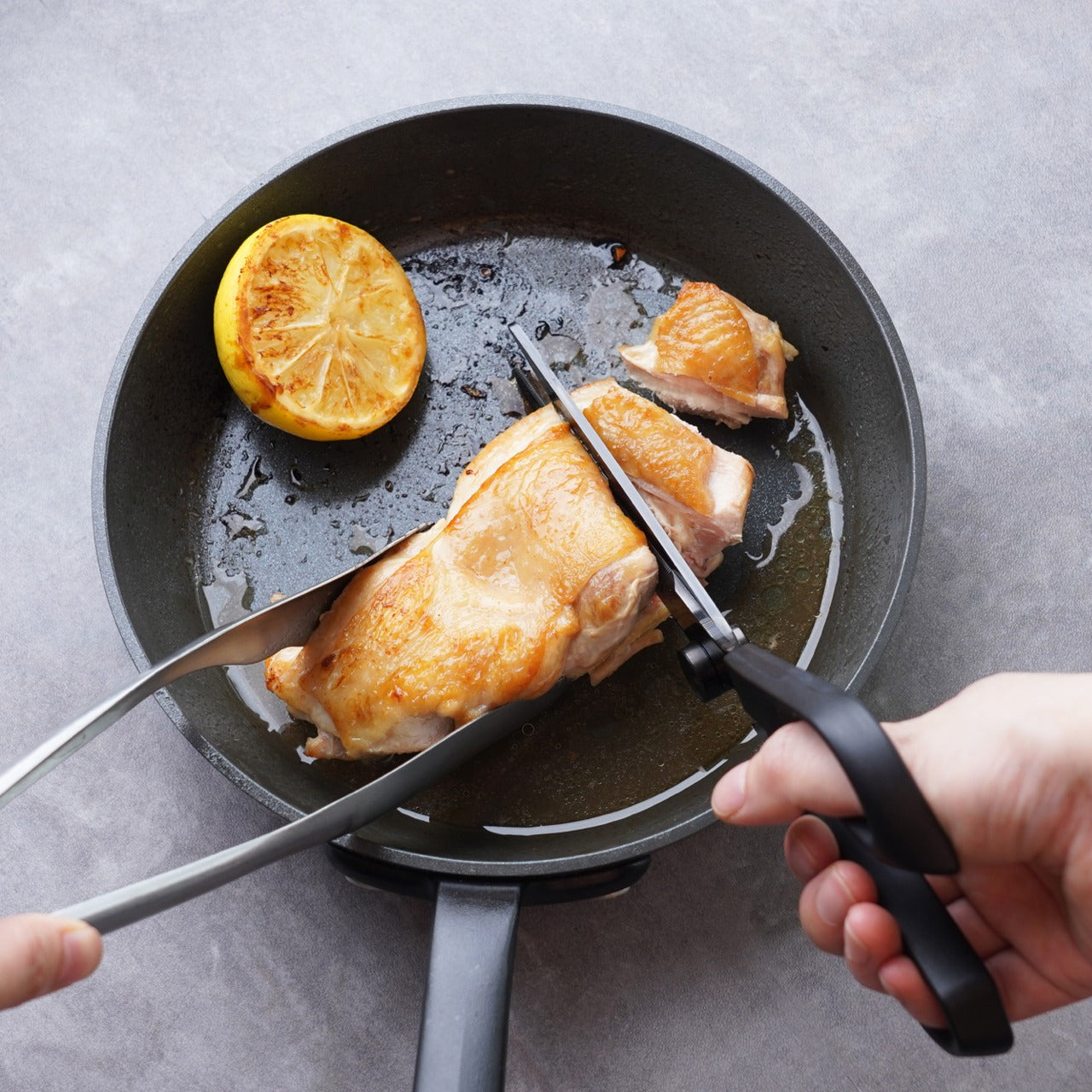
5 Japanese-Designed Mother’s Day Gifts That Become Part of Her Home — Not the Donation Pile

Most Mother’s Day gifts end up in a drawer for three weeks and in a donation box by June. The ones that stay are objects she reaches for without thinking, things that have quietly made themselves at home in her routines. Japanese design has a particular talent for producing exactly those objects. Not because they announce themselves loudly, but because they solve something real with a precision and restraint that earns permanent shelf space.

The five objects here span the kitchen, the bathroom, the bedroom, the living room, and the study. Each was chosen because it carries real design lineage, performs a genuine daily function, and looks far better than anything it currently replaces. None of them requires an explanation or an instruction video. They settle into a home quietly and, over time, make it feel like they were always supposed to be there.

1. Pop-up Book Vase

A vase that folds flat when it’s done. That’s the entire argument for the Pop-up Book Vase, and it holds up completely. Open the cover and a three-dimensional paper vessel rises from the page, engineered from 100% natural pulp with a water-resistant coating sturdy enough to hold fresh stems without collapsing. Three different pop-up designs sit on successive pages, so she can change the vase’s silhouette simply by turning to the next one. When the flowers are done, it closes into a book and takes up no room at all.

What makes it earn a permanent place rather than rotate out is the spatial intelligence built into its form. Most vases compete for the shelf space they occupy. This one eliminates that problem by storing flat between uses. Flip the book upside down, and the arrangement transforms, offering a fresh perspective on the same stems. For a home where every surface is already carefully considered, that kind of versatility, without requiring any additional objects, is the kind of thoughtful gift that stays.

Click Here to Buy Now: $45.00

What We Like

  • Three built-in pop-up designs offer genuine variety without ever needing a second or third vessel taking up additional shelf space
  • It stores completely flat when not in use, a spatial advantage that no ceramic or glass vase can come close to matching

What We Dislike

  • The water-resistant coating has limits, and prolonged exposure to water will eventually degrade the paper structure through repeated use
  • The whimsical book form may not suit interiors that lean toward strictly raw textures, earth tones, and serious material palettes

2. Hasami Porcelain Mug in Natural

Hasami has produced porcelain continuously since the 16th century, and the Natural mug is the version of that tradition that shows its workings most honestly. Made in Nagasaki Prefecture from a proprietary blend of crushed Amakusa stone and porcelain clay, the exterior is left completely unglazed, giving it a dry, matte surface that warms to the hand quickly and develops a natural patina with regular use. A subtle outward curve at the rim directs liquid cleanly and eliminates the flat-edged drip that straight cylindrical mugs produce without thinking about it. At $32, it is the rare object that costs less than it looks.

What makes it a permanent fixture rather than a seasonal one is how it ages. Most mugs look their best the day they arrive and quietly decline from there. This one moves in the other direction, its unglazed surface accumulating character through daily use, the way good leather or raw wood does. Despite the bare finish, the Amakusa clay body is fired to withstand repeated machine washing and microwave use without surface degradation — a real engineering decision that removes the usual compromise of unglazed ceramics entirely. It stacks flush with the broader Hasami range, so it can anchor a set that grows over years without ever looking mismatched.

What We Like

  • The unglazed matte surface develops a genuine patina with daily use, meaning this mug becomes more personal over time rather than simply wearing out
  • Microwave and dishwasher safe despite the bare clay finish, which removes the hand-washing compromise that usually comes with unglazed ceramics

What We Dislike

  • The unglazed interior is food-safe but absorbs flavor over time, which may not suit anyone who switches frequently between coffee and strongly scented teas
  • The natural matte surface marks more readily than a glazed alternative, requiring more mindful handling around oils and pigmented liquids

3. Portable CD Cover Player

There is a version of listening to music that streaming has never quite managed to replicate: the one where the album cover is part of the experience. The Portable CD Cover Player brings that version back with a design that treats the jacket art as equal to the audio itself. A dedicated front pocket displays the cover while the disc plays, so the music and its visual identity occupy the same moment at the same time. A built-in speaker and rechargeable battery mean it goes wherever she does — a kitchen counter, a bedside shelf, a weekend away.

What earns it a permanent spot in the home is that it reads as a design object even when it isn’t playing. Wall-mountable with a separately sold bracket, it functions as a framed display between listening sessions, rotating through whatever record she’s currently living with. The minimalist form keeps the album art and the music at the center, with nothing competing for attention around them. For a home that already takes its objects seriously, this player fits without any negotiation.

Click Here to Buy Now: $199.00

What We Like

  • The jacket art pocket puts the visual and audio experience on equal footing, restoring something streaming quietly removed from the act of listening
  • Built-in speaker and rechargeable battery make it genuinely portable, while wall-mount compatibility means it earns a permanent home when she wants it to stay put

What We Dislike

  • The wall mount bracket is sold separately, which adds an extra purchase and a step between unboxing and the full display experience that the design promises
  • As a speaker-based player, it suits intimate listening environments best and will not fill larger open-plan spaces the way a dedicated audio system would

4. Tosaryu Hinoki Bath Stool
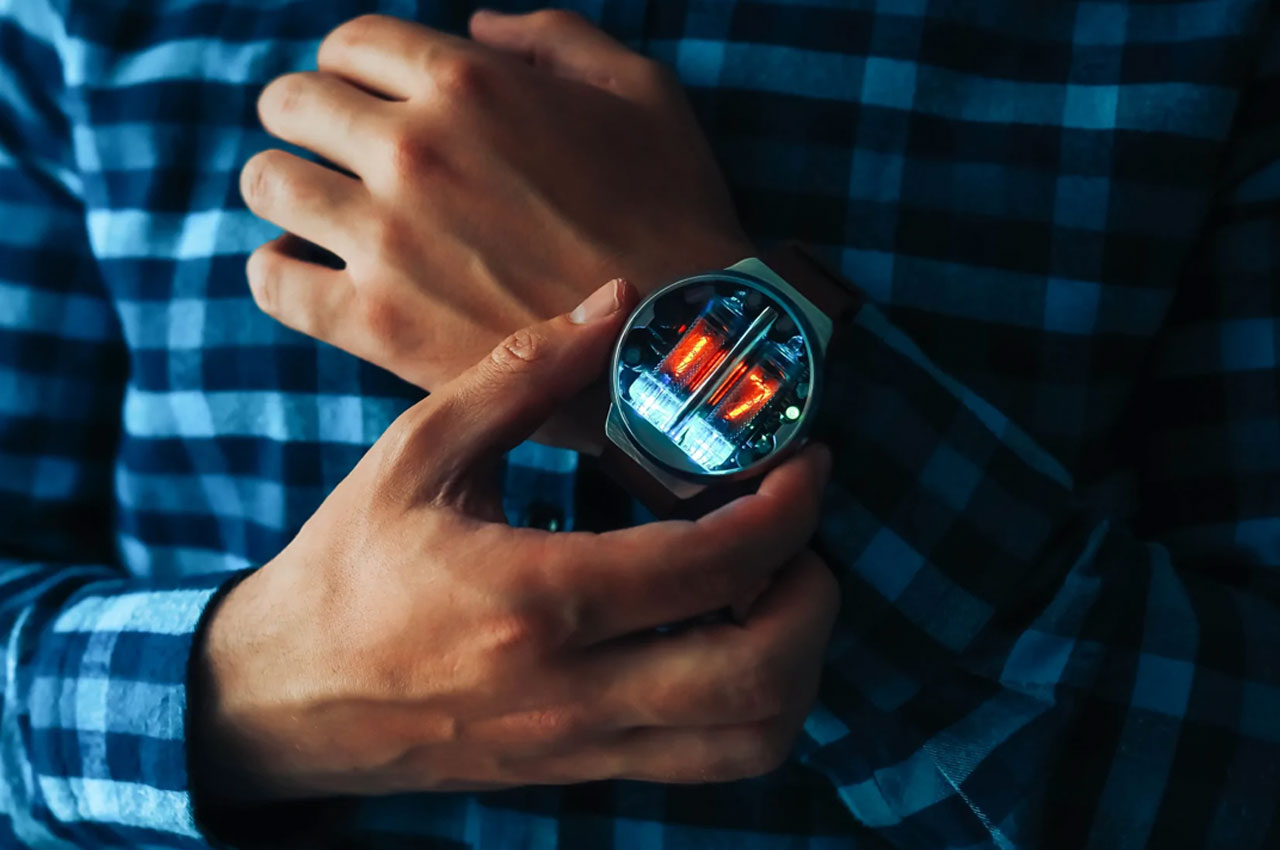
Tosaryu’s woodworkers have been based in the mountains of Kochi Prefecture since the 1970s, working with hinoki cypress from the Shimanto river region. What separates their process from most is time: the wood is dried naturally for three to six months without chemical drying agents, which preserves the aromatic oils that give hinoki its scent and the antibacterial resin that makes it resistant to mold without any applied coatings. Three sizes are available, from the compact Umezawa stool at $90 to the full-height stool, all with ridged surfaces for drainage and slip resistance.

Place one in a shower and warm water activates the wood’s oils, releasing the scent of a Japanese cypress forest into the steam. That is not a marketing description. It is the actual mechanism, and it transforms a daily shower into something closer to a ritual, which is precisely what a gift worth keeping actually does. Tosaryu operates as stewards of local Kochi forests using sustainable harvesting methods. In a bathroom, this stool replaces a generic plastic seat with something that smells like a forest and ages like furniture.

What We Like

  • Natural hinoki oils provide genuine antibacterial protection and a real, steam-activated forest scent with no synthetic fragrance or chemical treatment involved at any stage of production
  • Tosaryu’s sustainable Kochi forest stewardship means both the craft lineage and the environmental story behind this piece are entirely authentic, not marketing language applied after the fact

What We Dislike

  • Hinoki requires thorough drying between uses to prevent cracking, meaning bathrooms without adequate ventilation will shorten the stool’s lifespan considerably over time
  • The high stool carries a $25 shipping surcharge at checkout due to its size and weight, which is worth factoring into the decision before settling on a size

5. Riki Alarm Clock

Riki Watanabe established Japan’s first independent design office in 1949, and his work on clocks became the body of work that defined his legacy. The Riki Alarm Clock, produced by Lemnos in Toyama, earned the Good Design Award through choices that look deceptively simple: oversized numerals designed to read clearly from across a room, a completely silent movement with no audible tick, and a single button that consolidates the alarm, snooze, and built-in internal light into one seamless control. The body is beech wood and glass, 4.2 inches across.

Spring is the season when the phone quietly migrates back to the nightstand. The Riki Clock offers a direct, aesthetically grounded alternative. Its silent analog face replaces the notification-laden device on her nightstand with an object that is simply, reliably there. Morning waking becomes a softer experience, shaped by the warm quality of the clock’s internal light rather than the cold glow of a screen. For the bedroom, this is not just a better clock. It is a restructured relationship with the start of every day.

What We Like

  • The completely silent movement removes the most persistent complaint about analog clocks entirely, making it genuinely suited to light sleepers and quieter bedroom environments
  • Good Design Award credentials and Riki Watanabe’s enduring modernist legacy give this clock a real provenance that makes it worth owning, not just worth receiving as a gift

What We Dislike

  • The single-button interface that consolidates alarm, snooze, and internal light may require a brief learning period before it becomes second nature for new users
  • Checking the time in low light requires activating the internal light first, adding one small step compared to the passive glow of a standard digital display

The Best Gifts Don’t Try to Impress — They Earn Their Place

The logic connecting these five objects is not a shared aesthetic. It is a shared commitment to earning their permanent place. The Pop-up Book Vase earns its shelf through spatial intelligence. The ClearFrame earns its wall through beauty and ritual. The Hasami mug earns its cabinet through craft and longevity. The hinoki stool earns the bathroom through scent and material. The Riki clock earns the nightstand by replacing something worse.

Japanese design has always understood that small, considered objects carry the longest meaning. This list is not about finding something impressive enough to survive. It is about finding something honest enough to deserve it. Each of these five objects is genuinely useful, made of real materials, and shaped by a design discipline that leaves nothing to add and nothing to improve. That is what belonging in a home looks like.

The post 5 Japanese-Designed Mother’s Day Gifts That Become Part of Her Home — Not the Donation Pile first appeared on Yanko Design.