This Resin 3D Printer Packs 14K Resolution and Auto-Tool Release, Giving You Sharper Prints Without The Mess

Anyone who has spent three hours printing a delicate miniature only to snap off an arm while scraping it from the build plate knows the frustration intimately. Resin 3D printing has always delivered stunning detail at the cost of a genuinely messy, nerve-wracking post-processing workflow. Metal spatulas, damaged models, scratched build plates, and the occasional profanity have been the price of admission. YIDIMU, a manufacturer with years of experience building professional-grade printers for dental labs and jewelry studios, watched creators tolerate this workflow and decided the entire premise was broken. The company’s solution is the MagPro, a 14K resin printer built around a one-click auto-release mechanism that eliminates scrapers entirely.

This printer is built around a philosophy of overkill, starting with a jaw-dropping 14K resolution screen that renders details with microscopic precision. But pixels are only part of the story. YIDIMU paired that screen with a custom optical engine that guarantees over 90% light uniformity, solving the problem of uneven curing that often leads to warped prints and failed jobs. The entire system is anchored by an industrial-grade ball screw Z-axis and a full aluminum chassis, providing the stability needed to ensure that every one of the screen’s 68 million pixels translates into a perfectly formed voxel of cured resin. The result is a printer that feels less like a consumer gadget and more like a dependable piece of professional manufacturing equipment.

Designer: YIDIMU

Click Here to Buy Now: $3499 $7299 ($3800 off). Hurry, only a few left!
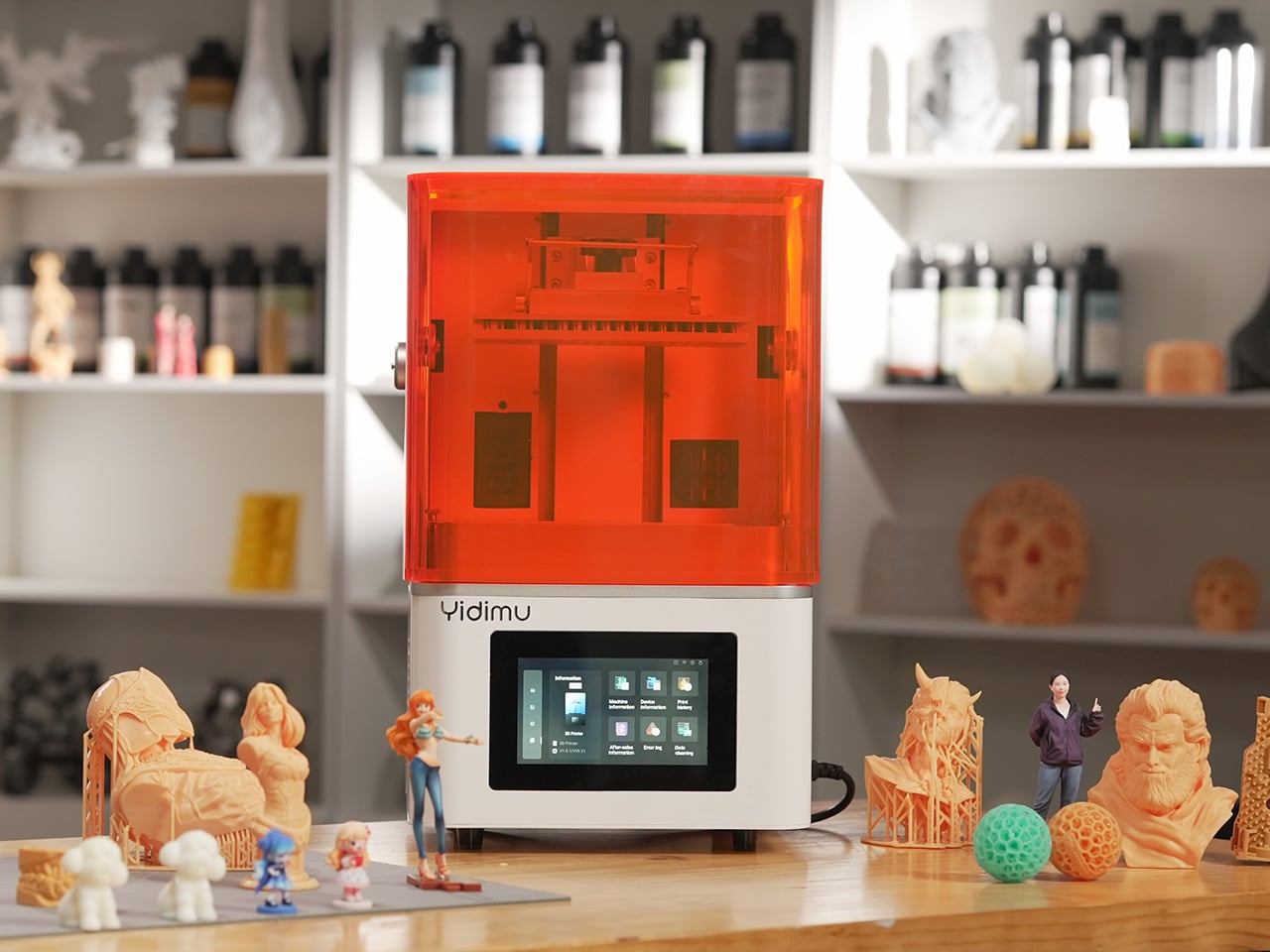
Traditional resin printers require a messy, often destructive, surgical procedure with a metal scraper to remove finished prints. YIDIMU’s auto-release mechanism, however, works with a simple click that loosens the build platform, allowing finished models to pop off cleanly without any tools. This completely eliminates the risk of scratching the build plate or breaking delicate parts, turning what used to be a moment of anxiety into a satisfying part of the process. For anyone running iterative prototypes or small-batch production, this convenience shaves valuable minutes off each print cycle. The system delivers a simple, elegant operation that makes the entire workflow smoother and safer than ever before.

Most desktop printers struggle with uneven light distribution, which leads to inconsistent curing, warped models, and lost details. YIDIMU’s custom optical system delivers over 90% light uniformity, ensuring that every pixel of the massive 14K screen cures the resin with perfect consistency. That 13320 x 5120 resolution is so sharp it can reproduce details smaller than a human hair, meaning your miniatures will have crisp textures and your prototypes will have surgically precise edges. The company also includes a grayscale mask calibration tool, allowing users to fine-tune the light distribution for their specific needs. This perfectly even light brings digital blueprints to life flawlessly, delivering a perfect print on the very first try, no matter how complex the design.

YIDIMU has also introduced its Photocatalytic Growth Technology, a proprietary process where advanced light and chemistry create objects with zero layer stacking. Instead of building models slice by slice, which creates visible lines and weak points, this approach allows complex designs to materialize from the liquid as a single, continuous structure. This eliminates the stress points and optical variations typical of layered prints, resulting in unparalleled isotropic strength and a finish so smooth it looks like it was grown organically. For intricate geometries, fine textures, and industrial prototypes that need to be strong in all directions, this represents a fundamental shift in how resin printing produces finished parts.

A solid, all-aluminum chassis with a professional-grade ball screw Z-axis mechanism separates the MagPro from the flimsy plastic construction of most desktop printers. Ball screws provide incredibly tight tolerances and consistent layer accuracy, which is crucial when running massive, multi-day prints. The rock-solid internal structure also eliminates any Z-axis wobble, a common failure point that ruins tall prints on lesser machines. The printer weighs a substantial 29 kg, signaling the kind of robust engineering you would find in high-end industrial equipment. Its large 223 x 126 x 290 mm build volume and fast 6 cm/h print speed mean you can tackle ambitious projects with confidence.

Resin viscosity changes with temperature, often causing failed prints in cold climates, and YIDIMU’s dynamic heating system solves this by keeping the resin in its sweet spot regardless of the weather outside. The oversized 2kg+ resin vat allows for huge, uninterrupted prints without pausing to refill, while the active air purification system silently filters fumes, making your workspace healthier and more comfortable. A large 5-inch touchscreen running CHITUBOX software, along with USB and 6GB of internal storage, makes file management a breeze. The machine supports standard 405nm UV resin, accepts common STL and OBJ files, and includes auto-leveling for a hassle-free setup. The quick-release build platform can be removed with a single knob, further streamlining the post-processing workflow.
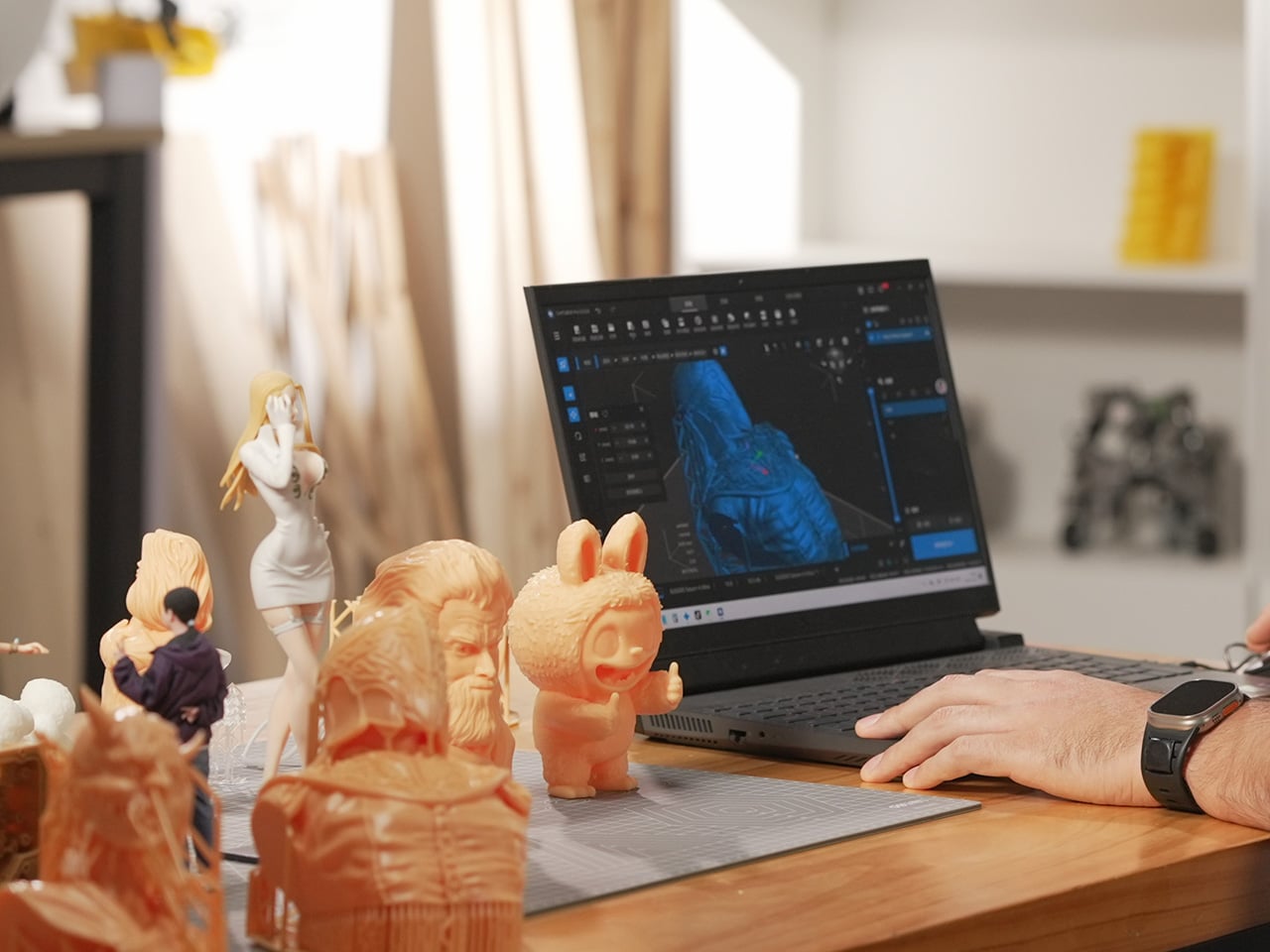
YIDIMU’s background in professional 3D printing for digital dentistry, jewelry design, and industrial prototyping informs the entire design philosophy, bringing industrial-grade engineering to a desktop form factor. The company has spent years building machines that run reliably 24/7 in demanding production environments where accuracy, surface quality, and repeatability directly impact client deliveries. That experience translates to a machine designed to reduce cognitive load and increase creative output, feeling less like an experimental device and more like a dependable production tool. The MagPro bridges the gap between hobby-grade machines and industrial systems, delivering measurable productivity gains for jewelry designers, product designers, R&D teams, and advanced makers who need professional-grade performance without the learning curve or price tag of five-figure industrial hardware.

The MagPro is available for $3,499 as a limited early bird tier (52% off the $7,299 MSRP), for the first 100 backers. Estimated delivery is July 2026. The printer ships anywhere in the world, and the package includes the YIDIMU 14K Resin 3D Printer as a single unit. YIDIMU is positioning this squarely in the gap between hobby-grade desktop machines and industrial systems, targeting semi-professional users who need reliable repeatability, minimal calibration, and professional surface finish.

Click Here to Buy Now: $3499 $7299 ($3800 off). Hurry, only a few left! Raised over $xyx.

The post This Resin 3D Printer Packs 14K Resolution and Auto-Tool Release, Giving You Sharper Prints Without The Mess first appeared on Yanko Design.

5 Coffee Gadgets & Tools Every Pour-Over Obsessive Is Quietly Adding to Their Morning Ritual Right Now

Pour-over coffee has never been a casual pursuit. It asks attention, patience, and a genuine interest in the variables between a bag of beans and a great cup. That commitment tends to attract a certain kind of person: someone who reads grinder reviews the way others read menus and talks freely about bloom times and water ratios. For that person, the morning ritual isn’t just caffeine. It’s a practice.

What makes that practice worth exploring right now is the quality of tools available to support it. Design and technology have both raised the bar considerably, making it easier to get consistently excellent results at home without sacrificing the ritualistic qualities that make pour-over worth pursuing in the first place. These five gadgets represent the best of what’s quietly finding its way into the routines of pour-over devotees right now.

1. xBloom Coffee Machine

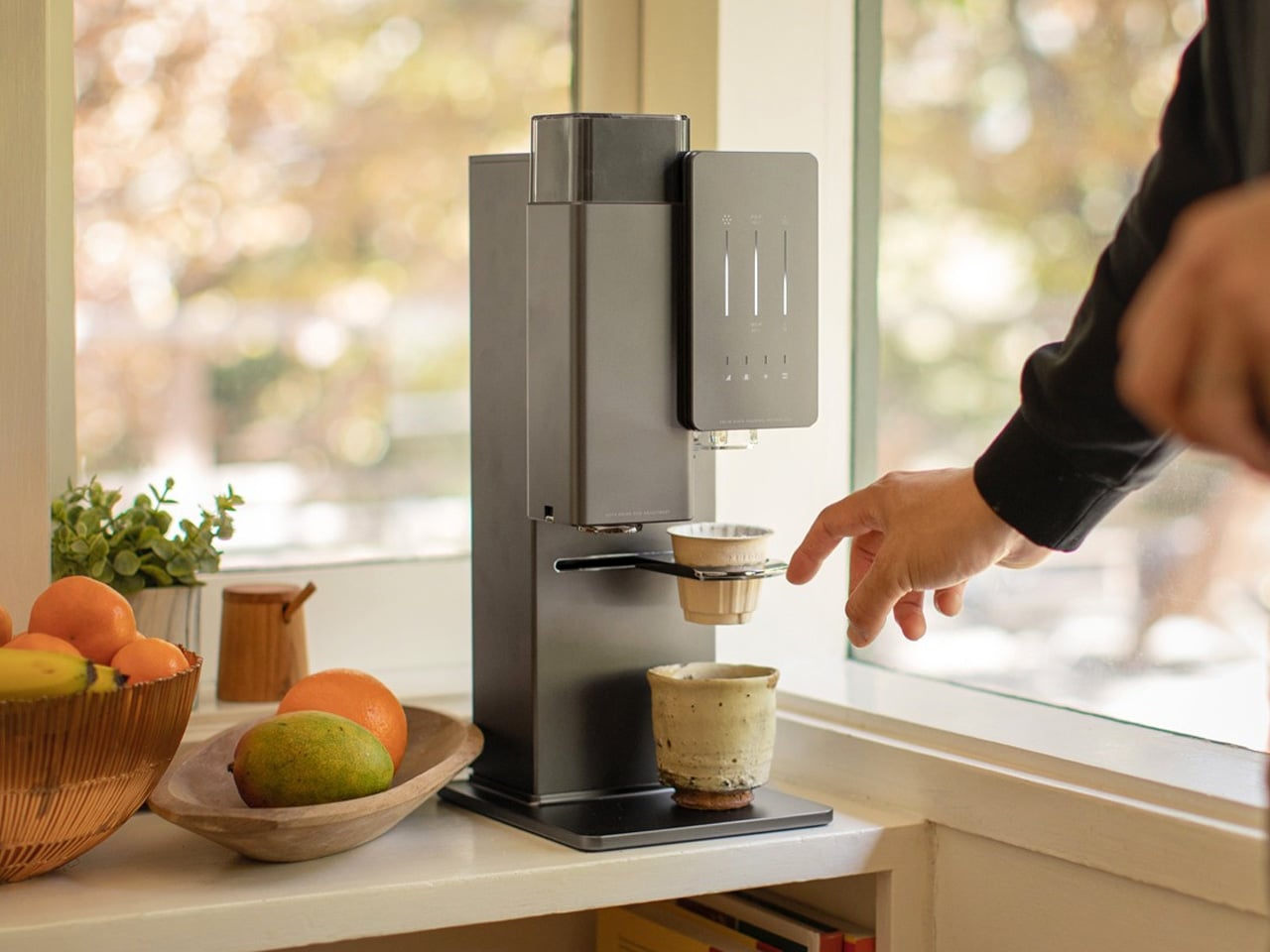
No coffee machine on the market right now does more to close the gap between home brewing and the work of a trained barista than the xBloom. Designed by former Apple employees and dubbed the “Tesla of Coffee Machines,” it identifies, grinds, dispenses, brews, and pours your coffee entirely on its own. It uses RFID-tagged xPods, sourced from top roasters around the world, to recognize each bean’s specific profile and apply the exact grind size, water temperature, and spiral pour pattern required to extract it properly. The nanofilm instant heater brings water to temperature with precision, and the kinematic spout delivers it in a controlled, consistent flow onto the coffee bed. The result is a pour-over calibrated not just to your taste but to the specific character of the bean in your pod, every single time.

The machine operates across three distinct modes: Autopilot, which handles the entire process hands-free from scan to serve; Copilot, which lets you use your own beans and customize every variable through the companion app; and FreeSolo, which gives you complete manual control via the onboard dials. Inside, it packs a 48mm conical burr grinder, an integrated scale with 0.1g resolution, and a 700ml water reservoir alongside direct plumbing support for higher-volume use. The build is metal throughout, with a compact footprint that sits comfortably alongside high-end kitchen equipment. For a pour-over devotee who wants the precision of craft without the daily labor of pulling it off manually, the xBloom doesn’t feel like a shortcut. It feels like the most intelligent version of the ritual available.

What we like:

  • Fully automated pour-over with RFID bean recognition that adjusts grind, water temperature, and spiral pour pattern to the specific coffee in the pod
  • Three distinct brewing modes accommodate everything from total hands-free automation to fully manual pour-over control for when you want to stay involved

What we dislike:

  • The premium price point is a significant investment that will give casual or budget-conscious drinkers pause before committing
  • The Autopilot mode performs best within the proprietary xPod ecosystem, which adds a recurring cost to the overall experience

2. Ceramic Cup

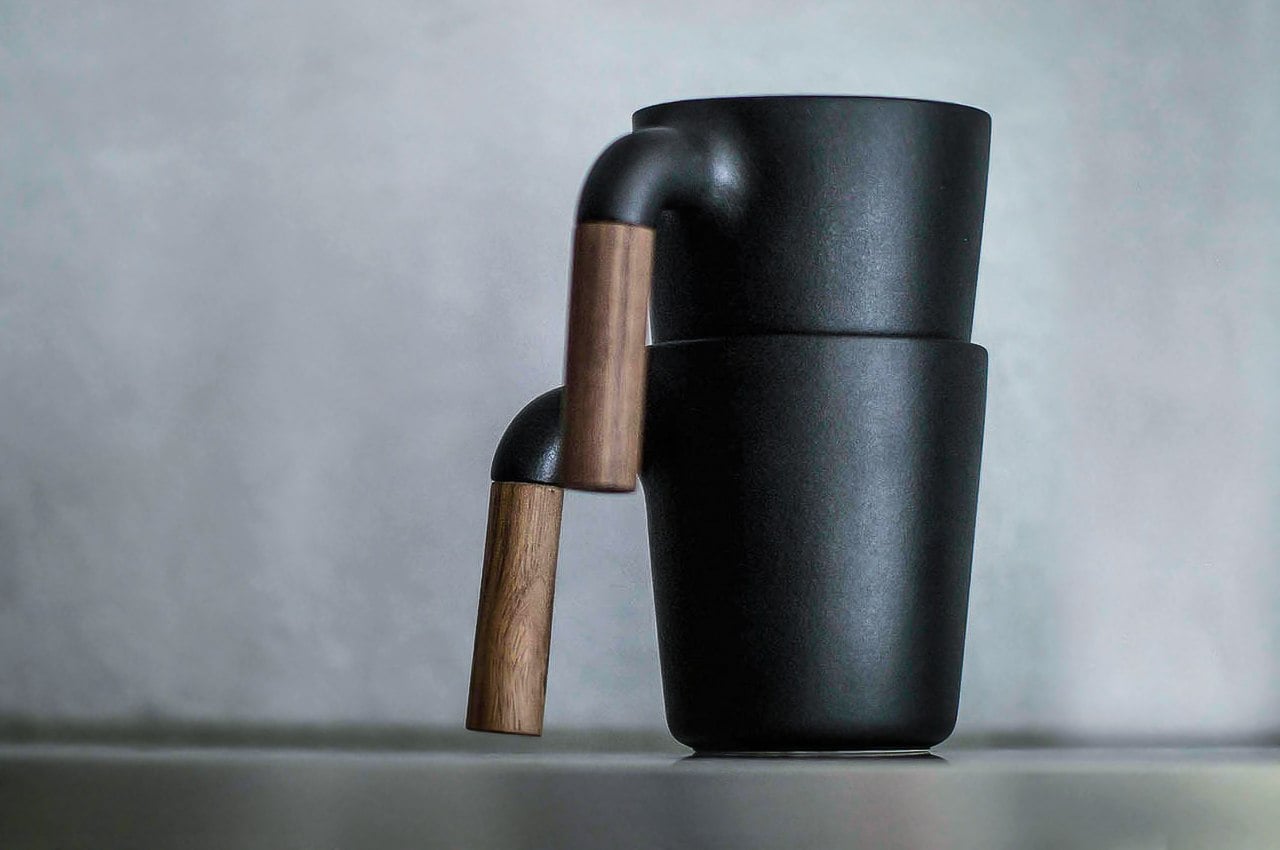
The mug you drink from is part of the experience, and the MUGR Ceramic Cup understands that in a way most drinkware simply doesn’t. Its exterior takes visual cues from cast iron, giving it a quiet, grounded presence on any surface. At closer range, the Japanese ceramic body reveals itself as something far more refined: smooth against the lips, satisfying in the hand, and carrying the kind of material honesty that sets it apart from the ceramic mugs most people have stacked in their cabinets. At 350ml, the capacity is precisely right for a focused pour-over serving. The wooden handle adds warmth without visual noise, and the overall silhouette carries enough restraint to make the coffee it holds the clear focal point of the moment.

There’s something worth considering in the choice of vessel for pour-over coffee. The process itself is intentional: you’re measuring, timing, and pouring with care, so the cup receiving that work should reflect some of that seriousness. Ceramic is the ideal material here. It retains heat at a measured rate, doesn’t absorb or impart flavor, and rewards the kind of slow, present drinking that pour-over tends to inspire. The MUGR occupies a space that generic mugs can’t. It’s an object with enough considered design to elevate the experience without becoming precious or impractical. The earthy tones and Japanese ceramic texture create a visual and tactile language that feels cohesive, unhurried, and completely right when paired with a freshly brewed cup.

Click Here to Buy Now: $60.00

What we like:

  • Japanese ceramic construction delivers a satisfying tactile quality with a cast iron-inspired aesthetic that complements any thoughtfully designed brew station
  • At 350ml, the capacity is ideally sized for a single deliberate pour-over serving, making every cup feel properly portioned

What we dislike:

  • Hand wash only care instructions make it a more demanding choice for anyone who relies on a dishwasher for daily cleanup
  • It cannot be microwaved, which narrows its functional range to its primary role as a dedicated coffee vessel

3. FinalPress V3

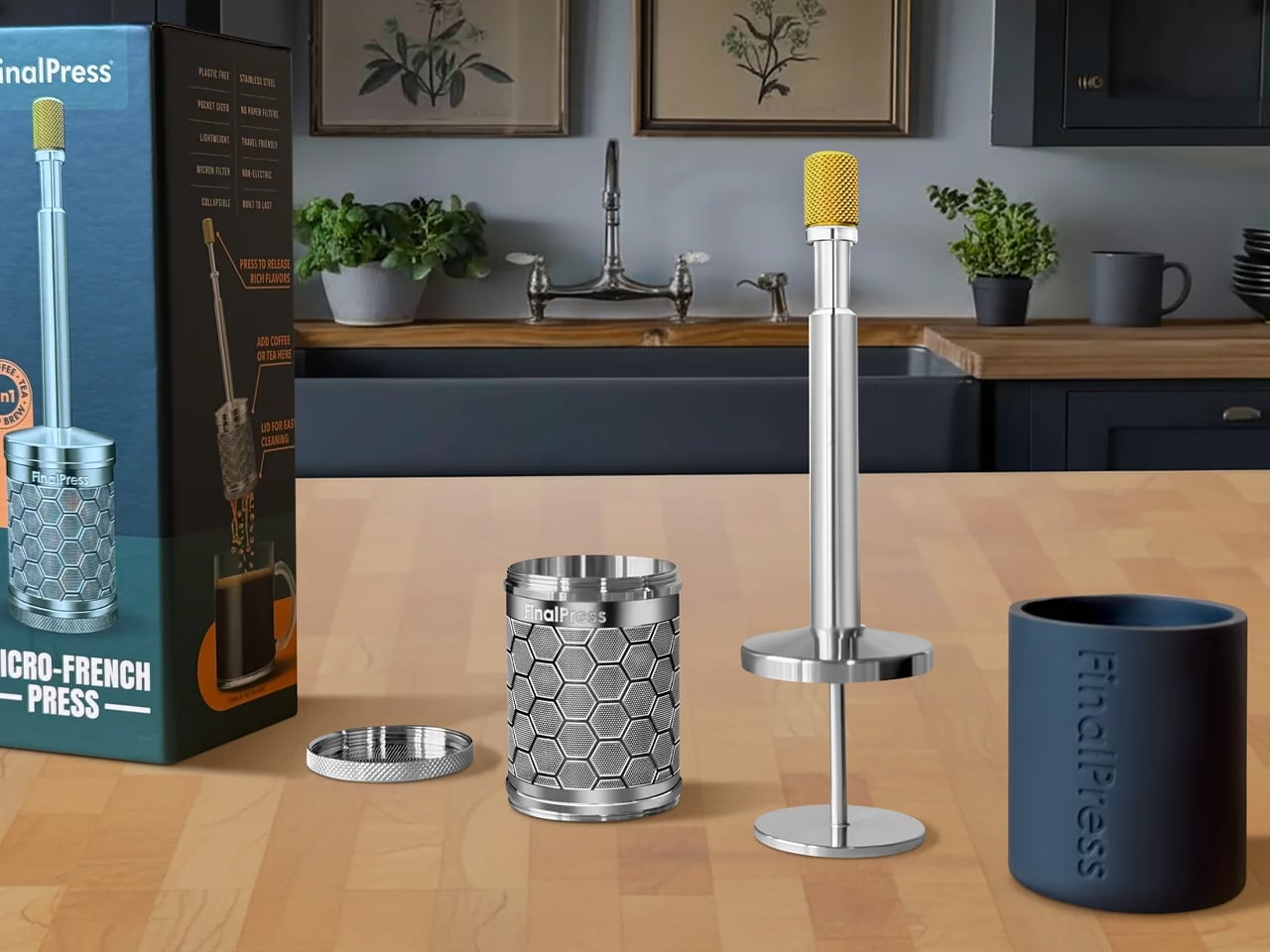
The FinalPress V3 proves that great coffee doesn’t require an elaborate setup, just a well-engineered one. It measures 1.3 x 6.5 inches, weighs 3.6 oz, and brews a full-flavored cup in under two minutes. CNC machined from solid 304 stainless steel, it’s plastic-free and built to resist rust, warping, bending, and cracking indefinitely. The brewing process is stripped back to its essentials: add grounds, stir, wait, then press. A patented plunger system pushes water through a 200-micron super-fine filter, extracting flavor with more nuance and clarity than any other portable brewer in its size range. There are no paper filters to buy, no pods to source, and no capsules to discard. What you end up with is a tool that respects your coffee and your time in equal measure.

Where the FinalPress becomes genuinely impressive is in its 3-in-1 brew capability. Hot, iced, and cold brews are all achievable with the same compact tool, making it as relevant at a hotel room desk as it is at a campsite or your home counter between longer brewing sessions. The plastic-free stainless steel construction means no material compromise and no flavor contamination from plastic contact with your brew. For pour-over devotees who travel and refuse to accept substandard coffee as the cost of mobility, the FinalPress compresses a real brewing philosophy into its smallest and most portable form yet, without sacrificing any of the quality that made the practice worth caring about in the first place.

What we like:

  • Ultra-portable at just 3.6 oz and entirely plastic-free, with solid 304 stainless steel construction built to last indefinitely without rust or warping
  • Brews hot, iced, and cold coffee using the same tool with no paper filters, pods, or capsules required

What we dislike:

  • There is a short learning curve in getting the press technique right to avoid over-extraction, especially when starting out
  • The single-serve capacity makes it less practical when you need to brew for more than one person at a time

4. NanoFoamer PRO

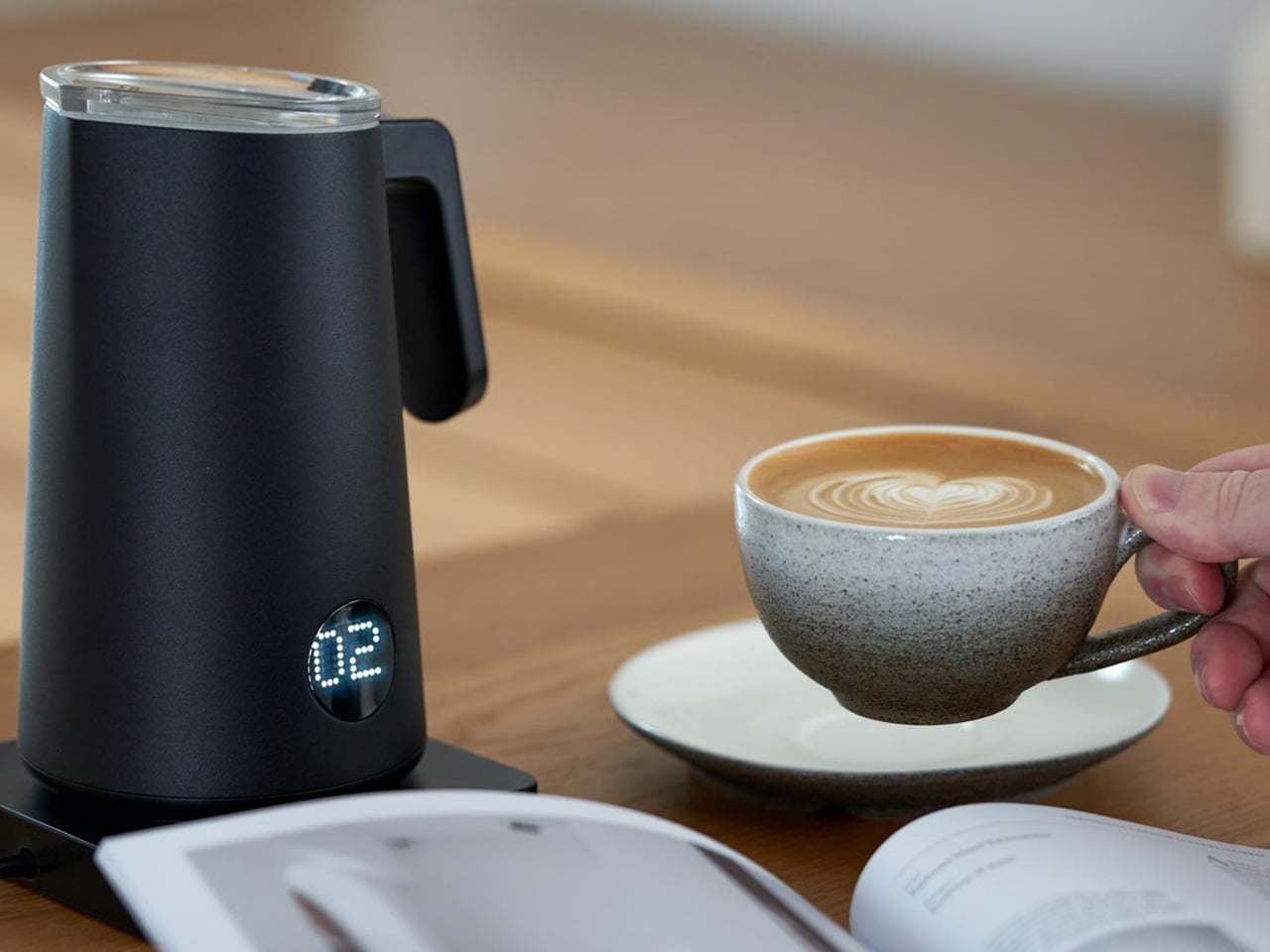
The NanoFoamer PRO addresses a very specific problem with a very precise solution: producing genuine microfoam at home without the equipment, training, or noise of a commercial espresso setup. For pour-over drinkers who want to occasionally cross into latte territory without compromising on quality, it removes every barrier to doing it properly. The appliance heats and foams milk simultaneously, timing its process to sync with an espresso pull so that your shot and your foam arrive ready at the same moment. The crema stays intact, the foam is fine and velvety rather than large and airy, and the result looks and tastes like something a trained barista handed you. For a home setup, this is a notable achievement, and it happens without requiring any of the manual skills that professional foaming normally demands.

The distinction between microfoam and standard frothed milk matters more than it may first appear. Conventional frothers create large, unstable bubbles that float above the espresso rather than integrating with it. The NanoFoamer PRO produces the fine-textured, glossy foam that makes latte art achievable and milk-based drinks genuinely enjoyable rather than merely acceptable. For a pour-over obsessive with an espresso machine already sitting on the counter, this is the component that completes the home setup in a way it couldn’t before. The workflow is clean, both elements finish at the same time, and the pour goes exactly as intended. The NanoFoamer PRO earns its counter space not by demanding attention but by quietly doing the most technically demanding part of the job better than anything else available.

What we like:

  • Produces professional-grade microfoam by heating and foaming milk simultaneously, timed to sync perfectly with an espresso pull
  • The streamlined workflow ensures espresso crema and milk foam are ready at the same moment, with no compromise to either element

What we dislike:

  • Designed as a companion to an espresso machine rather than a standalone appliance, which limits its role in a strict pour-over-only setup
  • Pour-over purists who never incorporate milk will find minimal daily utility in adding this to an otherwise black-coffee-focused morning routine

5. Three-Cup Handblown CHEMEX

The handblown CHEMEX occupies a rare category among coffee equipment: it’s a brewing tool that also qualifies as a genuine work of art. Each piece is individually crafted by skilled glassblowers in Croatia using traditional European techniques, meaning no two are exactly alike. The borosilicate glass construction meets laboratory-grade standards, delivering complete flavor neutrality while comfortably withstanding the thermal shock of repeated hot water pours. Paired with CHEMEX Bonded filters, the system removes oils, bitterness, acidity, and sediment to produce a coffee with clarity and cleanliness that neither a French press nor a standard drip machine can approach. The result is a cup that lets the bean speak for itself, completely unobstructed by the residual compounds that other brewing methods leave behind.

Beyond its brewing performance, this CHEMEX invites a different kind of relationship with the ritual. The polished wood collar and leather tie are both functional and beautiful: they insulate the vessel during handling and add a warm material contrast to the cool transparency of the glass. Brewing with it is a slow, deliberate process, and the object rewards that pace. Each pour looks considered, each session takes on a ceremonial quality that machine-made glass simply doesn’t generate. The small-batch production behind each handblown piece adds to that sense: this is not mass-market equipment, and it doesn’t feel like it. For pour-over devotees who want their brew station to reflect the same level of care they bring to every cup, the handblown CHEMEX is the most visually and functionally complete answer available.

What we like:

  • Individually handblown by skilled glassblowers in Croatia, combining borosilicate precision with a one-of-a-kind artisan aesthetic that makes each piece genuinely unique
  • The polished wood collar and leather tie provide practical heat protection while adding a considered, elegant material contrast to the glass body

What we dislike:

  • The glass construction is inherently fragile and requires thoughtful handling and careful storage to avoid breakage over time
  • The three-cup capacity may feel limiting for households where multiple people want coffee from the same vessel at the same time.

The Ritual Is Only as Good as the Tools Behind It

The morning ritual of a pour-over devotee is, at its core, a commitment to paying attention. Every gadget on this list honors that commitment in a different way: some by removing friction, some by elevating the sensory experience, and others by making excellence achievable in the places and moments where it matters most. Pour-over culture has moved beyond a niche. It’s a serious practice, and these are the tools reflecting how seriously people are choosing to take it.

Building a great brew station doesn’t happen in one purchase. It happens gradually, through the accumulation of objects that each serves a real purpose and earn their place. Whether the xBloom’s automated precision speaks to you, or the quiet beauty of a handblown CHEMEX does, the principle is the same: start with what resonates, use it well, and let the ritual build from there. The best cup you’ve ever made is probably still ahead of you.

The post 5 Coffee Gadgets & Tools Every Pour-Over Obsessive Is Quietly Adding to Their Morning Ritual Right Now first appeared on Yanko Design.

Pebblebee’s $60 Keychain Screams 130dB So You Don’t Have To

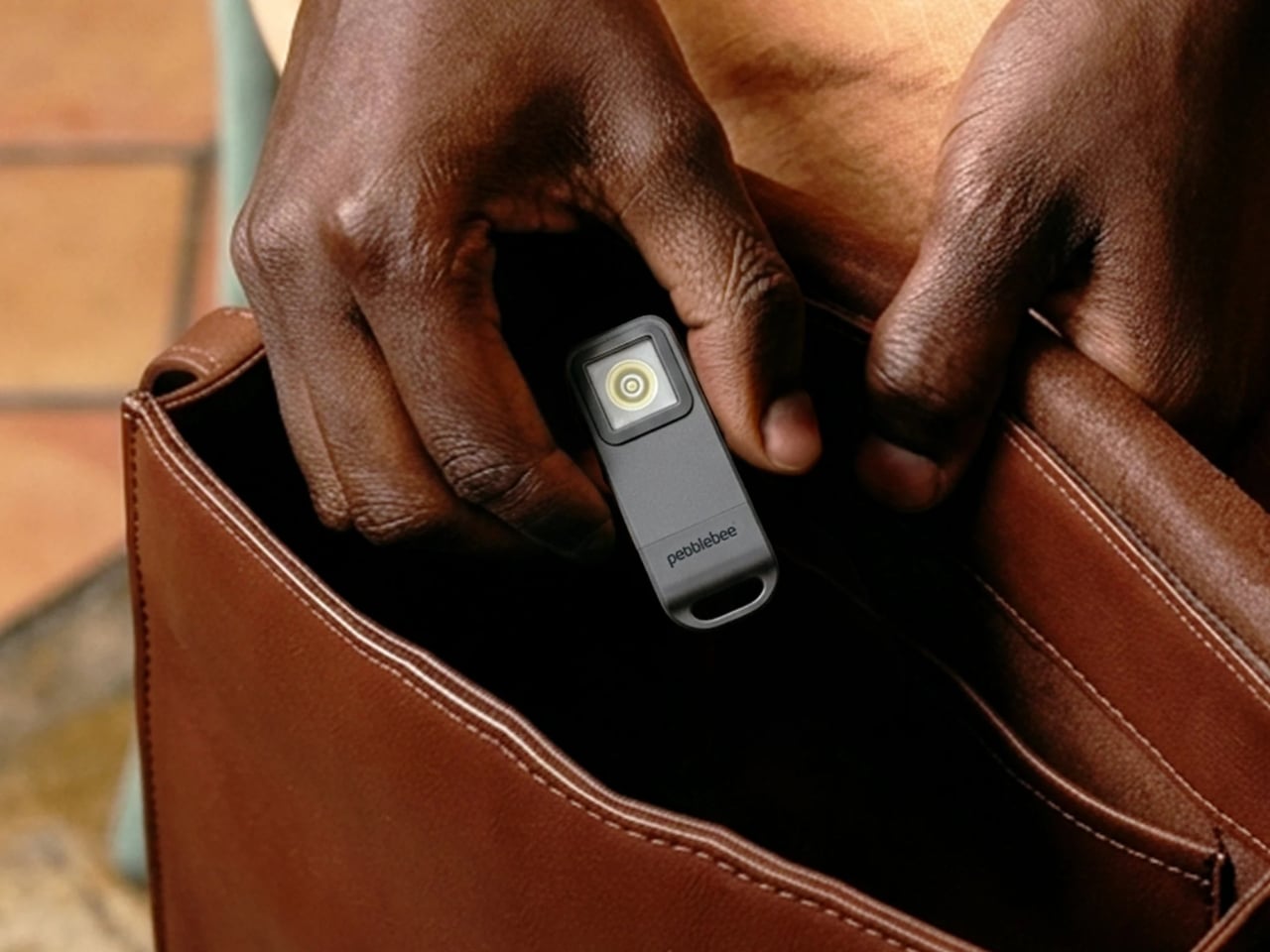
Most of us run through the same mental checklist before leaving the house. Phone, wallet, keys. Pebblebee is quietly making a case for adding one more item to that list: a keychain-sized device called the Halo that can track your lost items, light up a dark parking garage, and scream at 130 decibels if things go wrong. That last part is what makes it genuinely interesting.

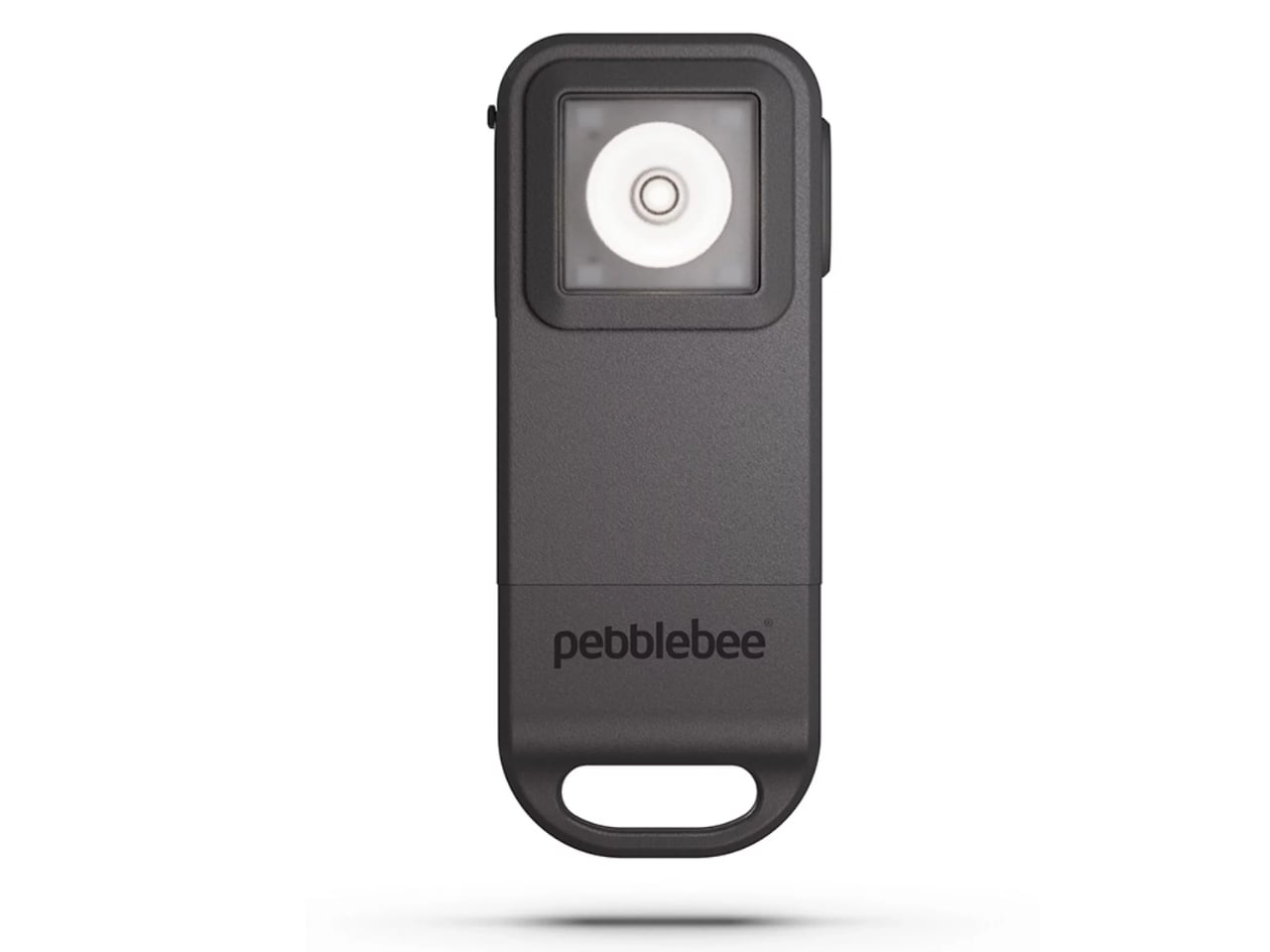
Personal safety gadgets have had a bit of an awkward adolescence in tech. Standalone alarm keychains, panic button apps, and GPS trackers each do one thing with varying degrees of reliability. The Halo, launched by Seattle-based Pebblebee in April 2026, makes the more ambitious argument that all three functions belong in a single device you already carry everywhere. It clips onto your keychain, weighs just one ounce, and is priced at $59.99 with a 12-month Alert Live subscription included.

Designer: Pebblebee

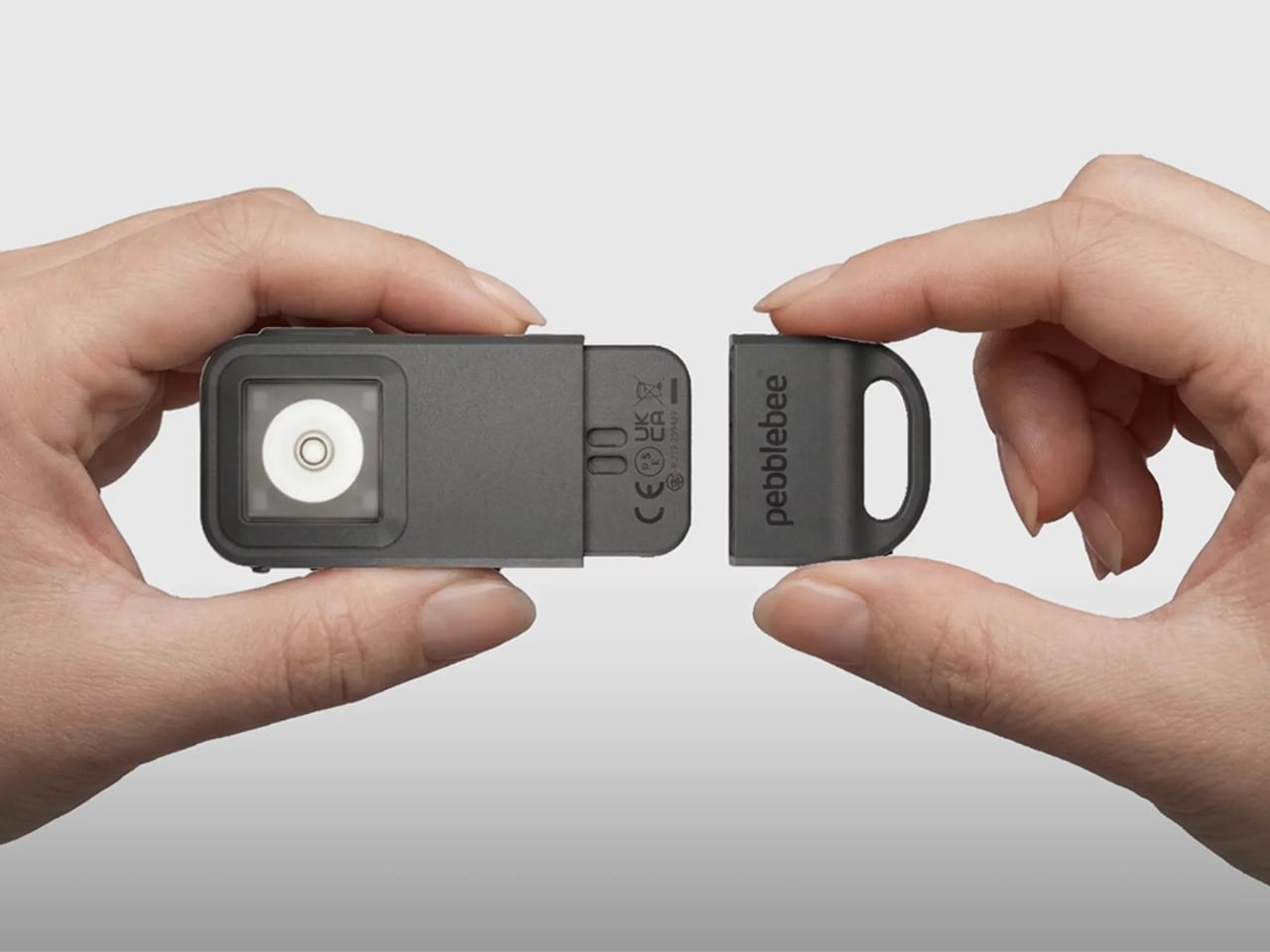
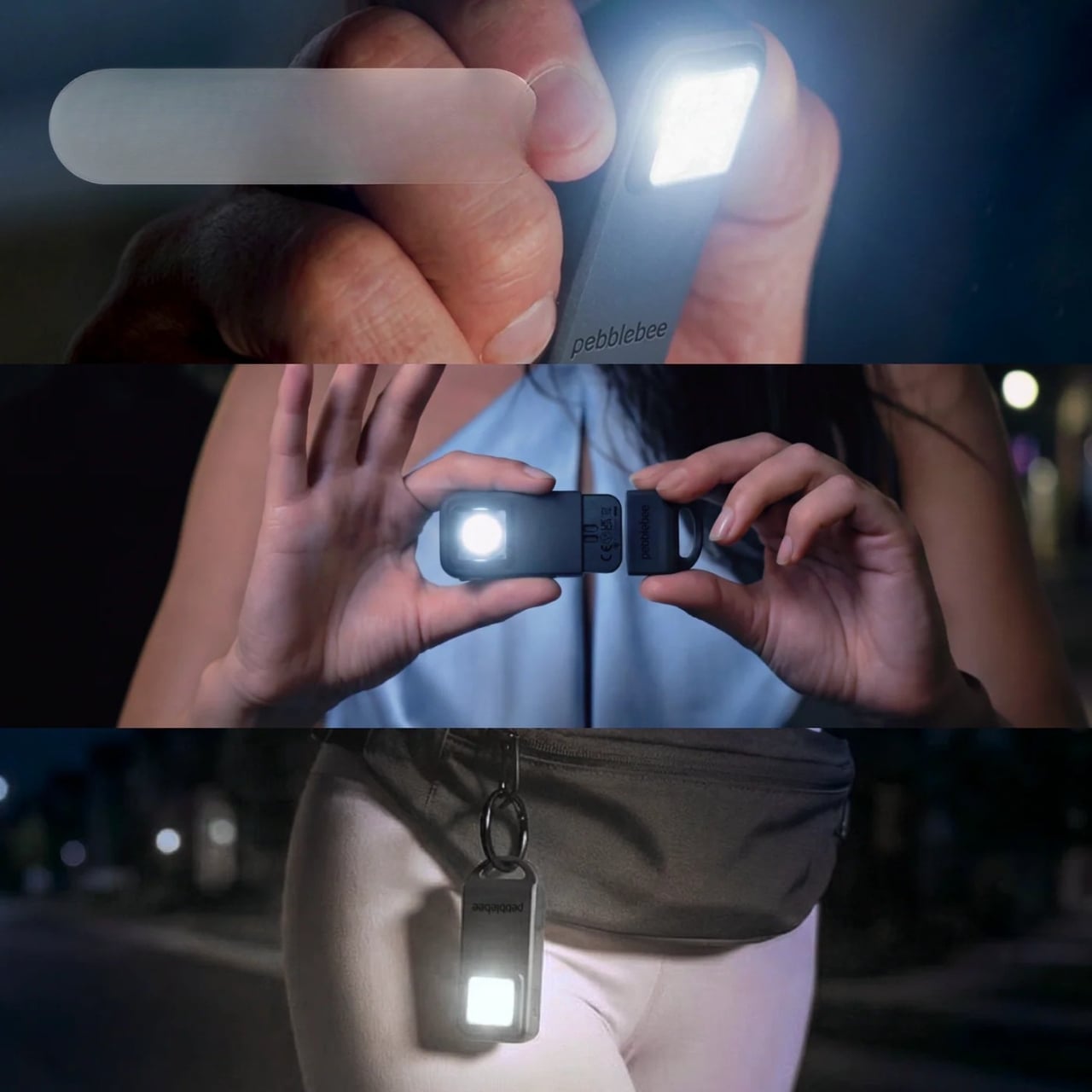
The activation mechanism is intuitive and, frankly, smart. Pull the device apart and three things happen at once: a 130dB siren activates (roughly the volume of a jackhammer at close range), a 150-lumen strobe light starts flashing, and your real-time location is shared with up to five trusted contacts in what Pebblebee calls your Safety Circle. The pull-apart trigger works in your favor because it’s instinctive. You don’t have to navigate an app or remember a button sequence when your adrenaline is already running.

There’s also a quieter option. Rapid presses of the side button send a silent alert to your Safety Circle without triggering the siren or the lights. That kind of discretion matters more than people give it credit for. Not every unsafe situation benefits from making a scene.

On the tracking side, the Halo works with Google’s Find Hub on Android, tapping into a crowd-sourced network to help locate misplaced items. It’s IP66 water-resistant, handles rain without issue, and the battery lasts up to a year on a full charge. These are specs that feel like they belong to a product that actually thought things through.

The bigger question is whether a product like this can shift how people think about daily carry. I think it might, and I say that as someone who has dismissed this category before. The AirTag normalized putting a small tracker on your keys. The Halo takes that familiar habit and layers in real utility that most people weren’t actively seeking until they actually see it. Pebblebee says the device was built with the late-night campus walker, the solo runner, and the traveler navigating an unfamiliar city in mind. That description covers most adults at some point in any given week.

It would be easy to read a product like this as capitalizing on anxiety. But the Halo doesn’t feel cynical in that way. The pull-apart mechanism, the silent alert, the 150-lumen flashlight that’s actually useful rather than just a line in a spec sheet. These details suggest a team that ran through realistic scenarios before finalizing the design. The way a product handles edge cases usually tells you more about its intentions than the headline features do. The Alert Live subscription becomes a paid plan after the included first year. It’s required for live location sharing and expanding your Safety Circle beyond five contacts. Worth keeping in mind, but as a first-year value proposition, the package holds up well.

Personal safety gadgets have a habit of ending up in the junk drawer after the initial enthusiasm fades. The novelty wears off, the routine doesn’t stick. The Halo’s real advantage is that it gives you no particular reason to leave it behind. It lives on your keys, goes wherever you go, and the flashlight earns its keep on a regular Tuesday night. If you ever need the siren, you’ll be glad the upgrade was a keychain addition and not a drawer item. The most thoughtful design decisions are often the ones that make something so easy to carry, you forget it’s there until the moment you really need it. The Halo seems to understand that.

The post Pebblebee’s $60 Keychain Screams 130dB So You Don’t Have To first appeared on Yanko Design.

The CD Player Is Back – And These 7 Designs Are Gorgeous

Streaming hasn’t killed physical media. It’s made us crave it more. CDs are back in rotation, showing up in record stores, apartments, and design studios with a renewed sense of purpose. Some of it comes down to sound: a format that doesn’t compress or buffer. A lot of it is about the object itself. A disc, a sleeve, a machine worth looking at. Things that feel considered in a world that mostly isn’t.

The players featured here range from transparent sculptures to boombox revivals, from minimalist concept blocks to award-winning portables with genuine design credentials. Each one has a clear point of view. Whether you’re rebuilding a hi-fi setup or just want something to put a CD in that doesn’t feel like a relic, this list proves that the format and the hardware around it can be genuinely beautiful. Seven players. Seven reasons to press play.

1. ClearFrame CD Player

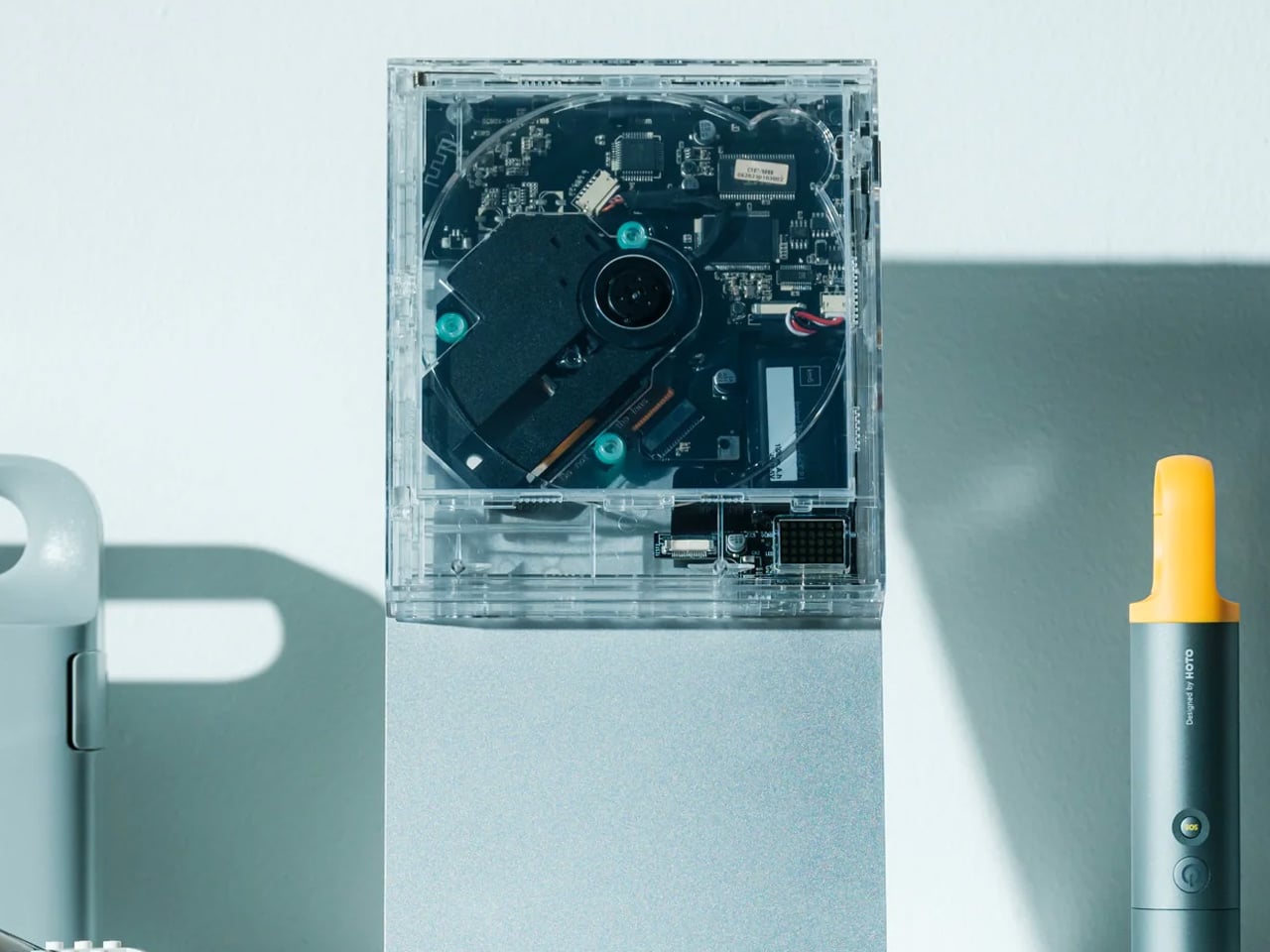
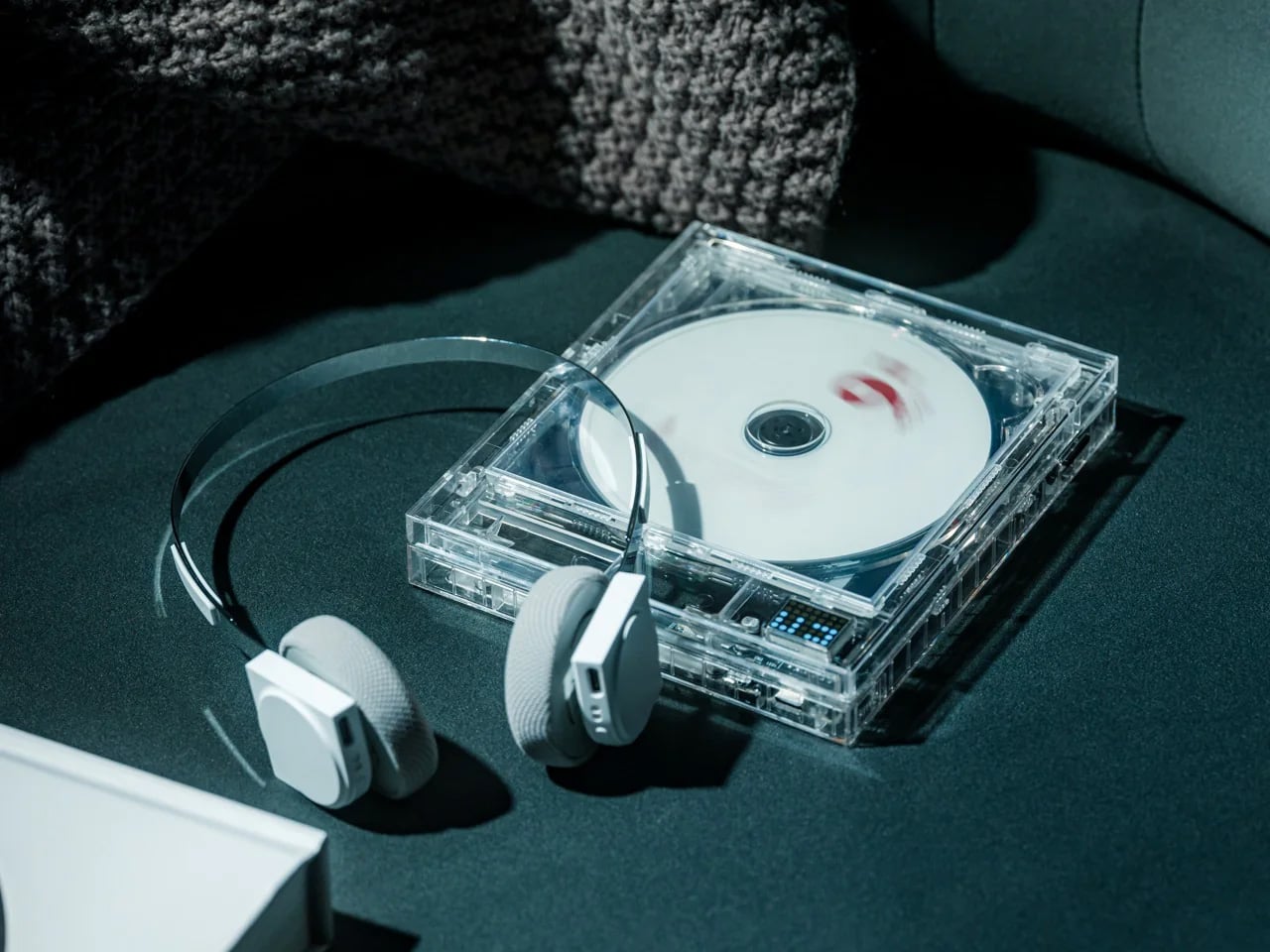
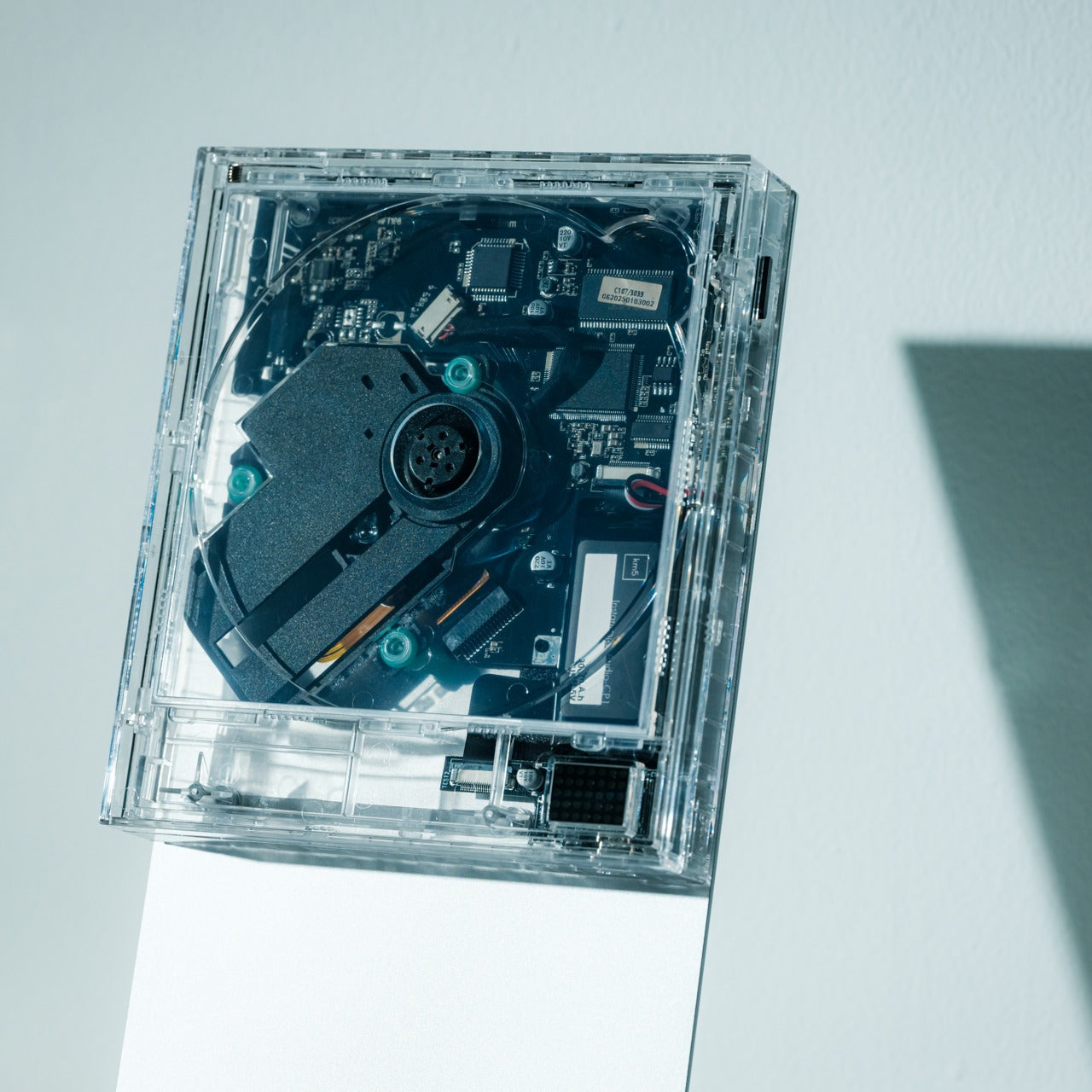
Most CD players hide their engineering. The ClearFrame does the opposite, wrapping everything in crystal-clear polycarbonate so the circuit board becomes part of the experience. The result sits somewhere between gadget and display piece: you see the disc spin, the components work, the music moves through the machine. It’s built for people who love the ritual of physical media and want that ritual to look good doing it, on a shelf, a desk, or mounted on a wall.

Slide in the disc and prop the album sleeve in the front window. The ClearFrame turns your favorite record into a framed display. With Bluetooth 5.1, a seven-hour rechargeable battery, and multiple playback modes, it’s practical enough to go wherever you do. The square silhouette keeps things gallery-clean while the exposed circuitry underneath adds texture and personality. It’s the kind of object that makes you want to rebuild a CD collection just to have something worth putting on display.

Click Here to Buy Now: $200.00

What We Like

  • The transparent body doubles as an album frame, making the sleeve a visible part of the experience
  • Bluetooth 5.1 and a seven-hour battery make it genuinely portable without sacrificing the display concept

What We Dislike

  • The clear polycarbonate housing will show fingerprints and dust more readily than any solid casing
  • Wall mounting requires a separately purchased bracket, which adds to the overall cost

2. Bumpboxx BB-777

The BB-777 doesn’t whisper. It makes a statement. Bumpboxx pulled directly from the GF-777, one of the most iconic boomboxes of the 1980s, and rebuilt it for the present day. Stretching 29.6 inches across with dual cassette bays, four large front-facing drivers, a long analog tuner strip, and two telescoping antennas, it reads instantly as the kind of machine that belongs center stage. CD, cassette, radio, Bluetooth: a format-agnostic system that refuses to stay in the background.

At 270W, it fills a room without asking permission. The wide horizontal body, the carry handle, the spacing of the controls — every detail is faithful to the original without veering into nostalgia-trap territory. The BB-777 plays CDs, cassettes, and the radio while connecting wirelessly via Bluetooth. It’s designed to be heard and seen in equal measure, the kind of system that changes the energy of whatever space it lands in. Not a background device. A destination.

Click Here to But Now: $649 $1049 ($400 off). Hurry, only 262/1400 left! Raised over $4.3 million.

What We Like

  • The faithful ’80s aesthetic is executed with full commitment, not as a gimmick or a costume
  • 270W output paired with multi-format playback makes it a genuine room-filling entertainment system

What We Dislike

  • At 29.6 inches wide, it demands a significant and very specific amount of physical space
  • The maximalist retro aesthetic won’t suit every interior or every taste

3. CD-P1

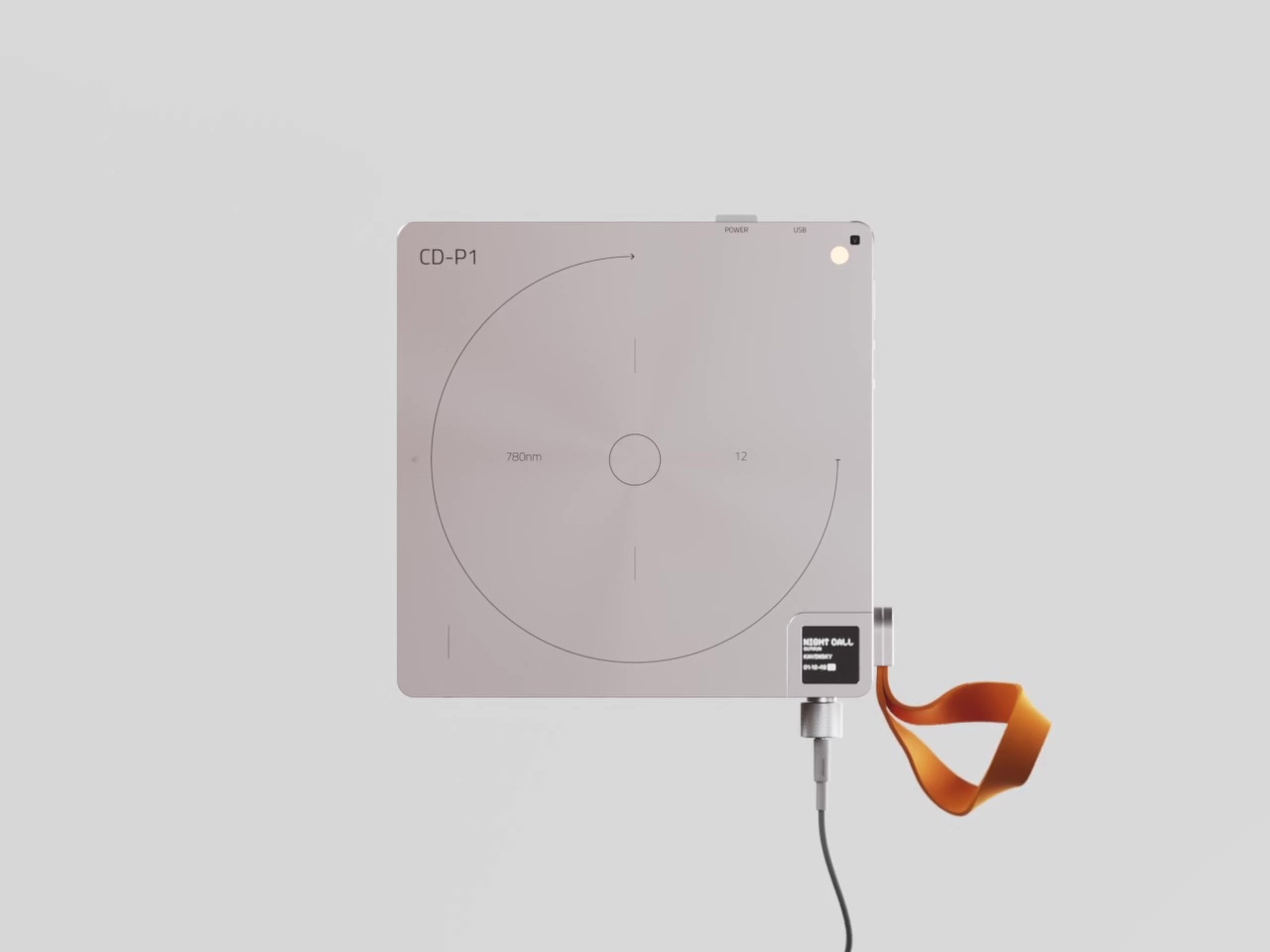
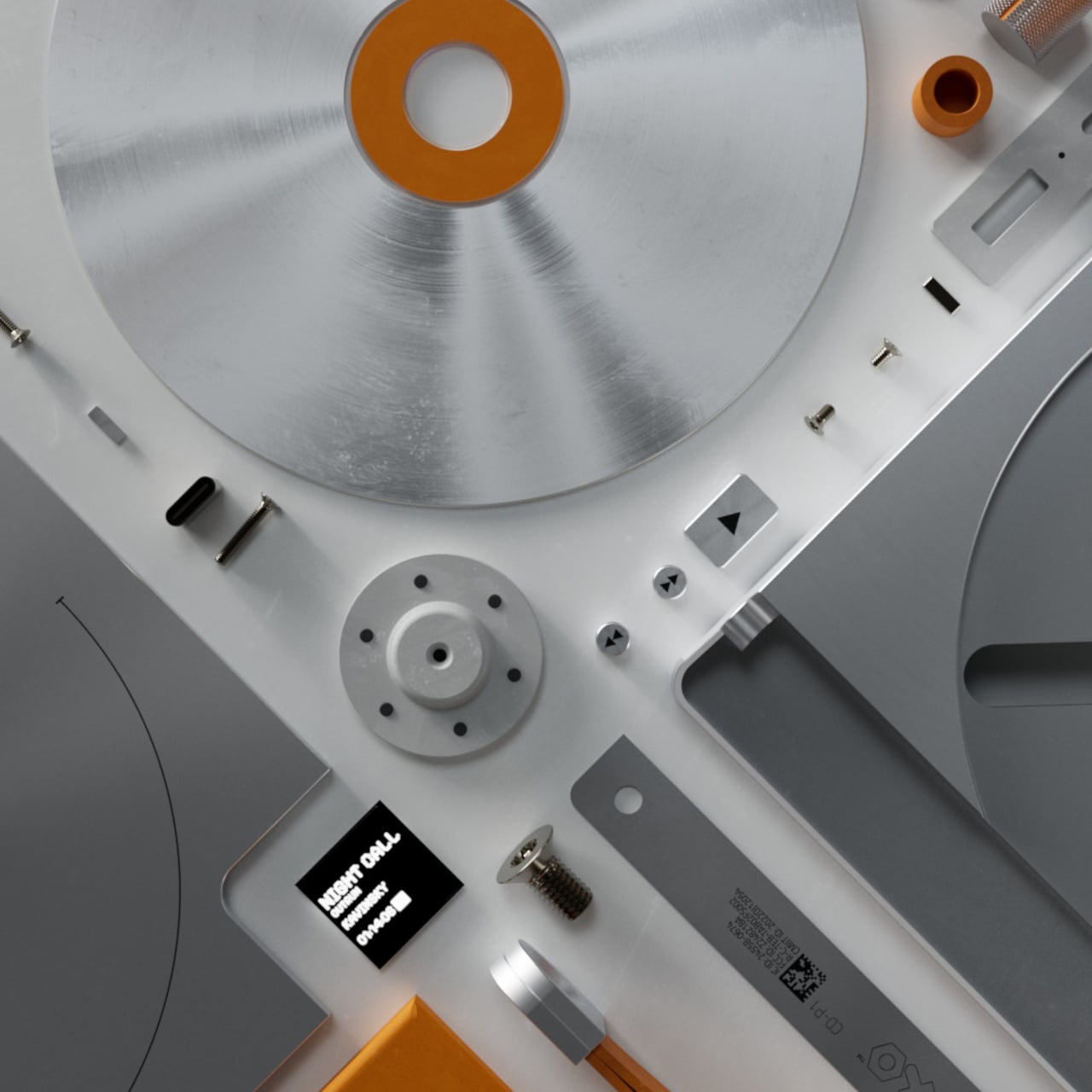
This concept takes Teenage Engineering’s most recognizable quality, restraint, and applies it to a format that usually gets treated as background technology. The result is a metallic square block with almost nothing readable on its surface. The CD bay barely announces itself, just a thin circle scored into the top face, until you realize the entire top surface lifts as one. For a machine built around spinning discs, the absence of visual noise is startling and exactly right.

Every control element earns its place. A volume knob disappears into one of the rounded corners, flush with the body until your fingers find it. The headphone jack breaks from the minimalist logic: a small knurled cylinder jutting from the bottom edge, textured and tactile, almost inviting you to pull or twist it. The concept leaves some functional details open, but the design language is unambiguous. This is what a CD player looks like when you refuse to make compromises anywhere.

What We Like

  • The volume knob hidden inside a rounded corner is a quietly brilliant piece of design thinking
  • The metallic square format sits in any space without drawing unnecessary attention to itself

What We Dislike

  • As a concept, key functionality and production specifications remain unconfirmed
  • The extreme minimalism may make basic operations less intuitive in everyday use

4. SYITREN R300

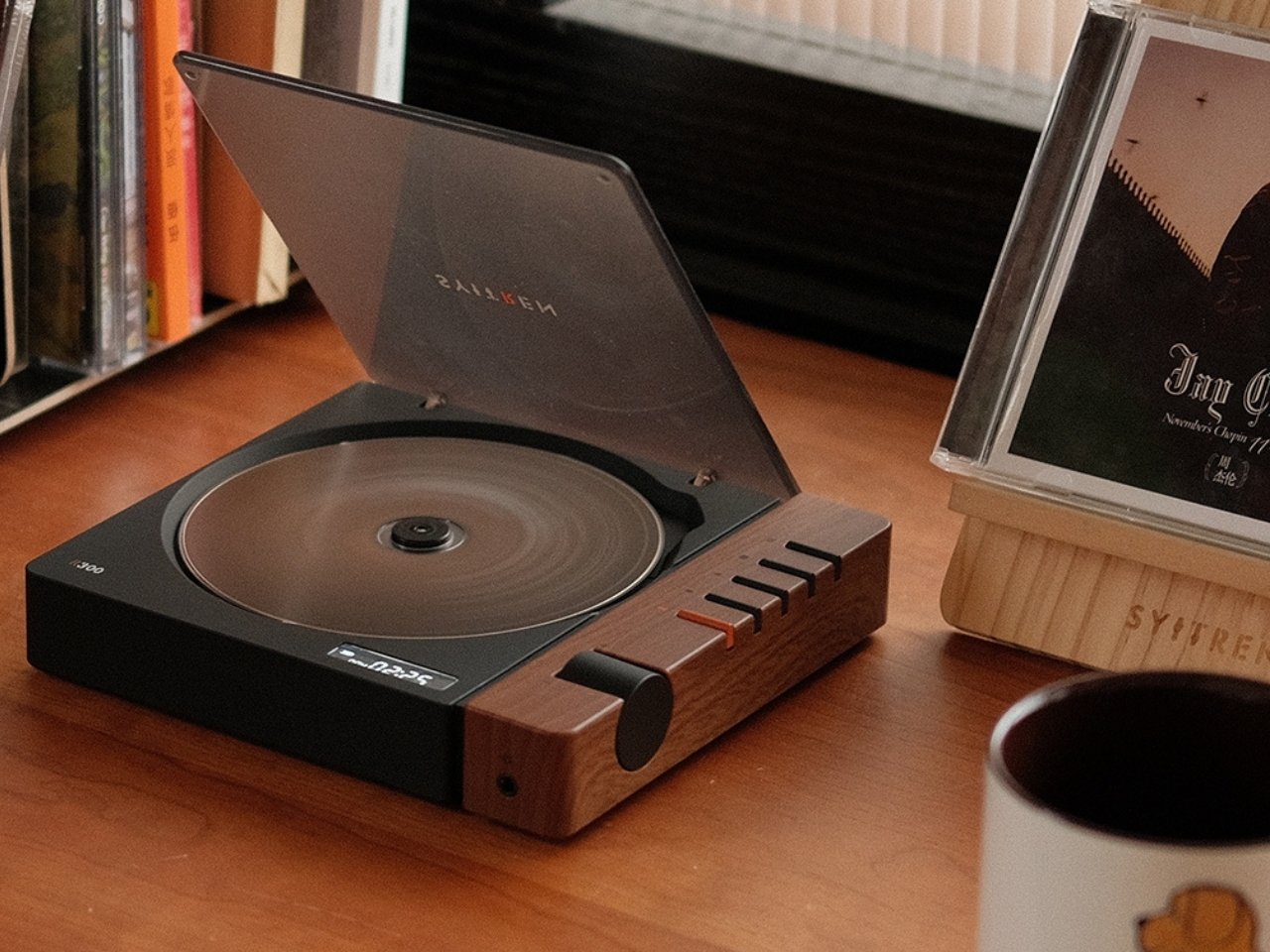
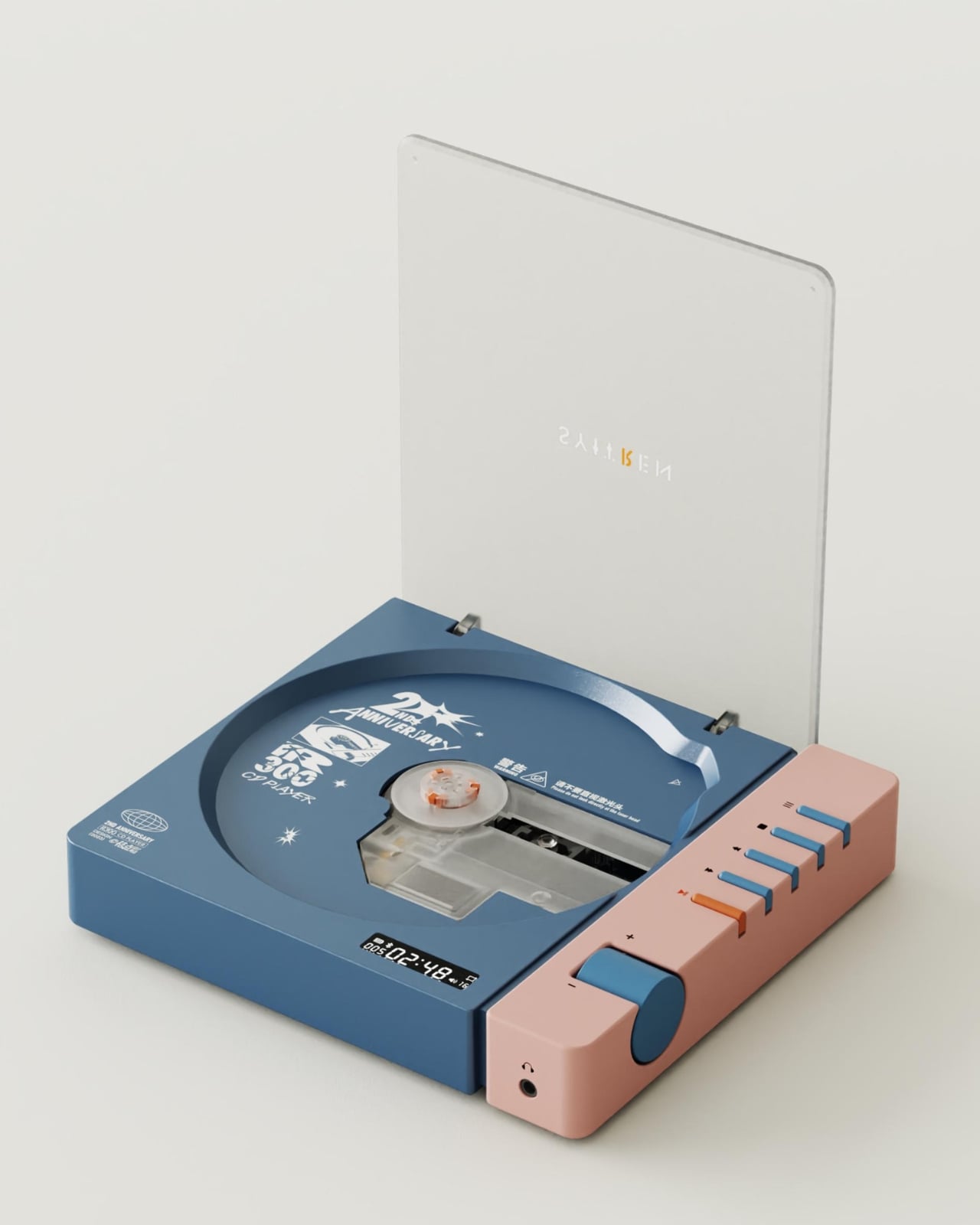
The R300 arrived wearing its intentions clearly. Those finish options, wood grain, clean white, and a fruit green that has no business looking as good as it does, signal that audio equipment doesn’t need to default to satin black to be taken seriously. A MUSE Design Gold Award in the Audio and Video Devices category validated what you can already see: this is a player that understood the brief and executed it with genuine care for the object.

The dynamic area button on the right side is designed for intuitive, tactile control, the kind of physical interaction you want from a portable you pick up and put down regularly. It supports CD, CD-R, and CD-RW formats, covering virtually every disc in most collections. Whether it sits on a kitchen shelf or a coffee table, the R300 settles into a space without looking like an afterthought. It carries the quiet confidence of a product that knows exactly what it is.

What We Like

  • The fruit green finish is a bold, deliberate choice that actually earns its place in any room
  • The MUSE Design Gold Award reflects a product that delivers well beyond the surface of its aesthetics

What We Dislike

  • Three colorway options may still feel limiting for those wanting something more singular or custom
  • The retro-leaning design language will resonate more naturally with some aesthetics than others

5. Portable CD Cover Player

This one solves a problem most people didn’t know they had: what to do with the album art while the music plays. The CD Cover Player keeps the sleeve front-facing while the disc spins, turning a listening session into something closer to a gallery moment. A built-in speaker and rechargeable battery mean you can carry it from room to room or hang it on a wall. It shifts how you relate to your collection by making the visual half of it fully visible.

The minimalist form keeps everything balanced. Nothing competes with the artwork’s framing. Music becomes visual here, and that’s deliberate. There’s real value in slowing down enough to look at what you’re listening to, and the Cover Player builds that pause into its design. Whether it sits on a desk or mounts like a picture frame, it handles both functions without compromise, suiting anyone who thinks of their CD collection the same way they think about the art on their walls.

Click Here to Buy Now: $199.00

What We Like

  • Displaying the album cover while music plays adds a genuinely new dimension to the listening ritual
  • The wall-mountable design functions as striking home decor even when music isn’t playing

What We Dislike

  • The wall mount bracket is sold separately, which adds to the overall cost of the experience
  • The built-in speaker, while practical, may not satisfy more critical or discerning listeners

6. FiiO DM15 R2R

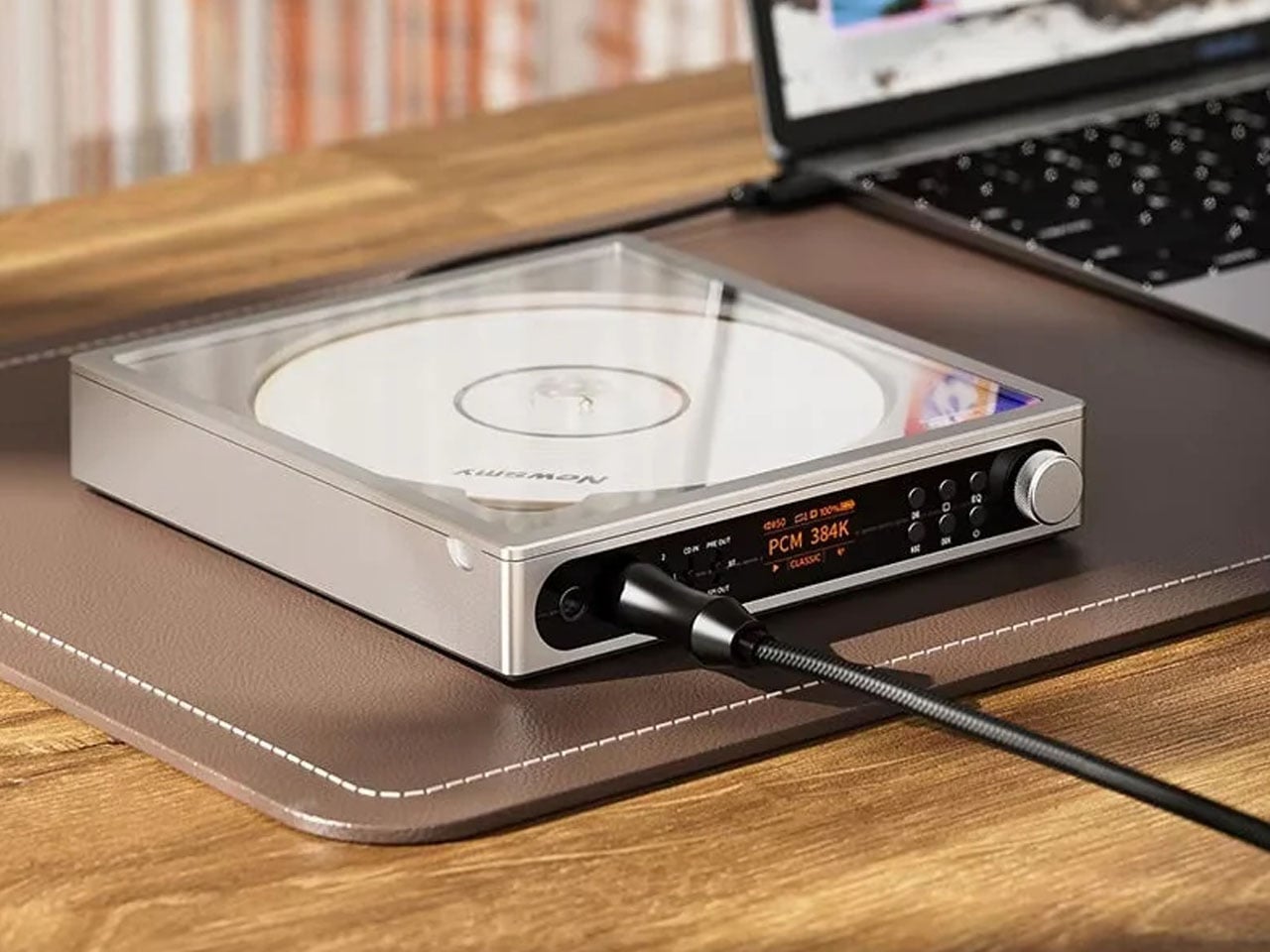
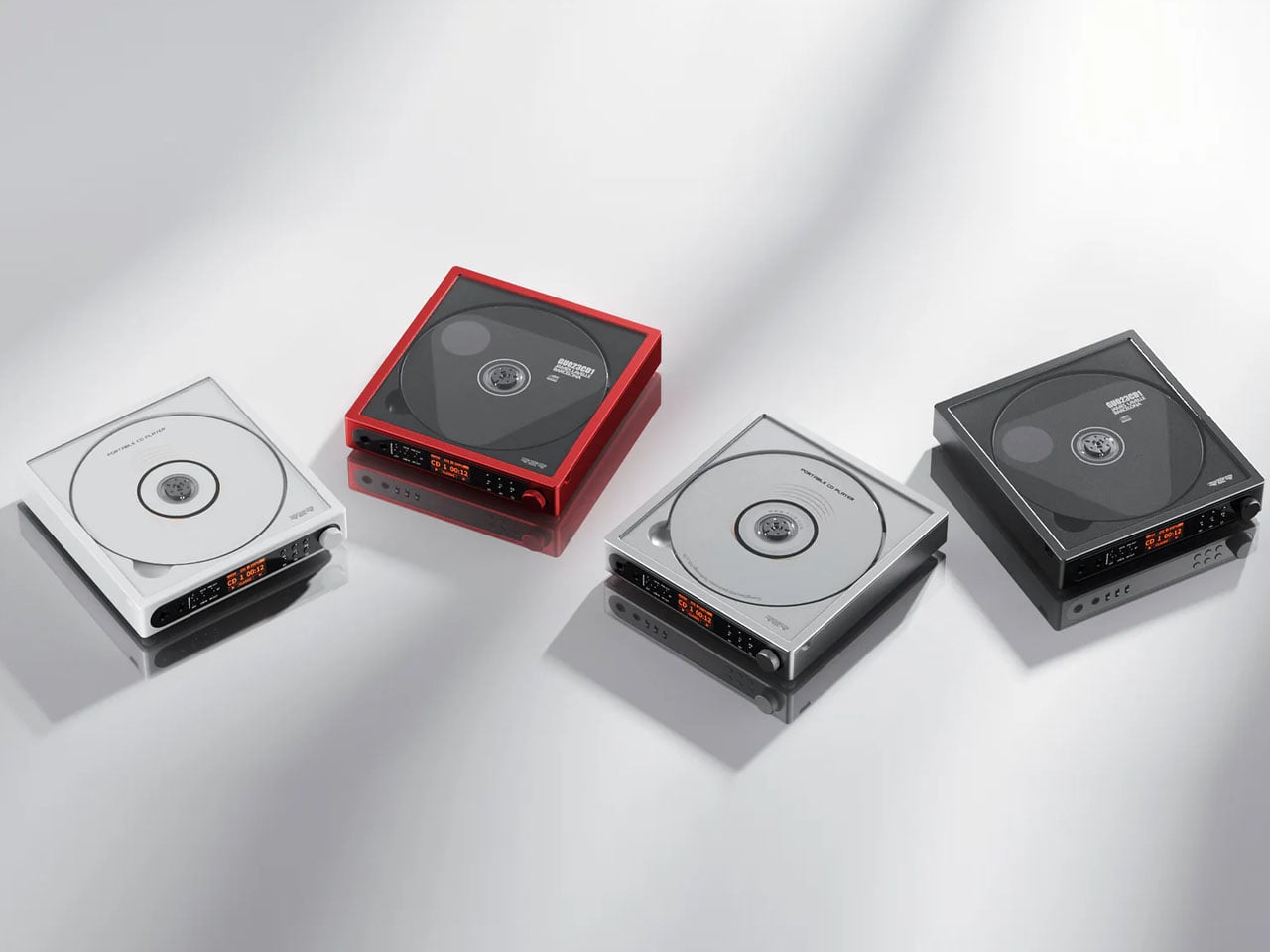
The DM15 R2R is where the CD revival gets serious. FiiO built this successor to the DM13 around a compact aluminum chassis with a transparent top panel that lets you watch the disc spin, a small but satisfying detail for anyone drawn to the physicality of the format. The R2R discrete ladder DAC architecture underneath is the real draw, bringing a level of engineering to a portable form that most standalone players at this size simply don’t attempt.

Beyond disc playback, the DM15 R2R works as a full USB DAC outputting up to 32-bit/384kHz PCM and native DSD256, figures that put it well above what its compact size suggests. A seven-hour rechargeable battery handles long sessions wire-free, while optical, coaxial, 3.5mm, and balanced 4.4mm outputs cover every system you’re likely to connect it to. For anyone building a physical media setup around sound quality, this is the component that makes everything around it perform better.

What We Like

  • R2R discrete ladder DAC architecture is genuinely rare to find in a portable CD player at any price
  • USB DAC mode at 32-bit/384kHz PCM and native DSD256 extends its usefulness well beyond CDs

What We Dislike

  • The depth of technical specification may exceed what casual listeners need or want from a portable
  • The understated aluminum chassis, while elegant, won’t appeal to those wanting a more expressive object

7. Orion

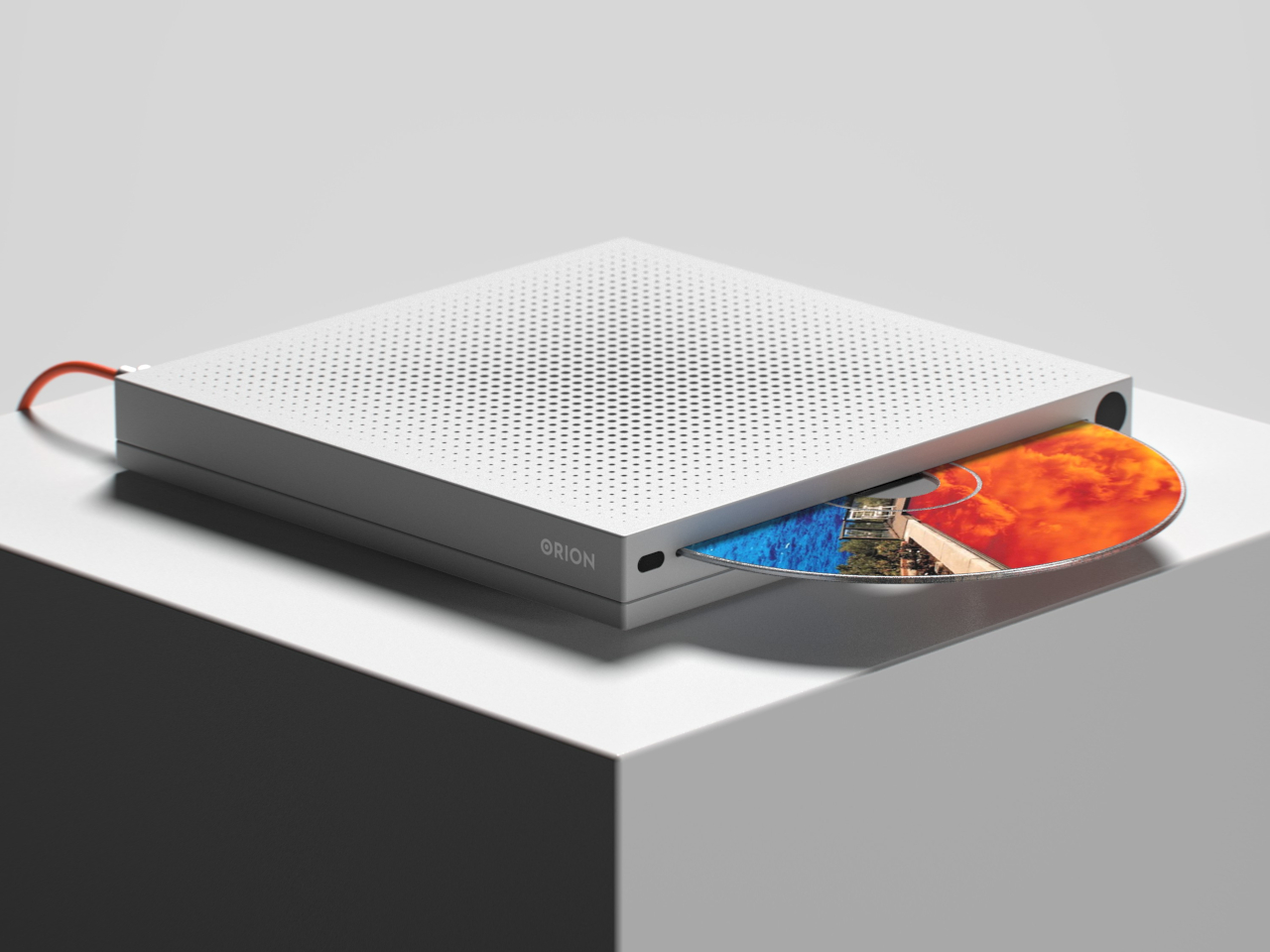
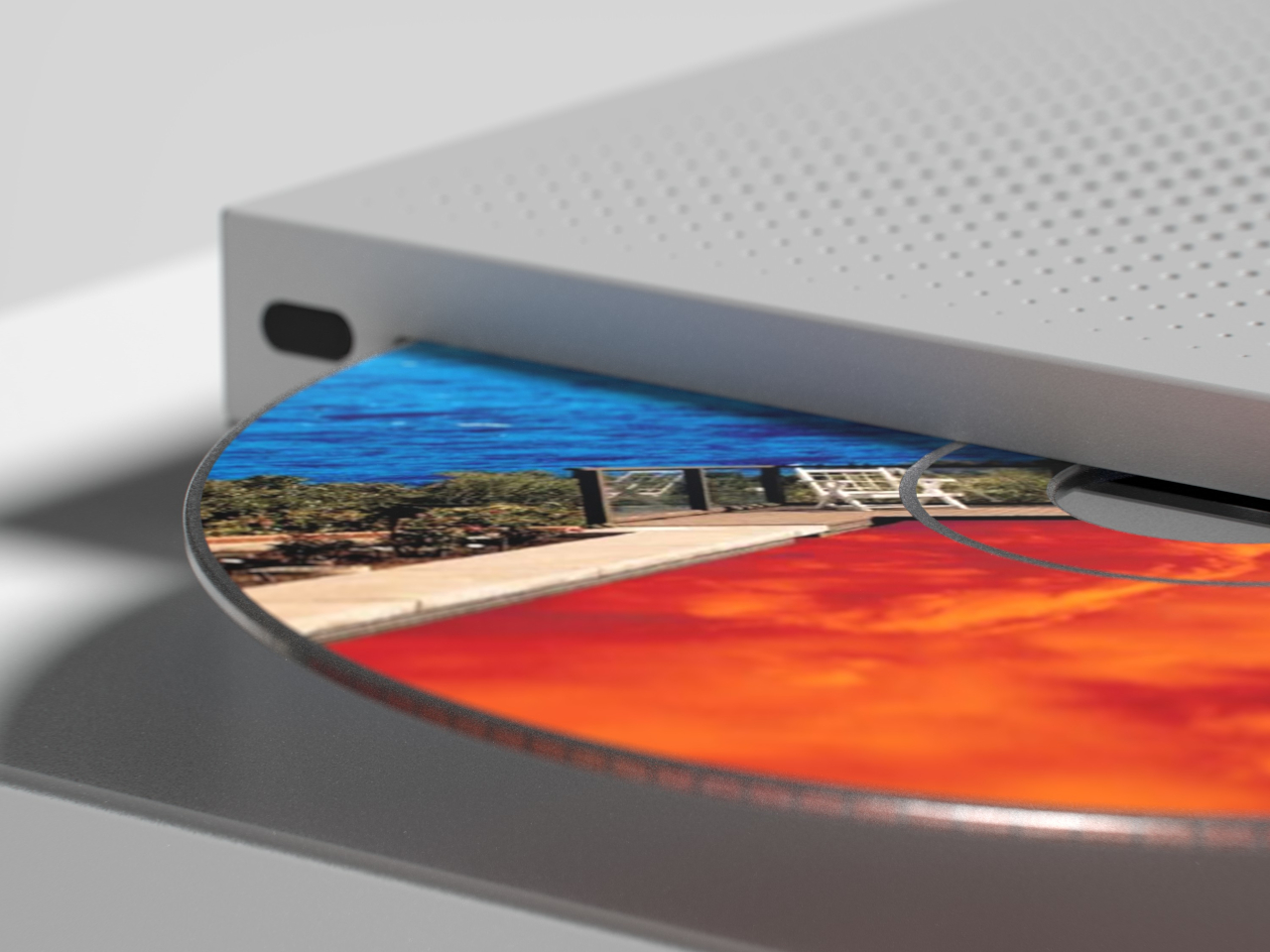
Designed by Vladimir Dubrovin, the Orion doesn’t bother with flaps or hinged lids. You slide the disc in through a thin front slot, and that’s it. A powder-coated metal body gives it an industrial calm, with almost nothing on the surface to distract from its form. An eject button, an IR receiver at the front, a power socket at the back — the controls are so reduced they barely register. It’s the kind of restraint that takes more confidence to execute than decoration ever would.

What keeps it from tipping into cold territory is the top surface. The perforations up there follow a parametric logic: holes grow larger toward the center, then taper back out toward the edges. The pattern was generated using Grasshopper 3D, a node-based parametric system that creates a logical relationship between each perforation and its proximity to the device’s outer contour. It’s a quiet flourish in an otherwise clinical design — the one place where the Orion lets geometry do the talking, and it’s enough.

What We Like

  • The parametric perforation pattern is engineered with genuine logic, making it feel earned rather than decorative
  • Front-loading slot design removes all mechanical clutter, keeping every surface clean and purposeful

What We Dislike

  • As a concept, it remains unproduced with no confirmed specifications or release timeline
  • The extreme restraint in controls may feel inaccessible to those who prefer tactile, readable interfaces

The Disc Is Back. And It Brought Better Hardware With It.

The CD player doesn’t need defending anymore. These seven designs make the case without argument: physical media is back, and it looks better than ever. Whether you want transparency, volume, minimalism, or award-winning color, there’s a player here that fits the shelf space and the listening habit. The format never lost its quality. It just needed the hardware to catch up with what the moment demands.

Put a disc in something beautiful and see what happens. The ritual is still there, the sleeve, the track listing, the deliberate act of choosing a record and committing to it. These players don’t compete with streaming. They offer something streaming can’t: a reason to sit still and listen. That’s the real comeback. Not nostalgia. A better way of paying attention to music you already love.

The post The CD Player Is Back – And These 7 Designs Are Gorgeous first appeared on Yanko Design.

Waveshare Built a $149 Handheld That Runs Full Linux Without the Laptop

The handheld computer has always been a compelling idea that rarely lives up to its promise. Smartphones are too locked down for real development work, and tablets occupy an awkward middle ground between a phone and a laptop. Pocket PCs, mini notebooks, and DIY computer builds have all tried to fill the gap, but each one compromised too heavily on usability or demanded too much assembly.

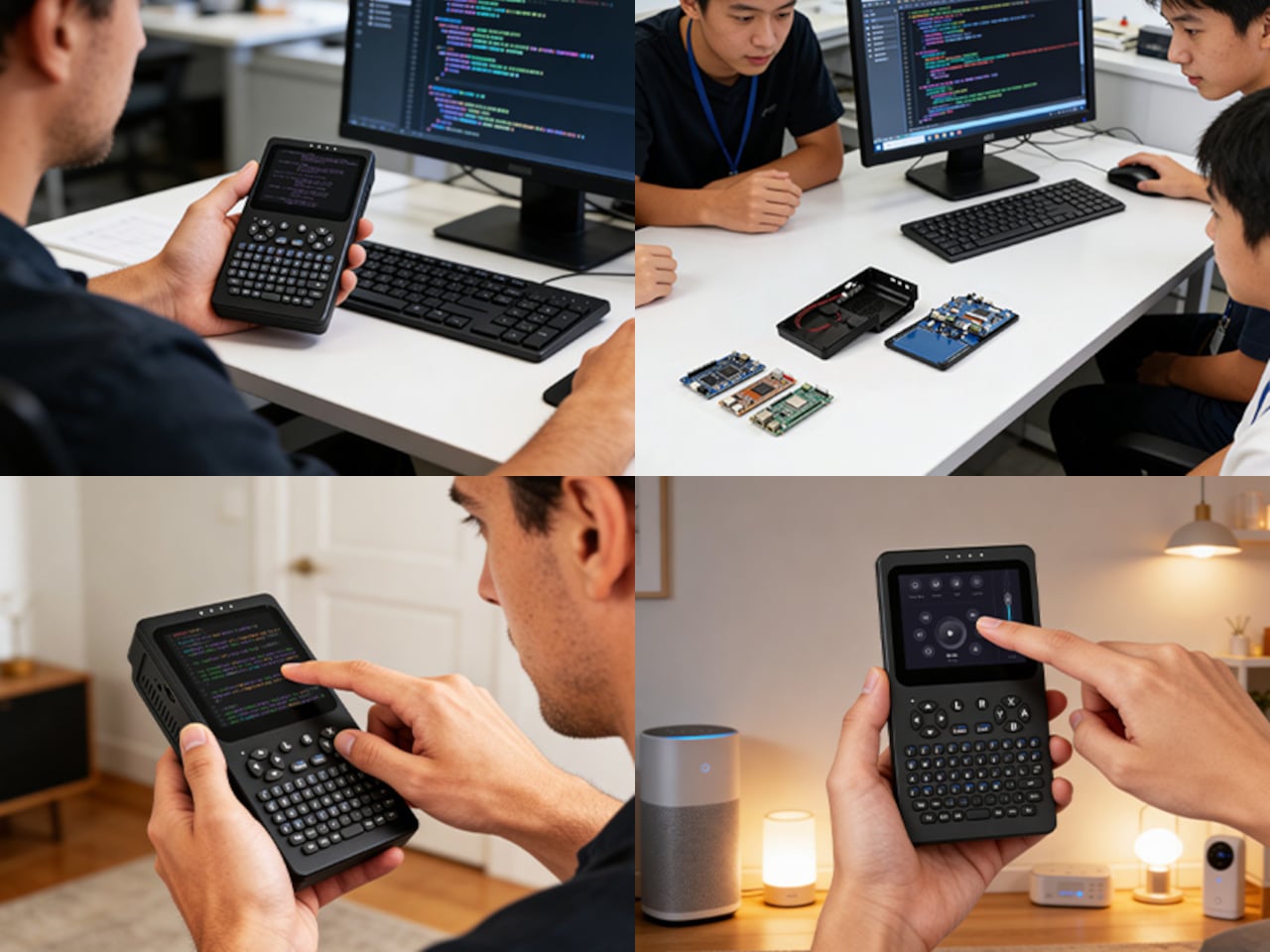
Waveshare’s PocketTerm35 takes a more deliberate approach, landing somewhere between a purpose-built tool and a proper portable computer. Compatible with the Raspberry Pi 4B and Pi 5, it wraps a complete Linux terminal experience into a handheld unit that’s ready to use right out of the box. Everything from the display and keyboard to the battery and connectivity is already integrated, so there’s nothing left to hunt down or assemble.

Designer: Waveshare

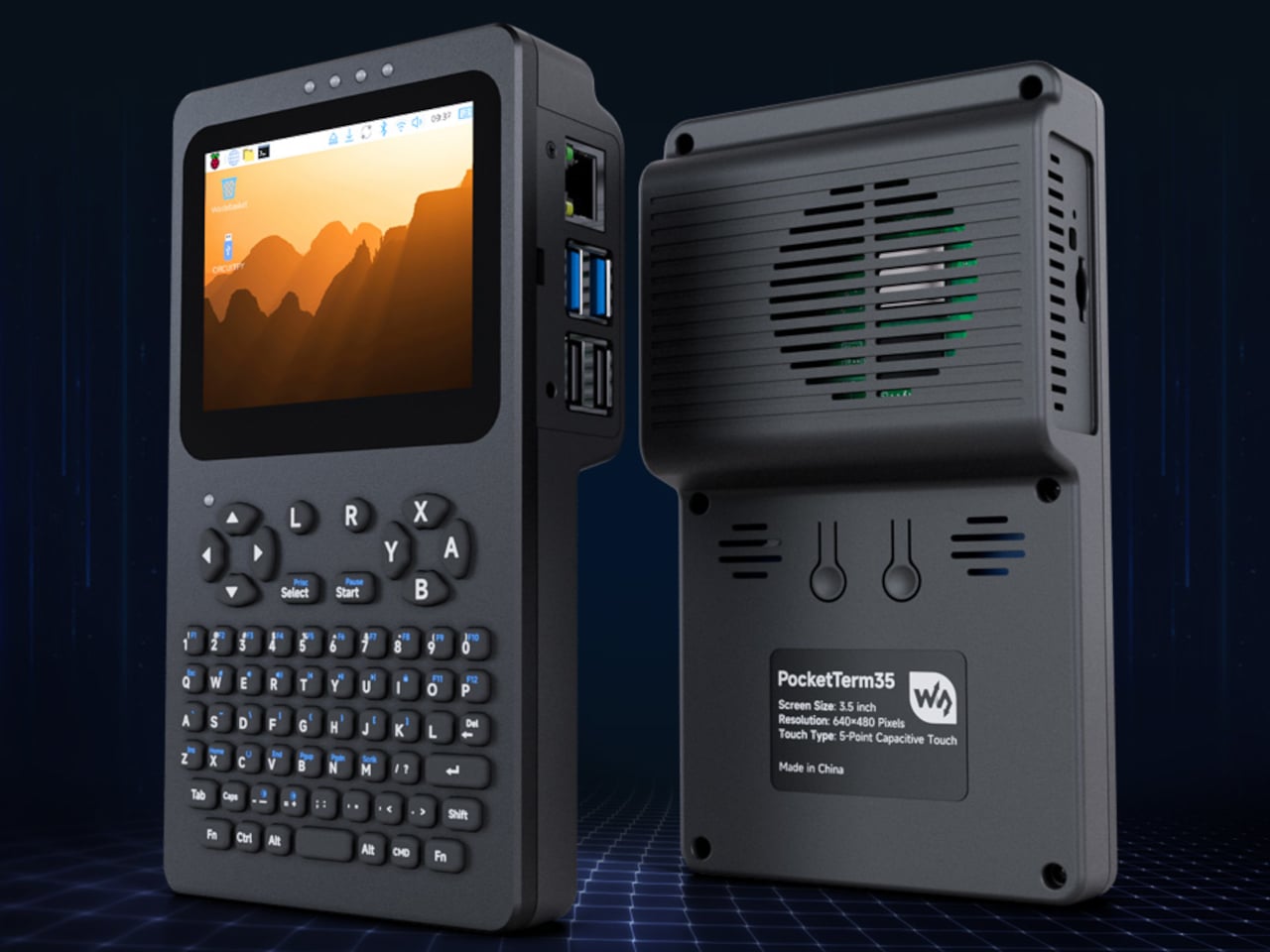
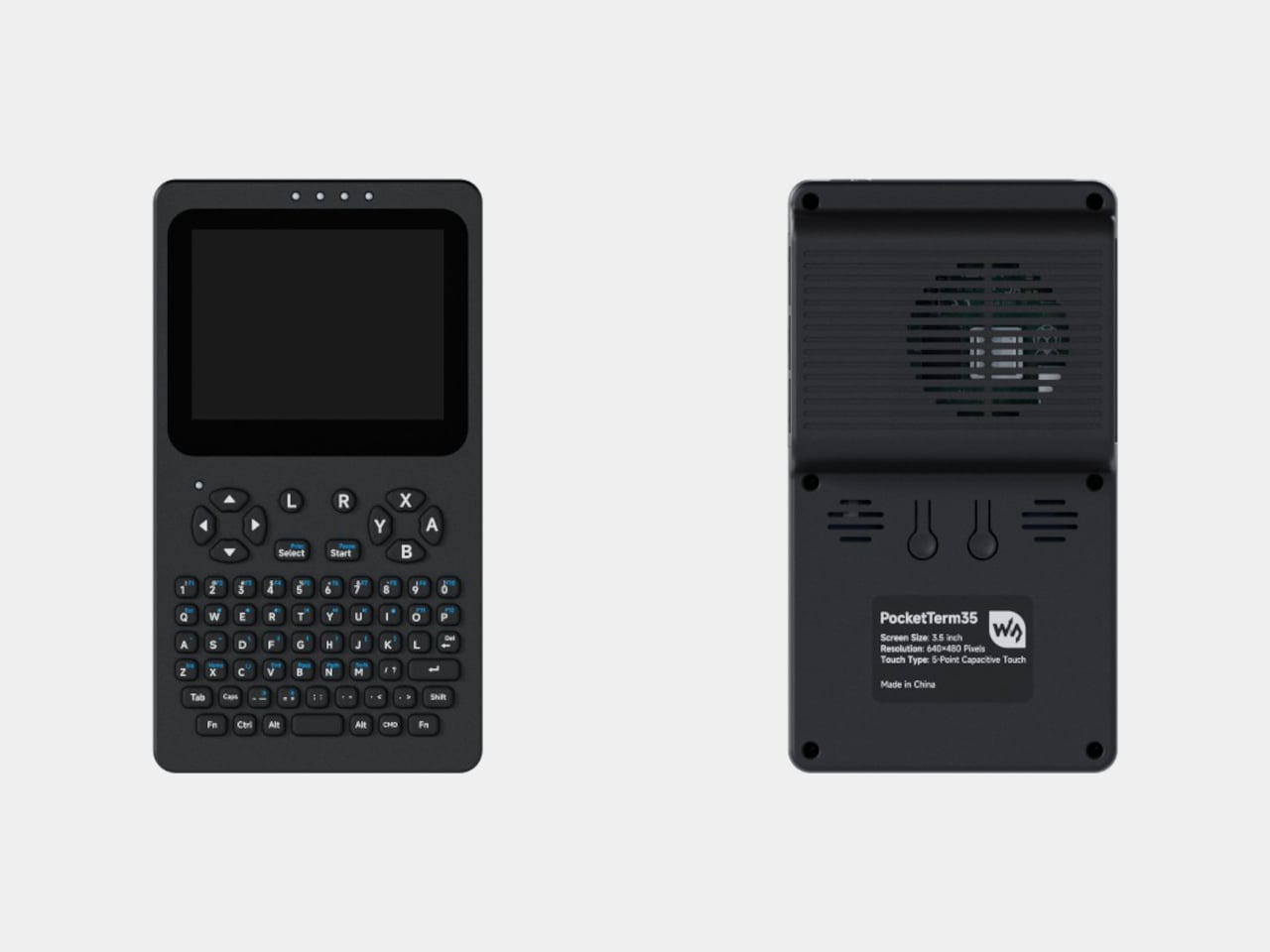
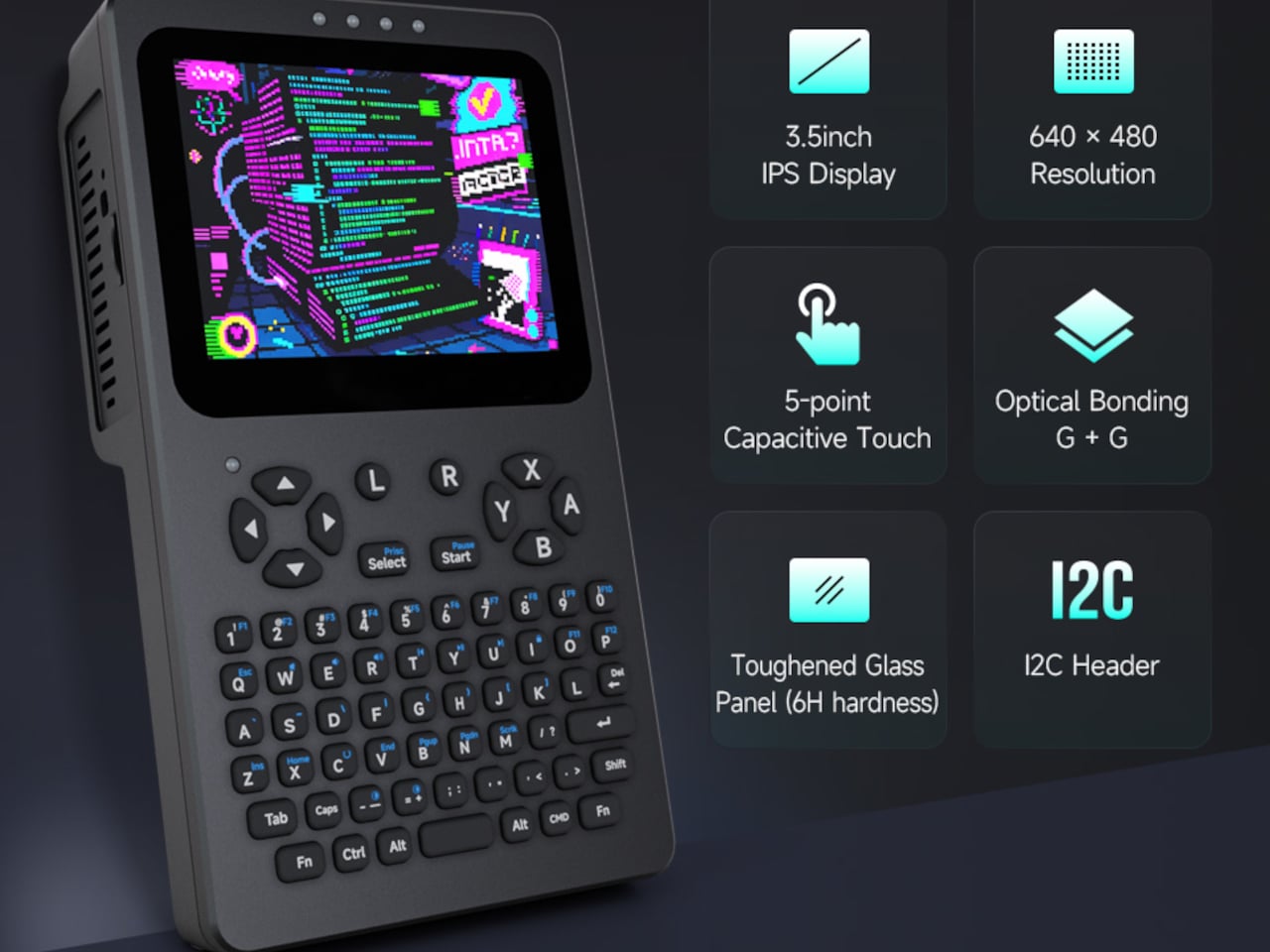
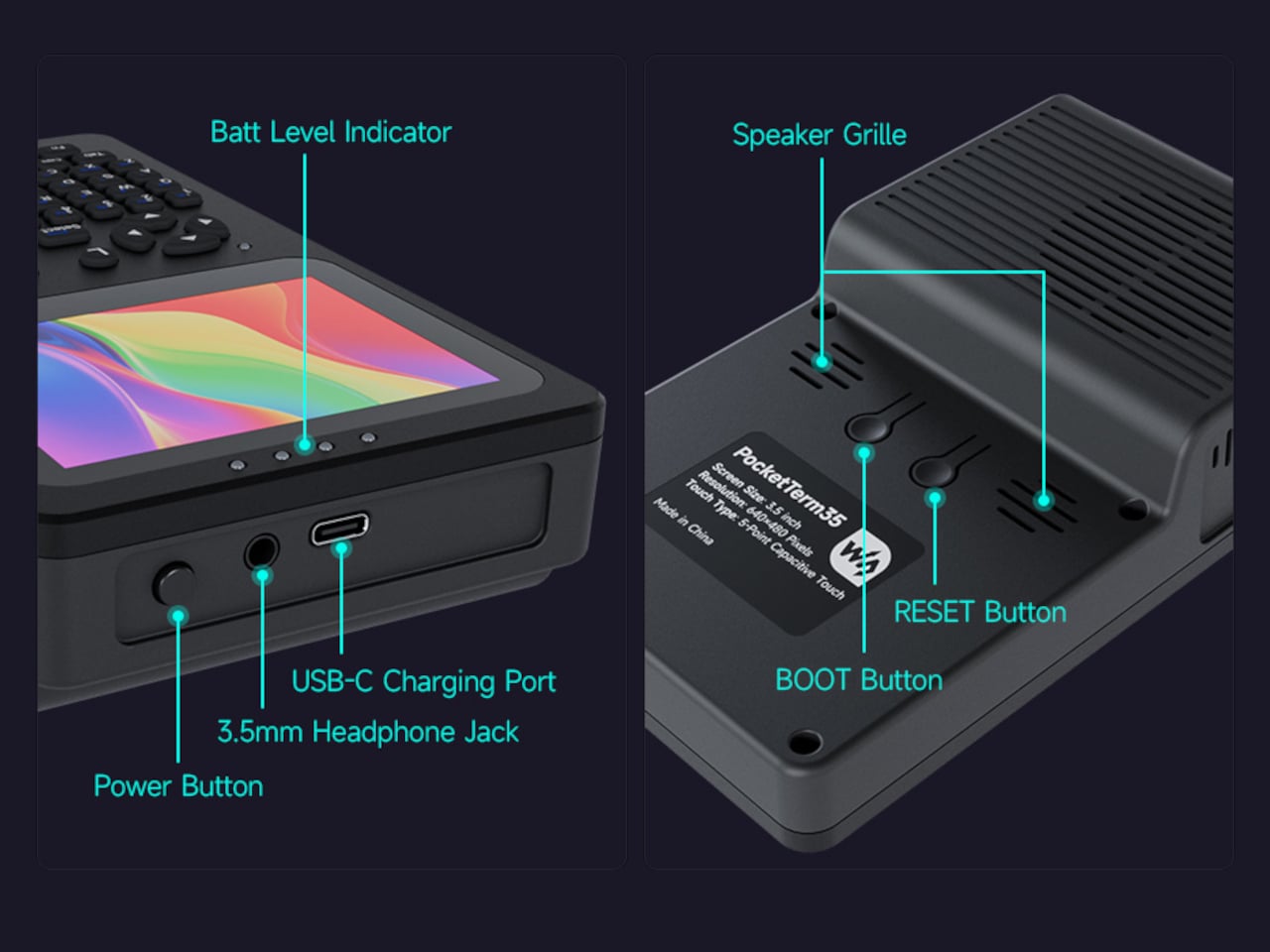
At 93.5mm x 168.5mm x 37mm, the PocketTerm35 fits comfortably in one hand, though it has enough weight to feel substantial rather than cheap. The front panel is CNC-machined aluminum, giving the face a solid, slightly industrial character. The rear is plastic, which helps keep the overall weight manageable. Status LEDs sit above the display, and dedicated boot and reset buttons are tucked on the back.

The 3.5-inch IPS touchscreen sits at a 640 × 480 resolution, which is modest by modern standards but appropriate for a terminal environment where text clarity matters more than pixel density. Optical bonding seals the glass to the panel, reducing reflections and making the screen usable outside without squinting. The 5-point capacitive touch surface sits under toughened glass with 6H hardness, which should hold up well against daily wear.

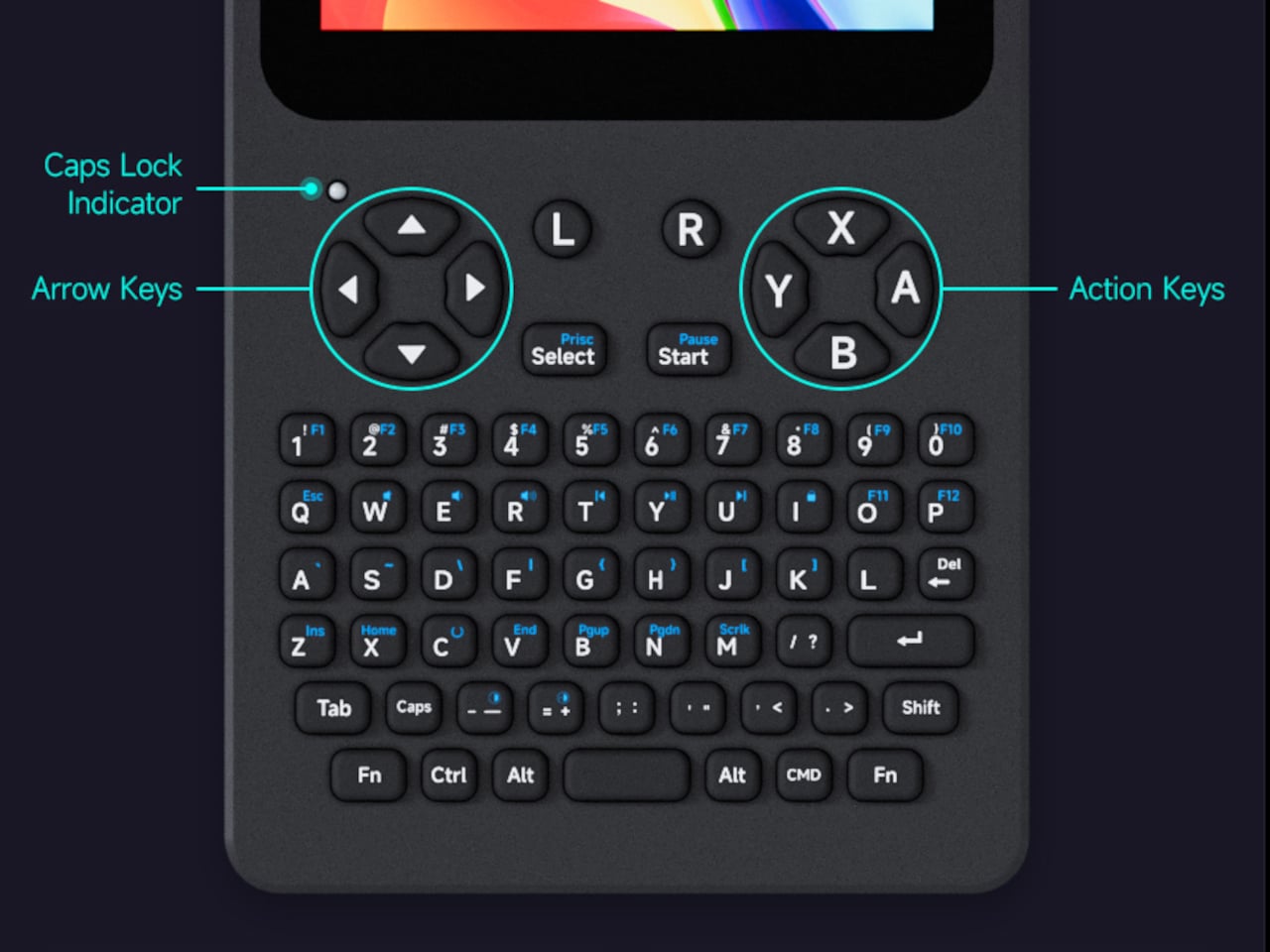
Below the screen is a 67-key QWERTY silicone keyboard laid out in a standard layout for typing commands, editing code, or navigating menus. A dedicated RP2040 microcontroller manages keyboard input, screen brightness, and volume, offloading those control tasks from the Raspberry Pi itself. The arrangement keeps the main processor free for heavier work, which is the kind of practical engineering detail that makes the difference in a device like this.

Power comes from a 5,000mAh lithium battery with a built-in UPS system that supports seamless switching between battery and external power without losing your session. You can run it plugged in at your desk, then pull the cable and walk away without any disruption to whatever’s running. It’s the kind of reliability that makes a handheld device genuinely trustworthy to use rather than just technically portable on paper.

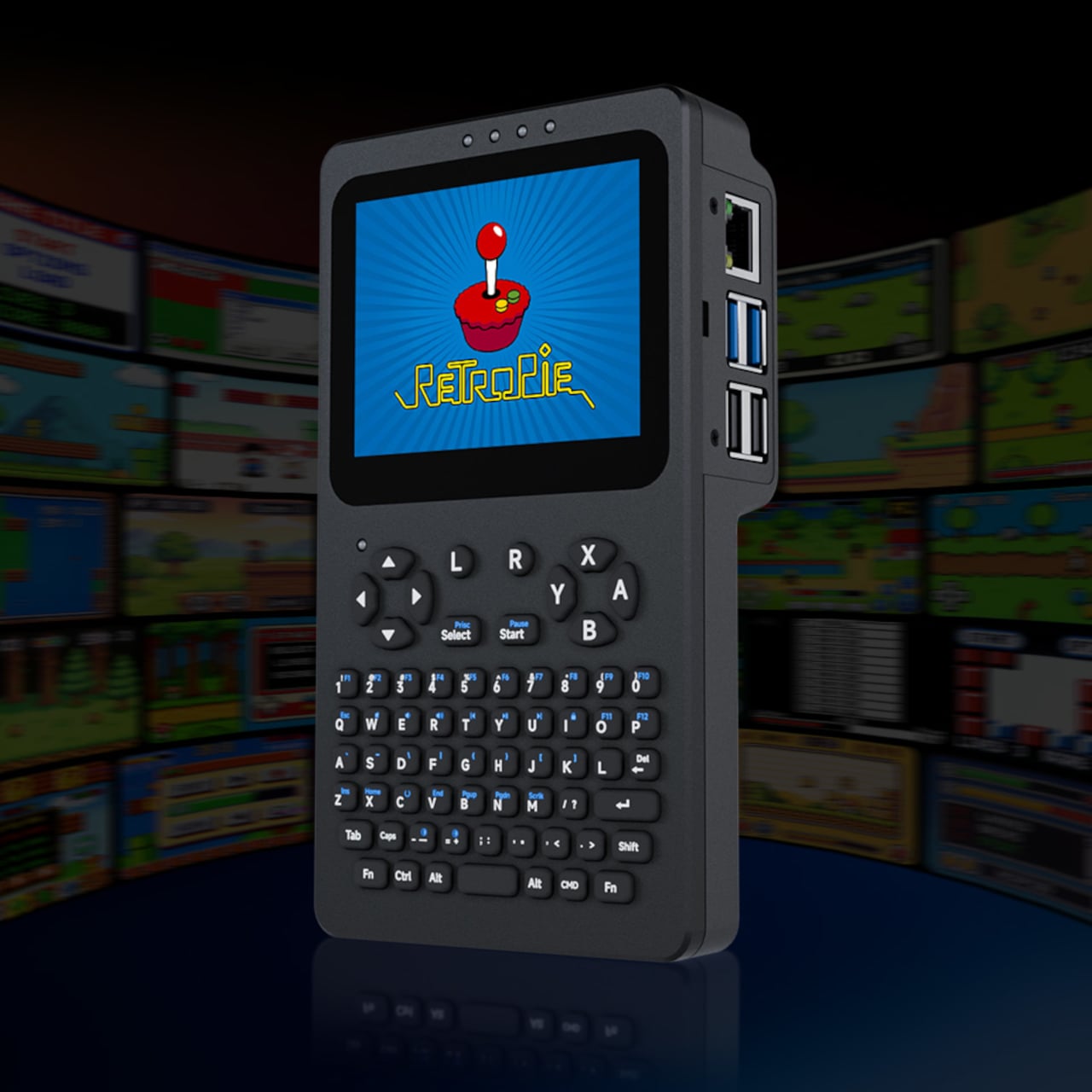
Connectivity is where the PocketTerm35 avoids the usual compromises. Four USB-A ports and an RJ45 Ethernet jack handle wired needs, alongside a 3.5mm audio jack and a 2W built-in speaker. An I2C expansion header opens things up for custom hardware add-ons. It also supports RetroPie, so the same machine that handles a terminal session during a work trip can become a retro gaming console once the day is done, especially considering it has ABXY buttons.

The PocketTerm35 ships in a few configurations. The Pi5 variant includes a 1GB Raspberry Pi 5, a 64GB microSD card with the system preloaded, and the 5,000mAh battery, all for $148.99. A Pi 4B version is available for $179.99. Developers who’ve been carrying a laptop just to have a real terminal within reach might find the PocketTerm35 a far more sensible answer to that specific problem.

The post Waveshare Built a $149 Handheld That Runs Full Linux Without the Laptop first appeared on Yanko Design.

Polaroid’s Hi-Print 3×3 Was Made for This Analog Moment

A few years ago, we started noticing the re-emerging popularity of photo printers once again. People wanted to turn photos taken by digital means into physical, printed items that they could use for journaling, decoration, or as a gift or keepsake for loved ones. Some thought it would just be a nostalgic trend that would eventually lose steam. But with 2026 being labeled the “year of analog,” it looks like this printing lifestyle is here to stay for a few more years. And the numbers back it up. Two-thirds of 18–34-year-olds have reportedly turned to analog products to cut down on screen time, a generation that grew up with smartphones now actively choosing to step away from them. It’s not just nostalgia. It’s intention.

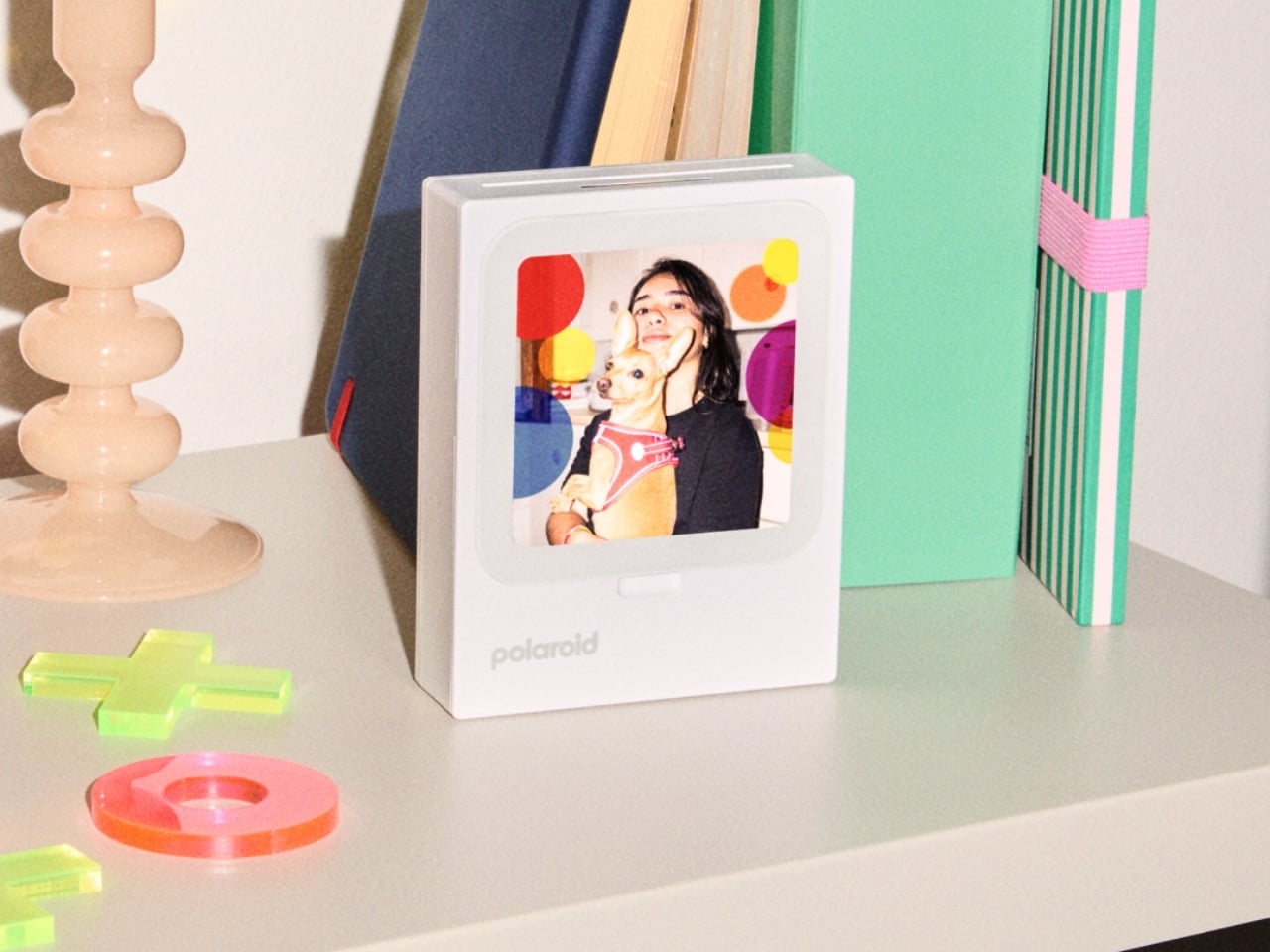
Polaroid is one of those brands enjoying renewed popularity, not just with those of us who remember what a Polaroid actually is. Millennials, Gen Z, and even Gen Alpha have been looking at portable photo printers to enjoy this analog craze. The brand has leaned into this cultural moment, and their newest release feels right on time. The new Hi-Print 3×3 is not just a way to print out your digital photos. It also serves as a display frame if you want a particular photo to become part of your everyday space.

Designer: Polaroid

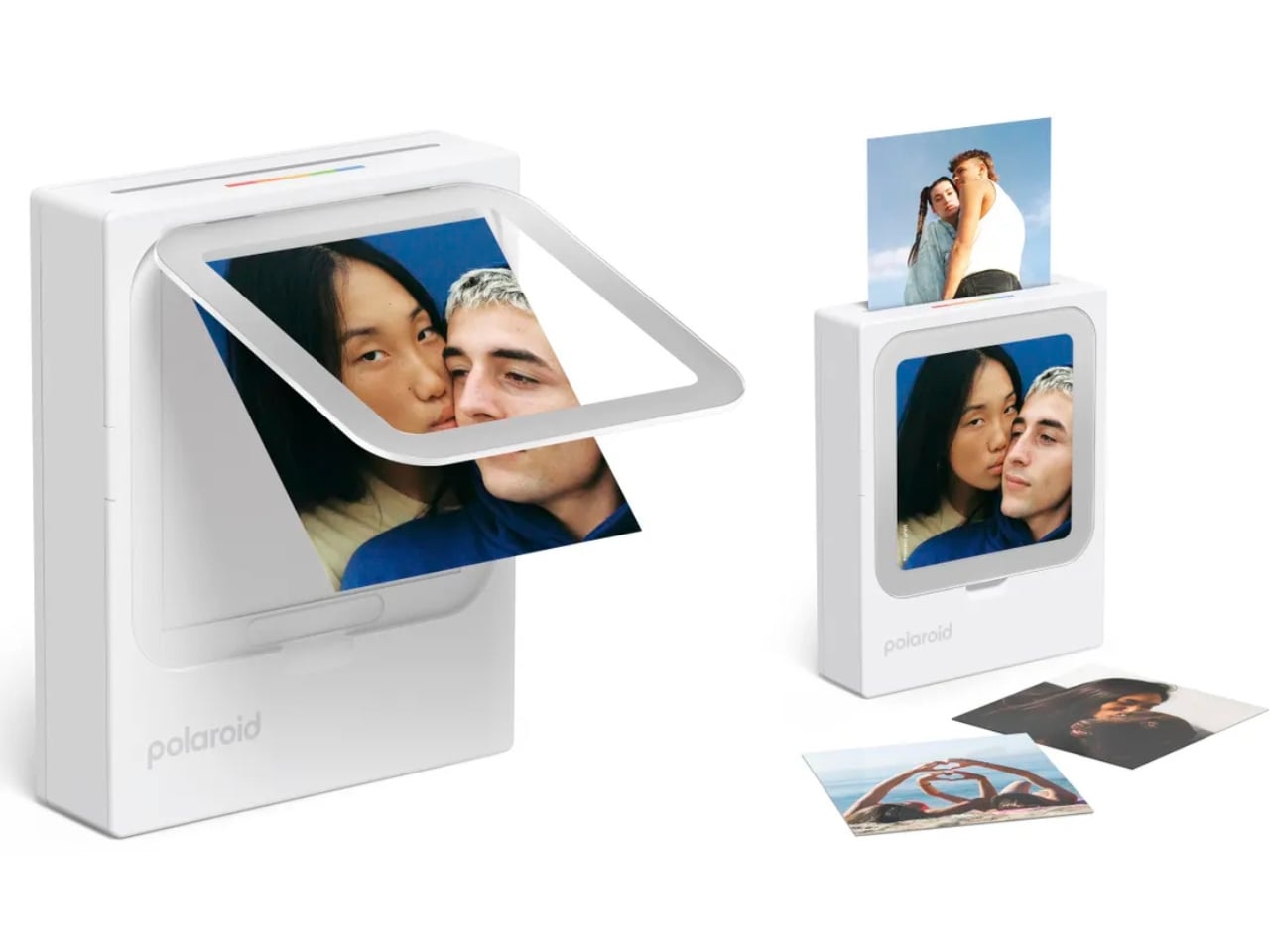
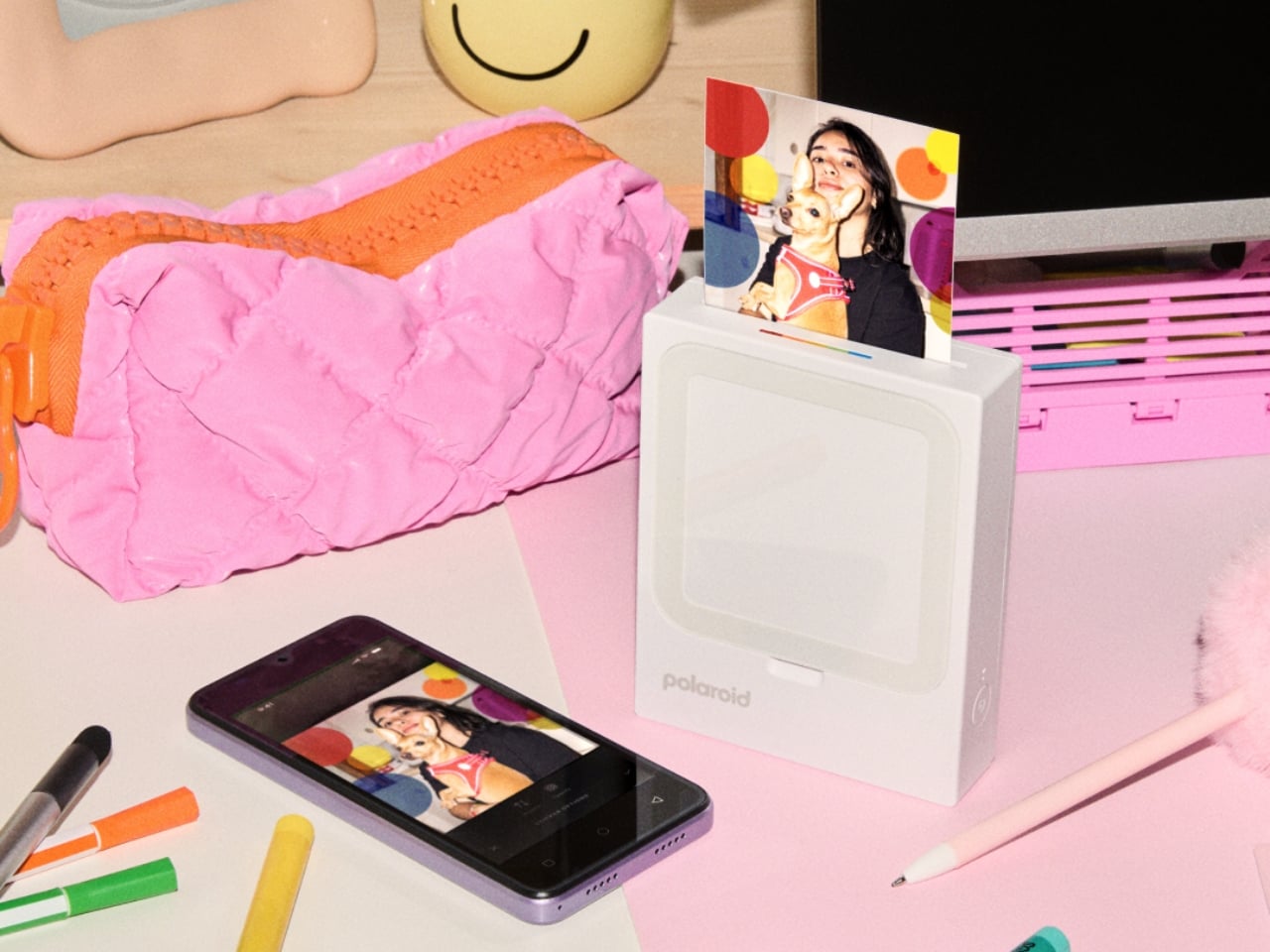
The Hi-Print 3×3 is a compact smartphone photo printer that turns digital images into 3-inch square prints. It’s the newest addition to the Hi-Print family line, sitting between the 2×3 pocket printer and the 4×6 desktop model. It’s ideal for those who prefer square prints rather than the “traditional” size and orientation of Polaroid prints. Each print comes with a peel-and-stick backing, so you can use it in your journals, stick it to walls, or add it to a scrapbook spread. It has a clean, modern look with its borderless, edge-to-edge prints, but if you want to add some personality before you hit print, the free Hi-Print app (available on iOS and Android) lets you layer on templates, stickers, and decorative frames to make each print feel uniquely yours.

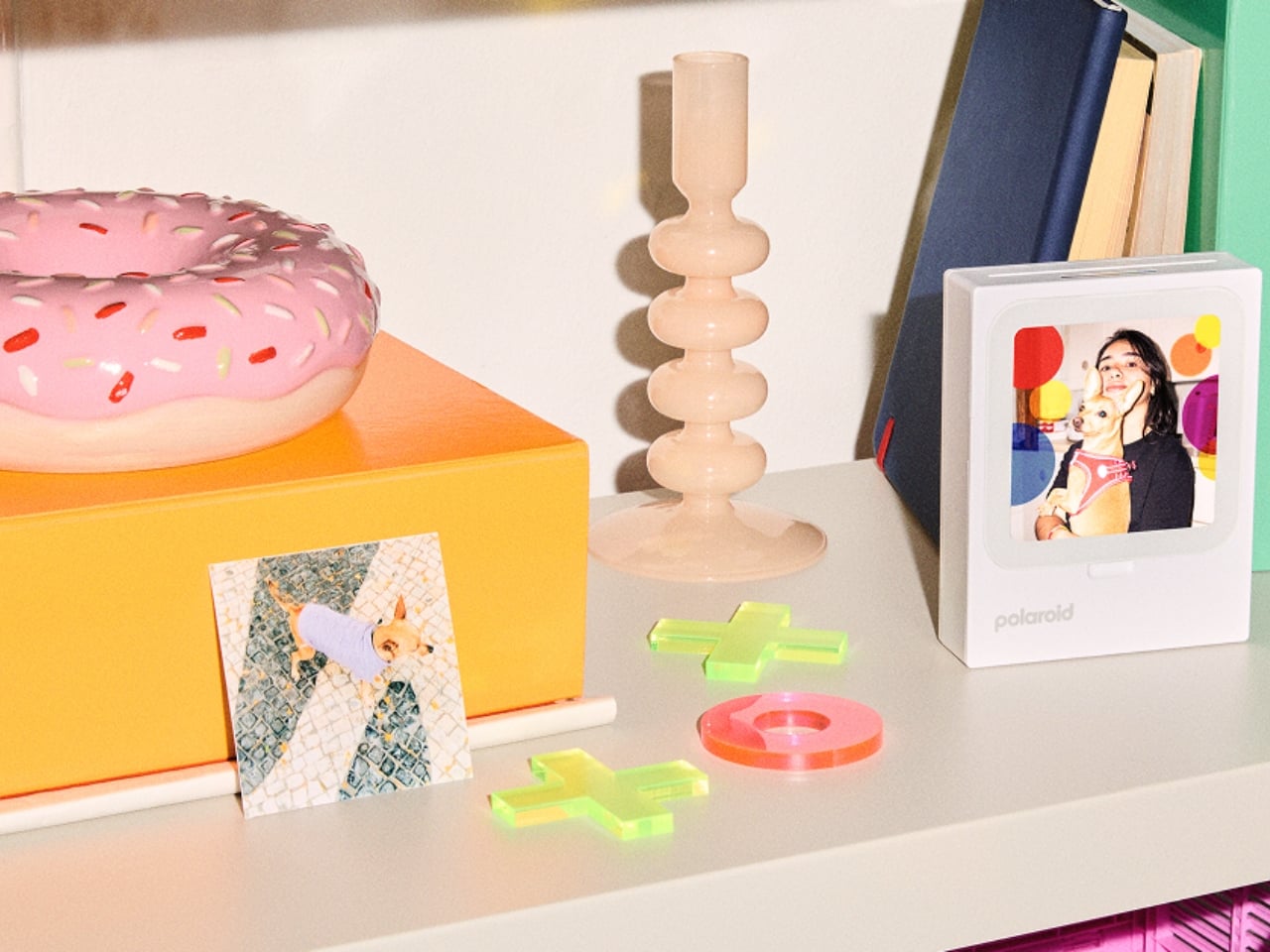
The printer also doubles as a display frame, so your current favorite photo can sit on your desk, shelf, or wherever you like to display things. Just print the photo you want, then insert it directly back into the device until you’re ready to swap it out for a new one. The printer has a white, minimalist design, and if you want a pop of color, the photo itself will do all the work. On the technical side, the Hi-Print 3×3 uses Dye Diffusion Thermal Transfer technology, prints in under 50 seconds, and runs on a built-in rechargeable battery that charges via USB-C. It’s lightweight at 390 grams and compact enough to slip into a bag without a second thought. It also comes with 10 sheets of paper right out of the box, so you can start printing immediately.

For those thinking about gifting, the Hi-Print 3×3 hits a sweet spot at $119.99 USD, meaningful enough to feel special without breaking the bank. There’s also a Starter Set available at $134.99 that bundles in extra paper cartridges, which is a great option for someone just getting into the physical printing lifestyle. What makes the Hi-Print 3×3 especially appealing for the creative community is how well it fits into an already existing ecosystem of hobbies. Journaling, scrapbooking, and photo wall decorating have all seen massive growth over the past few years, and a compact printer that produces square, peel-and-stick photos feels like it was designed with exactly that in mind. The square format also makes it a natural companion for anyone who has grown up curating their Instagram grid, since the prints feel familiar in proportion and shape.

Whether you’re a seasoned collector of printed memories, a journaling enthusiast, or simply someone who wants their favorite photos to live somewhere beyond a camera roll, the Polaroid Hi-Print 3×3 makes a very compelling case. The analog era isn’t going anywhere, and honestly, we’re here for it. In a world where everything seems to be moving toward the digital, there’s still something deeply satisfying about holding a photo in your hands, or better yet, displaying it somewhere you’ll actually see it every day.

The post Polaroid’s Hi-Print 3×3 Was Made for This Analog Moment first appeared on Yanko Design.

Old Tape, New Tricks: Maxell’s Cassette Player Goes Wireless

Every few years, the tech industry digs up something from the past, slaps a USB-C port on it, and calls it innovation. Sometimes it works. Sometimes it’s a gimmick dressed in nostalgia. The Maxell Wireless Cassette Player lands, surprisingly, somewhere in between, and it’s more interesting for it.

Maxell isn’t exactly an outsider here. The Japanese electronics brand was practically synonymous with cassette culture in the 1980s, when their high-performance chromium metal tapes were the gold standard for serious music listeners. So when they decided to bring back the cassette player, it wasn’t a random brand riding a retro wave. It was the original brand, returning to its roots with a bit more wisdom and a Bluetooth chip.

Designer: Maxell

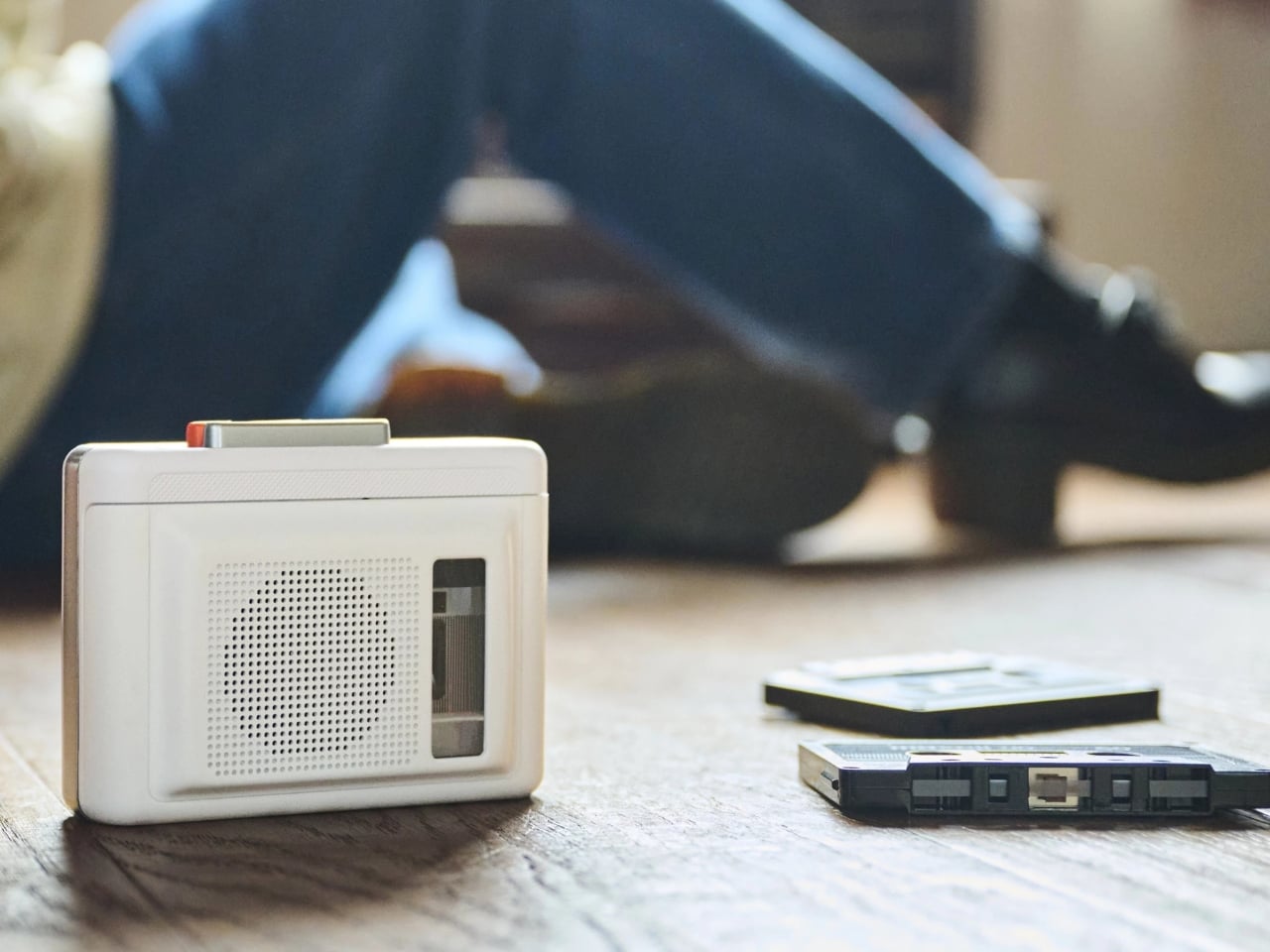
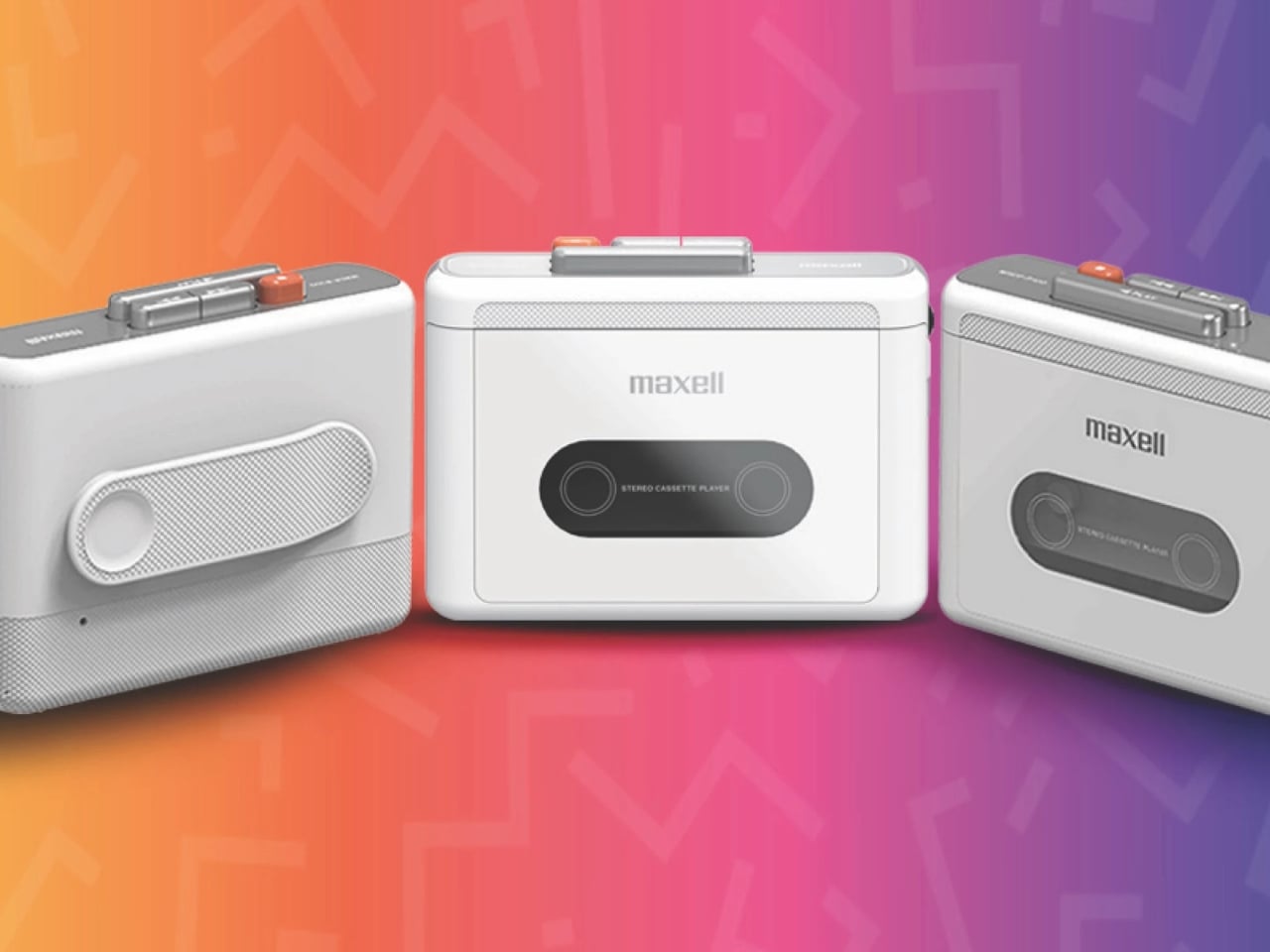
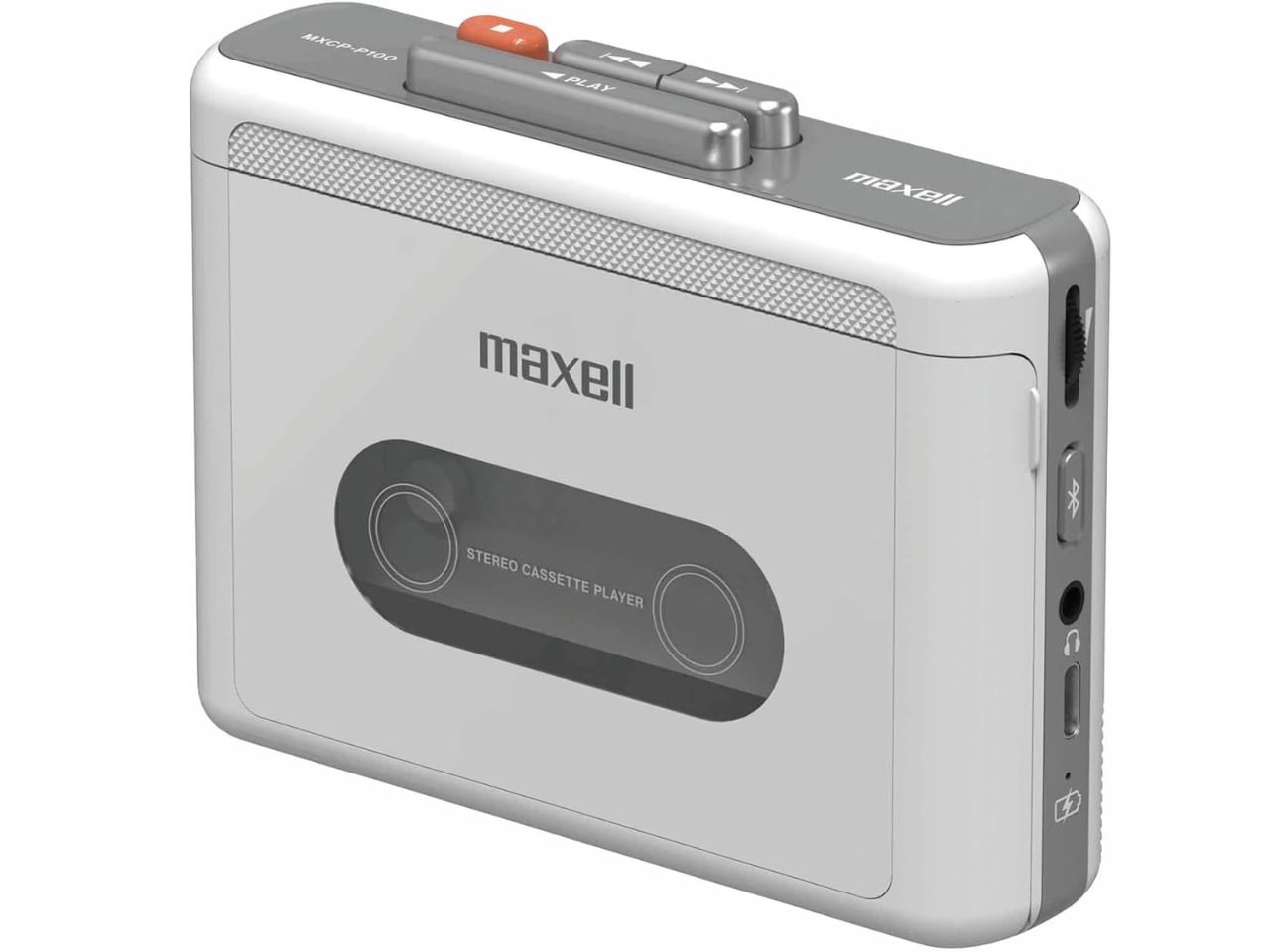
The result is the MXCP-P100, a compact player that pairs your old mixtapes with wireless technology. Pop in a tape, hit play, and stream the audio to your Bluetooth headphones or speaker of choice. At $99.99, currently selling closer to $75, it sits at a price point that feels reasonable for something this specific, though not cheap enough to be an impulse buy.

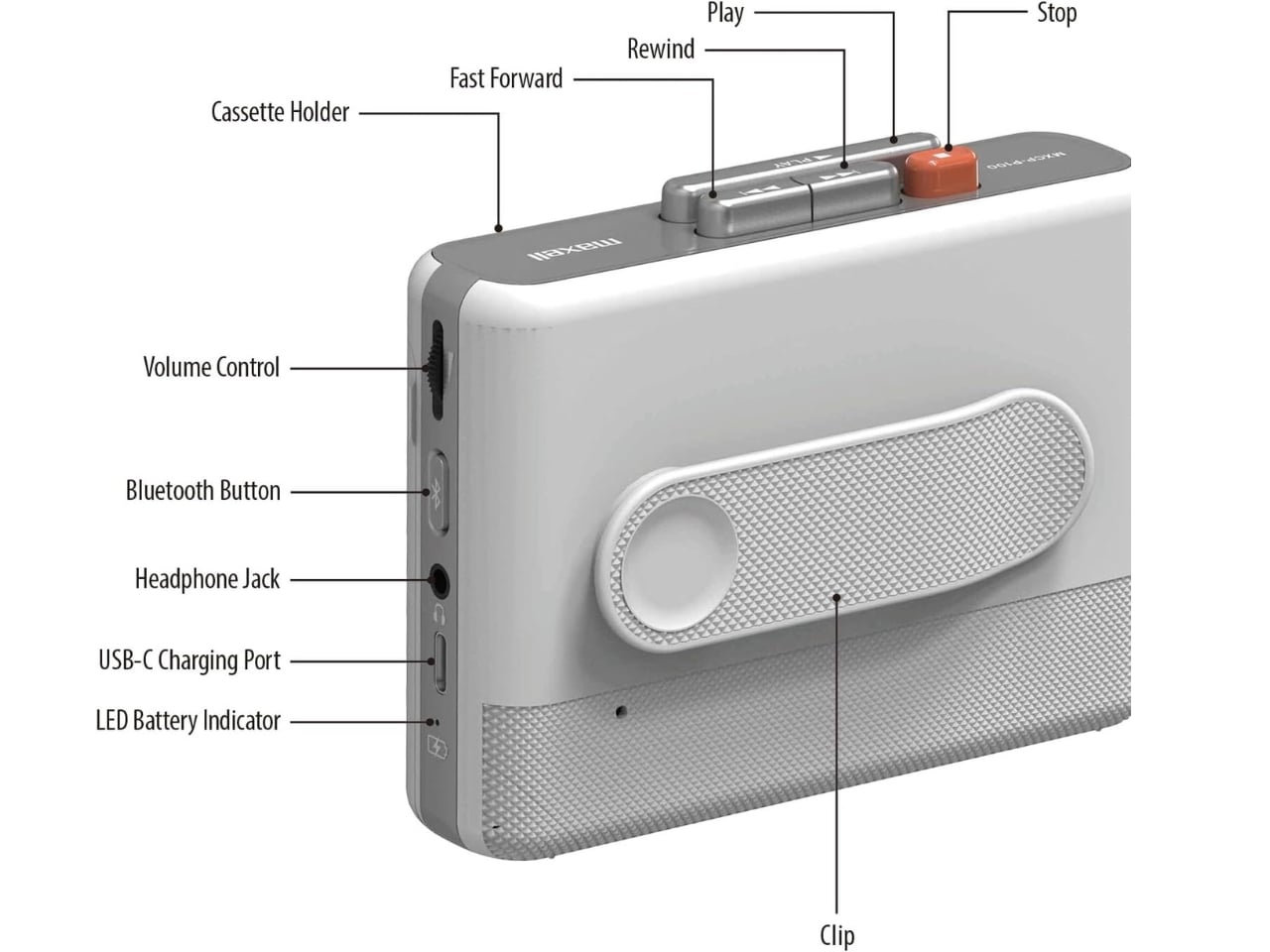
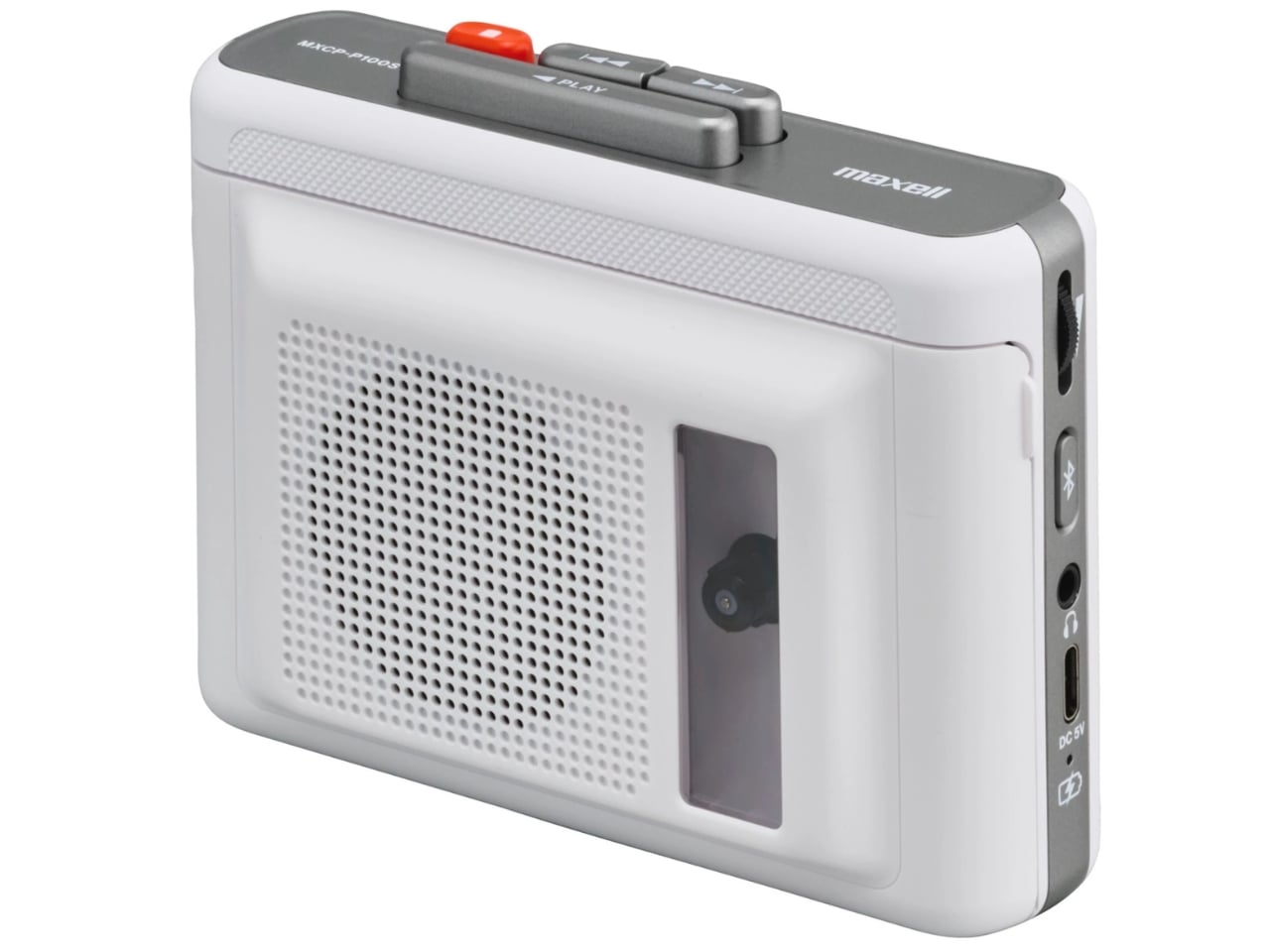
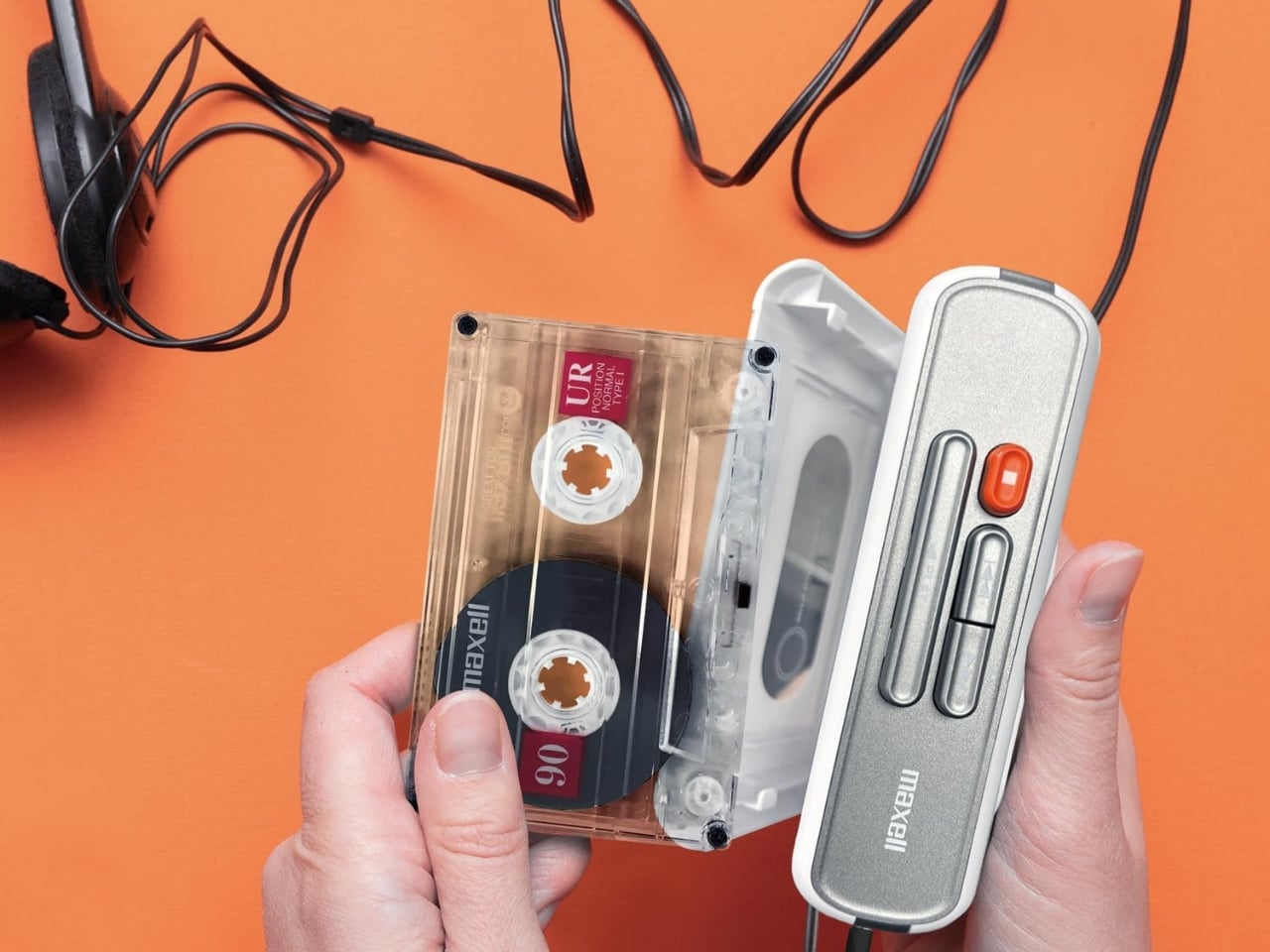
Physically, the player is familiar in all the right ways. A see-through cassette door, a satisfying row of clickable transport buttons across the top, and a volume dial on the side. It comes in black or white, measures 122 x 91 x 38mm, and weighs about 210 grams without a tape. That’s slightly chunkier than the slim Walkmans we remember, but for a device housing both a mechanical transport and Bluetooth electronics, it holds its shape well.

Inside, the stabilized transport uses a precision brass flywheel, which matters more than it sounds. Cheap cassette mechanisms are notorious for uneven playback, which is exactly the kind of thing that would make the whole retro revival effort feel sad and pointless. Whether the MXCP-P100’s mechanism is good enough to genuinely honor your old tapes is a fair question, and the answer seems to be a cautious yes, at least for everyday listening. Battery life clocks in at up to 11 hours on Bluetooth and 9 hours wired, with a full charge taking under two hours via USB-C.

The cassette revival itself deserves a moment of context. Tape has been slowly creeping back for years, driven largely by Gen Z listeners who see physical formats as collectible and meaningful in ways streaming can’t replicate. Musicians use tapes as affordable merch. Collectors hoard limited edition releases. Thrift stores have become unexpected tape archives. The culture is alive, even if the hardware has lagged behind. That’s exactly the gap Maxell is stepping into. Its entry carries the weight of brand legacy that no startup can manufacture, along with the expectations that come with it.

Part of what makes the MXCP-P100 quietly compelling is what it doesn’t try to do. It doesn’t record. It doesn’t have noise reduction circuitry. It doesn’t pretend to be a hi-fi audiophile product. It simply plays tapes and sends the signal somewhere useful. In a product landscape cluttered with devices that over-promise and under-deliver, there’s a certain confidence in knowing exactly what you are and committing to it cleanly. That restraint reads less like a limitation and more like a design decision.

My honest read: the Maxell Wireless Cassette Player isn’t trying to replace your streaming setup or convince anyone that tape sounds better than high-res digital. It’s a purpose-built device for a specific kind of listener who already has a box of tapes and wants a modern, reliable way to play them. On those terms, it makes complete sense.

Whether that’s worth $100 depends entirely on how attached you are to the tapes sitting in a drawer somewhere. If you don’t have any, this probably isn’t the product that converts you. If you do, this might be the one that finally gets you to press play again.

The post Old Tape, New Tricks: Maxell’s Cassette Player Goes Wireless first appeared on Yanko Design.

Gadhouse’s $99 Miko Is the Cassette Player the Revival Needed

Cassette tapes are having a moment, and that moment is refusing to end. According to Billboard, cassette sales have grown more than 440% over the past decade, and in the first quarter of 2025 alone they more than doubled, hitting numbers not seen in 20 years. This isn’t a blip or a quirky indie niche. It’s a full-on cultural movement, and whether you’re old enough to remember rewinding a tape with a pencil or you’ve been hunting down limited editions on Bandcamp, you’ve probably felt its pull.

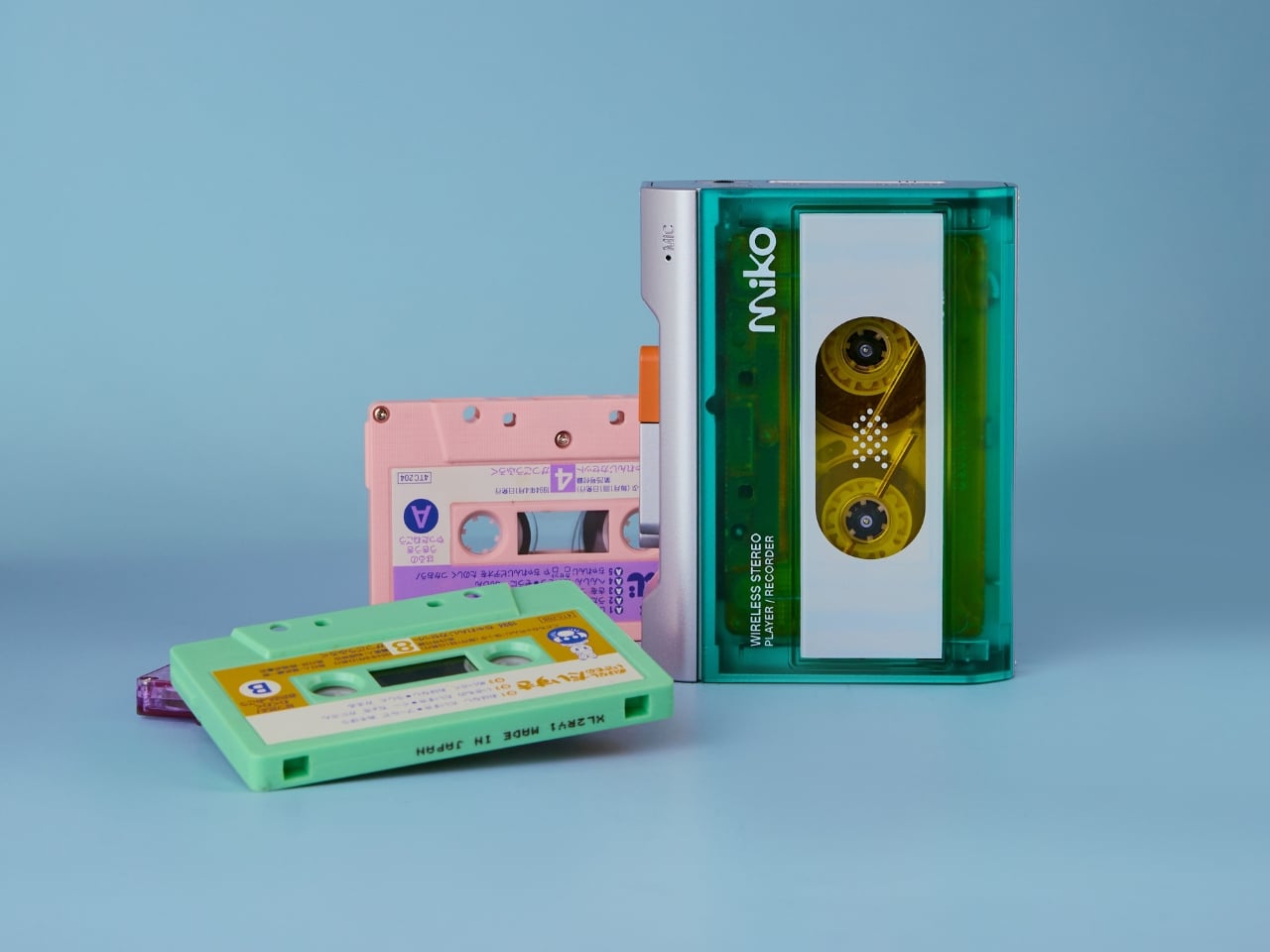
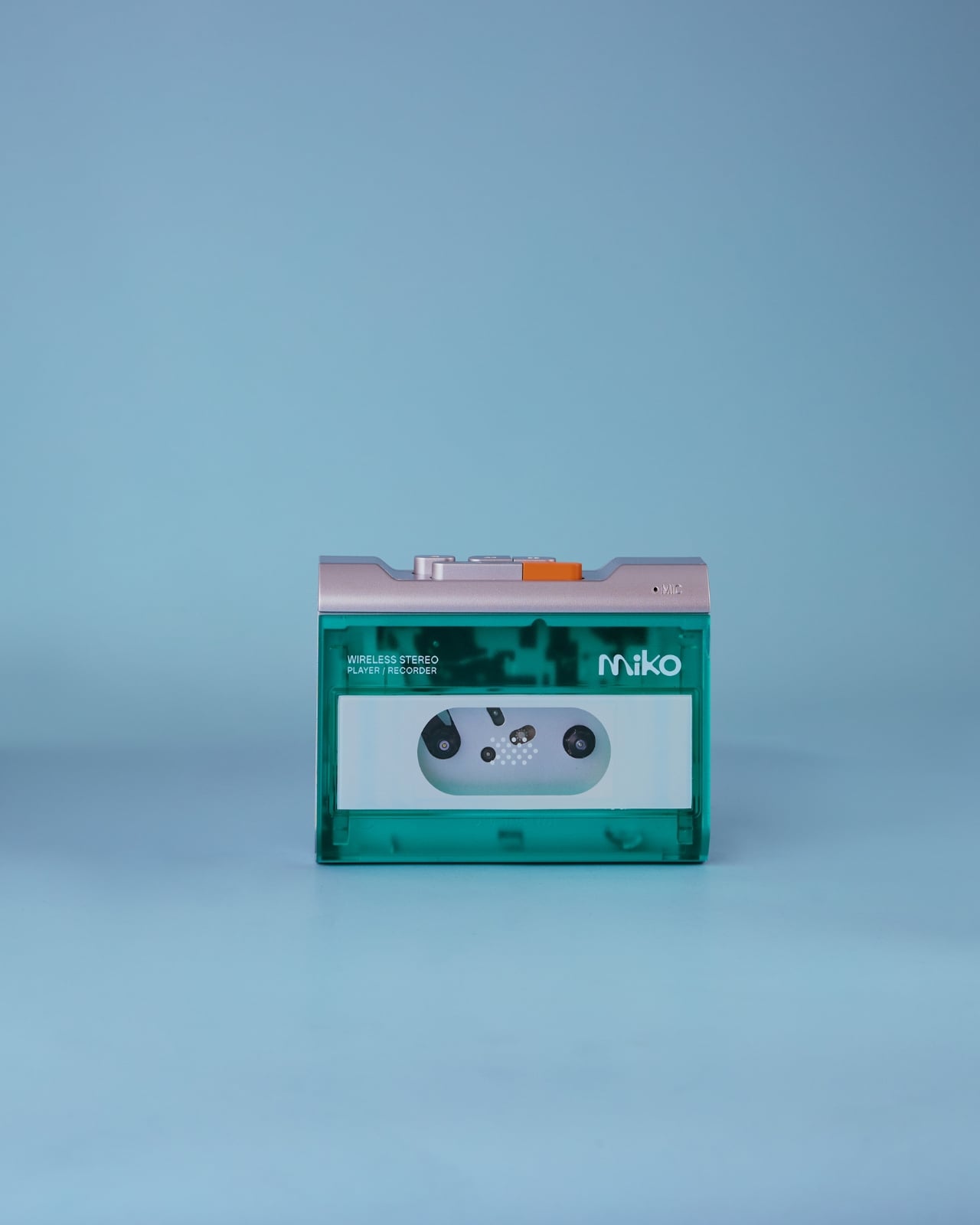
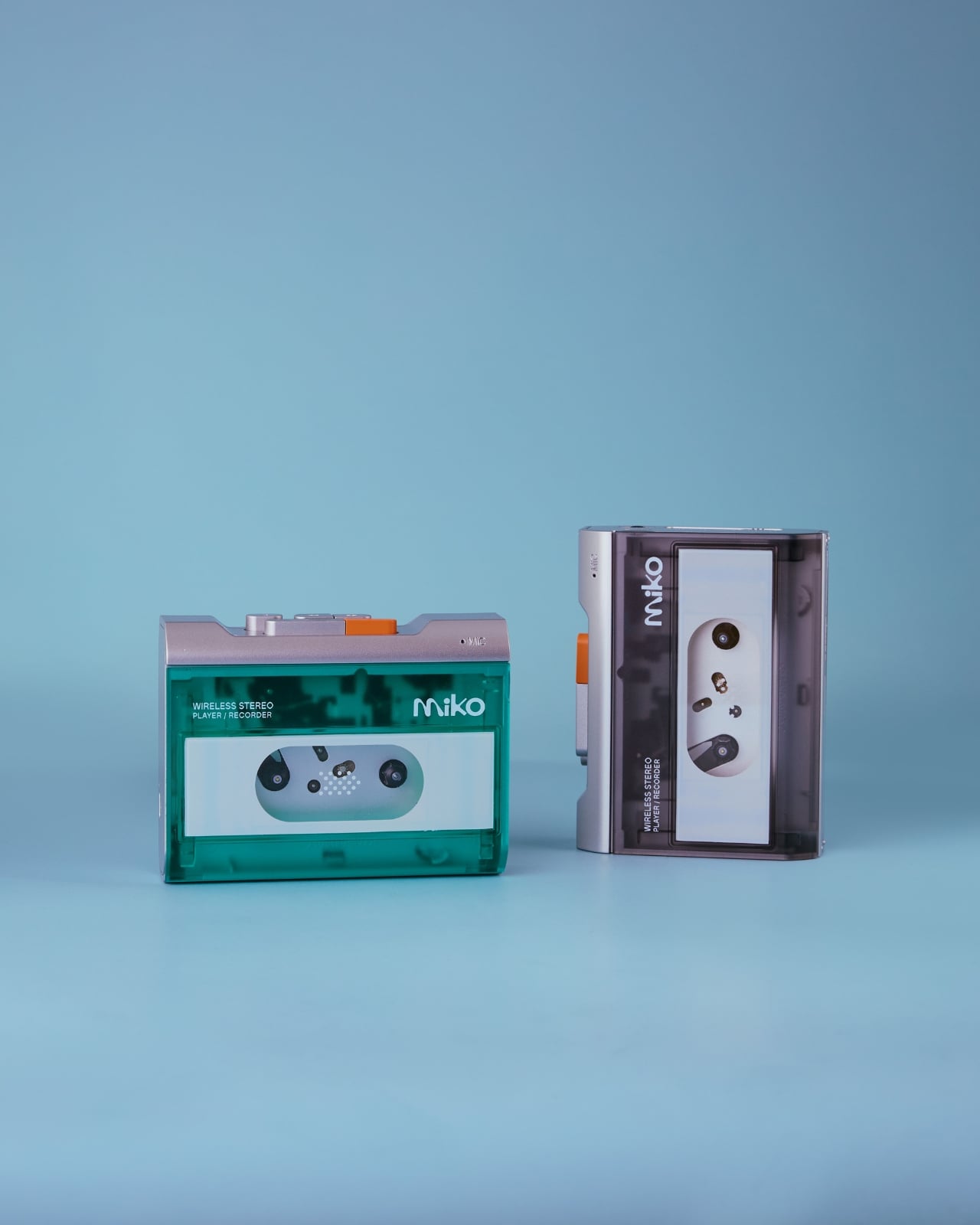
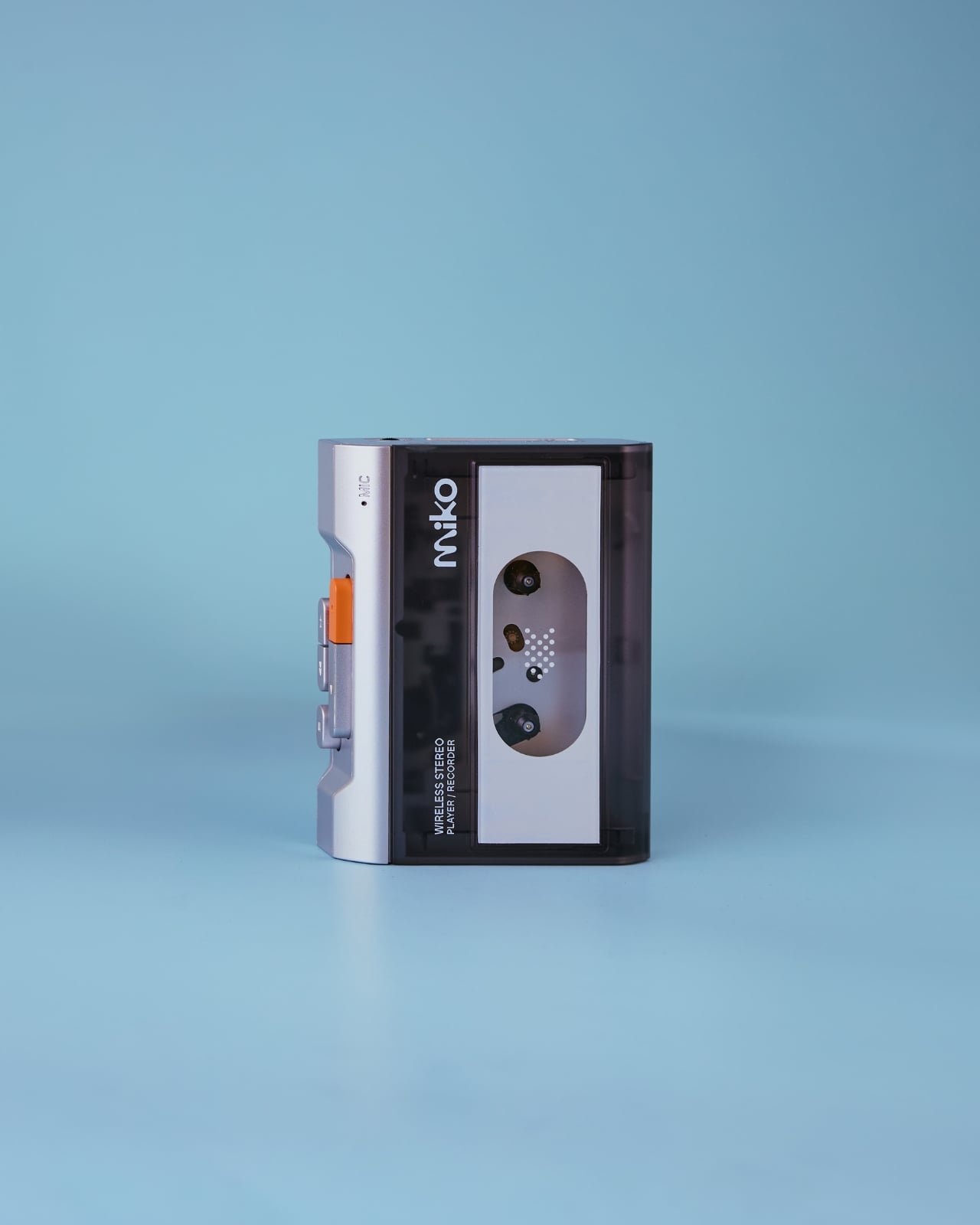
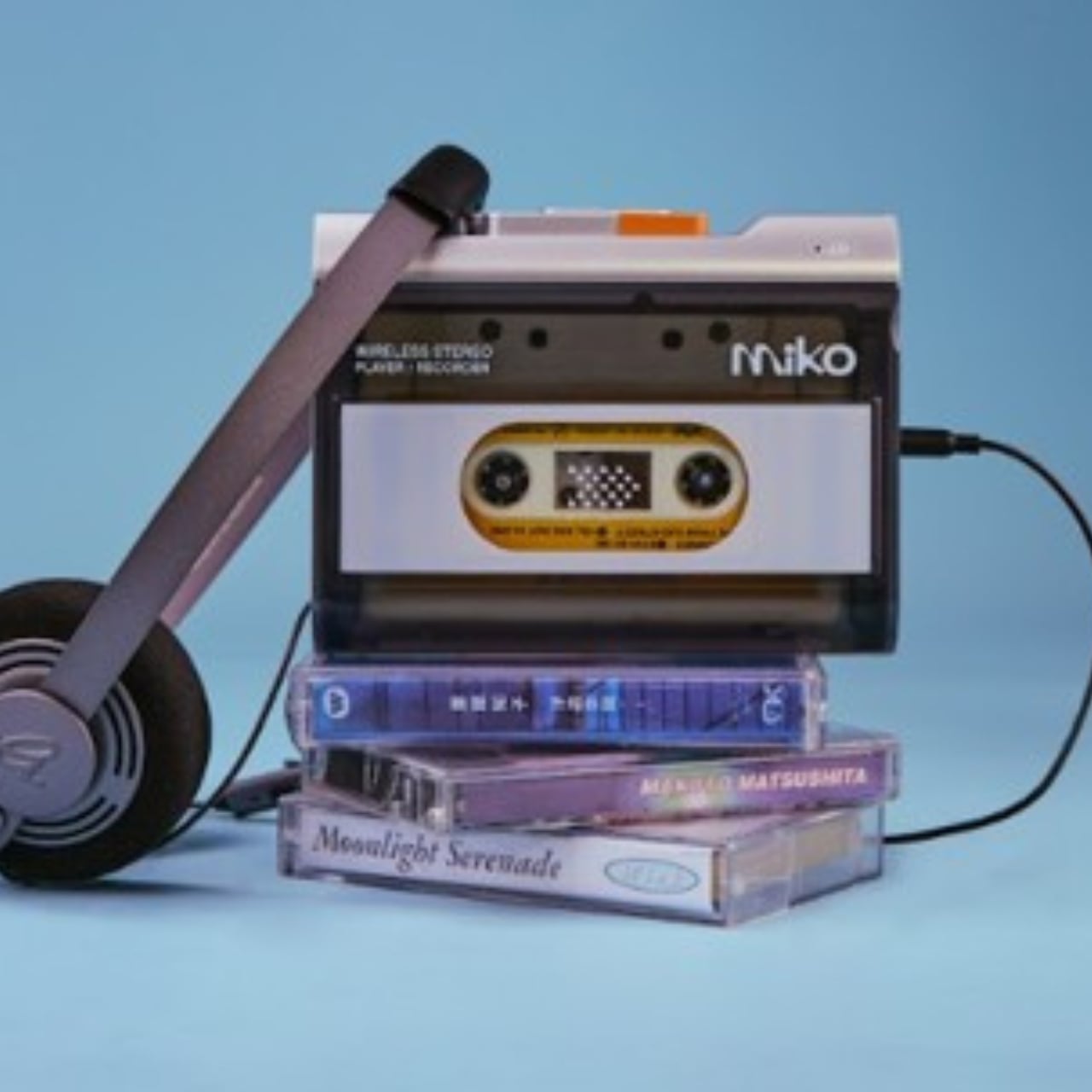
Gadhouse, the audio lifestyle brand behind some genuinely good-looking retro-inspired gear, clearly felt it too. The result is Miko, their first cassette player, and it arrives looking like it has a point to make. The design alone earns attention. Gadhouse drew heavily from the 1985 to 1995 era, a decade widely considered the peak of expressive, personality-driven consumer electronics. Miko carries that DNA through a translucent front cover that lets you watch the cassette move, an aluminum logo detail, and a compact form factor that sits satisfyingly in the hand.

Designer: Gadhouse

It comes in two colorways, Smoke and Mint, and both feel deliberately considered rather than arbitrarily chosen. The Mint version especially hits that sweet spot between vintage and current that a lot of retro-inspired products spend significant design budgets trying and failing to achieve.

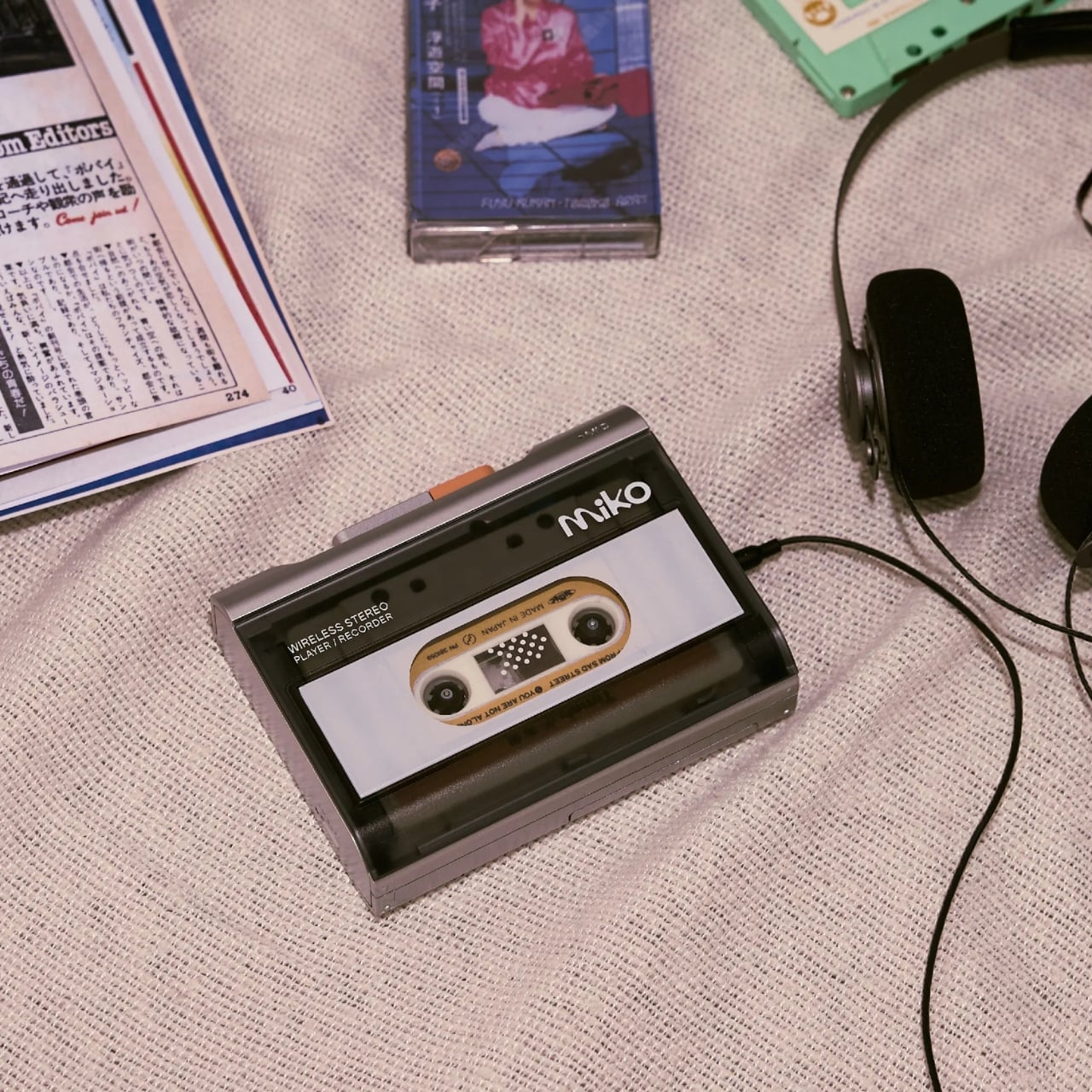
Beyond the looks, Gadhouse made a smart decision not to stop at aesthetics. The Miko runs on Bluetooth 5.3, which means you can pair it with wireless headphones and walk out the door untethered. There is also a 3.5mm stereo output for those who prefer a wired setup or own a vintage pair they’re not ready to part with. Both options coexist without one feeling like an afterthought, and that kind of functional honesty is rarer than it should be in products that trade so heavily on nostalgia.

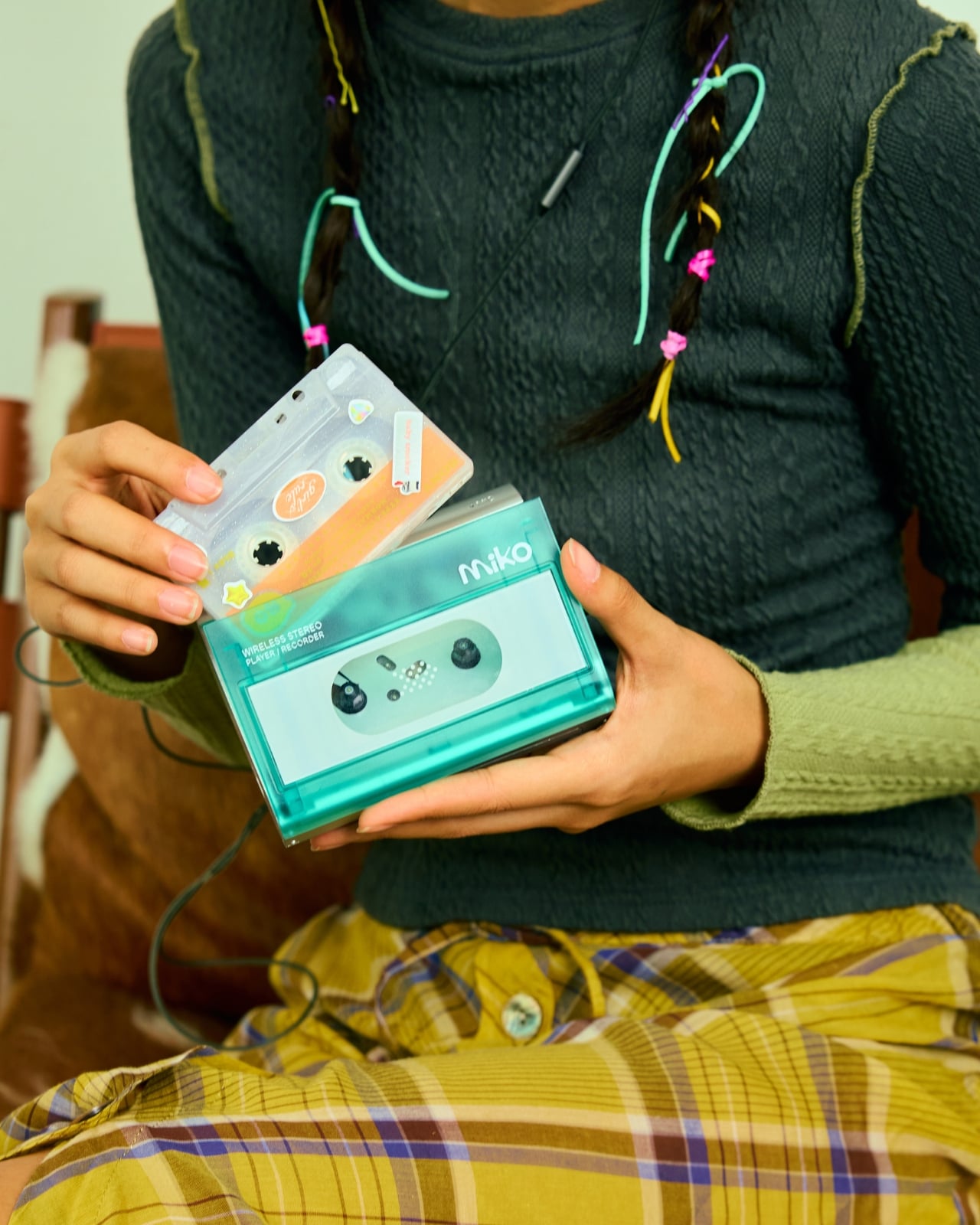
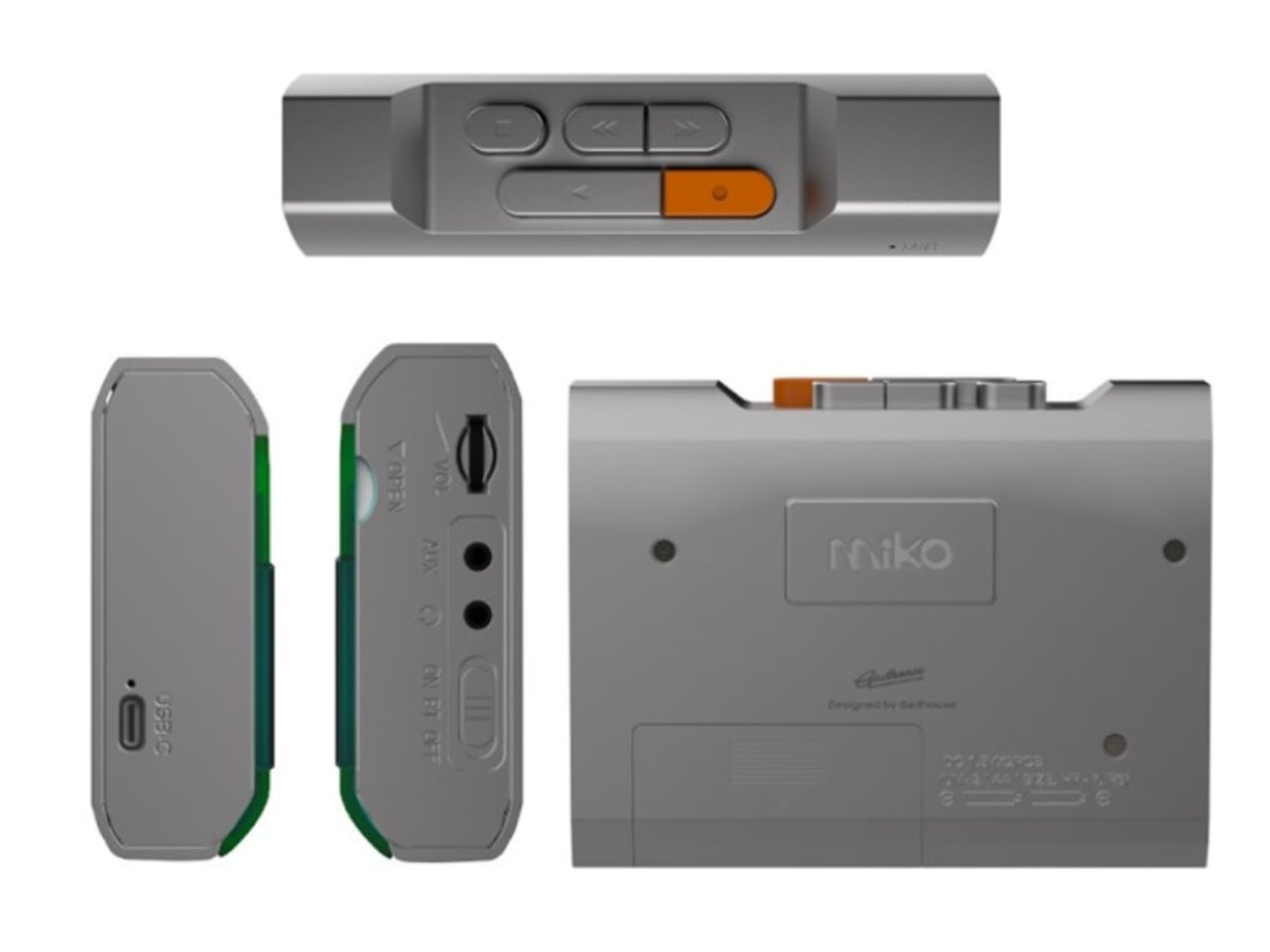
The five-button control system handles play, fast-forward, rewind, stop, and record. That last button deserves its own moment. Miko includes a built-in directional microphone, which means you can record directly onto cassette. Voice notes, song ideas, a mix tape for someone you want to impress, or a playlist you’ve actually curated rather than algorithmically generated. The format shifts from relic to creative tool pretty quickly once you remember that capability is built right in. Gadhouse has also announced plans to release their own line of blank cassette tapes and accessories later this year, which suggests they’re approaching this as a longer-term ecosystem rather than a one-and-done launch.

At 192 grams, Miko is light enough to drop into a bag without thinking twice. It runs on AA batteries and accepts USB-C power input, including directly from an iPhone, which is exactly the kind of considered detail that signals a team that actually thought about how people use things in the real world. The campaign imagery reinforces the tone they’re going for: youthful, a little editorial, tactile. It reads less like a tech launch and more like a lifestyle statement, which, for this kind of product, is probably the right call.

The cassette revival isn’t going anywhere because it was never purely about audio quality. It’s about ownership, tactility, and a kind of deliberate listening that streaming has made increasingly rare. When you play a cassette, you commit to it. You flip it, you fast-forward past songs you skipped last time, you sit with the imperfections. Holding a tape, choosing it, pressing play. That sequence means something to people. That’s not nostalgia talking, that’s human behavior. Miko seems to understand this, and it packages that understanding into something that actually functions well in 2026, without trying to be a museum piece or a tech gimmick.

The Gadhouse Miko Cassette Player is priced at $99/£59.99 and available now from the Gadhouse website and global partners, with major retailers including Amazon, HMV, Currys, Tesco, and John Lewis expected to follow. Starting April 30th, it can be bundled with Gadhouse’s Wesley Retro Headphones for $149/£109. For anyone already deep into the format or simply cassette-curious, this might be the most considered entry point on the market right now.

The post Gadhouse’s $99 Miko Is the Cassette Player the Revival Needed first appeared on Yanko Design.
Gadhouse’s $99 Miko Is the Cassette Player the Revival Needed

Cassette tapes are having a moment, and that moment is refusing to end. According to Billboard, cassette sales have grown more than 440% over the past decade, and in the first quarter of 2025 alone they more than doubled, hitting numbers not seen in 20 years. This isn’t a blip or a quirky indie niche. It’s a full-on cultural movement, and whether you’re old enough to remember rewinding a tape with a pencil or you’ve been hunting down limited editions on Bandcamp, you’ve probably felt its pull.

Gadhouse, the audio lifestyle brand behind some genuinely good-looking retro-inspired gear, clearly felt it too. The result is Miko, their first cassette player, and it arrives looking like it has a point to make. The design alone earns attention. Gadhouse drew heavily from the 1985 to 1995 era, a decade widely considered the peak of expressive, personality-driven consumer electronics. Miko carries that DNA through a translucent front cover that lets you watch the cassette move, an aluminum logo detail, and a compact form factor that sits satisfyingly in the hand.

Designer: Gadhouse

It comes in two colorways, Smoke and Mint, and both feel deliberately considered rather than arbitrarily chosen. The Mint version especially hits that sweet spot between vintage and current that a lot of retro-inspired products spend significant design budgets trying and failing to achieve.

Beyond the looks, Gadhouse made a smart decision not to stop at aesthetics. The Miko runs on Bluetooth 5.3, which means you can pair it with wireless headphones and walk out the door untethered. There is also a 3.5mm stereo output for those who prefer a wired setup or own a vintage pair they’re not ready to part with. Both options coexist without one feeling like an afterthought, and that kind of functional honesty is rarer than it should be in products that trade so heavily on nostalgia.

The five-button control system handles play, fast-forward, rewind, stop, and record. That last button deserves its own moment. Miko includes a built-in directional microphone, which means you can record directly onto cassette. Voice notes, song ideas, a mix tape for someone you want to impress, or a playlist you’ve actually curated rather than algorithmically generated. The format shifts from relic to creative tool pretty quickly once you remember that capability is built right in. Gadhouse has also announced plans to release their own line of blank cassette tapes and accessories later this year, which suggests they’re approaching this as a longer-term ecosystem rather than a one-and-done launch.

At 192 grams, Miko is light enough to drop into a bag without thinking twice. It runs on AA batteries and accepts USB-C power input, including directly from an iPhone, which is exactly the kind of considered detail that signals a team that actually thought about how people use things in the real world. The campaign imagery reinforces the tone they’re going for: youthful, a little editorial, tactile. It reads less like a tech launch and more like a lifestyle statement, which, for this kind of product, is probably the right call.

The cassette revival isn’t going anywhere because it was never purely about audio quality. It’s about ownership, tactility, and a kind of deliberate listening that streaming has made increasingly rare. When you play a cassette, you commit to it. You flip it, you fast-forward past songs you skipped last time, you sit with the imperfections. Holding a tape, choosing it, pressing play. That sequence means something to people. That’s not nostalgia talking, that’s human behavior. Miko seems to understand this, and it packages that understanding into something that actually functions well in 2026, without trying to be a museum piece or a tech gimmick.

The Gadhouse Miko Cassette Player is priced at $99/£59.99 and available now from the Gadhouse website and global partners, with major retailers including Amazon, HMV, Currys, Tesco, and John Lewis expected to follow. Starting April 30th, it can be bundled with Gadhouse’s Wesley Retro Headphones for $149/£109. For anyone already deep into the format or simply cassette-curious, this might be the most considered entry point on the market right now.

The post Gadhouse’s $99 Miko Is the Cassette Player the Revival Needed first appeared on Yanko Design.

The Kids’ Phone With No Screen, No Apps, and Only $100

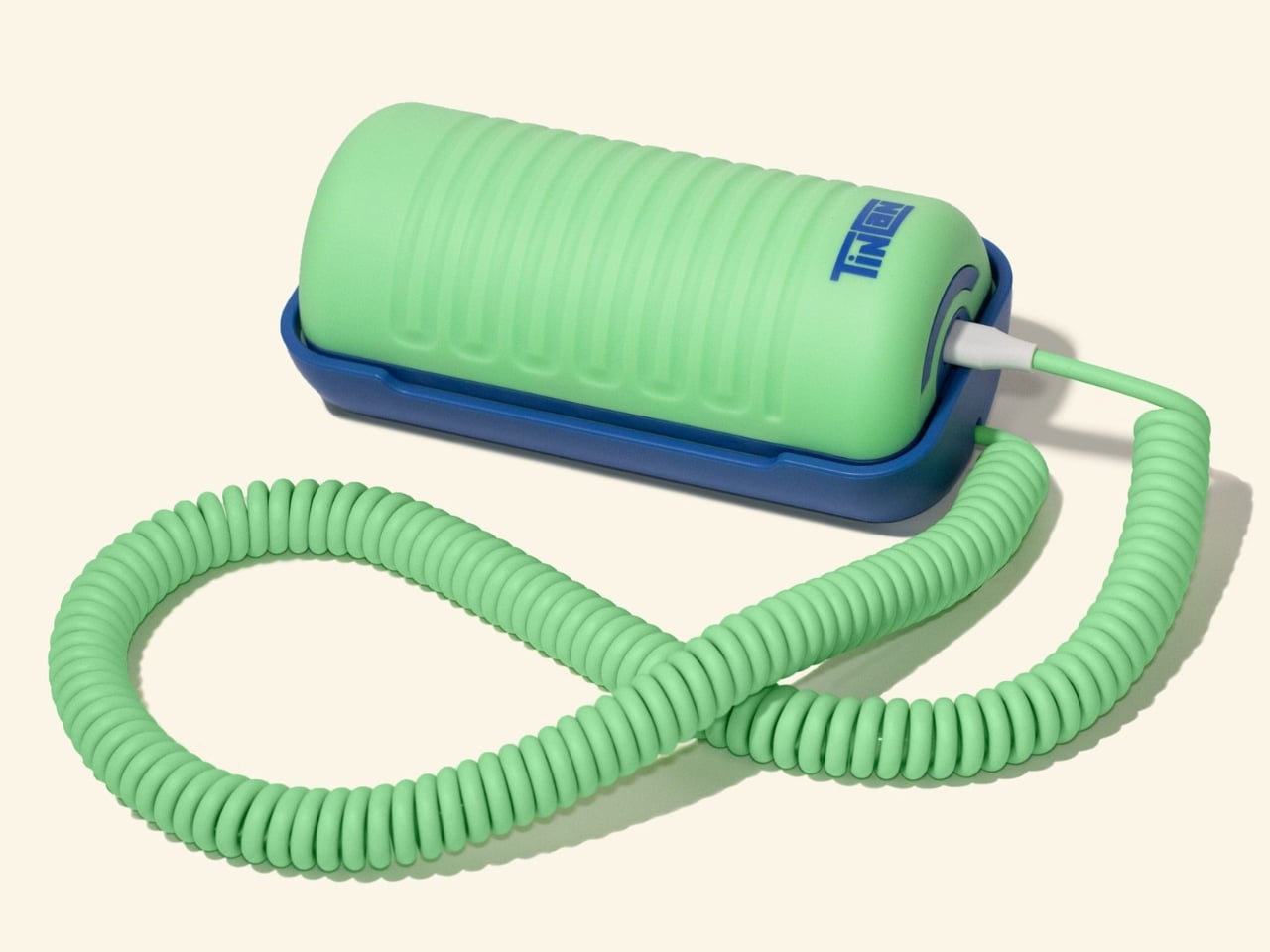
The moment you see the Tin Can, you know exactly what it is and also what it isn’t. It’s a landline phone, complete with a handheld receiver and a curly cord, designed to sit on a countertop or mount on a wall. It isn’t a smartphone. It isn’t a tablet. It doesn’t have a screen. And that’s entirely the point.
Tin Can is the brainchild of three Seattle-based dads: Chet Kittleson, Max Blumen, and Graeme Davies, who created it after hitting the same wall millions of parents run into. Their kids were at that in-between age, old enough to want independence and social connection, but too young to be handed a device with unrestricted internet access. The options available were either too much or not enough. As the founders put it: “Everything out there felt like a compromise, too much tech, too much access, or just another screen to manage.” So they built something else entirely.

Designers: Chet Kittleson, Max Blumen, and Graeme Davies

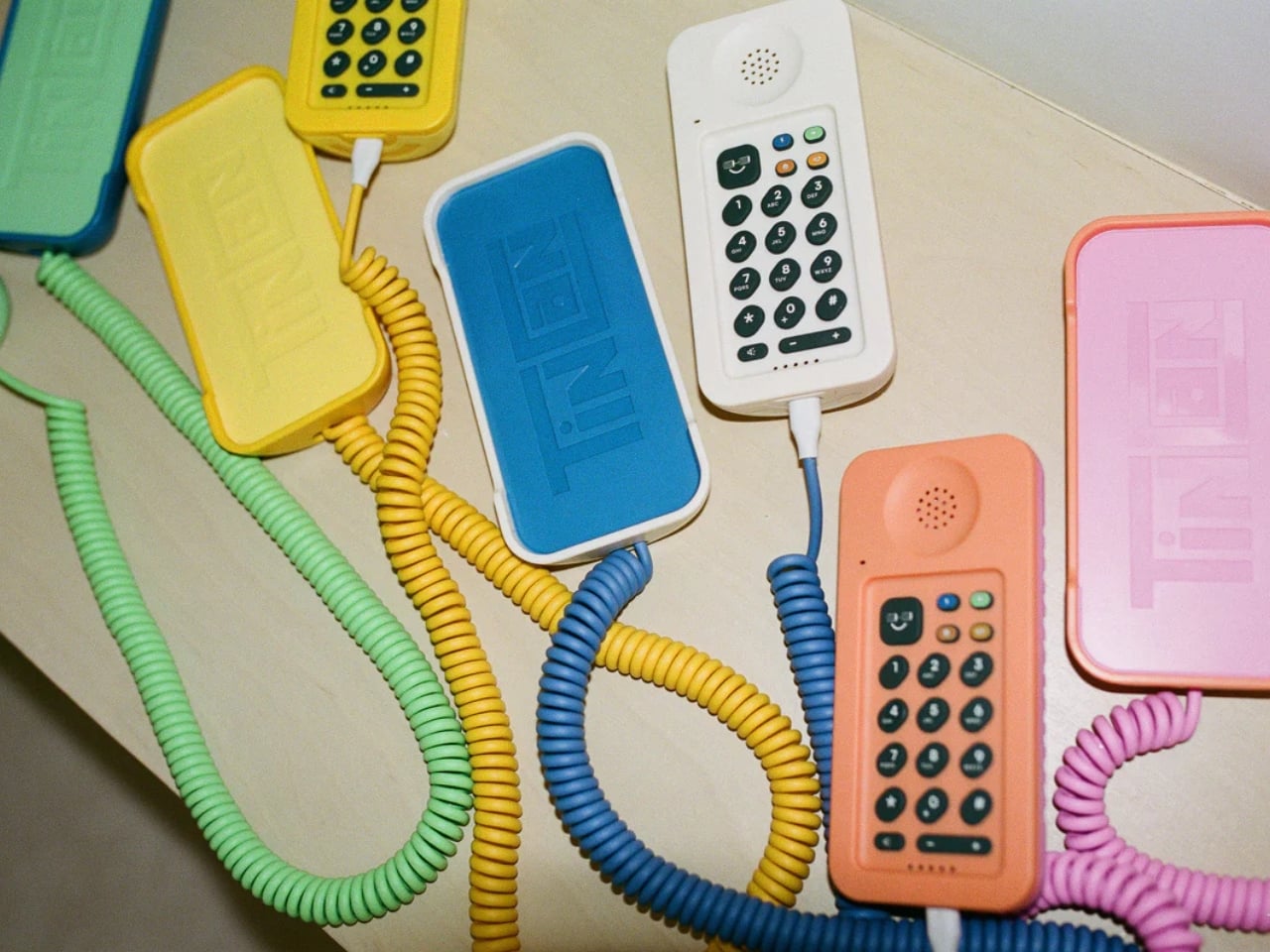
The Tin Can works through Wi-Fi but without any browsing capability, social media, or texting. Children can only call and receive calls from a parent-approved list of contacts, managed through a companion app that only parents can access. Quiet hours and Do Not Disturb can be scheduled. Voicemails are supported. That’s it. That’s the whole phone. And it turns out, that’s more than enough.

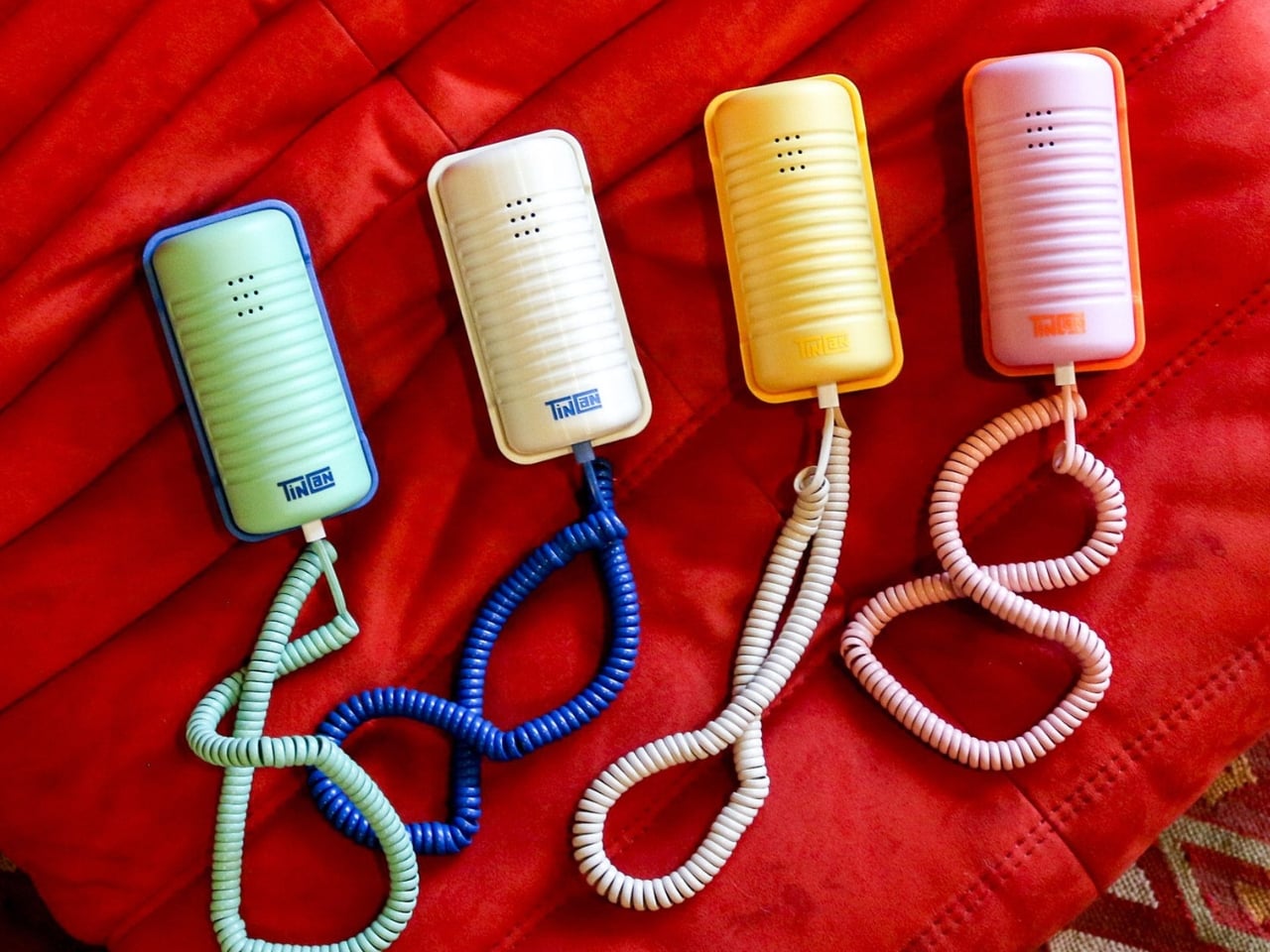
From a design standpoint, the product is refreshingly considered. The cylindrical Tin Can model has a playful, almost cartoonish quality that looks deliberate rather than dated. Its colorful palette, with names like “Answer Me Aquamarine,” signals that this wasn’t designed to collect dust in a hallway. The other model, the Flashback, leans harder into nostalgia, styled after the wall-mounted phones of the 1980s and connecting via ethernet cable rather than Wi-Fi. Both feel like products made by people who actually thought about what a child’s first phone should feel like, not just what it should do.

I’ll be honest, my initial reaction to this was mild skepticism. We’ve seen “screen-free” devices for kids before, and they tend to be clunky, joyless compromises that kids tolerate for about two weeks before losing interest. Tin Can feels genuinely different. Part of that is the design, which doesn’t try to mimic a smartphone and fail. It commits fully to being a phone, a beautiful, strange little object that sits in your home and rings. Part of it is the clarity of the concept. The product makes no attempt to sneak in “just a little” content or add a casual app or two for good measure. That restraint is its biggest strength.

The market response has been telling. Since launching, Tin Can has reached users in all 50 US states and across Canada, raised $3.5 million in funding, and sold through its first batches fast enough to crash at Christmas. The founders have described the reception as overwhelming, and it’s not hard to see why. Parents have been waiting for exactly this, a middle ground between total dependence on mom’s phone and a fully connected smartphone, and no one had bothered to build it yet.

What also makes Tin Can compelling is that it re-centers something communication technologies quietly stripped away: the social ritual of calling someone. You pick up the receiver, you dial, you wait, and you talk. No typing, no video filters, no leaving someone on read. It’s a more focused, more present kind of connection, and kids who grow up with it might just develop a better instinct for actual conversation.

The Luddite movement has spent years arguing that smartphones reached kids too early and too fast. Tin Can doesn’t join that argument. It sidesteps it entirely by offering something genuinely useful, beautifully designed, and completely free of the features that make smartphones so hard to put down. Whether you call it nostalgia or just good design thinking, the result is the same: a phone worth answering.

The post The Kids’ Phone With No Screen, No Apps, and Only $100 first appeared on Yanko Design.