Logitech revamps their popular X Plus Gaming Mouse with a ‘Millenium Falcon’ Edition

For that extremely small subset of people who thought the Logitech G502 X Plus gaming mouse wasn’t perfect enough, the company’s managed to outdo itself with an even better version of its wildly popular wireless mouse. Now sporting the graphics of the Millenium Falcon from the Star Wars franchise, this new edition of the X Plus gaming mouse will be difficult to look away from. It’s also much more responsive, has a gorgeous tactile feel, and can functionally equip you with all the tools you need to demolish your sworn foes… in a game, obviously.

Designer: Logitech

Click Here to Buy Now

It’s difficult to talk about the X Plus’ features without highlighting the new variant’s design. I’d say the edgy aesthetic of a gaming mouse lends itself rather naturally to a sci-fi spaceship, but this one really takes the cake. The top fascia comes with a white and gray color scheme, punctuated with red accents and a pattern that echoes the iconic Millennium Falcon. Underneath, a hidden rebellion logo sits above the Hero 25K sensor, offering sub-micron accuracy and zero smoothing, filter, or acceleration – as precise and reliable as a Jedi’s lightsaber.

Logitech hasn’t overlooked the ambiance, either. The G502 X Plus Millennium Falcon Edition features 8-zone RGB lighting, capable of displaying a full spectrum of colors with custom Millennium Falcon-inspired animations. These animations, alongside the option for media-driven effects and advanced personalization, are accessible through the Logitech G Hub software. The LIGHTSYNC RGB not only adds a dynamic aesthetic to your gaming setup but also includes power-saving play detection to ensure efficiency.

At its core, the G502 X Plus Millennium Falcon Edition is a high-performance tool designed for the elite gamer. With a range of 100 – 25,600 dpi and a 400 IPS max speed, it promises precision and responsiveness that would make even Han Solo envious. The integration of Logitech’s first Lightforce hybrid optical-mechanical switches means users get the best of both worlds: the swift actuation of optical switches combined with the tactile satisfaction of mechanical ones.

The mouse also includes 13 programmable controls, allowing users to customize their gaming experience fully. For those long gaming sessions, the battery life stands robust, offering 120 hours of constant motion (37 hours with RGB on), ensuring that the only breaks taken are voluntary.

The mouse pairs with computers using Logitech’s pro-grade Lightspeed protocol (a hat-tip to the space-warping lightspeed travel system seen in the Star Wars movies). Designed to work without wires, the Lightspeed system is tournament-tested, with a response time that’s a whopping 68% faster than Logitech’s previous protocols.

To complete the intergalactic experience, Logitech offers the Return of the Jedi Collection XL gaming mouse pads. Whether you choose the Battle of Endor or Darth Vader version, your desk will transform into a battleground of epic proportions.

Priced at $159.99, the Millenium Falcon-edition mouse is a premium offering for those looking to add a piece of the galaxy to their gaming setup… and for an additional $59.99 each, the themed mouse pads can further elevate your space.

Click Here to Buy Now

The post Logitech revamps their popular X Plus Gaming Mouse with a ‘Millenium Falcon’ Edition first appeared on Yanko Design.
Minimalist Pomodoro timer promises distraction-free productivity

There are plenty of productivity techniques floating around the Internet, but one of the most popular ones has actually been around even before the Web as we know now came to be. Named after a tomato-shaped kitchen timer, the Pomodoro technique is so simple that it’s too easy to brush it off as trivial, but its effectiveness has also been known for decades. Of course, that has also led to plenty of apps and gadgets that embrace the hype while forgetting the spirit and actually induce stress and distractions rather than productivity. Fortunately, there are better and more creative ways to design a Pomodoro timer, like this minimalist beauty that allows you to enjoy the simple benefits of the technique without having to rely on a clunky analog timer, especially one that looks like an awkward tomato on your desk.

Designer: Gary Peng

The Pomodoro technique is extremely simple and takes advantage of the fact that the human brain can only concentrate on a single thing for a short period of time. In theory, you do that single thing for 25 minutes and then take a break for 5 minutes before repeating the process. Because it’s that simple, you really don’t need complicated tools other than a timer, whether it’s a mechanical kitchen timer or a smartphone app, both of which come with their pros and cons. That kitchen timer can look odd on your desk and a mobile app risks distracting you with other things on your device.

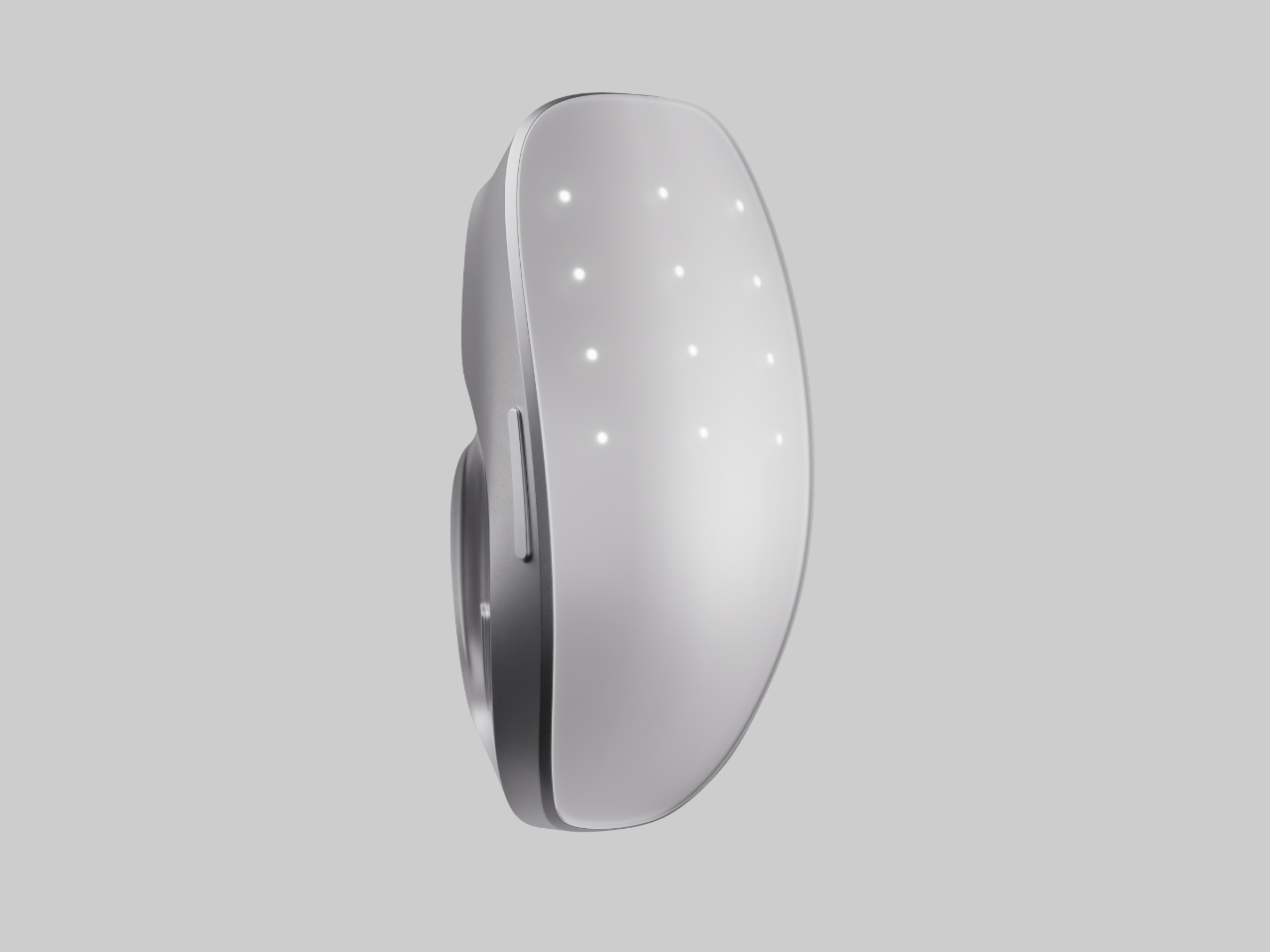
POD is a tool that combines the feeling of an analog timer with the convenience of an electronic device in a simple yet attractive form. It’s nothing more than a small white puck that has five very discreet dot lights on top arranged in an arc. There is no control other than pushing the puck down like a button, which is what starts the countdown.

1

1

Each dot of light represents either five or one minutes, depending on the mode. When you’re in “work” mode, the lights count down to 25 minutes in total, while “break” mode is the usual five-minute period of rest. The POD is also minimally distracting, using only flashing lights to get your attention rather than sounds or vibrations. This means you can easily use it in environments where you need to be very quiet, like in a library.

The POD also relies on trusty CR2032 batteries that you can easily replace, so you won’t have to worry about running out of juice for a long time. Its minimalist charm will make it look at home on any desk, table, or shelf, and doesn’t induce the same tension and stress the same way that a ticking kitchen timer would.

The post Minimalist Pomodoro timer promises distraction-free productivity first appeared on Yanko Design.
Minimalist alarm clock and speaker can help kids manage time without screens

There are parents who would like to wean their children every once in a while from screens because they believe that it may be rotting their brain or something. But even these parents will sometimes have to admit that they still need technology to manage their children’s lives or to teach them things like productivity and time management. So product developers are coming up with non-screen devices to help parents and kids navigate life.

Designer: Pupupula

The Little House Alarm Clock is one such device that has a pretty basic display but still utilizes technology to help children manage their time and schedule properly. It’s basically a smart speaker with a built-in intelligent voice assistant to help the kids (and maybe adults) out. The display will only show the time, date, temperature, humidity, as well as the time of the next alarm set, which means the next upcoming schedule.

The design is that of a tiny house that should look at home whether in the kid’s room or in your living room. It has a light source but it is underneath the outer shell to give off a softer look to its orange nightlight. There are only two buttons to make it simple: a red chimney and a blue mute button. They complement the minimalist design with its white body color. You can also adjust the backlight for the screen by pressing the chimney or through the app.

The alarm clock has four different customized nature themed alarm sounds that match the animation that will show up on the display. There is also a Sleep Mode which will dim the lights and will turn off the mic so that everyone can really rest. The voice assistant when active can set reminders, play music, tell stories, and other tasks that don’t need a screen for your kids. It seems like an interesting device to have if you still want technology to help you out but not necessarily your smartphone or tablet.

The post Minimalist alarm clock and speaker can help kids manage time without screens first appeared on Yanko Design.
Explore Instagram in a refreshing interface with this retro-modern gadget

For those who just can’t resist scrolling their Instagram feed, a standalone gadget is the way to go. The easy accessibility to carry it along in your pocket and access anytime. This is the Retro Instagram Gadget that carries the charm of the classic 90s designs with a definitive element of the old television and a semblance of retro gaming console shapes.

But don’t let the looks fool you as the concept gadget is fitted with state-of-the-art technology to enjoy Instagram on your terms. Loaded with the latest wireless and Bluetooth configuration, the gadget lets you upload your favorite photos and videos on the fly.

Designer: Edwar Banquet

The accessory makes complete sense for someone who’s using Instagram for content creation or taking advantage of business avenues in the online space. The ability to update the latest from your kitty without having the distractions of phone calls or messages from other apps is the high point here. Casual users can also simplify their Instagram checking rituals with this lifestyle accessory. There are dedicated buttons for interacting with your followers, scrolling the feed, typing in your responses on comments, or simply sharing content with buddies.

The long-lasting battery on this one can last for days, so even if you are constrained by charging issues during travels or busy office hours, the Retro Instagram Gadget doesn’t disrupt your updating schedule. The nostalgic element of this accessory makes you want to appreciate the finer things in life and the tactile button input further enhances the usage experience.

Using this standalone gadget makes sense for people who use Instagram extensively. For those who use other social media platforms as well, they are better off with their multi-tasking bundle of joy – yes your smartphone!

The post Explore Instagram in a refreshing interface with this retro-modern gadget first appeared on Yanko Design.
The DJI FPV2 ‘hybrid’ drone can race as well as take aerial photos with its Hasselblad camera system

After years of developing some of the world’s leading aerial drones, DJI debuted the Avata last year, their first-ever ‘FPV’ racing drone… and that got designer Kim Seung-cheol asking – Why must there be separate drones for aerial photography and first-person racing? Why can’t one drone successfully do both? To that end, the DJI FPV2 does the unthinkable by being the world’s first ‘hybrid’ drone capable of FPV racing as well as stabilized aerial photo and videography, thanks to its clever design that borrows the best from both worlds.

Designer: Kim Seung-cheol

The FPV2 drone doesn’t have a radically different design, but rather relies on a few tweaks to its appearance and control system to give it the power of rapid directional flight as well as controlled hovering for stable videography. It relies on a leaning propeller format that’s ideal for FPV-style racing drones. The propellers are located at a slant and positioned diagonally, making the drone look like it’s bending forward. This is perfect for allowing the drone to lunge ahead as it takes off, giving it a significant advantage when racing with other drones or when trying to reach high speeds. However, for aerial photography and videography, the drone simply leans backwards, allowing the propellers to now be parallel to the ground. The gimbal-mounted camera makes up for this while in aerial photography mode.

As an obvious upgrade to its Avata and Mini lines, the FPV2 has a new dual-lens camera system powered by Hasselblad (a partnership continuing from their collaboration on the Mavic 3). Quite similar to the Air 3 drone, the FPV2 has a dual-lens gimbal-mounted camera that can look in all directions for filming sceneries, focusing on subjects, and racing. This doesn’t include the multiple cameras located around its periphery for tracking its environment, avoiding objects, and navigating routes.

A large, easily replaceable battery powers the FPV2, allowing you to quickly hot-swap modules to keep your FPV2 running without downtime for charging. The battery’s mass and its rear location help it counterbalance the drone’s forward-leaning stance, or rather the inverse. The drone races forward with a raised back, preventing the battery pack from dragging it down or influencing its course.

To accompany the drone, Kim Seung Cheol also designed a new set of MR goggles and a controller handle. The compact goggles come with their own pass-through cameras, and sport flip-out antennas for better signal during flight (especially FPV racing). A cushioned headrest with a built-in battery keeps the equilibrium of the headset while also ensuring you can wear it for longer hours without feeling any strain.

Given the immersive nature of the MR headset, the FPV2 also comes with its own RC Motion 2-inspired handheld control that you can intuitively use to maneuver your drone while in flight. The single handheld controller has a gyroscope that detects when it’s being tilted forward or backward, translating that into instructions for the drone to follow. A trigger lets you accelerate, while a joystick gives you more precise control. A large button on the front marked M lets you alternate between racing and aerial modes.

What really gives the FPV2 its edge is the case it comes in, which doubles as a massive battery pack for the drone, controller, and MR headset. Think TWS earbud charging case but bigger and better. Designed to hold your gear when not in use, the carrying case also juices your device batteries while giving you a battery status indicator in the bottom right corner, so you know which particular gizmo needs a recharge.

What the DJI FPV2 proposes isn’t too radical. Some drones are built for racing, others for stabilized content creation… so why not build a drone that can do both? It’s not like the hardware is massively different between the two drone types, and as far as the overall design goes, I’m sure both functions can be achieved within a specially tuned form factor. Maybe DJI is working on something like this, it’s difficult to tell. The company hasn’t debuted a Gen-2 of its Avata FPV drone, so we’re due for an updated racing drone from the consumer/professional-grade UAV manufacturer.

The post The DJI FPV2 ‘hybrid’ drone can race as well as take aerial photos with its Hasselblad camera system first appeared on Yanko Design.
Duracell Portable Power Stations are like gigantic alkaline batteries

We’ve seen our fair share of portable power stations, and most of them roughly share the same designs. They come in rectangular box shapes and bear rugged materials, which makes it easier to transport them from place to place if needed. There isn’t any rule that says they have to be made that way, though, especially if you’re willing to skimp a little on the battery capacity to add some style and flourish. For example, Duracell, a name long associated with batteries, has had the rather amusing idea to pay homage to its most popular product line, resulting in portable power stations, or extra large power banks, that look like overgrown D-size batteries, with a few tricks up their sleeves that add some flavor to a normally boring piece of tech.

Designer: Duracell

There was a time when consumer electronics revolved around these cylindrical batteries that had to be thrown away once they lost their charges forever. We’ve thankfully mostly moved on from these wasteful energy sources, replacing them with rechargeable and reusable variants, but there’s still a certain fondness attached to the image of these old alkaline batteries that have become icons of their kind, just like floppy disks. Riding on the nostalgia trend these days, Duracell had the clever idea to put that iconic design on a portable power station, almost like a tongue-in-cheek joke on these extra-large batteries.

The Duracell M250 and M150 both look like giant D batteries, complete with a black and bronze color scheme and a smaller disc shape on top that designates the positive end of the cylinder. They’re rather small compared to most portable power stations but also considerably larger than even the largest power bank. The size differences are quite understandable considering these two only have 60,000mAh and 25,000mAh battery capacities for the M250 and M150, respectively, though those are enough to charge most electronic devices, including a laptop via the 100W USB-C port. The larger Duracell M250 even has a 100W AC port for other use cases.

The portable power stations have more than just looks, though. That protruding disc at the top actually functions as a MagSafe-compatible 15W wireless charger, and you can lift that top lid to tilt an iPhone or iPad to the desired angle so you can watch your screen even while charging. Tilting that cover also reveals a small storage compartment for cables and chargers, things you’d want to keep near the power station. To charge the power station itself, you’d have to put it on the included dock, an elegant solution that unfortunately means having to carry a separate part with you on your trips.

Admittedly, this traditional battery form is not the most space-efficient shape for traveling, putting the “portable” part of its name into question. Still, there’s no argument that it’s an interesting design for a portable power station, putting an almost poetic spin on the product category. It will definitely be an eye-catching presence in coffee shops or even on planes, though interest could turn into derision when you start fumbling to put the large can in your bag or luggage.

The post Duracell Portable Power Stations are like gigantic alkaline batteries first appeared on Yanko Design.
Top 10 Retro Gadget Gifts With Innovative Functionality That Evoke Nostalgia For Every Man

There’s something about all things retro that I simply cannot resist. I love products that evoke a deep sense of nostalgia within us and take us right back to the 80s. As innovative and futuristic gadgets are today, sometimes you just feel like escaping from all the modernism and immersing yourself in the simplicity of the past. To help you experience this, we’ve curated a collection of retro-inspired gadgets that promise to take you on a trip down memory lane, and they’re designed especially for your home. From a Nixie tube tabletop clock to a modular arcade system – this collection of gadgets is the perfect little retro addition to your living space! Though these gadgets are wonderfully retro-esque, they have been imbibed with modern functionality. Their aesthetics may be from their past, but their utility is embedded in the future.

1. NIXOID NEXT

Nixoid got their hands on Nixie tubes and designed the steampunk-inspired NIXOID NEXT which is equipped with really rare Nixie VFD lamps that were discovered 25 years ago. The design mixes a healthy dose of retro and futurism by fitting a technology old as retro tubes into a modern wristwatch avatar.

Click Here to Buy Now: $420 $480 ($60 off).

Why is it noteworthy?

The watch incorporates an accelerometer that lights up the VFD tubes light up when tilted toward the user. Fun fact, these tubes were discovered in a warehouse from the days of the USSR, making it a historic limited-edition collectible.

What we like

  • Features charging points on the back making it extremely easy to charge
  • Features a scratch-resistant sapphire case

What we dislike

  • There is a 1.5 second pause in which the watch changes it display from hours to minutes, so both the hour and the minute cannot be seen simultaneously.

2. Wall-hanging CD Cover Player

This minimalist CD player is a super unique retro design that perfectly combines a distinctive listening experience with the impact of visual art. You don’t need to set aside the CD jacket or sleeve, you can simply slip it inside the specially-designed pocket, allowing you to display it.

Click Here to Buy Now: $179 $199 (10% off at checkout). Hurry, Holiday Sale ends in 24 hours!

Why is it noteworthy?

This CD player is the physical equivalent of displaying digital album art, but with the perk that you also get to showcase the fact that you own the physical original CD.

What we like

  • Extremely portable design, boasting a 40mm full-range speaker and a woofer unit, so you can listen to your music by placing it anywhere in your room or while carrying it with you while you travel.
  • A 1,800mAh battery delivers 7-8 hours of unparalleled audio experience wherever you go.

What we dislike

  • Solely an analog style of listening to music, it does not support syncing music or playlists with any digital medium.

3. Vestaboard

The Vestaboard is a striking one-of-a-kind messaging display that offers an alternative to smartphones. It is a simple, memorable, and super-engaging design that allows you to stay in touch with your loved ones and cheer them up from anywhere. Add to it the old-age charm of the flipping panels, and the Vestaboard looks great wherever you place it.

Click Here to Buy Now: $2995 $3295 (Use Coupon Code “INSPIRE” to get an additional $300 off).

Why is it noteworthy?

Vestaboard offers 6 rows of 22 split-flap character units that can each display letters, numbers, symbols, and all the colors of a rainbow. That gives you a total of 132 “bits” that you can from a mobile app or the Web, allowing you to easily send messages to anyone at home or in the office.

What we like

  • Displays inspirational quotes, personalized messages, reminders, to-do lists, schedules, and more

What we dislike

  • You cant access Google Calendar and other features like the weather and sports scores without a Vestaboard+ subscription
  • The included power cord is pretty short

4. Retro 35W GaN Charger

Dubbed the Retro 35W GaN Charger, this charging brick is inspired by the original Macintosh computer and is complete with the MacOS ‘smiling’ logo which is showcased on the little computer’s screen. And if you get bored of watching the MacOS logo, you can swap it with other personalized stickers you can DIY for added fun.

Click Here to Buy Now: $26.44 $51.81 (49% off).

Why is it noteworthy?

Built with a GaN semiconductor on the inside, the tiny charger comes with a max output of 35W, which is enough to fast-charge your iPhone or any other gadget. Plug it in and not only does it charge your device, but the Mac’s screen comes to life too, lighting up in white, yellow, blue and green colours to let you know your device’s charging status!

What we like

  • Delivers up to 35W of fast charging experience
  • Can be upgraded to create a complete Travel Set that works with all the plugs (UK, EU, and AU) to help you take it around the world

What we dislike

  • The matching retro cable needs to be purchased separately

5. Long Weekend

The Long Weekend designed by Moment is a 35mm point and shooter with an adorable disposable-camera aesthetic, and a reusable film design. It is excellent for holidays, special events, and get-togethers. The minimal design comes in 2 colours – a default black and a even more retro-inspired cream that brings to mind the original PC and monitor designs of the years gone by.

Click Here to Pre-Order: $49.99

Why is it noteworthy?

The photos it clicks have a distinct retro appeal with the focus-free 31mm, F9 optical grade acrylic lens that gives your images a dreamy 90s aesthetic. It has an incredibly modest price tag of $49.99.

What we like

  • Perfect camera for low-stakes high-memories photography
  • Allows users to experiment with different film stocks

What we dislike

  • No adjustable settings for shutter speed or aperture, hence reducing creative control

6. The Nextube

The Nextube is designed to be a vintage-inspired tabletop display that features 6 nixie tube-like screens docked within a wooden base. It has a unique steampunk aesthetic on its sleeve, and modern tech tucked under its hood. Add a warm glow to your desk or customise it with special characters to display a message that means a lot to you – either way this design is sure to amplify your space.

Click Here to Buy Now: $119 $189 ($70 off).

Why is it noteworthy?

The six mini displays look like Nixie tubes, but are, in fact, LED screens that can be customized to showcase anything from the time to the weather, music visualizations, crypto prices, or even a subscriber count for your YouTube or TikTok page.

What we like

  • Allows you to view the time, date, weather, and a wide variety of data points in a charming vintage way

What we dislike

  • The tubes aren’t designed to be operated 24/7 and can deteriorate pretty quickly over time

7. The Floating Record

Dubbed the Floating Record, this high-performance turntable is designed to play your record vertically, using built-in full-range stereo speakers! With a walnut wood base and a Carbon Fiber Tone-arm, the turntable boasts of high-quality materials that will add more oomph to any living space.

Click Here to Pre Order: $899

Why is it noteworthy?

They’ve reimagined turntable technology to create a visually and mechanically sound way to experience and enjoy vinyl music. The Floating Record is designed for all the vinyl lovers out there – from the first-time record listener to the seasoned vinyl enthusiast.

What we like

  • You don’t need to set up any external gear, it’s all integrated into the design
  • Perfectly merges with different interiors and environments

What we dislike

  • Quite fragile, and prone to skipping if you don’t position the record properly.

8. Polycade Sente

The Polycade Sente is an ingenious design that allows the owner to mix the hardware components they need, allowing them to swap out controllers to support different kinds of playing styles, and more than just a single player.

Click Here to Buy Now: $1999 $2499 (Get $500 off Presale Discount).

Why is it noteworthy?

The Polycade Sente lets you easily swap or add different kinds of controllers and input devices to ensure compatibility with almost all games in existence. The center-mounted half panel has inserts for cup holders. Some games require shooting, so Light Gun add-ons can also be installed on each side.

What we like

  • Can be installed on a freestand add-on so you can relocate it anywhere in the room
  • Features a modular design that makes it easy to upgrade or replace parts with standard off-the-shelf components

What we dislike

  • Bulky and space-consuming design, not designed for homes with space constraints

9. ‘A for Ara’ Speakers

‘A for Ara’ has designed two retro-modern speakers with an eclectic blend of design styles. The speakers are called the FS-1 and FS-2, and they have a larger-than-life appeal to them, as well as a nature-inspired whimsical design.

Click Here to Inquire

Why is it noteworthy?

The speakers can broadly be split into their two visual parts, the base unit, which houses the audio drivers and the acoustic cabinet, and the upper phonograph-inspired horn which serves both visual and functional purposes. Visually, it resembles a large morning glory flower, while acoustically it helps amplify sounds and channel them in a particular direction.

What we like

  • Combine audiophile-grade engineering and tuning with an avant-garde appeal

What we dislike

  • Bulky and space-consuming design not intended for smaller homes

10. The Petzval 80.5 f/1.9 MKII Basic Art Lens

The Petzval 80.5 f/1.9 MKII Basic Art Lens is an interesting reinvention of the original 19th-century Joseph Petzval portrait lens. The lens is designed for modern-day analog and digital SLR cameras and is optimized for video. Designed for full frame sensors, it delivers great results with crop sensor cameras as well to help you capture the authentic vintage aesthetics and create a vibe that will help uplift your photos.

Click Here to Buy Now: $399.20 $499 ($100 off).

Why is it noteworthy?

The intriguing lens captures vintage aesthetics using contemporary and modern SLR cameras and even features a large spectrum of beautiful swirly bokeh effects. It is equipped with a helicoid focusing mechanism and a topless aperture diaphragm.

What we like

  • Optimized for still and motion photography
  • Features a dual aperture system with special shape aperture plates

What we dislike

  • Lack of weather sealing and protection for shooting outdoors in the elements

The post Top 10 Retro Gadget Gifts With Innovative Functionality That Evoke Nostalgia For Every Man first appeared on Yanko Design.
3-Minute Cup Noodles Timer Is Powered by the Noodles’ Weight

Because trying to count to 180 myself requires patience I don’t have, KARAKURI constructed a 3D printed 3-minute Cup Noodles timer that is powered by the weight of the meal, slowly lowering the cup to the table’s surface over the course of three minutes. That’s ingenious. Me? I usually lose track of counting after a minute and eat my noodles extra al dente.

The video includes the original 3D computer design from which it was made, as well as all the 3D printed pieces being carefully assembled. Careful assembly – that’s important, especially when you’re dealing with such small, fragile pieces. You can’t just smack everything with a hammer and expect it to work. Or at least that’s what my watchmaking mentor told me after several unsuccessful repair attempts.

I haven’t been eating nearly as many Cup Noodles as I used to because I’m trying to watch my sodium intake, but I basically lived on them in college. And after college. Really, right up until my doctor said I needed to watch my sodium intake a few weeks ago.

If MUJI met Teenage Engineering: This wall-mounted CD player is retrofuture minimalism at its best

Believe you me, just the way vinyl made its glorious comeback, CDs too will see a resurrection in popularity… and when they do, the Cp1 CD Player will stand out as the most sophisticated-looking player of our time. Combining age-old technology with a clean, minimalist, design-driven aesthetic, the Cp1 is a wall-mounted compact disc player that doubles as wall art. Its all-white design with clear lines and subtle detailing makes it blend perfectly into modern Japandi-style homes. Dieter Rams and Naoto Fukasawa would be proud.

Designer: Tatsufumi Funayma

Click Here to Buy Now: $135 $159 (15% off). Hurry, only 67/100 left!

“Streaming may be all the rage, but it often eclipses the holistic experience of a full album,” says the Cp1’s designer Tatsufumi Funayma. “While artists pour their souls into their albums, streaming emphasizes single tracks. NEW Cp1 nudges you to revisit the magic of entire albums, offering a chance to truly understand an artist’s intent and narrative, all while enjoying the accompanying art.” A billion CDs are still produced annually, yet the only way to buy a CD player today is to search for one at a thrift shop, on eBay, or go garage-sale hunting to grab a second-hand one for dirt cheap. The Cp1 changes that by hat-tipping an existing technology that doesn’t get enough credit, and is heavily due for a nostalgic resurgence.

At first glance, the Cp1’s design is a striking balance of retro and modern aesthetics. Look at it and you’re instantly reminded of a Polaroid film with the way it’s designed. It has a border on all four sides, with a thicker one at the base, like an instant photo. The center is where the magic occurs, where you can either observe the CD playing through a clear window, or slide the CD cover’s artwork in, transforming the player into a large retro-style relic of your eclectic music collection. The minimalist front, dominated by the disc tray and tiny display for track-number, exudes a no-nonsense attitude towards music playback. Look on the top edge and you’ll see the Cp1’s controls – simple self-colored tactile buttons that are easy to understand with zero text or labeling, reinforcing the Cp1’s clean design.

Despite its retro functionality, it’s equipped with modern connectivity options like Bluetooth 5.1. This means it can easily integrate into a variety of audio setups, from traditional home stereo systems to more contemporary multi-room setups. A 3.5mm audio jack encourages you to use wired headsets or speakers (as any audiophile will rightfully suggest), a built-in li-ion battery gives the Cp1 portable playback, and a USB-C port on the base lets you charge your CD player (never thought I’d say those words in 2023!) If you DO choose to mount your Cp1 on a wall, each CD player ships with a wall-mount that lets you attach the device temporarily, removing it whenever you wish like you would a wall-hung photo frame.

The Cp1’s transparent window is suitable for displaying photos and pieces of art too. Whether it’s abstract art you’ve created, images off the web, your own photos, or NFTs you may have regrettably invested in. You can slide a print right into the player, allowing it to serve as a larger-than-life Polaroid that sits on your desk or your wall. The Cp1 comes in white and even black variants, although the former is clearly a personal favorite. Even with its built-in battery, it measures a mere 26mm (1 inch) in thickness, which means it won’t occupy much real estate on your wall. The 1800mAh battery offers 7-8 hours of playback on a full charge – that’s roughly 10 or more albums for you to listen to while you relish the music as well as the art on the front facade of your gorgeous CD player from a minimalist future!

Click Here to Buy Now: $135 $159 (15% off). Hurry, only 68/100 left!

The post If MUJI met Teenage Engineering: This wall-mounted CD player is retrofuture minimalism at its best first appeared on Yanko Design.
5 Crazy Nintendo Patents that were almost turned into real products

Did you know Nintendo *almost* made a smartphone case with a built-in Game Boy? Well, now you do…

Nintendo has always been a pioneer in the gaming world, known for its innovation and creativity. Starting out selling gaming cards, the company practically led the charge on gaming innovation, starting with their entertainment systems, to the birth of the world’s first handheld gaming console (Apple TV has an entire movie on how Tetris made its way to the first Game Boy). That was just a milestone for the company, which went on to revolutionize gaming with Super Mario, Pokemon, Legend of Zelda, and an entire host of other games that hold legend-status in the gaming world. The Game Boy then transformed into the Nintendo DS, which led to the Wii, and finally the wildly successful Switch. But did you know that not all of Nintendo’s ideas have seen the light of day? Or rather, some of their less-than-brilliant ideas that remain languishing in a patent office.

The folks at NeoMam Studios partnered with Guide Strats to bring some of these patents to life and let’s say, we would have loved to be a fly on the wall at the Nintendo office when these products were being pitched. From a Joy Con-enabled horse saddle to a smartphone case with a Game Boy built into it, these concepts are bizarre, to say the least…

Designers: NeoMam Studios for Guide Strats

Nintendo Inventions That Stayed On Paper

1. Nintendo Playable Game Boy Smartphone Case

(Patent No: US20180275769A1)

Somewhere down the road execs at Nintendo saw the rise of smartphones and thought – what if we turned the iPhone into a GameBoy?! This slap-on case for your smartphone basically acts as a physical emulator, blocking most of the screen to allow you to only see a small portion of it, where the game would be displayed. Buttons on the front tap the screen when pressed, allowing you to effectively get the Game Boy experience on a modern-day smartphone. The pros? Peak nostalgia and tactile buttons. The cons? Pretty much everything else, including the clunky GB cover that would practically consume your smartphone’s entire aesthetic.

2. Nintendo Switch Joy-Cons with Hinges

(Patent No: JP2019146737A)

A little less weird conceptually, but equally absurd on a technical level, Nintendo patented ‘bendable’ Joy-Cons for their Switch device. The reason? Ergonomics in general, given that the Joy-Cons aren’t as ergonomically shaped as other controllers on the market like Sony’s DualSense controller or Microsoft’s Xbox Wireless Controller. These unique controllers, however, have hinges in them that allow them to bend away from you, enabling a natural gripping position while still having the screen facing you clearly. Given that ‘drifting’ is already a problem within the Joy-Cons, having more moving parts that could compromise accuracy seemed like a bad idea, which is why the patent was left as it was.

3. Nintendo Wii Football Controller

(Patent No: EP2090346B1)

Given how the Wii’s controllers made them perfectly suited for workouts and sports like boxing, skiing, and table tennis, the good folks at Nintendo thought it would make sense to have a football (or rugby ball) accessory for the Wii remote, allowing people to pass, throw, dodge, and run in the game. The solution was an incredibly odd-looking accessory that felt like shoving a remote control into an existing football. “The game-playing public generally expects a football video game to provide a reasonably accurate model of at least some aspects of the actual game of football,” argued Nintendo’s patent. What Nintendo didn’t realize at the time, was that it wasn’t realistic to expect people to play football indoors without breaking bones, furniture, and possibly even your Nintendo Wii. Luckily, sanity prevailed and the Nintendo Wii Football Controller was scrapped.

4. Nintendo Portable System with Interchangeable Controls

(Patent No: US20140121023A1)

This one might be the least absurd because you can really see Nintendo’s thinking at the time. The “Nintendo Portable System with Interchangeable Controls” was filed as a patent 10 years ago, long before the Switch was released. The idea – a Nintendo 3DS-style handheld console with interchangeable controls that could slide in and out, allowing you to swap between joysticks, action buttons, and a D-pad based on the game you wanted to play. Eventually, this concept evolved into the Switch as we know it today, and these tiny removable modules were effectively adapted into removable joy-cons, which many will argue was a much better idea in hindsight!

5. Nintendo Wii Inflatable Horseback Riding Peripheral

(Patent No: US8277327B2)

Let it be known that the Wii years should go down into the annals of history as some of Nintendo’s weirdest years. As the company saw success with its motion-sensing console/controller system, the company decided the best way to build out the Wii ecosystem would be to create accessories. If the football accessory wasn’t enough, the Nintendudes decided to patent this ridiculous exercise-ball-inspired “Inflatable Horseback Riding Peripheral”. The idea, you’d sit on it with the Wii remote docked between your legs, rocking back and forth to control the horse’s movements. Thankfully for Nintendo and all the gaming fans out there, a particular Jim and Dwight scene from The Office helped Nintendo understand exactly how ridiculous this would look…

Image Credits: Guide Strats

The post 5 Crazy Nintendo Patents that were almost turned into real products first appeared on Yanko Design.