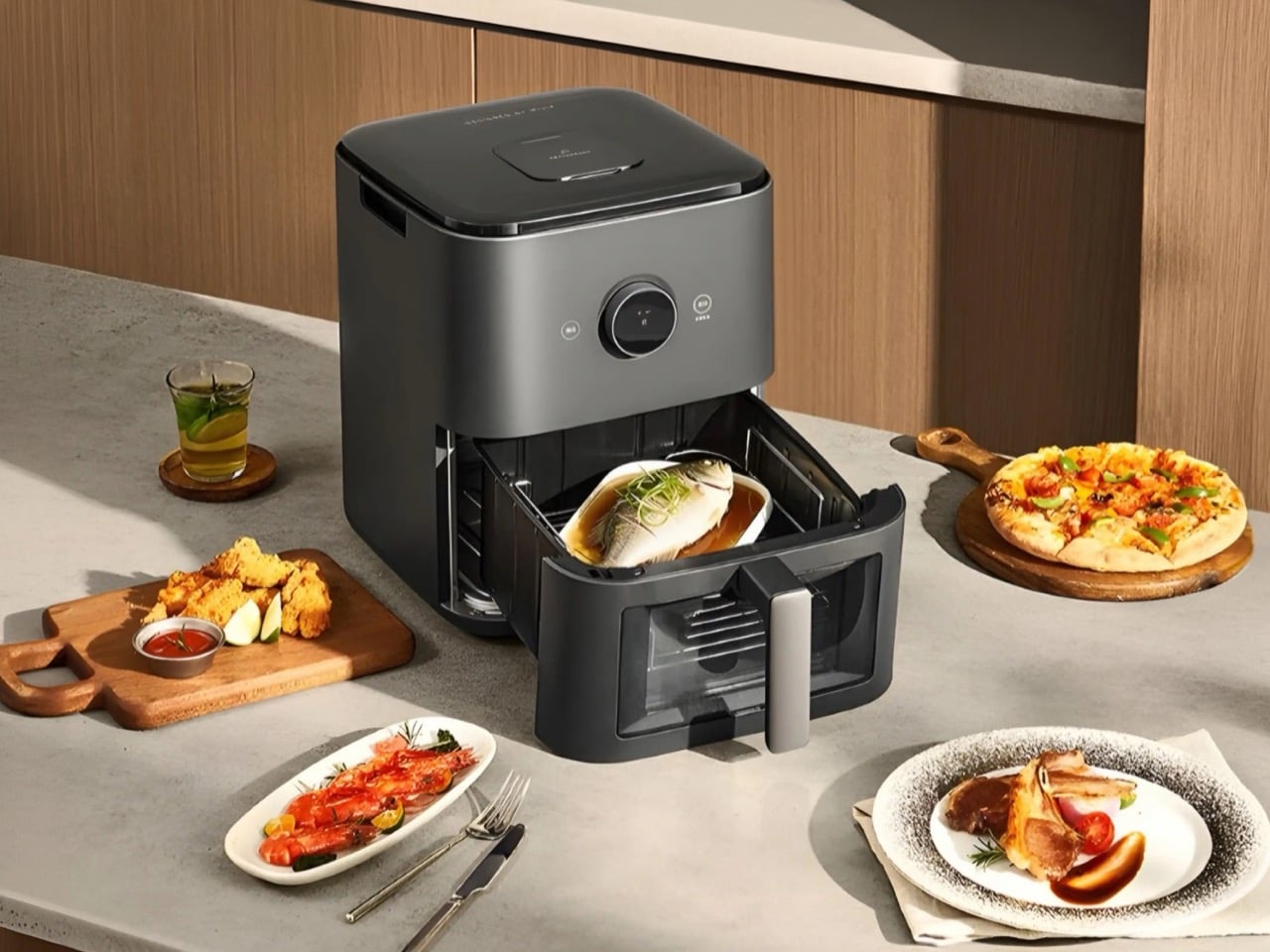
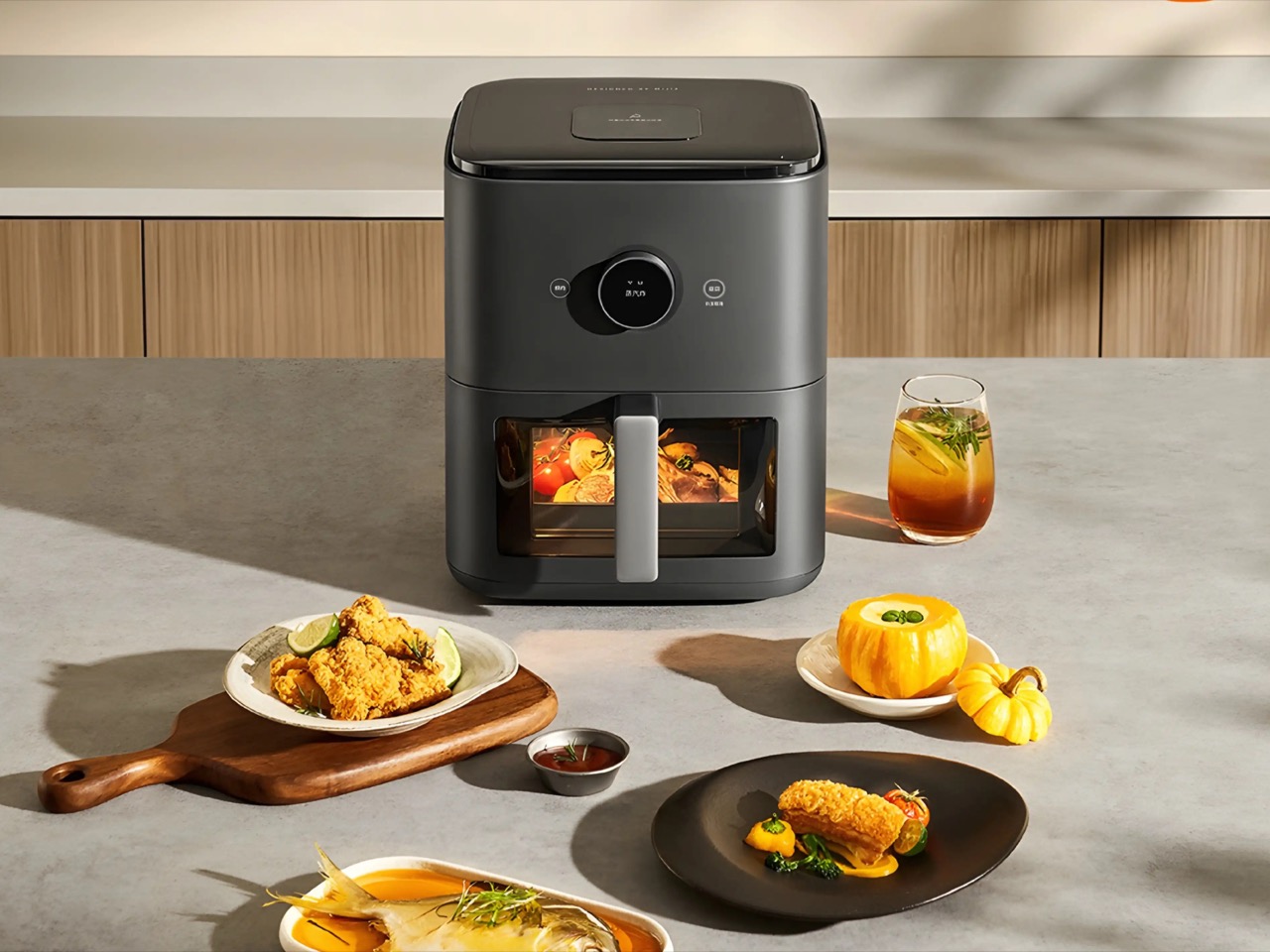
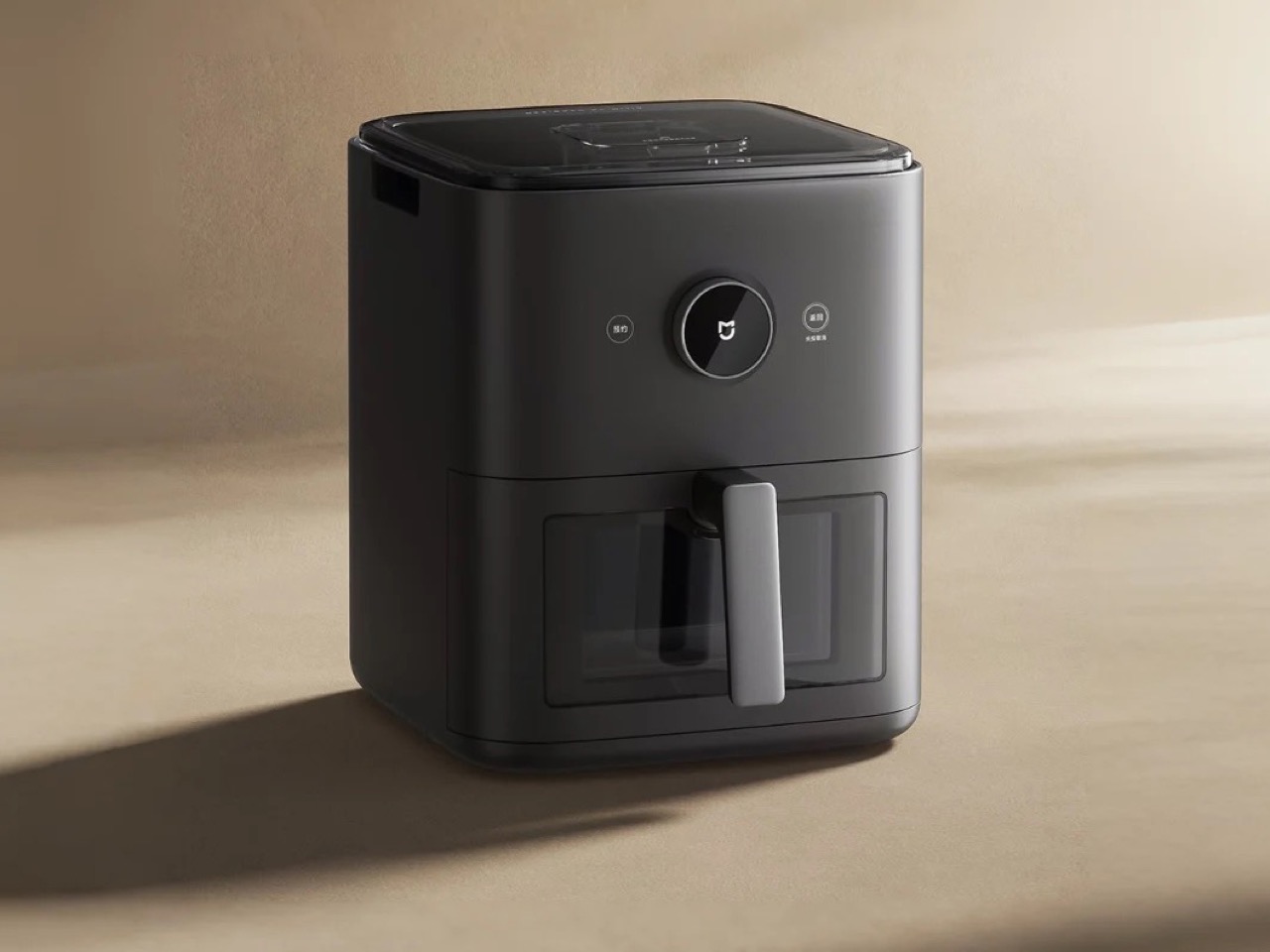
There is a reason professional bakers spray water into their ovens right before a loaf goes in. Steam in the early stages of baking keeps the crust elastic long enough for the bread to fully rise before it sets, and then as the moisture burns off, the outside crisps up hard and crackly while the inside stays open and soft. Xiaomi applied that same principle to an air fryer, which sounds obvious in hindsight but somehow took the entire appliance industry a decade to get around to trying. The result is the Mijia Smart Air Fryer Pro Steam and Bake Edition, a 6.5-liter machine that launched on Youpin in March for around $80.
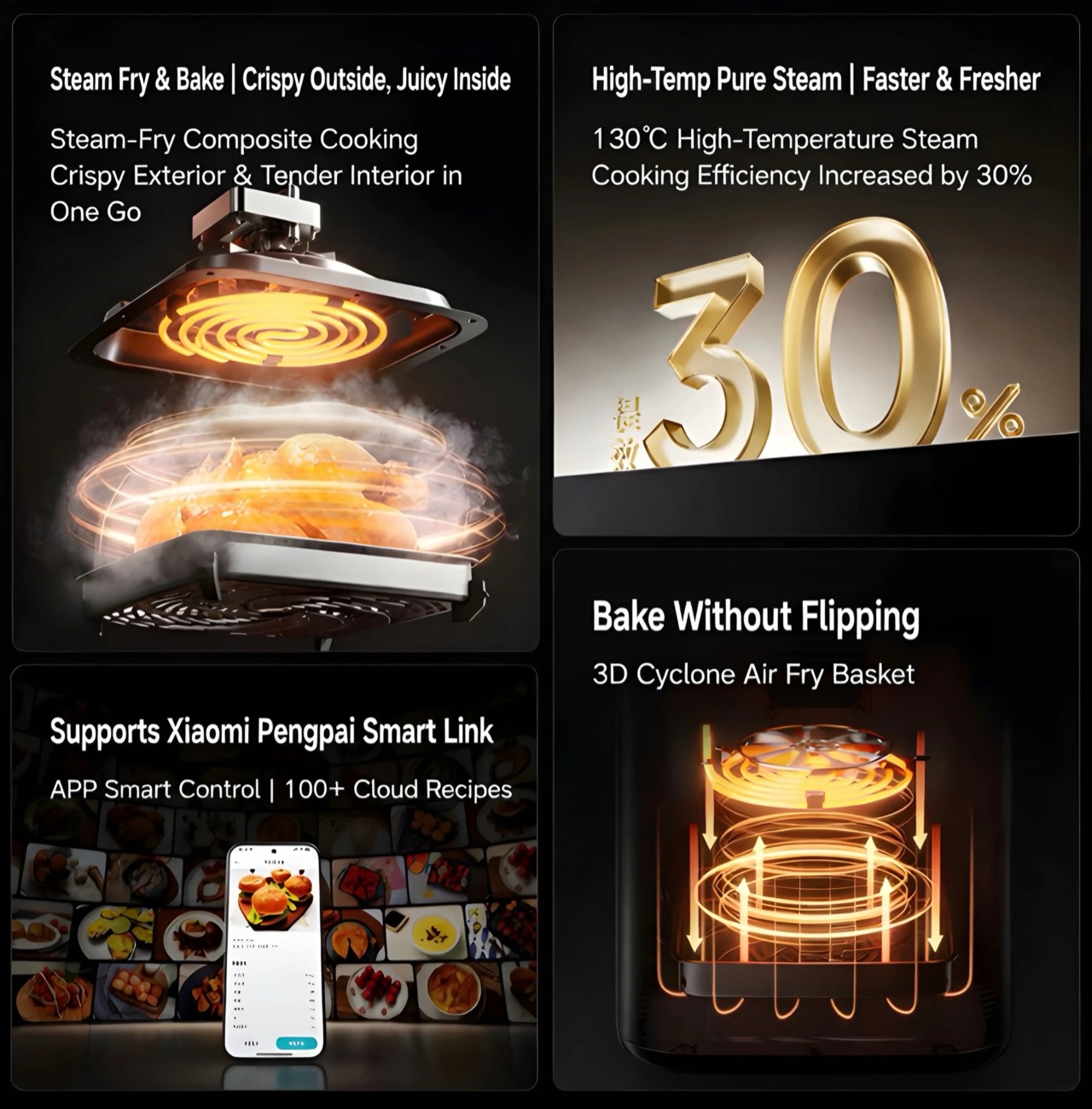
We covered Smeg’s steam-equipped air fryer concept out of Milan Design Week back in April, and the reaction told us something useful: people are genuinely ready for this idea. The hardware behind Xiaomi’s take is straightforward but well thought out. A 1.5-liter water tank sits on top of the unit and feeds a 900W steam generator capable of reaching 130 degrees Celsius, with enough output to run seven continuous dishes before needing a refill. Combined with a conventional 1,850W heating element and a 360-degree hot air circulation system, you get a machine that can switch between dry heat and humid heat within the same cooking cycle. The 304 stainless steel interior handles the moisture without corroding, and the fluorine-free non-stick basket makes cleanup considerably less painful than you might expect from something that gets regularly steamed.
Designer: Xiaomi
Steam-fry and sous vide are the two modes that actually push past what any conventional air fryer can do, rather than just relabeling the same hot-air cycle with a fancier name. Steam-fry layers humid and dry heat in sequence, holding just enough moisture in the chamber to slow surface dehydration while the heat pushes deeper into the food, which is exactly how you get chicken wings that crack rather than just brown. The sous vide mode holds a low, stable temperature over a long period using the water tank as its medium, something a dry-heat machine physically cannot fake its way through. The full temperature range runs from 30 to 230 degrees Celsius with NTC precise control, which in practice means the same machine handles yogurt fermentation at the low end and a proper sear at the high end, a spread that no single-mode appliance on its own can match.
A 234mm horizontal interior sounds like a spec sheet abstraction until you realize it fits a whole chicken, 24 wings, or nine steamed buns in a single load, and the dual-layer rack splits that cavity between two dishes cooking simultaneously at different heights without either one stealing heat from the other. The 1,850W heating element drives the hot air side of things hard enough to cut sausage cooking time to eight minutes versus the twenty-odd you’d wait in a conventional oven, and the 360-degree circulation keeps that heat moving evenly rather than pooling at one side of the basket. Scheduling a cook 24 hours out through Mi Home, or pulling from a library of over 100 cloud recipes, means dinner can be running before you’ve even thought about what you want to eat. The OLED interactive knob handles everything manually for anyone who’d rather just twist a dial than pull out a phone, which is the kind of small considered detail that keeps a smart appliance from feeling like a chore.
The Mijia Pro is crowdfunding in China at 559 yuan, around $81, with a planned retail price of 749 yuan, roughly $109. Smeg’s steam air fryer, by contrast, is a concept with no confirmed price and a launch window no earlier than late 2026. Dreame’s Feast DS50, which takes a different approach to the same problem through dual-zone independent airflow rather than steam, is priced at $229 for its North American launch. Xiaomi is delivering a technically comparable answer to the same cooking challenge at a fraction of that price, in a machine that is already shipping in China and building toward a global rollout. The steam air fryer category is real, it has momentum, and the most affordable entry point currently has a Xiaomi logo on it
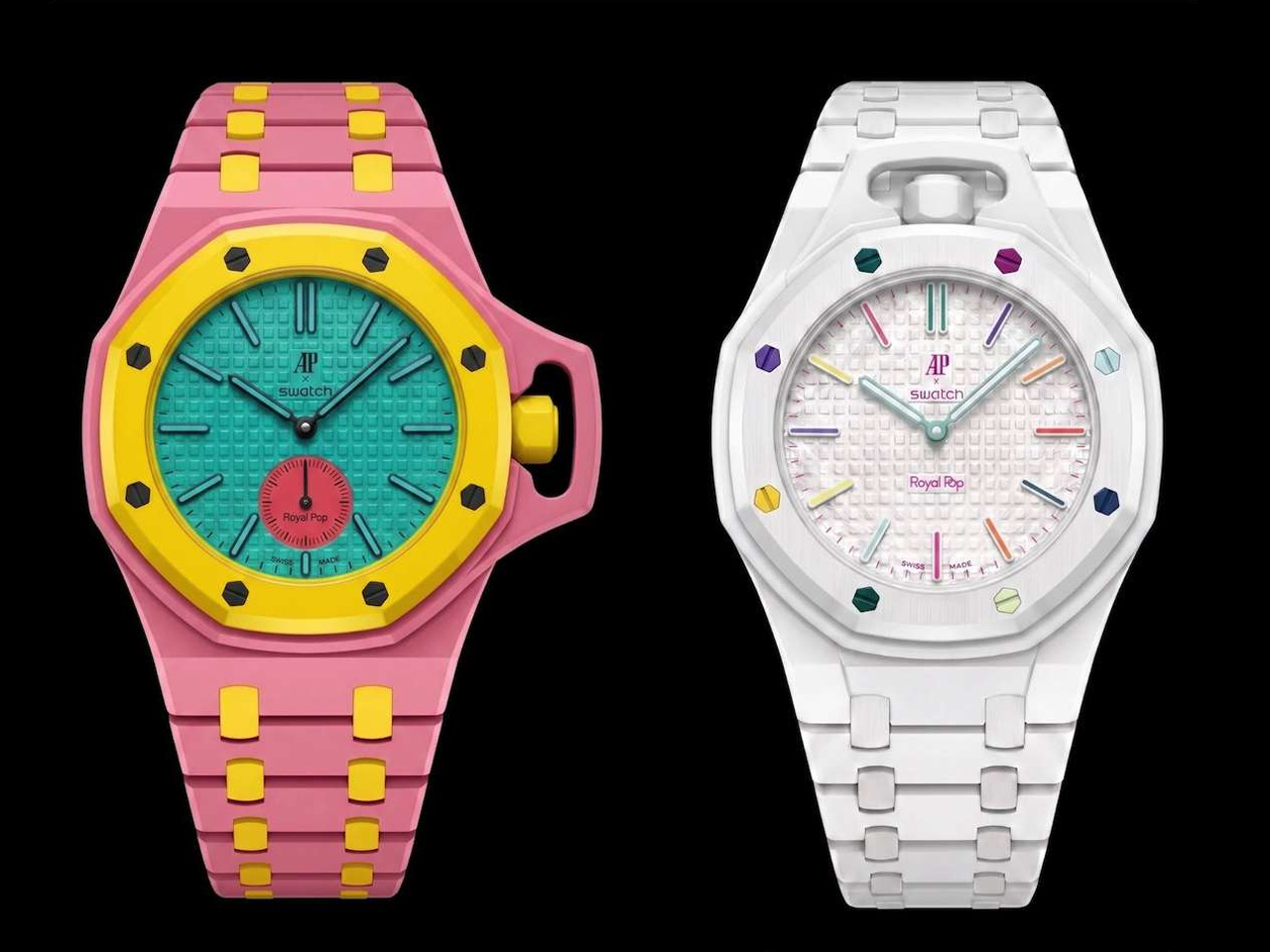
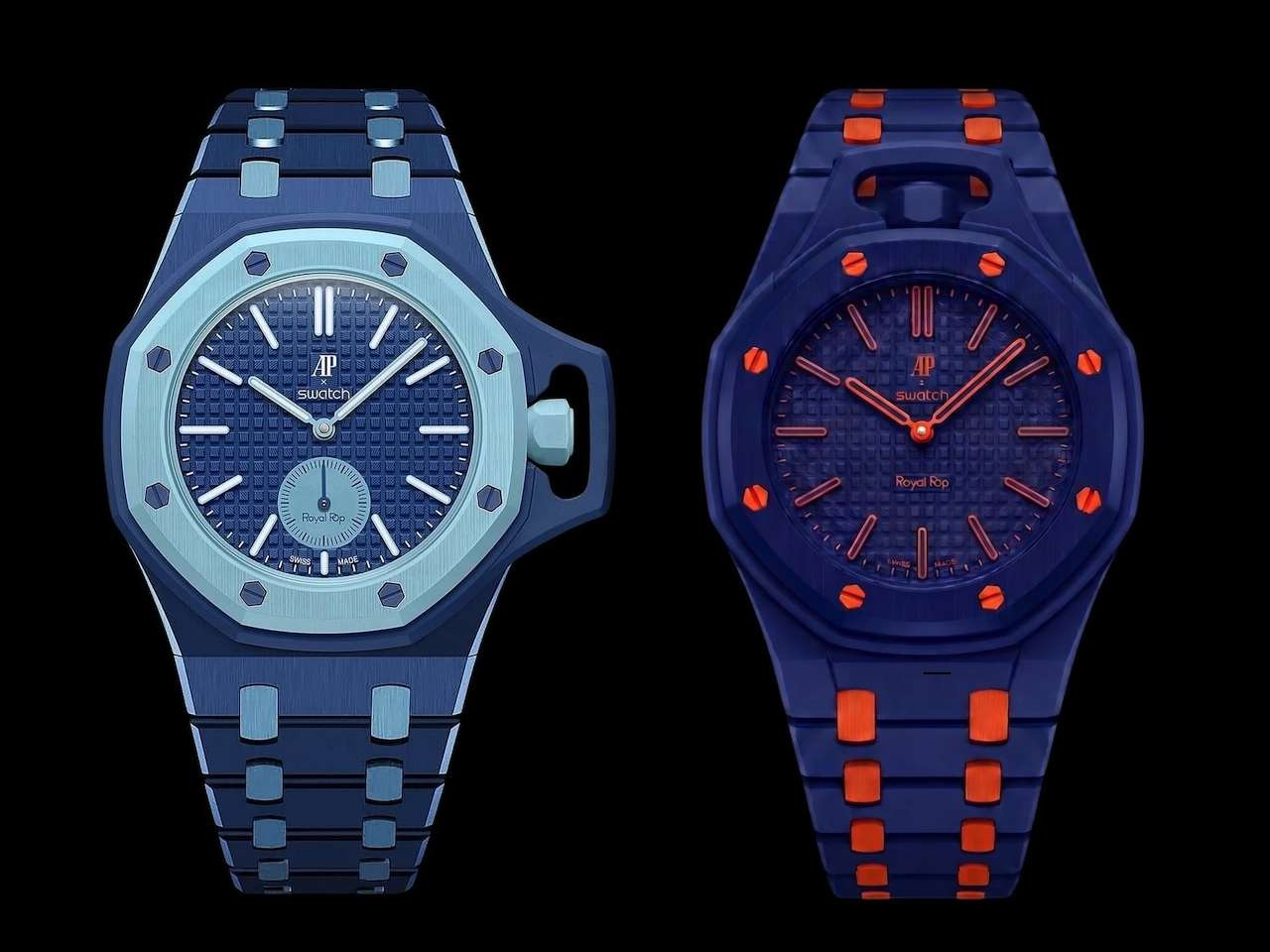
High-end collaborations, at times, give us meaningful outcomes that no matter how hard you try, you cannot sidestep. In my recent memory, Audemars Piguet x Swatch Royal Pop – a mindboggling amalgamation of the Royal Oak and the Swatch Pop – is definitely one such example. While everything is a Pop of color and high-end horology, what remains missing is the fact that this collaborative model is not meant to be worn on the wrist; it’s designed as a pocket watch, but one you’d definitely fall for even in 2026.
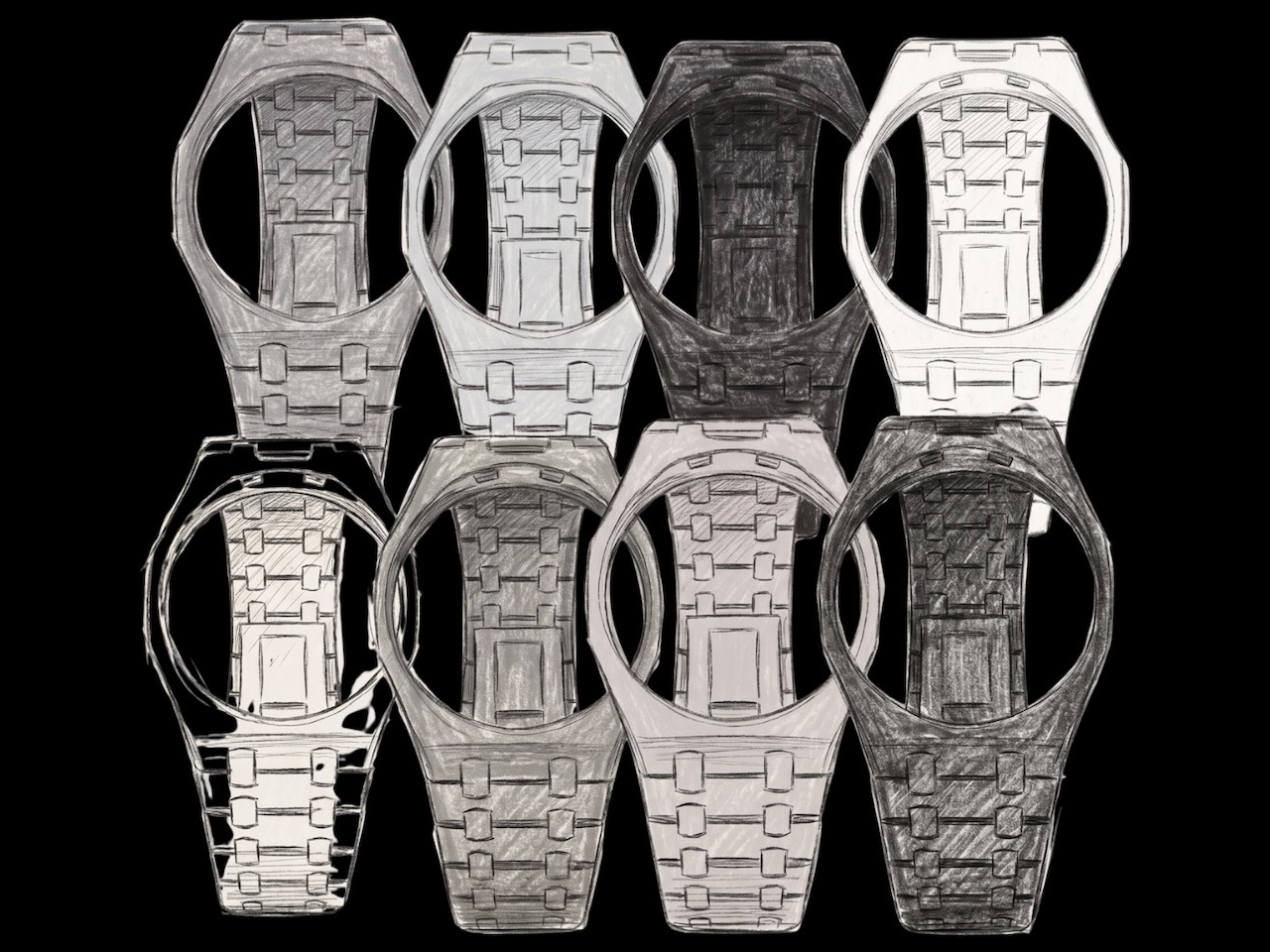
However, there is a school of thought comprising watch enthusiasts that believes the Royal Pop deserves to rest on the wrist. While the creators themselves don’t believe it, Lambertus, an independent maison, is a firm advocate that it should, and is therefore creating case-straps for the Audemars Piguet x Swatch Royal Pop, now going on pre-order, in whole, for $95 through the Royal Pop Wrist Bands website.
That amount will reserve a case-strap for you, but there’s a caveat. The creation of these straps has not kicked off the blocks at the time of writing. For the reservation price of $95, therefore, you are banking on Lambertus to carry out all the phases of development i.e., the roadmap from R&D, prototyping, final design, to manufacturing, with no clear deadline for assurance.
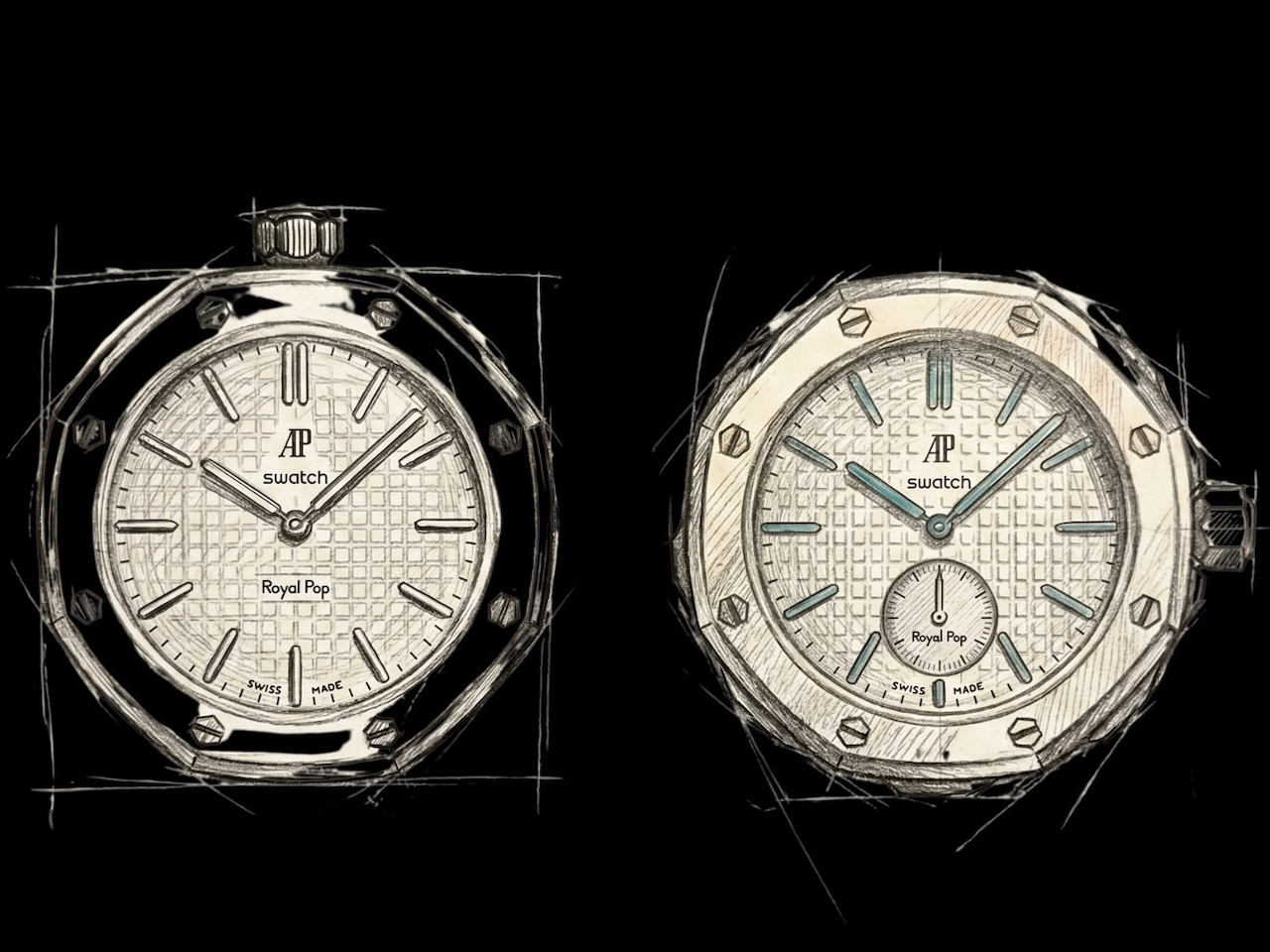
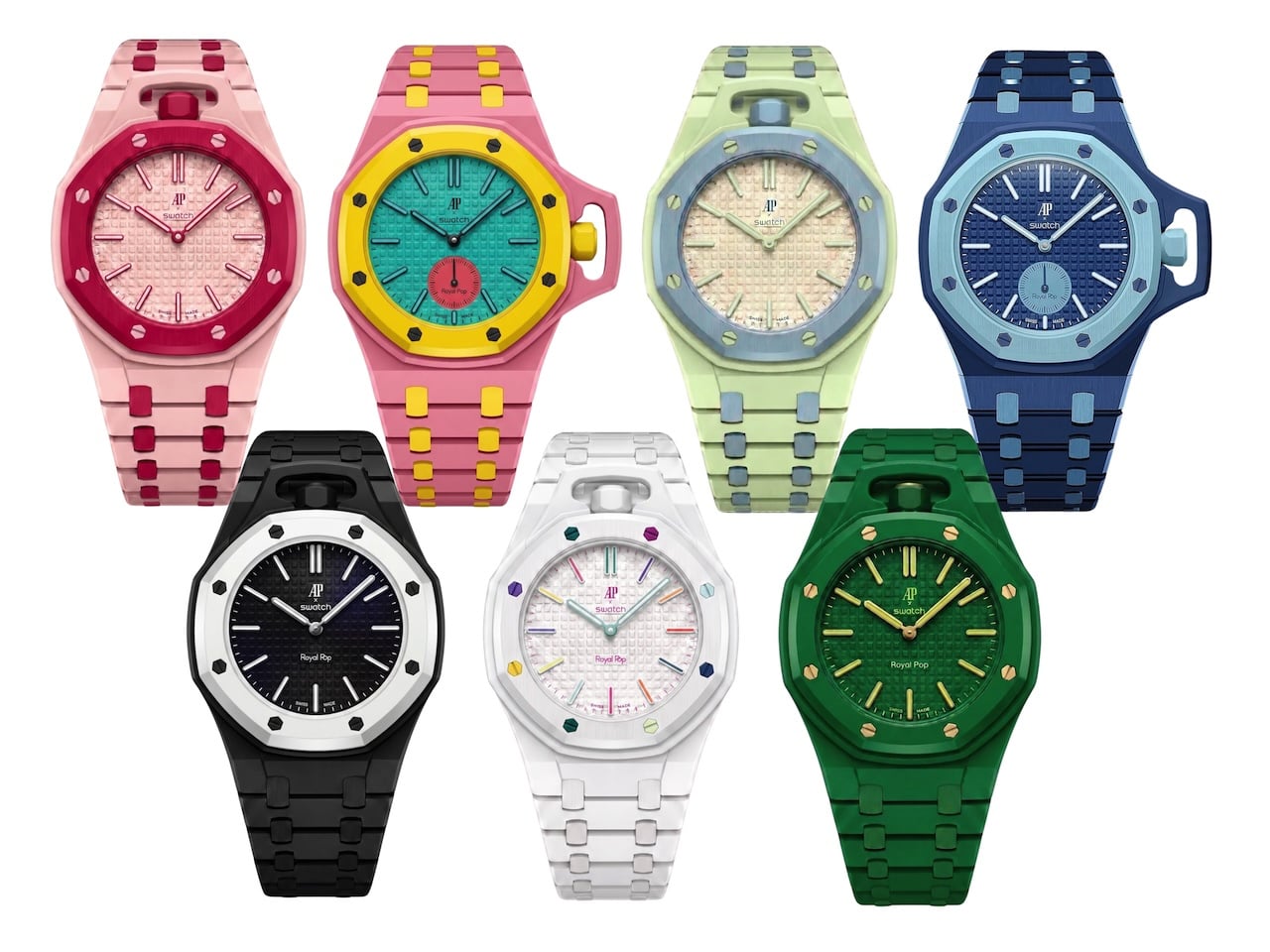
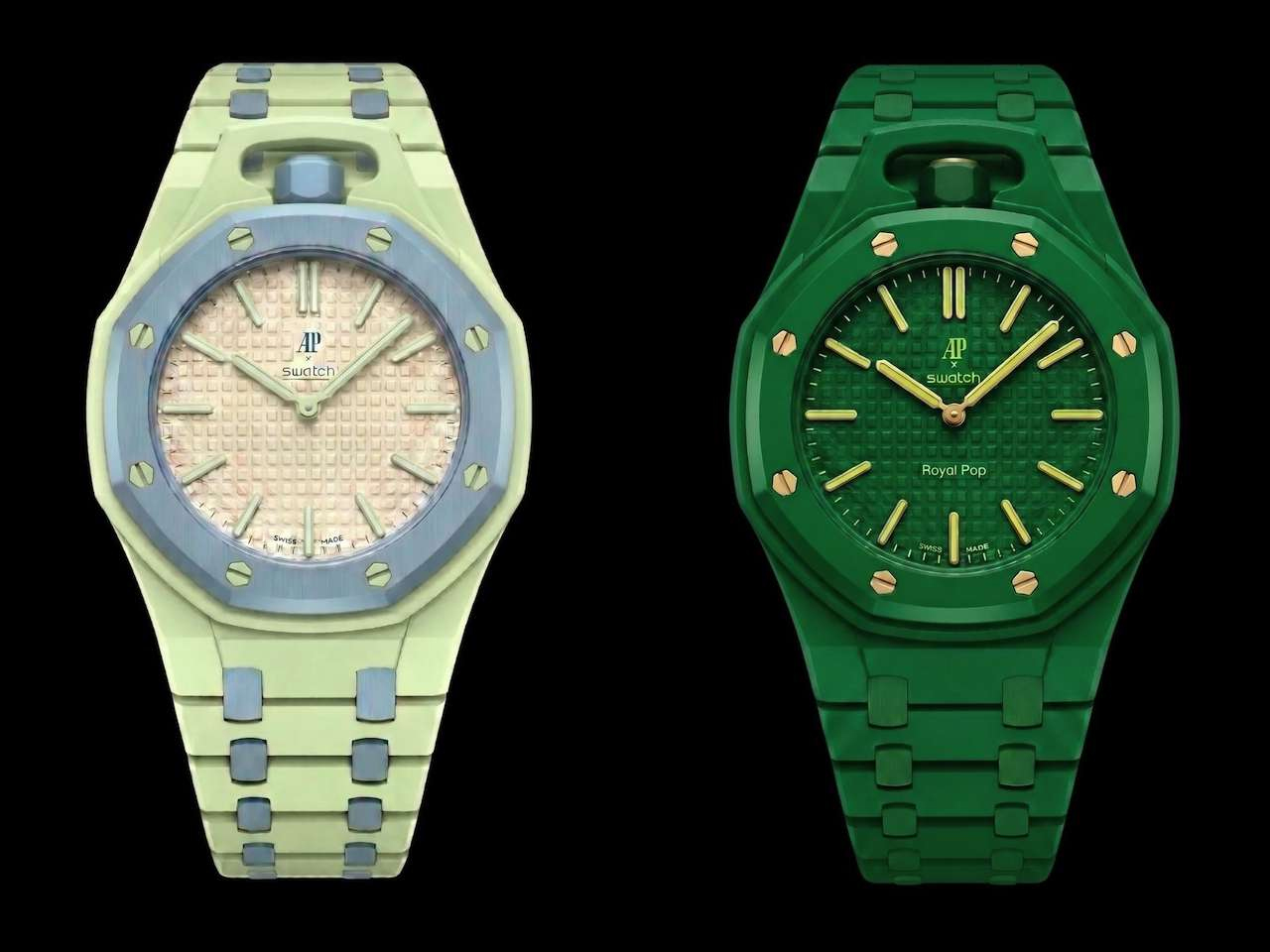
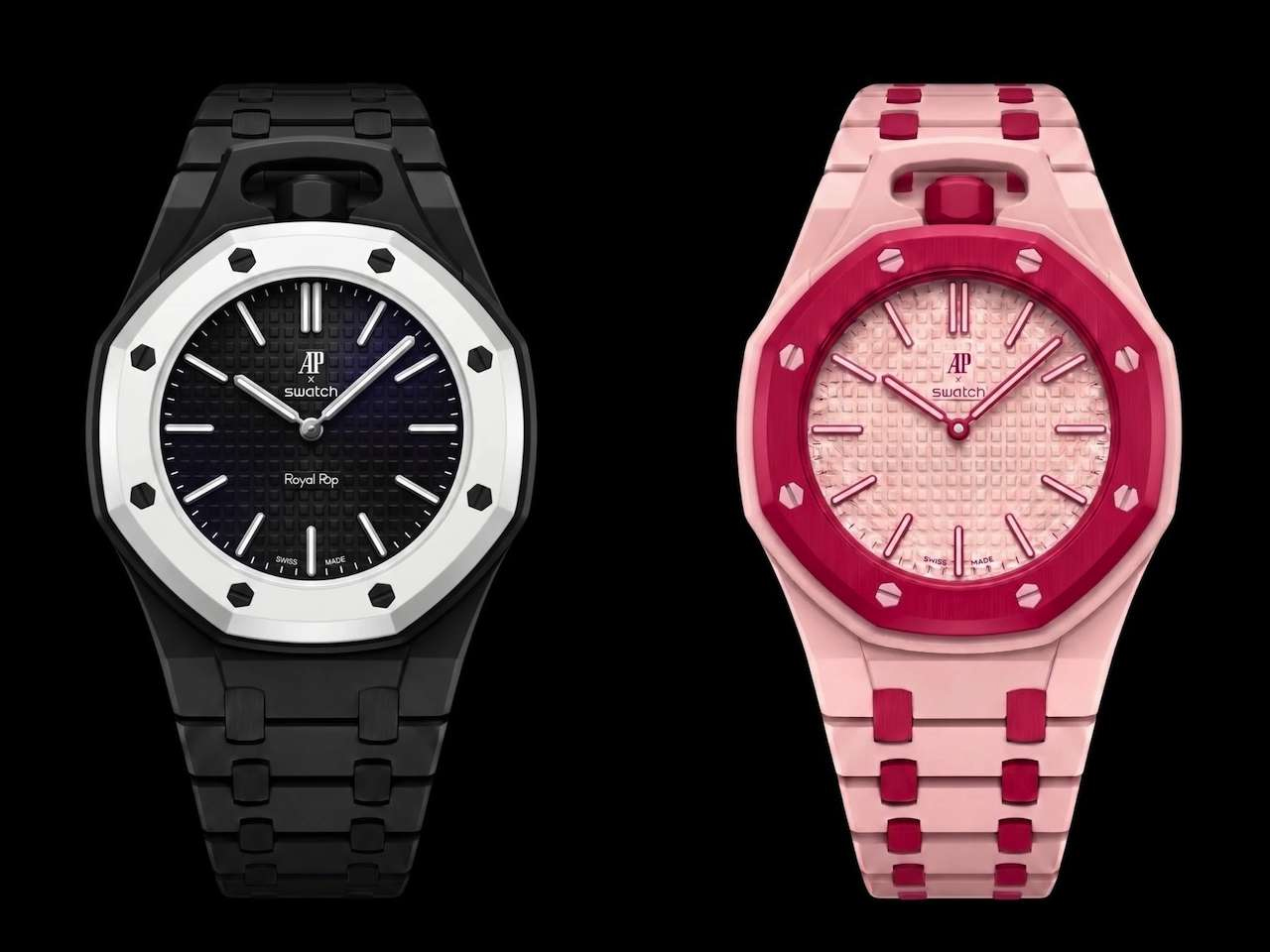
The Lambertus creation is called Chapter I. It’s now in the R&D, and should present, on development, as an excellent accessory to the AP × Swatch Royal Pop. The cult timepiece comes in eight different colorways and two design iterations: the Lépine and the Savonnette. The Lépine pocket watch is designed with hour and minute hands and a crown at 12 o’clock. It comes in six color options. Available in two colorways, the Savonnette Royal Pop, features a crown at 3 o’clock and along with the hour and minutes, also has a small second hand at 6 o’clock.
Since Lambertus has a vision to match everything in the Royal Pop portfolio to the T. It will also tailor the straps to match the eight colors of your pocket watch. Even commendable – or you may say requisite – is that the case-straps will be split in two models, like the AP x Swatch collaborative pocket watch itself. The Strap I of the Chapter I will come in six Lépine-style models and the Strap II in two options for the Savonnette-style watches.
Of course, from how it appears as of now, the machined, octagonal watch holder straps from Lambertus will let you snap in the AP x Swatch Royal Pop and flaunt it with passion. But how well the strap material (which remains unclear as I write), of the eight luxury designs in two crown orientations, complements the Bioceramic case of the actual watch is anybody’s guess. And if that’s not as premium as you would like to trust with your AP, we know where the $95 you put in is headed. To ensure the backers have little legal ground to confront, the Royal Pop Wrist Bands website puts out “Our Royal POP compatible straps and wristbands are not affiliated with, endorsed by, or sponsored by Audemars Piguet or Swatch Group,” in fine print.
May 2026 is one of the most eclectic and genuinely impressive months LEGO has assembled in recent memory. The lineup stretches across an almost improbable range of reference points, from Victorian astronomy and space photography fresh off the Artemis II mission to British absurdist comedy and Parisian haute couture, and in each case the people behind these builds have done something more ambitious than simply reproduce a recognizable subject. They’ve found a reason for it to exist in brick form specifically, and that distinction matters.
The five builds collected here sit at different points on the spectrum from official sets to community MOCs, but they share one defining quality. Each one earns its shelf space with a level of craft and intention that makes conventional display objects feel considerably less interesting by comparison. Whether you’re a collector, a casual admirer, or someone who simply appreciates when a design medium gets pushed somewhere unexpected, this month offers five compelling reasons to make room.
1. LEGO Ministry of Silly Walks
Few comedy performances have earned the kind of cultural permanence that John Cleese’s Silly Walk claimed in 1970. Fifty-six years later, the sketch remains the fastest and most widely understood shorthand for British absurdism in popular culture, and LEGO has finally given it the brick-built treatment it deserves. Mr. Teabag arrives in plastic form with exaggerated proportions that somehow capture every ridiculous knee-flinging motion from the original performance. The Technic joints embedded throughout are not decorative additions. They allow for a genuine range of articulation, letting you pose this figure mid-stride with a conviction that most articulated collectibles simply cannot match.
The facial expression is the detail that lifts this build above novelty status entirely. The sculptors working on Mr. Teabag captured his deadpan seriousness with a precision usually reserved for museum-quality reproductions, and the resulting silhouette reads as instantly recognizable from across any room. The bowler hat and umbrella complete the bureaucratic aesthetic with the restraint that good comedy has always required, nothing exaggerated beyond what the source material already provided. Display it alongside LEGO architecture, and it holds its ground completely, functioning as a standalone celebration of British wit that works whether you’ve seen the sketch fifty times or are encountering the joke for the very first time.
2. LEGO Hermès Birkin
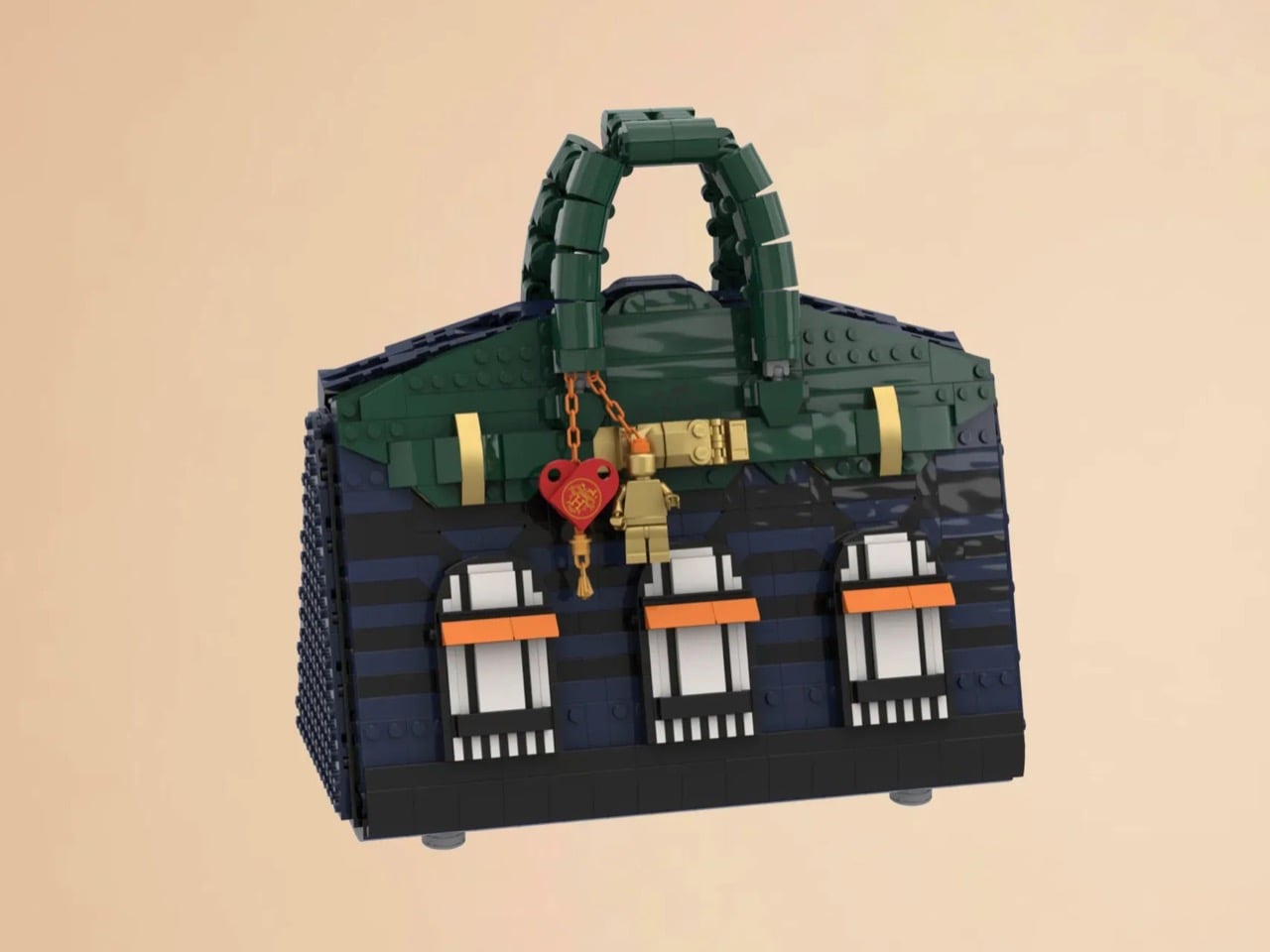
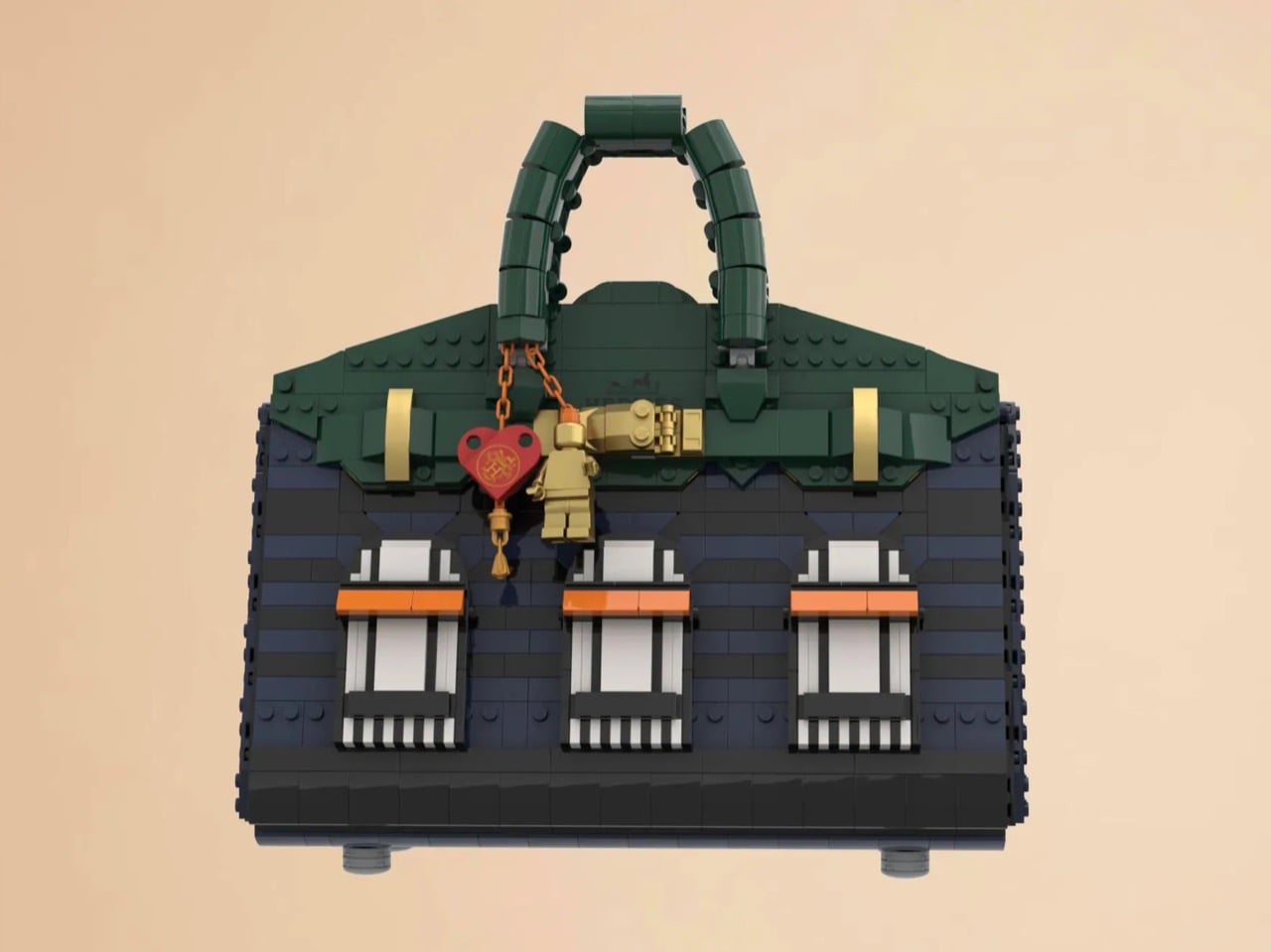
The Hermès Birkin has one of the most theatrical purchasing rituals in luxury retail. You cannot simply walk into a boutique on Rue du Faubourg Saint-Honoré and ask for one. Hermès makes you earn it, cultivating a relationship with a sales associate over months and sometimes years, demonstrating cultural fluency with the house before they will even have the conversation about availability. LEGO Ideas builders BOI_Design and KittyJW have found a considerably more democratic workaround. Their MOC reimagines the Birkin 20 Faubourg, the special edition inspired by Hermès’s flagship Paris store, as approximately 1,400 bricks of deep navy, dark green, and gold that carry the mythology of the original without the waiting list.
What makes this MOC genuinely exceptional is its dual identity. The exterior facade doubles as a miniature rendering of 24 Rue du Faubourg Saint-Honoré itself, complete with arched boutique windows and the house’s signature orange awnings, a level of specificity that rewards anyone who knows the address on sight. And it opens. Inside, a secret runway scene transforms this from a luxury replica into a piece of interactive design with something worth discovering. For collectors who appreciate the gravity of the fashion world but not necessarily its access barriers, this build offers something rare: the cultural weight of the Birkin in a format that anyone can actually acquire.
3. LEGO Icons Road Bike
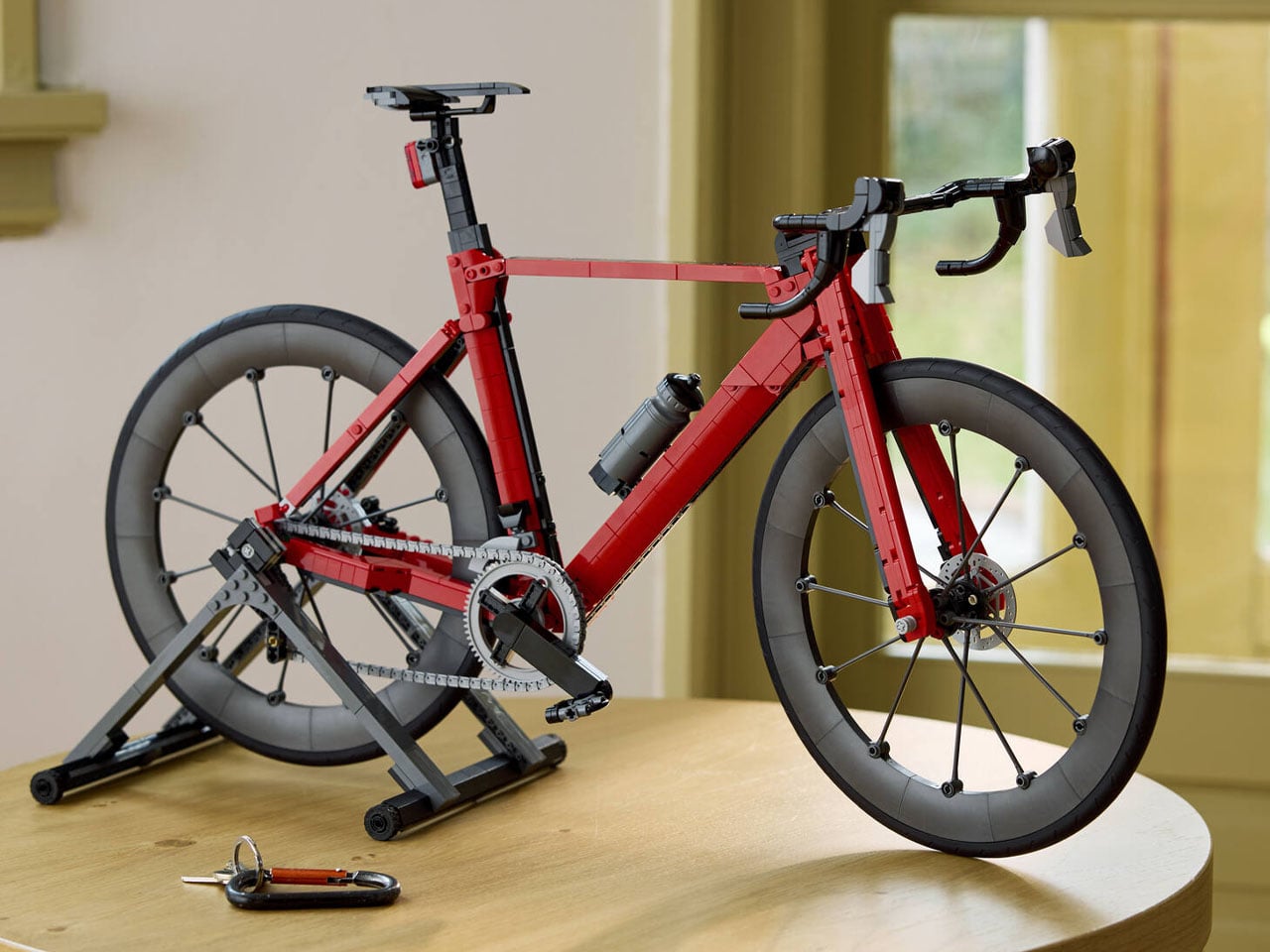
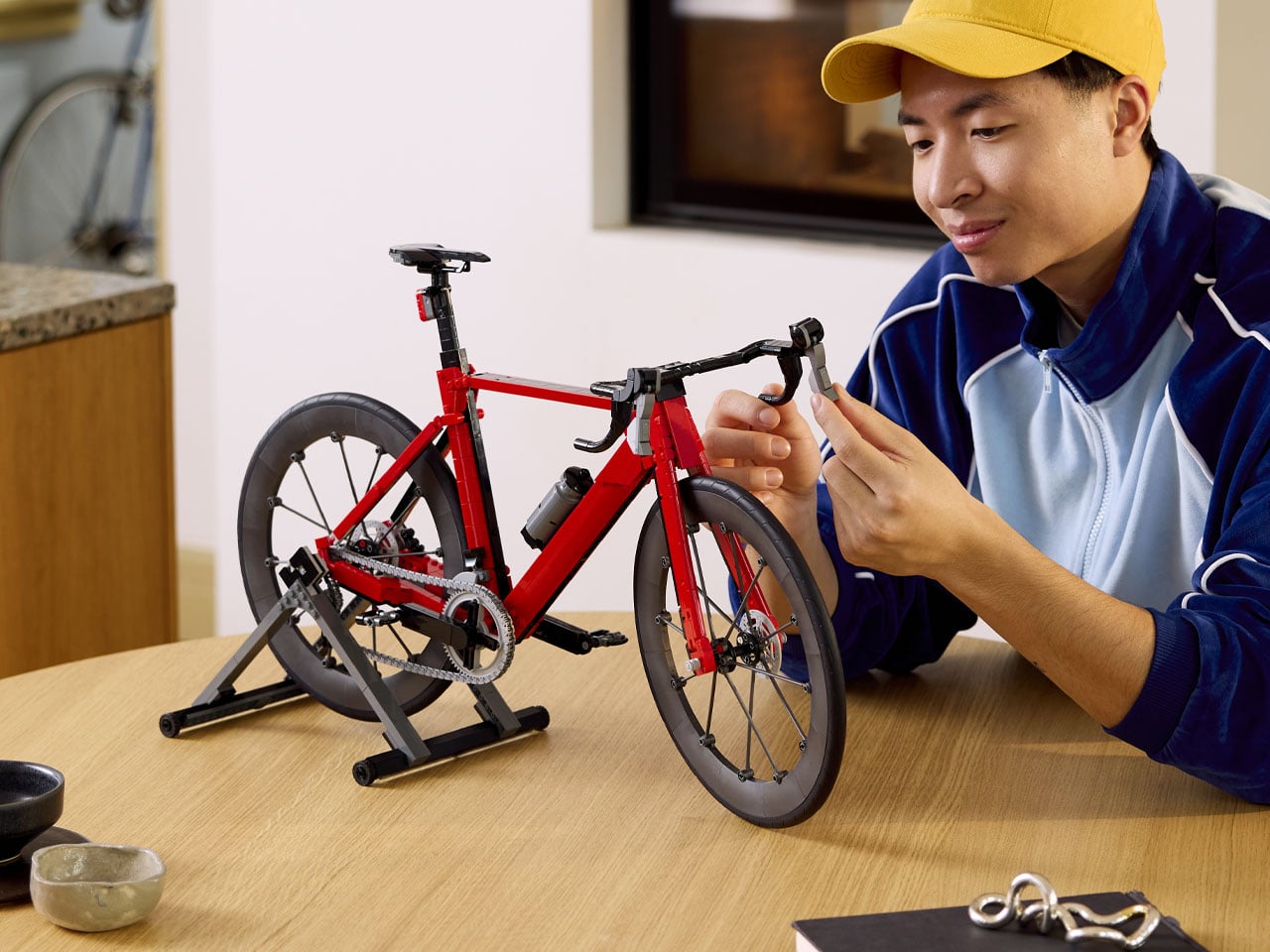
Cycling culture has always had a particular obsession with beautiful objects. The sport attracts a breed of enthusiast willing to spend hours debating titanium stem weights or the relative merits of ceramic bearing sets, and the objects at the center of that obsession tend to be genuinely elegant pieces of functional design. The LEGO Icons Road Bike (set 11380) understands this audience precisely. At 1,015 pieces and $129.99, it builds into a red road bike that stands 14.2 inches tall and stretches a full 23.6 inches in length on its stand, a genuinely substantial presence that captures the aerodynamic geometry of a road frame with an accuracy that will speak directly to anyone who has ever spent a lunch hour deep in a component forum.
The engineering choices go significantly further than surface accuracy. The set includes a fully functional drivetrain with a one-way gear chain drive mechanism, meaning the rear wheel pedals with genuine freewheel action. Brake calipers, derailleurs, and clipless pedals are rendered with the kind of specificity that separates a serious build from a shelf decoration. A removable water bottle and a wheel-lift bike stand complete the picture. Arriving ahead of the summer sporting season, the LEGO Icons Road Bike gives cycling enthusiasts an indoor companion that celebrates the object of their obsession in an entirely new medium, one that requires no maintenance schedule, no garage, and no chamois cream.
4. LEGO Artemis II Earthset Photo
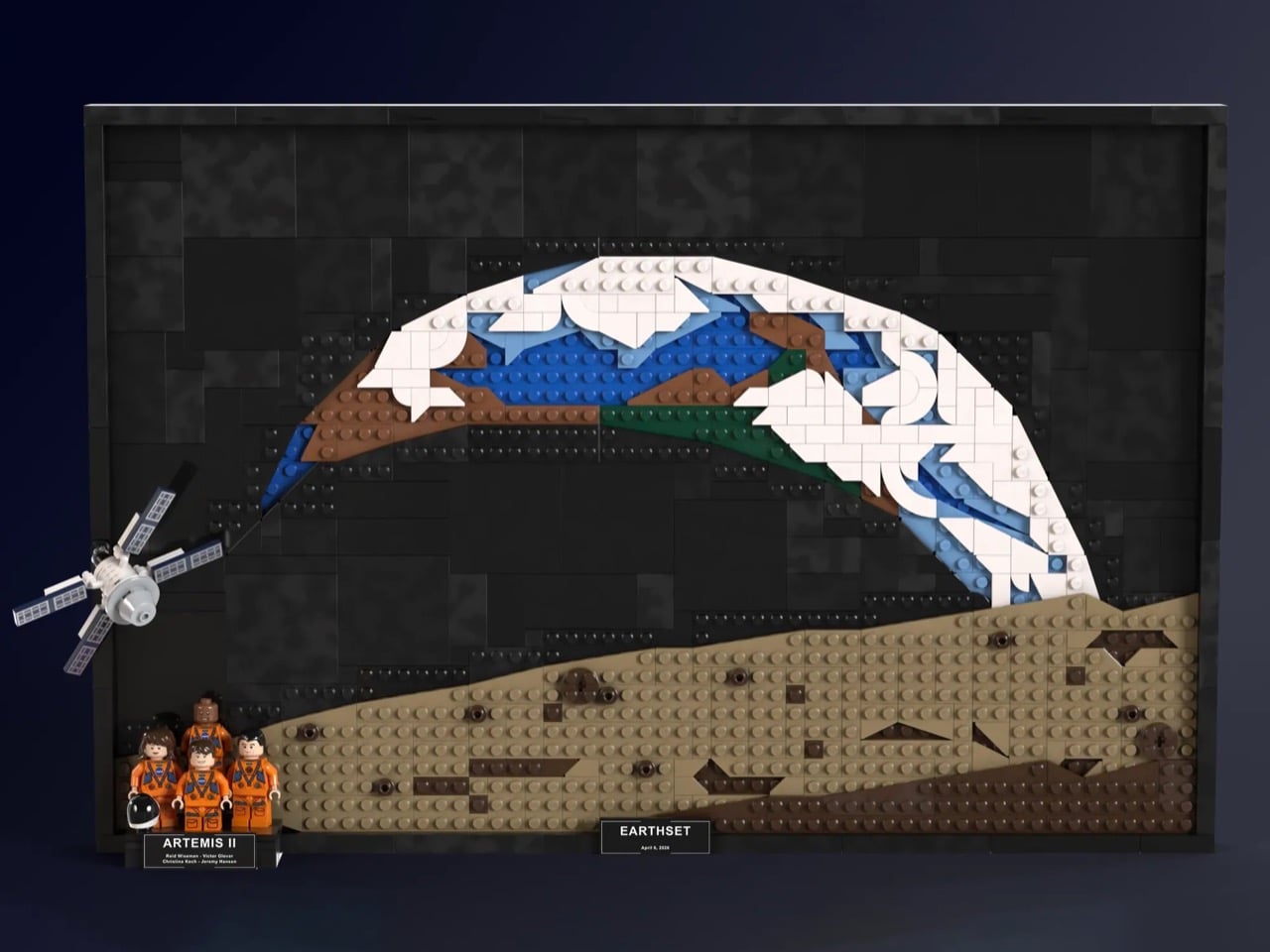
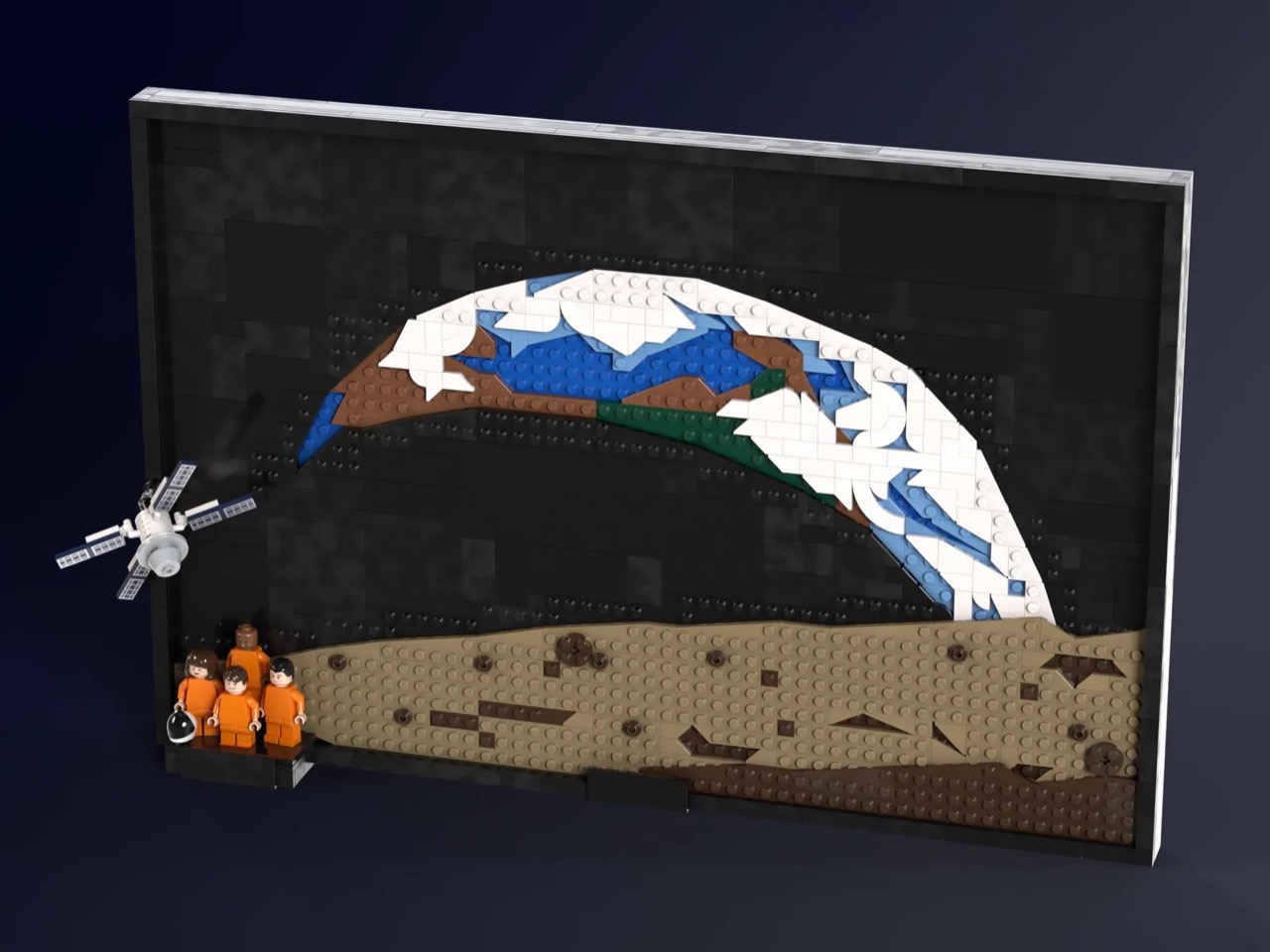
On Christmas Eve 1968, astronaut Bill Anders looked out of Apollo 8’s window and took Earthrise, arguably the most reproduced environmental photograph in history, an image that reframed humanity’s relationship with the planet more profoundly than any scientific paper ever had. On April 6, 2026, the Artemis II crew performed a near-identical act, pointing their cameras backward as Orion swung behind the Moon and capturing Earth in the process of setting below the lunar limb. That photograph existed for barely nine days before LEGO builder BuildingDreams submitted an Ideas project to preserve it in brick form, a response time that says everything about how significant the moment felt to those watching from the ground.
The result is a 48 by 32 centimeter wall-art panel that translates the soft curves of Earth’s atmosphere, the brown and blue patchwork of continents and ocean, and the pale grey sweep of lunar regolith into a grid of plastic studs with a faithfulness that genuinely stops you mid-scroll. As a design object, it functions simultaneously as wall art, historical document, and conversation piece, a brick-built record of one of the most significant human achievements of 2026, rendered in a medium that will outlast any digital photograph on a phone screen. For space enthusiasts and design collectors with wall space to commit, this is a compelling reason to watch the LEGO Ideas voting page.
5. LEGO Functional Vintage Telescope
There is a specific category of object that makes a room feel more deliberately assembled: the brass sextant on the windowsill, the leather atlas propped open on a reading table, the tripod-mounted telescope angled toward a high window. Bricked1980’s LEGO Ideas submission belongs in that category without qualification. At around 600 pieces, the Functional Vintage Telescope stands 40 centimeters high and stretches 53 centimeters in length, with a color palette of deep reddish-brown and pearl gold that reads as genuinely antique from across any room. Modeled on a classic brass refractor telescope mounted on a fully articulated tripod, this is the kind of build that makes visitors assume you’ve spent considerably more than the actual price.
The period detail throughout is what elevates this from a visually striking model to something that feels genuinely researched. The barrel is rendered in warm dark brown with surface texture suggesting wrapped leather or lacquered wood, banded at intervals with pearl gold rings that evoke the ferrules of a real antique instrument. The tripod legs splay convincingly outward in reddish-brown, connected at the apex by Technic hardware functioning as an azimuth mount that allows the barrel to rotate and pivot in all directions. A small gold chain hangs from the objective end, terminating in what appears to be a lens cap. It is exactly the kind of fussy, historically accurate touch that separates a remarkable build from a merely good one.
Bricks Worth Believing In
May 2026 confirms something that LEGO enthusiasts and design writers have understood for years: the best builds are never just toys. They function as design objects, historical records, cultural statements, and engineering exercises, sometimes all four at once. The five designs collected here represent the full range of what brick-built creativity can achieve this month, from a 600-piece Victorian telescope with genuine period accuracy to a 1,400-brick homage to fashion’s most mythologized handbag.
What connects all five is a commitment to solving a real design problem. Each creator had to answer the same fundamental question: how do you translate physical comedy, haute couture, cycling precision, space photography, or Victorian craftsmanship into interlocking plastic bricks without losing what made the original worth caring about? These builds answer that question with conviction, and they are worth your attention whether you add one to your cart this month or simply appreciate the quality of thinking that went into making them.
Zoom has won. Of all the specs that used to dominate camera phone conversations, optical reach is the one that stuck because it is the most visible and the most immediately felt. At any major live event, the phones come out and the zoom wars begin. Samsung loyalists will have their periscope lenses trained on the far end of the pitch. iPhone users will be framing tight, stable shots of the stage from the back row. FIFA 2026 is nearly here, and across dozens of stadiums and billions of shared clips, zoom will quietly be the deciding factor in whether those memories look spectacular or just… small.
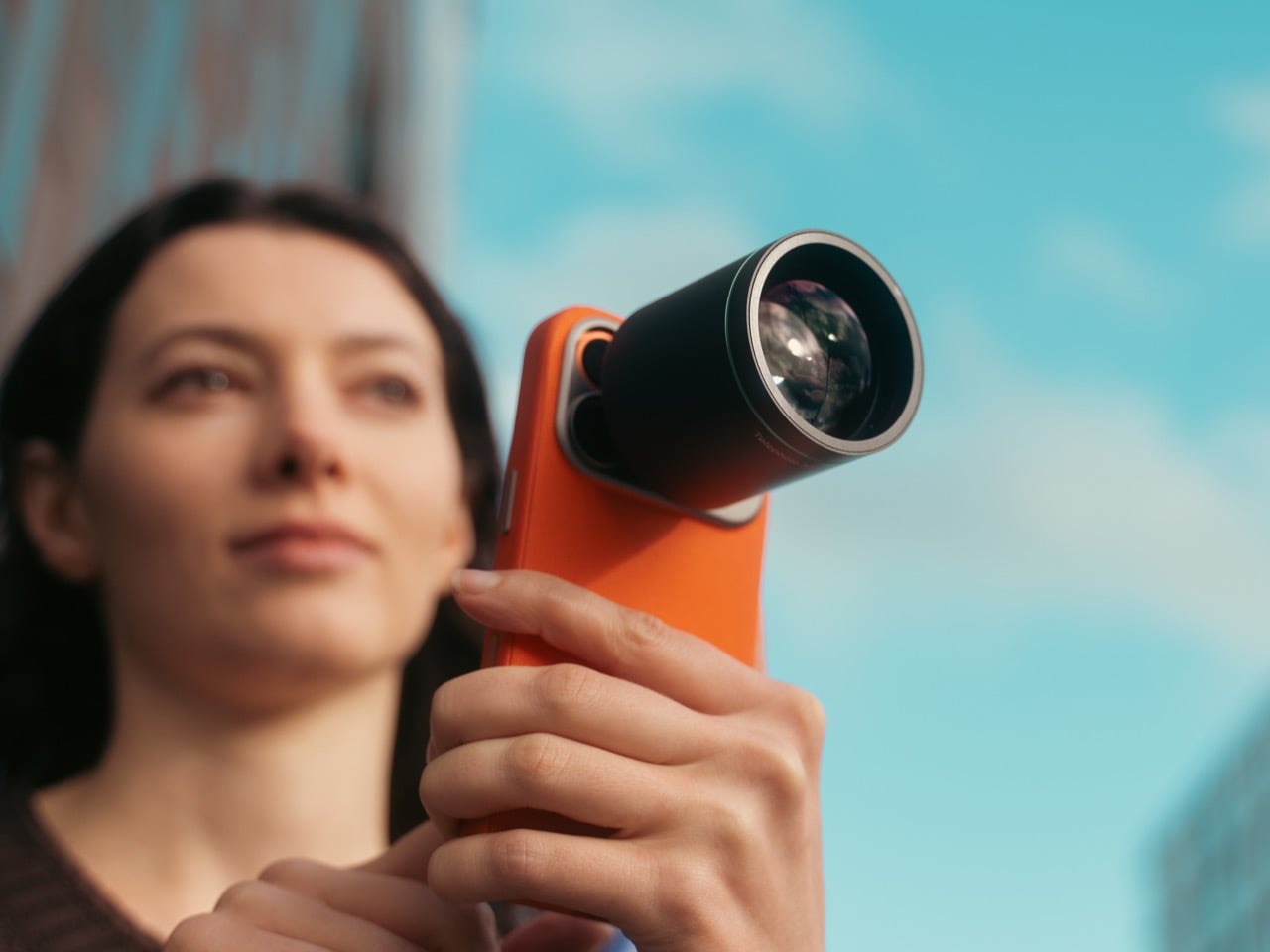
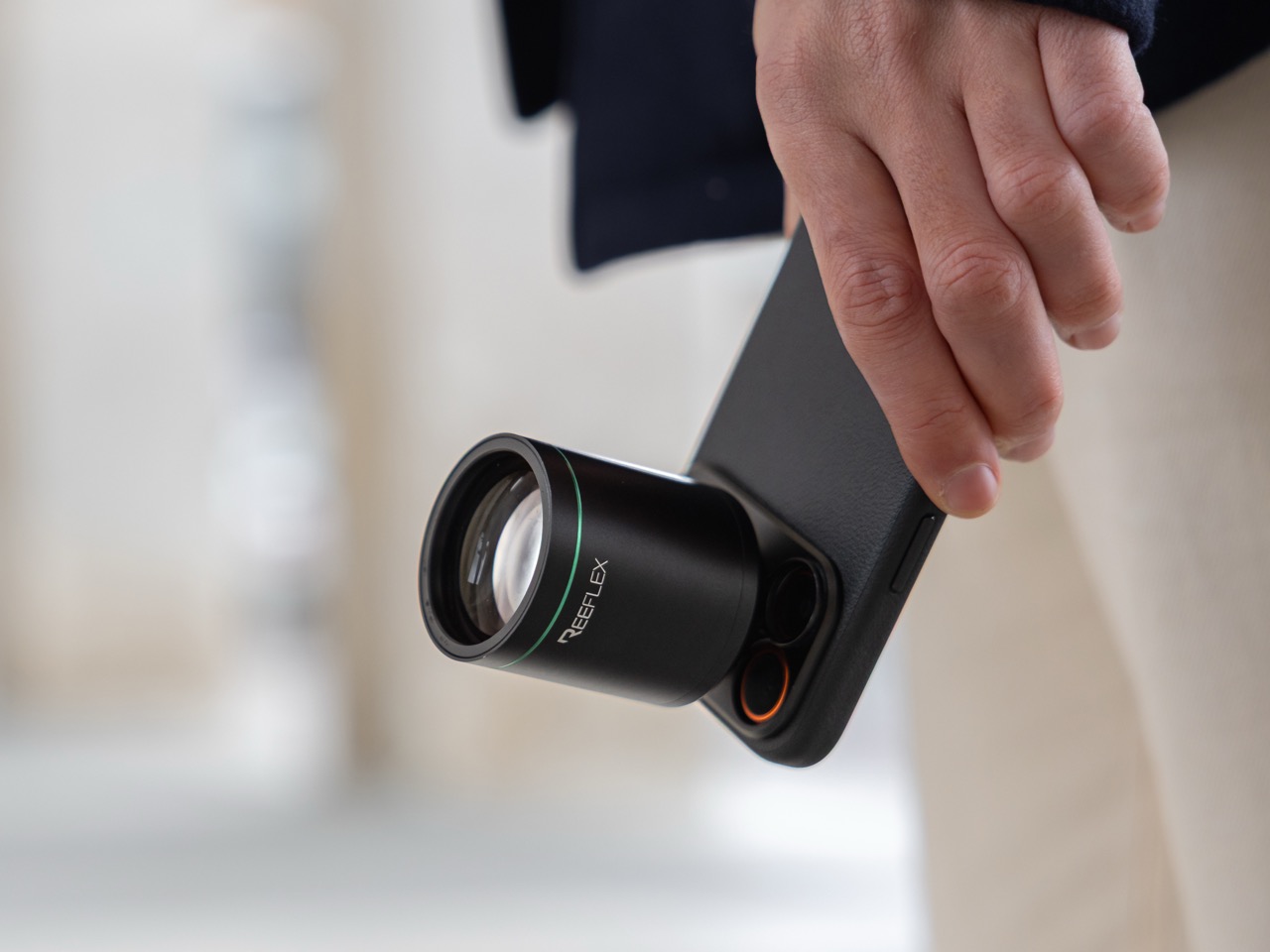
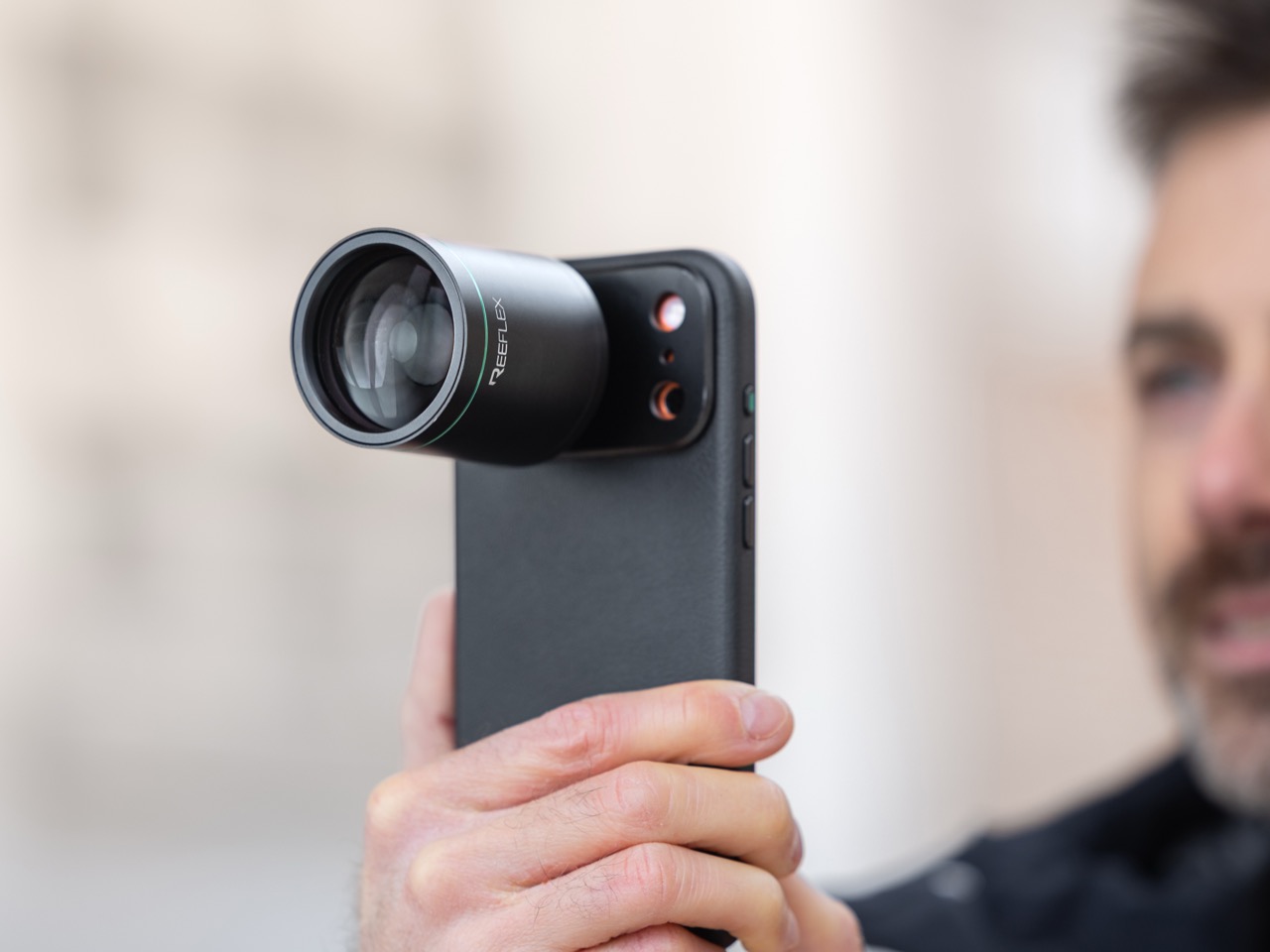
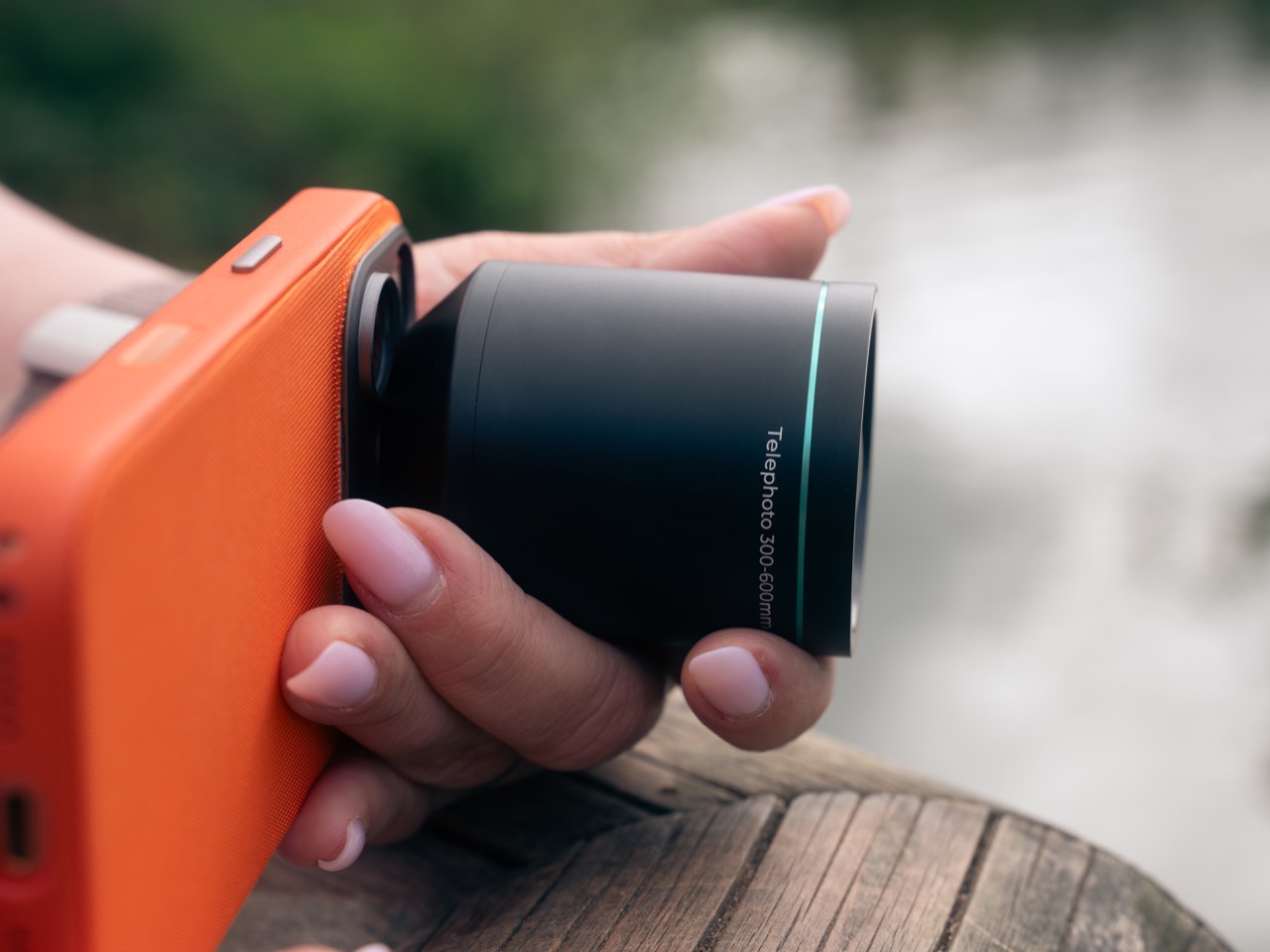
REEFLEX built the Ultra Telephoto 300-600mm for people who refuse to settle for small. Attaching to the telephoto camera of iPhone 17 Pro, Pro Max, and the Samsung S26 Ultra series, the lens compounds the phone’s native optical strength and extends it into a focal range, up to 600mm and 24x magnification, that genuinely belongs to another category of photography entirely.
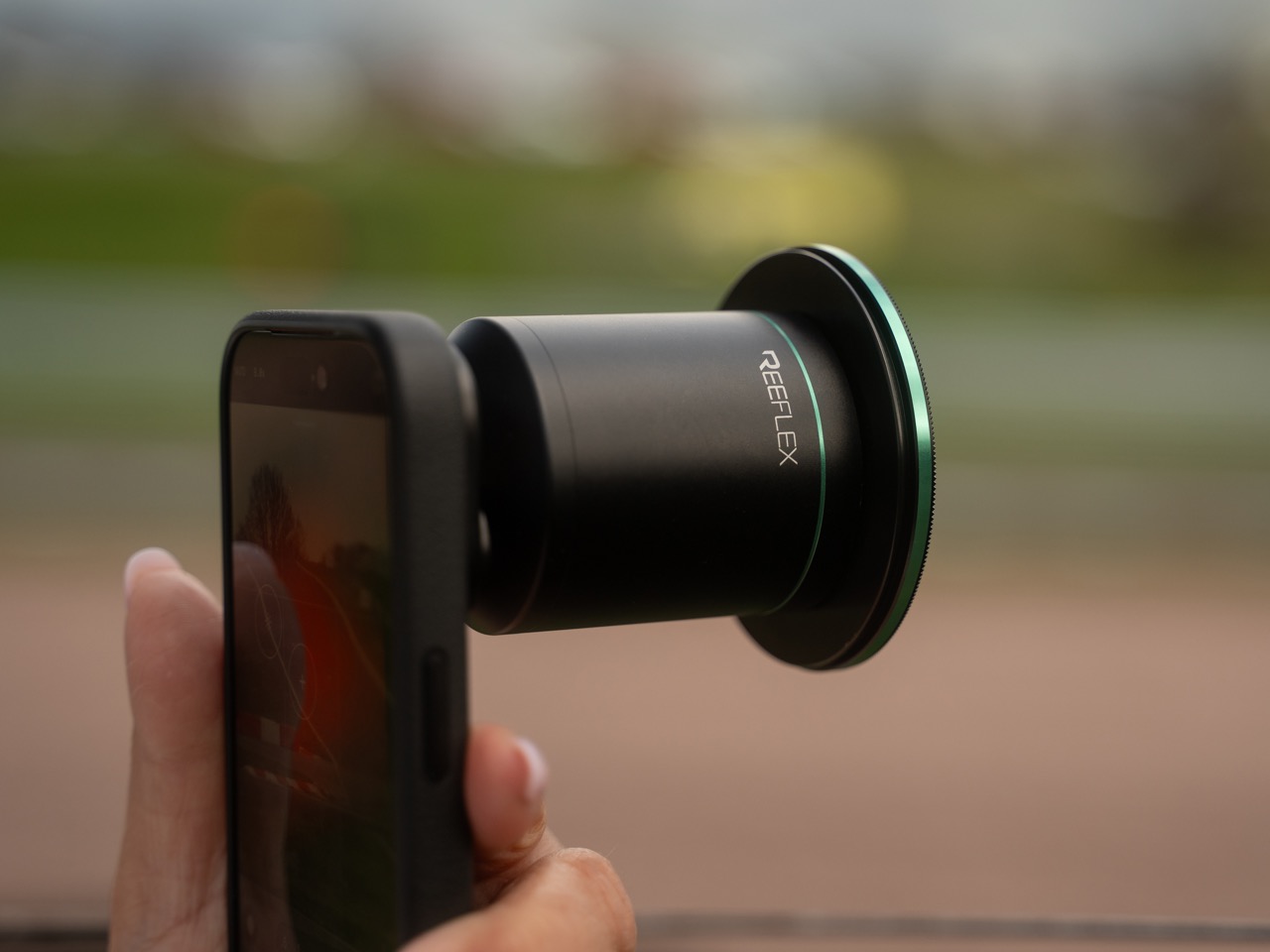
Most clip-on telephoto lenses grow forward in a long tube that looks great in renders but becomes a liability the moment you try to hold your phone steady. The weight pulls forward, the center of gravity shifts away from your grip, and at long focal lengths, that imbalance shows up as jitter in video and smeared detail in stills. REEFLEX went wide instead of long, packing everything into a compact cylinder that keeps the mass directly over your hand. Your wrist stays neutral, your grip stays firm, and the setup feels closer to holding a DSLR than balancing a makeshift telescope. That distinction matters enormously once you’re standing in a stadium trying to track a fast-moving subject.
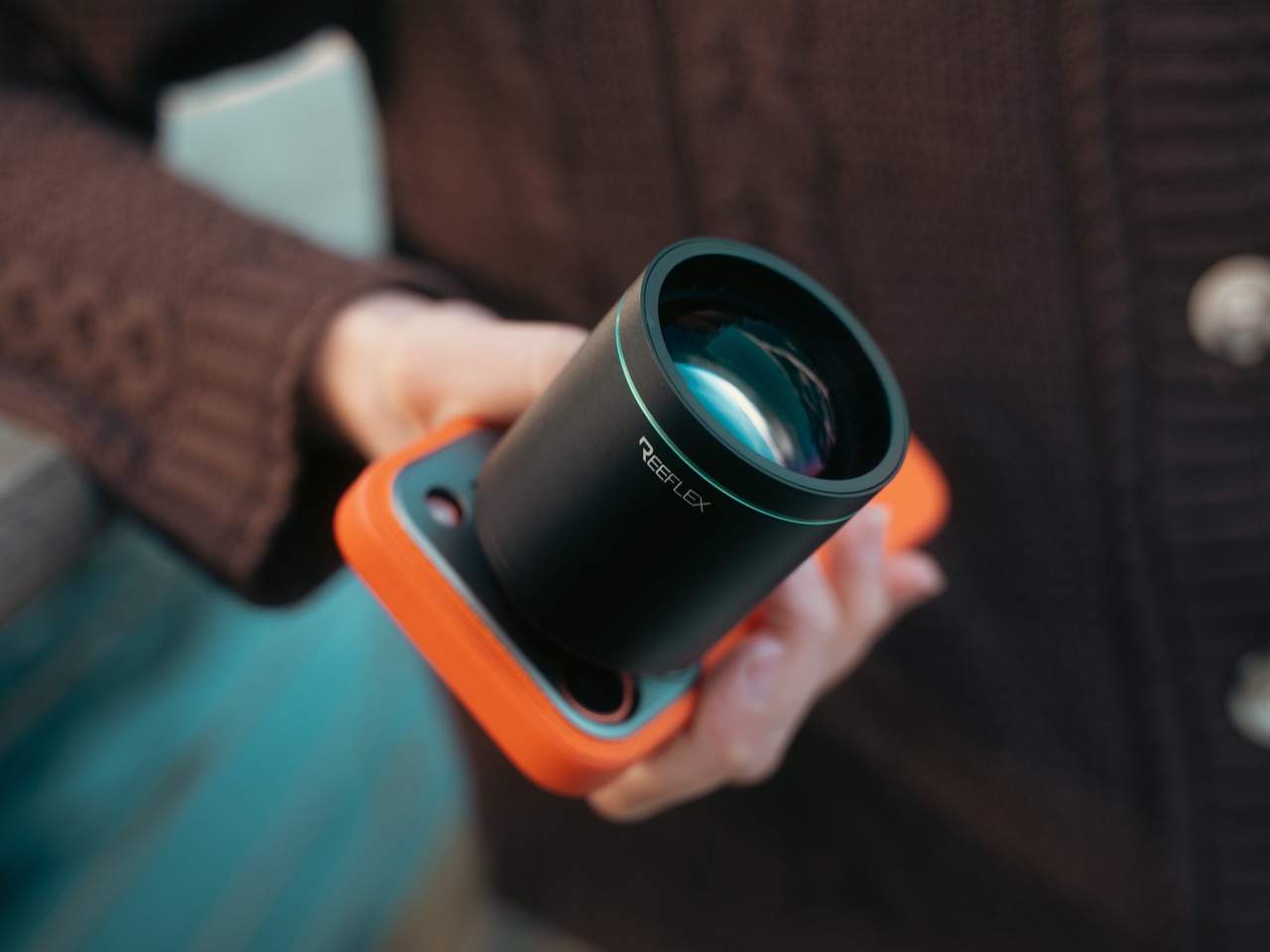
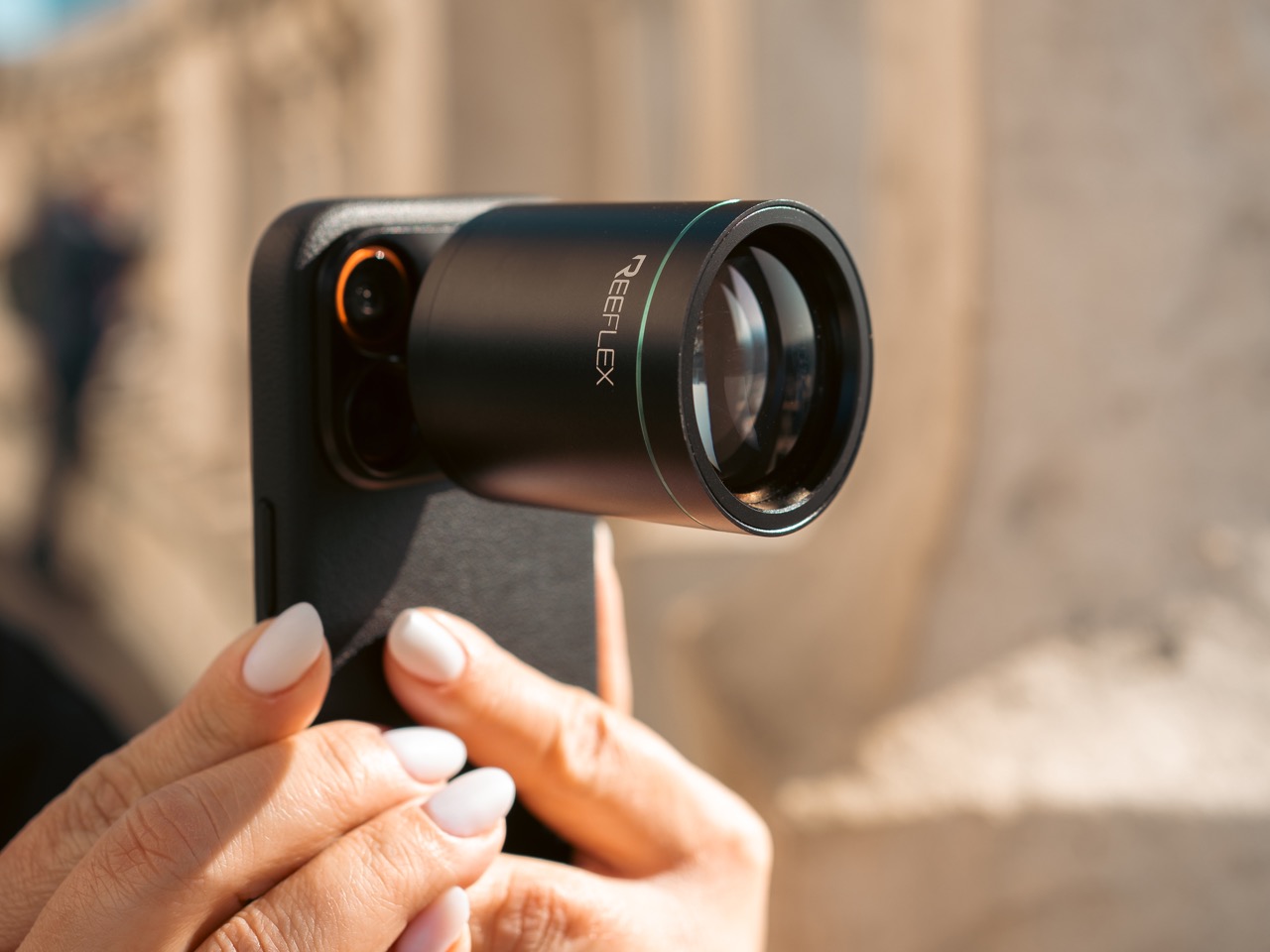
Machined from aerospace-grade aluminum, the body weighs 308 grams and holds its optical tolerances without adding unnecessary bulk. The glass inside is lanthanum, a material chosen specifically for its high refractive index. In practical terms, that means sharper resolving power, richer contrast, and far less color fringing along edges than standard glass can manage at these focal lengths. The optical formula runs four elements, one doublet and three singlets, tuned to work with the tetraprism telephoto cameras in current flagship phones rather than fighting against their characteristics. The matte black finish, the green accent ring around the barrel, and the large front element all contribute to something that looks and feels like a deliberate optical instrument.
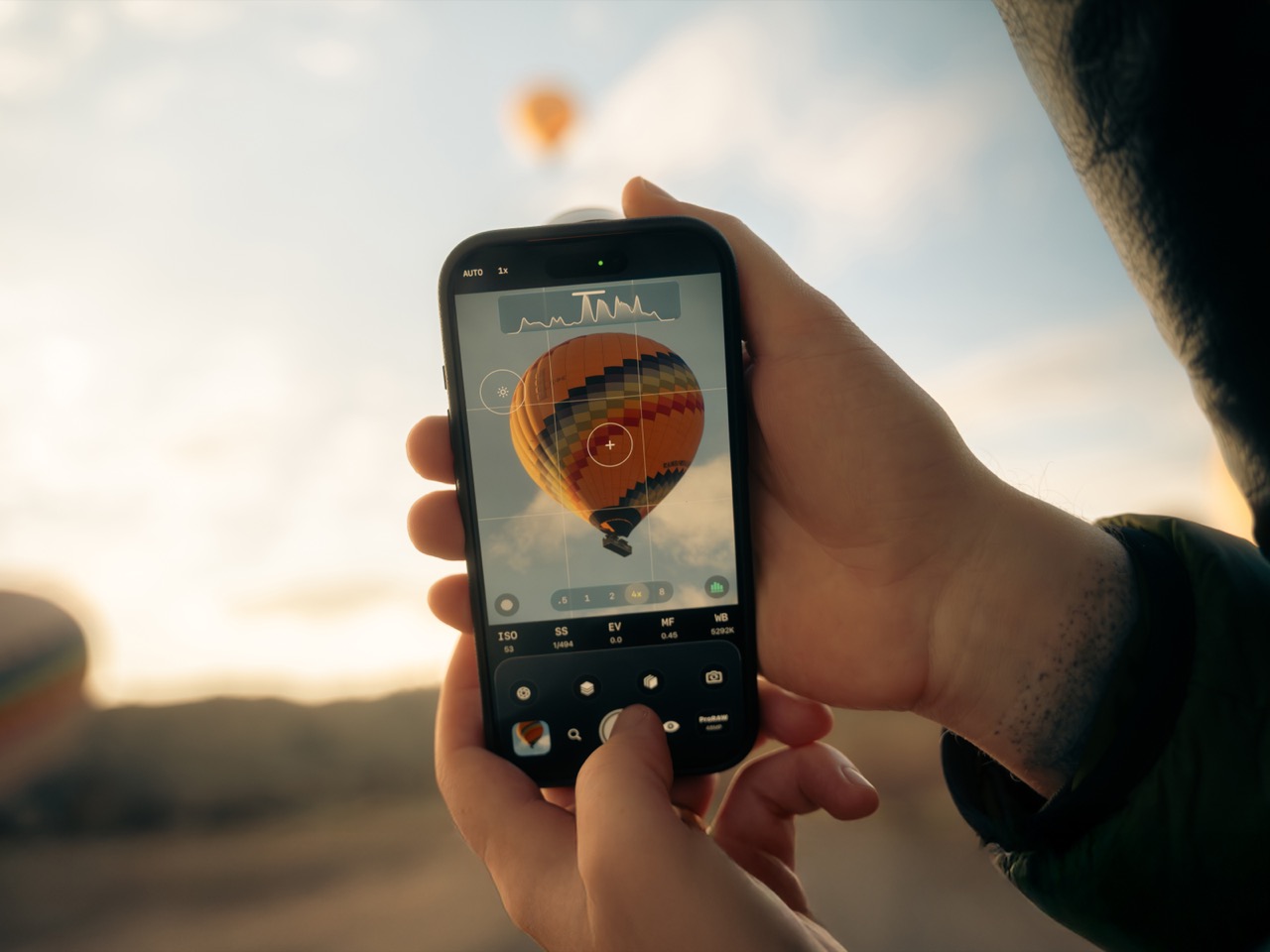
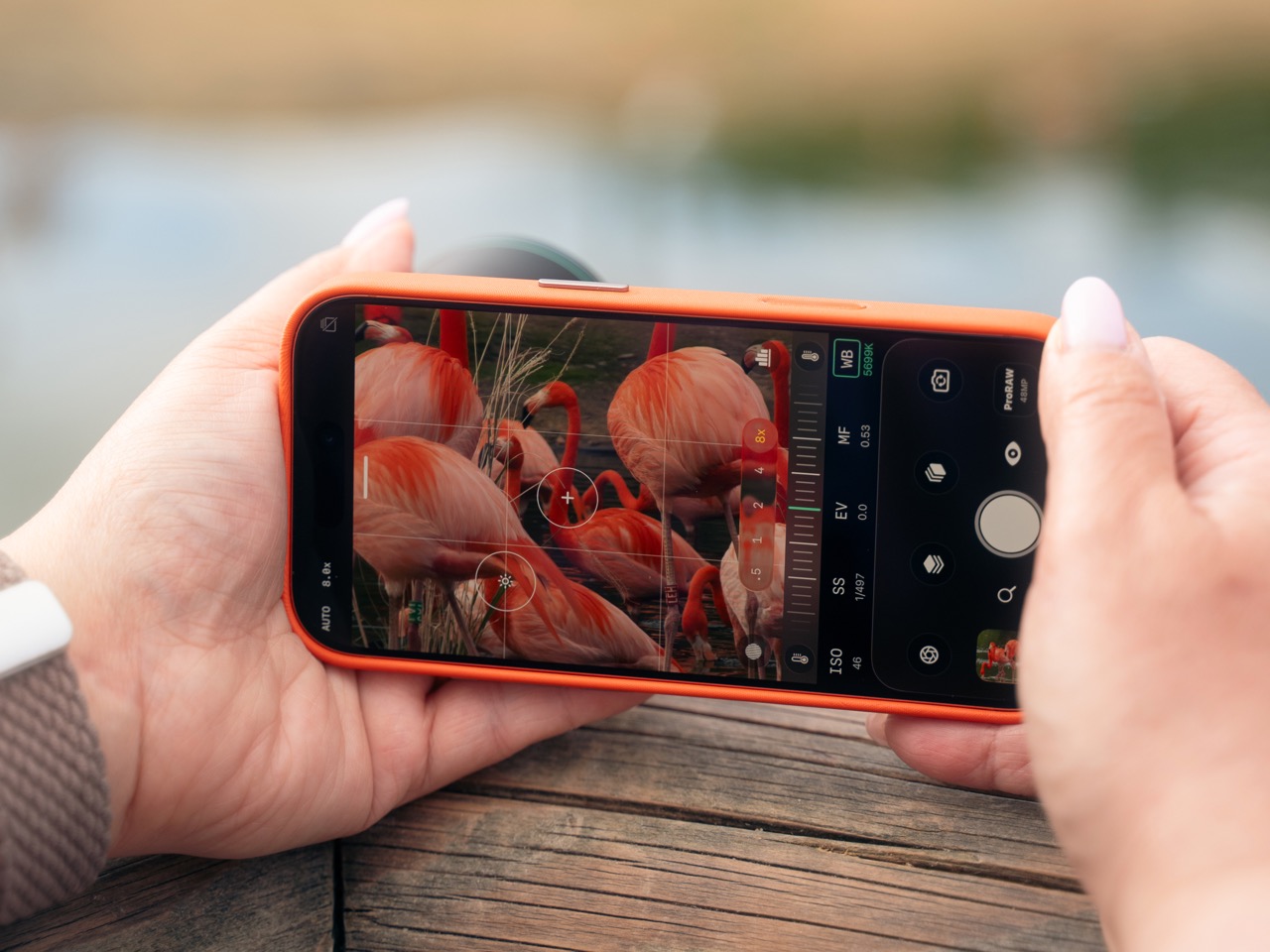
REEFLEX designed this lens specifically for the tetraprism telephoto systems introduced in the iPhone 17 Pro lineup and Samsung’s S26 Ultra series. Those cameras already deliver impressive native zoom performance, and the Ultra Telephoto 300-600mm takes that foundation and multiplies it. On iPhone 17 Pro and Pro Max, you get 24x magnification and a 600mm equivalent focal length. On Samsung S26, S25, and S24 Ultra, magnification reaches 30x with an equivalent focal length stretching to 660mm. For context, that is the kind of reach wildlife photographers use to capture birds without disturbing them, the kind of compression architectural photographers rely on to isolate distant details, and the kind of range that makes concerts and sports events feel immersive rather than distant.
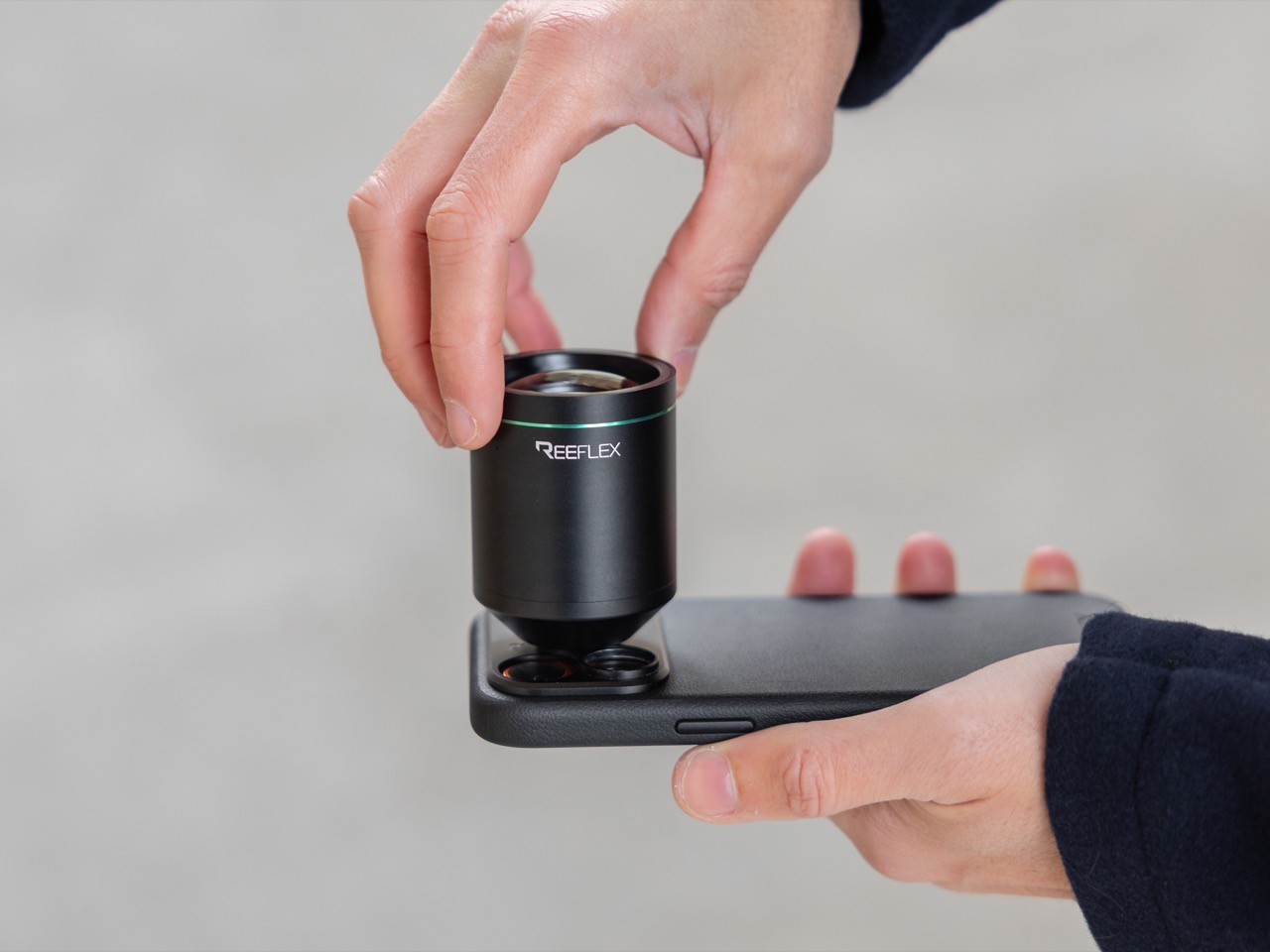
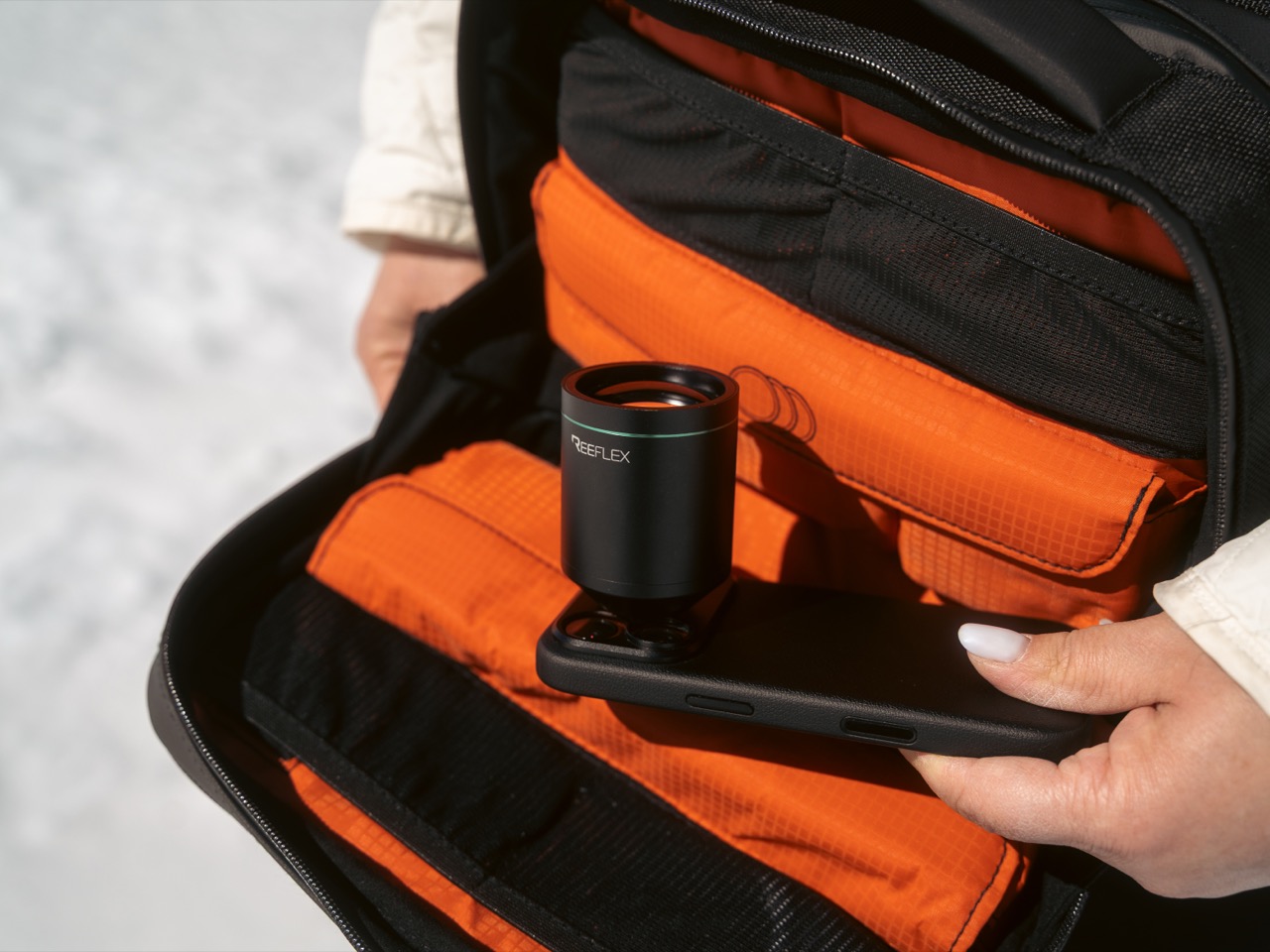
The lens mounts via a standard 17mm threaded connection that attaches to REEFLEX’s dedicated phone cases, which feature an integrated camera bumper designed to align perfectly with your phone’s telephoto lens. The threading ensures a secure, wobble-free connection, and the whole assembly stays compact enough to slip into a jacket pocket or small camera bag. REEFLEX also built in compatibility with their ReeMag magnetic accessory system, so you can stack filters, attach lens caps, and expand your creative toolkit without needing adapters or workarounds.
FIFA 2026 will be the first time many people realize just how limiting their phone’s native zoom really is. Sitting in the stands, even a few rows back from the pitch, most phone cameras will reduce the action to distant, flat shapes. The Ultra Telephoto 300-600mm changes that equation completely. You can isolate a player’s expression during a penalty kick, compress the depth of the field into a cinematic frame, and capture moments with the kind of detail that looks deliberately composed rather than accidentally caught. The same logic applies to concerts, where the stage often sits 50 meters or more from general admission, and wildlife, where getting close means ruining the shot.
The focus range starts at 6.8 meters and extends to infinity, which means you can use this lens for everything from isolating architectural details across a plaza to capturing the moon with surprising clarity. The lanthanum glass keeps distortion minimal and sharpness high even at the edges of the frame, and the compact form factor means you can shoot handheld without needing a tripod or gimbal for stability.
The Standard tier comes with the Ultra Telephoto 300-600mm lens and a phone case for $302, against a retail price of $441. The Ultra Tele + Super Tele Bundle adds the Super Telephoto 240mm and both macro add-ons (200mm and 300mm) alongside a phone case for $568, down from $849. The full Reeflex Ultra Set at $1859 (retail $2883) covers ten lenses spanning fisheye to ultra telephoto, a complete filter collection including fixed NDs from ND8 to ND64, variable NDs, a polarizer, and a black mist filter, plus filter adapters, a waterproof impact-resistant hard case, and a phone case.
Case options vary by device. iPhone 17 Pro and Pro Max users choose between Tech-Woven MagSafe or Leather MagSafe. iPhone 16, 15, and 14 Pro and Pro Max receive the Leather MagSafe version. Samsung S26, S25, S24, and S23 Ultra users get a Carbon case. Shipping begins June 2026, completing by early July.
There was a time when the radio on the kitchen shelf meant something. Not just background noise – a presence. Something with weight and warmth, a dial that clicked with intention, a speaker that made the morning feel like it had a score. Then it disappeared. We outsourced listening to our phones, our earbuds, our smart speakers that go silent the moment the Wi-Fi drops or the power cuts. Our devices got smarter, but also more fragile. More connected, but less self-sufficient.
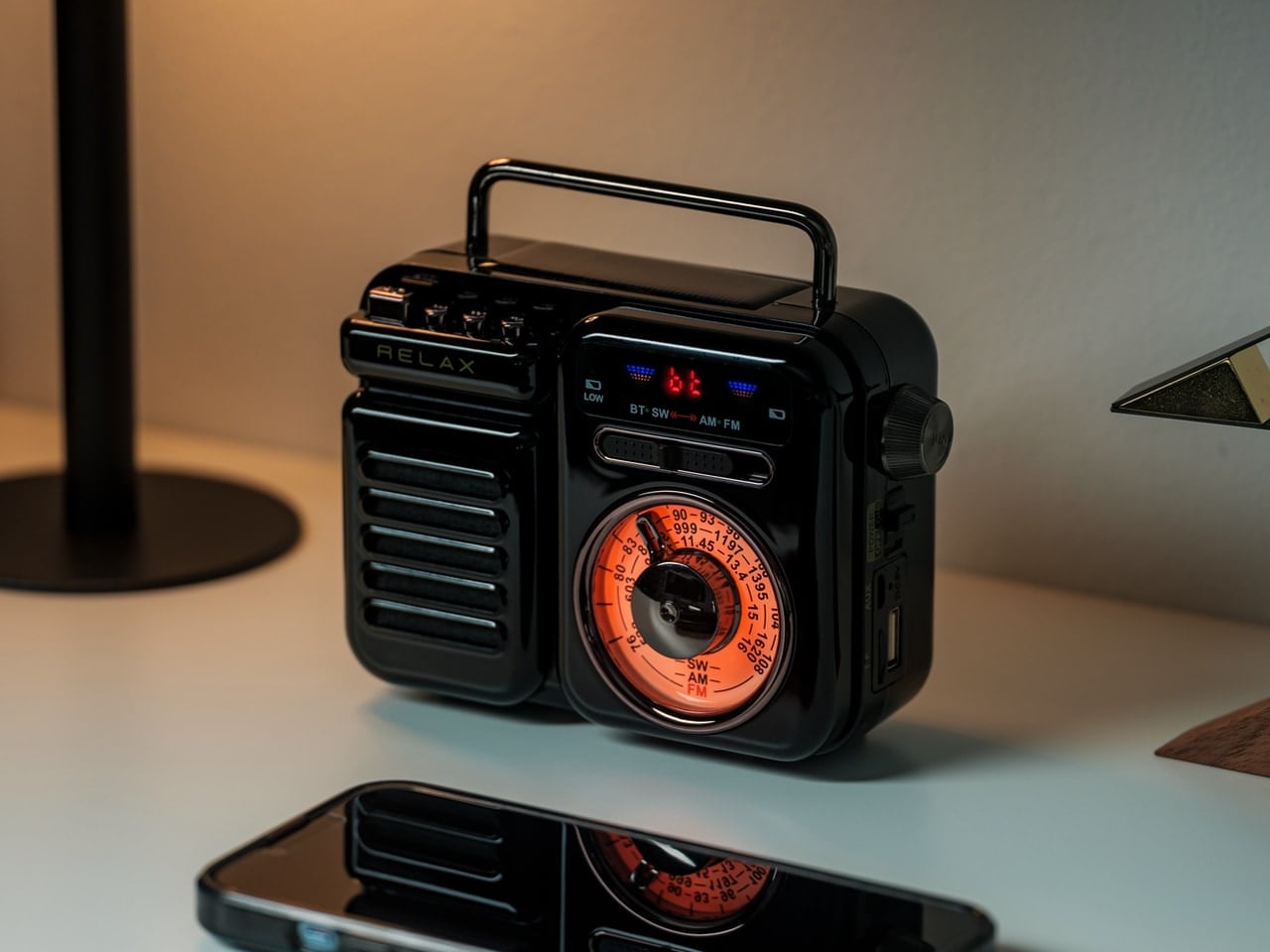
The result is a strange kind of ambient helplessness. Beautiful, optimized, perpetually connected – until nothing works. That’s what makes the RetroWave 7-in-1 Radio so quietly compelling. It doesn’t just revive the visual language of a classic Japanese radio. It restores something modern gadgets gave up without asking: the reassurance of an object that works when conditions aren’t perfect and takes away the decision fatigue of ‘choosing’ every single music you play.
The Radio That Changed How I Think About “Essential”
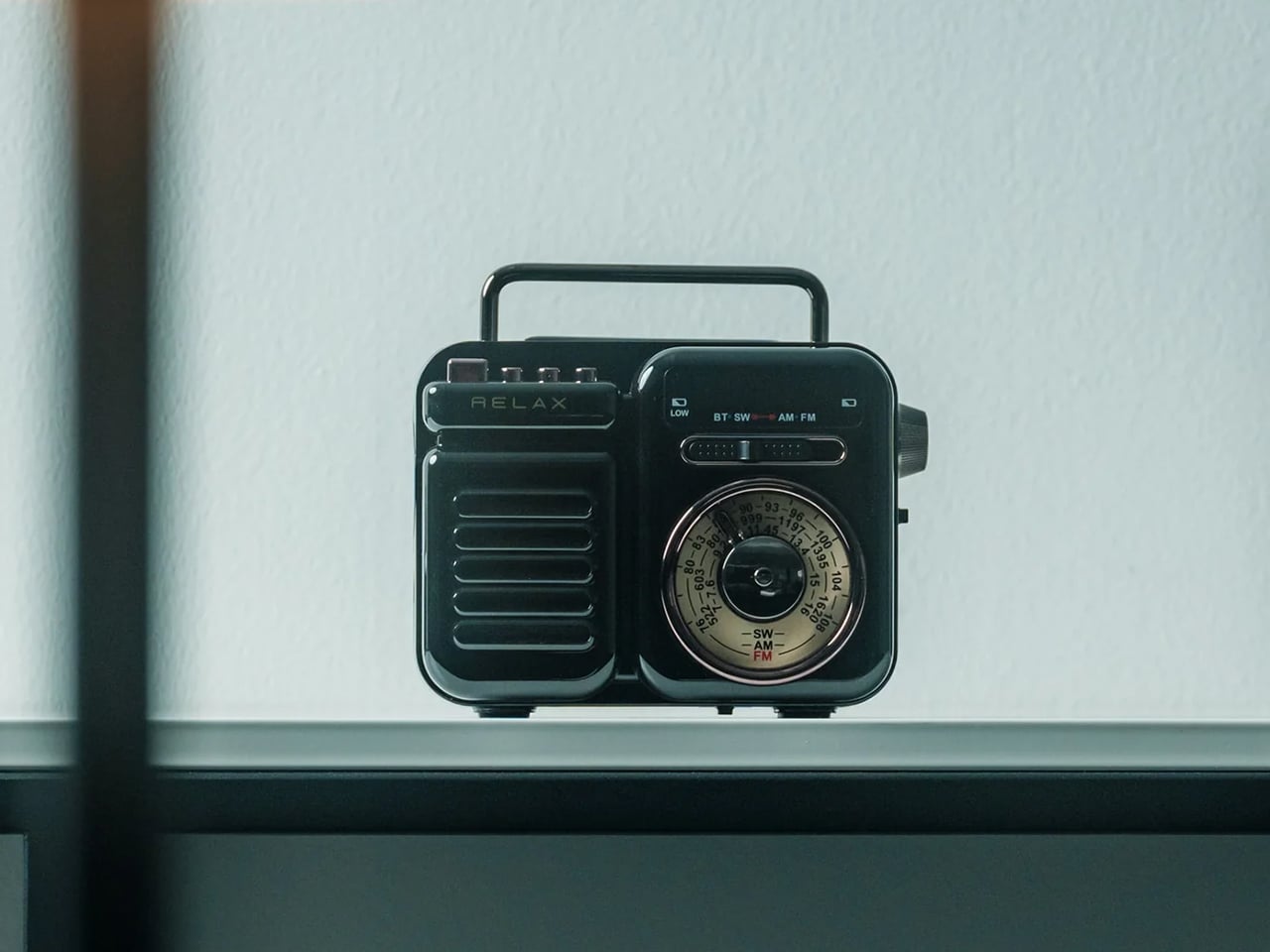
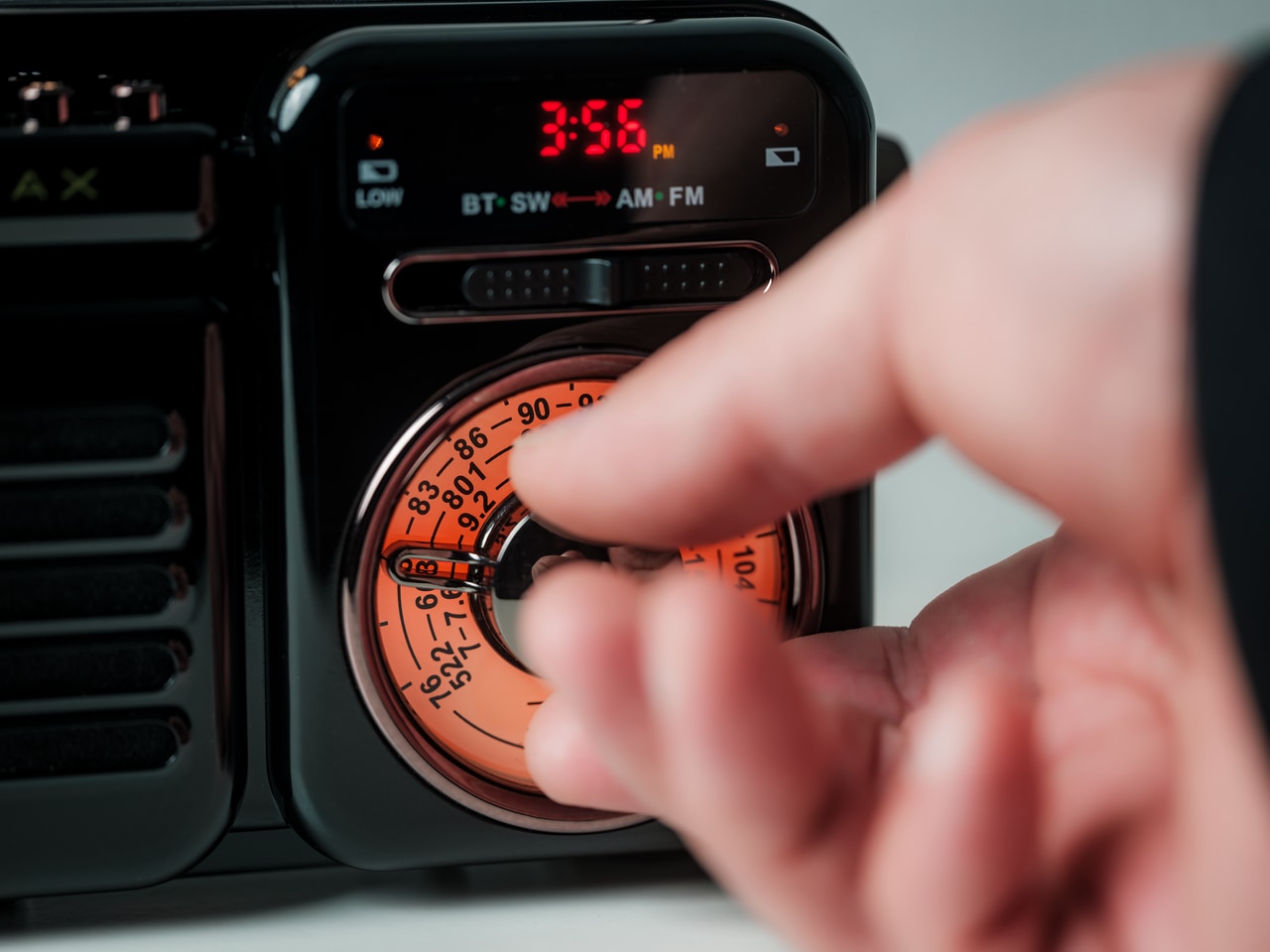
At first, I thought the RetroWave Radio was mostly a design piece. A handsome retro object with a tactile tuning dial and enough character to earn a shelf. But after a few weeks, I realized it had rearranged things I hadn’t expected.
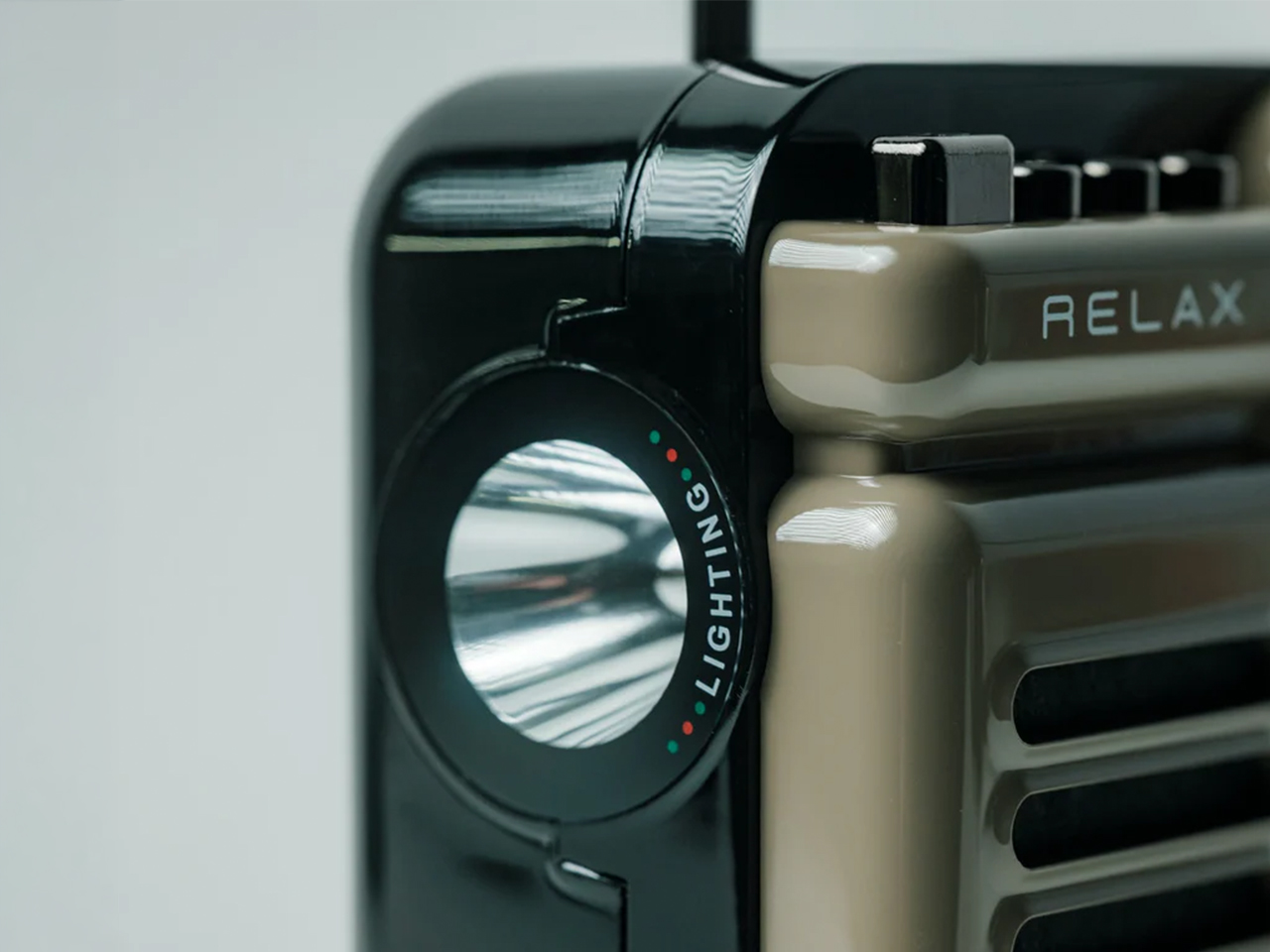
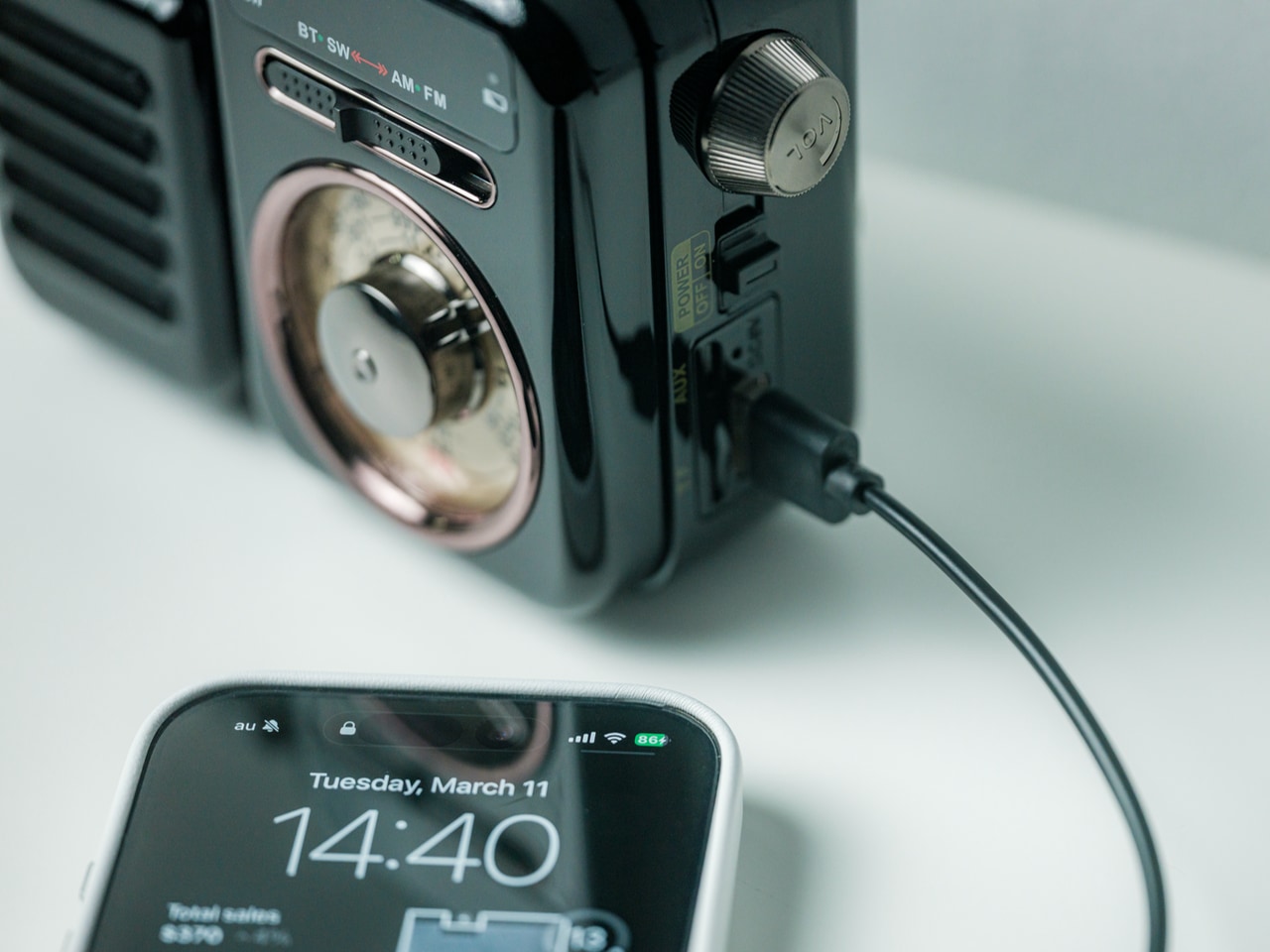
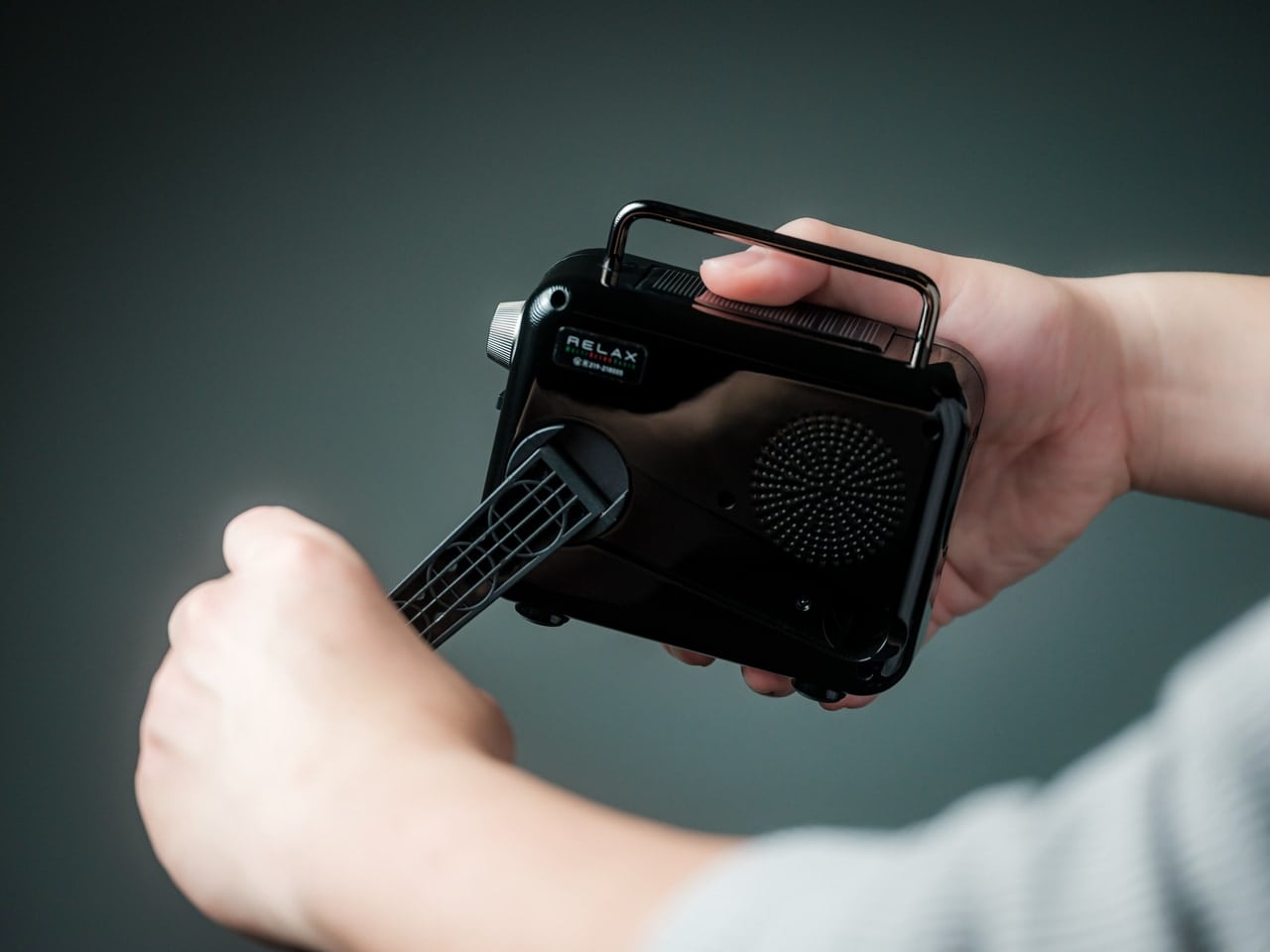
The Bluetooth stream replaced my phone speaker and sounded better. The FM dial came back into rotation, and tuning a signal by hand felt more deliberate than tapping a playlist. Then the power went out during a weekend storm. The radio kept going. The hand crank charged my phone enough to send a message. The LED flashlight handled the kitchen. The SOS alarm stayed ready in the background, doing nothing, which was exactly what I needed it to do.
It hadn’t added a function to my shelf. It had closed a gap I didn’t know I was living with.
Built Beautiful. Built Smart.
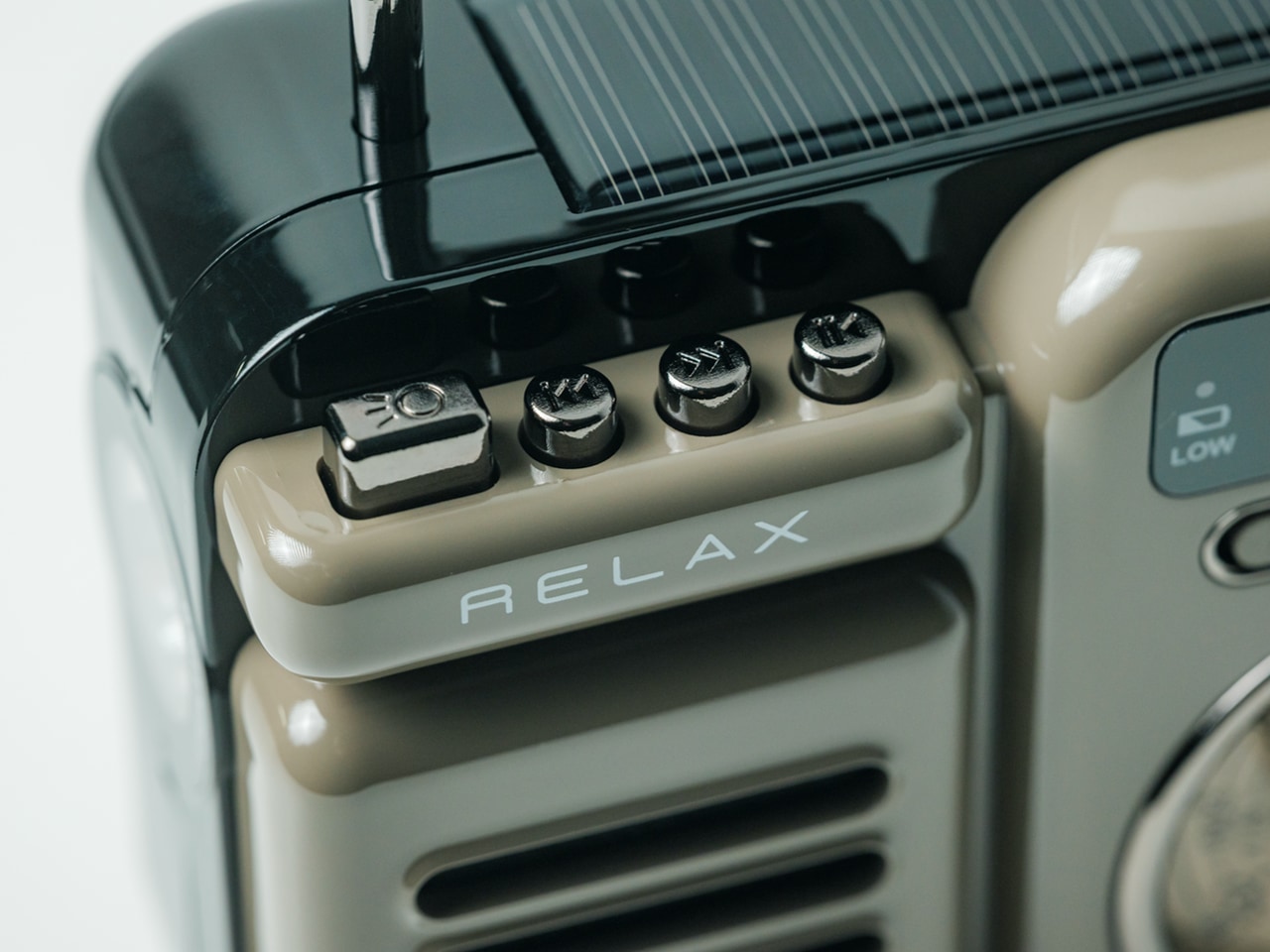
7-in-1 functionality: Works as a speaker, MP3 player, radio, flashlight, clock, power bank, and SOS siren in one compact form.
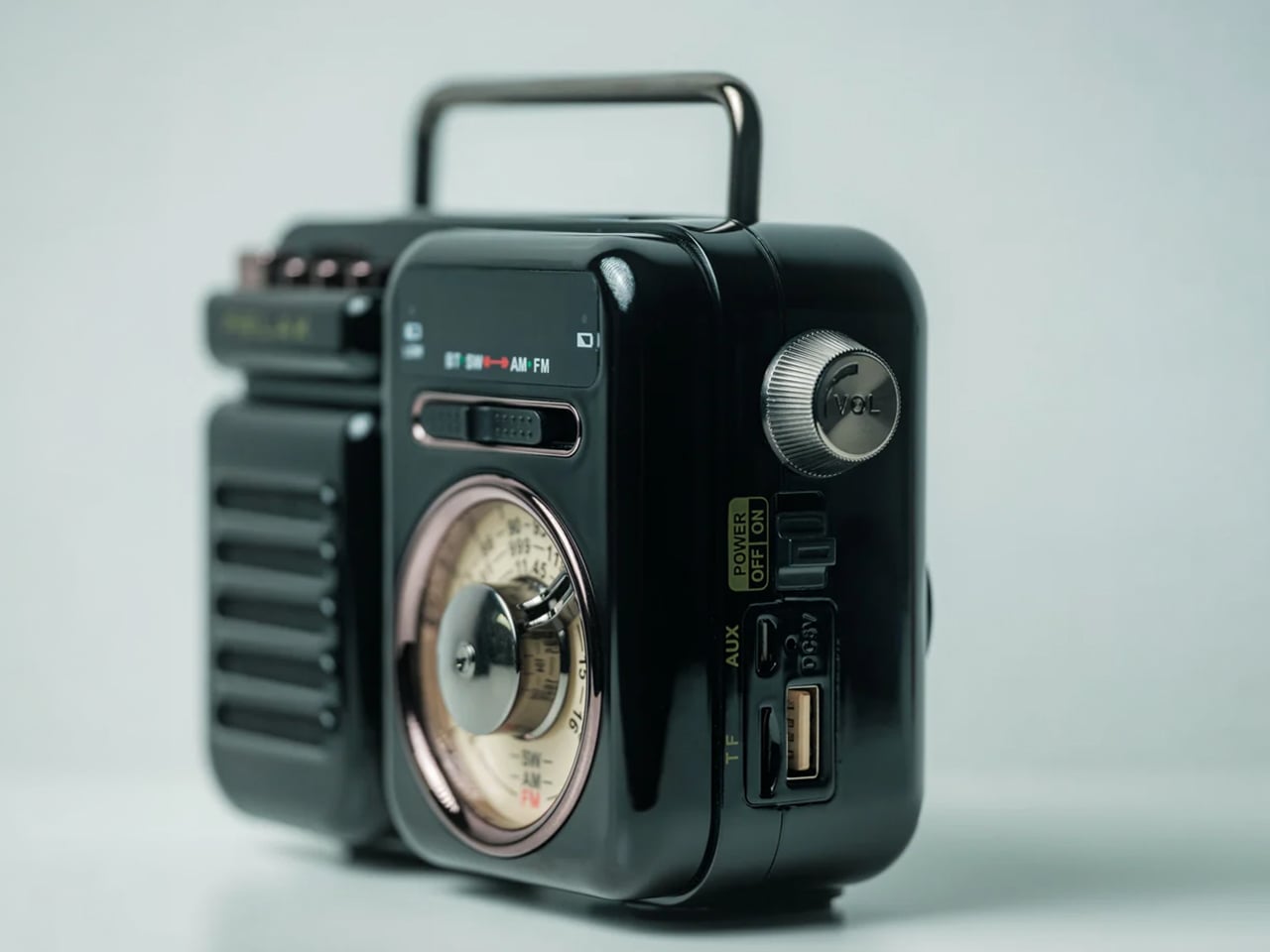
Bluetooth + MP3 playback: Stream from your phone or play directly from USB and microSD when you want to go offline.
FM/AM/SW radio: Tune into local broadcasts, international news, or analog stations without needing the internet.
Emergency-ready power: Recharge by hand-crank or solar panel when outlets are unavailable.
Built-in flashlight and SOS alarm: Designed for blackouts, storm prep, roadside stops, and unexpected moments.
Phone charging on the go: The 2000mAh battery gives your essentials a boost when you need it most.
Compact but capable: Lightweight enough to pack, yet powerful enough for up to 20 hours of radio time or 6 hours of emergency lighting.
This isn’t multi-functionality for the sake of a spec sheet. Each function earns its place.
Why Reliability Feels Like a Luxury Now
We tend to assume the future belongs to smarter devices. But smart has started to feel fragile. Speakers that go silent without internet. Phones that drain at the worst moment. Tools that work beautifully right up until they’re actually needed.
The RetroWave Radio offers a different kind of progress. Not rooted in constant connectivity, but in self-sufficiency. It gives you music when you want ambiance, information when you need updates, and power when everything else starts running low. The best emergency tool is the one that’s already out – living on your shelf, earning its place every day, so it’s there without thinking when things get difficult.
Design That Reflects Resilience
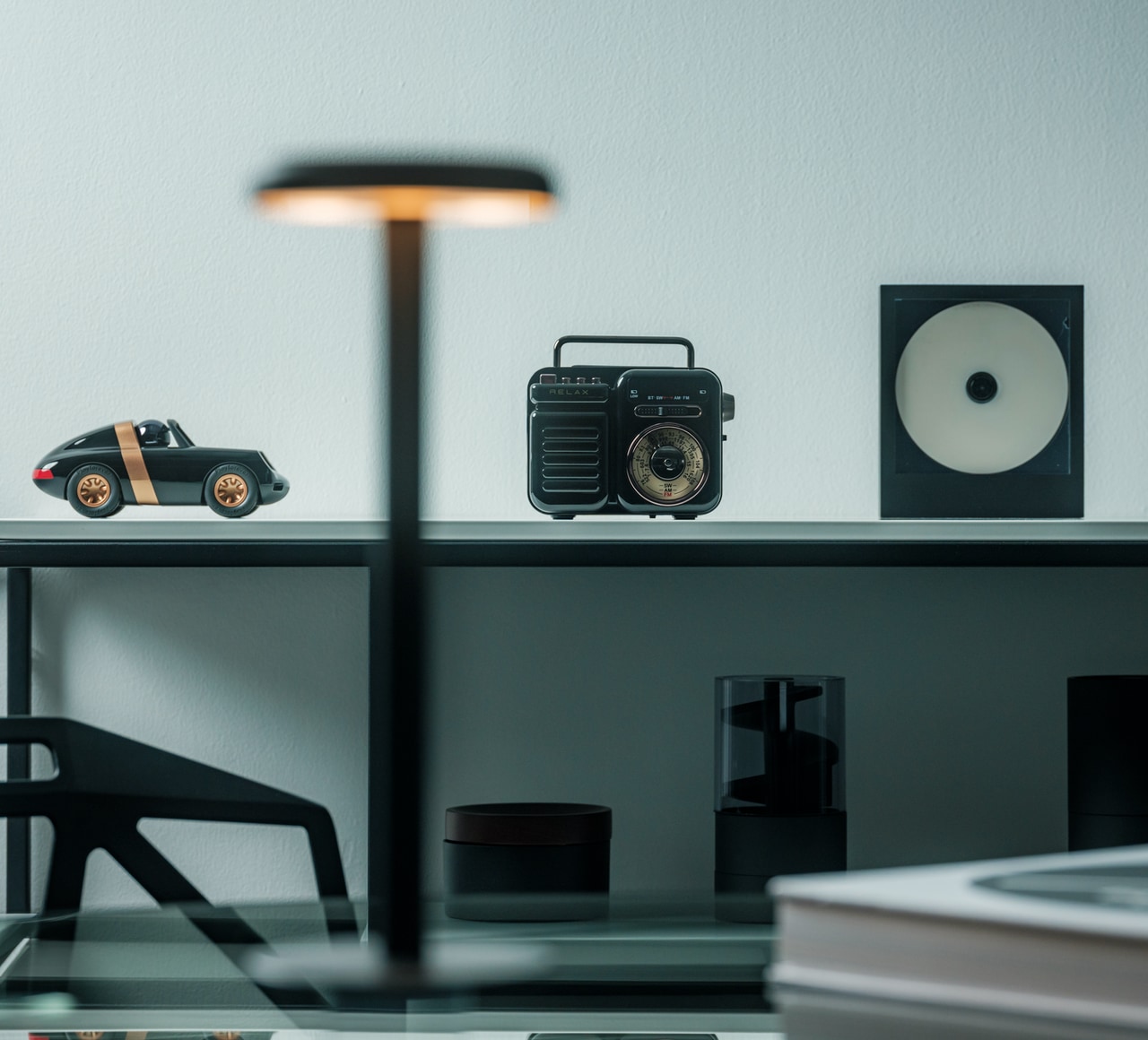
This isn’t a radio that begs for attention. The retro Japanese-inspired silhouette is balanced and resolved – compact without feeling cheap, characterful without demanding notice. The tuning dial has genuine tactile feedback, the kind touchscreens never replicate. The proportions feel considered. The soft glow of the interface gives it a quiet presence that works as naturally on a nightstand as it does in an emergency kit. It looks dependable before you even turn it on.
Who It’s For
Design Lovers
A functional object with enough character to live proudly on display.
For Users Who Are Always Prepared
A practical companion for blackouts, storms, travel, and emergency kits.
Minimalists on the Move
Seven useful functions in one compact device that actually earns the space it takes up.
The Quiet Power of Owning Fewer Things That Give You Freedom
You don’t realize how many modern tools depend on ideal conditions until the power cuts, the signal drops, or you simply want something that works without asking much in return. That’s what the RetroWave 7-in-1 Radio gets so right. It doesn’t just entertain. It reassures.
And maybe that’s why it feels so current. Not because it looks back, but because it solves for the kind of uncertainty modern gadgets tend to ignore. In a world full of devices that stop being useful the moment things go wrong, this one keeps earning its place. The RetroWave 7-in-1 Radio is available now for $89.
Yanko Design’s Design Mindset podcast continues to carve out a thoughtful space for conversations around creativity, innovation, and the ideas shaping the future of design. Now at Episode 22, the weekly podcast is steadily building a strong voice of its own by focusing not just on finished products, but on the processes, philosophies, and experiments behind them. Powered by Zawa, this latest episode turns its attention to a fascinating tension in contemporary design: as AI becomes more embedded in creative workflows, where does human originality begin, and what happens when the most forward-looking idea starts with something as ancient as clay?
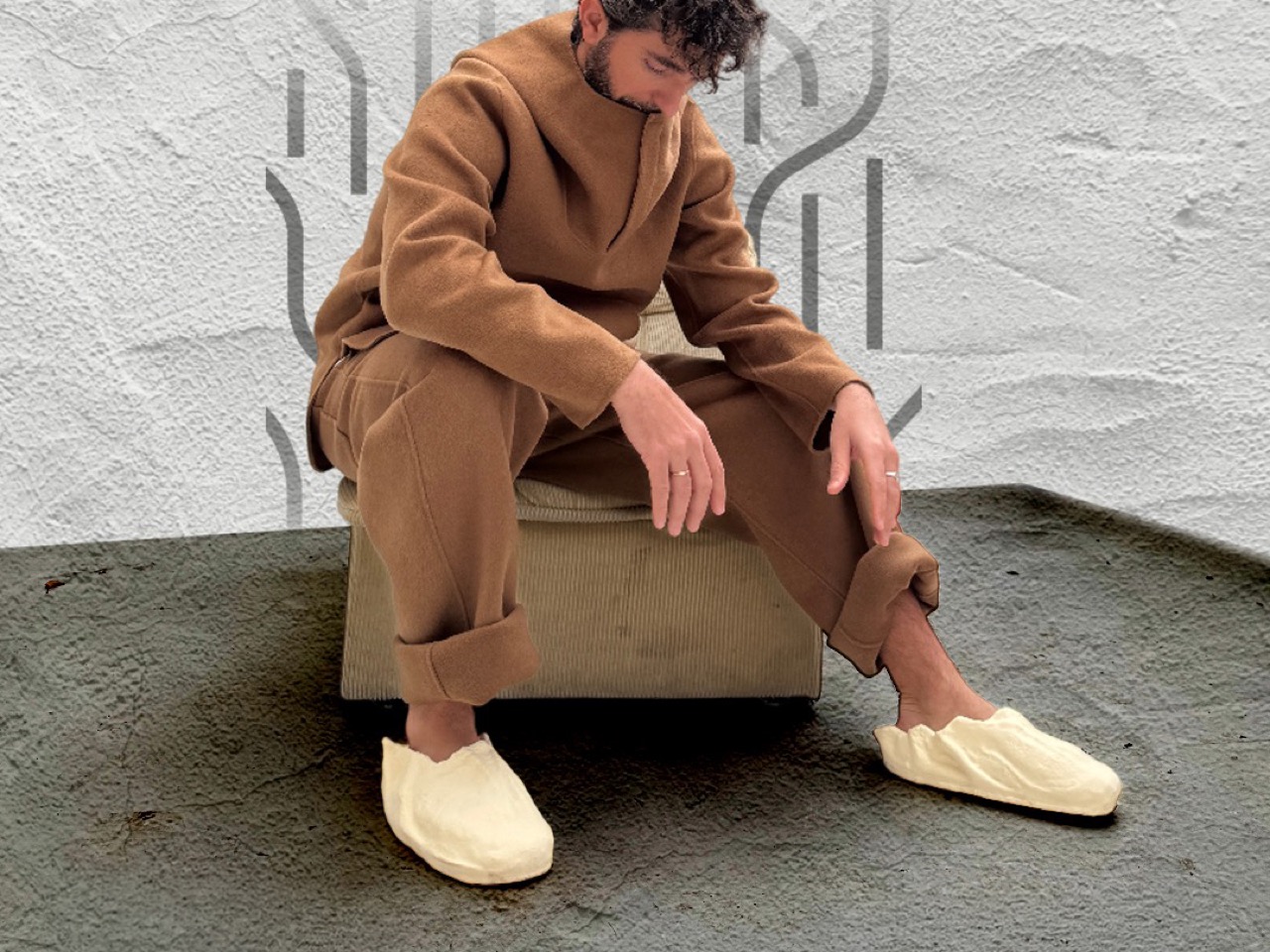
That question drives host Radhika Seth’s conversation with Ben Weiss, CEO of Syntilay, a company already known for pushing footwear into unfamiliar territory through AI, 3D printing, and custom-fit production. In this episode, Weiss unpacks the making of the Skin shoe, a project that began with artist Sebastian ErraZuriz sculpting directly around his foot before the form was scanned, translated, and turned into wearable footwear. The result is not just a new shoe, but a new argument for how design can begin, who gets to author it, and why technology may be most powerful when it supports human expression rather than replacing it.
The most striking part of the Skin shoe story is that it did not begin with a digital tool, a design brief, or a manufacturing constraint. It began with clay in the hands of an artist, and for Ben Weiss, that starting point changed everything about the outcome. As he explains, “People kept asking us, why start with clay? Why not just open a design software and begin, you know, kind of like the typical path for making shoes. And the answer is because a computer has an idea and some predetermined steps. But when you start with an art form, it’s entirely original.” That distinction becomes the foundation of the entire episode.
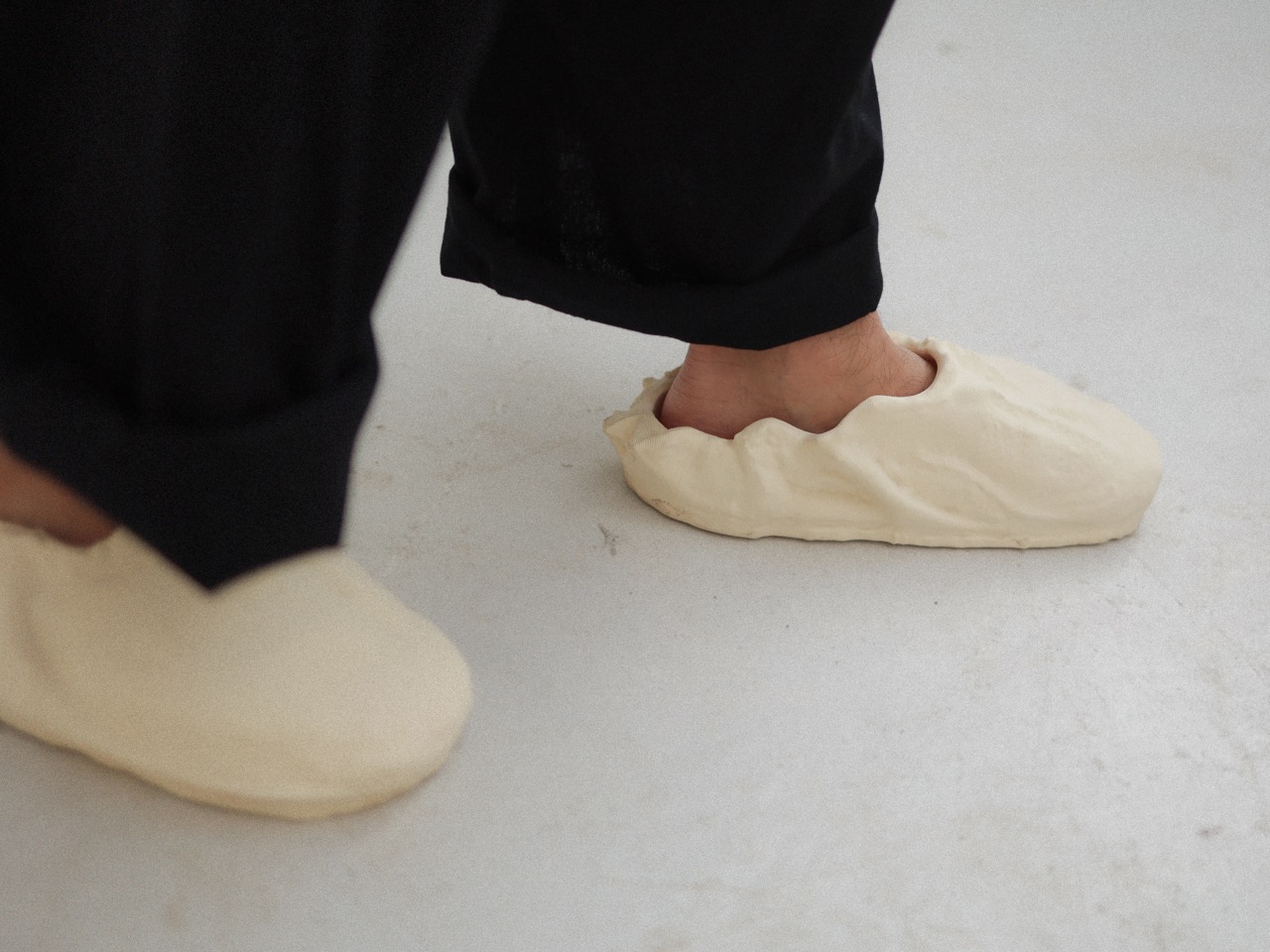
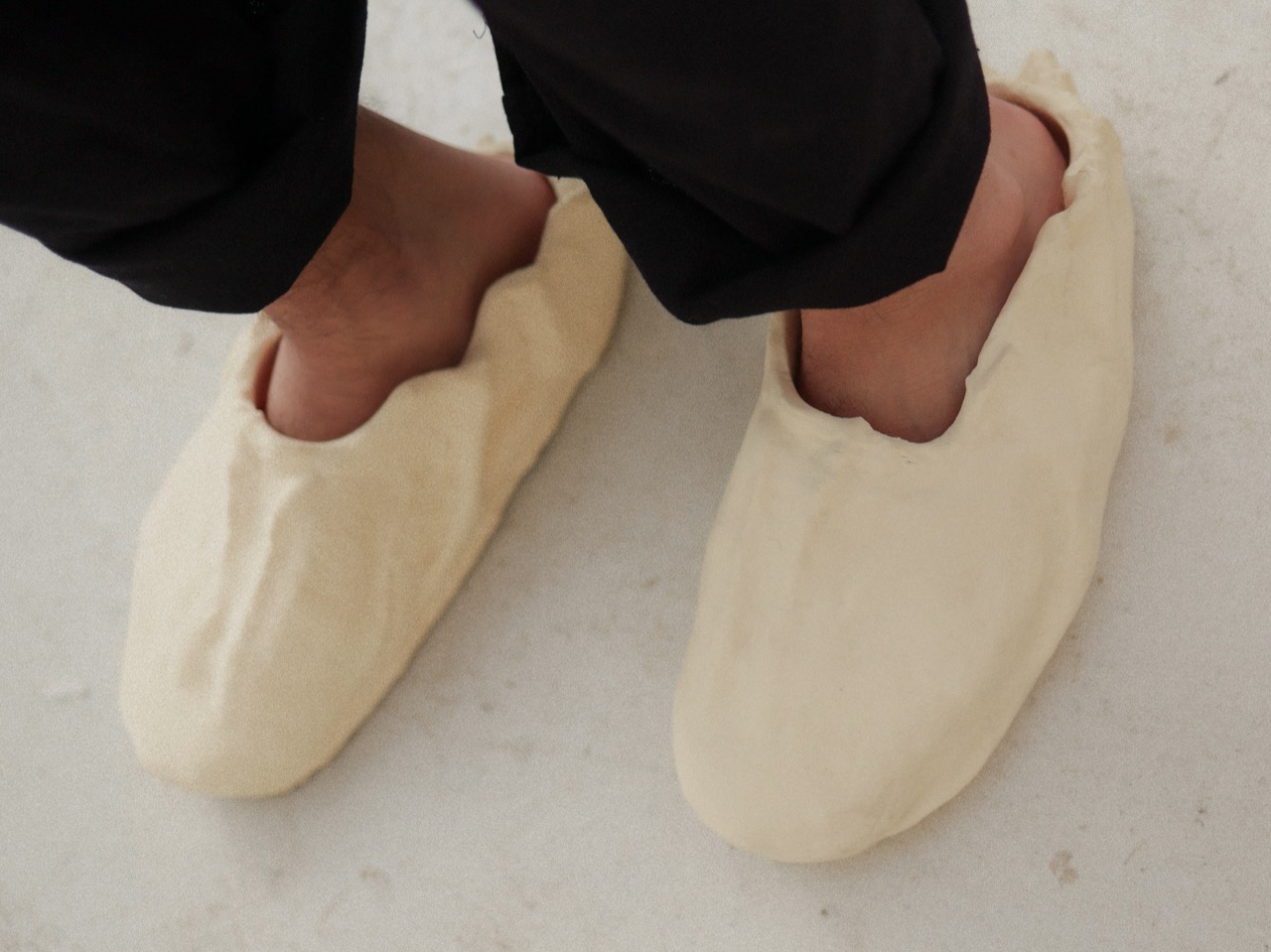
Weiss makes it clear that the goal was not simply to make a shoe in an unusual way. It was to let an artist enter footwear authentically, using his own medium and instincts instead of adapting to the usual industrial process. Sebastian ErraZuriz sculpted around his own foot in a w†ay that was, as Weiss describes it, “very free flowing,” with no predetermined expectations about what a shoe should look like. That is also why the final product feels less like a sneaker and more like something anatomical, intimate, and expressive, a piece of wearable sculpture rather than a conventional consumer product.
Turning Sculpture into a Wearable, Custom Fit Shoe
Once the clay sculpture was complete, Syntilay had to solve the difficult problem of turning a tactile, hand-made object into something that could actually be worn. Weiss acknowledges that some detail is always at risk in the translation from physical object to digital file, but preserving the original character of the sculpture was a key priority throughout. “Cause you lose some detailing, but you know you try to capture it as best as you can,” he says, before noting that the final printed shoe still retains much of the fine surface texture and hand-made quality of the original piece.
What makes the process especially interesting is that the artistic form is largely preserved on the outside, while most of the personalization happens on the inside. Using more than 5,000 data points captured from a phone scan or in-person fitting, Syntilay adjusts the internal geometry of the shoe to fit each customer’s foot without distorting the sculpture itself. Weiss explains, “The key is is not changing the outside structure that much so it distorts what the shoe looks like. In this case, what this piece of art looks like on your feet, um, and while also providing a good fit experience. So most of the changes are happening on the inside.” That balance between fidelity and function is what allows the shoe to remain art-led while still being wearable.
Ben Weiss on AI, Human Craft, and What Innovation Actually Means
Although the episode title sets up a contrast between clay and AI, Weiss is not arguing against technology. His view is more layered, and more useful, because he sees AI as a tool that can support creativity without becoming the sole source of it. “AI is going to be a great augmenter, um, maybe that’s not the best word, but a great kind of helper for humans,” he says. He goes on to describe a future in which designers sometimes use tools, sometimes choose not to, and build workflows based on what makes the most sense for the idea rather than on ideology alone.
That mindset also shapes how Syntilay positions itself as a brand. Weiss points out that the company has already explored highly automated footwear, but the Skin shoe takes the opposite route by placing the human hand at the very beginning of the process. For him, the bigger point is experimentation. Footwear, he argues, has become too comfortable with minor updates, surface-level collaborations, and familiar formulas. His response is blunt and memorable: “A lot of collaborations today are new embroidery on the shoe, different colors. It’s nice, But like when you can take an actual clay sculpture that somebody made around their foot and make it something you can wear. I mean that’s next level.” Innovation, in this framing, is not about choosing between AI and craft, but about creating conditions for truly new ideas to emerge.
Storytelling, Authorship, and Why the Human Element Still Matters
One of the strongest ideas in the conversation is that the Skin shoe is not just a design object, but a story that could only exist because of its human origin. Weiss sees that as increasingly important in a design landscape crowded with AI-generated outputs and endless visual sameness. “The story of the skin shoe is is a great story,” he says, pointing to the way Syntilay documents the journey from clay sculpture to 3D file to finished shoe. For him, storytelling is not decoration added after the fact, but a core part of how a product communicates meaning and builds resonance with people.
That same human-first logic also shapes how Weiss thinks about authorship. When asked who designed the shoe, he resists reducing it to one name, instead crediting both Sebastian, who created the sculpture, and Pablo, who translated the scan into a printable product. “So I would say it’s designed by two people,” he says, acknowledging that the future of artist-led footwear may depend on this kind of collaboration between conceptual creator and technical designer. He also notes that stories like these matter because they cannot simply be fabricated by a machine, adding that “storytelling is is a really significant moat because there are some stories that AI can just doesn’t have.” In other words, the human element is not just visible in the object, but embedded in the narrative around it.
Joe Foster’s Influence and Ben Weiss’s Bigger Design Philosophy
Another compelling layer in the episode is Weiss’s reflection on working with Joe Foster, Reebok’s cofounder, whose decades of experience have shaped the way Syntilay thinks about product. Weiss describes Foster as someone who still approaches design with energy, curiosity, and a strong belief that the work should remain enjoyable. But the deeper lesson comes from Foster’s idea of “vis tech,” or visible technology, the principle that innovation should not be hidden beneath the surface. Customers should be able to look at a product and immediately understand that it is doing something different. That philosophy clearly runs through Syntilay’s work, from the pod-based structure of other models to the unmistakably sculptural silhouette of Skin.
Weiss also shares a broader set of lessons that go beyond this one project. He admits that early on, he had not fully figured out how to optimize footwear for printing cost while balancing comfort, and that learning came through iteration rather than certainty. He is equally clear about what AI companies often get wrong when entering established creative fields, saying the most common mistake is “losing the authenticity and respecting the people that come before you.” Still, his most revealing line comes near the end of the episode, when he is asked to define the future of design. His answer is simple and sharp: “It’s about giving people more opportunities to design.” That may be the clearest summary of both the Skin shoe and Syntilay’s larger ambition, opening the category to artists, creators, and new forms of authorship that conventional design systems have historically left out.
Design Mindset drops every week on Yanko Design. Catch Episode 22 in full wherever you listen to podcasts.
Your desk says something about you before you ever open your mouth. The monitor, the mug, the little objects arranged around your keyboard, they all add up to a portrait. And the keyboard sits dead center in that portrait, the most touched, most visible, most personal object in the whole setup. So why do most of them look like they were designed by someone who has never once cared about how a workspace feels?
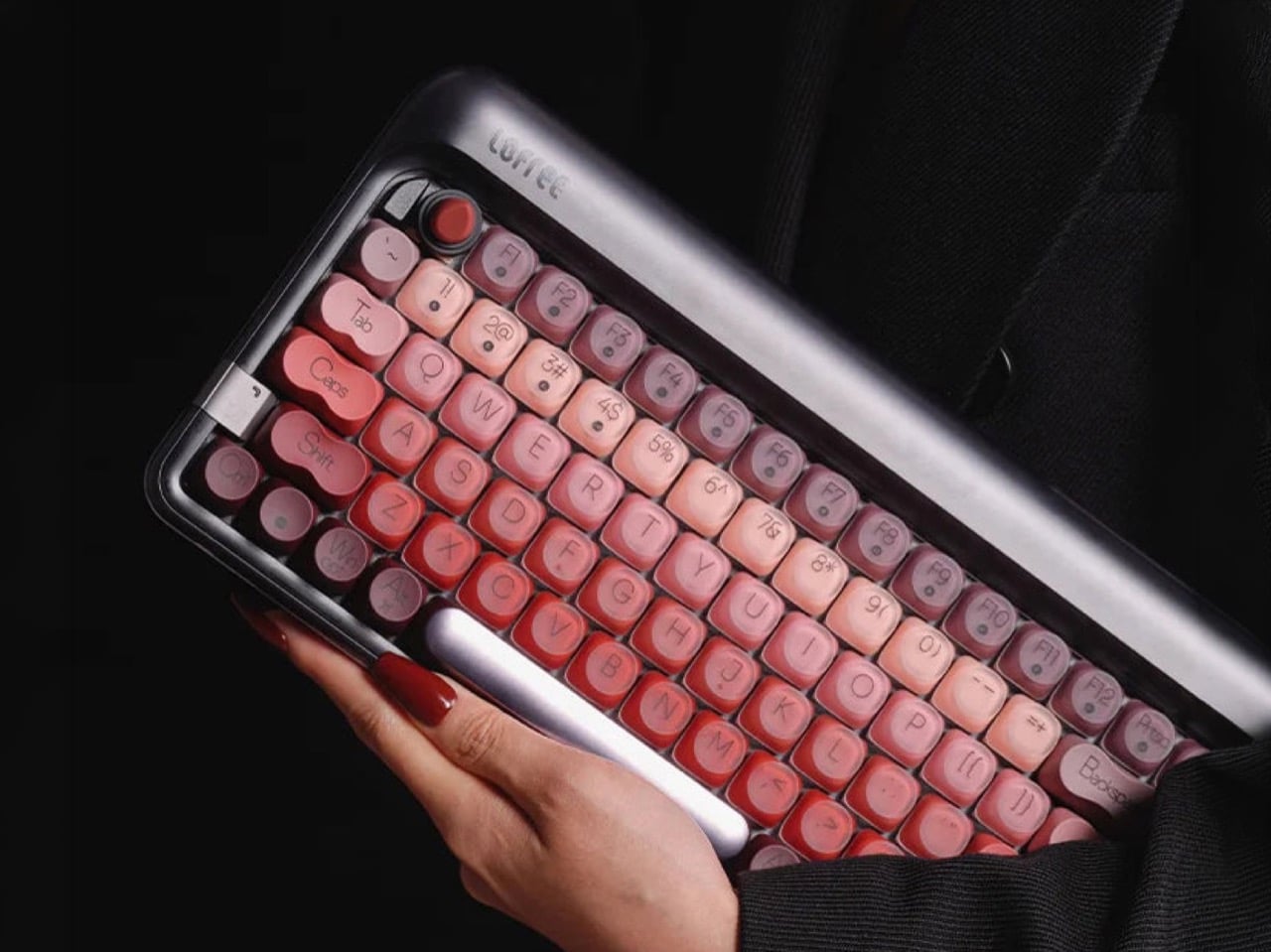
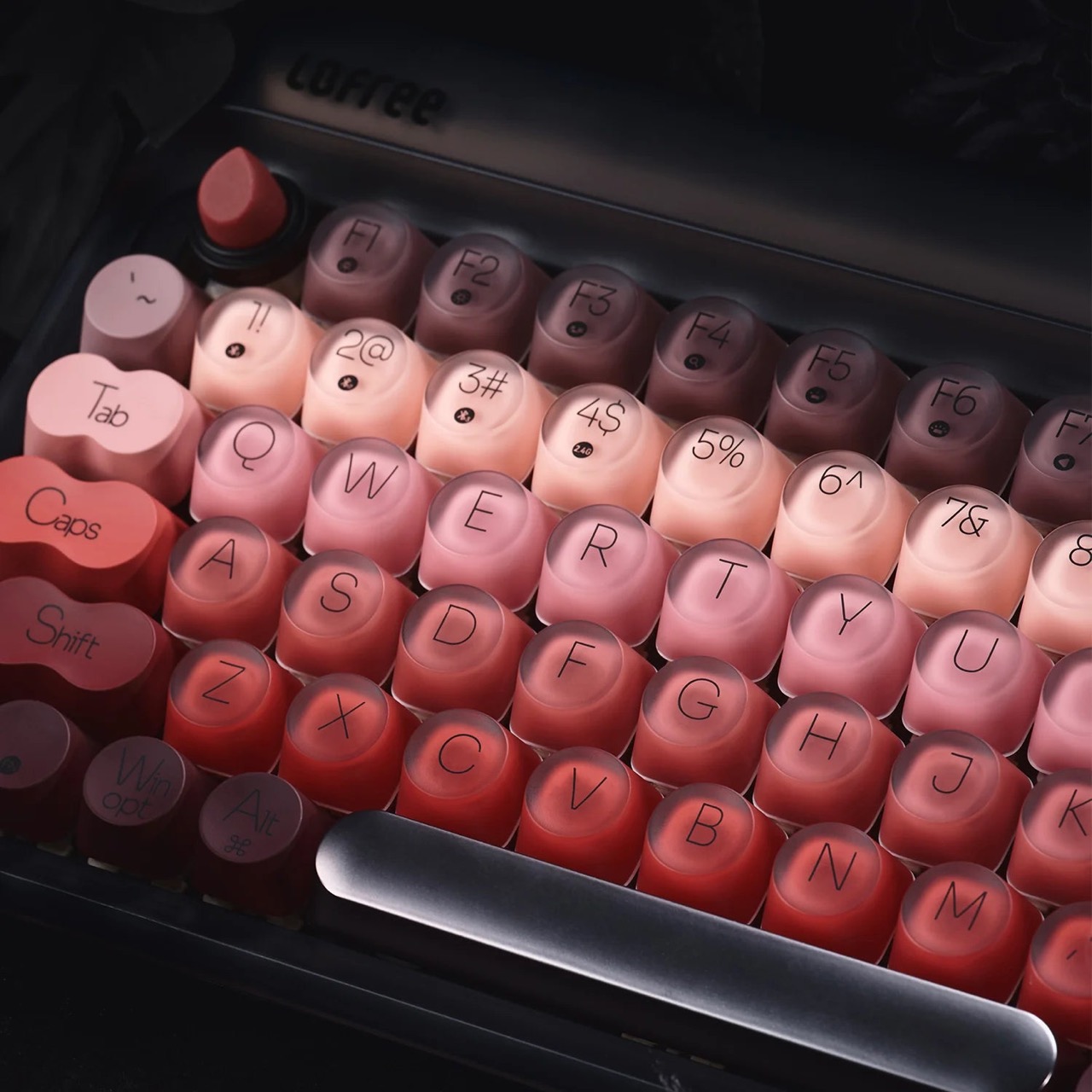
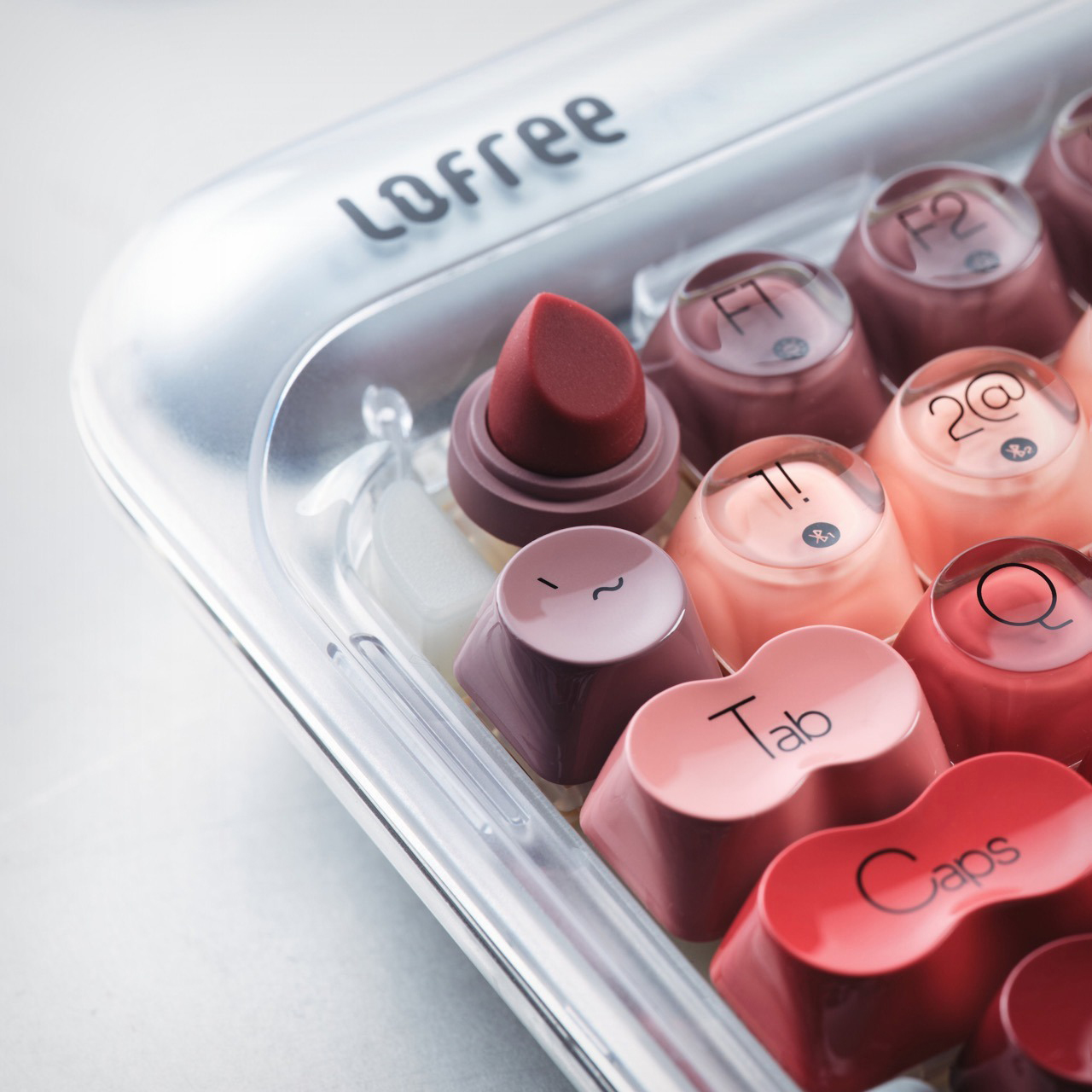
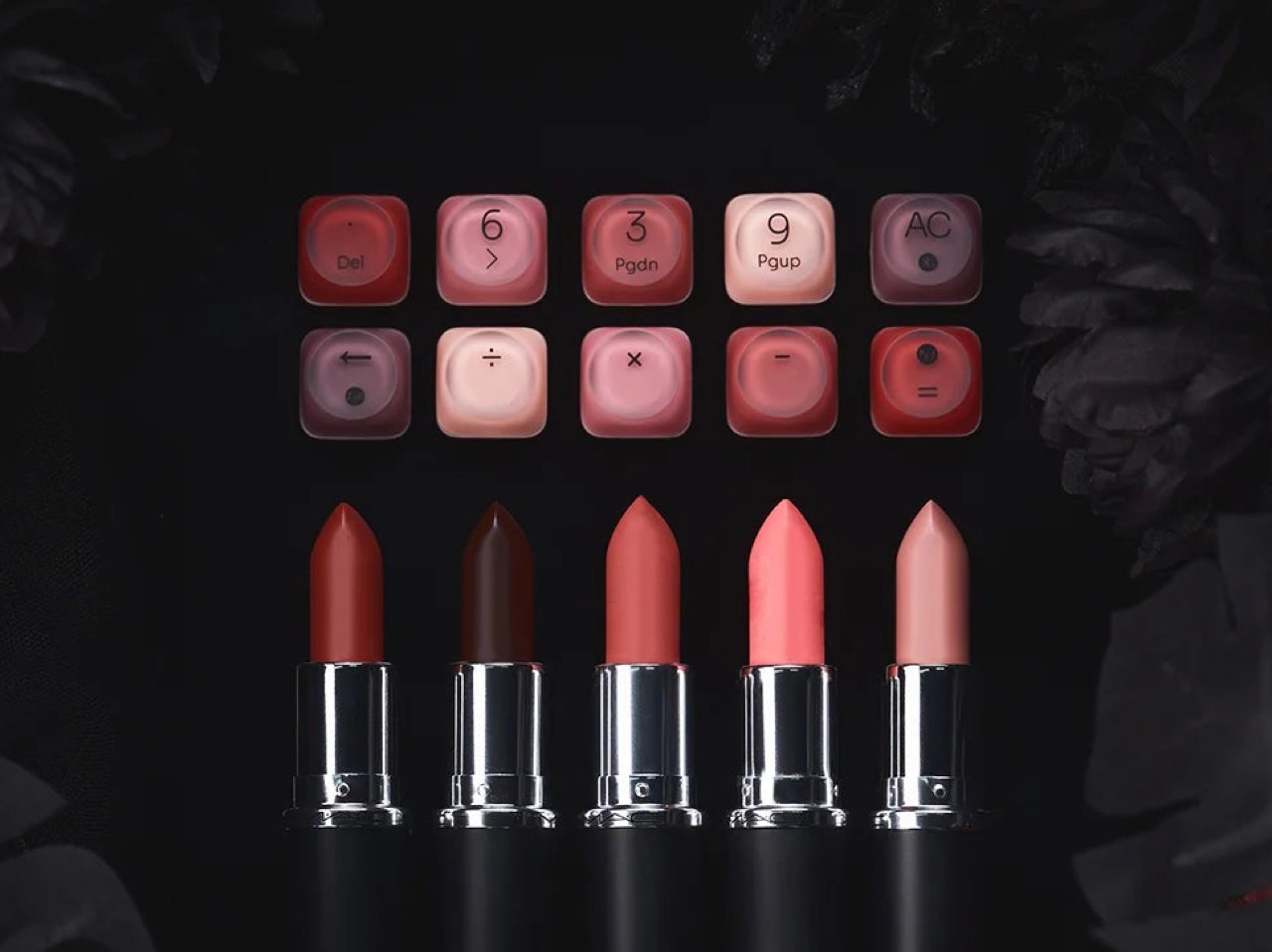
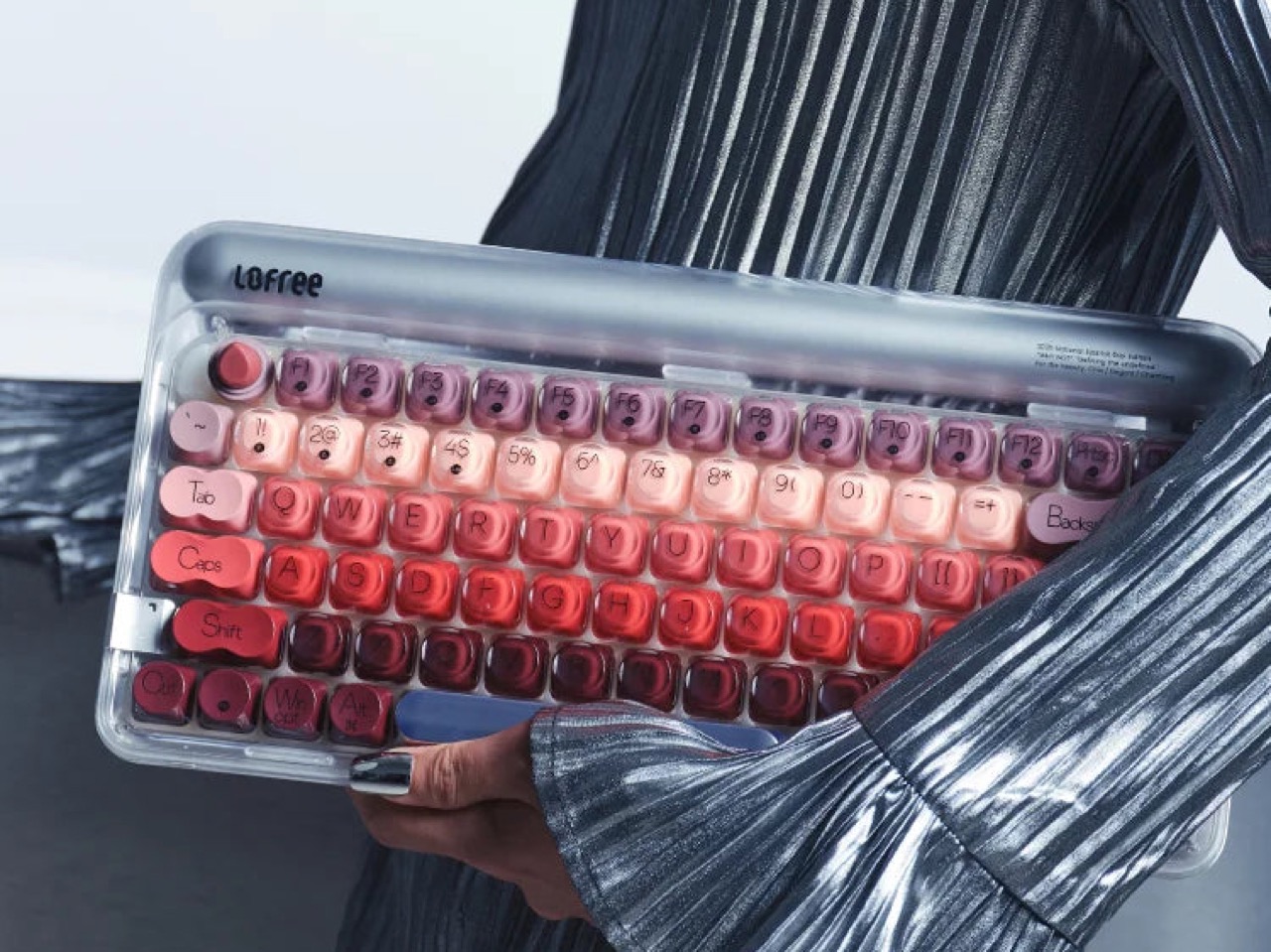
Lofree has been answering that question for years, building a catalog around the idea that a keyboard can carry genuine personality. The Lipstick is where that philosophy gets its boldest, most unapologetic expression yet. Five lipstick shades flowing across the keycaps in a deliberate ombre gradient, a sculptural lipstick-bullet ESC key rising from its cradle, and a gorgeous frosted transparent shell that puts the whole color story on display like jewelry in a glass case. It retails for $199 and is available now in Silver and Black directly from Lofree.
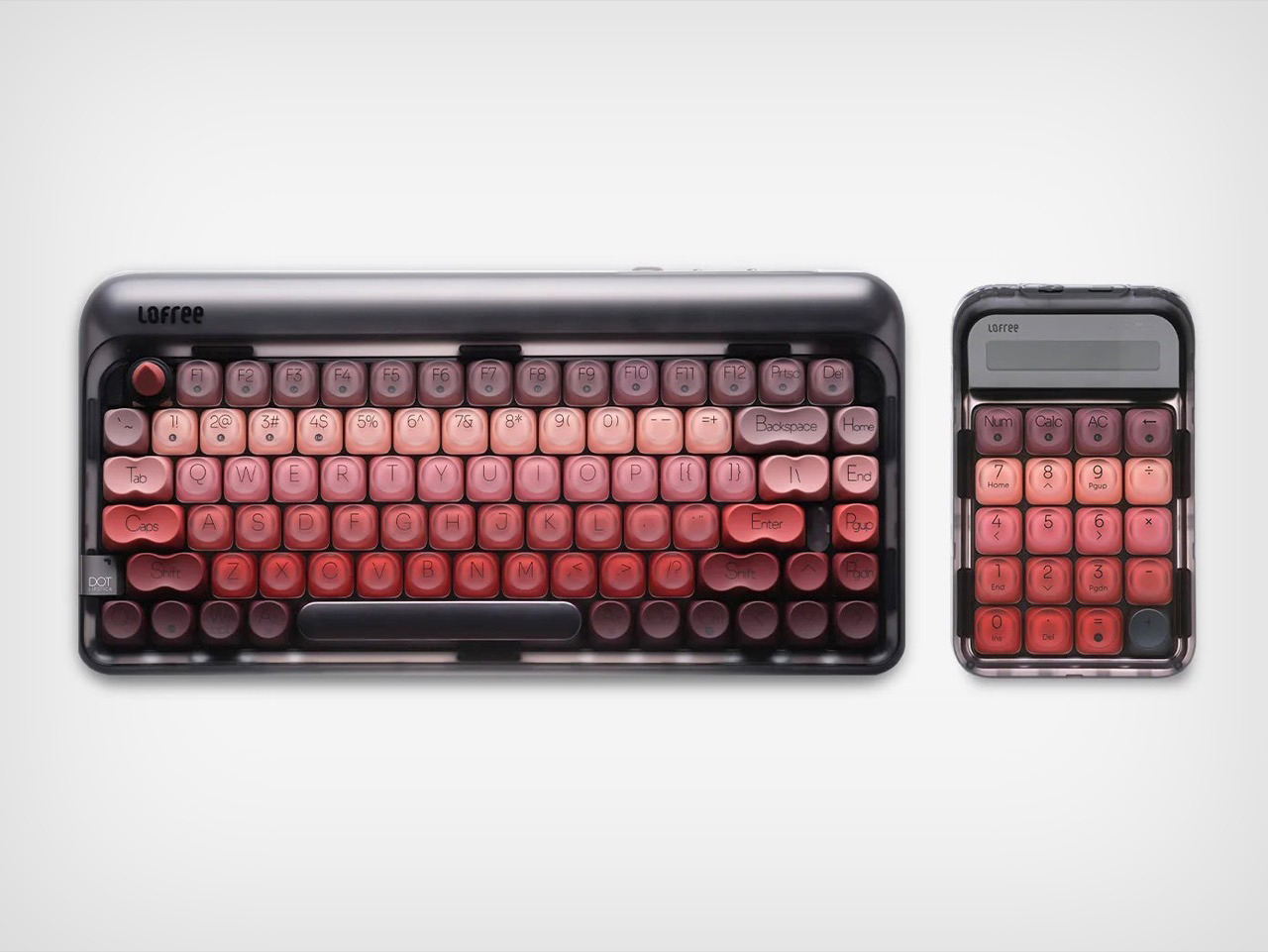
Never did I think the overlap between beauty and keyboards would exist so seamlessly. Lofree used dual-tone PBT keycaps to create that mystique that is each and every key, with a frosted outer shell revealing the hint of a hue underneath. Lofree didn’t scatter five themed shades arbitrarily across 84 keys. They sequenced them, running deep burgundy and wine tones from the left and right of the board through warm coral and brick red across the QWERTY row, then lightening into blush pink and dusty mauve as you move into the function row. The result reads like a makeup palette laid flat across your desk, a color story with a beginning, a middle, and an end. The keys on the extreme left and right (Tab, Caps Lock, Shift, Enter) are single-tone, giving you a direct look at the color while the rest of the row looks like actual samples of lipstick or nail paint that you’d feel like popping out to test. Pair this with the nail-job on your actual hands and you’ve got absolute art at work.
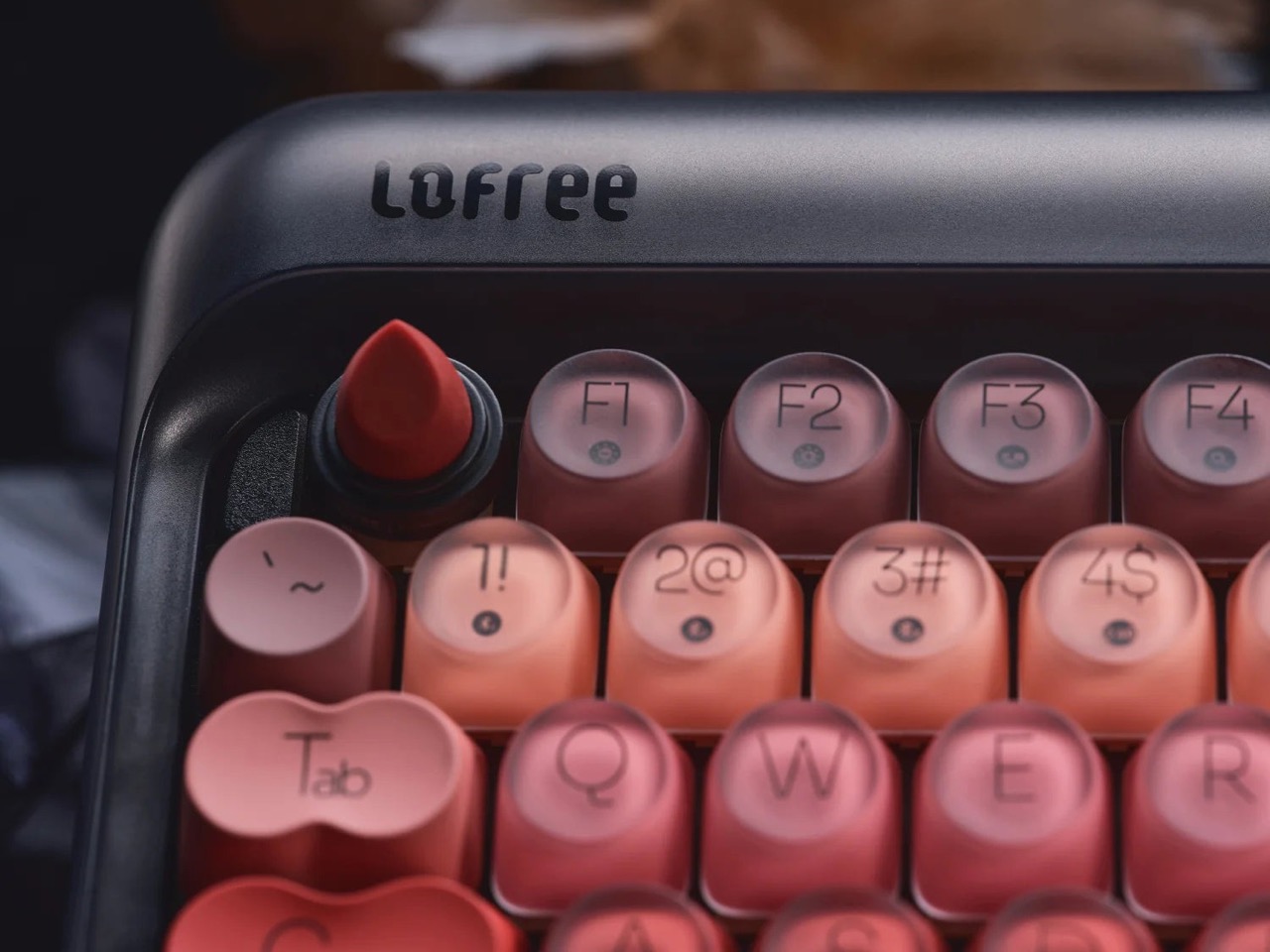
Lofree’s rounded, typewriter-inspired keycap profile has been a house signature since the original Block, and the Lipstick leans into it fully. That retro shape is clever because it mimics the cylindrical form of a lipstick tube at a miniature scale, which means the thematic reference lands in three dimensions rather than just through color. The ESC key pushes that logic to its natural conclusion, a fully sculpted lipstick bullet in matte red, sitting upright in a black cradle in the top left corner of the board. It physically protrudes above the surrounding keys, and when you see it in person, it has the quality of a very good joke told with a completely straight face. Clever without being loud about it.
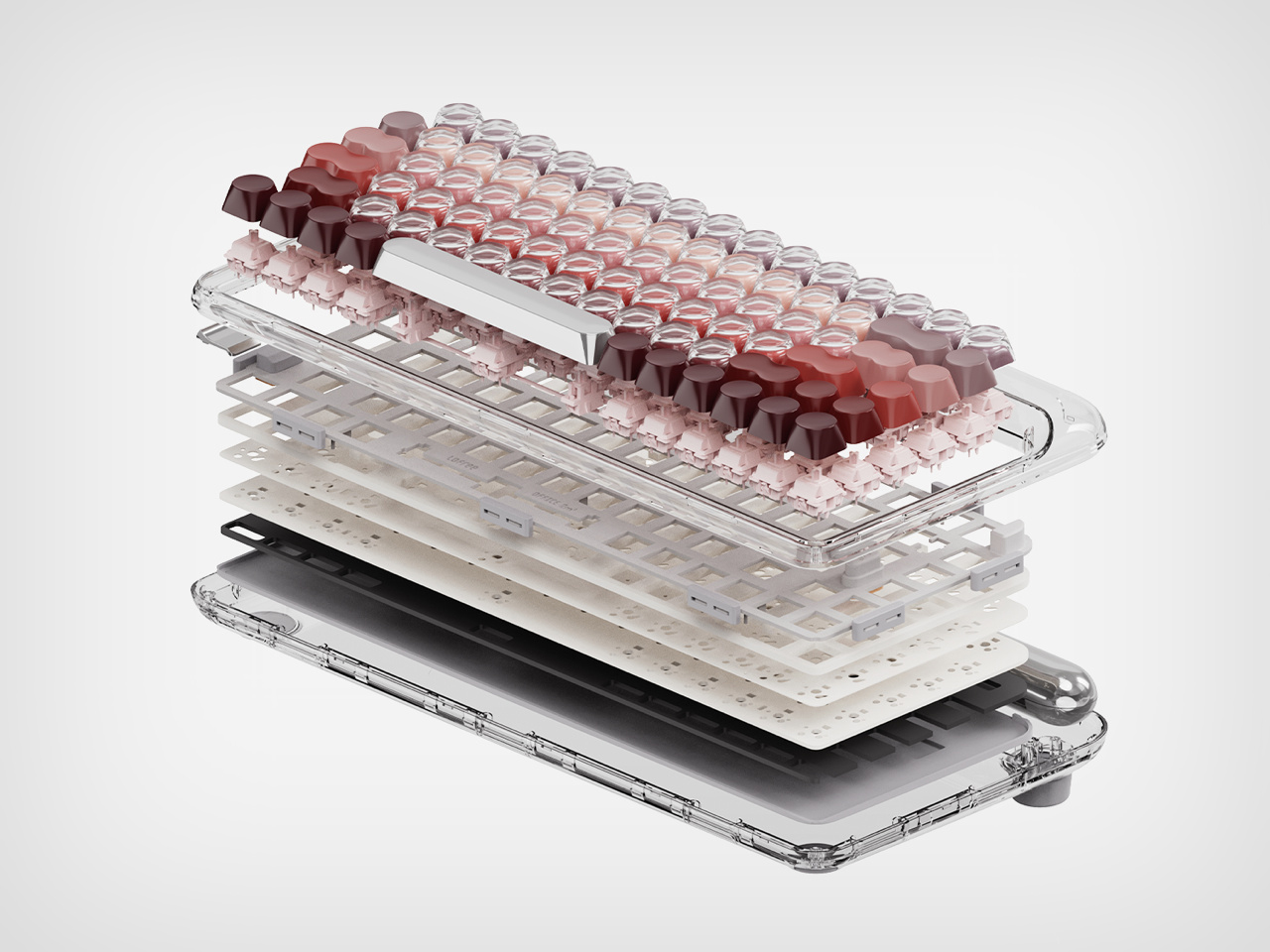
Under all of that, Lofree built a proper enthusiast keyboard. The Lipstick runs Lofree x Gateron linear switches with a 40g actuation force, hot-swappable and compatible with both 3-pin and 5-pin configurations, so you can retune the typing feel whenever you want without touching a soldering iron. A gasket mount structure absorbs the hard edges out of each keystroke, softening the acoustics and adding a slight cushioned rebound that makes extended typing sessions noticeably more comfortable than a standard tray mount board. The 1000Hz polling rate over both 2.4GHz wireless and USB-C wired connections keeps response times sharp, and a 4000mAh battery delivers up to 14 days of use with the backlight off, or 30 hours with all seven lighting effects running. The keys aren’t individually backlit, which is what you’d expect with dual-tone PBT caps, but rather the space between the keys lights up, giving you a look at the keyboard’s outline. Bluetooth 5.3 handles up to three paired devices simultaneously, with seamless switching across macOS, Windows, iOS, and Android.
Lofree also makes a matching Lipstick Wireless Numpad that carries the same gradient keycaps and frosted shell, available separately for anyone who wants the full spread across their desk. It connects via the same tri-mode system, so the two sit together without any friction. At $199 for the keyboard, the Lipstick sits at a price point where the spec sheet fully justifies the ask, and the design justifies everything else.
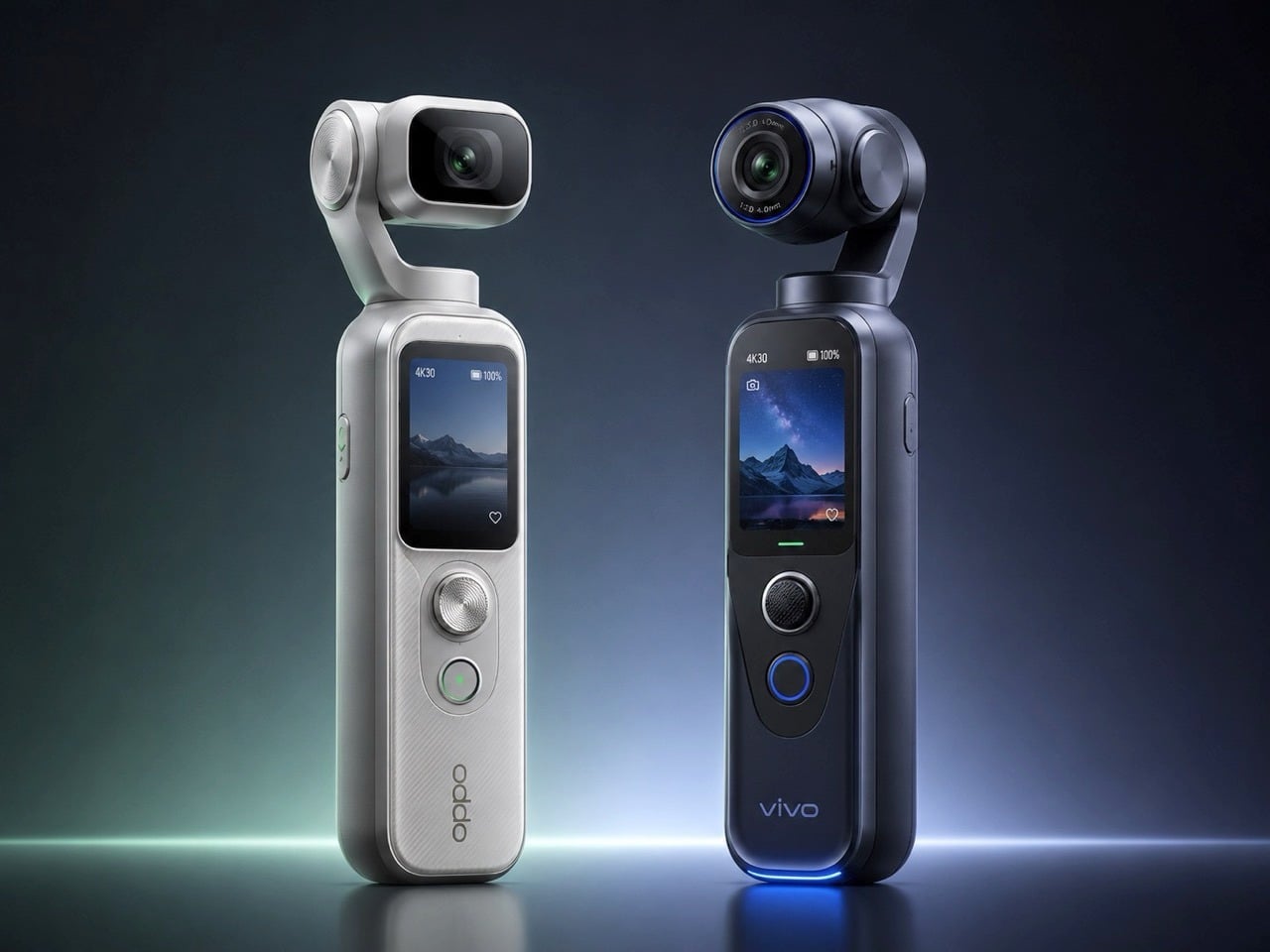
Somewhere inside BBK Electronics, two product teams are independently building the same camera. Oppo has a pocket gimbal codenamed “Fuyao” in development. Vivo has the “Vivo Pocket,” reportedly fitted with a 200MP Sony sensor, headed for a late 2026 launch. Whether BBK’s leadership views this as healthy internal competition or an organizational blind spot depends entirely on your read of how the conglomerate actually operates. What’s undeniable is that both devices are aimed squarely at the same target: DJI’s Osmo Pocket series, the device that has owned the pocket gimbal category for years.
The timing, whether coordinated or coincidental, lands at a genuinely vulnerable moment for DJI. Regulatory pressure in the US has made retailers and creators skittish about long-term investment in the DJI ecosystem, and Insta360, the most credible challenger until now, is going aggressively upmarket with its Leica-partnered Luna Ultra. That leaves a real gap in the premium-but-accessible bracket, and BBK, intentionally or otherwise, has two horses racing toward exactly that gap simultaneously.
Designers: Oppo & Vivo
AI Representational Concept
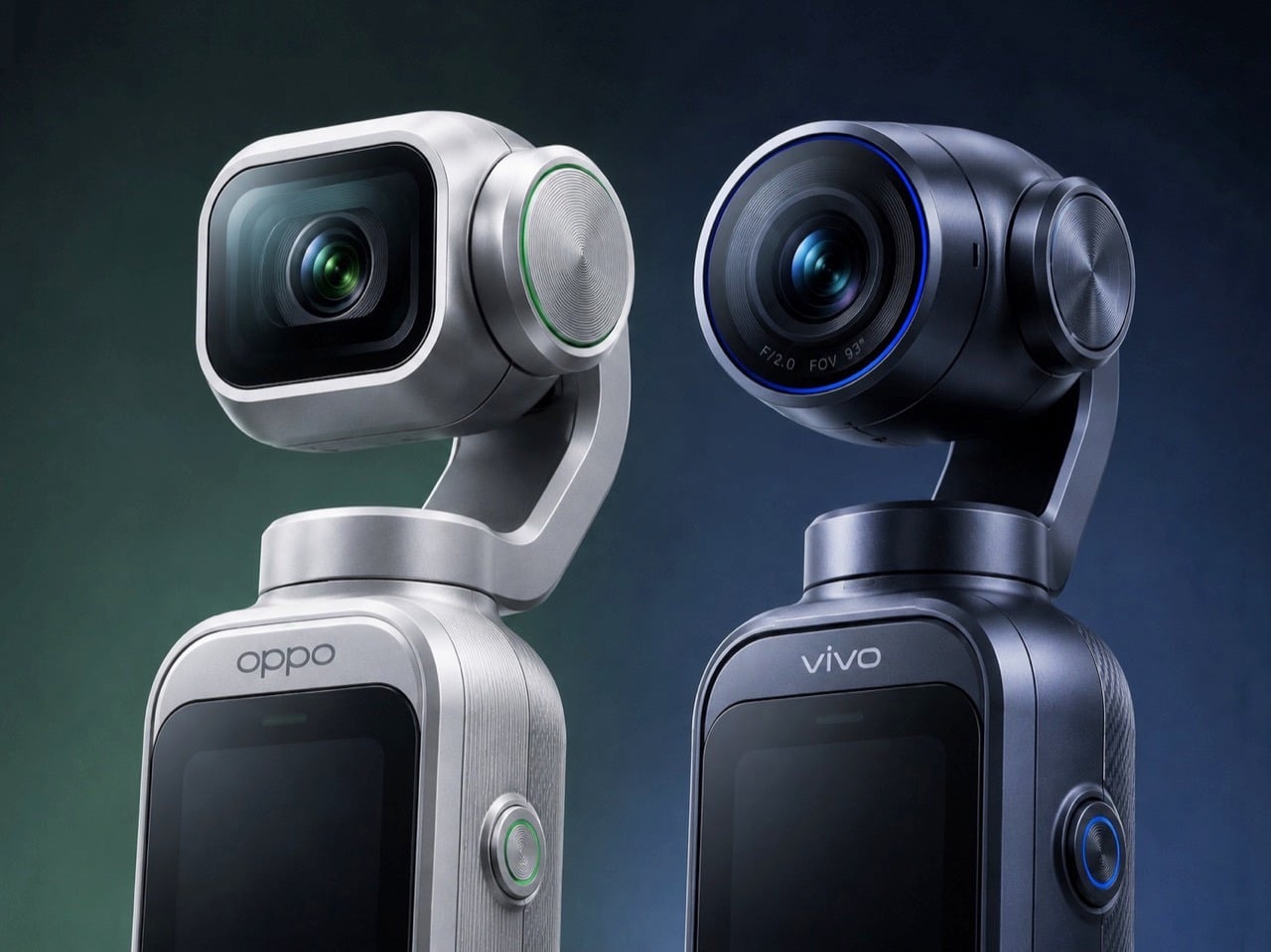
Oppo’s Fuyao centers on a 3-axis stabilized gimbal in a compact form factor, with the brand leaning heavily on its AI-driven video computational technology to bridge the gap between high-end smartphone imaging and dedicated vlogging hardware. That’s a credible pitch. Oppo’s Find X9 Ultra stuffed two 200MP cameras and a sophisticated computational pipeline into a phone chassis, so the engineering muscle is demonstrably there. The question is whether that expertise translates cleanly when the form factor constraints change and the buyer’s expectations are shaped by years of DJI’s famously polished shooting experience.
Vivo is taking a more overtly spec-aggressive approach, with its prototype packing a 1/1.1-inch Sony LYT-901 sensor capable of 200MP stills, a significant departure from the current gimbal camera standard of 1-inch sensors with lower megapixel counts. That sensor is the same one powering Vivo’s current flagship phones, which means the lossless zoom headroom and low-light performance should be genuinely competitive. Vivo is targeting DJI-level hardware quality, suggesting a premium build rather than a budget-friendly entry point, and content creators are reportedly already getting early units for testing.
The deeper strategic story here is what BBK is actually betting on. DJI’s regulatory headaches in the US aren’t going away quietly, and Insta360’s Luna Ultra, co-developed with Leica and priced accordingly, is drifting toward a buyer profile that everyday creators can’t comfortably afford. That middle ground, premium imaging credentials at a price that doesn’t require a business justification, is exactly where Oppo and Vivo are parking. Whether BBK planned this pincer movement or stumbled into it, the instinct is sound. The execution is all that’s left to prove.
Somewhere inside BBK Electronics, two product teams are independently building the same camera. Oppo has a pocket gimbal codenamed “Fuyao” in development. Vivo has the “Vivo Pocket,” reportedly fitted with a 200MP Sony sensor, headed for a late 2026 launch. Whether BBK’s leadership views this as healthy internal competition or an organizational blind spot depends entirely on your read of how the conglomerate actually operates. What’s undeniable is that both devices are aimed squarely at the same target: DJI’s Osmo Pocket series, the device that has owned the pocket gimbal category for years.
The timing, whether coordinated or coincidental, lands at a genuinely vulnerable moment for DJI. Regulatory pressure in the US has made retailers and creators skittish about long-term investment in the DJI ecosystem, and Insta360, the most credible challenger until now, is going aggressively upmarket with its Leica-partnered Luna Ultra. That leaves a real gap in the premium-but-accessible bracket, and BBK, intentionally or otherwise, has two horses racing toward exactly that gap simultaneously.
Designers: Oppo & Vivo
AI Representational Concept
Oppo’s Fuyao centers on a 3-axis stabilized gimbal in a compact form factor, with the brand leaning heavily on its AI-driven video computational technology to bridge the gap between high-end smartphone imaging and dedicated vlogging hardware. That’s a credible pitch. Oppo’s Find X9 Ultra stuffed two 200MP cameras and a sophisticated computational pipeline into a phone chassis, so the engineering muscle is demonstrably there. The question is whether that expertise translates cleanly when the form factor constraints change and the buyer’s expectations are shaped by years of DJI’s famously polished shooting experience.
Vivo is taking a more overtly spec-aggressive approach, with its prototype packing a 1/1.1-inch Sony LYT-901 sensor capable of 200MP stills, a significant departure from the current gimbal camera standard of 1-inch sensors with lower megapixel counts. That sensor is the same one powering Vivo’s current flagship phones, which means the lossless zoom headroom and low-light performance should be genuinely competitive. Vivo is targeting DJI-level hardware quality, suggesting a premium build rather than a budget-friendly entry point, and content creators are reportedly already getting early units for testing.
The deeper strategic story here is what BBK is actually betting on. DJI’s regulatory headaches in the US aren’t going away quietly, and Insta360’s Luna Ultra, co-developed with Leica and priced accordingly, is drifting toward a buyer profile that everyday creators can’t comfortably afford. That middle ground, premium imaging credentials at a price that doesn’t require a business justification, is exactly where Oppo and Vivo are parking. Whether BBK planned this pincer movement or stumbled into it, the instinct is sound. The execution is all that’s left to prove.
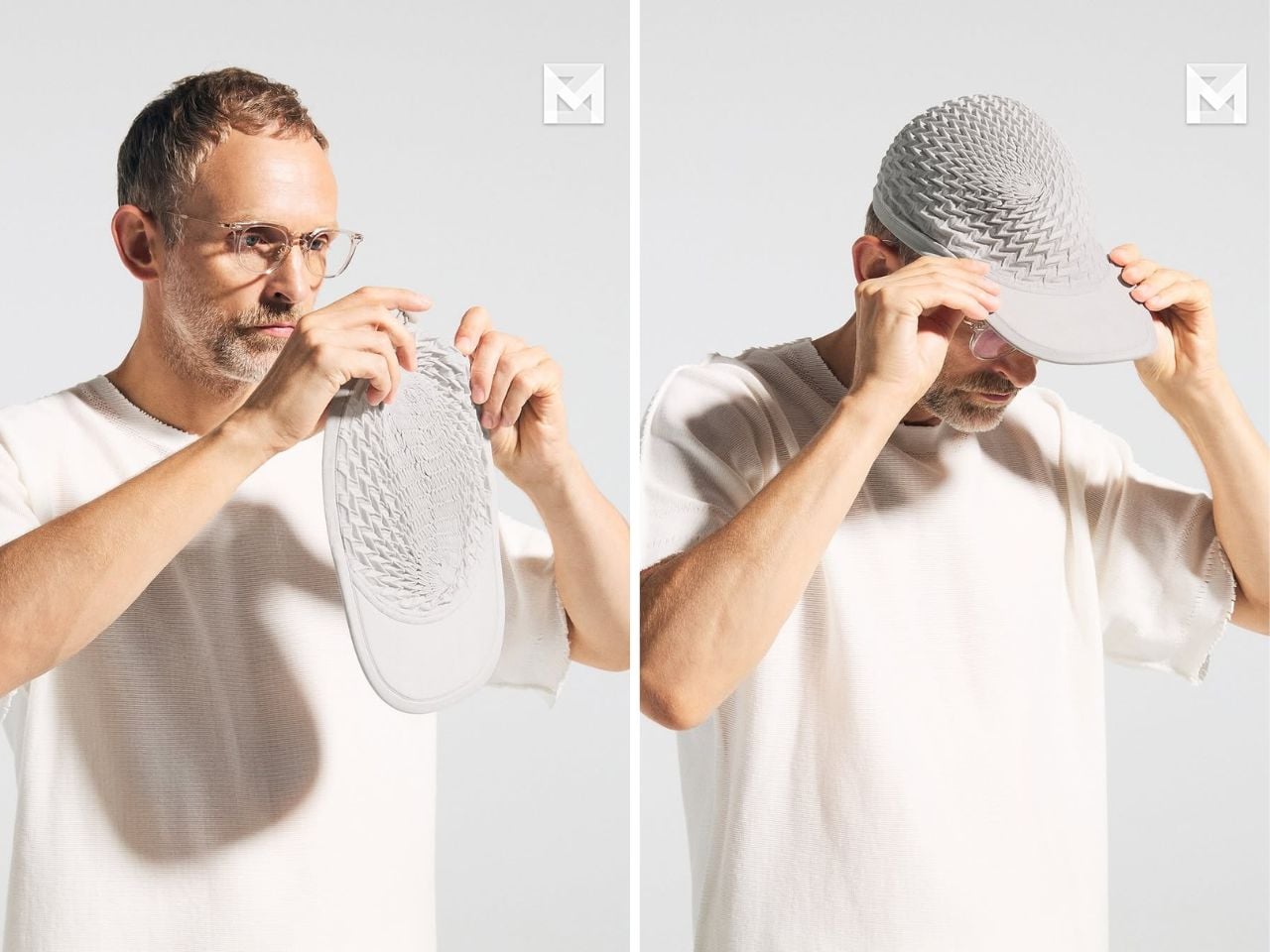
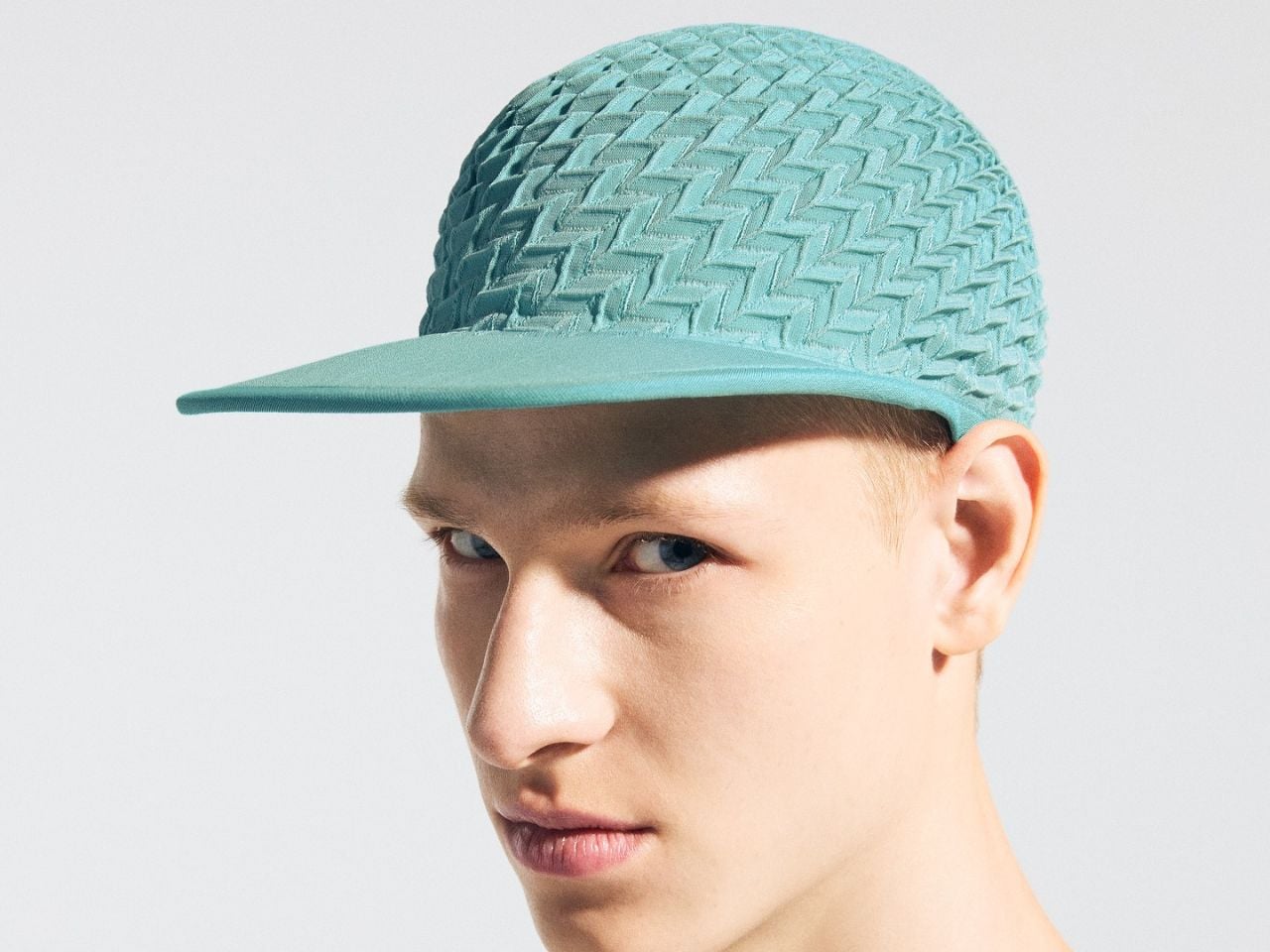
The TYPE-O CAP by A-POC ABLE ISSEY MIYAKE is not just a cap; it is a small, wearable study in transformation. At first, it begins as something surprisingly simple: a flat woven textile. But through the application of heat and steam, the fabric contracts, expands, and reshapes itself into a sculptural three-dimensional form. What was once flat becomes structured. What looked quiet becomes expressive. The result is a cap that feels both technical and poetic, sitting somewhere between fashion, material research, and soft architecture.
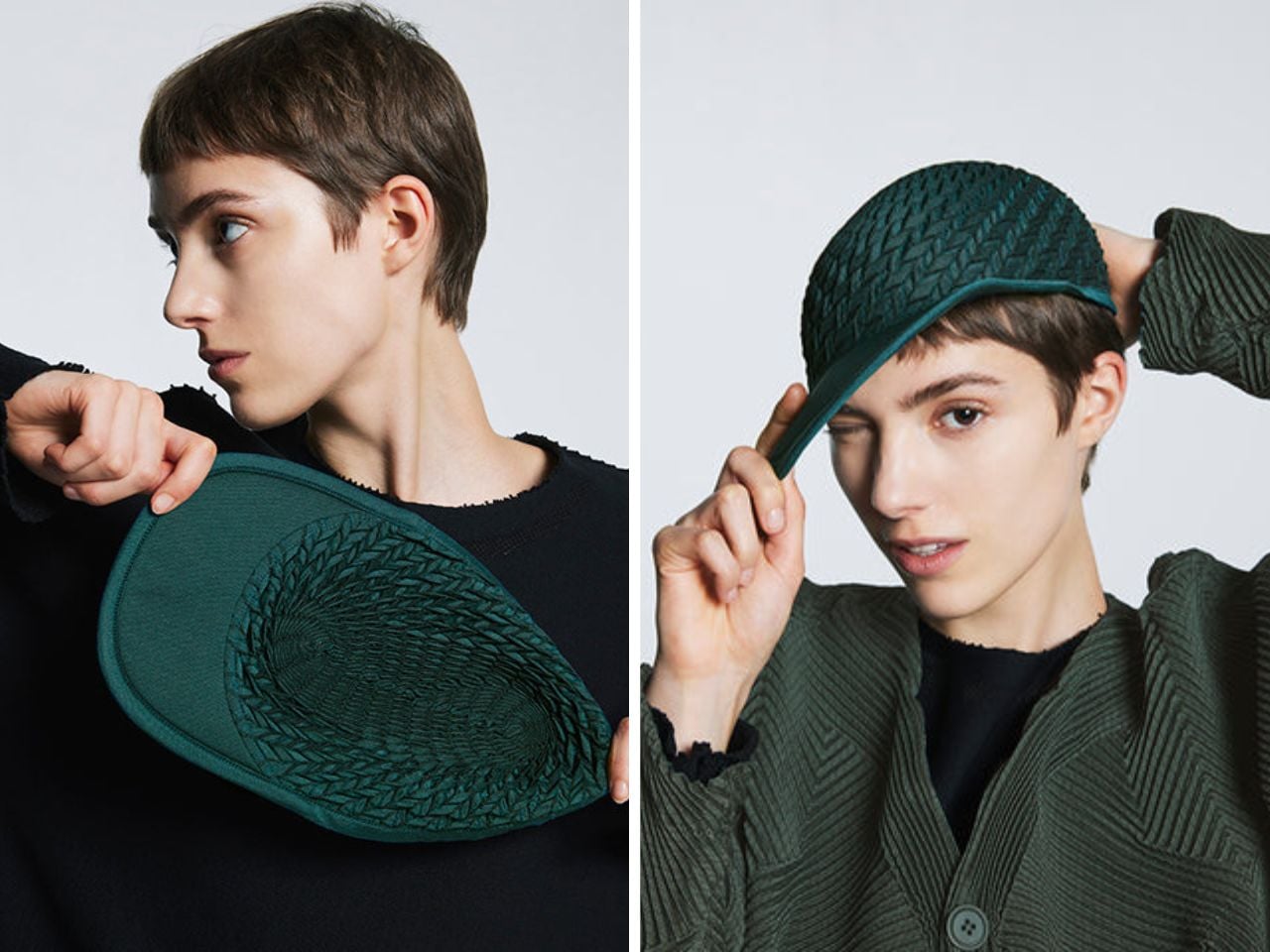
At the center of the cap is Steam Stretch, an innovative textile technique developed by A-POC ABLE ISSEY MIYAKE. The fabric is woven using heat-reactive yarns that respond to steam by shrinking in specific areas. This contraction is not random. It is carefully planned through data-driven jacquard weaving, where thousands of threads are arranged to create a structure before the object even visibly takes shape. Once steam is applied, the hidden logic of the weave is activated, allowing the cap to rise from a flat surface into a dimensional form.
This is what makes the TYPE-O CAP so compelling. Its shape is not created by cutting multiple panels and stitching them together in a conventional way. Instead, the structure is embedded into the textile itself. The pleats, curves, and volume emerge from the behavior of the material. The fabric almost seems to remember what it is supposed to become.
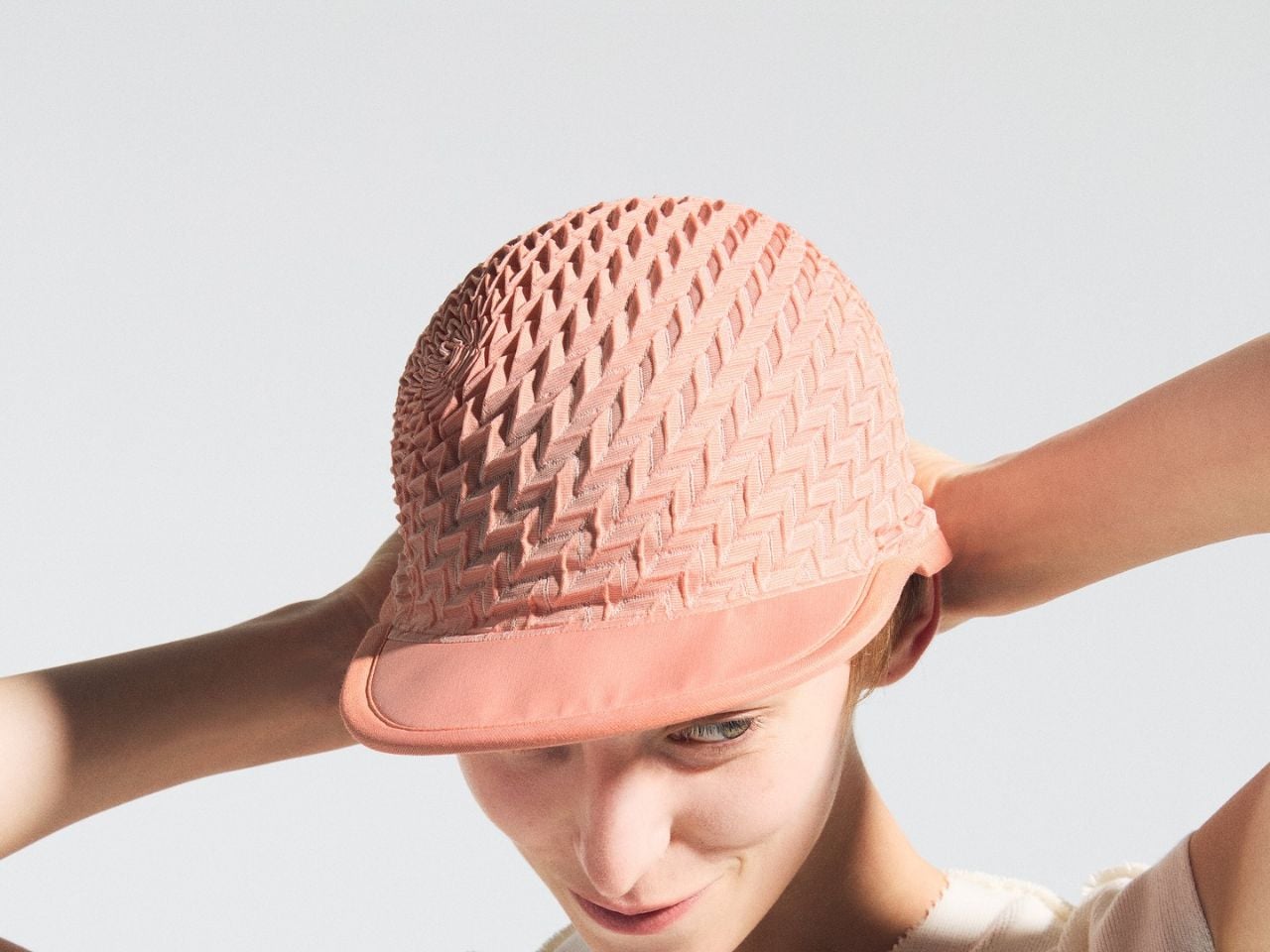
Created in collaboration with Nature Architects, the cap is part of a larger exploration into how textiles can transform through programmed material behavior. Nature Architects studied the contraction properties of the Steam Stretch yarn and developed algorithmic methods to generate weave patterns that control how the fabric changes shape. In the case of the cap, this results in a geometric pleated structure that expands around the head, adapting to the wearer while maintaining its sculptural character.
Despite its experimental process, the cap remains thoughtfully functional. It is unisex, washable, adjustable, and flat-packable, making it as practical as it is innovative. A drawcord at the back allows the wearer to fine-tune the fit, while the pleated structure gives the cap a flexible, adaptive quality. It can also be dyed in various colors, giving the same material system different expressions depending on finish, tone, and styling.
What is especially interesting about the TYPE-O CAP is how it makes advanced material technology feel approachable. It is not a dramatic runway object that only exists as a concept. It is an everyday accessory, but one that quietly challenges how we think about clothing construction. The cap suggests a future where garments may not need to be assembled from many separate cut pieces. Instead, they could be woven flat, transported efficiently, and transformed into complex forms through heat, steam, or other triggers.
While the cap is the focus here, the possibilities of this material system extend far beyond headwear. The same Steam Stretch and data-driven weaving approach can be used to create other garments with complex pleats, adaptive silhouettes, and reduced sewing requirements. It also opens up possibilities beyond fashion, including furniture, lighting, interiors, and even architectural applications. A textile that can shift from flat to dimensional has enormous potential in a world increasingly interested in compact production, responsive materials, and more efficient design systems.
The TYPE-O CAP captures that potential in a beautifully contained form. It is small enough to be worn casually, but conceptually large enough to suggest a different way of making. It turns fabric into structure, steam into a design tool, and a cap into an object that feels almost alive.