This Award-Winning Guitar Ditches the Strings, the Frets, and Most of the Body, and I Kind of Love It

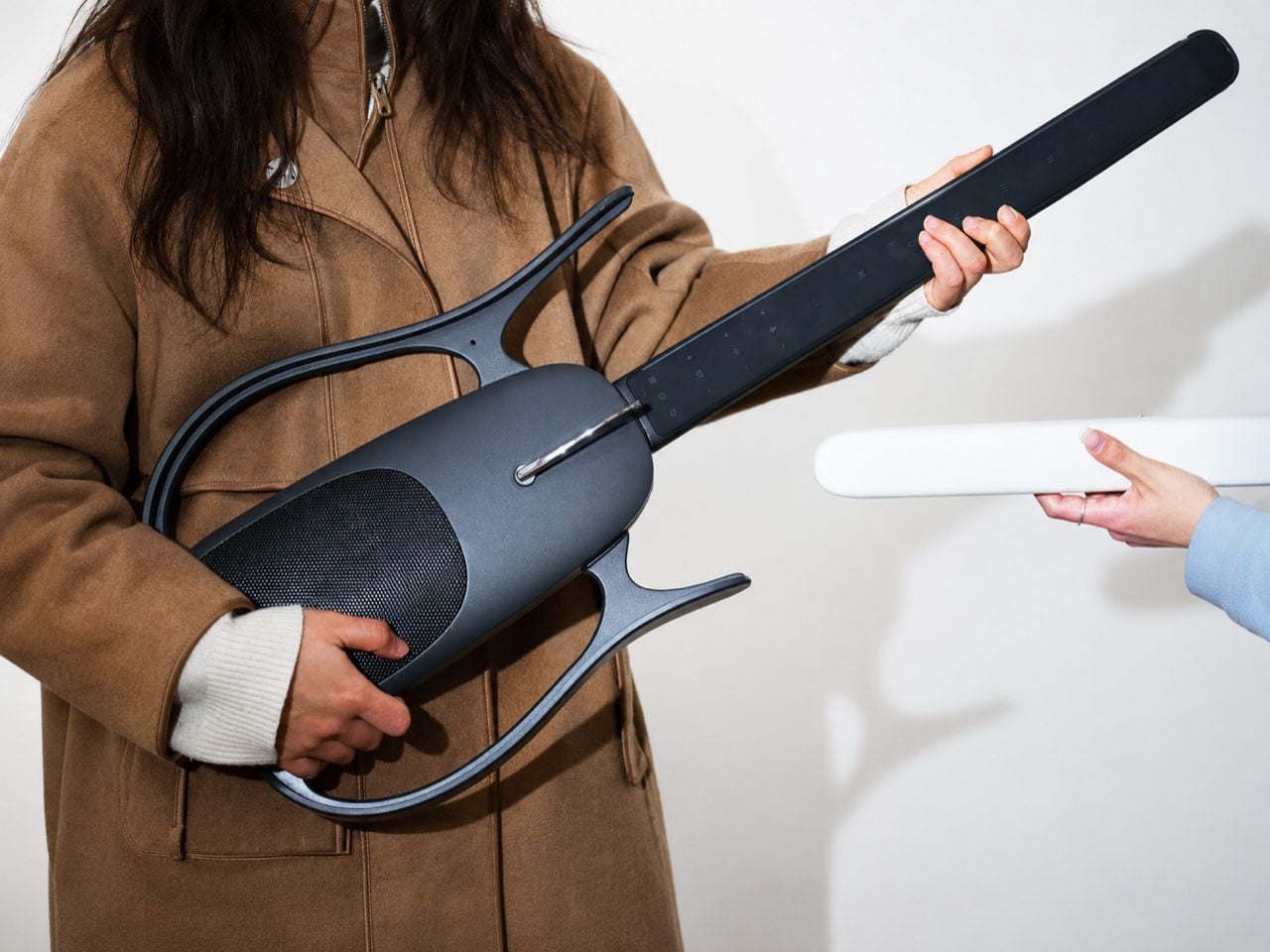
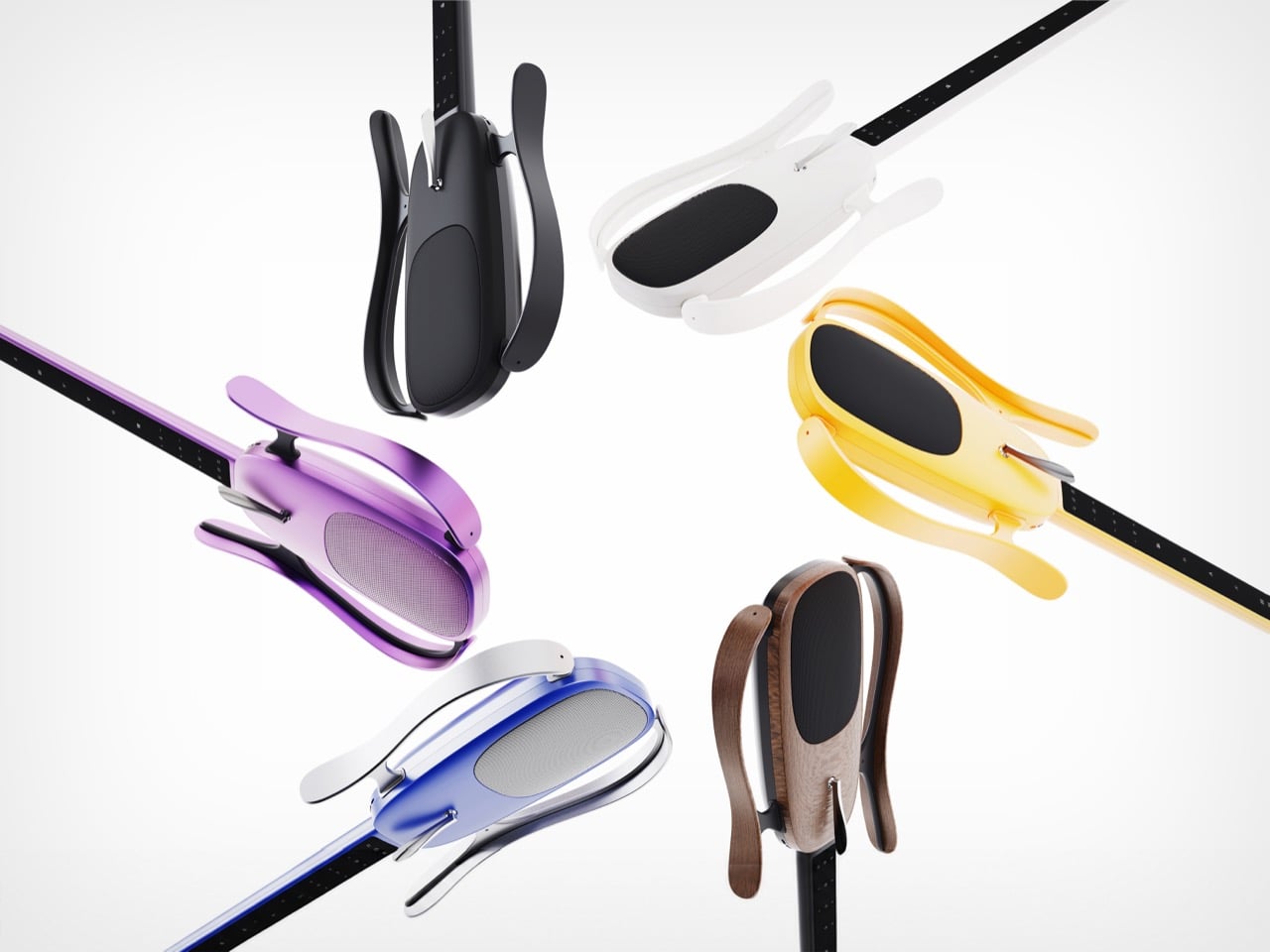
Look at RIFFMATE for a second and try to name what is missing. No strings. No fretboard bristling with metal wire. No solid slab of tonewood. What remains is the silhouette of an electric guitar sketched in mid-air, a skeletal frame that holds the double-cutaway outline everyone recognizes while hollowing out almost everything inside it. Those sweeping arms curving off the body trace exactly where a guitar’s shoulders and horns would sit, and then they float, framing empty space instead of filling it.

It takes real confidence to design an instrument by subtraction, and the RiffmateGT01 pulls it off with a straight face. Built by Shanghai’s Wo Tan Ni Chang Technology with industrial design from LKK Design Beijing, it collapses the guitar into two pieces, a slim touch-strip neck and a central pod holding the speaker, electronics, and acoustic chamber. The neck wears Roman numerals from I to VII where frets used to sit, and you play it by touch rather than by plucking steel. An AI layer shapes the sound and flattens the brutal learning curve that sends most beginners quitting by their fourth barre chord.

Designers: LKK Design Beijing
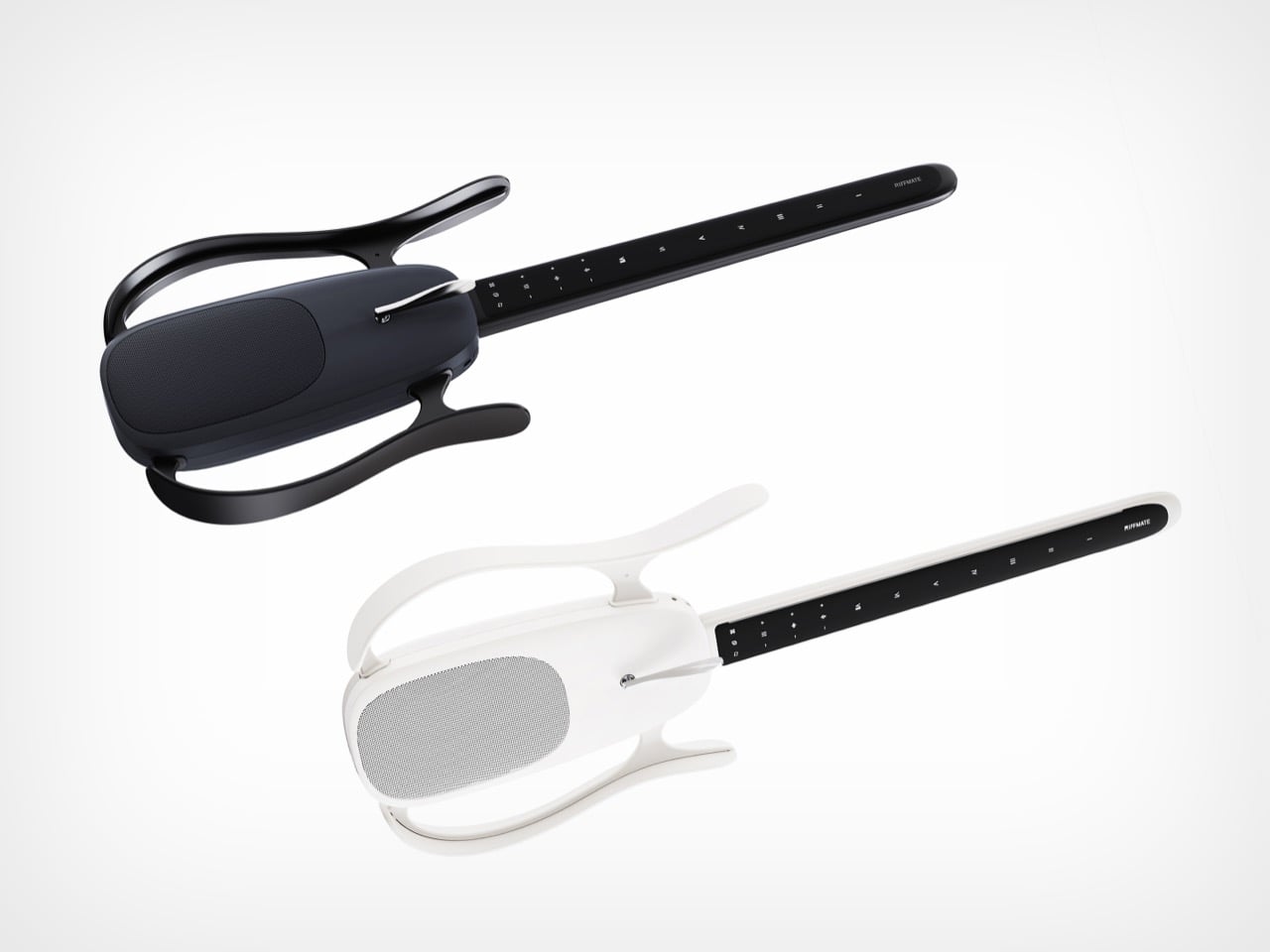
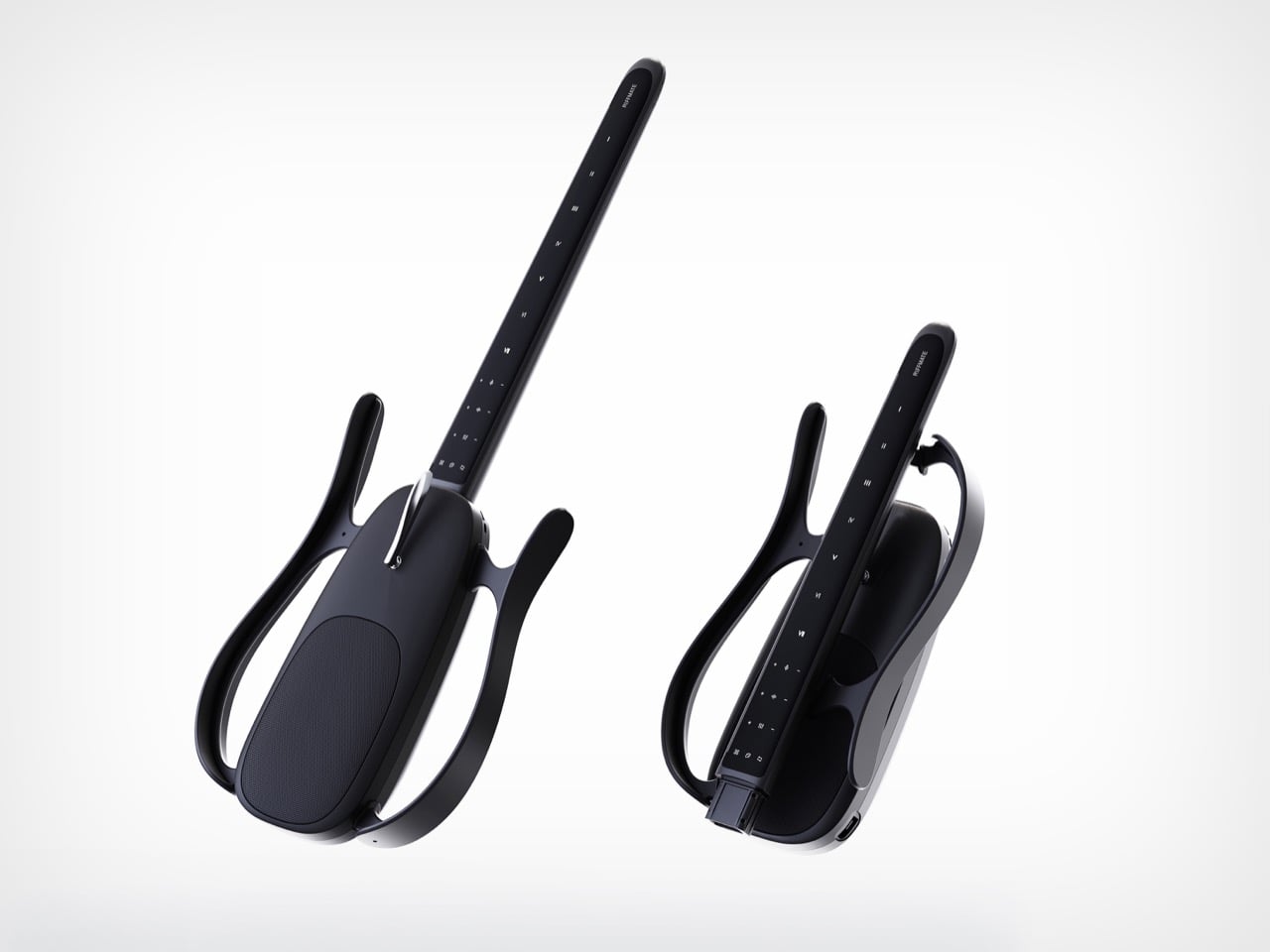
One-key disassembly lets the neck separate from the body, so the whole instrument folds into a small carry-on bag and clicks back together in seconds. Anyone who has wrestled a guitar into an overhead bin understands why that matters more than it sounds. The shells pop off too, which is where the personality lives, with RIFFMATE rendering in matte black, crisp white, a purple gradient, sunshine yellow, a blue-to-silver fade, and a warm walnut finish. Swapping those panels lets owners recolor the instrument or replace a scuffed part, stretching its lifespan instead of sending it to landfill. Modularity turns the guitar from a fixed object into a system that grows and changes with the person holding it.
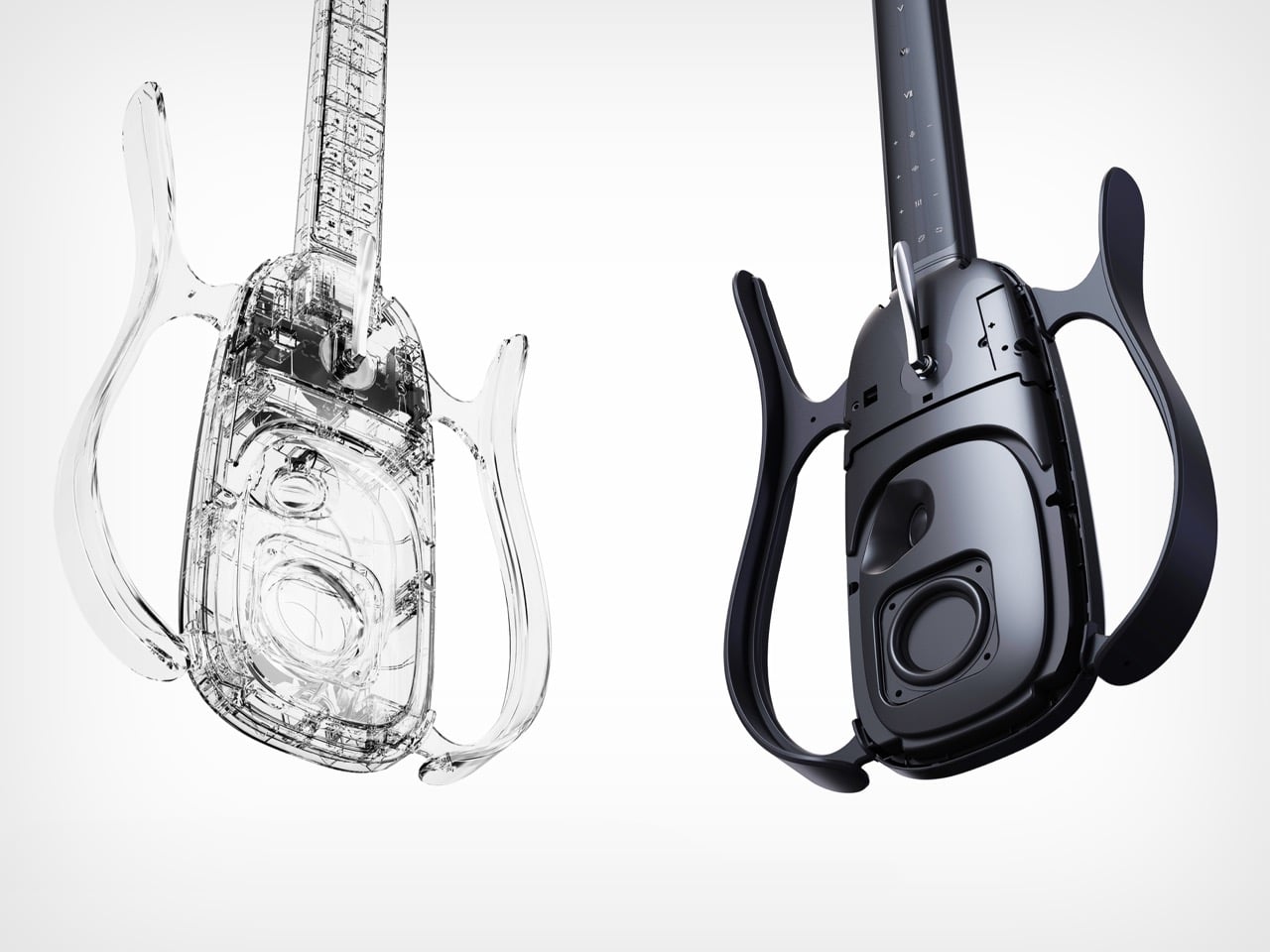
The transparent render exposes a properly engineered acoustic cavity inside that central pod, with dedicated internal channels feeding a front-firing driver. That makes RIFFMATE self-amplifying, able to fill a room without an external amp or a tangle of pedals. The body wears a matte frosted texture over soft, rounded contours, sitting closer to a well-resolved Bluetooth speaker than to a slab-bodied Stratocaster. Those friendly surfaces read as age-agnostic, pitched at a curious ten-year-old and a lapsed forty-year-old guitarist alike. The whole object invites handling, exactly what an instrument built to lower the stakes should do.
Smart guitars have inched toward this moment for years, and LAVA did much of the groundwork by wrapping carbon fiber around a built-in touchscreen and turning the instrument into a full software ecosystem. RIFFMATE pushes that lineage somewhere stranger, questioning whether a guitar needs strings or a body at all, and joining a small wave of stringless designs rethinking the form from scratch. The honest caveat is that this remains award-stage industrial design, so we are judging intent and renders rather than a shipping spec sheet. As a vision, it lands as one of the boldest reinterpretations of the guitar to cross my desk in a while. Whether Wo Tan Ni Chang can build the object as beautifully as LKK drew it is the question worth watching.
The post This Award-Winning Guitar Ditches the Strings, the Frets, and Most of the Body, and I Kind of Love It first appeared on Yanko Design.


Godox C100 camera lets you frame shots naturally without filters or preview screen

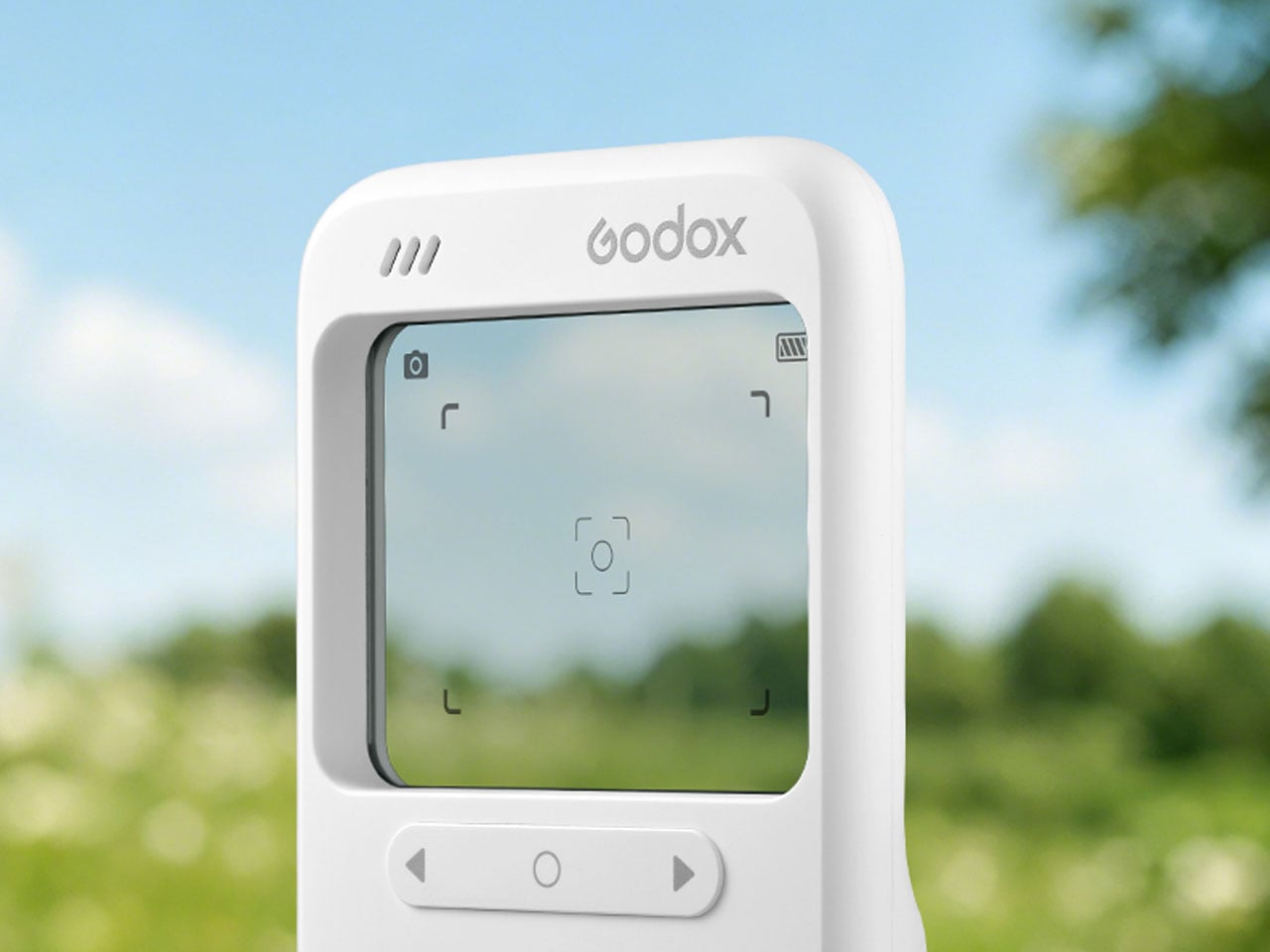
With a smartphone in their pocket, everyone is a photographer. But clicking a good picture is still a creativity reserved for the trained. Unless you are from the Instagram generation and you know how to use filters. Clicking and then post-editing with filters and everything is so time-consuming. To give your Instagram frenzy an instant photography impetus, Godox in China has created the C100 camera with a unique transparent viewfinder screen that lets you capture the real thing by looking at it in the real-life environment, no filters required.

Godox is globally recognized for its lighting products for photography; therefore, a distinctive camera from the company can be considered more than a gimmick. The camera tabs on the interesting resurgence of point and shoot-style cameras, whether in the form of this action camera that pops-off to become a wearable or a Polaroid camera with a burst mode, we have seen in the recent past. The C100, however, makes a special case. The camera eliminates the color preview screen and replaces it with a transparent LCD that functions as an optical viewfinder.

Designer: Godox

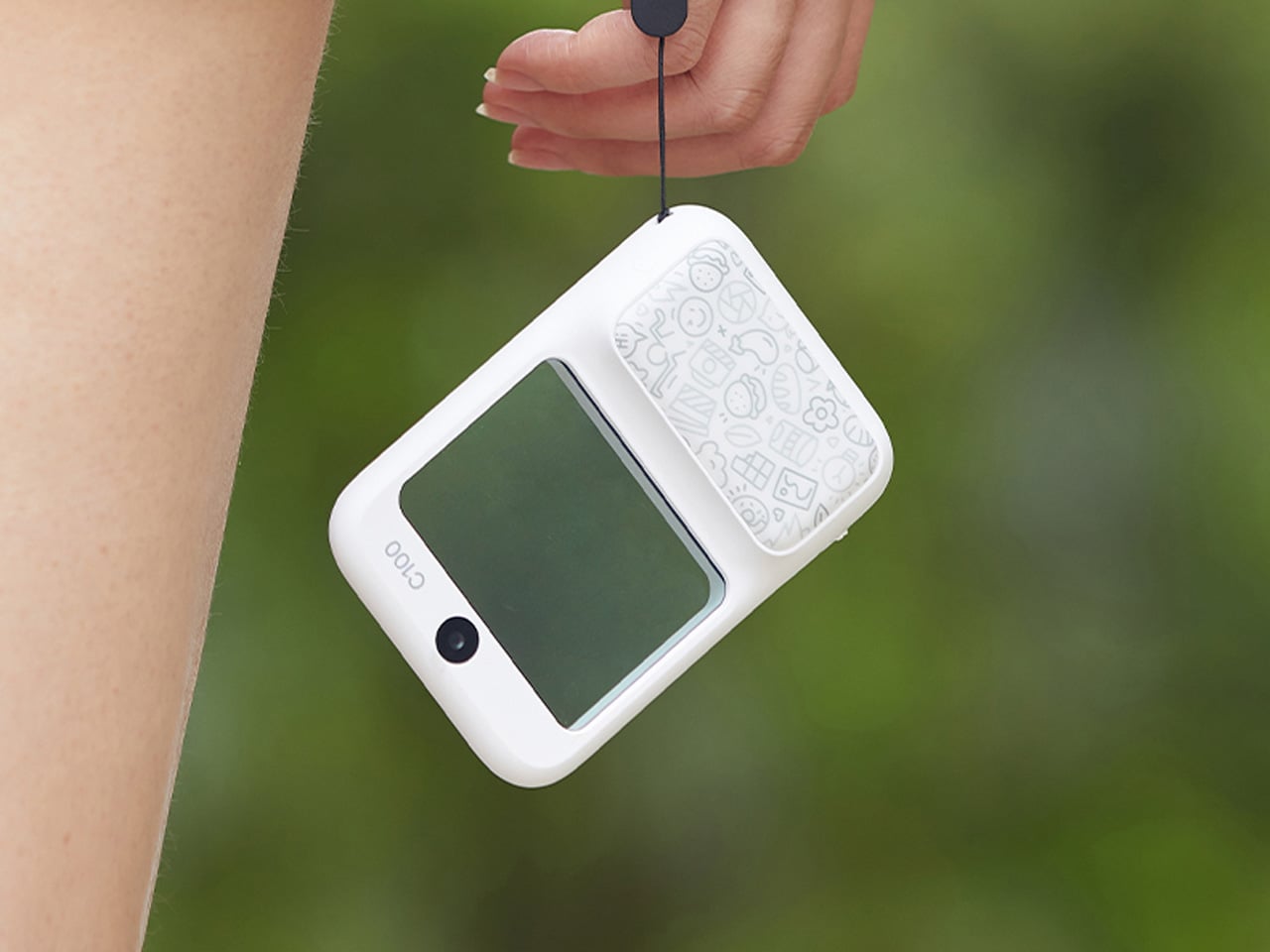
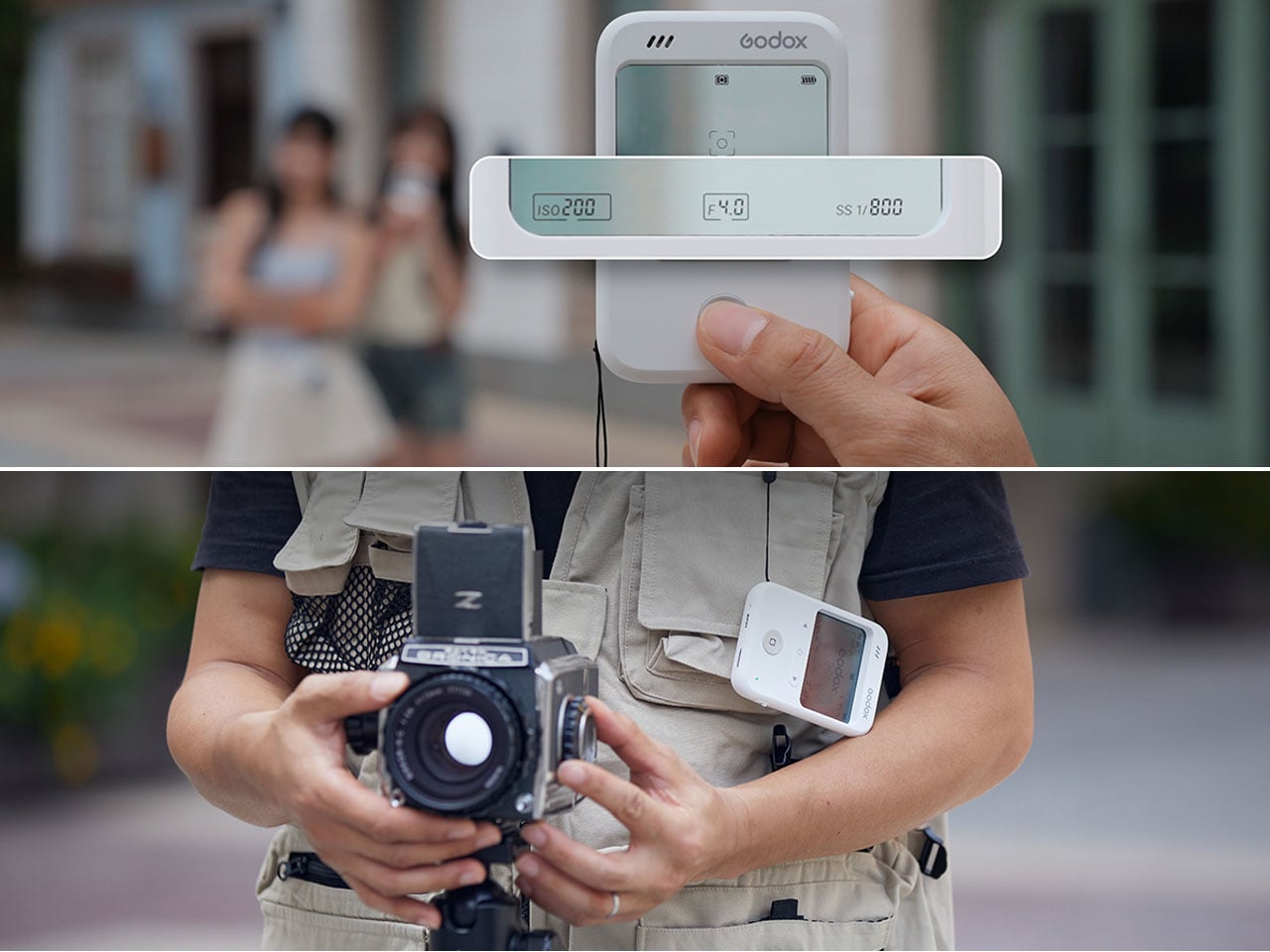
Designed to be your simplistic filming companion on the go, the device is created to be lightweight. Weighing only 65g, the camera lets you “look directly at the real scene when composing your shot, press the shutter, and capture the beautiful moment,” Godox explains. Unlike a digital camera, you don’t see the view through a display. There is no display, so you create the composition through its transparent screen. “No complicated operations are required. Take photos or record videos anytime, anywhere,” the company claims.

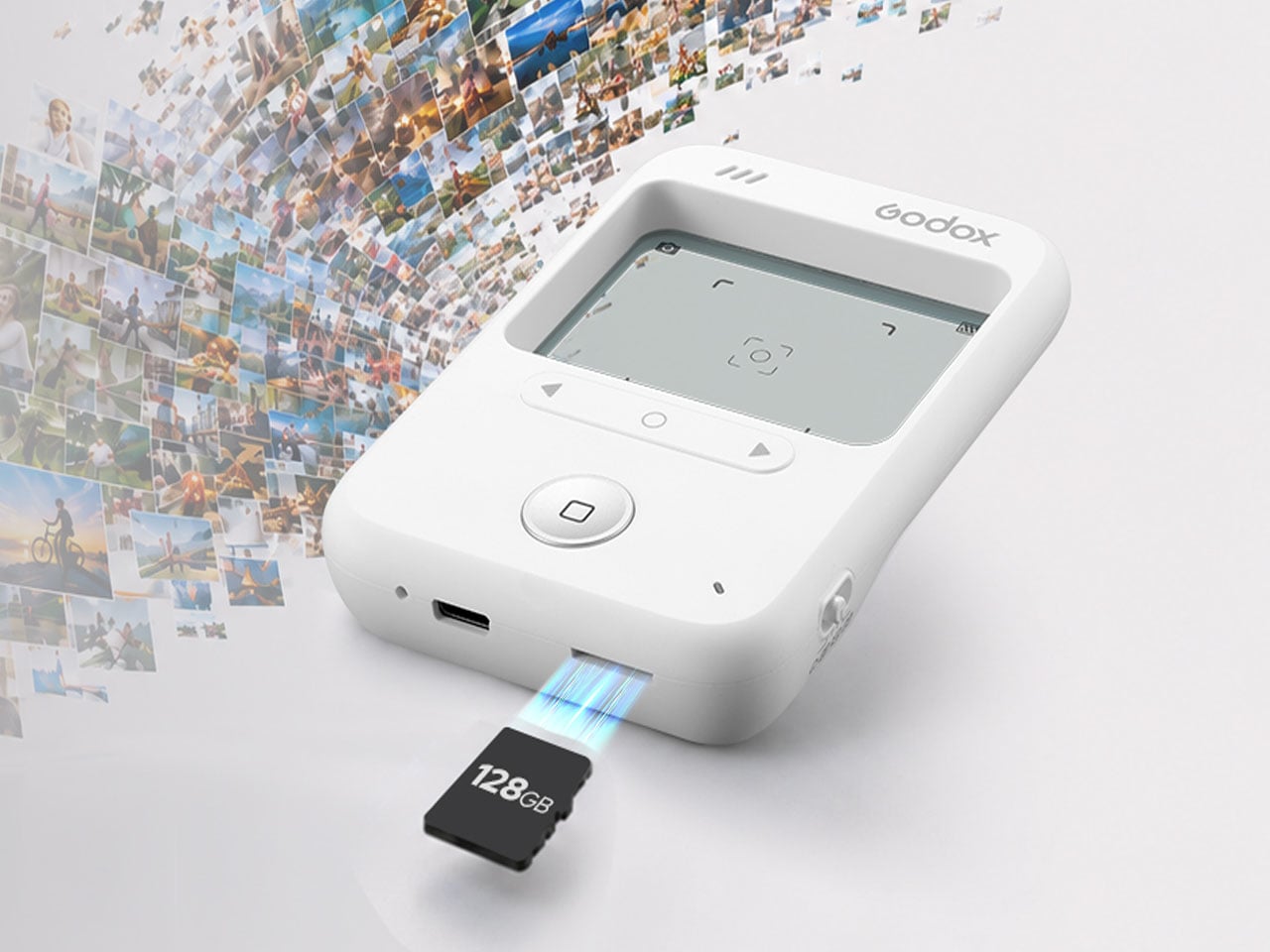
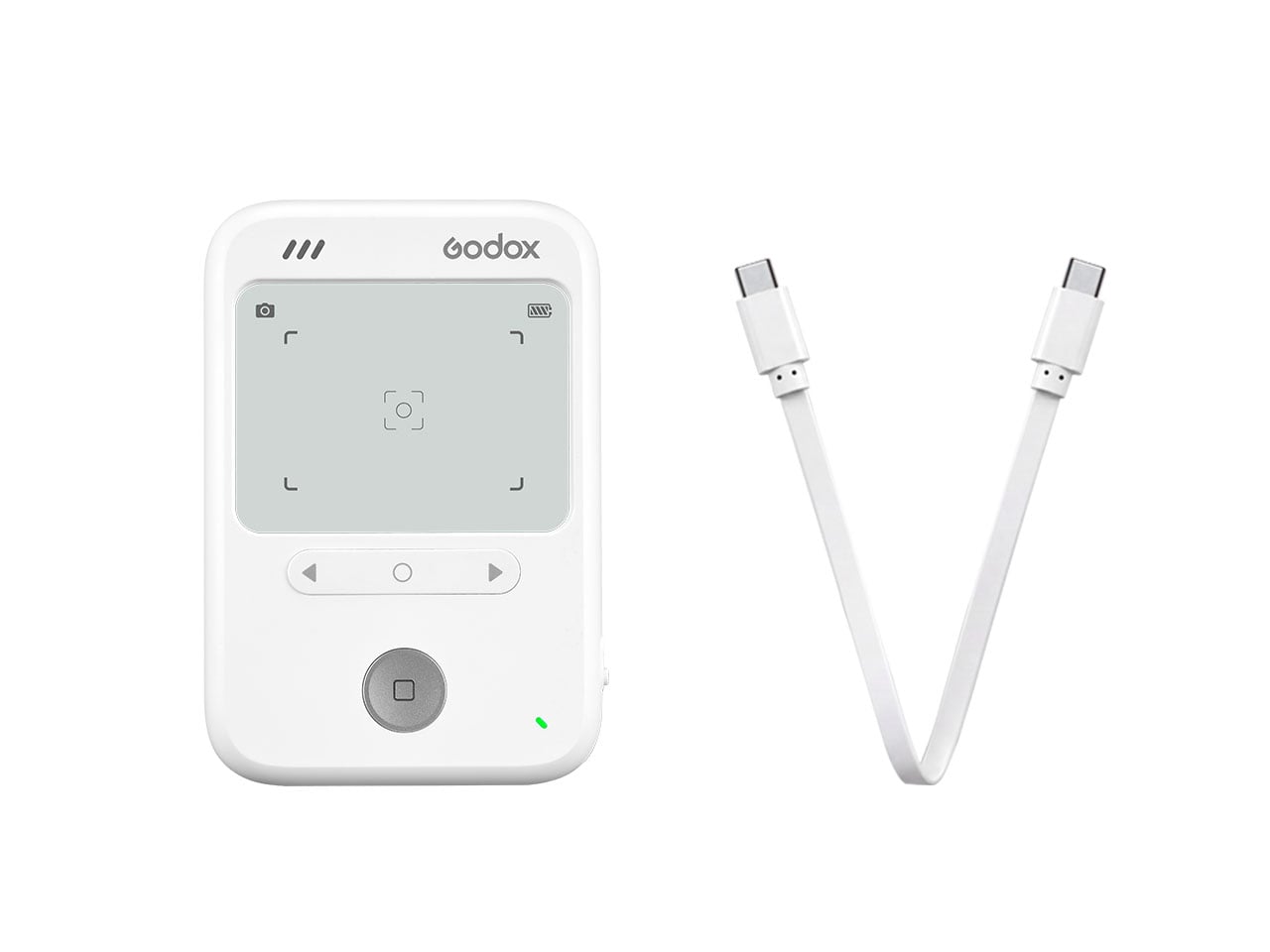
The device is basically a two-part unit, akin to handheld games we had growing up in the nineties. The top half features a transparent screen inside a thickish bezel comprising a camera in the center (like the selfie camera on a smartphone). Below it, in the other half, are the battery, SD card, and charging slot, toggle buttons for left and right adjustment, and the click-to-capture shutter. The lower half is also where you grip the camera to take pictures.

Godox points out on its product page that the C100 camera features metering capabilities. It can read the brightness of the central area (you’re trying to capture) and can automatically calculate the optimal exposure settings. This information can also be used to click with a separate camera, if you may. According to the company, the transparent screen on the C100 has about 50% light transmittance. The display shows information like active exposure, current frame, and battery life while clicking.

For stress-free shooting in all types of environments, the C100 camera is said to feature four creative aspect ratios. You can shoot in either 6:9, 4:3, 3:2, or 1:1. The camera doesn’t have built-in storage but is compatible with up to a 128GB microSD card. You can transfer your media from the C100 to your phone or laptop via USB-C, which can also be used to recharge its built-in battery that lasts 1.5 hours.

Godox hasn’t shared information regarding the camera sensor used or the image formats and video quality it supports, but has specified the retail price of the C100 at $44.90 in the official release video of the camera.


The post Godox C100 camera lets you frame shots naturally without filters or preview screen first appeared on Yanko Design.
Toyota Might Give Us Flying Cars Before GTA 6

The flying car has spent roughly a century as the world’s most reliable broken promise, forever arriving “in ten years” and forever staying on the concept-render carousel. So it means something that the newest headline reads less like a dream and more like a purchase order. Toyota and Joby Aviation have formalized a manufacturing joint venture, and the language around it is refreshingly unglamorous: productivity, quality, cost, scale. That is the vocabulary of a company that intends to build thousands of these things, not photograph one over a sunset.

The new entity carries the wonderfully bureaucratic name Joby Toyota Aero Manufacturing Preparation Company, with Toyota holding 51 percent and Joby the remaining 49. Toyota takes the majority seat, which tells you who is running the assembly line philosophy here. This is the company that gave the manufacturing world the Toyota Production System, the lean, waste-hunting gospel that reshaped how physical objects get built. Pointing that machine at an aircraft is the whole story. Joby has the eVTOL know-how. Toyota knows how to make the same beautiful object a few thousand times without the quality drifting.

Designers: Toyota & Joby

The aircraft at the center of it, the Joby S4, is genuinely lovely industrial design. Six tilting rotors let it lift straight up like a helicopter, then rotate forward to cruise like a fixed-wing plane, hitting around 200 mph while carrying a pilot and four passengers. All electric, notably quiet, and shaped with the kind of clean surfacing that makes it read as a consumer product rather than a machine. It already earned its party trick in April 2026, when it flew point to point across New York City, lifting from JFK and touching down at Manhattan heliports, compressing a two-hour ground slog into a seven-minute hop over the traffic.

None of this fell out of the sky. Toyota has quietly stood behind Joby since 2019, pouring in roughly 894 million dollars across the years to become the startup’s largest external shareholder. The relationship moving from checkbook to shared factory floor is the tell. Pilot production of the S4 is already underway at Joby’s Marina, California base, with the joint venture built to carry the company across the brutal gap between “we certified a prototype” and “we deliver at scale,” the exact chasm where most eVTOL dreams quietly die.

There are real hurdles left, chiefly FAA type certification for passenger flights, and the sky-taxi economics still have to prove themselves against a plain old ride to the airport. But when the planet’s most disciplined manufacturer takes a controlling stake in the most recognizable air taxi on Earth, the era of the render is closing. The flying car finally has a factory, a founder-run partner, and a boss who talks about lean production instead of moonshots. That is how the future usually arrives, not with a bang, but with a build sheet.

The post Toyota Might Give Us Flying Cars Before GTA 6 first appeared on Yanko Design.
Amazon Gave the Fire HD 10 4GB of RAM Without Telling Anyone

Budget tablets have always played a peculiar role in consumer electronics. They aren’t meant to be powerful; they’re meant to be just capable enough to get through a streaming queue, a few Kindle chapters, or a morning of casual browsing. Amazon’s Fire lineup has mastered that balance for years, finding a loyal audience among people who want a large enough screen that doesn’t hurt to drop.

The Fire HD 10 has been Amazon’s flagship Fire tablet for a few years now, and it hasn’t seen new hardware since 2023. That’s unusual for a company that used to refresh its lineup almost every year. Rather than launch a new generation, Amazon quietly added 1GB more RAM to one specific configuration of the existing tablet and made no formal announcement about it.

Designer: Amazon

What makes this update slightly overdue is that the cheaper Fire HD 8 had already been available with 4GB of RAM, while the more expensive Fire HD 10 was still capped at 3GB. That’s a strange hierarchy for a product line, where the lower-tier model offers more memory than the flagship. The new 4GB variant fixes that imbalance, at least for buyers who land on the right configuration.

The extra gigabyte makes a real difference for a tablet you use this casually. Jumping between Prime Video and a browser tab without one of them reloading, or keeping music playing while you scroll through a shopping cart, are the kinds of small interruptions that 3GB quietly introduced. It’s the sort of upgrade you only notice once the problem it fixed stops happening.

There is a catch worth knowing before getting excited. The 4GB version is only available in one specific setup: 32GB of storage, Black, with lock screen ads. Anyone who wants 64GB of storage, a different color, or an ad-free tablet is still working with 3GB. It’s a narrower window than most buyers might expect, particularly given how long this model has gone without any changes at all.

Everything else about the tablet stays the same as the 2023 model. The 10.1-inch 1080p Full HD display, the octa-core processor running at 2GHz, the 13-hour battery life, and the USB-C charging port are all unchanged. The microSD card slot still accepts up to 1TB of additional storage, and Fire OS keeps the usual Amazon ecosystem running front and center.

Amazon has priced the 4GB variant at $154.99, up $15 from the previous $139.99 that the 32GB, 3GB model carried. For a tablet that hasn’t had new hardware in three years, it’s a modest increase tied entirely to the memory upgrade, especially considering the rising costs of RAM. The extra cost is easy to justify if the RAM difference affects how smoothly the device runs for your typical day.

The post Amazon Gave the Fire HD 10 4GB of RAM Without Telling Anyone first appeared on Yanko Design.

Omnibite’s Screwless Joint Wants You to Build With Raw Branches

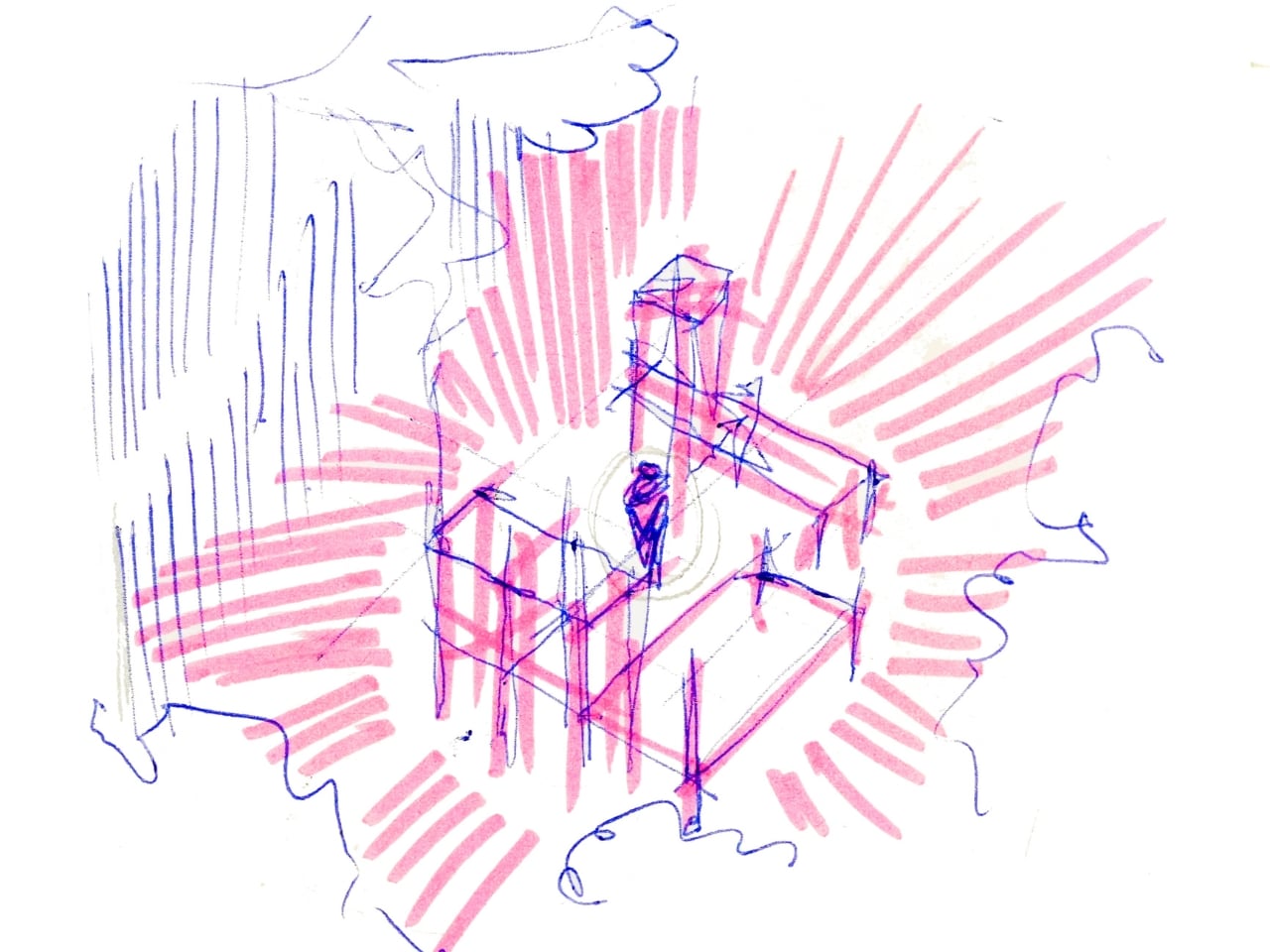
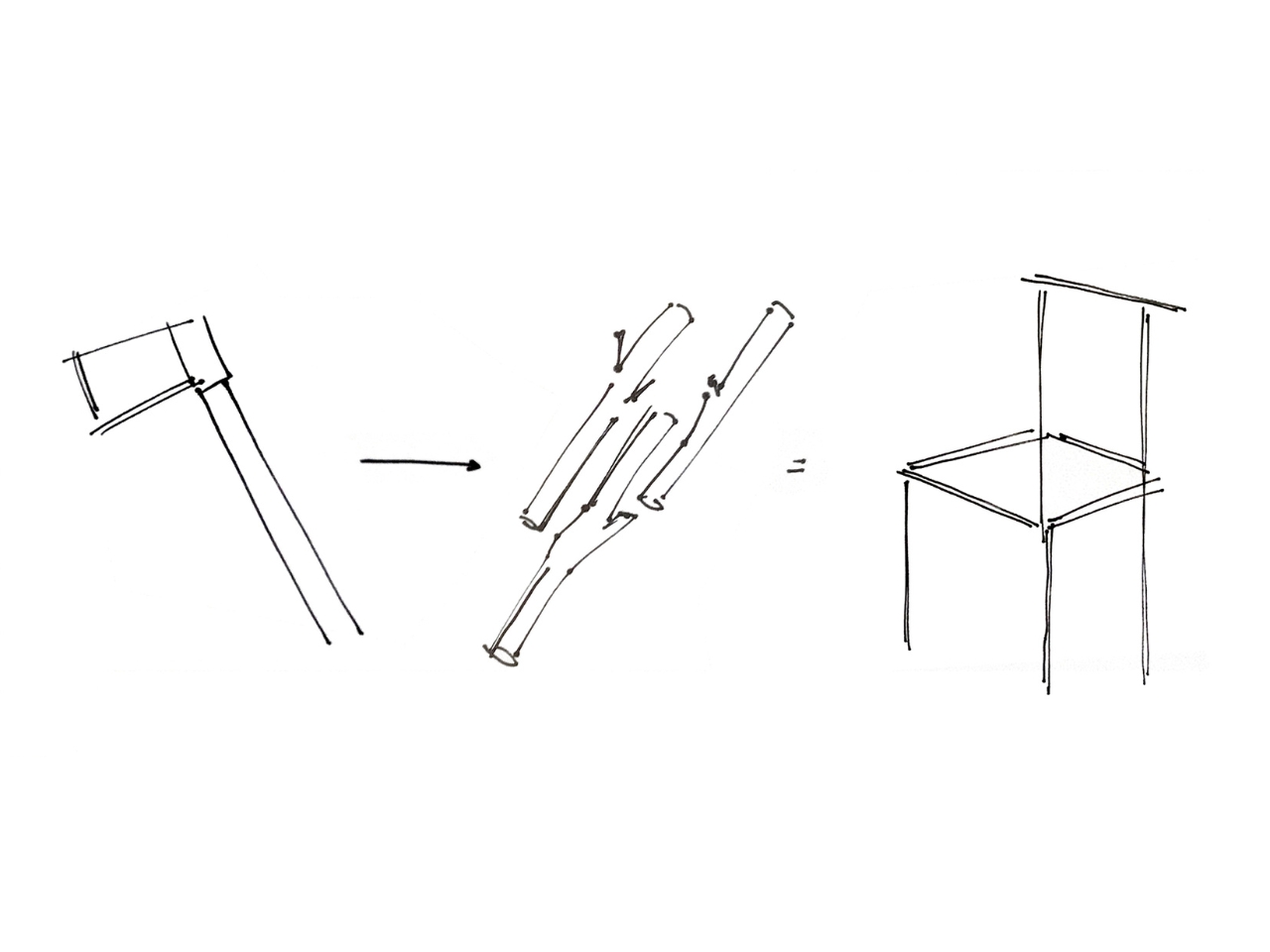
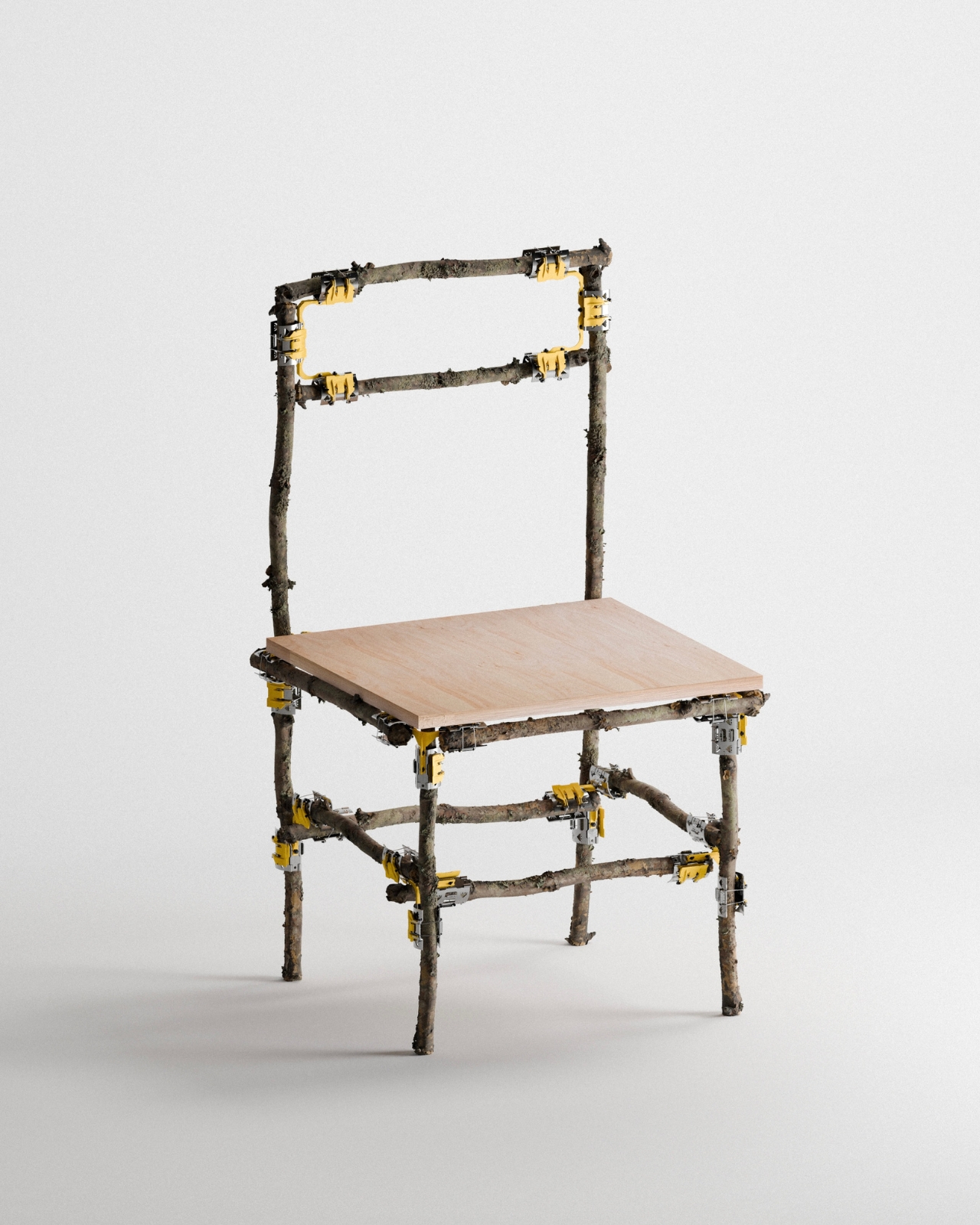
Most design projects start with the finished object. You picture a chair, sketch it out, source the materials, and figure out how to put it together. It’s a logical sequence that’s worked for centuries. Omnibite, a joint system by Milan-based designers Eugenio Costa and Nicolò Tallone, quietly dismantles that sequence and puts something far more interesting in its place.

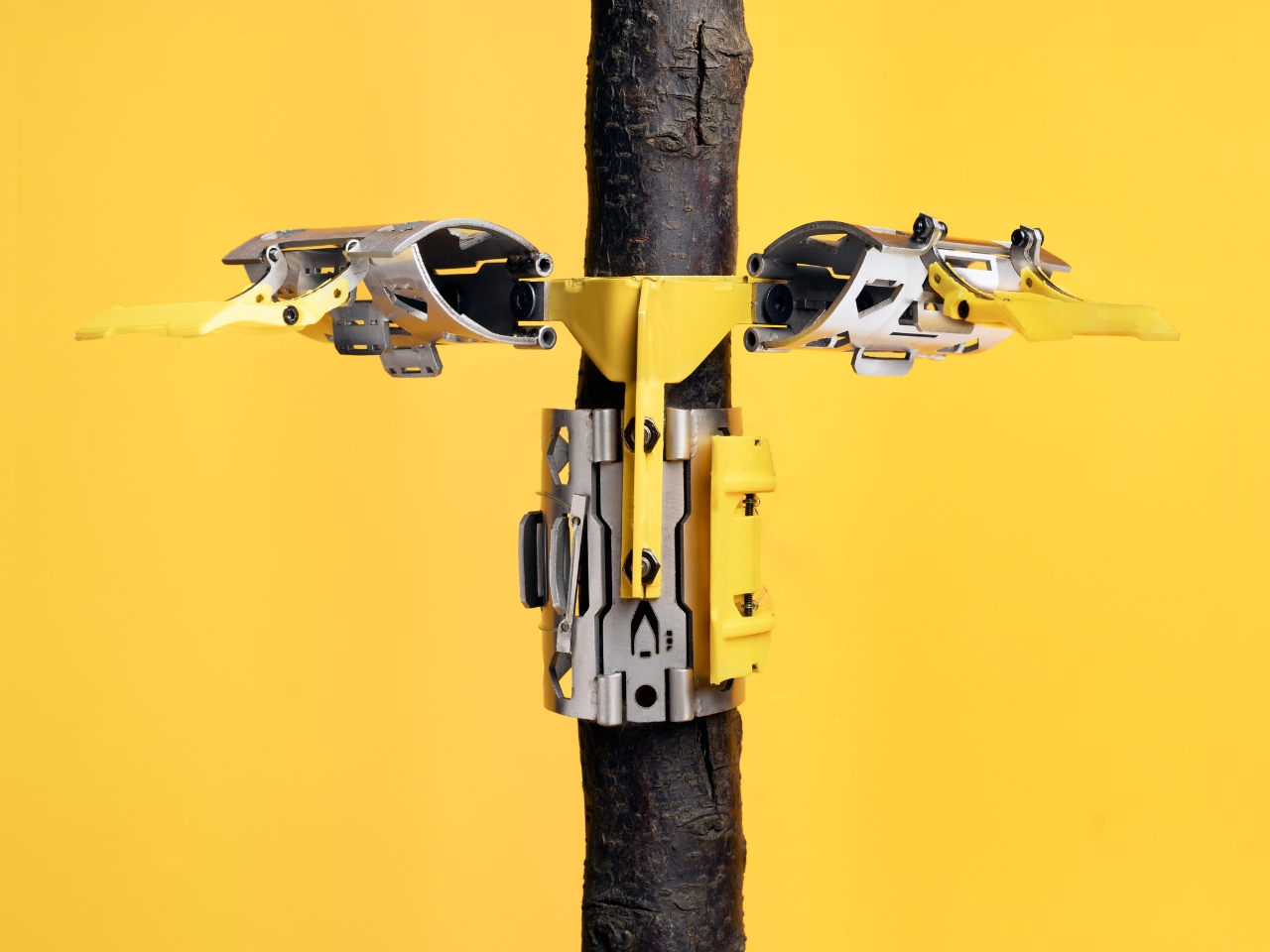
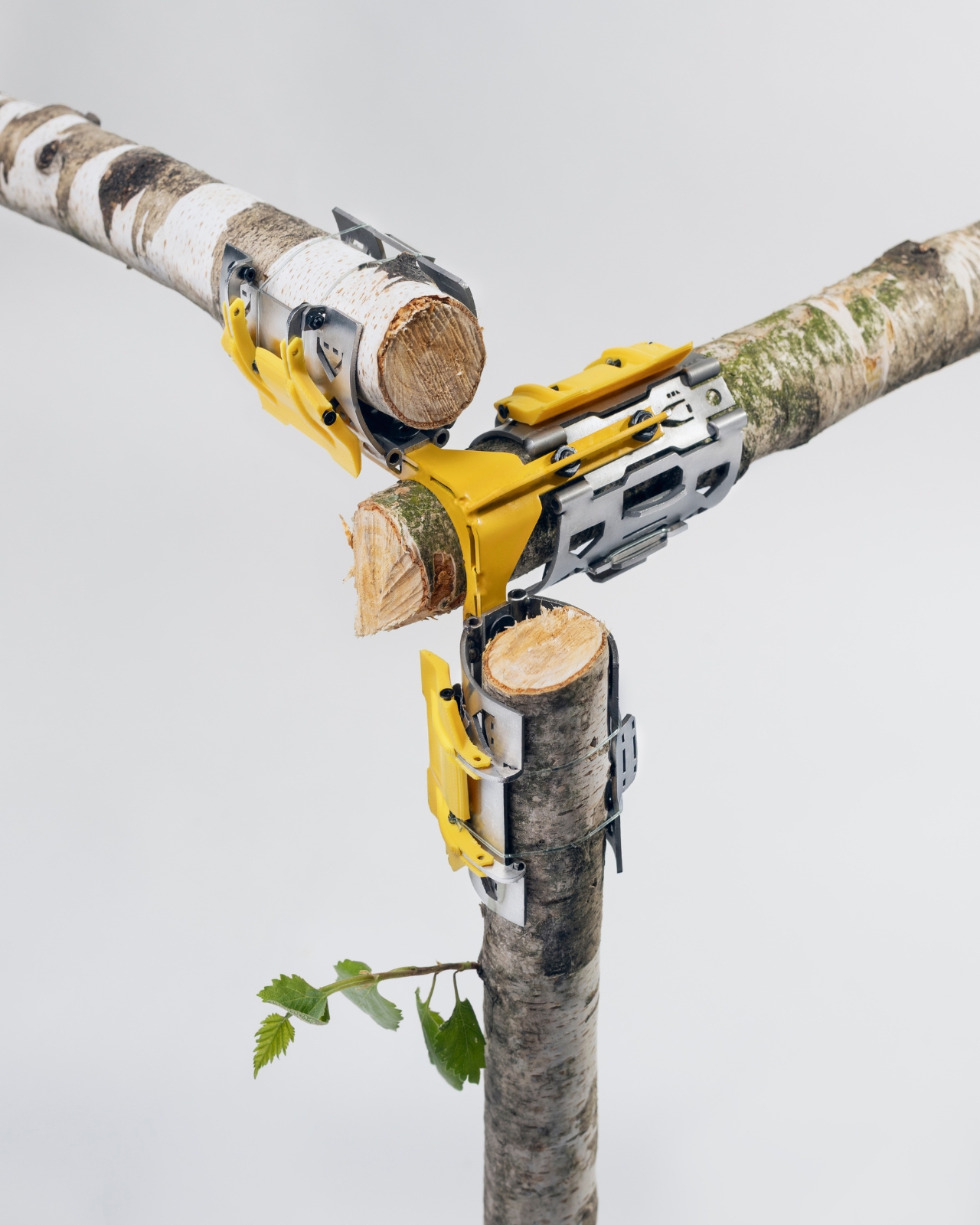
The premise is almost stubbornly simple: before you build anything, you go and find your wood. Not the pre-cut, pre-sanded, pre-dimensioned kind that arrives neatly bundled from a supplier. The raw kind, the kind that still has its bark and its irregularities and its own particular opinions about what shape it wants to be. A branch picked up, turned over in your hands, considered. Only then does construction begin.

Designers: Eugenio Costa, Matok Lab, nicola tallone

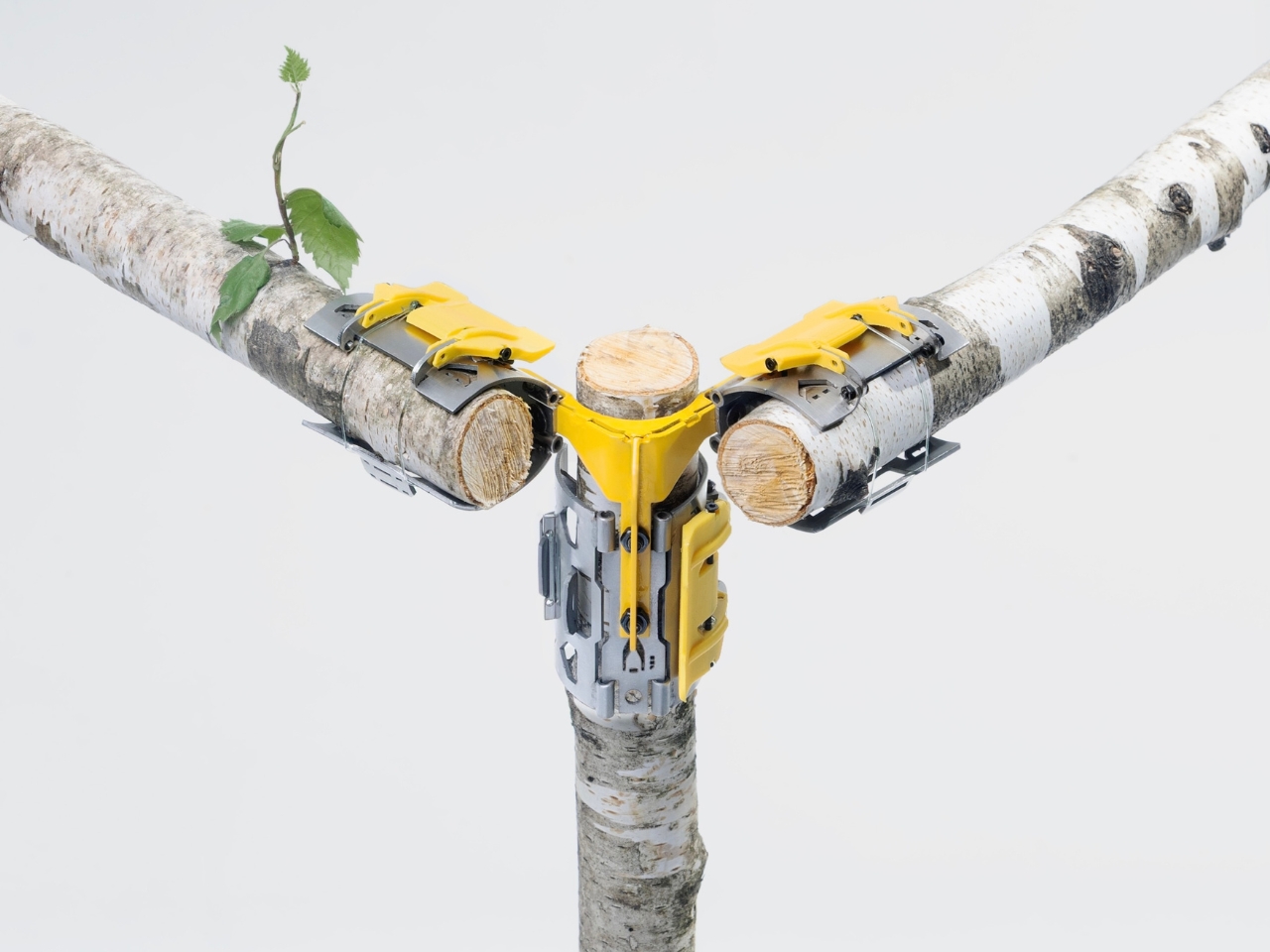
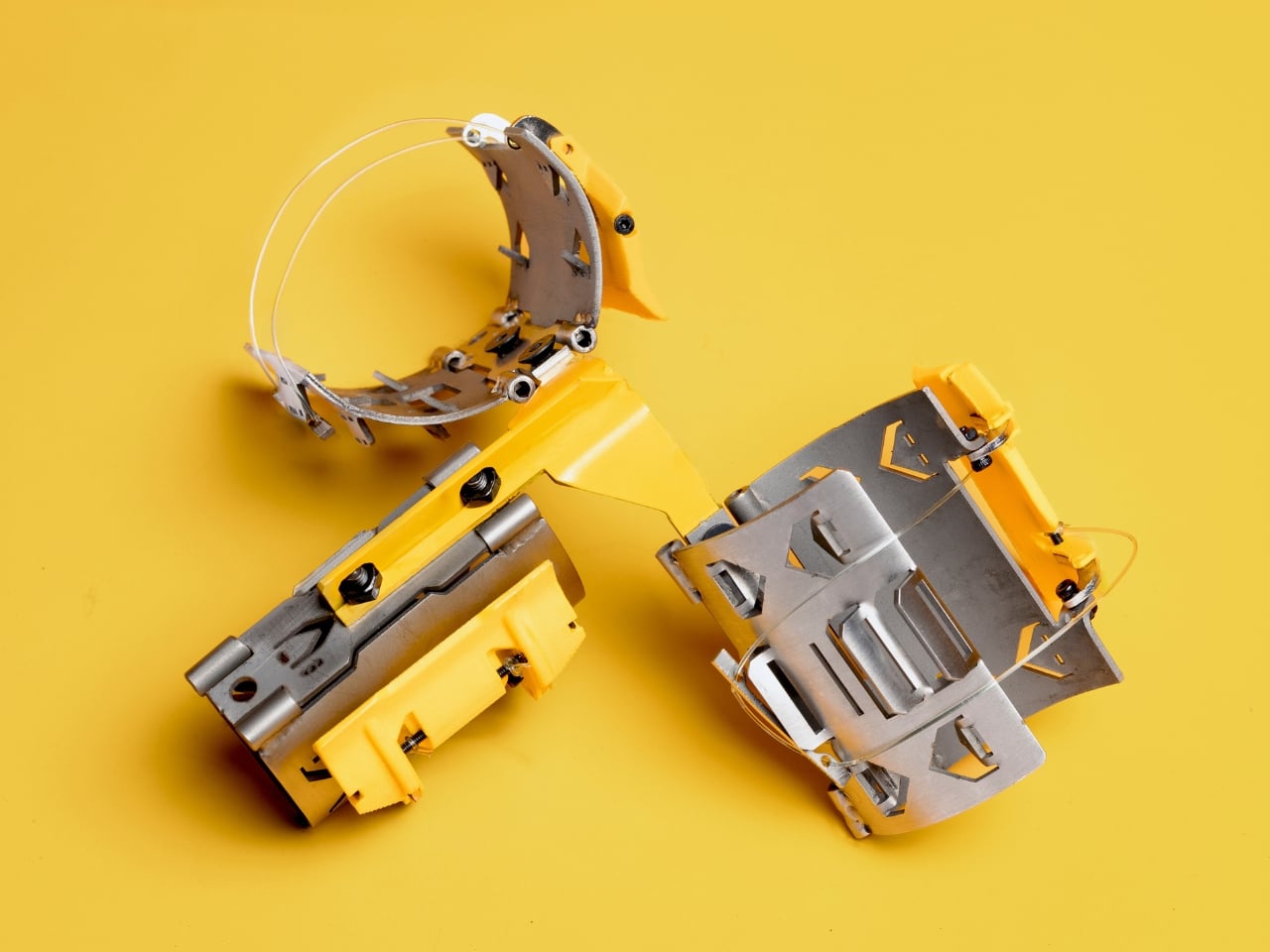
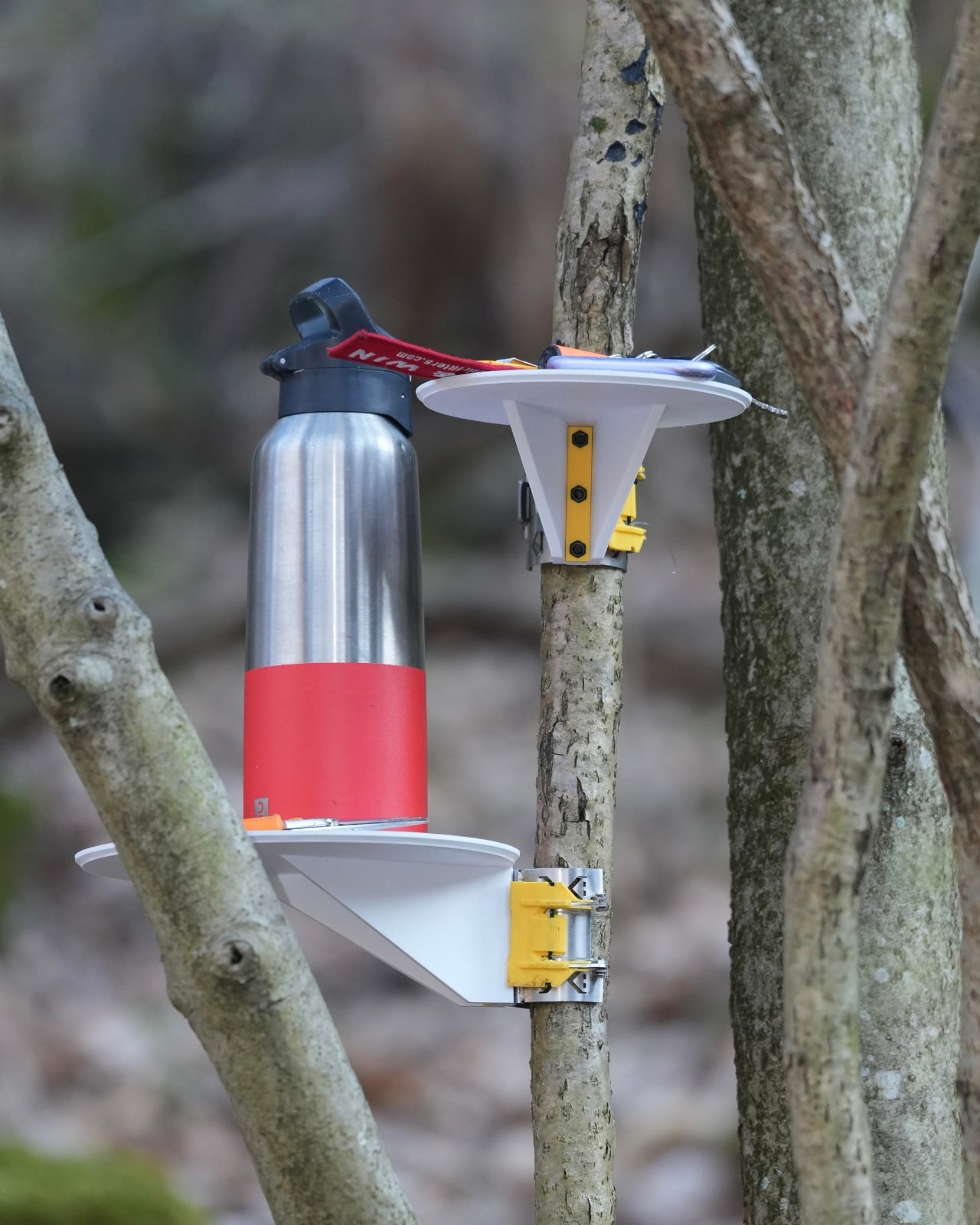
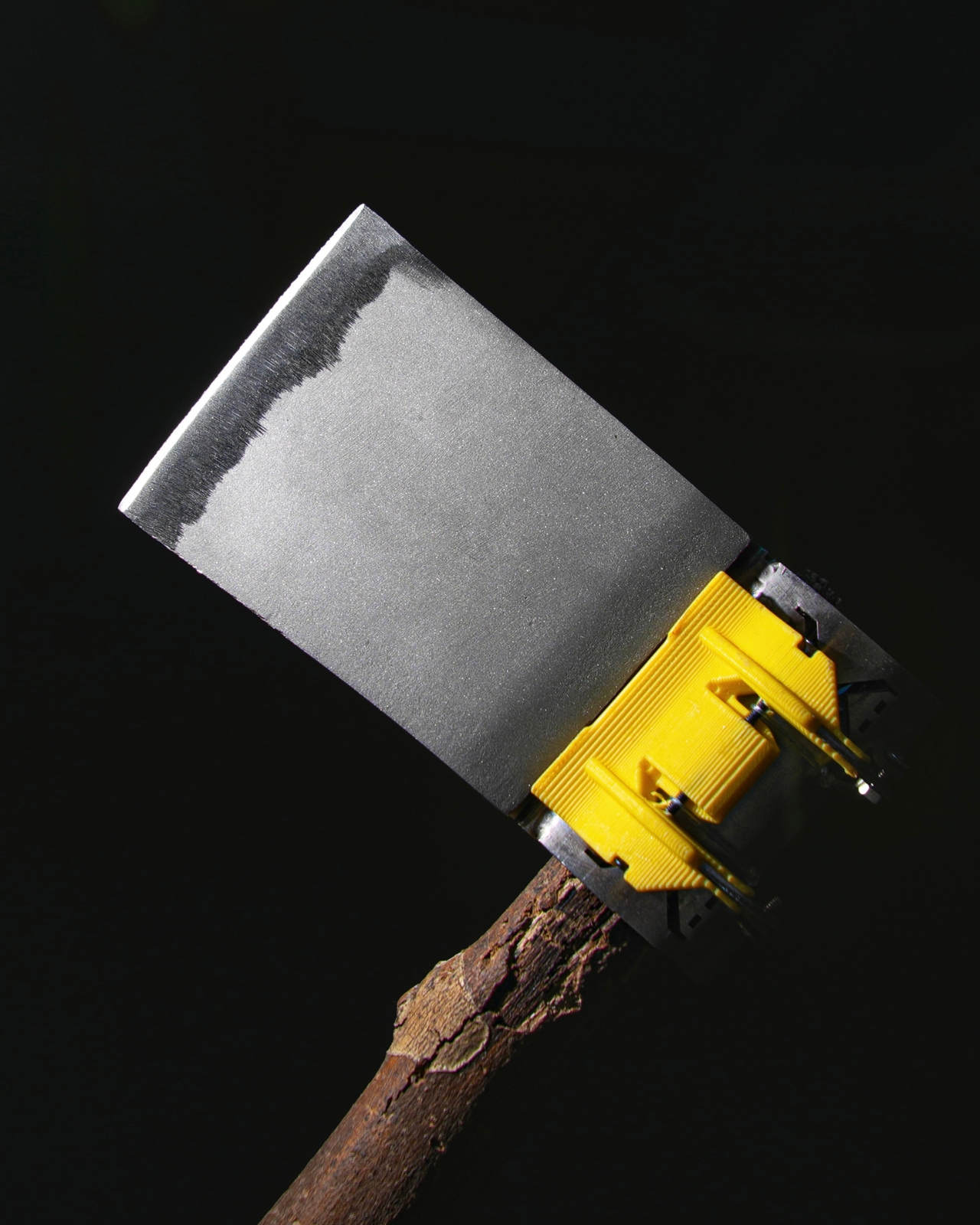
What makes Omnibite work is the joint itself, a precisely engineered three-axis connector with a quick-locking mechanism that holds irregular branches together without screws, adhesives, or any of the usual industrial hardware. It stabilizes intersecting elements from multiple directions, which means it can accommodate the natural variation of found wood rather than demanding that the wood conform to a predetermined plan. You’re not fighting the material. You’re working with it, on its own terms.

I find that genuinely refreshing. So much of contemporary design is obsessed with precision and replicability, with making sure every unit coming off a production line looks exactly like the last. That’s not inherently a flaw, but it does mean that variation gets treated as error rather than character. Omnibite inverts that logic entirely. The irregularity of a branch, its knots and curves and asymmetry, becomes part of the design language rather than something to be corrected or worked around.

The project grew out of research into local wood species in Lombardy, with Costa and Tallone treating the surrounding landscape as both a material resource and a knowledge base. Each wood type carries its own structural properties, and understanding those properties changes how you approach selection and use. The construction process, in this framework, doesn’t begin in the workshop. It begins the moment you start looking at the trees around you with intent.

That shift in starting point is where the real design thinking lives. The joint itself is elegant and well-resolved, but the bigger idea is that Omnibite asks you to read your environment differently. A fallen branch isn’t debris. A stand of young timber isn’t scenery. It’s potential. Having a tool that lets you act on that potential, without a factory supply chain in between, changes the relationship between maker and material in a way that feels genuinely meaningful rather than just conceptually tidy.

The practical applications are modest, and that’s appropriate. You can build chairs, tables, small-scale structures, the kind of things you might want to assemble in a garden or a studio and take apart later without damaging anything. Disassembly and reconfiguration are built into the system from the start, which aligns naturally with circular design principles. Nothing is wasted, nothing is permanently fixed, and the materials move on to their next life when the current structure no longer serves its purpose.

Omnibite also sits at an interesting intersection. It’s not purely furniture design, and it’s not quite architecture either. It occupies a productive space between those categories and feels more like a building philosophy given physical form through a single, precisely engineered component. A joint that doesn’t just connect things, but proposes a genuinely different way of thinking about what making something actually means.

Whether this becomes a widely adopted system or stays a compelling design experiment, it points at something the field genuinely needs more of right now. Not more objects, but more frameworks. Not more finished things, but more intelligent starting points. Omnibite doesn’t hand you a product to sit on. It hands you a method to think with, a different lens for the landscape you move through every day, and a genuinely compelling reason to look up from your screen and notice what’s already there.

The post Omnibite’s Screwless Joint Wants You to Build With Raw Branches first appeared on Yanko Design.