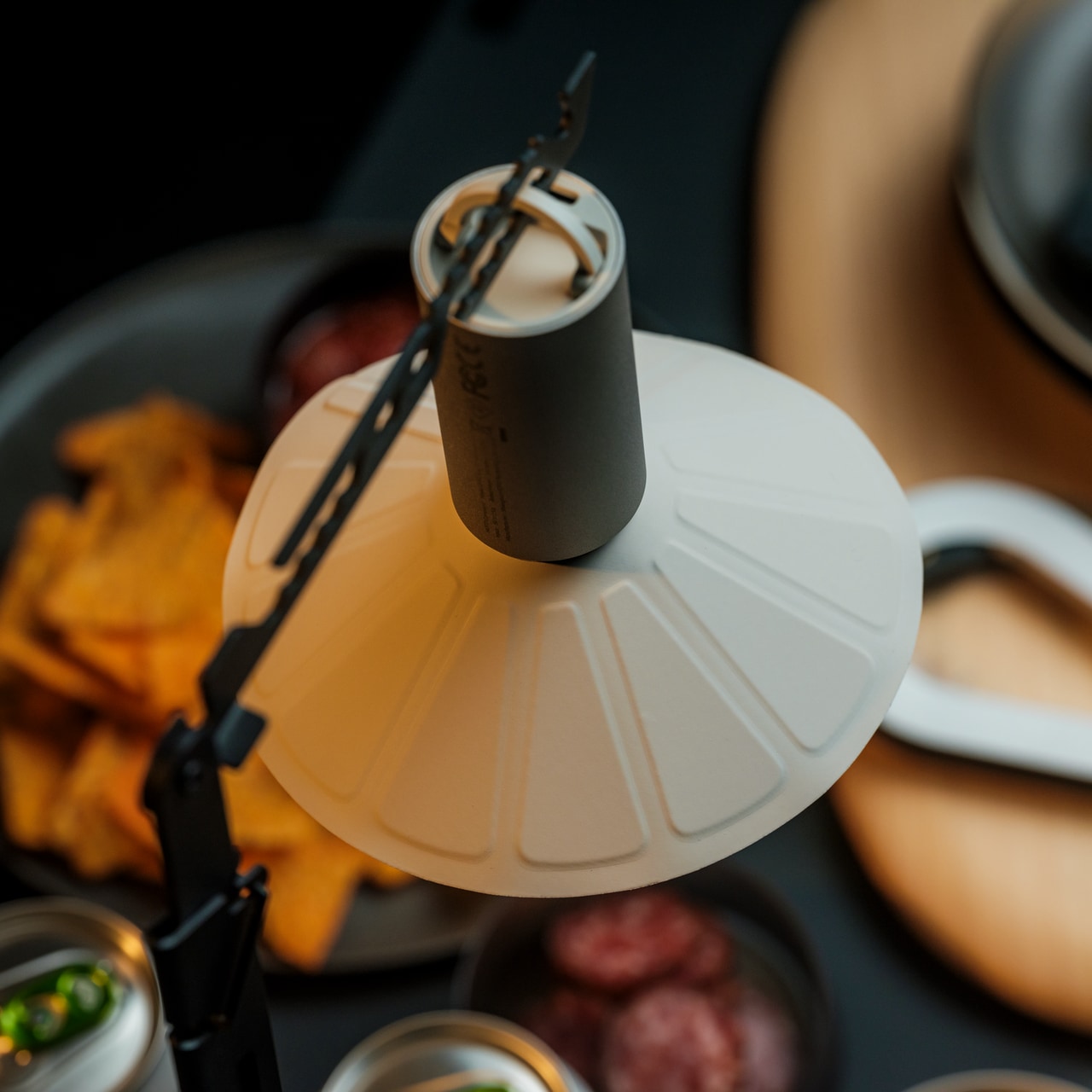
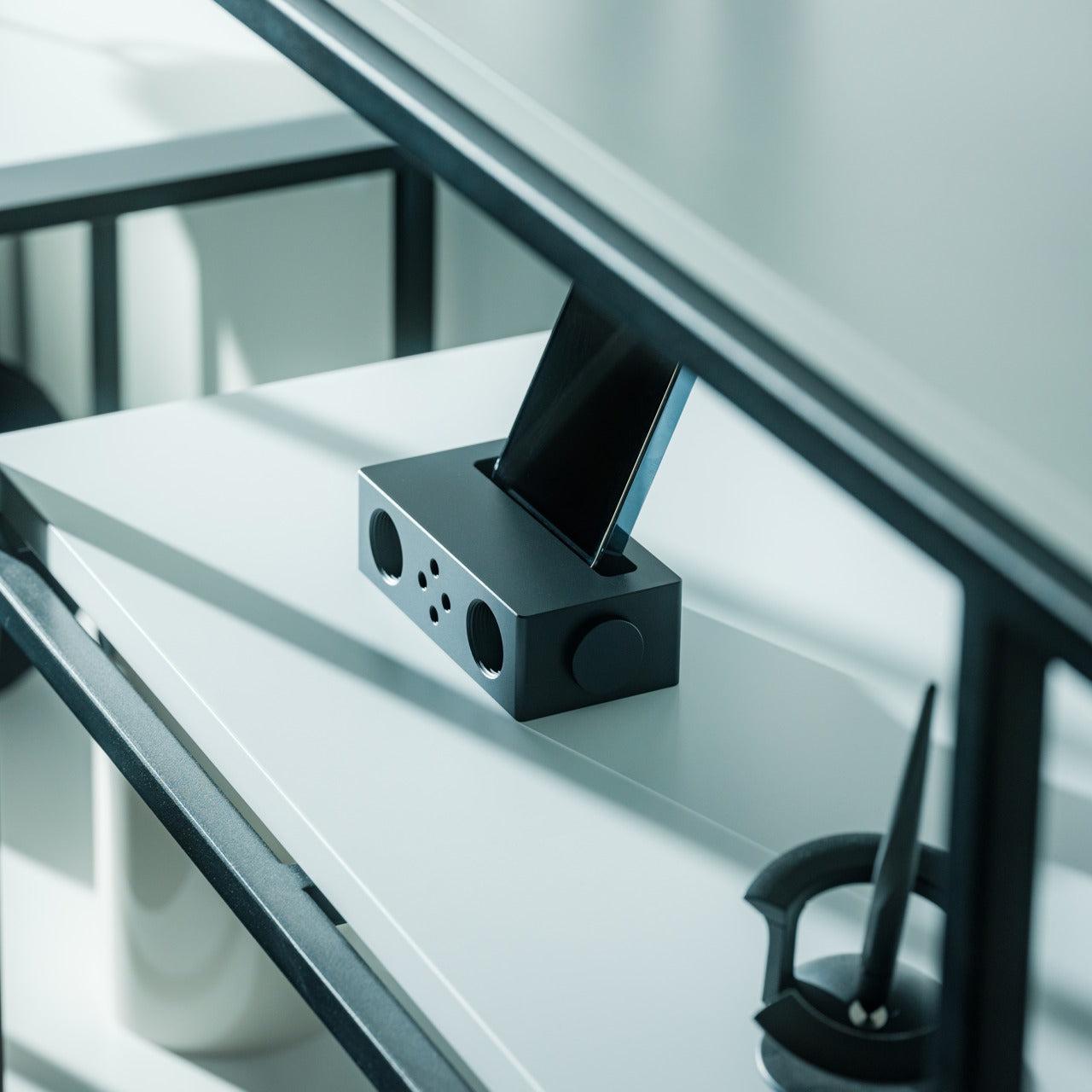
Some can openers live at the back of a kitchen drawer, pulled out once a year and quickly forgotten. The DraftPro Top Can Opener belongs somewhere else entirely. Designed by award-winning Japanese designer Shu Kanno and built in Japan, it removes the entire top of a can in a single smooth motion, turning any beer, sparkling water, or canned cocktail into something that drinks far closer to a glass.
What makes it worth talking about is not the novelty of a fully open can. It is how that one change compounds everything. Aroma lifts. Flavor opens. Ice slides in cleanly. A cocktail comes together directly in the can without a shaker or a glass to clean. This is not a gadget built for effect. It is a considered object, designed with the discipline Japanese craft demands, and built to earn its place.
The drinking experience changes the moment the top comes off. A full wide-mouth opening releases aroma the way a pint glass does, without the pour. The edge left behind is clean and smooth, safe to drink from directly, which means you are not trading the convenience of a can for a sharp, dangerous lip. The opening motion reflects the Japanese design philosophy behind the product: smooth, quiet, and completely controlled. No grinding, no force, no jagged result.
That precision is not accidental. Shu Kanno designed the grip for subtle comfort, shaped to sit naturally in the hand without slipping or requiring an awkward angle. The mechanism produces the same clean result every time, domestic or international, standard size or otherwise. Nothing about the design announces itself or overclaims. It simply does exactly what it should, at the moment you need it to, without asking anything more from the person holding it.
Built for More Than One Moment
The full open top is the headline feature, but the practical range goes further than it first appears. Drop ice directly into the open can, and it chills faster than waiting on the fridge. Build a cocktail right in the can, no shaker, no glass, no surface to clean. That same clean cut turns an empty can into a planter, a pen holder, or something ready to rinse and recycle without any extra effort.
Universal fit means it works with domestic and international cans without adjustment, which matters when you are traveling or reaching for something unfamiliar at the back of a cooler. The lightweight build disappears into a bag without adding bulk, making it as practical on a hiking trail or cabin trip as it is at home. Shu Kanno designed it to go where the drink goes. It does exactly that.
What We Like
Full top removal creates a wide-mouth opening that genuinely improves aroma and flavor, the same principle behind drinking craft beer from a proper glass rather than directly from a sealed can
Clean, smooth edge means you can drink directly without concern, the baseline the product needs to clear and the one it meets without compromise
Universal compatibility across domestic and international cans removes the guesswork before you even need it
Lightweight and portable build makes it practical for outdoor settings, travel, and hosting without adding anything unnecessary to what you carry
What We Dislike
No reseal option once the top is removed, so it works best when you intend to finish what you open rather than save it for later
No sizing specifications published, which makes it harder to confirm fit for unusually shaped or specialty cans before purchasing
A Tool That Earns Its Place
DraftPro does not fix a problem most people knew they had. It reveals one. Once you taste a beer with the top fully removed, aroma open and flavor fully present, the sealed can version feels like a compromise you were accepting without realizing it. That is the quiet power of intentional design. It does not announce itself. It just makes every drink noticeably and permanently better.
For the design-minded, it is a precision tool from a serious designer, built in Japan, with the restraint and finish that craft demands. For everyone else, it is a small, permanent upgrade to one of the most ordinary moments in the day. Either way, it earns its place, and once it does, you will not want to open a can any other way.
Gen Z didn’t just grow up with technology. They grew up suspicious of it, bored by it, and quietly determined to make it feel like something personal again. The gadgets that resonate most with this generation tend to share one quality: they treat the person holding them as someone worth designing for, rather than someone to optimize for engagement. That distinction is small on paper and enormous in practice.
The five products here span a circular phone display, a cassette-shaped Bluetooth speaker, a tactile digicam concept, a pair of headphones built around ritual, and a pocket-sized hacking tool. What connects them has nothing to do with price or category. Each one asks a question that mainstream consumer electronics stopped asking somewhere along the way: what does it feel like to actually use this thing?
1. Oppo Bubble
The rear camera has been the better camera for over a decade. Every benchmark confirms it, and yet selfie culture settled for the front lens because seeing what the rear camera captures while it faces away from you was never solved at the hardware level. Oppo’s answer is a circular magnetic display that snaps to the back of the phone and streams the rear camera’s live feed directly to your face. Frame the shot, check your composition, tap to shoot.
Launched in China in May 2026, the Bubble runs on a 550mAh battery and connects wirelessly up to 10 meters away, which repositions it as a remote shooting monitor rather than a narrow selfie tool. The screen is circular AMOLED, which earns its keep on both image quality and visual identity. When the camera is off it displays wallpapers, video, live photos, or a boarding pass. Apple has had the magnetic infrastructure for something like this since 2020. The most ambitious thing they shipped with it was a card holder.
What we like
The circular AMOLED silhouette reads as tech jewelry rather than a utility panel, which matters for a product that lives on the back of your phone in public.
Ten meters of wireless range and a built-in shutter trigger make this genuinely useful for tripod work and group photography, well beyond arm-length selfies.
What we dislike
The live camera preview is gated to select Oppo Reno 16 devices, limiting the headline feature to a short compatibility list at launch.
There is no confirmed international release date. Most readers outside China cannot buy or test it yet.
2. Side A Cassette Speaker
The cassette tape had no right to come back, and yet here we are. The Side A speaker is shaped exactly like a real mixtape — transparent shell, side A label, every visual cue intact — and inside it hides a Bluetooth 5.3 speaker with microSD playback and a sound profile tuned to echo the warm, slightly rounded tone of analog tape. It weighs 80 grams, sits comfortably in a jacket pocket, and costs $49.
The speaker ships with a crystal-clear case that converts into a display stand, giving it a second life as a shelf object between listening sessions. Six hours of playback at full volume and a two-hour full recharge means it cycles through a day and recovers quickly. The microSD slot lets you load a playlist locally and leave the phone in another room entirely. For a generation that grew up streaming everything and then started quietly buying vinyl and thrifting Walkmans, this lands exactly where it should.
The clear case converts to a display stand, so the cassette has a presence on a desk or shelf without needing to be plugged in or actively playing anything.
MicroSD support means the speaker functions entirely offline. No phone, no app, no stream required.
What we dislike
Six hours of battery is honest for the size but will not last a full day of continuous use without a recharge.
Sound output is warm and characterful but limited in volume ceiling. It is not a room-filling speaker.
3. Camera (1)
The impulse to pick up a standalone camera again is not about megapixels. It is about separating the act of taking a photograph from the act of being on your phone. Camera (1) is a concept by designer Rishikesh Puthukudy that imagines what a modern compact could feel like if it were built around physical controls rather than touchscreen menus. Metal body, softly rounded corners, every main function reachable without shifting your grip.
A circular mode dial carries a dot-matrix glyph display showing simple icons for stills and video. A light strip around the lens pulses for the self-timer, confirms focus, and signals when recording is live. The engraved lens ring adjusts focal length and aperture through actual resistance under your fingers, making composition a deliberate physical act rather than an absentminded on-screen pinch. The design borrows the transparent, hardware-forward language that Nothing made mainstream. Camera (1) is a concept and is not currently available to buy.
What we like
All main controls sit within reach of one thumb and index finger, which keeps your eyes on the scene rather than hunting across a menu.
The light strip communicates camera states through peripheral vision, replacing multi-layer software navigation with immediate, readable feedback.
What we dislike
Camera (1) is a design concept with no confirmed manufacturer, production timeline, or pricing.
The visual language is closely referential to Nothing’s aesthetic, which may read as derivative to anyone already familiar with that design direction.
4. StillFrame Headphones
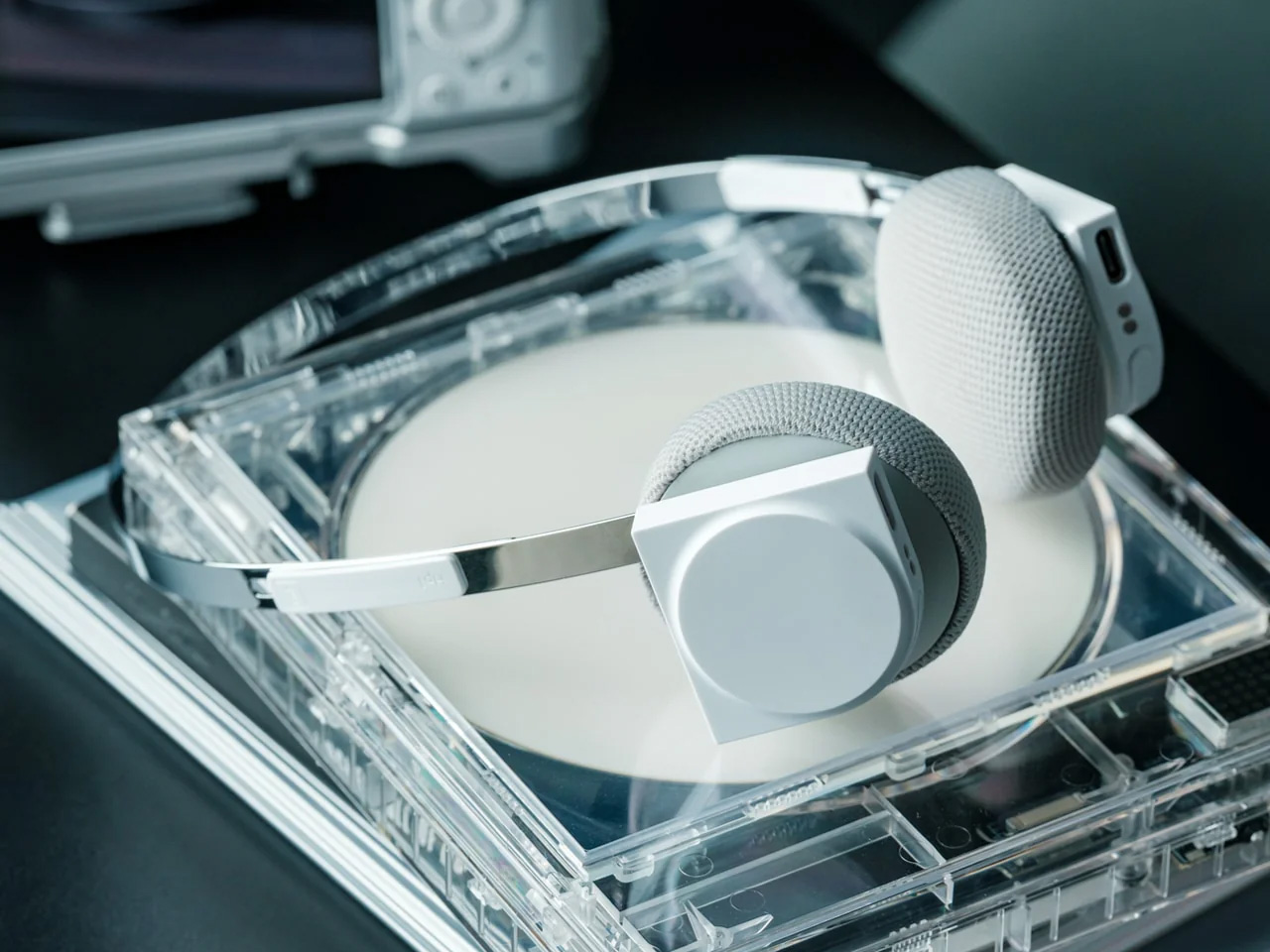
Designed by Tatsufumi Funayama, the StillFrame headphones are part of a series that treats listening as a physical ritual rather than a background task. The form references the geometry of CDs from the 1980s and 1990s, sitting in deliberate conversation with a companion CD player from the same design family. At 103 grams, the headphones rest on-ear without pressure, and the stainless steel headband sits at the exact threshold where strength and lightness stop working against each other.
The 40mm drivers produce a wide, open soundstage that suits melodic and ambient listening more than aggressive bass-forward tuning. Noise cancelling and transparency mode both run off a single tap, switching between solitude and awareness as the room changes around you. Battery life reaches 24 hours. Bluetooth 5.4 handles wireless streaming and a USB-C cable supports high-resolution playback for sessions where latency matters. The fabric ear cushions swap magnetically between Light Gray and Turquoise. The internal circuit board is deliberately exposed, treating the electronics as part of the aesthetic rather than something to be hidden behind housing.
Magnetic ear cushion swaps take seconds and shift the headphones between color variations without tools or friction.
The exposed circuit board treats the engineering as a design feature, which is a more honest visual decision than a sealed plastic shell.
What we dislike
On-ear fit at 103 grams stays comfortable across extended sessions but will feel firmer than over-ear alternatives during long listening.
At $245, the StillFrame sits at the upper end of the on-ear wireless category. The design rationale justifies it, but the price is real.
5. Flipper Zero
The Flipper Zero became a TikTok phenomenon in 2022 when videos showed it cloning RFID cards, controlling air conditioners, and toggling traffic infrastructure through infrared, and governments immediately panicked. The more accurate reading is that a small pocket device was pointing out how easy it is to interact with the invisible electronic layer of everyday objects, and that turned out to be an uncomfortable thing to demonstrate publicly. The Flipper Zero was built to make that layer visible and approachable to anyone curious enough to try.
Shaped like a Tamagotchi and governed by a cyberpunk dolphin mascot that grows more capable the more you explore it, the Flipper Zero packs a 125kHz antenna, sub-GHz radio, NFC module, Bluetooth Low Energy, infrared transmitter, iButton reader, and a GPIO header for attaching external hardware modules into a device that fits in a pocket. The monochrome orange screen is a deliberate nod to the Siemens C55. The menu navigates like a Nokia phone from 2003. Both of those choices are entirely intentional, and they are a large part of why the device developed a community of over half a million users without a single mainstream marketing campaign.
What we like
The GPIO header on top means the base device is a starting point. External modules continue to expand what it can do years after the first purchase.
The dolphin mascot and Tamagotchi structure make something genuinely technical feel approachable without softening what the device actually does.
What we dislike
The Flipper Zero’s reputation draws attention in airports and public spaces. Carrying it casually requires a willingness to explain it on the spot.
The software learning curve is real for anyone without a technical background, even with an accessible interface.
The Best Tech Right Now Feels Like It Was Made for You Specifically
The throughline across these five products is not aesthetics or price. It is the sense that each was designed by someone who thought about the relationship between person and object before they thought about the spec sheet. That quality is rare in consumer electronics, and it tends to surface among smaller brands, independent designers, and companies that build for communities rather than quarterly targets.
Gen Z is not chasing the next iPhone upgrade. They are chasing the feeling that a piece of technology was made for them specifically, understands how they actually move through the world, and earns its place in the pocket rather than demanding attention from it. These five products do not all succeed equally on every count, but each one makes a credible case that the feeling is still achievable.
Some grill pans spend their days at the back of a cabinet, too heavy to bother with and too uneven to trust. Then there are the ones that earn a place on the stove every single time. The Compact Modular Grill Plate belongs to the second category. Built with a three-layer steel construction that spreads heat evenly across its entire surface, it closes the gap between a proper kitchen sear and a campfire meal, without making you choose between the two.
What makes it worth owning is the adaptability. Handles swap out depending on the situation. The plate runs on campfires, gas burners, and induction stoves without modification. When cooking is done, the whole setup packs flat, small enough to fit in a bag without reorganizing everything around it. That level of flexibility does not happen by accident. It is the result of a design that actually solves the problem rather than merely describing it.
The three-layer steel plate is where the performance begins. Single-layer pans burn where the flame sits and fade everywhere else, which is how a good cut of meat ends up patchy and dry in the wrong places. The layered construction here distributes heat uniformly from the edge to the center, keeping the temperature consistent across the entire cooking surface. The result is a better sear, better moisture retention, and food that actually tastes the way it should. Compatible with campfires, gas burners, and induction stoves, it performs just as well in a small apartment kitchen as it does over an open fire on uneven ground.
Modular, Compact, Actually Practical
Most portable cookware treats portability as a footnote. The Compact Modular Grill Plate starts there. The handle system swaps out depending on the setting, so the plate adjusts to whatever the cook needs rather than the other way around. Remove the handles for cleaning, and pack everything flat for travel. There is a specific kind of satisfaction in gear designed to disappear when you are done with it, and this plate earns that cleanly. It comes in a Basic set and a Special set for those who want more to work with from the start.
What We Like
Three-layer heat distribution: a properly engineered cooking surface that keeps temperature uniform for consistent sears and better moisture retention from edge to center
Multiple heat source compatibility: campfire, gas, and induction in one plate with no adapters and no compromise between settings
Swappable handle design: takes seconds to change and genuinely adapts the plate to whatever situation the cook is working in
Compact pack-down: flat storage with handles removed; the kind of practical detail that determines whether gear actually makes the trip
What We Dislike
No surface treatment specified: the product does not clarify whether the cooking surface has a non-stick finish, which matters for cooking delicate proteins and for cleanup expectations
Limited set configuration: Basic and Special cover the range well, but there is no option to add a single accessory without committing to a full set upgrade
The Cookware That Goes Where You Go
The Compact Modular Grill Plate was built for cooking that happens outside the ideal. An unpredictable campfire. A countertop induction burner in a small space. A situation where the cookware needs to adapt before you do. It handles all three without changing what it is, which is a rarer quality in portable cookware than it should be.
If what you are currently cooking with makes the meal harder than it needs to be, this is the straightforward fix. Pick upthe Basic or Special set and take the guesswork out of the next meal.
The airport shop is a tax on poor planning. Everything in it exists to solve a problem you should have solved at home, at a price that reflects the fact that you have no other option. The five products here are the ones you pack deliberately, not desperately. Each one earns its place through considered design, genuine function, and the kind of quality that makes the airport version of the same thing look like a last resort.
The selection covers everything a considered travel kit needs: audio that travels without apology, power that performs at wall adapter speed, a passport holder that knows where it is, grooming that does not give up precision for portability, and a lock that reports back. None of these products compromised on design to get the job done. That discipline is exactly why they belong in the bag and not on the shelf at Departures.
1. StillFrame Headphones
Travel headphones occupy a strange middle ground in most product ranges. They are either serious audio equipment that was never meant to leave the studio, or they are designed for portability at the direct expense of everything that makes headphones worth wearing. The StillFrame headphones resolve that tension with a form that travels without folding into an awkward configuration and audio that does not require an apology when someone asks what you are listening through. They make the journey part of the experience rather than something to endure.
The design reads as confident without being loud, which is exactly the register a pair of headphones should occupy when you are moving through airports, hotels, and meeting rooms in the same day. Noise performance keeps the outside world at a suitable distance without the artificial pressure that makes some active noise cancellation tiring over long flights. The StillFrame headphones are the kind of product that makes you realize how much you were tolerating from whatever you were using before.
The form does not compromise on aesthetics to achieve portability, which is rarer in this category than it should be
Audio performance holds up across the variety of environments that a travel day actually produces
What We Dislike
Headphones at this design level carry a price that reflects the intention behind them, which may exceed what some are willing to spend on travel audio
The considered aesthetic means they draw attention in a way that more anonymous options do not
2. INIU SnapGo Air MagSafe Power Bank
The problem with most power banks is not the capacity. It is the experience of using them: the cables that go somewhere, the bulk that announces itself in a jacket pocket, and the heat that builds up when wireless charging is pushed past its natural ceiling. The INIU SnapGo Air addresses all three. At half an inch thick and finished in anodized aluminum, it sits flush against the back of a phone without the visual chaos that makes most battery packs feel like a concession.
The GoCord, a built-in USB-C cable that sits color-matched in a recessed channel along the body, means there is no separate cable to locate when you need wired charging at 45 watts. Wireless output runs at 25 watts via Qi2.2, fast enough to get a phone to usable capacity in the time it takes to clear customs. Temp Guard 3.0 monitors internal temperature 9,000 times per second and keeps the surface under 104 degrees Fahrenheit during use. At $54.99, it sets a new expectation for what a power bank should be.
What We Like
The GoCord cable sits flush and color-matched, removing the loose cable from the carry equation entirely
25W wireless and 45W wired output means it performs at wall adapter speed in a half-inch profile
What We Dislike
The 10,000mAh capacity covers phones and earbuds comfortably but falls short for anyone who also needs to top up a tablet or laptop
The premium finish makes this a product worth protecting, which adds a small layer of care to how you pack it
3. Satechi FindAll Passport Cover
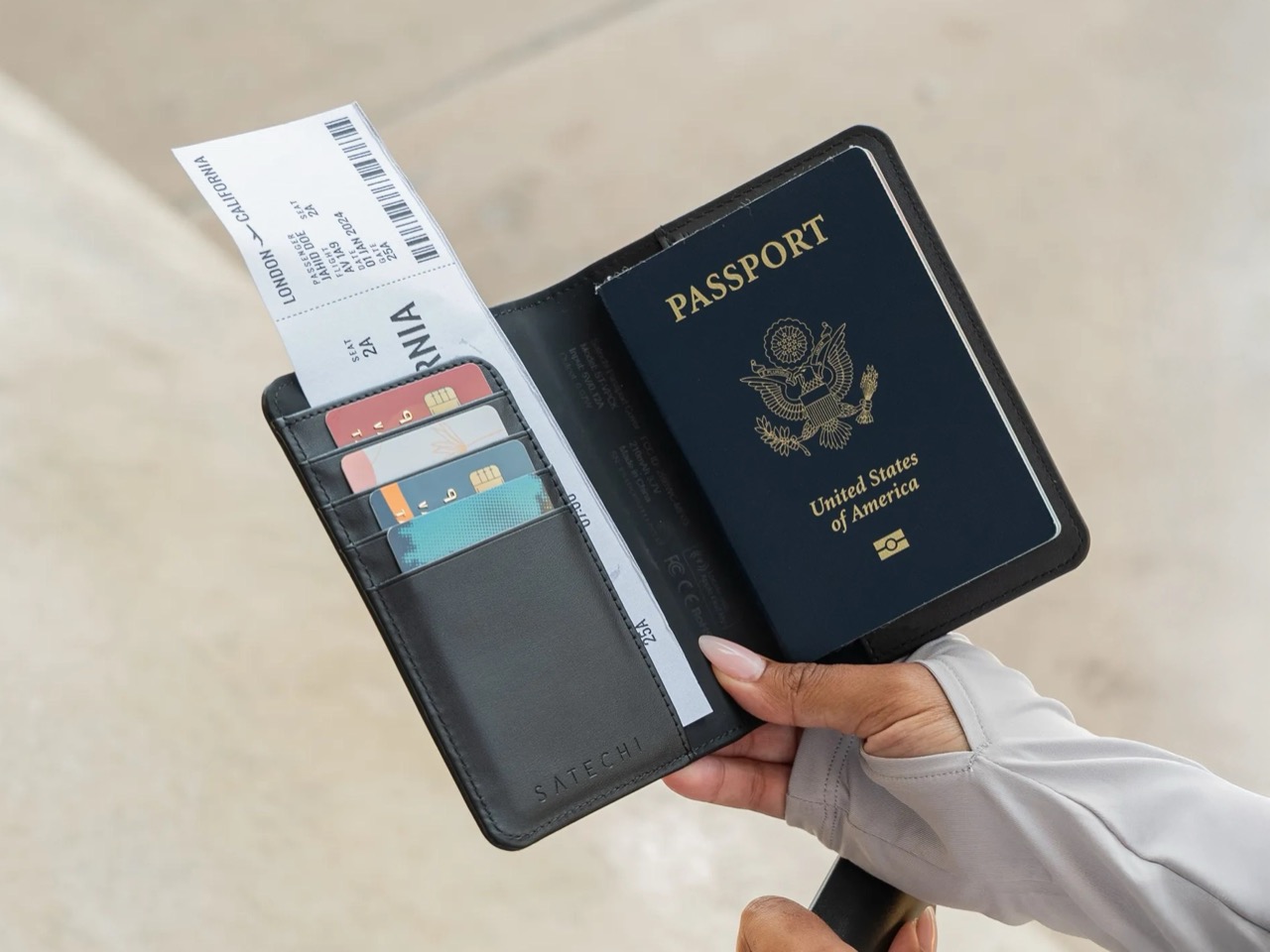
Losing a passport is not a travel inconvenience. It is a trip-ending event that takes days and a great deal of bureaucratic patience to resolve. The Satechi FindAll Passport Cover approaches that anxiety with a straightforward solution: vegan leather organization paired with Apple Find My tracking via Bluetooth 5.2, a 90-decibel alarm you trigger from your phone, and RFID blocking that keeps chip data inside the cover rather than available to anyone standing close enough with the right equipment.
The 150mAh battery charges wirelessly on any Qi, Qi2, or MagSafe surface, lasts up to five months between charges, and adds just 3.7 ounces to a jacket pocket. The bifold holds your passport, boarding pass, and four cards in a format that removes the fumbling from every airport security interaction. For a product that handles your most critical travel document, the combination of location tracking, audible alerts, and electronic theft protection represents a level of thinking that no standard passport wallet comes close to.
What We Like
Apple Find My integration with a 90-decibel alarm turns a passive document holder into an active security system
Wireless charging and five months of battery life mean the tracking runs silently in the background without any maintenance required
What We Dislike
The Find My network works best where Apple devices are dense enough to relay the signal accurately, which covers most major airports but thins out in remote destinations
Vegan leather, while well executed here, will show wear differently than full-grain alternatives over years of daily use
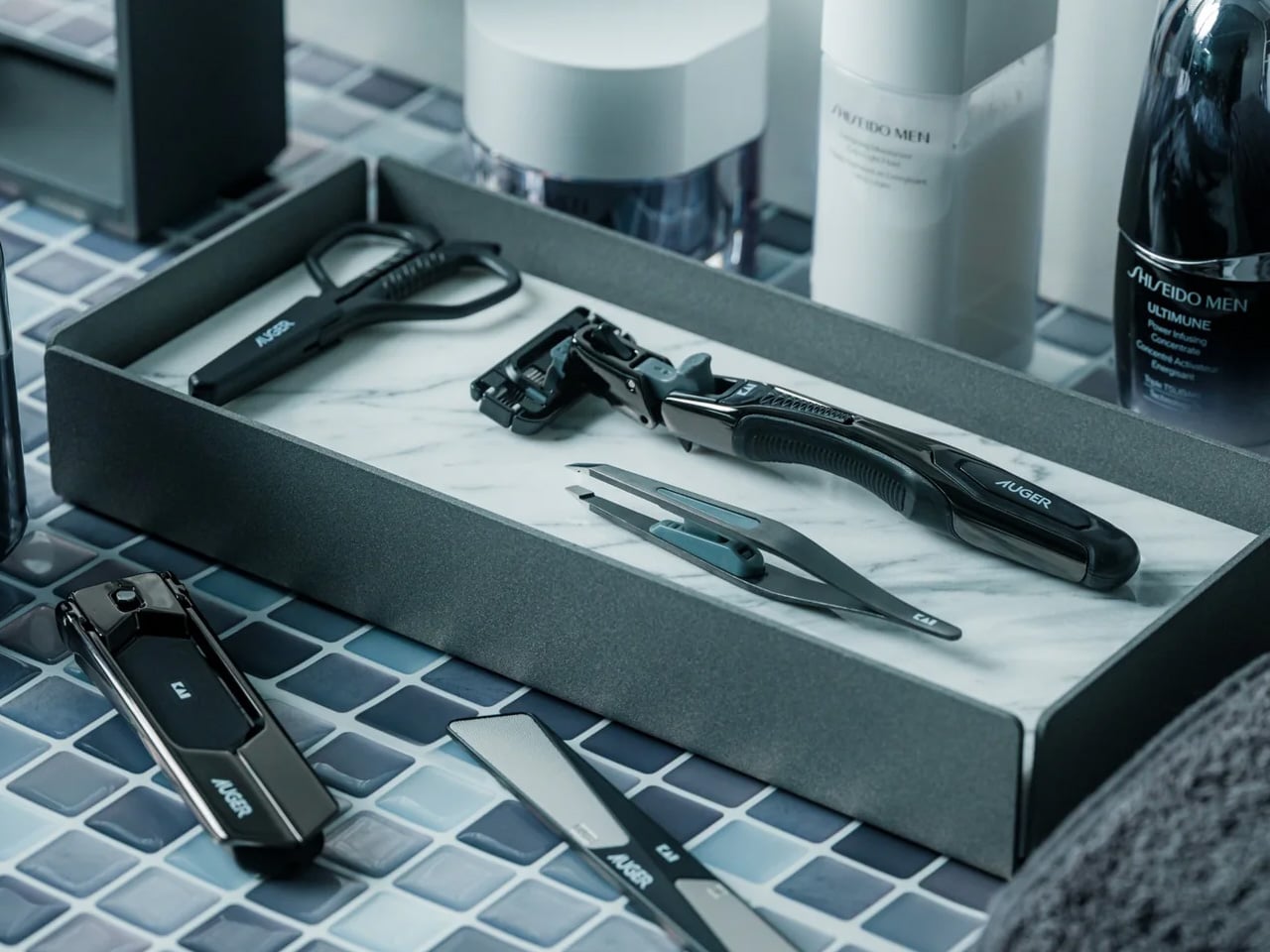
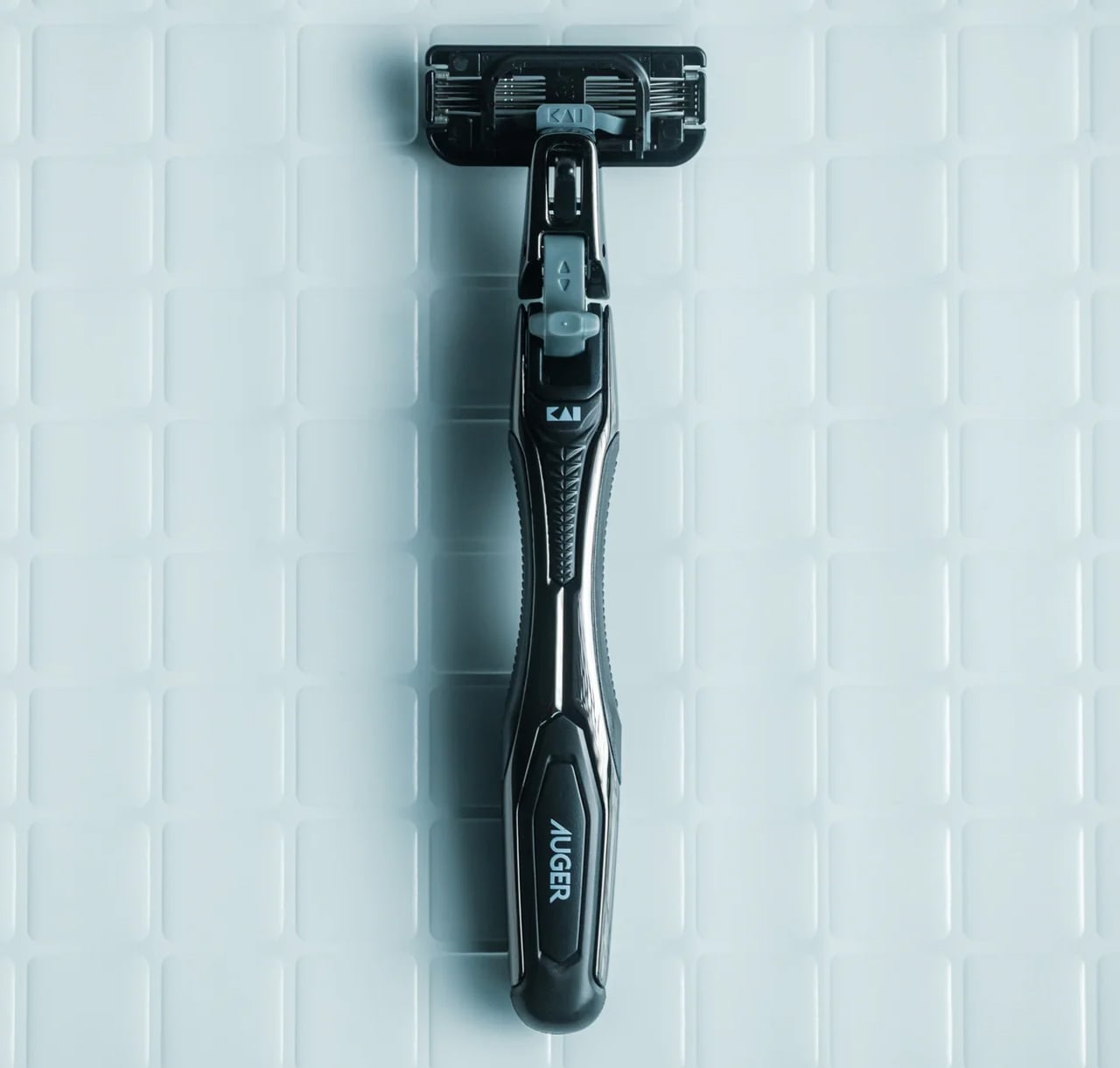
4. Auger PrecisionMaster Grooming Set
Most grooming kits designed for travel treat portability as the only brief. The result is a set that technically fits in a toiletry bag but produces results you would rather not be judged by. The Auger PrecisionMaster starts from the precision end of the argument and works toward a form factor that travels well, built around the idea that a grooming set should perform the same way regardless of whether you are at home or checking into a hotel at midnight.
The design carries the kind of restraint that makes a product feel like it was made for an adult. No unnecessary features, no parts that feel included to justify a higher price point. What you get is a focused set of tools that do exactly what they promise, finished to a standard that reads as intentional rather than incidental. For anyone who treats their grooming routine as part of how they show up, this kit travels without asking you to downgrade.
The precision-first approach means the results do not change when you travel, only the location does
The design restraint communicates quality without requiring the product to announce itself
What We Dislike
A focused kit by definition is not for anyone who needs a wide variety of attachments in a single case
The quality finish requires some care in packing to keep it looking as considered as it arrives
5. KeySmart SmartLock
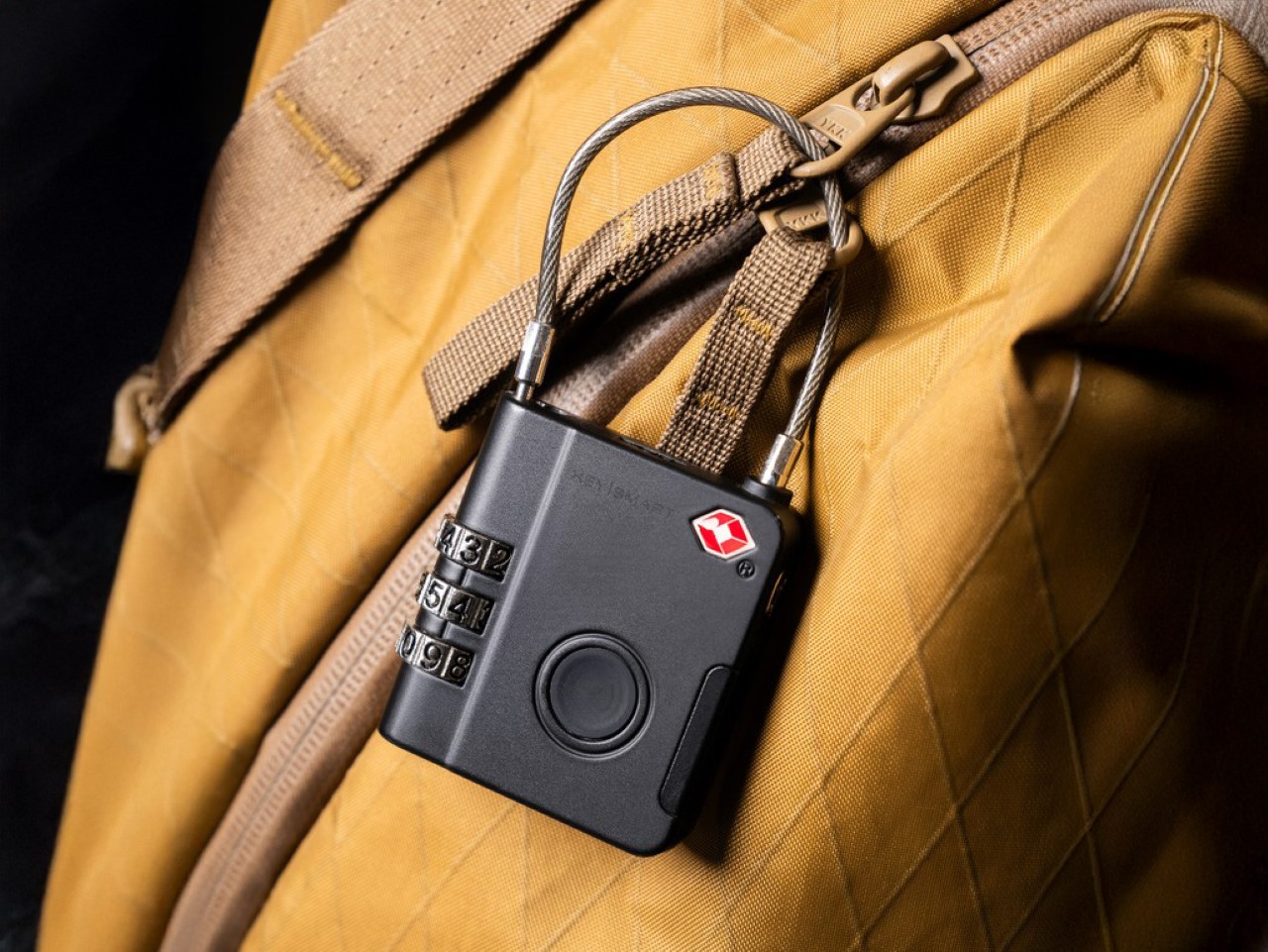
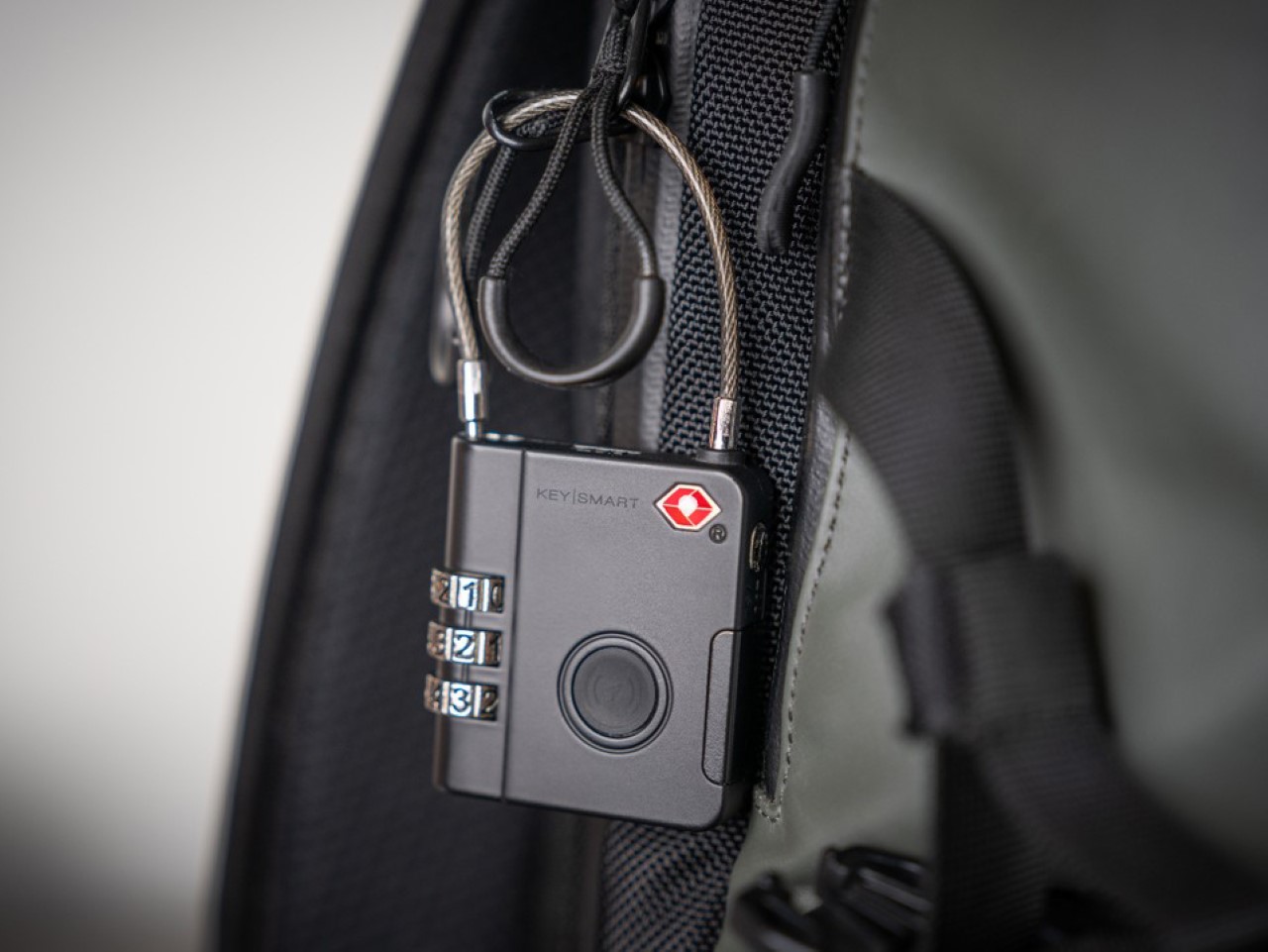
Airlines mishandle bags at a rate that frequent travelers take as a given. A traditional luggage lock addresses theft but does nothing about the more common problem: a bag that is somewhere in the system and not where it should be. The KeySmart SmartLock carries a TSA-compliant three-digit combination on the outside, and Apple Find My tracking on the inside. From the moment it clicks onto a zipper, you can see exactly where your bag is through the Find My app.
The 76-decibel alarm triggers remotely, which makes identifying your bag on a crowded carousel faster than waiting for the right shape to come around again. A CR1632 battery runs for up to four months, and the lock functions manually even when depleted, so you are never locked out of your own bag because the tech layer ran dry. The ruggedized construction handles baggage handling without showing it. For a product that costs a fraction of what a lost bag claim resolves to, the argument for carrying one makes itself.
What We Like
TSA compliance and Find My tracking solve two separate problems in a single lock with no additional bulk
The manual fallback when the battery dies means the security function is never compromised by the tech sitting on top of it
What We Dislike
The Find My network becomes less reliable in remote destinations where Apple devices are too sparse to relay the signal
The ruggedized plastic finish is functional rather than premium, placing it at a different material register than the other products in this selection
The Best Packed Bag Is the One Where Every Object Earned Its Place
The best travel kit is not the one with the most in it. It is the one where every object earned its place through a decision rather than a habit. Headphones that make the flight worth having. A power bank that performs at wall adapter speed. A passport holder that knows where it is. A grooming set that does not ask you to downgrade your routine. A lock that reports back when your bag does not arrive where you did.
None of these products solved their problem by doing the minimum. Each one set a higher bar for what an everyday travel object is supposed to accomplish, and then cleared it. That is a rarer quality in this category than it sounds. Pack accordingly.
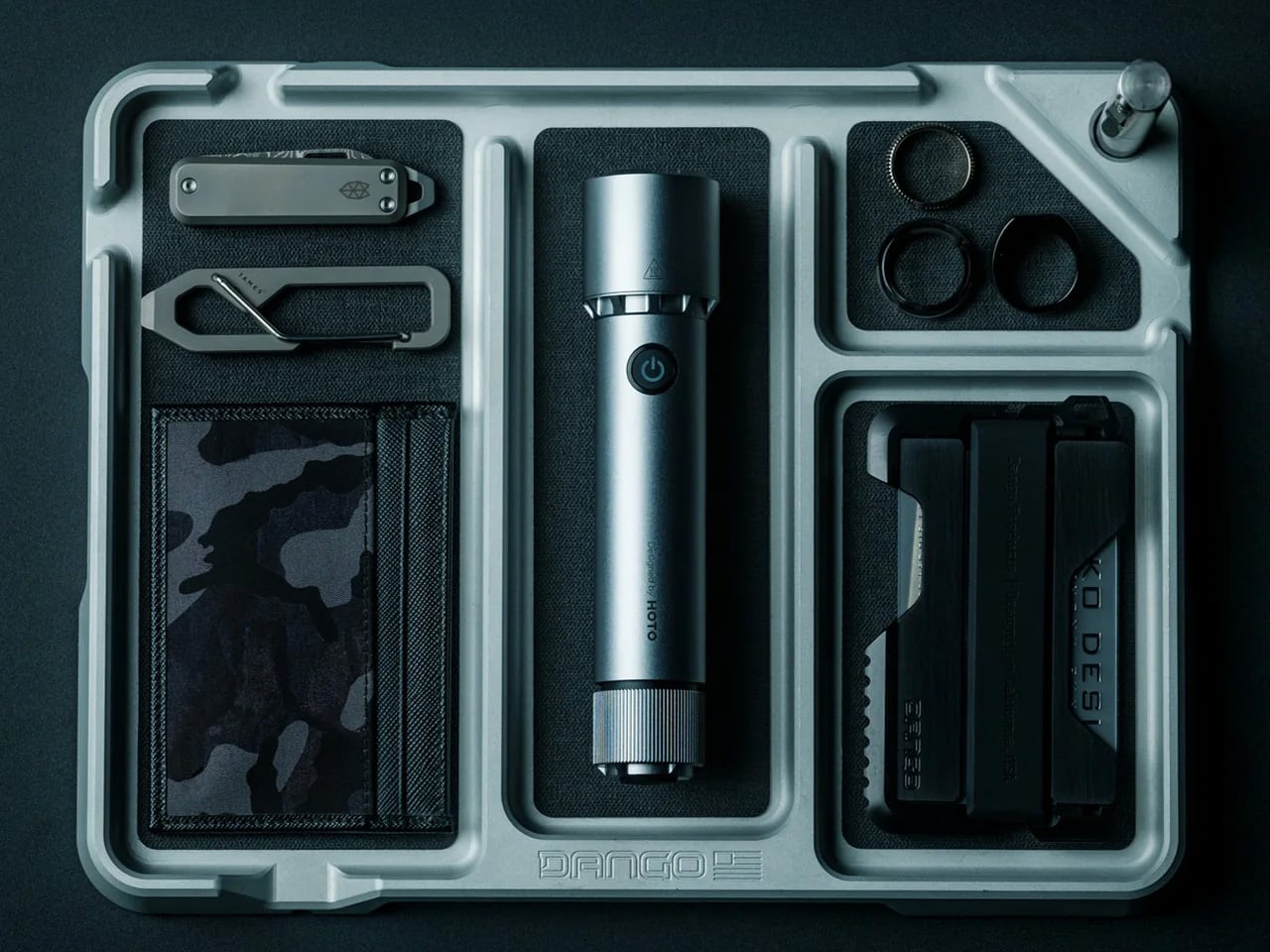
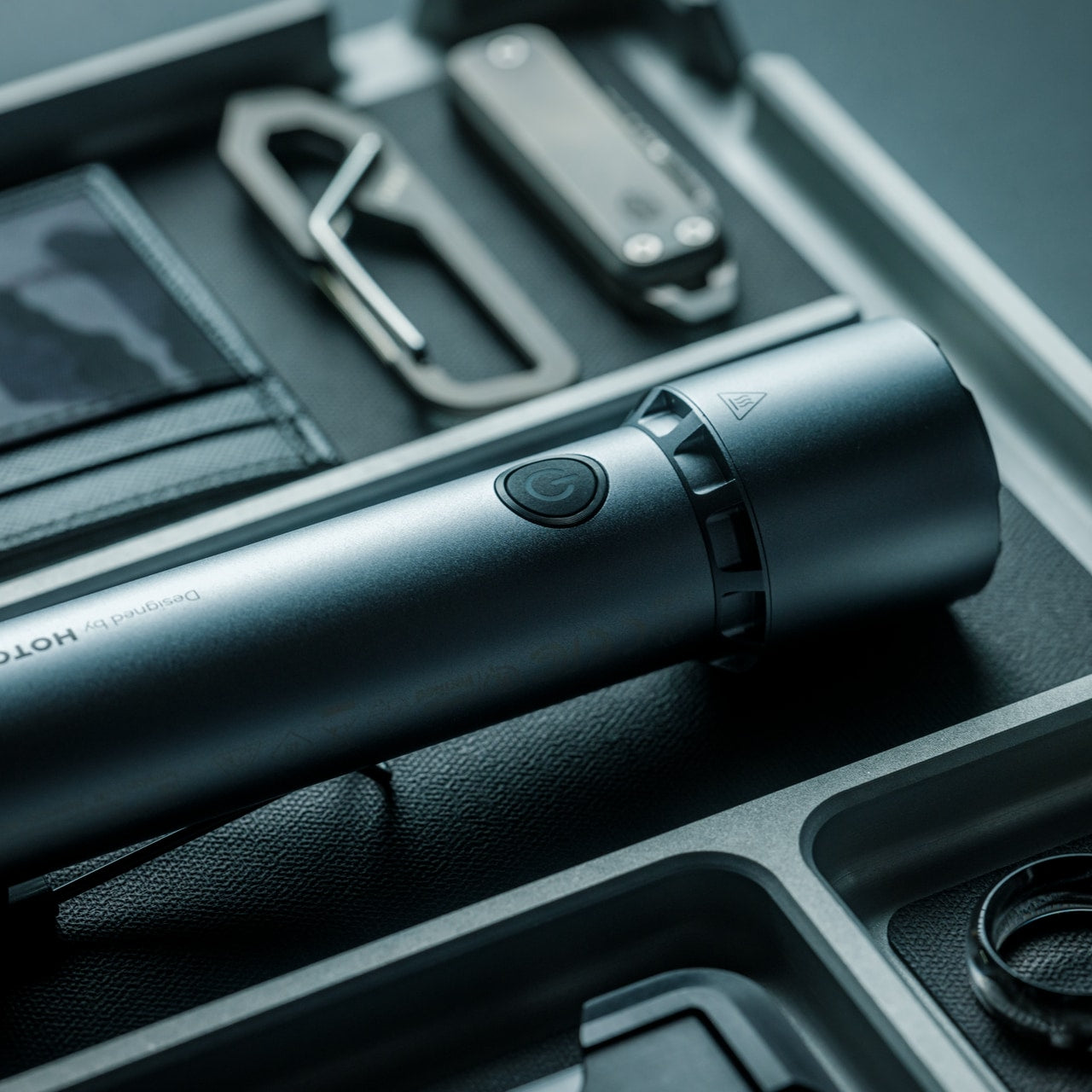
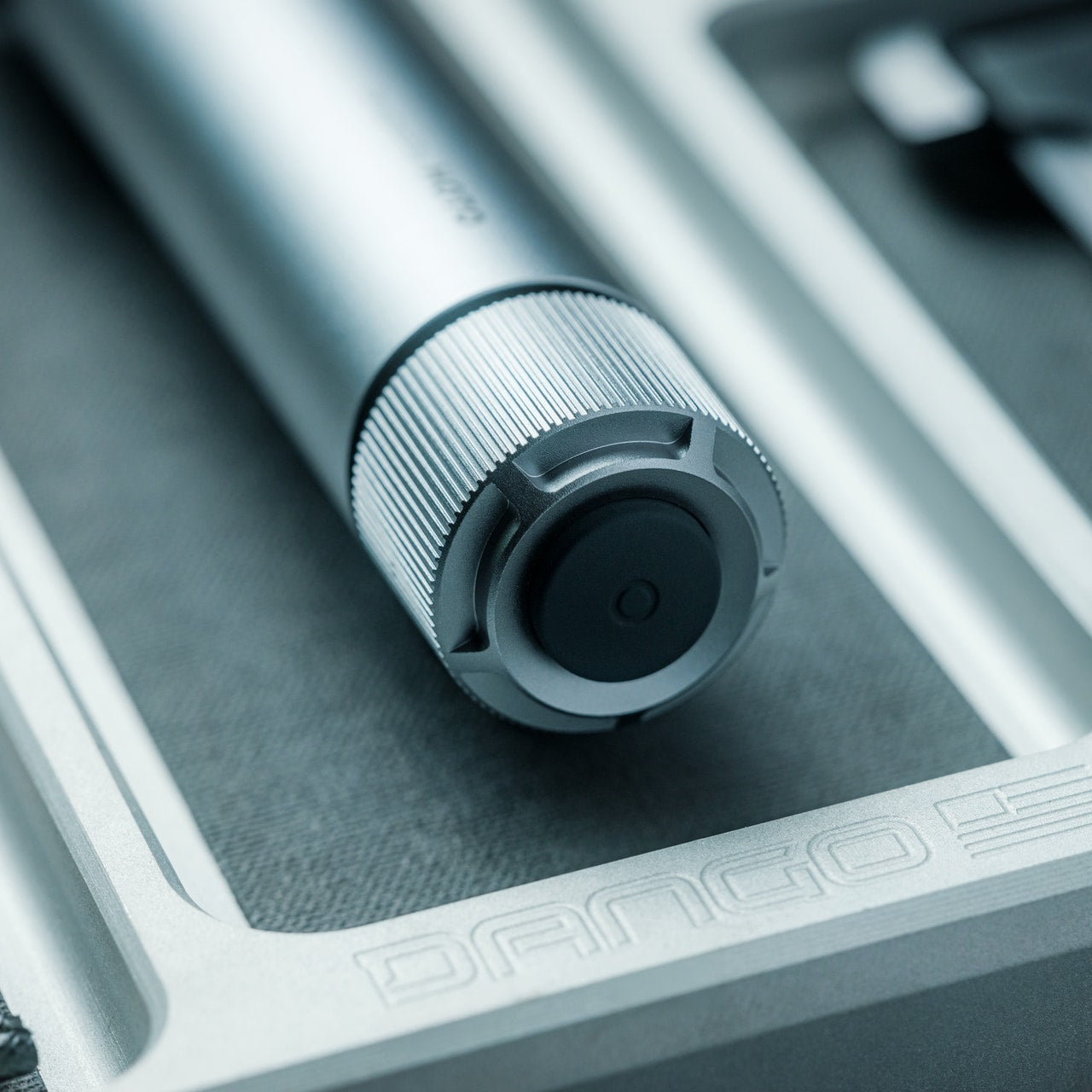
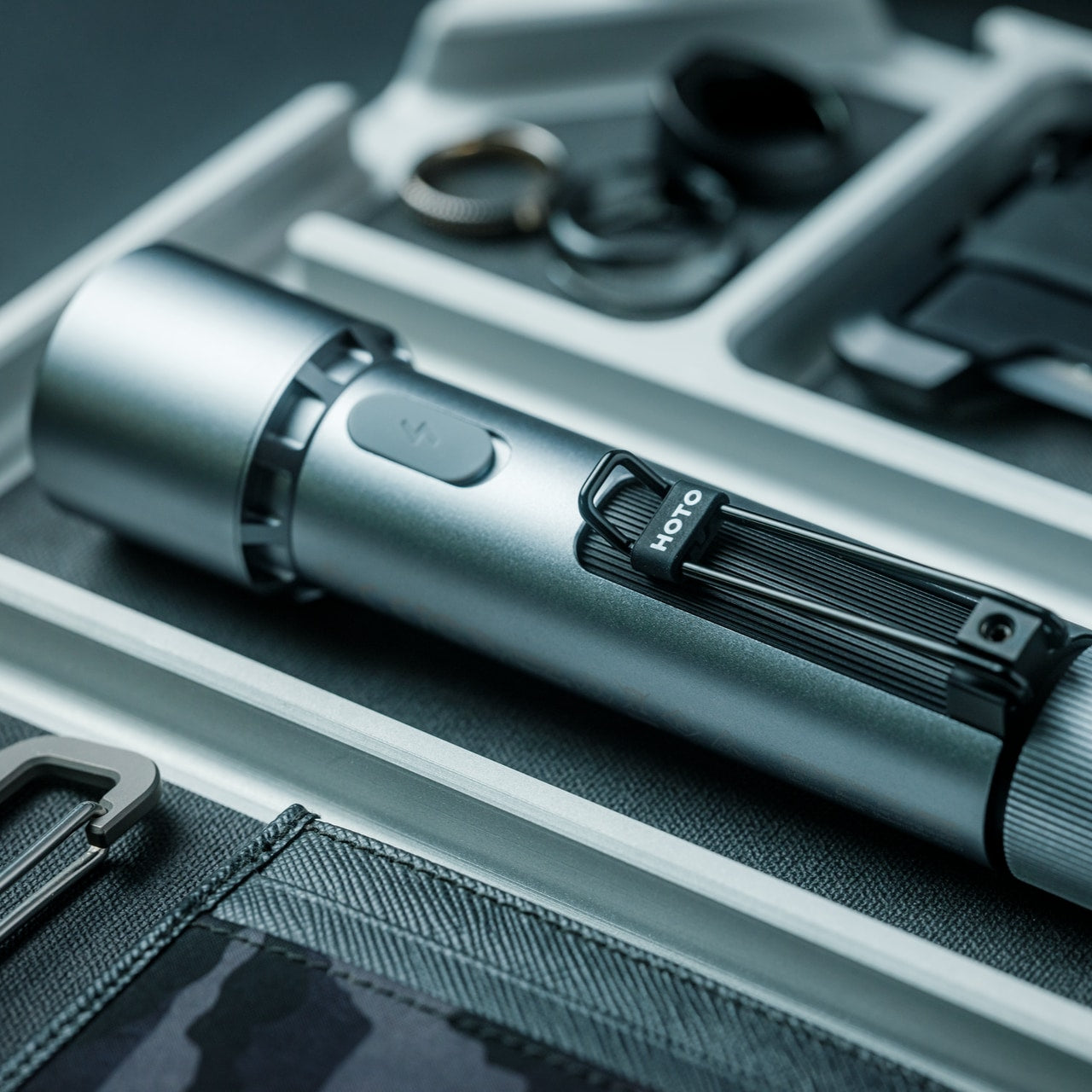
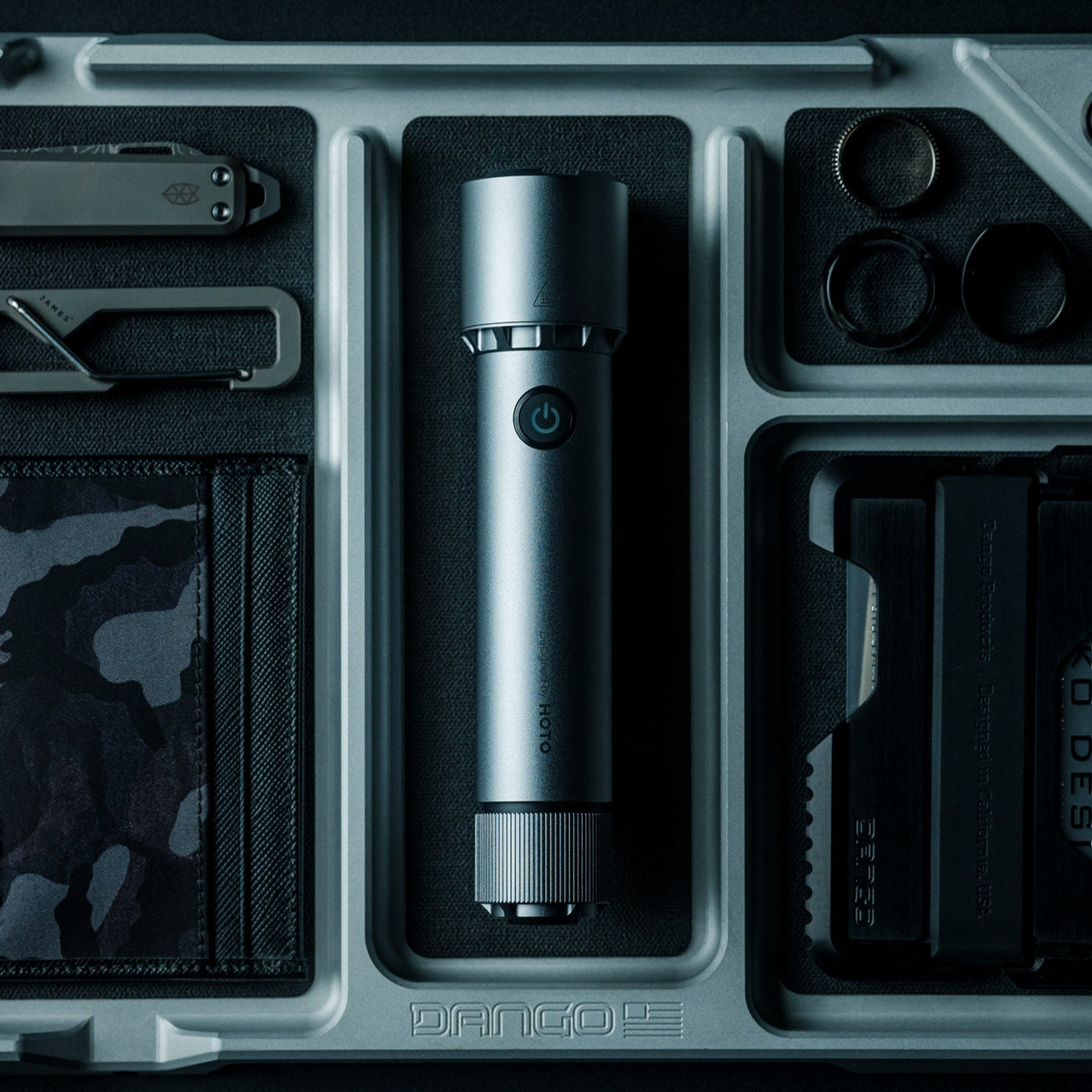
Some flashlights live at the back of a junk drawer, half-dead batteries and all, and then some tools earn permanent nightstand status. The BlackoutBeam Tactical Flashlight belongs in the second category. With 2300 lumens and a 300-meter throw, it outperforms gear twice its size, and it does it inside a body slim enough to slide into a jacket pocket without a second thought.
What makes it worth talking about is not just the output. It is the combination of IP68-rated aluminum construction, a 0.2-second activation time, and a 6500K daylight beam that together closes the gap between tactical hardware and everyday carry. This is not a flashlight you grab when nothing else is available. It is the one you reach for first, every time, because it was built to perform before you even think about it.
What separates BlackoutBeam from the crowded EDC flashlight market is the combination of brutal output and surgical design. Three brightness levels cover everything from close-up task lighting to long-range situational awareness. A strobe mode and a focused pinpoint beam add tactical flexibility that most everyday carry flashlights simply do not offer. The 6500K color temperature mimics natural daylight, which matters when you need to read a situation quickly rather than fumble through warm, orange-tinted light.
The one-handed design works in gloves, which tells you everything about the intended use case. This is a flashlight engineered for genuine emergencies, not the kind you imagine while browsing gear forums. A storm takes out the power. Your car stops on an unlit road. Something moves in the yard at 2 a.m. BlackoutBeam activates in the time it takes to blink, and it does not stall when you need it most.
Dual Power, No Dead Ends
Power management is handled with the same care as everything else. A 3100mAh lithium-ion battery recharges via USB, folding into the same charging routine as your phone and laptop. When the grid goes down entirely, two CR123A backup batteries ensure the flashlight is never stranded. That dual-power system is rare at this price point. Most lights at $90 force a choice between one option or the other.
At $90, BlackoutBeam sits at the crossroads of EDC practicality and award-winning industrial design, a combination that rarely arrives in the same package. Slim enough to slide into a go-bag, refined enough for a nightstand, and powerful enough to change the outcome of a real emergency. Most flashlights cover one of those bases. This one covers all three without a single compromise.
What We Like
2300 lumens with a 300-meter throw: the output is genuinely serious for a flashlight this slim, covering everything from a dark room to a wide outdoor perimeter without switching tools
0.2-second activation: no warm-up, no delay; it works at the exact speed an emergency demands
IP68 waterproof and dustproof aluminum build: not just splash-resistant, but rated for full submersion, which puts it well above most EDC flashlights at this price
Dual power system: USB recharging for daily life, CR123A battery backup for when the grid is gone; genuine redundancy rather than a marketing afterthought
What We Dislike
Stock is critically limited: the product page lists only one unit available, which means this is essentially a last-chance purchase rather than a reliable restocking situation
No published runtime figures: the page details brightness levels and battery specs but never states how long the 3100mAh cell actually lasts at full 2300-lumen output, which is information any serious buyer needs before committing at $90
Buy It Once, Carry It Forever
The BlackoutBeam was designed for the moments when everything else falls short. That is not marketing language. It is a design brief backed by 100 international awards and a track record that earns its reputation. If you have been carrying a flashlight bought out of convenience rather than confidence, this is the upgrade worth making. The difference between the right tool and a forgotten one matters more than most people realize until it is too late.
Pick up the BlackoutBeam Tactical Flashlight while stock lasts. With only one unit currently available, this is not a purchase to schedule for later. The flashlight you carry in an emergency is not the place for compromise, and BlackoutBeam is proof that the right tool never has to sacrifice how it looks to deliver exactly what it promises when the moment arrives.
The 4th of July has a way of surfacing the gear you wish you already owned. The flashlight nobody can find. The pocket tool left at home. The radio that needs Wi-Fi to work. This year, instead of defaulting to another box of sparklers, consider something that earns a permanent spot in someone’s daily carry. These seven picks are design-forward, genuinely useful, and built for long days outdoors.
The range runs from ten dollars to under a hundred, spans keychain carry to campsite audio, and skews toward objects that solve problems the recipient didn’t know they had. A 4th of July gift isn’t really about the holiday — it’s about summer. Long evenings, unfamiliar parks, parking lots that feel like a mile from the fireworks. The best EDC is already in your pocket before you realize you needed it.
1. NoxTi Titanium Glow Keychain
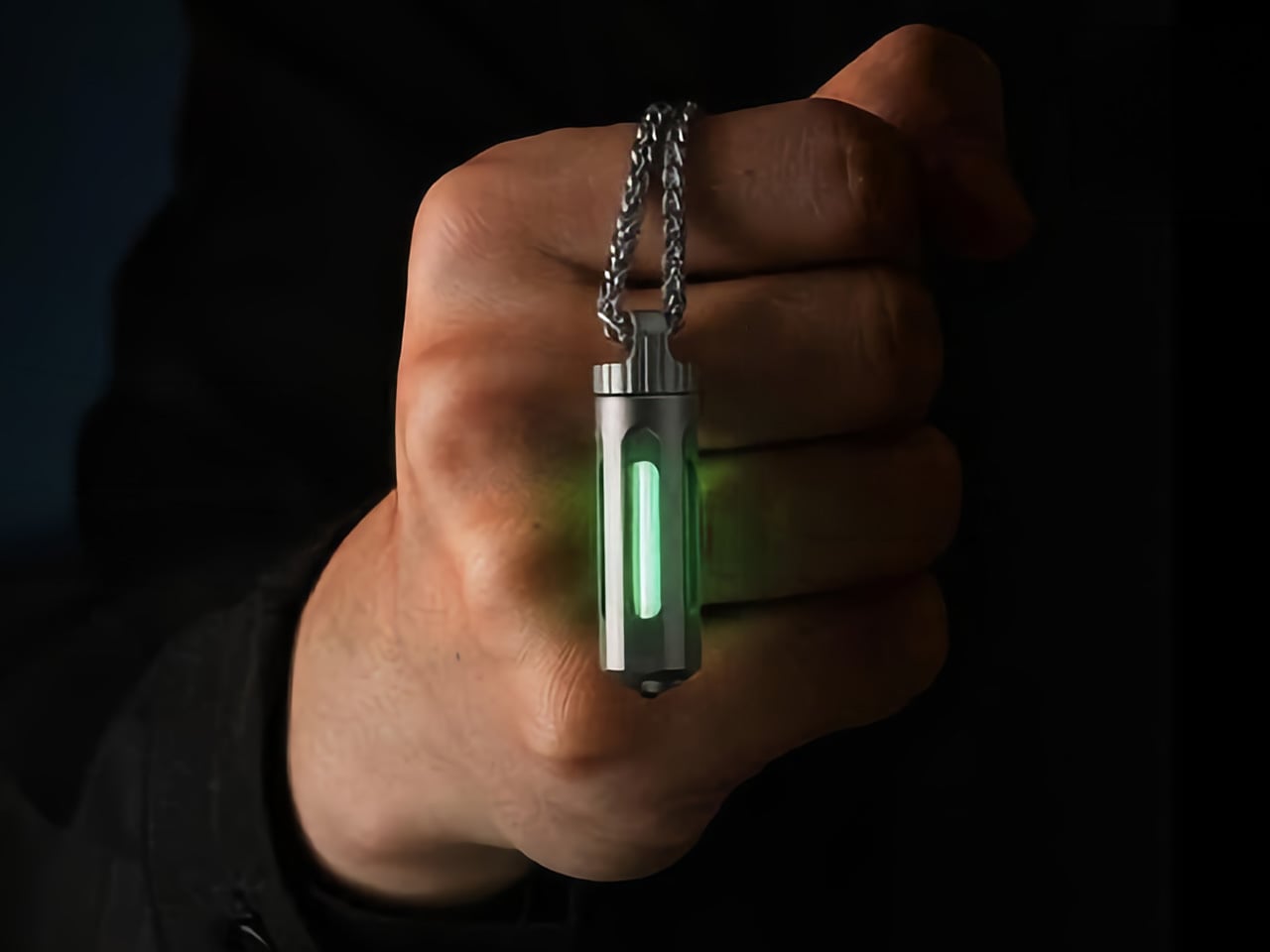
Most keychain tools solve for function and ignore everything else. The NoxTi starts from a different premise entirely. Inside a 45mm Gr5 titanium body machined to aerospace tolerances lives a tritium vial — a hydrogen isotope that releases beta particles, which strike a phosphor coating and produce light. No batteries. No charging. No switch to press. The physics simply runs, continuously and silently, for 25 years. Six color options span Apple Green, the brightest to the human eye, through Ice Blue, Red, Sunset Orange, Violet, and Ocean Blue.
At 10.7 grams, roughly two US pennies, the NoxTi disappears on a keychain until darkness falls and it becomes the most visible thing in your pocket. The quartz tube transmits 92% of available light and will still be optically clear in 2050. A ceramic-tipped glass breaker sits at the tail end for emergencies. When the tritium dims after two decades, you press the old vial out and slide a new one in. The titanium body is designed to outlast every other item in your carry, twice over.
What we like
Tritium glow requires no battery, no charging, and no activation — just physics running without interruption for 25 years
User-serviceable vial replacement means the titanium body becomes a permanent carry piece that improves rather than degrades over time
What we dislike
The glow is intentionally faint — this is a locator light, not a work light, and that distinction matters when gifting
The tritium version costs nearly double the luminescent model; the difference only reveals itself in complete darkness
2. CasaBeam Everyday Flashlight
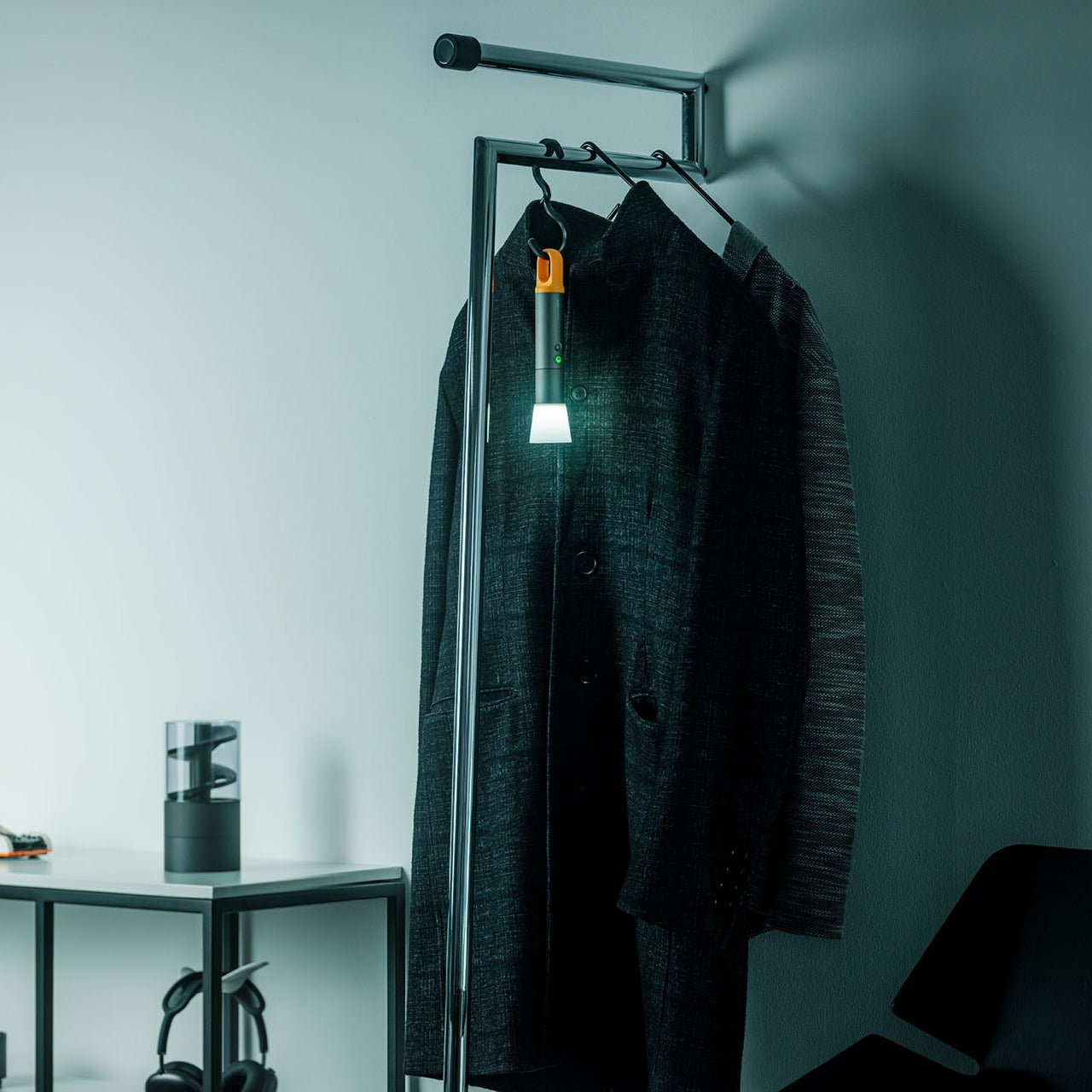
A 1,000-lumen output with a 200-meter throw sounds like overkill for a walk to the fireworks lot. It isn’t. The CasaBeam’s core trick is what happens when you stand it upright: it becomes a lantern, casting ambient light across a blanket, a tailgate, or a campsite without requiring a second device. Twist the front to shift between focused spotlight and wide floodlight. Five lighting modes handle everything from reading fine print on a map to signaling across a dark field.
The form factor is the story. Cylindrical, compact, no exposed bezels or tactical knurling — it reads as a designed object rather than a piece of survival gear. That matters when the gift lives on a kitchen counter for 50 weeks a year and earns its place the other two. The dual-mode beam and standing lantern configuration solve two distinct problems with a single product and no attachments required. Most flashlights beg to be put away. This one earns a shelf spot.
1,000 lumens and an upright lantern mode solve two distinct lighting problems within a single compact form
Clean cylindrical profile reads as a designed object rather than tactical gear, earning permanent display rather than a drawer
What we dislike
Battery life at maximum output isn’t specified, which becomes a real concern during extended outdoor use
No integrated power bank function means a phone running low still needs a separate solution
3. Cubik
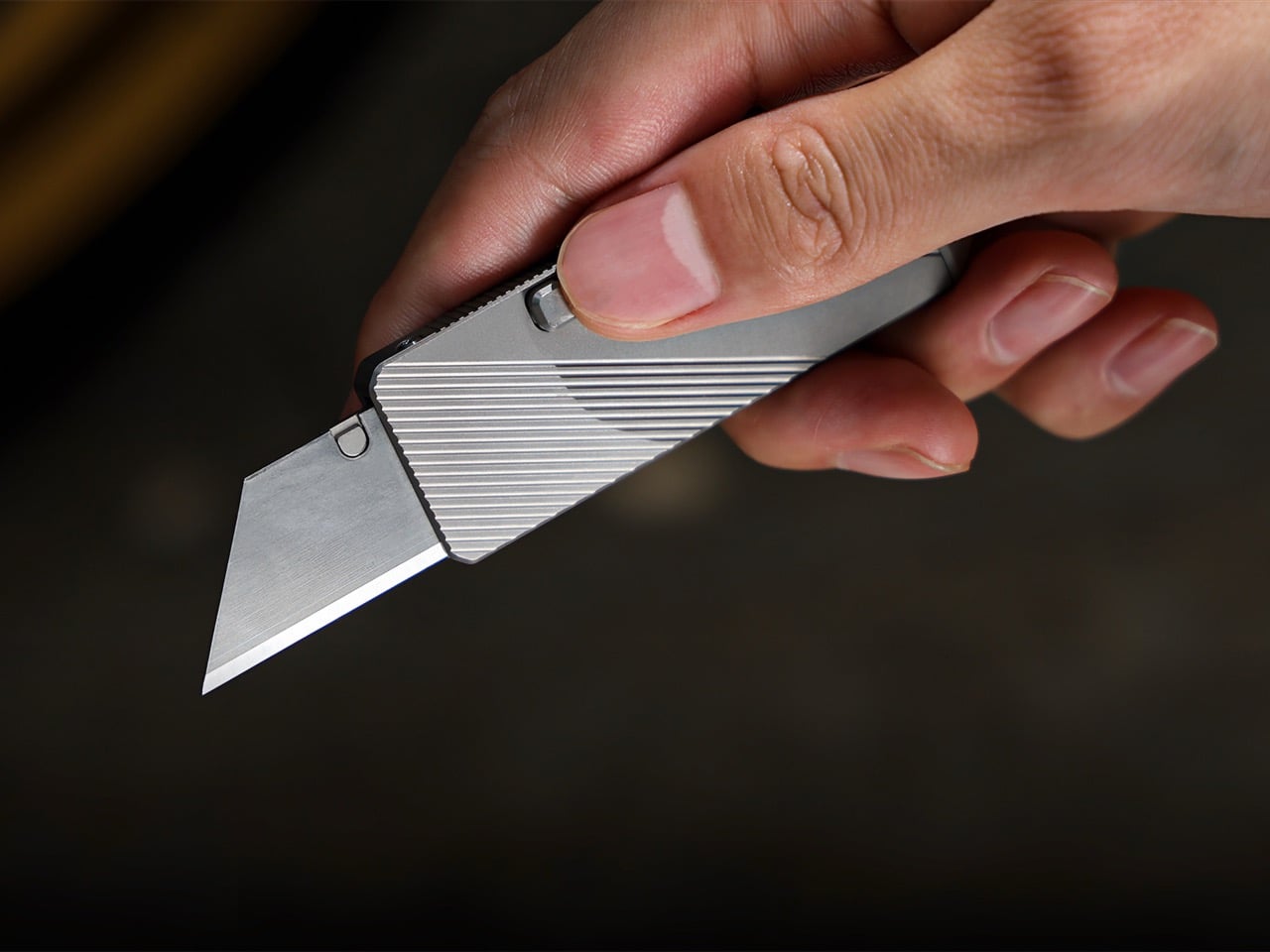
Knife design has explored most of its available territory. Springs, flippers, bearings, assisted openers — the variations are incremental. The Cubik does something genuinely different. Press the trigger, tip the handle down, and the SK5 trapezoid blade drops into place using nothing but gravity. Release and it locks. No spring to rust, no bearing to fail, no mechanism that requires maintenance over years of carry. The outer body is fully machined titanium at 1.65 ounces, measuring 2.6 inches long and 0.2 inches thin.
The swappable blade design turns a potential limitation into a genuine advantage. When an edge dulls, you replace it rather than resharpening. Five blades come included, and the trapezoid format is dual-ended — when one tip wears, flip it. Remove the blade entirely, and the handle clears TSA checkpoints. Tritium slots on both sides accept glow vials for low-light visibility. A tungsten carbide glass breaker sits at the rear end, and a pocket clip handles daily carry. The Cubik removes friction from every step except the cut.
What we like
Gravity deployment eliminates springs and bearings, making the mechanism nearly impervious to the wear that compromises most folding knives over time
TSA-friendly with blade removed, making it genuinely packable for any travel scenario without sacrificing the handle as a daily tool
What we dislike
Gravity deployment requires a deliberate wrist motion that takes practice — less intuitive than a flipper under real pressure
SK5 is functional blade steel but won’t match the edge retention of higher-alloy alternatives at this price
4. Gerber Shard
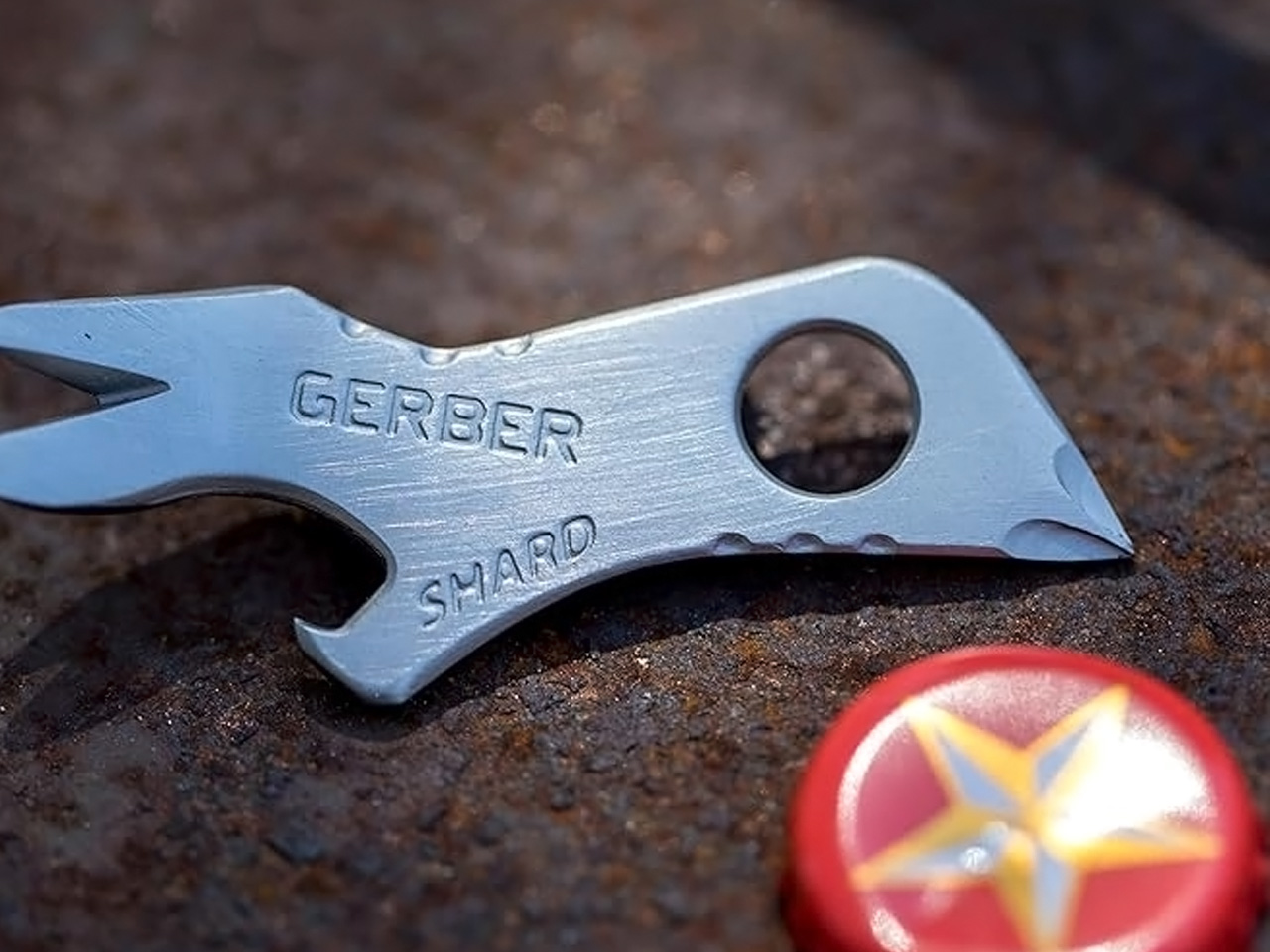
There is a specific kind of gift that costs almost nothing and immediately becomes indispensable. The Gerber Shard is exactly that. Seven functions in a 2.75-inch titanium nitride-coated steel body: small flathead, medium flathead, cross driver, pry bar, wire stripper, lanyard hole, and bottle opener. The coating handles sweat, saltwater, and general outdoor abuse without corrosion or tarnish. Gerber backs it with a limited lifetime warranty. At roughly ten dollars, the case against it is genuinely difficult to construct.
The airline-safe design is the detail that separates the Shard from every competitor at this price point. No blade means it travels in carry-on luggage, clears international security, and stays in a bag that never gets checked. Most multitools get confiscated at security checkpoints or packed reluctantly into checked bags. This one goes everywhere without a second thought. Clip it to a keychain, a zipper pull, or a lanyard and forget it exists until someone nearby needs exactly what it offers.
What we like
Airline-safe and TSA-compliant, seven functions that travel literally anywhere without planning around security
A limited lifetime warranty from an established brand at a price that removes any justification for not owning one
What we dislike
Seven functions cover the daily basics but won’t satisfy carry needs that demand pliers or a dedicated blade
Small size reduces leverage on stubborn fasteners — torque-heavy tasks require a full-sized tool regardless
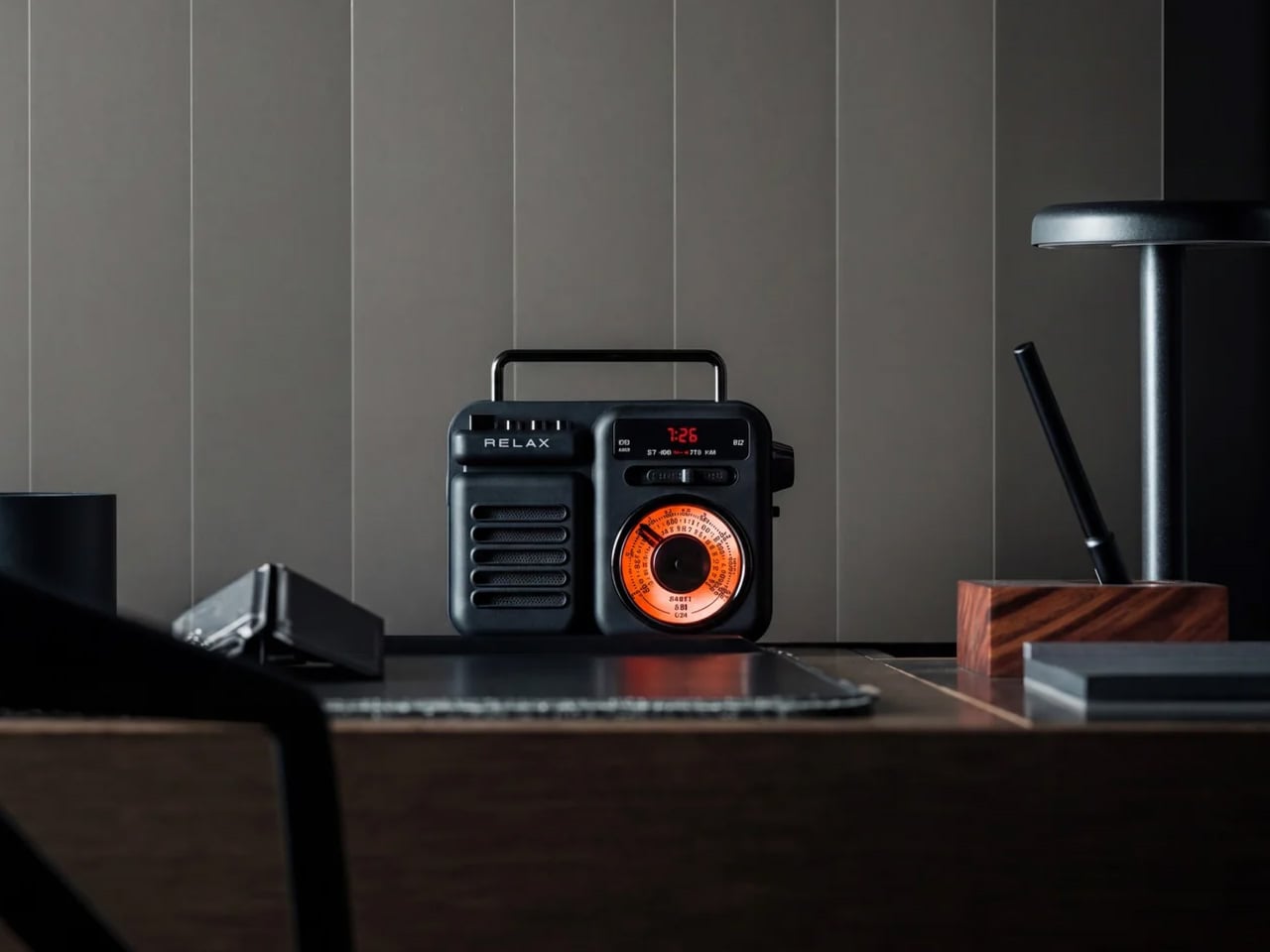
5. RetroWave 7-in-1 Radio
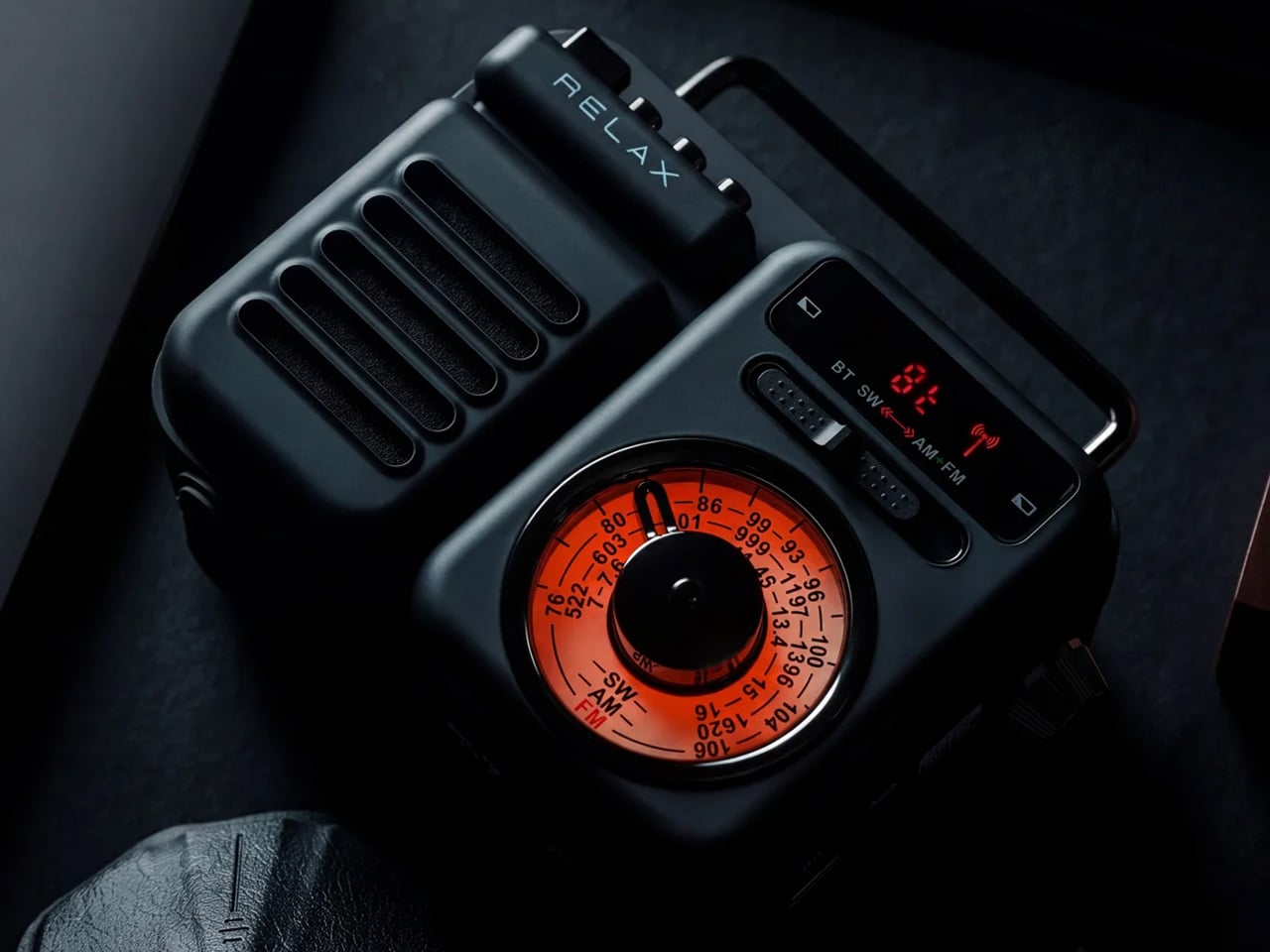
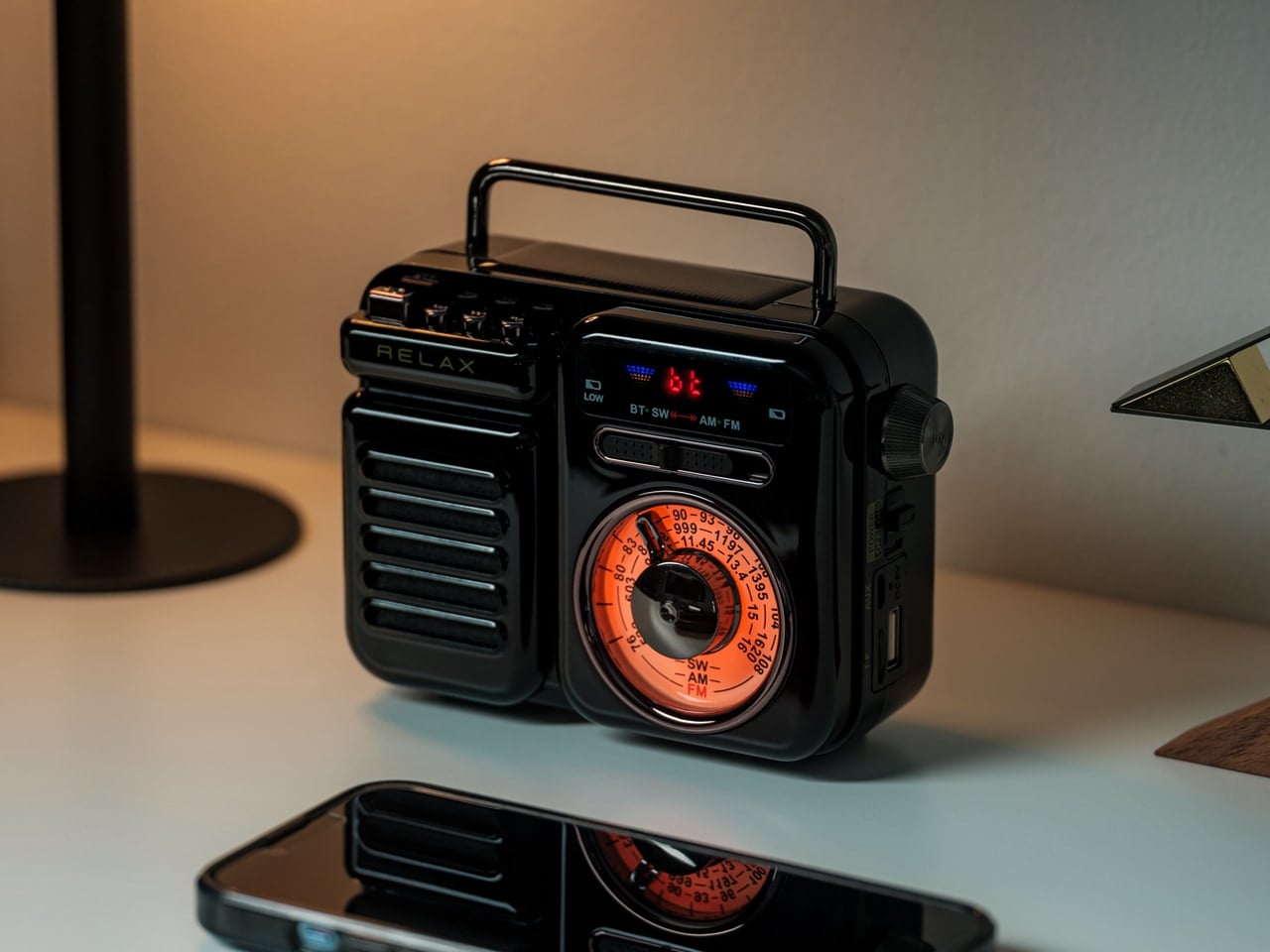
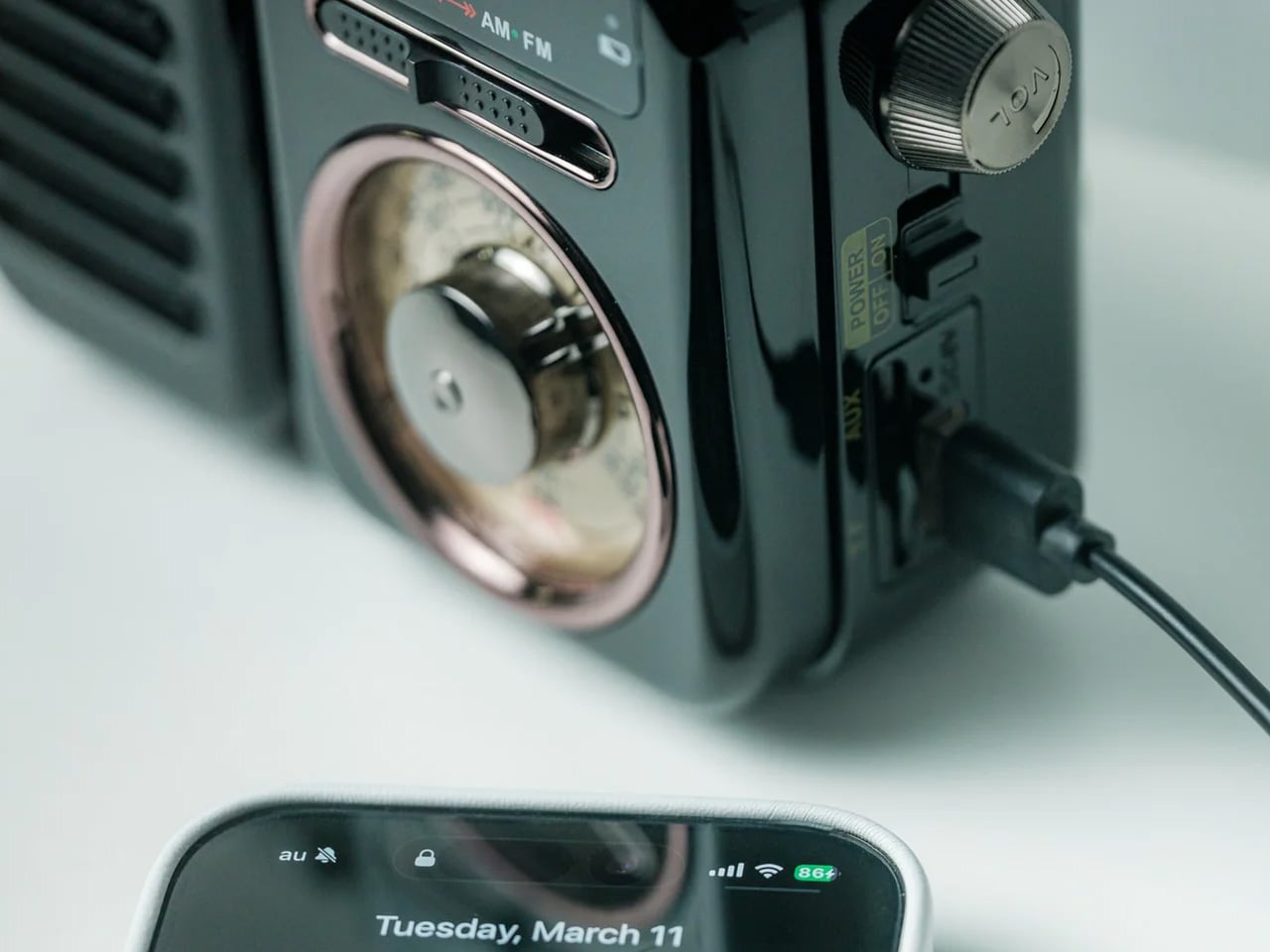
Smart speakers go quiet when the Wi-Fi drops. Phones drain exactly when you need them. The RetroWave Radio is built for the moments modern devices quietly fail. FM, AM, and shortwave radio run analog without internet. Bluetooth and microSD handle streaming and offline playback. A 2000mAh battery charges your phone when outlets aren’t available. A hand crank and solar panel keep the radio running when neither power source is reachable. An SOS alarm stays ready in the background, doing nothing until it’s the only thing needed.
The design earns its shelf space long before the power cuts. The retro Japanese-inspired silhouette has genuine tactile weight — a tuning dial with real feedback, proportions that feel resolved rather than nostalgic for effect. On a picnic blanket with fireworks building overhead, it handles audio without pulling anyone’s phone from their pocket. During a summer storm a week later, it handles the emergency without requiring a different device. Up to 20 hours of radio playback, six hours of emergency lighting, and one object that earns its place every day between holidays.
Hand crank and solar charging mean the radio keeps working when power and signal both fail — a genuinely rare capability at this price
The retro Japanese silhouette earns its shelf presence on design alone, before any function is considered
What we dislike
2000mAh power bank capacity is modest — enough for an emergency top-up, not a full phone charge from zero
Shortwave reception quality depends on antenna position and local interference, requiring some adjustment in new environments
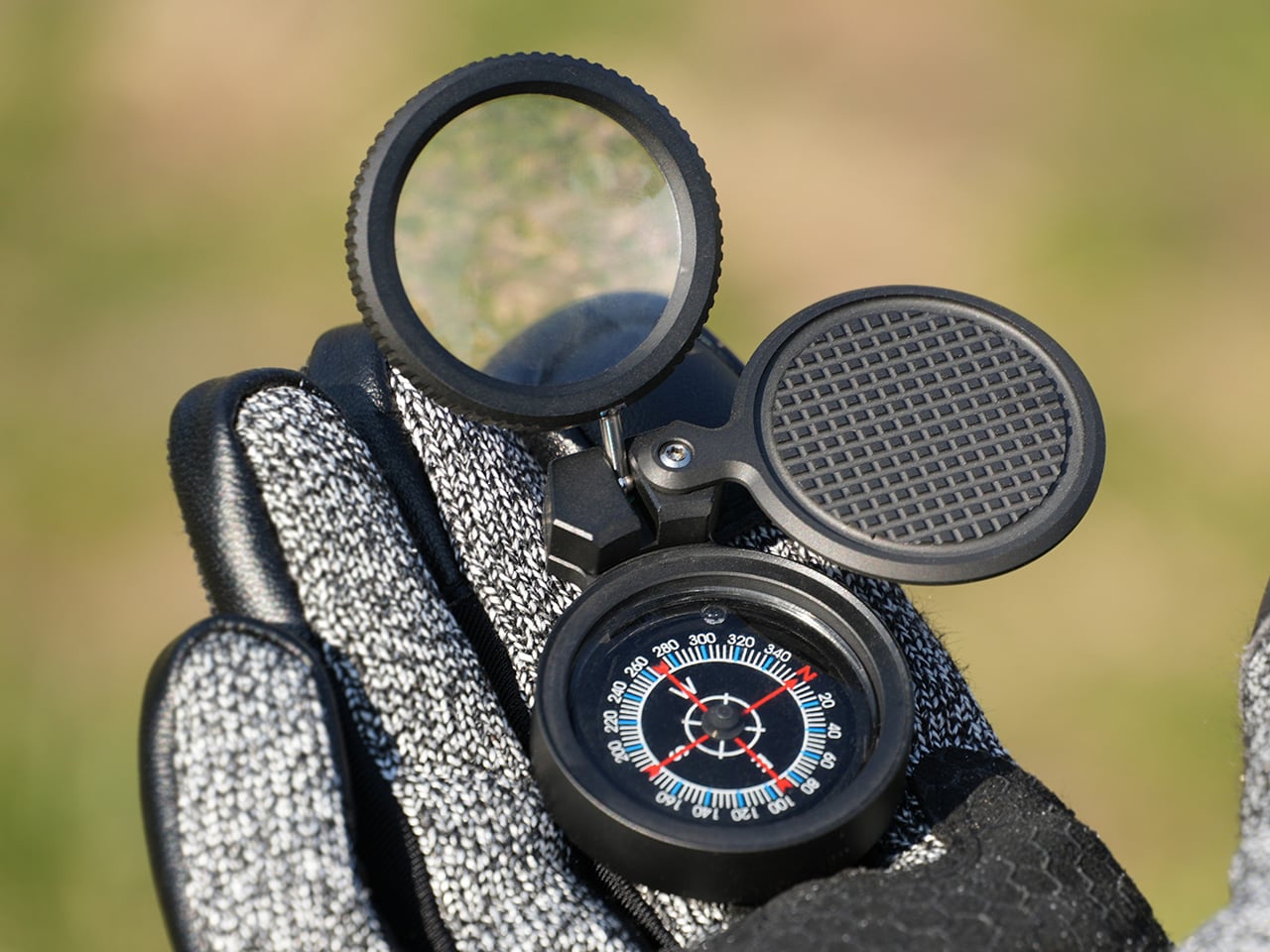
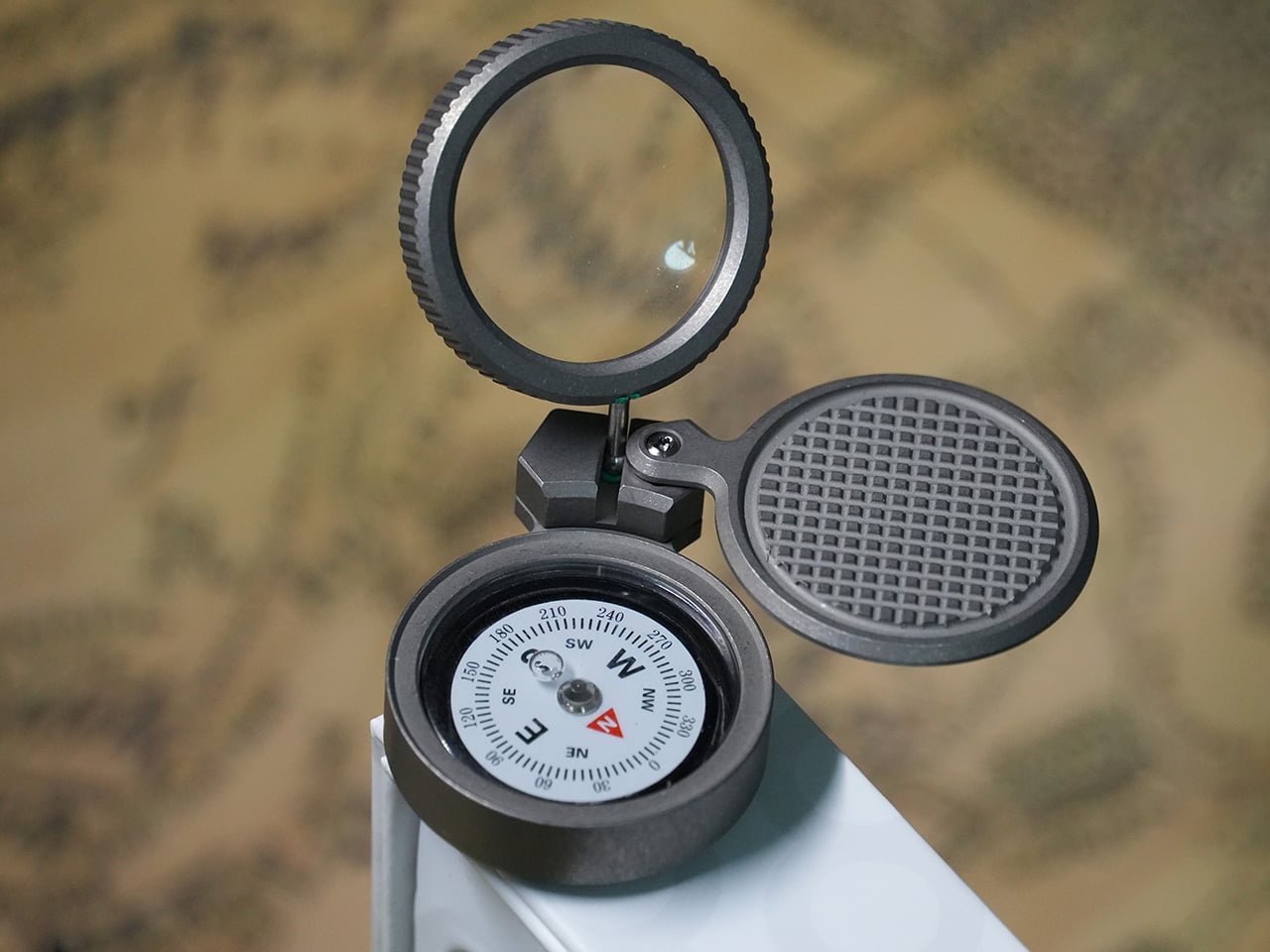
6. Loki Nav Compass
Grade 5 titanium, 48 grams, IPX8 waterproof to one meter for thirty minutes. The Loki Nav by EckDesign compresses a serious navigation system into a 46.5mm body you forget is in your pocket until the phone battery dies on a trail with no cell signal. Three interchangeable oil-filled compass modules create built-in redundancy where most compasses offer only one. The cap houses a 12x magnifying loupe, an emergency signal mirror, and a wood file for making fire-starting tinder from available material.
The design logic rewards attention. Every component earns its inclusion. The loupe rotates to protect its lens between uses. The mirror deploys without disassembly. Compass modules swap through a base hole using a toothpick — no tools, field-serviceable in seconds. For a day that starts in a park and ends on a hiking trail, or begins with fireworks and continues into unfamiliar terrain after dark, analog navigation that requires no signal and no battery is a quiet, specific kind of reassurance that no smart device can replicate.
What we like
Three interchangeable compass modules create a navigation system with real redundancy — reliability treated as a first principle, not a feature mention
IPX8 waterproofing and Grade 5 titanium construction match the durability demands of any outdoor carry without adding weight that defeats the purpose
What we dislike
At 48 grams in titanium, noticeably heavier than a basic compass — the weight is justified, but worth factoring into ultralight setups
Compass module swapping via toothpick requires some practice to execute cleanly under field conditions
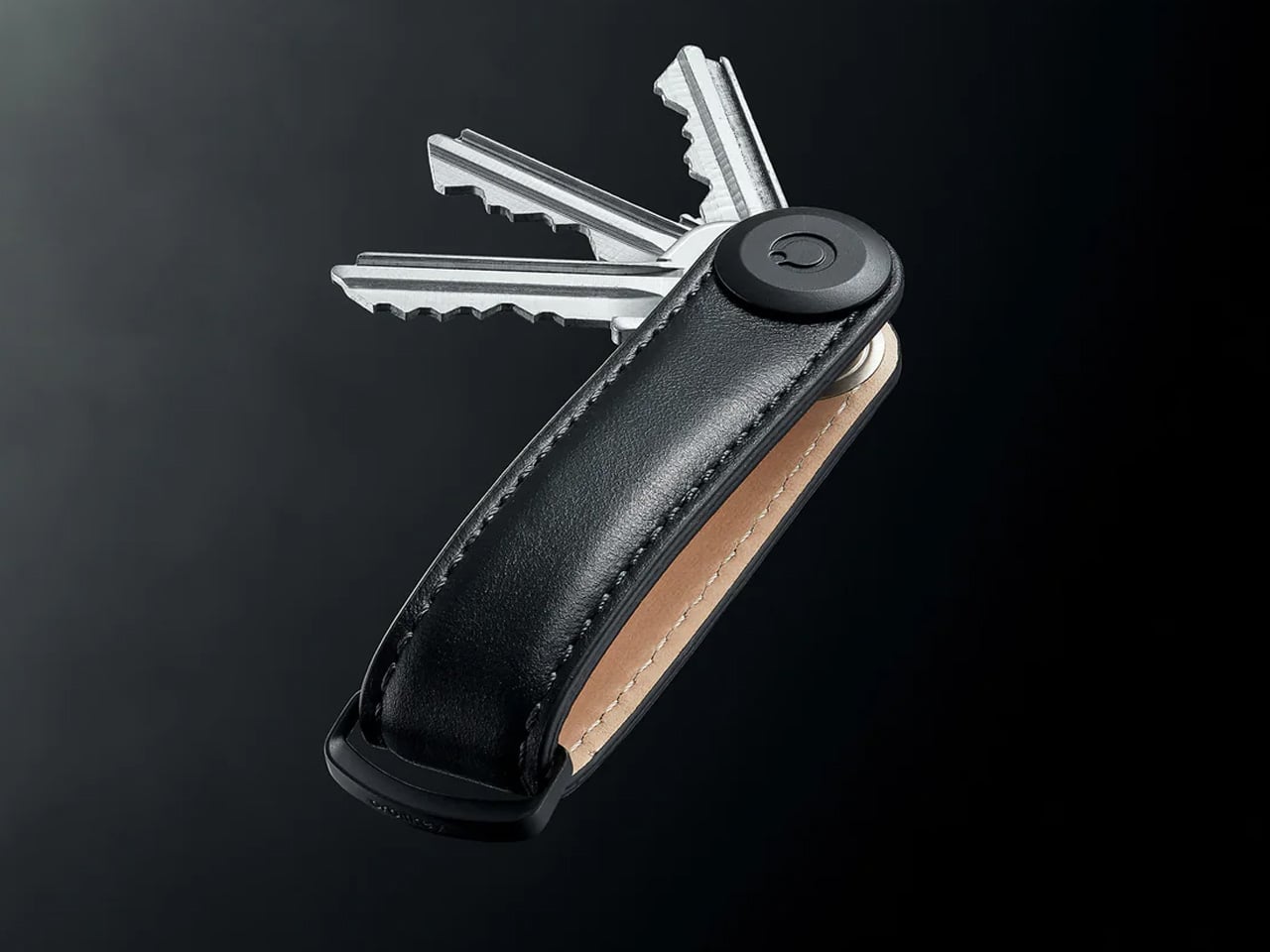
7. Orbitkey Key Organiser
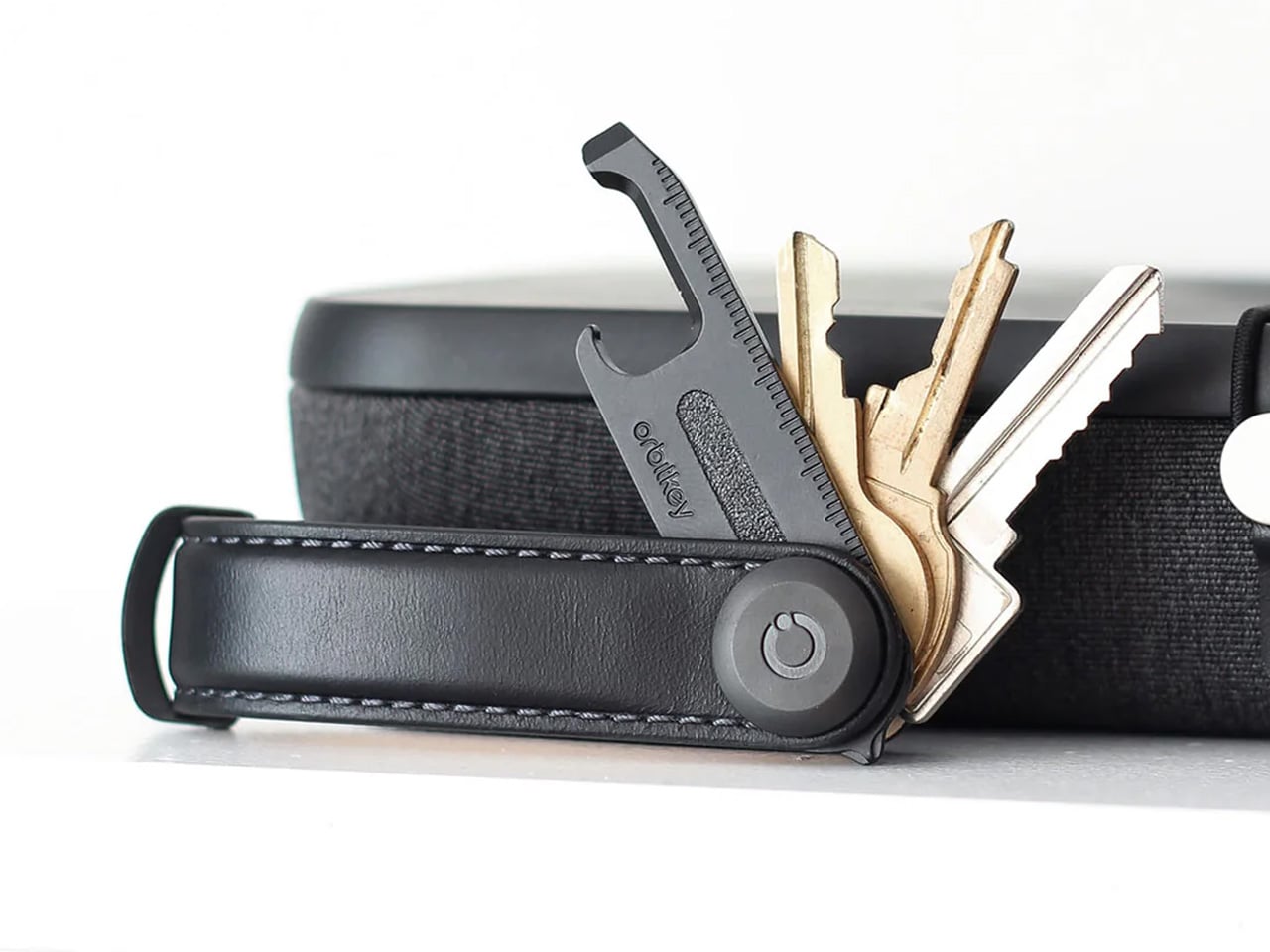
Standard key rings solve the wrong problem. They keep keys together while ensuring they jingle constantly, press metal ridges into pockets all day, and resist every attempt to add or remove a key without a fight. The Orbitkey stacks two to seven keys flat inside a full-grain leather spine with stainless steel hardware, held under tension. Closed, it sits flat and produces no sound. In a pocket, it disappears. Five colorways run from black dress leather to warm cognac.
The gift case for the Orbitkey is strong because the problem it solves is one most people have accepted rather than noticed. Hand one to someone who has carried a key ring for years and watch the change happen within a week. The full-grain leather develops its own wear pattern over years of daily carry — a position on longevity that most keychain products decline to take. One week in, returning to a standard key ring feels genuinely regressive. That’s the kind of product worth giving.
What we like
Tension stacking eliminates key jingle — a quality-of-life improvement that compounds quietly across every single day of carry
Full-grain leather construction ages into character rather than showing damage, signaling a product designed to outlast the trend cycle
What we dislike
Initial key installation requires a screwdriver and careful threading — not difficult, but not intuitive on the first attempt
Oversized or irregularly shaped keys may not stack cleanly within the system’s flat geometry, worth checking before purchase
The Best Gifts Are the Ones That Outlast the Holiday
The best 4th of July gifts aren’t themed — they’re useful in ways that outlast the holiday by years. Every product here earns a permanent spot in daily carry rather than a drawer by August. The NoxTi glows on a keychain for 25 years. The Orbitkey replaces a friction point people had quietly accepted. The Loki Nav works when every other tool has gone silent. That’s the standard worth giving.
Spending a long day outdoors with people you like is a design problem, and the solution is reducing friction. Less searching for the flashlight. Less draining someone’s phone for music. Less fumbling with a key ring in a dark parking lot after the show. These seven objects do exactly that — each one eliminating a small problem before it becomes one. That’s the kind of gift that doesn’t get returned, explained, or forgotten.
The desk you work at shapes how the work itself feels. Most people know this in theory and ignore it in practice, assembling setups gradually — a keyboard from one order, a charger that just sort of ended up there, a clock that came with the apartment. Over time the surface accumulates rather than improves. The products on this list are different. Each one solved a specific problem clearly enough to make everything around it look like it needed reconsidering.
None of them cost more than $200. The constraint is intentional — this is not a list built around aspirational hardware, but around objects that earn their footprint through daily use rather than shelf presence. A folding mouse that ended the trade-off between portability and performance. A silent recorder that made an entire category of software feel unnecessary. A desk surface that finally stayed organized. Five products, one desk, a noticeably better setup.
1. Inseparable Notebook Pen
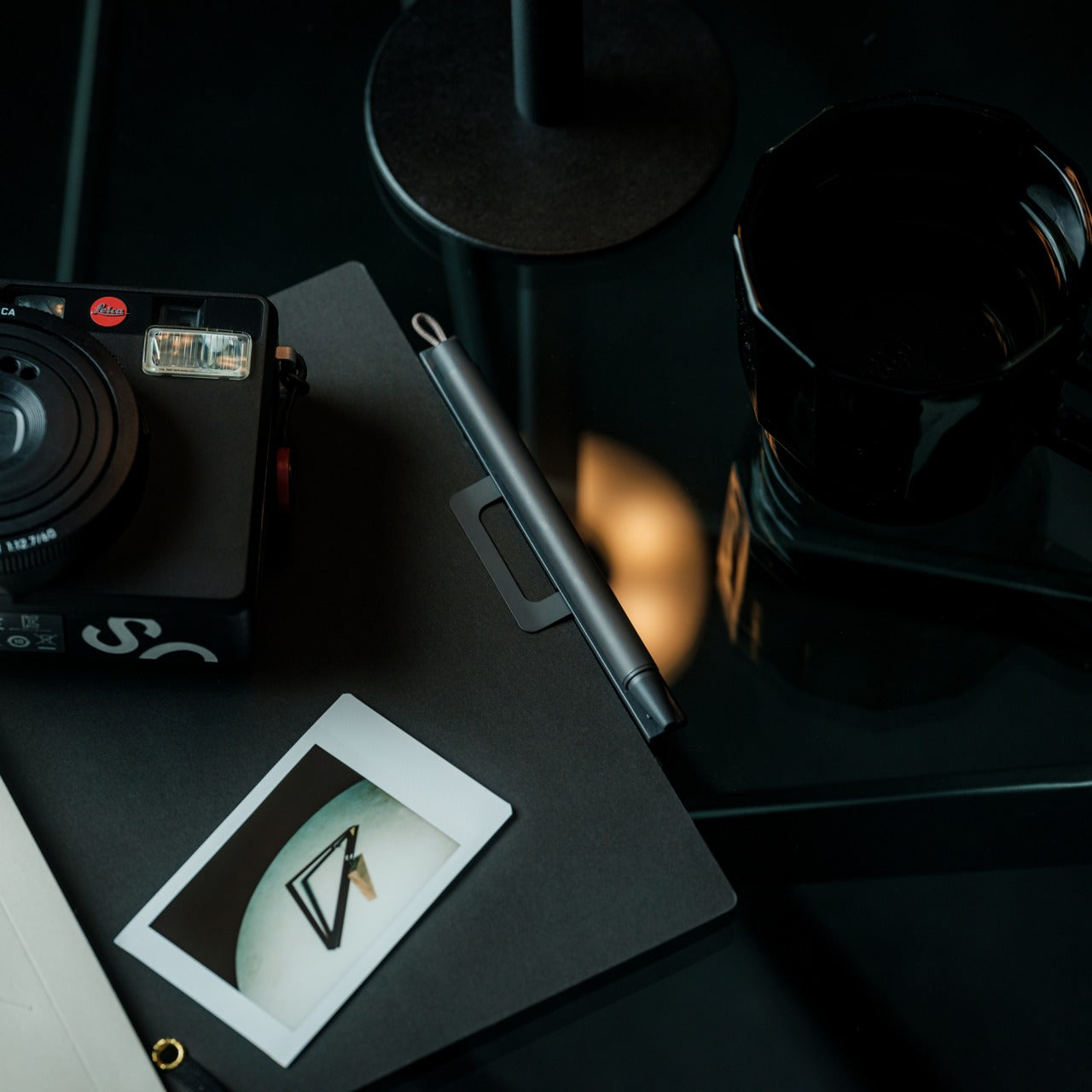
There is a specific frustration that comes with reaching for a pen and finding it has migrated. Not lost, just elsewhere — on the wrong side of the keyboard, inside a drawer that was never meant for it, somewhere between the last meeting and this one. The Inseparable Notebook Pen treats that as a design problem worth solving rather than a personal failing. A magnetic clip attaches the pen directly to the notebook cover so the two move as a single unit, staying together on the desk the same way they travel together in a bag.
What makes it worth noting alongside hardware that costs multiples of its $19.95 price is the standard it holds itself to. The gel ink flows smoothly, and the clip mechanism is solid, but the detail that earns it a place on a considered desk is the built-in silencer — a small component that softens the attach-and-detach motion into something quiet and deliberate. That level of finish on a $20 object is not accidental. It is the difference between a pen that gets used and one that gets replaced.
The magnetic clip keeps pen and notebook permanently paired, removing the low-grade friction of a misplaced writing tool from the daily routine entirely
A built-in silencer turns the attach-and-detach motion into a quiet, considered interaction — the kind of detail that signals a product was designed rather than just manufactured
What we dislike:
Works best as a system with its intended notebook, making it a less convincing standalone pen for anyone who writes across multiple formats or prefers a different paper weight
Gel ink cartridge replacement options are limited compared to more established pen systems, which matters once the initial ink runs out
2. HiDock H1 Lite
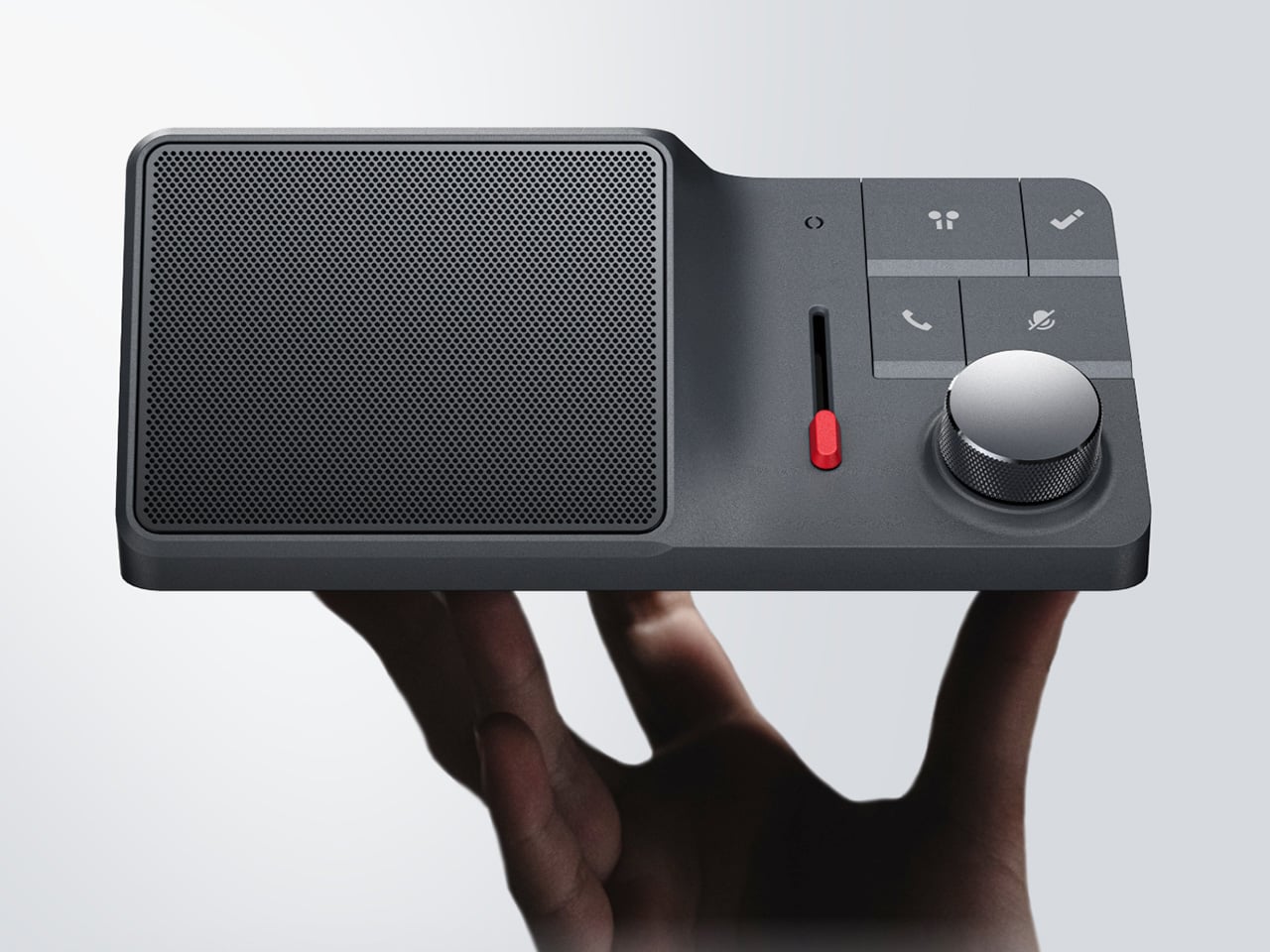
The AI meeting bot problem has a particular texture. It announces itself in the first thirty seconds of every call, dropping a notification into the chat that tells the room someone has outsourced their attention. The HiDock H1 Lite solves this without fanfare — a USB-C desktop audio controller and local recorder that captures meetings completely, both sides of the call, without adding a bot to the session, without cloud permissions, and without telling anyone it is running. You press record. The meeting continues. No announcement, no awkward acknowledgment, no subtext.
The feature that separates it from every other desk recorder is BlueCatch, which intercepts the two-way audio path from Bluetooth earphones so the full conversation is captured rather than just what the microphone picks up. Physical controls — a knob, a slider, a speaker — keep the interaction on the desk rather than inside another browser tab. It transcribes in multiple languages, runs a Call Mode for virtual meetings and a Room Mode for in-person sessions, and at $189 replaces a recurring software subscription with hardware that simply does the job and stays out of the way.
BlueCatch captures both sides of a Bluetooth earbud call locally, producing a full two-way transcript without a bot in the meeting or any platform permission being requested
Physical controls return a tactile dimension to meeting management that software tools have spent years trying and failing to replicate
What we dislike:
USB-C only makes it desk-bound, which limits its usefulness for anyone who moves between locations or works primarily from a laptop bag throughout the day
The AI transcription layer works well once configured, but reaching that point requires a setup investment before language preferences and summary formats feel fully dialed in
3. Satechi 3-in-1 Foldable Wireless Charging Stand with Qi2 25W
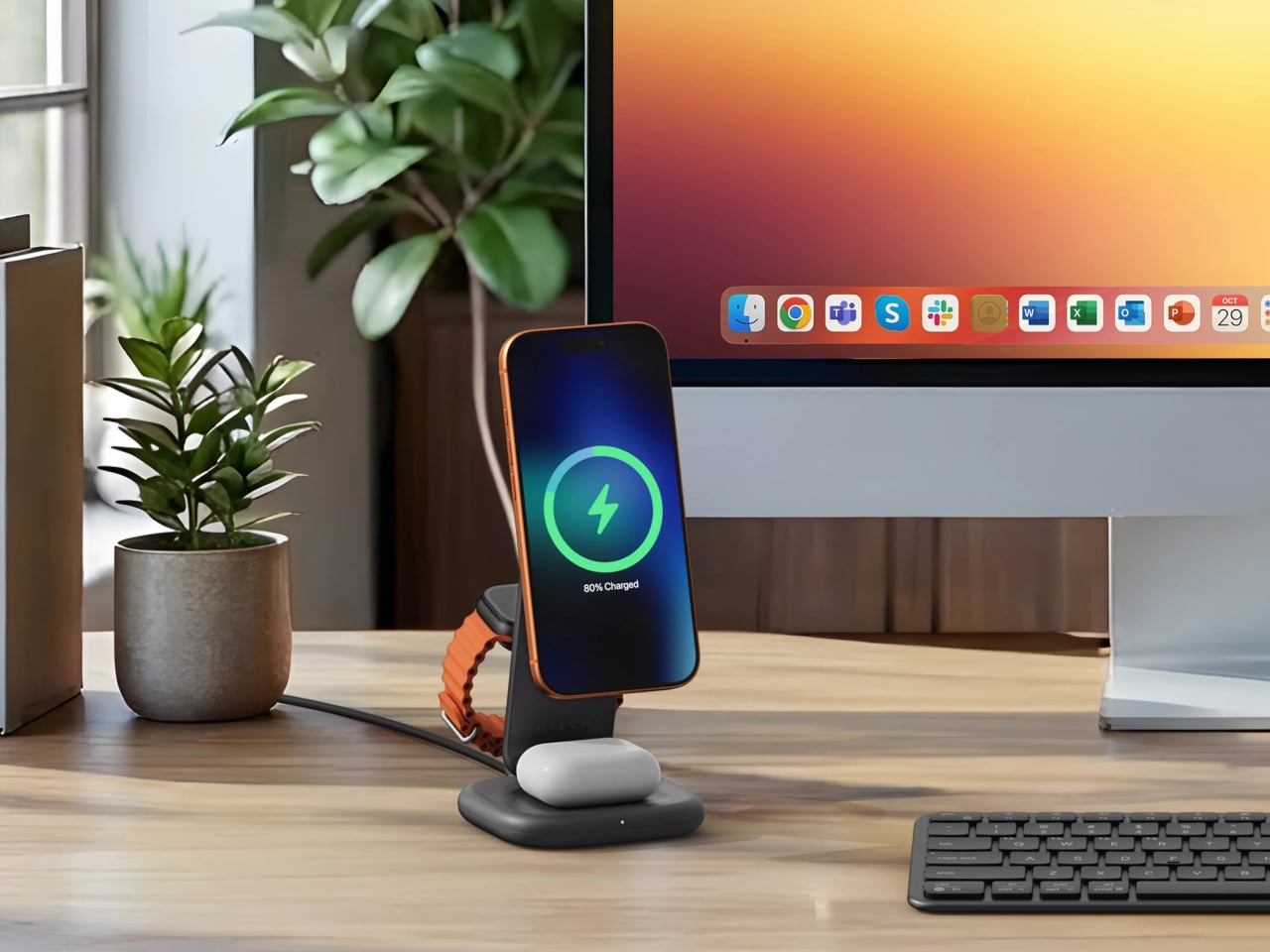
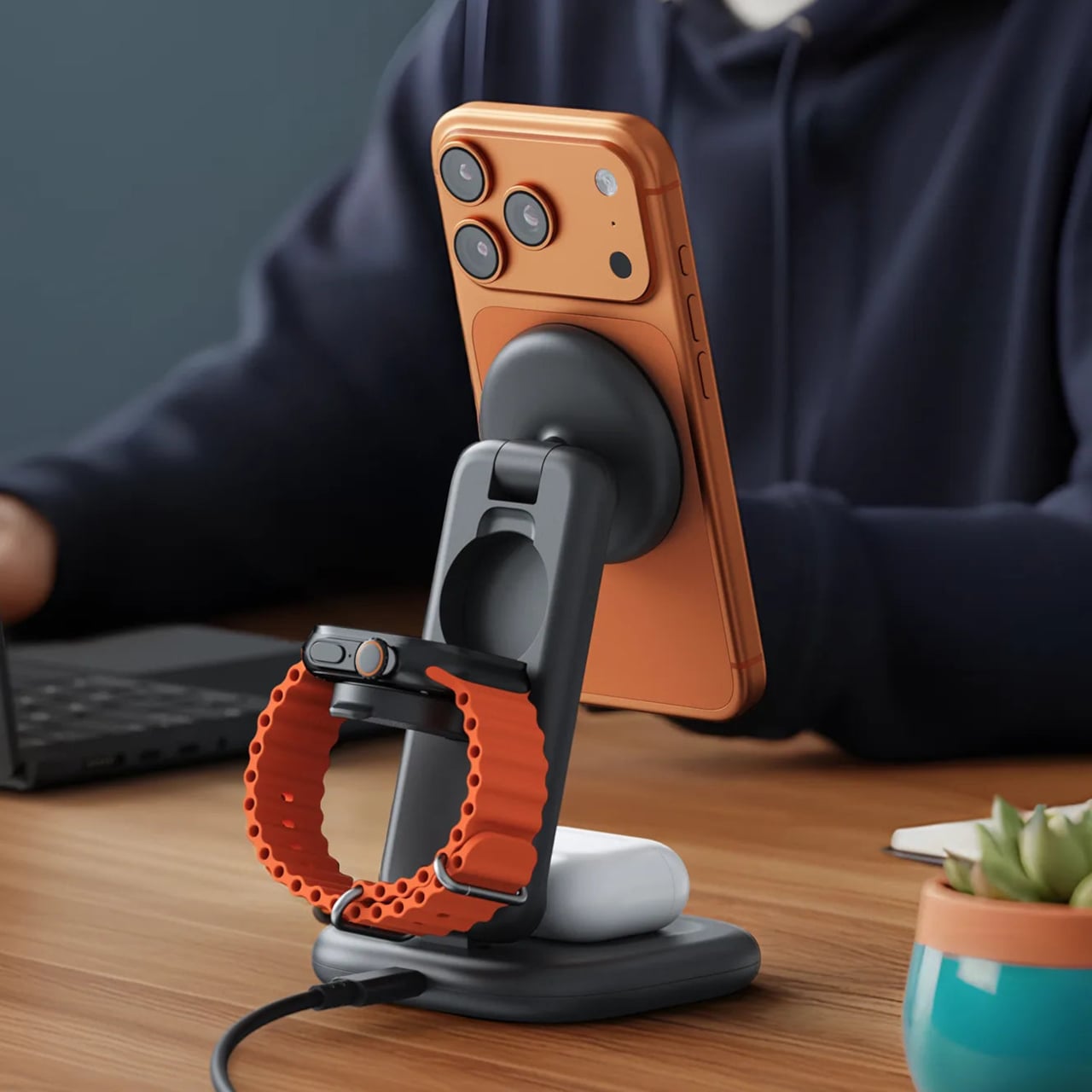
Wireless charging solved one problem and quietly created another. The iPhone pad, the Apple Watch puck, the AirPods tray — each device that joined the ecosystem added something to the nightstand or desk corner, until the cable-free promise was buried under a new kind of clutter. Satechi’s 3-in-1 Foldable Wireless Charging Stand with Qi2 25W clears all of it in one object. iPhone, Apple Watch (Series 7 and later, including Ultra and SE), and AirPods charge simultaneously from a single wall cable, with Qi2 magnetic alignment snapping the phone into position so off-center placement and lost wattage are no longer part of the routine.
The 25W ceiling is a genuine upgrade over the 15W limit that most MagSafe-compatible pads have been stuck at, and the Apple Watch arm carries MFi certification for fast charging. A 45W USB-C adapter ships in the box with US, EU, and UK plug heads — a small detail that matters significantly the first time you unpack in a different country without hunting for a separate travel adapter. At $129.99 in Space Black, the case rests on consolidation: three separate chargers replaced by one that folds flat for a carry-on and behaves identically away from home.
What we like:
Qi2 alignment combined with a 25W output for compatible iPhones represents the fastest wireless option available in the Apple accessory space at this price point
The foldable form and included multi-region adapter make the home desk setup and the hotel room setup identical, removing any need to pack or buy a separate charging solution
What we dislike:
Apple Watch fast charging is limited to Series 7 and newer, so users on older hardware will get standard charge speeds rather than the fast-charge performance the arm is capable of
The value proposition is strongest when all three devices are in use simultaneously — iPhone-only users will find more efficient options at a lower price
4. OrigamiSwift Folding Mouse
The folding mouse has been a category of compromise for years — compact in the bag, frustrating in use. The OrigamiSwift ends that exchange by treating the fold as a serious engineering challenge rather than a marketing hook. At 40 grams, it collapses to 4.5mm flat, thin enough to slip between the pages of a notebook without leaving a visible bump. On the desk, it unfolds in under half a second into a full-sized ergonomic shape that sits naturally in the hand, with tracking precision that has nothing to do with its size.
What earns it a top position here is the way it reframes the conversation around portability entirely. Portable does not have to mean diminished. The OrigamiSwift is as capable on a permanent desk as it is in a carry-on, which is rare in hardware built around constraints. The Bluetooth connection is reliable, the fold mechanism feels deliberately satisfying to complete, and at $85 it asks very little relative to what it returns. Some mice cost three times as much and offer less reason to reach for them.
Folds flat to 4.5mm, thin enough to travel between notebook pages, yet opens into a full-sized ergonomic form that never asks you to adapt your grip
The sub-half-second flip transforms the mouse from travel object to working tool in a single motion that still feels considered after weeks of daily use
What we dislike:
At 40 grams, the weight will feel unfamiliar to anyone coming from a heavier desktop mouse, and the adjustment takes a few days before it stops registering
Bluetooth-only connectivity rules out a wired fallback for tasks where even brief latency becomes friction
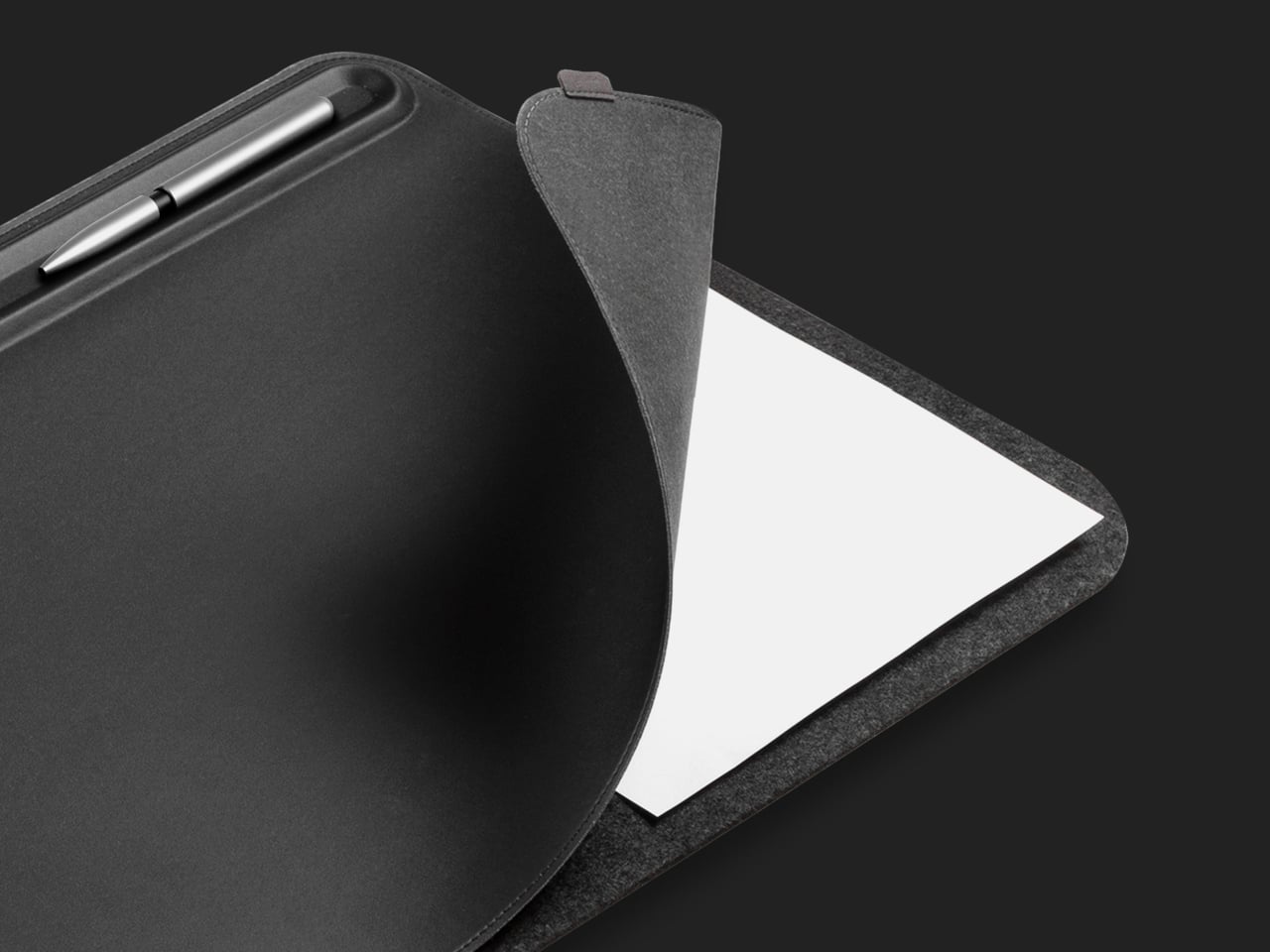
5. Orbitkey Desk Mat
The desk mat is usually the last thing people buy and the first thing that changes how a setup feels. Orbitkey’s version is built on a premise most mats ignore: the surface does not just need better material; it needs a better system. Made from premium vegan leather over 100% recycled PET felt, available in Medium (686 x 373mm) and Large (896 x 423mm), it is water-repellent and wipes clean — the practical baseline. A quick-access toolbar along one edge gives pens, a stylus, and small accessories a fixed address without adding height or vertical clutter to the surface.
The detail that tips it from covering the desk to organizing it is the document hideaway, a sleeve beneath the top layer that keeps loose papers and sticky notes flat and within reach without leaving them visible. One edge pull, and they are back. A magnetic cable holder clips anywhere along the toolbar and adjusts as port locations change across different setups, keeping the charging lead from drifting toward the floor. It ships with a two-year warranty and a 30-day return window, which is the kind of confidence in materials that most desk accessories do not bother extending.
What we like:
The document hideaway removes paper clutter from the surface without removing papers from the desk, which turns out to be a more useful distinction than it sounds across a full working week
The magnetic cable holder moves freely along the toolbar, adapting to cable lengths and port positions rather than committing to one fixed anchor point
What we dislike:
The mat arrives rolled and takes a few days to lie completely flat — reverse-rolling handles most of it, but patience is part of the initial setup
The Medium size works well for compact single-monitor desks but may feel narrow for anyone running a wider multi-display configuration
Five Products, One Decision
A desk that works is not about spending more. It is about choosing things that each solve one real problem rather than approximate several. The Inseparable Notebook Pen keeps the one analog tool you still reach for exactly where it belongs. The OrigamiSwift removes the penalty from portability. The HiDock takes meeting capture back from the software layer. The Satechi ends the three-device charger pile. The Orbitkey gives the surface a structure it was always missing.
None of these objects ask for attention. They do their jobs and stay out of the way until needed, which is the version of design intelligence that actually holds up across a full working week. Five products, each under $200, that together produce a setup that feels chosen rather than assembled. That shift is the one worth paying for.
The home office used to mean a fixed address. A monitor you couldn’t move, a dock you couldn’t pack, a microphone that lived on one corner of a desk and stayed there. That arrangement made sense when remote work was the exception. Now that it’s the default for a significant portion of the workforce, the gear still hasn’t caught up with how people actually want to work.
These five products make a different argument. Each one is compact enough to slide into a standard laptop bag alongside your computer, and each one eliminates a specific piece of furniture or peripheral that used to anchor you to a single room. Together they cover the full surface area of a home office: display, input, audio, connectivity, and video. The café table, the hotel desk, the airport lounge seat — all of them become the office.
1. VitaLink Portable Keyboard + 4K Touchscreen
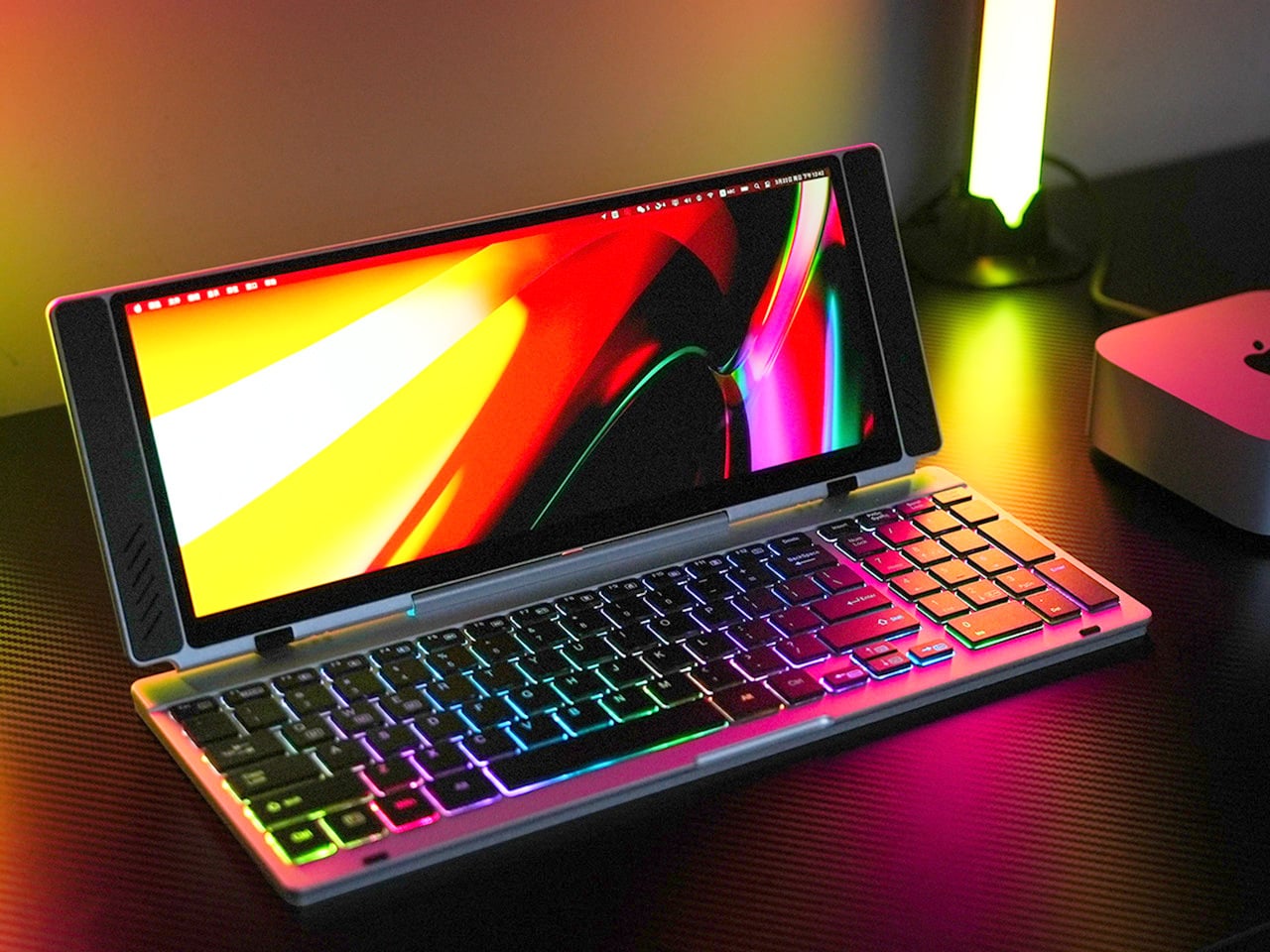
Closed, the VitaLink reads as a slim aluminum book, 20mm thick and roughly the footprint of a hardcover novel. Nothing on the outside hints at what’s inside. Open it at 180 degrees and a 13-inch, 3840×1600 touchscreen lifts above a full-width keyboard, the whole unit settling into a 34 by 15 centimeter footprint. That transformation from flat slab to dual-screen workspace is the core of the product’s appeal, and it holds up once you actually sit down with it for a full working session.
The screen runs at 298 pixels per inch, which puts it on par with Apple’s Retina displays and well above most portable monitors in this category. The 2.4:1 aspect ratio gives you enough horizontal span to run a document alongside a reference panel without either feeling squeezed. The keyboard uses 3.27mm key spacing and 0.8mm scissor switch travel, which makes extended writing feel deliberate rather than cramped. A single USB-C cable connects it to any laptop, tablet, or phone with no drivers required.
What we like
The 298 PPI display at this form factor is genuinely rare — text stays sharp and color-sensitive work is viable with 100% sRGB coverage across the full panel
Plug-and-play USB-C compatibility across Windows, macOS, Linux, Android, and even a Steam Deck means no adapter anxiety mid-trip
What we dislike
At 1,200 grams, it’s the heaviest item in this kit and will be noticeable in a shoulder bag after a few hours of walking
2. OrigamiSwift Mouse
The Origami Swift collapses flat when you’re done using it, taking up the kind of space that disappears into a bag pocket rather than demanding its own compartment. That folding mechanism draws from the same logic as the VitaLink: the product’s usefulness when open shouldn’t come at the cost of portability when closed. For anyone who has tried to fit a standard mouse into a travel bag and ended up compromising on both comfort and bag space, the design decision is immediately legible.
What makes the Origami Swift relevant to a mobile office setup specifically is that it doesn’t ask you to trade ergonomics for packability. A flat travel mouse is an easy product to design badly, the kind where you end up dragging your palm across a surface that was never shaped for sustained use. The Origami Swift’s folding structure means the grip geometry is restored when deployed, so a full day of work doesn’t leave your hand protesting by the afternoon.
The folding mechanism eliminates the usual compromise between travel-friendly dimensions and a proper hand grip during actual use
Works alongside the VitaLink’s built-in keyboard without competing for surface space when the display panel is fully unfolded
What we dislike
The folding hinge introduces a mechanical point of failure that a standard mouse simply doesn’t have, so long-term durability after daily packing and unpacking deserves attention
In dense café environments with Bluetooth congestion, wireless pairing can occasionally require a reconnect, which breaks flow at exactly the wrong moment
3. Satechi OntheGo Foldable Stand Hub
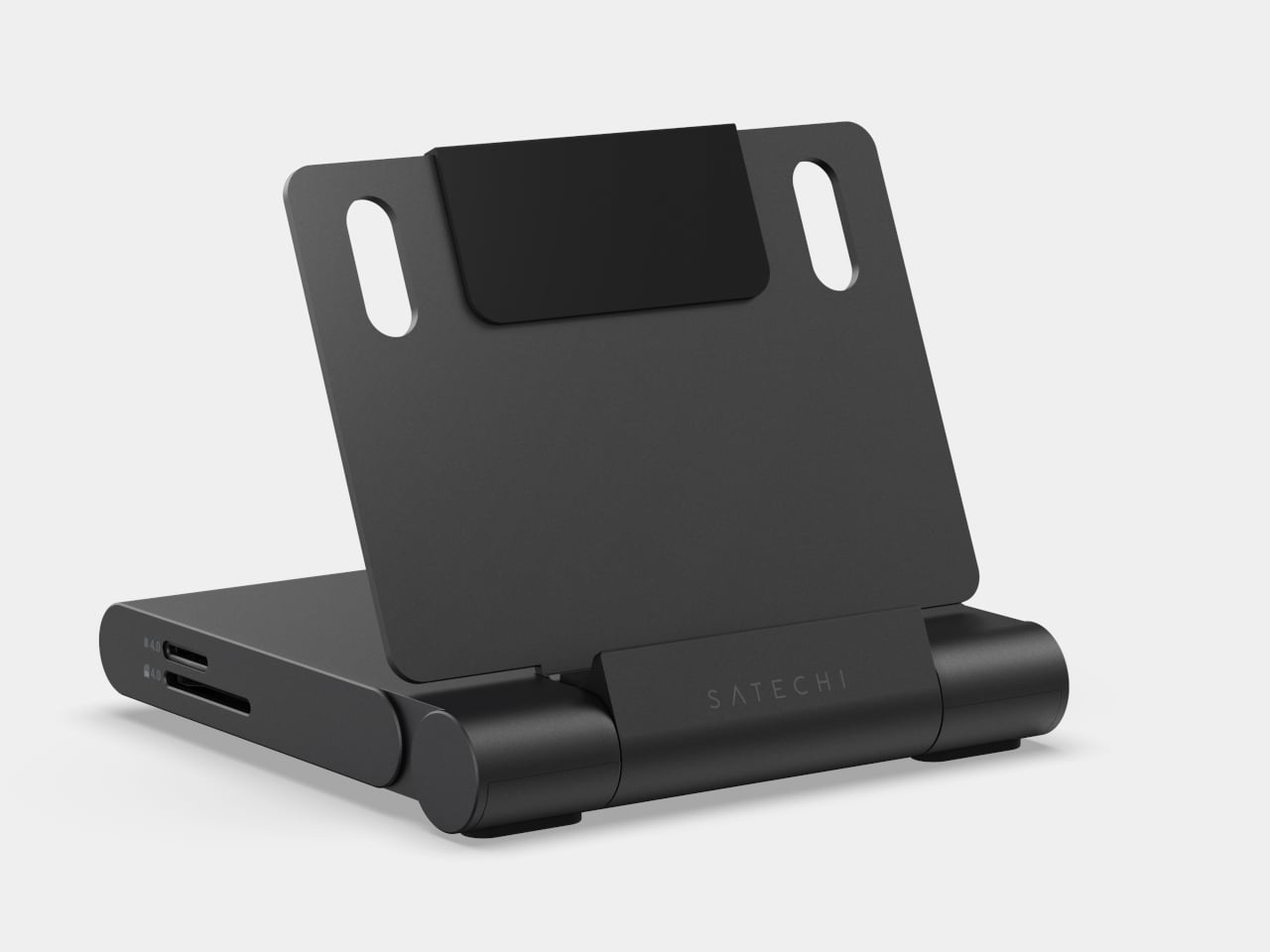
Four items in one is a claim most multi-function products make without fully earning, but the Satechi OntheGo Foldable Stand Hub earns it specifically. Folded flat at under 20mm and 187.5 grams, it contains a laptop stand, a USB-C dock, an SD card reader, and an HDMI output. A 17cm USB-C cable is built directly into its spine, so the hub comes alive the moment you unfold it and plug in, without a separate dongle, cable pouch, or adapter between you and a working setup.
The port selection is well-considered for the kind of work that actually happens on the road. HDMI 2.0 pushes a secondary display at 4K and 60Hz. The two 10Gbps data ports handle fast transfers without bottlenecking. The UHS-II card slots pull RAW files at up to 312 MB/s, which photographers working on location will feel immediately. The 100W USB-C passthrough keeps the host device fully charged through a heavy session, delivering 85W to the machine rather than sipping through a compromised power budget.
What we like
The stand and hub share one folded form factor, so you’re not choosing between an elevated screen angle and a full set of ports — both arrive in the same 187.5-gram object
100W passthrough with 85W delivered to the host is genuinely useful throughput; this is not a hub that throttles your laptop to keep the indicator lights on
What we dislike
The fixed 17cm cable length works well on a flat desk but becomes restrictive on configurations where the laptop sits further back or at an angle, leaving the hub’s placement feeling forced
iPad mini 2021 owners are limited to 5Gbps on the data ports due to the tablet’s own USB specification, not the hub’s
4. OBSBOT Tiny 3 4K PTZ Webcam
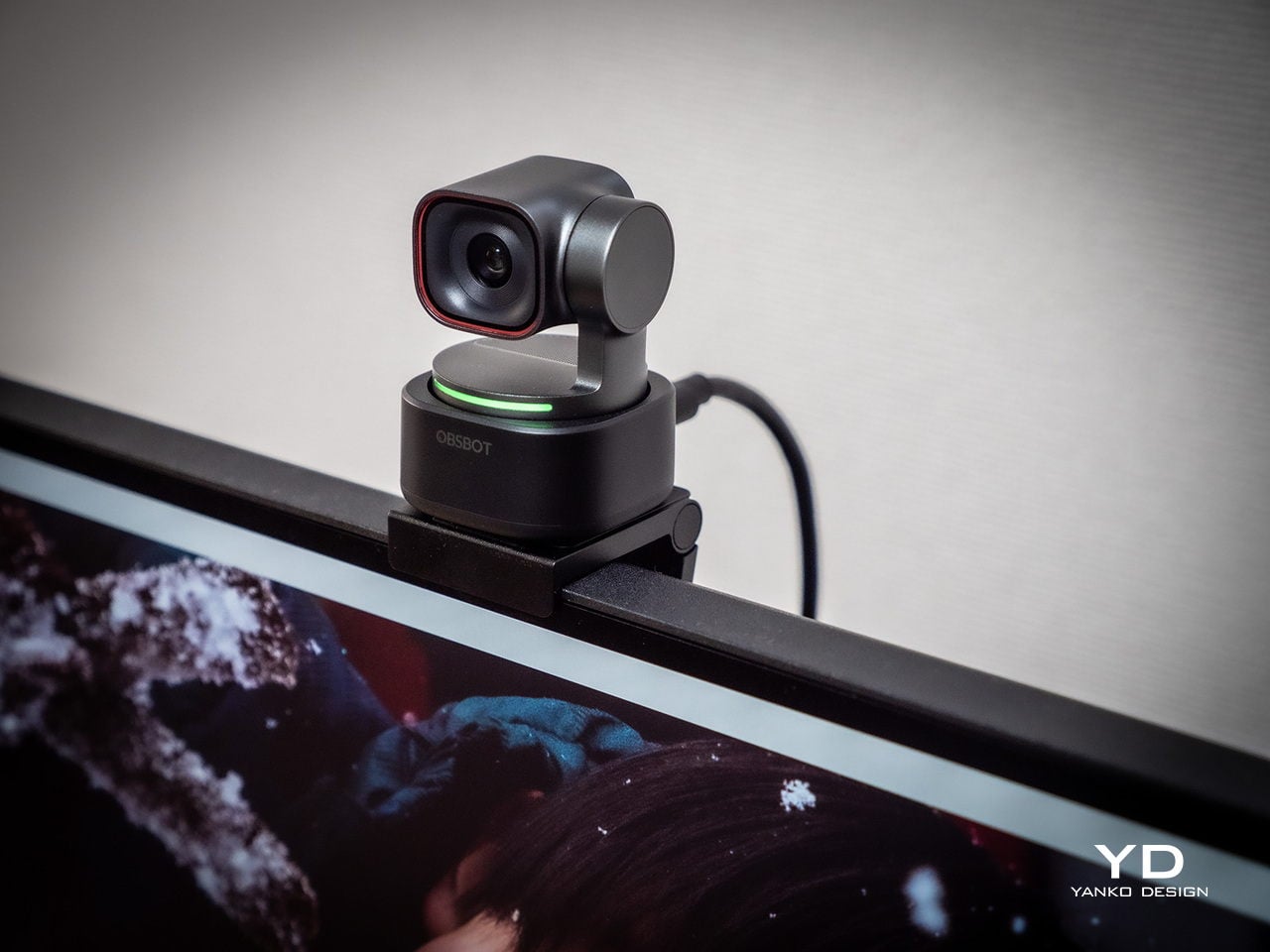
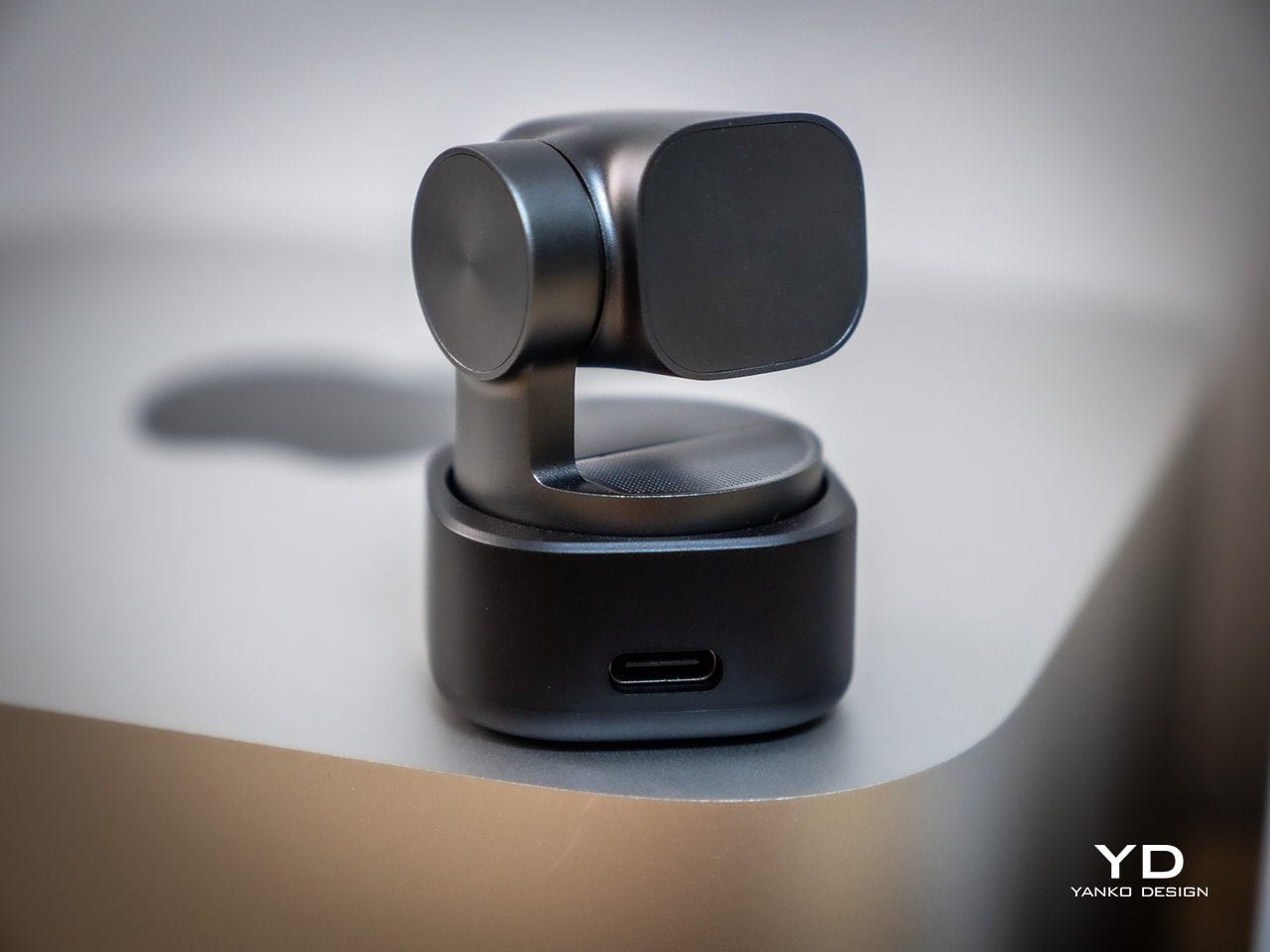
At 37 by 37 by 49 millimeters and 63 grams, the OBSBOT Tiny 3 occupies roughly the volume of a large die. Inside that footprint sits a 1/1.28-inch sensor, a 2-axis motorised gimbal, and a triple MEMS microphone array. That sensor size puts it closer to smartphone camera territory than the typical webcam chip, which shows up immediately in low-light performance and dynamic range. Plug it into a USB-C port, and it registers as a standard UVC device with no driver installation required.
The microphone system is where the Tiny 3 earns its place in this kit rather than just a streaming rig. Five discrete audio modes cover the full range of working scenarios: directional for solo calls, dual-directional for interviews, smart omni for meetings, and spatial audio for output that sounds like a room rather than a USB peripheral. The PTZ gimbal tracks at up to 120 degrees per second, so a full stand-up presentation or a pacing call stays in frame without any manual adjustment or reaching for a mouse mid-sentence.
What we like
Combining a 4K sensor, motorised PTZ tracking, and a proper multi-mode microphone array in one object eliminates the webcam-plus-USB-mic stack that clutters most remote setups
Voice commands and gesture control mean you can adjust framing mid-presentation without breaking the flow of what you’re saying or reaching across the desk
What we dislike
At $349, it’s the most expensive item in this kit, and the integrated design means the gimbal, sensor, and mic are one non-serviceable unit with no modular repair path
The depth of the companion app and the range of AI tracking modes and audio profiles takes real configuration time to dial in; arriving at a setup that matches your specific environment isn’t instant
5. Battery-Free Amplifying iSpeakers
A speaker that draws its power from the USB-C port it connects through doesn’t sound like a revelation until you’re three days into a trip and realize you haven’t thought about its battery once. The Battery-Free Speaker removes the recharge cycle that turns most portable audio into a management task. There’s no charge indicator to watch, no cable to find at the end of the night, no morning ritual of checking whether it has enough power to make it through a working session.
The positioning in this kit is about what it replaces rather than what it adds. A home office desk speaker is typically a separate purchase, a separate power cable, and a separate piece of real estate on the desk. This one draws power through the same USB-C ecosystem running the rest of the kit, meaning the entire audio and display setup resolves into a single cable chain. The sound output trades some low-end depth for a profile slim enough to travel without consequence, which is an honest and reasonable exchange.
Zero battery management means one fewer variable to track across a long travel day or a week-long work trip
The USB-C power draw integrates cleanly into the kit’s single-cable connectivity approach, keeping the desk surface clear
What we dislike
USB-powered audio output has physical limits on low-frequency response that a mains-powered desktop speaker doesn’t face
Sound quality is best understood as travel-grade rather than desktop-grade — this replaces the home office speaker in function, not in fidelity
The Office Is Wherever You Open the Bag
Put these five products in a bag and the total weight is manageable, the cost is meaningful but not irrational, and the capability covers the full surface area of a working office. The VitaLink provides the display and the keyboard. The Origami Swift handles precise input. The Satechi ties everything together with connectivity, stand geometry, and port access. The OBSBOT closes the loop on how you appear and sound on calls. The Battery-Free Speaker handles the rest of the room.
None of these products are compromises dressed up as solutions. Each one is designed for the specific constraints of a laptop bag, a single USB-C cable chain, and a working day that doesn’t start or end at the same desk. The home office used to follow you reluctantly on a work trip — a cable bag, a laptop, and a hope the hotel had a decent surface. This kit makes the case that it doesn’t have to.
Most 4th of July gifts end up on a shelf by August. The problem is rarely budget. It is that the average gift guide optimizes for novelty over usefulness, leaving the recipient with something impressive at unboxing and forgotten by Labor Day. The eight picks here work differently. Each one earns its place through daily utility, genuine design quality, or the kind of clever thinking that makes you wonder why it took this long to exist.
These are products built to be used outdoors, shared freely, and carried constantly. Every price is real, every product is available to order in time for July 4th, and every item fits the kind of man who appreciates design as much as function. That is a harder brief than it sounds. These eight cleared it.
1. RetroWave 7-in-1 Radio
The RetroWave is not trying to be a smart speaker. That restraint is exactly what makes it work. At $89, it covers AM, FM, and shortwave reception alongside Bluetooth streaming, a built-in flashlight, a phone charging port, and a weather band — seven functions in a single object with a tactile analog tuning dial and enough visual warmth that it looks right sitting on a picnic table or a porch railing. It runs on battery or USB-C, which matters at any outdoor gathering where outlets are not a given.
What sets it apart from the wave of retro-styled Bluetooth speakers is that the RetroWave functions during a blackout. The weather band and hand-crank charging give it genuine emergency utility that most audio products ignore entirely. On a holiday weekend where fireworks, crowds, and summer storms converge, a radio that can do real work under pressure is a more interesting gift than another Spotify-only device with a personality made entirely of silicone and LED rings.
Seven-function range covers daily and emergency use without feeling cluttered
What we dislike:
The shortwave reception will delight a specific type of person and leave others indifferent
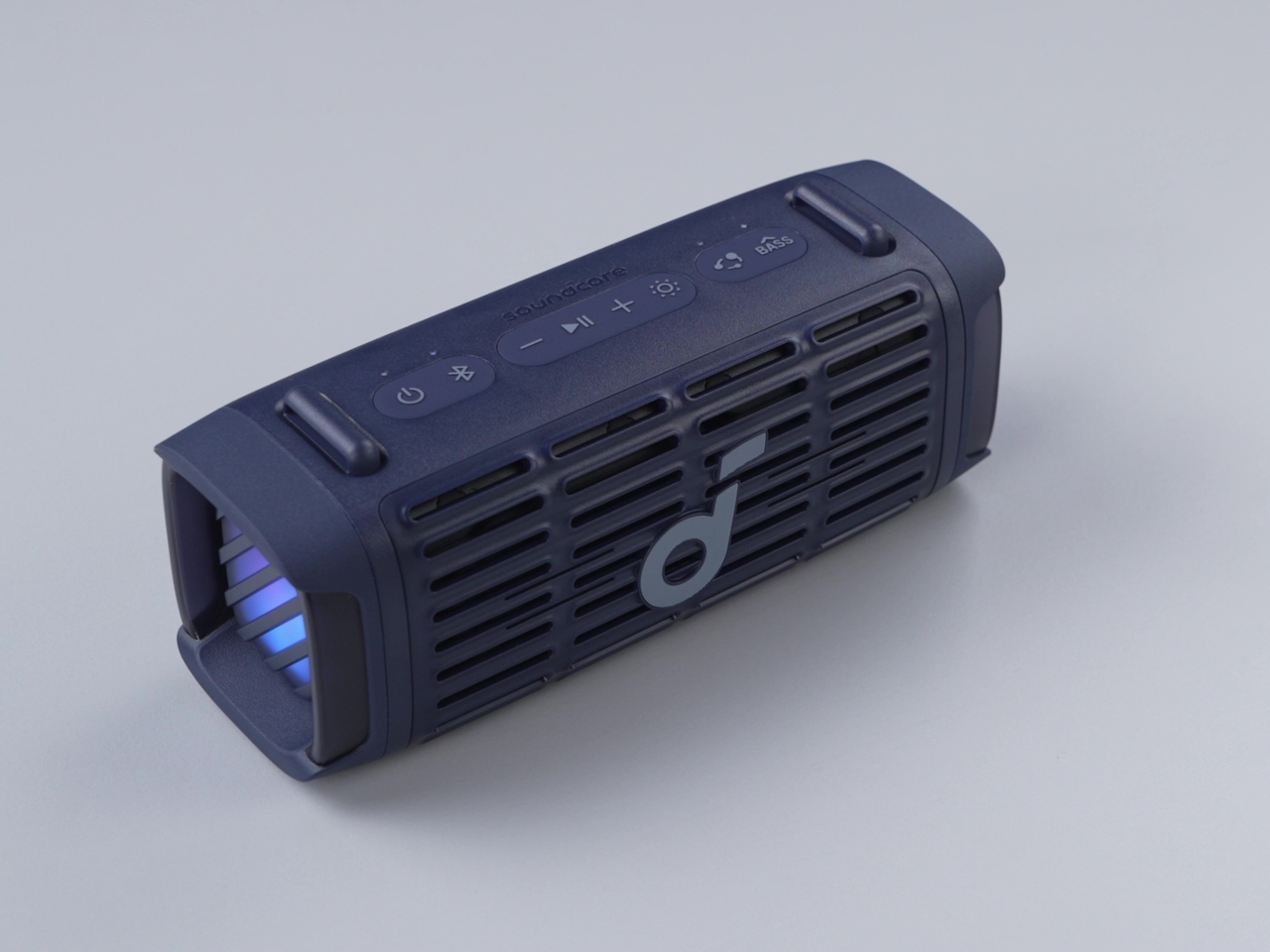
2. Anker Soundcore Boom 3i
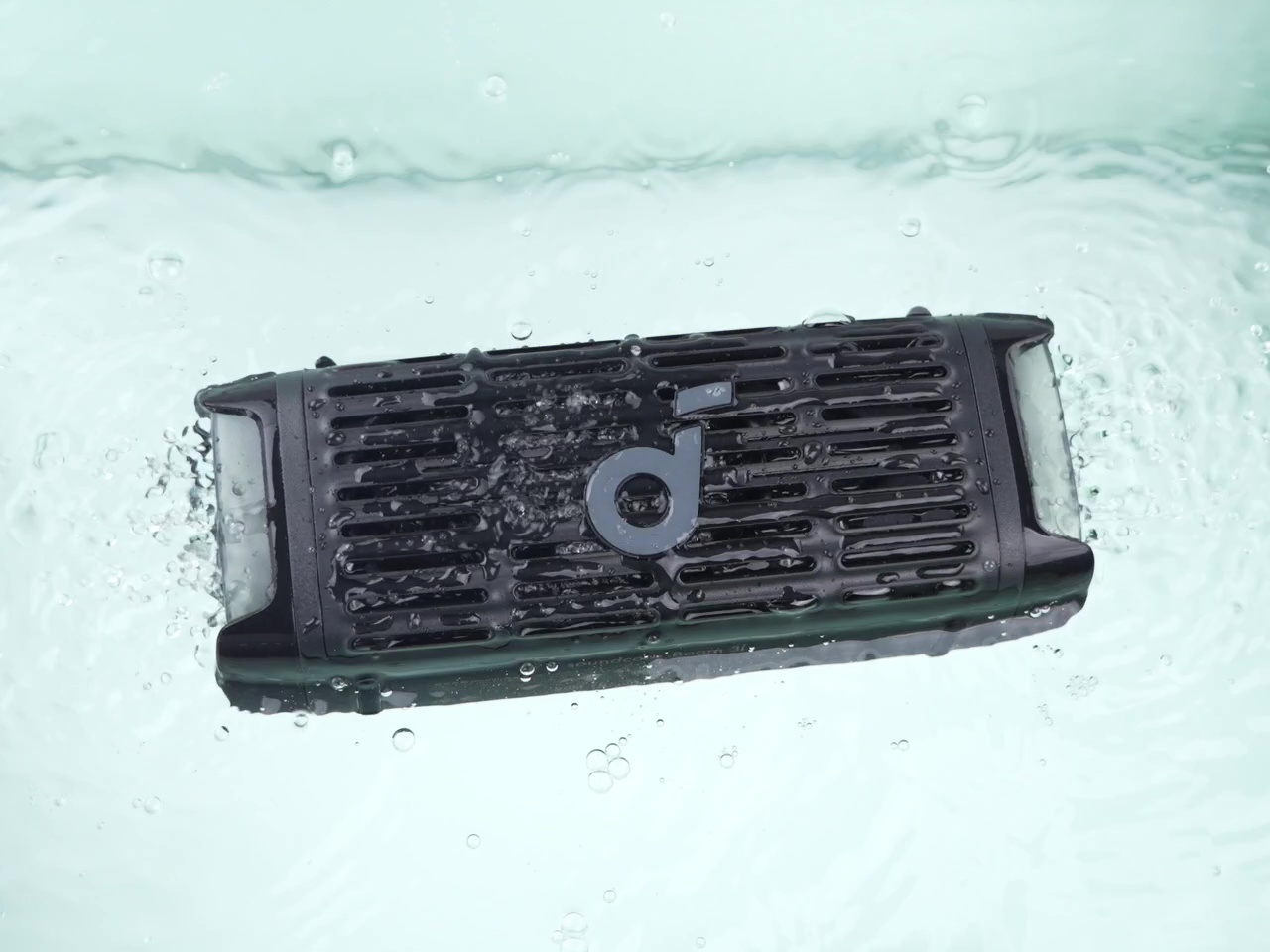
The Boom 3i was designed to survive the kind of afternoon that destroys other electronics. It floats on water. It shakes sand off its housing without clogging the drivers. The IP rating holds up in the rain and in the pool, and while most outdoor speakers are water-resistant in theory and fragile in practice, Anker engineered this one for submersion rather than splashes. It is the Bluetooth speaker you stop worrying about the moment you walk out the front door with it.
The audio output is full and wide for a speaker this compact, with enough low end to anchor a playlist over ambient crowd noise without the distortion that plagues smaller drivers at higher volumes. For a 4th of July gathering where the speaker will inevitably be nudged off a table, handed between a dozen people, and left near the cooler in a wet patch of grass, the Boom 3i is the one pick on this list that was engineered specifically for that set of conditions.
What we like:
Floating capability is the one feature that separates it from every comparable speaker at this price
What we dislike:
The design prioritizes durability over aesthetics, which shows in the bulkier silhouette
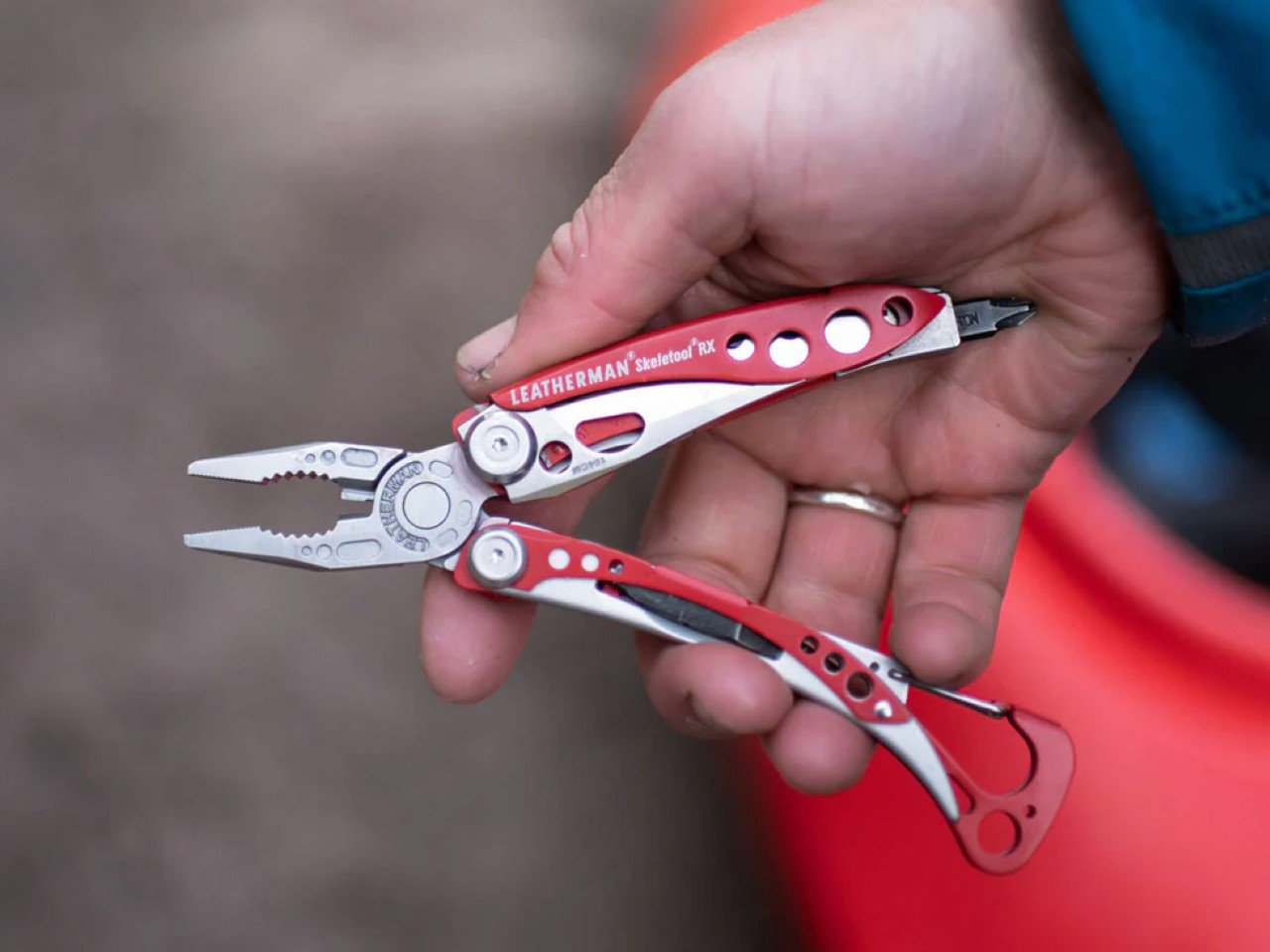
3. Leatherman Skeletool RX
The Skeletool was built around an edit. Leatherman stripped the tool down to seven functions, removed everything that required compromise, and arrived at something genuinely elegant for a multitool: a stainless steel combo blade, needle-nose pliers, a bit driver, a removable pocket clip, and a carabiner that doubles as a bottle opener. That last detail is the most honest acknowledgment a tool manufacturer has ever made that a 4th of July multitool has a very specific social use case. Five ounces, built in Portland, Oregon.
The bottle opener earns its place at a summer cookout, but the pliers and driver mean it stays useful through the entire weekend and the weeks after. Most multitools feel like a design compromise. The Skeletool feels like a design decision. The skeletonized frame that gives it its name is functional rather than decorative, reducing weight without reducing grip. It is one of those tools that looks better the more it gets used, which is the best thing you can say about anything made from stainless steel.
What we like:
The carabiner bottle opener is a genuine design insight rather than a novelty feature
What we dislike:
Seven functions cover most use cases, but it will not satisfy anyone who needs scissors or a saw
4. TriBeam Camplight
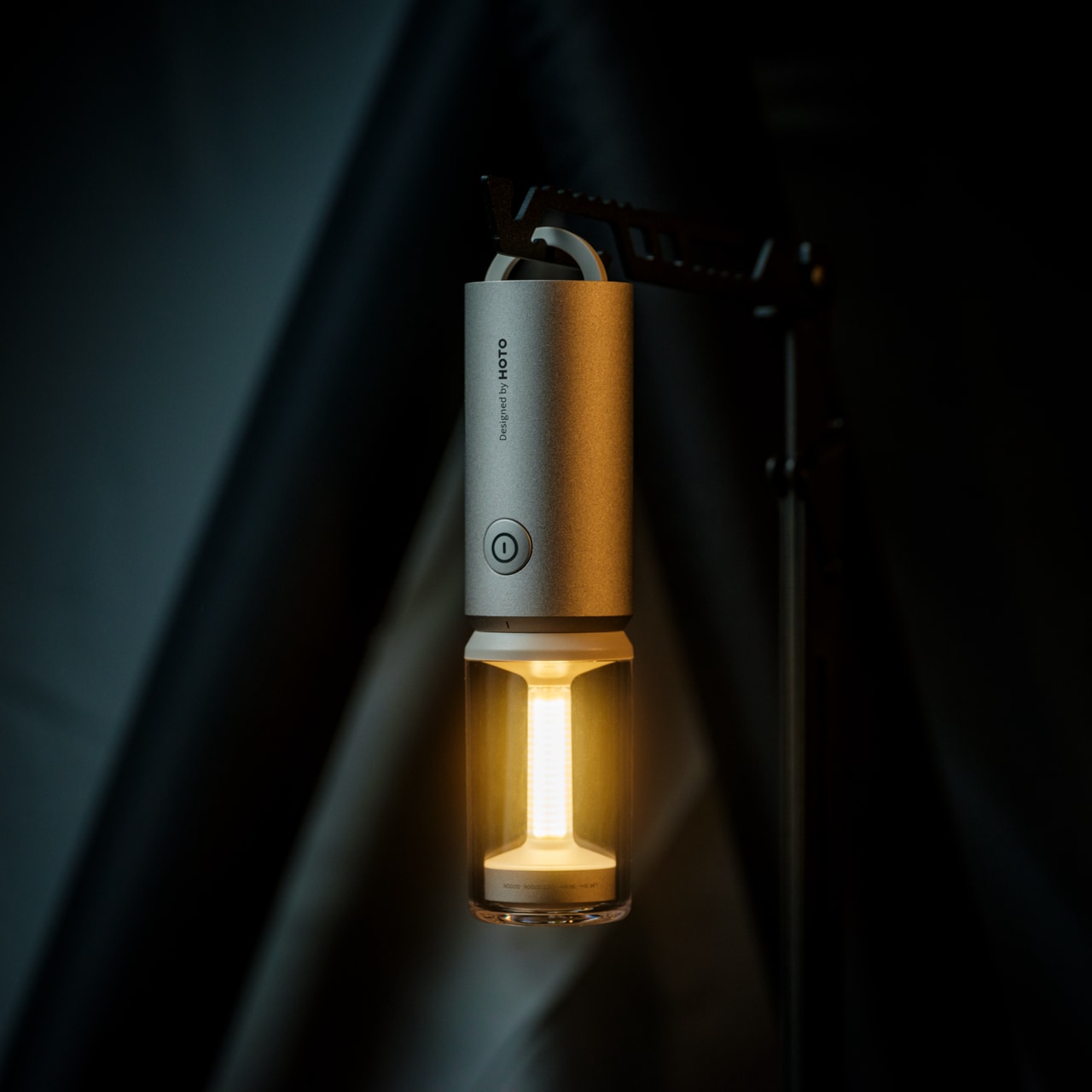
Most camp lights make you choose between utility and atmosphere. The TriBeam refuses that trade-off. At $65 and 135 grams, it switches between a soft ambient glow for conversation, a focused flashlight beam for task lighting, and a diffused lantern mode that fills a campsite evenly. Three distinct lighting behaviors in a single award-winning body that measures just 12.8 centimeters tall and fits in a jacket pocket, which is not something most camp lanterns can honestly claim.
The design is the product. Clean cylindrical housing, no unnecessary buttons, nothing that reads as cheap at close range. It earns its price through the quality of the materials and the precision of three modes that each do their job without bleeding into the others. For anyone spending part of the 4th of July weekend outdoors, whether camping or simply sitting on a dark lawn waiting for fireworks, the TriBeam handles the full range of lighting needs without requiring a second item in the bag.
Three genuinely distinct lighting modes that each solve a specific outdoor scenario
What we dislike:
The compact scale means battery life has limits on multi-night trips
5. Matador Pocket Blanket 3.0
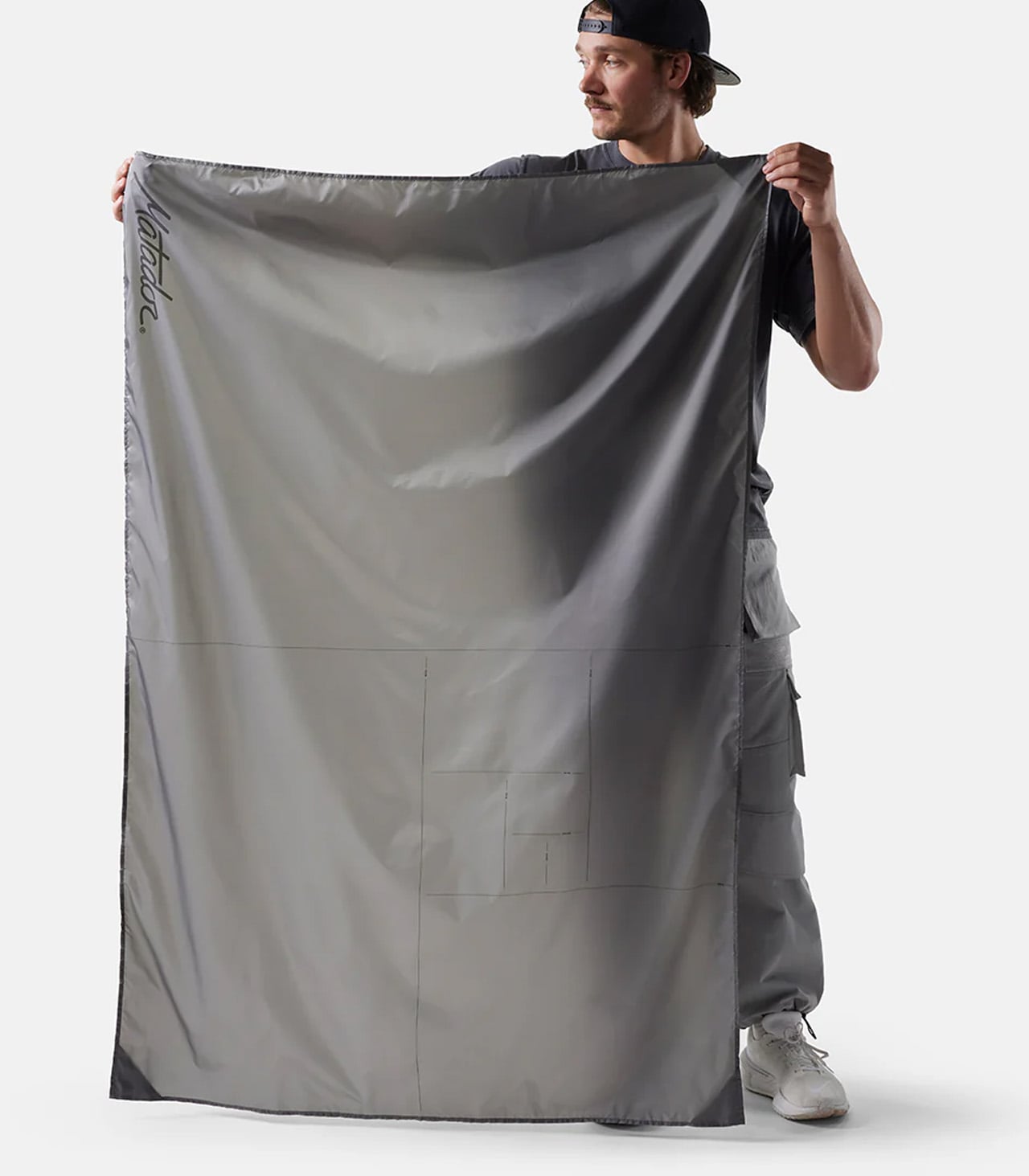
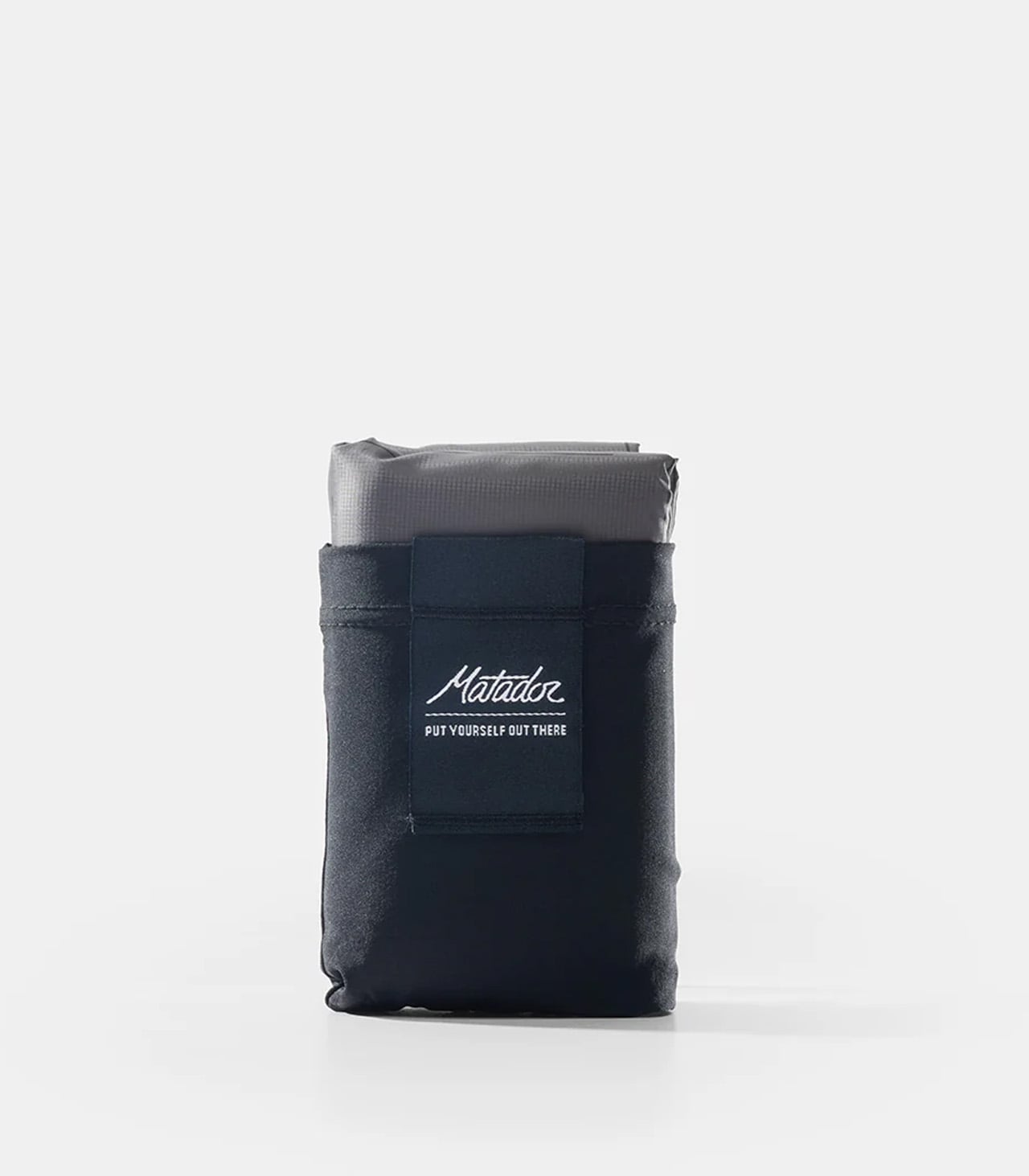
The Matador Pocket Blanket folds to the size of a carabiner pouch. Opened, it seats two to four adults on a water-resistant surface with integrated corner stakes for wind. The bottom layer blocks moisture from wet grass and damp park lawns; the top layer resists sand and water without trapping them. Everything about this object was designed for exactly the 4th of July scenario of sitting on public ground watching fireworks without wearing whatever that ground has been absorbing all afternoon.
The Easy-Pack Pattern built into the blanket’s face guides the refold intuitively, which solves the specific frustration that makes people abandon ultralight blankets within the first month of owning them. At $35 it is the lowest-price item on this list and potentially the most used, because it solves a problem that comes up every single time the weather is good enough to go outside. That ratio of price to utility is rare and worth recognizing when you find it.
What we like:
The built-in refolding guide makes packing it back down a one-attempt operation
What we dislike:
The sizing works well for two adults, but a larger group will want a second one
6. Planbok Waterproof Wallet
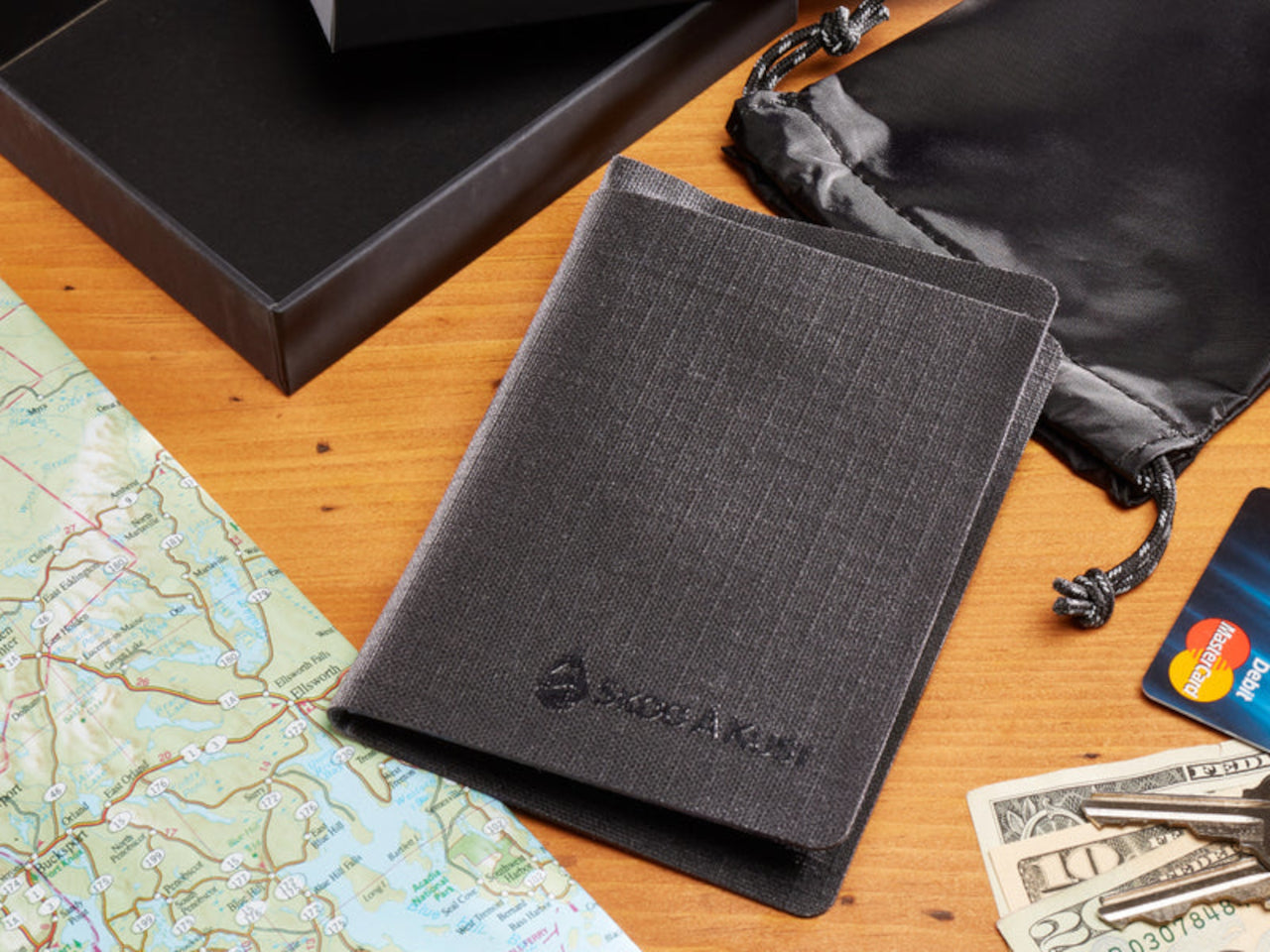
The Planbok is built from 420 denier TPU-coated ripstop nylon with fully welded seams and an IPX6 water resistance rating. It floats if you drop it in the water. That detail separates it from every slim wallet on the market, including the ones that market themselves as water-resistant. The difference between water-resistant and waterproof is invisible until it matters, and on a weekend that involves boats, coolers, rivers, or an unexpected downpour, it matters immediately and without warning.
The profile stays slim enough for a front pocket, cards slide easily, and the construction feels deliberate rather than disposable. It is not a novelty item. It is the answer to the quiet anxiety of carrying a leather bifold to a lake weekend, which is a real anxiety that real people experience every summer without ever quite solving it. Covering a genuine everyday frustration with a well-made object at a reasonable price is precisely the brief that good design exists to fulfill.
What we like:
Buoyancy is a genuine functional feature, not a marketing headline
What we dislike:
IPX6 covers heavy rain but stops short of full submersion, which the floating capability can quietly imply
7. DraftPro Top Can Opener
There is a version of cracking open a cold can on the 4th of July, and there is a better version. The DraftPro, designed by award-winning Japanese designer Shu Kanno and built in Japan, removes the entire top of a can in a single smooth motion, leaving a clean, safe edge and a wide-mouth opening that releases the full aroma of whatever is inside. Beer tastes closer to draft. Sparkling water breathes. A canned cocktail becomes something you can actually build on, adding ice directly into the can or mixing in the source without reaching for a glass or a shaker.
The opening motion is controlled and quiet — not by accident but by engineering — and the grip was shaped to sit naturally in the hand without slipping or requiring a particular angle. Nothing about it reads as a novelty. It is a tool designed with the restraint that Japanese craft disciplines demand: nothing added, nothing wasted, every detail in service of the one thing it exists to do. At a cookout full of people who have never seen one, it will be the most-passed-around object on the table.
Removes the full top cleanly, transforming a canned drink into a genuinely better sensory experience
Works as a cocktail vessel, ice bucket, and open drink in one move with no extra equipment
What we dislike:
Stock is limited — only a few units available at the time of publication, so early ordering matters
8. Nimble SharePower
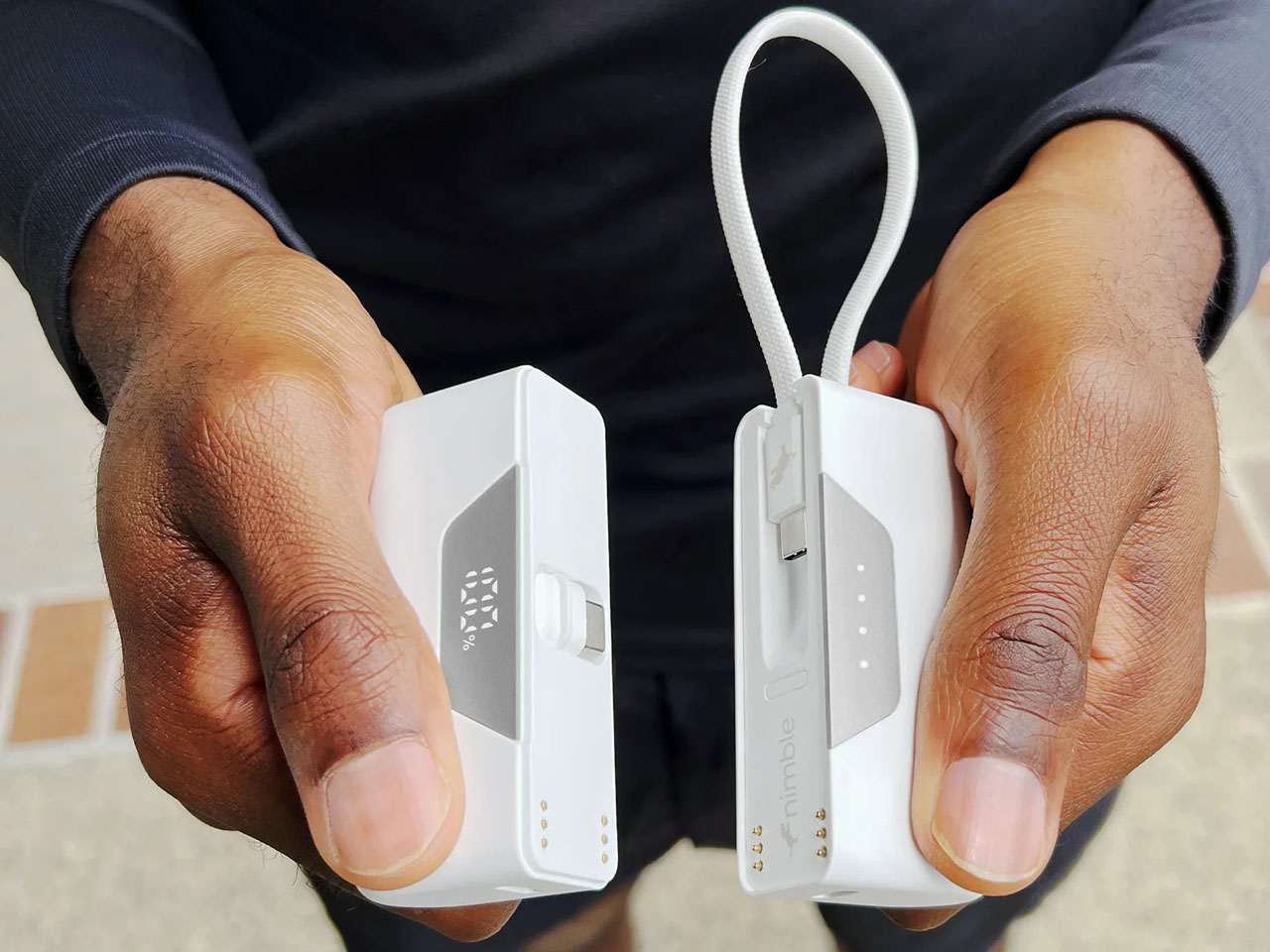
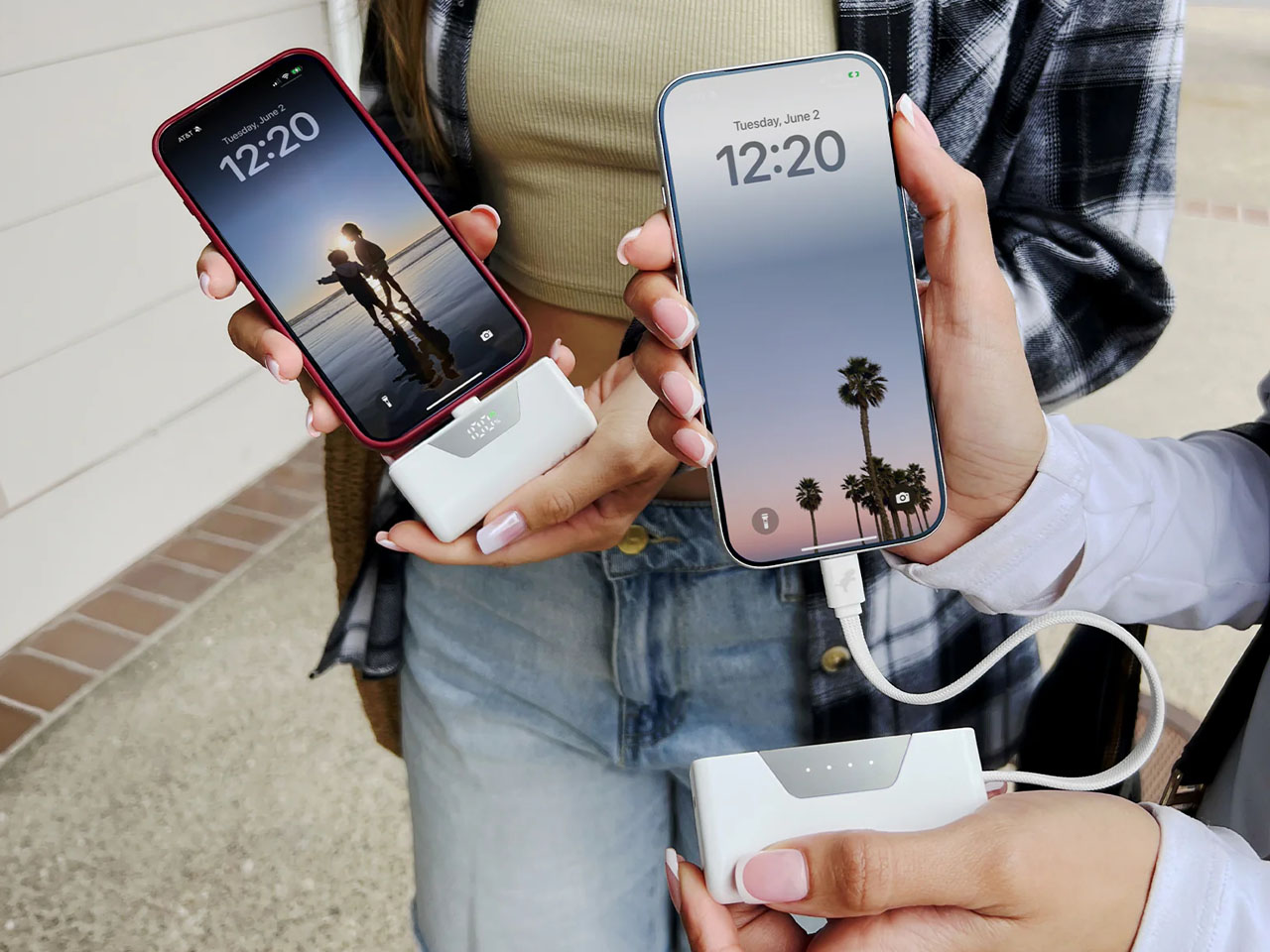
The SharePower from Nimble is a 10,000mAh power bank that splits in half. The two halves are held together magnetically and separate cleanly, with one half housing a battery percentage display and the other using four LEDs to communicate charge level. The braided lanyard connecting them opens into a USB-C cable when the halves are split apart. In joined mode, it delivers 35W charging; split, each half runs at 20W for a single device or 15W across two. The whole unit measures 3.05 by 2.75 inches at under one inch thick.
The concept is obvious in retrospect, which is the clearest sign of a genuine design insight. Every group trip produces the same conversation about who has the power bank and whether anyone can borrow it, followed by a compromise where the original owner gets it back at 30 percent. The SharePower ends that conversation by making sharing a built-in function rather than an inconvenience.
What we like:
The split-mode design solves a social problem that has existed since portable batteries were invented
What we dislike:
The translucent color options are fun in concept but may narrow the gift appeal depending on the recipient
The Only Standard That Matters
Eight products with one shared quality: each one earns its place through a specific design decision rather than a general category promise. The RetroWave works through a blackout. The Boom 3i floats. The Skeletool has a bottle opener exactly where it should. The TriBeam gives you three different lights in one hand. Good design shows up like that — not as a feature list but as a moment where something just works better than you expected it to.
That is the real standard for a gift. Not whether it looks impressive in the box, but whether it gets used on the second trip, the third, the tenth. Most of what is on this list ships before the holiday, which means the only remaining variable is whether you want to give someone something that will still be in their bag come Labor Day.
The problem with buying tech for someone who follows tech is that he’s usually already seen it. His desk is deliberate. His bag is considered. His tech doesn’t accumulate — it earns a place and stays there. Shopping for him isn’t hard because he’s difficult. It’s hard because he’s usually right, and anything that doesn’t clear his bar comes back with a polite explanation.
The ten things on this list are the ones he hasn’t gotten to yet. Some of them are brand new. A few are still taking shape as concepts or patent filings worth tracking closely. None of them are the safe, obvious choice you grab when you’re not sure. Safe choices are what you give someone you don’t actually know that well, and the guy who has everything will see right through them.
1. Google Home Speaker
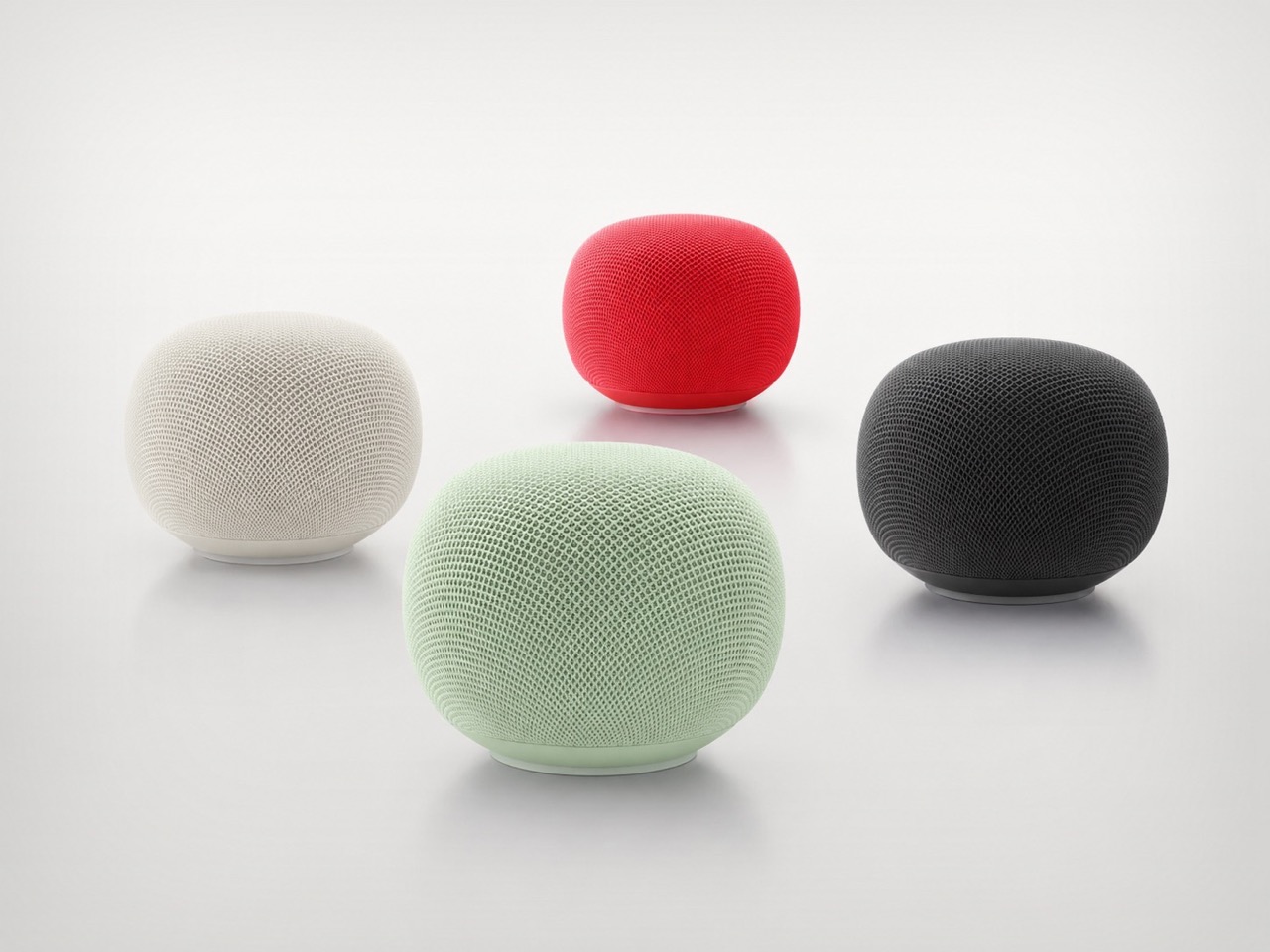
Google’s first new standalone smart speaker in nearly six years arrived in June 2026, and the gap is written into everything about it. The Nest Audio it replaces launched when people were buying anything that made a room feel less empty. The Google Home Speaker is a more considered object: small and rounded, available in colors the hardware team has always gotten right — the kind that make a shelf look slightly more curated without announcing a brand — with 360-degree audio and a light ring that tells you when Gemini is listening, thinking, or ready to respond.
The Gemini integration is the actual reason this speaker exists. Every Google product with enough surface area has been rewired into the AI model since 2025, and the kitchen turned out to be the most underserved room in the portfolio. What that means in practice is a speaker that answers hands-free cooking questions, manages a calendar, controls the broader smart home, and holds a conversation more fluently than any Nest device before it. Whether Google maintains attention on the category this time around is the only question worth watching.
What We Like
Gemini integration makes ambient AI genuinely useful in a room that needed it most
Soft, rounded form and considered color options read as a design object rather than tech hardware
What We Dislike
A six-year product gap makes long-term hardware commitment harder to trust
Full Gemini functionality requires staying inside the Google ecosystem to get the most out of it
2. OrigamiSwift Folding Mouse
Most travel mice solve the portability problem by building a smaller, worse mouse. The OrigamiSwift, designed by Horace Lam, takes a different approach entirely. It folds completely flat to 0.18 inches thick, slips into a pocket, and unfolds into a full-sized ergonomic form in under half a second. The triangular structure that makes the fold work comes directly from origami geometry, which gives the collapsed state enough rigidity to survive a bag without a case, and the open position enough stability for accurate, comfortable tracking on almost any surface you set it on.
At 40 grams, you stop noticing it in your bag within the first day of carrying it, which is exactly the point. A 4,000 CPI infrared sensor handles tracking, Bluetooth 5.2 keeps the connection fast and reliable, and a single USB-C charge on the built-in lithium polymer battery lasts up to three months. The soft-click buttons are quiet enough for a shared workspace without drawing any attention. For anyone who has carried a full-sized mouse in their bag out of sheer stubbornness about ergonomics, the OrigamiSwift is the design that finally makes the case for stopping.
Opens from flat to full-sized ergonomic form in under 0.5 seconds with no mechanical fuss
Three months of battery life per USB-C charge removes recharging from the equation entirely
What We Dislike
The slim profile and 40-gram weight take adjustment for anyone used to heavier, more substantial mice
Stock is very limited — only a handful of units remain in the shop
3. Volla Plinius
The Volla Plinius is named after Pliny the Elder, which is the kind of product name that tells you something about the people who built it. It’s a Google-free Android phone with an IP68 dust and water rating, a 6.67-inch FHD+ OLED display running at up to 120Hz, a 64MP main camera with phase-detection autofocus, an 8MP ultra-wide, and a 2MP macro, with 5G and a MediaTek Dimensity 7300 processor underneath. Out of the box, it runs Volla OS, a Google-free Android build with a clean, text-based interface and a Security Mode that governs which apps communicate with the outside world.
The detail that separates the Plinius from every other privacy phone is a user-replaceable battery you can swap with a standard screwdriver, even with the IP68 waterproofing intact. The 5,300mAh cell handles a full day comfortably, with 30W fast charging and 15W wireless charging both covered. Ubuntu Touch is available as a fully Linux-based OS from the UBports Foundation that doubles as a desktop environment when connected to a monitor. The standard Plinius starts at €598, with the Plus model adding 12GB of RAM, 256GB of storage, and a Pogo PIN connector for magnetic accessories at €698.
What We Like
User-replaceable battery with a standard screwdriver is a genuinely rare feature at any price, let alone with IP68 in place
Dual OS support means you can run Volla OS or full Ubuntu Touch on the same hardware
What We Dislike
The Pogo PIN modular accessory system is still early in its development
4. piBrick Pocket-CM5
The piBrick Pocket-CM5 is an open-source handheld computer built around the Raspberry Pi Compute Module 5, a custom PCB designed for manufacturing at JLCPCB, and a 3D-printed shell. The whole parts list totals around $172, and what that buys is a device at smartphone proportions — 80mm × 145mm × 19.6mm — with a 3.92-inch AMOLED display at 1080 × 1240 pixels and 90Hz, a 5,000mAh battery, a compact QWERTY keyboard derived from the BlackBerry layout with an integrated trackpad, side rotary encoders, and five user-programmable buttons that give it a tactile depth no touchscreen-only device can replicate.
The feature that elevates the piBrick from impressive project to genuinely useful tool is USB-HID mode. Plug it into any external computer or server, and the keyboard and trackpad operate as a fully functional USB input device, independent of the Raspberry Pi running inside it. A sysadmin arriving at a server rack without a spare keyboard doesn’t need to find one. Full-size and micro-HDMI outputs allow the same device to drive an external display. NVMe SSD support in 2230 or 2242 formats adds storage beyond the SD card. The schematics, PCB files, and build instructions are open-source, making $172 the floor rather than the price.
What We Like
USB-HID mode turns it into a functioning keyboard and trackpad for any external computer or server
Full open-source hardware means the design belongs to anyone who wants to build on or modify it
What We Dislike
Requires hands-on assembly from a parts list rather than arriving as a finished, ready-to-use consumer device
The 3D-printed shell is functional but lacks the material quality of commercial hardware at this price level
5. StillFrame Headphones
The StillFrame headphones are designed by Tatsufumi Funayama and weigh 103 grams, which is light enough that you genuinely stop noticing them across a full workday. The 40mm drivers produce a wide, open soundstage tuned for music that rewards real listening rather than functioning as background wallpaper. A stainless steel headband holds the structure with the right balance of strength and flex, and the fabric ear cushions attach magnetically, making swaps between the included colorways quick and satisfying in the way that small, well-engineered interactions tend to be. The form takes its reference from the quiet geometry of CD players from the 1980s and 1990s, and the connection is immediate once you see it.
At $245, the StillFrame competes on philosophy as much as on specification. Active noise cancellation and Transparency Mode are both on board, Bluetooth 5.4 handles wireless streaming, and a USB-C cable supports high-resolution wired playback for when the signal matters more than the convenience. Battery life runs to 24 hours. The internal circuit board is deliberately exposed within the housing, treated as part of the visual experience rather than something to hide behind plastic. The White model ships with Light Gray and Turquoise cushions included — two moods for the same object, quietly expressive without trying to be.
103g and an open soundstage make these the kind of headphones you wear for hours without wanting to take them off
The exposed circuit board and magnetic cushion system give the object a physical personality that most headphones flatten out entirely
What We Dislike
Only 4 units remain in the shop, which makes these effectively a limited run at this point
The on-ear design sits between over-ear and in-ear, and the level of passive isolation won’t suit everyone
6. Oppo Bubble
The rear camera has been the better camera for over a decade. Every benchmark, every low-light comparison, every zoom test confirms it, and yet selfie culture built itself entirely around the front-facing lens because there was no practical way to see what the good camera was capturing while it was pointed away from you. The Oppo Bubble is a small circular AMOLED touchscreen that attaches magnetically to the back of a phone and mirrors the rear camera’s live feed wirelessly, up to 10 meters away. It launched in China on May 25, 2026, alongside select Oppo Reno 16 devices, and includes a built-in remote shutter trigger. Apple has had the magnetic infrastructure for something like this since 2020. Oppo just claimed the screen real estate it left empty.
The circular AMOLED display is what makes the Bubble credible rather than merely clever. A low-resolution preview would sink the concept at its most basic job, so Oppo putting a proper screen in here is the detail that earns the price. A 550mAh battery keeps it running independently, and when the camera is off, the Bubble displays custom wallpapers, live photos, videos, and animated themes. Ten meters of wireless range repositions it from selfie mirror to legitimate remote shooting monitor — the kind of tool that used to require a separate Bluetooth trigger and a lot of hoping for the best.
What We Like
Ten meters of wireless range turns it from a selfie mirror into a proper remote monitor for tripod-mounted shooting
The circular AMOLED form gives it enough design personality to work as an accessory rather than just a functional attachment
What We Dislike
Live camera preview only works with select Reno 16 series Oppo devices at launch, which is a real limitation right now
No confirmed international release outside China as of June 2026
7. Lenovo ThinkTab X11
Rugged tablets have almost always meant choosing between enterprise-grade hardware at enterprise-grade prices, or pressing a consumer device into field conditions it was never designed to handle. The Lenovo ThinkTab X11 is an attempt to close that gap at $499, bringing it into reach for the people who actually use tablets in logistics, construction, transportation, manufacturing, and energy. The 10.95-inch display runs at 90Hz, reaches 800 nits under high brightness mode, and handles gloved hands and wet fingers without issue — the Snapdragon 7s Gen 3 runs the processing, with up to 12GB of RAM and 512GB of UFS 3.1 storage configurable depending on the deployment.
The battery design is what makes this genuinely interesting. The 10,200mAh cell removes on a screwless mechanism, so a worker can swap a depleted pack for a fresh one mid-shift without stopping to find a power outlet. In vehicle or fixed workstation deployments, the ThinkTab can run directly from DC power with no battery installed at all, eliminating heat buildup from continuous charging and removing long-term degradation from the equation entirely. The included case carries MIL-STD-810H certification, the device itself carries IP68, and the whole package ships with Android 16 alongside four years of security patches and two guaranteed major OS upgrades.
What We Like
Screwless hot-swap battery means mid-shift power changes are a practical workflow option, not a maintenance event
Battery-less DC operating mode for fixed deployments removes heat and degradation entirely from continuous-use scenarios
What We Dislike
At $499, it sits above consumer tablets doing lighter work, though well below comparable enterprise-only hardware
The Snapdragon 7s Gen 3 is a capable rather than cutting-edge processor for the price bracket
8. Nothing Book
This is a concept, and it’s worth saying that plainly before anything else. The Nothing Book is a design exploration by Nikita Bukoros that takes the brand’s philosophy to its logical conclusion: a performance laptop that treats its internal architecture as the visual statement rather than hiding it. The see-through body layers the cooling system, circuit boards, and internal components into a composition that Bukoros describes as industrial art as much as consumer electronics. The see-through aesthetic Nothing built its identity around, originally inspired by the translucent polycarbonate designs of the late 1990s, reaches its most ambitious expression here.
The secondary screen mounted on the lid is the detail that makes the concept worth following. It is a slim external display that breaks the closed-laptop monotony entirely — you can push messages, symbols, emojis, or anything else in the classic Nothing font to whoever is looking at the back of your machine in a meeting or a cafe. Nikita moves beyond Nothing’s usual monochrome palette and offers the concept in hot red, cool green, subtle pink, and magnetic teal. A purpose-built charging dock triggers a cooling animation on the secondary display when the laptop is docked, which is the kind of considered detail that separates a design worth remembering from one worth scrolling past.
What We Like
The secondary lid screen is a genuinely original idea that gives the closed laptop a visual identity and purpose
See-through architecture makes the internal engineering part of the aesthetic rather than something to conceal behind a plain surface
What We Dislike
This is a concept, not a product — Nothing has confirmed a laptop is in development
The exposed internals aesthetic would face real structural and thermal engineering challenges in a shipping device
9. Canon Pocket Gimbal Camera
Canon filed a patent in April 2026 for a compact handheld camera with a fully integrated three-axis gimbal, a fixed lens, a grip with a screen, and a folding mechanism that protects the stabilizer head during storage. It is the most refined and product-ready of three gimbal-related patents Canon has filed since 2021, and the one that reads most like a brief handed to an engineering team rather than a thought experiment. The key detail is a smart shutdown sequence that uses magnetic sensors and image analysis to guide the gimbal safely into a folded position before cutting motor power, addressing a mechanical wear issue that has quietly frustrated gimbal camera owners for years.
The competitive timing is pointed. DJI’s drone business has faced regulatory scrutiny in the United States, and Canon has been tracking the pocket gimbal category across three progressive patent filings over five years — moving from cinema-level ambition in 2021, to an auto-flipping mechanism in 2025, to this fixed-lens, behavior-smart design in 2026. Canon’s color rendering, the warm, accurate output that photographers have built careers around, is a form of credibility no spec sheet can manufacture quickly. Whether this patent becomes a product remains unconfirmed, but the arc from moonshot to practical brief is the clearest signal yet that Canon intends to ship something.
What We Like
Smart shutdown using magnetic sensors and image analysis is a specific, practical engineering improvement, not a theoretical feature
Three filings over five years show a product being genuinely refined rather than filed and forgotten
What We Dislike
This is a patent, not an announcement — Canon’s 2021 interchangeable-lens gimbal concept never shipped
Fixed lens removes the ambition of the earlier patents, which some creators will register as a step back
10. Battery-Free Amplifying iSpeakers
The premise behind the Battery-Free Amplifying iSpeakers is simple enough to say in one sentence: they amplify your iPhone’s audio through acoustic design alone, with no power source, no Bluetooth pairing, and no charging cycle to manage. At $179, they sit on a counter as a sculptural object even when the phone is nowhere near them, which is the standard any speaker worth keeping should meet before it earns a permanent place in the room. The best design objects don’t ask anything of you when they’re not being used. They just sit there, doing the room a favor.
For the guy who has accumulated Bluetooth speakers, wireless earbuds, a smart speaker with a subscription, and a desk speaker that needs a firmware update, a passive amplifier is the unexpected move. There is nothing to configure, nothing to pair, nothing to update, and nothing that goes wrong. You set the phone in, the sound fills the room, and that is the complete interaction.
Requires no power, no pairing, and no maintenance — the interaction is entirely physical
Functions as a display object on the counter whether a phone is in it or not
What We Dislike
Passive amplification has natural limits on output volume compared to any powered speaker
Works best in quiet rooms rather than competing with ambient noise
The Things He Didn’t Know He Was Missing
The man who already has everything doesn’t need more things. He needs the specific thing he hasn’t encountered yet — the speaker that finally has a brain worth talking to, the mouse that folds flat without a compromise on feel, the phone that keeps its data to itself, the handheld computer that doubles as a keyboard for any machine it’s plugged into. These aren’t impulse picks. Each one is here because it does something the obvious alternatives don’t, and because the guy you’re shopping for will notice the difference within the first ten minutes.
A few of these are still taking shape — a concept waiting on a decision, a patent waiting on a factory floor. That’s worth saying plainly, but it’s not a reason to dismiss them. The guy who has everything is usually the first to know what’s coming, and the first to make up his mind about it. A list that only includes what you can buy today isn’t a list for him. It’s a list for someone else entirely.

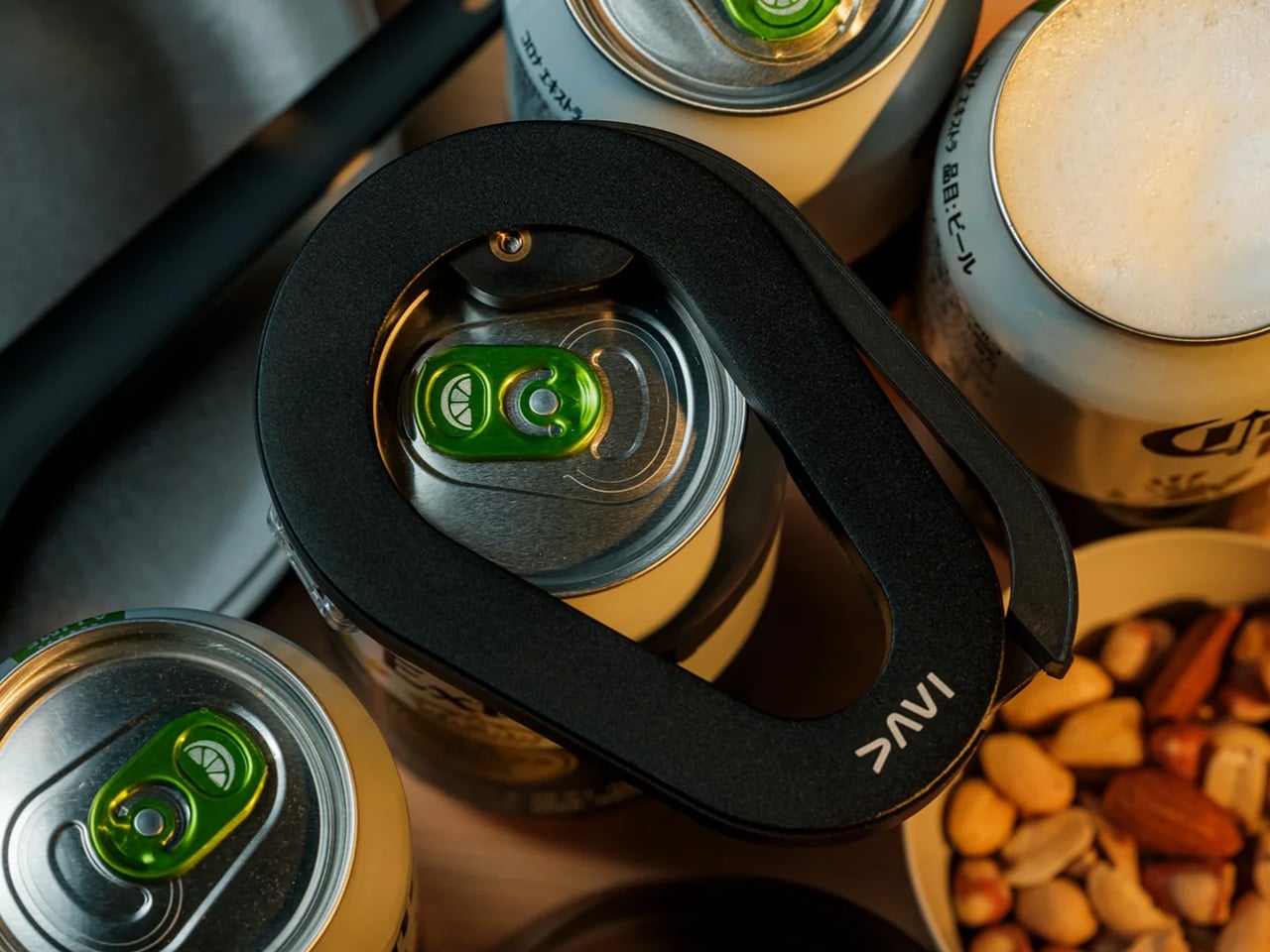
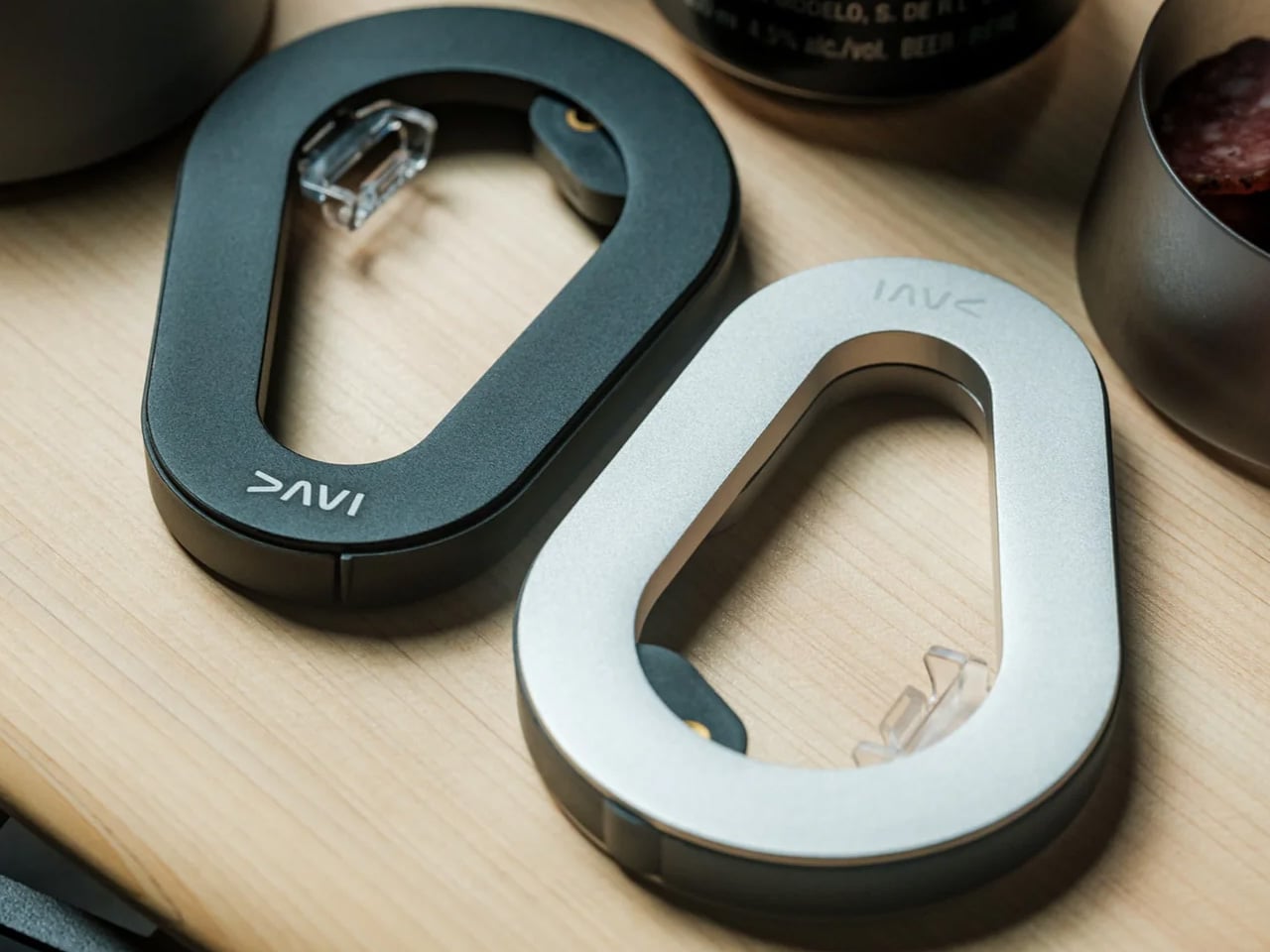
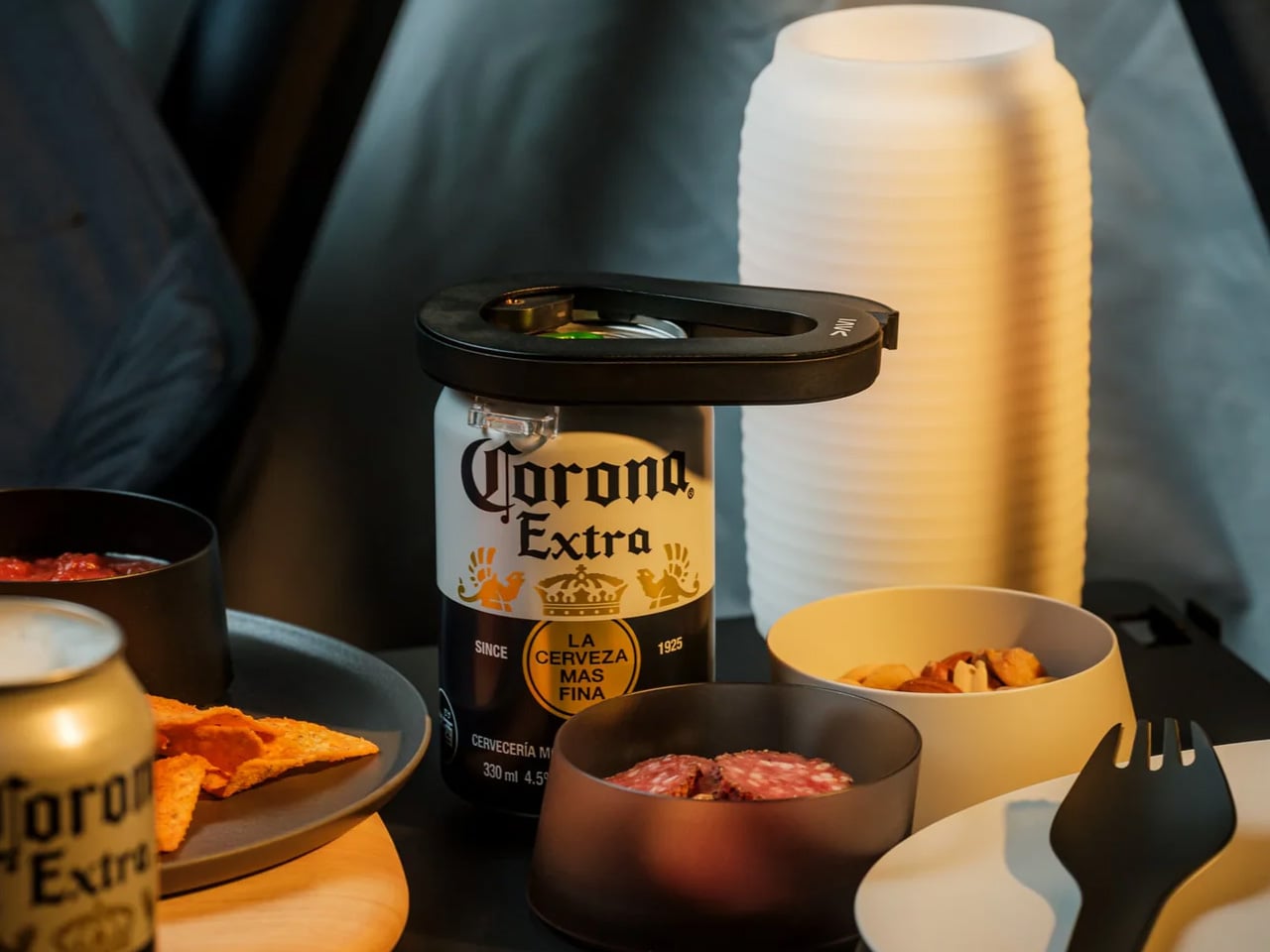

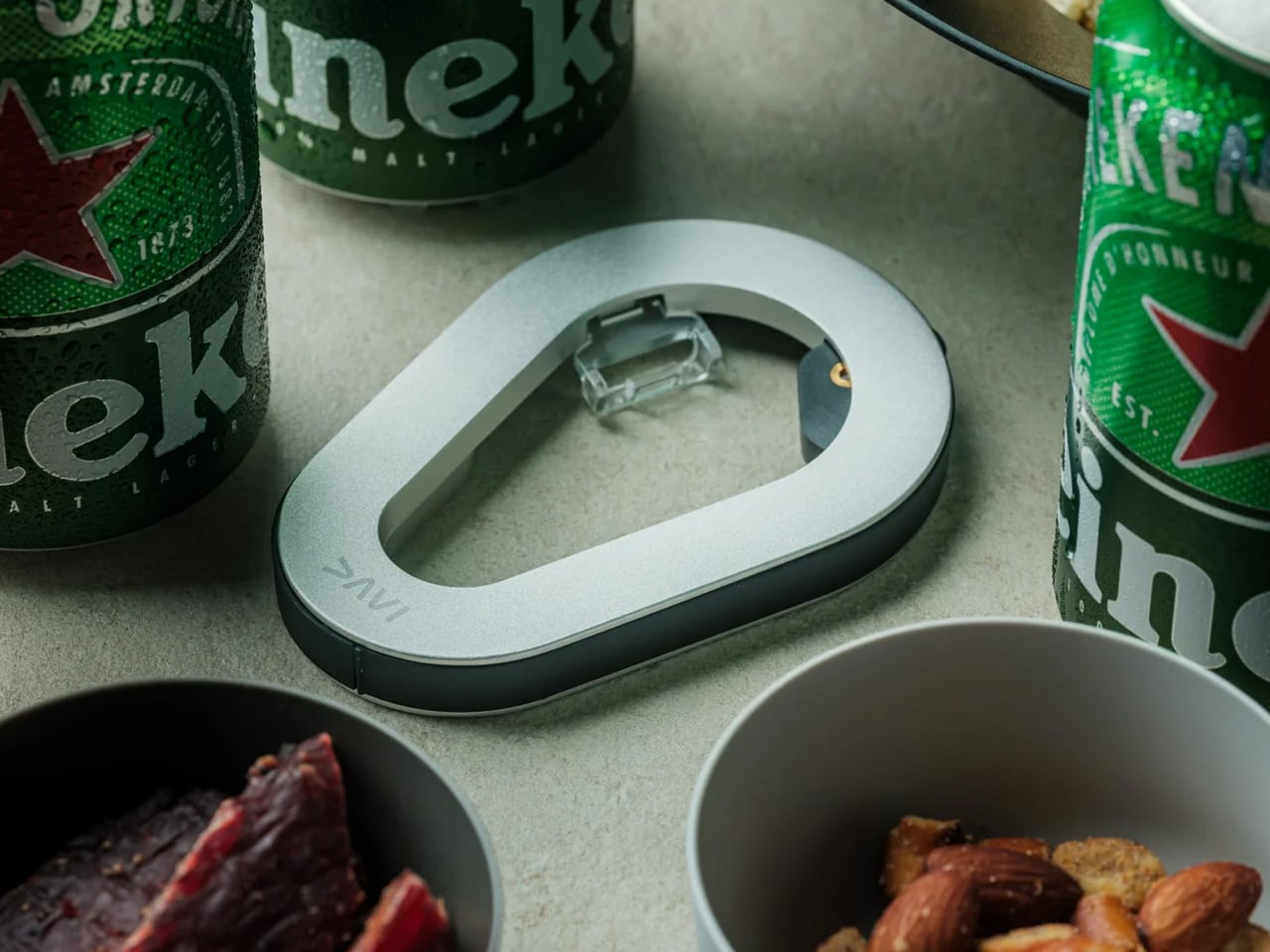
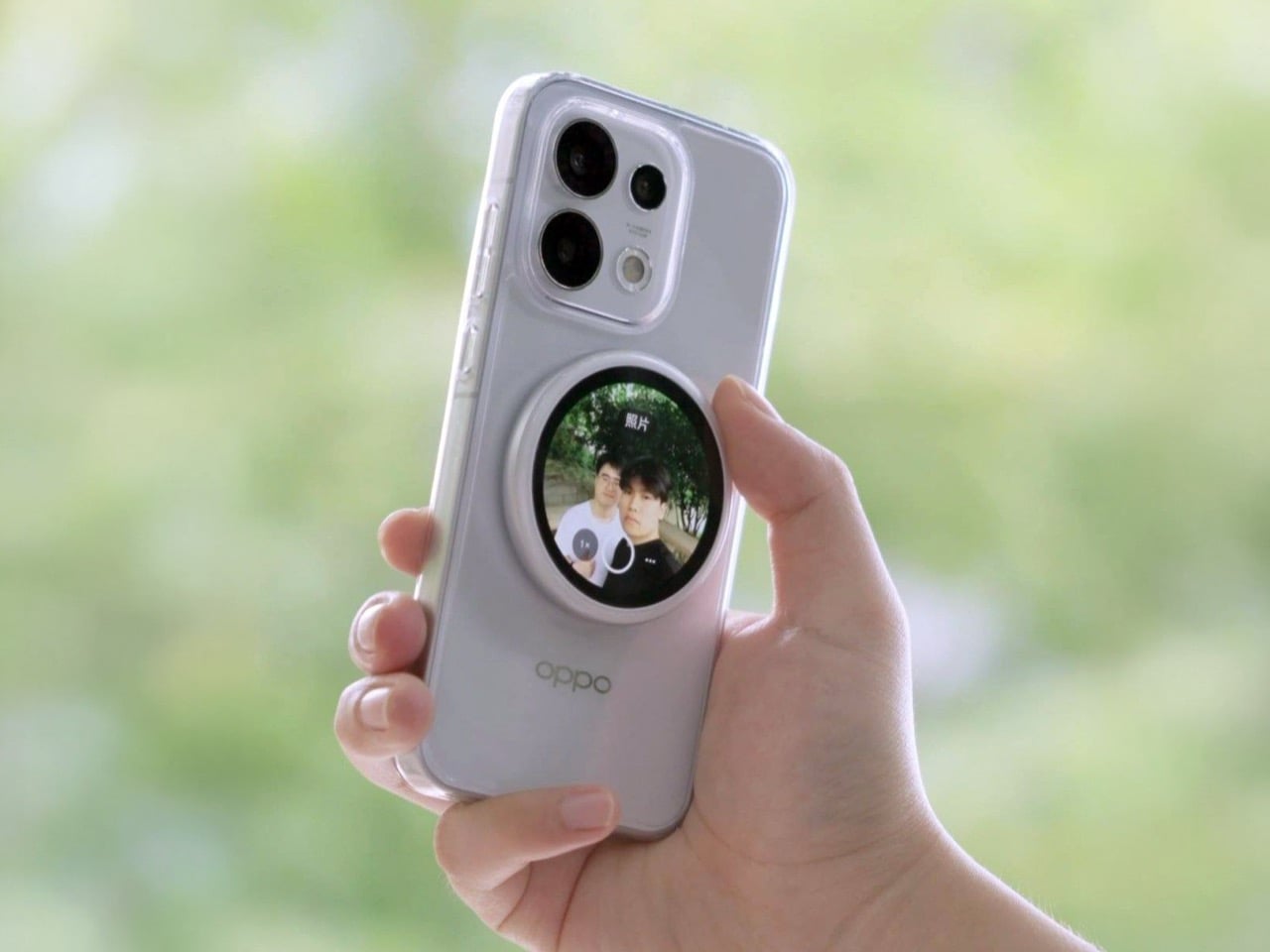


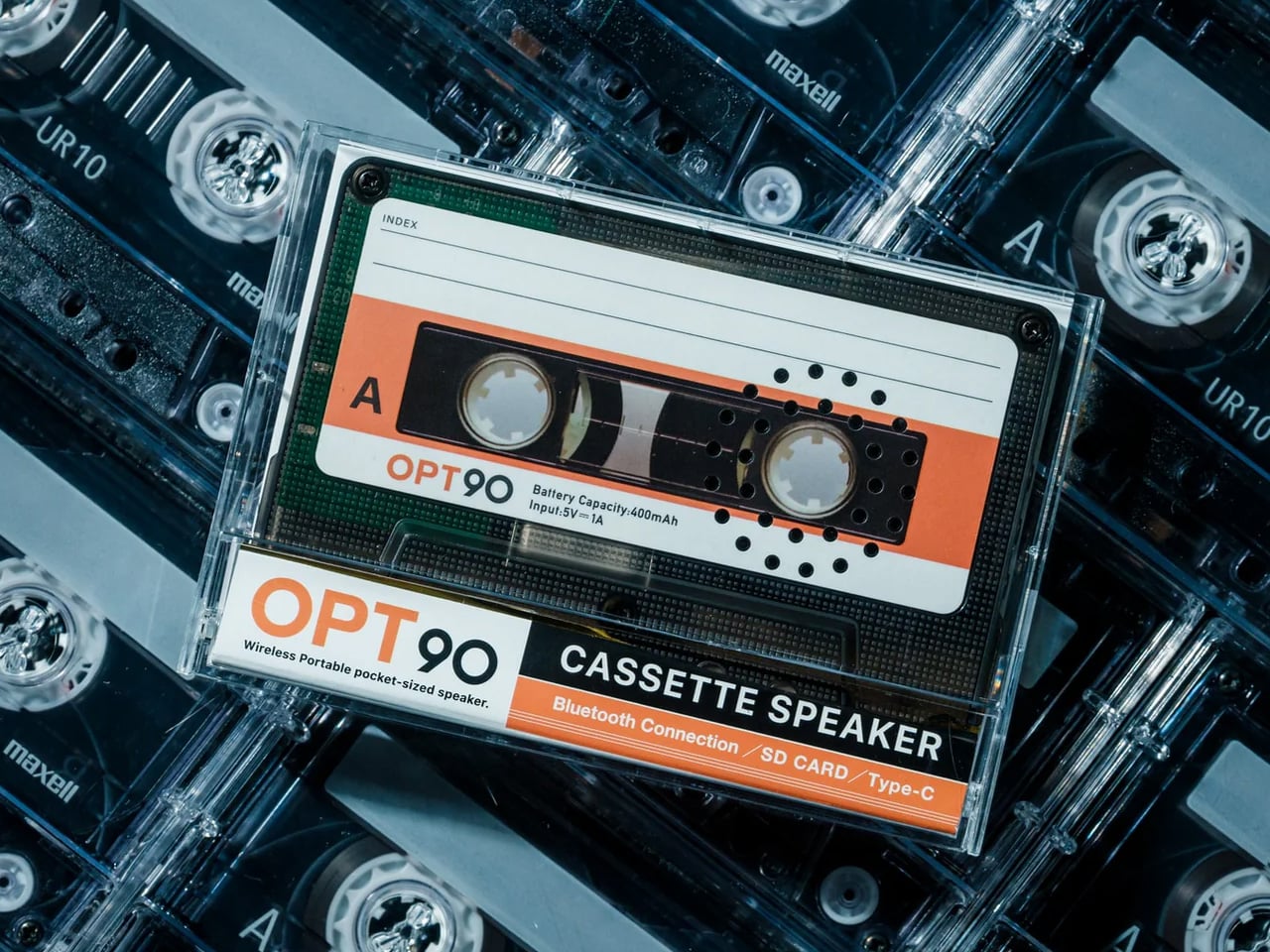

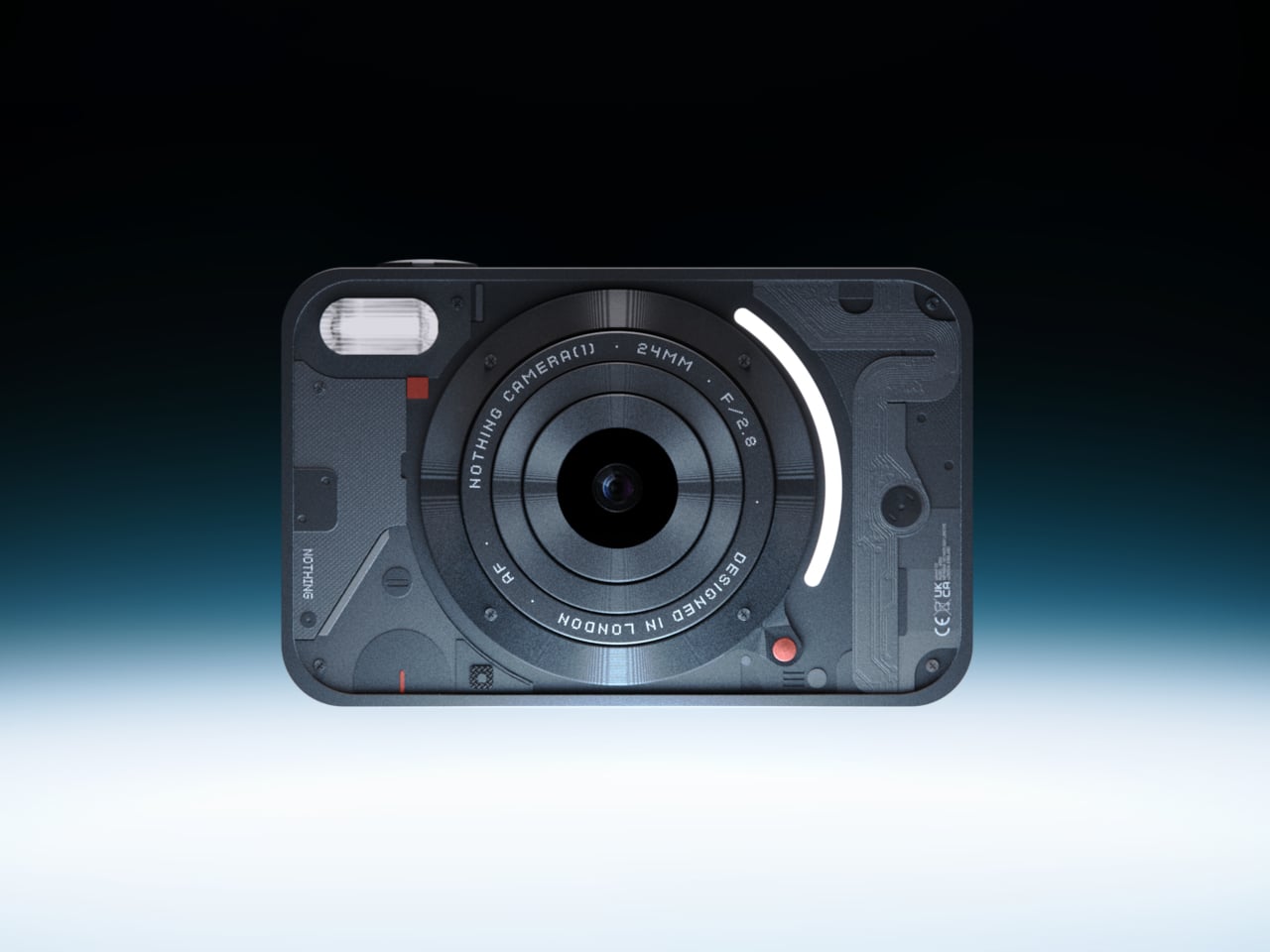
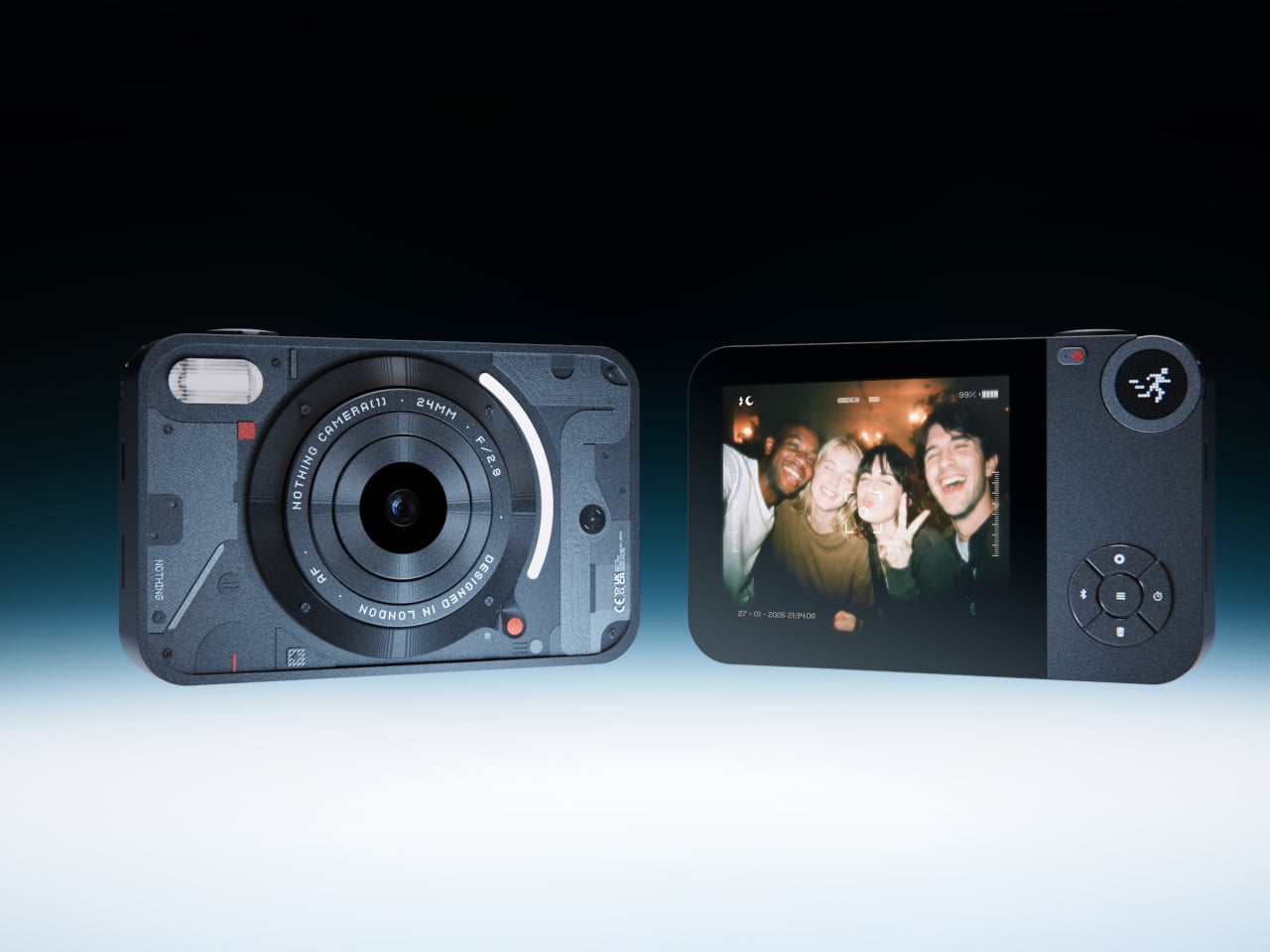
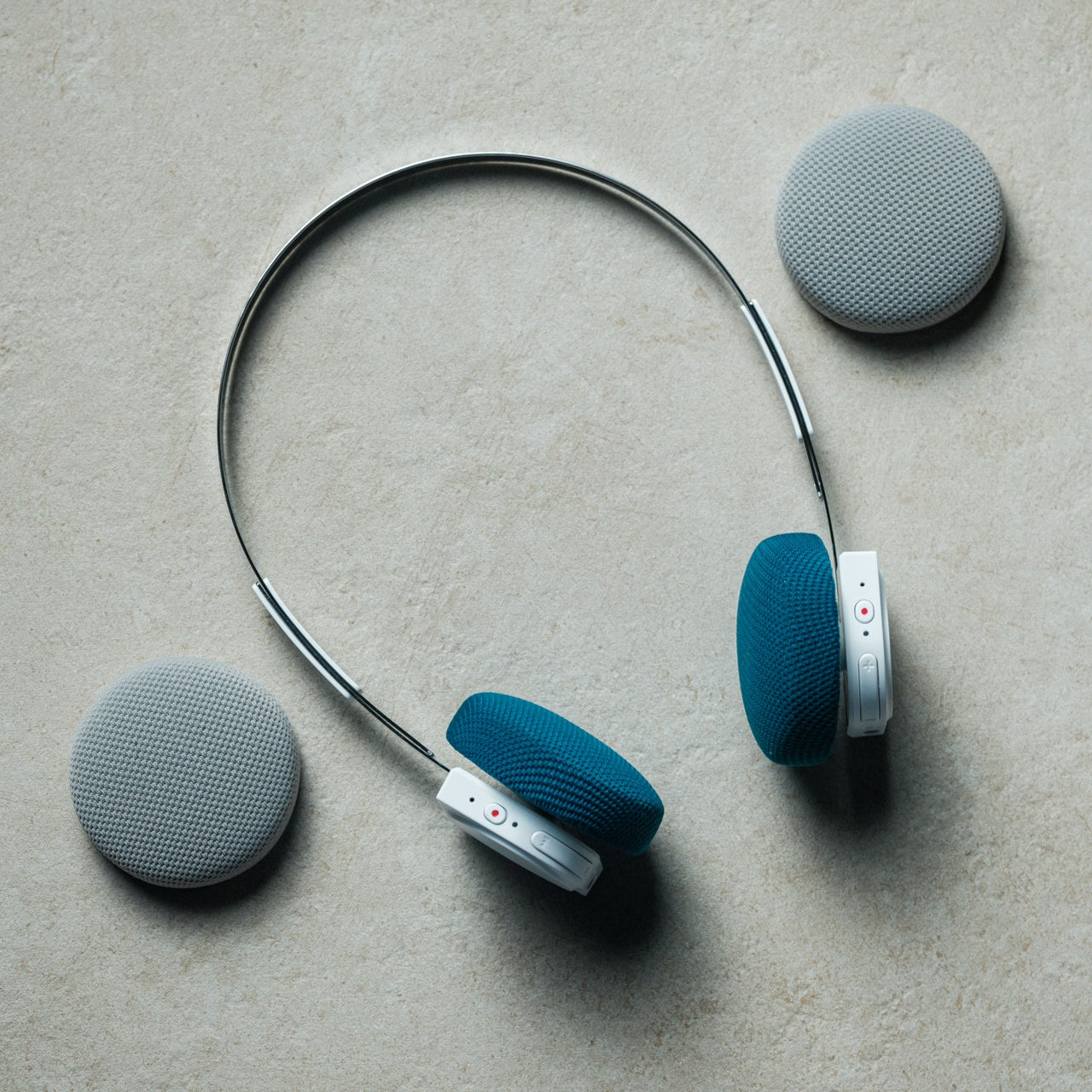

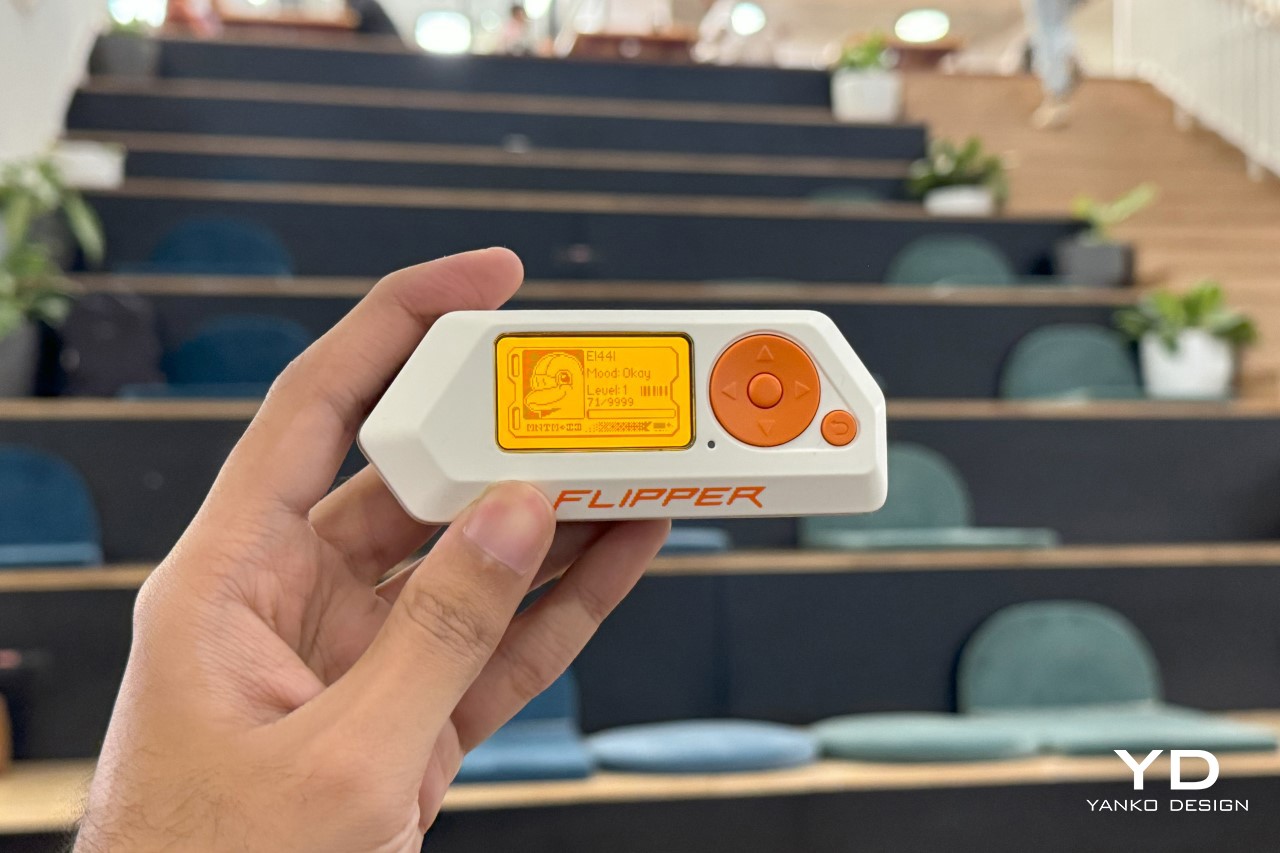
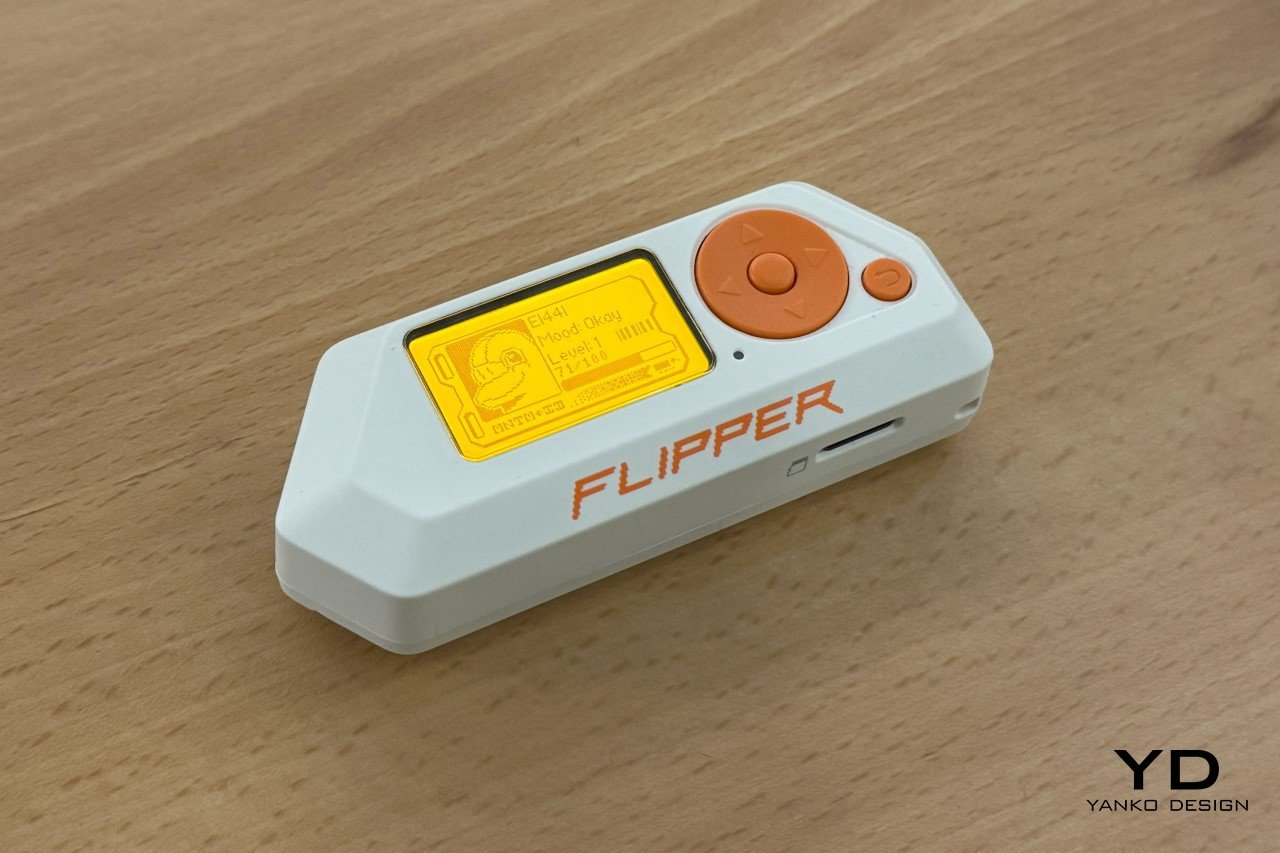
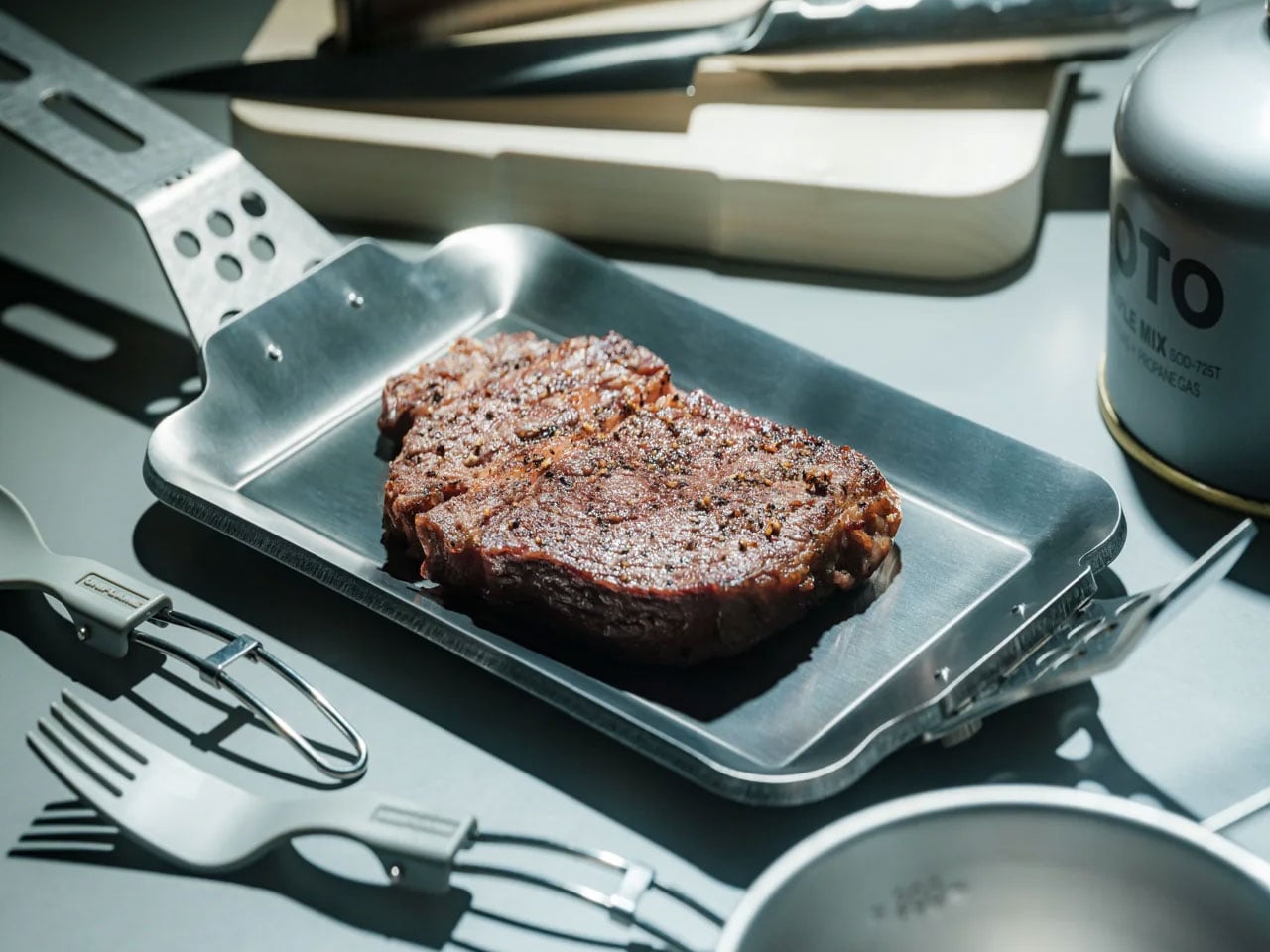
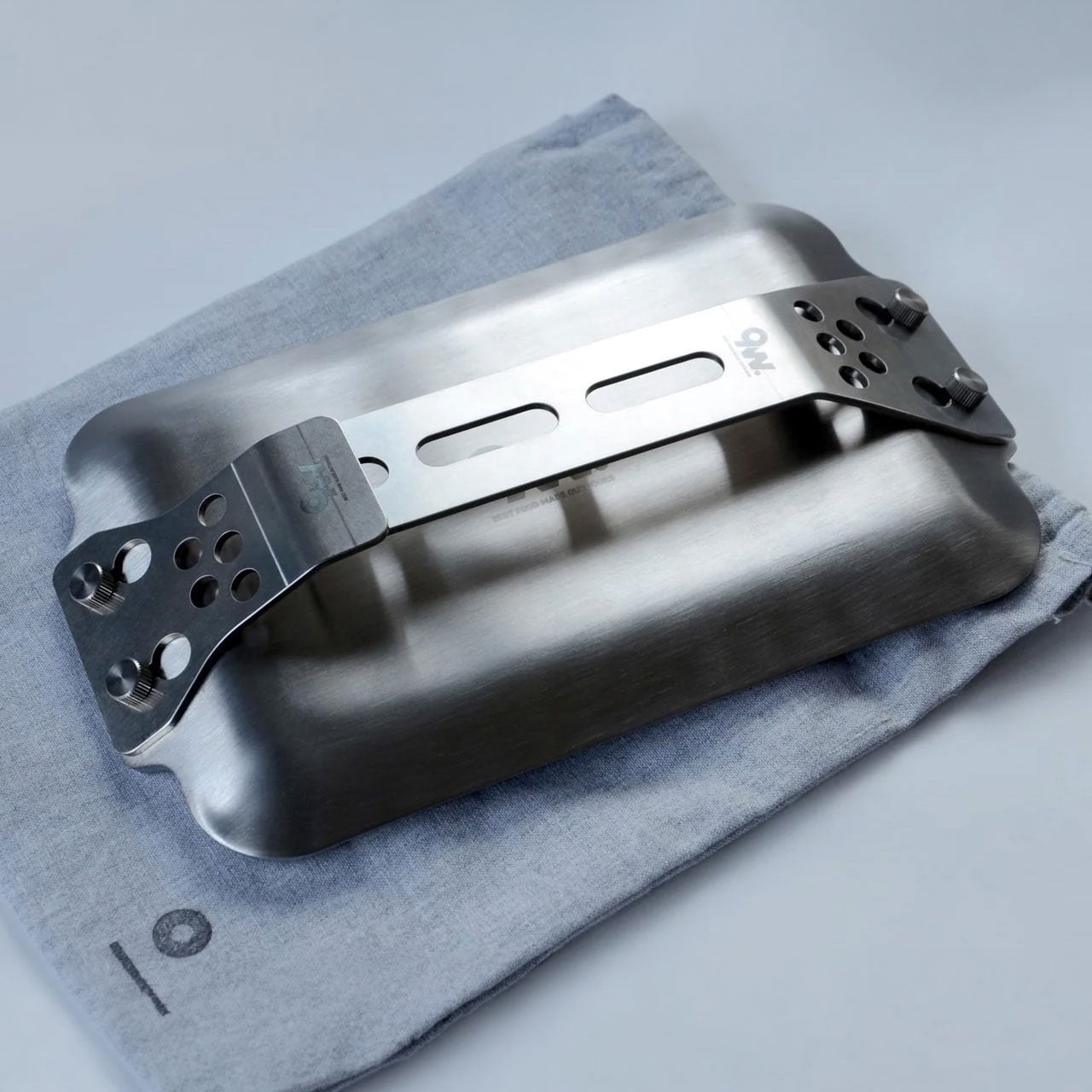
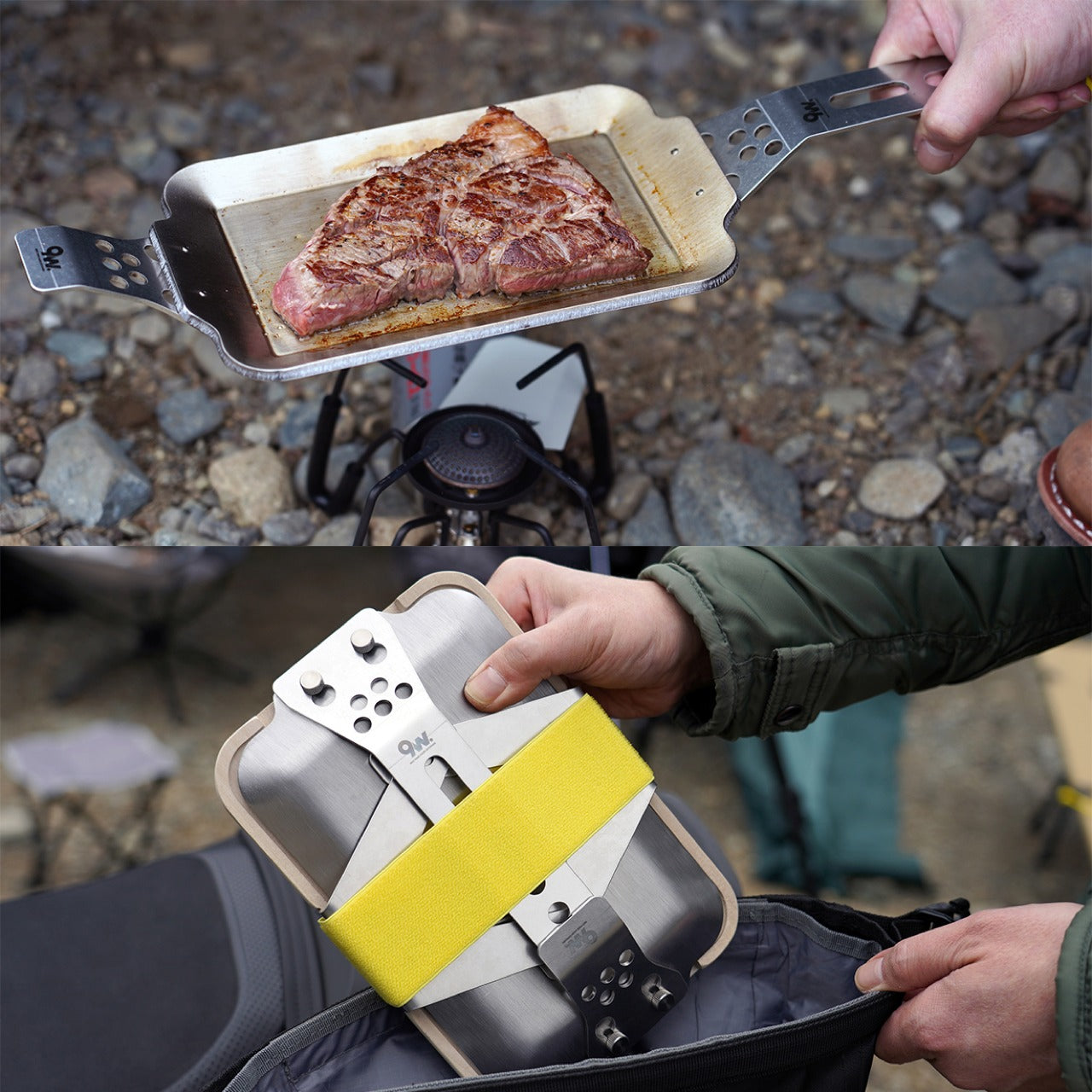
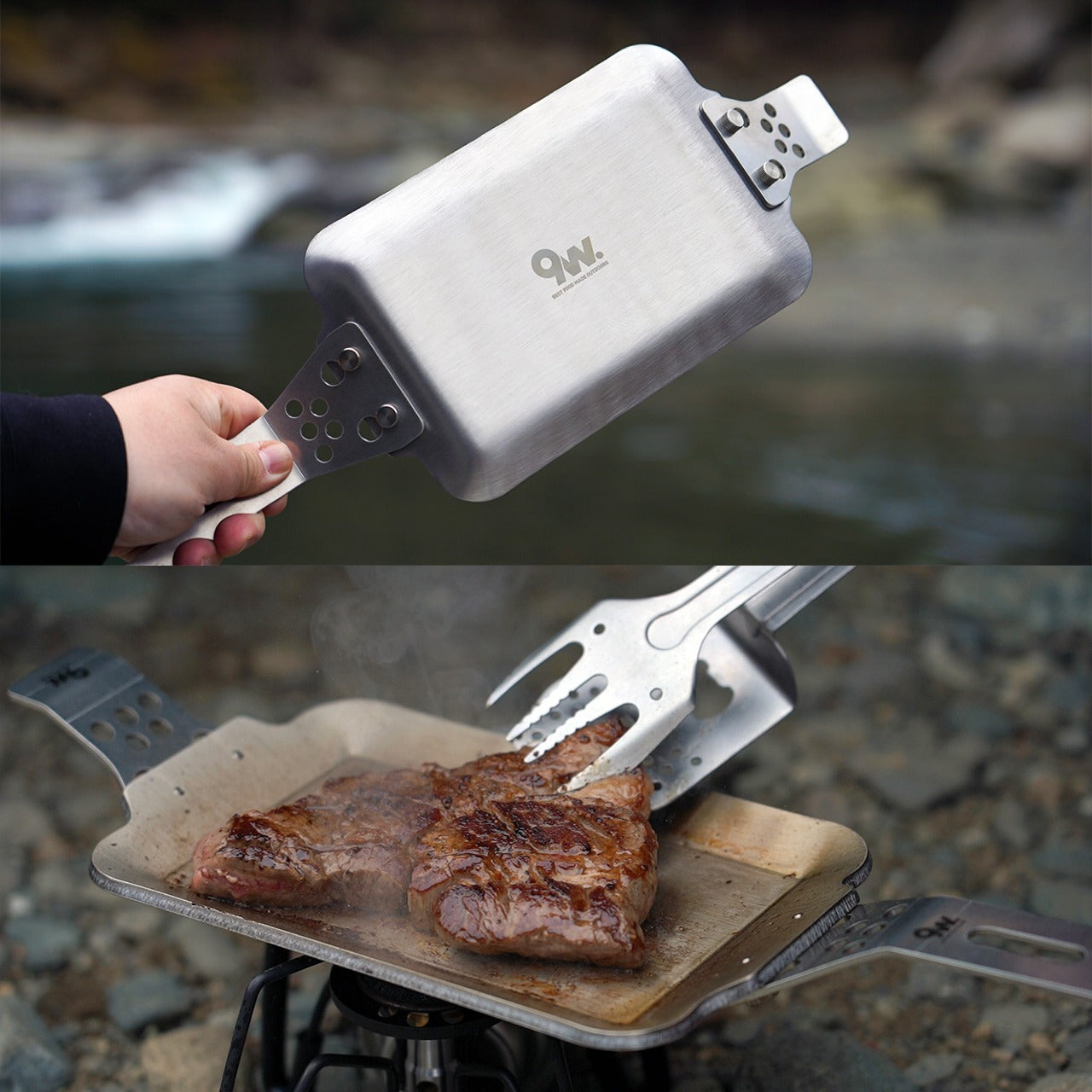
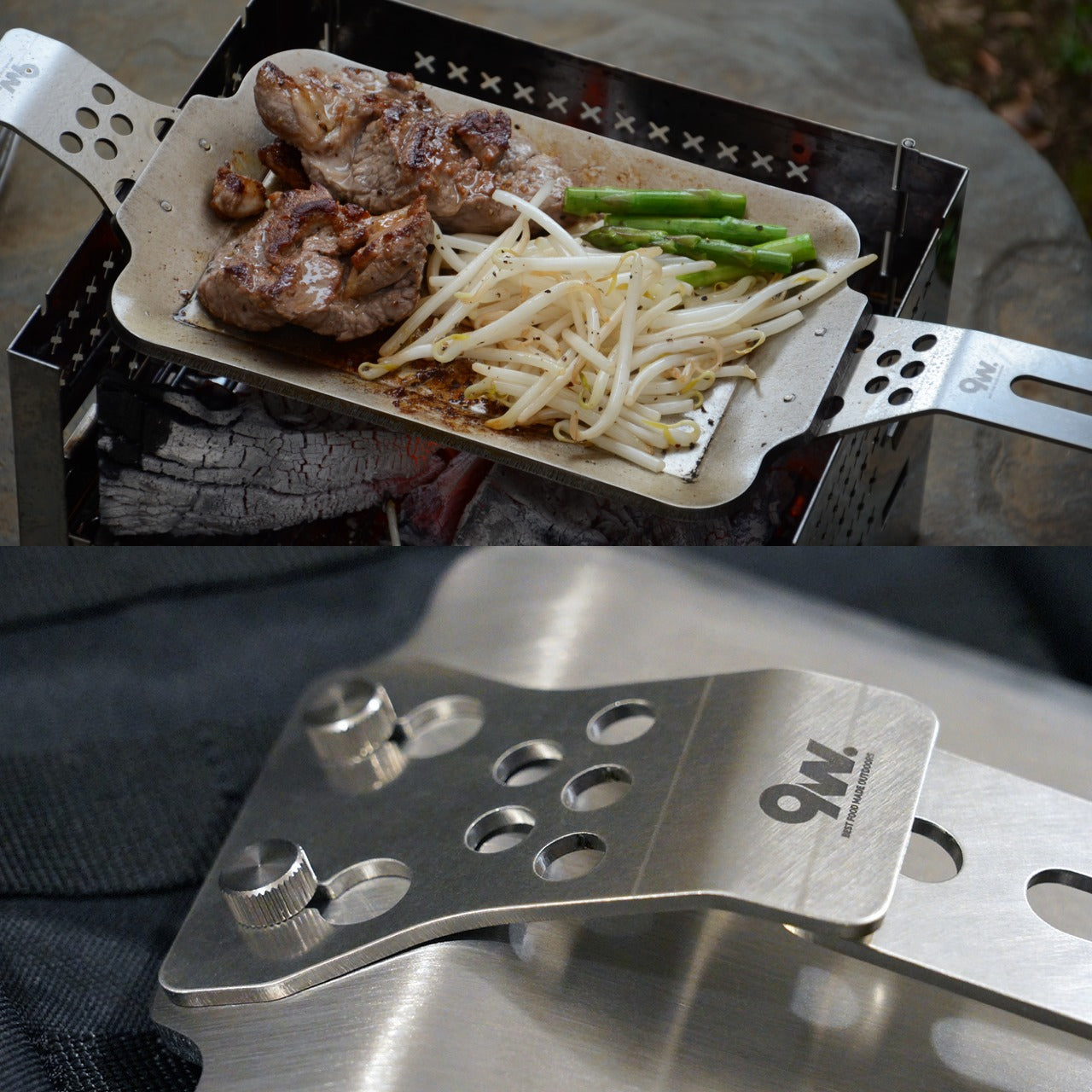
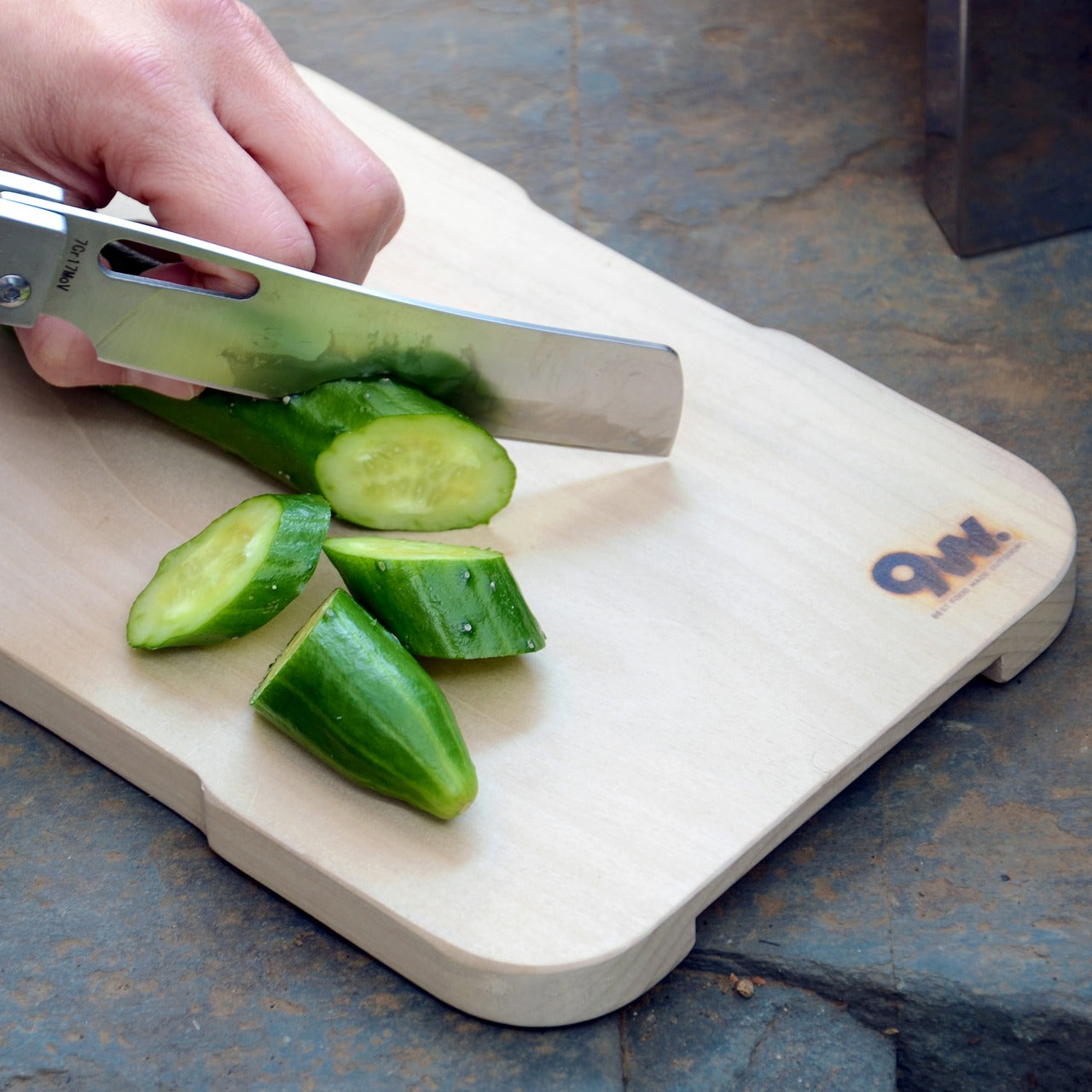
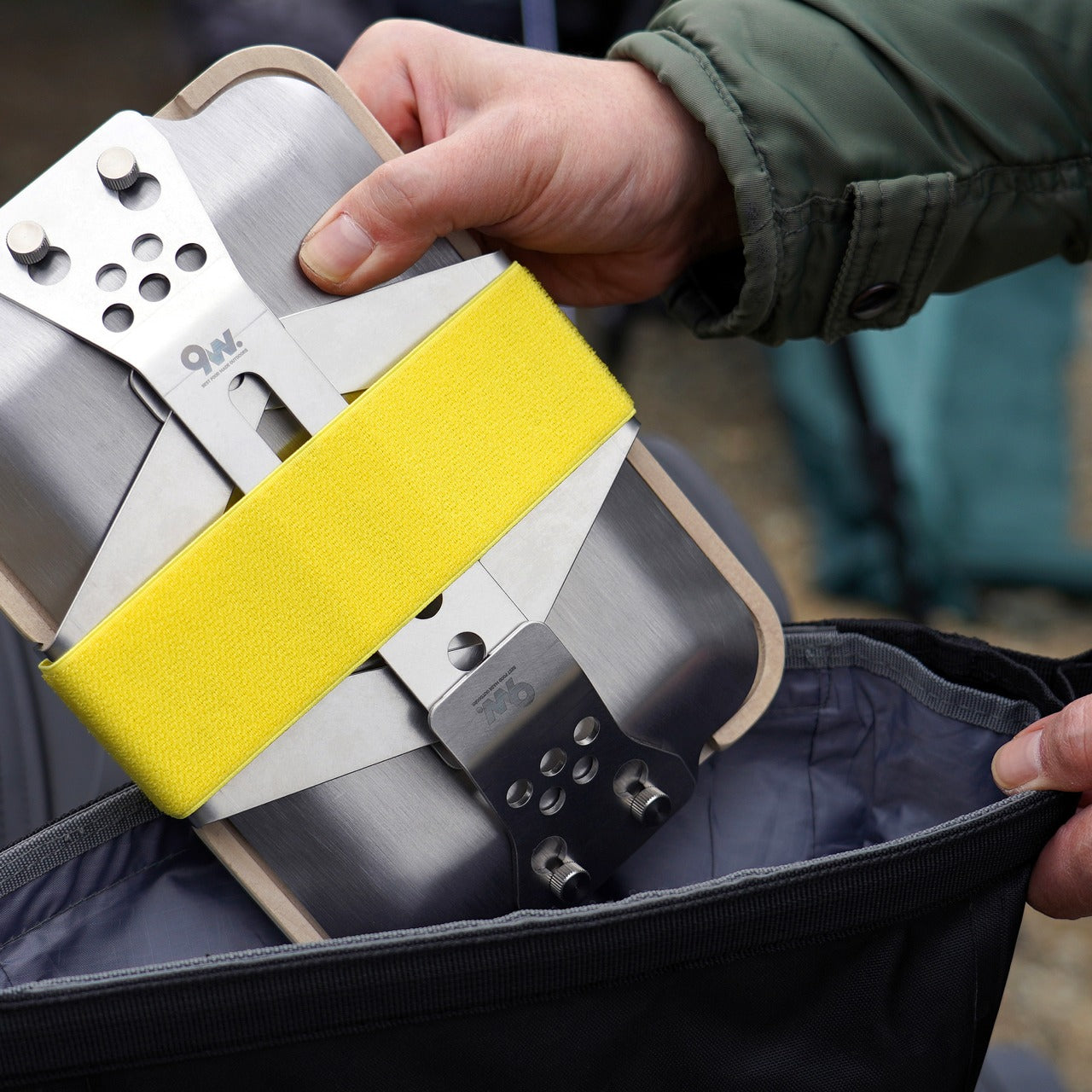
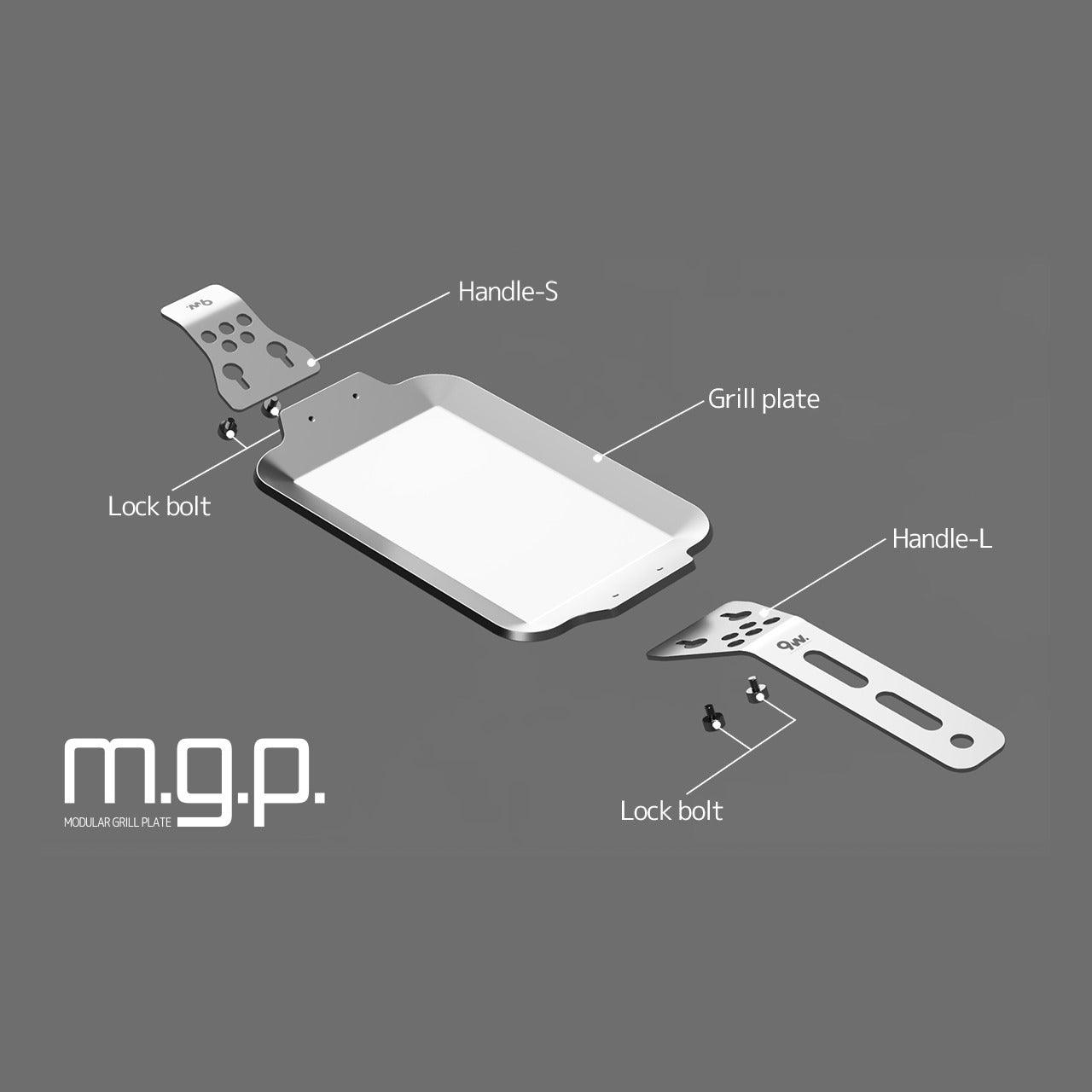
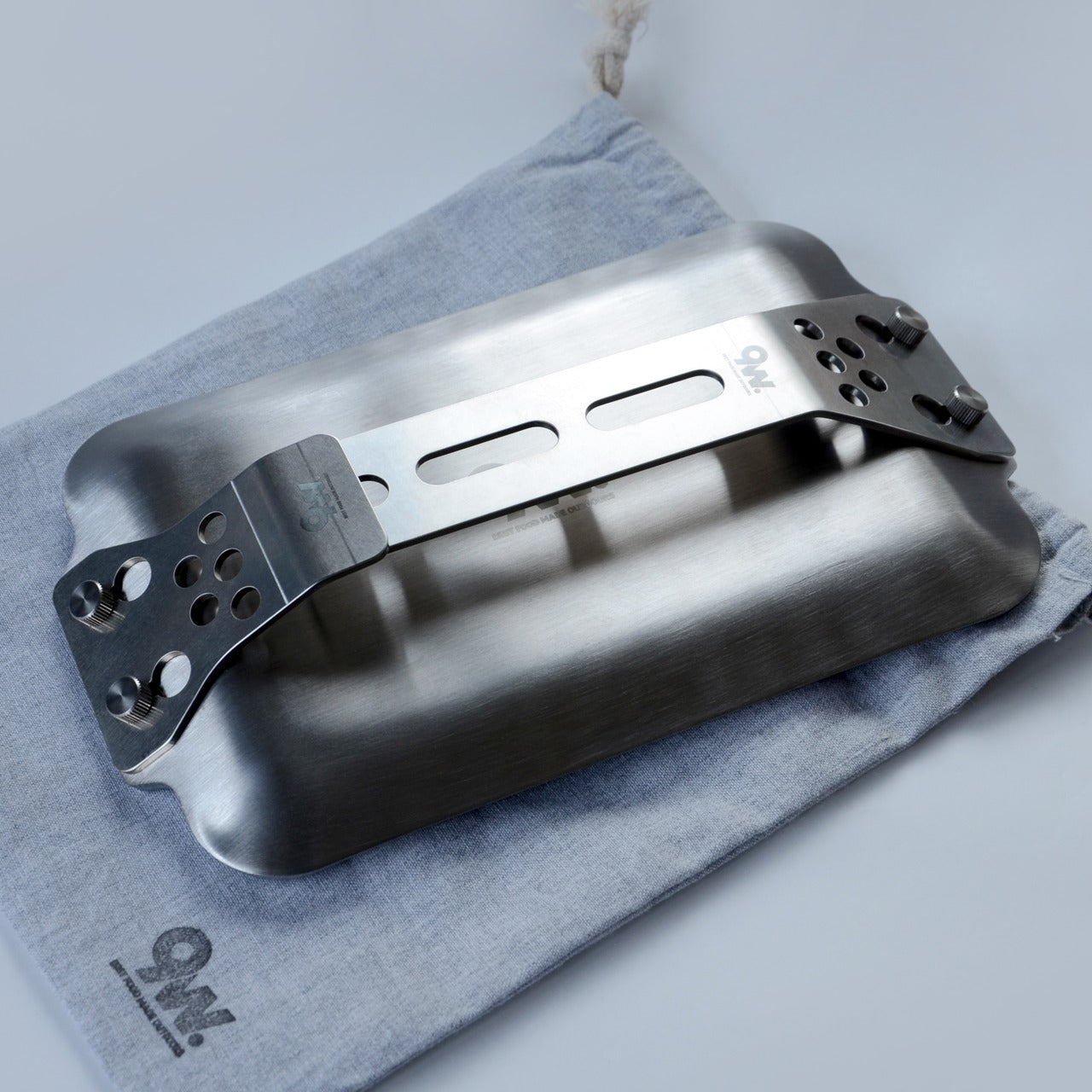
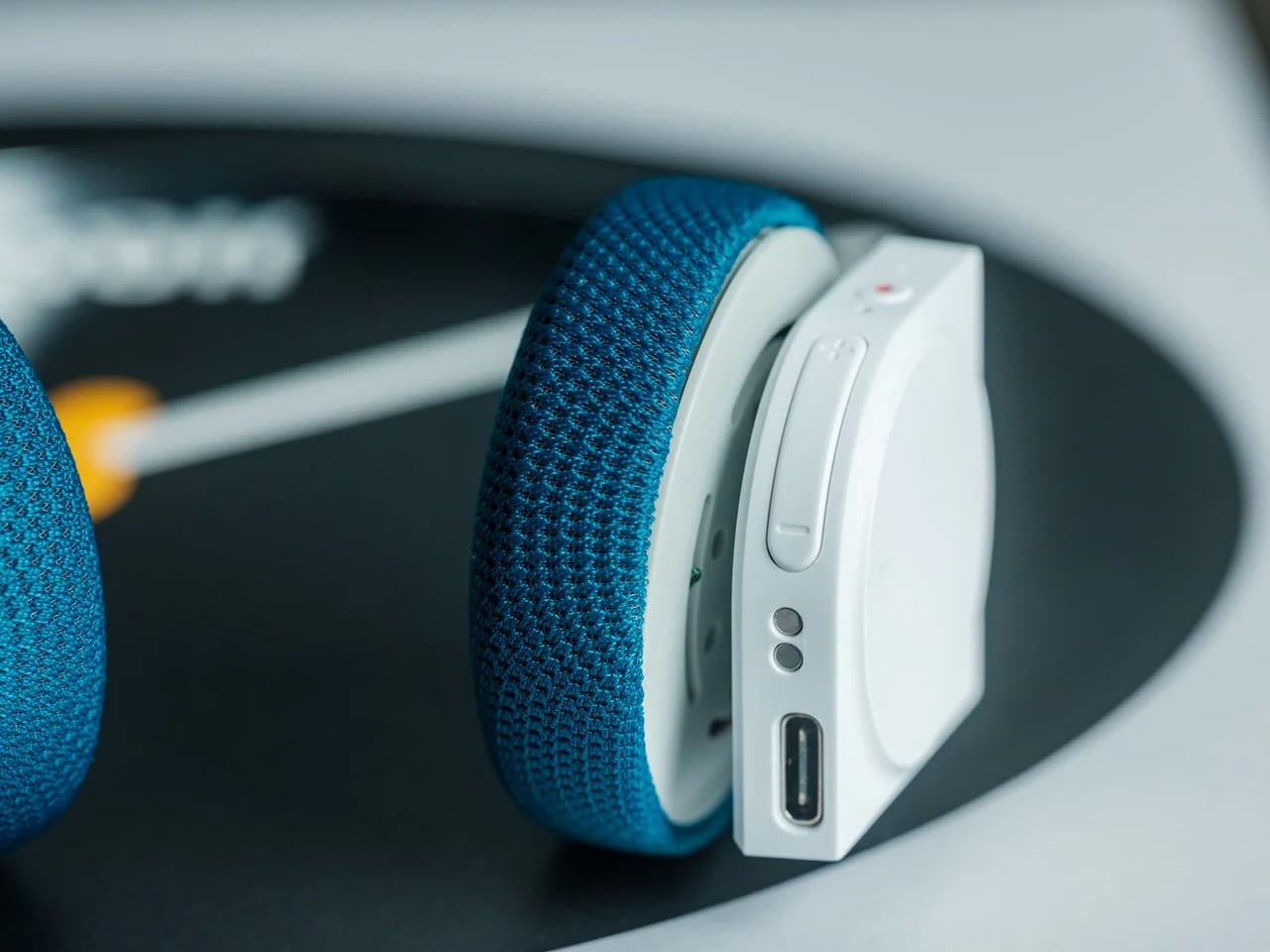


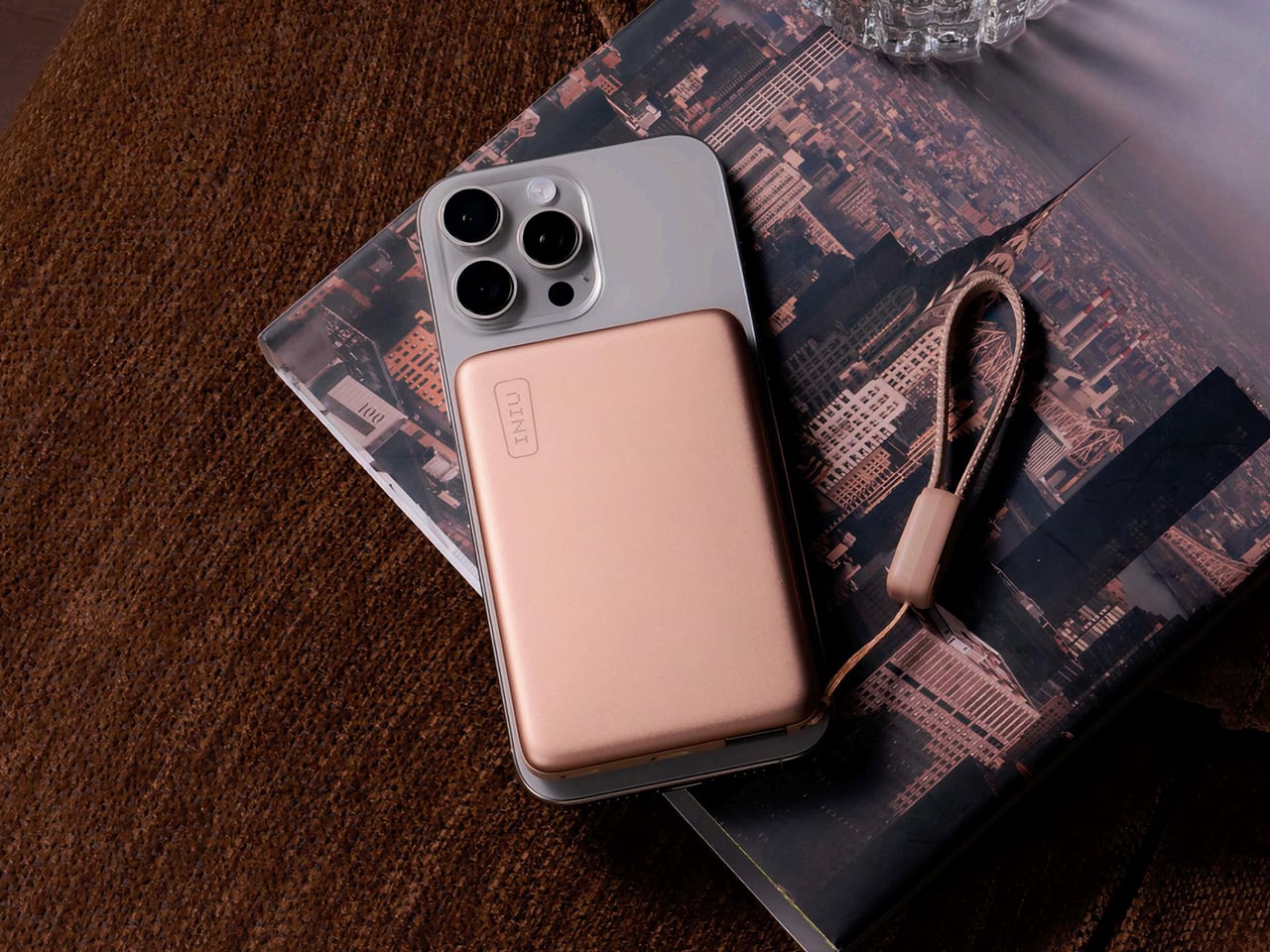
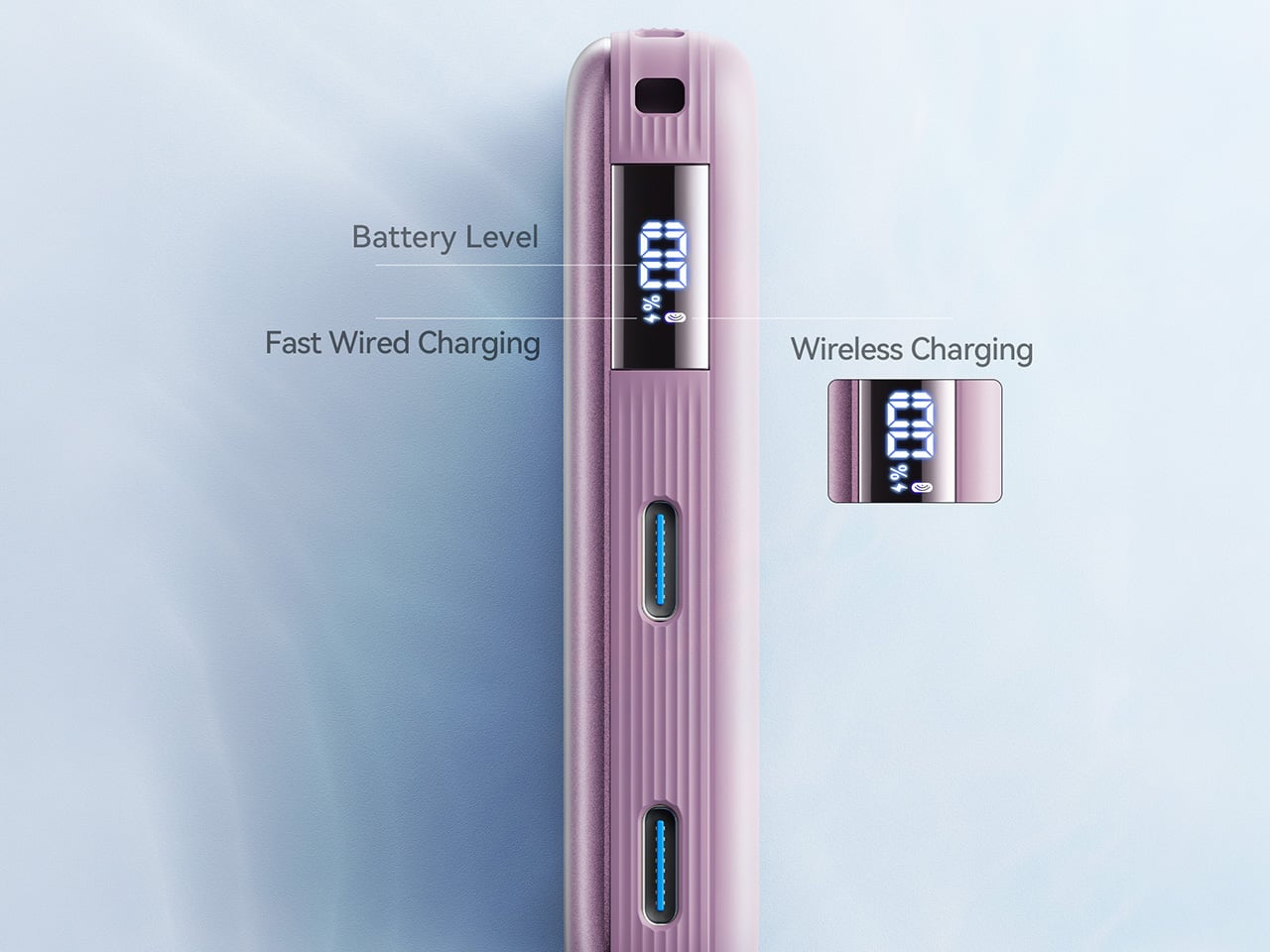
 Passport Cover