
Predictably, Sam Bankman-Fried’s fraud conviction appeal has been denied
Three judges denied Sam Bankman-Fried's fraud conviction appeal. Is anyone the least but surprised.
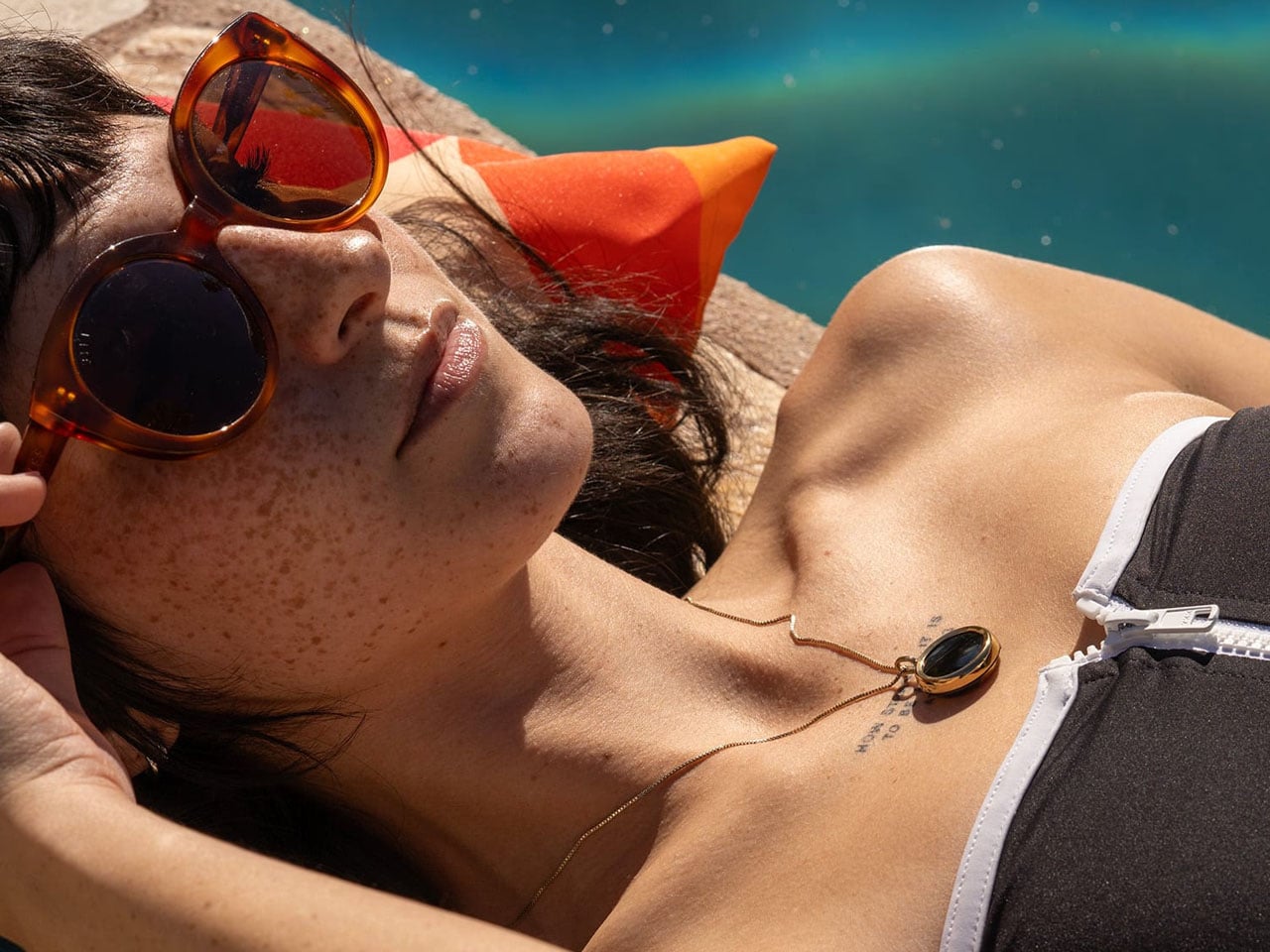
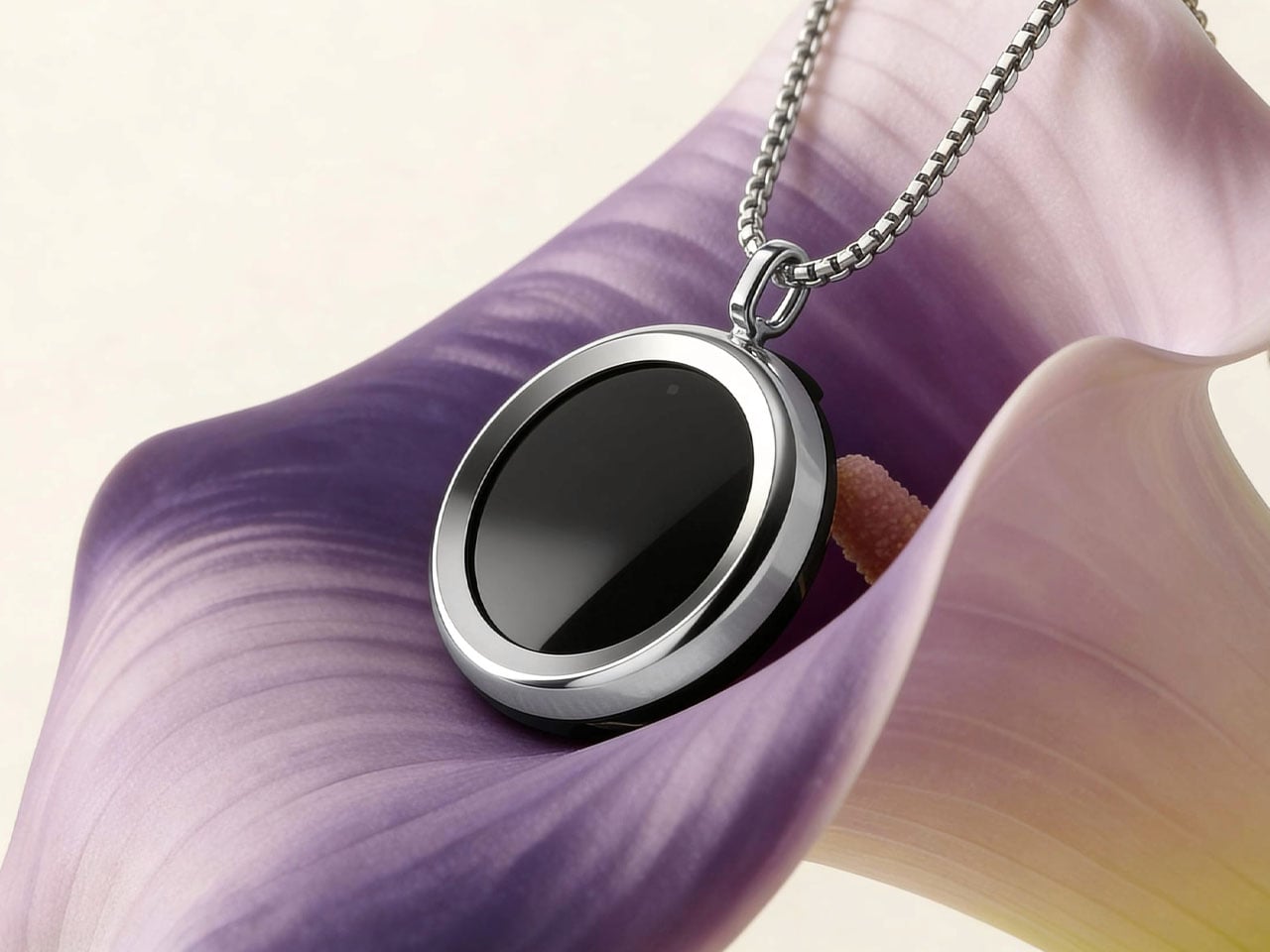
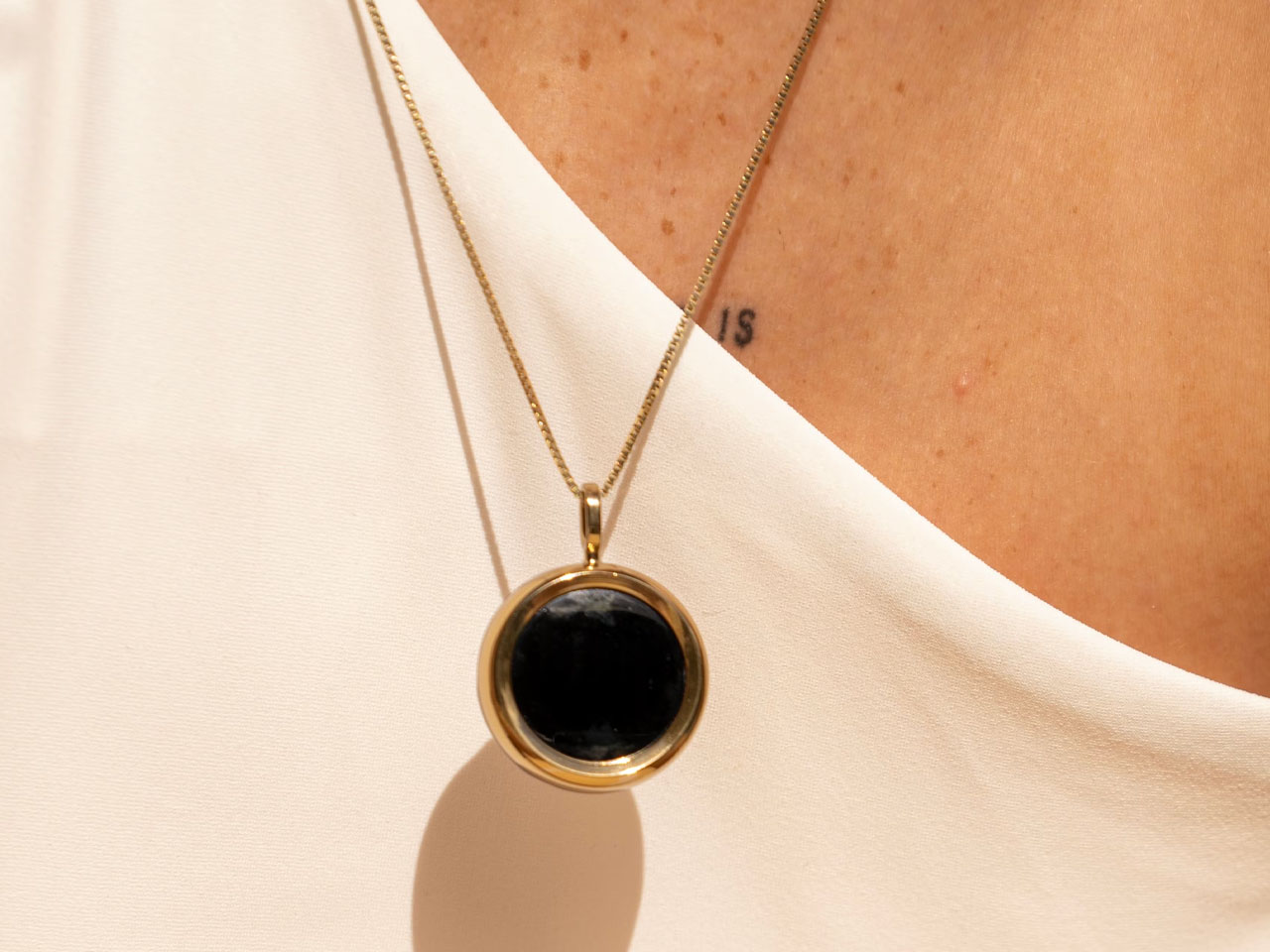
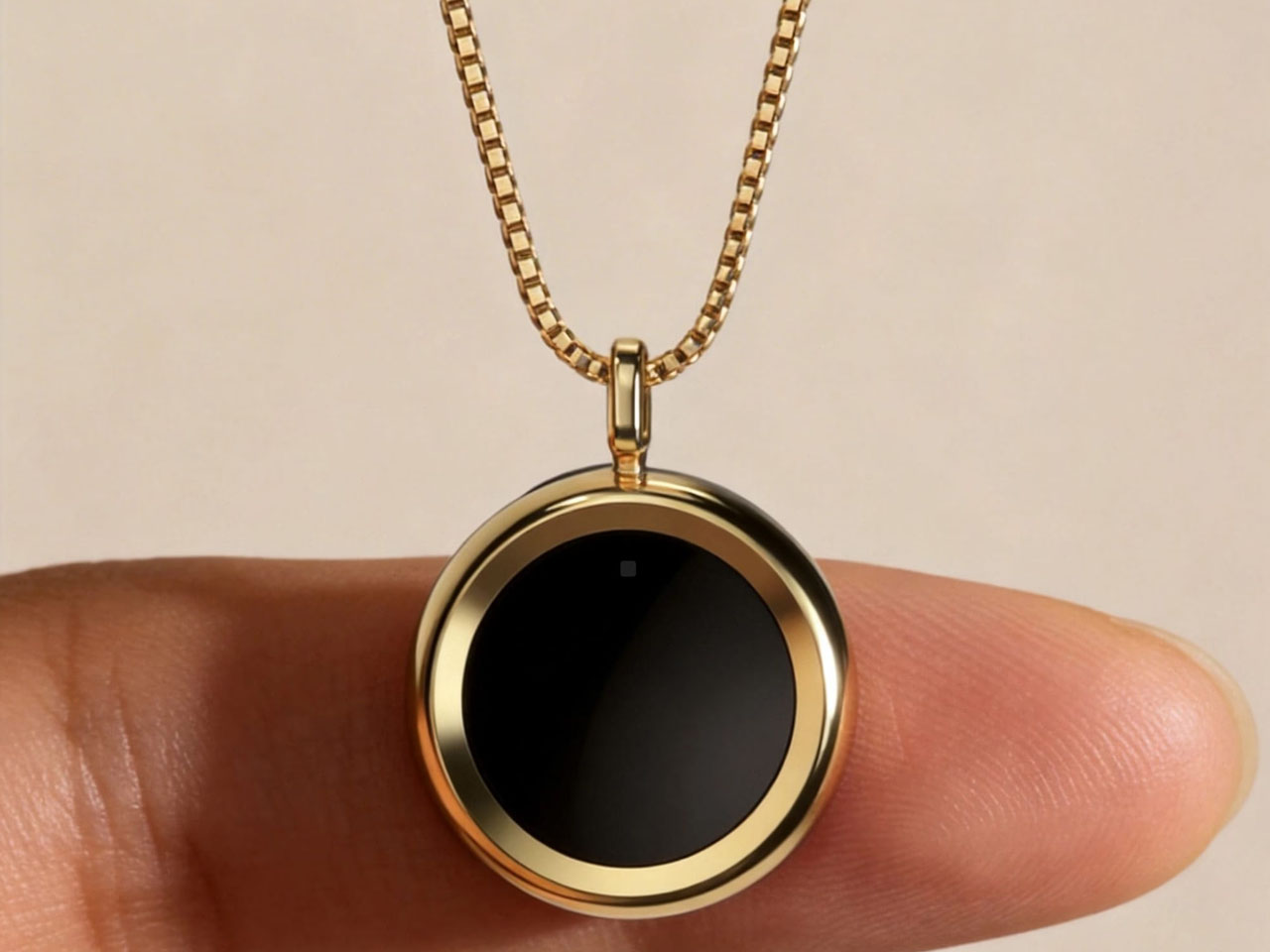
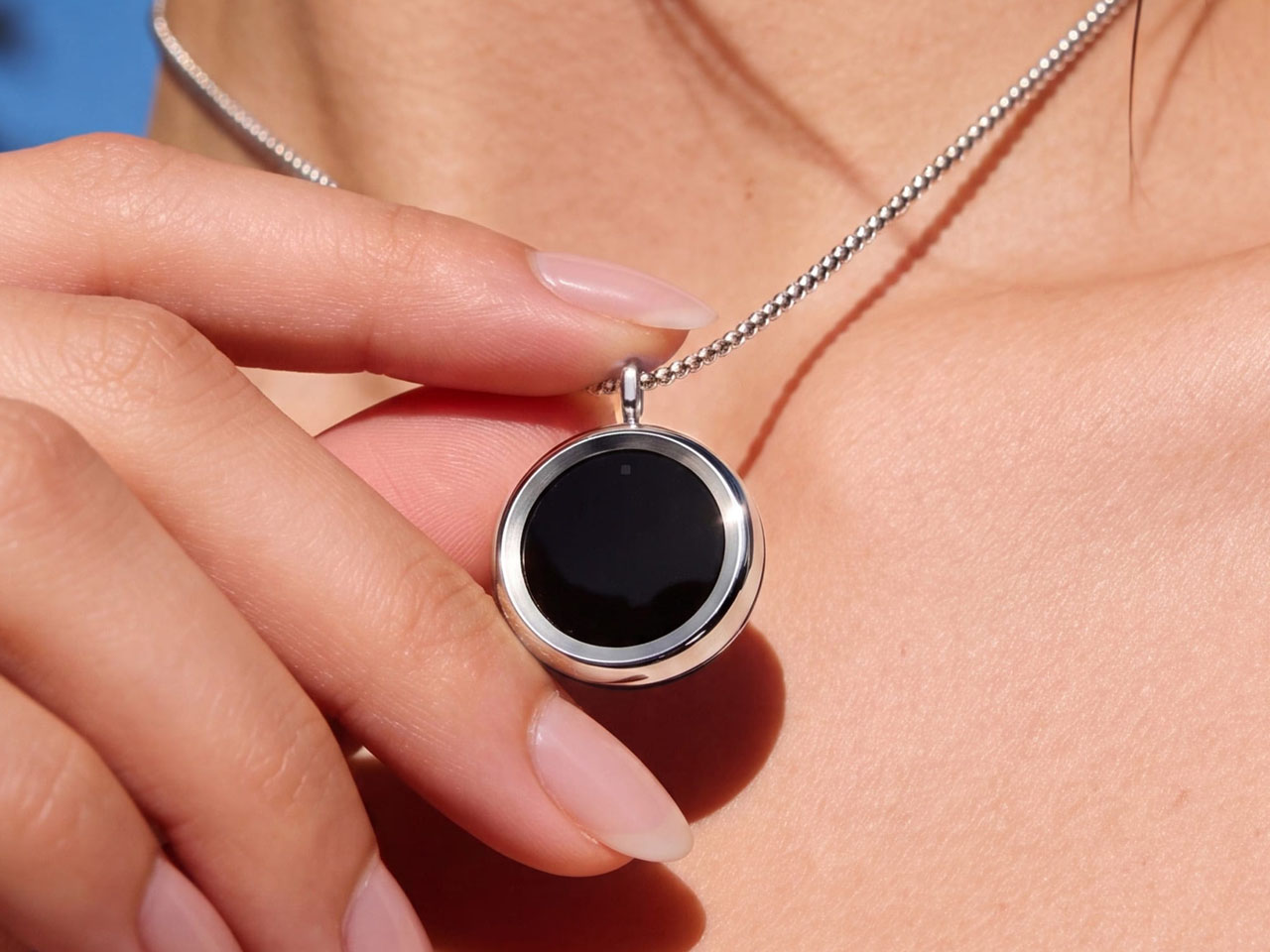
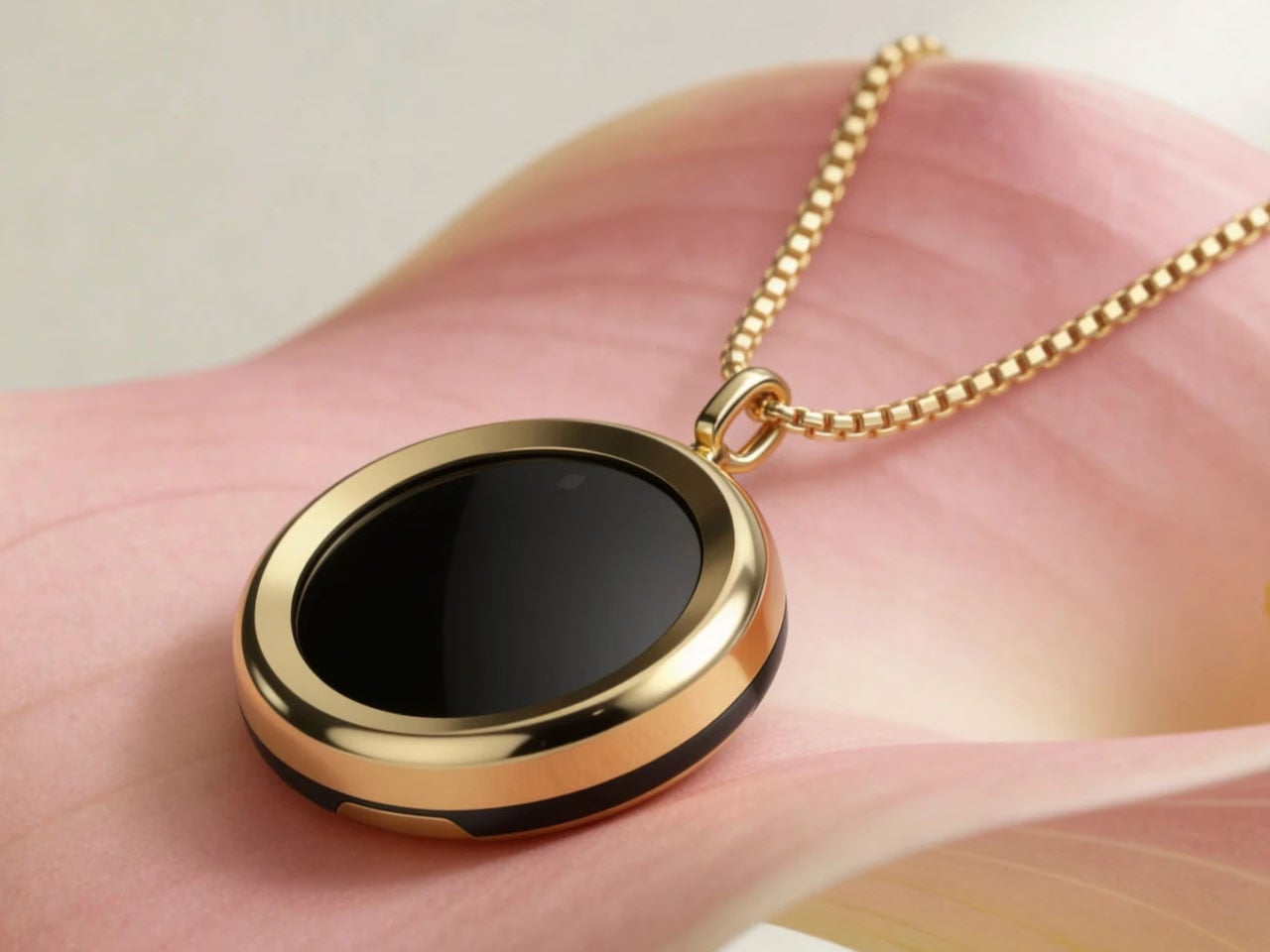
Wearables are targeting most of our burning health concerns, but sun exposure damage is still in the guessing game. Stacy Salvi, who has previously led the acquisition of Fitbit by Google, and is a health expert when it comes to tech wearables, wants skincare to be more considerate when it comes to active sun exposure. Under her new venture, The90, Stacy has launched the Gem wearable that looks like a stylish round necklace for women.
On the inside, the wearable has a built-in UV sensor to track the skin’s UV exposure in real time. The gadget makes complete sense, as most of the time we are left guessing about the real exposure to damaging Sun rays, and are dependent on integrated weather apps’ UV index, which only show generic localised data. Gem goes beyond that and actively tracks the real-time exposure, whether you are lounging in the mid-day Sun or spending afternoons sitting near an office window. It basically takes out the guesswork and focuses on the real-time solution.
Designer: The90

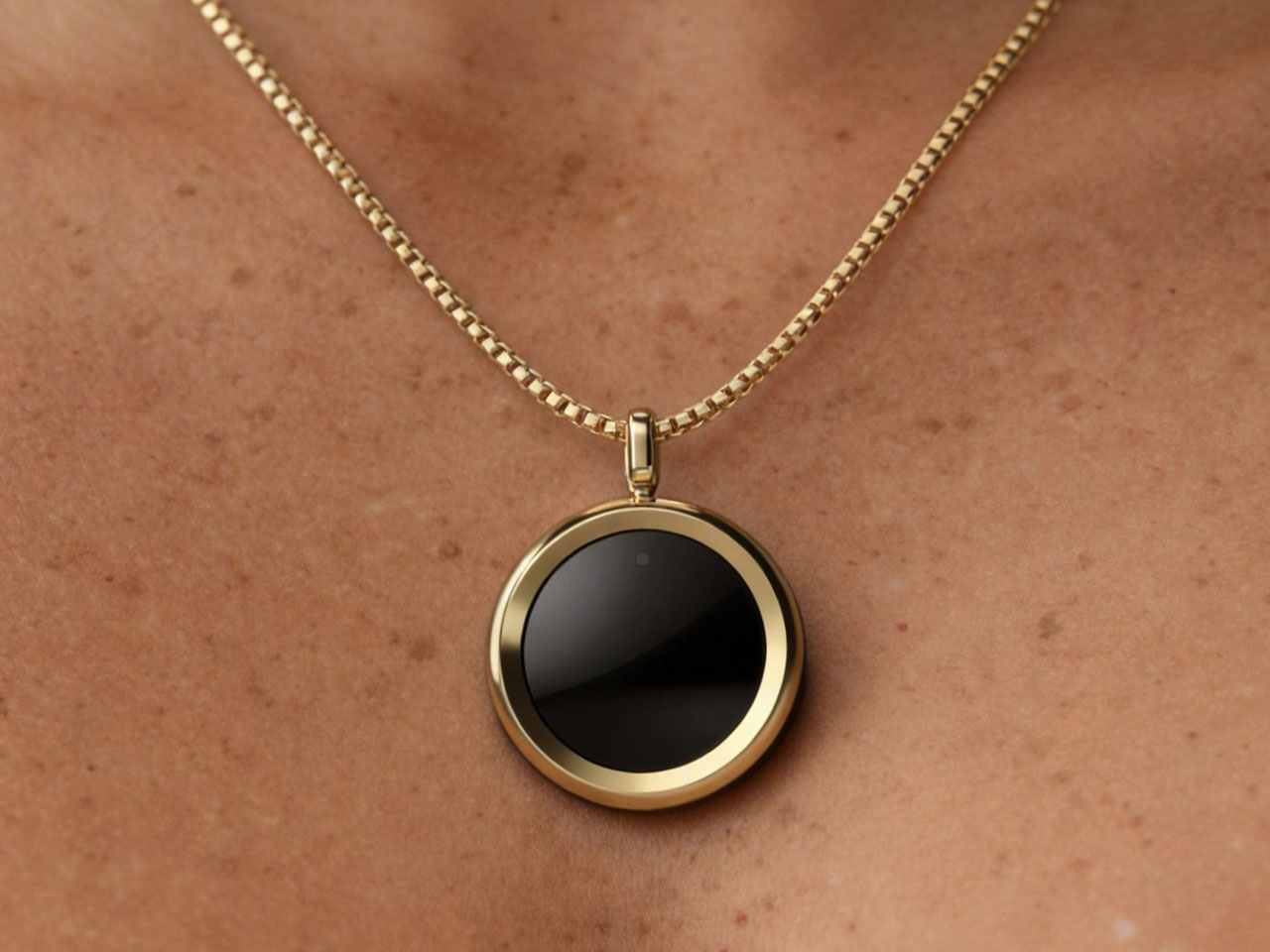
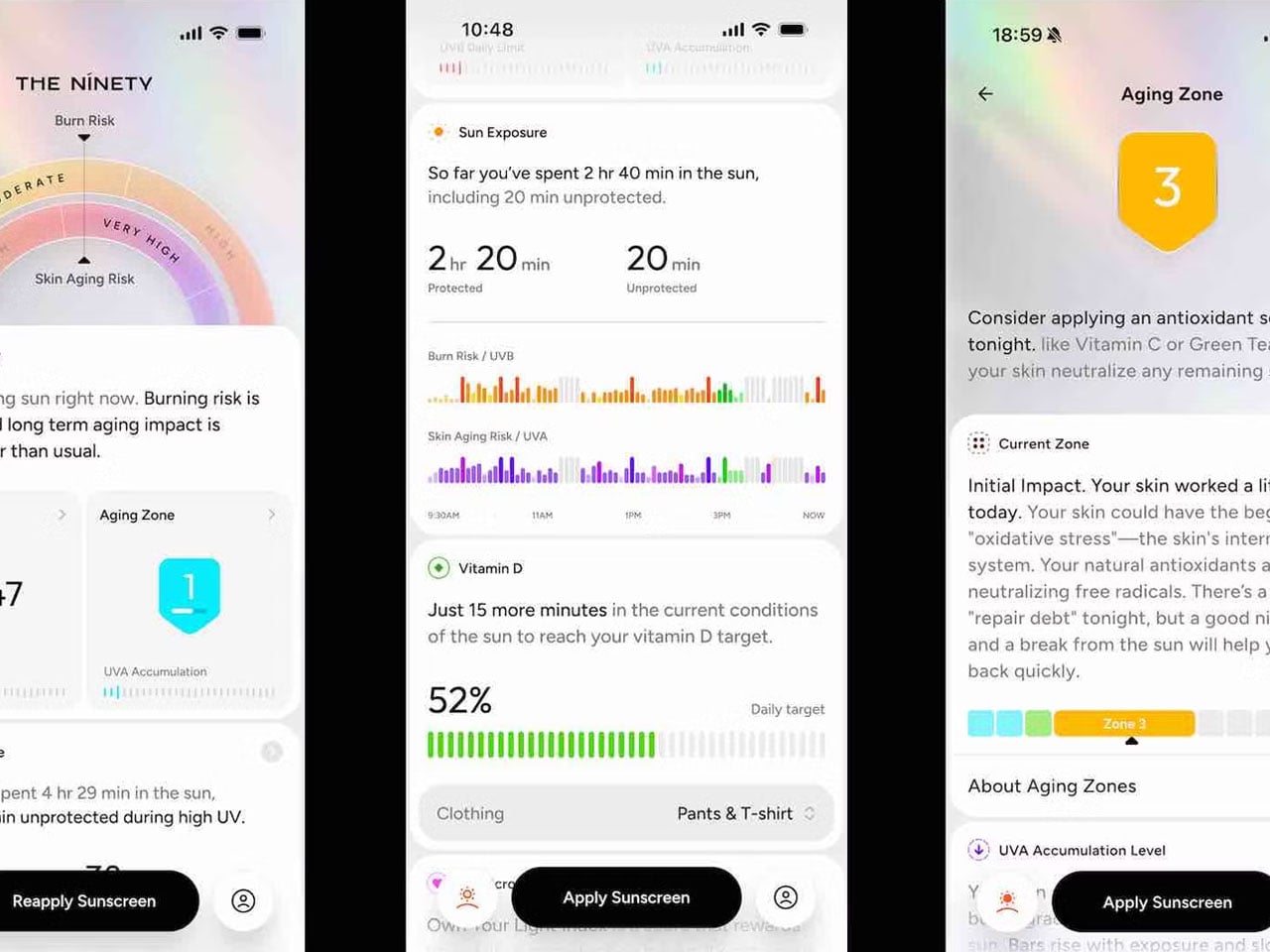
The90Gem keeps a tab of the UVA and UVB data received from the sensors in real time, and over time builds a personal skincare profile that is actually beneficial. “The90 transforms sunscreen from a one-time morning ritual into an adaptive, responsive system built around your actual UV load,” Salvi said. Micromanaging the skin type, sunscreen used, and any sun-protective clothing that you’re wearing is another feature of the accompanying app. For now, the wearable is specifically targeted towards women who tend to be more informed about the risks of UV exposure. The brand, however, eventually wants to expand the product line to men and children as well.
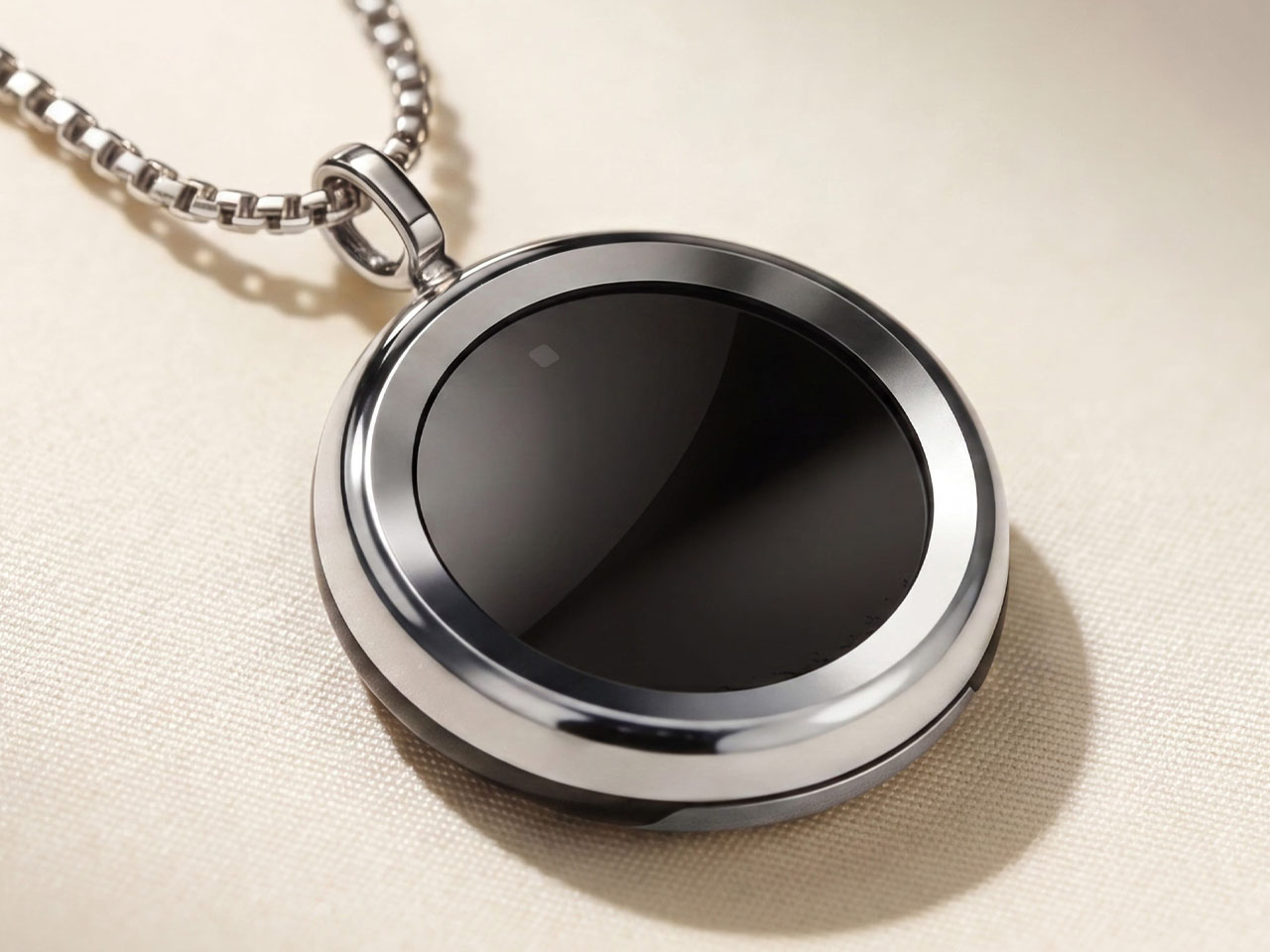
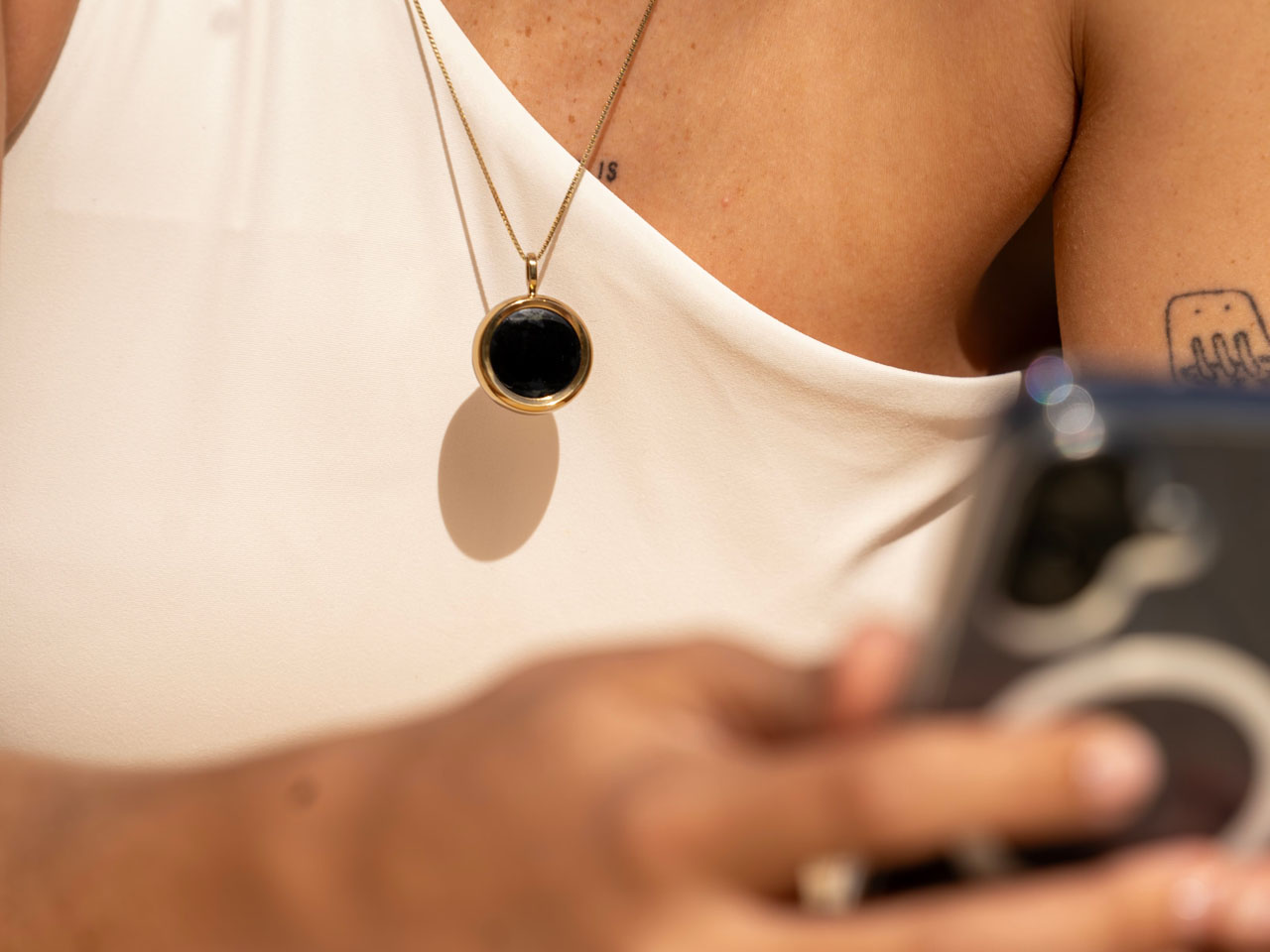
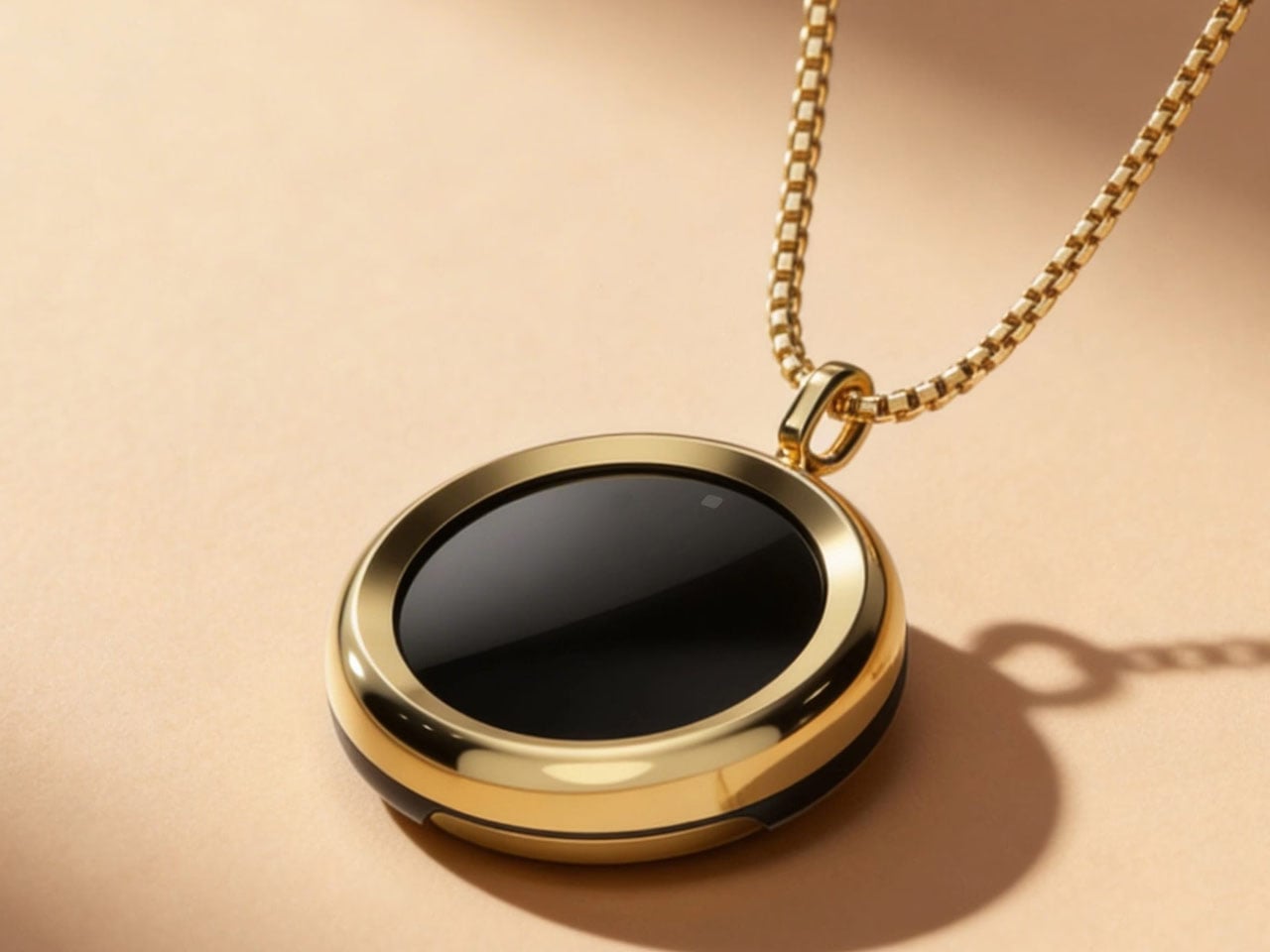
Detecting UVA and UVB exposure is one part of the wearable. The most important bit is the timely beaming of notifications for sunscreen application, or a reminder of the sun protection habits that should eventually be ingrained in your muscle memory. The app also provides data on Vitamin D targets for a mindful suncare routine. The Gem is essentially a titanium case with the sensor inside, wholly encapsulated in a pendant. The battery on the gadget should last for around a week on a single charge, but that remains to be seen in real-world usage.

This piece of smart jewellery is available in silver or gold finish to complete the aesthetic look. Priced at $299, The90 Gem wearable is just borderline affordable for a specific benefit, but the members of The Skinny Confidential community can get it for an exclusive price of $199 in the early access offer. The company also has plans to incorporate the smart wearable as other items as well, which should further expand the options to gauge your sun exposure in style.



The post The90Gem smart necklace tracks UV exposure in real-time for sensible skincare first appeared on Yanko Design.
Consumer tablets have gotten remarkably thin and capable, but the categories of people who actually use tablets on a job site, in a warehouse, or out in the field have largely been served by a different and considerably more expensive tier of hardware. Most rugged tablets come either from enterprise-only brands with steep price points, or from consumer devices pressed into duty they weren’t really designed for. The gap between those two extremes has rarely been addressed cleanly.
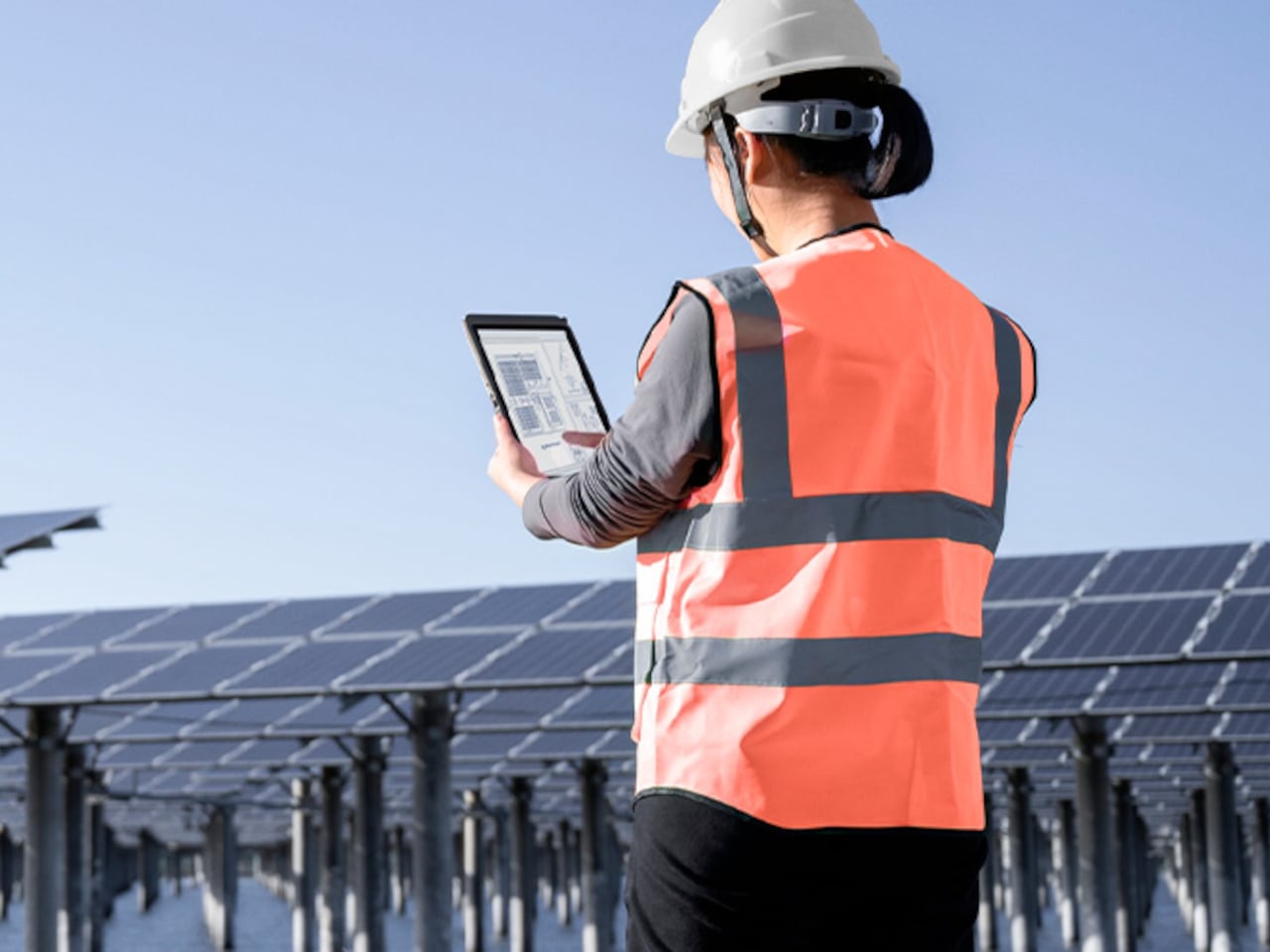
The Lenovo ThinkTab X11 is an attempt to close that gap. It’s the first device to carry the ThinkTab name, extending Lenovo’s Think portfolio into rugged Android territory for frontline workers in logistics, manufacturing, construction, transportation, and energy. Starting at $499, it lands well below what comparable enterprise-grade rugged tablets typically cost while bringing credentials that those environments actually require.
Designer: Lenovo

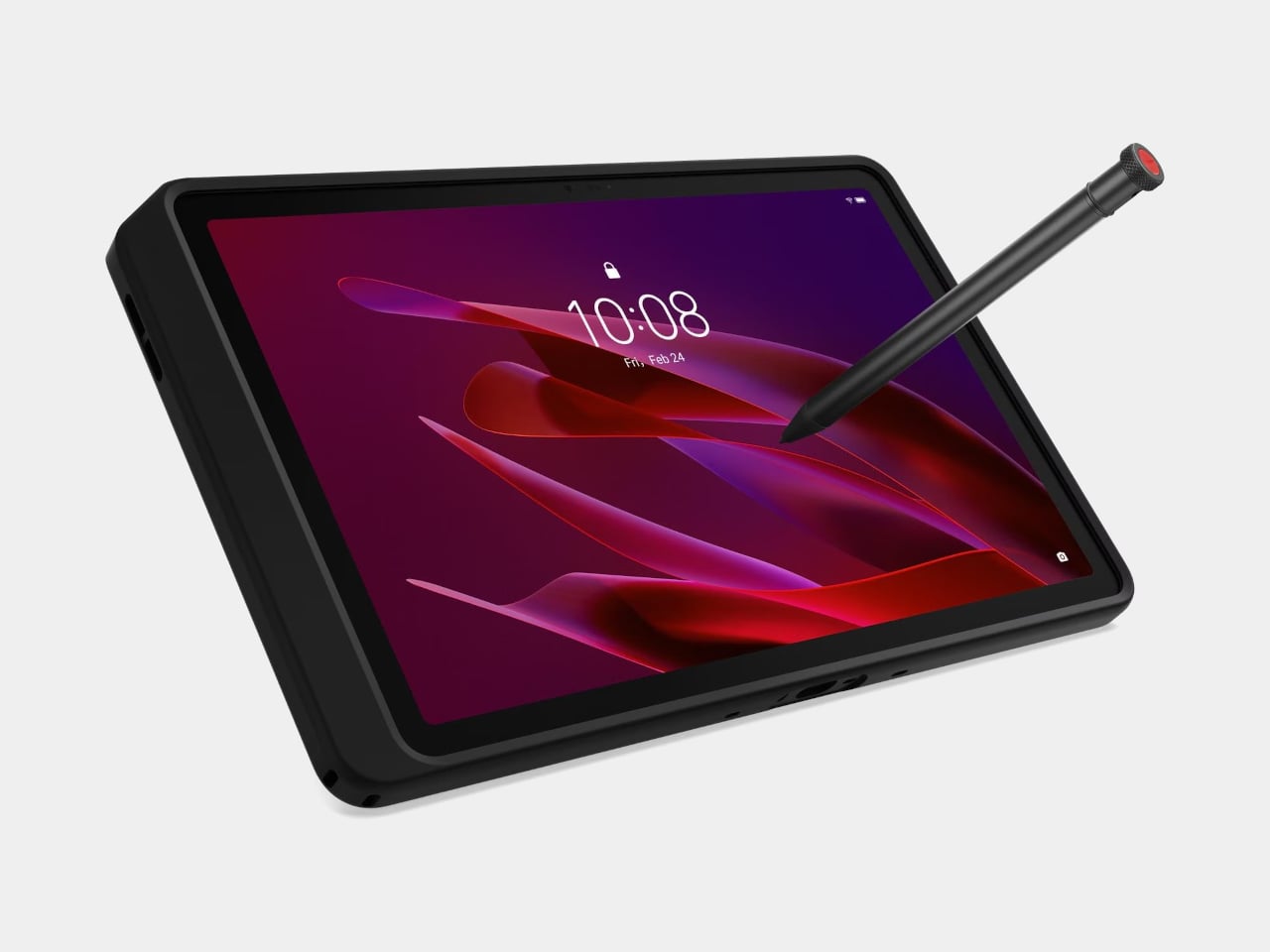
The most unusual thing about the ThinkTab X11 isn’t its durability ratings, which are genuine rather than decorative, but rather its battery design. The 10,200 mAh cell removes without tools, using a screwless mechanism that lets a worker swap a depleted pack for a fresh one mid-shift and keep going. That’s a design decision that most tablet makers abandoned years ago in pursuit of thinner profiles, and it matters enormously when a dead device means halting an entire workflow.
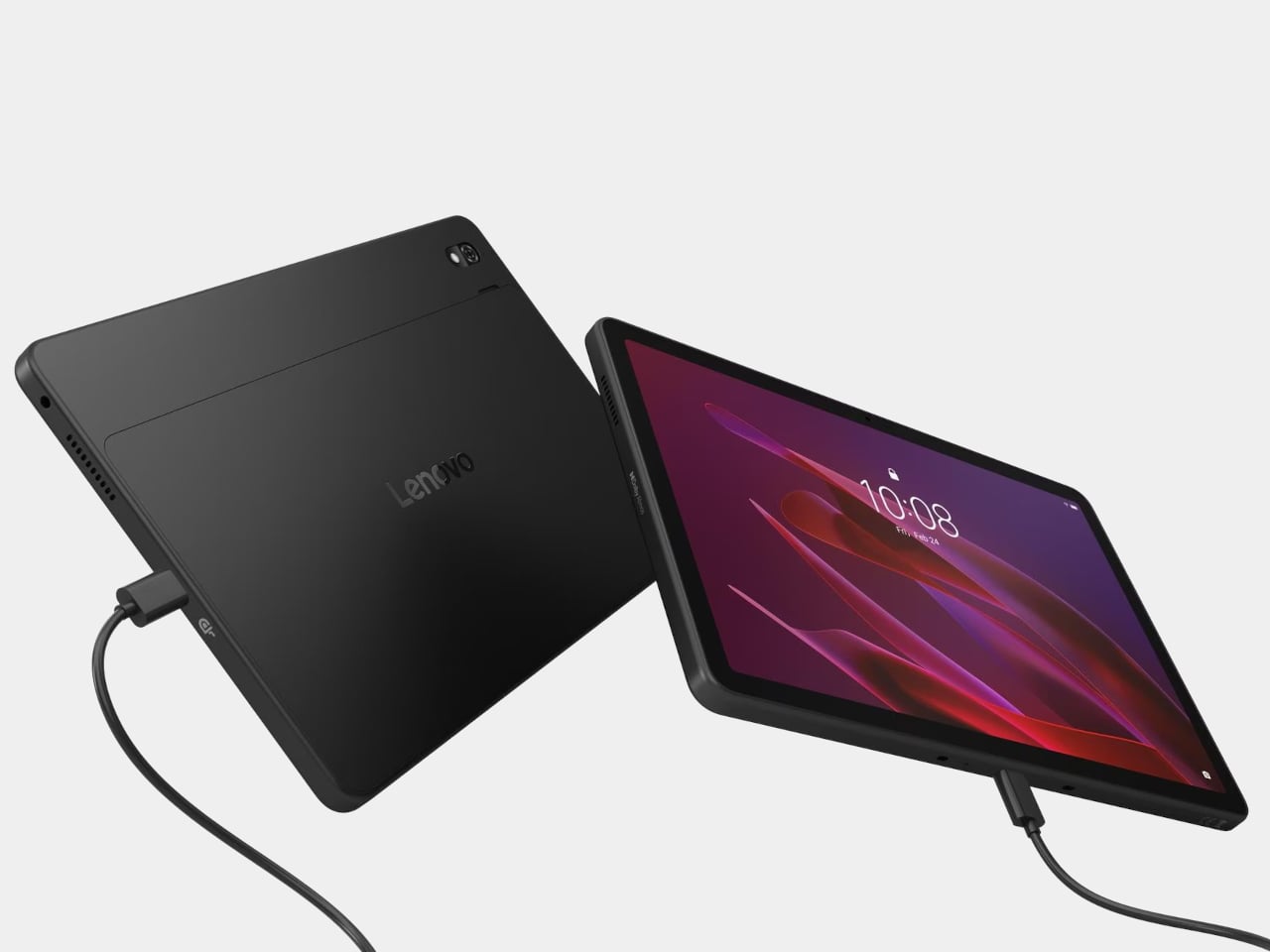
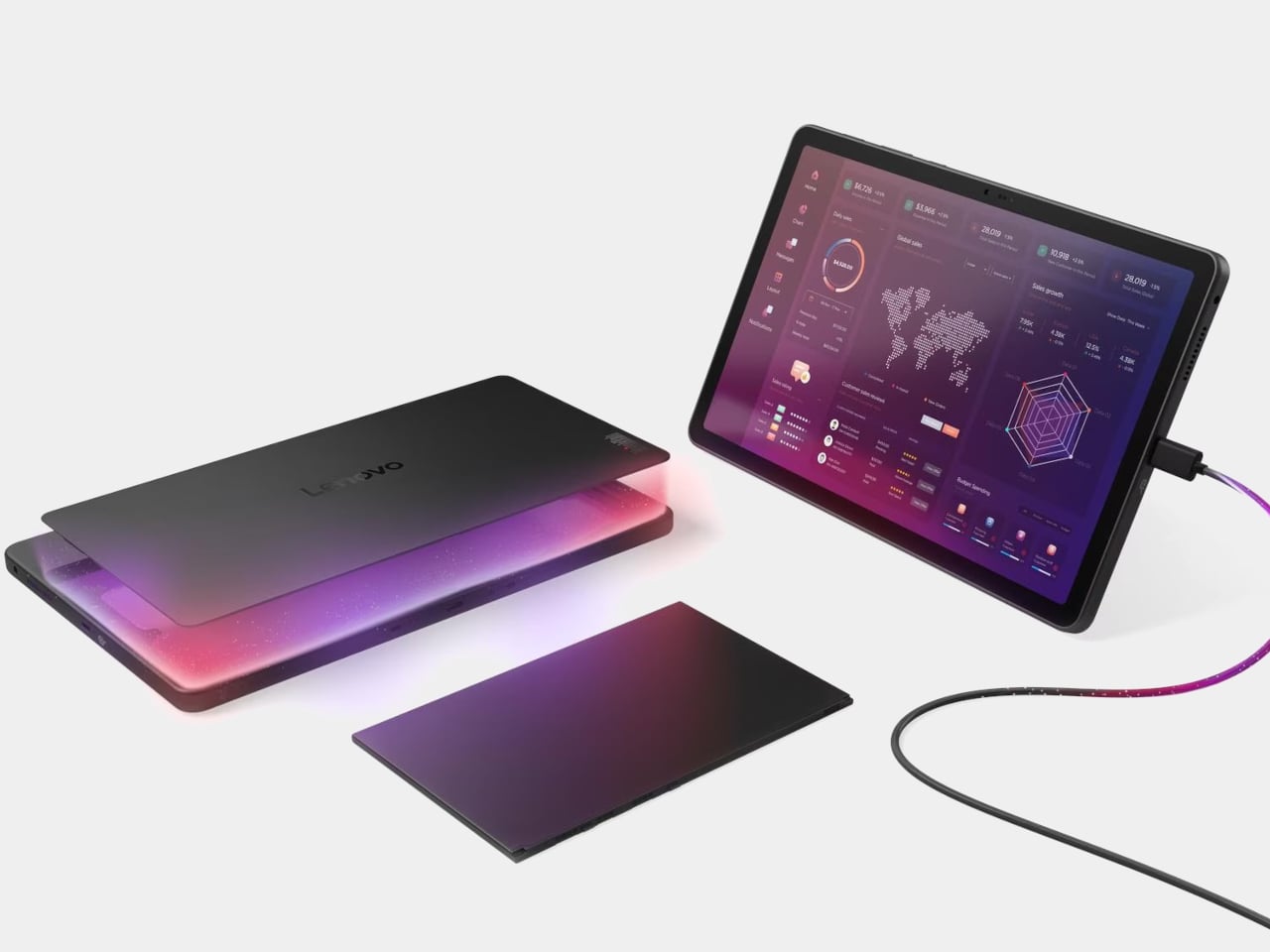
It goes further with a battery-less operating mode. When the tablet is mounted in a vehicle or bolted to a fixed workstation, it can run directly from DC power with no battery installed at all. This reduces heat buildup during continuous use, extends the long-term health of the device, and removes the battery’s natural degradation from the equation entirely for fixed deployments. Dual USB-C ports handle simultaneous charging and peripheral connectivity alongside all of that.

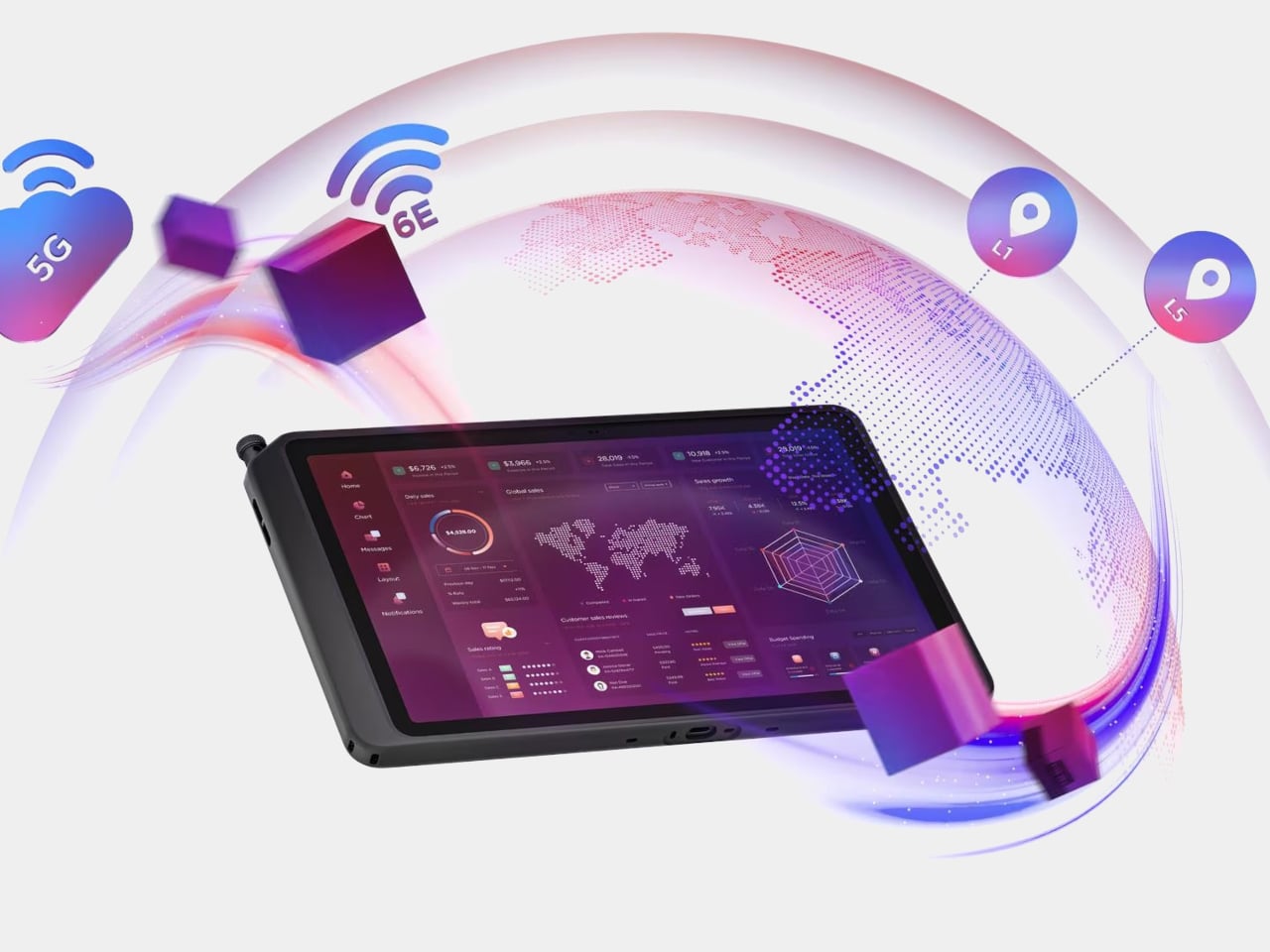
The rest of the hardware is built around the same operating logic. The 10.95-inch display runs at 90 Hz with up to 800 nits of peak brightness under high brightness mode, and it’s coated with Corning Gorilla Glass. The touch layer is calibrated to work with gloved hands and wet fingers, which matters on a construction site or loading dock more than any raw spec comparison might suggest. The Snapdragon 7s Gen 3 handles processing, with up to 12 GB of RAM and up to 512 GB of UFS 3.1 storage available.
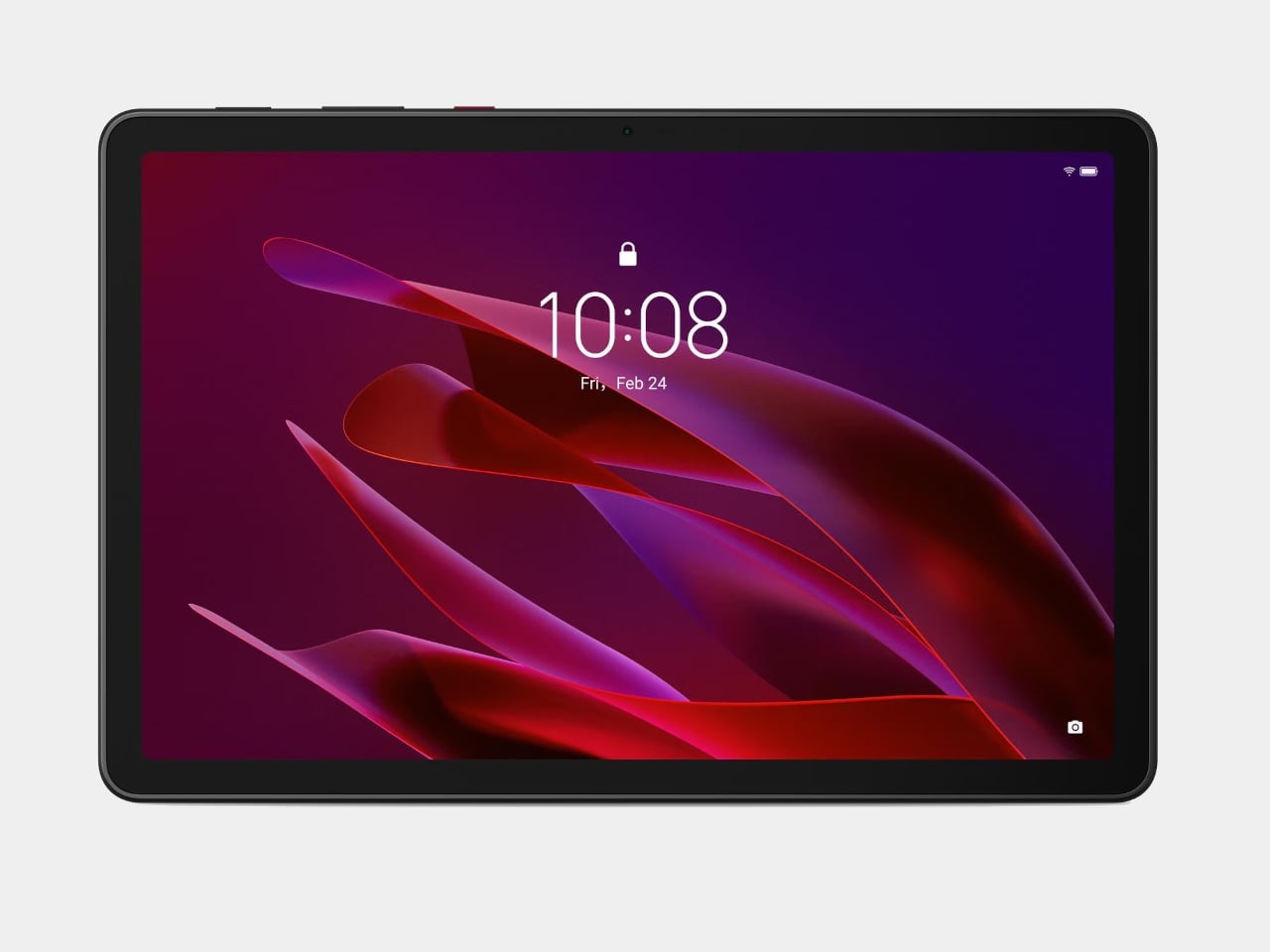
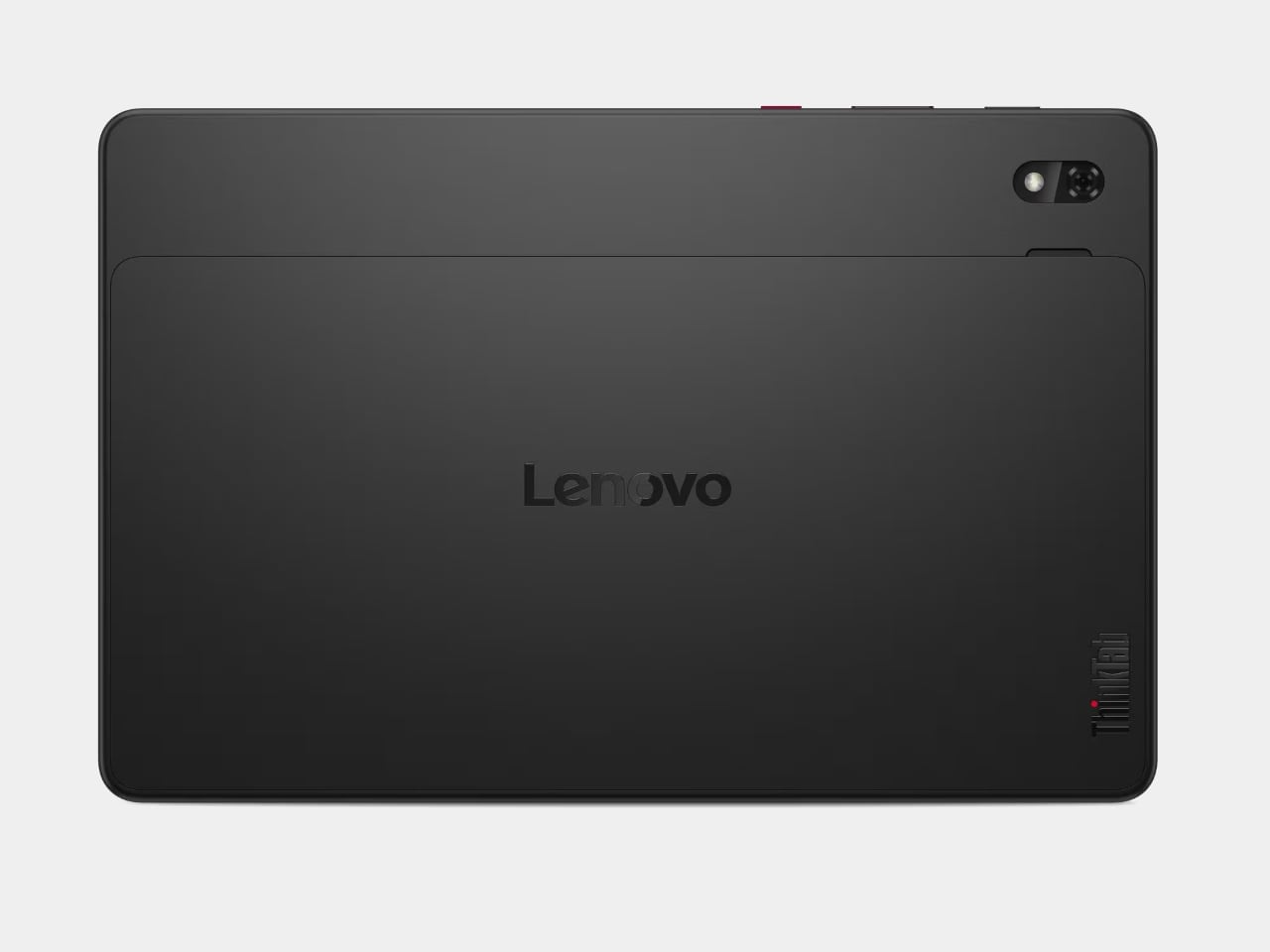
The included rugged case brings MIL-STD-810H certification for drops and vibration, while the device itself carries an IP68 rating for dust and water resistance. The case can be swapped out for a plain back panel when the environment is less demanding, which keeps the device from feeling like overkill in lighter contexts. Front-mounted NFC handles inventory scanning, access control, and field authentication without requiring the tablet to be flipped over.

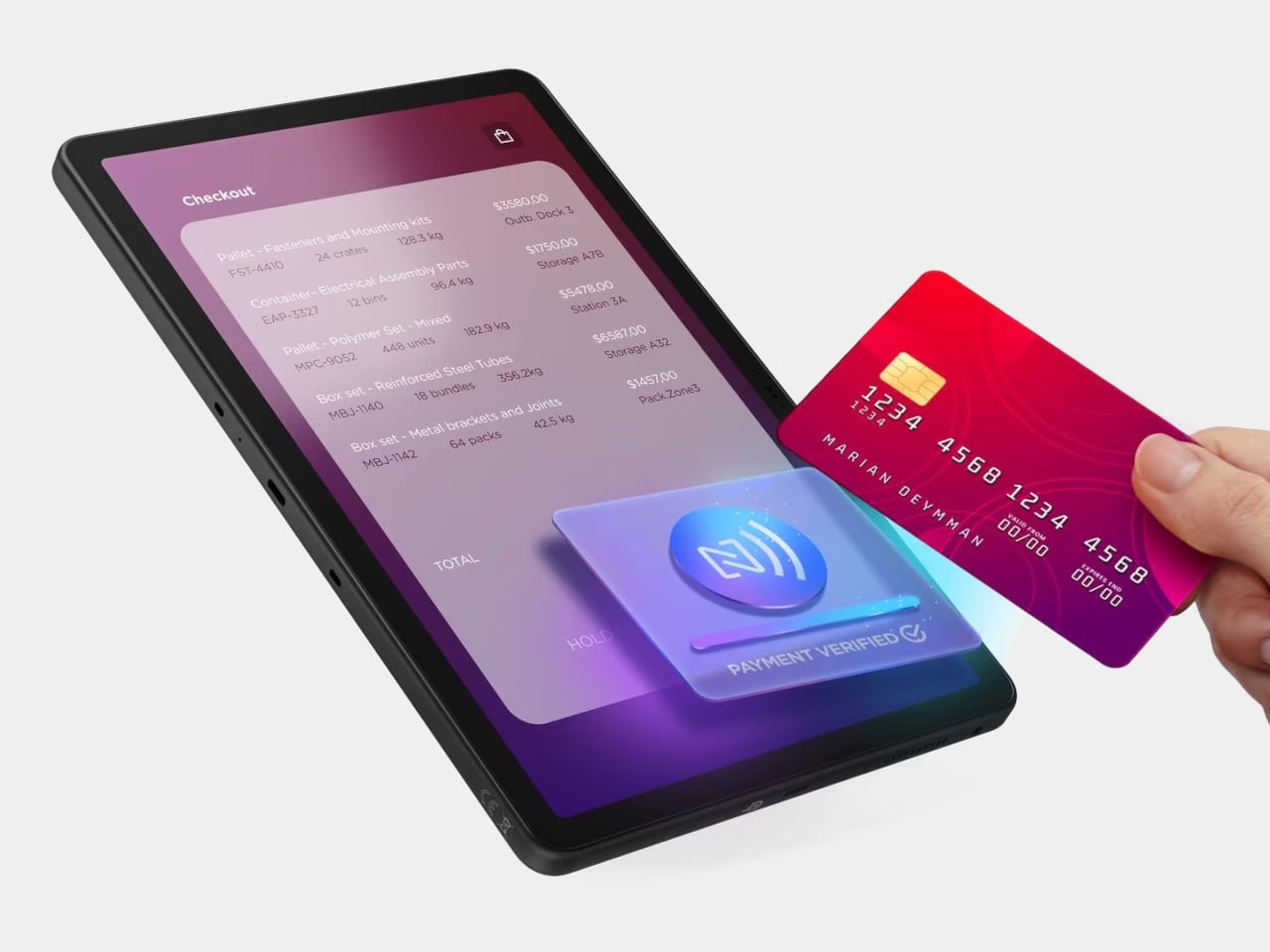
The ThinkTab X11 ships with Android 16, guaranteed to receive two major OS upgrades reaching Android 18, along with four years of security patches. Lenovo’s ThinkShield security layer sits underneath the consumer-facing OS, giving IT departments the kind of centralized device management tools they already use for ThinkPads. An organization that runs the Think ecosystem at the desk can now extend the same infrastructure to the field, with the 256 GB model available at $579.
The post Lenovo Just Built a $499 Rugged Tablet You Can Run Without a Battery first appeared on Yanko Design.


Most of us don’t spend a lot of time thinking about seaweed. It turns up in sushi, drifts around in the ocean, and occasionally ruins a beach day. But seaweed farming is quietly becoming one of the more compelling conversations in sustainable food and ocean health, and the tools that support it are finally starting to catch up with the ambition. Enter Symbios, a buoy system designed by Aaron Mooser as his bachelor thesis project at Bauhaus University Weimar, and one of the more quietly impressive things to come out of student design in recent memory.
The core idea is straightforward, but the thinking behind it is genuinely sharp. Symbios is an automated buoy system built for Nordic nearshore seaweed farmers. Its central feature is depth regulation, allowing the buoys to move seaweed into cooler, deeper waters during warmer months. This solves one of the most persistent problems in seaweed cultivation: ocean temperatures fluctuate enough to disrupt or completely derail a harvest season. By managing that shift automatically, Symbios makes year-round cultivation and partial harvesting not just possible, but practical.
Designer: Aaron Mooser

That might not sound like a design story, but it absolutely is. The challenge Mooser was solving wasn’t purely biological. It was logistical, environmental, and deeply human. Seaweed farmers in Nordic regions deal with the compounding pressure of climate variability and the sheer labor of monitoring a harvest that lives underwater. Every unnecessary boat trip costs time, fuel, and money. Symbios addresses this through remote monitoring built directly into the system, reducing the number of trips farmers need to make without losing visibility into what’s happening below the surface.
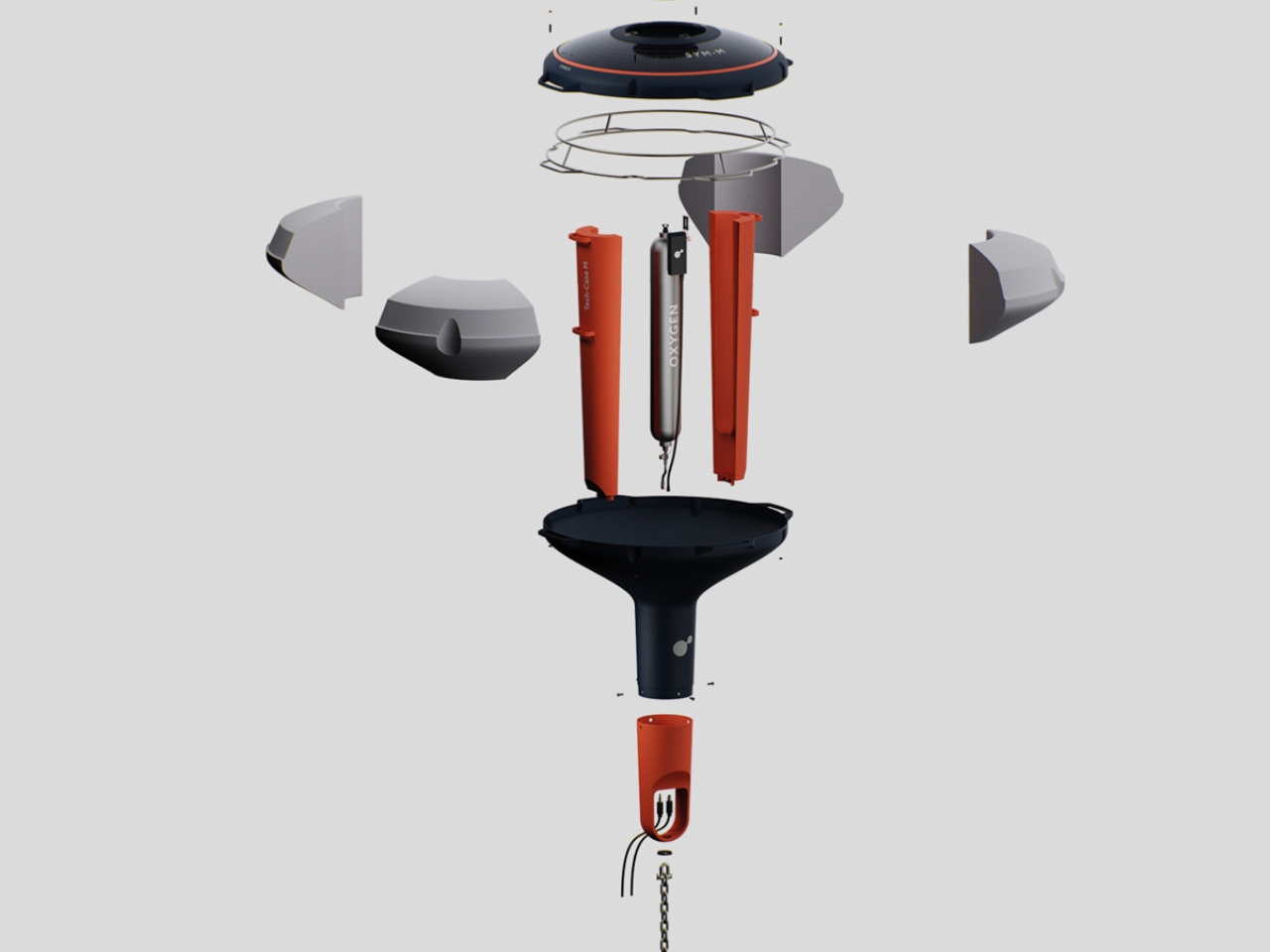
There’s an elegance here that feels distinctly Bauhaus-trained. Mooser completed his bachelor’s in product design at Bauhaus University Weimar and is now pursuing a Master’s in Industrial Design at FH Joanneum, where he’s focused on Eco-Innovative design. That background shows. The buoys are modular, built to be repaired rather than replaced, and designed for durability in conditions that would wear most things down quickly. It’s the kind of systems thinking that doesn’t get enough attention in sustainability discussions, because repairability rarely makes a headline. But designing for longevity in a marine environment is a serious commitment, and it’s a far more honest environmental gesture than a lot of what gets labeled green.
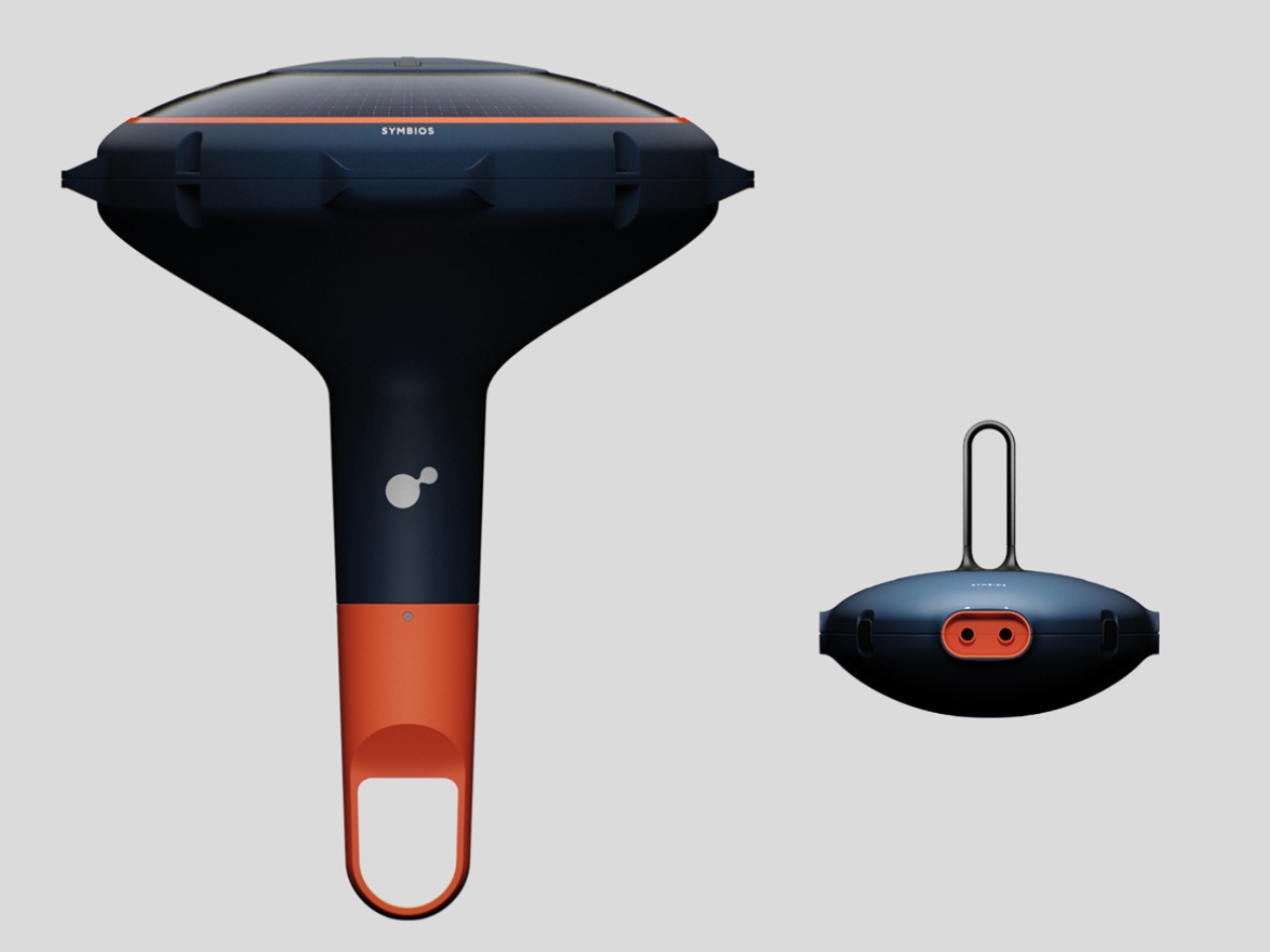
What Symbios also does, somewhat unexpectedly, is create stable marine habitats. Because the seaweed is cultivated continuously in a regulated environment, it offers more consistent ecosystem support for the marine life around it. The design doesn’t just serve the farmer. It serves the water, too. That dual benefit, where agriculture and ecology work together rather than in opposition, is what makes Symbios feel like more than a polished student project. It reads as a genuine proposal for how nearshore food systems could be structured.
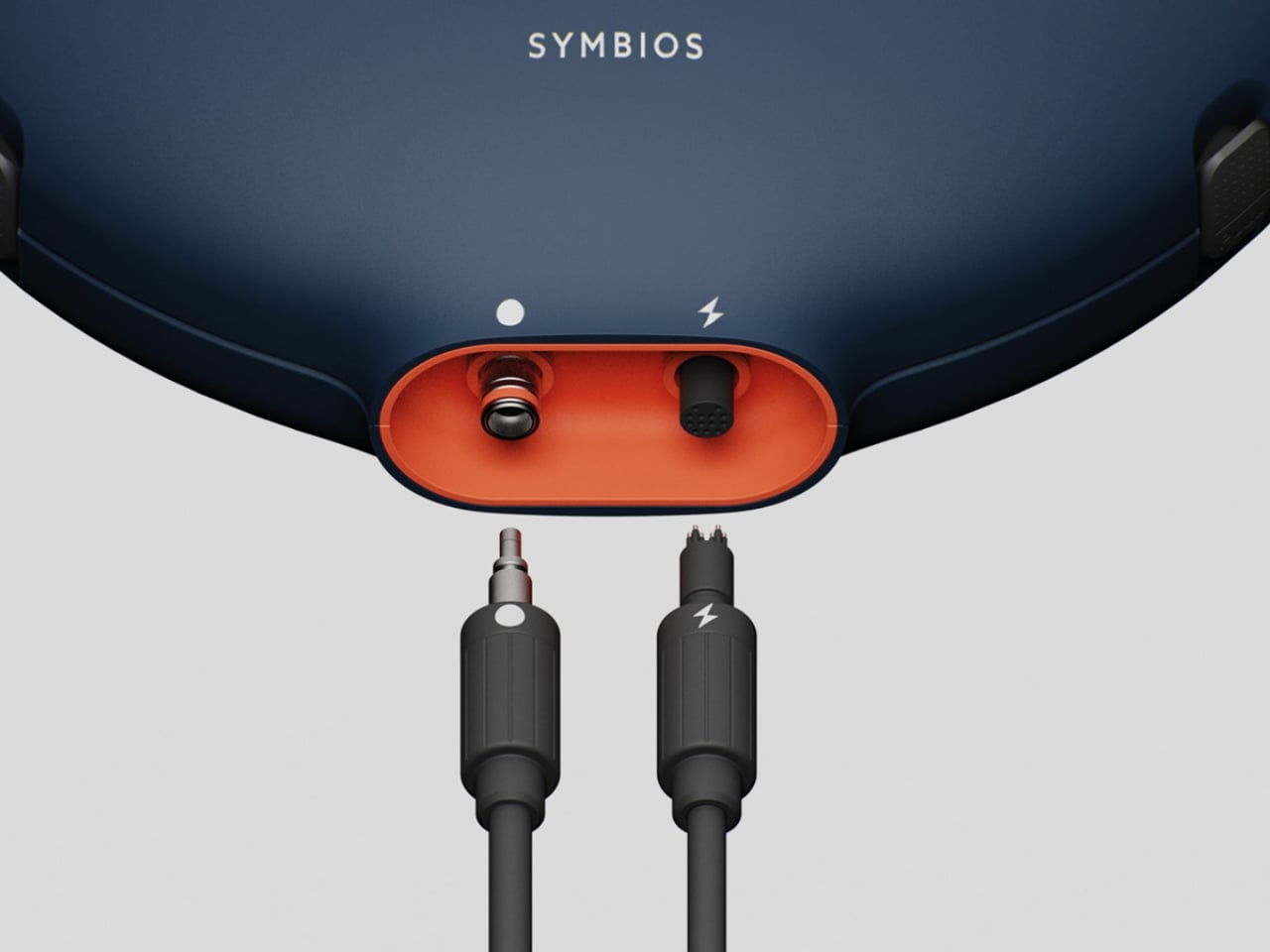
The fact that this began as a bachelor thesis is worth sitting with. Student design can sometimes feel speculative, imaginative but distant from actual use. Symbios pushes back on that assumption. It’s detailed, practical, and built around a real user: the Nordic seaweed farmer navigating a genuinely complex set of conditions. The design process clearly involved deep engagement with that context, not just a convincing visual presentation.
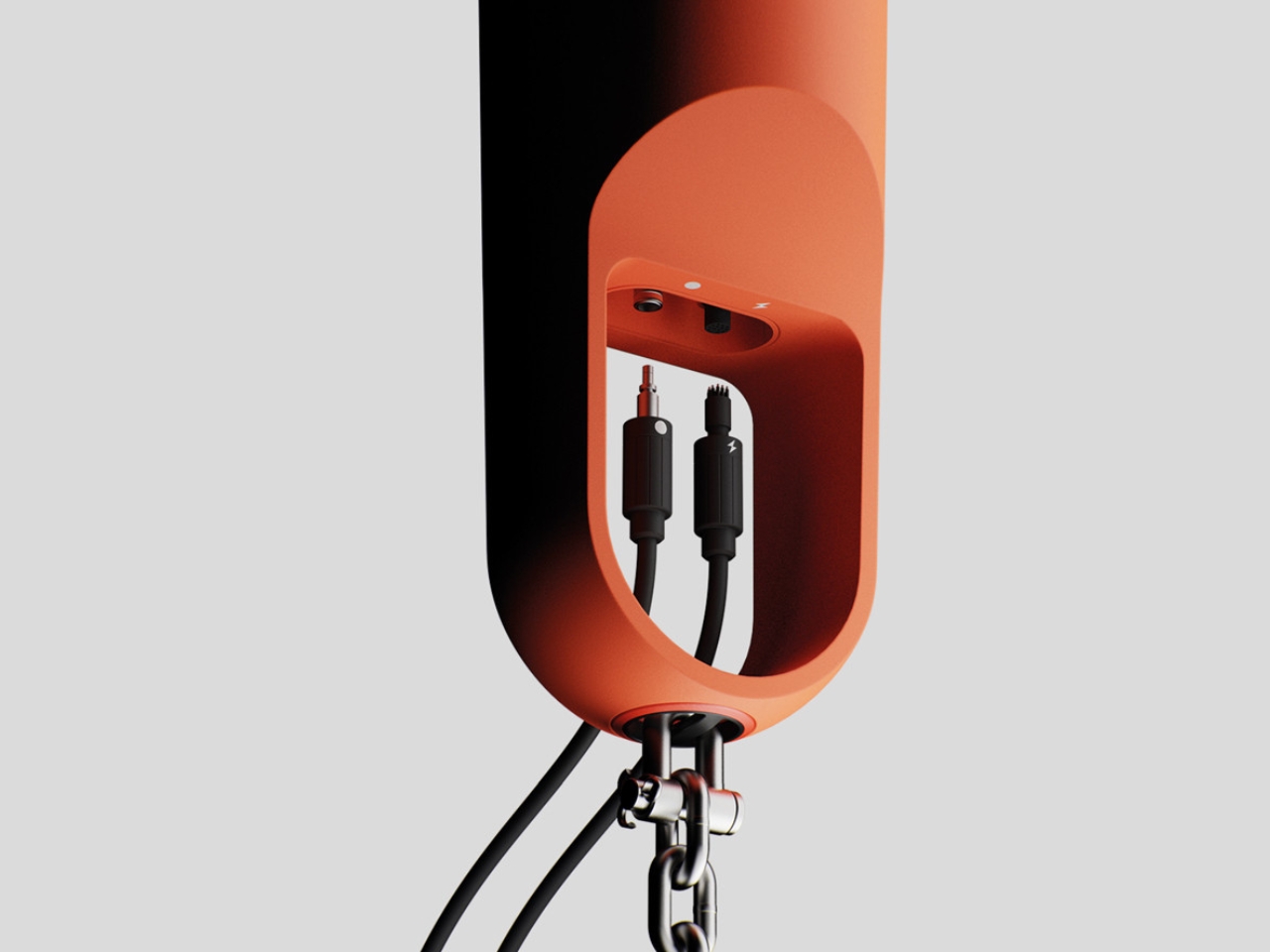
Aaron Mooser’s work has been recognized by the Green Product Award, and it earns that recognition. Not because it’s flashy, but precisely because it isn’t. Symbios doesn’t try to solve everything at once. It addresses specific problems cleanly, considers the full lifecycle of the product, and respects both the people who will use it and the environment it operates within. That kind of restraint, in a design culture that so often rewards novelty over genuine usefulness, is worth paying attention to.
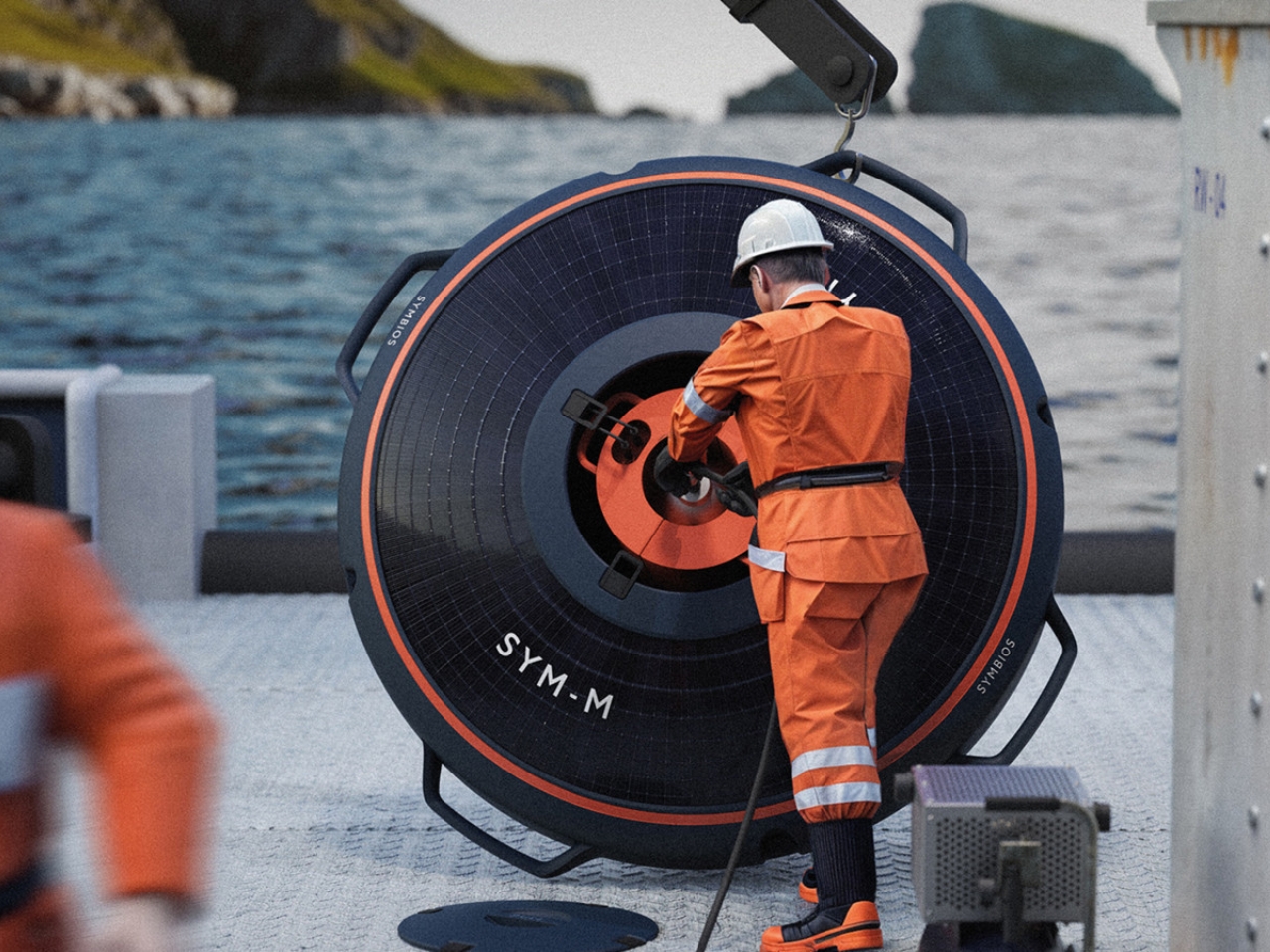
Seaweed farming isn’t going anywhere. If anything, it’s going to become more prominent as food systems shift toward more sustainable sources. The real question is whether the infrastructure supporting it can evolve fast enough. If Symbios is any indication, the answer might surprise you.

The post A Student Built a Buoy That Could Fix Seaweed Farming first appeared on Yanko Design.
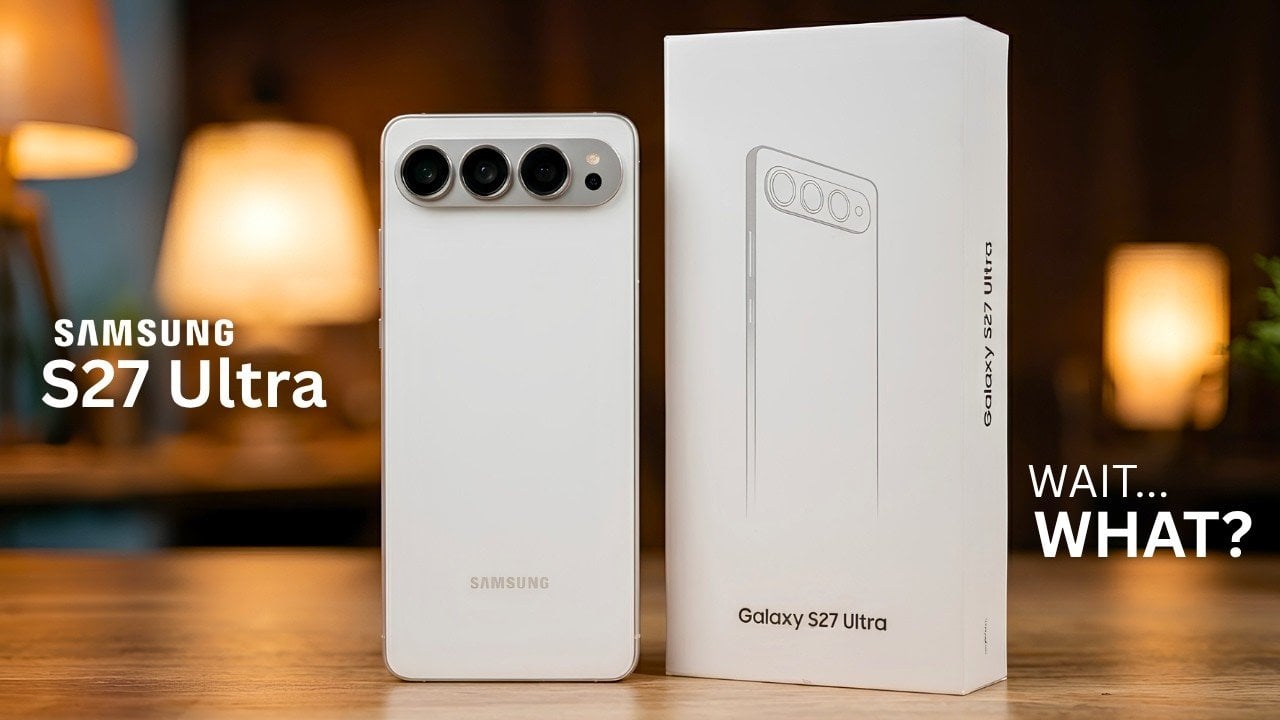
Samsung’s highly anticipated Galaxy S27 series has been officially confirmed through a GSMA database listing, offering a glimpse into what the next flagship lineup will bring. The listing reveals the model number SM-S952U, which corresponds to the carrier-locked US variant of the Galaxy S27 Ultra. This confirmation not only validates earlier rumors but also sets […]
The post The First Major Samsung Galaxy S27 Ultra Features Are Finally Revealed appeared first on Geeky Gadgets.


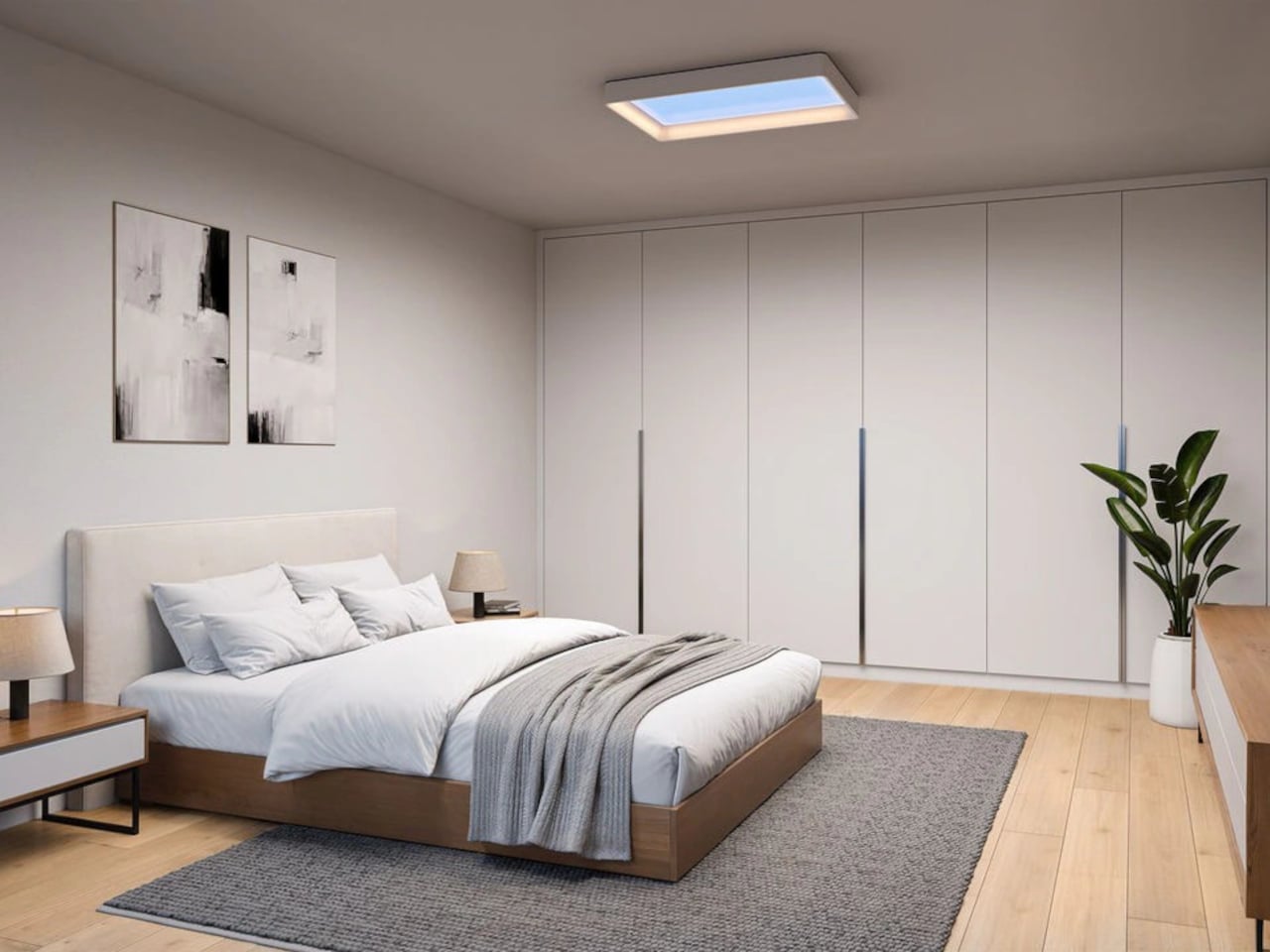
The way natural light moves through a home is something architects spend considerable effort thinking about and homeowners rarely control. A room that gets good morning light may feel completely flat by afternoon. A basement office might go weeks in dim, color-distorted artificial light that strains your eyes and makes every hour feel identical. The architecture of most homes simply wasn’t designed around the idea that the ceiling could do more than hold a light fixture.
The Philips Skylight is a ceiling panel that started as a professional product, used in offices, lobbies, and medical practices, and has since been adapted for the consumer market. Designed around Signify’s NatureConnect LED technology, it’s built to recreate not just the brightness of daylight but also its depth, color variation, and the way those qualities shift over the course of a day.
Designer: Philips (Signify)
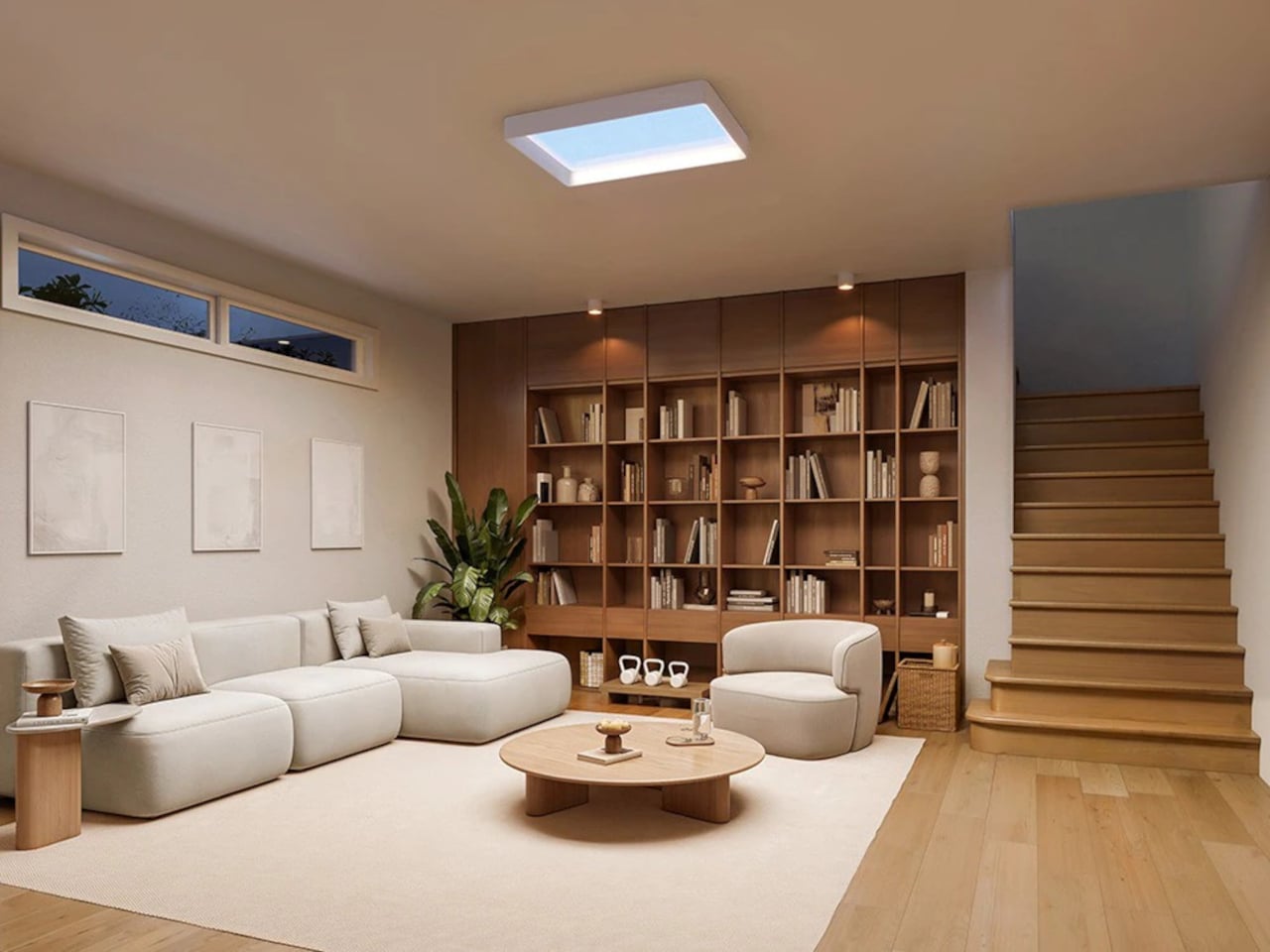
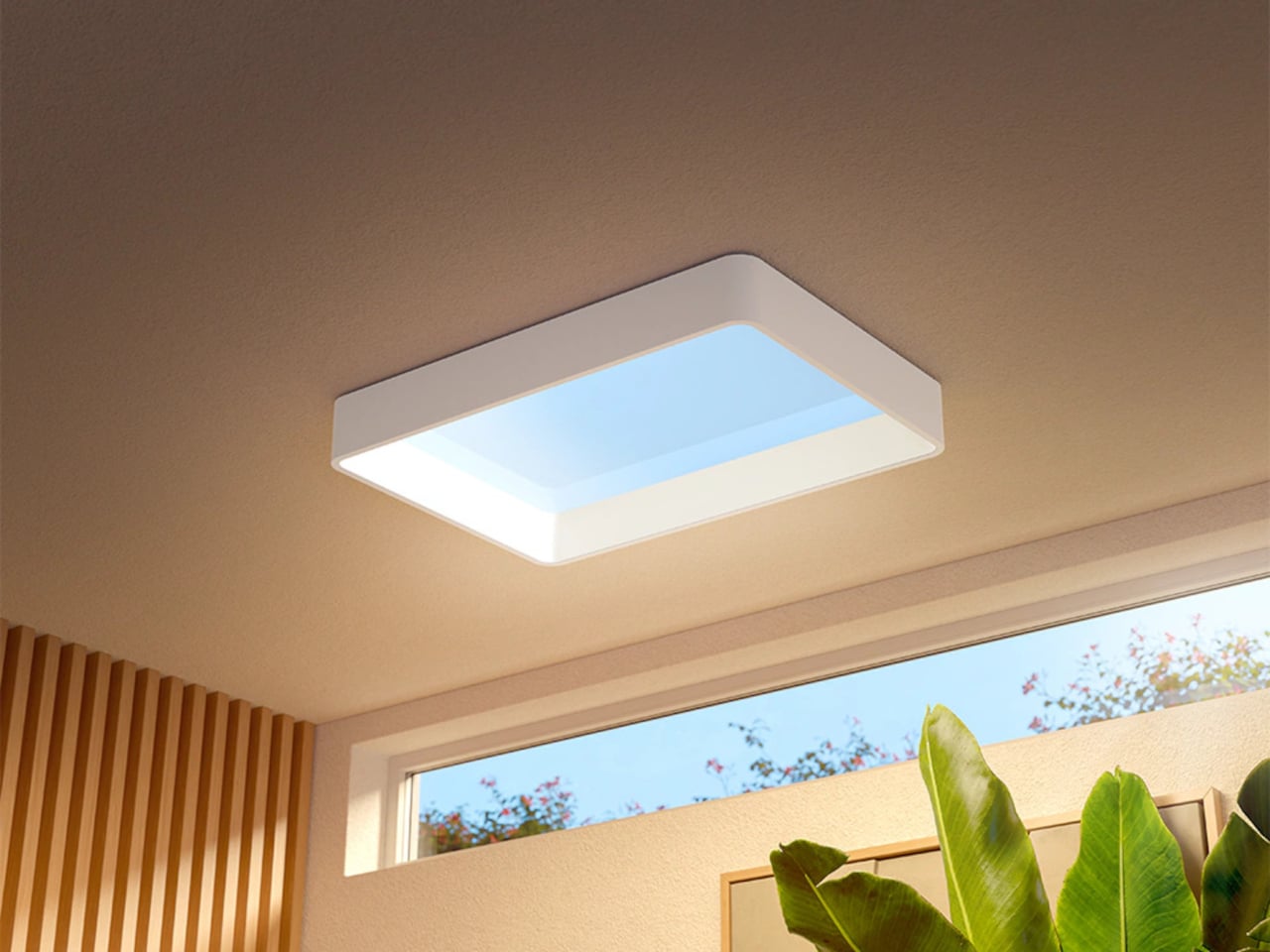
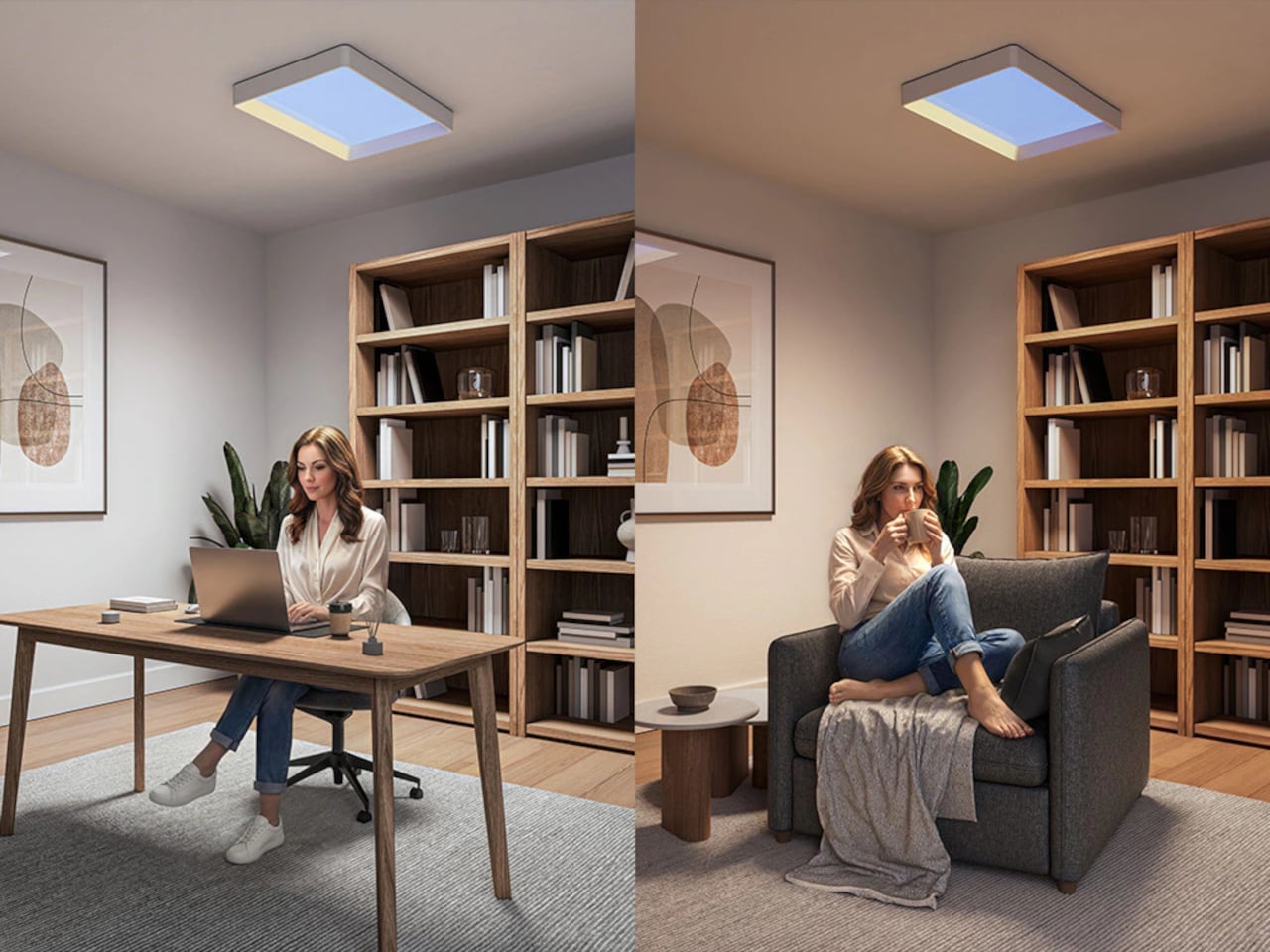
The panel’s visual framing creates a depth effect that reads more like a window to the sky than a flat ceiling-mounted fixture. The light isn’t static: an Auto Day Rhythm feature automatically adjusts brightness and color temperature throughout the day following a fixed schedule. During the day, BioUp LEDs deliver blue-enriched light to support alertness and focus. As evening arrives, the spectrum shifts to warmer, more relaxed tones.
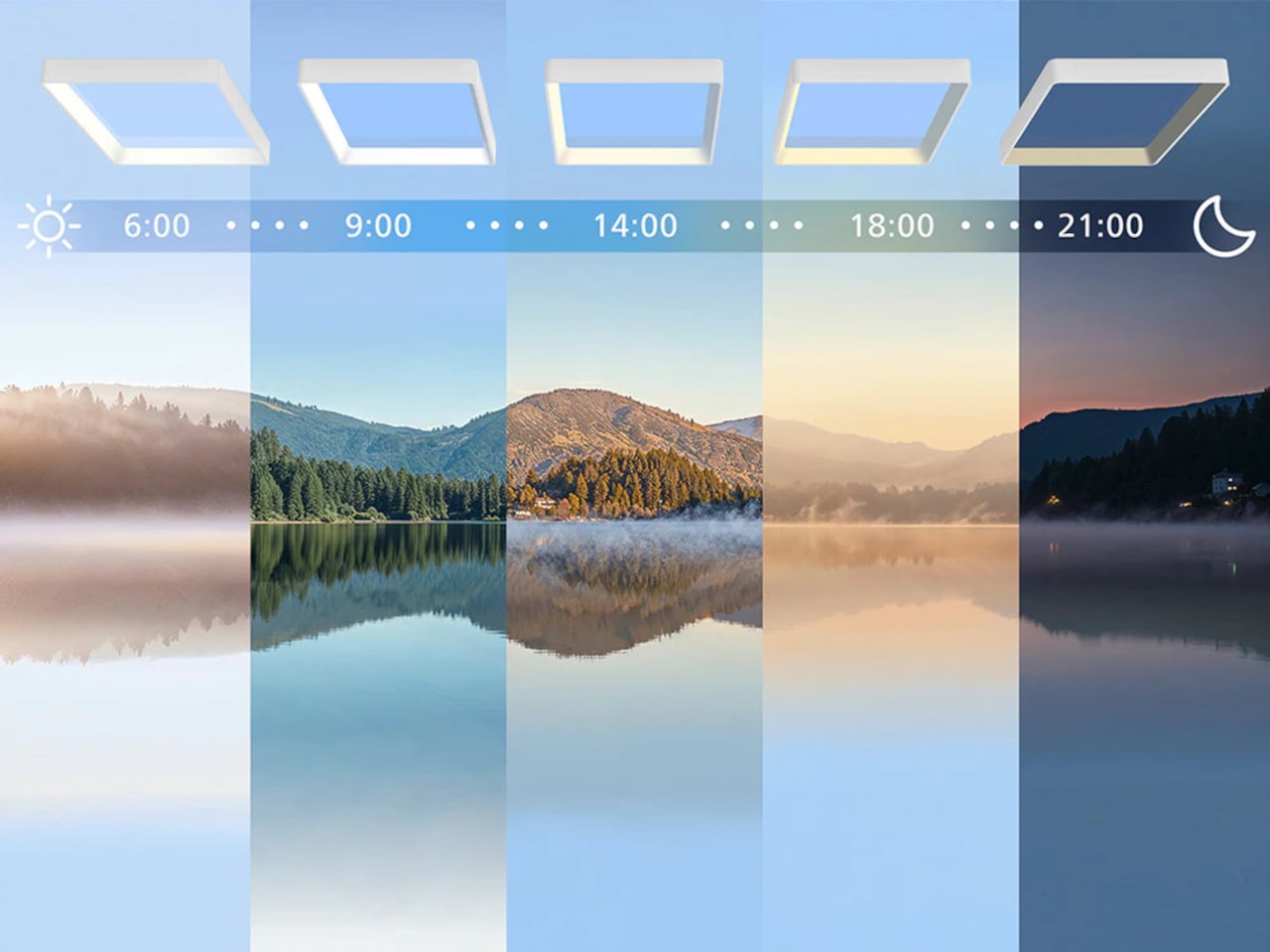
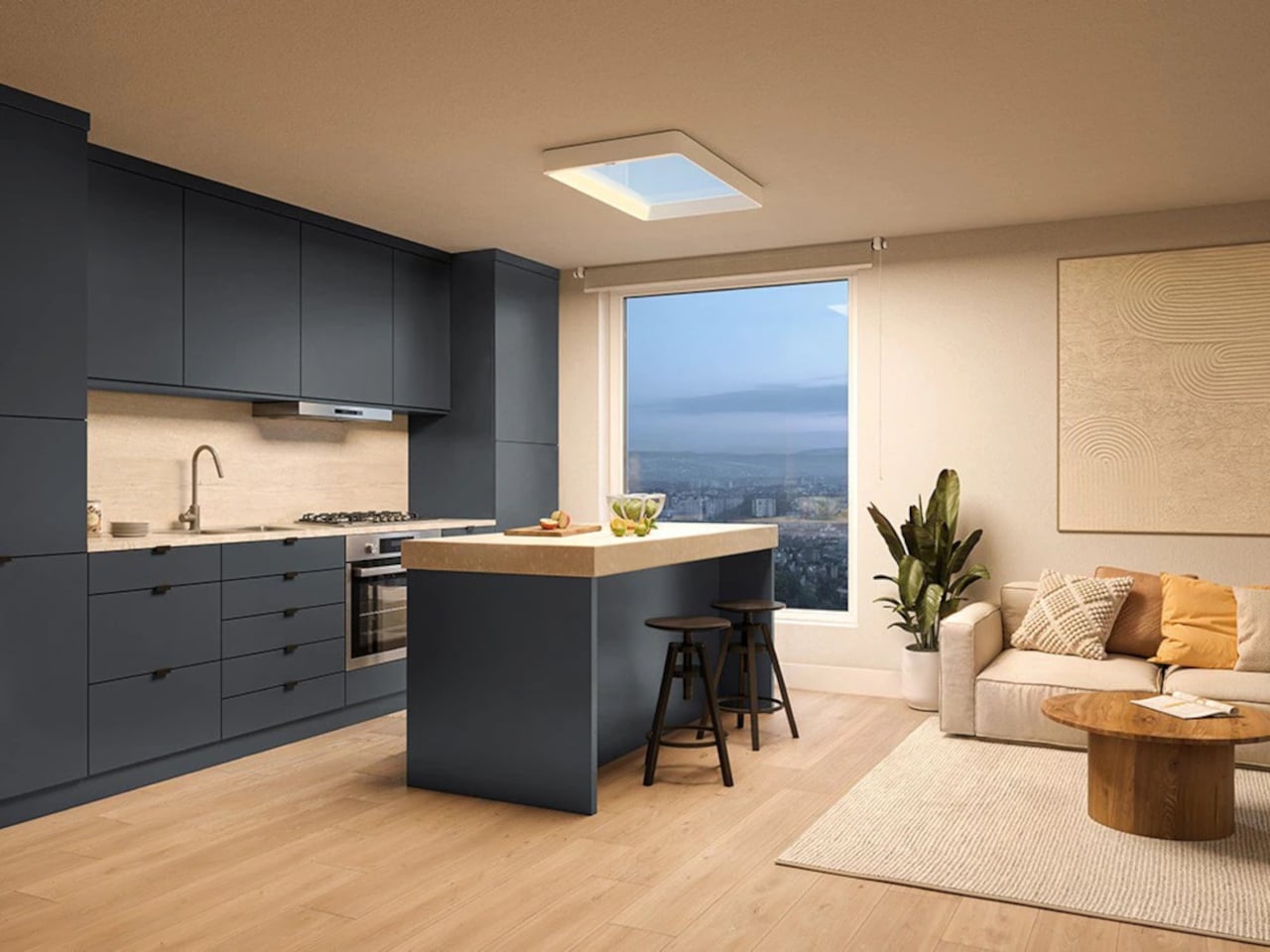
That kind of passive, scheduled behavior is one of the Skylight’s cleaner design decisions. There’s no app to configure, no smart home hub required, and no automation to build. The included remote handles manual control, and five preset lighting scenes cover the range from an energized home office session to something closer to winding down. The absence of smart home integration has drawn some criticism given the price, but for anyone who finds smart home setups a hobby in themselves, the simpler approach may actually be the selling point.
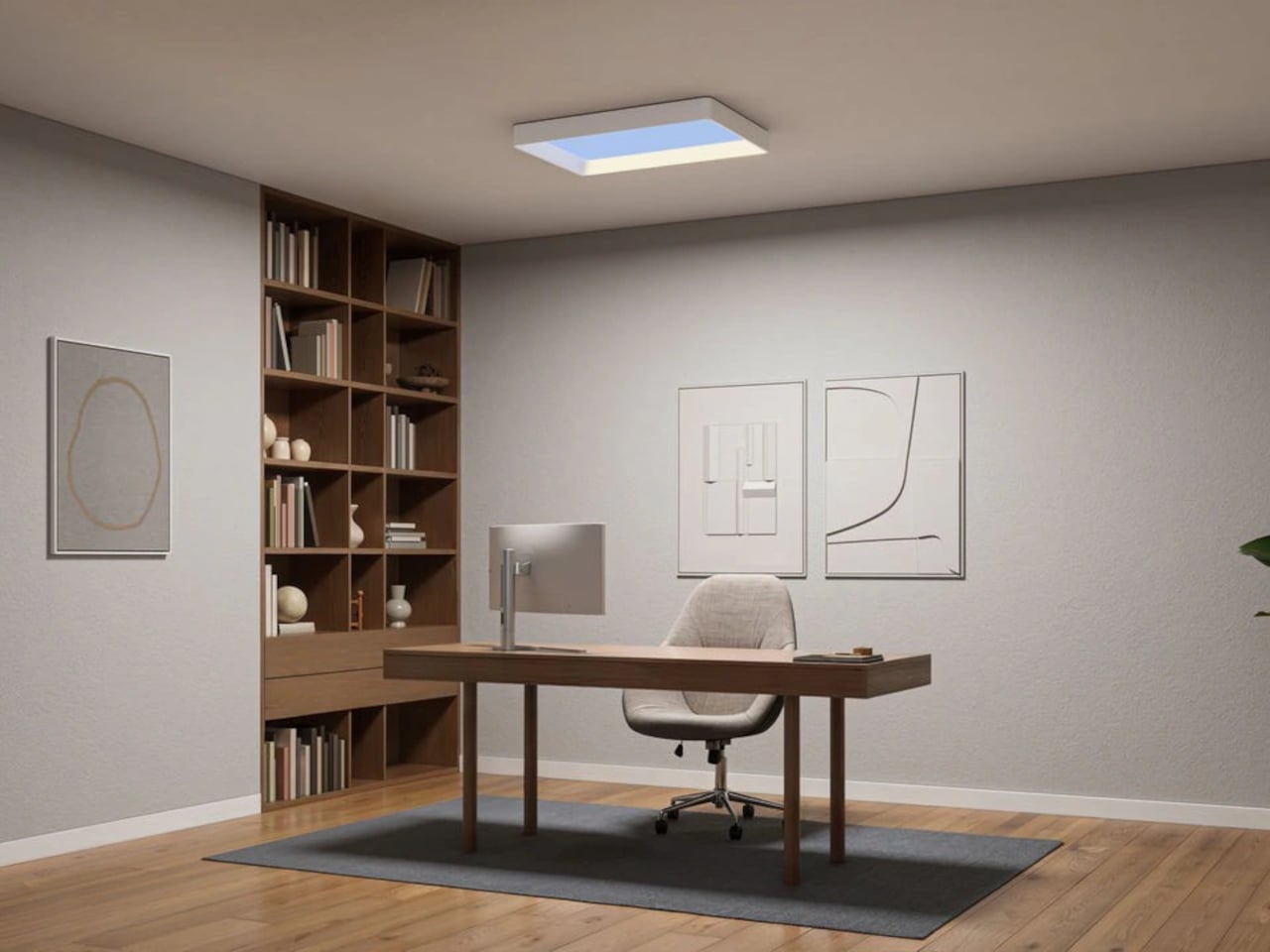
The range comes in four variants: a Philips Skylight Medium, Philips Skylight Large, Philips Skylight VitaUp Medium, and Philips Skylight VitaUp Large. The VitaUp versions include an integrated UV-B module designed to support the body’s natural vitamin D production indoors, with a safety feature that automatically cuts the UV-B output off after eight hours. The product carries a disclaimer that it’s not a medical device and doesn’t replace actual sunlight, which is probably the right framing for something that lives on a ceiling.
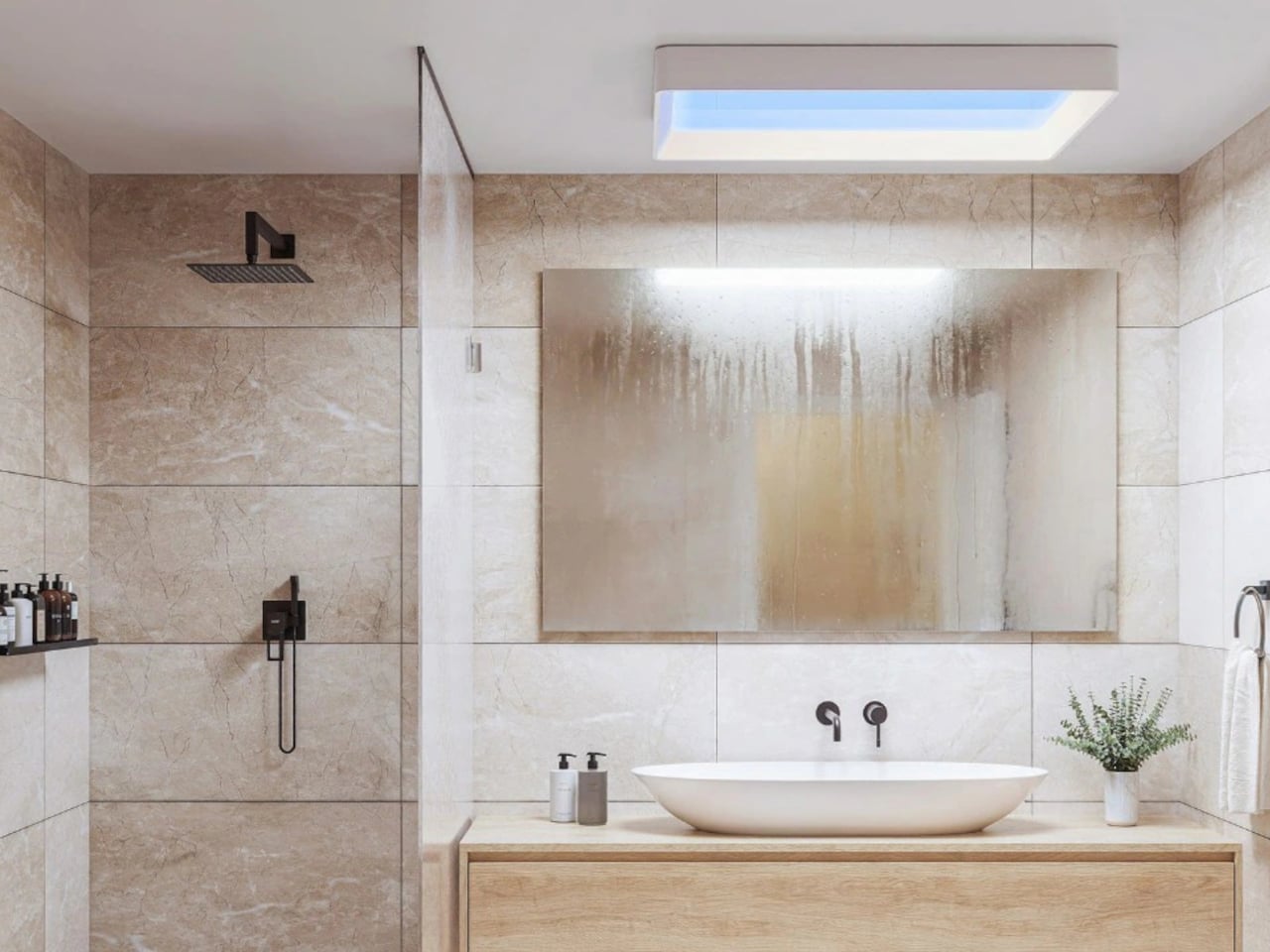
An IP44 rating across the entire range means the Skylight can also be installed in bathrooms and other humid spaces, which changes the calculation considerably. A bathroom that gets no natural light is exactly the kind of room where spending two hours on a winter morning begins to feel like something is actively wrong with the day before it’s even started. Placing a light that actually follows the rhythm of daylight in that space addresses a very specific, rarely solved problem.
European markets have the Skylight from June 2026, starting at €499.99, with US availability expected in September 2026. The technology backing it has already spent time in settings where lighting quality genuinely matters, which gives it a credibility that consumer-only smart bulbs have historically struggled to carry. How well the depth effect translates from professional installation to an ordinary home ceiling is something that hands-on testing will eventually settle.
The post The €499 Ceiling Panel That Shifts Like the Sky From Dawn to Dusk first appeared on Yanko Design.