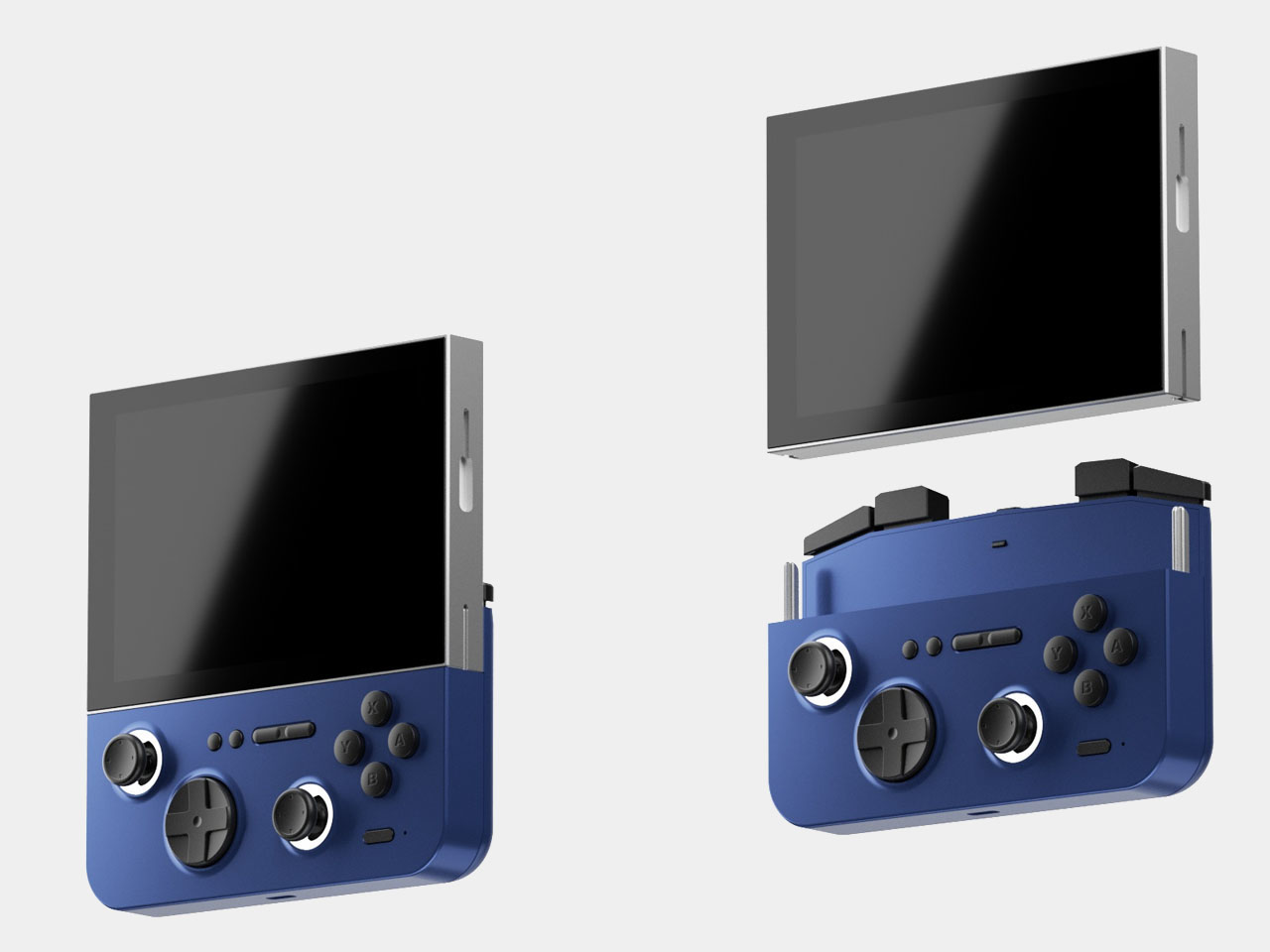
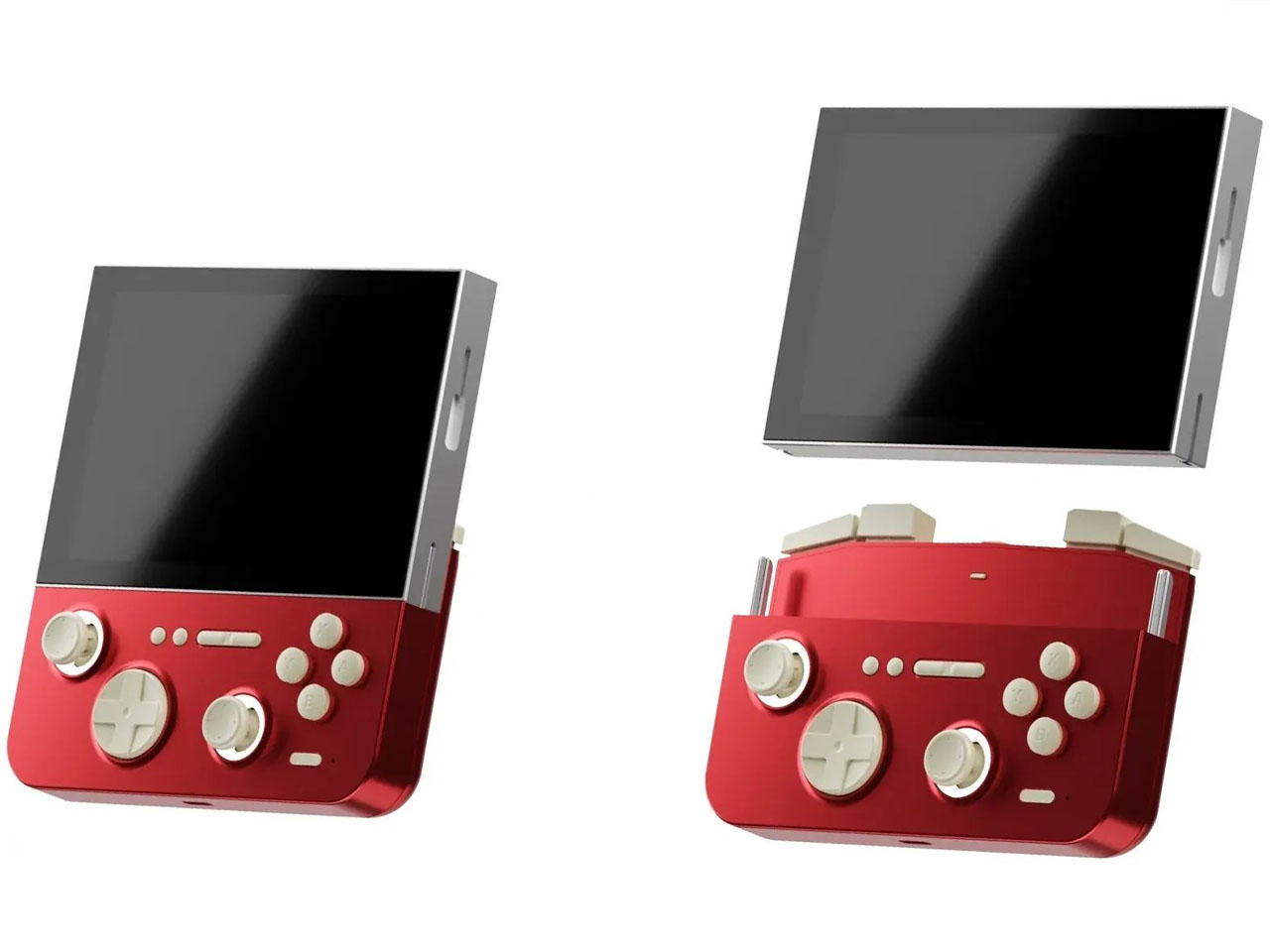
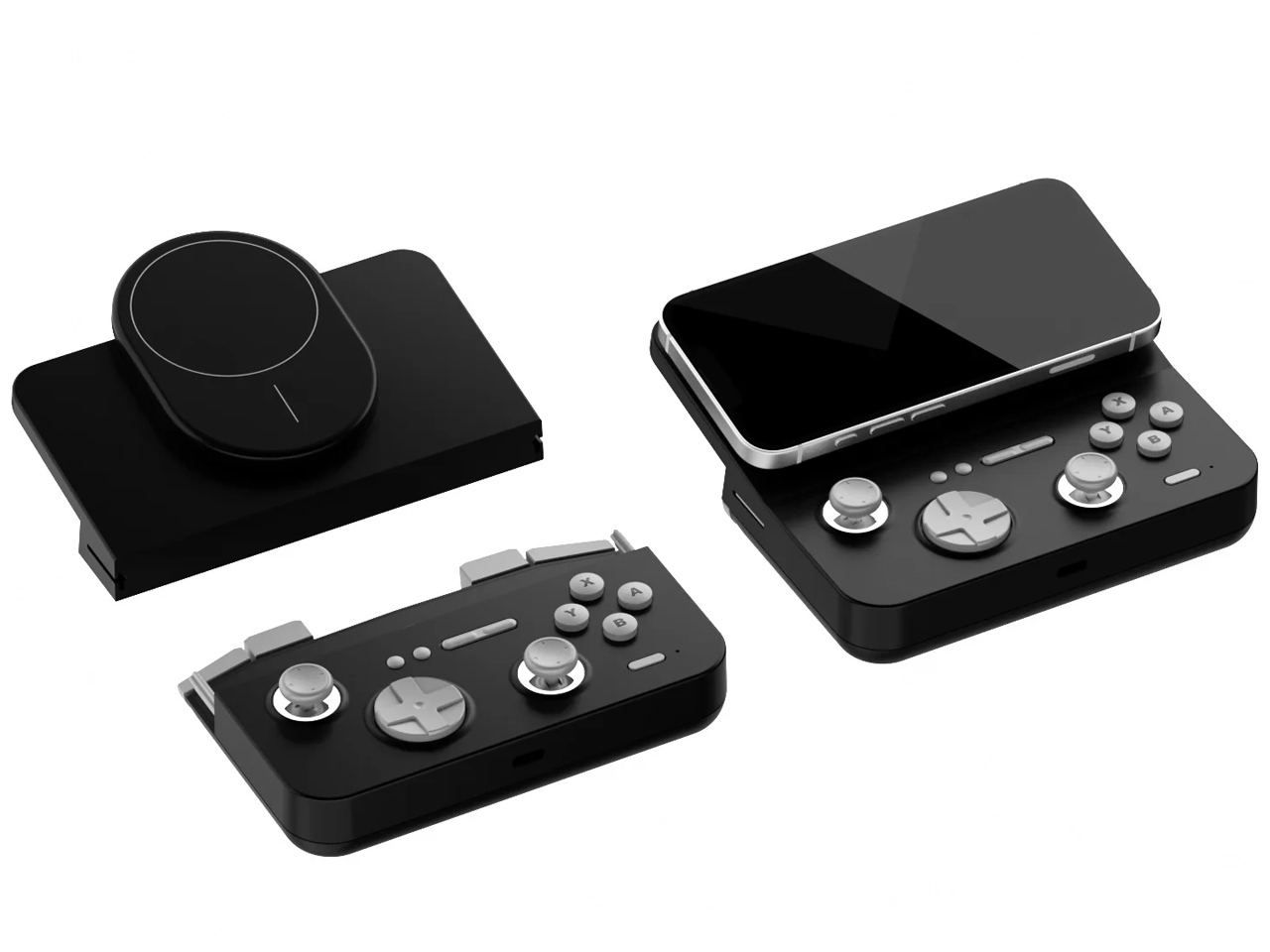
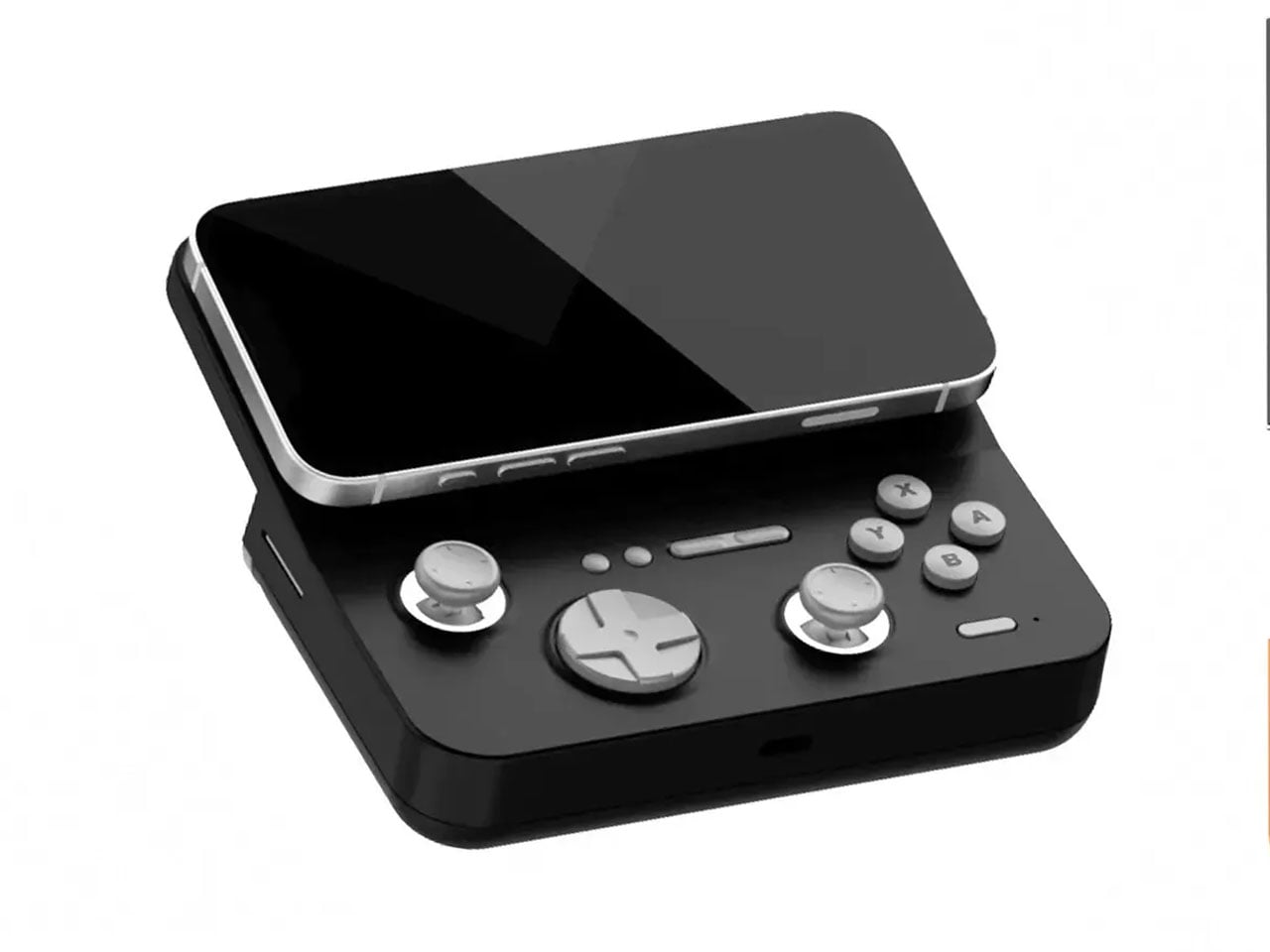
Ayaneo Pocket VERT reimagines Game Boy form factor with a touchpad and long-lasting 6,000mAh battery

In the rapidly evolving landscape of handheld gaming, Ayaneo continues to stand apart by treating portability as an experience rather than a specification. Its newest handheld embodies that philosophy with quiet confidence, merging high-end performance with a level of craftsmanship and material intention that feels decidedly premium. Every curve, texture, and component has been considered not just for function, but for how the device lives in the hand, resulting in a compact form factor that feels effortlessly capable and thoughtfully designed.

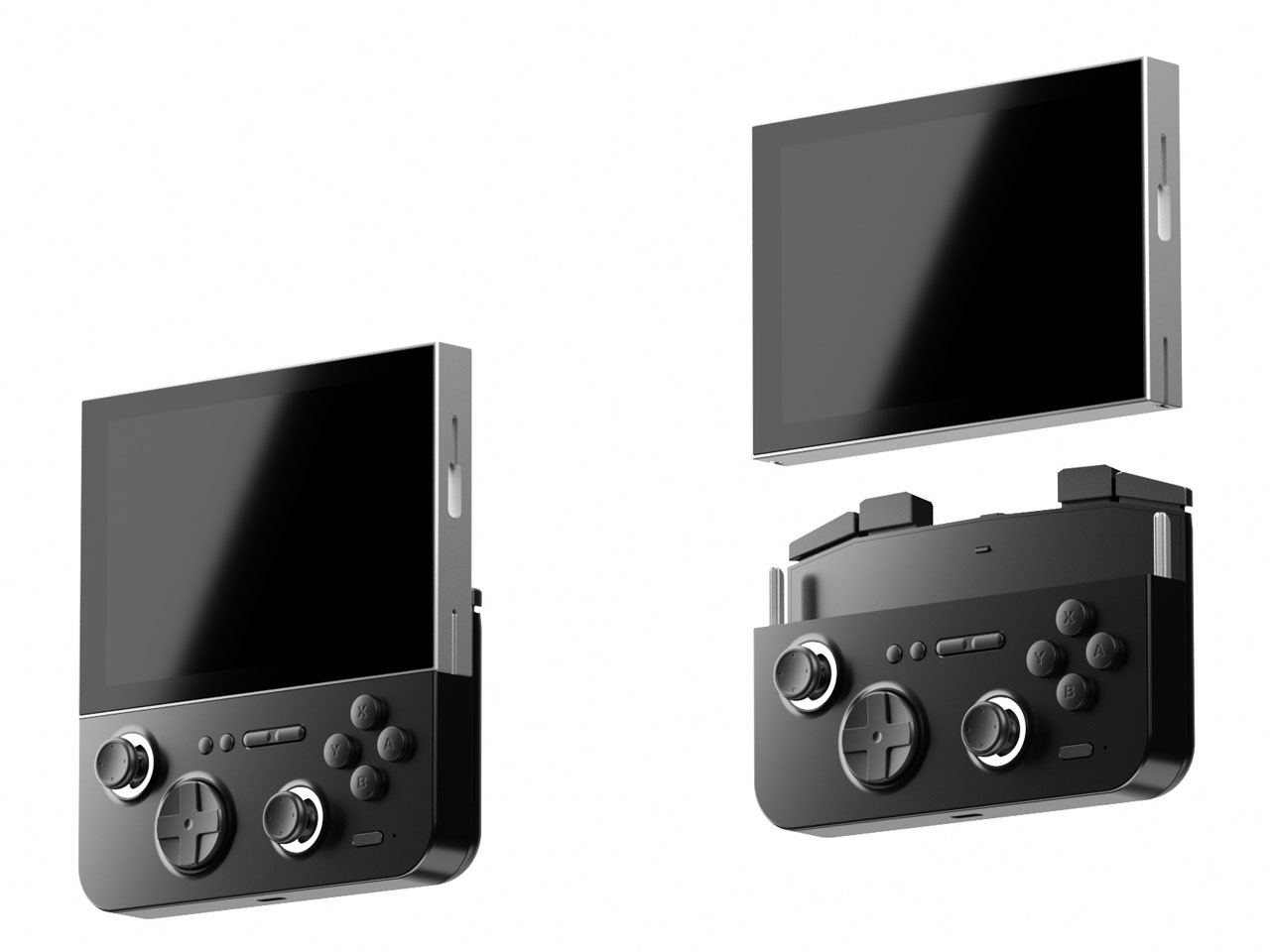
Meet the upmarket Pocket Vert, which has an Android-powered handheld that’s crafted out of a full CNC-milled unibody construction. The handheld has a full glass front panel fitted with a 3.5-inch high-resolution LTPS display having 1600×1440 resolution (at 615 ppi), 60Hz refresh rate, and 450 nits peak brightness level. In their latest teaser video, Ayaneo has revealed that the device will be positioned flush in between the flagship Pocket DMG and budget gaming controllers like Anbernic RG40XX V. This certainly will fill the gap, and the sweet spot mobile gamers were craving.

Designer: Ayaneo

The company teased the handheld earlier this month on November 5, revealing the design and some specifications. Now, in a fresh Product Sharing Session, they’ve revealed multiple prototypes that’ll ultimately morph into the compact handheld. Touted as a premium Game Boy clone, it’ll come in three color options: Black, White, and Red, with matching buttons. Measuring 86x143x20mm, the classy little gadget is smaller than the Pocket DMG. Despite the petite form factor, it has a 3.5mm jack and a USB-C port at the bottom. The Pocket Vert should have enough power under the hood as it is seen running the God of War title, which requires a good amount of processing fuel.

Section below the D-Pad and buttons is a touchpad, which the player can map to various button configurations or sticks. The touchpad is completely invisible and beyond the physical buttons for a less intrusive functionality. Just like the DMG, this one has a wheel called the MagicSwitch key for added functionality. It is used to toggle the volume control levels, short-pressed to mute, and long-pressed to trigger the function menu. As is clear from the naming convention, the handheld is targeted towards vertical retro handheld enthusiasts.

Ayaneo has confirmed the device packs a 6,000mAh battery and bottom-firing speakers for a satisfying playing experience. Depending on the processor fitted inside, the battery life could be excellent for such a small gadget. That said, there is no detail about the release date and other vital hardware information. We can expect the remaining fog to clear with another official sharing session in the coming days.

The post Ayaneo Pocket VERT reimagines Game Boy form factor with a touchpad and long-lasting 6,000mAh battery first appeared on Yanko Design.

YouTuber custom-builds coffee table with functional star system around an exploding sun

Have you ever dreamed of sitting around the solar system? Modder at The 5439 Workshop on YouTube may have just made it possible with this new kind of solar system inside a coffee table. This is a cherry wood and aluminum coffee table with a precision cutout in the middle where a “mechanical orrery with both tilting orbits and an exploding star” finds refuge under a glass cover.

The modder refrains from calling this contraption a “particularly practical one,” but I stand to disagree. At the first given chance, I would put this guy in my living room without a thought and flaunt the celestial magnificence it beholds to just about anyone walking inside the main entrance.

Designer: The 5439 Workshop

If you don’t know much about 5439, the Swedish modder doesn’t have a massive following, that’s why. With only three published videos and a modest 5.6K followers, he is just starting out with robotics, and this coffee table is perhaps the “most mechanically complicated” – in his own words – thing he has designed and built. Before we get to the details of the star system, let’s get the other details of the table out of the way.

The table, as mentioned, is meticulously crafted from cherry wood. The wood is essentially chosen for its warm texture and its ability to reflect light at the right place. The two-layered table is nicely engineered by squaring the cherry wood planks – two of them, which are combined with three white boards to make up the tabletop. Once the top is created, a giant cutout is made in the middle, which, along with the glass top, creates a viewing window to the mechanical star system hidden below. The table sits on four robust pillars (legs) attached to a base frame.

After sanding and smoothing all the blemishes (after the glueing) in the top and the rough parts of the center cutout, the modder gets to creating the covering of the center hole with the sheet of glass and then gets to the bottom of the t where the celestial goodness is built. Visible through the glass viewport, this mechanical model of the planets dancing around the sun is not short of a feat.

The entire contraption of gears, bearings and motors finds an exploding sun at its center with the planets (in their usual) revolving around, happily on their own axis that of course, are elliptical and tilting to mimic the universe. The sun is notably a fist-sized sphere, built layer-by-layer using a selective laser sintering (SLS) printer with nylon powder, which splits open like the flower petals when it explodes.

Made of anodized aluminum parts, the star system features rings tilting at unexpected angles, making the planets move up and down on a single plane with the power of a nearly silent motor tucked into the table frame. The YouTube community seems to like what they see in the video demonstration (embedded above). The comment section is filled with positive feedback, including ideas where one commenter “suggests walling off the sides,” while the other recommends adding a “black run” underneath “to really make the mechanism pop.” What do you think?


The post YouTuber custom-builds coffee table with functional star system around an exploding sun first appeared on Yanko Design.

This solar powered motorcycle never needs charging for true energy independence

For years, electric mobility has been shaped by predictable patterns: bigger batteries, denser charging networks, and efficiency improvements that feel more evolutionary than revolutionary. Yet the dependency remains the same: riders still need plugs, stations, and the infrastructure that powers their daily movement. In the middle of this familiar landscape arrives a concept that doesn’t try to optimize the system but instead questions why the system needs to exist at all. The SOLARIS Self-Charging Solar Motorcycle by MASK Architects challenges the core assumptions of electric mobility with a vehicle that produces its own energy and redefines the relationship between rider, machine, and environment.

Developed by Öznur Pınar Cer and Danilo Petta, the SOLARIS approaches mobility as something closer to a self-sustaining organism than a machine waiting to be recharged. It operates entirely on power it generates itself, eliminating reliance on fuel stations, external charging points, or electrical grids. This shift reframes freedom for riders, offering movement that isn’t conditioned by access to infrastructure or energy markets. It introduces a future where independence is built into the vehicle, pushing the concept of autonomy far beyond driving modes or connected features.

Designer: MASK Architects

The technology that enables this transformation begins with next-generation photovoltaic cells integrated into the motorcycle’s structure. These high-efficiency solar elements convert light into energy throughout the day, ensuring the system remains active under varying conditions. A defining feature of the SOLARIS is its deployable charging mechanism, which expands into a protective wing when the motorcycle is parked. This design increases the solar capture area by up to 150 percent, allowing the battery to be replenished whether the vehicle is in motion or stationary. The result is a power source that continuously supports itself, removing the downtime associated with conventional charging and allowing the vehicle to remain ready for use without external input.

Visual identity plays an equally important role in its appeal. The deployable wing draws inspiration from the structure of a dragonfly’s wing, merging natural efficiency with a mechanical aesthetic. This biomimetic approach gives the motorcycle a distinctive presence while reinforcing its connection to the environment it relies on for power. The blend of organic influence and engineered precision creates a form that communicates both purpose and innovation, capturing the attention of users who value sustainability and future-focused design.

The potential impact of a self-charging motorcycle extends beyond individual riders. Without dependence on fuel or electricity networks, the concept becomes a practical solution for remote regions, developing communities, and delicate natural environments where infrastructure is limited or intentionally preserved. For logistics operators, tour providers, and municipal programs, the removal of energy costs and reduced mechanical complexity offers clear economic advantages and faster returns compared to traditional electric models.

The post This solar powered motorcycle never needs charging for true energy independence first appeared on Yanko Design.

The Beast is John Dodd’s 27-Liter V12 creation that turned aviation power into road-going legend

When I first came across the story of the car known simply as The Beast, crafted by British engineer John Dodd, I was reminded of those wild, boundary-pushing machines you’d expect in vintage concept renderings. Except this one was real. Dodd, a gearbox specialist, wasn’t dreaming of design for design’s sake; he was building a functioning road-legal car that defied logic and convention. Built in 1972, The Beast is a one-off shooting-brake style creation, nearly 19 feet long (about 5.8 m), powered by a 27-liter (1,650 cu-in) Rolls‑Royce Merlin V12 aero engine, the same type that powered the Supermarine Spitfire and Lancaster bomber in WWII.

Dodd’s journey began when engineer Paul Jameson created a chassis to house a Rolls-Royce Meteor tank engine in the late 1960s. When that project stalled, Dodd took over, rebuilt it after a fire destroyed the first version, and stepped up the ante by installing the Merlin V12. To handle the immense torque from the engine, Dodd engineered a bespoke transmission, adapting a heavy-duty automatic gearbox. The bodywork, by Fiber Glass Repairs of Bromley, blends the length of a dragster nose with the profile of a grand touring estate. Inside, Dodd did not neglect refinement: leather upholstery, walnut veneer, and an interior that belies the car’s wild intent.

Designer: John Dodd

Performance figures are largely anecdotal (since formal dyno tests are lacking), but contemporaneous reports estimate output between 750-850 horsepower, with claims of over 183 mph achieved on the German Autobahn. What truly matters is the ambition: a road-going car using an aeroplane engine, built by a private engineer in Britain. Although it may not meet modern supercar standards, for its era, it smashed boundaries. The car incorporated independent suspension and disc brakes all around, making it more usable than you’d expect for such a dramatic build.

Legal drama is part of the story too. The original Beast carried a Rolls-Royce grille and the Spirit of Ecstasy mascot. The marque sued Dodd in the 1980s for trademark infringement and won, forcing him to replace the grille with one bearing his initials. Later, the car accompanied Dodd to Spain, where locals became accustomed to the thunderous note of the engine echoing around Malaga.

In recent times, the car has been refreshed. The original bright yellow paint is now hidden under a reversible two-tone metallic grey wrap (so the yellow could be restored in the future) and the interior retrimmed to a high standard. The Beast was consigned to auction by Historics Auctioneers with an estimate of £75,000–£100,000 (roughly USD $98,000–$131,000) in late 2025.

What stands out most is how The Beast blends ludicrous scale and genuine engineering into a drivable road car. It’s not just a showpiece; it was built to move, to roar, to defy expectation. For someone fascinated by the intersection of bespoke craftsmanship and automotive maverick thinking, this car is a landmark. If you’re someone considering bidding or simply telling the story, here is a piece of motoring folklore that truly warrants attention.

The post The Beast is John Dodd’s 27-Liter V12 creation that turned aviation power into road-going legend first appeared on Yanko Design.

OnePlus 15 with 7300 mAh battery and triple-chip architecture crushes other Android Devices

Oftentimes, the thought that smartphone technology is plateauing comes to mind. All that you can see companies concentrating on, of late, is artificial intelligence, and it seems nothing much is happening on other fronts. But that’s not the case with OnePlus, which has taken on the smartphone world with a different approach. The OnePlus 15, launched recently, touts a mammoth 7300 mAh battery, which early reviews suggest can go up to two days on normal usage.

The latest flagship-level phone from OnePlus is not only dependent on its battery life, in fact, it is escalating things on many other fronts. The major transition is in favour of performance, and the OEM is substantiating that with its AI capabilities, durability, and optical prowess. So, what are we getting with the new and technically most advanced smartphone on the market? Let’s figure out in a little detail below.

Designer: OnePlus

Obviously, the battery is the biggest selling point. But the phone’s processing power is something to talk about. The new OnePlus 15 features a triple-chip architecture, which is spearheaded by the Qualcomm Snapdragon 8 Elite Gen 5 chipset that powers the functions on the phone. The architecture of the phone is targeted at speed, for which it is facilitated by a touch-response chip capable of 3200 Hz instant sampling, while the connectivity for the power and speed is handled by the phone’s independent Wi-Fi chip.

The octa-core processor of the OnePlus 15 is paired with an Adreno 840 GPU, while it comes in three storage variants: 256GB with 12 or 16GB RAM, 512 GB internal storage variant with 12 or 16GB RAM, and a solitary 1TB model with 16 GB RAM. The company says, a reworked 360 Cryo-Velocity system is designed to take care of the cooling on this high-performance phone. For this, it uses aerogel insulation and white graphite that help in stabilizing temperatures during excessive gaming or on a workday that refuses to come to an end.

On the construction front, the OnePlus 15 features a smooth 1.15mm bezel and comprises a flat frame, which is rounded on the edges. The phone comes in Sand Storm, Ultra Violet, and the more recognizable Infinite Black colorway. The phone’s durability, of course, is assured by up to an IP69K rating that safeguards the handset against temperature variations, dust, and water.

OnePlus 15 is billed as the first phone to feature a 1.5K 165Hz LTPO display with retina-level clarity. The panel boasts up to 1800 nits peak brightness. Designed to run OxygenOS 16 out of the box, the device’s 7300mAh Silicon NanoStack Battery is designed for longevity (it can hold over 80 percent health even after four years of continuous usage, the company claims). The battery is charged with the 120W SUPERVOOC charger that promises to provide a full charge in around 39 minutes.

This new phone from OnePlus is a trendsetter in the optics department as well. The phone features a DetailMax Engine combined with a triple 50MP camera setup. Claimed to be the first Android smartphone capable of 4K 120fps Dolby Vision recording, it’s triple array includes a 50MP OIS main sensor, a 50MP autofocus ultra-wide camera, and a third 50MP periscope telephoto shooter. If you are thinking of upgrading to a new Android phone, there shouldn’t be a reason the OnePlus 15 is not on your list. This flagship starts at $999 and is now available in most international markets.


The post OnePlus 15 with 7300 mAh battery and triple-chip architecture crushes other Android Devices first appeared on Yanko Design.

Peugeot Polygon Concept shatters the rules of modern supermini design

Peugeot’s design portfolio has always balanced compact efficiency with expressive character, but the new Polygon Concept takes that philosophy in a more experimental direction. This compact EV previews the next-generation 208 and signals the French brand’s vision for a future where architecture, materials, and controls are rethought.

Built on a sub-4-meter footprint, the Polygon modernizes the supermini silhouette with bold geometry and a signature lighting design. The familiar three-claw Peugeot motif is reinterpreted as horizontally arranged micro-LED stripes at both the front and rear, giving the car a sharply modern look. Its body features two large butterfly doors, replacing the conventional four-door layout, which is an expressive choice more suited for concept presentation rather than mass production.

Designer: Peugeot

The most radical change is on the inside, where the traditional round steering wheel is replaced by what Peugeot calls the “Hypersquare.” Rather than a solid circular rim, this control interface consists of four pods (one at each corner) that house touch-sensitive controls for media, driving modes, and more. Because the system is steer-by-wire, there is no physical linkage between the control and the front wheels. The steering ratio automatically adjusts for different speeds, becoming more direct at low speeds and more stable at high speeds. This setup also filters out any abrupt road vibrations for a smoother riding experience.

Peugeot replaces its conventional instrument cluster with a micro-LED screen placed behind the steering assembly, projecting information directly onto the windshield in a large, immersive format. According to the company, this design creates a cleaner, more open interior while keeping the driver’s attention focused where it matters.  Sustainability is central to the Polygon. The cabin uses a “forged textile” made from recycled seat upholstery sourced from end-of-life Peugeot vehicles. Seat shells are 3D-printed from recycled R-PET plastic, while their foam cores come as a single molded piece, reducing complexity. Interior paint also incorporates recycled rubber derived from used tires.

Peugeot designed the Polygon with modular, easily replaceable parts. Elements such as the Hypersquare control, seat foam, dashboard surfaces, and wheel covers can all be swapped out, allowing for personalization and potentially longer ownership. The car uses fewer overall components than a typical production vehicle, which simplifies manufacturing and supports a more circular lifecycle. Another tech highlight: the Polygon’s Goodyear tires feature “SightLine” technology, which monitors pressure, temperature, and road conditions and sends that data to the i-Cockpit system in real time.

While Peugeot has not confirmed detailed powertrain specifications, the Polygon is widely understood to preview a forthcoming fully electric version of the 208. The concept aligns with Peugeot’s plan to bring its Hypersquare steering system to production models around 2027. The Polygon Concept is a bold exploration of future small-car design with a combination of steer-by-wire controls, immersive display technology, and sustainable materials. Peugeot proposes a supermini that is not just efficient, but smarter, more modular, and far more expressive than what exists today.

The post Peugeot Polygon Concept shatters the rules of modern supermini design first appeared on Yanko Design.

Bang & Olufsen celebrates 100 years with the Beolab 90 Titan Edition floorstanding speakers

I haven’t seen a speaker with an awkward shape like this. But then, I haven’t seen a lot of things, and that especially includes what’s under the hood of Beolab 90 floorstanding speakers from Bang & Olufsen. For its 100th anniversary, the Danish giant has taken its flagship speaker, stripped it down to its skeleton, and made it to look as striking as it could be with volcanic rocks and aluminum construction. And now I know what with the looks!

Centenary celebrations bring out the best in the iconic brands that have stood the test of time and the change in generations. Arguably, watchmakers are the best at revisiting their iconic timepieces and launching them with charisma and finesse to celebrate their 100th year; furniture makers follow closely. Now, Bang & Olufsen is treading the route with this stunning speaker – if you like what you see i.e., by reimaging its star from a decade ago.

Designer: Bang & Olufsen

The revisited stunner is called the Beolab 90 Titan Edition, and it highlights a raw, textured finish achieved with 65kg aluminum sandblasted using particles from crushed volcanic rock. It is decorated with commemorative laser-engraved details on each speaker fastener and drivers, and forms part of a series of interesting products the brand has designed to commemorate its 100th anniversary.

Bang & Olufsen, earlier this year, launched another sensation: Atelier Limited Edition Art Deco collection comprising Beolab 28 speakers and the Beovision Theatre soundbar. And recently, we were privy to the three special edition pieces. These, if you are unaware, were the gorgeous pair of Beoplay H100 headphones, Beosound A5 portable wireless speaker that charmed with its vintage radio vibes, and the showstopper, the Beosound A9, which flaunted Kvadrat’s Centennial Cadence fabric alongside a natural aluminum ring and brushed legs.

The new Titan Edition floorstanding speakers are fundamentally the most interesting entrant in the brand’s Centennial Collection. By the sight of it, the speakers are a replica of the original Beolab 90. It looks stunning, but really, it’s almost the same speaker with the outer housings removed to showcase the impressive array of drive units, which were earlier in the hiding beneath it.

The angular design and solid aluminum construction make the speakers seem unearthly, but a calm, closer look reveals the magnanimity of their 360-degree design, where no less than 18 premium drivers are firing in different directions to create the most thrilling surround sound in the room. The speakers also feature seven 30mm tweeters, as many 8.6cm midrange drivers, a trio of 21cm side and rear woofers, and the solitary 26cm front woofer.

The Beolab 90 Titan Edition floorstanding speakers are available, but we are short on the pricing information. The Titan Edition will be built to order, so its anyone’s guess that it will be way more expensive than the OG Beolab 90, that’s $185,000 for a set. B&O says four more editions of the Beolab 90 will be released in the coming months, also as part of the centenary celebrations.


The post Bang & Olufsen celebrates 100 years with the Beolab 90 Titan Edition floorstanding speakers first appeared on Yanko Design.

Valve Steam Frame standalone VR headset could be the game changer Industry’s been waiting for

I can recall my experience strapping on a virtual reality headset for the first time. It promised me a new world experience, but the immersive presence was nothing more than stained eyes and a throbbing head. VR headsets have come a long way since then, and now the tech has advanced into a more comfortable and untethered domain. It has advanced beyond requiring cables and now connects to Steam wirelessly. Yes, this is made possible by the Steam Frame: a standalone VR headset that Valve Corporation has just announced silently on its website.

The new Steam Frame is designed to seamlessly connect with both PC and Steam games. You can also play games locally on the VR headset, thanks to an ARM chip onboard. After making its presence felt in the living room gaming scene, the American gaming giant, already recognized for its handheld Steam Deck, is now entering the immersive virtual reality gaming with the Steam Frame, which has been announced alongside the company’s gaming console, called the Steam Machine, and the Steam Controller featuring a cleaner design and a joystick.

Designer: Valve

While the cube-shaped Steam Machine gaming console is created to take on the market dominated by the PlayStation 5 and Xbox. To that accord, it is built compact, but it does not compromise power, which is assured by the custom AMD Zen 4 CPU, RDNA 3 GPU paired with Linux-based SteamOS. We have a detailed report on the gaming console here. Coming back to the Steam Frame, let’s try and understand what the VR headset entails.

The first standalone, wireless Steam VR headset comes with its own hand controller and is designed to handle your entire Steam game library. Whether it’s an immersive VR or no VR game, the standalone headset supports both. Unlike those initial headsets, Steam Frame is designed with comfort and ease of use in mind, and it is powered by an ARM processor for local emulation of PC games as well. For streaming games directly from the computer, Valve provides a 6GHz wireless dongle, which it claims provides low latency and high bandwidth to ensure a smooth game experience.

The headset draws its processing power from a Snapdragon 8 Gen 3 chip onboard, which is paired with 16GB of LPDDR5X RAM. It is available in two storage variants: 256GB or 1TB of UFS internal storage, which can be expanded using a microSD card. The Steam Frame features a rechargeable 21.6Whr battery with 45W fast charging support, and the device runs on SteamOS 3.

Starting off with the Steam Frame is as easy as lifting it up, strapping it around the head, and you’re right into the game. No setup, no wires required. The four high-res monochrome cameras are straight at tracking the headset and its controller, while the 2160 x 2160 LCD panels, one for each eye, with support for up to 144 Hz refresh rate make gameplay smooth and immersive. Thin and light custom pancake lenses provide up to 110 degrees FOV while infrared LEDs on the outside ensure the headset’s tracking right in all light conditions, even in a dark bedroom (letting you play quietly while your partner sleeps undisturbed).

The pricing structure of the Steam Frame VR headset remains unconfirmed at the time of writing, but rumors suggest a tentative $1,000 tag for it. What we know for certain is that the headset will ship in Spring 2026 with a detachable head strap featuring integrated dual-speakers, a battery that keeps it going for up to 40 hours, and its charging port. The 440g headset will support dual-band Wi-Fi 7 and Bluetooth 5.3 for connectivity. One of the biggest selling points of the Steam Frame could be the Steam Frame developer kit program that Valve is offering developers to bring their Android apps to Steam as well.

The post Valve Steam Frame standalone VR headset could be the game changer Industry’s been waiting for first appeared on Yanko Design.

Sony made a PS gaming monitor with a holder for DualSense controller, and you can buy it soon

When you read that headline, you could have two questions: Was it really necessary? And/or, why didn’t someone think of it before? If you think your monitor is doing just fine with the PS5 (like it is for me), you will probably have the answer to the second question. But if you have been following the recent PlayStation, moreover console gaming, updates Sony is making, I am sure you’ll guess why Sony is investing in an official monitor for its game console.

Sony recently dropped the first wireless desktop speakers – Pulse Elevate – to pair with the PlayStation 5. At first, you could presume these speakers matched the aesthetic sophistication of the gaming console, while providing audio quality that serious gamers would demand. That’s true, but now with the follow-up; this dedicated monitor, it all seems like a bigger plan. A plan to create Sony’s own gaming ecosystem that feels like a natural extension of the PlayStation’s futuristic design language.

Designer: Sony

However you feel about it, Sony’s new monitor, ‘designed from the ground up for the PlayStation 5’ demands your attention. Even though it is made specially for the PS5, it can be used with a PC. Highlight, of course, is the integrated charging hook, attached to the monitor stand, which holds and recharges your DualSense wireless controller when you’re not using it. That USB-C cable you have been losing all this time can now go into a safe drawer for good (until you break the holder loose from the monitor that is).

The 27-inch 1440p LCD monitor designed for gaming, per se, was unveiled at PlayStation’s State of Play Japan recently. It features a Quad high-definition (2560 x 1440) IPS screen that offers HDR and Auto HDR Tone Mapping support. The display, Sony affirms, has a refresh rate of 120 Hz when playing games on the PlayStation 5. But with variable refresh support, it can scale that up to 240 Hz with a compatible PC or Mac.

According to the press information, this official PlayStation monitor is slated to be available in the US and Japan sometime in 2026. Sony remains tight-lipped about the pricing for the monitor, which features two HDMI ports, a DisplayPort, a pair of USB Type-A ports, one USB Type-C port, and a 3.5mm audio jack for connectivity. It also has a built-in stereo speaker to make your gaming sessions more intriguing.

Alongside the 27-inch gaming monitor, Sony has also unveiled a PlayStation 5 Digital Edition for Japan only. It will be priced at ¥55,000 (approx. $355) and will begin shipping in Japan from November 21, 2025.

The post Sony made a PS gaming monitor with a holder for DualSense controller, and you can buy it soon first appeared on Yanko Design.

World’s first transparent 4K monitor touts 5,000 nits HDR brightness and adjustable transparency

Why settle for a normal computer monitor when you can get your hands… err… eyes on a transparent computer monitor that’s designed to impress and go easy on your vision? Meet the Phantom. Designed and created by Vision Instruments, Phantom is touted as the world’s first transparent computer monitor.

Yes, there have been iterations of a similar context in the past, but none have really impressed us productively as this one does. The monitor, the company says, “projects your content into real space, merging the digital and physical worlds.” The product is built around similar technology to a head-up display (HUD) used in aircraft or vehicles. It may be an effective way of achieving transparency, but what really sets the Phantom apart is its adjustable transparency. With just a quick setting change between three presets, it can transform from a transparent display into a traditional monitor whenever you like.

Designer: Visual Instruments

As Vision Instruments explains on its website, the Phantom “merges the physical and digital worlds,” allowing users to seamlessly shift focus between the on-screen content and the real world behind it. Unlike traditional monitors, which force you to look away to rest your eyes, the Phantom lets you do so naturally. Doctors recommend that people with long work hours turn away from the screens and look at different things to reduce eye fatigue. With the Phantom, it’s just possible by just gazing through the monitor itself, at least the company wants us to believe it that way.

Whether you buy into that promise or not, some early believers already have. Vision Instruments is now taking preorders for the Founders Edition of the Phantom, limited to just 10 examples worldwide. There is no word on the pricing structure, but we learn that the transparent monitor is likely to ship in the US by the end of 2025, and that three units of the Founders Edition are already booked, at the time of writing.

Before you make up your mind, here’s a brief of the Phantom’s specifications. The monitor features a USB Type-C and an HDMI port to work directly with any computer, mobile device, or gaming system that can connect via these ports. The 24-inch 4K monitor, as mentioned, distinguishes itself from the other transparent options you may have seen by featuring adjustable transparency.

It keeps the background visible through it, and seems to appear like a floating screen in the middle of the room until you choose to toggle the settings, and the screen turns into an opaque monitor, like the one I’m typing this on. This concept of a see-through monitor, Visual Instruments says, “allows you to instantly relax your eyes, anytime you want.” The Phantom further touts a 16:9 aspect ratio, has up to 5,000 nits of peak brightness, and boasts a 100% coverage of the sRGB color space.
The post World’s first transparent 4K monitor touts 5,000 nits HDR brightness and adjustable transparency first appeared on Yanko Design.