Instagram Notes can now include two-second looping videos

Instagram inboxes are about to get a little busier. The app is adding two-second looping videos and direct replies to Notes, the status update-like feature that lives at the top of users’ inboxes.

The feature was first introduced a year ago as a way to share quick text updates with your mutual followers and close friends. Since then, the company has also added music and translation capabilities to the feature. Now, with the latest change, users will also be able to share 2-second looping videos in the space, almost like a mini Boomerang. The clip will appear at the top of your friends’ inboxes in place of your normal profile photo.

At the same time, Meta is also adding the ability for people to interact with their friends’ notes similar to how you might respond to a Stories post. Tapping on a note at the top of your inbox brings up a shortcut to reply with a GIF, sticker, voice note, photo or text. Replies to notes are routed to users’ inboxes alongside other messages.

The updates come as Meta has looked for more low-pressure ways to encourage users to share on its apps, including with smaller groups of friends. The company recently rolled out the ability to share feed posts and Reels with “close friends” only. It's also recently been spotted working on a feature called “flipside,” which could offer a finsta-like space directly in users’ profiles.

This article originally appeared on Engadget at https://www.engadget.com/instagram-notes-can-now-include-two-second-looping-videos-010755739.html?src=rss

Minimalist wall-hanging CD Player visualizes your music in a unique way

Although digital music, especially through streaming channels, has become the most common way to listen to music these days, they are hardly the only options available. Vinyl has made a comeback in the past years, and audio CDs haven’t really disappeared despite their lower sales. Physical media such as these still have their advantages, especially when it comes to the jackets and sleeves they are packaged in. These usually have images and art that were carefully chosen to visually complement or represent the collection of music the album contains. For convenience’s sake, these jackets and sleeves are often set aside once the discs start turning, but this rather charming portable CD player gives them a special spot so that you can enjoy the art of both the music as well as the cover wherever you go.

Click Here to Buy Now: $179 $199 (10% off at checkout).

Anyone who has used a music streaming service or media player app will probably be familiar with how these display the album art associated with the currently playing track. In a sense, these have replaced those jackets that come with physical CD cases, though the irony is that there is no physical equivalent to the way they function. Once you pop a CD into a player, the case and the jacket are practically forgotten until it’s time to put away the CD again. While practical, it loses the unique flavor that these CD jackets provide by adding a memorable visual element that can be associated with the music.

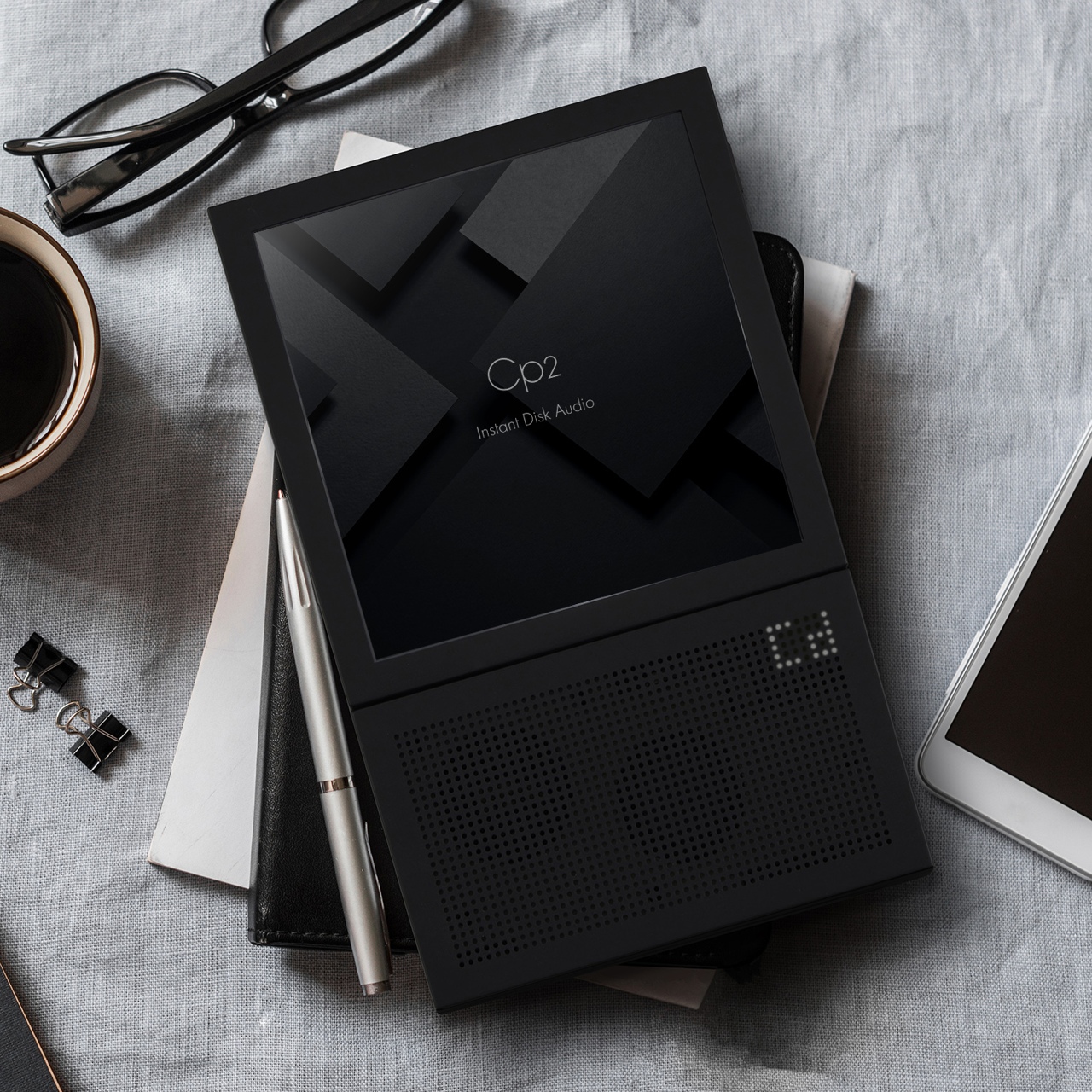
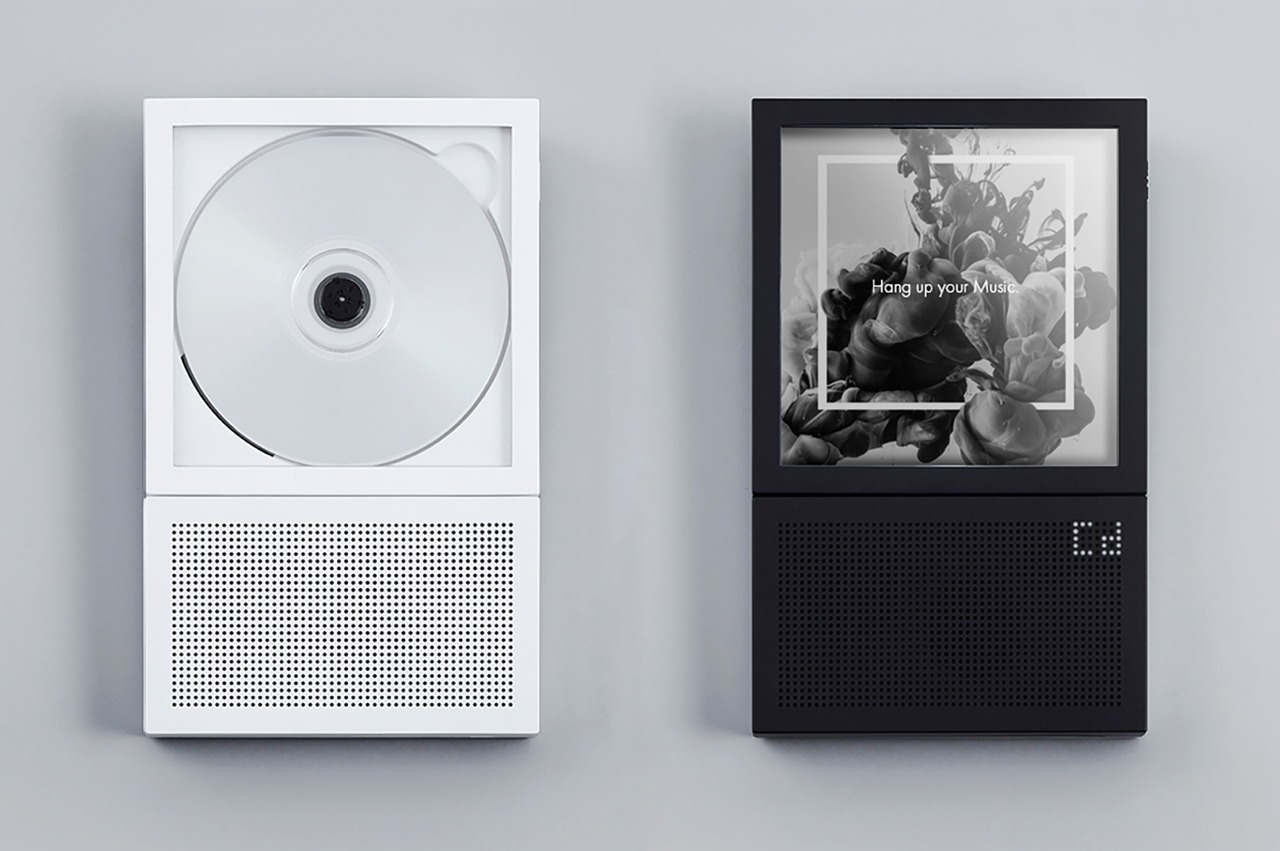
This minimalist CD player delivers a rather distinctive listening experience that combines the pleasure of audio with the impact of visual art. Rather than having to set aside the CD jacket or sleeve, you can slip it inside the specially-designed pocket so that you can show it off to anyone in view. It’s like the physical equivalent of displaying digital album art, except you have the opportunity to boast about owning the physical original CD, especially if it’s a rare, limited run.

What makes this unique CD player extra special is its portability. It has a built-in 40mm full-range speaker as well as a woofer unit, ensuring that you can listen to your favorite albums wherever you are or wherever you place it in your room or home. The 1,800mAh rechargeable battery promises 7 to 8 hours of playback before you need to plug it in again. Of course, you can still connect an external speaker via the 3.5mm headphone jack or Bluetooth 5.1, but those would probably be the exception rather than the norm.

Despite the addition of a speaker and a battery, this Portable CD Cover Player retains a simple, minimalist, and thin design at only 27mm thick. Thanks to this and its wireless operation, the player can even serve as a piece of decoration, whether standing on a shelf or hanging from a wall. With this ingenious and elegant portable CD player, you get to enjoy your favorite music not just with your ears but also with your eyes.

Click Here to Buy Now: $179 $199 (10% off at checkout).

The post Minimalist wall-hanging CD Player visualizes your music in a unique way first appeared on Yanko Design.

This companion robot motivates socially inactive youth to venture out with mood-based conversations and persuasive activities

With the advent of social media, most of us have found long-lost friends or made new meaningful contacts. This movement in technology has helped shape our personality; in some cases, however, it is threatening the fabric of social interaction with people closer and more physically available, leading to social phobia. The fear of venturing out or being social can have a significant impact on the “occupational” and “educational” attainment of many reclusive, leaving them with fewer friends, a pessimistic viewpoint about self, and a lifestyle confined to the four walls of their living quarters.

Staying inclusive to the pretext, enters Mori: A robotic buddy for the younger generation dealing with social anxiety disorder. Studies on the behavior of seniors – recovering from dementia – with companion robots show that the elderly prefer “soft, furry, interactive animals” as partners. There is a considerable difference in favor of robotic pets that can simulate real-life animal in terms of eye contact and order-obeying ability. To that accord, “Joy for All” or “Paro,” companion bots have fine-tined the relationship between humans and technology. Now Mori, with a gadget-esque, interactive approach wants to help the youth by being that partner they can confide with and catapult out of the anxiety of being socially inactive.

Designers: YeEun Kim, Taewan Kim

Designed to help young adults deal with mental and physical health issues, Mori benefits by assisting them overcome these challenges offering consistent support to reclaim the lost zeal. Whether the person is dealing with lifestyle-related problems or social anxiety, Mori provides a solution with mood-based conversations and designs achievement activities to motivate individuals to venture out.

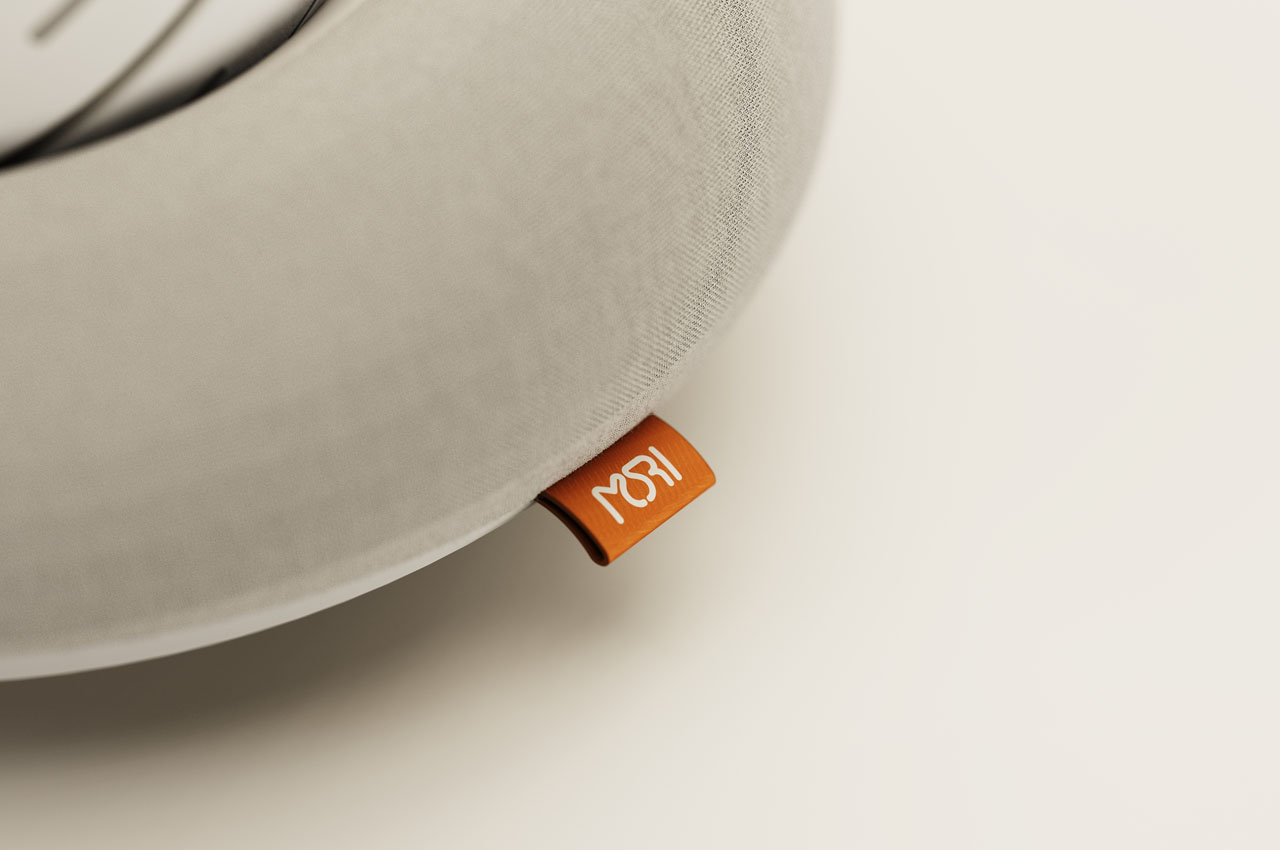
The robot itself comes in a two-part design. The base comprises a control unit with a speaker and volume rockers and cradles within a spherical device that can crack open in half to convert into over-ear headphones. The user can put on the headset to communicate with the integrated AI assistant that guides through activities to rekindle the person to resume outdoor activities.

The positive motivation would work best in favor of the socially inactive, who are cocooned in the nexus of the virtual world, frame their life’s objectives and routines based on the opinions of online friends and lifestyle of the influencers. Mori embedded with an emotion recognition sensor immediately identifies the mood of the user and initiates conversation to build rapport with positive empathy. Mori as a unit is powered by a rechargeable battery: you dock the headset in the cradle base, which wirelessly charges it, while drawing its power through a USB-C port in its rear.

The post This companion robot motivates socially inactive youth to venture out with mood-based conversations and persuasive activities first appeared on Yanko Design.

80% smaller than the average car: This Compact EV seats 2 people and fits into tight parking spots

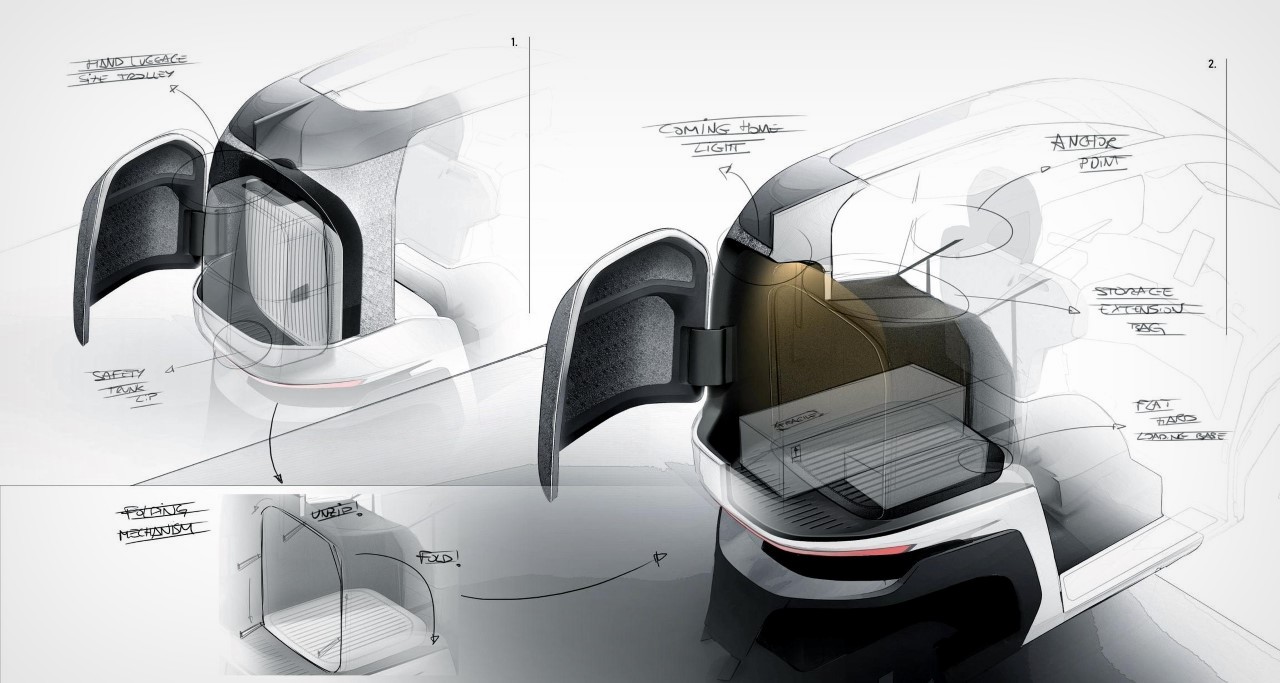
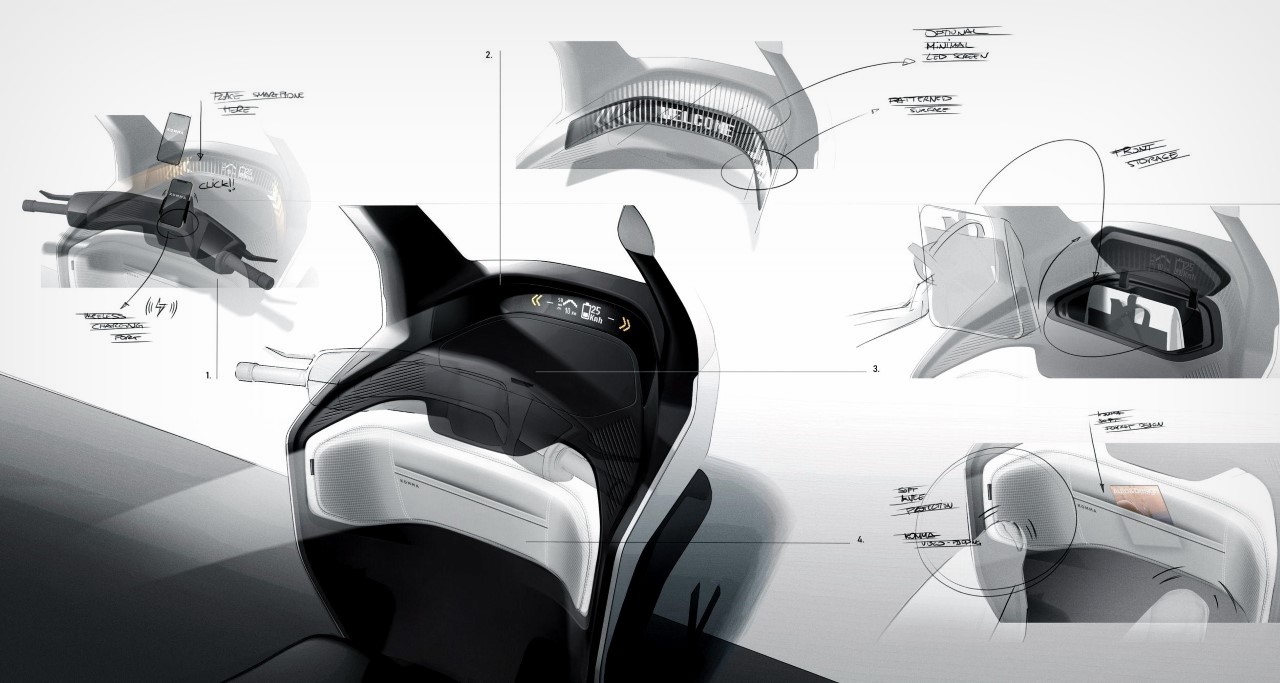
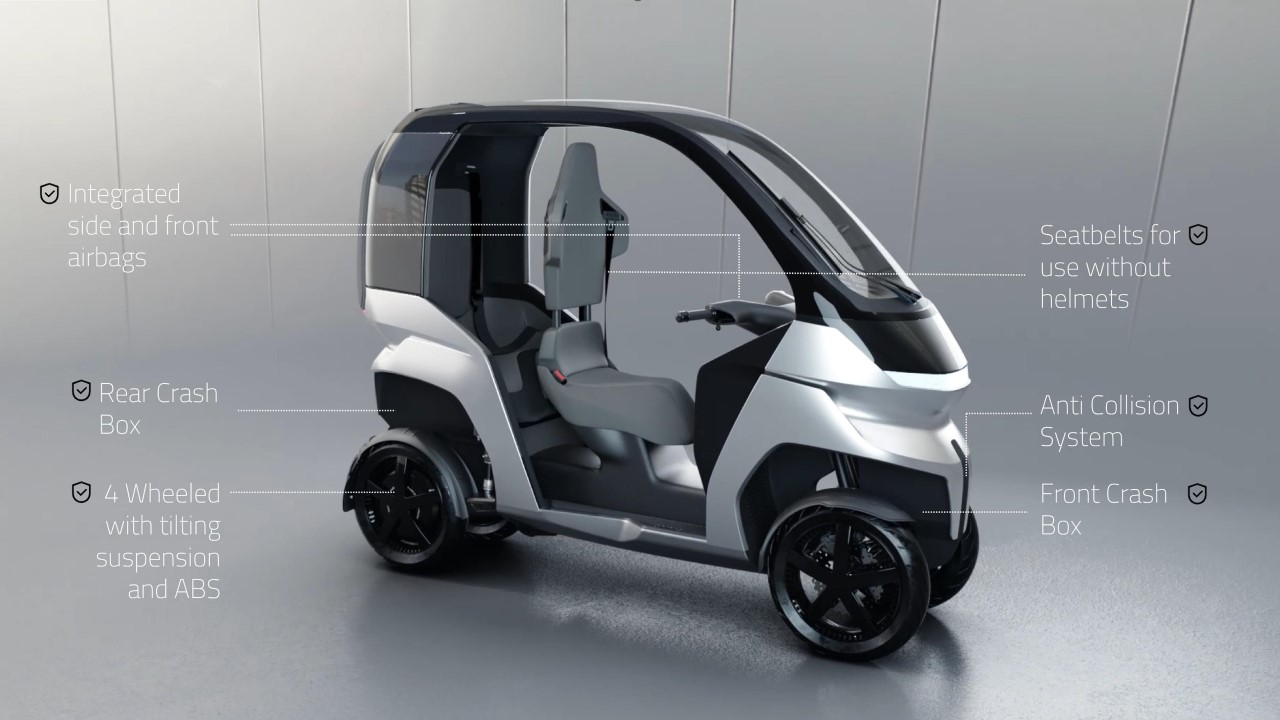
Motorcycles are agile but don’t have the conveniences a car offers. Cars have roofs, storage space, and are more stable, but they aren’t as compact as motorcycles. Granstudio’s vision for Komma, a Swiss-based mobility startup, was to blur the line between the two. The Komma UMV is unique in that it borrows the best bits from a car and a motorcycle. For all intents and purposes, it looks and feels like a car, with four wheels, a roof, doors, and even a boot to store luggage. However, it’s no wider than a motorcycle, making it 80% smaller than most cars, run on 66% less energy, and have all the safety features of a car, from seatbelts to airbags.

Designer: Granstudio

The Komma UMV is entirely a new category of vehicle, borrowing the best bits from cars, motorbikes, ATVs, and even the Asian TukTuks. It prioritizes efficiency without compromising on mobility and rider comfort, and when it does make trade-offs, it does so in a way that really feels like features. For example, it might be smaller than a car, but its slim format allows it to weave between traffic and park in even the tightest spaces without breaking a sweat.


“In the studio, we focus on both designing cars and developing mobility plans for future cities. However, when we try to combine these two aspects, something doesn’t quite fit,” say the designers at GranStudio “This is particularly evident in Europe, where it is clear that the ideal city we envision for the future prioritizes the quality of public spaces and community values. It is a city where cars do not naturally belong and are out of context.”


In scaling the car down to this two-seater format, the math adds up to some real savings for both the rider and the planet. The Komma UMV is 80% smaller than your average car and has a 70% reduced ecological footprint. It consumes 66% less energy than a car, which translates to 70% lower operational and fuel costs than your regular gas-powered vehicle. All that really makes a difference in the grand scheme of things, making the Komma UMV perfect for single-person or two-person rides.

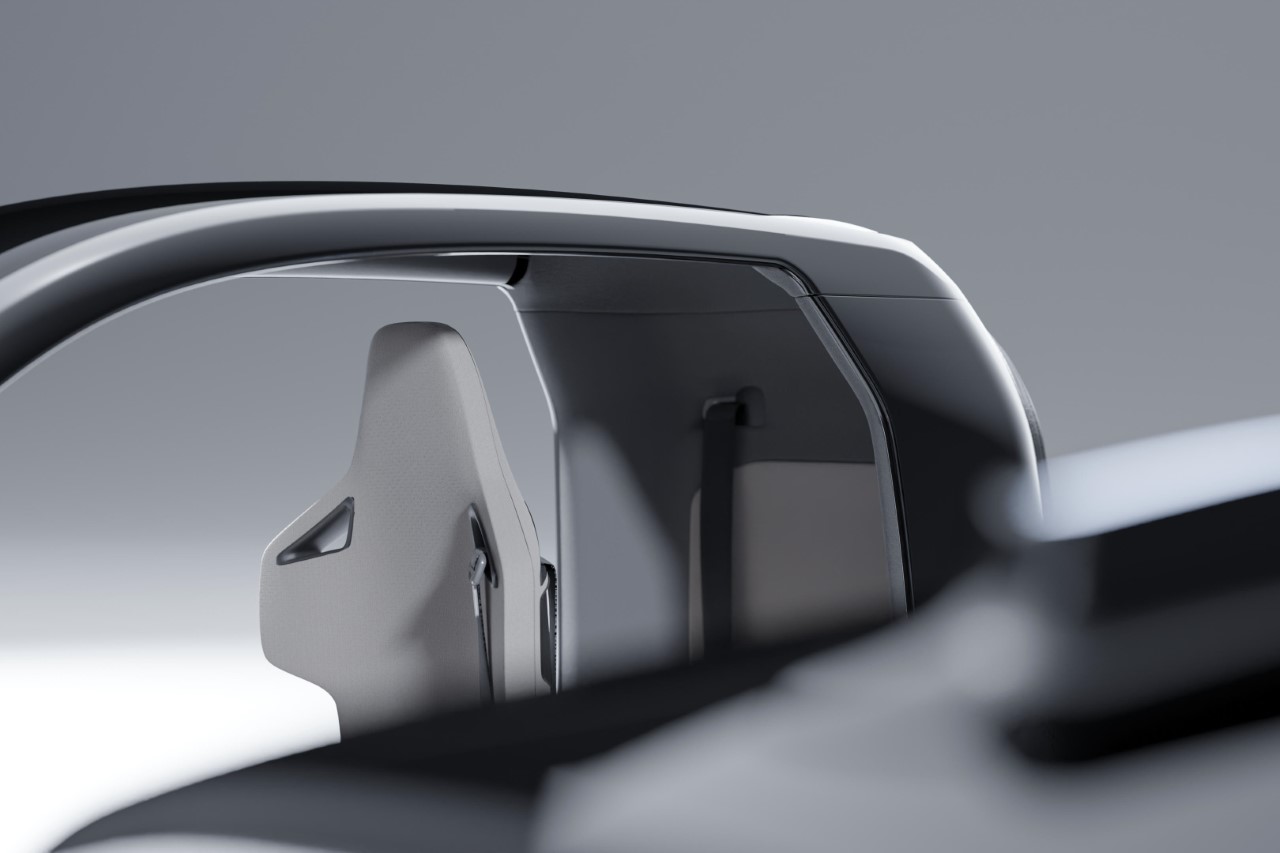
That being said, the UMV has all the benefits of a car. It runs on four wheels that employ a unique hydraulic tilting system for stability, but also enable tighter turns, just like a motorcycle. You’ve got a 4WD system, suspension, anti-collision protocols, and an anti-lock braking system. The car also comes with doors, a roof, seatbelts, airbags, and its occupants don’t need helmets. The windshield has airbags, and the UMV has storage space in both the front as well as the boot, offering much more storage space than a two-wheeler. Given its width constraint and hydraulic tilting system, it uses handlebars, which seem to be the only actual remnant left behind from the motorcycling world, along with the seating format where the passenger sits right behind the rider.
Komma offers a transformative vision for urban environments, placing a strong emphasis on enhancing the quality of public spaces and nurturing community values. By reducing the dominance of automobiles (or at least the space occupied by them), Komma paves the way for a more harmonious coexistence with nature, creating abundant room for leisure pursuits, and fostering vibrant social interactions. This shift in perspective not only redefines the city but also revitalizes it, making it a place where people and nature thrive together.


The post 80% smaller than the average car: This Compact EV seats 2 people and fits into tight parking spots first appeared on Yanko Design.

Nintendo has unofficial The Legend of Zelda: Link’s Awakening PC remake taken down (update)

Update December 15, 2:10PM ET: As expected, Nintendo lawyers stepped in to force Itch.io to take down the game, so unfortunately it is no longer available to download. Our original coverage follows below.

An anonymous and inventive Nintendo fan has recreated the Game Boy classic The Legend of Zelda: Link’s Awakening with a twist that separates it from the official 2019 remaster. The widescreen Windows remake adds high frame rate support and lets you zoom out to view a larger portion — or even all — of Koholint Island. But the game may not last long as Nintendo has a habit of crushing copyright-infringing fan games, even when crafted lovingly and offered for free like this one.

Spotted on X (alongside a writeup by Polygon), Link’s Awakening DX HD is a love letter to the 1993 original and its 1998 color re-release. The unofficial port recreates the quirky Zelda installment with 120 frames per second (FPS) support, which the developer describes as adding “unparalleled fluidity.”

The homebrew port also gets rid of the original’s transitions, which loaded a new screen every time you walked to the next one (old-school Zelda style). In this version, the camera pans fluidly as Links strolls around the island, something we imagine was no small task for the unnamed creator.

Fan-made remake of The Legend of Zelda: Link's Awakening, showing most of the southwest portion of Koholint Island as Link walks around. Colorful 1990 Game Boy graphics zoomed out far past what that hardware supported.
linksawakeningdxhd / itch.io / Nintendo

Zoom level, available in the in-game settings menu, lets you pan out to a 1:1, half or one-third pixel scale, allowing you to view as much as the entire island simultaneously. This isn’t a static perspective, either. Each visible section is fully activated (as if Link were on it in the original) and swarming with enemies. You can move around in the panned-out views, swinging your sword at Moblins and searching for the next task without pausing to consult a static game map.

The game’s developer posted the '90s love letter anonymously, likely to shield them (for a time, anyway) from Nintendo’s litigation-happy legal team. The 24 MB Link’s Awakening DX HD is a free download on itch.io, but we wouldn’t count on it staying there for much longer. Either way, you can watch a snippet of gameplay in the video below.

This article originally appeared on Engadget at https://www.engadget.com/fan-made-zelda-links-awakening-remake-lets-you-zoom-out-to-see-the-entire-island-214345008.html?src=rss

Xbox Cloud Gaming lands on Meta Quest headsets

Meta has been promising as much for a while, and now Meta Quest 2, 3 and Pro owners can now stream hundreds of games through Xbox Cloud Gaming. You'll need an Xbox Game Pass Ultimate membership, compatible controller, solid internet connection and the most recent Quest software update. Then, you'll be able to snag the Xbox Cloud Gaming (Beta) app and hop into games such as Starfield, Cocoon and Halo Infinite on a large virtual screen.

Meta says you'll be able to choose from four virtual display sizes. You can opt to play games in an Xbox-themed virtual space or make it appear as though the display is floating in mid-air thanks to the Quest 3 and Pro's full-color passthrough features. As for supported controllers, Meta says Xbox gamepads, PlayStation 4 peripherals and the Nintendo Switch Pro all work. Support for the PlayStation 5's DualSense will be available at a later date.

This is the second major cross-platform collaboration that has arrived on Quest in the last couple of weeks. It's now possible to wirelessly play PC VR games on the headsets thanks to Steam Link support. While some folks were already able to access Xbox Cloud Gaming on Quest headsets via workarounds, the arrival of the app will make it much easier for anyone to dive in and play something when, say, they're traveling or someone else is occupying the TV.

This article originally appeared on Engadget at https://www.engadget.com/xbox-cloud-gaming-lands-on-meta-quest-headsets-204929253.html?src=rss

Etsy is laying off 11 percent of its staff

Etsy is the latest company to lay off staff in 2023. CEO Josh Silverman confirmed the marketplace is letting go of 11 percent of its staff (around 225 employees) in its first significant staffing cut in recent years. It’s also reshuffling its leadership, including announcing two executives’ departures at the beginning of 2024.

“After deep discussion and careful consideration, we are reorganizing our internal structure to more closely align our resources with our most important business priorities and better serve our customers,” Silverman wrote to employees. “As part of this, I’m sad to share that we must say goodbye to approximately 225 team members, reducing the Etsy workforce by ~11%. This decision was among the hardest we’ve ever made, and one that we have tried earnestly to avoid.”

The company is facing a consumer spending slowdown, as its leadership warned in its Q3 2023 earnings call in November. “There’s no doubt that this is an incredibly challenging environment for spending on consumer discretionary items,” Silverman said to investors last month. “It’s therefore important to acknowledge that the volatile macro climate is going to make it challenging for us to grow this quarter.” Etsy’s revenue growth had already stalled in recent years, with customers adjusting their spending habits post-lockdowns after a pandemic-era boom.

Etsy’s headquarters, inside view. A commons area includes benches and tables with pillars and buffet stations behind. Art decorates the walls.
Etsy’s Brooklyn headquarters
Etsy

Etsy’s CEO says Shein and Temu have also affected the company’s bottom line. “There’s no question that Temu and Shein are having an impact in the market,” Silverman said in the November call. “You don’t get that big that fast without taking share from many people.”

However, the two upstarts’ competition isn’t the only issue; Shein and Temu have also allegedly driven up Etsy’s advertising costs. “And the other thing that is happening is they’re spending a large amount of money on marketing, not clear that they’re using ROI thresholds to do that,” Silverman added. “And so I think those two players are almost single-handedly having an impact on the cost of advertising, particularly in some paid channels in Google and in Meta.”

Silverman plans to market the platform’s “quality, value and reliability” to help fend off the younger competitors, which specialize in cheaper goods. “I have great confidence in these plans, but we need the right structure and resources in place to successfully execute on them,” he wrote to employees.

The CEO wasn’t above talking a little smack, either. “We are the opposite of Temu,” Silverman said to investors in November. “If I had to think about what is the polar opposite of Etsy, I’d probably get pretty close to Temu.”

As part of the reorganization, Etsy’s chief marketing officer, Ryan Scott, and chief human resources officer, Kim Seymour, will leave the company on January 1. Chief operating officer Raina Moskowitz will now lead marketing teams, and chief product officer Nick Daniel inherits Moskowitz’s previous turf, overseeing payments and fulfillment teams.

This article originally appeared on Engadget at https://www.engadget.com/etsy-is-laying-off-11-percent-of-its-staff-201545615.html?src=rss

Innovative Bottle Cap can tell you if your Food is Still Fresh or Not.

In the world of packaging innovation, United Caps and Mimica have teamed up to introduce a groundbreaking solution for ensuring food safety – the Mimica Bump Cap. These specially designed bottle caps provide a tactile indication of the freshness of the contents, offering a reliable method for distinguishing whether a product has spoiled.

Designer: United Caps and Mimica Lab

Originally conceived with the visually impaired in mind, the Mimica Bump Cap has evolved into a versatile tool that benefits a broader audience. For individuals who cannot rely on visual cues such as best-by dates, these caps offer a tactile alternative to determine the freshness of the product. Moreover, in the wake of the COVID-19 pandemic, where loss of smell became a prevalent symptom, these caps become invaluable to those who can no longer smell and determine the freshness of products.

These caps contain a patented gel technology that activates upon the first opening of the beverage. This innovative gel doesn’t come into direct contact with the beverage contents, maintaining a hygienic barrier. Instead, it utilizes a combination of time and temperature to accurately gauge the freshness of the product. The simplicity of the technology ensures that consumers can easily interpret the status of their beverage.

Reading the Mimica Bump Cap is a straightforward process. A smooth swipe across the surface of the cap indicates that the beverage is still fresh and safe for consumption. However, a bumpy texture suggests that the contents have started to spoil, prompting users to be cautious. This intuitive design makes it accessible to a wide range of consumers, regardless of their visual or olfactory abilities.


The versatility of this cap extends to its compatibility with a variety of perishable products, including milk and juices. As these caps rely on the fundamental principles of time and temperature, they can be effectively employed across a spectrum of goods, ensuring that consumers can trust the freshness of their purchases and store them aptly for waste reduction.

By incorporating the Mimica Bump Cap into their packaging, companies can elevate consumer confidence in the quality and safety of their products. The transparency offered by these caps empowers consumers to make informed decisions about their purchases, reducing the likelihood of consuming spoiled or expired goods.

Ultimately, the Mimica Bump cap helps boost sustainability too, allowing people to rely on real metrics instead of an arbitrary expiry date. This helps people ensure they’re eating fresh food, and finishing their perishables before they expire. Approximately 17% of global food production ends up getting wasted, but the Mimica Bump Cap can help reduce that.

The post Innovative Bottle Cap can tell you if your Food is Still Fresh or Not. first appeared on Yanko Design.

OpenAI will pay to train its models on Business Insider and Politico articles

OpenAI will pay German publisher Axel Springer to use its news articles to train its AI models and show real-time information from Axel Springer's brands, which include Business Insider and Politico in the US and Bild and Welt in Europe, in ChatGPT’s responses. None of the companies disclosed how much the deal was worth, but Bloomberg reported that OpenAI will pay the publisher tens of millions of euros over the next three years.

“This partnership with Axel Springer will help provide people with new ways to access quality, real-time news content through our AI tools,” said OpenAI’s chief operating officer Brad Lightcap in a statement. “We are deeply committed to working with publishers and creators around the world and ensuring they benefit from advanced AI technology and new revenue models.”

OpenAI’s partnership with Axel Springer comes on the heels of concerns from creators, authors, and publishers who have criticized and sued generative AI companies for training their models on their content without consent or compensation. Some publishers like The New York Times, Vox Media, BBC News, Reuters, and CNN have blocked OpenAI from accessing their data. Striking deals with AI companies, however, could provide a brand new revenue source for publishers who are currently going through the worst year for the media business in decades.

As part of the deal, Alex Springer will provide OpenAI with both current news articles as well as archives from all its brands to train its large language models, the foundational tech that powers ChatGPT. When ChatGPT uses Axel Springer’s articles in its responses, it will include attribution and links to the pieces for transparency. Axel Springer will also be able to use OpenAI’s technology to improve its own products, The Wall Street Journal reported.

This isn’t the first deal that OpenAI has struck with a news publisher. Earlier this year, the company entered into a two-year partnership with The Associated Press to use select content from the AP’s archives dating back to 1985 to train its AI models, although the terms of that deal do not include letting ChatGPT use AP content in its responses. OpenAI also has a $5 million partnership with the American Journalism Project to explore how local news organizations can benefit from artificial intelligence.

This article originally appeared on Engadget at https://www.engadget.com/openai-will-pay-to-train-its-models-on-business-insider-and-politico-articles-200327559.html?src=rss

The EU will reportedly rule against Apple in Spotify’s complaint over App Store policies

EU regulators have reportedly sided against Apple in its long fight against Spotify over App Store policies. The complaint centered on "anti-steering" rules that allegedly prevented platforms like Spotify from adequately promoting alternative methods of payment. While Spotify was the key opposition, the decision impacts not just music-streaming, but anyone offering software that requires a monthly subscription.

Bloomberg reports that regulators are still putting the final touches on the ruling, with a formal decision expected for early next year. Along with the ruling, the EU will likely penalize Apple for the practice and ban it outright. It’s expected that Apple will get hit with a steep fine, with some experts suggesting it could be as much as ten percent of its annual global revenue. This could add up to nearly $40 billion.

However, the fine is likely to be lower than that, as the EU tends to place more of an emphasis on actually ending abusive practices, instead of relying solely on fines as a deterrent. So the big news will be Apple being forced to play by the rules when operating in Europe, ending anti-steering practices once and for all. Of course, it’s all up in the air until the regulating body releases its judgment.

This follows a probe that started four years ago. It all began with a complaint from Spotify alleging that Apple’s anti-steering practices were forcing the music-streaming platform to raise prices to cover costs associated with appearing on the App Store. This led to an initial “statement of objections” against Apple in 2021 and a formal charge sheet this past February, as reported by The Verge.

The formal charge sheet declared in a “preliminary view” that “Apple’s anti-steering obligations” offer “unfair trading conditions.” For years, Apple didn’t allow rival streaming services like Spotify to even include links in third-party apps to their own subscription sign-ups. The company has since loosened this restriction slightly after an antitrust investigation in Japan. The EU ruling could further erode this mandate.

The European regulatory commission will address the accusation that Apple stopped companies from advertising alternative subscription methods but will not address anything related to in-app purchases. If you’ve been following this story, fees associated with in-app purchases were also part of the complaint until being dropped in February. The EU has issued a separate probe into Apple’s tap-to-pay technology and whether there are any inherent antitrust concerns. According to reports, the company’s in talks to settle that case.

How will this affect the rest of the world? There’s a similar case making its way through the US courts, via an antitrust suit brought forth by Epic Games. A judge sided with Epic, but Apple recently asked the Supreme Court for an appeal. The court granted a temporary reprieve, so Apple can still do whatever it wants in its App Store, for now. Apple is a global entity, however, so all it takes is a few countries to force a company-wide change. As an example, just look at USB-C ports.

Google faced a different outcome in a US court this week. A federal jury sided with Epic Games in a similar antitrust case against Google. The jury unanimously agreed that Google held an illegal monopoly on app distribution and in-app billing services for Android devices.

This article originally appeared on Engadget at https://www.engadget.com/the-eu-will-reportedly-rule-against-apple-in-spotifys-complaint-over-app-store-policies-195704039.html?src=rss