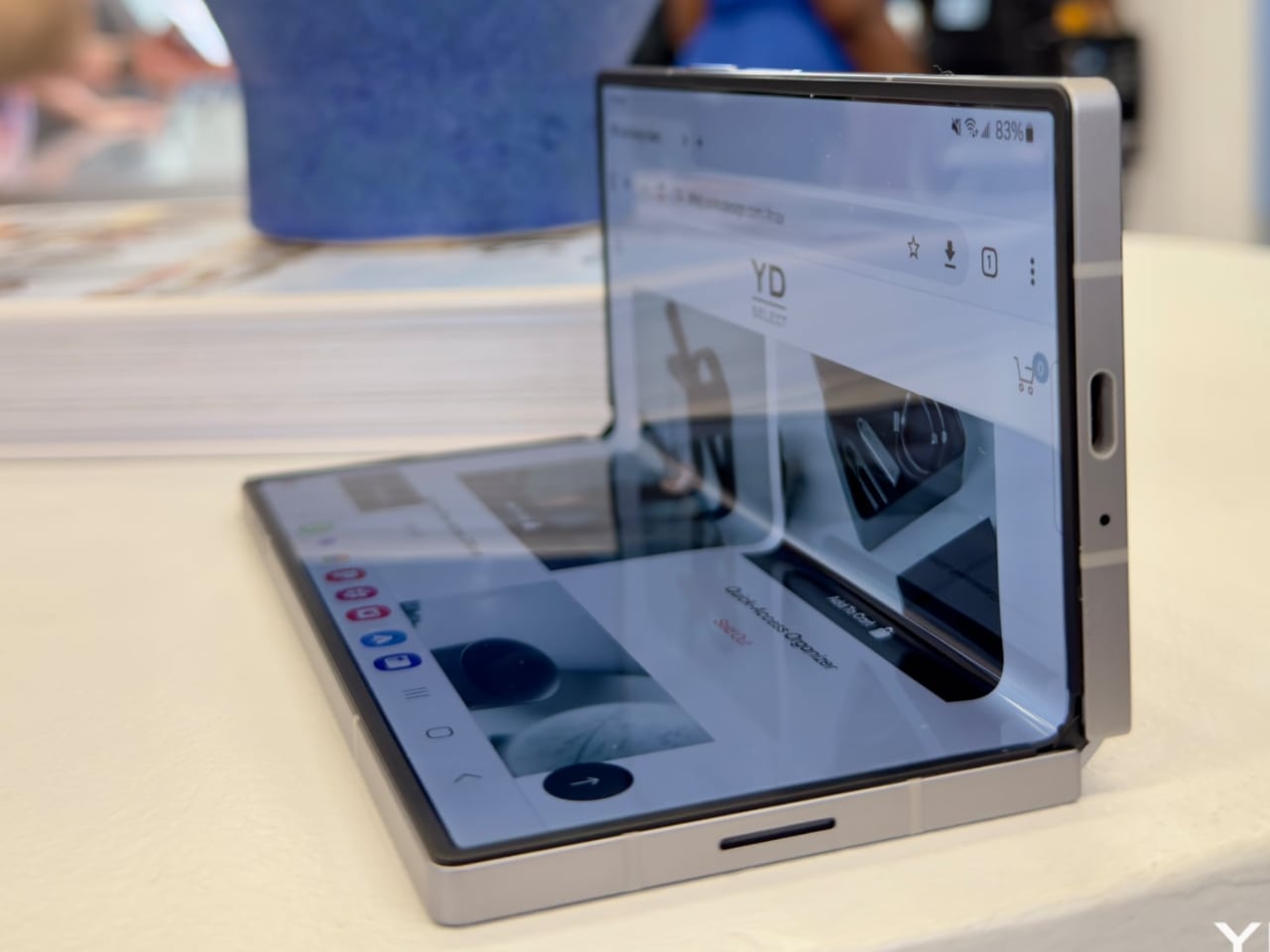
iPhone Standby Mode on Steroids: The Vobot gives you a Multi-Hub Display Dock for Widgets and Tools

Sure, your iPhone can show you the time or the game score or even photos of your holiday when it’s docked horizontally during charging… but can it give your laptop HDMI and LAN connectivity? Can it track crypto prices? Does it let you code your own apps/widgets? And hey, can it play DOOM? Well, Vobot can. A compact desktop display that doubles as a multiport hub for enhanced productivity, the Vobot puts fun and function together. It has 7 ports for enhanced connectivity and charging (up to 90W), but its magnum opus is the display on front, which does everything from being a clock, weather forecast indicator, Pomodoro timer, Todoist task tracker, Crypto or stock ticker, or even a screen-mirroring display. The best part, you can code your own apps for it, so unlike the iPhone’s Standby Mode, the Vobot can be exactly what you need it to be.

Designer: Mocreo Pvt. Ltd.
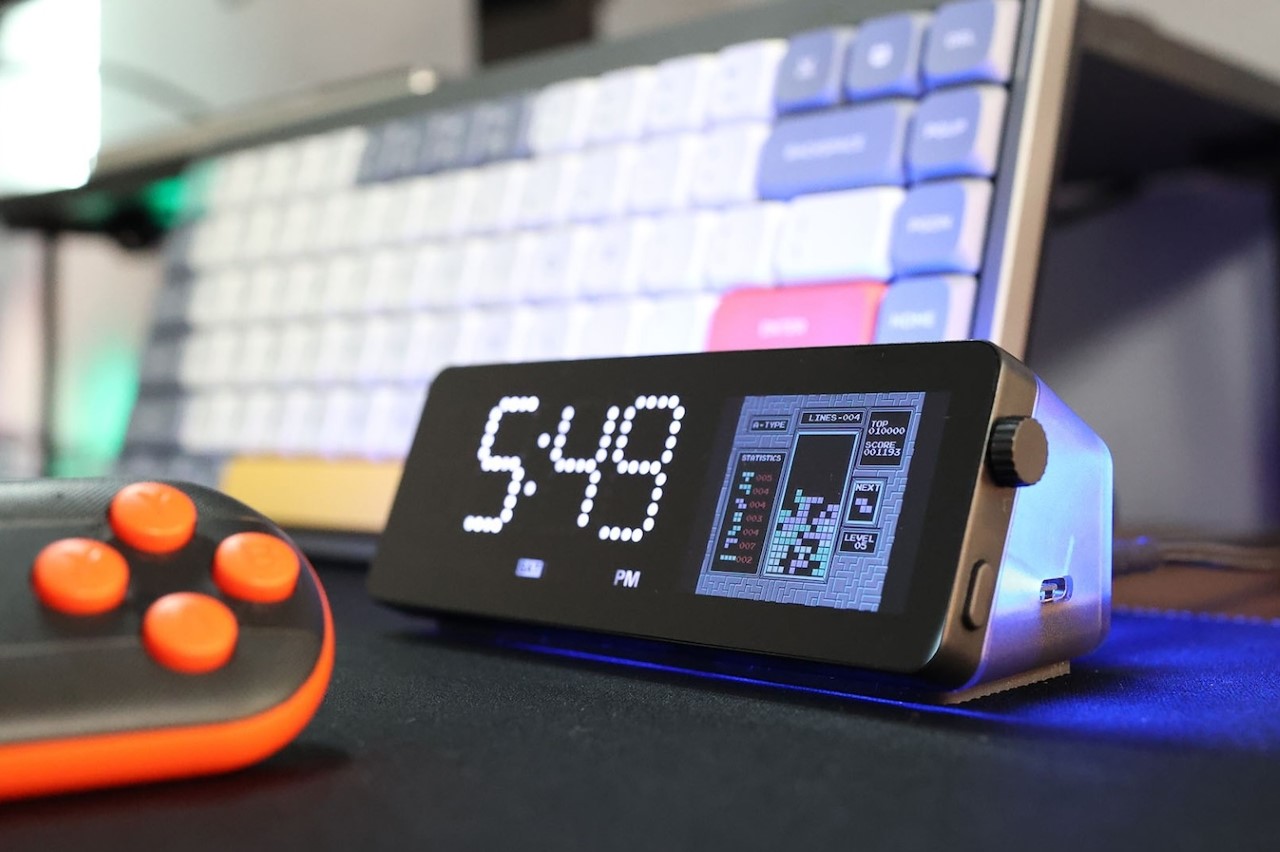
As the folks behind the Vobot say, it’s first and foremost a mini dock. With 7 ports to supercharge your laptop/desktop, the Vobot offers connectivity and power to your device. It sports a 4K@60Hz HDMI port, a Gigabit LAN port, one USB-A 3.0 port, and two USB-C 3.0 ports. There’s one single USB-C input port that powers the Vobot (the Vobot comes with its own adapter, and doesn’t have a battery of its own)… so in essence, it’s every bit a multiport USB hub… but the screen on the front is what radically changes things.

Think of that screen on the front of the Vobot as a dedicated secondary display. It’s split into two parts – the part on the left is a dot-matrix seven-segment LED display that’s dedicated to showing the time and day, while the right half is an LCD IPS screen that can be controlled using a knob and button interface on the right side of the device (reminiscent of a watch’s crown). When plugged in and running, the Vobot’s screen becomes your custom control center. The left half shows you the time, while the right half unlocks productivity in a variety of ways. The Mini Dock has its own built-in app gallery, including a weather widget, a Pomodoro timer, a Todoist task manager, calendar, stock/crypto tracker, PC monitor, indoor air detector, game emulator, WiFi status checker, screen-mirroring applet, and a lot more.

The vast app gallery means the right half of the Vobot mini dock’s display becomes your work and your life’s control panel. You can track productivity, review the stock market, watch YouTube videos on the side, check your PC’s performance or thermals, or even code your own IoT apps. With MicroPython programming, you can add new features to the dock that serve your needs, from doing things like monitoring cameras around your smart home, to checking your home’s power consumption. Create games that you can play using your laptop keyboard or a game controller (which comes along with the mini dock), or just build something as simple as a subscriber counter or notification center for your phone.

The Vobot Mini Dock boasts compatibility across Windows, Linux, and MacOS machines, but there’s also support for Android and iOS devices. Each Mini Dock ships with a 100W power adapter, and a tiny gaming controller that lets you play games on the dock’s built-in emulator. A quick-start guide briefs you through the dock’s features, and an online app store lets you access apps by other creators, or make your own to boost productivity… or should I say, pro-dock-tivity!

The post iPhone Standby Mode on Steroids: The Vobot gives you a Multi-Hub Display Dock for Widgets and Tools first appeared on Yanko Design.

Humble Games reportedly lays off its entire staff

Humble Games has reportedly laid off all 36 of its staff. Former employees posted about the layoffs on social media. Humble Games is owned by media conglomerate Ziff Davis, which counts IGN, Eurogamer and GamesIndustry.biz among its gaming portfolio. Humble Games confirmed in a LinkedIn post that there had been a "restructure" at the company, but did not reveal the number of jobs lost.

A PR rep for Humble Games also confirmed to Engadget that the company would not be shutting its doors as a result of today's restructuring. He added that both ongoing and upcoming projects would continue to be supported and published by the studio.

The layoffs at Humble Bundle are the latest in a sweep across the gaming business. Last year saw a shocking number of cuts across studios of all sizes, and the trend has sadly continued into 2024.

"The games industry is volatile, it's been inundated by people who only want exponential growth at the expense of making great games with great teams," Emilee Kieffer, a former lead quality assurance analyst with Humble Games, wrote on LinkedIn following the layoffs.

The indie publisher helped bring almost 50 video games to market, including notable hits such as Slay the Spire, Unpacking, Wandersong and Coral Island. Humble Games also had several upcoming games slated for release, such as Never Alone 2, a second delve into mythology and stories from the indigenous Iñupiat people in Alaska. 

"This decision was not made lightly; it involved much deliberation and careful thought, with the goal of ensuring the stability and support of our developers and ongoing projects," Humble's statement said. 

This business is a separate operation from the charity storefront Humble Bundle, which is also part of Ziff Davis but does not appear to be impacted by today's news. We've reached out to Ziff Davis and Humble Games for more information and will update if we hear back.

Update, July 23, 2024, 5:35 ET: Article has been updated to include a response from Humble Games' PR team.

This article originally appeared on Engadget at https://www.engadget.com/humble-games-reportedly-lays-off-its-entire-staff-201923446.html?src=rss

Chinese researchers test smallest solar-powered drone that can fly as long as it gets sunlight

A major problem with tiny flying drones, referred to as micro aerial vehicles (MAVs), is that they cannot fly for a very long duration. Especially the MAVs weighing under 10 grams, as such micro vehicles can only stay airborne for about 10 minutes. Using sunlight as a constant power source could provide a solution to keep such bird-sized drones afloat and flying longer.

However, it’s not as simple as sticking a solar panel on the wings. Traditional propulsion systems used in micro aerial vehicles aren’t very efficient at making appropriate use of generated solar power. Moreover, these tiny drones can’t carry much payload, making them inconsistent and unworthy in support operations, search, and rescue.

Designer: Beihang University

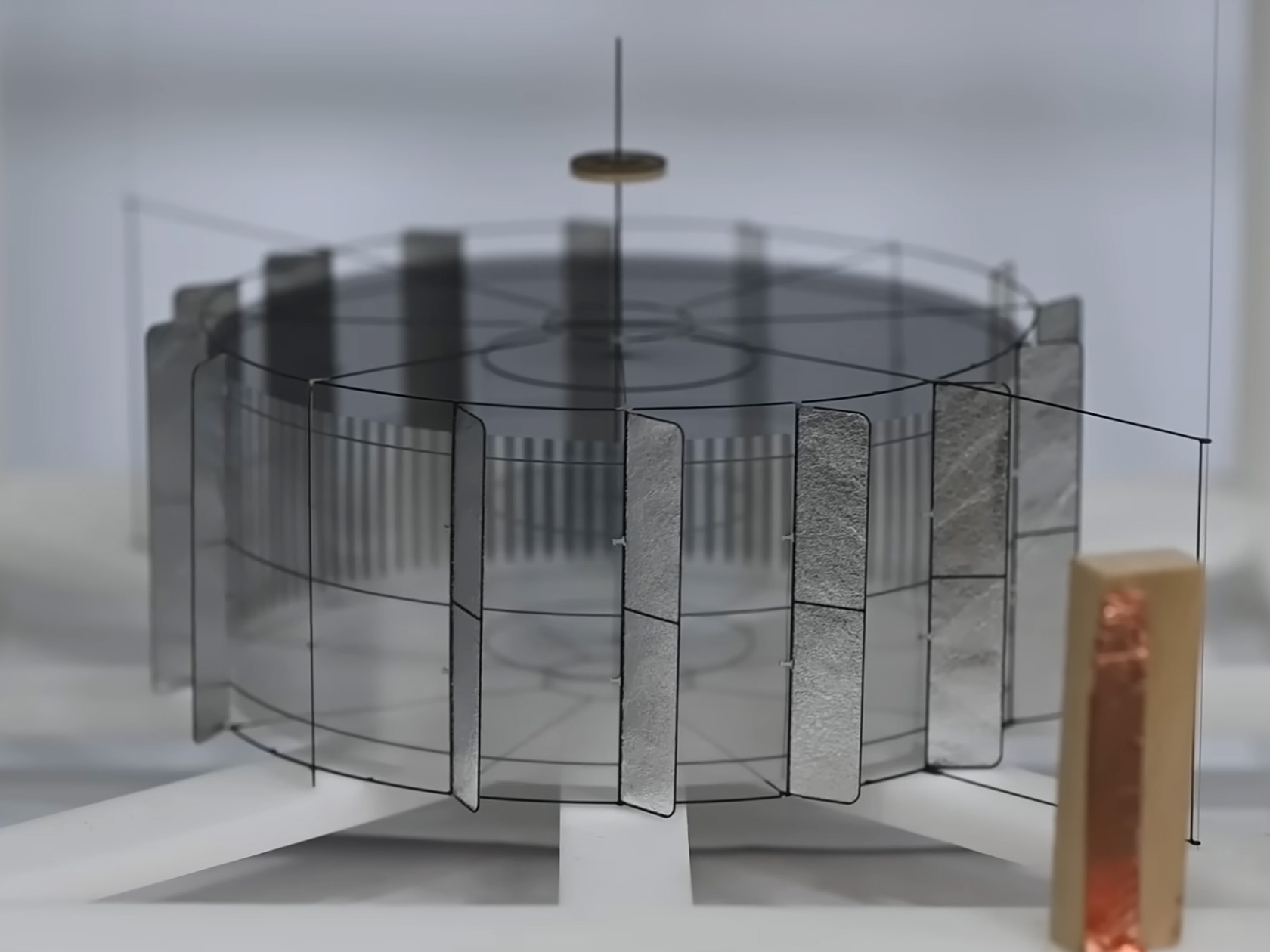
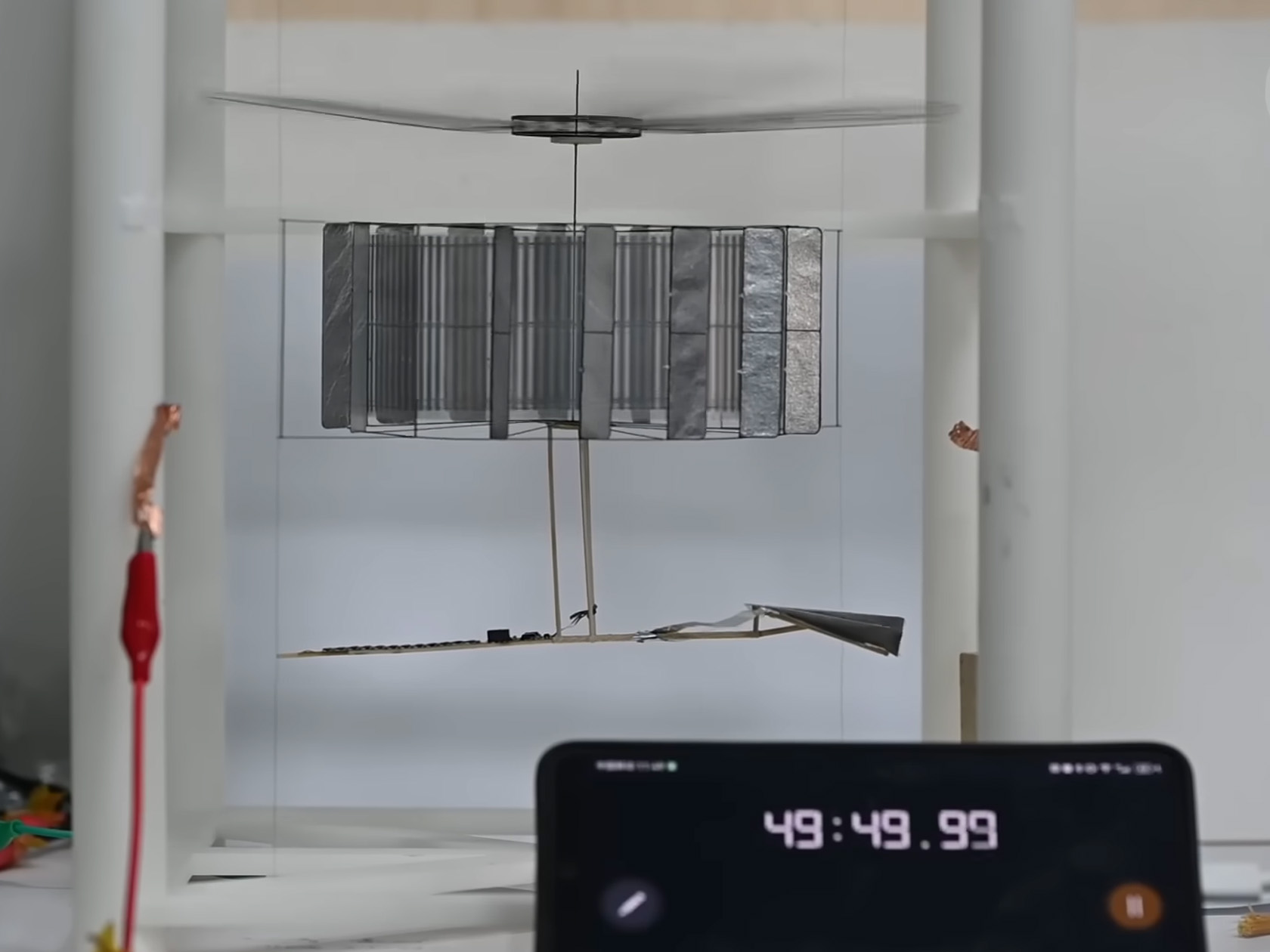
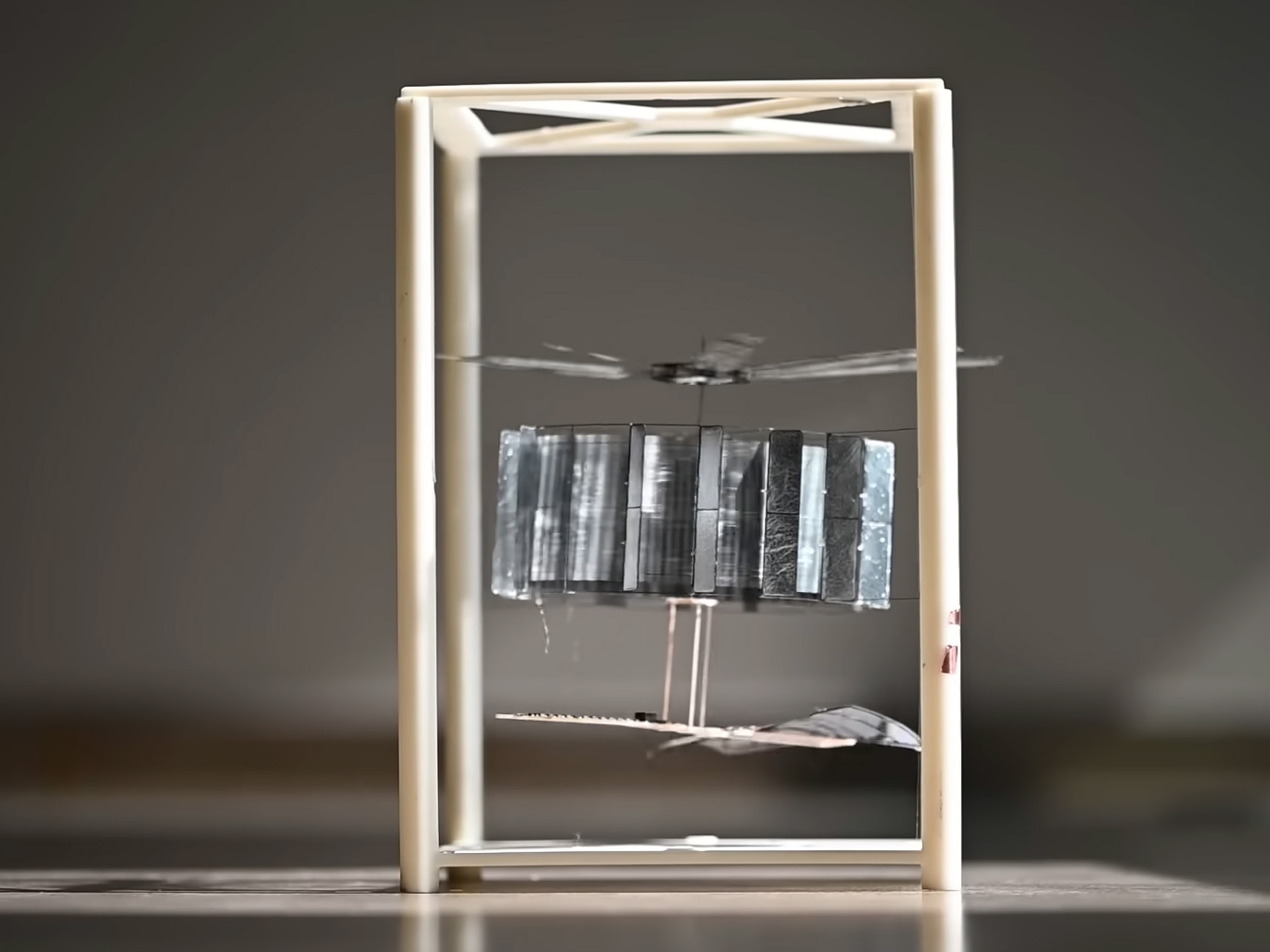
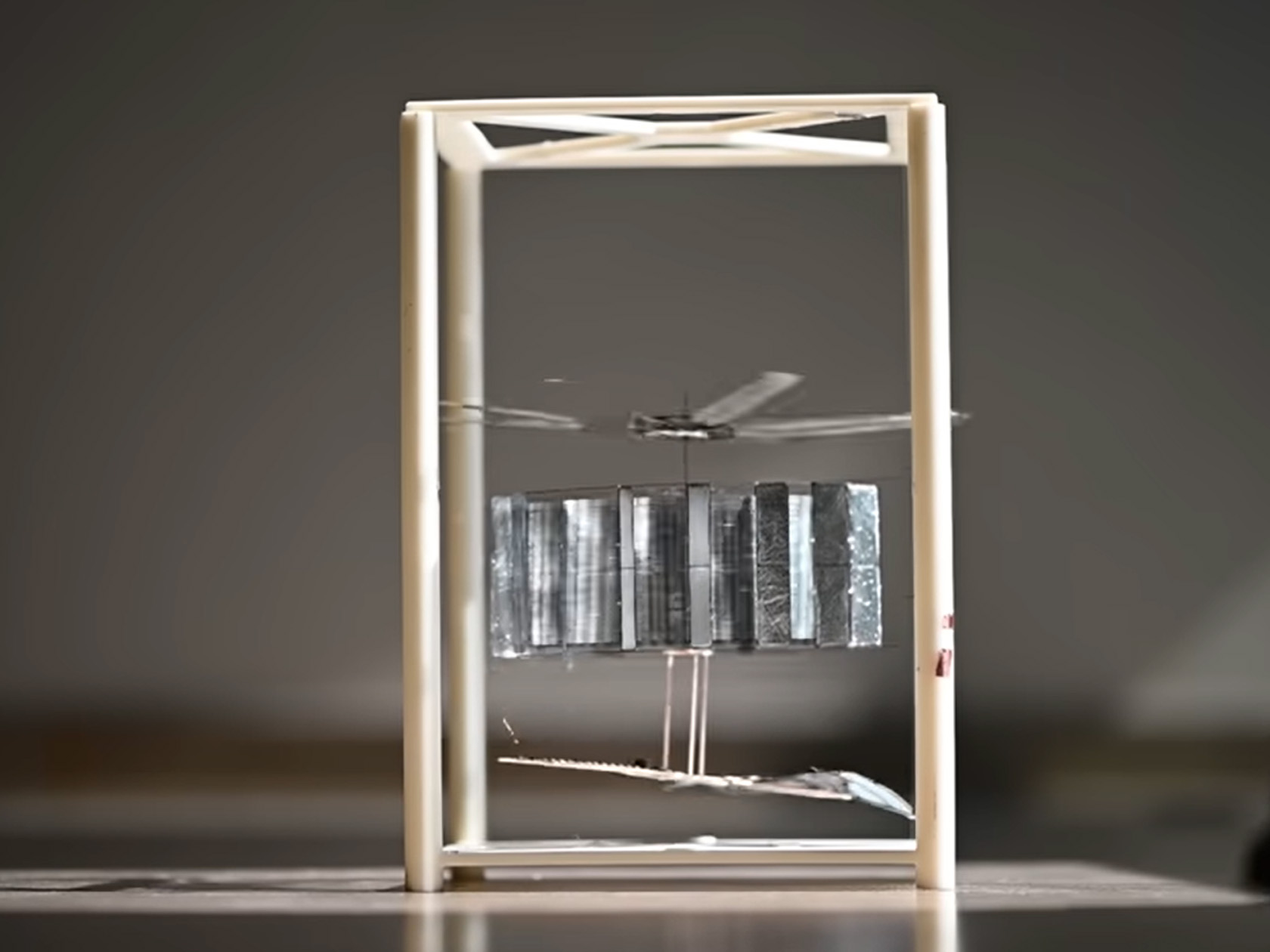
The CoulombFly, a small, ultra-efficient drone powered by static electricity was introduced as a solution to the abovementioned problem by scientists at Beihang University in Beijing, China. The super-small drone uses a special propulsion system that can lift to a decent height while using very little power for the same. The vehicle itself weighs just 4.21 grams – which is extremely lightweight – has a wingspan of 20 cm, and can carry a payload of roughly 1.59 g.

According to the researchers, CoulombFly is about ten times smaller and weighs 1/600th the weight of the previous, smallest and lightest solar-powered aerial vehicle out there. Dubbed then as the smallest and lightest solar-powered aerial vehicle, it is small enough to sit on the palm and is engineered to fly indefinitely while the sun shines on its wings. Mingjing Qi professor at Beihang and the lead of the project says he doesn’t want to settle for this size of the drone. “My ultimate goal is to make a super tiny flying vehicle, about the size and weight of a mosquito, with a wingspan under 1 centimeter,” Qi notes.

Unlike the previous tiny aerial vehicles that rely on electromagnetic motors and generate power using electromagnets; CoulombFly uses an electrostatic field to produce motion. With a mass of 1.52 g, electrostatic motor can generate lift-to-power efficiency that’s twice or even thrice that of traditional MAV motors. The electrostatic motor of the tiny drone comprises two rings: the inner ring is a spinning motor with 64 carbon fiber slats covered with aluminum foil, while the outer ring has eight alternating pairs of negative and positive carbon fiber electrode plates also bonded with foil. When the CoulombFly is exposed to sunlight, the outer ring with its 16 plates generates electric fields. Since each electrode plate is embedded in aluminum brushes, these brush against the rotor slats on the inner ring spinning the propeller and lifting the drone up until the sun is shining on it.


The post Chinese researchers test smallest solar-powered drone that can fly as long as it gets sunlight first appeared on Yanko Design.

A Call of Duty game is coming to Xbox Game Pass, just not one anyone wants

Microsoft has been taking a lot of hits over its Xbox Game Pass price hike and the overall lackluster offering of games. So to make up for it, they are offering a Call of Duty game for the first time on its virtual buffet. Unfortunately, it’s Call of Duty: Modern Warfare III, one of the lowest rated games in the series.

Calling the reviews for Modern Warfare III “mixed” would be generous. IGN’s Simon Cardy said its single-player campaign was “shallow,” “dull” and “the worst Call of Duty single-player campaign I’ve played.” Jump Dash Roll’s Derek Johnson wrote that its main campaign is “genuinely not worth playing” and its signature Zombies mode “isn’t quite as atrociously terrible as its single-player but that doesn’t mean it’s anything resembling something fun.”

Modern Warfare III won’t be the only Call of Duty game available for Xbox Game Pass subscribers. Xbox Game Pass will provide day one access to Call of Duty: Black Ops 6 in October. Of course, we don’t know how good the game will be but one imagines it'll garner a bit more favor from critics compared to Modern Warfare III.

This article originally appeared on Engadget at https://www.engadget.com/a-call-of-duty-game-is-coming-to-xbox-game-pass-just-not-one-anyone-wants-175255224.html?src=rss

The Future of Apple design language: iPhone 17 Slim and the Shift Towards Ultra-Thin Devices

Rumors are swirling that Apple might be dropping its “Plus” iPhone models, starting with the iPhone 17, potentially replacing them with a more premium offering. Over the years, the appeal of the “Plus” models has waned as standard, and Pro models have become more capable. The latest leaks suggest Apple is set to introduce a new “Slim” iPhone to fill this gap, a move that could revolutionize the future of Apple’s products and excite tech enthusiasts.

Designer: Apple

Remember that iconic moment when Steve Jobs wowed the world by pulling the MacBook Air out of a manila envelope? Could Apple be gearing up for another “MacBook Air moment” with the iPhone 17 Slim? If the rumors are true, we might witness a similarly groundbreaking reveal that redefines expectations for smartphone design and performance.

On July 20, details emerged on Weibo indicating that the iPhone 17 line-up will not include a Plus model. Instead, Apple is reportedly planning to launch an “iPhone 17 Slim,” set to become the most premium model in the line-up, much like the Apple Watch Ultra. This new model will take design cues from the ultra-thin iPad Pro M4, launched in May.

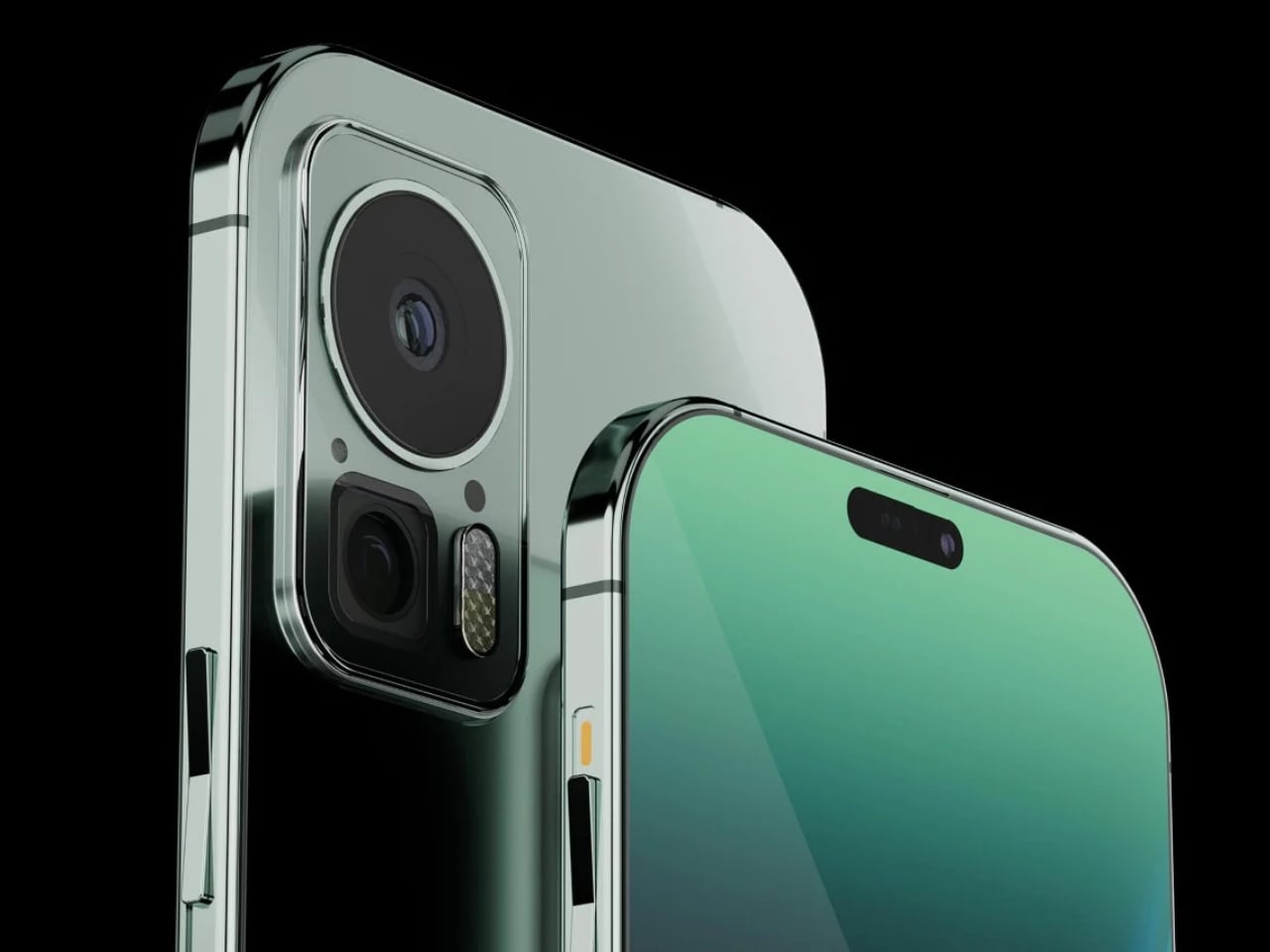
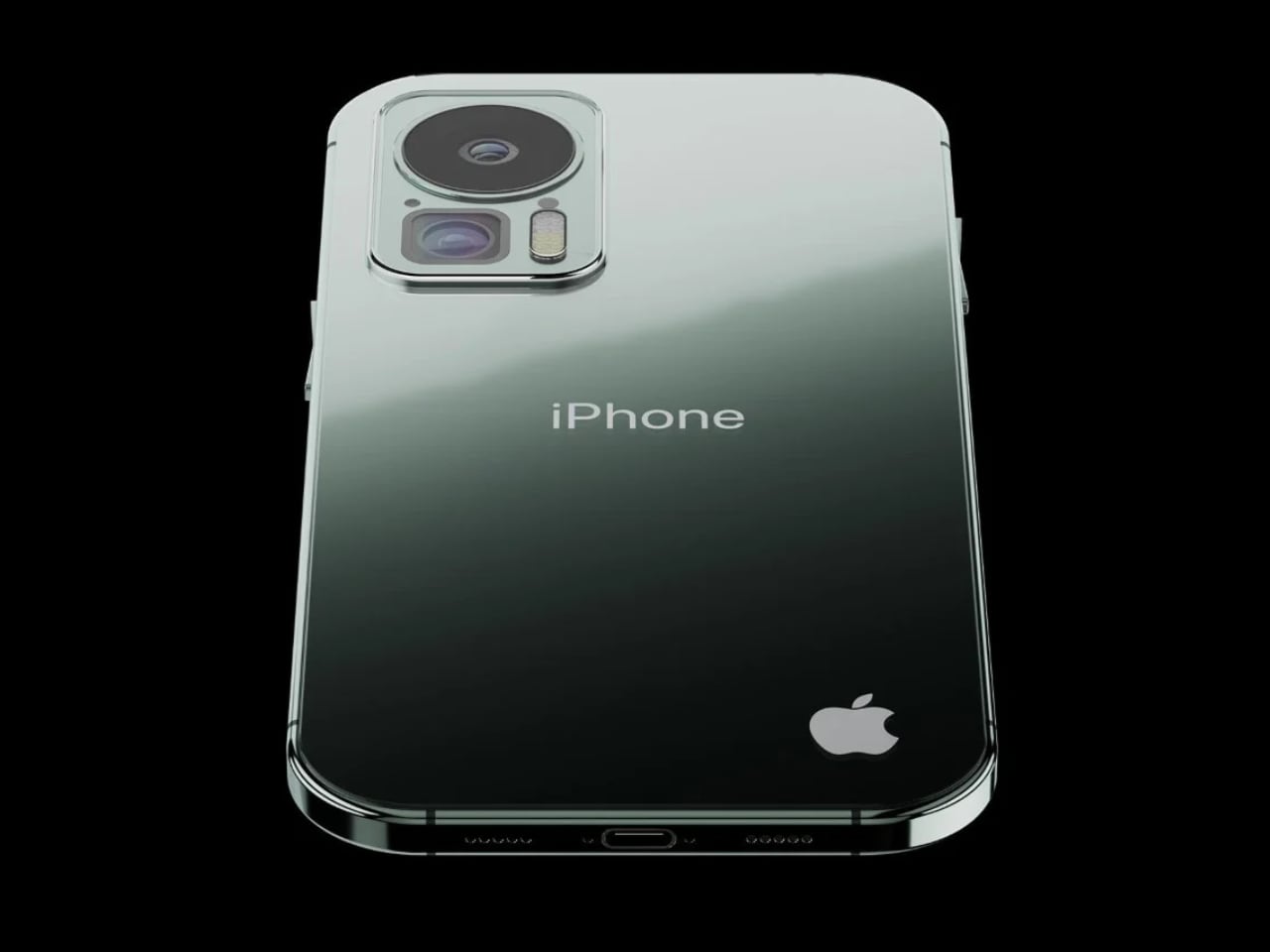
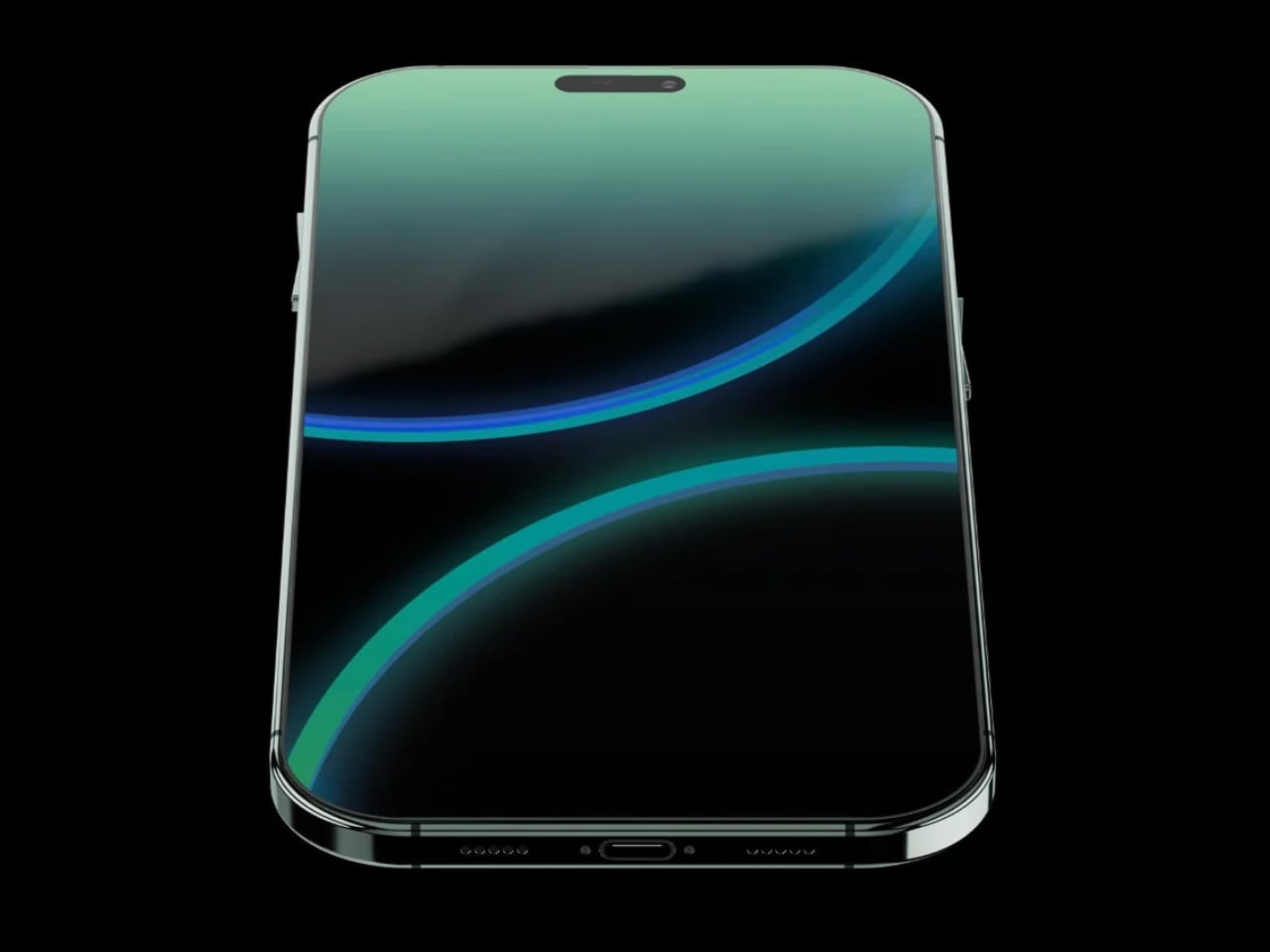
iPhone Concept

The iPhone 17 Slim is rumored to be significantly thinner than its predecessors and other models in the line-up. It is also said to feature an LTPO display with a 120Hz refresh rate, a feature currently exclusive to Pro models. This shift means every iPhone 17, from the base model to the Pro Max, will offer ProMotion technology.

Speculation also suggests that the iPhone 17 series will be powered by Apple’s A19 and A19 Pro processors. The iPhone 17 Slim will likely include the A19 Pro, making it the most advanced and expensive model in the range. Rumors suggest a starting price of $1,299, making it pricier than the current iPhone 15 Pro Max. However, the potential of the iPhone 17 Slim to meet and exceed consumer expectations in terms of performance and design is reassuring.

Here’s a look at the potential iPhone 17 line-up:

  • iPhone 17: $799, A19 processor, 6.27-inch LTPO (ProMotion) display, 8GB of RAM
  • iPhone 17 Pro: $1,099, A19 Pro processor, 6.27-inch LTPO (ProMotion) display, 12GB of RAM
  • iPhone 17 Pro Max: $1,199, A19 Pro processor, 6.86-inch LTPO (ProMotion) display, 12GB of RAM
  • iPhone 17 Slim: $1,299, A19 Pro processor, 6.65-inch LTPO (ProMotion) display, 12GB of RAM

Apple’s push towards thinner designs extends beyond the iPhone. The company is rumored to work on slimmer versions of all its main products, including MacBooks and Apple Watches. This ambition presents significant challenges, particularly regarding battery life and durability. A thinner design often means a smaller battery, which could compromise battery life. Ensuring the iPhone 17 Slim has comparable or superior battery performance to existing Pro Max models will be crucial.

Interestingly, with the development of the M4 and potentially M5 chips, these processors are expected to be much more efficient by the time the iPhone 17 is released. This efficiency could allow Apple to use a smaller battery while retaining the same battery life as current models. While battery capacity is a significant factor, I would much rather have a faster wired and wireless charging rate to top off as needed quickly.

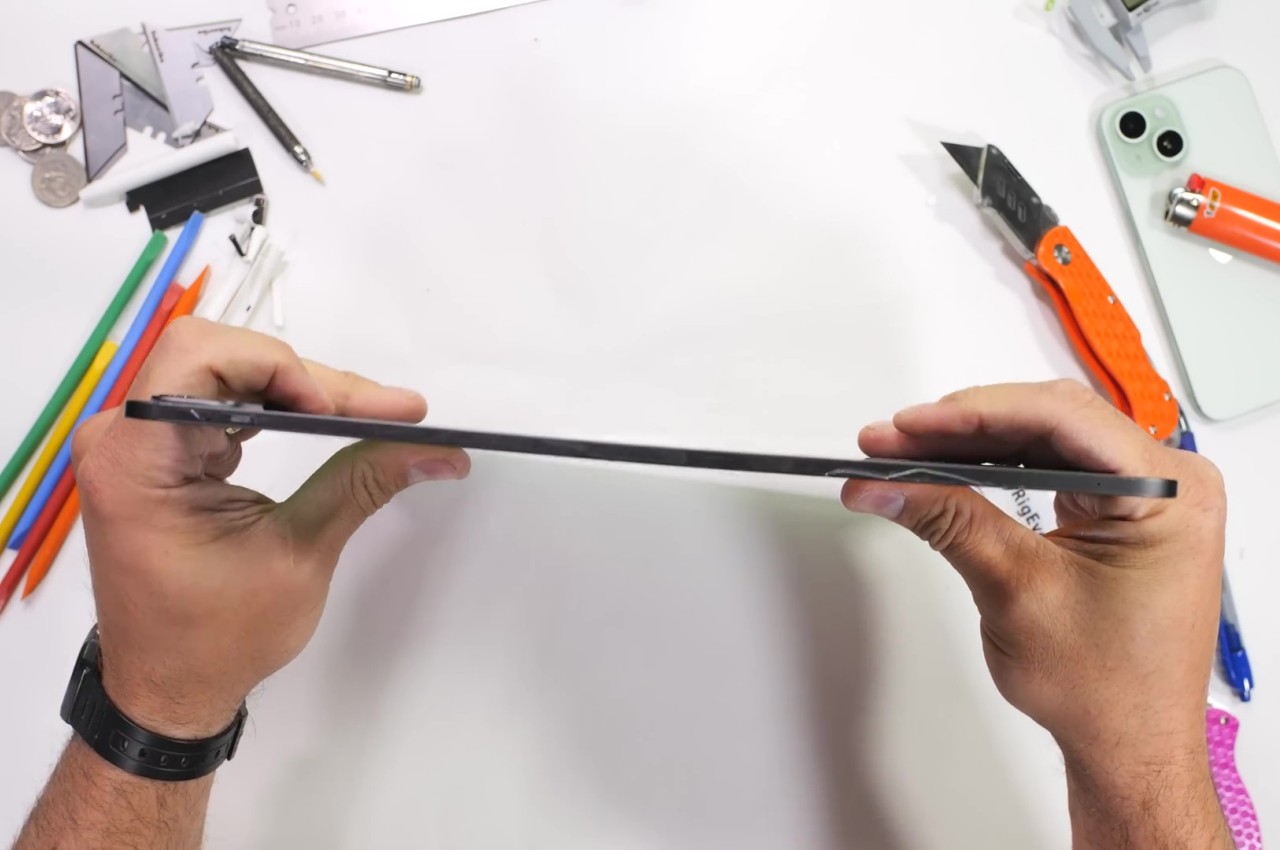
The design elements of the iPad Pro M4 are noteworthy, with its skinny profile and raw processing power setting a new standard for Apple’s devices. Imagine the iPhone 17 Slim adopting this same level of thinness combined with the A19 Pro processor. This would not only deliver a powerhouse device with exceptional performance and a gorgeous display but also set a new benchmark for smartphone design in the tech industry. Additionally, thinner devices can be more susceptible to bending and other durability issues, making robust design and engineering essential. However, Apple seems to have resolved this issue with the iPad Pro M4, giving confidence that the iPhone 17 Slim will be both durable and sleek—hallelujah!

Interestingly, recent leaks about the Pixel 9 Pro and the newly released Galaxy Fold6 and Flip6 show a trend towards flat edges, similar to the iPhone 15 Pro and Max. This design trend across brands highlights the industry’s move towards sleek, flat-edged devices. The Pixel 9 Pro will feature a refined design focusing on high-end performance. At the same time, the Galaxy Fold6 and Flip6 continue to innovate in the foldable phone market, combining cutting-edge technology with stylish designs.

Samsung Galaxy Fold6

Pixel 9 Pro Fold

The iPhone 17 Slim’s anticipated ultra-thin design would fit right into this trend, offering a visually stunning and powerful device that appeals to users looking for the best form and function. The ultra-thin design not only enhances the device’s aesthetics but also makes it more portable and comfortable to use, thereby enhancing the overall user experience.

Apple’s ultra-thin tech game plan doesn’t stop at the iPhone. The upcoming MacBooks and Apple Watches are also expected to feature thinner designs, making them more portable and stylish while maintaining high performance. The challenge will be to balance this thinness with functionality, ensuring that battery life and durability are not compromised.

MacBook Concept

With the iPhone 16 around the corner, are these early iPhone 17 leaks compelling enough to keep you holding on to your current device for another cycle? The promise of the iPhone 17 Slim, with its ultra-thin design, powerful A19 Pro processor, and stunning LTPO display, could be worth the wait. As Apple continues to innovate, we can expect these design principles to set new industry technology and design standards, inspiring the tech industry and consumers alike.

The post The Future of Apple design language: iPhone 17 Slim and the Shift Towards Ultra-Thin Devices first appeared on Yanko Design.
Russia-linked hackers cut heat to 600 Ukrainian apartment buildings in the dead of winter, researchers say

Cybersecurity company Dragos has flagged malware that can attack industrial control systems (ICS), tricking them into malicious behavior like turning off the heat and hot water in the middle of winter. TechCrunch reports that’s precisely what the malware, dubbed FrostyGoop, did this January in Lviv, Ukraine, when residents in over 600 apartment buildings lost heat for two days amid freezing temperatures.

Dragos says FrostyGoop is only the ninth known malware designed to target industrial controllers. It’s also the first to specifically set its sights on Modbus, a widely deployed communications protocol invented in 1979. Modbus is frequently used in industrial environments like the one in Ukraine that FrostyGoop attacked in January.

Ukraine’s Cyber Security Situation Center (CSSC), the nation’s government agency tasked with digital safety, shared information about the attack with Dragos after discovering the malware in April of this year, months after the attack. The malicious code, written in Golang (The Go programming language designed by Google), directly interacts with industrial control systems over an open internet port (502).

The attackers likely gained access to Lviv’s industrial network in April 2023. Dragos says they did so by “exploiting an undetermined vulnerability in an externally facing Mikrotik router.” They then installed a remote access tool that voided the need to install the malware locally, which helped it avoid detection.

The attackers downgraded the controller firmware to a version lacking monitoring capabilities, helping to cover their tracks. Instead of trying to take down the systems altogether, the hackers caused the controllers to report inaccurate measurements — resulting in the loss of heat in the middle of a deep freeze.

Dragos has a longstanding policy of neutrality in cyberattacks, preferring to focus on education without assigning blame. However, it noted that the adversaries opened secure connections (using layer two tunneling protocol) to Moscow-based IP addresses.

“I think it’s very much a psychological effort here, facilitated through cyber means when kinetic perhaps here wasn’t the best choice,” Dragos researcher Mark “Magpie” Graham told TechCrunch. Lviv is in the western part of Ukraine, which would be much more difficult for Russia to hit than eastern cities.

Dragos warns that, given how ubiquitous the Modbus protocol is in industrial environments, FrostyGoop could be used to disrupt similar systems worldwide. The security company recommends continuous monitoring, noting that FrostyGoop evaded virus detection, underscoring the need for network monitoring to flag future threats before they strike. Specifically, Dragos advises ICS operators to use the SANS 5 Critical Controls for World-Class OT Cybersecurity, a security framework for operational environments.

This article originally appeared on Engadget at https://www.engadget.com/russia-linked-hackers-cut-heat-to-600-ukrainian-apartment-buildings-in-the-dead-of-winter-researchers-say-171414527.html?src=rss

US and European antitrust regulators agree to do their jobs when it comes to AI

Regulators in the US and Europe have laid out the "shared principles" they plan to adhere to in order to "protect competition and consumers" when it comes to artificial intelligence. "Guided by our respective laws, we will work to ensure effective competition and the fair and honest treatment of consumers and businesses," the Department of Justice, Federal Trade Commission, European Commission and the UK's Competition and Markets Authority (CMA) said.

"Technological inflection points can introduce new means of competing, catalyzing opportunity, innovation and growth," the agencies said in a joint statement. "Accordingly, we must work to ensure the public reaps the full benefits of these moments."

The regulators pinpointed fair dealing (i.e. making sure major players in the sector avoid exclusionary tactics), interoperability and choice as the three principles for protecting competition in the AI space. They based these factors on their experience working in related markets.

The agencies also laid out some potential risks to competition, such as deals between major players in the market. They said that while arrangements between companies in the sector (which are already widespread) may not impact competition in some cases, in others "these partnerships and investments could be used by major firms to undermine or co opt competitive threats and steer market outcomes in their favor at the expense of the public."

Other risks to competition flagged in the statement include the entrenching or extension of market power in AI-related markets as well as the "concentrated control of key inputs." The agencies define the latter as a small number of companies potentially having an outsized influence over the AI space due to the control and supply of "specialized chips, substantial compute, data at scale and specialist technical expertise."

In addition, the CMA, DOJ and FTC say they'll be on the lookout for threats that AI might pose to consumers. The statement notes that it's important for consumers to be kept in the loop about how AI factors into the products and services they buy or use. "Firms that deceptively or unfairly use consumer data to train their models can undermine people’s privacy, security, and autonomy," the statement reads. "Firms that use business customers’ data to train their models could also expose competitively sensitive information."

These are all fairly generalized statements about the agencies' common approach to fostering competition in the AI space, but given that they all operate under different laws, it would be difficult for the statement to go into the specifics of how they'll regulate. At the very least, the statement should serve as a reminder to companies working in the generative AI space that regulators are keeping a close eye on things, even amid rapidly accelerating advancements in the sector.

This article originally appeared on Engadget at https://www.engadget.com/us-and-european-antitrust-regulators-agree-to-do-their-jobs-when-it-comes-to-ai-163820780.html?src=rss

Lego’s first Fortnite sets are here

Lego just announced its first sets inspired by the gaming phenomenon Fortnite. These kits draw from iconic characters and vehicles from both the original game and the brick-based spinoff Lego Fortnite, like an ouroboros of corporate synergy.

The baddest of the bunch looks to be the 954-piece Battle Bus kit, which costs $100. This is a brick-based replica of the iconic hot-air balloon on wheels, complete with a removable roof and characters like Meowscles, Raven and Cuddle Team Leader, among others.

A Lego Peely Bone.
Lego

The 1,414-piece Peely Bone set looks to appeal to collectors more than kids. It builds into a giant version of the rare Fortnite character, who is one-half banana and one-half skeleton. The kit comes with accessories like a pickaxe and paint launcher. This set also costs $100.

The game’s beloved Supply Llama is also getting a kit. This 691-piece set allows fans to build the iconic character and it comes with a whole bunch of themed accessories, including a grappler, Slurp Juice, Slap Juice and more. This set costs $40, which isn’t too bad given the number of pieces involved.

A Lego set and a kid.
Lego

Finally, there’s a teensy Durrr Burger kit, which is aimed squarely at kids. This 193-piece set builds into the aforementioned Fortnite landmark (it’s a restaurant in the game.) It even comes with an olive on a toothpick. The kit costs just $15.

All of these sets are available for preorder right now straight from Lego, but we have to wait a little bit before they ship. The kits don’t officially release until October 1. In the meantime, there’s a nifty Jaws-inspired set coming out in August and a massive 2,500-piece set based on The Legend of Zelda that ships on September 1.

This article originally appeared on Engadget at https://www.engadget.com/legos-first-fortnite-sets-are-here-153451343.html?src=rss

A Google Nest Wi-Fi 6E three-pack is back on sale for $285

So much relies on Wi-Fi — your TV, music, games, smart home devices, possibly even your alarm clock — which makes dead zones productivity killers. One of our favorite ways to remedy weak or spotty coverage is with Google's Nest Wi-Fi Pro 6E and right now, a three pack is down to $285. That's a 29 percent discount and matches the sale price it hit last week for Prime Day. This isn't an all-time low, but it's just $5 more than the record. 

We named the Nest Wi-Fi Pro the best for novice users in our guide to mesh Wi-Fi systems and it earned an 87 in our full review. Our reviewer, Daniel Cooper, called Google's 6E system "more approachable than the rest," though he notes that it's can't beat the competition on speed. 

The smooth rounded shape is a little more decor-friendly than some more industrial-looking routers and was the first Nest router to harness WiFi 6/6E. That's great if you're looking to upgrade to the newer Wi-Fi standard, but keep in mind that these aren't backwards compatible with any pre-6E Nest routers. 

As for speed, it's plenty fast enough for streaming movies and browsing the web and the coverage is impressive. To help with performance, it dynamically shunts traffic around the available space, including using the 6GHz band as backhaul. That frees up a lot of space in 2.4 and 5GHz bands, which is what most devices use. So unless you have a ton of devices that are Wi-Fi 6E-enabled, that feature should help. Still, if speed is your main concern, you might be better off with our pick for power users

Overall, Dan appreicated that this was one of the cheapest WiFi 6E systems on the market, with a particularly easy-to-use app that made set up fairly foolproof. And if you're already using other Nest or Google-compatible smart home equipment, you'll appreciate the integration with the Google Home app. 

Follow @EngadgetDeals on Twitter and subscribe to the Engadget Deals newsletter for the latest tech deals and buying advice.

This article originally appeared on Engadget at https://www.engadget.com/a-google-nest-wi-fi-6e-three-pack-is-back-on-sale-for-285-153232698.html?src=rss