MiniMax M2.1 vs Gemini 3 Flash : Smarter Planning and Tools at Lower AI Costs

MiniMax M2.1 vs Gemini 3 Flash : Smarter Planning and Tools at Lower AI Costs

What if the next big leap in AI wasn’t locked behind corporate paywalls but was instead freely available for anyone to explore, adapt, and innovate with? That’s exactly the promise of MiniMax M2.1, the latest iteration of the new open source agent AI. Below, Universe of AI breaks down how this update builds on the […]

The post MiniMax M2.1 vs Gemini 3 Flash : Smarter Planning and Tools at Lower AI Costs appeared first on Geeky Gadgets.

Posted in Uncategorized

HIDDEN iOS 26.2 Features Apple Didn’t Tell You About

HIDDEN iOS 26.2 Features Apple Didn’t Tell You About

Apple’s iOS 26.2 update brings a host of new features designed to enhance productivity, personalization, and usability for iPhone users. With smarter tools for task management, improved file-sharing options, and enriched entertainment experiences, this update aims to simplify and elevate your daily interactions. Below is a detailed exploration of the standout features and how they […]

The post HIDDEN iOS 26.2 Features Apple Didn’t Tell You About appeared first on Geeky Gadgets.

Posted in Uncategorized

Gemini Voice Brings Fast Multi-Speaker Audio, Rich Styles and 32k Context Window

Gemini Voice Brings Fast Multi-Speaker Audio, Rich Styles and 32k Context Window

What if your next audiobook could feature characters with distinct personalities, or your virtual assistant could respond with a tone that feels genuinely human? In the video, Prompt Engineering breaks down the innovative Gemini Text-to-Speech (TTS) system, a platform that’s redefining how we create and experience audio content. Powered by the advanced Gemini 2.5 models, […]

The post Gemini Voice Brings Fast Multi-Speaker Audio, Rich Styles and 32k Context Window appeared first on Geeky Gadgets.

Posted in Uncategorized

iMessage vs WhatsApp: Which Messaging App Reigns Supreme?

iMessage vs WhatsApp: Which Messaging App Reigns Supreme?

When deciding on a messaging app, two names often dominate the conversation: iMessage and WhatsApp. Both platforms offer a range of powerful features, but their differences cater to distinct user needs and preferences. Whether you prioritize seamless integration within a specific ecosystem or require cross-platform functionality, understanding the strengths and limitations of each app is […]

The post iMessage vs WhatsApp: Which Messaging App Reigns Supreme? appeared first on Geeky Gadgets.

Posted in Uncategorized

Jetbeam E28 Review: The Swiss Army Knife of EDC Flashlights Finally Exists

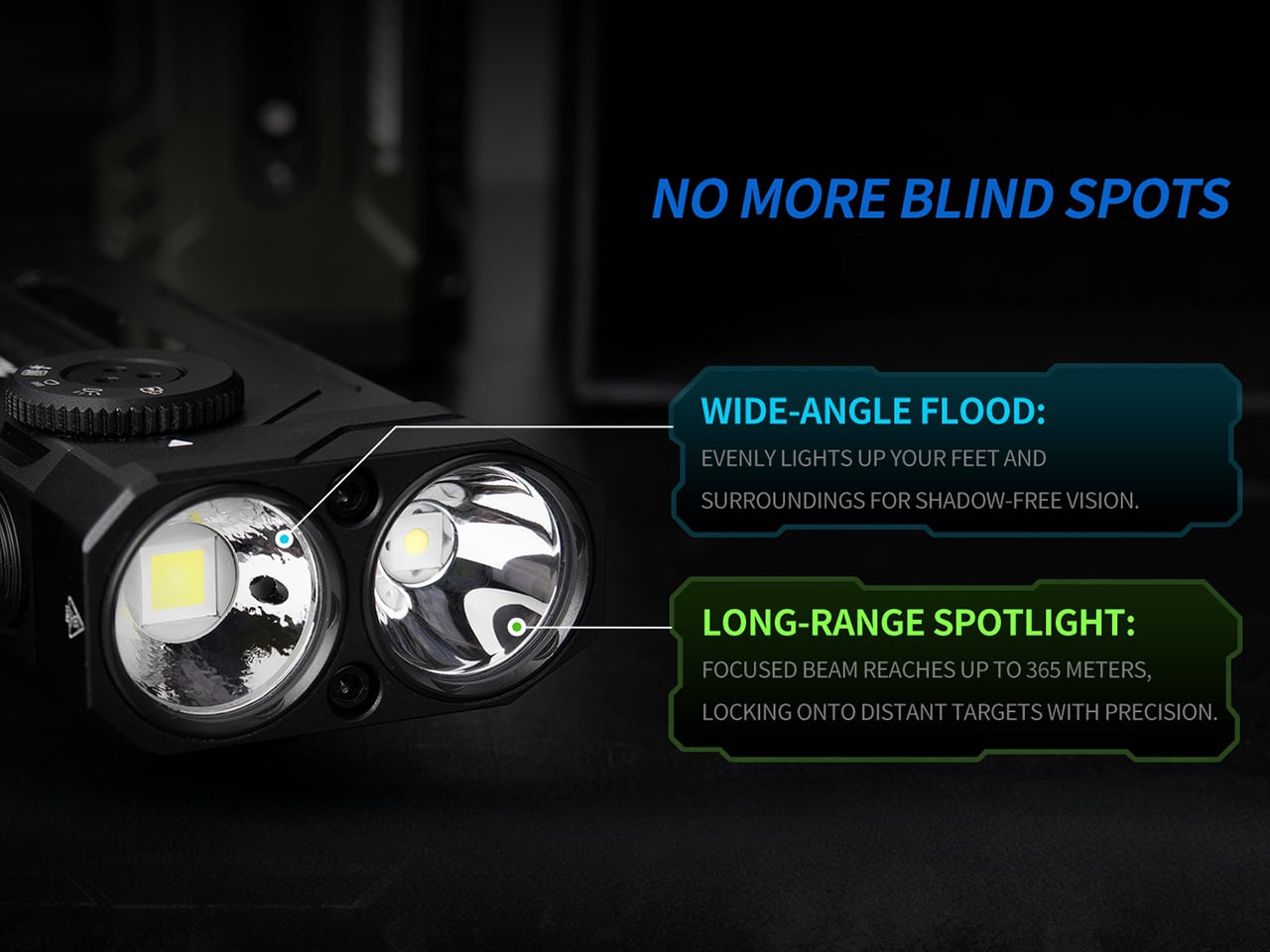
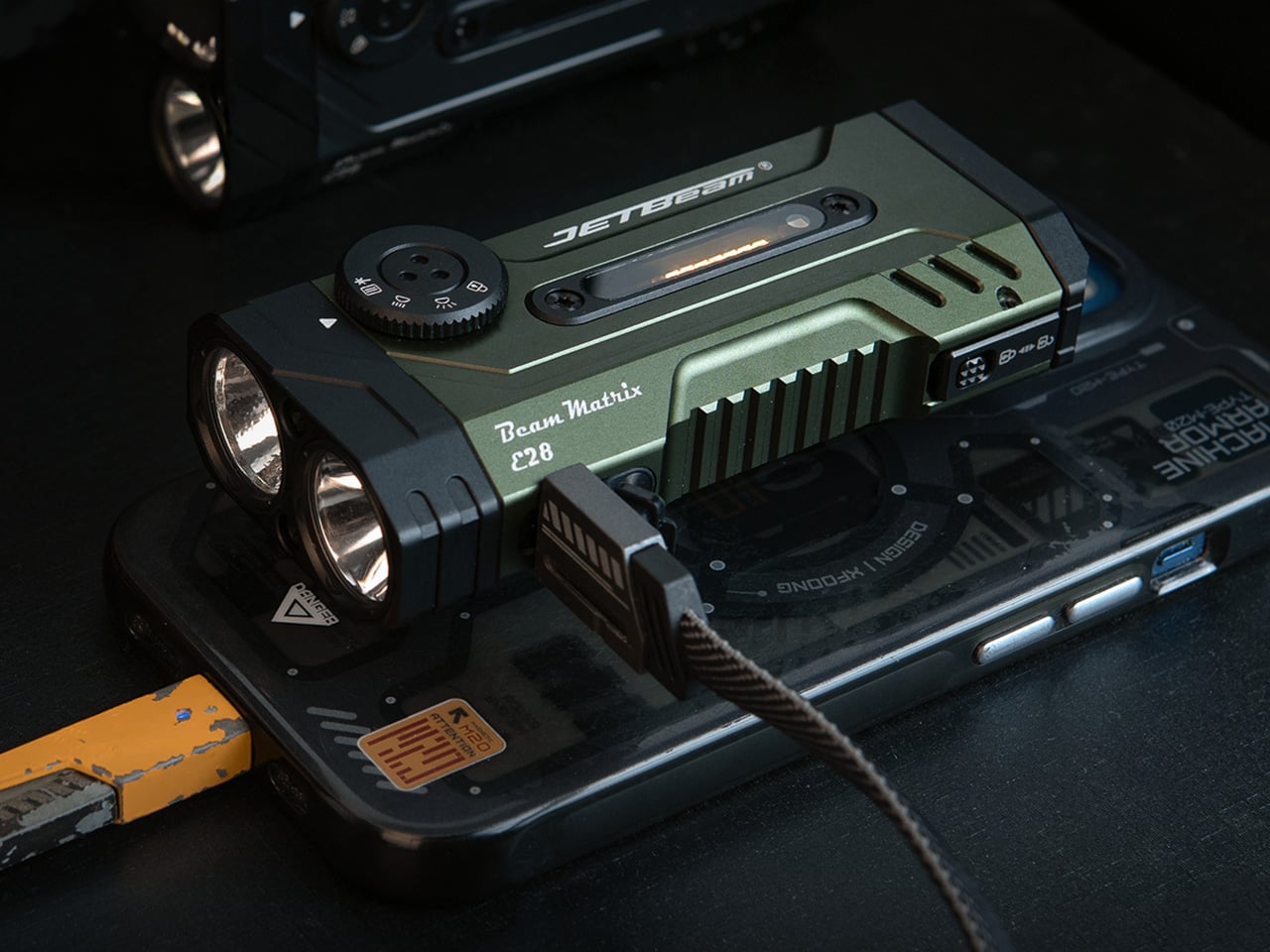
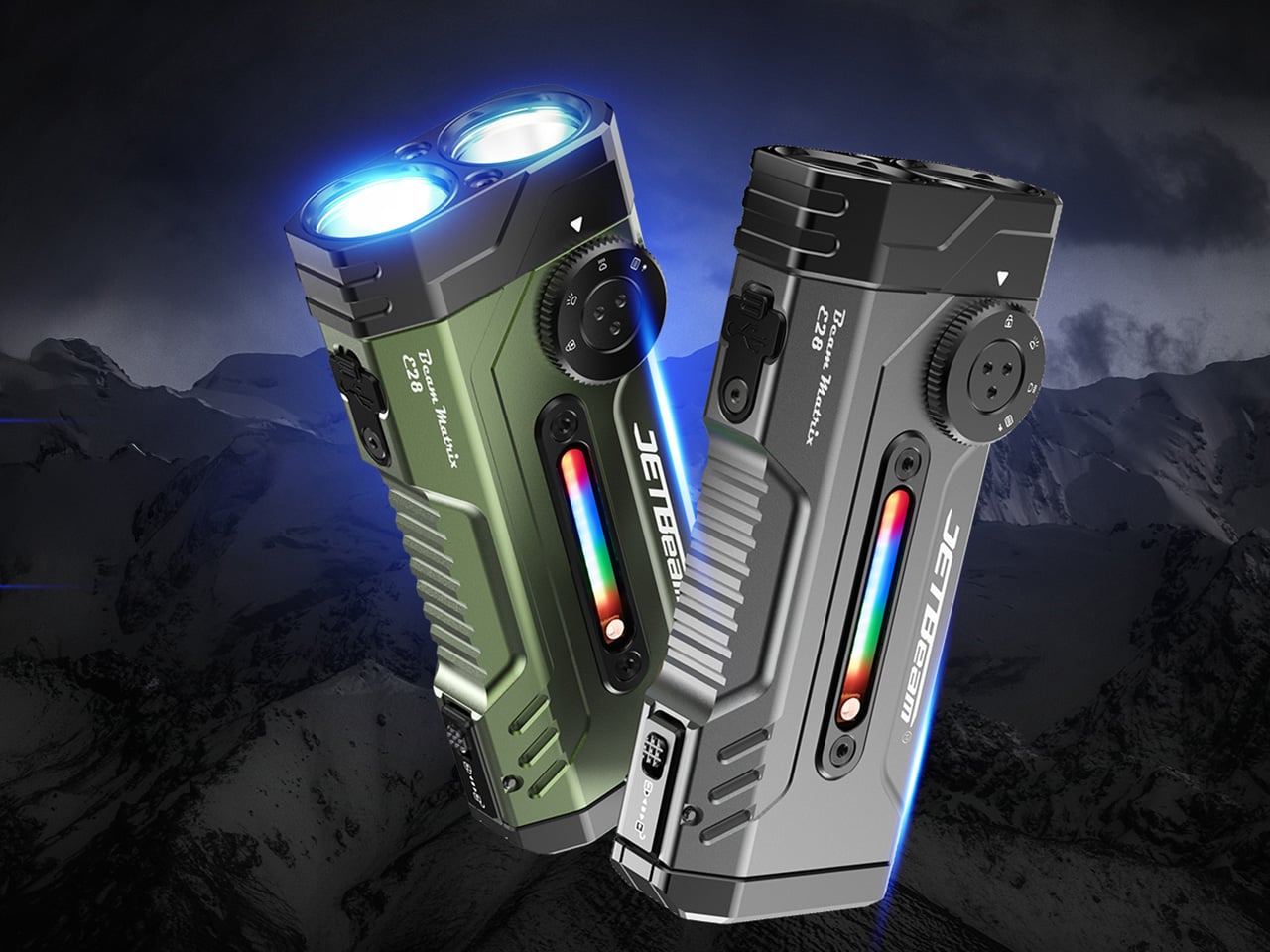
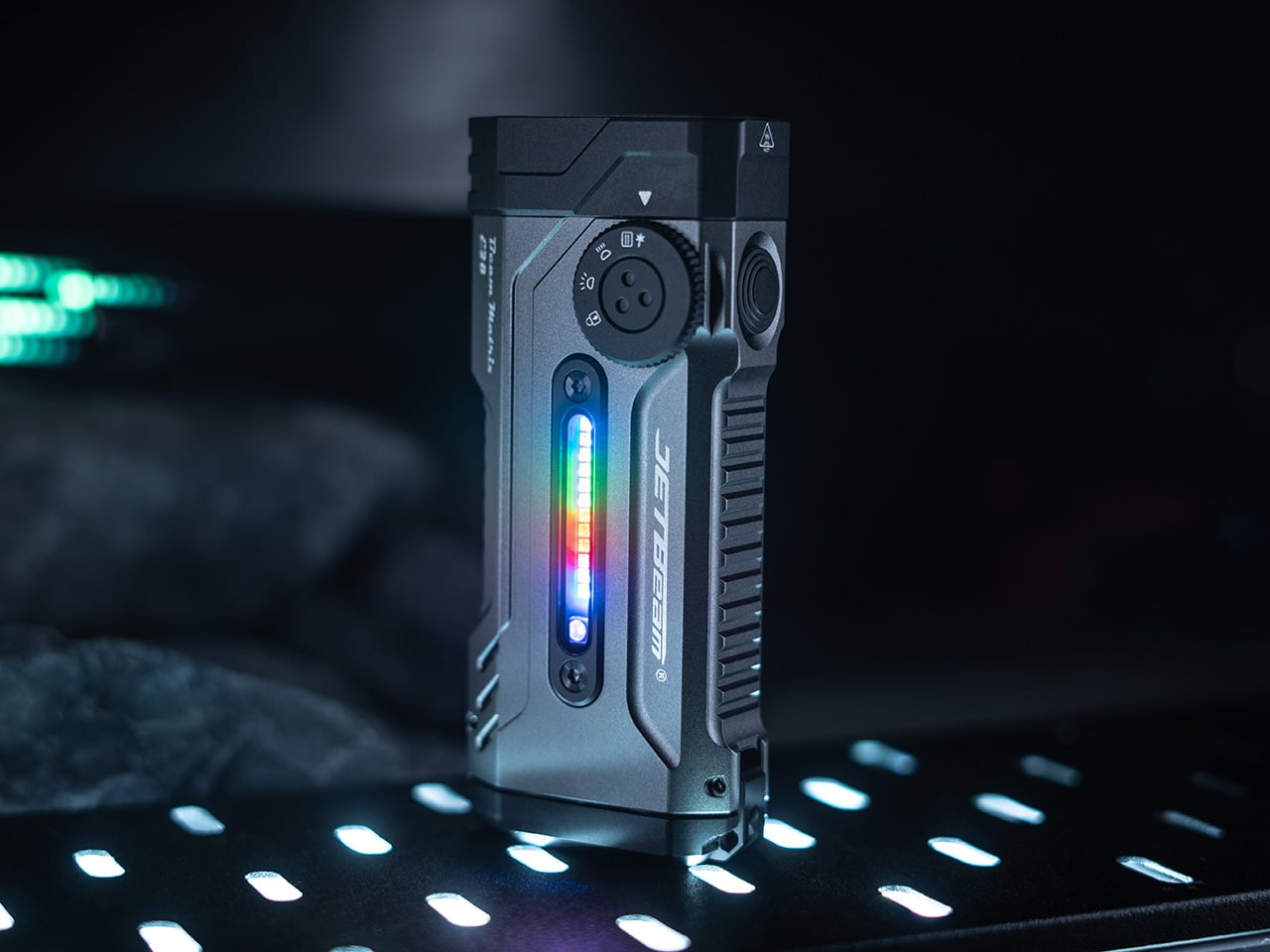
Most flashlights ask you to choose. Throw or flood. Pocket size or runtime. A simple beam or specialty features. Jetbeam’s E28 walks into the room and suggests you stop choosing altogether. This flat, brick-shaped EDC light packs dual independently controlled white beams (one flood, one throw), a 365 nm UV emitter, a 520 nm green laser, an RGB side strip with nine modes, and a 7,000 mAh power bank into a single 251-gram body. It is the sort of design that makes you wonder whether the engineers were trying to solve real problems or just win a feature-count contest.

Here’s the thing: the spec sheet sounds like overkill until you actually think about the situations where you need more than a basic beam. Checking a hotel room for cleanliness with UV. Using the laser as a presentation pointer by day and a pet toy by night. Mounting the light magnetically under a car hood while the flood beam lights your work and the throw beam spotlights a distant part number. The E28 is betting that enough people want a true multi-tool in flashlight form, and the early reviews suggest Jetbeam might be onto something.

Designer: Jetbeam

Click Here to Buy Now: $87.45 $159.95 (45% off). Hurry, only a few left!

Two 18650 cells sit inside a flat aluminum body measuring 107.6 × 48 × 26.6 mm, delivering 7,000 mAh of total capacity. That translates to 8.3 hours at 500 lumens in flood mode or 13.2 hours at 300 lumens in throw mode, which are the runtimes that actually matter when you cannot swap batteries mid-hike. Moonlight mode allegedly hits 350 hours, though nobody is realistically running a light that dim for two weeks straight. The dual-cell setup adds weight, pushing the E28 to 251 grams with batteries installed, but that heft comes with the benefit of never worrying about your light dying during an evening walk or a weekend camping trip.

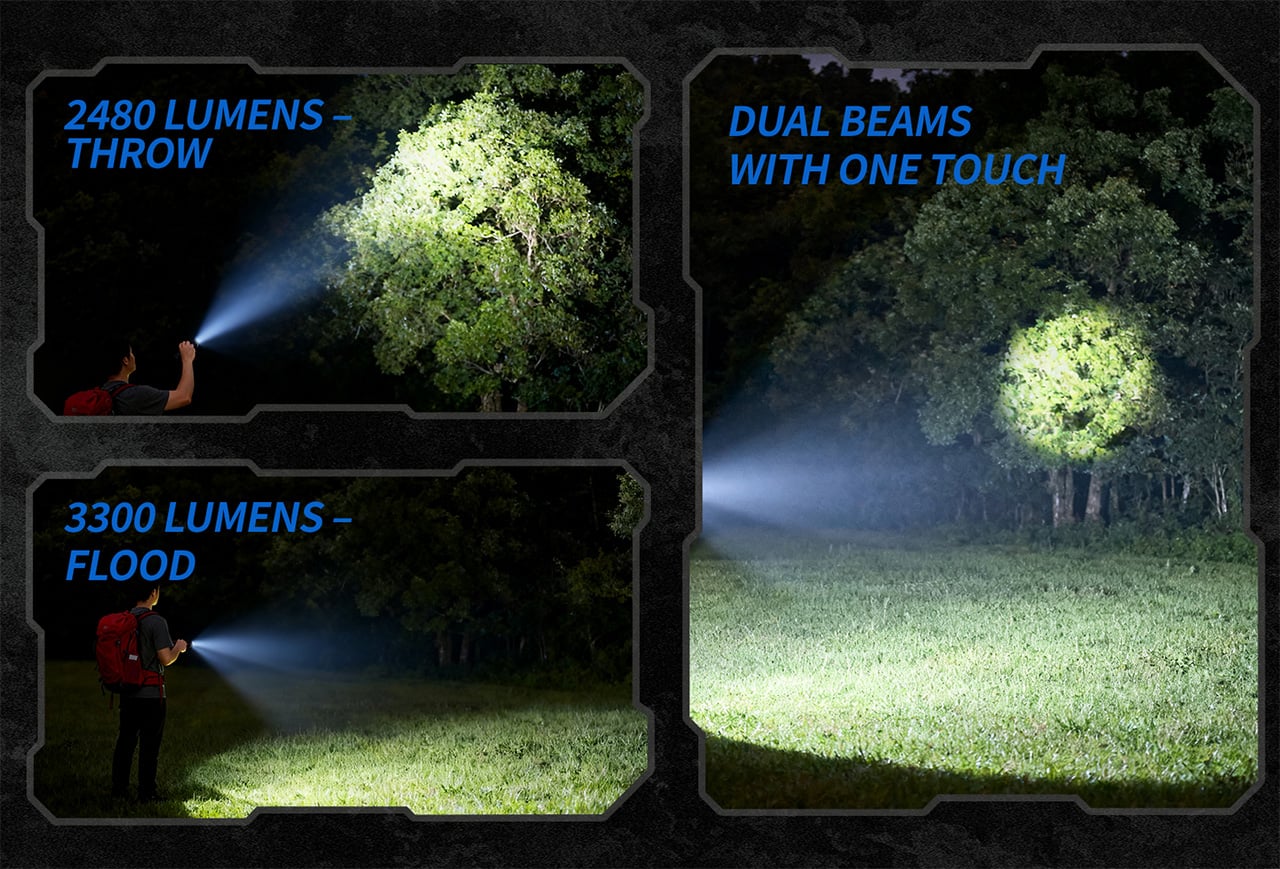
Jetbeam gave each beam its own proper optics instead of cramming compromised emitters into a too-small head. The flood side uses a 7070 LED with a wide, shallow reflector, maxing out at 3,300 lumens (briefly, before stepping down to 1,500 then 1,000 as heat builds). It is a wall of light that illuminates everything within 10 meters with zero shadows, exactly what you want for close work or navigating a dark campsite. The throw channel uses a Luminus SFT-42R with a smooth, focused reflector, hitting 2,480 lumens and reaching 365 meters with a 33,375-candela hotspot. That is search-and-rescue level throw from a light you can slip into a jacket pocket. Running both channels simultaneously gives you a beam profile with bright center punch and complete peripheral coverage, which is how dual-beam lights should work but rarely do because most manufacturers cheap out on one emitter or the other.

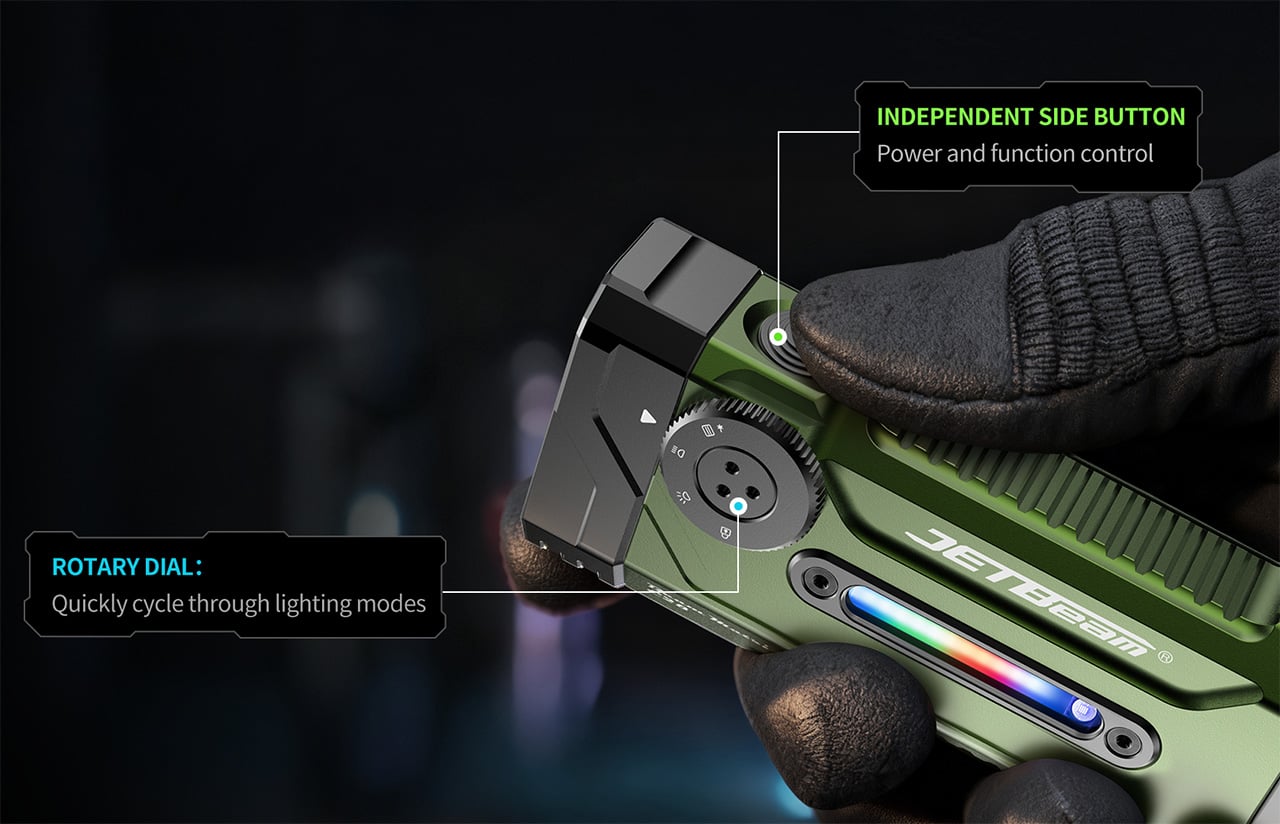
A rotary dial handles mode switching, which immediately sets this apart from the “click seventeen times to find strobe” nonsense that plagues most multi-mode lights. Rotate to flood, throw, dual-beam, UV, laser, or RGB, then tap the side button to turn on or cycle brightness. It takes maybe ten minutes to learn and then becomes completely intuitive. You can operate it one-handed even with gloves because the dial has positive detents and the button is chunky and easy to find by feel. Jetbeam clearly spent time thinking about how people actually use lights in the field instead of just designing a UI that looks good on paper.

The UV emitter sits on one side at 365 nm, which is proper ultraviolet (not the 395 nm purple wash that cheap lights use). This wavelength makes currency security features glow, reveals pet stains on carpets, highlights HVAC leak-detection dye, and generally makes invisible contaminants visible. If you work in automotive, HVAC, or forensics, this is a tool you already carry separately. If you travel frequently and care about hotel cleanliness, same deal. For everyone else, it is a fun party trick that might come in handy twice a year. The 520 nm green laser sits opposite, useful for presentations, pointing out distant landmarks, or entertaining pets. It is low-powered enough to be safe but bright enough to be visible across a parking lot at night. The RGB strip runs along the side with nine different modes: solid colors, breathing patterns, meteor effects, rainbow flow. Red light preserves night vision when you are reading maps. Multicolor modes create ambient lighting at camp or act as fill light for photos. Solid white functions as a secondary task light. Some people will use this constantly; others will turn it on once, say “neat,” and forget it exists.

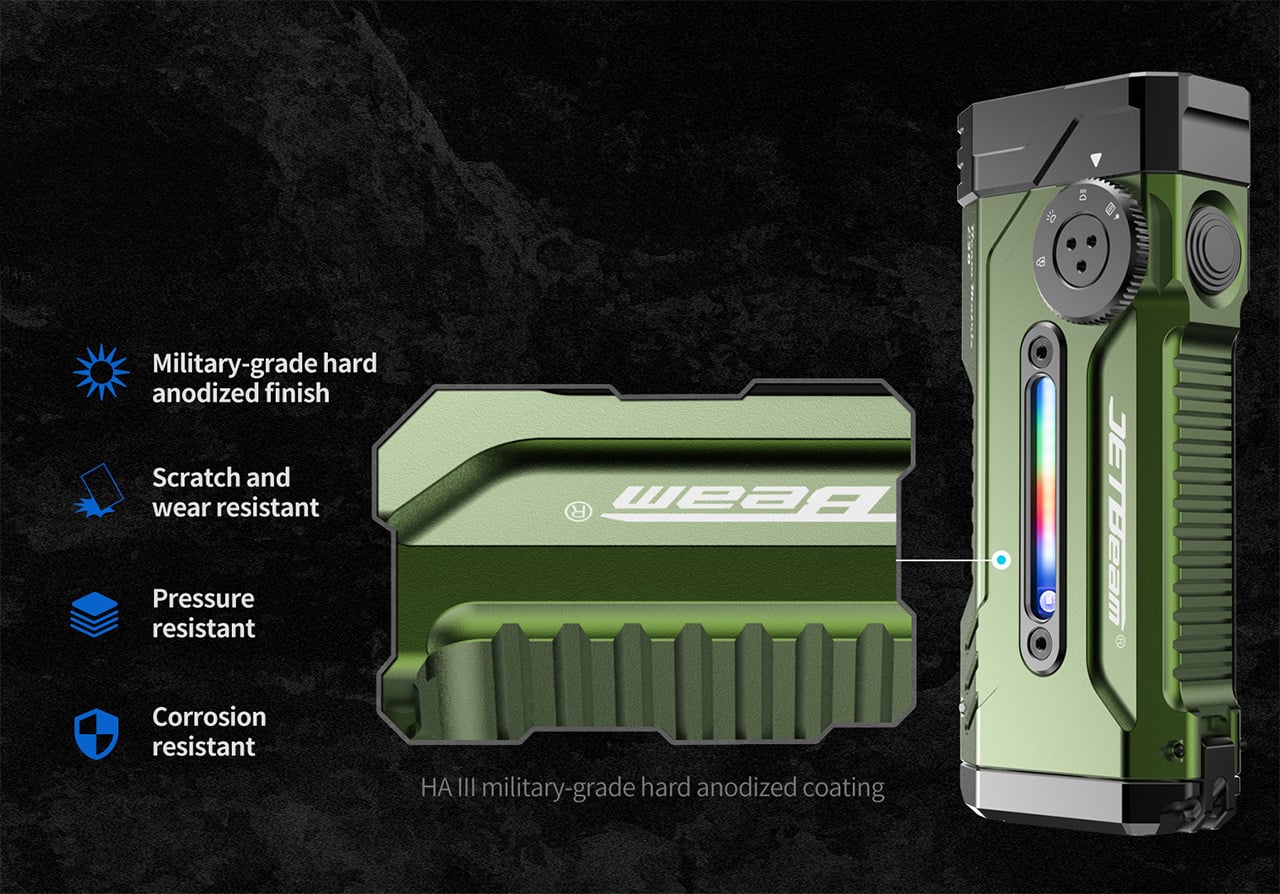
Aerospace-grade aluminum with HA III hard anodizing means the body can take scratches, drops, and general abuse without looking like it fell off a truck. The machining cuts along the flat sides double as heat fins and grip texture, which is functional design instead of just aesthetics. IPX8 waterproofing handles 2 meters of submersion, and the USB-C port hides behind a sealed rubber cover. The magnetic tail holds firm on steel surfaces even when the light is pumping out heat on high mode, making hands-free work actually practical. A removable clip mounts in either direction for cap-brim carry, backpack straps, or belt attachment, and the base plate is compatible with GoPro-style action camera mounts, so you can stick this on bike handlebars, helmets, or quick-release brackets.

The power bank function turns 7,000 mAh of onboard capacity into emergency phone charging via USB-C. You can fully charge most phones at least once, which makes the E28 useful during power outages or long days away from outlets. It is not replacing a dedicated battery bank, but as something that lives in your car or go-bag anyway, having that backup option adds real value. The RGB strip shows battery status for five seconds on power-up, cycling through colors to indicate remaining charge, which is smarter than trying to guess voltage by how bright the beam looks.

Jetbeam ships the E28 with two 3,500 mAh 18650 cells, a USB-C cable, lanyard, mounting clip, hardware, and a hex wrench, so you can use it immediately without buying accessories. Pricing lands at $87.45 with 2 color options to choose from – a tactical green, and a classic grey, which feels reasonable for a light that consolidates a flood beam, throw beam, UV source, laser pointer, and power bank into one 251-gram package. If you already carry multiple single-purpose tools, the E28 is the Swiss Army knife consolidation you did not know you needed. If your lighting needs are simple, a $25 single-beam EDC  or even your phone’s flashlight will serve you fine. But for anyone who regularly finds themselves thinking “I wish I had X tool right now,” Jetbeam built exactly that.

Click Here to Buy Now: $87.45 $159.95 (45% off). Hurry, only a few left!

The post Jetbeam E28 Review: The Swiss Army Knife of EDC Flashlights Finally Exists first appeared on Yanko Design.

Sweden Transforms Wind Turbine Waste Into Europe’s First Blade-Built Parking Garage

Sweden has opened the doors to a parking garage unlike any other in Europe. The Niels Bohr car park in Lund stands as a testament to what happens when architectural vision meets environmental necessity. The five-story structure houses 365 parking spaces and represents a groundbreaking approach to renewable energy waste, proving that circular economy principles can produce functional, safe infrastructure that people actually want to use.

Architect Jonas Lloyd stumbled upon the project’s core concept while flipping through a magazine. An article about America’s wind industry caught his attention, particularly the disposal problem plaguing decommissioned turbine blades. These massive structures, engineered from glass and carbon fiber composites to withstand decades of punishment from wind and weather, were ending up buried in landfills across the United States. Lloyd saw waste where others saw a dead end. When developer LKP commissioned his firm, Lloyd’s Arkitektkontor, to design a new parking structure for Lund’s growing Brunnshög district, he pitched an unconventional solution that would give turbine blades a second life as architectural elements.

Designer: Jonas Lloyd

Vattenfall, Sweden’s green energy giant, donated 57 rotor blades from its decommissioned Nørre Økse Sø wind farm. The team carefully cut and mounted these blades onto the building’s exterior, creating striking curtain walls that serve as non-load-bearing façade elements. The result is visually arresting: massive white curves sweeping across the structure’s face, their aerodynamic forms now frozen in place instead of spinning against Nordic skies.

The building integrates sustainability at every level beyond the repurposed blades. Forty electric vehicle charging stations connect to an on-site battery storage system. Solar panels blanket the roof, generating power during daylight hours that charges vehicles after dark. The façade incorporates pollinator-friendly plants alongside the repurposed blades, softening the industrial materials with living greenery. Lloyd’s satisfaction with the finished building centers on its symbolic power, demonstrating that sustainable architecture can transcend environmental buzzwords to create spaces people genuinely appreciate.

The project’s timing matters significantly. Vattenfall operates more than 1,400 wind turbines across Europe, and blade disposal represents a growing challenge for the renewable energy sector. The company has banned sending blades to landfills internally and committed to reusing or recycling 100 percent of blades and major components by 2030, exploring applications ranging from solar panel supports to ski manufacturing. The Niels Bohr garage, which opened in December 2025, attracted international attention as Europe’s first building to incorporate wind turbine blades into its construction. It demonstrates that renewable energy infrastructure can serve communities long after its original purpose ends, transforming from energy generator to architectural element without pause.

The post Sweden Transforms Wind Turbine Waste Into Europe’s First Blade-Built Parking Garage first appeared on Yanko Design.

The Dial That Swallowed the Watch

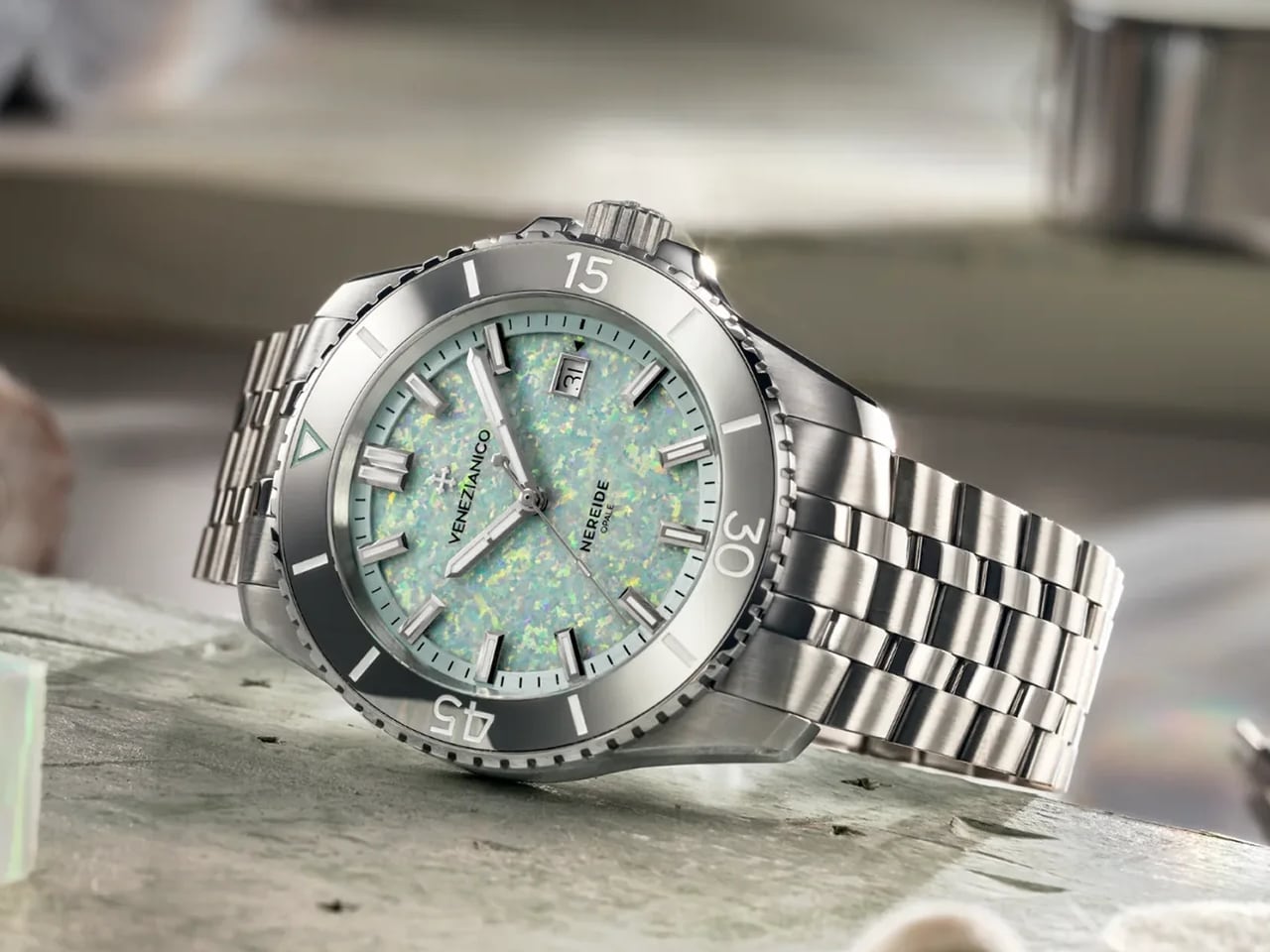
Most dive watches announce themselves through function: rotating bezels, legible numerals, confidence-inspiring depth ratings. The Nereide Opale acknowledges all of that, then pivots. Venezianico constructed a 200-meter tool watch with a tungsten bezel and Swiss automatic movement, but none of those details survive first contact. The dial dominates. Blue shifts to green shifts to purple shifts to pink as the wrist rotates, a geometric light show housed in familiar steel.

Designer: Nereide Opale

The design bet is specific. Venezianico assumes a buyer who already owns the matte-dial diver, the heritage reissue, the affordable Swiss workhorse. This watch exists for the collector who wants to break the pattern, to own something that photographs like nothing else in the box.

Kyocera’s Controlled Chaos

Natural opal presents challenges for production watchmaking. According to the Gemological Institute of America, high heat or sudden temperature changes can fracture opal and cause crazing, a network of fine cracks that destroys the stone’s visual appeal. Add the inconsistency of natural specimens, where one piece might display dramatic fire and the next a muddy gray, and the material becomes impractical for a 500-piece limited run. Venezianico needed opal’s visual effect without the gemstone’s vulnerabilities.

Kyocera, the Japanese ceramics company, developed an alternative decades ago. Their lab-grown material reproduces the layered internal structure that creates opal’s color play: light enters, bounces between microscopic layers, and exits as a spectrum of shifting hues. The composition, 80 percent silica and 20 percent clear resin according to Venezianico’s specifications, yields a dial plate stable enough to machine cleanly and survive the thermal cycles a dive watch encounters.

The result reads differently than natural stone. Where a mined opal might show soft, nebulous color zones, the Kyocera material presents sharper facets, more crystalline geometry. The rainbow effect is more deliberate, more designed. Some buyers will prefer the organic randomness of natural opal. Others will appreciate that each of the 500 Nereide Opale dials carries unique patterning without the lottery of stone selection.

Practical concerns disappear. The dial survives the thermal cycles a dive watch encounters. It accepts the date aperture at three without cracking. And Venezianico can promise visual consistency across a limited run, something impossible with harvested material.

Steel as Stage

Every design decision surrounding the dial serves a single purpose: stay neutral. The 42mm case wears a mix of brushed flanks and polished bevels, the standard dive-watch treatment, but entirely in silvered steel. The five-link Sansovino bracelet continues the theme: metallic, reflective, monochrome. No color. No contrast. No competition.
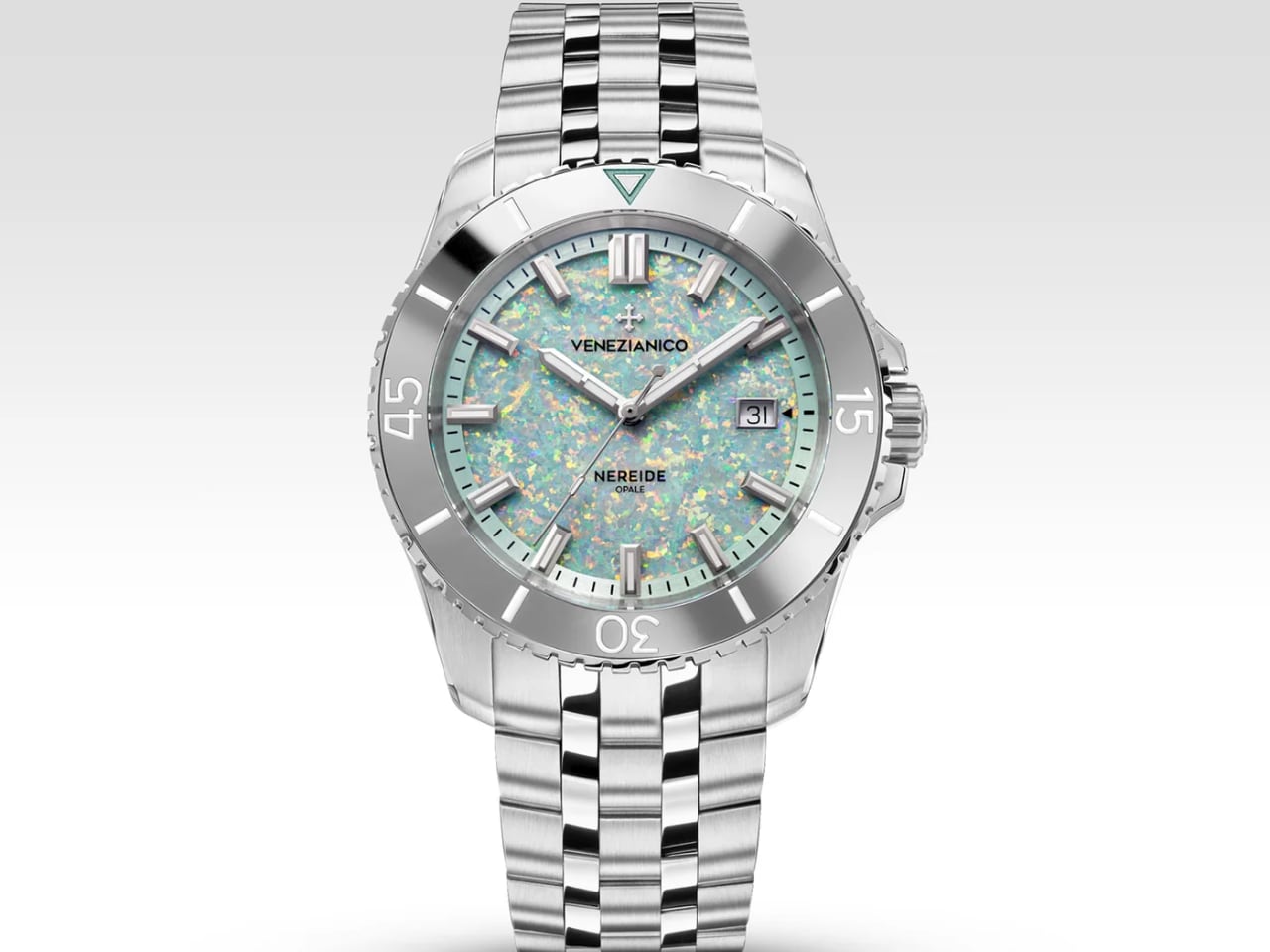
The hands required particular care. Venezianico chose an obelisk profile, tapering to a point, finished in mirror polish. Against the shifting opal, they occasionally catch light and flash, but they never anchor the eye. Applied baton hour markers follow the same logic: minimal, metallic, filled with Super-LumiNova for low-light legibility but invisible against the dial’s daytime performance.

Typography stays restrained. The applied cross logo at twelve uses the same polished metal as the hands. The date window at three sits in a polished frame that matches the logo. A colored date wheel, a contrasting brand name, any additional detail would fracture the opal’s dominance. Venezianico understood this and resisted.

The overall effect is a watch that reads as a single material statement. Steel holds the opal. Opal performs. Everything else recedes.

Tungsten as Anchor

The bezel insert breaks the monochrome, but only in value, not hue. Tungsten’s deep gray sits between bright steel and the kaleidoscopic dial, a tonal step-down that prevents the transition from feeling jarring. The material choice is also functional: tungsten rates 9 on the Mohs hardness scale against stainless steel’s 5, making the rotating bezel highly scratch resistant in normal daily wear.

The 60-minute dive scale, the lume pip at twelve, the coin edge for grip: none of this is novel. But tungsten elevates familiar geometry. The material carries literal weight, densifying the watch’s top half, and perceptual weight, grounding a piece that might otherwise feel purely decorative.

The Workhorse Inside

Venezianico selected the Sellita SW200-1, the Swiss automatic that powers divers from Christopher Ward to Marathon to Unimatic. The 4Hz beat rate represents proven reliability, not innovation. Power reserve figures vary across coverage, with some outlets reporting 38 hours and others 41, and Venezianico’s official spec sheet omits the number entirely. Expect something in that range. The movement answers mechanical questions without drama, leaving the dial to carry the conversation.

Through the exhibition caseback, a customized rotor appears with radial Côtes de Genève finishing, a gesture toward decoration that stops short of competing with the front side. The rotor treatment suggests care without demanding attention, exactly the balance the watch needs.

The movement choice anchors value. At 1,395 USD (1,295 EUR), the Nereide Opale occupies the same price bracket as competitors using conventional dials. The Kyocera opal and tungsten bezel represent material upgrades at cost parity, the kind of calculation that rewards enthusiasts who know what they are giving up (nothing) and what they are gaining (a dial that behaves like no other in the segment).

Five Hundred Pieces, One Specific Buyer

Venezianico caps production at 500 numbered examples, with preorders opening December 24. The exact time varies by source: Venezianico’s communications indicate 3:00 PM GMT+1, while at least one outlet reports 2:00 PM GMT. If timing matters to you, confirm directly on Venezianico’s signup page before the window opens. The scarcity is real but modest: enough to create urgency, not so limited that secondary market access disappears entirely.
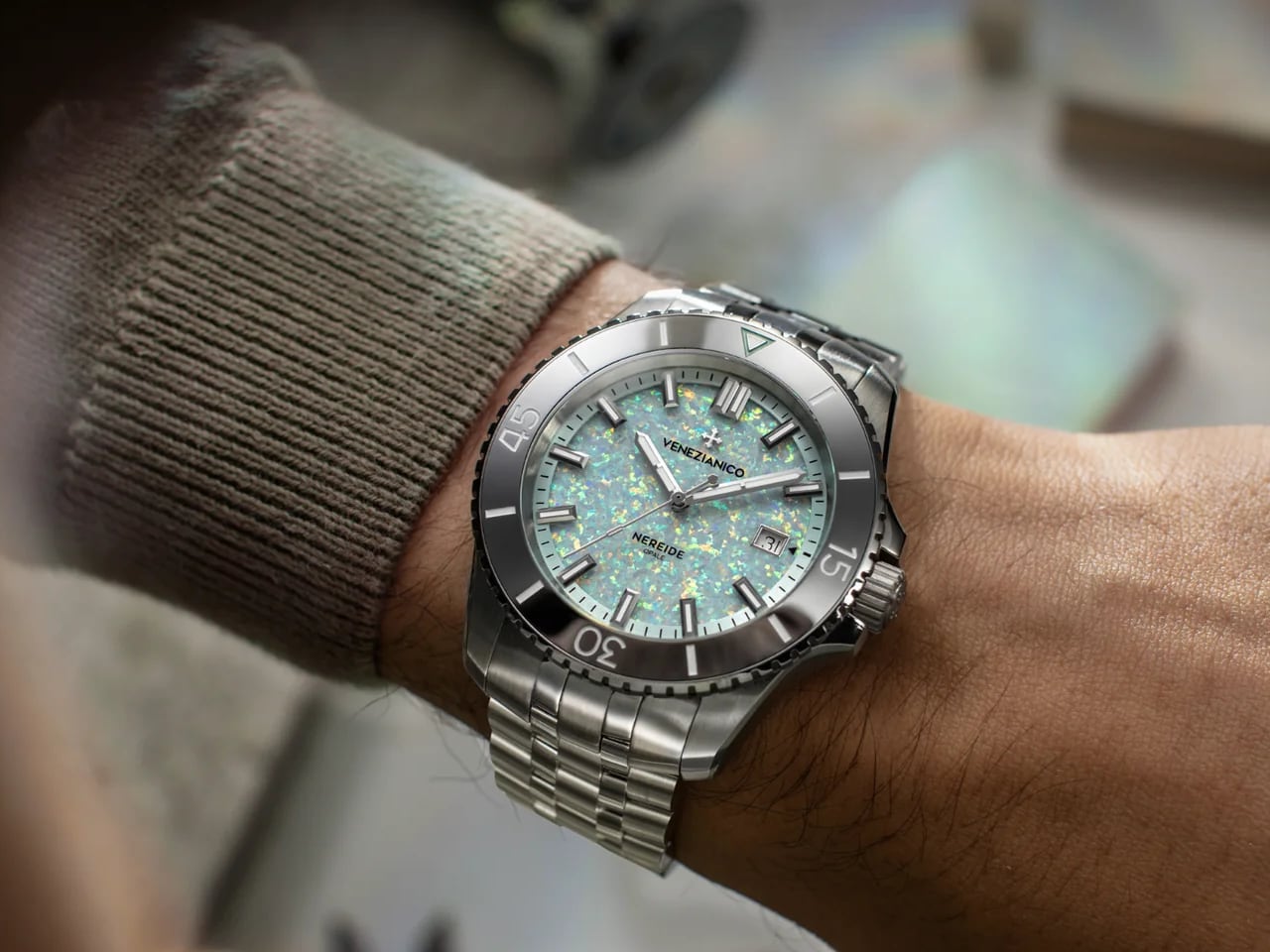
The tension in this watch is deliberate. Dive watches earned their reputation through legibility and durability, through being tools that happen to look good. The Nereide Opale inverts the formula: it is a visual object that happens to function as a tool. The 200-meter rating is real. The tungsten bezel will survive years of daily wear. The SW200-1 will keep time reliably. But none of that is why someone buys this watch.

The buyer profile is narrow. Collectors seeking another black-dial diver will find nothing here. Those who treat watches as mechanical jewelry, as objects that reward attention, will find a dial that changes with every movement, backed by engineering that does not apologize for the spectacle.

Venezianico’s bet is straightforward: a dial material can carry a watch in a market saturated with homages and heritage plays. The Nereide Opale stakes everything on that slab of lab-grown stone. The case, the bracelet, the bezel, the movement: all of it exists to frame the opal and let the color do the work.

The post The Dial That Swallowed the Watch first appeared on Yanko Design.
This LEGO Retro TV Build Shows You How Cathode Ray Tubes Actually Worked

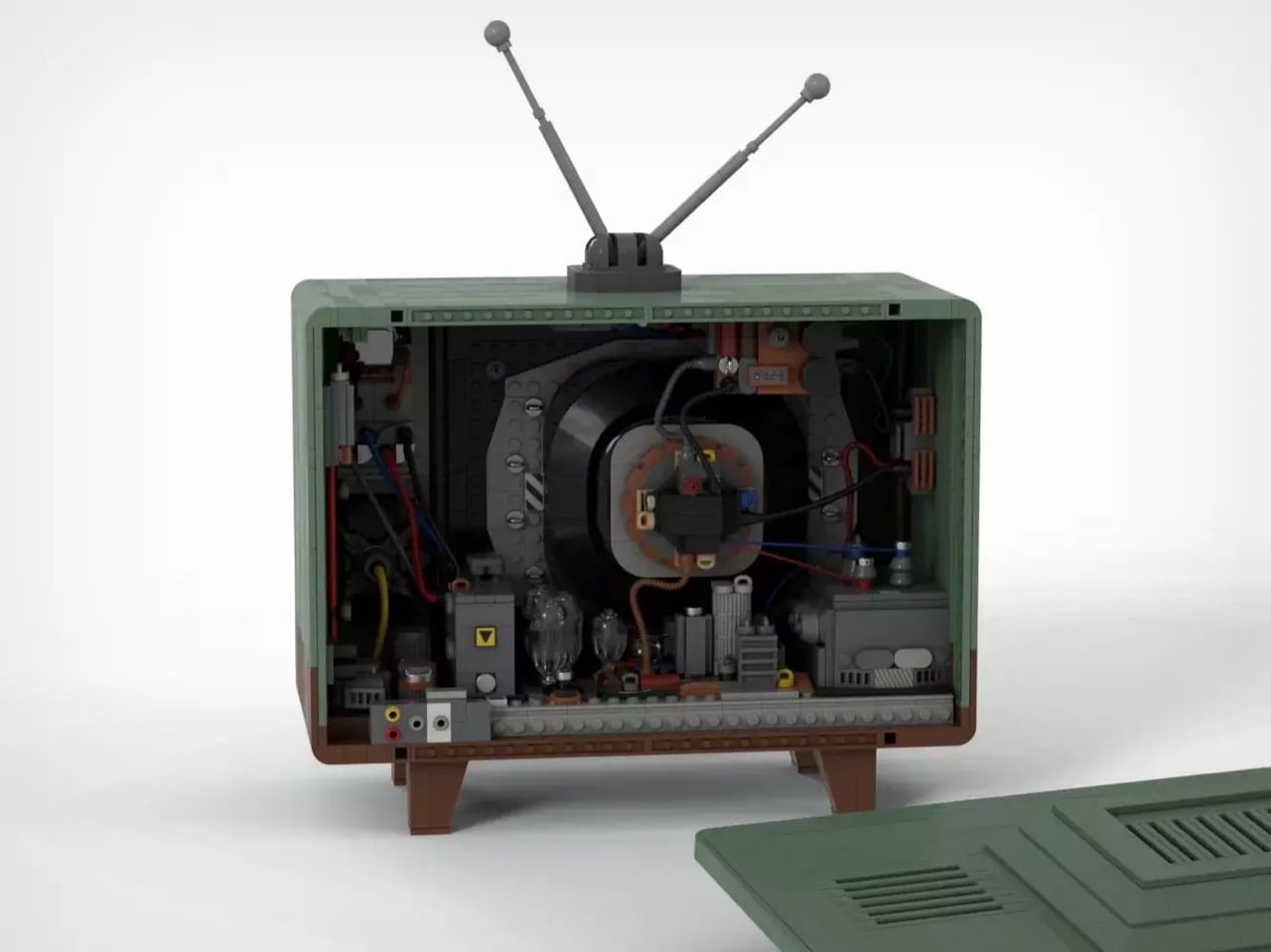
Before flat screens and streaming services, television sets were hulking pieces of furniture that commanded respect and curiosity in equal measure. FMDavid’s LEGO Ideas submission celebrates these beloved artifacts with a build that goes far beyond surface level nostalgia, diving deep into the mechanical heart of what made these cathode ray tube televisions actually work.

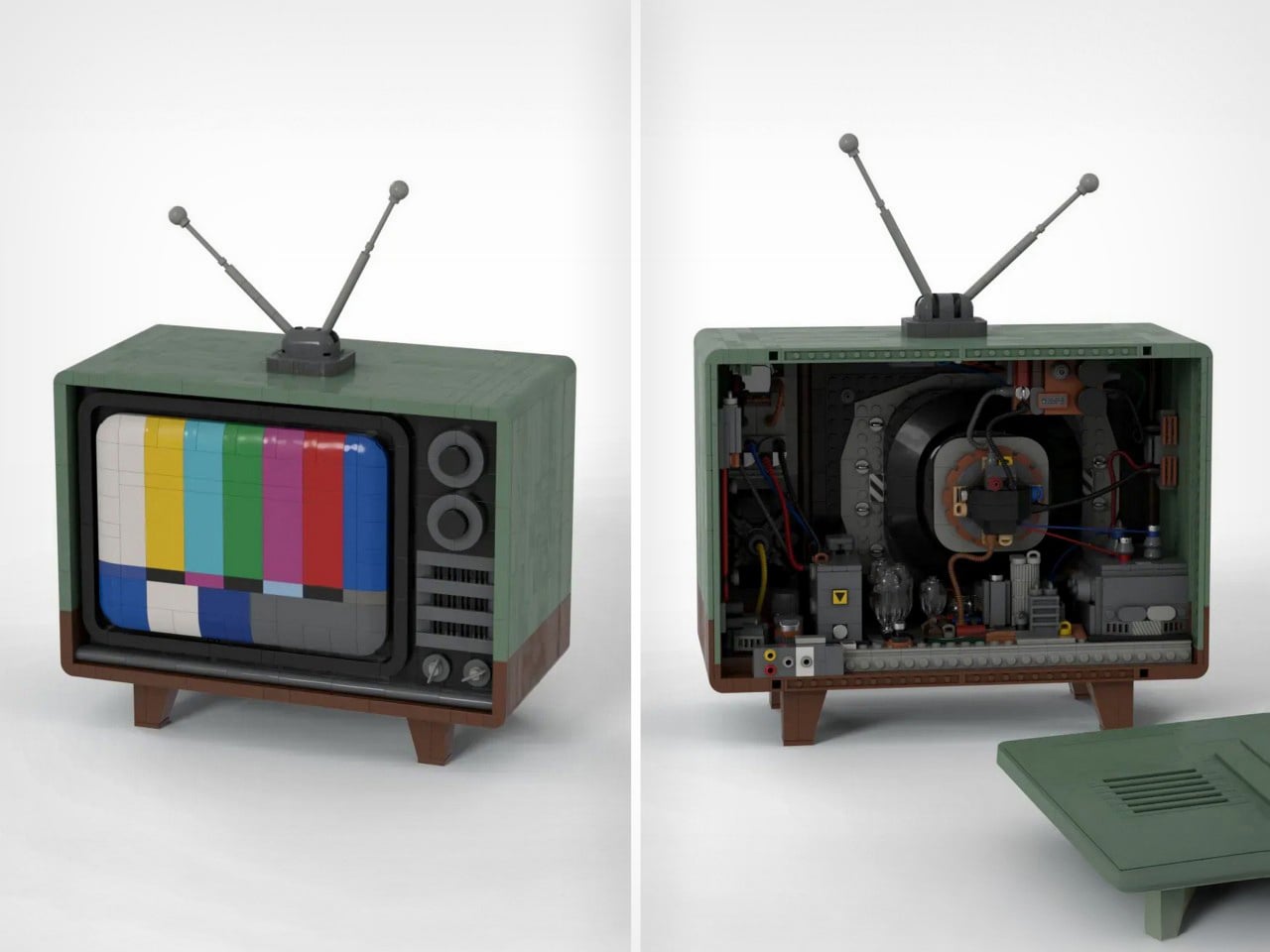
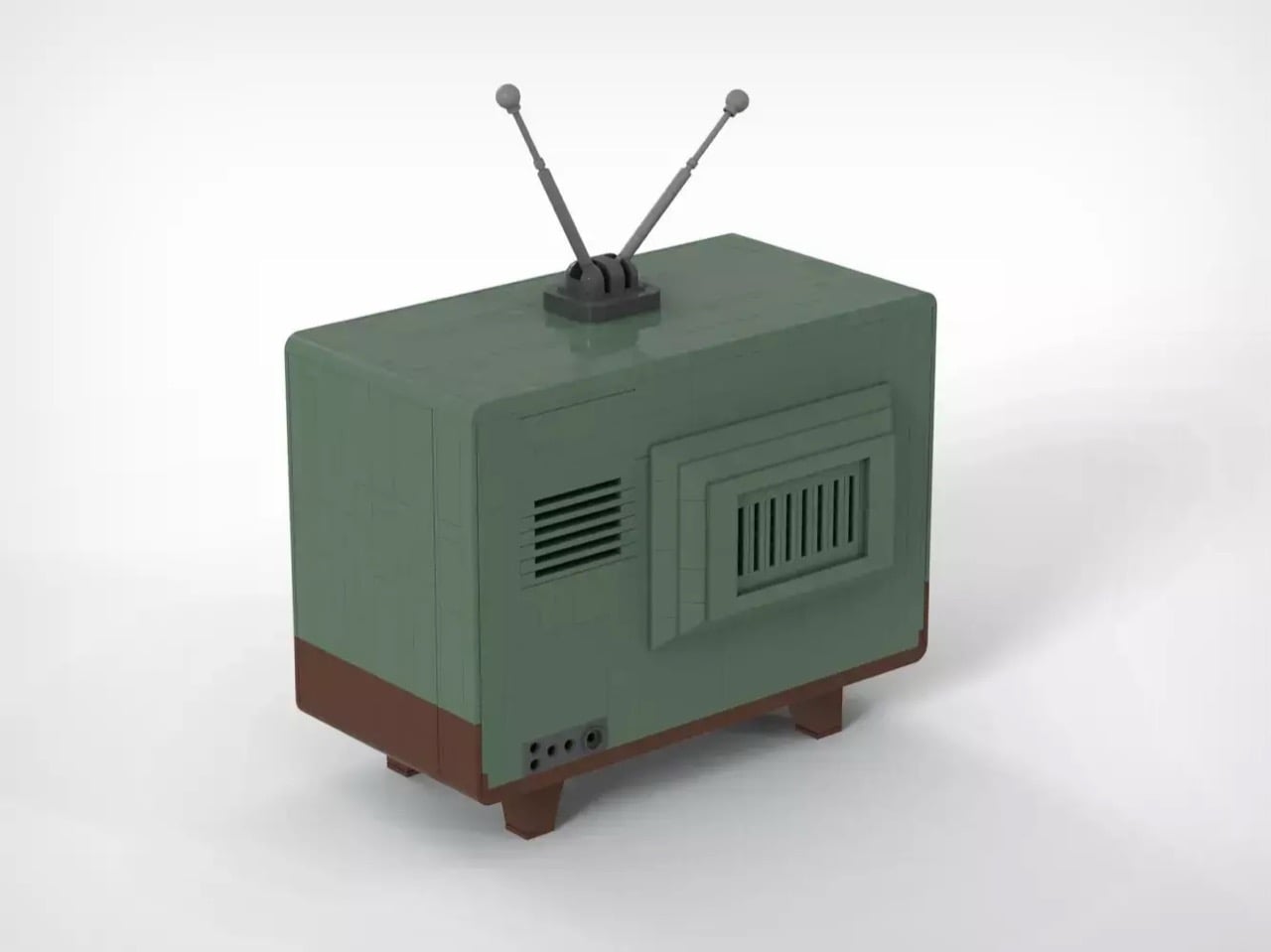
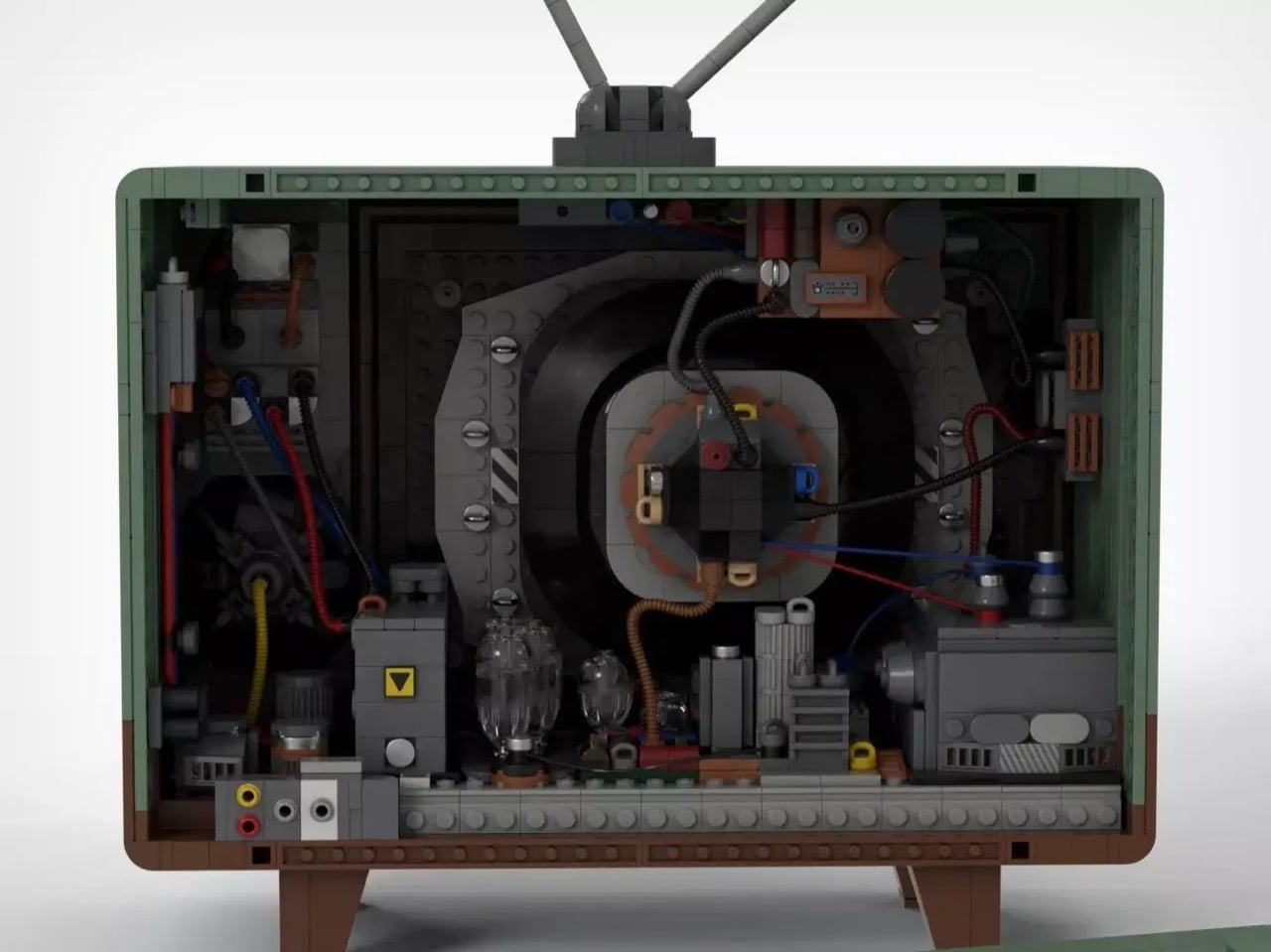
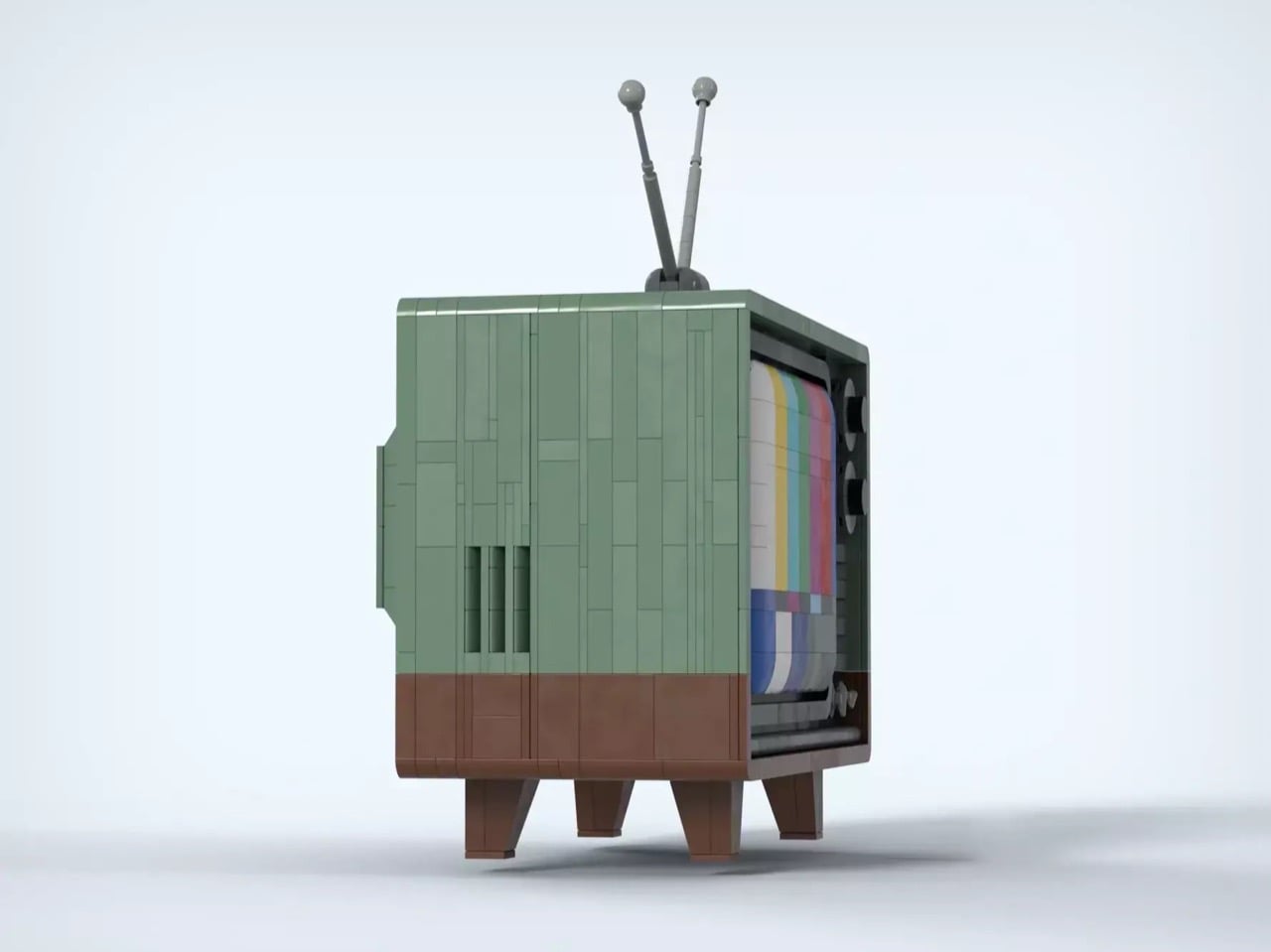
The exterior immediately transports viewers back several decades with its mint green housing, classic rabbit ear antenna, and the unmistakable SMPTE color bars displayed on its gently curved screen. Remove the back panel, however, and the true engineering achievement reveals itself. Every major component of a vintage television has been faithfully recreated in brick form, from the deflection coils wrapped around the CRT neck to the colorful wiring snaking between vacuum tubes and capacitors along the chassis floor.

Designer: FMDavid

And that’s what’s so fascinating about this build – the inner guts. Most retro TV builds in LEGO form stop at the cabinet and screen. Slap on some rabbit ears, throw in a color bar pattern, call it a day. FMDavid apparently decided that approach was for amateurs. The real story here happens when you pop off that back panel and discover what amounts to a miniature engineering degree compressed into approximately 200 square studs of space. The cathode ray tube dominates the interior volume exactly as it would in an actual 1960s Zenith or RCA, which tells me this builder actually studied reference material instead of just vibing on childhood memories. Those deflection coils wrapping around the tube neck aren’t decorative. They’re positioned where they’d actually sit in a functioning set, using what appears to be copper-colored flexible elements or possibly custom printed tiles to simulate the electromagnetic coils that would bend electron beams across phosphor screens at 15,734 times per second.

This build works as both display piece and educational tool. The SMPTE color bars on screen are a nice touch that any broadcast engineer would immediately recognize. Those bars weren’t just pretty patterns. They were precision test signals containing specific luminance and chrominance values that let technicians calibrate everything from color temperature to sync pulse timing. The curved screen profile captures that subtle convex bulge of real CRT glass, which existed because a flat surface would implode under atmospheric pressure once you evacuated the tube interior to near-vacuum conditions. Physics demanded that curve, and FMDavid respected it.

The exterior styling nails the mid-century aesthetic with that sage green cabinet color and brown wooden legs angled outward in classic Danish modern furniture tradition. Those aren’t just legs, they’re cultural signifiers of an era when televisions were statement furniture pieces that families planned their living rooms around. The two control knobs on the right panel would’ve been your channel selector and volume control, back when changing channels meant physically walking across the room and turning a mechanical detent switch through twelve discrete positions. No endless scrolling through 500 cable channels, just ABC, NBC, CBS, and maybe PBS if you were lucky.

The component density here feels right for a television set from the tube era without overwhelming the interior space. Real TV sets from the 1960s packed dozens of components into their cabinets, handling everything from IF amplification to horizontal output to audio processing. FMDavid’s arranged the internal elements so you can actually see the relationship between the major systems. The vacuum tubes reminiscent of the old-timey technology, the transformers with their ribbed heat sinks sit where you’d expect them, probably using modified tile or plate stacks to create those distinctive cooling fins that prevented components from cooking themselves to death during long viewing sessions. Those cylinders at the bottom represent capacitors, which in real sets would filter high voltage DC and store energy for the horizontal deflection circuit. Get a capacitor failure in a vintage TV and you’d lose either your picture width or your vertical hold, sending the image rolling endlessly up the screen. Heck, there’s even the RCA output on the back, with the yellow and red for left and right audio channels, and a white for presumably the video.

The build currently sits at 1,136 supporters on LEGO Ideas, which means it needs another 8,864 votes to hit the 10,000 threshold for official review. That’s how the Ideas platform works. You need 10,000 people to vote for your concept within a limited timeframe, then LEGO’s internal review board evaluates it for commercial viability, piece count economics, licensing considerations, and market fit. FMDavid’s got 418 days remaining to gather those supporters. If you want to see this hit production shelves, head over to the LEGO Ideas website, create a free account if you haven’t already, and cast your vote. No money required, just a few clicks to tell LEGO this deserves manufacturing consideration alongside other fan-designed sets.

The post This LEGO Retro TV Build Shows You How Cathode Ray Tubes Actually Worked first appeared on Yanko Design.

GameSir’s $79 MFi-compatible Controller Lets You Play PC & Xbox titles on an iPhone or iPad Mini

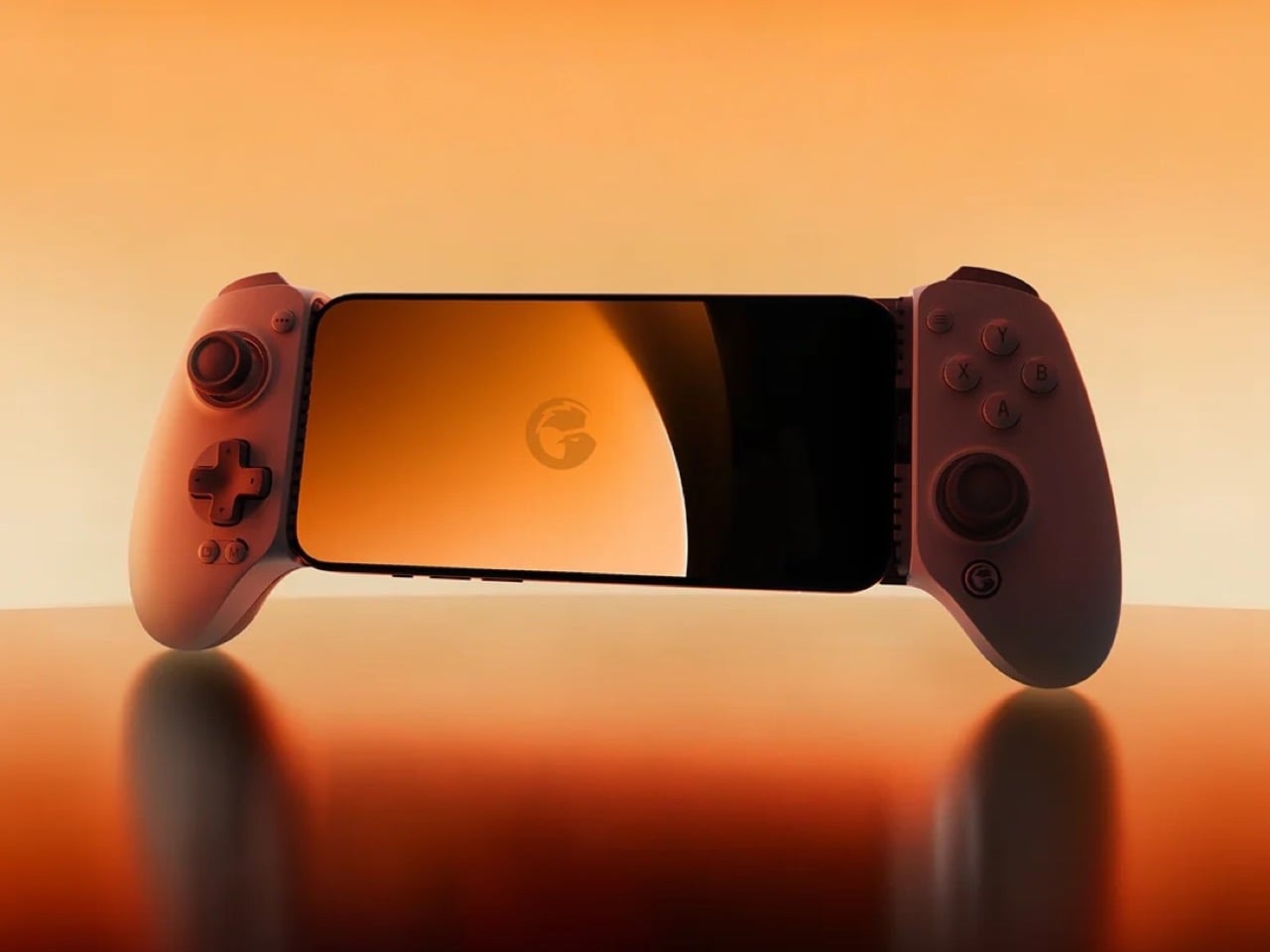
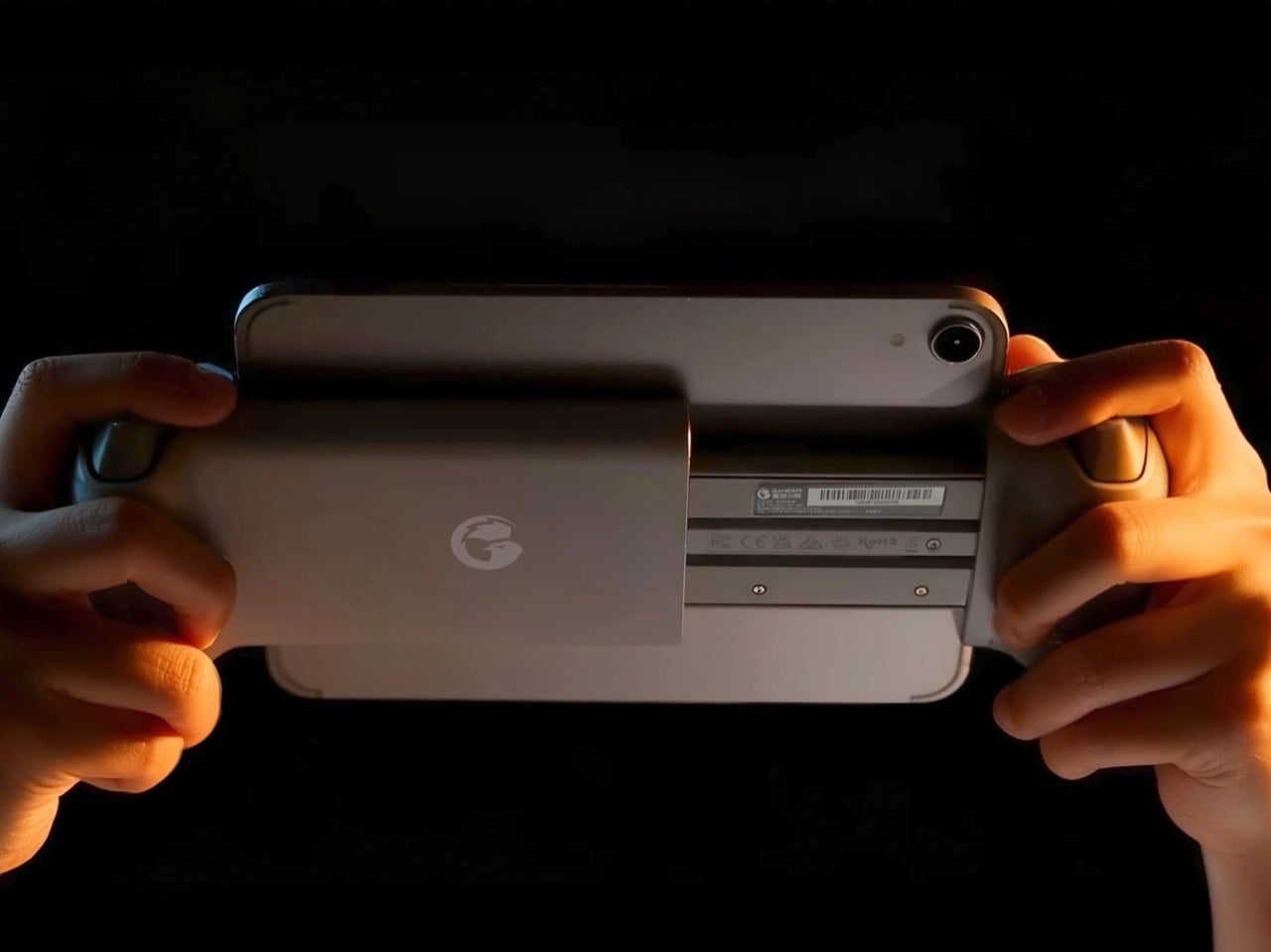
Backbone has enjoyed relatively comfortable dominance in the iPhone controller market, but GameSir just made things considerably less comfortable. The GameSir G8 Plus MFi arrives as the company’s first MFi-certified product, bringing proven gaming hardware expertise to Apple’s ecosystem at an aggressive $79.99 price point. This puts GameSir $20 below the established market leader while matching many of its core features. The competitive landscape matters here because Backbone now faces much stronger competition from companies like GameSir, Gamevice, and Razer, making its premium positioning harder to justify. GameSir counters Backbone’s sleek design and app integration with Hall Effect technology, customizable faceplates, and dual back buttons. The G8 Plus MFi also supports both iOS and compact Android devices, offering flexibility that pure iPhone-focused controllers cannot match.

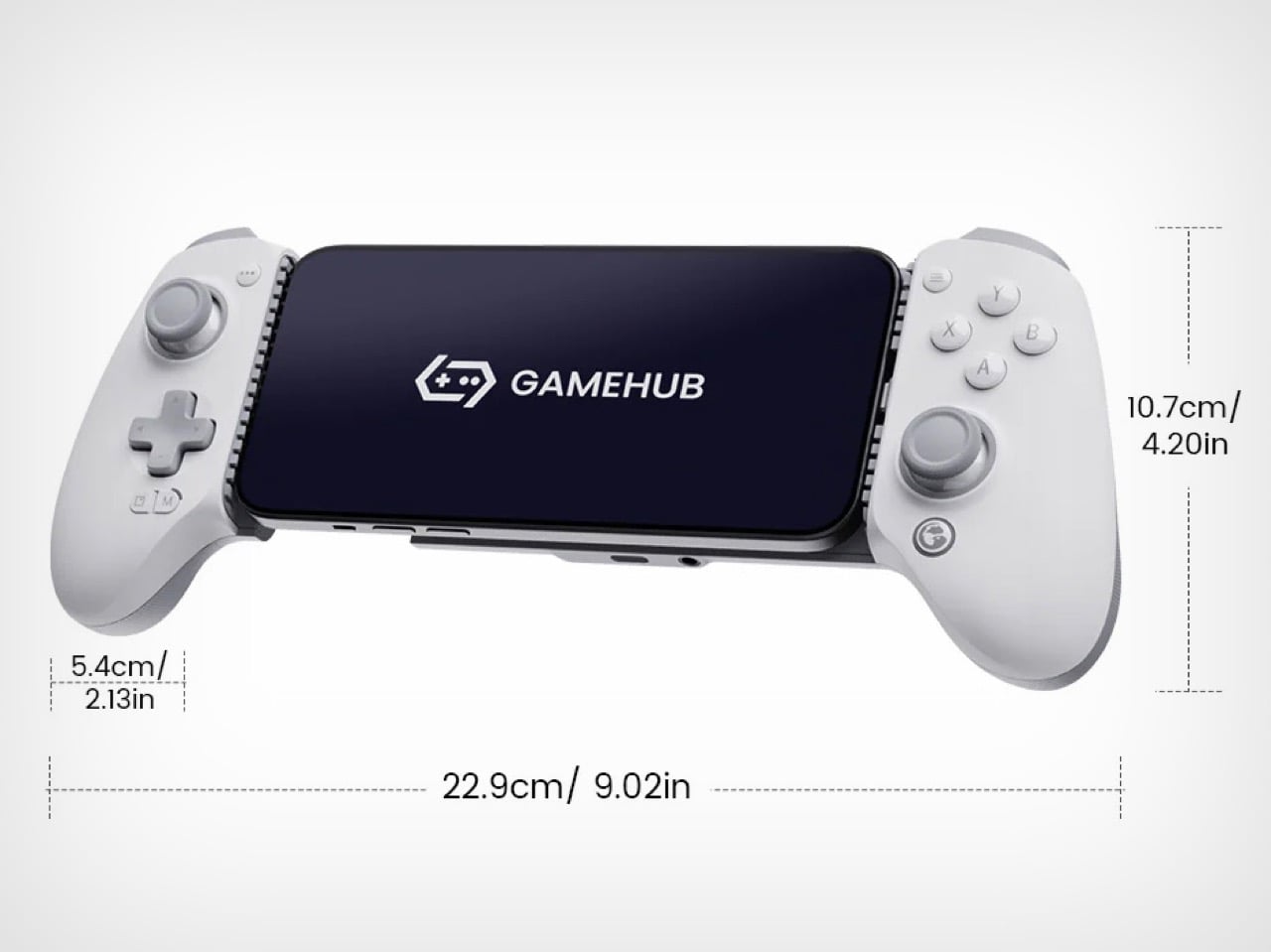
GameSir finally secured MFi certification, which means reliable performance and stable connectivity across iOS devices without the usual third-party controller jank. The company built its reputation on solid hardware, particularly with controllers like the standard G8 Plus that launched earlier this year with Bluetooth and battery support. This MFi version strips out both the battery and wireless connectivity to meet Apple’s specifications and hit that $79.99 price point. You’re getting a wired-only experience through a movable USB-C port, but the tradeoff includes pass-through charging so your phone doesn’t die mid-session. The telescopic design stretches to accommodate devices up to 215mm, which covers everything from standard iPhones to the iPad Mini, giving you way more versatility than you’d expect from a phone controller.

Designer: GameSir

Click Here to Buy Now

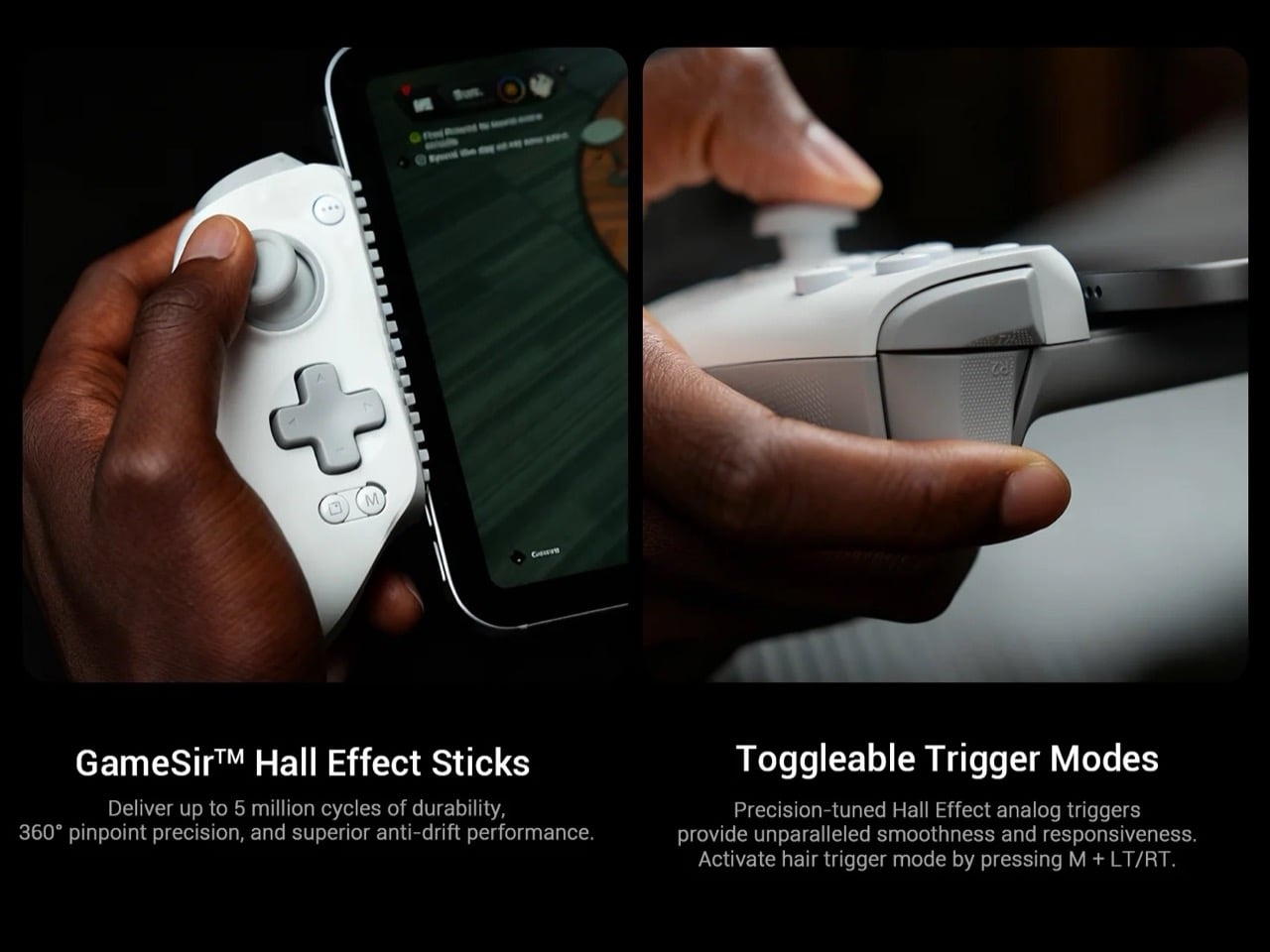
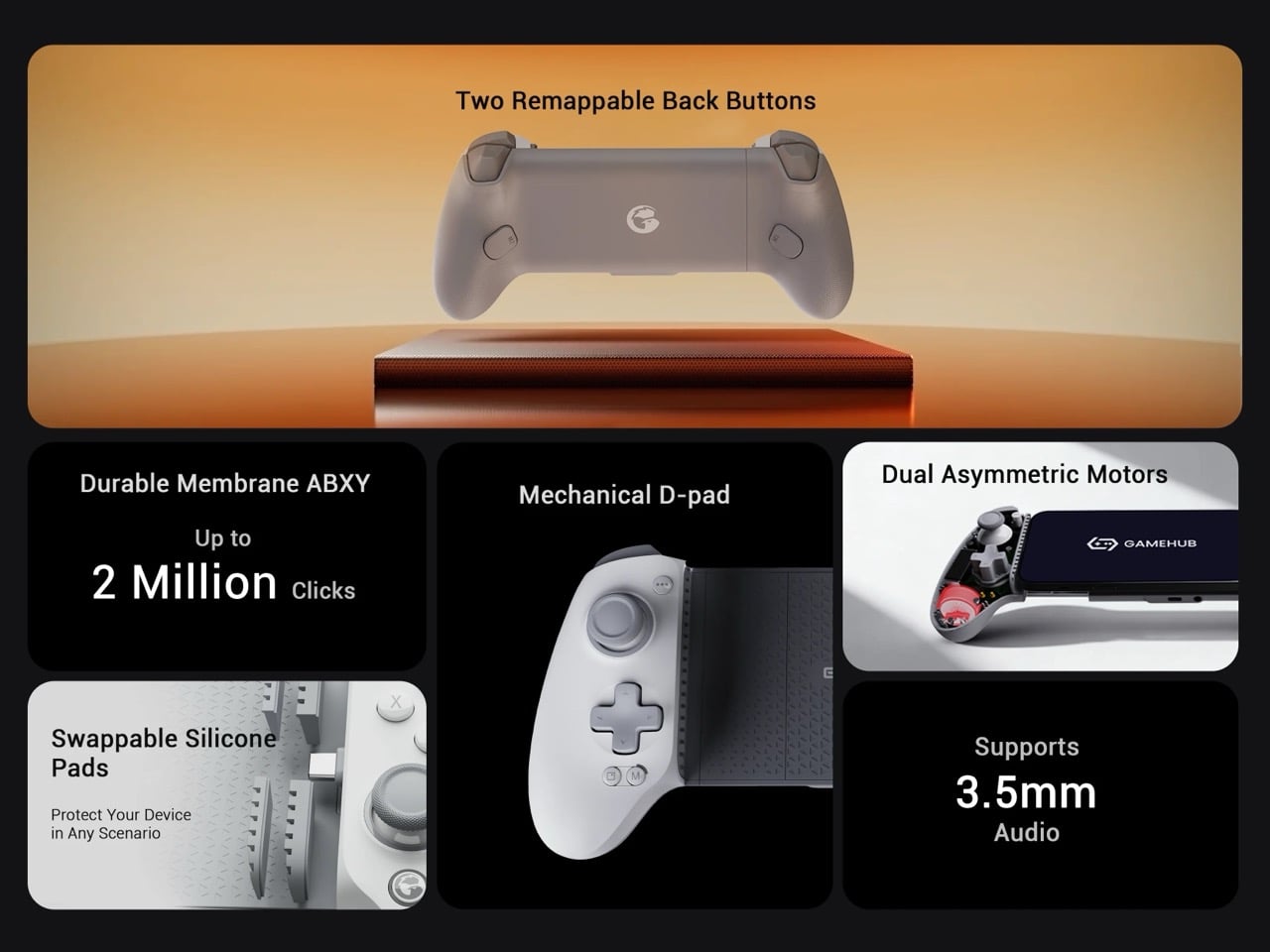
Hall Effect sensors in both the thumbsticks and analog triggers eliminate stick drift, which remains a persistent problem even in premium controllers. The mechanical D-pad provides tactile feedback that membrane alternatives can’t match, though the ABXY buttons use membrane technology to keep costs reasonable. Two programmable back buttons sit on laser-engraved grips, and the entire controller works with the GameSir app for customization. The detachable magnetic faceplate lets you swap thumbstick positions and rearrange the ABXY layout, something Backbone doesn’t offer at any price point. There’s also a 3.5mm audio jack for wired headphones, which matters more than you’d think when Bluetooth audio introduces latency in competitive games. GameSir clearly spent their engineering budget on components that affect gameplay rather than feature bloat.

No gyroscope means games that rely on motion controls won’t work properly, which eliminates a chunk of the iOS gaming library. The wired-only design lacks the flexibility of Backbone’s newer Pro model with its 40-hour battery and Bluetooth connectivity. GameSir’s app exists but doesn’t approach the polish or social features of Backbone’s ecosystem, which has become a genuine differentiator for the brand. Backbone built a game launcher, social platform, and recording hub that transforms the controller from a peripheral into a gaming experience. GameSir offers button remapping and firmware updates, which covers the basics but won’t replace your need for separate apps. You can tell where each company decided to compete and where they chose to concede ground.

The calculation for buyers comes down to whether Backbone’s ecosystem and brand cachet justify a 25% premium over GameSir’s hardware-focused approach. If you care about launching games from a unified interface, sharing clips with friends, or using your controller as a social hub, Backbone remains the obvious choice despite the higher cost. But if you want Hall Effect reliability, physical customization options, and the ability to use the same controller with both your iPhone and a compact Android tablet without switching devices, GameSir built exactly that product. The G8 Plus MFi proves you can compete with an established market leader by focusing on what actually matters to a specific segment of buyers. Backbone set the standard for mobile controllers on iOS, and now someone finally showed up with enough credibility to make the comparison worthwhile rather than embarrassing.

Click Here to Buy Now

The post GameSir’s $79 MFi-compatible Controller Lets You Play PC & Xbox titles on an iPhone or iPad Mini first appeared on Yanko Design.