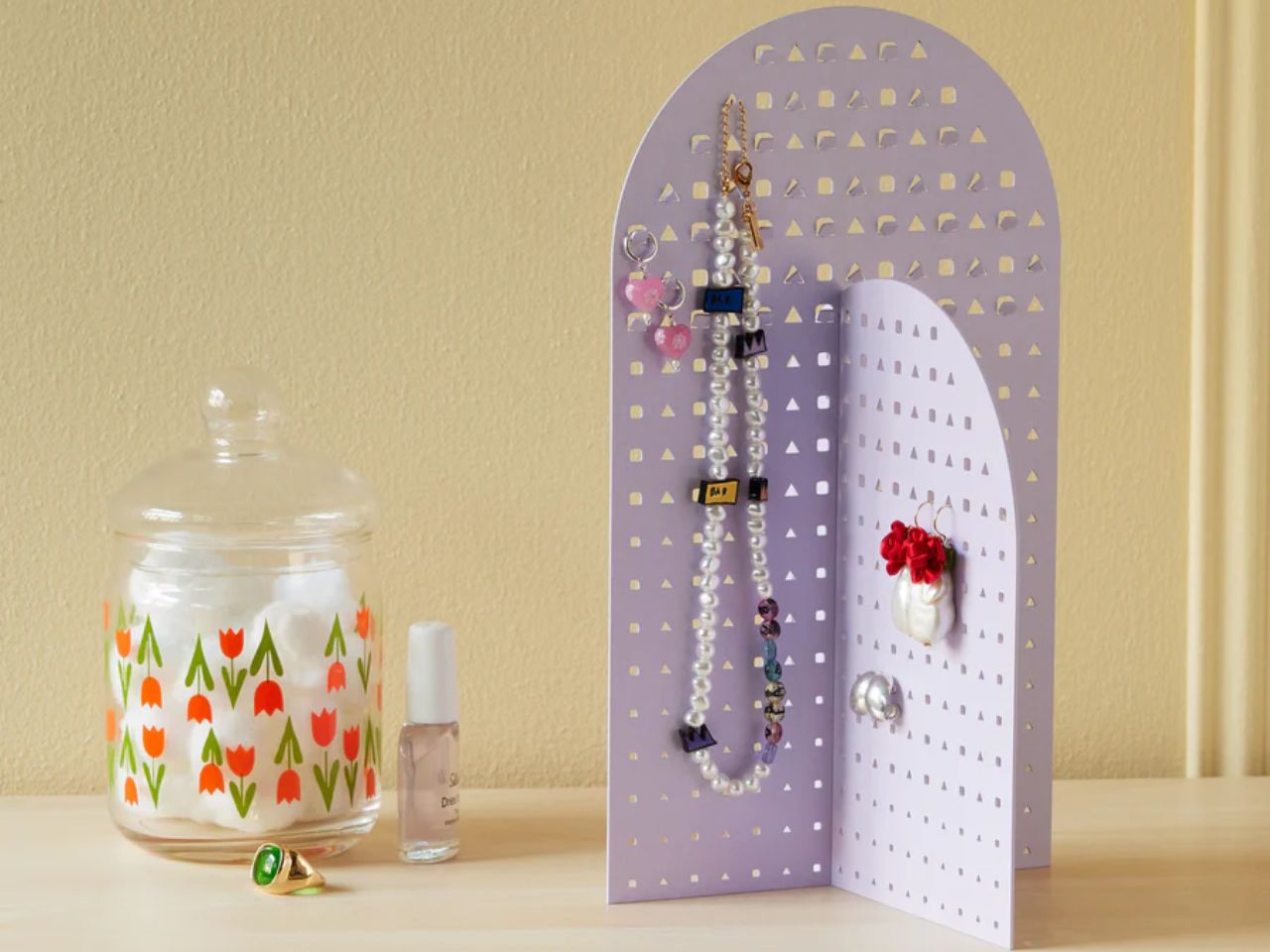
The Sculptural Stand That Curates Jewelry Like a Miniature Modernist Gallery

Most jewelry stands are passive objects. They sit quietly on dressers, functioning as background tools for storage. But jewelry stand challenges that expectation by repositioning the humble organizer as an active curator, one that stages jewelry the way a gallery stages art. Designed exclusively for the MoMA Design Store and distributed internationally, the piece reframes what a daily-use object can be: not just a holder, but a display system, a sculpture, and a small architectural experiment.

Instead of approaching the project as a decorative accessory, Arora treated it as a spatial design problem. The stand consists of two powder-coated iron panels that interlock to form a stable three-dimensional structure. This construction method eliminates fasteners entirely, allowing the object to assemble intuitively while maintaining structural strength. The gesture feels architectural, like slotting together planes in a scale model, suggesting that the designer is thinking less like a stylist and more like a builder of systems.

Designer: Nihaarika Arora
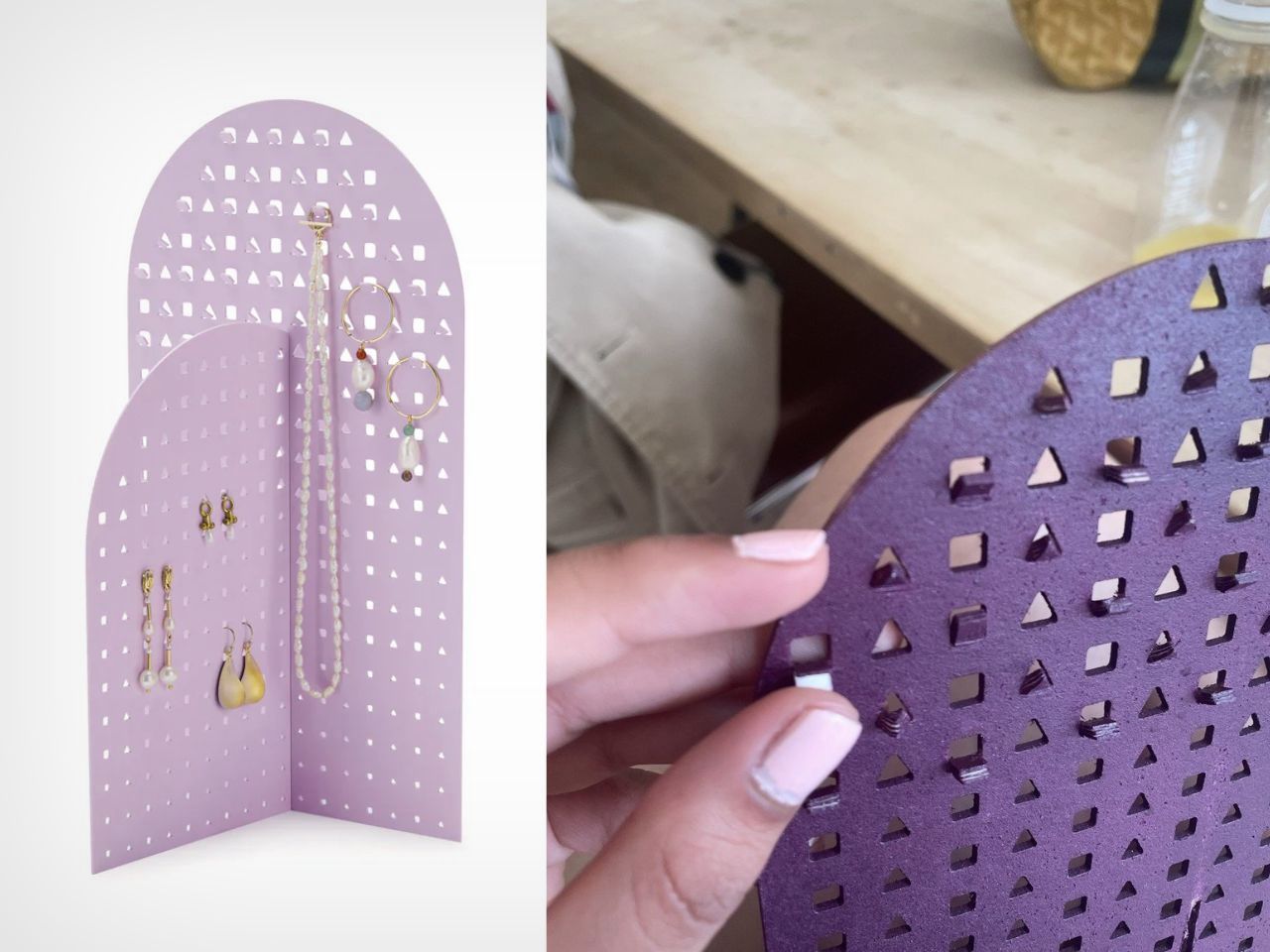
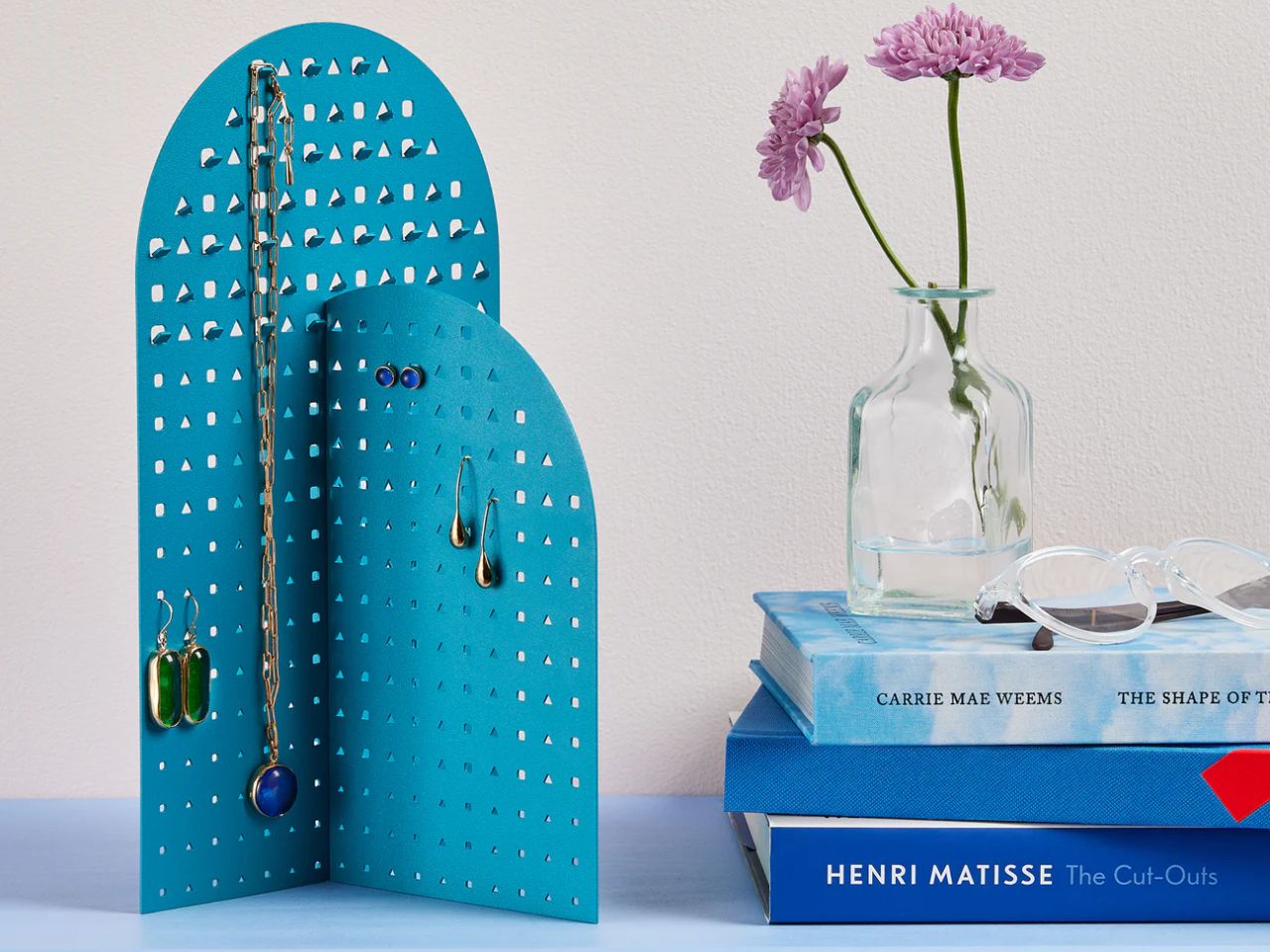
What makes the object particularly compelling is how it transforms jewelry into part of its visual composition. A rhythmic field of geometric perforations allows stud earrings to pass directly through the surface, effectively turning the panel into a customizable exhibition wall. Integrated hooks accommodate necklaces and bracelets, suspending them in clean vertical lines. Rather than hiding accessories, the stand frames them, making everyday items feel intentional and composed. When empty, it still retains a sculptural presence; when filled, it becomes collaborative, co-designed by the wearer’s collection.
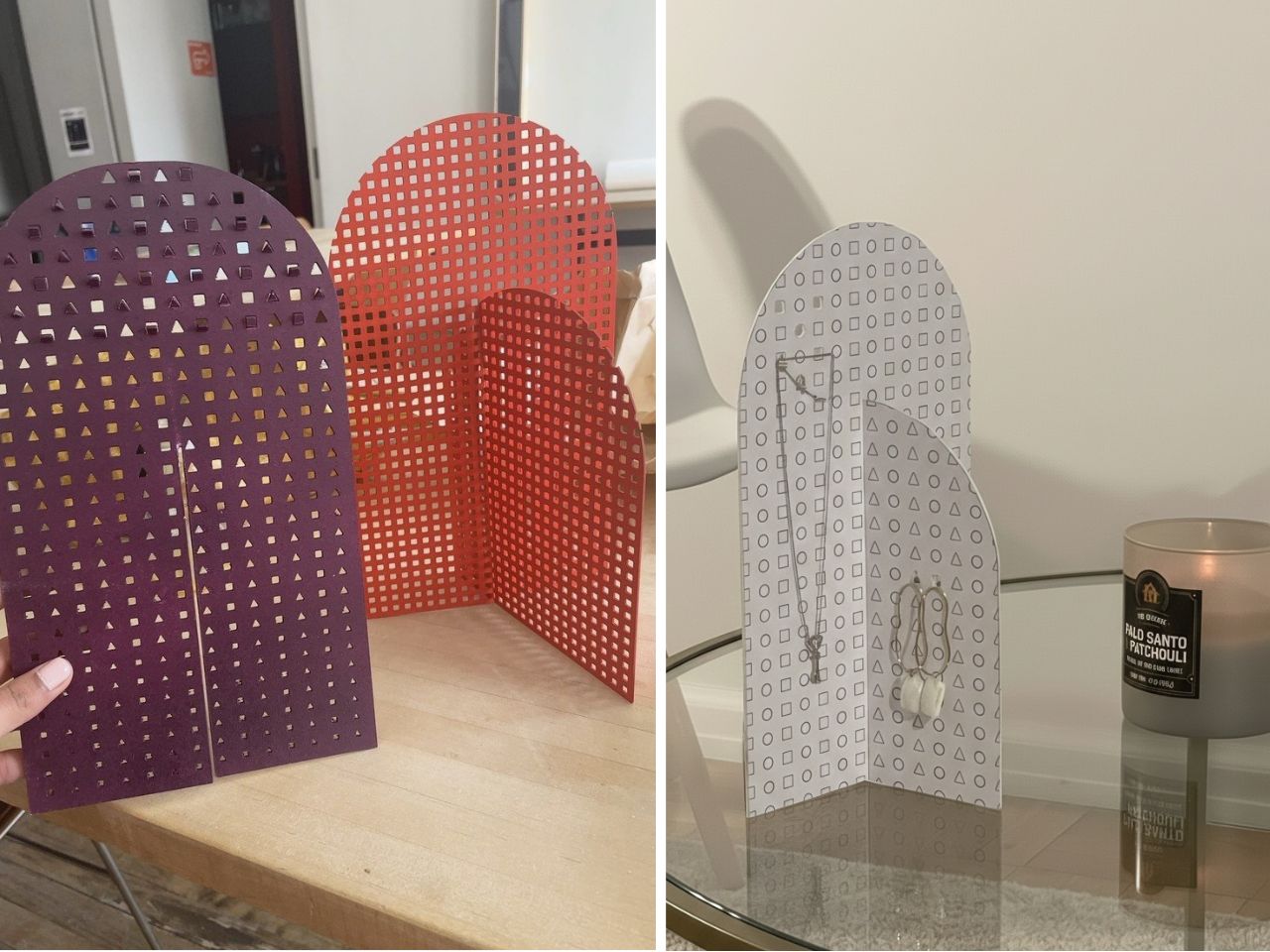
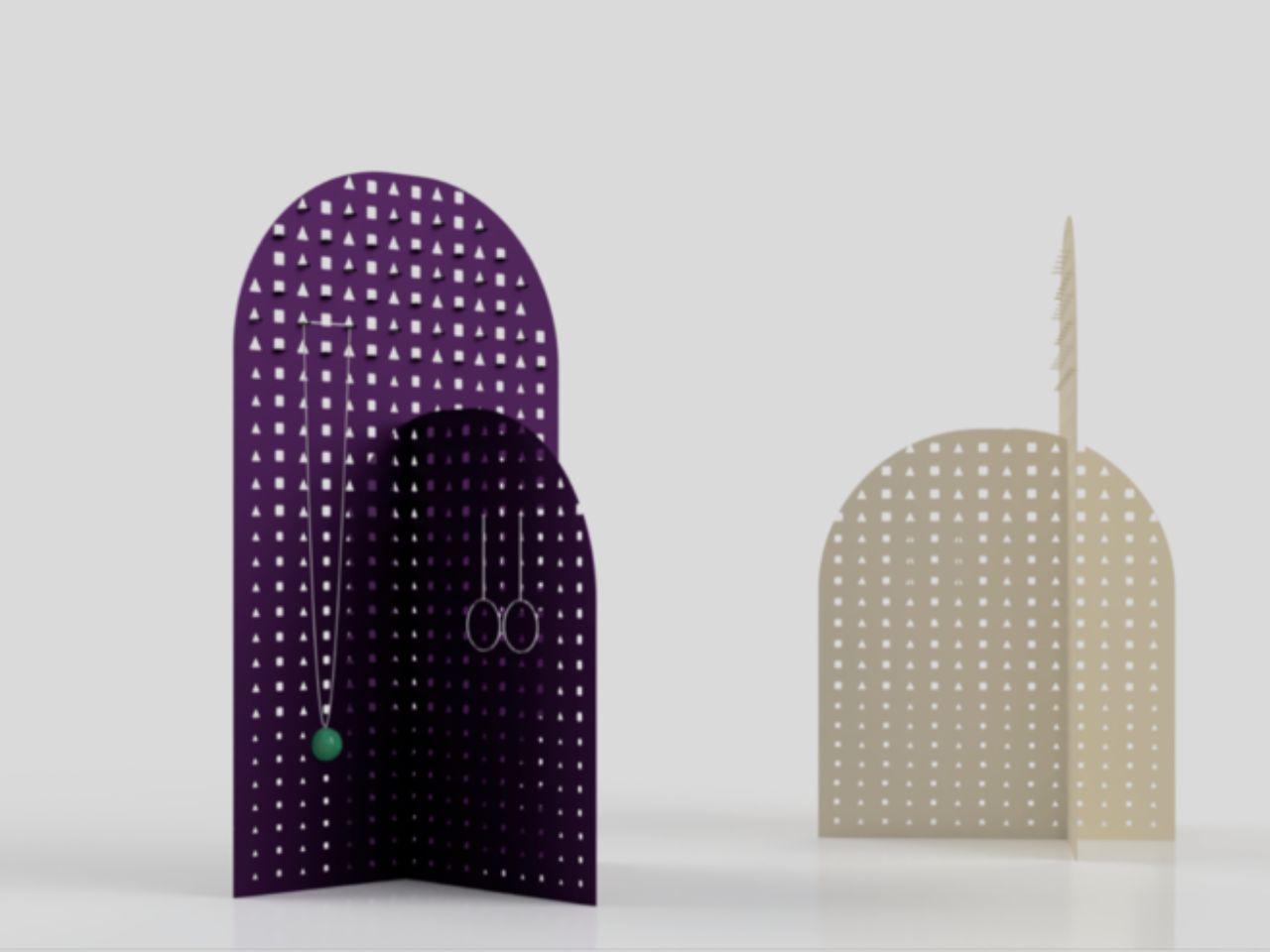
This sense of precision did not emerge accidentally. The project evolved through an iterative prototyping process that included cardboard mockups, laser-cut tests, and extensive material trials. Arora adjusted metal thickness, balance, and joint tolerances repeatedly to achieve an equilibrium between stability and visual lightness. Early prototypes were reviewed with MoMA’s editorial and buying teams, whose feedback informed refinements to perforation spacing, detailing, and color direction. The process reflects a designer committed to testing assumptions and refining decisions through interaction rather than relying solely on intuition.
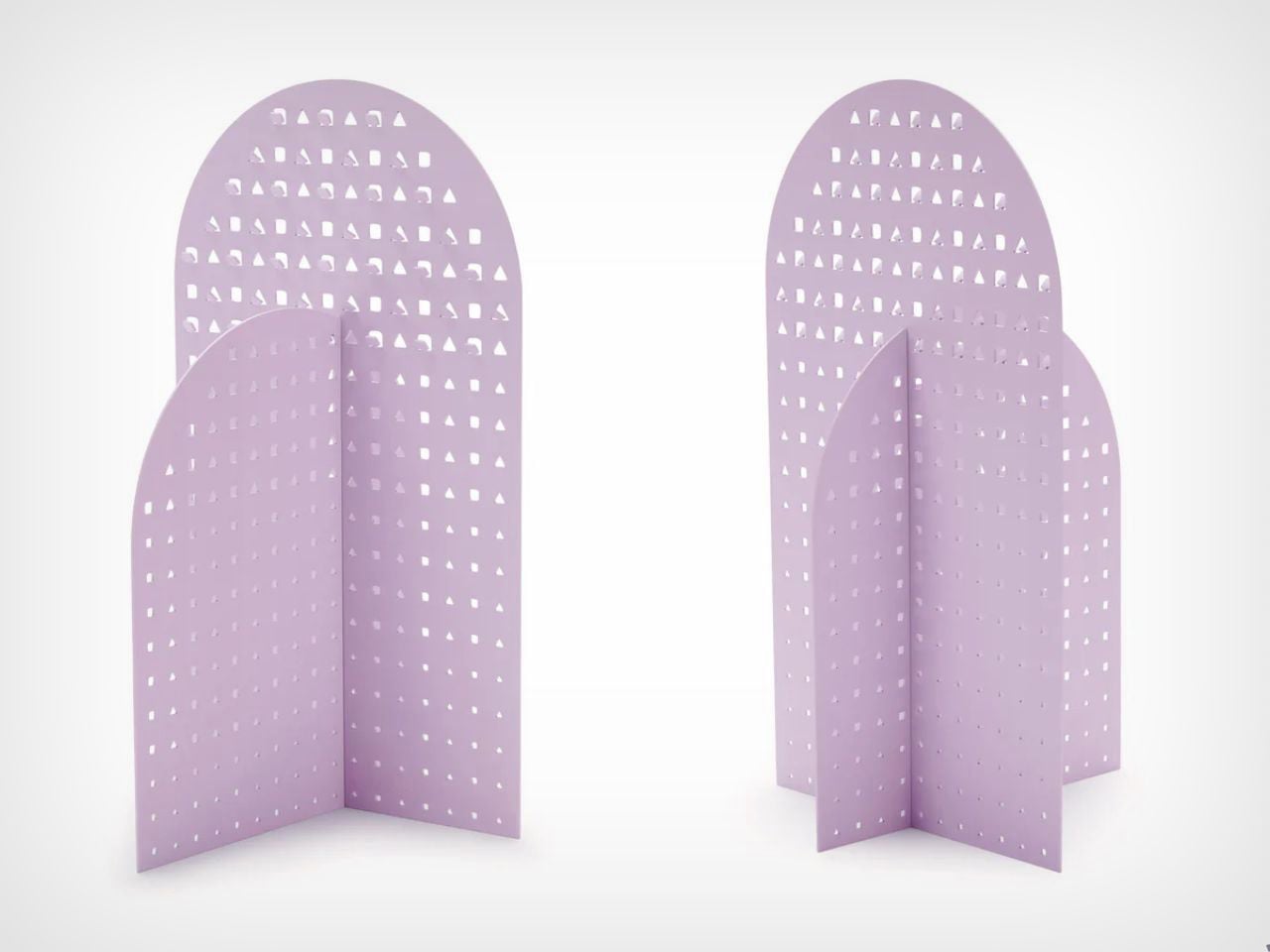

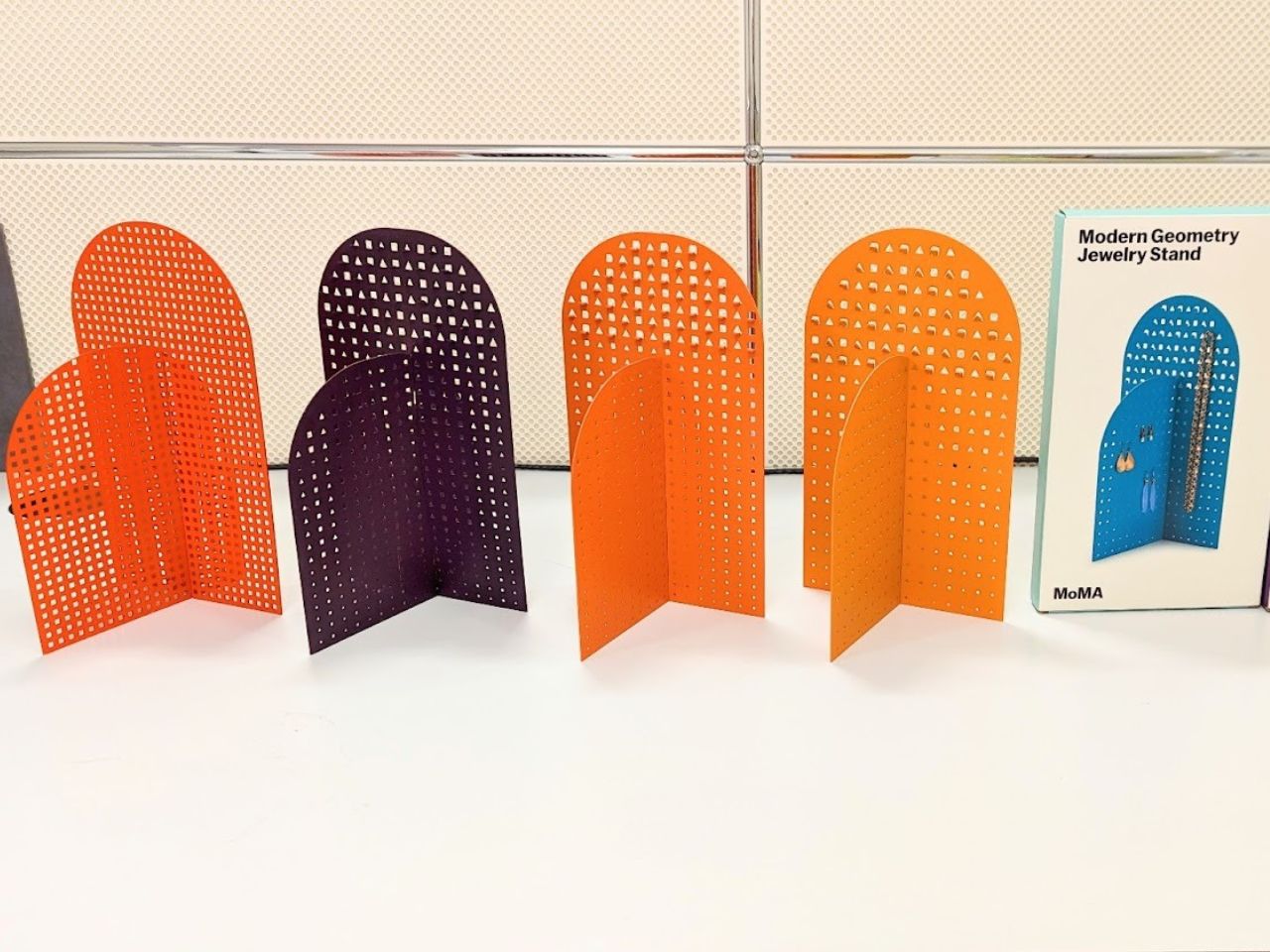
Historically, the design draws subtle influence from early modernist thinking. The interlocking planes recall Bauhaus experiments in structural clarity, while the perforation patterns nod to Josef Hoffmann’s explorations in metalwork geometry. Yet the stand never feels retro. Instead, these references are distilled into a contemporary language defined by restraint, proportion, and disciplined form. Color selection developed through trend and material study leans toward cool, playful tones that complement the iron substrate while allowing the piece to integrate into a wide range of interiors.

Arora has described her practice as driven by a desire to design with purpose and to imagine equitable and sustainable futures through collaboration. In this context, the jewelry stand becomes more than a product. It becomes a manifesto in miniature. It demonstrates that even the smallest domestic object can embody architectural logic, historical awareness, and user-centered thinking. By elevating storage into display and function into form, the Modern Geometry Jewelry Stand does not just organize belongings. It reorganizes expectations of what everyday design can be.
The post The Sculptural Stand That Curates Jewelry Like a Miniature Modernist Gallery first appeared on Yanko Design.
Samsung teases mobile AI photography tools ahead of Unpacked

Anyone who's been paying even a little bit of attention to tech news lately could have made a reasonable guess that AI will be a big topic at Samsung's Unpacked next week. Ahead of the event, Samsung teased some of what's to come for AI in terms of the Galaxy S26 smartphone lineup's photography tools. 

The S26 phones will feature a new camera system using Galaxy AI that combines capturing, editing and sharing of photos and videos. "Users will be able to turn a photo from day to night in seconds, restore missing parts of objects in images, capture detailed photos in low light, and seamlessly merge multiple photos into a single, cohesive result," a company rep said. The video clips Samsung shared demonstrated the before and after results of using its AI tools, which will all be housed in a single app rather than needing to switch between multiple image editing programs.

Updated cameras are just part of what will be on the schedule for Samsung's big mobile showcase. The expected Galaxy S26, Galaxy S26+ and Galaxy S26 Ultra will likely have a lot of AI-centric features.

This article originally appeared on Engadget at https://www.engadget.com/mobile/smartphones/samsung-teases-mobile-ai-photography-tools-ahead-of-unpacked-233000358.html?src=rss

This New Zealand Tiny House Delivers Apartment-Sized Living Without the Usual Compromises

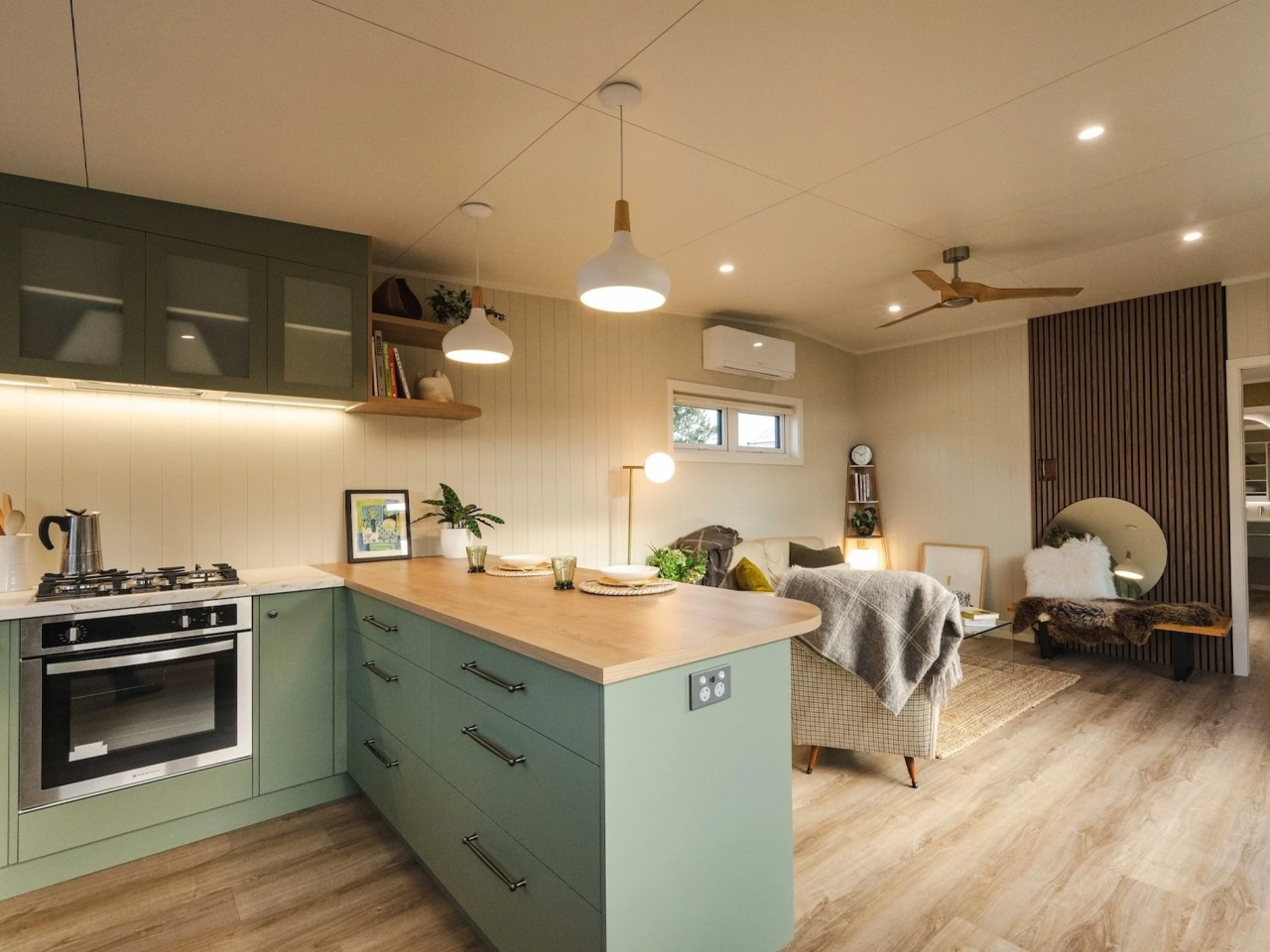
Most people who move into a tiny house learn to accept certain realities. You’ll climb a ladder to bed every night. Your kitchen will be little more than a hot plate and a mini-fridge. Storage means shoving things under furniture. The English Garden, crafted by South Base Tiny Homes in New Zealand, refuses to accept any of this. This dwelling challenges every assumption about what compact living must entail, delivering a residential experience that feels remarkably unrestricted despite its modest footprint.

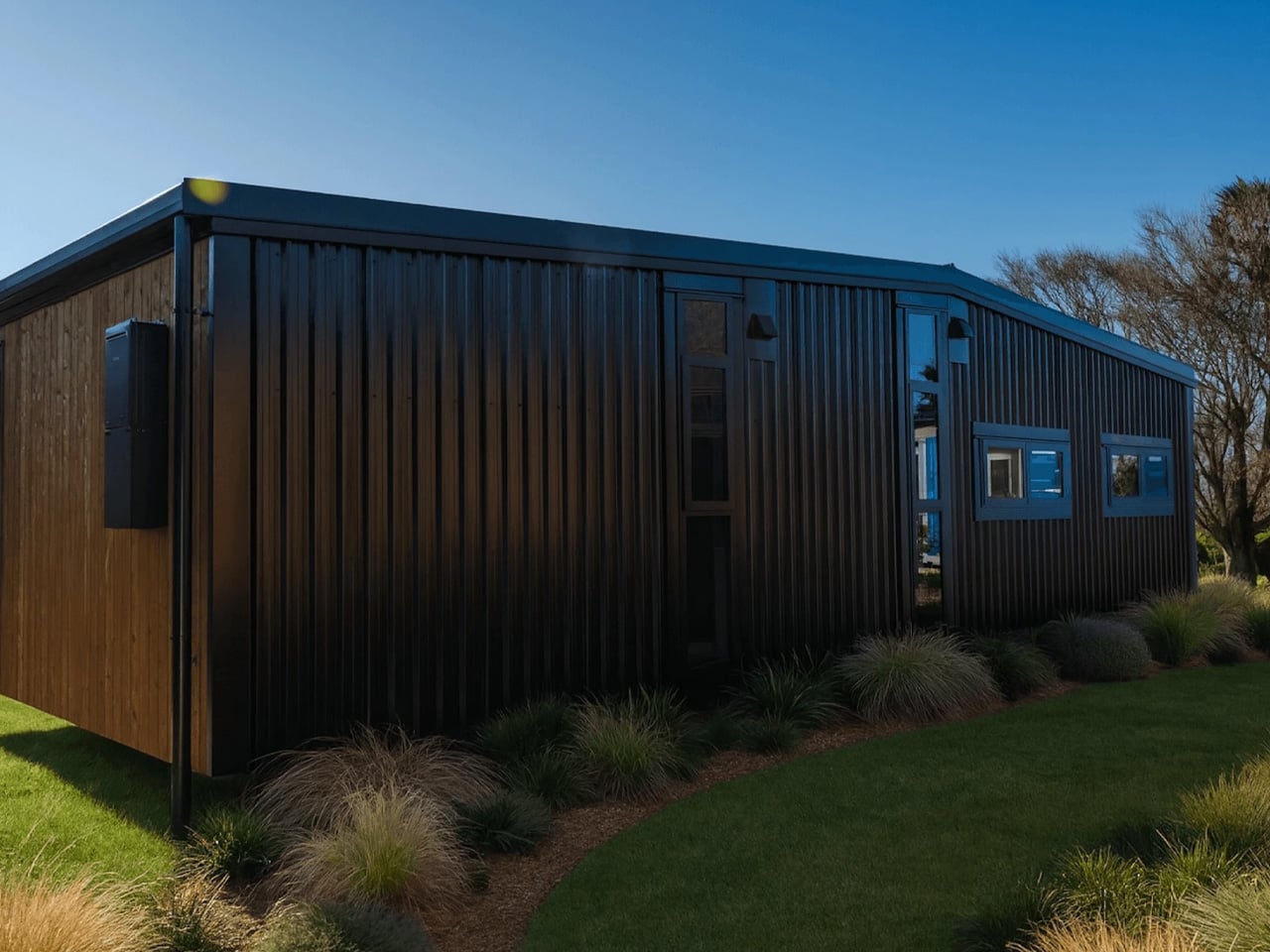
Stretching twelve meters in length and four meters across, this dwelling occupies a permanent spot along the New Zealand coastline. Unlike the majority of tiny houses built on trailers for mobility, this one stays anchored to its site. The homeowners drew inspiration from their British roots, seeking a design that would blend traditional English sensibility with the easygoing nature of coastal living in their adopted country. The exterior combines timber cladding with metal roofing, creating a cottage-like appearance that feels appropriate for both its heritage inspiration and its beachside setting.

Designer: South Base Tiny Homes

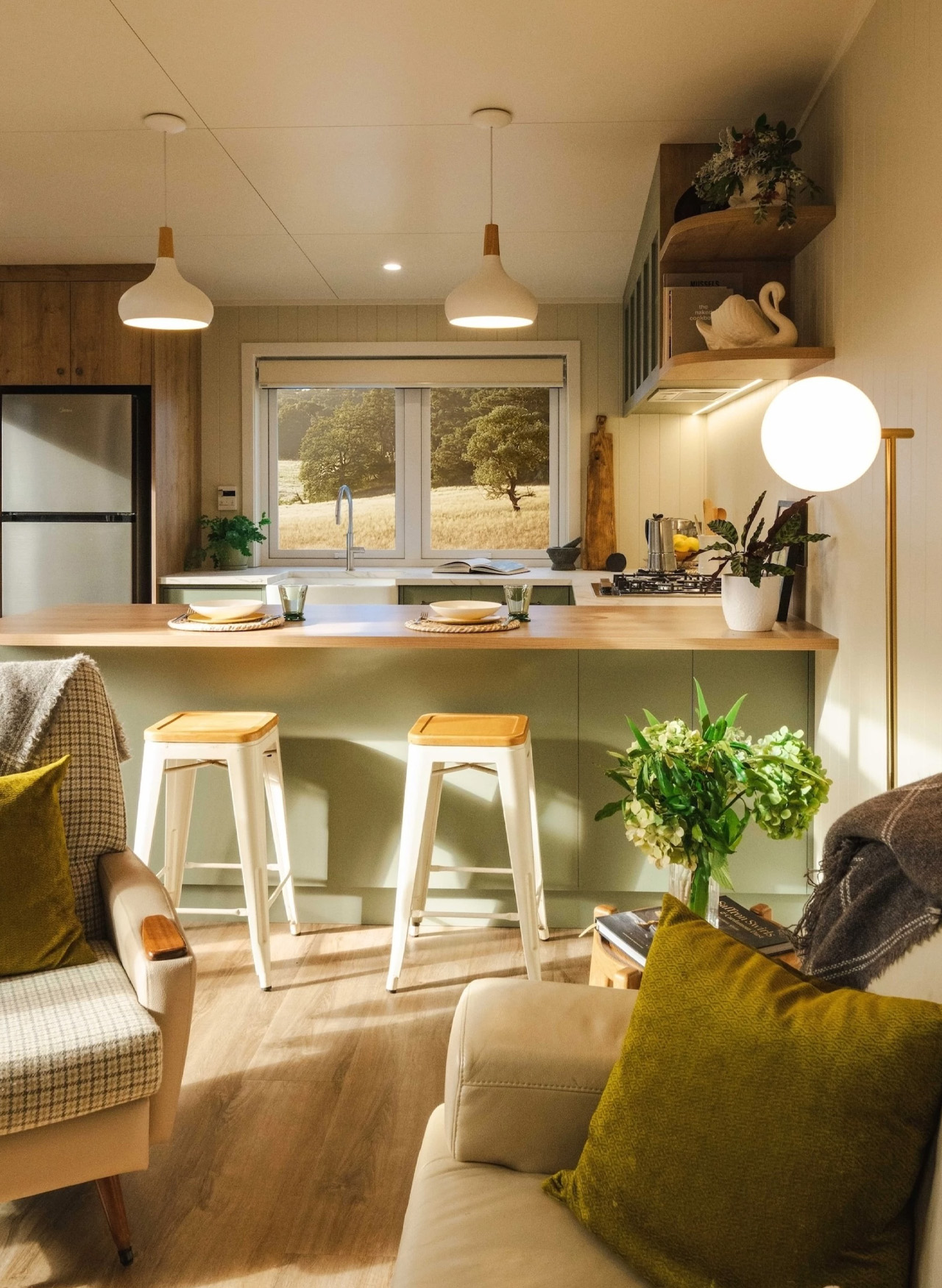
Step inside and you’ll notice something immediately different. Everything exists on a single level. No loft bedrooms requiring acrobatic climbs. No steep staircases eat up precious floor space. The layout flows naturally from one area to the next, creating sight lines and openness that smaller homes typically can’t achieve. Sunlight filters through well-positioned windows, warming timber surfaces and highlighting the careful attention paid to material selection. The openness throughout makes the interior feel more like an apartment than what most people imagine when they hear “tiny house.”

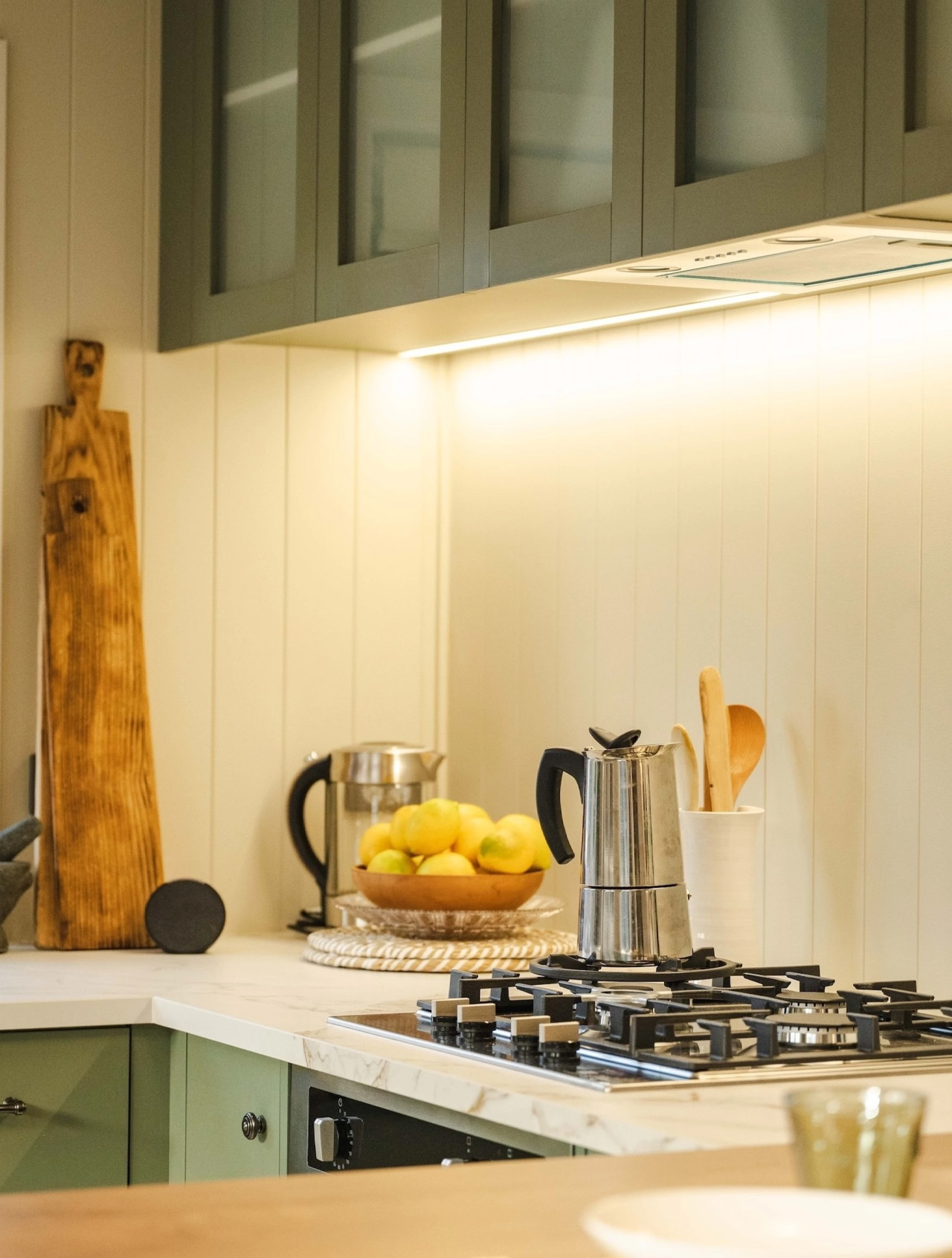
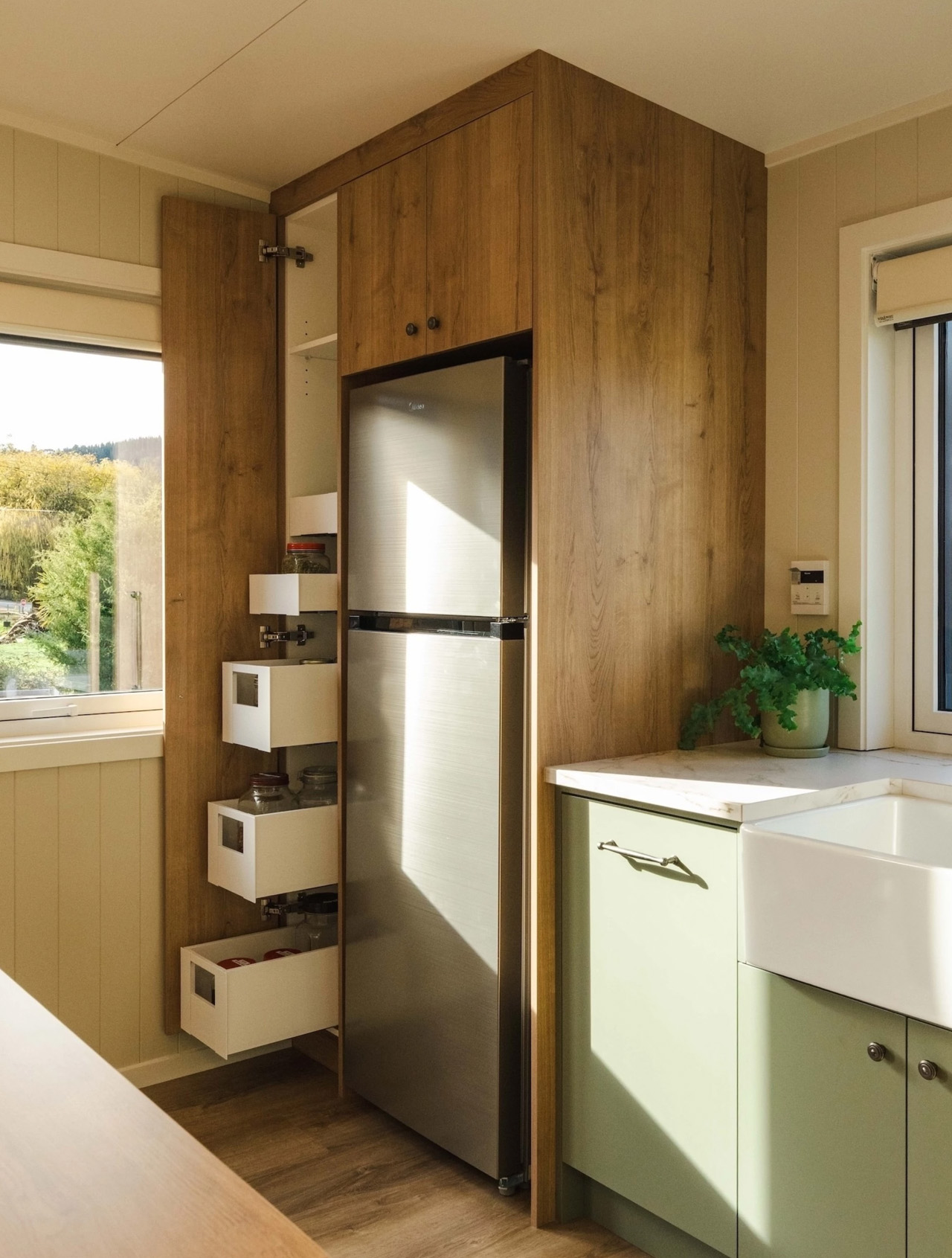
The kitchen operates as a genuine cooking space rather than an afterthought. A breakfast counter accommodates two people comfortably, while the cooking zone includes a full oven beneath a gas-powered stovetop. The farmhouse sink adds character without sacrificing functionality, and a proper refrigerator-freezer combination means you can actually stock groceries for more than a day or two. Cabinet space lines the walls in quantities that would surprise anyone expecting tiny house minimalism. This isn’t a space where you warm up takeout and call it dinner. It’s designed for people who actually cook.

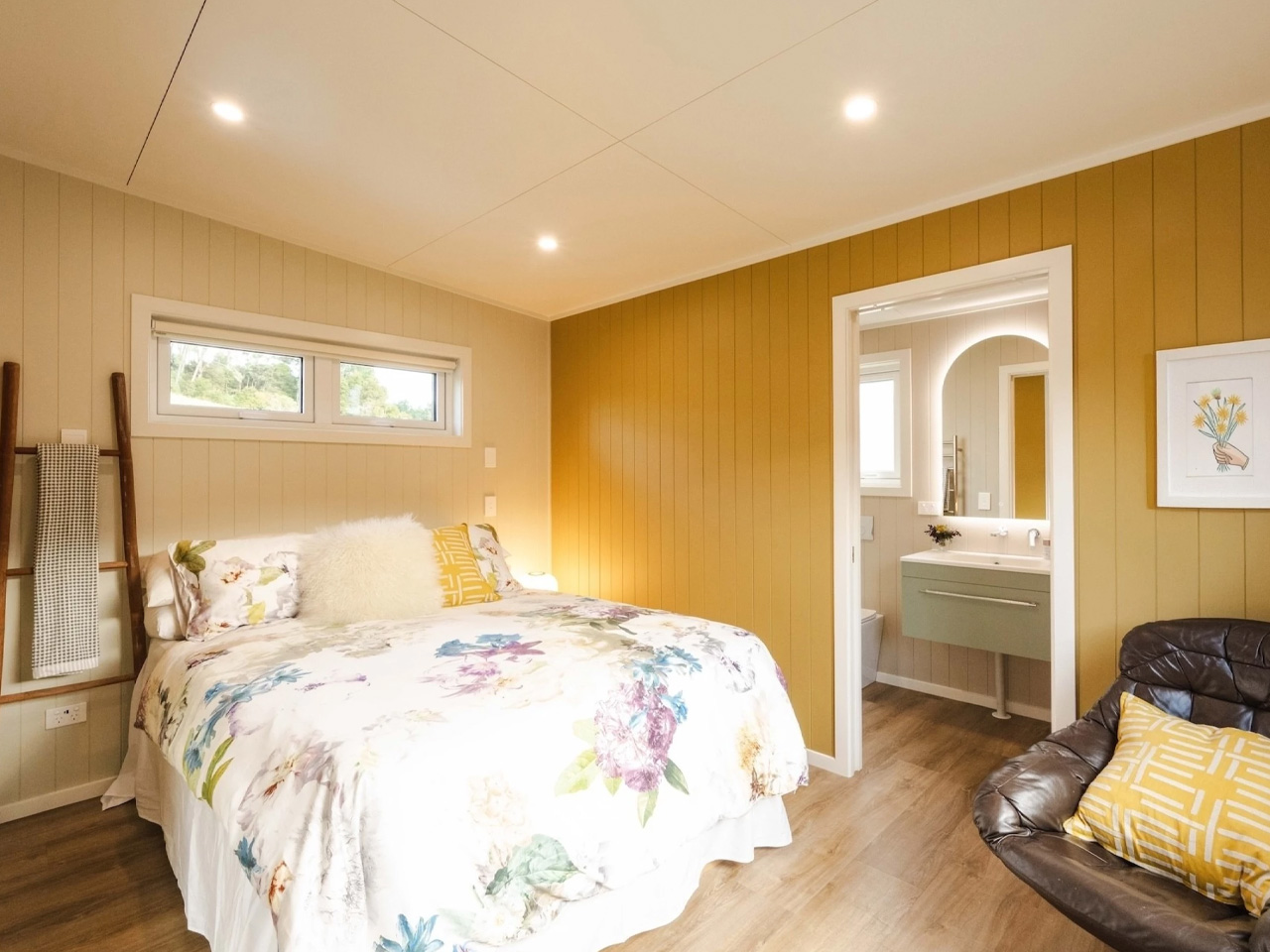
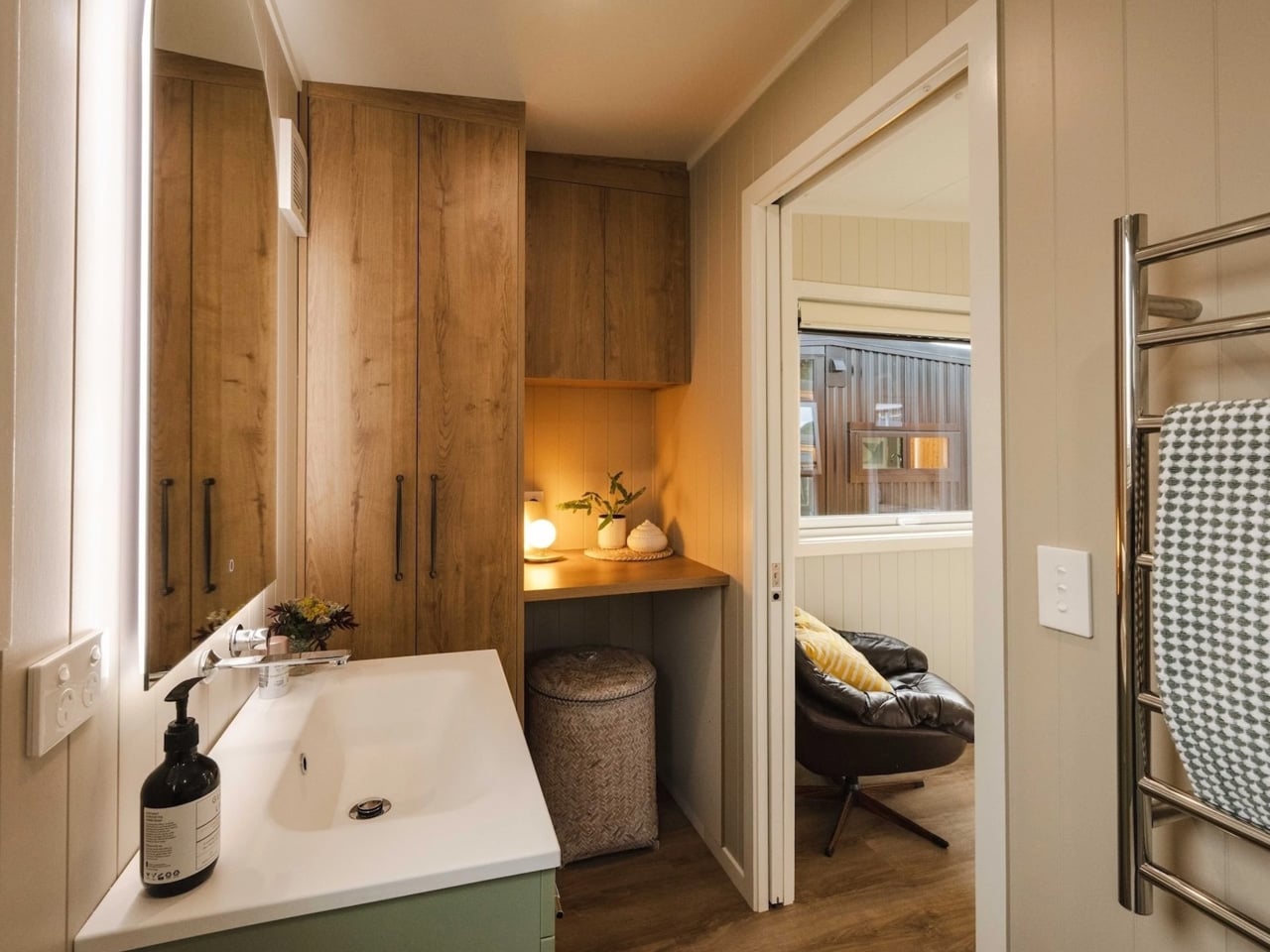
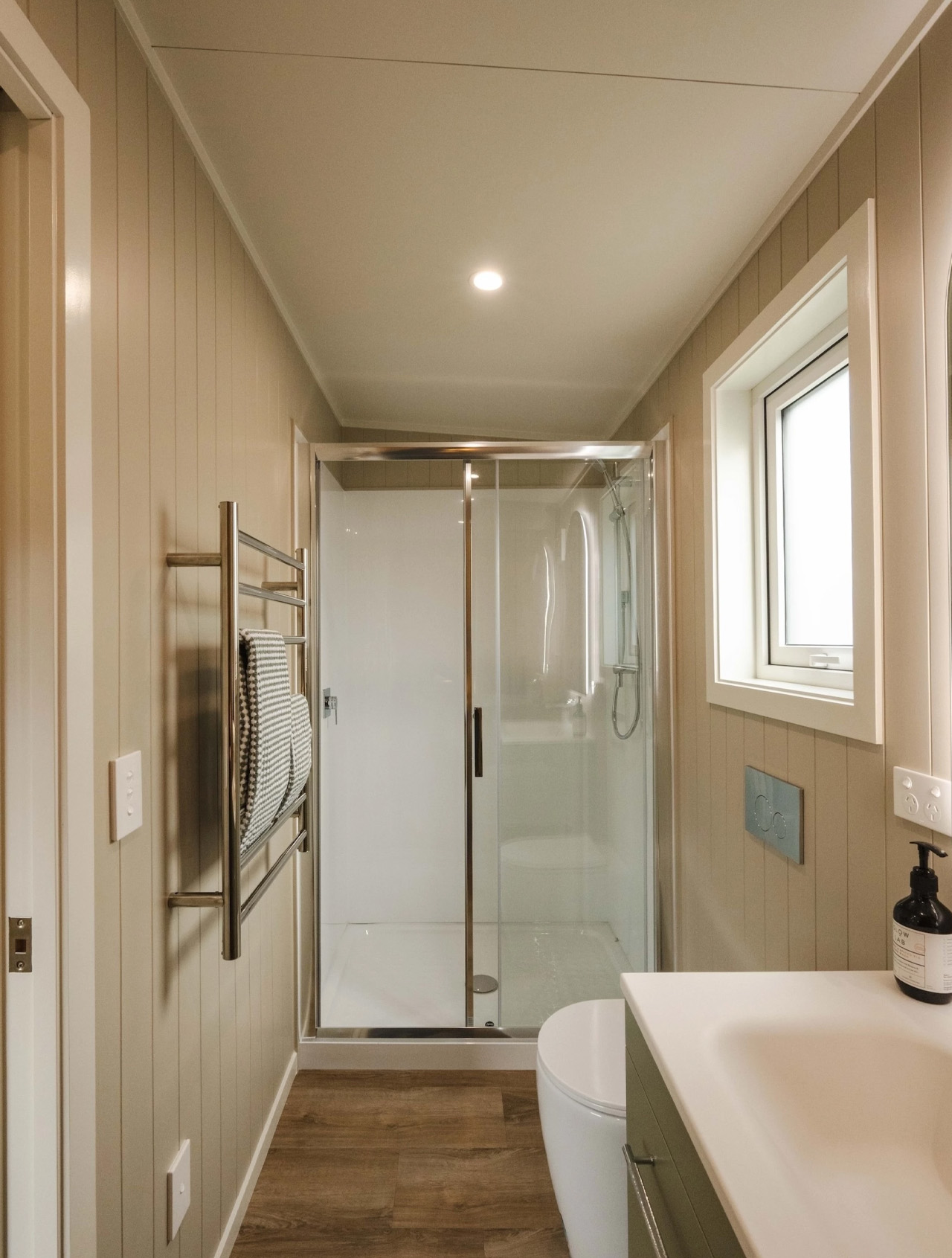
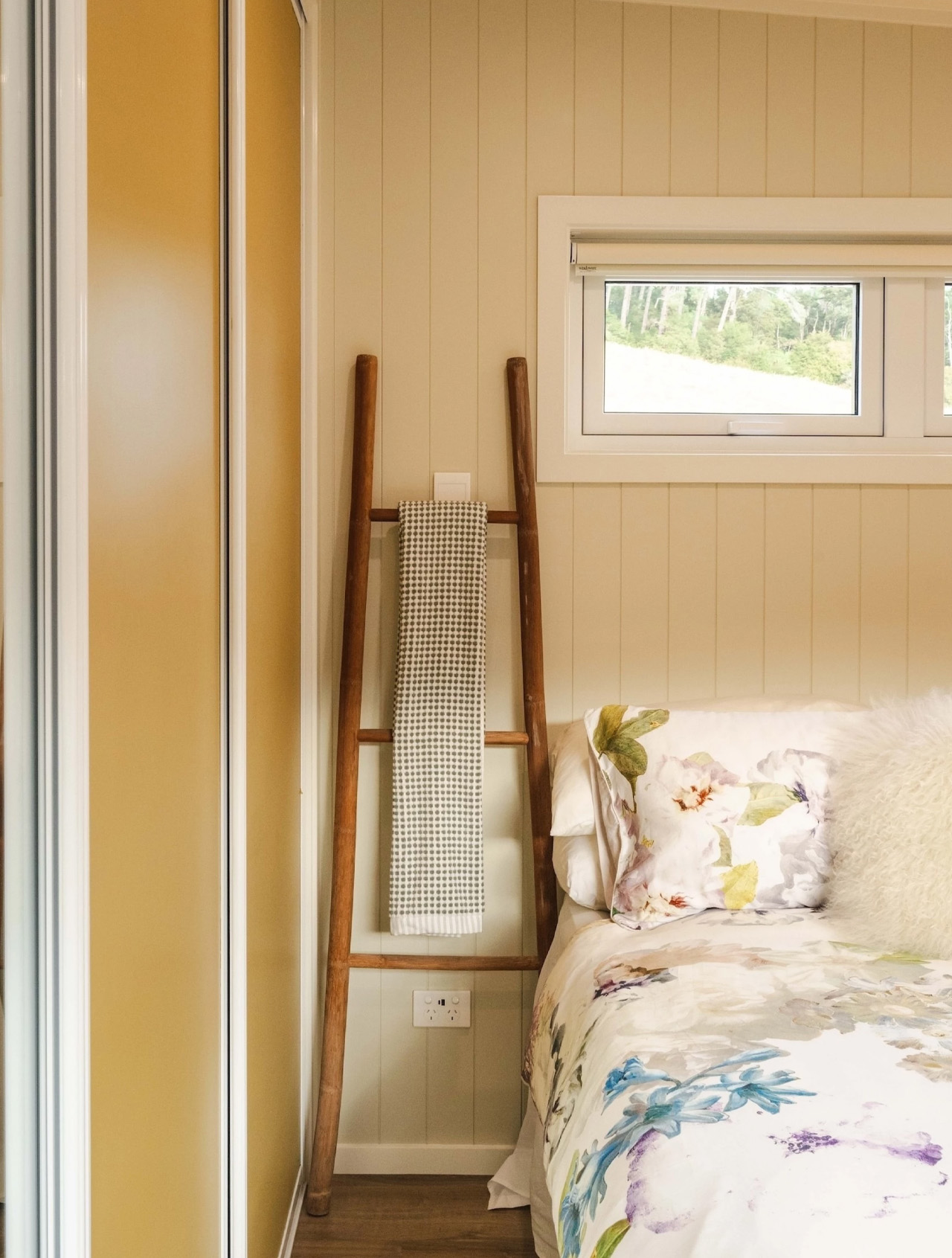
Down at one end, the bedroom provides genuine separation from the shared living areas. The owners made a specific request during design: they wanted the bathroom accessible only from the bedroom, creating a private suite arrangement similar to what you’d find in a hotel or upscale apartment. Their bathroom includes a fully enclosed glass shower, a vanity with integrated storage, and standard flush plumbing. Everything functions exactly as it would in a conventional home, without composting toilets or cramped wet rooms that serve multiple purposes.

This design draws from South Base Tiny Homes’ Abel model series, with pricing beginning around two hundred thirty thousand New Zealand dollars, or roughly one hundred thirty-seven thousand American dollars. That represents the higher end of the tiny house market. What makes the English Garden noteworthy isn’t its size but its philosophy. Many tiny houses treat limitation as a design virtue, celebrating cramped quarters and asking residents to adapt their lives around spatial constraints. This home reverses that equation entirely. It treats compact dimensions as a design challenge requiring intelligent solutions, not romantic sacrifice. Each room serves its intended purpose without asking occupants to compromise their daily routines. The space might measure smaller than average, but the living experience doesn’t feel diminished.

The post This New Zealand Tiny House Delivers Apartment-Sized Living Without the Usual Compromises first appeared on Yanko Design.
Ducati Formula 73: Bologna Reaches Back 50 Years to Build Its Most Soulful Cafe Racer in Decades

There are motorcycles built to go fast, and then there are motorcycles built to make you feel something. The Ducati Formula 73 sits firmly, defiantly, in the second camp, and Ducati knows it. Unveiled on February 12, 2026, as part of the brand’s centenary celebrations, the Formula 73 is a love letter to one of the most consequential machines ever to roll out of Borgo Panigale, the 750 Super Sport Desmo, wrapped in modern engineering and limited to just 873 numbered units worldwide.

The story starts in 1972, at the 200 Miglia di Imola, Europe’s answer to the Daytona 200 and the first major competition for production-derived motorcycles. Paul Smart and Bruno Spaggiari crossed the finish line in a 1-2 sweep aboard the 750 Imola Desmo, a moment so electrically important to Ducati’s identity that the brand built a street-legal replica for the public the very next year. That replica became the 750 Super Sport Desmo, the first road bike Ducati ever equipped with its now-legendary desmodromic valve timing system. The Formula 73 name connects all the dots: the FIM Formula 750 series began that same year, 1973. History, compressed into two words on a steering plate.

Designer: Ducati

Fast forward to 2026, and Ducati’s design team dug deep into the company’s historical archives to resurrect the look with surgical accuracy. The result is a silver and aqua green livery that mirrors the original 750 SS almost note for note, right down to the vertical gold stripe running down the fuel tank. That stripe, easily the most poetic detail on the whole bike, references the unpainted strip on the original Imola racer that allowed the team to check fuel levels at a glance without adding any instruments or weight. On the Formula 73, it becomes a design flourish that ties the bike to its racing lineage without saying a single word.

The silhouette is pure café racer: clip-on handlebars with bar-end mirrors, a short and sharp front fairing, tapered tail section, single seat, and a steel trellis frame painted green to echo the original Desmo’s frame. Spoked 17-inch wheels reinforce the period-appropriate aesthetic, swapping out the standard Scrambler’s cast units in favor of something with far more visual character.

Under all that gorgeous bodywork beats an 803cc Desmodue engine, an air-cooled L-twin with two-valve desmodromic distribution that happens to produce exactly 73 horsepower at 8,250 rpm. That number is deliberate, almost theatrical, and completely perfect. Torque comes in at 48.1 lb-ft at 7,000 rpm, and while those figures won’t rattle any Panigale V4 cages, that’s entirely beside the point. The engine’s voice, amplified through a custom Termignoni silencer developed specifically for this model, is the real headline. Raw, characterful, and loud in the best possible way.

The Formula 73 rides on the Scrambler platform, which turns out to be a genuinely smart choice. That means KYB suspension front and rear (a 41mm inverted fork up front, preload-adjustable shock out back), Brembo four-piston radial-mount brakes, and a wet weight of 403 pounds. It handles like a Scrambler, which is to say it handles accessibly, predictably, and with enough personality to keep city riding engaging and canyon roads entertaining. Pirelli Diablo Rosso IV tires add a layer of grip that the original 750 SS could only have dreamed about.

Ride-by-wire throttle, cornering ABS powered by an inertial measurement unit, Ducati Traction Control, a bidirectional quickshifter, two ride modes, and a 4.3-inch TFT display with Ducati Multimedia System and navigation are all standard equipment. Rizoma billet aluminum components including brake and clutch levers with integrated oil reservoirs, footpegs, and a fuel cap add premium texture to every surface your hands and eyes land on.

Each of the 873 units comes serialized on the steering plate, accompanied by a certificate of authenticity and a collection of period images and sketches from the Ducati Style Centre, all presented in a special collector’s box. Ducati has also produced a short film called “A Piece of Timeless” featuring Italian actor Stefano Accorsi, a committed Ducati enthusiast, exploring the emotional experience of riding the bike for the first time. It’s the kind of cinematic treatment usually reserved for something you’d hang in a gallery.

Pricing starts at $19,995 in the US, and £15,095 in the UK. European dealerships get first crack at the 873 units this spring, with global distribution completing before the end of summer 2026. For a machine built on half a century of mythology, with the kind of detail obsession that makes collectors and riders equally weak in the knees, $20,000 feels less like a price tag and more like a conversation starter.

The post Ducati Formula 73: Bologna Reaches Back 50 Years to Build Its Most Soulful Cafe Racer in Decades first appeared on Yanko Design.
Would you pay over $10K for Caviar’s Valentine-special iPhone 17 Pro with 24K Gold and Mother of Pearl?

What’s the ultimate declaration of love? Sometimes it’s breakfast in bed, other times it’s a $10,000 splurge on a gold-plated iPhone with inlay work. Each to their own, I guess. Me, I’ll stick to avocado toast and OJ served in bed, along with a poem co-authored by ChatGPT.

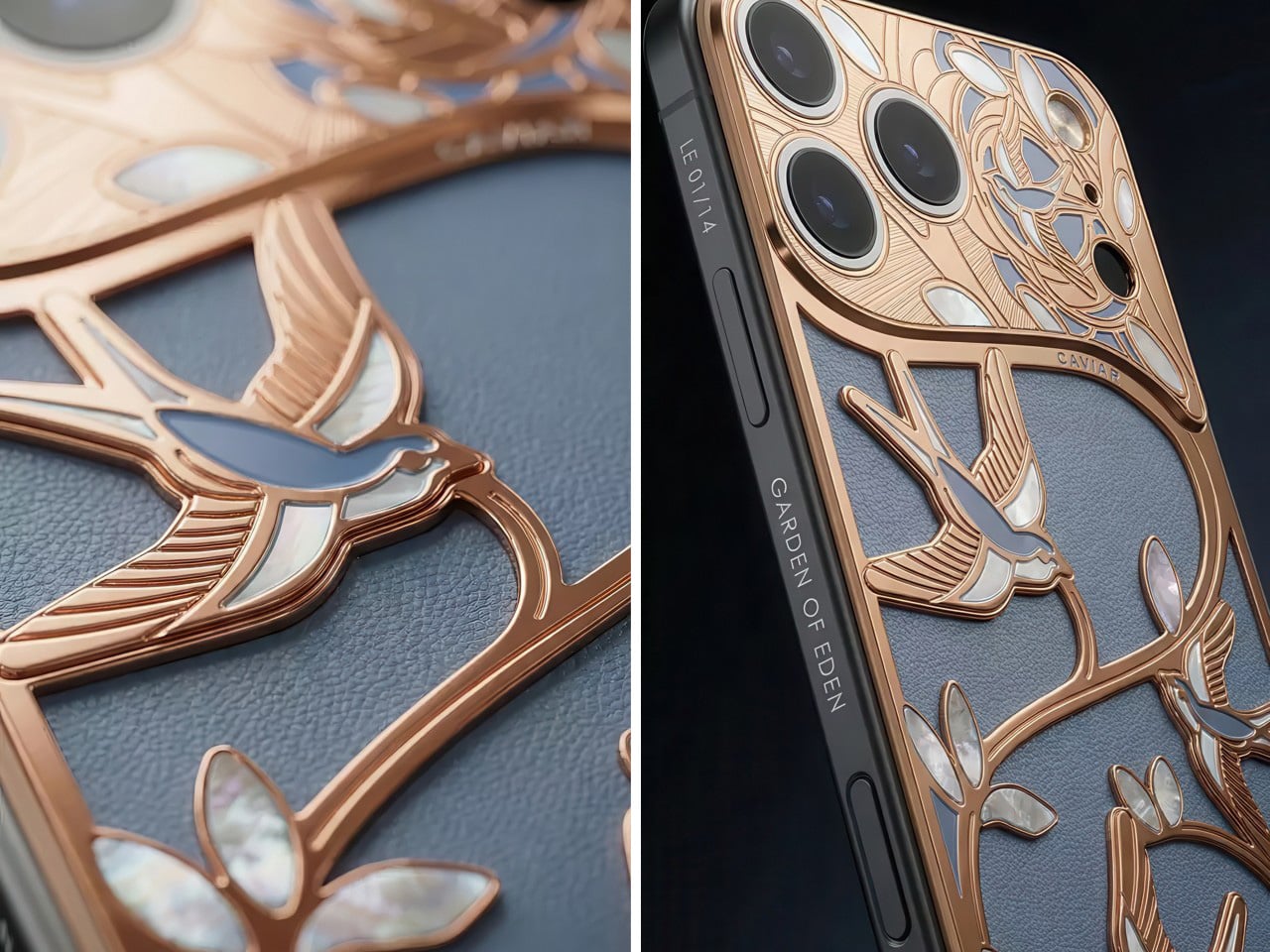
The Dubai-based luxury customization house, famous for slapping Rolex movements and 24K gold onto iPhones and calling it a Tuesday, has just unveiled the Wings of Love, the latest piece from their Garden of Eden collection. The price? Upwards of three Vision Pros. (And that’s just for the base 256GB variant)

Designer: Caviar

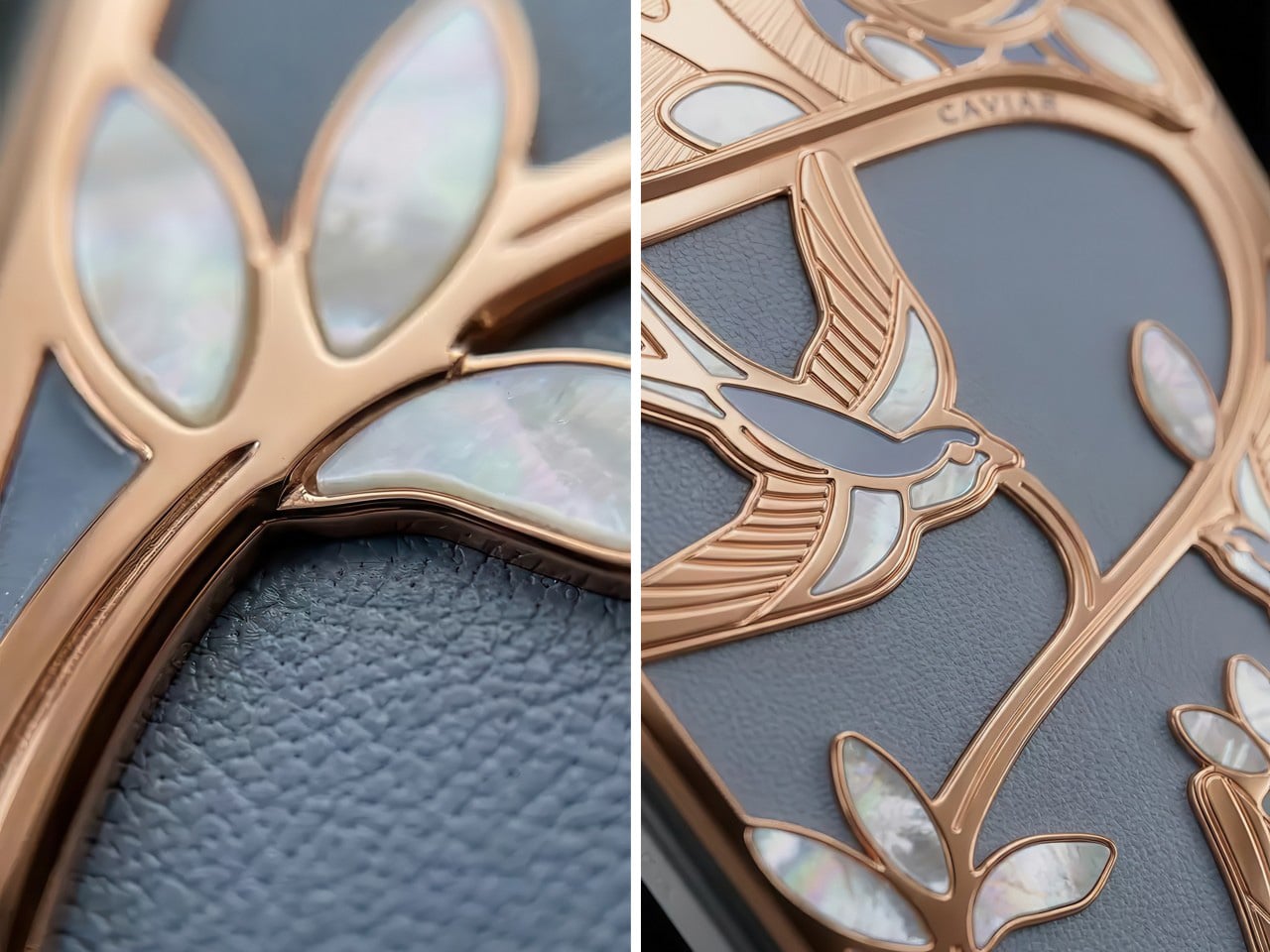
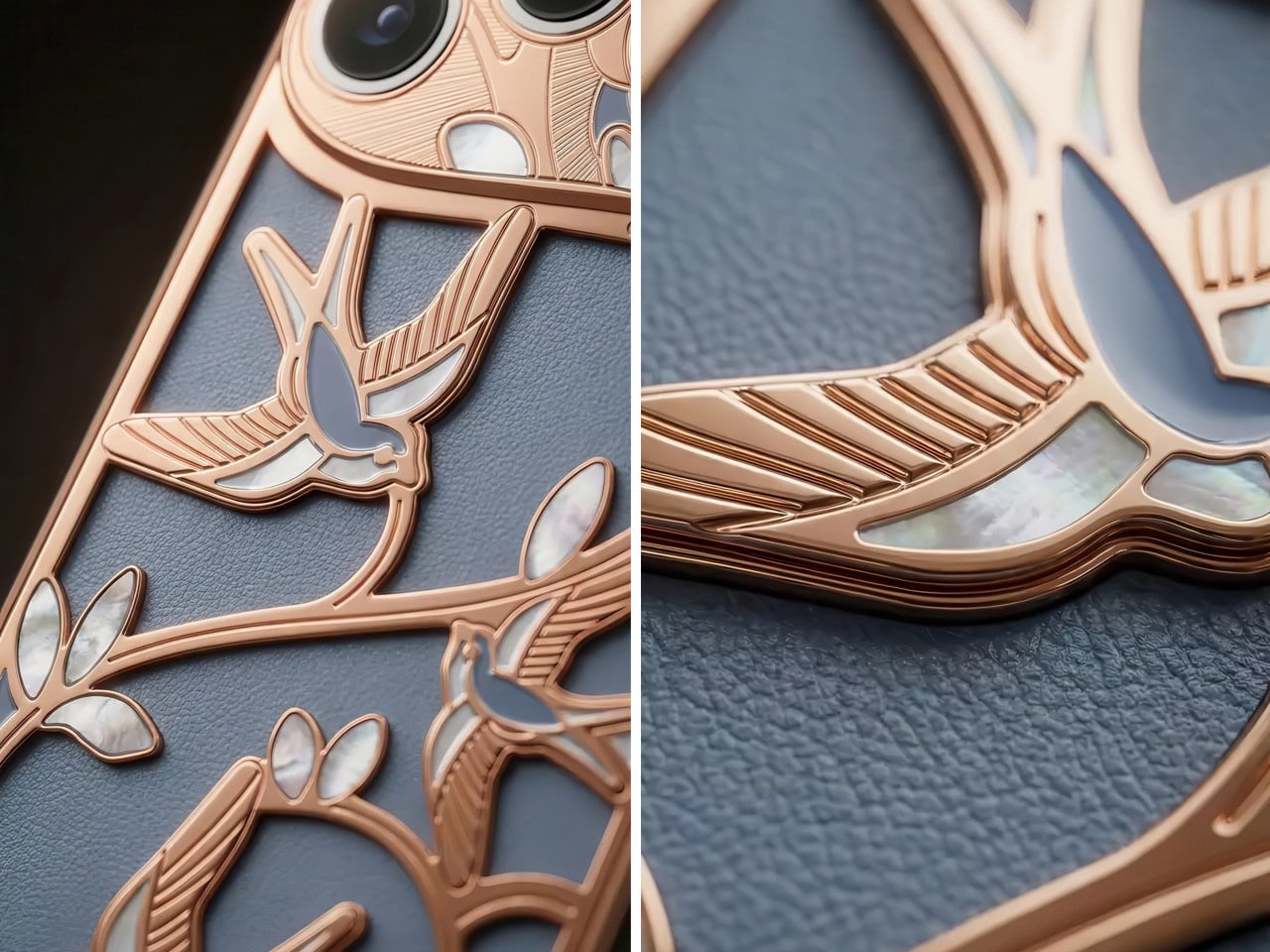
Where most Caviar creations lean into black or stark white as a base, Wings of Love goes with a soft slate blue-grey leather that sits somewhere between storm cloud and morning mist. It’s an unusual, almost painterly choice, and it works brilliantly as a canvas for what’s layered on top: a full scene of swallows in flight, rendered in raised 24K rose gold with mother-of-pearl inlays catching the light at every angle. The birds weave through branching vines and leaves, each leaf tipped with its own iridescent shell inlay. Up close, the craftsmanship looks less like phone customization and more like a miniature Art Nouveau panel that belongs behind museum glass.

The symbolism isn’t arbitrary either. The swallow has carried meaning across cultures for centuries, representing loyalty, return, and love that survives distance. Sailors tattooed them as talismans for safe passage home. In folklore, spotting a swallow was a sign that someone who loved you was thinking of you. Caviar leans into all of that intentionally, positioning Wings of Love as a phone designed specifically for women who, as they put it, treat love as a direction.

The camera plateau, normally the awkward protruding bump that makes every modern iPhone beg for a case, has been fully absorbed and integrated into the decorative overlay. The upper portion of the back is completely redesigned, with the camera module sitting flush within an ornate gold and mother-of-pearl composition featuring a blooming rose motif. The result is a phone that’s slightly thicker overall, yes, but dramatically more coherent as an object. You’re not staring at a camera bump that disrupts the design. The camera IS the design, framed and intentional, like a window in an illuminated manuscript. And because the whole back is already a sculpted, protective structure, you’d be committing a small crime putting a case over it anyway.

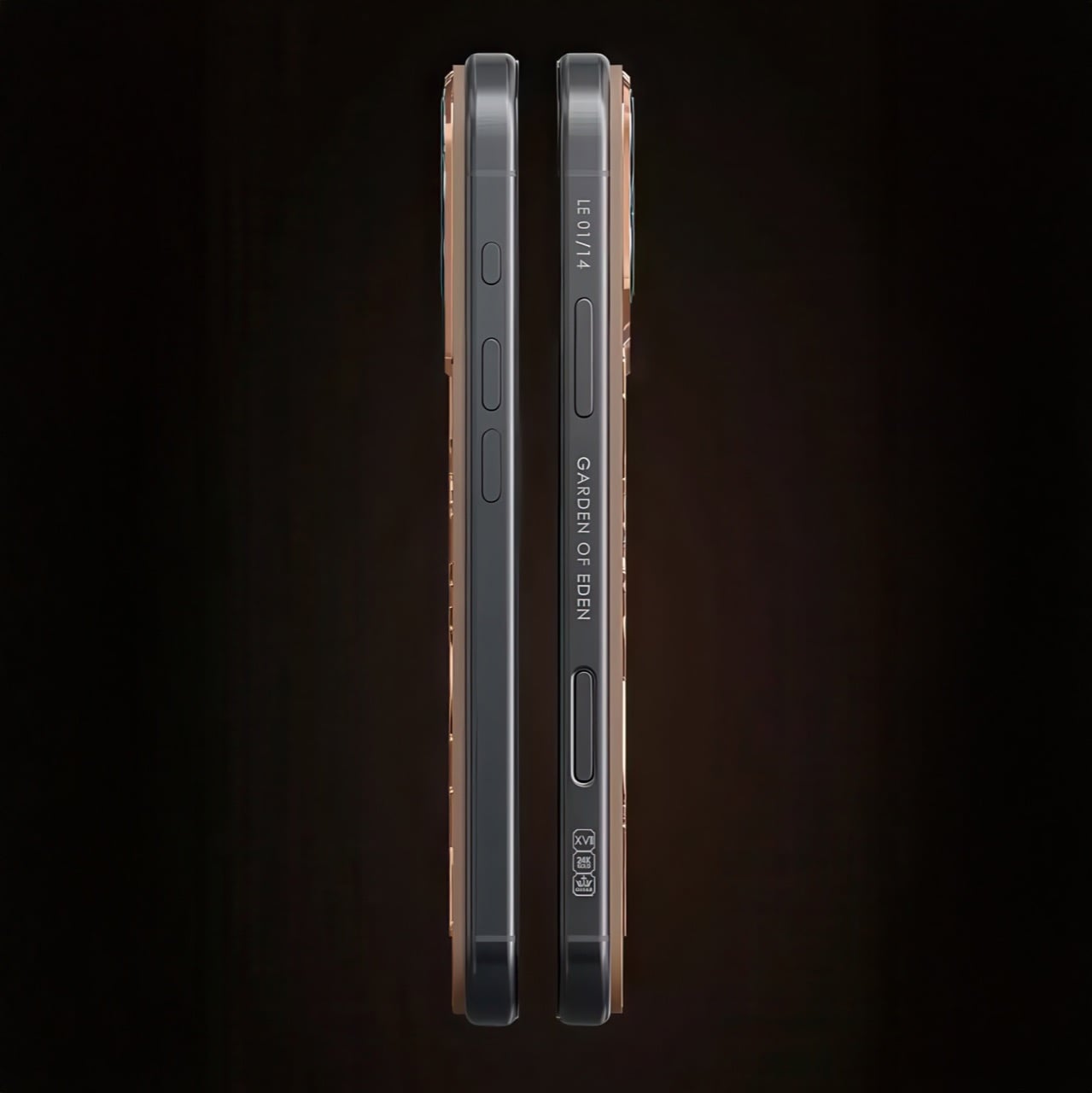
The side profile is engraved with “Garden of Eden” and an individual edition number on each unit, and hallmark stamps on the bottom edge certify the 24K gold content, treating the phone with the same seriousness as fine jewelry. Which is exactly what it is.

The whole thing is built for exactly 14 people on Earth. That’s the edition size, 14 pieces, full stop. Which means this isn’t really a phone. It’s a wearable heirloom that happens to run iOS. Pricing starts at $10,340 for the iPhone 17 Pro in 256GB, climbing up to $12,270 for the Pro Max in 2TB. And yes, you can commission just the customization on a device you already own, which is a small mercy for anyone who doesn’t want to explain to their accountant why they bought two iPhones at once. The packaging, naturally, is interactive and comes with a Caviar key finished in 24K gold. Because when your phone costs ten grand, the box has to keep up.

Is it excessive? Absolutely. Is it for everyone? With 14 units in existence, mathematically, it’s for almost no one. But that’s kind of the point. The Wings of Love isn’t trying to be practical. It’s trying to be meaningful, a declaration that sometimes, love deserves to be made in gold. Oh, while you’re at it, close this tab once you’re done just in case your partner happens to glance over your shoulder and ask you for this phone.

The post Would you pay over $10K for Caviar’s Valentine-special iPhone 17 Pro with 24K Gold and Mother of Pearl? first appeared on Yanko Design.
Google I/O 2026 is set for May 19 and 20

We’ll soon get a closer look at a bunch of features and updates Google has planned for Android and its other services. The company has confirmed that Google I/O 2026 will take place on May 19 and 20. As always, Google will stream some of the keynotes and sessions for free, including the opening keynote (during which the company makes the bulk of its major I/O announcements).

Although I/O is primarily a conference for developers, it’s typically where we first learn about major upcoming Android changes, which of course affect tens of millions of people. Expect a lot of news about Google’s AI efforts as well, such as what’s next for Gemini.

As has been the case for several years, Google revealed the conference’s dates for 2026 after enough folks completed a puzzle on the I/O website. This year’s puzzle has multiple “builds” to play through, all of which use Gemini.

They start with a mini-golf game in which a virtual caddy that’s powered by Gemini offers some of the most anodyne advice imaginable. The second build is a nonogram. If you’ve ever played a Picross game, you’ll know what to do here. It’s about using logic to place tiles on a grid in order to create an image. Here, Google is using Gemini to generate “endless game boards.”

The other three minigames are Word Wheel (which “leverages Gemini 3 to automate level design”), Super Sonicbot (which “uses Gemini to introduce microphone mechanics where noise controls the Android Bot’s altitude”) and Stretchy Cat. The latter “uses Gemini 3 as a stage designer balancing game mechanics and difficulty to create endless play.”

This article originally appeared on Engadget at https://www.engadget.com/general/google-io-2026-is-set-for-may-19-and-20-200805024.html?src=rss

Texas AG sues TP-Link over purported connection to China

Texas is suing Wi-Fi router maker TP-Link for deceptively marketing the security of its products and allowing Chinese hacking groups to access Americans' devices, Attorney General Ken Paxton has announced. Paxton originally started looking into TP-Link in October 2025. Texas Governor Greg Abbott later prohibited state employees from using TP-Link products in January of this year.

TP-Link is no longer owned by a Chinese company and its products are assembled in Vietnam, but Paxton's lawsuit claims that because the company's "ownership and supply-chain are tied to China" it's subject to the country's data laws, which require companies to comply with requests from Chinese intelligence agencies. The lawsuit also says that firmware vulnerabilities in TP-Link's hardware have already "exposed millions of consumers to severe cybersecurity risks."

TP-Link provided the following statement to Engadget in response to the lawsuit:

The claims made by the Texas Attorney General’s office are without merit and will be proven false. TP-Link Systems Inc. is an independent American company. Neither the Chinese government nor the CCP exercises any form of ownership or control over TP-Link, its products, or its user data. TP-Link’s founder and CEO, Jeffrey Chao, resides in Irvine, CA, and is not and never has been a member of the CCP. To ensure the highest level of security, our core operations and infrastructure are located entirely within the United States, and all U.S. users' networking data is stored securely on Amazon Web Services servers. We will continue to vigorously defend our reputation as a trusted provider of secure connectivity for American families.

TP-Link was reportedly being investigated at the federal level in 2024 after its devices were connected to the massive "Salt Typhoon" hack that accessed data from multiple US telecom companies. Despite all signs pointing to the federal government getting ready to ban TP-Link in 2025, Reuters reports that the Trump administration paused plans to ban the company’s routers in early February, ahead of a meeting between President Donald Trump and President Xi Jinping.

Update, February 17, 3:38PM ET: Added statement from TP-Link.

This article originally appeared on Engadget at https://www.engadget.com/cybersecurity/texas-ag-sues-tp-link-over-purported-connection-to-china-193802258.html?src=rss

This House-Sized Clock Glows and Chimes Every 15 Minutes

There’s something quietly magical about watching a building come alive on schedule. Clock House No. 2, a public art installation by Drawing Architecture Studio, does exactly that. Every fifteen minutes, it chimes and glows, turning timekeeping into something you can walk around, peer into, and experience with your whole body.

The Beijing-based practice created this piece for the 7th Shenzhen Bay Public Art Season in China, where it’s on view until April 19th, 2026. At first glance, it looks like someone took a mantel clock from a fancy living room and scaled it up to the size of a small house. Which is kind of the point. The project collapses the distance between furniture and architecture, asking what happens when an everyday object becomes a building you can step inside.

Designer: Drawing Architecture Studio

Drawing Architecture Studio looked back to a specific historical moment for inspiration. During the late Ming and early Qing dynasties, Western missionaries brought automaton clocks to China as diplomatic gifts. These weren’t just timepieces. They were theatrical objects, intricate mechanical wonders that moved and chimed with precision. The Chinese called them Zì Míng Zhōng, which translates to “the clock that rings automatically”. These devices started in the imperial court but eventually found their way into domestic life, becoming both functional tools and symbols of cultural exchange.

Clock House No. 2 revisits that exchange, but through a contemporary lens. Instead of brass gears and delicate springs, the studio used low-cost industrial components. The structure references the layered facades and tiled roofs typical of everyday dwellings in Guangdong Province, blending local vernacular architecture with the ornamental logic of those historical automaton clocks. The result is something that feels familiar and foreign at the same time.

The installation doesn’t contain intricate mechanical movements like its historical predecessors. Instead, it marks time through light and sound. LED strips are embedded within the structure, glowing through openings in the facade. Every quarter hour, an automated musical chime triggers while the lights shift in color, creating a gentle spectacle that feels ceremonial without being overly dramatic.

The project draws on ideas from Italian architect Aldo Rossi, who wrote about the relationship between architecture and ordinary utensils. Rossi believed that everyday objects accumulate what he called “forms of memory” through repeated use and cultural continuity. For him, the line between a domestic object and an architectural artifact wasn’t fixed or absolute. Clock House No. 2 extends this thinking by turning the clock into a building and the building into a clock, playing with scale in a way that makes you reconsider what architecture can be.

What makes this installation compelling is how it situates itself at the intersection of mechanical timekeeping, architecture, and trade. It’s not just about recreating a historical object. It’s about exploring how objects move between cultures, how they change meaning as they cross borders, and how architecture can embody those shifts.

The choice to use industrial components rather than precious materials also says something about accessibility and contemporary making. These aren’t rare or expensive parts. They’re the kind of materials you’d find in construction supply stores, which makes the project feel grounded even as it reaches for something conceptual.

Standing near Clock House No. 2 during one of its fifteen-minute performances must be a peculiar experience. You’re not just observing a sculpture. You’re witnessing a building perform timekeeping as a ritual, something that happens whether anyone is watching or not. It’s architecture that insists on marking the passage of time audibly and visibly, refusing to be background scenery.

The installation also speaks to how we experience time in public space today. We’re used to checking our phones for the hour, but Clock House No. 2 offers something more communal. It announces time to everyone in earshot, creating a shared moment of awareness. That’s rare now.

By April, the installation will come down, but the questions it raises will linger. What happens when we scale up the objects we live with? How does architecture remember cultural encounters? And what does it mean for a building to keep time like a grandfather clock in the corner of a room, ticking and chiming through the hours?

The post This House-Sized Clock Glows and Chimes Every 15 Minutes first appeared on Yanko Design.

Netflix is adapting the board game Ticket to Ride

Netflix has been in the game adaptation business for a while now, but until recently most of its attention had been on adapting video games. That’s still very much happening, but the streaming giant is also now buying up rights for board game IP too, with the latest being Asmodee’s Ticket to Ride.

Netflix will look to greenlight a number of projects spanning TV, film and "additional formats," it wrote in a press release. The first of these will be a feature film written by Ben Mekler and Chris Amick. Ticket to Ride creator Alan R. Moon will serve as an executive producer on the project, which will be the game’s first on-screen adaptation. Exactly what it will look like is not yet clear, but the internet already has plenty of theories.

Ticket to Ride is a train-themed turn-based strategy and route-building game first released over 20 years ago. Since then it has gone on to ship more than 20 million copies and has been translated into over 30 languages. It’s also been given the video game adaptation treatment before.

This is actually the second of Asmodee’s IP that Netflix has acquired the rights to, after announcing last year that Catan will also be making its way to screens in various forms. And it isn’t just interested in scripted TV and movie opportunities. In early 2025, the company also signed a deal with Hasbro to adapt Monopoly into a TV game show.

This article originally appeared on Engadget at https://www.engadget.com/entertainment/netflix-is-adapting-the-board-game-ticket-to-ride-180505164.html?src=rss

WordPress adds an AI assistant

Web designers of the world: The Automattic-owned WordPress.com is further embracing AI on its platform. On Tuesday, it expanded its one-off AI site builder into a persistent AI assistant for editing and media creation.

In the site editor, the AI assistant can help with site-wide structure and design choices. For example, you can ask the chatbot to "give me more font options that feel clean and professional or “change my site colors to be brighter and bolder." It also includes image generation and writing assistance, such as "rewrite this to sound more confident." (Who needs learning when you have automation!)

The assistant can also now be integrated into your site's media library. It can generate new images or make prompted edits to your existing ones. Examples include "update this image to be black and white" or "replace this stack of pancakes with waffles." (Just don't fake that if your business sells breakfast food, okay?) WordPress says the assistant understands your website's look and brand and can tailor the media accordingly.

WordPress also added the AI assistant to the platform's team chat, Block Notes. You can summon the chatbot from within your team chat threads.

The tool is available for WordPress.com's Business or Commerce plans. (Or, if you made your site using the AI builder, it's enabled by default, no matter which plan you use.) The feature works best with the platform's block themes; it's much more limited with classic ones. You'll find the toggle to activate the AI assistant in your site settings under the "AI tools" section.

This article originally appeared on Engadget at https://www.engadget.com/ai/wordpress-adds-an-ai-assistant-174719676.html?src=rss