The Brightest EDC Flashlight of 2026 packs 12,300 Lumens, Active Cooling, and Still Fits in Your Pocket

EDC gear is converging. The knife becomes a multitool, the multitool becomes a bit driver, the bit driver becomes a pry bar, and somewhere in the middle someone bolts on a bottle opener. The flashlight, meanwhile, has resisted this trend longer than most categories. A light is a light. You charge it, you carry it, you press a button, photons happen. The addition of a USB port to charge your phone feels like a gimmick until you’re three days into a camping trip and your power bank dies at 11 PM. Then the flashlight that can push 15 watts back out through USB-C stops feeling like feature bloat and starts feeling like the obvious move the entire industry should have made years ago.

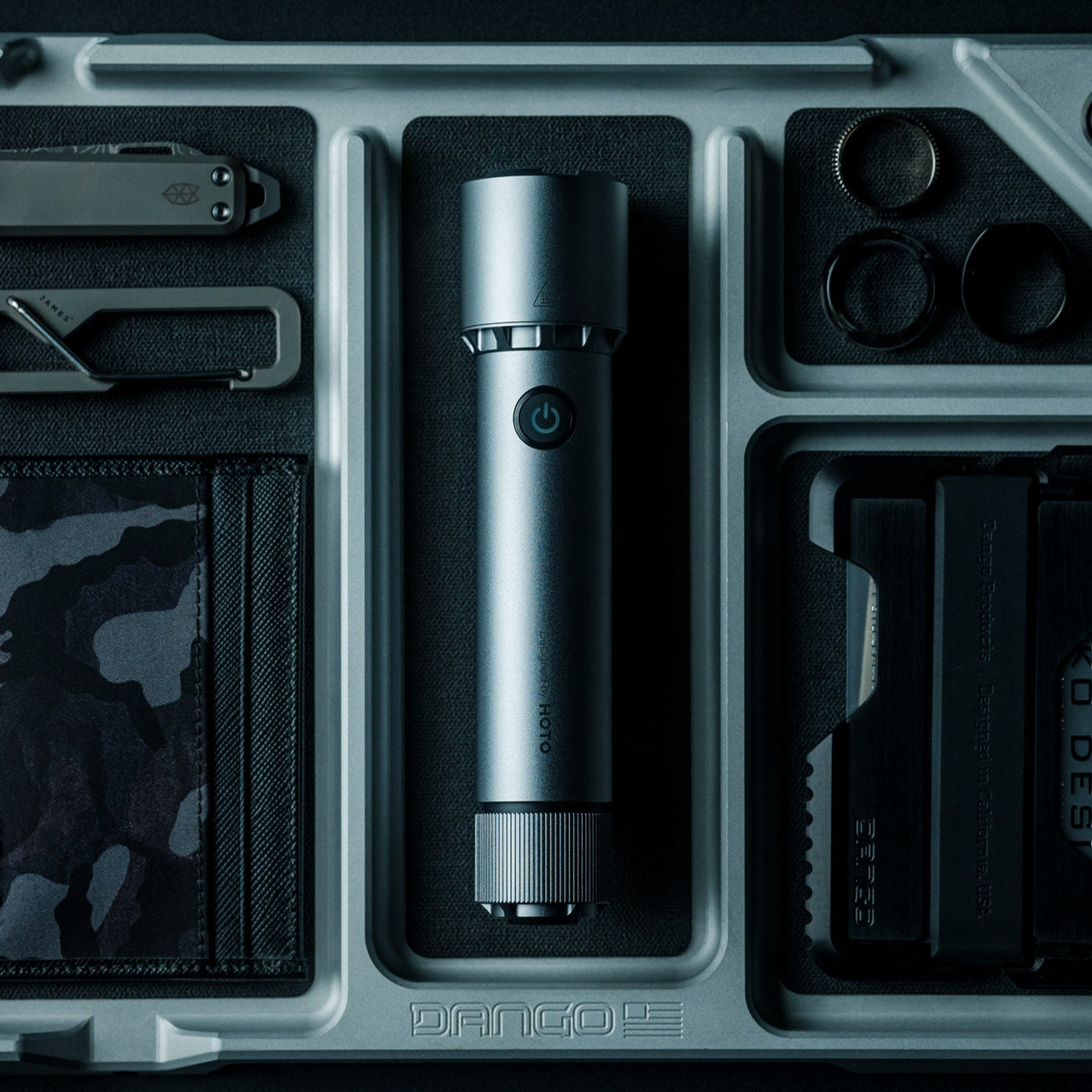
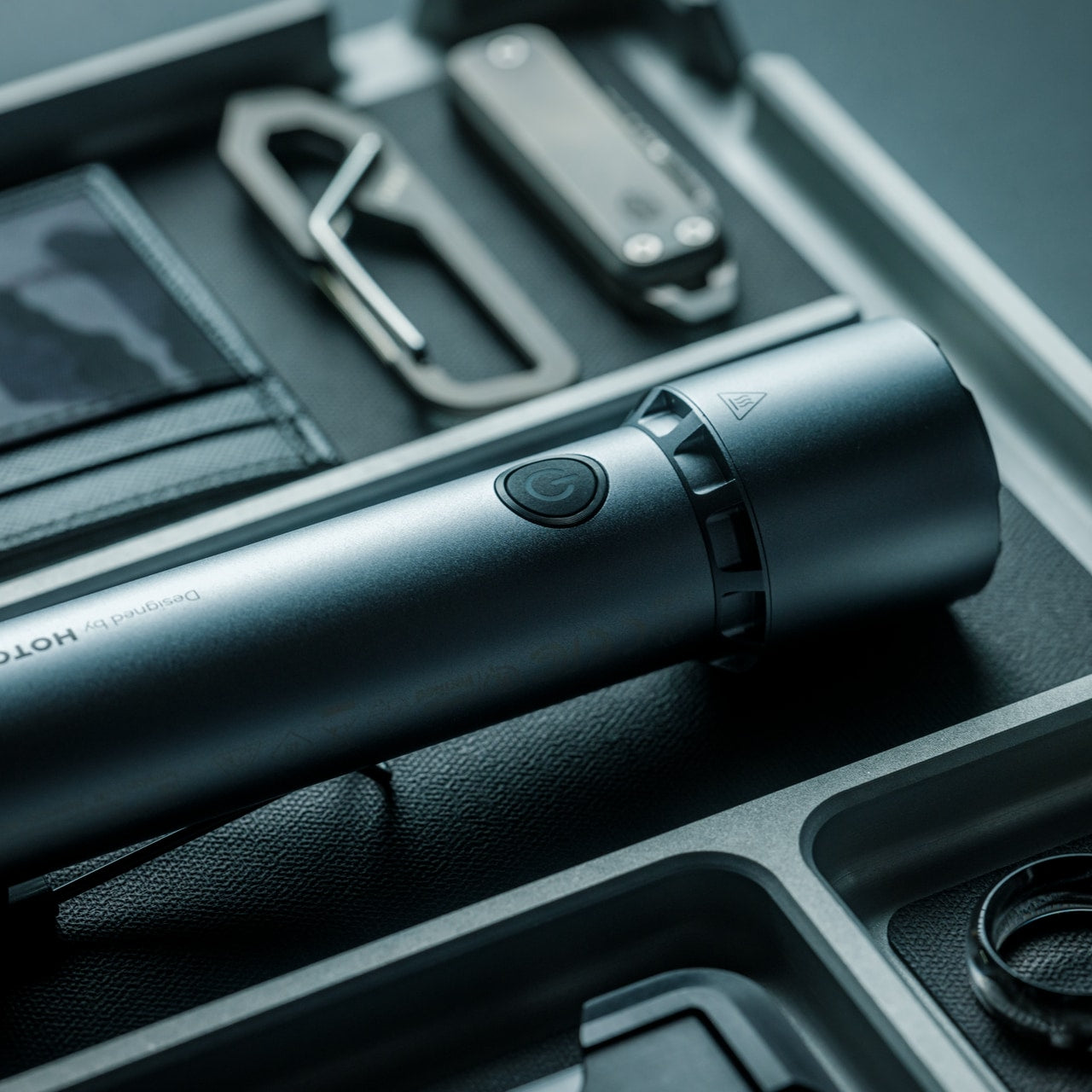
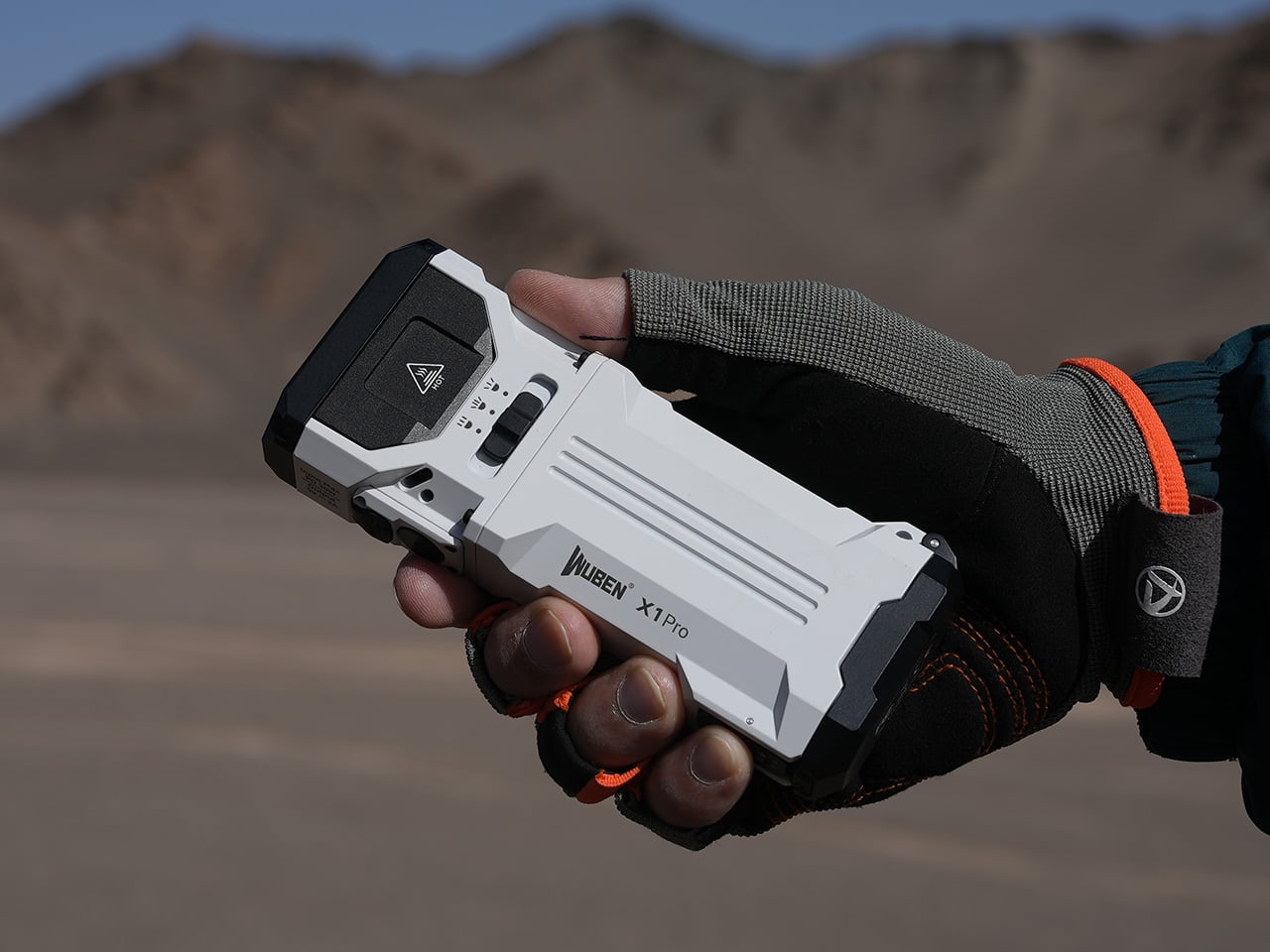
The Wuben X1Pro carries two 21700 Li-ion cells (4,800mAh each, user-replaceable, tool-free access) that deliver light output and device charging through a 30W input, 15W output PD system. Peak output hits 12,300 lumens across five Cree XHP50.3 emitters: one HI (high intensity, no dome) for spot throw, four HD (high density, domed) for flood coverage. A physical three-position slider lets you activate spot, flood, or both channels simultaneously without cycling through modes. Active cooling via a waterproof removable fan sustains 3,000 lumens for 1.8 hours, a threshold most non-cooled EDC lights hit for maybe 90 seconds before thermal management kicks in. Wuben machines the body from aluminum alloy, anodizes the black sections, die-casts the white sections, and sets the whole thing in a flat-tube form factor (59.6mm wide, 29.5mm thick, 138mm long) that rides in a pocket the way a good fixed blade rides on a belt.

Designer: Wuben

Click Here to Buy Now: $139.99 $174.99 (20% off). | Website Link Here. Hurry, deal ends in 48-hours!

Active Cooling: The Performance Difference That Actually Matters
Most high lumens EDC flashlights marketing themselves as “high output” can hold their advertised lumen count for roughly the time it takes to walk from your car to your front door. Thermal stepdown kicks in fast because the LED and driver generate more heat than a pocket-sized aluminum body can dissipate passively. The light throttles itself to prevent component damage, and what started as 10,000 lumens drops to 2,000 or less within two minutes. This limitation has defined the entire category for years. Manufacturers chase peak numbers for the spec sheet, enthusiasts make peace with the reality that sustained brightness requires a larger light, and everyone accepts the compromise. Active cooling fans exist in the flashlight world, but they’re almost exclusively found in large, heavy units designed for search-and-rescue or industrial use, not everyday carry.

The X1Pro’s waterproof removable fan sustains 3,000 lumens for 1.8 hours, a threshold even the brightest EDC flashlight alternatives can hold for 90 seconds at best before firmware forces a stepdown. The fan uses a modular design, meaning users can replace it without voiding warranty or sending the light back to Wuben. Independent testing from 1lumen.com confirmed sustained output hovering around 2,500 lumens in real-world use, far exceeding what passive cooling can achieve in this size class. Lights like the Astrolux MF09 or Lumintop Mach 4695 offer similar active cooling, but they weigh considerably more and sacrifice pocket carry entirely. As a 21700 flashlight with active cooling baked in, the X1Pro delivers fan-stabilized output in a 383-gram package that still fits in a jacket pocket, cargo pocket, or belt holster. That makes it the only actively cooled EDC light at this price point that you’d actually carry daily.

Dual-Beam System: Three Lights in One Body
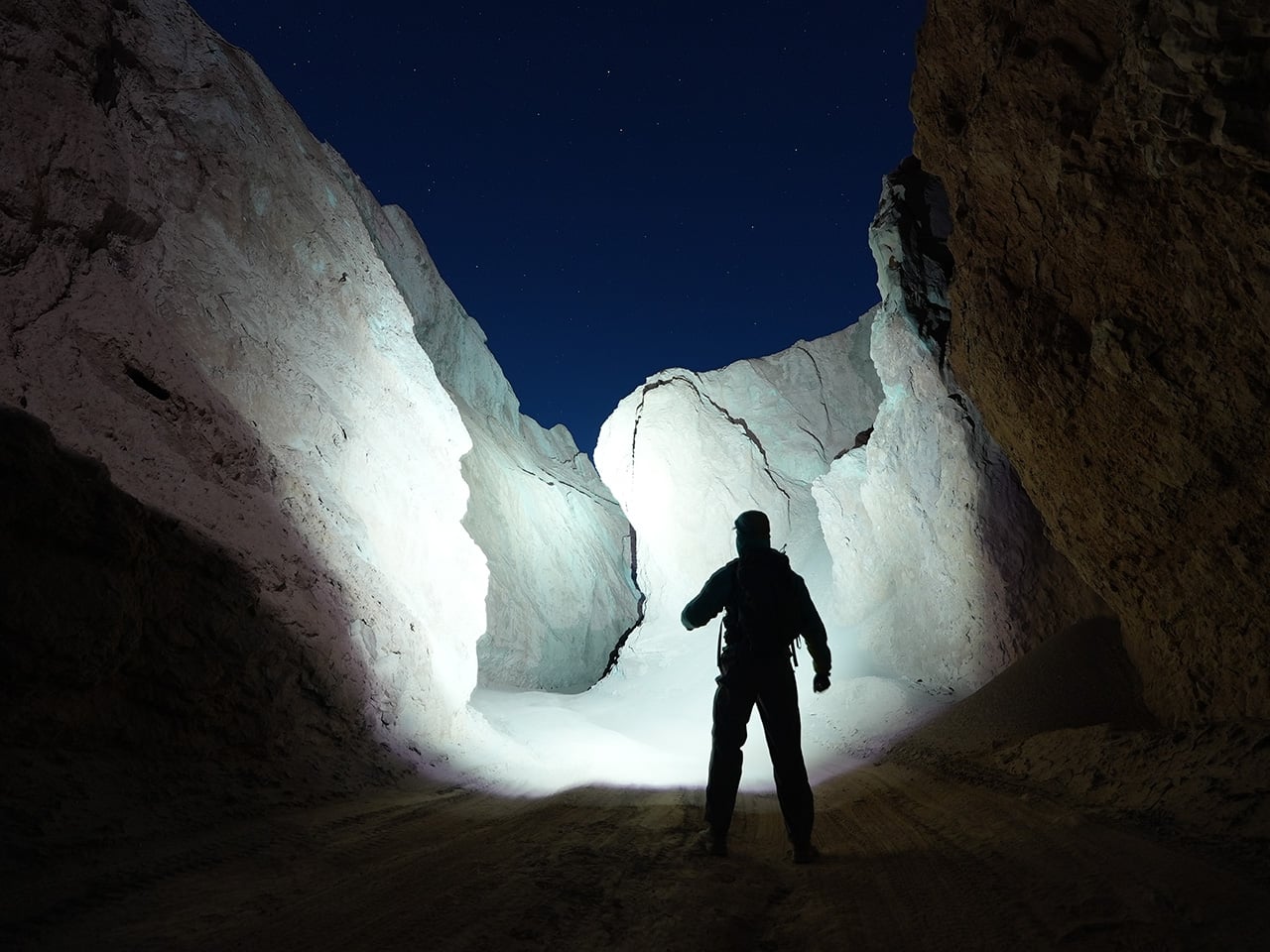
Single-beam flashlights force you to choose your compromise upfront. A thrower gives you distance but floods your peripheral vision with darkness. A flooder lights up your immediate area but can’t reach beyond 50 meters. Most users end up carrying two lights or cycling through brightness modes that still don’t address the fundamental beam shape limitation. The problem becomes obvious the moment you’re navigating a trail at night and need both close-range footing visibility and long-distance obstacle awareness simultaneously. Switching between lights or modes breaks your stride, kills your night vision adaptation, and adds friction to a task that should be seamless. A rechargeable power bank flashlight with a genuine dual-beam system solves this at the root.

The X1Pro runs 1 x Cree XHP50.3 HI emitter (no dome, high intensity, 3,500 lumens) for spot throw and 4 x Cree XHP50.3 HD emitters (domed, high output, 9,500 lumens combined) for flood coverage. A physical three-position slider on the front face toggles between spot only, flood only, or both channels firing simultaneously for 12,300 lumens peak output. The slider is mechanical, which means it’s faster and more intuitive than digital mode cycling, and it gives you tactile feedback even with gloves on. Each LED has its own reflector, and Wuben uses an orange-peel texture specifically to eliminate hot spots and smooth out the beam pattern. The spot channel delivers 410 meters of throw, while the flood channel covers a wide area for close-to-mid-range work. The ability to run both simultaneously or isolate one channel based on the task makes this genuinely versatile in a way most single-beam EDC lights simply cannot match.

Power Bank Functionality: Emergency Backup When You Need It Most
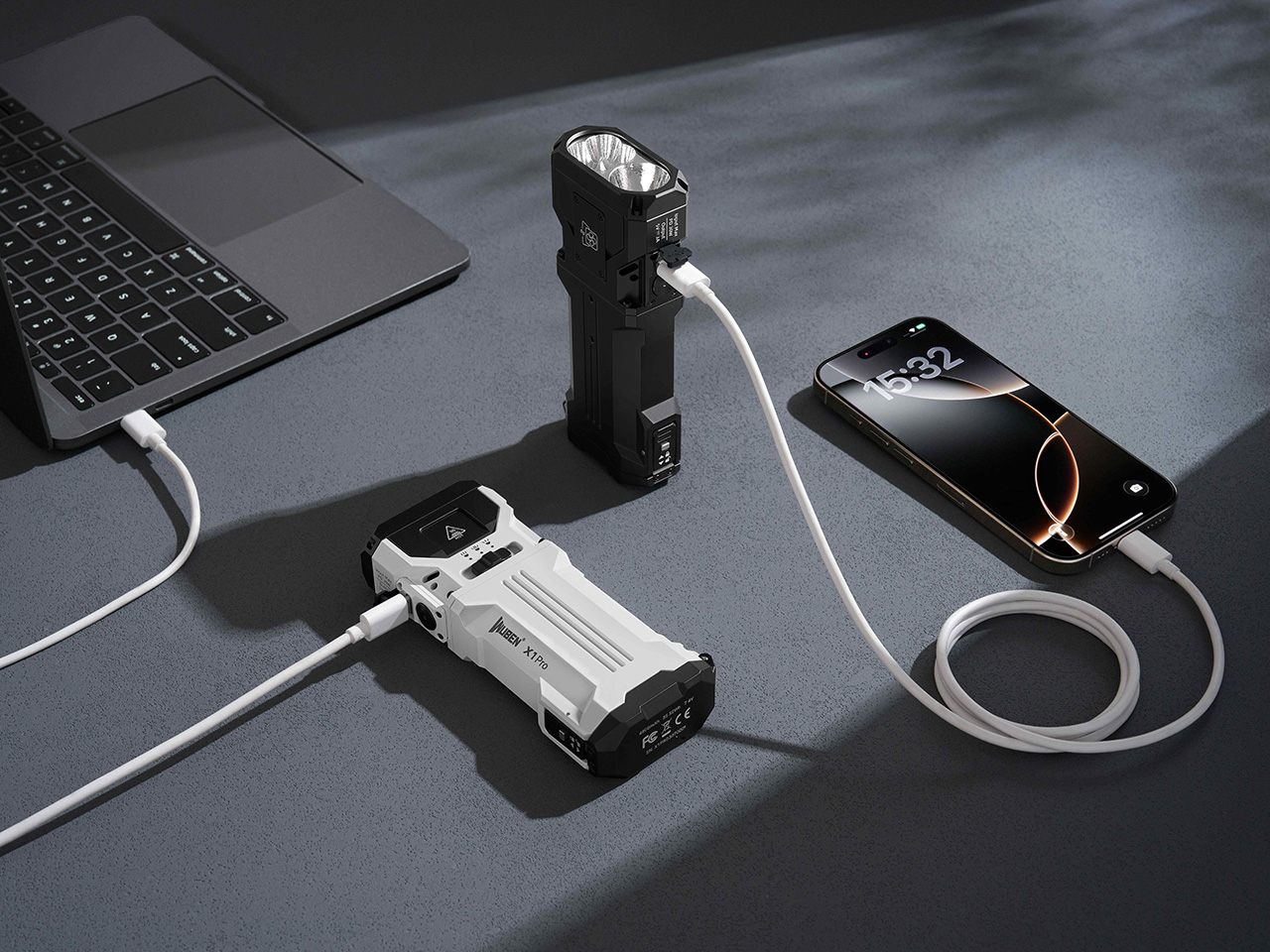
Carrying a separate power bank makes sense until you’re three days into a camping trip, your phone dies at 11 PM, and you realize your 20,000mAh brick ran out of juice six hours ago because you’ve been charging your headlamp, GPS unit, and backup radio all day. Redundancy in the backcountry matters. A flashlight that can push power back out through USB-C stops being a novelty feature and starts being a legitimate safety layer when you’re operating in environments where a dead phone means no emergency contact, no navigation, and no weather updates. The same logic applies to urban emergencies, power outages, or any scenario where device uptime determines whether you stay informed or go dark.

The X1Pro’s dual 21700 batteries deliver 35.52Wh of total capacity and feed a bidirectional USB-C PD system rated for 30W charging input and 15W power bank output. That 15W output is enough to fast-charge most smartphones, tablets, or USB-powered devices at rates comparable to a wall charger. Independent testing from ZeroAir confirmed that with a proper PD power source, the X1Pro charges at 20V and completes a full recharge in roughly 2.5 hours. On a standard 5V source, charging takes just over five hours, which is still reasonable for overnight recovery. The ability to swap out the 21700 cells means you can carry spares and extend both light runtime and power bank capacity indefinitely. Most EDC lights with USB output are limited by non-replaceable internal batteries, meaning once they’re drained, you’re done until you find an outlet. The X1Pro gives you control over your power supply, which fundamentally changes how the tool functions in extended-use scenarios.

Replaceable 21700 Batteries: Longevity by Design
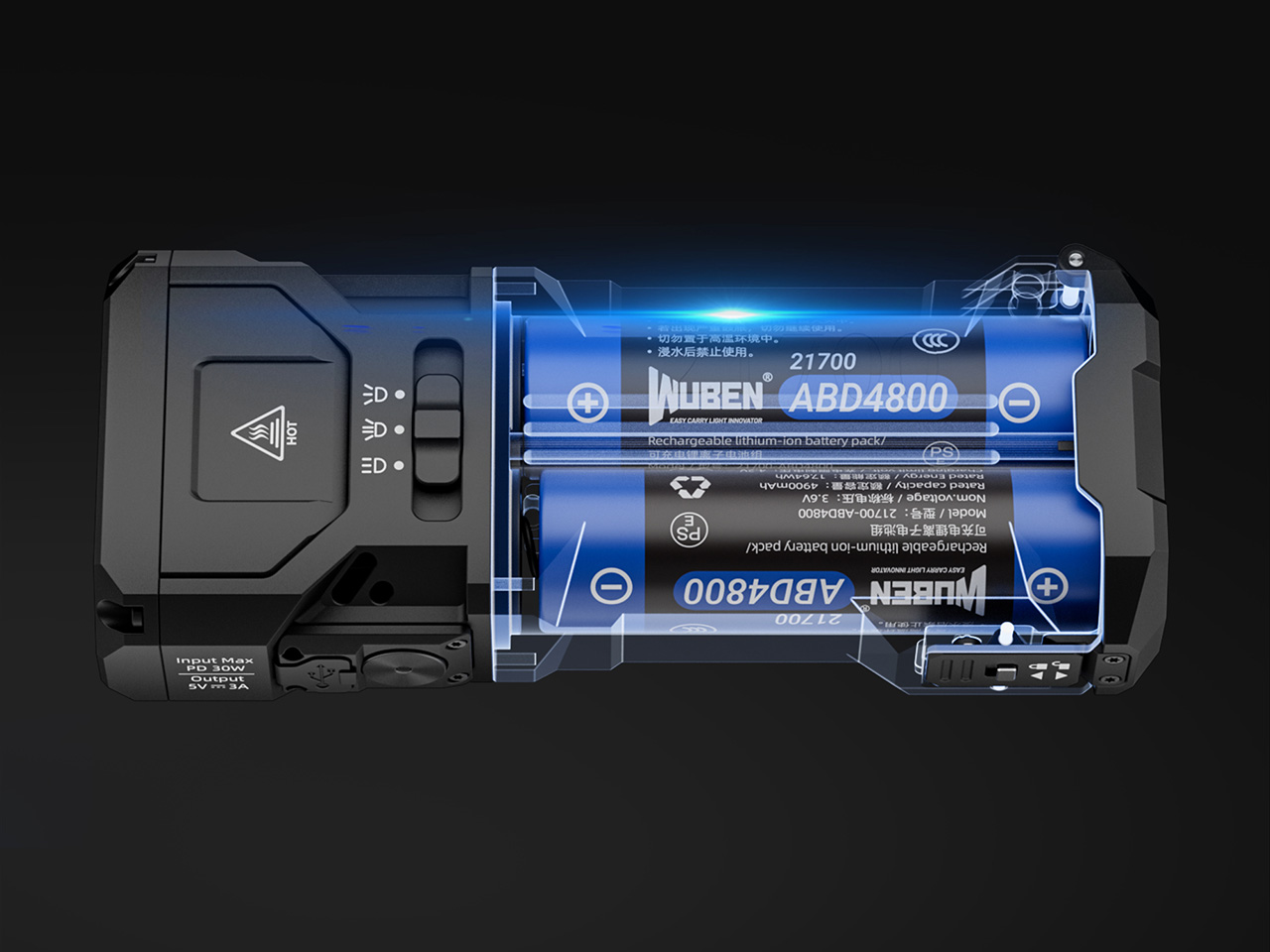
Sealed-battery flashlights have a built-in expiration date. Lithium-ion cells degrade with charge cycles, and after 300 to 500 cycles (roughly two to three years of regular use), capacity drops noticeably. Once the internal battery loses enough capacity to compromise performance, you’re left with a choice: send the light back for a factory battery replacement (if the manufacturer even offers that service), attempt a DIY repair that likely voids warranty, or retire the entire light and buy a new one. This disposability model benefits manufacturers who want recurring revenue, but it punishes users who invest in quality tools and expect them to last.

The X1Pro uses dual 21700 cells (4,800mAh each) accessed through a push-latch battery compartment that opens without tools. When the cells degrade after years of use, you buy new batteries for $15 to $25 per pair and swap them in 30 seconds. The 21700 format offers 4,000 to 5,200mAh typical capacity compared to the older 18650’s 2,200 to 3,500mAh, and the larger cell surface area improves heat dissipation under high-drain conditions. The format has become the standard in electric vehicles and high-performance flashlights specifically because it balances energy density, thermal performance, and discharge capability better than any previous consumer cell size. Wuben’s decision to make the batteries user-replaceable transforms the X1Pro from a disposable gadget into a long-term tool. You’re not buying a flashlight with a two-year lifespan. You’re buying a chassis, an LED array, a cooling system, and a driver circuit that you can keep functional for a decade or longer by spending $25 every few years on fresh cells. That’s a fundamentally different value proposition.

Flat-Tube Ergonomics: Why Shape Matters in EDC
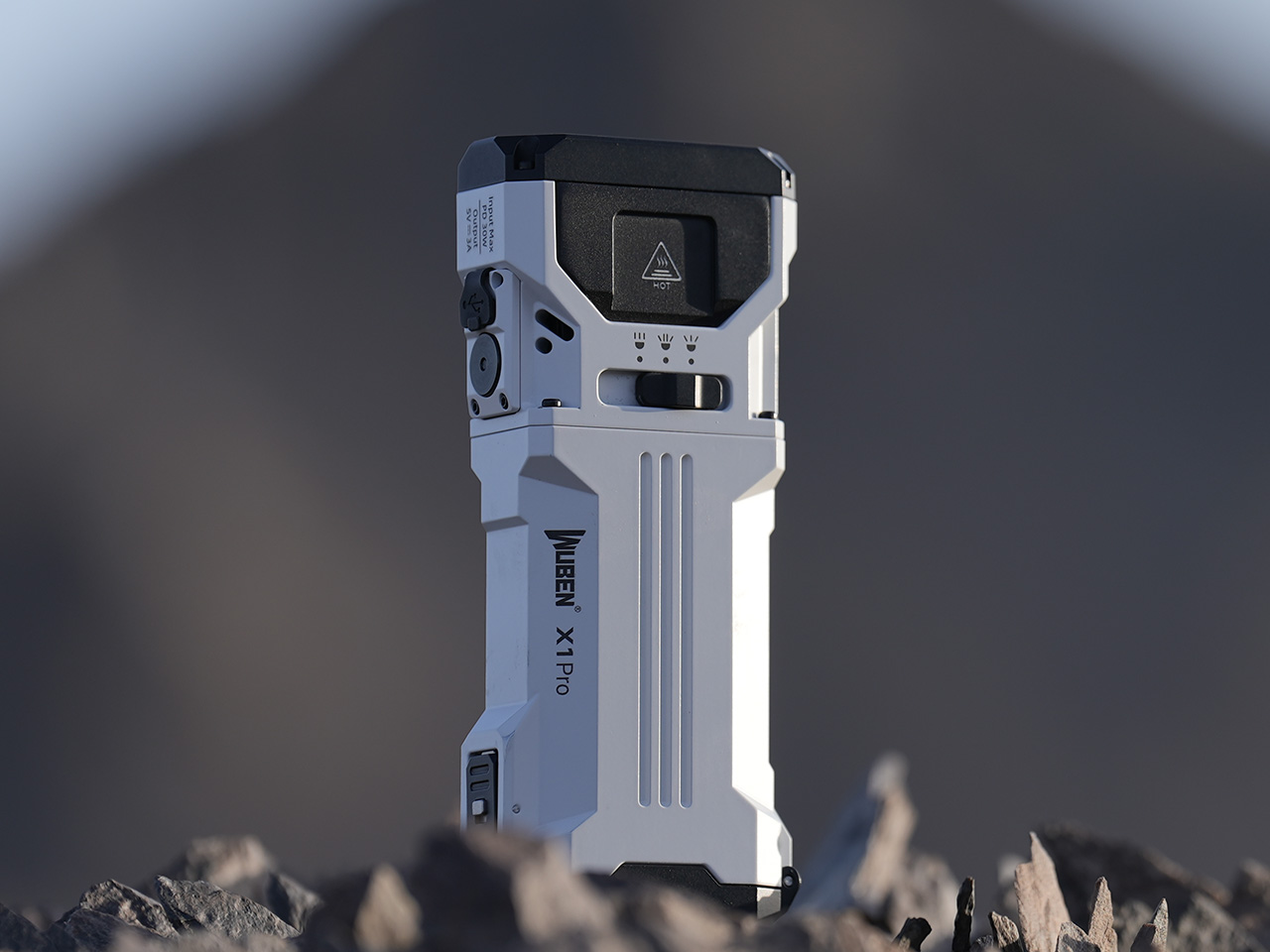
Cylindrical flashlights roll off tables, spin in your hand under recoil or vibration, and waste pocket space because a circle inscribed in a rectangle leaves every corner unused. The cylinder is an inherited form factor from the days when flashlights used C or D cell batteries, and while LED technology has evolved radically, the basic shape has remained largely unchanged out of manufacturing inertia. A flat-tube design addresses these issues directly by widening the body, flattening the profile, and giving your palm four distinct edges to grip. The shape prevents rolling, increases surface area contact with your hand, and sits flat against your body when clipped to a belt or stored in a pocket.

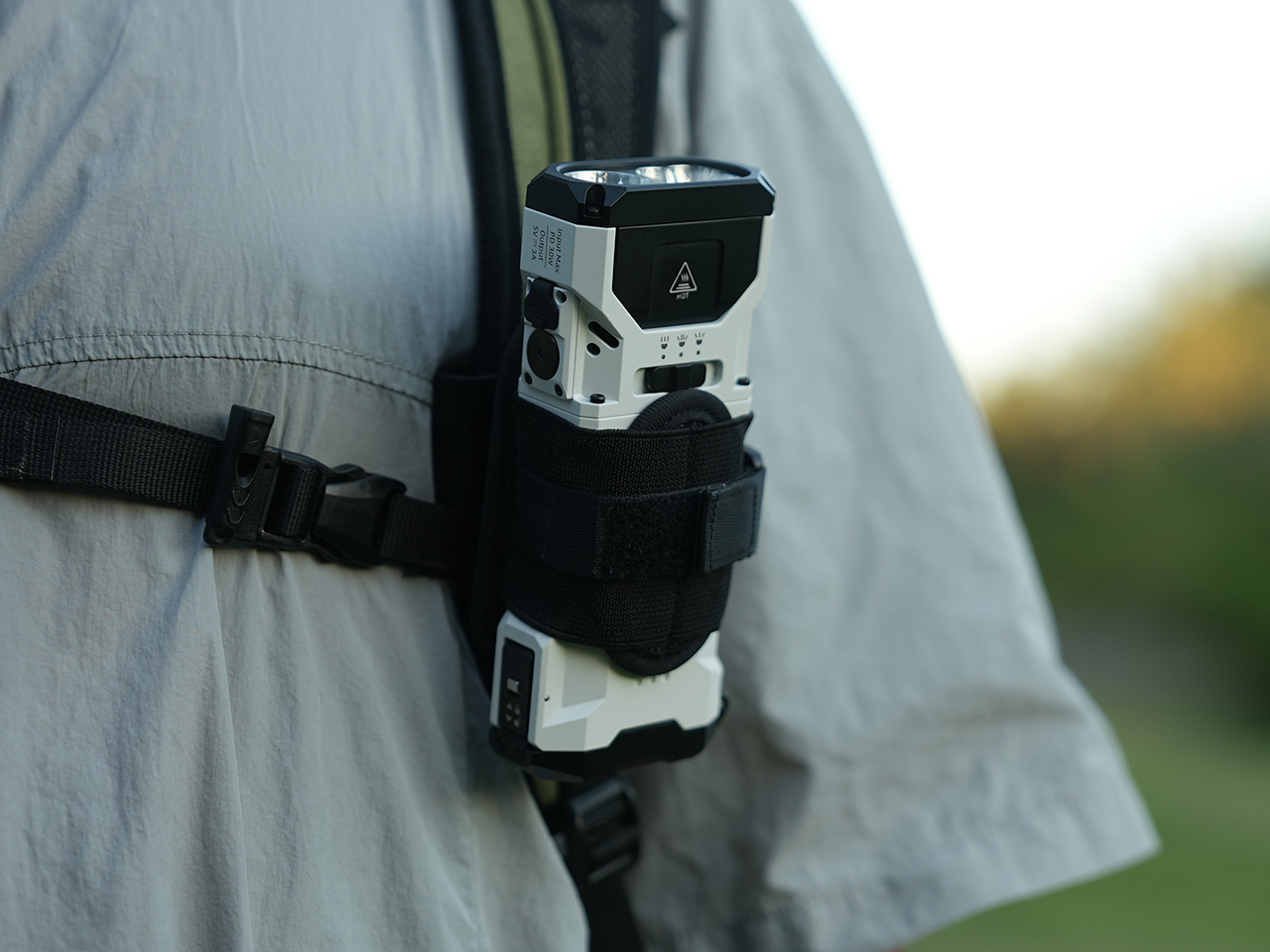
Wuben machines the X1Pro body to 59.6mm wide, 29.5mm thick, and 138mm long, creating a rectangular profile that fits naturally in the palm and occupies pocket space efficiently. The four corners feature chamfered edges specifically redesigned in the Pro model to improve grip comfort and reduce weight. The original X1’s buttons were positioned on the front face, but Wuben moved them to the left side of the X1Pro so your thumb rests on them naturally during normal carry. This detail matters during extended use or when manipulating the light with gloves. The CNC-machined and anodized black sections provide texture, while the die-cast white sections add visual contrast that helps with gear identification in a pack. The flat profile also stabilizes the light when set down on a surface, allowing hands-free use without the need for a tripod in many situations. Combined with the included 1/4″ threaded port and optional zinc alloy bike mount, the form factor adapts to a wider range of mounting and carry configurations than a traditional cylindrical light can support.

Value Proposition: What $139.99 Actually Gets You
High-output EDC flashlights from established brands like Olight, Nitecore, and Fenix typically land between $100 and $200 depending on features. A comparable Olight Warrior model with 3,000 to 5,000 lumen output runs $120 to $150 but uses a sealed battery, single-beam design, and passive cooling that forces brightness stepdown within minutes. Nitecore’s high-output EDC offerings in the same class deliver excellent build quality and UI design but similarly lack active cooling or dual-beam switching. Fenix lights are known for durability and reliable performance, but again, you’re working within the constraints of passive thermal management and fixed beam patterns. None of these competitors offer power bank output in their EDC-class lights, and none offer user-replaceable batteries in their high-output models.

The X1Pro at $139.99 includes active cooling via a modular waterproof fan, dual-beam switching with independent spot and flood control, user-replaceable 21700 batteries, 30W PD charging with 15W power bank output, IP65 water resistance, 1-meter drop rating, and a zinc alloy bike mount in the box. Wuben launched the X1Pro on Kickstarter with early bird pricing at $99 to $119 before settling at the $139.99 retail price, which positions it aggressively against passive-cooled competitors that offer fewer features at similar or higher prices. The active cooling alone represents technology typically reserved for lights in the $200-plus range, and the dual-beam system eliminates the need to carry a second light for different beam profiles. The replaceable battery design extends the usable lifespan of the tool by years, effectively reducing long-term cost of ownership. If you’re evaluating high-output EDC lights and comparing feature sets at similar price points, the X1Pro delivers more functional capability per dollar than anything else currently available in the category.

Click Here to Buy Now: $139.99 $174.99 (20% off). | Website Link Here. Hurry, deal ends in 48-hours!

The post The Brightest EDC Flashlight of 2026 packs 12,300 Lumens, Active Cooling, and Still Fits in Your Pocket first appeared on Yanko Design.
The Brightest EDC Flashlight of 2026 packs 12,300 Lumens, Active Cooling, and Still Fits in Your Pocket

EDC gear is converging. The knife becomes a multitool, the multitool becomes a bit driver, the bit driver becomes a pry bar, and somewhere in the middle someone bolts on a bottle opener. The flashlight, meanwhile, has resisted this trend longer than most categories. A light is a light. You charge it, you carry it, you press a button, photons happen. The addition of a USB port to charge your phone feels like a gimmick until you’re three days into a camping trip and your power bank dies at 11 PM. Then the flashlight that can push 15 watts back out through USB-C stops feeling like feature bloat and starts feeling like the obvious move the entire industry should have made years ago.

The Wuben X1Pro carries two 21700 Li-ion cells (4,800mAh each, user-replaceable, tool-free access) that deliver light output and device charging through a 30W input, 15W output PD system. Peak output hits 12,300 lumens across five Cree XHP50.3 emitters: one HI (high intensity, no dome) for spot throw, four HD (high density, domed) for flood coverage. A physical three-position slider lets you activate spot, flood, or both channels simultaneously without cycling through modes. Active cooling via a waterproof removable fan sustains 3,000 lumens for 1.8 hours, a threshold most non-cooled EDC lights hit for maybe 90 seconds before thermal management kicks in. Wuben machines the body from aluminum alloy, anodizes the black sections, die-casts the white sections, and sets the whole thing in a flat-tube form factor (59.6mm wide, 29.5mm thick, 138mm long) that rides in a pocket the way a good fixed blade rides on a belt.

Designer: Wuben

Click Here to Buy Now: $139.99 $174.99 (20% off). | Website Link Here. Hurry, deal ends in 48-hours!

Active Cooling: The Performance Difference That Actually Matters

Most high lumens EDC flashlights marketing themselves as “high output” can hold their advertised lumen count for roughly the time it takes to walk from your car to your front door. Thermal stepdown kicks in fast because the LED and driver generate more heat than a pocket-sized aluminum body can dissipate passively. The light throttles itself to prevent component damage, and what started as 10,000 lumens drops to 2,000 or less within two minutes. This limitation has defined the entire category for years. Manufacturers chase peak numbers for the spec sheet, enthusiasts make peace with the reality that sustained brightness requires a larger light, and everyone accepts the compromise. Active cooling fans exist in the flashlight world, but they’re almost exclusively found in large, heavy units designed for search-and-rescue or industrial use, not everyday carry.

The X1Pro’s waterproof removable fan sustains 3,000 lumens for 1.8 hours, a threshold even the brightest EDC flashlight alternatives can hold for 90 seconds at best before firmware forces a stepdown. The fan uses a modular design, meaning users can replace it without voiding warranty or sending the light back to Wuben. Independent testing from 1lumen.com confirmed sustained output hovering around 2,500 lumens in real-world use, far exceeding what passive cooling can achieve in this size class. Lights like the Astrolux MF09 or Lumintop Mach 4695 offer similar active cooling, but they weigh considerably more and sacrifice pocket carry entirely. As a 21700 flashlight with active cooling baked in, the X1Pro delivers fan-stabilized output in a 383-gram package that still fits in a jacket pocket, cargo pocket, or belt holster. That makes it the only actively cooled EDC light at this price point that you’d actually carry daily.

Dual-Beam System: Three Lights in One Body

Single-beam flashlights force you to choose your compromise upfront. A thrower gives you distance but floods your peripheral vision with darkness. A flooder lights up your immediate area but can’t reach beyond 50 meters. Most users end up carrying two lights or cycling through brightness modes that still don’t address the fundamental beam shape limitation. The problem becomes obvious the moment you’re navigating a trail at night and need both close-range footing visibility and long-distance obstacle awareness simultaneously. Switching between lights or modes breaks your stride, kills your night vision adaptation, and adds friction to a task that should be seamless. A rechargeable power bank flashlight with a genuine dual-beam system solves this at the root.

The X1Pro runs 1 x Cree XHP50.3 HI emitter (no dome, high intensity, 3,500 lumens) for spot throw and 4 x Cree XHP50.3 HD emitters (domed, high output, 9,500 lumens combined) for flood coverage. A physical three-position slider on the front face toggles between spot only, flood only, or both channels firing simultaneously for 12,300 lumens peak output. The slider is mechanical, which means it’s faster and more intuitive than digital mode cycling, and it gives you tactile feedback even with gloves on. Each LED has its own reflector, and Wuben uses an orange-peel texture specifically to eliminate hot spots and smooth out the beam pattern. The spot channel delivers 410 meters of throw, while the flood channel covers a wide area for close-to-mid-range work. The ability to run both simultaneously or isolate one channel based on the task makes this genuinely versatile in a way most single-beam EDC lights simply cannot match.

Power Bank Functionality: Emergency Backup When You Need It Most

Carrying a separate power bank makes sense until you’re three days into a camping trip, your phone dies at 11 PM, and you realize your 20,000mAh brick ran out of juice six hours ago because you’ve been charging your headlamp, GPS unit, and backup radio all day. Redundancy in the backcountry matters. A flashlight that can push power back out through USB-C stops being a novelty feature and starts being a legitimate safety layer when you’re operating in environments where a dead phone means no emergency contact, no navigation, and no weather updates. The same logic applies to urban emergencies, power outages, or any scenario where device uptime determines whether you stay informed or go dark.

The X1Pro’s dual 21700 batteries deliver 35.52Wh of total capacity and feed a bidirectional USB-C PD system rated for 30W charging input and 15W power bank output. That 15W output is enough to fast-charge most smartphones, tablets, or USB-powered devices at rates comparable to a wall charger. Independent testing from ZeroAir confirmed that with a proper PD power source, the X1Pro charges at 20V and completes a full recharge in roughly 2.5 hours. On a standard 5V source, charging takes just over five hours, which is still reasonable for overnight recovery. The ability to swap out the 21700 cells means you can carry spares and extend both light runtime and power bank capacity indefinitely. Most EDC lights with USB output are limited by non-replaceable internal batteries, meaning once they’re drained, you’re done until you find an outlet. The X1Pro gives you control over your power supply, which fundamentally changes how the tool functions in extended-use scenarios.

Replaceable 21700 Batteries: Longevity by Design

Sealed-battery flashlights have a built-in expiration date. Lithium-ion cells degrade with charge cycles, and after 300 to 500 cycles (roughly two to three years of regular use), capacity drops noticeably. Once the internal battery loses enough capacity to compromise performance, you’re left with a choice: send the light back for a factory battery replacement (if the manufacturer even offers that service), attempt a DIY repair that likely voids warranty, or retire the entire light and buy a new one. This disposability model benefits manufacturers who want recurring revenue, but it punishes users who invest in quality tools and expect them to last.

The X1Pro uses dual 21700 cells (4,800mAh each) accessed through a push-latch battery compartment that opens without tools. When the cells degrade after years of use, you buy new batteries for $15 to $25 per pair and swap them in 30 seconds. The 21700 format offers 4,000 to 5,200mAh typical capacity compared to the older 18650’s 2,200 to 3,500mAh, and the larger cell surface area improves heat dissipation under high-drain conditions. The format has become the standard in electric vehicles and high-performance flashlights specifically because it balances energy density, thermal performance, and discharge capability better than any previous consumer cell size. Wuben’s decision to make the batteries user-replaceable transforms the X1Pro from a disposable gadget into a long-term tool. You’re not buying a flashlight with a two-year lifespan. You’re buying a chassis, an LED array, a cooling system, and a driver circuit that you can keep functional for a decade or longer by spending $25 every few years on fresh cells. That’s a fundamentally different value proposition.

Flat-Tube Ergonomics: Why Shape Matters in EDC

Cylindrical flashlights roll off tables, spin in your hand under recoil or vibration, and waste pocket space because a circle inscribed in a rectangle leaves every corner unused. The cylinder is an inherited form factor from the days when flashlights used C or D cell batteries, and while LED technology has evolved radically, the basic shape has remained largely unchanged out of manufacturing inertia. A flat-tube design addresses these issues directly by widening the body, flattening the profile, and giving your palm four distinct edges to grip. The shape prevents rolling, increases surface area contact with your hand, and sits flat against your body when clipped to a belt or stored in a pocket.

Wuben machines the X1Pro body to 59.6mm wide, 29.5mm thick, and 138mm long, creating a rectangular profile that fits naturally in the palm and occupies pocket space efficiently. The four corners feature chamfered edges specifically redesigned in the Pro model to improve grip comfort and reduce weight. The original X1’s buttons were positioned on the front face, but Wuben moved them to the left side of the X1Pro so your thumb rests on them naturally during normal carry. This detail matters during extended use or when manipulating the light with gloves. The CNC-machined and anodized black sections provide texture, while the die-cast white sections add visual contrast that helps with gear identification in a pack. The flat profile also stabilizes the light when set down on a surface, allowing hands-free use without the need for a tripod in many situations. Combined with the included 1/4″ threaded port and optional zinc alloy bike mount, the form factor adapts to a wider range of mounting and carry configurations than a traditional cylindrical light can support.

Value Proposition: What $139.99 Actually Gets You

High-output EDC flashlights from established brands like Olight, Nitecore, and Fenix typically land between $100 and $200 depending on features. A comparable Olight Warrior model with 3,000 to 5,000 lumen output runs $120 to $150 but uses a sealed battery, single-beam design, and passive cooling that forces brightness stepdown within minutes. Nitecore’s high-output EDC offerings in the same class deliver excellent build quality and UI design but similarly lack active cooling or dual-beam switching. Fenix lights are known for durability and reliable performance, but again, you’re working within the constraints of passive thermal management and fixed beam patterns. None of these competitors offer power bank output in their EDC-class lights, and none offer user-replaceable batteries in their high-output models.

The X1Pro at $139.99 includes active cooling via a modular waterproof fan, dual-beam switching with independent spot and flood control, user-replaceable 21700 batteries, 30W PD charging with 15W power bank output, IP65 water resistance, 1-meter drop rating, and a zinc alloy bike mount in the box. Wuben launched the X1Pro on Kickstarter with early bird pricing at $99 to $119 before settling at the $139.99 retail price, which positions it aggressively against passive-cooled competitors that offer fewer features at similar or higher prices. The active cooling alone represents technology typically reserved for lights in the $200-plus range, and the dual-beam system eliminates the need to carry a second light for different beam profiles. The replaceable battery design extends the usable lifespan of the tool by years, effectively reducing long-term cost of ownership. If you’re evaluating high-output EDC lights and comparing feature sets at similar price points, the X1Pro delivers more functional capability per dollar than anything else currently available in the category.

Click Here to Buy Now: $139.99 $174.99 (20% off). | Website Link Here. Hurry, deal ends in 48-hours!

The post The Brightest EDC Flashlight of 2026 packs 12,300 Lumens, Active Cooling, and Still Fits in Your Pocket first appeared on Yanko Design.
Moooi’s 25th Anniversary Monster Chairs Have Hand-Embroidered Creatures on Every Backrest

When Marcel Wanders designed the Monster Chair in 2014, the “monster” part was mostly conceptual. The piece had presence, sure, with its quilted leather upholstery and angular obsidian-like legs, but the actual aesthetic leaned more toward restrained decadence than outright chaos. It was a chair that suggested mischief without committing to it fully. That restraint just got thrown out the window.

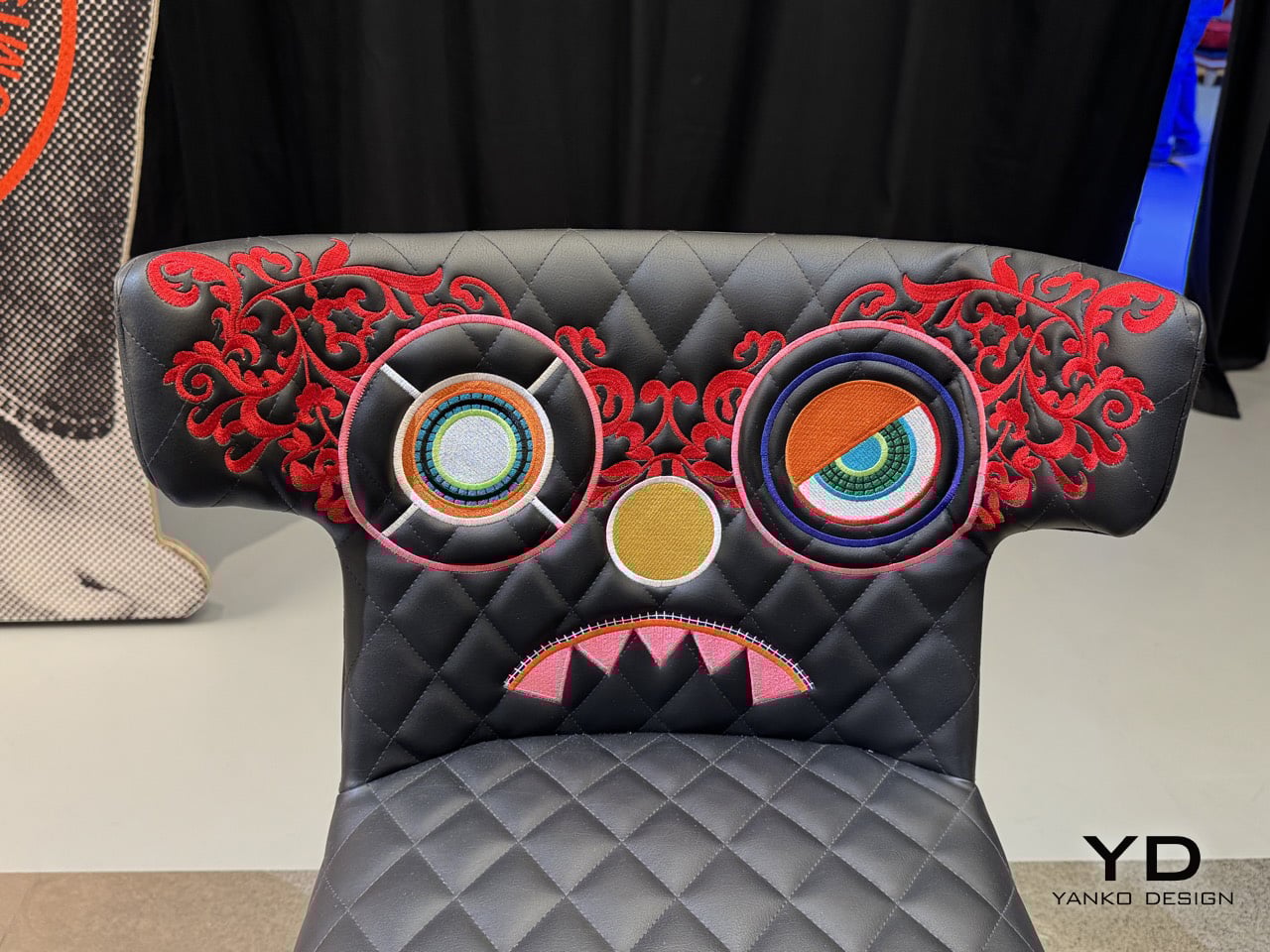
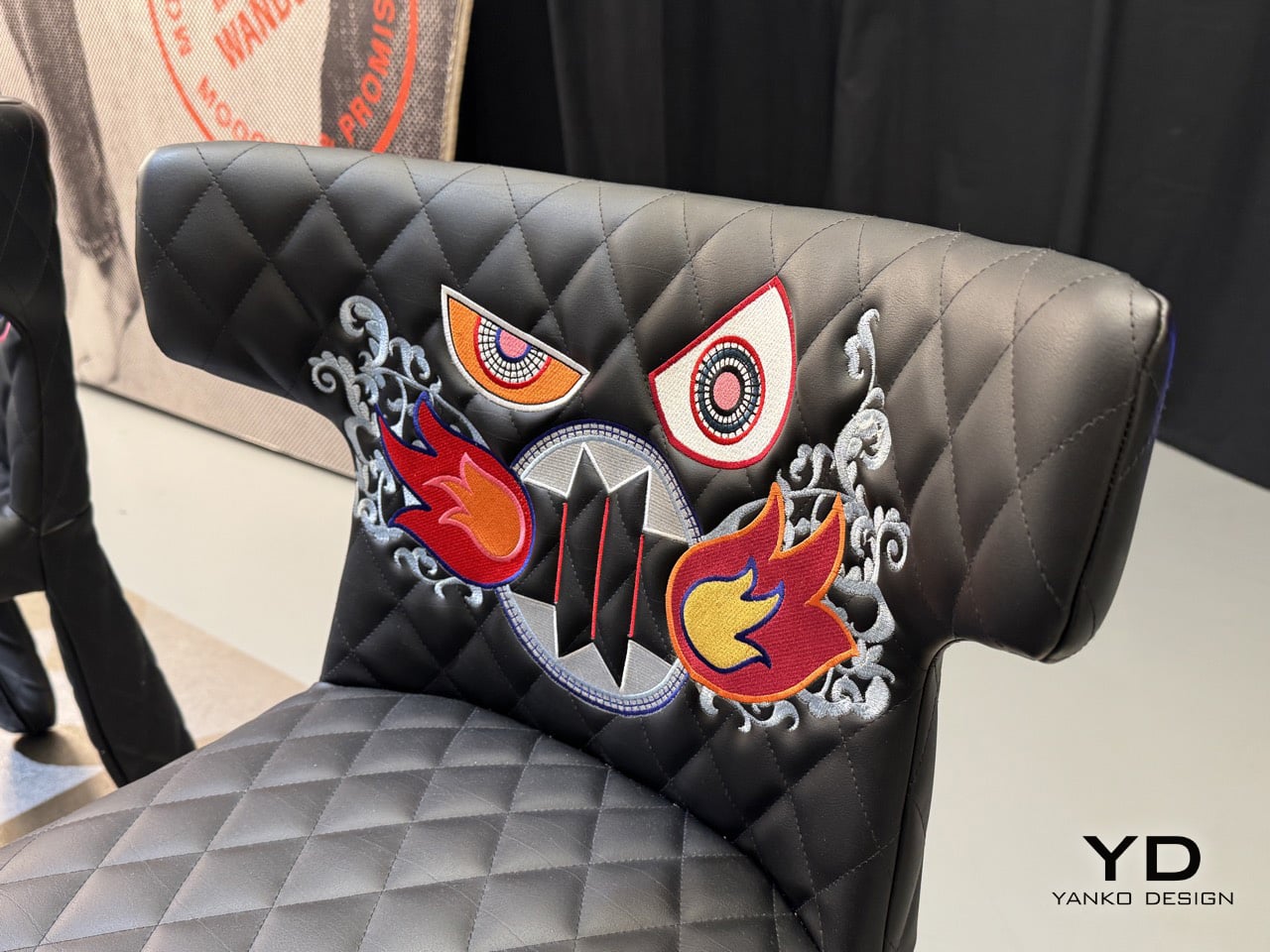
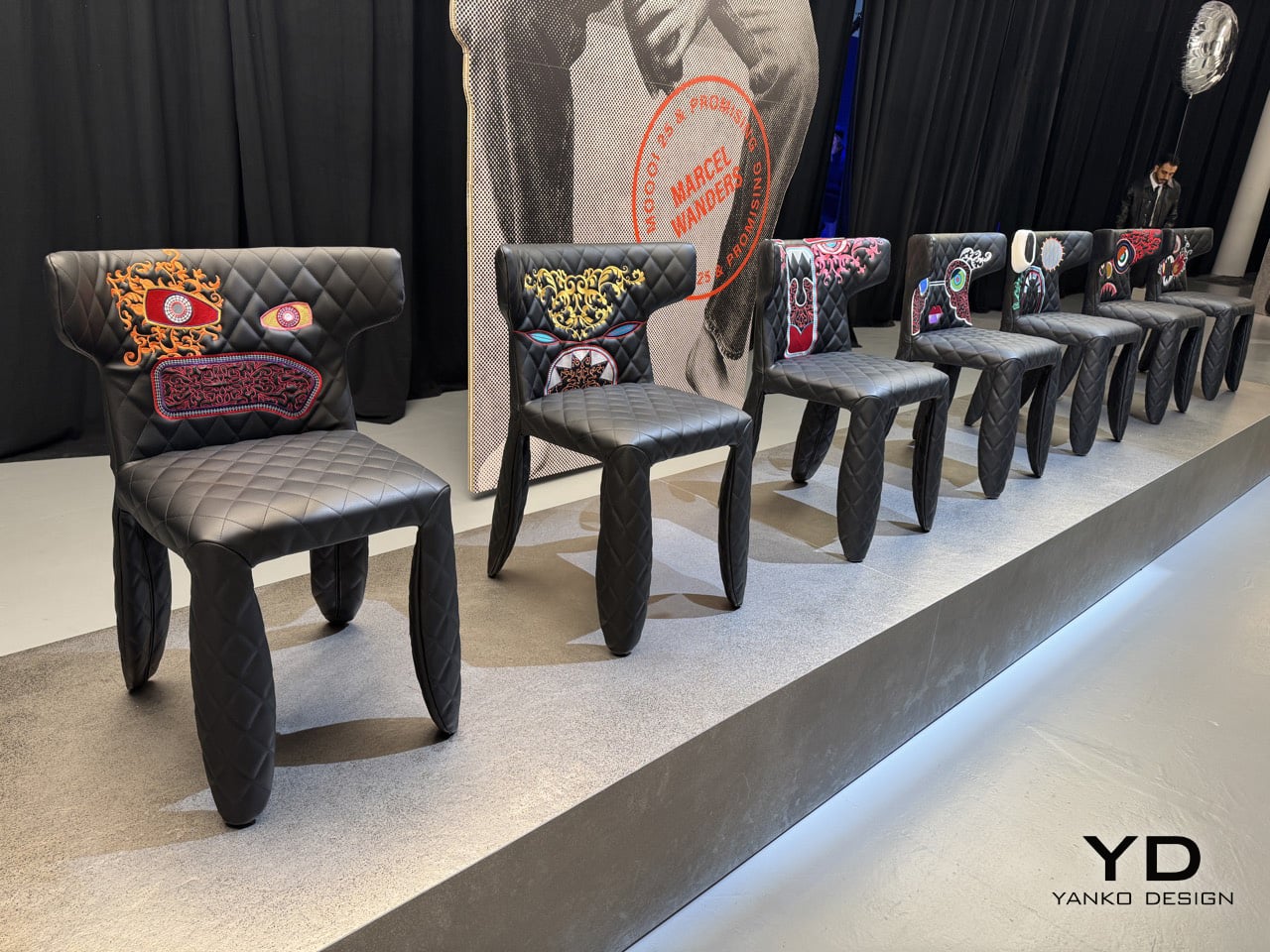
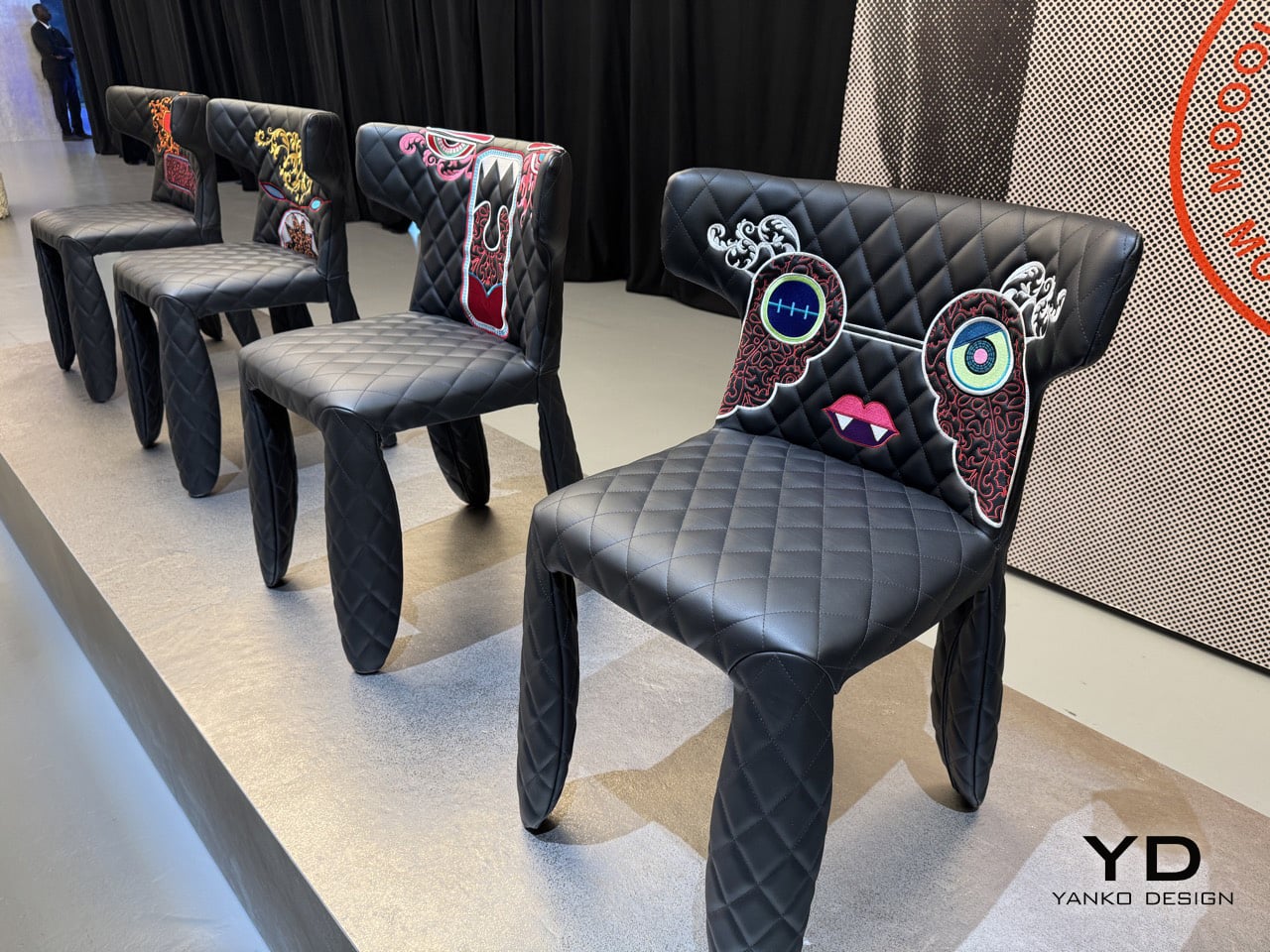
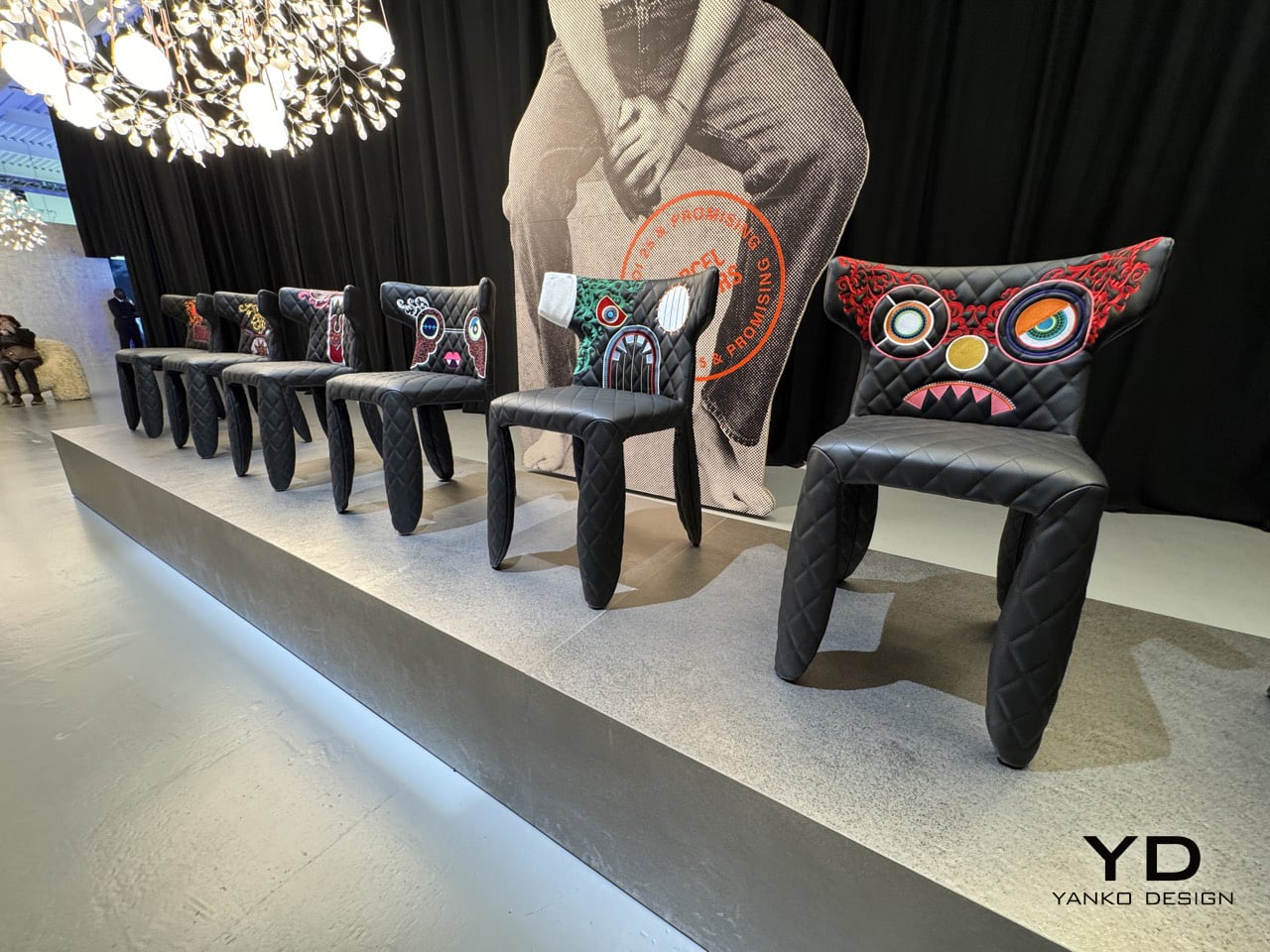
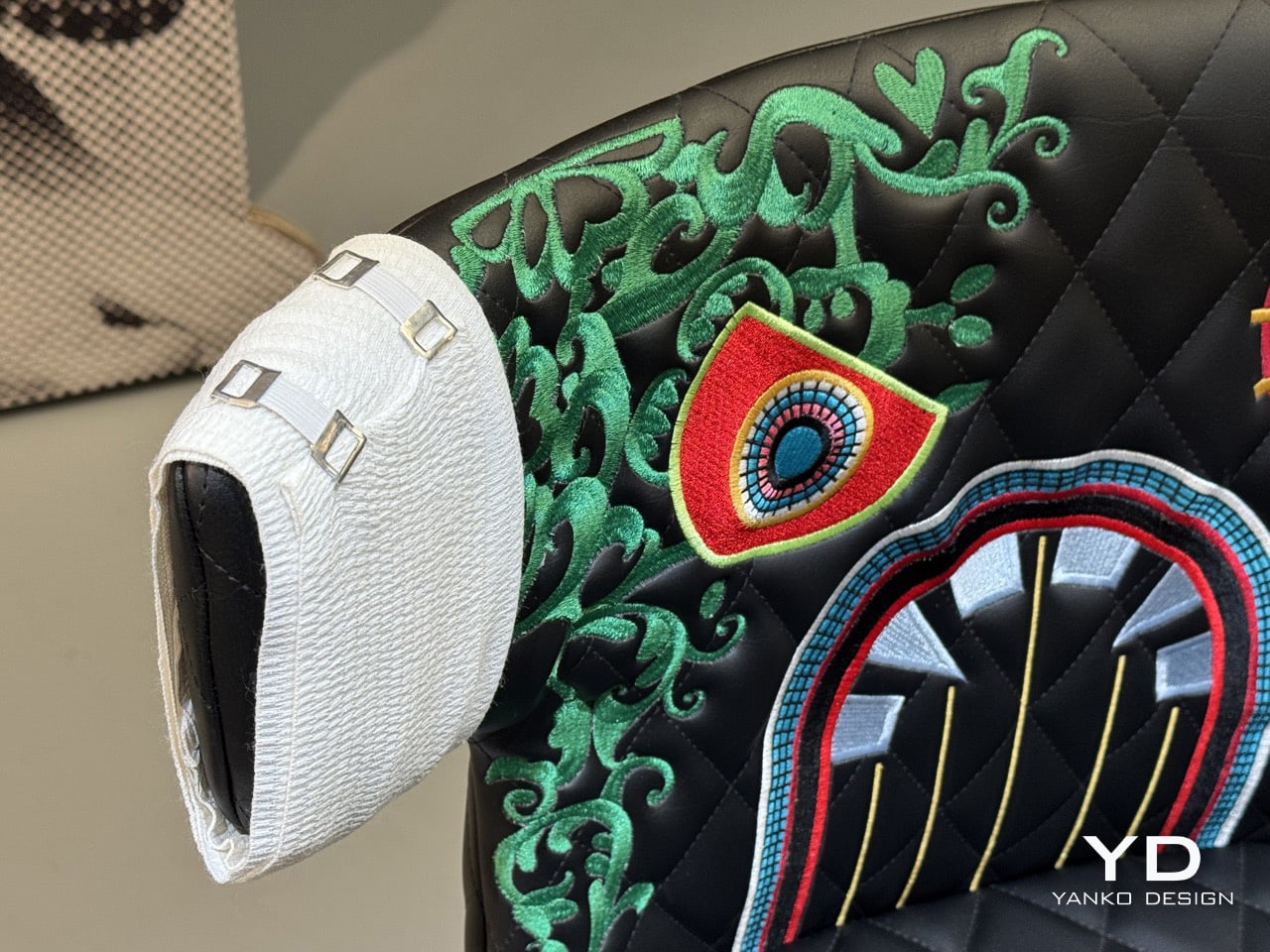
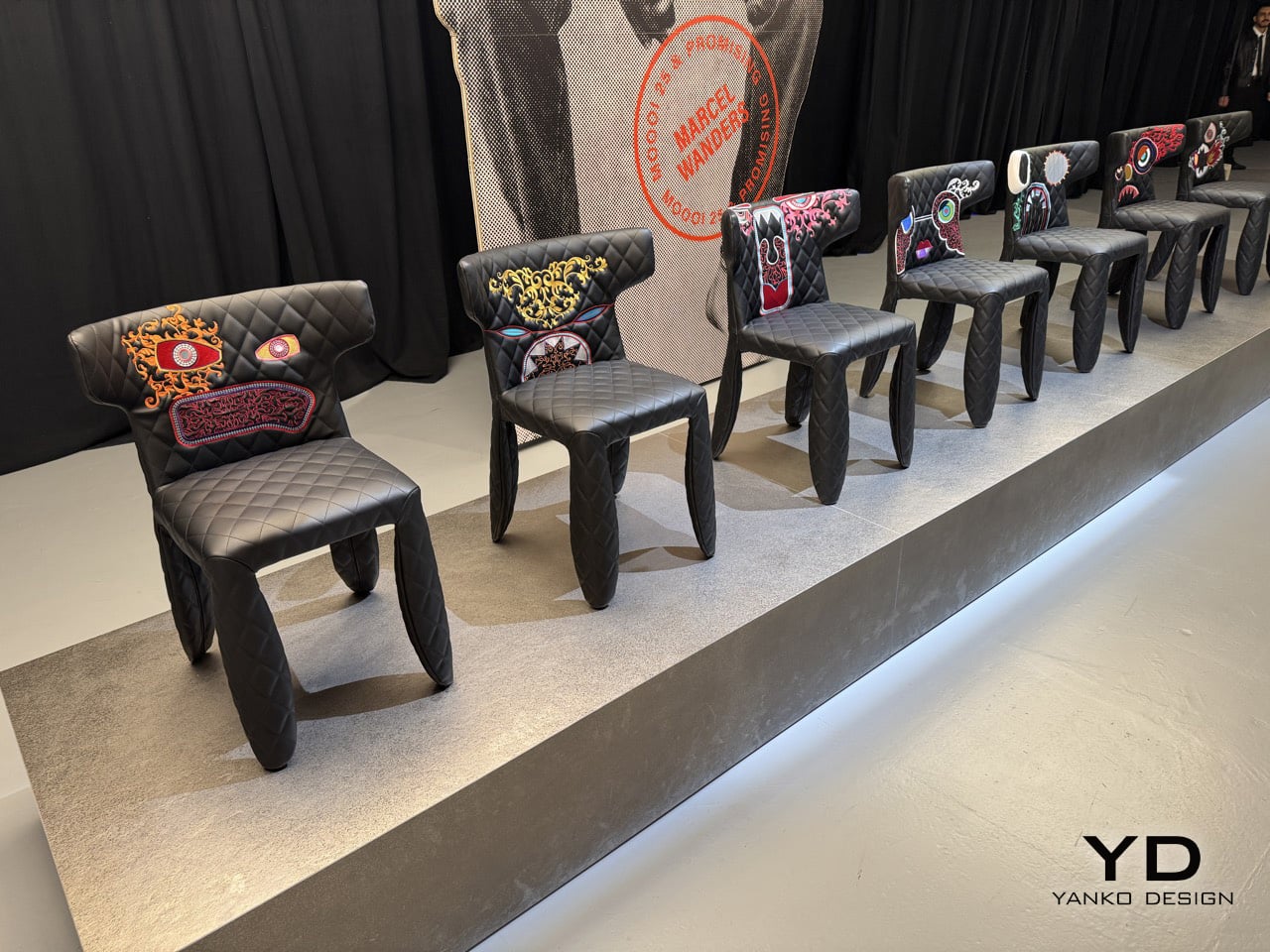
Moooi’s 25th anniversary celebration at Milan Design Week 2026 brought a reimagined Monster Chair collection to Superstudio Events, and this time the monsters are unavoidable. Each chair in the lineup features a hand-embroidered creature sprawling across the backrest, rendered in vivid, layered threadwork. One has concentric-circle eyes in clashing neon tones. Another hides behind ornate red filigree that frames its face like vintage wallpaper turned sentient. There are geometric flames, pink zigzag teeth, emerald scrollwork that could be tentacles or vines depending on your interpretation. The base silhouette stays true to the original, that black quilted leather and sculptural leg structure providing just enough formality to make the embroidered chaos feel intentional rather than random. It’s furniture that demands attention, and after 25 years of pushing boundaries, Moooi clearly has no plans to apologize for that.

Designer: Marcel Wanders for Moooi

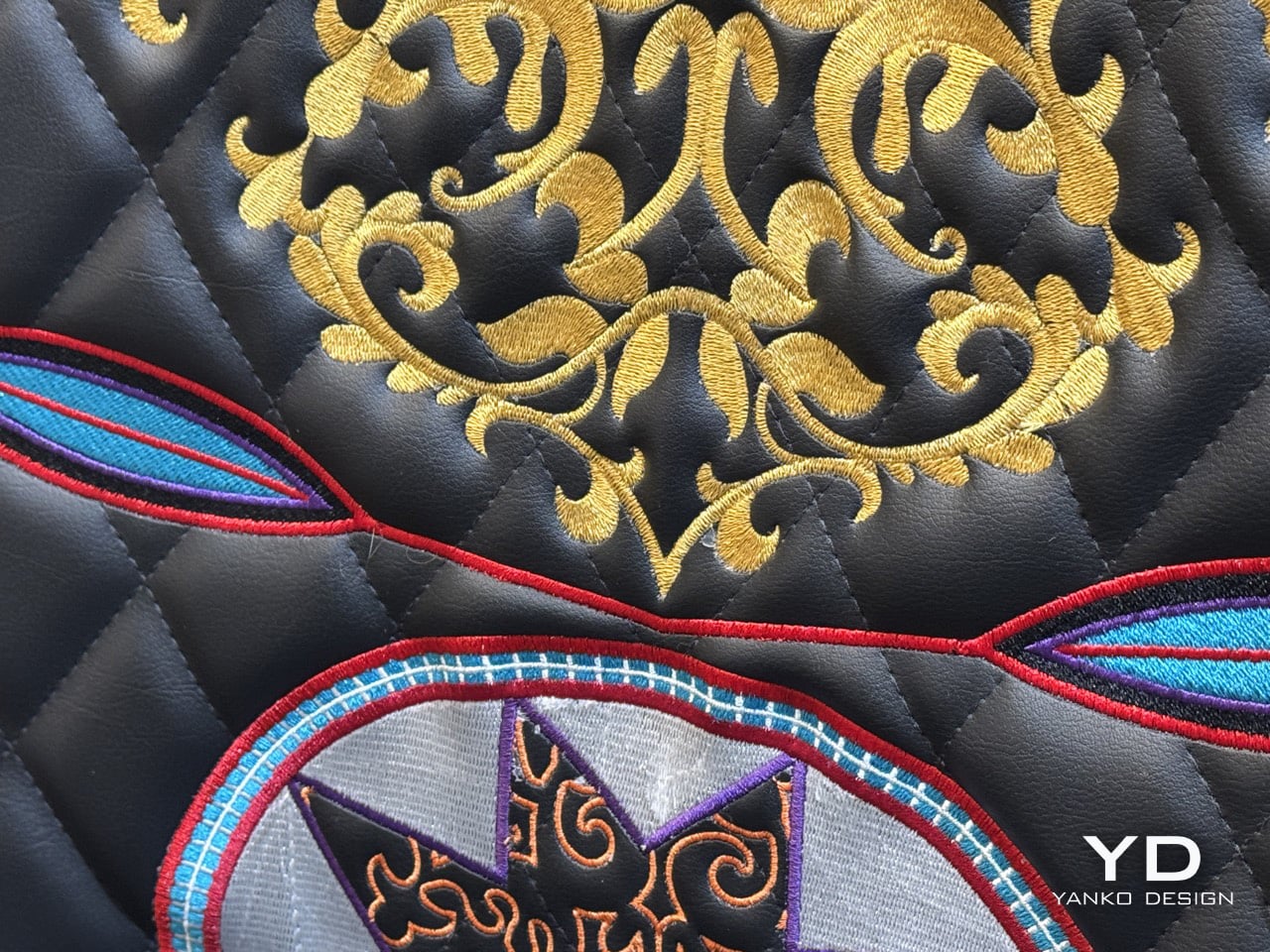
The embroidery work transforms an already iconic chair into a craft-intensive Labubu-esque character. Each monster appears to be unique, with thread layered in ways that create dimensional relief against the quilted leather backdrop. Some faces use densely packed stitching that gives them an almost patch-like quality, while others employ looser, more organic threadwork that lets the black leather show through. The color palettes vary wildly from chair to chair. One goes heavy on emerald green and white, another commits to a red and orange gradient that feels almost pyrographic. The effect is a collection where every piece reads as an individual artwork rather than a production run with minor variations.

The Monster Chair’s original form was already theatrical, with its deep button tufting and geometric legs that look like something between furniture and sculpture. Adding these embroidered creatures could have tipped the whole thing into novelty territory, but the execution is too considered for that. The monsters are bold without being cartoonish, detailed without feeling precious. They occupy that sweet spot where high craft meets playful irreverence, which has been Moooi’s signature move since Marcel Wanders and Casper Vissers founded the brand in 2001.

Each chair has its own persona. Some monsters look menacing, others oddly appealing. The artwork has an almost luchador-ish quality to it, making the chairs look like different wrestlers in their elaborate get-ups. The wrestler comparison fits well, given that every chair’s expression stands out as attention-grabbing. Some monsters look like they’ve won a battle, others look like they’ve got battle scars. One of them even has a gauze bandage wrapped around its ‘ear’, it’s rare to find yourself laughing and sympathizing with a chair, but you end up doing so.

The collection was on display at Superstudio Events during Milan Design Week 2026, part of Moooi’s broader 25th anniversary showcase. If you’re in Milan during the design week, Superstudio is worth the trek. The exhibition space gave these Monster Chairs the gallery treatment they deserve, lined up against black curtains with dramatic lighting that made the embroidered details pop. It’s the kind of installation that reminds you why Milan remains the essential pilgrimage for anyone who takes design seriously.

The post Moooi’s 25th Anniversary Monster Chairs Have Hand-Embroidered Creatures on Every Backrest first appeared on Yanko Design.
This $60 Japanese tool might ruin canned beer forever, and that’s actually the point

There was a time when opening a can was just that, opening a can. A quick crack, a cold sip, and on with your day. Convenient, sure. But never especially satisfying. The drink stayed trapped behind a narrow opening, the aroma muted, the experience flattened into something functional instead of memorable.

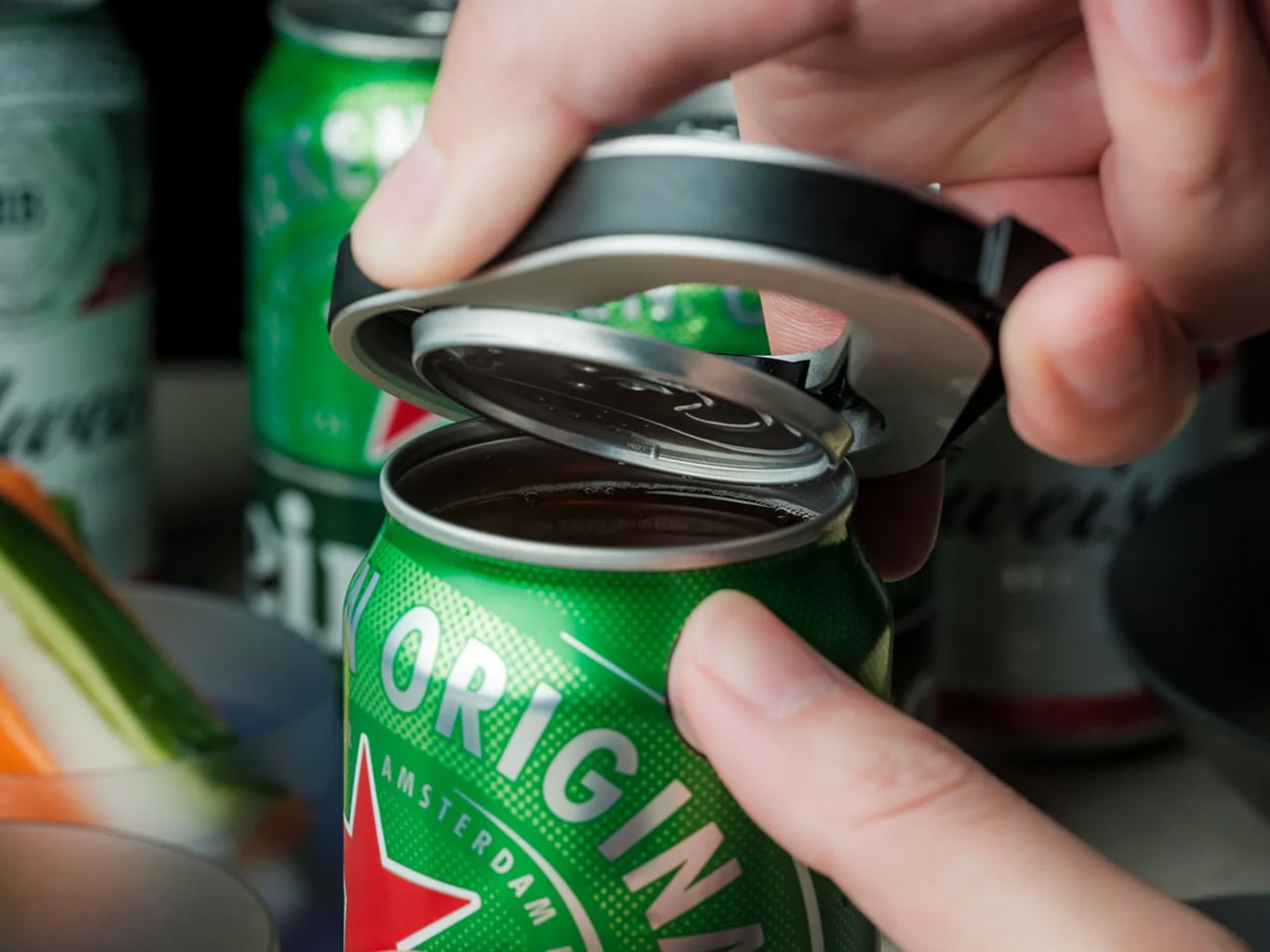
Hands lift and pull back the tab on a green beer can, revealing the opening. The can sits among other cans on a surface.

But as more of us start paying attention to the objects we use every day, even the smallest rituals begin to matter. The DraftPro Top Can Opener quietly changes one of the most overlooked ones. Not as a gimmick or party trick, but as a beautifully resolved tool that turns an ordinary can into something closer to a proper pour.

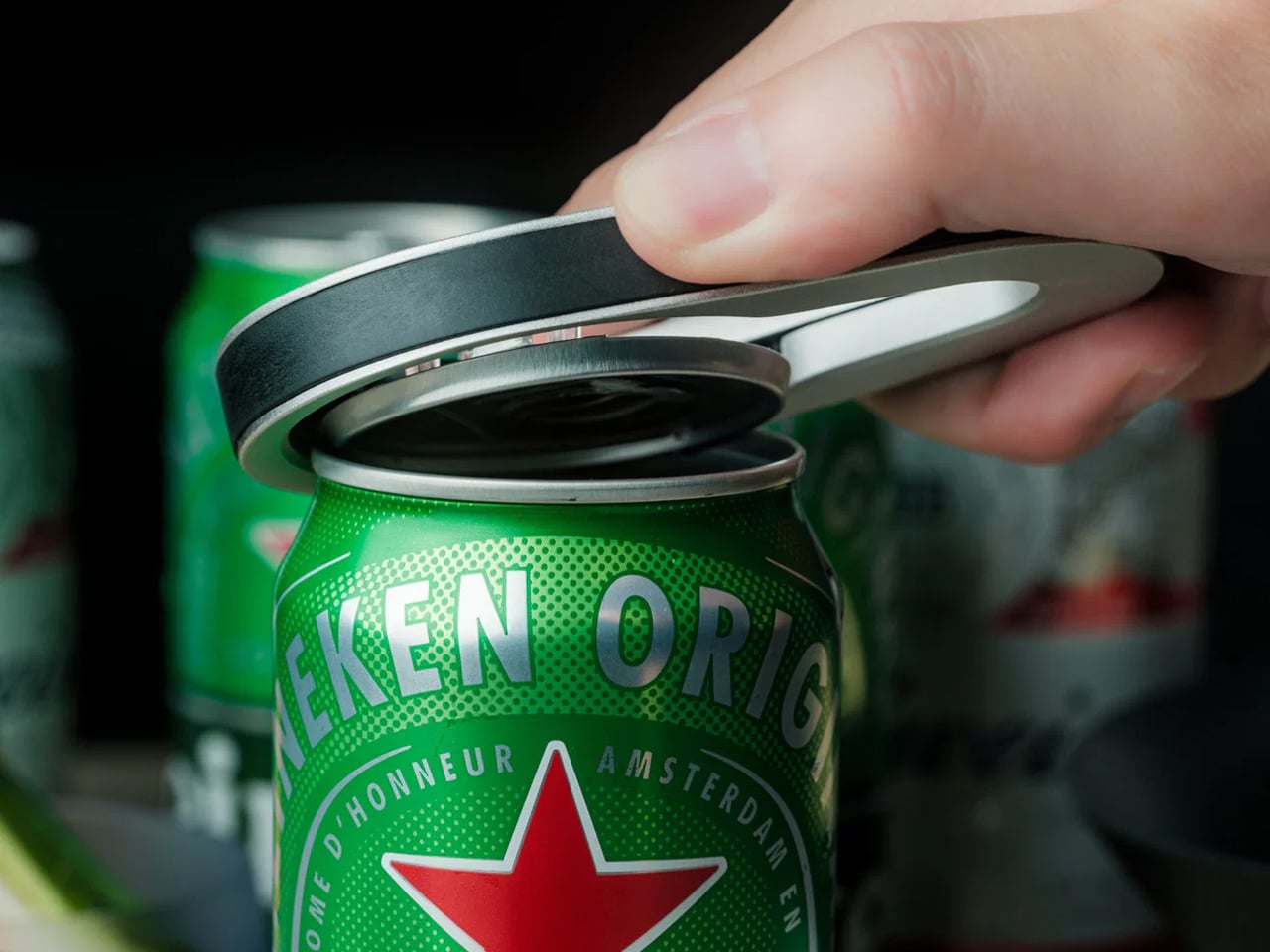
Close-up of a hand opening a green Heineken can with a pull tab, revealing the metal lid edge

The Tool That Changed How I Drink From a Can

At first, I thought DraftPro was just a clever little accessory, the kind of thing you admire once, use twice, and forget in a drawer. But after a few days, I realized it had changed how I approached even the most casual drink.

  • I started reaching for it with beer at the end of the day.
  • Then with sparkling water on hot afternoons.
  • Then with canned cocktails when I didn’t feel like dealing with glassware or cleanup.

There’s something surprisingly satisfying about the motion itself. A smooth twist, a clean release, and suddenly the whole top is gone. The aroma lifts instantly. The first sip feels more open, more direct, more intentional. It turns out the difference between drinking from a can and actually enjoying what’s in it is smaller than I thought, but much more noticeable.

Coca‑Cola can with ice and a lime wedge, condensation on the can.

Designed for the Details

  • Full-top removal: Turns a standard can into a wide-mouth, glass-like drinking experience.
  • Better aroma, better taste: With the top fully removed, you smell more of the drink before you even take a sip.
  • Ice-ready opening: Drop in ice cubes directly when the drink isn’t cold enough or the day is too hot.
  • Cocktail-friendly format: Add citrus, mixers, or garnish right in the can without needing extra tools.
  • Universal compatibility: Works with domestic and international cans, so it travels easily between setups.
  • Compact, portable design: Small enough to pack for a backyard hang, picnic, hike, or cabin weekend.

DraftPro doesn’t add complexity. It removes it. That’s what makes it feel smart.

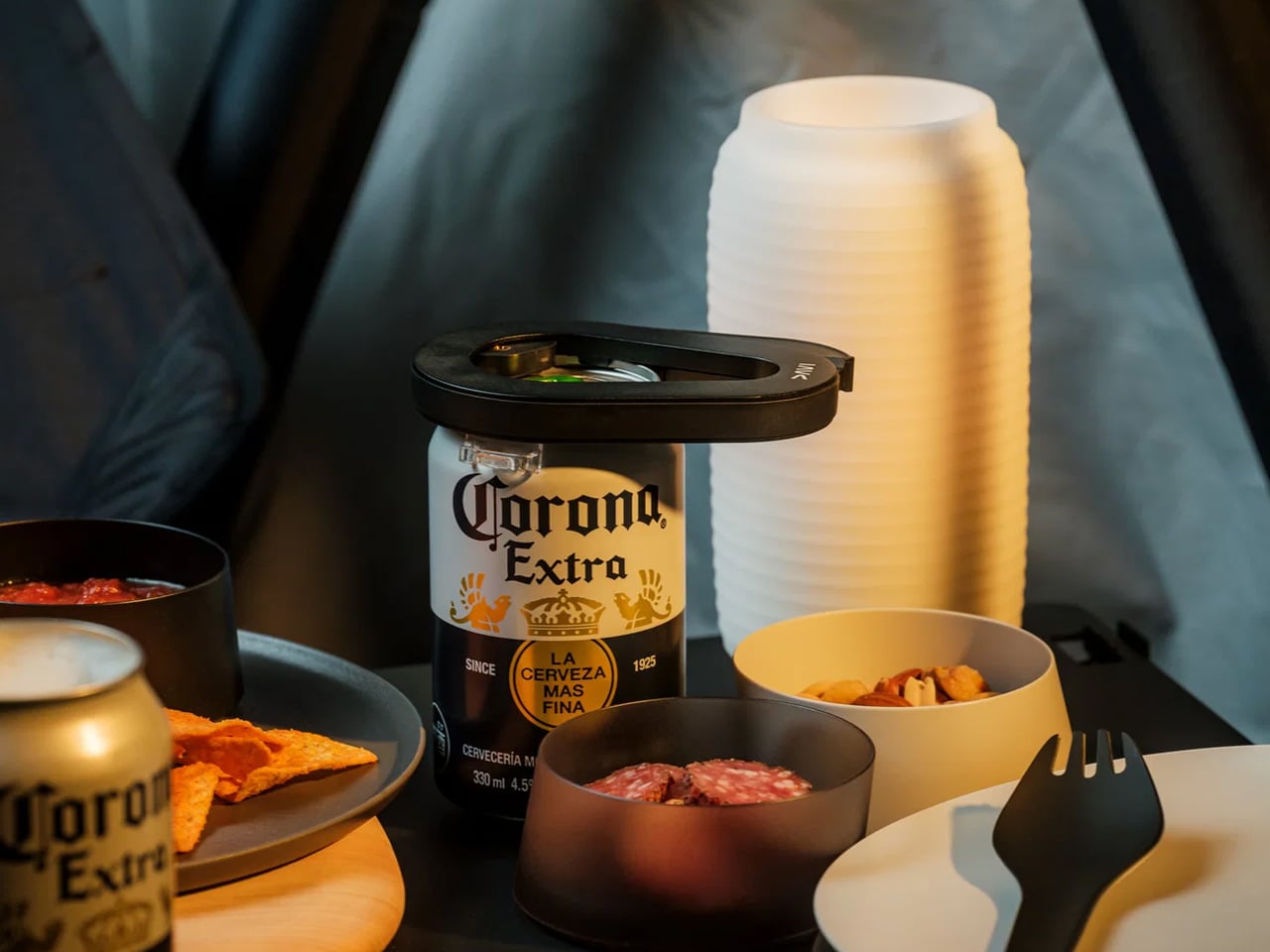
Corona Extra beer bottle at a campsite-style table with snacks, plastic cups, and a black lid or opener on top of the bottle cap

Why Convenience Doesn’t Have to Mean Compromise

We’ve been taught to think of canned drinks as the convenient option, not the ideal one. They’re easy to store, easy to carry, easy to open, but never really treated as something worth savoring. DraftPro challenges that assumption in the most understated way possible.

It doesn’t change the drink itself. It changes your relationship to it.

Suddenly, a beer feels less like something you grab and more like something you serve. Sparkling water feels less utilitarian. Even a simple canned cocktail becomes a little more considered. In a world built around speed and shortcuts, that shift matters more than it should, and maybe exactly as much as it needs to.

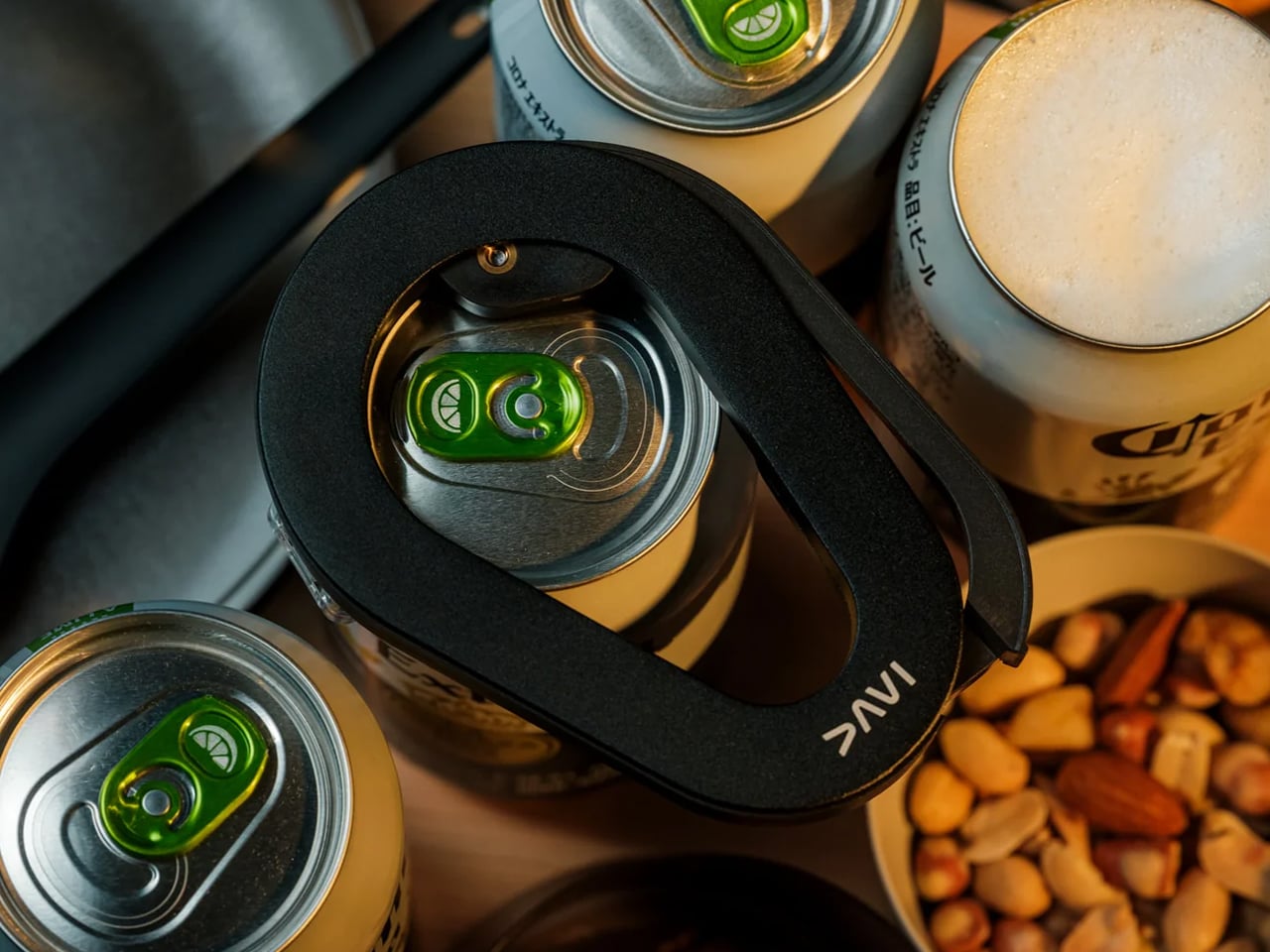
Close-up of several beer cans with green pull-tabs and a black curved strap resting across the tops, a bowl of mixed nuts visible in the background.

Design That Reflects Discipline

Designed by award-winning Japanese designer Shu Kanno and built in Japan, DraftPro has the kind of restraint that makes good tools feel inevitable. Nothing about it is overworked. The grip is subtle, the motion is controlled, and the result is clean without calling attention to itself.

It doesn’t shout “innovation.” It just works with a kind of quiet precision that makes most everyday tools feel clumsy by comparison. The clean cut edge, the balanced form, the lack of visual clutter, it all reflects a design philosophy rooted in discipline rather than excess.

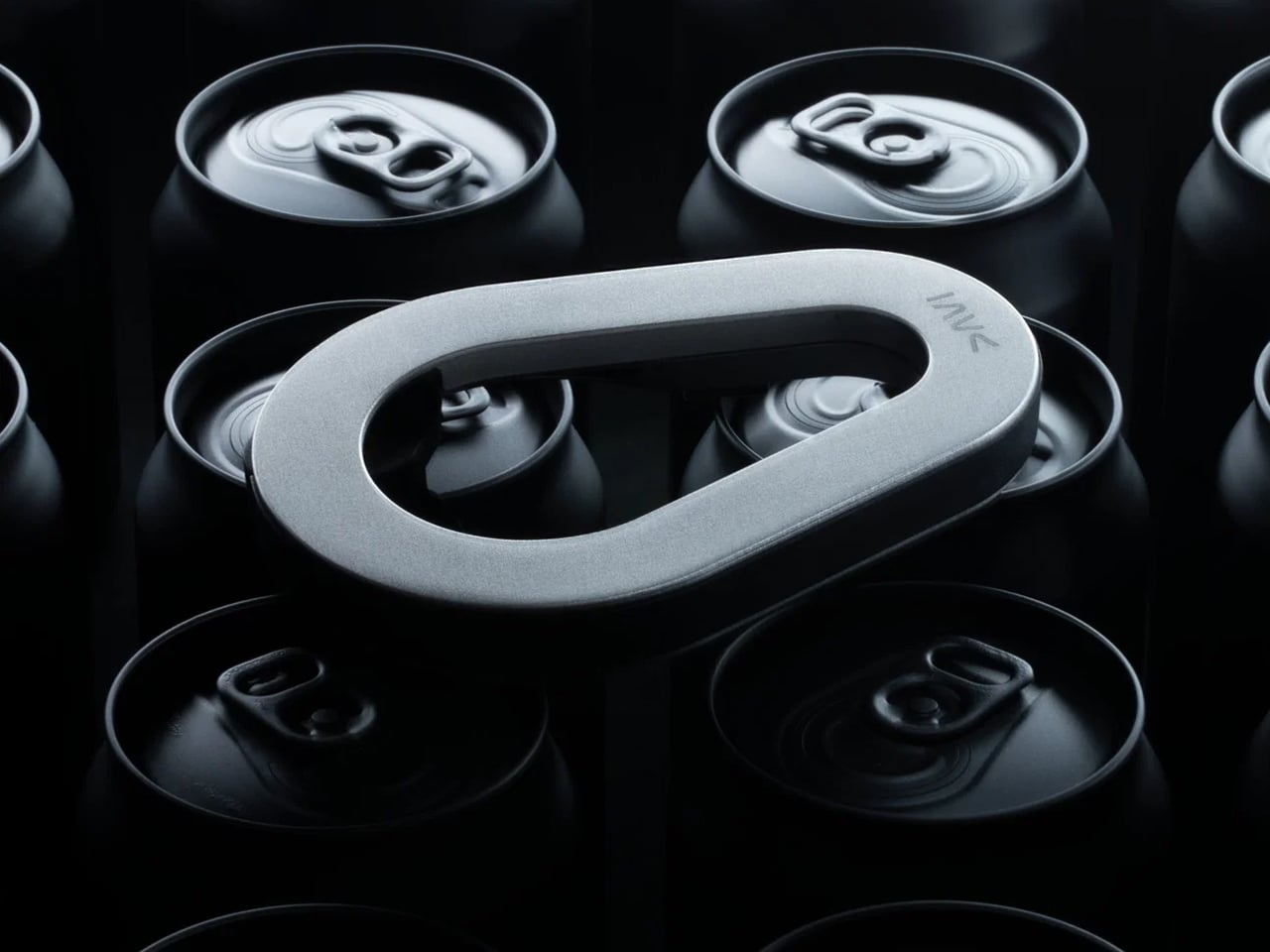
Silver oval metal loop resting across the tops of stacked dark beverage cans in a moody lighting setup

Who It’s For

  • Design Enthusiasts

A small, useful object that feels thoughtfully made from every angle.

  • Ritual Seekers

For anyone who believes even a casual drink can deserve a better moment.

  • Gift Givers with Taste

The kind of gift that doesn’t shout “tool”—it quietly becomes a favorite.

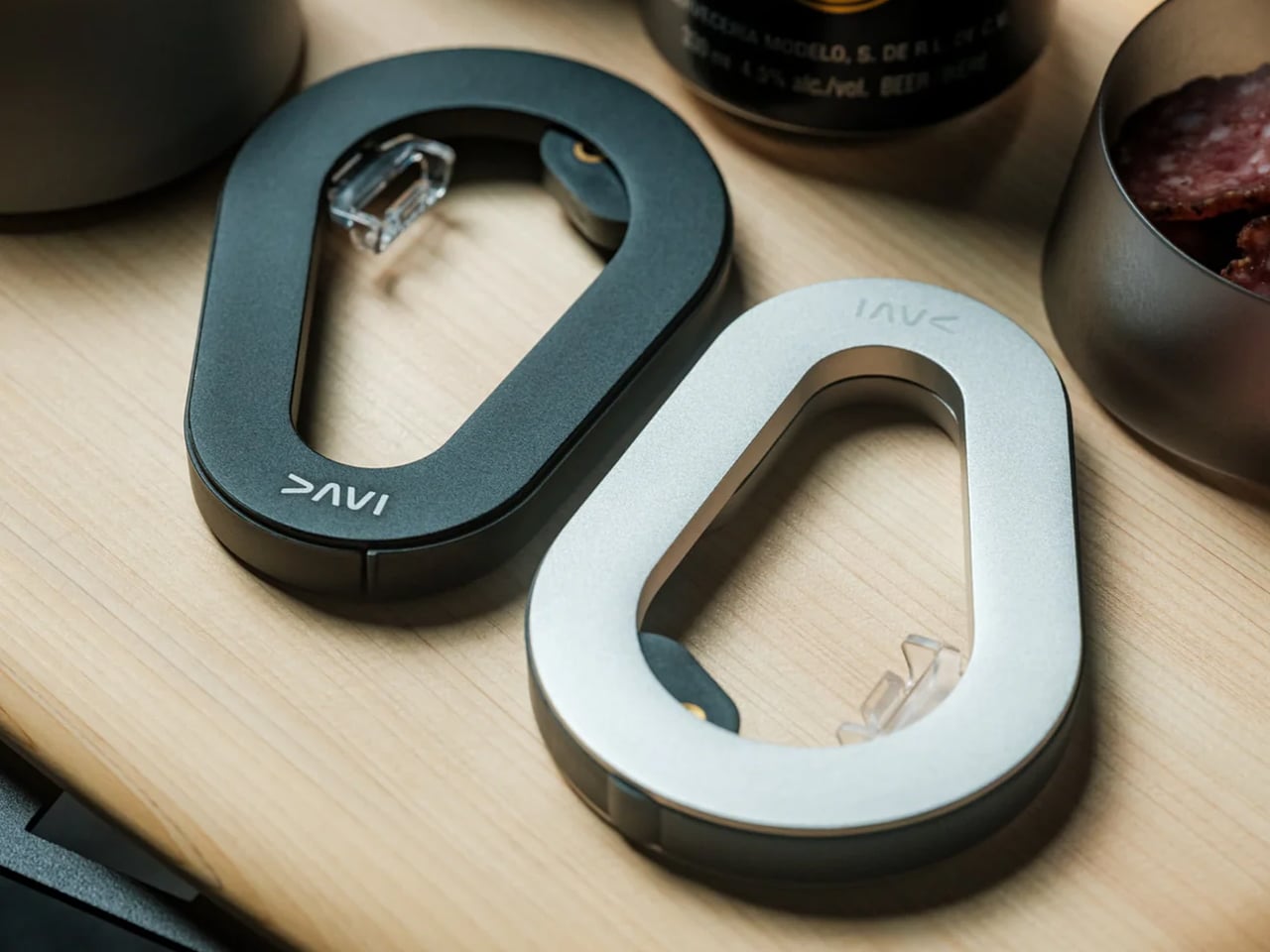
Two oval metal carabiner-style clips (one dark gray, one silver) resting on a light wood desk, with small latch mechanisms visible.

Where Form Becomes Ritual

You don’t realize how many everyday experiences have been reduced to habit until one object slows you down just enough to notice them again. DraftPro won’t transform your life. But it does transform a cold can into something more open, sensory, and satisfying.

At the end of the day, it’s still a can opener. But sometimes, the right tool changes the entire ritual around it. The DraftPro Top Can Opener is available now for $60.

The post This $60 Japanese tool might ruin canned beer forever, and that’s actually the point first appeared on Yanko Design.
IKEA Waited 12 Years to Show This Inflatable Chair at Milan Design Week

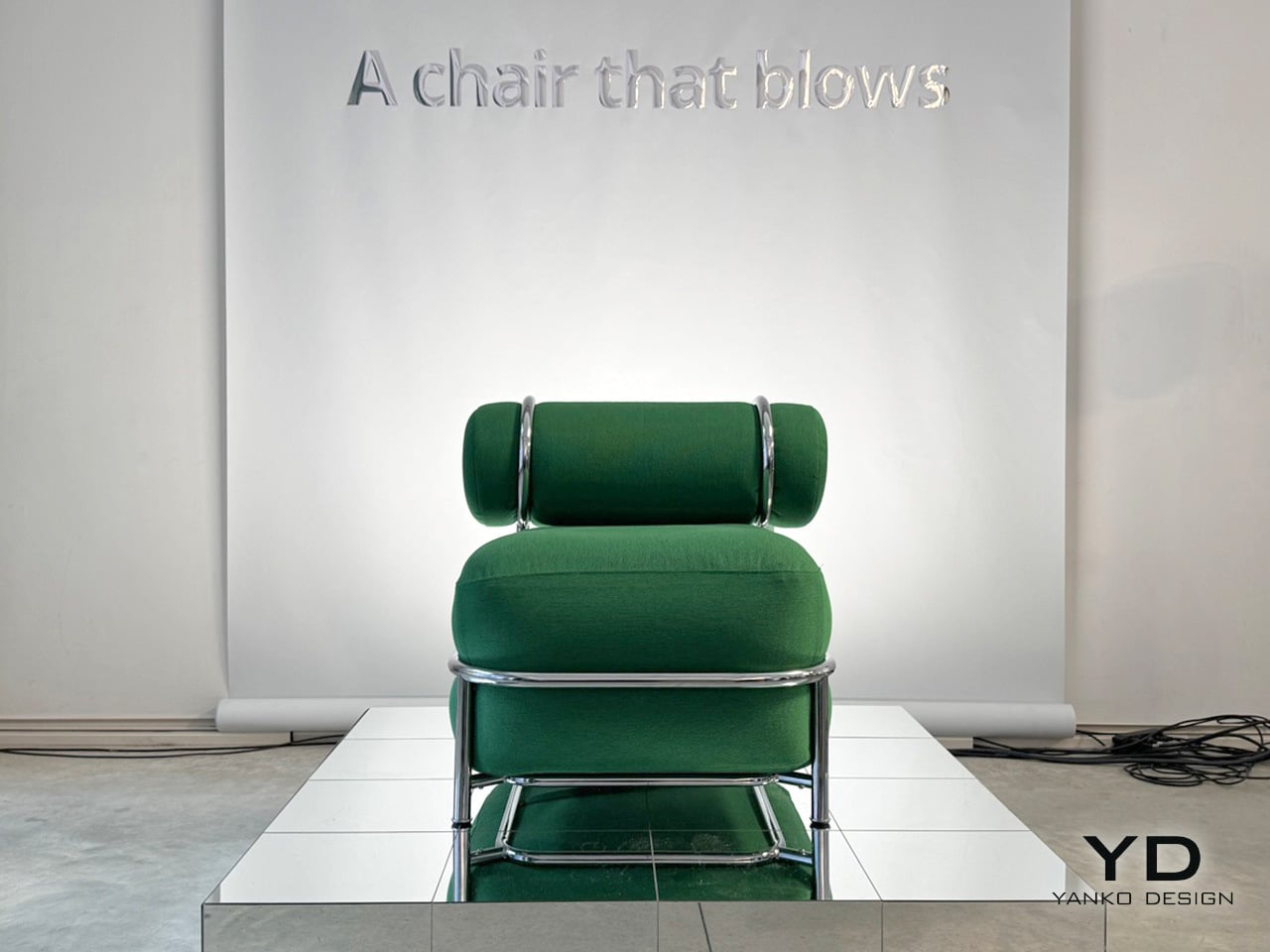
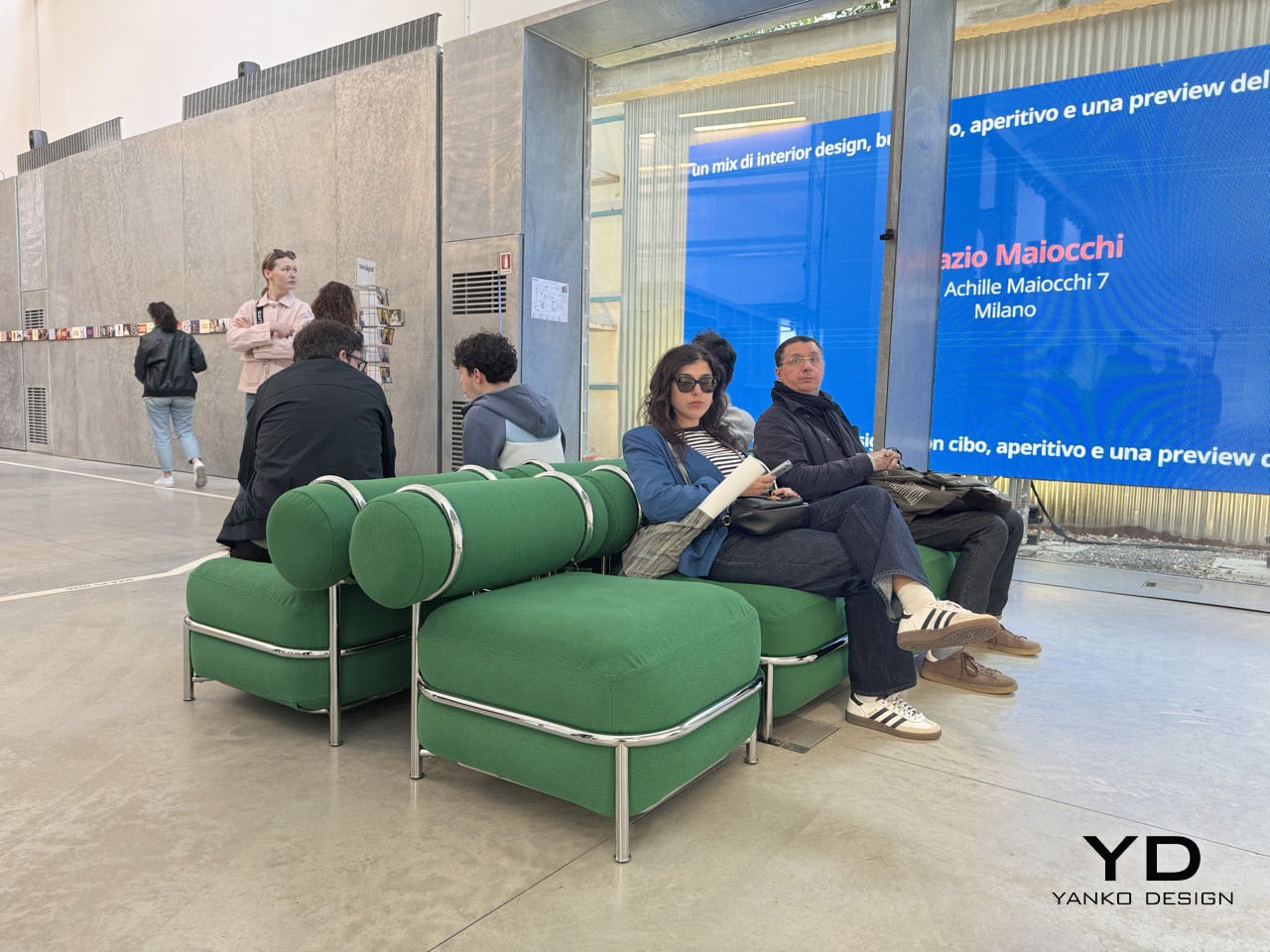
Air has always been free. IKEA designer Mikael Axelsson has been thinking about that fact for over a decade, sitting on an idea he first sketched in 2014 and shelved when no one at the company wanted to revisit inflatable furniture. The concept never disappeared, it just waited. At Milan Design Week 2026, inside the “Food For Thought” exhibition at Spazio Maiocchi, that idea finally got its moment. The PS 2026 Easy Chair arrived alongside a rocking bench and a flexible floor lamp, three pieces offering the first real look at the upcoming tenth IKEA PS collection.

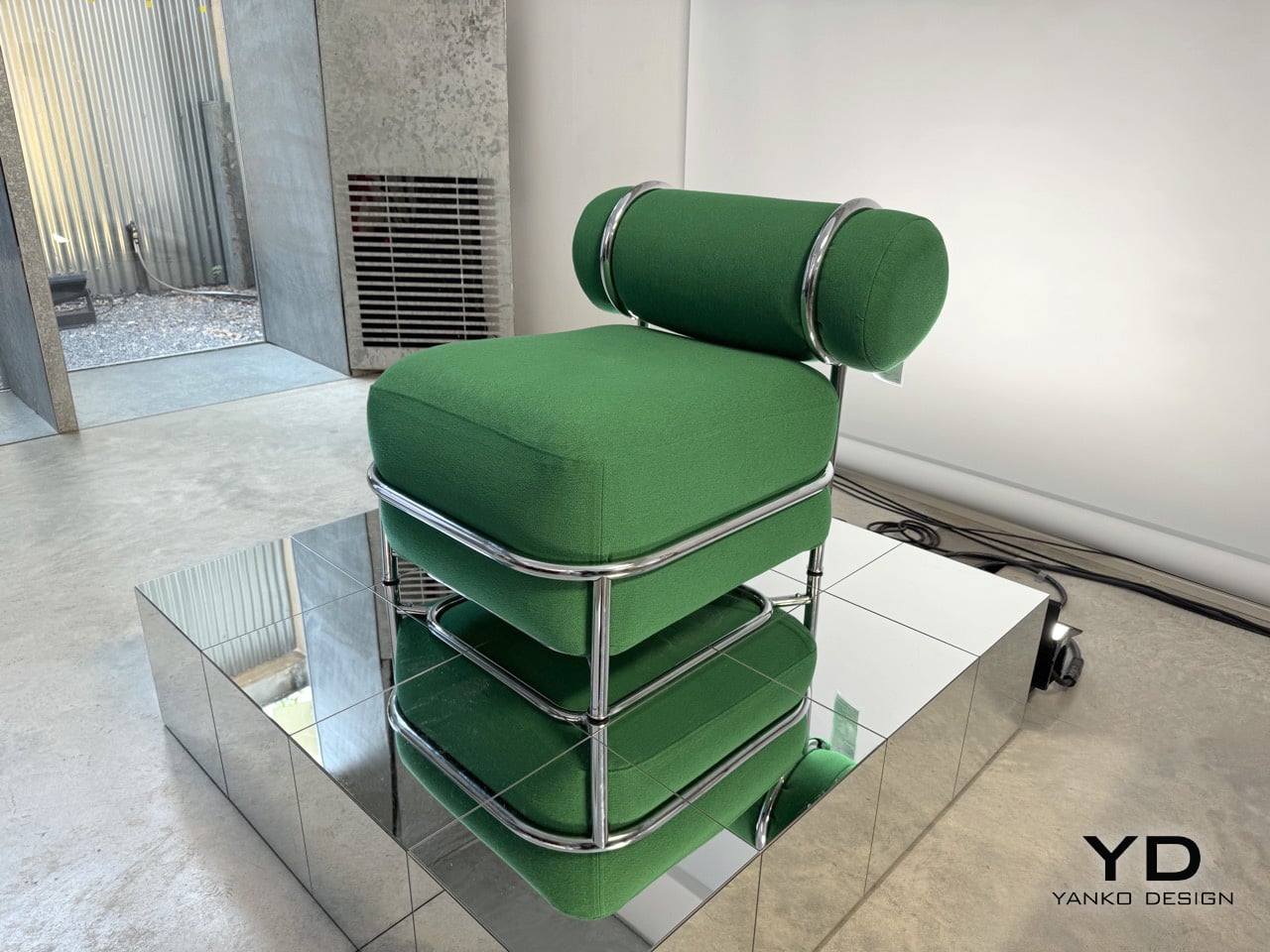
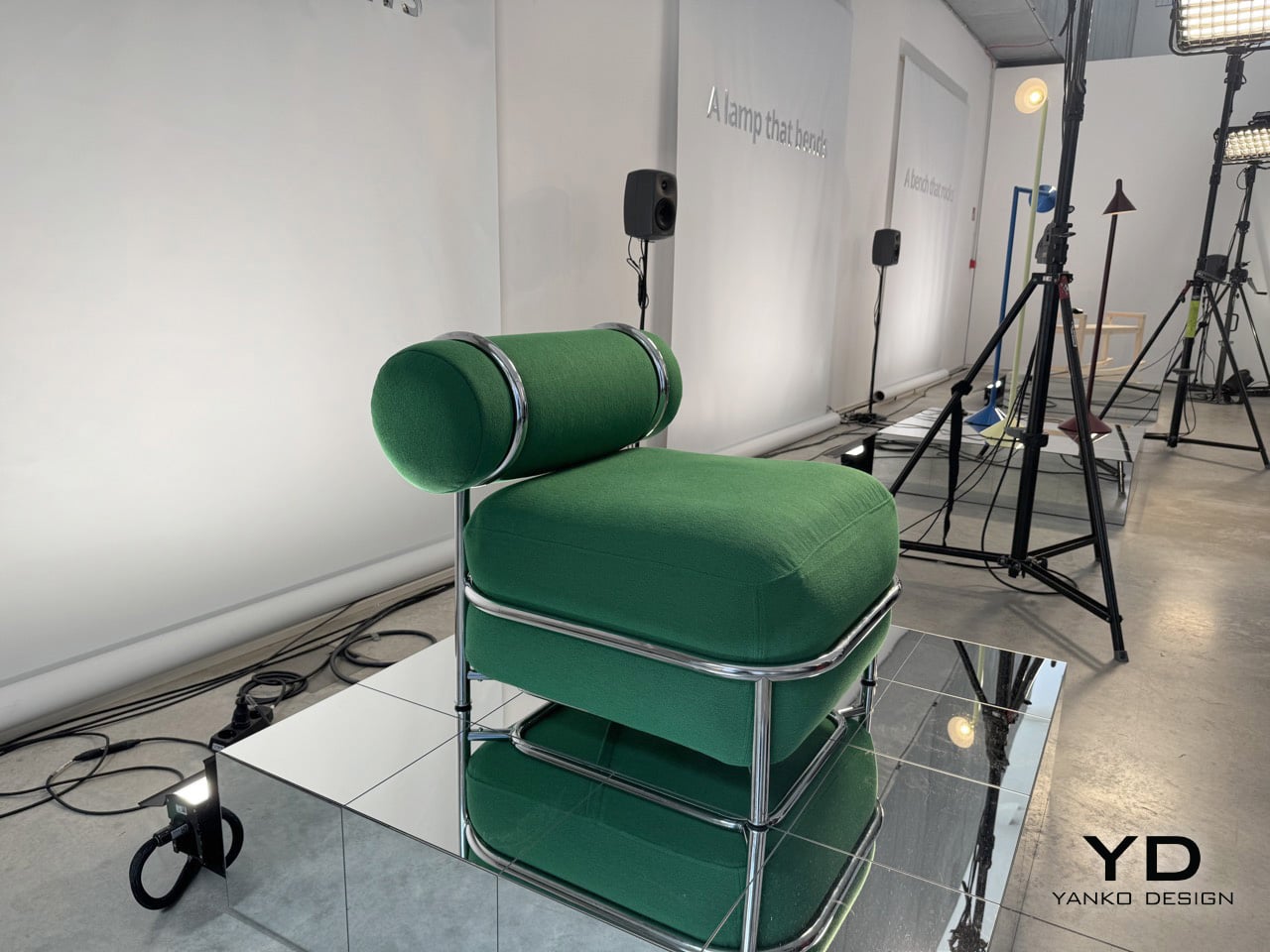
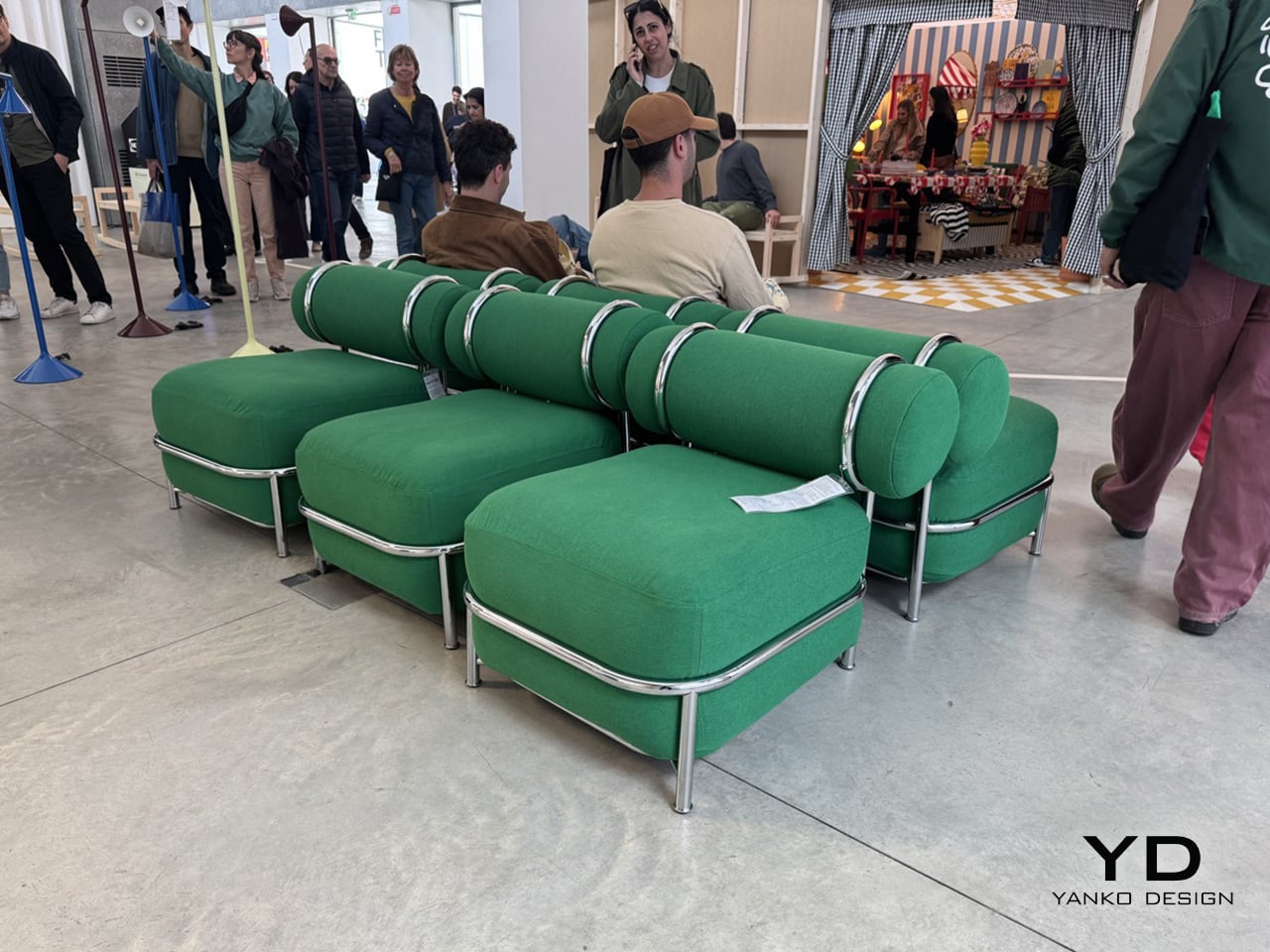
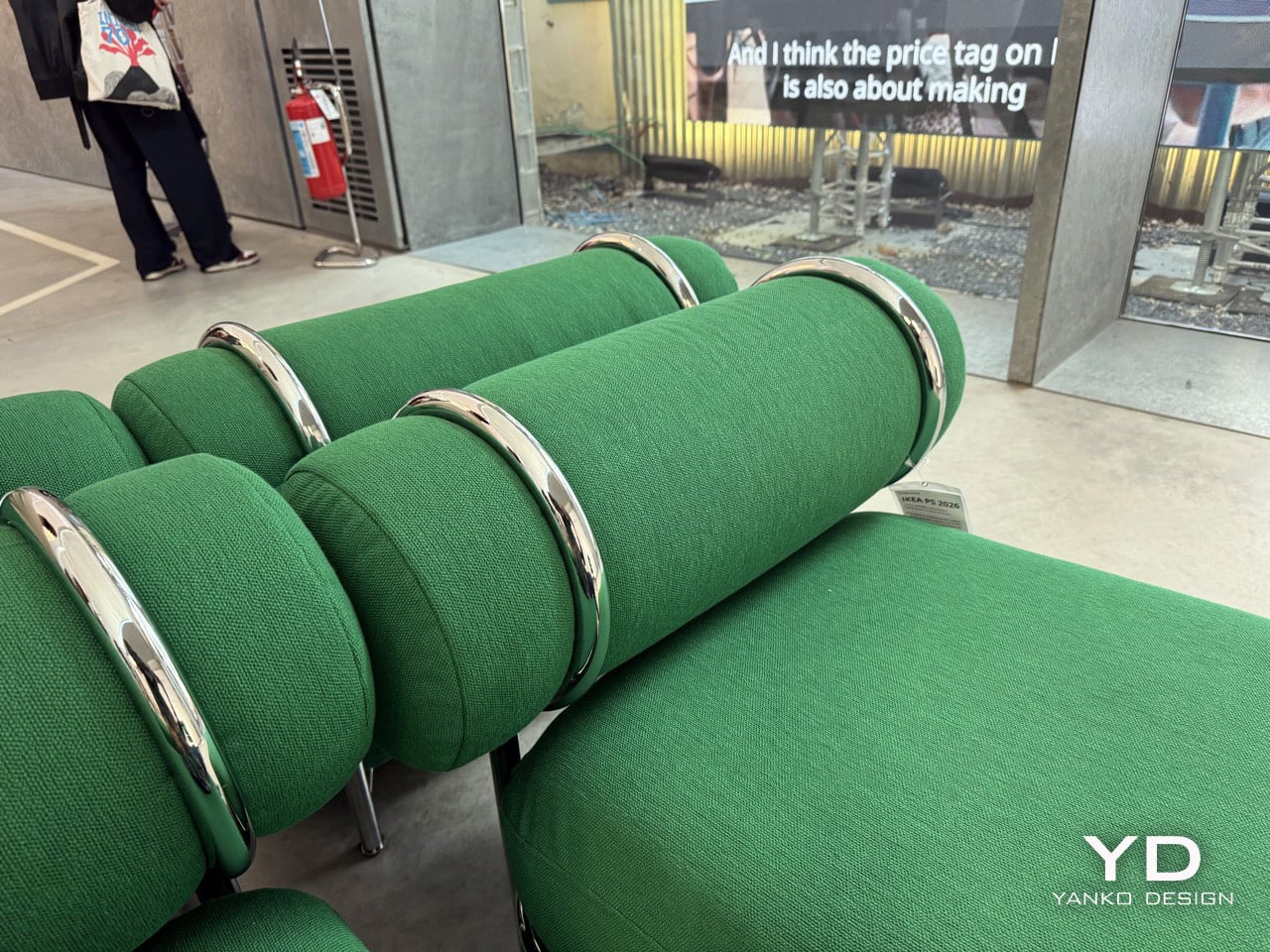
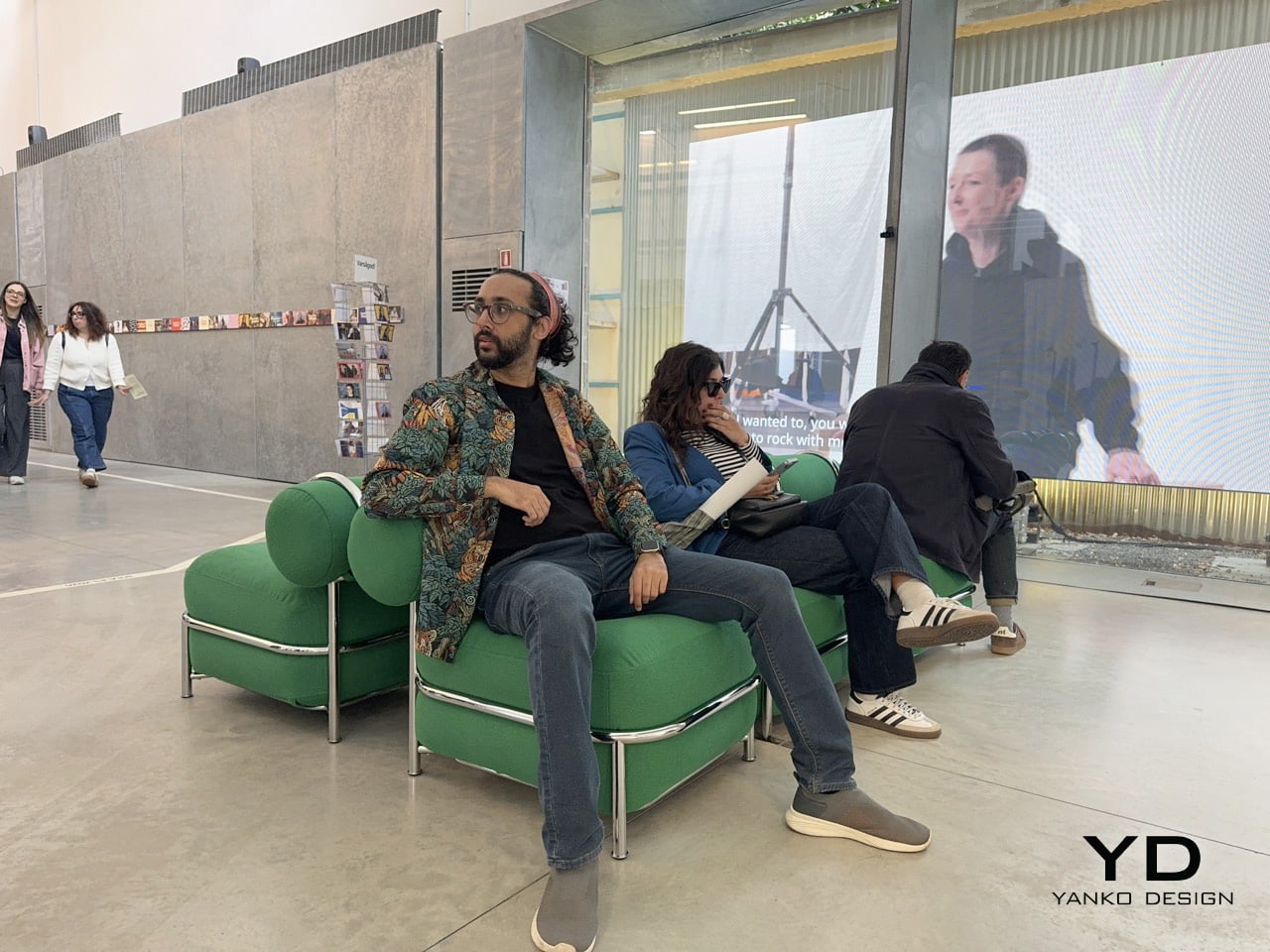
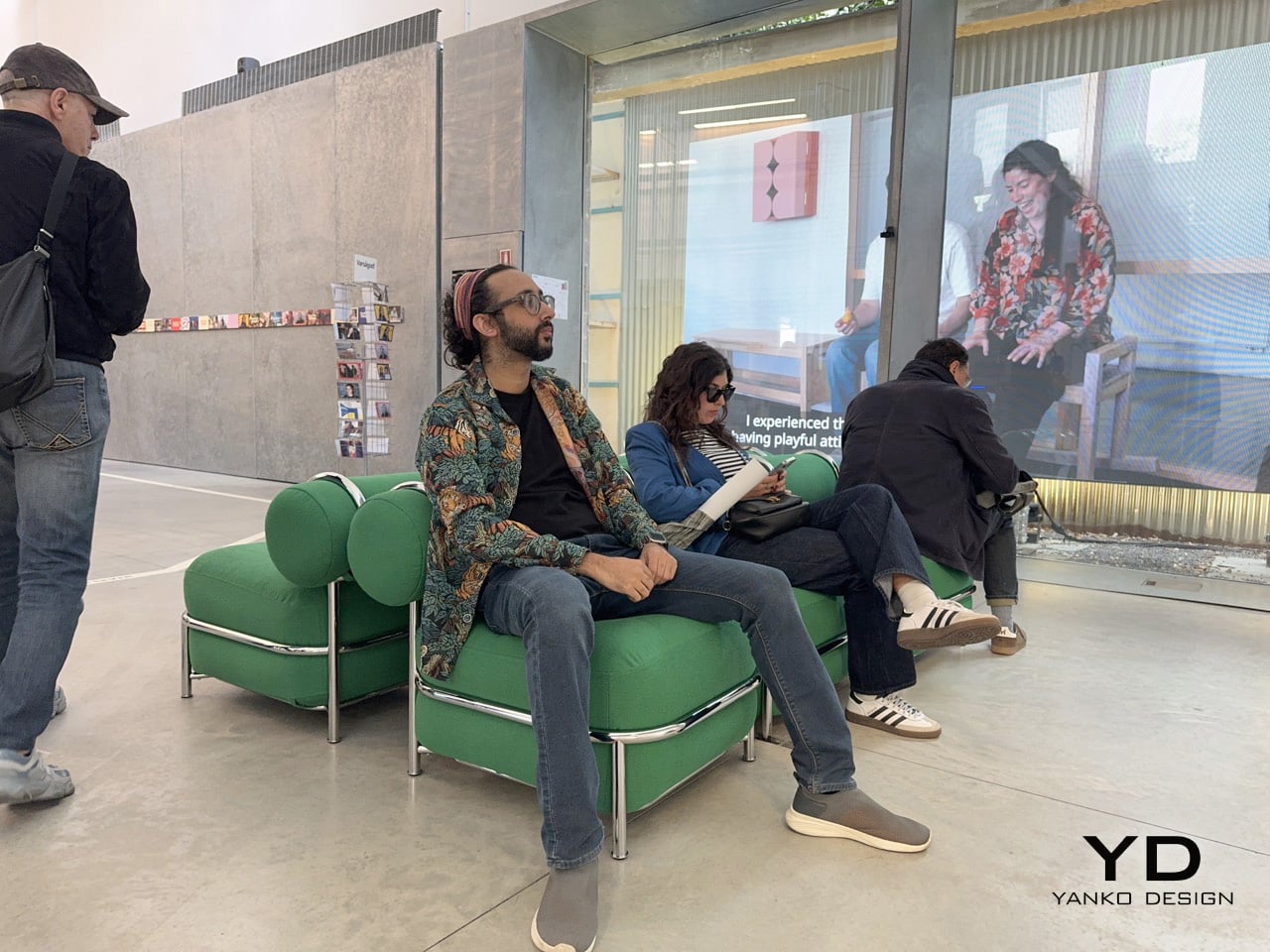
What Axelsson built reads, at first glance, like a fairly conventional lounge chair. Rich green fabric, cylindrical cushions, a compact and settled silhouette. The chrome tubing running around its perimeter is the tell, holding the inflatable volumes in place and giving the chair its shape and its credibility, keeping it far from the transparent, wobbly inflatables of the early 2000s. The separate air chambers between seat and backrest mean the sitting experience feels grounded rather than unpredictable. The lightness only reveals itself when someone actually lifts it.

Designer: Mikael Axelsson for IKEA

Mikael Axelsson is tapping into a design language that’s been trusted for nearly a century. It’s the same basic idea that made Le Corbusier’s Grand Confort a classic back in 1928: a rigid steel cage with soft cushions sitting inside. That frame is what makes the whole thing work. Without it, you’d just have a novelty green cushion that would feel out of place anywhere but a college dorm room. With the frame, the chair feels intentional and composed, and the backrest bolster sits with conviction across the top rail. The fact that it’s full of air is the last thing you notice, which is exactly the point.

The details here are just as smart. The fabric wrap gets rid of that annoying squeak and slide you might remember from old inflatable furniture, making it feel more like an actual upholstered piece. It comes with a manual foot pump instead of an electric one, which not only keeps the price down but also makes you part of the assembly process. It feels right for a chair that’s all about interacting with its materials. The deep green color seen in Milan is the kind of confident tone that can anchor a corner of a room without taking over.


The PS collection has always been IKEA’s design playground, a space for them to experiment since it first launched back in 1995. The rocking bench by Marta Krupinska has these wonderfully exaggerated runners, and Lex Pott’s floor lamp uses a simple diagonal cut so you can aim the light in three different directions. The full collection is set to launch on May 13, 2026. But the easy chair makes the sharpest point of the three. It argues that a chair built mostly on air can absolutely belong at Salone, as long as someone has thought carefully enough about the frame.

If you’re in Milan and want to see it for yourself, the chair is part of IKEA’s ‘Food For Thought’ exhibition. It’s being held at Spazio Maiocchi, located at Via Achille Maiocchi 7. The installation is open to the public and runs from April 21st through the 26th. It’s a great chance to see the chair, the lamp, and the bench in a setting that’s more about experience than just product display.

The post IKEA Waited 12 Years to Show This Inflatable Chair at Milan Design Week first appeared on Yanko Design.
Kalshi suspended three political candidates from its platform for insider trading

Prediction market Kalshi has taken action against three political candidates, alleging that each was engaged with insider trading of information about their campaigns. The company implemented new rules last month aimed at preventing politicians and athletes from placing bets on events they can control, and it said those guardrails helped to flag this trio of cases.  

The three candidates are Mark Moran of Virginia, Matt Klein of Minnesota and Ezekiel Enriquez of Texas. Kalshi reached settlements with Klein and Enriquez, both of whom cooperated in the platform's investigations. Each will face a fine of less than $1,000 and suspensions of up to five years. Moran's case has resulted in a disciplinary action, with a five year suspension and a fine of more than $6,000. He posted on X about the situation and claimed this was essentially a stunt to see if he'd be caught and "to highlight how this company is destroying young men."

Kalshi and other prediction markets have been the subject of several lawsuits by state attorneys general that are attempting to regulate the sector as gambling. Nevada, Arizona and New York have cases underway, but the state-level attempts are not looking promising. An appeals court ruled against New Jersey's effort to govern this industry, and the US Commodity Futures Trading Commission has launched a lawsuit of its own in an effort to ensure it will be the only party to regulate prediction markets.

This article originally appeared on Engadget at https://www.engadget.com/big-tech/kalshi-suspended-three-political-candidates-from-its-platform-for-insider-trading-222433937.html?src=rss

Ecco the Dolphin: Complete will combine remasters and a sequel into one package

Last year, Ecco the Dolphin creator Ed Annunizata teased plans to remaster the first two games in the series and create an entirely new sequel. Ecco the Dolphin: Complete, announced by Annunziata's studio A&R Atelier, appears to be the result of that work. The game doesn't have a release date yet, but A&R Atelier says it combines the planned remasters and third title into "the complete, definitive Ecco the Dolphin experience, created by the people who made the originals."

Complete includes "all versions of Ecco the Dolphin and Ecco: The Tides of Time," according to the developer, alongside "a brand-new contemporary Ecco game." Besides graphical improvements, A&E Atelier says the game will introduce "built-in speedrunning support, achievements and leaderboards," and things like the ability to create custom courses from existing levels. And while A&R Atelier's announcement doesn't include footage of the new game or the platforms it'll release on, the official Ecco the Dolphin website has a countdown clock that could point to when more information will be released.

Annunziata sued Sega to try and win the rights to the Ecco the Dolphin IP in 2013, the same year he failed to get The Big Blue, a spiritual sequel to Ecco the Dolphin, fully funded on Kickstarter. Sega and Annunziata ultimately settled their lawsuit in 2016, which may have laid the groundwork for Ecco the Dolphin: Complete to happen.

This article originally appeared on Engadget at https://www.engadget.com/gaming/ecco-the-dolphin-complete-will-combine-remasters-and-a-sequel-into-one-package-222020243.html?src=rss

10 Best Gadgets & Tools That Make Going Off-Grid Feel Like an Upgrade

There’s a version of going off-grid that means giving things up — signal, comfort, hot coffee, reliable light. Then there’s the version a new wave of purposeful gear is quietly making possible, where disconnecting from the grid doesn’t mean downgrading your experience at all. These ten tools are built for that second scenario. Each one solves a real problem the outdoors creates, with enough design intelligence that you’d carry them anywhere.

What’s changed isn’t just the technology; it’s the design thinking behind it. Gear for the outdoors used to mean sacrificing aesthetics for function. Now the best of it does both, blending rugged performance with a considered design that makes you want to own it before you need it. The ten picks ahead span communication, power, navigation, hygiene, and comfort — a full stack of upgrades for life beyond the last cell tower.

1. HMD Terra M

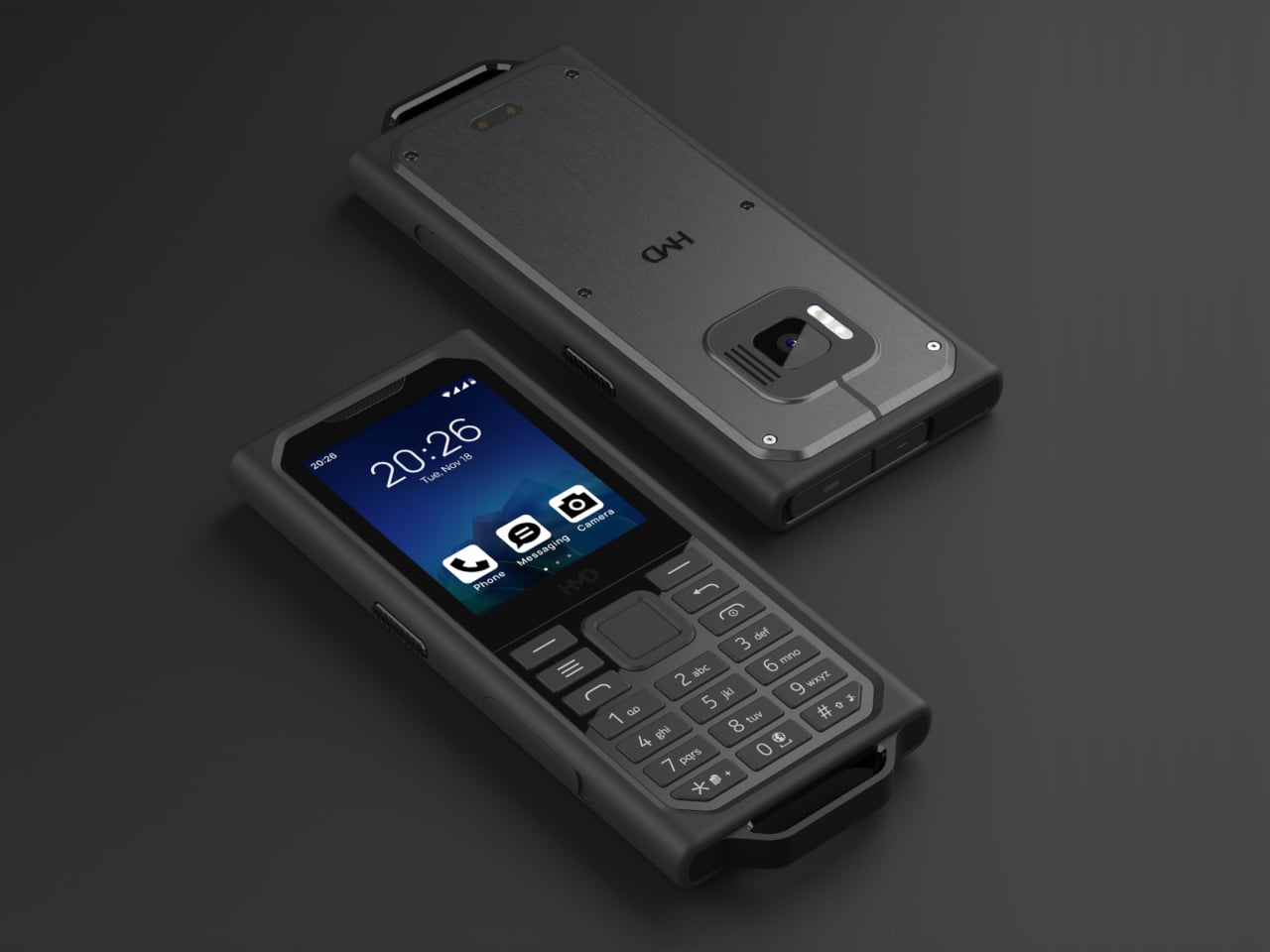
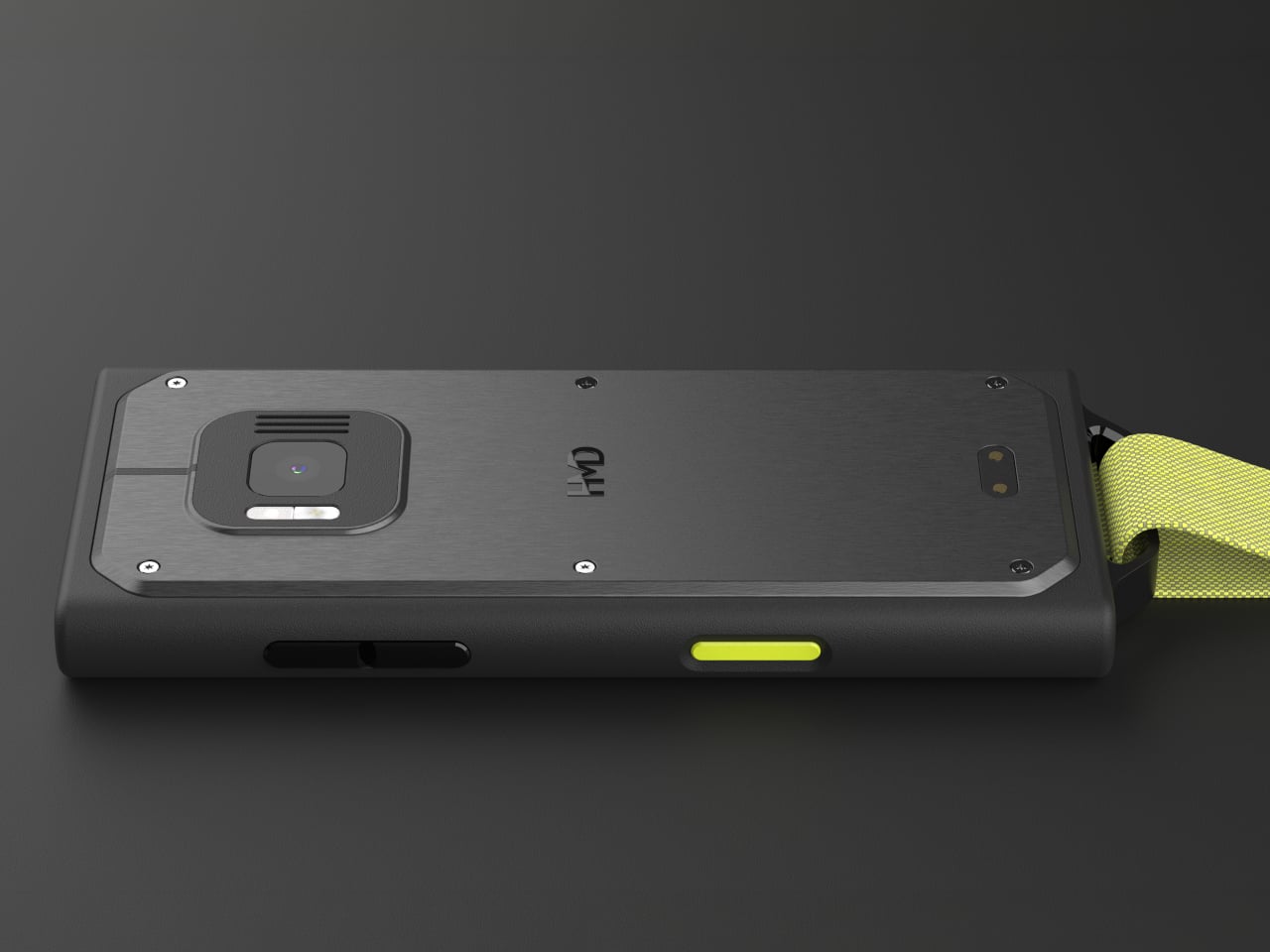
Most rugged phones solve the wrong problem. They add armor, lose usability, and end up too bulky to carry comfortably. The HMD Terra M takes a different approach. It’s compact and purpose-built for field conditions, carrying both IP68 and IP69K ratings, MIL-STD-810H military certification, and resistance to drops from 1.8 meters. It handles submersion, high-pressure water jets at 100 bar and 80°C, and exposure to gasoline, industrial solvents, and medical-grade sanitizers. That’s a resume most flagship phones would quietly fail.

What makes the Terra M genuinely useful outdoors is how it handles the small things. Large physical keys respond to gloved hands, a non-slip textured grip reduces fumbling, and a 2.8-inch display hits 550 nits behind Corning Gorilla Glass 3. These are the details that matter when you’re mid-job and can’t afford to stop and baby your device. The Terra M keeps you reachable and functional in places where most phones simply quit.

What We Like:

  • IP68, IP69K, and MIL-STD-810H rated for serious field conditions
  • Glove-compatible keys and a high-brightness display designed for outdoor use

What We Dislike:

  • The 2.8-inch screen limits any media or app-heavy use
  • The feature phone format won’t suit users dependent on smartphone functionality

2. RetroWave 7-in-1 Radio

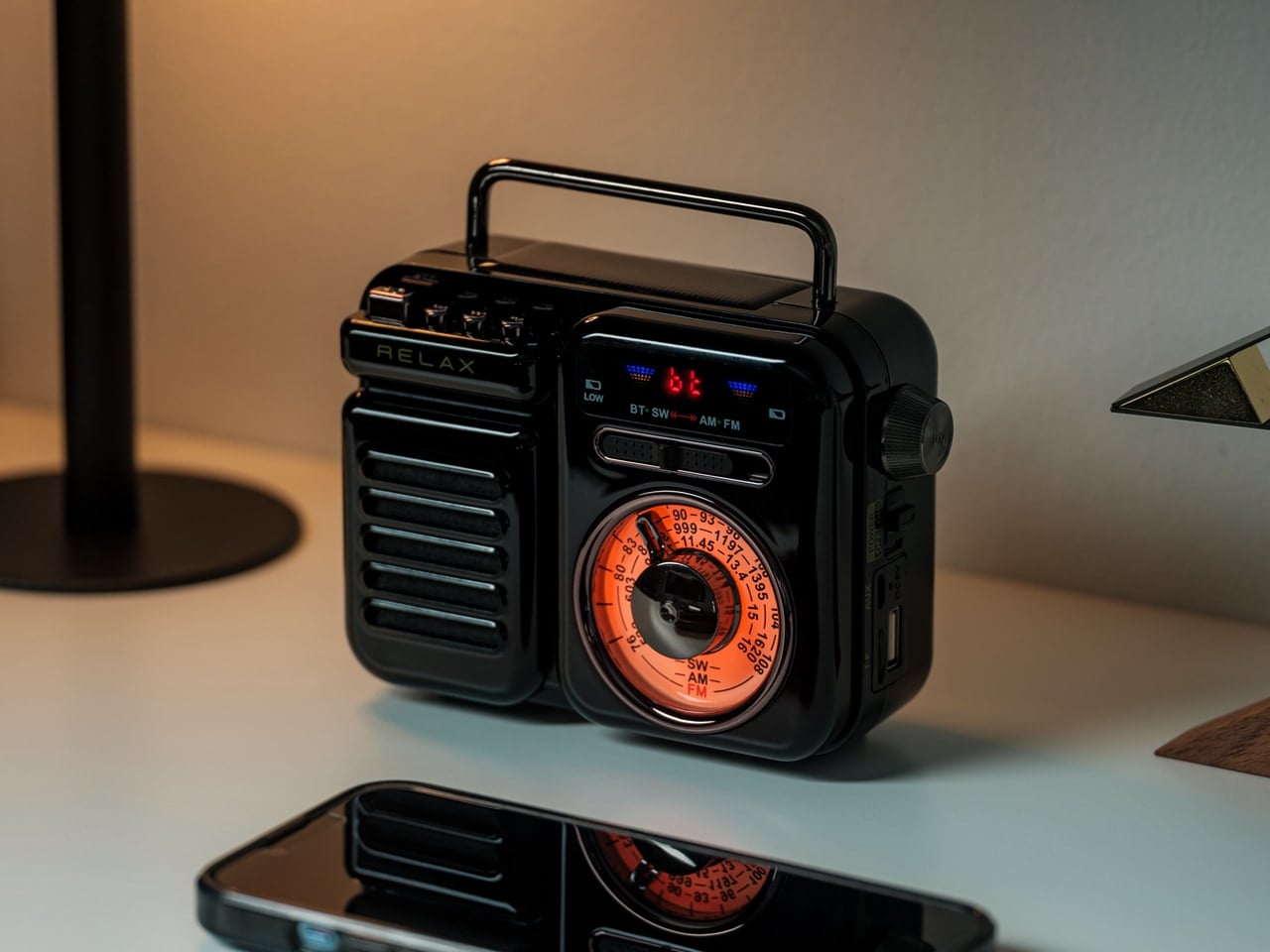
A single device covering seven roles sounds like marketing language until you’re three days into a camping trip with a dead phone and no signal. The RetroWave handles AM, FM, and shortwave reception, Bluetooth streaming, MP3 playback via USB or microSD, a built-in flashlight, an SOS alarm, hand-crank charging, a solar panel, and a power bank function. Its retro Japanese design and tactile tuning dial make it something you’d want on a shelf, not buried in a go-bag.

Off-grid, it earns its place immediately. You stop carrying a flashlight, a radio, a speaker, and a backup charger as separate items. The RetroWave collapses all of that into one object you can grab and go. Whether riding out a storm at home or deep in a campsite with no hookups in sight, the hand-crank and solar panel mean you’re never entirely powerless. That reliability, in the right situation, is the difference between anxious and settled.

Click Here to Buy Now: $89.00

What We Like:

  • Seven functions in one device significantly reduce what you need to pack
  • Hand-crank and solar charging operate without any external power source

What We Dislike:

  • Multi-function design means no single feature is best-in-class
  • Retro aesthetic won’t suit every minimalist gear setup

3. O-Boy Satellite Smartwatch

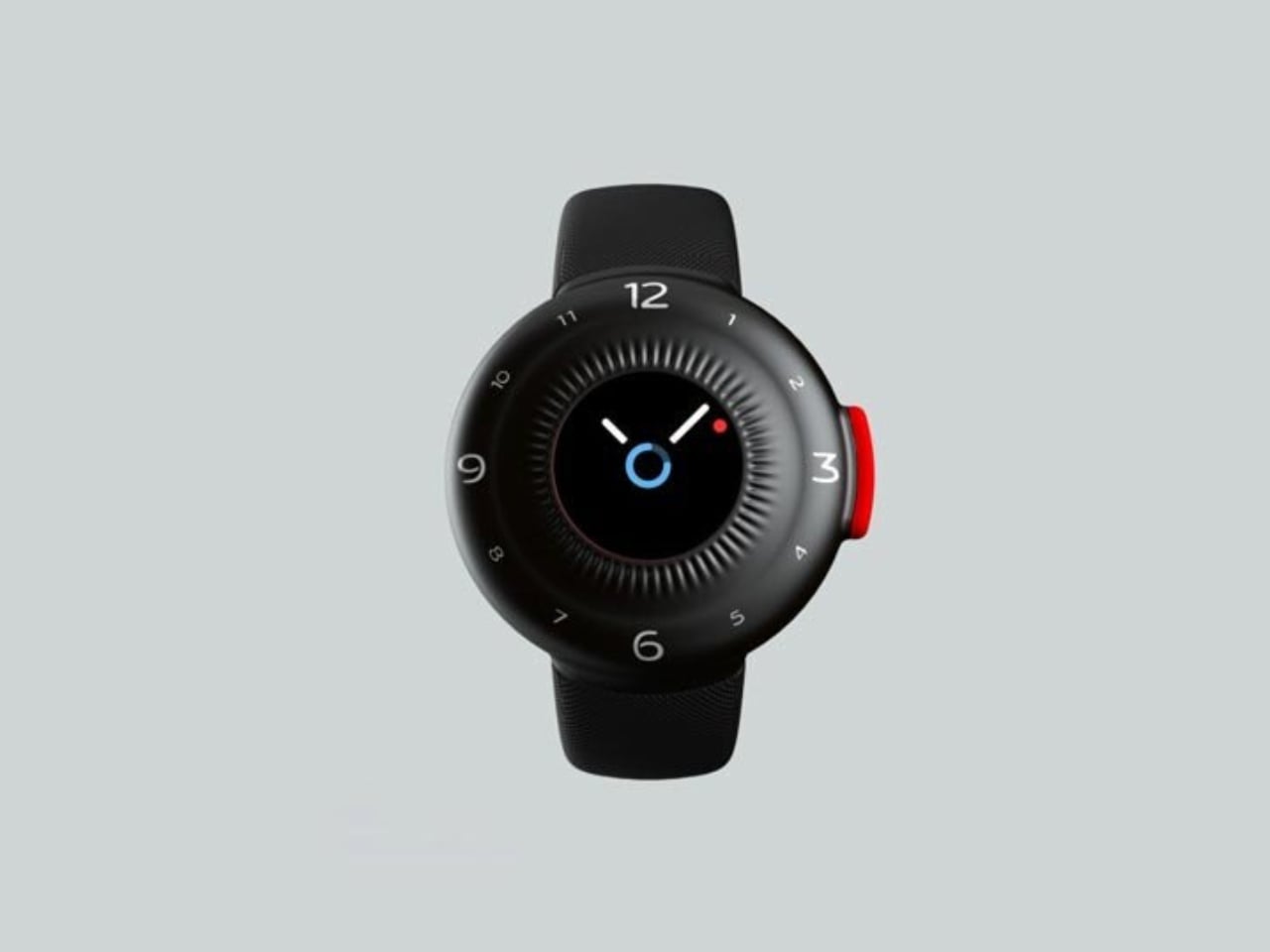
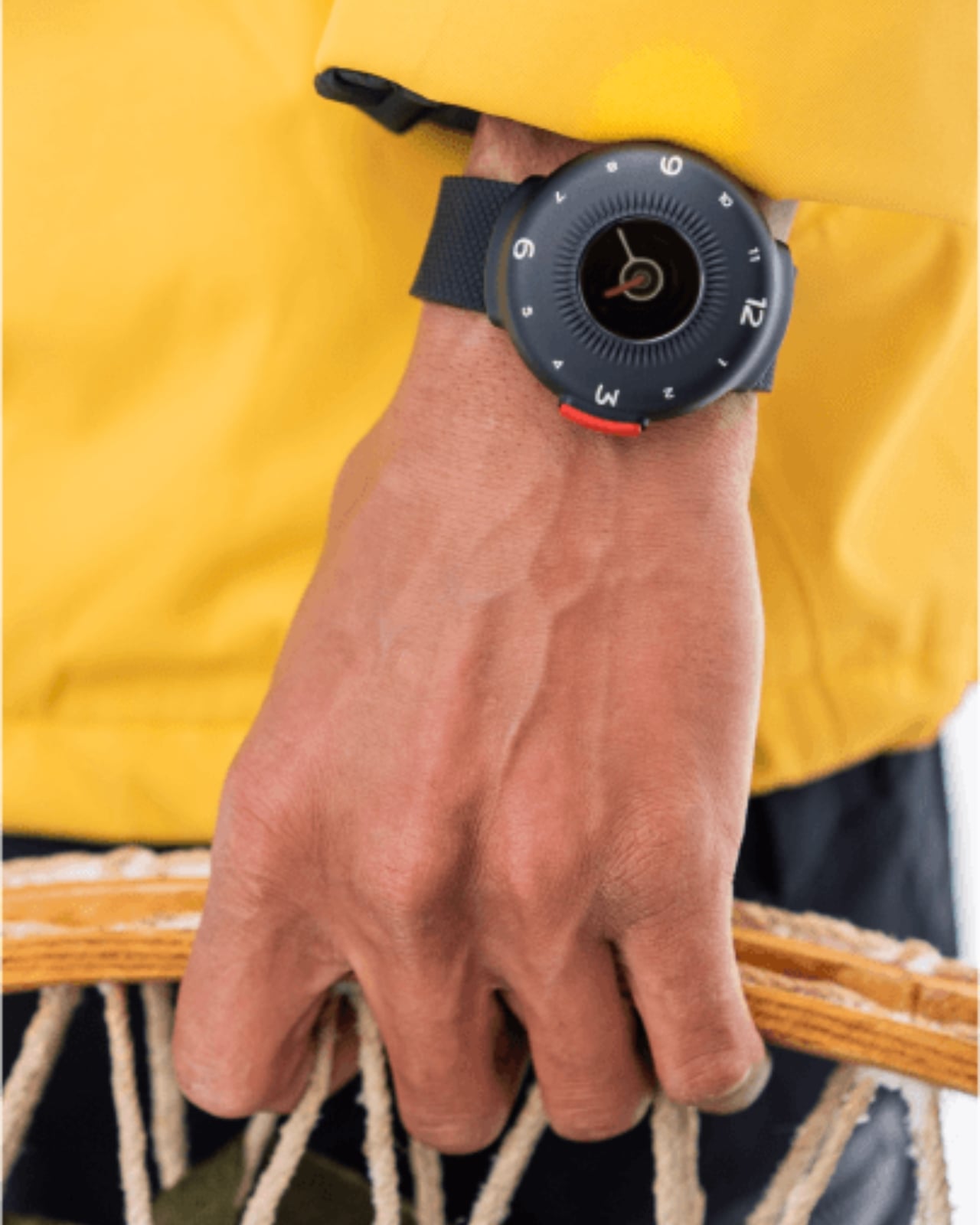
There’s a version of emergency preparedness that stops at downloading an offline map. Then there’s O-Boy. Developed by Brussels-based studio Futurewave, it’s a satellite-connected smartwatch built for environments where mobile networks simply don’t reach — mountains, open ocean, remote job sites. In those places, it functions as a direct satellite communication link, letting you transmit an emergency alert regardless of what infrastructure exists beneath your feet.

What Futurewave got right, beyond the technology, is the design brief. O-Boy doesn’t read as overtly tactical or survival-coded. It looks like something a person who spends time in remote environments would actually wear — utilitarian without being aggressive. That broader visual appeal matters because people who need a backup safety layer the most aren’t always those who identify as outdoor athletes. O-Boy is designed for anyone who ventures where their phone simply cannot save them.

What We Like:

  • Satellite connectivity works in locations with zero mobile network coverage
  • Design is wearable beyond strictly tactical or adventure-specific contexts

What We Dislike:

  • Satellite communication typically requires an ongoing subscription service
  • Smartwatch form factor means battery management becomes a daily consideration

4. BlackoutBeam Tactical Flashlight

Most flashlights ask you to choose between power and portability. The BlackoutBeam doesn’t treat that as a meaningful trade-off. With 2,300 lumens of output, a 300-meter beam throw, and a 0.2-second response time, it delivers instant illumination exactly when you need it. The aluminum body carries an IP68 rating for water and dust resistance, built to handle rain, impact, and submersion without missing a beat.

What separates it from the drawer flashlight you forgot to charge is the combination of instant-on response and structural durability. In a blackout, a wildlife encounter, or a roadside situation at night, the difference between light and no light is rarely about brightness — it’s about how fast you get there. The BlackoutBeam gets there before you’ve finished reaching for it. Its industrial design keeps it from looking out of place in any context, which means it actually gets carried.

Click Here to Buy Now: $90.00

What We Like:

  • 2,300-lumen output with 300-meter beam reach handles serious low-light scenarios
  • IP68 waterproof rating and 0.2-second response built for real-world emergencies

What We Dislike:

  • Maximum lumen output draws battery faster during extended use
  • Tactical aesthetic doesn’t integrate seamlessly into every EDC setup

5. Carabiner Power Bank

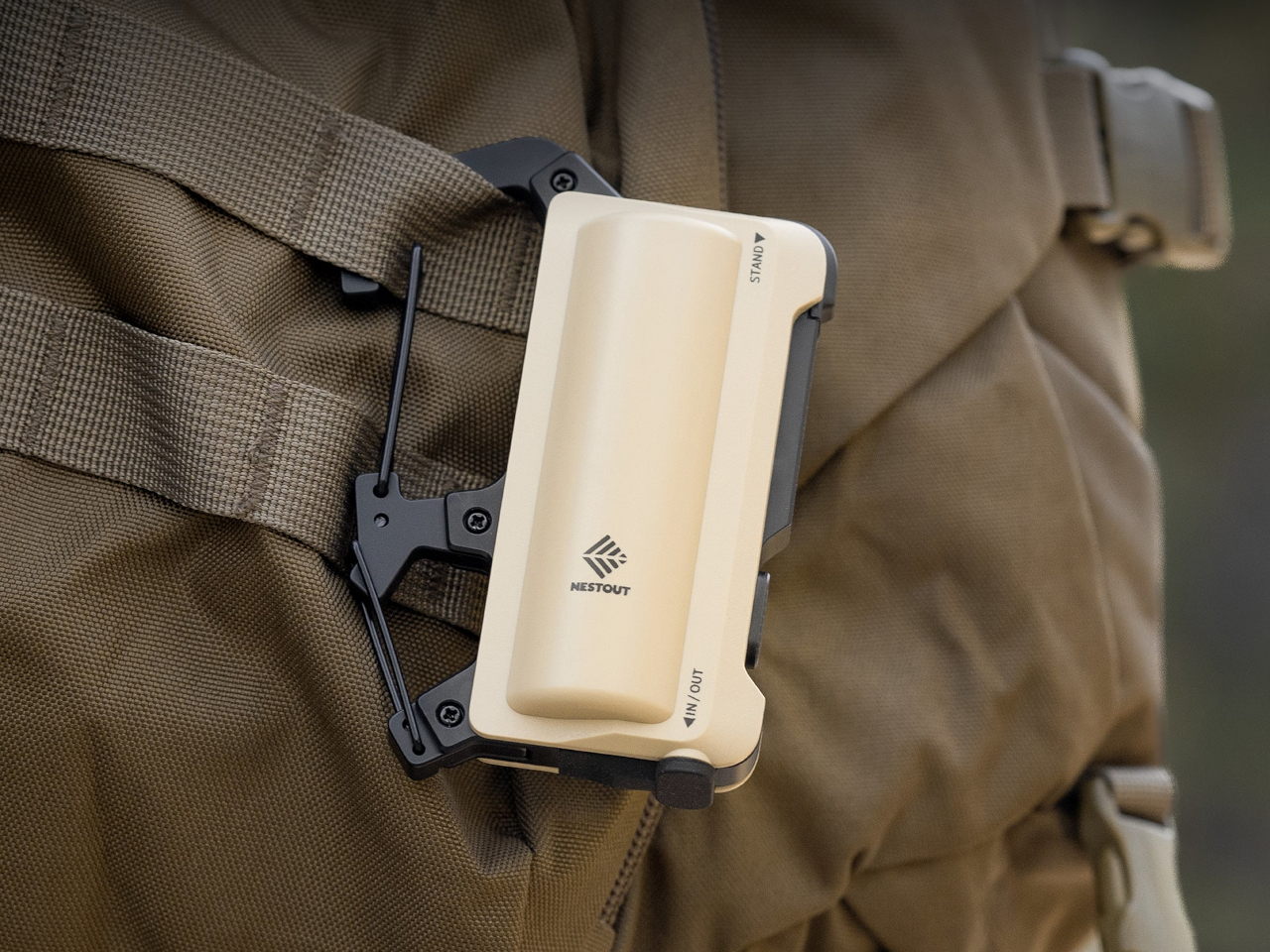
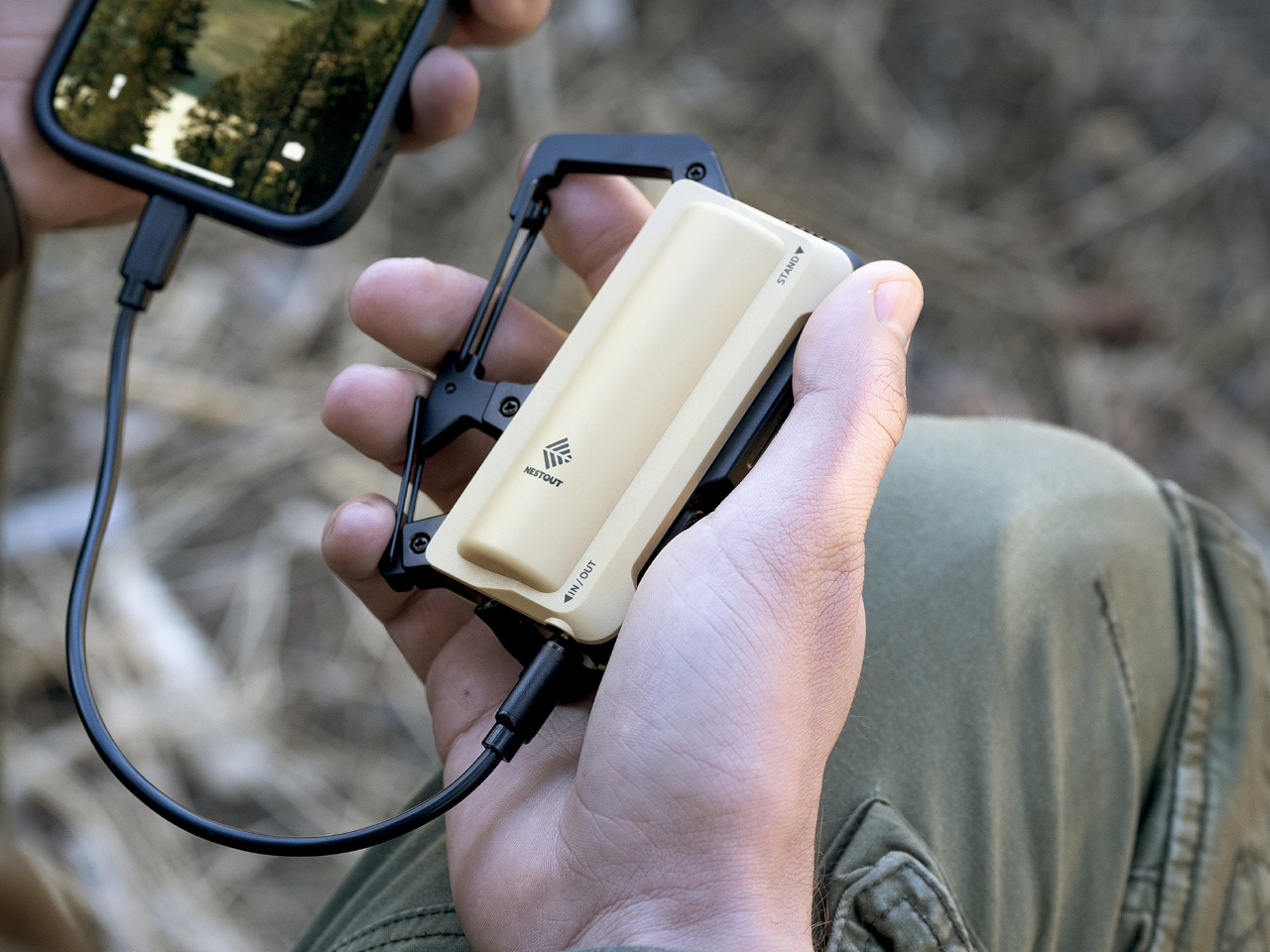
Most power banks are an afterthought in terms of how you carry them. They go loose in a pocket or rattle around at the bottom of a bag until the cable is buried somewhere unhelpful. This carabiner-shaped power bank removes that friction by making attachment the actual design concept. Clip it onto a bag strap, a jacket loop, or a belt, and your backup charge goes wherever you go without adding any mental overhead.

The real value is how it removes a common hesitation: people don’t carry a power bank until they’ve already needed one. A carabiner you clip on once and forget solves the carry problem entirely. Off-grid, that passive availability becomes genuinely important. It’s the kind of accessory that works not because it’s technically impressive, but because it respects how people actually behave and quietly builds itself into the routine.

What We Like:

  • Carabiner form clips directly to gear without consuming bag space
  • Rugged, compact design is suited to outdoor and trail use

What We Dislike:

  • Capacity is limited compared to a dedicated, full-size power bank
  • Not sufficient as a sole charging source for multi-day trips

6. X1 Portable Toilet

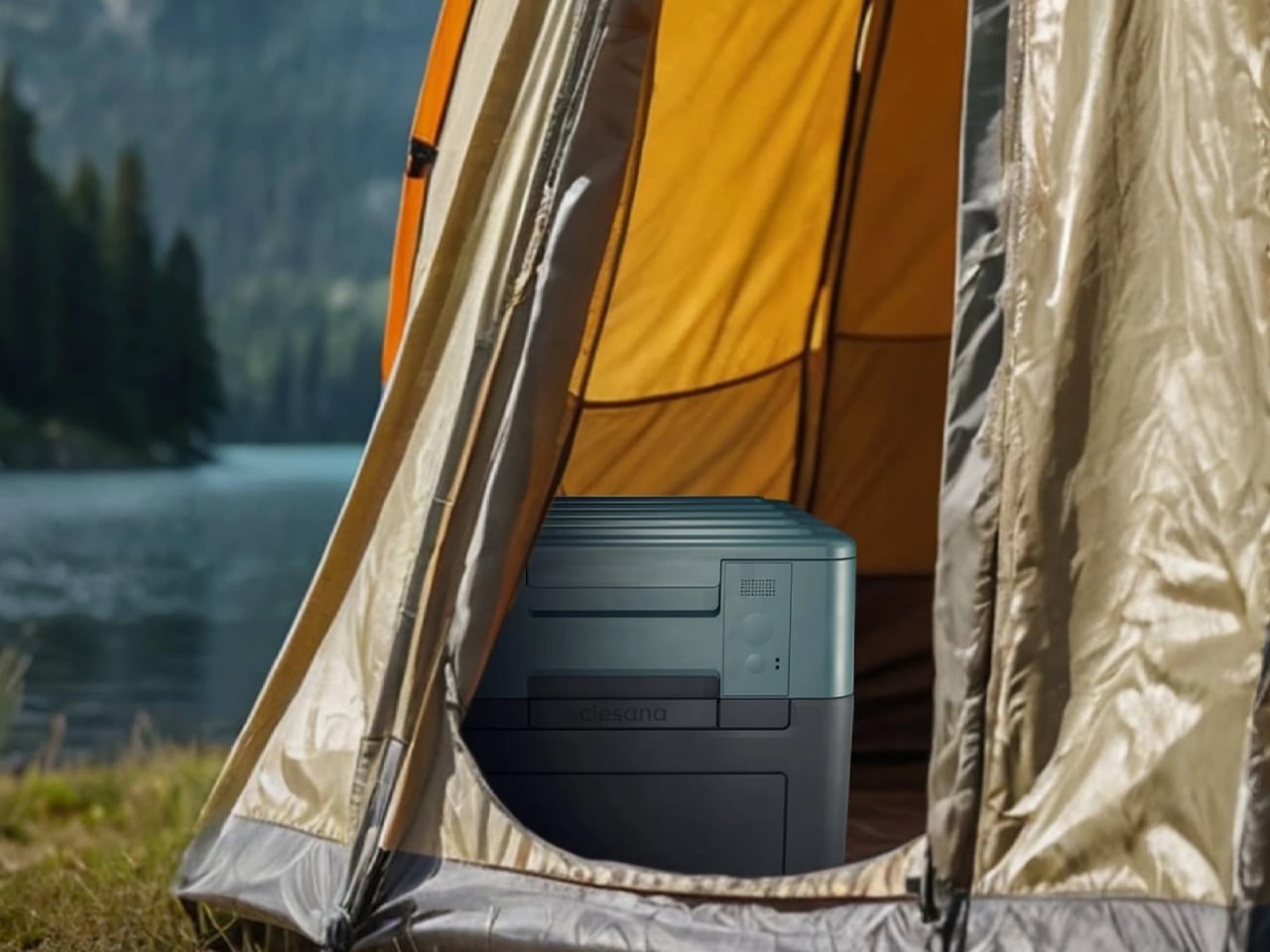
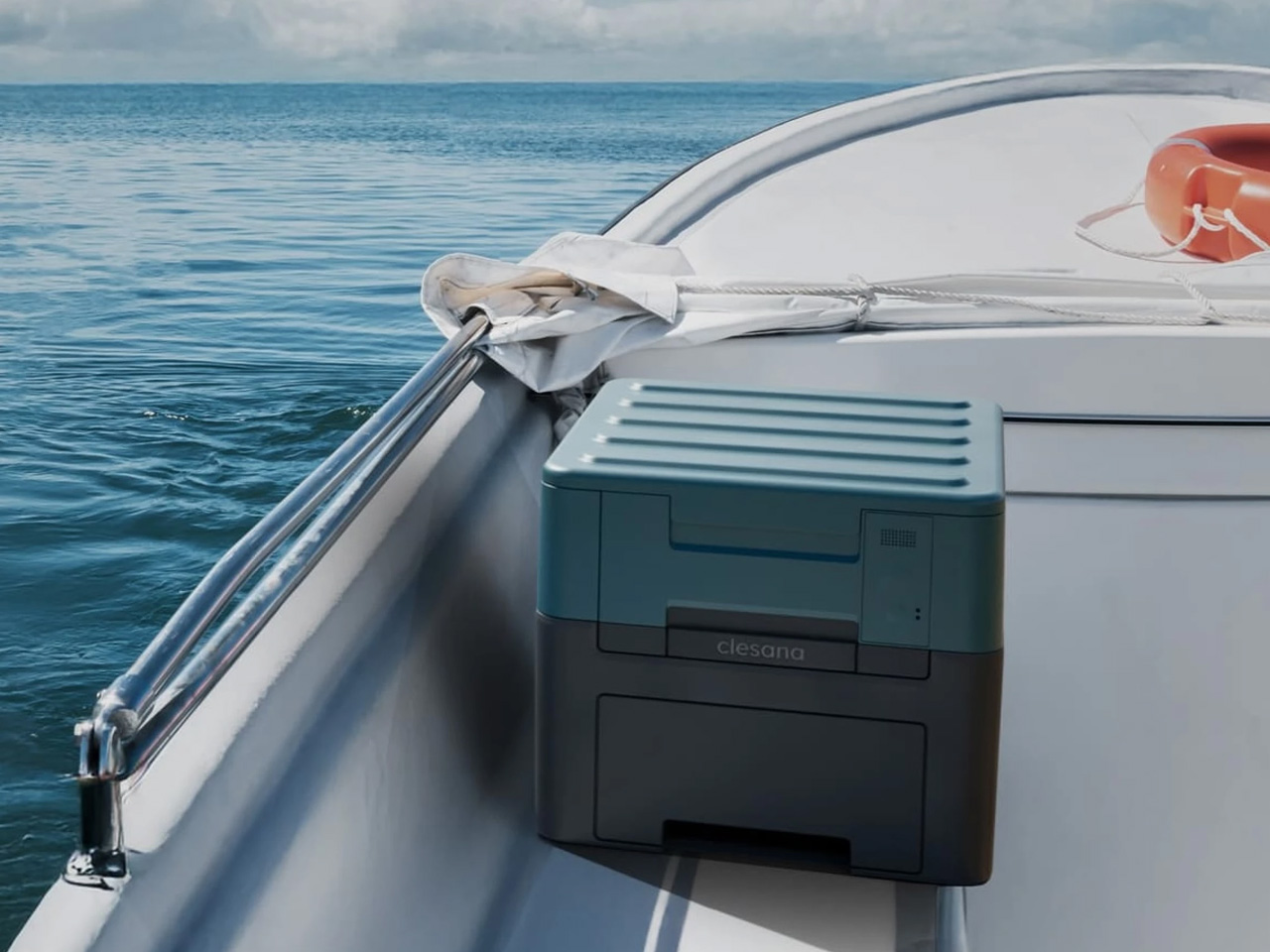
The outdoor bathroom situation is the least discussed but most universally felt problem with going off-grid. Clesana’s X1 addresses it without compromise. The battery-powered portable toilet looks like a compact cube at rest, then telescopes to full, home-equivalent height when needed. At 24 pounds with an integrated handle, one person can move it easily, and the ergonomics when deployed match what you’d expect at home, not in a festival field.

The real design achievement is what happens after use. Clesana’s patented thermoelectric sealing system wraps waste in individual sealed packages with no odor, no chemicals, and no water hookup required. Sealed waste collects in a lower chamber for clean, convenient disposal when the time comes. For van lifers, remote workers, and long-haul campers, the X1 elevates one of the most basic human needs to something approaching actual dignity. It’s a quiet but significant piece of off-grid infrastructure.

What We Like:

  • Telescopic design delivers home-height comfort in a fully portable format
  • Patented sealing system eliminates odor without chemicals or water connections

What We Dislike:

  • Battery dependency adds another device that needs to be monitored and charged
  • Sealed waste packages create an ongoing consumable cost over time

7. Loki-Nav 3-in-1 Compass

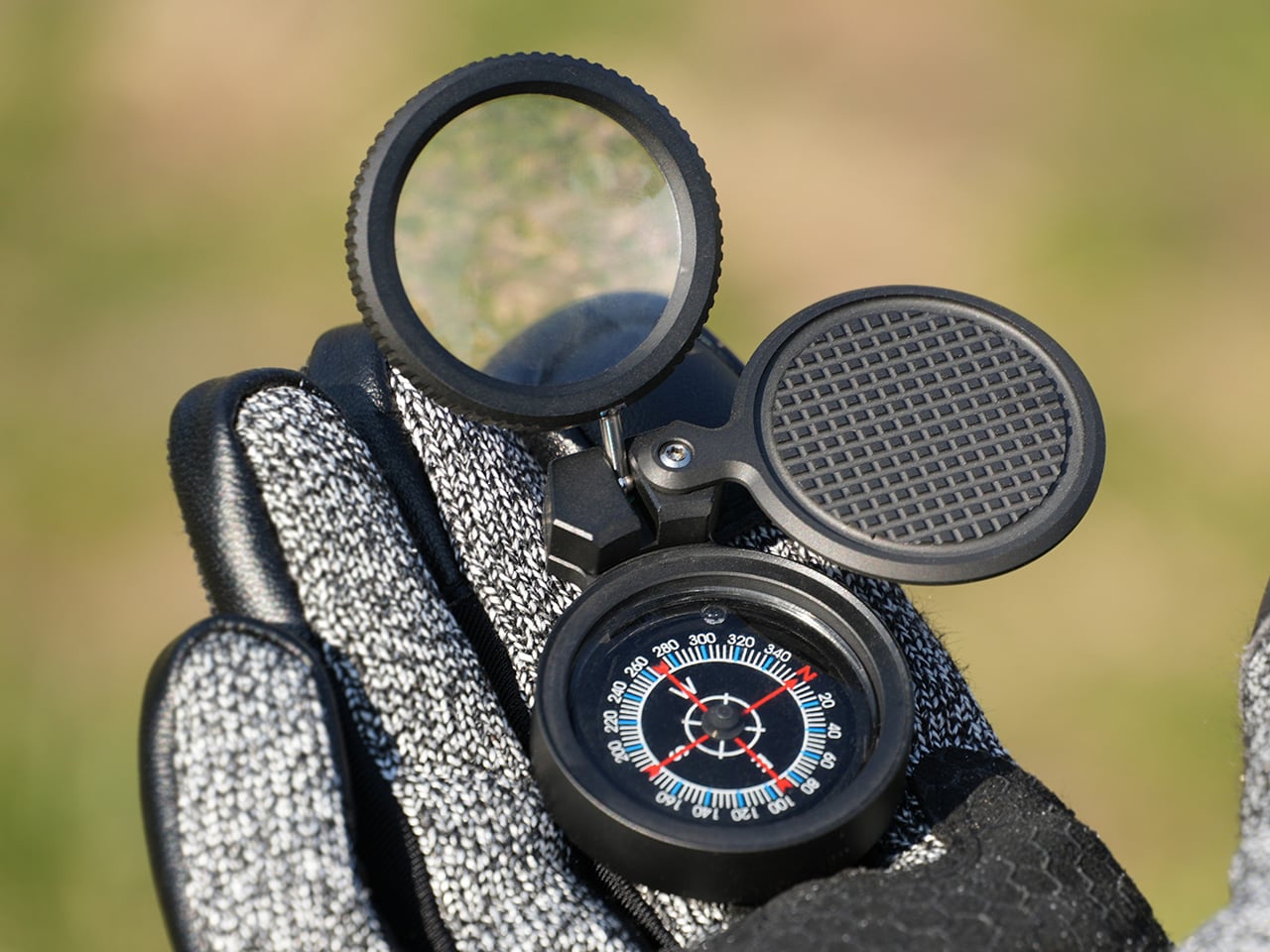
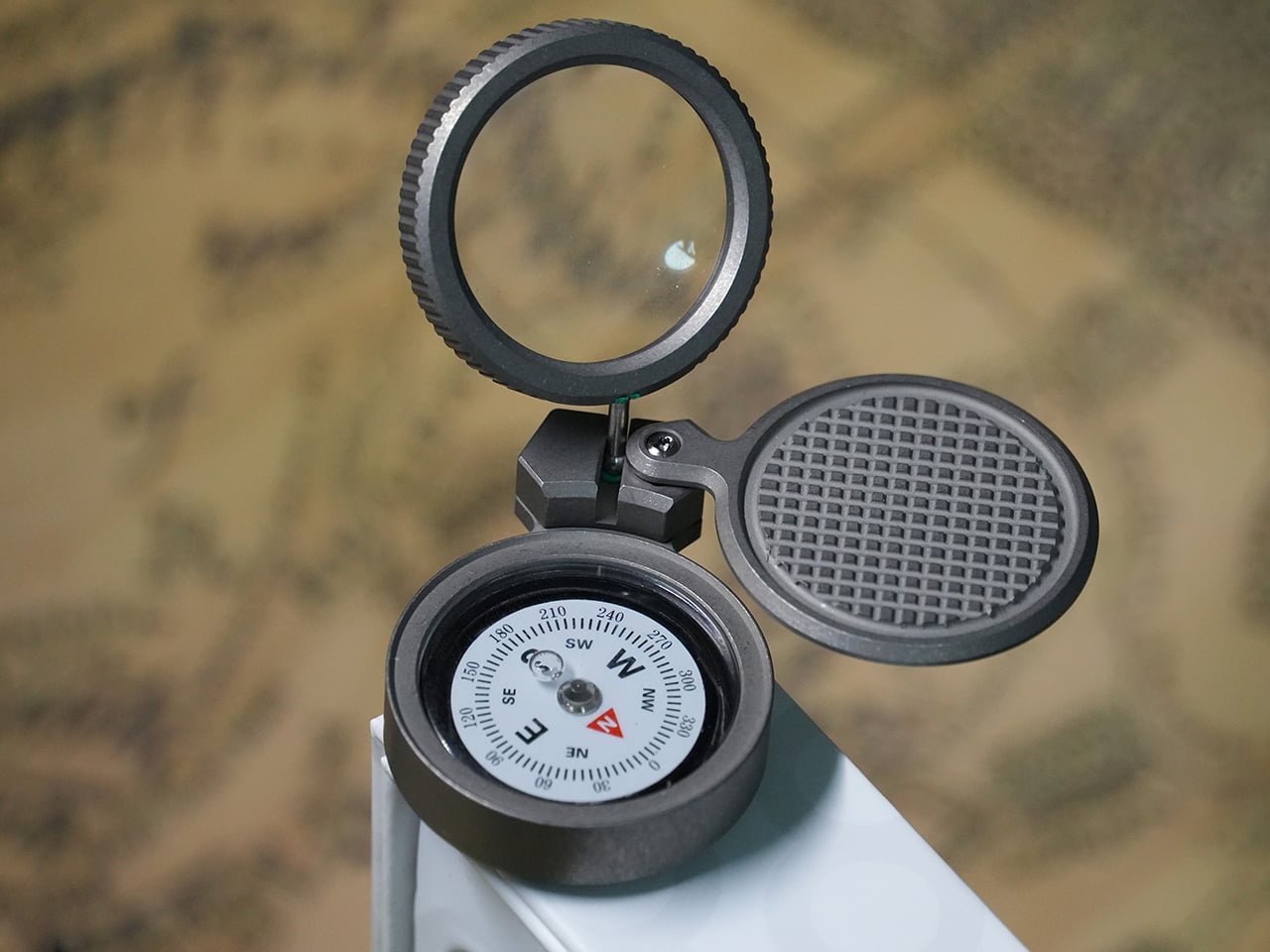
The Loki-Nav makes the case that the best survival tool is the one that actually gets packed. A standalone compass rarely does. But a compass that also works as a magnifying glass for map reading, an emergency signal mirror, and a fire-starting wood chip maker earns a permanent spot on any kit. Four tools in one object change the calculus on what’s worth carrying.

Its IPX8-rated compass is filled with premium white oil and delivers precise navigation in conditions that render most electronics useless — extreme cold, downpours, and complete darkness with the optional Luminous Compass Core upgrade. Smartphones are useful navigation tools right up until they aren’t, and coverage drop-outs and battery deaths are common enough that analog backup should be standard practice. The Loki-Nav doesn’t ask you to compromise on aesthetics to carry it, with three design options available. It’s a tool that respects the intelligence of the person using it.

What We Like:

  • Four survival functions in one design reduces what needs to be packed separately
  • IPX8-rated, oil-filled compass operates reliably in extreme temperatures

What We Dislike:

  • Wood chip fire-starting function is supplementary, not a primary fire tool
  • Each capability requires practice before relying on it in a real situation

8. Airflow 8-Panel Fire Pit

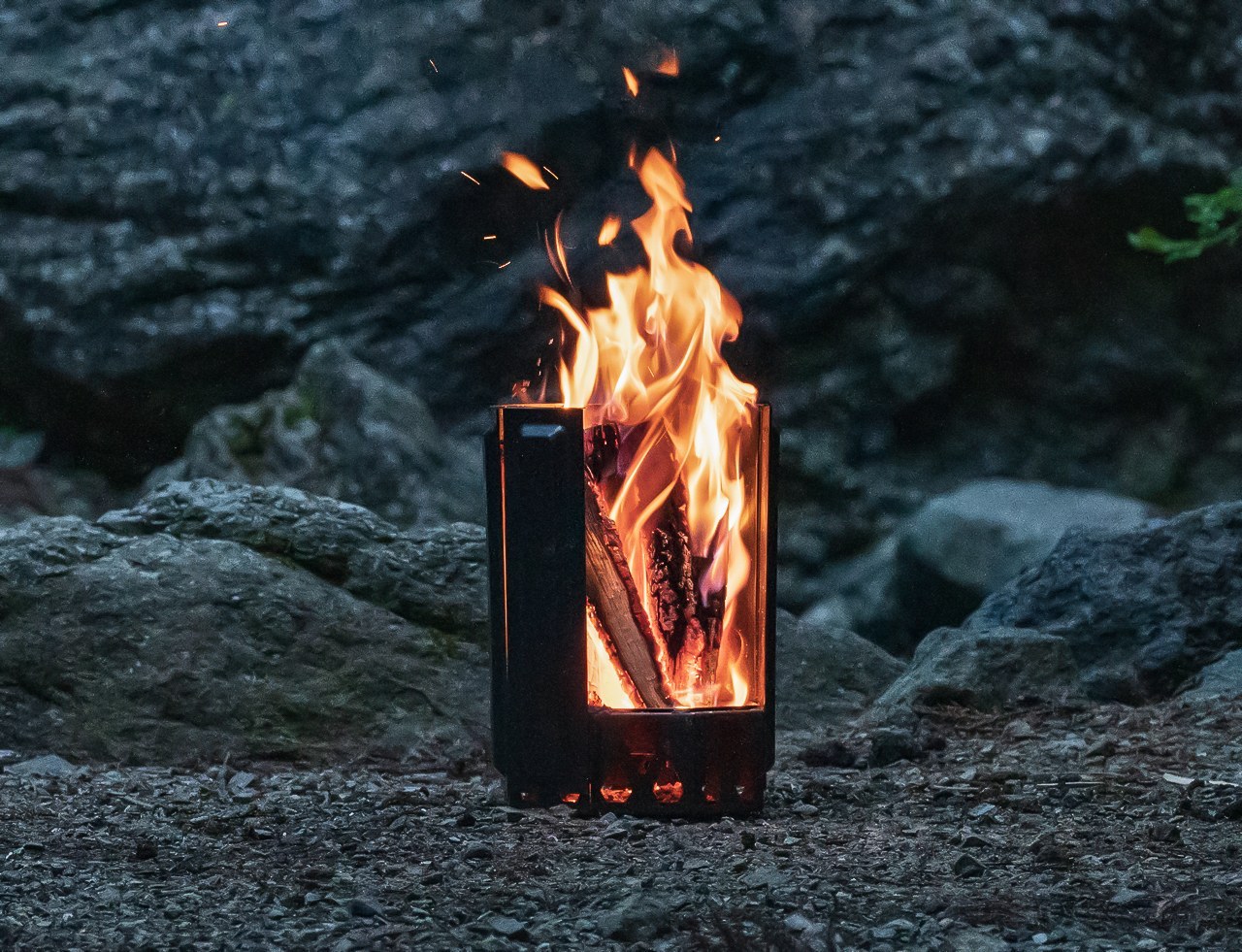
A campfire that tends itself is the dream. The Airflow 8-Panel fire pit doesn’t go that far, but its 8-panel removable design gets closer than most. Built around secondary combustion science, holes at the base of each panel channel primary airflow upward through double-walled cavities, producing a secondary burn that makes the fire significantly cleaner and more efficient. The result is minimal smoke and a fire that does more with less wood.

The adjustable panel system lets you control how open or enclosed the combustion chamber is, dialing the fire’s intensity up or down without constant prodding. Off-grid evenings deserve a real focal point, and a fire that performs well without drama is a quality-of-life upgrade that’s easy to underestimate until you’ve experienced it. Sanyo Works brings deep metal processing expertise to this design, and that background shows in how precisely the airflow mechanics are considered. Less compromise, more outdoor living.

Click Here to Buy Now: $325

What We Like:

  • The secondary combustion system produces minimal smoke for a noticeably cleaner burn
  • Adjustable 8-panel design allows real control over fire intensity

What We Dislike:

  • Eight individual panels mean more parts to pack and more potential for loss
  • Wood-only fuel system with no gas compatibility

9. COFFEEJACK V2

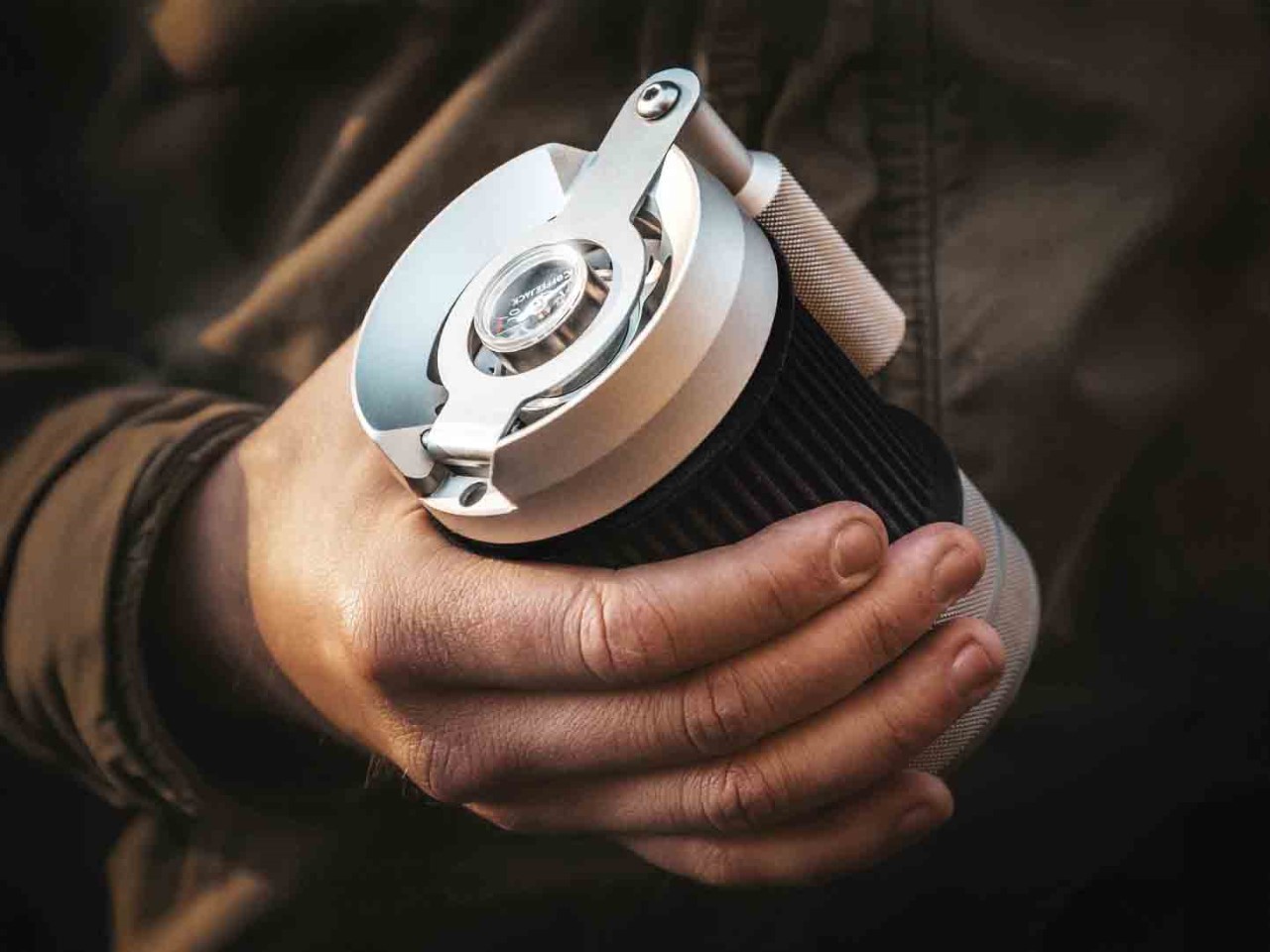
There’s something worth preserving in the process of making coffee, and the COFFEEJACK V2 understands that completely. It’s a fully manual, hand-crank espresso maker that builds up to 10 bars of pressure through rotation alone. No electricity, no battery, no automation. The crank forces hot water through a portafilter packed with a coffee puck, producing a proper espresso shot complete with crema, wherever you happen to be sitting.

The design is compact enough to pack without rethinking your kit, and the purely analog mechanism means nothing to charge and nothing to break electronically. For off-grid mornings, a proper hand-brewed espresso is a ritual worth keeping. It’s also arguably the clearest signal that going off-grid doesn’t require giving anything meaningful up. The COFFEEJACK V2 is the kind of object that makes a campsite feel intentional rather than improvised, which is the whole point.

What We Like:

  • Fully manual design requires zero power source or battery
  • Builds up to 10 bars of pressure for genuine espresso with full crema

What We Dislike:

  • A consistent technique is required to get the best extraction results
  • Hot water still needs to be sourced and heated separately before brewing

10. Giga Pump 4.0

Inflating gear by mouth or with a bulky hand pump has always been the slowest, most tedious part of setting up camp. The Giga Pump 4.0 eliminates that problem. Despite its compact size, it achieves 4.2 kPa pressure and a 220L per minute flow rate, representing a 90% efficiency improvement over its predecessor. A simple toggle switches between 4 kPa for firm inflation and 2 kPa for softer fill, handling mattresses, paddle boards, and tents with equal ease.

Deflation is handled just as efficiently. The reverse suction mode pulls air out as quickly as it pushes it in, compressing gear down for storage in a fraction of the usual time. Off-grid setups live and die by how much friction each task creates. A pump that does its job quickly and quietly, without requiring you to think about it, means more time spent doing the things you actually came out there for. That’s the right kind of upgrade.

What We Like:

  • 90% efficiency improvement delivers 220L per minute from a compact body
  • Forward inflation and reverse deflation are handled by one device

What We Dislike:

  • Battery-powered design requires charging before each outing
  • Compact size means slightly less sustained pressure than full-size pump alternatives

The Grid Was Always Optional

Going off-grid used to require an acceptance of compromise. You’d lose convenience, comfort, and connectivity in exchange for space and silence. These ten tools quietly dismantle that trade-off. From satellite communication on your wrist to espresso brewed by hand at a campsite, the gap between outdoor living and the standards you hold at home has never been narrower. The gear has caught up. The question now is whether you have.

None of these products asks you to rough it. That’s the point. The best off-grid gear doesn’t celebrate deprivation — it removes the friction that made leaving the grid feel like a real sacrifice to begin with. Whether you’re building a go-bag, outfitting a van, or just spending more time outdoors, this kind of kit makes the case that beyond the last signal bar is exactly where you want to be.


The post 10 Best Gadgets & Tools That Make Going Off-Grid Feel Like an Upgrade first appeared on Yanko Design.
NASA targets a September launch for its next big space telescope

NASA's next eye into the cosmos is due to leave our planet later this year. The agency says it's targeting an early September launch for the Nancy Grace Roman Space Telescope. Roman (for short) has a field of view 100 times larger than Hubble's.

The September date is the earliest possible launch for Roman. NASA says it will go up (aboard a SpaceX Falcon Heavy rocket) no later than May 2027.
The Nancy Grace Roman Space Telescope, named after NASA's first chief astronomer and "mother" of Hubble, was introduced in 2016. (Back then, it was known as the Wide Field Infrared Survey Telescope, or WFIRST.) The telescope's mirror is roughly the same size as Hubble's, but it can capture sections of the sky at least 100 times larger than its predecessor.

The Roman telescope, sitting inside a white NASA hangar
NASA

"Roman will work in tandem with NASA observatories such as the James Webb Space Telescope and Chandra X-ray Observatory, which are designed to zoom in on rare transient objects once they've been identified, but seldom if ever discover them," Julie McEnery, Roman's senior project scientist, said in 2023. "Roman's much larger field of view will reveal many such objects that were previously unknown. And since we've never had an observatory like this scanning the cosmos before, we could even find entirely new classes of objects and events."

After leaving our atmosphere, Roman will set course for a vantage point nearly 1 million miles from Earth. There, it will rely on a pair of instruments to study space. The first is a 300.8-megapixel camera that captures light from visible to near-infrared. There's also a high-contrast coronagraph that will allow it to capture exoplanets that would otherwise be blocked by starlight.

Roman’s mission: "to settle essential questions in the areas of dark energy, exoplanets and astrophysics." Despite decades of study, astronomers know surprisingly little about dark energy, which makes up about 68 percent of the universe’s contents. And while scientific discoveries are cool and all, you’ll be pleased to know that Roman is also sure to beam back more dazzling pictures of our cosmos.

This article originally appeared on Engadget at https://www.engadget.com/science/space/nasa-targets-a-september-launch-for-its-next-big-space-telescope-204140176.html?src=rss

France’s national agency for managing IDs and passports suffered a data breach last week

The French government confirmed that France Titres, also known as Agence nationale des titres sécurisés (ANTS), experienced a security breach last week. France Titres disclosed that it detected a data breach on April 15. The next day, a hacker claimed responsibility for the breach and claimed to have up to 19 million records that they are attempting to sell. According to Bleeping Computer, the data does not appear to have been widely leaked yet. 

France Titres is responsible for the country's identification and registration materials, including driver’s licenses, national ID cards, passports and immigration documents. The compromised data includes full names, email addresses, dates of birth, account identifiers, login IDs, phone numbers and mailing addresses. The department said that while the breach did not permit access to its portals, the exposed information could be used for phishing attacks or other illicit actions. The announcement advised caution regarding any suspicious communications claiming to be from the agency.

This article originally appeared on Engadget at https://www.engadget.com/cybersecurity/frances-national-agency-for-managing-ids-and-passports-suffered-a-data-breach-last-week-201432189.html?src=rss