Piaget Just Moved the Watch From Your Wrist to Your Neck

The watch industry has a well-earned reputation for doing the same thing over and over again, just with slightly thinner cases and flashier complications each year. So when a brand genuinely surprises you, it feels worth talking about. Piaget’s Swinging Pebbles, unveiled at Watches and Wonders 2026, did exactly that for me.

These are not watches you wear on your wrist. They’re pendant watches, sculpted entirely from a single slice of semiprecious stone and hung from sinuous twisted gold chains. The stone isn’t just decorative trim or a dial insert. The case itself is stone. The whole object is stone, hollowed out just enough to house a manufacture movement, then sealed back into a smooth, organic pebble shape. You clasp it, but you don’t strap it. It lives at your collarbone, not your pulse point.

Designer: Piaget

That shift alone deserves attention. The industry has spent decades debating millimeters of case diameter and whether 40mm is too big or too small for a modern watch. Piaget essentially said: what if none of that matters and the watch just hangs from your neck like a very beautiful rock? It’s a deeply different kind of confidence.
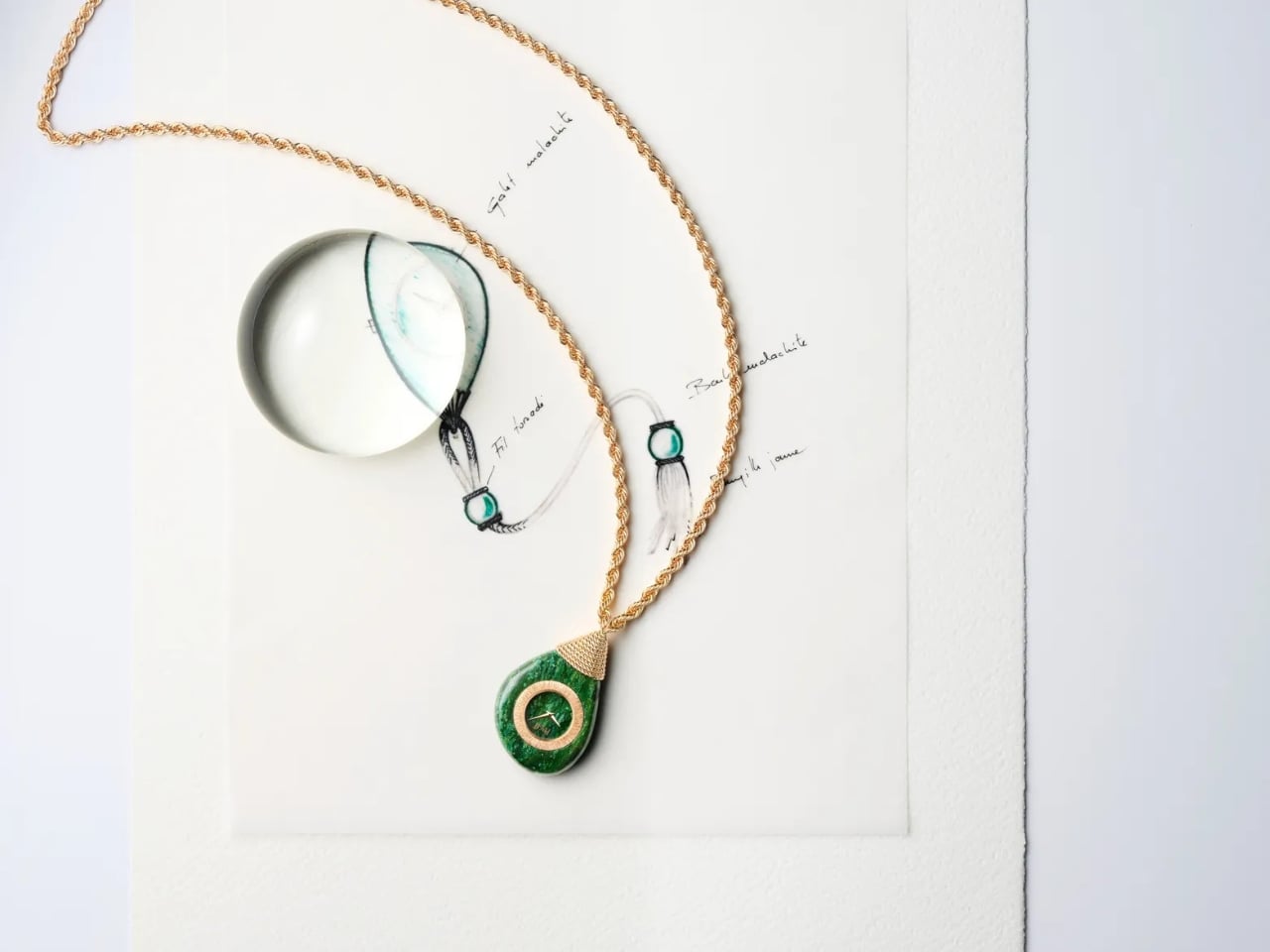

The collection comes in three stone varieties: golden tiger’s eye, grass-green verdite, and pietersite, each with its own mood and temperature. Tiger’s eye has that warm, chatoyant shimmer that catches light differently depending on your angle. Verdite is earthy and lush, the color of an old botanical illustration. Pietersite is the most dramatic of the three, with its stormy, swirling blues and golds that look like a weather system captured in mineral form. Choosing between them feels less like selecting a product variant and more like choosing a personal talisman.
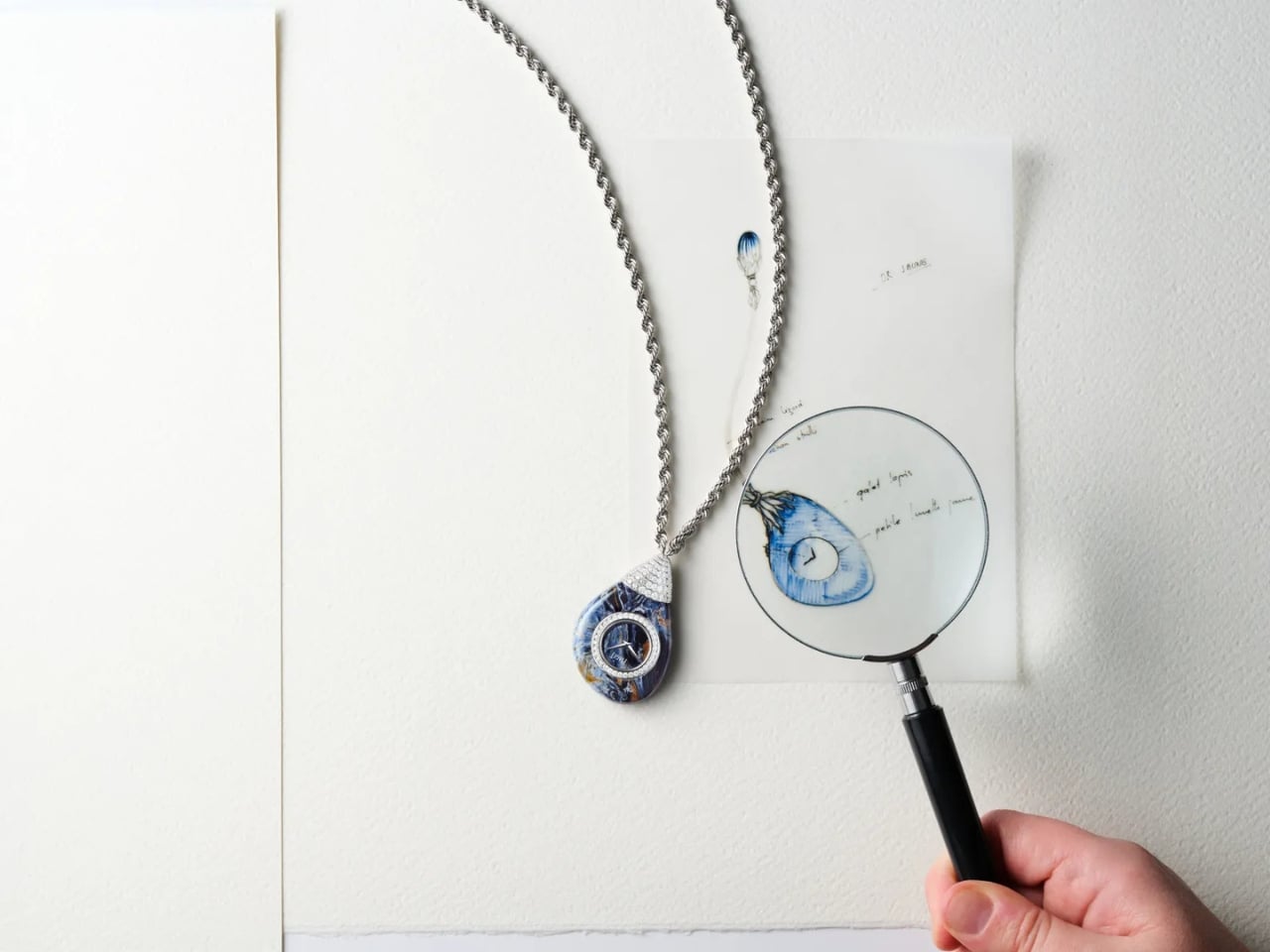
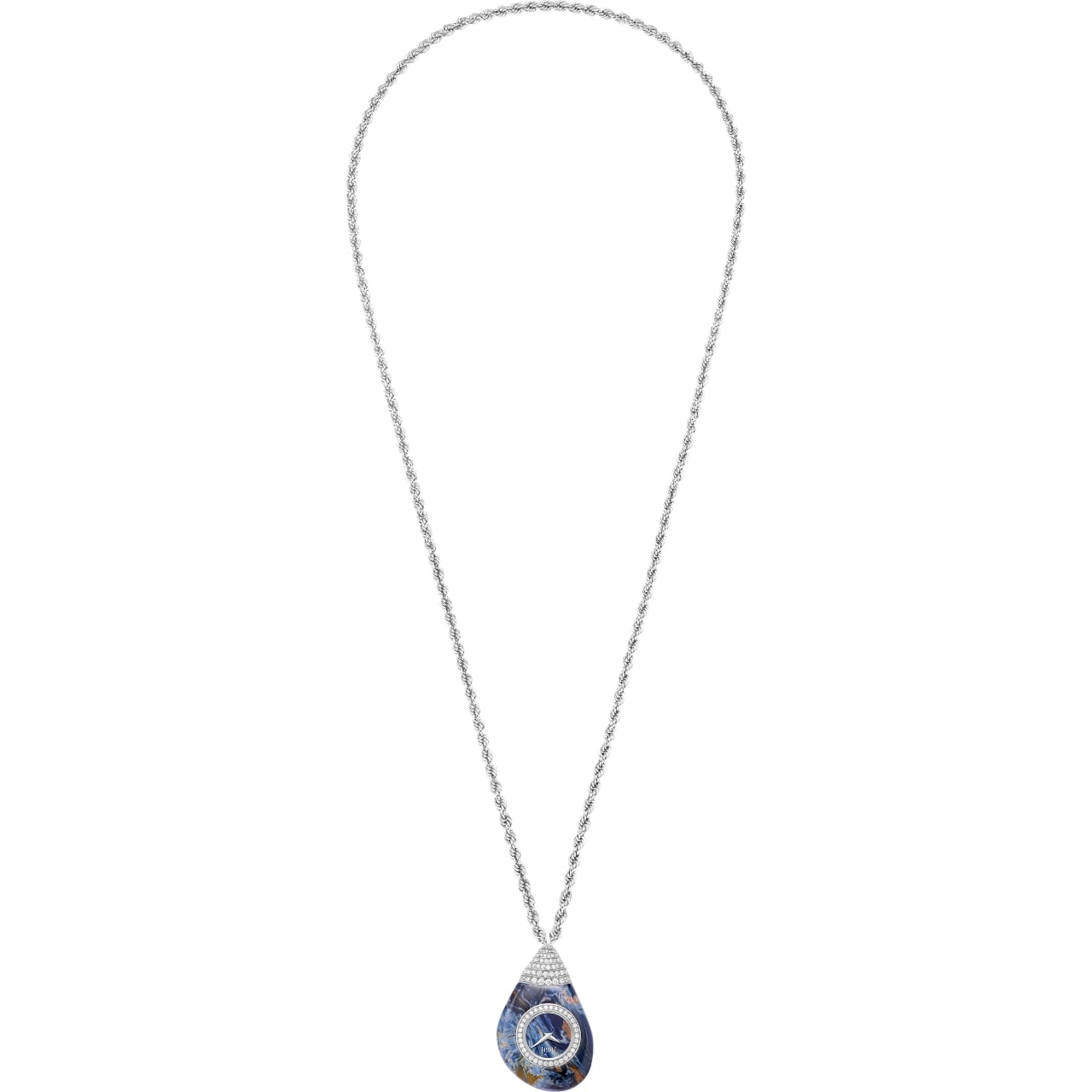
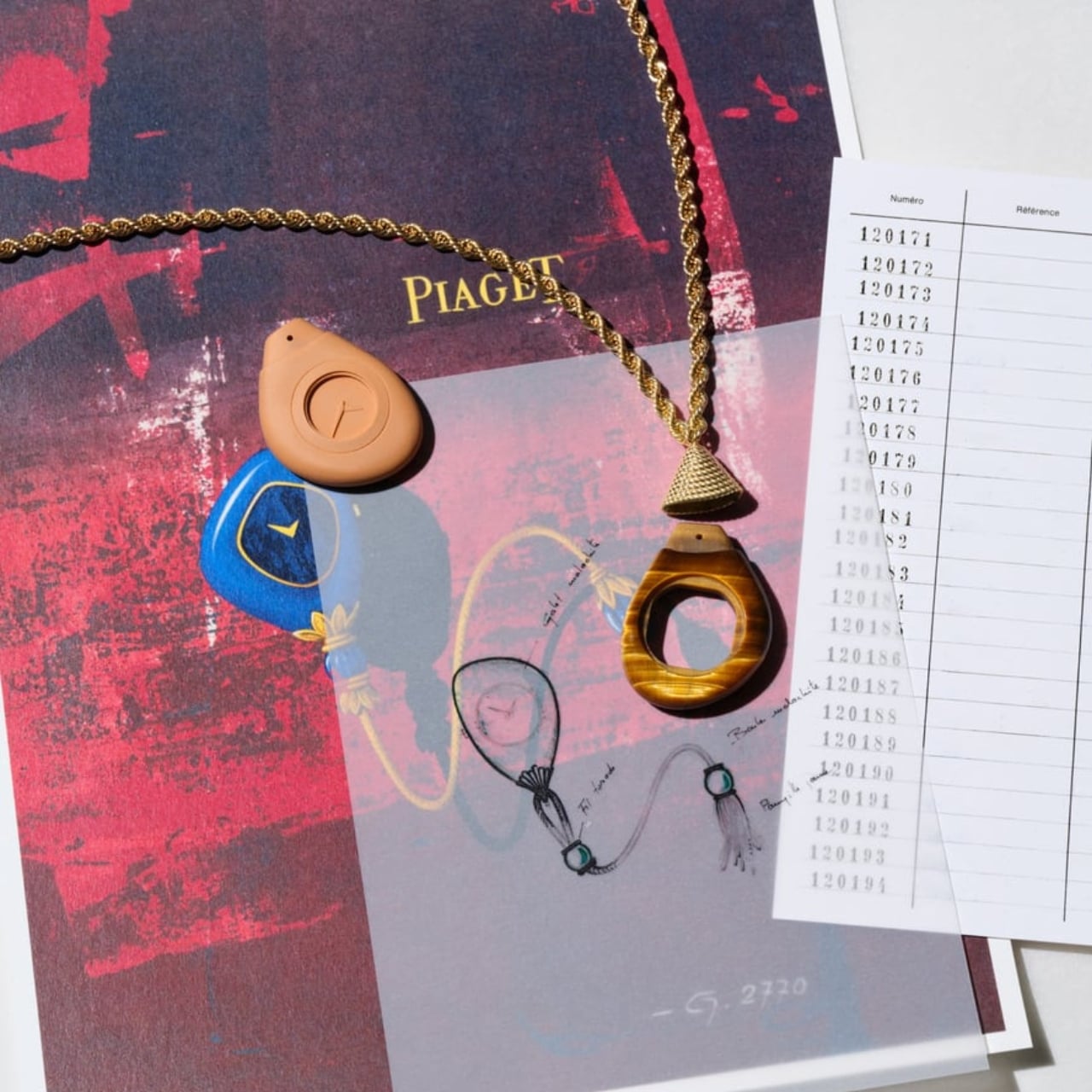
The design draws from two specific moments in Piaget’s archive. The first is the Swinging Sautoirs of the 1970s, a collection born in an era when watches were fused into coins, envelopes, and dice, and wearing one was a full sensory experience. The second is a lesser-known reference: Piaget’s asymmetrical kimono pocket watches from 1974, crafted in malachite and designed to rest in the palm like a smooth river stone. The Swinging Pebbles are clearly carrying those ideas forward, but they don’t feel like a costume. The connection to the archive is felt rather than announced.


Yves Piaget once said, “A watch is first and foremost a piece of jewellery.” The Swinging Pebbles are probably the most literal interpretation of that philosophy the maison has ever produced. The movement is almost beside the point, which is a strange thing to say about a Swiss luxury watch. But the pieces use a quartz caliber (the 355P), and I actually think that’s the right call here. Piaget didn’t let a mechanical complication turn these into something bulky or precious in the wrong way. They stayed committed to the object’s identity as jewelry, and the quartz movement quietly agrees to stay out of the way.

My personal take: this is the kind of design that makes you rethink what a watch category even is. Pendant watches exist at a rare intersection of horology, sculpture, and wearable art, and most brands either treat that intersection as a novelty or ignore it entirely. Piaget has always been the exception. They’ve been dressing dials in lapis lazuli, turquoise, and tiger’s eye since 1963, and this new collection feels like a natural exhale from six decades of accumulated stone fluency.

Whether or not you’d actually wear one is a separate conversation, and probably a deeply personal one tied to your relationship with jewelry, self-expression, and how much you enjoy being the most interesting person in the room. But as an object, as a design statement, as a piece of thinking about what a watch can be, the Swinging Pebbles are quietly radical. They’re not trying to modernize a classic. They’re trying to remind you that some classics were already ahead of their time.
The post Piaget Just Moved the Watch From Your Wrist to Your Neck first appeared on Yanko Design.

Reed Hastings is leaving Netflix after 29 years

Netflix co-founder and current chairman Reed Hastings is leaving the streaming company’s board in June to focus on "his philanthropy and other pursuits," according to a shareholder letter released alongside Netflix's Q1 earnings. Hastings has served as chairman of Netflix's board since 2023, a role he assumed after stepping down as co-CEO and promoting Greg Peters in his place.

"Netflix changed my life in so many ways, and my all‑time favorite memory was January 2016, when we enabled nearly the entire planet to enjoy our service," Hastings said in a statement. "My real contribution at Netflix wasn’t a single decision; it was a focus on member joy, building a culture that others could inherit and improve, and building a company that could be both beloved by members and wildly successful for generations to come. A special thanks to Greg and Ted, whose commitment to Netflix’s greatness is so strong that I can now focus on new things."

Hastings founded Netflix in 1997 as a DVD-by-mail rental service with his co-founder and the company's first CEO Marc Randolph. In 1999, Hastings became CEO, and eventually led the company through its transformation into a streaming service in 2007. Netflix started producing its own television series and movies in 2013, and in 2020, the company's board named Ted Sarandos as Hasting's co-CEO, in part to oversee its growing production business. Hastings stepped down as co-CEO in 2023 to become Netflix’s executive chairman, as then COO Greg Peters was promoted to co-CEO. Among his other contributions, Hasting is also the architect of Netflix's infamous "culture memo," which codified the company's high-performance culture.

While he'll no longer be on Netflix's board, Hastings still has a seat on the board of AI startup Anthropic and media and financial software company Bloomberg. Netflix, for its part, is continuing to expand outside of the television and film business Hastings helped build, by offering a selection of curated party games, a growing library of video podcasts and live sports.

This article originally appeared on Engadget at https://www.engadget.com/entertainment/streaming/reed-hastings-is-leaving-netflix-after-29-years-213136444.html?src=rss

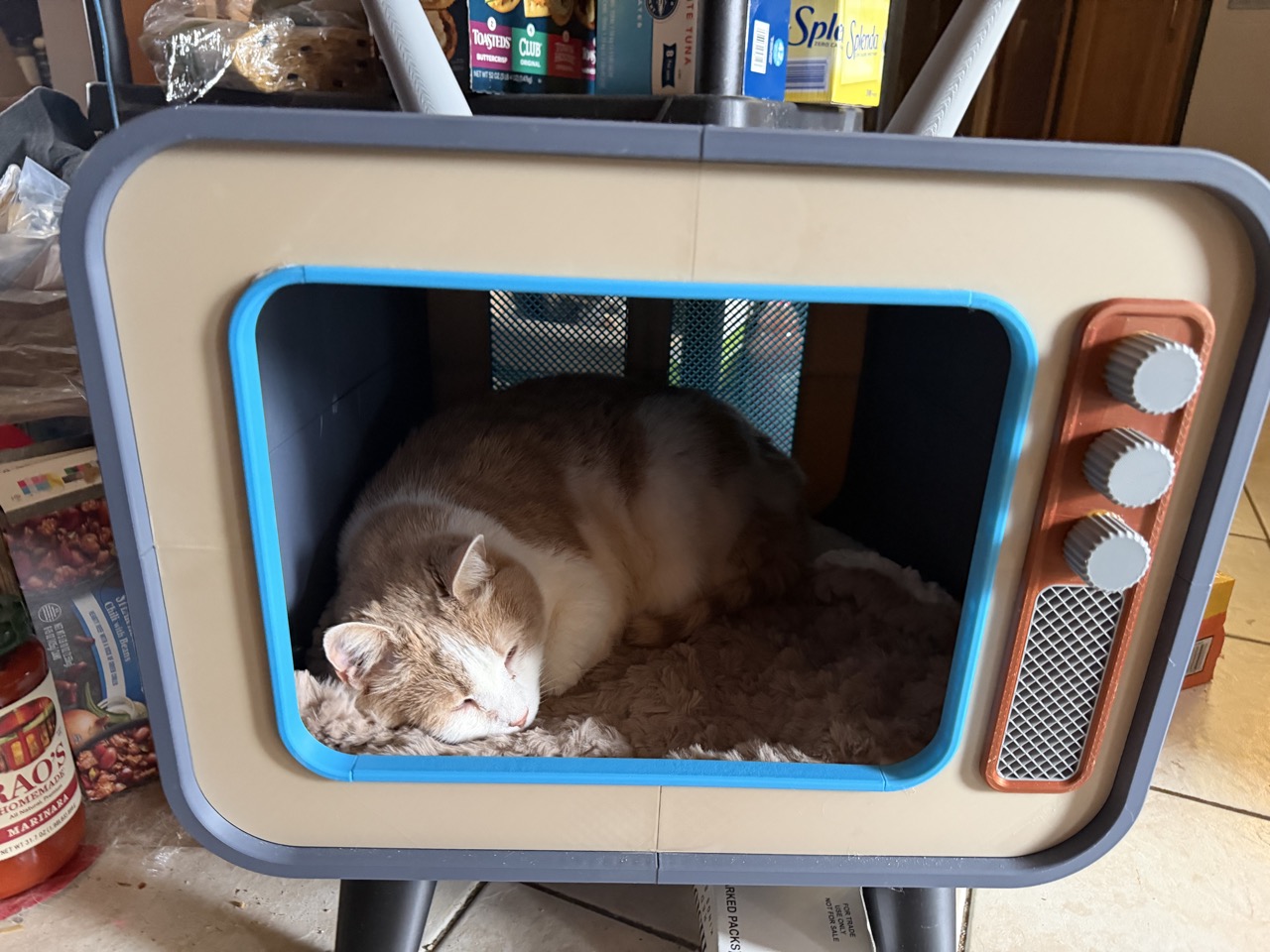
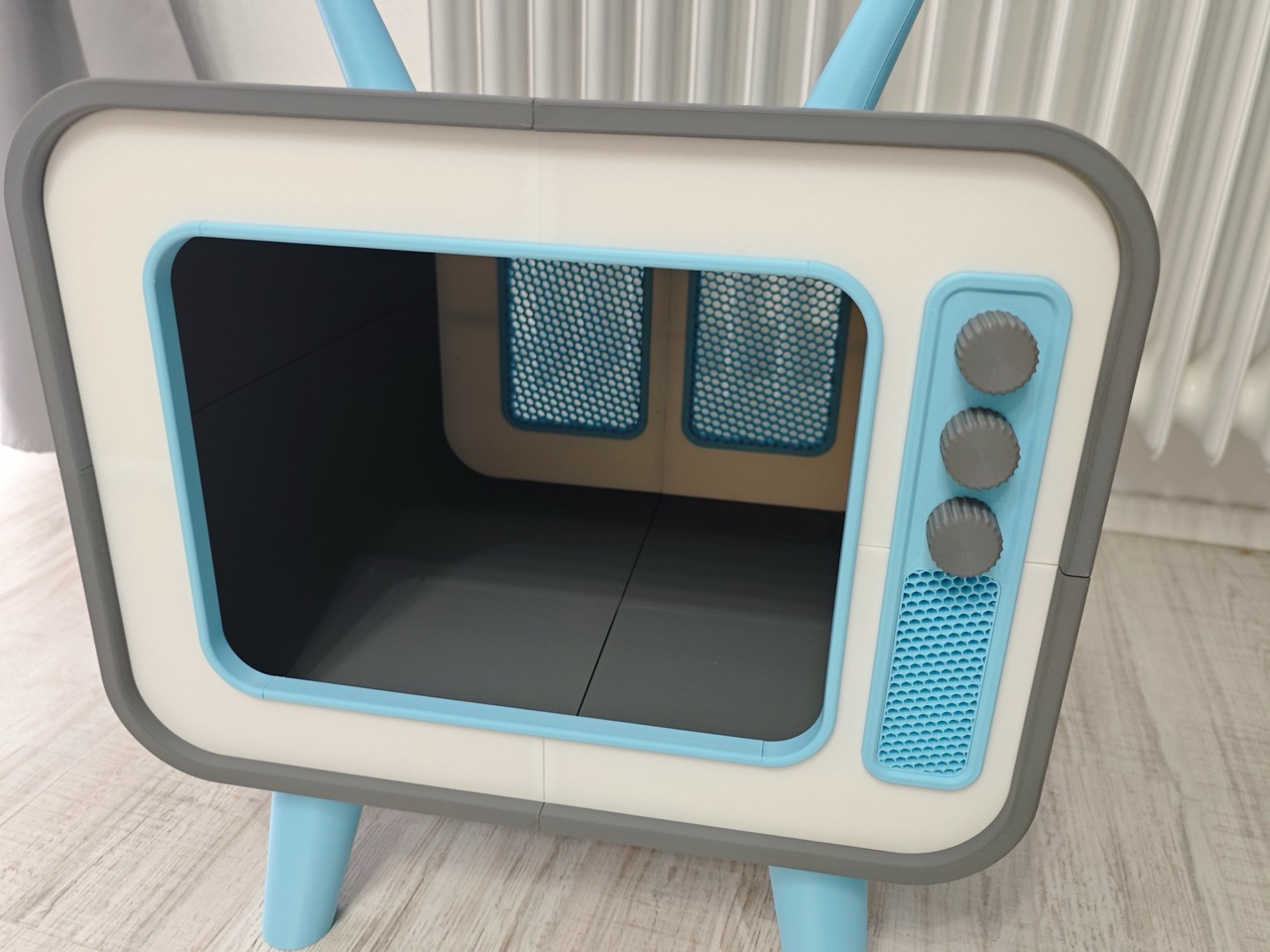
This 3D-Printed Pet House Looks Like a Retro TV That Lets You Watch Your Cat Sleep Instead Of Netflix

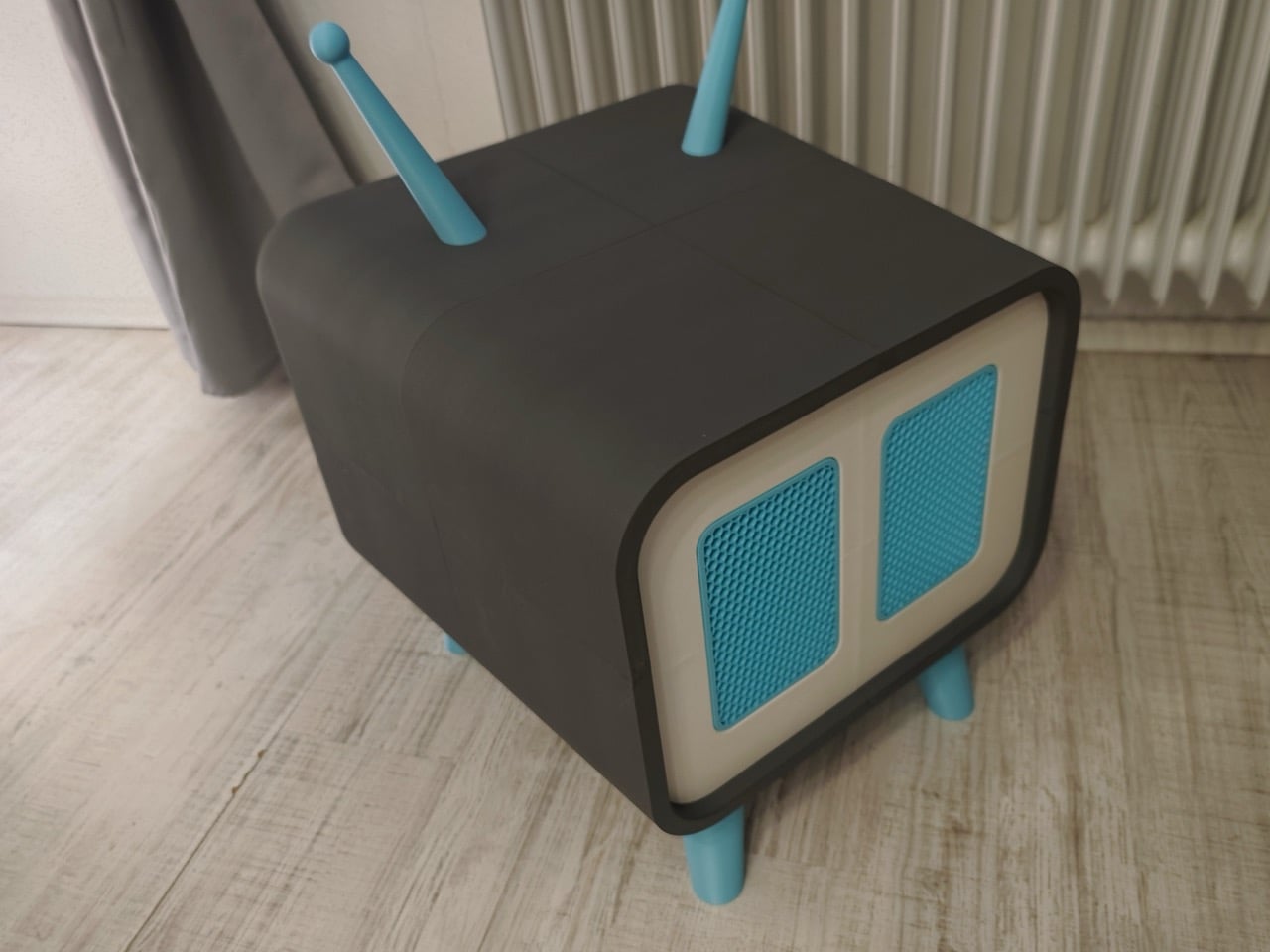
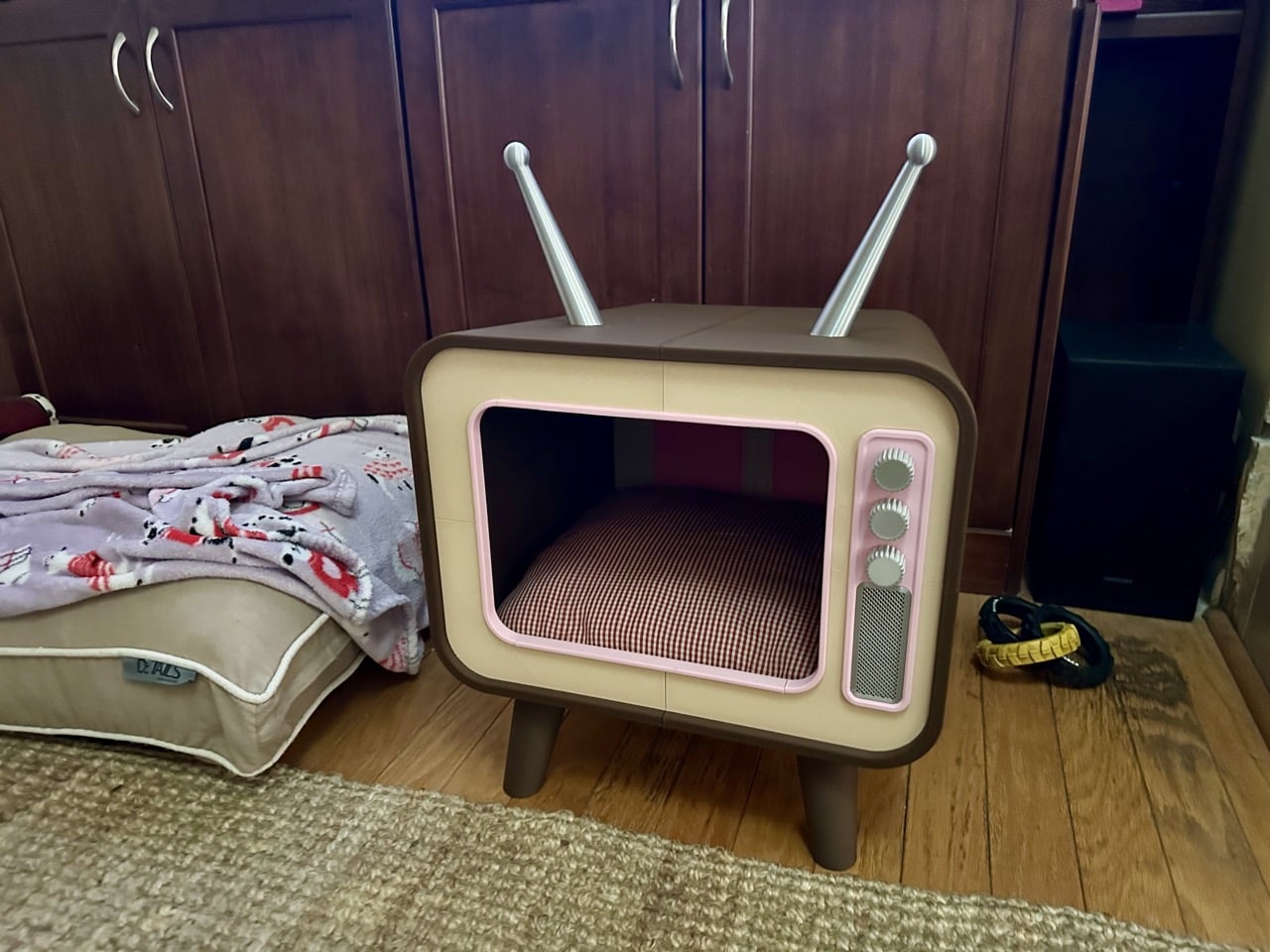
Forget the $800 Scandinavian pet cave or the linen-covered cube that your cat ignores in favor of your laptop bag. The most genuinely entertaining piece of pet furniture to cross my feed this year is a 3D-printed house shaped like a vintage CRT television, and the entire joke is that your pet becomes the programming. You sit on the couch. You watch the TV. The TV contains a cat. This is better than anything currently streaming. Designer burnski uploaded the STL pack to Cults3D in January, and the community has been printing it in color combinations ranging from dark grey with cyan accents to warm brown with blush pink ever since, each build landing in someone’s living room like the world’s most wholesome conversation piece.

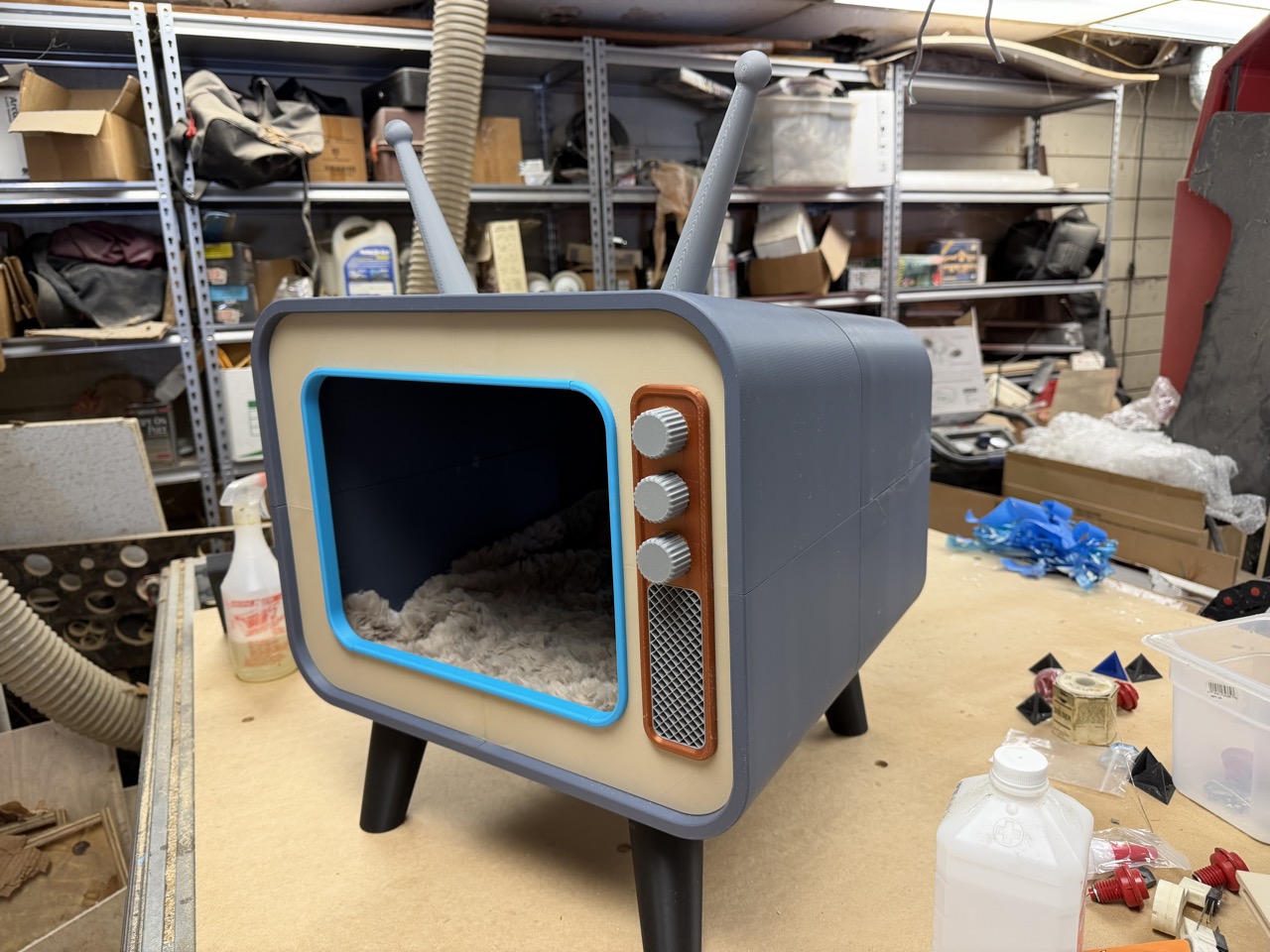
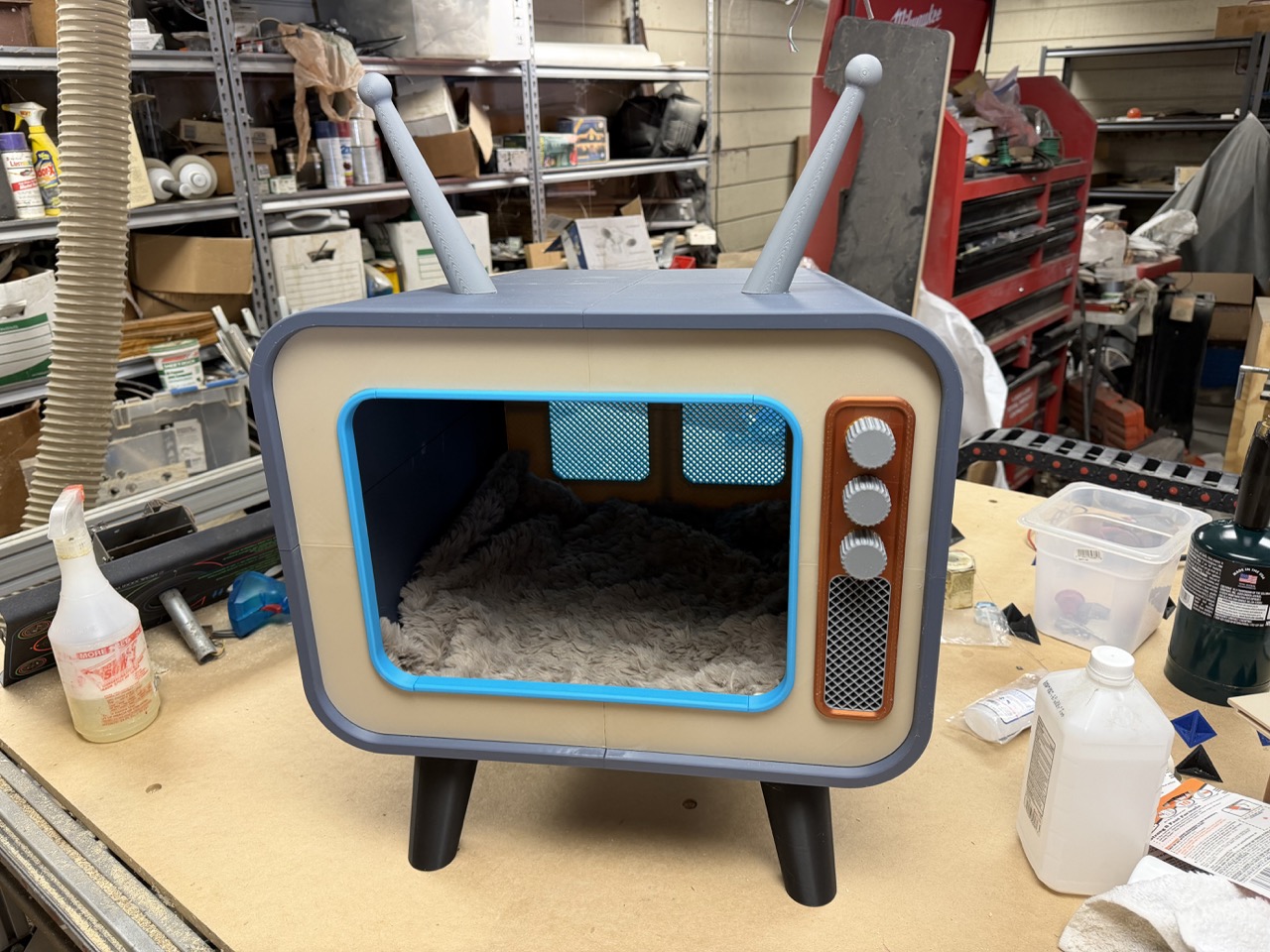
The file set runs to 39 components, assembles with a dry-fit connector system and superglue, and requires a print bed of at least 240 x 240 x 240mm to pull off at full scale. The form is pitch-perfect: four tapered legs, two ball-tipped rabbit-ear antennas, three knurled channel knobs, a honeycomb speaker grille, and a wide rounded-rectangle screen opening that your cat, dog, or rabbit walks through and promptly falls asleep inside. Community makes already show cats curled up in the screen cavity like they are the most relaxed broadcast in television history, which, honestly, they are.

Designer: burnski

The design language burnski landed on is pure 1960s broadcast era, the kind of chunky, corner-rounded CRT silhouette that populated every American living room before flatscreens made televisions invisible. That specific form carries enormous nostalgic weight right now, showing up on tote bags, neon signs, and enamel pins everywhere you look, but burnski is one of the few people who has taken it somewhere genuinely functional. The rounded body, the splayed legs, the antennas, none of these are decorative afterthoughts. They are load-bearing elements of a visual joke that only works if every detail commits. A CRT pet house with stubby legs and no antennas is just a box with a hole in it. This one reads as a television from across the room, which is the whole point.

Thirty-nine individual STL files cover every component from the outer casing panels, split into eight sections labeled 1A through 2D for assembly sequencing, to the antenna mounting blocks, the knob faces, and the front and rear ventilation grilles. The connector system is built directly into the parts, so the dry-fit assembly process is essentially self-guiding before you reach for the superglue. Burnski recommends two or three filament colors, minimum two walls, and ten percent infill for most structural components, with support material only required under the monitor section. The rear ventilation panels and front grille inlays get a special tip in the build notes: flatten them in your slicer, zero out the top and bottom layers, and the exposed infill pattern becomes a design feature. Community makers have used gyroid and honeycomb infill patterns to striking effect on these panels, visible in the finished build photos circulating on Cults3D.

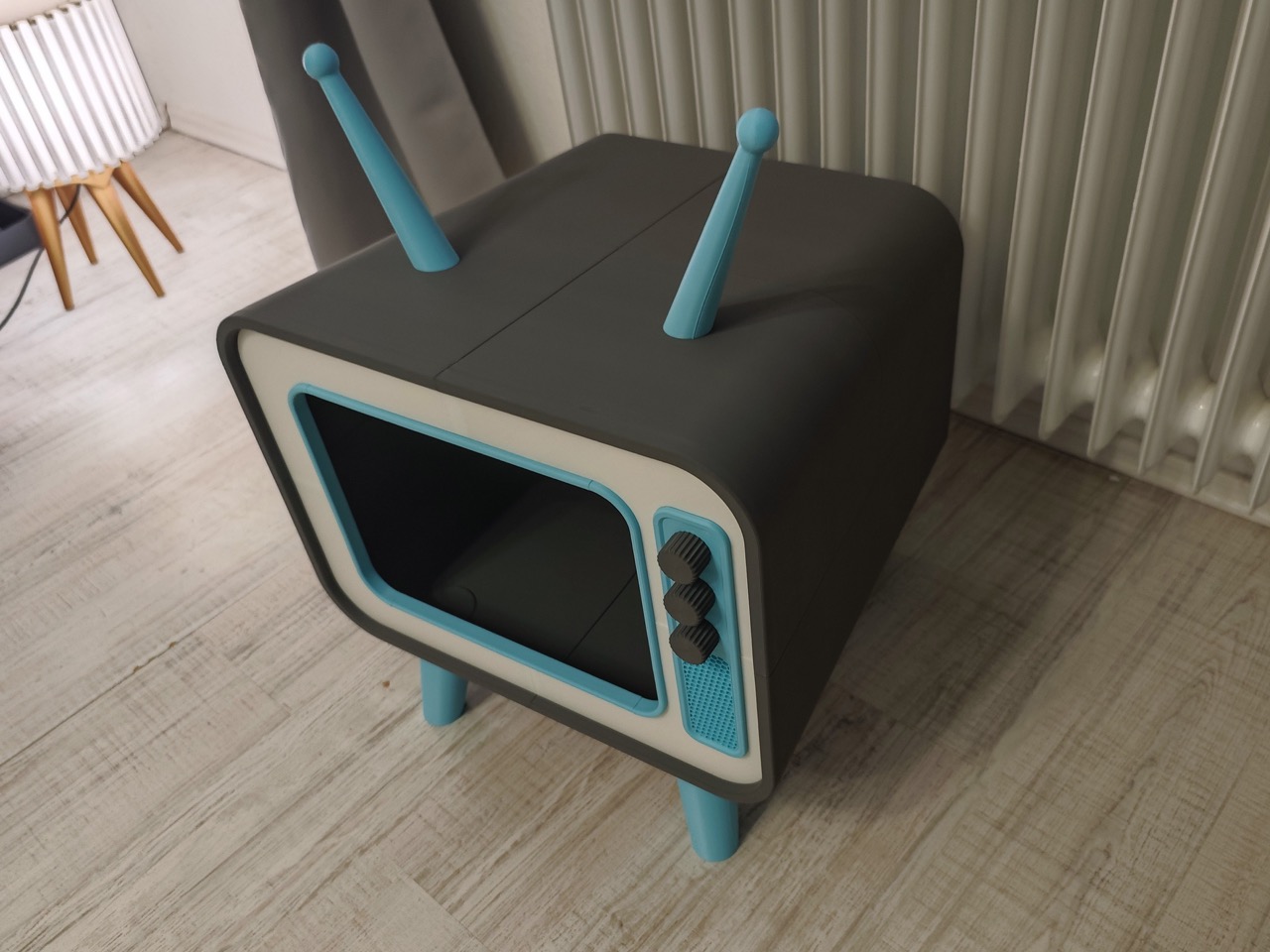
Given the fact that you’re 3D printing this, you can choose from a variety of colors. The grey-and-cyan version that burnski’s own build photos show is clean and almost graphic, the kind of colorway that would not look out of place in a design-forward apartment. However, you aren’t limited to that – go wild with pastels or neons, or just stick to a single-color print if you’re constrained by filaments and then paint designs/patterns onto it later. It’s ultimately a pet-house, so remember to use paints that are safe and non-toxic.

You can play around with scale to make sure the shelter fits your pet. At 1:1 scale, a full-grown cat fits inside the screen cavity with room to curl up comfortably, which means the assembled unit is genuinely substantial, closer in presence to a bedside table than to a desktop decorative object. That scale is also what makes the living-room-television joke land in person rather than just in photographs. A miniature version would be cute if you own a tinier pet. A version large enough for an actual animal to live inside, sitting on four legs at floor level while you watch it from the couch, is something else entirely.

The STL pack is available on Cults3D for $2.84 USD, making it one of the more absurdly good-value design files on the platform relative to what you actually get. The print time is substantial, the assembly requires patience, and you will need superglue and a printer with a fairly large print-bed if you’re going to print this thing at scale… but the community make photos tell the real story here: people are finishing this build, dropping it in their living rooms, and watching their pets walk straight in and claim it. The channel is always on. The programming never disappoints.

The post This 3D-Printed Pet House Looks Like a Retro TV That Lets You Watch Your Cat Sleep Instead Of Netflix first appeared on Yanko Design.
Vanspeed Album camper van with Murphy bed and versatile lounge is designed to go where you need it

Mercedes-Benz Sprinter camper vans are built for those who want adventure without sacrificing comfort. Taking cues from the Sprinter’s exterior and thriving on its base, California-based Vanspeed has been designing camper vans focused on multifunctional performance. A standout example is the all-new Album camper van.

Built atop a Sprinter 144 AWD, it offers an ideal blend of convenience and luxury, making it ready to go wherever you need it. The Vanspeed camper van strips off any fancy exterior addons, keeping the body simple and clean. Only visible addition to the body is the roof ladder on the driver’s side to access the full-length rooftop rack.

Designer: Vanspeed https://www.vanspeedshop.com

Other than the minimalist exterior, there is nothing casual about the Album camper van. It is a fine embodiment of what a functional camper van interior should be. Ready for off-road adventure, the multipurpose interior of the camper is defined by its Murphy bed and partially or fully removable seating, which opens up the center aisle for cargo or adventure equipment, such as your bicycles or surfboard.

Despite the functionality, the interior with wood-style paneling throughout is warm and inviting. The folding bed stacks up against the driver’s sidewall, freeing up space for daytime convenience. You can use the L-shaped seating for relaxing, or pull down the hidden swivel table (from the cabinet just opposite) and use it as a workstation or for dining. In the pictures, you will notice only a bench seat, however, the seating is completed with a detachable crosspiece sofa, creating the complete L-shaped sofa lounge.

At nighttime, you can conveniently fold down the Murphy bed to create a comfortable platform measuring 80 inches (203 cm) long. It can sleep two people and sit stably on its own foundational supports on the sidewalls, without disturbing the cabinetry and lounge setting underneath. While all this is happening toward the rear of the camper van, up ahead, approachable from the side entry is the kitchenette. The counter is provided with a single-burner portable induction cooktop, and a fridge finds a place underneath the kitchen block. For the convenience of daytime campers, the kitchen includes a countertop that extends for outdoor cooking.

Alongside is another multifunctional space: The wet bathroom, which doubles as a storage cabinet. The bathroom is provided with a shower and a removable portable toilet with flippable shelves for storage. The camper van is powered by a lithium battery to render it usable for stays longer than a weekend. If you’re interested, the Vanspeed Album is priced at $219,000.

The post Vanspeed Album camper van with Murphy bed and versatile lounge is designed to go where you need it first appeared on Yanko Design.

Perplexity brings its Personal Computer AI assistant to Mac

Perplexity has just released Personal Computer. The software, which is available starting today for Mac, builds on the multi-model orchestration capabilities the company debuted with Perplexity Computer at the end of February. Like Claude Cowork (and, as of today, OpenAI Codex too), it's a suite of computer use agents that can work with your files, apps, connectors and the web to complete complex and "even continuous workflows." 

Perplexity suggests a few different use cases for Personal Computer, starting with the obvious. “You can ask Personal Computer to read your to-do list,” the company states. “In fact, you can ask it to DO your to-do list." It explains you can open the Notes app on your Mac, ask Personal Computer for help and the system will reason how to best assist you. In the process of tackling that task, it can work across all your files, as well as apps like Apple Messages. When needed, it will also employ multiple agents to complete a request. Like Anthropic did with Claude Cowork, Perplexity says you can also use its software to organize messy folders so files feature sensible names and there's an easy-to-understand structure to everything.

You can prompt Personal Computer with your voice, and you can even initiate and manage tasks from your phone. Perplexity says the app creates files in a secure sandbox, and any actions it takes are auditable and reversible. "A system that acts on your behalf needs to be useful and legible. It should feel like a team you manage, not a rogue employee with keys to your most important data," the company said.   

Personal Computer for Mac is available starting today, beginning with Max subscribers. Perplexity said it would bring the app to its other users soon, prioritizing those who joined the waitlist for the experience. 

This article originally appeared on Engadget at https://www.engadget.com/ai/perplexity-brings-its-personal-computer-ai-assistant-to-mac-202045969.html?src=rss

Call of Duty movie arrives on June 30, 2028

A Call of Duty movie is still happening, but don't hold your breath for it to hit screens any time soon. Today, the popular FPS' social media revealed that the movie's theatrical release date will be June 30, 2028. 

A film adaptation of the game franchise was first revealed last year, and shortly after, we learned that Taylor Sheridan and Peter Berg would be serving as the producers. The duo, whose past credits include Friday Night Lights and Yellowstone, will also be co-writing the project under Berg's direction. We still haven't heard anything about the cast, or even what era of the long-running series will be depicted, so it seems like a safe bet that there's still a ways to go before this wraps. But CoD is nothing if not a money-maker, so reimagining it as a summer blockbuster seems pretty expected.

This article originally appeared on Engadget at https://www.engadget.com/entertainment/tv-movies/call-of-duty-movie-arrives-on-june-30-2028-200033481.html?src=rss

Blackmagic Camera for iOS now has a companion Watch app

Blackmagic Camera is one of the more powerful third-party smartphone camera apps available and it's now even more useful for solo creators. Blackmagic Design just announced that the latest iOS version 3.3 now supports Apple Watch, letting you control the app and monitor video remotely from your wrist. It also includes ATEM camera control so you can use your iPhone as a live studio camera. 

With the new Camera Apple Watch companion app, you can remotely control and monitor your iPhone from anywhere within Wi-Fi range. It lets you start and stop recording, control zoom and adjust settings like frame rate, shutter speed (angle), white balance and ISO with a tap. You can also see a view of your video for framing control, though a Watch screen is probably a bit too small to accurately check focus. 

The Watch app will benefit solo creators who want to mount their iPhone on a tripod to record standup or vlogging activities. To set it up, you install the Watch app through your iPhone and it will automatically connect and sync to your device. 

Blackmagic Camera 3.3 iOS app
Use your iPhone as a broadcast camera? Sure, why not
Blackmagic Design

The other key feature is iPhone control from Blackmagic's ATEM Mini switcher used by streamers and broadcasters. To use it, you need the $420 Blackmagic Camera ProDock that gives your iPhone 17 Pro or iPhone 17 Pro Max an HDMI output, timecode, USB-C and other ports. Blackmagic Camera now lets you connect a single HDMI cable from the ProDock to an ATEM Mini switcher, then adjust settings, trigger recording, focus and zoom. It also offers a DaVinci primary color corrector so you can match and create digital film looks during live production. 

Finally, Camera now supports Blackmagic's "Focus and Zoom Demand" controls (a knob and handle) designed for broadcast cameras. When those controls and an iPhone 17 Pro/Pro Max are connected via USB-C to a ProDock as shown above, you can zoom and focus Camera app video without taking your hands off the tripod handles. Together with the ATEM feature, it lets you use an iPhone as a full broadcast camera, which looks slightly weird but is pretty cool.

On top of those features, Blackmagic Design also added ProRes RAW stabilization and general bug fixes and improvements. Blackmagic Camera for iOS 3.3 is available now as a free download from the Apple App Store.

This article originally appeared on Engadget at https://www.engadget.com/apps/blackmagic-camera-for-ios-now-has-a-companion-watch-app-194529980.html?src=rss

Meta is giving Threads on web a redesign that finally adds direct messages

Meta is starting to test a long-overdue facelift for Threads on web. The company's head of Threads Connor Hayes showed off a new look for the web version of Threads that finally adds direct messaging and makes it easier to navigate between multiple feeds.

The new layout adds a bunch of new shortcuts to the site's left rail, including saved posts, insights, activity, and the ability to move between different feeds. Those features have all been accessible on web before, but many were hard to find. For example, the only way to currently get to "insights" is to navigate to your own profile or save it as a "pinned" column. Most importantly, though, the update finally adds the Threads inbox, which has not been available to web users even though the feature was added to the app last June.

It's not clear when the new look will roll out, but Hayes said Meta has already started to test it and that the company will "be investing more here going forward." The last time the Threads website got a major update was last April, which added some basic functionality. But since then, Meta has focused much of its efforts on the Threads app, rather than the website. Some newer features, like disappearing "ghost posts," are able to be viewed on the web but can only be created in the app.

Speaking of the Threads app, the web updates come one day after Hayes previewed some tweaks to how replies look on mobile. With the change, replies under a post will be indented slightly to make it easier to follow conversations. That change is rolling out now on iOS and currently "testing" on Android. 

This article originally appeared on Engadget at https://www.engadget.com/social-media/meta-is-giving-threads-on-web-a-redesign-that-finally-adds-direct-messages-192903284.html?src=rss

The European Commission wants Google to share search engine data with competitors

The European Commission has proposed new measures for Google aimed at bringing the tech giant's search business into compliance with the Digital Markets Act. In order to allow third-party online search engines to be competitive with Google, the EC has recommended that Google permit those services to access its treasure trove of search engine data. As it stands, the proposal would require Google to let rivals see data points "such as ranking, query, click and view data, on fair, reasonable and non-discriminatory terms."

"Data is a key input for online search and for developing new services, including AI," said Teresa Ribera, the Commission's executive vice-president for Clean, Just and Competitive Transition. "Access to this data should not be restricted in ways that could harm competition. In fast-moving markets, small changes can quickly have a big impact. We will not allow practices that risk closing markets or limiting choice."

European regulators have been using the Digital Markets Act to hammer at Google's dominant market position for several years. Beginning in March 2024, Google was required to be in compliance with the DMA and it did plan some changes in accordance with the legislation. A year later, though, the Commission levied preliminary charges against Google arguing that Google Search and the Play Store had not met their obligations for market competition. Google offered some possible adjustments to how search results are displayed in response, but it seems the regulator is going to keep fighting for more robust changes to Google's search business.

If you think all that sounds like something Google is unwilling and unlikely to do, you'd be correct. For starters, the actual requirements for Google could change in the coming months. The EC is accepting comments on the proposed measures through May 1, and Google's legal team is certain to have a lot of opinions to share. We've reached out to the company for a comment on these preliminary measures. A final, binding decision on Google's next steps is due by July 27, so we're expecting a lot of back-and-forth between the parties until that date.

Update, April 17 2026, 11:36AM ET: Reached for comment, Google's Senior Competition Counsel Clare Kelly told Engadget, "hundreds of millions of Europeans trust Google with their most sensitive searches — including private questions about their health, family, and finances — and the Commission’s proposal would force us to hand this data over to third parties, with dangerously ineffective privacy protections. We will continue to vigorously defend against this overreach, which far exceeds the DMA’s original mandate and jeopardizes people’s privacy and security."

This article originally appeared on Engadget at https://www.engadget.com/big-tech/the-european-commission-wants-google-to-share-search-engine-data-with-competitors-192709530.html?src=rss

Dwarf Factory’s Hyper-real 4/20 Resin Keycaps Are Handcrafted Miniature Gardens You Can Type On

The countdown to 4/20 has begun, and if you’re the type who celebrates by upgrading your workspace aesthetics rather than raiding the nearest dispensary, Dwarf Factory sees you. The Vietnamese artisan keycap maker has built a reputation for encasing impossibly detailed miniature scenes in resin, transforming individual keyboard keys into tiny dioramas. Their Terrarium V2 collection has featured everything from succulents to seasonal florals, each one hand-painted and assembled at a scale that borders on obsessive. Their latest drop leans into the holiday with zero subtlety and maximum craft.

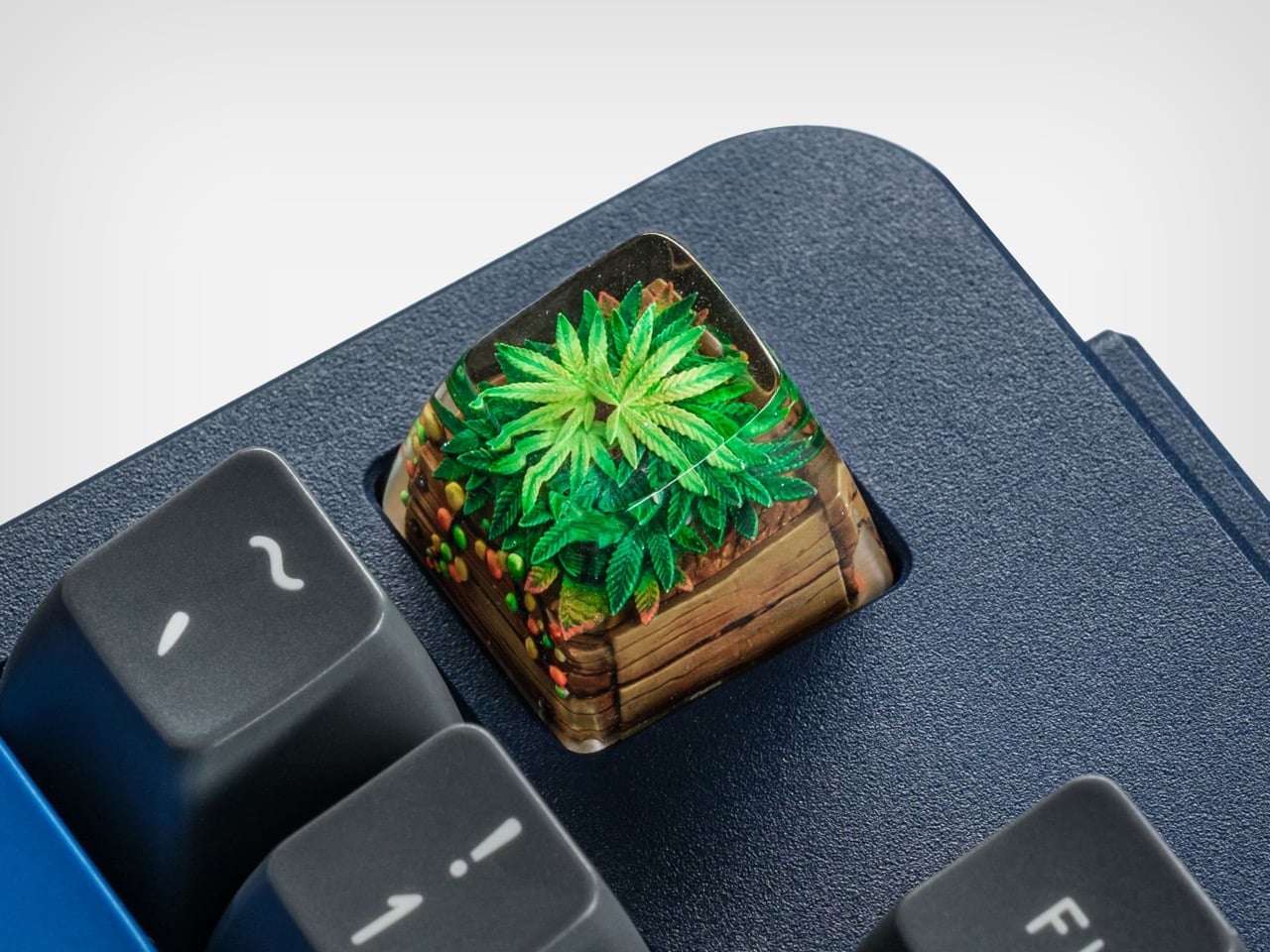
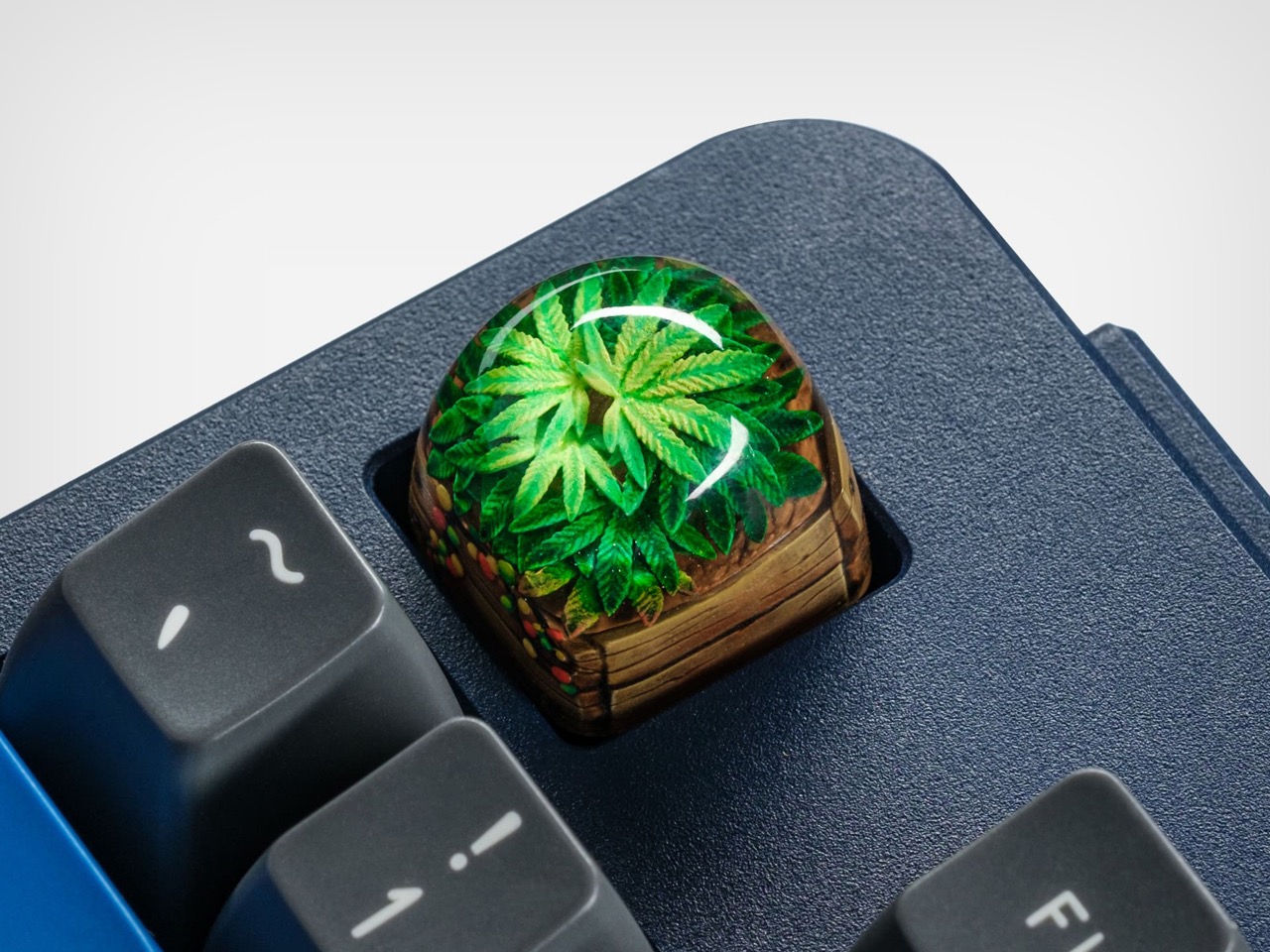
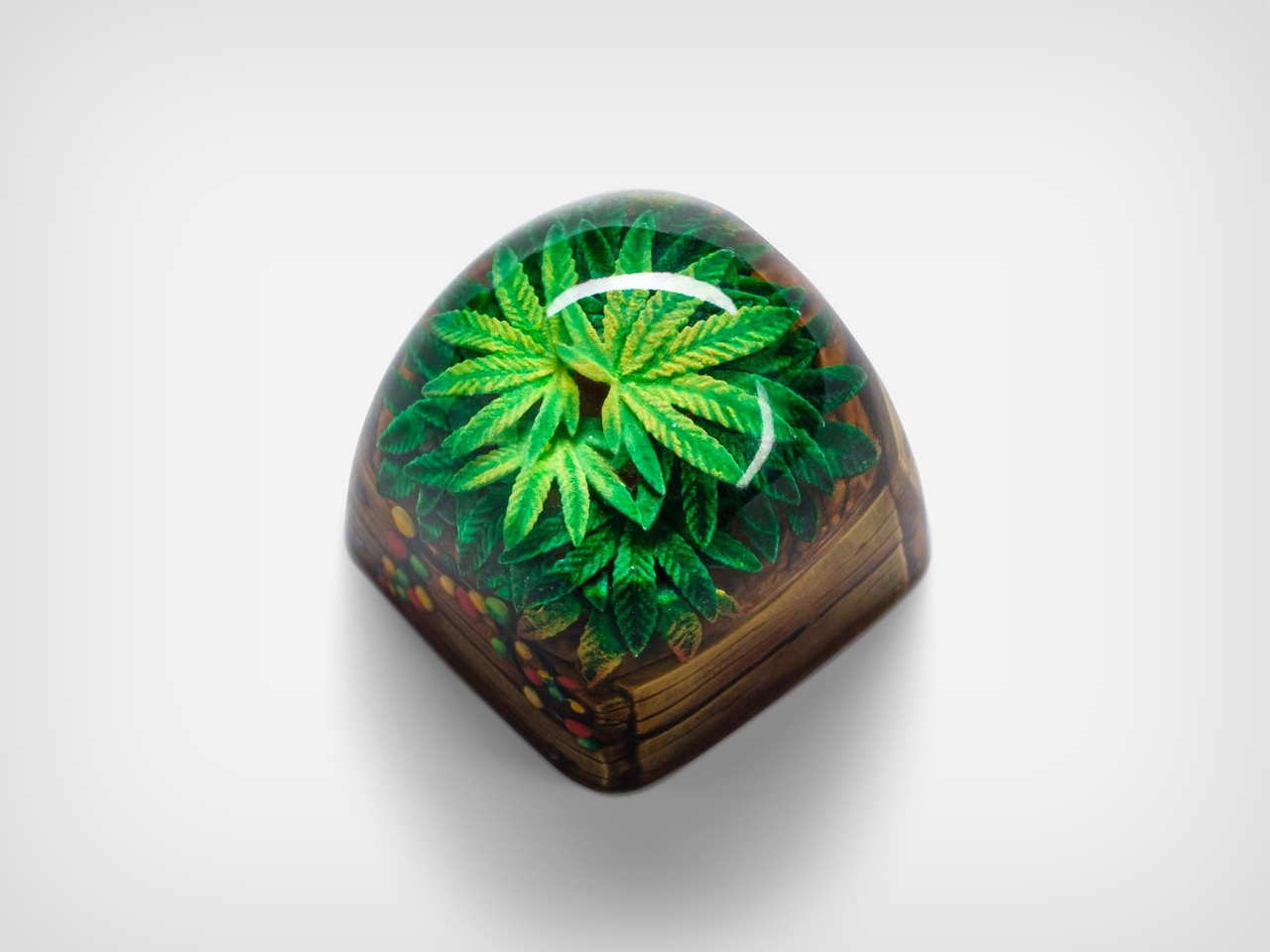
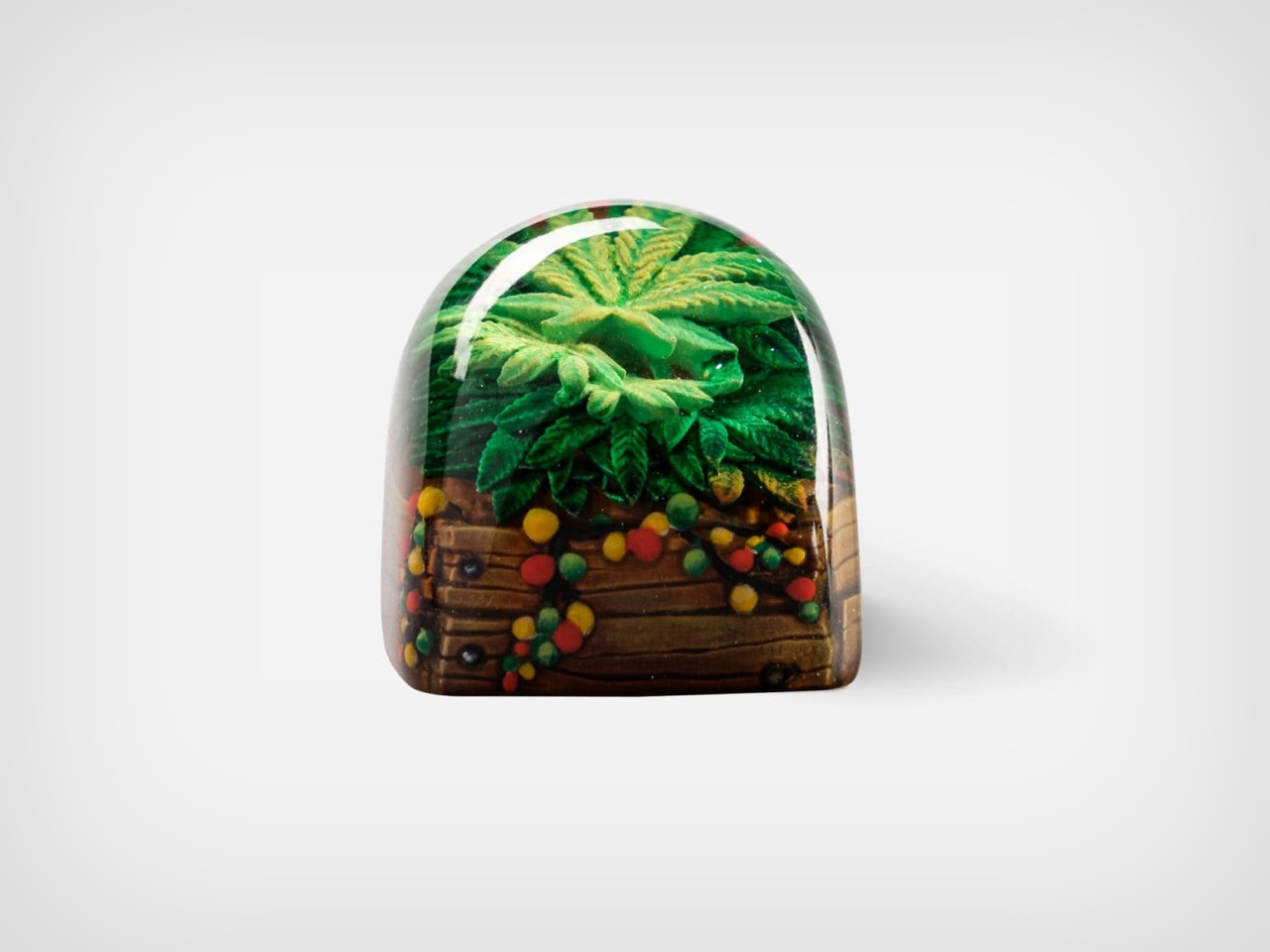
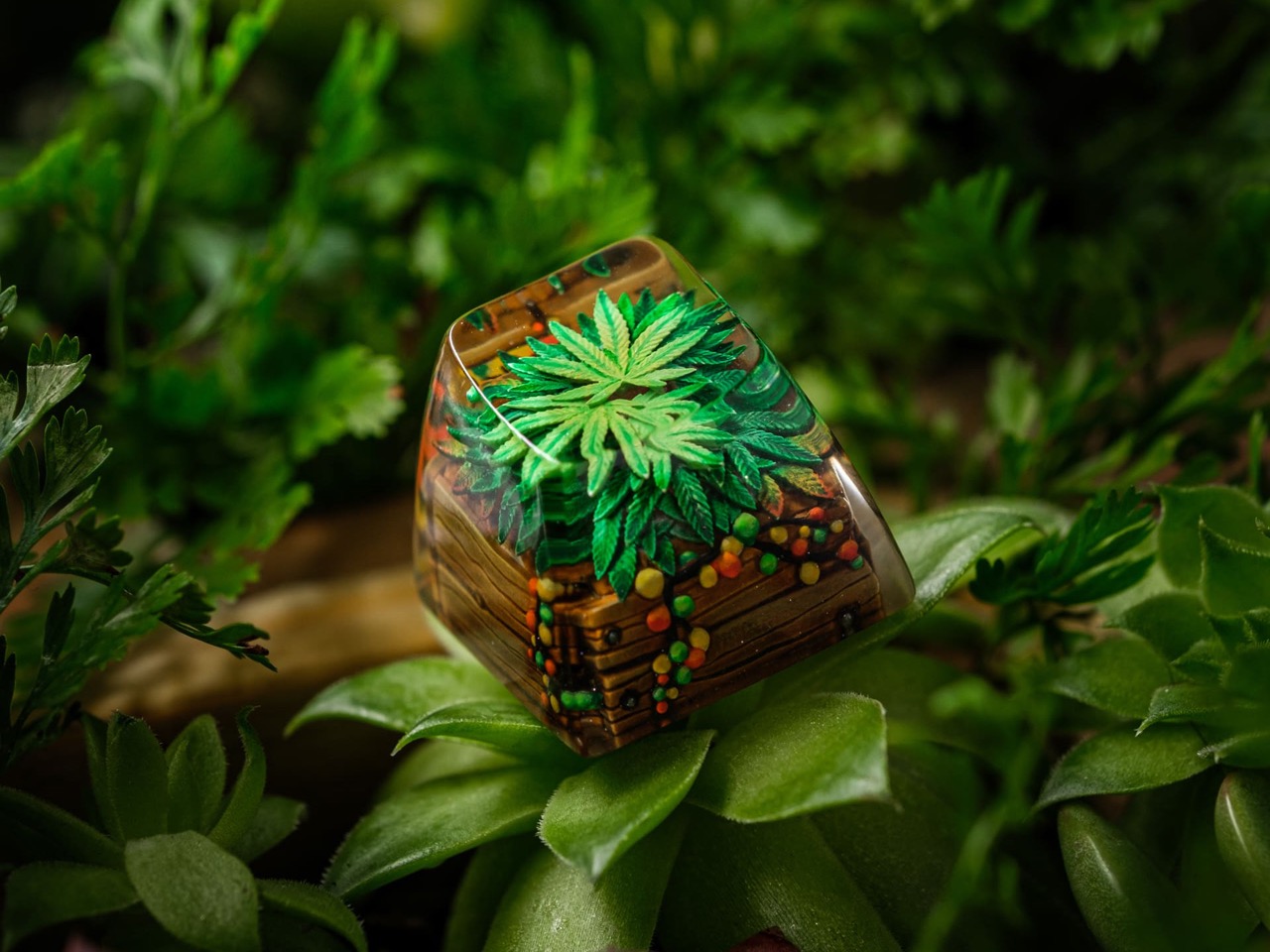
Rasta Jardin swaps the usual botanical lineup for miniature ‘ahem’ plants, complete with serrated leaves, decorative baskets, and what looks like actual soil composition at microscopic scale. Each keycap gets hand-painted, which means every Rasta Jardin has slight variations in how the leaves angle, how the rocks settle, how the light catches the resin dome. Standing 16mm tall in SA profile and compatible with Cherry MX switches, these caps are designed for your top row function keys or Escape, where they can sit pretty without making your fingers work harder to reach them.
Designer: Dwarf Factory

Designer: Dwarf Factory

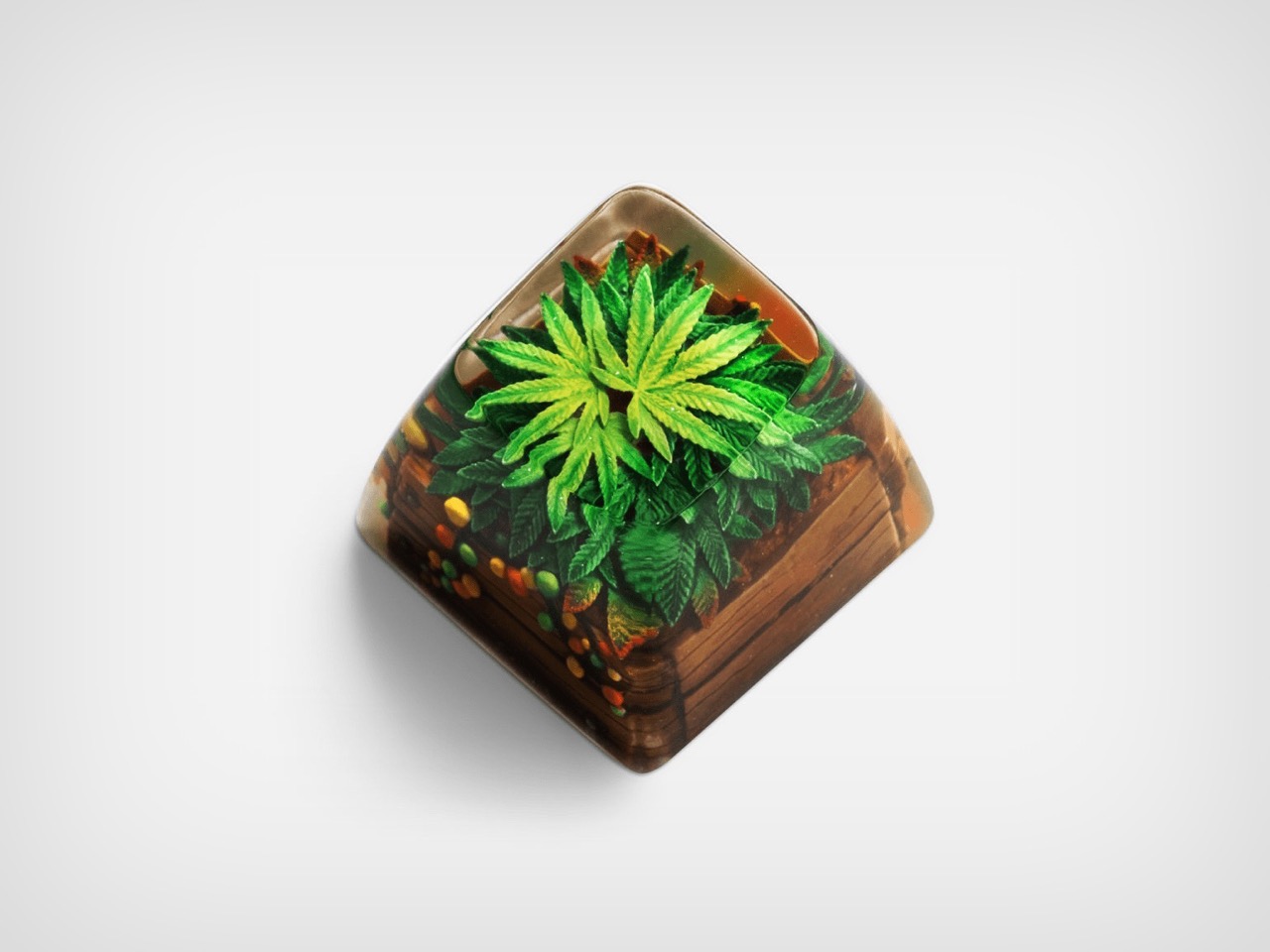
The Rasta Jardin construction starts with hand-assembled miniature plant elements, built at a scale where individual leaf serrations actually matter. The plants get positioned inside tiny woven baskets, the kind of detail that requires steady hands and magnification. Substrate gets added at the base, rocks get arranged for visual balance, and then the entire assembly gets encased in layers of transparent resin, cast in a way that avoids bubbles and maintains optical clarity.

Dwarf Factory’s command over resin is truly impressive (go check out their other work too). The dome shape creates a lens effect, magnifying the scene inside while also playing with light refraction depending on your viewing angle. Sit directly above your keyboard and you see one composition. Lean back slightly and the light shifts, catching different facets of the leaves and basket weave. The transparency means RGB backlighting (if your board has it) will glow through the keycap, turning the whole thing into a tiny illuminated terrarium when you’re typing in the dark.

The hand-painting step happens after the resin casting, adding color gradients to the leaves that give them depth and realism. The plants have a specific visual language, those jagged leaf edges and the way the foliage clusters around the stem, and Dwarf Factory nails it at a scale where most makers would just paint a green blob and call it done. The baskets get individual weave lines. The soil gets color variation. Even the rocks have shadows and highlights that suggest three-dimensional form rather than flat decoration.

Dwarf Factory ships each Rasta Jardin in a sliding kraft paper box with rubber finger gloves, because resin surfaces and fingerprint oils are enemies. You also get a user guide, which feels almost comically formal for a single keycap but reinforces the idea that you’re buying a miniature art piece that happens to be functional. At roughly $73, pricing sits in line with other premium artisan caps from established makers. You’re paying for the labor-intensive handwork and the design execution that makes these feel like gallery-quality miniatures rather than novelty garbage.

What makes the Rasta Jardin compelling is how it treats the 420 aesthetic with the same design rigor Dwarf Factory applies to cherry blossoms or desert flora. There’s no cartoonish stoner imagery here, no neon green gimmicks or Rastafarian color blocking that screams cheap novelty. Just meticulous botanical miniaturization that happens to feature a plant with significant cultural weight. Your productivity won’t improve, but your keyboard will have a story worth telling when Monday rolls around and someone asks what the hell is on your Escape key.

The post Dwarf Factory’s Hyper-real 4/20 Resin Keycaps Are Handcrafted Miniature Gardens You Can Type On first appeared on Yanko Design.