At Mobile World Congress (MWC) 2026, Samsung unveiled a range of advancements in artificial intelligence (AI) and connectivity, further cementing its position as a global leader in technological innovation. The company emphasized its commitment to creating a seamlessly connected and intelligent ecosystem, showcasing the Galaxy S26 series, wearables, tablets, laptops, and intelligent infrastructure. These innovations […]
Apple had promised a “big week” for the company as rumors swirled that it had a number of product announcements lined up. True enough, it unveiled a half-dozen new and refreshed devices over the last few days, along with more powerful chips for MacBook Pros.
In addition, ahead of the official announcement, Apple leaked news of a cheaper MacBook called the MacBook Neo. Whoops! The company confirmed the existence of that system on Wednesday. It starts at $599, making it Apple’s most affordable laptop to date.
Here’s our recap of everything Apple announced this week:
iPhone 17e
Apple
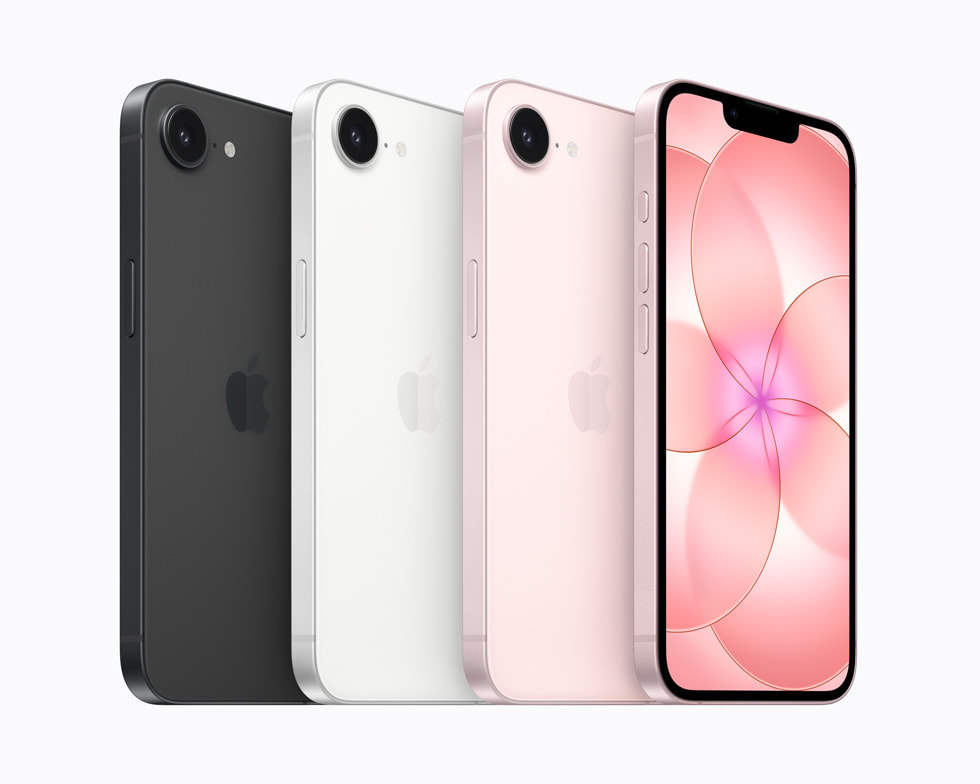
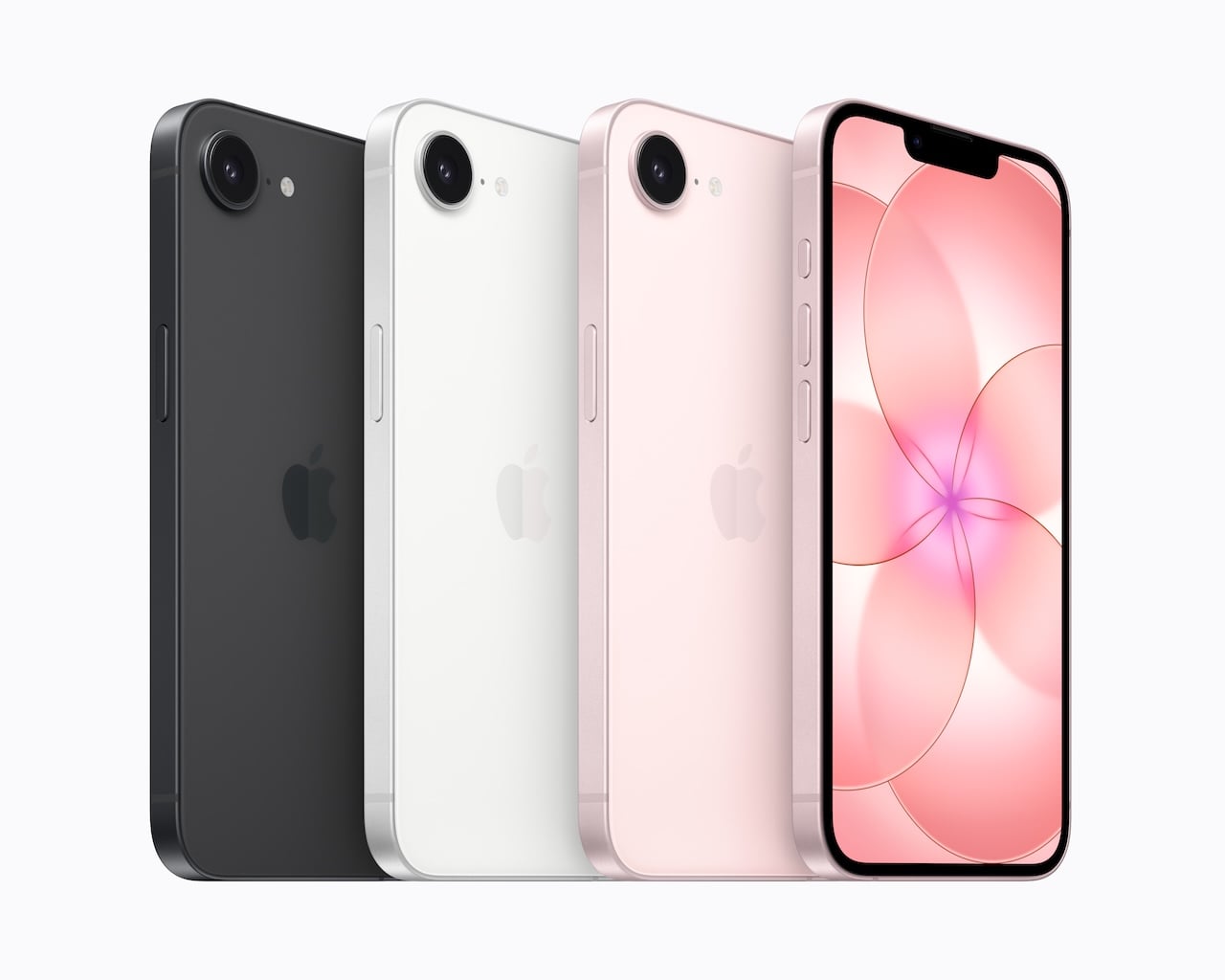
Apple has spruced up this year’s entry-level iPhone with some pretty solid upgrades, though it's keeping the starting price at $599. The iPhone 17e has double the base storage of the iPhone 16e at 256GB. It also has MagSafe support with Qi2 wireless charging speeds of up to 15W, double that of the iPhone 16e.
Design-wise, Apple hasn't exactly rocked the boat. The iPhone 17e looks pretty much identical to its predecessor. It appears that Apple is sticking with the same 48MP Fusion camera system as it used in the iPhone 16e too.
That said, the 6.1-inch Super Retina display has Ceramic Shield 2. According to Apple, this provides “3x better scratch resistance than the previous generation and reduced glare.” The company slotted its C1X cellular modem into the iPhone 17e as well. It says this is up to two times faster than the C1 that was in the iPhone 16e. The device has the same A19 chip as the iPhone 17, so it supports Apple Intelligence AI tools, and it runs iOS 26.
In addition, the iPhone 17e has an IP68 rating for water and dust resistance, as well as the promise of "all-day battery life." It also supports satellite-powered features including Emergency SOS, Roadside Assistance, Messages and Find My.
Pre-orders for the iPhone 17e are now open. It’s available in black, white and soft pink. The device will hit shelves in more than 70 countries and regions on March 11.
iPad Air M4
Apple
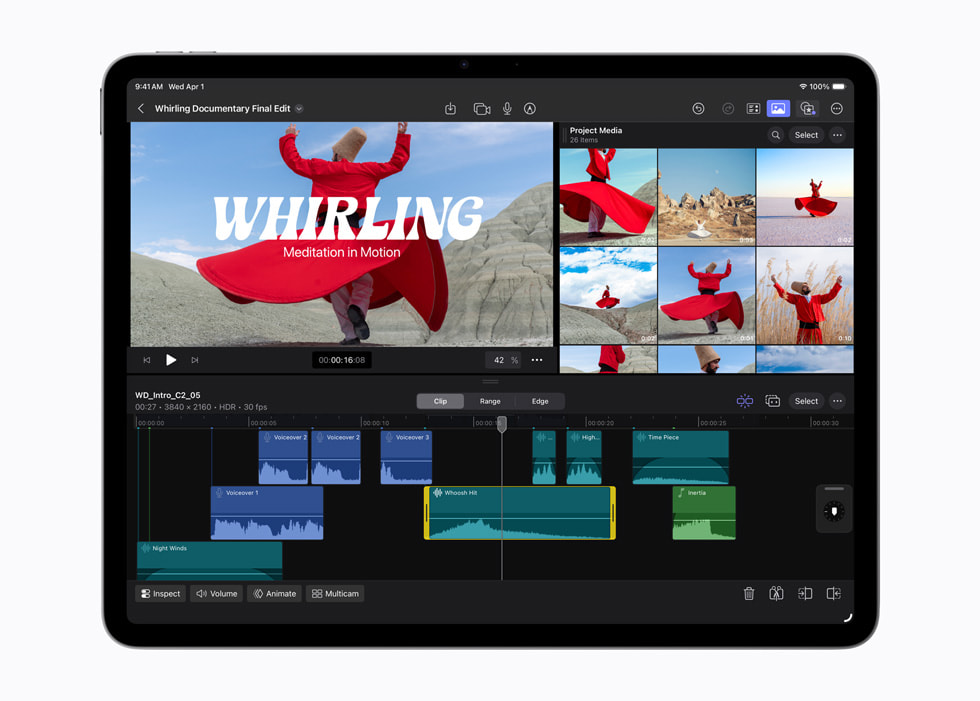
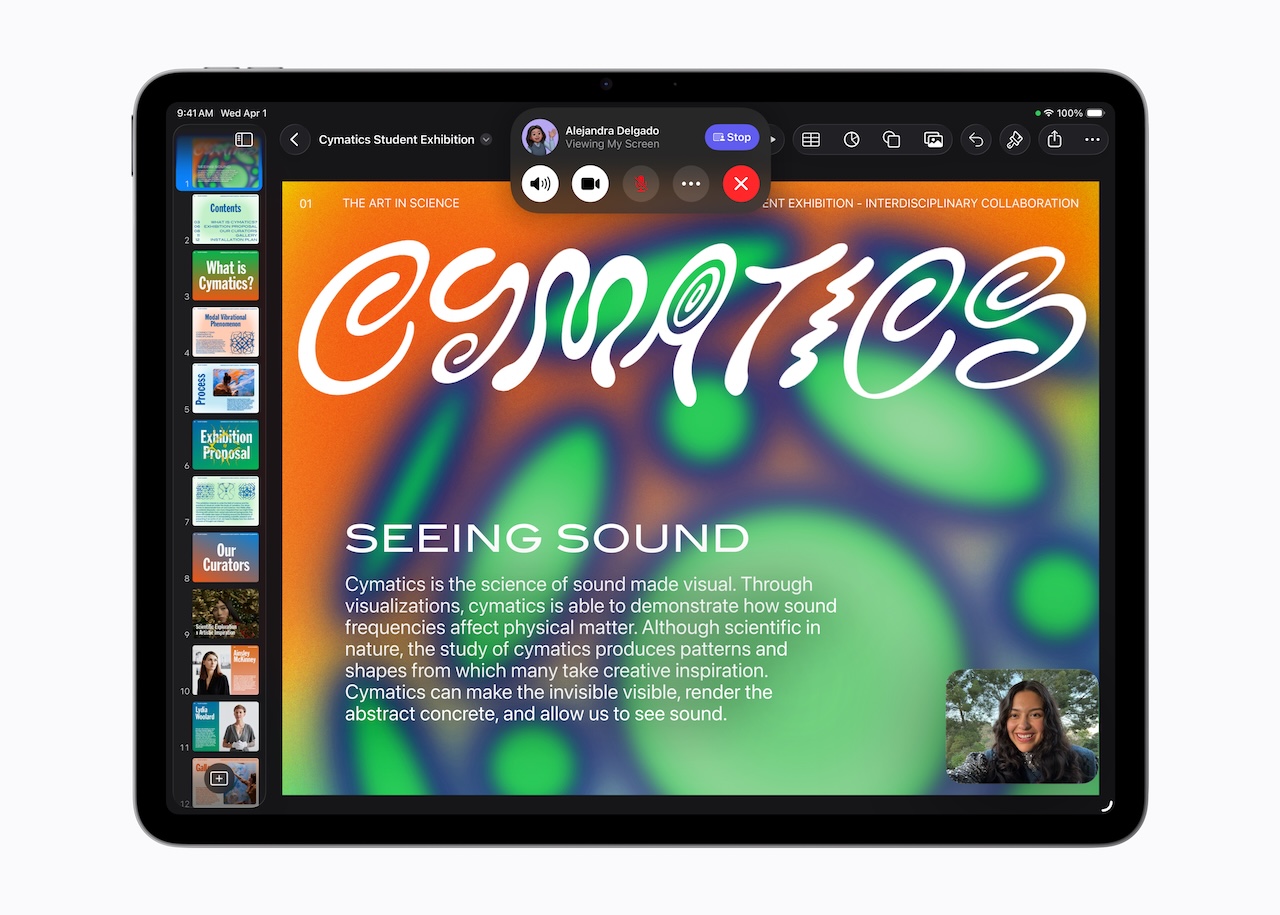
The latest iPad Air boasts Apple’s M4 chip. That means the mid-range iPad is effectively remaining a year behind the iPad Pro. The M4 is almost two years old at this point, while the top-end model has the newer M5 chip. Still, if you only use an iPad for casual tasks like watching shows, web browsing, email and so on, the M4 will be more than powerful enough. It will be more adept at handling resource-intensive tasks like video editing than previous iPad Air models too.
Apple has also bumped up the RAM from 8GB from the last-gen model to 12GB. Given the sharp increase in RAM prices in recent months, it’s slightly surprising that Apple is sticking to the same prices for the iPad Air. The 11-inch M4 iPad Air starts at $599 while the 13-inch version starts at $799, each with 128GB of storage. There's a $50 discount for those buying it for educational use.
Apple claims the M4 delivers up to 2.3 times faster performance compared with the M1 iPad Air and "over 4x faster 3D pro rendering with ray tracing performance." Of course, the new iPad Air runs iPadOS 26.
Apple gave the iPad Air other internal upgrades by including its N1 and C1X connectivity chips. As such, this is the first iPad Air with Wi-Fi 7 support. As you might expect, 5G cellular connectivity is available as well.
The design of the M4 iPad Air doesn't seem to have changed, as it appears to have the same LCD display Apple used in the last two iterations of the tablet. The company has stuck with the same rear-facing camera and dual-speaker setup as well.
Pre-orders for the M4 iPad Air are now open. The tablet will hit retailers in 35 countries and regions on March 11. It will be available in blue, purple, starlight and space gray.
Apple MacBook Pro with M5 Pro and Max
Apple
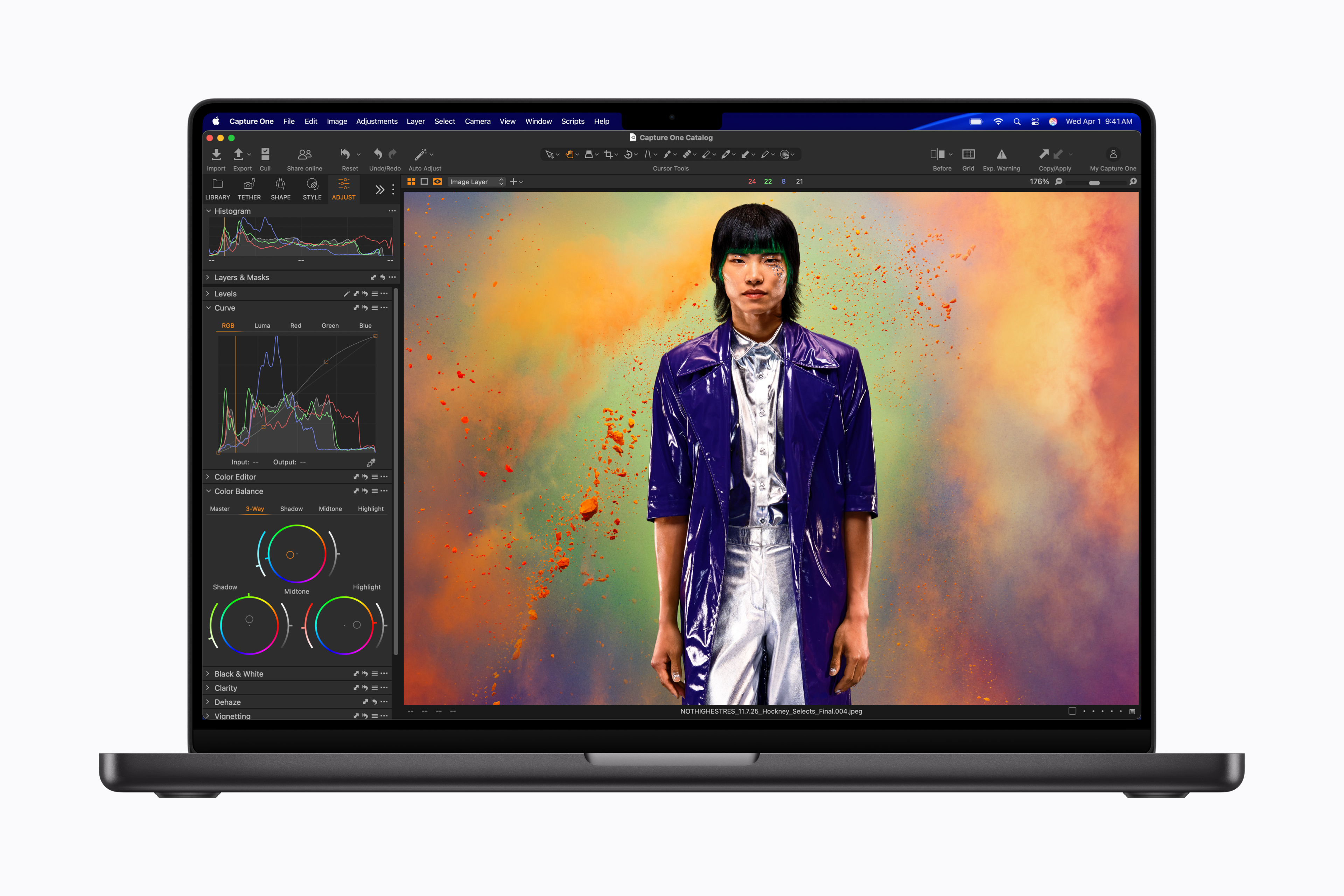
Apple’s most powerful laptop line finally got the chip upgrades that we’d long been expecting. Along with announcing the M5 Pro and M5 Max, the company is offering versions of the MacBook Pro with those chipsets. However, there are price increases to go along with the upgrades.
The new 14-inch MacBook Pro with an M5 Pro chipset (with 15 CPU cores and 16 GPU cores), 24GB of RAM and 1TB of storage starts at $2,199. That's a $200 increase compared with the base M4 Pro-powered system from late 2024, though Apple has doubled the base storage, which is a welcome touch. If you prefer, you can have a 14-inch MBP with a more powerful M5 Pro (with up to 18 CPU cores and 20 GPU cores) or M5 Max (with 18 CPU cores and 32 or 40 GPU cores). You can double the RAM to 48GB as well.
The 16-inch MacBook Pro has an M5 Pro chipset with 18 CPU cores and 20 GPU cores as standard. Of course, you can swap that out for an M5 Max if you'd rather. The 16-inch model starts at $2,699, a $200 increase from the base M4-powered system. It also starts with 24GB of RAM and 1TB of storage. For what it’s worth, Apple says both the memory and SSD are faster than in previous models.
Apple hasn’t changed the Liquid Retina XDR display and 12MP Center Stage front-facing camera for these models. However, the company has installed its N1 chip to power Wi-Fi 7 and Bluetooth 6 connectivity.
Pre-orders are now open, with general availability to follow on March 11.
Apple said the M5 Pro and M5 Max are built using new “Fusion Architecture” that “combines two dies into a single system on a chip (SoC).” As ever, the goal is to deliver more power and efficiency. We’ll find out for ourselves whether Apple’s performance claims hold up when we’re able to test the chips.
Meanwhile, the base 14-inch MacBook Pro with an M5 chipset also got a $100 price increase to $1,699. To take the sting out of that a bit, Apple doubled the base storage of that model to 1TB as well. Given that Apple usually charges a premium for storage increases, that’s not a terrible tradeoff.
M5 MacBook Air
Apple
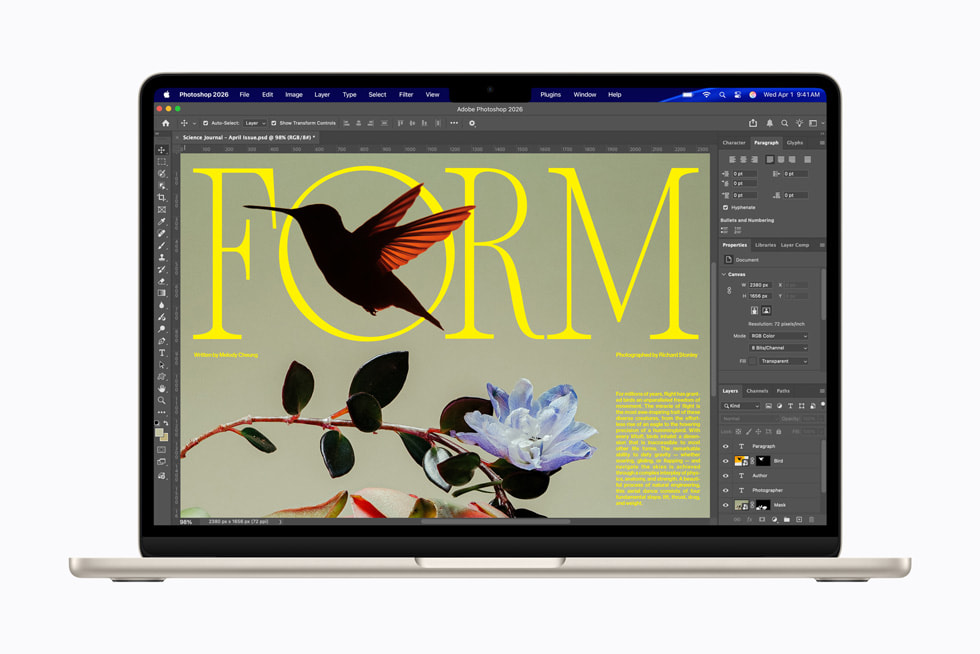
A year after Apple upgraded the MacBook Air with an M4 chipset, the company pulled the same trick by swapping in an M5 chip. The company also boosted the base storage from 256GB to 512GB, with an SSD that it claimed can provide “2x faster read/write performance compared to the previous generation.”
While the MBA still has 16GB or RAM as standard, Apple also upgraded the memory to have 153GB/s of bandwidth — the company said that’s a 28 percent improvement over what the M4 MBA offered. Meanwhile, Apple has slapped in the N1 chip to deliver Wi-Fi 7 and Bluetooth 6 connectivity.
Alas, with those upgrades comes a tradeoff. Apple has bumped the starting price of the latest MacBook Air back up to $1,099 after cutting it to $999 for the M4 model. That’s for the 13-inch variant. The 15-inch M5 MacBook Air starts at $1,299.
The latest MacBook Air is available in sky blue, midnight, starlight and silver. You can pre-order one now. It will hit stores in 33 countries and regions on March 11.
MacBook Neo
Apple expanded its laptop lineup even further on Wednesday with the announcement of the MacBook Neo. This is a new entry-level model that starts well below the latest $1,099 MacBook Air at a very reasonable $599 ($499 for educational use). It’s Apple’s least expensive laptop to date, and a clear attempt by the company to wade into a market that’s saturated with cheap Windows laptops and Chromebooks.
As expected, the laptop runs on an A18 Pro chip, which first appeared in the iPhone 16 Pro and iPhone 16 Pro Max. The chipset has a 6-core CPU, 5-core GPU and 16-core Neural Engine, along with 8GB of unified memory. That’s enough for the MacBook Neo to power Apple Intelligence features (of course, it’s a macOS Tahoe machine). Apple also said that the MacBook Neo will run for up to 16 hours on a single charge.
The MacBook Neo has a 13-inch Liquid Retina Display (with 500 nits of brightness and support for 1 billion colors), one USB-C 3 port, a USB-C 2 port and a headphone jack, but no MagSafe connector. There’s a 1080p front-facing FaceTime HD camera, dual mics and side-firing speakers that support Spatial Audio and Dolby Atmos.
The system has a Magic Keyboard with a multi-touch trackpad. However, if you want a TouchID sensor, you’ll need to pay $100 more for it. Ponying up the extra cash will also double the storage from 256GB to 512GB.
Apple claimed that the MacBook Neo is up to 50 percent faster at everyday tasks than “the bestselling PC with the latest shipping Intel Core Ultra 5” with 8GB or RAM and a 256GB SSD. The company also contended that its new laptop is up to three times faster than that Windows system “when running on-device AI workloads like applying advanced effects to photos.”
The MacBook Neo is available in four colors: silver, blush (a light pink), citrus (light yellow) and indigo. It was previously reported that Apple would offer the budget-friendly laptop in some lively iMac-esque colorways. Moreover, Apple says the laptop is “made with a durable recycled aluminum enclosure that helps it reach 60 percent recycled content by weight,” which is said to be the most of any Apple device.
As with the rest of the new devices, pre-orders are open now and the MacBook Neo will be available in stores in 30 countries and regions on March 11.
We’ve already had a chance to go hands-on with the MacBook Neo. Engadget senior editor Devindra Hardawar had generally positive first impressions of the laptop, but felt that the keyboard and touchpad didn’t feel quite as sturdy as those on Apple’s higher-end systems.
Studio Display and Studio Display XDR
I don’t think many people had Studio Displays on their Apple announcements bingo card for this week, but here they are. The Studio Display XDR is completely new.
This is a 27-inch monitor with a 5K Retina XDR screen. It has a mini-LED display with more than 2,000 dimming zones and peak HDR brightness of 2,000 nuts, along with a wider color gamut. The Studio Display XDR boasts a 120Hz refresh rate (an improvement over the 60Hz that previous models were limited to) and a tilt- and height-adjustable stand as standard.
The monitor also has a 12MP Center Stage camera with support for Desk View, a feature that — weirdly enough — lets you show both your face and what's on your desk. Thunderbolt 5 connectivity allows you to hook up more displays by daisy chaining them. The Studio Display XDR is also a Thunderbolt hub with support for up to 140W of charging power. As such, you'll be able to fast charge a 16-inch MacBook Pro using the included Thunderbolt 5 Pro cable.
The Studio Display XDR starts at $3,299. A version with nano-texture glass, which is said to further reduce reflectivity, costs $3,599.
Meanwhile, the refreshed Studio Display has an upgraded 12MP Center Stage camera with Desk View. There's also a "studio-quality" three-microphone array and six-speaker sound system with Spatial Audio. The latest model has Thunderbolt 5 support with the option to daisy-chain displays. The Studio Display can deliver 96W charging as well.
The base monitor is $1,599. It still has a 27-inch 5K Retina display with up to 600 nits of brightness and P3 wide color. It comes with standard glass or, for an extra $300, nano-texture glass. The Studio Display has a tilt-adjustable stand as standard. If you'd prefer to have one that's height adjustable as well, you'll need to shell out another $400.
Again, pre-orders for the displays are now open ahead of broader availability on March 11.
This article originally appeared on Engadget at https://www.engadget.com/computing/laptops/everything-apple-announced-this-week-macbook-neo-iphone-17e-and-more-155617129.html?src=rss
Anthropic has made switching to its Claude AI chatbot easier than ever. The company announced a new memory import tool that can extract all of a competing AI chatbot's memories and context of you into a text prompt that can be fed into Claude.
With Anthropic's prompt, you can then copy and paste the output into Claude's memories, and the AI chatbot will pick up where you left off with another AI chatbot, whether it's ChatGPT, Gemini or Copilot. Anthropic said it'll take about 24 hours for Claude to assimilate the new context, but you'll be able to see the change by clicking on the "See what Claude learned about you" button. Claude users can even tweak what the AI chatbot remembers in the "Manage memory" section in the app's settings. Anthropic pointed out that Claude is meant to focus on "work-related topics to enhance its effectiveness as a collaborator," adding that it might not remember personal details that are unrelated to work.
Anthropic's timing doesn't seem to be just a coincidence. Claude recently jumped to the number one spot in the App Store's free apps charts, dethroning ChatGPT in the process. The rise in popularity likely stems from its recent dispute with the Department of Defense, where Anthropic refused to budge on AI guardrails related to mass domestic surveillance and fully autonomous weapons. On the other hand, OpenAI will be taking Anthropic's vacated role with the Department of Defense, leading to a trend of users boycotting ChatGPT and canceling their subscriptions.
This article originally appeared on Engadget at https://www.engadget.com/ai/anthropics-claude-can-now-absorb-your-past-conversations-with-other-ai-chatbots-153201656.html?src=rss
Snap’s latest AR glasses, available as the Spectacles developer kit, mark a notable advancement in wearable augmented reality. Unlike systems that depend on external devices, these glasses project holograms directly into the user’s surroundings. According to Cas and Chary XR, the hardware still has significant constraints, such as a 46° diagonal field of view and […]
Samsung continues to lead the foldable smartphone market with the Galaxy Z Fold 8 Wide, a device that combines innovative technology with practical design. By focusing on durability, display innovation, camera enhancements, and battery performance, the Galaxy Z Fold 8 Wide aims to set a new standard in the industry. This device is not just […]
Apple has officially launched the iPhone 17e, a new addition to its iPhone 17 series, designed to combine advanced technology with a more accessible price point. Starting at $599 for the 256GB model, the iPhone 17e offers a compelling mix of performance, durability, and sustainability. Available in black, white, and soft pink, this device aims […]
The release of DeepSeek V4 introduces notable advancements in AI capabilities, emphasizing scalability and efficiency. One key feature is the 1 million token context window, which allows the system to process large datasets, such as full research papers or extensive codebases, without the need for segmentation. According to Universe of AI, this enhancement supports more […]
Apple has officially launched the latest iteration of the iPad Air, a device that combines innovative technology with a sleek design to deliver an enhanced user experience. Powered by the new M4 chip, the iPad Air offers a 30% performance boost compared to its predecessor and is 2.3 times faster than the M1 model. This […]
Artificial intelligence continues to reshape productivity, offering specialized systems tailored to distinct professional needs. Corey McClain compares two standout options, Claude Projects and NotebookLM, highlighting their unique strengths. While NotebookLM excels in knowledge management and research, helping users synthesize data into structured formats like slides or infographics, Claude Projects focuses on workflow creation and actionable […]
Samsung's newest feature turns your phone into your house keys. The company has created the Digital Home Key, a feature inside of the Samsung Wallet that should let you unlock any compatible smart door with your phone. The Samsung Wallet already offered digital car keys.
"As we continue to evolve Samsung Wallet, delivering trusted mobile experiences remains at the core of our innovation," Woncheol Chai, EVP and head of Digital Wallet Team, Mobile eXperience (MX) Business at Samsung Electronics, said in a statement. "Through close collaboration with our partners and in alignment with the Aliro standard, Digital Home Key brings the same level of security and ease Samsung Galaxy users expect from Samsung Wallet to their homes."
Created by the Connectivity Standards Alliance (CSA), Samsung calls Aliro an "industry-standardized communication protocol." The Digital Home Key will also get support from smart lock brands like Nuki and Schlage. It's also designed to meet EAL6+ security certification.
According to Samsung, you'll also need biometrics or a PIN to use the Digital Home Key. You should be able to remotely manage or remove the tool through Samsung Find if you lose your phone.
Samsung is rolling out the Digital Home Key in select regions starting this month. It plans to expand its range as compatible smart lock brands become available in more locations.
This article originally appeared on Engadget at https://www.engadget.com/home/smart-home/the-samsung-wallet-can-now-hold-your-house-keys-142944132.html?src=rss