LUV1 modular bike replaces your car for daily errands with 120L storage and swappable batteries

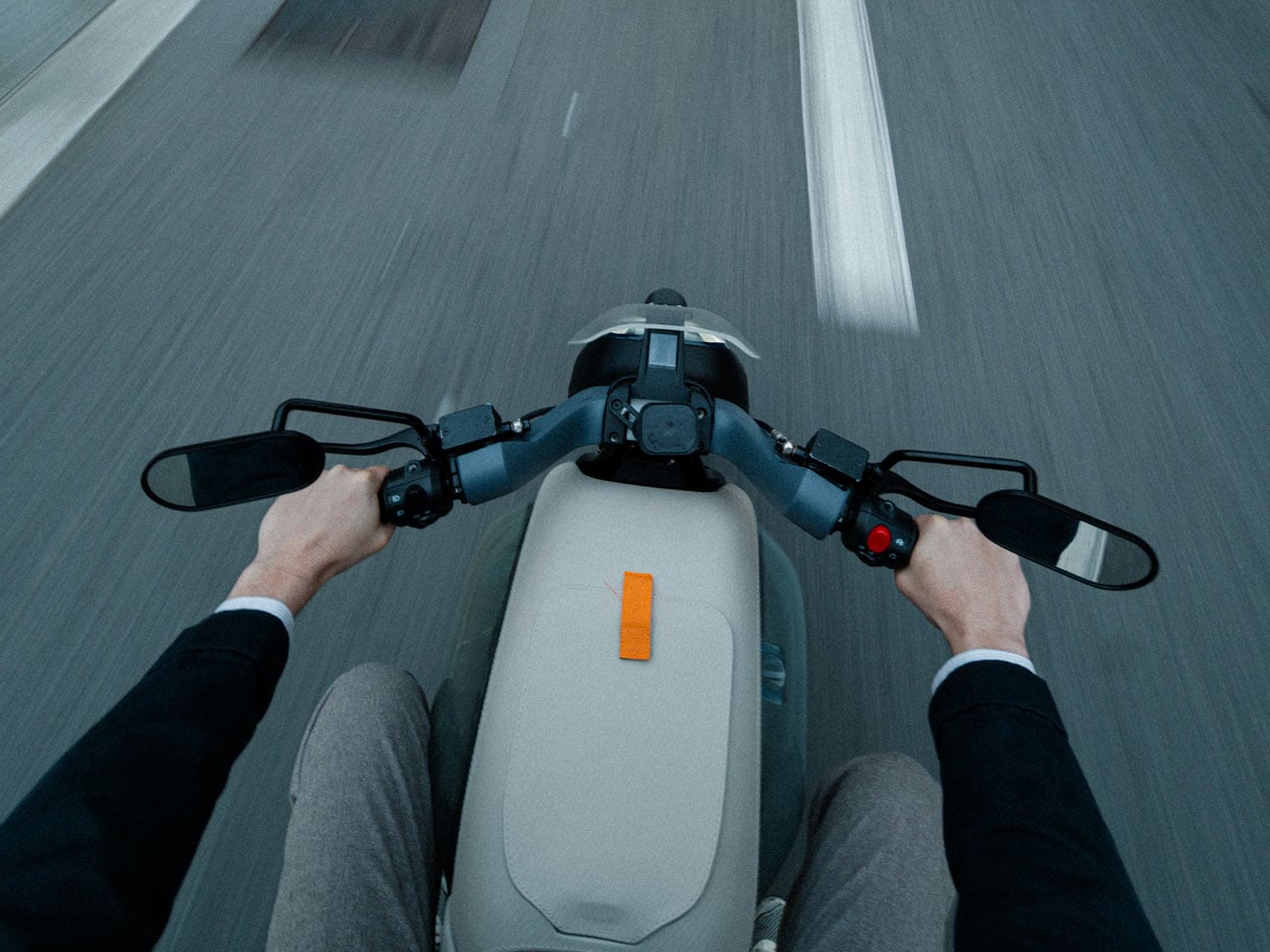
Most electric motorcycles still behave like motorcycles first and utility machines second. They chase performance numbers, oversized displays, or aggressive styling while ignoring a simple reality: most urban riders just want something practical enough to replace short car trips. The ANY LUV1 approaches the problem differently. Instead of behaving like a sportbike with batteries attached, it feels more like a compact urban tool designed around everyday life.

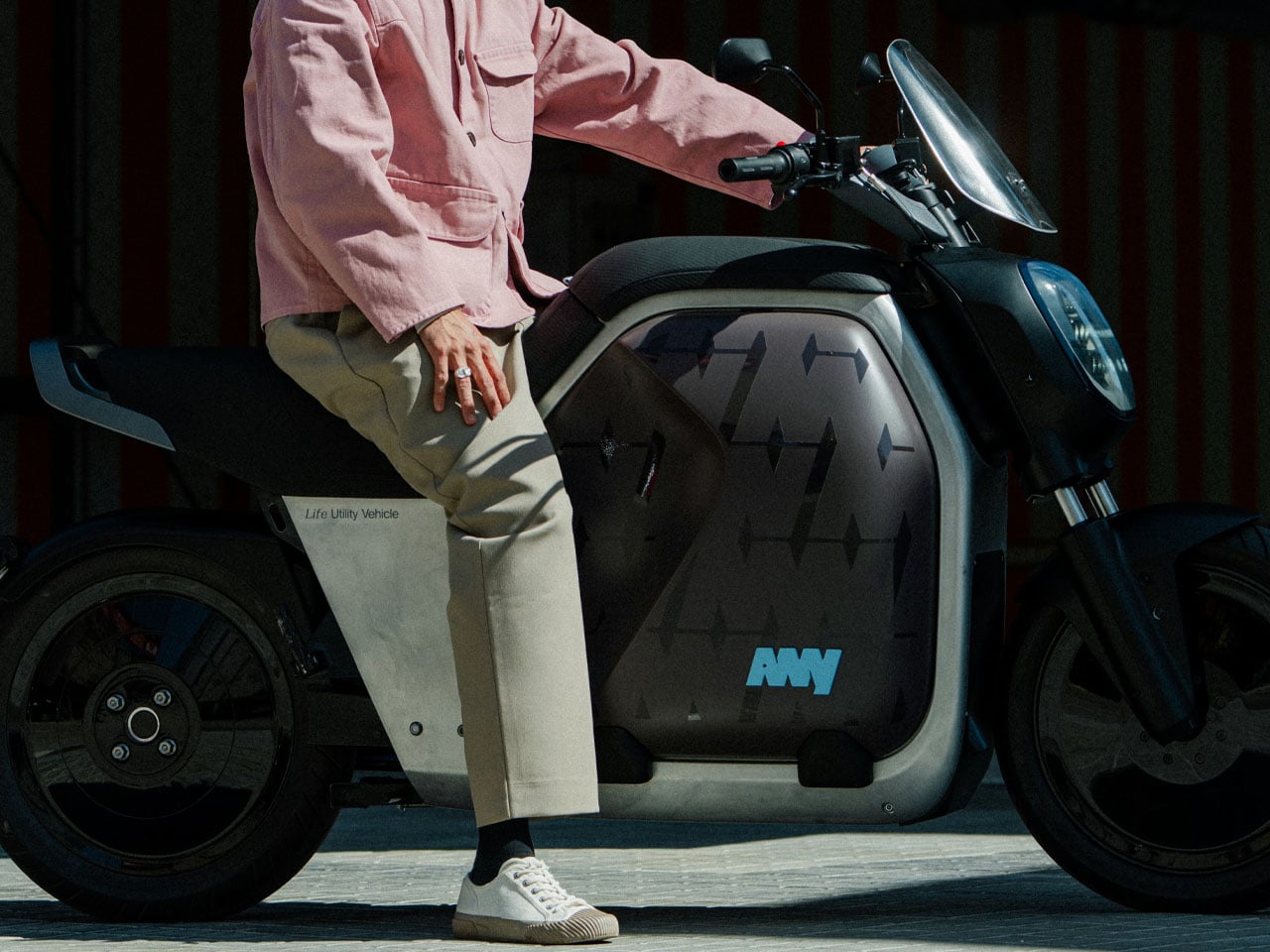
Created by Belgian startup ANY Mobility, LUV1 is sandwiched somewhere between an electric scooter, cargo bike, and lightweight motorcycle. The company calls it a “Life Utility Vehicle,” and the name makes sense once you look beyond the styling. Nearly every part of the vehicle revolves around usability, whether that means carrying groceries, office gear, camera equipment, or handling the kind of short-distance errands people usually default to using a car for.

Designer: ANY Mobility

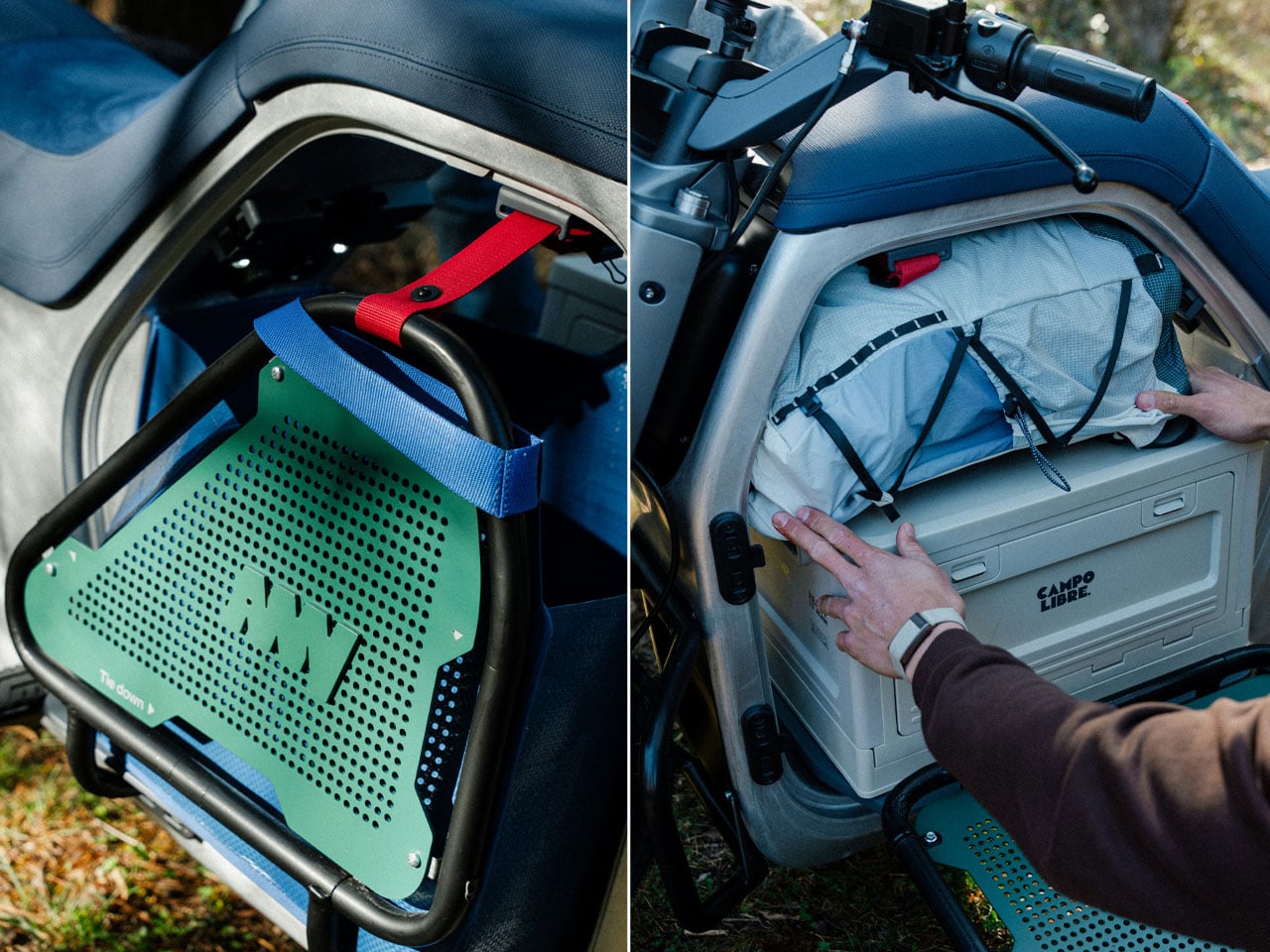
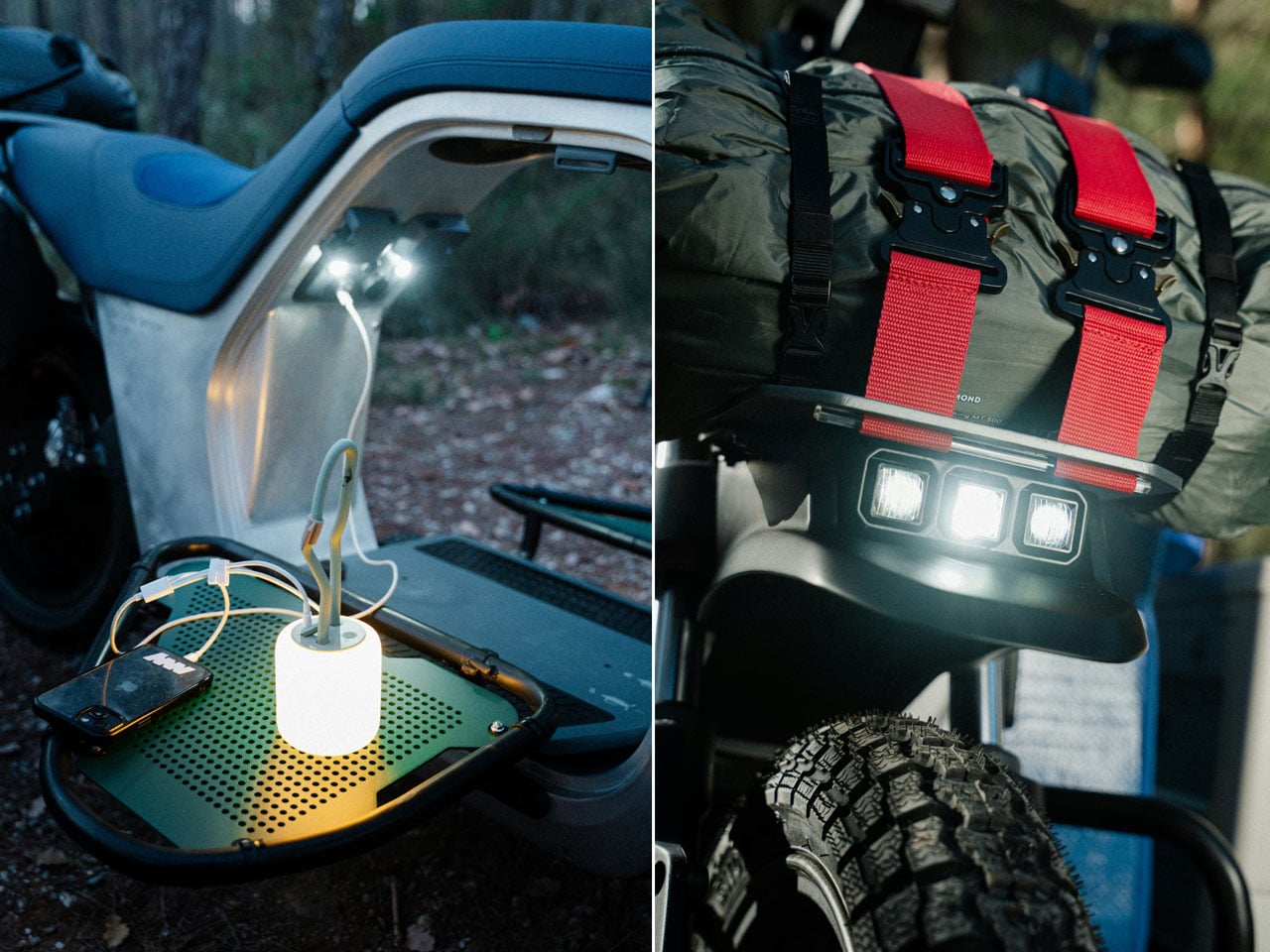
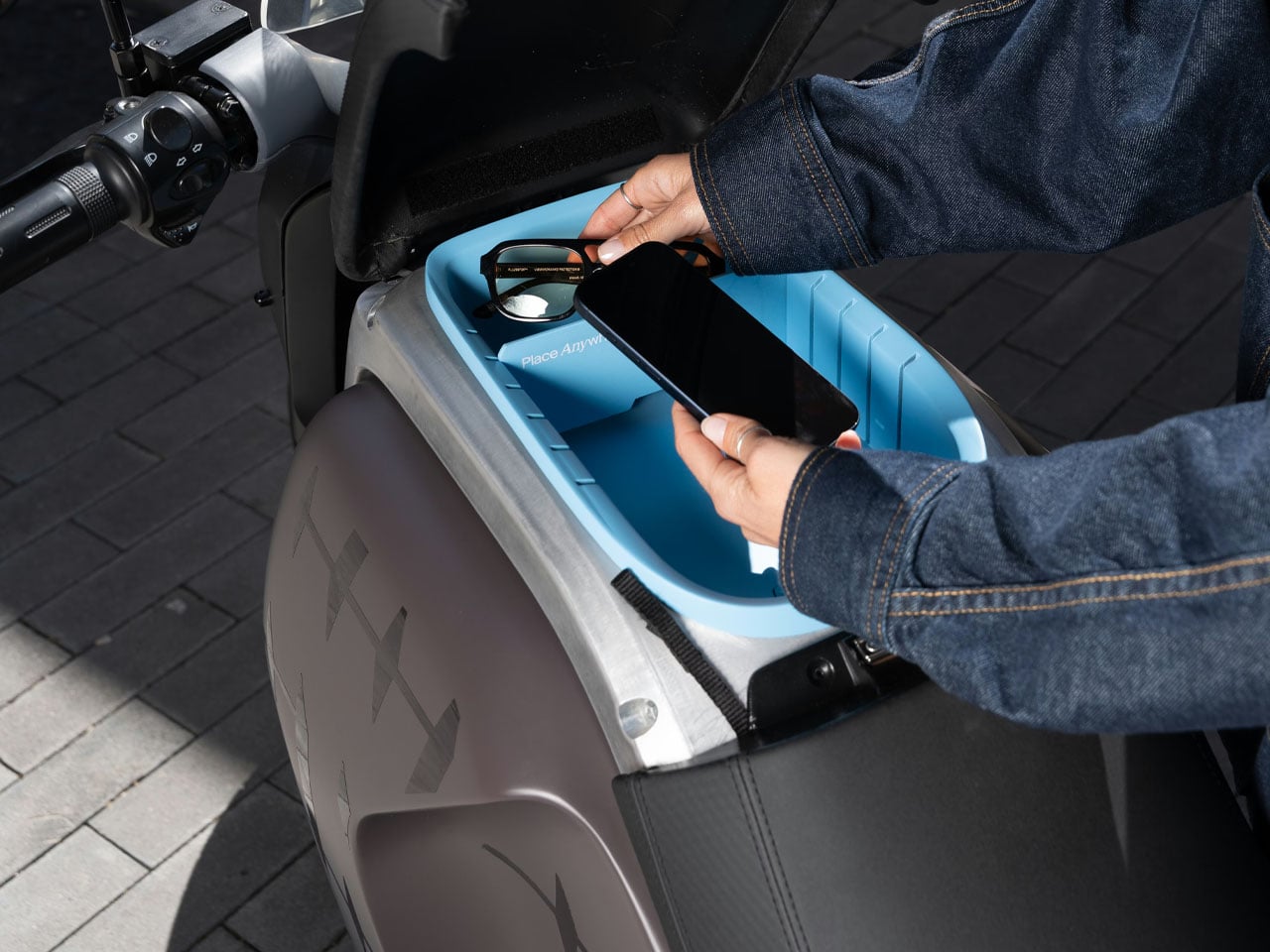
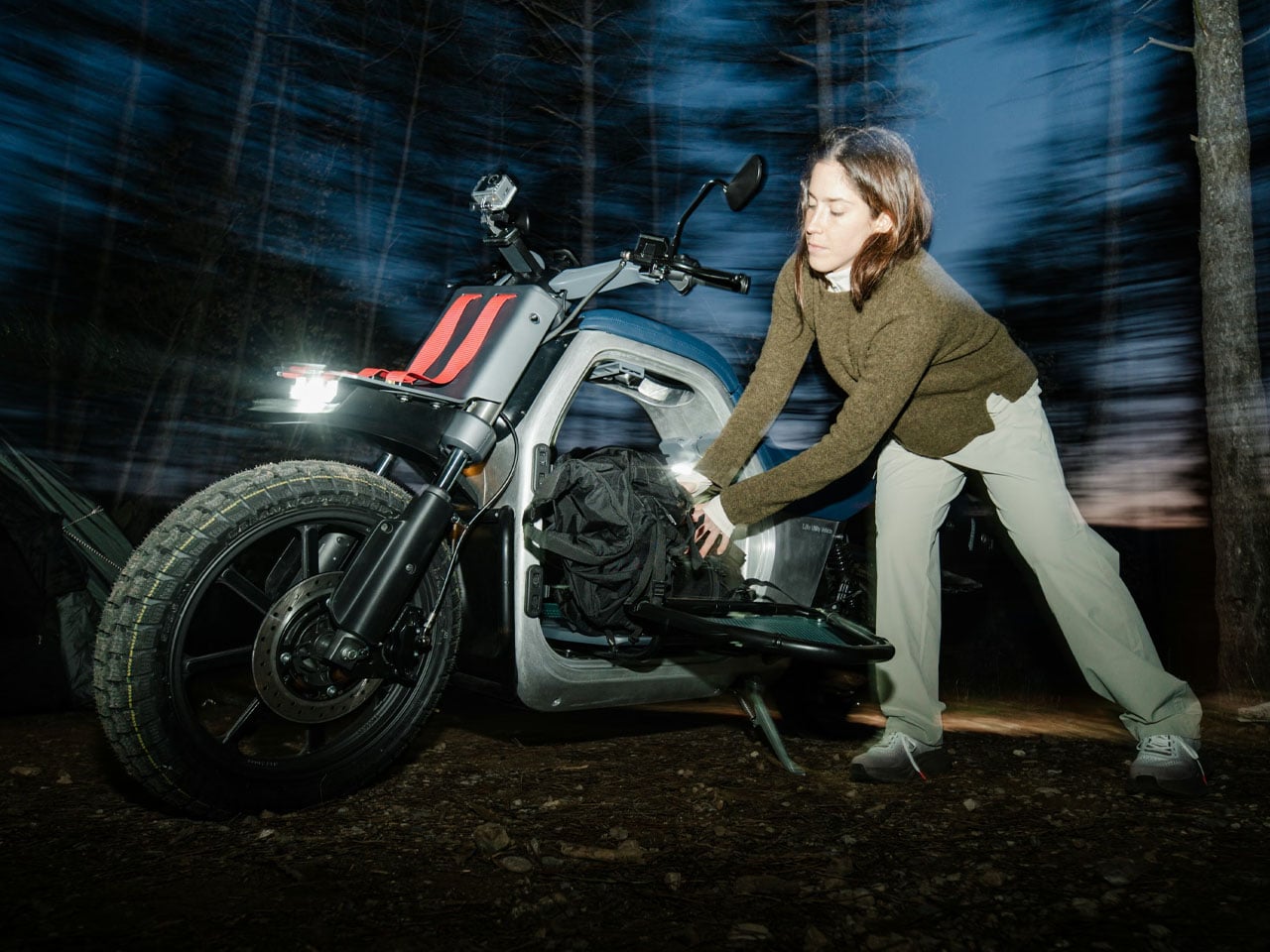
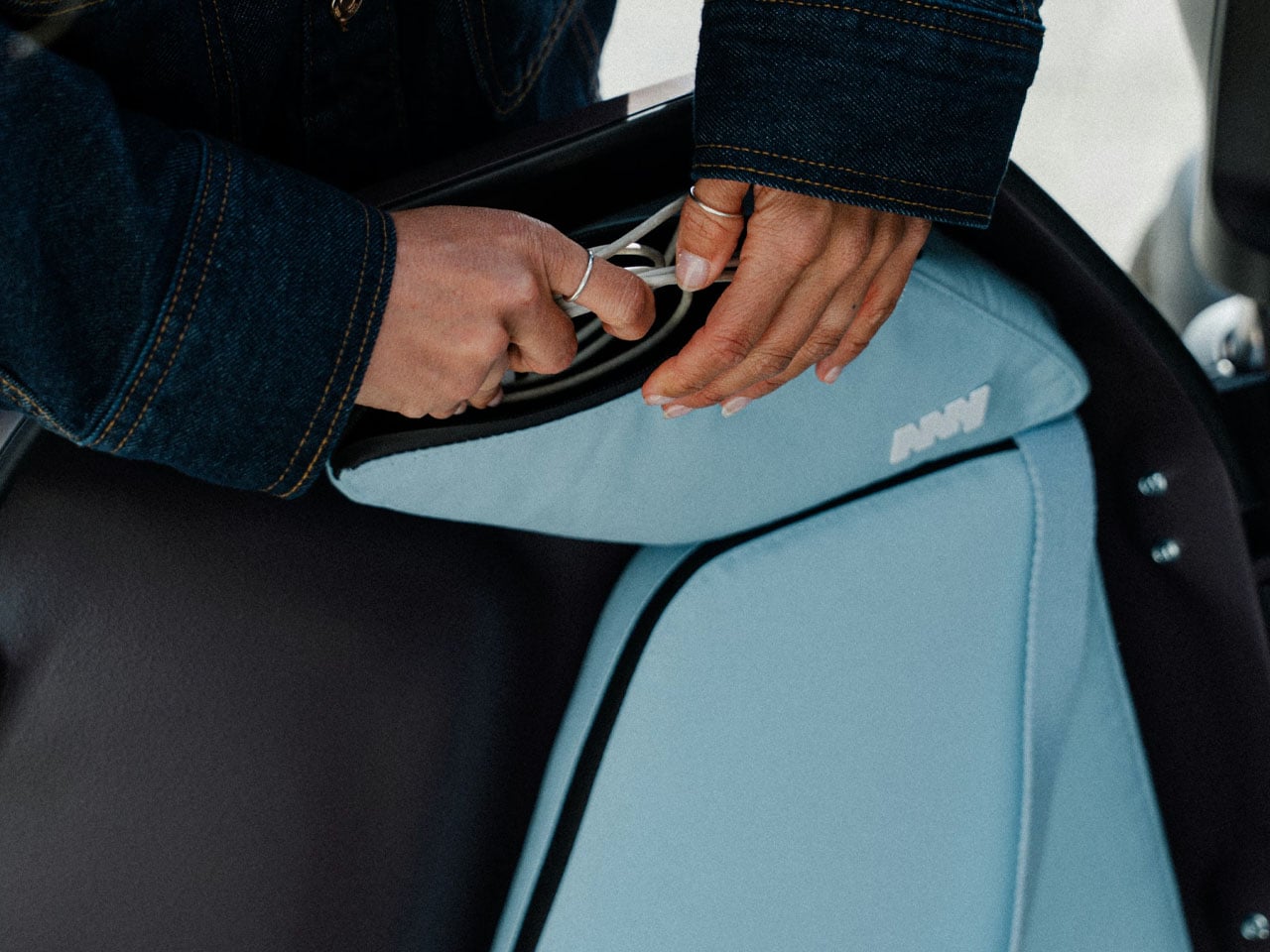
That practicality starts with its packaging. The integrated cargo compartment offers 120 liters of storage, which is significantly more useful than the tiny under-seat compartments found on most scooters. It is large enough to carry shopping bags, delivery equipment, or a backpack and helmet without forcing riders to strap everything externally. Front and rear cargo racks expand that flexibility further, while configurable dividers allow owners to organize storage depending on the task at hand.

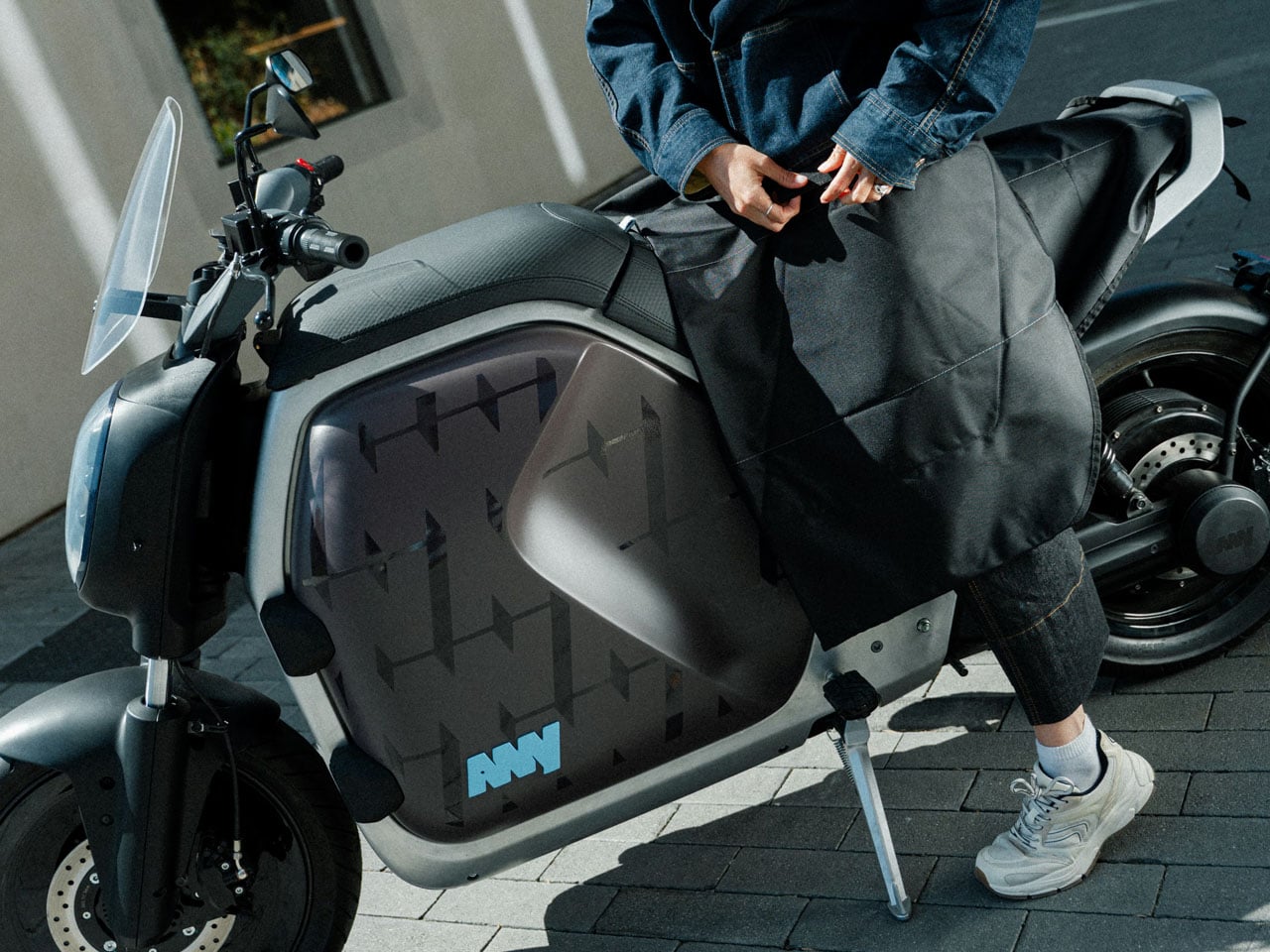
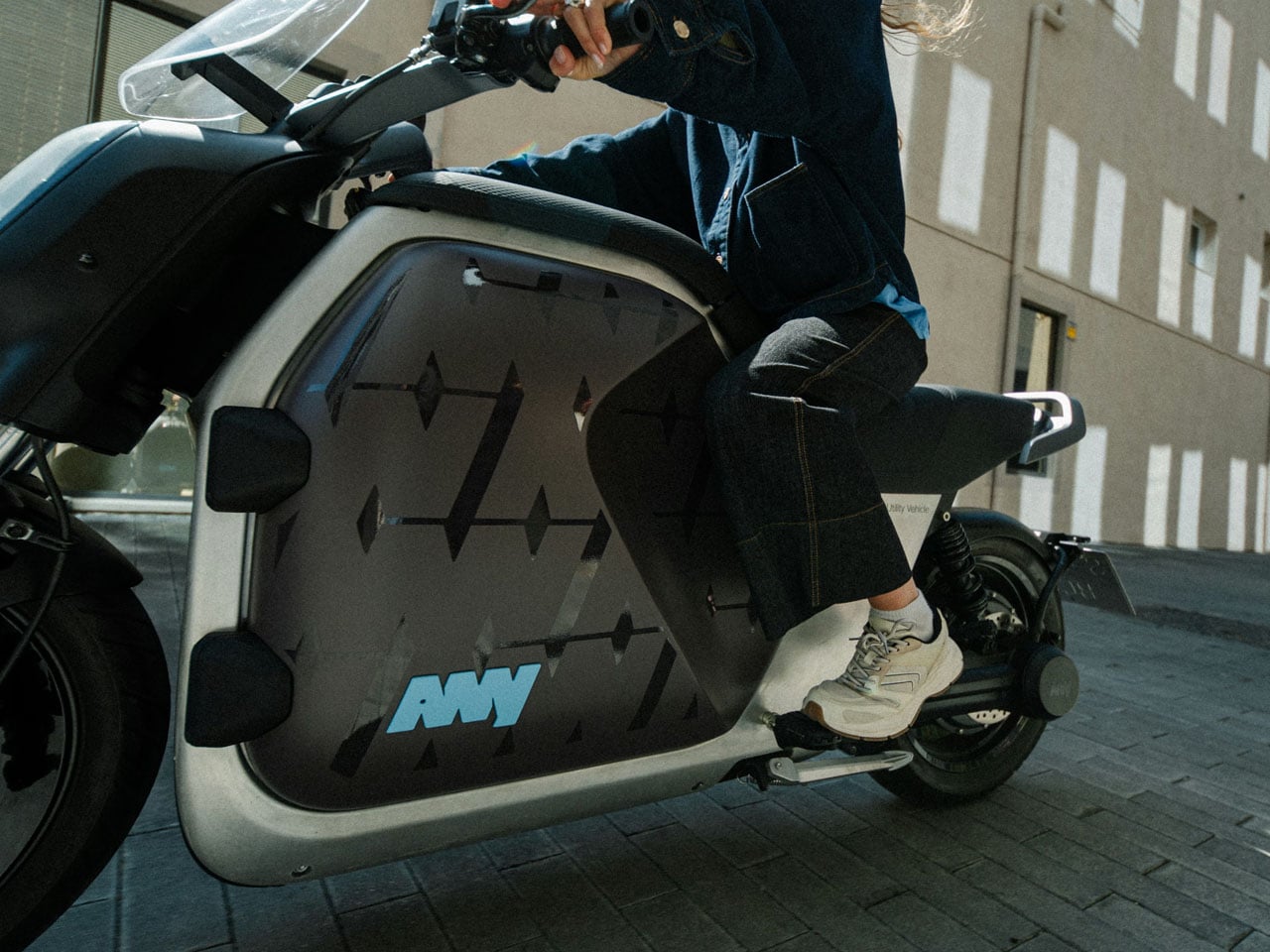
The modular approach is where the concept becomes genuinely interesting. Instead of locking owners into one fixed setup, the LUV1 can be customized with interchangeable body panels, seating layouts, storage accessories, and optional weather protection. One configuration can prioritize cargo hauling during the week while another leans toward casual commuting on weekends. It follows the same logic that made modular furniture and adaptable workspaces appealing: people increasingly want products that evolve with their routines rather than forcing routines around the product.

Visually, the bike avoids the exaggerated “future mobility” look many startups lean on. The clean bodywork and restrained surfacing come from Granstudio, the Italian design firm led by former Pininfarina design director Lowie Vermeersch. That design pedigree shows in the proportions and detailing. Even functional components like the storage compartments and structural frame feel integrated into the design rather than added as an afterthought.

Underneath the bodywork sits a modular aluminum chassis produced using high-pressure die-casting, a manufacturing method more commonly associated with larger automotive companies. The setup helps reduce complexity while providing the platform with enough flexibility to support various accessories and future configurations. Power comes from an 11 kW rear hub motor paired with dual swappable lithium-ion battery packs totaling 6.5 kWh. ANY Mobility claims a range of 68 to 87 miles, depending on use, while the top speed is rated at 62 mph, making the bike suitable for both dense city streets and suburban commuting. Charging the batteries through a standard 220V outlet reportedly takes under four hours.

The LUV1 also keeps accessibility in mind. It weighs around 352 pounds and features a relatively approachable 30.9-inch seat height, making low-speed maneuvering less intimidating for newer riders and shorter commuters alike. According to reports, the company expects pricing to fall between €7,000 and €10,000 (approximately $8,150 – $11,600) depending on configuration, and reservations have already opened ahead of production plans.

What makes the ANY LUV1 stand out is not raw performance or futuristic gimmicks, but how realistically it understands modern urban mobility. Most people are not looking for an electric motorcycle to replace weekend entertainment. They are looking for something convenient enough to replace unnecessary car usage, and the LUV1 feels designed precisely around that idea.

The post LUV1 modular bike replaces your car for daily errands with 120L storage and swappable batteries first appeared on Yanko Design.

Waymo’s Self-Driving Car Saw the Flood and Drove In Anyway. Here’s The Problem Plaguing Every Robotaxi.

Every sensor on a Waymo robotaxi sees the world in layers. The LiDAR maps it in three dimensions, radar bounces through it, and cameras read it in color and contrast, building a composite picture of the road that no human retina could match at the same fidelity. So when a Waymo encountered a flooded section of a 40 mph road in San Antonio on April 20, the car absolutely saw the water. It slowed down for it. Then it drove in anyway, floated off the road surface, and came to rest in Salado Creek. The voluntary recall Waymo filed with NHTSA on April 30, covering 3,791 vehicles, was triggered not by a sensor that missed a hazard, but by a software stack that saw the hazard clearly and still chose the wrong response.

You might be sitting in one of those 3,791 recalled vehicles right now, somewhere in Phoenix, Los Angeles, Austin, or Atlanta, and Waymo has confirmed the permanent software fix is still in development. Tesla’s Cybercab, entering production at Giga Texas, runs a supervised robotaxi service in Austin, Dallas, and Houston on a pure-vision architecture with no LiDAR whatsoever. Uber’s platform in Dallas is dispatching Avride-operated Hyundai Ioniq 5s that are currently under NHTSA investigation for 16 crashes involving lane changes and failure to stop for traffic ahead. Amazon’s Zoox uses cameras, LiDAR, radar, and long-wave infrared on every vehicle, the most sensor-redundant consumer-facing stack in the industry, and is still in limited city testing. Each platform has a different answer to what a self-driving car should do when it encounters something it cannot traverse, and after the San Antonio creek, all of those answers deserve a much closer look.

The NHTSA recall notice characterizes the flaw precisely: the software “may allow the vehicle to slow and then drive into standing water on higher speed roadways.” That is a classification error buried in the decision stack, not a sensor failure, and the distinction matters more than the recall number suggests. Waymo’s 5th-gen Jaguar I-Pace and 6th-gen Zeekr RT both carry LiDAR, radar, and cameras in overlapping fields of view, and the San Antonio car processed the flooded road accurately as a hazard worth responding to. The decision architecture, however, had no hard-stop condition for water on a 40 mph road, only a caution flag that reduced speed and left proceeding as an available output. A separate Waymo had already been stranded near McCullough Avenue in San Antonio roughly two weeks before the April 20 incident, confirming this was a repeatable failure mode across a fleet that was still carrying passengers in nine other cities.

Tesla’s Cybercab carries no LiDAR, putting its supervised fleet in Austin, Dallas, and Houston in a fundamentally different position when floodwater appears than Waymo’s overlapping sensor stack would. The platform relies on eight cameras and 4D millimeter-wave radar, meaning no independent depth-sensing channel exists to assess water severity when camera visibility degrades in heavy rain. A real-world FSD 14.3.1 test in April 2026 ended in manual takeover when the front bumper camera submerged, a precise illustration of where the vision-only approach runs out of information. Avride, dispatching Hyundai Ioniq 5s through Uber’s Dallas app since December, is under concurrent NHTSA investigation for 16 crashes involving lane changes and failures to stop for road hazards, all 16 occurring with a trained safety monitor seated in the vehicle. Amazon’s Zoox sits at the opposite end of the sensor redundancy spectrum, combining cameras, LiDAR, radar, and long-wave infrared in a 360-degree array with a human TeleGuidance fallback for scenarios the stack cannot resolve, though its commercial footprint remains a fraction of Waymo’s.

The Waymo recall, the Avride probe, and a dashcam video of a Waymo rolling through a red light on Irving Boulevard in Dallas all surfaced in the same seven-day window, collectively mapping the same design gap across three platforms: a perception-to-action pipeline that detects a hazard but generates the wrong response to it. Waymo’s OTA patch is deploying now, but the permanent fix remains in development, meaning every current ride runs on interim constraints rather than a finished solution. The San Antonio incident involved an empty car, and that is the only reason this story ends with a recovery operation rather than a casualty report. Each platform carrying passengers today is still writing its edge-case rulebook, publishing each new chapter only after something breaks on a live road. Knowing which system you are riding in, what its sensor stack can assess in a sudden storm, and whether its flood-detection logic has been patched from an interim fix to an actual solution is, I’d argue, the most practical safety question a passenger can ask in 2026.

The post Waymo’s Self-Driving Car Saw the Flood and Drove In Anyway. Here’s The Problem Plaguing Every Robotaxi. first appeared on Yanko Design.

Ovrlnd’s new pop-up camper turns 1980s Mini truck into two-person adventure home

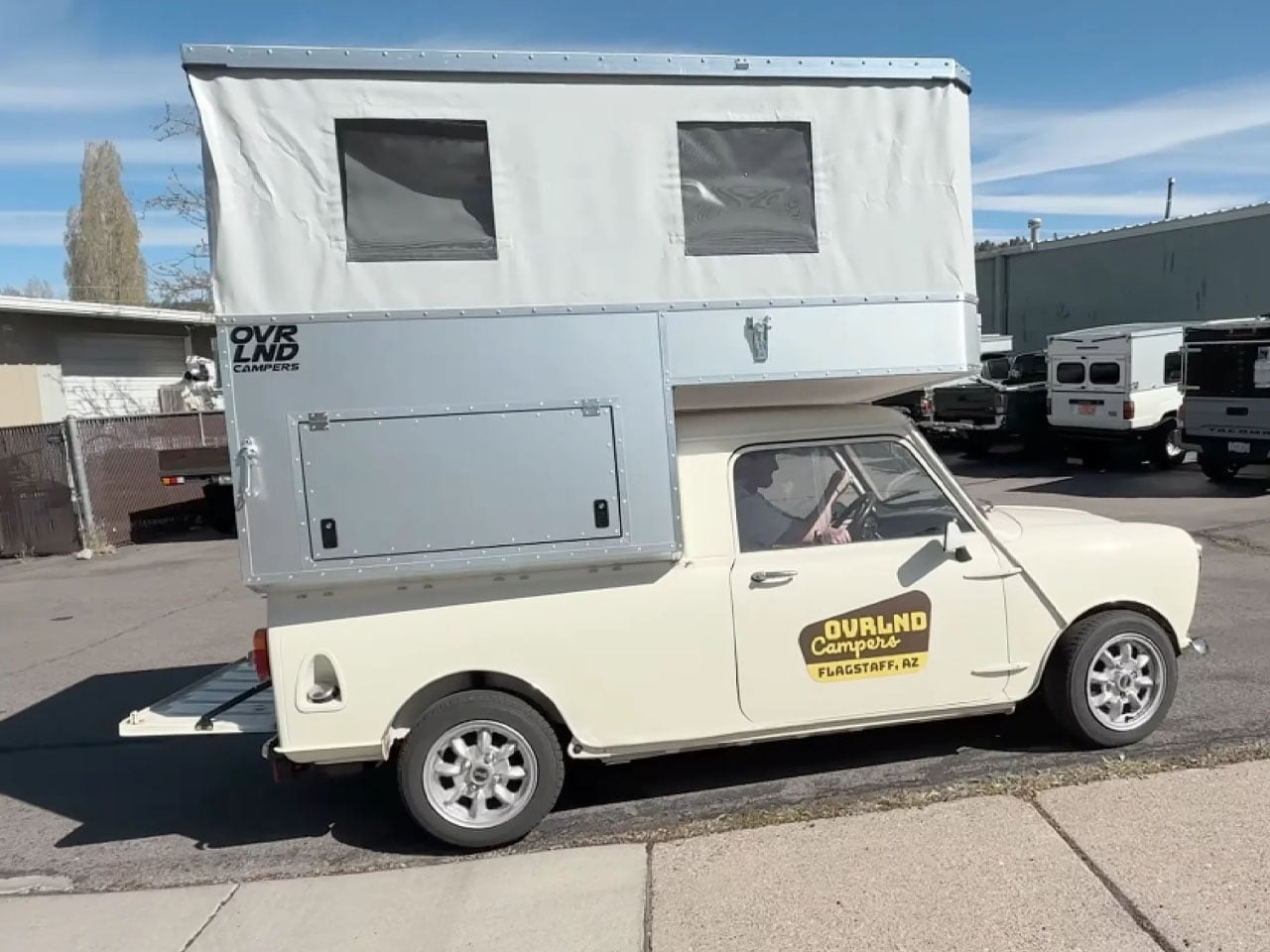
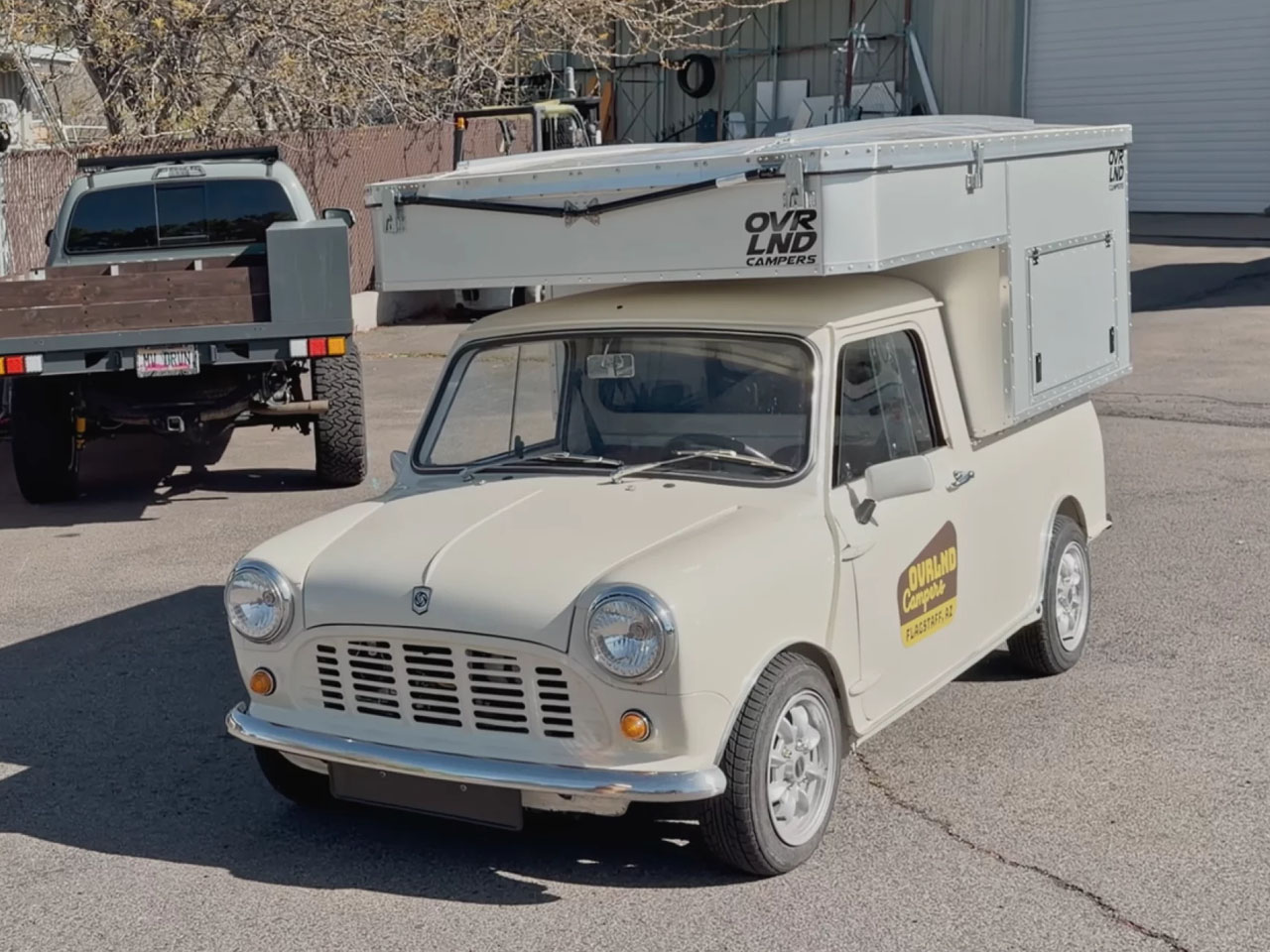
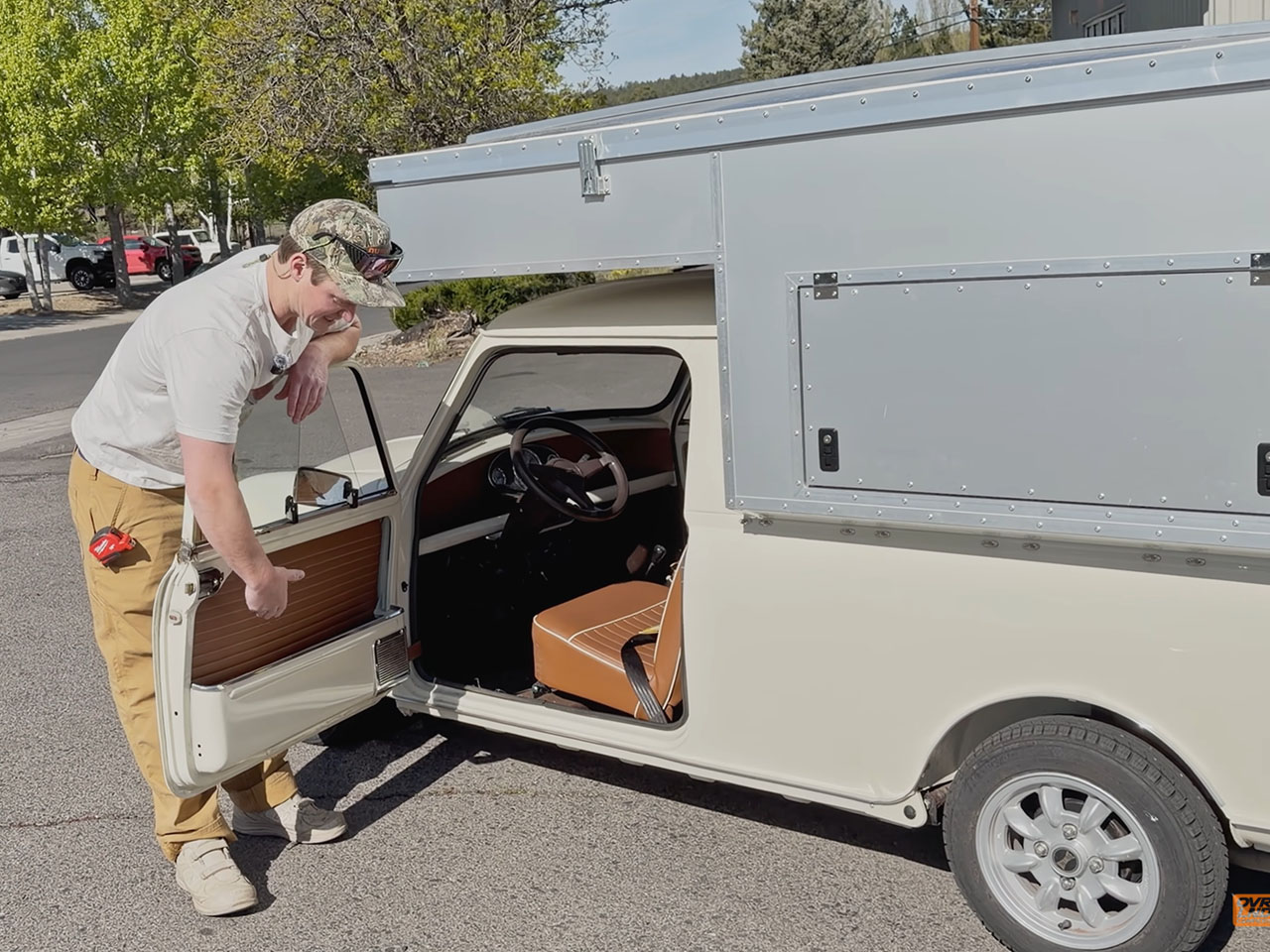
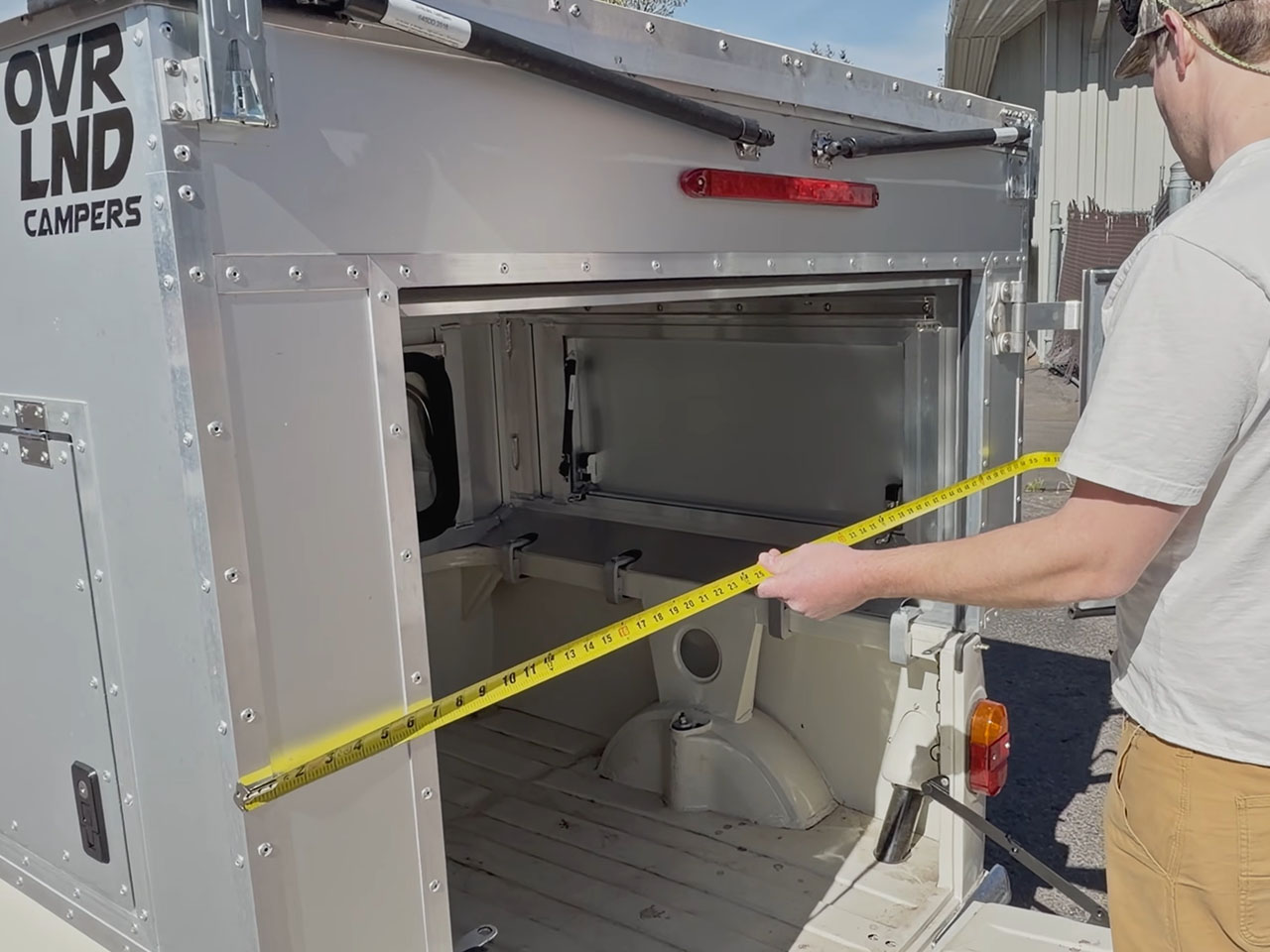
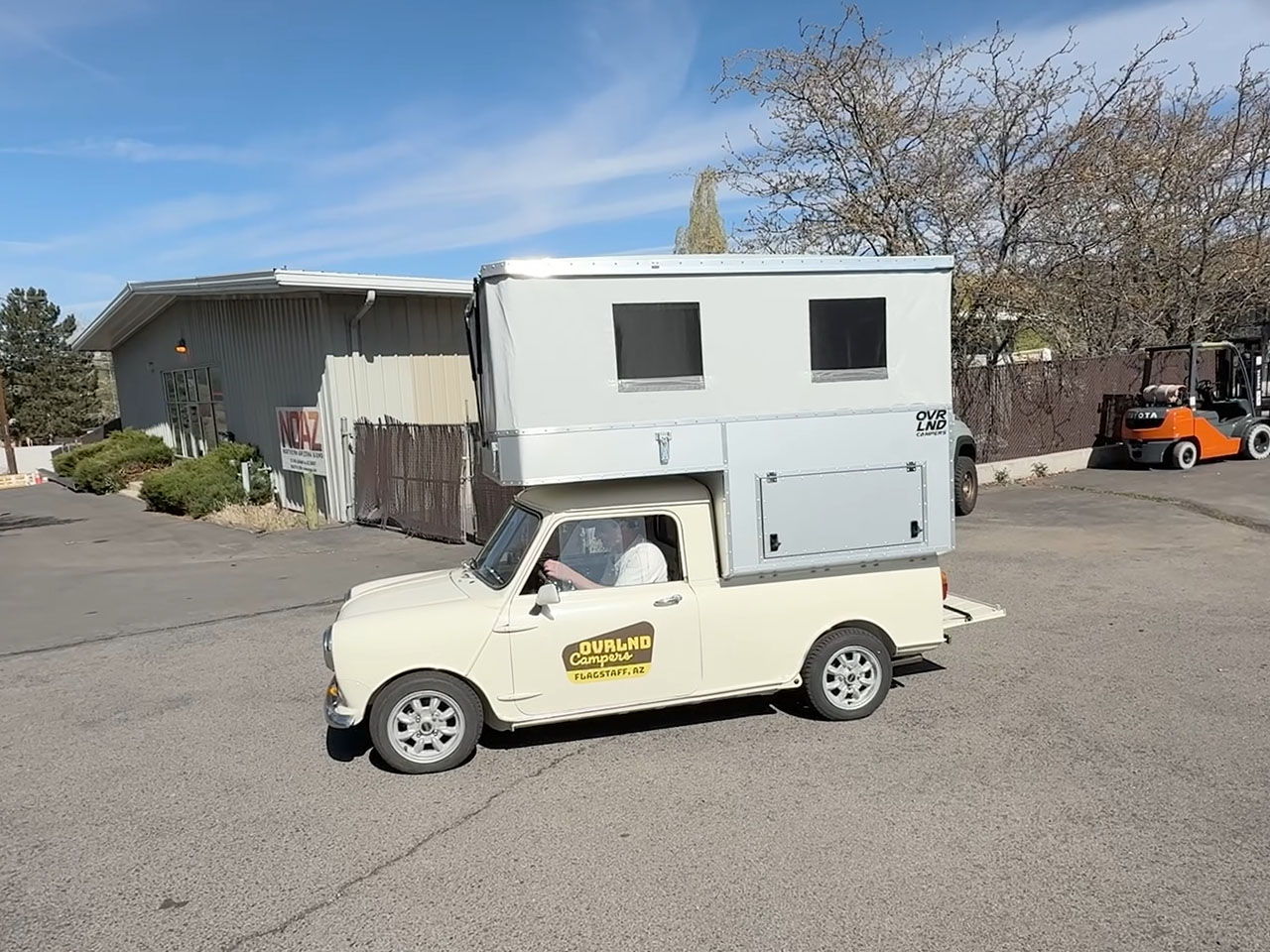
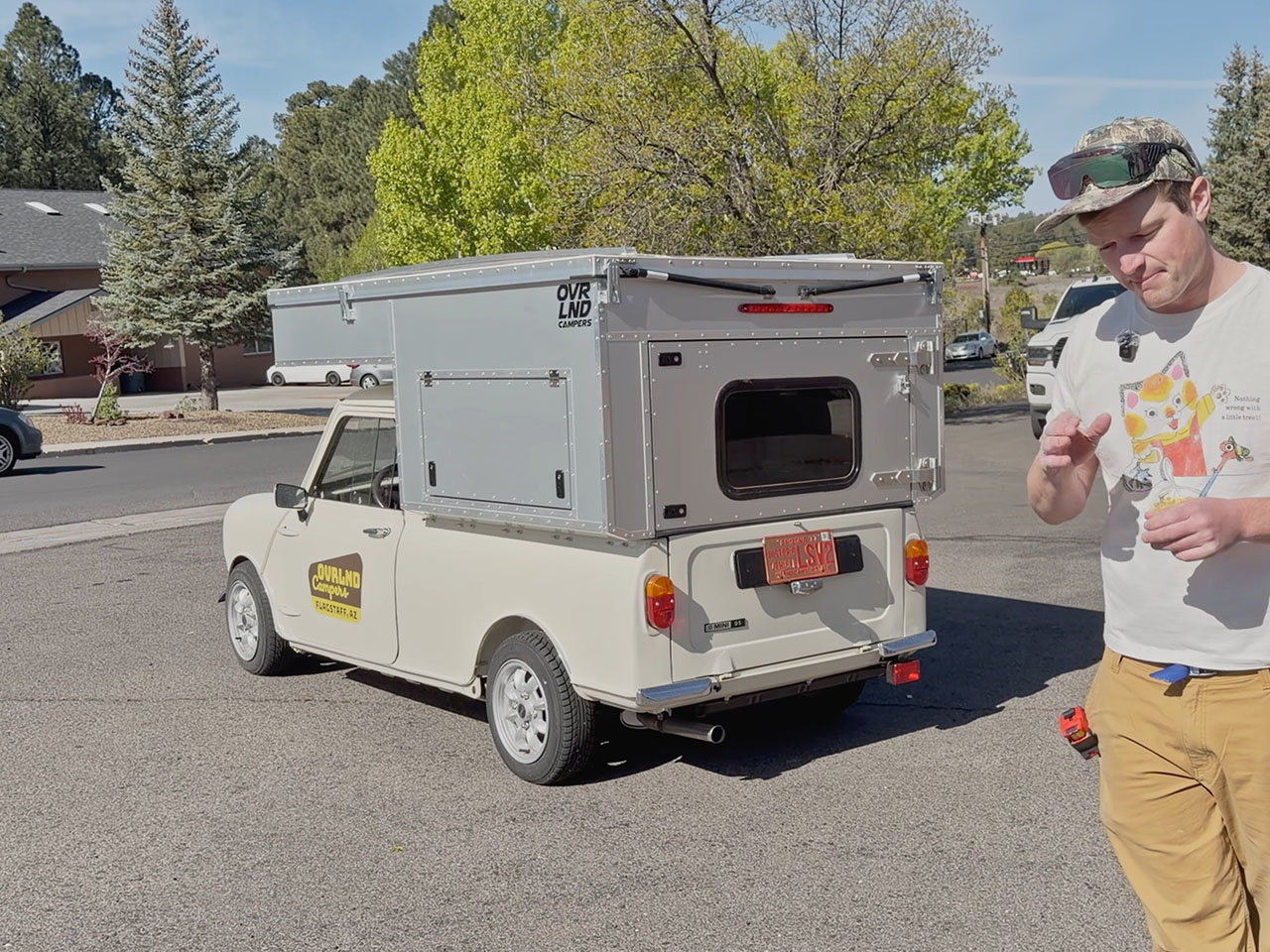
Ovrland Campers may have dropped vowels from its name for clipped branding, but it does not drop a spec when it comes to creating pick-up campers. The Flagstaff, scenic mountain city in Northern Arizona, based builder has a keen eye for detail, an example of which can be seen in the introductory video of the Mini Pop-up Camper, added above. In the video, Ovrlnd founder Jay Wellman can be seen elaborately (using a tape measure) detailing every single aspect of the company’s new build, which is an inspiration of its all-time favorite camper models, but is scaled down to the size of a retired 1980 Mini 95.

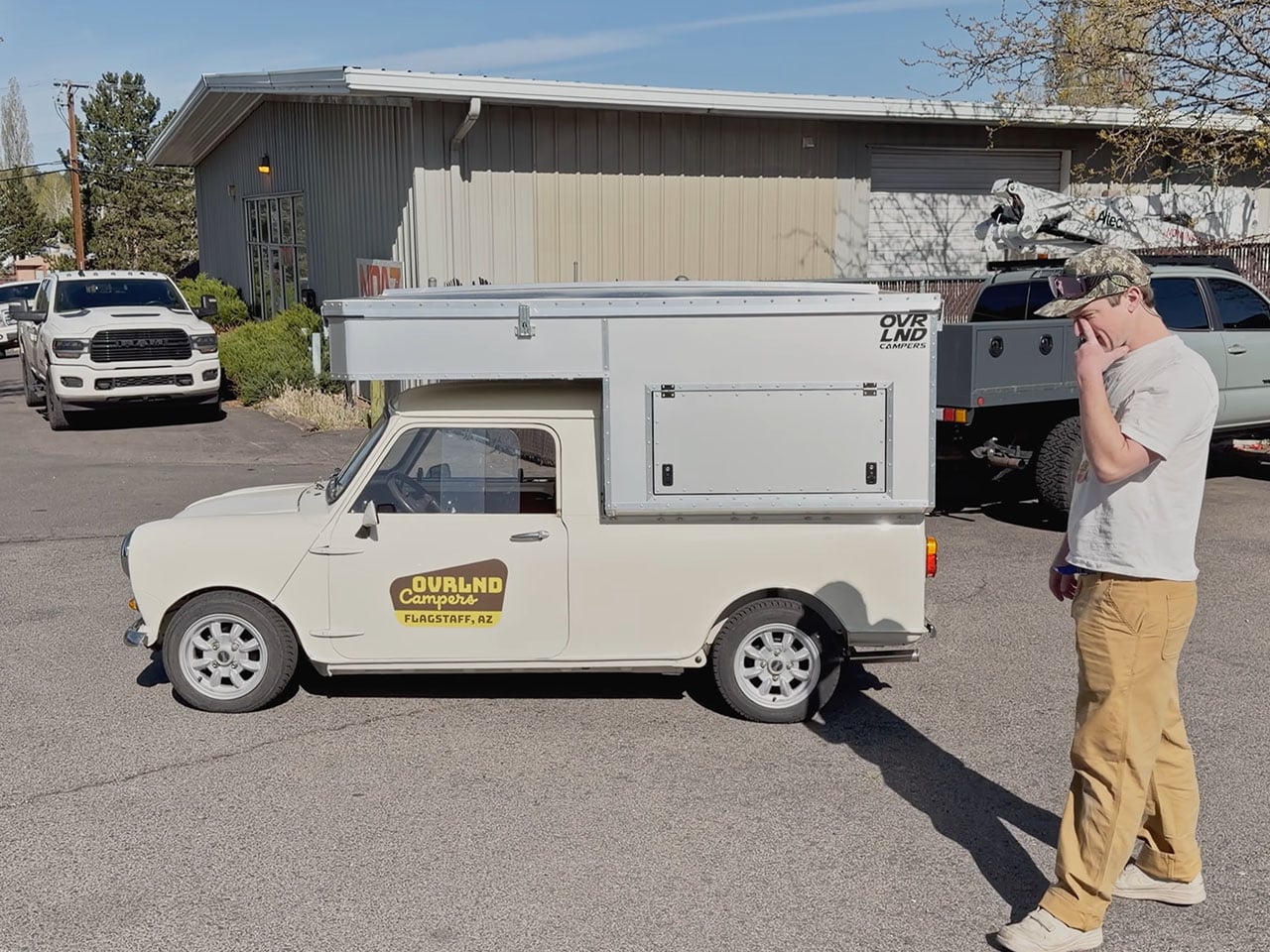
The Mini 95 was brought off an auction for $22,000. Now it forms the foundation of the new customized pick-up camper. The new version is a Mini-based customization of the Ovrland Chubby, a camper that protrudes slightly outside of the truck bed on the sides to create little additional living space inside.

Designer: Ovrlnd Campers

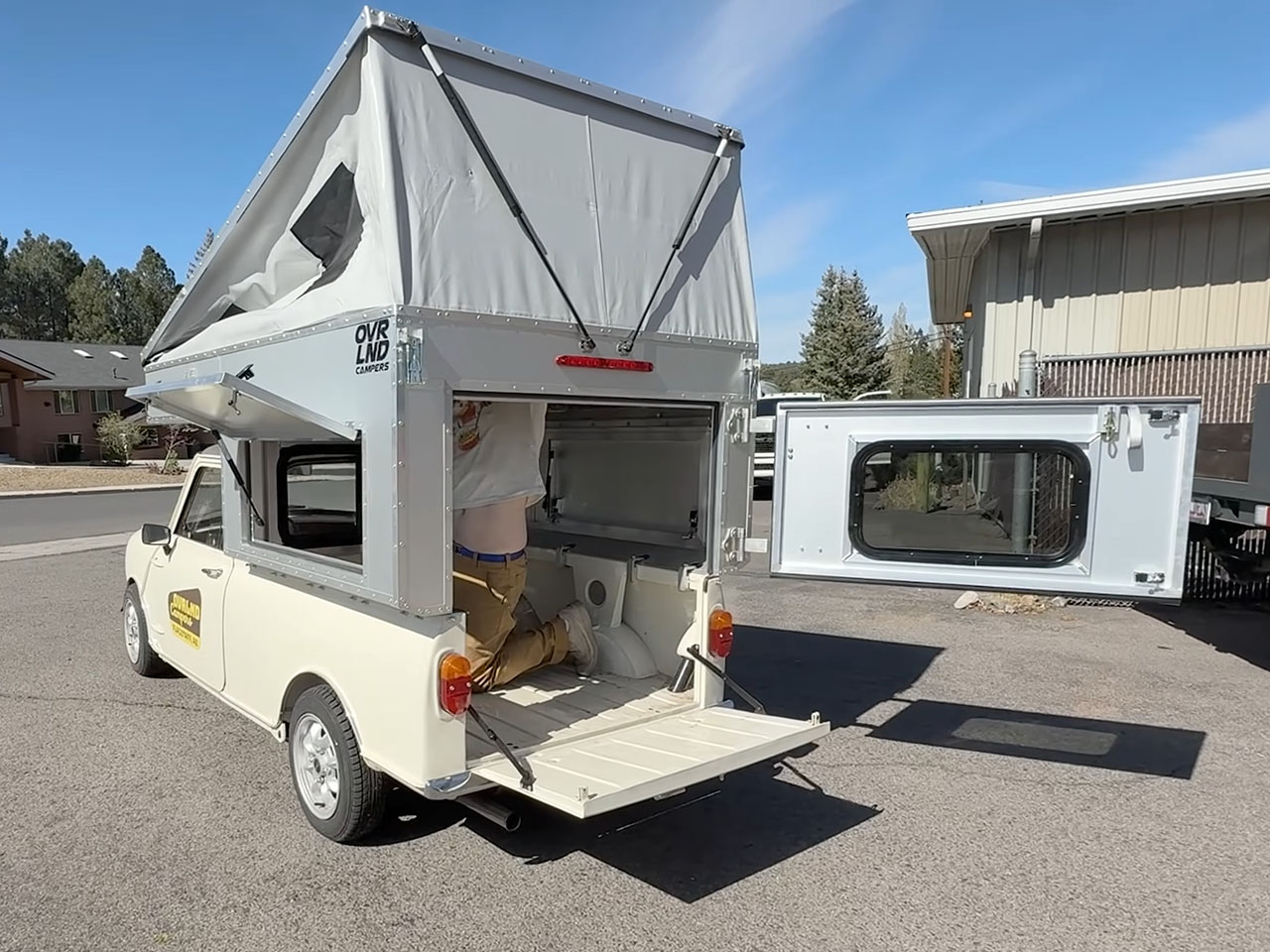
Even though Ovrlnd has interesting truck camper options that fit snugly within the truck bed, they specifically chose the Chubby styling for the new pick-up camper so that the little space inside the Mini 95 bed can be better utilized. Rest is pretty much the same convenience and structural assurance that you get with each full pop-up camper shell that Ovrlnd builds. It is lightweight to radically reduce drag and maximize payload of one of the smallest pick-up trucks on the market.

Small pick-up trucks are not a rarity, but their build and consumption are pretty localized. Japan would be a good example of such consumption, but out in the US, of course, getting hands on one of these is really a task. The Mini 95 here gets its name from its gross weight of 0.95 tons. It has a payload capacity of about 550 lbs and was incredibly popular between 1965 and 1985, Ovrlnd founder informs.

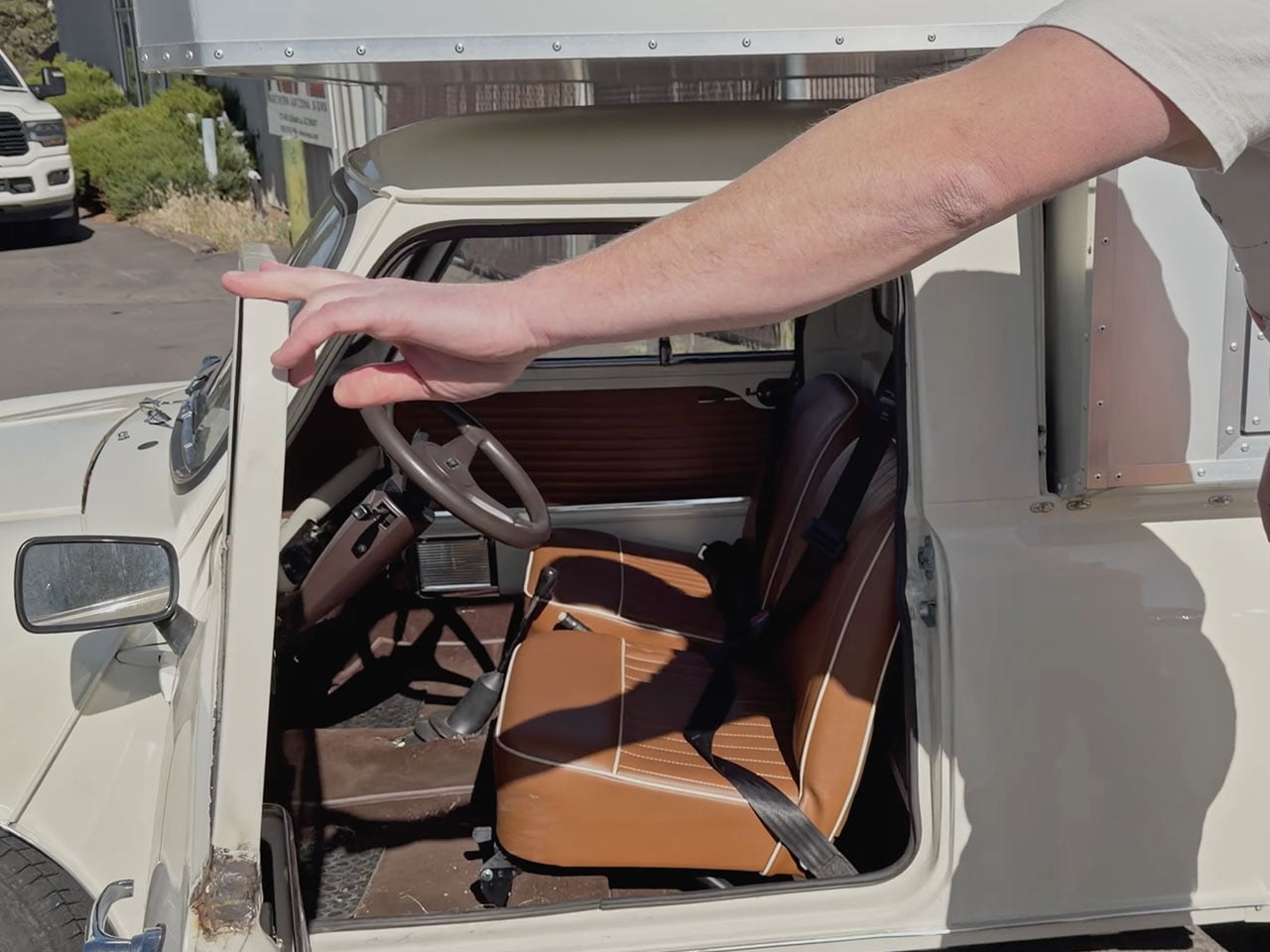
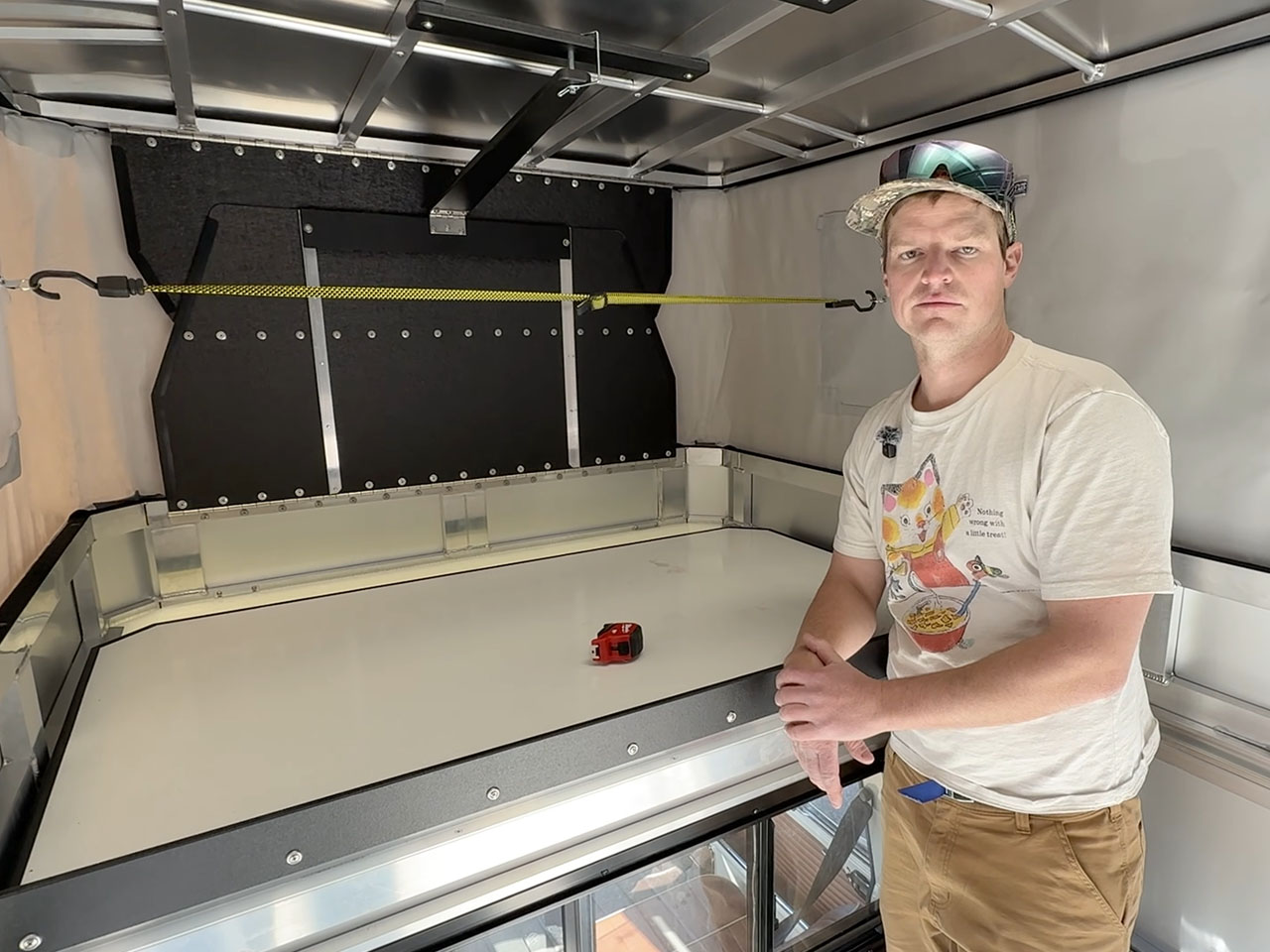
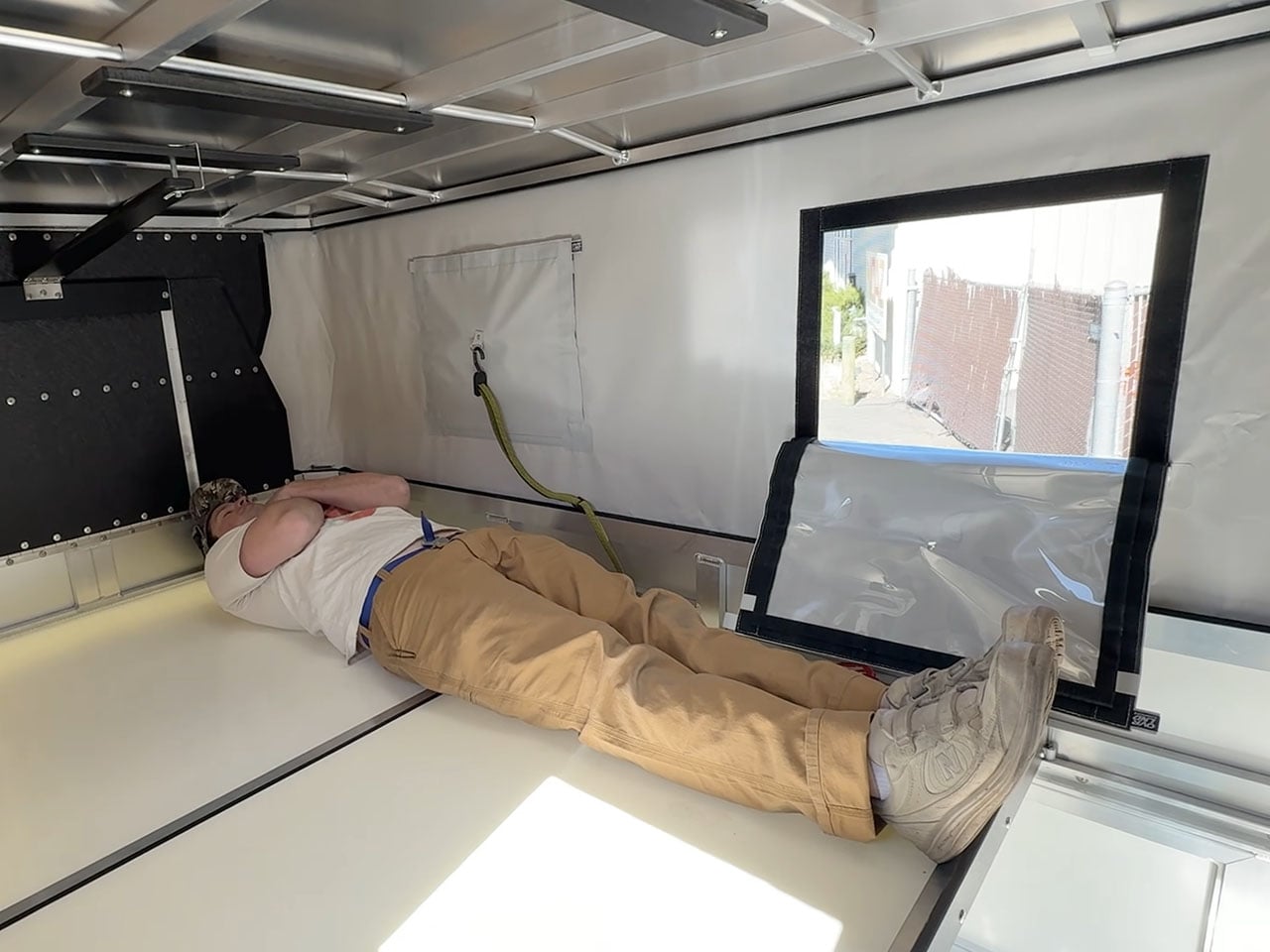
The Chubby-style layout of the camper atop the Mini 95 provides a double bed width of 55 inches side to side. The pick-up bed ideally measures about 43 inches wide from rail to rail, so the additional 10 inches or so comes at a premium for living inside. The space is spacious enough for sleeping two people, and can pop up to create over 6 feet of head height from the front to back. When you slide out the bed from its platform, obviously, the head height is compromised, but with the windows on both sides, you are not cramped for room at any time.

Ovrlnd says the Mini Pick-up Camper has built weight of about 280 lb. With two people onboard, you are almost surpassing the payload capacity of the Mini 95. But if you’re solo, the company has fitted the aluminum roof with a bike rack to carry your ride along. Interestingly, this would be the only pop-up camper on the market where you can mount and dismount the cargo from the roof without a ladder or climbing onto the tailgate. That should give you an idea of how compact the entire creation is!


The post Ovrlnd’s new pop-up camper turns 1980s Mini truck into two-person adventure home first appeared on Yanko Design.

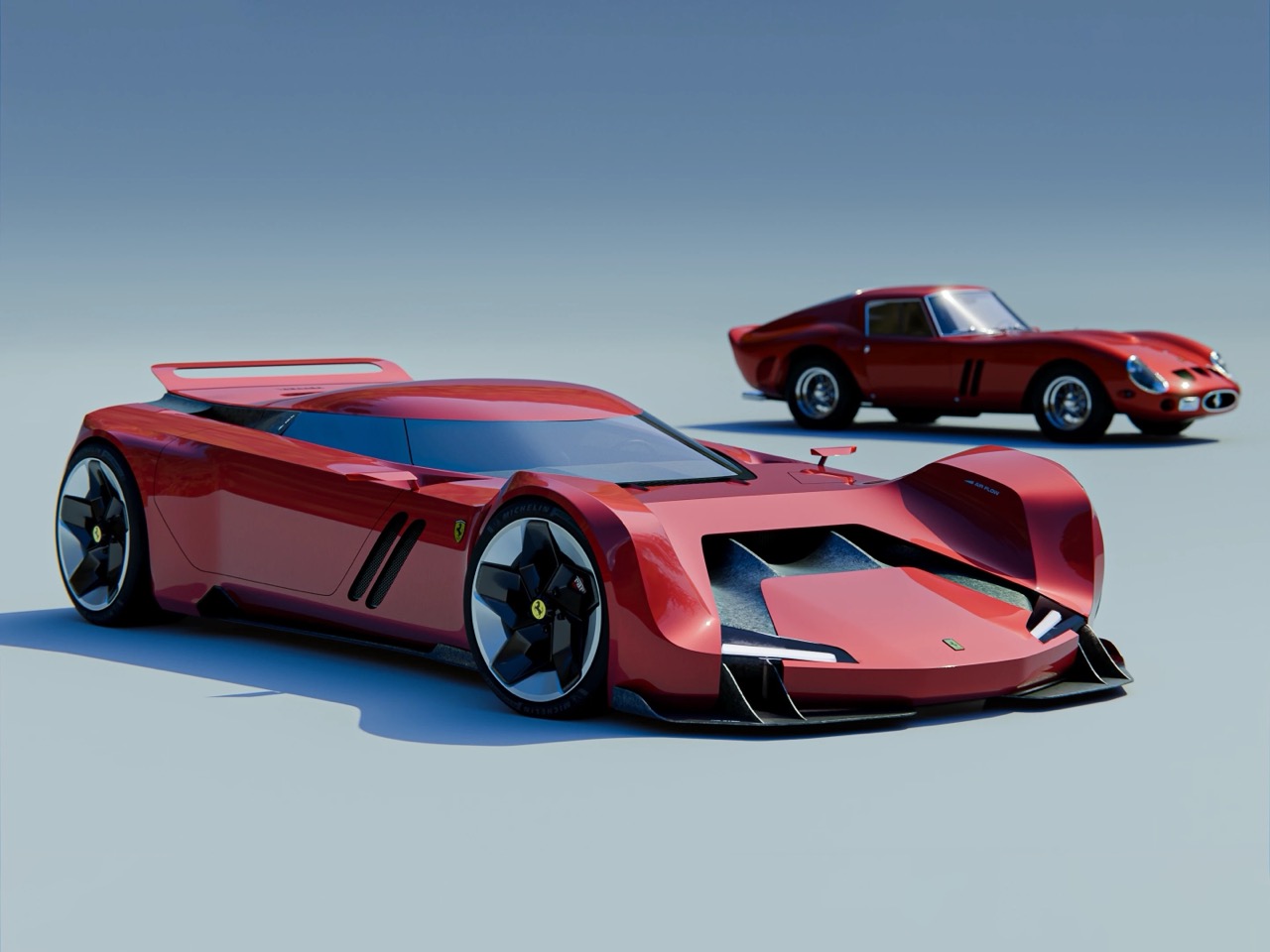
This Designer’s Ferrari SC250 Concept Takes the Legendary 250 GTO to Its Logical Extreme

Only 36 Ferrari 250 GTOs were ever built between 1962 and 1964, and one of them sold privately for $70 million in 2018. The body was shaped by Sergio Scaglietti working metal directly over the frame, piece by piece, without drawings, which means the most valuable car in the world was essentially hand-sculpted from instinct and aerodynamic necessity. Giotto Bizzarrini refined the GTO’s form through wind tunnel testing at the University of Pisa and extensive track sessions at Monza, chasing tenths through aluminum curvature at a time when the science of aerodynamics was barely a decade old. The result was a long, low nose, muscular flanks, and a Kamm-tail rear that looked inevitable rather than designed. That visual logic, equal parts science and poetry, is what makes the 250 GTO the single hardest car in automotive history to reimagine credibly.

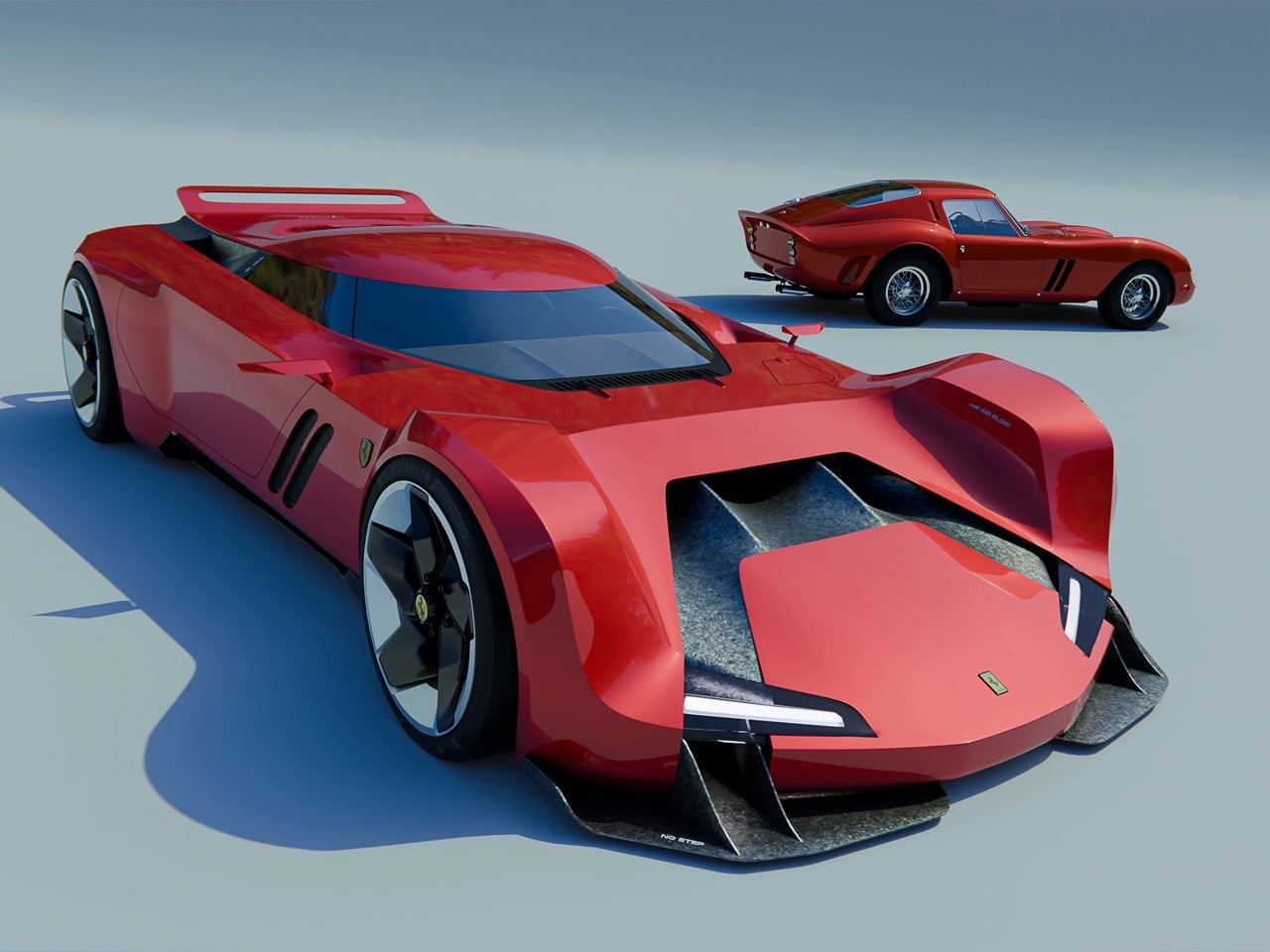
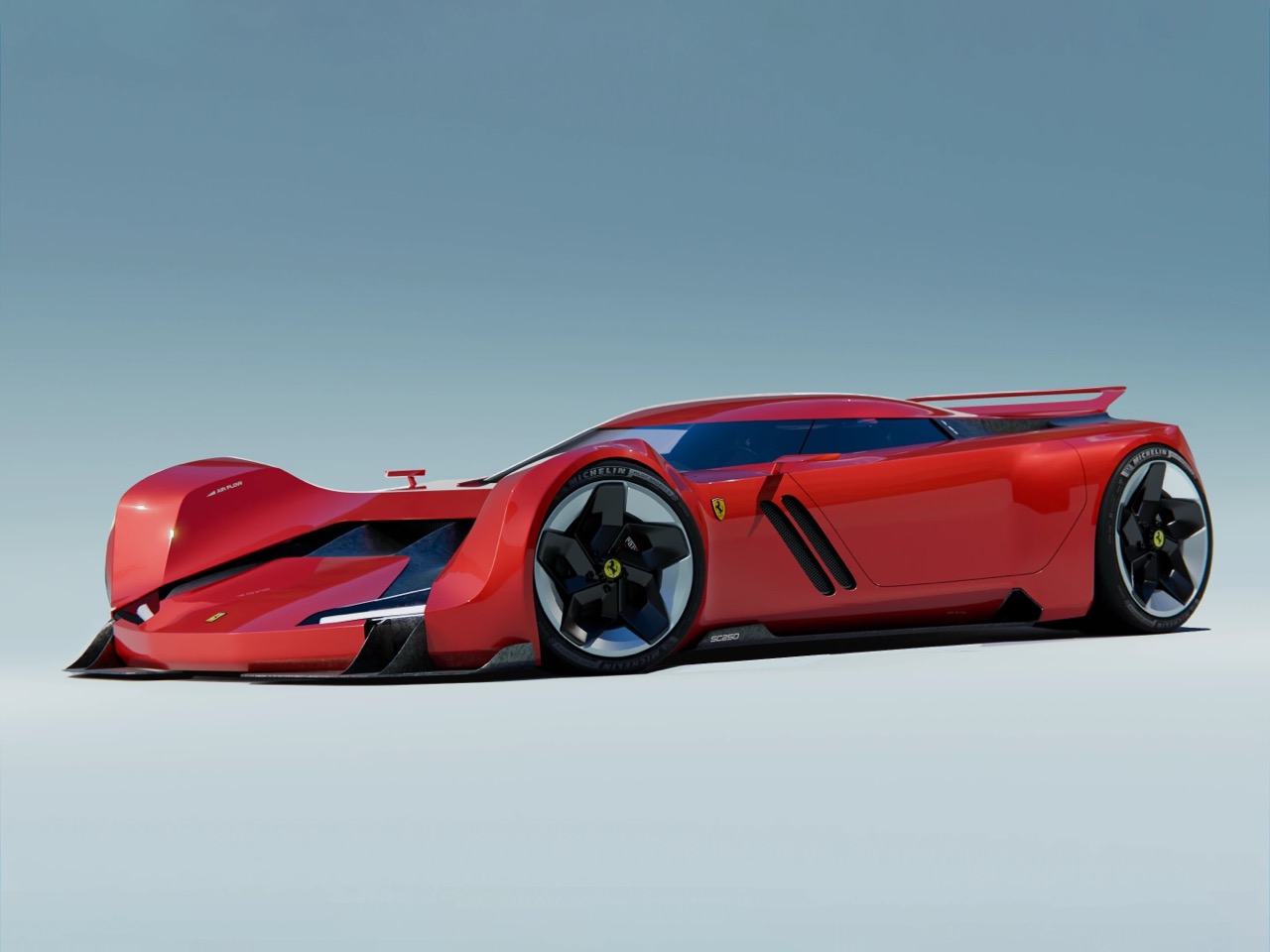
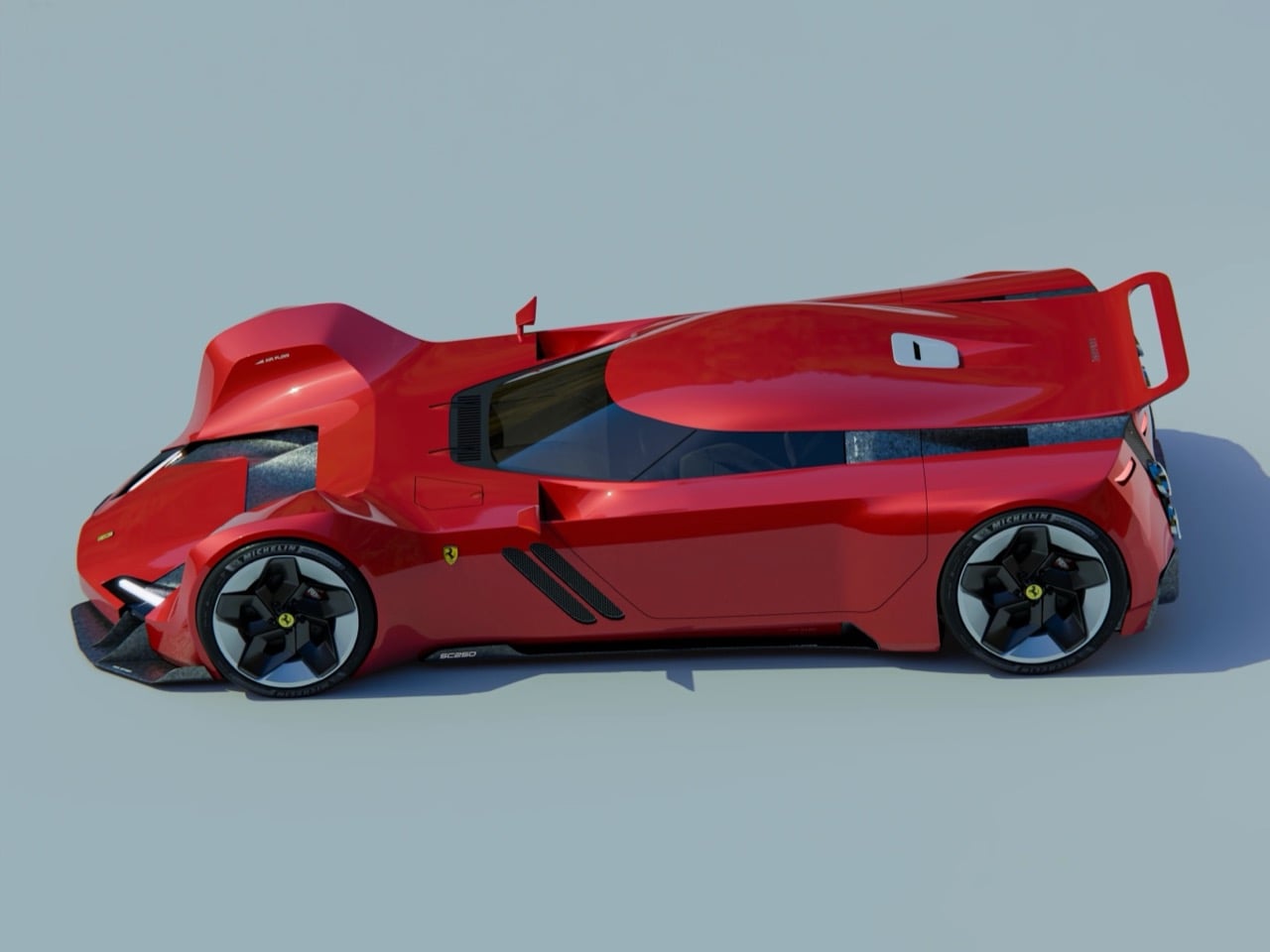
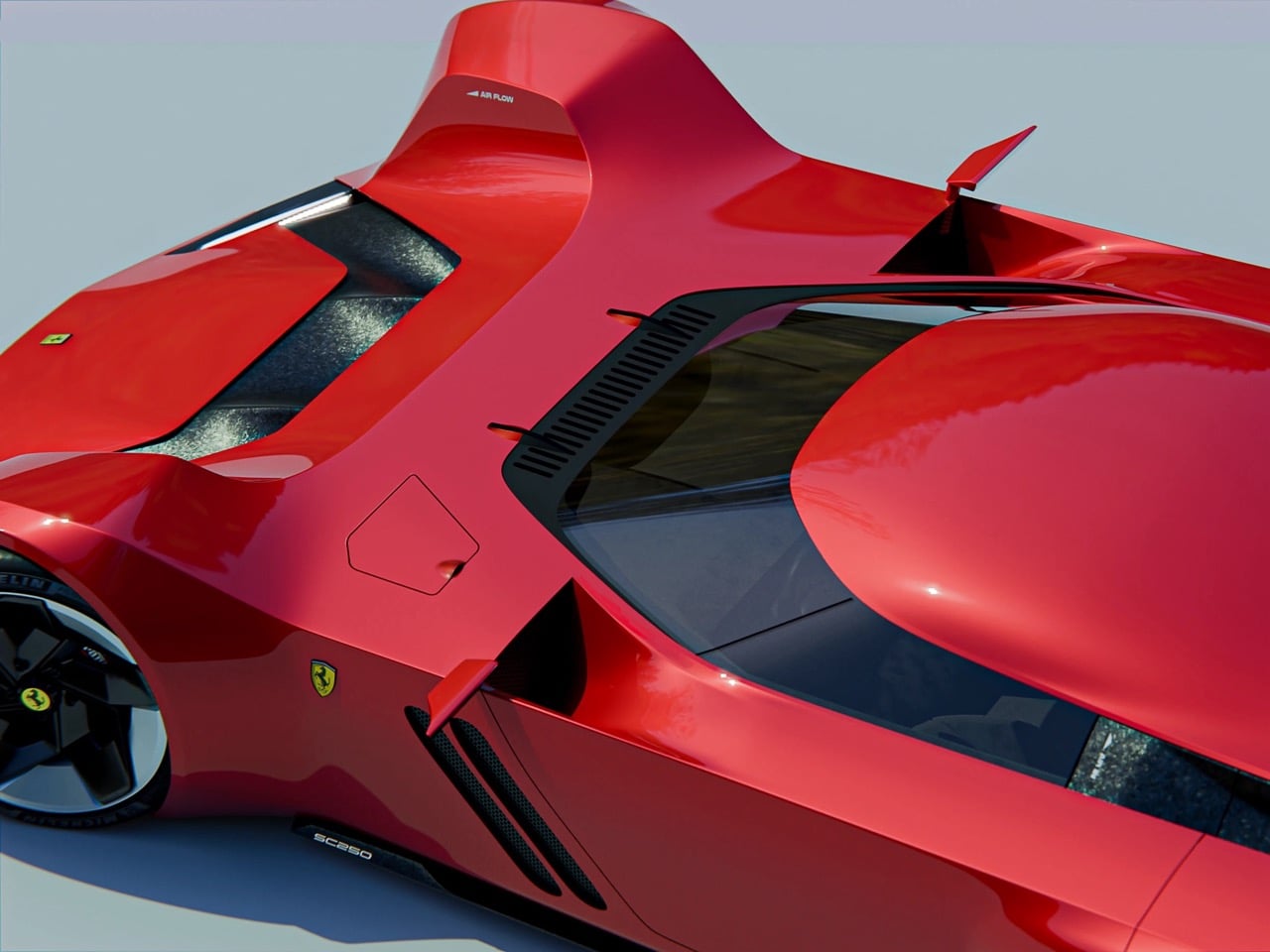
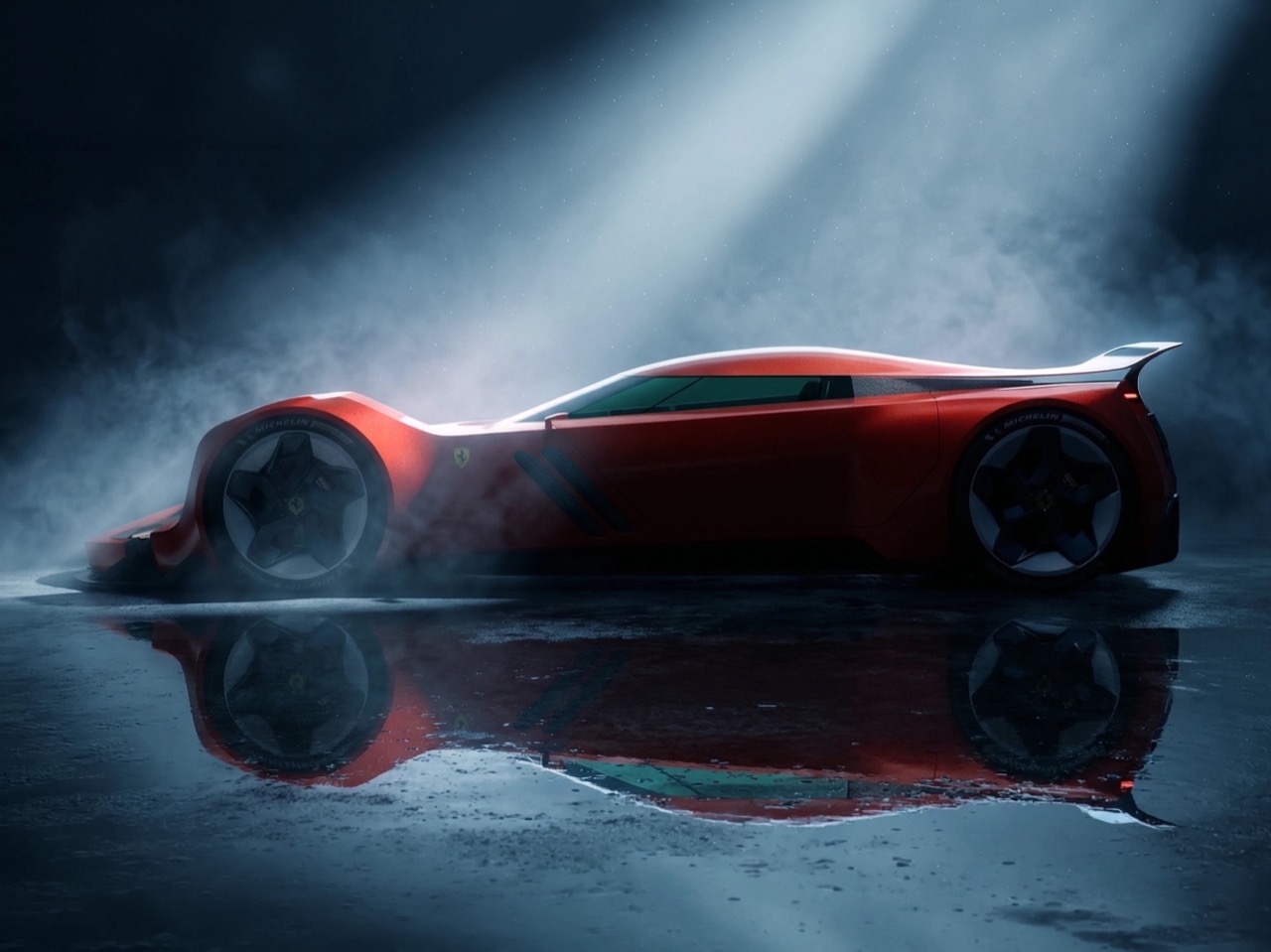
India-based designer Krishnakanta Saikhom, a mechanical engineering graduate and National Institute of Design alumnus whose Lamborghini Massacre concept we covered on these pages, decided to try anyway. His Ferrari SC250 concept plants a provocative question at Maranello’s feet: what if the 250 GTO’s aerodynamic DNA had been allowed to keep evolving for sixty years, unconstrained by road regulations, homologation rules, or production economics? The SC250 answers by stretching the GTO’s proportional logic into Le Mans Hypercar territory, wrapping a dramatically low, wide body in Rosso Corsa and staging it directly alongside the original in the renders. The juxtaposition is deliberate and devastating. The ancestor looks delicate. The descendant looks like it wants to consume the atmosphere.

Designer: Krishnakanta Saikhom

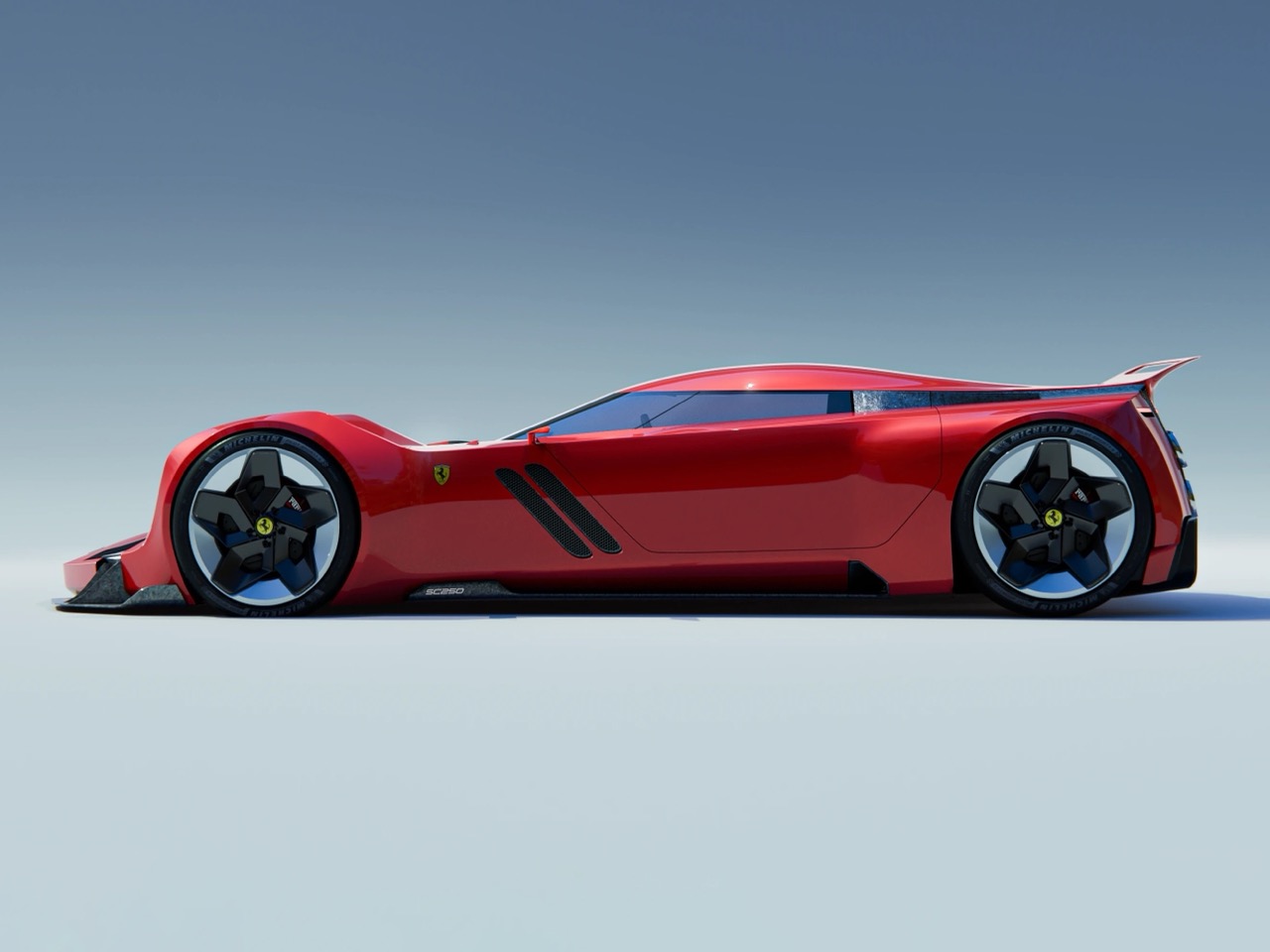
From the side profile, the most direct visual conversation with the 250 GTO happens through proportion rather than surface decoration. Saikhom has preserved the long-nose, short-tail logic of the original, but stretched everything laterally and pushed the greenhouse rearward until it sits almost over the rear axle, compressing the visual mass of the cabin into something that reads more like a fighter jet canopy than a traditional coupe roof. The fastback line drops sharply into a truncated tail equipped with a pronounced multi-element rear wing, a detail that the original GTO gestured toward with its modest spoiler and that the SC250 takes to its aerodynamic conclusion. The flanks are clean and tumblehome is aggressive, with the body visibly wider at the rear haunches than at the shoulder line, generating the kind of planted visual stance that makes a car look fast even in a still image.

The front end is where Saikhom makes his boldest departure from GTO orthodoxy. Where the original wore a relatively narrow, rounded nose with small paired air intakes, the SC250 arrives with a full-width splitter assembly that consumes most of the front fascia, flanked by deep aerodynamic channels that feed air under and around the bodywork. A small prancing horse badge sits centered on the nose panel above the splitter, almost understated against the aggression of the aero package surrounding it. The twin vertical gill vents on the front quarter panels directly echo the 250 GTO’s signature side intakes, which is the most explicit heritage callout in the entire design and the one that ties the sixty-year conversation together most convincingly.

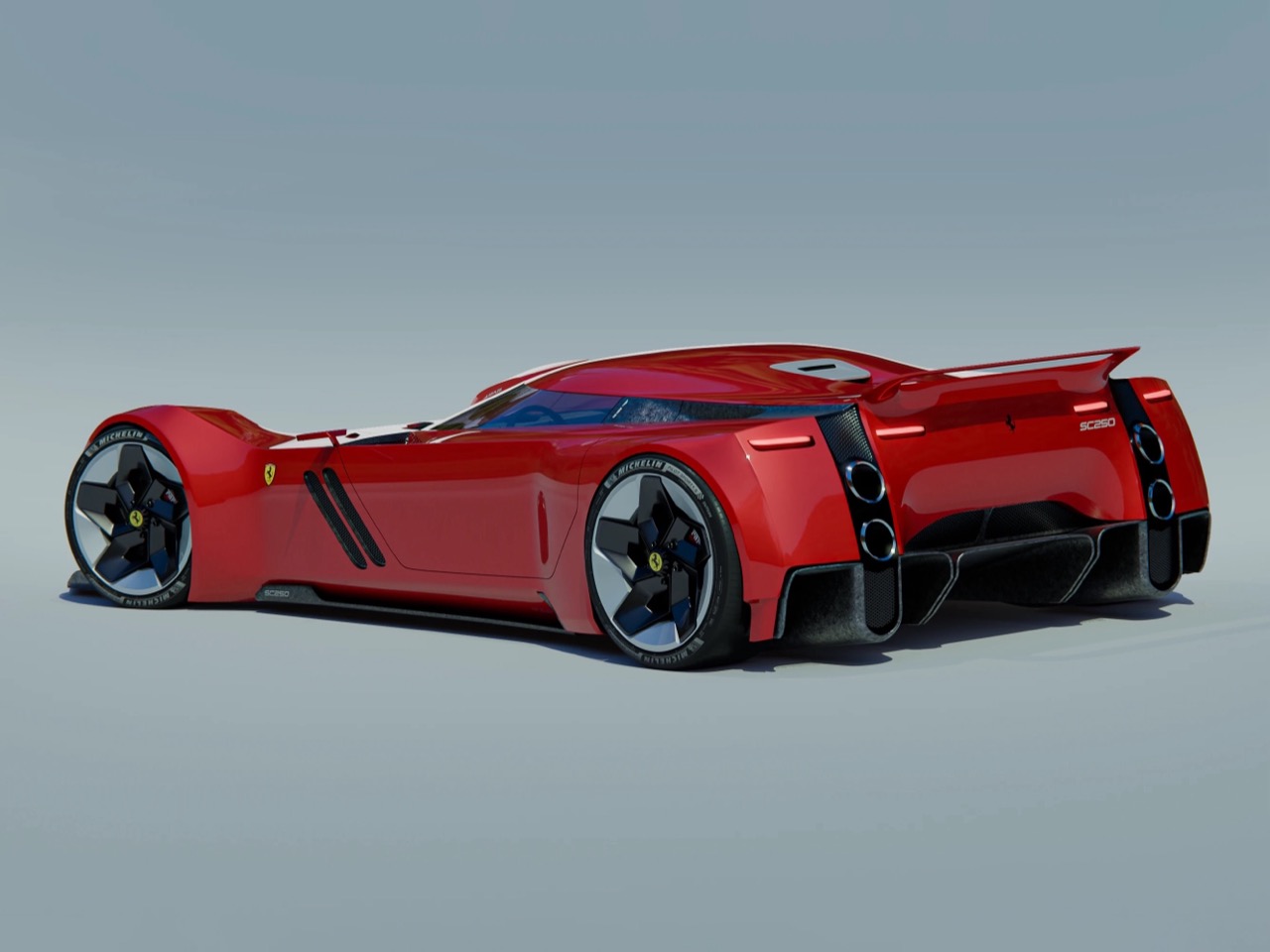
The rear is the SC250’s most purposeful face. Four circular exhaust outlets are stacked vertically in pairs on the rear panel, flanked by a carbon-fiber diffuser that rises aggressively from the undertray, and the “SC250” designation is stamped into the bodywork just above the lower valance. The multi-element rear wing sits on twin end plates and reads as a structural aero component rather than a styling accessory, consistent with the car’s overall refusal to treat aerodynamics as decoration. Michelin-shod five-spoke wheels in deep graphite fill the arches at all four corners, and their star-spoke geometry echoes, probably intentionally, the classic cross-spoke alloys that the period 250 GTO wore on its wire-spoked rims.

Saikhom stages the SC250 directly alongside a period 250 GTO in several of the key compositions, and it is a brave editorial choice that pays off completely. The original reads as something assembled from courage and aluminum by people making up the rules in real time. The SC250 reads as the logical destination of the journey those people started. Whether Ferrari would ever sanction something this uncompromising as an official concept is a separate question, and honestly an irrelevant one. What Saikhom has demonstrated is that the 250 GTO’s design language is durable enough to survive extrapolation into a completely different performance era without losing its identity, which is precisely what separates a genuinely great design language from one that only looks good frozen in its original context.

The post This Designer’s Ferrari SC250 Concept Takes the Legendary 250 GTO to Its Logical Extreme first appeared on Yanko Design.

This $107K Trailer Hides 400W Solar in Its Fiberglass Shell

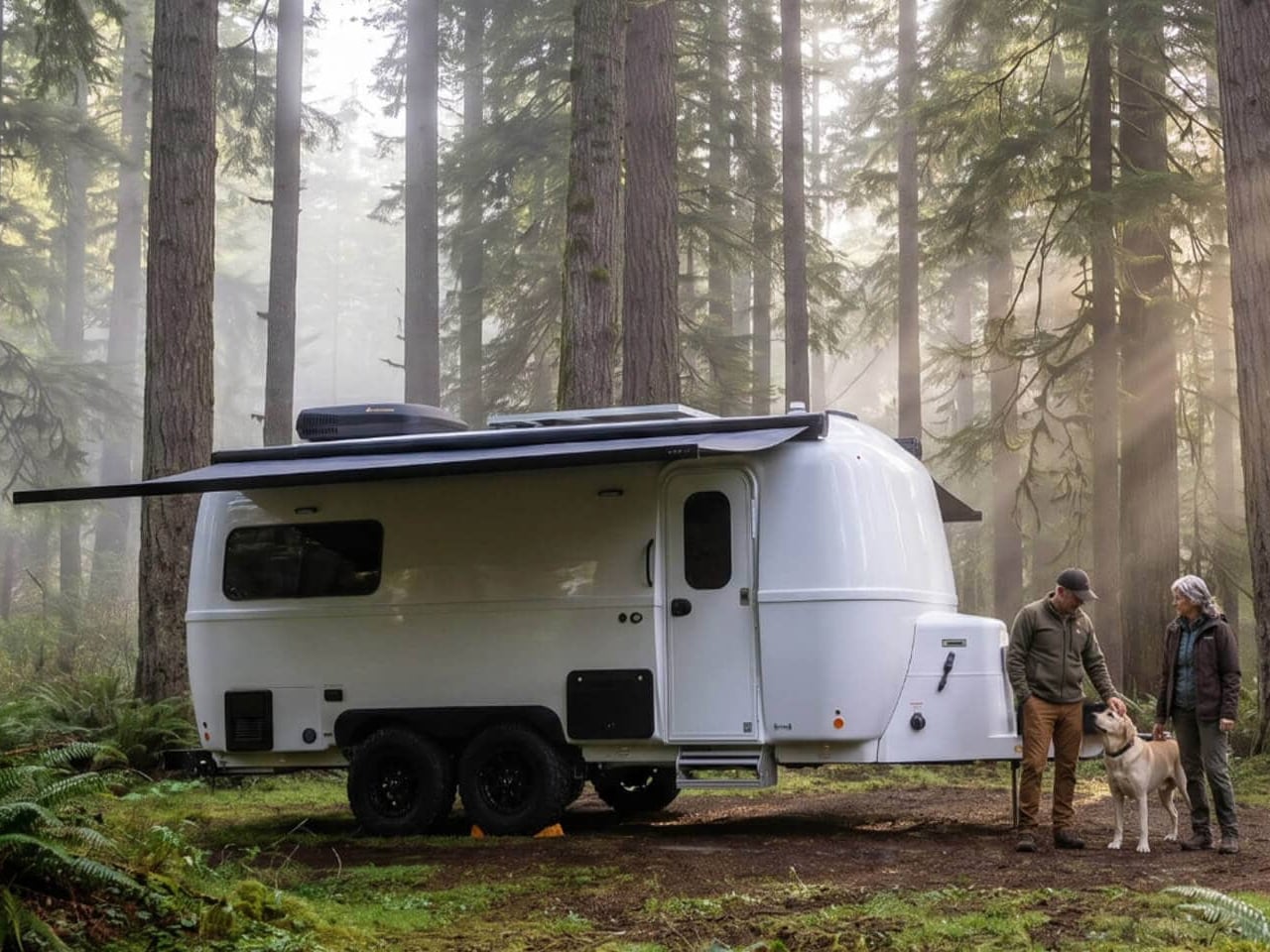
Fiberglass travel trailers with off-grid capability are an undeniable combination. There are a few perks that make such travel trailers worth every adventurer seeking a longer and happier stay away from home on the road. Fiberglass campers such as those perfected by the Tennessee-based Oliver Travel Trailers are lightweight to tow, all-season compatible, easy to maintain, and built to last.

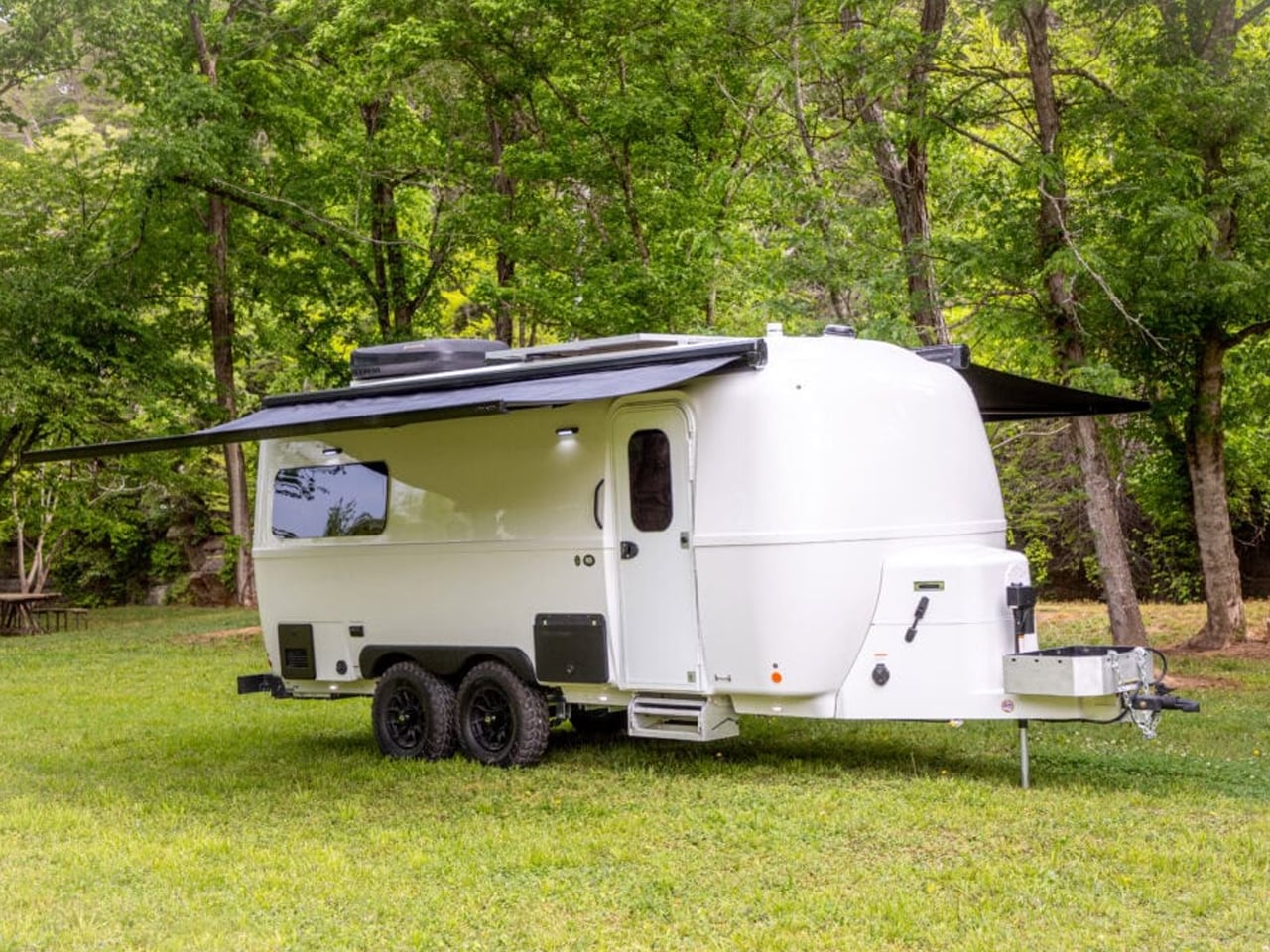
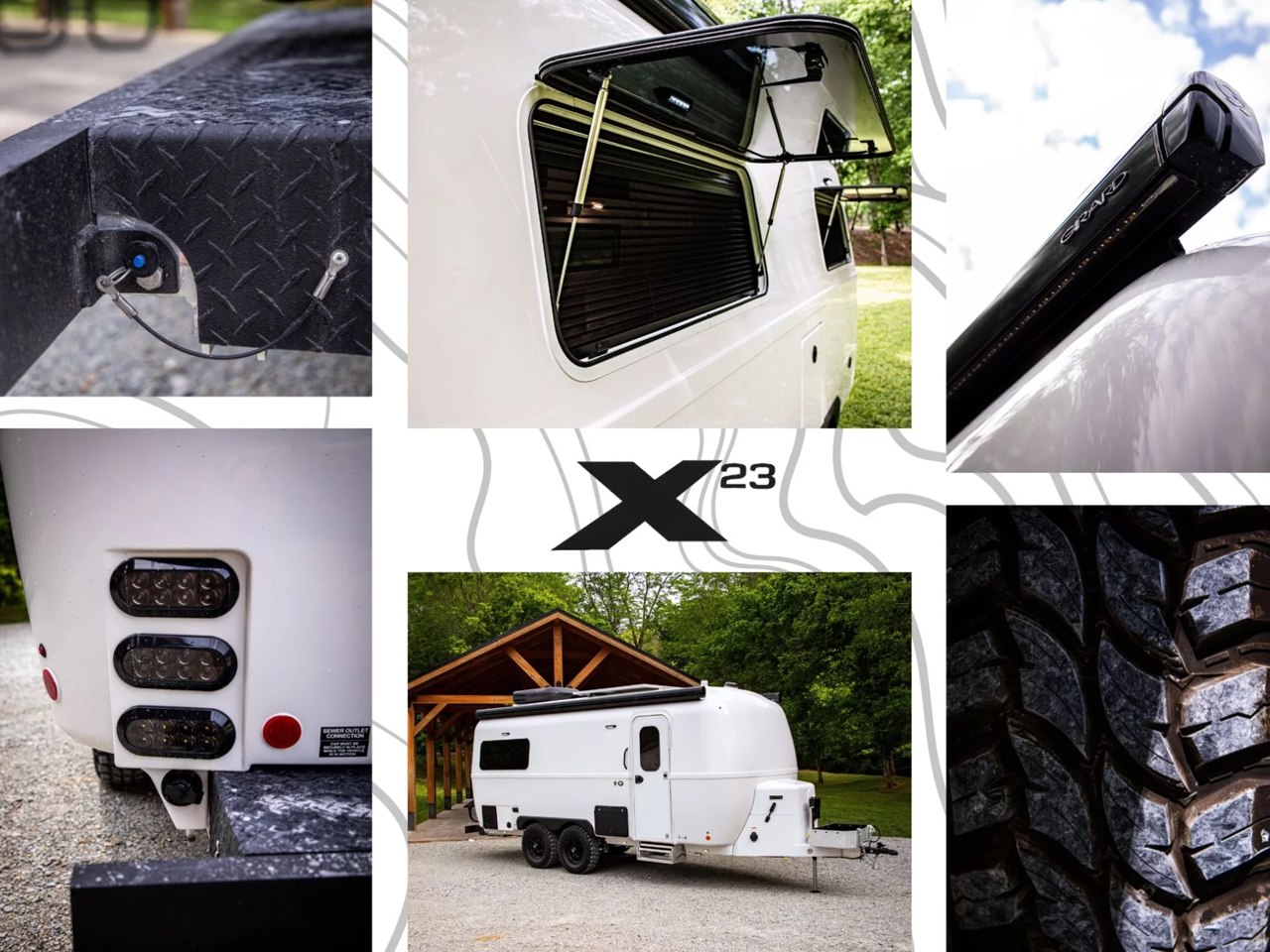
Oliver currently has two trailer models in its lineup. The Legacy Elite, built on an 18.5-foot (5.6-m) single-axle trailer, and the dual-axle Legacy Elite II, which measures 23 feet (7 meters). To extend its portfolio for 2027, the company has revealed the new Apex X23. Built to put the pace of trips back into your hands, the X23 comes fully packed with a lounge, sleeping area, kitchen, and bathroom, well within the confines of a 23-foot, all-season fiberglass body.

Designer: Oliver Travel Trailers

Oliver Apex X23 is off-grid ready. Powered by a 48-volt system, the trailer is customized from the factory for adventures that take you beyond the organized campgrounds. Oliver is secretive about their new travel trailer and hasn’t revealed a lot of information about it, but they recently showed it off for the first time in a public debut at the Lone Star Overland Adventure & Powersports Show. “The response was everything we hoped for,” the company informs.

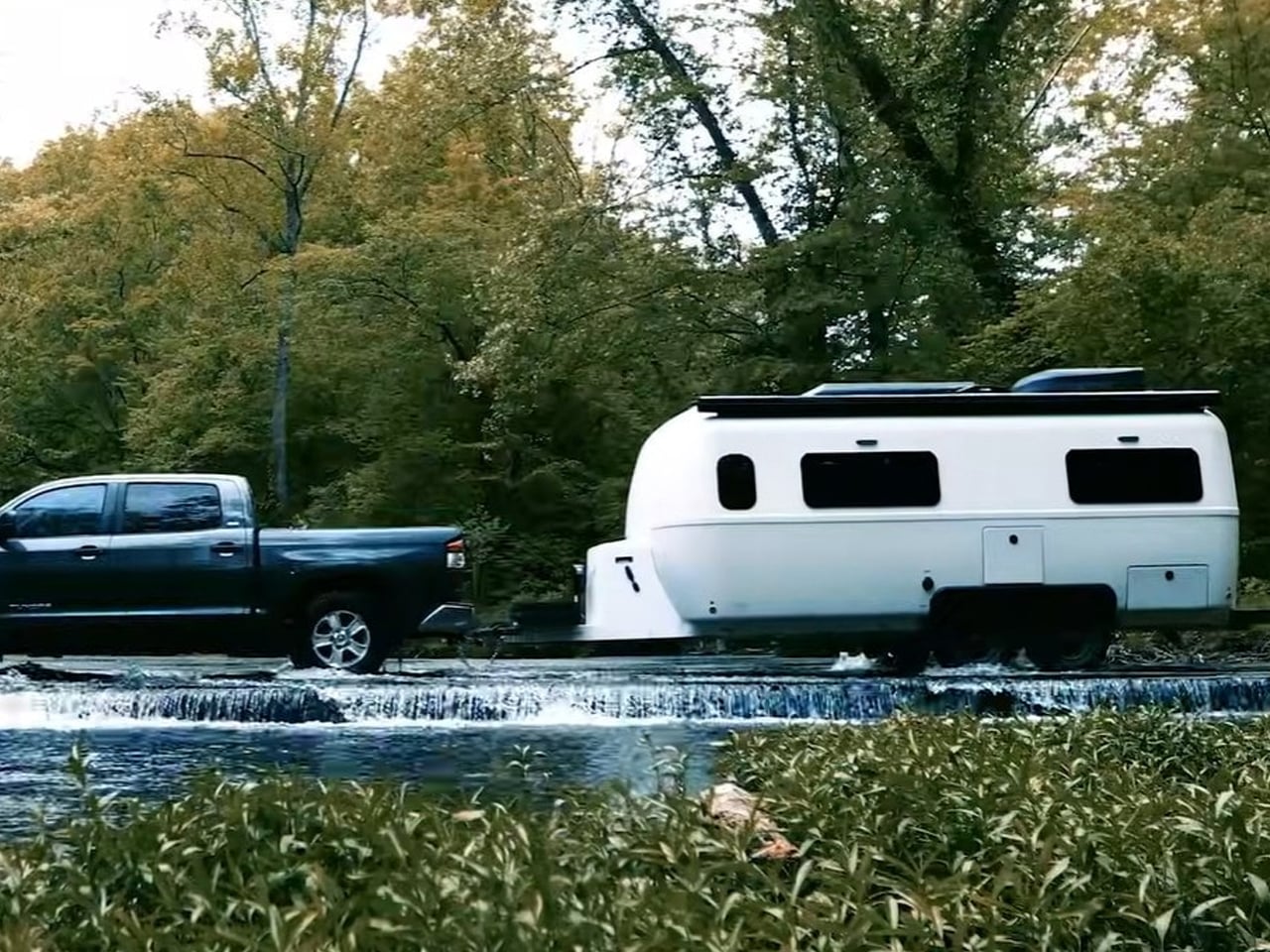
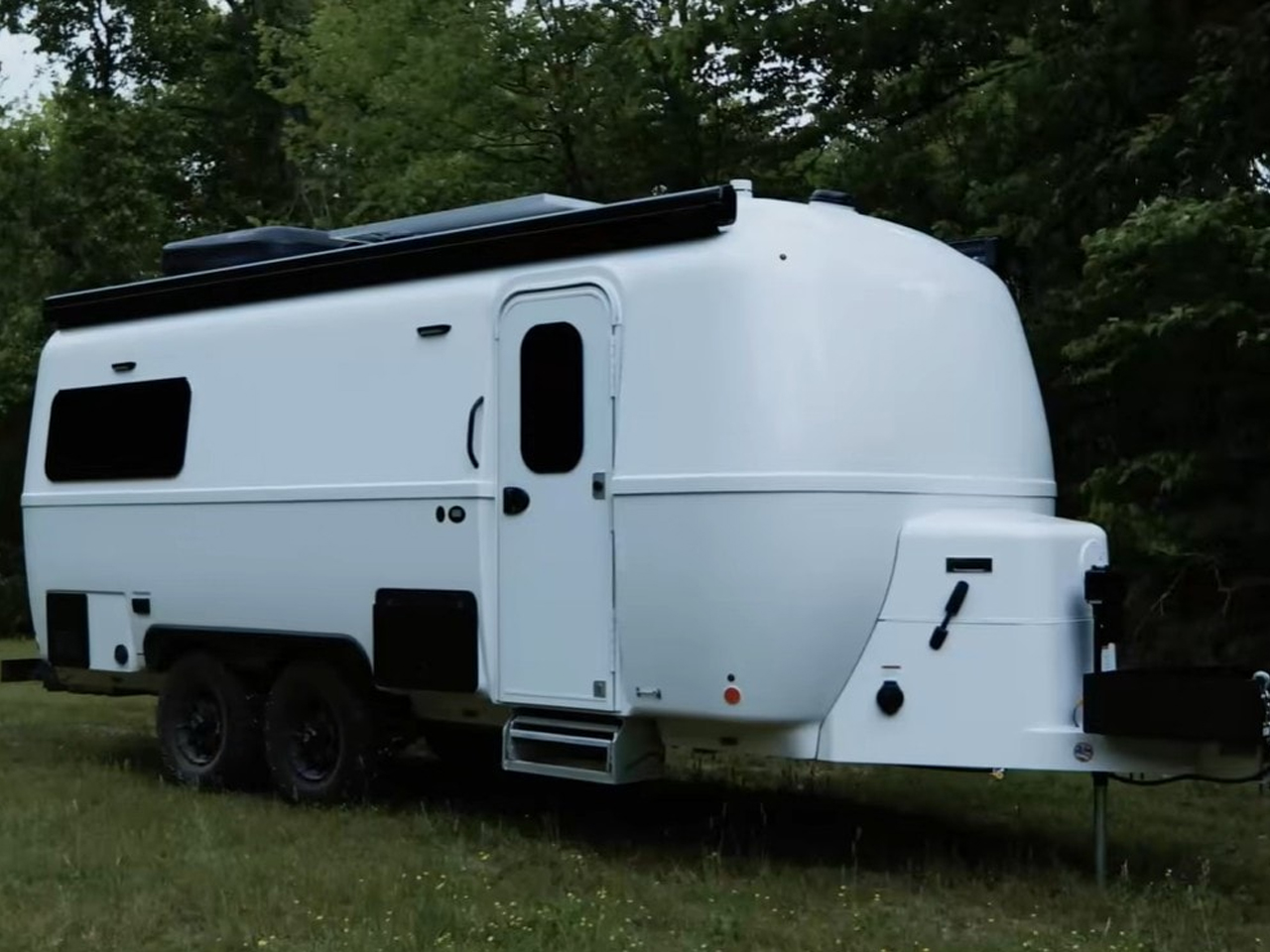
The X23 shares a very similar exterior to its predecessors; what actually differentiates it is the interior, which is now built around off-grid capabilities. The exterior is the same durable dual-hull construction. An insulation layer is sandwiched between the separate inner and outer fiberglass shells, which make the body completely airtight and stable for year-round use. The X23’s zero-wood construction body and interior are mold and corrosion-resistant, and the interior packs everything you need for a comfortable stay in the wild.

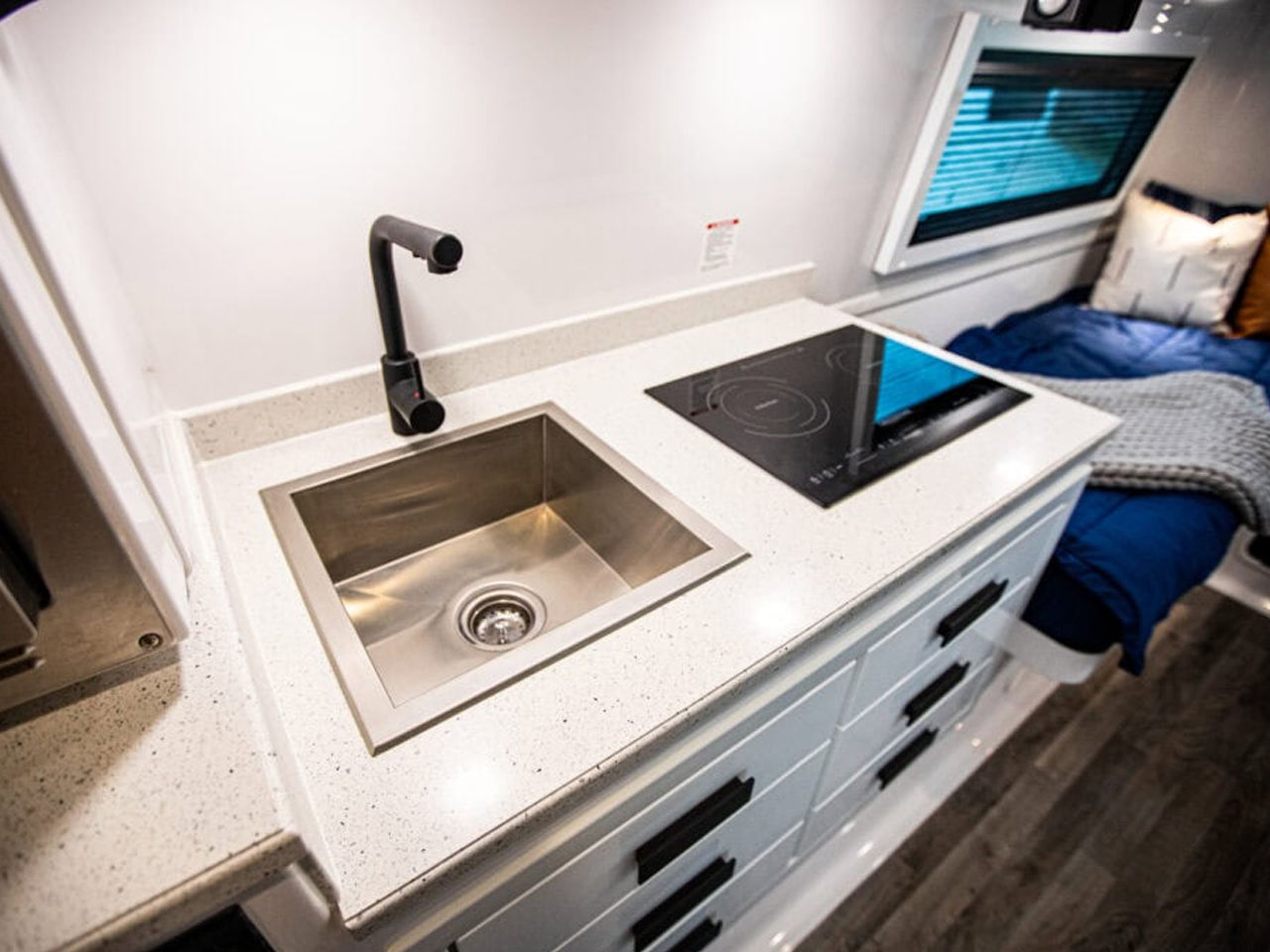
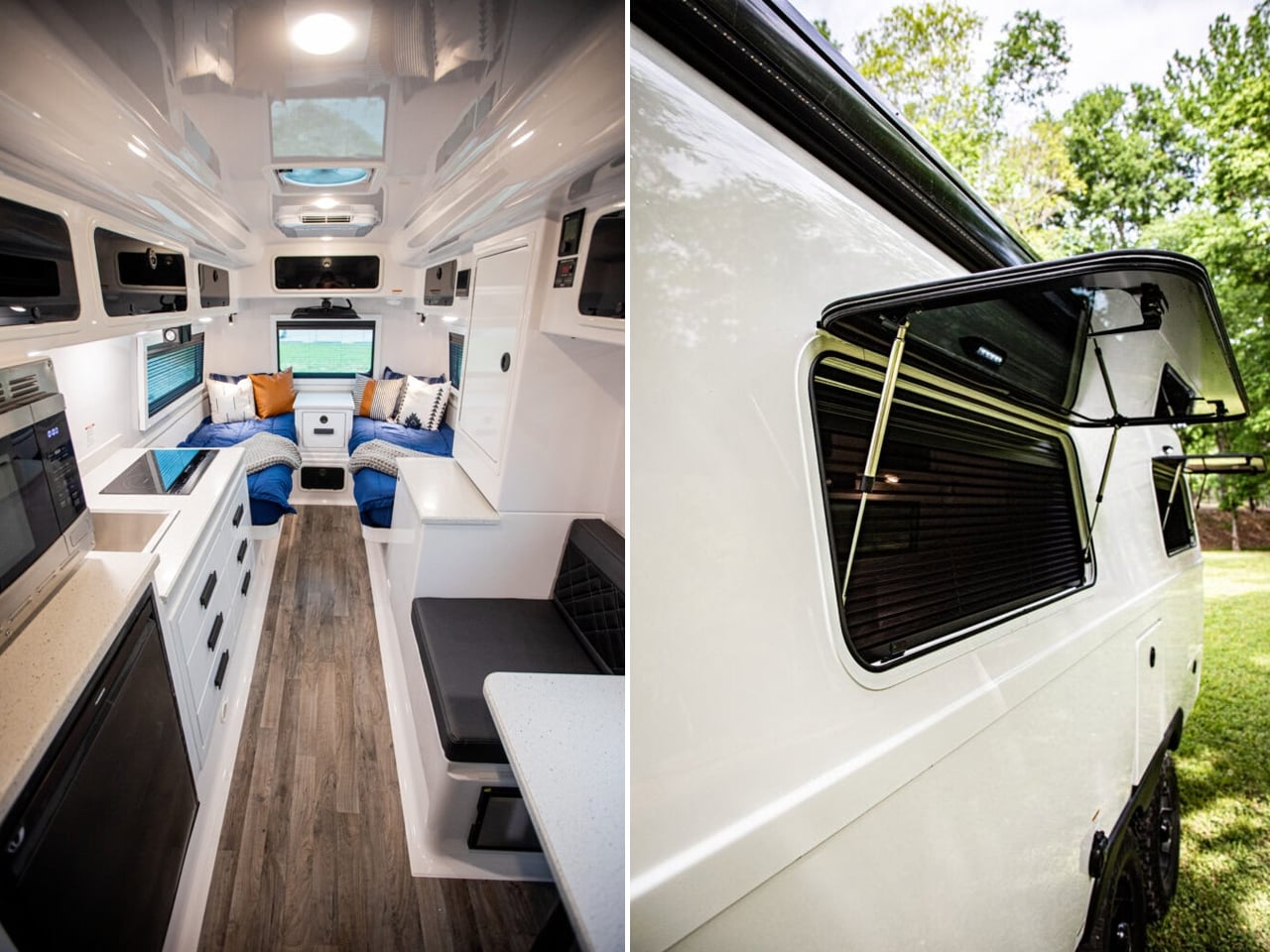
The travel trailer is aerodynamically designed for easy towing and increased fuel efficiency. The double-hull construction ensures that Oliver can easily hide away the water tank, plumbing, and many mechanical components within it. The interior is laid out with a twin bed or a choice of a king bed. The quilted leather dinette that converts into a third bed can seat up to seven people; however, it only has the capacity to sleep one additional person. The trailer fits almost a complete kitchen with an induction cooktop, a refrigerator, and a microwave with an air fryer.

The 23-foot space reimagined for off-grid travel is also provided with a bathroom with a shower. The cabinetry inside the trailer is part of the mold and is integrated into the fiberglass body. This ensures the structural integrity of the X23, which is powered by a 48V system. It features a 1,360W solar panel paired with a 3,000W inverter, and the power system is controlled by a central touchscreen control panel. The Apex X23 with a 400W rooftop solar panel starts at $107,000, while the cost may shoot up for the top-of-the-line 1,360W solar capacity trailer.

The post This $107K Trailer Hides 400W Solar in Its Fiberglass Shell first appeared on Yanko Design.

This Expandable Popup Micro Camper Turns Your EV Into a Fully Equipped Tiny Home for Off-Grid Escapes

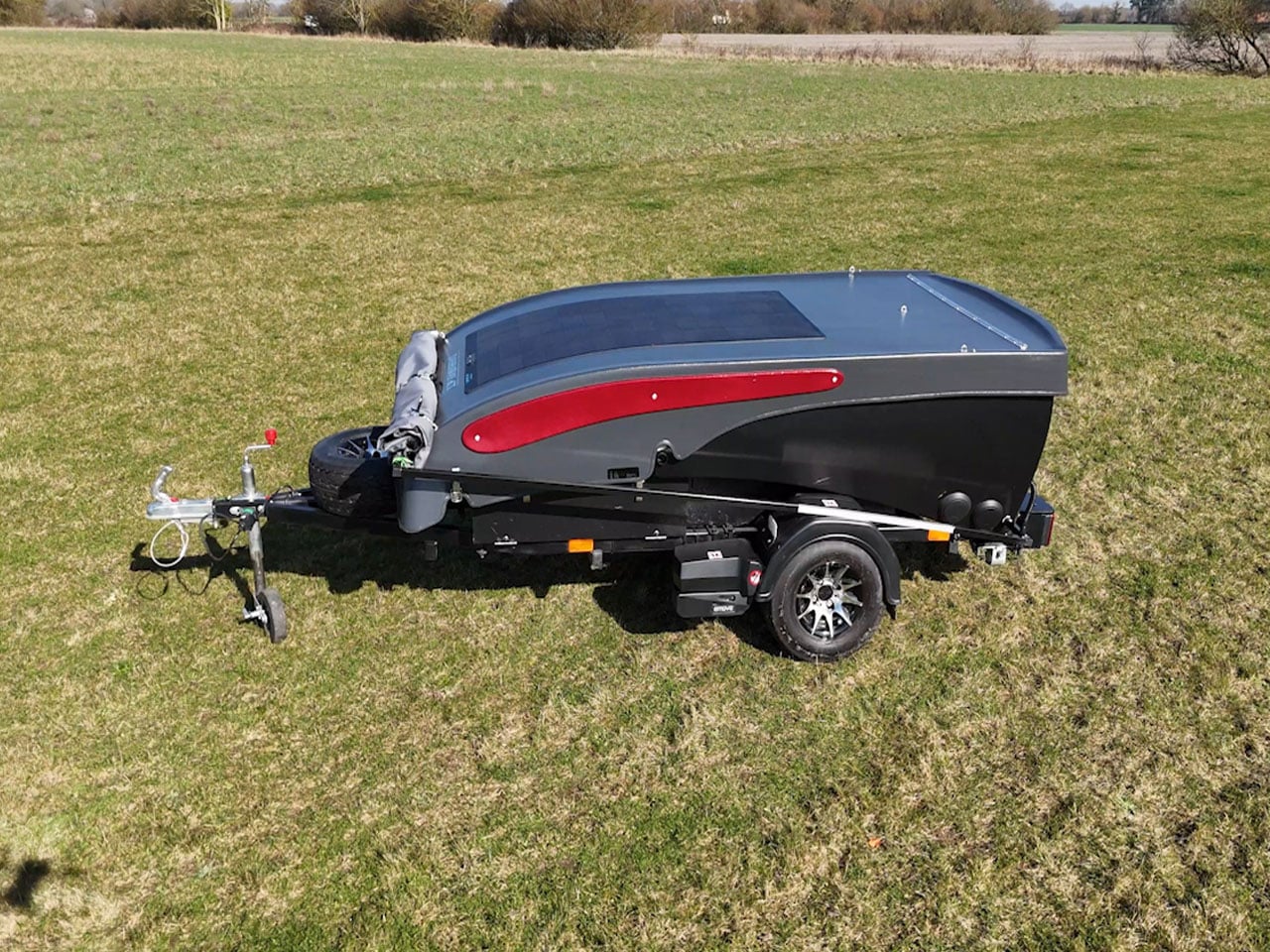
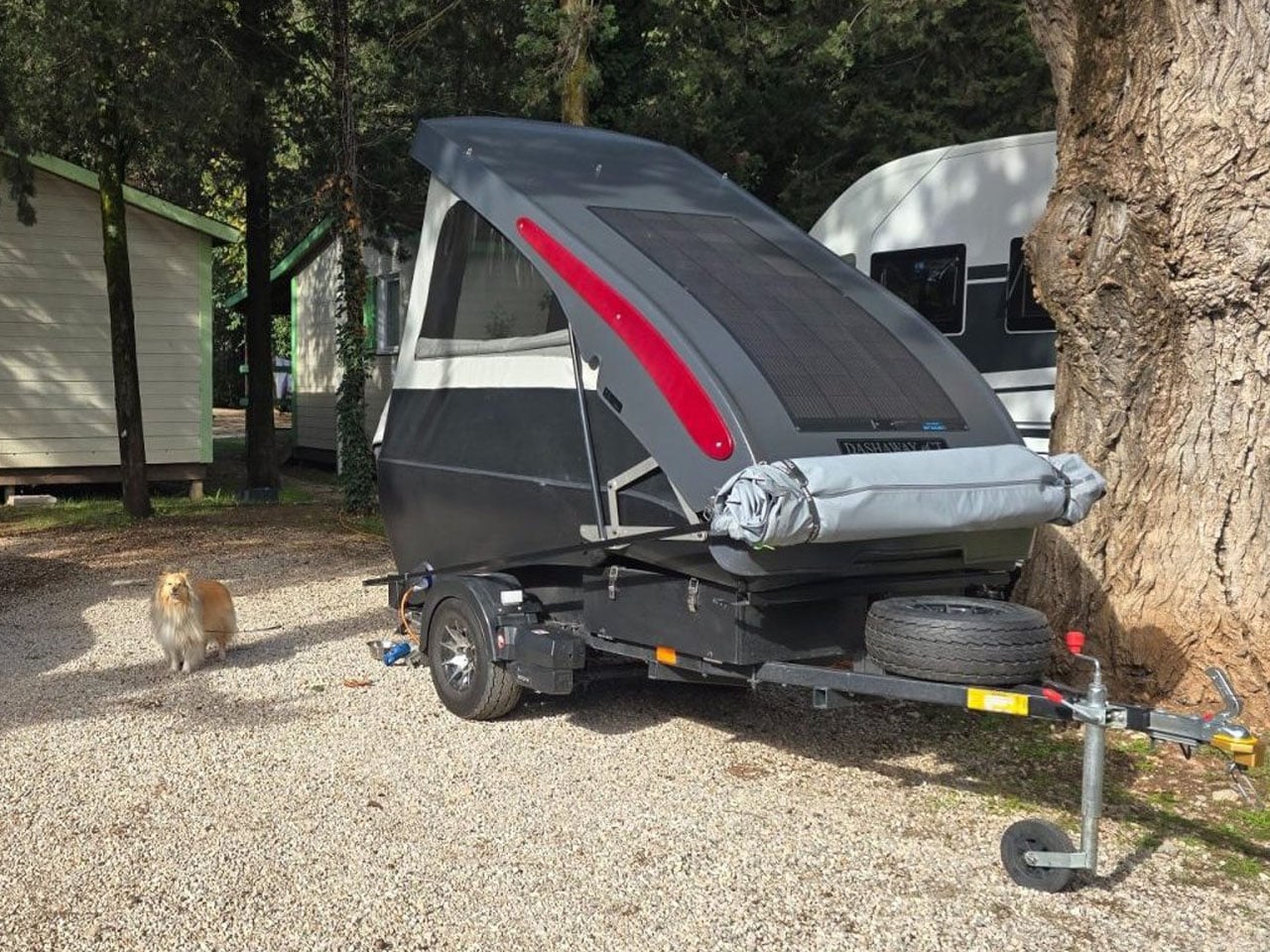
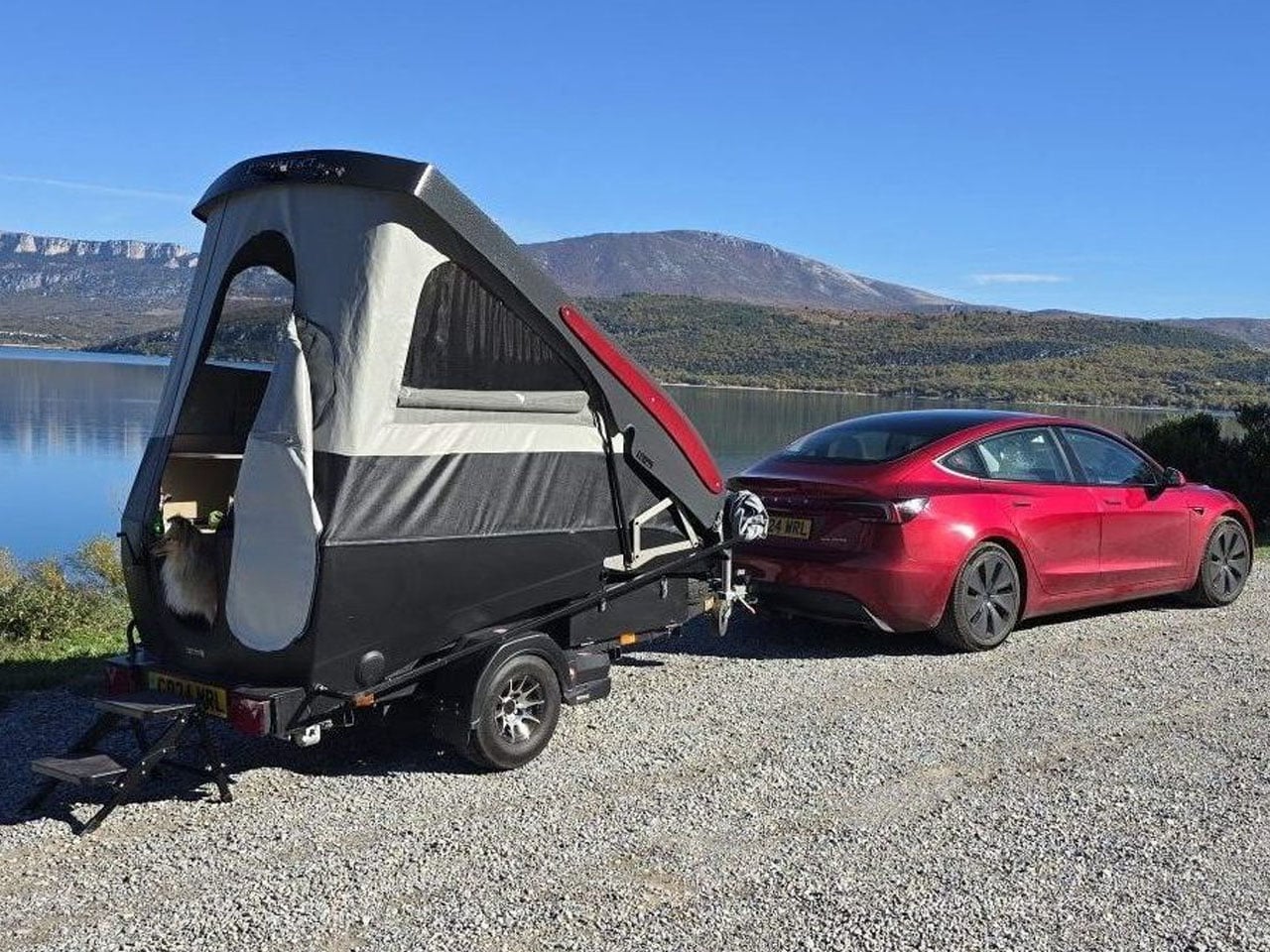
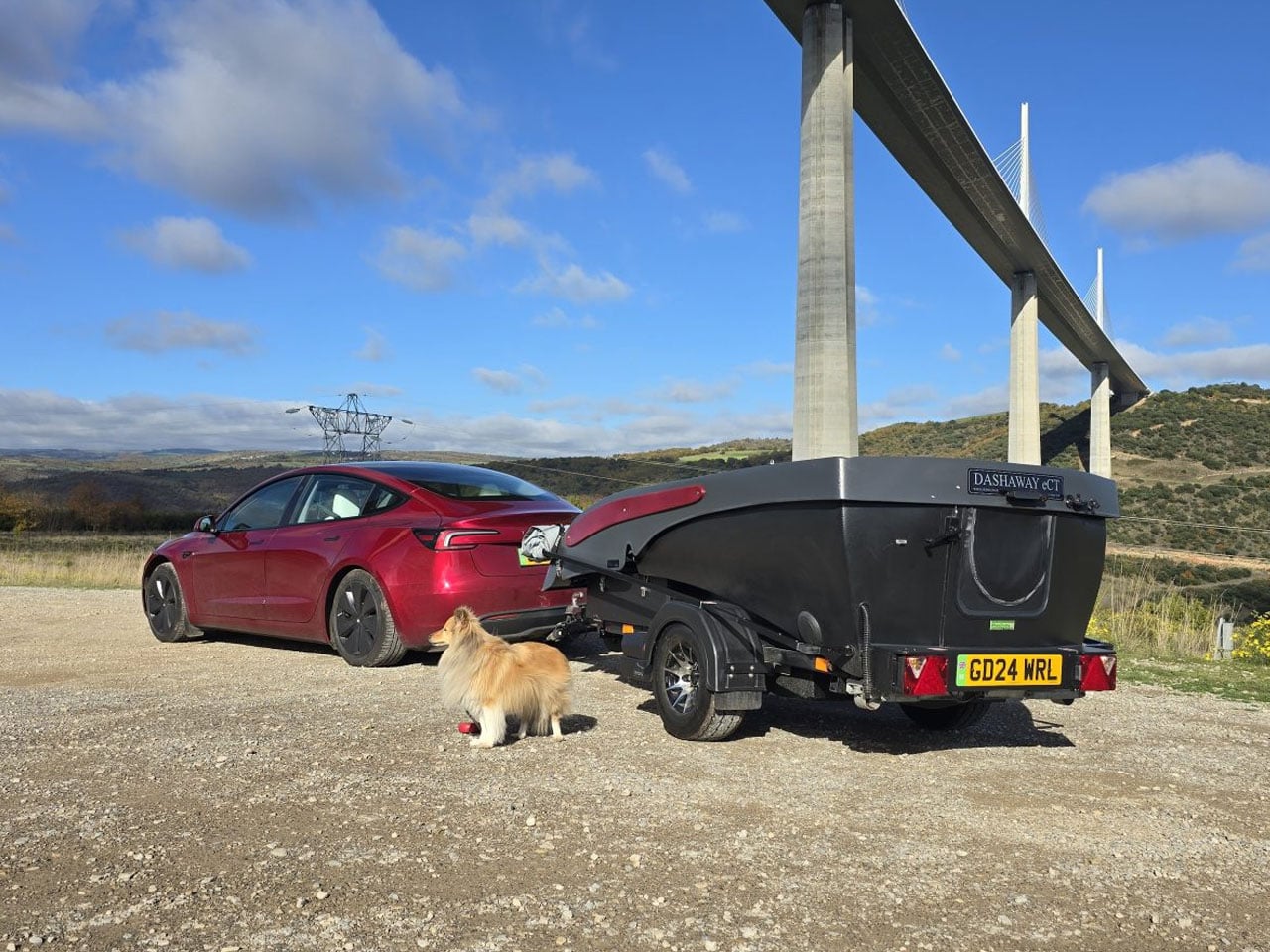
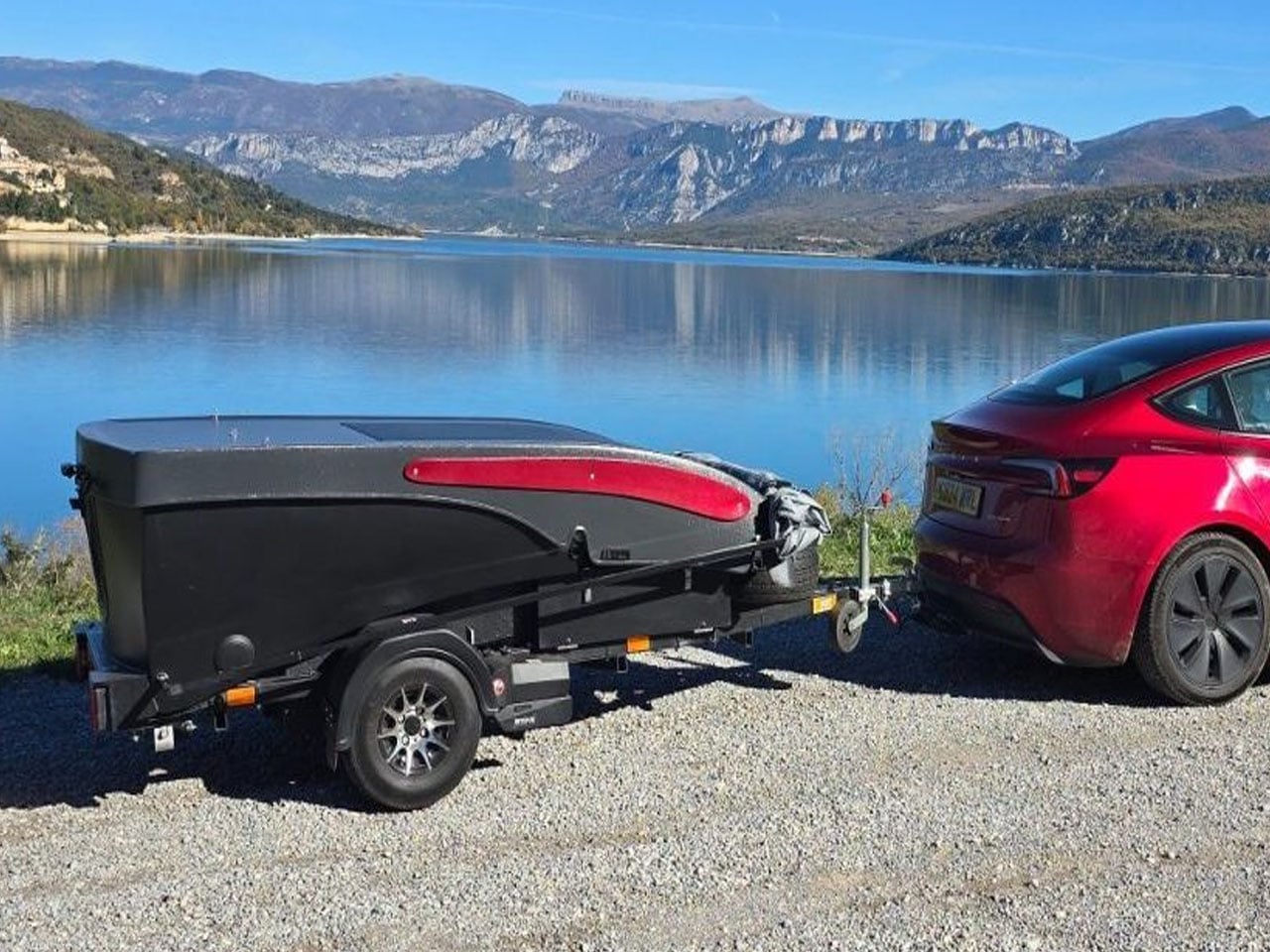
Wheelhome is a budding compact camping solutions enterprise in the United Kingdom. It is changing the way camping is perceived and how all-electric camping trips can be made more convenient. First, it launched the electric rooftop camper for the Tesla’s popular Model 3, and now it is offering other lighter vehicle owners an alternative for solo or two-person camping with the new Dashaway ECT micro camping trailers.

Designed for efficient electric camping trips, the Dashaway ECT trailer comes in two variants: a solo version and a two-person model. The campers are packed with all the amenities and facilities one needs, from a lounge to beds and a toilet to a kitchen, so they can be fully packed for all sorts of camping requirements.

Designer: Wheelhome

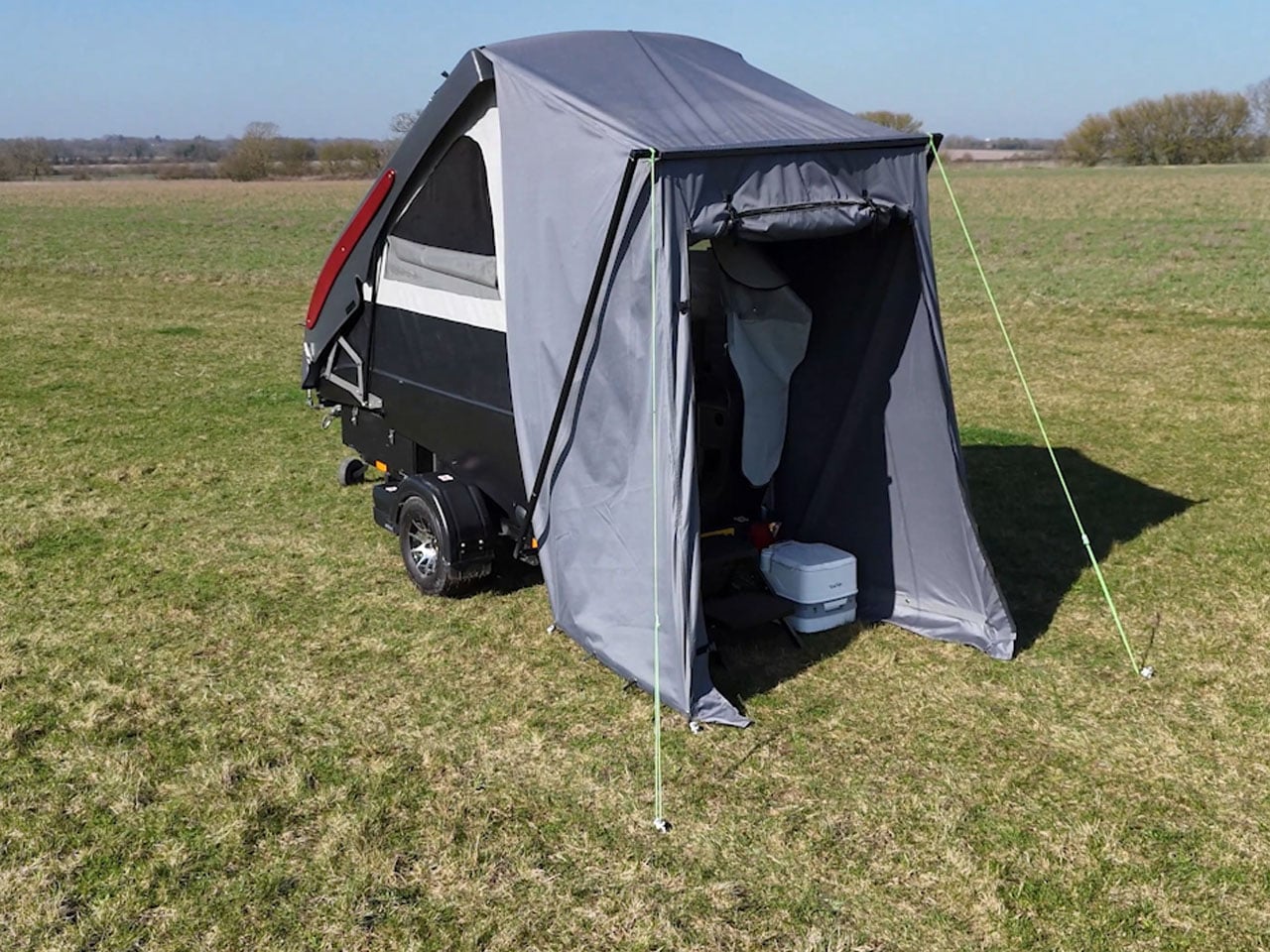
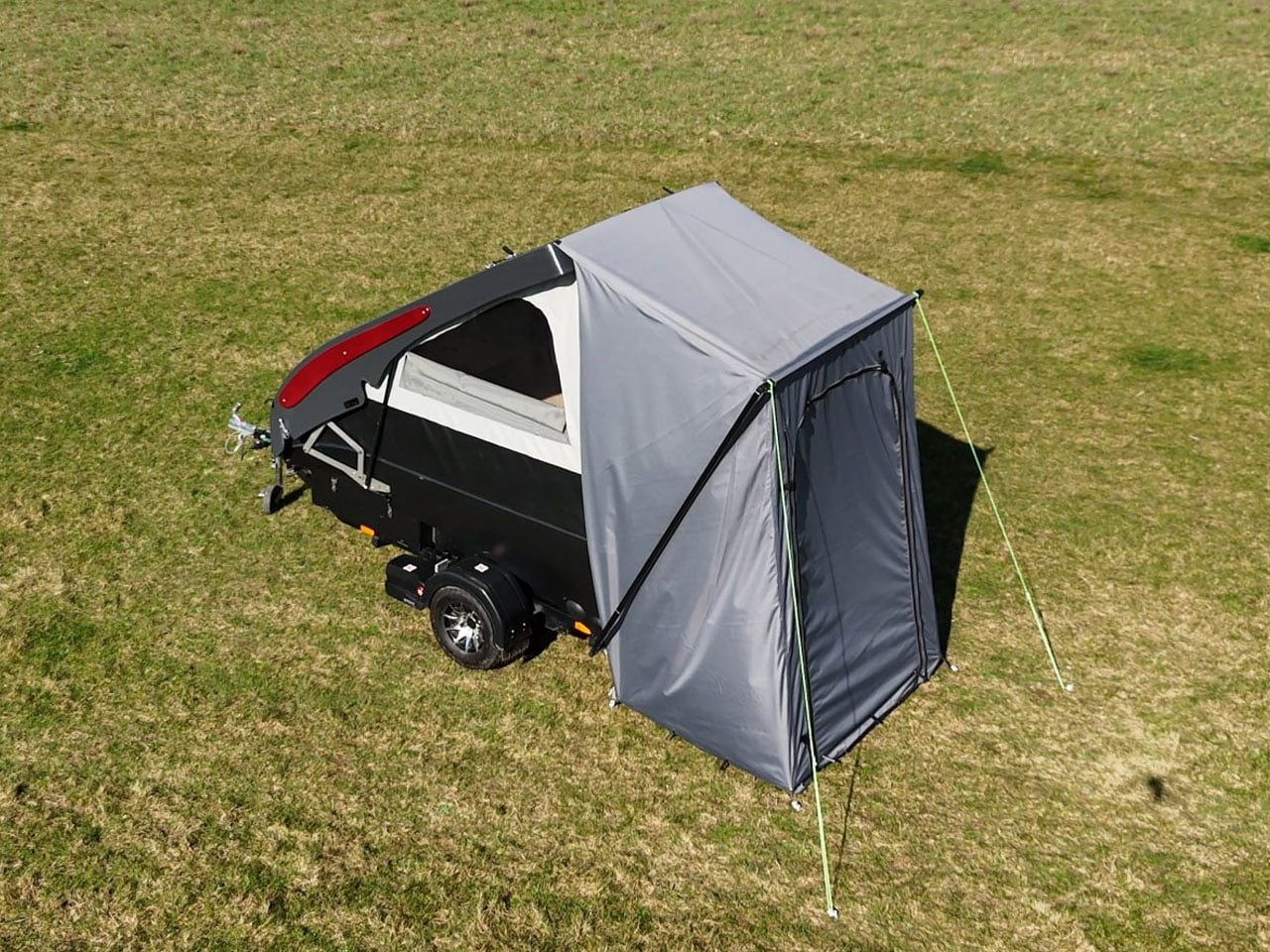
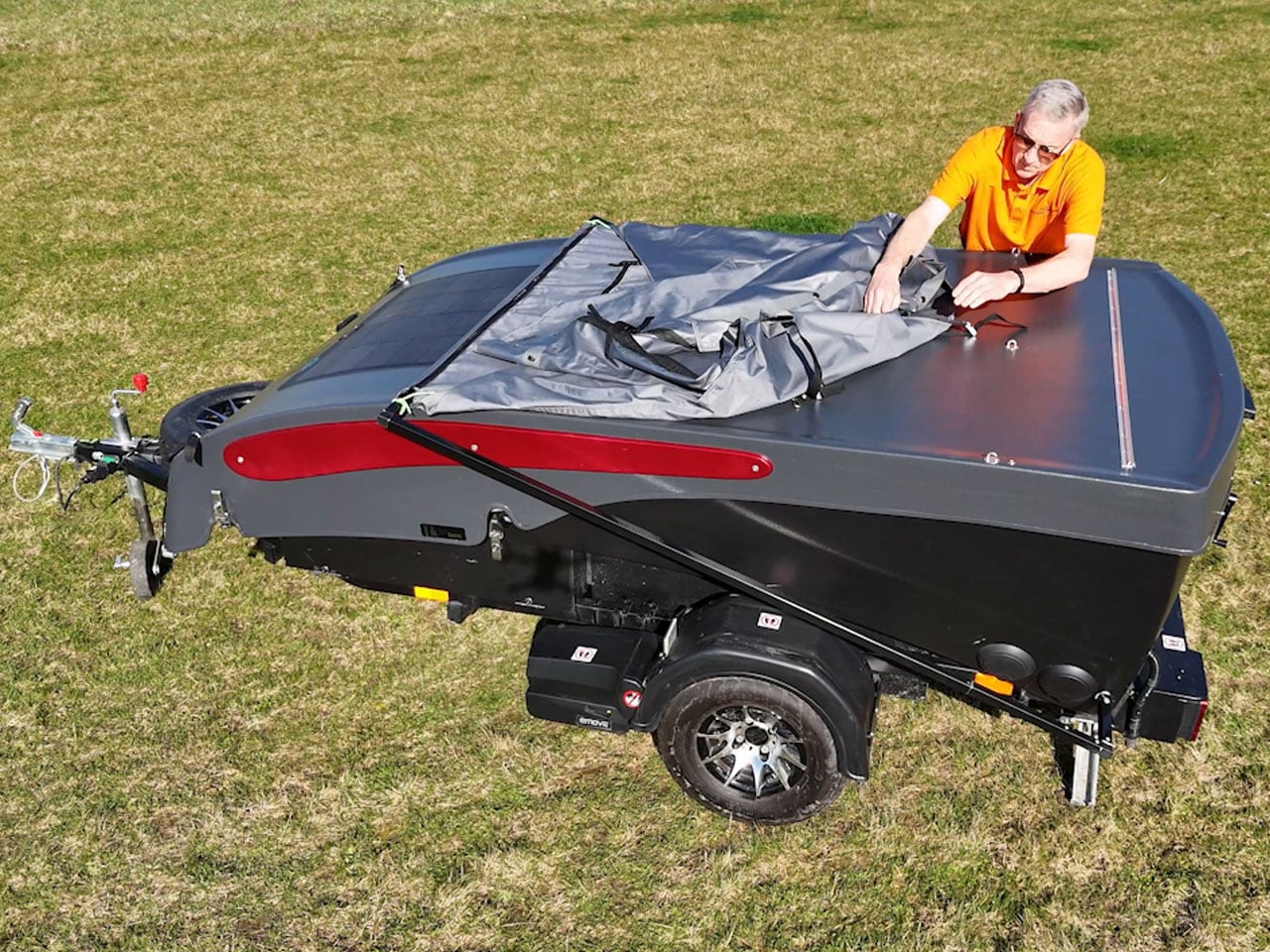
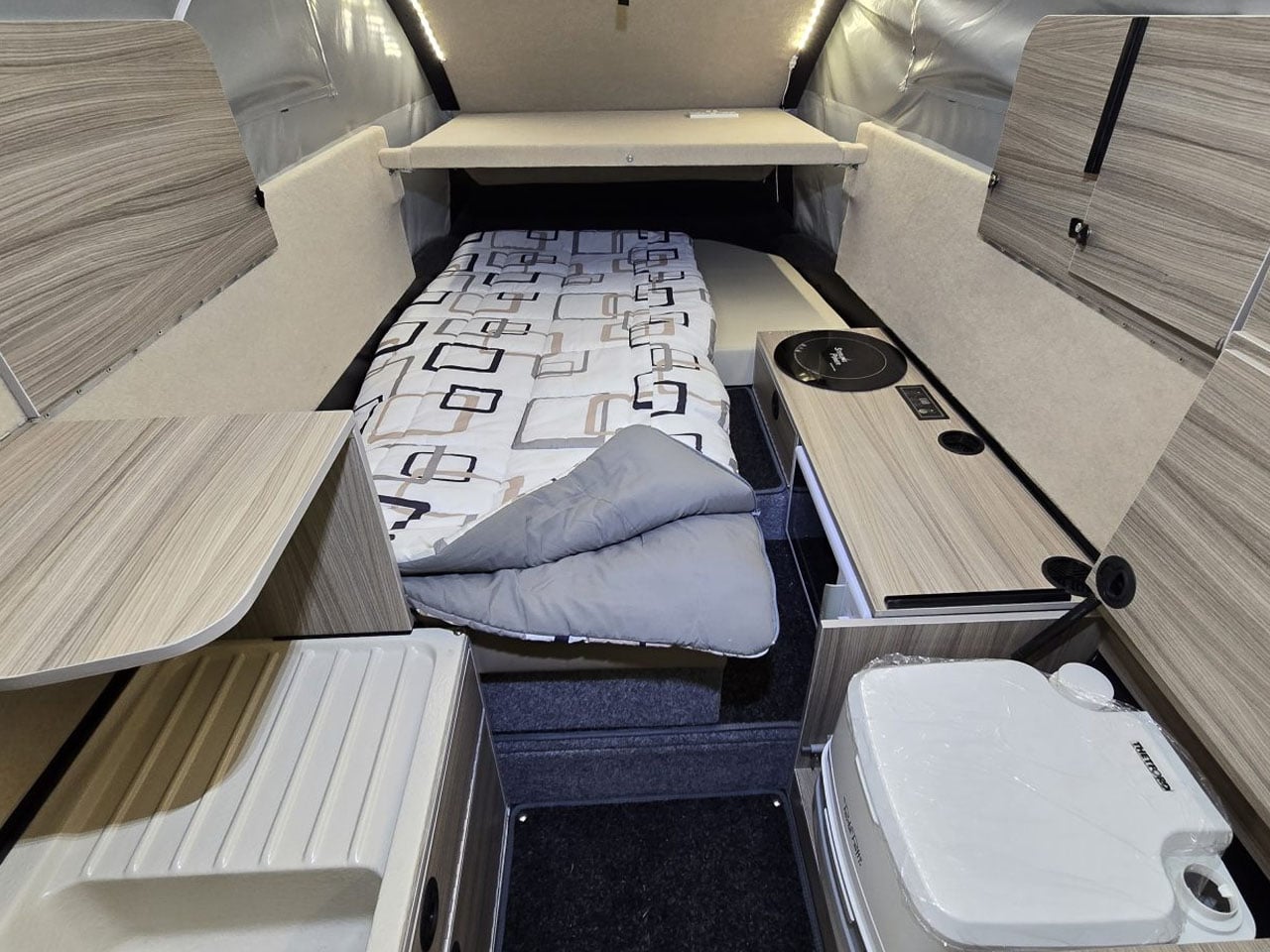
A provided awning is one of the major highlights of the Dashaway ECT series. It is part of the trailer and delivers an additional outer space that can be used for a portable toilet. Of course, it is optional, but with awning rolled up on the front of the trailer when riding, you have the option of expanding the living space. It can unfurl easily and attach to the roof and two side poles to create a sizable space. Besides the awning, the trailer is otherwise similar to the other options on the market, measuring 12.5 feet long and about 5.3 feet wide, but it differentiates itself in the convenience campers can have inside.

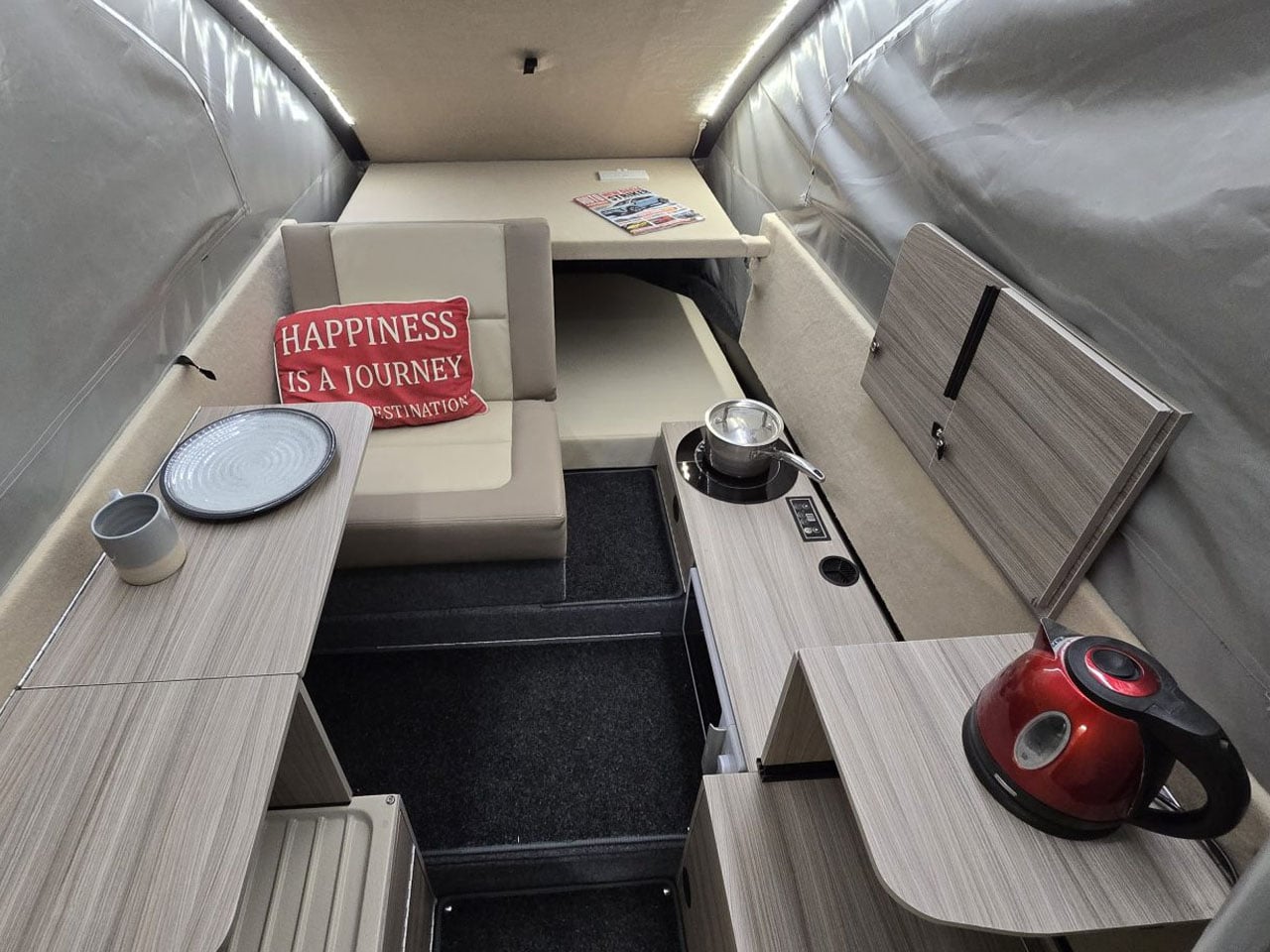
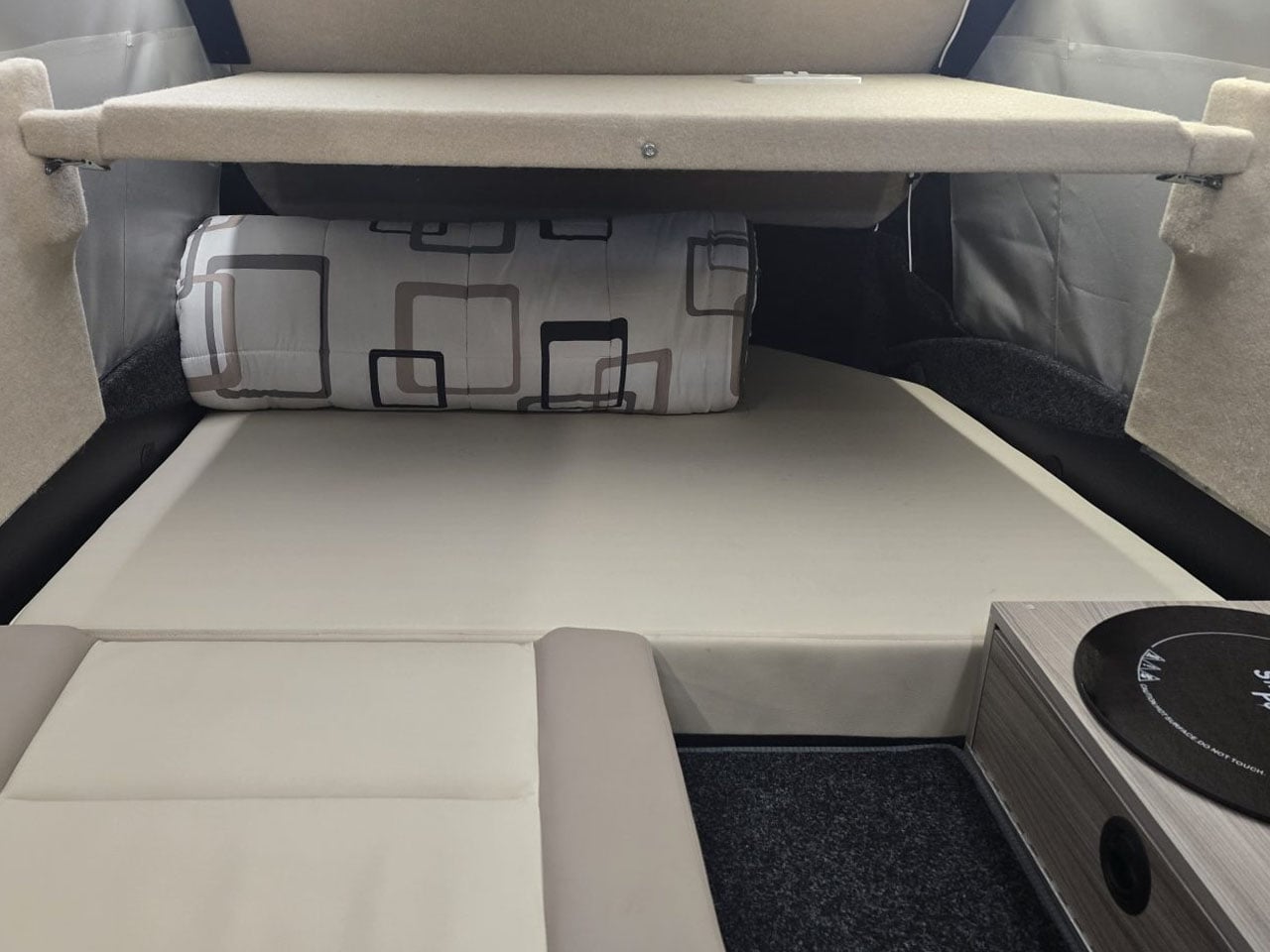
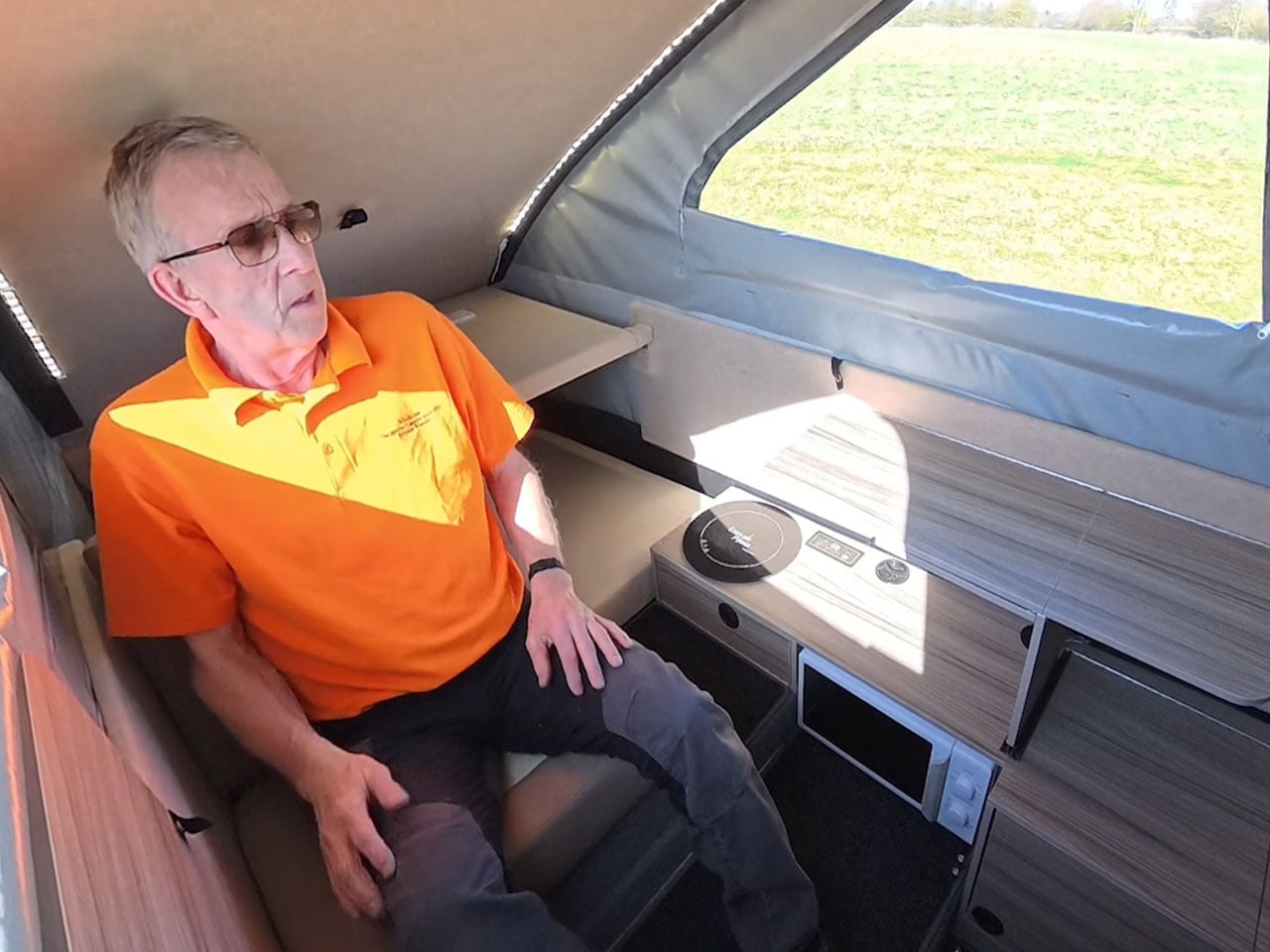
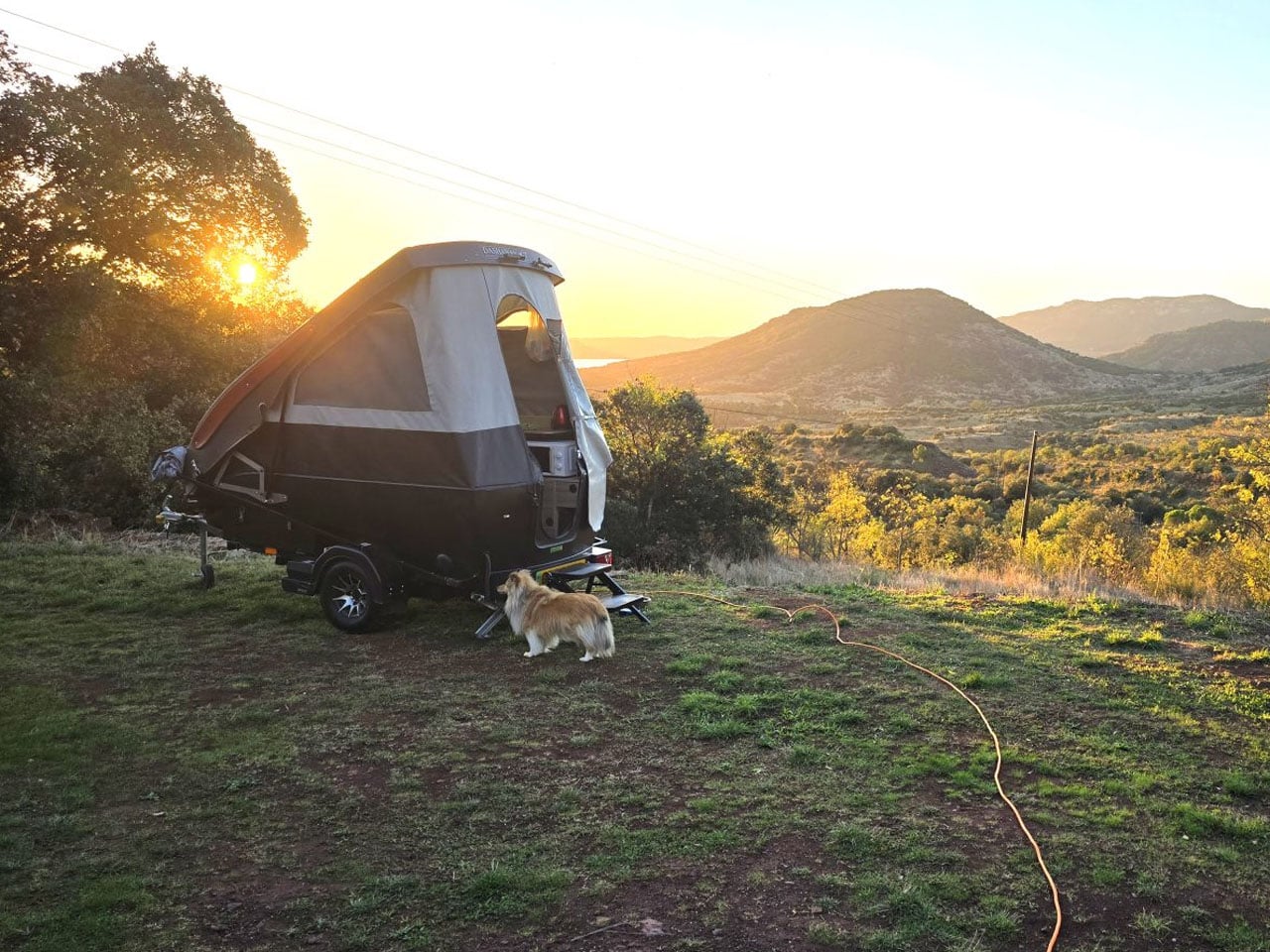
When in drive mode, the Dashaway ECTS one berth and the ECT 2 two berth pack down to a height of 3.8 feet. At the camp, both models can pop up to the height of 6 feet. Setting up the trailers is as easy as it can get. No additional tools or any specific training is necessary. The process takes a few minutes. First, using a motorized mover the trailer can be positioned using a remote control, without even the tow vehicle. When in place, the stabilizer legs are lowered and the roof can be lifted up using a gas strut-assisted crank and the fabric side-walled camp is ready to live.

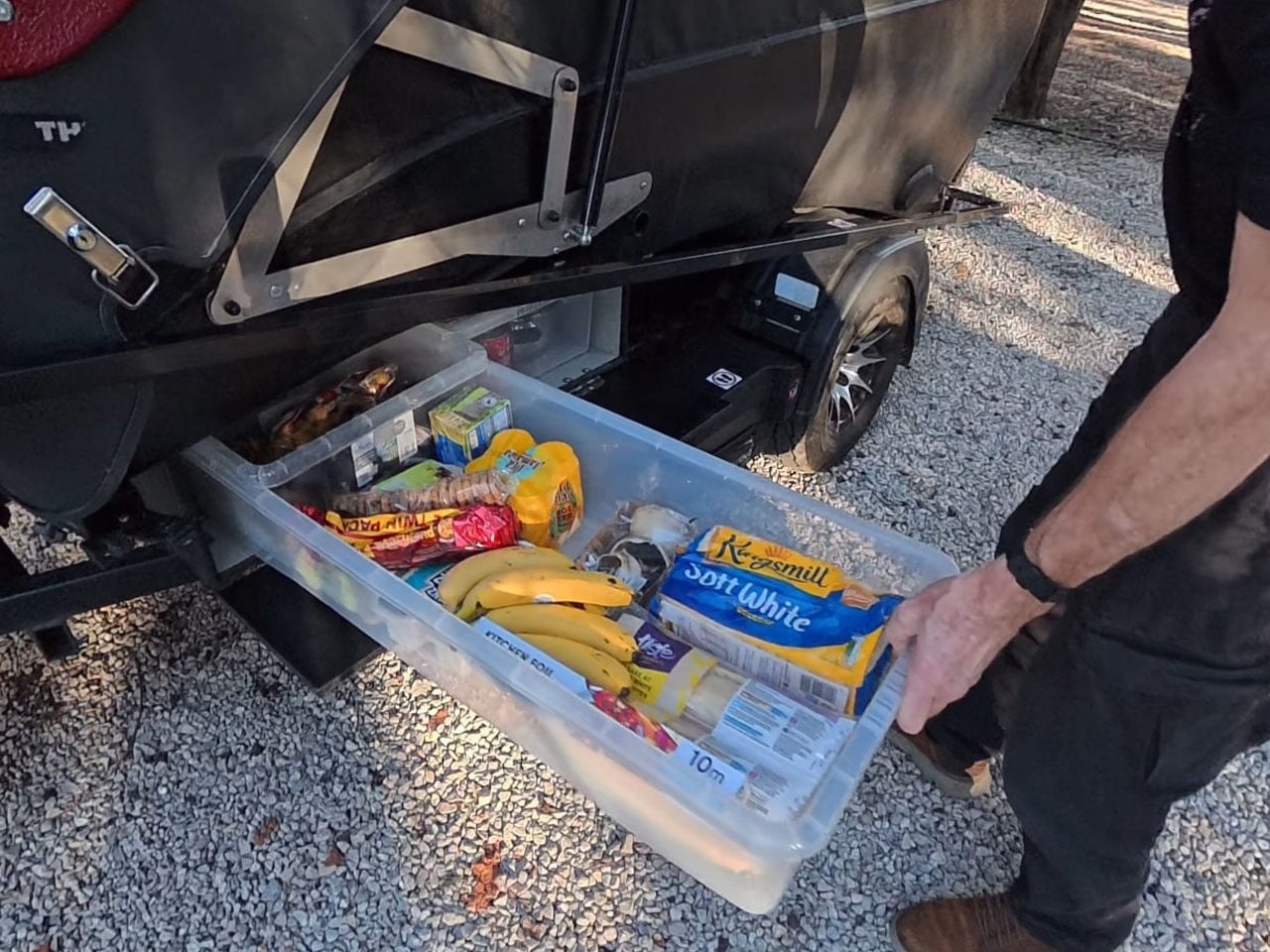
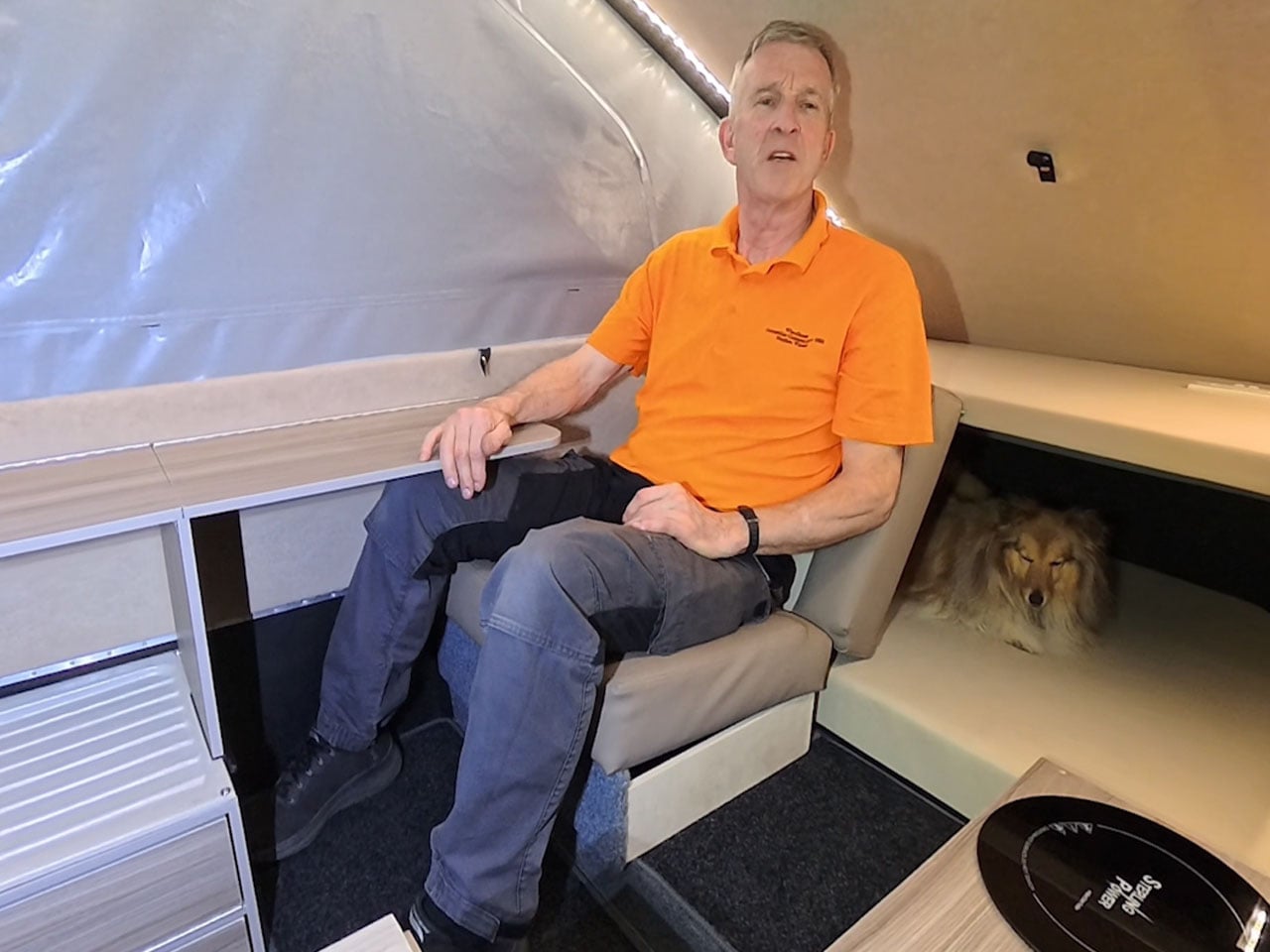
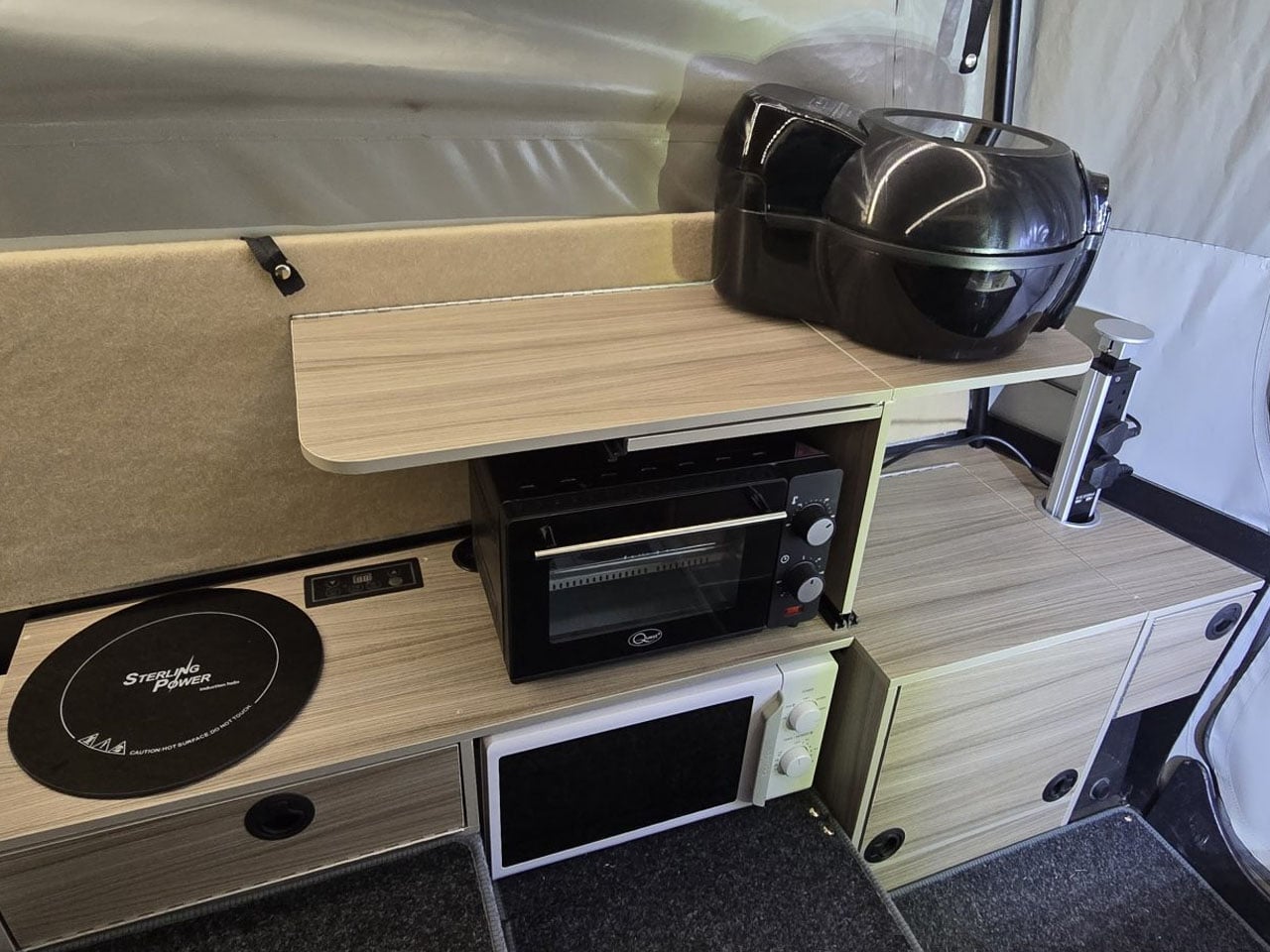
However, before you start living, you can access the camper via single rear entry and layout the furniture and furnishing inside (which folds down when the camper is packed for the road). The interior has the kitchen setup at the entrance complete with an induction hob, kettle, air fryer, and microwave, and then is the seating lounge facing outward, toward the camp entry. The seat also accommodates a 12L fridge underneath. The lounge – depending on the berth configuration you have picked – is either one seat or two. the seats flatten down into a single or double bed at night. The sides are provided with large windows covered with mesh, which light up the interior.

Wheelhome provides the ECT series with ample storage cabinets and compartments under the seat(s). The trailer features a 3-kWh lithium battery, 200-watt rooftop solar panel connected to a 3,000 W inverter. Dashaway ECTS is available for a starting price of £19,750 (roughly $26,000), and the ECT2 is priced at £26,225 (about $35,000).

The post This Expandable Popup Micro Camper Turns Your EV Into a Fully Equipped Tiny Home for Off-Grid Escapes first appeared on Yanko Design.

Tesla Left a Glaring Gap in Every Model 3 and Model Y. This $379 HUD Fixes It.

Fighter pilots have had heads-up displays since the 1950s, because asking a human to look down at instruments while traveling at 600 miles per hour and making life-or-death decisions is an engineering failure, not a pilot failure. The technology migrated to production cars in 1988 when GM offered the first automotive HUD in the Oldsmobile Cutlass Supreme, and every generation of premium vehicle design since has treated it as table stakes. Tesla rewrote so many conventions of the automobile that it’s easy to forget it left one important capability behind. For all the innovation packed into the Model 3 and Model Y, their dashboards direct critical driving data to a screen mounted nowhere near where human eyes naturally rest during forward motion. TrantorVision built NeuroHUD to close that gap, and the Kickstarter campaign funded in 30 minutes.

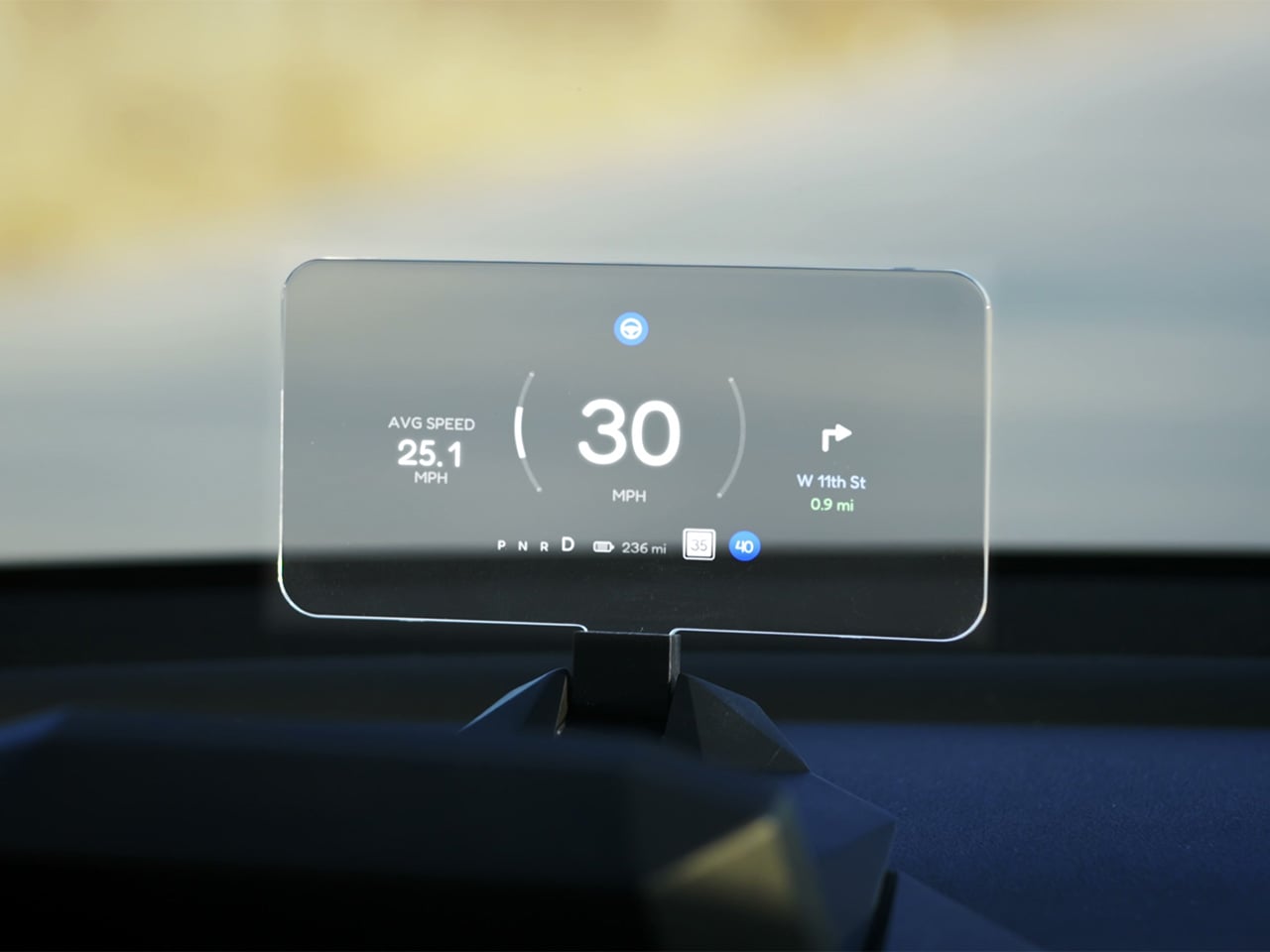
Built alongside a community of over 4,000 Tesla owners from mid-2025 through early 2026, NeuroHUD projects Tesla driving data directly into the driver’s forward sightline rather than leaving it on a screen at center console height. Installation takes about one minute, requires no tools and no disassembly, and leaves the factory wiring completely untouched, keeping the manufacturer’s warranty intact. The compute module clips behind Tesla’s center screen and draws power through a single USB-C cable, with no hardwired connections and no vehicle modifications of any kind. From there, a dual-channel data system reads Tesla’s screen directly through AI cameras and simultaneously pulls deeper vehicle telemetry through the Tesla API, creating a richer information layer than either method could supply alone. The result covers speed, navigation, gear state, battery range, blind-spot alerts, and takeover warnings, all projected directly in the driver’s line of sight.

Designer: TrantorVision

Click Here to Buy Now: $379 $629 (40% off). Hurry, only a few left! Raised over $474,000.

A pair of 150-degree AI fisheye cameras face Tesla’s display and read high-frequency data like speed at 50 Hz, fast enough to keep the HUD readout synchronized with the car’s actual state without perceptible lag at any velocity. Lower-frequency information, covering gear position, battery range, and navigation turns, arrives through the Tesla API on a separate channel, and the system routes each data type through the appropriate pipeline based on how quickly it needs to update. End-to-end latency on the AI vision side sits as low as 20 milliseconds, tighter than many production-fitted HUDs achieve through direct hardware integration. The onboard processor is a 6-core Arm DynamIQ chip paired with an Arm Mali G610 MP4 GPU and 4GB of LPDDR4 RAM, running Ubuntu Core Linux with Wi-Fi 6 and Bluetooth 5.4 connectivity. That compute specification would look comfortable in a mid-range Android tablet, which gives a sense of how much processing headroom TrantorVision has reserved for future OTA feature additions.

At 1,500 nits of peak brightness, NeuroHUD’s 4-inch TFT LCD panel is engineered specifically around the failure mode that sinks most aftermarket HUDs in real-world use: direct sunlight washout. The panel runs at 480×800 resolution with a 140-degree viewing angle, keeping displayed information legible across a wide range of driver head positions without requiring precise alignment to a narrow sweet spot. The modular Light Engine gives drivers a genuine choice of projection method rather than committing them to a single approach. Combiner Mode positions a semi-transparent screen in the driver’s sightline for the sharpest image quality, with projected information appearing to float in the forward visual field at a focal distance that keeps eyes aimed naturally at the road. Windshield Projection Mode throws the image directly onto the glass for a more immersive overlay, and both modes switch without tools or any hardware intervention.

HomeControl is a GPS-triggered garage automation system that learns the driver’s RF remote signal, geolocates the home driveway, and fires the garage door automatically as the car turns in, with a physical button for manual override available at any time. Screen Mirroring turns the HUD into a secondary phone display, meaning Google Maps or Waze can be projected directly onto the combiner or windshield without any dependency on Tesla’s native navigation system. UI customization runs three levels deep: a mobile app for toggling individual elements, a full UI editor for precise sizing and positioning of each data element, and an open API interface for users who want to build a custom renderer entirely from scratch. A community layer lets drivers share layouts or download configurations built by other NeuroHUD owners worldwide, making the display experience as much a living software product as a hardware one. The combination of GPS automation, open API access, and a community-driven layout library gives NeuroHUD a software depth that compounds as its user base grows.

TrantorVision began the project in January 2025 with the goal of building a heads-up display designed around Tesla’s unique display architecture from the ground up. By May 2025 an engineering prototype was assembled and the AI vision system validated through real-world road testing; by July the product was publicly announced with a community already exceeding 4,000 Tesla owners across multiple platforms. Production design locked in December 2025, with the first batch of production samples arriving in January 2026. The device supports Model 3 from 2017 to 2023, Model Y from 2020 to 2025, Model 3 Highland from 2023 onward, Model Y Juniper from 2025 onward, and the Cybertruck from 2023 onward, covering both left-hand-drive and right-hand-drive configurations with Model 3/Y Standard trim included. An OTA Compatibility Upgrade Service is built in, meaning the hardware is designed to receive future software capabilities without requiring a new unit.

The standard NeuroHUD carries an early bird price of $379 against a retail MSRP of $629, covering Tesla data integration, mobile app control, UI community access, the custom UI editor, screen mirroring, and CarPlay and Android Auto support. The NeuroHUD Pro steps to $429 at early bird pricing, down from $729 retail, adding HomeControl, Windshield Projection Mode, deeper Tesla API integration, and enhanced hardware built to grow its feature set through over-the-air updates. Both tiers ship with a windshield film, USB-C power cable, Thunderbolt cable, 12V car adapter, cable clips, and a quick start guide, backed by a one-year warranty. Shipping is free to the continental United States and Canada, with a flat $10 covering the EU, UK, Australia, Hong Kong, and all other worldwide regions, with customs fees covered for most major markets. Global delivery is scheduled to begin between September and October 2026.

Click Here to Buy Now: $379 $629 (40% off). Hurry, only a few left! Raised over $474,000.

The post Tesla Left a Glaring Gap in Every Model 3 and Model Y. This $379 HUD Fixes It. first appeared on Yanko Design.

James Bond-inspired Scubacraft SC3 turns your underwater adventure fantasy into reality

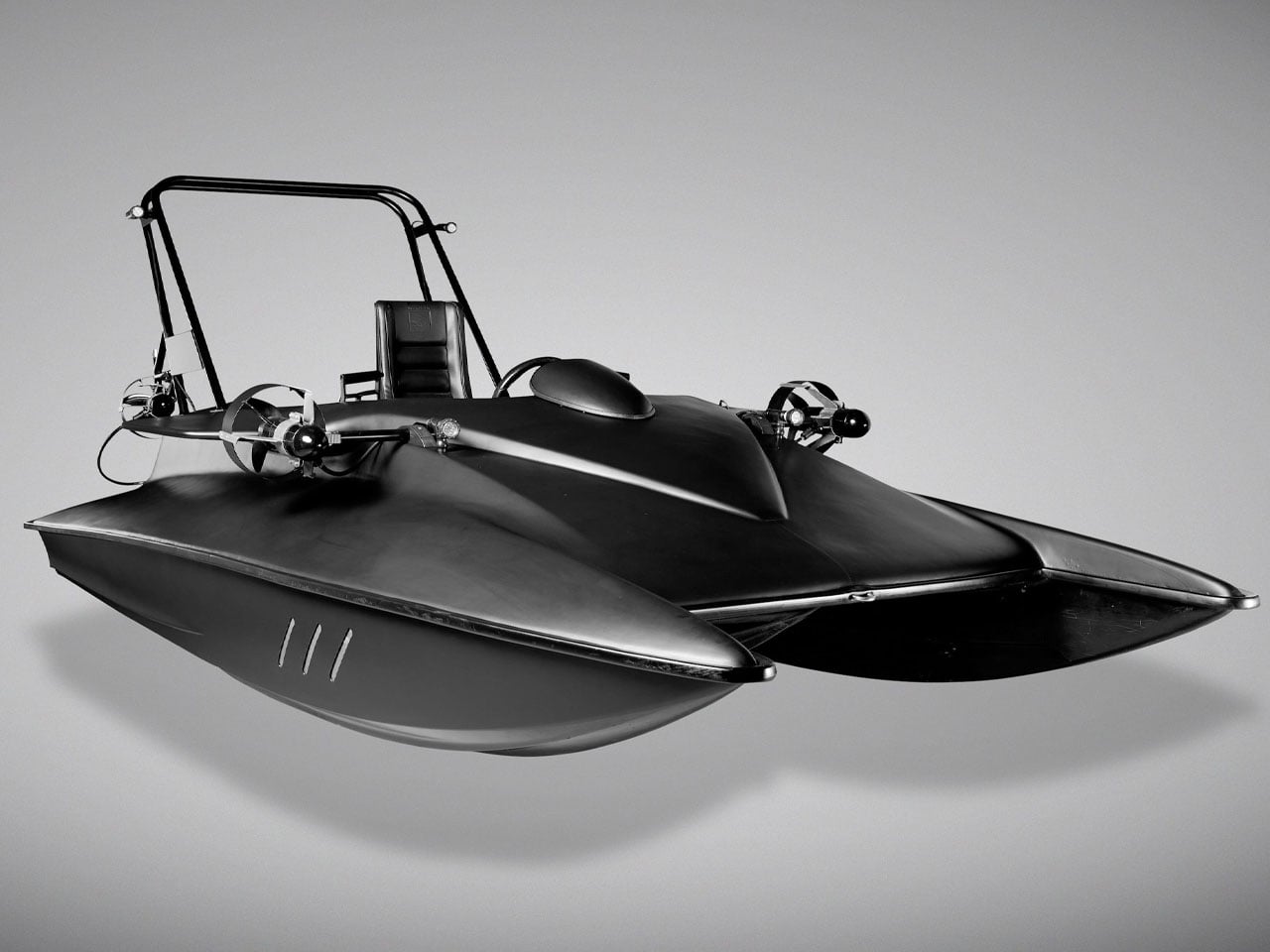
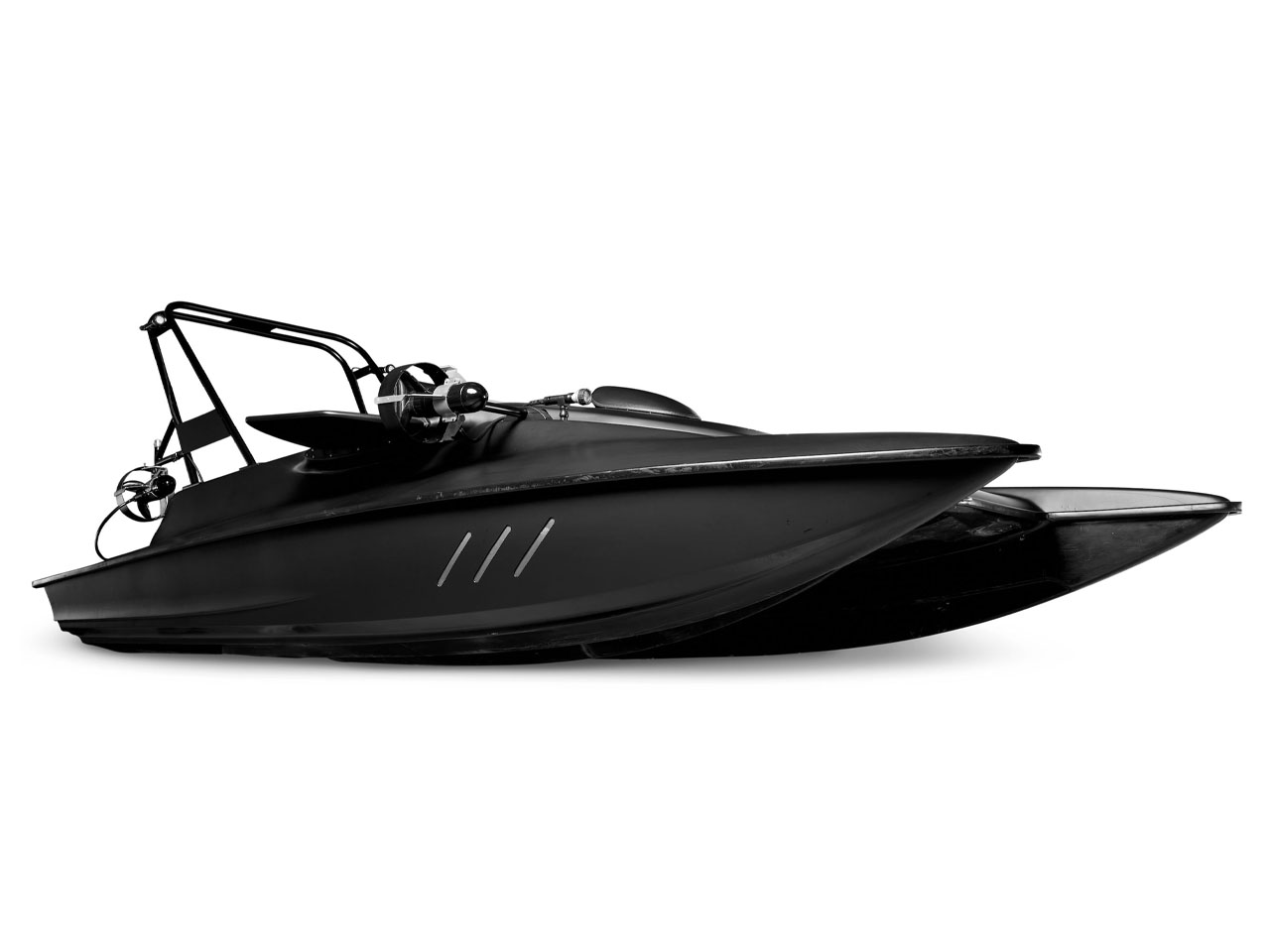
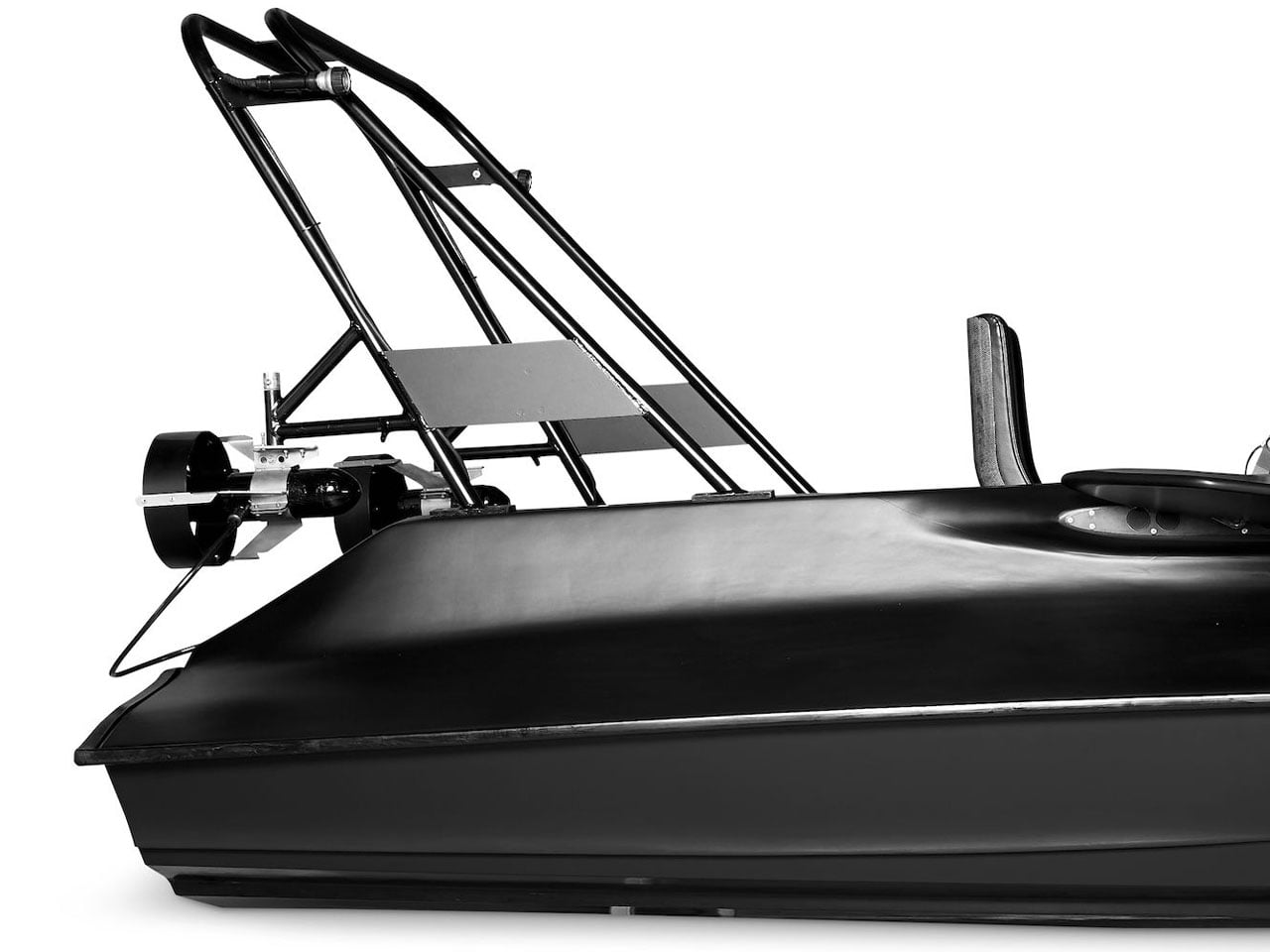
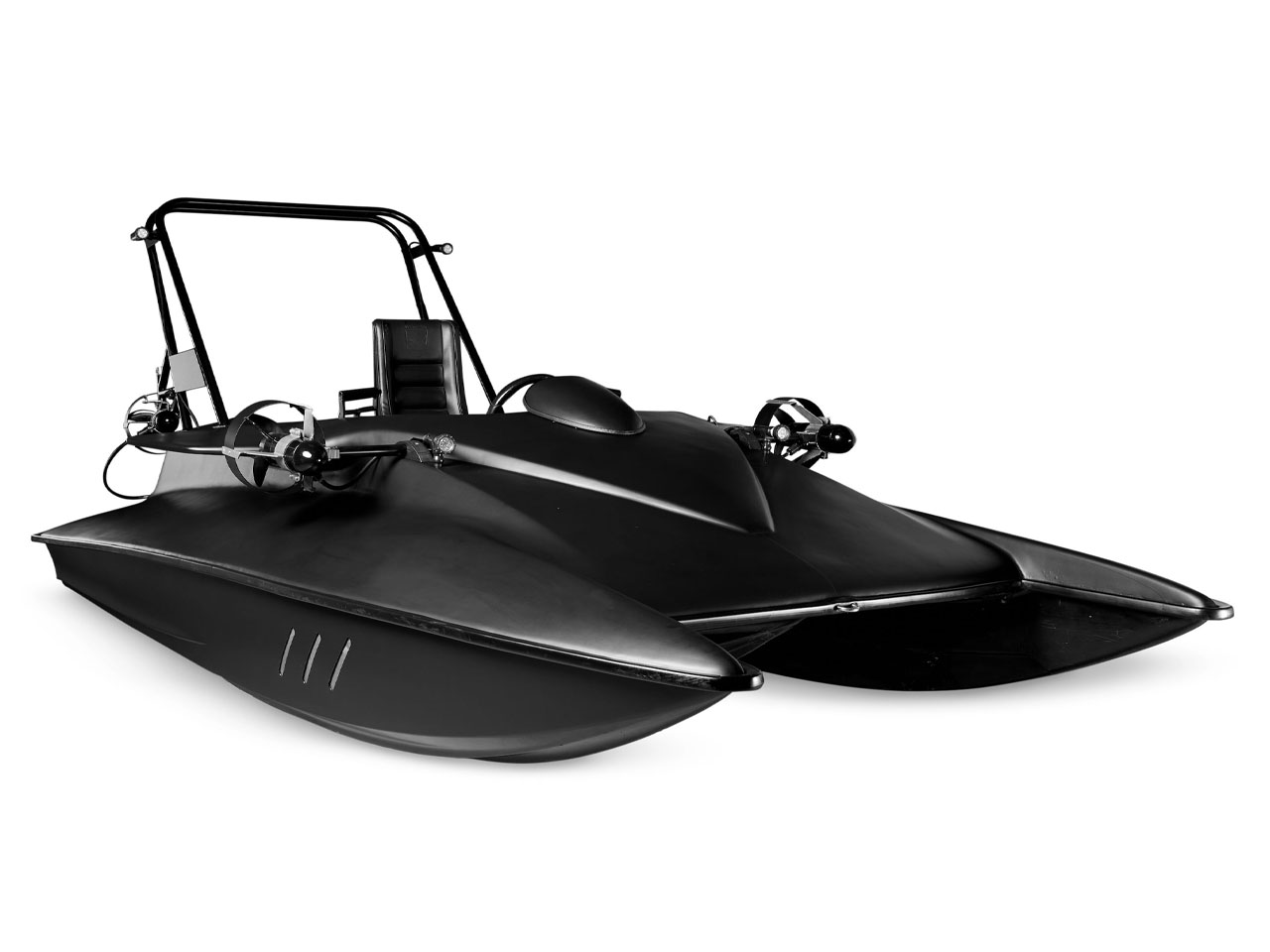
What you actually see here is a one-off submersible that is equally capable above the surface as it is underwater. For anyone who remembers the futuristic watercraft showcased in the James Bond film Spectre, there is now a rare opportunity to own one of the strangest and most ambitious vehicles ever built. Called the Scubacraft SC3, the experimental vessel was developed during the late 2000s as a functioning prototype that blurred the line between speedboat and personal submarine.

Unlike many fictional gadgets seen in Bond movies, the SC3 was not a movie prop designed solely for visual appeal. It was engineered as a real-world concept capable of operating both on the water’s surface and beneath it. The project reportedly attracted interest from the UK Special Boat Service and even DARPA because of its unconventional capabilities and military-style versatility before eventually making its way into the Bond universe. In Spectre, the matte-black machine appeared in Q’s workshop alongside the iconic Aston Martin DB10, instantly becoming one of the more memorable background vehicles in the film.

Designer: Bonhams

Now heading to auction through Bonhams, the SC3 remains the only prototype ever produced, making it less of a practical recreational craft and more of a collectible piece of engineering history. Its rarity is amplified by the fact that no production version ever followed, despite the concept demonstrating genuine functionality both above and below the waterline.

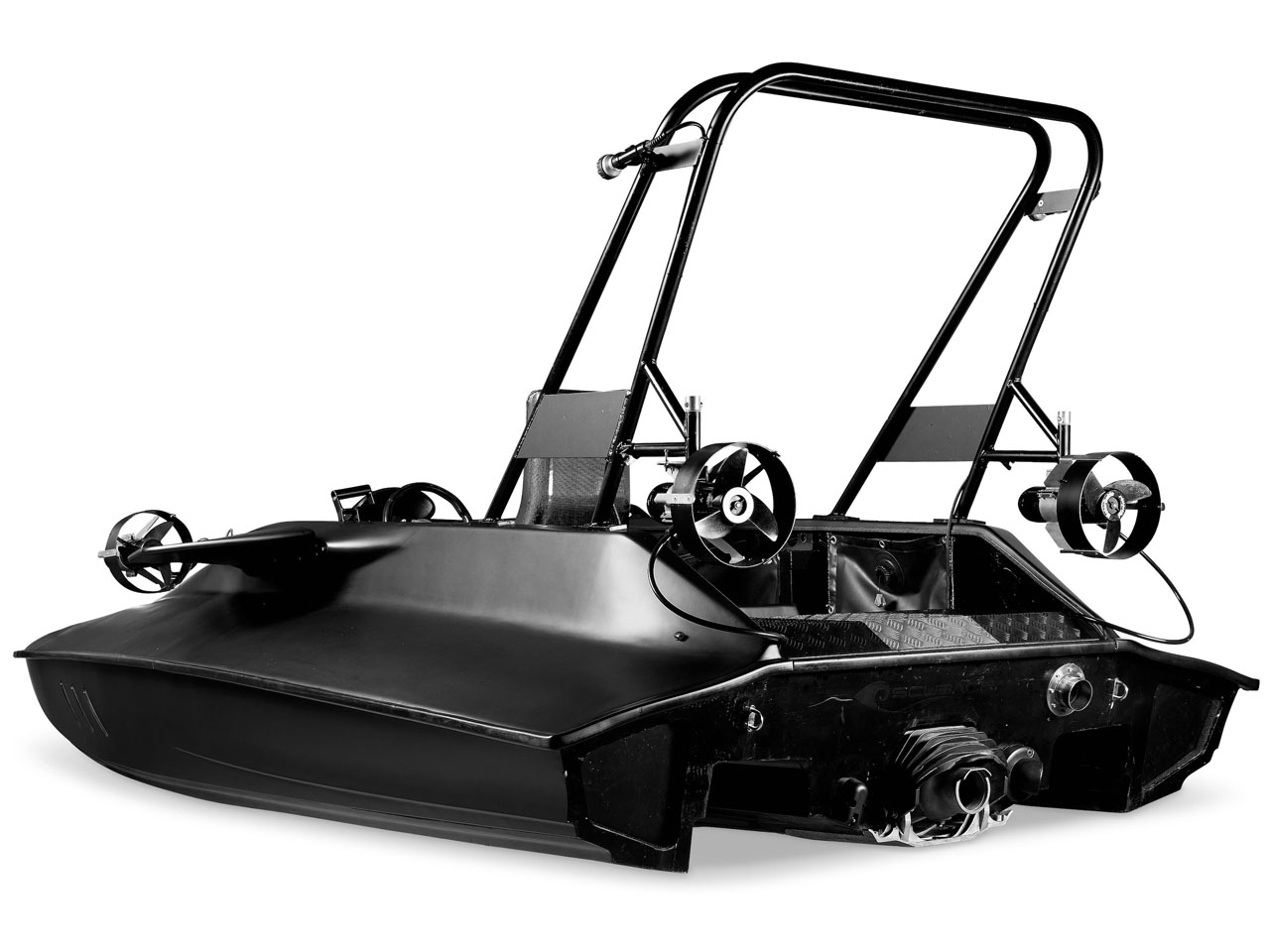
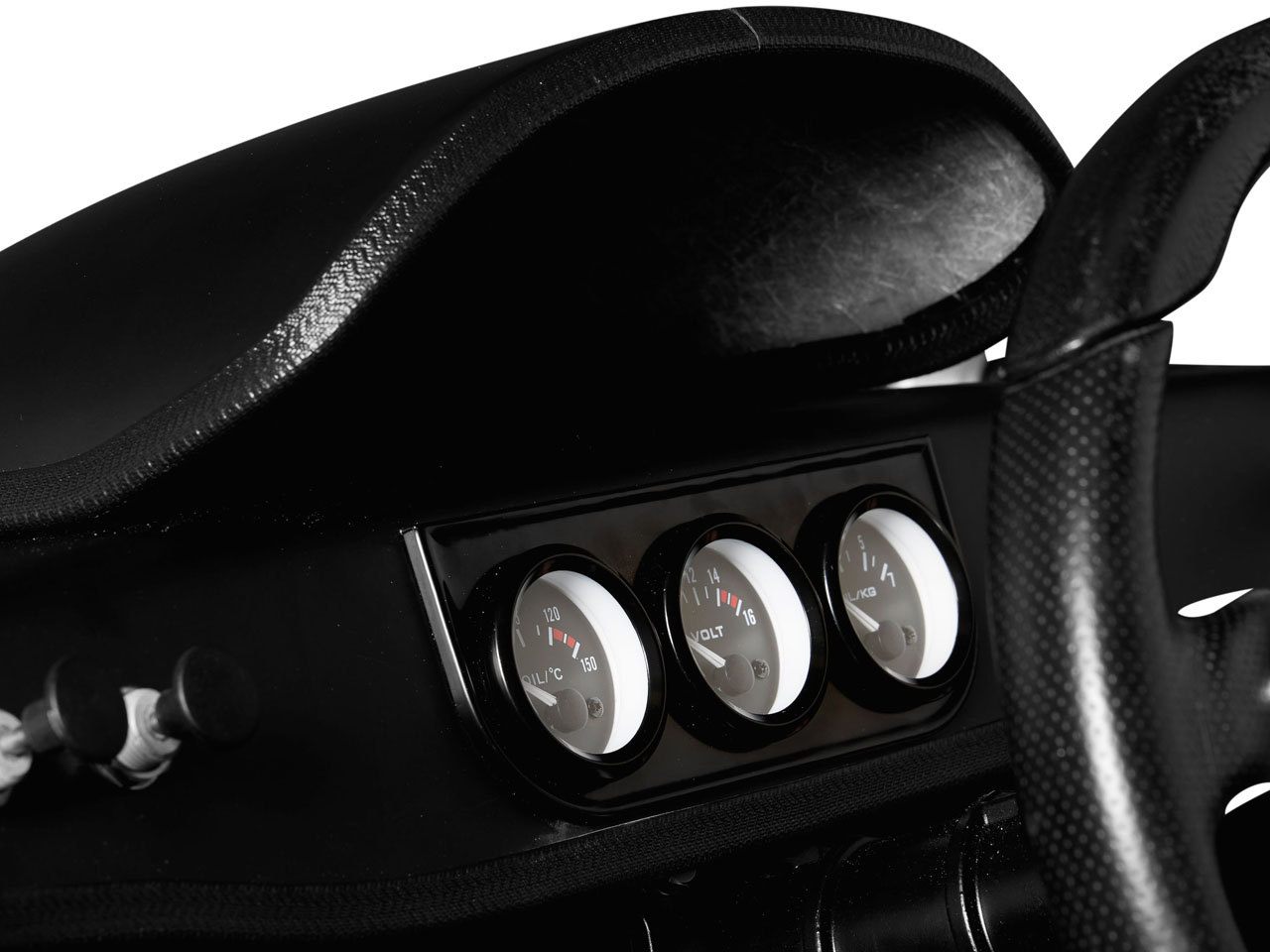
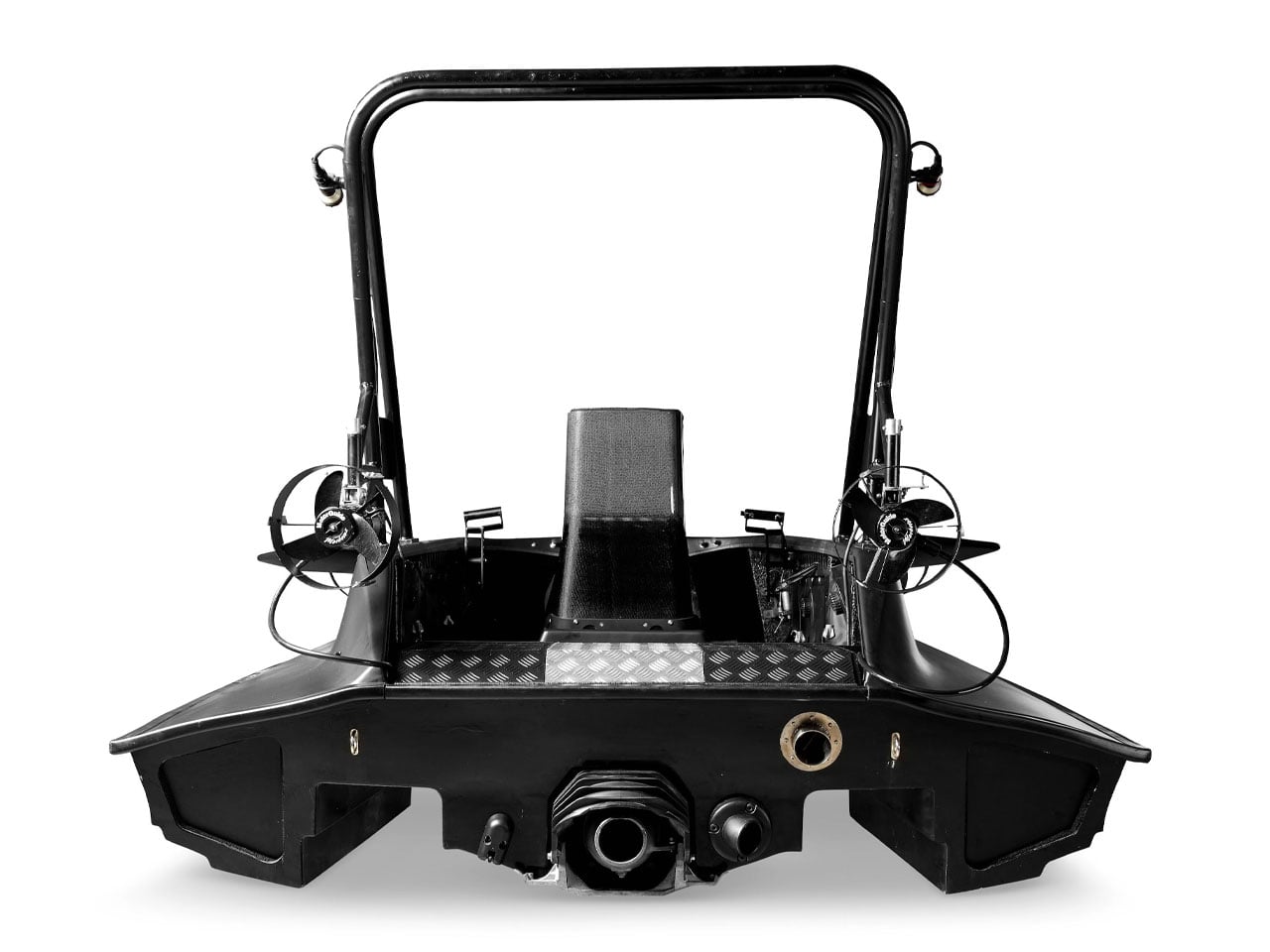
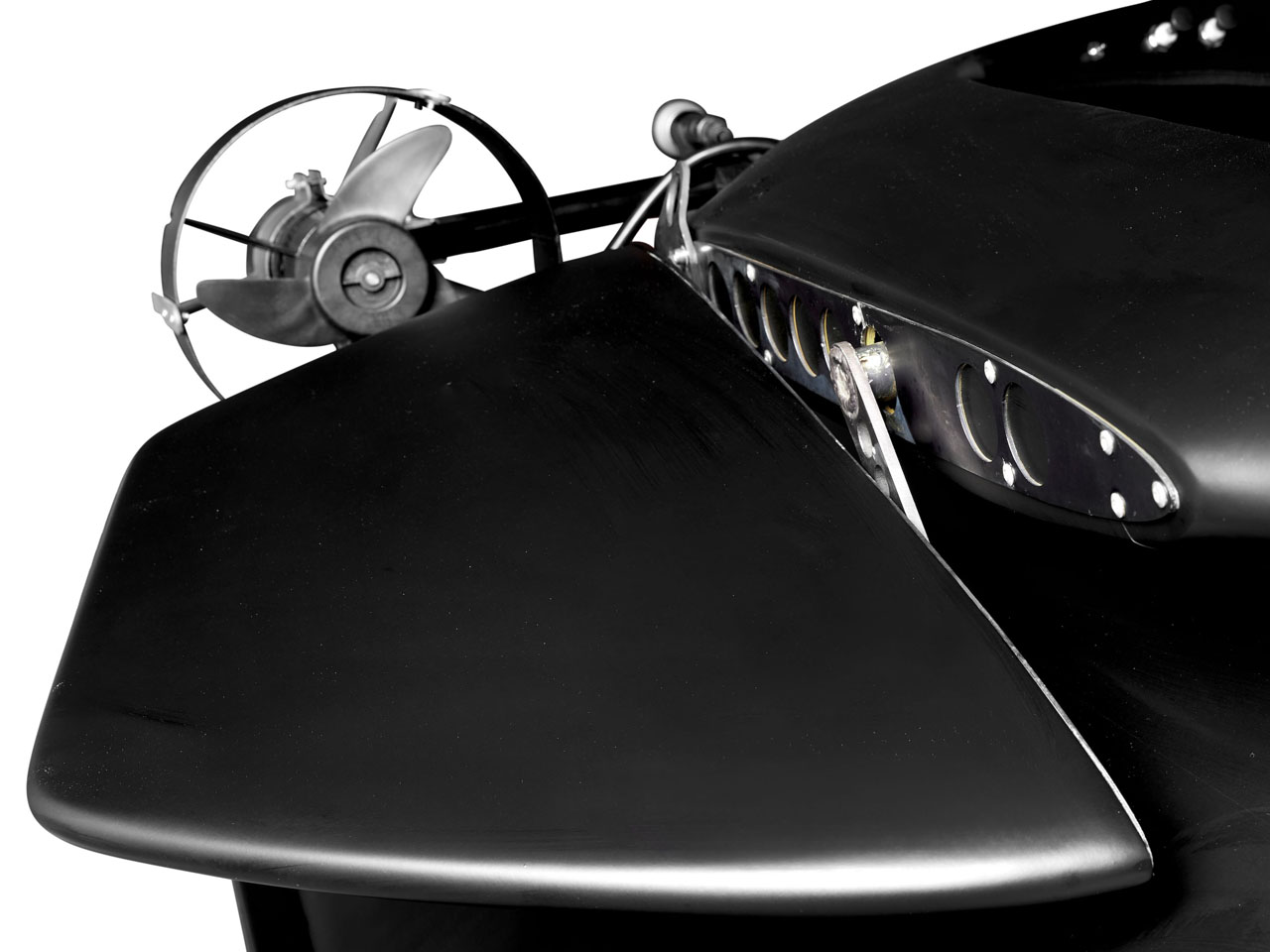
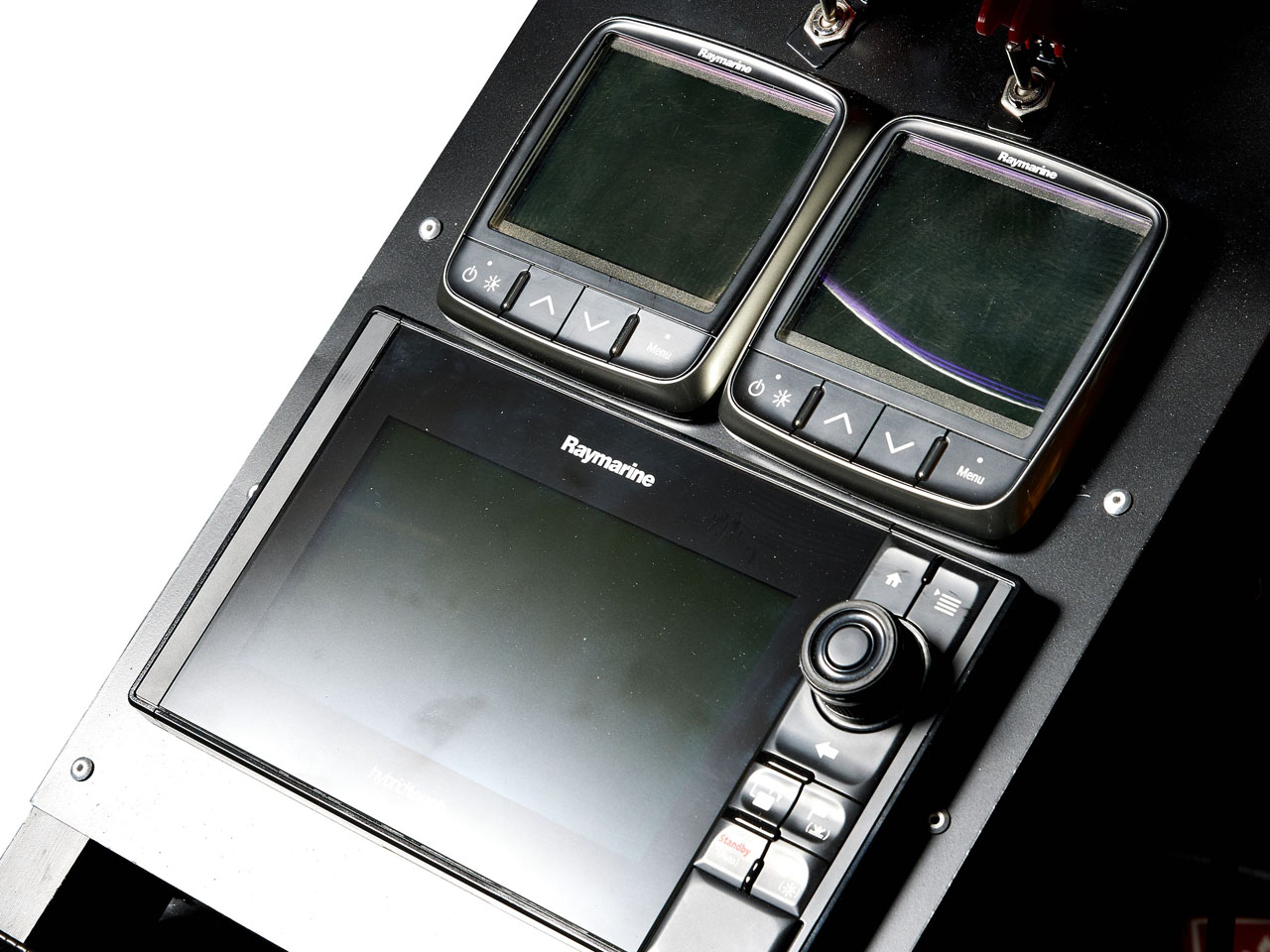
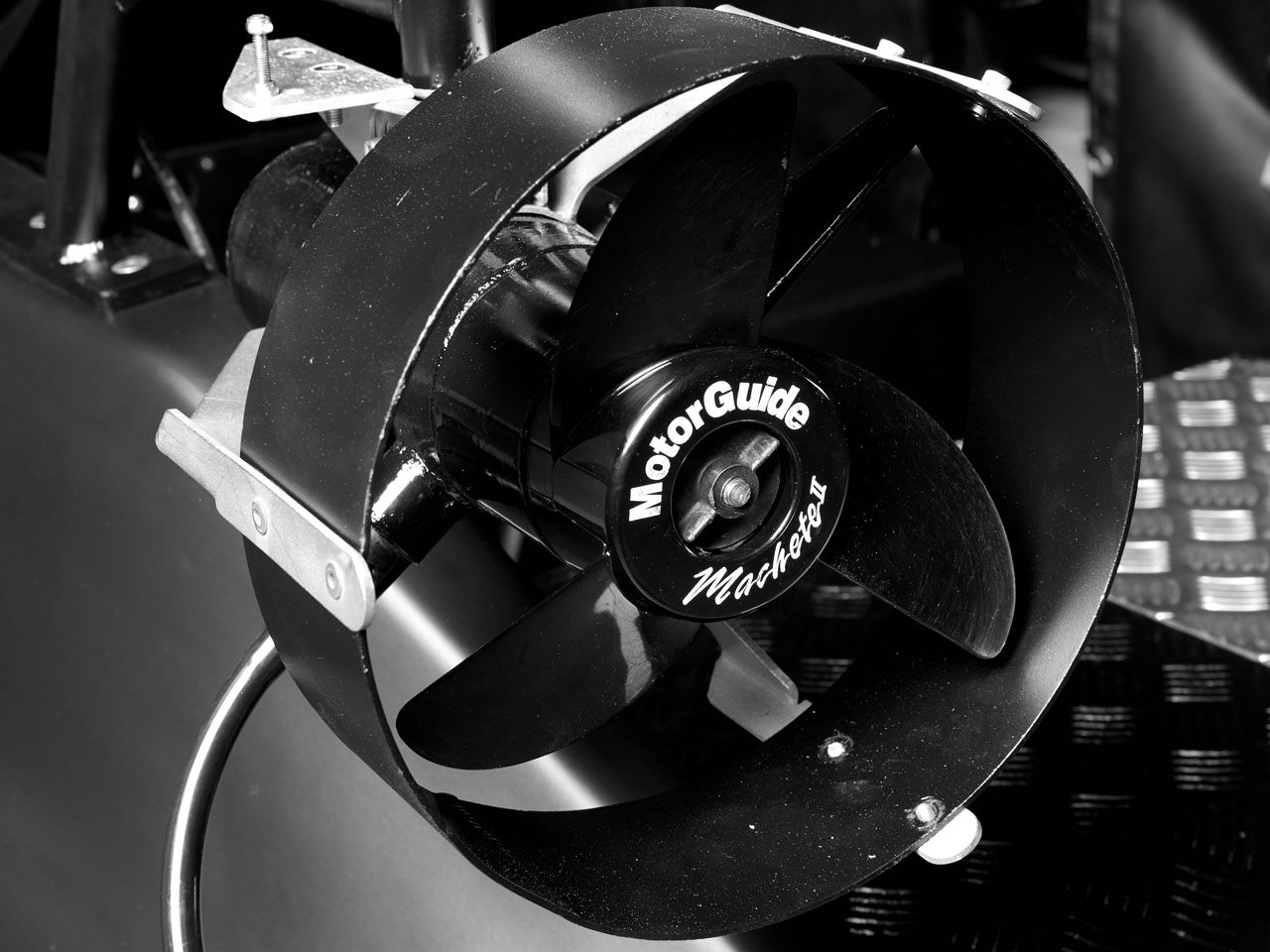
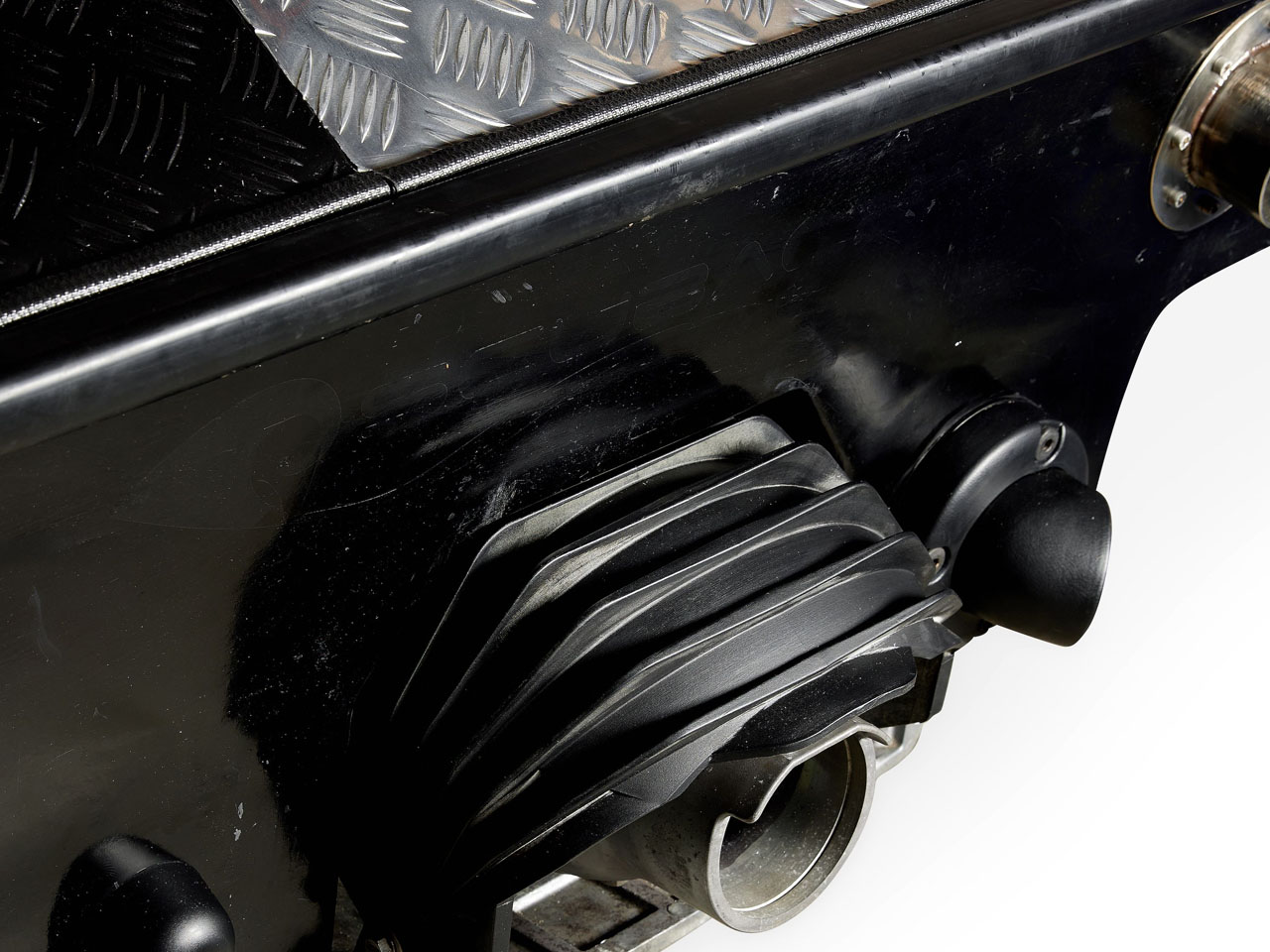
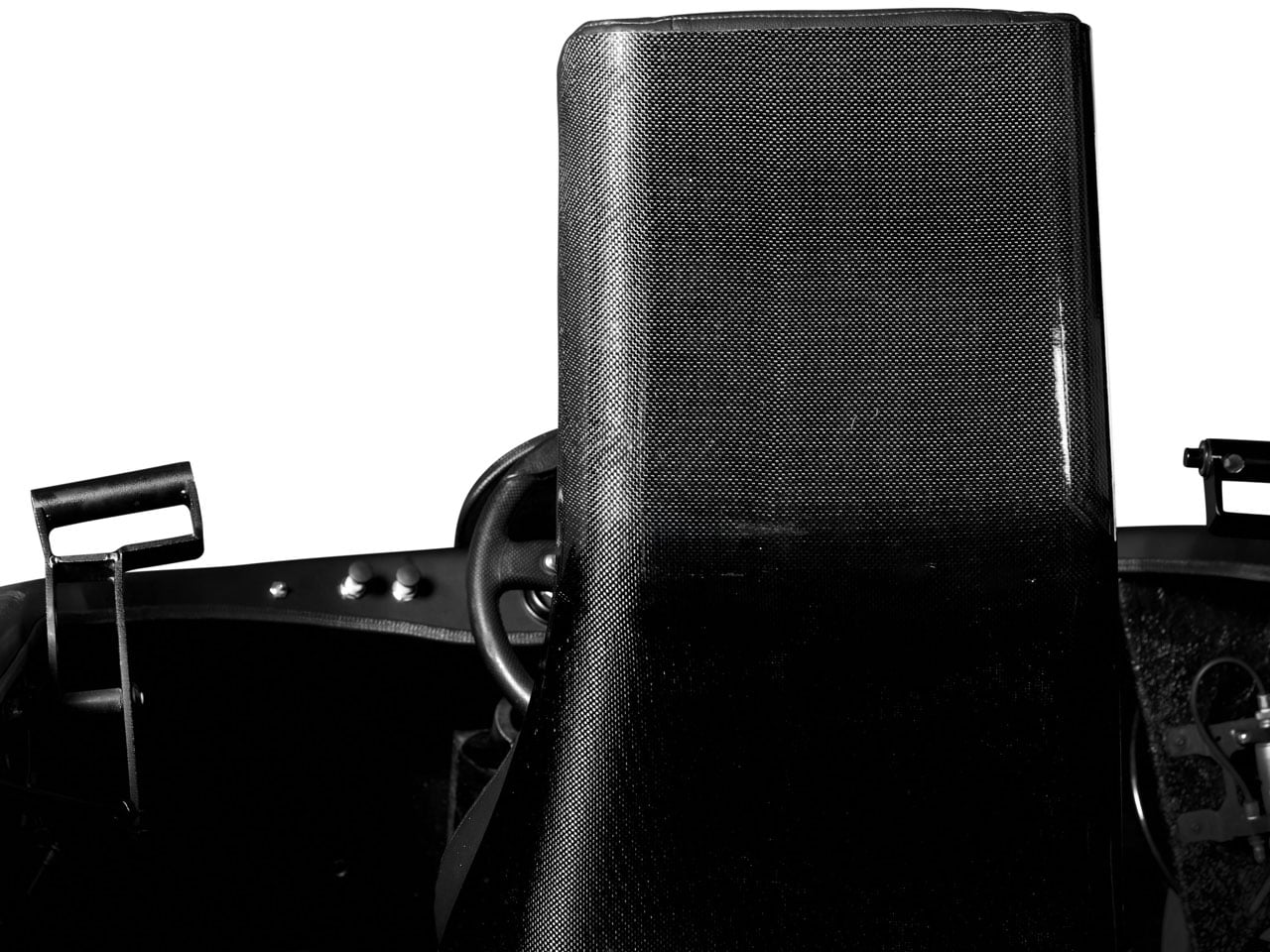
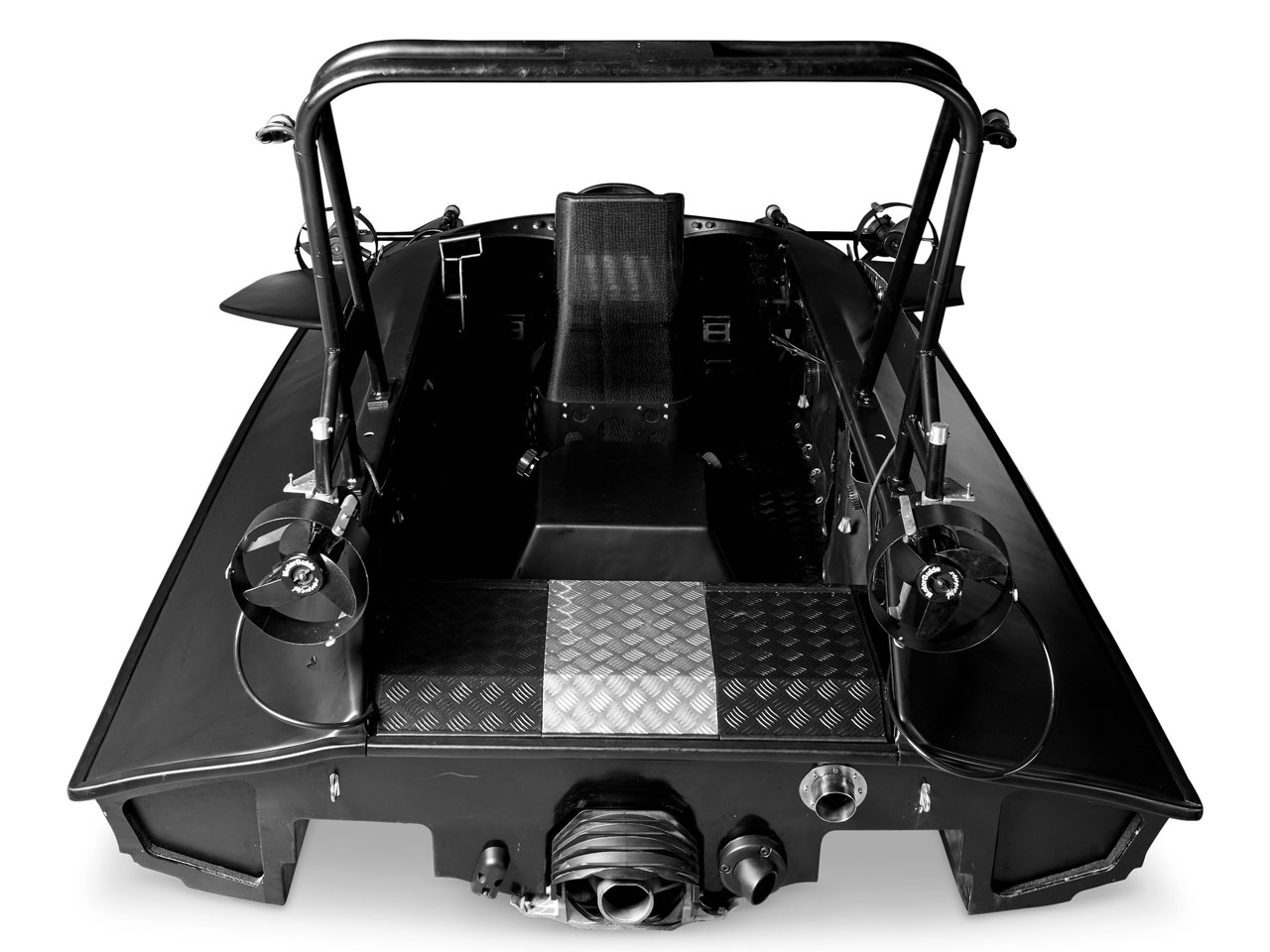
On the surface, the SC3 behaves much like a high-performance jet boat. It is powered by a Kawasaki 1,498cc inline four-cylinder engine connected to a jet-drive propulsion system, allowing it to skim across the water at impressive speeds. The real transformation begins once the craft enters deeper waters. With the underwater mode activated, electrically powered thrusters take over while hydrodynamic control surfaces guide the vessel beneath the surface at speeds of around three knots.

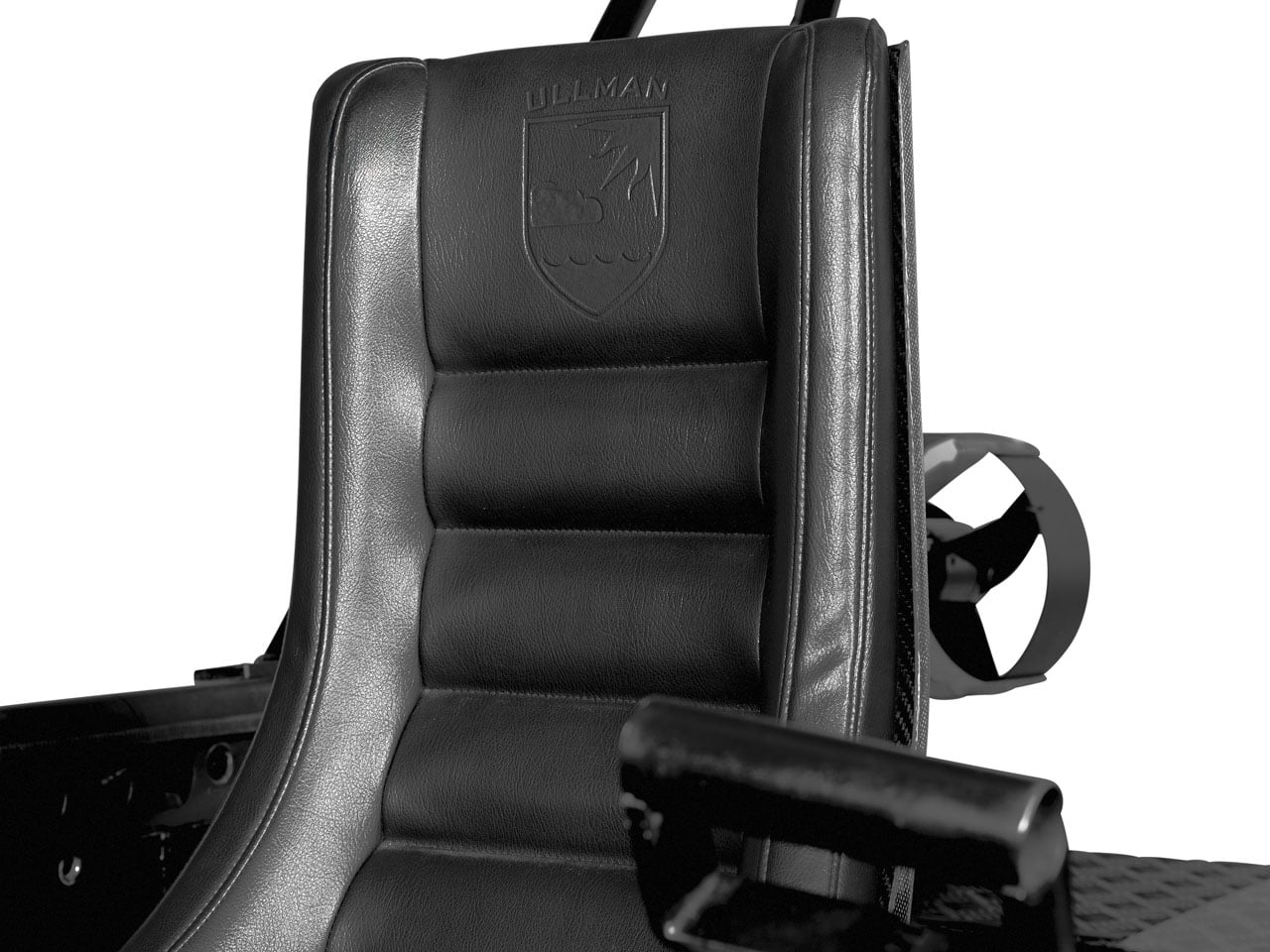
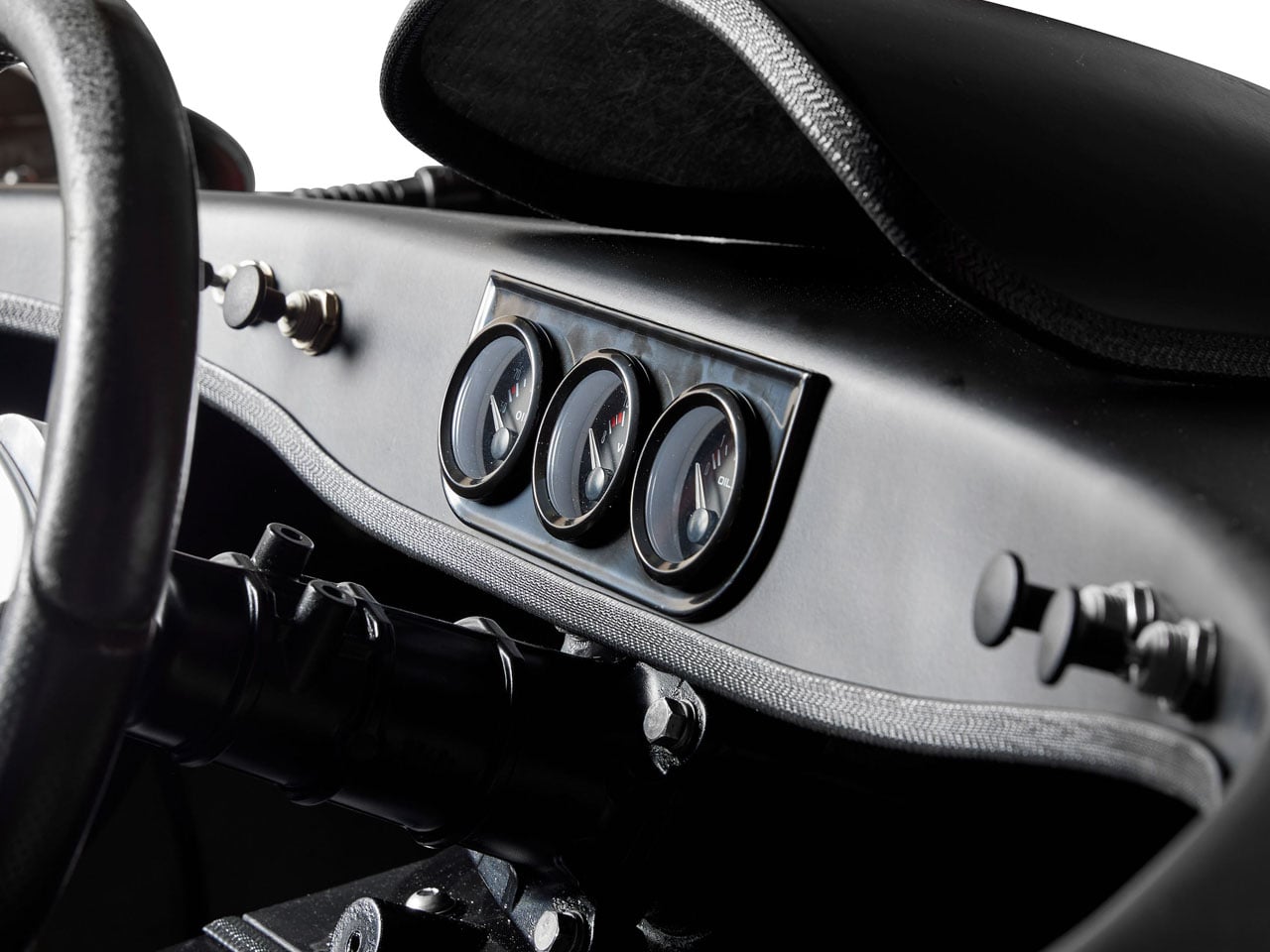
Unlike traditional submarines, however, the SC3 does not feature a sealed or pressurized cabin. Occupants are exposed directly to the surrounding water and must wear full diving gear before submersion. This open-water diving approach significantly reduces complexity and weight while creating an experience closer to underwater flight than conventional submarine travel. The setup accommodates three people, including the driver and two passengers, all seated in exposed racing-style seats integrated into the craft’s lightweight body.

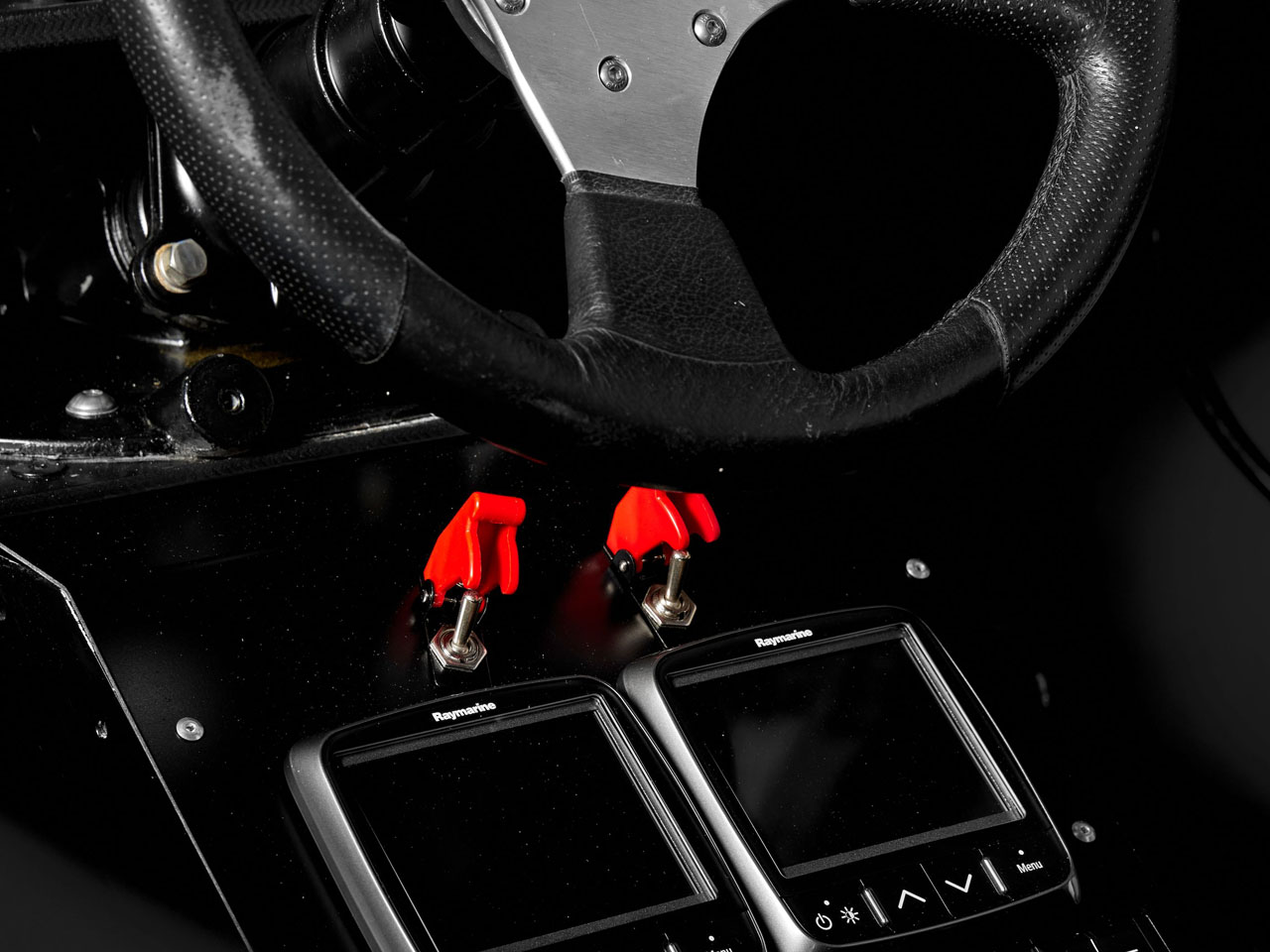
Visually, the SC3 still looks every bit like a futuristic Bond vehicle. The original composite plastic bodywork remains intact, paired with carbon-fiber construction elements and upholstered leather racing seats that reinforce its cinematic personality. Its aggressive low-slung silhouette, combined with stealth-inspired matte-black paintwork, gives it an appearance that still feels ahead of its time more than a decade after it was built.

Vehicles attempting to combine marine and underwater transportation are exceptionally rare because of the engineering compromises involved. The SC3 stands out precisely because it became a fully operational prototype rather than a concept sketch or film mock-up. That achievement alone makes it one of the most unusual experimental watercraft ever created and an undeniably fascinating piece of Bond-related automotive history.

The post James Bond-inspired Scubacraft SC3 turns your underwater adventure fantasy into reality first appeared on Yanko Design.

5 Best Automotive Designs From May 2026 That Actually Solved Something

Automotive design in May 2026 is being shaped less by motor show stages and more by individual designers working outside traditional studio systems. The most compelling concepts this month didn’t arrive with manufacturer press releases. They arrived with a point of view, a specific problem to solve, or a visual language worth paying close attention to. That independence is producing some of the most focused design thinking the industry has seen in years.

The five designs below span endurance racing prototypes, road hypercars, a reimagined icon, a utility e-bike, and a resurrected nameplate. What connects them isn’t a shared aesthetic; it’s intentionality. Each one either solves something real or pushes a visual language somewhere it hasn’t traveled before. These aren’t mood board exercises. They’re the kind of design thinking that eventually turns into the vehicles you actually want to own.

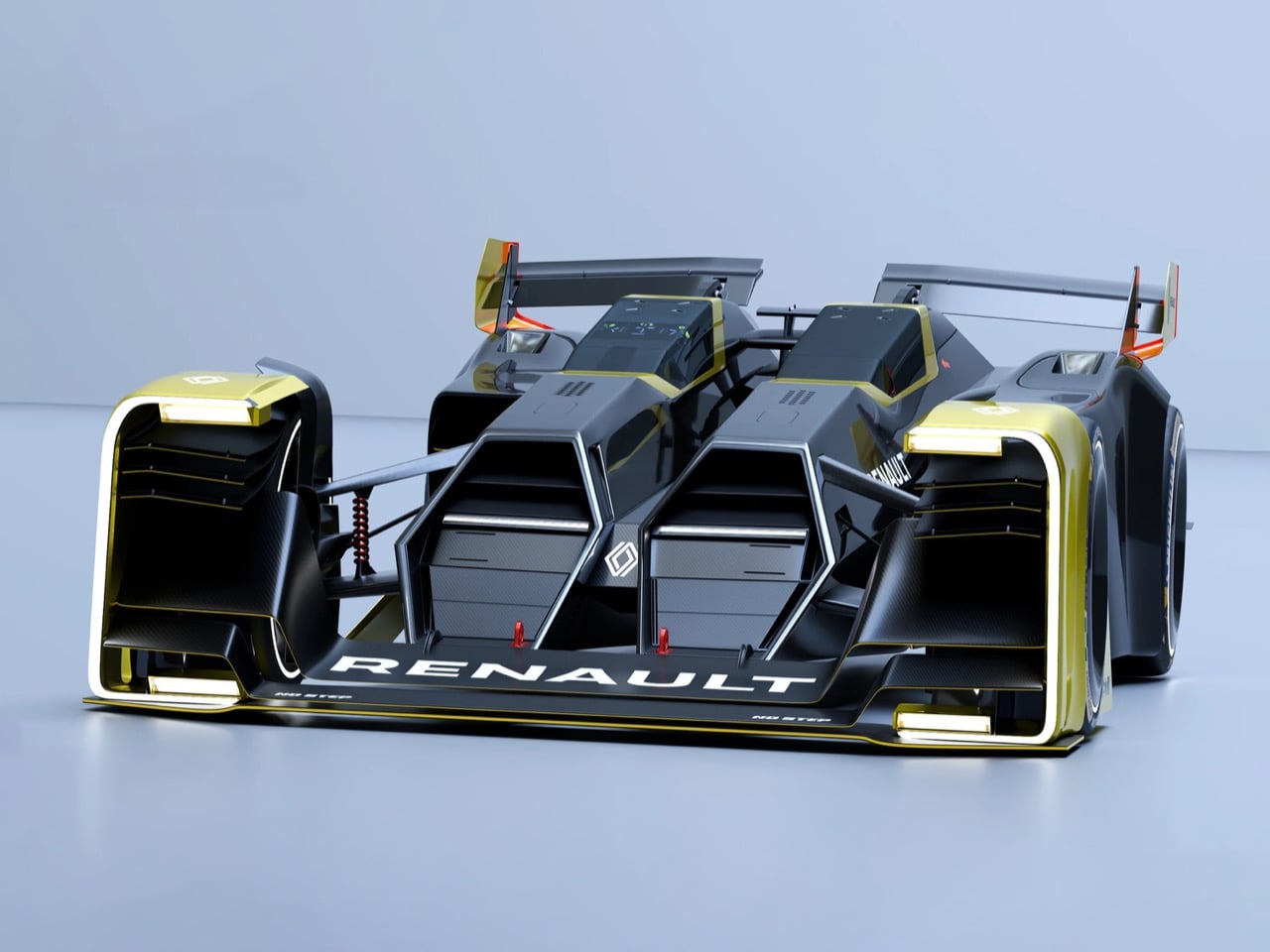
1. Renault Double Barrel Le Mans Hypercar Concept
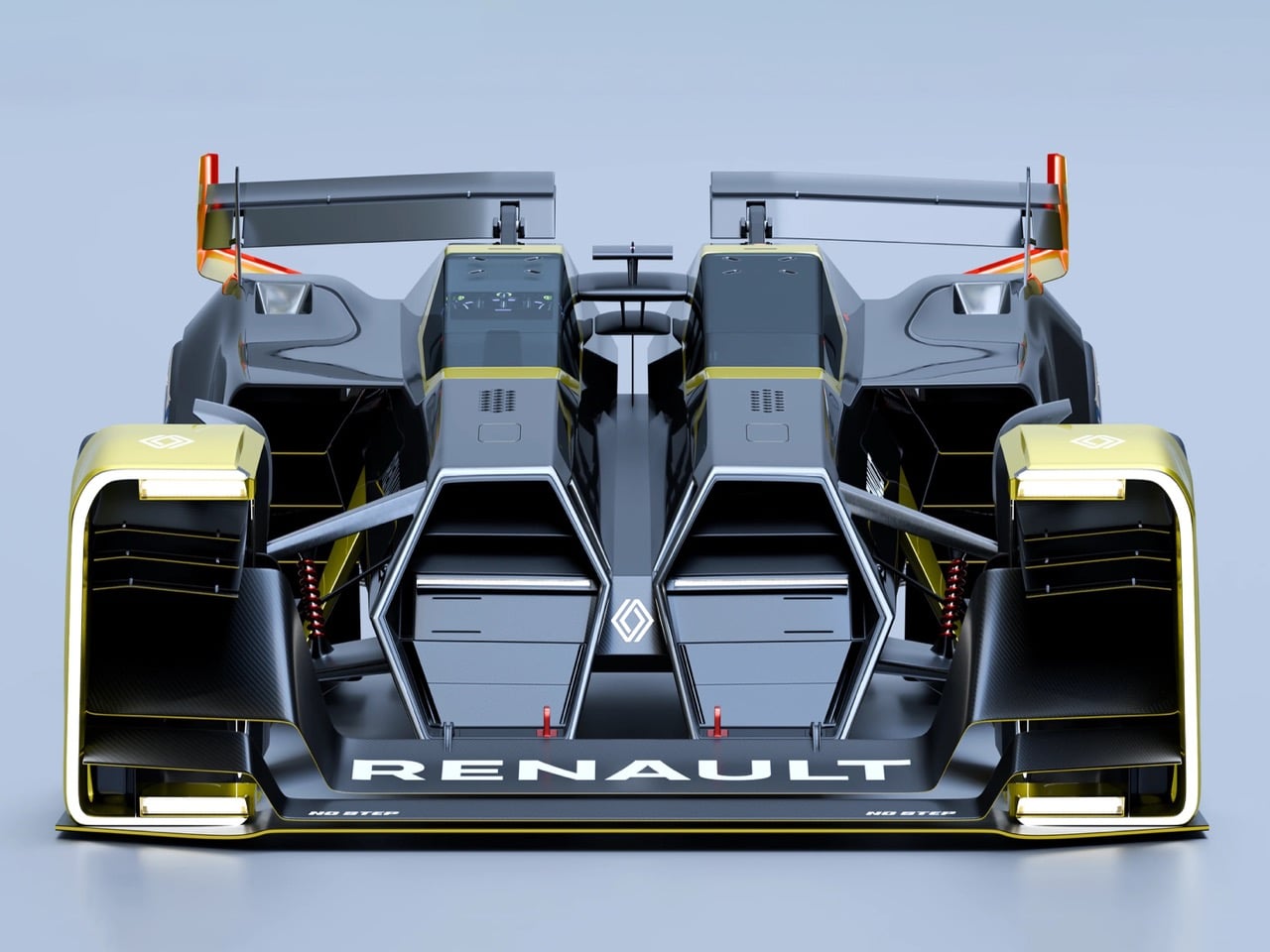
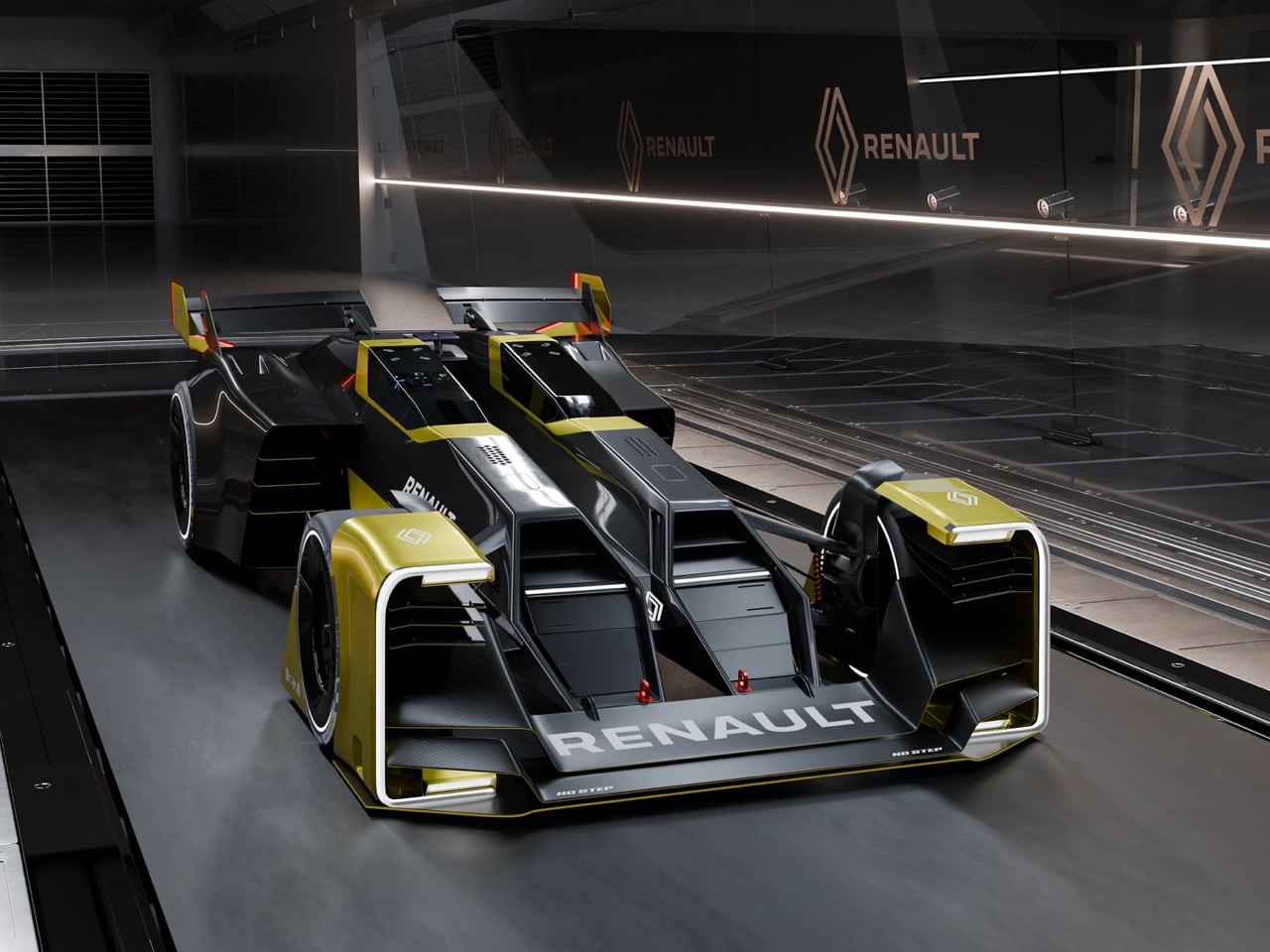
The Double Barrel arrives with a premise so clean it makes most motorsport concepts look timid. Designer Kim reached back to the 1955 Nardi Giannini ND750 Bisiluro, an Italian streamliner that split its driver and engine across two separate fuselages connected by a central spine, and repurposed that architecture entirely. Where the Bisiluro used twin bodies for straight-line speed, the Double Barrel uses them to solve endurance racing’s most persistent safety problem: the pit stop. Two independent pods, one for the driver and one for the hydrogen powertrain, each replaceable in ten seconds.

The engineering logic is tight. The hydrogen module integrates the fuel cell stack, electric motors, power electronics, and thermal management into a single cartridge that loads into the left fuselage through a shotgun-inspired breech mechanism. The driver pod on the right contains the safety cell, steering column, and pedal box as a self-contained unit. A central carbon monocoque spine handles both structural loads and aerodynamic surfaces. For anyone who follows endurance racing and its history of pit lane accidents, this is the concept that makes Le Mans’ darker chapters feel like a problem finally approaching a structural answer.

What we like:

  • The twin-fuselage architecture solves a real safety problem through engineering rather than regulation, making it one of the few motorsport concepts this year that’s genuinely consequential in its thinking rather than purely formal
  • The hydrogen powertrain module treating propulsion as a replaceable cartridge is a significant conceptual shift, with the potential to bring refueling closer to a ten-second operation under pit lane conditions

What we dislike:

  • Splitting mass across two fuselages introduces aerodynamic and structural complexity that existing endurance racing regulations weren’t written to accommodate, which means the concept would require a regulatory framework to be built around it
  • The specialized pit equipment required for module swaps places significant infrastructure demands on teams, essentially asking the entire paddock to standardize around a system that currently exists only as sketches

2. Aston Martin Veil Concept
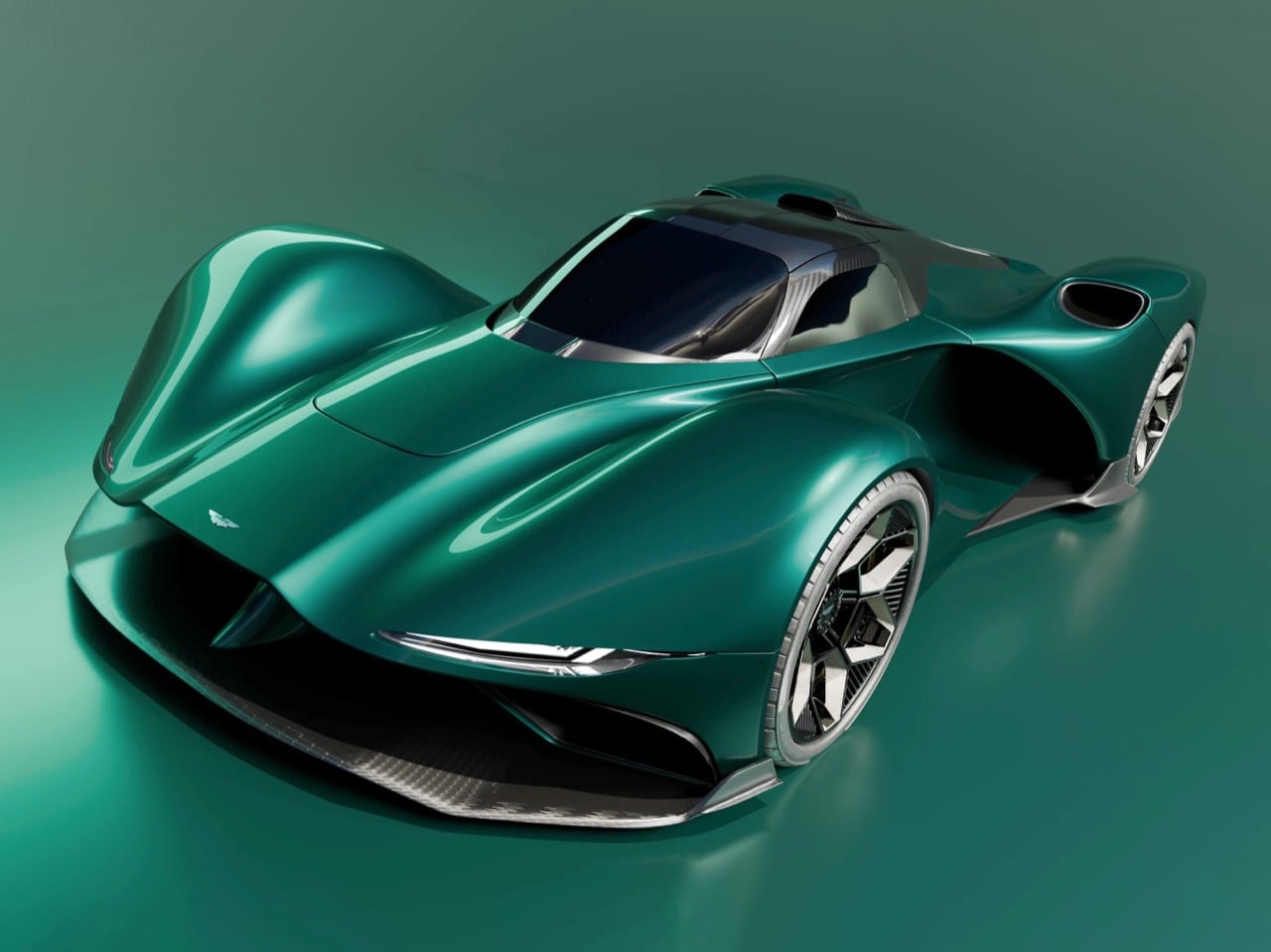
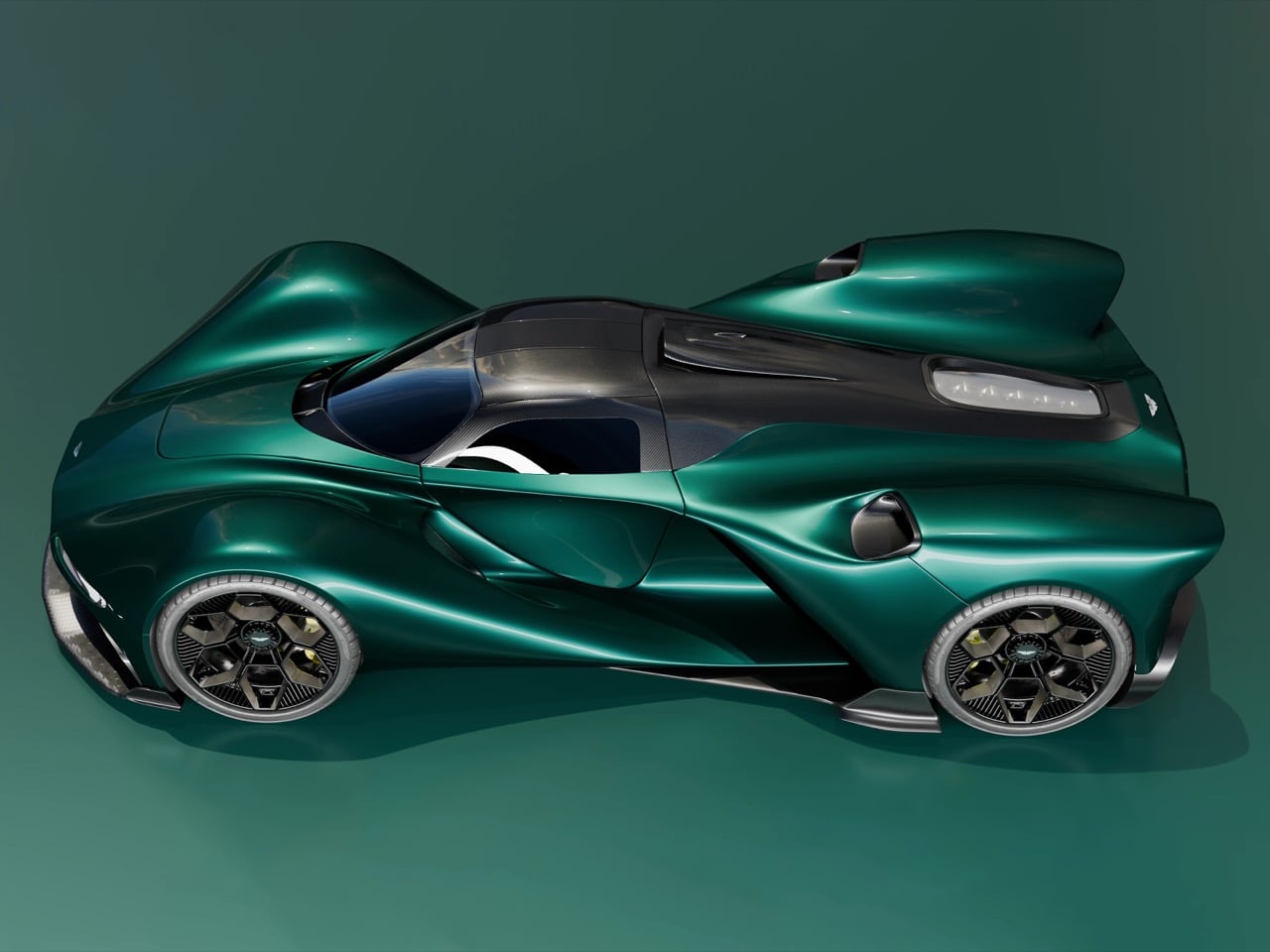
Hyunwoo Kim’s Veil asks a question Aston Martin’s own studio probably can’t ask while managing current production timelines: what happens to the brand’s visual language when you trade angular carbon fiber aggression for something closer to organic sculpture? The result is a hypercar where every surface transition is so smooth you’d need calipers to find the break points. The teal finish, a near-match for Aston’s current F1 team livery, doesn’t just reference the brand’s motorsport presence; it makes every curve feel like light bending around water.

Kim developed the concept through physical paper mock-ups before committing anything to CAD, and the proportions show it. From above, the Veil reads like a manta ray, with massive rear fender volumes extending from a central spine that bisects the cockpit. The process produced surface relationships that feel discovered rather than designed. The concept was subsequently photographed alongside Aston Martin F1 team members, suggesting Gaydon took notice. For design followers, this is the kind of work that maps where a brand’s visual language might be heading in a decade.

What we like:

  • The paper mock-up development process is rare in an era of pure CAD workflows, and it produced proportions and surface relationships that feel genuinely spatial in a way that screen-first design rarely achieves
  • The teal livery reference creates a coherent visual link between Aston’s motorsport identity and its road car future without resorting to obvious badging or explicit F1 call-outs

What we dislike:

  • The ultra-smooth surface language, while visually striking, raises real questions around cooling and downforce that a functional prototype would need to resolve before the form could survive contact with actual track conditions
  • The concept exists as a personal exploration without confirmed manufacturer involvement, which limits how directly it can influence what Gaydon’s advanced studio is working on right now

3. McLaren F1 Concept

Kevin Andersson’s reimagining of the McLaren F1 operates in the most demanding space in automotive design: the icon reboot. Gordon Murray’s original was shaped by specific constraints, 1990s carbon fiber manufacturing limits, and aerodynamic understanding that three decades of Formula 1 development have since transformed completely. Andersson’s concept strips those constraints away while keeping the design philosophy intact. The long hood, the cab-forward greenhouse, the rear haunches that read as muscle rather than theater. Everything that made the original feel inevitable still does, translated into a contemporary surface language.

The renders, produced in Blender and presented in both glossy white and dark gray, show a car McLaren’s design studio could plausibly release today if the brand decided to revisit its analog past. The naturally aspirated engine placement stays legible in the hood proportions, and the whole form reads as a single cohesive object rather than an assembly of surfaces. For anyone who grew up wanting an F1 and couldn’t get close to owning one, this is the version that proves the original’s proportions remain the most elegant answer to the question of what a driver’s car should look like.

What we like:

  • The long hood and cab-forward stance preserve the original F1’s spatial logic in a completely contemporary surface language, showing that Murray’s proportional decisions were correct beyond their era
  • The Blender workflow produces photoreal renders that communicate design intent with enough clarity to evaluate the concept seriously, rather than treating it as a sketch exercise

What we dislike:

  • As a personal study completed without McLaren’s involvement, there is no direct pathway for the concept to influence actual product direction at Woking, which limits its reach beyond the design community
  • The dark gray render obscures surface detail in areas where the concept’s nuance lives, making certain transitions harder to read and the full quality of the work more difficult to assess

4. Segway Muxi E-Bike

First introduced at CES 2026, the Muxi is Segway’s first short-tail utility e-bike, and it makes its case through restraint rather than specification sheets. It carries a payload of up to 418 pounds and accommodates optional accessories, including a child kit, but it doesn’t look like a cargo barge doing it. The step-through frame keeps access easy, integrated frame storage maintains a clean silhouette, and the whole package reads as a practical daily tool rather than a conspicuous statement about urban mobility values.

The 750W rear hub motor produces 80 Nm of torque, paired with a 48V, 716Wh battery delivering up to 80 miles of range per charge. Riders can toggle between Class 1 and Class 2 modes depending on terrain and local regulations. For urban commuters who need to carry real loads without a car, the Muxi offers something genuinely useful: a vehicle that handles groceries, gear, or a child passenger without requiring a license or a parking permit. The design keeps that utility from reading as a compromise, which is a harder problem to solve than it looks.

What we like:

  • The 80-mile range paired with 418-pound payload capacity makes the Muxi a credible car replacement for short-range urban logistics without the bulk or visual weight of traditional long-tail cargo bikes
  • The step-through frame and integrated storage keep the silhouette honest and uncluttered, which reflects thoughtful design decision-making rather than feature stacking

What we dislike:

  • The short-tail format, while visually leaner, does limit rear cargo platform length compared to long-tail alternatives, which matters for riders carrying larger or less stackable loads regularly
  • Class 1 and Class 2 mode flexibility is useful, but the cap on assisted speed that comes with staying below Class 3 territory will frustrate commuters who need to keep pace with faster urban traffic

5. Freelander Electric SUV
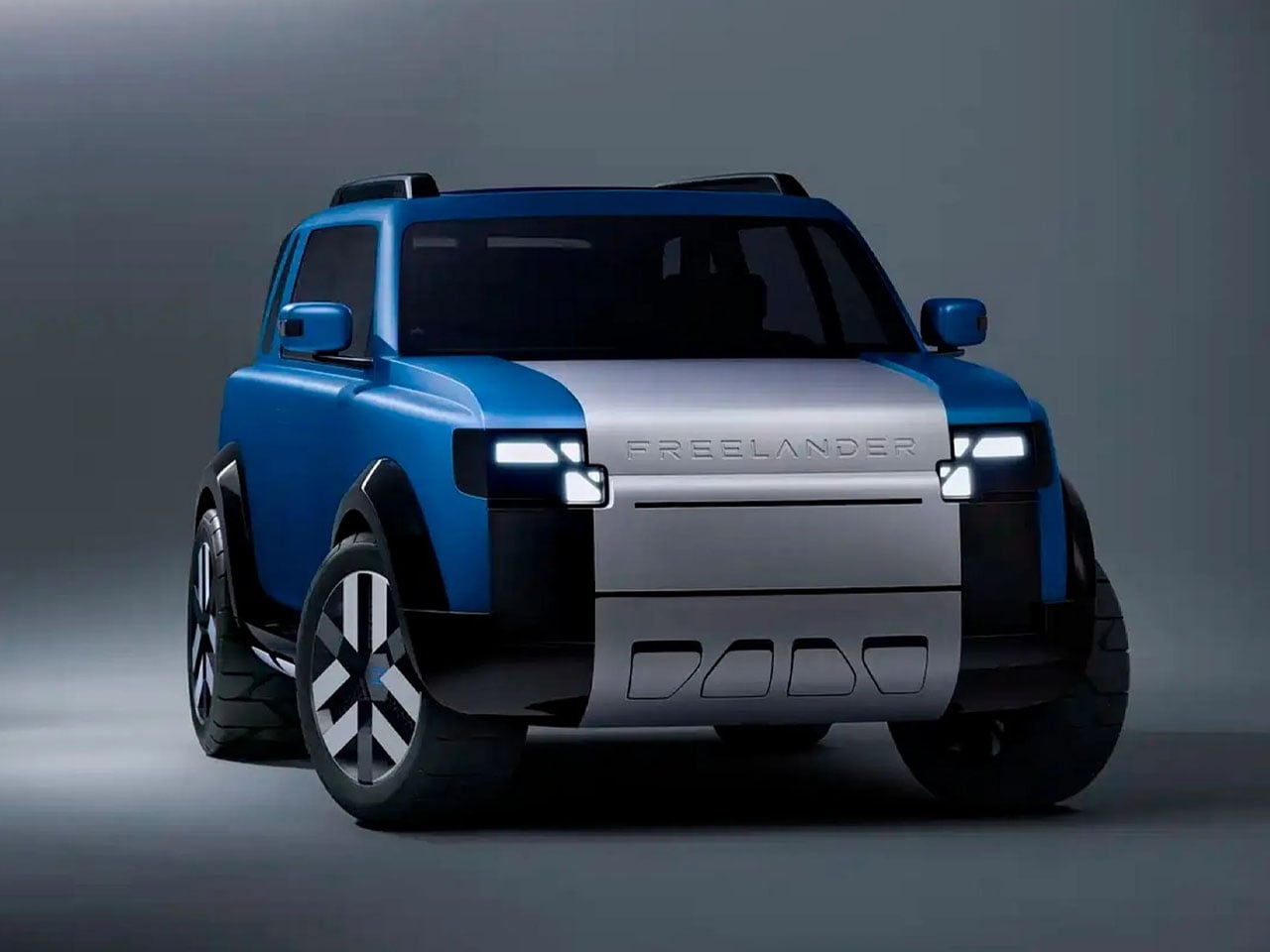
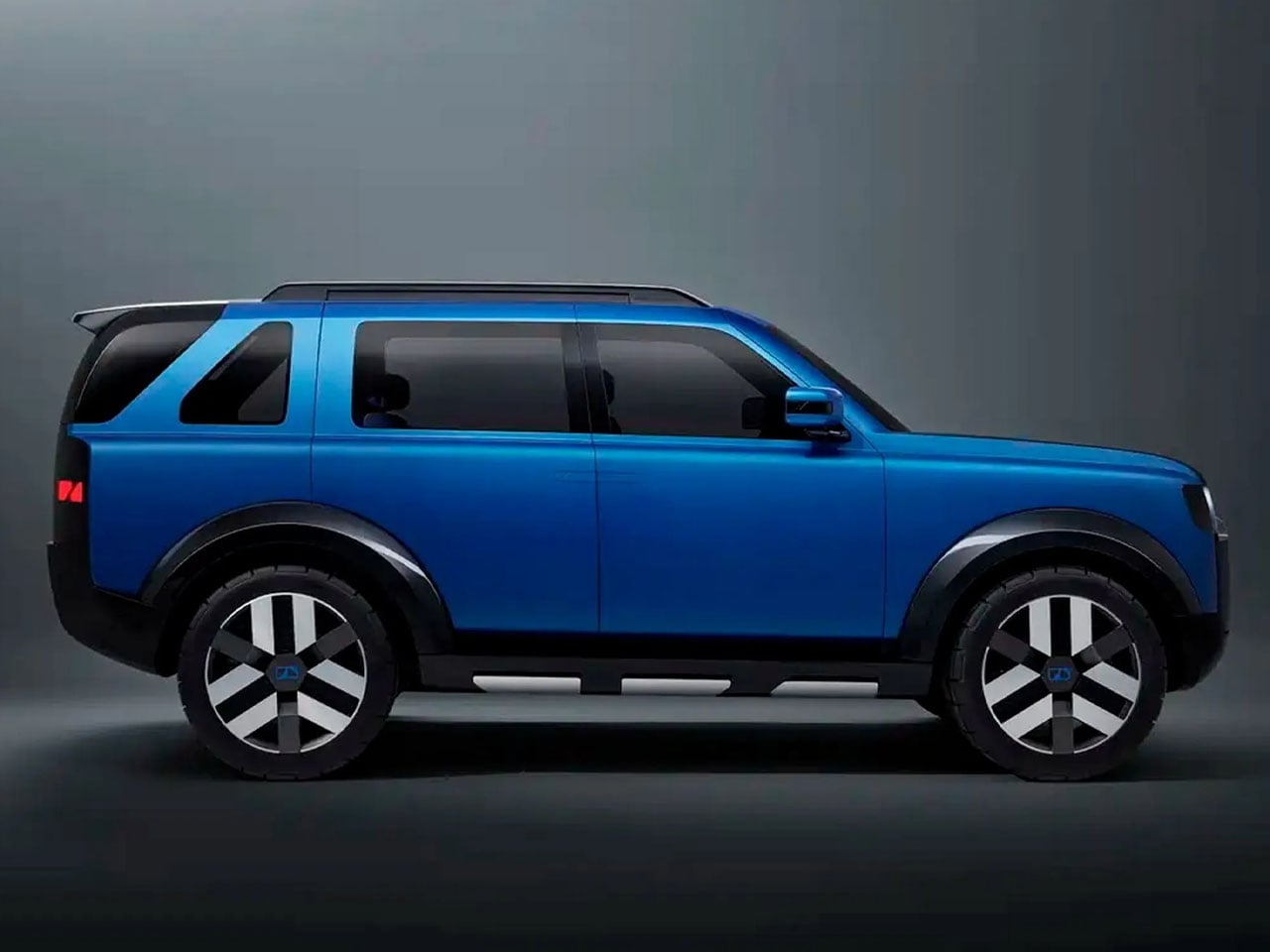
The Freelander nameplate’s return arrives as a JLR and Chery co-development, and the design treats its heritage with more precision than most revivals manage. The boxy silhouette, upright stance, and angled D-pillar all reference the original three-door Freelander from the late 1990s without tipping into pure nostalgia. The rugged proportions stay consistent with classic Land Rover SUV design, while modern lighting elements and a more contemporary design language prevent the whole thing from reading as a tribute act rather than a genuine successor with something new to offer.

The technical foundation centers on an 800-volt platform supporting fully electric, plug-in hybrid, and range-extended electric configurations across a planned lineup of six models. Production takes place at the Chery-Jaguar Land Rover joint-venture facility in Changshu, China, combining British design direction with Chinese EV platform technology. For buyers who want a compact, capable off-roader with genuine electrification credentials and a nameplate that carries weight, the new Freelander’s combination of design heritage and modern platform engineering gives it a strong opening argument before a single production car rolls out.

What we like:

  • The angled D-pillar and upright stance respect the original Freelander’s design DNA without reducing the new car to a retro exercise, striking a balance that most nameplate revivals fail to find
  • The 800-volt platform supporting multiple powertrain configurations gives buyers real flexibility across six planned model variants rather than locking the lineup into a single electrification strategy

What we dislike:

  • The Chery co-development structure raises legitimate questions about how much of JLR’s build quality reputation will translate across a manufacturing partnership, regardless of how strong the design direction is
  • Six models across a freshly relaunched lineup is an ambitious target that risks diluting design consistency before the Freelander brand identity has had time to re-establish itself in a competitive EV market

The Best Design Always Starts With a Problem Worth Solving

What the strongest designs this month share is a willingness to treat constraints as creative material rather than obstacles. Whether that means engineering a Le Mans pit stop into a ten-second module swap, developing a hypercar form from physical paper before touching a computer, or bringing back a beloved nameplate through a cross-continental manufacturing partnership, the best work here didn’t arrive from playing safe.

Design is always a negotiation between ambition and reality. The concepts at the top of this list lean hardest into ambition, and the production-bound entries use real engineering constraints to sharpen rather than limit their vision. If these five designs reflect the direction automotive culture is moving, the next few years should produce some of the most considered vehicles the industry has attempted in a long time.

The post 5 Best Automotive Designs From May 2026 That Actually Solved Something first appeared on Yanko Design.


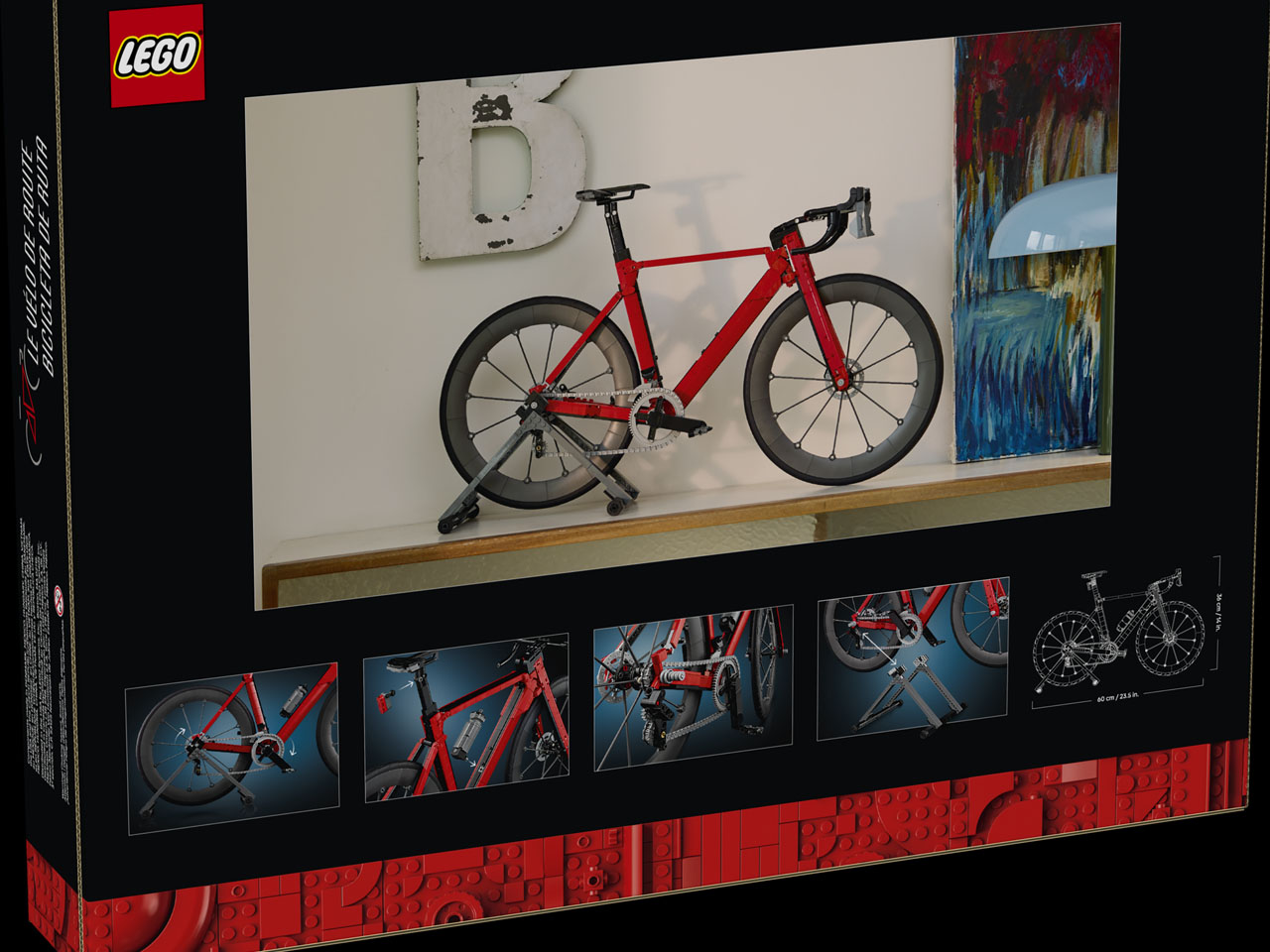
LEGO Icons Road Bike is an intricate 1,015-piece buildable set for grown-ups

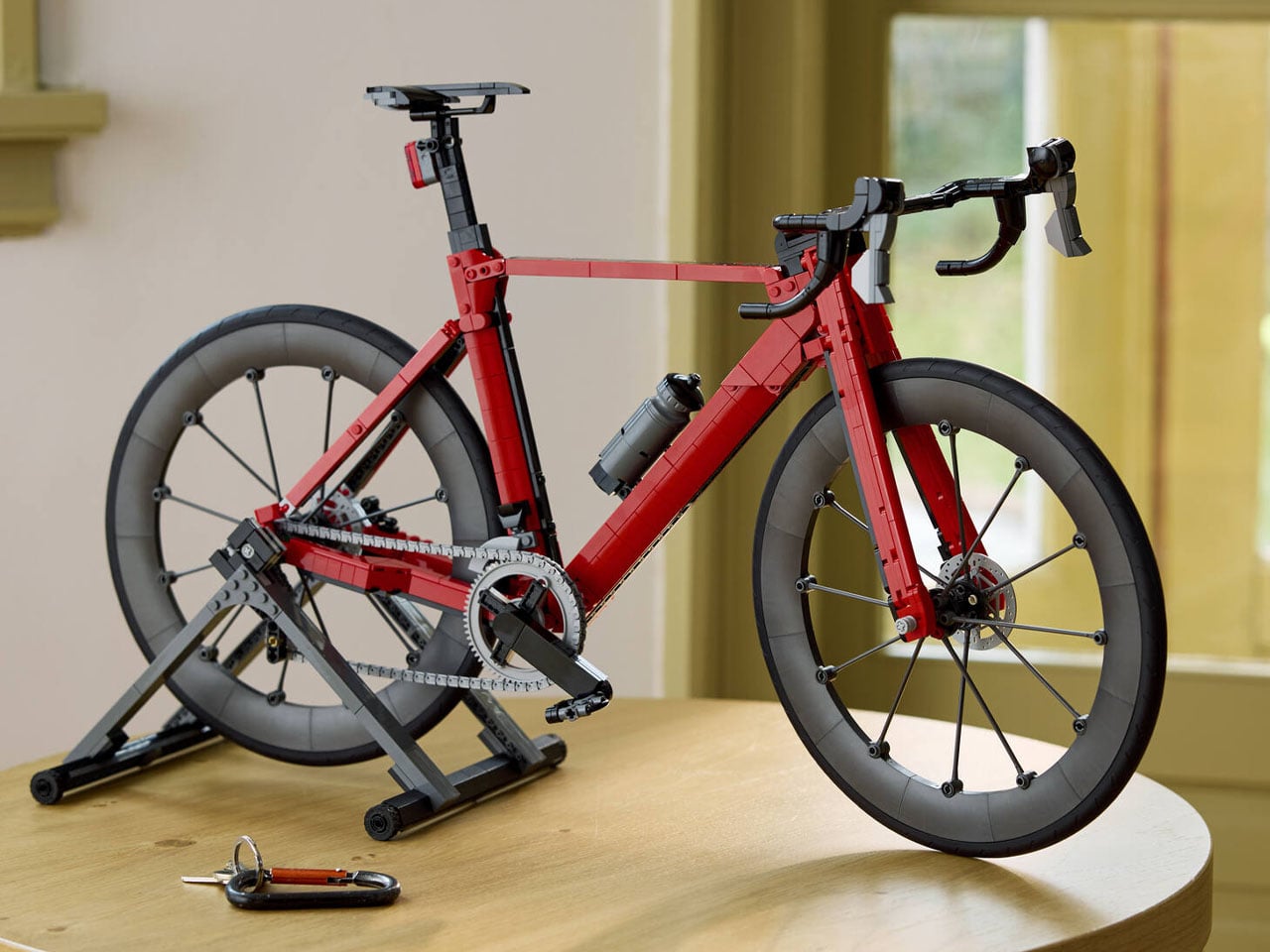
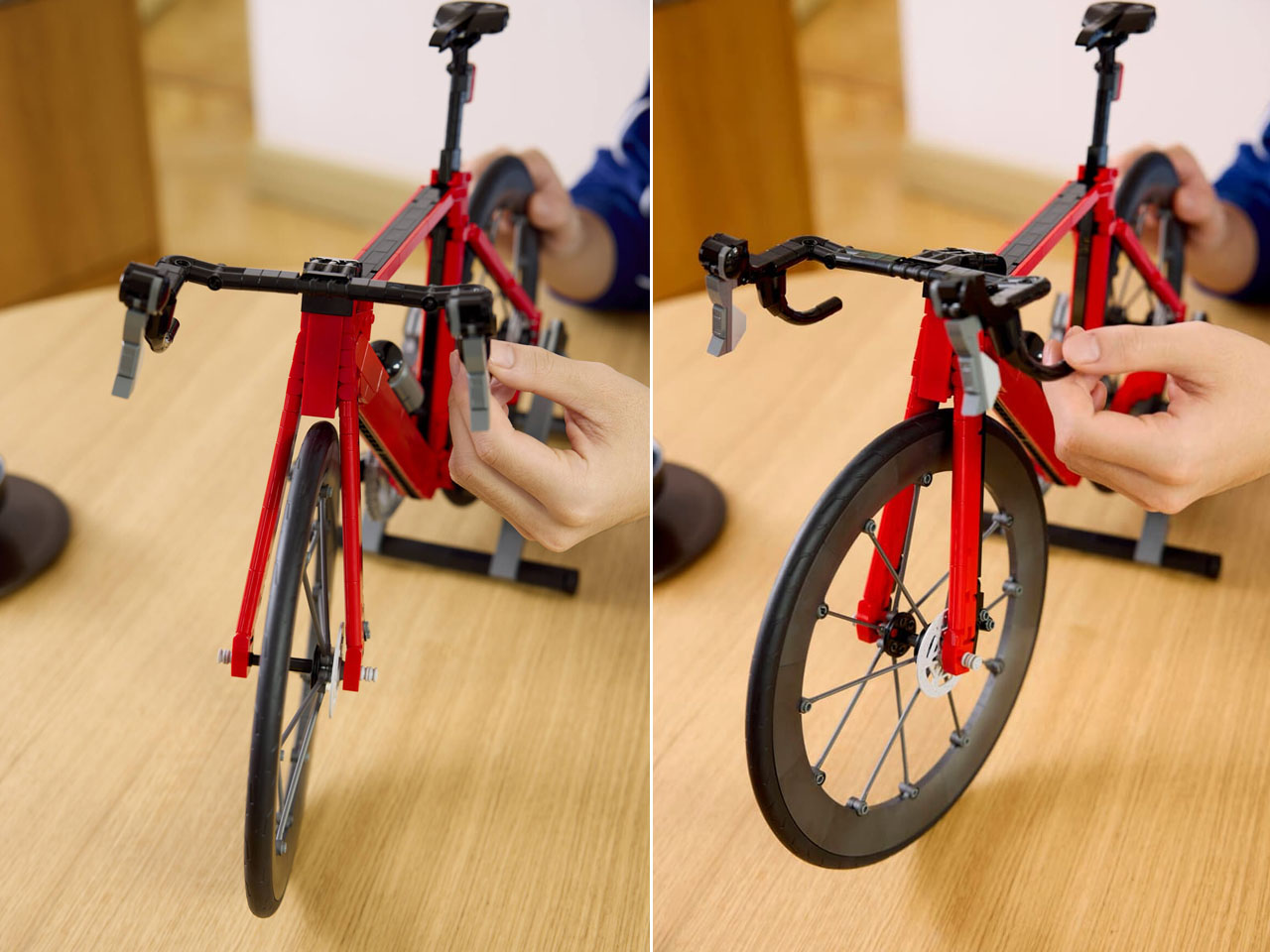
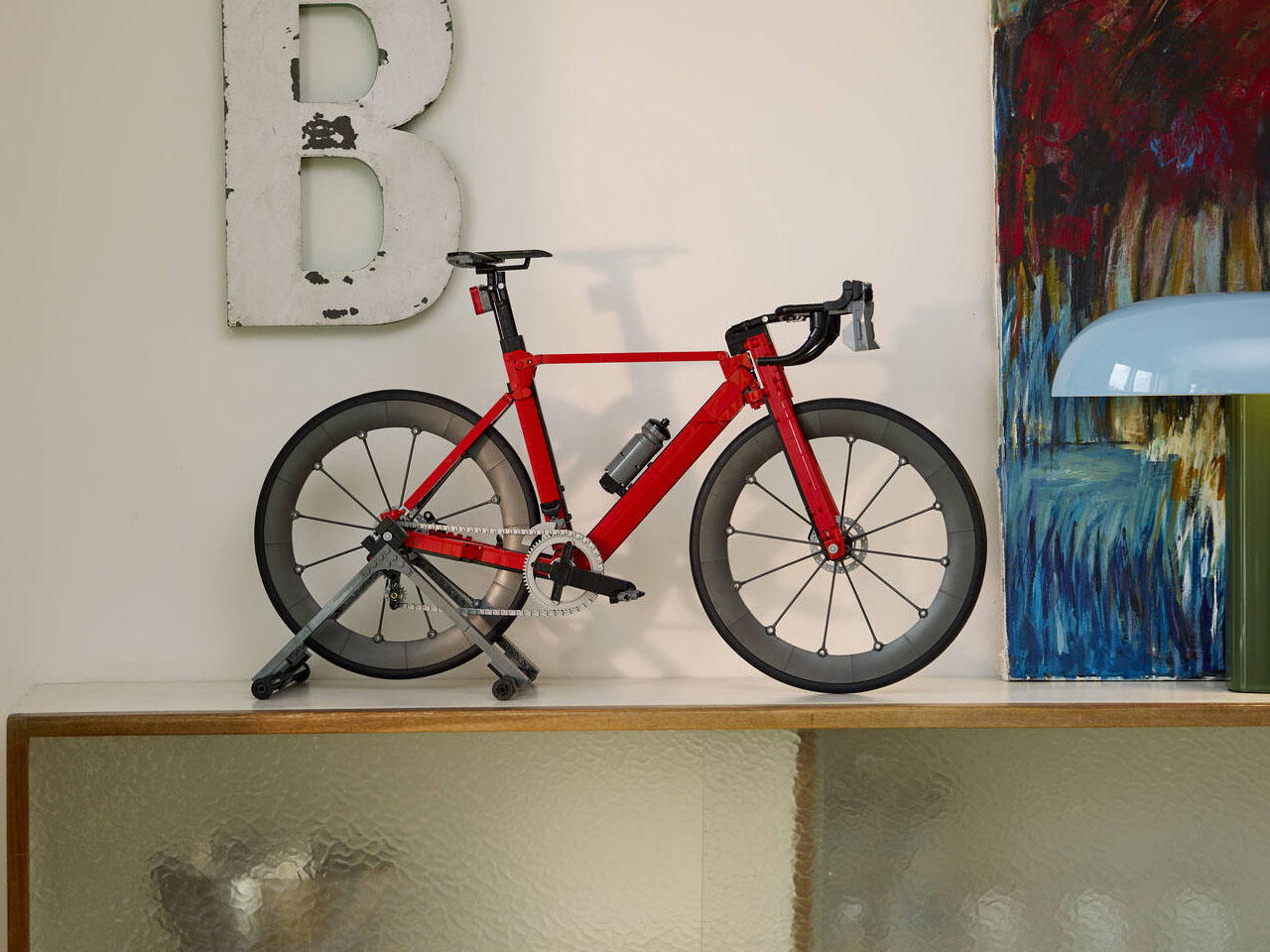
There’s something about the intricately scaled-down models of vehicles that takes me back to the nostalgic times. The memory of the miniature bicycle model that I used to play with as a kid flashed right in front of my eyes as soon as I laid my eyes on this latest LEGO release. The 1,015-piece set dubbed Road Bike is a more modern interpretation of the aero bicycles that we see these days.

Apparently, this is the first-ever road bike model in LEGO Group’s portfolio, and I’m glad they made it under the LEGO Icons moniker. No surprise, the set that was up on LEGO Ideas for years has now finally made it to the official lineup. According to the official press release, the bike is a “sports-inspired décor that celebrates the world of cycling.” Perhaps the perfect prop for Tour de France fans.

Designer: LEGO Group

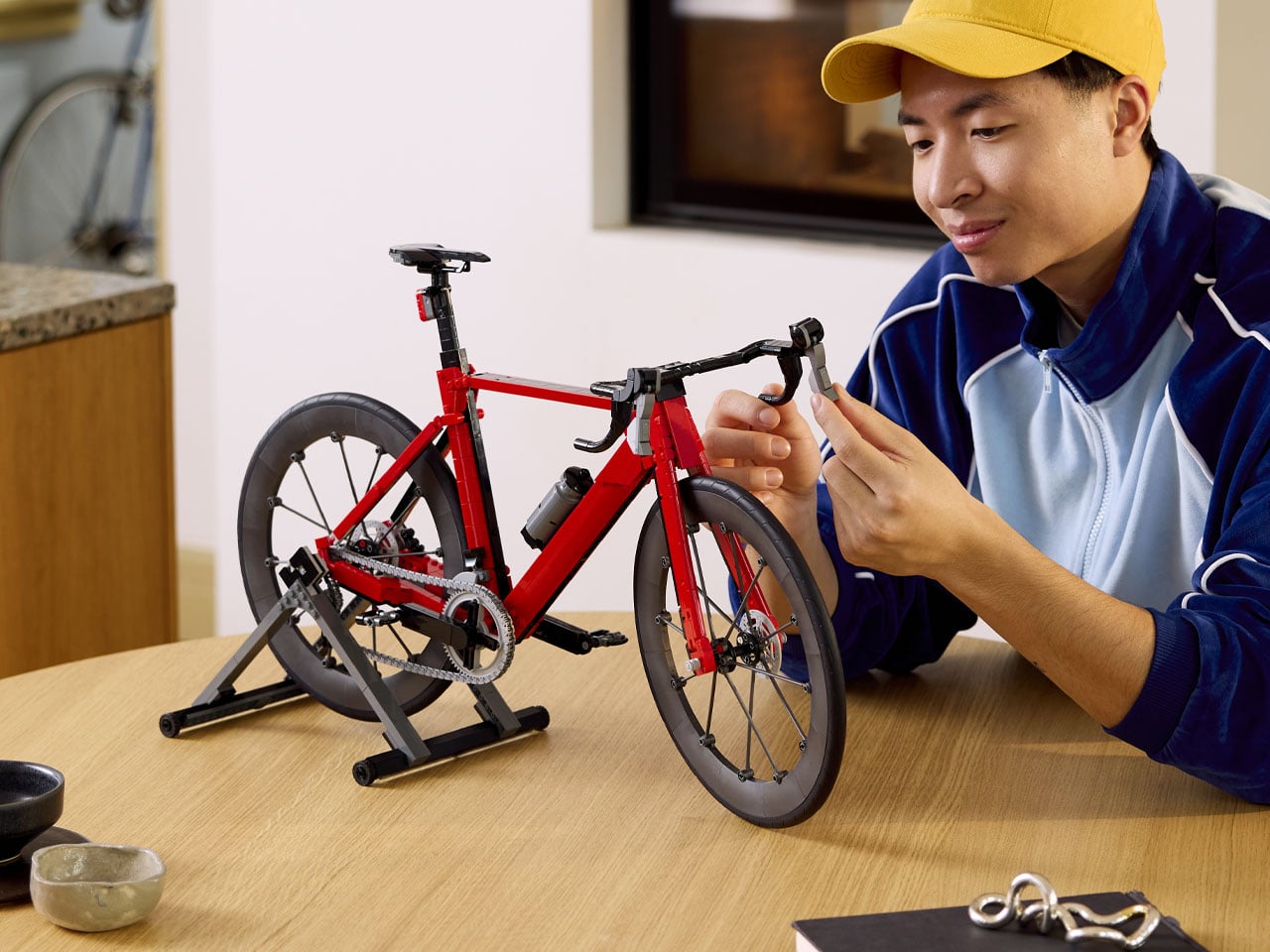
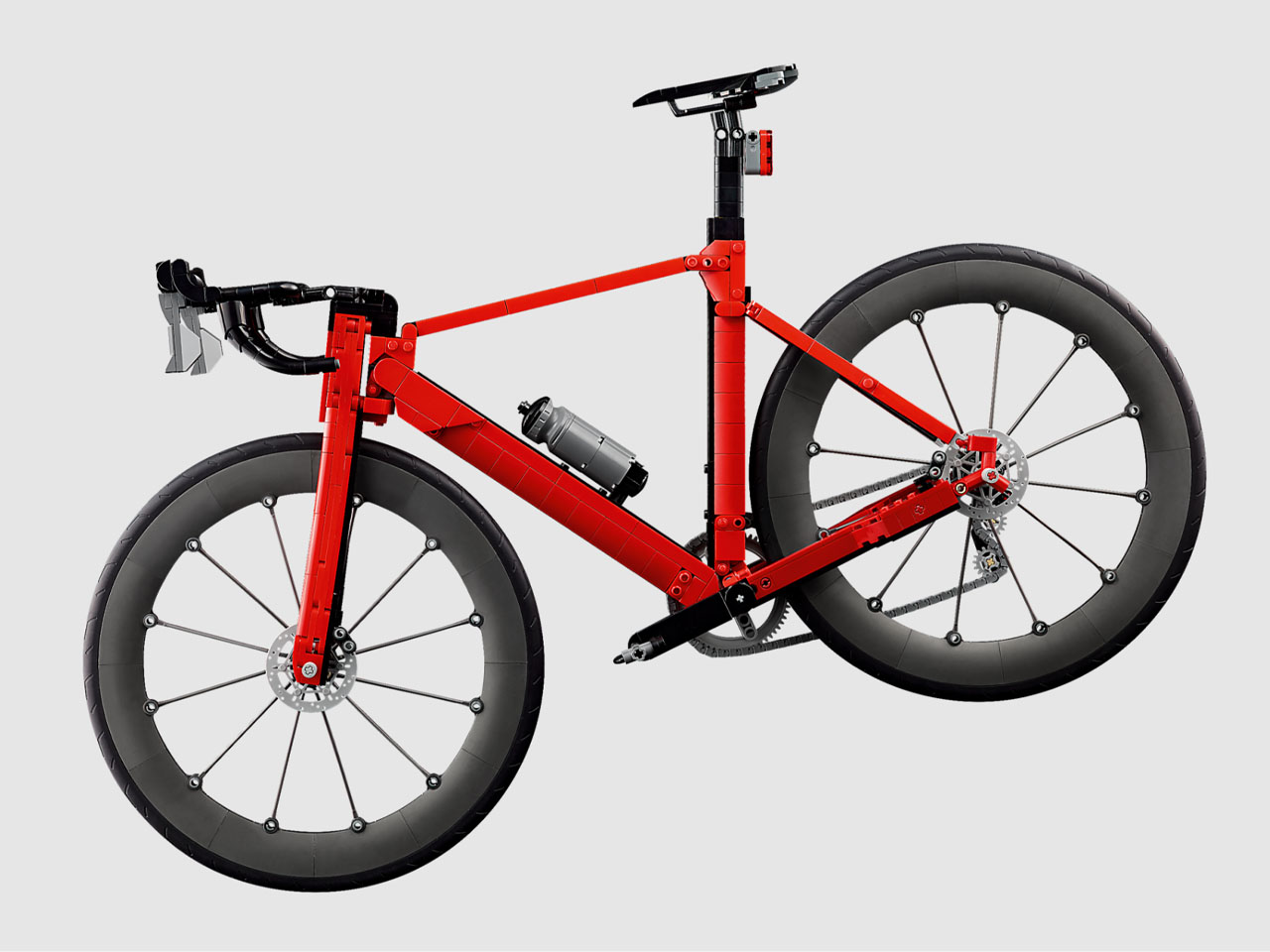
This set comes just in time for the summer sporting season, as cycling enthusiasts gear up for adventures unknown. Indeed, a true replica bicycle to build from scratch and place on their living room shelf to go with the mood. Just like with other LEGO Icons models in the lineup, the set captures every little detail of the real thing, and when completely put together, it stands at 24 inches long and 14.2 inches tall. That’s quite a sizeable LEGO set that would need some clearing up of space on your desk.
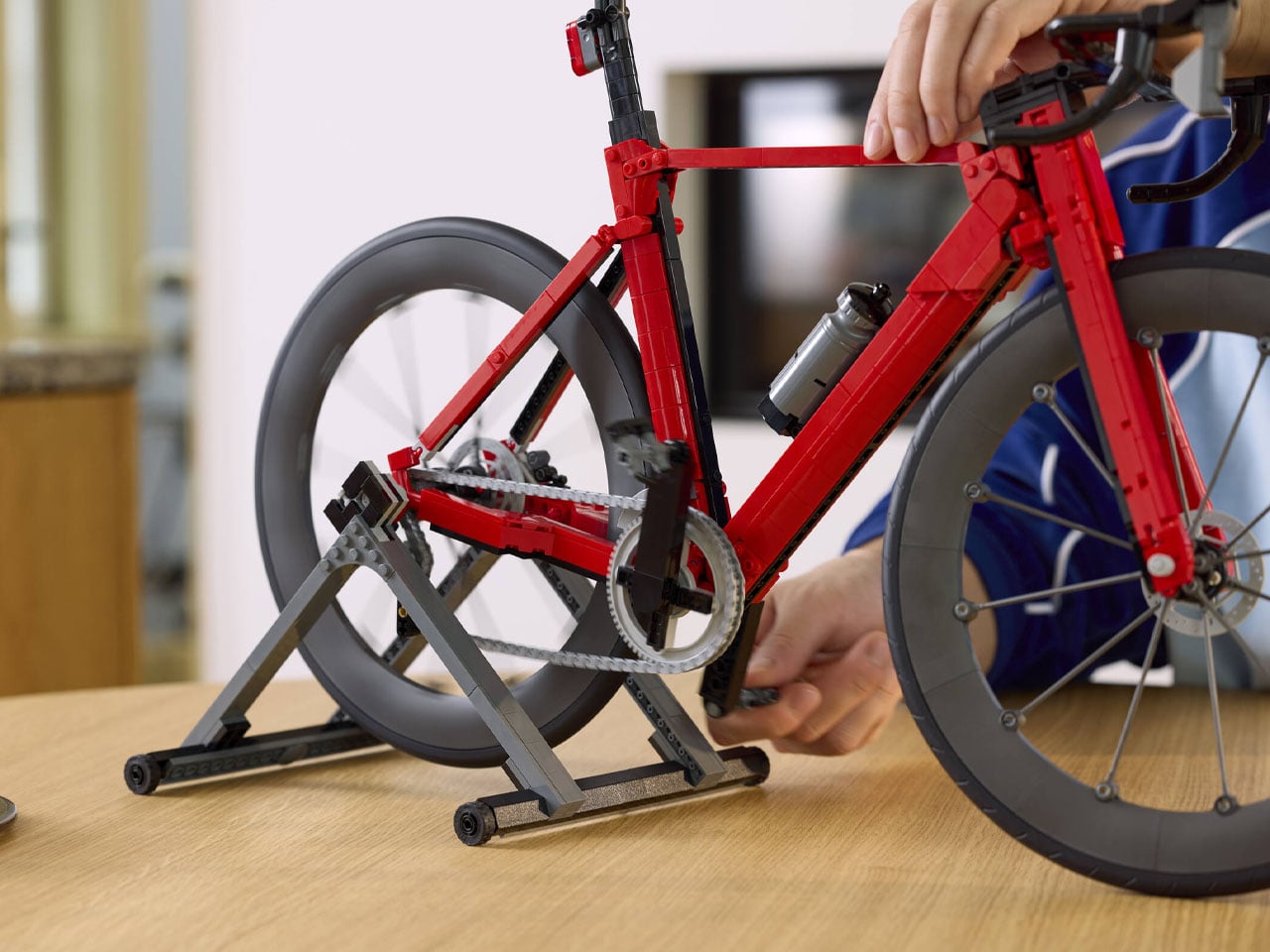
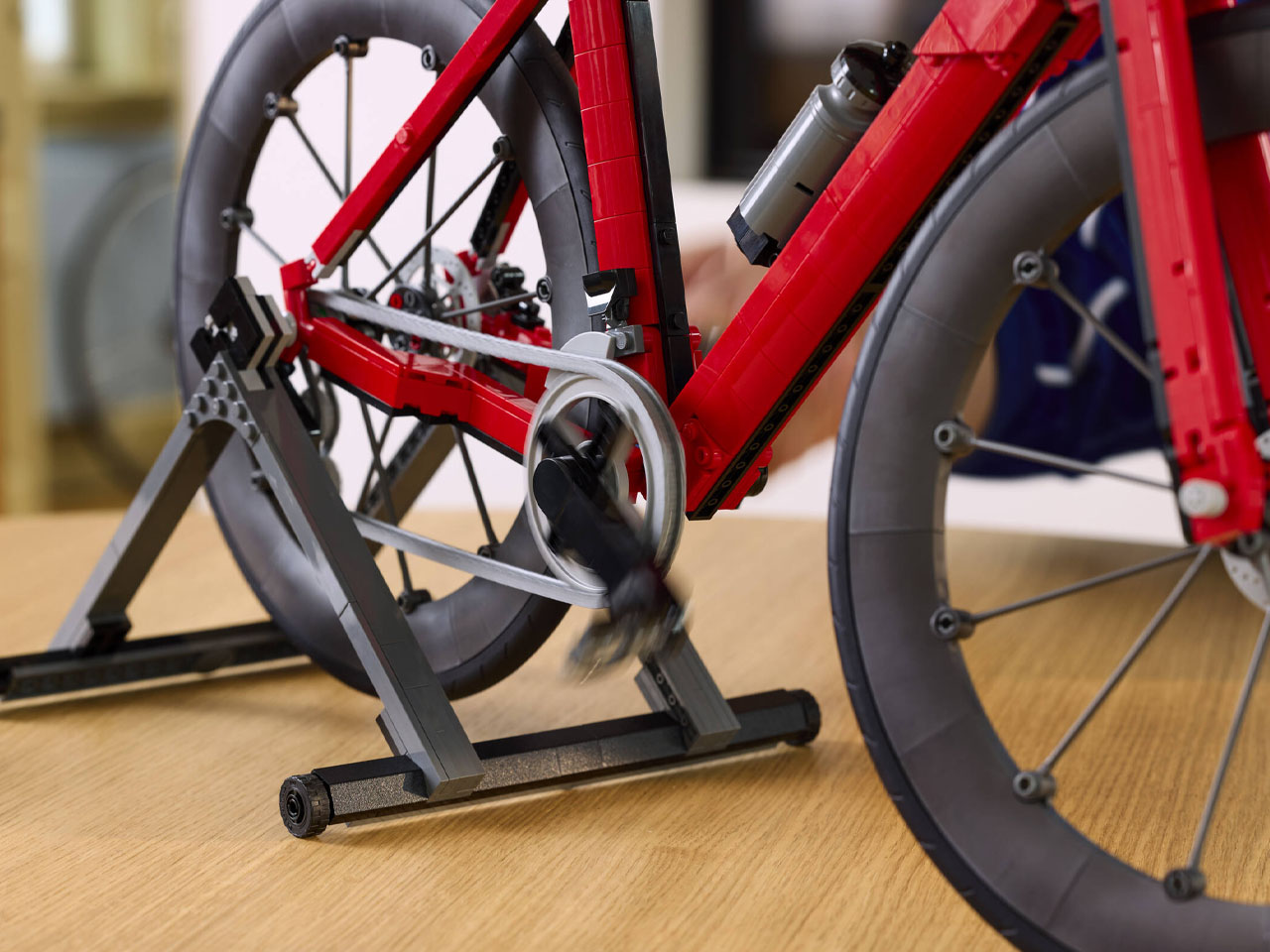
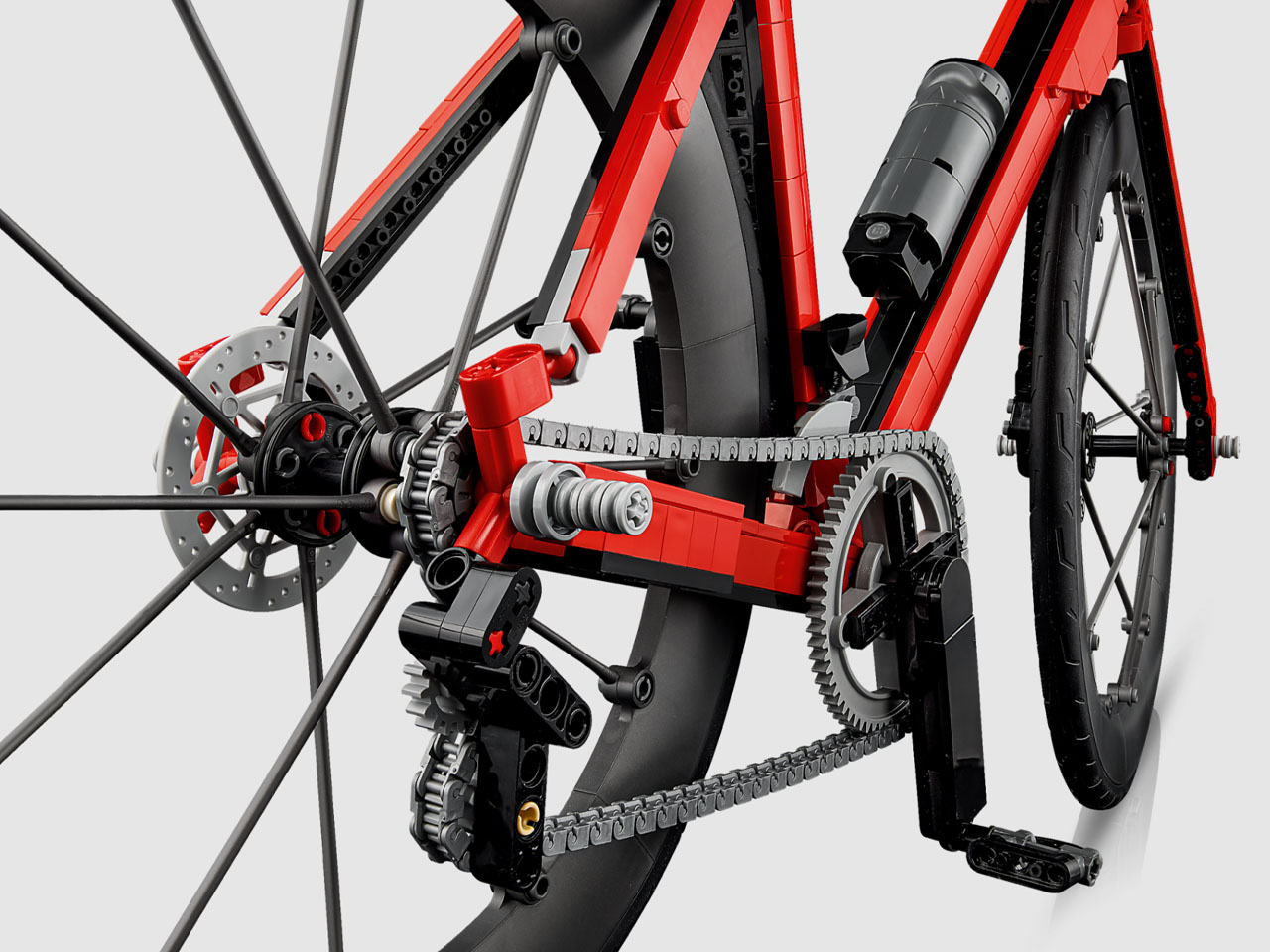
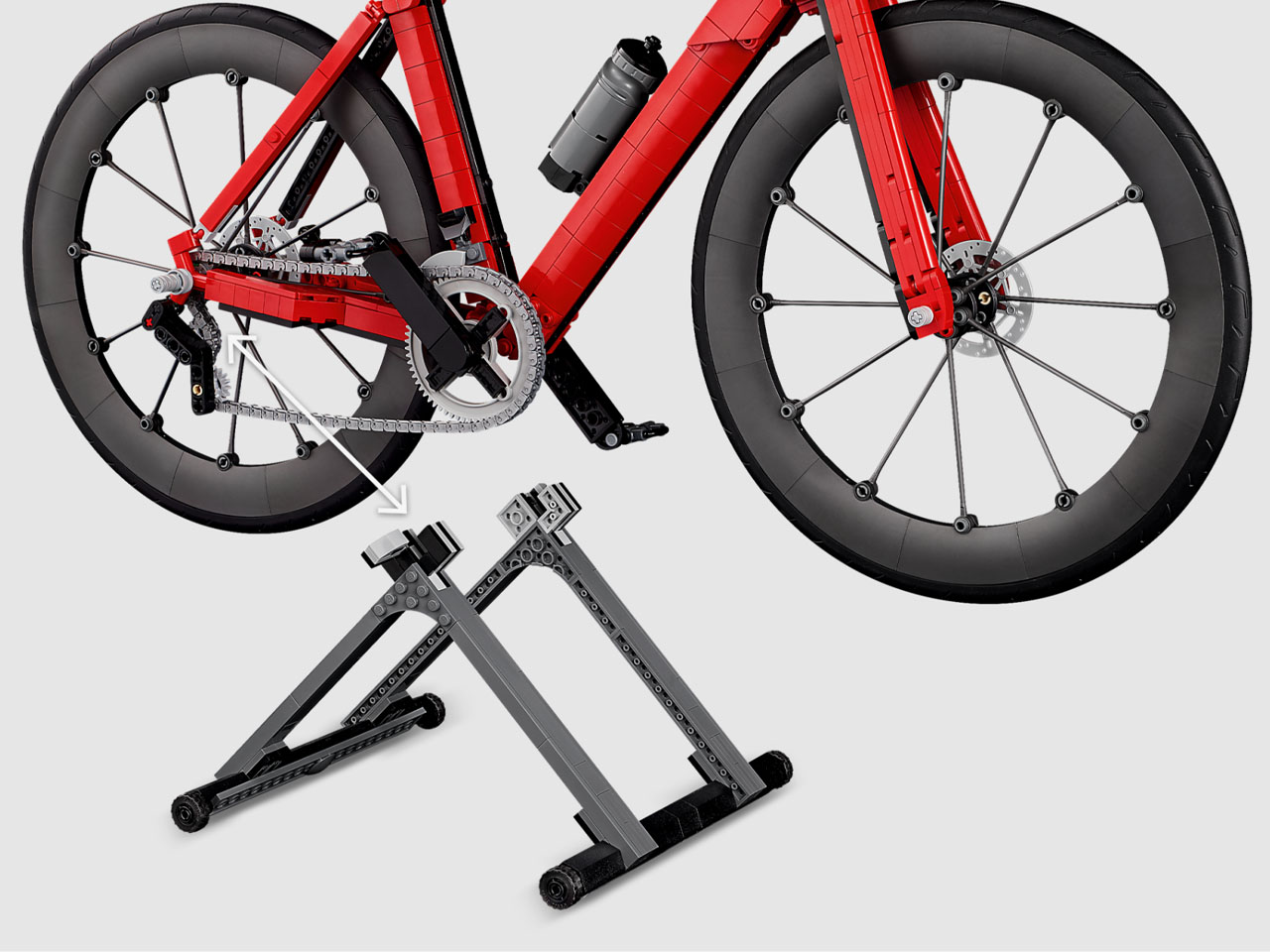
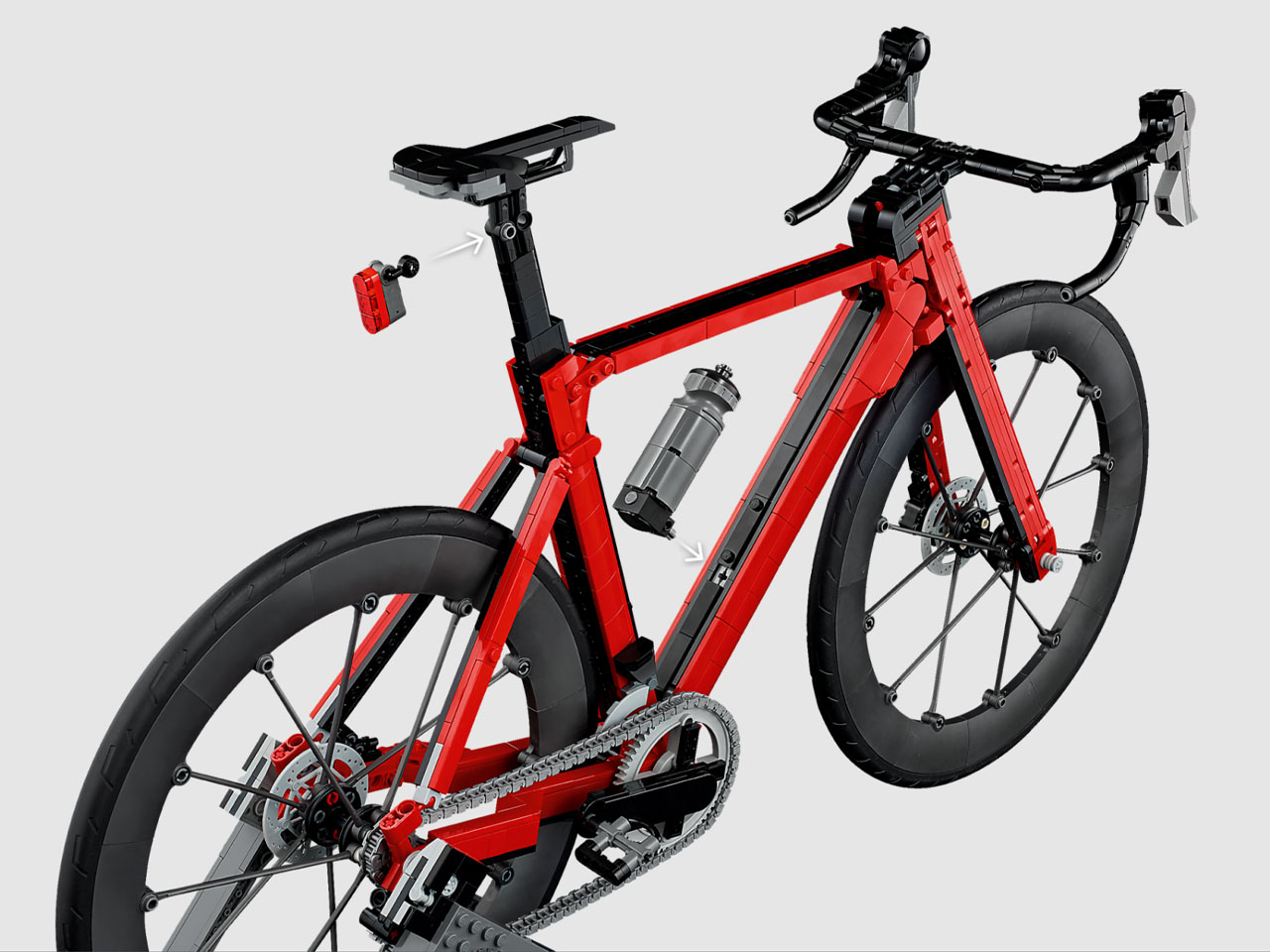
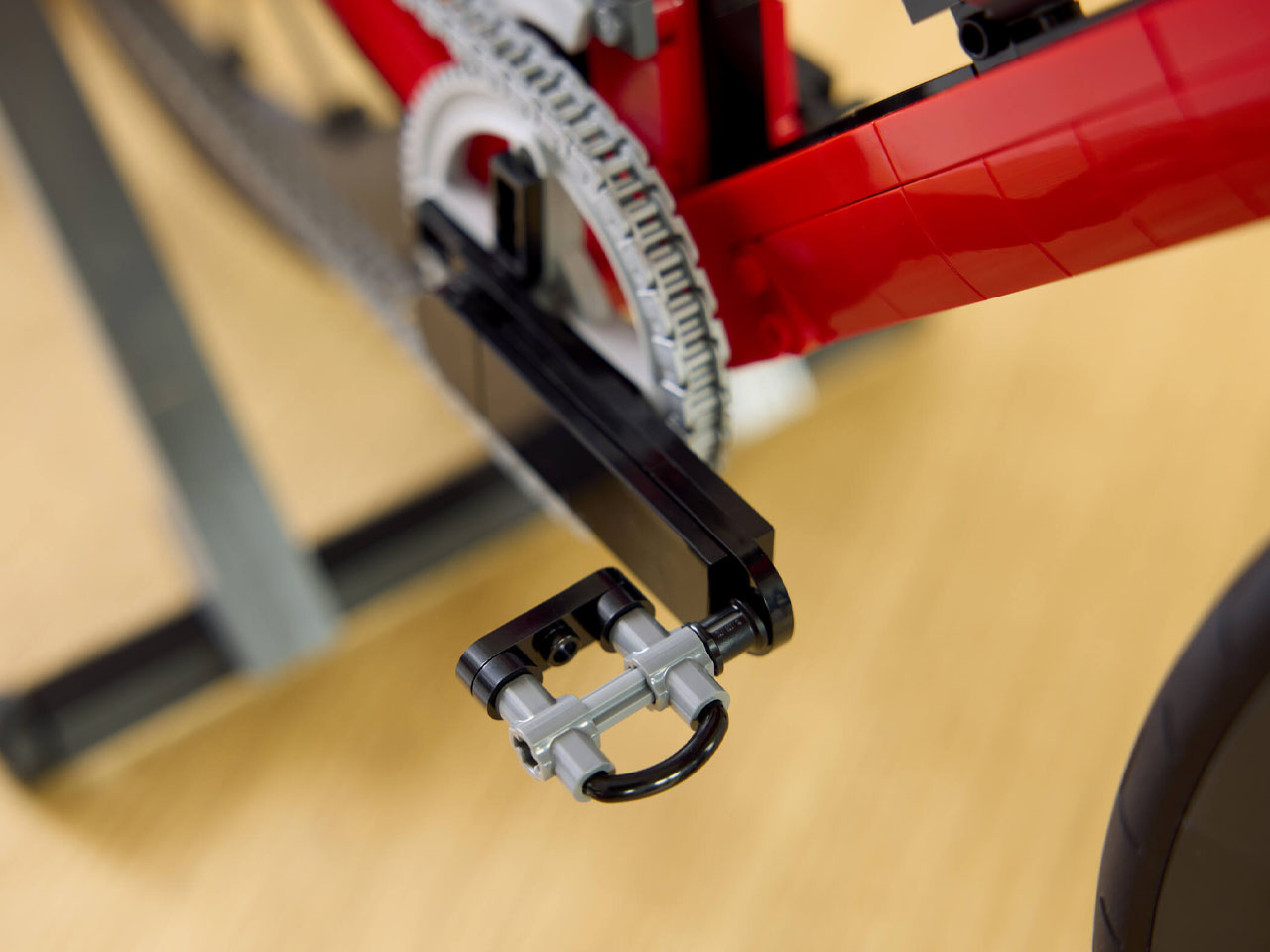
It’s not just the looks that are impressive. The LEGO Road Bike comes with a fully functional drivetrain and freewheel to indulge in the fun. Since it is a two-wheeler, putting it up on the flat surface is done courtesy of the wheel-lift bike stand. In this configuration, the bike wheel can be pedaled freely with the one-way gear chain drive mechanism in the signature silver colorway. The level of detail flows into the brake calipers, derailleurs, clipless pedals, and the removable water bottle.
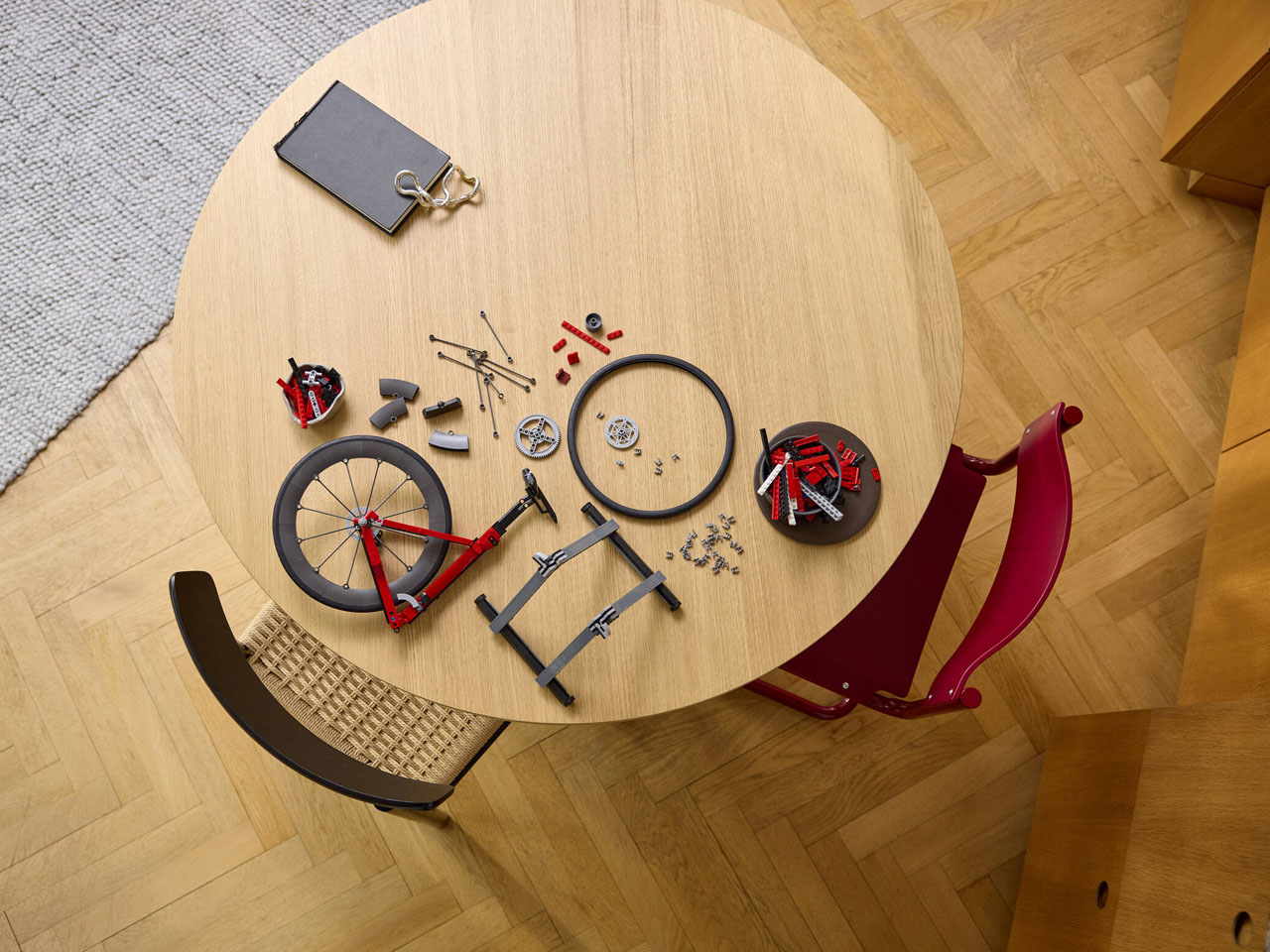
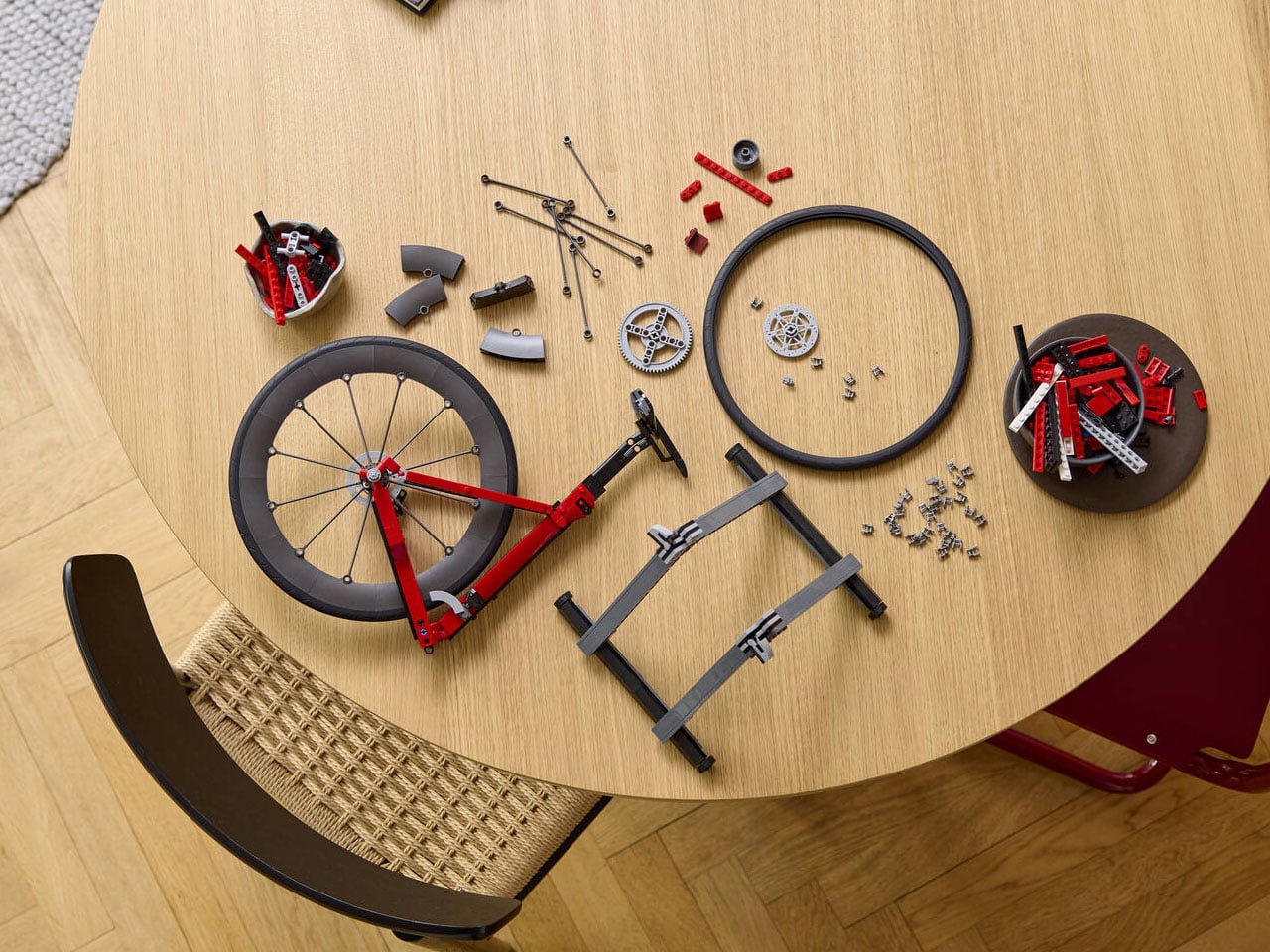
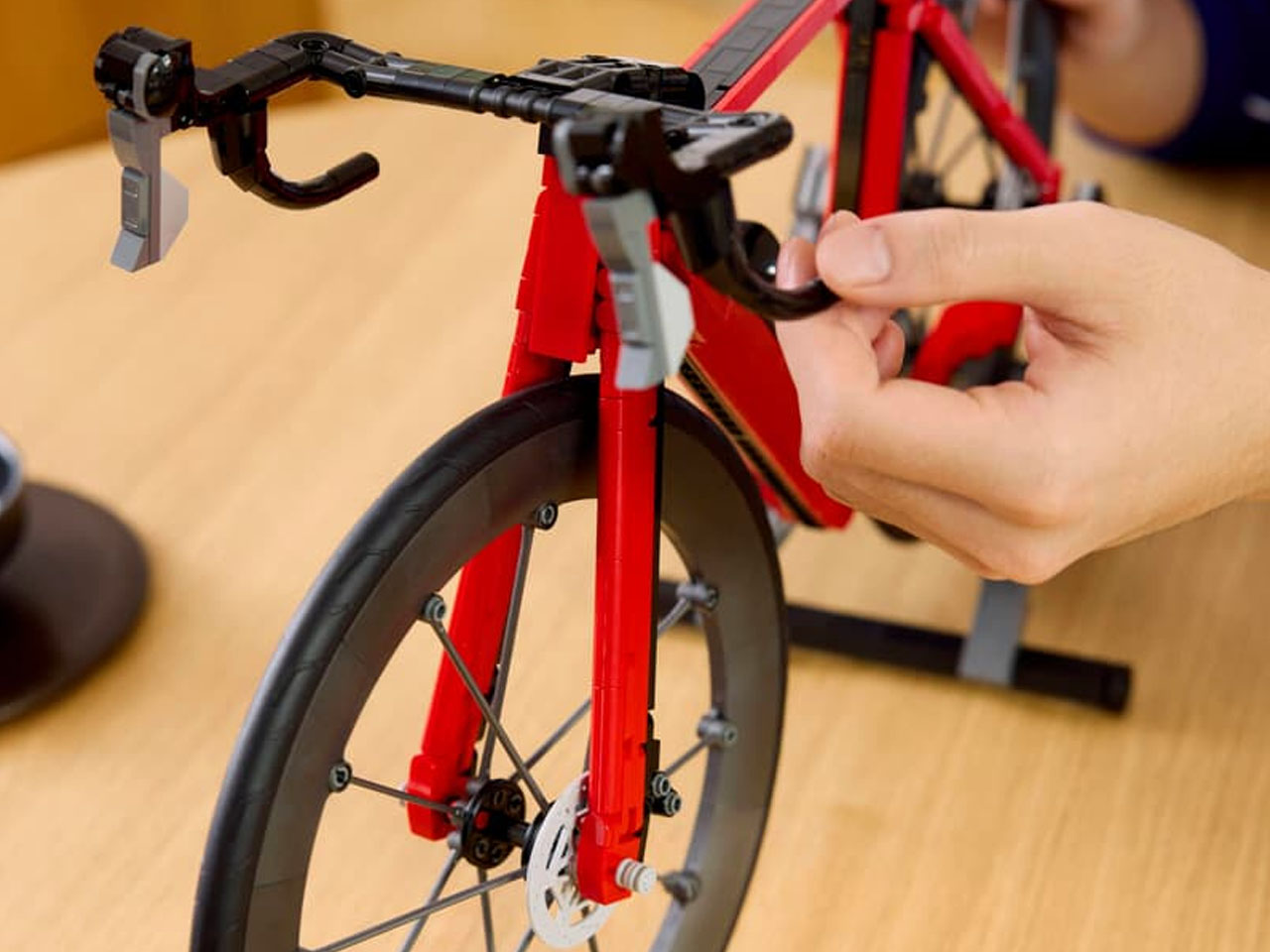
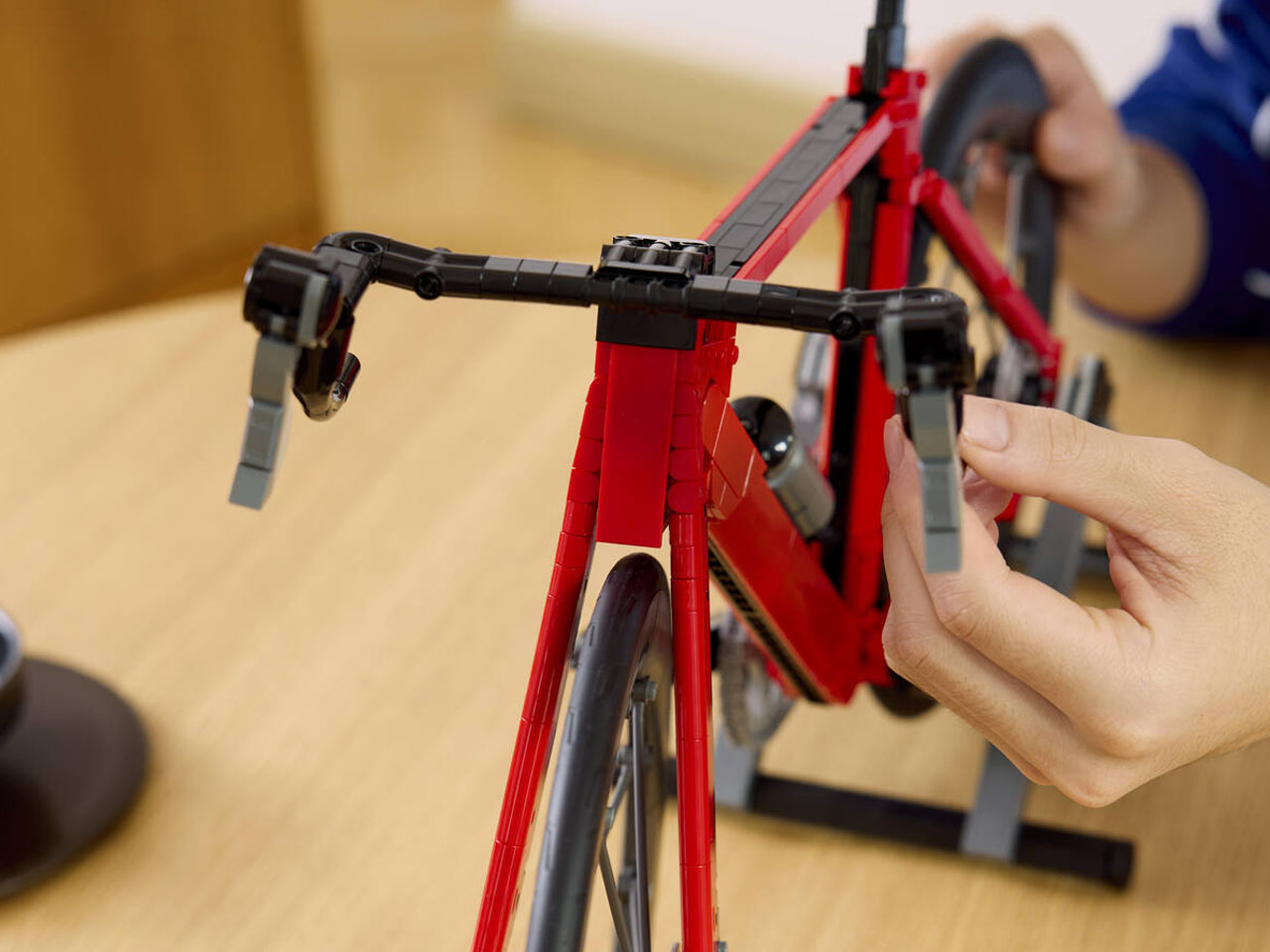
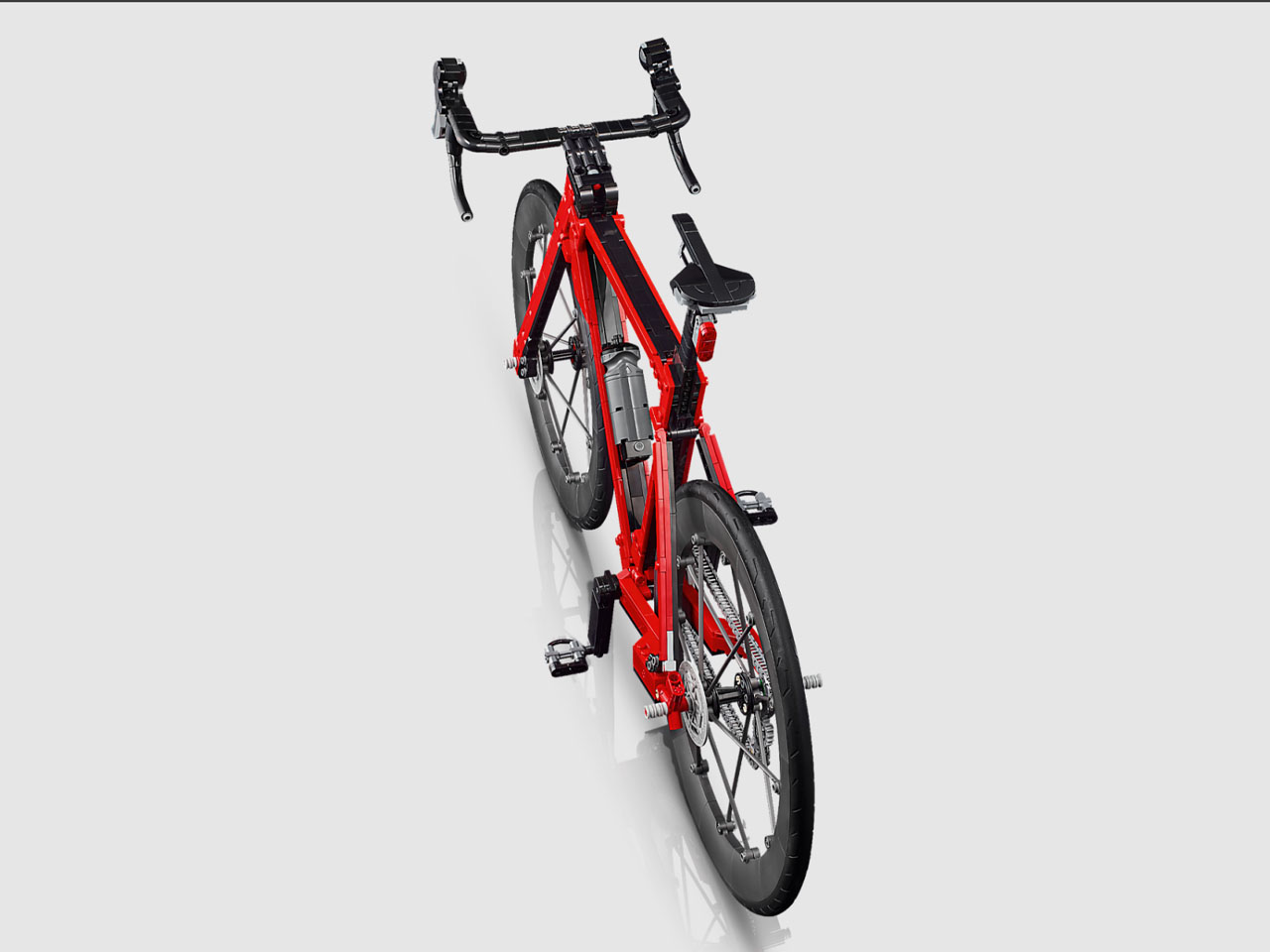
The build from scratch starts off with a red and black composite frame, on which the intricate brick pieces connect to form the handlebars, movable steering, rear light attached to the saddle, and the realistic rubber wheels with spokes. Although the bicycle is formed from plastic brick pieces, the end product gives off the look of a welded metal commuter. To make things interesting, the attachments are removable for easy cleaning to maintain the pristine look of the display set.

The only thing missing in the set is a giant minifigure (just nitpicking), but you can easily pick up another fitting prop from your collection to complete the look. LEGO Road Bike is all set for a June 1 launch with pre-orders already open for a $130 price tag.


The post LEGO Icons Road Bike is an intricate 1,015-piece buildable set for grown-ups first appeared on Yanko Design.