TikTok finalizes deal for its US entity

After years of uncertainty over TikTok's future in the United States, a deal for the app's US business has been finalized. The new US entity is called TikTok USDS Joint Venture. ByteDance has retained a 19.9 percent percent stake in the new business, with the rest controlled by a group of non-Chinese investors, including Oracle, Silver Lake and MGX, an Emirati-state owned investment firm, all of which have a 15 percent stake. Dell CEO Michael Dell and other investors have smaller stakes in the new company. 

The terms of the deal were first leaked last month, after TikTok CEO Shou Chew reportedly told employees in a memo that TikTok and ByteDance had agreed to a group of investors. This ends a lengthy saga and months of slow progress as the agreement was being worked out, ensuring that the app will remain available in the US after years of being on the verge of a ban in the country.

President Donald Trump, who had tried to ban the app during his first term in office, praised the deal in a post on Truth Social. "It will now be owned by a group of Great American Patriots and Investors, the Biggest in the World, and will be an important Voice," he wrote."I only hope that long into the future I will be remembered by those who use and love TikTok."

According to TikTok’s announcement, the joint venture will protect American users’ data with Oracle's secure US cloud environment. It will also retrain TikTok’s algorithm on US users’ data and will be in charge of content moderation in the US. The entity promises interoperability, as well, promising that users will still get international content and, if they’re a creator, viewers. “The safeguards provided by the Joint Venture will also cover CapCut, and Lemon8 and a portfolio of other apps and websites in the US,” TikTok said.

The new entity will be overseen by a seven-member board of directors, most of whom are Americans. It includes, Shou Chew, the Chief Executive Officer of TikTok, Silver Lake co-CEO Egon Durban, Oracle Executive Vice President Kenneth Glueck and MGX Chief Strategy and Safety Officer David Scott. Adam Presser, who had previously been head of operations and trust and safety at TikTok, is the CEO of TikTok USDS Joint Venture.

Exactly what the new joint venture means for US users of TikTok is unclear. Shortly after the deal was announced, TikTok introduced new terms of service for US users. As the BBC notes, the new terms include provisions relating to use of the app by kids under 13 (they are limited to the "Under 13 Experience") and that the "TikTok USDS Joint Venture does not endorse any content" in the app. The company hasn’t announced specific changes to the app’s algorithm or other core features.

Update, January 23, 2026, 10:58AM PT: This post was updated to add a statement from President Trump, and with additional information about TikTok’s new terms of service.

This article originally appeared on Engadget at https://www.engadget.com/big-tech/tiktok-finalizes-deal-for-its-us-entity-010543484.html?src=rss



The Bugatti Veyron Turns 20 and Gets a 1,578 HP Makeover Nobody Saw Coming

In 2005, Bugatti unleashed a machine so audacious that even today it commands respect. The Veyron arrived with 1,000 horsepower, four turbochargers, and a top speed that left competitors speechless. Two decades later, one collector decided that anniversary celebrations and museum pieces weren’t enough tribute for such a revolutionary achievement.

The result is the F.K.P. Hommage, a one-off hypercar that channels the Veyron’s iconic silhouette while hiding Chiron Super Sport mechanicals beneath its red and black bodywork. Named for Ferdinand Karl Piëch, the Volkswagen Group patriarch who championed the original project, this creation incorporates design elements from an abandoned Veyron facelift that never reached production. It’s automotive archaeology meeting cutting-edge engineering, wrapped in a package that costs north of €10 million.

Designer: Bugatti

This is the second car from Bugatti’s Programme Solitaire, their bespoke division that handles exactly two ultra-custom builds per year. The first was the Brouillard, which took the Mistral roadster platform and wrapped it in equestrian-inspired design language. The F.K.P. Hommage takes a different approach entirely. It asks a simple question: what if Bugatti had kept refining the Veyron on the Chiron’s platform instead of replacing it? Chief designer Frank Heyl actually had sketches for a Veyron facelift back in 2008, concepts that never materialized because Piëch wanted something more radical. Those sketches became the foundation for this car. The headlights, those hollowed-out “light tunnel” taillights, even the adjusted proportions all stem from that unrealized project.

The exterior proportions mirror the original Veyron almost exactly, though it sits about an inch and a half wider. Every single body panel was designed specifically for this car. Nothing got copy-pasted from the parts bin. The horseshoe grille stands more upright now, three-dimensional and aggressive in ways the original never attempted. Those L-shaped LED headlights give the front end what Heyl calls a “concentrated stare,” which sounds like marketing speak until you actually look at the thing head-on. The side intakes got tightened up, the twin roof intakes lean forward more dramatically, and the rear diffuser flares outward at sharper angles. The taillights grew slightly larger on the outboard sections, creating better visual balance. Even the fuel filler got repositioned for better aerodynamic flow.

The red and black scheme matches the first production Veyron from 2005, but Bugatti couldn’t just spray it red and call it done. The base is actually silver, with red pigment incorporated into the clearcoat to create depth and luminosity that straight red paint never achieves. It’s the kind of obsessive detail that adds weeks to the build process and thousands to the cost, which matters zero percent when your budget already exceeds €10 million.

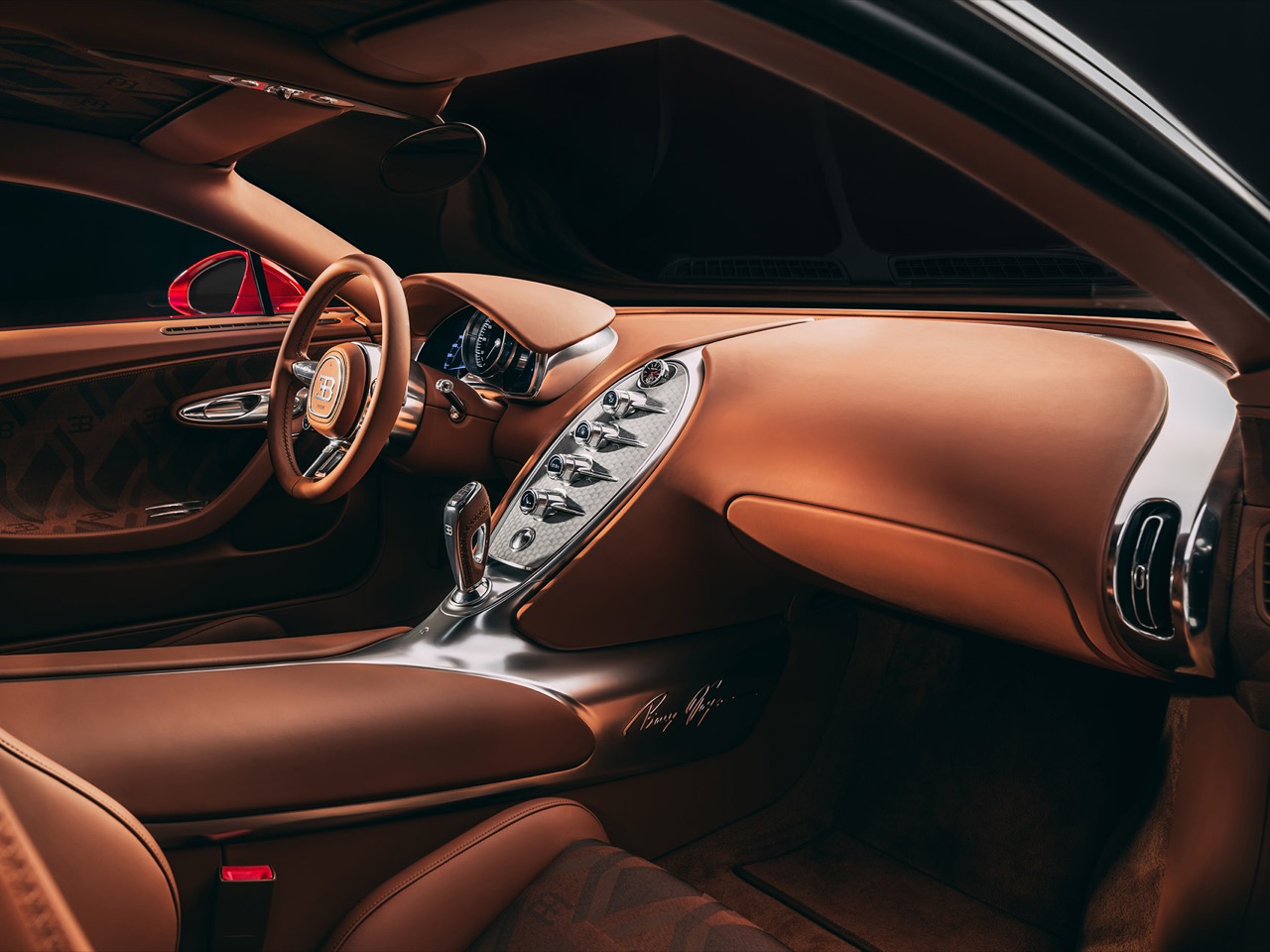
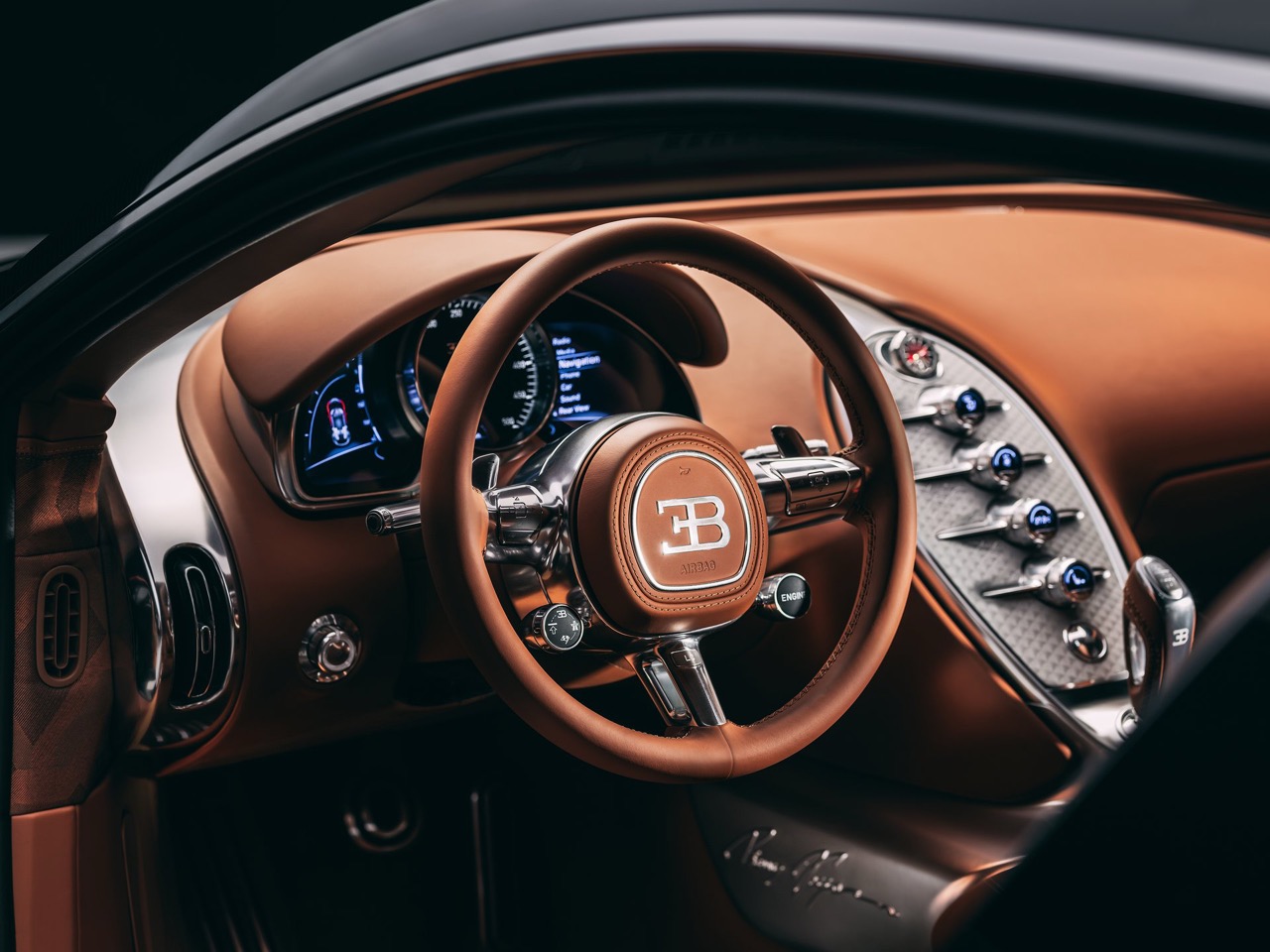
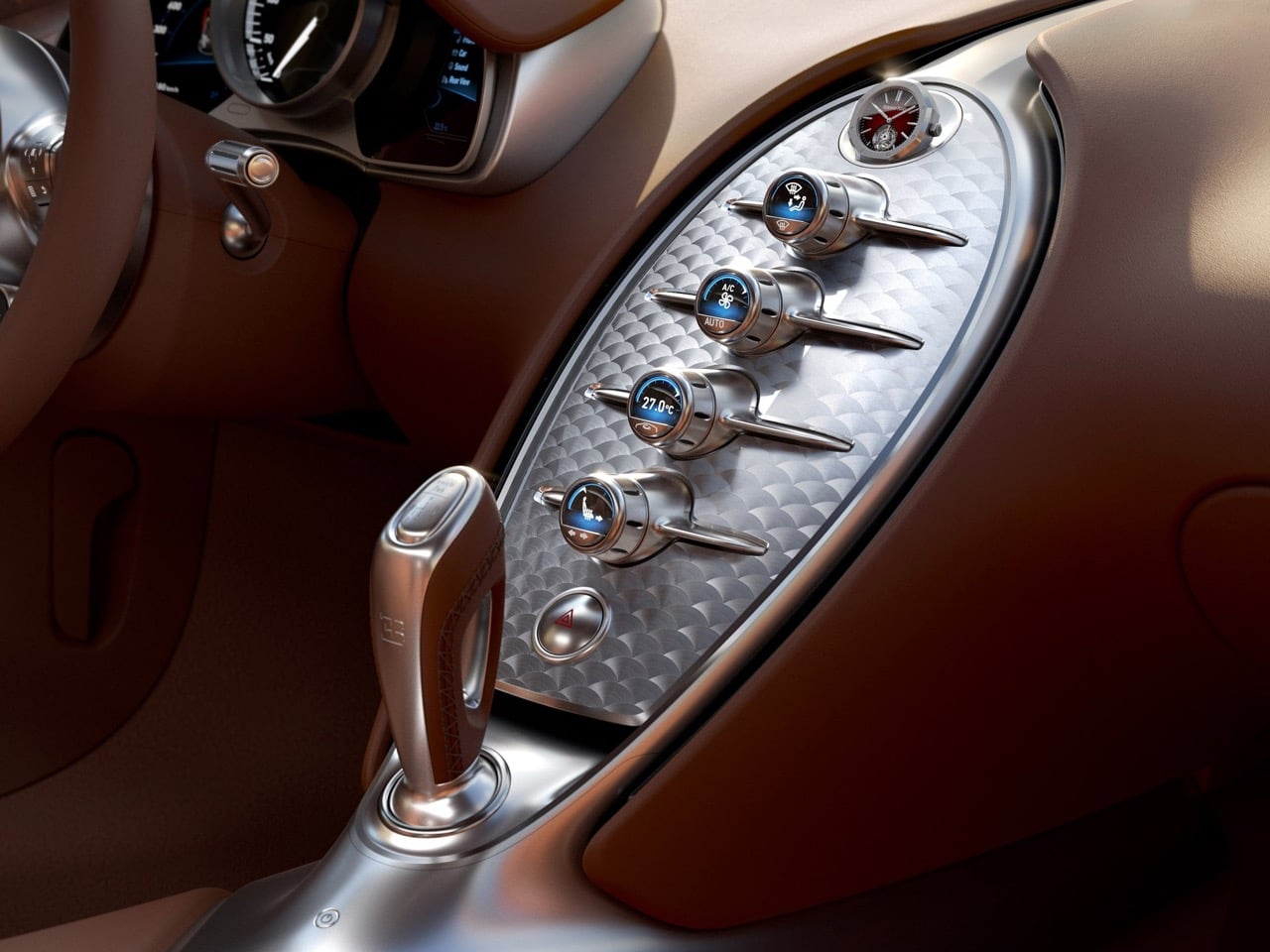
Then you open the door and realize the exterior was just foreplay. The cabin blends Chiron architecture with Veyron soul, keeping the newer car’s instrument cluster while introducing a completely redesigned steering wheel and a wider center console. That console gets machined from a single block of aluminum, which sounds impressive until you remember they’re putting a $200,000 Audemars Piguet Royal Oak Tourbillon inside it. The 43mm watch sits in a rotating mount that serves double duty. It hides the timepiece when the car’s off, protecting it from opportunistic smash-and-grab artists, and it spins the watch several times per hour to keep the automatic movement wound. No mechanical connection to the car, just a motorized gondola doing its thing on a timer.

The seats wear custom couture fabrics woven by a Parisian textile house, because apparently Italian leather alone doesn’t sufficiently communicate exclusivity. Piëch’s signature gets stitched into each headrest, with his initials and birthday embossed into the leather by your right knee. These details matter in the rarefied world of eight-figure automotive commissions, where differentiation comes down to whose signature adorns your headrest.

Under that engine cover sits the Chiron Super Sport’s 1,578-horsepower W16, complete with upgraded cooling, enhanced intercoolers, and a reinforced gearbox. The wheels measure 20 inches up front and 21 inches out back, significantly larger than the Veyron’s original 18/20 setup but necessary to accommodate modern Michelin rubber and the massive brake calipers hiding behind those spokes. The owner reportedly already possesses a matching Veyron, which means they’ll soon park both side by side and spend entirely too much time explaining the differences to confused onlookers.

The F.K.P. Hommage debuts at Rétromobile Paris before embarking on the typical hypercar show circuit, hitting Monaco, Pebble Beach, and whatever other gatherings attract people wealthy enough to consider €10 million reasonable for a car. Delivery happens in 2027, giving Bugatti’s craftspeople enough time to obsess over every stitch and surface. By then, the W16 engine will be completely retired from production, making this one of the final expressions of Piëch’s original vision before Bugatti transitions to the V16 hybrid powertrain in the Tourbillon.

The post The Bugatti Veyron Turns 20 and Gets a 1,578 HP Makeover Nobody Saw Coming first appeared on Yanko Design.

Sennheiser introduces new TV headphones bundle with Auracast

Sennheiser has unveiled its RS 275 TV Headphones, which are bundled with a BTA1 digital receiver. These headphones use Auracast technology to provide low-latency audio at a range of up to 50 meters, and can connect to other devices enabled with Auracast or Bluetooth Classic. For those unfamiliar, Auracast is broadcast Bluetooth audio; we have an explainer about it after CES 2024 put this audio tech onto the big stage. The digital receiver introduces an Auracast signal in a physical space for any other compatible devices, which might include hearing aids or loudspeakers as well as other headphone sets.

The company promises 50 hours of listening with the RS 275 TV Headphones on a single charge, and the set can be powered up from the receiver's USB-C port. Sennheiser designed the headset for long-term comfort; the ear cushions and battery can be replaced by the device's owner. The headphones can be further personalized with the Sennheiser Smart Control Plus App. In addition to finding lost headphones, the app provides controls such as transparency mode, left-right balance, hearing profiles and device-type audio modes.

The RS 275 TV Headphone bundle will retail for $300, while a standalone BTA1 receiver will cost $130. Pre-orders will open on February 3 and the audio gear is expected to start shipping on February 17.

This article originally appeared on Engadget at https://www.engadget.com/audio/headphones/sennheiser-introduces-new-tv-headphones-bundle-with-auracast-233735294.html?src=rss
This Power Strip Looks Like a Pencil with a Cable That Draws a Line

Setting up a desk usually means the laptop and lamp go on top while the power strip disappears underneath, tangled with dust and forgotten cables. Electricity gets treated as something to manage and conceal, even though it quietly runs everything you do all day. Most power strips look industrial or aggressively technical, which is why they end up banished behind furniture, making plugging things in feel like reaching into a dark cave.

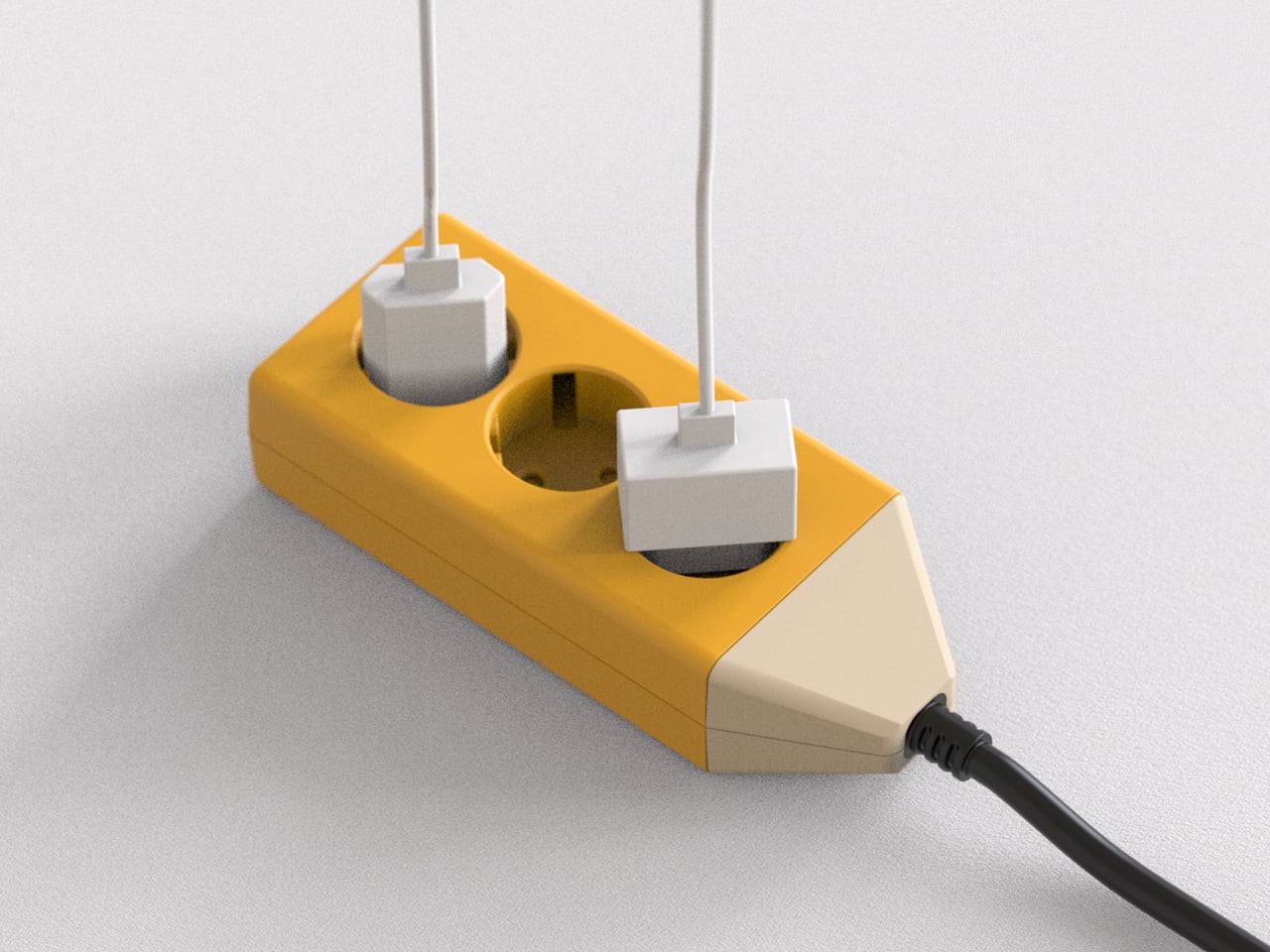
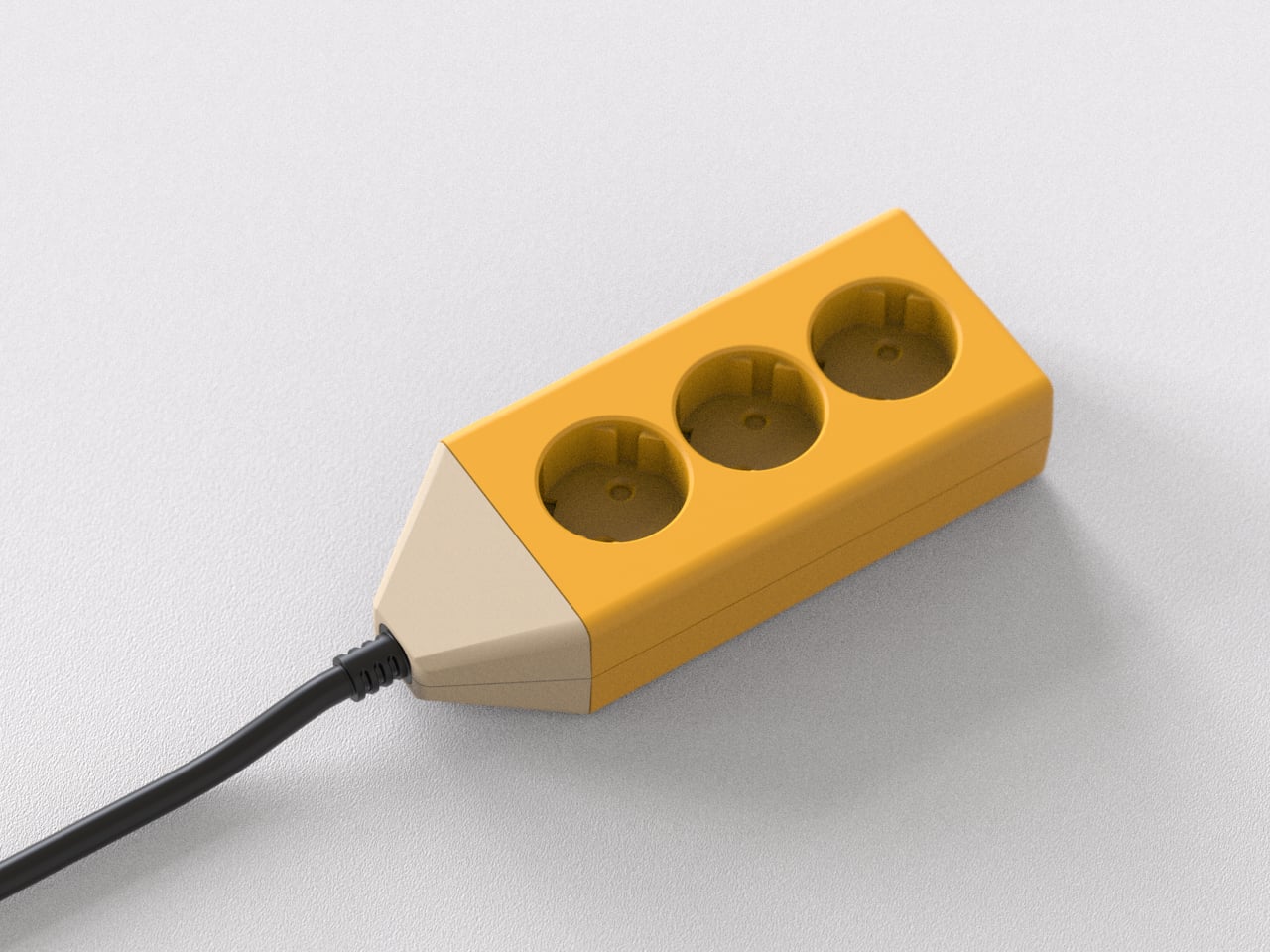
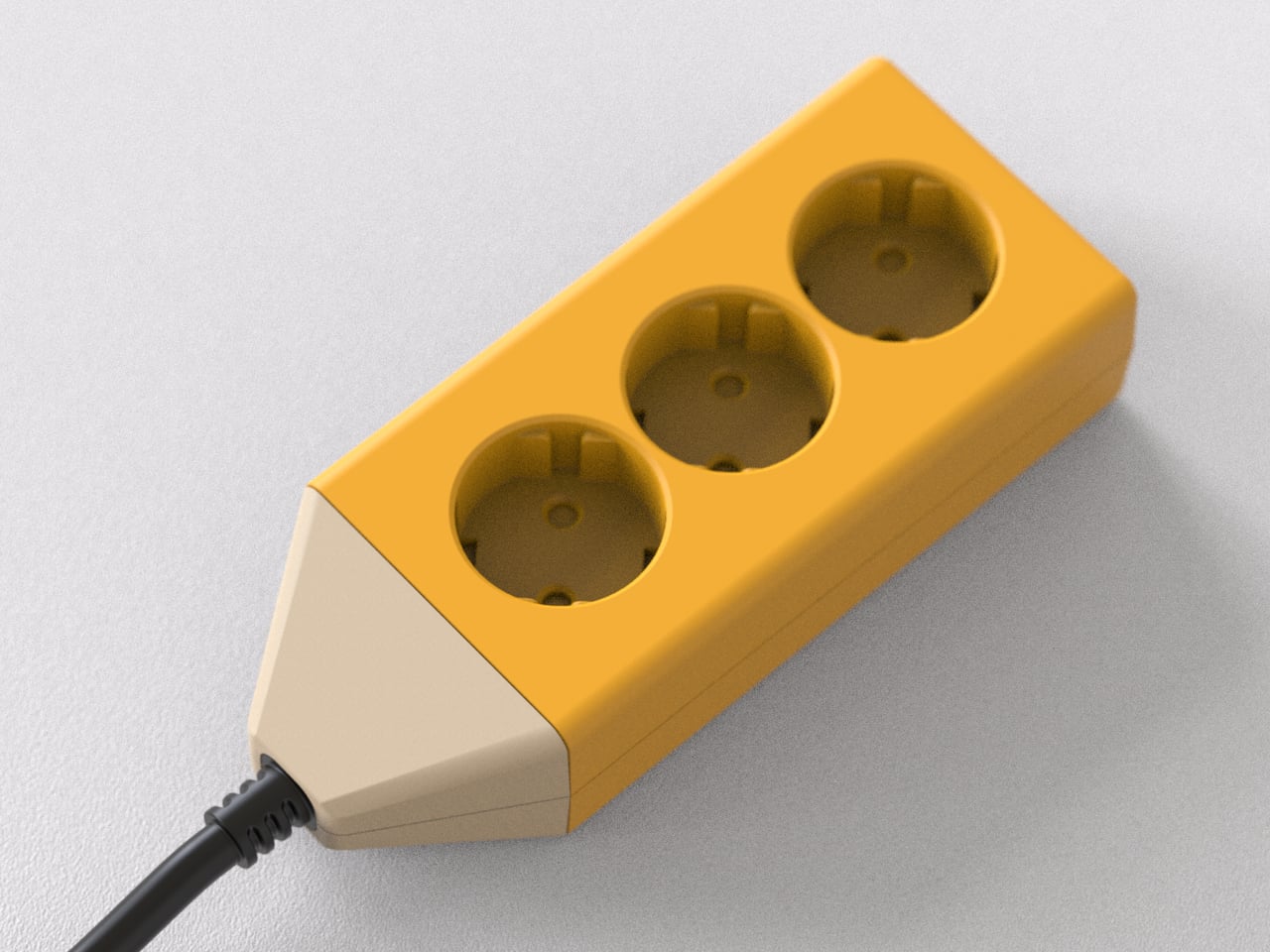
Composition Studio’s Pencil Multi-Tap follows a different line of thought. The studio designs objects that make you want to record simply by looking at them, asking what happens if the object itself initiates the act instead of waiting for discipline or habit. The Pencil Multi-Tap turns a power strip into something that feels closer to a pencil on a desk than a piece of hardware you are supposed to hide, treating electricity as part of the creative process.

Designer: Hyunsu Kim (Composition Studio)

Sitting down at a clean desk in the morning, you drop your notebook, tablet, and laptop on the surface and plug them into a small block that reads as a fat, sharpened pencil. The black cable trails away like a drawn line toward the wall outlet. It feels less like plugging into infrastructure and more like drawing the first line on a blank page, a quiet signal that work is about to begin.

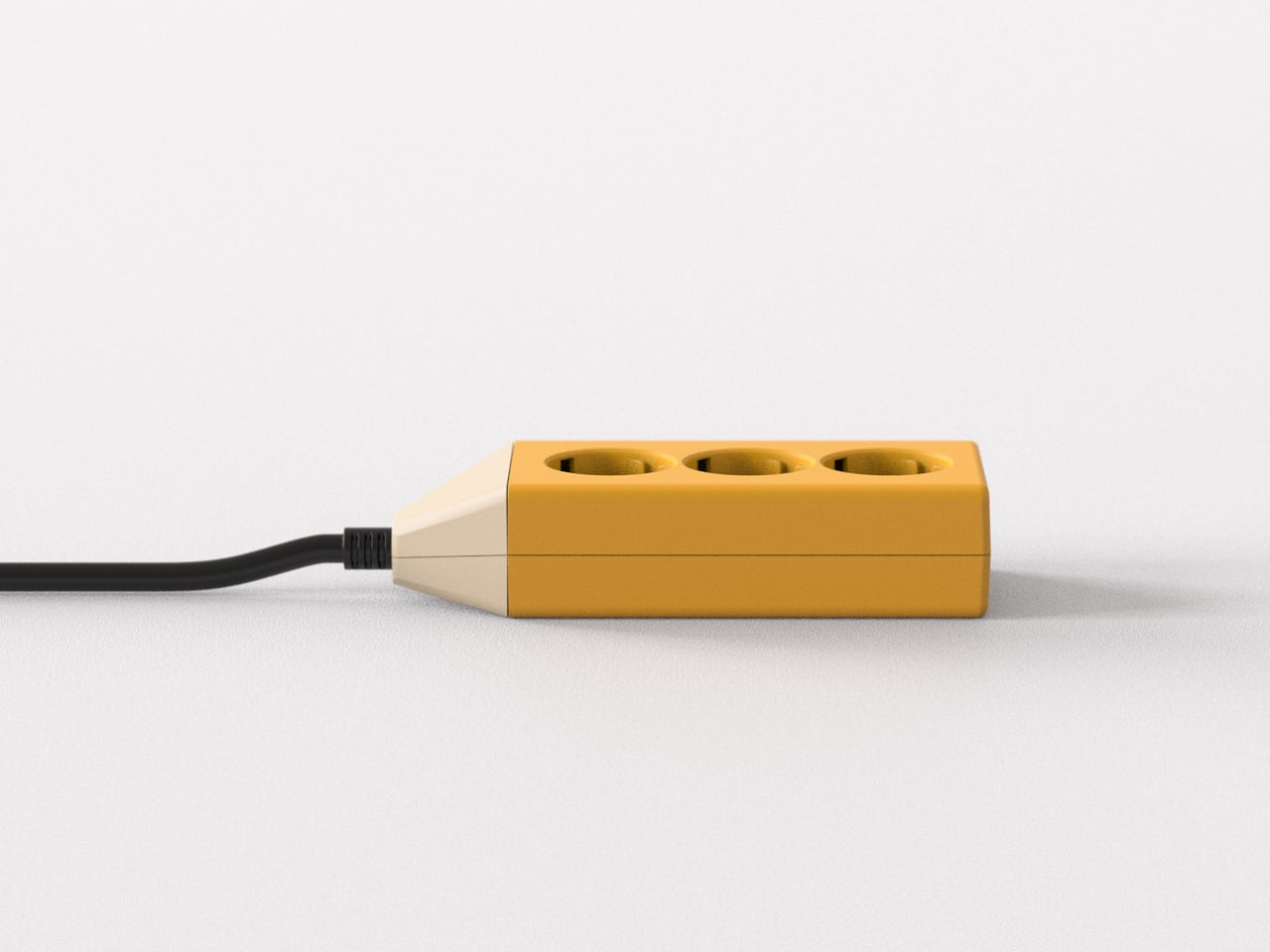
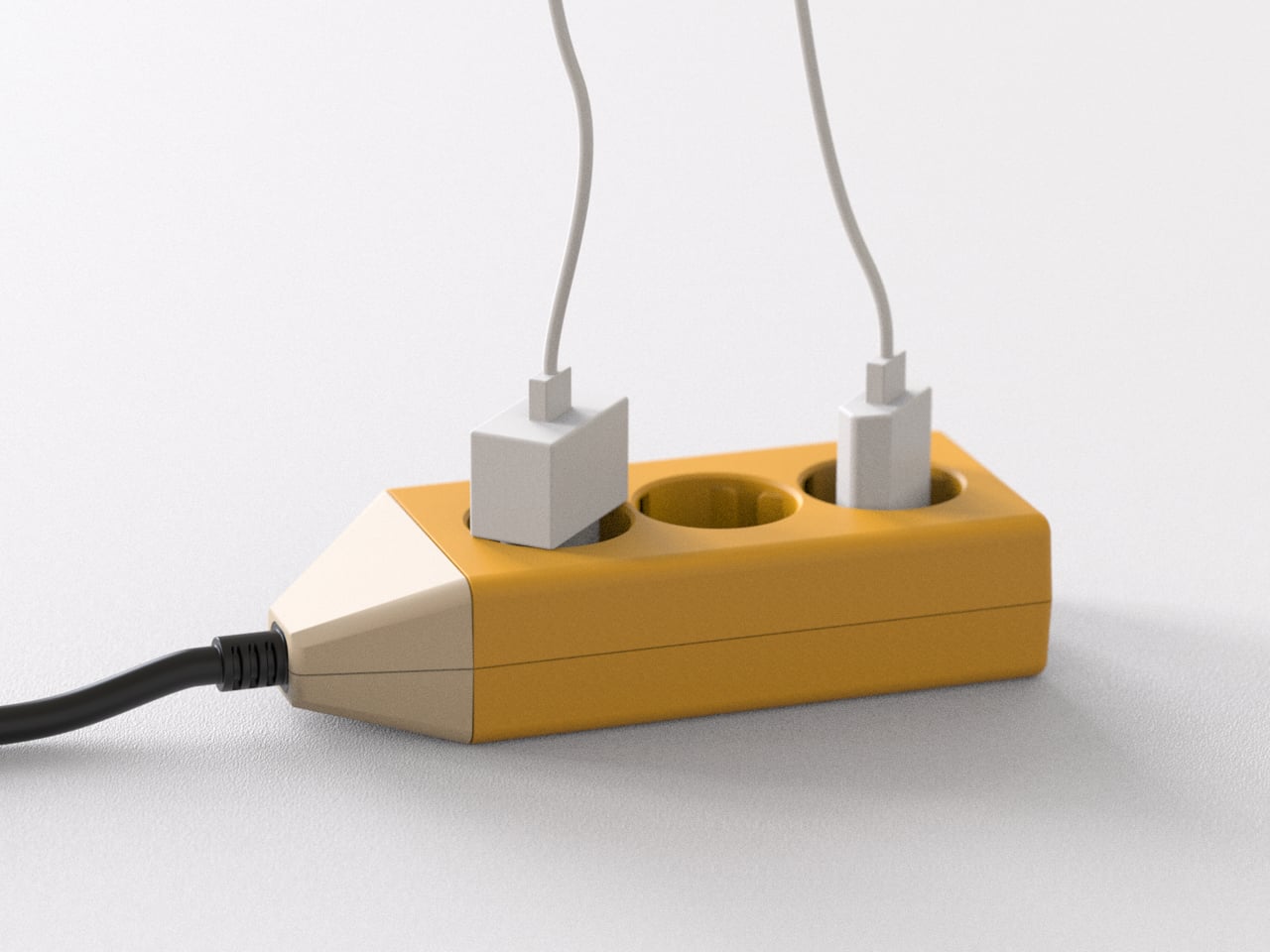
The practical side is straightforward. Three outlets give you enough capacity for a laptop, a charger, and a lamp without turning the surface into a cable farm. The compact, blocky body means it can sit anywhere on the desk or move with you to another room. Because it looks intentional, you do not mind leaving it visible, which makes plugging and unplugging devices easier and less of a contortion exercise under the table.

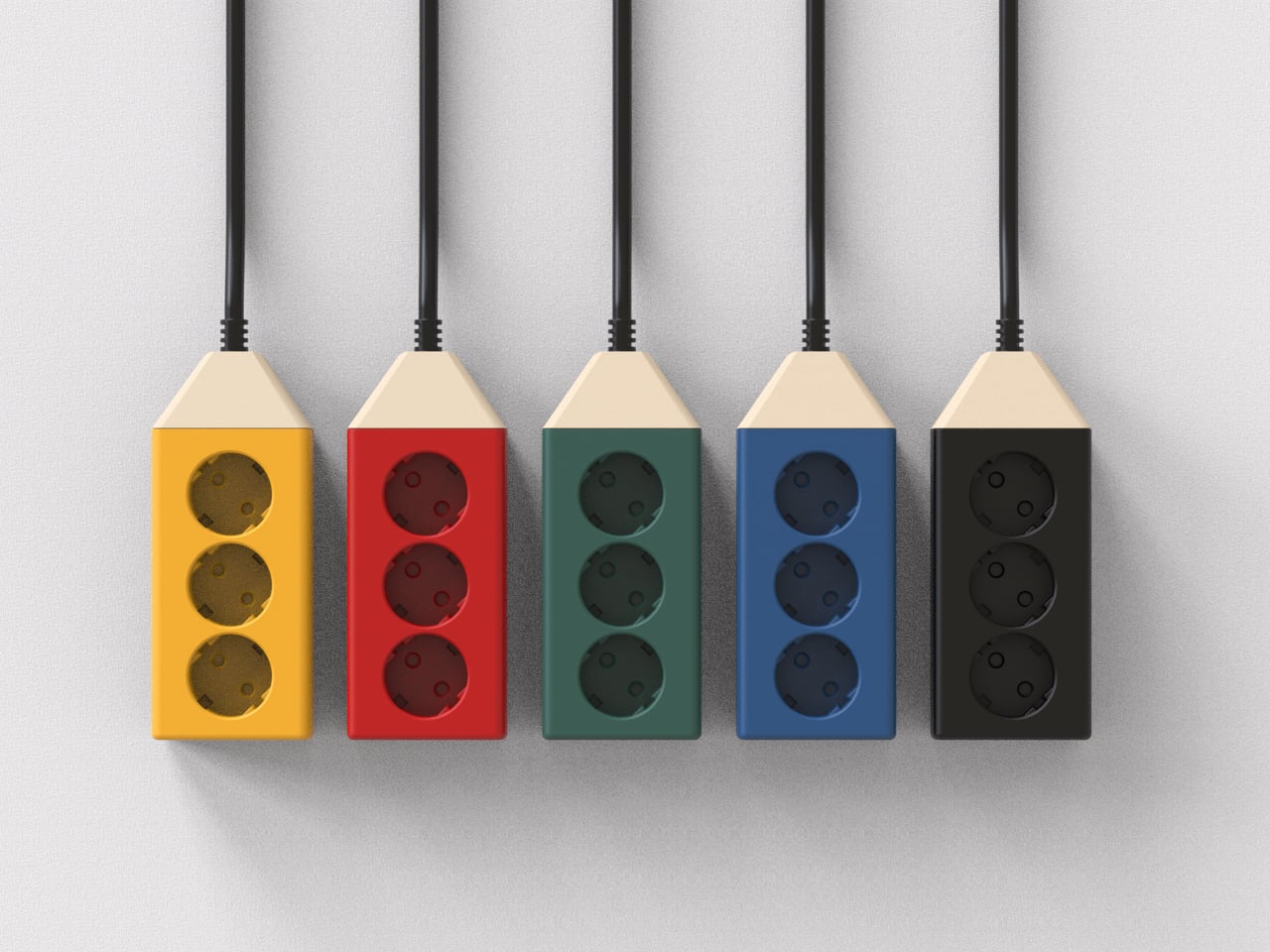
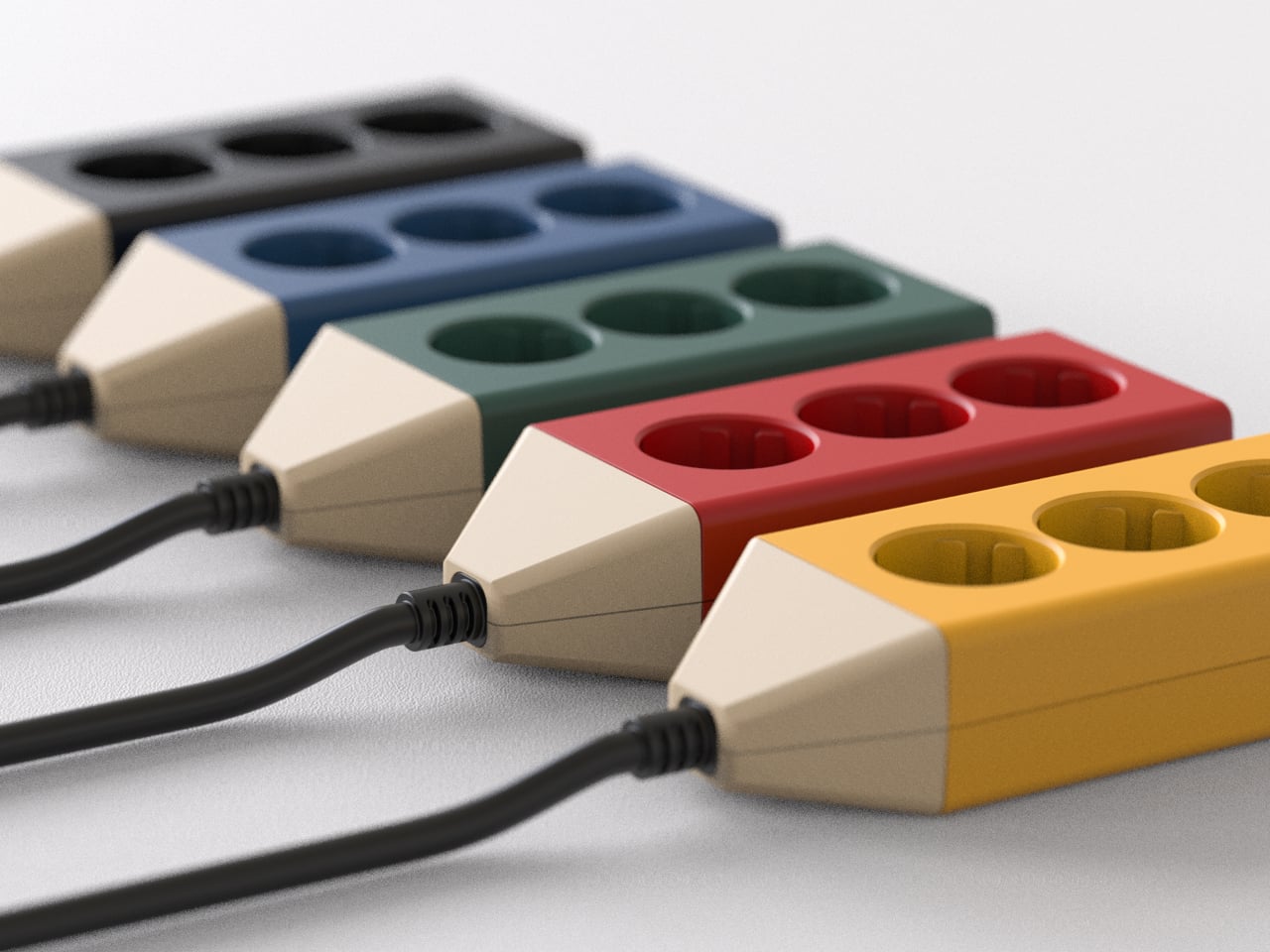
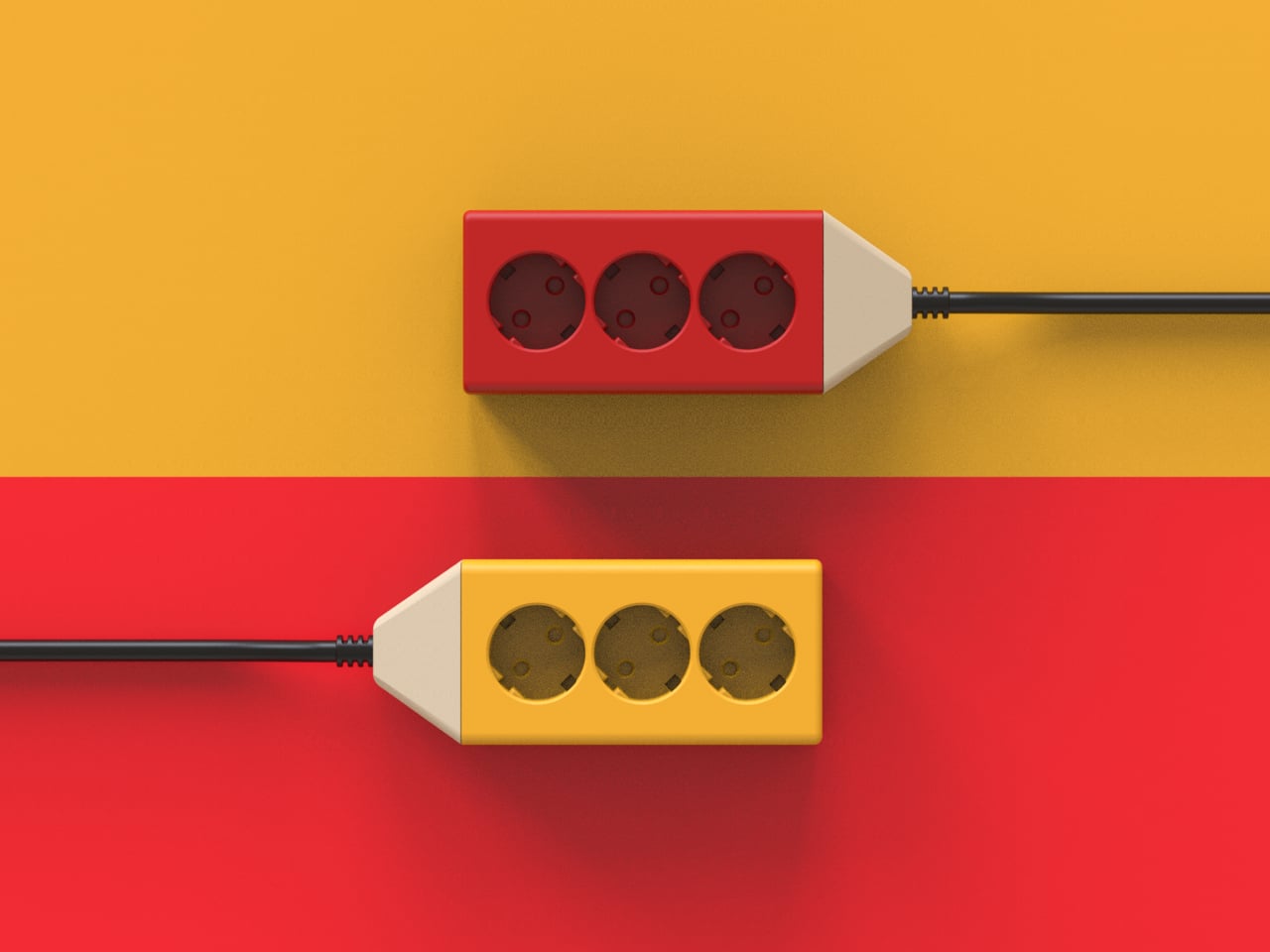
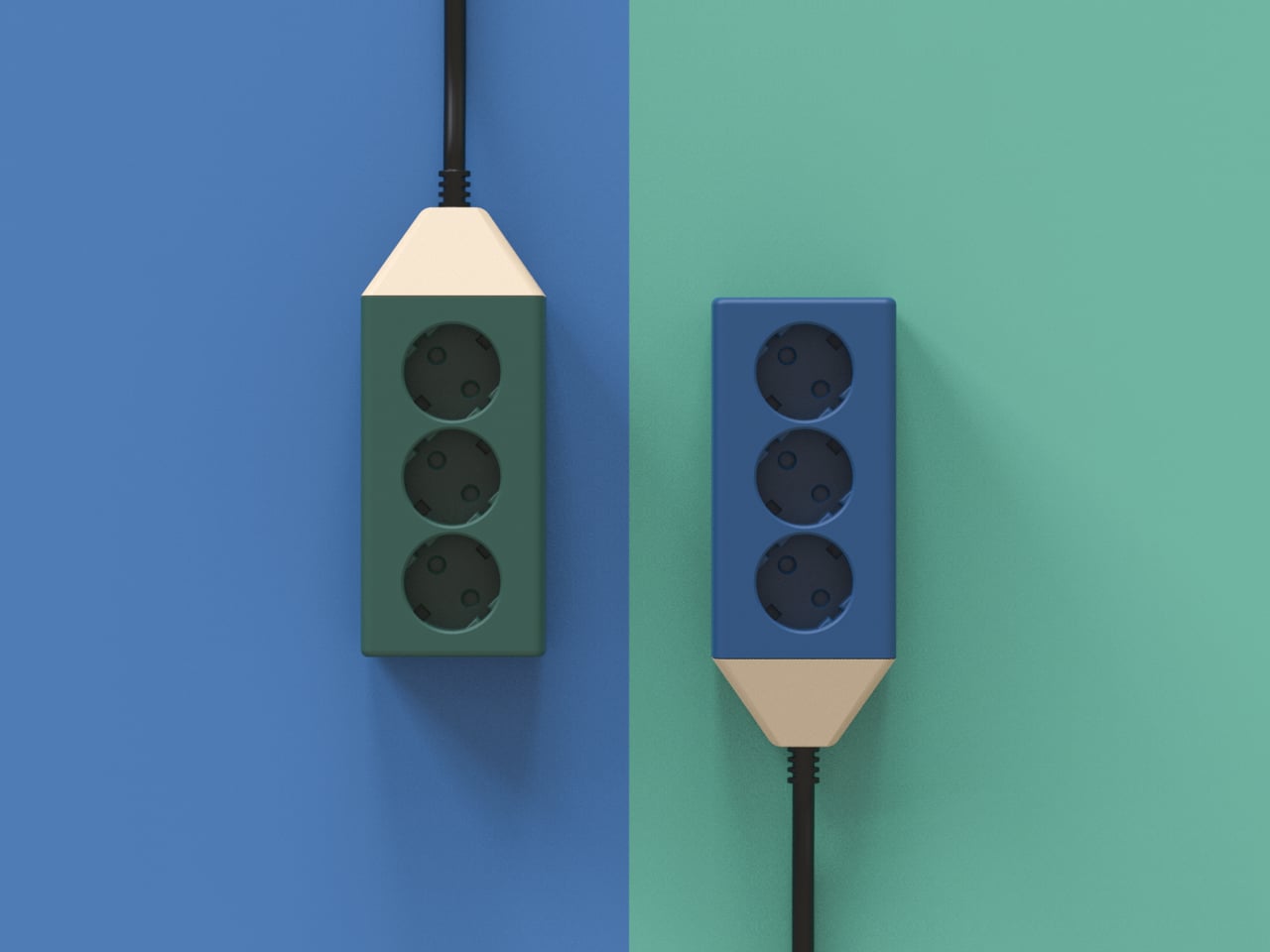
The pencil shape and color blocking make it feel familiar and non-technical, especially in a studio full of screens and metal. Instead of another black brick with a glowing switch, it reads as part of your creative kit, like a favorite pen or ruler. The single cable becomes a deliberate gesture instead of visual noise, which helps the workspace feel calmer even when multiple devices are connected and drawing power.

Three sockets mean this is not the strip you use to power an entire entertainment center or a full office rack. Big power bricks might still crowd each other if you stack too many adapters, and safety standards, surge protection, and regional plug types would all need careful engineering in a real product. But as a desk-level companion for a focused setup, the simplicity is part of the appeal.

The Pencil Multi-Tap treats electricity as part of the workspace experience instead of a background chore. Just as a pencil on the table invites you to write or draw, this little multi-tap invites you to plug in and begin. It is a reminder that even the most mundane tools can be designed to nudge you toward making something, rather than just managing the machines that do the making for you.

The post This Power Strip Looks Like a Pencil with a Cable That Draws a Line first appeared on Yanko Design.

Darth Maul’s standalone series premieres on Disney+ on April 6

Darth Maul, the beloved, sometimes spider-legged former Sith Lord first introduced in Star Wars: Episode 1 — The Phantom Menace, is officially getting his own animated spin-off on April 6, 2026, based on a new teaser trailer published by Disney. Star Wars: Maul — Shadow Lord was originally announced at Star Wars Celebration in 2025, and is set after Maul's arc in Star Wars: The Clone Wars but before his appearance in Star Wars: Rebels.

The 10-episode series covers Maul's plot to rebuild his criminal syndicate "on a planet untouched by the Empire," according to Lucasfilm. "There, he crosses paths with a disillusioned young Jedi Padawan who may just be the apprentice he is seeking to aid him in his relentless pursuit for revenge." Shadow Lord will premiere with two episodes on April 6, and will stream two episodes a week on Disney+ through May 6.

Like most of Disney's popular animated Star Wars shows, Maul — Shadow Lord is created by Dave Filoni, a George Lucas supplicant, co-creator of The Clone Wars and newly minted President and Chief Creative Officer at Luscafilm. Besides picking up the story threads he helped establish in his previous animated work, Maul — Shadow Lord could be representative of the work that will define his tenure: stories that play in the pre-existing Star Wars sandbox.

Since completing their sequel trilogy in 2019 with Star Wars: The Rise of Skywalker, Disney and Lucasfilm have struggled to define what the future of their franchise will actually be. New projects have languished in pre-production, interesting TV shows have gotten cancelled and the only things that seem to come out with any consistency are spin-offs of The Mandalorian and The Clone Wars. Disney and Lucasfilm will release The Mandalorian and Grogu on May 22, 2026, the first new Star Wars movie to hit theaters in seven years. The Shawn Levy-directed Star Wars: Starfighter, the first film set chronologically after the events of Rise of Skywalker, is slated to premiere on May 28, 2027.

This article originally appeared on Engadget at https://www.engadget.com/entertainment/streaming/darth-mauls-standalone-series-premieres-on-disney-on-april-6-224036720.html?src=rss
Designers Just Built the Chess Set Brutalism Fans Wanted

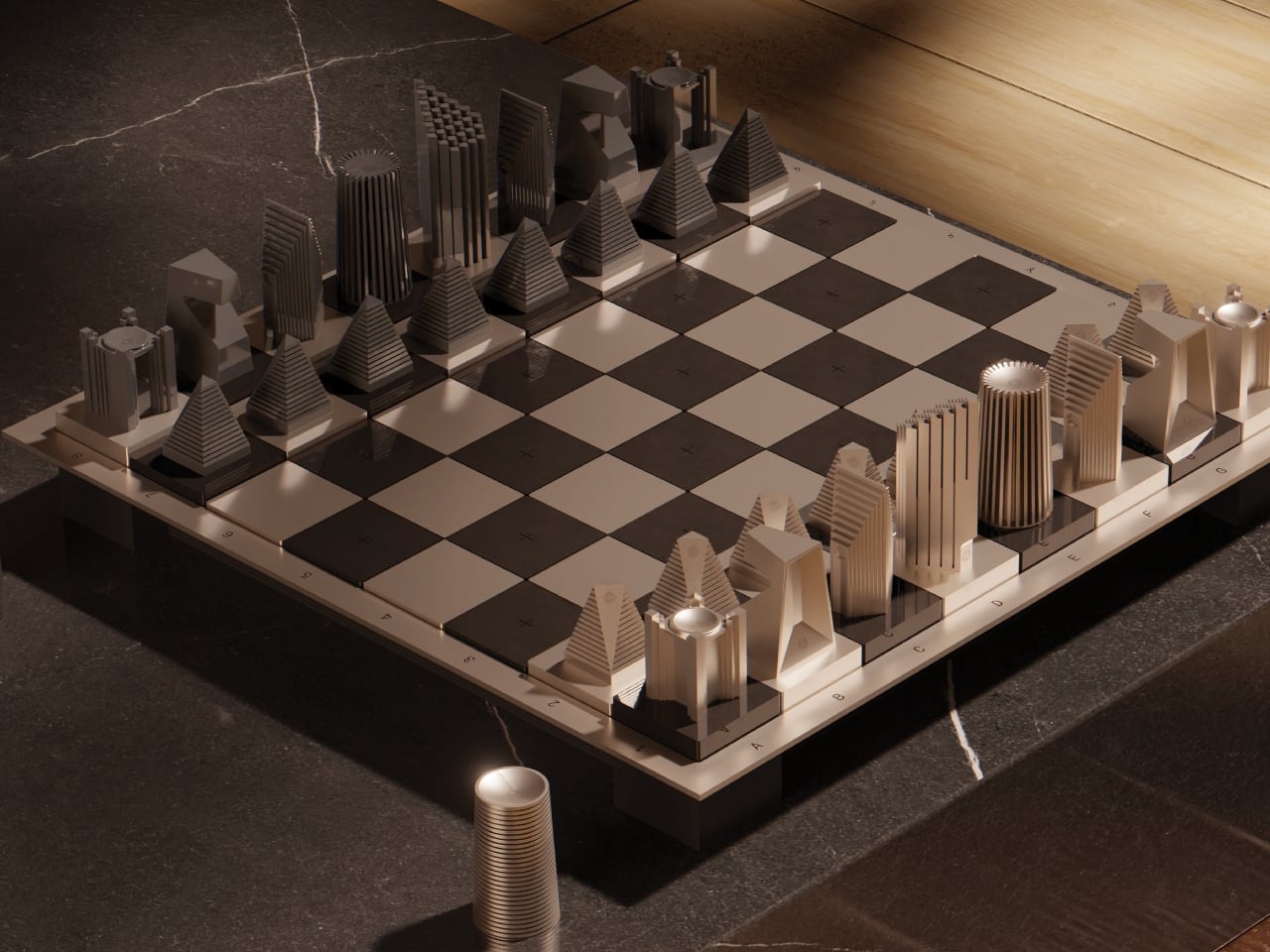
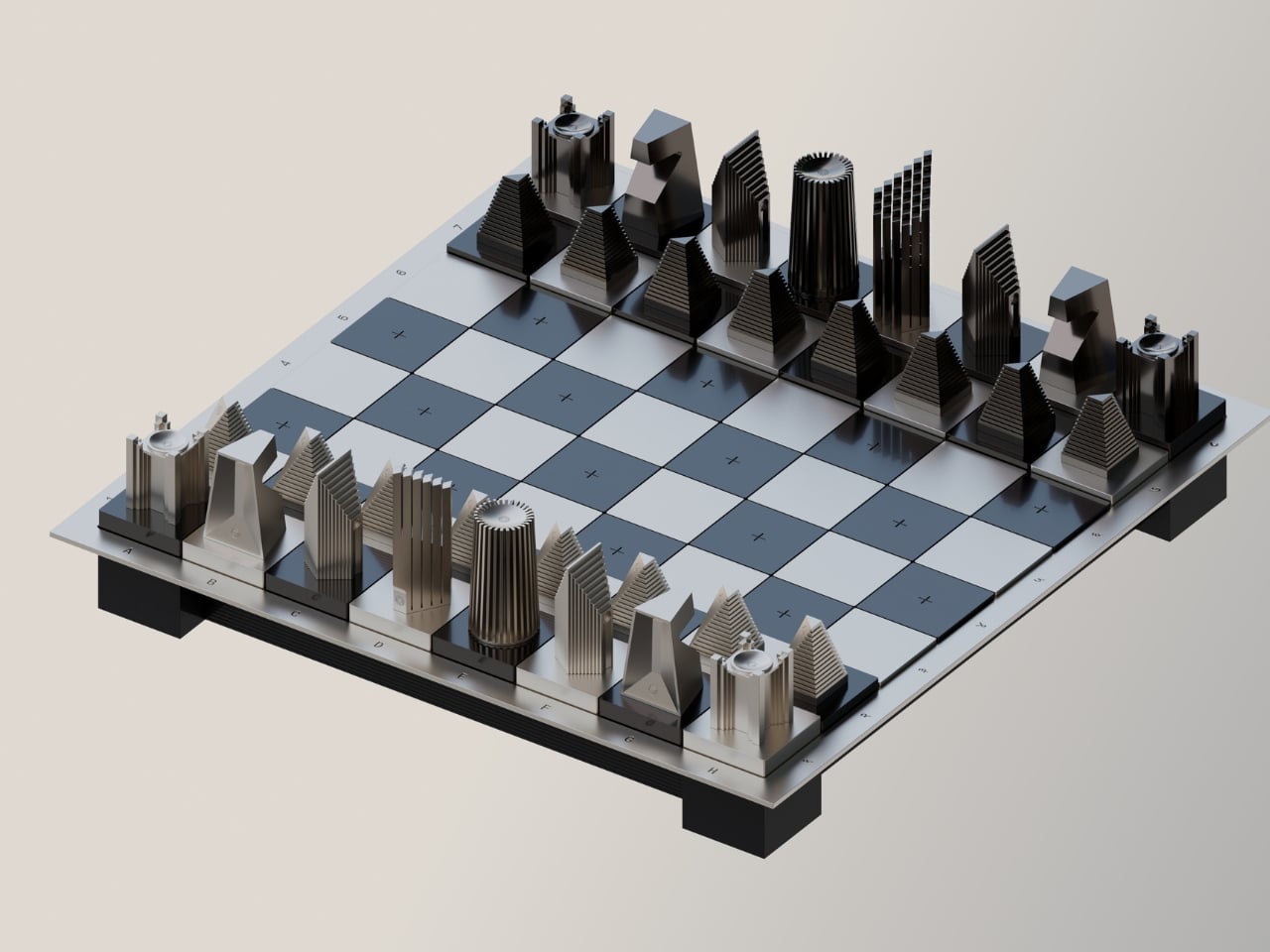
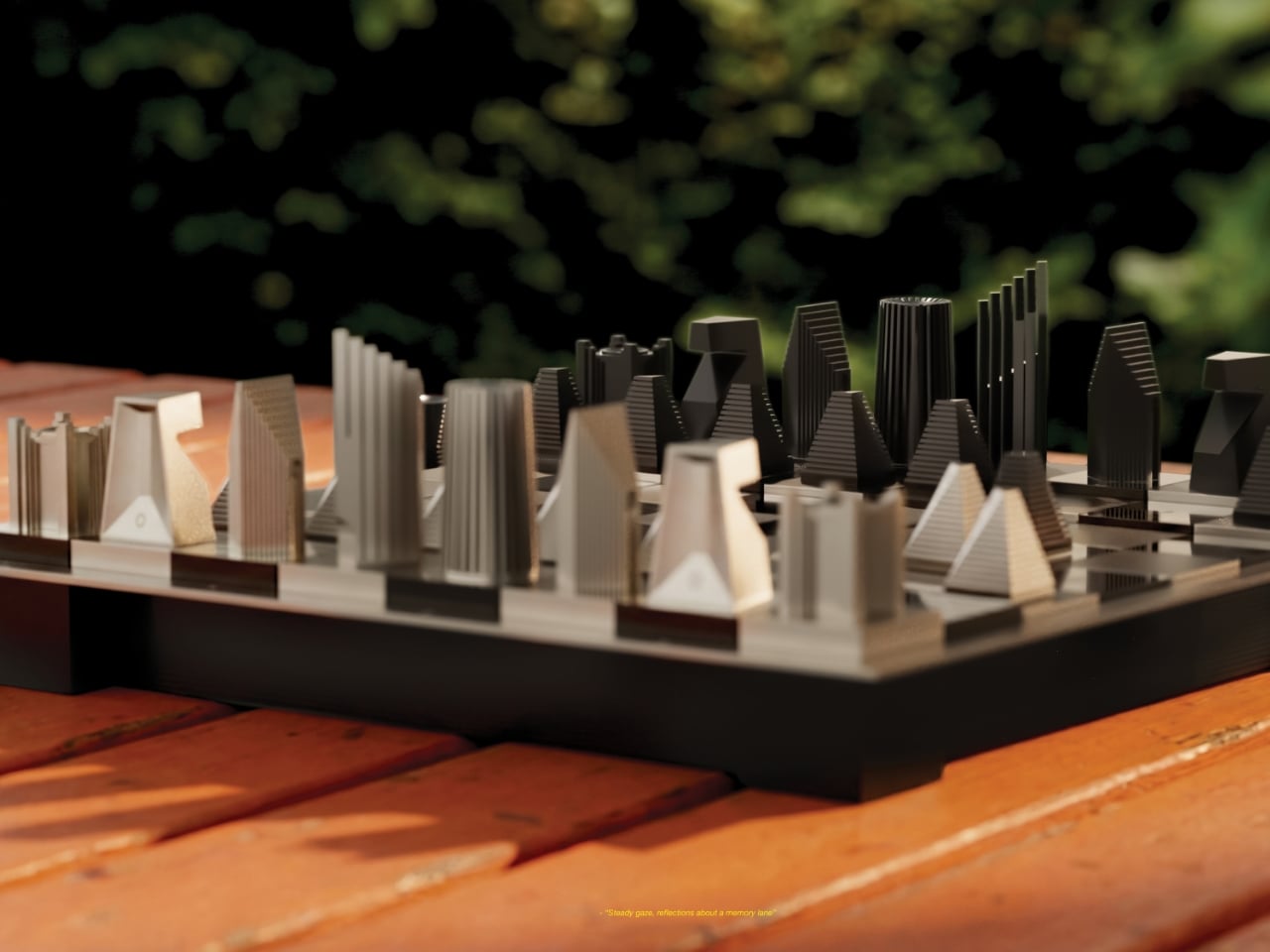
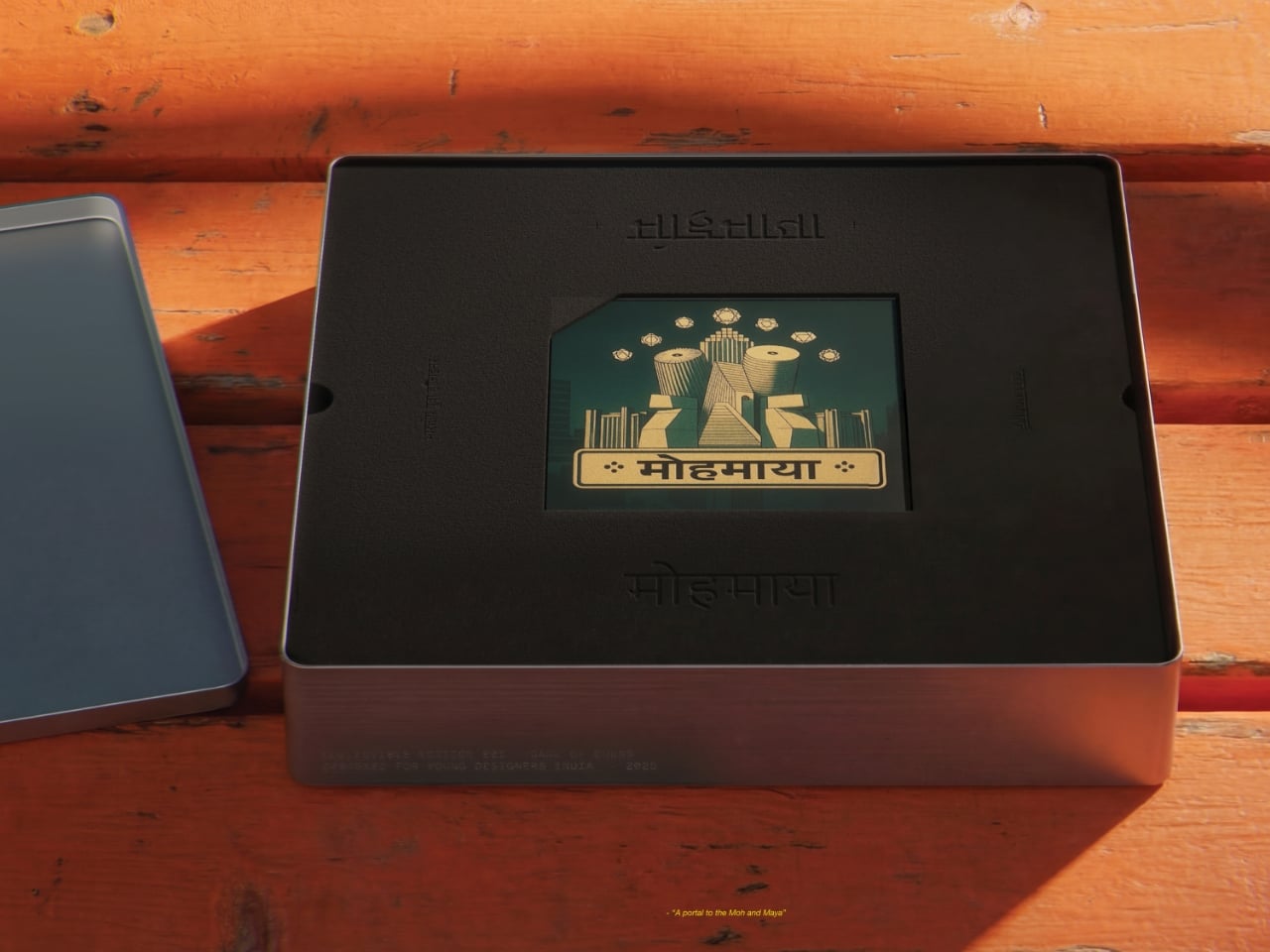
There’s something deeply satisfying about watching a familiar game get completely reimagined. The Mohmaya chess set does exactly that, turning the classic battlefield into a three-dimensional landscape where every move feels like navigating through a modernist city.

Designed by Tanay Vora, Vidushi Gupta, Hardik Sharma, and Yaman Gupta, this isn’t your grandmother’s chess set. Though actually, it kind of is, if your grandmother happened to appreciate mid-century Indian modernism and spiritual philosophy. The name “Mohmaya” translates to “illusion,” which feels perfect for a game that’s all about deception, strategy, and seeing through your opponent’s tricks.

Designers: Tanay Vora, Vidushi Gupta, Hardik Sharma, Yaman Gupta

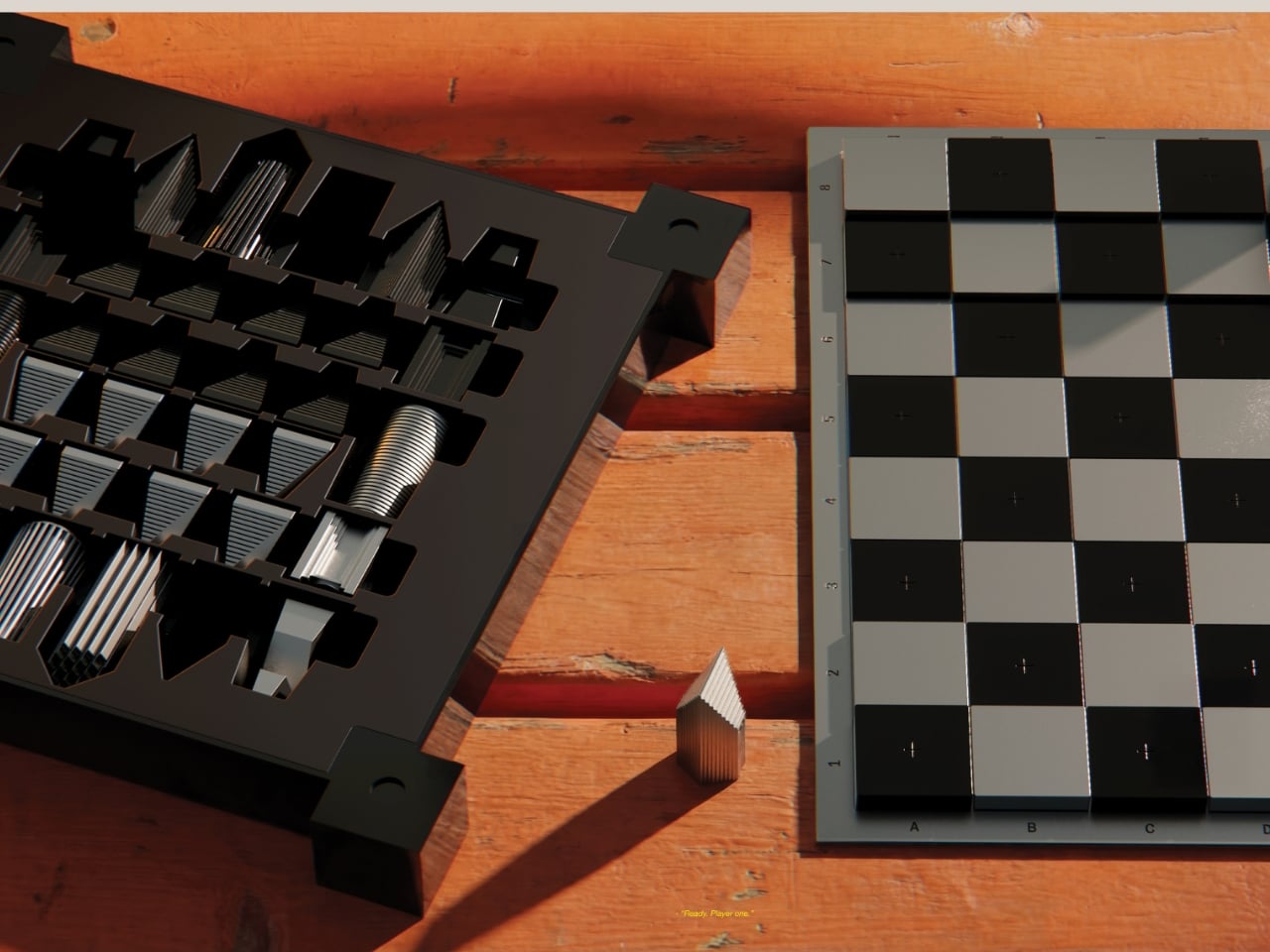
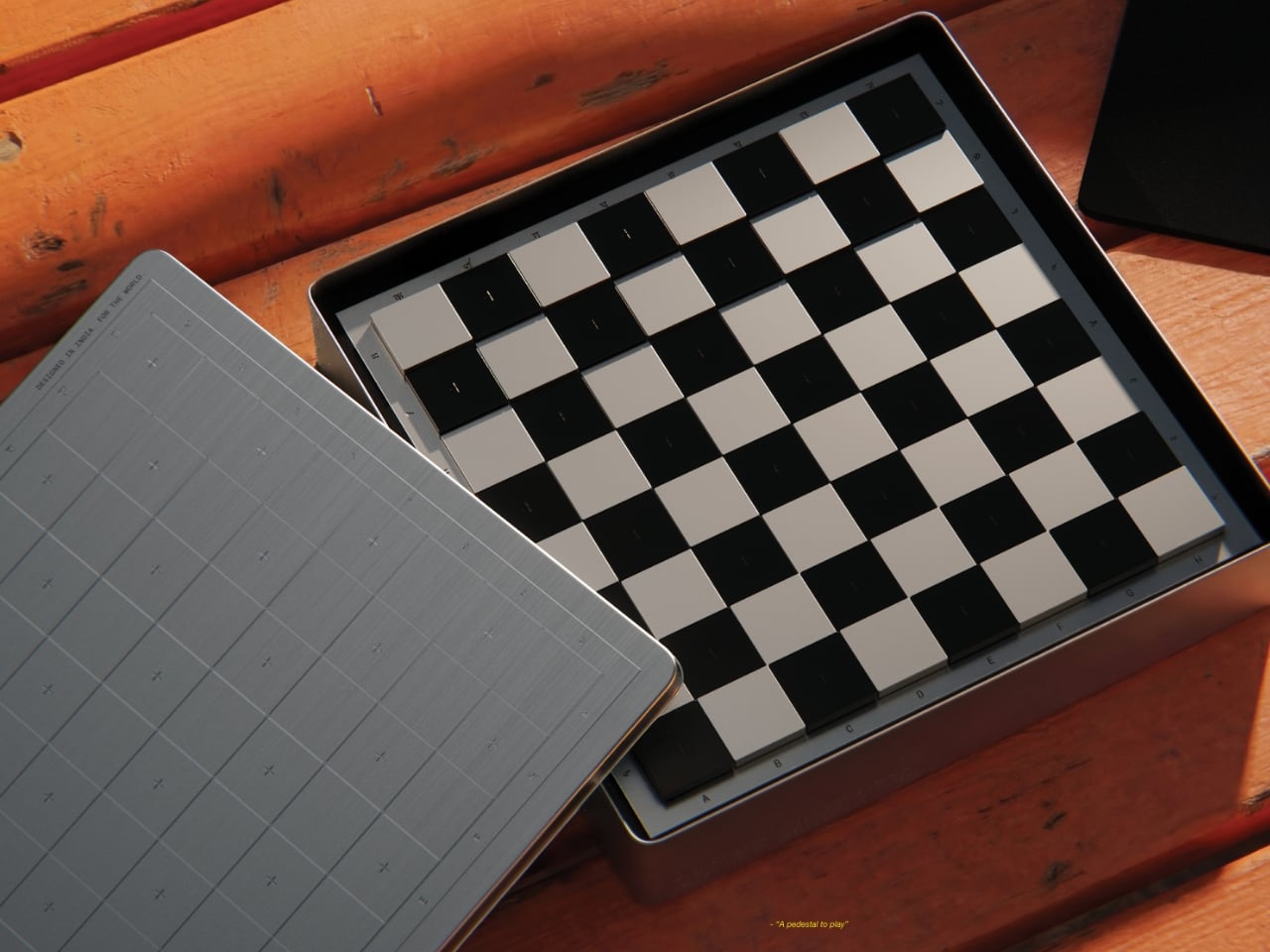
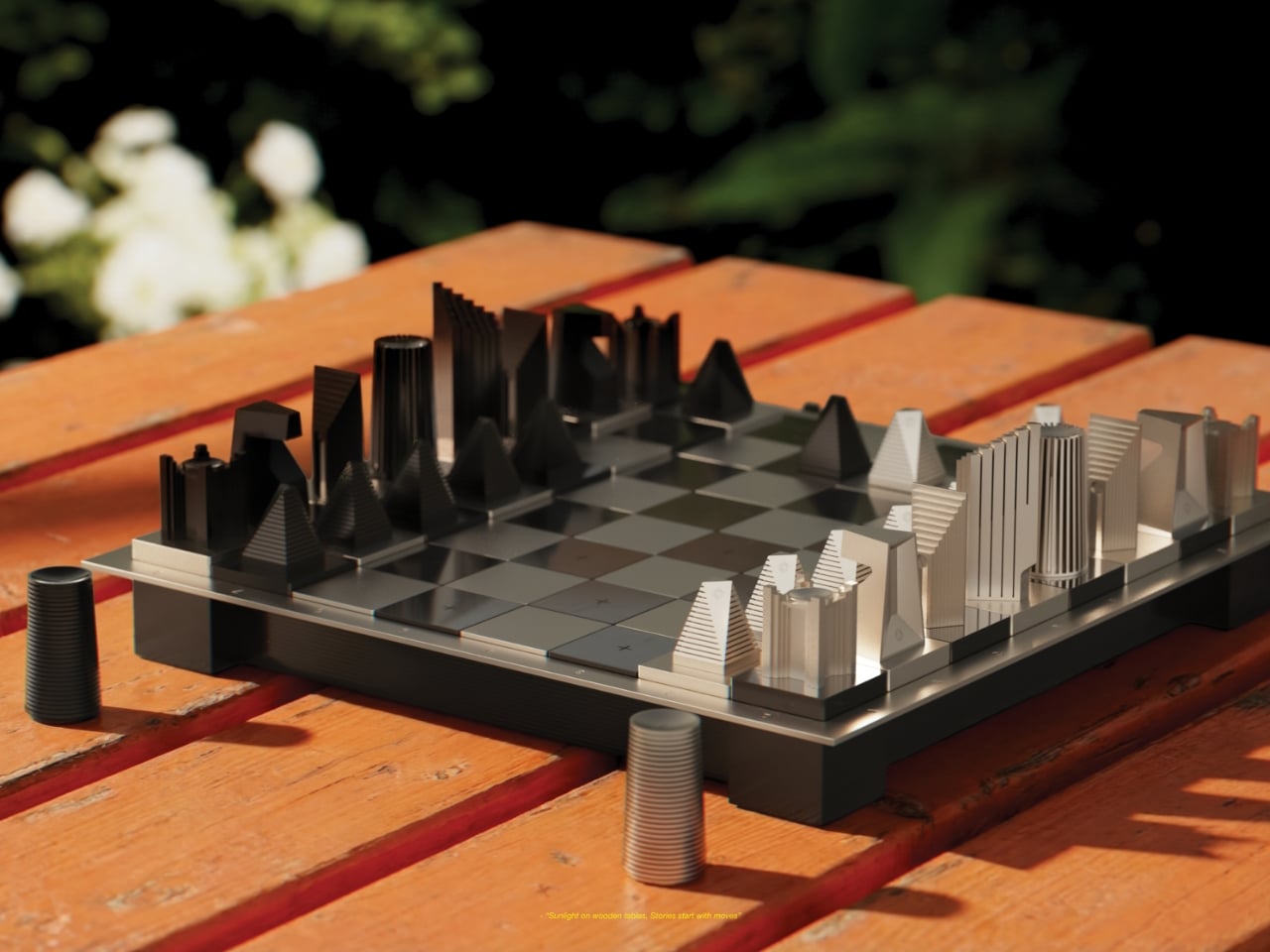
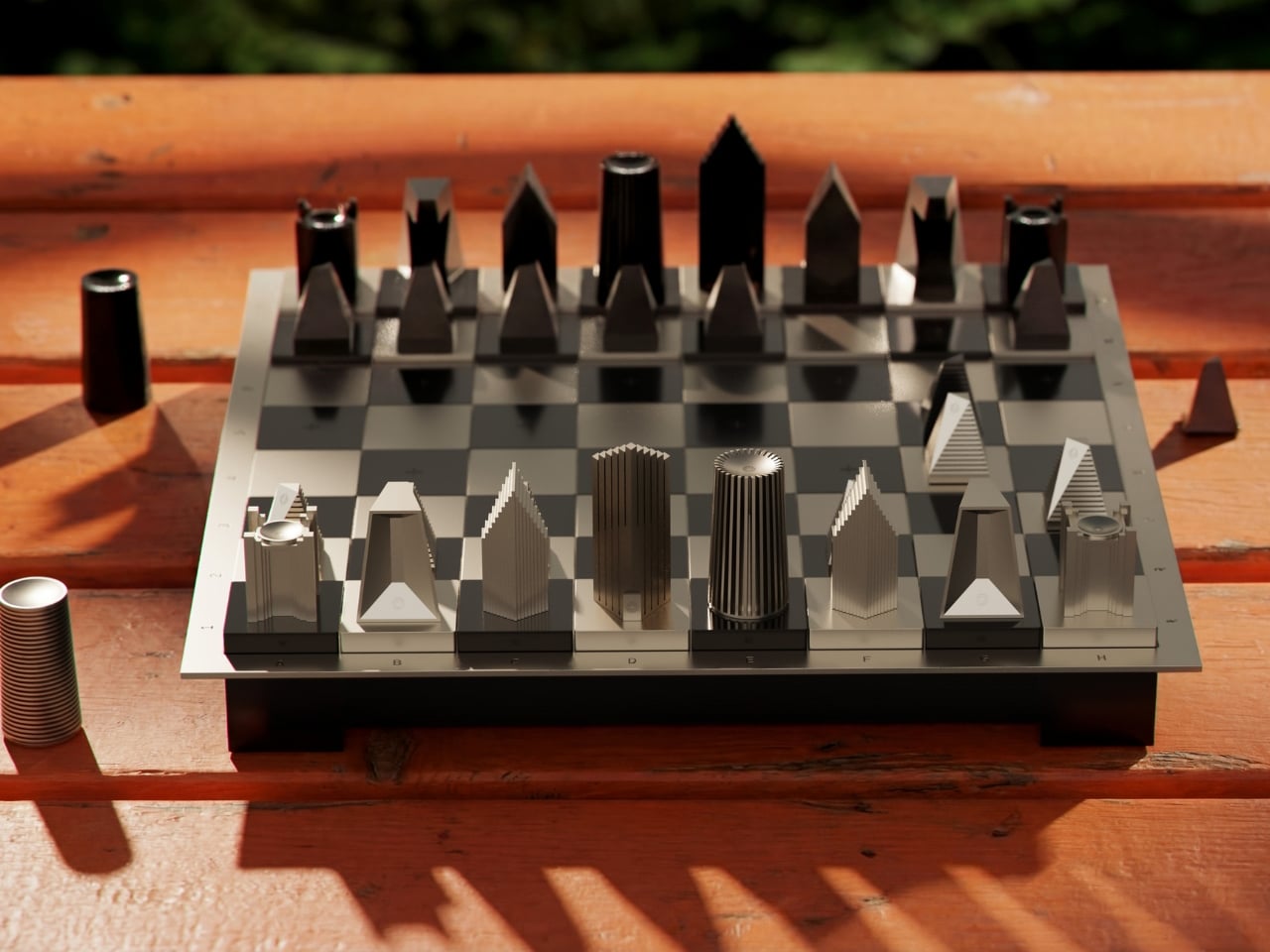
What makes this set visually striking is its refusal to stay flat. Unlike traditional chessboards that exist on a single plane, Mohmaya creates a topography. Pawns start on the lowest level, grounded and humble. The center of the board sits even lower, like a valley where the real drama unfolds. Then the back row rises highest, where kings and queens preside over everything like architectural monuments on a hilltop. Playing on this board means you’re not just moving pieces across squares but navigating elevation changes, climbing through terrain with every strategic advance.

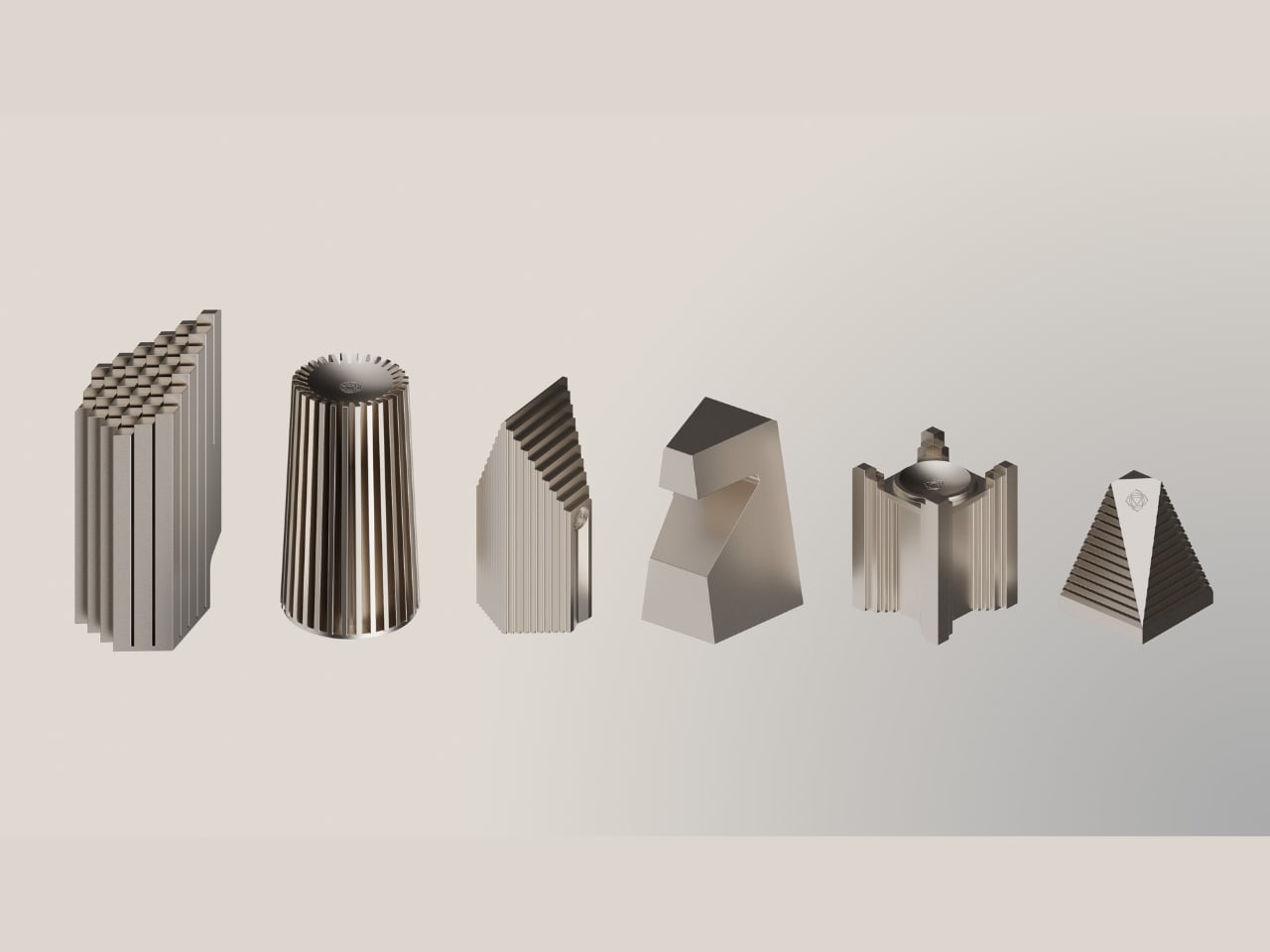
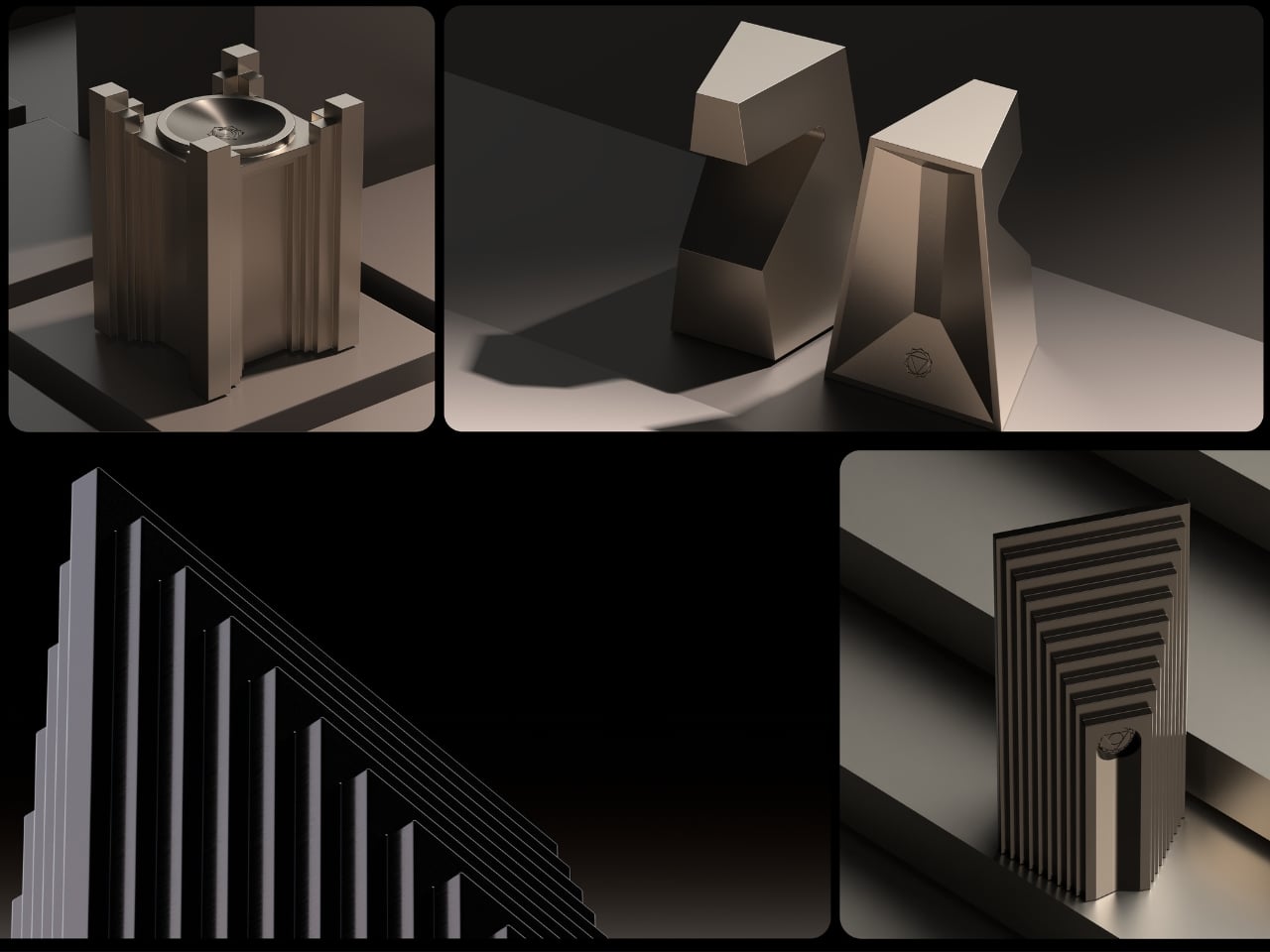
The pieces themselves are love letters to India’s architectural golden age. Each one draws from the concrete geometry, bold lines, and structural balance of mid-century modernist buildings. Think of the work of BV Doshi, Louis Kahn’s Indian Institute of Management in Ahmedabad, or Amit Raje’s brutalist visions. These weren’t architects who whispered. They made statements in poured concrete and dramatic forms, and Mohmaya channels that same confident energy.

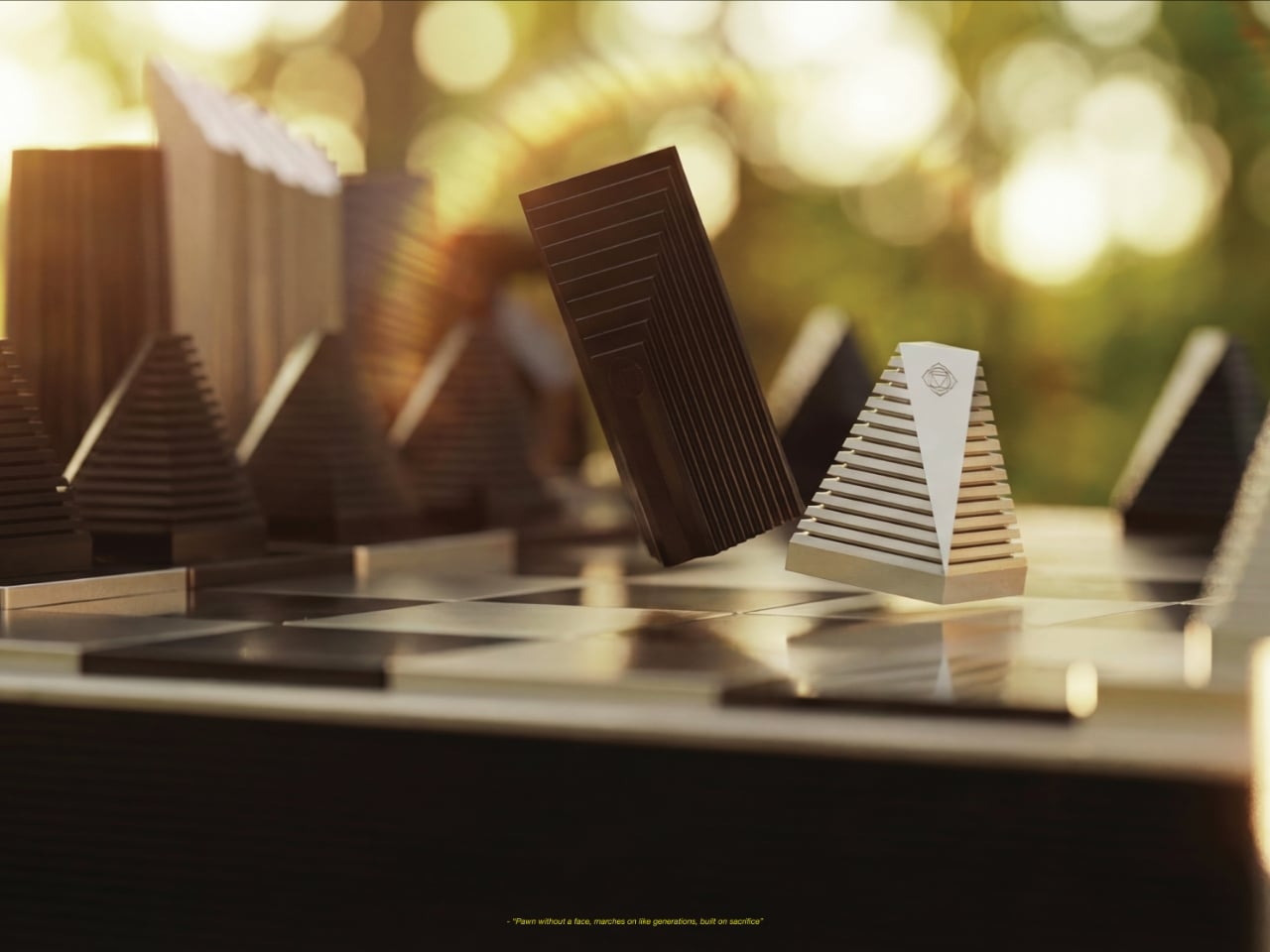
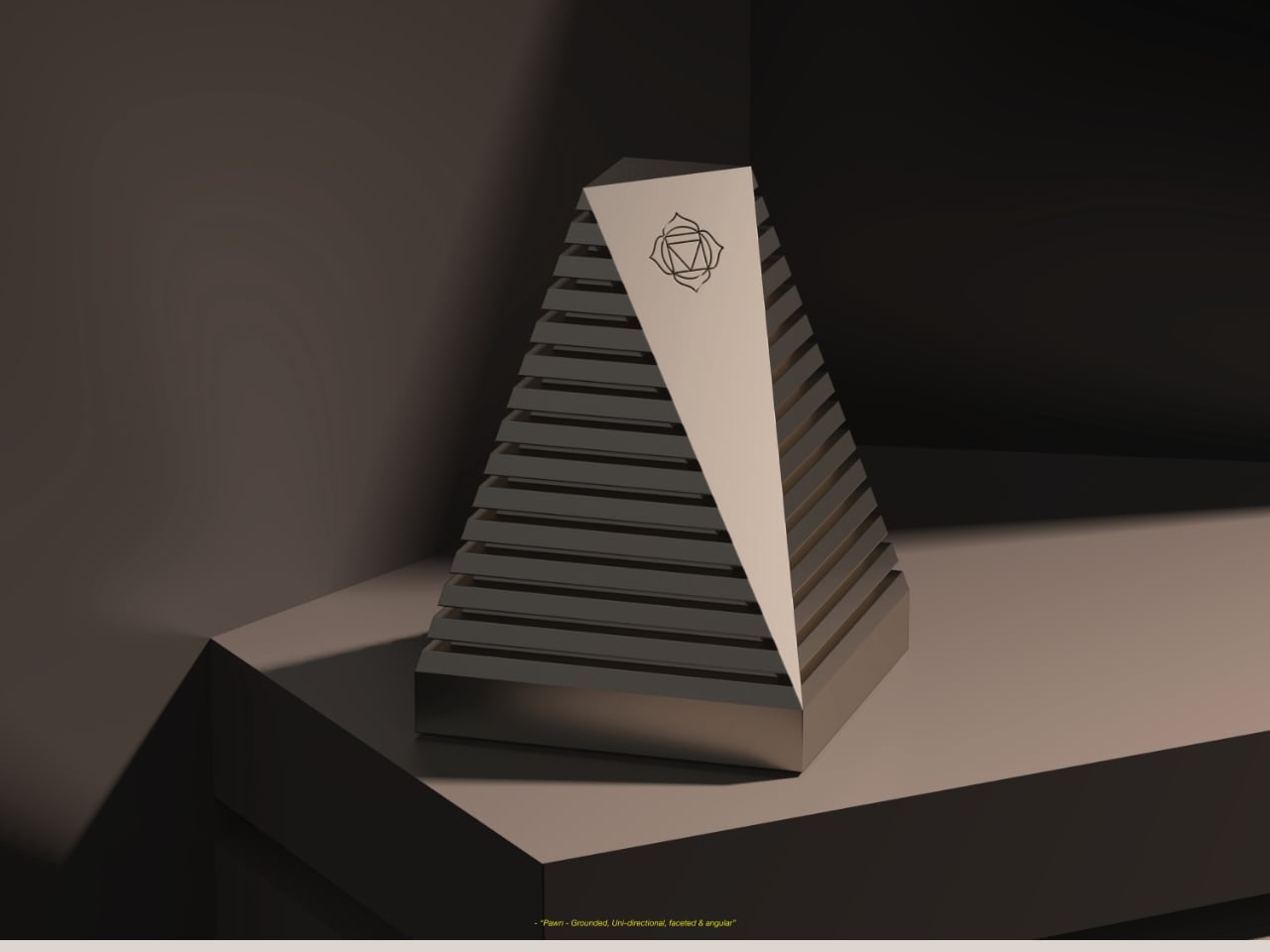
But there’s another layer here that elevates the design beyond pure aesthetics. Each chess piece aligns with chakra symbolism, giving every element a metaphysical dimension. Pawns connect to the Root Chakra, representing stability and patience. Knights embody the Sacral Chakra with their creative, playful energy, always in motion. Bishops hold the Solar Plexus, focused and powerful in their diagonal precision. Rooks align with the Heart Chakra, protective yet generous. Queens carry the Throat Chakra’s voice, expressing leadership across the board. And the king stands with the Crown Chakra, the quiet center of wisdom and balance.

This symbolic framework isn’t just decorative philosophy. It actually affects how you think about each piece’s role in the game. When your rook moves, you’re activating that protective heart energy. When your queen sweeps across the board, she’s literally voicing your strategy. It adds a narrative dimension to every match, making the board itself part of the story.

Speaking of story, Mohmaya introduces one fascinating rule variation. When a pawn reaches the opposite end of the board, it transforms into an additional queen, just like in traditional chess. But here, that transformation carries extra weight. It’s the awakened queen, a reminder that even the smallest, most grounded pieces can undergo radical change. It’s a beautiful metaphor for growth and potential, wrapped in gameplay mechanics.

What really resonates about this project is its underlying mission to reframe how people see Indian design. For too long, the global perception has been narrow, viewing Indian aesthetics through a lens of nostalgia, ornamental patterns, or folkloric charm. Mohmaya pushes back against that limiting view. This is Indian design that’s bold, globally conversant, forward-thinking, and philosophically deep. It draws from a culture that has always asked big questions about life, reality, and meaning, then translates those questions into something you can hold in your hands and play with.

The design team describes it as an homage to Indian utopian modernism, that brief moment when tradition and innovation mixed without hesitation. That period produced some of the most exciting architecture in the world, buildings that weren’t afraid to be both contemporary and rooted in local context. Mohmaya carries that same spirit into object design.

Whether you’re a chess enthusiast, a design collector, or someone who just appreciates objects with intention behind them, this set offers something rare. It’s functional art that doesn’t sacrifice playability for concept. It’s culturally specific without being exclusive. It takes an ancient game and makes it feel fresh by connecting it to a different kind of history, one that deserves more recognition in global design conversations.

The post Designers Just Built the Chess Set Brutalism Fans Wanted first appeared on Yanko Design.

JBL made a pair of AI-powered practice amps

JBL is trying its hand at something new, with a pair of AI-powered practice amps. The BandBox Solo and BandBox Trio include an onboard Stem AI that purportedly lets you separate or remove vocals and instruments from any music streamed over Bluetooth. So, say you're a young guitarist learning “Stairway to Heaven” (as one does). At least in theory, you could use the speaker to remove Jimmy Page's part and hone your chops with the rest of the band.

The $250 BandBox Solo, designed for individual musicians, has a single guitar / mic input. And the $600 BandBox Trio, better for bands, supports up to four instrument inputs. The latter also has a few extra perks not found in the Solo: onboard controls (to reduce reliance on the app) and an LCD.

A hand adjusting knobs on the JBL BandBox Trio speaker
The more expensive BandBox Trio has an LCD and more onboard controls.
JBL

The JBL One app lets you add filters to match a variety of modern and vintage amp models. You'll also find effects like phaser, chorus, and reverb, as well as a pitch shifter and tuner. A built-in looper will allow for layering, but JBL says that feature will arrive via a software update in October.

JBL says the BandBox Solo supports up to six hours of battery life. The BandBox Trio is said to last up to 10 hours. But the latter has a replaceable battery, so you could buy a spare (for an as-yet-unknown price) and double that time.

The $250 BandBox Solo and $600 BandBox Trio are available to pre-order from JBL's website starting today. Shipments and third-party retail availability are scheduled for March 1.

This article originally appeared on Engadget at https://www.engadget.com/audio/speakers/jbl-made-a-pair-of-ai-powered-practice-amps-221000631.html?src=rss

Telly has only delivered 35,000 of its free televisions with always-on ads

Telly appeared on the home theater scene in 2023 with an unusual proposition. Its business model revolves around giving customers free dual-screen televisions where the lower screen shows non-stop advertisements. At the time, the start-up’s execs projected that Telly would ship its first 500,000 screens that summer. However, Janko Roettgers of Lowpass reported that Telly only had 35,000 sets in people's homes at the end of the third quarter of 2025. The figure appears to come from a quarterly investor update, but Telly didn't provide Roettgers with any comment on the report.

Personally, I don't think I'd want a free TV that perpetually pelts me with ads, but it seems Telly did in fact have some interest in its approach; the company reportedly had 250,000 pre-orders in June 2023. However, it ran into issues with getting those televisions to customers in one piece. The quarterly report allegedly said that 10 percent of Telly's shipments through FedEx arrived broken. A thread on the company's Reddit page from a year ago backs that up, chronicling delayed shipments and broken replacements. So in short, things aren’t going so great for the company right now.

This article originally appeared on Engadget at https://www.engadget.com/home/home-theater/telly-has-only-delivered-35000-of-its-free-televisions-with-always-on-ads-215033698.html?src=rss
Mangmi Pocket Max handheld boasts magnetic modular D-Pad and ABXY buttons

The handheld wars are entering the territory where end-users will benefit the most, getting the best hardware at the most competitive prices. Ayaneo, Anbernic, and other new players in the handheld market are vying for dominance, which is likely to manifest in sharp pricing. Android handheld maker Mangmi, targeting the entry level of the gaming community, wants to join the tussle with its new iteration of a gaming handheld device.

The Chinese maker is known for its $99 Air X handheld that punches well above its weight, giving retro handhelds priced around $150 a run for their money. Now, the Pocket Max handheld revealed this week, wants to take things further in the quest for handheld supremacy. Going by the revealed specs, we assume the handheld will be priced around $200, making it compete with the likes of Retroid Pocket Mini V2. Considering the global RAM shortage, anything less than that would be a good option for gamers who play a lot of emulation titles.
Design: Mangmi

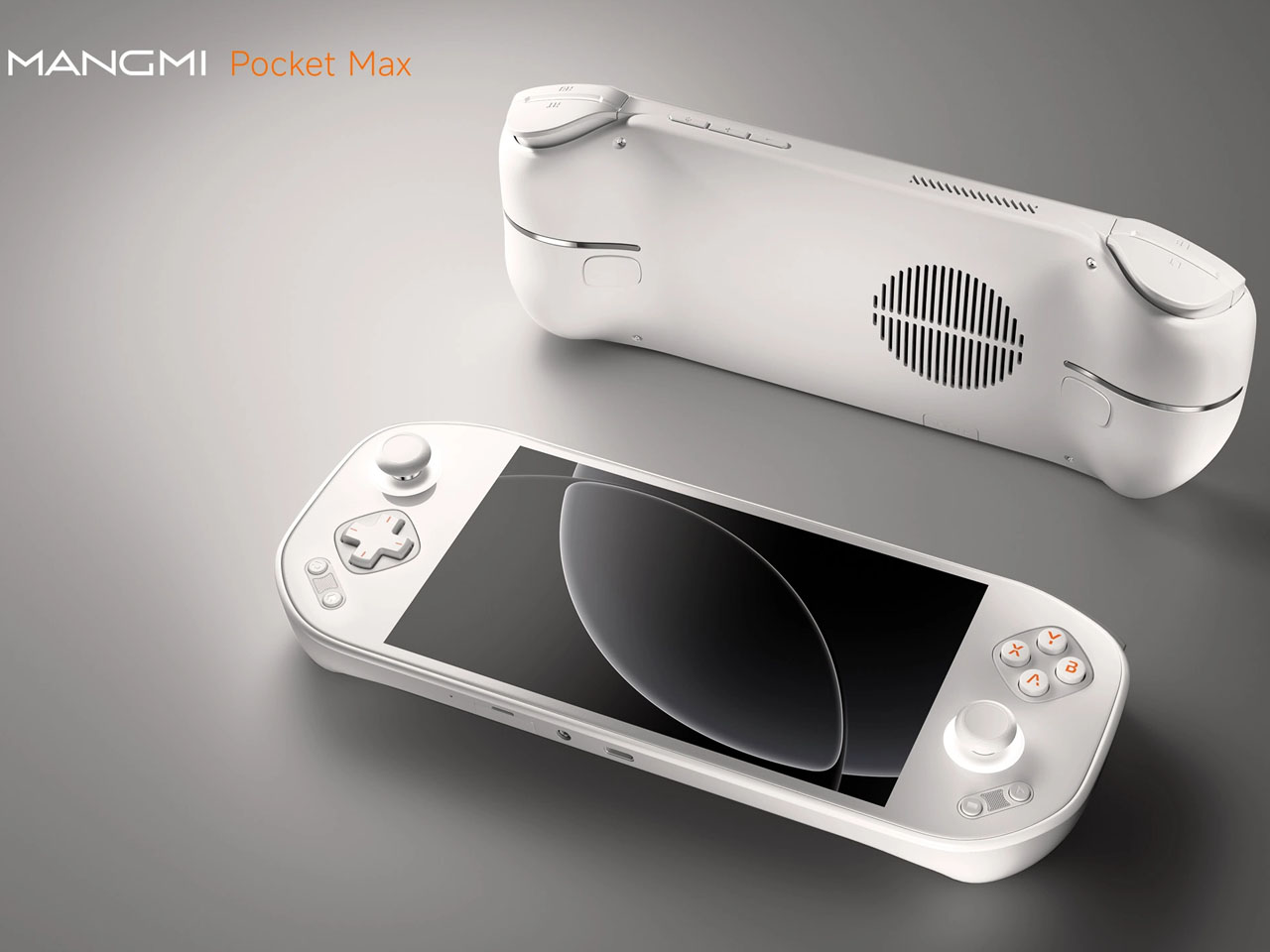
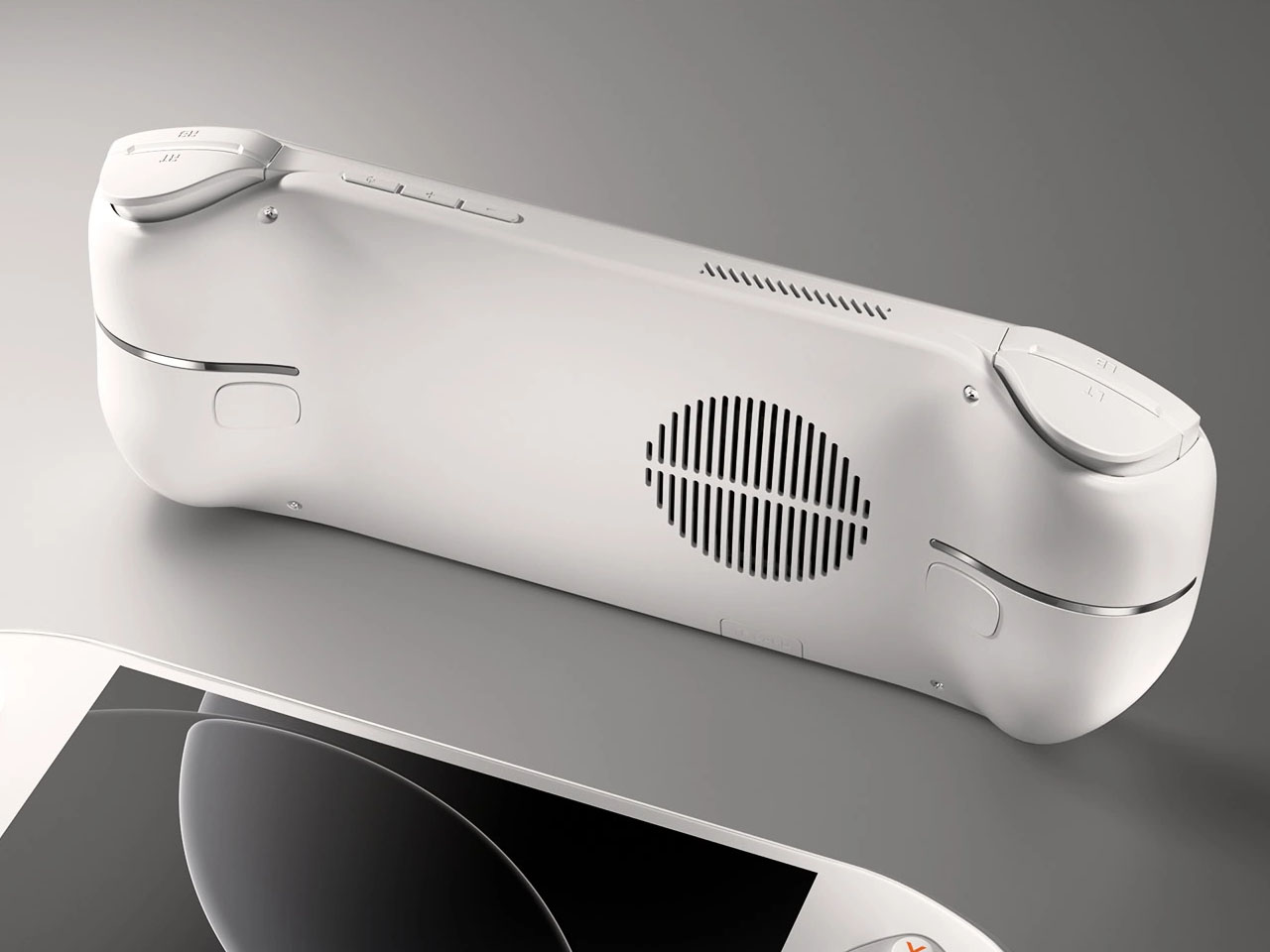
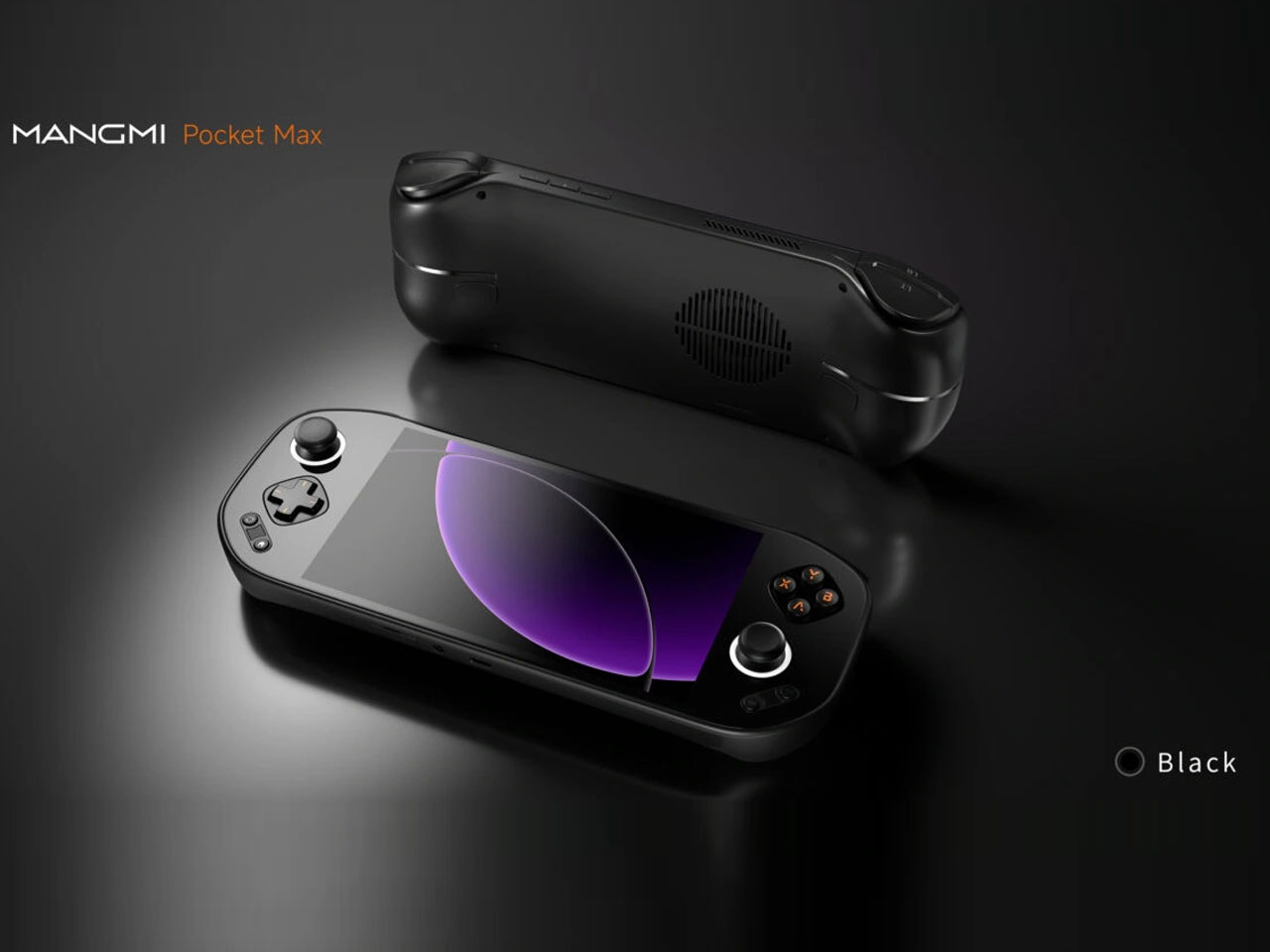
While the Air X touted the portable aesthetics, the Pocket Max targets gamers who want to swap better performance with a bit of sacrifice in size. For now, Mangmi has released some renders and the specifications of the gadget. It’ll have a 7-inch AMOLED display with 1920 × 1080 HD resolution and 144Hz refresh rate. The device will be powered by the Snapdragon 865 processor, which also powers the Retroid Pocket 5 and Ayaneo Thor Lite. If we go by the official specs sheet, Mangmi will offer the handheld in one variant only that will have 8GB LPDDR4X RAM and 128GB UFS 3.1 storage, which can be extended via the MicroSD card slot.

For extended gaming sessions, the Android 13 handheld gets an 8,000mAh battery with a charging capacity of up to 27W. This is done via the USB-C port that also supports video output. You also get a 3.5mm headphone jack for lossless video output. To maintain constant framerates in graphics-intensive titles, there is an active cooling fan to keep the temperature to a minimum. Wi-Fi 6 and Bluetooth 5.1 connectivity take care of all your wireless connectivity needs.

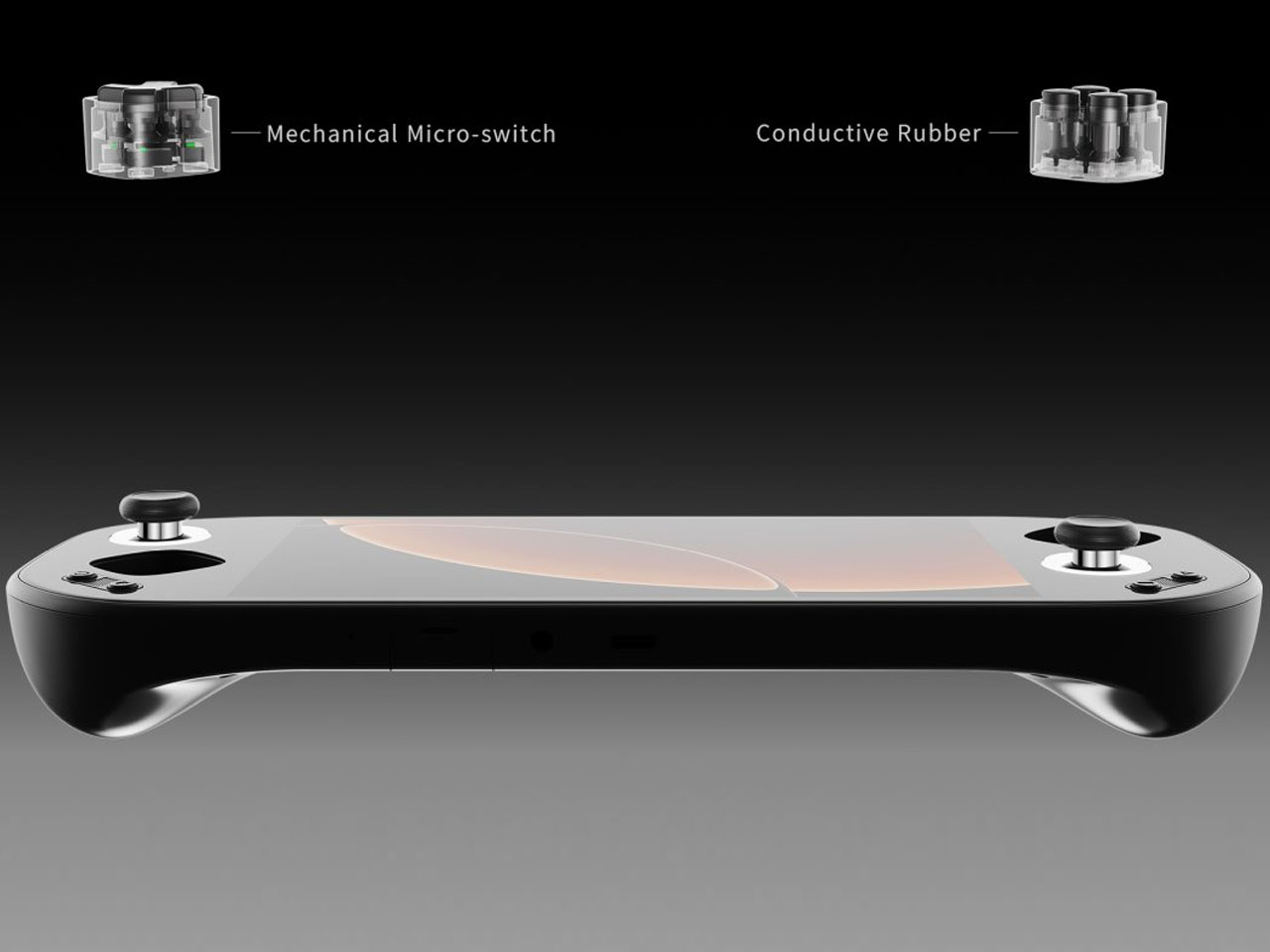
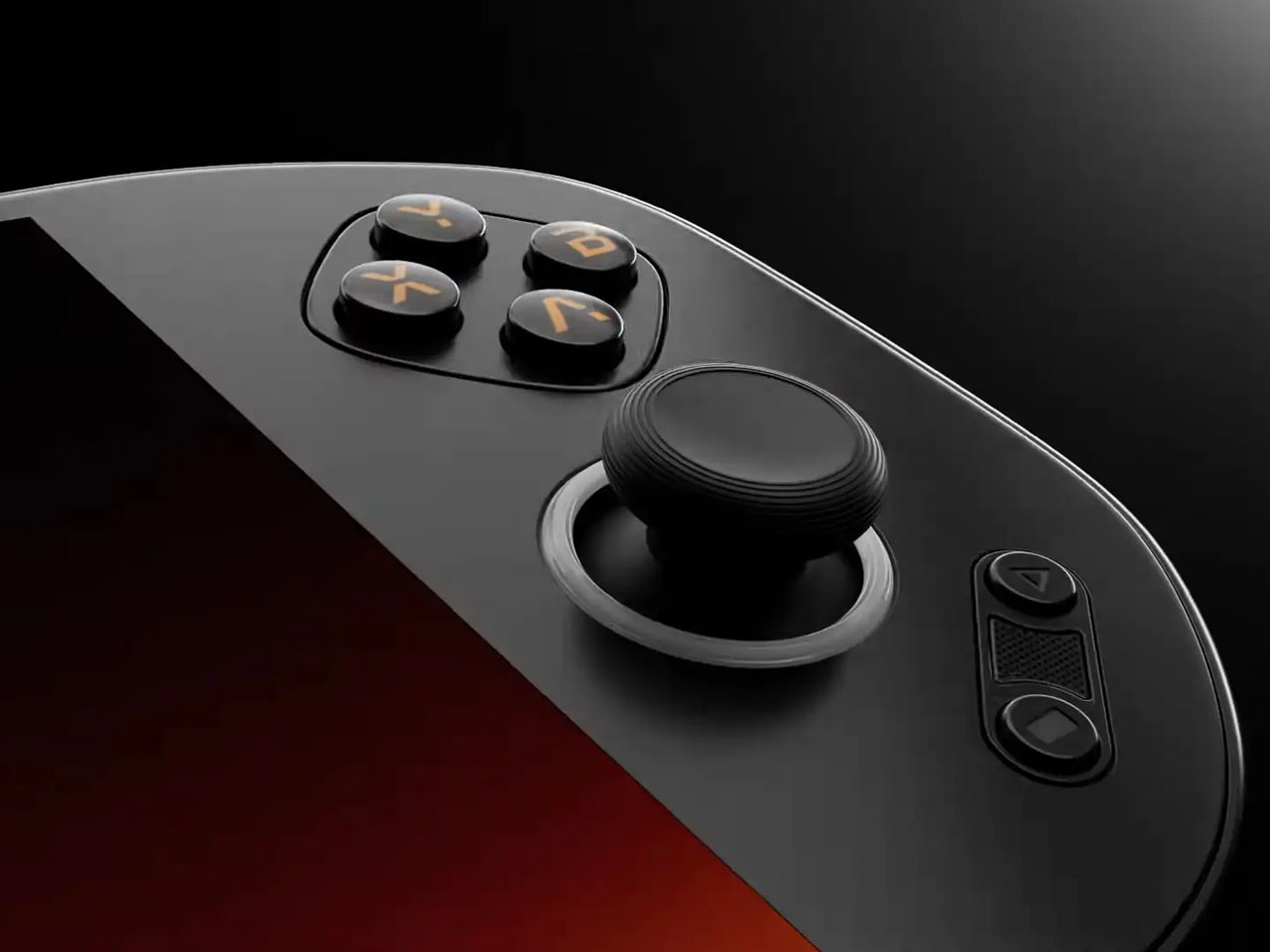
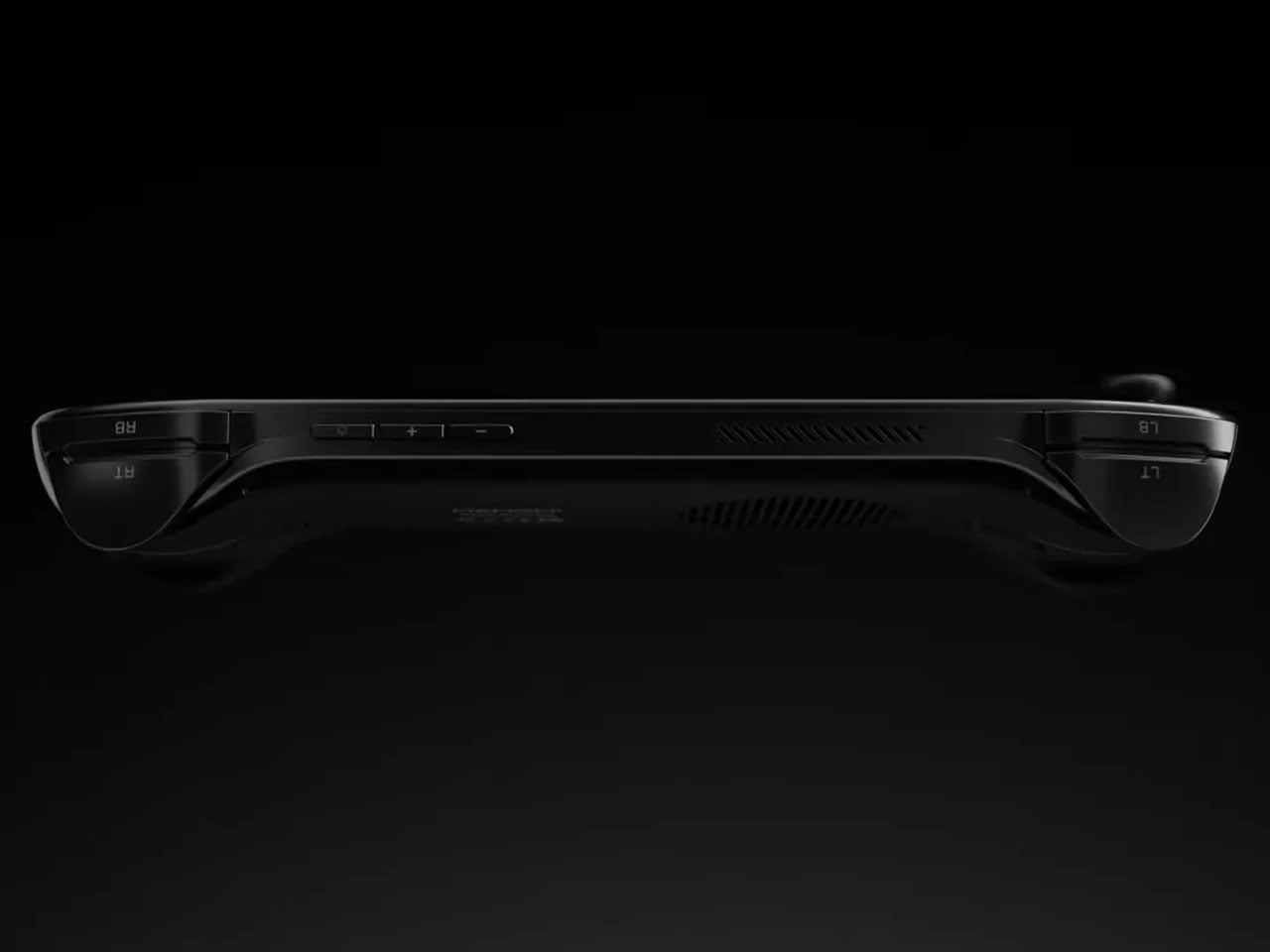
The gaming device comes with magnetic modular D-Pad and ABXY buttons, which is a good addition if they can survive the onslaught of emotional gamers. The maker claims this to be the first-ever Android-powered handheld with modular magnetic buttons. Other than this, the handheld follows suit with asymmetric TMR thumbsticks with RGB ring lights, Hall Effect triggers, and a 6-axis G-sensor. Pocket Max is on the heavier side at 450 grams and has slightly beefy dimensions of 10 inches high, 4 inches wide, and 0.7 inches thick. When finally released, the handheld will come in White, Black, and Retro GB color variants.


The post Mangmi Pocket Max handheld boasts magnetic modular D-Pad and ABXY buttons first appeared on Yanko Design.

Mangmi Pocket Max handheld boasts magnetic modular D-Pad and ABXY buttons

The handheld wars are entering the territory where end-users will benefit the most, getting the best hardware at the most competitive prices. Ayaneo, Anbernic, and other new players in the handheld market are vying for dominance, which is likely to manifest in sharp pricing. Android handheld maker Mangmi, targeting the entry level of the gaming community, wants to join the tussle with its new iteration of a gaming handheld device.

The Chinese maker is known for its $99 Air X handheld that punches well above its weight, giving retro handhelds priced around $150 a run for their money. Now, the Pocket Max handheld revealed this week, wants to take things further in the quest for handheld supremacy. Going by the revealed specs, we assume the handheld will be priced around $200, making it compete with the likes of Retroid Pocket Mini V2. Considering the global RAM shortage, anything less than that would be a good option for gamers who play a lot of emulation titles.

Design: Mangmi

While the Air X touted the portable aesthetics, the Pocket Max targets gamers who want to swap better performance with a bit of sacrifice in size. For now, Mangmi has released some renders and the specifications of the gadget. It’ll have a 7-inch AMOLED display with 1920 × 1080 HD resolution and 144Hz refresh rate. The device will be powered by the Snapdragon 865 processor, which also powers the Retroid Pocket 5 and Ayaneo Thor Lite. If we go by the official specs sheet, Mangmi will offer the handheld in one variant only that will have 8GB LPDDR4X RAM and 128GB UFS 3.1 storage, which can be extended via the MicroSD card slot.

For extended gaming sessions, the Android 13 handheld gets an 8,000mAh battery with a charging capacity of up to 27W. This is done via the USB-C port that also supports video output. You also get a 3.5mm headphone jack for lossless video output. To maintain constant framerates in graphics-intensive titles, there is an active cooling fan to keep the temperature to a minimum. Wi-Fi 6 and Bluetooth 5.1 connectivity take care of all your wireless connectivity needs.

The gaming device comes with magnetic modular D-Pad and ABXY buttons, which is a good addition if they can survive the onslaught of emotional gamers. The maker claims this to be the first-ever Android-powered handheld with modular magnetic buttons. Other than this, the handheld follows suit with asymmetric TMR thumbsticks with RGB ring lights, Hall Effect triggers, and a 6-axis G-sensor. Pocket Max is on the heavier side at 450 grams and has slightly beefy dimensions of 10 inches high, 4 inches wide, and 0.7 inches thick. When finally released, the handheld will come in White, Black, and Retro GB color variants.


The post Mangmi Pocket Max handheld boasts magnetic modular D-Pad and ABXY buttons first appeared on Yanko Design.