Lenovo ThinkBook Transparent Display Laptop is a stunning preview of the future

Laptops are getting more powerful each year, but aside from the hardware upgrades, the basic design of these portable computers hasn’t changed significantly in the past decade. Yes, they are getting thinner and lighter while still delivering much-needed performance, but the clamshell design has still reigned supreme despite the conception of detachables and convertibles. That said, we might be on the cusp of a major design shift in this product segment while still holding tightly to that standard design. From dual-display and foldable laptops, new technologies are enabling new laptop designs that tickle the imagination and challenge the status quo. At MWC 2024, Lenovo is pushing the boundaries even further with a laptop that both delights the eyes and boggles the mind thanks to its transparent display.

Designer: Lenovo

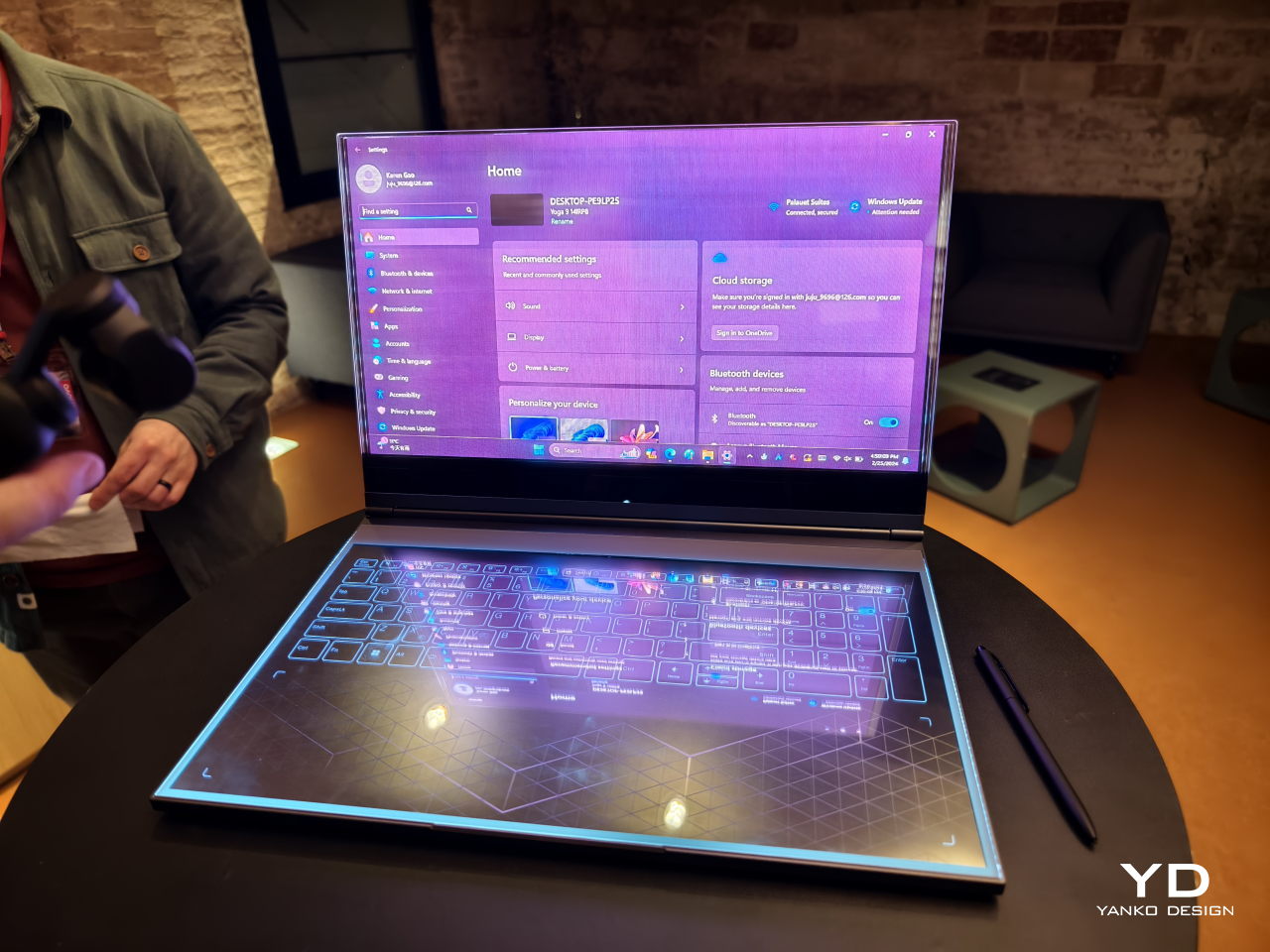
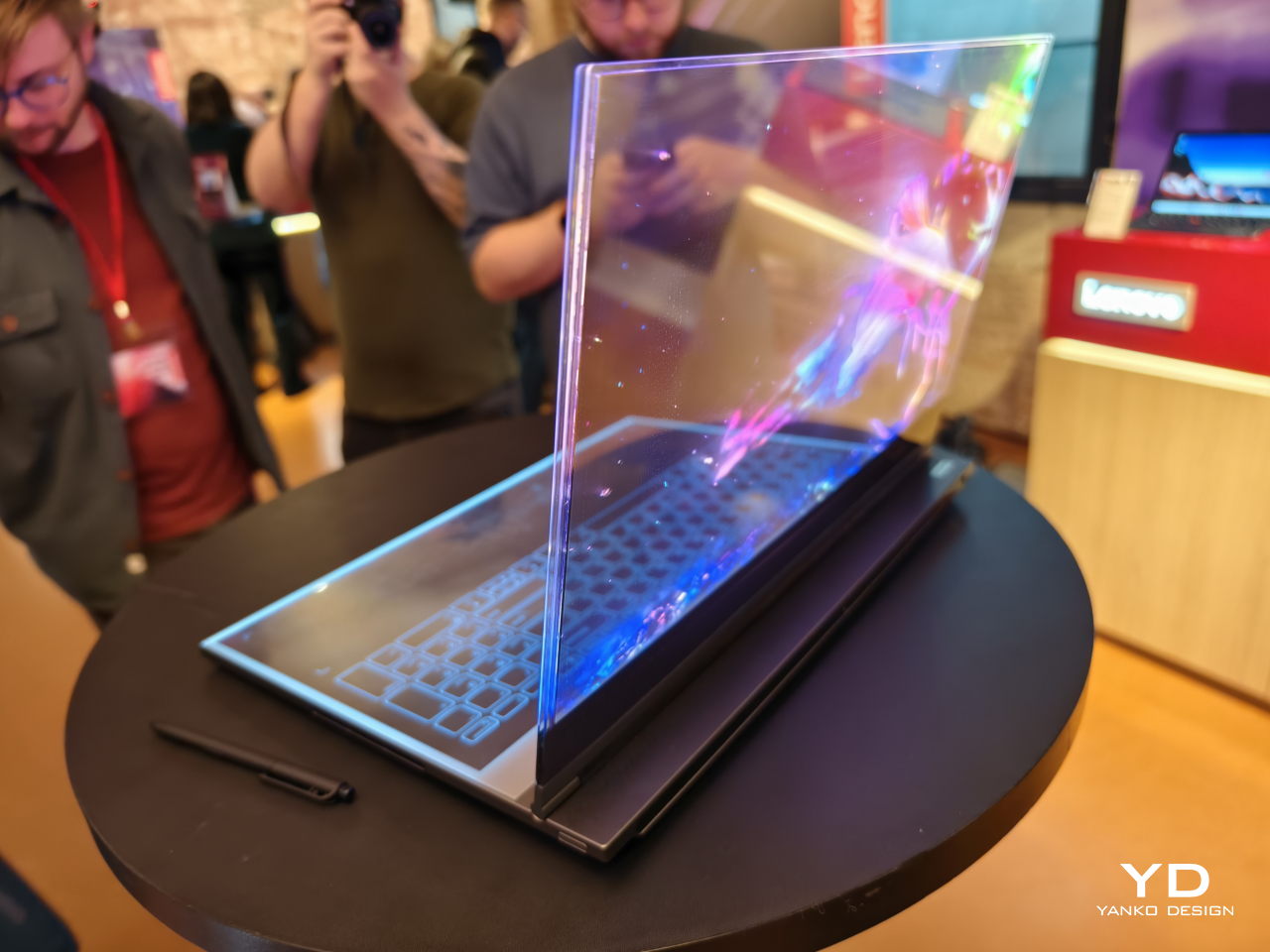
Transparent displays are the stuff of science fiction, originally just eye candy designed to amaze viewers and inspire dreams of the future. Over time, it has also become the goal of many display manufacturers, and we’re finally starting to see the technology making its way into signages and even TVs at home. While new products are showing off what’s possible, the Lenovo ThinkPad Transparent Display Laptop proof of concept is really testing the limits of what you can do with such a screen, especially when you need to actually create content rather than just watch videos.

This concept product is the world’s first laptop with a 17.3-inch Micro LED transparent display, or practically the world’s first laptop with a transparent display of any size. And it’s truly a sight to behold, almost no different from those hi-tech transparent screens that have become a staple of almost any sci-fi show or film. It’s mind-blowing how you can clearly application windows and their contents while still getting a glimpse of what’s behind the screen. Even more magical is seeing only certain parts of the screen become “opaque” when it’s displaying an object, leaving the rest of the screen completely transparent.

Lenovo isn’t stopping there, though, and it has unsurprisingly found a way to inject some AI into that feature. It uses AI-Generated Content to display dynamic images or overlay information depending on the physical objects behind the transparent screen. In a sense, the ThinkBook Transparent Display Laptop integrates the physical and digital worlds not just visually but also through actual interaction between these two spaces. All thanks to artificial intelligence, of course.

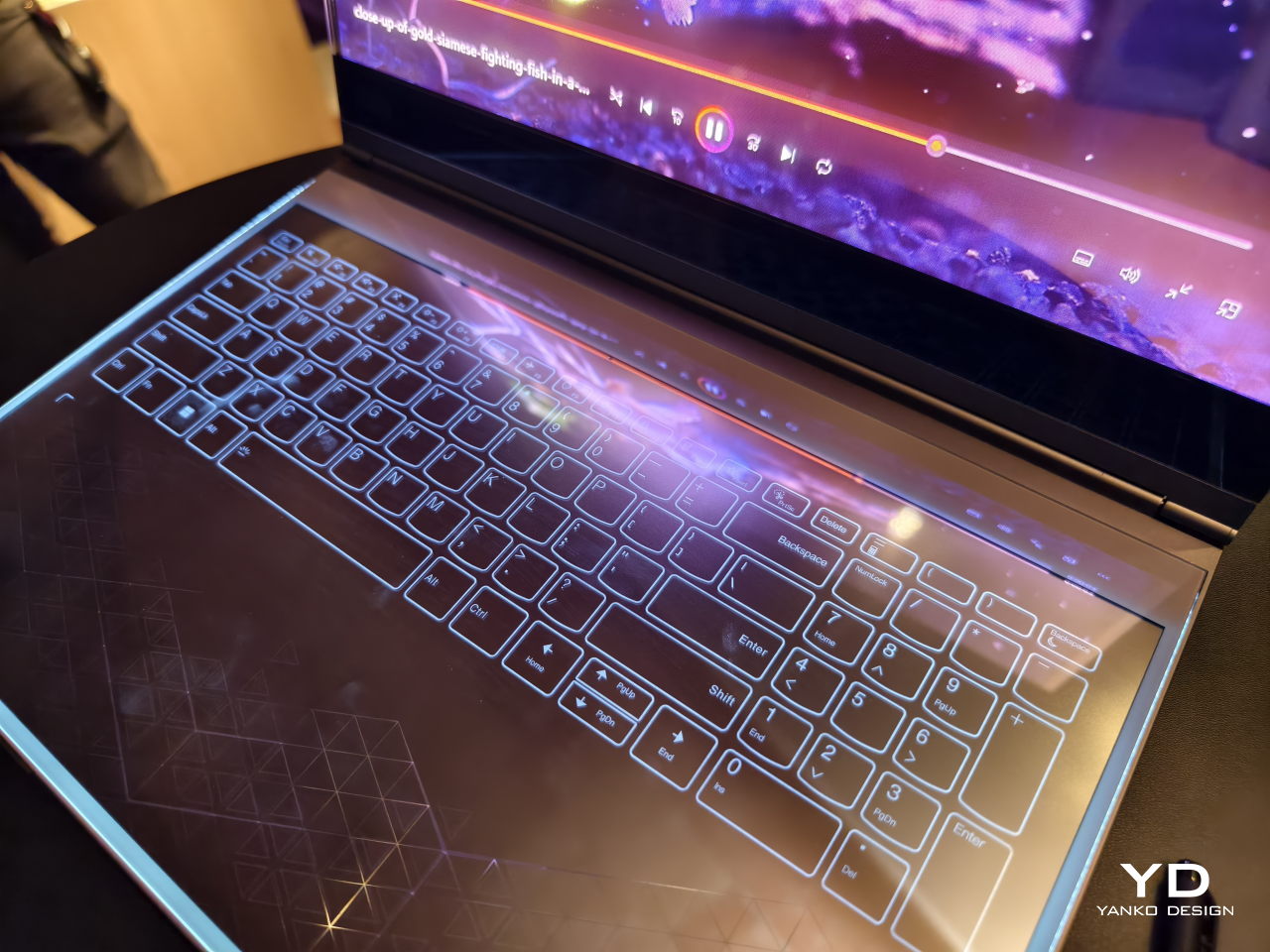
That isn’t the only novelty that Lenovo is bringing to this proof-of-concept laptop. To really drive home that futuristic image, this ThinkBook does away with the conventional physical keyboard and instead uses a capacitive glass surface for typing. This surface also transforms into a drawing pad with an active stylus. This technology isn’t actually new to Lenovo, which launched an innovative yet also short-lived Yoga Book in 2016. In theory, this kind of display-based keyboard opens the door to customization and flexibility, but the ergonomics of such a device is just too poor to be worth the fancy features. Still, it’s hard to deny that this dazzling Lenovo ThinkBook Transparent Display Laptop shows the possible future we will be facing, and the fact that this proof-of-concept design is already in such a usable state suggests we’re not that far from making those fantasy devices a reality.

The post Lenovo ThinkBook Transparent Display Laptop is a stunning preview of the future first appeared on Yanko Design.

Tecno’s Future Lens 2023: Impressions on Unveiled Mobile Camera Tech

Tecno just introduced three super cool camera technologies during its Future Lens 2023 event in Shanghai. These innovations are set to change smartphone photography and take it to the next level. The W-shaped Adjustable Physical Aperture, which features a patented artificial cuttlefish lens, is a breakthrough in light management for photography. It effectively eliminates harsh glare, thus resulting in more balanced shots. On the other hand, the Liquid Telephoto Macro Lens is a compact yet powerful innovation that uses voltage-controlled curvature adjustment to enable the camera to adapt lens curvature in real time while maintaining a sleek form factor. Lastly, the Universal Tone multi-skin tone imaging solution uses extensive skin tone spectral data and advanced research methods to offer vibrant and true-to-life portraits and videos. These technologies exemplify TECNO’s commitment to pioneering solutions that improve photographic capabilities and enhance user experience, reflecting a significant step forward in mobile imaging.

Over dinner, sitting next to Laury Longfei Bai, Tecno’s global CMO, provided a deeper insight into Tecno as a company, its vision for the future, and target buyers. Tecno Mobile, a subsidiary of Transsion Holdings, is renowned for its affordable, feature-rich smartphones, primarily targeting emerging markets in Africa and South Asia. The company emphasizes local market needs, offering devices with region-specific features and designs. Known for competitive pricing, Tecno caters to budget-conscious consumers seeking high-quality mobile experiences. The brand has also made notable advancements in smartphone photography, frequently introducing innovative camera technologies in its products.

W-shaped Adjustable Physical Aperture
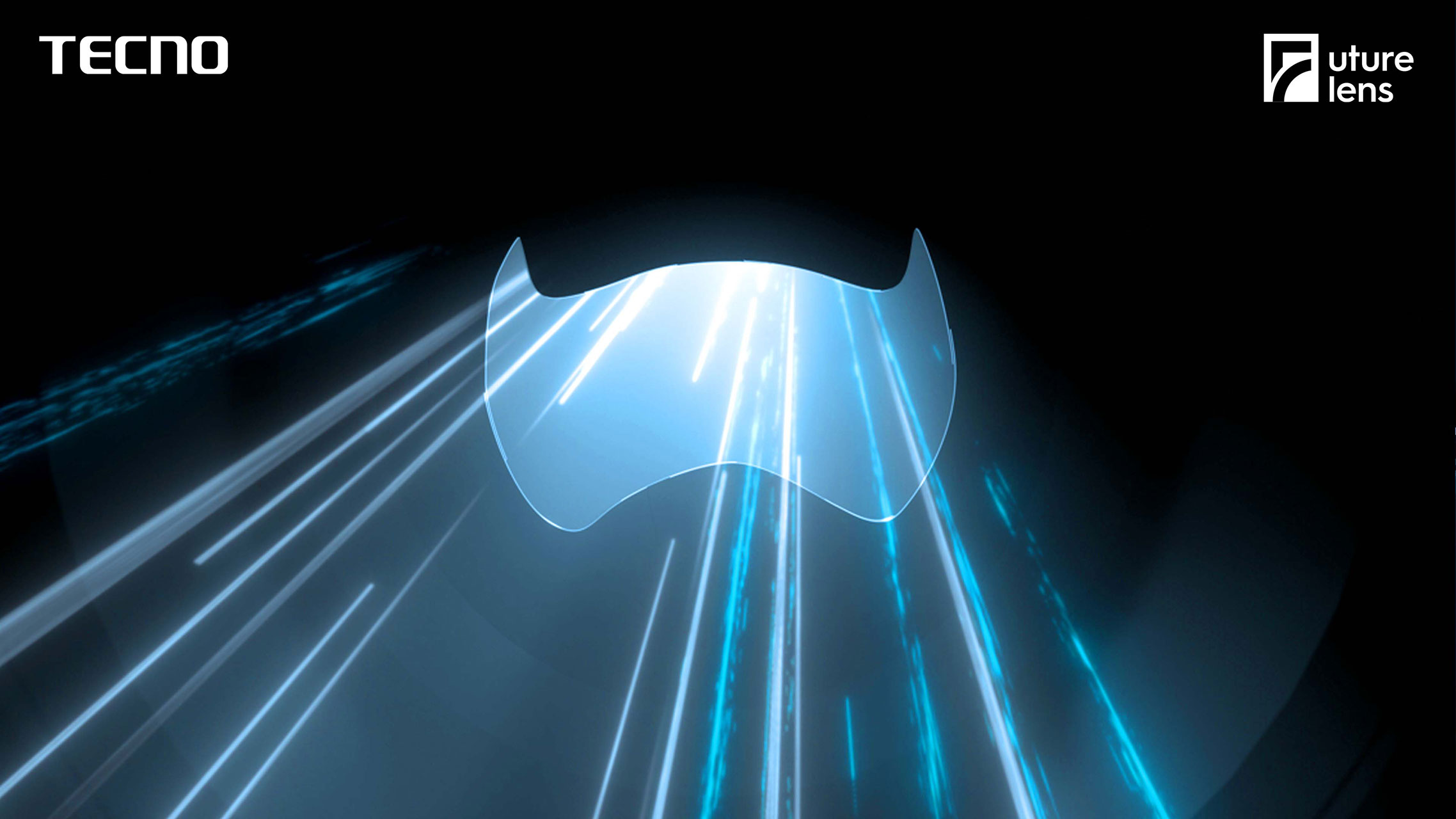
The W-shaped Adjustable Physical Aperture represents a significant advancement in smartphone photography. This ingenious technology addresses common issues associated with backlight photography, such as overexposure and loss of detail.

At its core, the W-shaped Adjustable Physical Aperture functions differently from the fixed apertures typically found in smartphone cameras. A standard fixed aperture limits the light entering the lens, which can be problematic in varying lighting conditions. In contrast, Tecno’s W-shaped aperture is dynamically adjustable, allowing for more precise control over the light that reaches the camera sensor.

This adjustability is crucial for enhancing photo quality in different lighting scenarios. In bright, backlit environments, narrowing the aperture reduces the amount of light entering the lens, preventing overexposure and preserving detail. Conversely, widening the aperture in low-light conditions allows more light to reach the sensor, improving image brightness and clarity.

The W-shaped design is particularly effective because it offers a broader range of aperture sizes compared to traditional circular apertures. This flexibility ensures that users can capture high-quality images regardless of lighting conditions, making it a versatile tool for amateur and professional photographers.

Moreover, the physical nature of this aperture system marks a departure from software-based solutions commonly used in smartphone photography. While software enhancements can improve image quality, they often cannot fully compensate for the limitations of a fixed aperture. Tecno’s approach, combining hardware innovation with software algorithms, provides a more comprehensive solution.

In practical terms, this technology translates to significantly improved performance in challenging photographic situations. Users can expect sharper, more detailed images when shooting against bright backgrounds, such as sunsets or brightly lit windows. Similarly, in dimly lit environments, the technology helps capture clearer, brighter images without the excessive noise often associated with high ISO settings.

The W-shaped Adjustable Physical Aperture is a testament to Tecno’s commitment to pushing the boundaries of smartphone imaging technology. By offering a hardware-based solution to a common photographic challenge, Tecno positions itself as a leader in the field, particularly in emerging markets where smartphone photography is rapidly evolving. This technology enhances the user experience and broadens the creative possibilities available to smartphone photographers.

Liquid Telephoto Macro Lens
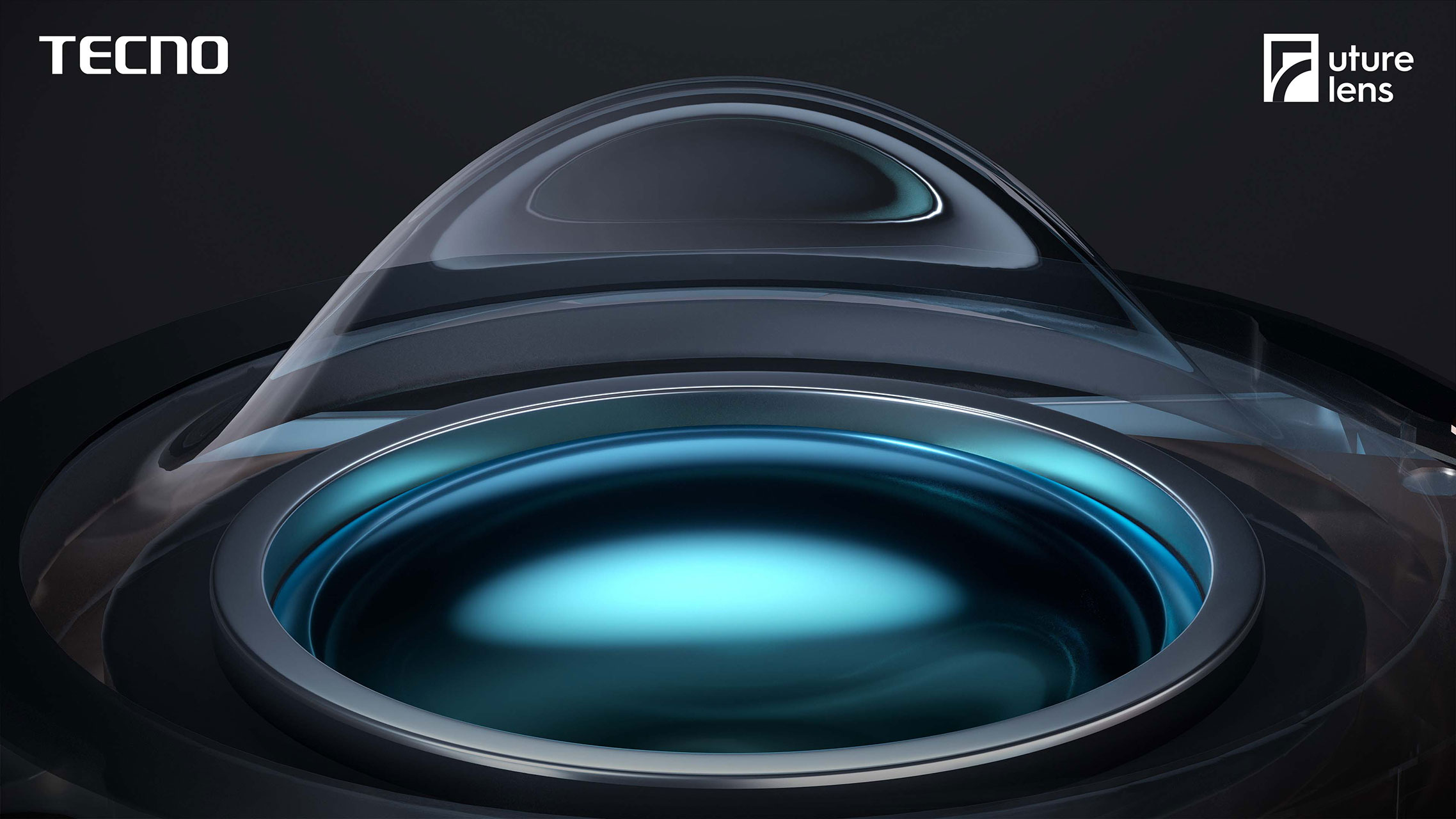
Tecno’s Liquid Telephoto Macro Lens represents a groundbreaking advancement in smartphone camera technology. This lens system is designed to enhance macro photography capabilities, allowing users to capture highly detailed close-up images with greater clarity and precision than traditional smartphone cameras.

The innovation lies in the unique use of a liquid lens, a technology that differs significantly from the conventional solid lenses found in most smartphone cameras. The liquid lens can change its shape dynamically, allowing for rapid and precise focusing at varying distances. This adaptability is crucial in capturing high-quality macro images, where focusing accuracy is critical for detailed and sharp results.

One of the primary benefits of the Liquid Telephoto Macro Lens is its compactness. Traditional telephoto lenses, known for their bulkiness, are often challenging to incorporate into the slim form factor of a smartphone. However, the liquid lens technology enables a much more compact design without compromising on the telephoto capabilities. This allows users to enjoy advanced macro photography features in a portable, user-friendly device.

The functionality of the Liquid Telephoto Macro Lens is based on the principle of electrowetting, where an electrical charge is applied to alter the shape of the liquid within the lens. By adjusting the voltage, the curvature of the liquid lens changes, thus modifying the focal length. This process allows for quick and precise adjustments in focus, essential for capturing the tiniest details in macro photography.

Another advantage of this technology is its versatility. The lens can seamlessly switch between telephoto and macro modes, offering users a range of photographic options. This dual functionality enhances the user experience and expands the creative possibilities available to smartphone photographers.

In practical terms, users can expect to capture stunning close-up images with remarkable detail and clarity. The lens’s ability to rapidly adjust focus ensures that even the smallest subjects, such as insects or intricate patterns, are rendered with exceptional sharpness. Additionally, the telephoto capabilities allow for high-quality zoomed-in shots, making it a versatile tool for various photography scenarios.

So, Mr. Bai told me this new technology is coming out soon. He said it won’t be ready for a couple of years, but he did mention that we’ll be able to try it out at the Mobile World Congress in 2025. How cool is that?!

Tecno has committed to innovation in smartphone imaging with the Liquid Telephoto Macro Lens. This advanced lens technology addresses a common limitation in smartphone cameras, mainly macro photography. By integrating this development, Tecno is enhancing the capabilities of its smartphones and establishing itself as a pioneer in the industry, particularly in markets where mobile photography is increasingly popular.

Universal Tone Technology – UT

Tecno’s Universal Tone technology is a revolutionary multi-skin tone imaging technology, a key highlight of their Future Lens 2023 event. It uses the most extensive skin tone spectral data and rigorous research methods, ensuring vibrant, true-to-life portraits and videos. This technology is particularly beneficial for its ability to produce images that accurately and beautifully represent a wide range of skin tones. It addresses a long-standing challenge in photography of rendering diverse skin colors naturally and attractively.

The technology works by combining three computational engines powered by AI. The Multi-Skin Tone Restoration Engine uses a spectral matrix of skin colors, which has been derived from extensive research on chromatic skin colors. This engine adjusts and calibrates skin tones in portraits to make them appear more natural and harmonious. It is essential to avoid the common issue of inaccurately representing skin tones in photography.

Complementing this, the Local-Tuning Engine plays a vital role in ensuring the portrait harmoniously integrates with its surroundings. It reconstructs image tone mapping and uses an adaptive 3D-LUT (Look-Up Table) algorithm. This approach enables the technology to ensure perfect interaction between the human subject and the environment in the photo, and it can be customized per region or country. This localization aspect is significant, as it considers the diverse aesthetic preferences and cultural contexts of different user bases.

The third component, the AI-Powered Computational Portrait Engine, is designed to craft vibrant, personalized portraits. This engine considers Tecno’s localized aesthetic preferences and cultural nuances, ensuring that the portraits it produces are not just technically proficient but also culturally resonant and aesthetically pleasing.

Tecno’s Universal Tone technology thus represents a significant advancement in smartphone photography, particularly in its capacity to handle diverse skin tones with accuracy and sensitivity. By integrating these three sophisticated AI engines, Tecno has created a system that not only enhances the technical quality of images but also respects and celebrates the diversity of its users. This technology demonstrates their commitment to inclusive and user-centric technology development, setting a new standard in smartphone photography.

Final Thoughts

At Tecno’s Future Lens 2023 event in Shanghai, three groundbreaking camera technologies were introduced, impressing media attendees with their potential to revolutionize smartphone photography. The W-shaped Adjustable Physical Aperture, Liquid Telephoto Macro Lens, and Universal Tone technology showcase innovative approaches to light management, lens adaptability, and skin tone representation, signifying a substantial leap in mobile imaging. These advancements, eagerly anticipated for future experiences, highlight their dedication to pioneering photographic capabilities and enhancing user experiences.

The post Tecno’s Future Lens 2023: Impressions on Unveiled Mobile Camera Tech first appeared on Yanko Design.

The New Apple M3 Chip Enables Workflows Previously Unavailable on a Laptop

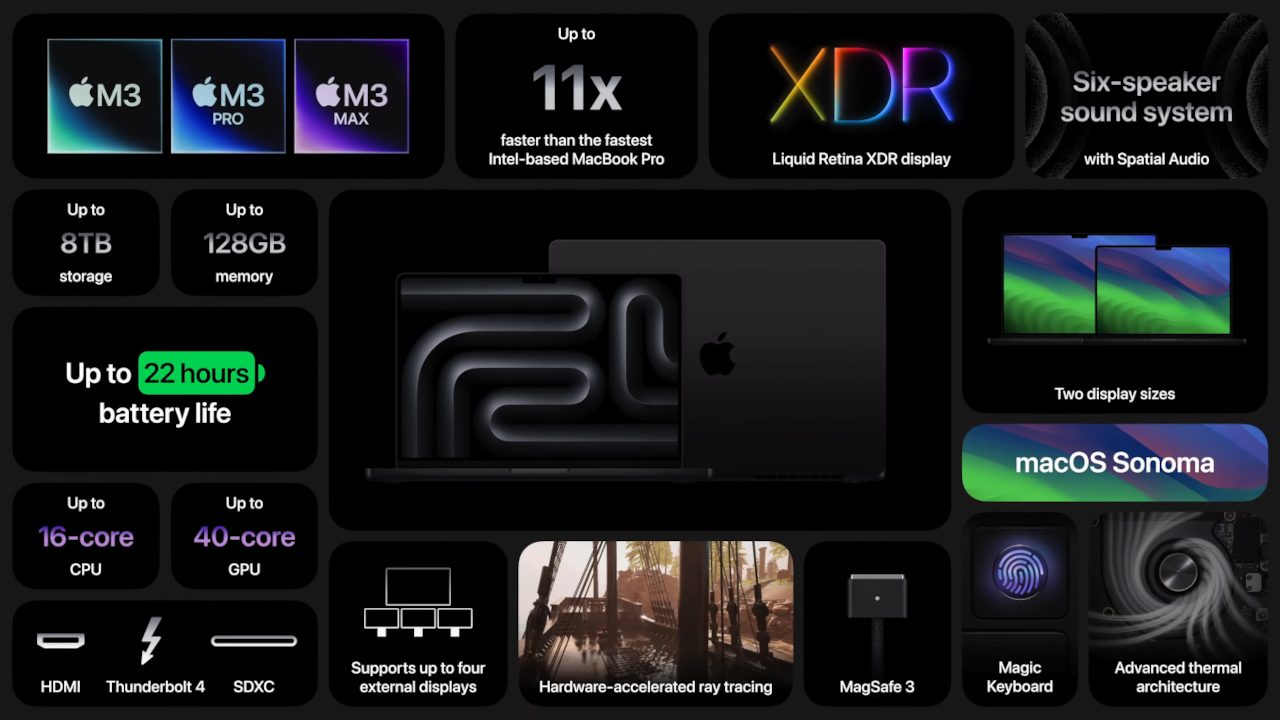
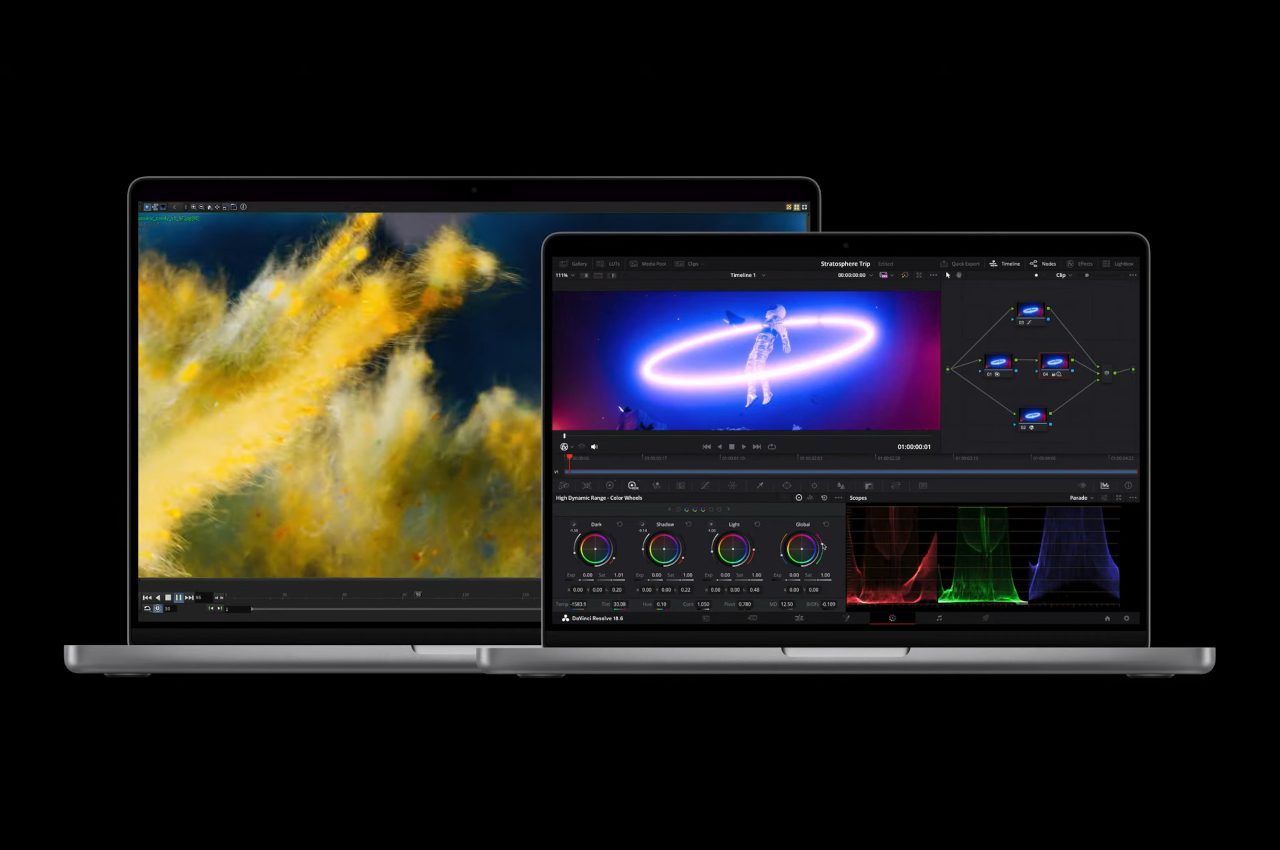
The next generation of silicon is coming to Apple computers. Announced in an uncharacteristically late-afternoon Apple Event on October 30, the three newest Apple chips (M3, M3 Pro, and M3 Max) are packed with the tiniest transistors Apple has ever stuck into its laptop and desktop computers. The newest chips, which use Apple’s groundbreaking 3nm process, are first launching with the new M3 iMac and M3 MacBook Pro, and, boy howdy, Apple is certainly giving other laptop manufacturers a run for their money in the final quarter of 2023.

Designer: Apple

Apple makes a big deal over the fact its base 10-core M3 GPU can render graphics up to 2.5x faster than a comparable M1 GPU, while the base 8-core M3 CPU gets a 50% relative boost in performance to its M1 counterpart. In terms of raw performance alone, those two figures represent a massive upgrade over a chip that released alongside new Apple computers only three years ago. That’s just the tip of the iceberg; thanks to a bevy of new capabilities unlocked by M3’s ultra-compact transistor size, the upper performance limits of the M3 family are higher than ever — meaning, if you’re an AI developer, a game designer, or a visual designer of some sort, your next primary workstation may be a new Mac running on a hyper-powerful M3 Max, armed to the teeth with a 40-core GPU, 16-core CPU, 128 gigs of high-speed RAM, and a 8 TB SSD.

On a basic level, the standard 10-core M3 GPU is an impressive component, fitted with all-new features like hardware-accelerated ray-tracing, mesh shading, and Dynamic Caching to deliver, at a minimum, “65 percent more performance” over M1-based Macs when performing rendering-heavy tasks such as gaming and 3D imaging. It’s facilitated by the M3 chip’s new unified memory architecture (which is supposed to vastly speed up RAM while boosting power efficiency) and support for up to 24 gigs of RAM by default (or up to 36 gigs for the M3 Pro, or up to 128 for the M3 Max), which all make use of the aforementioned new unified architecture. Apple says this “unlocks workflows previously not possible on a laptop, such as AI developers working with even larger transformer models with billions of parameters.”

For the average user, that’s not a huge deal on its own. Sure, games are capable of running smoother and looking prettier as a result of the new hardware, and it sounds like macOS 14 is equipped to make use of the M3 chip design to enable things like Game Mode, which deprioritizes background tasks while a game window is active. But, another big draw of the new M3 architecture is the addition of integrated AV1 decoding. Built-in AV1 support means a new M3-powered iMac or MacBook Pro can smoothly stream 4k60 video from digital streaming services without a noticeable drop in quality if the connection starts to waver.

This also has work applications. For instance, two or more M3-powered Macs communicating with one another via Screen Share should have a buttery-smooth experience, even when both Macs are working on resource-heavy tasks.

The post The New Apple M3 Chip Enables Workflows Previously Unavailable on a Laptop first appeared on Yanko Design.
New M3 iMac all-in-one blows its Intel cousins out of the water

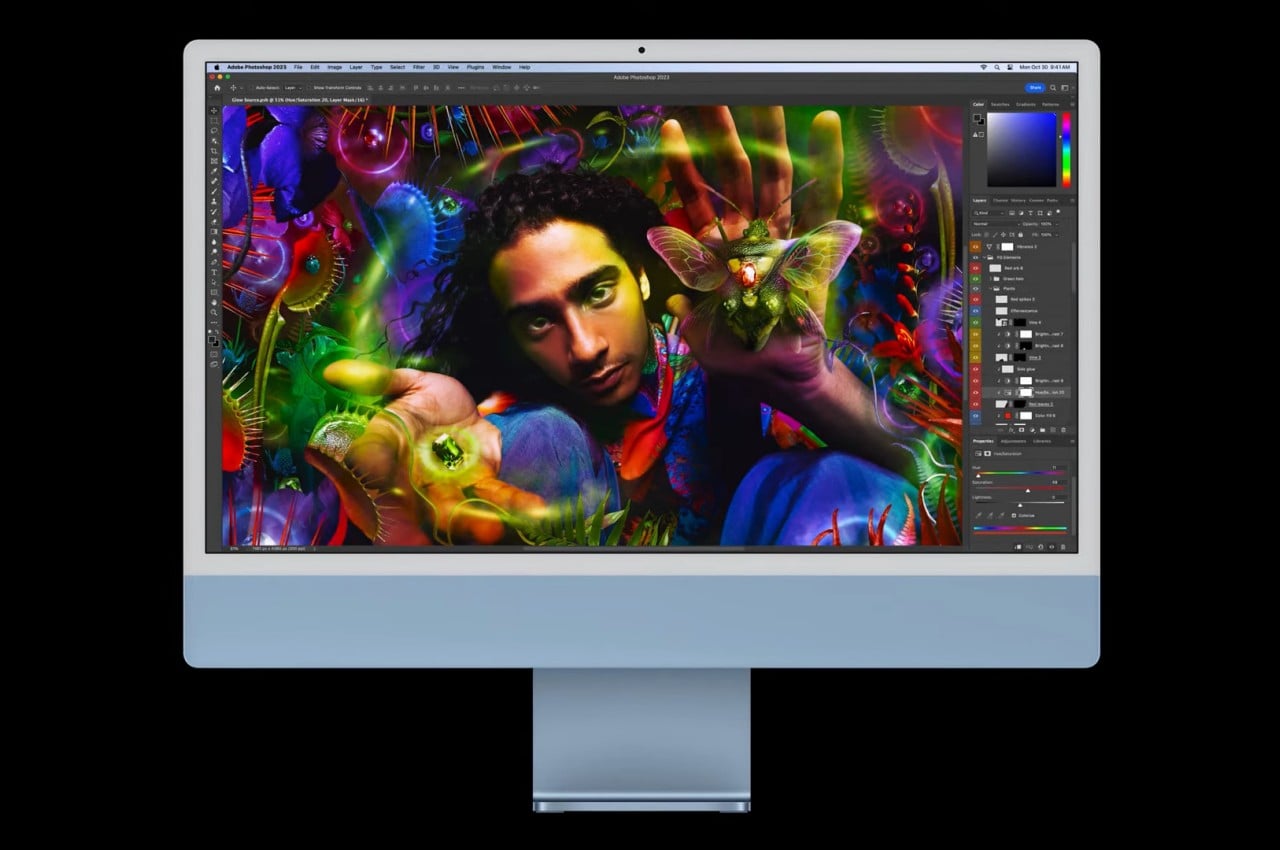
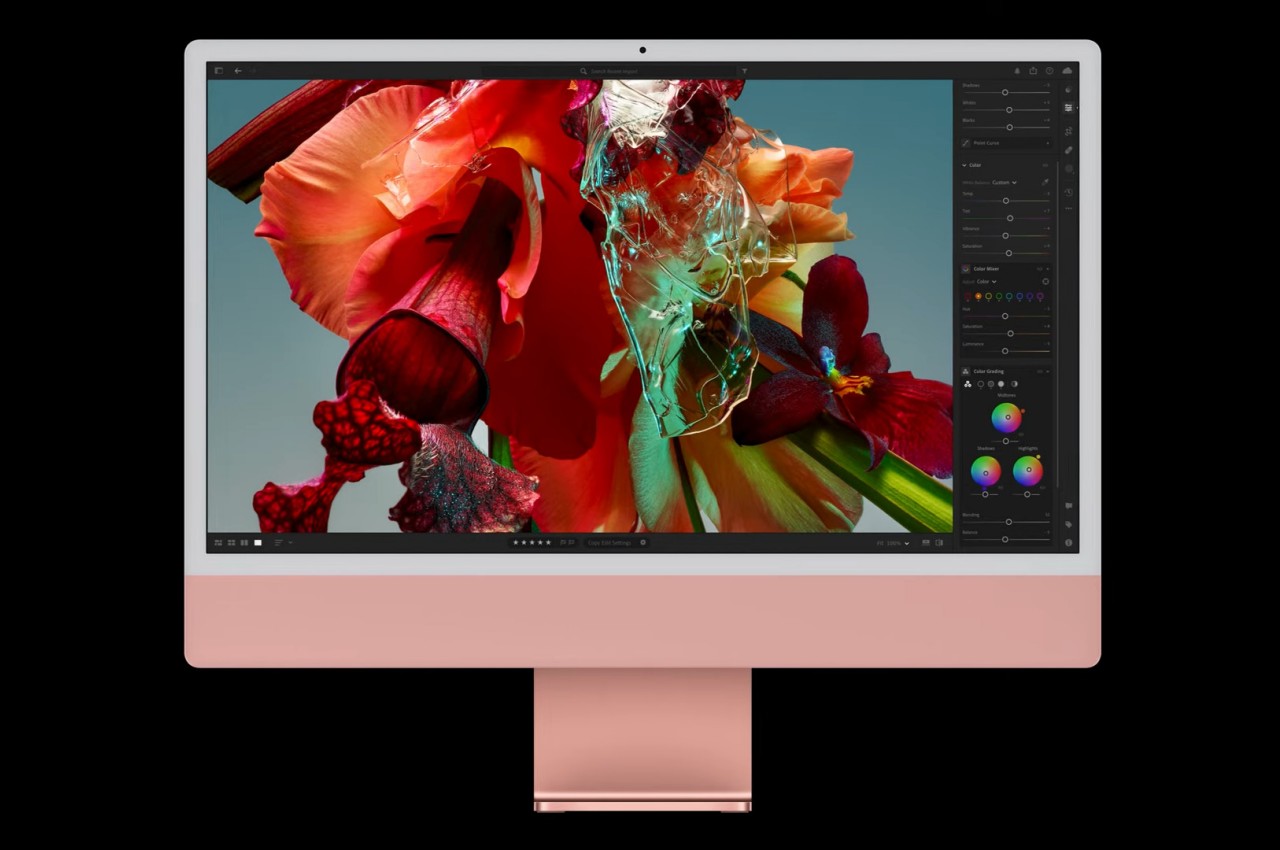
Apple just wrapped up its literally “Scary Fast” pre-Halloween event, and although it was scary short, it was definitely scary good. Cheesy jokes aside, the Cupertino-based company did meet some expectations of announcing its latest silicon, and fans are definitely in for a treat in the coming weeks. Apple has expanded its processors to cover not one, not even two, but three tiers of performance with the M3 family of chips. Of course, these bring with them all sorts of advanced technologies, improved performance, and better efficiency across the board, but their real power lies in how they empower users from all walks of life to do more on their Apple computers without sacrificing other things. The 24-inch iMac with new M3 chip, for example, might not be thinner than its predecessors, but it boasts of scary powerful performance while still keeping its scary slim profile.

Designer: Apple

It’s almost too easy to brush off the Apple M3 as just an upgrade from the M2, but anyone familiar with Apple knows that it never does “just an upgrade.” The M3 family represents a huge milestone for Apple’s self-made processors, showing off how far it has come since it debuted the first Apple Silicon three years ago. Yes, there is more of everything, but the highlight is what the Apple M3 enables as far as applications and user experiences go. The next-gen GPU, for example, is now able to support hardware-accelerated ray tracing, while the new Neural engine works 60% faster while still keeping data on the device to protect your privacy. What all these translate to is better performance for games, music creation, video editing, and more.

With all that power, you might presume that the M3 is reserved for Apple’s “Pro” machines, but Apple dropped a sweet treat for fans of its more stylish computers as well. The new M3 silicon is also making its way to the 24-inch iMac, finally giving Apple’s super-thin all-in-one computer the upgrade it deserves. An upgrade that delivers 2x more power than its predecessor without an increase in bulk. Better yet, it leaves Apple’s aging Intel-based iMacs in the dust, leaving fewer reasons for buyers not to jump on the Apple Silicon train.

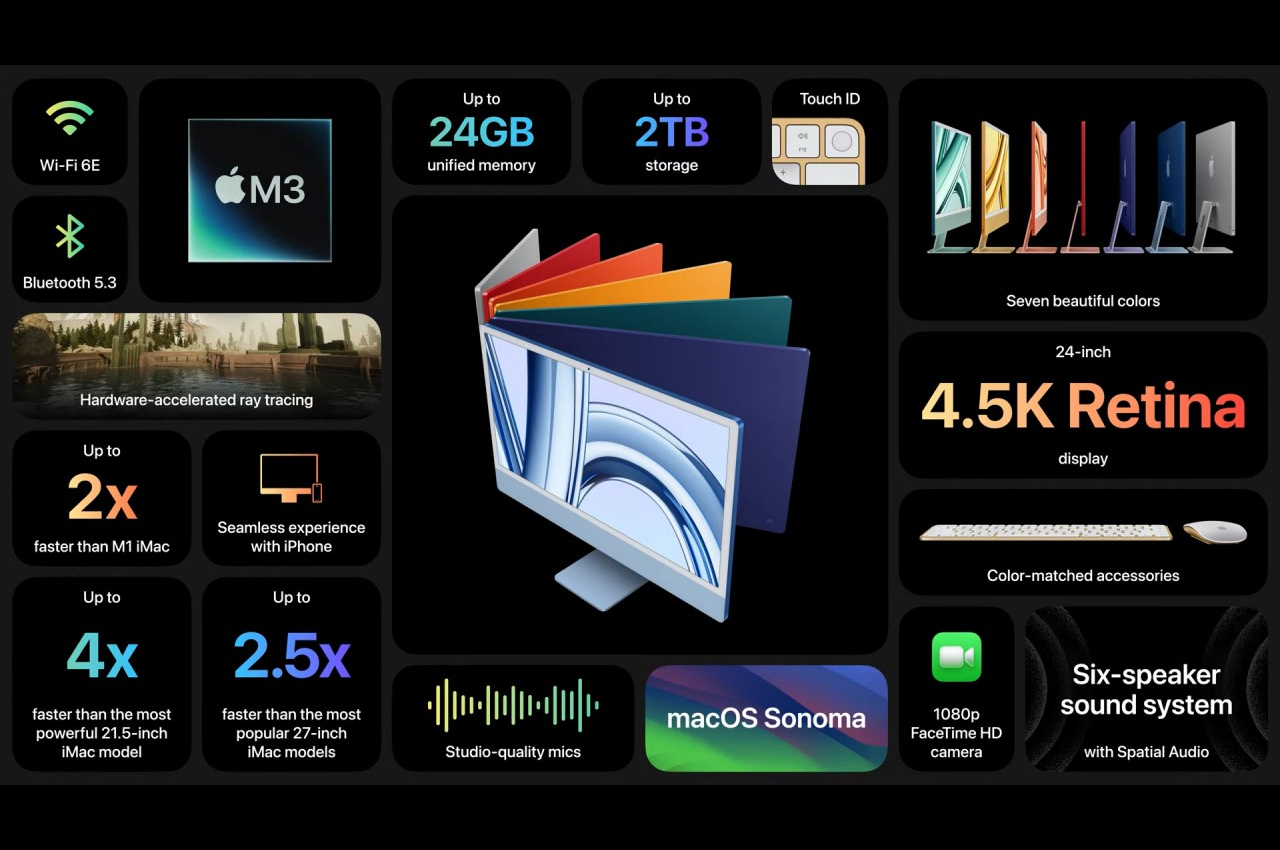
Powered by an M3 chip with an 8-core CPU and up to 10-core GPU, the new M3 iMac boasts double the performance of the older M1 model (there was no M2 iMac). At its event, however, Apple was really driving home how its chips outperform their Intel equivalents, specifically with a 4x increase in performance compared to the 21.5-inch Intel iMac and a 2.5x upgrade versus the 27-inch Intel model. In short, you’re getting desktop-grade performance in a thin and elegant computer that’s no bigger than a thin monitor. All that new power is, of course, put at the service of the user, giving them more options and more capabilities to do the work they need to accomplish or just lose themselves in fantasy worlds of games.

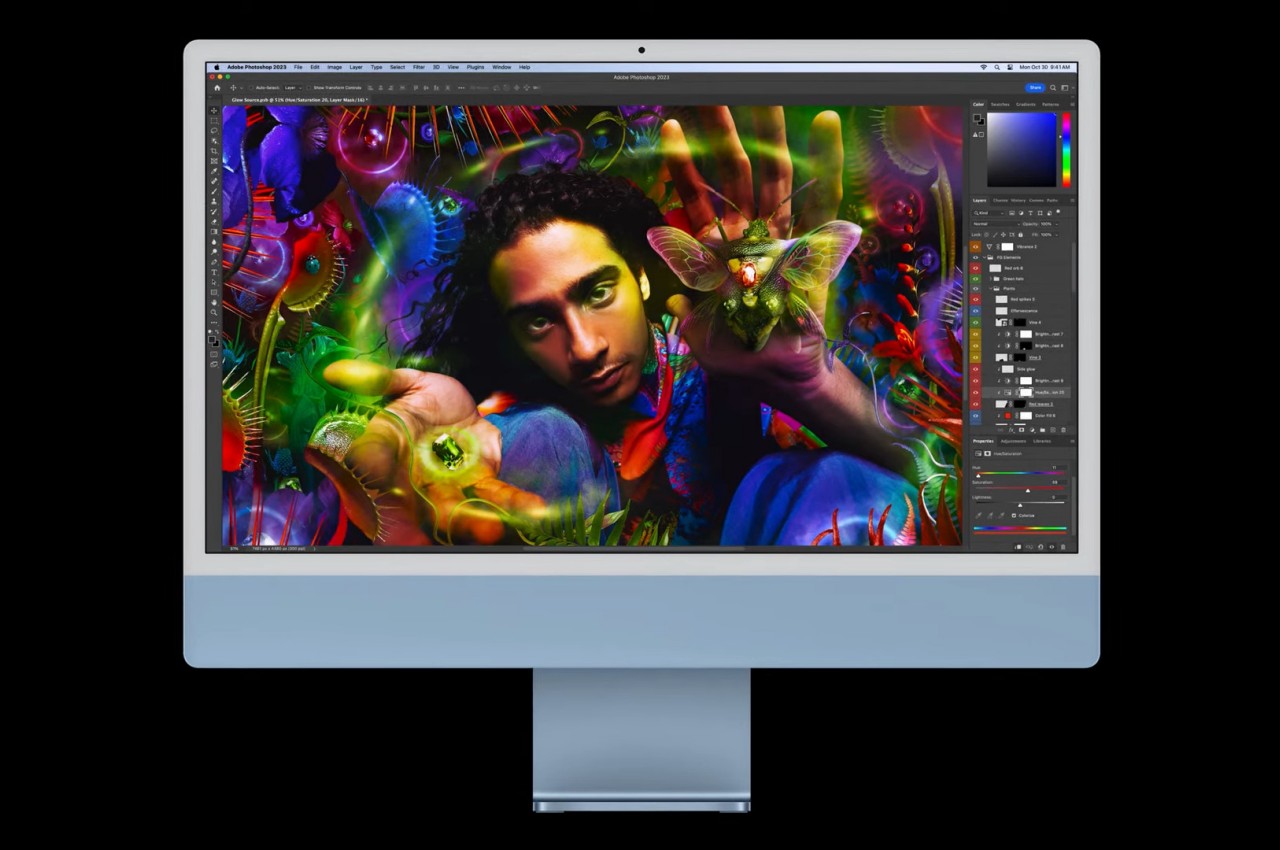
Games, for example, load faster and have higher frame rates thanks to features like Dynamic Caching. It can handle 4K video streams without breaking a sweat either, which means more productivity for creators. And with a gorgeous 24-inch 4.5K Retina display with 11.3 million pixels, all these images come out crisp and vibrant, making the creation process more enjoyable. Of course, that also means that surfing the Web or watching videos are smooth and pleasurable, keeping you glued to your screen, from a safe distance, of course.

The new M3 iMacs bring pro-level capabilities without losing the colorful and playful character that has defined the modern iMac. It still has a striking 11.5mm-thin body that’s available in seven hues to match your style. Best of all, these new iMacs not only use 100% recycled aluminum for the stands but also 100% recycled gold in the plating of multiple printed circuit boards. Together with the energy efficiency that comes from the M3 silicon itself, these make these beautiful computers the most sustainable iMacs yet. The 24-inch iMac with new M3 is now available for order starting at $1,299 and will be available starting next week.

The post New M3 iMac all-in-one blows its Intel cousins out of the water first appeared on Yanko Design.

New M3 iMac all-in-one blows its Intel cousins out of the water

Apple just wrapped up its literally “Scary Fast” pre-Halloween event, and although it was scary short, it was definitely scary good. Cheesy jokes aside, the Cupertino-based company did meet some expectations of announcing its latest silicon, and fans are definitely in for a treat in the coming weeks. Apple has expanded its processors to cover not one, not even two, but three tiers of performance with the M3 family of chips. Of course, these bring with them all sorts of advanced technologies, improved performance, and better efficiency across the board, but their real power lies in how they empower users from all walks of life to do more on their Apple computers without sacrificing other things. The 24-inch iMac with new M3 chip, for example, might not be thinner than its predecessors, but it boasts of scary powerful performance while still keeping its scary slim profile.

Designer: Apple

It’s almost too easy to brush off the Apple M3 as just an upgrade from the M2, but anyone familiar with Apple knows that it never does “just an upgrade.” The M3 family represents a huge milestone for Apple’s self-made processors, showing off how far it has come since it debuted the first Apple Silicon three years ago. Yes, there is more of everything, but the highlight is what the Apple M3 enables as far as applications and user experiences go. The next-gen GPU, for example, is now able to support hardware-accelerated ray tracing, while the new Neural engine works 60% faster while still keeping data on the device to protect your privacy. What all these translate to is better performance for games, music creation, video editing, and more.

With all that power, you might presume that the M3 is reserved for Apple’s “Pro” machines, but Apple dropped a sweet treat for fans of its more stylish computers as well. The new M3 silicon is also making its way to the 24-inch iMac, finally giving Apple’s super-thin all-in-one computer the upgrade it deserves. An upgrade that delivers 2x more power than its predecessor without an increase in bulk. Better yet, it leaves Apple’s aging Intel-based iMacs in the dust, leaving fewer reasons for buyers not to jump on the Apple Silicon train.

Powered by an M3 chip with an 8-core CPU and up to 10-core GPU, the new M3 iMac boasts double the performance of the older M1 model (there was no M2 iMac). At its event, however, Apple was really driving home how its chips outperform their Intel equivalents, specifically with a 4x increase in performance compared to the 21.5-inch Intel iMac and a 2.5x upgrade versus the 27-inch Intel model. In short, you’re getting desktop-grade performance in a thin and elegant computer that’s no bigger than a thin monitor. All that new power is, of course, put at the service of the user, giving them more options and more capabilities to do the work they need to accomplish or just lose themselves in fantasy worlds of games.

Games, for example, load faster and have higher frame rates thanks to features like Dynamic Caching. It can handle 4K video streams without breaking a sweat either, which means more productivity for creators. And with a gorgeous 24-inch 4.5K Retina display with 11.3 million pixels, all these images come out crisp and vibrant, making the creation process more enjoyable. Of course, that also means that surfing the Web or watching videos are smooth and pleasurable, keeping you glued to your screen, from a safe distance, of course.

The new M3 iMacs bring pro-level capabilities without losing the colorful and playful character that has defined the modern iMac. It still has a striking 11.5mm-thin body that’s available in seven hues to match your style. Best of all, these new iMacs not only use 100% recycled aluminum for the stands but also 100% recycled gold in the plating of multiple printed circuit boards. Together with the energy efficiency that comes from the M3 silicon itself, these make these beautiful computers the most sustainable iMacs yet. The 24-inch iMac with new M3 is now available for order starting at $1,299 and will be available starting next week.

The post New M3 iMac all-in-one blows its Intel cousins out of the water first appeared on Yanko Design.
New M3 iMac all-in-one blows its Intel cousins out of the water

Apple just wrapped up its literally “Scary Fast” pre-Halloween event, and although it was scary short, it was definitely scary good. Cheesy jokes aside, the Cupertino-based company did meet some expectations of announcing its latest silicon, and fans are definitely in for a treat in the coming weeks. Apple has expanded its processors to cover not one, not even two, but three tiers of performance with the M3 family of chips. Of course, these bring with them all sorts of advanced technologies, improved performance, and better efficiency across the board, but their real power lies in how they empower users from all walks of life to do more on their Apple computers without sacrificing other things. The 24-inch iMac with new M3 chip, for example, might not be thinner than its predecessors, but it boasts of scary powerful performance while still keeping its scary slim profile.

Designer: Apple

It’s almost too easy to brush off the Apple M3 as just an upgrade from the M2, but anyone familiar with Apple knows that it never does “just an upgrade.” The M3 family represents a huge milestone for Apple’s self-made processors, showing off how far it has come since it debuted the first Apple Silicon three years ago. Yes, there is more of everything, but the highlight is what the Apple M3 enables as far as applications and user experiences go. The next-gen GPU, for example, is now able to support hardware-accelerated ray tracing, while the new Neural engine works 60% faster while still keeping data on the device to protect your privacy. What all these translate to is better performance for games, music creation, video editing, and more.

With all that power, you might presume that the M3 is reserved for Apple’s “Pro” machines, but Apple dropped a sweet treat for fans of its more stylish computers as well. The new M3 silicon is also making its way to the 24-inch iMac, finally giving Apple’s super-thin all-in-one computer the upgrade it deserves. An upgrade that delivers 2x more power than its predecessor without an increase in bulk. Better yet, it leaves Apple’s aging Intel-based iMacs in the dust, leaving fewer reasons for buyers not to jump on the Apple Silicon train.

Powered by an M3 chip with an 8-core CPU and up to 10-core GPU, the new M3 iMac boasts double the performance of the older M1 model (there was no M2 iMac). At its event, however, Apple was really driving home how its chips outperform their Intel equivalents, specifically with a 4x increase in performance compared to the 21.5-inch Intel iMac and a 2.5x upgrade versus the 27-inch Intel model. In short, you’re getting desktop-grade performance in a thin and elegant computer that’s no bigger than a thin monitor. All that new power is, of course, put at the service of the user, giving them more options and more capabilities to do the work they need to accomplish or just lose themselves in fantasy worlds of games.

Games, for example, load faster and have higher frame rates thanks to features like Dynamic Caching. It can handle 4K video streams without breaking a sweat either, which means more productivity for creators. And with a gorgeous 24-inch 4.5K Retina display with 11.3 million pixels, all these images come out crisp and vibrant, making the creation process more enjoyable. Of course, that also means that surfing the Web or watching videos are smooth and pleasurable, keeping you glued to your screen, from a safe distance, of course.

The new M3 iMacs bring pro-level capabilities without losing the colorful and playful character that has defined the modern iMac. It still has a striking 11.5mm-thin body that’s available in seven hues to match your style. Best of all, these new iMacs not only use 100% recycled aluminum for the stands but also 100% recycled gold in the plating of multiple printed circuit boards. Together with the energy efficiency that comes from the M3 silicon itself, these make these beautiful computers the most sustainable iMacs yet. The 24-inch iMac with new M3 is now available for order starting at $1,299 and will be available starting next week.

The post New M3 iMac all-in-one blows its Intel cousins out of the water first appeared on Yanko Design.

New M3 iMac all-in-one blows its Intel cousins out of the water

Apple just wrapped up its literally “Scary Fast” pre-Halloween event, and although it was scary short, it was definitely scary good. Cheesy jokes aside, the Cupertino-based company did meet some expectations of announcing its latest silicon, and fans are definitely in for a treat in the coming weeks. Apple has expanded its processors to cover not one, not even two, but three tiers of performance with the M3 family of chips. Of course, these bring with them all sorts of advanced technologies, improved performance, and better efficiency across the board, but their real power lies in how they empower users from all walks of life to do more on their Apple computers without sacrificing other things. The 24-inch iMac with new M3 chip, for example, might not be thinner than its predecessors, but it boasts of scary powerful performance while still keeping its scary slim profile.

Designer: Apple

It’s almost too easy to brush off the Apple M3 as just an upgrade from the M2, but anyone familiar with Apple knows that it never does “just an upgrade.” The M3 family represents a huge milestone for Apple’s self-made processors, showing off how far it has come since it debuted the first Apple Silicon three years ago. Yes, there is more of everything, but the highlight is what the Apple M3 enables as far as applications and user experiences go. The next-gen GPU, for example, is now able to support hardware-accelerated ray tracing, while the new Neural engine works 60% faster while still keeping data on the device to protect your privacy. What all these translate to is better performance for games, music creation, video editing, and more.

With all that power, you might presume that the M3 is reserved for Apple’s “Pro” machines, but Apple dropped a sweet treat for fans of its more stylish computers as well. The new M3 silicon is also making its way to the 24-inch iMac, finally giving Apple’s super-thin all-in-one computer the upgrade it deserves. An upgrade that delivers 2x more power than its predecessor without an increase in bulk. Better yet, it leaves Apple’s aging Intel-based iMacs in the dust, leaving fewer reasons for buyers not to jump on the Apple Silicon train.

Powered by an M3 chip with an 8-core CPU and up to 10-core GPU, the new M3 iMac boasts double the performance of the older M1 model (there was no M2 iMac). At its event, however, Apple was really driving home how its chips outperform their Intel equivalents, specifically with a 4x increase in performance compared to the 21.5-inch Intel iMac and a 2.5x upgrade versus the 27-inch Intel model. In short, you’re getting desktop-grade performance in a thin and elegant computer that’s no bigger than a thin monitor. All that new power is, of course, put at the service of the user, giving them more options and more capabilities to do the work they need to accomplish or just lose themselves in fantasy worlds of games.

Games, for example, load faster and have higher frame rates thanks to features like Dynamic Caching. It can handle 4K video streams without breaking a sweat either, which means more productivity for creators. And with a gorgeous 24-inch 4.5K Retina display with 11.3 million pixels, all these images come out crisp and vibrant, making the creation process more enjoyable. Of course, that also means that surfing the Web or watching videos are smooth and pleasurable, keeping you glued to your screen, from a safe distance, of course.

The new M3 iMacs bring pro-level capabilities without losing the colorful and playful character that has defined the modern iMac. It still has a striking 11.5mm-thin body that’s available in seven hues to match your style. Best of all, these new iMacs not only use 100% recycled aluminum for the stands but also 100% recycled gold in the plating of multiple printed circuit boards. Together with the energy efficiency that comes from the M3 silicon itself, these make these beautiful computers the most sustainable iMacs yet. The 24-inch iMac with new M3 is now available for order starting at $1,299 and will be available starting next week.

The post New M3 iMac all-in-one blows its Intel cousins out of the water first appeared on Yanko Design.

New M3 iMac all-in-one blows its Intel cousins out of the water

Apple just wrapped up its literally “Scary Fast” pre-Halloween event, and although it was scary short, it was definitely scary good. Cheesy jokes aside, the Cupertino-based company did meet some expectations of announcing its latest silicon, and fans are definitely in for a treat in the coming weeks. Apple has expanded its processors to cover not one, not even two, but three tiers of performance with the M3 family of chips. Of course, these bring with them all sorts of advanced technologies, improved performance, and better efficiency across the board, but their real power lies in how they empower users from all walks of life to do more on their Apple computers without sacrificing other things. The 24-inch iMac with new M3 chip, for example, might not be thinner than its predecessors, but it boasts of scary powerful performance while still keeping its scary slim profile.

Designer: Apple

It’s almost too easy to brush off the Apple M3 as just an upgrade from the M2, but anyone familiar with Apple knows that it never does “just an upgrade.” The M3 family represents a huge milestone for Apple’s self-made processors, showing off how far it has come since it debuted the first Apple Silicon three years ago. Yes, there is more of everything, but the highlight is what the Apple M3 enables as far as applications and user experiences go. The next-gen GPU, for example, is now able to support hardware-accelerated ray tracing, while the new Neural engine works 60% faster while still keeping data on the device to protect your privacy. What all these translate to is better performance for games, music creation, video editing, and more.

With all that power, you might presume that the M3 is reserved for Apple’s “Pro” machines, but Apple dropped a sweet treat for fans of its more stylish computers as well. The new M3 silicon is also making its way to the 24-inch iMac, finally giving Apple’s super-thin all-in-one computer the upgrade it deserves. An upgrade that delivers 2x more power than its predecessor without an increase in bulk. Better yet, it leaves Apple’s aging Intel-based iMacs in the dust, leaving fewer reasons for buyers not to jump on the Apple Silicon train.

Powered by an M3 chip with an 8-core CPU and up to 10-core GPU, the new M3 iMac boasts double the performance of the older M1 model (there was no M2 iMac). At its event, however, Apple was really driving home how its chips outperform their Intel equivalents, specifically with a 4x increase in performance compared to the 21.5-inch Intel iMac and a 2.5x upgrade versus the 27-inch Intel model. In short, you’re getting desktop-grade performance in a thin and elegant computer that’s no bigger than a thin monitor. All that new power is, of course, put at the service of the user, giving them more options and more capabilities to do the work they need to accomplish or just lose themselves in fantasy worlds of games.

Games, for example, load faster and have higher frame rates thanks to features like Dynamic Caching. It can handle 4K video streams without breaking a sweat either, which means more productivity for creators. And with a gorgeous 24-inch 4.5K Retina display with 11.3 million pixels, all these images come out crisp and vibrant, making the creation process more enjoyable. Of course, that also means that surfing the Web or watching videos are smooth and pleasurable, keeping you glued to your screen, from a safe distance, of course.

The new M3 iMacs bring pro-level capabilities without losing the colorful and playful character that has defined the modern iMac. It still has a striking 11.5mm-thin body that’s available in seven hues to match your style. Best of all, these new iMacs not only use 100% recycled aluminum for the stands but also 100% recycled gold in the plating of multiple printed circuit boards. Together with the energy efficiency that comes from the M3 silicon itself, these make these beautiful computers the most sustainable iMacs yet. The 24-inch iMac with new M3 is now available for order starting at $1,299 and will be available starting next week.

The post New M3 iMac all-in-one blows its Intel cousins out of the water first appeared on Yanko Design.
New M3 iMac all-in-one blows its Intel cousins out of the water

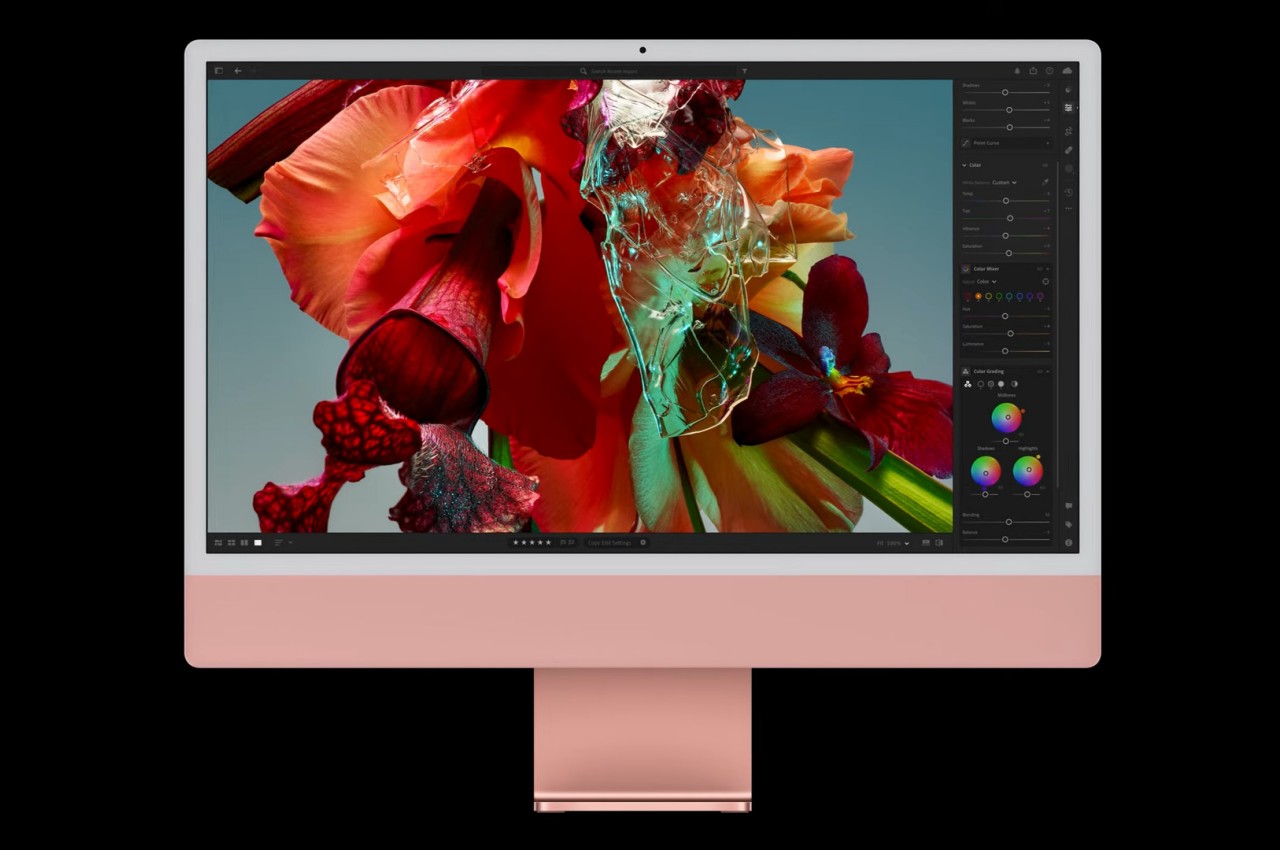
Apple just wrapped up its literally “Scary Fast” pre-Halloween event, and although it was scary short, it was definitely scary good. Cheesy jokes aside, the Cupertino-based company did meet some expectations of announcing its latest silicon, and fans are definitely in for a treat in the coming weeks. Apple has expanded its processors to cover not one, not even two, but three tiers of performance with the M3 family of chips. Of course, these bring with them all sorts of advanced technologies, improved performance, and better efficiency across the board, but their real power lies in how they empower users from all walks of life to do more on their Apple computers without sacrificing other things. The 24-inch iMac with new M3 chip, for example, might not be thinner than its predecessors, but it boasts of scary powerful performance while still keeping its scary slim profile.

Designer: Apple

It’s almost too easy to brush off the Apple M3 as just an upgrade from the M2, but anyone familiar with Apple knows that it never does “just an upgrade.” The M3 family represents a huge milestone for Apple’s self-made processors, showing off how far it has come since it debuted the first Apple Silicon three years ago. Yes, there is more of everything, but the highlight is what the Apple M3 enables as far as applications and user experiences go. The next-gen GPU, for example, is now able to support hardware-accelerated ray tracing, while the new Neural engine works 60% faster while still keeping data on the device to protect your privacy. What all these translate to is better performance for games, music creation, video editing, and more.

With all that power, you might presume that the M3 is reserved for Apple’s “Pro” machines, but Apple dropped a sweet treat for fans of its more stylish computers as well. The new M3 silicon is also making its way to the 24-inch iMac, finally giving Apple’s super-thin all-in-one computer the upgrade it deserves. An upgrade that delivers 2x more power than its predecessor without an increase in bulk. Better yet, it leaves Apple’s aging Intel-based iMacs in the dust, leaving fewer reasons for buyers not to jump on the Apple Silicon train.

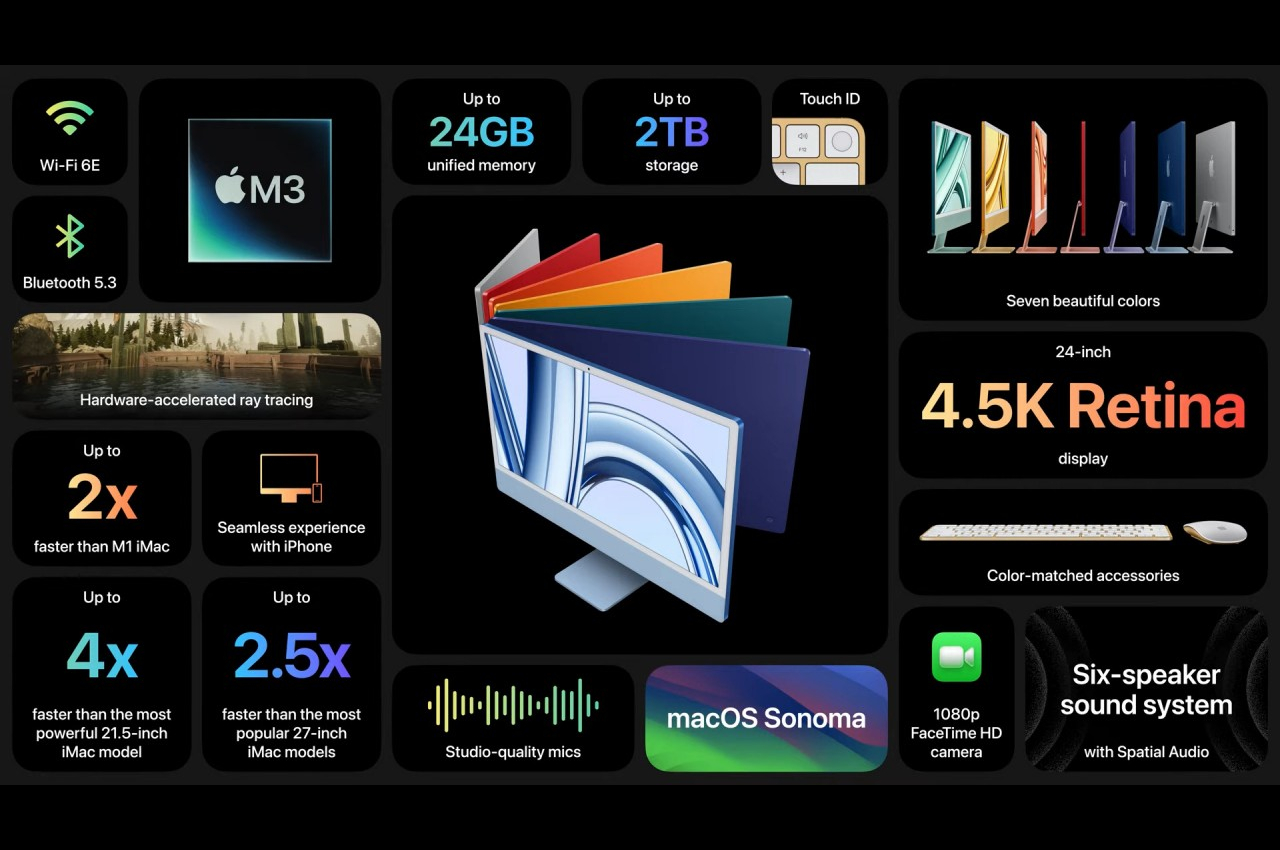
Powered by an M3 chip with an 8-core CPU and up to 10-core GPU, the new M3 iMac boasts double the performance of the older M1 model (there was no M2 iMac). At its event, however, Apple was really driving home how its chips outperform their Intel equivalents, specifically with a 4x increase in performance compared to the 21.5-inch Intel iMac and a 2.5x upgrade versus the 27-inch Intel model. In short, you’re getting desktop-grade performance in a thin and elegant computer that’s no bigger than a thin monitor. All that new power is, of course, put at the service of the user, giving them more options and more capabilities to do the work they need to accomplish or just lose themselves in fantasy worlds of games.

Games, for example, load faster and have higher frame rates thanks to features like Dynamic Caching. It can handle 4K video streams without breaking a sweat either, which means more productivity for creators. And with a gorgeous 24-inch 4.5K Retina display with 11.3 million pixels, all these images come out crisp and vibrant, making the creation process more enjoyable. Of course, that also means that surfing the Web or watching videos are smooth and pleasurable, keeping you glued to your screen, from a safe distance, of course.

The new M3 iMacs bring pro-level capabilities without losing the colorful and playful character that has defined the modern iMac. It still has a striking 11.5mm-thin body that’s available in seven hues to match your style. Best of all, these new iMacs not only use 100% recycled aluminum for the stands but also 100% recycled gold in the plating of multiple printed circuit boards. Together with the energy efficiency that comes from the M3 silicon itself, these make these beautiful computers the most sustainable iMacs yet. The 24-inch iMac with new M3 is now available for order starting at $1,299 and will be available starting next week.

The post New M3 iMac all-in-one blows its Intel cousins out of the water first appeared on Yanko Design.
New M3 iMac all-in-one blows its Intel cousins out of the water

Apple just wrapped up its literally “Scary Fast” pre-Halloween event, and although it was scary short, it was definitely scary good. Cheesy jokes aside, the Cupertino-based company did meet some expectations of announcing its latest silicon, and fans are definitely in for a treat in the coming weeks. Apple has expanded its processors to cover not one, not even two, but three tiers of performance with the M3 family of chips. Of course, these bring with them all sorts of advanced technologies, improved performance, and better efficiency across the board, but their real power lies in how they empower users from all walks of life to do more on their Apple computers without sacrificing other things. The 24-inch iMac with new M3 chip, for example, might not be thinner than its predecessors, but it boasts of scary powerful performance while still keeping its scary slim profile.

Designer: Apple

It’s almost too easy to brush off the Apple M3 as just an upgrade from the M2, but anyone familiar with Apple knows that it never does “just an upgrade.” The M3 family represents a huge milestone for Apple’s self-made processors, showing off how far it has come since it debuted the first Apple Silicon three years ago. Yes, there is more of everything, but the highlight is what the Apple M3 enables as far as applications and user experiences go. The next-gen GPU, for example, is now able to support hardware-accelerated ray tracing, while the new Neural engine works 60% faster while still keeping data on the device to protect your privacy. What all these translate to is better performance for games, music creation, video editing, and more.

With all that power, you might presume that the M3 is reserved for Apple’s “Pro” machines, but Apple dropped a sweet treat for fans of its more stylish computers as well. The new M3 silicon is also making its way to the 24-inch iMac, finally giving Apple’s super-thin all-in-one computer the upgrade it deserves. An upgrade that delivers 2x more power than its predecessor without an increase in bulk. Better yet, it leaves Apple’s aging Intel-based iMacs in the dust, leaving fewer reasons for buyers not to jump on the Apple Silicon train.

Powered by an M3 chip with an 8-core CPU and up to 10-core GPU, the new M3 iMac boasts double the performance of the older M1 model (there was no M2 iMac). At its event, however, Apple was really driving home how its chips outperform their Intel equivalents, specifically with a 4x increase in performance compared to the 21.5-inch Intel iMac and a 2.5x upgrade versus the 27-inch Intel model. In short, you’re getting desktop-grade performance in a thin and elegant computer that’s no bigger than a thin monitor. All that new power is, of course, put at the service of the user, giving them more options and more capabilities to do the work they need to accomplish or just lose themselves in fantasy worlds of games.

Games, for example, load faster and have higher frame rates thanks to features like Dynamic Caching. It can handle 4K video streams without breaking a sweat either, which means more productivity for creators. And with a gorgeous 24-inch 4.5K Retina display with 11.3 million pixels, all these images come out crisp and vibrant, making the creation process more enjoyable. Of course, that also means that surfing the Web or watching videos are smooth and pleasurable, keeping you glued to your screen, from a safe distance, of course.

The new M3 iMacs bring pro-level capabilities without losing the colorful and playful character that has defined the modern iMac. It still has a striking 11.5mm-thin body that’s available in seven hues to match your style. Best of all, these new iMacs not only use 100% recycled aluminum for the stands but also 100% recycled gold in the plating of multiple printed circuit boards. Together with the energy efficiency that comes from the M3 silicon itself, these make these beautiful computers the most sustainable iMacs yet. The 24-inch iMac with new M3 is now available for order starting at $1,299 and will be available starting next week.

The post New M3 iMac all-in-one blows its Intel cousins out of the water first appeared on Yanko Design.