The 7 best air fryers for 2026, tested and reviewed

Air fryers have gone from novelty appliances to everyday kitchen staples surprisingly fast. They’re quick to heat up, easy to use and well suited to everything from frozen snacks to roasted vegetables and simple desserts. For many people, they’ve replaced the oven for smaller meals, cutting down on cook time without adding extra cleanup.

The category has also expanded well beyond basic basket-style models. Some air fryers are designed for small kitchens or single servings, while others offer larger capacities and preset cooking modes for roasting, reheating or dehydrating. After testing a wide range of machines, the Instant Vortex Plus continues to stand out for its reliable performance, straightforward controls and consistently good results.

Below, we’ve gathered the best air fryers you can buy right now across different sizes and price points. Whether you’re replacing an older unit or trying one for the first time, these picks focus on appliances that are easy to live with and deliver crisp food without the need for deep frying.

Let’s clear one thing up first: it’s not frying. Not really. Air fryers are more like smaller convection bake ovens, ones that are often pod-shaped. Most work by combining a heating element and fan, which means the hot air can usually better crisp the outside of food than other methods. They often reach higher top temperatures than toaster ovens – which is part of the appeal.

For most recipes, a thin layer of oil (usually sprayed) helps to replicate that fried look and feel better. However, it will rarely taste precisely like the deep-fried or pan frying version when it comes out of the air fryer basket. Don’t let that put you off, though, because the air fryer, in its many forms, combines some of the best parts of other cooking processes and brings them together into an energy-efficient way of air fryer cooking dinner. Or breakfast. Or lunch.

You can separate most of these machines into two types of air fryers, and each has different pros and cons. Convection ovens are usually ovens with air fryer functions and features. They might have higher temperature settings to ensure that food crisps and cooks more like actually fried food. Most convection ovens are larger than dedicated air fryers, defeating some of the purpose of those looking to shrink cooking appliance surface area. Still, they are often more versatile with multiple cooking functions, and most have finer controls for temperatures, timings and even fan speed.

You may never need a built-in oven if you have a decent convection oven. They often have the volume to handle roasts, entire chickens or tray bakes, and simply cook more, capacity-wise, making them more versatile than the pod-shaped competition.

The flip side of that is that you’ll need counter space in the kitchen to house them. It also means you can use traditional oven accessories, like baking trays or cake tins, that you might already own.

Pod-shaped air fryers are what you imagine when you think “air fryer.” They look like a cool, space-age kitchen gadget, bigger than a kettle but smaller than a toaster oven. Many use a drawer to hold ingredients while cooking, usually a mesh sheet or a more solid, non-stick tray with holes to allow the hot air to circulate. With a few exceptions, most require you to open the drawer while things cook and flip or shake half-cooked items to ensure the even distribution of heat and airflow to everything.

That’s one of a few caveats. This type of air fryer typically doesn't have a window to see how things are cooking (with only a few exceptions), so you’ll need to closely scrutinize things as they cook, opening the device to check progress. Basket-style air fryers also generally use less energy – there’s less space to heat – and many have parts that can be put directly into a dishwasher.

Some of the larger pod-shaped air fryers offer two separate compartments, which is especially useful for anyone planning to cook an entire meal with the appliance. You could cook a couple of tasty chicken wings or tenders while simultaneously rustling up enough frozen fries or veggies for everyone. Naturally, those options take up more space, and they’re usually heavy enough to stop you from storing them in cupboards or shelves elsewhere.

As mentioned earlier, you might have to buy extra things to make these pod fryers work the way you want them to. Some of the bigger manufacturers, like Philips and Ninja, offer convenient additions, but you’ll have to pay for them.

Beyond the strengths and weaknesses of individual models, air fryers are pretty easy to use from the outset. Most models come with a convenient cooking time booklet covering most of the major foods you’ll be air frying, so even beginners can master these machines.

One of the early selling points is the ability to cook fries, wings, frozen foods and other delights with less fat than other methods like deep frying, which gets foods the crispiest. As air fryers work by circulating heated air, the trays and cooking plates have holes that can also let oil and fat drain out of meats, meaning less fat and crisper food when you finally plate things up. For most cooking situations, you will likely need to lightly spray food with vegetable oil. If you don’t, there’s the chance that things will burn or char. The oil will keep things moist on the surface, and we advise refreshing things with a dash of oil spray when you turn items during cooking.

Most air fryers are easy to clean – especially in comparison to a shallow or deep fryer. We’ll get into cleaning guidance a little later.

With a smaller space to heat, air fryers are generally more energy-efficient for cooking food than larger appliances like ovens. And if you don’t have an oven, air fryers are much more affordable – especially the pod options.

There are, however, some drawbacks. While air fryers are easy enough to use, they take time to master. You will adjust cooking times for even the simplest types of food – like chicken nuggets, frozen French fries or brussels sprouts. If you’re the kind of person that loves to find inspiration from the internet, in our experience, you can pretty much throw their timings out of the window. There are a lot of air fryer options, and factors like how fast they heat and how well distributed that heat is can – and will – affect cooking.

There’s also a space limitation to air fryers. This is not a TARDIS – there’s simply less space than most traditional ovens and many deep fat fryers. If you have a bigger family, you’ll probably want to go for a large capacity air fryer – possibly one that has multiple cooking areas. You also might want to consider a different kitchen appliance, like a multicooker, sous vide or slow cooker to meet your specific cooking needs.

You may also struggle to cook many items through as the heat settings will cook the surface of dishes long before it’s cooked right through. If you’re planning to cook a whole chicken or a roast, please get a meat thermometer!

Beyond official accessories from the manufacturer, try to pick up silicone-tipped tools. Tongs are ideal, as is a silicon spatula to gently loosen food that might get stuck on the sides of the air fryer. These silicone mats will also help stop things from sticking to the wire racks on some air fryers. They have holes to ensure the heated air is still able to circulate around the food.

Silicone trivets are also useful for resting any cooked food on while you sort out the rest of the meal. And if you find yourself needing oil spray, but don’t feel like repeatedly buying tiny bottles, you can decant your favorite vegetable oil into a permanent mister like this.

We’re keeping clean up simple here. Yes, you could use power cleaners from the grocery store, they could damage the surface of your air fryer. Likewise, metal scourers or brushes could strip away the non-stick coating. Remember to unplug the device and let it cool completely.

Remove the trays, baskets and everything else from inside. If the manufacturer says the parts are dishwasher safe – and you have a dishwasher – the job is pretty much done.

Otherwise, hand wash each part in a mixture of warm water, with a splash of Dawn or another strong dish soap. Use a soft-bristled brush to pull away any crumbs, greasy deposits or bits of food stuck to any surfaces. Remember to rinse everything. Otherwise, your next batch of wings could have a mild Dawn aftertaste. Trust us.

Take a microfiber cloth and tackle the outer parts and handles that might also get a little messy after repeated uses. This is especially useful for oven-style air fryers – use the cloth to wipe down the inner sides.

If Dawn isn’t shifting oily stains, try mixing a small amount of baking soda with enough water to make a paste, and apply that so that it doesn’t seep into any electrical parts or the heating element. Leave it to work for a few seconds before using a damp cloth to pull any greasy spots away. Rinse out the cloth and wipe everything down again, and you should be ready for the next time you need to air fry.

Beyond fries, nuggets and – a revelation – frozen gyoza, there are a few ways to find recipes for air-fried foods. First, we found that the air fryer instruction manuals often have cooking guides and recipe suggestions for you to test out in your new kitchen gadget. The good thing with these is that they were made for your air fryer model, meaning success should be all but guaranteed. They are often a little unimaginative, however.

Many of the top recipe sites and portals have no shortage of air fryer recipes, and there’s no harm in googling your favorite cuisine and adding the words “air fryer” on the end of the search string. We’ve picked up some reliable options from Delish, which also has a handy air fryer time converter for changing oven and traditional fryer recipes. BBC Good Food is also worth browsing for some simple ideas, as is NYT Cooking, with the ability to directly search for air fryer suggestions. Aside from that, you can also grab plenty of cookbooks from your local bookshop with lots of recipes that you can use in your favorite air fryer.

And if you have a killer recipe or unique use for your air fryer, let us know in the comments. What’s the air fryer equivalent of the Instant Pot cheesecake? We’re ready to try it.

We put each air fryer we test through its paces by cooking a variety of foods in it including raw proteins like fish and chicken, raw vegetables like potatoes and cauliflower and frozen snacks like mozzarella sticks. We attempt to use each cooking method that the machine has pre-programmed, and when possible, follow a couple of recipes in any provided recipe booklets that come with the air fryer. We also clean the cooking basket and all other removable components as many times as possible, and will put those components into a dishwasher if they claim to be dishwasher-safe. We also make note of how loud the machine is when using different cooking settings and how warm the surrounding area becomes.

This article originally appeared on Engadget at https://www.engadget.com/home/kitchen-tech/best-air-fryers-133047180.html?src=rss



The Ultimate iOS 26.2 Guide: 10 Features You Need

The Ultimate iOS 26.2 Guide: 10 Features You Need

Apple’s iOS 26.2 brings a range of updates designed to improve functionality, usability, and customization. Whether you use your iPhone for productivity, entertainment, or staying organized, this update introduces tools to make your device smarter and more intuitive. In the video below, iReviews explores the most notable features and how they can elevate your daily […]

The post The Ultimate iOS 26.2 Guide: 10 Features You Need appeared first on Geeky Gadgets.

Posted in Uncategorized

Apple’s $479 M4 Mac Mini: The New Budget King?

Apple’s $479 M4 Mac Mini: The New Budget King?

The Apple M4 Mac Mini, priced at $479, is reshaping the landscape of budget computing. By combining the power of Apple Silicon with a compact design and user-friendly features, it offers a compelling alternative to traditional DIY Windows PCs. With rising PC component costs and the increasing complexity of DIY builds, the Mac Mini emerges […]

The post Apple’s $479 M4 Mac Mini: The New Budget King? appeared first on Geeky Gadgets.

Posted in Uncategorized

Apple Watch Ultra 3: The Upgrade You Can Skip?

Apple Watch Ultra 3: The Upgrade You Can Skip?

The Apple Watch Ultra 3 represents a significant evolution in smartwatch technology, particularly for outdoor enthusiasts and fitness-focused users. With its enhanced satellite connectivity, improved GPS accuracy, and extended battery life, it is designed to meet the demands of those who require reliability and advanced functionality in challenging environments. While it introduces several noteworthy upgrades, […]

The post Apple Watch Ultra 3: The Upgrade You Can Skip? appeared first on Geeky Gadgets.

Posted in Uncategorized

The Best EDC Pocket Knife Under $60 Just Got Better With Nitro V Steel and A 25% Discount

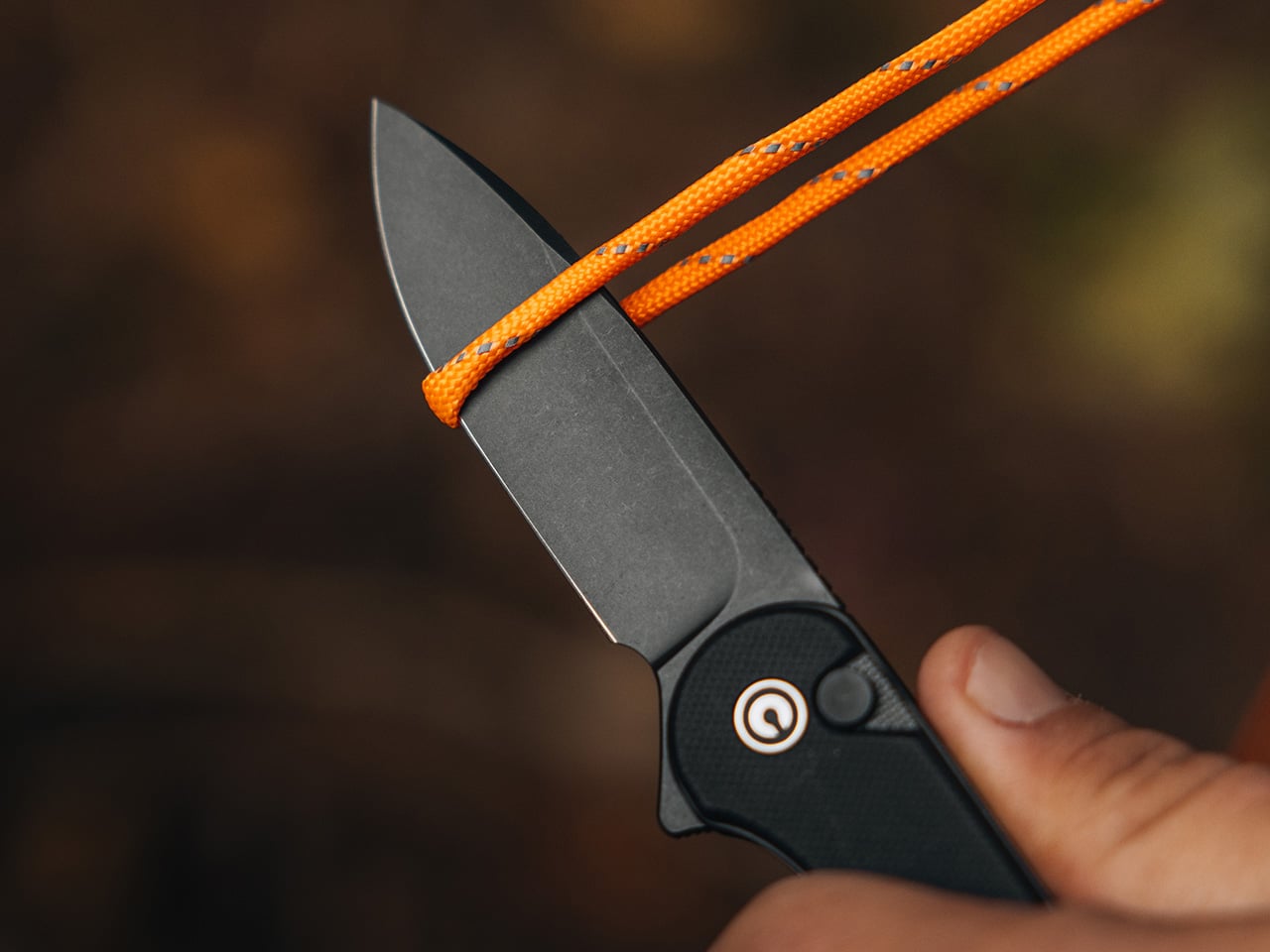
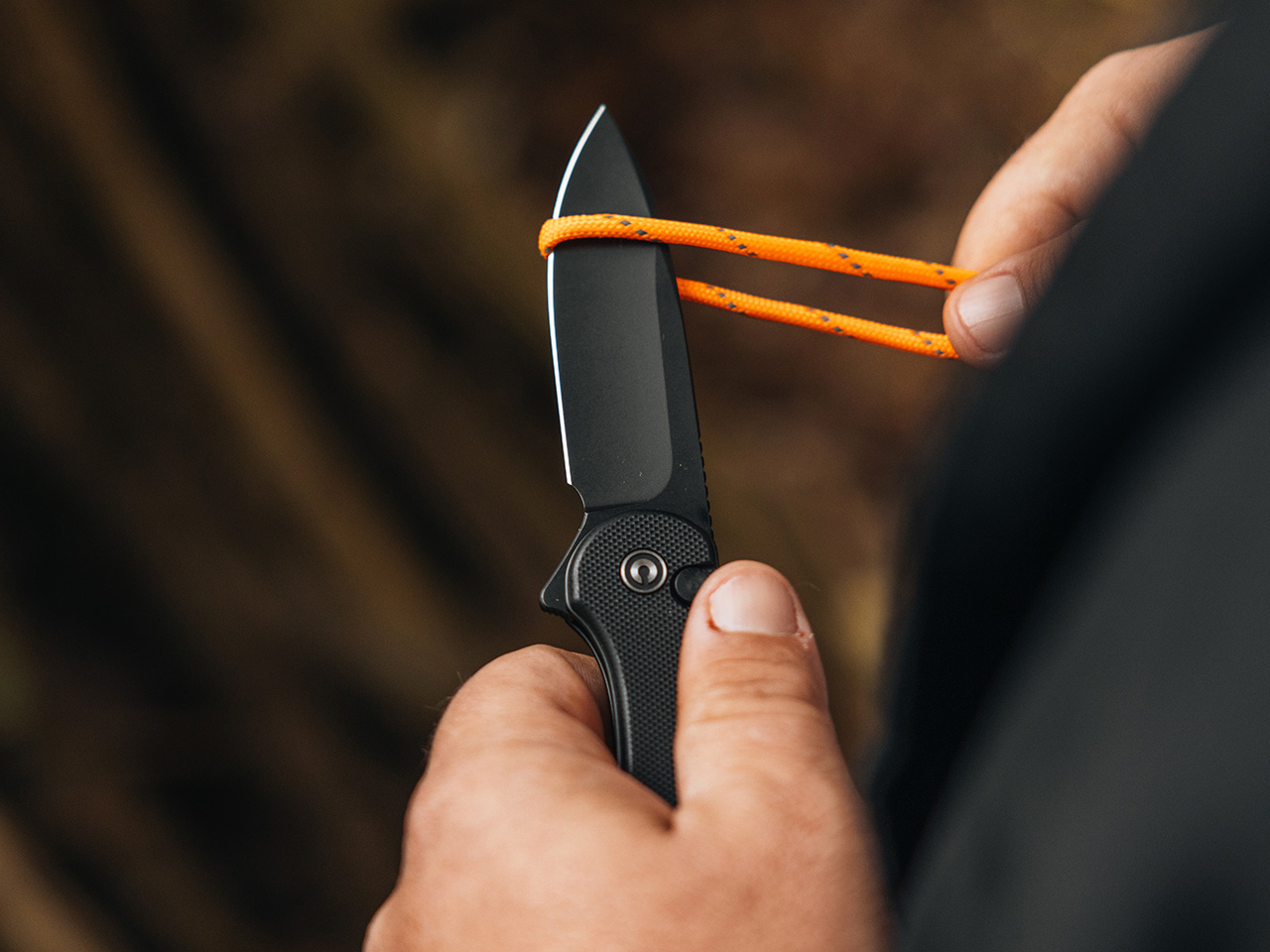
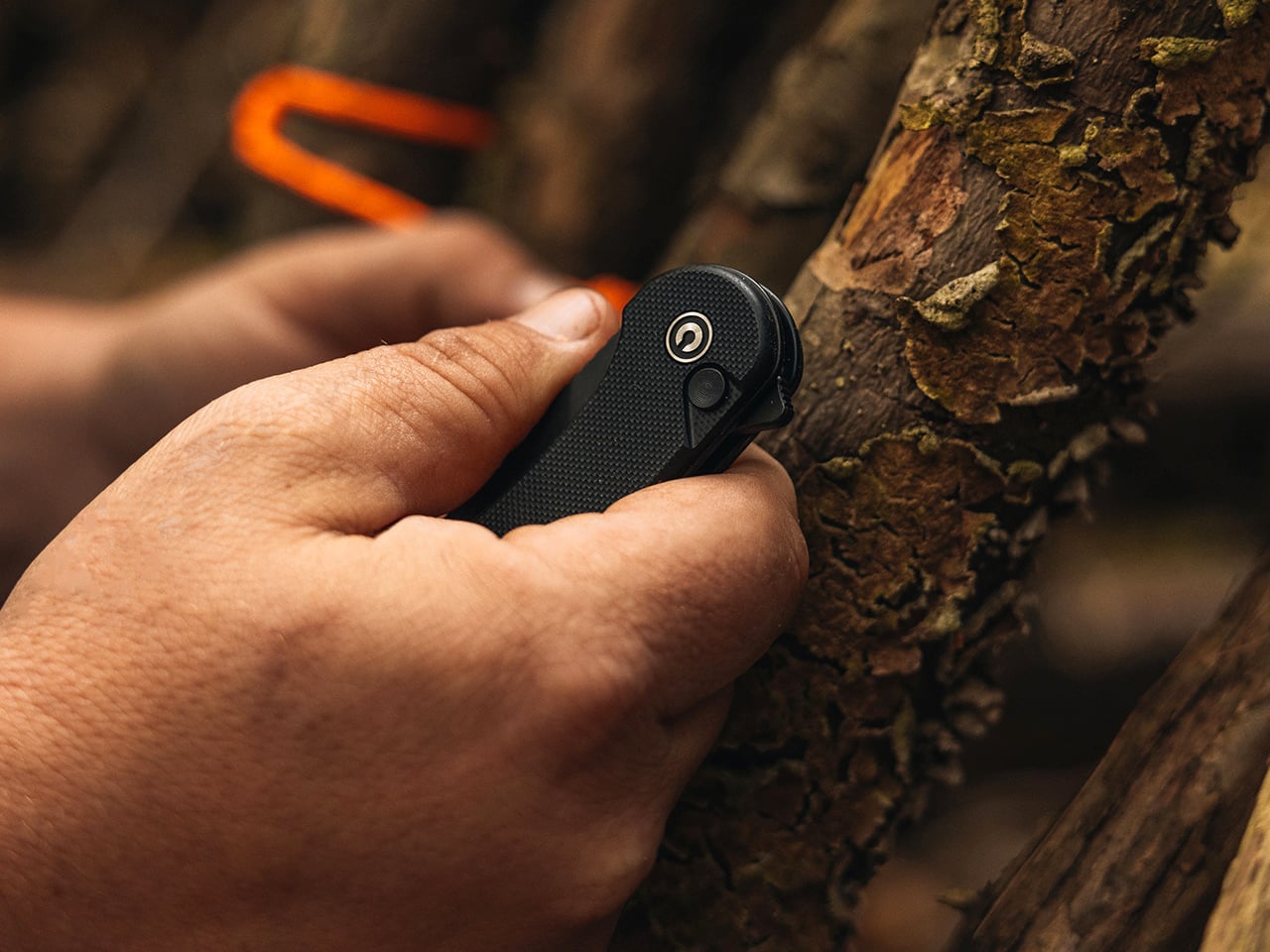
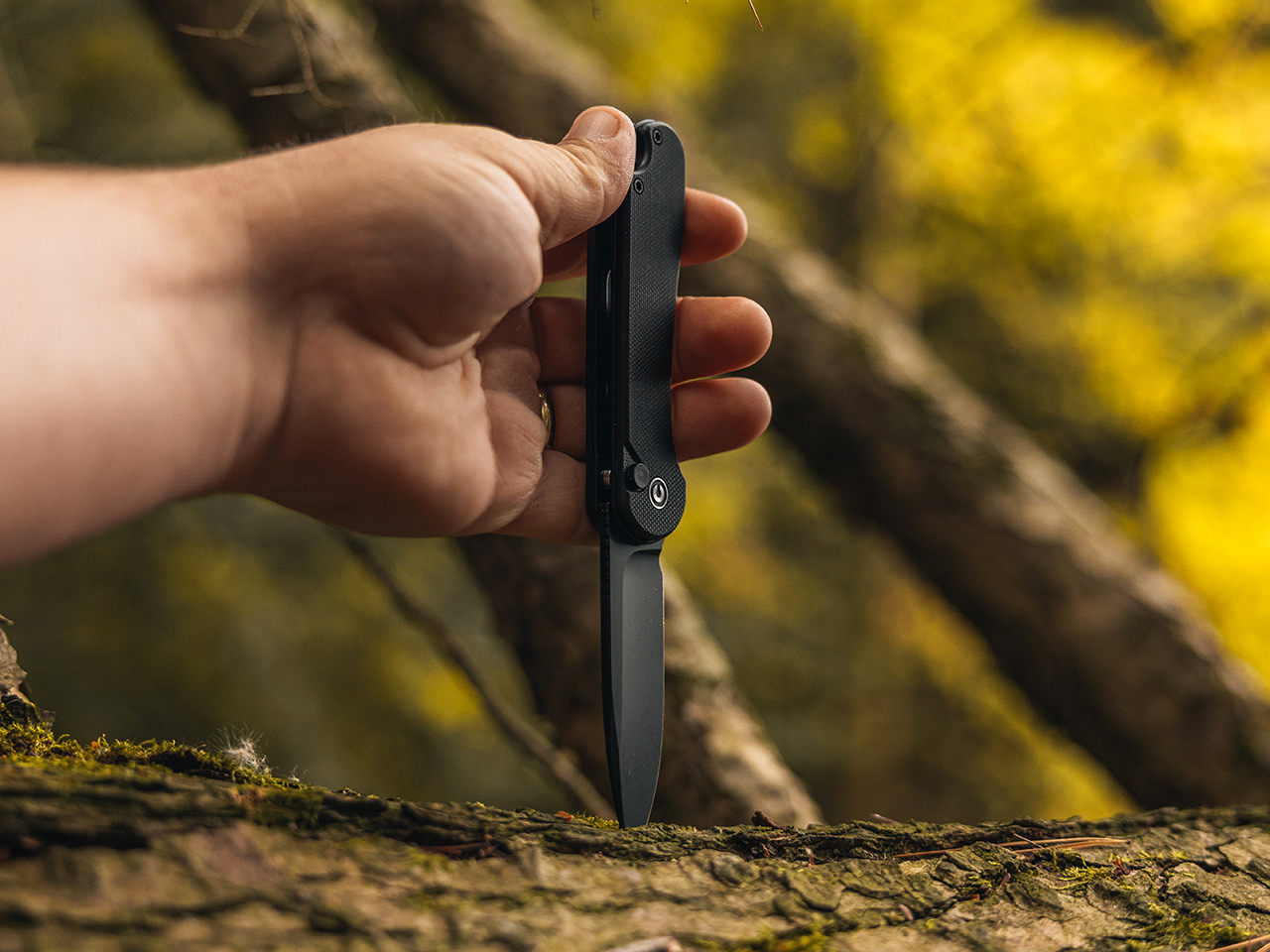
A pocket knife should work hard but carry light, a simple goal that many designs miss. The CIVIVI Button Lock Elementum II is the exception. It’s a compact everyday carry folder built for real work, yet it’s so slim and lightweight you’ll forget it’s in your pocket until you need it.

What makes the Elementum II such a standout is how it delivers on that promise. The design is built around a modern, user-focused experience, with the button lock as its centerpiece. Paired with a pivot running on caged ceramic ball bearings, the action is impressively smooth. A simple press of the button releases the blade, letting it swing shut with a light shake of the wrist for easy one-handed use. It’s a feature that feels premium, elevating the knife beyond a simple cutting tool into something that’s genuinely satisfying to handle.

Designer: CIVIVI

Click Here to Buy Now: $57.38 $76.5 (25% off) Hurry! Sale Ends December 18th. Free Christmas Stocking included in orders over $29.

The original CIVIVI Elementum was a massive success because it was simple, clean, and ergonomic. The CIVIVI Button Lock Elementum II isn’t a replacement; it’s a parallel evolution for users who want a more modern, fidget-friendly EDC companion. The core of that experience is the button lock. Paired with a pivot running on caged ceramic ball bearings, the action is impressively smooth. A press of the button releases the blade, letting it swing shut with a light shake of the wrist, making one-handed use genuinely easy. It’s a feature that feels premium, adding a level of refinement that elevates the knife beyond a simple cutting tool into something that’s just satisfying to handle.

What really gives the knife its teeth, though, is the choice of Nitro V for the blade steel. It’s a smart, practical upgrade that makes a real difference in daily use. Nitro V is a nitrogen-enriched stainless steel that offers a fantastic blend of properties for an everyday carry knife. It’s exceptionally tough, meaning it’s less prone to chipping than some harder, more brittle steels if you accidentally hit a staple or drop it. The corrosion resistance is also a standout feature; you can use it to slice an apple or get it wet on a hike without worrying about rust spots forming by the end of the day. Edge retention is solid, holding a sharp, workable edge through plenty of cardboard and rope before needing a touch-up. And when it does, it’s easy to sharpen on a basic stone, a trait that can’t be overstated. CIVIVI runs the steel at a Rockwell hardness of about 58-61 HRC, a sweet spot that balances edge-holding with durability.

The physical design complements these functional upgrades perfectly. With a blade length just under three inches and an overall length of about seven inches, it’s sized for utility without being cumbersome. The handle is slim, at around half an inch thick, and comes in a few different materials, including lightweight G10 and textured aluminum. This slim profile, combined with a weight of around 2.7 ounces for the aluminum version, means it carries incredibly well. The deep-carry pocket clip lets it sit low in the pocket, making it discreet enough for almost any setting. It’s a knife that’s there when you need it and forgotten when you don’t. The simple drop-point blade shape is versatile, handling everything from fine slicing to piercing tasks with its flat grind.

All these elements circle back to why it works so well as a great pocket knife and EDC gift. The design is clean and unintimidating, the button lock action is intuitive and fun, the Nitro V steel is forgiving and high-performing, and the sub-$60 price point is just *chef’s kiss*. It’s a knife that a seasoned collector can appreciate for its thoughtful material choices, while someone new to knives will find it to be a reliable and easy-to-use tool. It doesn’t require specialized knowledge to maintain, yet it offers a tangible step up in quality from a typical hardware store folder. The Elementum II isn’t just a good knife for the money; it represents a shift where excellent design and practical, modern materials are becoming the new standard for what an everyday knife can be. You can grab the Button Lock Elementum II at a Black Friday-special 25% off using the link below!

Click Here to Buy Now: $57.38 $76.5 (25% off) Hurry! Sale Ends December 18th. Free Christmas Stocking included in orders over $29.

The post The Best EDC Pocket Knife Under $60 Just Got Better With Nitro V Steel and A 25% Discount first appeared on Yanko Design.

BALOLO Setup Cockpit: Wood Monitor Stand That Adapts to Your Work

Most desks tell the same story. A monitor sitting too low, forcing you to hunch forward. A tangle of charging cables disappears behind the desk, where you’ll never find them again. Your phone wedged between the keyboard and a coffee cup, headphones draped over the back of your chair, and a growing pile of notebooks that never quite fit anywhere. It’s functional enough to get work done, but it’s also the kind of setup that makes you dread sitting down every morning.

The Setup Cockpit by BALOLO approaches this differently. Instead of adding more organizers that take up space or forcing you to commit to a fixed layout, it creates a foundation that adapts to however you work. The monitor stand itself is straightforward, a long walnut or oak shelf that raises screens to eye level while freeing up the desk underneath. What sets it apart is the patented mounting grid running along the bottom, a system of attachment points that lets you easily add accessories wherever they’re needed and rearrange them whenever your workflow changes.

Designer: Ruben Keferstein

Click Here to Buy Now: $237.92 $279.90 (15% off, use coupon code “BLACKBALOLO”). Hurry, deal ends in 48-hours!

The first thing you notice when unpacking the Setup Cockpit is how solid it feels. The wood is real American walnut or oak, hand-finished in Germany with natural oils and waxes that bring out the grain. The feet, made from MDF wood, are sturdy enough to keep the whole thing stable, even with two large monitors perched on top. It’s the kind of build quality you’d expect from furniture that costs a few hundred dollars, not something marketed as a desk accessory.

Setting it up is refreshingly simple. Slide your monitors onto the shelf, adjust the monitor height if needed, and tuck your keyboard underneath in the 3.9 inches of clearance. That alone transforms how your desk feels, raising screens to eye level and opening up space you didn’t realize you were wasting. But the real shift happens when you start adding accessories from BALOLO’s modular ecosystem, which is where the mounting grid earns its keep.

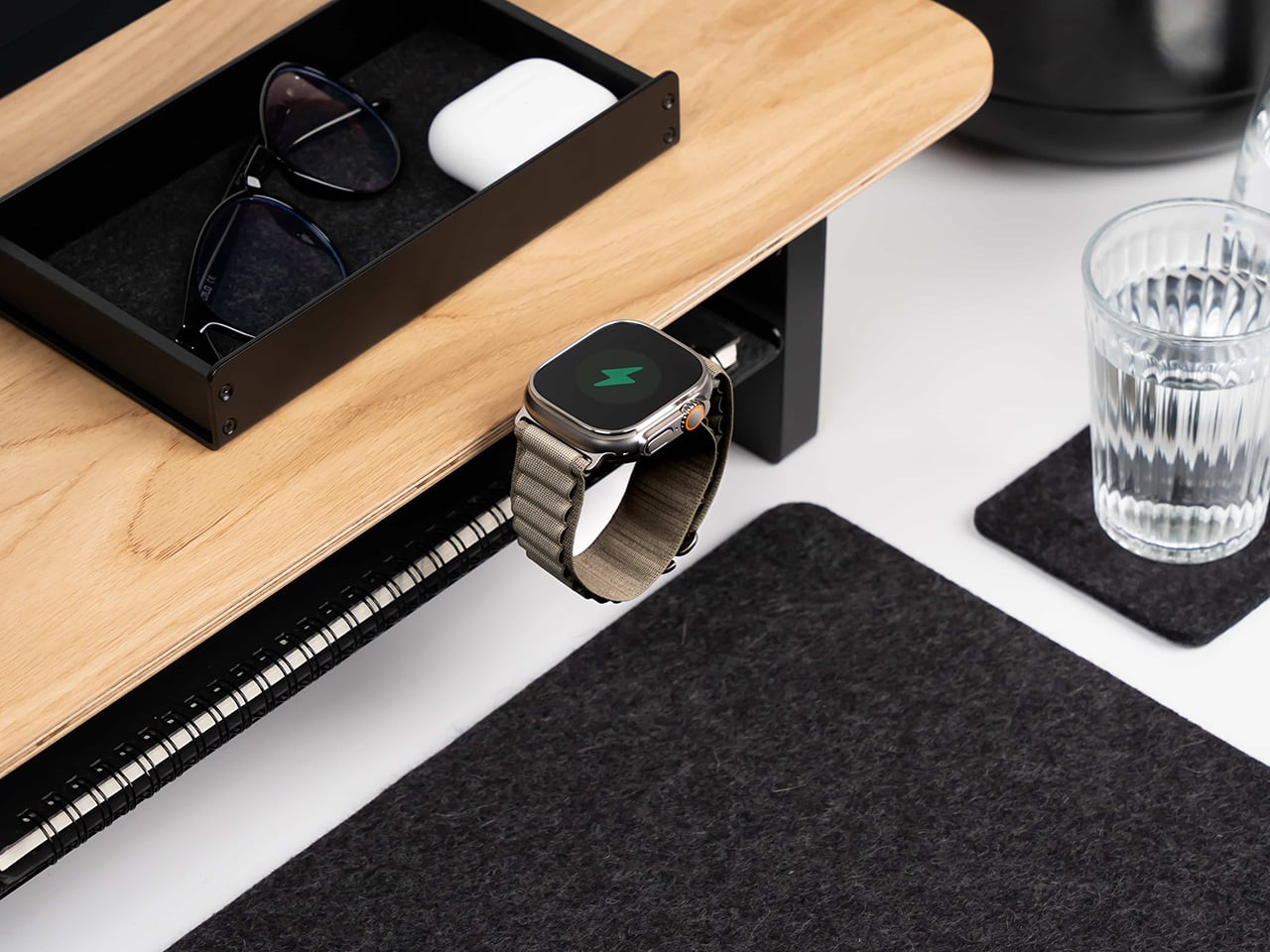
A laptop riser is perfect for those days when you need a second screen. A MagSafe holder keeps your phone charged and visible for notifications without cluttering the surface. Cable magnets attach to the grid, holding charging cables in place so they don’t slip behind the desk every time you unplug something. Heck, there’s even a headphone holder that keeps your cans within reach instead of draped over your monitor or tangled in your bag.

The modularity is what makes this feel genuinely useful instead of just another piece of furniture you buy once and forget about. Your workflow changes depending on what you’re working on, and the Setup Cockpit keeps up. Whether you need a tablet holder for sketching or more space for your accessories, the BALOLO Setup Cockpit lets you customize your desk to suit your preference, while leaving you with the freedom to expand and change it at any time.

What’s surprising is how much this changes the rhythm of your workday. Starting with a cleared surface instead of a pile of cables and peripherals makes sitting down feel less overwhelming. Everything has a spot, and that spot can change if you decide you want your phone on the left instead of the right. It’s the kind of flexibility most desks never offer, where adding one thing means removing something else or living with clutter.

The materials help too. The walnut finish warms up spaces that lean too heavily on black plastic and aluminum, while the oak or black-stained oak options fit minimalist setups without feeling cold. The wood is sealed, so spills and wear won’t ruin the finish, and the whole thing is built to support up to 50 pounds without wobbling. That’s reassuring when you’re stacking ultrawide monitors and laptops on top of a shelf.

The Setup Cockpit doesn’t reinvent what a monitor stand can do so much as it refines every detail until nothing feels compromised. BALOLO’s approach combines German craftsmanship with modularity that actually makes sense, creating furniture that transforms your desk without forcing you to tear everything apart first. It’s designed to adapt as your work evolves, which is exactly what premium workspace solutions should have been doing all along.

Click Here to Buy Now: $237.92 $279.90 (15% off, use coupon code “BLACKBALOLO”). Hurry, deal ends in 48-hours!

The post BALOLO Setup Cockpit: Wood Monitor Stand That Adapts to Your Work first appeared on Yanko Design.

MVRDV’s Spherical Grand Ballroom Redefines Mixed-Use Architecture in Tirana

A luminous sphere is rising in Tirana, Albania, and it’s set to become one of Europe’s most audacious architectural statements. MVRDV, the Dutch architecture firm known for pushing boundaries, has won the international competition to reimagine the site of the old Asllan Rusi Sports Palace with The Grand Ballroom—a 100-meter-diameter orb that defies conventional building typologies.

The project merges seemingly incompatible programs into a single sculptural form. A 6,000-seat arena for basketball and volleyball sits at the heart of the structure, surrounded by hotel rooms, residential apartments, restaurants, and public spaces. Where most architects would separate these functions into distinct volumes, MVRDV stacks them vertically within the spherical envelope, creating a building that reads as both monument and machine for urban living.

Designer: MVRDV

The organizational strategy reveals a sophisticated understanding of public and private gradients. At ground level, where the sphere meets the earth, it creates an impression in the landscape, carving out a lower floor that welcomes visitors into the building’s most accessible spaces. From there, the programming ascends in horizontal layers, transitioning from communal arena spaces through semi-public hotel facilities to private residential units at the upper reaches. This vertical choreography ensures each function occupies its optimal position within the geometric constraints of the sphere.

The exterior treatment showcases MVRDV’s characteristic attention to facade articulation. A gridded skin of vertical and horizontal structural elements wraps the entire volume, creating rhythmic openings that modulate light and views while maintaining the sphere’s overall coherence. These apertures serve dual purposes: they provide necessary transparency for the various programs while reinforcing the geometric purity of the form through their careful distribution across the surface.

The Grand Ballroom arrives at a moment when Tirana is actively reshaping its architectural identity. The capital city has emerged as a laboratory for contemporary design in recent years, attracting international architects to contribute bold proposals. MVRDV’s sphere positions itself as a civic anchor, a building scaled to read from across the city while engaging pedestrians at street level through its distinctive ground-level imprint.

The technical ambition matches the formal boldness. Engineering a sphere of this scale requires sophisticated structural solutions, particularly when accommodating the varied spatial demands of arena seating, hotel rooms, and residential layouts within a continuous curved envelope. The gridded facade likely performs structural duties alongside its aesthetic function, distributing loads across the entire surface. This project represents a departure from the fragmented, multi-building approach that typically defines mixed-use developments. Rather than clustering separate towers around a shared plaza, MVRDV consolidates everything into a singular object. The sphere becomes a self-contained urban district, a building that functions as both landmark and neighborhood. It’s architecture as spectacle, certainly, but spectacle in service of density and programmatic diversity. The Grand Ballroom positions MVRDV within a lineage of architects willing to embrace geometric extremes. It stands as proof that even the most fundamental shape—the sphere—still holds potential for radical reinvention in contemporary practice.

The post MVRDV’s Spherical Grand Ballroom Redefines Mixed-Use Architecture in Tirana first appeared on Yanko Design.

Two Playdate games about cheese, and spooky campfire stories with a twist

After taking a break from the Playdate following Season Two and the wonderfully weird experience that was Blippo+, I finally dusted off my little yellow console this week and dove back in. And what better place to start than with a couple of games about cheese? Cheese 'n Crackers and Say When! both hit the Playdate Catalog recently, but aside from the thematic similarity, they're two very different games. As an extra treat (unrelated to cheese), I also picked up Ware-wolf Campfire Stories, a free game on itch.io that's actually over a dozen bite-sized games in one. 

Cheese 'n Crackers

When it comes to snacking, everyone's got their preferences. Some crave a savory blast of umami, while for others, a sweet treat might be what always hits the spot. Or maybe you're like me, and if you have one, it needs to be followed by the other. Creating snacks that hit just right is what Cheese 'n Crackers is all about. 

In this Playdate game, you have what is essentially a neverending charcuterie board with all the fixins you could imagine. There are meats, cheeses, spreads, spices, vegetables, fruits and various types of crackers and breads to adorn with those toppings. You have to combine ingredients to make the perfect snacks for whatever group you're serving that round. Each group — like the Speed Daters or Grandma's Bridge Club — has a specific set of guidelines that may include favorites, dietary restrictions or aversions to certain tastes. 

A still from the Playdate game Cheese n Crackers showing a cutting board with various meats, vegetables, cheeses and crackers
Scenic Route Software

While pairing ingredients is pretty intuitive, there are specific combinations that will earn you more points, so you'll have to pay attention to descriptions of each food item. Or, you can turn to the Cheese 'n Crackers Compatibility Spreadsheet for all of that information in one place. Yes, that exists, and it's an intimidating work of culinary organization. Toppings will go bad if they sit out for too long, so you won't want to waste too much time scouring the spreadsheet, but it's still a relatively low-pressure game that you can play at your own pace. For the more competitive among us, though, there are leaderboards so you can challenge yourself with scores to beat. 

Say When!

This is the more intense of our cheese games, with a Root Bear-like structure that sees you tending to a revolving door of restaurant patrons and trying to grate the perfect amount of cheese for their meals using the crank. And despite being called Say When!, your customers (very unhelpfully) will not actually say "when" to let you know you can stop cranking; you have to pay attention to their unique tells to know when they're satisfied — the twitch of a mustache, a change in facial expression, etc. 

A still from the Playdate game Say When! showing a man wearing dark sunglasses sitting at a table, with a dish in front of him. Grated cheese is pouring onto the dish from a cheese grater that floats above it
Smashtoad Studios

There's a customer satisfaction meter at the top of the screen that will take hits any time you under- or over-serve cheese, or suffer if you're moving too slowly, and once it's down to the bottom, you're fired. After each shift, you'll be given the choice to use a modifier that can help you out in areas like customer satisfaction or getting the boss off your back. To mix things up, there are also mini-games that pop up in the middle of your shift. You might be furiously grating cheese and then have to switch gears and save the life of a choking customer, for example. 

It's fast-paced, it's silly and it's pretty hard to put down once you get going. 

Ware-wolf Campfire Stories

While the Playdate Catalog has lots of great titles to choose from, there are plenty of gems not on there that are worth checking out too. One such example is Ware-wolf Campfire Stories, a unique package of 14 tiny games that's free on itch.io. It's the result of a collaboration between 15 developer teams — including the developers of Off-Planet Dreams, the Life's Too Short series, Voidblazers and other popular Playdate titles.

Per the description:

In Ware-wolf Campfire Stories, 5 kids are sitting around a fire with their counselor telling spoooooky tales! Each story launches a separate game that you may win or lose.... with consequences.

It's a cool format, and there's some nice variety among the games, which each only take a few minutes to get through for the most part. They're all of the spooky sort, so expect bats, ghosts and skeletons galore. It's a nice way to get a taste of some of the many different game styles you'll encounter on the Playdate, and maybe discover some developers whose games you haven't yet checked out.


This article originally appeared on Engadget at https://www.engadget.com/gaming/two-playdate-games-about-cheese-and-spooky-campfire-stories-with-a-twist-232516706.html?src=rss
This MIDI Controller Just Solved Music’s Biggest Portability Problem

There’s something refreshing about a gadget that looks this good while solving real problems. Germain Verbrackel’s MIDI controller concept doesn’t try to reinvent the wheel, but it does ask an interesting question: what if our music-making tools were designed with the same care we give to the objects we use every day?

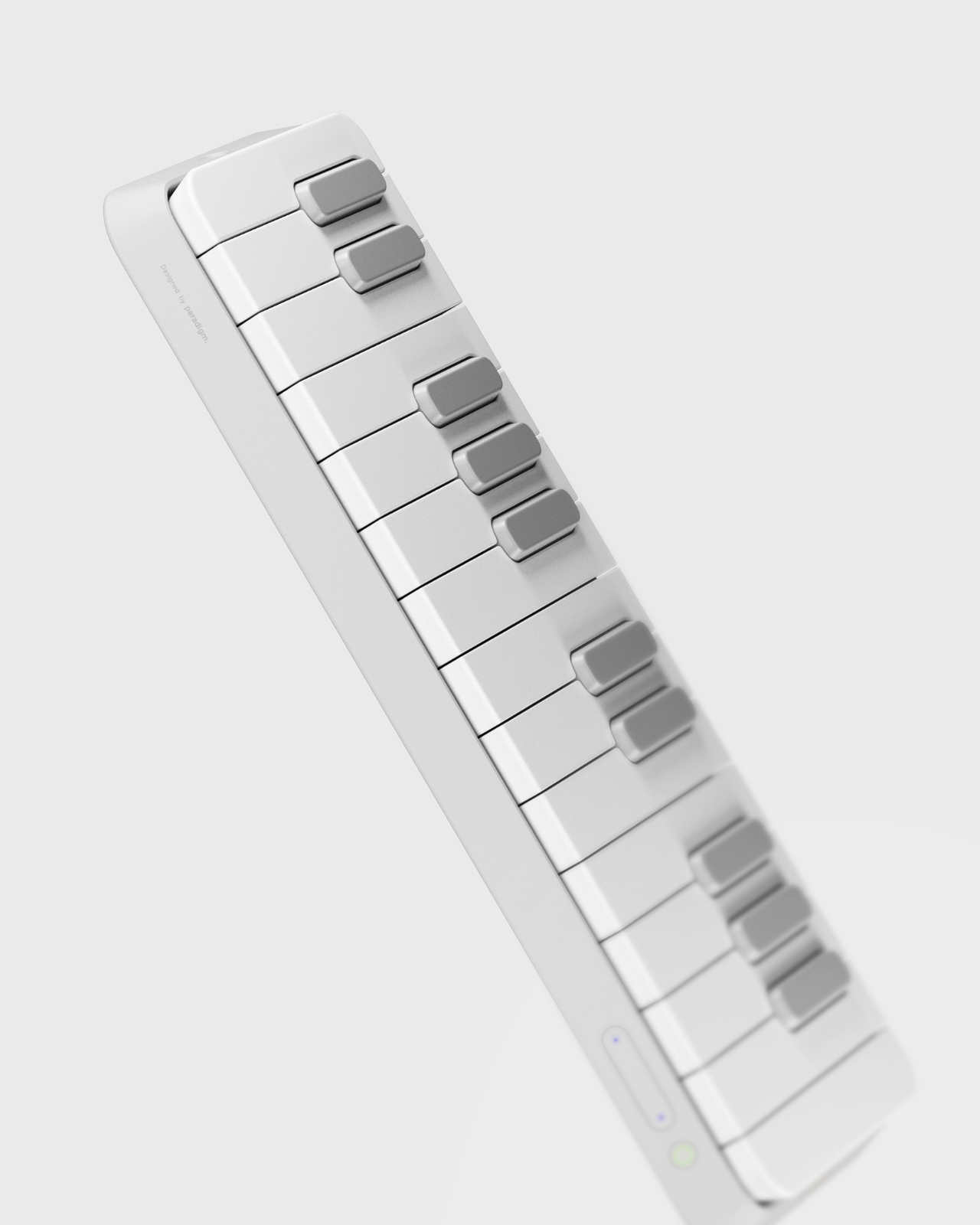
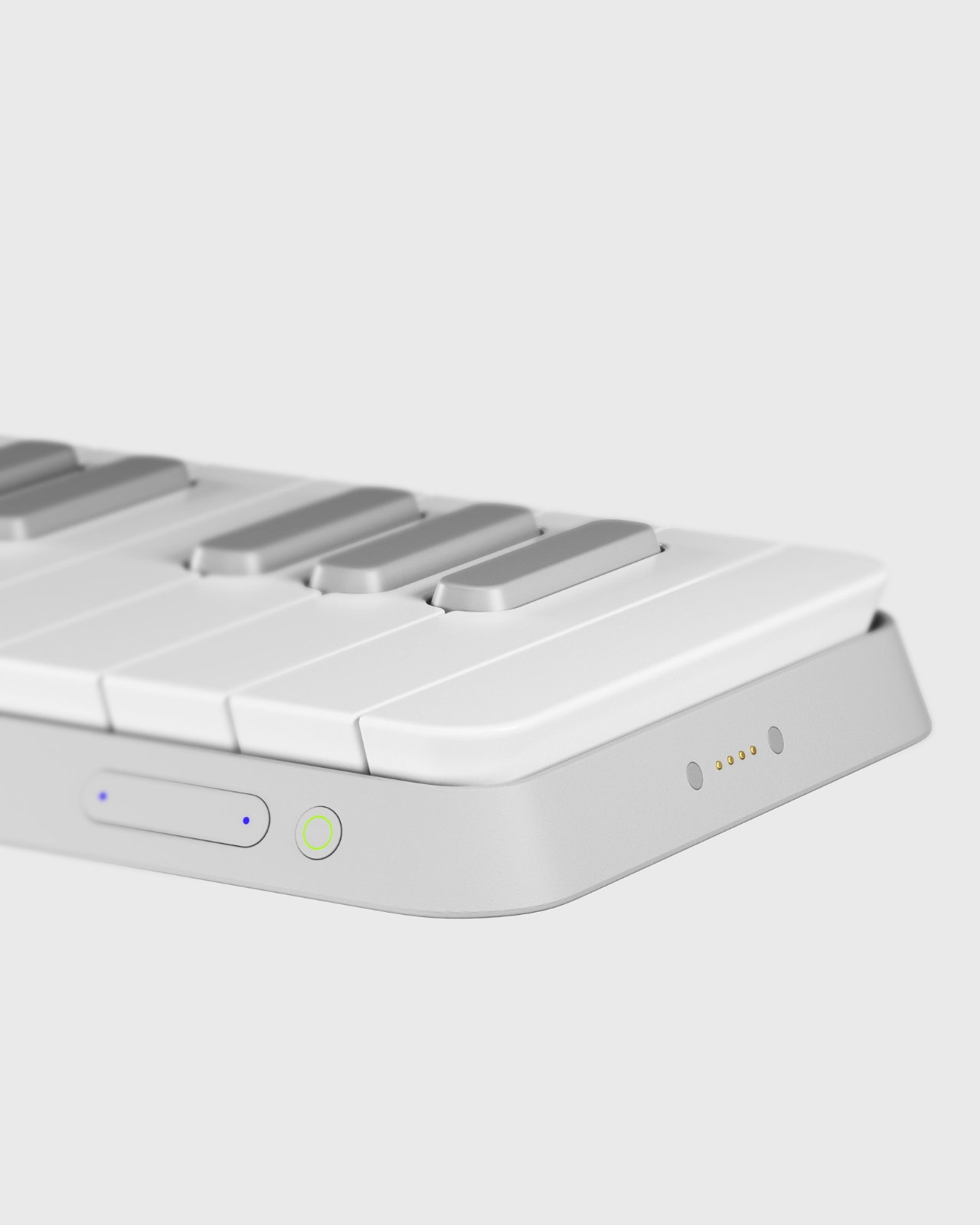
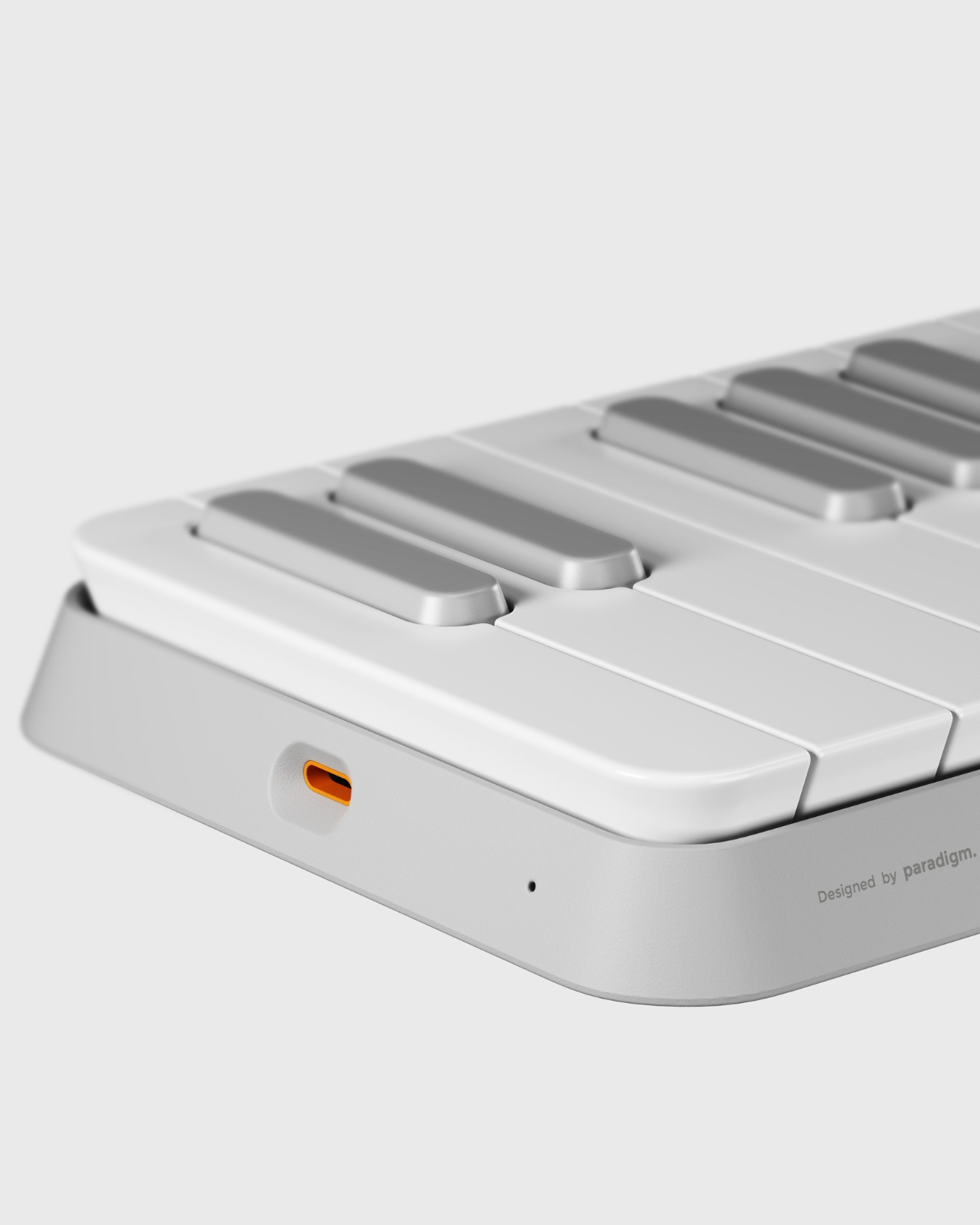
At first glance, this looks like a minimalist’s dream. The all-white palette and clean lines give it that “I belong on a designer’s desk” vibe. But look closer, and you’ll notice that every curve and angle here has a job to do. The chamfered base isn’t just there to look pretty. It creates a sense of groundedness, like the controller is planted firmly on your desk, ready to work. There’s a subtle confidence to it, the kind that comes from knowing exactly what it is and what it’s supposed to do.

Designer: Germain Verbrackel

Create your own Aesthetic Render: Download KeyShot Studio Right Now!

The keys tell an even better story. Each one features a chamfered edge that guides your fingers into position. It’s a small detail, but it’s the kind of thing that makes a huge difference when you’re actually using the device. Think about how many times you’ve fumbled with flat, generic buttons that all feel the same. These keys practically tell your fingertips where to go. That’s not just good design, that’s thoughtful design.

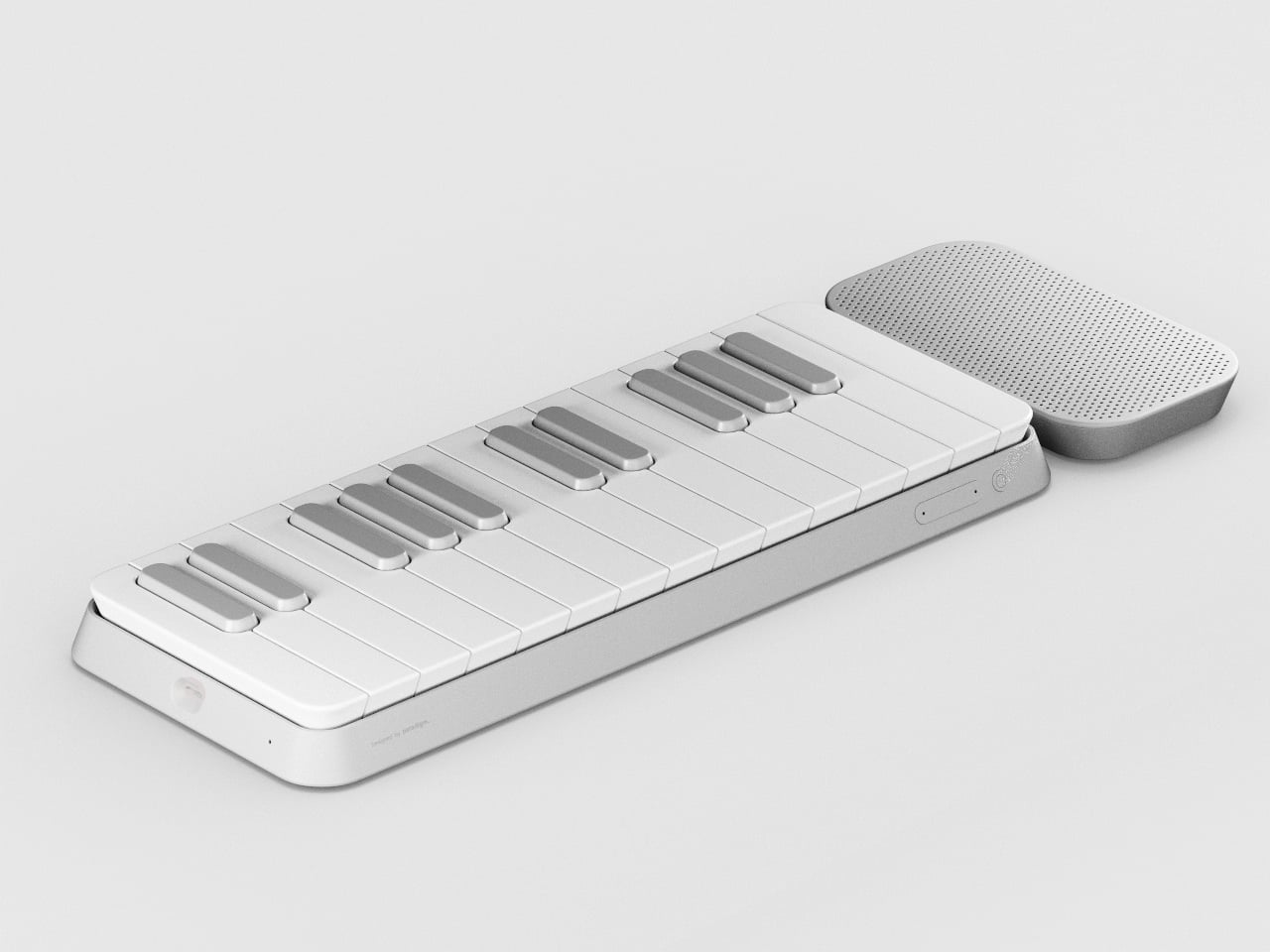
What really sets this controller apart, though, is the magnetic speaker attachment. This is where the concept shifts from “nice MIDI controller” to “oh, that’s clever.” Most MIDI controllers are tethered to computers or external speakers. They’re input devices, not standalone instruments. But snap that speaker module into place, and suddenly you’ve got a self-contained music-making tool. No laptop required. No cables snaking across your workspace. Just you and the music.

The magnetic connection is particularly smart because it maintains the device’s sleek profile when you don’t need the speaker, but transforms it into something more complete when you do. It’s modular design done right, not as a gimmick but as a genuine enhancement to functionality. The speaker itself has a textured grille that provides visual and tactile contrast to the smooth keys, giving the whole setup a more dynamic look when assembled.

There’s also something to be said for how portable this design appears. The compact form factor suggests this is meant to travel with you, to be the controller you throw in your bag when inspiration might strike at a coffee shop or a friend’s place. The chamfered base helps here too, because that angled edge makes it easier to pick up off a flat surface. Again, it’s a small thing, but these small things add up to create an object that feels like it was designed by someone who actually uses these tools.

The aesthetic choices matter here as well. In a market full of MIDI controllers that either try too hard to look “professional” with all-black industrial designs or go the opposite direction with RGB lighting and gaming-inspired looks, this one takes a different path. It’s contemporary without being trendy. It’s minimal without being cold. It could sit next to your laptop, your coffee maker, or your favorite design book and look equally at home.

What Verbrackel has created here is a case study in how industrial design can elevate everyday tools. This isn’t about adding features for the sake of features or making something look futuristic just because you can. It’s about understanding how people actually use these devices and designing accordingly. The chamfered edges, the magnetic speaker, the clean color palette, they all serve the same goal: making music creation more intuitive and more enjoyable.

The controller represents a broader shift we’re seeing in tech design, where the focus moves from pure functionality to thoughtful integration of form and function. It’s the same philosophy that’s made smartphones beautiful and kitchen appliances worthy of counter space. Why shouldn’t our creative tools receive the same level of design attention? Whether this concept makes it to production or remains a stunning portfolio piece, it’s already done its job. It’s made us think differently about what a MIDI controller can be. And that’s worth celebrating.

The post This MIDI Controller Just Solved Music’s Biggest Portability Problem first appeared on Yanko Design.