This Tent Just Solved Camping’s Most Annoying Problem

Remember when camping meant wrestling with tent poles at dusk while mosquitoes feasted on your ankles? Or trying to decipher those cryptic instruction diagrams that somehow never matched the pile of canvas and metal at your feet? Well, South African brand Alphago just released something that makes all that struggle feel wonderfully obsolete.

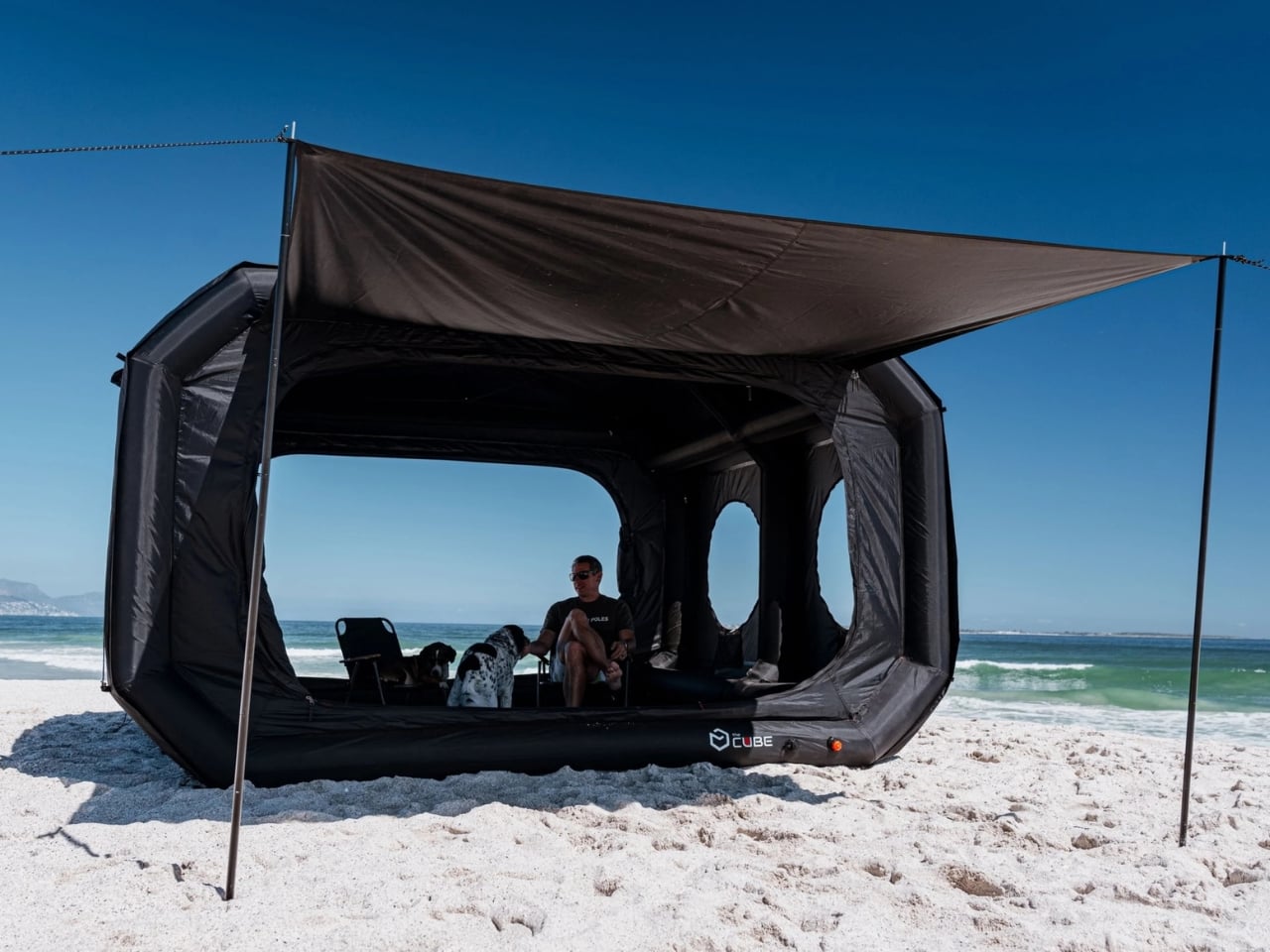
Meet The Cube, an inflatable tent that basically sets itself up while you crack open a cold drink and enjoy the view. We’re talking four minutes from bag to fully erected shelter, and the only tool you need is your finger to press a button.

Designer: Alphago

Here’s how it works: instead of traditional poles, The Cube uses an air tube frame system that inflates via a wireless electric pump. One button press, and the tent whooshes to life like some kind of architectural magic trick. No hammering stakes at odd angles, no accidentally threading poles through the wrong sleeves, no arguments with your camping buddy about which end is the front. Just push, wait, and watch your home away from home take shape.

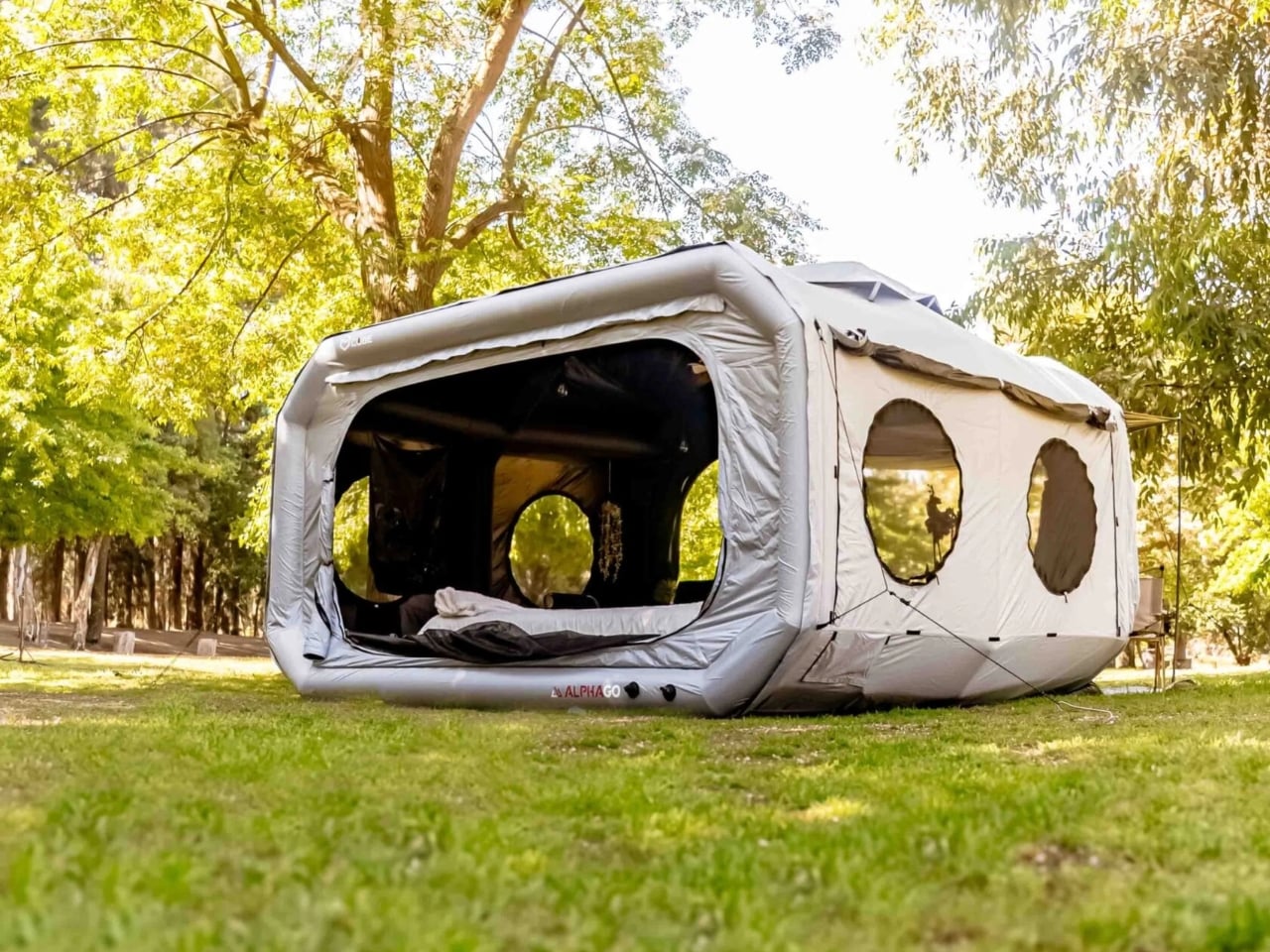
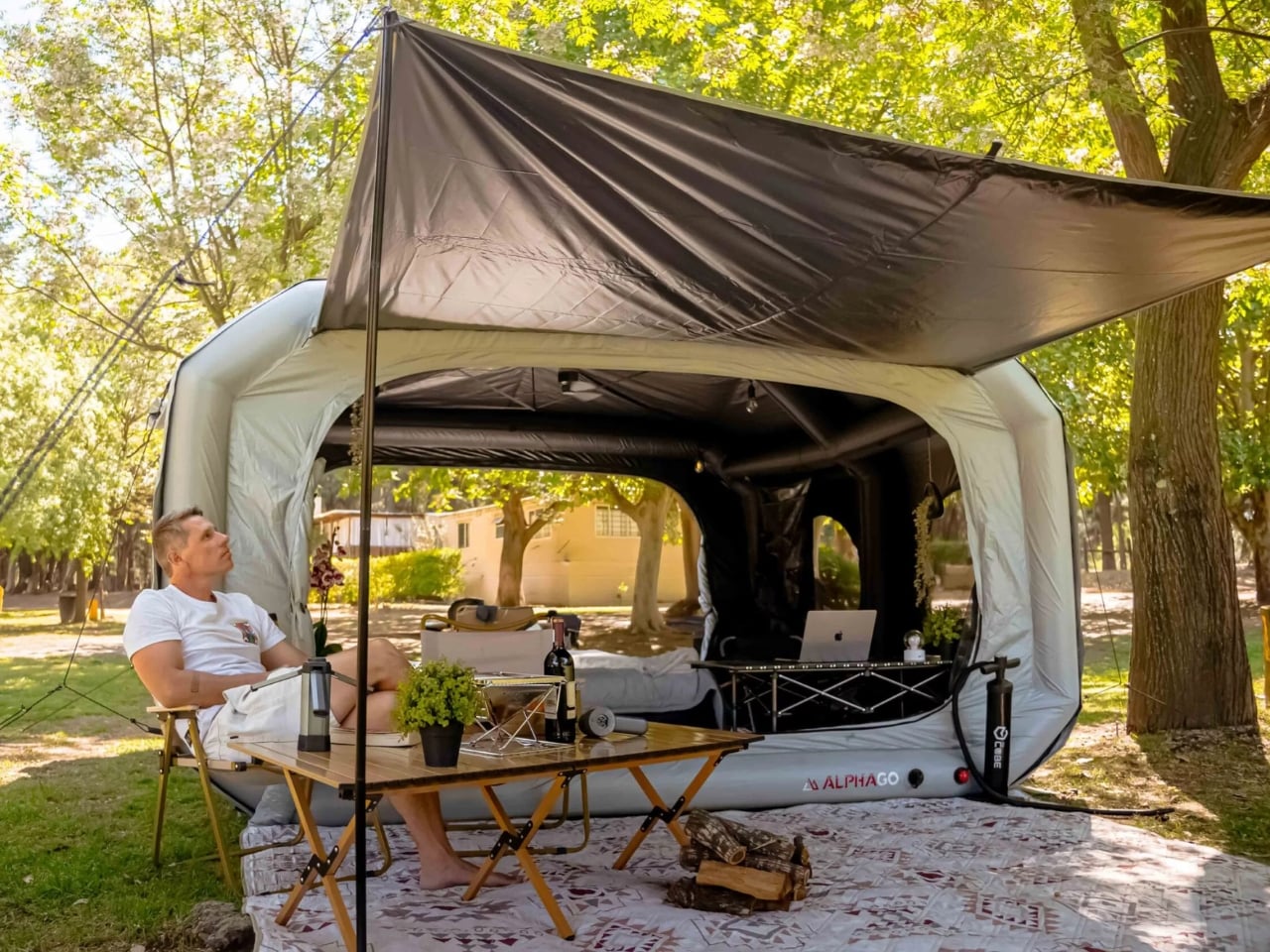
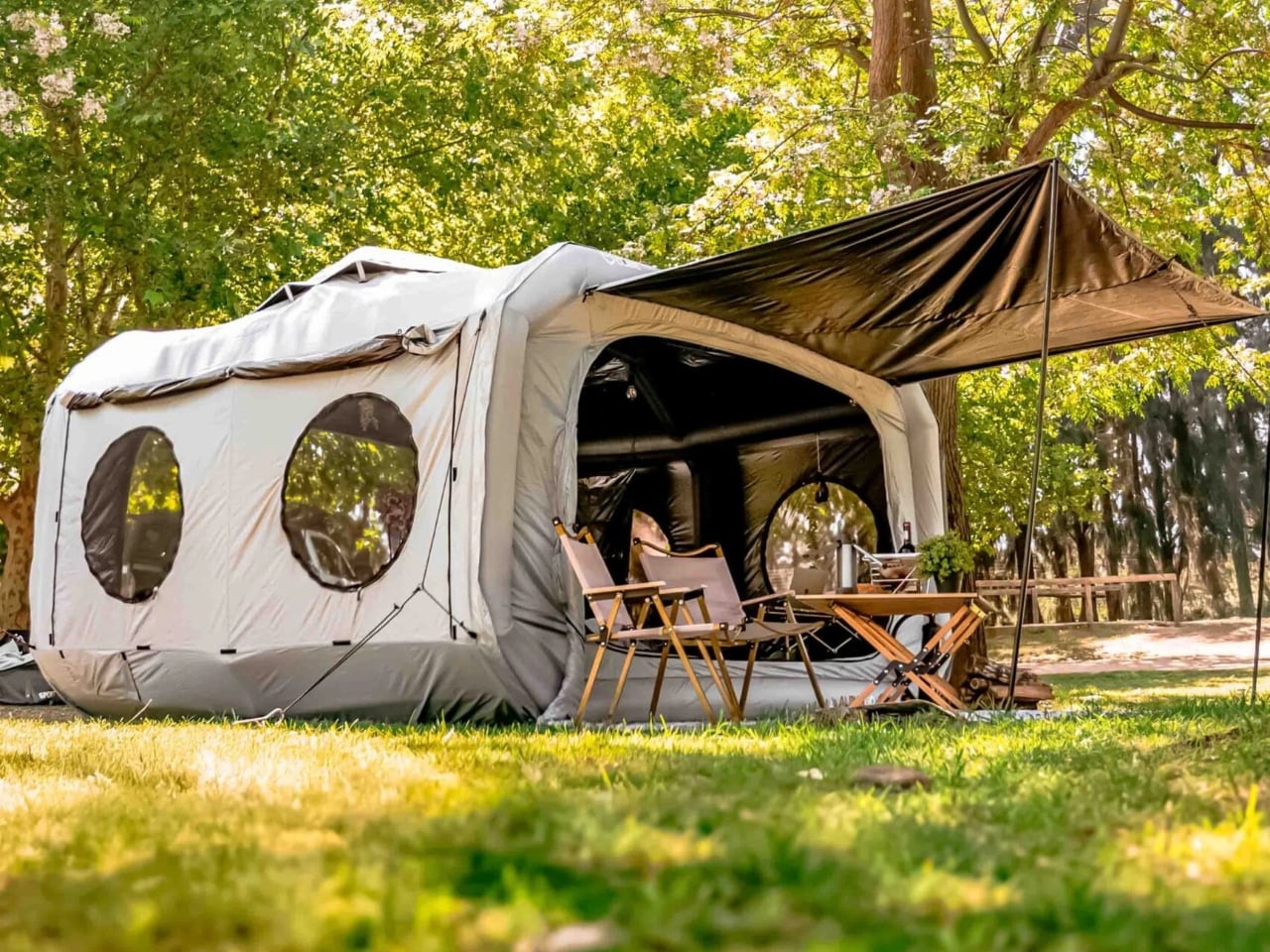
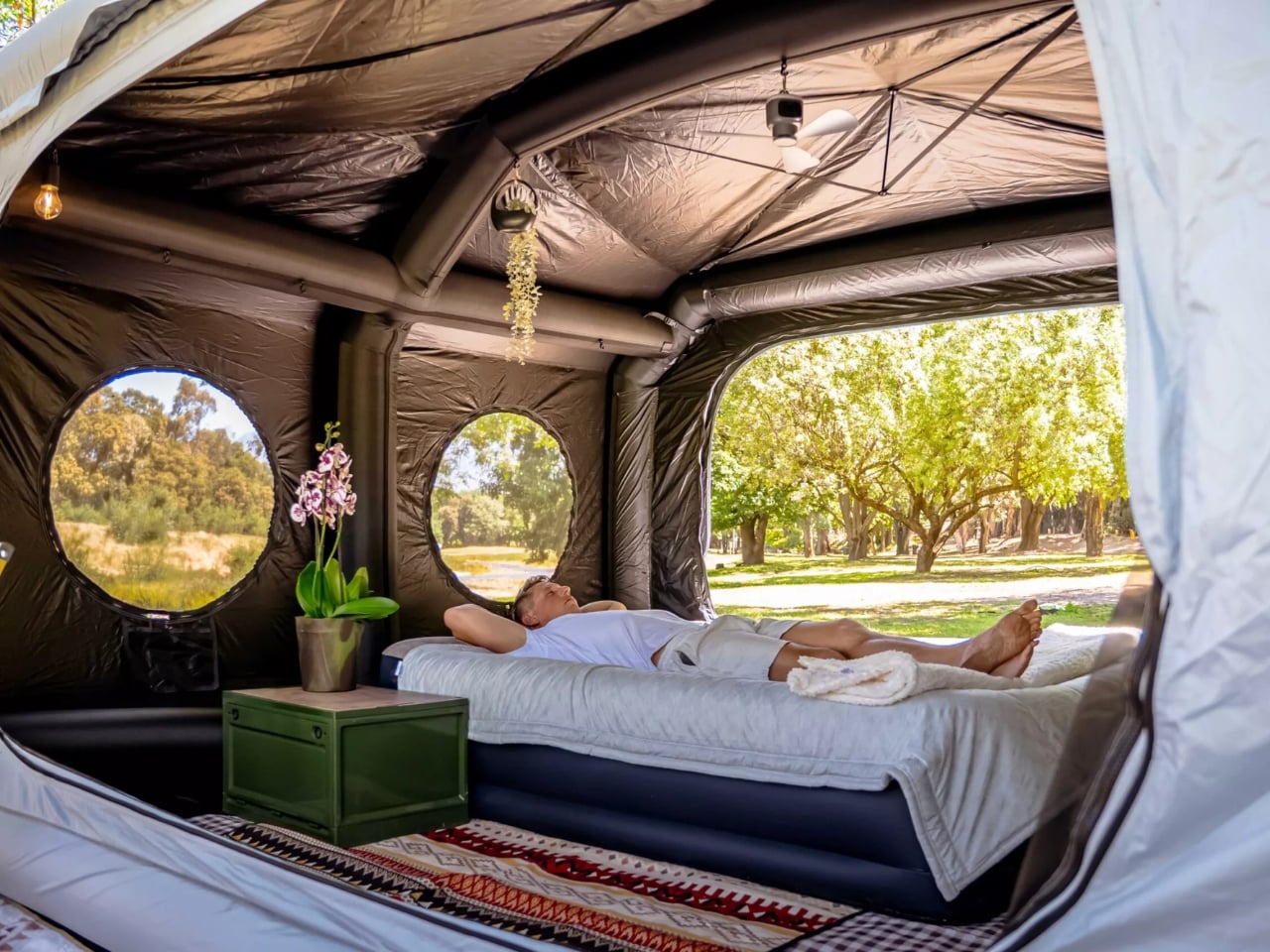
But what really sets The Cube apart isn’t just the speed. It’s the fact that this thing is actually designed for comfort, not just survival. The stretched, oversized design puts this firmly in glamping territory rather than roughing-it camping. We’re talking about a spacious interior that doesn’t force you to hunch over or play tetris with your gear. The modular design means you can customize your setup depending on whether you’re solo adventuring or bringing the whole crew.
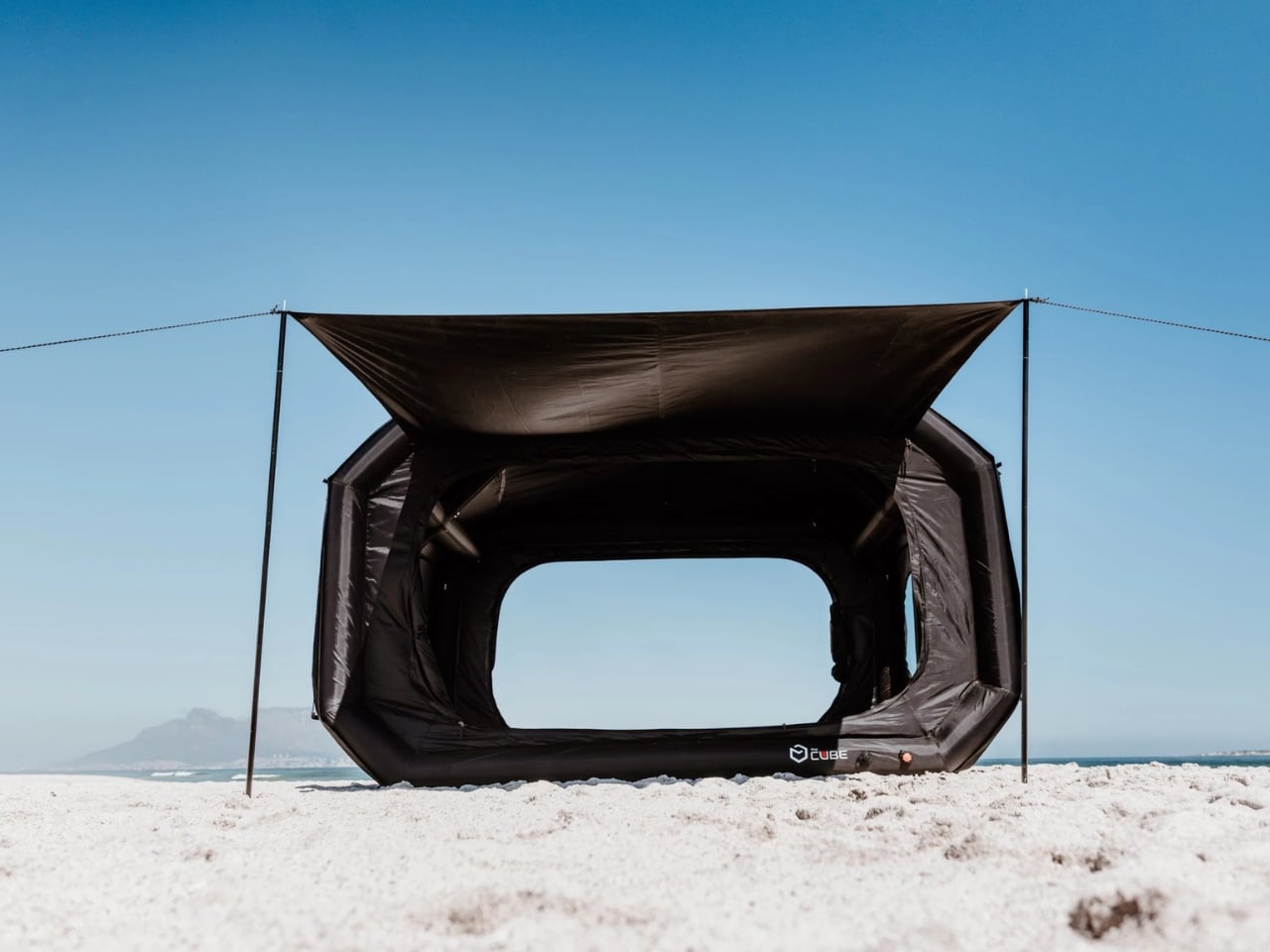
Weather resistance is where The Cube really flexes. The tent features an ultra-rigid airframe that stands up to wind and rain, with a WeatherTec system that includes welded floors and inverted seams to keep you dry even when the weather turns nasty. Both the front and back come with three layers: privacy screening, mosquito netting, and weather panels, so you can adjust your exposure to the elements based on conditions and mood.
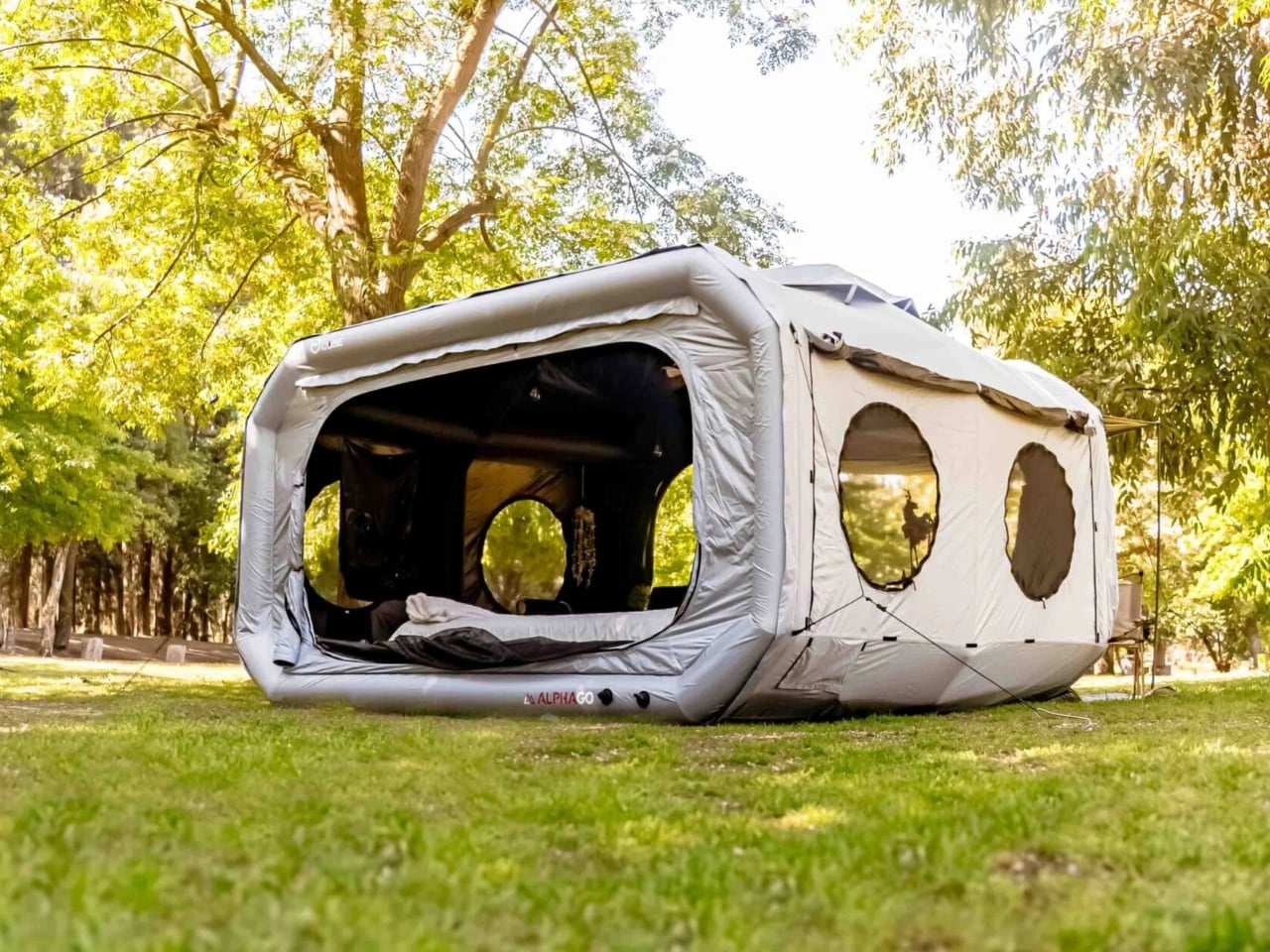
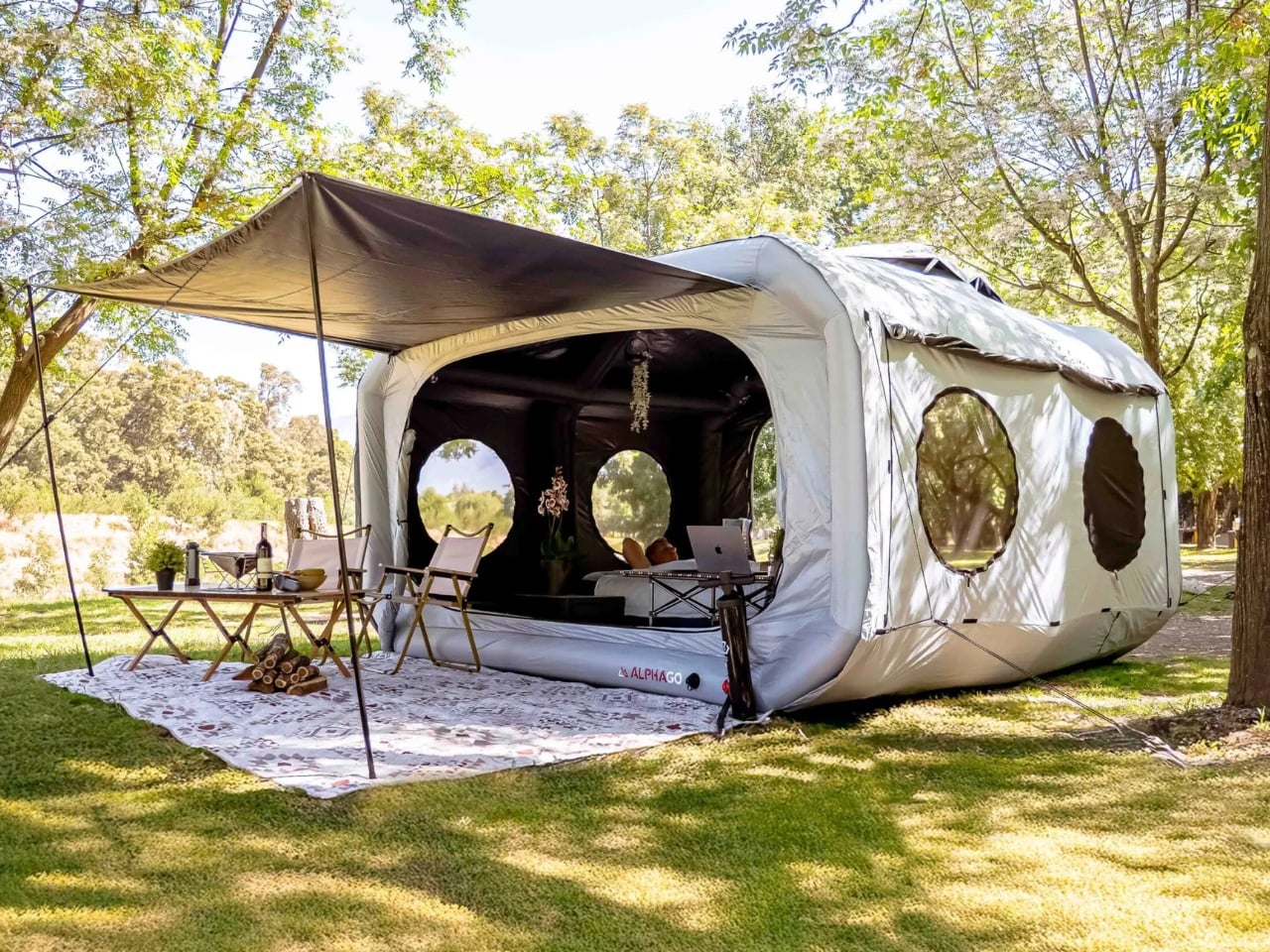
The attention to practical details is impressive. Some versions come with camping tables, side tables, and even storage solutions like cupboards with plates, bowls, cups, and cutlery drawers. It’s like someone actually thought about what you need when you’re living outdoors for a few days, rather than just providing a roof over your head. Now, is this traditional camping? Absolutely not. If your idea of connecting with nature involves minimalist gear and earning your shelter through physical labor, The Cube probably isn’t for you. But if you’re someone who loves being outdoors without sacrificing comfort, or if you’ve been put off camping by the sheer hassle of setup and teardown, this is a game changer.
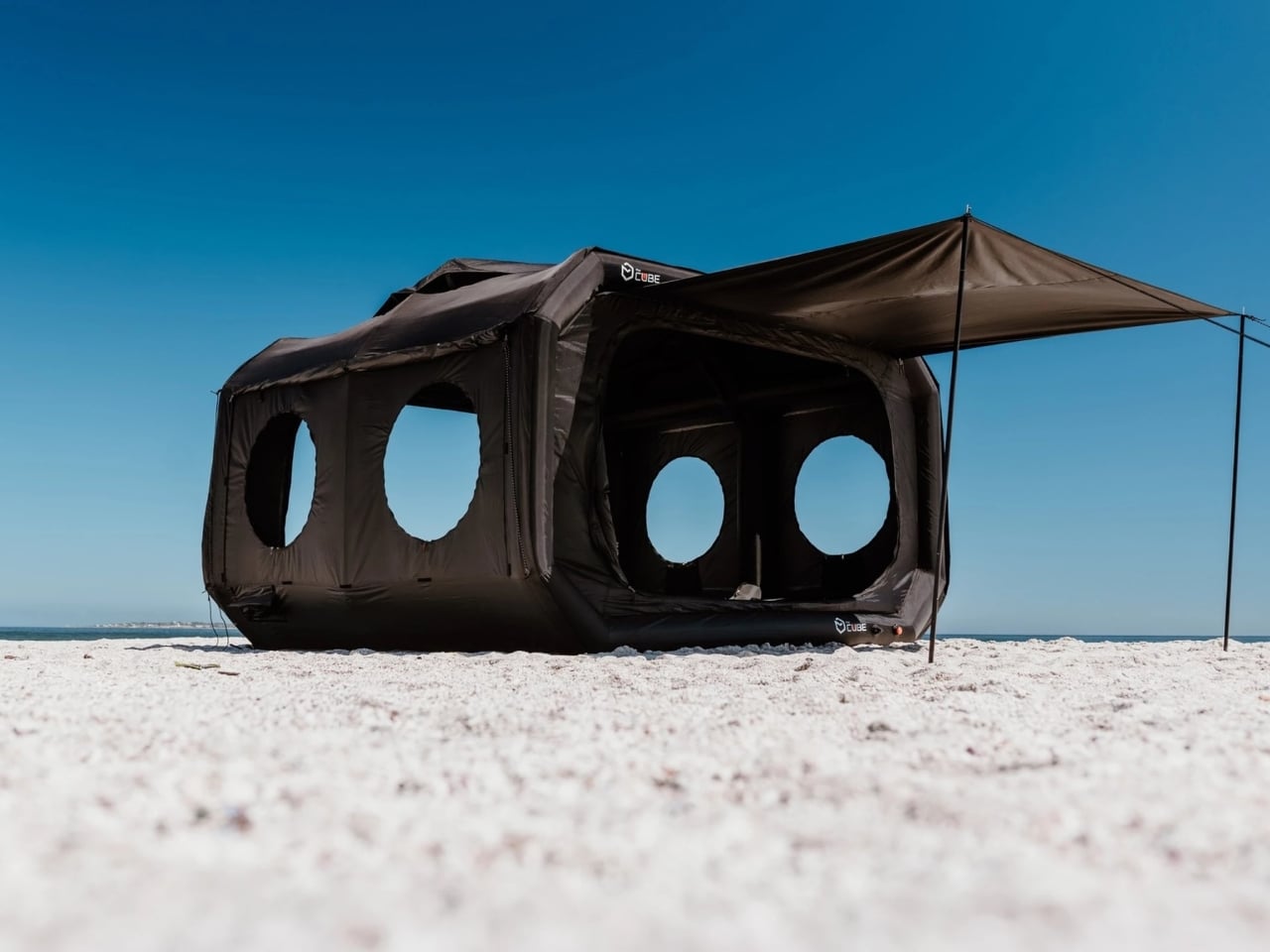
The design also speaks to a broader shift we’re seeing in outdoor recreation. As remote work becomes more normalized and people seek experiences beyond traditional tourism, there’s growing demand for gear that bridges the gap between adventure and comfort. The Cube fits perfectly into this zeitgeist of “soft adventure,” where the goal is experiencing beautiful places without the suffering that used to be considered mandatory. From a design perspective, there’s something satisfying about how elegantly The Cube solves a genuine problem. Traditional tent design hasn’t changed much in decades, but by borrowing from inflatable architecture and modern materials science, Alphago created something that feels genuinely innovative rather than just incrementally better.
Is it affordable? That depends on your camping commitment level, though Alphago has offered specials with significant discounts. Think of it less as a tent and more as portable architecture, an investment in stress-free outdoor experiences for years to come. The bottom line: The Cube represents where outdoor gear is heading. Smarter, faster, more comfortable, and designed for people who want nature without the nature-induced backache. Sometimes innovation isn’t about reinventing the wheel. Sometimes it’s about admitting that tent poles were kind of a pain, and maybe we can do better.
The post This Tent Just Solved Camping’s Most Annoying Problem first appeared on Yanko Design.

The Rolls-Royce Black Badge Ghost Gamer: Translating Arcade Culture Into Automotive Craft

The Rolls-Royce Black Badge Ghost Gamer transforms vintage arcade aesthetics into automotive craft. This one-off commission features hand-painted 8-bit aliens across the coachline, arcade-themed interior details, and custom-programmed fiber-optic headliners that simulate laser fire. The vehicle reflects how luxury collecting now embraces gaming history alongside traditional high-culture references.

Designer: Rolls-Royce

Design Execution

Salamanca Blue covers the lower body, Crystal-over-Diamond Black the upper sections. The coachline features hand-painted “Cheeky Alien” motifs, each composed of 89 individual pixels measuring one-eighth inch square. One side shows a green alien with a pink 8-bit explosion, the other displays yellow and blue variations. Each pixel requires exact placement and consistent paint application to maintain the digital aesthetic at automotive scale.

Black and Casden Tan leather seats feature embroidery reading “Player 1” through “Player 4” in 8-bit font. Each headrest displays a “Cheeky Alien” composed of 89 embroidered pixels in vivid thread colors mimicking vintage CRT monitors. The Waterfall between rear seats features hand-painted arcade artwork requiring over two weeks of execution. Two stainless steel flying saucers hover above a lunar landscape, rendered through brushwork, sponge techniques, and airbrushing.

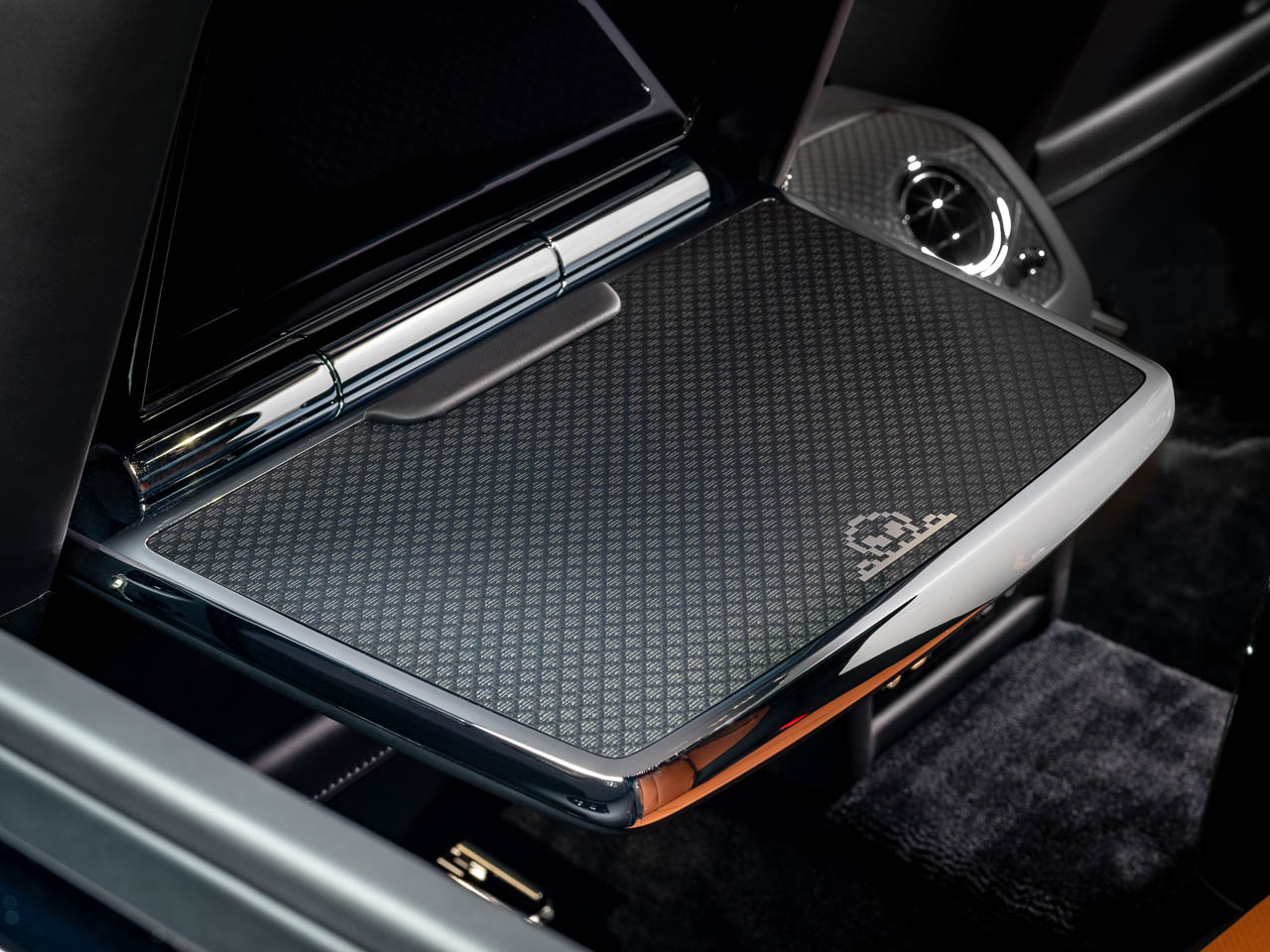
A metal inlay decorates the rear picnic table. An engraved 8-bit motif hides on the concealed side of the front black-chrome air vent. The Bespoke Illuminated Treadplates display arcade prompts: “PRESS START,” “LOADING…,” “LEVEL UP,” and “INSERT COIN.”

Technical Systems

The “Pixel Blaster” Starlight Headliner features 80 bitmapped battlecruisers formed from individually placed fiber-optic lights. Rolls-Royce’s Shooting Star effect receives custom programming to simulate laser fire pulsing across the headliner. The “Laser Base” Illuminated Fascia integrates an 85-star gunship into the dashboard constellation pattern.

Rolls-Royce’s Bespoke team spent a month studying late-1970s and early-1980s gaming culture, examining original arcade cabinets and promotional materials to ensure authentic translation. The Ghost platform features a 6.75-liter twin-turbo V12 producing 591 horsepower. Zero to 60 mph happens in 4.6 seconds despite the 5,500-pound curb weight.

Black Badge and Collecting Culture

Rolls-Royce established Black Badge to accommodate more assertive design expressions. Traditional clientele expect timeless elegance. Black Badge clients challenge those conventions while preserving quality standards. Hand-painted arcade aliens and “INSERT COIN” treadplates would disrupt a standard Ghost’s character but become legitimate opportunities within Black Badge parameters.

The commission reflects broader market shifts. Sotheby’s launched Geek Week for pop culture collectibles. Heritage Auctions sold a sealed Back to the Future VHS for $75,000. Rally offers fractional ownership in graded Pokémon cards and sealed video games. The person commissioning this Rolls-Royce likely participates in this expanded collecting ecosystem, where sealed Super Mario Bros. cartridges command five-figure prices.

Previous generations requested coachlines celebrating equestrian pursuits or yachting. Contemporary clients increasingly reference gaming history and streetwear culture. Hand-painting 89 individual pixels per alien requires identical precision whether depicting classical mythology or vintage video games.

The post The Rolls-Royce Black Badge Ghost Gamer: Translating Arcade Culture Into Automotive Craft first appeared on Yanko Design.
Black Friday streaming deals include Sling Orange Day Passes for only $1 each

Sling TV offers multiple ways to stream cable channels without having to commit to a month of service, and for Black Friday it's offering its new $5 Day Passes for a healthy discount. You can get a Sling Orange Day Pass for just $1 through November 30, and get access to 34 channels, including ESPN, ESPN 2 and ESPN 3.

Besides ESPN, the Sling Orange Day Pass includes access to TNT and TBS, which makes it a solid option if you're trying to watch the NBA, NFL or college sports. The pass also includes children's channels like Disney Channel and Nick Jr., CNN for news and HGTV and Food Network for purer forms of lean back entertainment. Sling TV is Engadget's pick for the best customizable live streaming service for a reason: You can add on extra premium channels when you buy a pass, and their price will be prorated for whatever length you choose. That way even if a dollar isn't getting you all the channels you need, you don't need to pay that much more to get them.

It's worth noting, while this promotion runs during Thanksgiving in the US, a Sling Orange subscription won't get you access to the football games scheduled for that Thursday. To watch those, you'll need at least a Sling Blue subscription, which includes FS1 and NFL Network, but isn't available as a day-long pass. A Sling Blue subscription currently starts at $46 a month.

Still, for your $1, around $4 off the price Sling TV normally charges, you're getting a deal. Dozens of popular channels, access to Sling TV's DVR feature, and the ability to use your subscription from a smartphone, tablet, the web or your TV. Plus, Sling TV's interface is easy to navigate, which is what you want when you're likely subscribing with one game or show in mind.

This article originally appeared on Engadget at https://www.engadget.com/deals/black-friday-streaming-deals-include-sling-orange-day-passes-for-only-1-each-231208088.html?src=rss

Onewheel team’s Antic e-bike can pop eternal wheelies

Many e-bike brands focus their marketing on being a sustainable and environmentally friendly consumer choice. Future Motion has gone the other direction and emphasized how its new product can pop infinite wheelies, which sounds like either loads of fun or a quick way to an injury, depending on your worldview. 

After developing a line of single-wheel skateboards called Onewheel, Future Motion has released a new transportation option with an e-bike dubbed Antic. (Though I am deeply disappointed it isn't named Twowheel). The 70s-inspired design claims a top speed of 35 miles per hour, a range of 28 to 50 miles, and wide tires intended to handle many types of terrain. It also says that with its Wheelie Assist mode, the bike's gyroscopes and accelerometers can hold an endless single-wheel ride. The base model Antic has a list price of $2,500 but is currently discounted a few hundred bucks for the launch; longer-range options with more capable tires will run up to $2,900.

This article originally appeared on Engadget at https://www.engadget.com/transportation/onewheel-teams-antic-e-bike-can-pop-eternal-wheelies-230602296.html?src=rss

Meta’s Chief AI Scientist is leaving the company after 12 years

One of Meta's top AI researchers, Yann LeCun, is leaving after 12 years with the company to found his own AI startup, he announced. LeCun, who is also a professor at New York University, joined the company in 2013 to lead Meta's Fundamental AI Research (FAIR) lab and later took on the role of Chief AI Scientist. 

LeCun said his new startup would "continue the Advanced Machine Intelligence research program (AMI) I have been pursuing over the last several years with colleagues at FAIR, at NYU, and beyond" and that it would partner with Meta. "The goal of the startup is to bring about the next big revolution in AI: systems that understand the physical world, have persistent memory, can reason, and can plan complex action sequences," he wrote in an update on Threads. "AMI will have far-ranging applications in many sectors of the economy, some of which overlap with Meta’s commercial interests, but many of which do not. Pursuing the goal of AMI in an independent entity is a way to maximize its broad impact."

Speculation about LeCun's future at Meta has been mounting in recent months. Earlier this year, the company invested nearly $15 billion into Scale AI and made the 28-year-old CEO, Alexandr Wang, its Chief AI Officer. Meta also recruited Shengjia Zhao, who helped create GPT-4, making him Chief AI Scientist of its newly created Meta Superintelligence Labs unit. 

LeCun, on the other hand, has been openly skeptical of LLMs. "We are not going to get to human-level AI by just scaling LLMs," he said during an appearance on the Big technology podcast earlier this year. And in a recent talk at a conference, he advised aspiring researchers to "absolutely not work on LLMs," according to remarks reported by The Wall Street Journal.

At the same time, Meta has been reshuffling its AI teams. The company cut "several hundred" jobs from its Superintelligence group, including from FAIR, last month. And LeCun has "had difficulty getting resources for his projects at Meta as the company focused more intently on building models to compete with immediate threats from rivals including OpenAI, Alphabet Inc.’s Google and Anthropic," Bloomberg reported. 

LeCun said he will stay on at Meta until the end of the year. "I am extremely grateful to Mark Zuckerberg, Andrew Bosworth (Boz), Chris Cox, and Mike Schroepfer for their support of FAIR, and for their support of the AMI program over the last few years," he wrote.


This article originally appeared on Engadget at https://www.engadget.com/ai/metas-chief-ai-scientist-is-leaving-the-company-after-12-years-224325268.html?src=rss

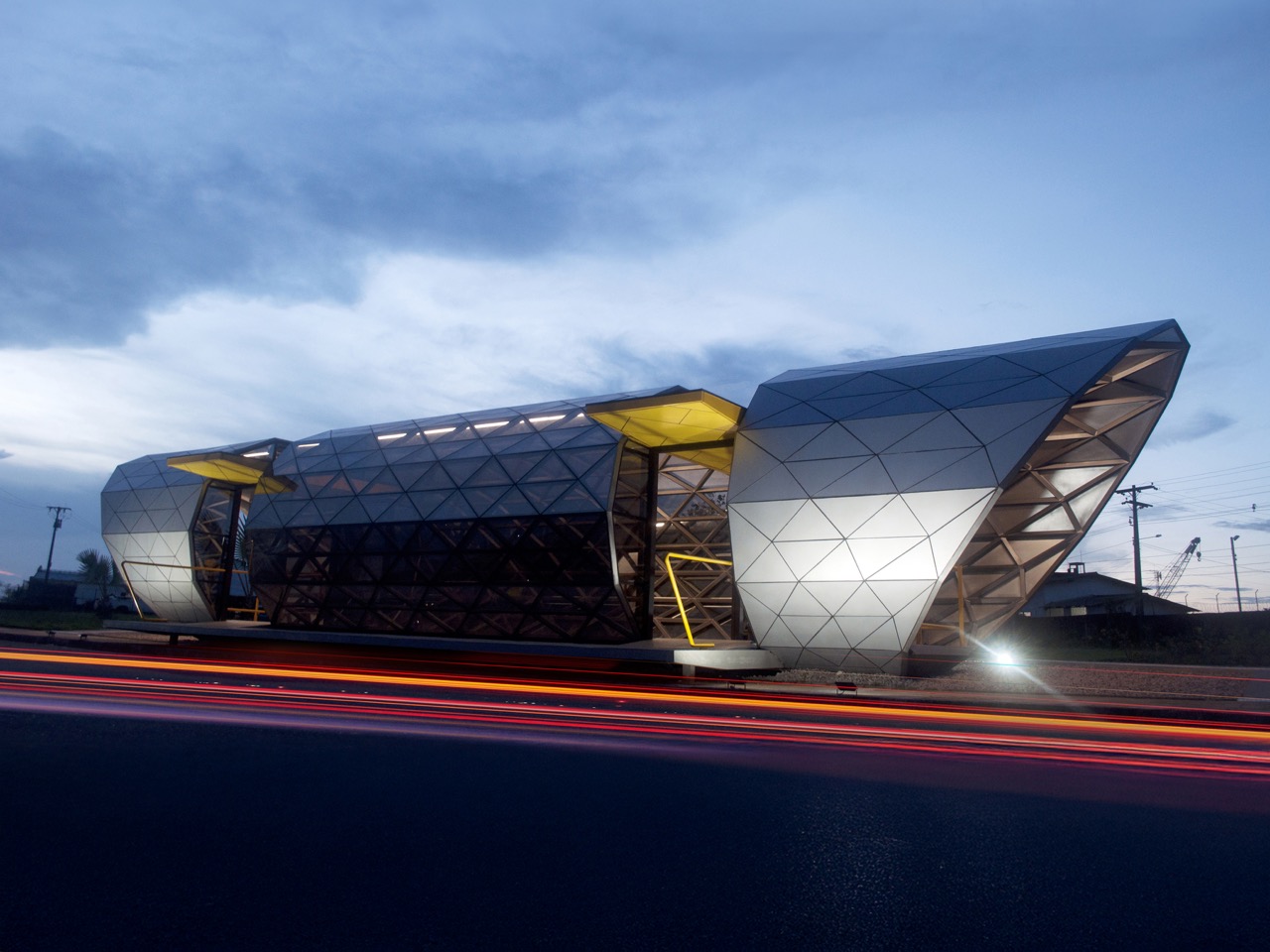
This 690 Sq.Ft. Bus Station Cuts Carbon Emissions by 70% Using Recycled Steel

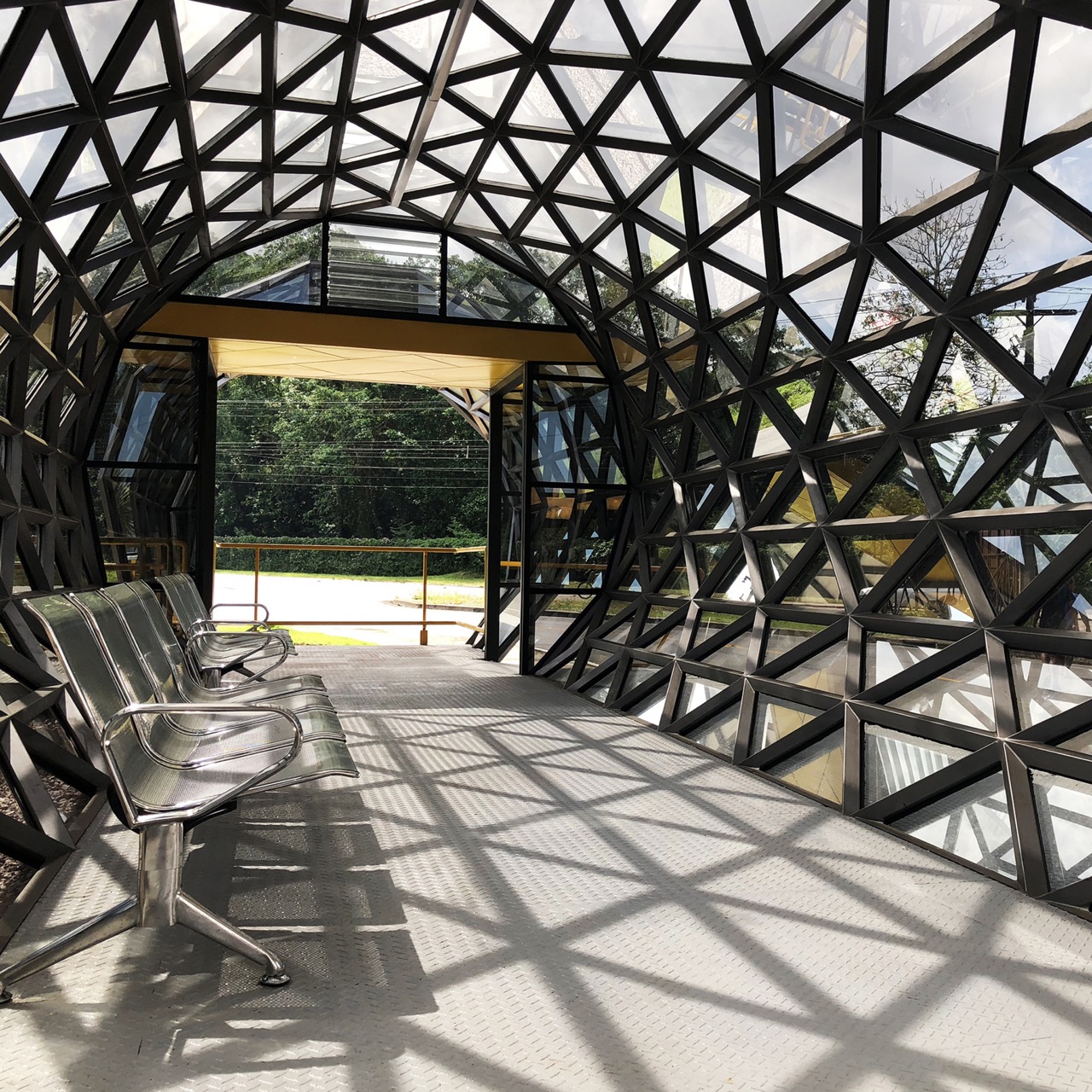
Waiting for a bus shouldn’t feel like purgatory, but in the intense heat and frequent downpours of Brazil’s Amazon region, it often does. Fernando Andrade understood this intimately when he began designing the Amazon Bus Station in Belém, a project born not from architectural ego but from genuine public consultation with the people who would actually use it. They asked for four things: protection from the weather, environmental comfort, durability, and reasonable cost. What they got exceeded every expectation: a soaring, sculptural shelter that treats public transit users as deserving of the same design attention typically reserved for museums and corporate headquarters.

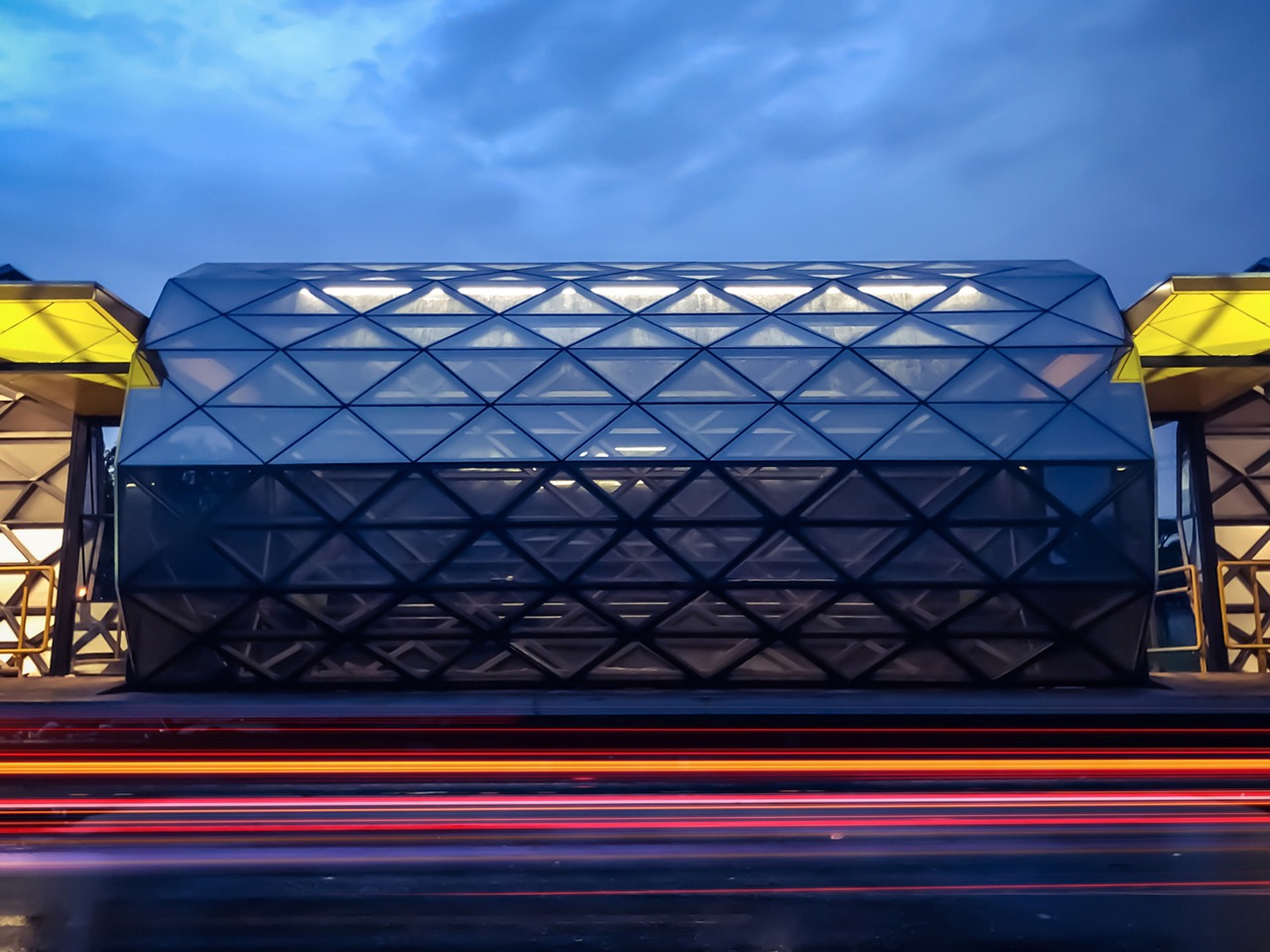
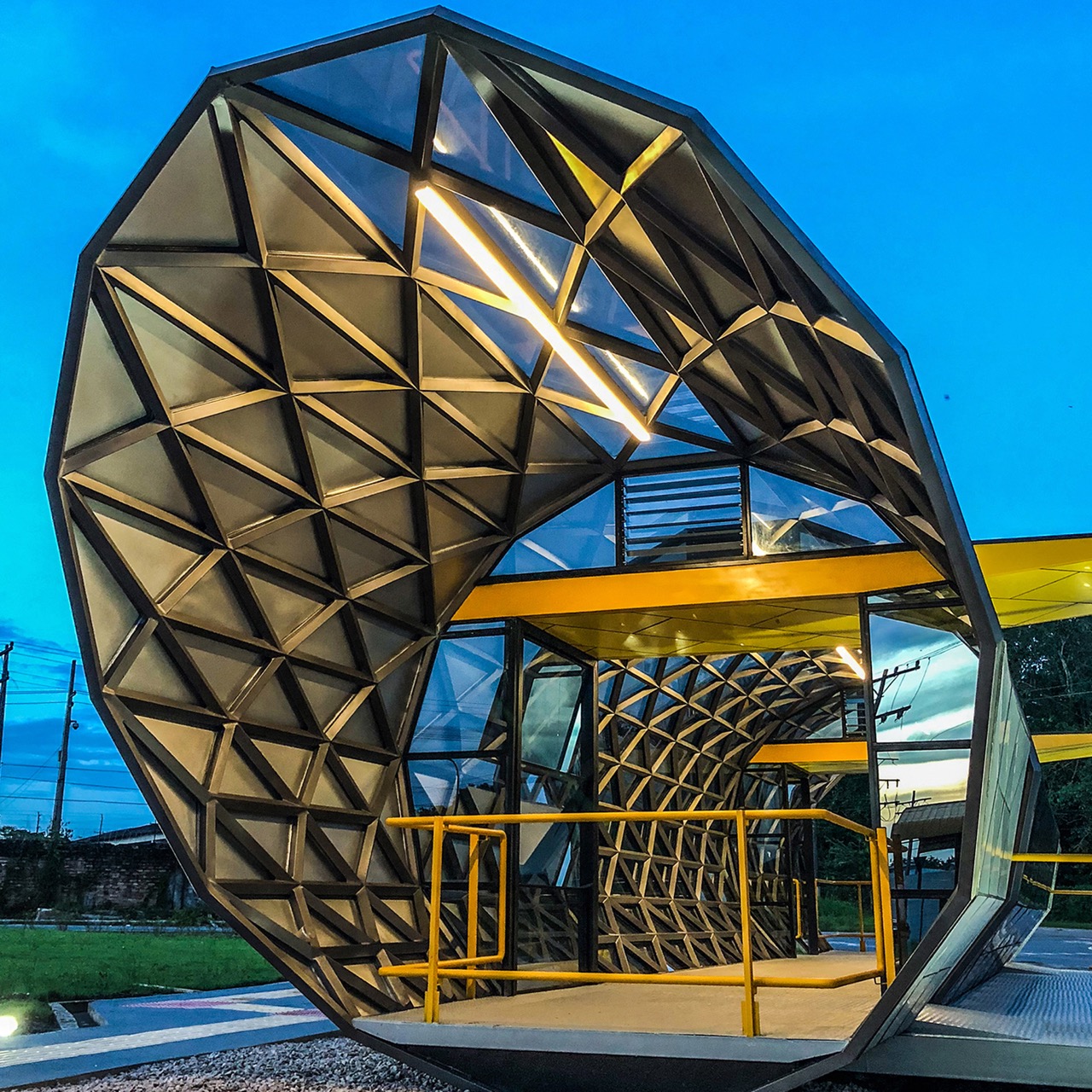
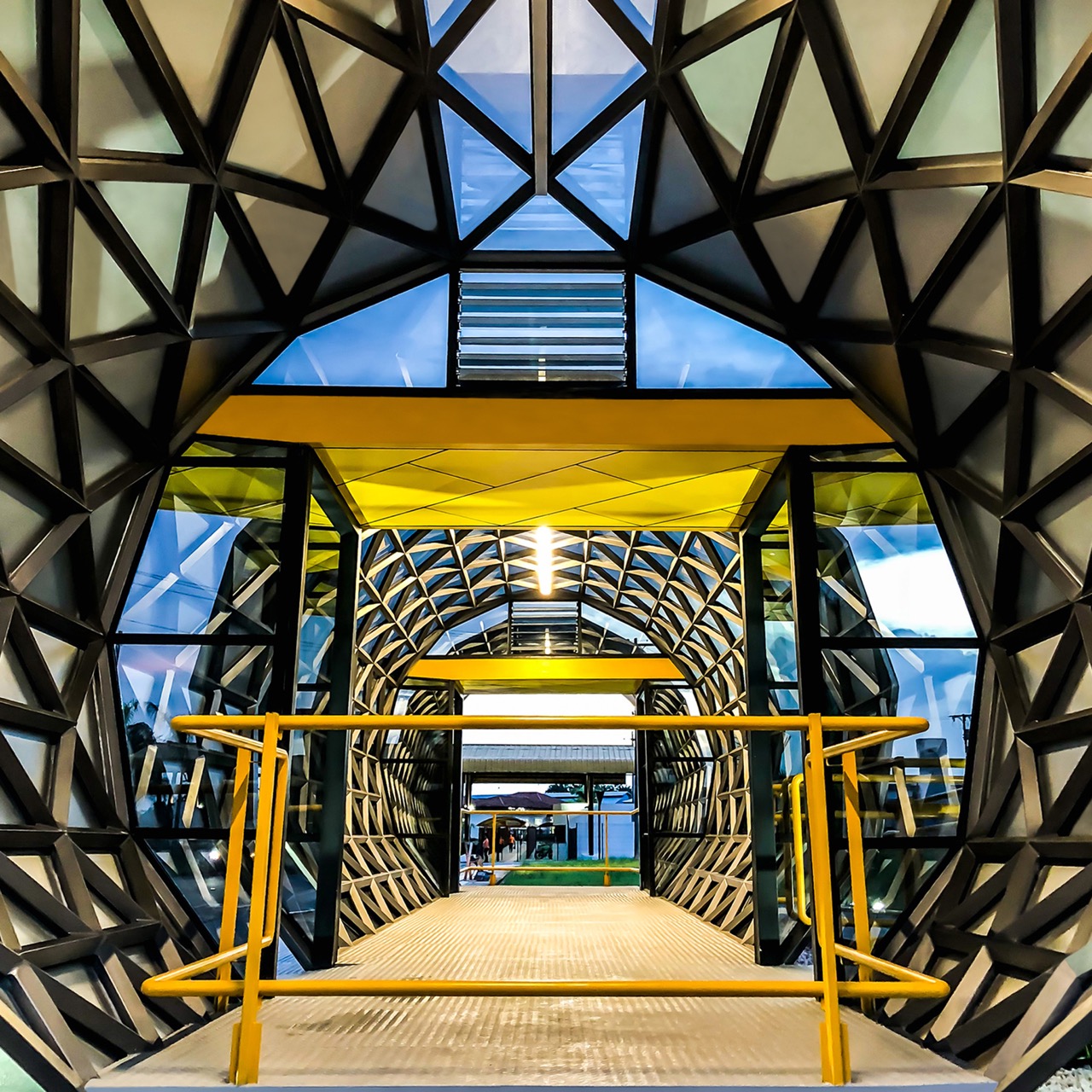
The 16-meter structure, completed in February 2024, wraps passengers in a protective envelope of triangulated steel and reflective glass, its organic curves creating an embracing interior space that feels both sheltering and expansive. Yellow accessibility ramps guide users through a barrier-free environment where natural ventilation, achieved through traditional Amazonian roof fins, keeps air moving without mechanical systems. Shadows from the geometric framework dance across metal benches as daylight filters through the glass skin, creating an ever-changing interior atmosphere that connects occupants to the rhythms of weather and time. The design accommodates everyone, including those with mobility challenges, while pushing what architectural beauty can achieve in public infrastructure.

Designer:

The structural approach here is basically what happens when parametric design actually solves problems instead of just generating Instagram bait. The whole thing is built from 600mm triangular modules, each assembled from 75x3mm quadrangular steel tubes. That triangulation distributes loads efficiently enough that the entire 16-meter span rests on just four support points, which means minimal ground disruption and maximum flexibility for street-level circulation. And they used recycled steel throughout, dropping carbon emissions by 70% compared to conventional construction methods. The numbers matter because this approach could scale. Belém gets this one station, but the fabrication methodology, the material choices, the whole industrial-to-site assembly process translates to other locations dealing with similar climate challenges and budget constraints.

The 8mm laminated glass blocks 99.8% of direct solar radiation, which in equatorial conditions isn’t a nice-to-have feature, it’s the difference between a functional space and a greenhouse. But the clever bit is those ventilation fins at the roof ridge. They’re angled glass louvers that let hot air escape while keeping rain out, basically a stack effect ventilator with zero moving parts and zero maintenance requirements beyond occasional cleaning. No motors failing, no electronics corroding in humidity, no ongoing energy costs. Just heated air rising and escaping through geometry that works with local wind patterns. It’s the kind of solution that feels obvious in hindsight but requires serious environmental modeling to get right.

Nine months from concept to completion, with fabrication happening in a controlled industrial environment using local shipbuilders who know how to work with complex curves and weather-resistant assemblies. They pre-built the structure in three major sections, transported them to site, and only finished the connection joints on location. That level of prefabrication ensures tolerances stay tight and quality control doesn’t depend on field conditions, which matters when you’re dealing with structural silicone joints and precise glass panel alignments. The client, Centro Integrado de Inclusão e Reabilitação, specializes in accessibility infrastructure, so the barrier-free circulation wasn’t an afterthought added to satisfy code. It shaped the entire spatial concept from the beginning.

The real test of any transit infrastructure is whether it changes behavior. A better bus station doesn’t just shelter existing riders, it potentially converts people who currently drive because the bus experience feels too degrading or uncomfortable. Belém’s new station won’t single-handedly transform modal split numbers, but it signals that public transit users deserve environments worth occupying. These details accumulate into an experience that respects users enough to think through their actual needs rather than just checking regulatory boxes. That respect, rendered in recycled steel and high-performance glass, might be the most radical thing about the whole project.

The post This 690 Sq.Ft. Bus Station Cuts Carbon Emissions by 70% Using Recycled Steel first appeared on Yanko Design.

Letterboxd will start renting movies in December

Letterboxd's foray into digital video rentals officially launches in December, the social film platform shared in a new blog post. Plans for a “Letterboxd Video Store” were first announced in March, but now Letterboxd has started to fill in some of the details of what kinds of movies its store will carry and where they'll be available to watch.

The collection of films available through the Letterboxd Video Store will be curated around a few categories, according to the company. Those include films featured at film festivals that currently don't have distribution, titles that continue to hang around in users' watchlists, film restorations and "limited-time drops of sneak peeks and unreleased gems." Letterboxd compared the process of narrowing down what films to try and offer like the "employee picks" shelf you might see at a local video store, only every Letterboxd user is an employee.

Films rented through Letterboxd will be available to watch on the web, iOS, Android, Apple TV and Android TV, and can be streamed to screens that support Chromecast and AirPlay. Letterboxd hasn't shared what its rental terms or prices will be, but did note that rental availability and cost will vary depending on your location. The company also warns that some films will only be available for a limited amount of time.

As an expansion on its core competencies of tracking what films you and your friends have watched and letting you review them, video rentals seem like a natural addition for Letterboxd. It's a bit like Amazon and Goodreads. Amazon acquired the book reviewing platform Goodreads in 2013, after establishing itself as a physical and digital bookseller. Letterboxd has defined itself as a trusted film reviewing platform, and now it's branching out into selling films. In the same way Goodreads can funnel readers back towards Amazon, Letterboxd can use movie fans to surface the best films to rent and keep them from heading somewhere else to watch them.

This article originally appeared on Engadget at https://www.engadget.com/entertainment/tv-movies/letterboxd-will-start-renting-movies-in-december-214900026.html?src=rss

Warner signs AI music licensing deal with Udio

Warner Music Group (WMG) settled a lawsuit with an AI company in exchange for a piece of the action. The label announced on Wednesday that it had resolved a 2024 lawsuit against AI music creation platform Udio. As part of the deal, Udio gets to license Warner's catalog for an upcoming music creation service. This follows a similar settlement between Universal Music Group and Udio, announced last month.

Udio's service will allow subscribers to create, listen to and discover AI-generated music trained on licensed work. You’ll be able to generate new songs, remixes and covers using favorite artists' voices or compositions. The boundaries between human creation and an algorithm's approximation of it are about to grow murkier. Not in terms of artistic quality, but it will be based on what proliferates online.

WMG is framing the deal as a win for artists, who will — if they choose to opt in — gain a new revenue stream. Ahead of the service’s launch, Udio will roll out "expanded protections and other measures designed to safeguard the rights of artists and songwriters."

So, the settlement does at least appear to reassert some control over artists’ work. What the normalization of robot-made music will do for society's collective tastes is another question.

A neon sign on a wall, reading, "You are what you listen to."
Mohammad Metri / Unsplash

The settlement echoes a warning Spotify sounded to musicians and labels last month. "If the music industry doesn't lead in this moment, AI-powered innovation will happen elsewhere, without rights, consent or compensation," the company wrote. Spotify plans to launch "artist-first AI music products" in the future, a vague promise to be sure. However, given Udio's plans, it wouldn't be surprising to see the streaming service cooking up a similar licensed AI music-creation product.

"We're unwaveringly committed to the protection of the rights of our artists and songwriters, and Udio has taken meaningful steps to ensure that the music on its service will be authorized and licensed," Warner Music CEO Robert Kyncl wrote in a press release. "This collaboration aligns with our broader efforts to responsibly unlock AI's potential - fueling new creative and commercial possibilities while continuing to deliver innovative experiences for fans."

This article originally appeared on Engadget at https://www.engadget.com/ai/warner-signs-ai-music-licensing-deal-with-udio-213433325.html?src=rss

Netflix lands a deal with MLB to air select live baseball games

Major League Baseball has entered a new broadcasting deal that will see Netflix hosting live games for the first time. Under this three-year agreement, Netflix will have the rights to air a new Opening Night game the evening ahead of the Opening Day matchups. It will also stream the T-Mobile Home Run Derby as well as select special events during the season, including the 2026 MLB at Field of Dreams Game and the previously announced World Baseball Classic in Japan. 

It's a limited amount of content, but aligns with Netflix's recent pushes into both live events and sports programming. Last year the streaming service inked deals to show a double-header of NFL games on Christmas Day and snagged exclusive US rights to two FIFA Women's World Cup tournaments. Netflix has previously gotten access to documentary content from the MLB, but 2026 will mark its first time showing live baseball. 

The MLB deal also included some shuffling on the broadcast side, moving certain matches between ESPN and NBCUniversal properties. Apple TV will still have the rights to the Friday night games going forward. So between the growing number of platforms grabbing slices of viewership and the MLB's existing blackout rules, in future seasons you'll need to undertake a thorough research assignment to figure out where you can watch each game.

This article originally appeared on Engadget at https://www.engadget.com/entertainment/streaming/netflix-lands-a-deal-with-mlb-to-air-select-live-baseball-games-213336003.html?src=rss

Ayaneo Pocket VERT reimagines Game Boy form factor with a touchpad and long-lasting 6,000mAh battery

In the rapidly evolving landscape of handheld gaming, Ayaneo continues to stand apart by treating portability as an experience rather than a specification. Its newest handheld embodies that philosophy with quiet confidence, merging high-end performance with a level of craftsmanship and material intention that feels decidedly premium. Every curve, texture, and component has been considered not just for function, but for how the device lives in the hand, resulting in a compact form factor that feels effortlessly capable and thoughtfully designed.

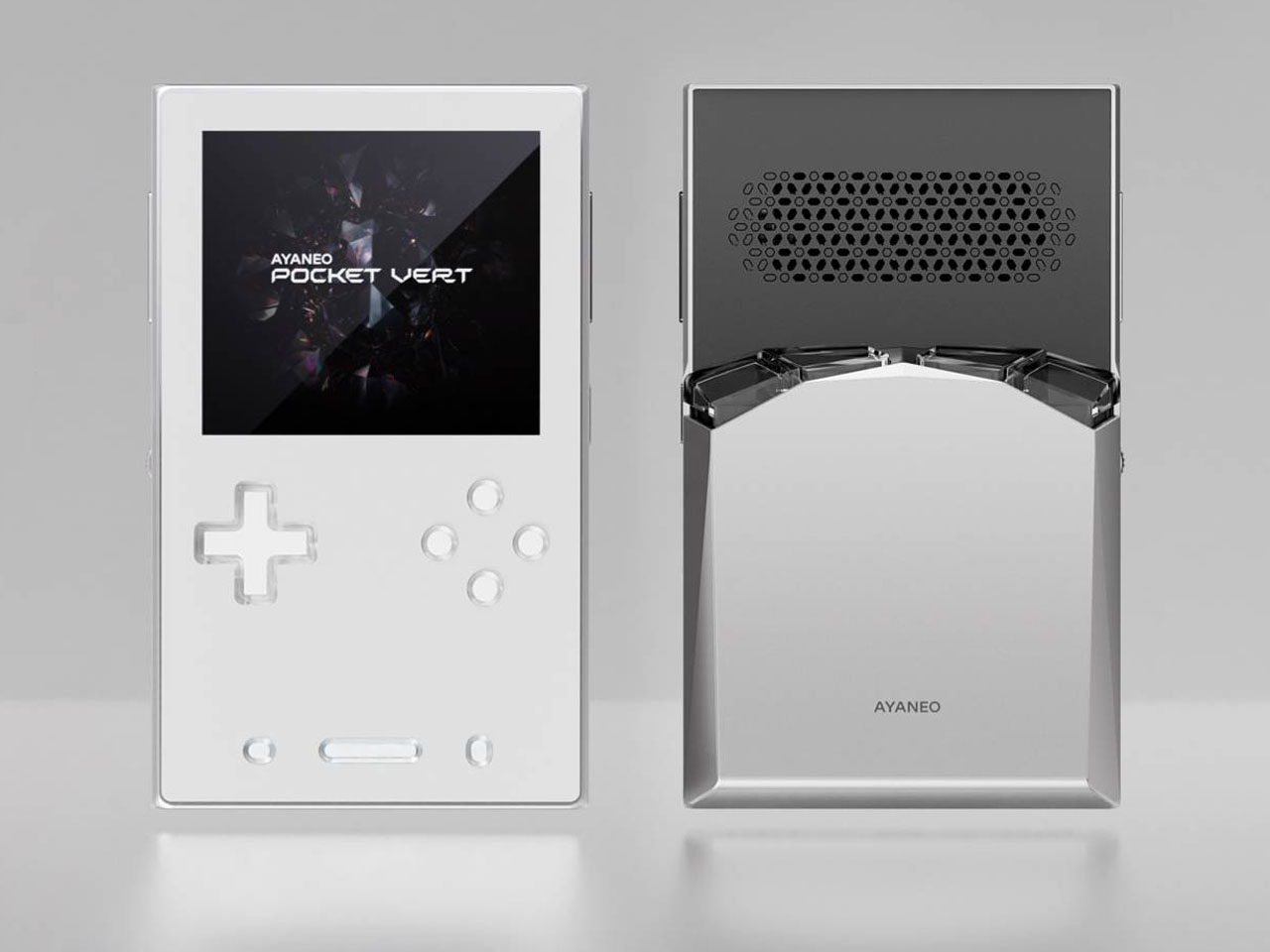
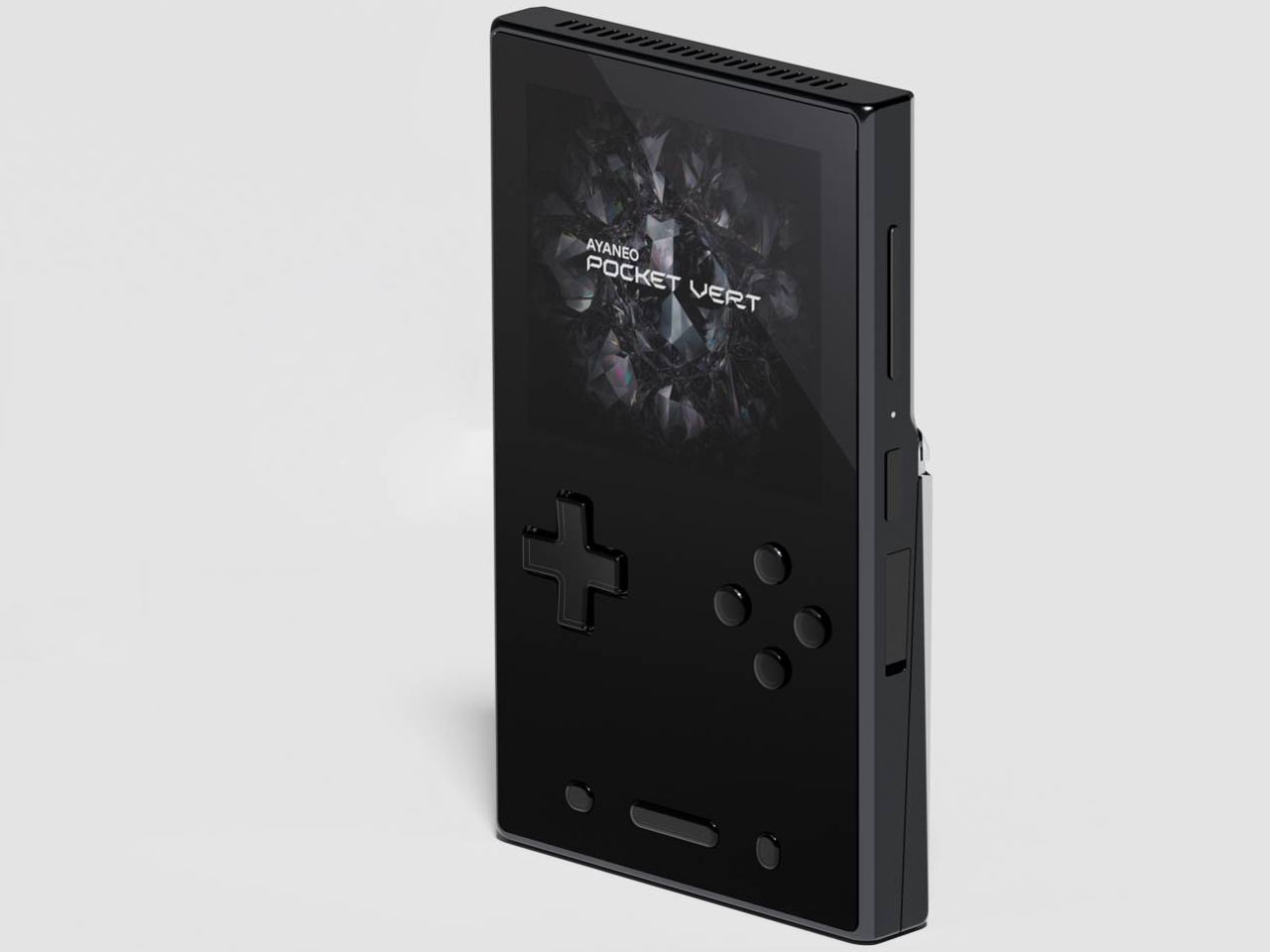
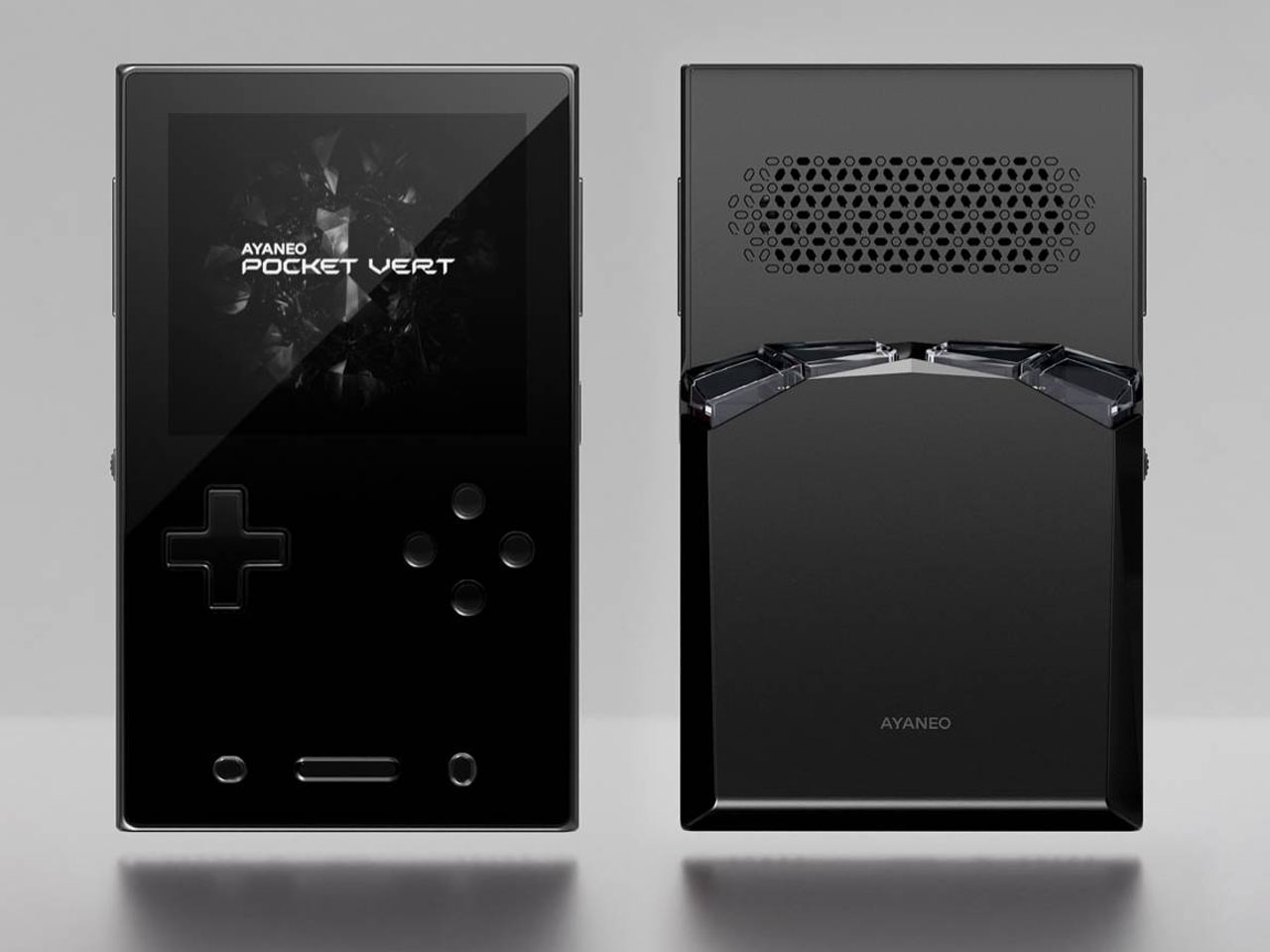
Meet the upmarket Pocket Vert, which has an Android-powered handheld that’s crafted out of a full CNC-milled unibody construction. The handheld has a full glass front panel fitted with a 3.5-inch high-resolution LTPS display having 1600×1440 resolution (at 615 ppi), 60Hz refresh rate, and 450 nits peak brightness level. In their latest teaser video, Ayaneo has revealed that the device will be positioned flush in between the flagship Pocket DMG and budget gaming controllers like Anbernic RG40XX V. This certainly will fill the gap, and the sweet spot mobile gamers were craving.

Designer: Ayaneo

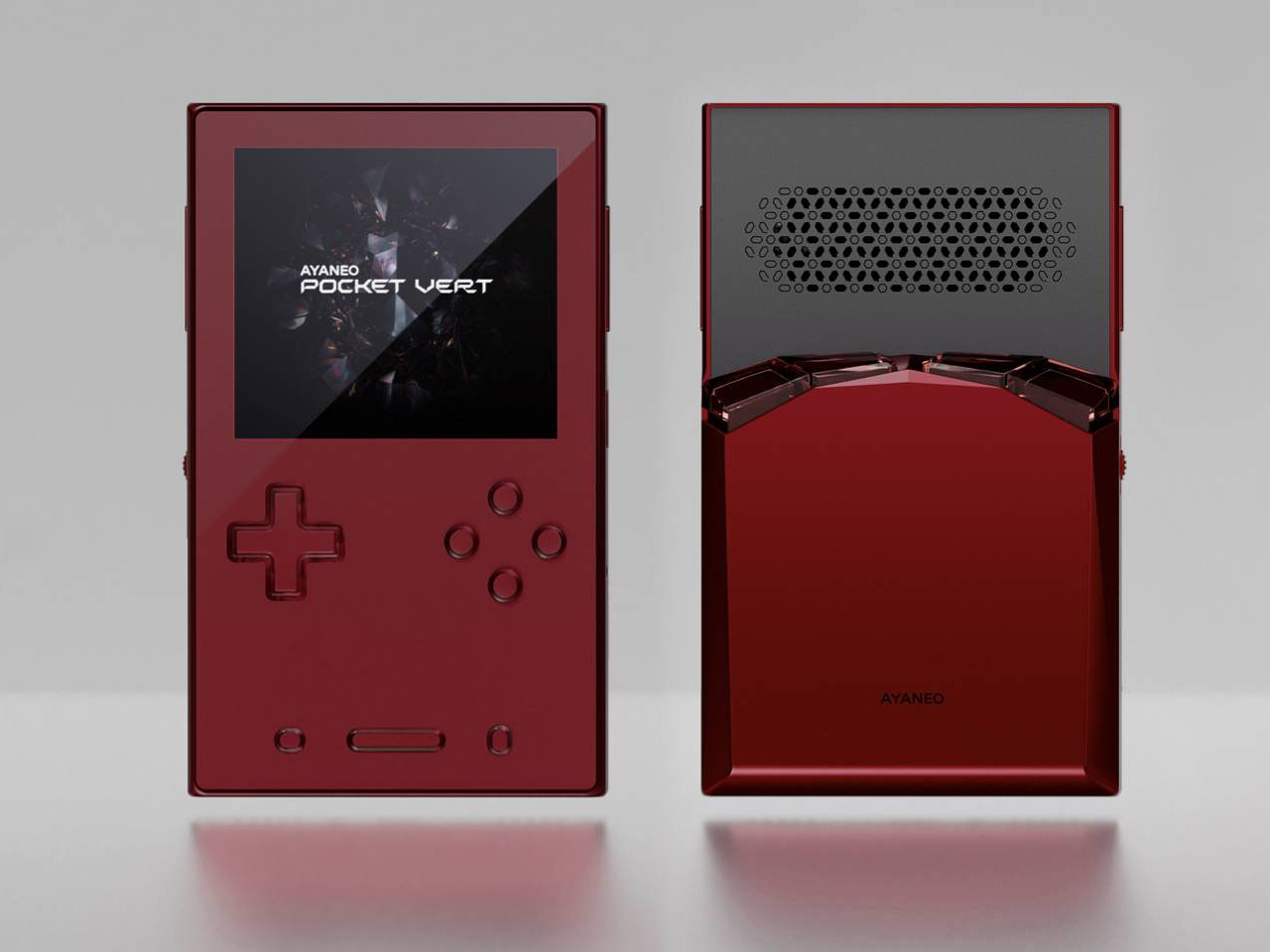
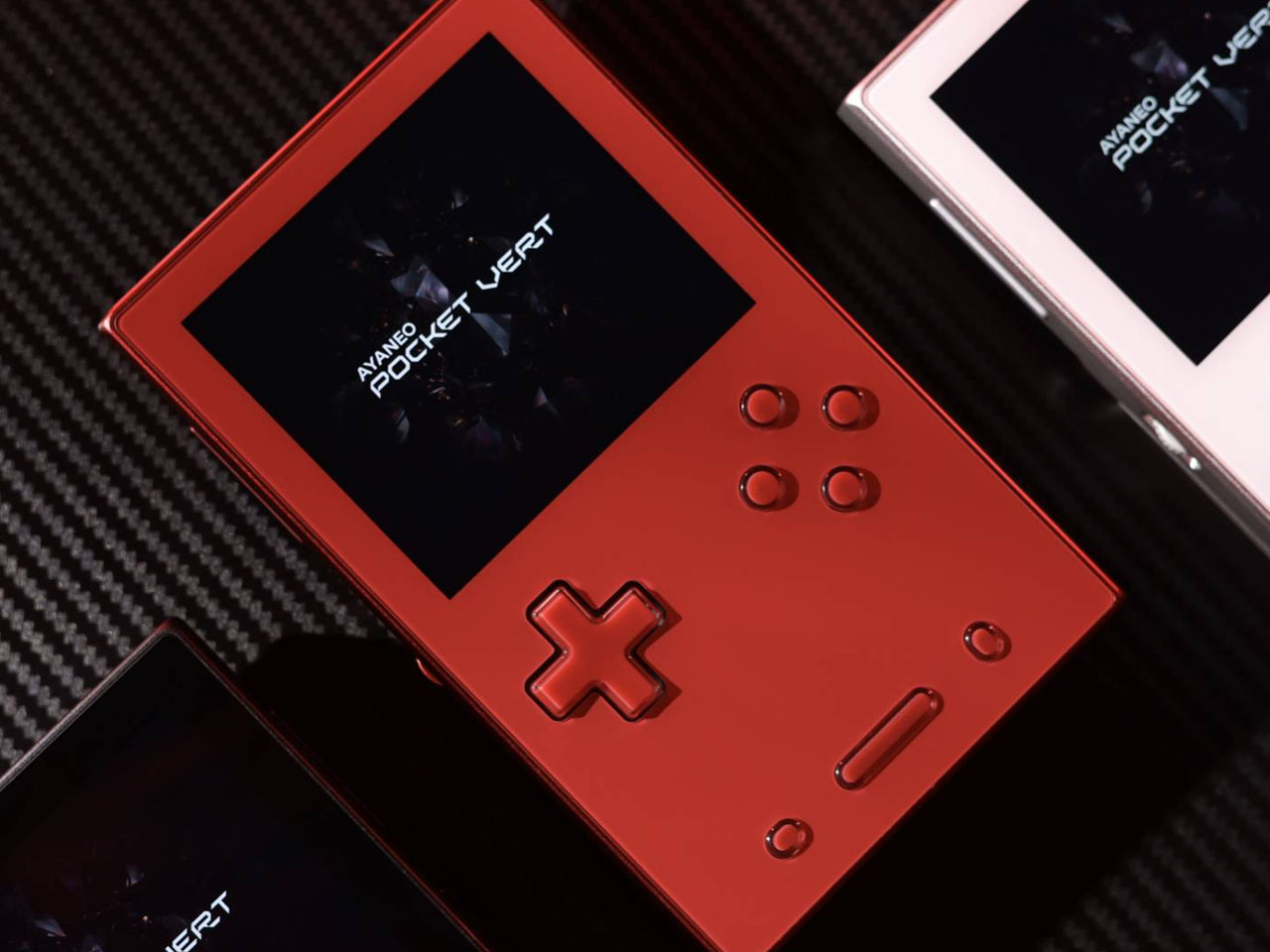
The company teased the handheld earlier this month on November 5, revealing the design and some specifications. Now, in a fresh Product Sharing Session, they’ve revealed multiple prototypes that’ll ultimately morph into the compact handheld. Touted as a premium Game Boy clone, it’ll come in three color options: Black, White, and Red, with matching buttons. Measuring 86x143x20mm, the classy little gadget is smaller than the Pocket DMG. Despite the petite form factor, it has a 3.5mm jack and a USB-C port at the bottom. The Pocket Vert should have enough power under the hood as it is seen running the God of War title, which requires a good amount of processing fuel.

Section below the D-Pad and buttons is a touchpad, which the player can map to various button configurations or sticks. The touchpad is completely invisible and beyond the physical buttons for a less intrusive functionality. Just like the DMG, this one has a wheel called the MagicSwitch key for added functionality. It is used to toggle the volume control levels, short-pressed to mute, and long-pressed to trigger the function menu. As is clear from the naming convention, the handheld is targeted towards vertical retro handheld enthusiasts.

Ayaneo has confirmed the device packs a 6,000mAh battery and bottom-firing speakers for a satisfying playing experience. Depending on the processor fitted inside, the battery life could be excellent for such a small gadget. That said, there is no detail about the release date and other vital hardware information. We can expect the remaining fog to clear with another official sharing session in the coming days.

The post Ayaneo Pocket VERT reimagines Game Boy form factor with a touchpad and long-lasting 6,000mAh battery first appeared on Yanko Design.