Ask any experienced drone pilot about their worst crash, and you’ll likely hear a story that ends with a collection of fragmented parts. The conventional quadcopter design, while effective at flying, is notoriously poor at surviving the unexpected kinetic events that come with operating in the real world. Whether it’s a sudden gust of wind, a GPS error near a structure, or a simple pilot miscalculation, the result is often the same: a compromised frame and a costly repair.
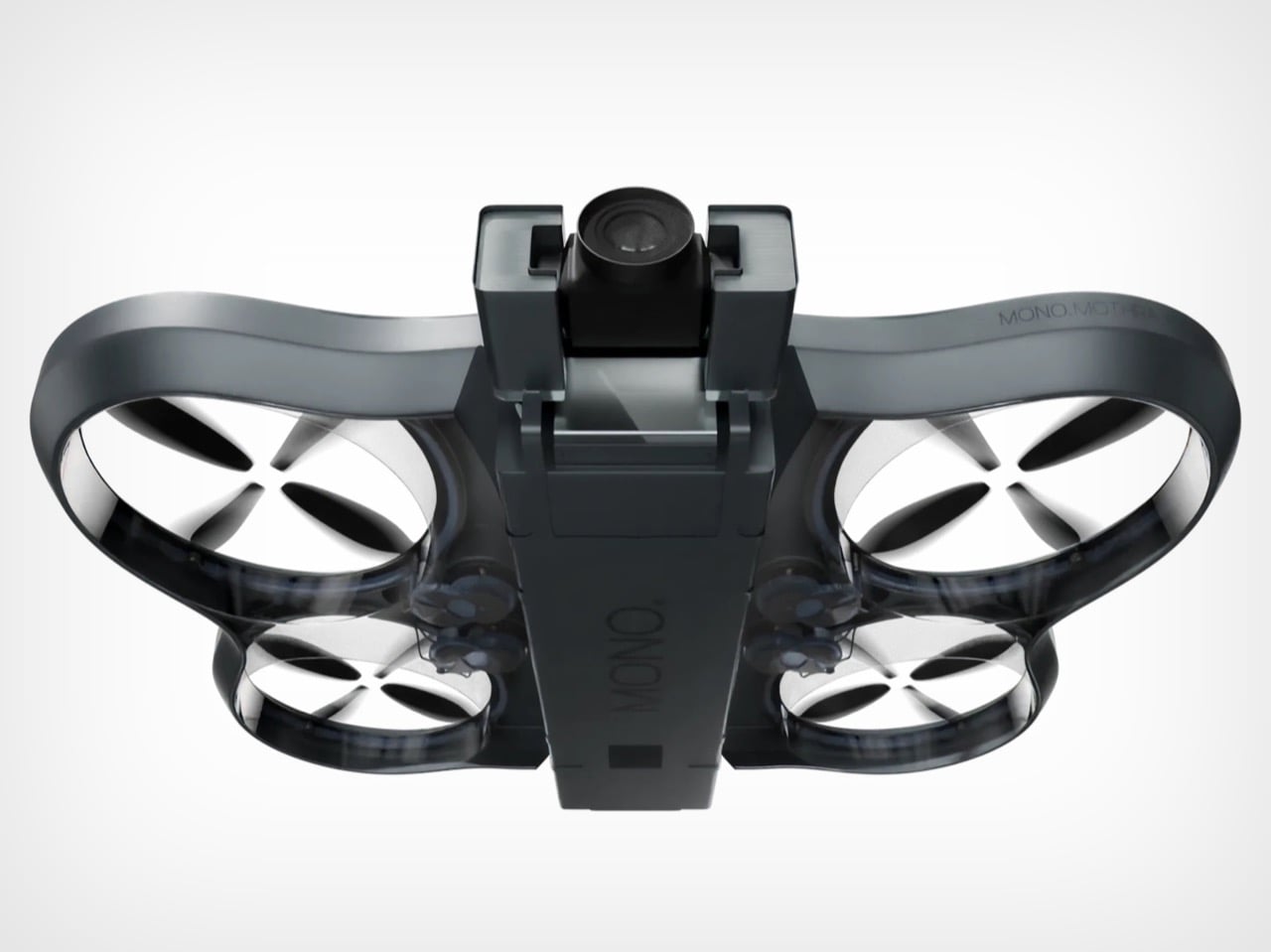
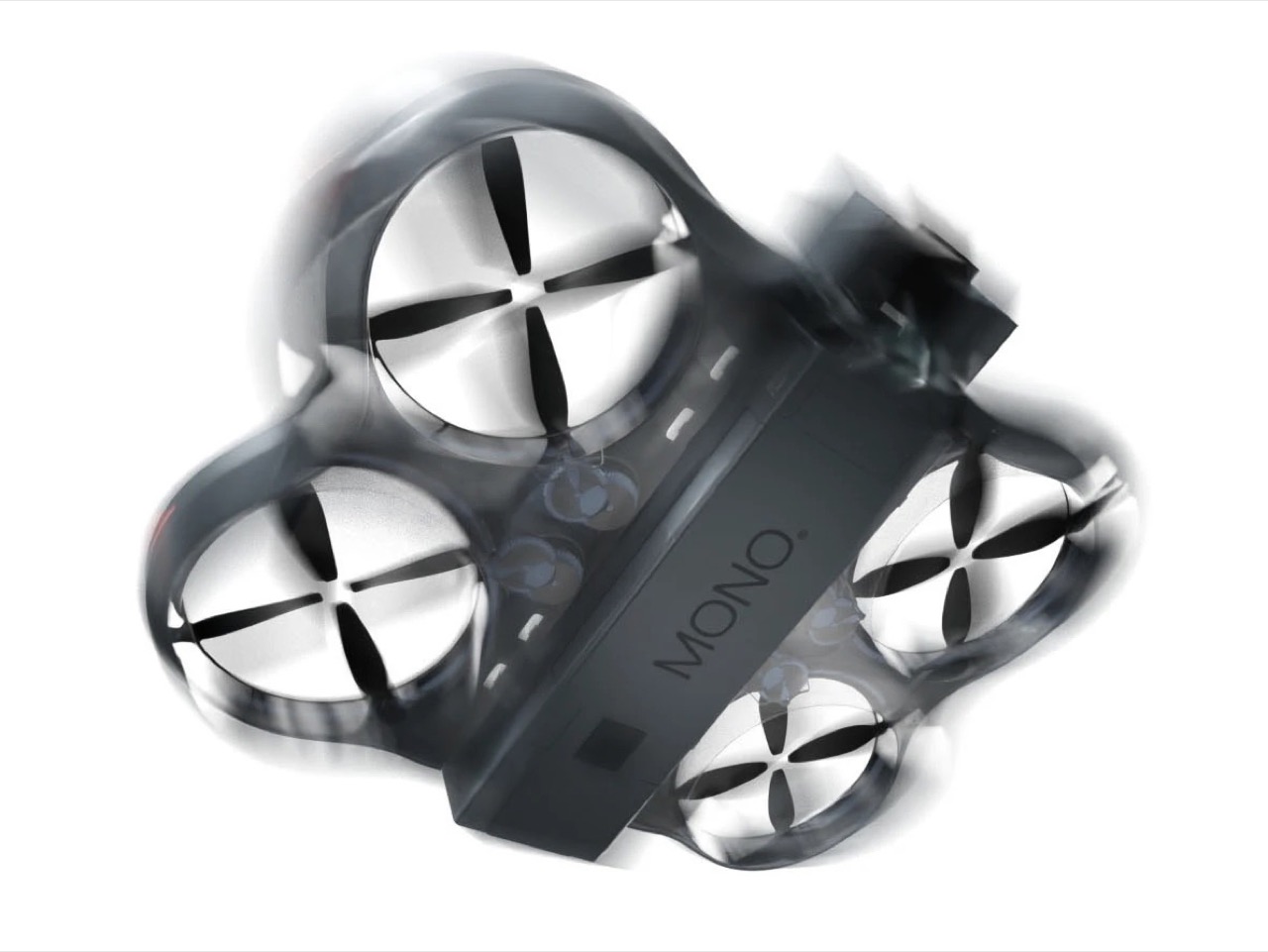
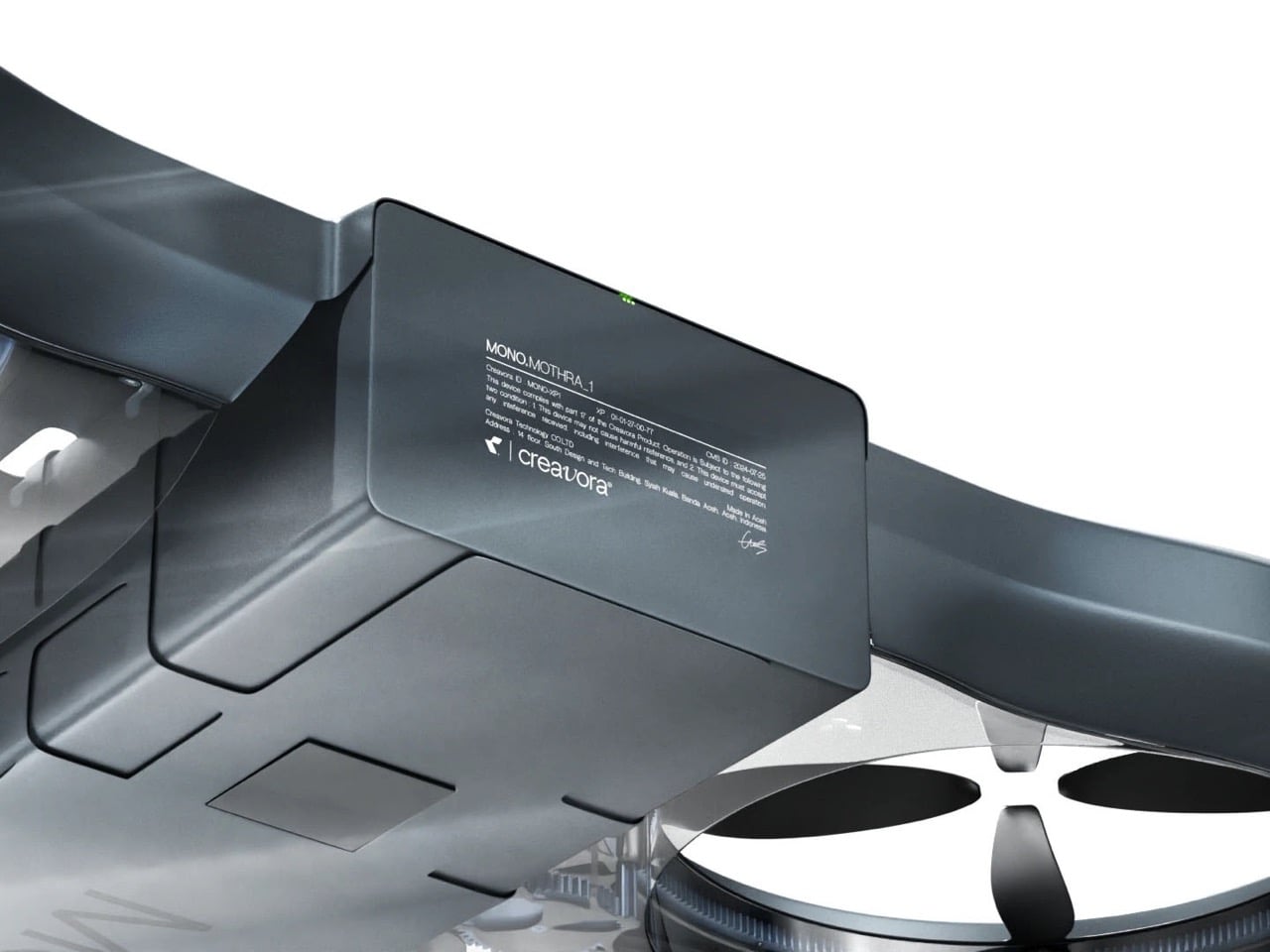
With the Mono Mothra, we see a design that fundamentally rethinks this vulnerability. The concept’s strength lies in its two core principles: a load-bearing monocoque shell and protected, ducted rotors. Instead of discrete arms that can snap and motors that can be damaged, the entire structure is designed to absorb and distribute impact forces. It’s a “what if” exploration into a different kind of aerial platform, one where resilience isn’t an afterthought but the very cornerstone of its design philosophy.
Designers: Rify Studio® & Martunis
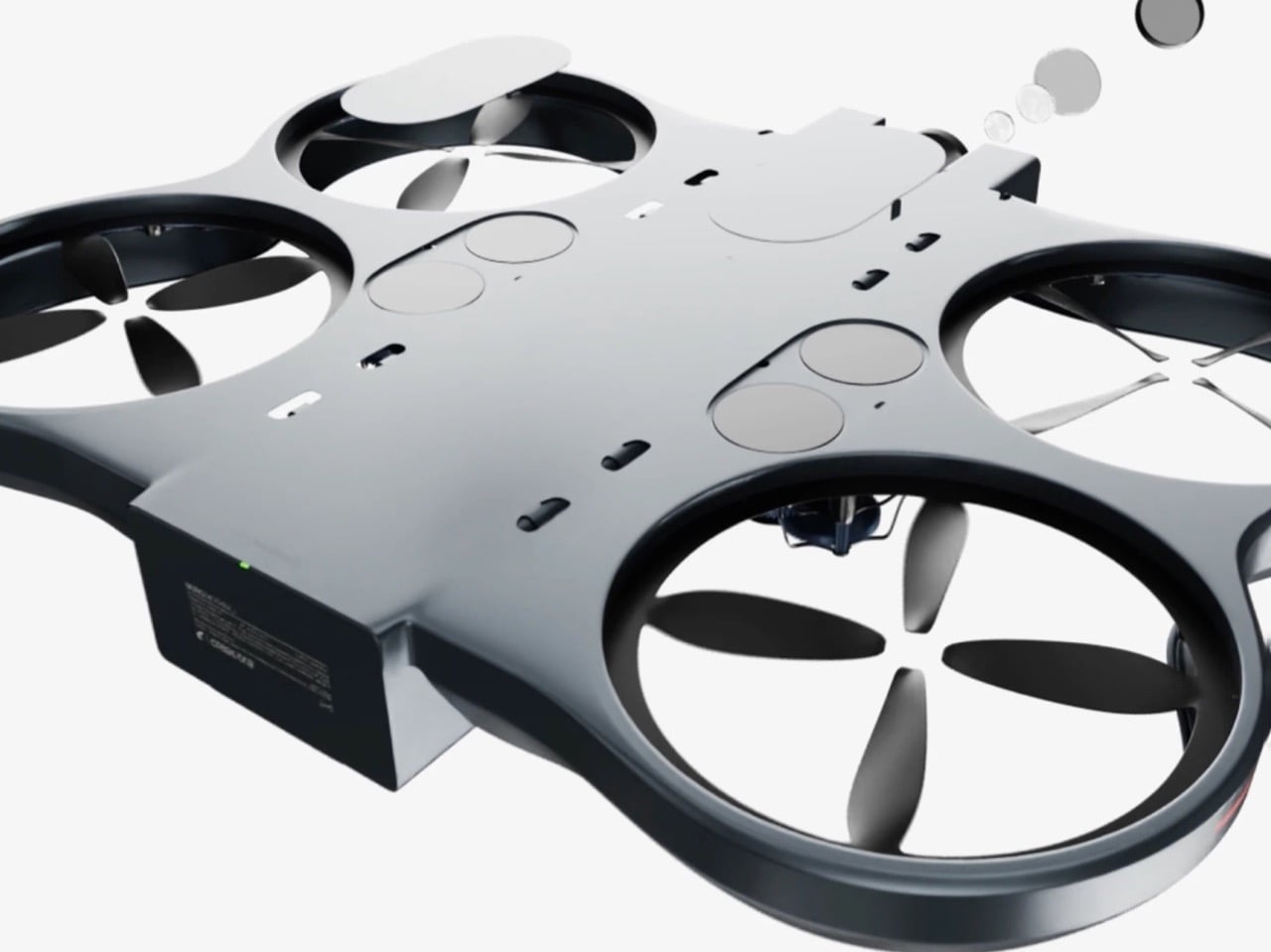
Unlike the familiar bolted-together cross-frame of most drones, the Mono Mothra is conceived as a single, continuous unibody. This monocoque approach, common in automotive and aerospace applications, means the outer skin is the primary structure. There are no joints between the central body and the rotor housings to act as fracture points. An impact on the outer ring doesn’t concentrate stress on a single screw or plastic weld; the force is spread across the entire continuous surface. This not only creates a far more durable machine but also allows for a cleaner, more holistic form where every curve is both aesthetic and structural.
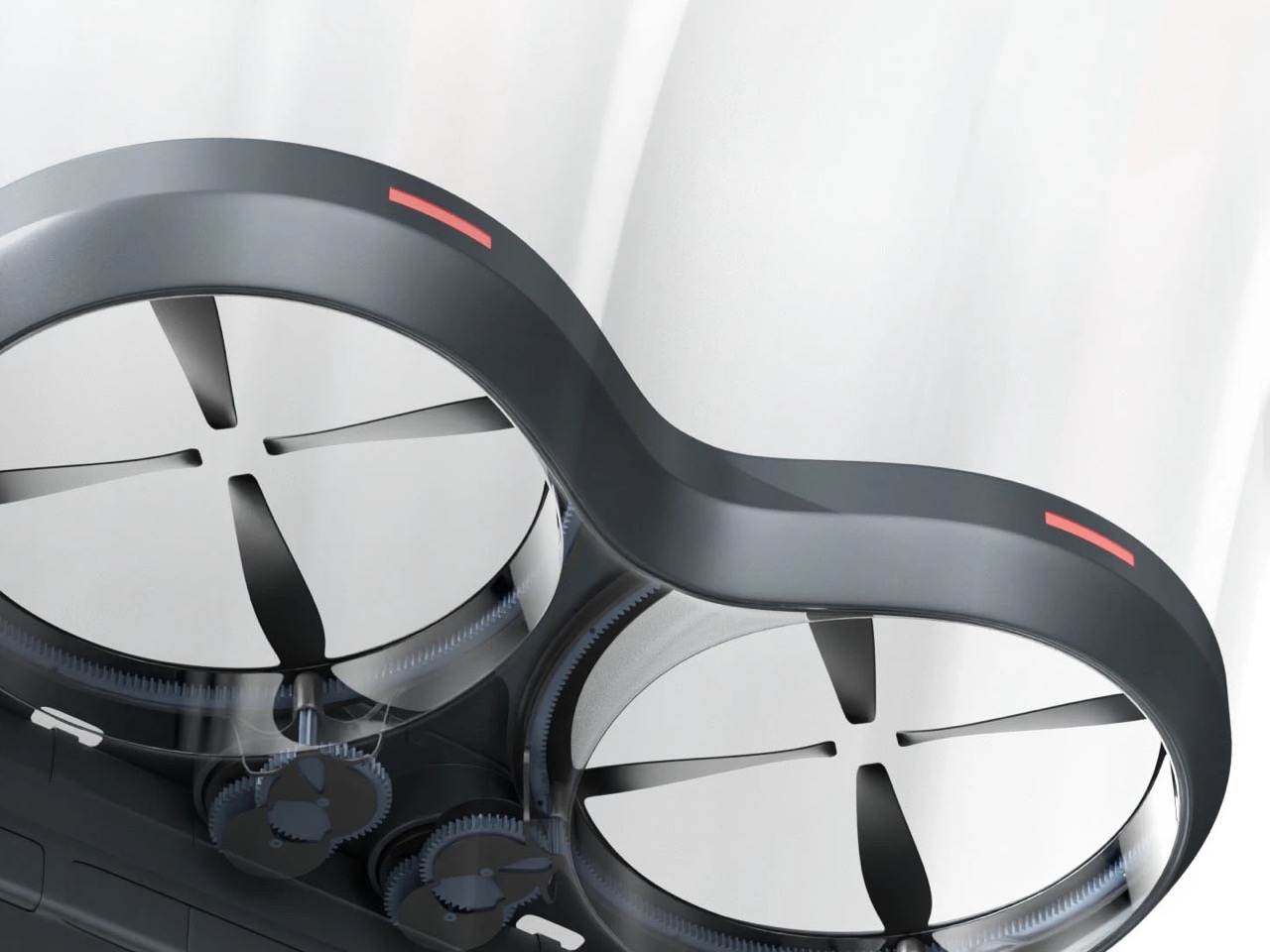
This philosophy of integration extends directly to the propulsion system. The outer ring of the monocoque doubles as a set of four substantial propeller guards, completely enclosing the rotors. This ducting provides an obvious and immediate layer of protection against side impacts with walls, branches, or the ground. The renders hint at a clever mechanical solution for the hubless look, with a gear-driven system hidden beneath the rotors. While a gear-driven system introduces complexity compared to a direct-drive motor, it allows the design to maintain its clean top profile and fully protected rotors, reinforcing the drone’s identity as a ruggedized tool.
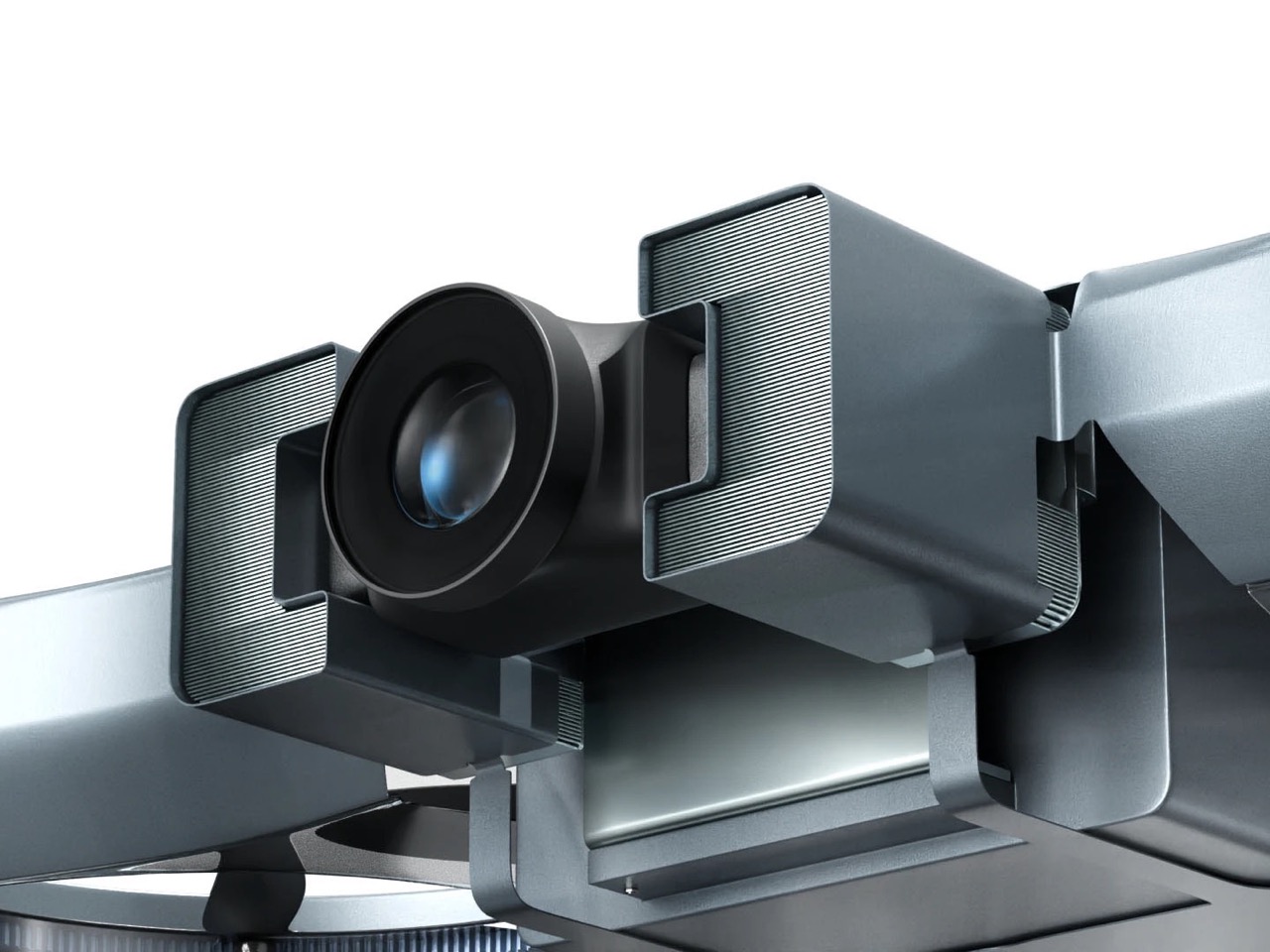
The camera module itself rejects the fragile, exposed gimbal common on consumer and prosumer drones. Instead, the lens is bunkered within a solid, purpose-built housing that appears to be just as robust as the main body. Whether the ribbed side panels are functional heat sinks for a high-performance sensor or purely an aesthetic choice, they communicate a sense of durability. The entire unit is mounted securely to the forward section of the frame, suggesting it is an integral part of the drone’s hardened structure rather than a delicate payload that has been simply attached.
What a concept like Mono Mothra truly demonstrates is the necessary evolution for drones to mature beyond their hobbyist origins. The industry’s current focus on modularity has created a landscape of capable but delicate machines. This design, by contrast, argues for a future built on structural integrity, where a drone’s ability to withstand the environment is as important as its ability to fly. It’s a shift from disposable components to a resilient, unified whole – a critical step if these devices are to become the indispensable, all-weather tools promised to professionals.
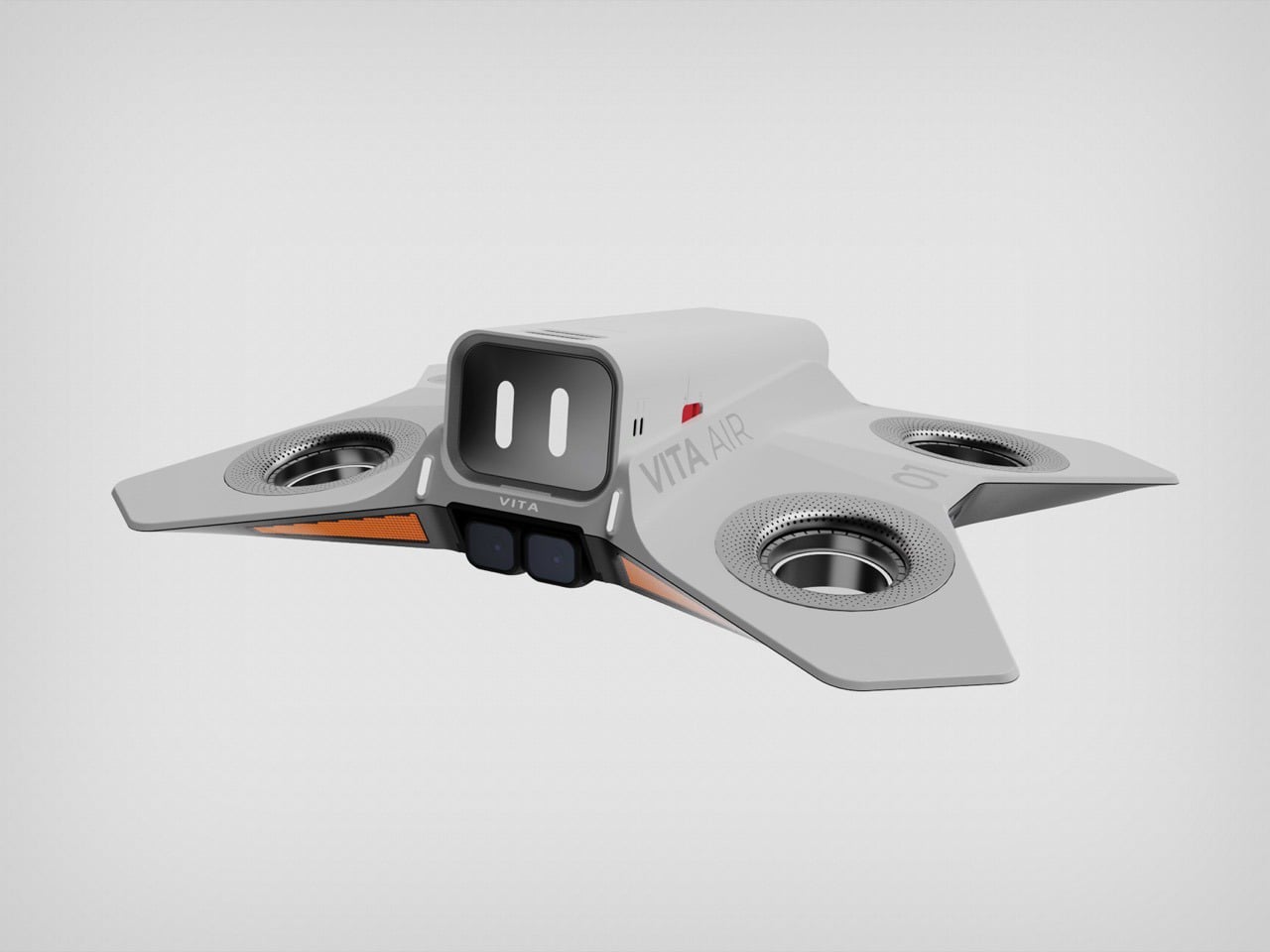
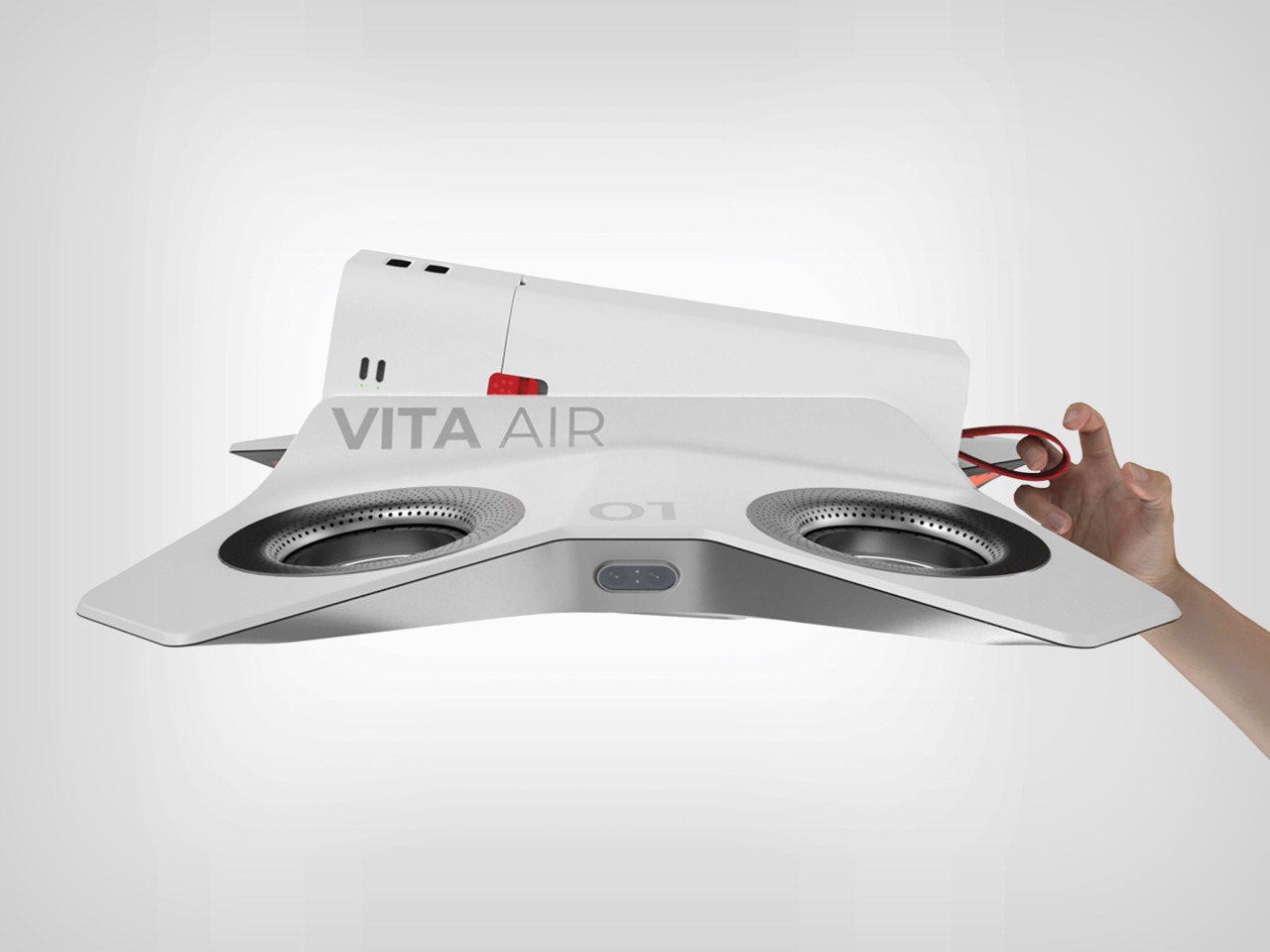
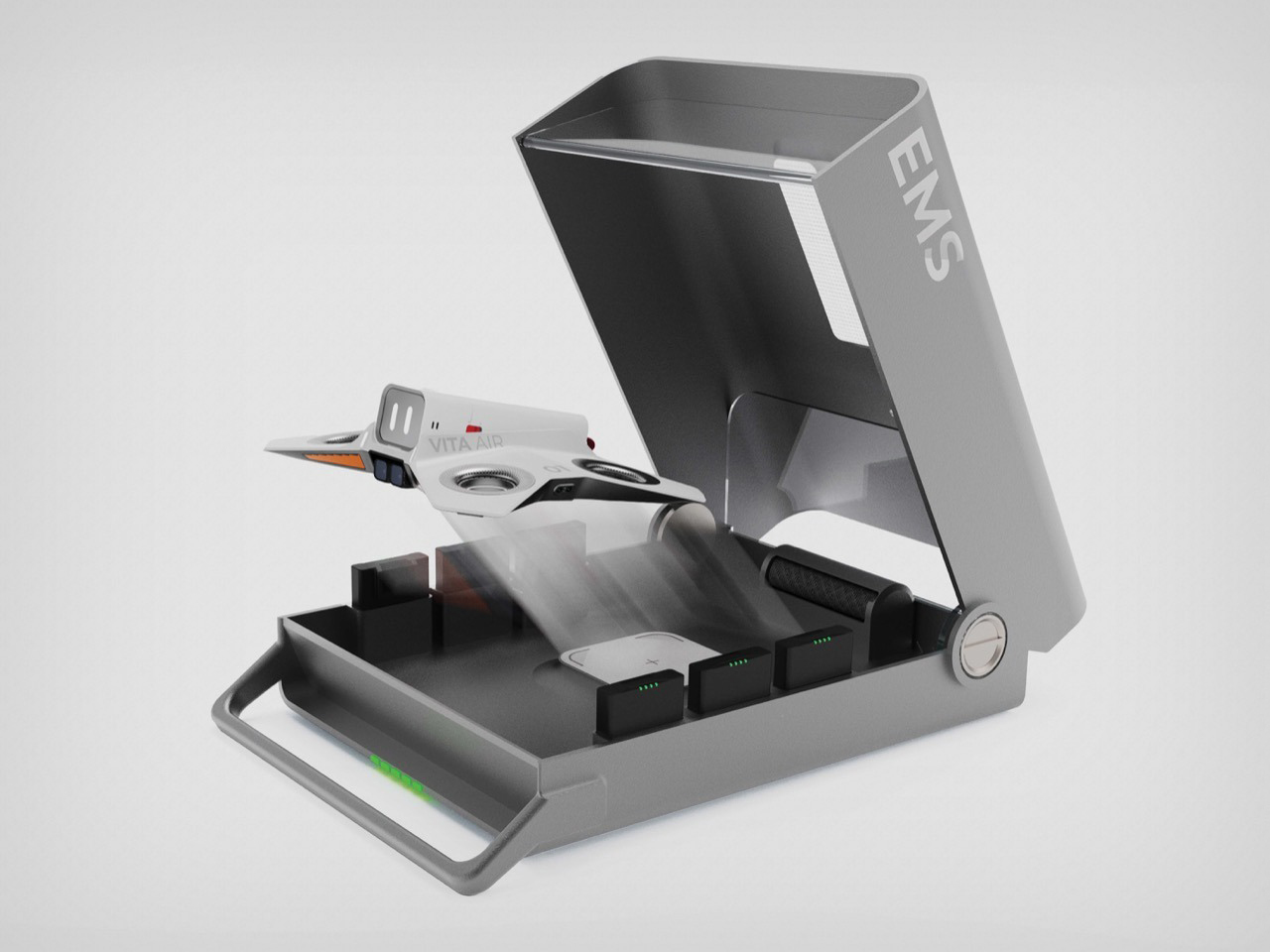
You know, we see a lot of drone concepts float across our screens, and most of them look like they were designed by either the military or an insect. They’re all sharp angles, matte black paint, and an unnerving number of sensors. Then you see something like VITA, an EMS drone that just won a Red Dot award, and the first thing you notice is that it has a face. A simple, friendly, almost disarming little face.
And that’s the whole point. It’s literally user-centric, given that this drone was designed as a first-responder aerial unit. If this thing is going to land at a chaotic accident scene, the last thing it should do is add to the panic. The designers clearly thought about the human side of the equation. It’s a little detail that tells you everything you need to know about the project’s philosophy: this is about making high-tech emergency care feel helpful, not hostile.
Designer: Hongyi Sun
That friendly face is doing some heavy lifting. Imagine you’re at the scene of an accident; you’re disoriented, maybe hurt, and suddenly a machine descends from the sky. If it looks like a weaponized hornet, your instinct (fueled by hundreds of sci-fi movies) is to back away. But if it looks like a helpful little robot from a movie, you’re far more likely to approach it. This is functional empathy built right into the industrial design. The goal is to get people on the ground to trust it instantly, so they can follow instructions from a remote paramedic or grab the life-saving equipment it’s carrying without a second thought.
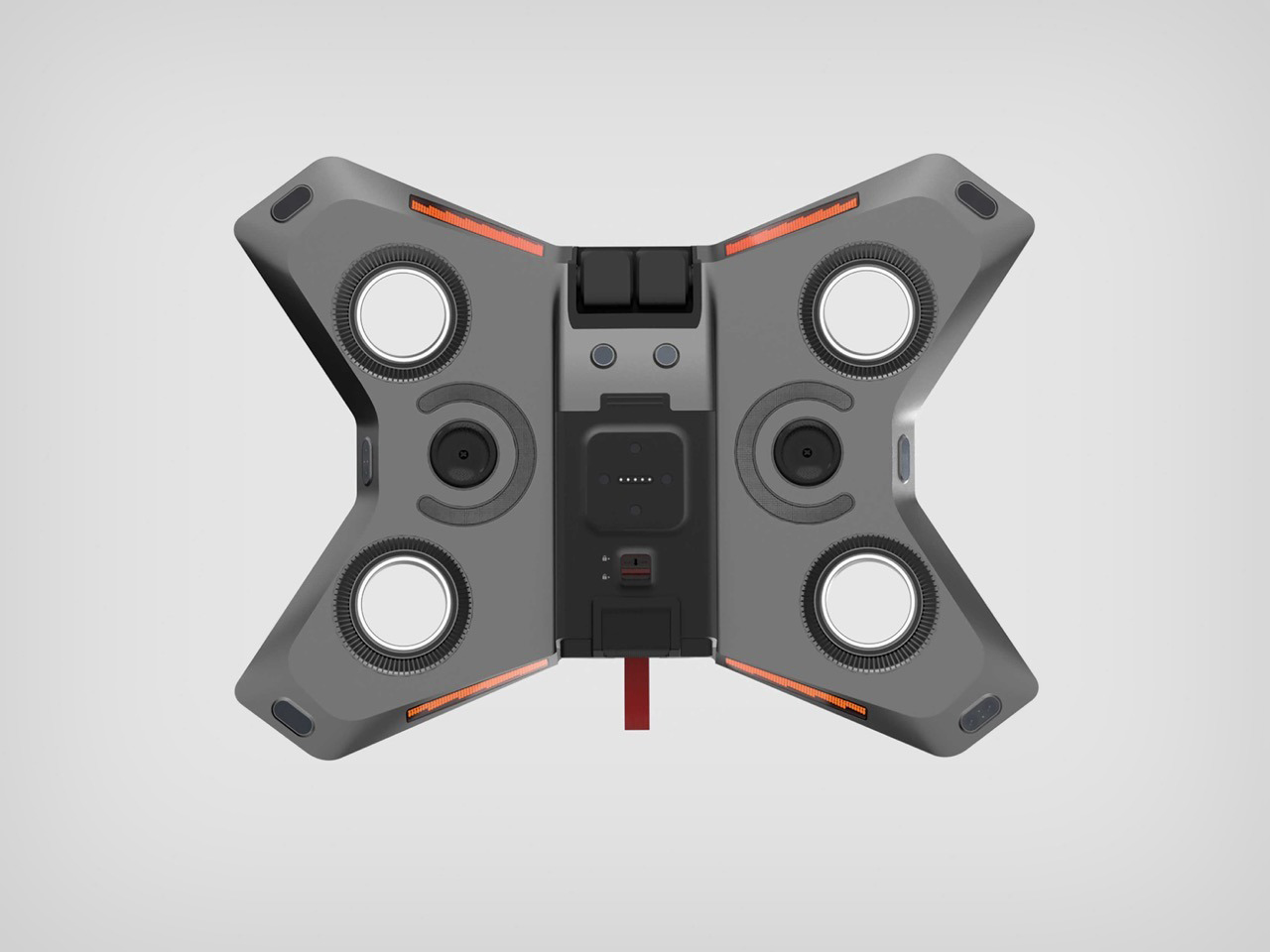
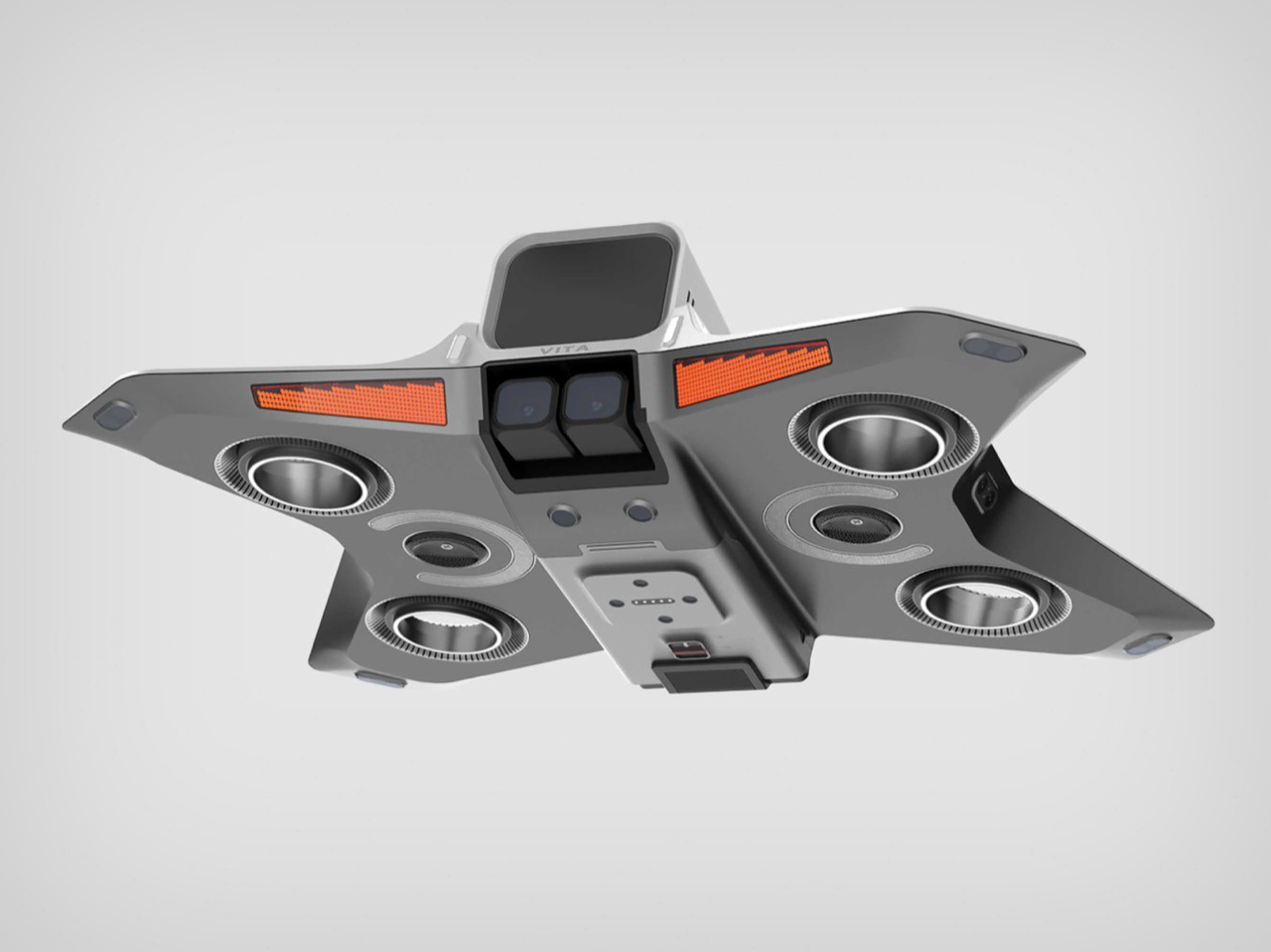
The cleverness doesn’t stop at the surface. The design backs up that friendly promise with some serious safety engineering. VITA uses ducted fans instead of the exposed, spinning blades we see on nearly every consumer drone. This is a massive deal. It means you, or a first responder, or even a child, could walk right up to it without the risk of getting seriously injured. In the unpredictable environment of a crash site, where people are moving around and debris is everywhere, eliminating that obvious hazard is a non-negotiable feature. It’s the kind of practical, real-world thinking that separates a cool render from a viable concept.
When you see the renders showing VITA being held in one hand, it all clicks into place. This isn’t some huge, intimidating aircraft; it’s a nimble and accessible tool. It’s small enough to get into tight spaces between cars and light enough for anyone to handle. Every element, from the approachable face and safe rotors to its compact size and clear markings, works together to serve one mission: delivering critical aid as quickly and safely as possible. VITA isn’t just another concept for a delivery drone; it’s a cohesive vision for how we can design automated systems to work with us, not just for us, especially when it matters most. That’s what makes it stand out.
It’s not usual for DIYers to step up and experiment with the logic of solar-powered devices as we know it. The ideal generally is to keep it simple. Add solar panels, connect them to a battery system, and power the connected devices. But that’s way too straightforward for Luke Maximo Bell, who runs an eponymous YouTube Channel and already has a Guinness World Record to his credit.
Last year, Luke and his father challenged the record for the fastest drone from Red Bull with their 3D-printed drone. It not only officially surpassed the former’s top speed of 350km/h, but actually bettered it by nearly 50 percent, hitting high speeds of 500km/h (310mph). A record-breaking feat verified by the team at Guinness Book of World Records.
Designer: Luke Maximo Bell
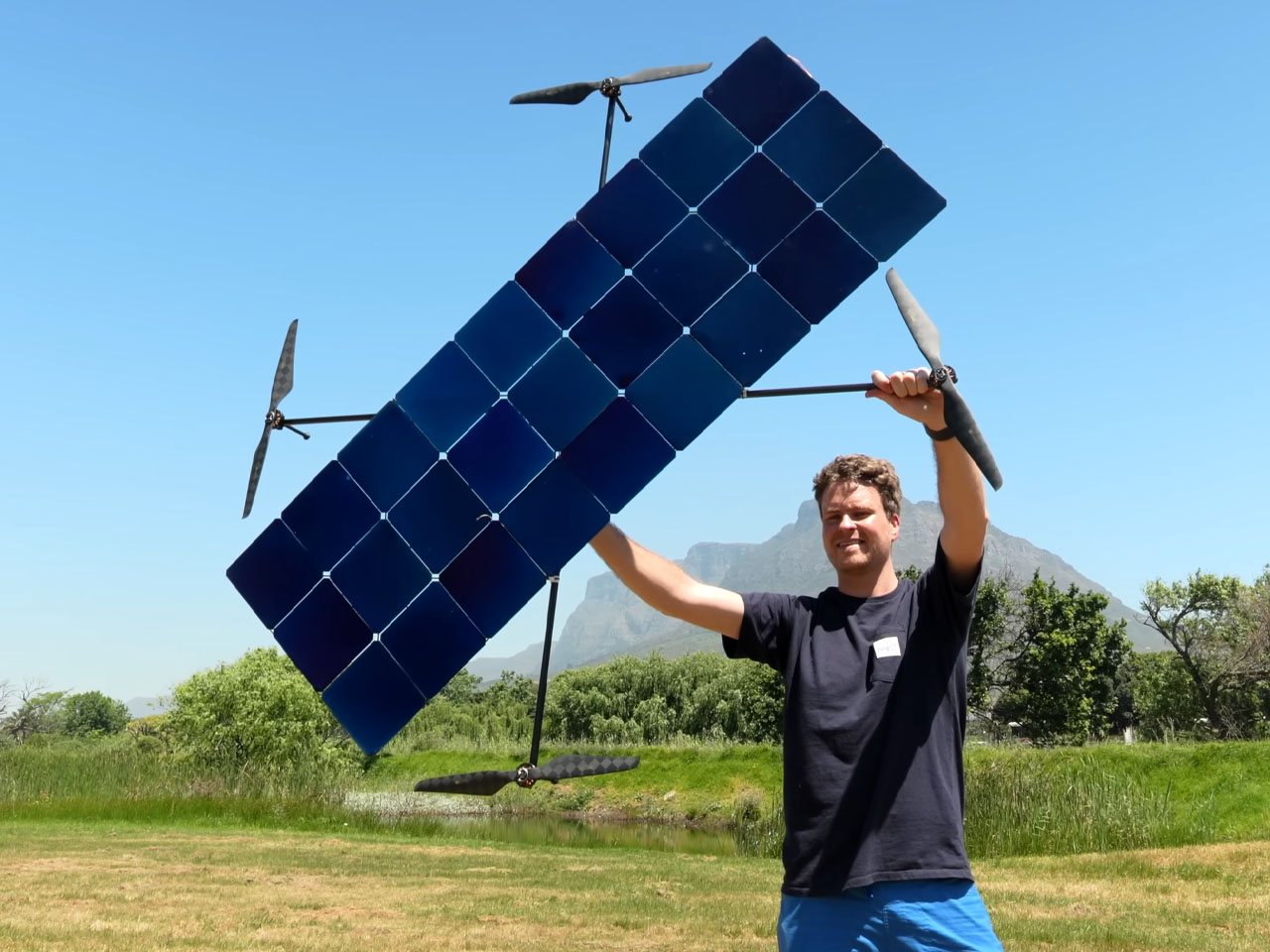
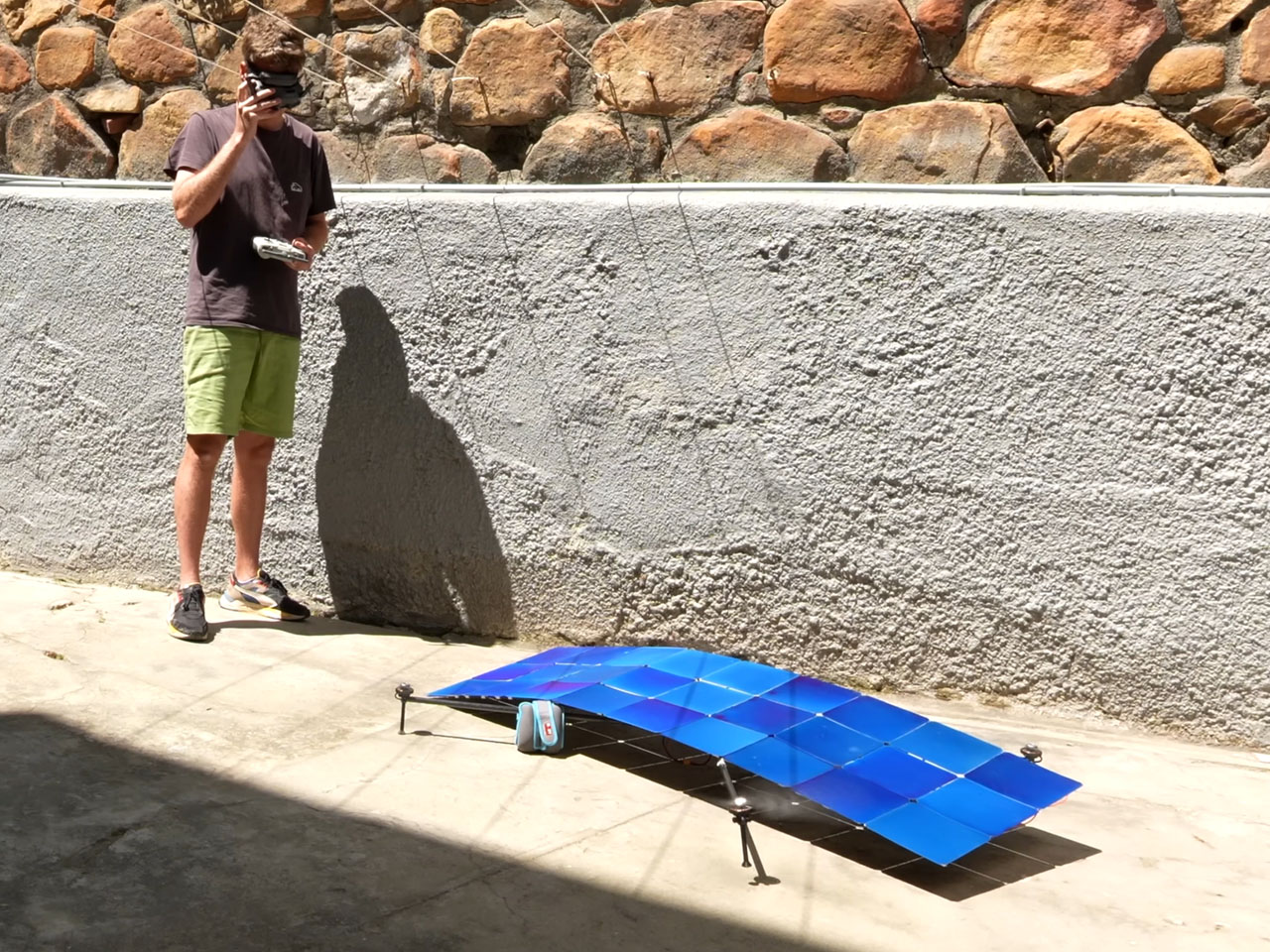
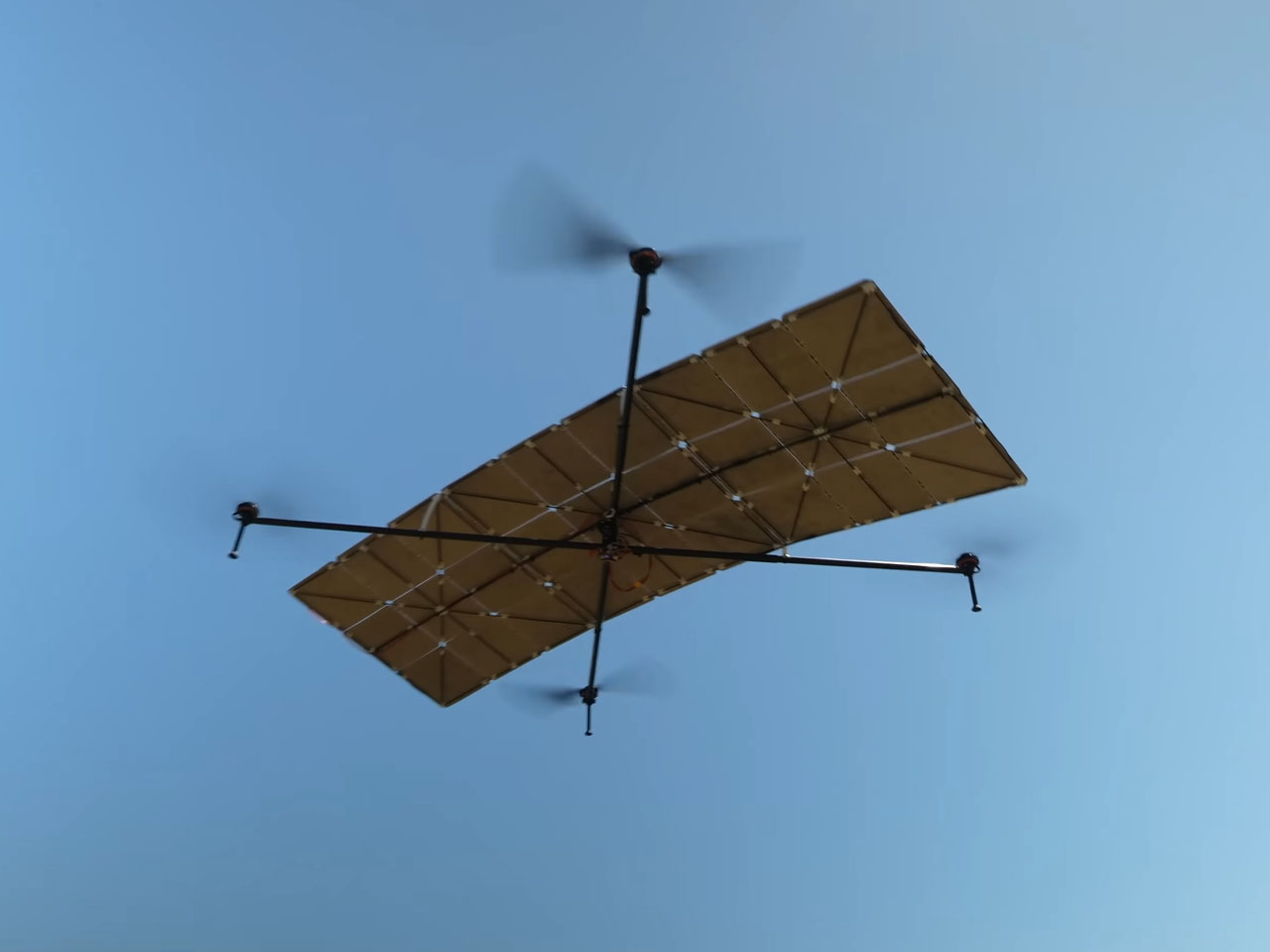
The idea of this new solar-powered drone, based on an X-shaped frame, is not to shatter any records per se, but to experiment with the feasibility of a drone that runs completely on solar power, without any battery attachments. Of course, as you see it, a drone like that would practically have little real-world applications, but it could pave the way for more exploration, certainly. Maybe the kite festival of Jaipur, India, could see ropes tethered to kites mounted with solar panels on them someday.
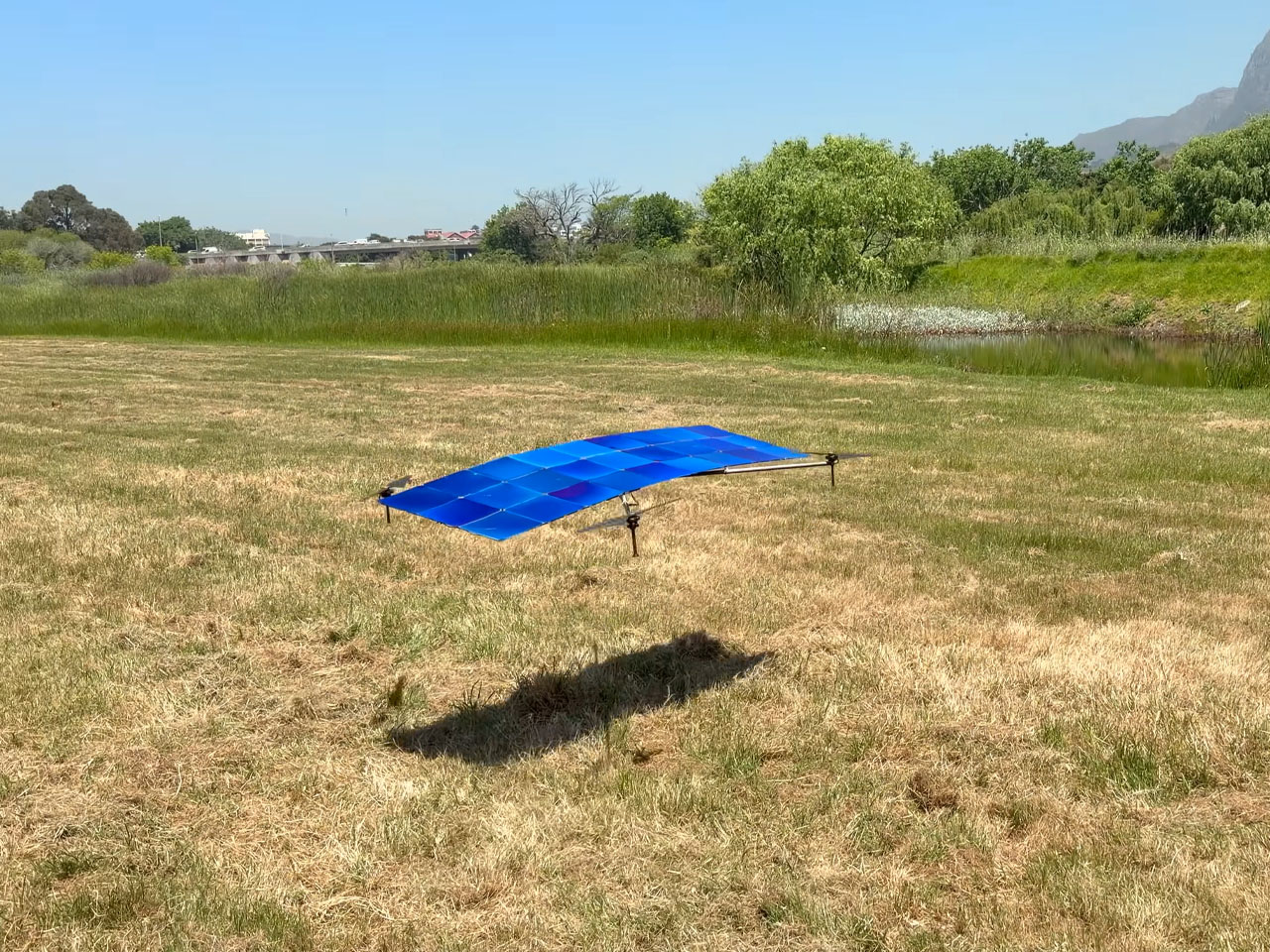
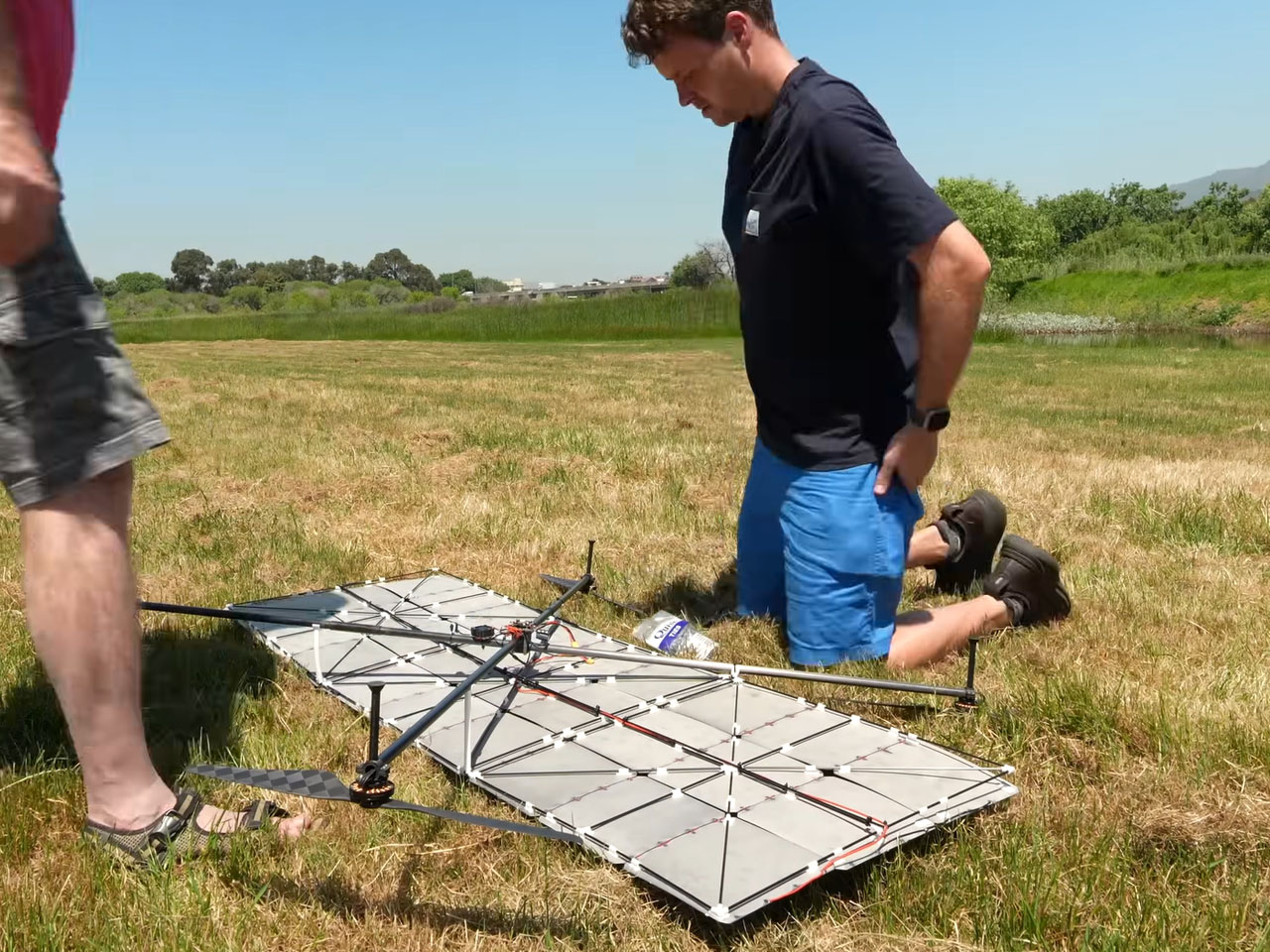
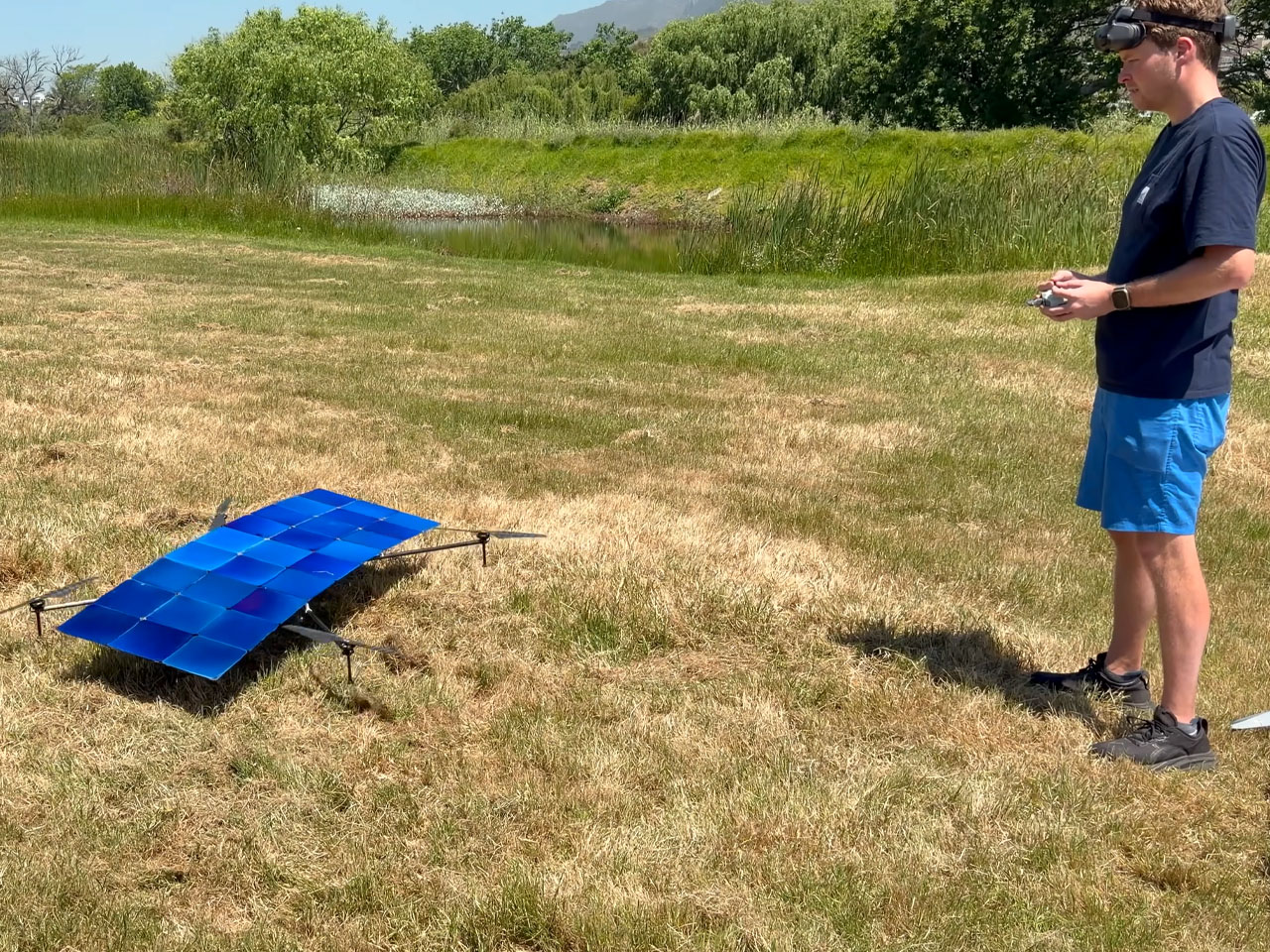
Jokes apart, Luke as for years had this thought of, what if a drone could fly on solar power alone? And this project is “designed to find that out.” From the video demonstration, the drone looks like nothing more than a flying sheet of solar panels, but it has been successfully tested to fly, which is an achievement.
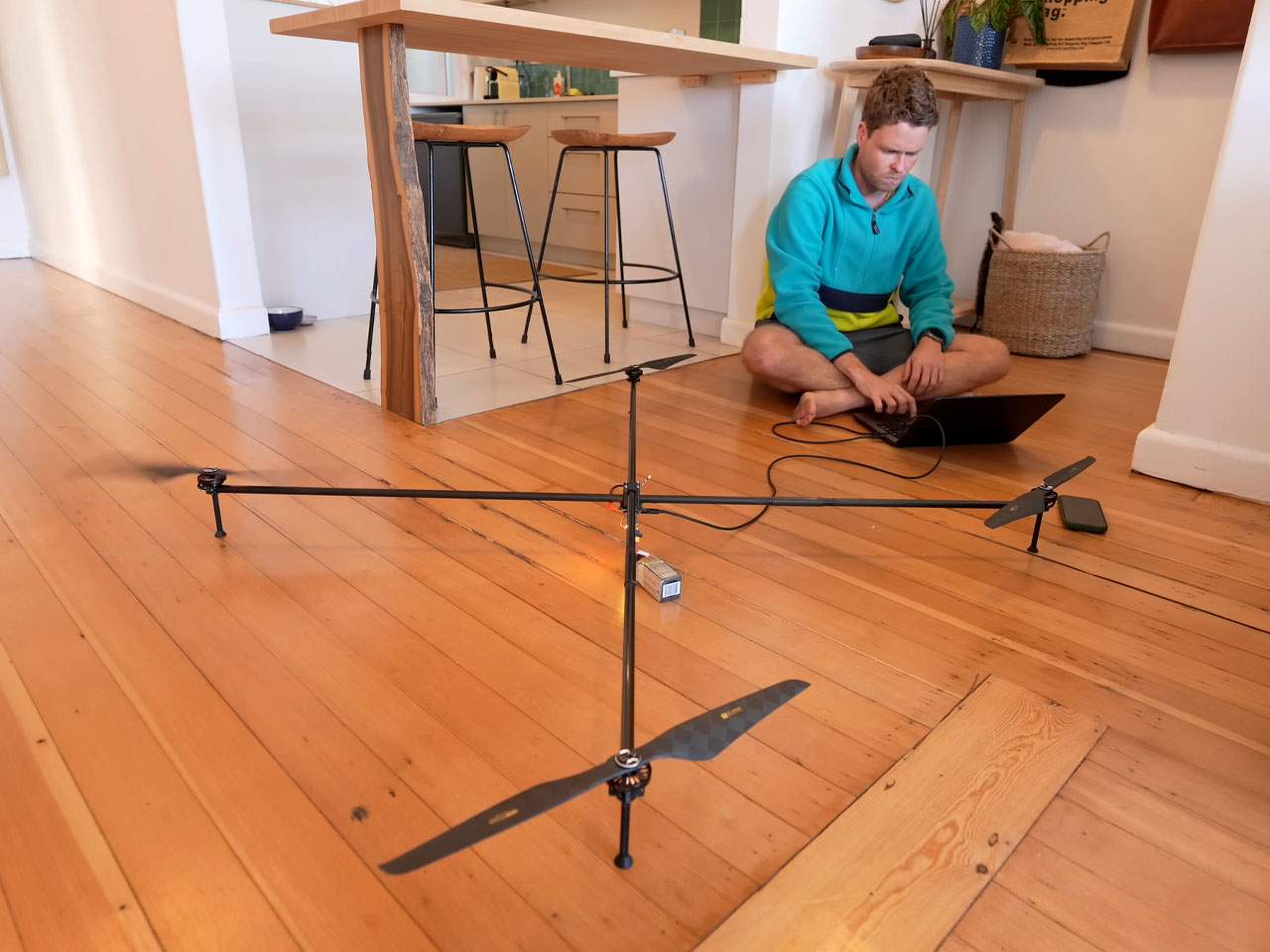
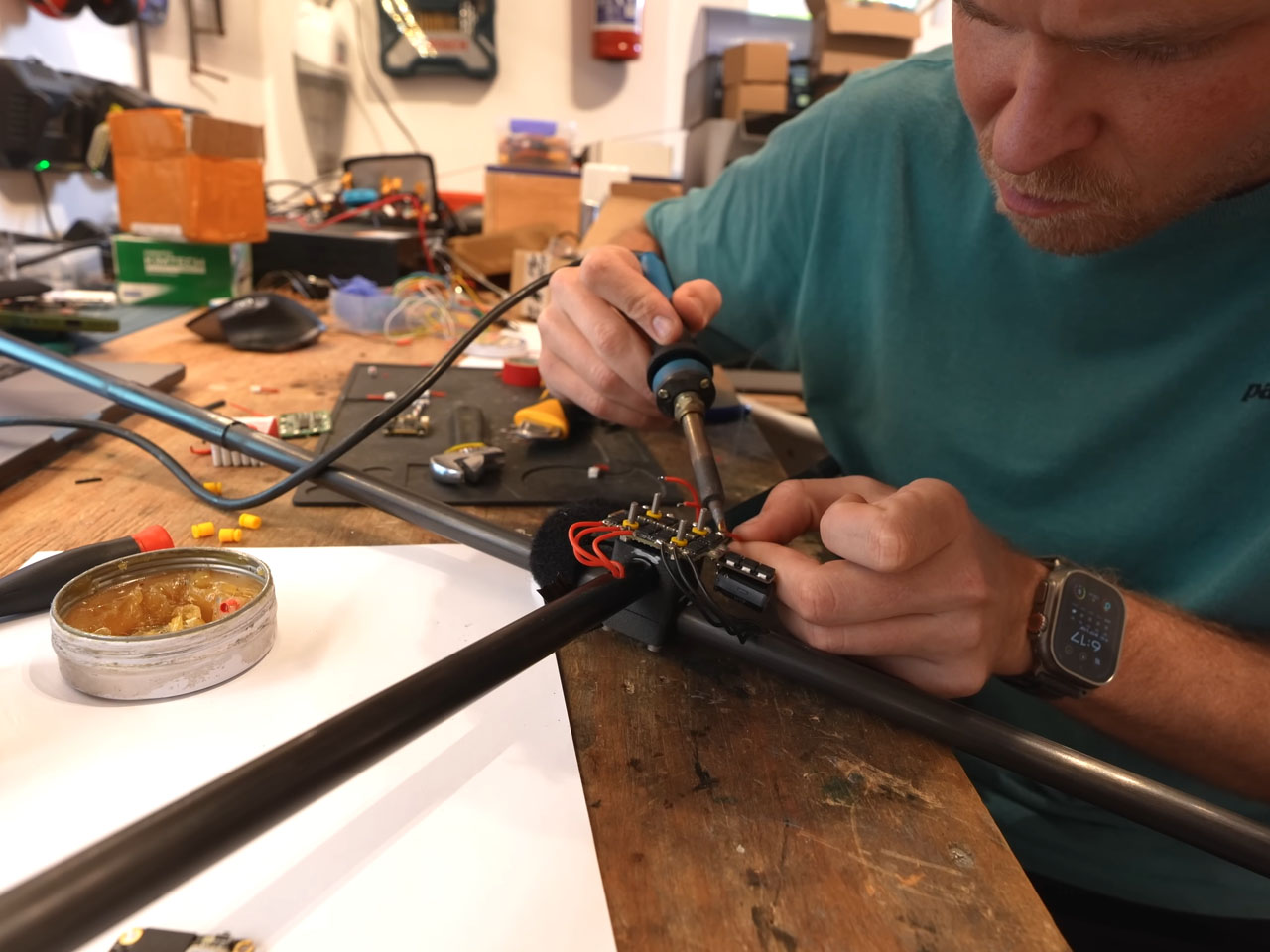
The idea of the drone is based on two parts, as Luke puts it, the drone itself (comprising antigravity motors residing on 3D printed mounts, propellers, and frame. And the second part being the photovoltaic panels. Both are combined to create this sun-loving drone that keeps airborne as long as the sun shines on it. The 18-inch X-frame of their unique drone is made of carbon fiber tubing, and it features the decisive flight controller installed right at the X intersection of the two frame bars holding the propellers at their ends.
Understandably, the entire contraption has taken Luke hours of jostling through the odds, check out the video above for more details; but he has been able to pull it off. With solar panels and no batteries on board, the drone does take off after a few nervous minutes on 100 percent solar power alone. The flight was a “bit shaky,” Luke says in the video, but it’s “flying,” and the testing was “successful,” he proudly notes.
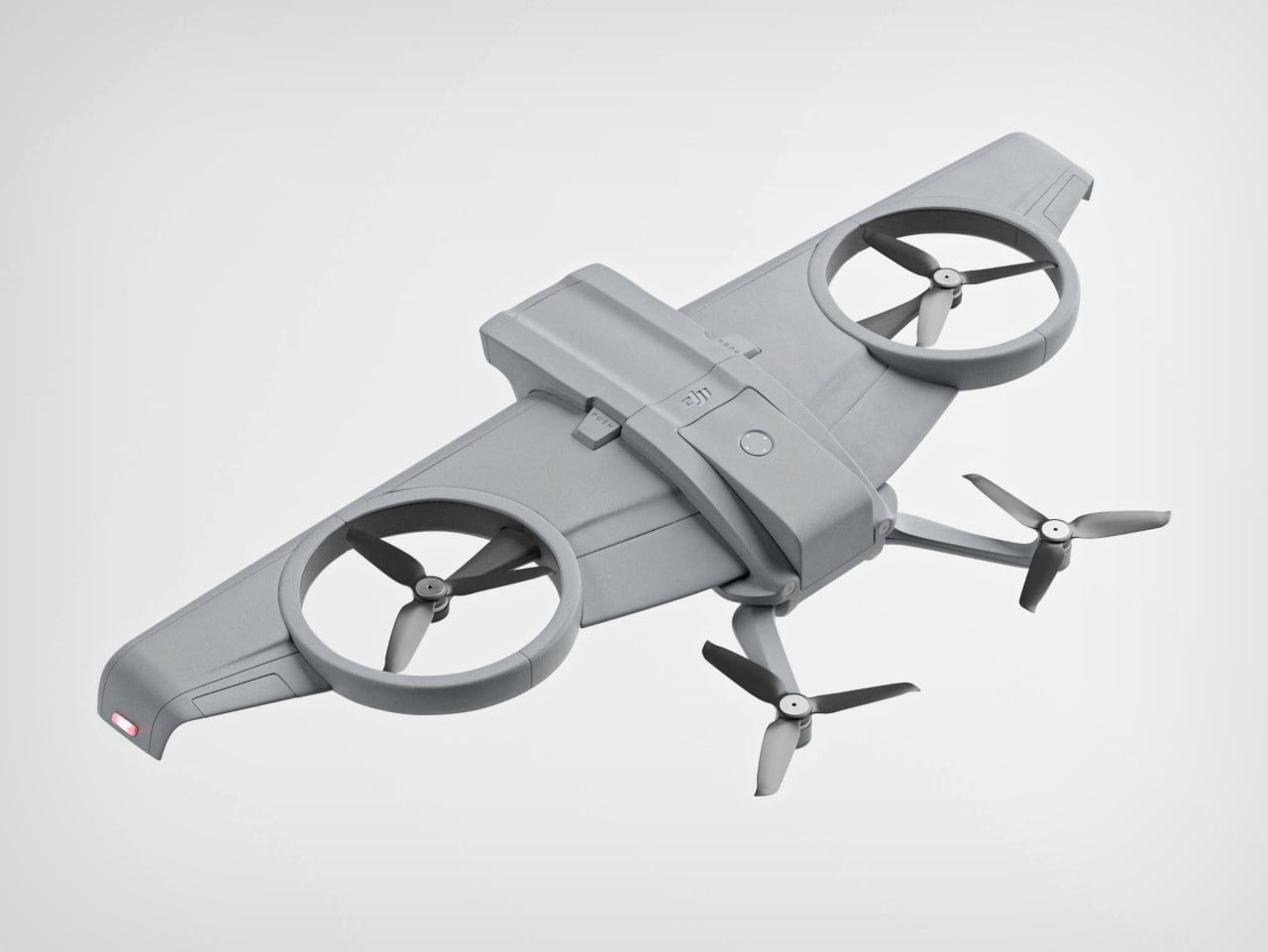
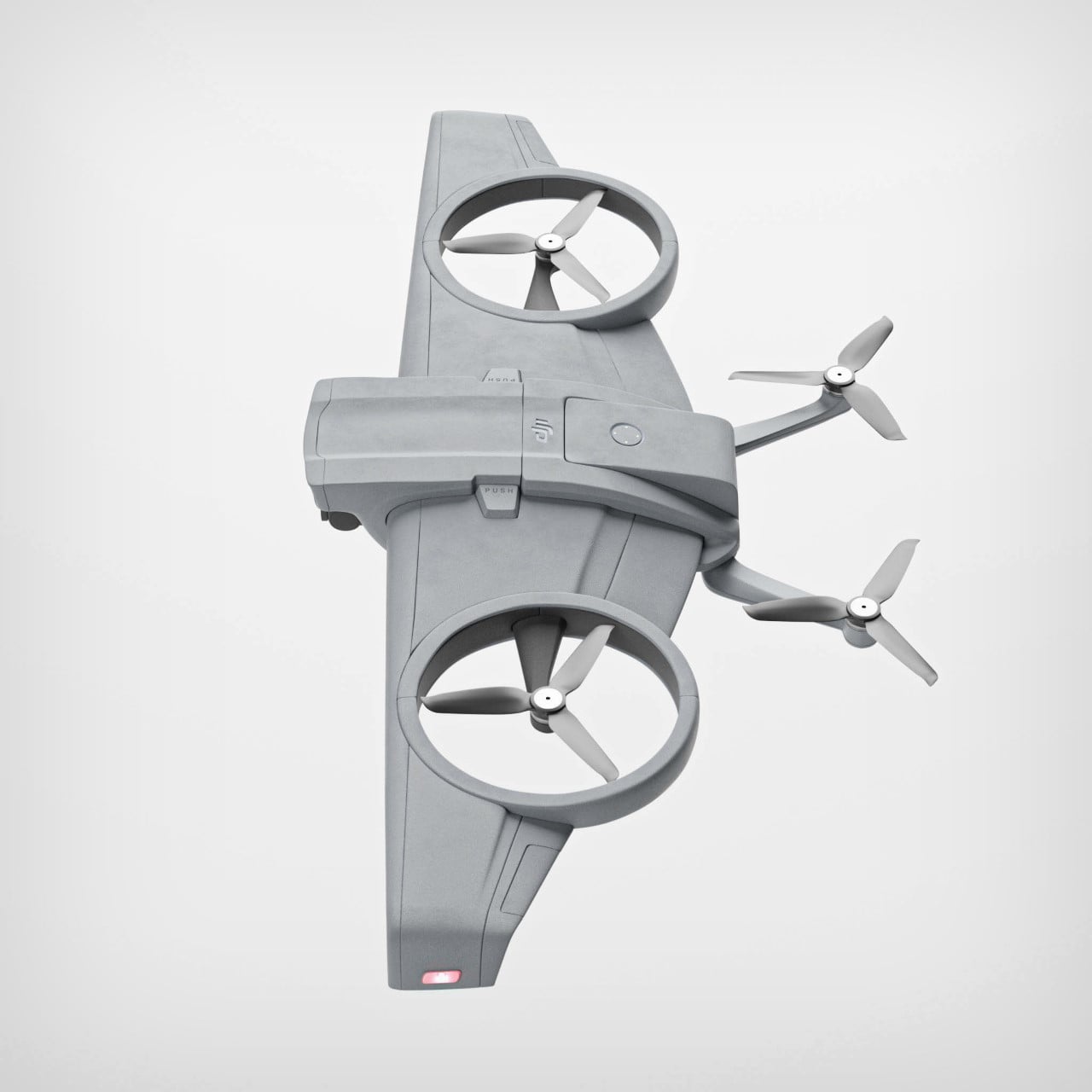
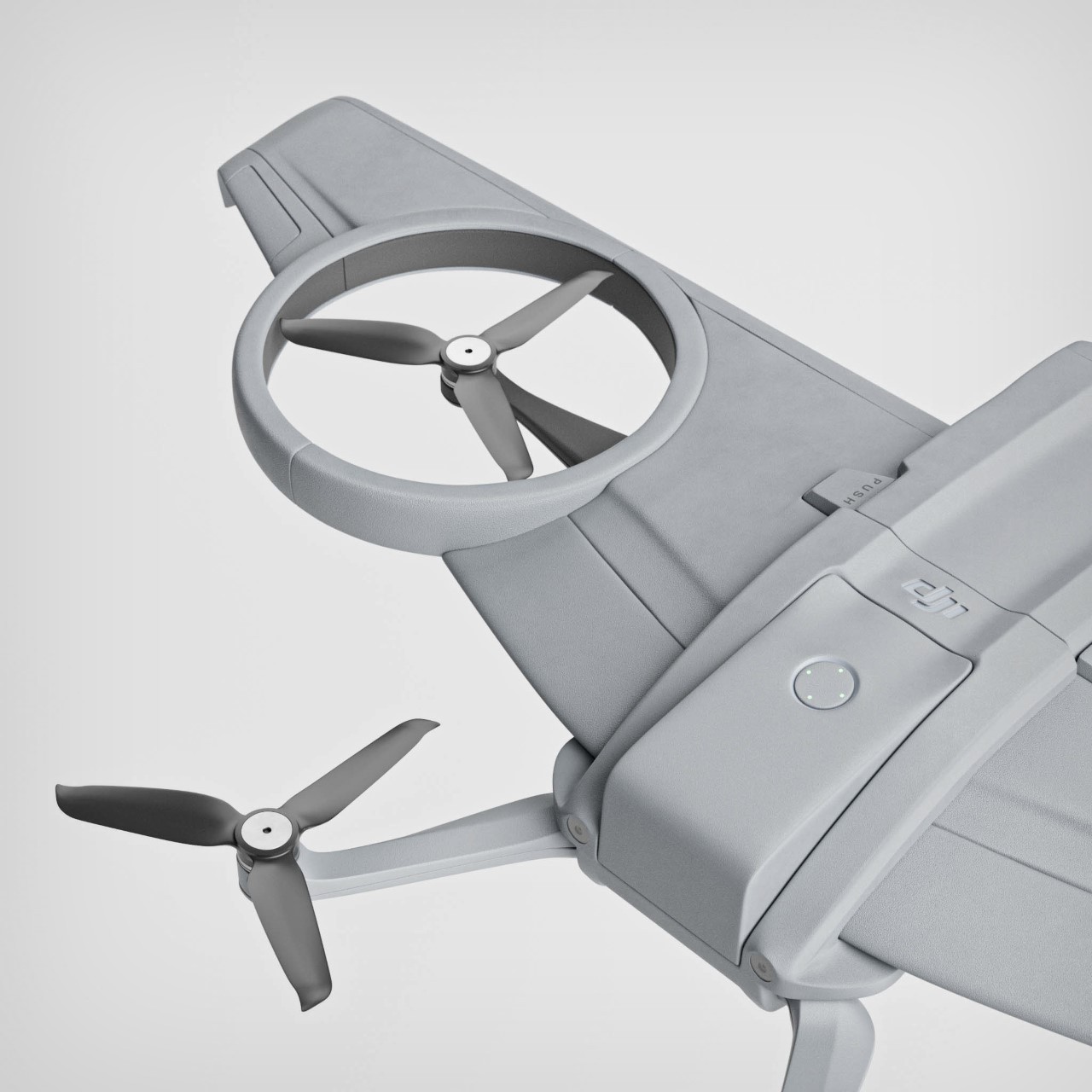
You’ve seen quadcopters, and you’ve seen drones used for crop dusting or aerial surveillance – the DJI Glide is a fusion of both those drones. Designed by Baptiste Grenon, the DJI Glide proposes a battery-efficient design courtesy the presence of wings that help the drone stay stable and achieve flight at high altitudes without being an energy-guzzler. The drone still has the familiar quadcopter format, but also includes wings, giving it a hybrid design that might just translate to a longer battery and better range.
Designer: Baptiste Grenon
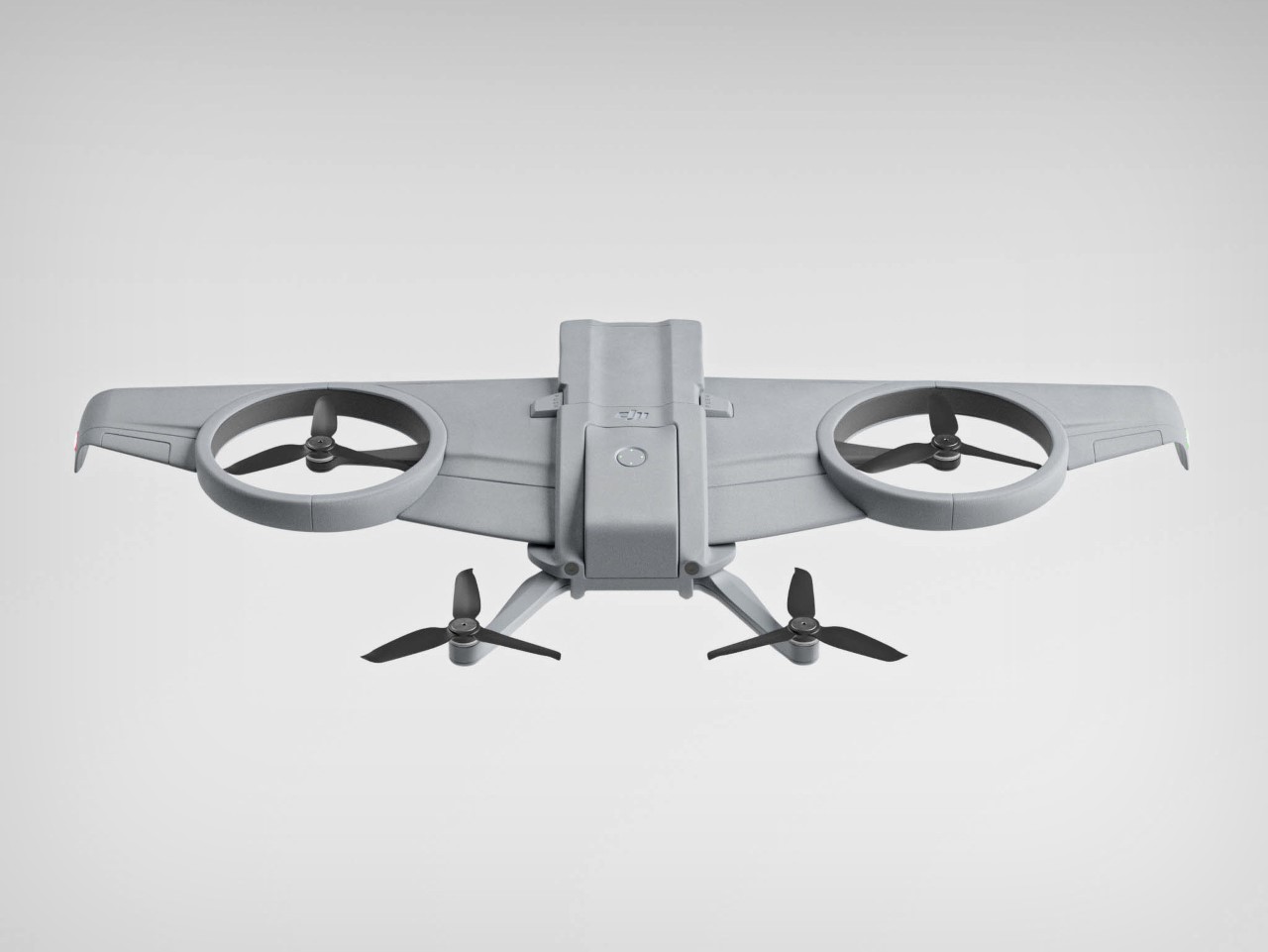
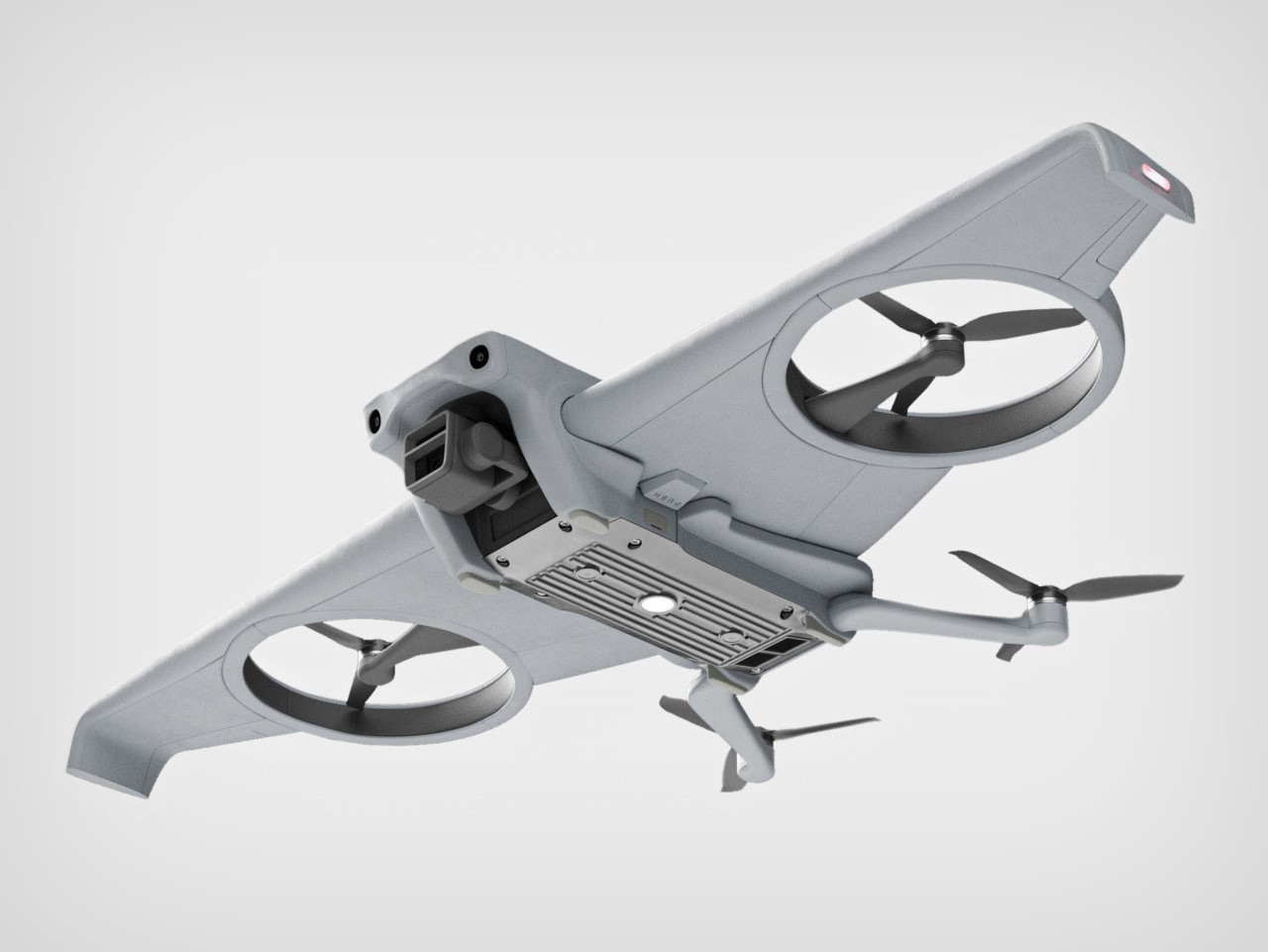
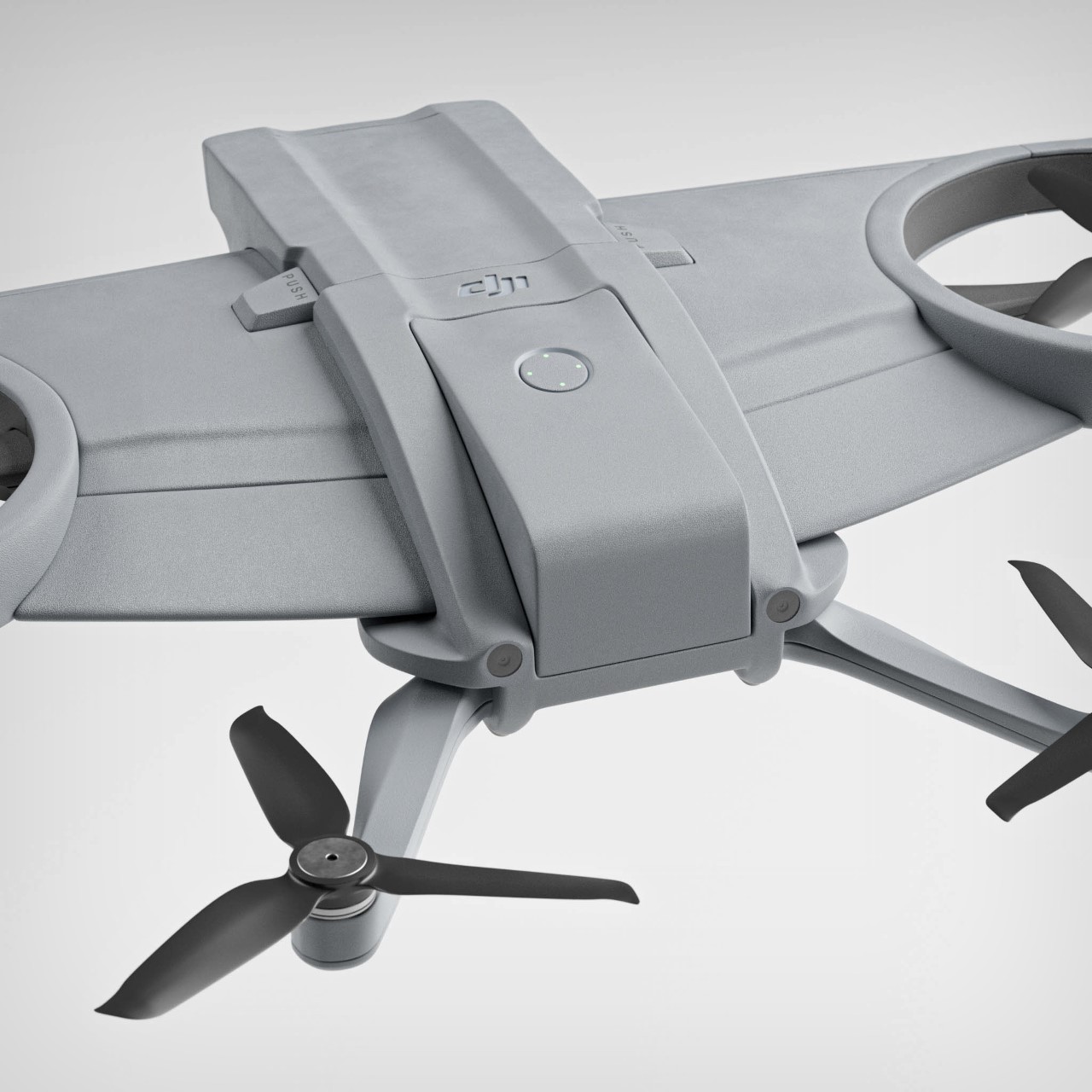
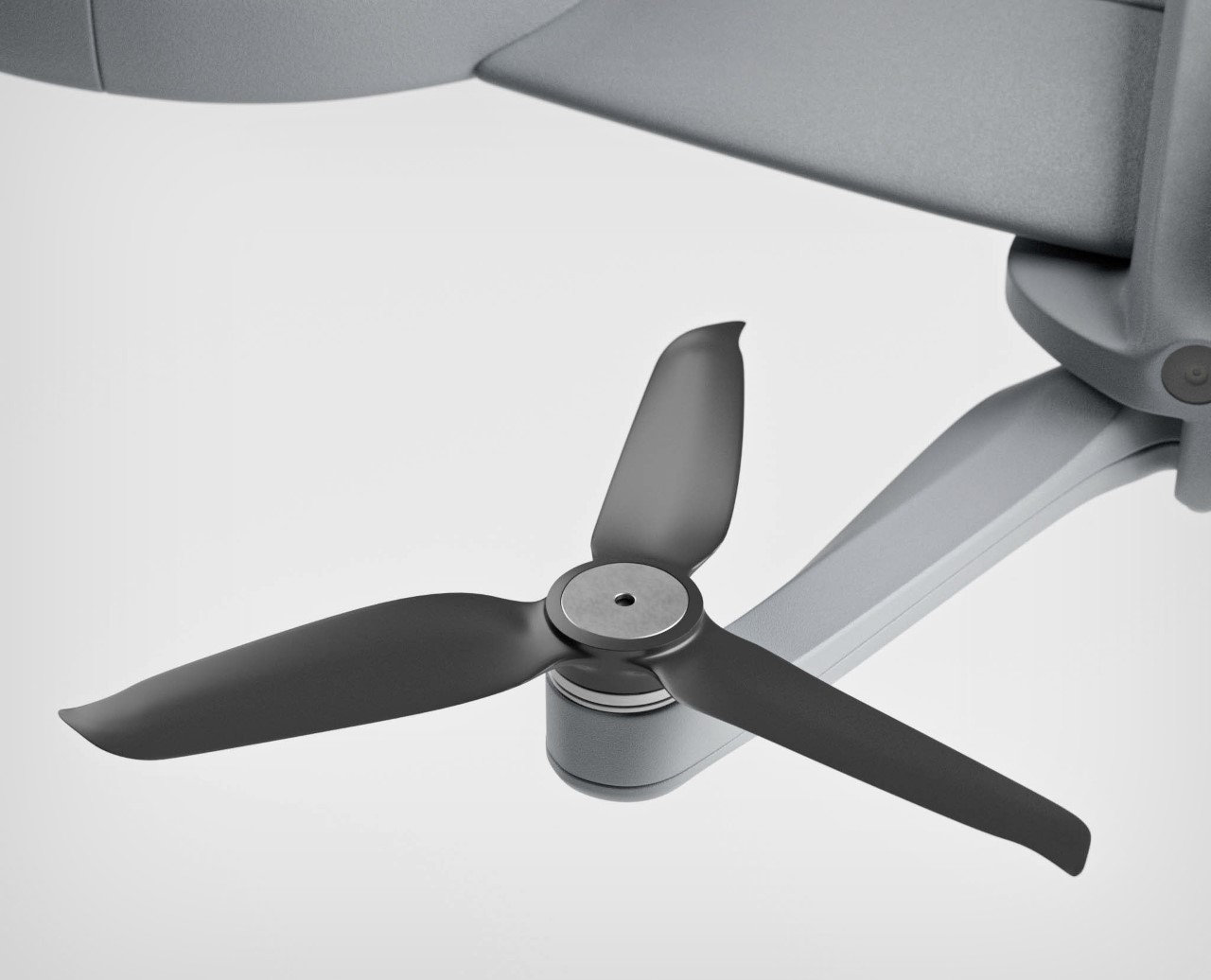
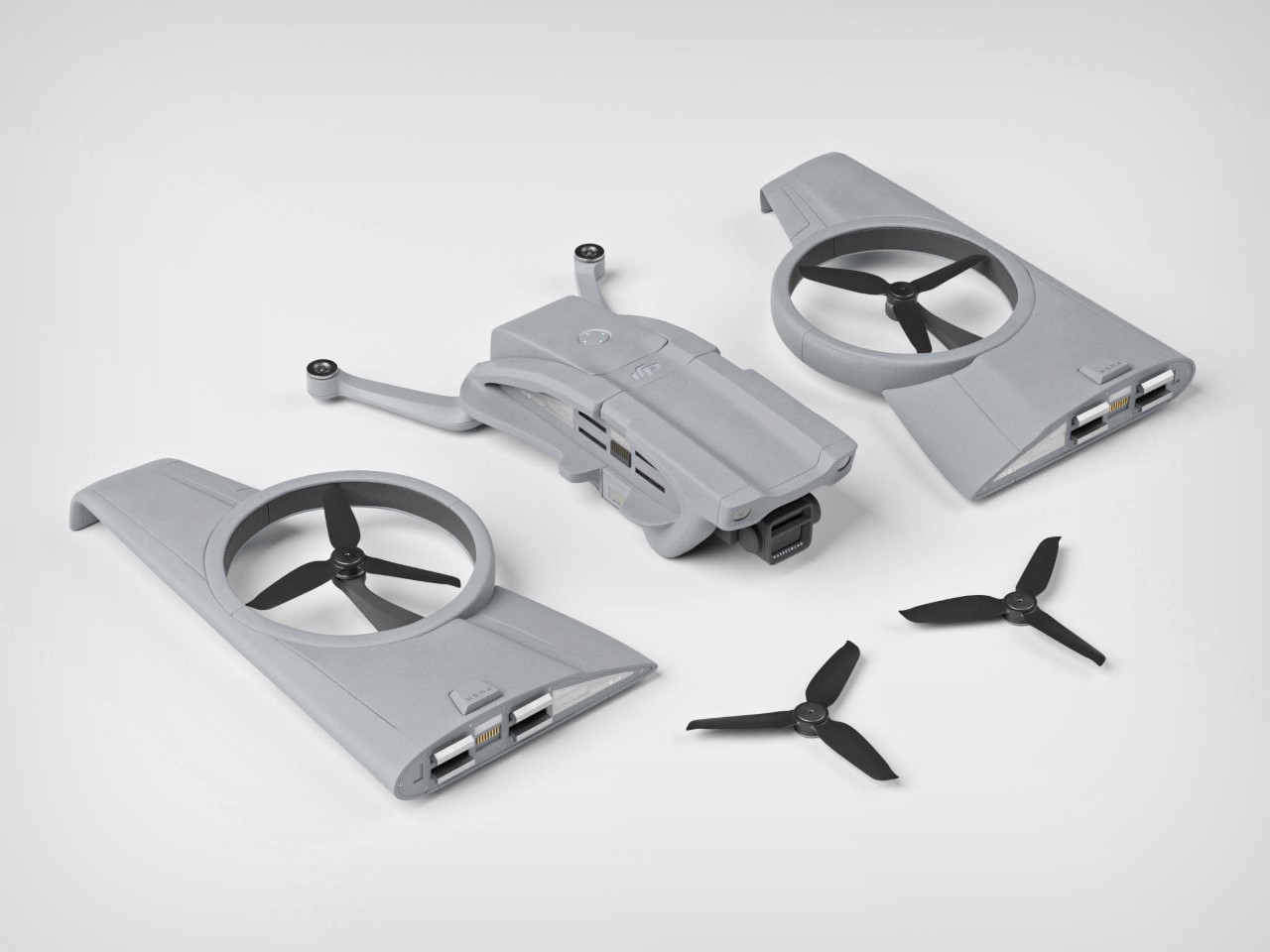
The DJI Glide’s unique design includes two standard propellers, and two propellers built right into the drone’s wings, which double as propeller guards during flight. It doesn’t look like the wings themselves move, although Grenon has included what looks like rudders at the wing-tips for better maneuverability. The drone still has vertical take-off and landing, but the airfoil cross-section of the wings gives it much more aerodynamics while the drone hurtles forward at top speed.
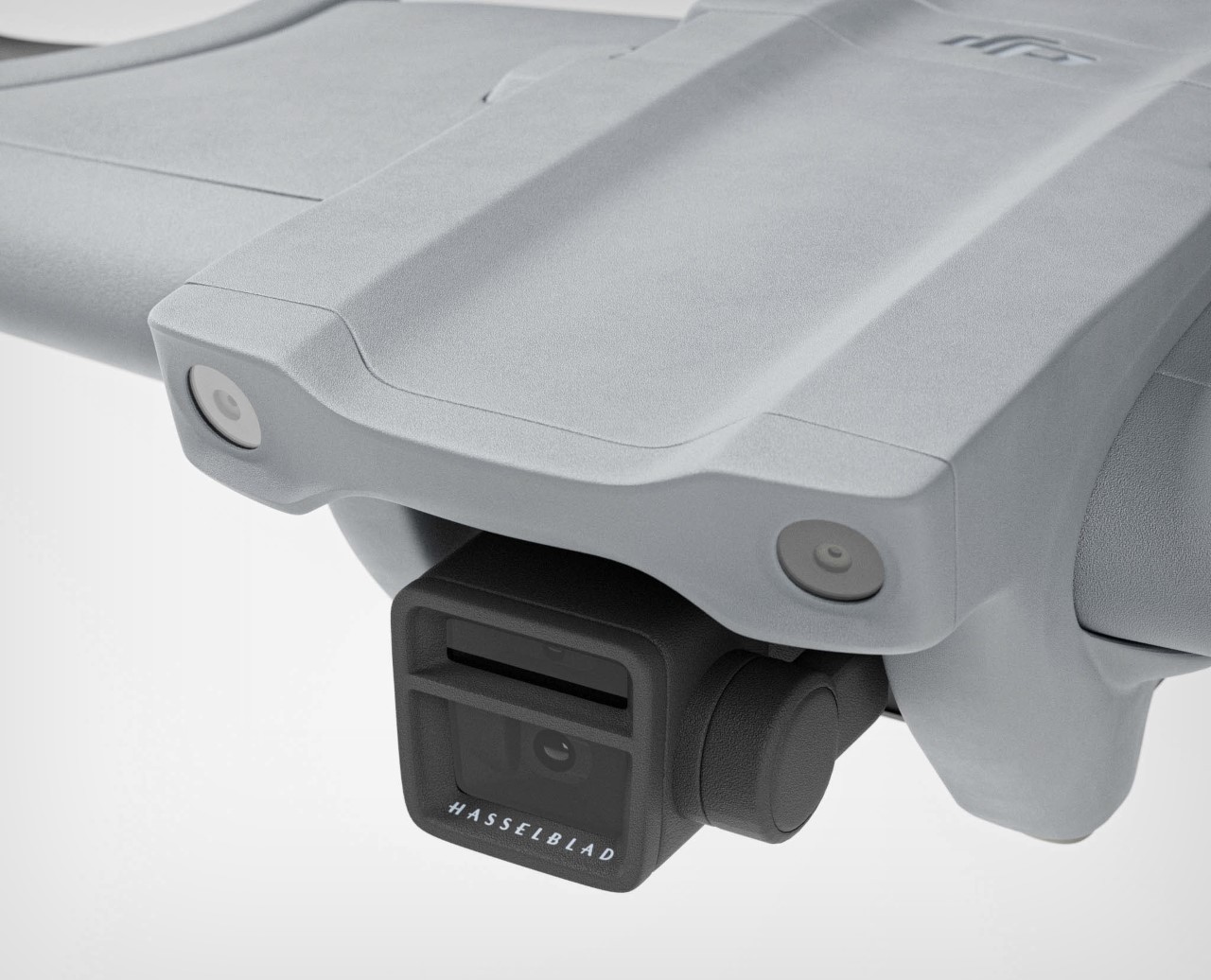
The implication therefore is that the DJI Glide is more suited for FPV flying as opposed to cinematic flight. A gimbal-mounted Hasselblad camera on the front records your PoV, while cameras on the front, back, and bottom give the drone spatial awareness, allowing it to maneuver on its own without colliding into objects – perfect for having the drone return back to base after its battery runs out.
The battery sits on top, plugging right into the drone’s back to power it in flight. Given the conceptual nature of the drone, battery specs are purely conjecture, but I suppose having wings helps conserve the drone’s battery by giving the aerial vehicle the lift it needs while flying. The wings also present a trade-off in terms of maneuverability, hindering complex movements like moving in reverse or tight turns.
The propellers at the rear justifiably come without any bumper guards, given that they’re effectively shielded by the wings ahead of them. There is, however, a small technical challenge, and it has to do with the drone’s overall size. Having a drone with a wingspan means the DJI Glide isn’t a very compact little device. It therefore comes with detachable wings, which may prove to be a challenge during fast flight. Losing a wing to a loose clamp effectively cripples your drone, since it means losing a propeller too. Collisions may protect the propeller from damage, but the part where the wing and drone join together will take all the impact – something that highly affects your drone’s overall lifespan.
That said, the foldable format does make the DJI Glide fairly portable, allowing it to be flat-packed for shipping. The durability trade-off for efficient flight feels fairly valid – if the obstacle-avoidance algorithms are strong, there really shouldn’t be a problem. Plus, the drone doesn’t need a runway to take off or land, which definitely helps it in the long run for people flying recreationally.
Your phone has a pretty phenomenal camera, but unless it’s an absolute flagship device, it probably won’t record 8K video. And it for sure won’t fly around in the air taking dramatic shots of you while you pose on the top of a mountain or dirt bike on a rocky trail or dive into a lake. You’ll probably need a selfie drone for that, but before you go spending hundreds of dollars on a drone that’s fragile, expensive, and comes with a massive learning curve involving controllers and joysticks, the folks at HOVERAir might have built the perfect consumer-grade pro drone, or as they call it – a flying action camera. Designed to be foldable, small enough to fit in your pocket, and durable enough to withstand any rookie accidents The HOVERAir X1 PROMAX still packs a state-of-the-art flying system and an 8K camera capable of outshining any other drone its size. It works on voice commands (but also comes with an optional Wi-Fi 6-enabled Beacon), takes off from your palm, reaches speeds of up to 60 km/h (37.2 mph), can capture slow-motion videos at 120fps, and even works in sub-zero temperatures just in case you want to film yourself skiing or snowboarding. The best part, the X1 PRO’s $499 starting price, along with its compact size which makes it compliant with FAA guidelines so anyone can use one.
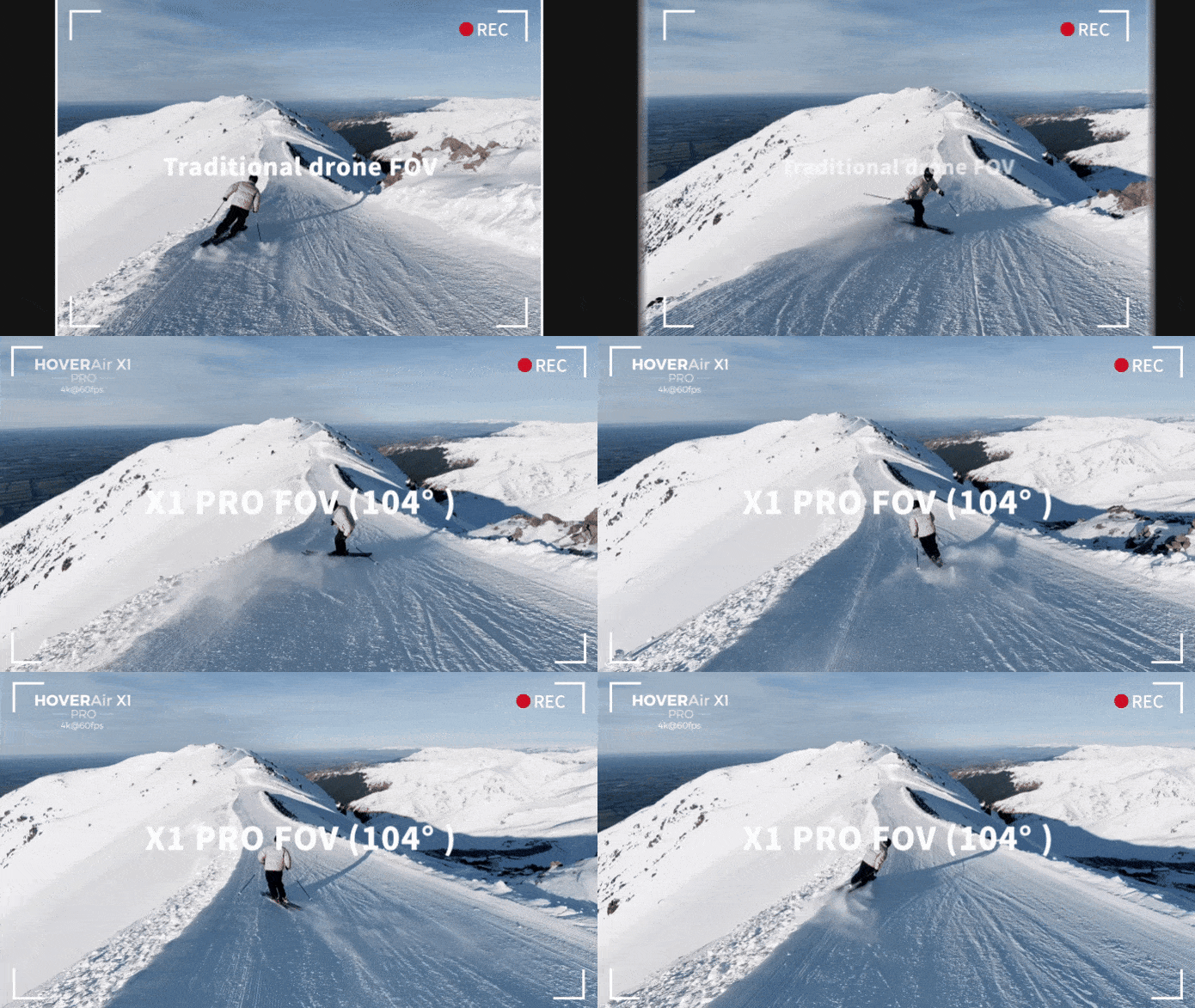
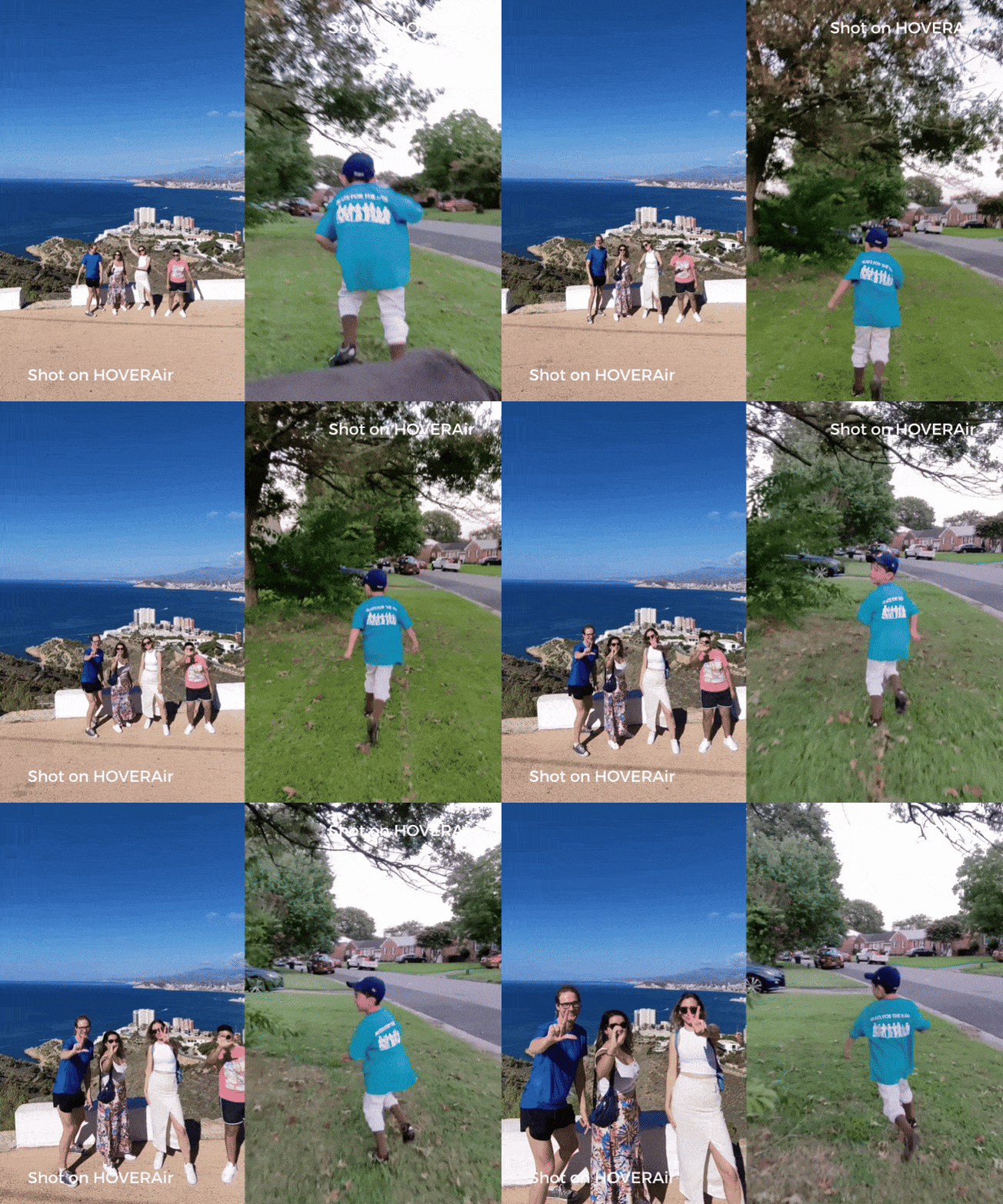
You may remember HOVERAir from years ago when they first debuted their folding selfie-drone cameras. More than 8 years later, the company’s still sticking to its wildly popular and innovative folding drone template, but has managed to outfit its device with some very impressive tech. Available in two variants – the X1 PRO and the X1 PROMAX, these flying action cameras are capable of recording at 4K and 8K respectively. Both devices weigh under the FAA-regulated 250-gram limit, hit speeds of 42 km/h (26mph) with bursts of up to 60 km/h (37.2mph), shoot slow-mo, take photos, and also capture vertical videos for social media. The X1 PROMAX just packs a slightly better camera system that has a marginally higher FoV at 107° (compared to the X1 PRO’s 104° FoV), and uses vision-based sensors for rear active collision detection. Think of the X1 PRO as the perfect hands-free drone for filming sports, landscapes, and your dance reels, while the X1 PROMAX just being a notch higher for serious professionals and content creators who also want great photography capabilities in their drone. No controllers, no learning curve, no fuss.
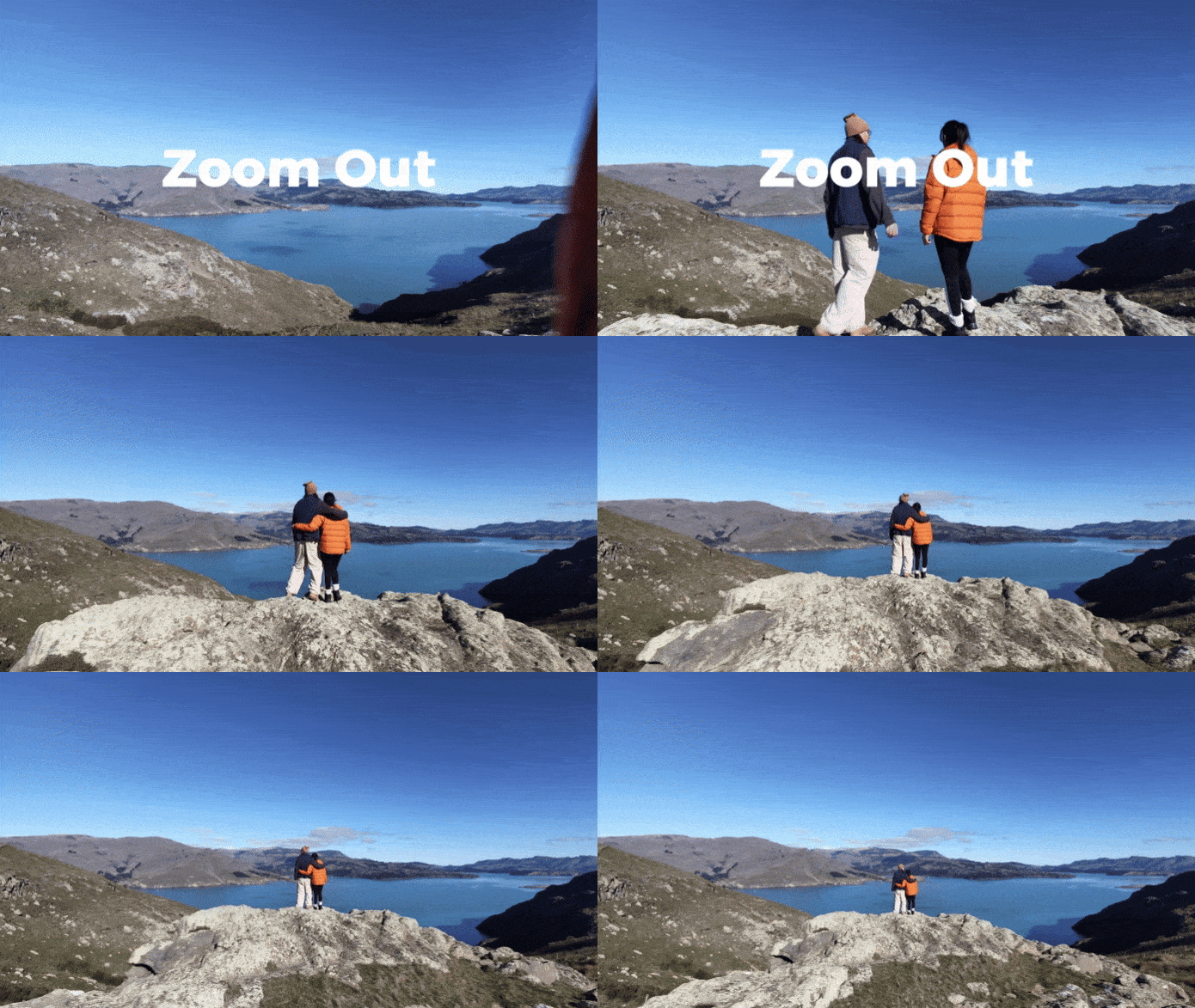
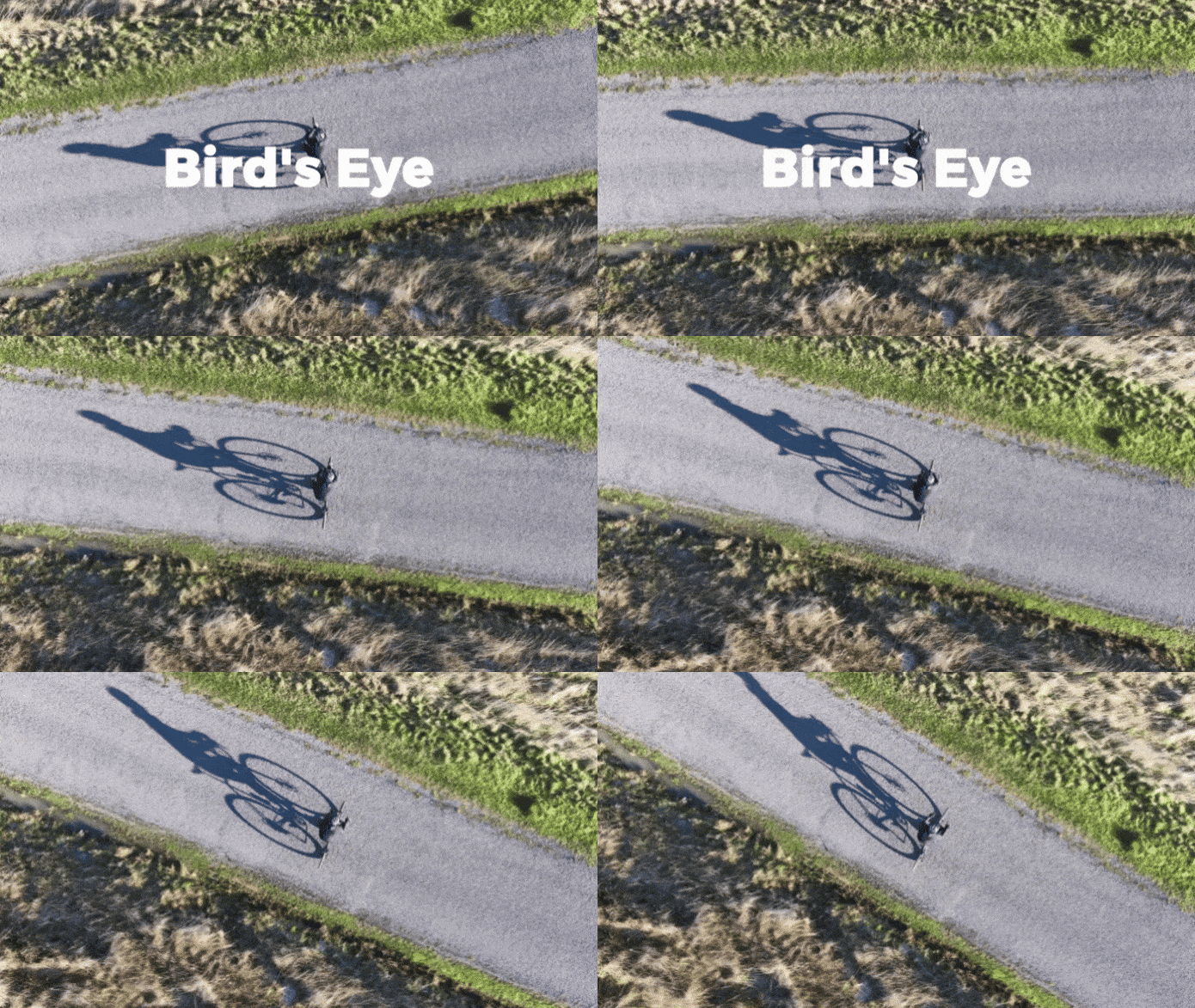
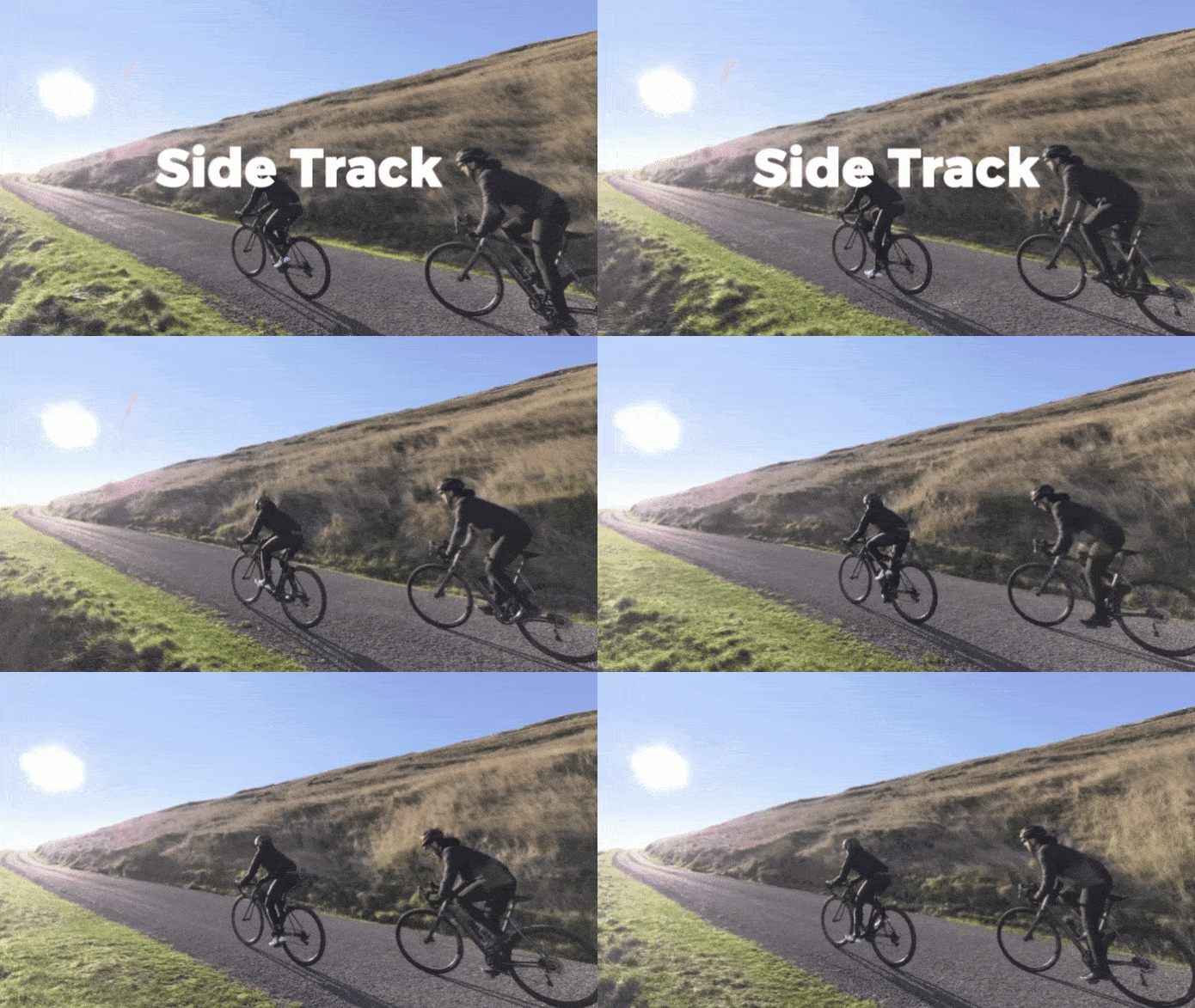
The X1 PRO and PROMAX’s design remains their strongest selling point. The flying action camera opens and closes like a book, with a camera and battery system in the ‘spine’, while the four propellers sit on either side, enclosed within a flexible, durable cage-like structure made from cutting-edge HEM materials to protect them from damage during transit or flight. To use the selfie drone, open it up and you’re ready to hit the skies. The X1 PRO and PROMAX operate on voice commands, but for more expert and intuitive tracking, HOVERAir designed a hardware Beacon that packs controls, tracking sensors, and a screen for viewing your flying action camera’s PoV. There’s no traditional remote, although the Beacon transforms into one using a series of modules like a Joystick for motion control and haptic feedback, or even the ability to snap on your smartphone to give you a true RC experience with a drone’s PoV preview. In short, the drone will fly on its own and play cinematographer to all your stunts, but if you want to get behind the ‘wheel’, it’s more than happy to relinquish control. However, if you’re looking to have your flying action camera perform a set of standard flight paths, the X1 PRO and PROMAX’s automated flight modes let you choose from in-built settings like Hover, Zoom Out, Bird’s Eye, and Orbit that capture dynamic cinematic moments, or Follow, Side Follow, and Dolly Track which are better suited for action shots. HOVERAir also plans to add more modes through OTA updates.
Of course, all of this ease of use wouldn’t matter much without an impressive camera. Fortunately, the HOVERAir X1 PRO delivers on that front too. Its 17mm wide-angle lens offers a generous 104° field of view, letting you capture expansive vistas and unique angles that would be impossible from the ground. The X1 PRO can shoot in 1080p at 120 frames per second, making it perfect for those stunning slow-motion shots. Want to take things even further? Enter the X1 PROMAX, which ups the ante with 8K resolution, 4K@120fps slow-motion, and a 107° FoV, giving you the tools to create breathtaking cinematic footage. The PROMAX model also introduces an extra vision-based sensor for rear active collision detection, adding an additional layer of protection when you’re flying in tight or unpredictable spaces – ideal for those moments when you’re pushing boundaries (and maybe your luck).
The PRO and PROMAX both have a two-axis gimbal with EIS (electronic image stabilization) and HL (horizon leveling), so your footage will be rock steady even when the adventure is rough.
When it comes to camera drones, stability is everything. No one wants shaky footage from a breezy afternoon at the beach or during a fast-paced tracking shot through a forest trail. The HOVERAir X1 PRO and PROMAX rise to the challenge with built-in video stabilization that they call SmoothCapture 2.0. A two-axis gimbal with EIS (electronic image stabilization) and HL (horizon leveling) kicks in while the drone’s in flight, allowing you to focus on capturing the scene rather than compensating for jitters. For more accurate honing in on your subject, you’ve got the HoverAir Beacon, a nifty add-on that clips onto your handlebar while you’re riding, allowing you to quickly see the flying action camera’s PoV while also giving it a target it can track. This companion device unlocks live previews and expanded control options, transforming your flying experience into something closer to autonomous filmmaking. The Beacon uses HoverLink Technology for ultra-precise tracking, so you can leave the steering to the X1 PRO or PROMAX and focus on getting the shot.
Once you’ve filmed your shot, Wi-Fi 6 integration ensures your aerial masterpiece doesn’t stay stuck in the device’s memory. Quick file transfers mean you can start editing almost immediately after landing. Plus, the selfie drone’s long-range video transmission of up to 1 km (with the Beacon) lets you explore and shoot from afar, capturing wide-open landscapes or large events without sacrificing video quality. It’s the kind of feature that makes you feel like the director of your own blockbuster.
Beyond the camera and flight smarts, the Hover X1 PRO is built to be a winning combination of portable and durable. The foldable design doesn’t affect the drone’s ability to fly with great dexterity, and even with those collision-prevention mechanisms in place, the X1 PRO and PROMAX can dust off mild bumps and accidents thanks to a flexible, shock-absorbing propeller cage. And then there’s the thrill of taking this thing off-road—literally. The X1 Pro’s Omni terrain capability makes it versatile enough to fly over lakes, through snowy forests, or along cliff edges with ease. It adds a whole new layer of adventure to your flights. The control system adapts right along with it, allowing you to turn the Hover Beacon into a one-handed joystick or opt for the more traditional two-handed smartphone setup. Either way, it adjusts to how you want to fly and where you’re flying.
You can either fold the device and carry it around in your pocket when not in use, but HOVERAir also makes a slick leather carrying case to haul your compact aerial camera around wherever you go. However, if you’re looking for an upgrade, HOVERAir’s even designed a PowerCase, which both houses your flying action camera and even supplements it with up to two additional battery charges. Designed specifically for use in extreme cold weather, the PowerCase works at temperatures even as low as -4°F (-20°C) to keep your device charged and ready for flight. Of course, flying your drone in sub-zero temperatures is yet another challenge, which is why HOVERAir even sells a special ‘Thermo Battery’ that you can fit into either the X1 PRO or X1 PROMAX, giving it an operating temperature range of -4°F to 113°F.
Both the HOVERAir X1 PRO and PROMAX come with built-in 64GB storage, upgradable up to 1TB thanks to an SD card slot located on the flying action camera’s body. The X1 PRO and PROMAX run in conjunction with the HOVERAir X1 app, which allows you to configure flight modes, download and share content, launch manual control, and even install firmware updates on your flying action camera. The app offers a transmission range of 500m, while the Beacon bumps it up to an entire kilometer. You can grab the X1 PRO and PROMAX either as standalone devices, or opt for cycling or skiing combos that include the leather carrying case, PowerCase, Thermo Battery, the Beacon, or the modular accessories that turn the Beacon into a joystick. The X1 PRO and PROMAX have already begun shipping as of end-September with a 12-month warranty, and the batteries get a 12-month warranty too (applicable up to 100 cycles).
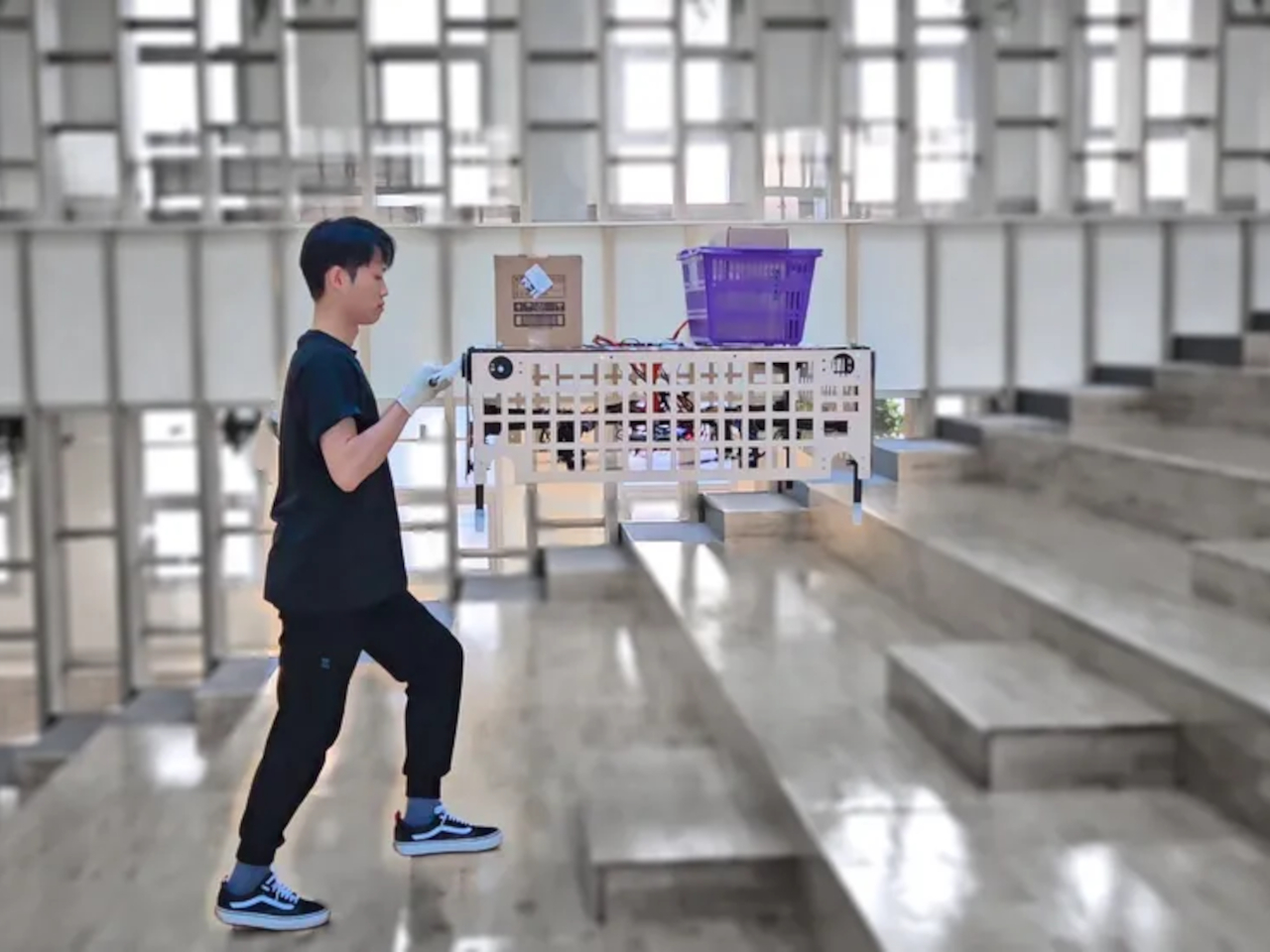
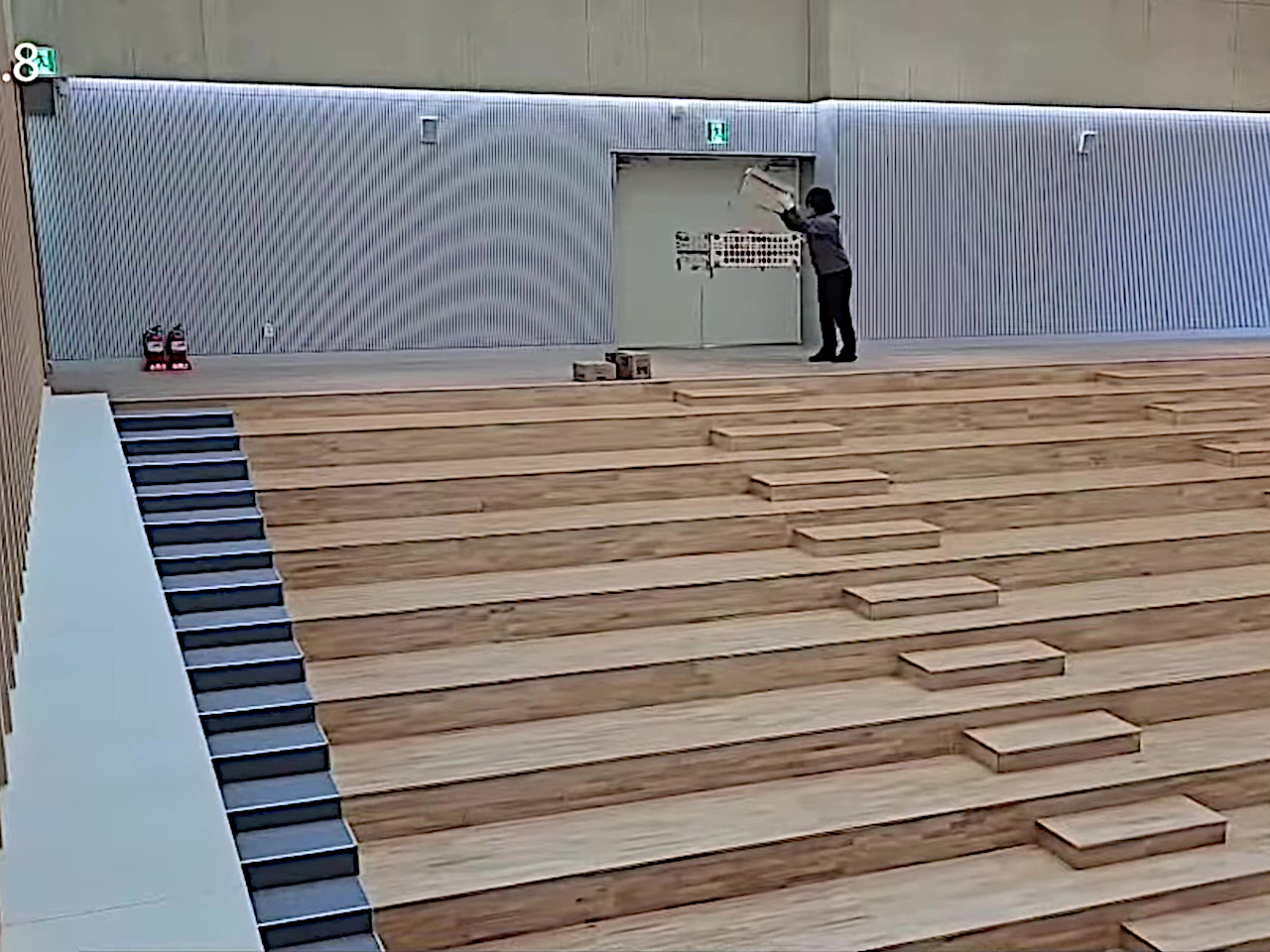
The shopping cart, also known as a trolley or buggy, is one of the most essential tools people use inside stores, especially supermarkets, both for customers as well as store workers. Despite its importance, its design has basically remained unchanged in almost a century, even when that design doesn’t really take the comfort of users in mind. Yes, the four wheels and the spacious metal basket can hold your groceries and take them from one point to another, but they are difficult to control, heavy, and more importantly, unable to climb up or go down the stairs. This prototype tries to address those pain points to make dealing with groceries and packages easier, safer, and more accessible.
Designers: Geonwoo Park, Hyungeun Park, Wooyong Park, Dongjae Lee, Murim Kim, Seung Jae Lee (Seoul National University of Science and Technology)
Shopping carts are so iconic that they have literally become icons in digital stores that don’t have anything to do with wheeling physical objects around. Despite that popularity, they’re not exactly the easiest tools to use and offer only the bare minimum convenience so that we don’t have to carry our groceries. Considering their cheap and mass-produced designs, it’s no surprise that many have damaged wheels that make them difficult to turn. These wheels also don’t let you drive the cart up or down places that don’t have inclined planes for them to roll on.
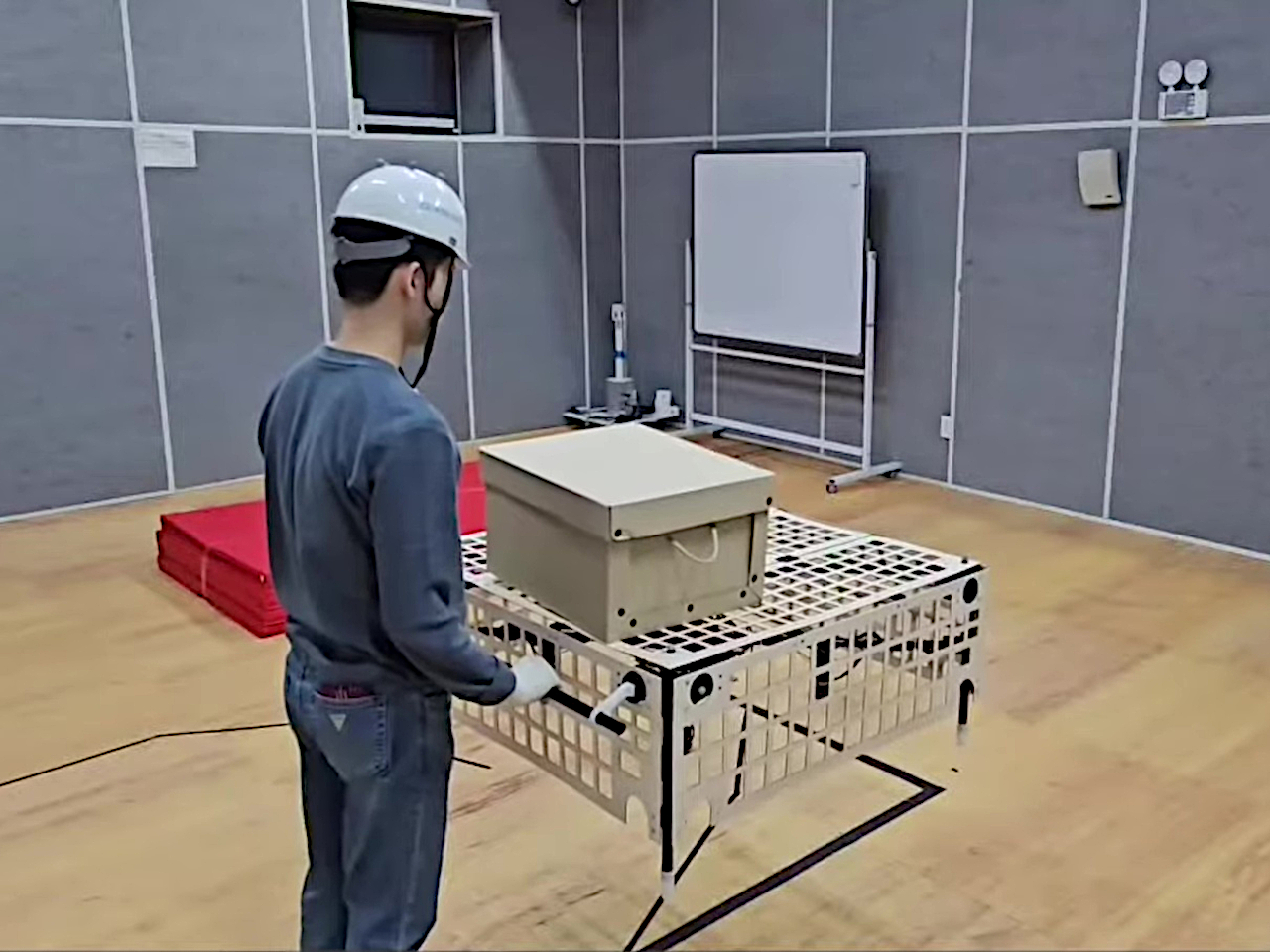
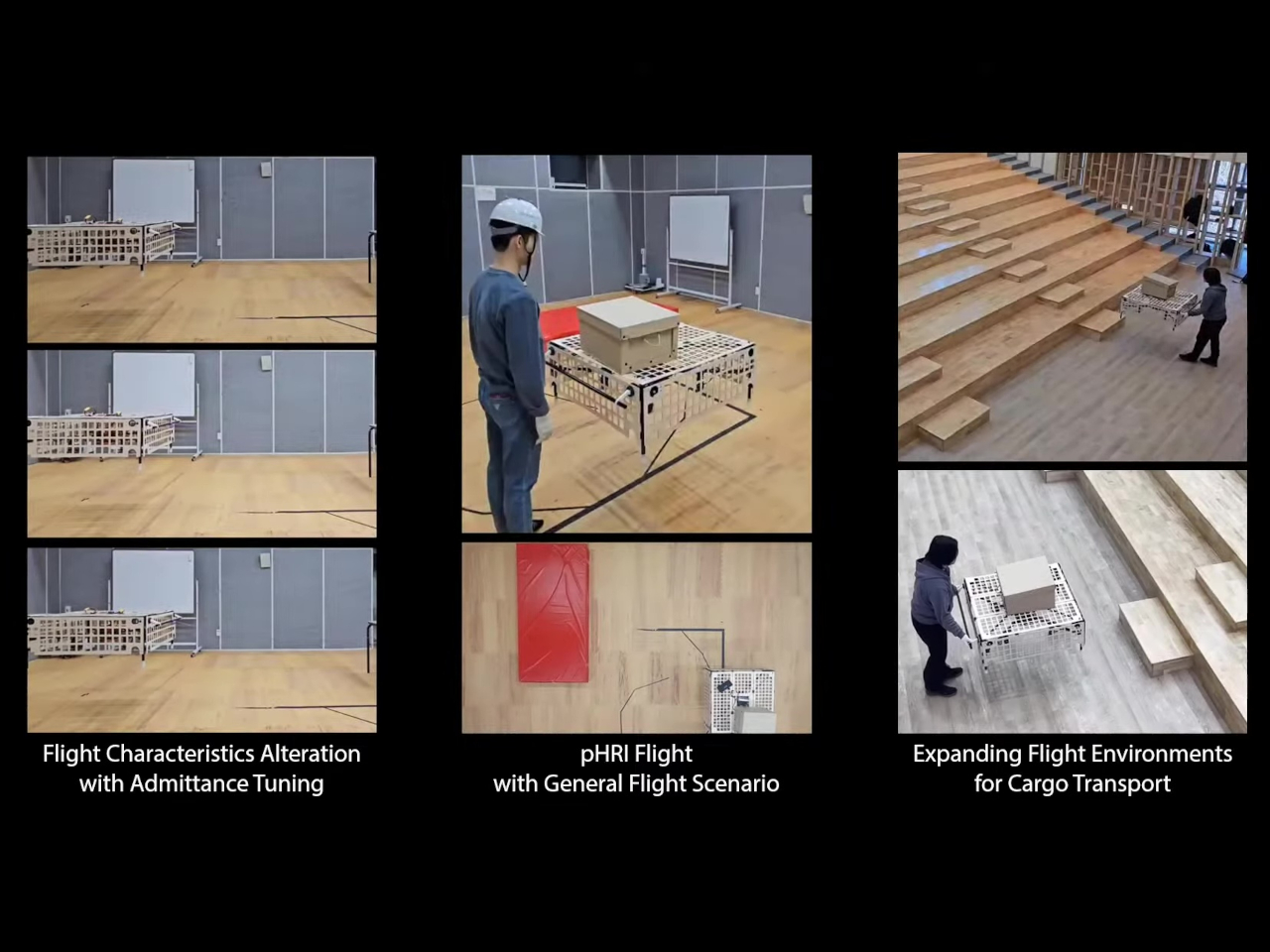
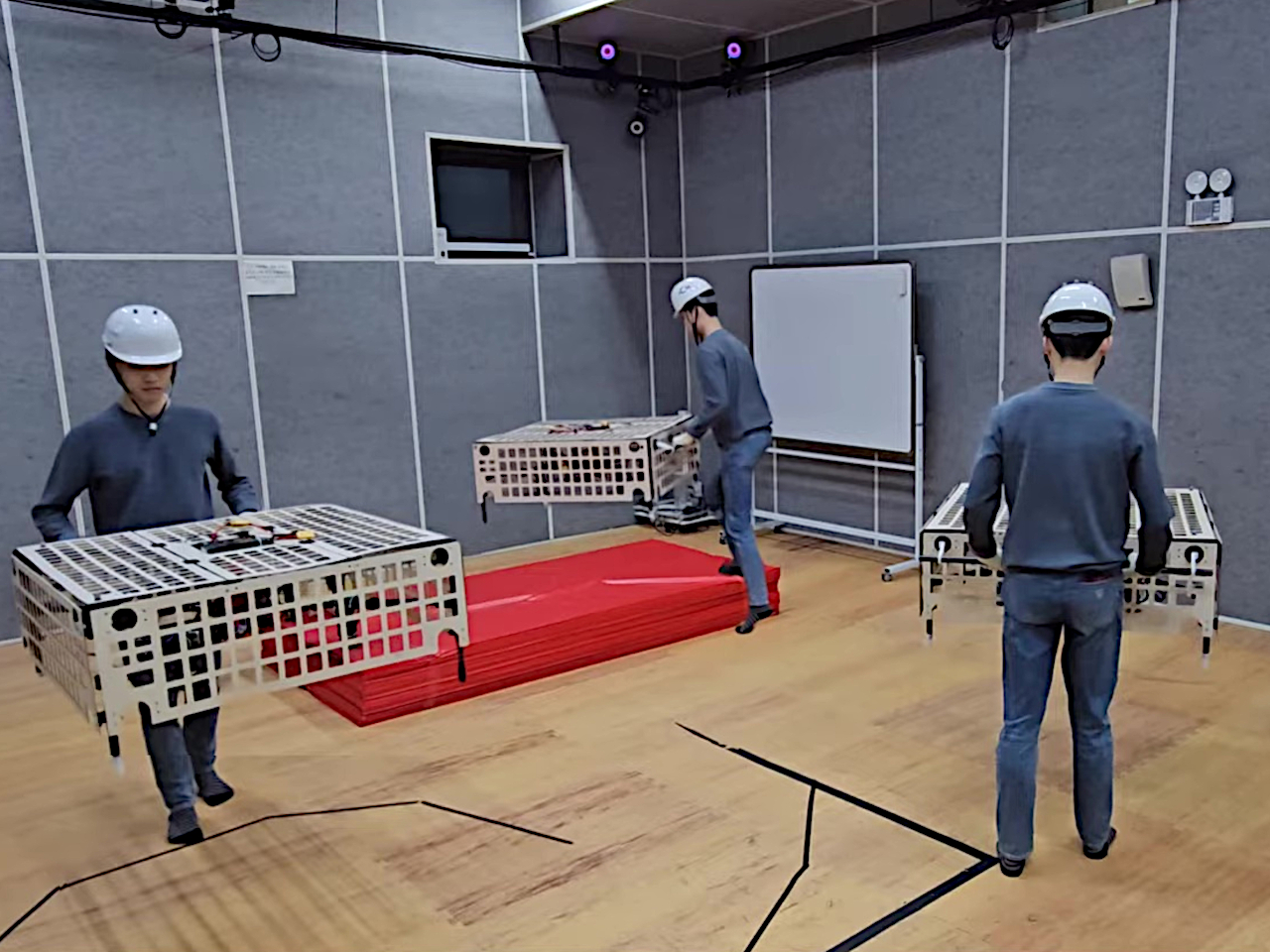
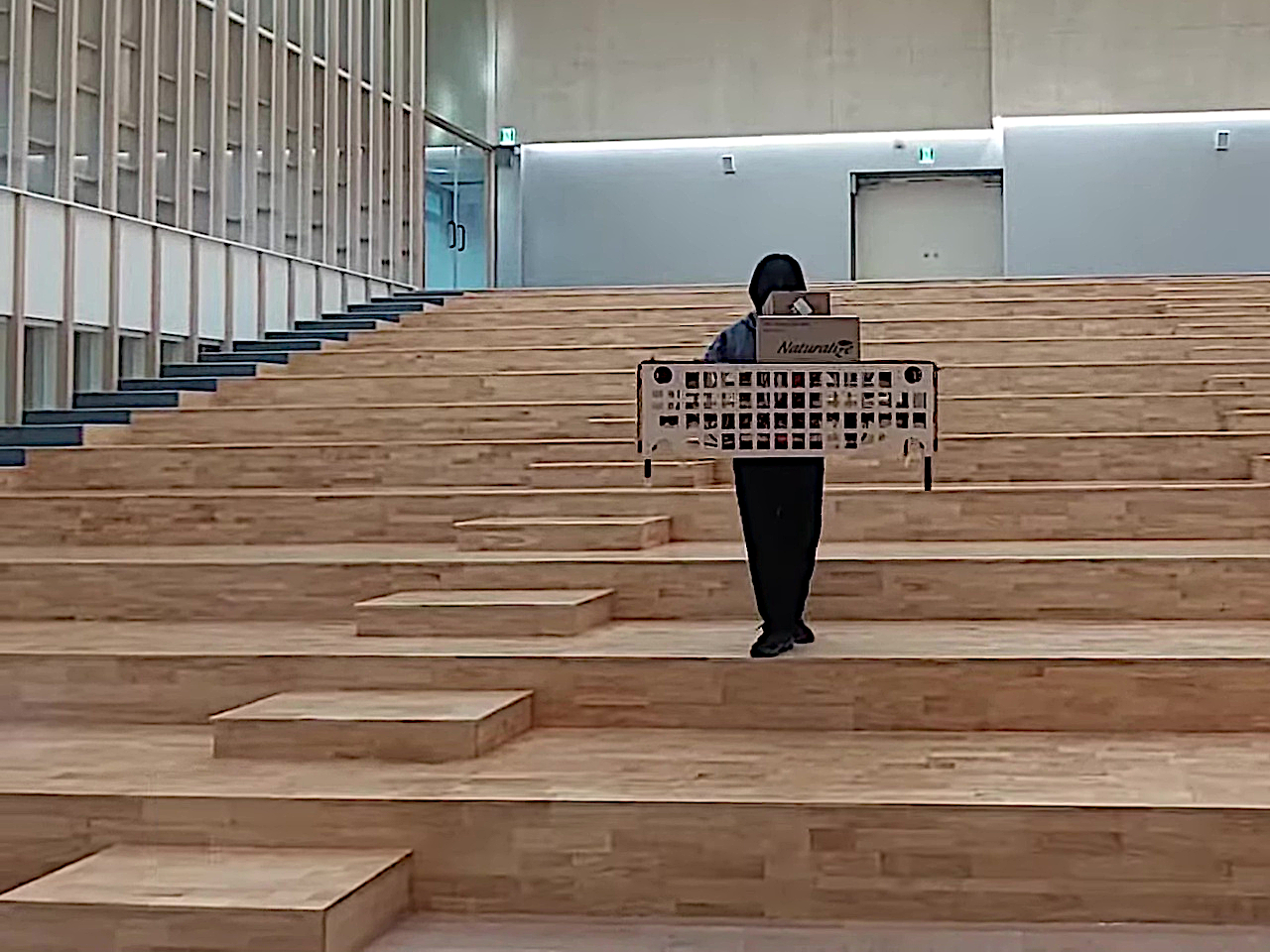
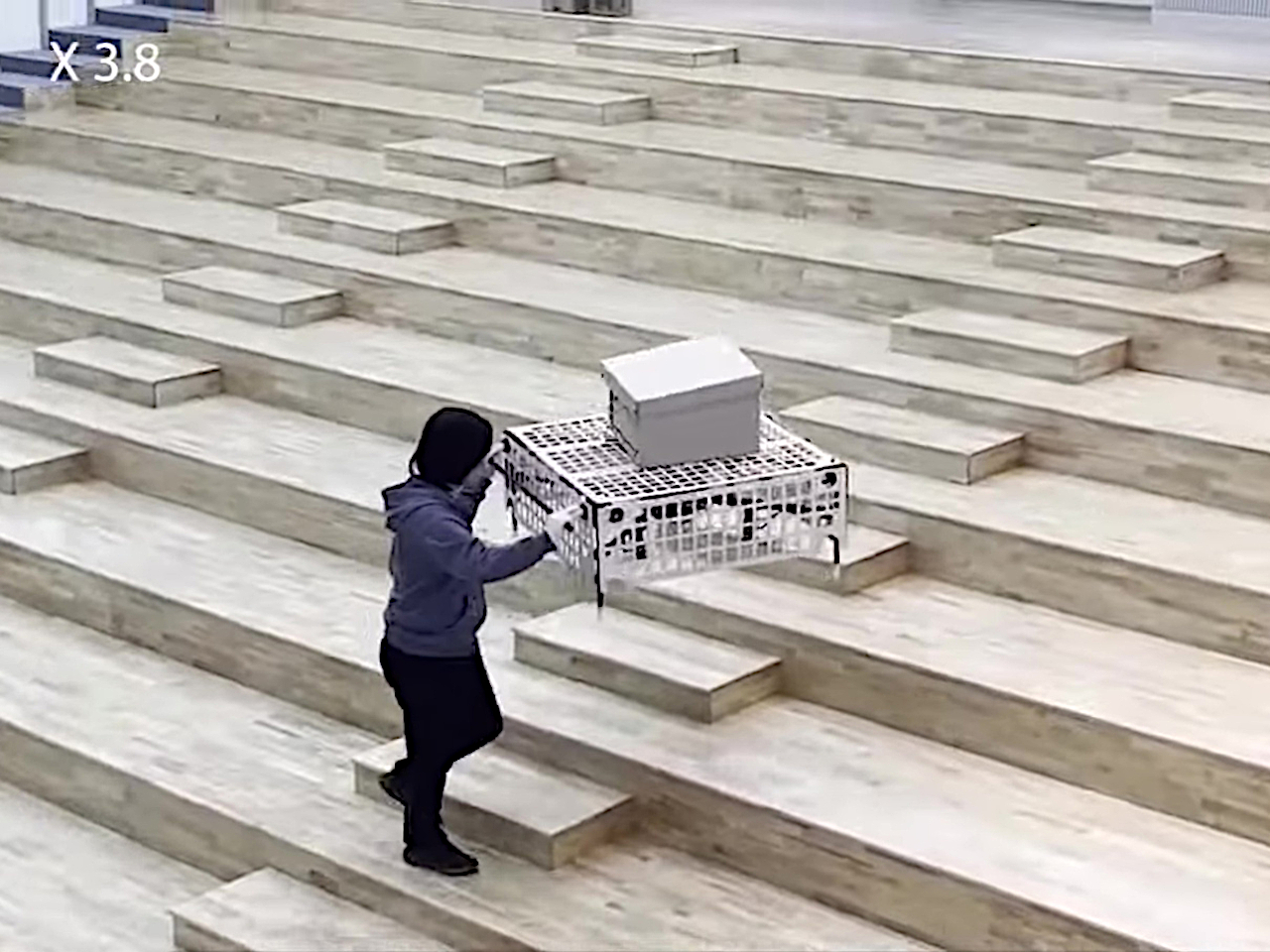
Palletrone’s solution is to do away with those problematic wheels completely. Instead, it uses a rather large drown to lift a platform that will hold your groceries and boxes. There’s also a cage around the drone to protect humans from those powerful and dangerous propellers. Think of it like an upside-down basket with the drone inside, flying to keep the platform off the ground.
The description might sound simple, but there’s definitely a lot complicated technology involved. For one, the Palletdrone always flies at around the person’s chest height, which means that it will also ascend or descend as the person goes up or down stairs. It also doesn’t tilt so that the contents on top of it don’t slide off. Finally, it moves and turns as the person pushes or pulls it, so the experience is more or less exactly like a shopping cart minus the wheels. And it can do all this by knowing if the force being exerted is being done by a human or from the weight of the objects on top of it.
This floating and hovering “cart” sounds dreamy and very useful both for shoppers as well as personnel who have to bring goods from storage to the aisle. That said, the design is far from perfect, let alone presentable and aesthetic. For one, everyone who has ever used a drone will know how noisy they can be, especially one of this size. For another, the current Palletrone is only able to carry less than 3kg of cargo, which is significantly less than a family’s typical grocery bag. It’s a start, though, and one that finally addresses one of the biggest inconveniences when going to the supermarket by boldly giving the decades-old shopping cart a do-over.
Some see them as annoyances and others consider them as privacy and security risks. That said, flying drones, just like their quadruped terrestrial counterparts, will inevitably be a part of our near future. That does mean there will be more mass-produced drones, more than what we already have today, and the materials used to make them aren’t always accessible or sustainable. But just as plastic is being replaced in other design industries, there’s also an opportunity to test other materials that are just as suitable for these flying robots. One experiment does exactly that, and it chooses a rather unexpected option that’s much loved in the design industry: wood.
Wood is not something you’d immediately associate with electronics, let alone robotics, but it is finding its way to more appliances and gadgets. In those cases, the material is prized for its sustainability and aesthetics, the latter of which isn’t exactly a priority among unmanned aerial vehicles or UAVs like drones. That said, not all wood is created equal, and one particular type could very well be suitable for the demands of a drone.
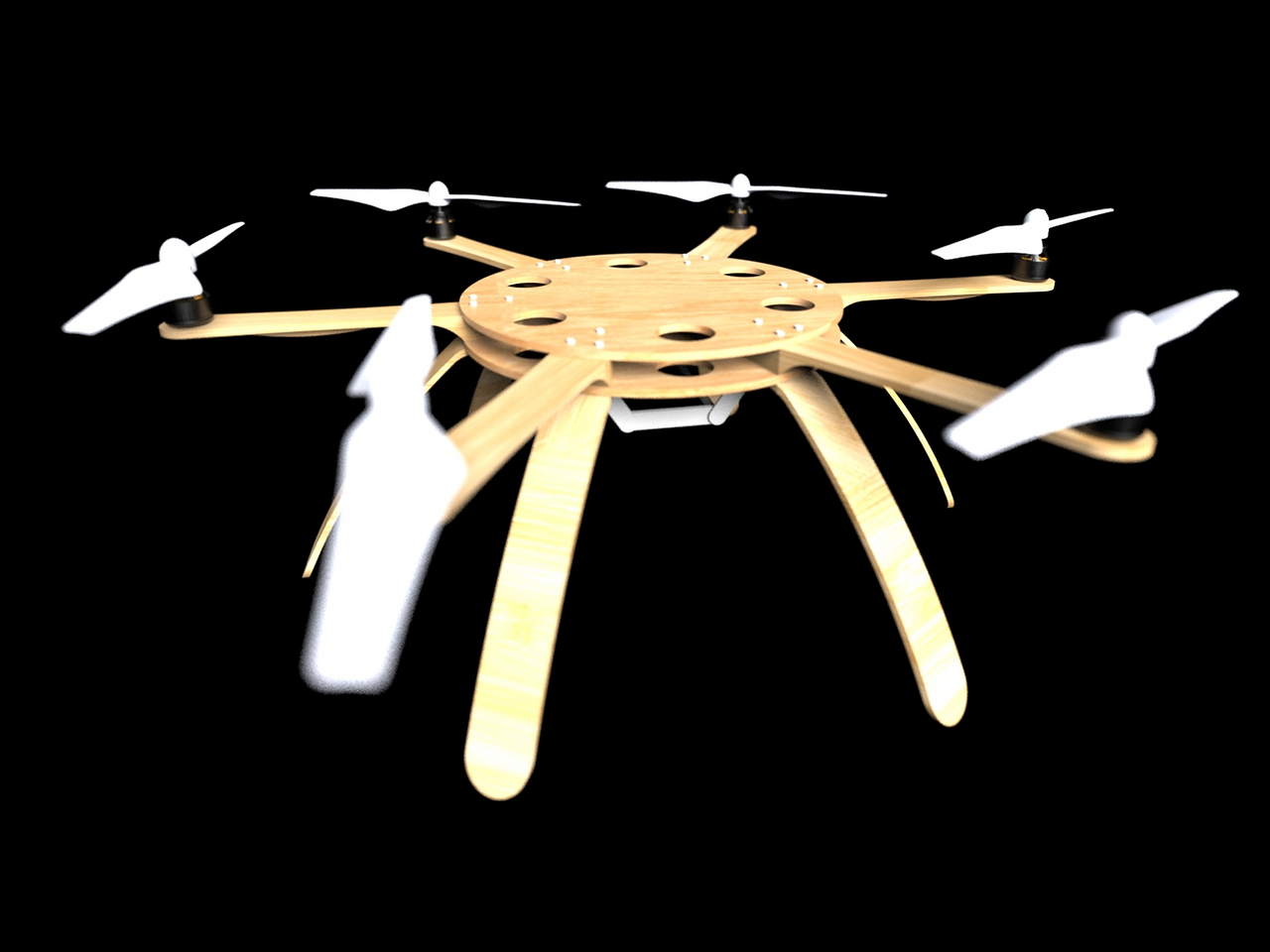
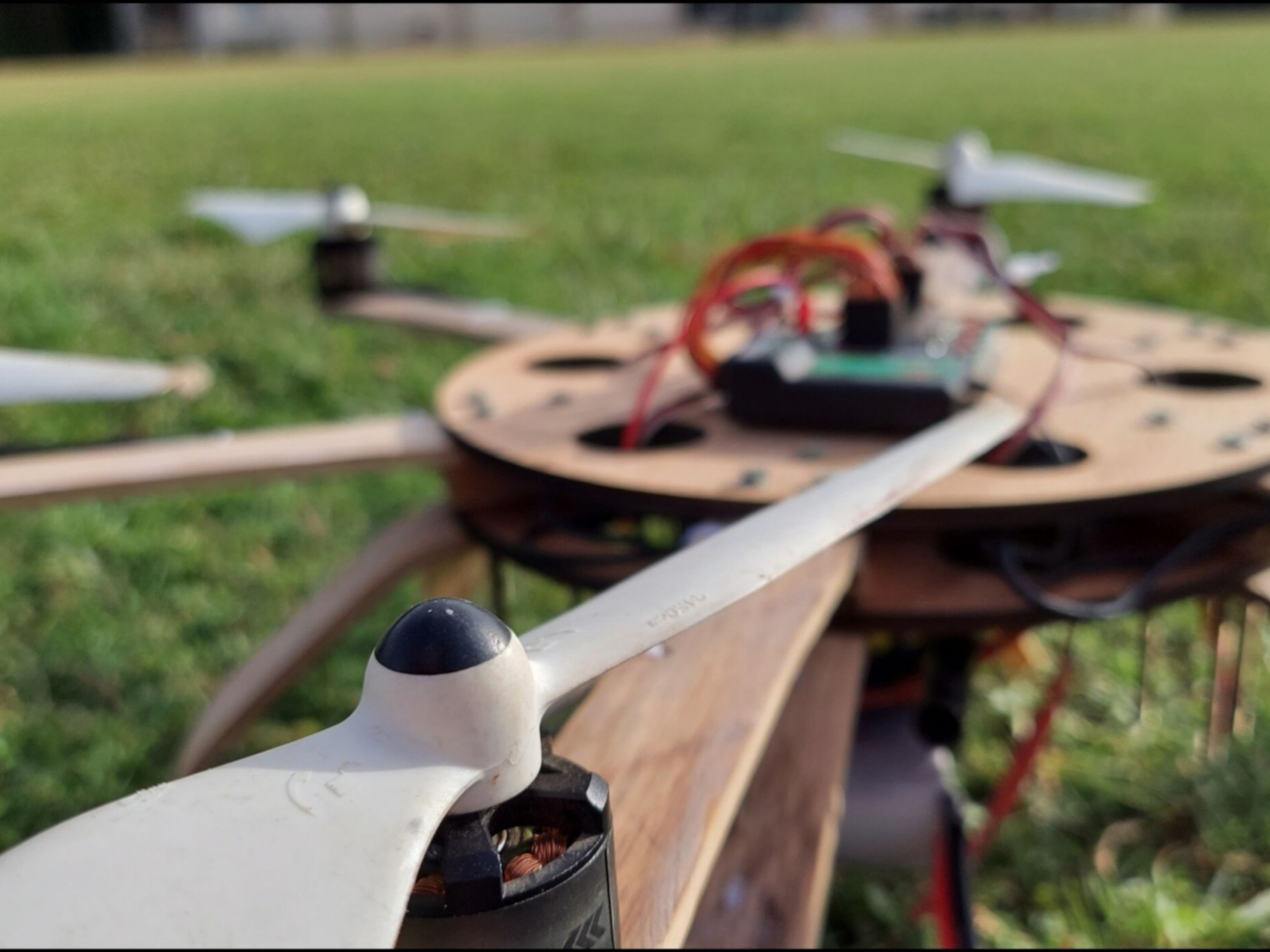
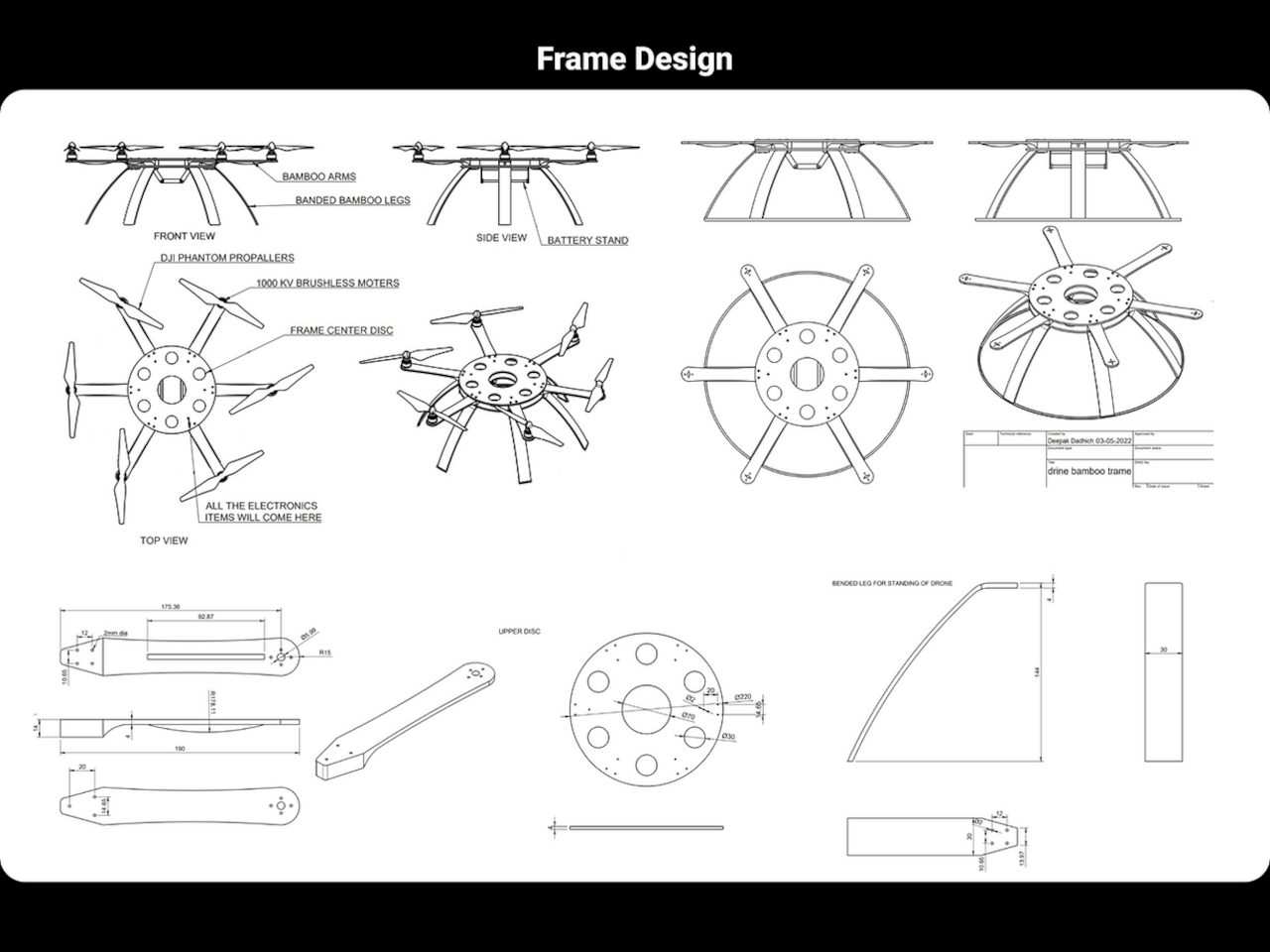
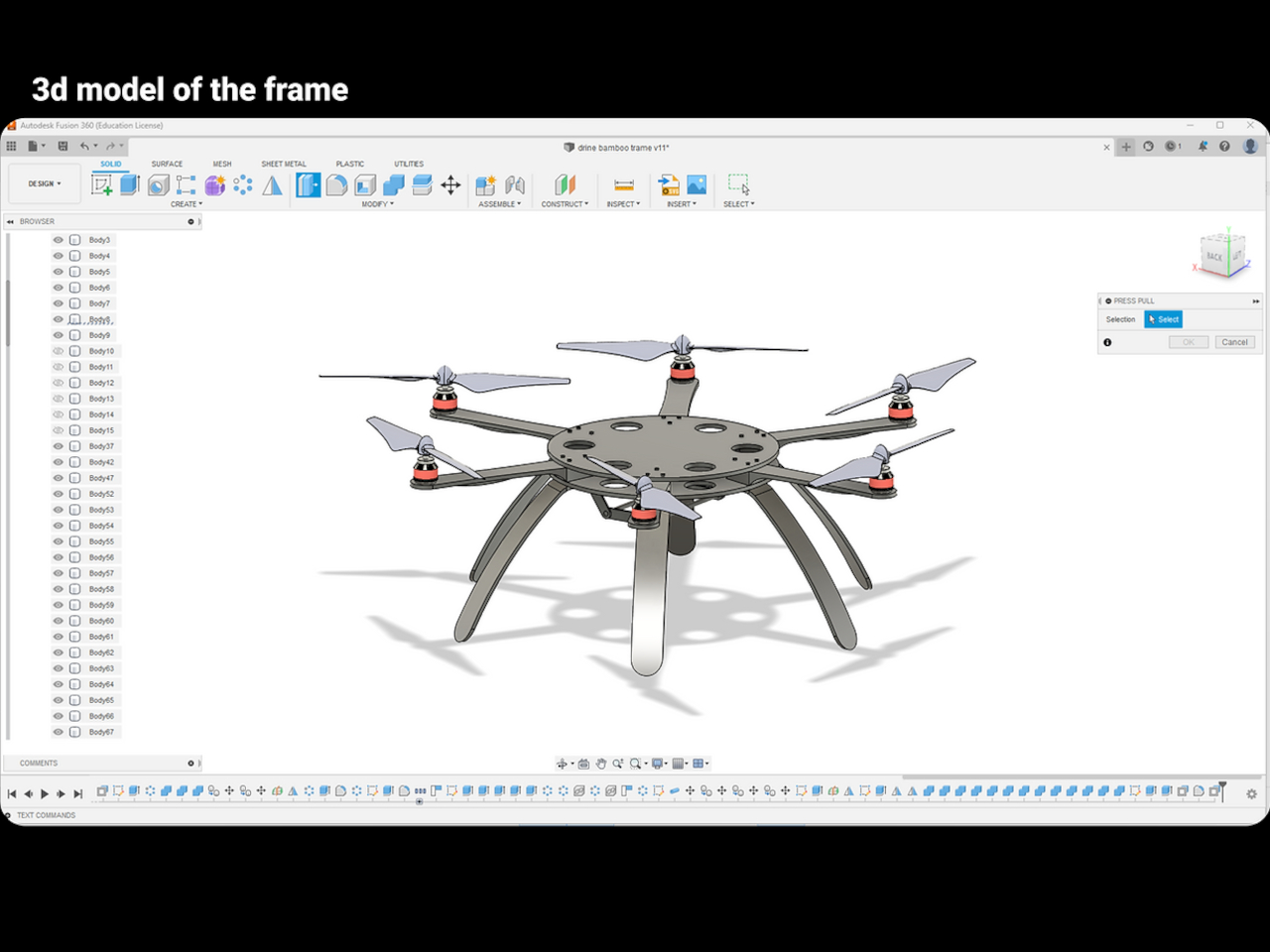
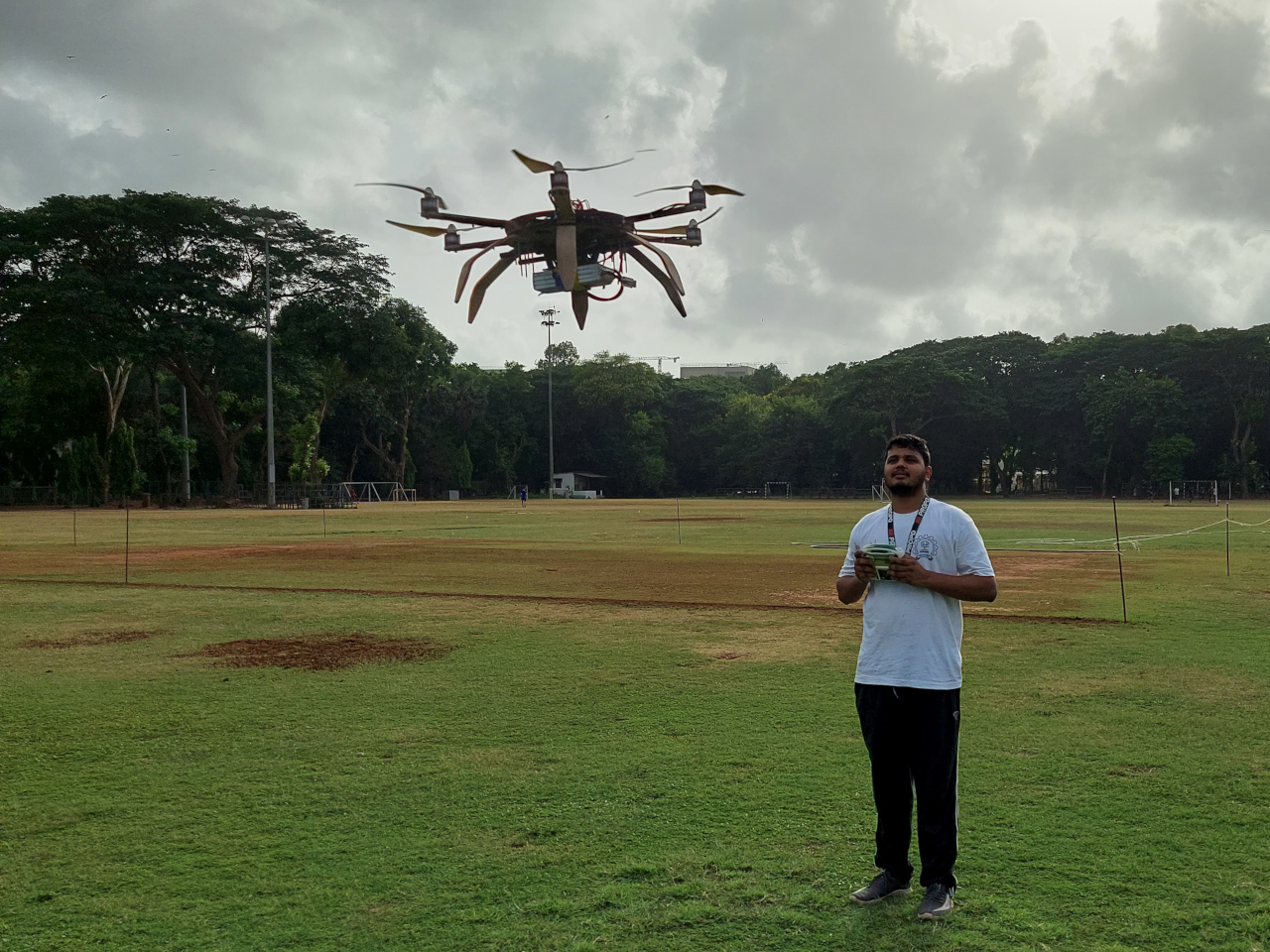
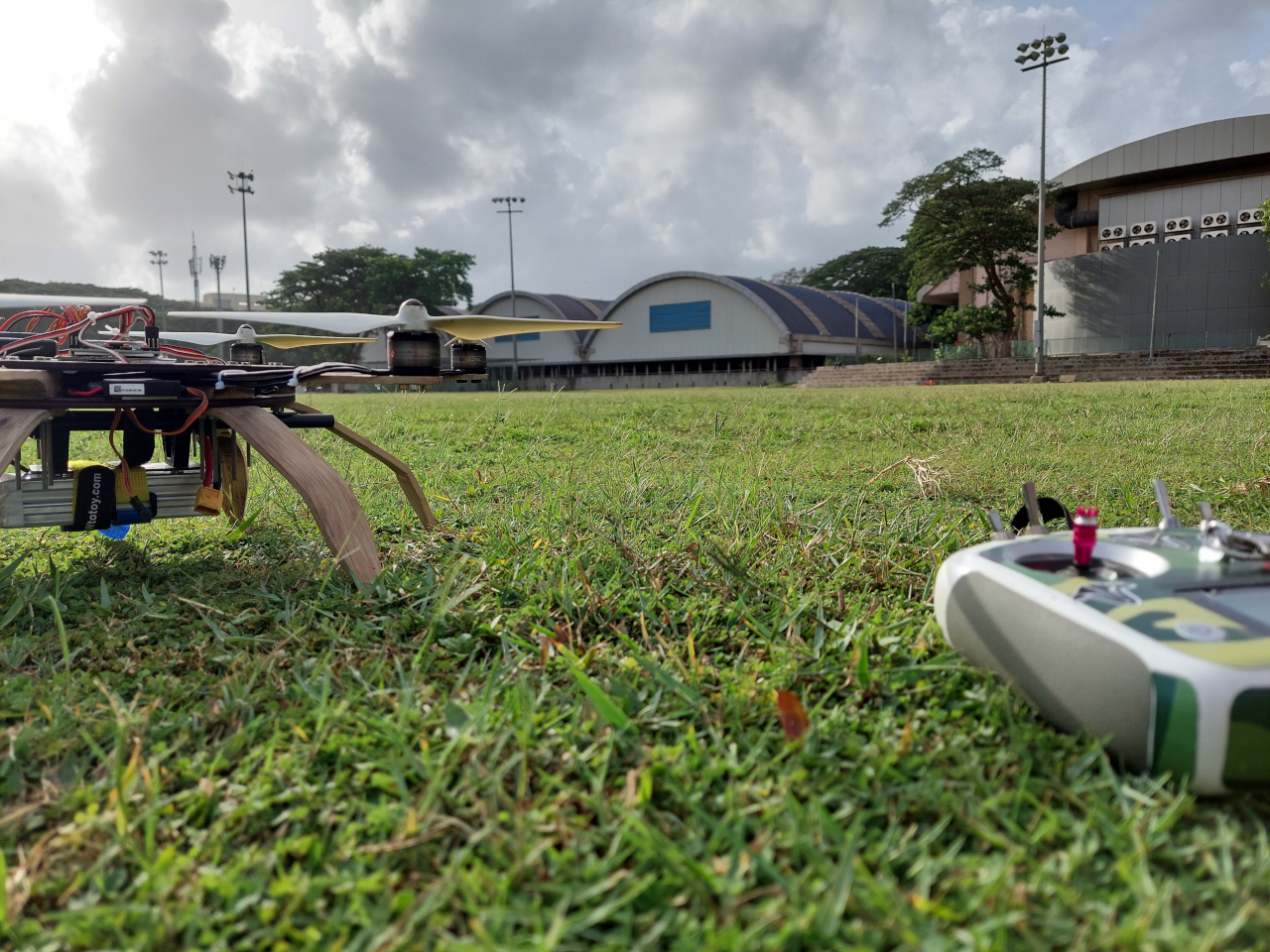
Bamboo, in particular, is known for being lightweight yet also durable, especially when it comes to its tensile strength. Unlike hardwood, which could splinter and break on impact, bamboo can absorb a bit more strength. It’s also in high supply or easily renewable, unlike other trees that take a longer time to mature. Because of these properties, it could make for a good substitute for both plastic and carbon fiber, as the Bamboo hexacopter drone demonstrates.
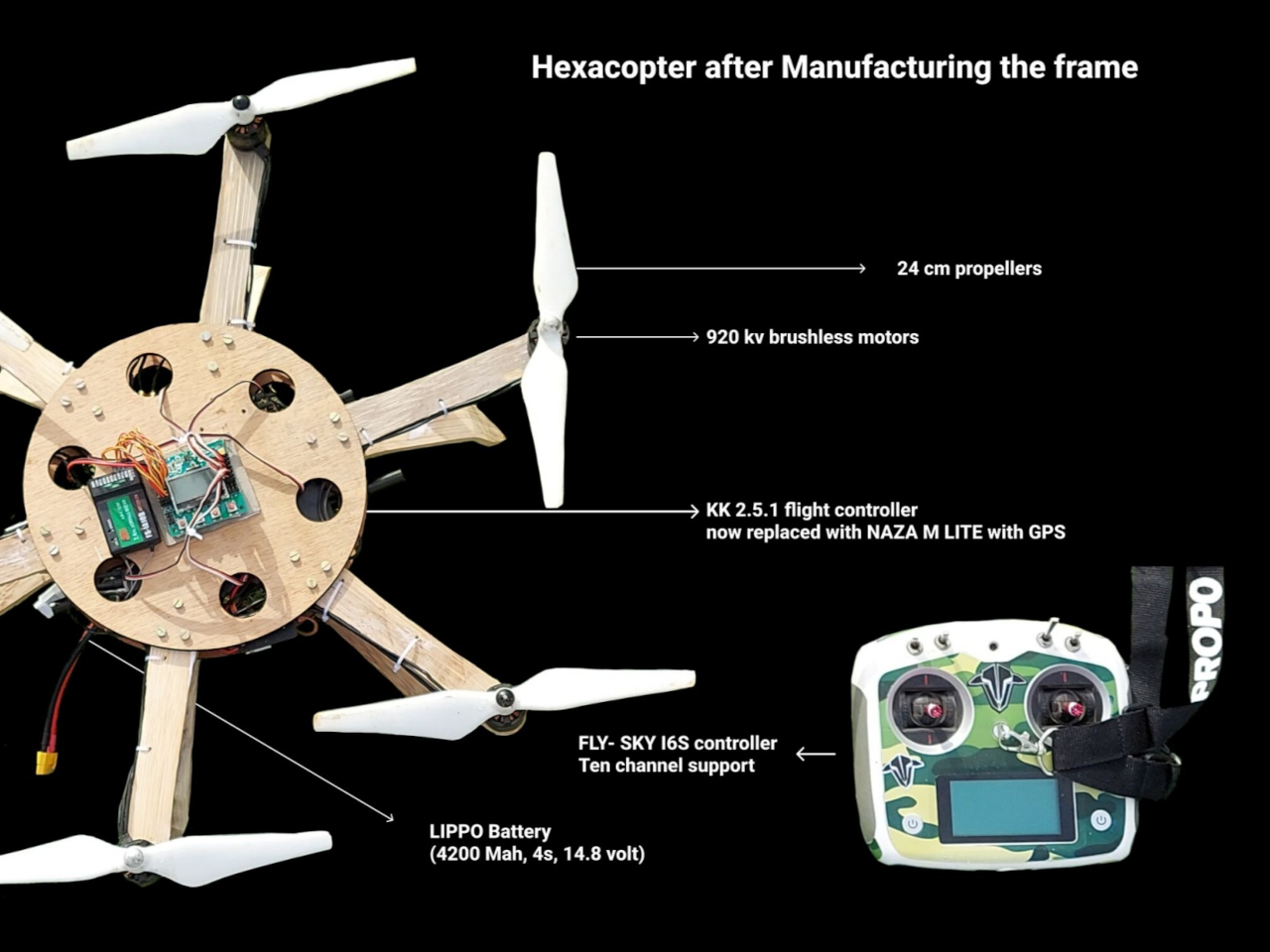
Of course, the whole drone isn’t made of bamboo. In addition to the circuitry and brushless motors, the propellers are still made from plastic. Only the main frame, legs, and arms use bamboo, which is the largest use of plastic or carbon fiber in drones anyway. For only around $12 worth of bamboo, you can have a drone that weighs only 350g, half that of typical plastic builds.
The question, however, is whether such a strategy will actually be effective or if it will have too many compromises for the sake of sustainability. The Bamboo Drone does fly indeed and it can, in theory, carry light payloads like tools, emergency supplies, or scientific instruments. How it will fair against strong winds and light rain has yet to be tested, and that will really determine how suitable bamboo will be for a fleet of drones.
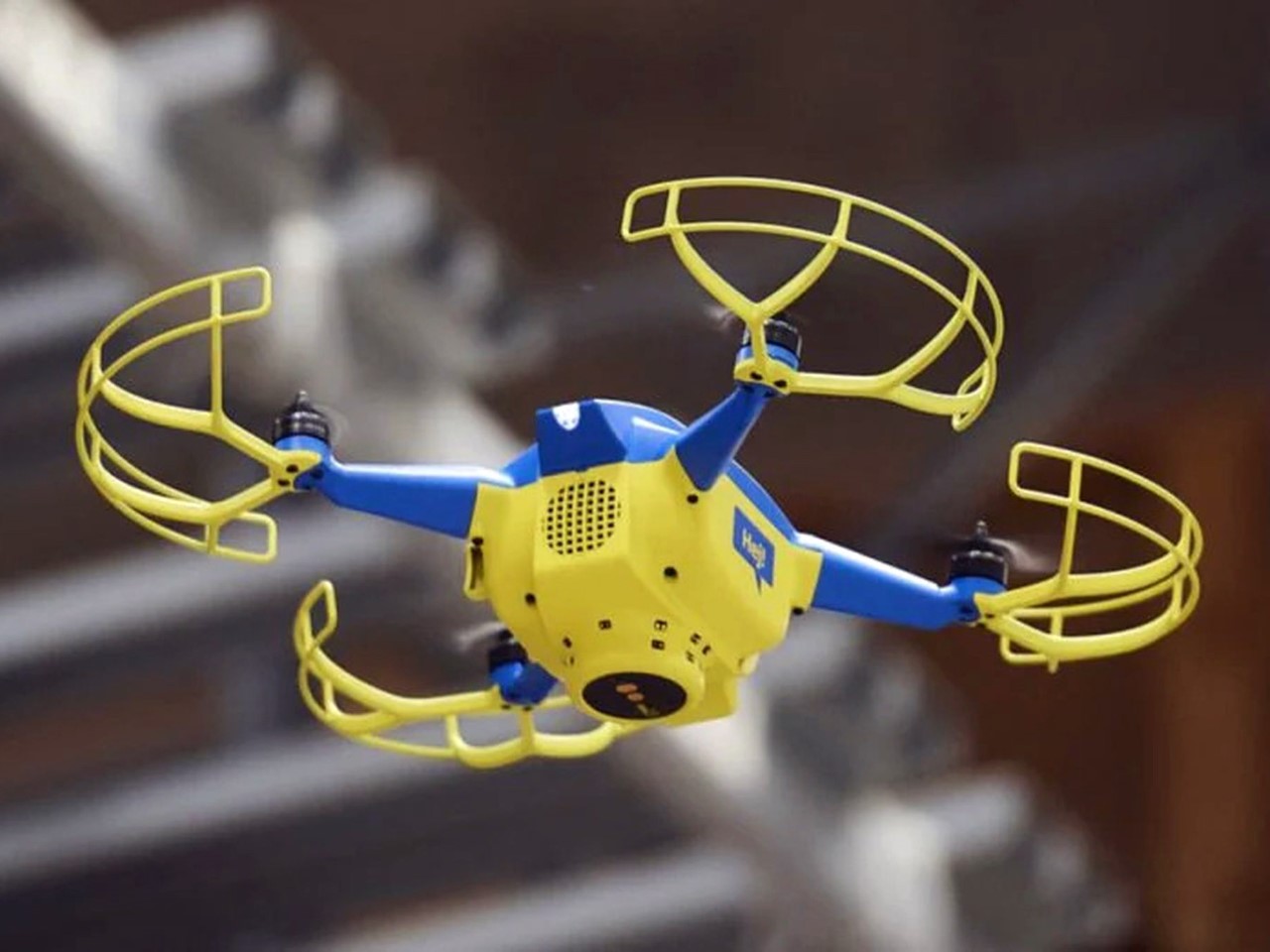
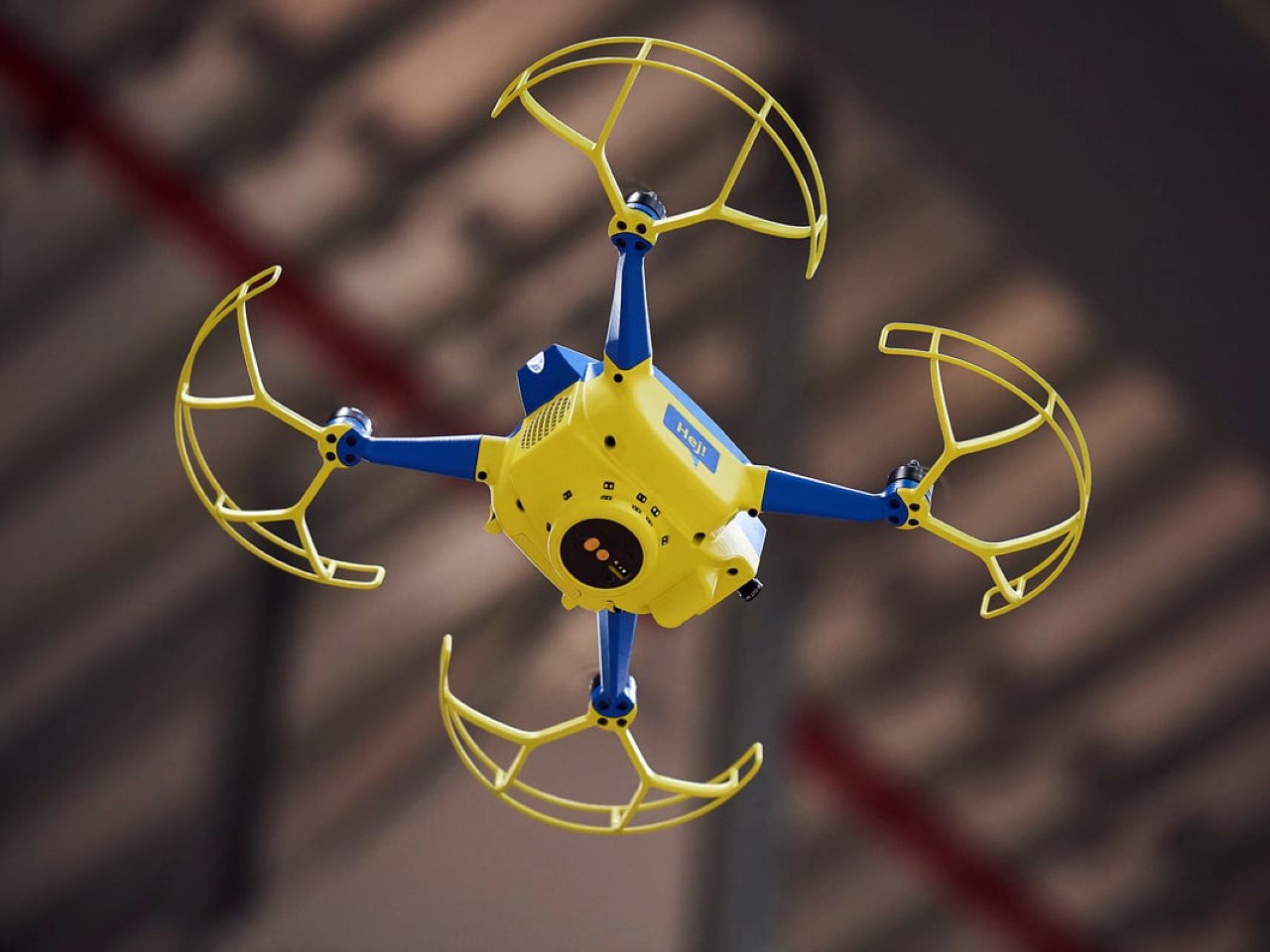
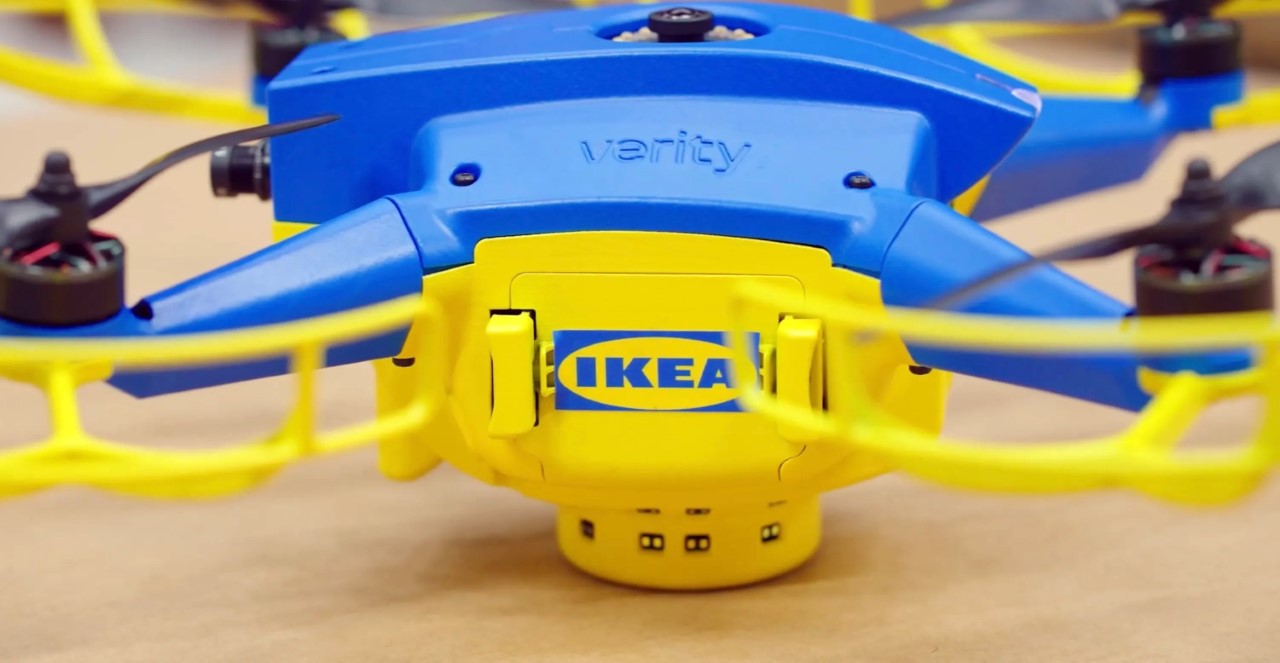
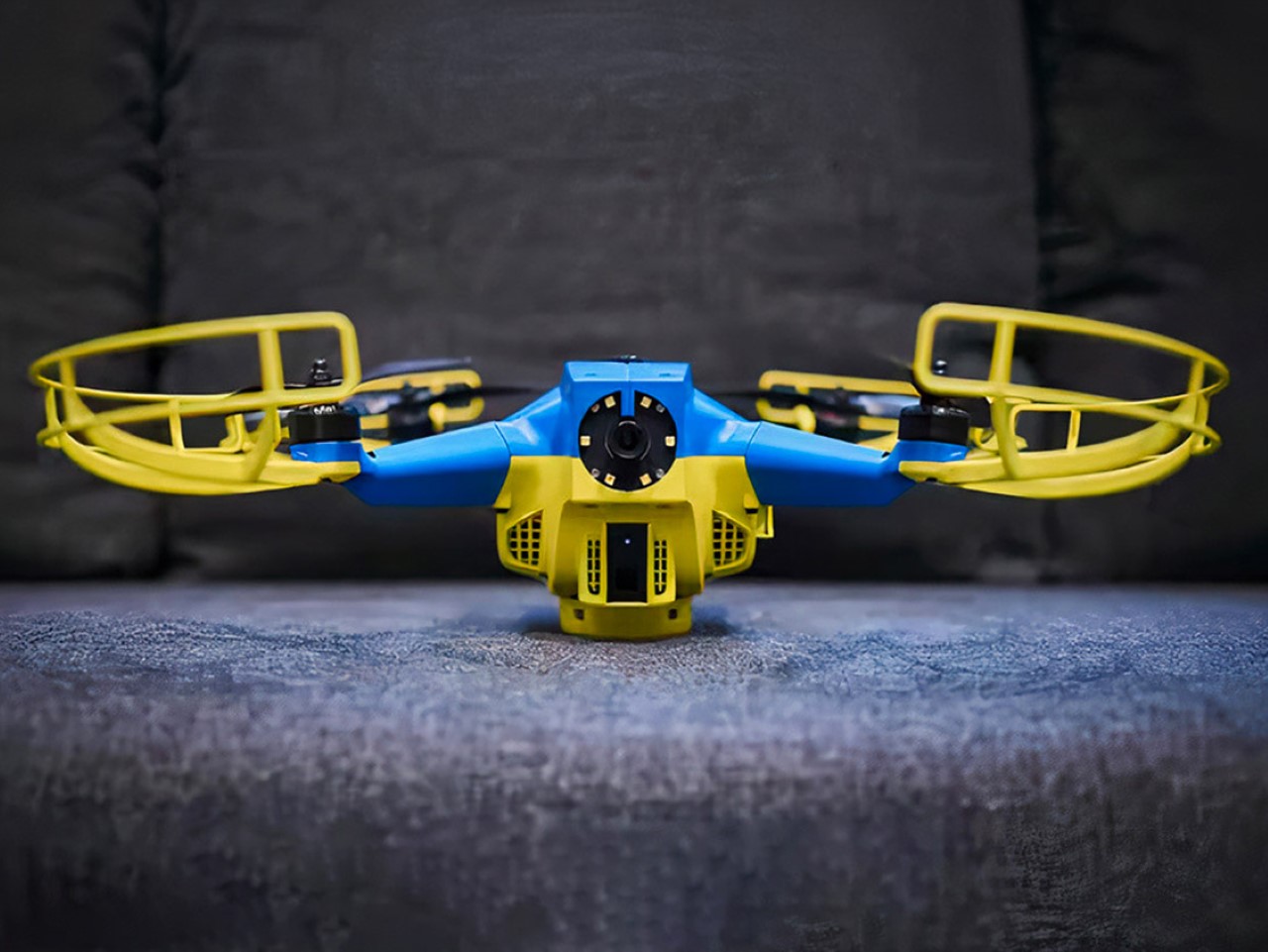
Unlike your average drones used for cinematic shots or racing gigs, these IKEA drones can scan massive warehouses, tracking the influx and outflow of inventory.
IKEA’s recent move to scale its fleet of inventory drones marks a pivotal moment in the integration of cutting-edge tech within retail logistics. The company is looking to advanced drone tech to take charge of the decor giant’s warehouses across Europe. IKEA’s collaboration with Verity, a startup known for its specialized drones, now spans 16 locations across Europe. The project initially began in 2021 and has grown steadily, positioning IKEA at the forefront of innovative supply chain management. The 100 drones currently in use represent a practical solution to a logistical challenge: monitoring vast warehouse spaces packed with towering shelves that are difficult for human workers or traditional robots to navigate.
Designer: Verity for IKEA
These drones come equipped with sensors and high-resolution cameras that allow them to scan inventory with accuracy and speed, providing a constant stream of data that updates in real time. This capability is especially vital for IKEA, whose warehouses handle everything from bulky furniture to smaller, more complex products. The drones can cover areas that would be impossible or highly inefficient for human workers to manage, enabling continuous operations that reduce errors and ensure stock levels are maintained effectively. This kind of precise monitoring cuts down on the time and labor traditionally required for manual stock-taking, while also minimizing the risk of overstocking or stockouts—issues that can disrupt the supply chain.
Beyond hardware, Verity’s role in this development involves customizing a solution that aligns with IKEA’s needs. The drones operate independently, requiring minimal intervention, which allows IKEA to focus more on strategic planning and less on routine logistical tasks. By maintaining 24/7 operations, these drones are able to deliver inventory data that’s constantly updated, offering insights that traditional systems simply cannot match. Their integration is smooth, even down to the branding—with each drone featuring IKEA’s colors and logo, they fit seamlessly into the company’s broader identity.
As retail continues to evolve with increasing emphasis on automation, IKEA’s strategy serves as a model for how large-scale companies can use technology to disrupt operations by radically improving efficiency. The expansion of these drones into multiple European markets signals that this is not just an experiment but a calculated investment in the future of inventory management. It also allows IKEA to focus its literal man-power in other places, rather than having them manage massive warehouses which can be unsafe. For IKEA, the future is not just about selling furniture; it’s about rethinking how logistics can be optimized to support a global business in a fast-changing world.
A major problem with tiny flying drones, referred to as micro aerial vehicles (MAVs), is that they cannot fly for a very long duration. Especially the MAVs weighing under 10 grams, as such micro vehicles can only stay airborne for about 10 minutes. Using sunlight as a constant power source could provide a solution to keep such bird-sized drones afloat and flying longer.
However, it’s not as simple as sticking a solar panel on the wings. Traditional propulsion systems used in micro aerial vehicles aren’t very efficient at making appropriate use of generated solar power. Moreover, these tiny drones can’t carry much payload, making them inconsistent and unworthy in support operations, search, and rescue.
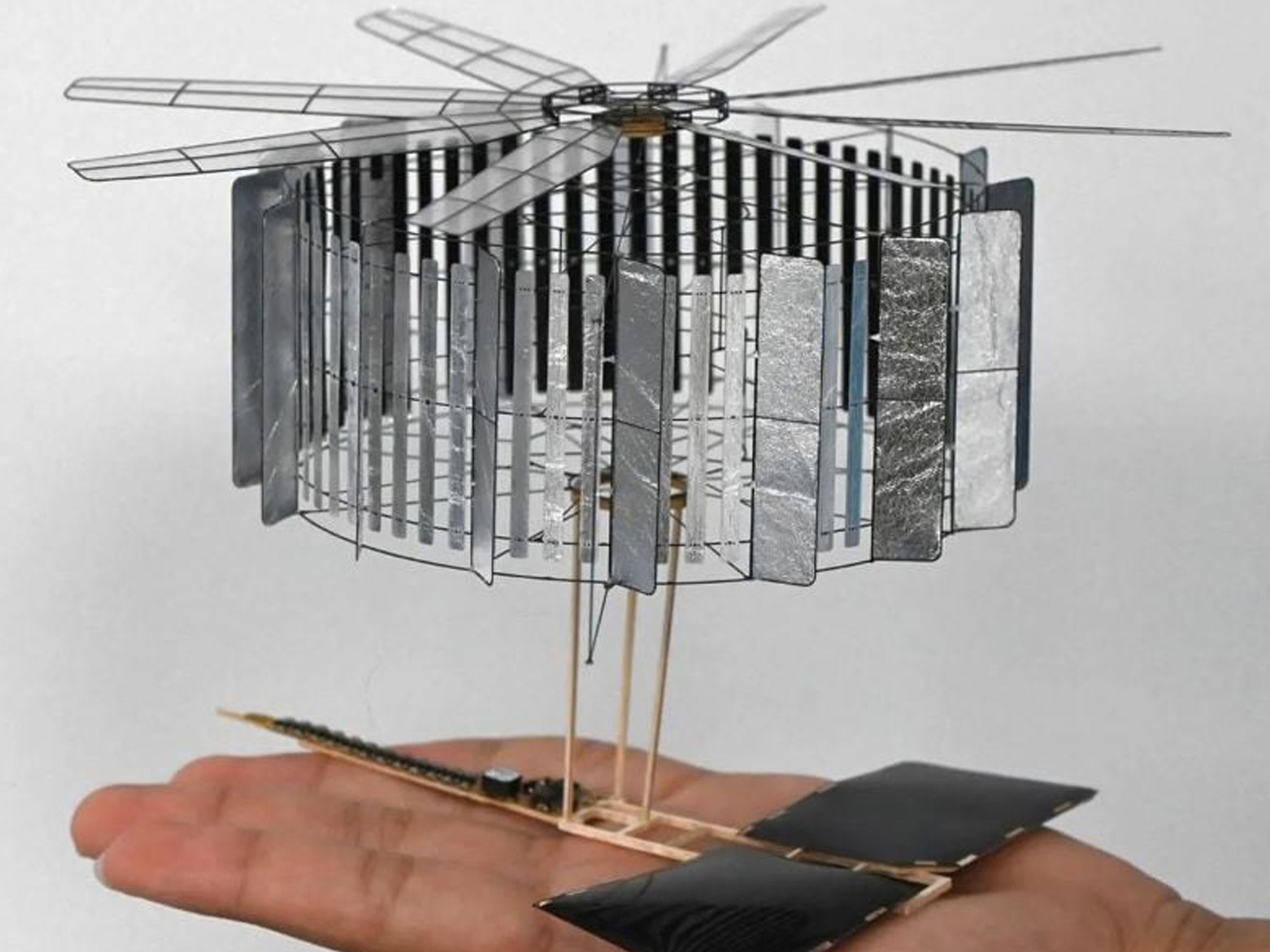
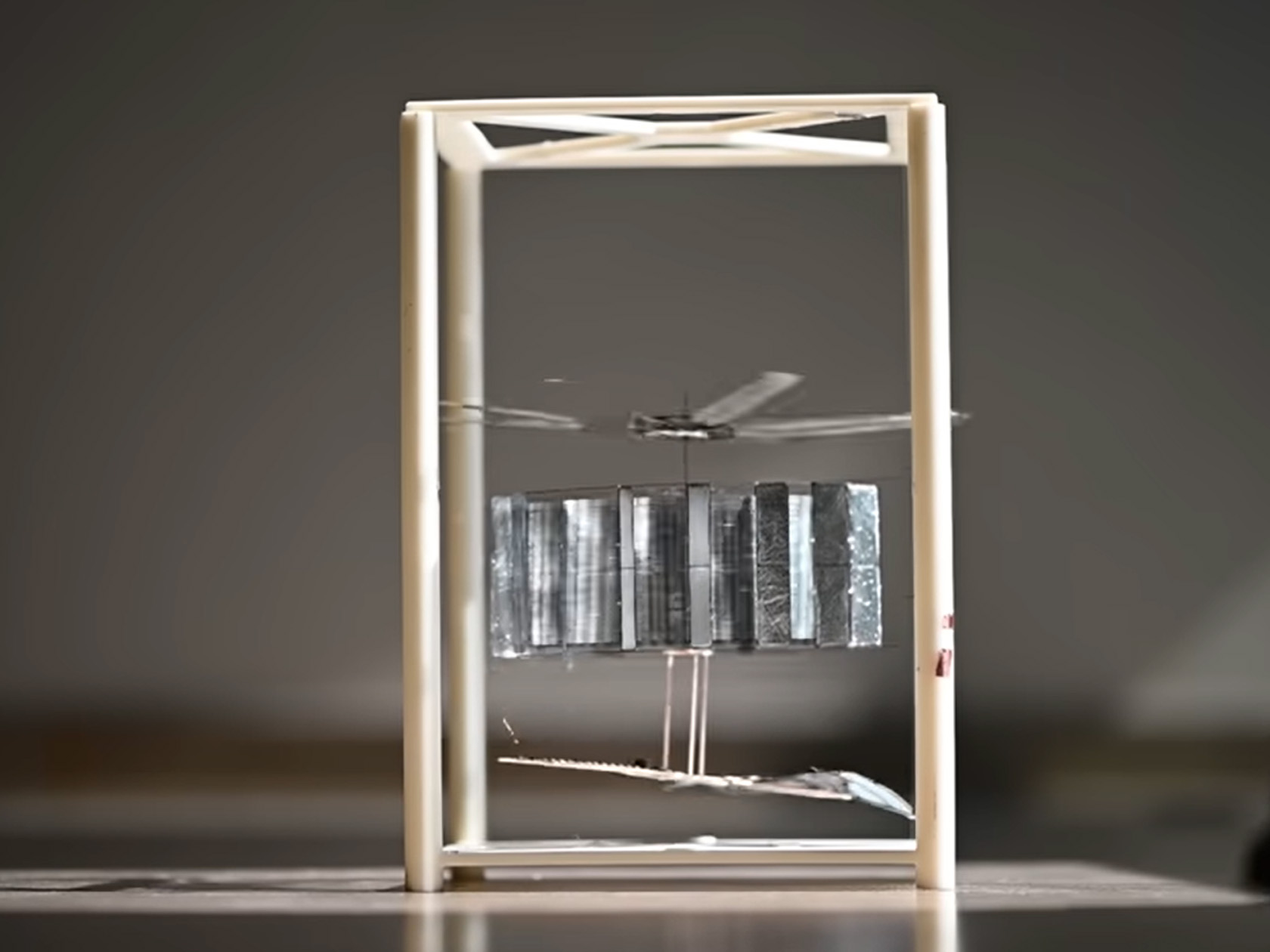
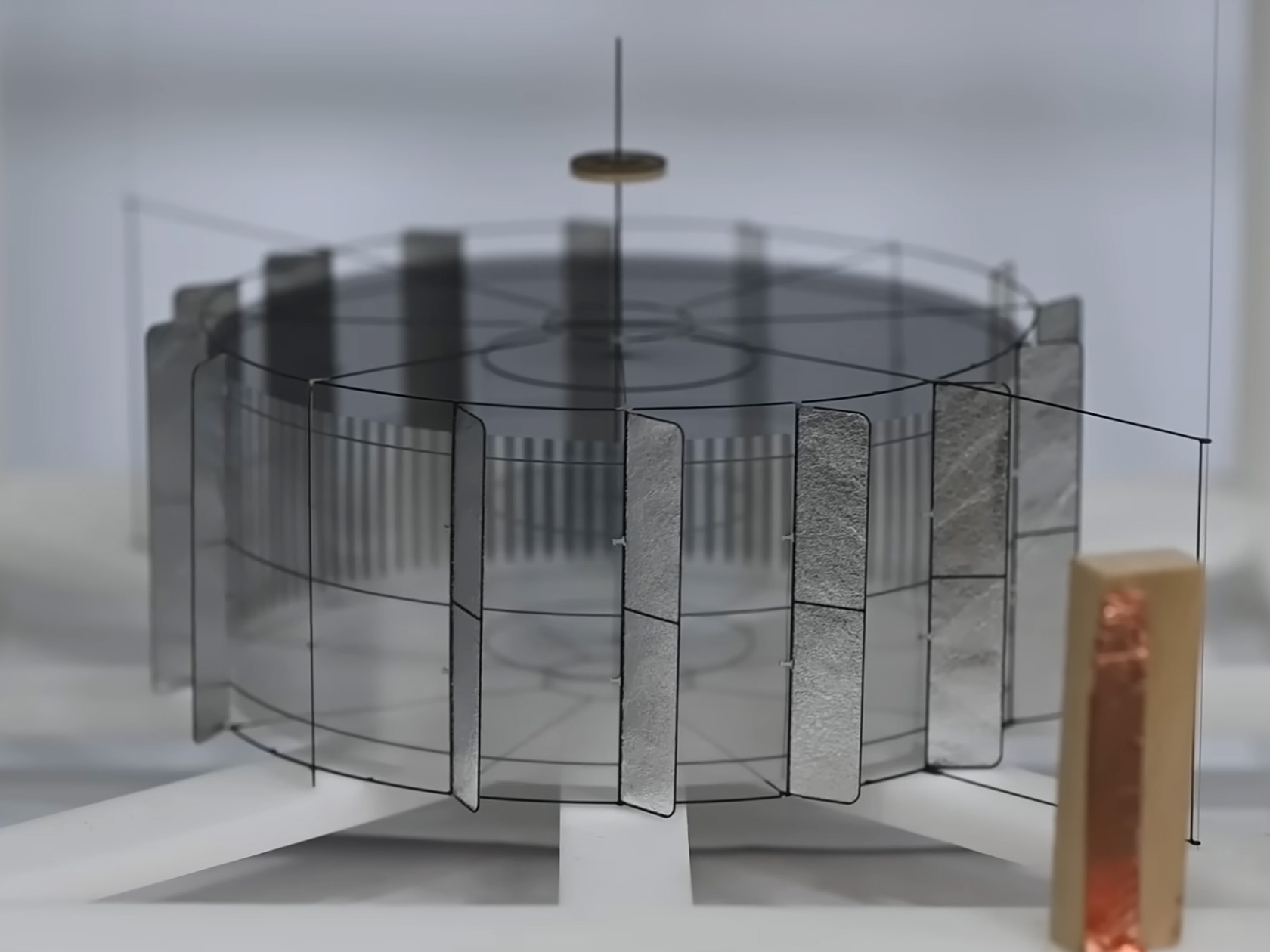
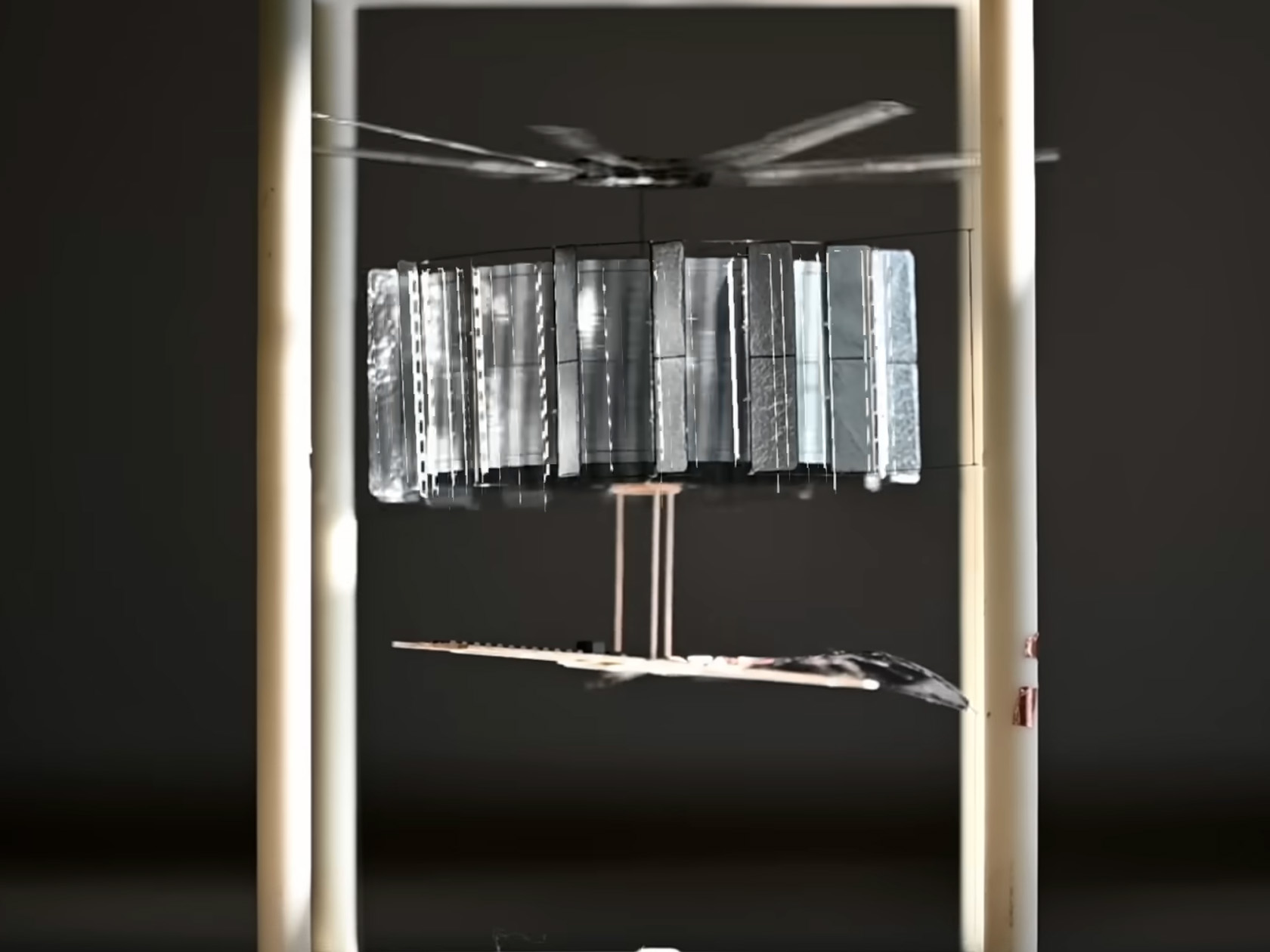
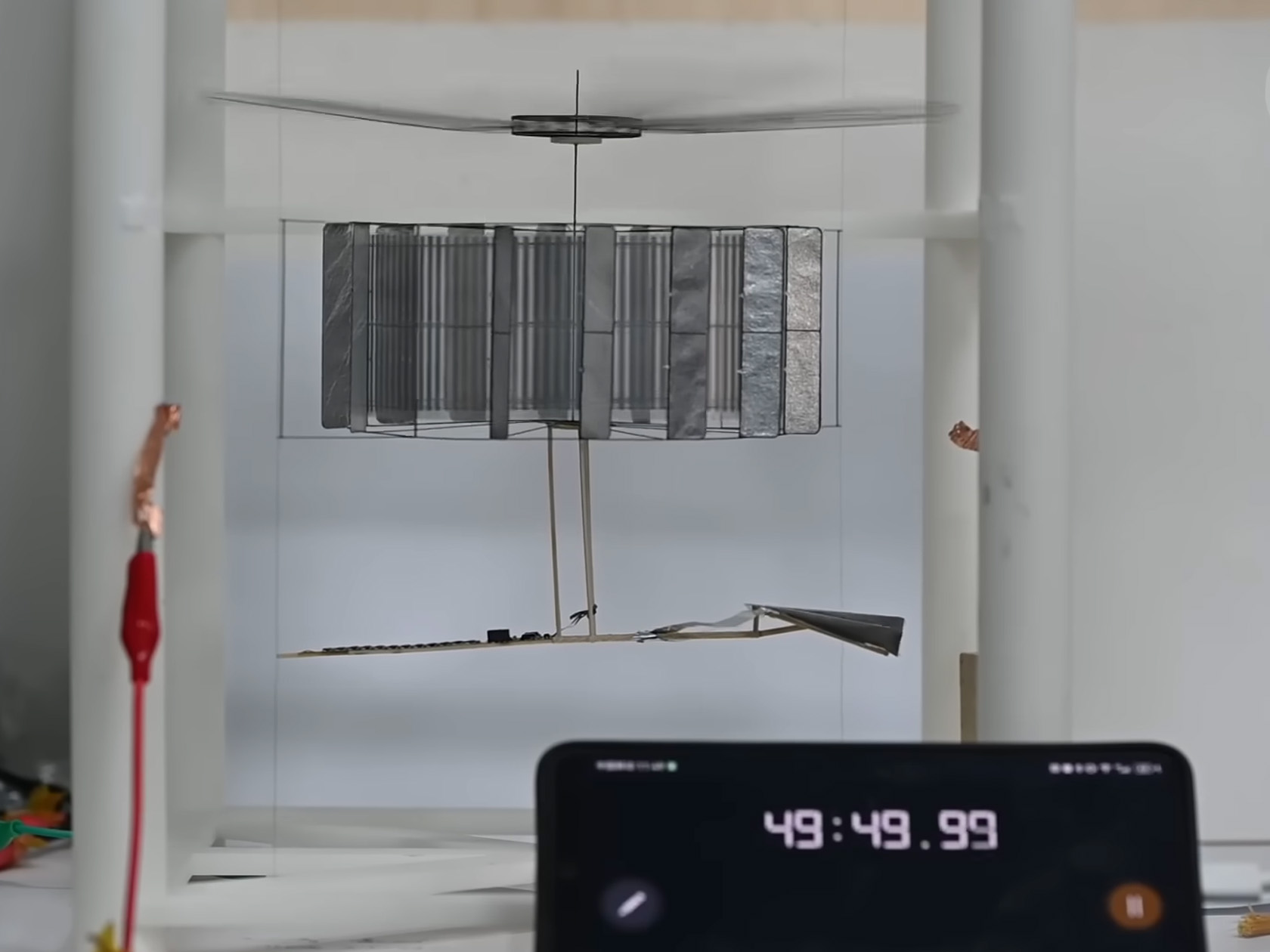
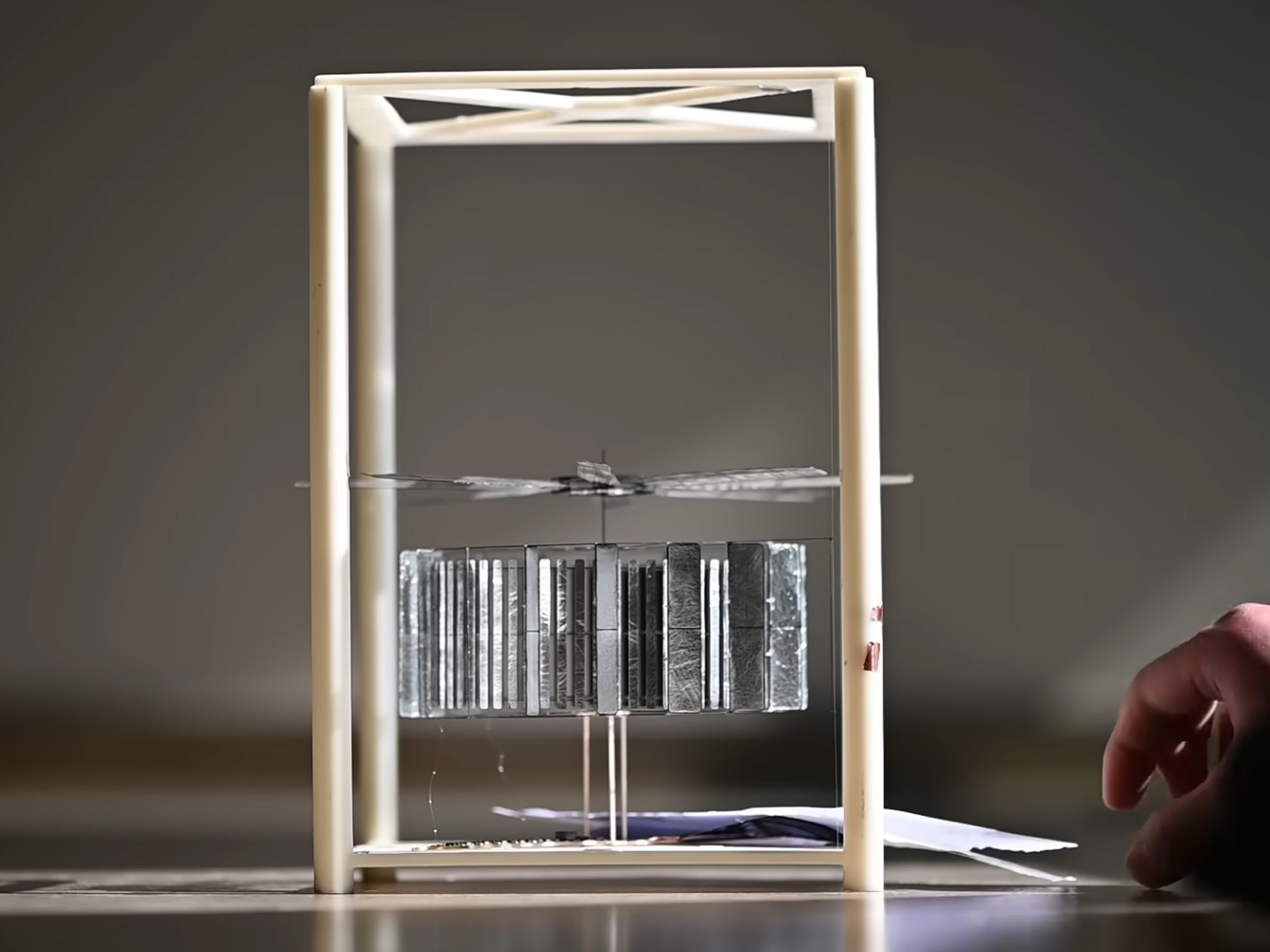
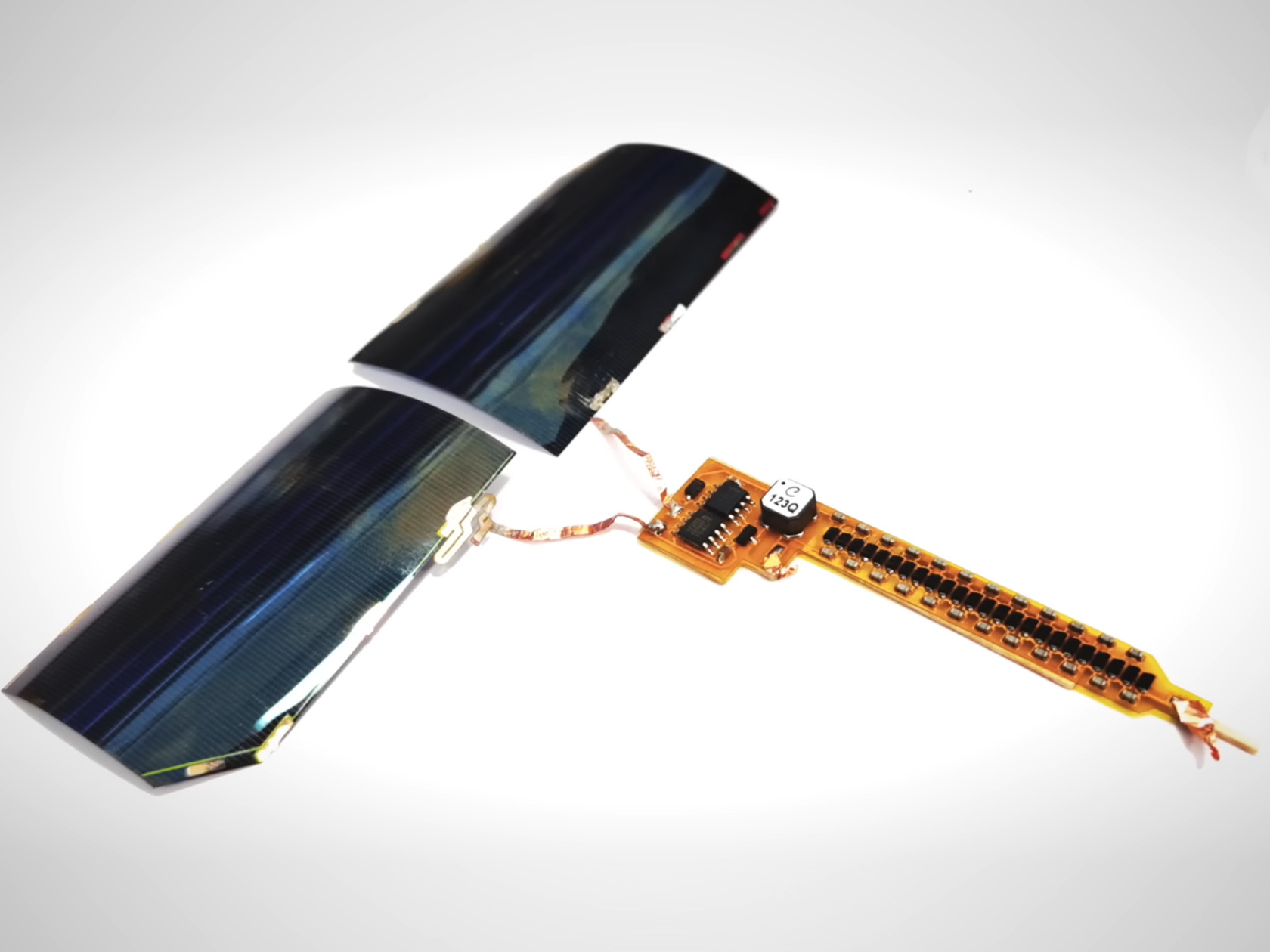
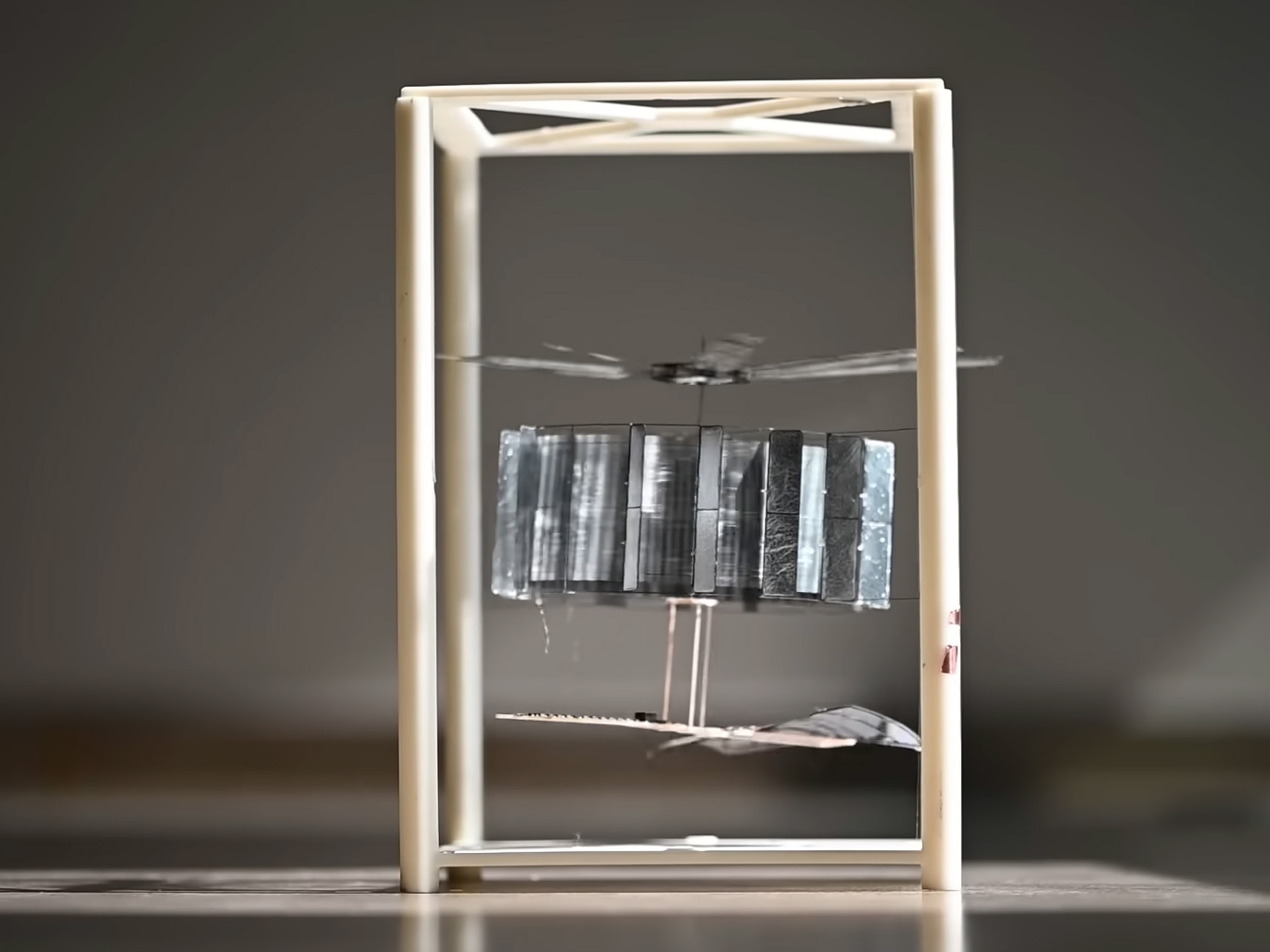
The CoulombFly, a small, ultra-efficient drone powered by static electricity was introduced as a solution to the abovementioned problem by scientists at Beihang University in Beijing, China. The super-small drone uses a special propulsion system that can lift to a decent height while using very little power for the same. The vehicle itself weighs just 4.21 grams – which is extremely lightweight – has a wingspan of 20 cm, and can carry a payload of roughly 1.59 g.
According to the researchers, CoulombFly is about ten times smaller and weighs 1/600th the weight of the previous, smallest and lightest solar-powered aerial vehicle out there. Dubbed then as the smallest and lightest solar-powered aerial vehicle, it is small enough to sit on the palm and is engineered to fly indefinitely while the sun shines on its wings. Mingjing Qi professor at Beihang and the lead of the project says he doesn’t want to settle for this size of the drone. “My ultimate goal is to make a super tiny flying vehicle, about the size and weight of a mosquito, with a wingspan under 1 centimeter,” Qi notes.
Unlike the previous tiny aerial vehicles that rely on electromagnetic motors and generate power using electromagnets; CoulombFly uses an electrostatic field to produce motion. With a mass of 1.52 g, electrostatic motor can generate lift-to-power efficiency that’s twice or even thrice that of traditional MAV motors. The electrostatic motor of the tiny drone comprises two rings: the inner ring is a spinning motor with 64 carbon fiber slats covered with aluminum foil, while the outer ring has eight alternating pairs of negative and positive carbon fiber electrode plates also bonded with foil. When the CoulombFly is exposed to sunlight, the outer ring with its 16 plates generates electric fields. Since each electrode plate is embedded in aluminum brushes, these brush against the rotor slats on the inner ring spinning the propeller and lifting the drone up until the sun is shining on it.
The most beautiful game, football, is a team sport. But in realism – at the world stage – the game is not limited to the field and teams. Passionate fans and their diehard enthusiasm for clubs and players take the game far and beyond, into the people’s home and their hearts. Despite the love and admiration for football, one wrong on-field decision can leave players behaving irrationally and discerning fans indulging in brawls, intense enough to set stadiums on fire.
Over the years goal-line technology has made a significant difference in the decision-making often faltered by the human eye. Yet, all the other significant on-field decisions are left for humans to make, which even the most qualified and experienced referees can get wrong from time to time. While replacing human intervention from decision-making is visually impossible in the near future; there is a designer who thinks an aerial observer can pull off the task at the amateur level to start with.
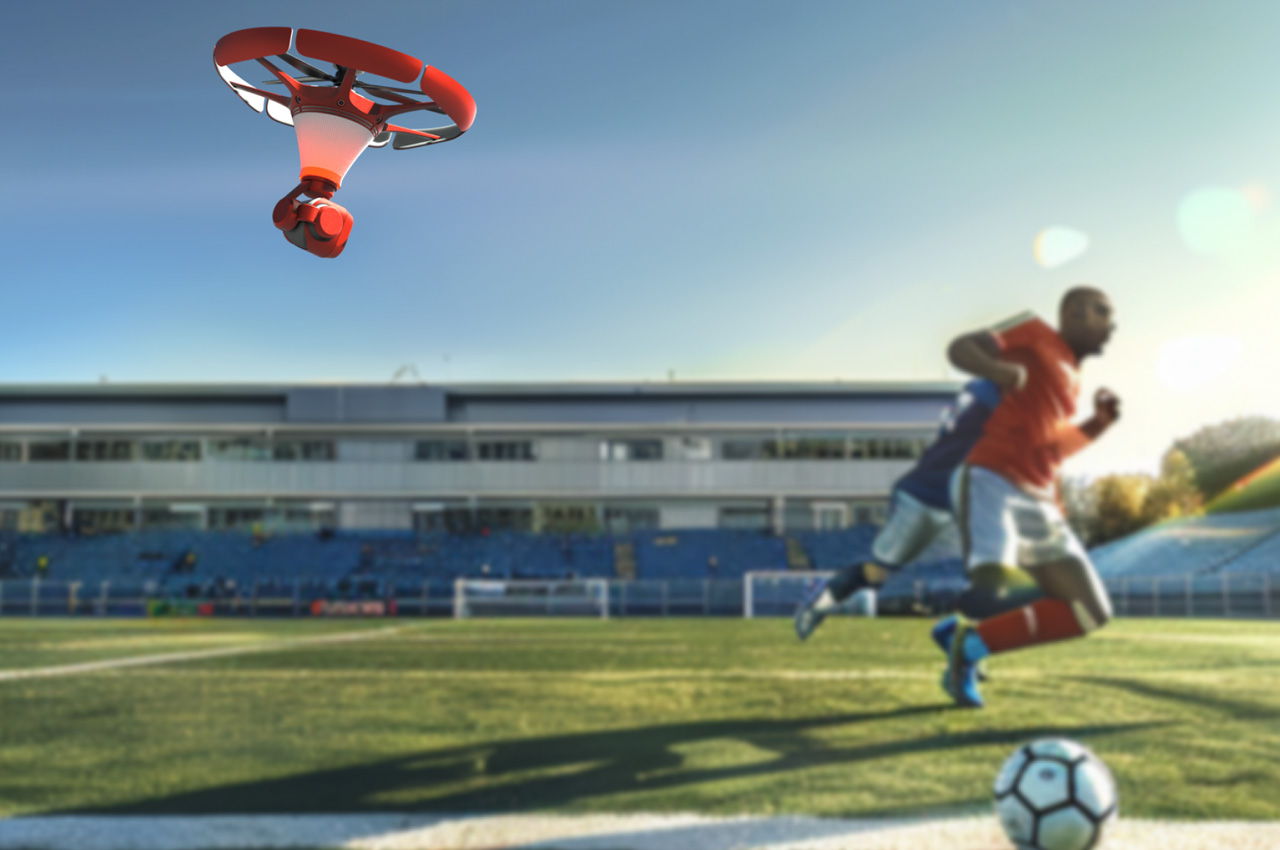
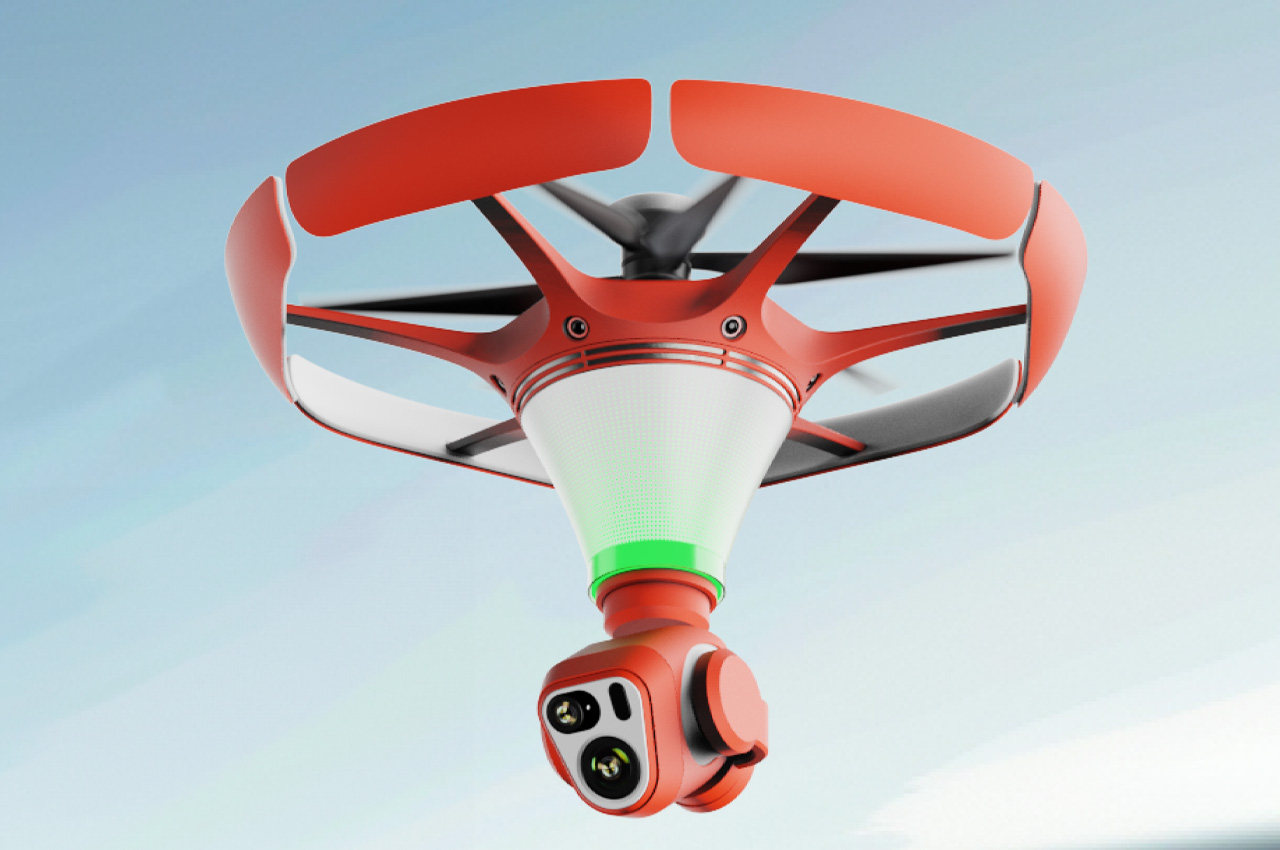
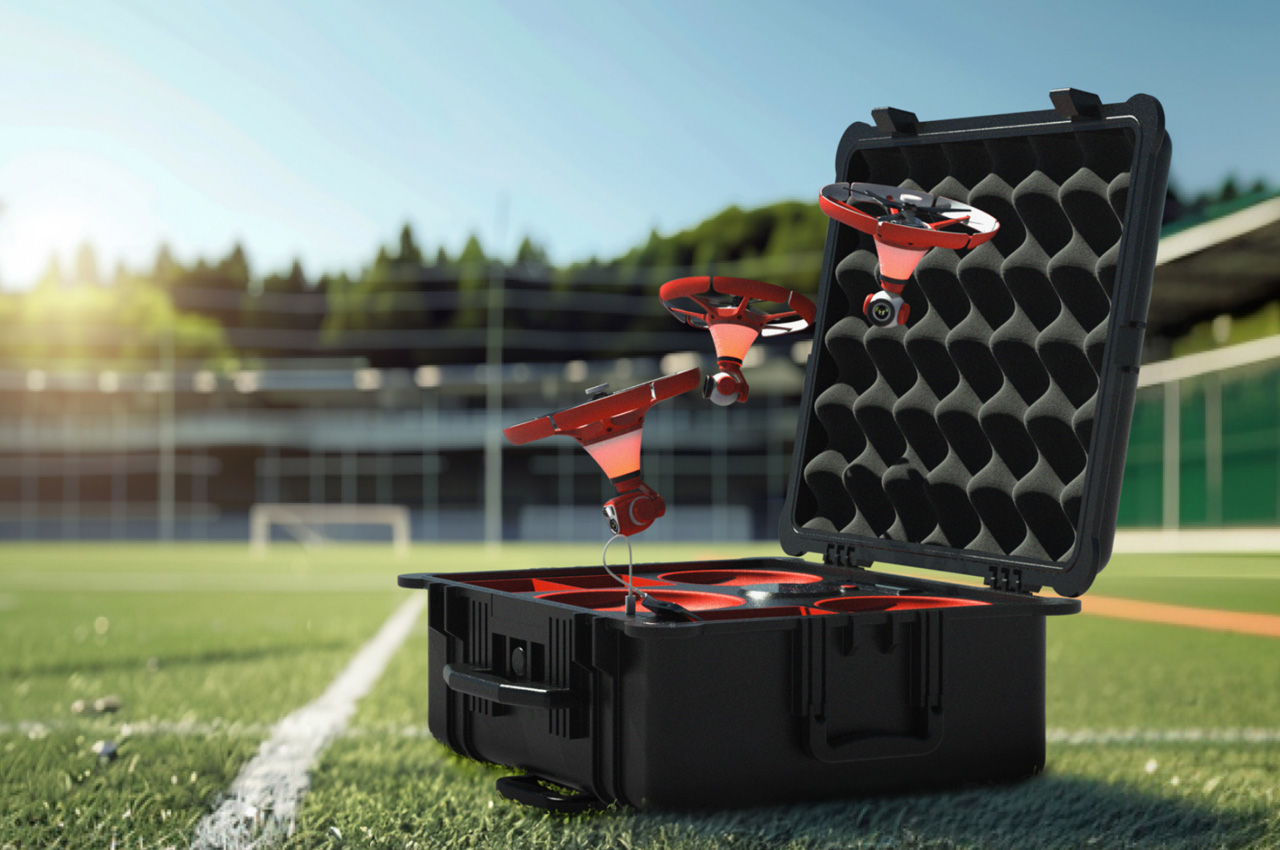
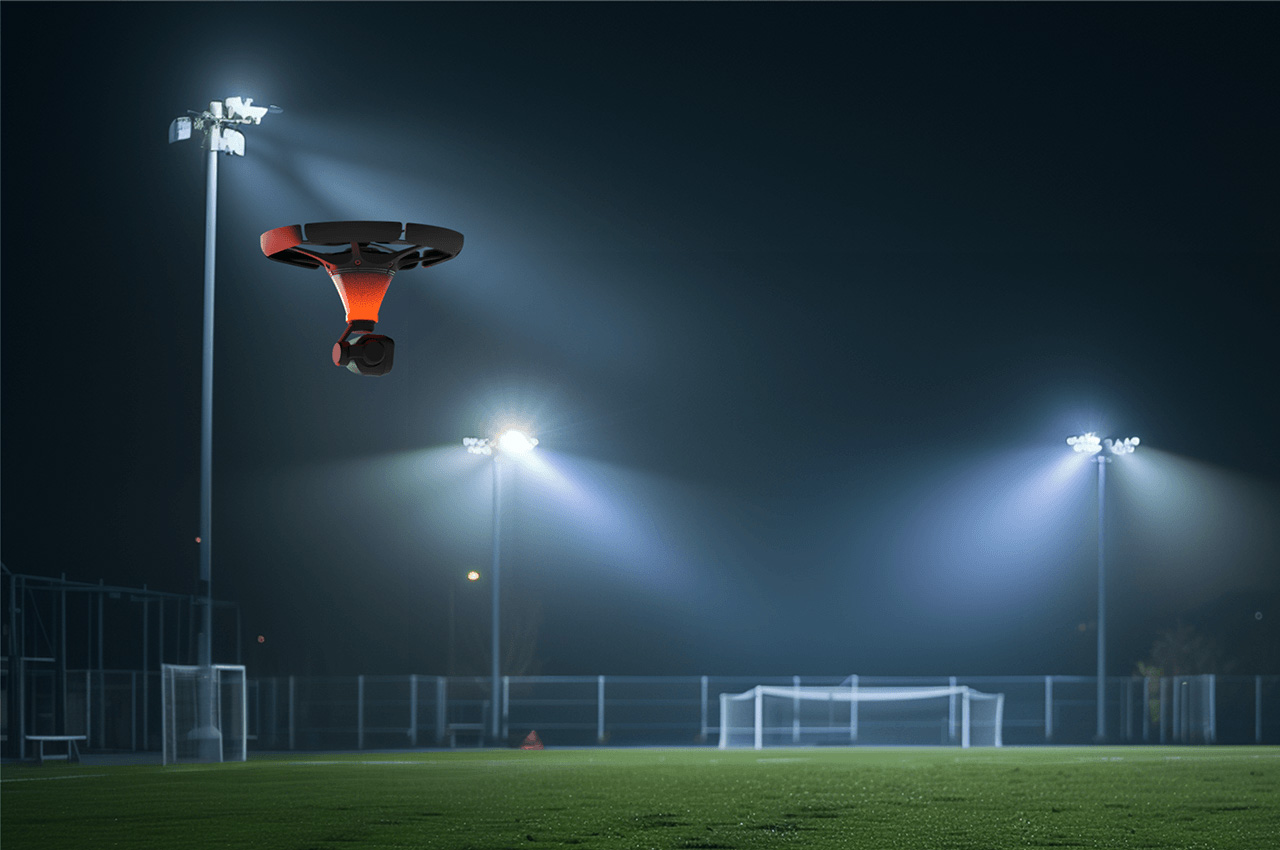
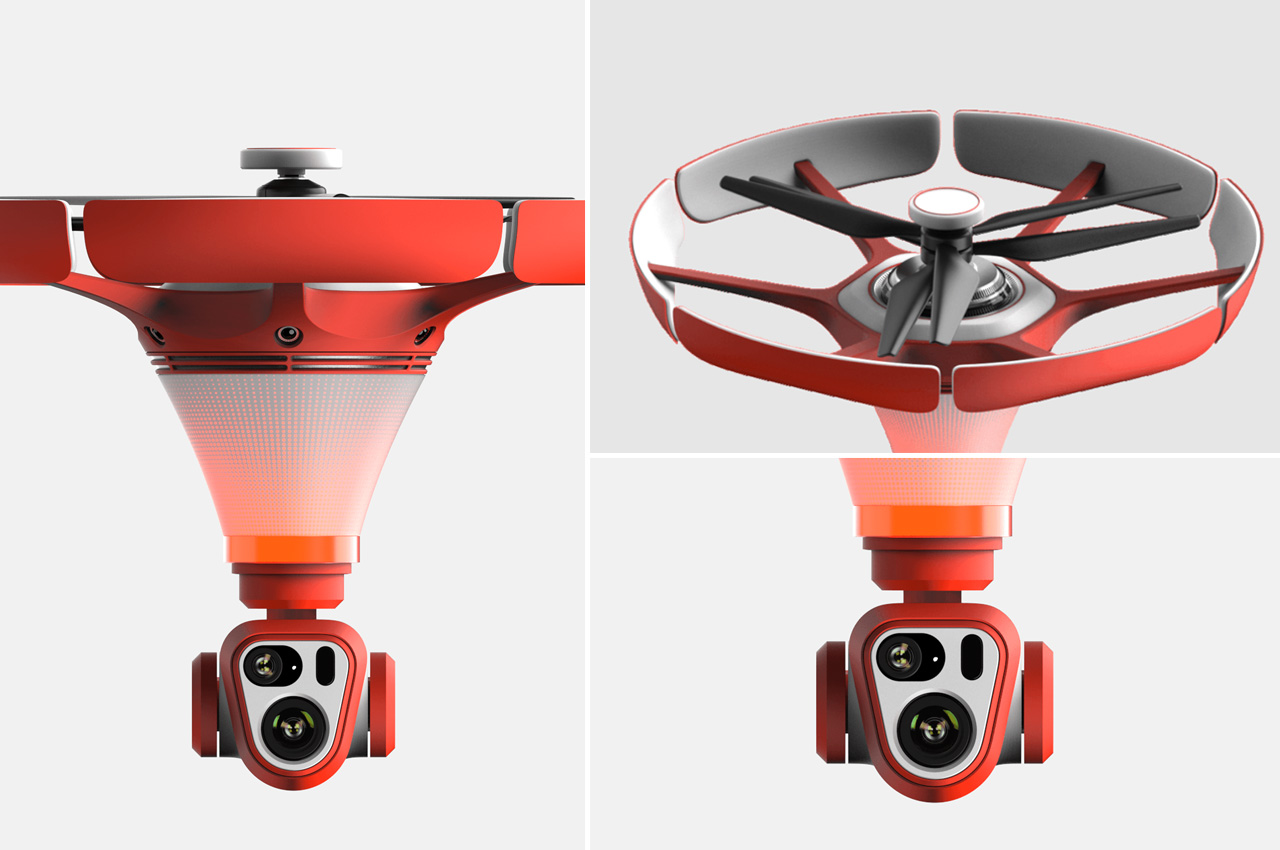
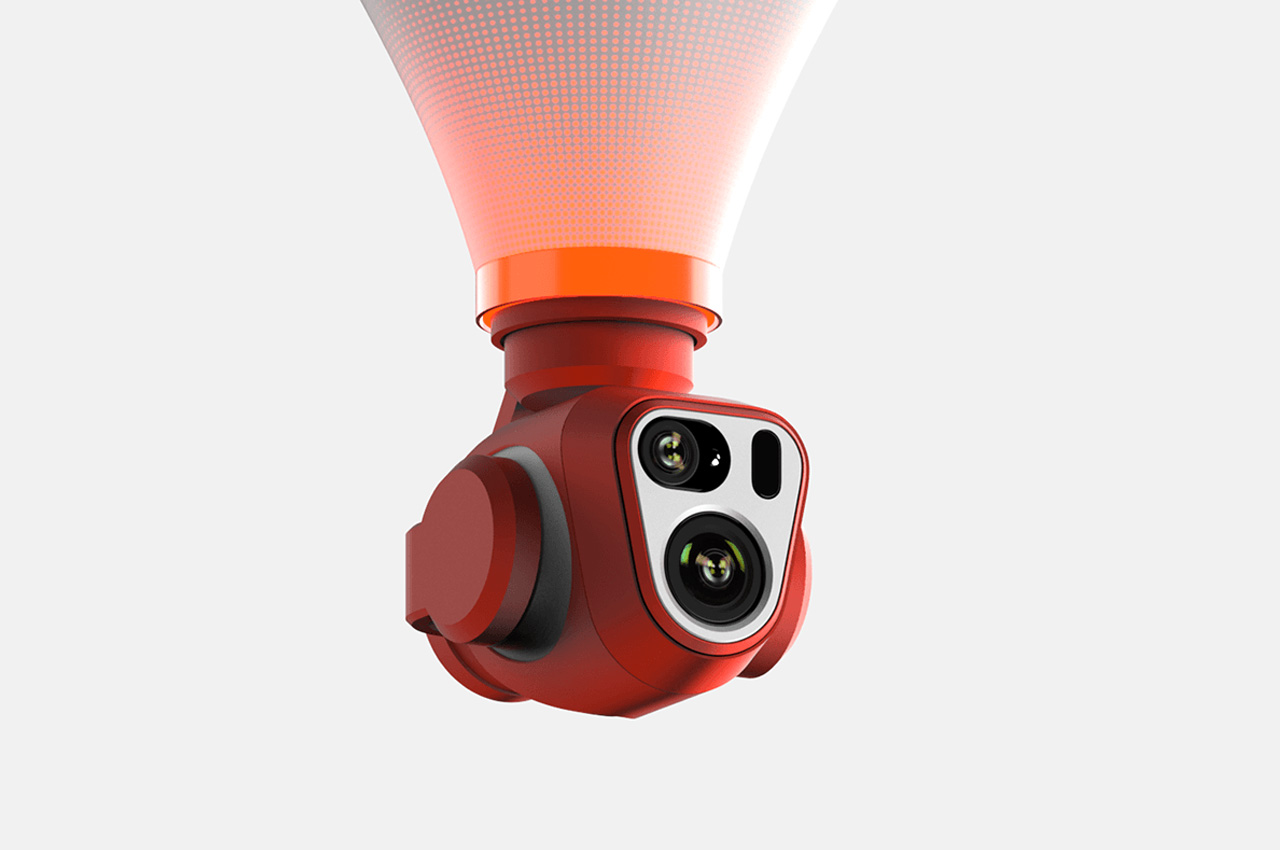
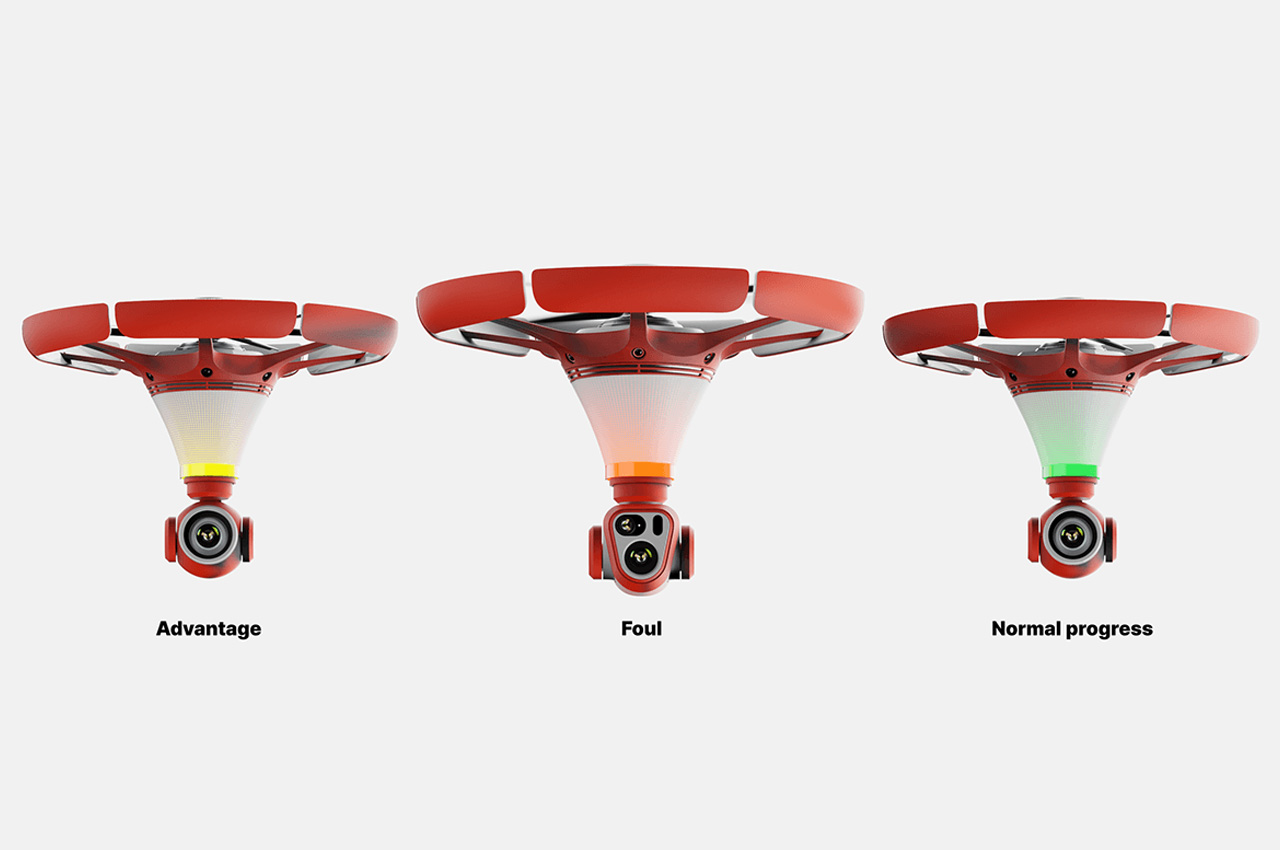
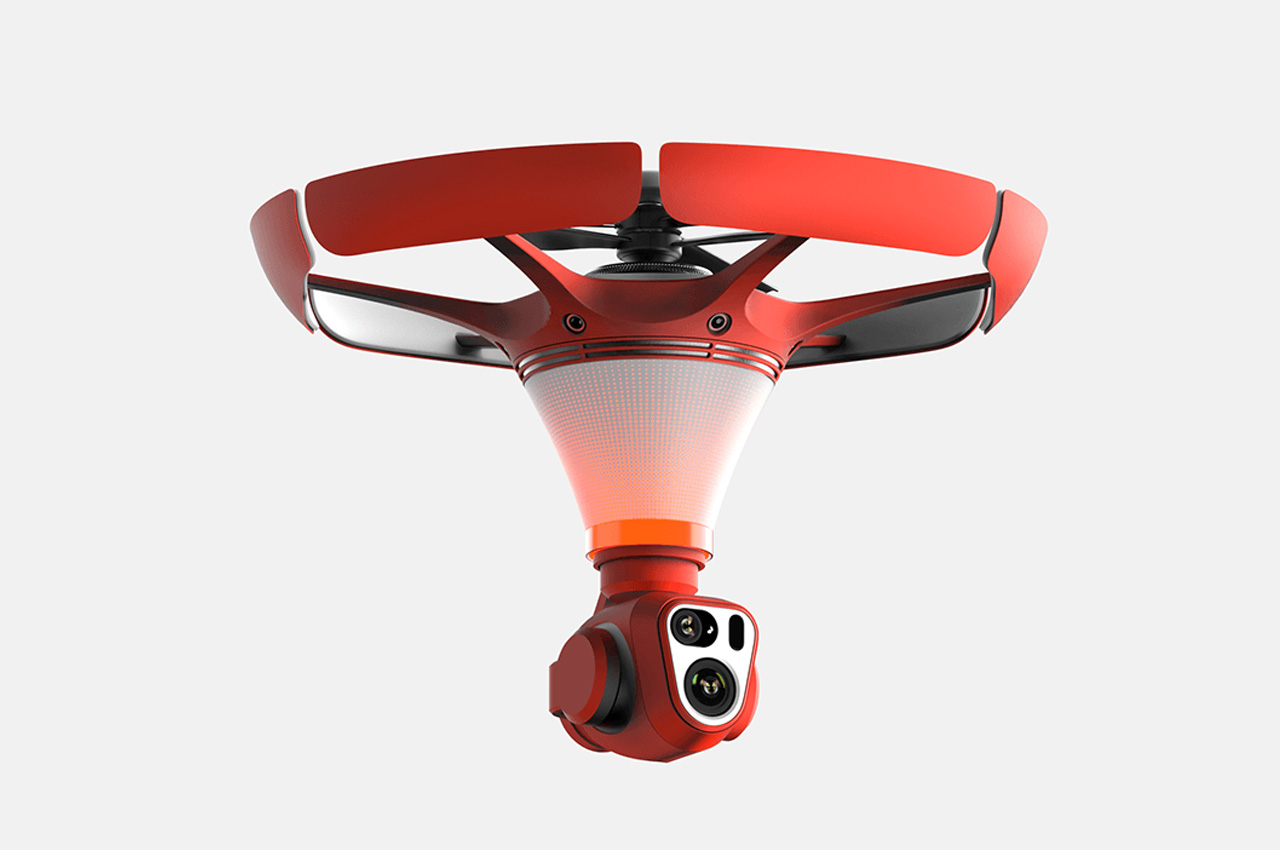
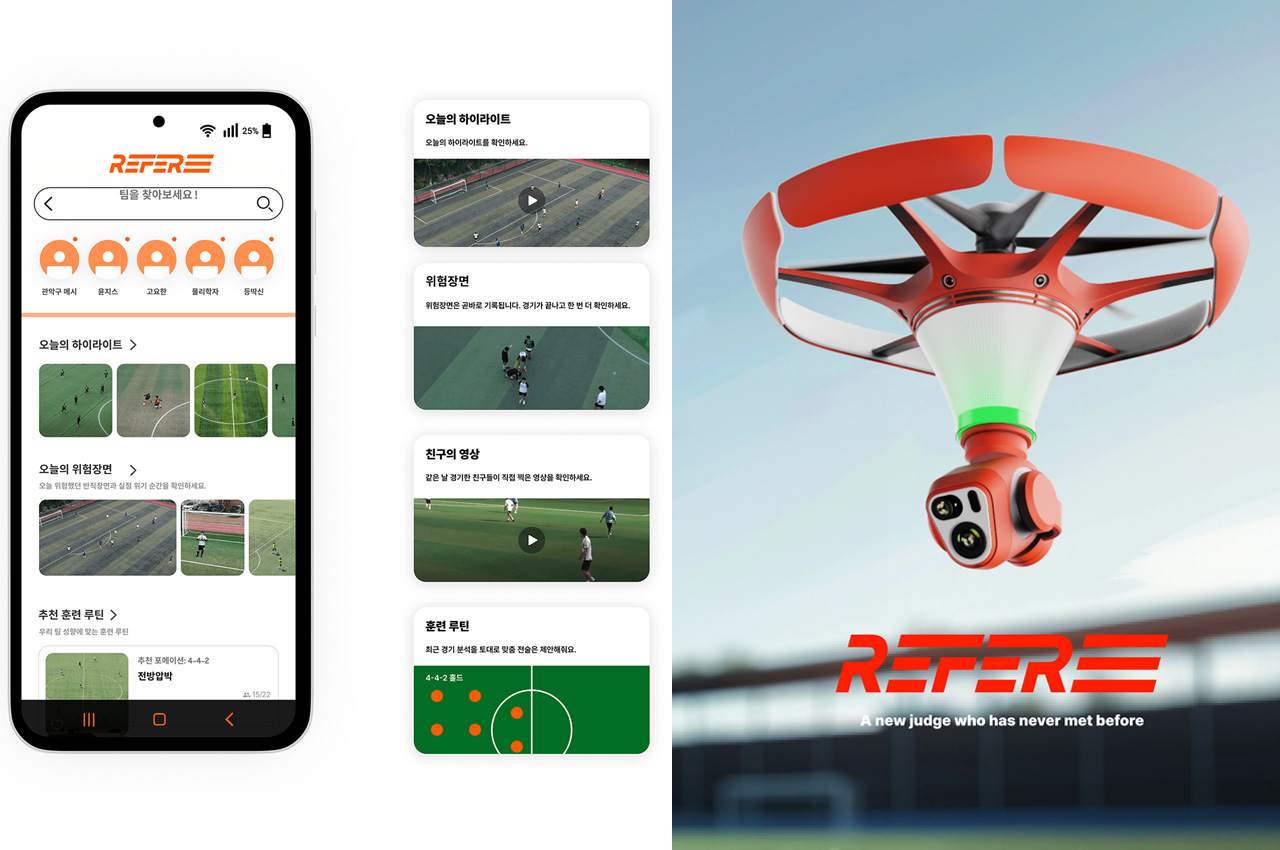
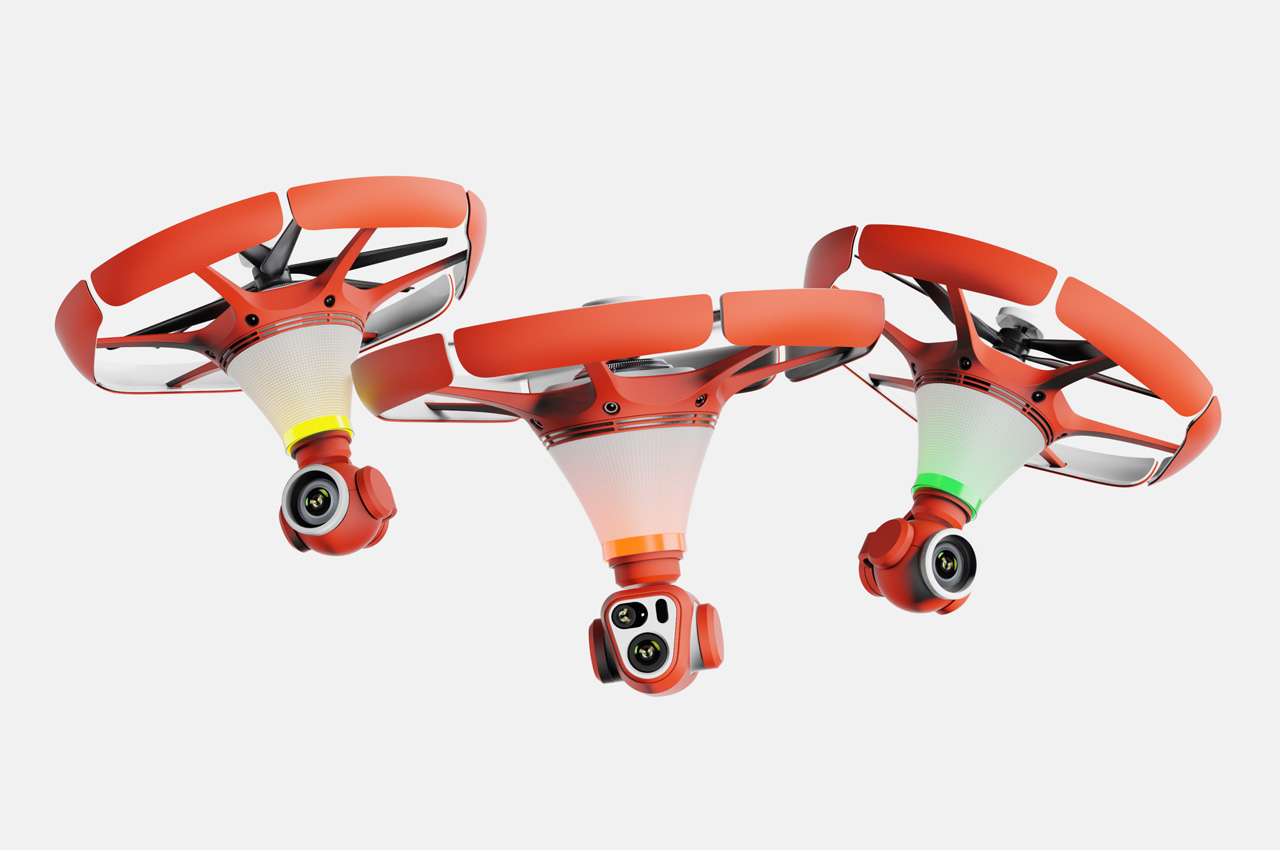
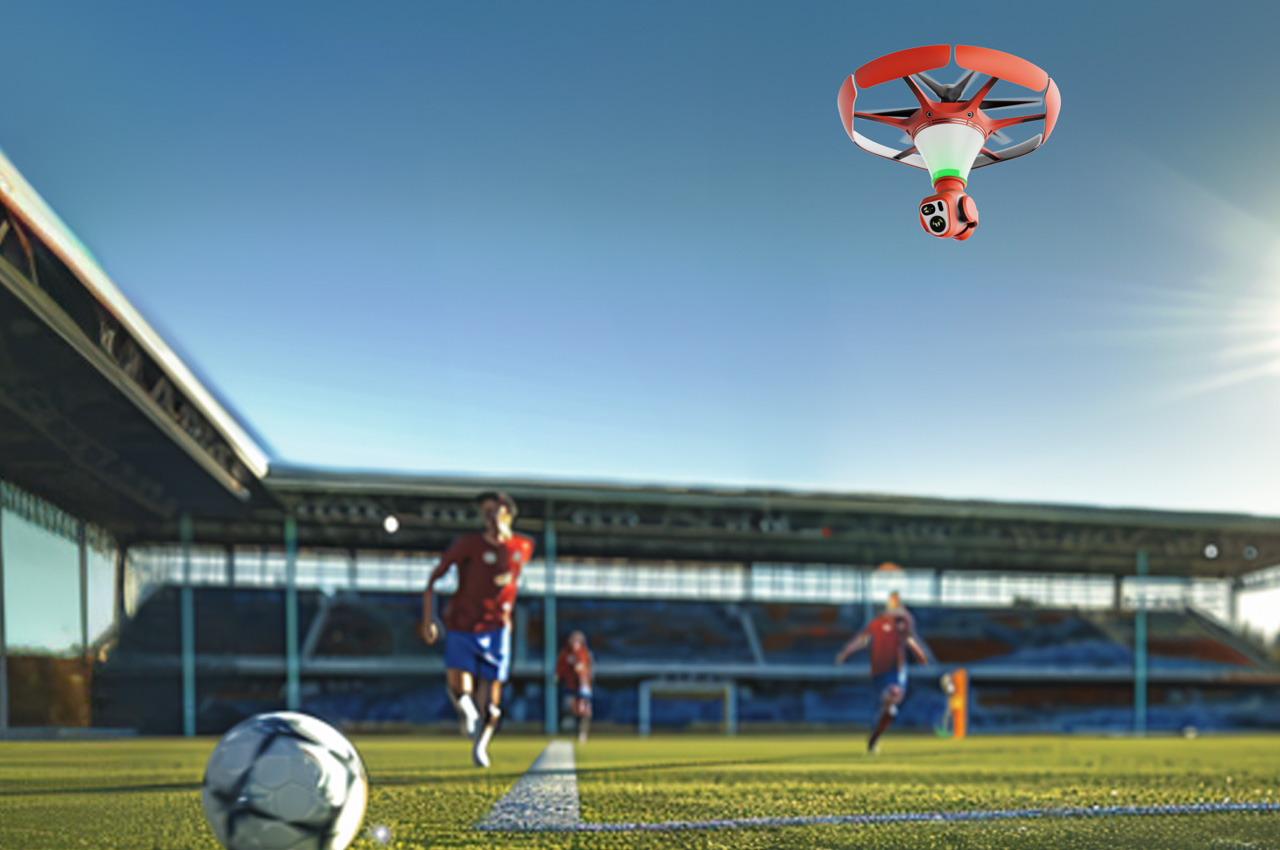
The idea behind “Referee,” a portable drone football referee is as simple as its design: Take to the air, hover above and track the players and the ball, and sound a whistle when a foul occurs. Designed with a Samsung-backed Design Membership program, the two-part system – a drone with rotors and HD camera – moves fluidly around the ball so that there are no blind spots and decisions are spot on. There is no mention of whether the modern Referee will also issue red card for a cardinal foul, or a human ref would still be needed.
The functioning of the Referee is simple to pull off, and the design – modeled after a training cone – makes it even more interesting. It comes packed in a dedicated trolley bag one can tag along to the field and set it to run the game without having to find a human referee to help you with a night game with friends. Since most hobby footballers have time to play in the night hours, after a day’s work, Seungmin has envisioned a Referee with LED lighting that shines along with the whistle when a foul is detected.
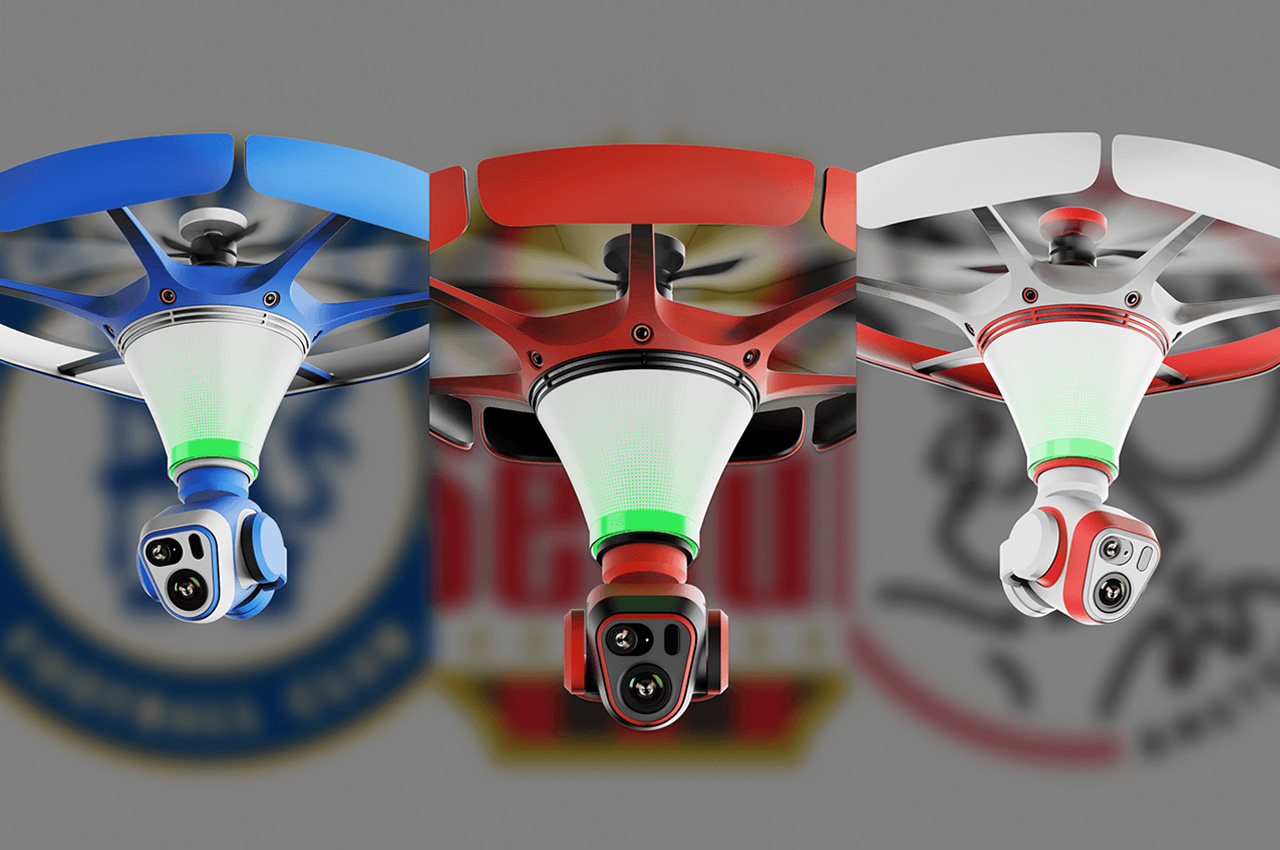
To keep the control simple and the design more intriguing, the Referee is controllable via an app. Through the app, you can customize the device’s color to the team that you are playing and also replay the foul scene to make sure close decisions can be fairly dealt with. Potentially a gimmick at the moment, the Referee through its evolution can maybe reach the Premier League stage someday.







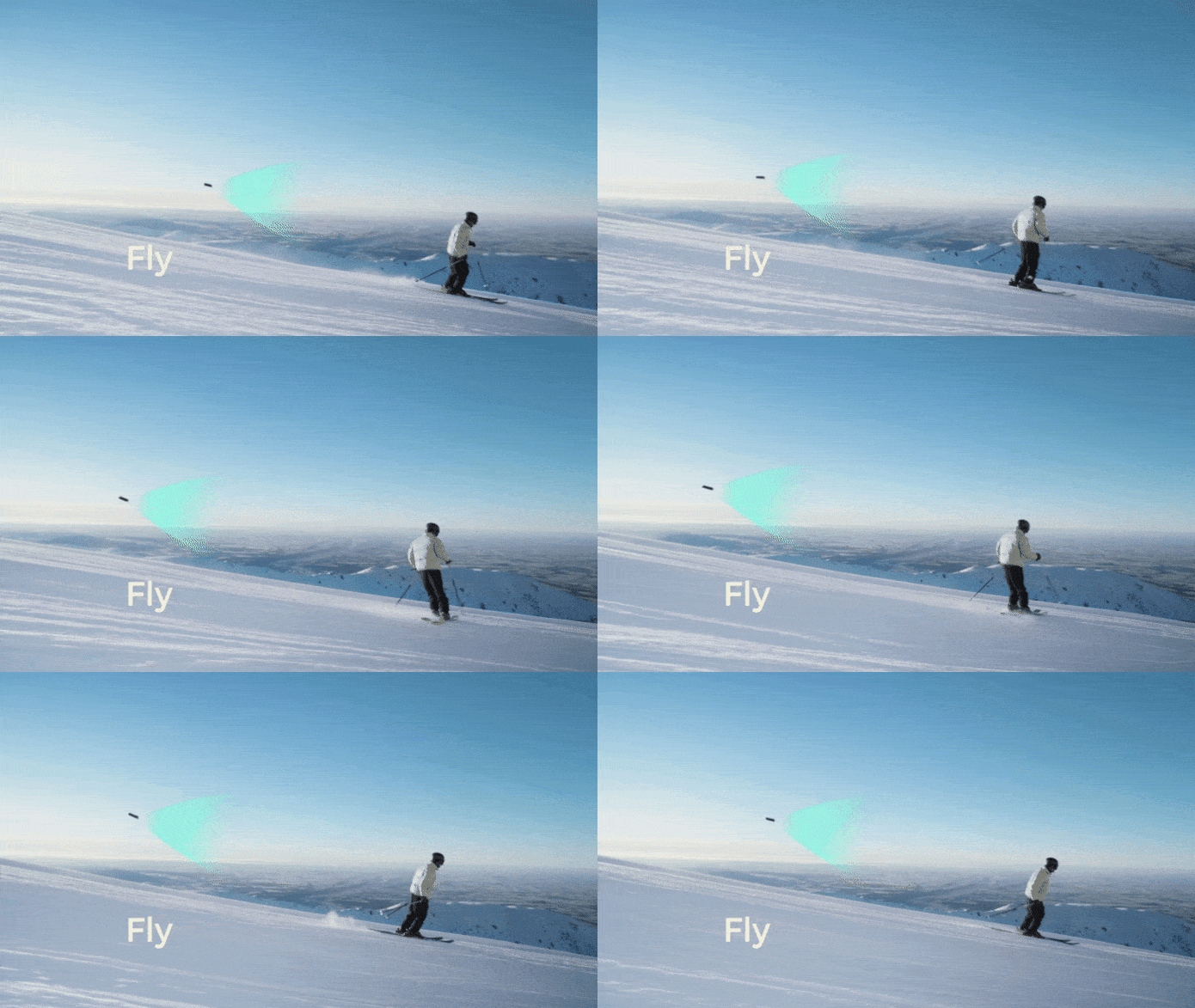


 Technology for ultra-precise tracking, so you can leave the steering to the X1 PRO or PROMAX and focus on getting the shot.