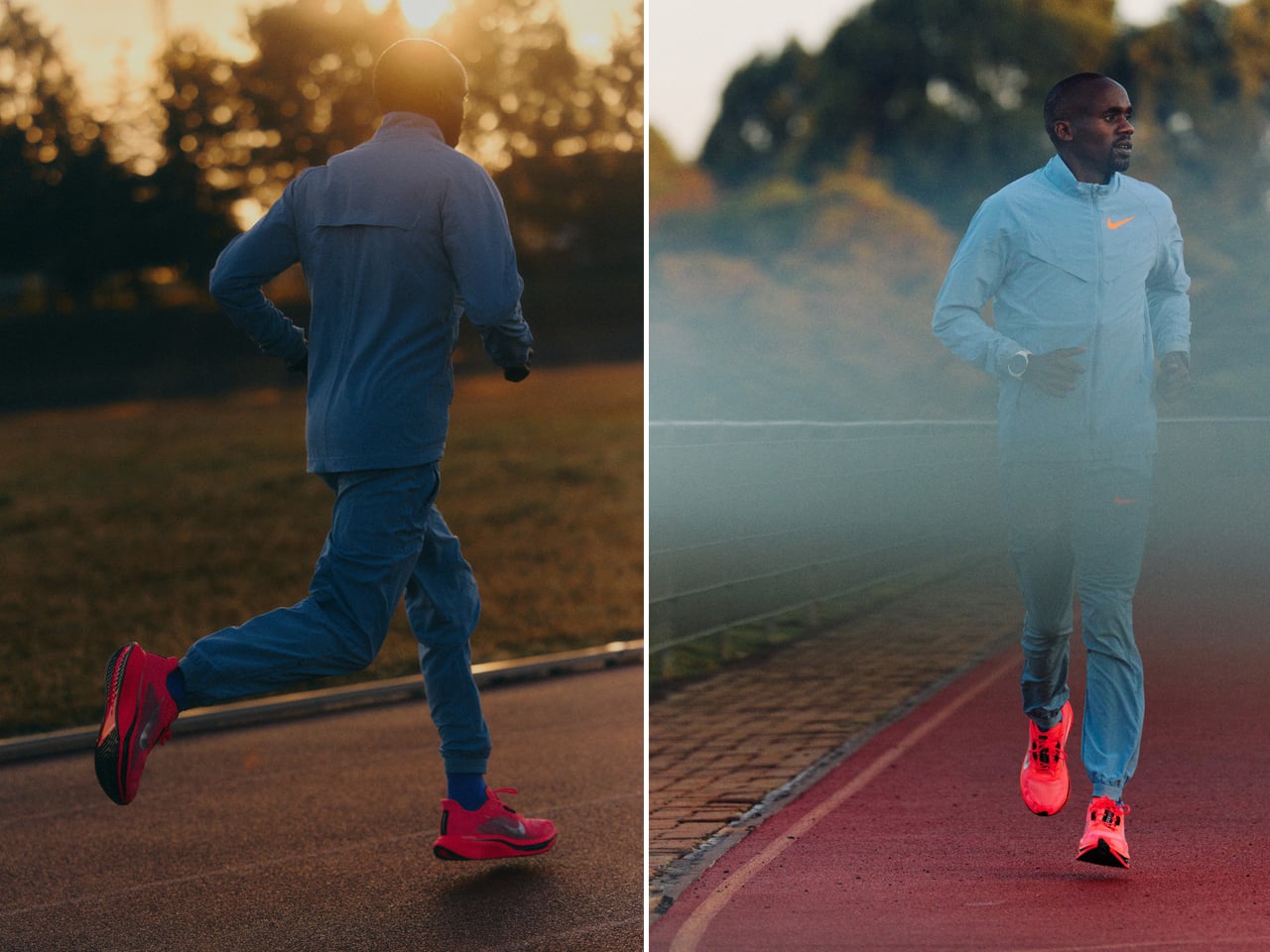
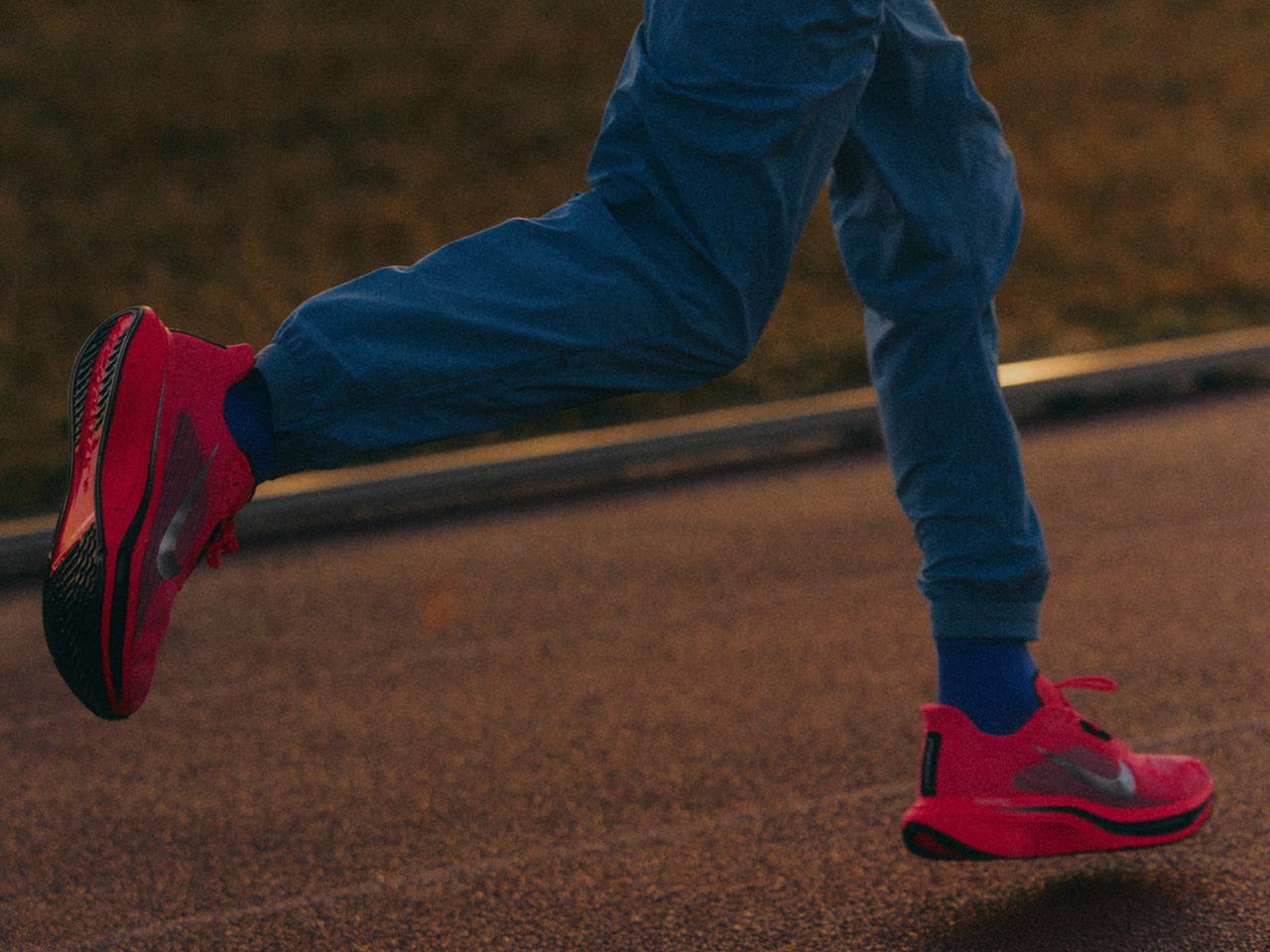
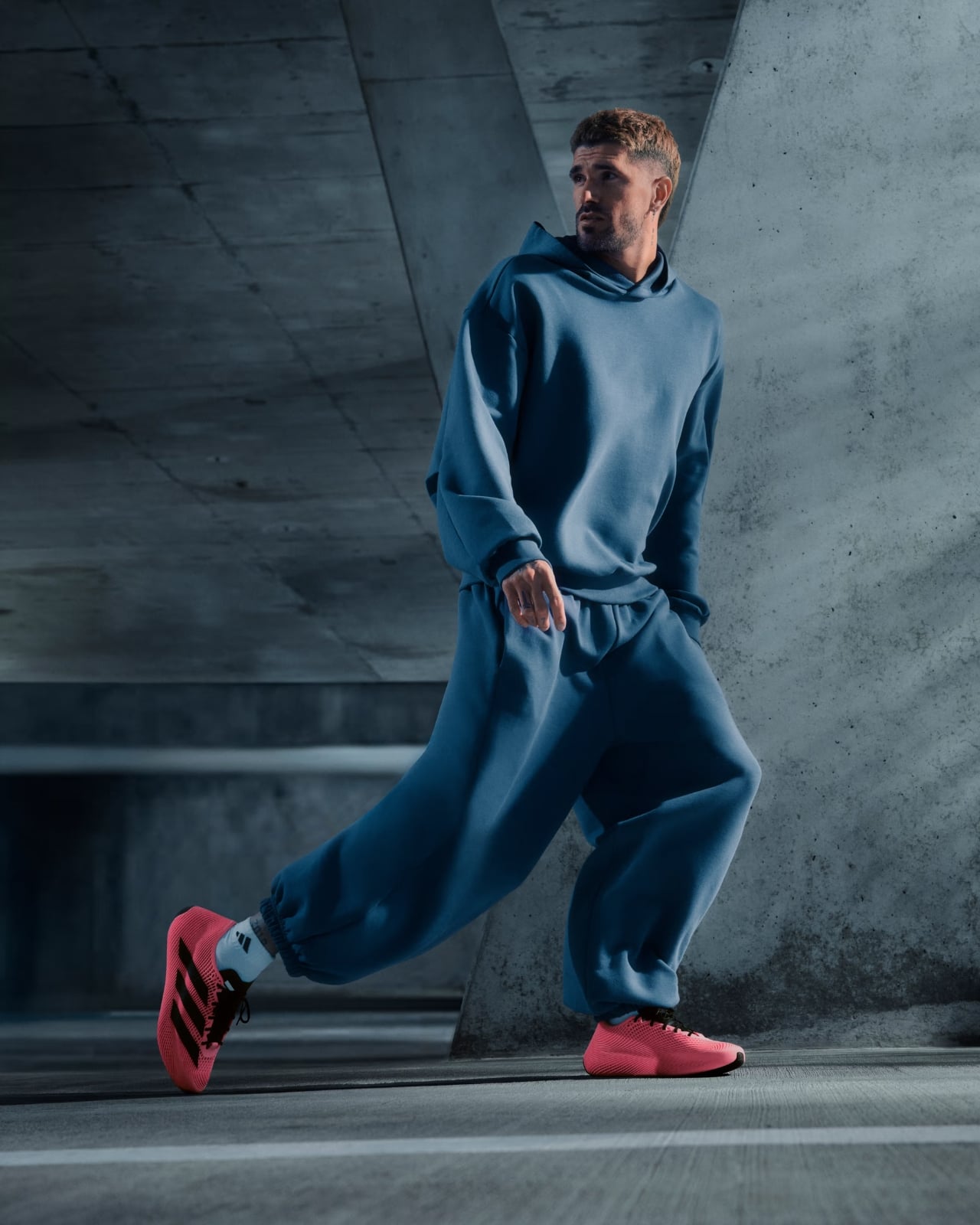
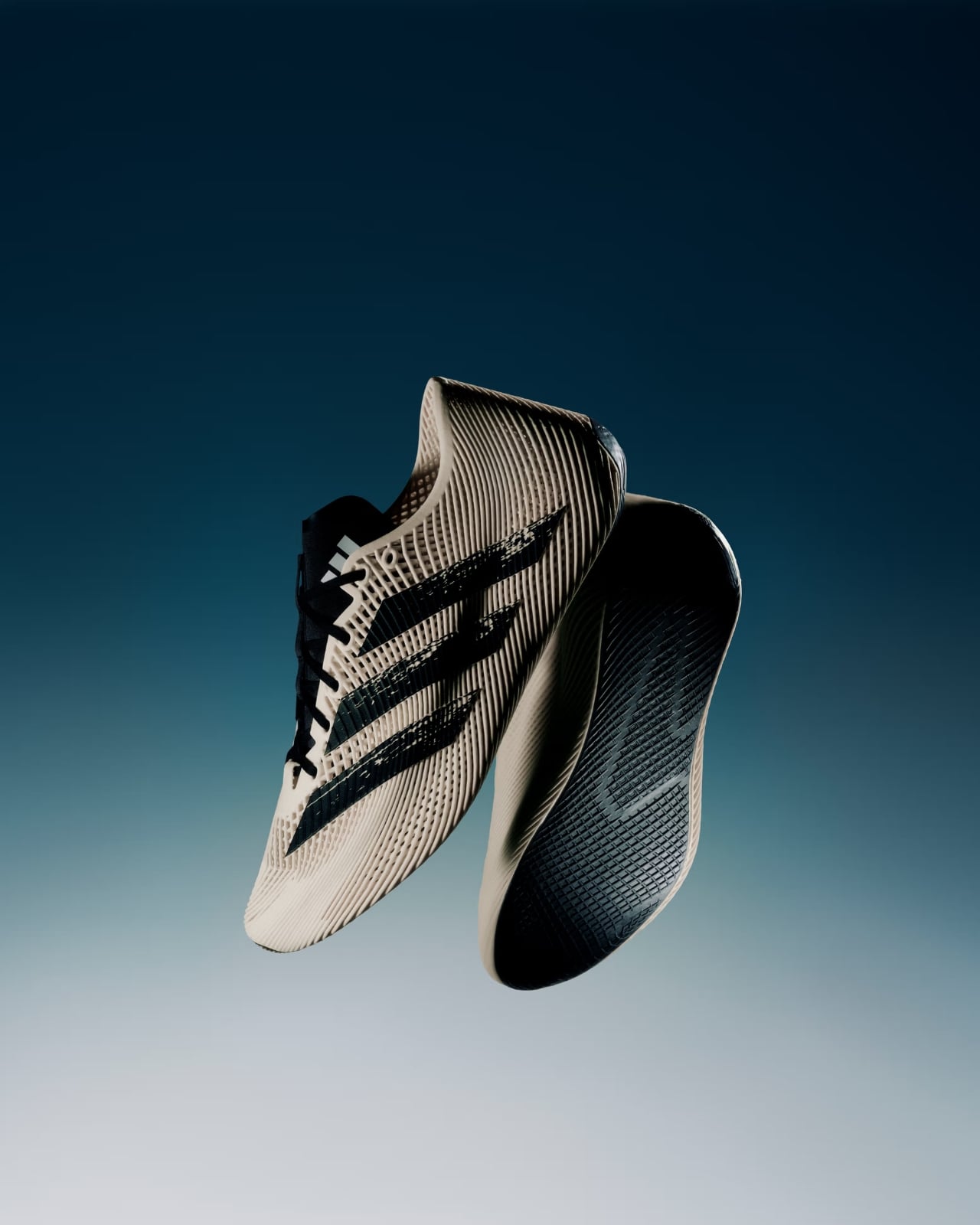
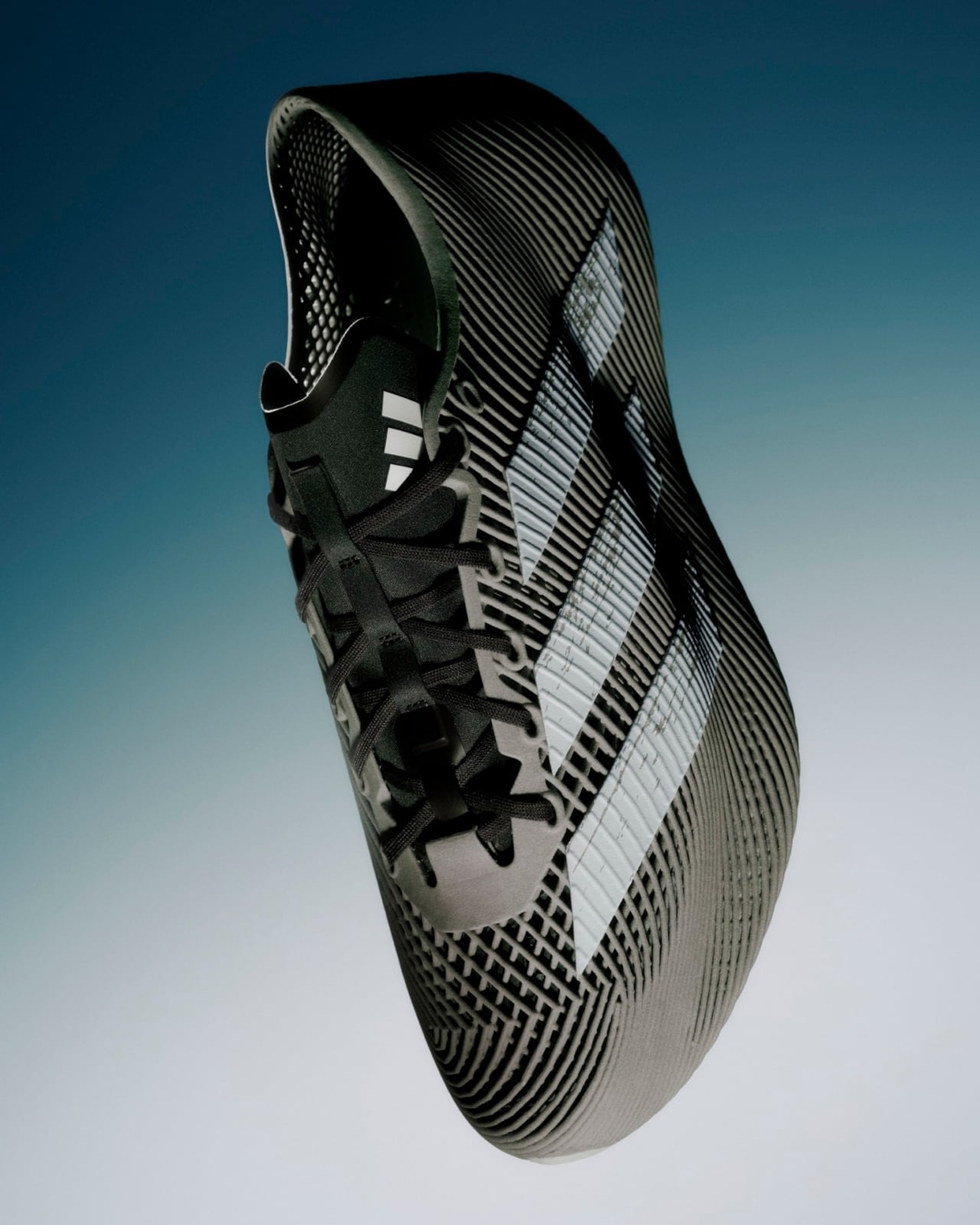
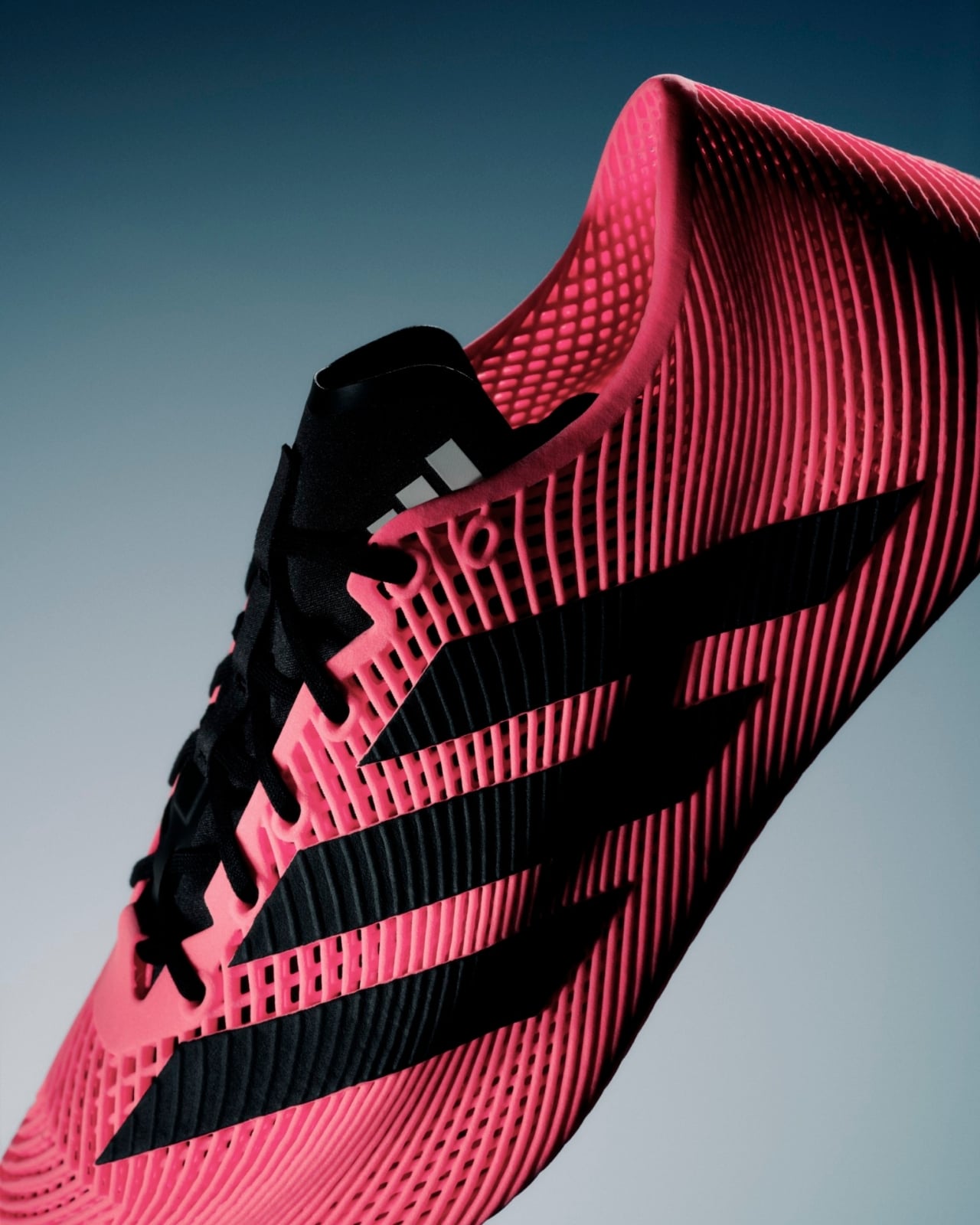
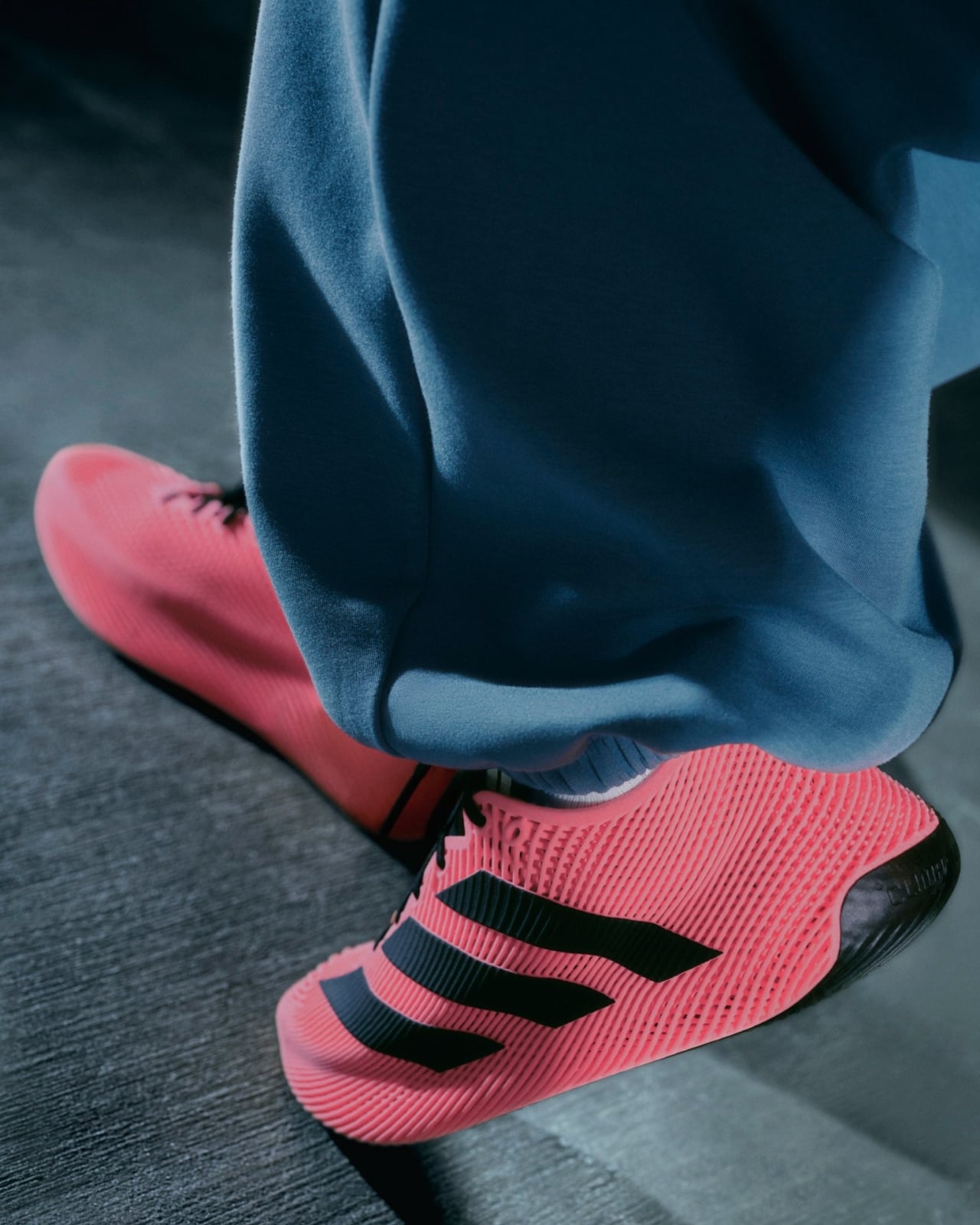
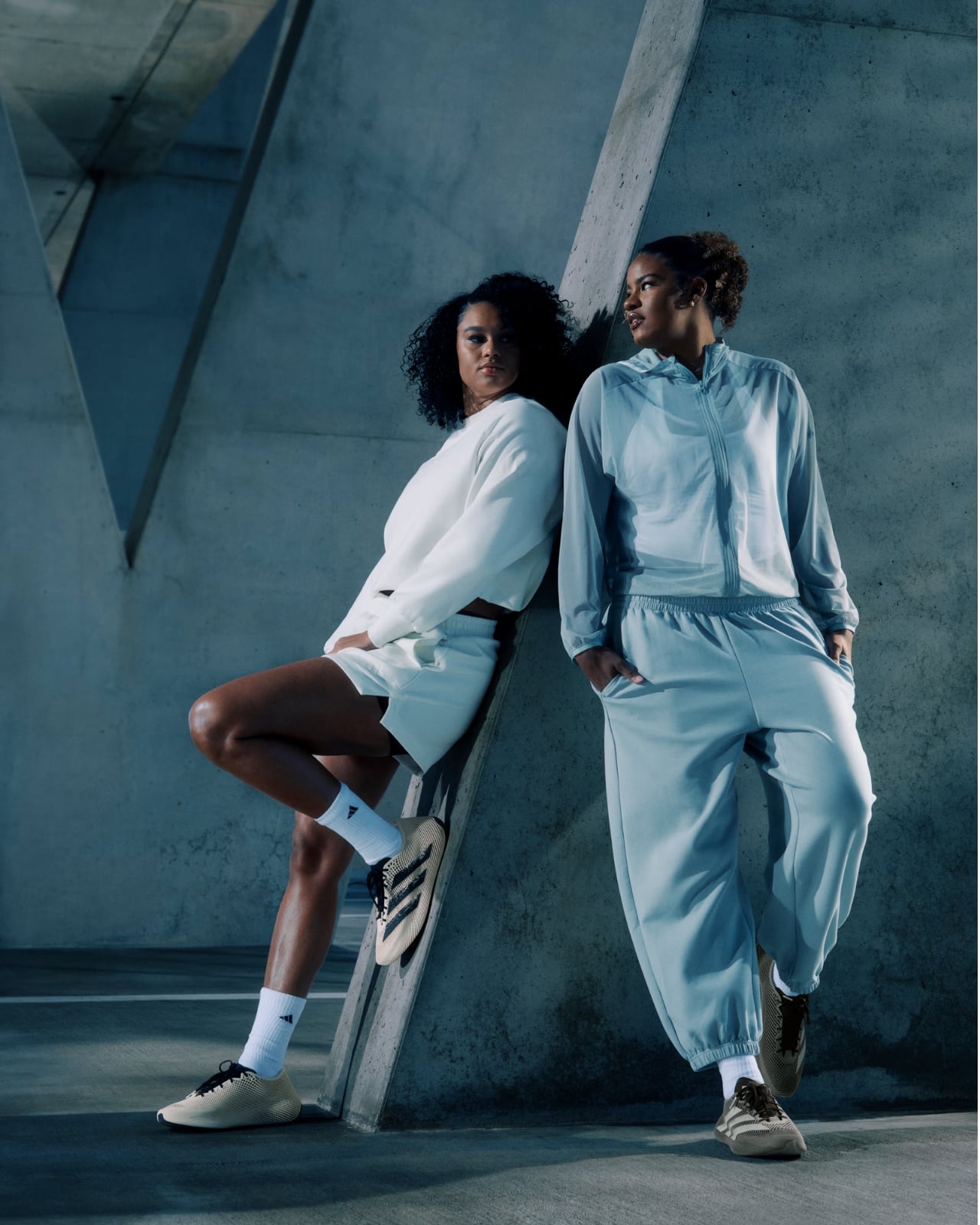
If you haven’t trained in a Nike Pegasus, you haven’t experienced a running shoe as it should be. My first outing with the silhouette was the Pegasus 42. The journey was short-lived as I developed grade three osteoporosis and was ruled out of track for good, but the memories of that shoe, which I later wore for walking for a long time, have lived on with me ever since. The feel and cushioning, and now even the basic sole unit technology, have changed a great deal, and the newly launched Nike Pegasus Plus 2 is an embodiment of that.
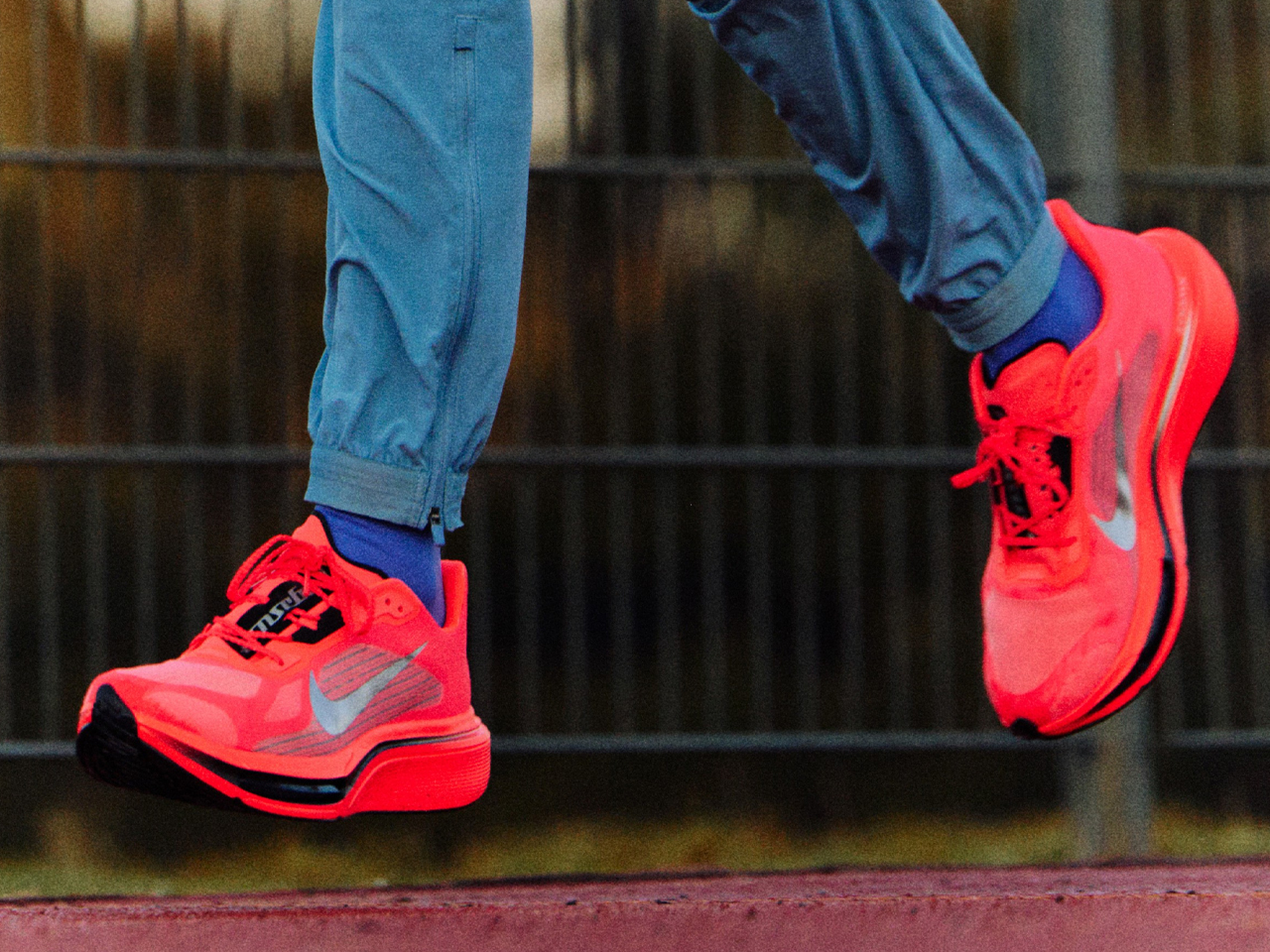
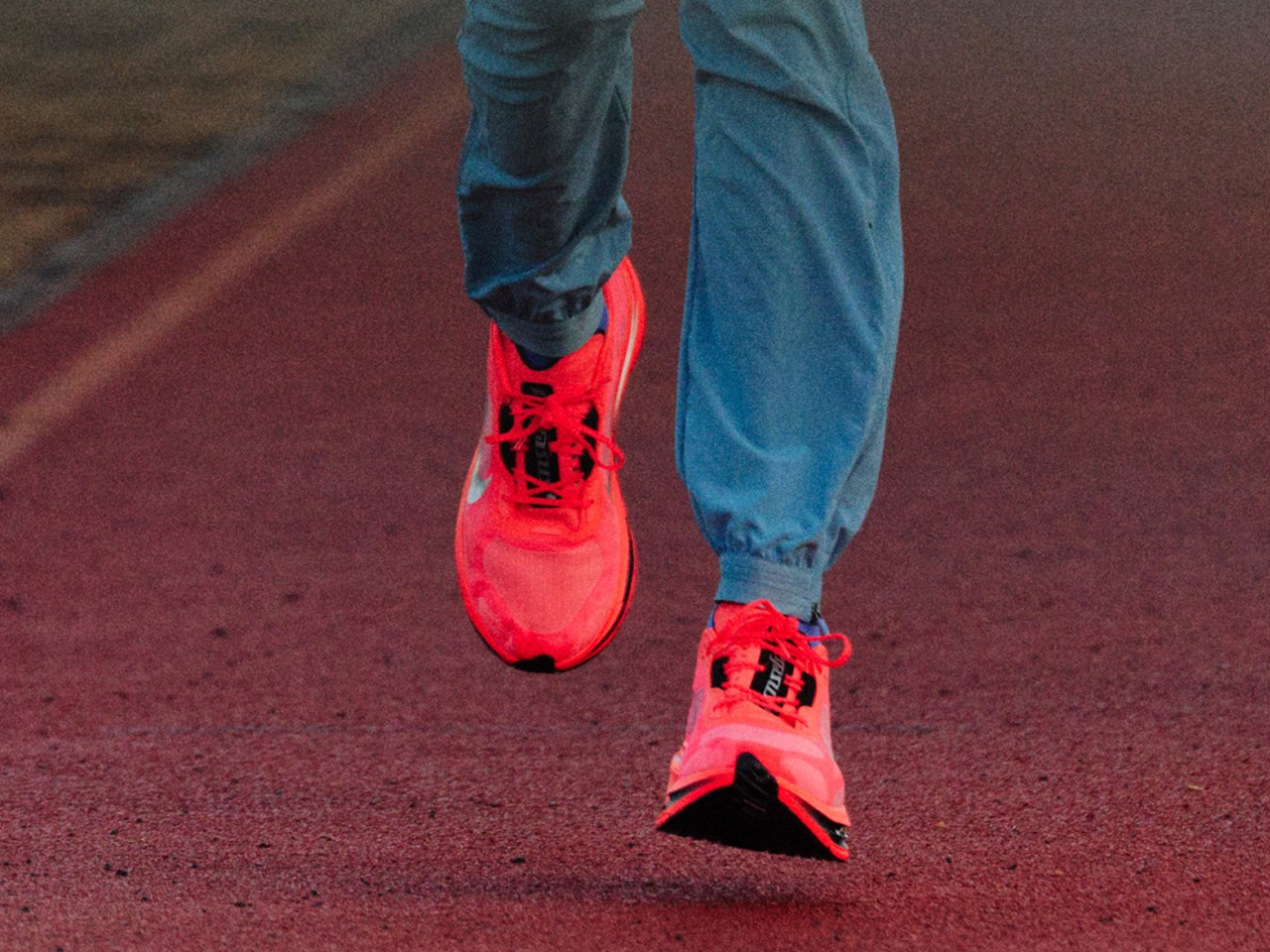
The latest evolution of Nike’s best-selling running shoe is designed for speed training like no other shoe has ever tried. If you’re a runner and you have been looking for a fast-paced training shoe, Nike’s new Pegasus is perhaps the most exciting non-plated option you should consider. It gives you a bouncier experience in every stride without the rigid carbon plate, making running easier on your feet and legs.
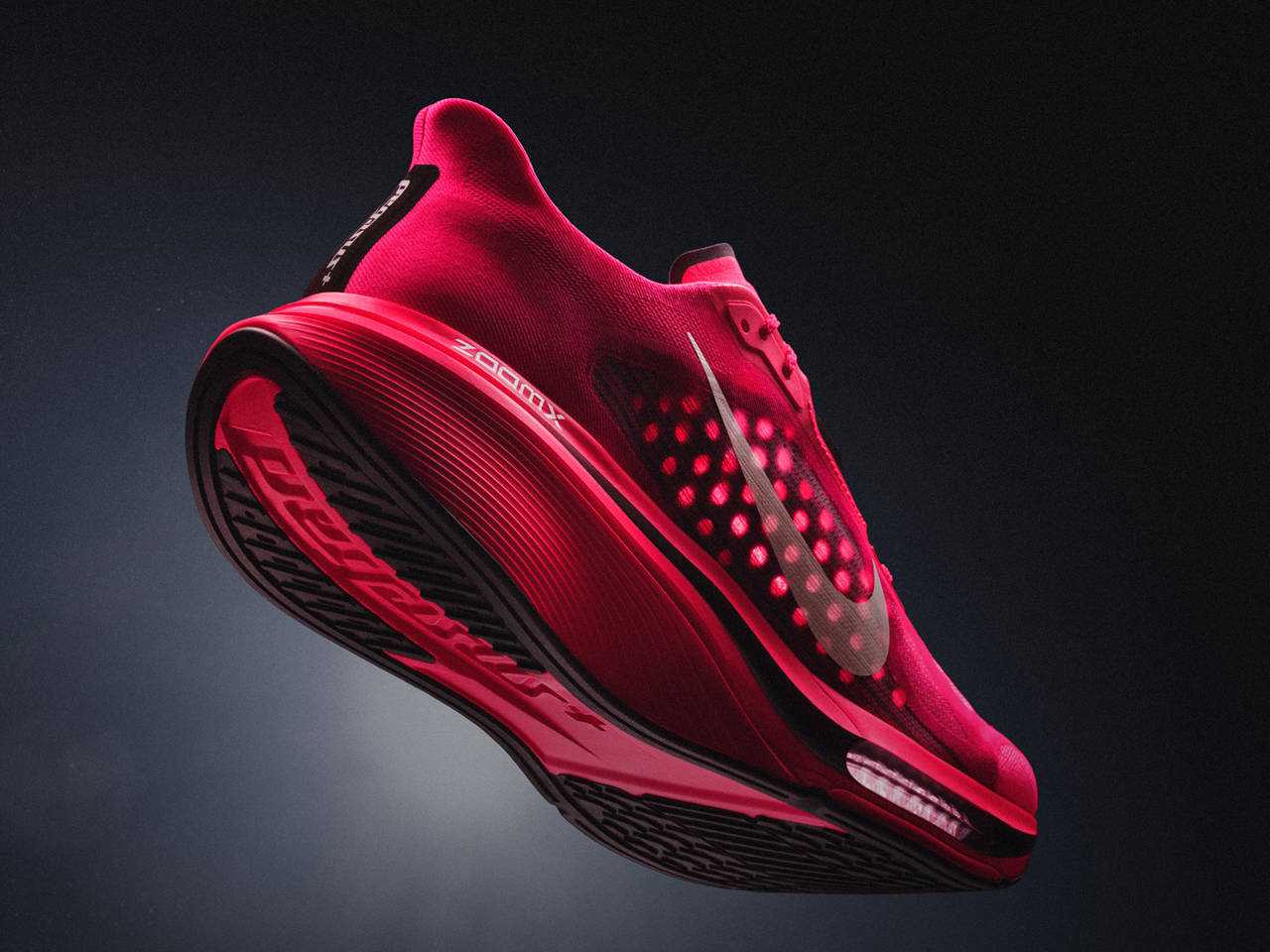
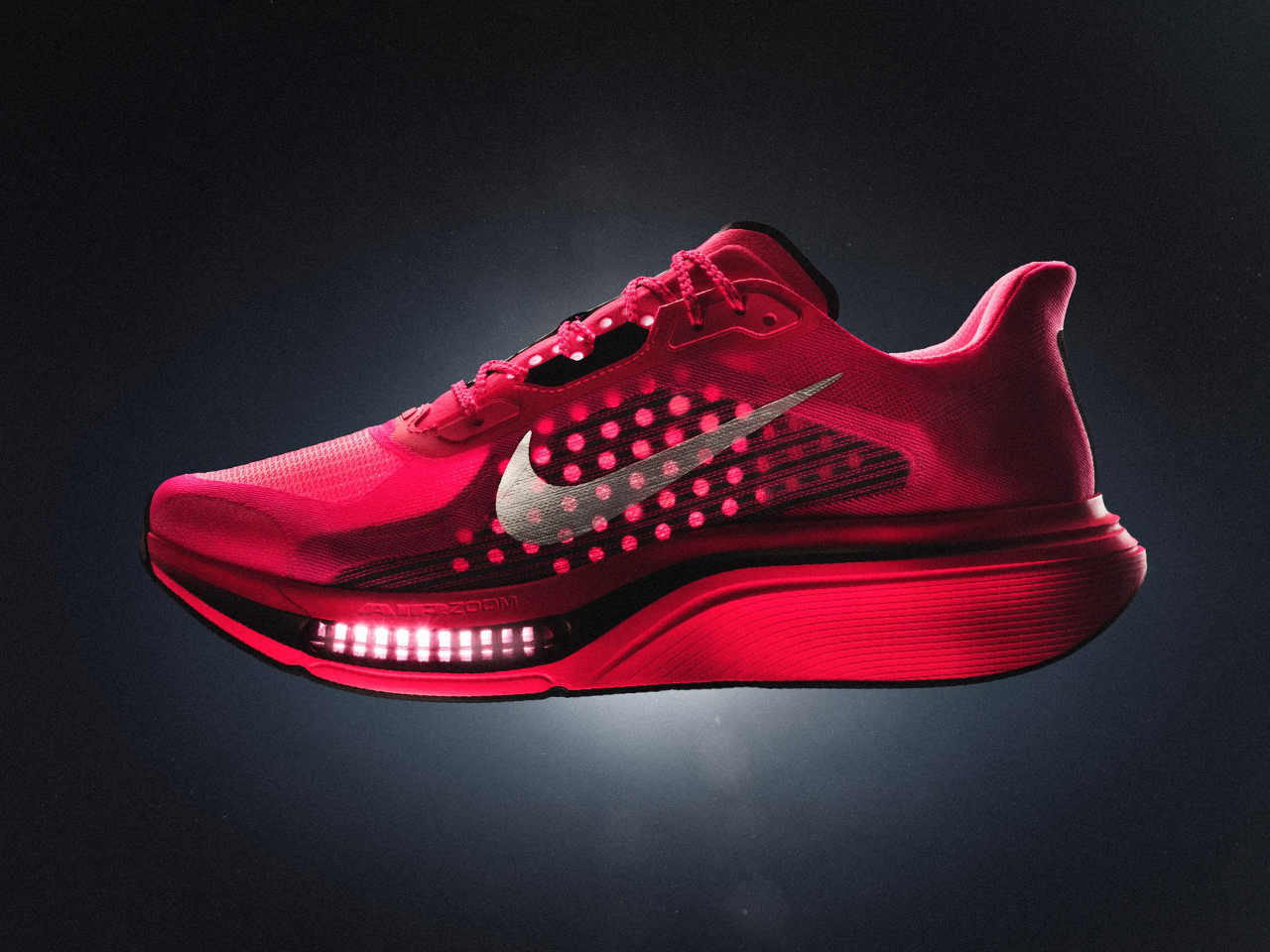
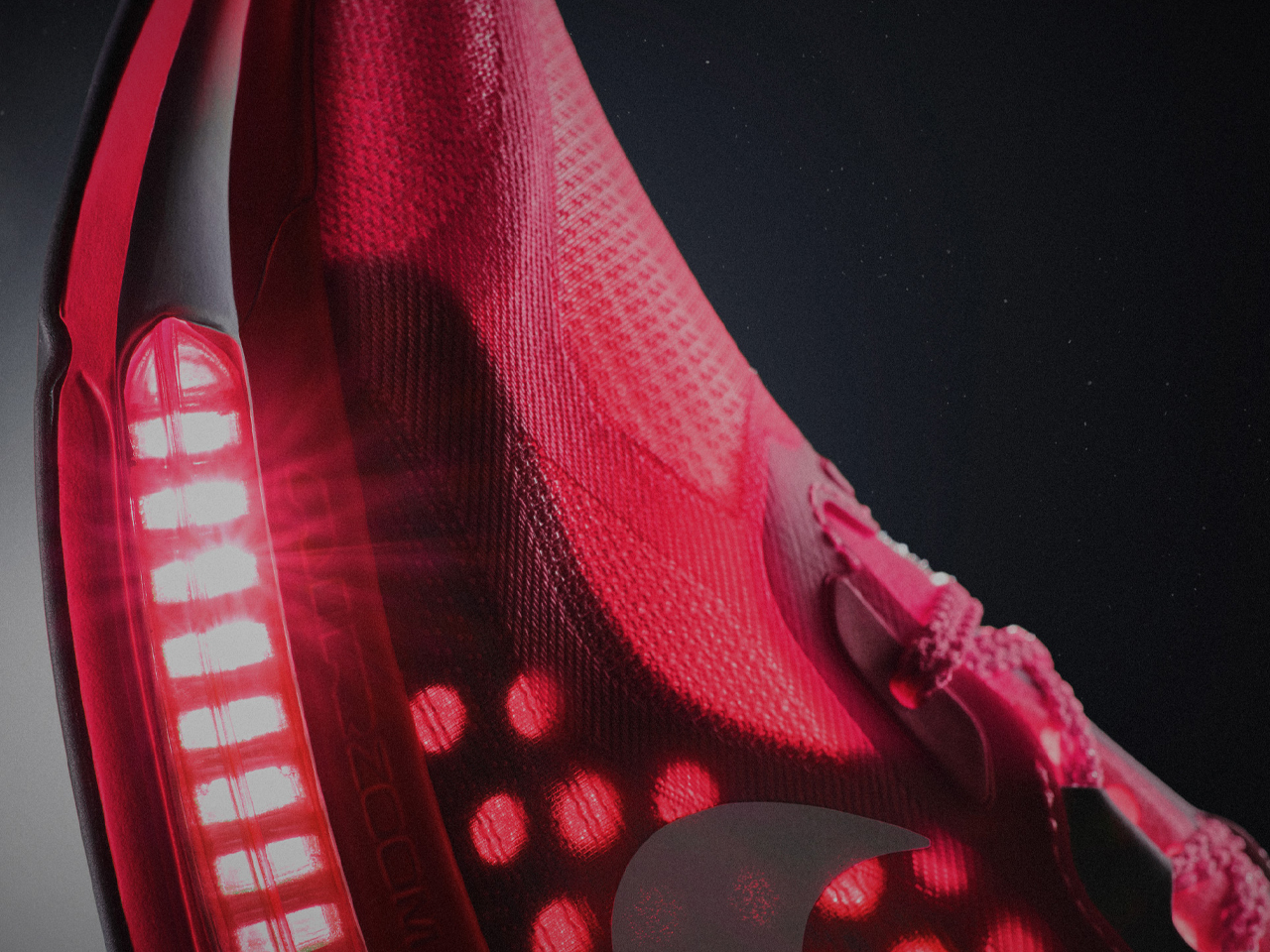
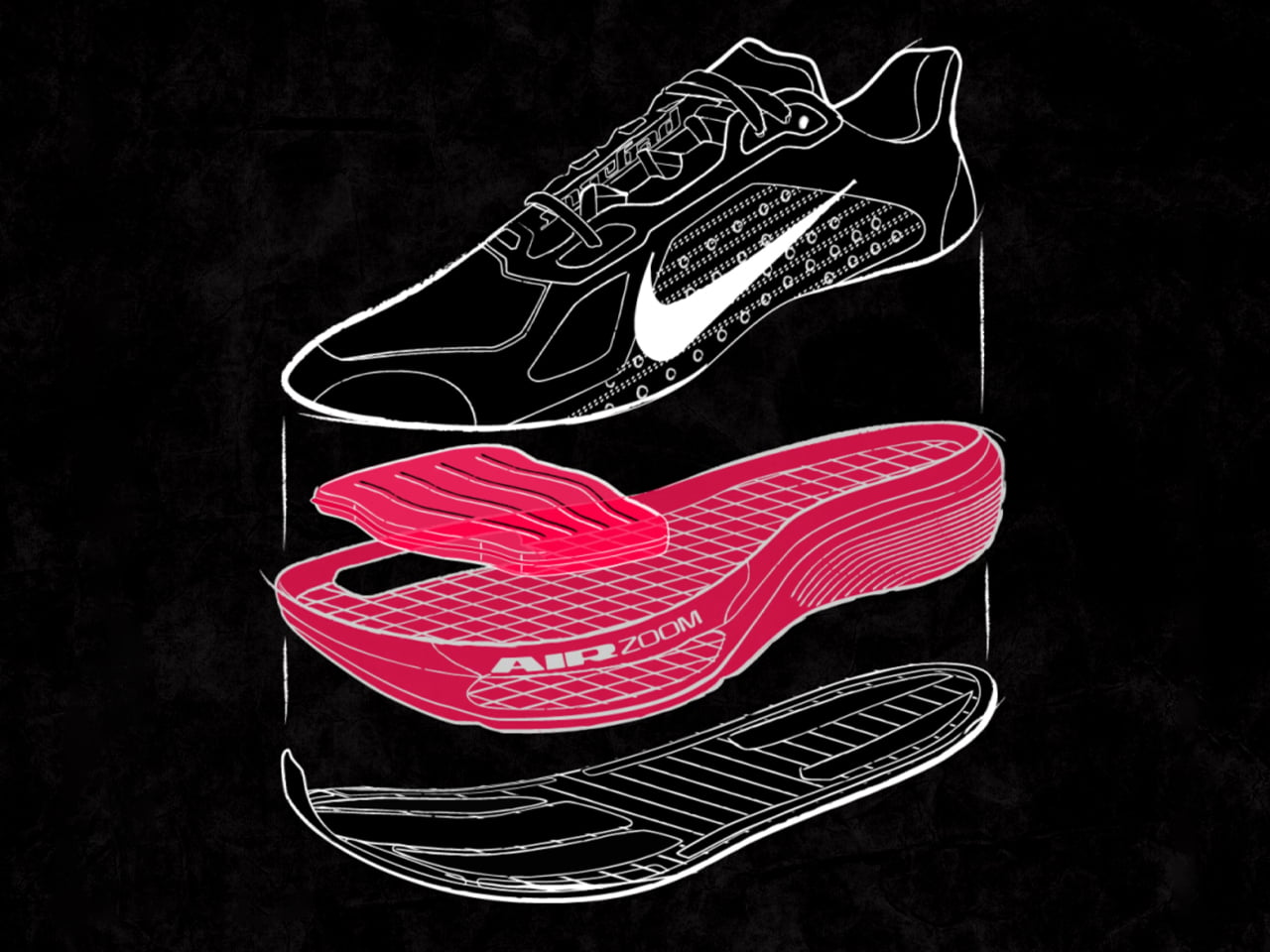
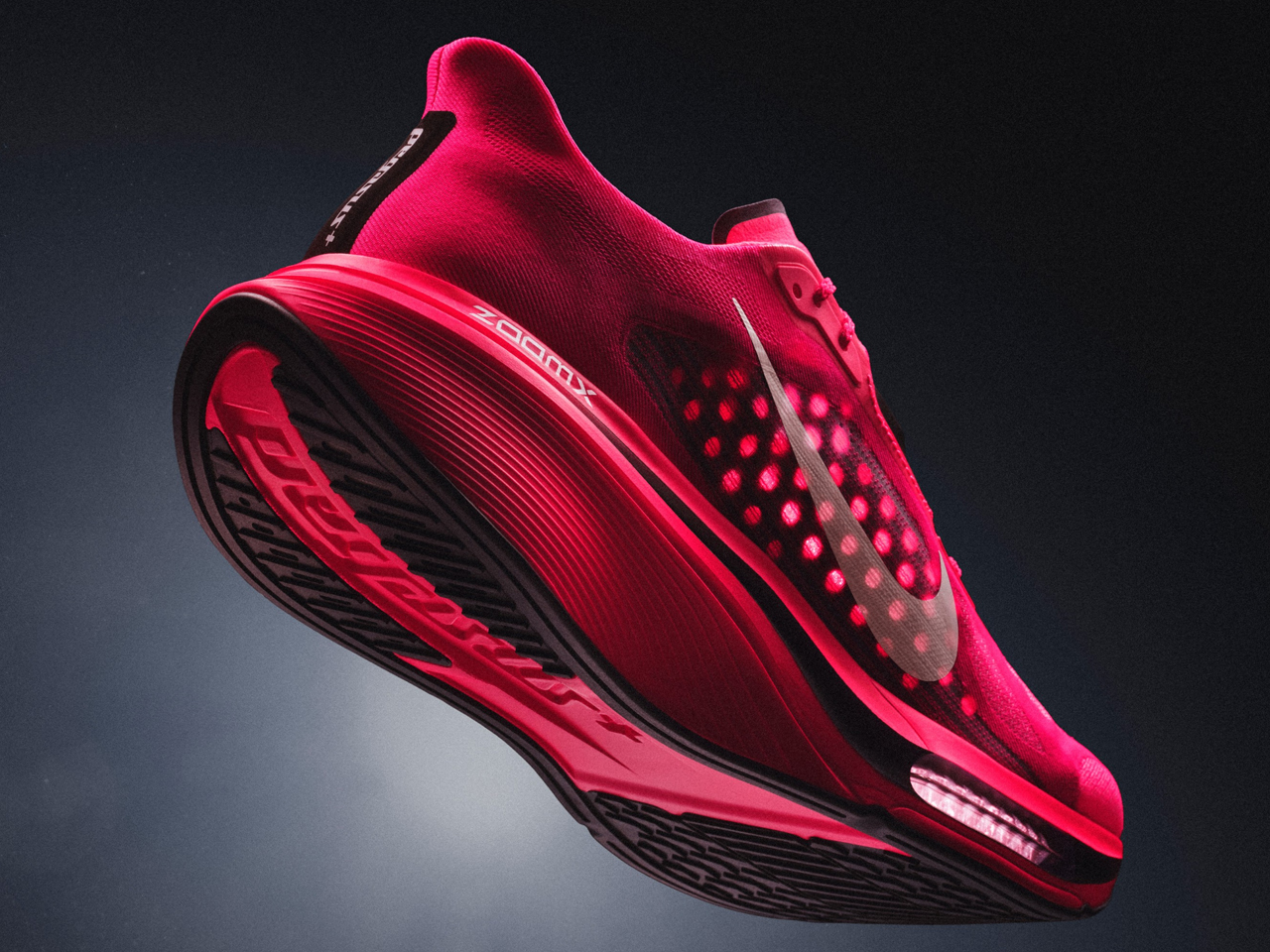
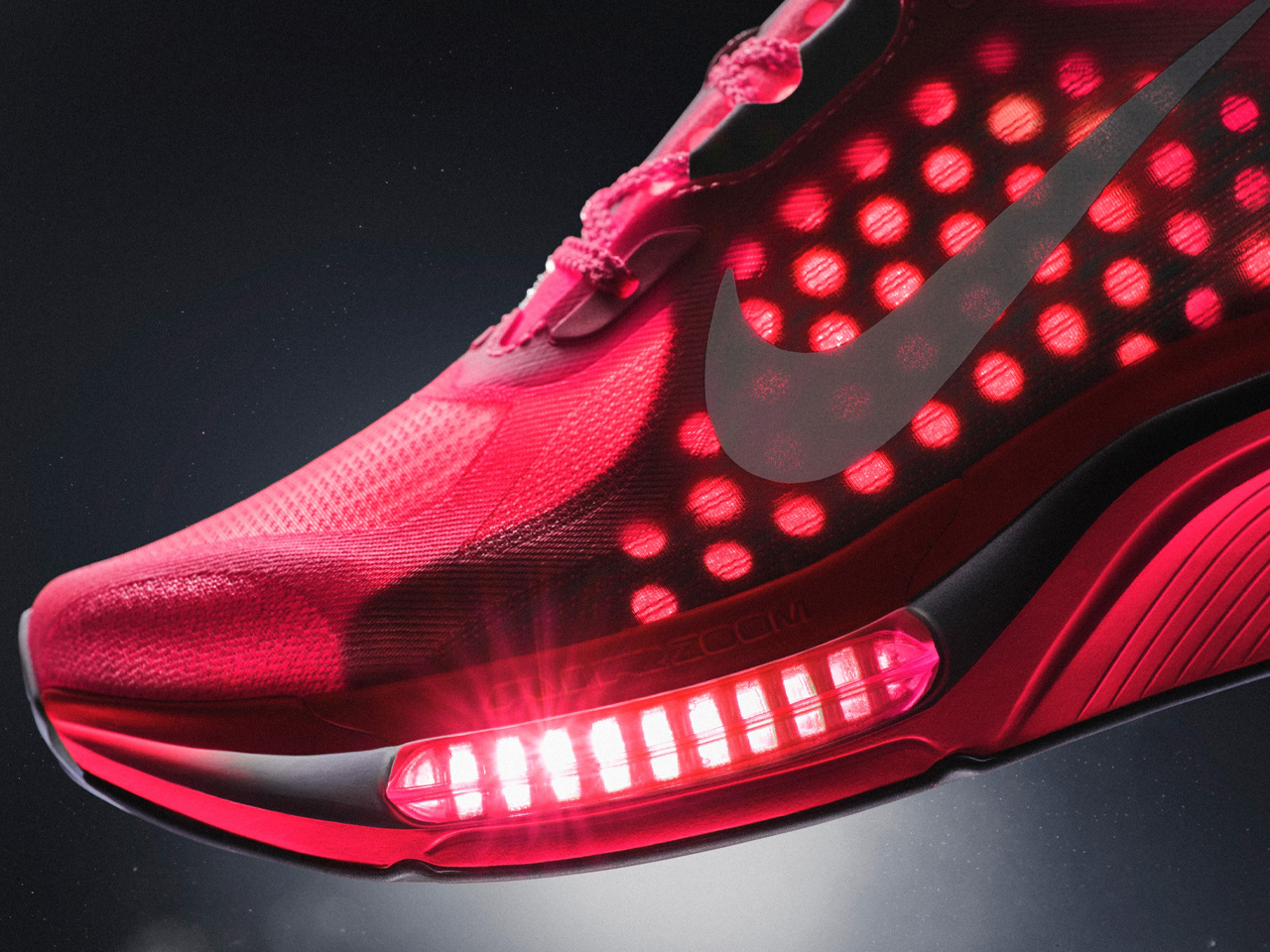
What really sets the new Nike Pegasus Plus 2, engineered as a “tempo trainer,” apart from any other silhouette in its own lineup, or outside in the competition, is the curved Air Zoom and full-length ZoomX foam forming its sole unit. According to the press information, Nike says the combination of the tech makes this running shoe 18 percent springier in comparison to the Pegasus Plus, which featured the ZoomX foam without the Air unit.
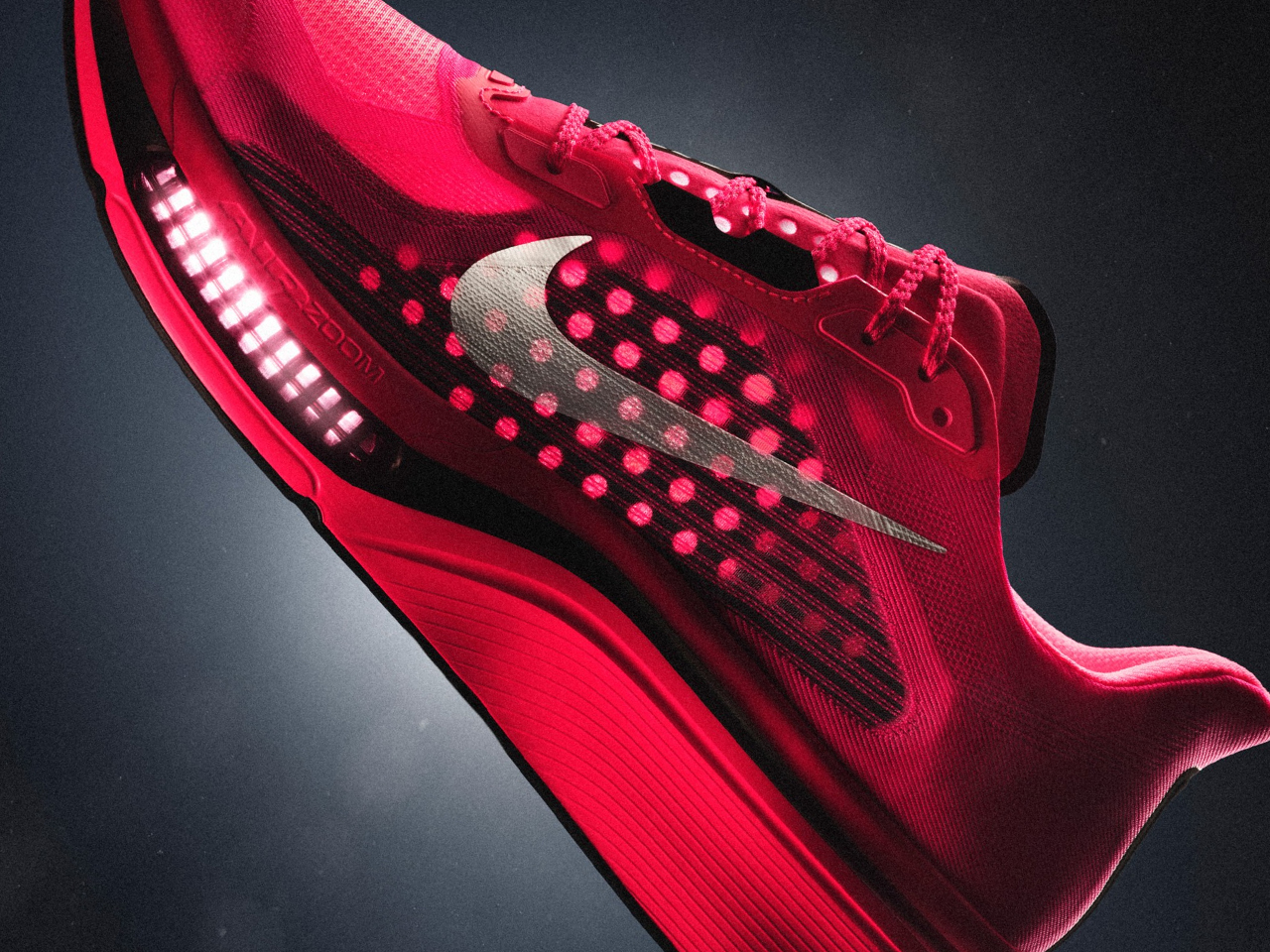
Therefore, the Pegasus Plus 2 is a lightweight and effective pair for runners who want speed but with consistency. Designed for “speed without sacrifice,” as the company puts it, the shoe comes with the curved, visible Air Zoom unit in the forefoot for additional propulsion, and a bouncy ZoomX midsole making each stride light and quicker. The Air unit underfoot has been left completely visible to make more room for it to expand and contract so it can absorb and return energy in each step during speed and tempo training.
With the combination of a novel sole unit and precision-engineered Flyknit material upper, which ensures breathability and comfort, Nike intends to market the Pegasus Plus 2 as one of its most responsive speed trainers ever made. Interestingly, the Pegasus Plus 2 features a fine-tuned MD10 2.0 last, which was introduced in the Pegasus 42, with a more accommodating forefoot and toe box. On the opposite side, the elevated materials around the ankle and a modern waffle outsole make the cushiony and supportive shoe more attractive. Nike is slated to make the Pegasus Plus 2 available for purchase starting August 30. The speed trainer will be priced at $165, which is cheaper than its predecessor, the Pegasus Plus.
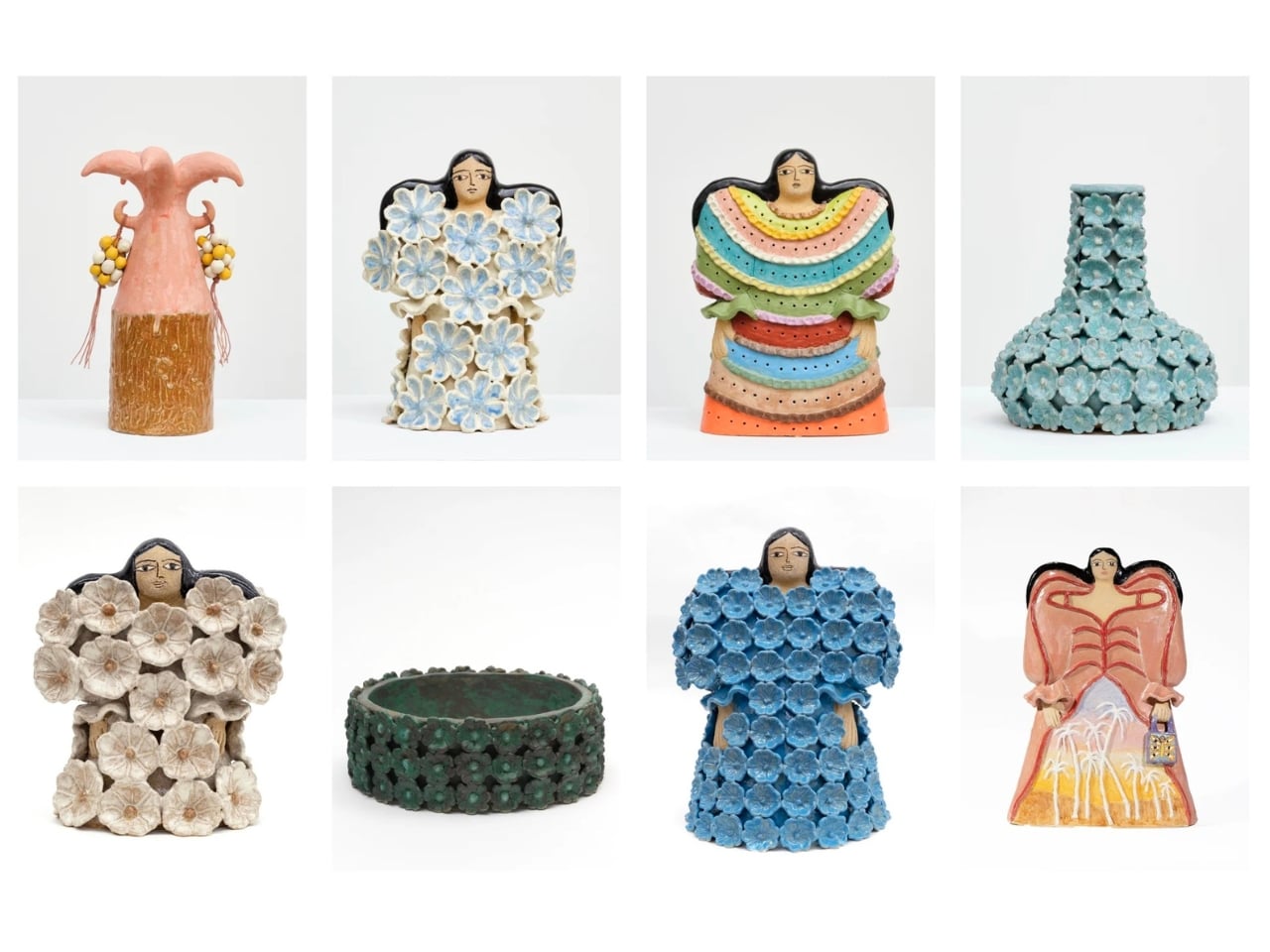
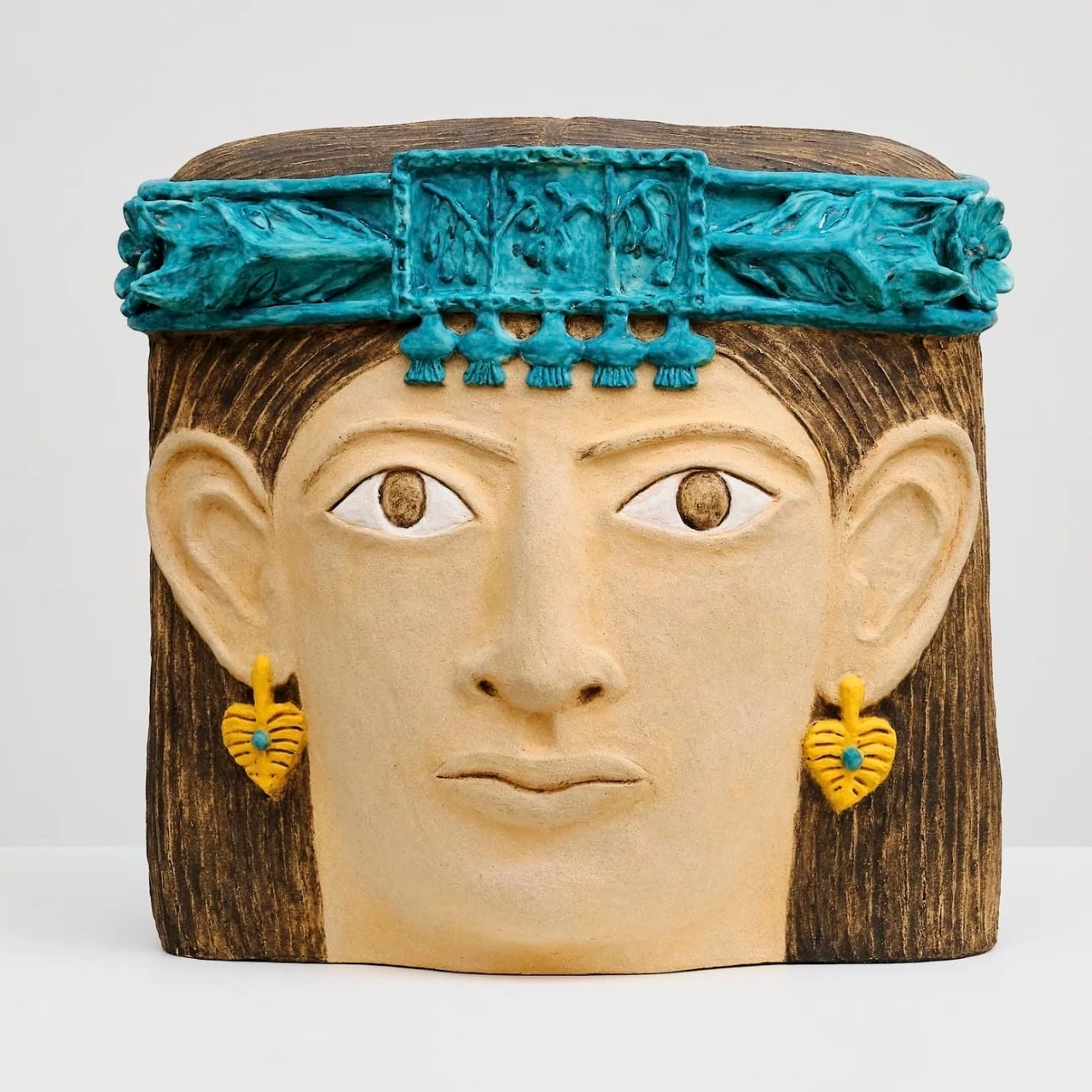
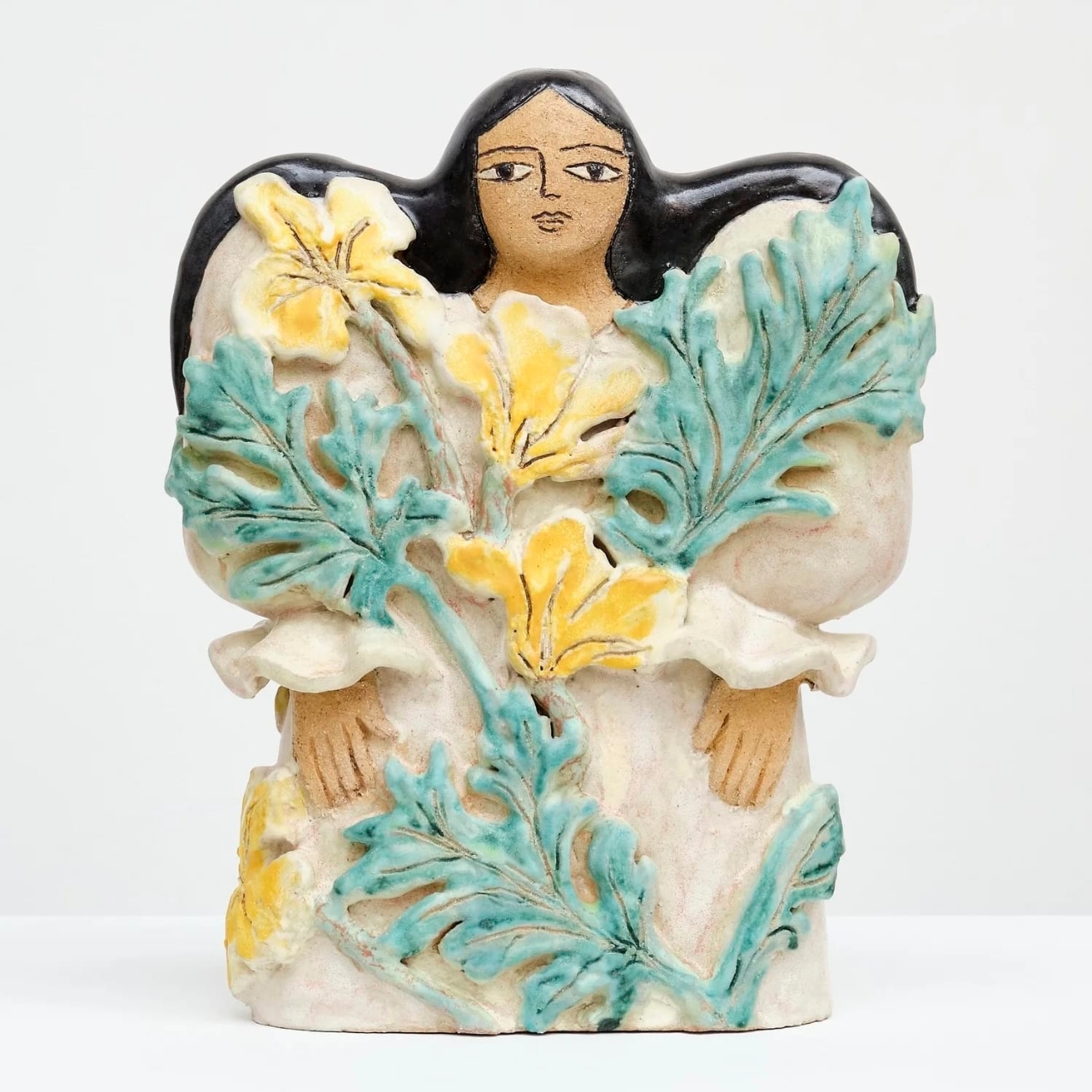
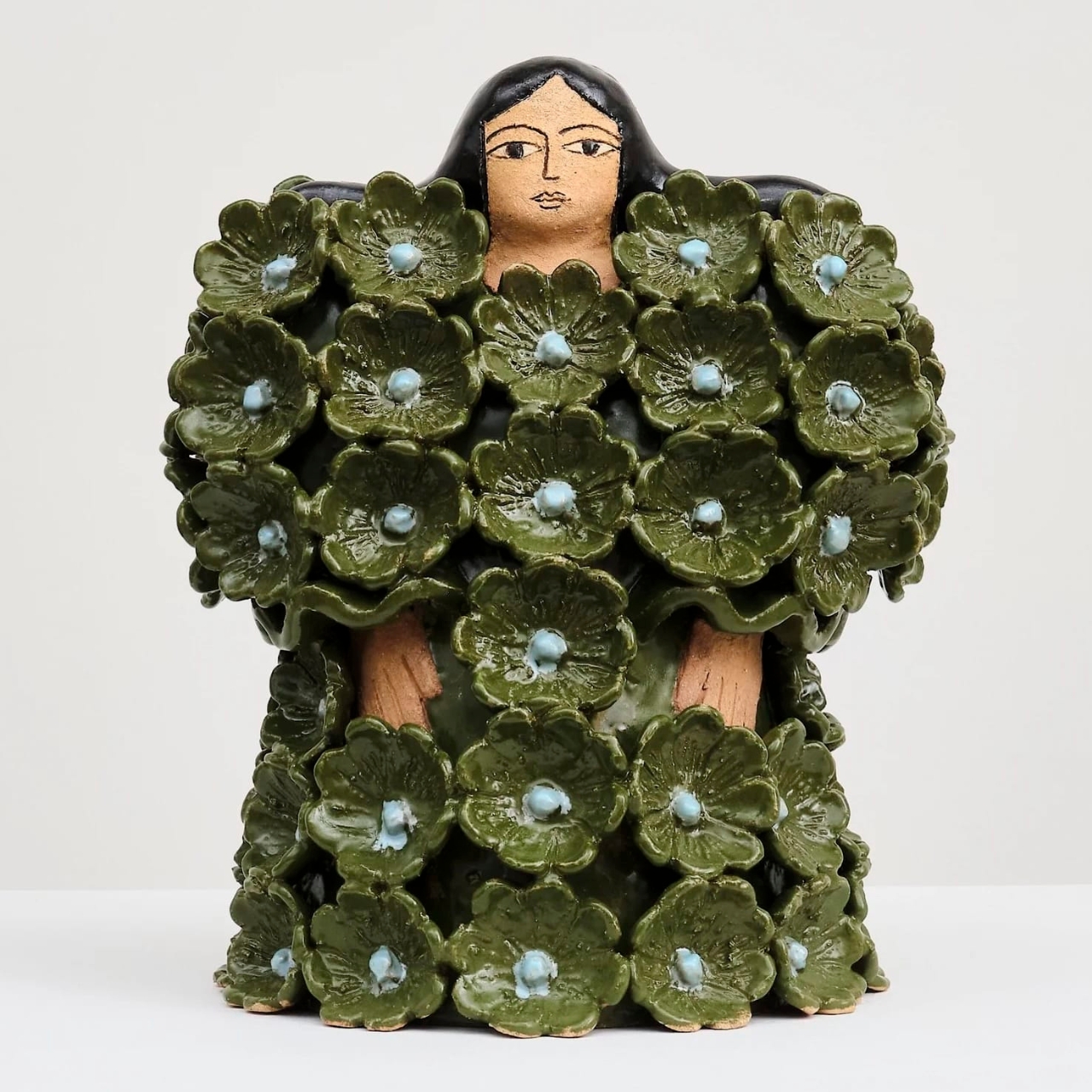
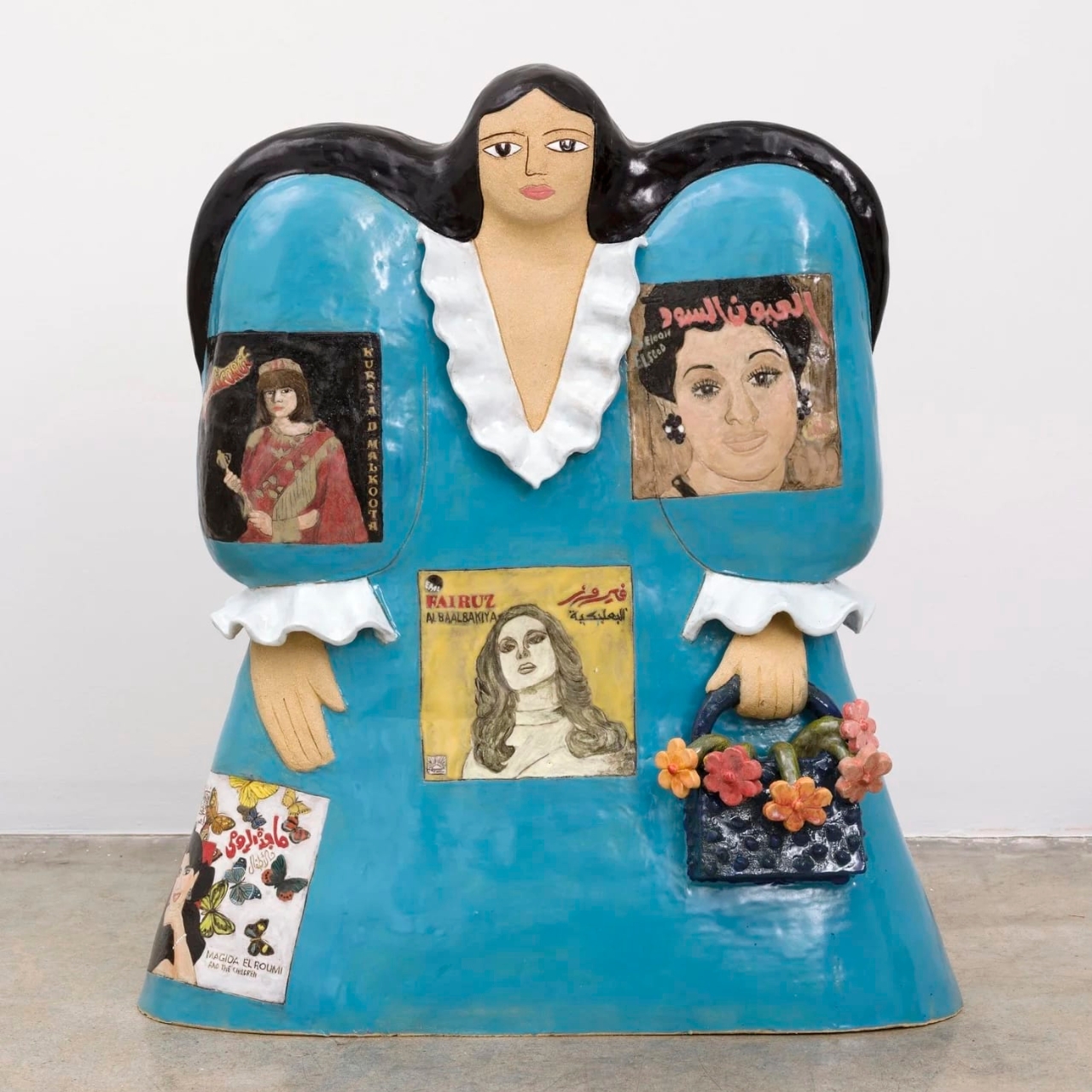
The first time you see Maryam Yousif’s ceramic figures, you feel like you’re being introduced to someone. Not admiring an object, not reading a plaque. Actually meeting a person who has a lot to say.
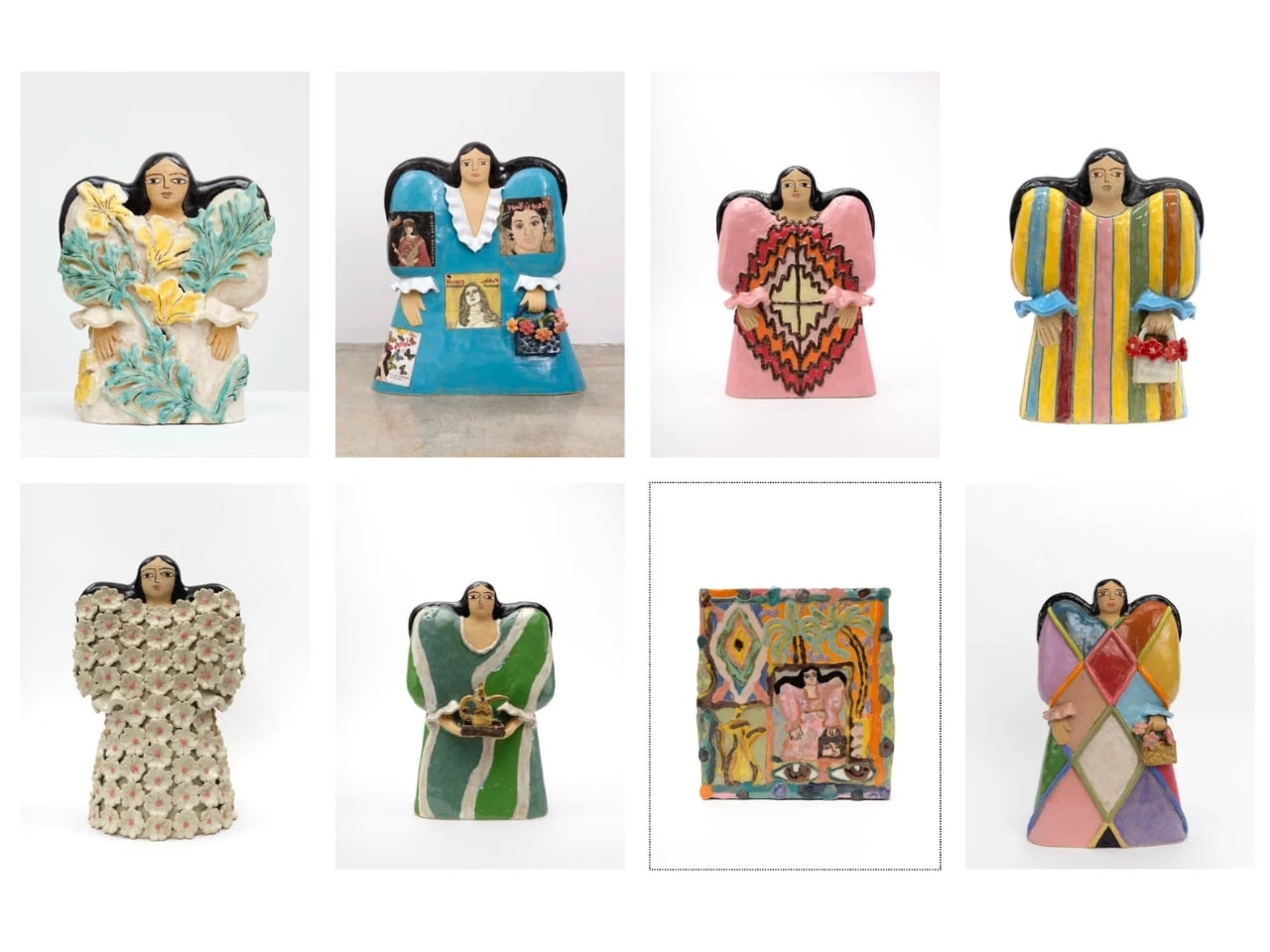
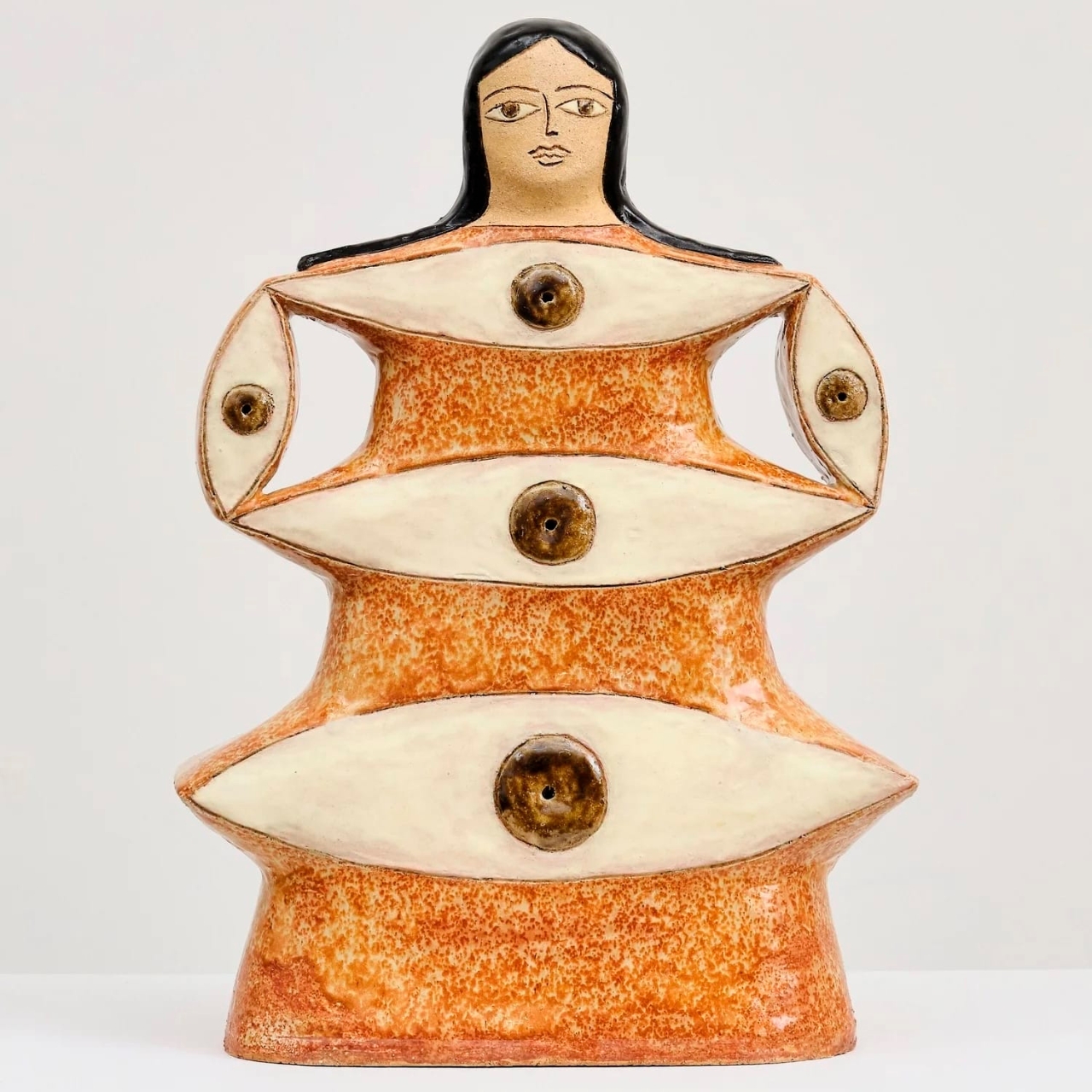
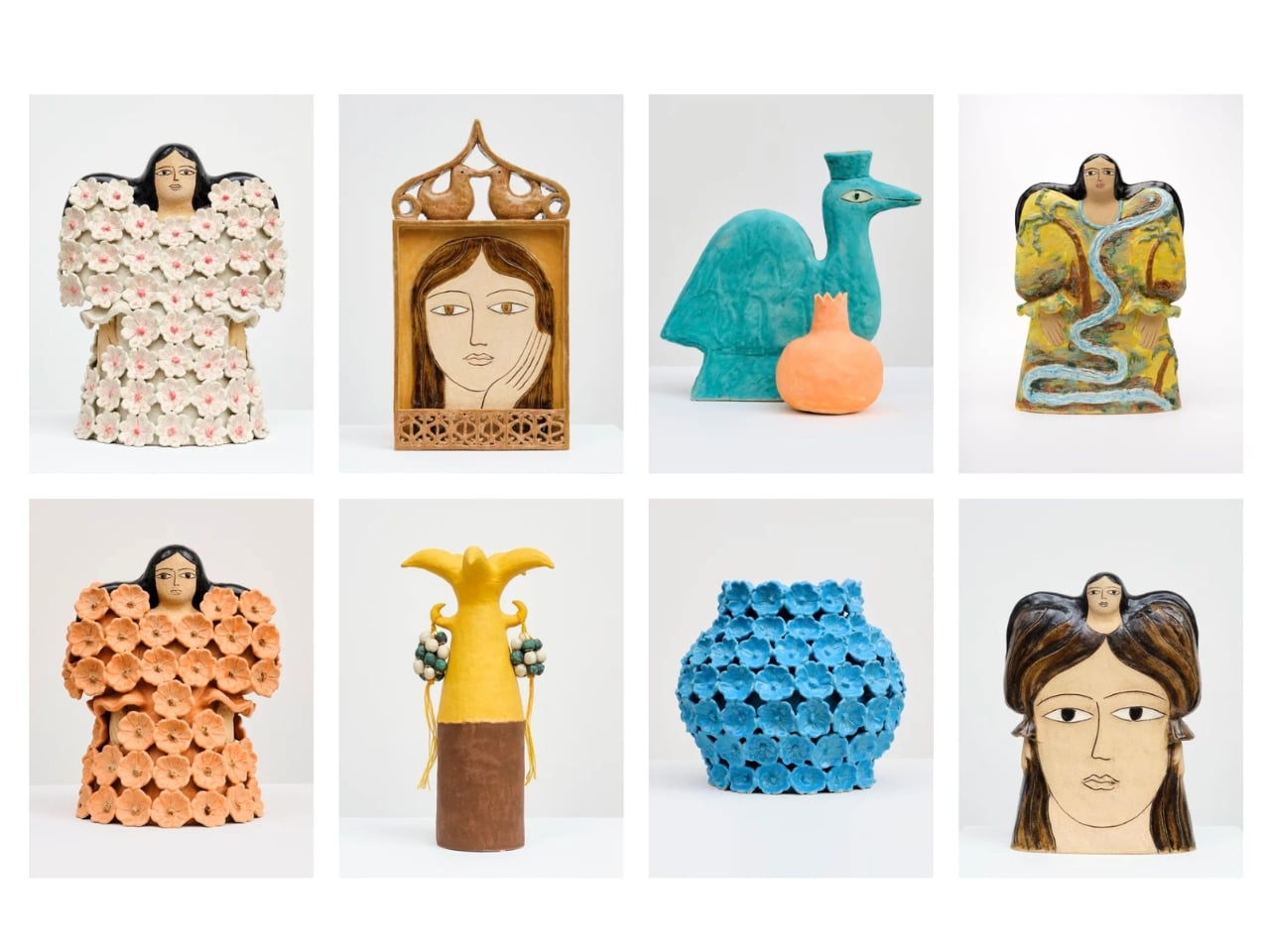
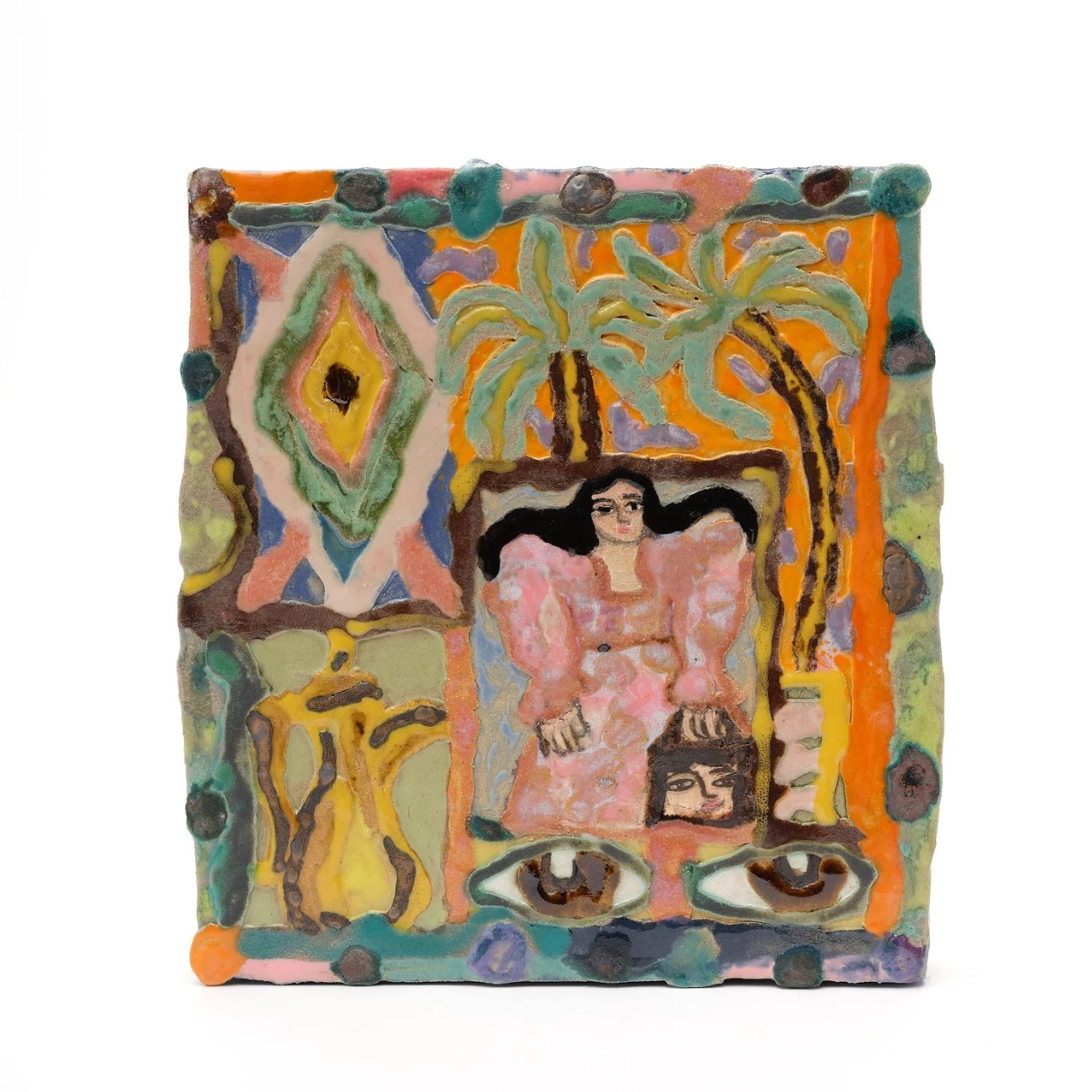
That is the whole idea. Yousif, an Iraqi-American artist based in San Francisco, has spent years building a universe of glazed ceramic figures she calls the “Habibti,” Arabic for “sweetheart” or “my love.” They are not decorative in the passive sense. They stand with quiet confidence, robed in dresses made of repeating rosette patterns, eye motifs, pomegranate shapes, and even other women’s faces. They look at you. Or rather, they look past you, the way the oldest, most self-assured things tend to do.
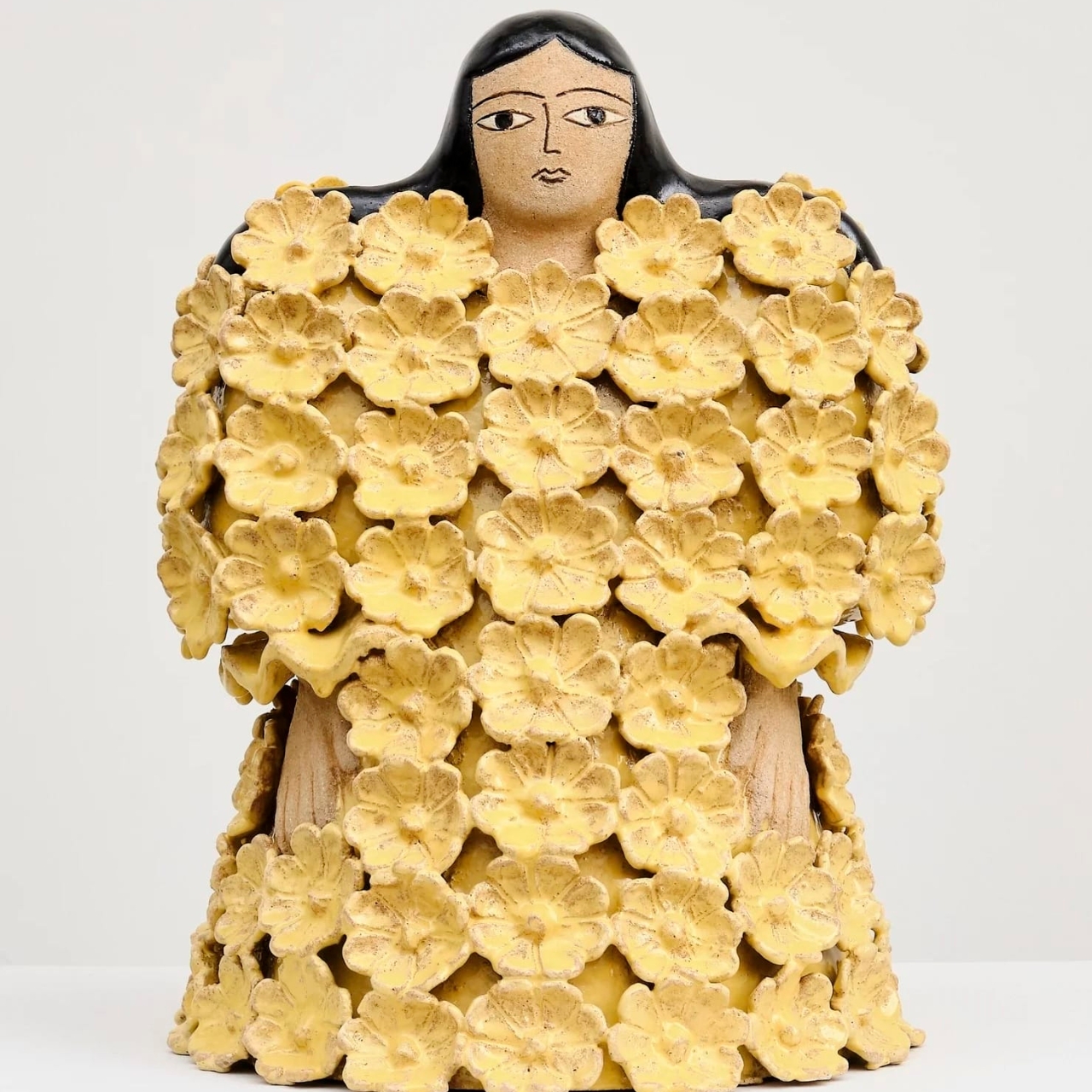
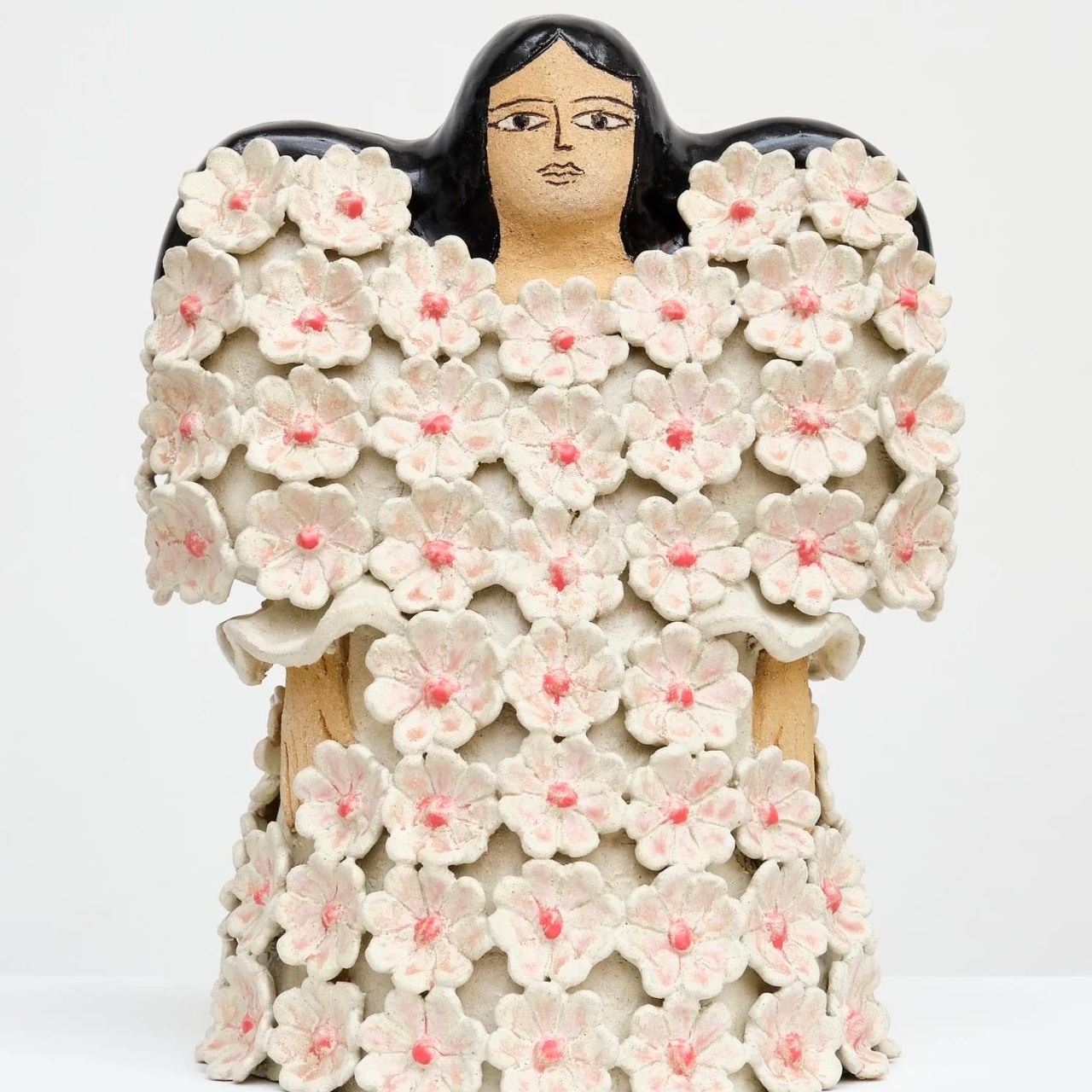
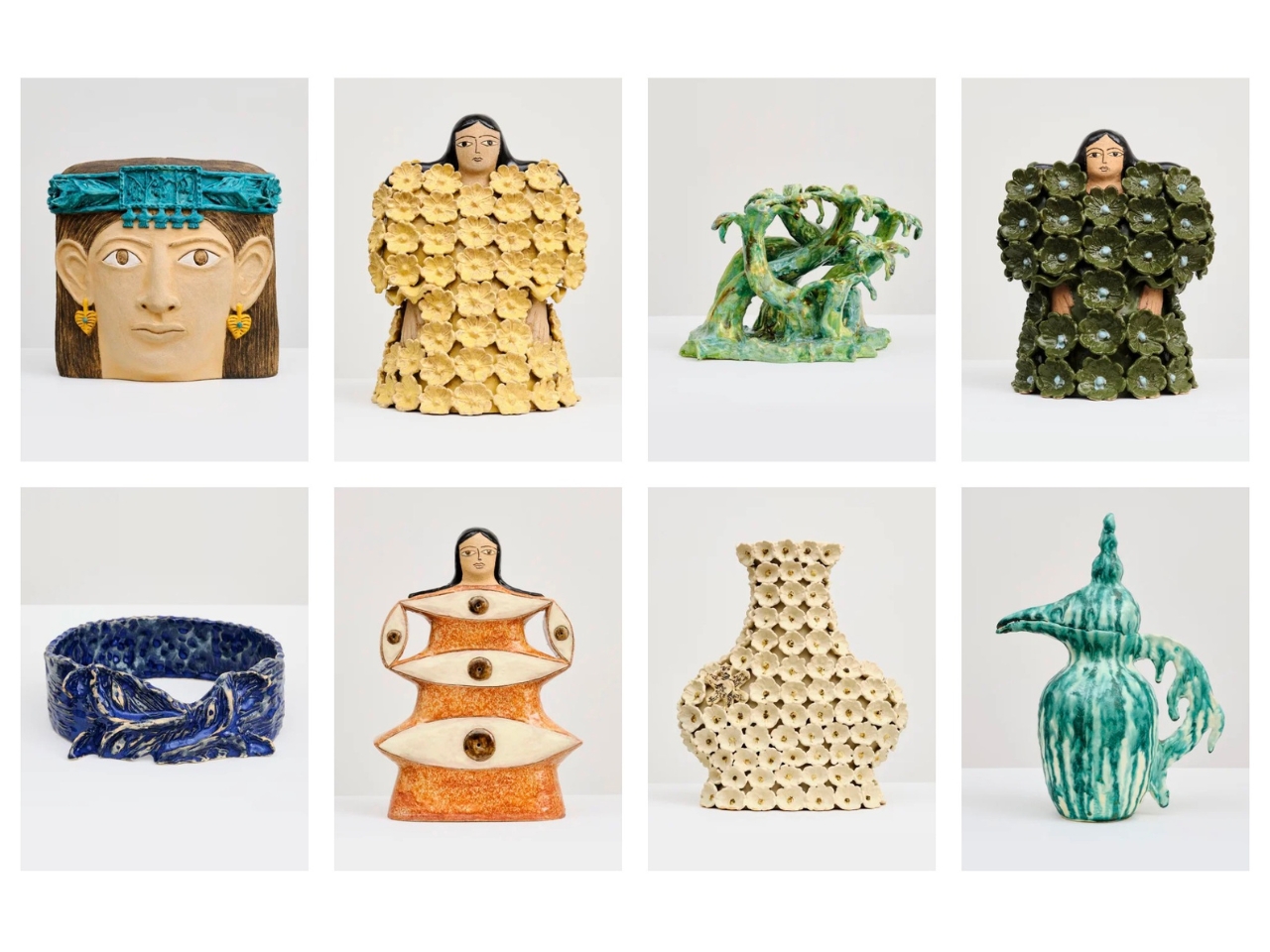
What makes these figures so compelling to spend time with is the dresses. Each Habibti is draped in a pattern that functions almost like a visual archive. Rosettes borrowed from ancient Mesopotamian and Assyrian design. Repeating eye motifs that nod to protection and evil eye traditions woven throughout Middle Eastern and North African cultures. Sometimes the fabric of the dress is made entirely of other women’s faces, stacked and repeating like a tessellation of solidarity. Each pattern is distinct, but they all share the same quality of layering meaning without demanding that you decode it. Yousif renders all of it in vivid glaze, tangerine, wedgwood blue, desert yellow, green, giving what could have been scholarly reference the warmth and personality of something made with genuine affection.
The figures themselves are elegant and simplified. Black hair. Arms quietly at their sides. Some carry what looks like a structured bag, a detail lifted from ancient Assyrian carvings, where divine figures are often depicted holding a similar vessel. Yousif doesn’t footnote this for you. She trusts that the image works whether you recognize the source or not, and she is right to. The Habibti figures have a presence that operates independently of art history knowledge. You don’t need context to feel their composure.
What Yousif has built here is not a series so much as a cast of characters. Each figure has a distinct personality that comes through in color palette and patterning. Habibti in Yellow Desert Rosette Dress reads as ceremonial, almost solar. Habibti in Tangerine Rosette Dress is warmer, more intimate. Habibti in Green Rosette Dress feels grounded, earthly. The variation is intentional, and it matters. These are not multiples. They are individuals.
The Habibti concept draws from the Sumerian votive tradition, the practice of placing small clay figures in temples as stand-ins for worshippers who could not always be physically present. Those ancient figures were made to pray on behalf of the living. Yousif updates that idea with bold color, contemporary craft, and the Bay Area’s funk art sensibility, placing women at the center and naming each one after a term of endearment. The gesture reframes devotion entirely.
I keep thinking about the craft itself. Ceramics as a medium has a complicated relationship with fine art hierarchies. It has historically been positioned as craft, as decorative, as lesser than painting or sculpture. Yousif doesn’t seem particularly interested in resolving that tension. She just makes work that demands to be taken seriously on its own terms, which is arguably a more effective argument than any theoretical position could make. The glaze work is rich and precise. The forms are confident. The scale, mostly under 20 inches tall, makes the figures feel personal rather than monumental, like objects meant to share a room with you rather than be observed from a distance.
The Habibti sculptures are, at their core, about presence. The presence of women. The presence of culture across time. The presence of craft as a living, breathing carrier of memory. Maryam Yousif built an entire world out of glazed clay and ancient references, and it looks like nothing else being made right now. Not a revival. Not a tribute. Something genuinely new. That, more than anything, is the point.
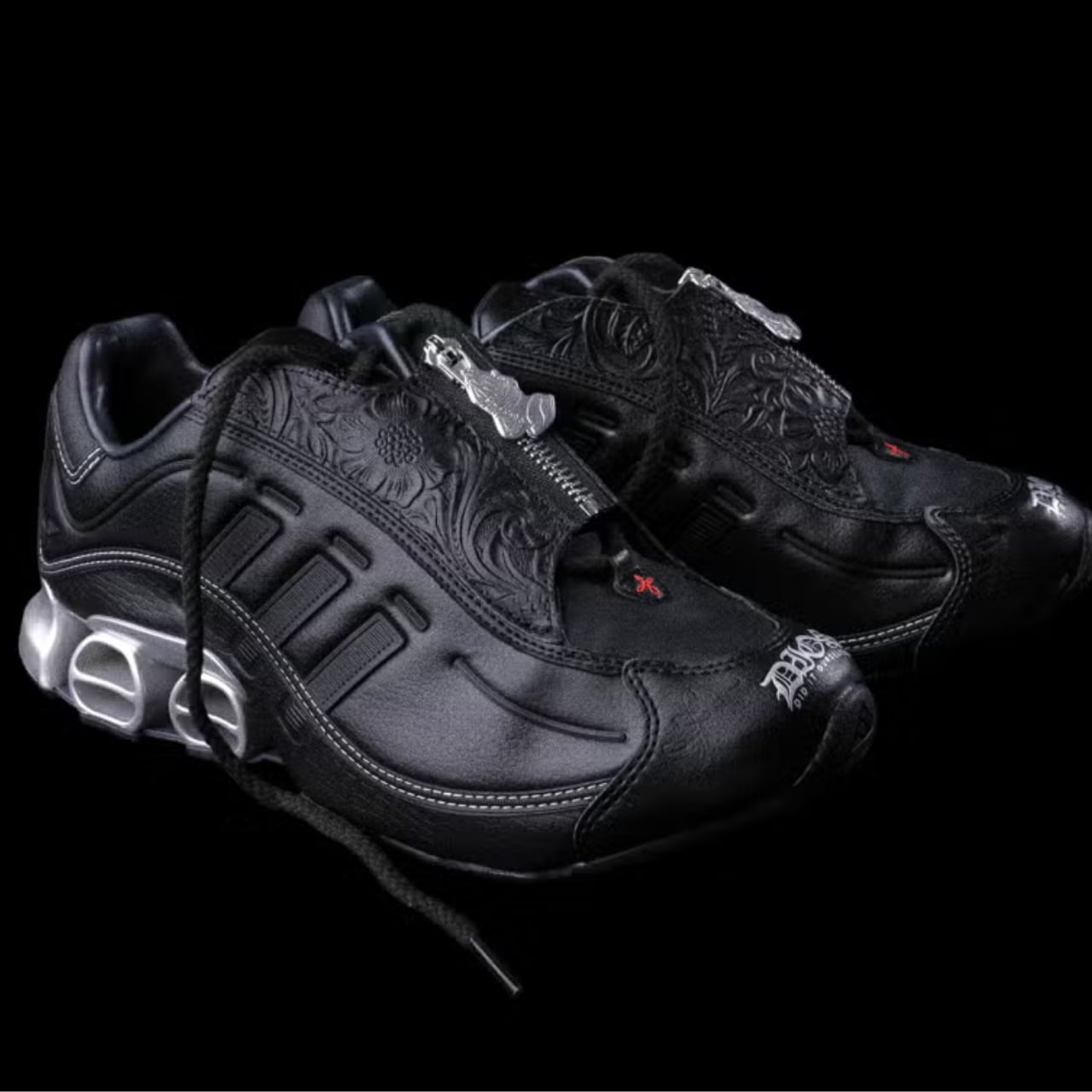
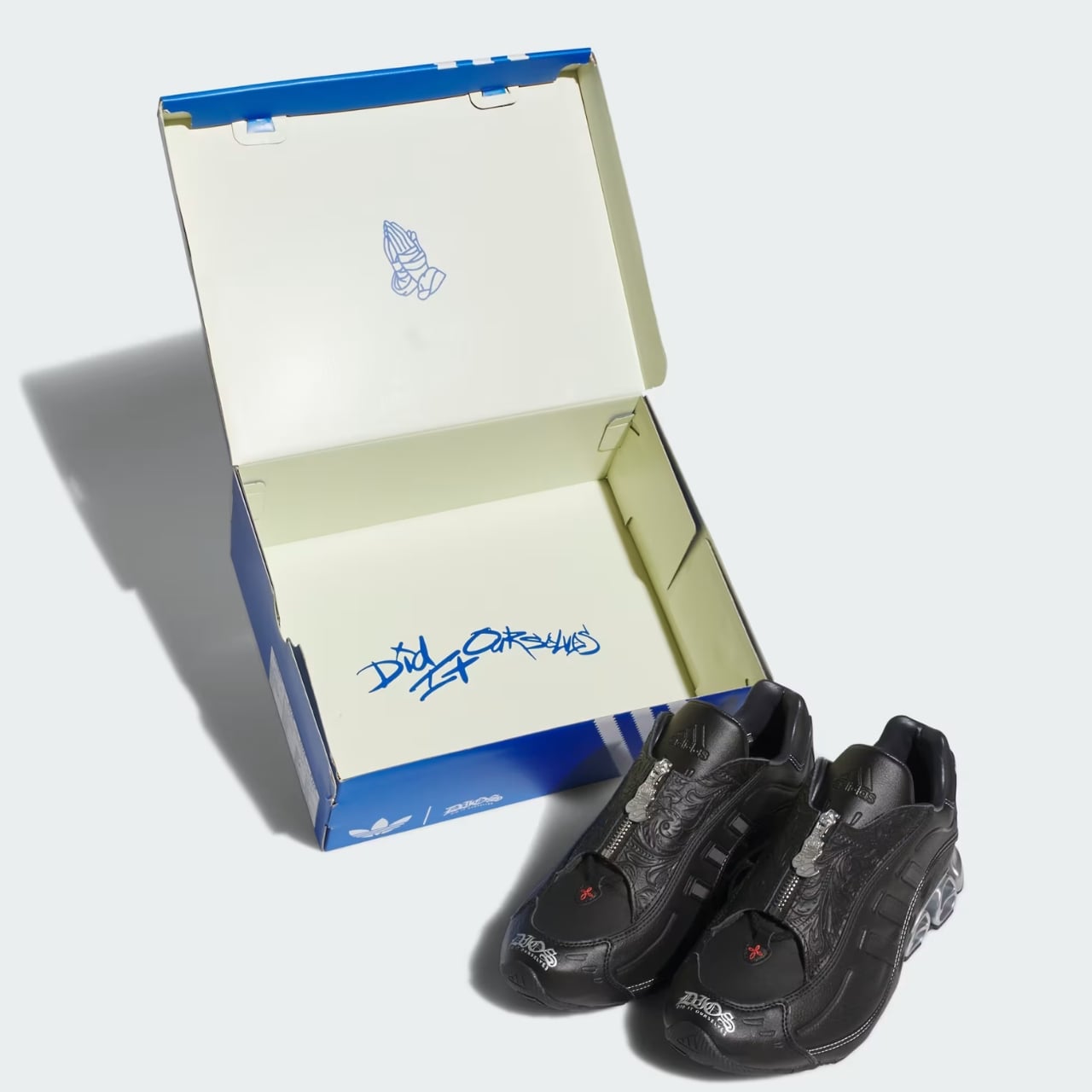
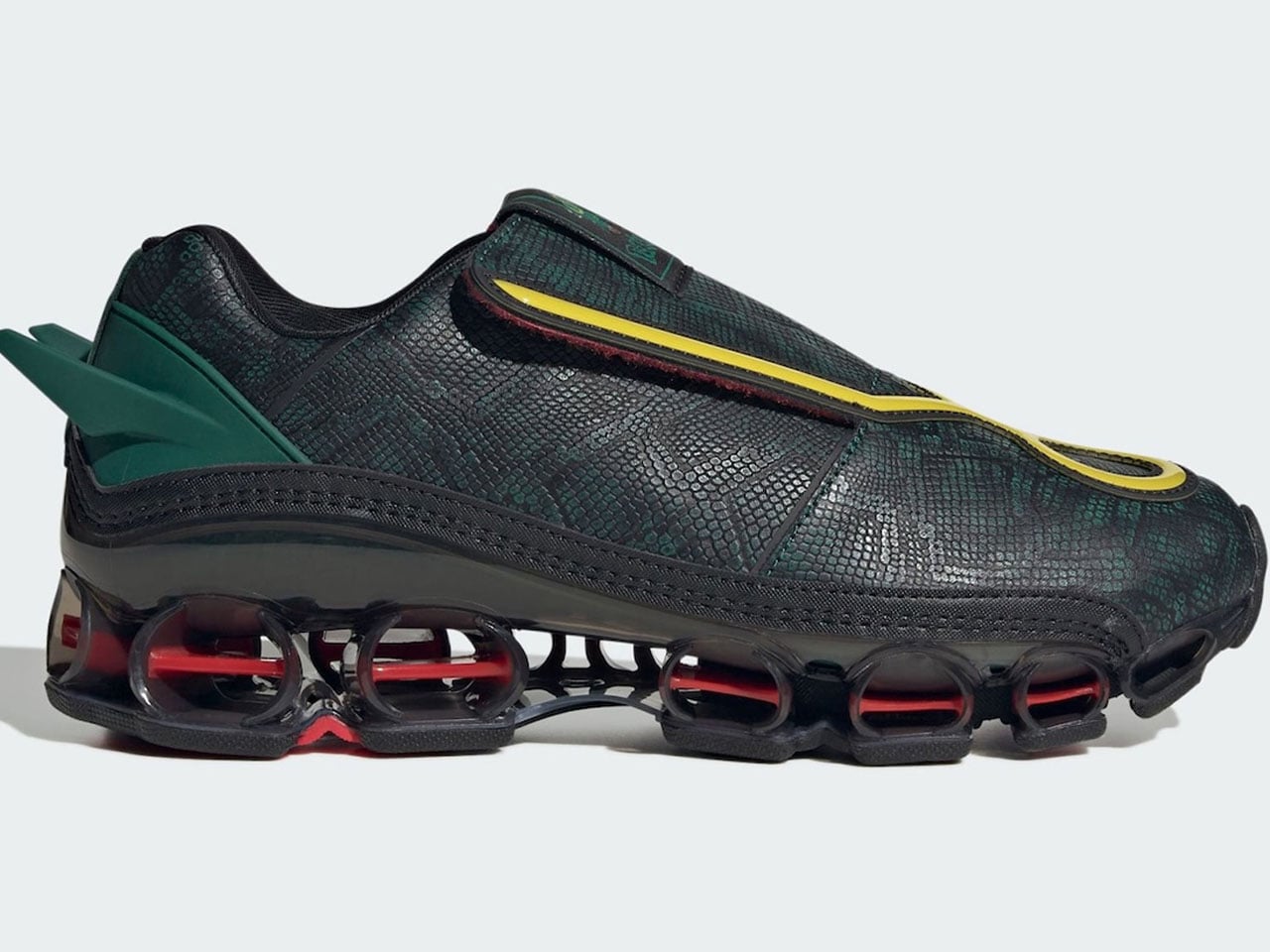
Most sneaker collaborations start with a mood board. The DIOS x adidas Originals Megaride 01 feels like it started with a city. Specifically Houston, specifically at night, specifically the kind of night where car culture and Southern pride and a very particular kind of handmade craftsmanship all converge in one place. The design is dense with meaning in a way that rewards attention, and I think that’s exactly the point.
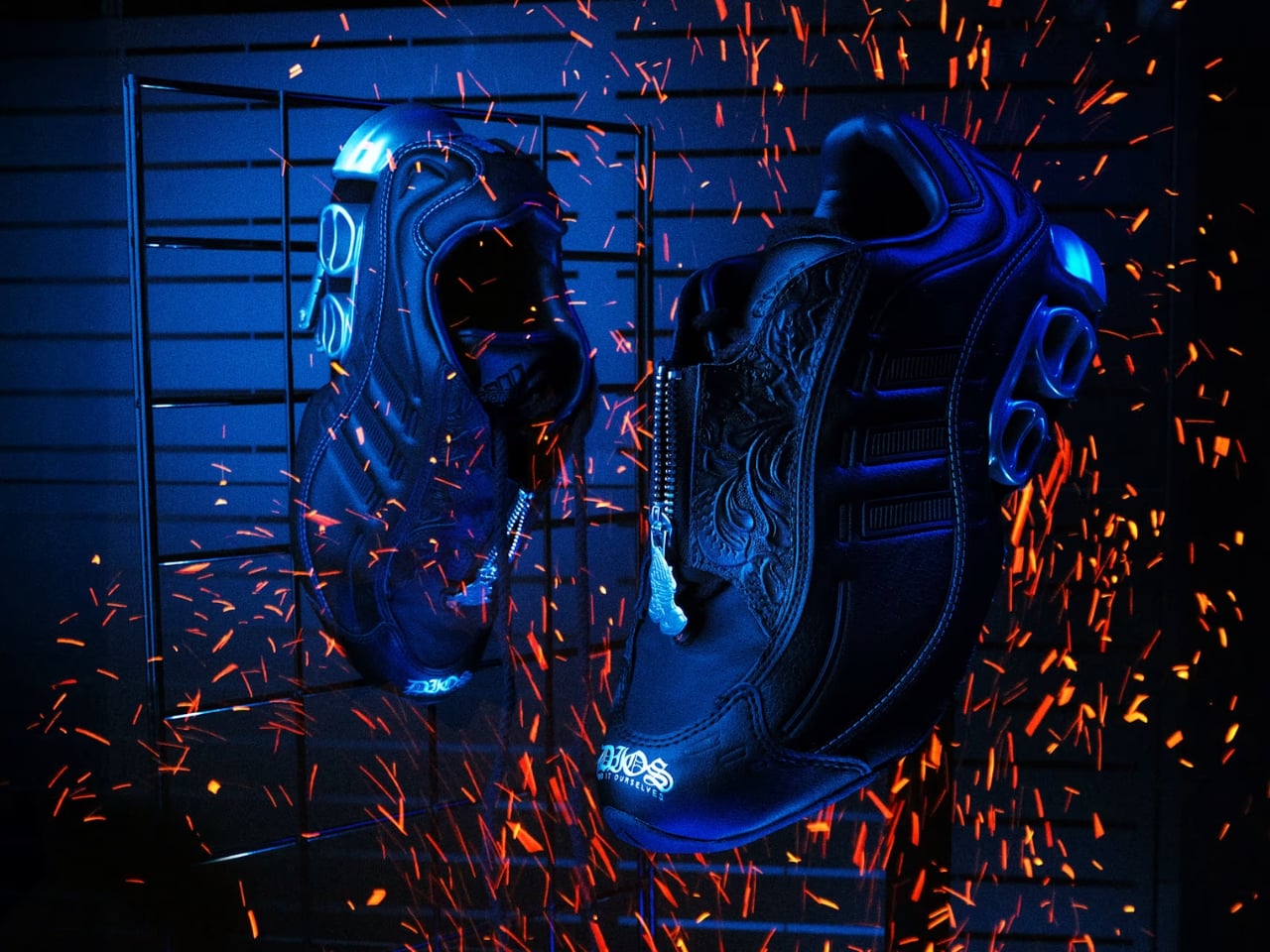
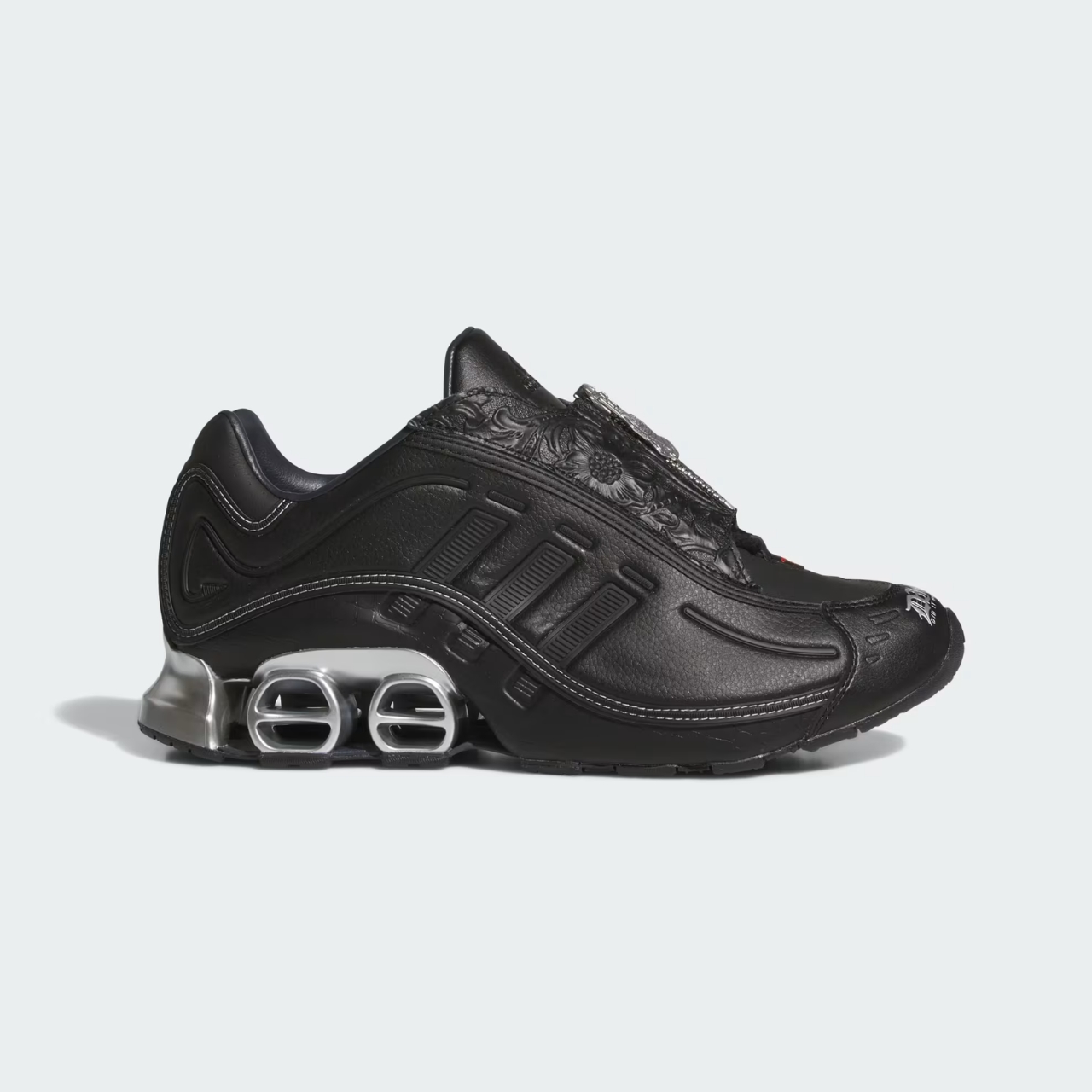
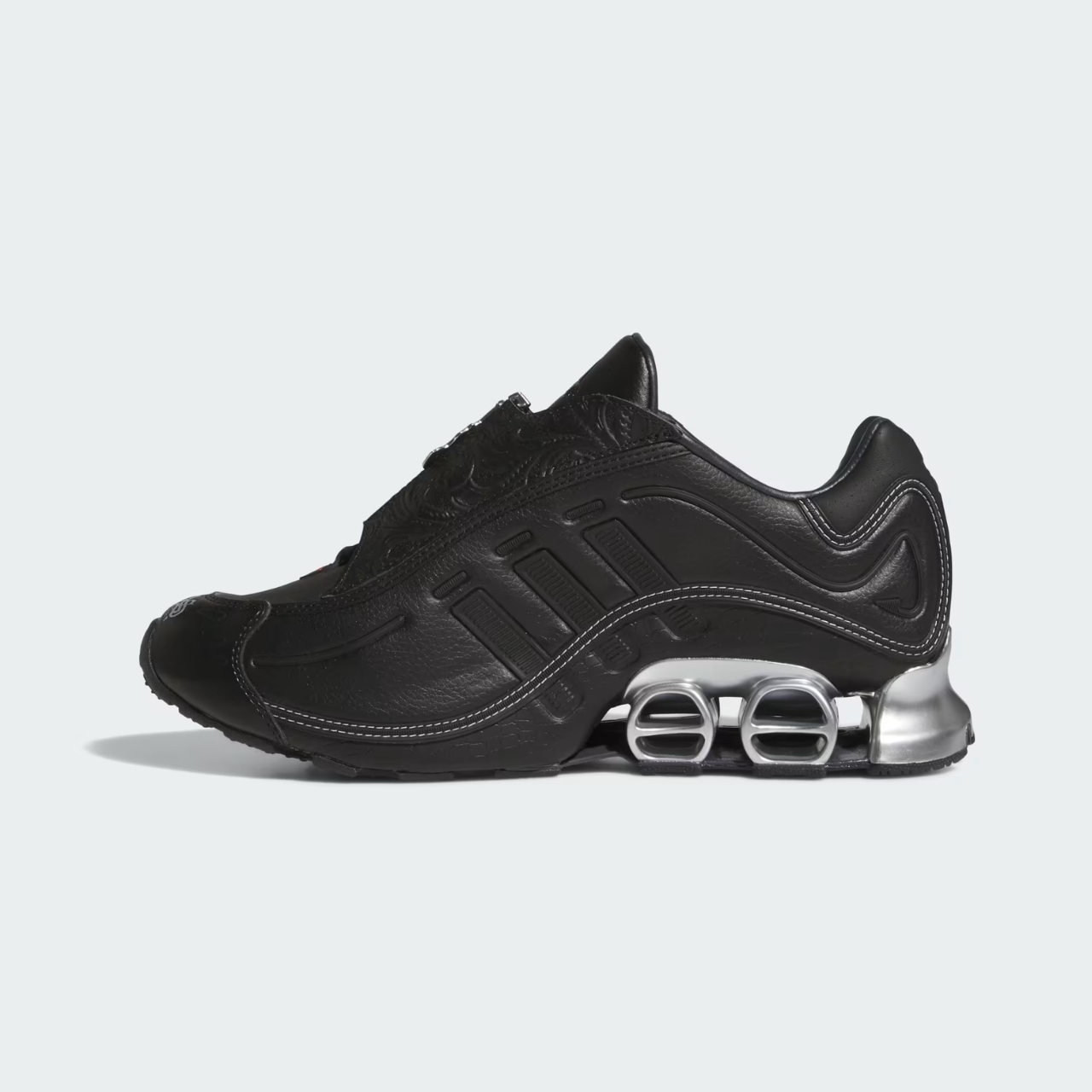
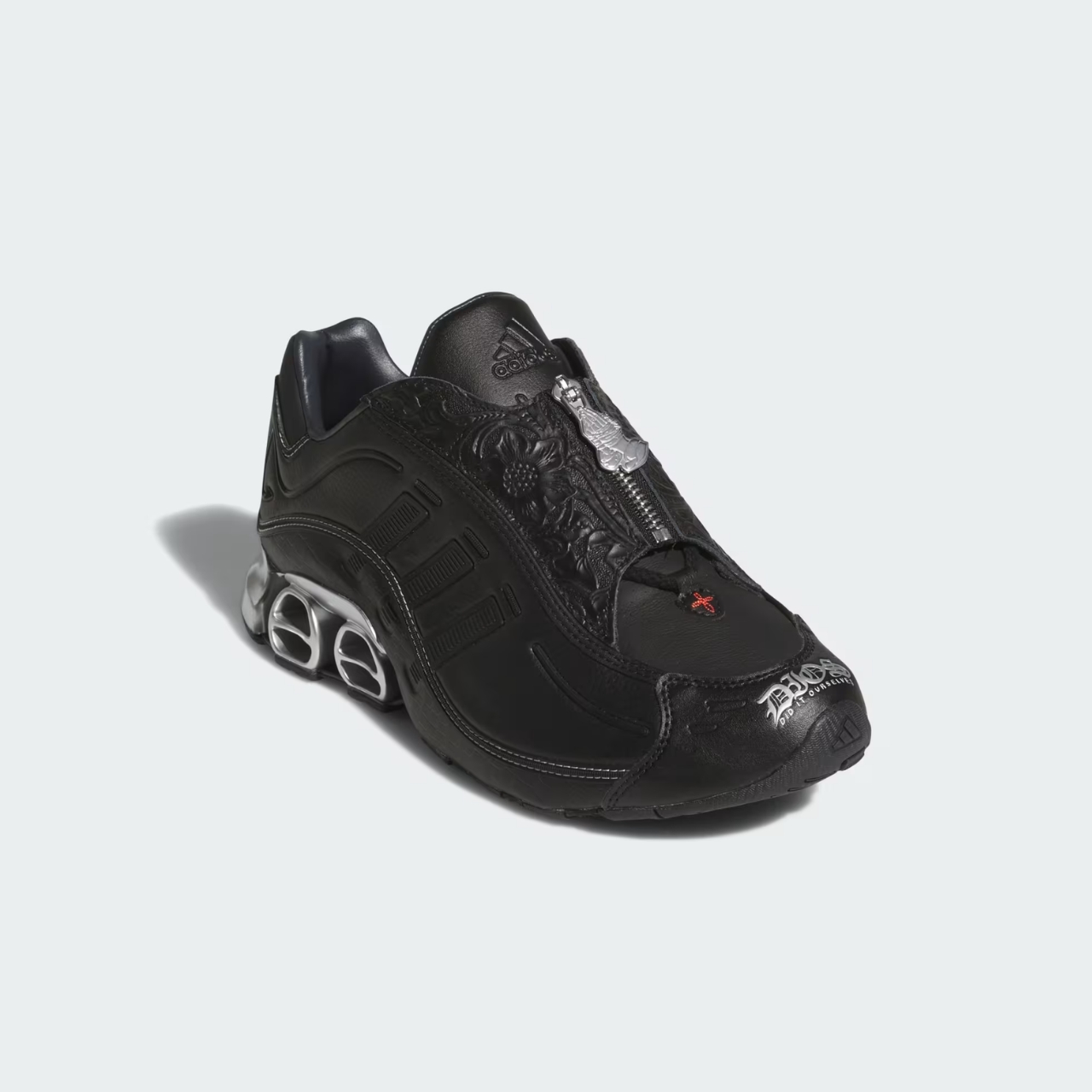
The first thing you notice is the restraint. The entire upper is Core Black leather, no gradient, no contrasting panels, no bold colorblock moment to grab your eye from across the room. DIOS and adidas made the deliberate choice to work almost entirely within one tone, which puts the pressure entirely on texture and form to carry the design. That’s a harder thing to pull off than it sounds, and the shoe earns it.
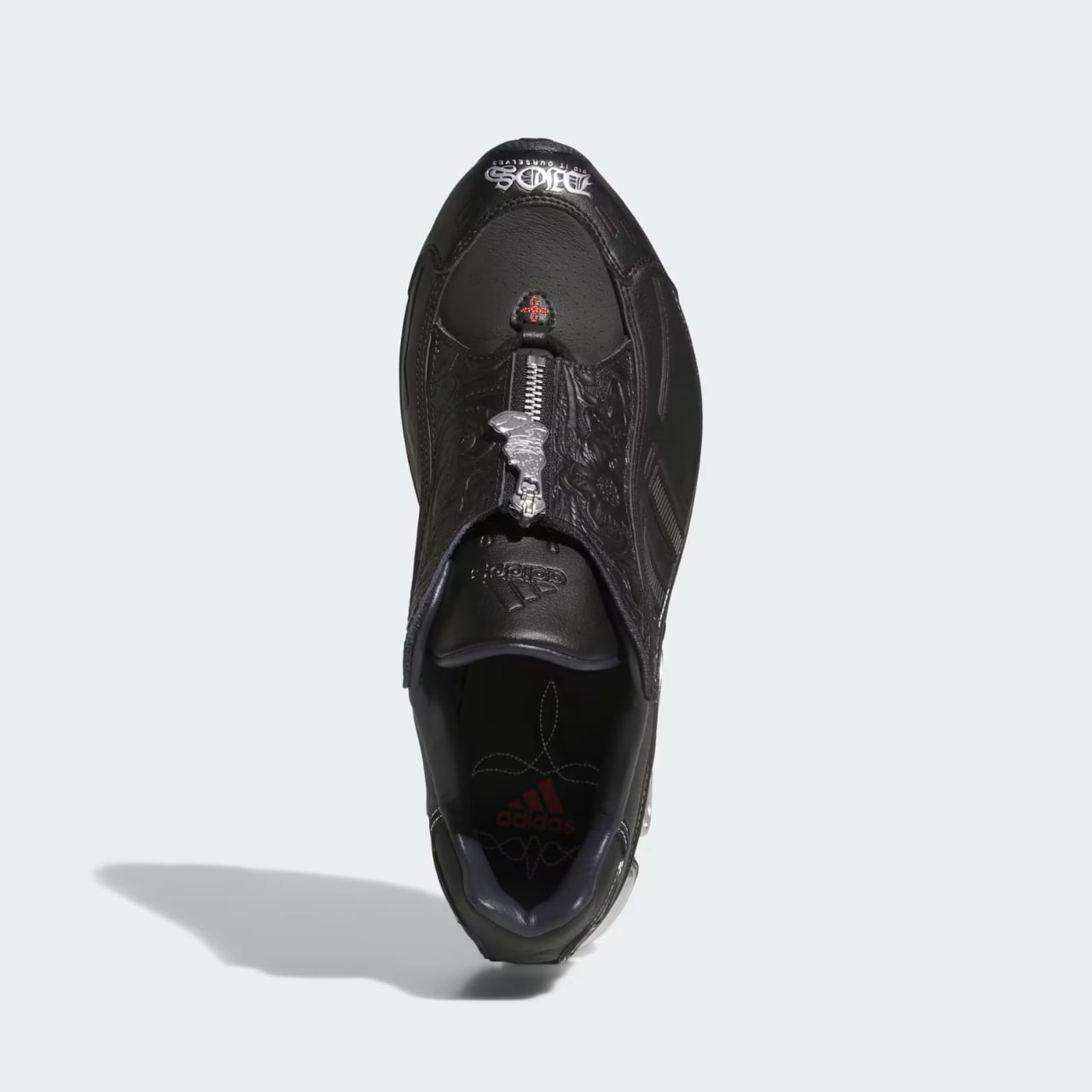
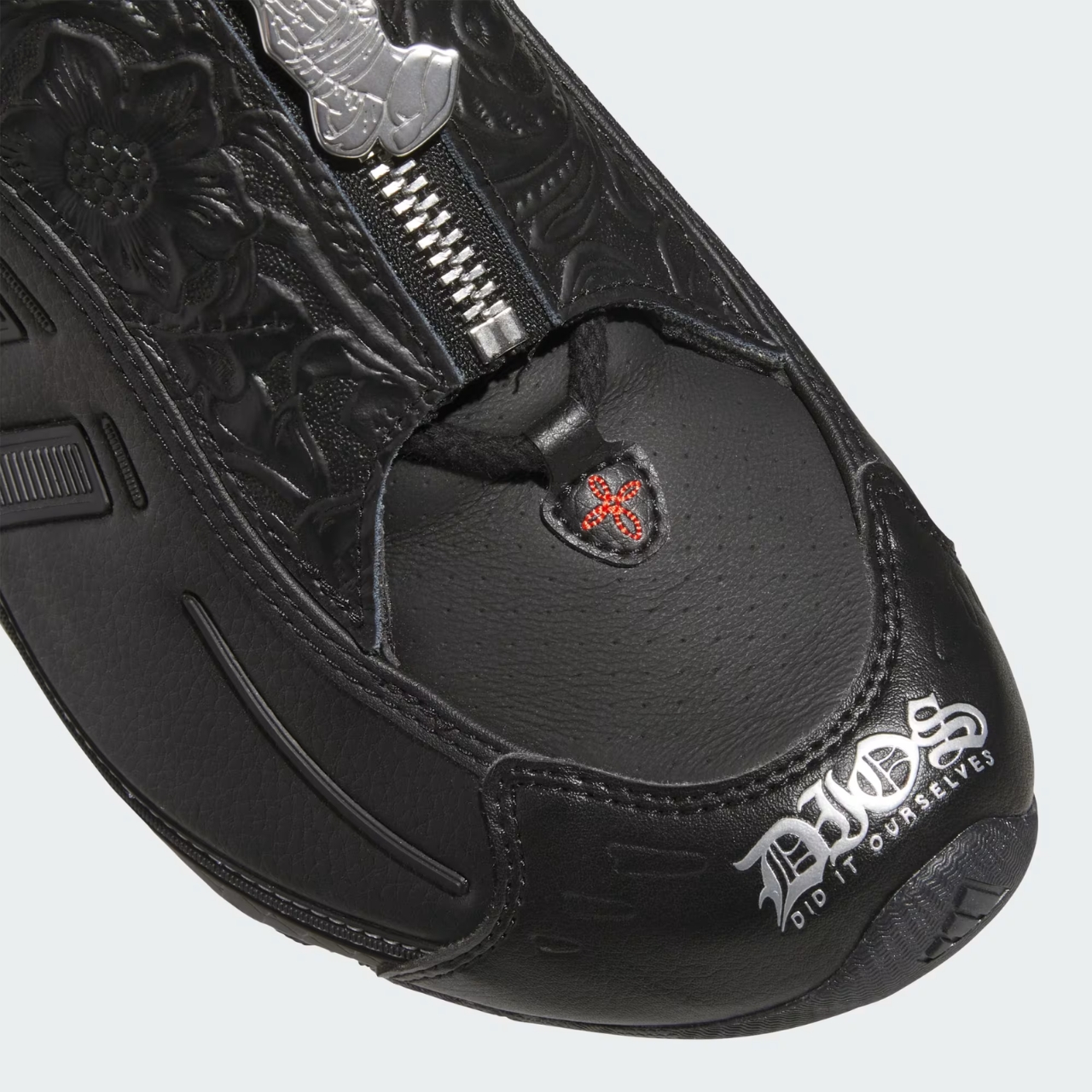
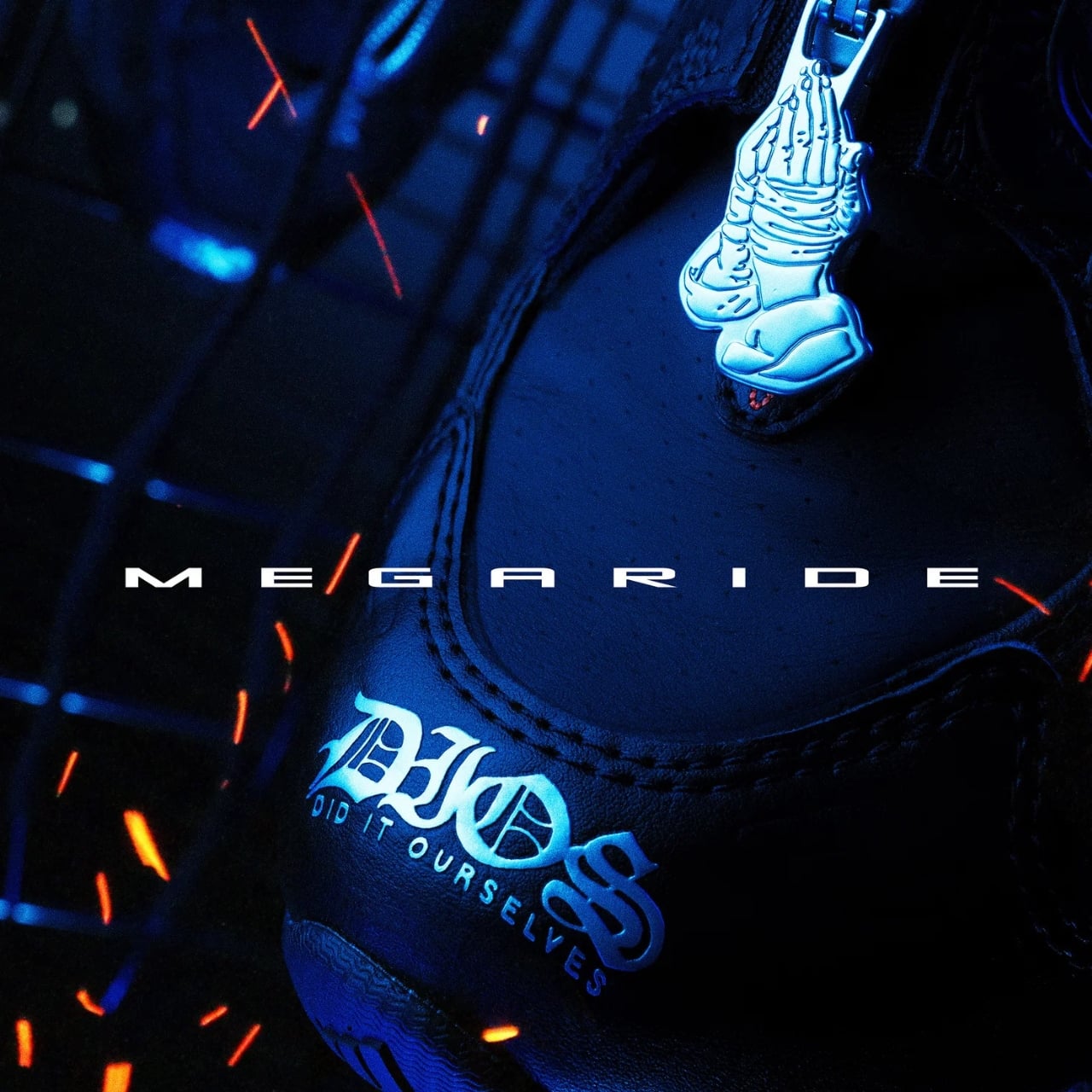
The cowboy boot references are the most discussed part of the design, and for good reason. The DIOS-branded toecap, stamped in Old English gothic lettering reading “DIOS Did It Ourselves,” is the shoe’s most striking typographic moment. It sits right where the toe cap of a traditional cowboy boot would be reinforced, borrowing that structural logic and translating it into something that reads as streetwear without losing the original reference. The lace shroud is covered in dense embossed floral leather, the kind of ornamental detailing you’d find on fine boot craftsmanship, and a snakeskin-textured panel sits just above the heel, anchoring the Western narrative with a material that has long been associated with Texas boot-making culture.
Then there’s the zipper closure. A silver zip runs across the midfoot where laces would ordinarily sit, which changes the silhouette profile considerably. It’s a cleaner, more architectural line that gives the shoe a slightly futuristic edge while simultaneously calling back to Western riding boots. The zipper pull is where things get genuinely interesting: a metal skeletal praying hands charm hangs from it, the kind of detail that shouldn’t work but absolutely does. It’s equal parts devotional and defiant, which is more or less DIOS in a single object.
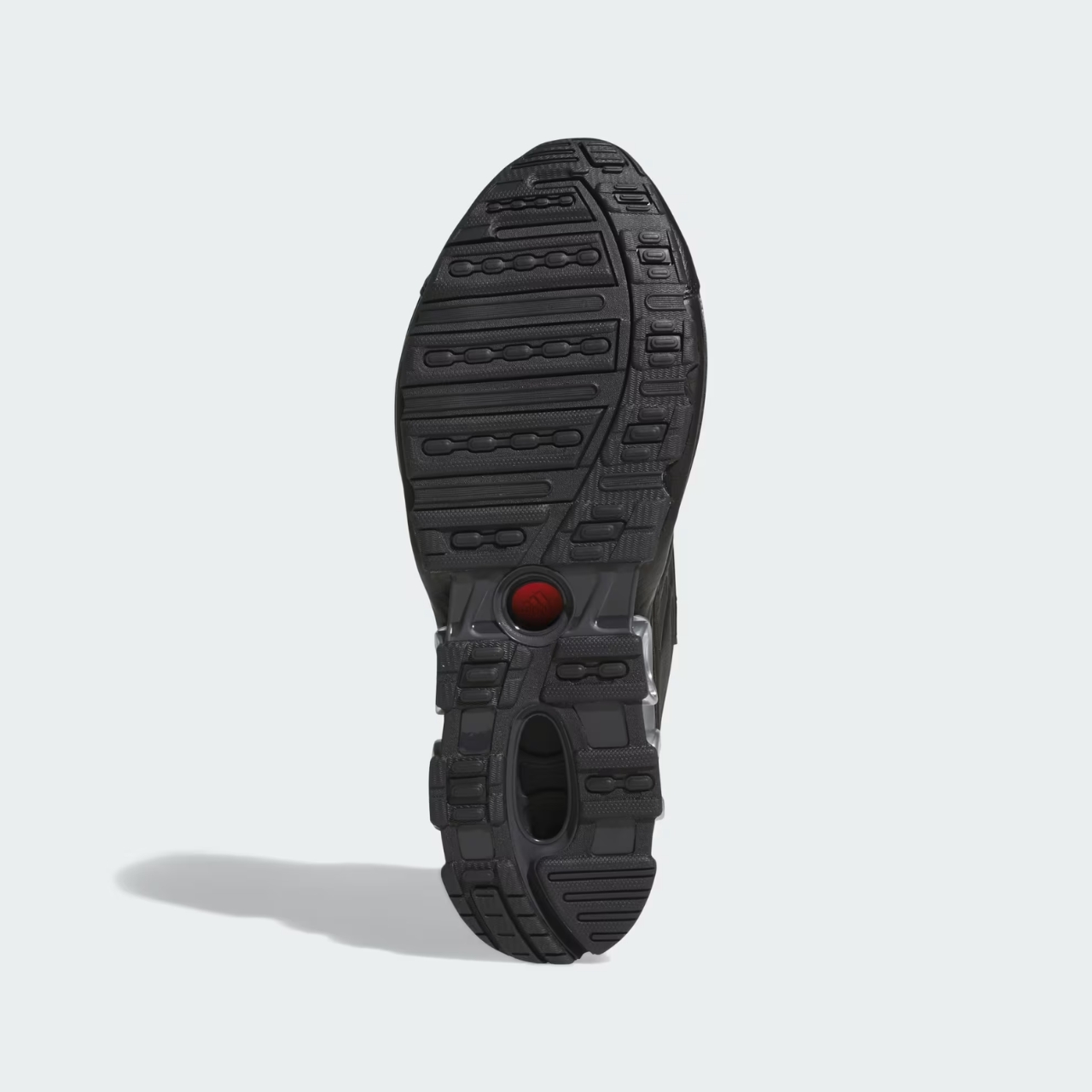
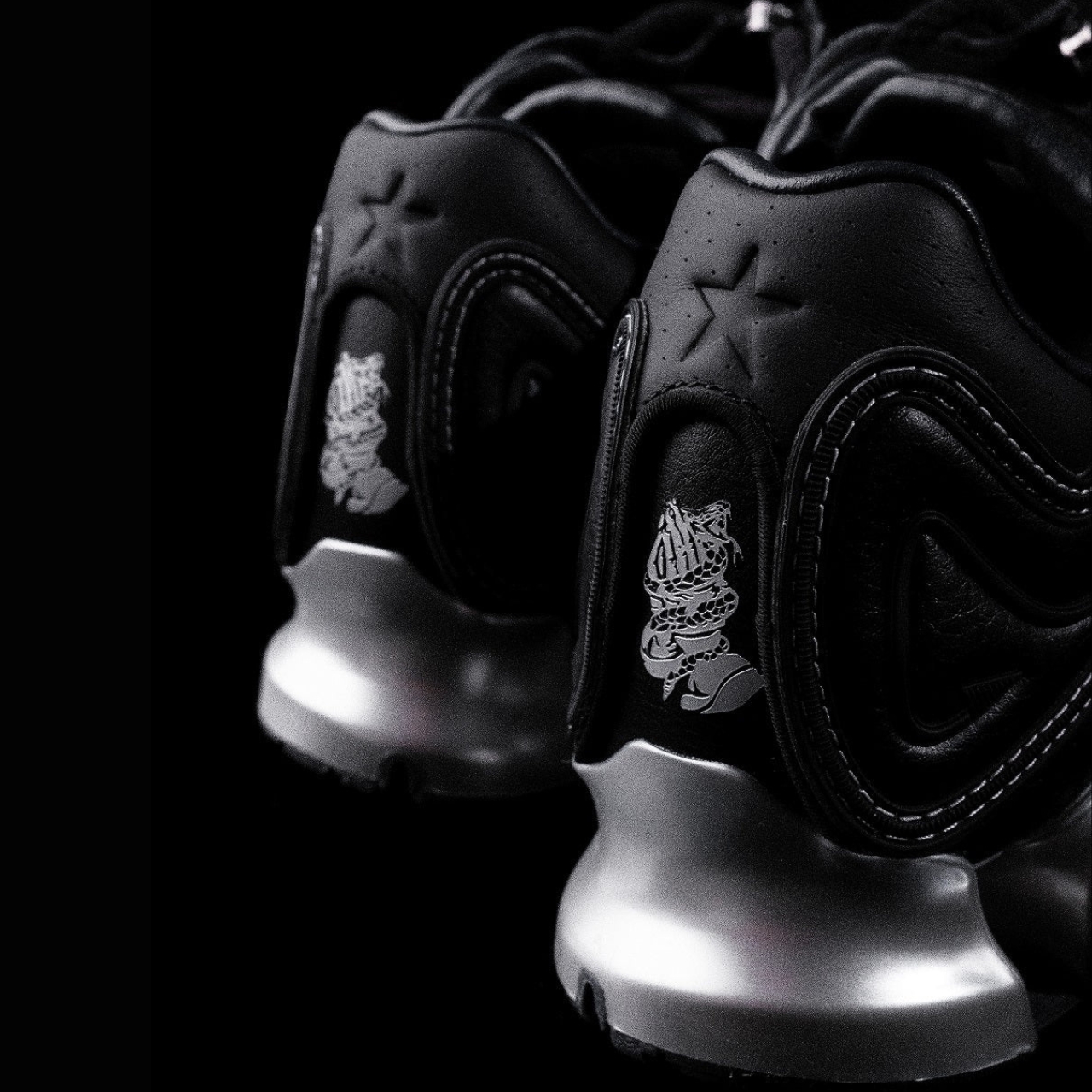
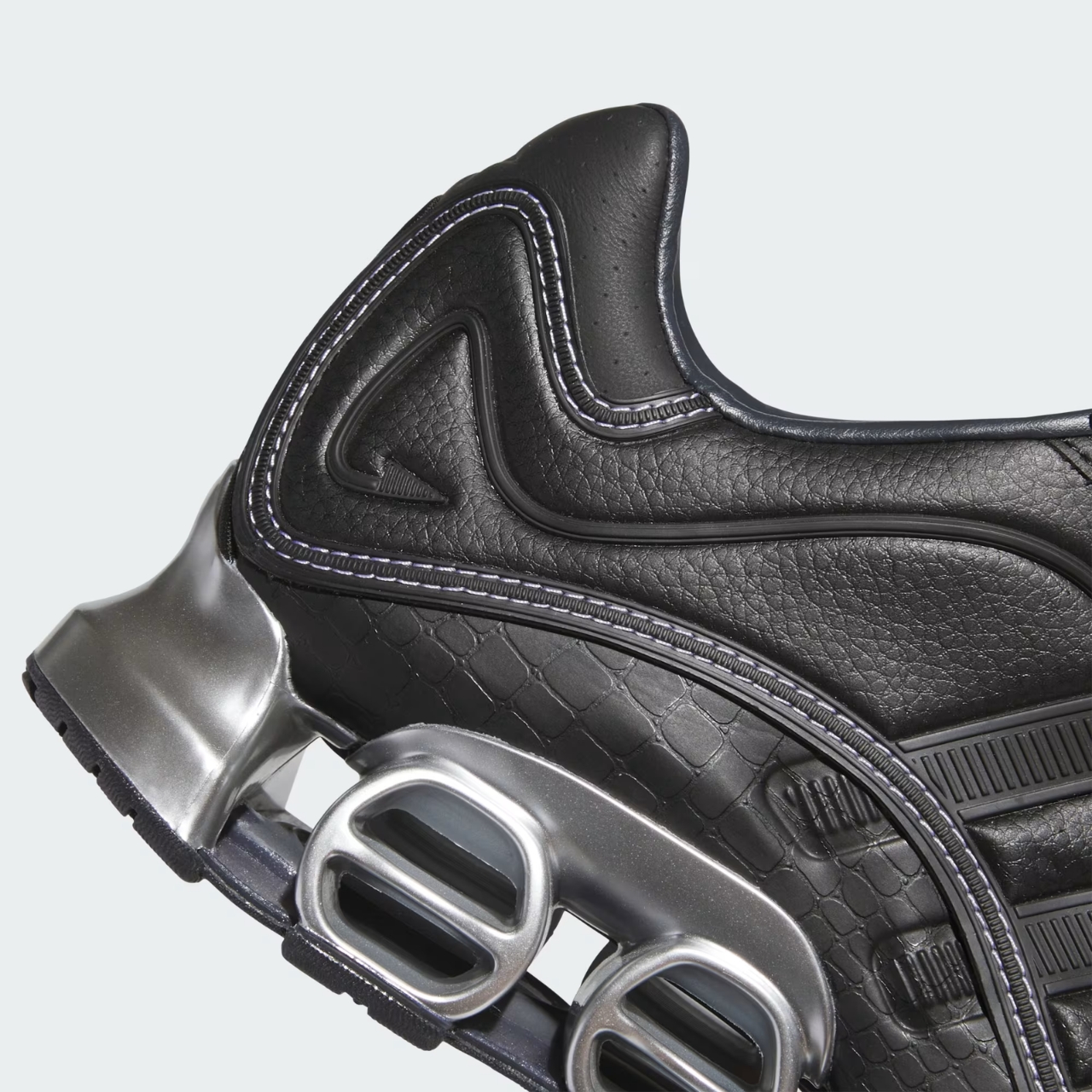
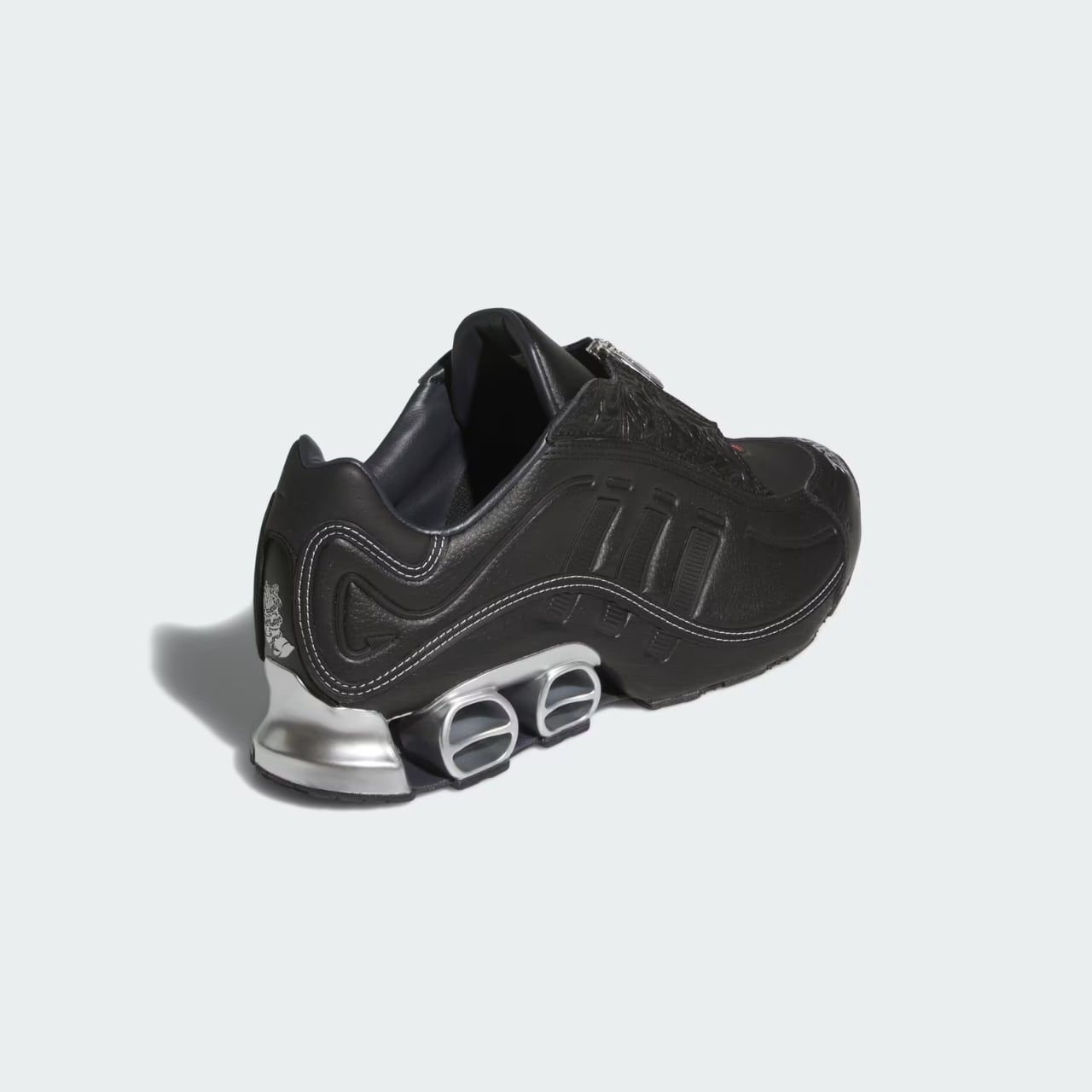
The Houston car culture element lives in the hardware and the midsole. Chrome accents thread through the upper in subtle ways, but the real statement is the Megaride cushioning unit at the heel, finished in metallic silver. Photographed from behind, it reads almost like a chrome bumper, low and wide and polished. It’s a clever translation of an idea that could easily have been too literal, but the scale and placement keep it feeling like design rather than costume.
The heel counter carries DIOS iconography on both sides: a coiled serpent logo on one side, praying skeleton hands on the other. Both are worked in against the black leather with enough contrast to be visible without screaming for attention. The embossed star detail pressed into the top of the heel counter is quieter still, the kind of thing you clock after a second look. Contrast stitching traces the contours of the heel panels, reinforcing the handcraft quality the whole design is working to communicate.
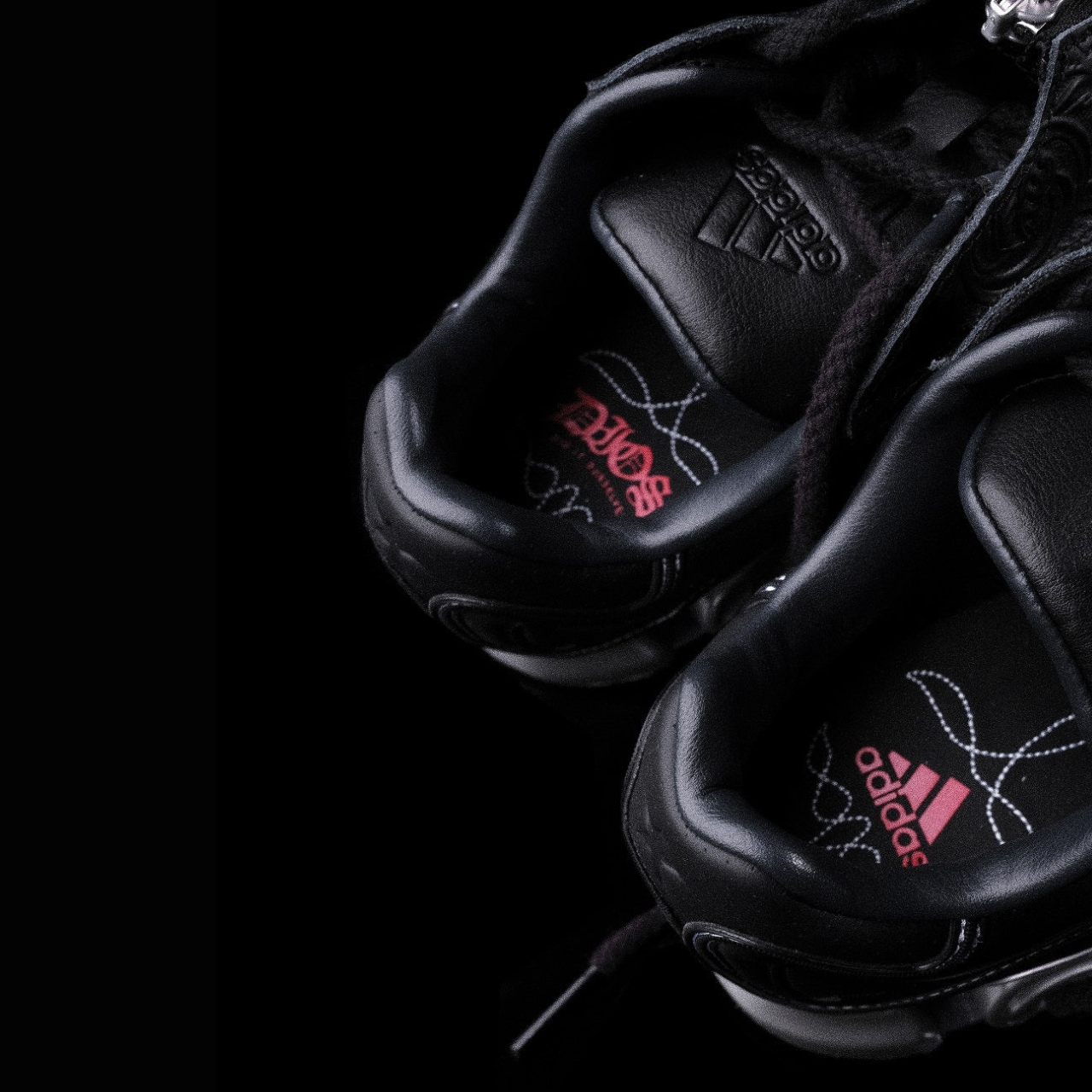
The insole is unexpected in the best way. Against the otherwise all-black exterior, the lining is printed with a rope or lasso pattern in white, and the adidas logo is rendered in pink. It’s the one moment of warmth in an otherwise cool, severe design, and it functions almost like a private detail. The person wearing the shoe knows it’s there. Everyone else has to look closer.
Looking at the Megaride 01 as a whole design object, what I keep returning to is how resolved it feels. Every element connects to either cowboy boot craft, Houston car culture, or DIOS identity specifically, and none of those threads feel like they’re competing. That kind of coherence is genuinely rare in collaborative sneaker design, where the temptation to layer references without editing usually wins. DIOS and adidas resisted that, and the shoe is better for it.
Footwear has always been a quiet conversation between technology and design. But every so often, a shoe comes along that forces the conversation out loud. Adidas’ Climacool Laced is that shoe for this season, and whether or not you’re a sneakerhead, it deserves your attention.
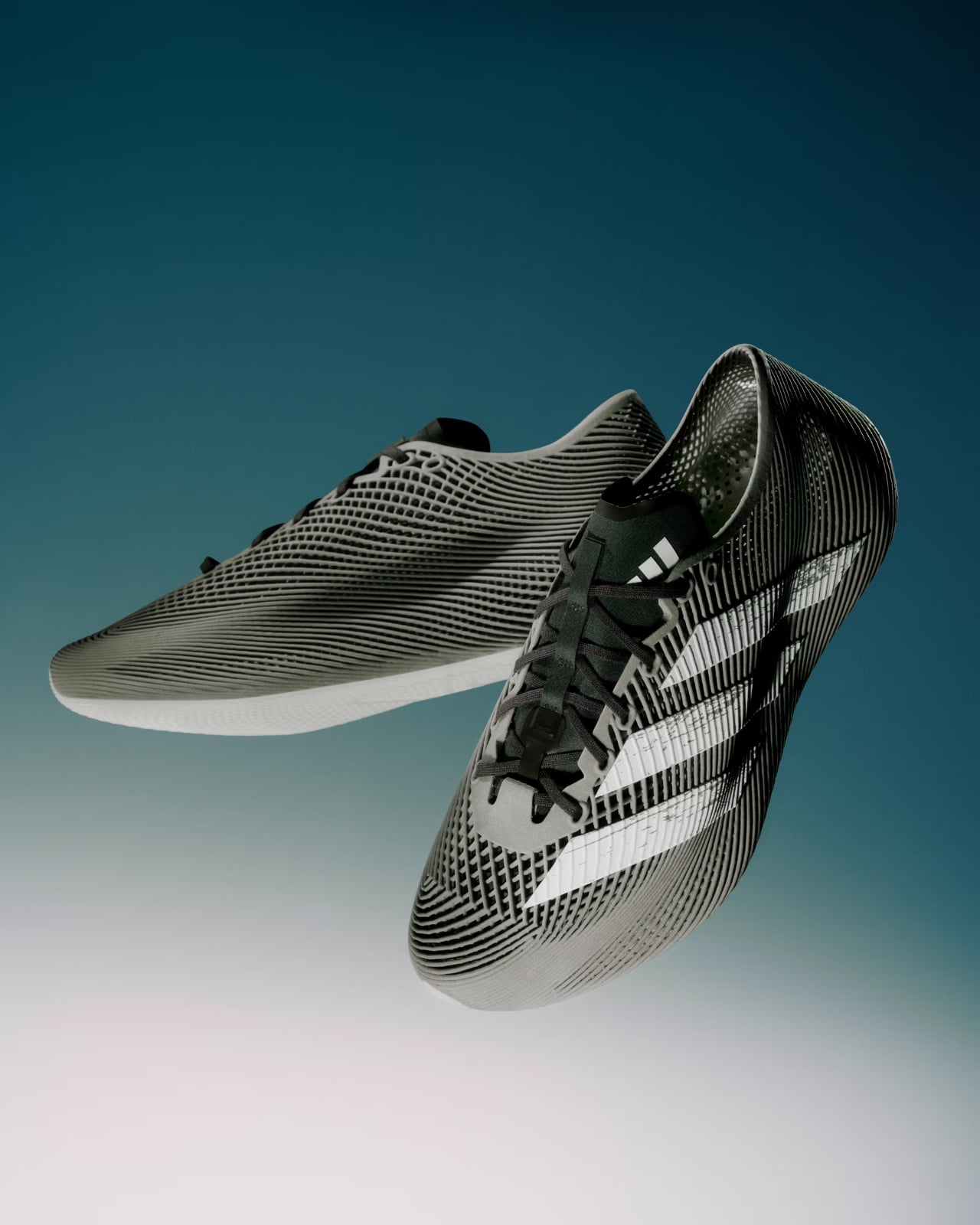
The Climacool story started in 2024, when Adidas introduced the original Climacool as a single-piece 3D-printed shoe built around one ambitious idea: a shoe “made like nothing, feels like nothing, looks like nothing.” Bold claim. Bolder execution. The original concept was all about a lattice structure that could mold to the foot while letting air move freely around it, a complete departure from how sneakers are traditionally assembled. For the FW26 season, Adidas evolved that vision with the Climacool Laced, and the update is both practical and surprisingly elegant.
Designer: Adidas
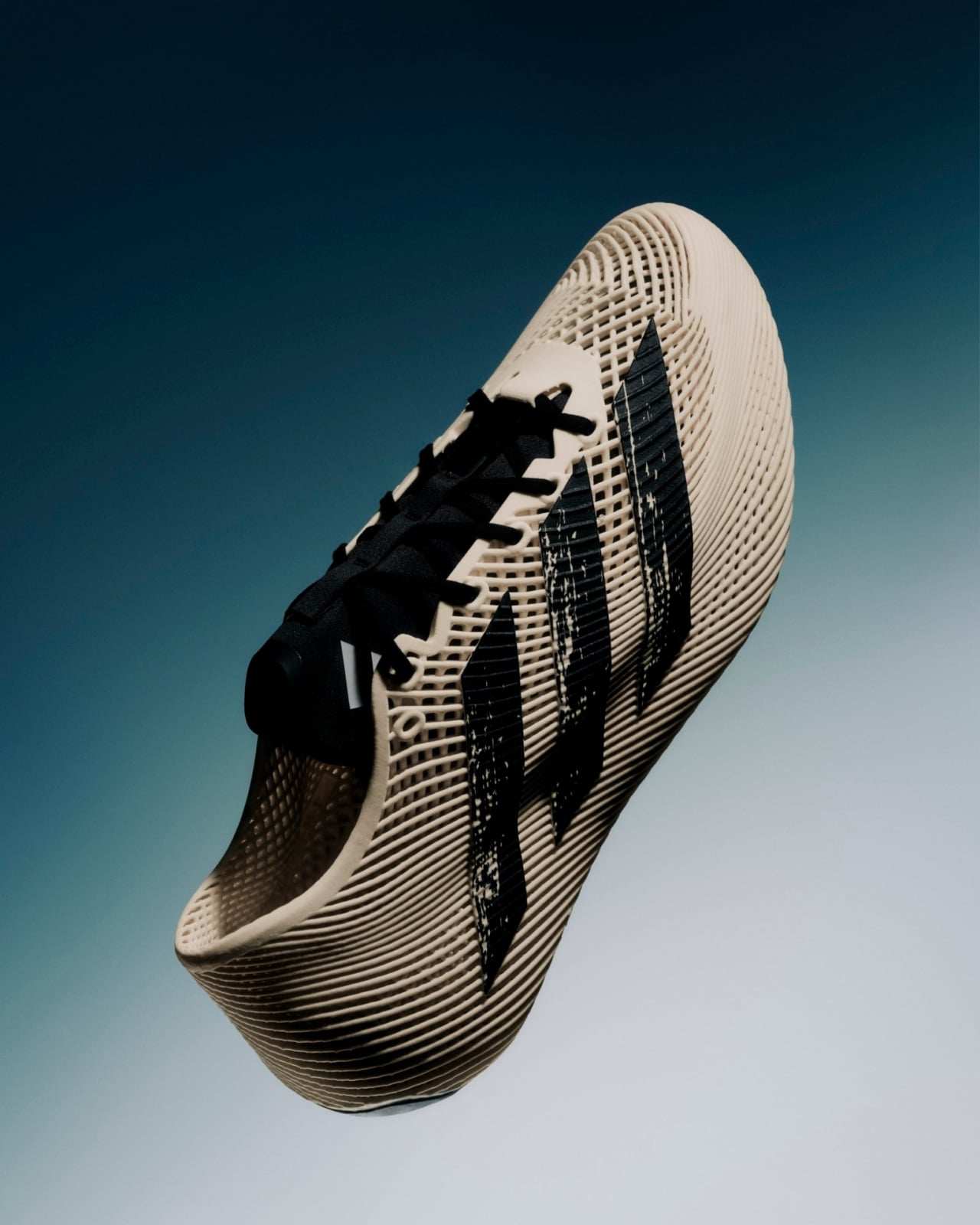
The key addition, as the name makes clear, is laces. That might sound minor, but it’s actually a thoughtful design decision. The original Climacool’s slip-on format was a statement in itself, but laces open the shoe up to more foot shapes, more wearers, and more moments. It’s the kind of iteration that shows a brand actually listening rather than just launching. The lace-up construction is also paired with updated traction and that signature ghost stripe detail, rendered in monochromatic white or contrasting black depending on the colorway.
The construction process is still the headline. Each pair of Climacool Laced shoes is built using Digital Light Synthesis (DLS) 3D printing, a process that takes approximately 24 hours per shoe. DLS is not your average desktop 3D printer situation. It’s an advanced additive manufacturing technique that uses UV light to cure liquid resin layer by layer, producing structures with far more precision and flexibility than traditional methods. The result is the Climacool’s defining characteristic: a fully 3D-printed lattice upper that reads almost like a woven textile but behaves more like an engineering diagram.
That lattice is functional. Adidas engineered it to allow 360° airflow, with strategically placed mesh ventilation zones that keep feet cool during movement. The shoe also includes arch support and integrated heel pillows, features that might get lost in all the tech conversation but matter enormously for everyday wearability. This is not a shoe designed to live in a display case, even if it could pull off that assignment very convincingly.
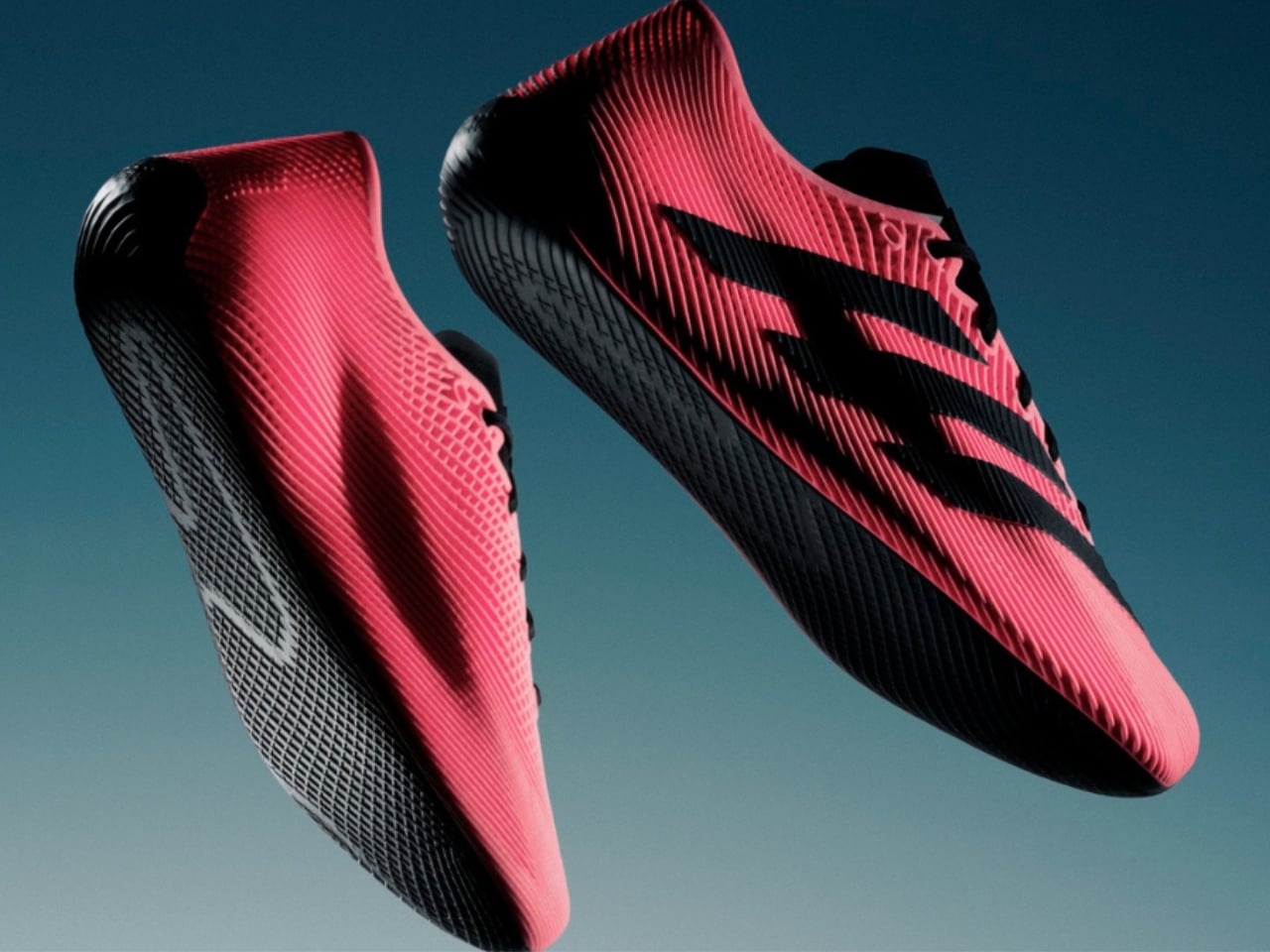
Visually, the Climacool Laced occupies an interesting space. It’s undeniably futuristic but somehow not alienating. The all-white or off-white colorway with contrasting black laces has a restraint to it that most tech-forward shoes abandon in favor of maximalism. It looks like something designed by someone who trusts the material to do the talking. A pink colorway has also surfaced, which adds a playful dimension and signals that Adidas is leaning into a broader audience rather than keeping this in the realm of experimental footwear for the few.
The campaign behind the shoe features Kahleah Copper and Jalen Williams, both known for their off-court style, which positions the Climacool Laced firmly in lifestyle territory rather than performance. That framing matters. Adidas is making a clear argument that 3D-printed construction isn’t a niche technology story. It’s a mainstream design choice. And with the original Climacool retailing at $140, they’re pricing it to be worn, not collected.
My take? The Climacool Laced feels like proof that fashion and manufacturing are finally having a productive conversation. Too often, 3D-printed shoes land as concepts that never quite cross the threshold into something you’d actually reach for in the morning. The Climacool Laced crosses it. The lace addition alone takes it from art object to wardrobe player, and the 24-hour production process behind each pair gives it a quiet sense of craft that fast fashion simply can’t replicate.
We’re at a point where the most interesting footwear design isn’t happening on a sketch pad. It’s happening in a digital file, cured by light, one layer at a time. The Climacool Laced makes that shift feel not just inevitable, but genuinely exciting.
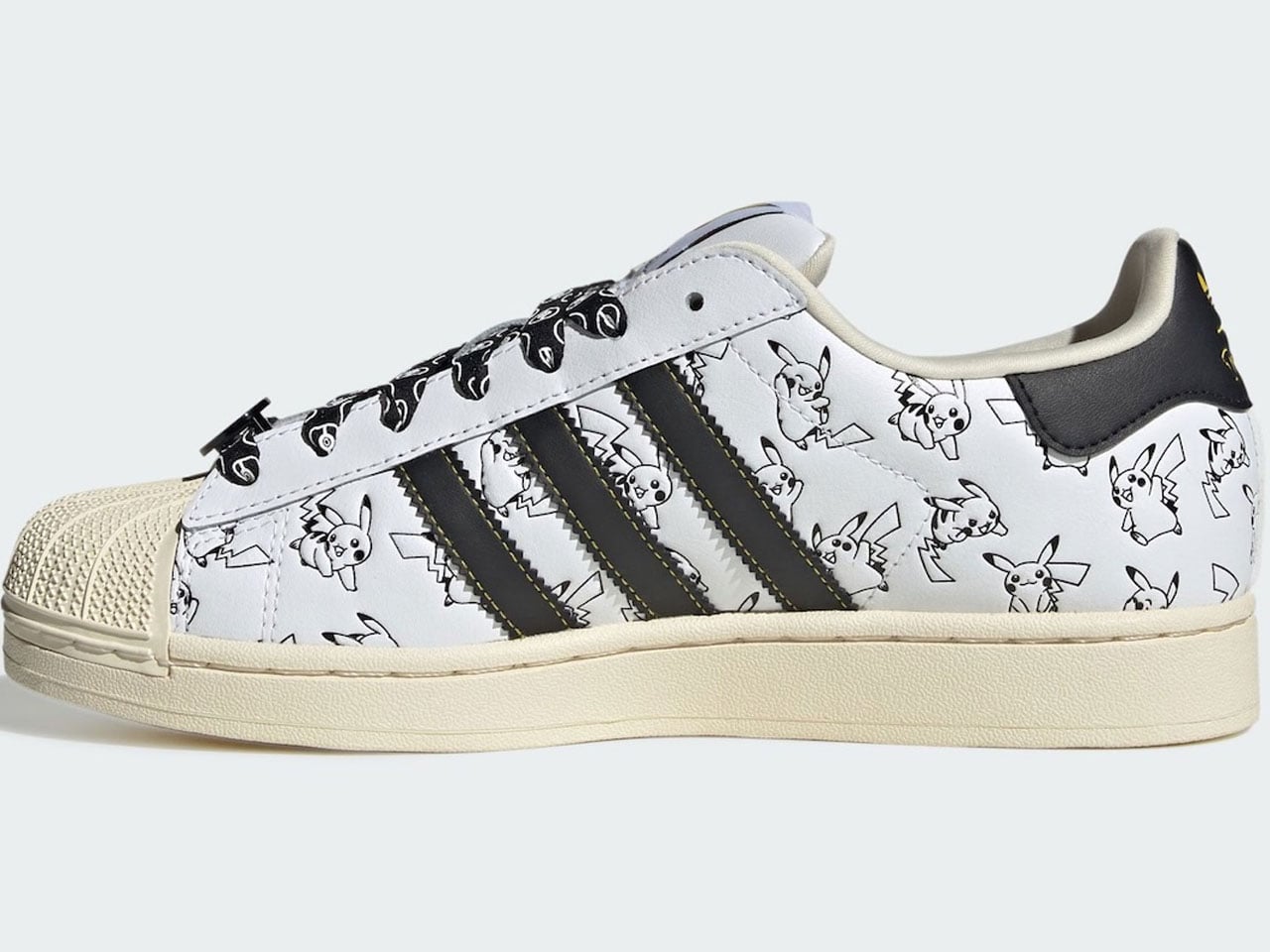
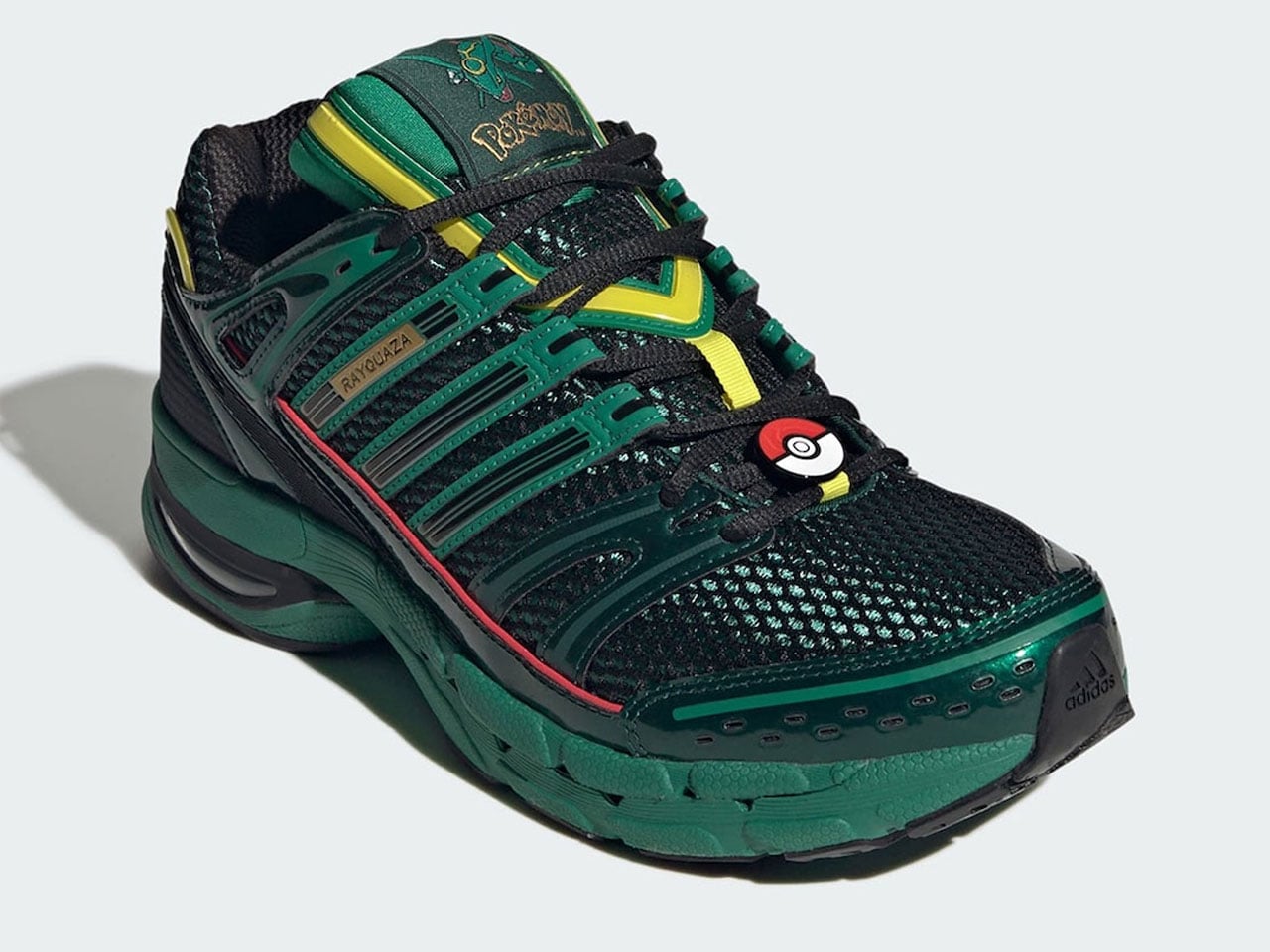
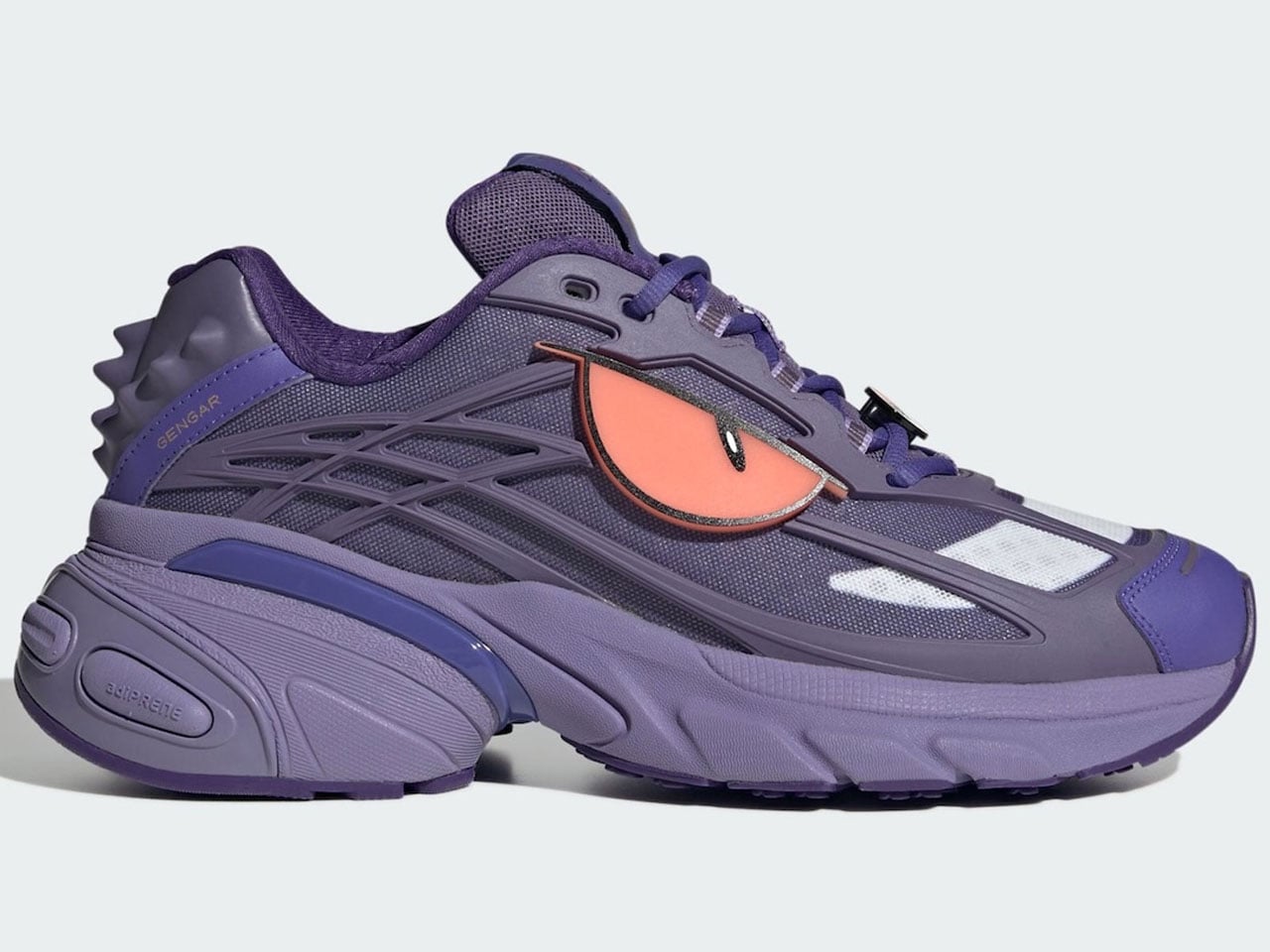
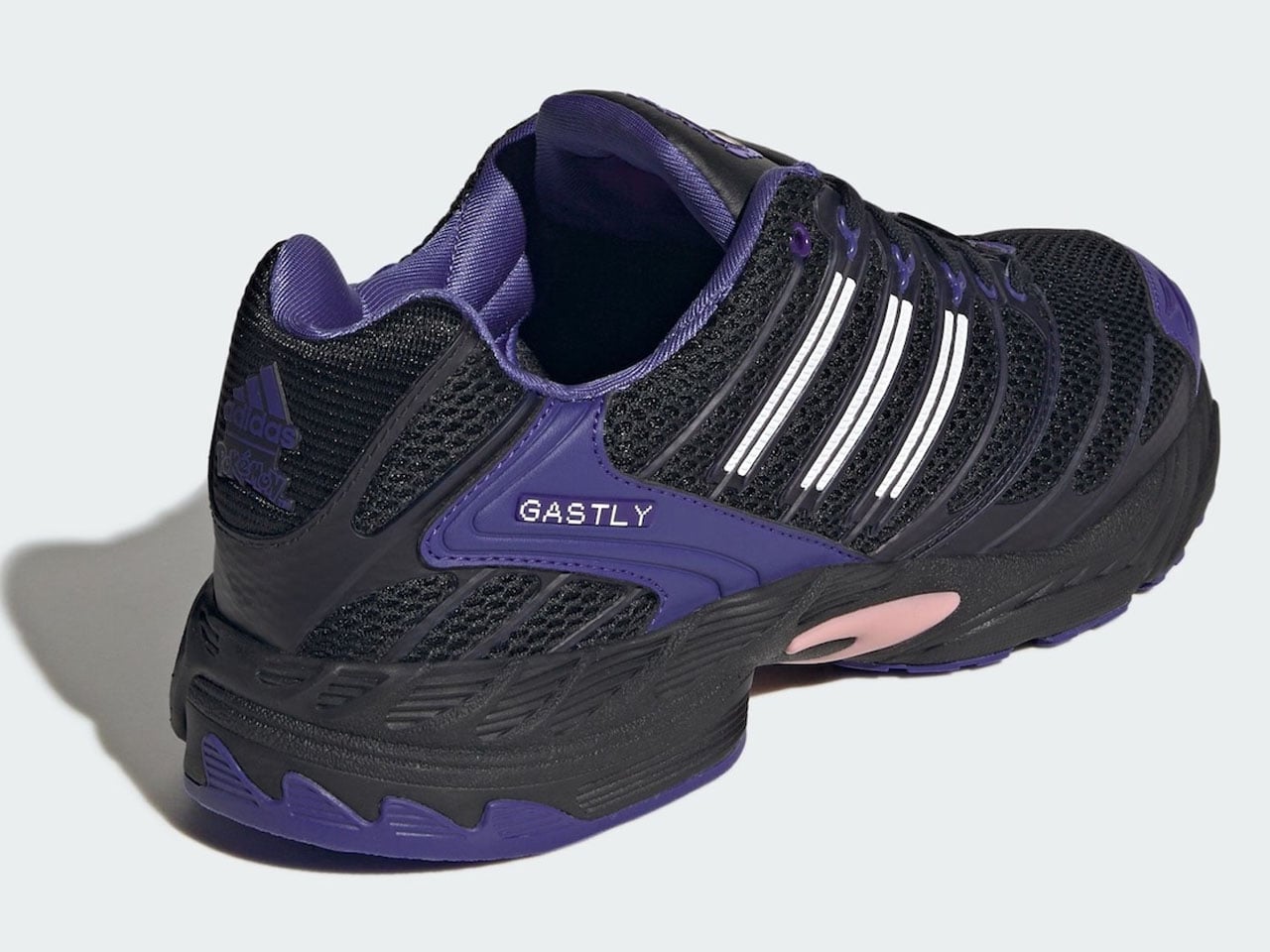
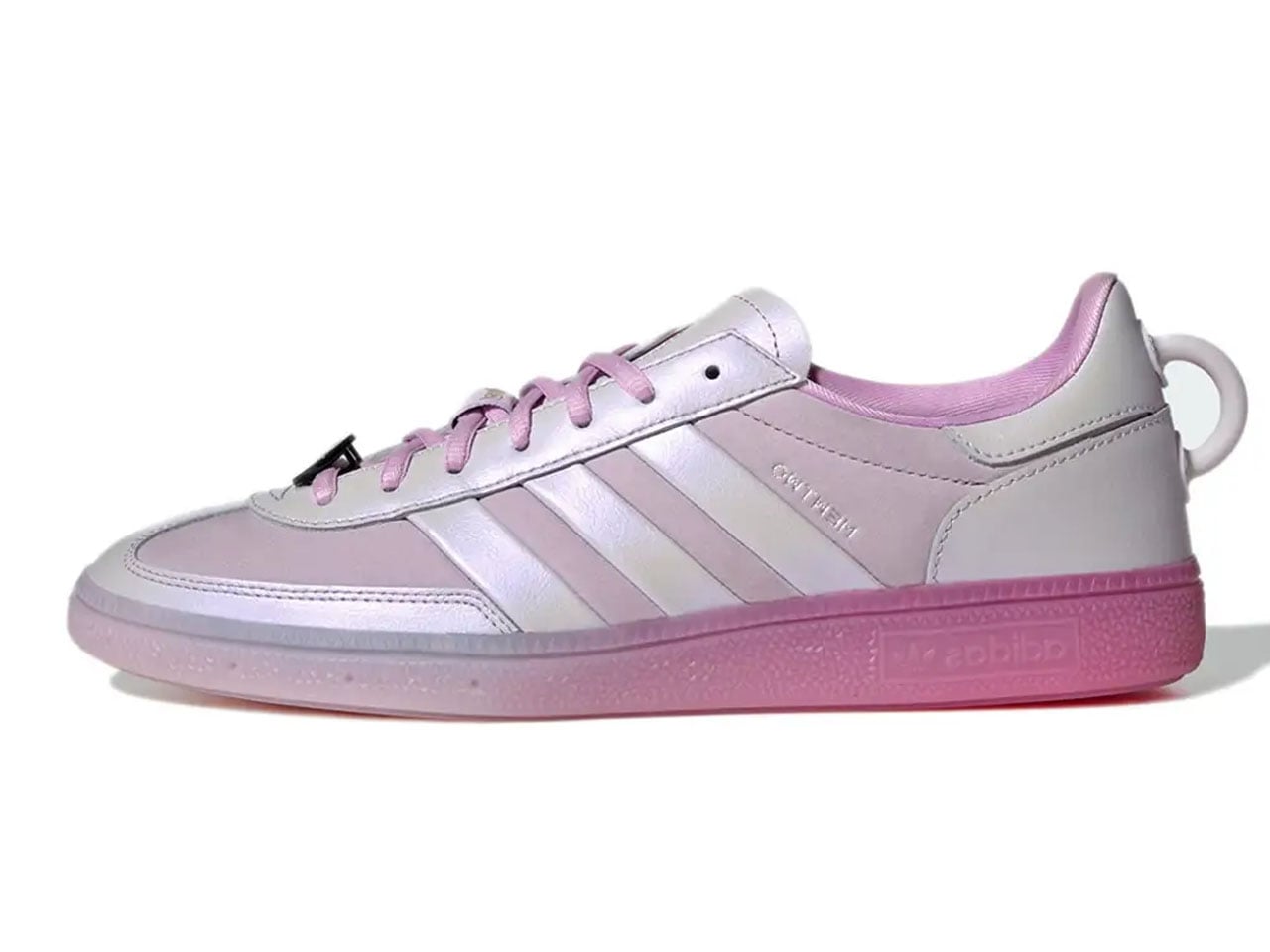
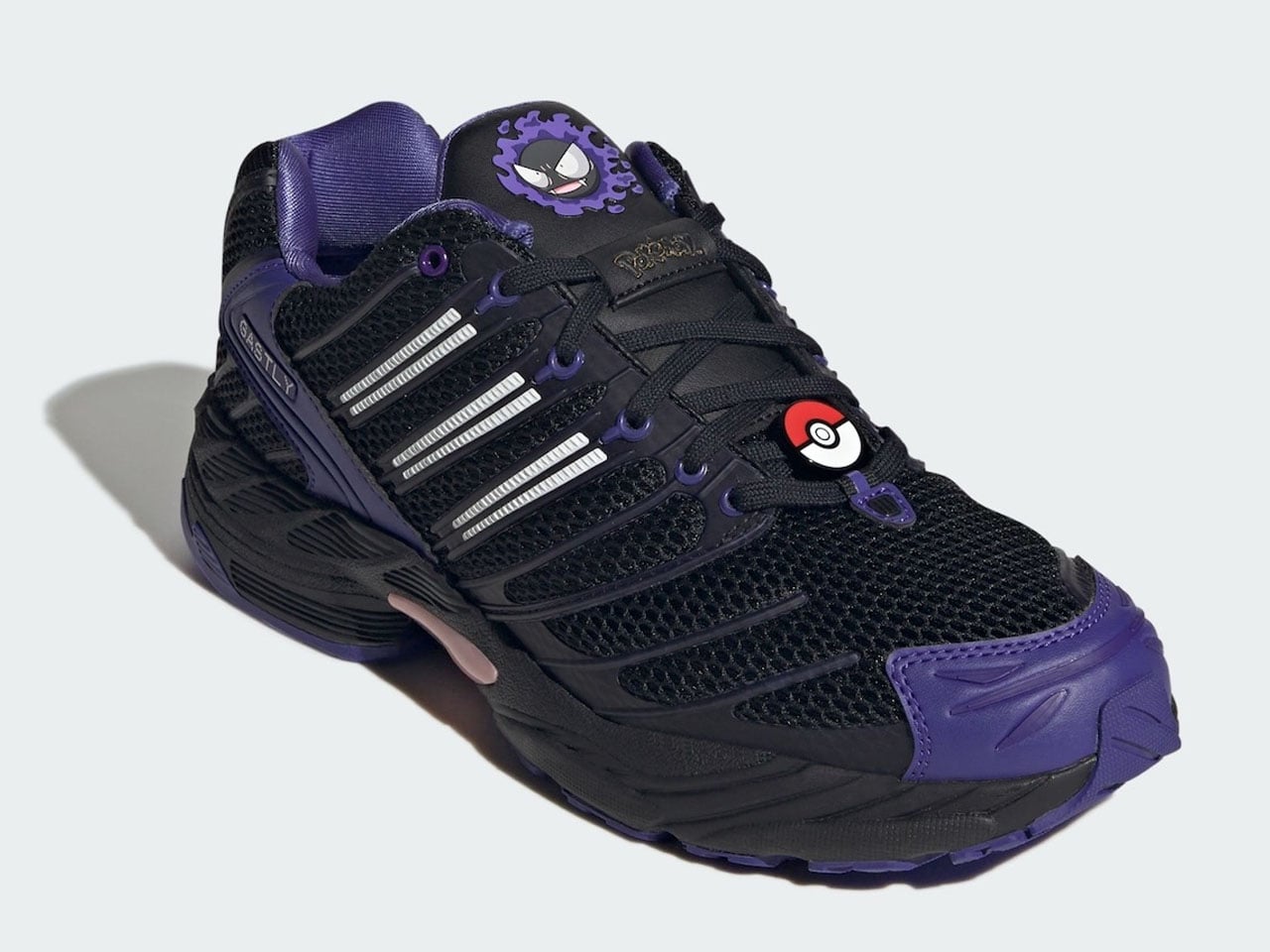
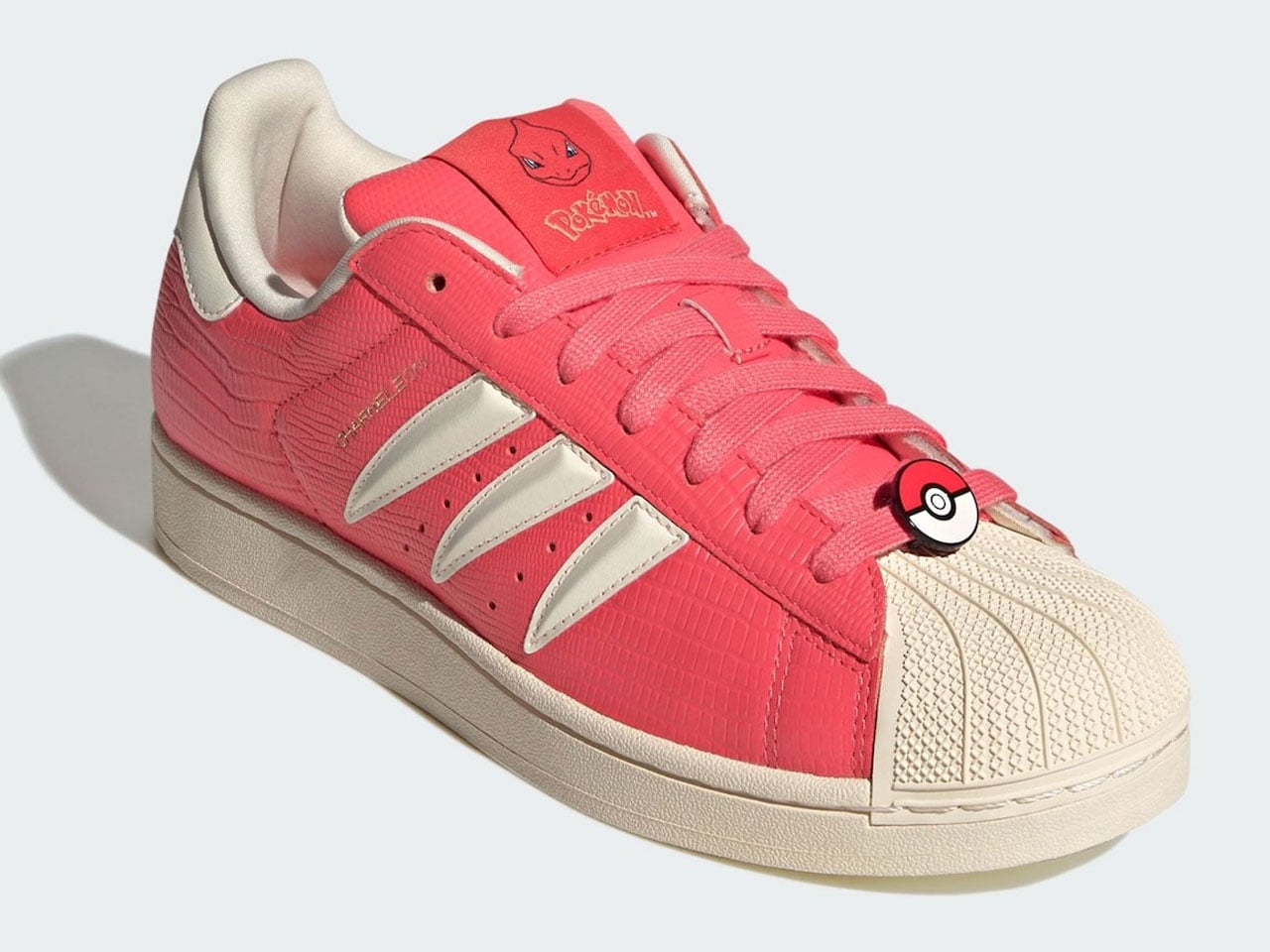
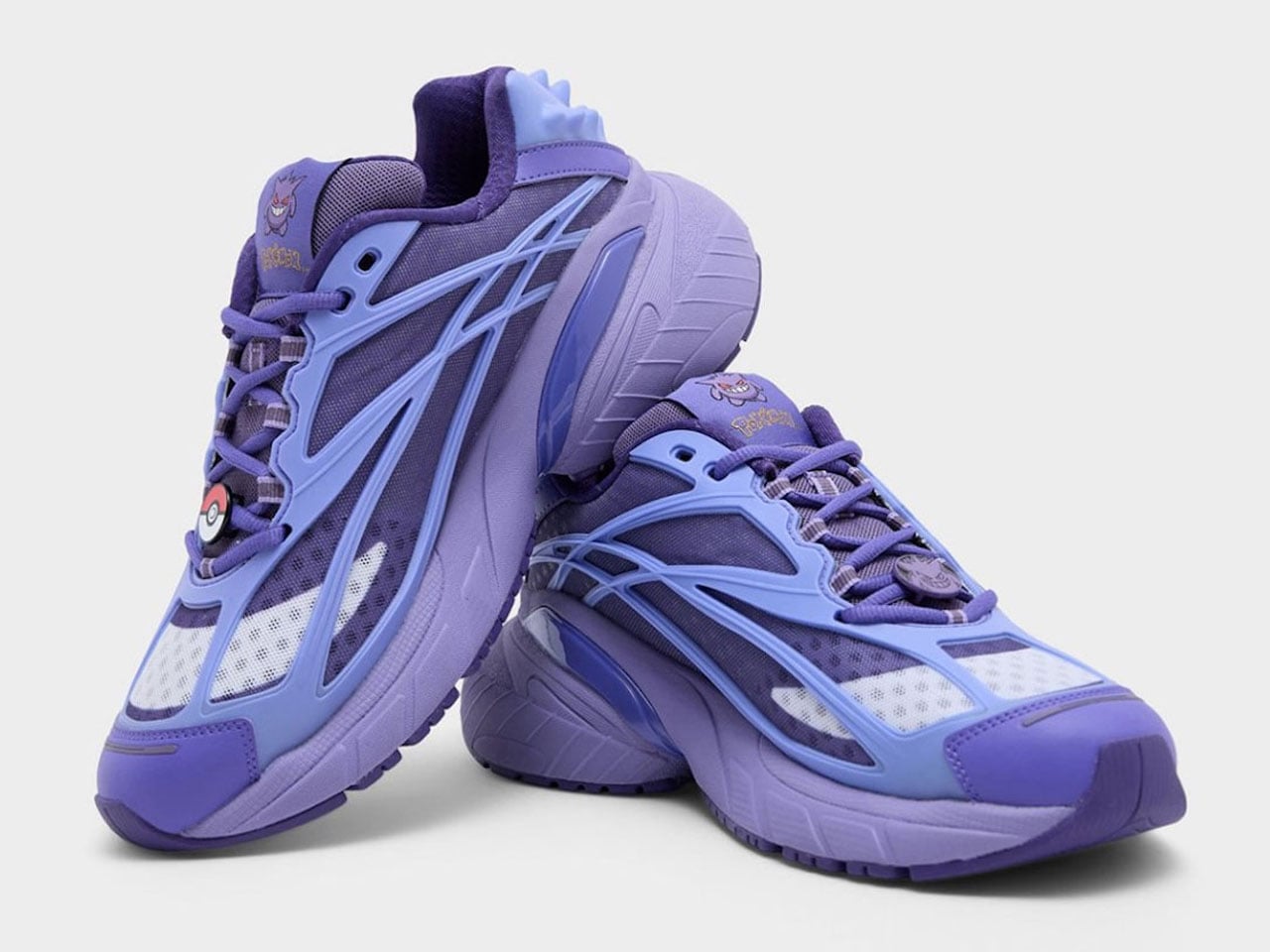
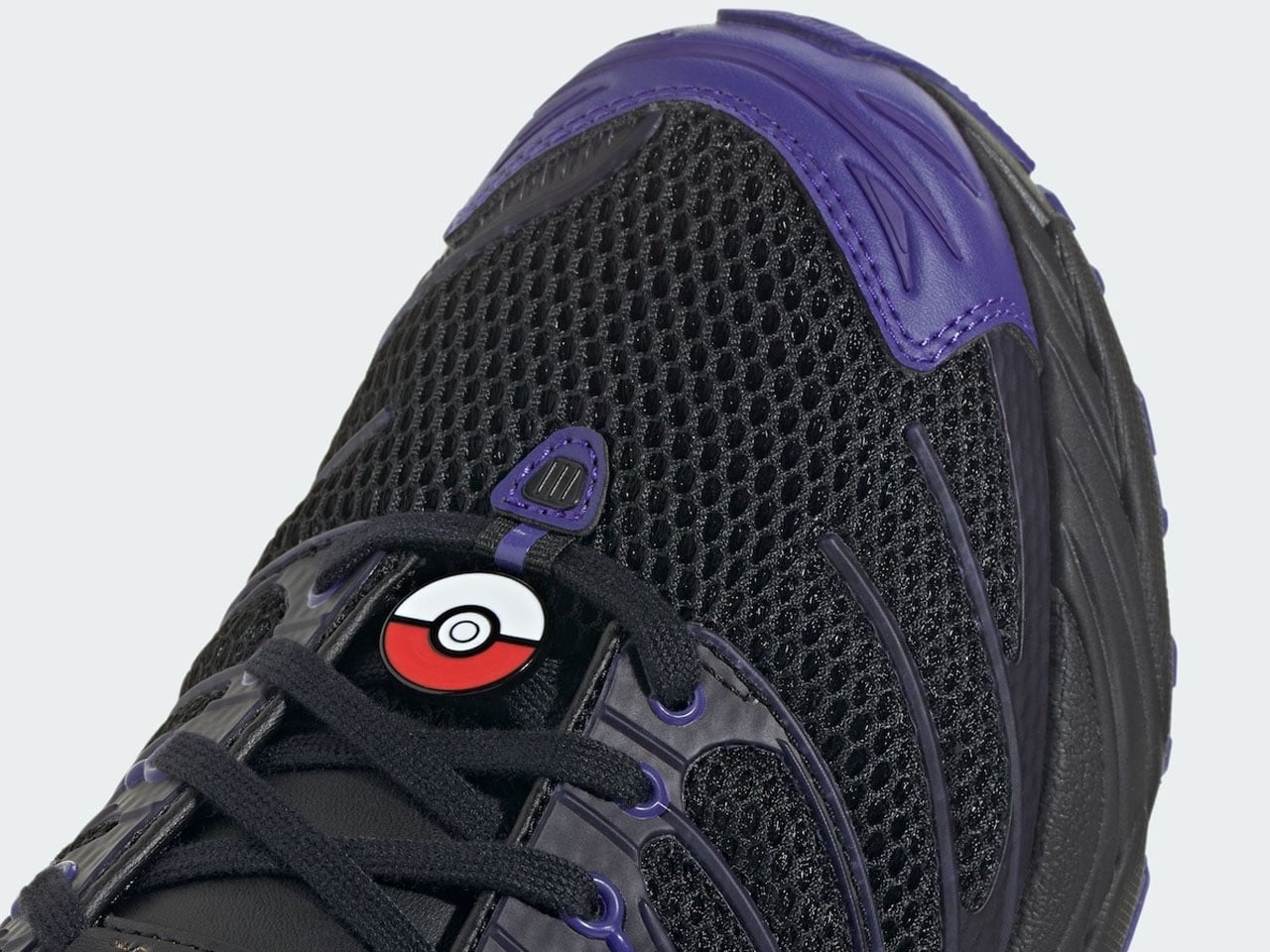
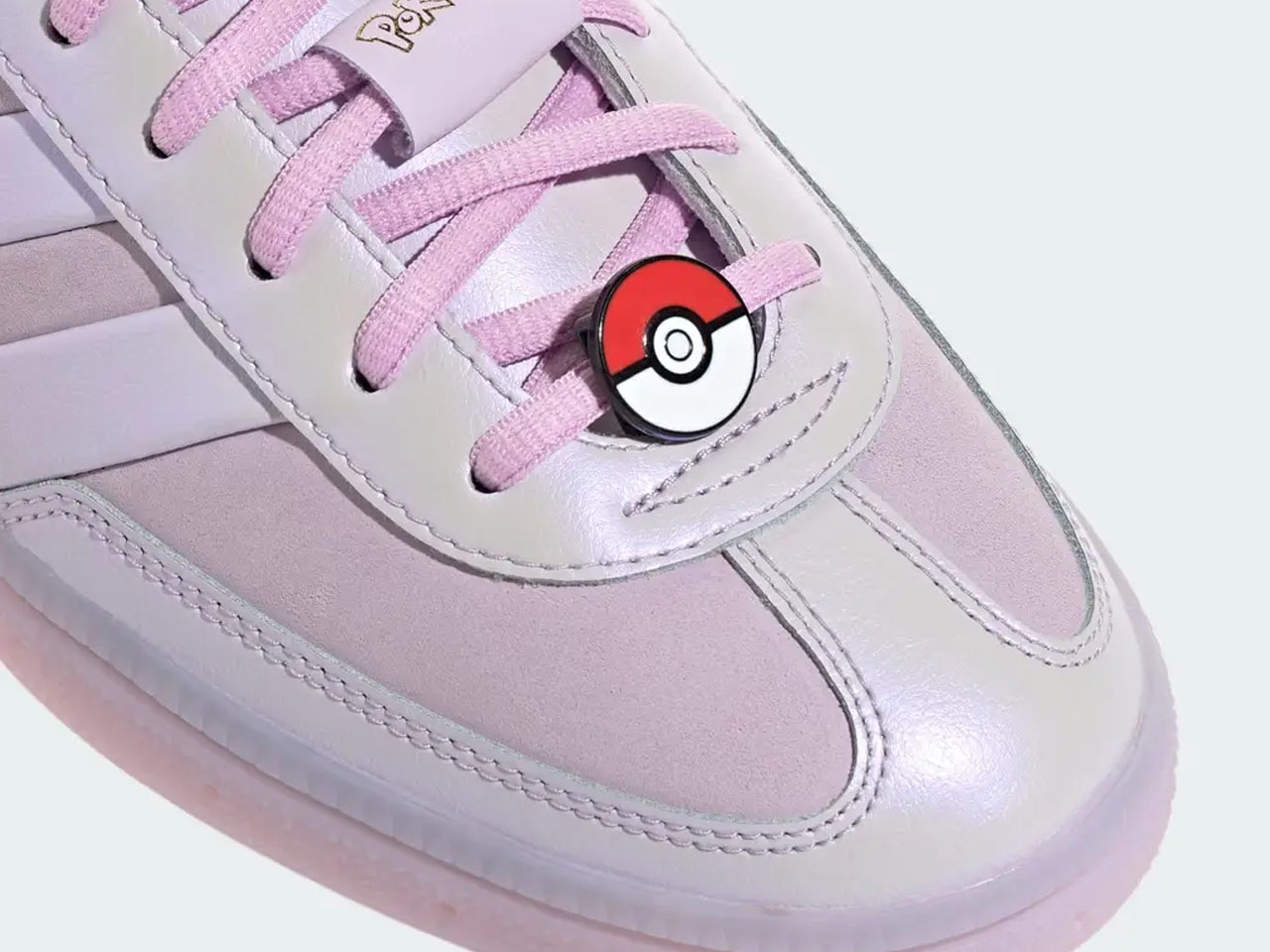
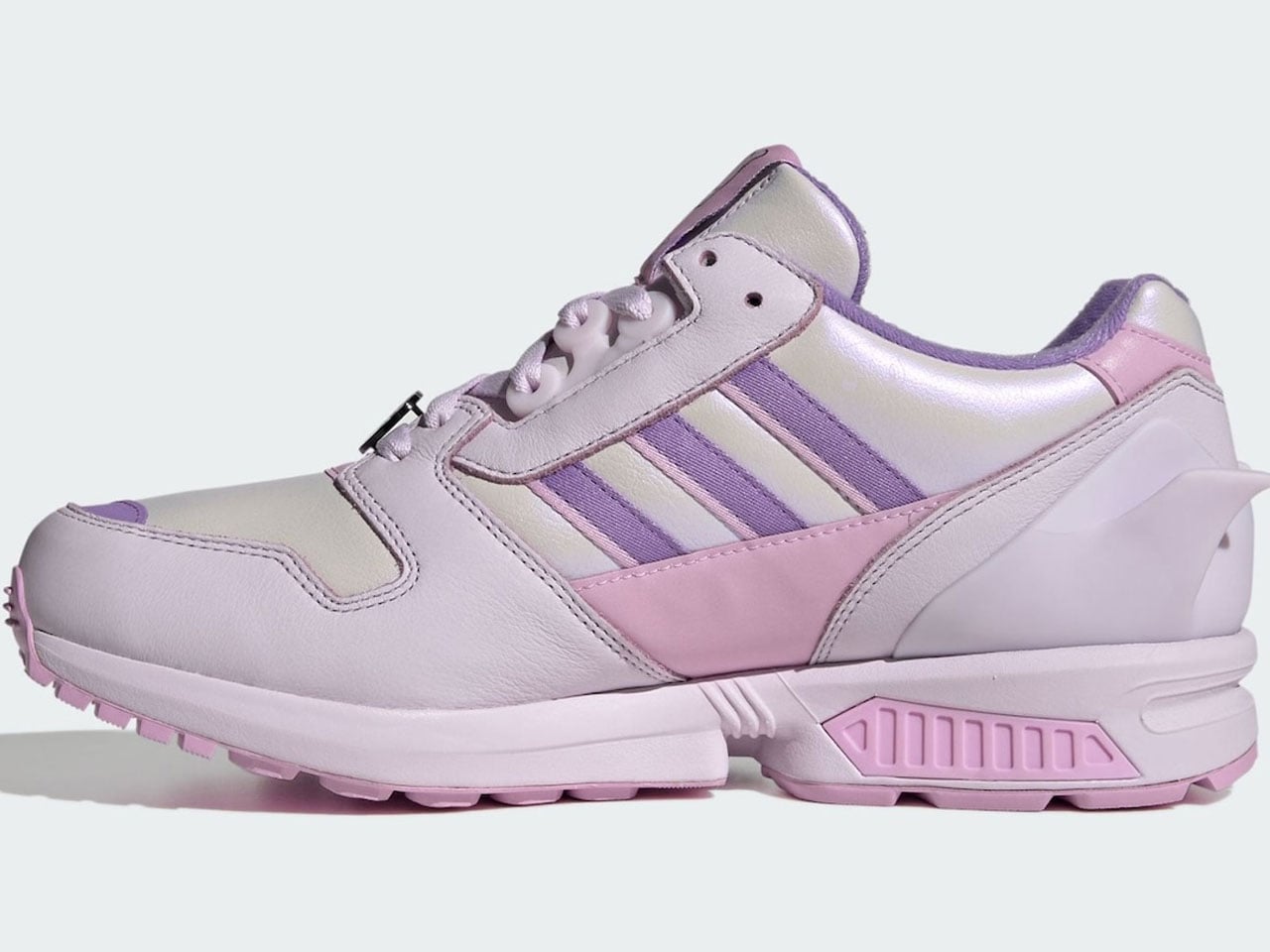
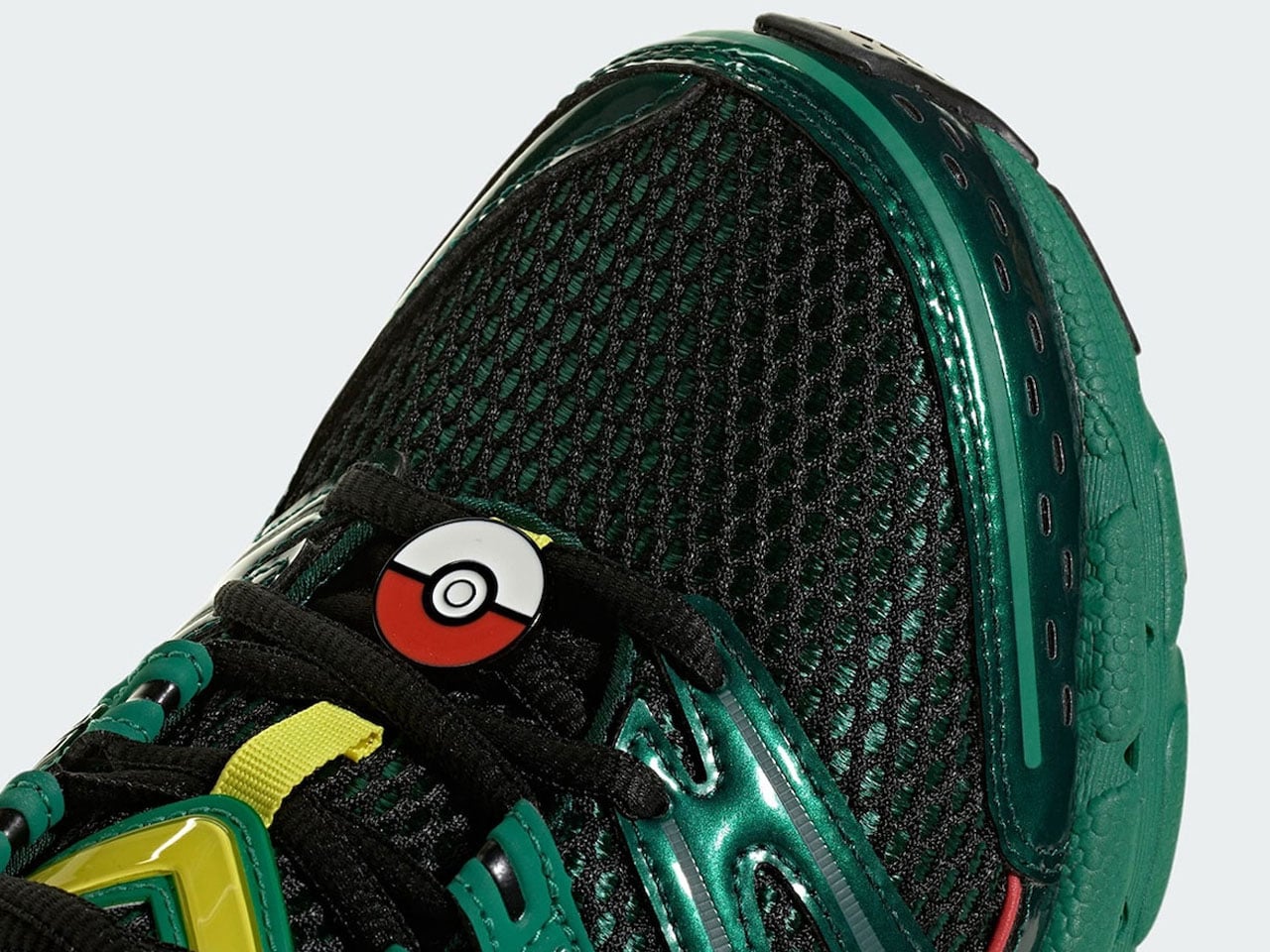
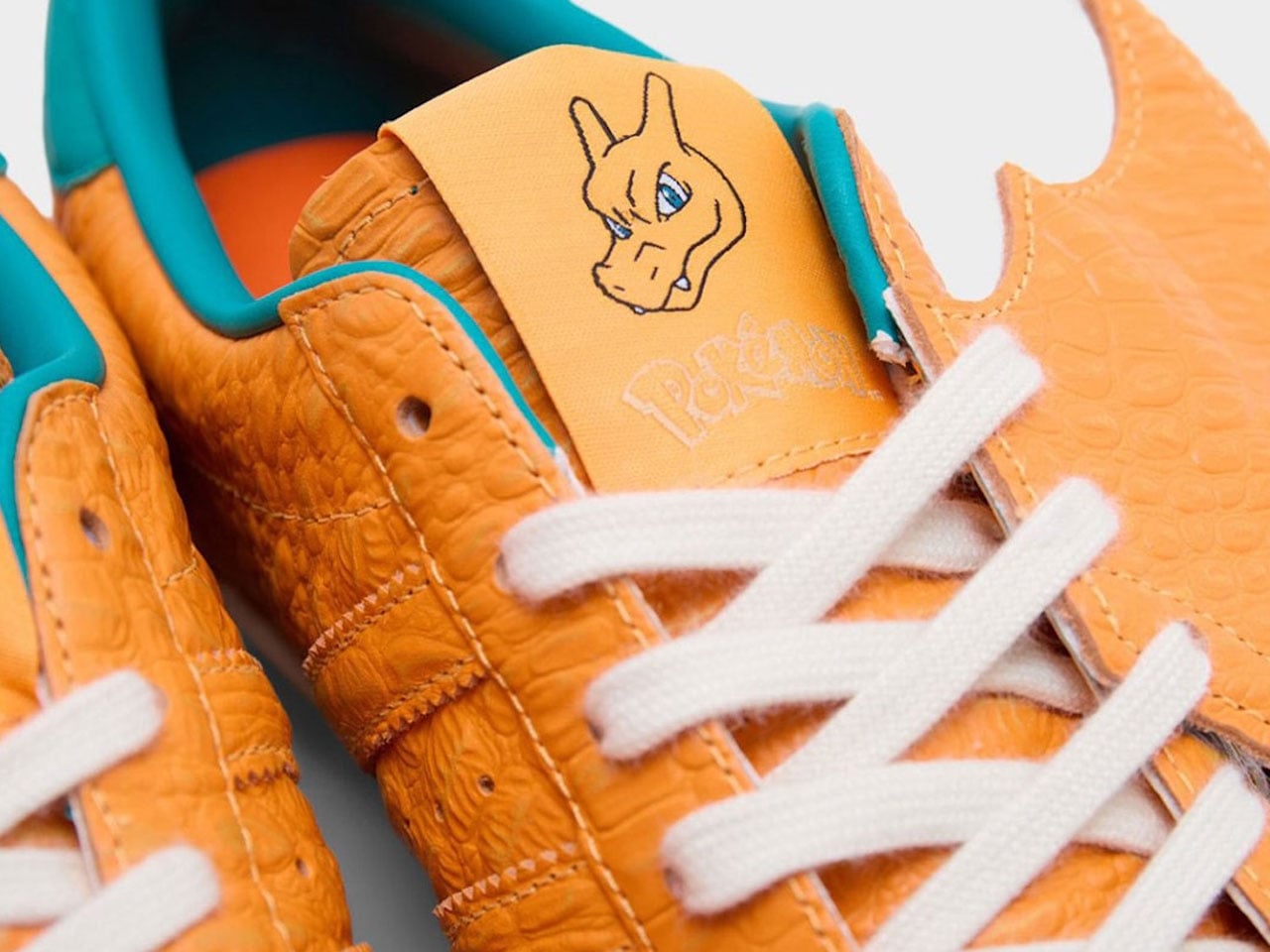
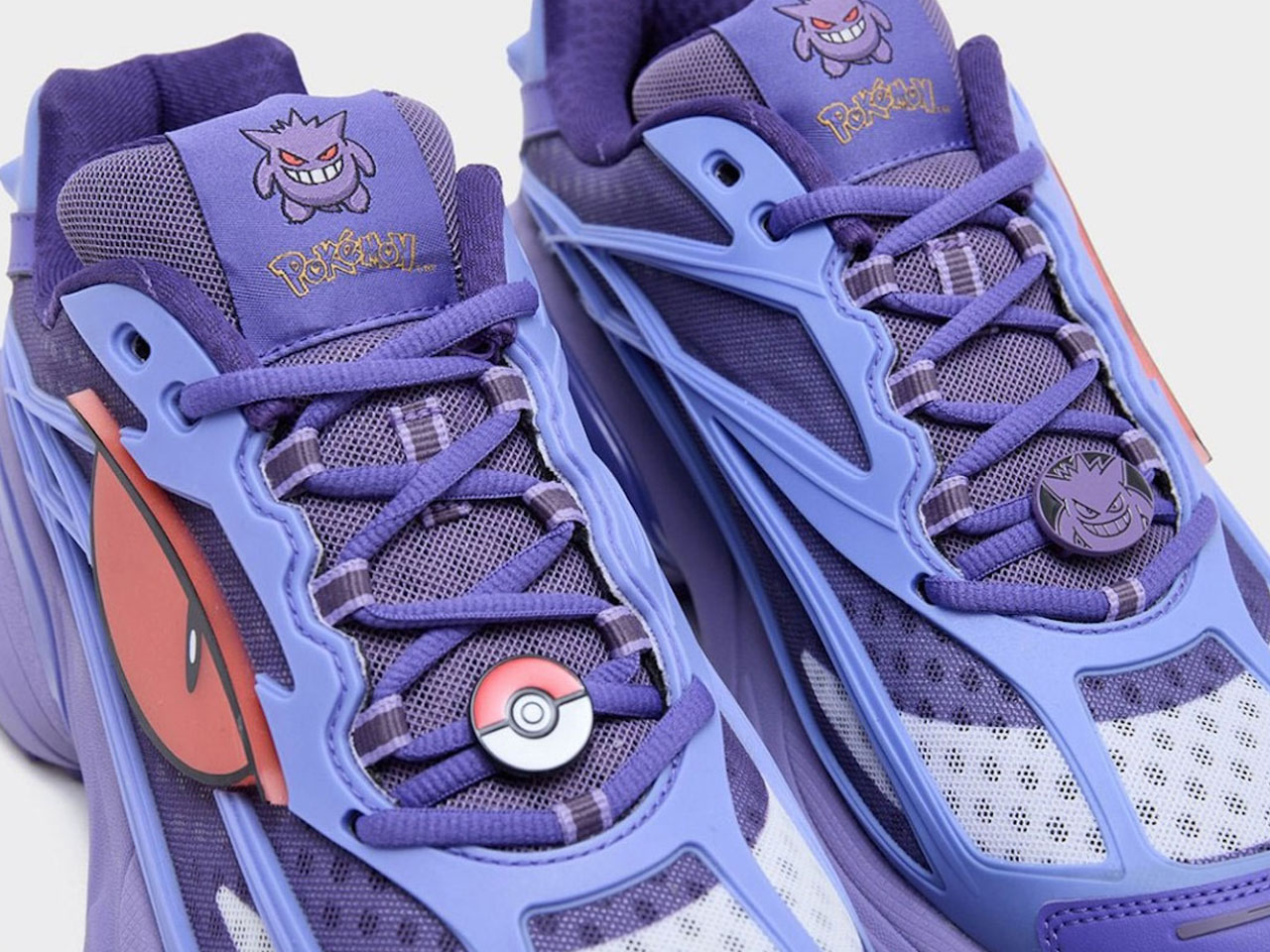
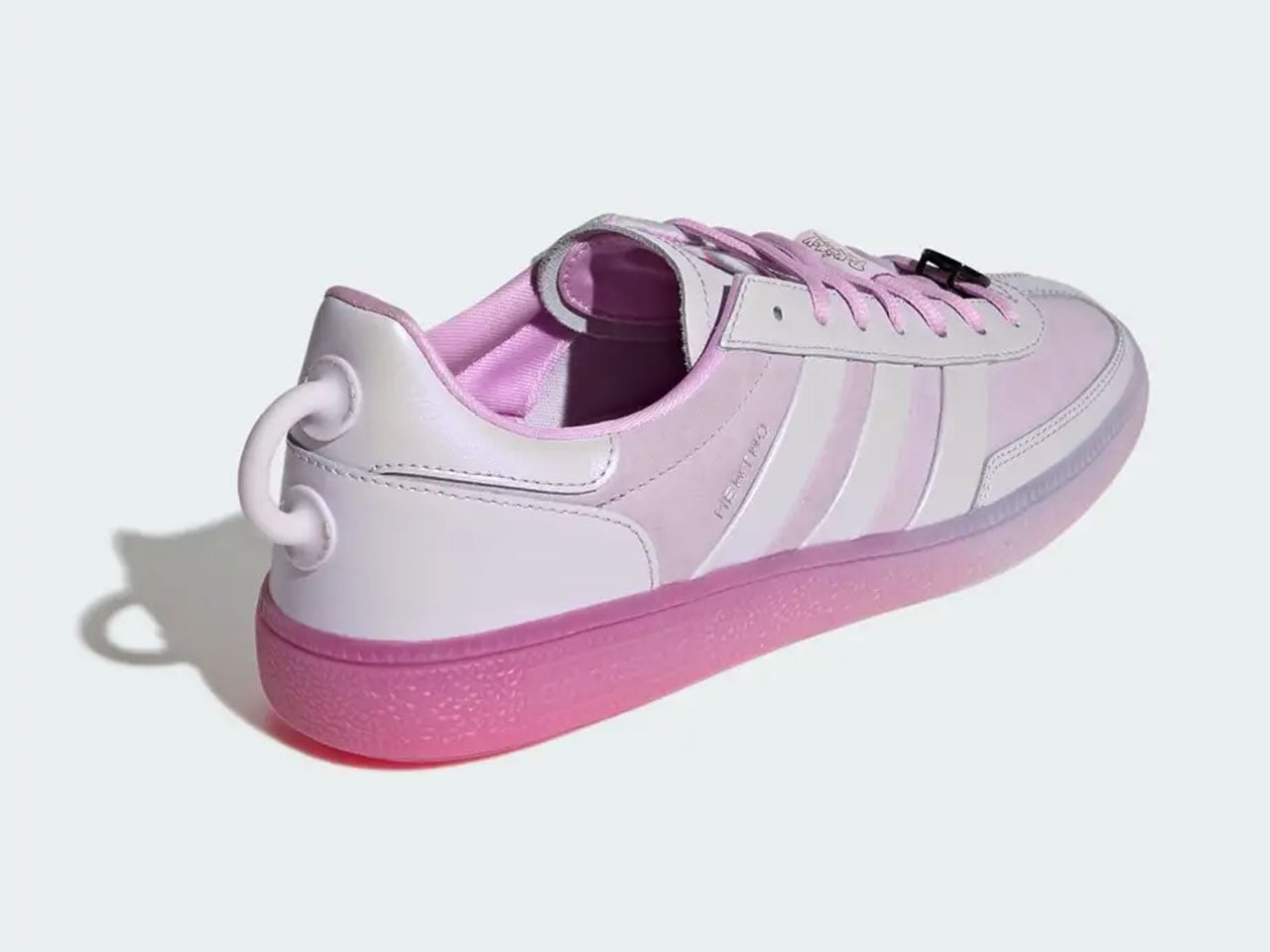
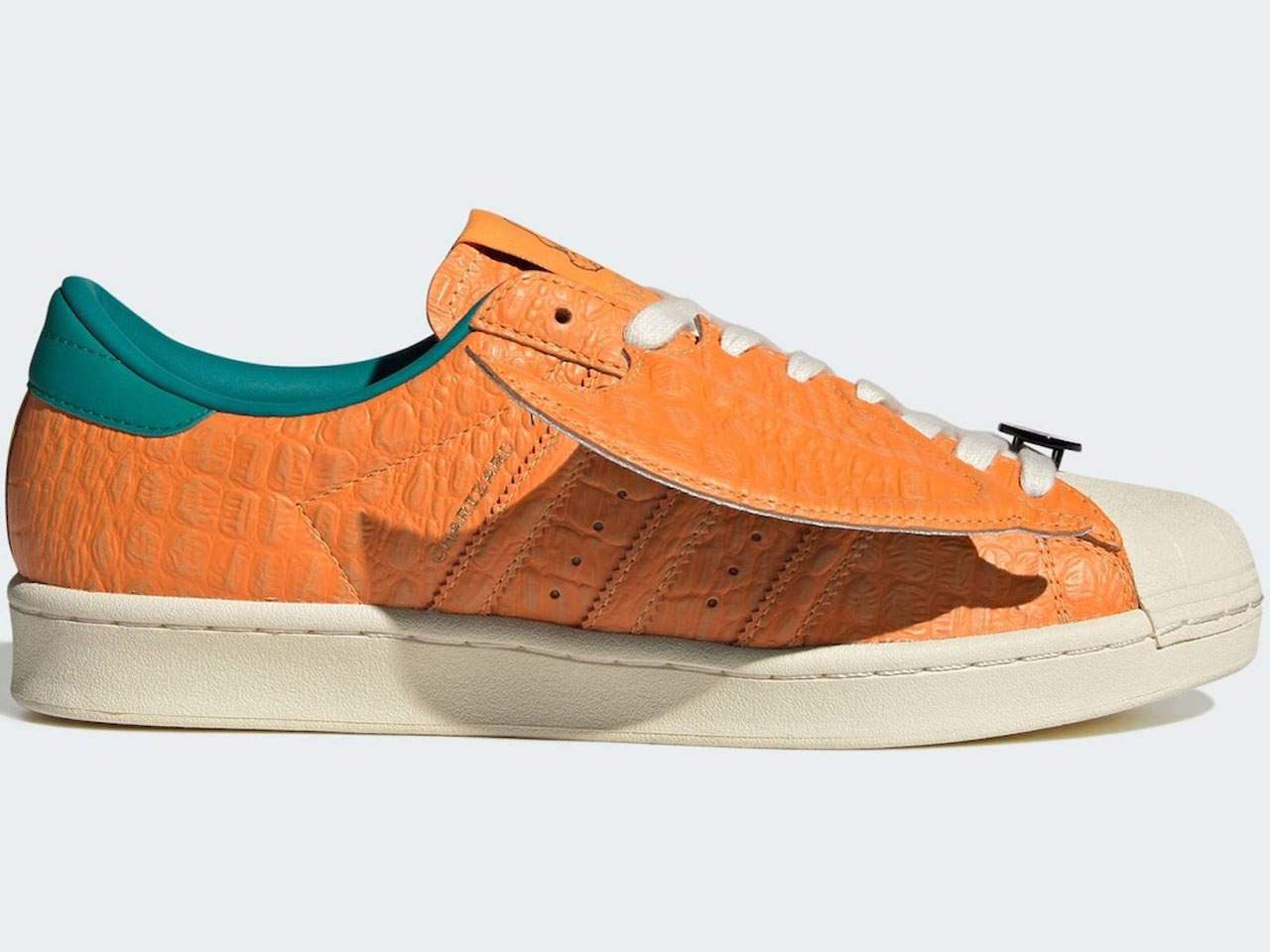
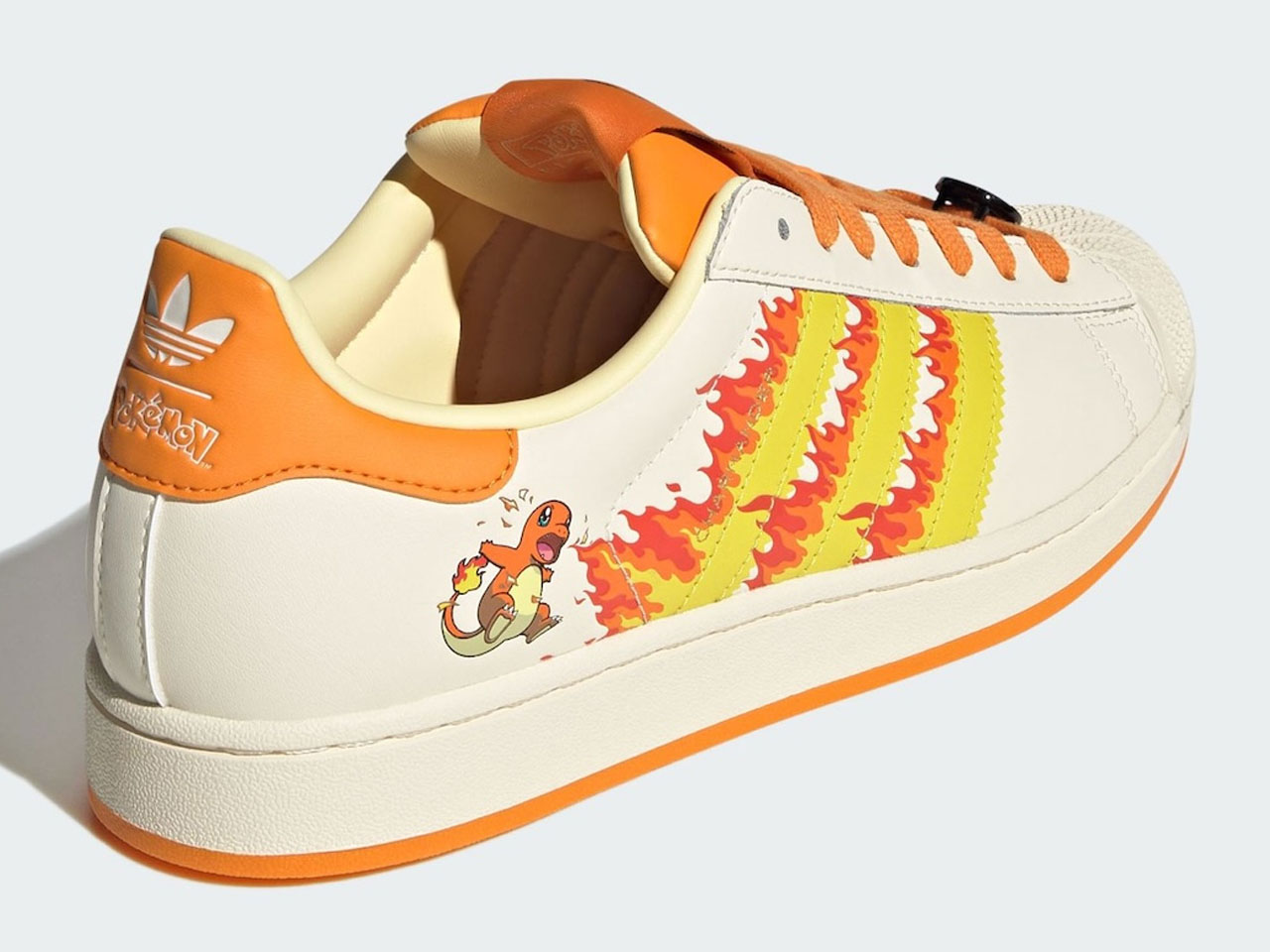
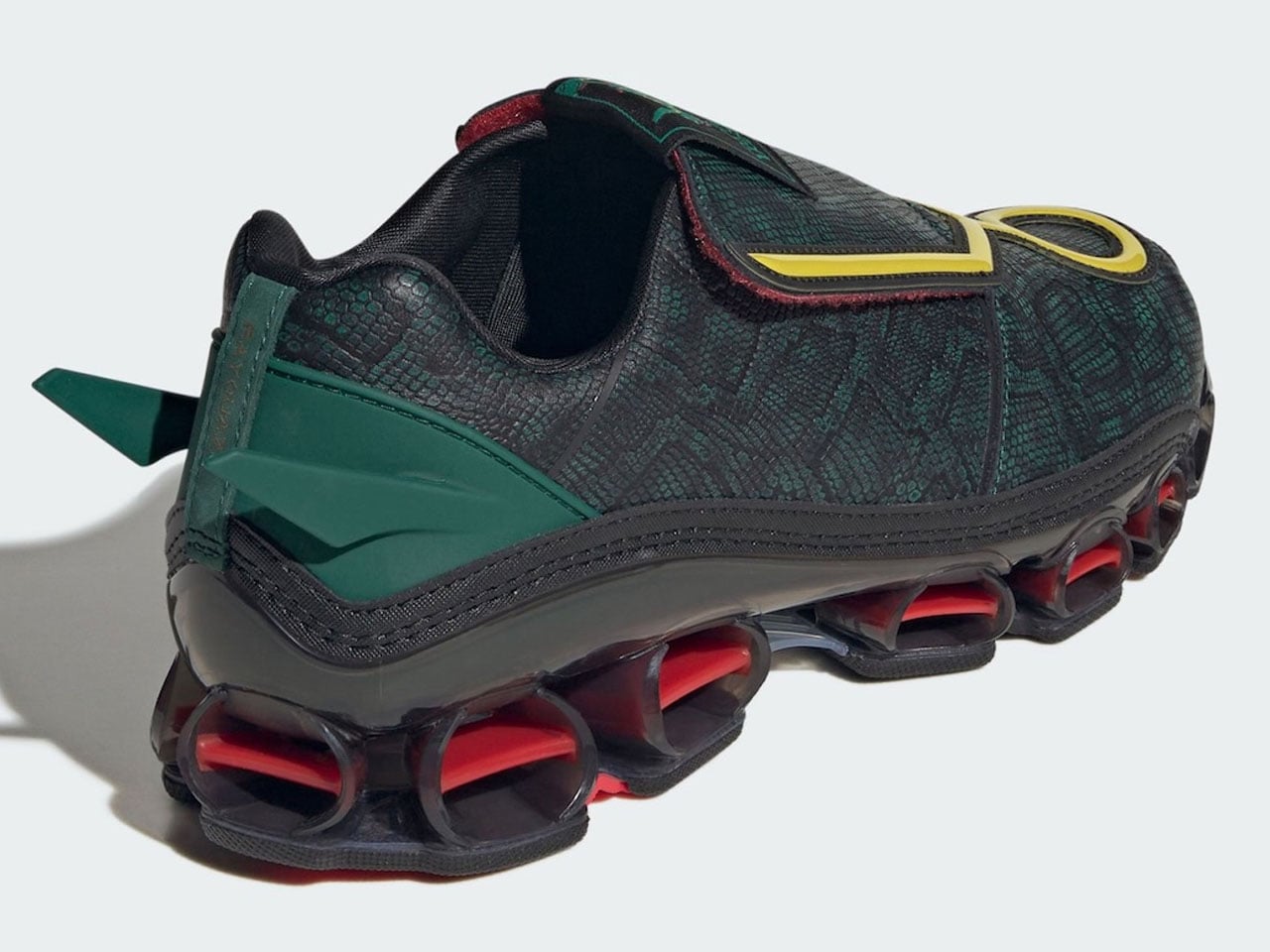
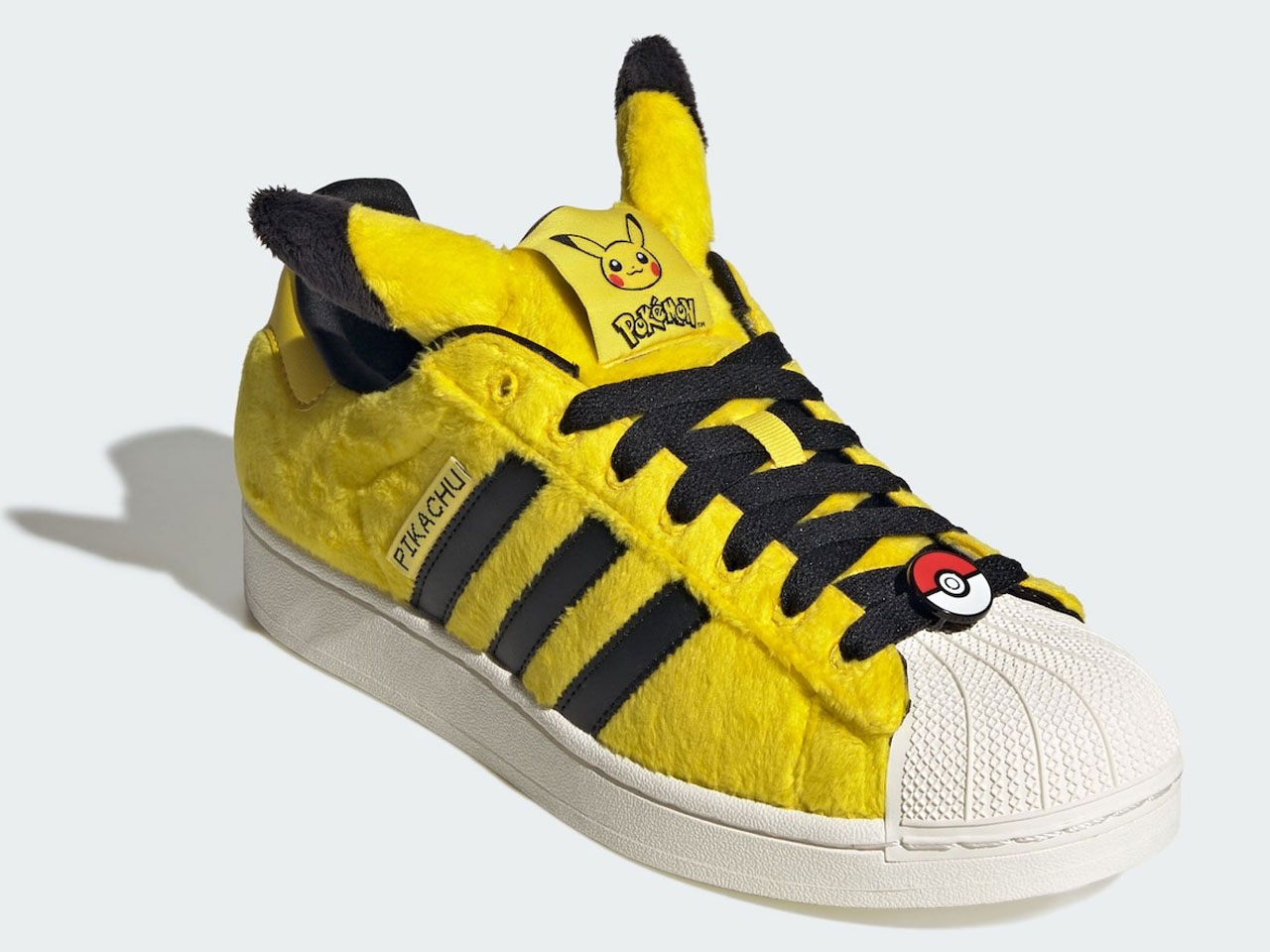
Pop Culture brands often turn to sneaker fanfare from time to time. This time around, it’s Pokémon that’s treading the collaboration route. For its 30th anniversary celebration, Pokémon is joining forces with adidas Originals for a comprehensive collection of 12 Pokémon x adidas Originals 30th Anniversary Sneakers.
As you’d expect from the names involved, the collaborative silhouettes blend the ‘90s nostalgia with modern streetwear style, giving those who have grown up playing Red and Blue on Nintendo Game Boy a reason to rekindle their memories.
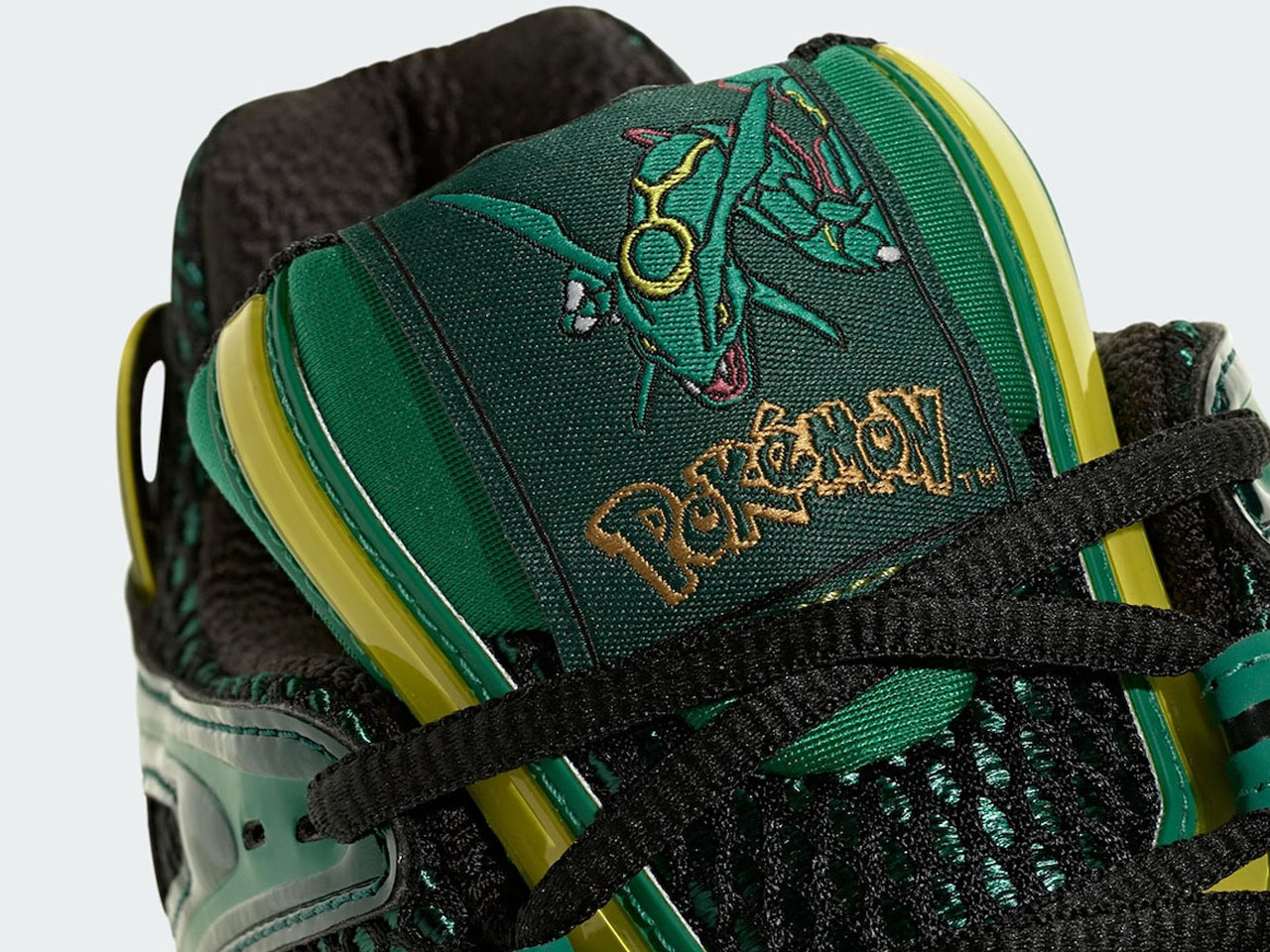
Since its inception in 1996, Pokémon has evolved from the screens of the Game Boy to become one of the highest-grossing media franchises. The incredible journey is reflected through the signifying colors, textures, and unique structural add-ons that show up on the sneakers to portray the distinctive antics of various Pokémon.
The global release of the Pokémon-inspired sneaker collection is scheduled for September 2026. The sneakers that we are looking at include the adidas charms like the Samba, Superstar, and the Gazelle. These have been reimagined for Pokémon fans with colors and motifs to celebrate their beloved characters.
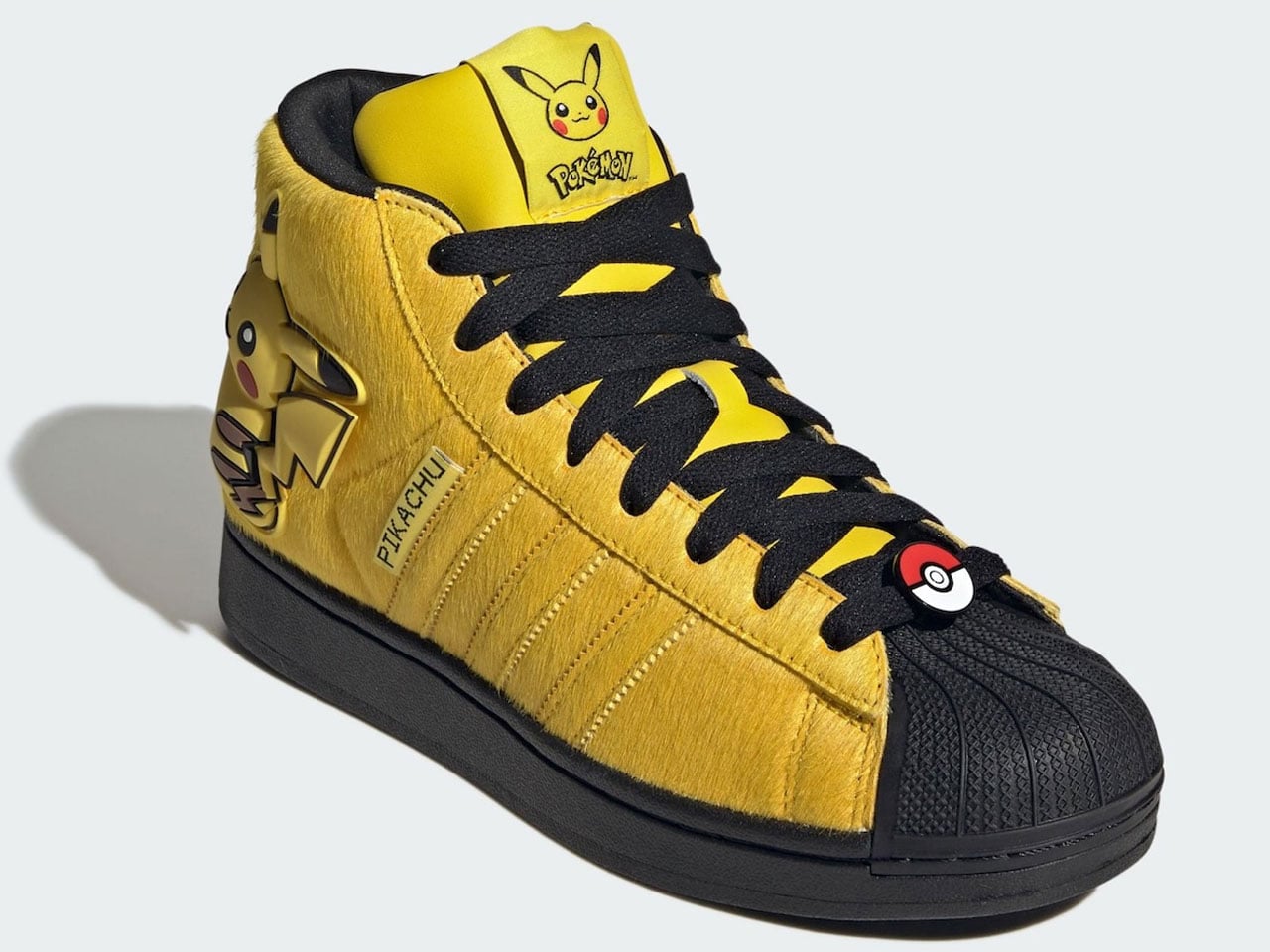
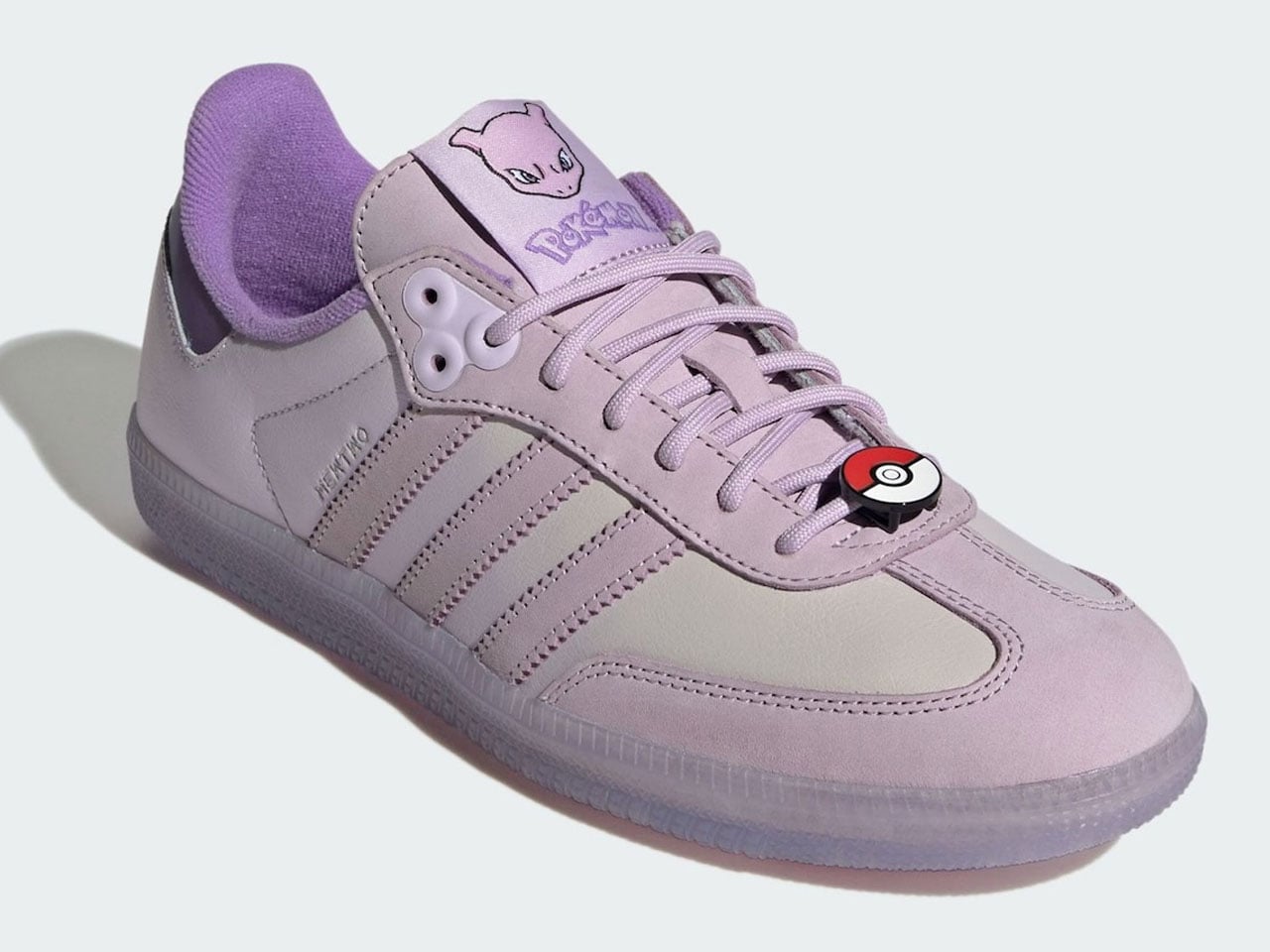
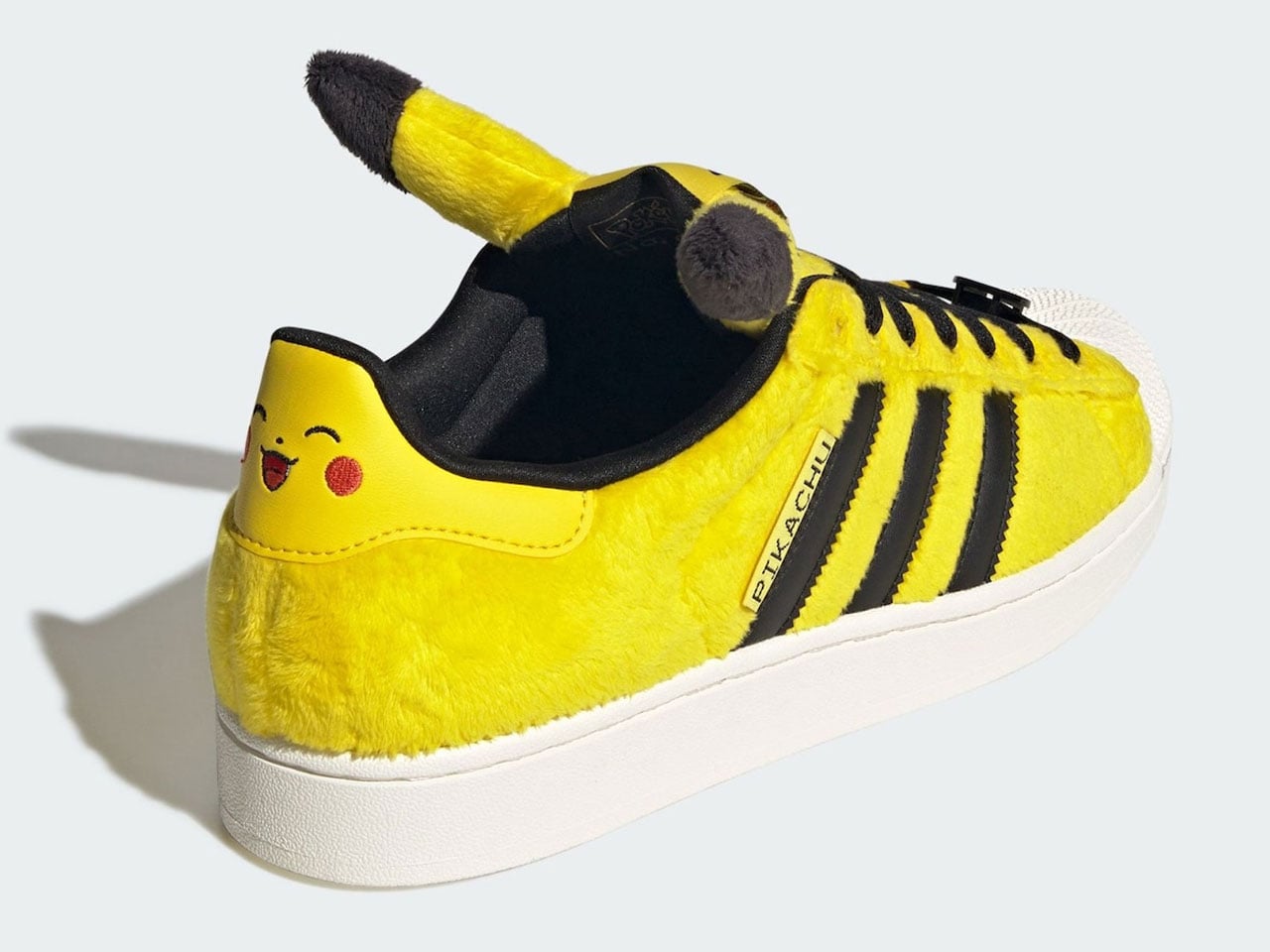
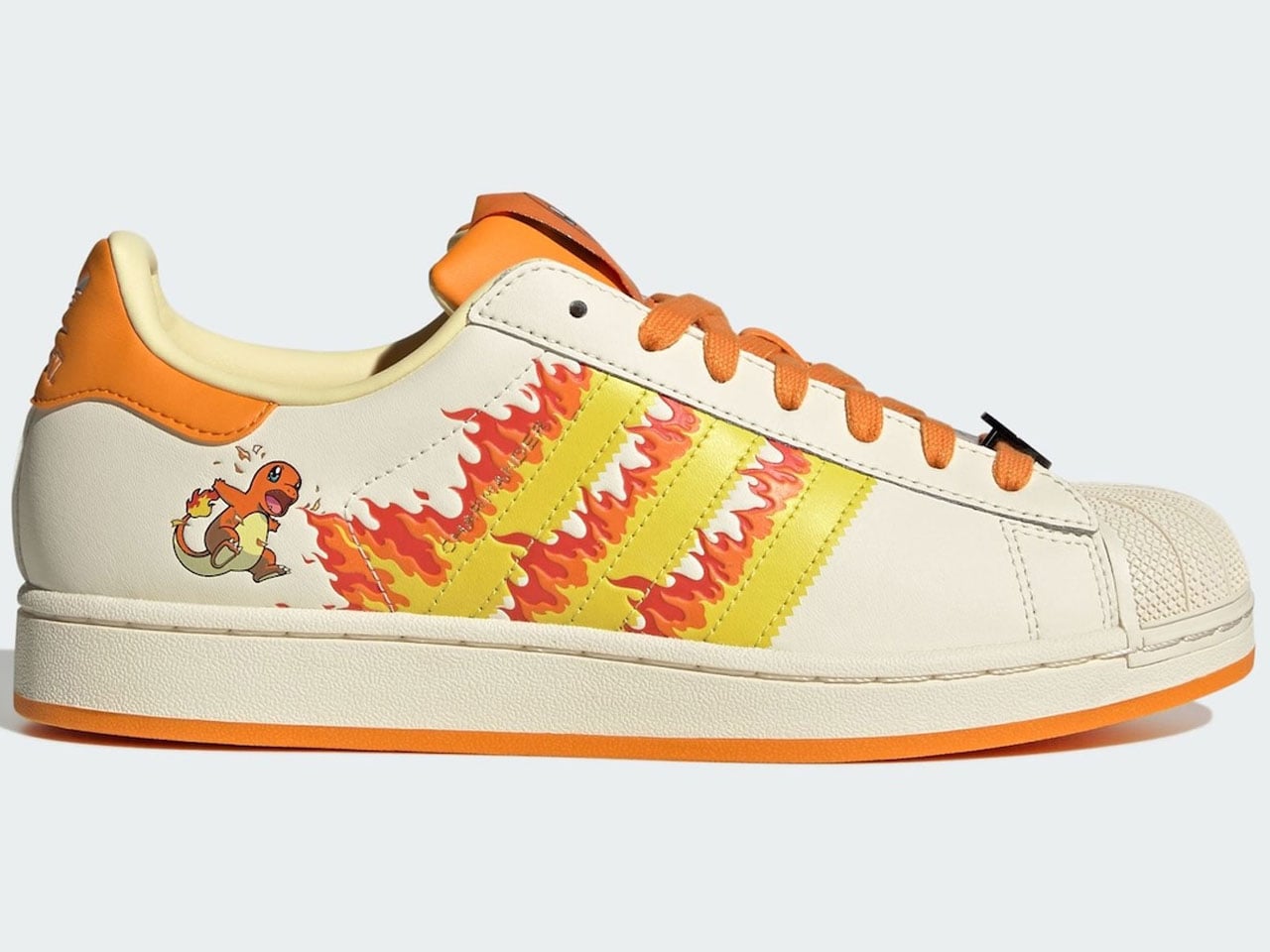
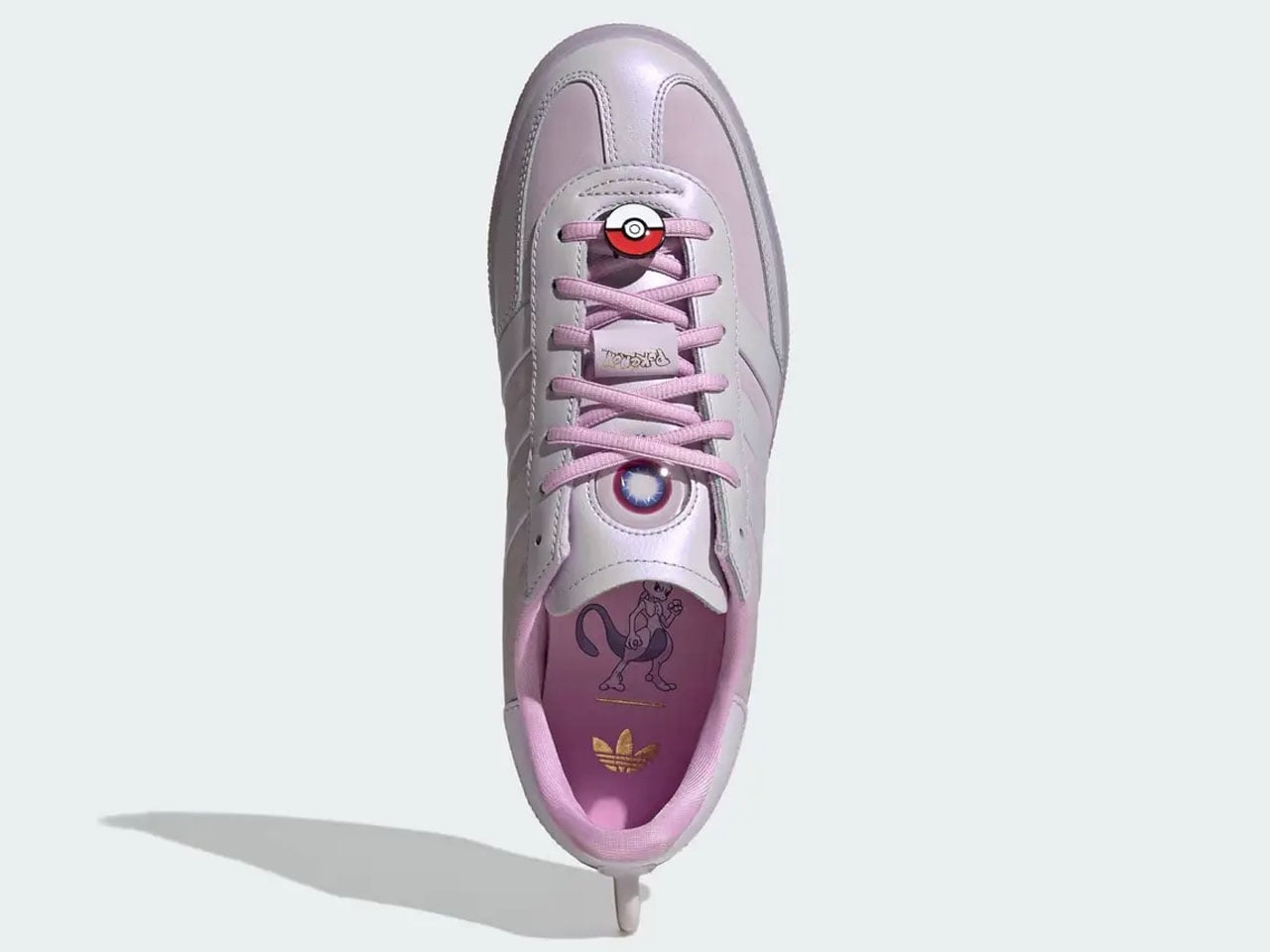
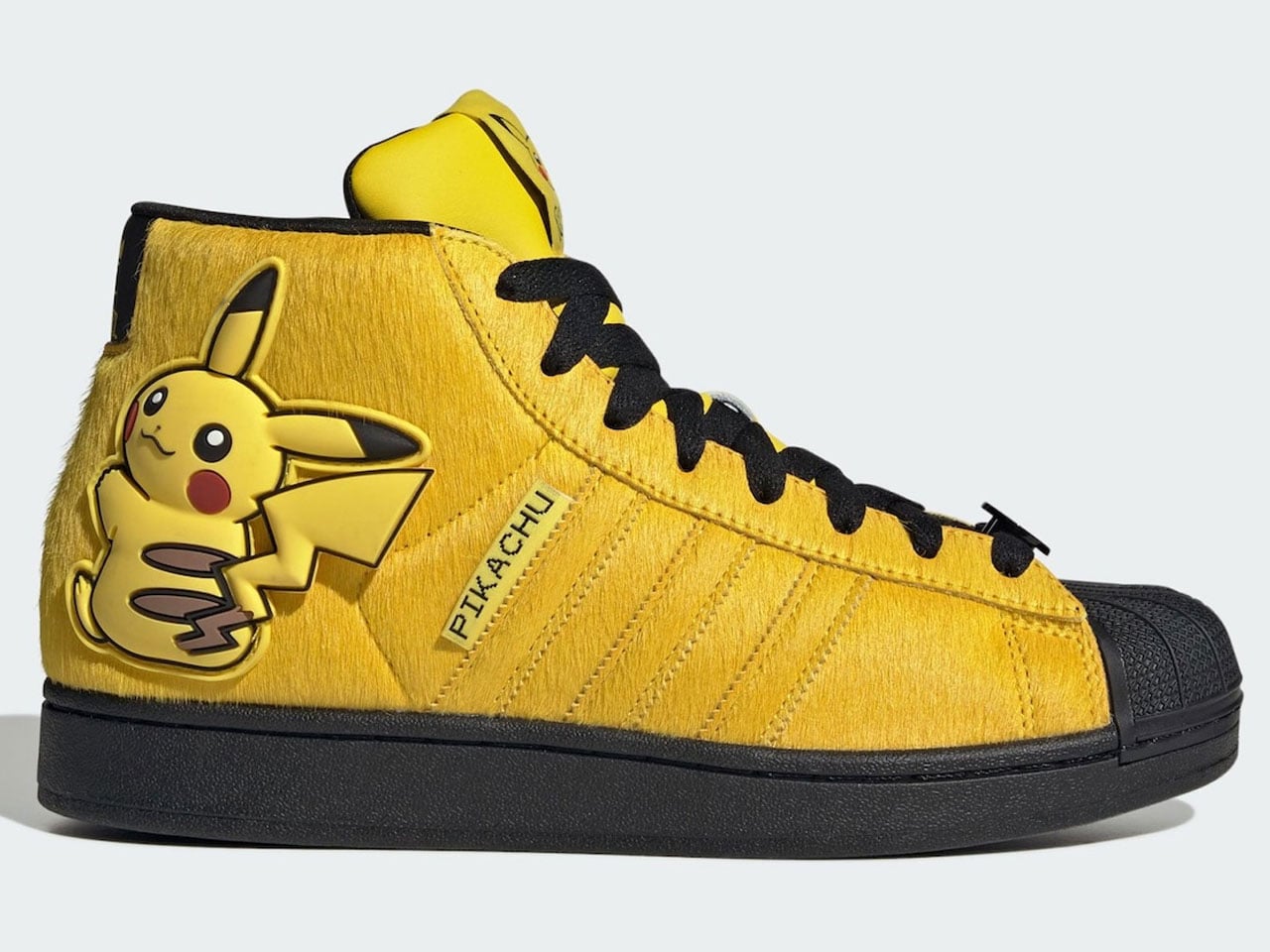
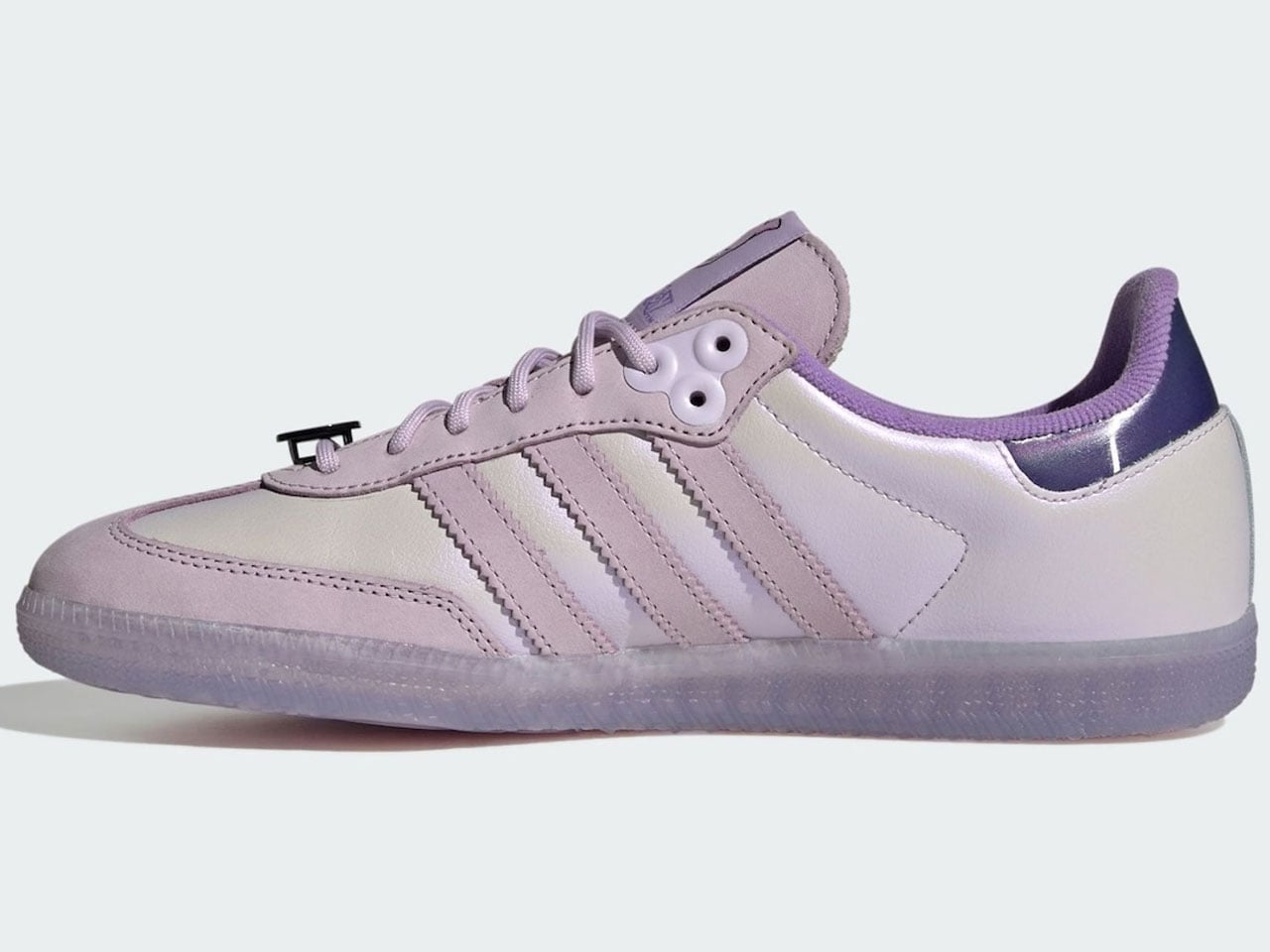
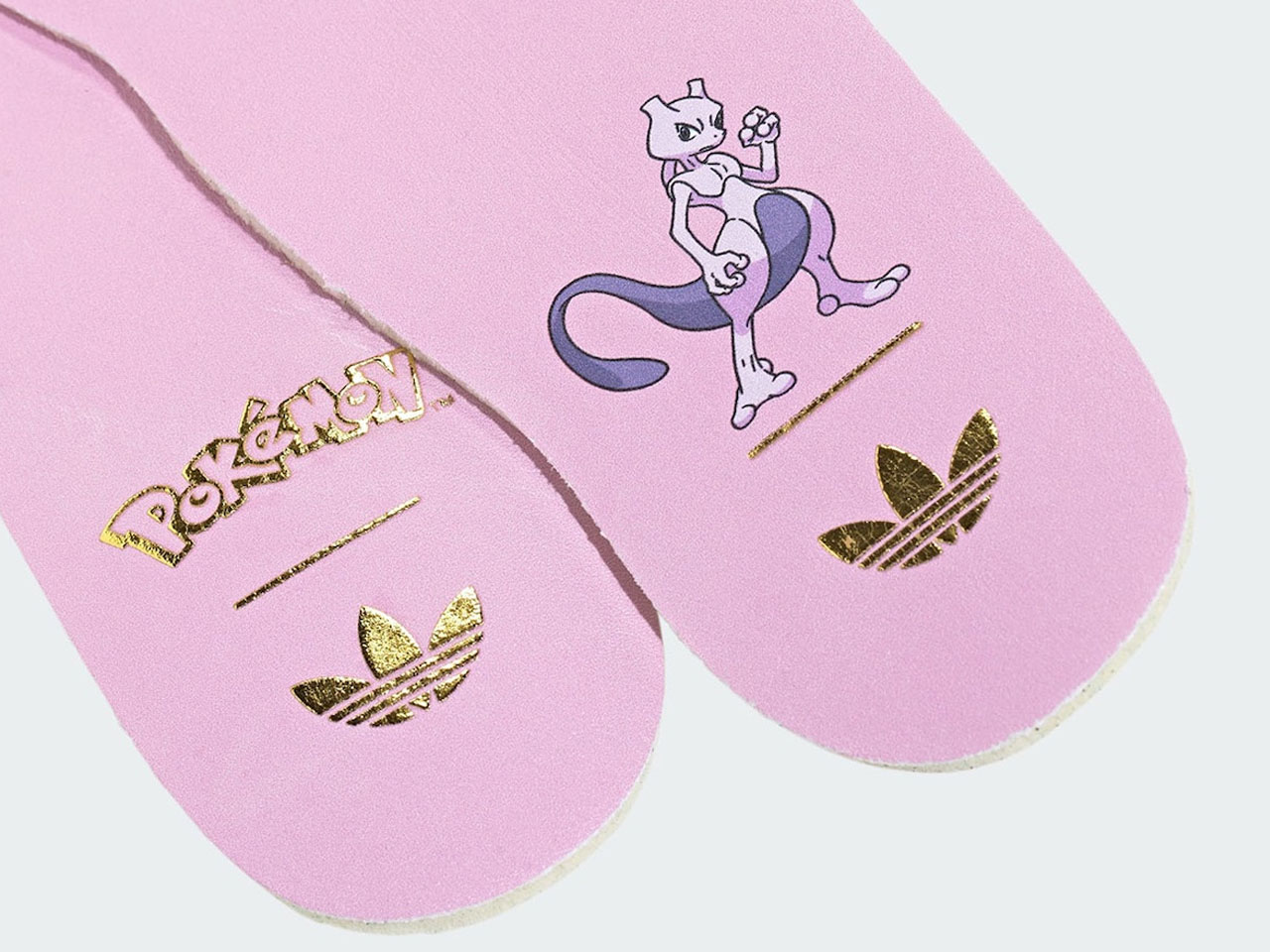
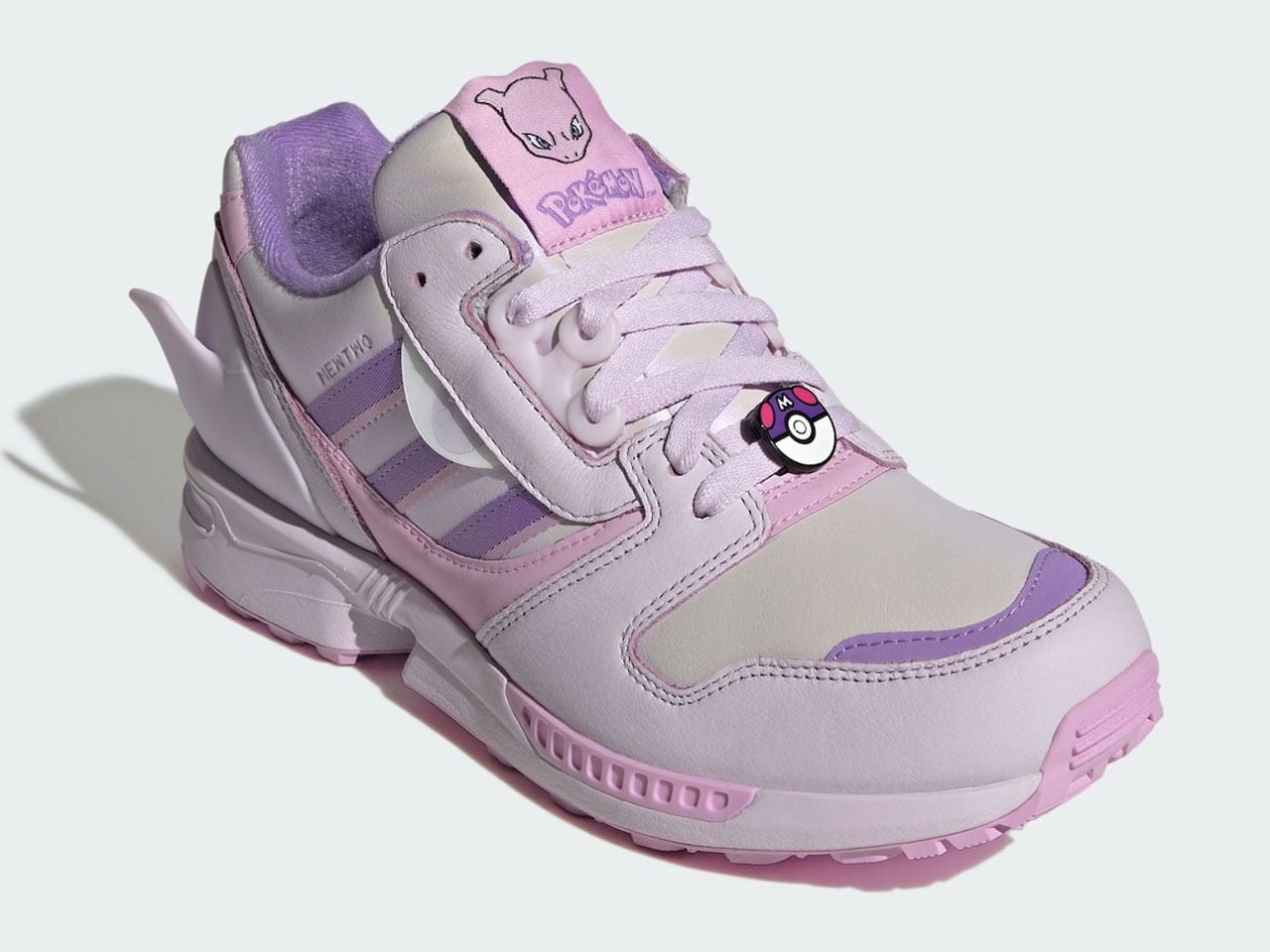
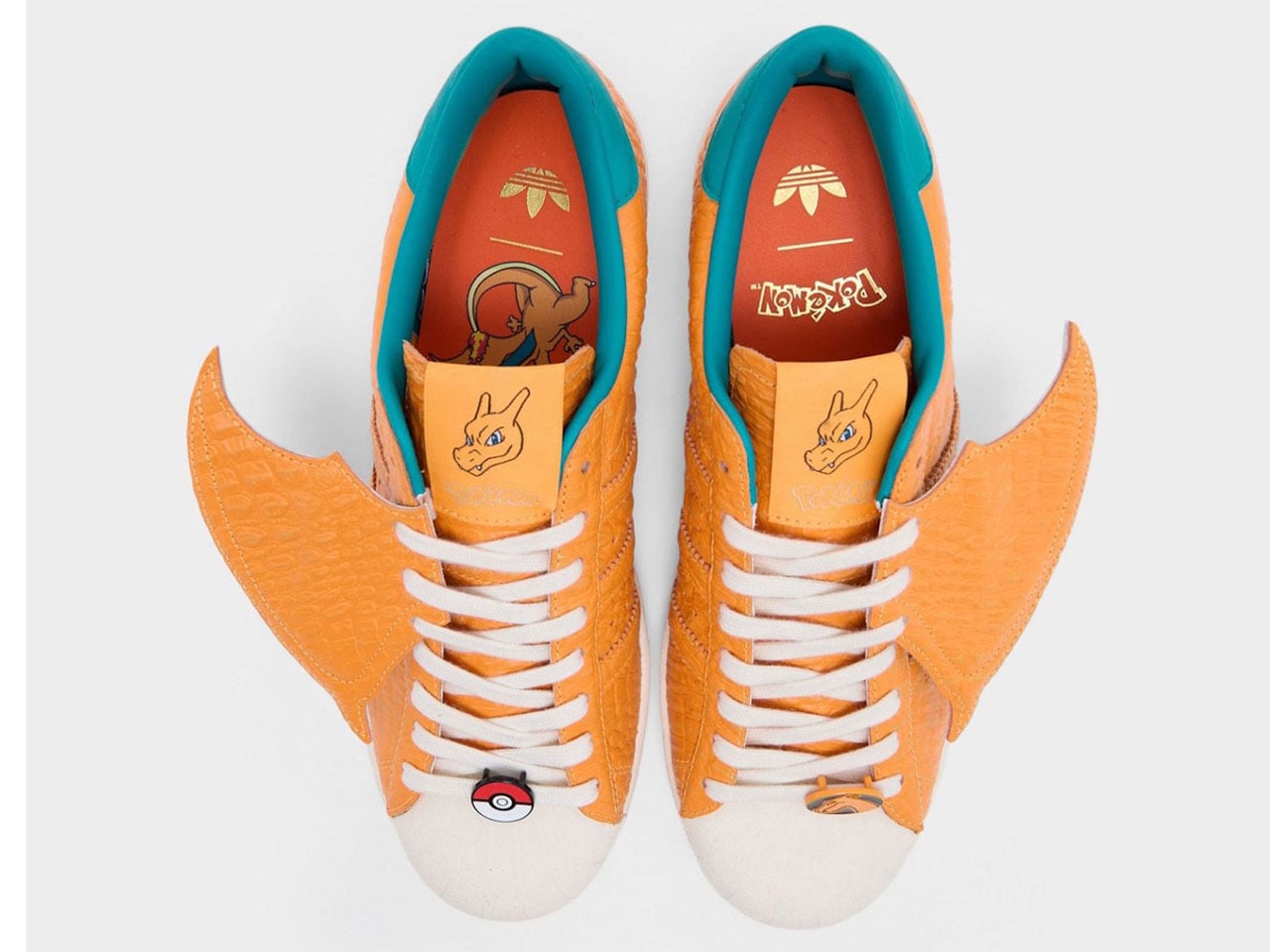
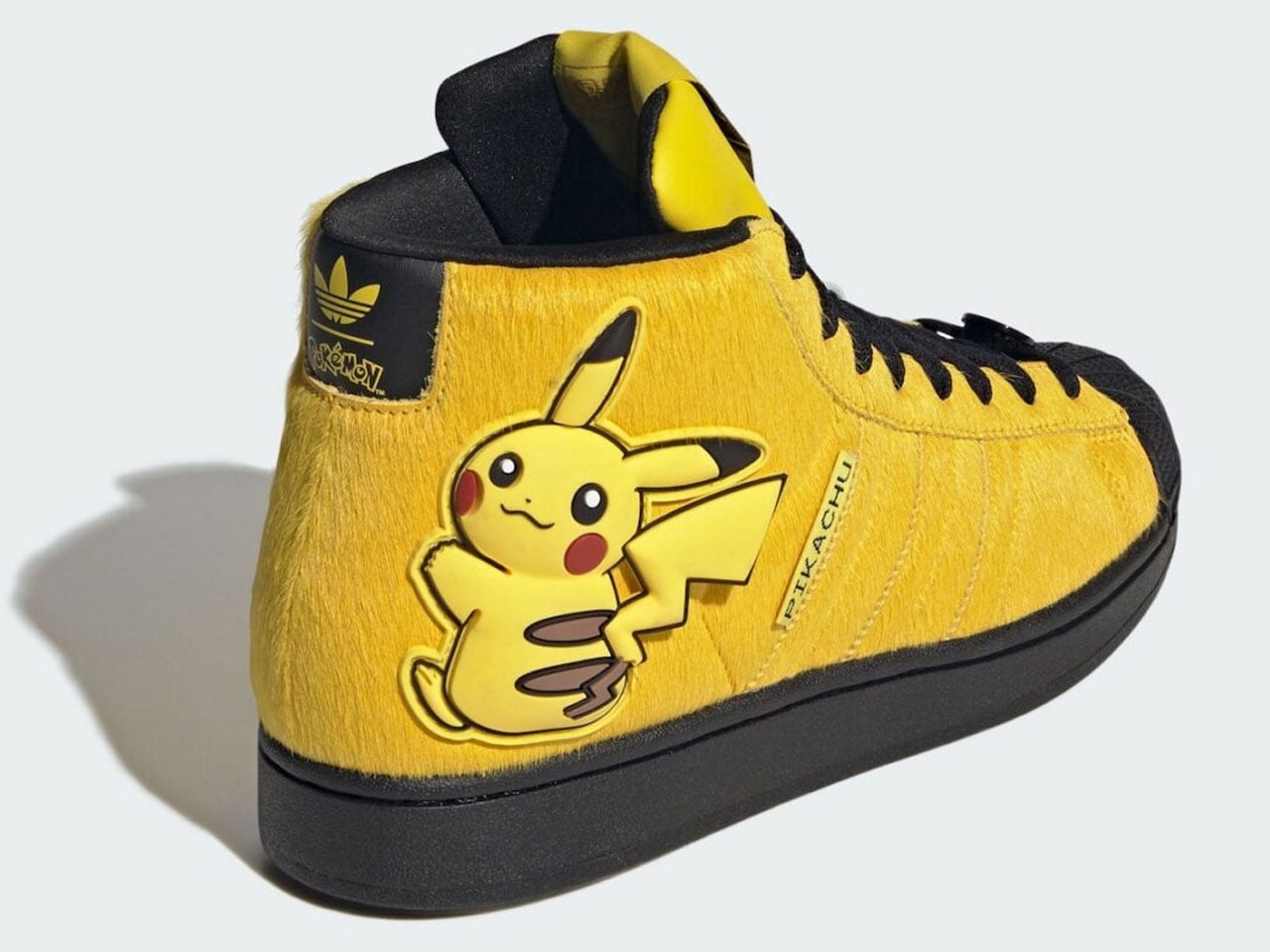
The highlight of the collaboration is three models designed after the lavender tones of Mewtwo. Other motifs embracing the collection include the wing-shaped overlays of Charizard and the textured yellow sneaker uppers drawn from Pikachu. A Pro Model and one Superstar iteration use fuzzy yellow uppers mimicking the Pikachu fur texture and are completed with Poké Ball lace dubraes.
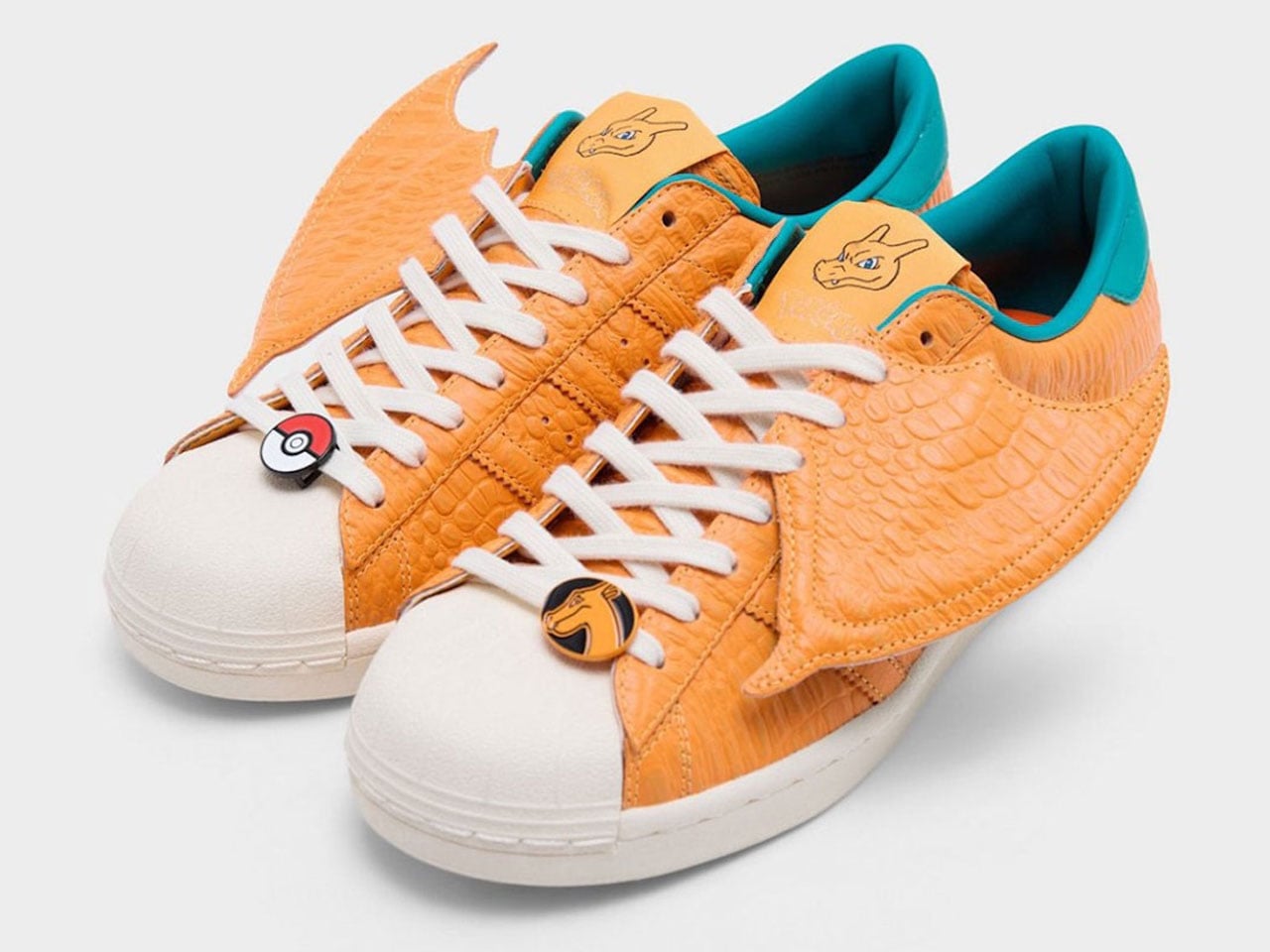
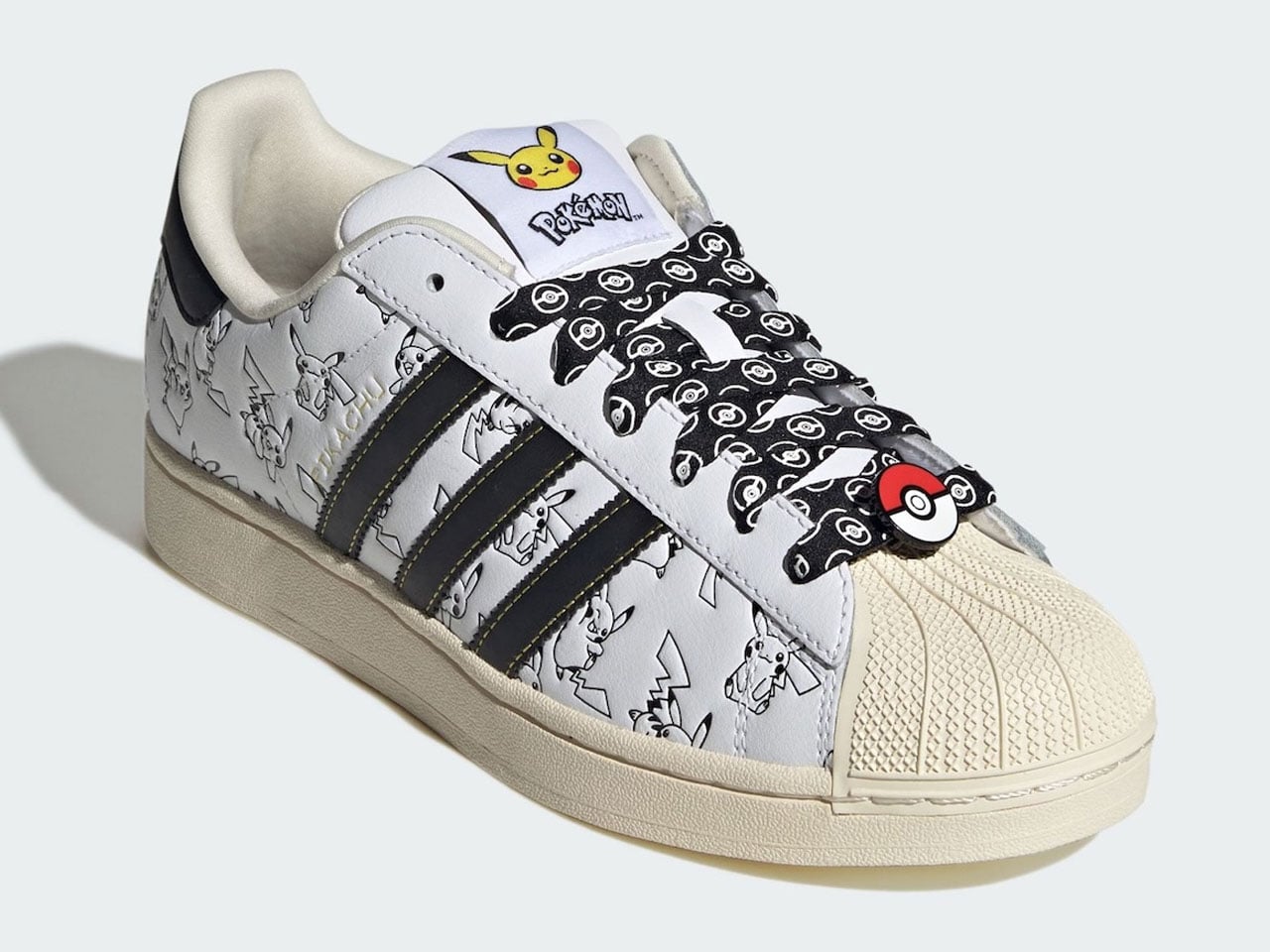
The other Superstar silhouette is presented with a clean white base. The base is covered in an all-over graphic Pikachu print. A Charizard-inspired Superstar sneaker features a wing-shaped flap overlaying the eyelets, a nod to the character’s draconic form. As mentioned earlier, it’s Mewtwo that adidas and Pokémon have given the most attention. Mewtwo ZX 8000 sneaker design features a Master Ball lace charm with lavender and violet tones and horn-like ears to complement the character. The other two models are an original Samba and Handball Spezial. The latter has a heel loop inspired by the cord-like add-on extending from the back of Mewtwo’s neck.
Every pair of sneakers in the collection is a sublime blend of both brands. While adidas has gone ahead and presented its best models, Pokémon has left no stone unturned to ensure they are a true symbolic representation of what it represents. For the fans willing to open their wallets for a pair of adidas footwear with Pokémon branding, the commemorative sneakers are likely to retail between $110 and $180.
30th Anniversary Collection of Pokémon x adidas Originals will make a global debut in September this year and will be available via the adidas online store and select retailers.
The last time I really thought about what my outfit was doing for me, I was considering whether my summer dress made me look like I was fashionable or it was just perfect for the hot weather. Simon Weckert has me rethinking the question entirely. Do my clothes do something for me other than protect me from the elements or make me look cool? Can they be about something more?
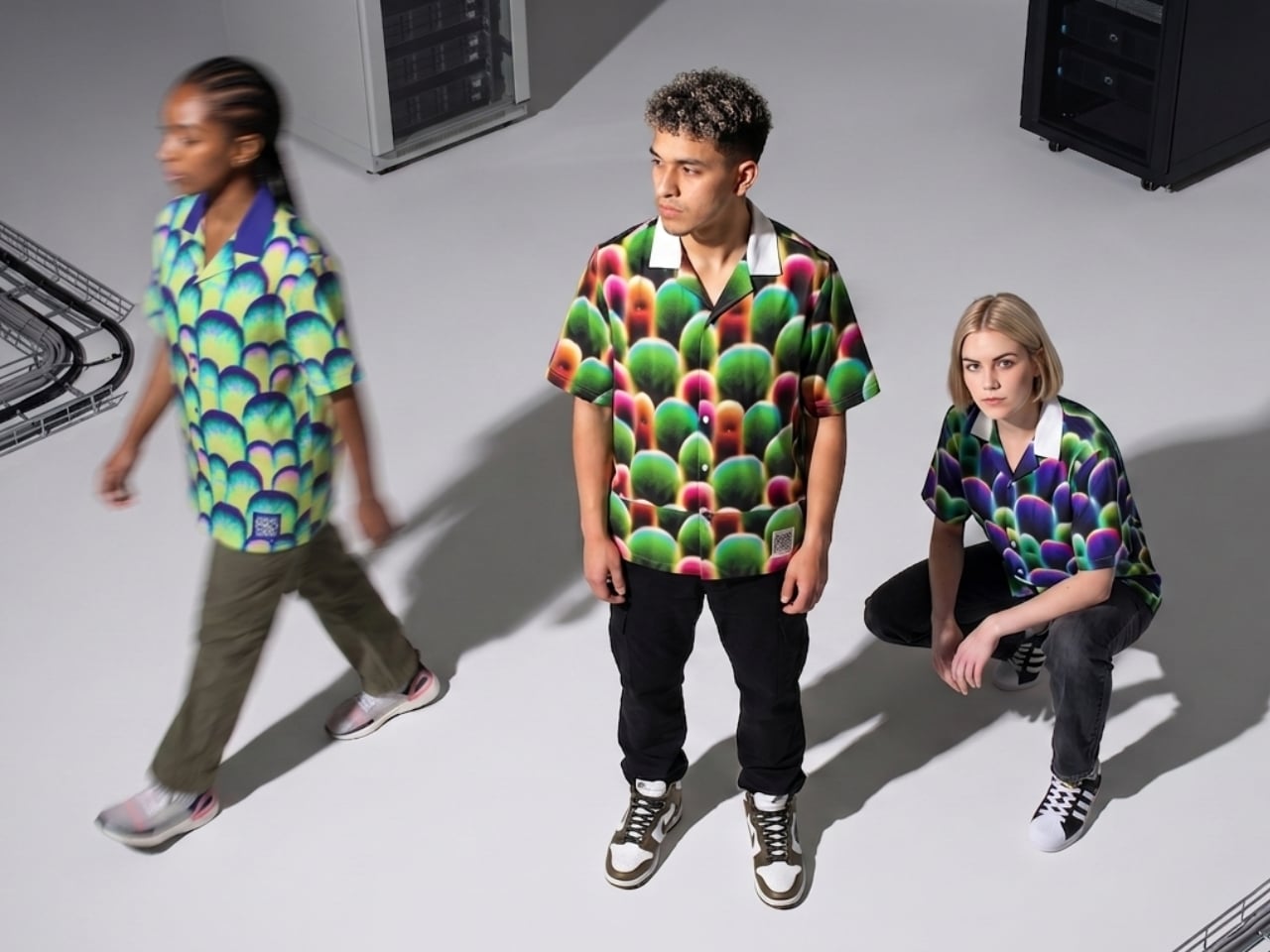
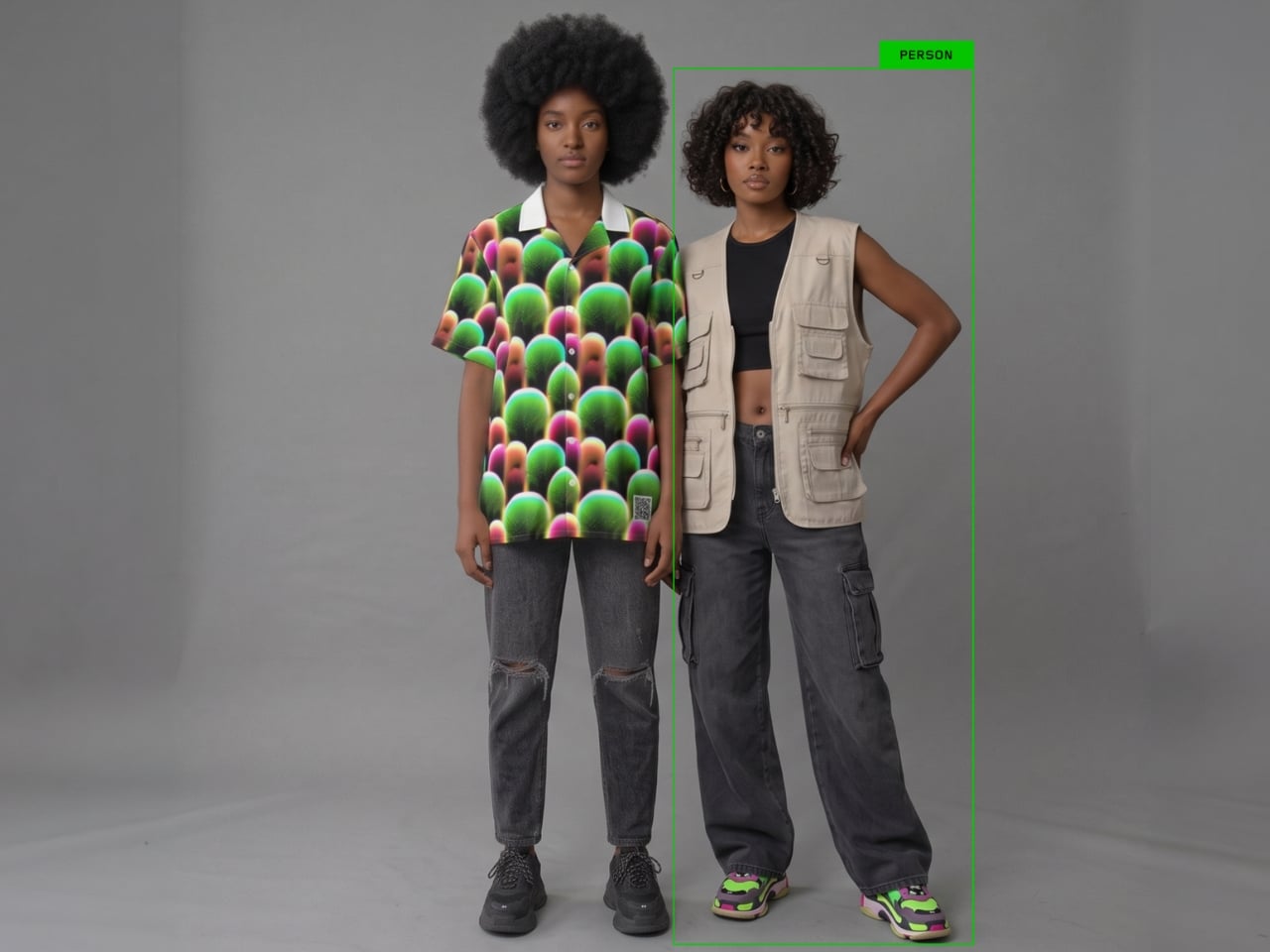
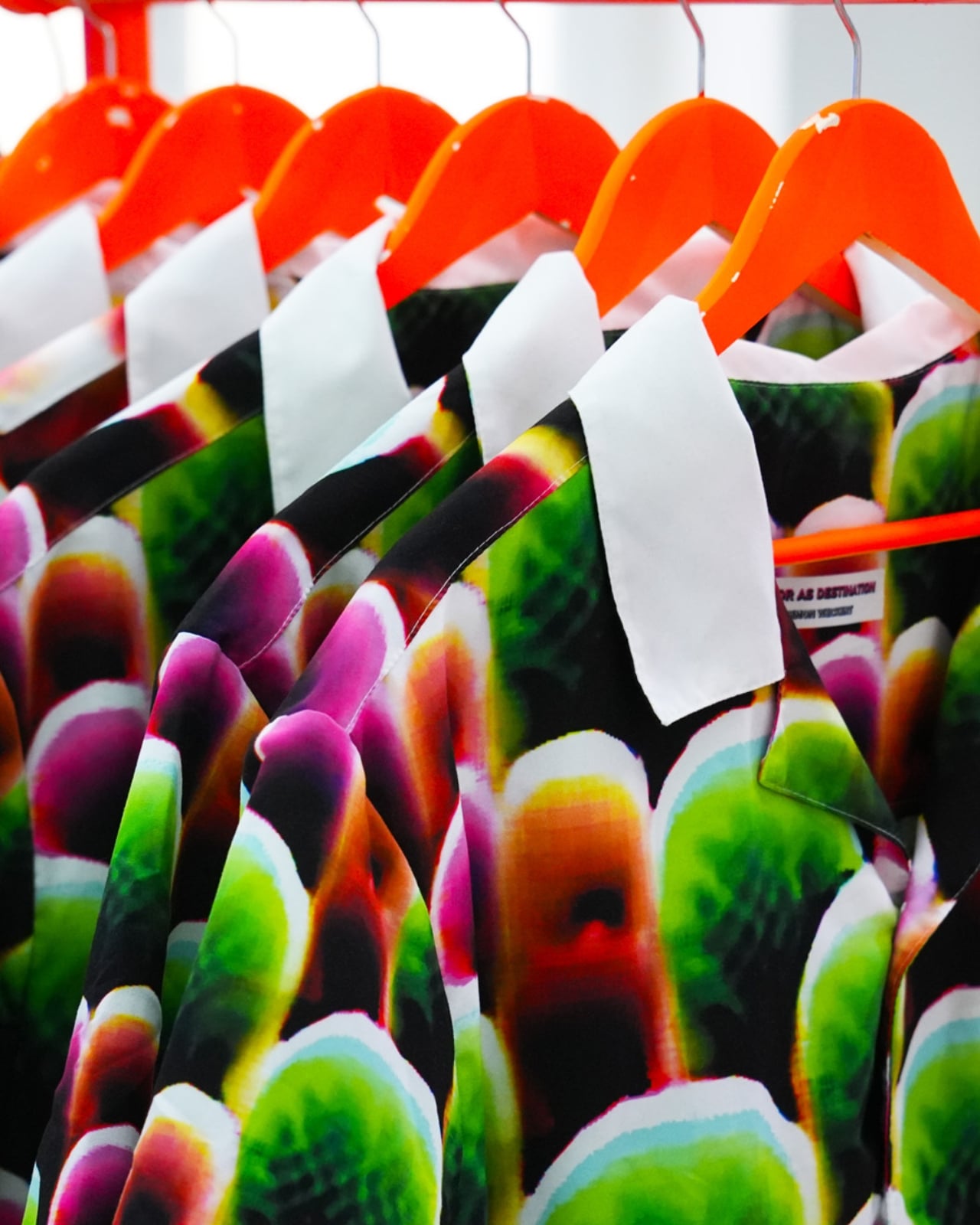
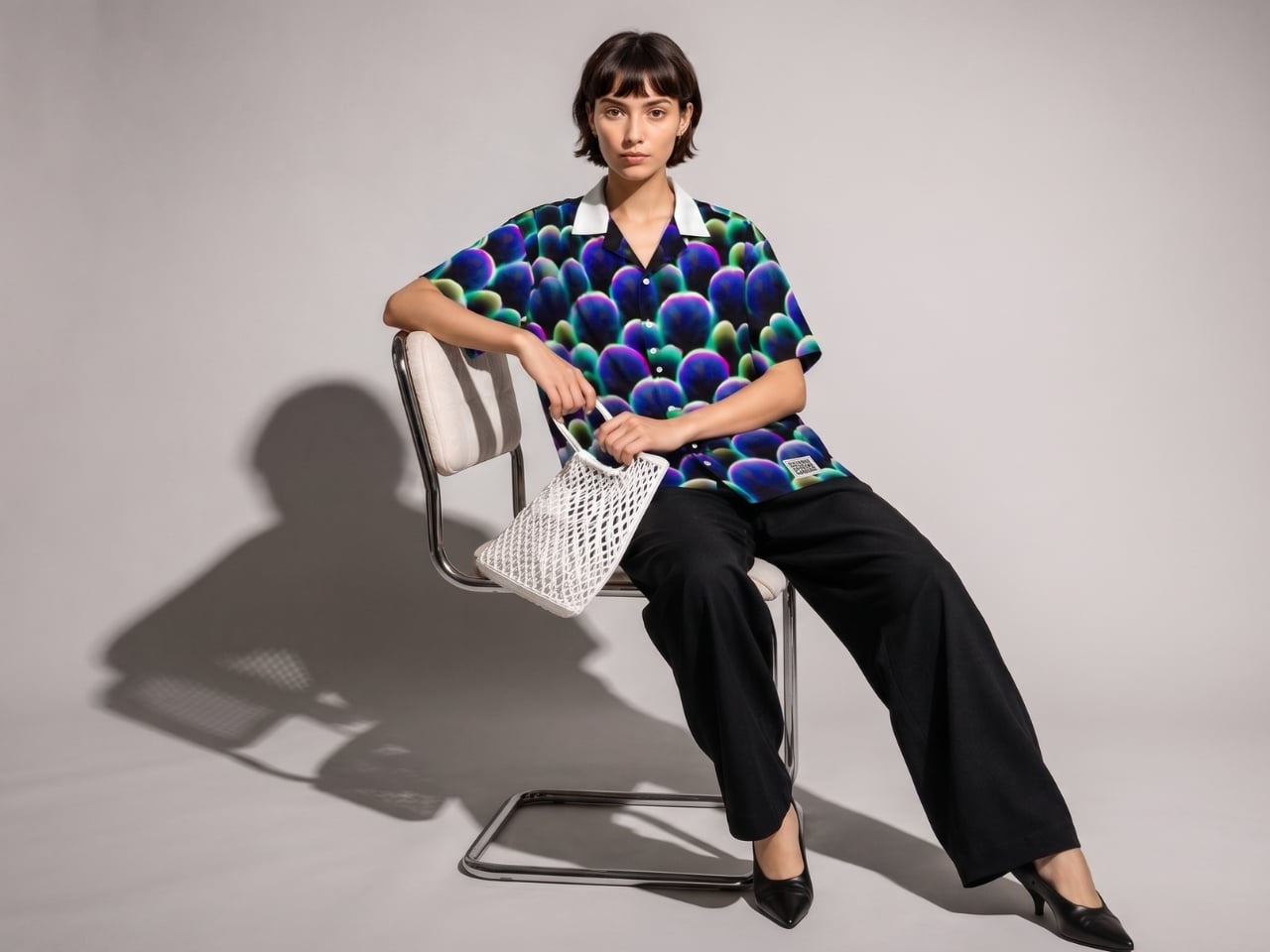
The Berlin-based artist recently unveiled Digital Camouflage, a conceptual garment collection that does one very specific, very remarkable thing: it makes you invisible to AI. Not invisible to the human eye, obviously. You’d still be fully, stylishly present to anyone walking past you. But to the surveillance cameras powered by AI-based person detection systems that increasingly populate airports, streets, and public spaces, you essentially cease to exist. That’s not a metaphor. It’s the engineering.
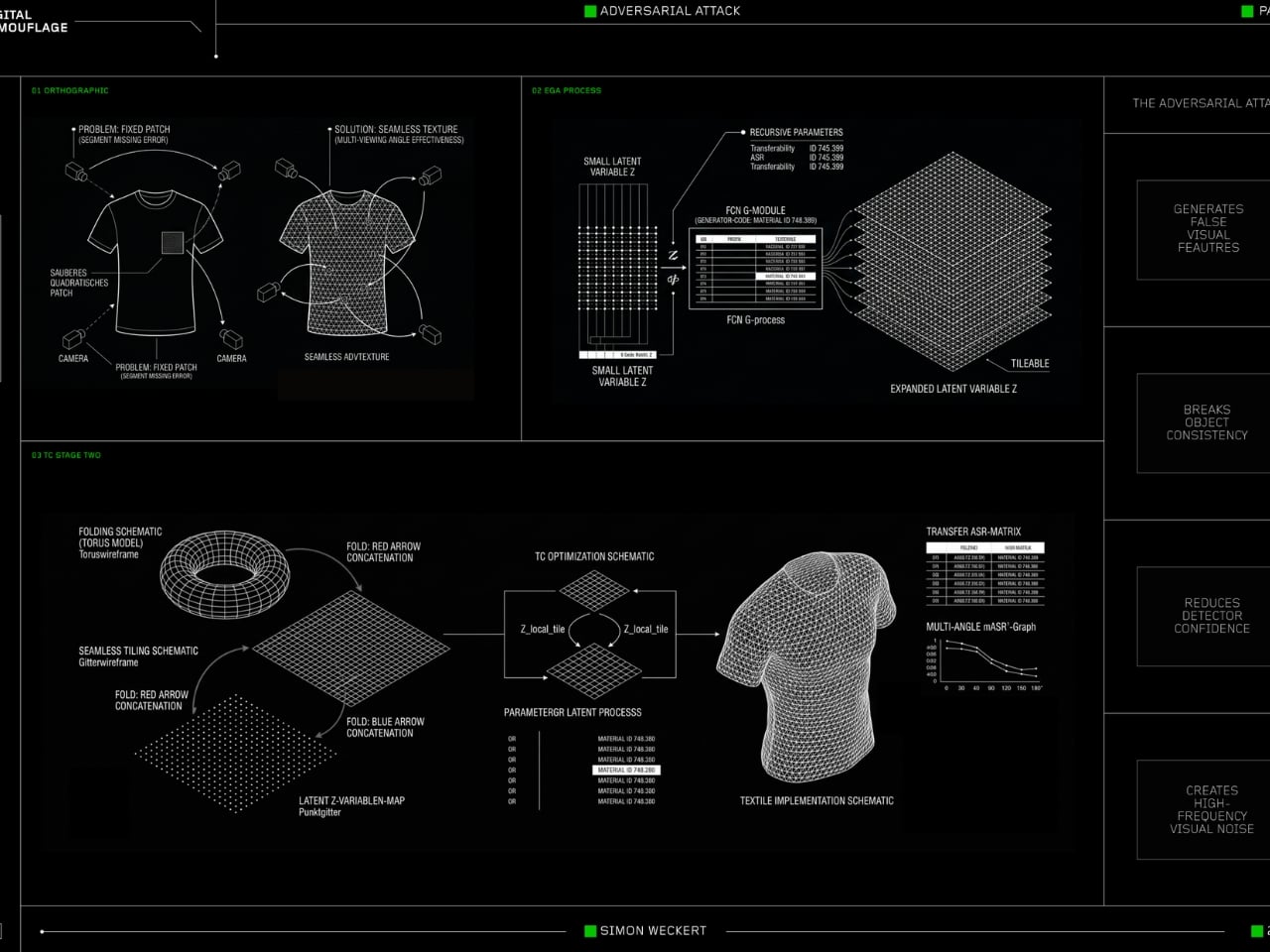
The collection works through what researchers call an adversarial attack, a method of manipulating visual data so that a machine misreads what it’s looking at. The garments are printed with a continuous, generative pattern that floods AI recognition systems with computational noise. The algorithm looks at you, processes the visual information, and fails to register a person. You’re there. The camera sees you. But the machine watching through it draws a blank.
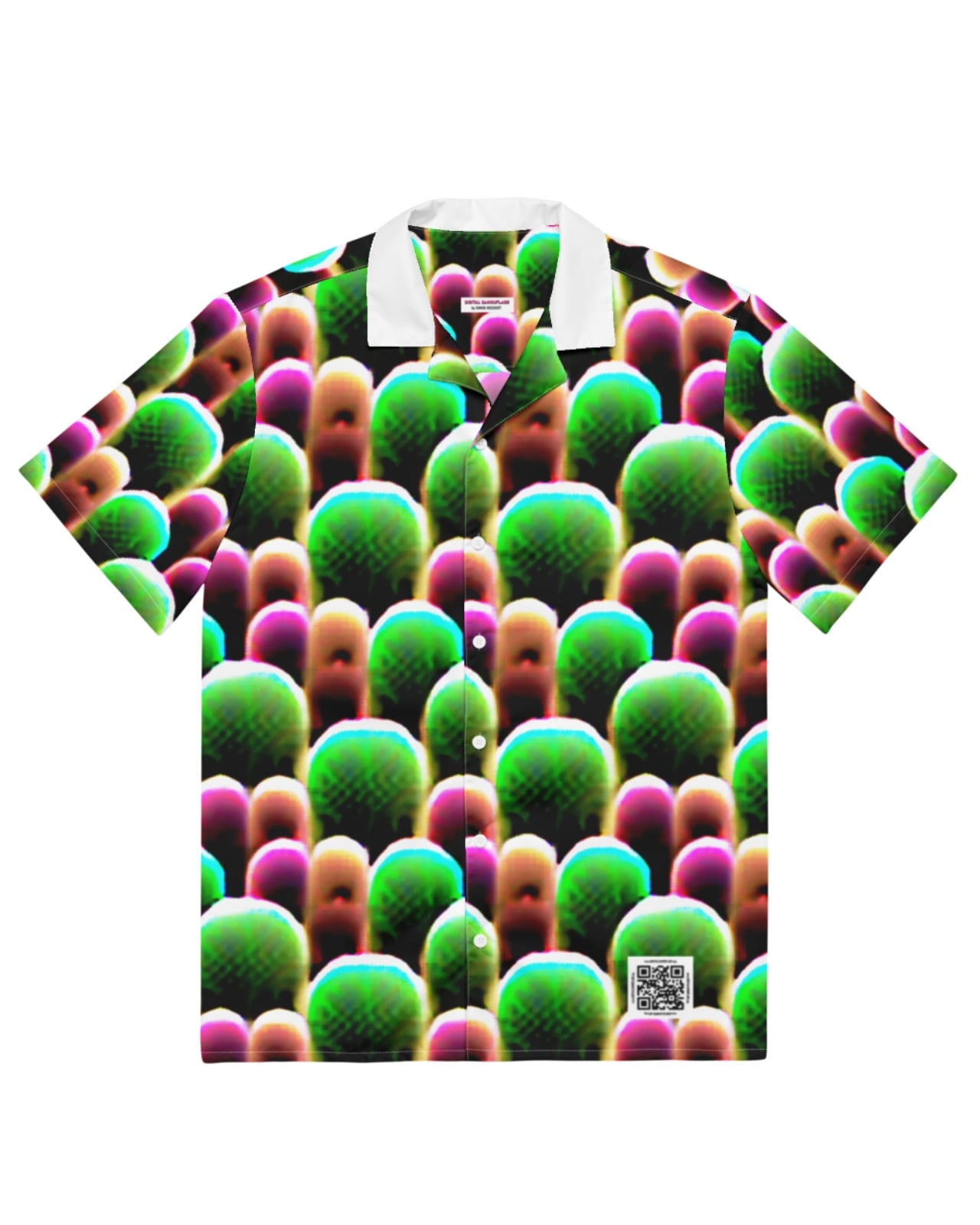
At first glance, the clothes look like bold graphic fashion. The kind of abstract print that could easily headline a capsule collection or land on an editorial mood board. The technical function is completely hidden in plain sight, which is, when you think about it, a fairly elegant bit of design irony.
Previous anti-recognition designs relied on fixed printed patches, a kind of static visual disruption that quickly lost effectiveness when fabric folded or camera angles shifted. Weckert’s collection uses a continuous adversarial texture across the entire garment surface, designed to hold up against both movement and perspective change. It’s not a sticker. It’s the whole jacket.
The collection is manufactured in Latvia from a blend of 65% recycled polyester and 35% polyester, with the adversarial pattern applied through digital textile printing. For something that sounds like it belongs in a speculative fiction exhibit, it’s a remarkably practical construction.
And yet, the project lives comfortably in conceptual territory. Weckert is not selling these at retail. Digital Camouflage was exhibited at Ars Electronica Festival 2025, which carries a certain kind of cultural weight. Ars Electronica has long been the venue where designers and technologists come to ask uncomfortable questions rather than offer comfortable answers. Showing the work there feels deliberate. This isn’t a product pitch. It’s a provocation.
I think that tension is exactly where the project is most interesting. The garment works, or is designed to work, but its purpose is as much about raising the question as answering it. Who should have the right to walk through a public space without being catalogued? At what point does automated surveillance stop being a security tool and start being a form of ambient control? Weckert isn’t handing out a manifesto. He’s handing out a jacket.
The fact that we even need clothes that hide us from cameras is worth pausing on. Digital surveillance infrastructure has expanded so quietly and so consistently that most of us have simply accepted it as background noise. AI-powered cameras now occupy the same mental category as streetlights: ubiquitous, impersonal, unremarkable. Weckert’s collection interrupts that acceptance, not through argument, but through design.
Fashion has always been a negotiation between the self and the seen. We dress for impressions, for identity, for protection against the cold. Adding protection against algorithmic recognition to that list feels like a genuinely new chapter in a very old human conversation about who gets to see us and on whose terms.
Whether or not Digital Camouflage ever becomes something you can actually buy, it has already done its most important work. It made an abstract threat feel like something you can put on your body. And sometimes that’s all it takes to make people start paying attention.
Let’s face it, global warming is real, and it’s already affecting millions worldwide. Japan is also bearing the brunt of hot summer days, prompting manufacturers to come up with innovative ways of cooling down in the peak heat. There are personal fans to direct chilled air at the most sensitive neck areas that cool down the whole body, or the more radical solutions like the human refrigerator to walk into and have the next-generation cooling effect.
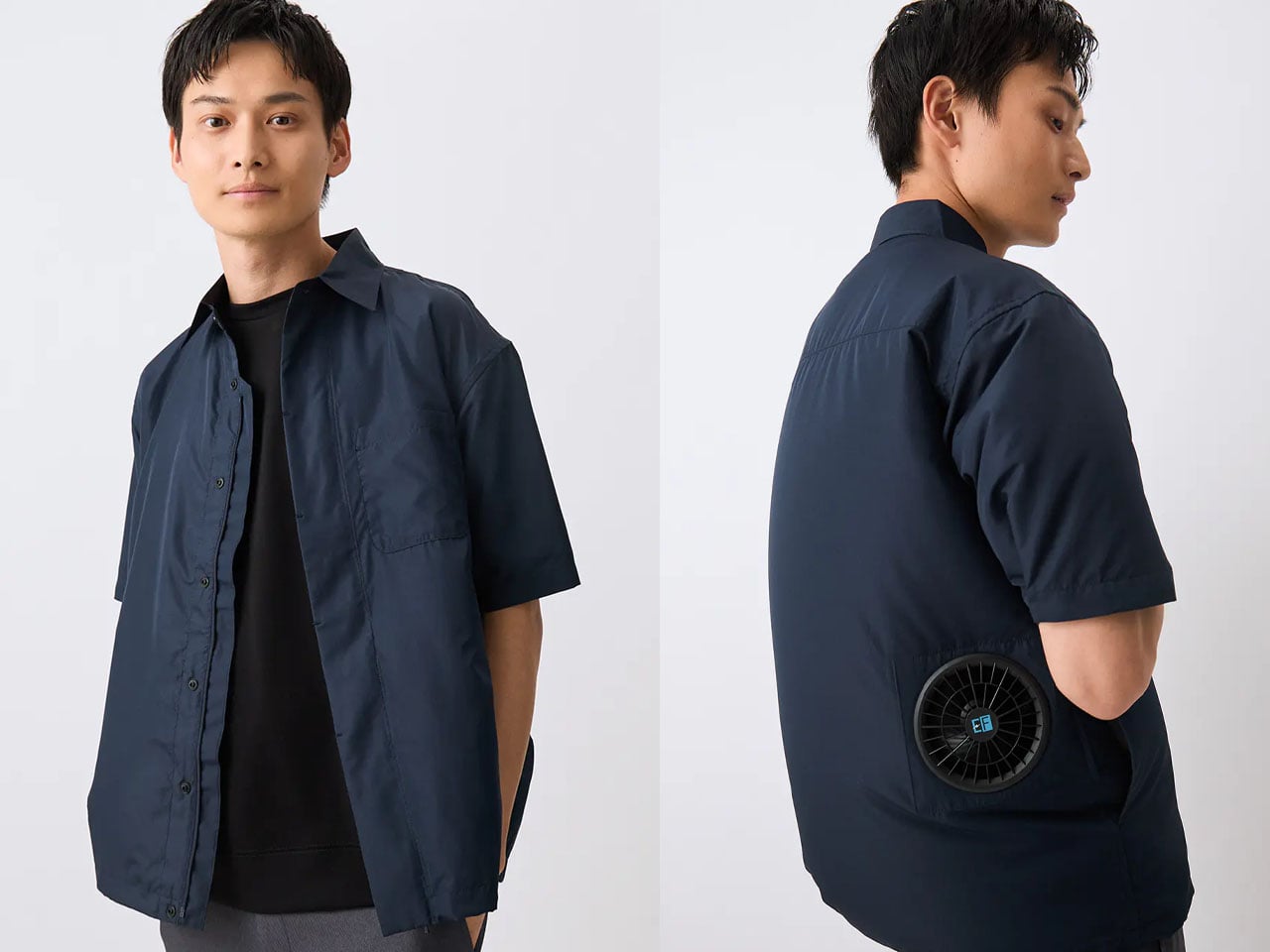
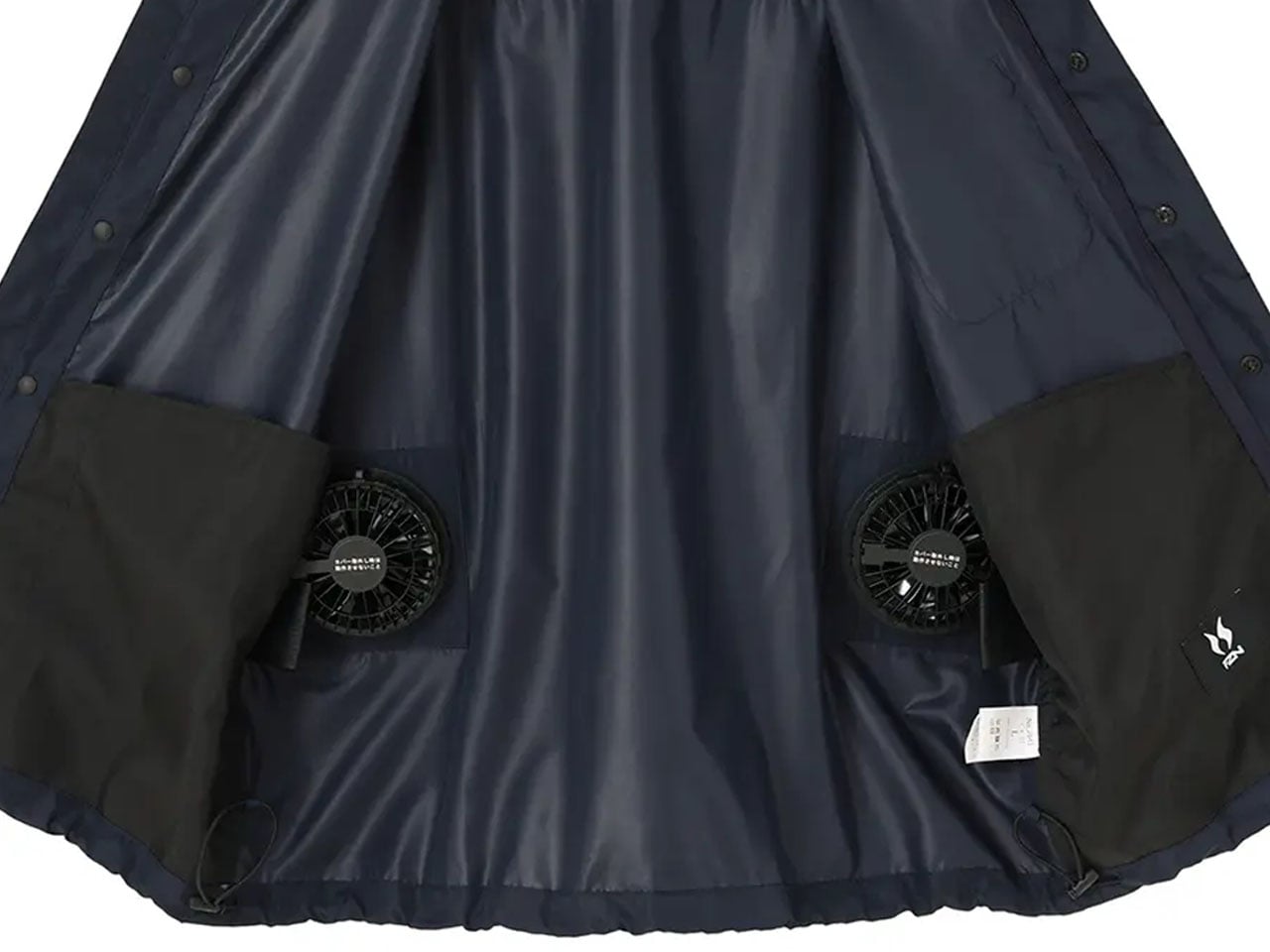
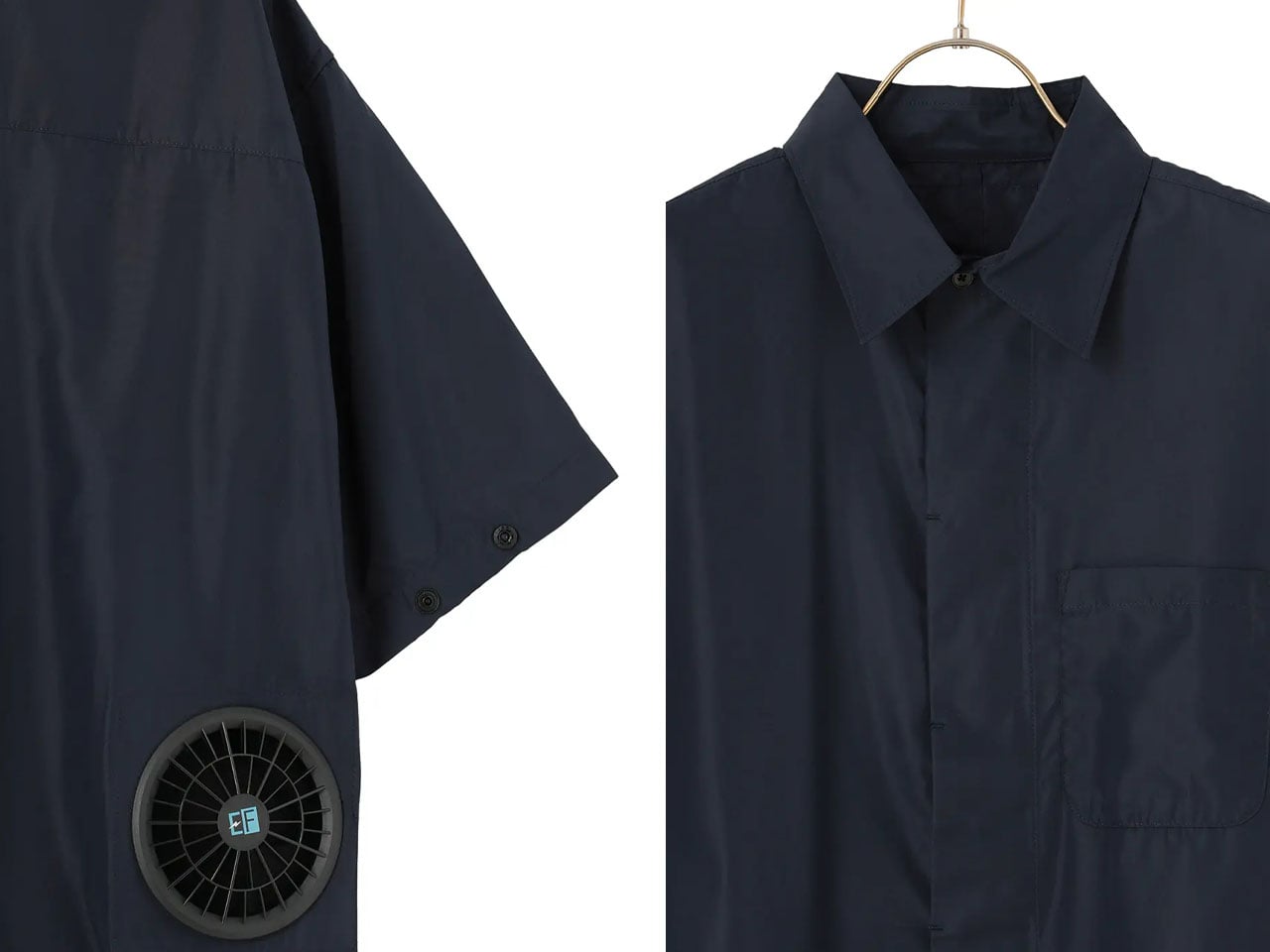
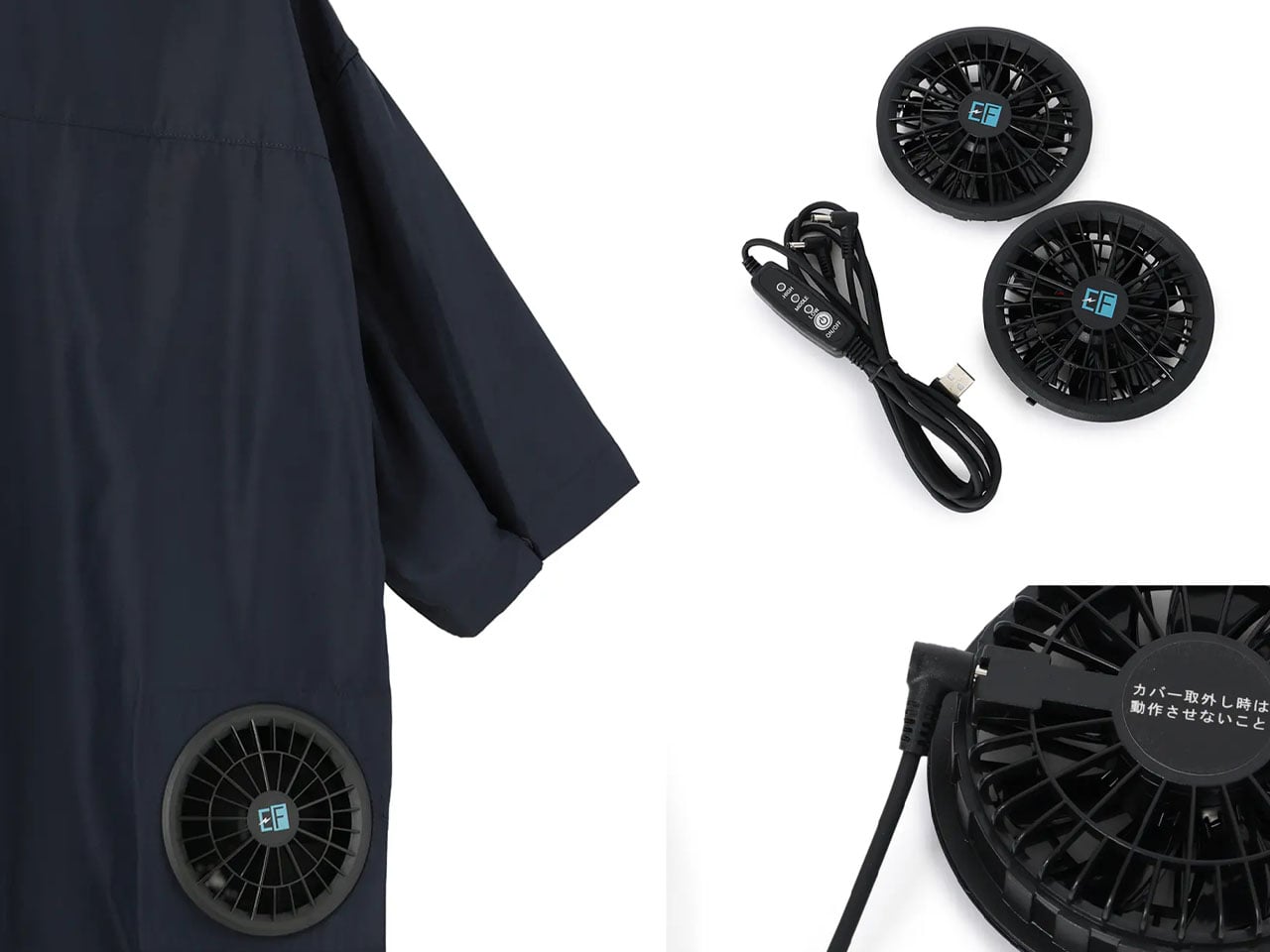
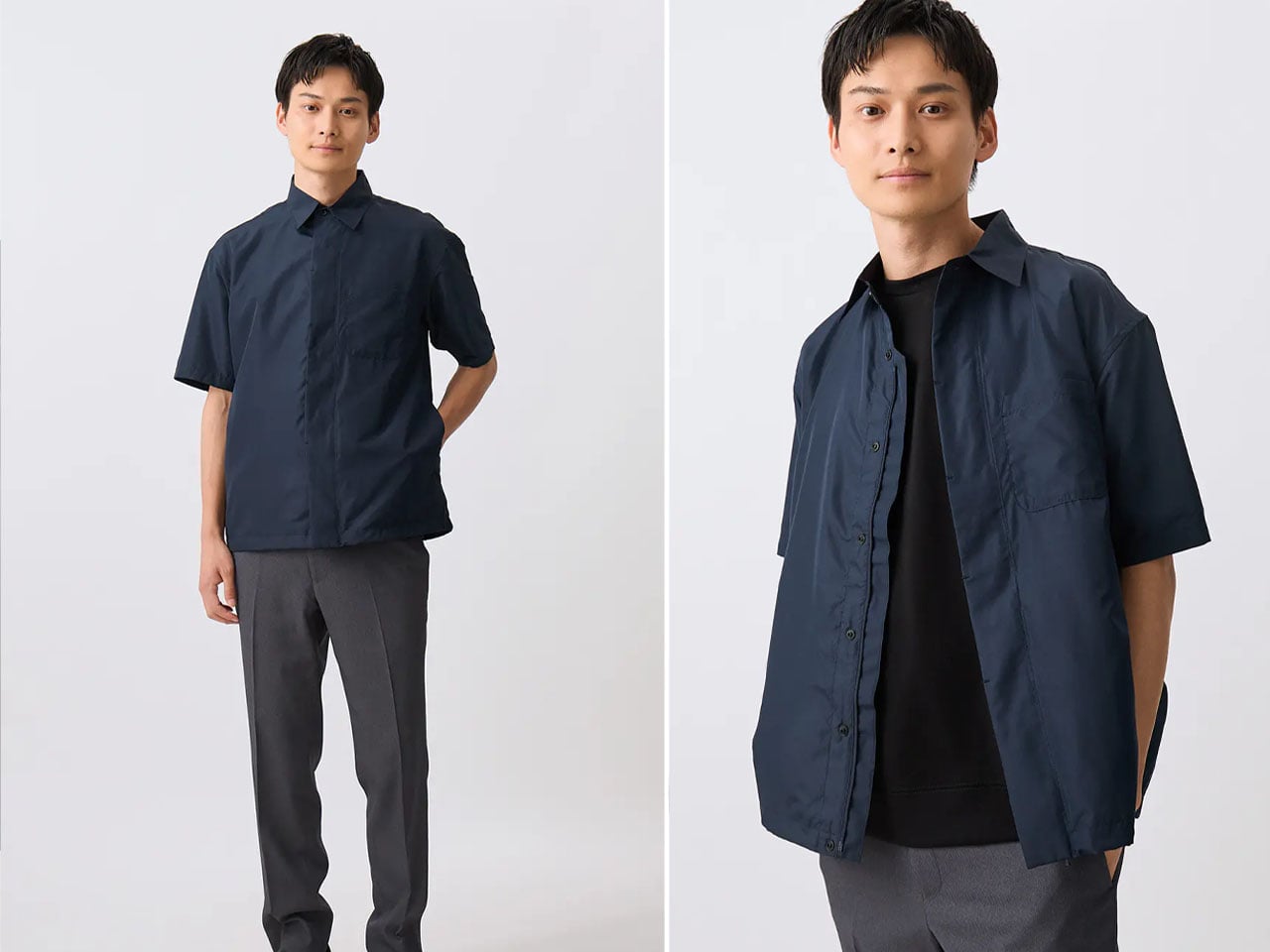
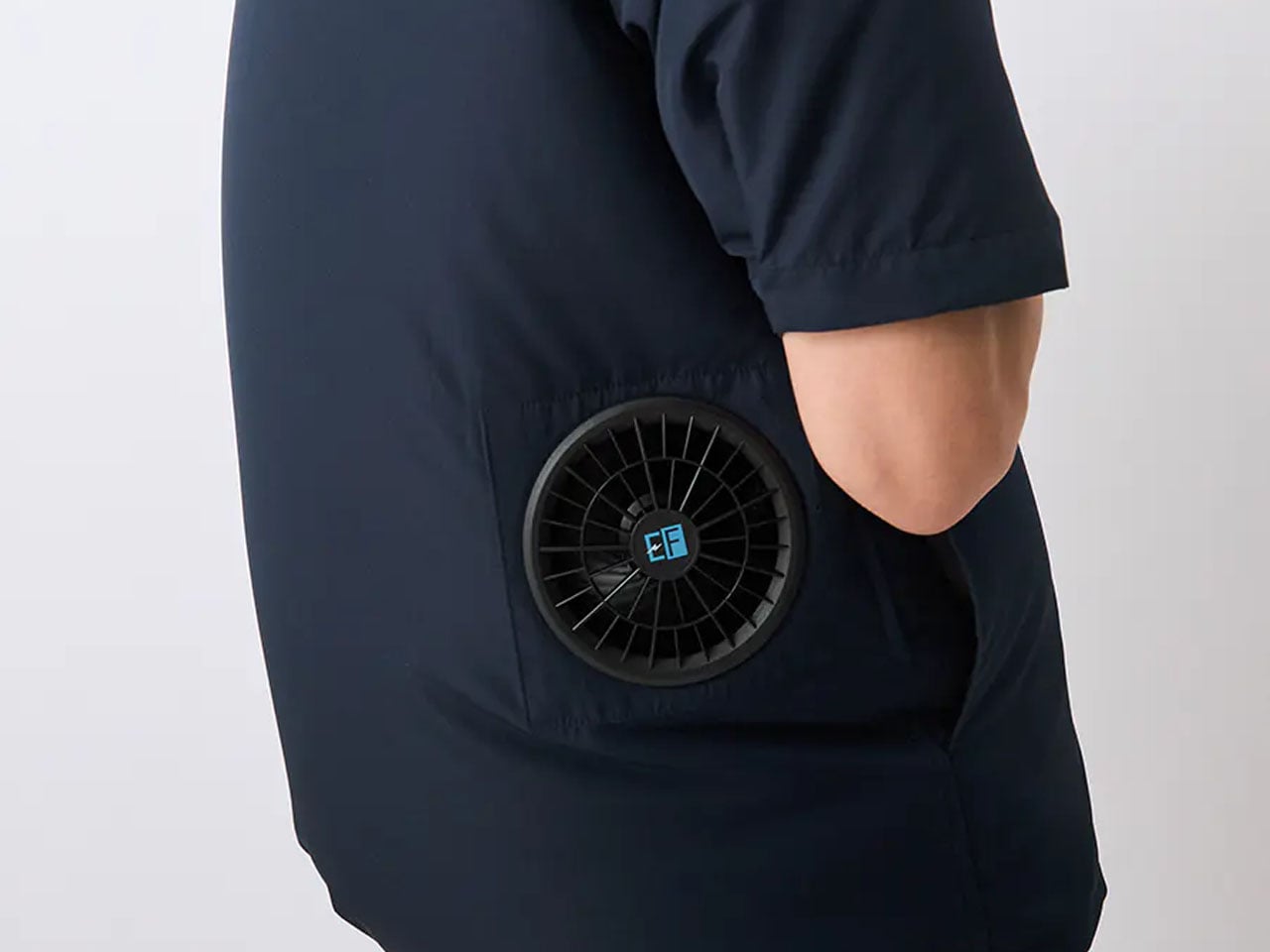
We’ve come across another interesting personal cooling solution that comes from the land of the rising Sun, and is equally out of the box for everyday use. The solution takes the popular Yofuku no Aoyama formal attire and outfits it with fans to provide active cooling to settle down the extreme heat build-up on hot days. Called the Kuchofuku Air-Conditioned Short Sleeve Work Shirt, the attire developed in collaboration with fan-equipped fashion maker FZN is meant for people exposed to extreme daytime heat.
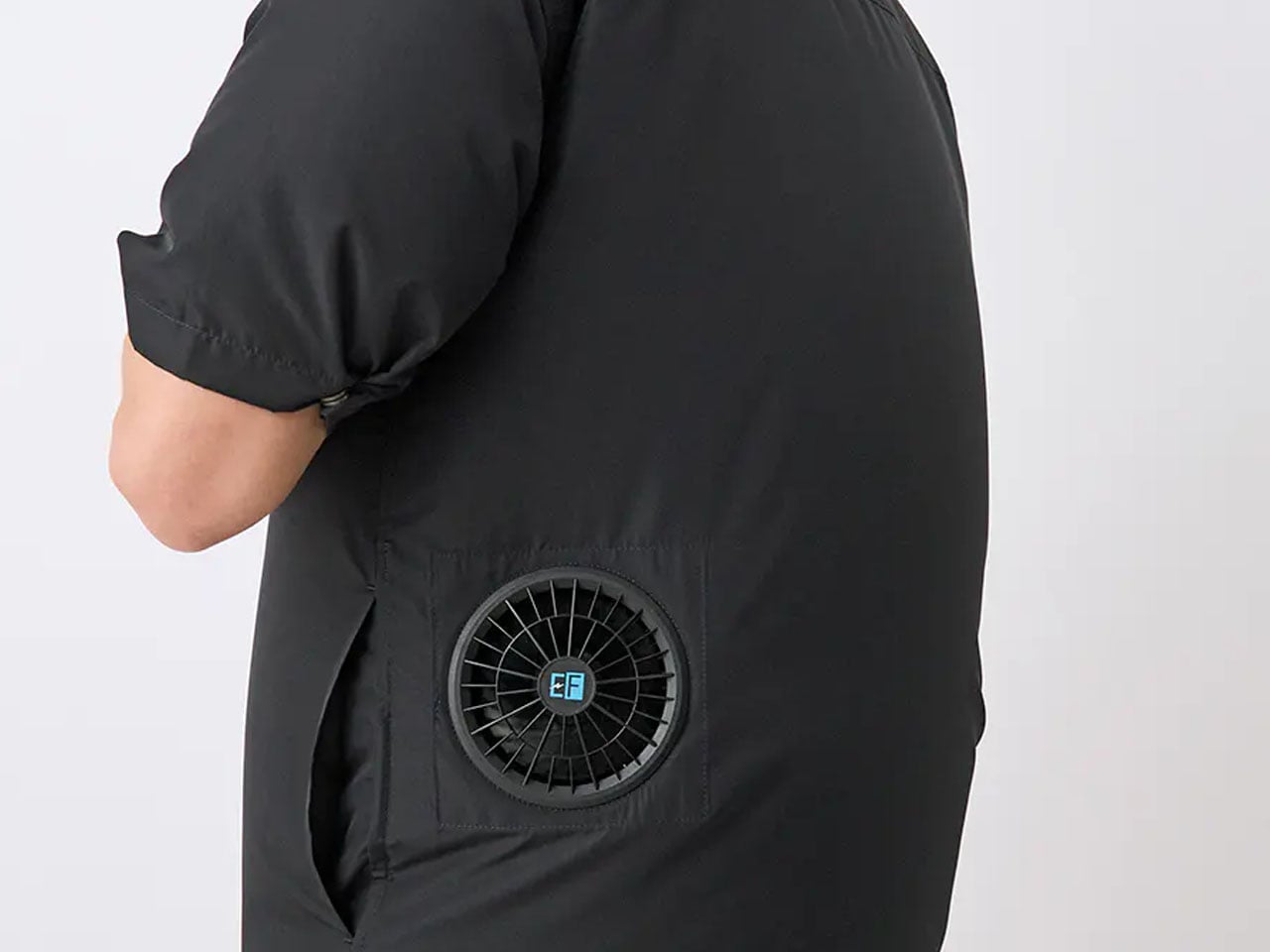
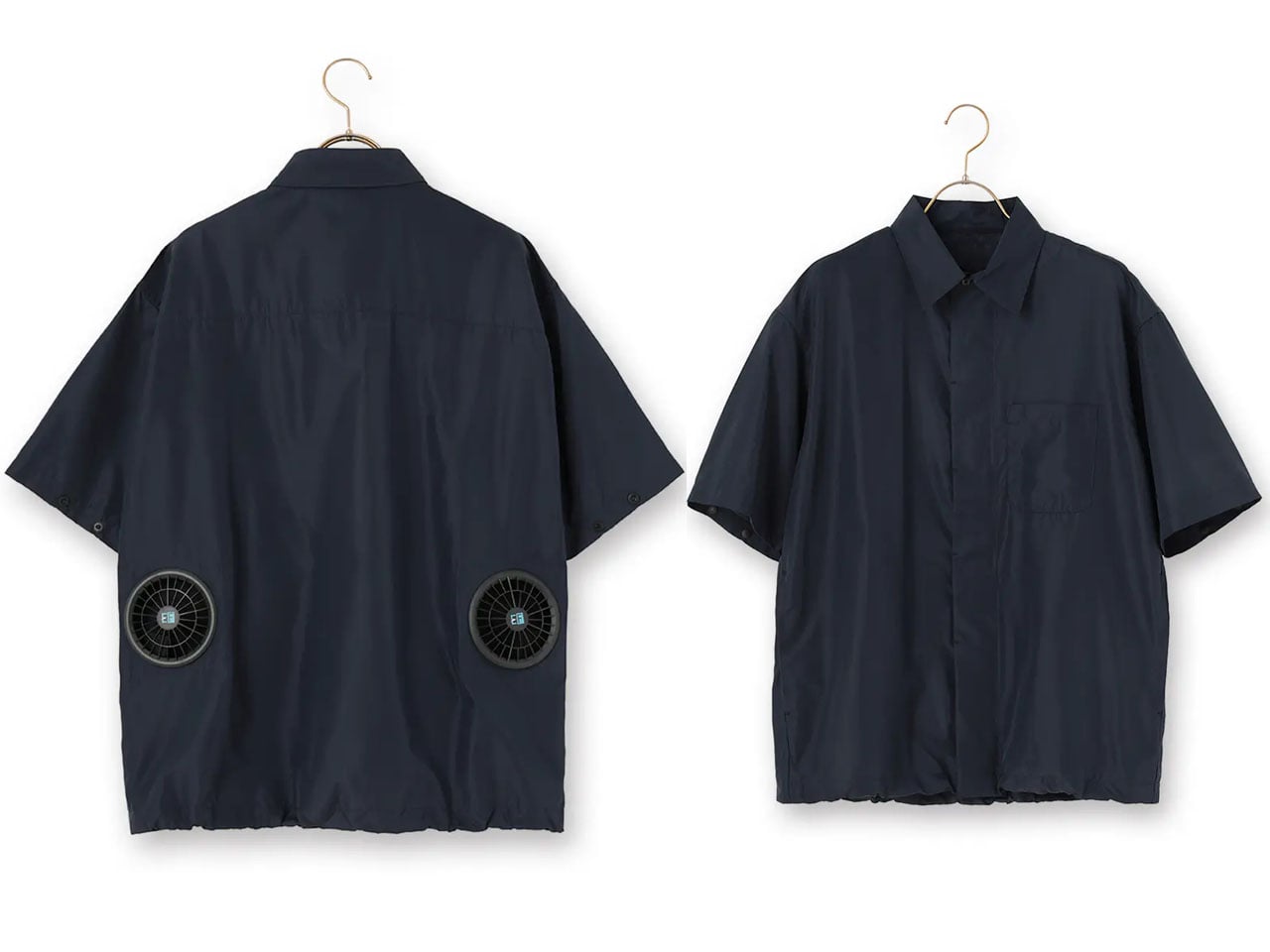
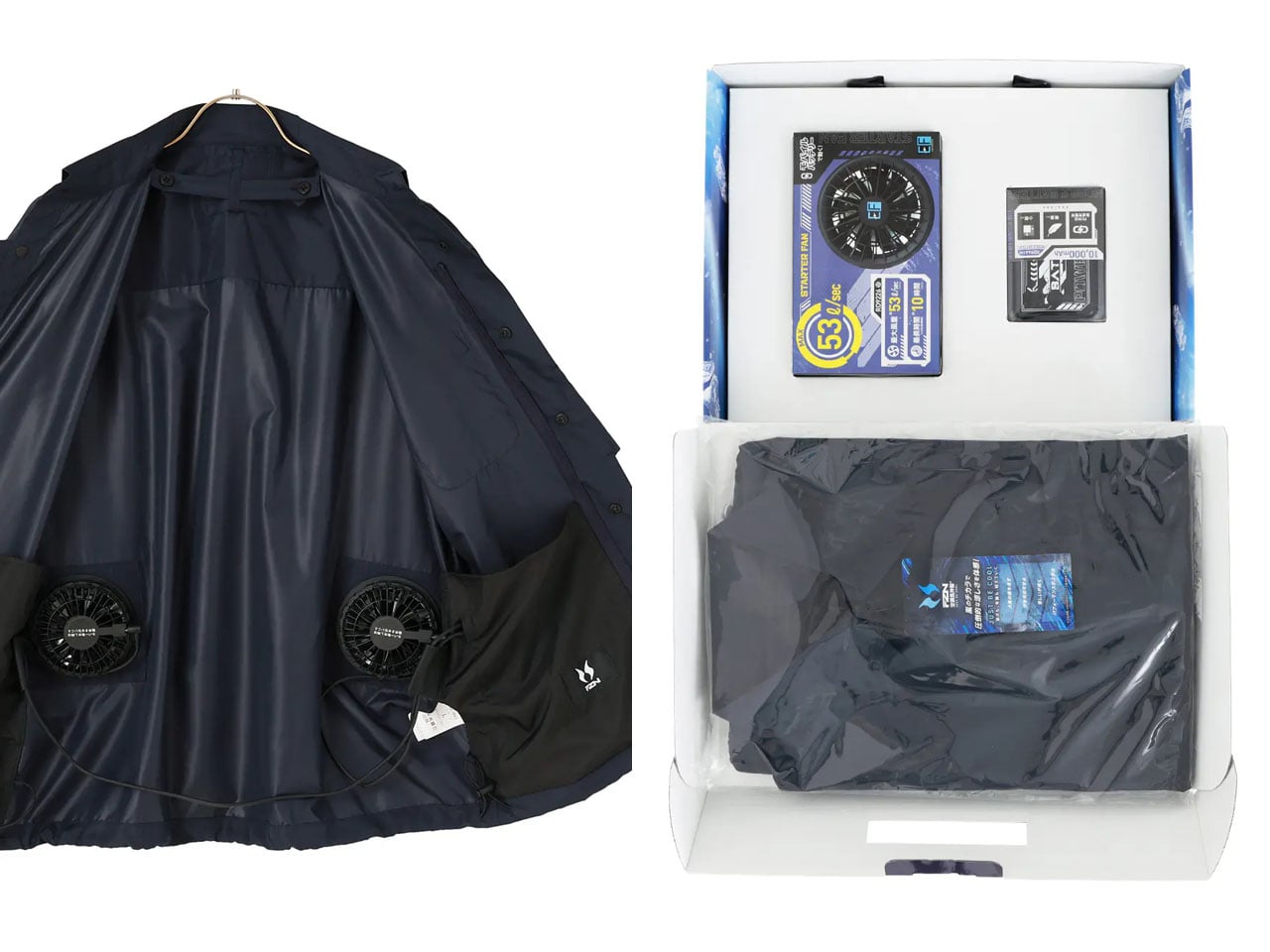
If you are in Japan, Yofuku no Aoyama is a household name when you need to be dressed for important events or meetings with clients. They’ve got the idea to keep you well dressed all day long without any uncomfortable feeling triggered by the lack of proper cooling outdoors. This seemingly normal button-up shirt has the understated summer business look, but on the inside, it comes loaded with two active cooling fans. Who could have thought of that? Although it does look a little bulged up on the sides, which can make you seem slightly fatty on the sides. That’s because of the wearable cooling fan system taking up the space, and the fans engaged during use.
The fans have three operating settings: direct cool air inwards, keeping the wearer comfortable when the Sun is beating down hard. Although not as foolproof as the human cooling refrigerator mentioned earlier, this one does provide temporary relief. At the highest settings, it can stretch for around 3.5 hours, while at the lowest operation mode the wearer can enjoy cool air for around 10 hours. We’ve seen such solutions in the past coming from Japan, mostly targeted for field workers, but they are mostly gear and nothing like apparel. This one changes the outlook, as it is a blue-collar uniform disguised as a cool-down solution for more formal business settings.
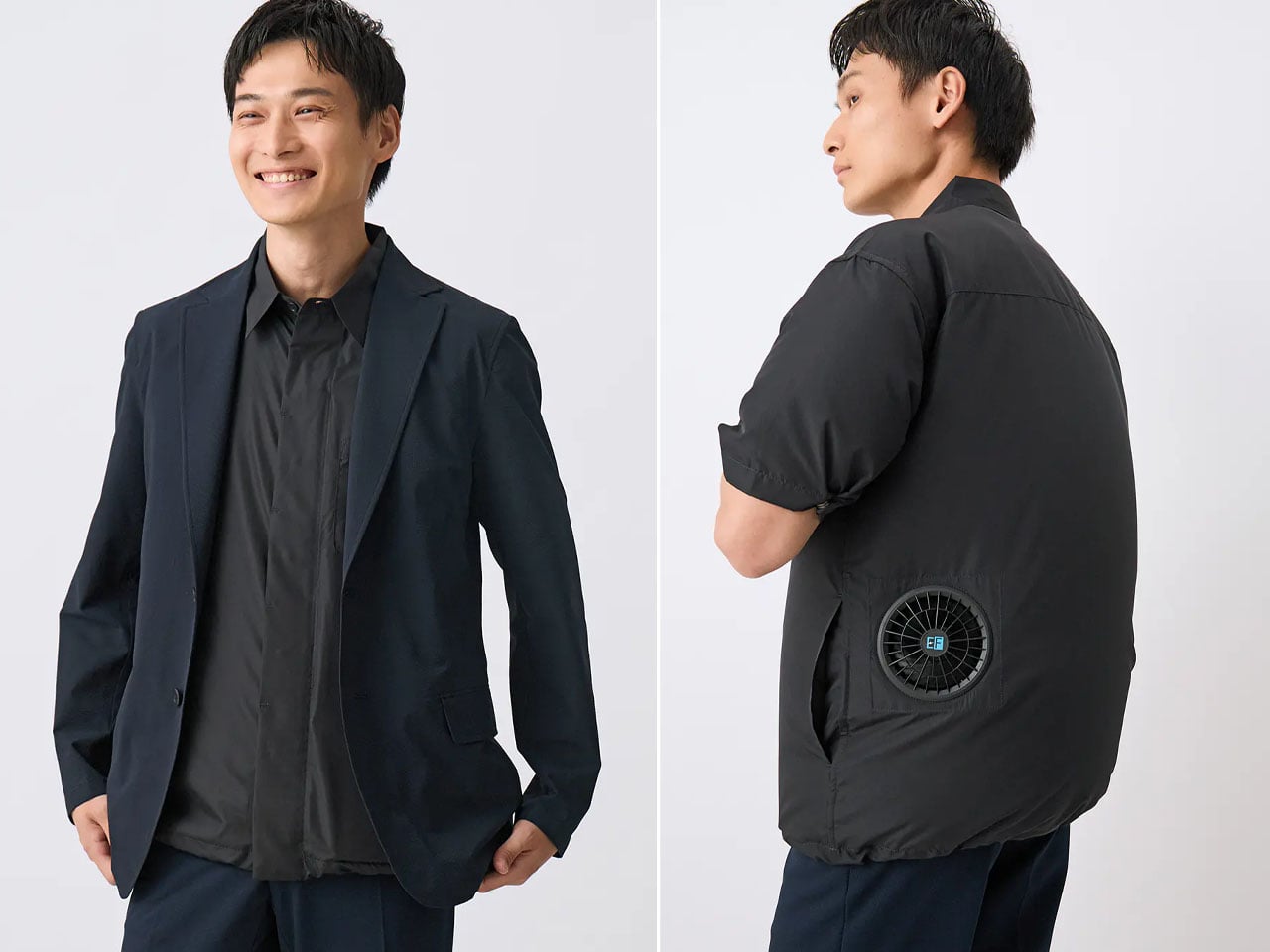
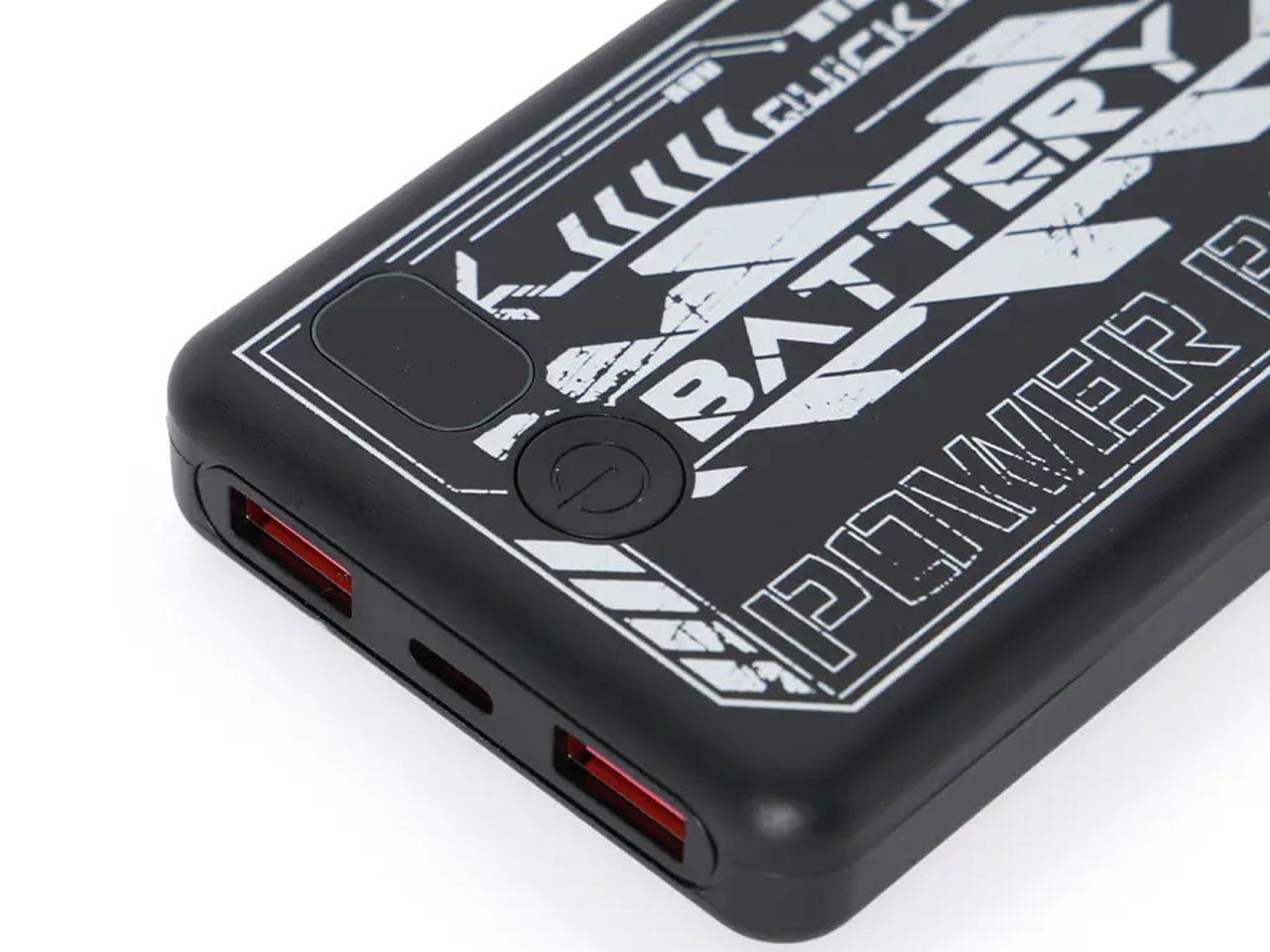
From the front, the Kuchofuku Air-Conditioned Short Sleeve Work Shirt doesn’t give away the innards, but from the back, the fans can be visible. That means you’ll either have to mask it with some blazer, or not expose to onlookers from the side profile. You’ll also have to be mindful of the 95 grams added weight of each of the fans, and the 165 grams rechargeable battery pack. I hope the weight distribution is done better on this formal shirt; it’ll feel like carrying a sizeable phone or battery bank.
The short-sleeved shirt meant to be worn hustling for a day’s meetings from one location to the other is available in blue or gray colors, in medium, large, or XL sizes. It can be bought right away from the Yofuku no Aoyama stores or the company’s online shop for 17,490 yen (approximately $111).
Vollebak has never been the kind of brand that plays it safe. Since launching in 2016, the British label has built a reputation for making gear that reads more like science fiction than seasonal fashion. Their products come with essays instead of product descriptions, and their material choices lean toward graphene, solar-charged fibres, and military-grade composites. So when their latest release landed with an acronym for a name and a price tag that could cover a month’s rent in most cities, most of us weren’t entirely surprised. Just a little stunned.
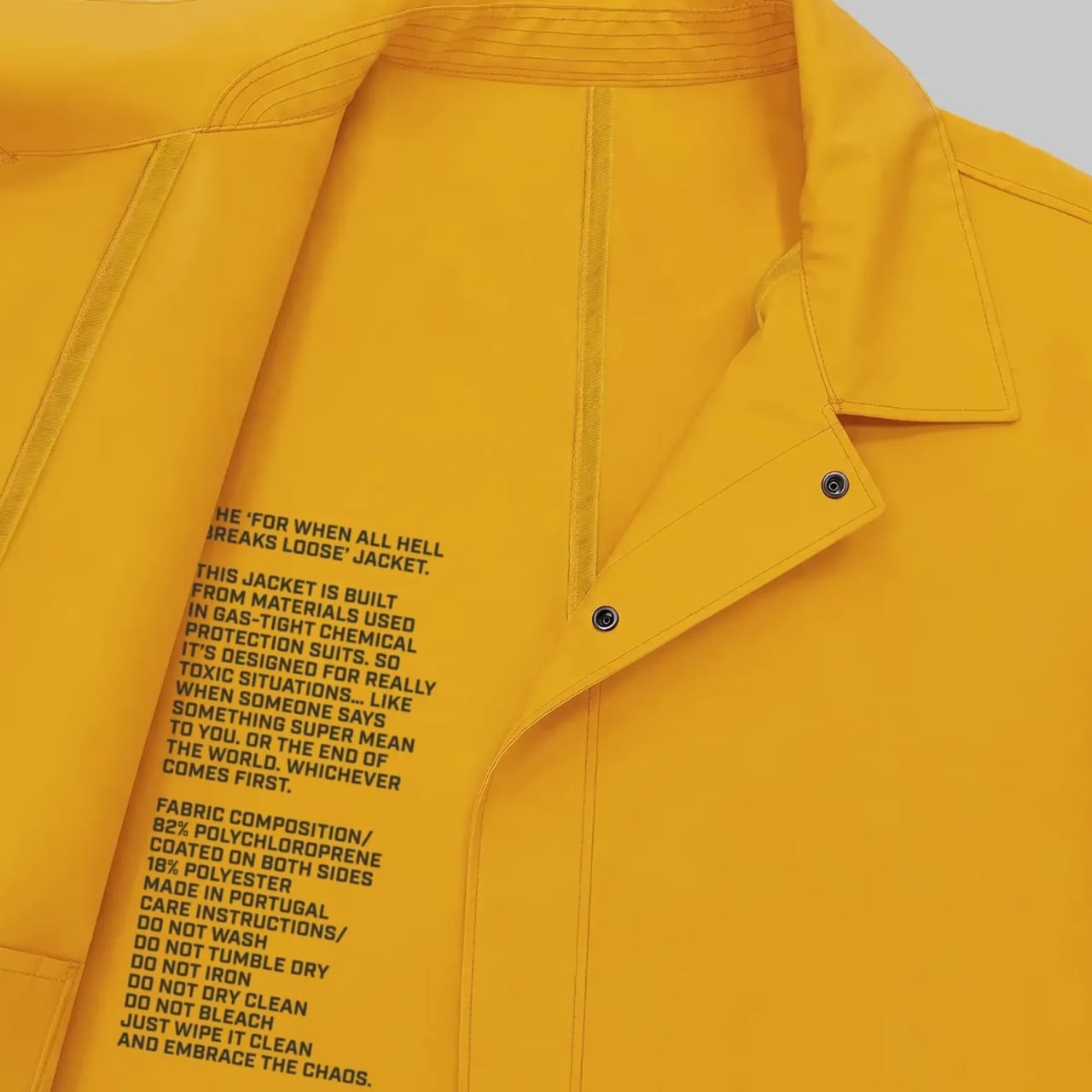
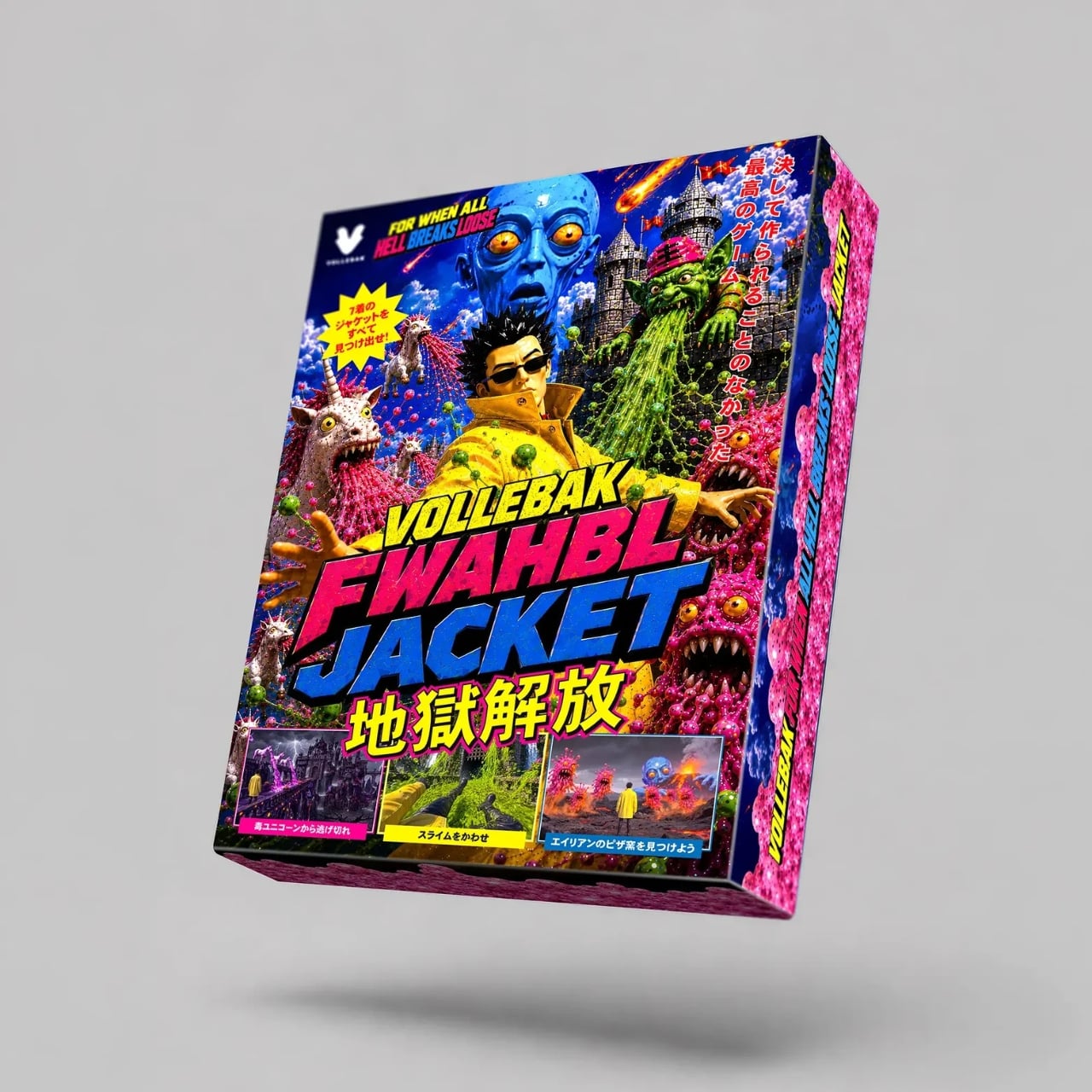
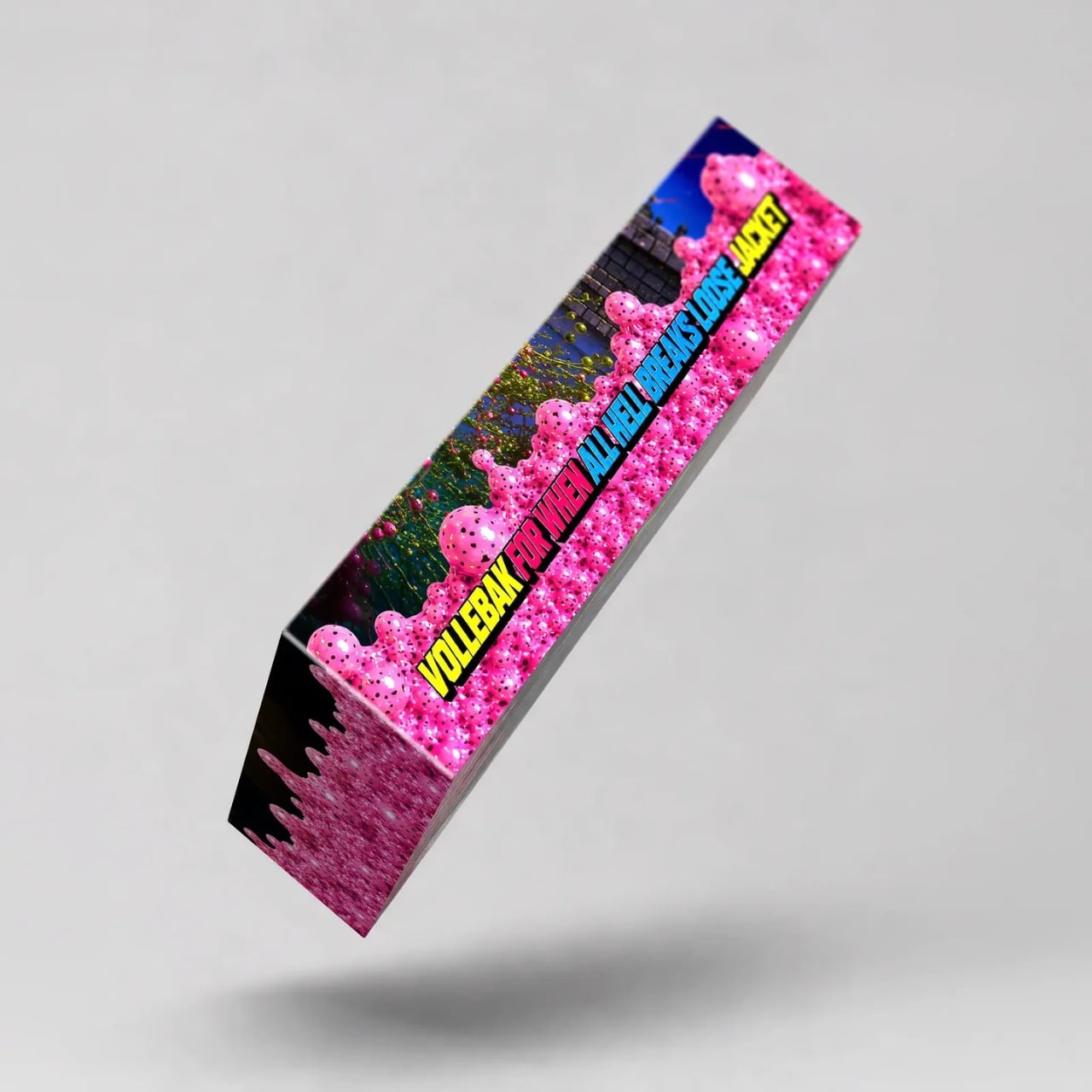
FWAHBL stands for “For When All Hell Breaks Loose.” That’s the actual name. Not a placeholder, not a working title, not a wink-and-nod provocation. The brand looked at the current state of the world and decided the most honest thing they could do was name a jacket after it.
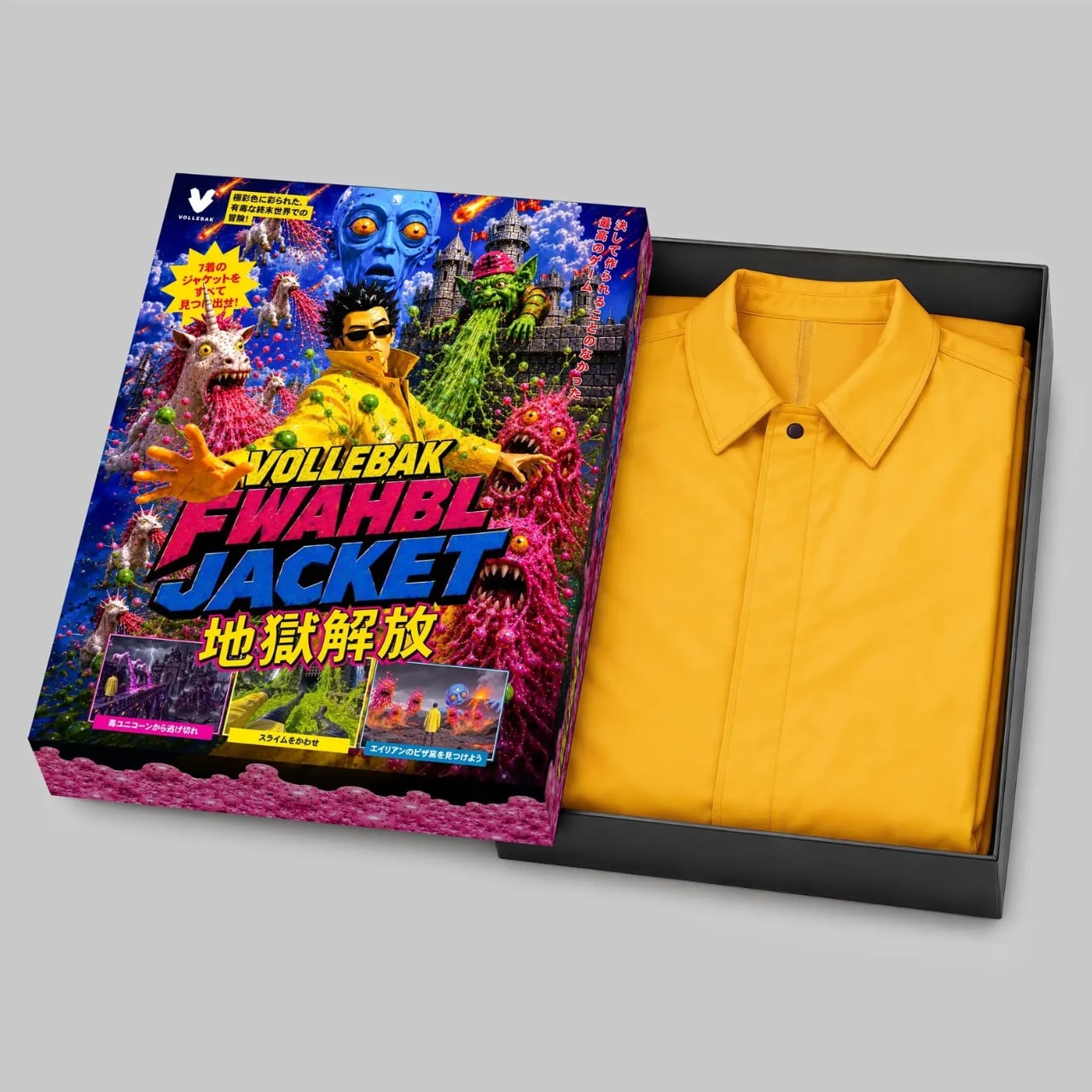
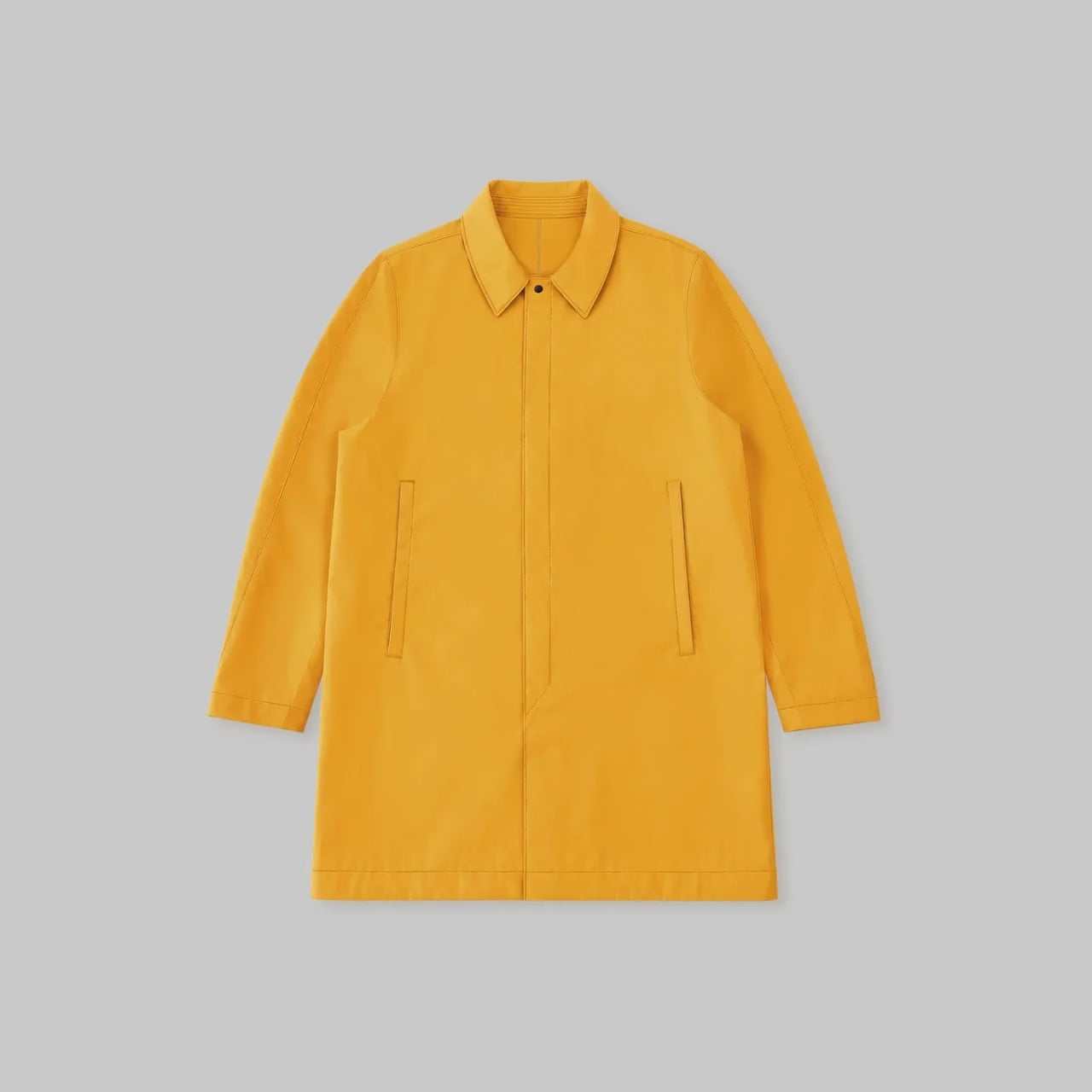
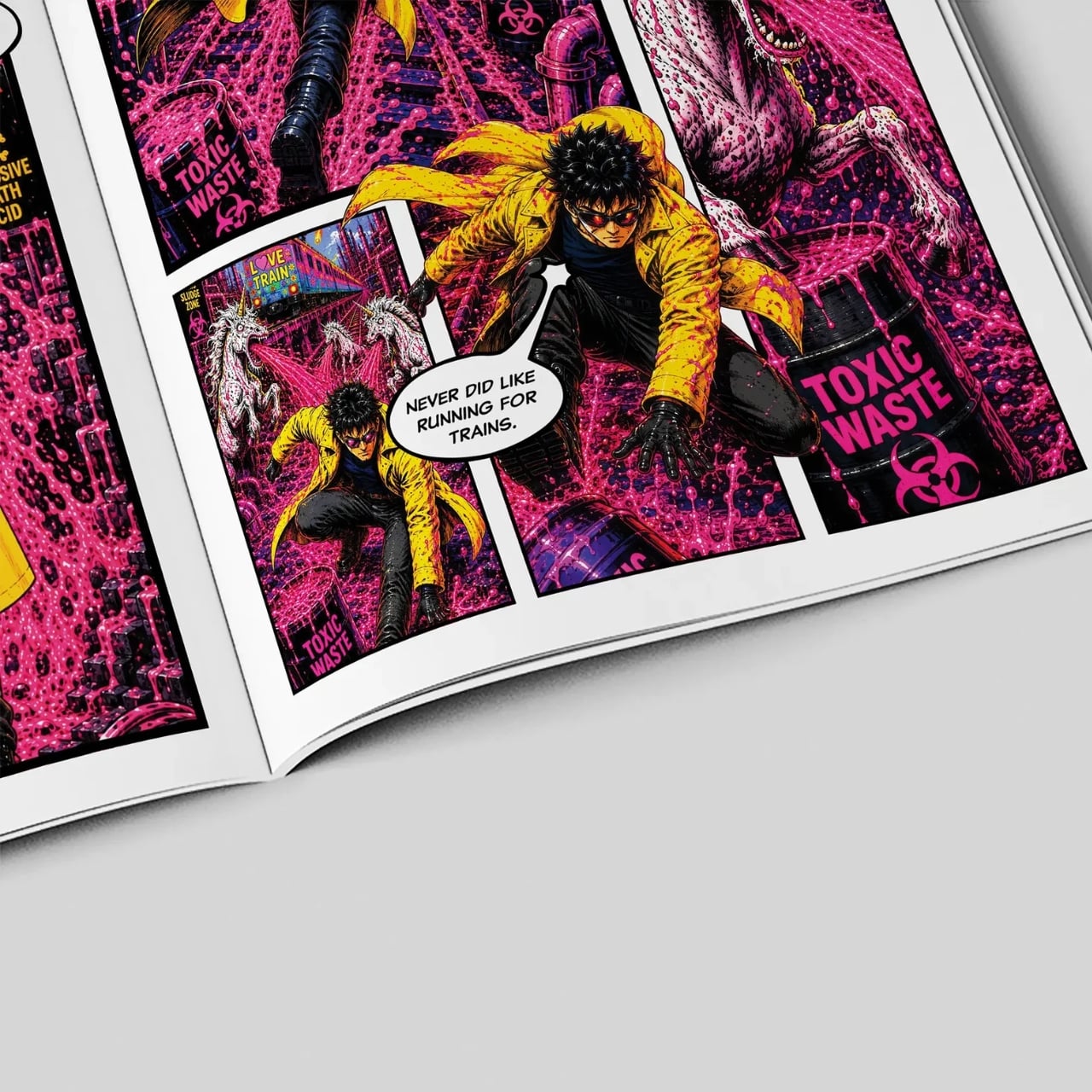
Only 10 of these exist. They’re priced at $3,995. They arrive in retro video game packaging alongside a comic book and a trailer for an upcoming game. The whole thing reads like a fever dream, and yet, once you look at what’s actually inside it, the jacket starts making a strange kind of sense.
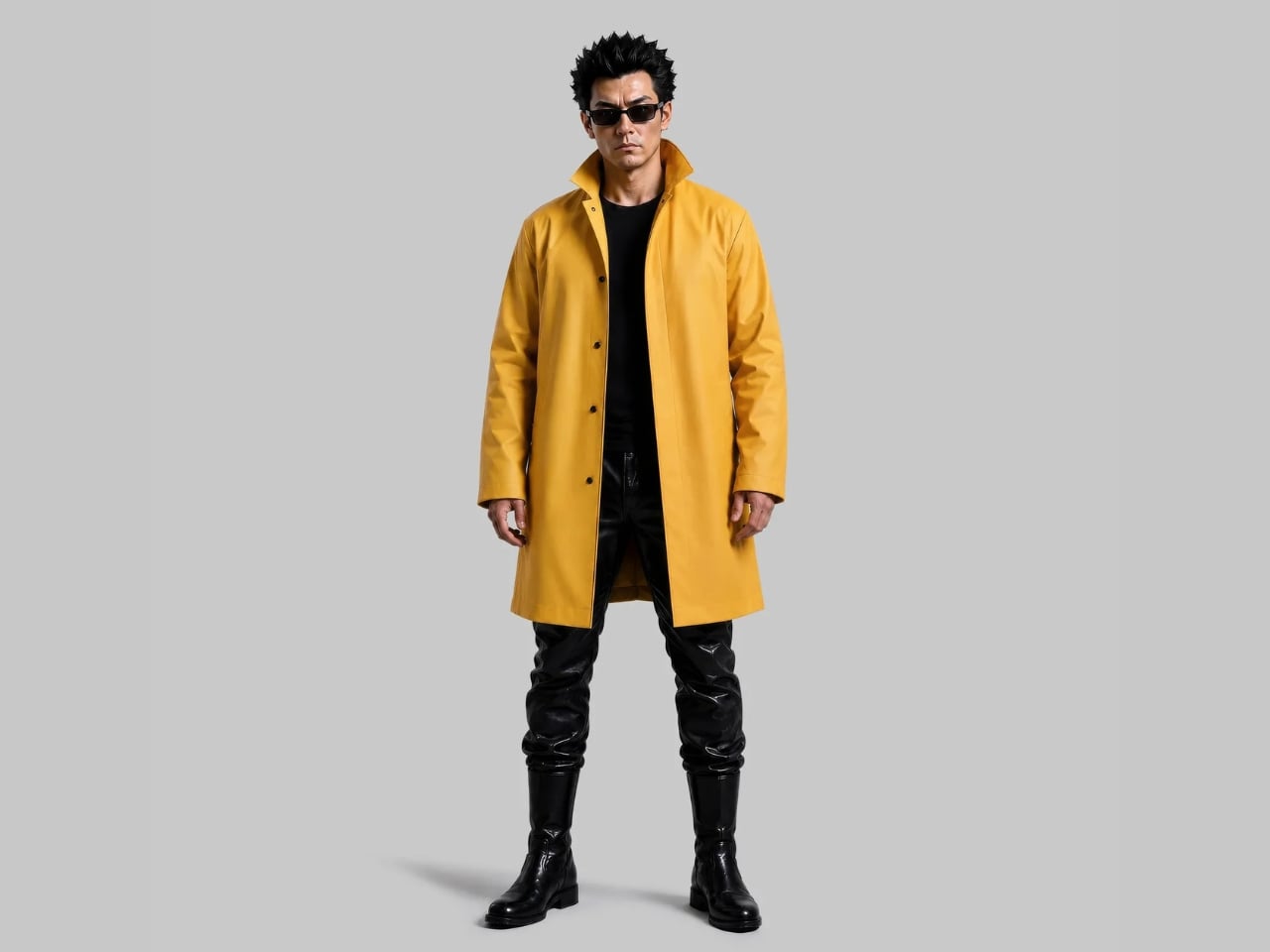
The material comes from Fothergill, a British manufacturer that has been producing protective gear for the military since 1847. The fabric is double-faced polychloroprene rubber coated over a woven polyester core, built to resist oils, chemicals, flame, and extreme weather. This isn’t performance wear with a dramatic name slapped on it. The engineering is real, even if Vollebak is quick to clarify that it isn’t certified safety equipment. What it is, they say, is clothing designed for extreme weather and existential dread. I appreciate the specificity.
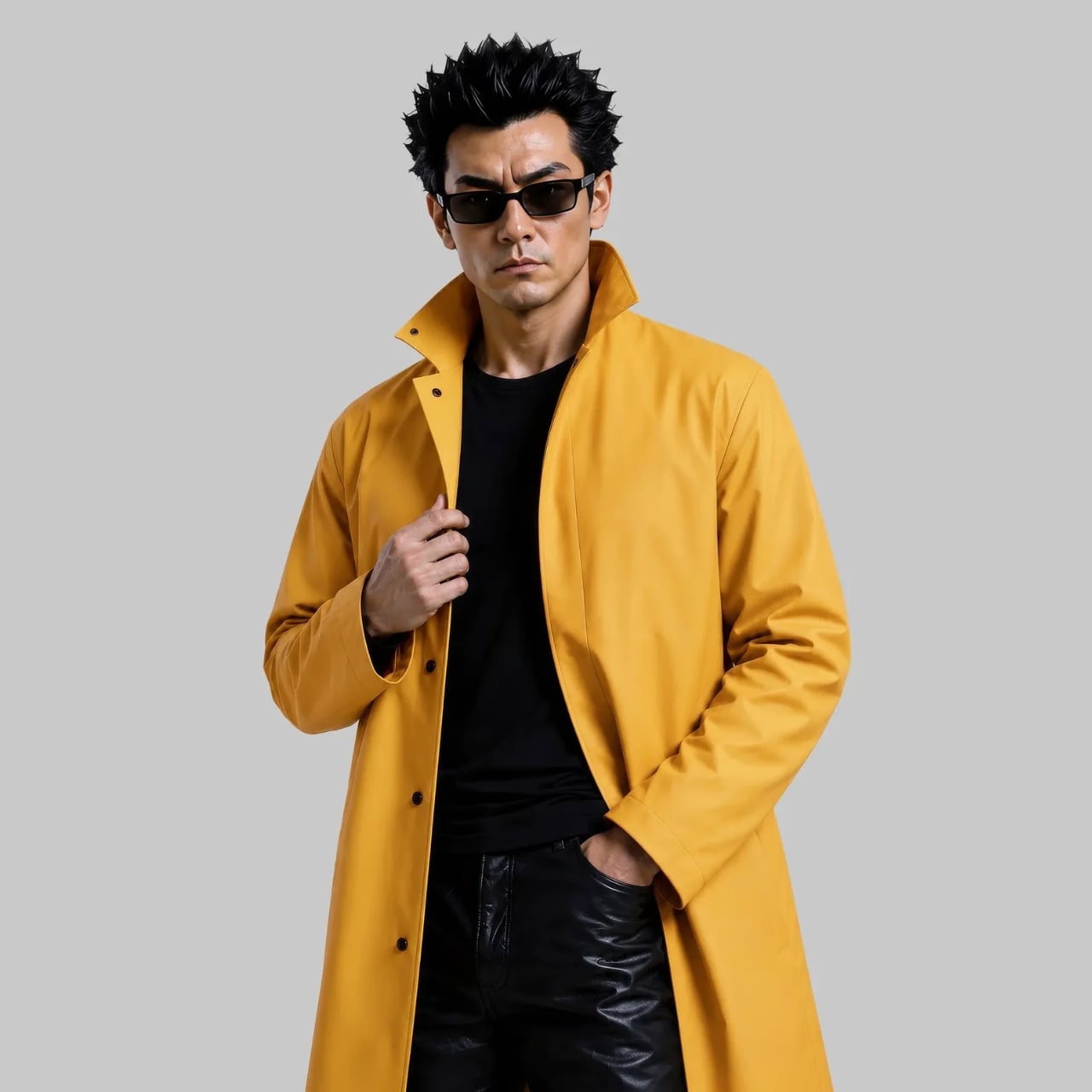
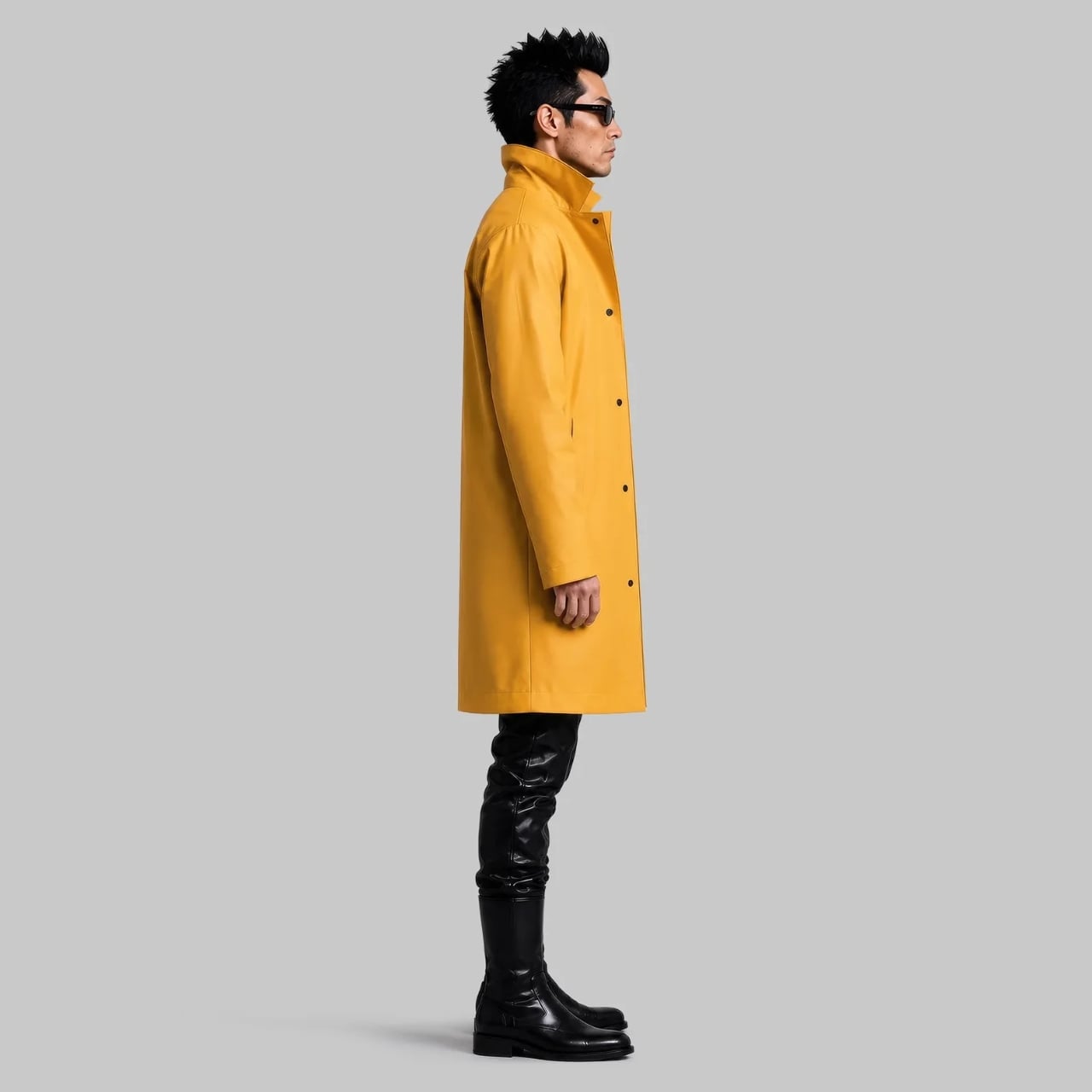
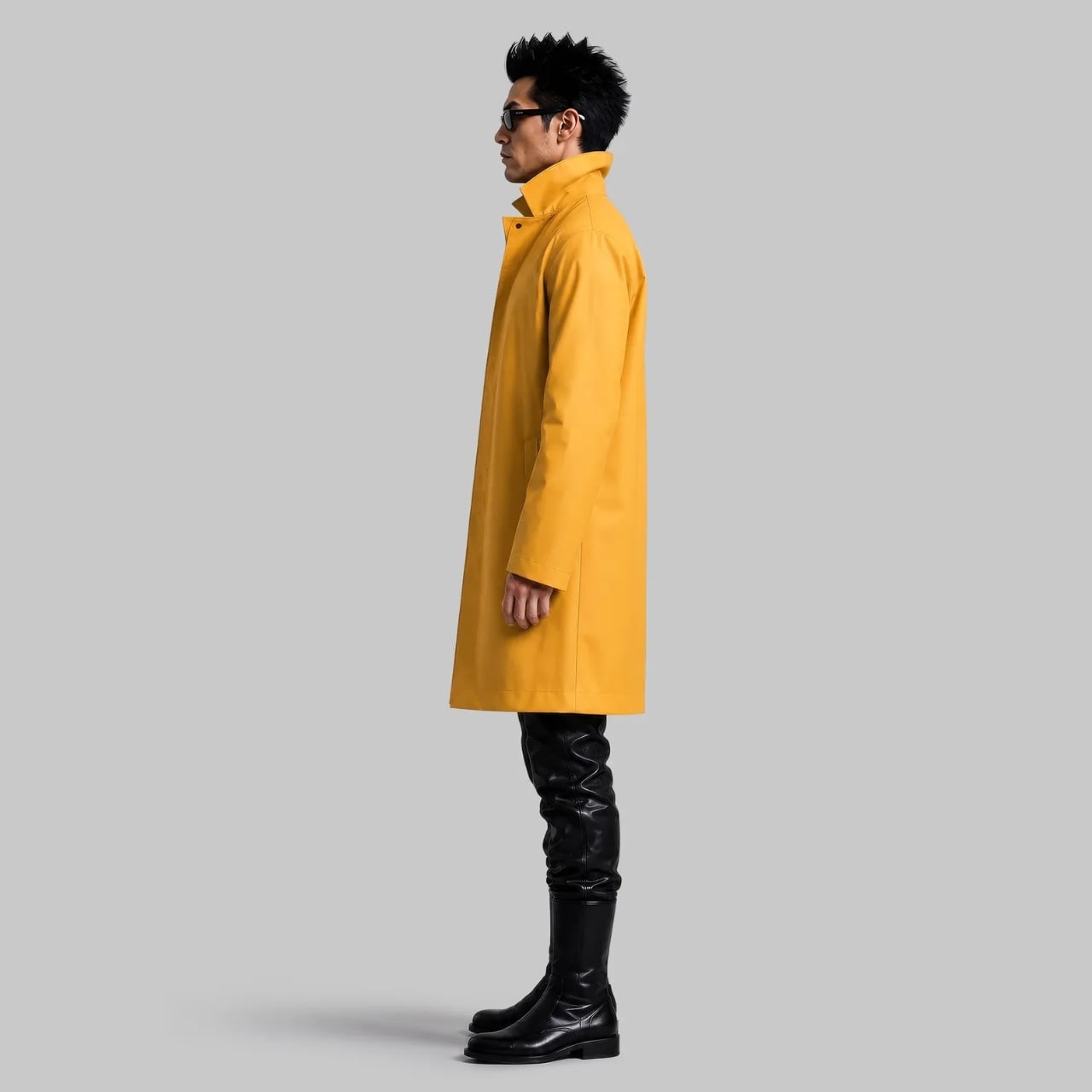
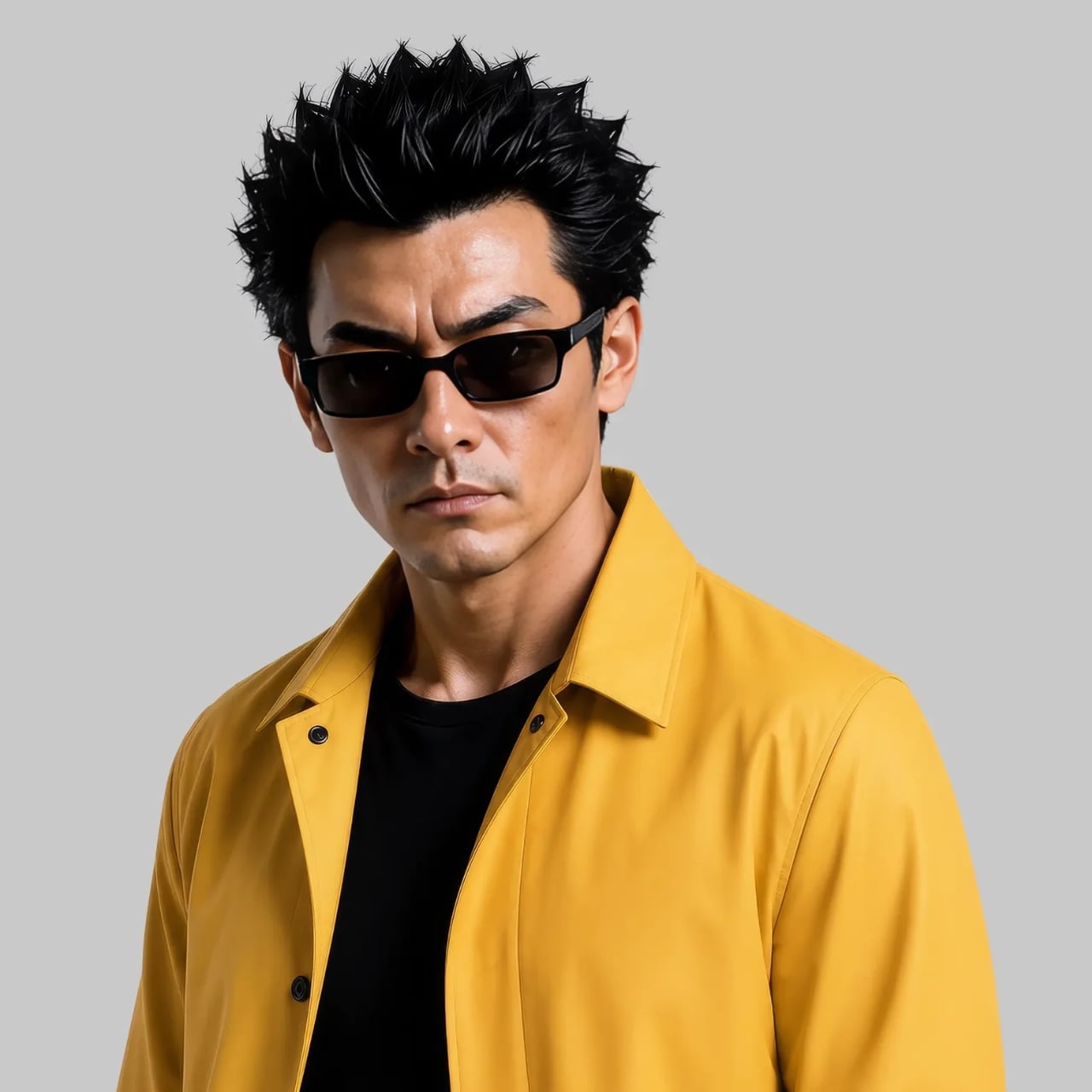
A jacket that could theoretically withstand a chemical spill but comes dressed for a gallery opening is a very particular kind of product. The hazard yellow finish makes it look like something you’d find on a nuclear site inspector who also happens to have excellent taste. It’s alarming and considered at the same time, which feels very intentional. Vollebak’s whole design language leans into that tension, the idea that what we wear should be able to meet us at our worst, not just our most polished.
The narrative wrapped around the jacket is what separates it from a typical limited-edition fashion drop. Vollebak didn’t just make a jacket and photograph it on a rooftop. They built a universe: the comic book, the video game, the worldbuilding. The jacket becomes almost secondary to the story it’s trying to tell, which is either a genius move or a complete overreach, depending on how you feel about brands constructing mythology around outerwear. Personally, I find it more compelling than a seasonal lookbook ever manages to be. At least it commits to a point of view.
The collectible angle is also hard to ignore. Ten pieces worldwide isn’t a production run. It’s closer to an art edition, which raises the question of who actually buys this. Probably not someone planning to commute in it. Most likely it’s the kind of person who understands that certain objects carry cultural weight beyond their function, the same kind of person who collects a Helmut Lang archive piece or a first-edition sneaker that never touches the ground. Whether we call that fashion, collecting, or very expensive storytelling, the outcome is the same.
Objects that sit at the intersection of design, utility, and narrative have always existed, from limited-run furniture to bespoke motorcycles to museum-acquired concept cars. The FWAHBL Jacket fits that lineage more comfortably than it fits any fashion calendar.
Whether or not you’d wear it, or could, the jacket asks a useful question. How much are we expecting from the things we put on our bodies? Vollebak’s answer has always been: more. More protection, more engineering, more intention. The FWAHBL Jacket takes that philosophy to its logical, slightly unhinged conclusion. A trench coat for the end of things, made by people who clearly hope you never actually need it.
Facial recognition has become one of the fastest-growing forms of infrastructure in public life. Cameras in airports, transit systems, retail spaces, and city streets capture biometric data routinely, often without the awareness of the people being scanned. The face has gradually become something closer to a credential, an identifier read by systems that process it instantly against databases that are constantly growing.
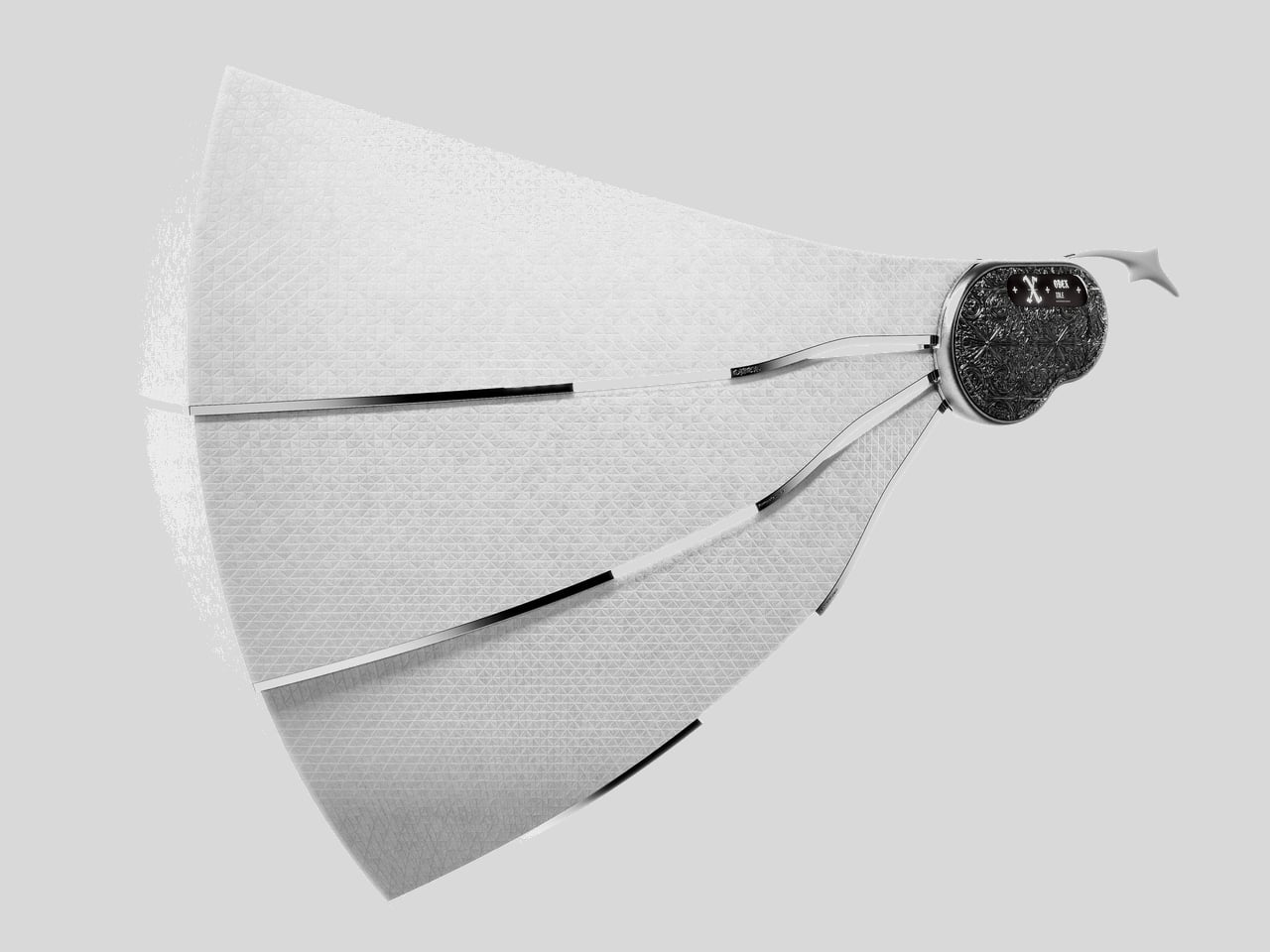
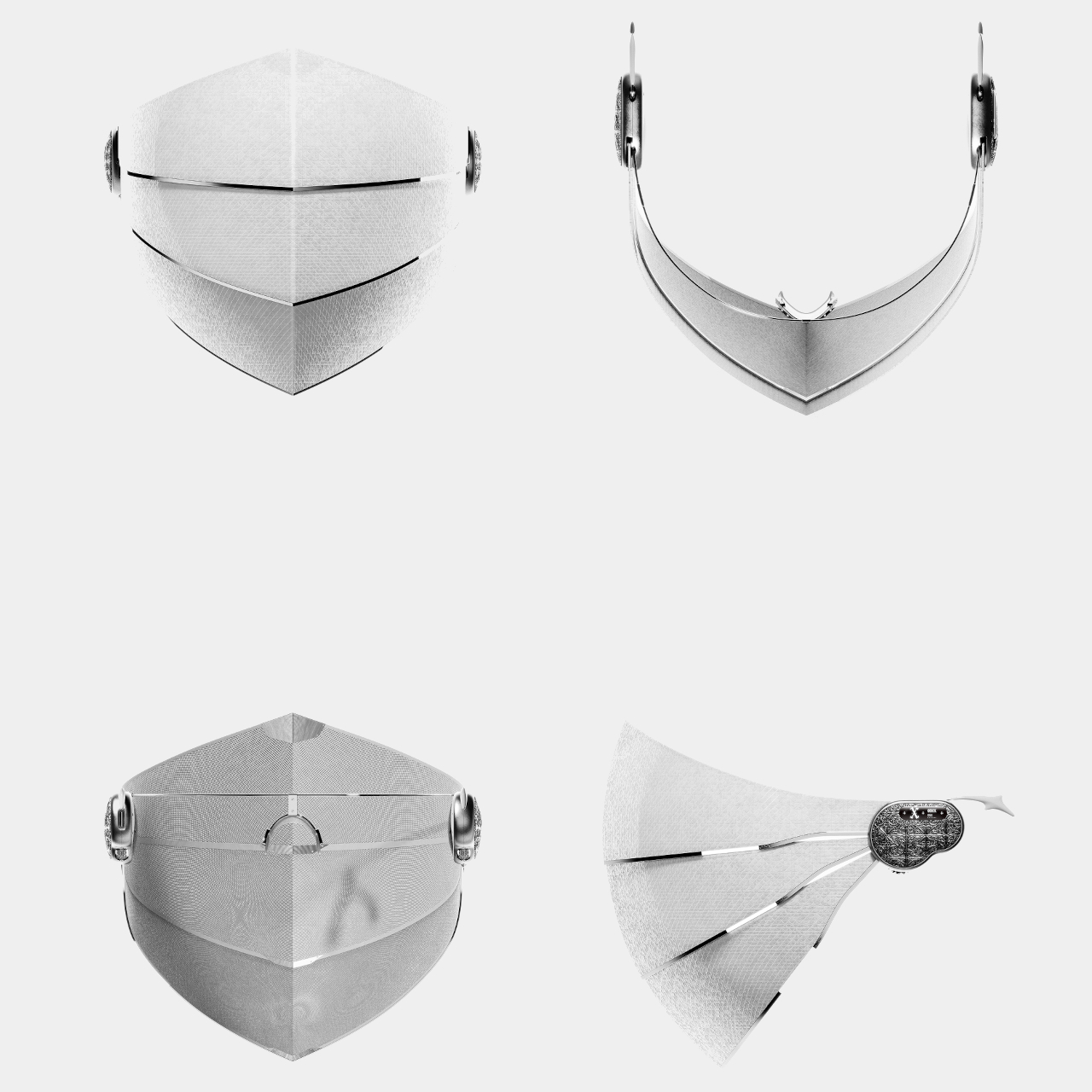
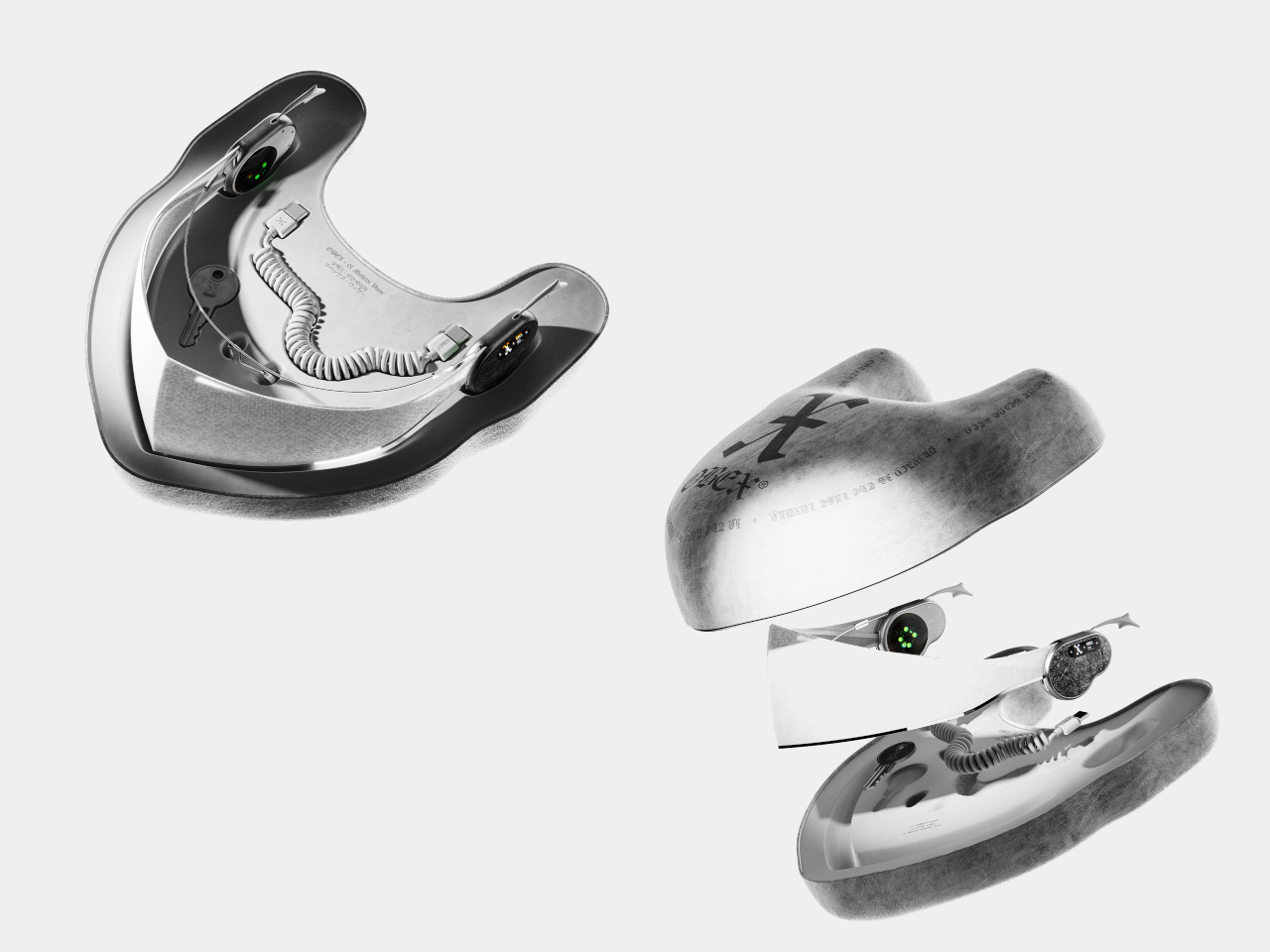
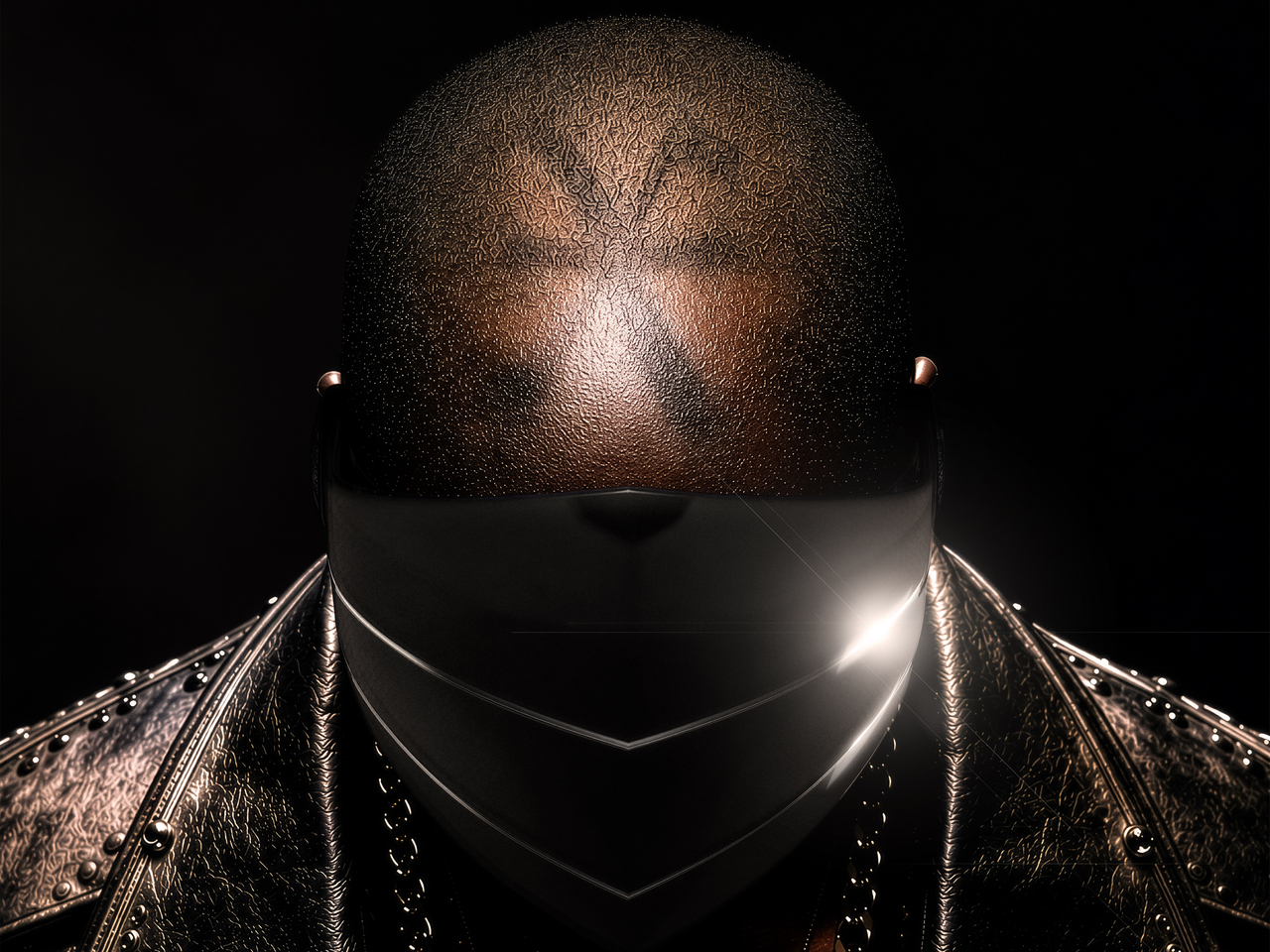
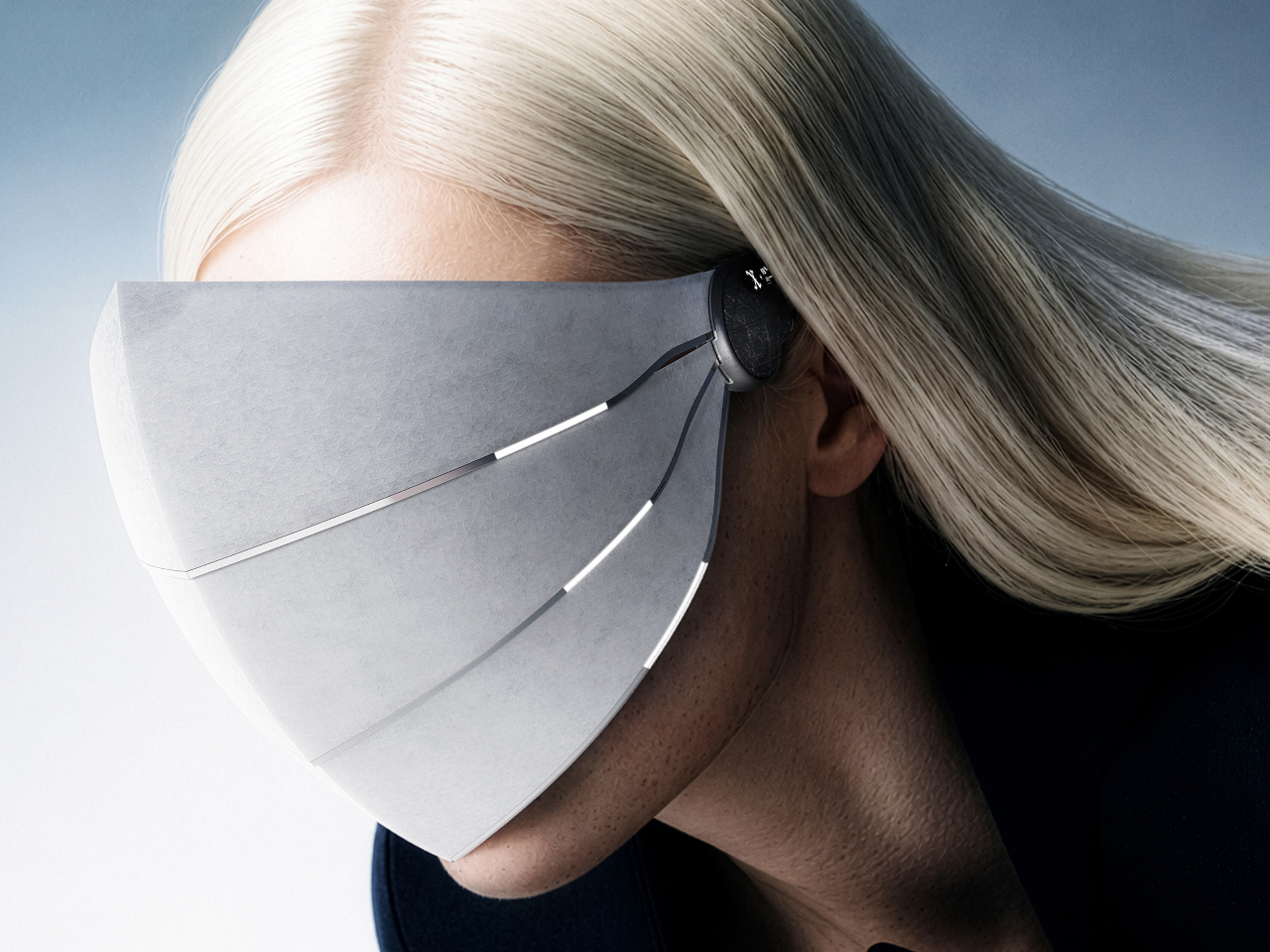
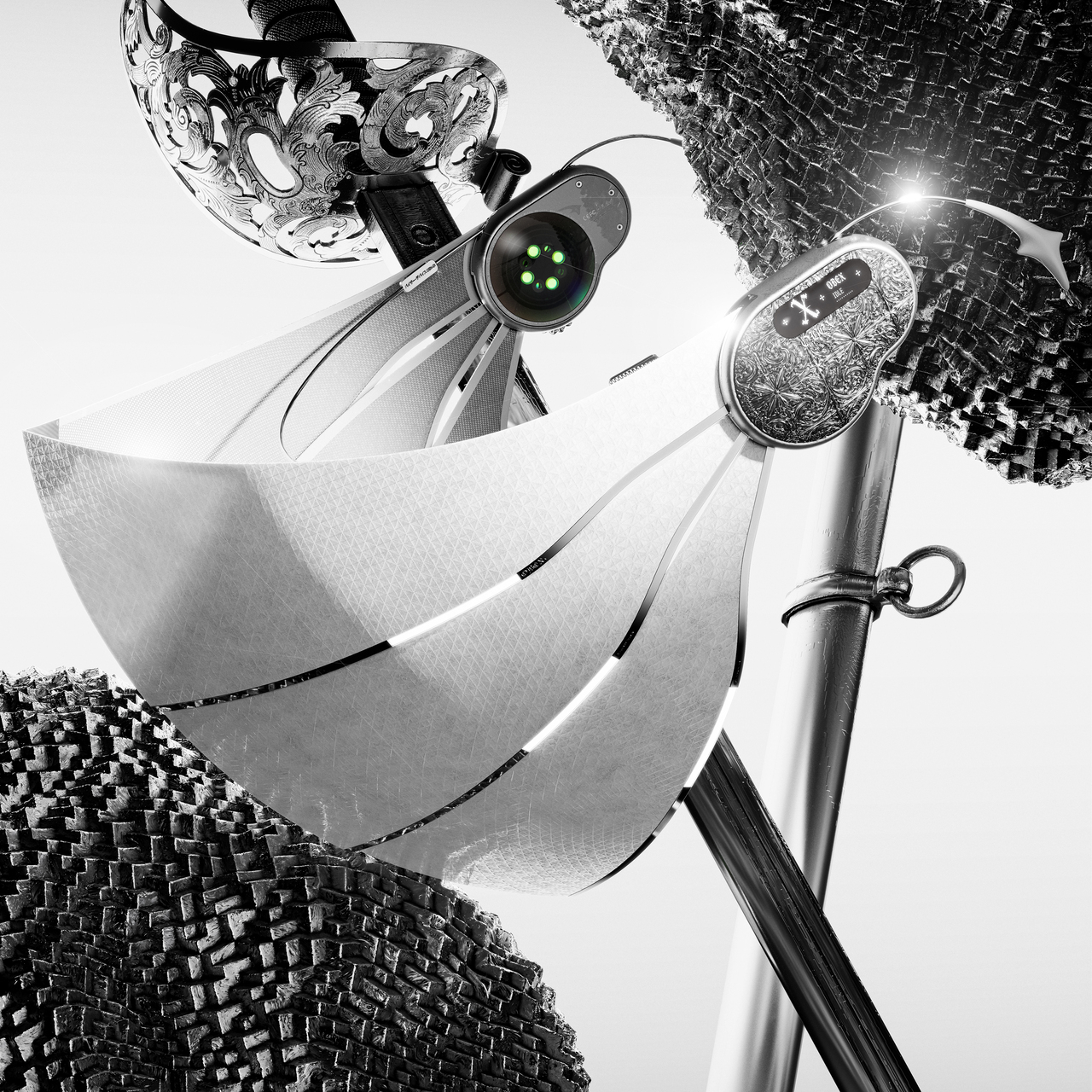
OBEX is a conceptual wearable that treats this shift as a design problem worth addressing through physical form. Rather than responding to surveillance with software or policy, it proposes a new category called “privacy armor,” a tangible boundary between the wearer and systems of biometric recognition. Its form language doesn’t come from consumer electronics but from something much older, the medieval visor.
In medieval warfare, a knight’s visor concealed identity while creating distance between the person and the world beyond the armor. The logic behind OBEX borrows that idea and applies it to a different kind of threat, one that’s less physical and more informational. As surveillance systems continuously collect and analyze biometric data, the face becomes a vulnerable interface, and OBEX imagines what it would mean to shield it.
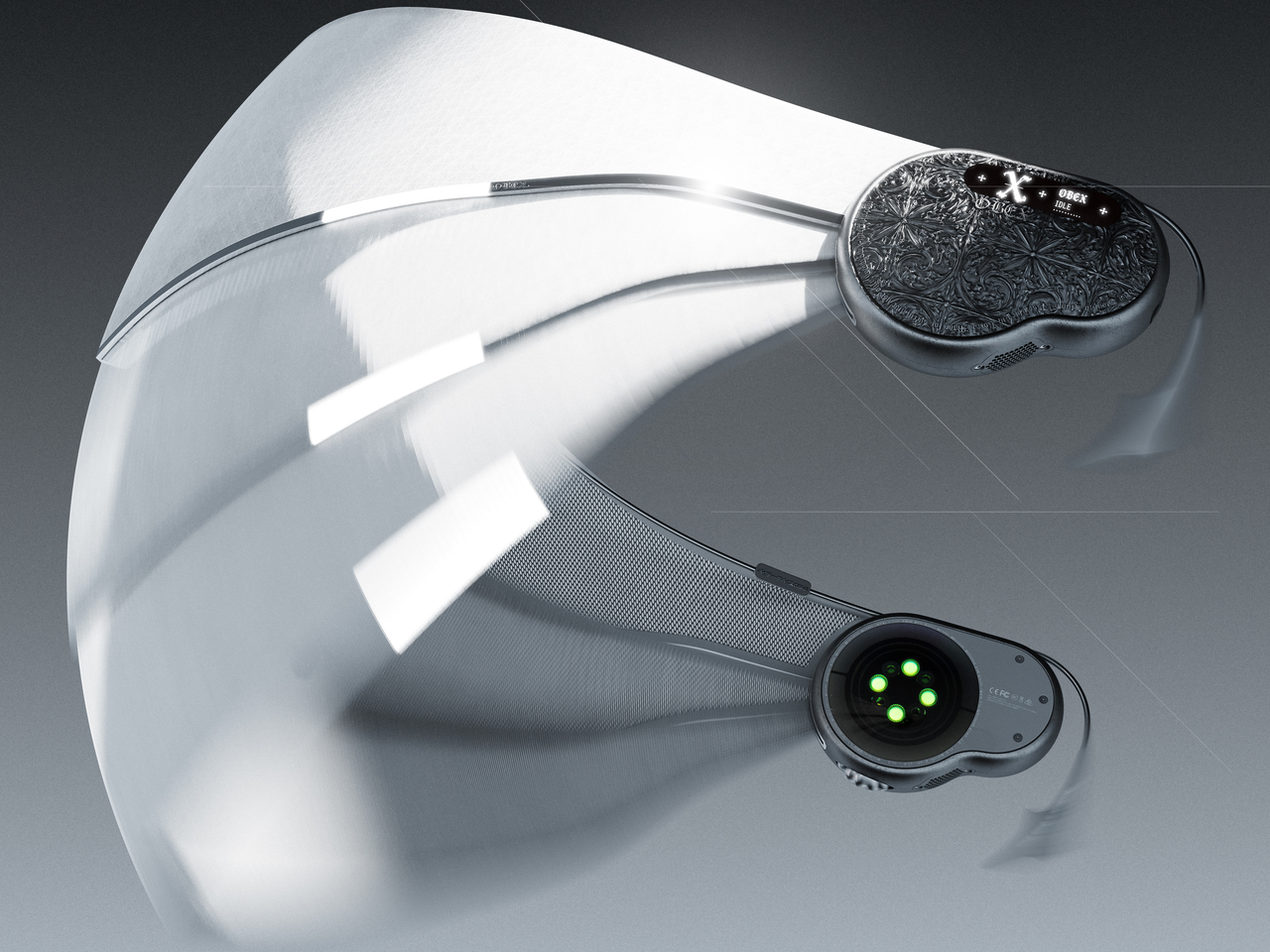
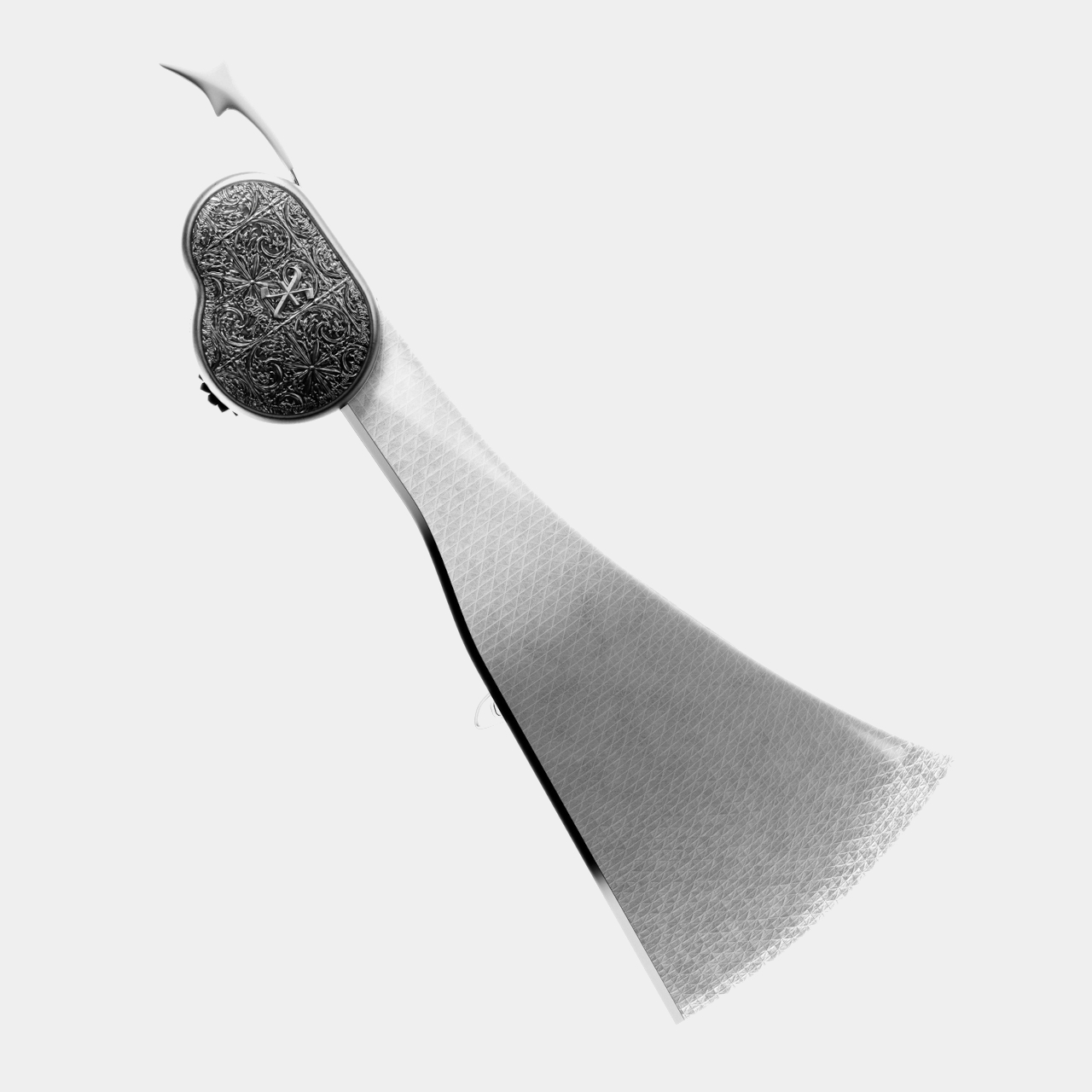
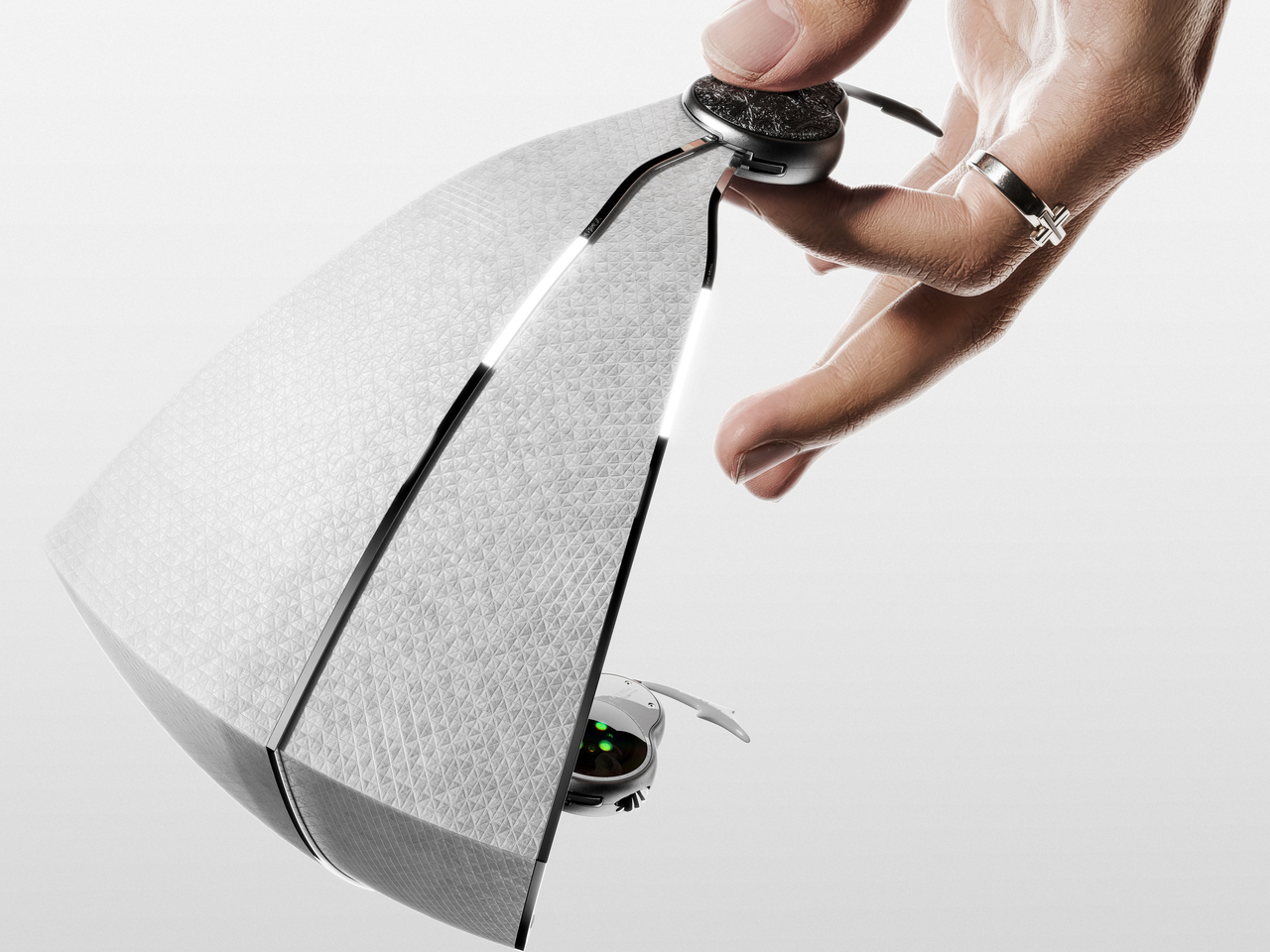
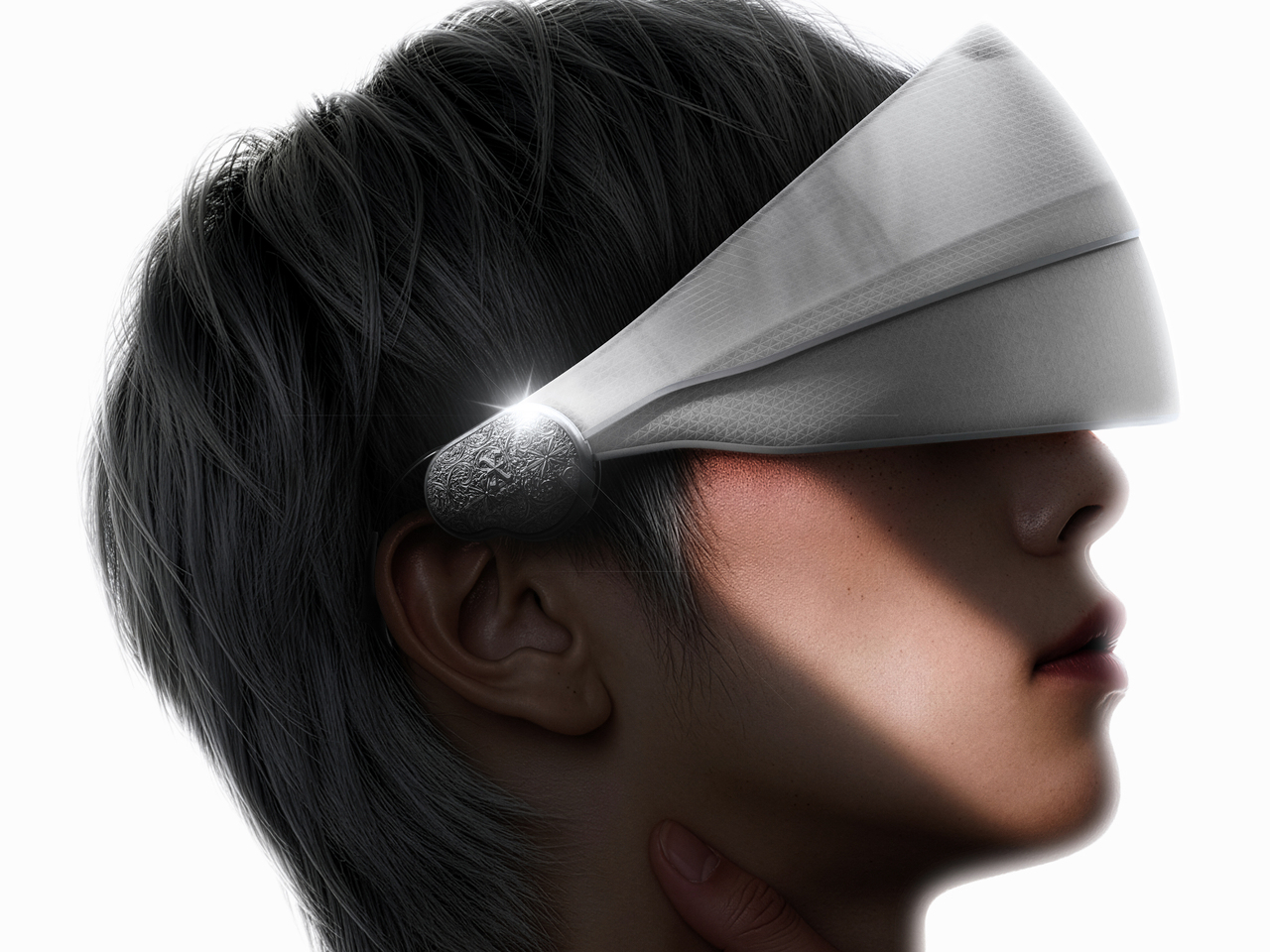
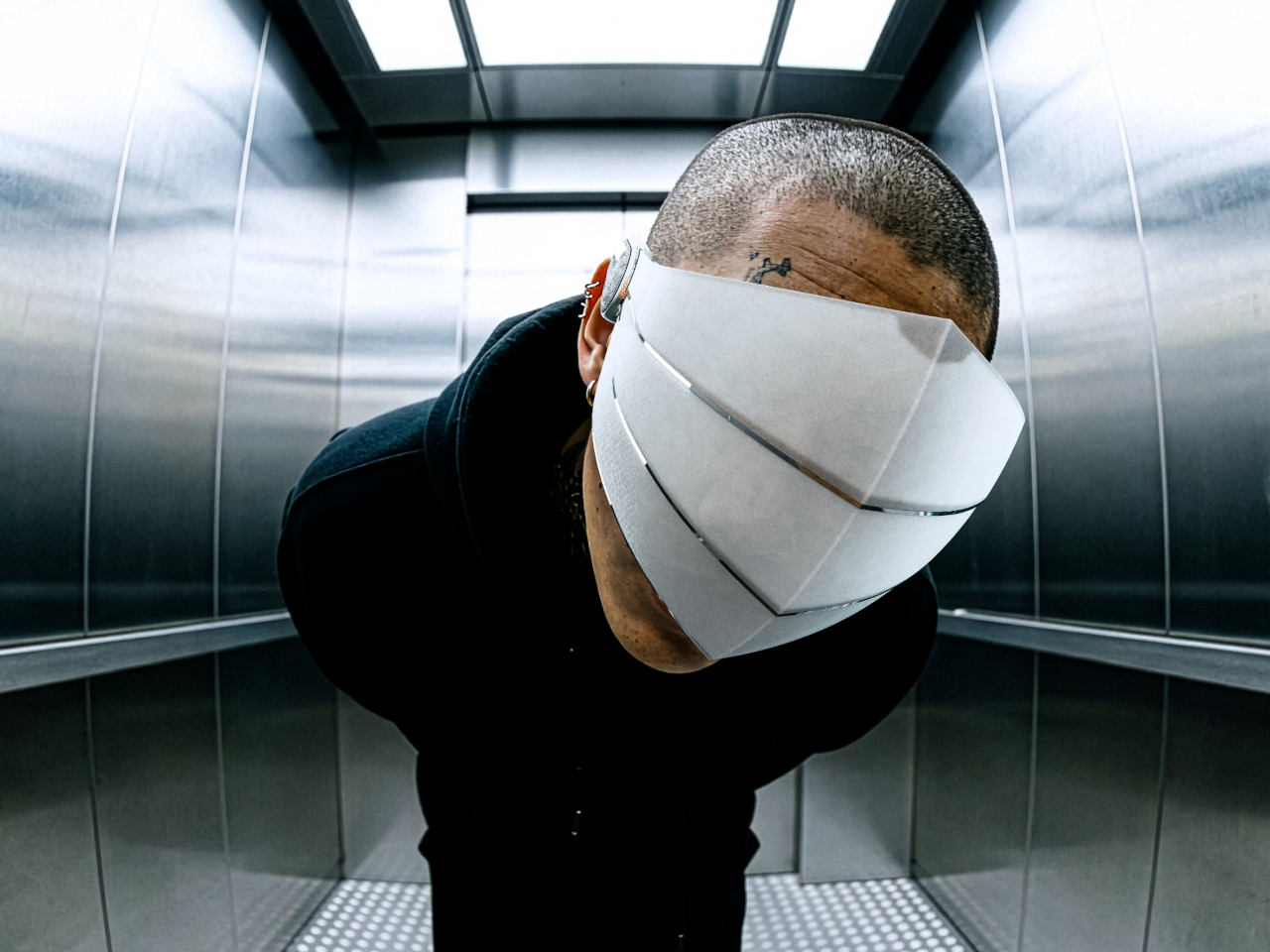
The visor itself is made from a micro-perforated optical film that allows the wearer to see out clearly while appearing opaque from the outside. It’s a deliberate asymmetry, the kind that surveillance systems rely on, reversed and put in the hands of the individual. The shielding motion references the sliding visors of historical armor, and the weight distribution is engineered to reduce strain across the head during long wear.
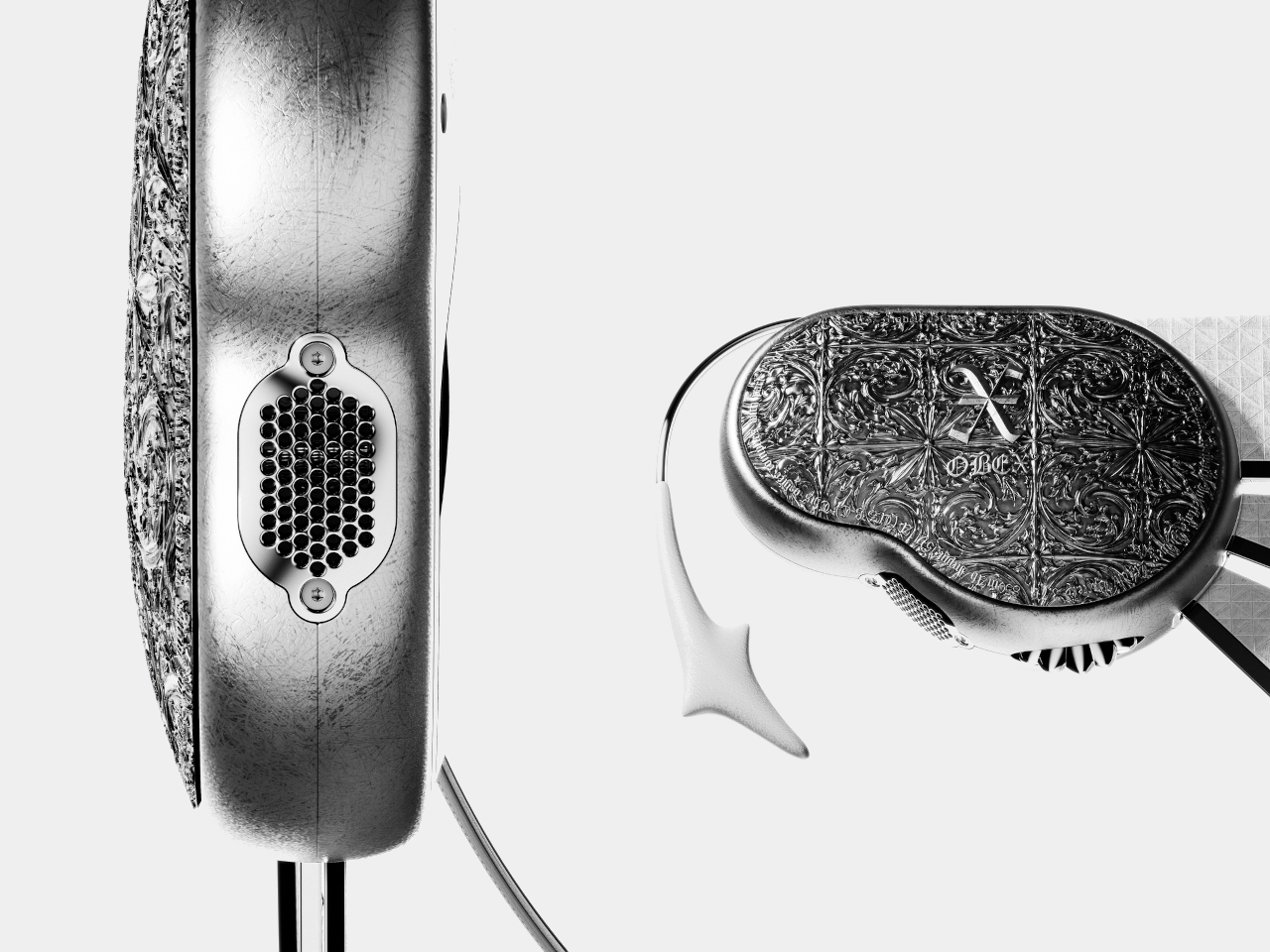
The temple module anchors the visor to the head and holds most of the active technology. Embedded PPG sensors monitor physiological data in real time, enabling continuous biometric monitoring through the wearer’s own biological signature. Dual directional speakers deliver audio feedback without cutting the wearer off from surrounding sounds, and a small bitmap display on the side communicates system status and shield activation modes at a glance.
The frame is precision-engineered titanium, chosen for its balance of strength and low weight. The outer surface carries a refined micro-texture that improves grip while minimizing visible wear over time. The ornamental detailing on the temple module draws from the craftsmanship traditions of medieval armor, with intricate surface patterns that make the component read more as a personal artifact than as a piece of hardware.
OBEX isn’t proposing that everyone should walk around in a visor. It’s asking what protection means when the thing being protected isn’t the body but the face’s function as an identity signal. The concept sits at the edge of speculative design and industrial practice, using grounded materials and structural logic to imagine an object that doesn’t quite exist yet, but one that feels increasingly necessary.
The future keeps finding new ways to make water feel precious. Some of it goes to lawns, some to laundry, some to the AI data center working overtime to generate recipes for vegan, gluten-free, keto brownies made without chocolate. So when a shirt shows up claiming 30 days of wear without a wash cycle, the concept lands with a mix of curiosity, skepticism, and a weird amount of relevance. That curiosity is reasonable. The skepticism, depending on how you feel about a decade of textile engineering research, may not hold up.
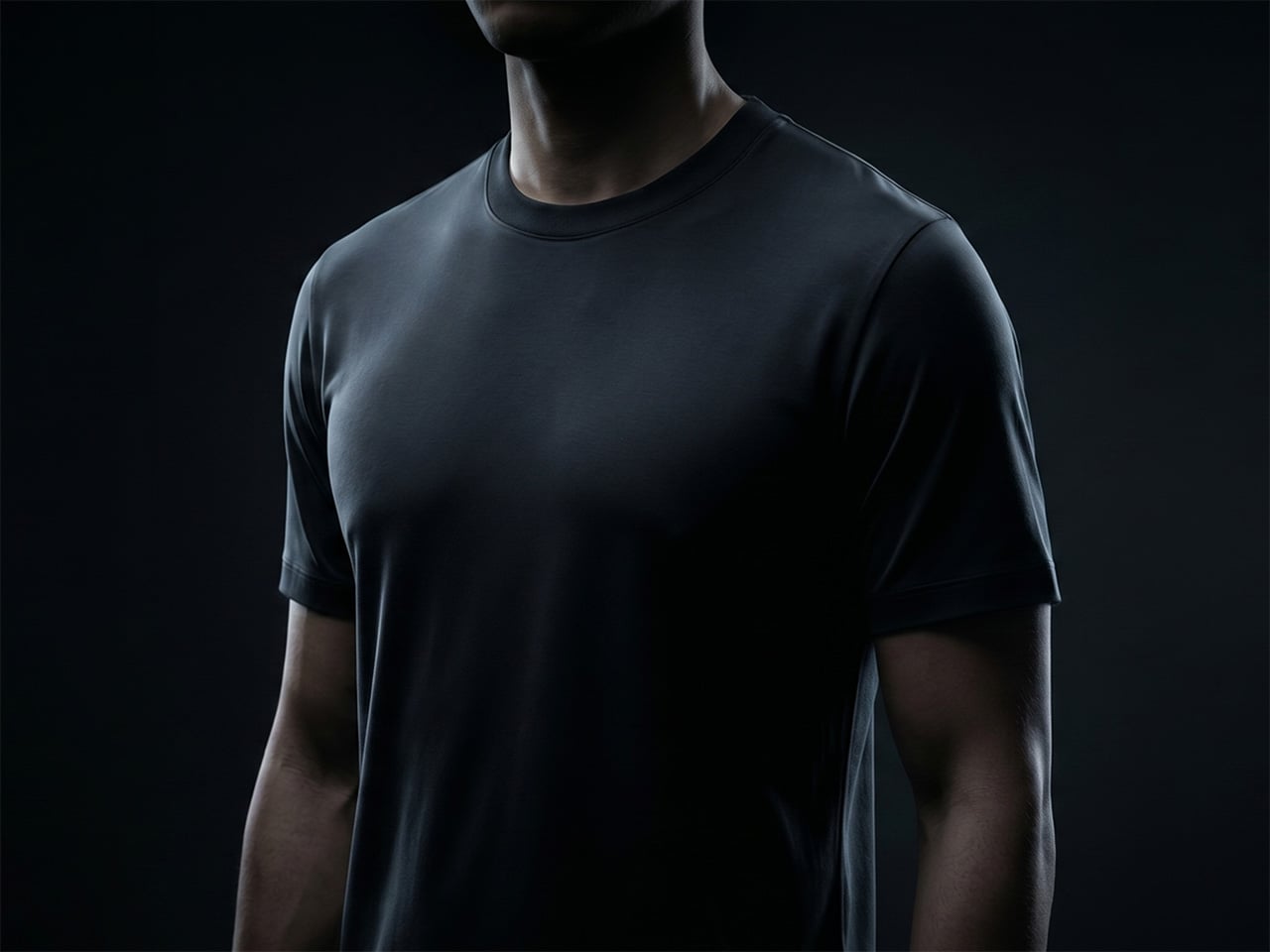
HercLéon offers the HercShirt V5.0 in three versions. The Budget model stays smell-free for 3+ days, the Standard version stretches that to 14+ days, and the Max model is the one built for 30+ days between washes. The difference comes down to how many odor-fighting elements are woven into the fabric. Budget uses one, Standard uses four, and Max uses all seven. According to the brand, that seven element system includes copper, silver, zinc, gold, volcanic ash, and two proprietary ingredients, all embedded directly into the shirt rather than applied as a surface treatment.
Copper is the shirt’s frontline defense, targeting the bacteria responsible for the locker-room smell that ruins gym gear by day two, with natural antimicrobial properties that have been recognized for centuries and are currently deployed on hospital surfaces to reduce microbial load. Silver handles a second class of odor-causing microbes, and its use in medical dressings and performance textiles makes its role here read as engineering rather than marketing. Zinc addresses the sharper, sulfurous compounds produced during heavy sweating, and because it is gentle on skin and widely used in skincare products, it adds another layer of protection without compromising comfort. Gold supports the performance of the other active elements, helping the smell-control system work together more effectively, and because it is highly stable, it helps the fabric maintain consistent performance across many washes. Volcanic ash absorbs moisture and environmental odors before they settle into the fabric, functioning as a porous internal sponge that traps what it catches until washing can clear it out. The final two elements stay off the published ingredient list, a reasonable call from a brand that has spent years narrowing this formula down to something that works.
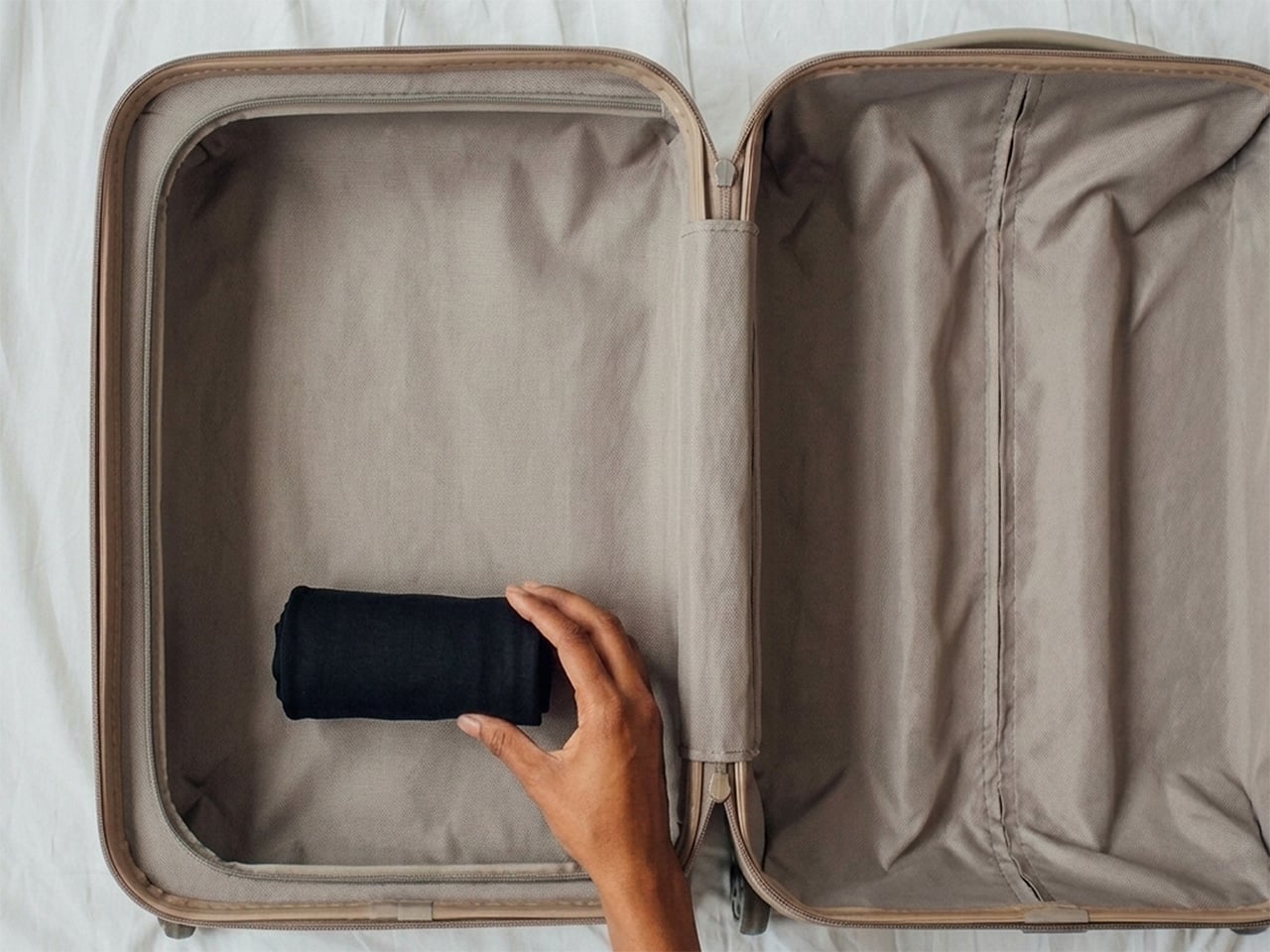
Pack one shirt for a week-long trip instead of seven, and you begin to understand what HercLéon is selling, because the whole point of a trip is to have less on your plate, not to check a bag, wait at baggage claim, fight for trunk space, or spend vacation time looking for laundry. The V5.0 is built to hold up from a morning gym session to dinner at eight without a change, covering the kind of full-day travel that defeats most performance shirts by mid-afternoon. Shirt odor itself comes from seven distinct chemical processes, not one, which is why most fabrics may accidentally help with one or two types while the HercShirt was built to address all seven. Off-grid users, healthcare workers, and new parents with no bandwidth for weekly wash cycles all figure into HercLéon’s intended audience, and none of those use cases require a stretch of imagination to map. The shirt’s proposition is fundamentally about reclaiming time and space, two things that clothing has rarely been designed to address this deliberately.
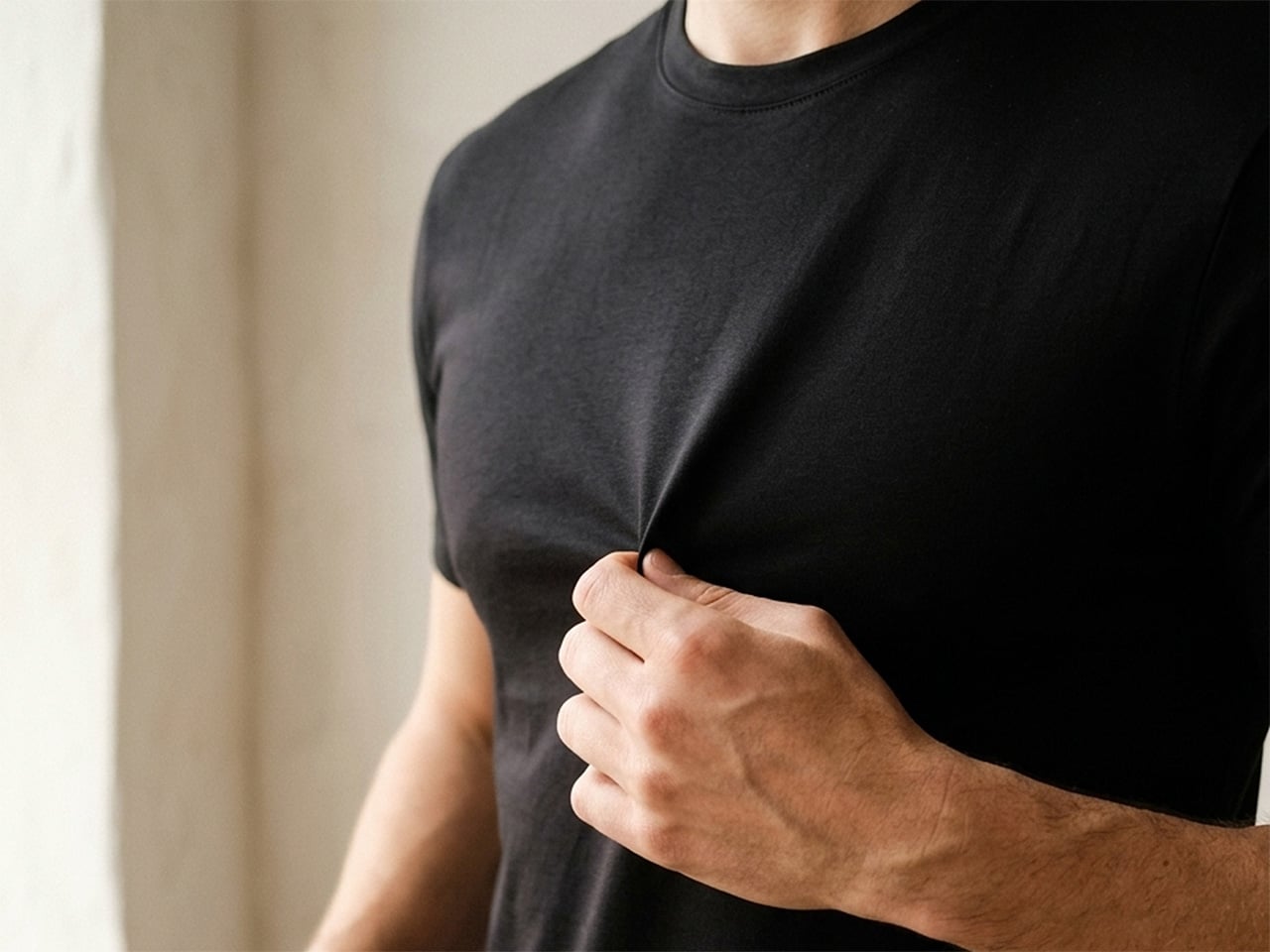
Most performance shirts earn their odor-control claims through surface treatments, finishes applied at production that fade with every wash, while the HercShirt’s active elements are woven in and designed to perform like new for years. That construction choice means the odor control does not follow the same fade curve that makes most performance gear feel ordinary by its tenth wash. Most tees die in the wash rather than from wear, and because the HercShirt is washed far less frequently, it skips the cycle that degrades fabric, with one shirt reportedly outliving roughly seven ordinary tees. The brand estimates the V5.0 goes through around five times fewer wash cycles than a conventional tee across its lifespan, which reframes the premium price as a replacement-cycle calculation rather than a fashion expense. Less washing also means less water, less detergent, and less energy use, which quietly loops back to the resource anxiety the shirt was practically designed to exist inside.
The HercShirt V5.0 is available in three configurations, letting you choose how long you want to go between washes. The entry-level Budget model costs $39 and uses one active element for over three days of wear. For $69, the Standard version steps up to four elements, pushing the wear time to two weeks or more. The top-tier Max model, priced at $79, includes all seven elements and delivers on the full 30-day promise. All versions are designed to be smell-free from the start, with the only difference being their endurance.
Sizing is offered from Small to 4XL for men and Small to 2XL for women. The shirt is currently available in a matte, deep ink black, though a charcoal gray color has also been unlocked, with navy blue, maroon, and forest green planned as future options. For those looking for a more personalized fit, a set of three custom-tailored shirts is available for $399. HercLéon ships internationally to the US, Europe, Japan, and India, among other regions. While delivery for the V5.0 is estimated for November 2026, earlier generations of the HercShirt are currently available for purchase on the company’s website.