Galaxy S24 FE tries to make AI and minimalist design more accessible

Ever since it relaunched the ill-fated Galaxy Note 7, Samsung has been launching a new “Fan Edition” S series flagship every year. The Samsung FE series is supposed to bring the most wanted features of its high-end phones down to a more affordable price tag, which means it does have to cut some corners to reach that price point. Cameras and battery life have always been the main focus of the Galaxy FE phones, but this year brings an unsurprising addition to that set. With the Galaxy S24 FE, Samsung is making an even bigger push for its Galaxy AI suite, trying to push it to more people with a handset that won’t kill their budget too much.

Designer: Samsung

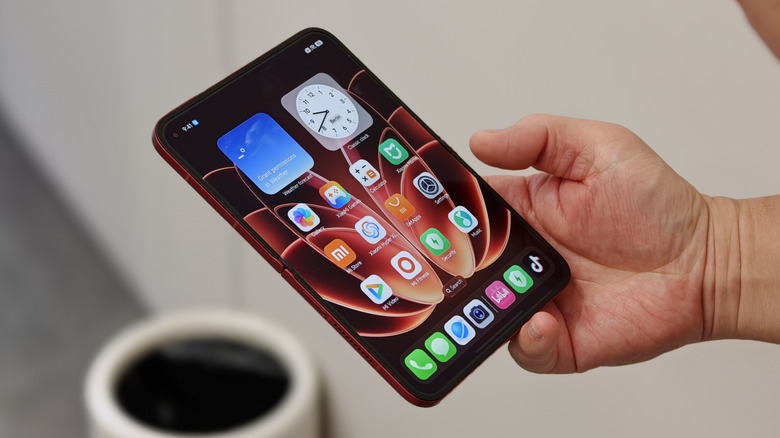
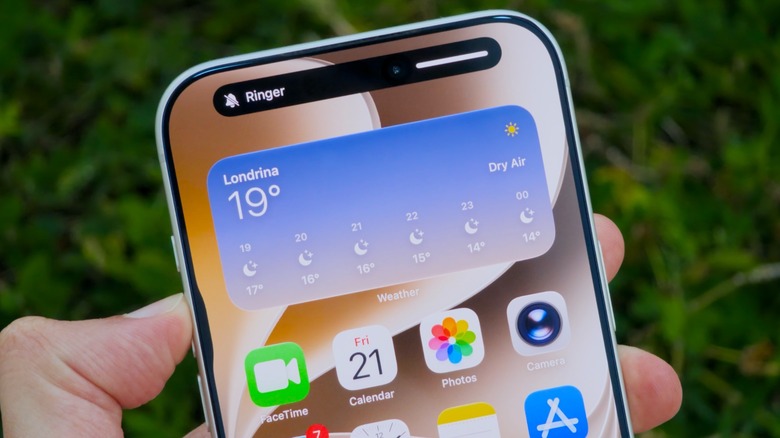
In terms of design, the Galaxy S24 FE strangely stands in between the Galaxy S24+ and the Galaxy S24 Ultra. It has an unapologetically large 6.7-inch screen, but its actual size is made even bigger by the wider bezels you won’t see on the more premium Galaxy S24 series. It does at least have the same elegant minimalist design as the Galaxy S24 and Galaxy S24+ with its rounded corners, flat edges, and flat front and back.

Of course, the “Fan Edition” phones come with plenty of compromises if you compare them to the standard flagship. In this particular case, the Galaxy S24 FE has a slightly dimmer screen that has fixed refresh rates of either 60Hz or 120Hz only, an underclocked mid-range Exynos 2400e processor, and only 8GB of RAM. That said, it does have a larger 4,700mAh battery compared to the 4,000mAh battery on the Galaxy S24, and it has almost similar 50MP main and 12MP ultra-wide cameras. The 3x telephoto camera, however, only has an 8MP sensor.

Unsurprisingly, a lot of the focus in this release is on Galaxy AI and the features that it enables. Those include retouching photos, making amusing compositions, and of course, Circle to Search with Google. Hopefully, the phone’s modest specs will be able to catch up with the demanding AI features without making the phone too hot to handle.

What is surprising is that Samsung is making the same support commitment it made with its more expensive phones, namely seven generations of OS upgrades and seven years of security updates. The phone also uses some materials made from recycled plastics, aluminum, glass, and rare earth metals, which is pretty impressive for a “cheaper” variant of a flagship phone. All of these come with a $649.99 price tag for 128GB of storage ($709.99 for 256GB), which isn’t all that bad considering you’re getting a solid phone from a reputable brand.

The post Galaxy S24 FE tries to make AI and minimalist design more accessible first appeared on Yanko Design.

Xiaomi 14T Pro Review: Flagship Features Without the Flagship Price

PROS:


  • Solid camera performance

  • Fast wired and wireless charging capabilities

  • Bright and easy-to-eyes display


CONS:


  • Uninspiring color options

  • Minor hardware upgrade from the predecessor


RATINGS:

AESTHETICS
ERGONOMICS
PERFORMANCE
SUSTAINABILITY / REPAIRABILITY
VALUE FOR MONEY

EDITOR'S QUOTE:

With its combination of features and competitive pricing, the Xiaomi 14T Pro delivers a well-rounded experience that is sure to satisfy the needs of most users.

2024 has been a year of remarkable growth and innovation for Xiaomi. Building upon its success in the smartphone market, the company has expanded its horizons with the launch of its first electric vehicle, the SU7, back in March. The company then proceeded with the launch of its first-ever flip phone, the Xiaomi MIX Flip, as well as the fourth iteration of its flagship foldable, the MIX Fold 4. Impressive sales figures for the SU7 and the positive reception of the MIX Flip and MIX Fold 4 demonstrated Xiaomi’s ability to capture market shares in diverse product categories. It is clear that Xiaomi wants to take advantage of this moment and solidify its position as a leading global technology brand with the launch of the Xiaomi 14T and 14T Pro. Part of its budget-friendly numbered T series, the Xiaomi 14T Pro boasts flagship features similar to its flagship Xiaomi 14 and 14 Ultra phones, such as cameras co-developed with Leica. But does Xiaomi still have its magic touch or has it spread itself too thin? Read on to find out.

Aesthetics

The Xiaomi 14T Pro’s understated design is its strength. While it doesn’t offer groundbreaking aesthetics, its simplicity is elegant. The familiar design language from its predecessor is carried over into this model. Available in Titan Gray, Titan Blue, and Titan Black, but choosing a color shouldn’t be a challenge as they all offer similar aesthetics. I wish Xiaomi had explored more fun color options. We received the Titan Black variant. The matte black back panel is speckled for a light-catching effect and features a velvety texture that resists fingerprint smudges.

The device’s square camera island is big but maintains a discreet profile that matches the color of the back panel. The camera island’s smooth surface contrasts with the back panel’s textured finish. The arrangement of the cameras and LED light is perfectly symmetrical, centered around the Leica logo. Each camera and LED light is housed in a raised circular enclosure, making it slightly more challenging to clean dust that may accumulate. That said, it carries a sort of LEGO block vibe that makes it stand out a bit, especially from the rest of the Xiaomi 14 series.

The small Xiaomi logo in silver is positioned on the lower left and the regulatory icons and text on the lower right. Overall, 14T Pro offers a clean design, while the matte textured back panel and metallic aluminum alloy frame give it a premium feel. It is simple and direct, a breath of fresh air from the visually noisy designs of recent smartphones.

Ergonomics

Measuring 160.4mm x 75.1mm x 8.39mm and weighing 209g, the Xiaomi 14T Pro leans towards the larger side of the spectrum. Despite its size, the device feels comfortable to hold, whether with one or both hands. All edges slightly curve into the frame giving comfort, while the flat sides provide a better grip when you hold the device in your hand.

The right side of the phone features volume and power buttons with diagonal engraving, while the left side remains clean except for antenna cutouts. The top houses an IR blaster and speaker, while the bottom accommodates a dual SIM slot, microphone, USB-C port, and speaker. The sides might be busy with these many parts, but they visually blend into the frame and stay out of the way of your fingers or your palm when you hold the phone.

The off-center camera module can cause the phone to wobble slightly on flat surfaces which might be a minor inconvenience if they are sensitive to such details. Nothing that a case wouldn’t fix, of course, and it’s a design trait shared by almost all smartphones these days. The Xiaomi 14T Pro is thankfully not uncomfortable to hold and use despite its large size, though it doesn’t stand out as an example of good ergonomics either.

Performance

Xiaomi’s collaboration with Leica has significantly elevated its camera capabilities, resulting in exceptional photo and video quality. This partnership continues as Xiaomi works with Leica on its more budget-friendly flagship models, ensuring high-quality imaging remains accessible. The 14T Pro features a triple camera setup, including a 50MP main camera with an f/1.6 aperture, a 50MP telephoto camera with an f/2.0 aperture, and a 12MP ultra-wide camera with an f/2.2 aperture. All three cameras offer two Leica photographic styles: “Leica Vibrant” and “Leica Authentic.”

The main camera features a Light Fusion 900 sensor and delivers great photos with nice detail, wide dynamic range, natural colors, and minimal noise in both daylight and low-light conditions. While the dynamic range is generally great, exposure often skews toward the brighter end, leading to washed-out highlights and crushed shadows in some situations. Additionally, HDR performance struggles with motion, especially in low-light environments, leading to blurry images of moving subjects.

Ultrawide (0.6x)

1x

2x

2.3x

The telephoto camera performs well in most scenarios, maintaining good detail and color accuracy. In contrast, the ultra-wide camera produces acceptable photos, but it tends to lack sharpness and detail in challenging conditions.

Telephoto (5x)

Telephoto (10x)

Telephoto (20x)

Portrait mode offers four focal lengths, 23mm, 35mm, 60mm, and 75mm, with the default set to 60mm. While the 60mm and 75mm portraits are captured with the telephoto camera, the 23mm and 35mm portraits are shot with the main camera. All portrait photos I took, regardless of focal length, exhibited impressive subject isolation and pleasing bokeh.

Normal (1x)

Portrait (60mm)

Although color rendering remains consistent across different cameras and magnifications in regular photo mode, a noticeable shift in white balance can be observed between photos captured with the telephoto and main cameras in portrait mode.

Portrait (23mm)

Portrait (35mm)

Portrait (75mm)

On the opposite side, the upgraded 32 MP front camera with f/2.0 aperture takes satisfactory photos, which isn’t that surprising given the hardware. The Xiaomi 14T Pro can record videos up to 8K at 24 or 30 fps with the main camera, while the telephoto and ultra-wide cameras are capable of shooting videos up to 4K at 60 fps. The front-facing camera can record up to 4K at 30 fps and 1080p at 60 fps. The 4K footage from the main and telephoto cameras is impressive, showcasing good detail, realistic colors, and a wide dynamic range, all complemented by excellent stabilization.

While the Xiaomi 14T Pro offers incremental hardware improvements compared to its predecessors, its most significant advancements lie in its AI capabilities. The device supports Google Gemini and introduces Circle to Search, a first for Xiaomi devices. Additional AI features include AI Interpreter, AI Notes, AI Recorder, and AI Subtitles. These AI features and Circle to Search will be available via an over-the-air (OTA) update starting September 26th, which means they aren’t accessible during this review period.

One of the AI features I was able to test was AI Erase Pro, and it was remarkably effective. The tool offers four modes: Manual, Remove Object, Remove People, and Remove Lines. The Remove People mode was particularly impressive, accurately recognizing individuals and color-coding them. Even when people were positioned in a staggered formation, the AI could identify each person. However, while erasing people from the photos worked well, the shadows were left unmanipulated.

The other impressive feature of the Xiaomi 14T Pro is a big 6.67-inch AMOLED flat screen that boasts a 1.5K resolution (2,712 x 1,220), a 144Hz refresh rate, and a pixel density of 446 ppi. Supporting 12-bit color depth, HDR10+, and Dolby Vision, the display delivers sharp, vibrant visuals. Even under direct sunlight, the peak brightness of 4,000 units ensures excellent visibility while the 3,840 Hz PWM dimming reduces eye fatigue. Also, the stereo speaker is plenty loud and produces nice sounds, making the phone great for enjoying movies.

The 5,000mAh battery provides sufficient power for a full day of use. If you need a quick boost, Xiaomi’s 120W HyperCharge technology allows for incredibly fast wired charging, reaching a full charge in about 19 minutes, as stated by the company. Additionally, the 14T Pro supports 50W wireless charging, a much-welcome upgrade. Xiaomi claims that the device can be fully charged with a wireless charger in approximately 45 minutes. My personal experience aligns with these impressive capabilities.

The device runs HyperOS based on Android 14 and Google services are thankfully available out of the box. Powered by MediaTek’s flagship Dimensity 9300+ chipset and paired with 12GB or 16GB of LPDDR5X RAM and 256GB, 512GB, or 1TB of UFS 4.0 storage, the Xiaomi 13T Pro delivers great performance. The device handles multitasking seamlessly, with no noticeable lag or stutter even when running multiple apps simultaneously. Additionally, it does not get hot during extended video shoots or gaming sessions, enhancing the overall user experience.

Sustainability/Repairability

The Xiaomi 14T Pro promises a 1,600 battery life cycle and delivers IP68 dust and water resistance, ensuring both durability and longevity. Its longevity and overall sustainability aspects, however, are not as promising, especially in the area of software updates. This is somewhat disappointing for a company that is becoming one of the industry’s leading players. As the tech industry increasingly emphasizes environmental responsibility, Xiaomi has an opportunity to take a leading role by integrating sustainability into all of its products and, hopefully, it won’t let that opportunity pass it by.

Value

The Xiaomi 14T Pro positions itself as a compelling option for those seeking a high-performance smartphone without breaking the bank. It offers a blend of flagship-level features and a more affordable price point. While its camera may not quite reach the heights of the Xiaomi 14 Ultra, it still delivers excellent results for everyday photography and videography. It delivers much of what it promises on paper, but the real question is whether it is something you will reach for in your next smartphone buy.

Xiaomi is definitely not the only player in this field, including in the mid-range market where there are dozens of brands and models to choose from. And while the Xiaomi 14T Pro is definitely good, it doesn’t exactly stand out in any specific way. It’s a well-balanced phone, no doubt, but it might overlooked when placed side-by-side with other mid-range phones with better cameras, higher performance, or, more importantly, lower price tags.

Verdict

The Xiaomi 14T Pro may not be the most exciting phone, but there is no doubt it offers a tempting value proposition. Its solid camera performance, powerful processor, fast-charging capabilities, and vibrant display make it a compelling option for users who prioritize performance and affordability. It may not offer the absolute pinnacle of smartphone technology, leaving that for its more powerful and more expensive non-T siblings, but it doesn’t lag behind in any significant way either. With its combination of features and competitive pricing, the Xiaomi 14T Pro delivers a well-rounded experience that is sure to satisfy the needs of most users.

The post Xiaomi 14T Pro Review: Flagship Features Without the Flagship Price first appeared on Yanko Design.

TECNO Phantom Ultimate 2 ultra-thin Tri-Fold concept beats Samsung and Huawei to the punch

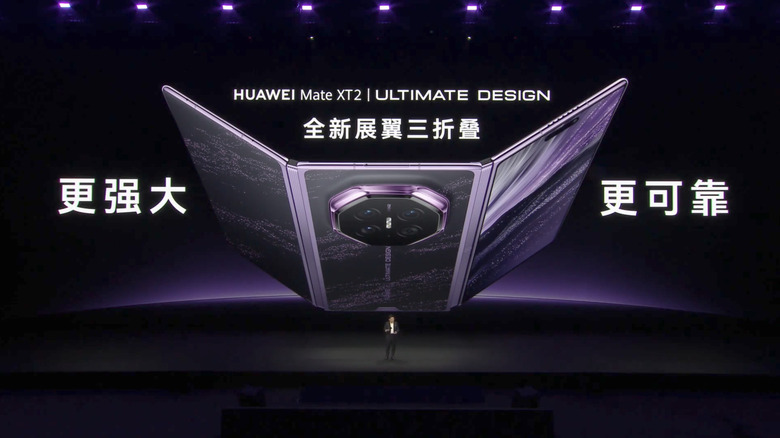
While foldables represent the next evolution of smartphones, the current crop isn’t exactly how we imagined these devices to be. When the likes of Samsung first teased the idea of phones that transform into tablets, that dream didn’t involve squarish tablets or thick and narrow phones. The ideal is a normal-looking phone that almost magically becomes a regular tablet when it unfolds, something that wasn’t easily feasible given the technology of the past two to three years. We might be on the cusp of the next stage of the foldable revolution, and TECNO is only too happy to show off not only a tri-fold device but one that is only 11.1mm thick when folded into a conventional phone.

Designer: TECNO

A phone with two hinges that fold in opposite directions is one of the ways we can get the best of both worlds, but it’s easier said than done, naturally. Not only do you have to consider the durability of the display panel that will bend at opposite angles in two areas, the thickness of the folded “phone” also becomes a conundrum. If bi-fold phones like the Samsung Galaxy Fold are already considered to be thick, imagine how much worse three layers would be.

That’s the boast that TECNO is making with the Phantom Ultimate 2 concept, a tri-fold device that is only 11.1mm thick when folded. That’s just around 2mm thicker than the average regular foldable, which is still thick but not by much. TECNO doesn’t give the exact dimensions for the unfolded tablet, but it’s bound to be really thin in that case.

This design gives us a regular 6.48-inch candybar phone that turns into a regular 10-inch tablet and vice-versa, delivering the best of both worlds in a single device. And if that weren’t enough, TECNO shows that the device also supports stylus input, making it an all-in-one entertainment and business computer in your pocket. There are various modes made possible by this novel folding design, though some might be a bit more questionable than others, like putting the sensitive foldable screen in contact with a table.

The TECNO Phantom Ultimate 2 concept will be shown off at IFA 2024 in Berlin next week, though its existence hardly means it’s something we’ll be able to buy soon. Samsung has also shown off tri-fold prototypes, both of the “Z” and “G” varieties, yet none have come to market yet. Then again, the forerunner of foldable devices seems to be content taking a more conservative approach, so it wouldn’t come as a surprise if TECNO or even Huawei would land this novelty on shelves first.

The post TECNO Phantom Ultimate 2 ultra-thin Tri-Fold concept beats Samsung and Huawei to the punch first appeared on Yanko Design.

Vivo V40 Review: Keeping Things Simple and Sweet

PROS:


  • Stylish and slim design

  • Large 5,500mAh battery

  • Impressive triple 50MP camera system

  • IP68 dust and water resistance rating

CONS:


  • Same specs as the Vivo V30 from early 2024

  • No dedicated telephoto camera

RATINGS:

AESTHETICS
ERGONOMICS
PERFORMANCE
SUSTAINABILITY / REPAIRABILITY
VALUE FOR MONEY

EDITOR'S QUOTE:

The Vivo V40 puts a new chic style on a proven no-nonsense phone that delivers a solid experience at an accessible price point.

The smartphone market is a very congested and crowded place, not just with multiple competing brands but with each brand putting out multiple models per generation on multiple tiers. You’d think these companies want to just put their best foot forward, but instead, they try to target different audiences and budgets. Of course, there will have to be certain compromises for devices that aim for a lower market tier, but the question is just how much can you sacrifice before all you’re left with is an unusable, unappealing slab of metal, glass, and plastic. That’s the question that the Vivo V40 has to face in light of its well-received Pro sibling, and we give it a good try to see just how well it can perform under certain constraints.

Designer: Vivo

Aesthetics

With so many smartphones now sporting more powerful and bigger cameras, it’s no surprise how many are scrambling to fit them in an elegant design and how some are failing to succeed. Given the two 50MP cameras on its back, it’s actually quite a pleasant surprise that Vivo managed to hit the nail on the head with its V40 series. There’s still a noticeable and technically thick bump on the rear, but it is presented in such an elegant way that you probably wouldn’t mind at all.

The key to this design is what Vivo dubbed the Gemini Ring, inspired by the constellation of the same name. It pairs two smaller circles in a bigger circle, playing on the “twin” theme. Technically speaking, the lower “ring” with the Aura Light is a bit taller and connects to the ring that houses the actual cameras, resulting in a shape that resembles a sleek keyhole. It’s an interesting visual element that grabs your attention but doesn’t scream at you.

The rest of the Vivo V40’s back is just as elegant as that camera design, with a variety of colors that add an artistic character to the phone. Our review unit, for example, is the Moonlight White which has a few patches of blue that resemble the surface of the moon at night. The back has a very glossy finish which, as you might have guessed, is a fingerprint magnet, though the color of the design at least makes those smudges harder to see.

The Vivo V40’s large screen curves to the side, giving it the illusion of a thin profile. We seem to live in an age of flat screens and flat edges, so this “classic” design might offer some relief to fans. It does come with some usability consequences, though, depending on how you hold it, and not everyone finds this aesthetic that appealing these days.

Ergonomics

At only 7.58mm thick and weighing only 190g (0.42 lbs), the Vivo V40 is incredibly thin and light, especially when you consider the extra-large battery it packs inside. It won’t strain your hand when holding the phone for a long time, but due to its size, you’re more likely to hold it with two hands unless you’re just idly scrolling away.

The curved edges of the screen are probably a bit more divisive. More than just a cosmetic design, it means that there will be parts of the screen at the edges that are not always visible, depending on the viewing angle, or might be accidentally triggered by parts of your palm or fingers. It doesn’t happen all the time, otherwise, this kind of design wouldn’t have lasted a year, but it might be something to consider when you notice “ghost” touches from time to time.

Performance

Underneath the sleek exterior of the Vivo V40 lies a rather sneaky secret. In many aspects, this is pretty much the Vivo V30 from early 2024, just with a few minor upgrades. It has the same Snapdragon 7 Gen 3 processor and the same basic memory and storage configuration. There are other similarities as well that we’ll get to later, but the bottom line is that, in terms of performance, you aren’t going to see a distinct generational upgrade.

That means that what was true for the Vivo V30 is true for the Vivo V40, which thankfully means you do get a solid mid-range performer. With enough RAM allocation, which is 12GB plus another 12GB taken from the 512GB storage of our review unit, you have plenty of silicon muscle to get apps moving smoothly and fluidly. You’ll have to turn down the settings for games, but you’ll still be able to enjoy the latest action-packed titles. That said, there is a Snapdragon 7+ Gen 3 at this point, so it’s rather disappointing that Vivo didn’t push for that extra punch.

The screen is almost the same, a 6.78-inch 2800×1260 120Hz AMOLED display that’s quite vibrant and crisp. This year’s model, however, upgrades the brightness by a considerable margin, which makes the phone even more usable outdoors. It supports HDR10+ but oddly leaves out Dolby Vision, something that might be of concern to video aficionados.

The biggest difference between the two generations is the 5,500mAh battery inside the Vivo V40, a whopping 500mAh increase from its predecessor. It does make the phone heavier and thicker than the V30, but not by much. The battery life gains pretty much make up for that anyway, with an uptime of almost 20 hours, depending on usage. It charges fast, too, at 80W, though not exactly record-breaking. The plot twist here is that Vivo doesn’t include a charger in the box, so you’ll have to find an 80W charger or higher on your own.

The cameras are where it’s all at, of course, and here the Vivo V40 doesn’t disappoint except in one aspect. Again, it’s the same combination of a 50MP f/1.9 main camera with OIS and a 50MP f/2.0 119-degree ultra-wide shooter. The front also gets a 50MP front-facing camera capable of shooting in 4K 30fps, which should probably make you a star in video meetings.

In practice, these ZEISS-tuned cameras deliver as promised, producing detailed and clear shots with natural colors and good exposure. That’s true both in broad daylight as well as low-light or nighttime shots, though the latter sometimes tend to get a little bit overexposed to the point of looking unnatural. Bokeh is pleasant and the separation of foreground and background is quite accurate. The Studio-quality Aura Light ring offers more flexibility with light temperature and intensity, creating more natural-looking lighting when needed. This stellar performance stops when you try to zoom in, though, even at just 2x. At that point, quality starts to degrade, which is to be expected from a camera system without a dedicated telephoto lens.

Sustainability

Vivo has been making big steps in improving its commitment to a greener future, and every little bit counts toward that goal. It might not be using recycled metals and plastics yet, but it might be slowly but surely getting on with the times. The Vivo V40, for example, doesn’t ship with a charger, helping decrease the potential e-waste from owning multiple chargers that do the same thing. Yes, you might have to buy a compatible charger if you still don’t have one, but that’s an investment that you will be able to use for other devices as well.

Perhaps the bigger step forward is taking this mid-range V series phone’s durability to the next level. From a measly IP54, the Vivo V40 now boasts an IP68 rating, putting it on the same level as more expensive flagship smartphones. What this means is that your phone won’t die on you so easily, prolonging its longevity and delaying its inevitable fate in the trash heap or recycling plant.

Value

To be painfully blunt, the Vivo V40 doesn’t exactly have a standout feature. Yes, the 50MP ZEISS cameras perform well, but other mid-range phones can match its output and even have a telephoto shooter in the gang. Its hardware isn’t exactly fresh or notable, but it does get the job done. The slim and sleek design is definitely eye-catching, but they always say that beauty is in the eye of the beholder.

Instead, it’s actually the sum of its parts that give the Vivo V40 its value. It’s a solid performer with dependable cameras wrapped in a premium-looking design, delivering long battery life and durability on par with high-end rivals. And when you slap on the $430 price tag, you basically get a mobile partner that you can rely on, as long as you don’t make too many demands.

Verdict

It is getting harder to stand out in a very crowded smartphone market, and some vendors have started making gimmicks, adopting exaggerated designs, or adding over-the-top features just to differentiate themselves. Sometimes it works, but most of the time you end up with an outlandish design that costs more than it’s worth. In contrast, the Vivo V40 opts for a simple yet solid design, delivering a well-rounded experience with a camera system that you can be proud of and a large battery that won’t let you down.

The post Vivo V40 Review: Keeping Things Simple and Sweet first appeared on Yanko Design.

Caviar Galaxy Z Flip 6 Elegance Edition Rides on the Latest Tennis Fashion Trend

There’s a reason why many people find fashion to be inscrutable, and not just the haute couture variety you see on runways. Fashion trends come and go, and sometimes they take inspiration from the most unexpected sources. One of the newest, for example, was spurred by the combination of the 2024 Paris Olympics, the film “Challengers” starring Zandaya, and the ongoing US Open tournament. Yes, this is the so-called “tennis core” fashion trend, and custom luxury phone maker Caviar is only too happy to jump on that bandwagon with extremely limited editions of the Galaxy Z Flip 6 that’s designed to show off your sports affinity, fashion tastes, and, of course, your affluence.

Designer: Caviar

Tennis core is simple to grasp yet hard to execute. As it revolves around the aesthetics of clothes worn in tennis matches, it has to strike a balance between being sporty and being casual. For Caviar, however, the trend is easy enough to interpret and implement, focusing on the visuals and forms most easily associated with the sport: the tennis ball.

The Samsung Galaxy Z Flip 6 that’s part of this “Elegance” tennis core collection bears curved accents on its back that resemble the lines of a tennis ball, at least if you actually knew beforehand what the design is meant to represent. Depending on the color of the model, the accents can be covered in either pure 24-carat rose gold or 22-carat silver. Regardless of the color, however, both designs flaunt 16 22mm-diameter Swarovski crystals, because this wouldn’t be a Caviar phone if it didn’t have any.

The phones have colorways that are reminiscent of some of the popular colors for tennis courts. Emerald is probably the most familiar hue, with deep and rich greens that are not unlike the grassy type of some courts. Sapphire is perhaps a little less common but blue is used to give better contrast, especially considering a tennis ball is traditionally light green in color. Both models use premium Chevre leather, the very same kind used by luxury brand Hermes for its products.

It might not be as outlandish as Caviar’s other custom designs, but the Galaxy Z Flip 6 Elegance edition still fetches an extremely steep price starting at $8,777 for the 256GB Emerald model and $9,770 for the 256GB Sapphire variant. And in typical Caviar fashion, these phones will be made in a very limited run, only 99 pieces each, making sure that owning one earns you a spot not only among fashionistas but as a true tennis aficionado as well.

The post Caviar Galaxy Z Flip 6 Elegance Edition Rides on the Latest Tennis Fashion Trend first appeared on Yanko Design.

Nokia Infinity Pro concept phone brings a pill-shaped design and a few questions

You might criticize Nokia for flooding the mobile market with dozens of hard-to-remember devices, but you can’t deny that the Finnish giant also brought bold new designs that were far too ahead of their time, from the gaming-centric N-Gage to the cinematic N93 to the fashion-conscious 7380 “lipstick.” In contrast, today’s smartphones mostly play it safe due to usability and sales concerns, but that’s not to say that an odd design won’t sell either. There’s definitely room for novelty and plenty of space for creative ideas. This curiously shaped phone, for example, changes the design formula significantly, and while it does look like a futuristic device, it also raises a few important usability questions.

Designer: AndroidLeo

The “candy bar” form factor has emerged as the one true smartphone shape because of its handy and compact design. That doesn’t mean it isn’t the only possible form, though, especially when you consider that the top and bottom of these devices don’t need to be perfectly flat. It’s not like you’ll be standing it up or squeezing it alongside other flat and rectangular objects. This “Nokia Infinity Pro” concept challenges that status quo with a thin pill-shaped design that seems like a cross between a foldable clamshell and a smartwatch all rolled into one.

The more curvaceous shape of this concept phone supposedly rests more comfortably in your hand with no corners to cut into your skin. There might be some doubts about whether that would also make it too slippery to hold, but that’s not always a uniform experience. This Nokia Infinity Pro wouldn’t be the first to try out this design either, as the likes of the short-lived “open source” phones like the OpenMoko and Neo Freerunner sported similar shapes.

What makes this idea different, however, is that the screen covers the whole surface of the phone’s front, not just a rectangular section. Such a screen is now more possible to pull off, even if it’s still not that easy. The back of the phone also has two circular mounds opposite each other. One is a dual-camera system and another is a circular display not unlike those on smartwatches or some foldable phones’ “cover screen.” The idea is that you can place the phone face down on a table but still have access to important notifications and controls without distractions.

As interesting as it might look, however, there are some practical issues with such a design. For one, putting the phone face down always risks scratching the screen. At the same time, the circular outer screen will be covered by your palm and smudges whenever you have to hold up the phone. And then there’s the matter of what UI elements can be used at the top and bottom of the display since most platforms and content are created for rectangular screens. Maybe someday, we will have more adaptable software, and that will be the time for the Nokia Infinity Pro to truly shine.

The post Nokia Infinity Pro concept phone brings a pill-shaped design and a few questions first appeared on Yanko Design.

Xiaomi MIX Flip Review: Best Flip Phone for 2024?

PROS:


  • Large and highly functional outer screen

  • Great camera performance

  • Big battery and fast charge

    CONS:


    • No IP rating

    • No wireless charging capability

    • Device tends to get hot during extended camera use

    RATINGS:

    AESTHETICS
    ERGONOMICS
    PERFORMANCE
    SUSTAINABILITY / REPAIRABILITY
    VALUE FOR MONEY

    EDITOR'S QUOTE:

    The Xiaomi Mix Flip is a well-round flip phone that combines sleek design, premium build, top-notch performance, and great mobile imaging capabilities.

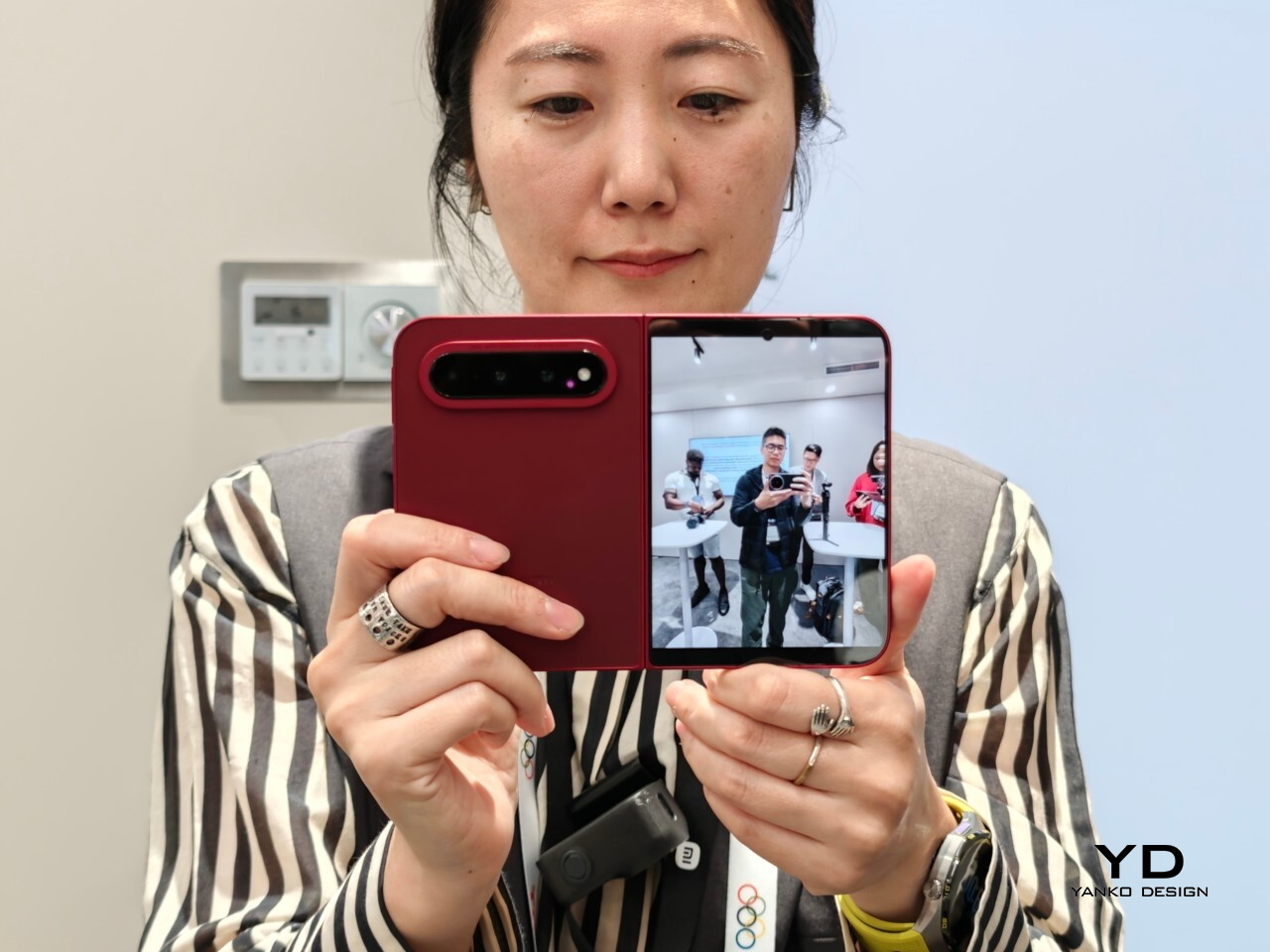
    The smartphone market, once dominated by monolithic slabs of glass, is undergoing a captivating transformation. Foldable devices, both bookstyle foldable and clamshell flip phones, have emerged as a compelling alternative. Samsung has been at the forefront of this transformation with its Galaxy Z Flip series. Motorola has also left a significant mark with its Razr series, boasting a large and practical outer screen that enhances usability. Now, Xiaomi has made a bold entrance into the foldable arena with its first foldable, the Xiaomi MIX Flip.

    Designer: Xiaomi

    At a highly anticipated annual speech event in Beijing last month, Xiaomi CEO Lei Jun unveiled the MIX Flip along with its 4th generation of foldable phones, emphasizing the strategic timing behind the company’s foray into the flip phone market. Reflecting on past perceptions, Lei acknowledged a previous skepticism toward flip phones, once dismissing them as merely “pretty for nothing.” In those earlier iterations, compactness often came at the cost of performance and functionality. However, Xiaomi now believes it has cracked the code, poised to deliver a flip phone that is “pretty for everything”. Let’s delve into the details to see if the MIX Flip truly lives up to the hype.

    Aesthetics

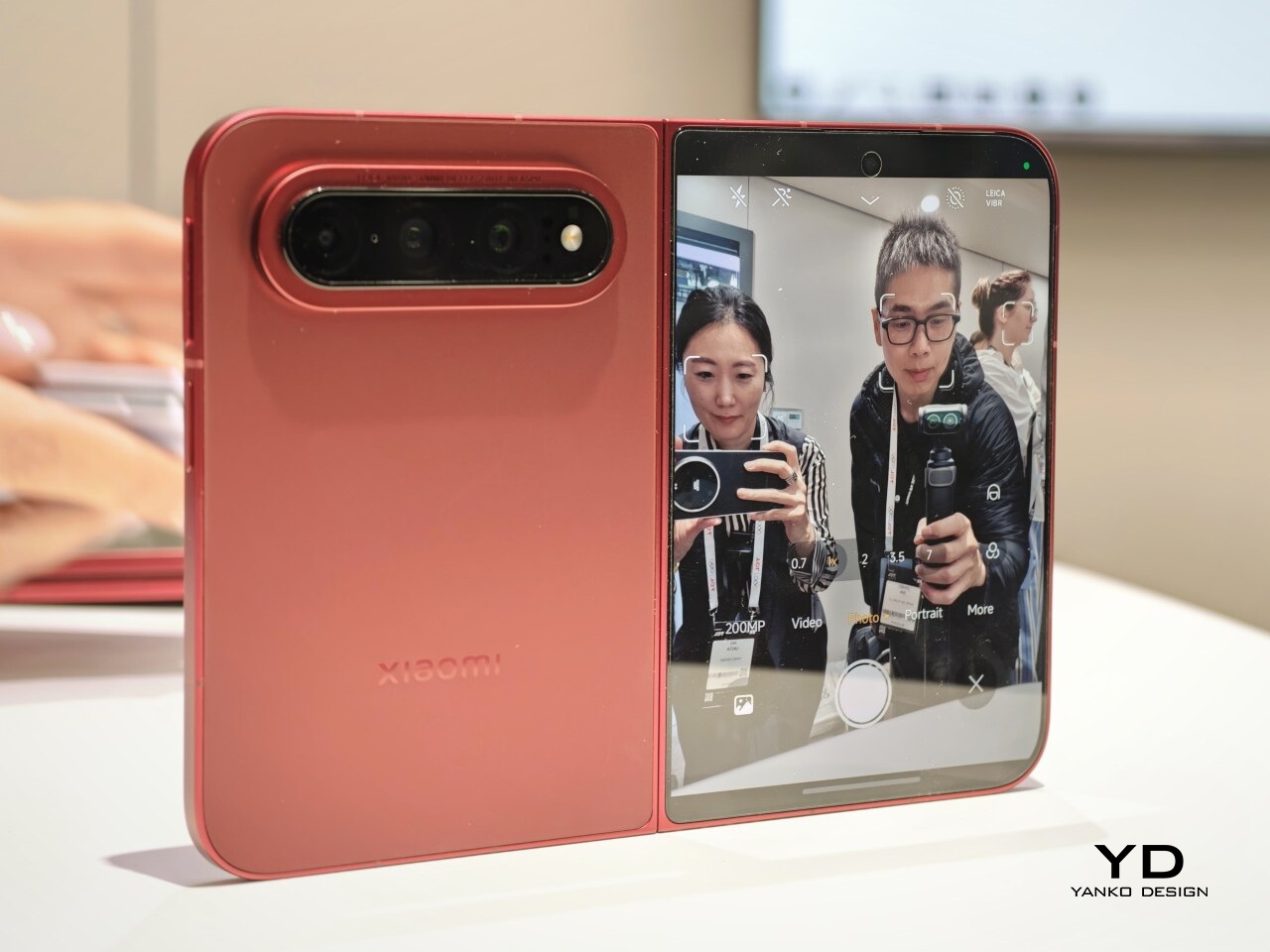
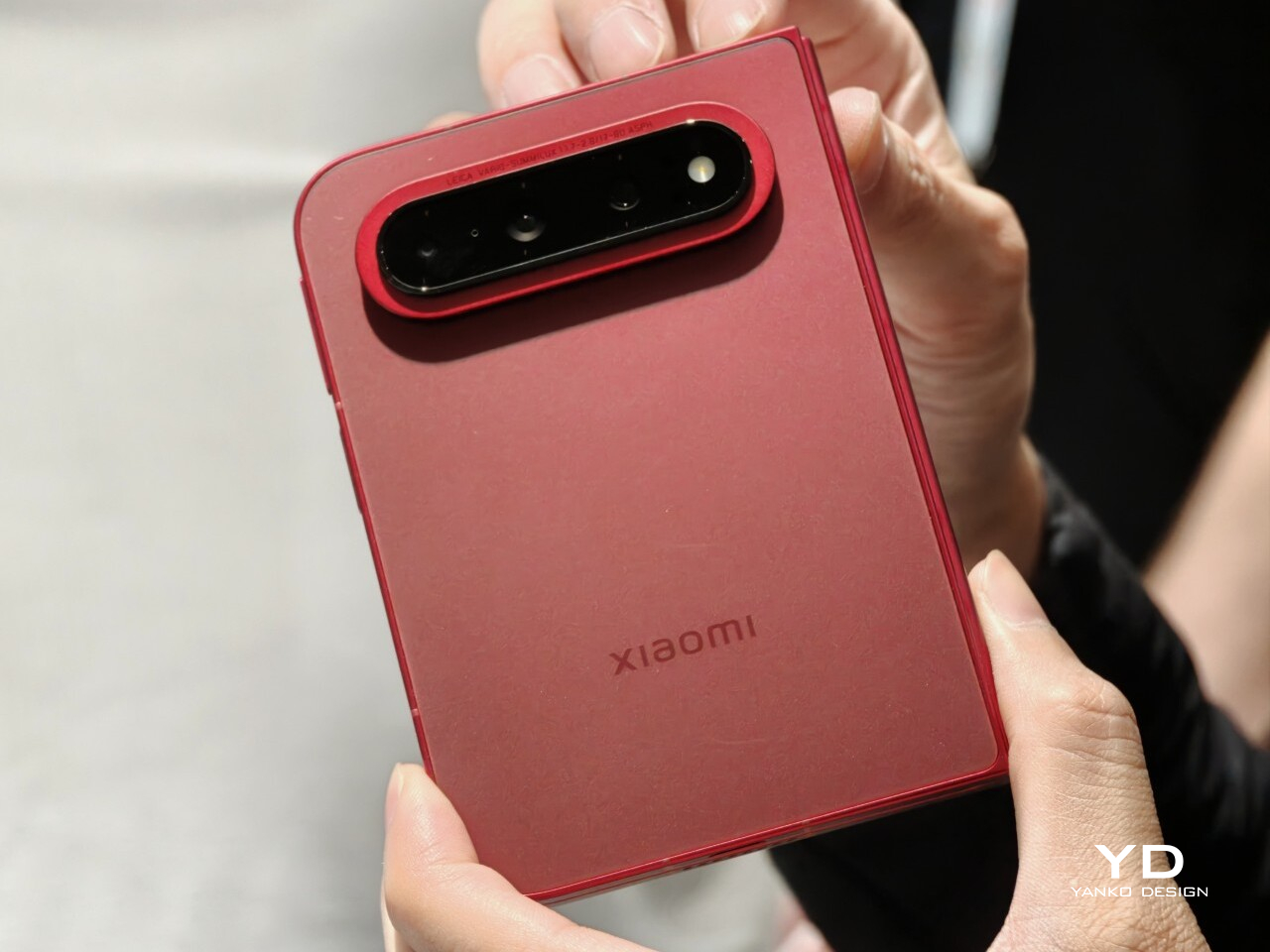
    The stunning 4.01-inch outer screen commands immediate attention, and rightfully so. It houses two individual rear cameras positioned vertically nestled at the top left corner with minimal protrusion. The shiny outer screen and the matt glass back panel create an interesting contrast, while discreet black Xiaomi logo seamlessly blends into the back panel. Upon closing the device, reveals Leica logo and text on its matte hinge.

    The Xiaomi MIX Flip comes in four variants: White, Black, Purple, and Xiaomi nylon fiber edition. The White, Black, and Purple variants share the same matte finish. In contrast, the Xiaomi Nylon Fiber edition features a distinctive woven nylon back panel, adding a unique texture to the device’s aesthetic. Overall, the MIX Flip offers a minimal and clean design.

    Ergonomics

    The Xiaomi Mix Flip boasts a sleek and highly portable form factor. Unfolded, it measures 167.5 x 74.02 x 7.8 mm, with a folded thickness of 15.99 mm, and weighs 192 g. While it’s not the slimmest or lightest flip phone available on the market, its compact size makes it easy to hold and slip into your pocket.

    It feels premium in your hand, featuring an “All-around Liquid Quad-Curved Display” for a smooth feel. The robust hinge allows the phone to be positioned at various angles ranging from approximately 45 to 120 degrees, fulfilling its advertised flexibility. Opening and closing the phone feels smooth and satisfying.

    The fingerprint scanner on the right side of the device works great, and the matte back panel resists fingerprints and smudges, ensuring a clean appearance. The glossy aluminum alloy frame tends to attract fingerprints, though this is a minor inconvenience.

    Performance

    The outer screen of the MIX Flip not only captivates with its stunning visuals but also offers exceptional functionality. Sporting a 4.01-inch screen, it boasts a resolution of 1,392 x 1,208 pixels (1.5K resolution), HDR support, and a pixel density of 460ppi. It achieves a peak brightness of 3,000 nits and maintains an overall brightness of 1,600 nits, ensuring clarity even in bright conditions.

    The MIX Flip harnesses the full potential of its impressive outer screen. The large area of the outer screen (3.5-inch to be exact), with a 16:9 aspect ratio, accommodates various apps. Xiaomi enhances usability further by integrating widgets on the left side of the 4.01-inch display, positioned above the camera module. You can customize this area with up to 5 widgets such as Weather, Clock, Calendar, Health, Music Player, and Recent Apps, and you can cycle through widgets by swiping up and down.

    Out of the box, the outer screen comes pre-loaded with essential apps like Phone, Browser, Camera, Calendar, Calculator, Weather, Music, Recorder, Clock, alongside a couple of other Chinese apps. According to Xiaomi, over 200 of the most popular Chinese apps are optimized for the outer screen. Since the review unit is the Chinese version, it’s expected that not all apps I downloaded are available on the outer screen. For instance, apps such as Slack, Netflix, Google Calendar, and Kindle are not currently supported on the outer screen. Other popular apps like YouTube, Instagram, X, WhatsApp, Google Chrome, Google Maps, Uber, and Spotify can run on the outer screen. Users can enjoy watching YouTube clips horizontally, leveraging the display’s capabilities fully.

    The outer screen is swift and responsive, with notable interactivity. It supports a full keyboard that extends from edge to edge when the phone is oriented with the camera module in the upper left corner, enhancing typing comfort. Additionally, the screen supports handwriting input. While this feature is currently limited to Chinese characters, it adds a useful dimension to the typing experience. You can access quick settings and notifications on the outer screen, though they are not customizable.

    On the other hand, the inner display measures 6.86 inches with a 2,912 x 1,224 resolution and 1-120Hz LTPO, featuring 460 ppi and a peak brightness of 3,000 nits, mirroring the outer screen’s brightness and vibrancy, with the crease being barely noticeable. It’s less exciting compared to the outer screen, but it gets the job done with minimum fuss.

    Xiaomi’s ongoing collaboration with Leica continues on to its flip phone. MIX Flip features a 50MP Leica main camera with a 1/1.55” sensor, an f/1.7 aperture, and OIS. The other camera on its back is a 50MP Leica floating telephoto camera with a 1/.88” sensor, and an f/2.0 aperture. It supports macro photography where you can get up close to the subject with a minimal distance of 9cm (or about 3.5 inches). You can choose between the “Leica Vibrant” and “Leica Authentic” modes in the camera app to tailor the look to your liking.

    The main camera consistently delivers impressive results across a variety of shooting conditions. Images exhibit excellent sharpness, detail, and accurate color reproduction. The camera generally handles dynamic range well. However, some highlight details are blown out without HDR enabled. Activating HDR significantly improves dynamic range, preserving details in both shadows and highlights.

    The telephoto camera performs well in daylight or at closer tele zoom levels in low-light conditions, with nice preservation of details. The portrait mode offers a range of focal lengths (23mm, 35mm, 50mm, and 75mm). The skin tone is accurate and subject isolation is great with creamy bokeh. There is a 32MP front-facing camera with a 1/3.14” sensor and an f/2.0 aperture, but taking advantage of the outer screen, you are less likely to open up the front-facing camera for any selfies.

    The Xiaomi MIX Flip shines in capturing daylight videos. All three cameras (main, telephoto, and selfie) can record up to 4K resolution at 60 fps with ESI, with the main camera pushing the limits further at 8K 24 fps. Video footage is smooth, well-exposed, and has good detail. While the Mix Flip’s image stabilization performs admirably in low-light conditions, the dynamic range can be somewhat limited.

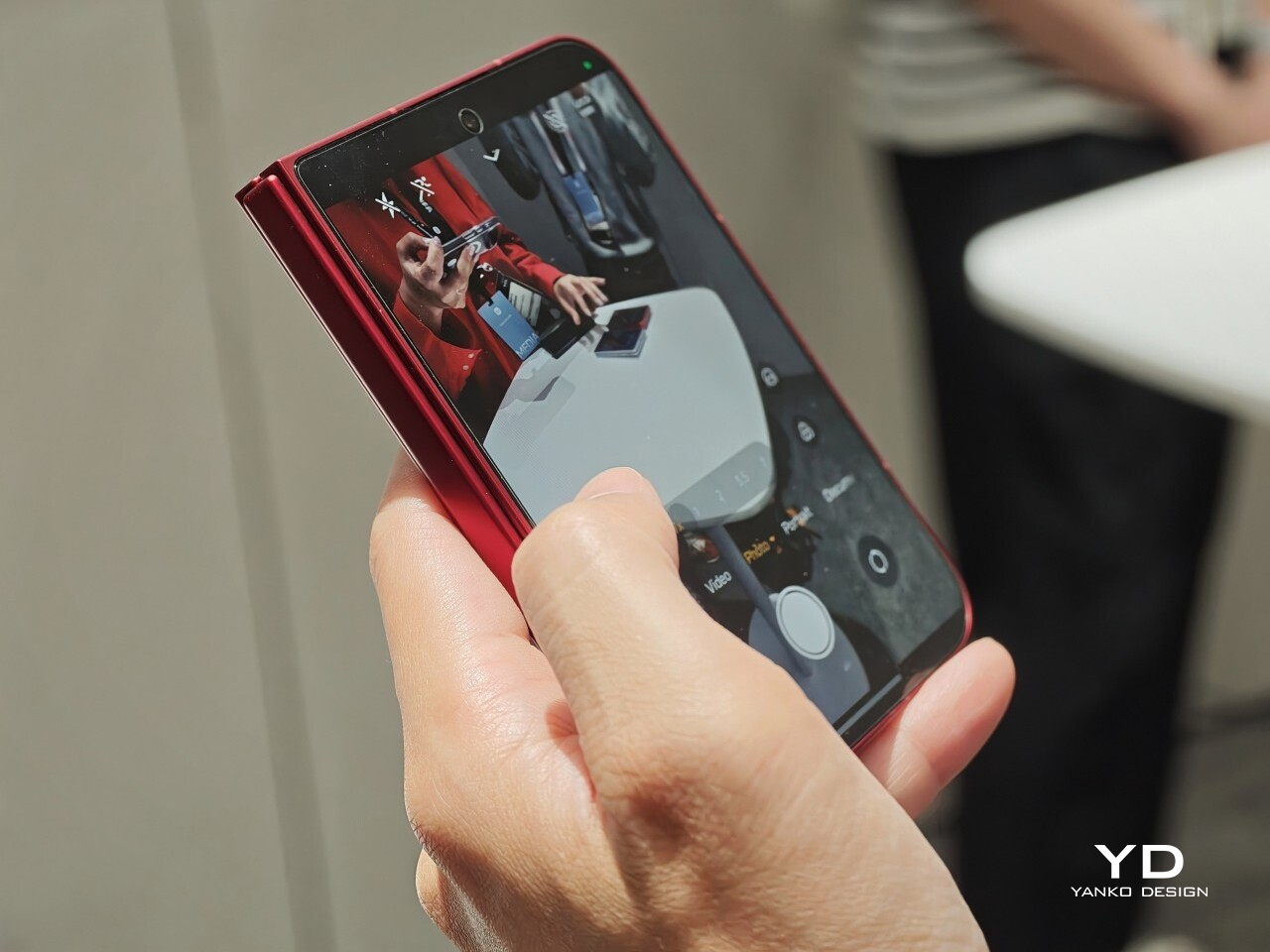
    One advantage of the flip phone is the ability to preview and capture photos and videos on the outer screen. It supports up to 2x zoom for taking photos and videos from the outer screen, though portrait mode is limited to 1x zoom. If you switch back to taking photos from the inner screen, it automatically switches to the front-facing camera, which I find a bit annoying.

    Under the hood, the MIX Flip is powered by the latest Snapdragon 8 Gen 3 paired with 12GB or 16GB of LPDDRX RAM and storage of options of 256GB, 512GB, or 1TB of UFS 4.0, with virtually expandable RAM. For reference, our review unit was 12GB RAM/512GB storage. It runs HyperOS based on Android 14. Both benchmark results and real-world use performance are great, handling any task with ease. The Xiaomi MIX Flip is equipped with a 3500mm² VC area, but the device tends to get hot during extended photo and video use.

    Compact form factors often compromise on battery size, but Xiaomi has impressively fit a 4,780mAh battery into the MIX Flip. It supports 68W wired charging, although it does not include wireless charging capabilities. Addressing another common issue with flip phones, the MIX Flip allows you to make and receive calls without opening the device. Additionally, it supports WiFi 7 for enhanced connectivity.

    Sustainability

    While flip phones offer certain advantages, durability is a key area where they can face challenges. The device incorporates Xiaomi’s Shield Glass on the outer screen, promising ten times greater drop resistance than conventional glass. Moreover, the phone has undergone rigorous testing, enduring 500,000 folds without compromising its structural integrity. The battery is another highlight, maintaining at least 80% capacity after 16,000 charging cycles. While the absence of an IP rating might be a concern for some, these features collectively contribute to a device that’s built to last.

    Value

    As the competition in the foldable market heats up, Xiaomi’s entry promises to shake things up, driving further innovation and consumer choice in the smartphone landscape. Priced competitively at 5,999 yuan (approximately $825 USD) for the base 12GB RAM and 256GB storage model, the Mix Flip undercuts the Samsung Galaxy Z Flip 6 by a significant margin. The 12GB RAM and 512GB variant is also more affordable than the Motorola Razr 50 Ultra.

    While Xiaomi Bulgaria Country Manager, Nikolay Nankov, revealed that Mix Flip would be available in Bulgaria for 2,600 Bulgarian lev (about $1,450 USD), notably higher than its price in China, the company has yet to officially confirm global availability. Nevertheless, the device’s competitive pricing (at least for the Chinese domestic market), overall performance, and potential for wider release could disrupt the market and intensify competition in the flip phone segment.

    Verdict

    Xiaomi Mix Flip is a well-rounded flip phone that combines sleek design, premium build, top-notch performance, and great mobile imaging capabilities. It features a large, functional outer screen (though its full potential is yet to be tested due to the review unit being China version), the latest Snapdragon 8 Gen 3 processor, and two 50 MP Leica cameras, with competitive pricing (at least in China). While global availability details remain pending, Mix Flip stands as a serious contender, poised to shake things up and accelerate innovation in the foldable phone space.

    The post Xiaomi MIX Flip Review: Best Flip Phone for 2024? first appeared on Yanko Design.

    nubia Z60 Ultra Leading Version Review: A True Camera in Your Pocket

    PROS:


    • Distinctive, quirky design

    • True fullscreen design with invisible under-display camera

    • Unbeatable price tag for performance and battery size

    • Outstanding camera output

    CONS:


    • Creamy selfies

    • Bulky and hefty chassis

    • No wireless charging

    RATINGS:

    AESTHETICS
    ERGONOMICS
    PERFORMANCE
    SUSTAINABILITY / REPAIRABILITY
    VALUE FOR MONEY

    EDITOR'S QUOTE:

    The nubia Z60 Ultra Leading Version will delight smartphone shutterbugs with a powerful smartphone with a design that clearly marks its photography lineage.

    It’s pretty obvious by now, but it probably still bears noting. Cameras have become one of the most important factors people consider when buying a smartphone. Even those who primarily use a phone for social media want great cameras that can show off their attempts at becoming Insta-famous. But more seasoned photographers look for things that go beyond things like AI retouching or dramatic filters, details that are often lost on most users. Back in late 2023, nubia launched the Z60 Ultra to scratch a very specific mobile photography itch, and less than a year later, it is launching a slightly beefed-up variant with an odd name, the nubia Z60 Ultra Leading Version. Can this model, based on a late 2023 smartphone, keep up with the latest roster of flagships, or has it fallen by the wayside? We put this quirky-looking phone through the wringer to bring you that answer.

    Designer: nubia

    Aesthetics

    We’ve seen plenty of phone designs over the years, and some have left us scratching our heads. Some have, in an effort to look distinctive and unique, adopted designs that leave a lasting impression in a rather unfavorable way. Fortunately, the nubia Z60 Ultra Leading Version isn’t of that variety, and while it might look odd when viewed from its back, it has enough playfulness, charm, and balance that actually makes the composition look interesting.

    The phone is a very blocky device that is almost like a throwback to the early days of the Sony Xperia. Flat edges and sharp corners are making a comeback anyway, so the nubia Z60 Ultra isn’t exactly an outlier. It is, however, chunkier and boxier than today’s phones, which does have usability consequences that we’ll get to in a bit. It gives the phone a handsome and sharp appearance, but it’s also an acquired taste.

    The most notable aspect of its design, however, is the three cameras on its back. Where most manufacturers do their best to lump the cameras together, nubia actually gives each of them their own distinct design. The result? It’s almost as if each of the three cameras represents a different professional camera design, from DSLRs to point-and-shoot cameras. It’s like the whole ensemble, which takes up a good third of the phone’s back, is a wall that pays homage to the camera industry’s greatest designs, perhaps also symbolizing its aspiration to be part of that set.

    The Leading Version comes in only two color options, each with its own distinct design. The Black model looks like it has a ribbed surface, but it’s purely an optical illusion. The back is still glass, just like on our Silver review unit which gives the impression of liquid silver rippling and swirling underneath. It effectively hides fingerprint smudges, though the smooth surface of the glass means very few leave their mark anyway.

    We usually leave notes about the display in the hardware section of our reviews, but this screen is different. With an under-display camera, it delivers a true edge-to-edge full-screen visual that blows the mind. The bezels are thin enough to be negligible and the area that hides the camera on its forehead is nowhere to be seen. Because of its very boxy and flat design, the nubia Z60 Ultra Leading Edition almost looks like a miniature flat-screen TV, and it definitely looks great at showing videos, pictures, and games.

    Ergonomics

    The nubia Z60 Ultra Leading Edition is a chunky box of metal and glass, and there’s no getting around that fact. It does pack quite a lot of hardware, including one of the largest battery capacities for a smartphone, but that doesn’t come without its costs. At 8.8mm thick and weighing 246g, it is definitely one of the heftiest and bulkiest handsets in recent years. To some extent, that might not be that big of an issue for its intended audience of mobile photographers who won’t be holding the phone up in the same position for long periods of time, at least not without a tripod or a gimbal.

    It does have a few things that help improve its usability, though. The fingerprint scanner underneath the screen is placed a little bit higher where your thumb would naturally rest so you avoid having to readjust your grip and precariously hold it near the bottom edge. The power button and the action toggle also have textured surfaces that make them easier to feel and use without having to look at their location. All in all, the Z60 Ultra Leading Version isn’t the most comfortable thing to hold for a long time, but it’s not without its merits as well.

    Performance

    The phone’s odd name actually comes from the only real difference it has from the original nubia Z60 Ultra. That’s the Qualcomm Snapdragon 8 Gen 3 Leading Version, an overclocked variant of the flagship chip that everyone else is using. In a way, this is nubia’s response to Samsung’s own “for Galaxy” variant, which makes the same proposition. In other words, it takes an already powerful chipset and dials it up to 11, giving most tasks a boost, especially gaming.

    It’s no wonder then that the nubia Z60 Ultra Leading Version would have some impressive numbers in benchmark tests, sometimes even scoring the highest. It can handle any task you through at it with aplomb, making short work of mobile games. That also means it won’t even break a sweat when handling image and video processing in real-time. However, your hands might sweat a bit as the phone did get a little too warm with graphics-intensive tasks like gaming.

    One of the biggest reasons for the Z60 Ultra’s heft is also one of its biggest strengths, its 6,000 mAh battery. That is definitely one of the largest we’ve seen of late, discounting the 7-inch “phablets” of old. The long battery life will be critical for photographers who don’t want to miss a moment just because their battery died. The 80W charging speed also means you’ll only be away from the action for as long as 40 or so minutes, presuming you didn’t bring a power bank with you. Unfortunately, the phone doesn’t have wireless charging capabilities, which should already be a staple for an “ultra” phone like this.

    Despite its Leading Version chip, the real centerpiece of the Z60 Ultra is its camera system, led by a 50MP Sony IMX906 1/1.56-inch sensor with OIS. That might not actually be that uncommon, but its most distinctive feature is the 35mm equivalent focal length. It’s a rare trait in smartphone cameras but is one of the most favored in traditional photography. In a way, nubia is positioning the phone as a camera lover’s choice, allowing budding photographers to level up their craft to more professional standards.

    It doesn’t stop there either, because nubia pulls off something that still very few manufacturers dare to do: high-quality cameras all around. The ultra-wide shooter with an 18mm focal length carries a large 50MP 1/1.55-inch sensor with OIS, while the 80mm periscope telephoto gets an equally impressive 64MP sensor with 3.3x zoom, also with OIS. Yes, all three have optical image stabilization, and all three are capable of 4K video recording, though only the main camera can do 8K.

    Suffice it to say, the images and videos that these cameras deliver are clear, sharp, vibrant, and detailed, no matter the lighting situation. There are a few hiccups here and there, but the overall performance is quite impressive. Unfortunately, the same can’t be said of the 12MP front-facing under-display camera, which unsurprisingly comes out with pasty and washed-out images. Despite the advancements nubia achieved in making the camera invisible, it still needs work on matching the quality of regular “notch” cameras.

    Sustainability

    When talking about smartphone makers that have strong or concrete sustainability endeavors, nubia is often left unmentioned. It’s not an old player in this market, nor is it a small one, so it’s rather disappointing not to see more action coming from it on this front. Even the use of sustainable materials for the back cover isn’t one of its strong points, but we’re hoping the brand takes a turn for the better in the years ahead.

    The nubia Z60 Ultra Leading Version is at least IP68-rated, which speaks well for its survivability and longevity. The same can’t be said for nubia’s guaranteed software support, though, which is just three years. That’s just one year over the old two-year standard, one that is becoming a liability to the brand rather than an asset.

    Value

    If it wasn’t clear yet, the nubia Z60 Ultra Leading Version is a premium flagship with a processor that runs circles around its rivals and a camera system designed to appeal to photographers at heart. And yet for all that it offers, it only asks for $649 for 8GB of RAM and 256GB of storage. Yes, that’s $50 more than the starting price for the non-Leading Z60 Ultra, and some might question if the souped-up Snapdragon 8 Gen 3 is actually worth that much. In the grand scheme of things, however, it’s still a very accessible price tag, especially when it offers just as much or even more than $1,000 devices.

    Unfortunately, it won’t be easy to get your hands on one, because nubia’s global distribution channels aren’t that many. And even if you manage to import one, you still have to worry about carrier network support. There’s also that nagging question about the $50 increase for a Leading Version chip, which, truth be told, isn’t exactly a mind-blowing difference overall. That said, if you’re a mobile photographer that has access to nubia’s products and have the extra $50 to spare, you should definitely have this in your crosshair.

    Verdict

    It’s extremely tricky to balance power and design in smartphones because of the limited space you’re allowed. You can’t have a super-slim device and expect to have a large battery and powerful cameras at the same time. nubia’s solution is bold and creative: why bother with those limitations at all? Yes, the nubia Z60 Ultra Leading Edition is thick and heavy, but it still manages to balance performance and a distinctive design. It’s a smartphone that is unabashedly walking in the footsteps of traditional cameras, and it definitely has the chops to prove it.

    The post nubia Z60 Ultra Leading Version Review: A True Camera in Your Pocket first appeared on Yanko Design.

    Become a Samsung Olympic Games Pin Master and get a Galaxy Z Flip6

    Aside from the actual sports events and the Olympians themselves, another popular activity in Paris during the Olympics is pin trading. You see the athletes and fans trying to get as many pins as they can, a practice that actually goes back to the 1924 Paris Olympics where it was a sign of international friendship. One of the games’ major sponsors, Samsung, is bringing a new spin to this tradition, and bringing prizes into the mix.

    Designer: Samsung

    The Samsung Olympic Games Pin Masters Challenge lets visitors in Paris get the chance to collect 16 specially created pins by playing different Galaxy AI-powered challenges at the Olympic™ rendezvous @ Samsung pop-up experiences all over the city. You can even get the chance to get the extremely rare Golden Pin in order to become an official Samsung Olympic Games Pin Master. If ever you’re in Paris, you have until September 8 to play this challenge.

    The 16 pins were designed by French illustrator Jean André and they are actually made from recycled aluminum from old Galaxy smartphones. Eleven of these pins represent Olympic sports like breaking, skateboarding, sport climbing, and surfing, and four Paralympic sports – blind football, para athletics, wheelchair basketball, and wheelchair tennis. There are also four Special Pins that feature three-dimensional landmarks of the city. And then, there is that rare and elusive Golden Pin.

    If you’re able to collect all 16 pins, you’ll get a new Galaxy Z Flip6 and a raffle entry to win a round-trip package for two to attend the 2026 Milano Cortina Olympics. Several have already become Pin Masters, and it looks like most of them are kids. They’re the ones who probably enjoyed playing the challenges to get the pins. If I was there in Paris, I would probably be all over this challenge, even just for the pins.

    The post Become a Samsung Olympic Games Pin Master and get a Galaxy Z Flip6 first appeared on Yanko Design.

    Vivo V40 Pro Review: Prime Mobile Photography Arrives in a Sleek Package

    PROS:


    • Elegant and aesthetic design

    • Powerful quad 50MP camera system

    • Large 5,500mAh battery despite thin profile

    • IP68 rating

    CONS:


    • No wireless charging

    • Telephoto camera only supports 2x optical zoom

    • Limited global availability

    RATINGS:

    AESTHETICS
    ERGONOMICS
    PERFORMANCE
    SUSTAINABILITY / REPAIRABILITY
    VALUE FOR MONEY

    EDITOR'S QUOTE:

    The Vivo V40 Pro builds on the brand's outstanding photography performance to deliver an even more powerful experience in a stylish design.

    Cameras have become one of if not the most important aspects of a smartphone these days. Of course, the display is functionally the most critical component, but other than being large and crisp, people tend to gravitate to the best smartphone camera their money can buy. Unfortunately, the best ones are often reserved for the most expensive handsets as well, leaving the majority of consumers, especially the younger generation, dreaming of better days. Vivo’s V series of smartphones has always aimed to make smartphone photography more accessible, and last year’s Vivo V30 Pro definitely put more expensive devices on notice. Can the Vivo V40 Pro top that or has the brand already reached its peak? We take Vivo’s latest and greatest V series phone for a spin to find out.

    Designer: Vivo

    Aesthetics

    Right off the bat, we can already say that Vivo has outdone itself with the design of the Vivo V40 Pro. Last year’s flagship was already a looker, but it suddenly feels a bit lacking compared to its younger sibling. You still have a sleek appearance, smooth curves, and a thin profile, but the real winner here is the camera design. That Vivo was able to fit three 50MP cameras in such a compact space is already a marvel, but the way it managed to make the design look appealing is a rare feat these days.

    Vivo calls it a “Gemini Ring Design,” which is a fancy term for what looks like a curvy keyhole. Two of the three cameras are enclosed in a circle that sits on top of a pill-shaped elevation. Inside that is another oblong enclosure housing the third camera and the Aura Ring flash. There is a subtle beauty to the play of balance and asymmetry in this design, and it definitely gives the Vivo V40 Pro a unique visual character.

    The company didn’t pull punches in the different colors and materials available for both the Vivo V40 and the V40 Pro, and all of them are beautiful in their own way. The Sunglow Peach colorway with its warm hues and dynamic magnetic ink is quite an eye-catcher, and our review unit’s Moonlight White with its pale blue streaks has a soothing and calming effect. Other than the camera bump and the small vivo branding at the bottom, there are no distractions on the back of the phone, allowing you to appreciate the beauty of these designs.

    At only 7.58mm, the Vivo V40 Pro is already thin, and the curved edges of both the screen and the back panel make it look even thinner. This could be a divisive decision in 2024, though, with many seeing curved edges as a thing of the past. It definitely still has appeal and it perfectly matches the smoothness of the rest of the phone.

    Ergonomics

    The Vivo V40 Pro is not a small phone by any means so that thin profile helps offset the size of the device. It’s incredibly light as well at only 192g, especially considering what it packs inside, like a very generous battery. All in all, it’s difficult to hold it up for long periods of time, though the glass material on its back could prove to be slippery for some hands.

    The debate around flat versus curved edges continues here as well. With part of the screen curving off to the sides, there’s always the possibility of accidental touches in those areas. There isn’t much surface area or sharp corners for your hand to grip either, and you might find yourself straining a bit just to hold the phone tight. It’s partly personal preference and partly the shape of your hand, but thankfully Vivo ships a protective case with the phone just in case.

    Performance

    It might not be part of Vivo’s top-tier X series, but the Vivo V40 Pro definitely packs quite a punch, starting with the MediaTek Dimensity 9200+, the chipmaker’s flagship silicon. It’s paired with up to 12GB of RAM, as was the case in our review unit, which can be boosted with another 12GB. That said, it takes some of that from the 512GB internal storage, which isn’t expandable like many phones these days. All in all, the Vivo V40 Pro performs like a champ for any use case, whether it’s social media, watching videos, or playing games. The latter is helped by an Ultra-Large VC Cooling System that keeps the phone running at a stable pace without throttling.

    More impressive, however, is the 5,500mAh battery the phone crams inside its thin and light body. It’s definitely one of the largest capacities available in a phone that’s barely 7.6mm thick, allowing it to easily support all your shutterbug adventures. With an 80W charging speed, you can quickly top up to full in around 30 minutes, at least with the right charging brick. Unfortunately, Vivo hasn’t yet decided to put wireless charging on its V series phones, but maybe that will change next year.

    The real stars of the show, however, are the cameras, all of them with 50MP sensors. Yes, that includes the selfie camera with a Samsung ISOCELL JN1 sensor and a wide 92-degree field of view for those “wefies” or “groufies.” If that sounds familiar, then you might have heard of the Vivo V30 Pro last year. In fact, in almost all but one case, it’s nearly the exact same set of 50MP cameras, like the 50MP Sony IMX816 telephoto shooter and the 50MP Samsung JN1 119-degree ultra-wide camera.

    What’s different this year is the new 50MP Sony IMX921 with a larger 1/1.56-inch sensor. That means it is able to take in more light information even in darker environments, improving its overall quality. In fact, the entire ensemble is actually commendable in their output, delivering super images bolstered by AI and computational photography. Of course, these cameras have optics tuned by ZEISS, so there’s little surprise there. And one can’t forget Vivo’s signature Aura Light that takes the regular flash and turns it into a mini ring light for softer and more natural lighting. Its most recent incarnation includes Electronic Control Technology that lets you adjust the brightness of the light depending on the distance of the subject.

    In essence, the Vivo V40 Pro builds on the success of its predecessor and adds some extra value with upgraded specs and improved software. Unfortunately, it also carries over the flaws, most notably the short optical zoom range of the telephoto camera. It only goes as far as 2x zoom, but Vivo is heavily advertising what it calls “50x ZEISS Ultra HD Zoom,” which is a mouthful that really means software-assisted digital zoom.

    Sustainability

    Just like the Vivo V30 Pro last year, the brand is sadly silent on any of its efforts in using even a fraction of sustainable materials for this year’s V series flagship. It also hasn’t stopped shipping chargers in its boxes, which is unsurprising since it wants to make sure that its phones use the right 80W charger for the fastest speed they can support. We’re still holding out hope that Vivo will take the lead in this area soon.

    That said, it does have some good news when it comes to keeping the Vivo V40 Pro away from the trash for as long as possible. It’s the first in the V series to reach an IP68 rating, ensuring that it’s protected from dust and water which can mean the end for many smartphones. It also advertises a “50-Month Smooth Experience” guarantee that basically says the phone can run for over four years without losing its fluidity and performance. Unfortunately, it doesn’t translate to having four years of updates, and Vivo has made no promises on that matter.

    Value

    It’s perfectly clear from our time with the Vivo V40 Pro that it delivers everything it promises on paper. The Quad 50MP Camera System it carries over from last year continues the tradition of excellent mobile photography, but this time with a larger 5,500mAh battery that better supports all those photo and video content creation. Even better, the phone comes in a sleek, slim, and light design that makes you feel like you’re holding an art object rather than a cold piece of technology.

    In other words, the Vivo V40 Pro would have been perfect if not for the fact that some people might not even be able to get their hands on it. The $560 price tag it carries (converted from Indian figures) isn’t that heavy, but global availability is still undisclosed at the moment. Hopefully, it will fare better than the Vivo V30 Pro which didn’t get a wider distribution that would have spread the word of its amazing camera chops.

    Verdict

    Smartphones are getting more powerful and so are their cameras. But with this increase in technical performance, designers are often forced to make many compromises to fit all of them inside a product that should still fit our pockets. In that regard, the Vivo V40 Pro is quite a feat, cramming not only four 50MP cameras but a large 5,500mAh battery inside a body that’s as thin and as light as it can be. It’s a beautiful phone with impressive performance and an accessible price point, and it deserves to be made available to more markets this time.

    The post Vivo V40 Pro Review: Prime Mobile Photography Arrives in a Sleek Package first appeared on Yanko Design.