Even Realities G2 Just Solved the Biggest Problem With Smart Glasses… Using A Ring

Even Realities launched their first smart glasses last year with a pitch that felt almost countercultural: what if your eyewear didn’t record everything around you, didn’t pipe audio into your ears, and didn’t make everyone nearby wonder if you were filming them? Instead of packing their frames with cameras and speakers, they focused on a single function: a clean, effective heads-up display. The G1 glasses were a minimalist take on wearables, offering monochrome green text in your line of sight for notifications and AI assistance, all without the privacy concerns of outward-facing cameras. This focused approach found its niche, landing the G1 in 350 luxury eyewear shops globally and proving there’s a real appetite for smart glasses that prioritize subtlety and practical assistance.

The G2 glasses themselves improve on last year’s G1 in predictable but welcome ways. Bigger display, better optics, lighter frame, longer battery life. They still avoid cameras and speakers entirely, sticking with Even’s “Quiet Tech” philosophy of providing information without creating privacy concerns. But pair them with the new R1 ring and you get something more interesting than incremental hardware improvements. The ring lets you control the glasses with thumb gestures against your index finger, turning navigation into something closer to using a trackpad than fumbling with voice commands or head taps. Whether that’s actually more natural in practice than the alternatives depends partly on how well the gesture recognition works and partly on whether you’re the kind of person who wants to wear a ring in the first place.

Designer: Even Realities

The display improvements are significant enough to matter in daily use. Even calls their new system HAO 2.0, which stands for Holistic Adaptive Optics, and the practical result is that information appears in layers rather than as flat text plastered across your vision. Quick notifications and AI prompts sit closer in your field of view, while longer content like navigation directions or notes recede slightly into the background. It’s still monochrome green, the same matrix-style aesthetic from the G1, but sharper and easier to read in motion or bright light. The frame itself weighs just 36 grams and carries an IP67 rating for water and dust resistance, so you can wear them in the rain without worrying about killing a $599 investment. Battery life stretches past two days now, and the prescription range goes from -12 to +12, covering most people who need corrective lenses.

What made the G1 frustrating for some users was the interaction model. You could talk to the glasses, but that meant either looking weird in public or finding a quiet spot. You could tap the touch-sensitive nubs on the temples, but they were finicky and required you to constantly reach up to your face. While the G2 improves the reliability of those touchpads significantly, Even Realities’ R1 smart ring practically revolutionizes how you interact with the smart display. Worn on your index finger, the ring lets you swipe up and down with your thumb or tap to select options, essentially turning your hand into a trackpad for your face. The ring is made from zirconia ceramic and stainless steel, costs $249 separately, and connects to the glasses through what Even calls their TriSync ecosystem, linking the glasses, ring, and phone into one synchronized unit.

The gesture controls take some getting used to, based on early reviews. Accidental swipes are common at first, and the learning curve means you might fumble through menus for the first few days. But when it works smoothly, navigating with the ring is more subtle than any of the alternatives. You can check a notification, dismiss it, and move on without anyone noticing you’ve interacted with your glasses at all. That subtlety matters more than it sounds like it would, especially if you’re using features like the built-in teleprompter for presentations or the real-time translation during conversations. The glasses still support the old interaction methods too, so you’re not locked into one way of controlling them.

The AI side of things has been upgraded as well, with Even introducing what they call the Conversate assistant. It handles the usual smart glasses tasks like showing notifications, reading messages, and providing contextual information, but it’s designed to be less intrusive about it. You talk to it and get text responses on the display rather than audio, which keeps conversations private and avoids the awkwardness of having your glasses talk back to you in a quiet room. The system pulls from your phone’s connectivity, so there’s no separate data plan or complex setup required. The AI integration feels thoughtful rather than forced, providing information when you need it without constantly demanding attention.

One detail worth noting: the R1 ring is not compatible with the original G1 glasses. If you bought the first generation and want the ring’s functionality, you’ll need to upgrade to the G2 entirely. Even is offering a launch promotion where buying the G2 gets you the ring and other accessories at 50 percent off, which brings the combined price to $724 instead of $848. For context, Meta’s Ray-Ban smart glasses with their Neural Band controller and full-color display cost $799, though those come with cameras and all the privacy considerations that entails. The G2 and R1 combo sits in an interesting middle ground, offering more focused functionality at a similar price point.

The combination of display-only glasses and a gesture-controlled ring represents a particular vision of what smart eyewear could be. It’s not trying to replace your phone or capture every moment of your life. Instead, it extends your phone’s functionality into your field of view while giving you a discreet way to interact with that information. For people who give frequent presentations, the teleprompter feature alone could justify the cost. For travelers, having real-time translation floating in your vision during conversations is genuinely useful. And for anyone tired of constantly pulling out their phone to check notifications, the G2 offers a less disruptive alternative. Even Realities is refining an approach that feels increasingly relevant as smart glasses move from novelty to practical tool, and the G2 with R1 suggests they’re learning the right lessons from their first attempt.

The post Even Realities G2 Just Solved the Biggest Problem With Smart Glasses… Using A Ring first appeared on Yanko Design.

Why Smart Rings Track Your Health Better And Are Quietly Replacing Other Fitness Trackers

As technology evolves, new gadgets constantly emerge, and one such device that has seamlessly integrated into our daily lives is the fitness tracker. Over time, such devices have become essential in tracking our health and fitness goals. However, fitness trackers have now leaped forward, transforming into the smart ring. These sleek, electronic bands worn on the finger act as wearable devices, just like jewelry, but can monitor health metrics such as heart rate, sleep patterns, oxygen level, exercise monitoring, and more.

The global smart ring market was valued at USD 340.9 million in 2024 and is expected to expand from USD 416.9 million in 2025 to USD 2,525.5 million by 2032, reflecting a growth rate of 29.3% during the forecast period. Smart rings offer a more compact alternative to larger devices, yet provide powerful tracking capabilities and are often launched and backed by premium brands.

How does a smart ring work?

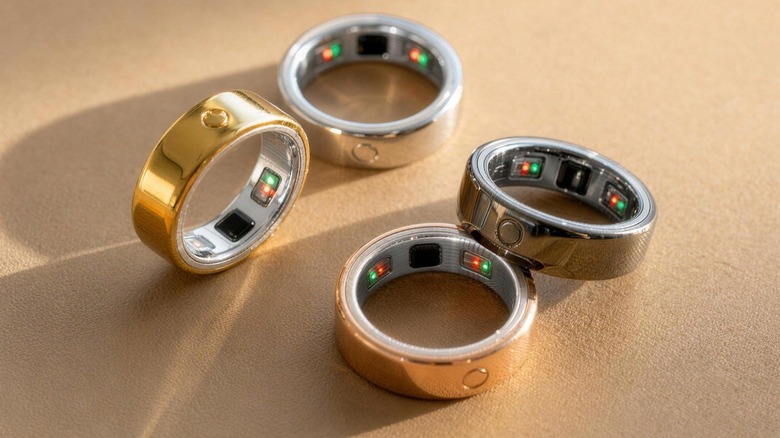
Smart rings are conventional rings that are equipped with different types of sensors and advanced technologies like Bluetooth and Near-Field Communication (NFC) used to monitor health and fitness metrics. Since the smart ring does not have screens, they sync wirelessly with smartphones or tablets, allowing users to access and analyze their health data in real time easily.

Many smart rings also feature haptic signals that vibrate the ring during a call or notification when the paired device is out of range, ensuring users stay connected. This combination of convenience and functionality makes smart rings an effortless way to track and manage health information on the go.

The RingConn Gen 2 is a smart ring that stands out with its sleek design, AI-powered health tracking, and impressive battery life. With a weight of just 2g and 2mm thick, it’s the lightest and thinnest smart ring on the market, providing precise health monitoring through sensors like 3D accelerometers, PPG (photoplethysmography), and temperature sensors. By tracking key metrics such as heart rate, heart rate variability, and blood oxygen levels, it offers a complete picture of your well-being.

The RingConn app syncs this data, including stress levels and sleep patterns, with no hidden subscription fees. One of its most notable features is AI-powered sleep tracking, which monitors breathing, sleep stages, and overall efficiency to help detect issues like sleep apnea. With up to 12 days of battery life and 150 days of use with its charging case, the RingConn Gen 2 delivers comprehensive health tracking, empowering you to live a healthier, more informed life.

What are the different types of sensors integrated into a smart ring?

  • The accelerometer and gyroscope sensor is a motion sensor that tracks body movement, such as steps taken, distance covered, and calories burned.
  • The SpO2 or Peripheral Oxygen Saturation sensor gauges the oxygen levels in the blood.
  • The Electrodermal Activity (EDA) sensor measures sweat production on the finger and provides insights into stress levels and emotional states.
  • NTC thermistor sensors monitor changes in body temperature.
  • Photoplethysmography (PPG) sensor uses LED lights on the skin to measure variations in blood flow. It analyses the reflected light to track variations in your heart rate and blood oxygen levels.

Together, these sensors work in tandem to offer comprehensive data for health and fitness tracking.

The Ultrahuman Ring combines sleek design with advanced health tracking, offering insights into your overall well-being. Unlike traditional wearables, it doesn’t just measure basic metrics like heart rate and steps—it interprets them into actionable insights. With features like the Movement Index, Sleep Index, and Recovery Score, it provides a deeper understanding of your daily energy expenditure, sleep quality, and stress levels, helping you make informed decisions for better health.

Crafted with durability and style in mind, the Ultrahuman Ring is made from a titanium outer shell and is coated with Tungsten carbide, and a hypoallergenic medical-grade interior for providing maximum comfort to the user. These rings are available in a variation of elegant colors, they are water-resistant and designed to withstand everyday activities. The Ultrahuman Ring offers a compact, fashionable way to monitor your health and improve your lifestyle without the bulk of traditional wearables.

Advantages of a Smart Ring

The smart ring is a convenient alternative to smartwatches, with the key advantage being its portability as it allows you to remain hands-free while wearing jewelry. You can wear the smart ring comfortably even while sleeping, as its compact size ensures it doesn’t cause any discomfort.

The smart ring is designed for optimal data collection, and many models are made from non-corrosive materials like zirconia or feature a Physical Vapor Deposition (PVD) coating. Additionally, the smart ring is purpose-driven as it removes the distractions of extra features typically found in smartwatches, making it perfect for those who need a device focused on specific tasks.

The Ring One represents a radical departure from bulky wrist-worn wearables, shrinking smartwatch functionality into an elegant piece of finger jewelry that’s 80% smaller yet delivers 99% of the features. This sleek titanium ring disguises powerful health-tracking technology beneath its minimalist exterior, monitoring your heart rate, HRV, SpO2, blood pressure, skin temperature, and all four sleep stages with research-grade optical PPG sensors. What makes it truly ingenious is the rotating Turn Wheel that replaces the traditional smartwatch crown—simply twist the ring’s bezel to cycle through workout tracking, sleep analysis, NFC payments, and even car unlocking modes. It’s the perfect solution for those who want comprehensive health insights without the screen-induced distraction or the wrist real estate commitment of traditional smartwatches.

Beyond its health-tracking prowess, the Ring One seamlessly integrates into your digital lifestyle with thoughtful features that extend its utility. The NFC functionality transforms it into a tap-to-pay device that stores all your cards and enables secure transactions at any POS terminal, while Digital Key 2.0 support lets you unlock compatible vehicles with a simple gesture. Despite packing accelerometers, gyroscopes, temperature sensors, and wireless connectivity into a hypoallergenic Grade-2 titanium shell that’s 10x lighter than a smartwatch, it still manages an impressive 7-day battery life with real-time data syncing. The proprietary wireless charging dock even includes a “find my ring” tweeter—because losing something this small and powerful would be a tragedy. Available in finishes from understated steel to luxe 18-carat gold, the Ring One proves that the future of wearables isn’t on your wrist—it’s on your finger.

Disadvantages of a Smart Ring

The main disadvantage of a smart ring is its limited functionality and lack of a screen, meaning it can’t fully replace a smartwatch or smartphone. Additionally, smart rings typically have small batteries, which can limit their usage time. When purchased online, the ring may not fit perfectly as it might not be tailored to your finger size.

High-quality smart rings can also be expensive due to the advanced technology required to pack so many features into such a compact device. They are exposed to water, dust, sweat, and food particles, so regular maintenance is necessary. Another factor is that these rings must be compatible with existing devices to get real-time data.

The Ultrahuman Ring AIR takes a more holistic approach and emphasizes the importance of sleep, recovery, stress management, and even factors like coffee consumption in our daily lives. Designed to be lightweight and comfortable, it provides a seamless experience, tracking vital metrics like sleep efficiency, restfulness, and consistency. The ring also measures stress levels through heart rate variability (HRV) and skin temperature, offering personalized recommendations to help you manage stress effectively improve your overall well-being, and live a healthier, more balanced life.

What sets the Ultrahuman Ring AIR apart is its range of advanced features, such as Circadian Phase Alignment, which optimizes your sleep-wake cycle, and the Stimulant Window Recommender to suggest the best times for coffee. With a durable titanium shell coated in tungsten carbide, the ring is built to last, with water resistance that allows you to wear it during swims or shallow dives. the Ultrahuman Ring AIR offers up to six days of battery life, ensures continuous health tracking, helps you make informed decisions to improve your overall well-being and live a healthier, more balanced life.

Smart ring technology is surely revolutionizing health monitoring by offering a discreet, compact, and efficient way to track vital health metrics. With advanced sensors and AI-powered insights, these rings empower users to monitor their heart rate, sleep patterns, and stress levels, promoting a healthier lifestyle with both convenience and style

The post Why Smart Rings Track Your Health Better And Are Quietly Replacing Other Fitness Trackers first appeared on Yanko Design.
Fitnexa SomniPods 3 Block 42dB of Noise for Side Sleepers

Anyone who has shared a bed with a snorer or tried to sleep in a city apartment knows how fragile nighttime silence can be. Most earplugs force you to choose between blocking noise and staying comfortable, leaving you either wide awake from unwanted sound or unable to sleep from constant pressure against your ear canal throughout the night.

Fitnexa SomniPods 3 was designed as a solution to that trade-off by making silence and comfort coexist rather than compete. Every curve and contour is shaped around one core idea: earbuds that disappear against your pillow while the world around you fades to quiet, without forcing you to sacrifice either aspect for the other during extended wear.

Designer: Fitnexa

Click Here to Buy Now: $129.99 $189.99 ($60 off). Hurry, deal ends soon!

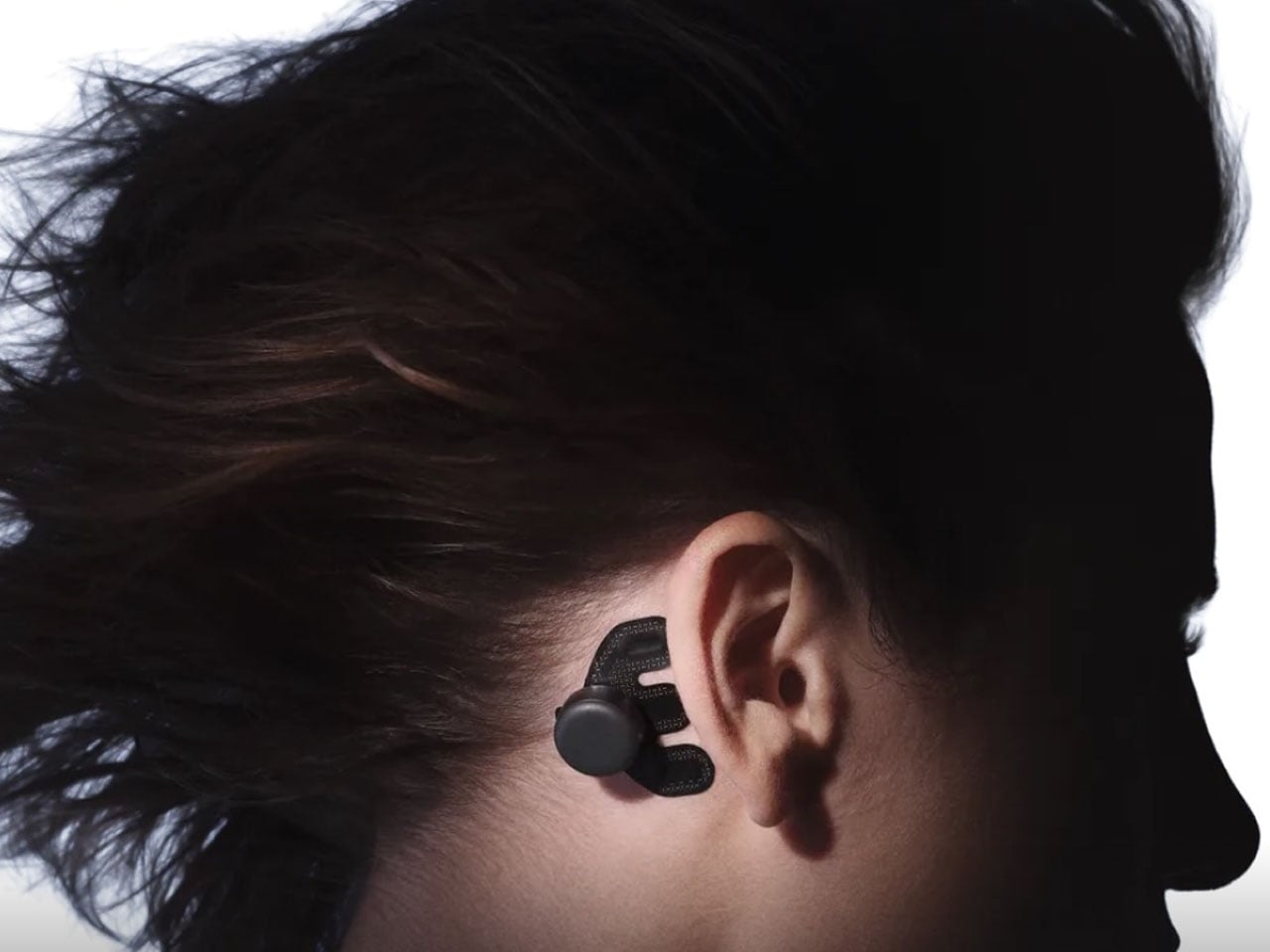
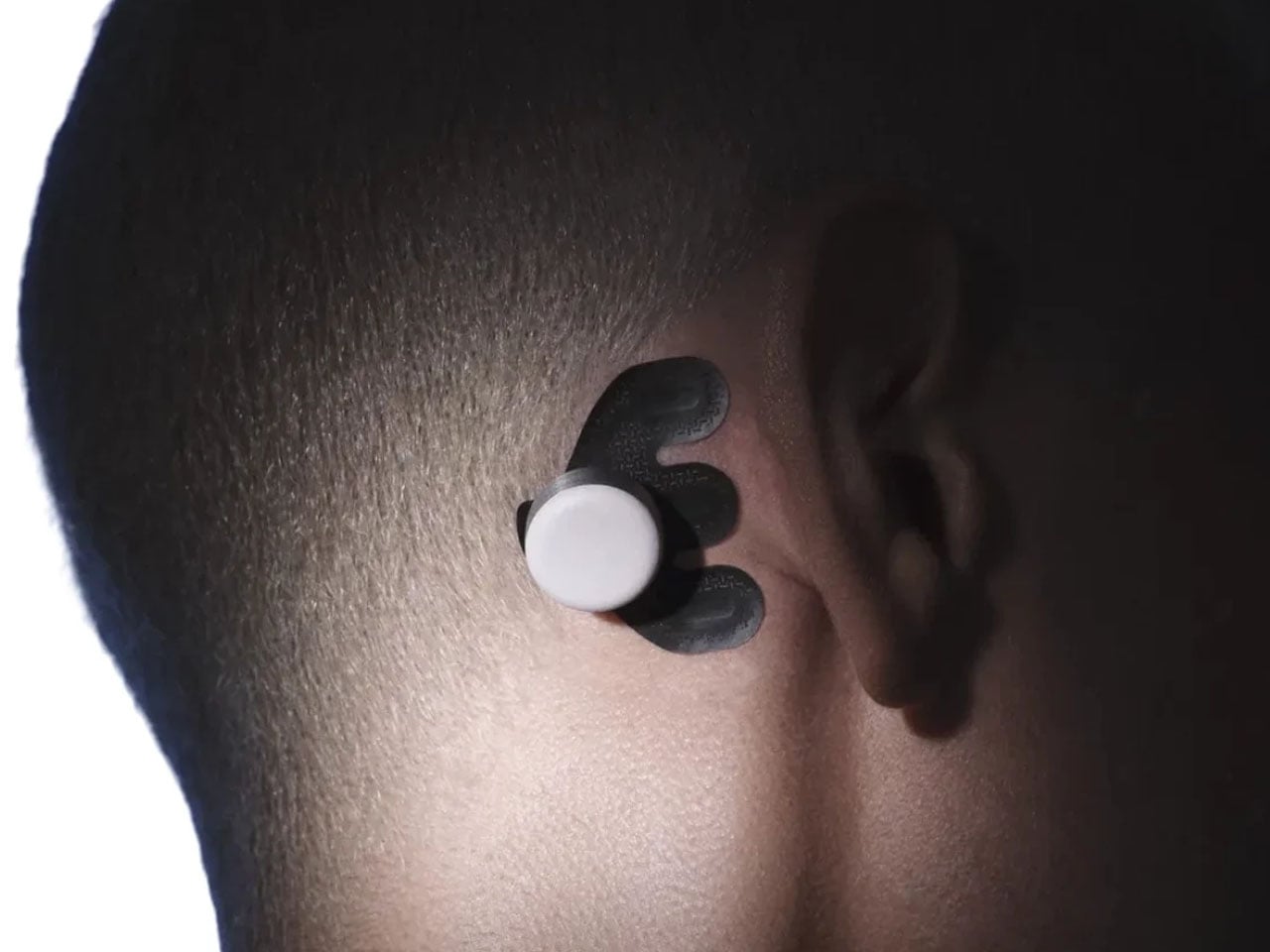
The design starts with a fundamental question: how do people actually sleep, rather than how engineers typically design for performance first. Each earbud reflects that thinking through its proportions: just 3.3 grams and under 9.9 millimeters thin, with a softly rounded form that avoids creating pressure points when your head rests sideways on a pillow for hours at a time. The medical-grade silicone tips feel gentle against your skin, while the compact footprint ensures the earbuds never protrude or press uncomfortably as you shift naturally through the night.

Fitnexa includes ten pairs of ear tips in two distinct shapes and five sizes each, plus four sizes of ear wings for additional stability options. This variety addresses the reality that ear canals vary significantly between people, while multiple size options ensure proper acoustic seal without creating pressure or discomfort during overnight wear when you can’t easily adjust fit.

This variety does more than improve comfort alone. It establishes the foundation for effective passive noise cancellation by ensuring a secure, well-sealed fit that blocks ambient sound naturally. This proper seal gives the adaptive ANC system the stable acoustic base it needs to perform at its best throughout the night without gaps or inconsistencies.

Building on that passive isolation foundation, the hybrid ANC system uses feedforward and feedback microphones to detect and cancel noise from both outside and within the ear canal itself. A low-latency processor generates counter-phase signals in real time to maintain consistent quiet as you move or change sleeping positions naturally throughout the night.

Within the ANC system, Adaptive Leak Compensation continuously senses subtle changes in ear canal pressure or seal integrity and automatically adjusts the ANC response in real time. The result is up to 42 decibels of noise reduction across different sleeping positions. Snoring, traffic, the hum of air conditioners, all fade into natural silence while SomniPods 3 hold the soundscape steady, whether you’re on your back or on either side.

The IPX4 water resistance extends design thinking beyond the bedroom into real-world scenarios where sleep happens in imperfect conditions. After-workout naps and long flights no longer require worry about moisture damage. Hi-Res Audio with LDAC and aptX Lossless keeps sound quality rich and detailed, while the 10-band EQ lets you adjust the experience precisely to match preferences.

Battery life reaches up to 12 hours in Sleep Mode, extending to 48 hours with the charging case for multiple nights without interruption. Integrated sensors quietly track sleep stages and positions throughout the night, while the Fitnexa app translates that data into AI-driven insights that help you build better sleep habits gradually over time without overwhelming you with information.

Fitnexa SomniPods 3 bring together comfort, advanced noise cancellation, and smart sleep coaching into a discreet package that actually works for real-world use. For anyone tired of restless nights and noisy environments, these earbuds offer a smarter, quieter way to sleep, no matter where life takes you or what challenges your bedroom environment presents.

Click Here to Buy Now: $129.99 $189.99 ($60 off). Hurry, deal ends soon!

The post Fitnexa SomniPods 3 Block 42dB of Noise for Side Sleepers first appeared on Yanko Design.
Robotic Open-source Scale Dress Printed by ELEGOO Neptune 4 Series: 3D Printing in Fashion

3D printing has revolutionized the design industry by making it easier to prototype ideas quickly and efficiently. This technology allows designers to experiment with new concepts without the high costs traditionally associated with prototyping. As a result, executing designs has become more affordable and accessible, opening up new avenues for creativity. Beyond design, 3D printing is now breaking into other industries, including fashion, with trailblazers like ELEGOO leading the charge.

ELEGOO is not just a pioneer in 3D printing but also in empowering women to use technology to turn their ideas into reality. One prime example is an innovative robotic and modular dress system that will showcase the potential of 3D printing in fashion, inspiring a new wave of creators. This initiative highlights how 3D printing is transforming the fashion industry, offering unprecedented opportunities for innovation and expression.

Designer: Anouk Wipprecht

Click Here to Buy Now: $209.99 $275 (23% off). Hurry, deal ends in 48-hours!

Anouk Wipprecht and the Scale Dress: Futuristic Fashion

Anouk Wipprecht, a visionary Dutch FashionTech Designer and Engineer, has partnered with ELEGOO to push the boundaries of fashion technology. She has developed a new modular system for integrating motors into fabrics, revolutionizing how garments can interact with the wearer and environment. This collaboration marks a significant leap in the fusion of fashion and technology, showcasing the endless possibilities of innovative design.

The “Scale Dress” is a groundbreaking creation from this collaboration, representing a futuristic approach to fashion. This robotic, open-source dress comprises multiple 3D-printed mechanical parts, each equipped with tiny servo motors. These motors animate the dress, creating dynamic movements around the body. Ingeniously, the mechanism is sandwiched between fabric layers, with its round shape evenly distributing weight to prevent sagging or imbalance.

The Scale Dress not only captivates with its moving elements but also serves as a modular, open-source template for aspiring designers. Anouk Wipprecht has ensured that the design is accessible to those interested in robotic fashion. The servo-arms can be interchanged to hold various elements, addressing the challenge of integrating electronics with fabric and creating lifelike movements.

To empower others to explore this innovative realm, Anouk has open-sourced the Scale Dress design on her Instructables page. In collaboration with ELEGOO, she provides a detailed step-by-step guide on creating your own robotic dress with moving parts. The guide focuses on utilizing 9g servo arms, enabling creators to experiment and personalize their designs with ease.

This initiative not only highlights the potential of 3D printing and robotics in fashion but also encourages a new generation of designers to embrace technology. By sharing her knowledge and tools, Anouk Wipprecht is paving the way for more innovative and interactive fashion creations, inspiring others to explore the intersection of technology and design.

ELEGOO With Her: Empowering the Next Generation of Women Creators

The “ELEGOO With Her” program is a remarkable initiative aimed at equipping more women and girls with 3D printing skills. And the debut of the Scale Dress marks the official launch of the program, followed by a roundtable featuring prominent female designers at Formnext 2024 in Frankfurt, the largest 3D Printing Fair in Europe. This will kick off the initiative that aims not just to revolutionize the 3D printing industry but also fashion tech.

From November 19, 2024, to February 5, 2025, ELEGOO will recruit 30 women and girls for its empowerment program, providing them with 3D printers, software support, and mentorship. Participants will benefit from two months of online courses and workshops, culminating in a showcase of their work in April. This program is a testament to ELEGOO’s commitment to fostering diversity and innovation in the tech industry, empowering women to become leaders in 3D printing.

ELEGOO Neptune 4 Series: Unleashing Creativity in Fashion Design

The Scale Dress, designed for the FashionTech field, utilizes 3D-printed mechanical parts created with the ELEGOO Neptune 4 series 3D printers. The Neptune 4 series’ intelligent printing capabilities make it an ideal tool for blending technology and fashion. By enabling intricate designs and seamless integration of mechanical parts, this printer is a catalyst for innovation in FashionTech, pushing the boundaries of what’s possible in the industry.

This fusion of 3D printing technology and fashion is opening up new horizons for creativity and innovation. With pioneers like ELEGOO leading the way, the potential for groundbreaking designs and empowering diverse creators is limitless. As 3D printing continues to evolve, its impact on fashion and beyond will undoubtedly shape the future of design.

Click Here to Buy Now: $209.99 $275 (23% off). Hurry, deal ends in 48-hours!

The post Robotic Open-source Scale Dress Printed by ELEGOO Neptune 4 Series: 3D Printing in Fashion first appeared on Yanko Design.

Apple is allegedly working on an Affordable, Consumer-grade Spatial Headset

Apple showed us what a mixed reality headset could be capable of with the debut of the Vision Pro at WWDC in 2023. It had all the bells and whistles required of an AR and VR headset from Apple, but didn’t find many takers. Perhaps because of its steep price tag or maybe, no one was ready for a headset positioning them into the spatial computing just yet.

For me, per se – it was the price, bulkiness, and small market size for a standalone device in the smart glasses category. Apple soon realized it after significant losses in projected sales. This is why rumors of Apple mulling the rollout of a more affordable non-Pro mixed reality headset model started doing the rounds.

Designer: Apple

Such a device would be made possible by trimming down the features and functionalities of the Vision Pro, but the Cupertino company has thought otherwise (at least for now). New reports by way of Bloomberg’s Mark Gurman, Apple is instead planning a pair of smart glasses that would be targeted at the masses – like the Meta’s Ray Bans – and fit better in the Apple ecosystem than the Vision Pro or its stripped-down brother.

The latest information suggests that the budget-friendly Vision model could have been postponed until after 2027, while the new internal study, codenamed project “Atlas” is running within Apple to understand from the company’s employees where they stand on the topic of smart glasses. Based on the internal understanding, Apple is thinking about smart glasses that would somewhat target the consumer segment that Meta’s Orion augmented reality glasses intend to.

The Orion glasses for now are a prototype themselves. It wouldn’t be the best choice to compare or base the two non-existent devices on the same footing. But the basic idea is that Apple could have a pair of smart glasses that look like regular glasses and are a combination of slick design and useful features that would allow a connected iPhone to do most of the computing.

At the time of writing, it is not known whether Apple has started building such a product. Still, we learn that feasibility studies are happening within the company to deliver eyewear that addresses the issues of convenience, weight, and battery life. Irrespective of what direction Apple intends to take with the idea of smart glasses, it’ll almost take a few years to reach the market. If you’re in a hurry, get your hands on the Meta options!

The post Apple is allegedly working on an Affordable, Consumer-grade Spatial Headset first appeared on Yanko Design.
Top 5 Innovative Smart Rings To Meet Your Modern Lifestyle Needs

Wearable devices are getting more advanced, stylish, and sophisticated by the minute, and smart rings are no exception. These innovative and nifty wearables merge functionality, form, and fashion, serving as handy designs that elevate your daily life without hampering your taste and style. Smart Rings help with a whole bunch of activities ranging from health monitoring and fitness tracking to even interacting or controlling your music! We’ve curated the top five smart rings for you, highlighting their excellent functionalities and their ability to meet your needs. These must-have accessories are recommended for anyone who wants to upgrade their wearable tech.

1. Oura Ring Gen3

Meet the Oura Ring Gen3 – a Strava-integrated fitness ring. The smart wearable is designed to track your health accurately and precisely. It utilizes advanced sensors to measure heart rate, step count, calories burned, and blood oxygen level. Unlike typical wrist-worn trackers, it delivers precise readings since it can measure signals from your fingers, offering accurate and detailed data. It also lends a hand in tracking your body temperature, detecting stress and any illness, and educating you on how stress can impact your body.

2. Aina

Meet Aina – a smart wearable ring that sits comfortably on your finger, and does everything your smartphone can. It can book cabs, unlock doors, make payments, track your fitness and health, and let you talk on your phone, without having to use it. You simply need to hold your finger to your ear, and the ring will project the sound directly into your ear. The smart ring feels right out of a James Bond movie! It is designed to mirror or replicate the smartphone experience, while sitting soundly on your finger.

3. Circular Wellness Ring

The Circular wellness ring provides the standard lineup of activity tracking and health monitoring, but it also gives you a little more. It is integrated with a smart alarm, which wakes you up easily and effectively at the best time, based on your sleep cycle. The ring can also analyze your bio-signals to keep an eye on your sleep quality, providing you with tips and recommendations on how to improve it. You don’t need to take off the ring at night, which ensures that tracking continues uninterrupted, and your data is consistently stored and analyzed.

4. Melo Ring

Dubbed the Melo Ring, this little ring sits on your finger and lets you interact with music using touch or swipe gestures through the sensors placed all over the ring. You can share songs with other Melo Ring users with a simple flick of a finger. You can use the ring to add songs to a playlist, read out song names, or change the playlist when you feel like it. It serves as a wearable accessory that you can wear every day, offering you easier control over your music.

5. Dhyana Smart Meditation Ring

Called the Dhyana Smart Meditation Ring, this wearable strengthens your mind and helps you improve your sleep cycle and everyday focus. It provides real-time feedback so you can meditate easily and make the most out of your experience. It utilizes heart rate variability, making it the ideal ring for beginners looking to focus better while meditating. It uses visual cues and immediate feedback to help you track and rate your calmness. It also provides access to millions of wellness tracks, or you can pick songs from Spotify, YouTube, and more.

The post Top 5 Innovative Smart Rings To Meet Your Modern Lifestyle Needs first appeared on Yanko Design.
The Nothing Watch (Ultra) may not have a Glyph Interface, but it makes up with a minimal Glyph OS

While Nothing doesn’t have a smartwatch in its portfolio, it certainly could add one – considering CMF’s Watch Pro already set the perfect foundation. Meet the Nothing Watch (Ultra) concept – a watch that brings the company’s minimalism-meets-fun approach to the world of smartwatches.

Designed by Abdelrahman Shaapan, the Watch (Ultra) takes the smartwatch to its logical next level, with a design that bridges digital experiences with a fairly analog-inspired design. The watch face is a mirror of the phone’s analog Glyph Interface, while the watch itself comes not with one button but three (including the crown of course).

Designer: Abdelrahman Shaapan

The Nothing Watch (Ultra) blurs the lines between Nothing and CMF, with a design that combines black and orange. Sure, with a watch this minimal, you really can’t do much with transparency, which is why the Watch (Ultra) ditches transparency entirely. It comes with a solid metal frame, supported by an Alpine Loop-inspired band that secures the watch around your wrist.

The Glyph goes missing too, but it manifests itself in the form of a Glyph OS – using white bars an strips to turn timekeeping into a Nothing-powered meaningful experience. The digital display has a minimal clock face, and a Glyph ring around the center that tells you both your battery level as well as the kilocalories burnt during the day. Sort of like activity rings on the Apple Watch, but interpreted differently.

The Watch (Ultra) concept leaves a lot to be desired – especially in the form of context and detail. The designer added a fair bit of detail in the form of a watch body with pushers and a crown on one side, and side-firing speakers on the other – but the OS still only shows just one screen. Maybe a little more detail in terms of a more comprehensive Glyph OS experience could really seal the deal – and although it might be too much to ask, I could DEFINITELY use one transparent variant!

The post The Nothing Watch (Ultra) may not have a Glyph Interface, but it makes up with a minimal Glyph OS first appeared on Yanko Design.
Garmin’s smallest GPS smartwatch ‘Lily 2 Active’ is designed for active women

It is not easy for new players to penetrate the otherwise competitive smartwatch arena. But Garmin is no outsider. Arguably, it is amid the top few in the industry. No wonder, the GPS-enabled consumer tech specialist is increasing its profile with the addition of a women-first watch that’s stylish, features built-in GPS, and comes with all the health and wellness features of a connected smartwatch.

Called the Lily 2 Active, this is the smallest GPS-enabled smartwatch in the Garmin family. Perhaps for some that could mean the Lily 2 Active cuts corners, but it’s far from the fact. It’s a small, but fashionable feature-focused smartwatch that comes with nine days of battery life – if you are not using the GPS. With the GPS running all the time, the watch will trim the usage down to nine hours before requiring a recharge.

Designer: Garmin

Of course, the Lily 2 Active has been created with a primary emphasis on women’s health tracking features. So, the watch can be used to keep track of the menstrual cycles, pregnancies, and also monitor the different sleep stages. Small but durable the watch has a metal casing and a hidden display that comes to life on a tap or with movement of the wrist.

The watch is provided with two push buttons to select activities or toggle between screens. It comes preinstalled with workout features for cardio, yoga, tennis, dance fitness, strength training and more. Interestingly, the user can download the high-intensity interval training (HIIT) and yoga sessions to view the workout on the Lily 2 Active’s screen. With the videos playing directly on the wrist, you can ensure to follow the workout correctly even when you are outdoors without access to a larger screen device.

Since it is designed with all the health monitoring and wellness features, the smartwatch allows the wearer to keep track of their different sleep stages along with the continuous monitoring of the heart rate, Pulse Ox2, stress, and respiration. It accumulates information about the user’s night sleep and grants insight into their sleep quality with other wellness details in the morning. Built-in GPS can keep track of your outdoor activities, including walks, runs and more.

Lily 2 Active is compatible with Garmin’s Connect smartphone app and lets you make contactless payments using Garmin Pay. The watch works error-free with iOS and Android and comes in three color variants: Lunar Gold with Bone silicon strap, Silver with a Purple Jasmine silicon strap, and Jasper Green with a Jasper Green silicone strap for $300 apiece.

The post Garmin’s smallest GPS smartwatch ‘Lily 2 Active’ is designed for active women first appeared on Yanko Design.
Meta’s futuristic Orion AR Glasses have Holographic Displays and Neural Control. Apple should take notes

At the Meta Connect 2024 keynote, not only did Mark Zuckerberg debut actual Augmented Reality with holographic displays and neural control, it did so in a device that’s smaller, lighter, and one could argue, more socially acceptable (aka stylish) than Apple’s Vision Pro. Dubbed the Orion, it’s simply a developer prototype for now, but Meta hopes to refine the design, improve the displays, and actually sell it at an affordable price to consumers.

Designer: Meta

Orion is not a bulky headset—it’s a sleek, spectacle-like device that weighs under 100 grams, making it comfortable for extended use. This is an impressive feat considering the amount of technology packed into such a small form factor. While Meta Quest Pro and Apple’s Vision Pro are capable of mixed reality, Orion’s fully transparent, holographic display takes things to a different level. Instead of the passthrough experiences that blend digital elements on top of a live camera feed, Orion projects 3D objects directly into the real world using innovative waveguide technology. The frames are made from magnesium, a super-light metal known for its strength and ability to dissipate heat (something even NASA’s relied on for its space hardware).

The core of this magic is a set of tiny projectors embedded within the arms of the glasses. These projectors beam light into lenses that have nanoscale 3D structures, creating stunningly sharp holographic displays. Zuckerberg emphasized that you could go about your day—whether you’re working in a coffee shop or flying on a plane—while interacting with immersive AR elements like a cinema-sized virtual screen or multiple work monitors.

But it’s not just about visuals. The glasses also facilitate natural social interaction: you can maintain eye contact with others through the transparent lenses, and digital elements seamlessly overlay onto the real world. Need to send a message? Instead of fumbling for your phone, a hologram will appear before your eyes, letting you reply with a quick, subtle gesture. This fluid integration of the digital and physical worlds could set Orion apart from its competitors.

When it comes to control, the Orion glasses offer several interaction modes—voice, hand, and eye tracking—but the star of the show is the neural wristband. In contrast to the Vision Pro, which relies on hand gestures, eye-tracking, and voice commands, Orion takes the next step by reading neural signals from your wrist to control the device. This neural interface allows for discreet control. Imagine being in a meeting or walking down the street—gesturing in mid-air or speaking aloud commands isn’t always convenient. The wristband can pick up subtle electrical signals from your brain and translate them into actions, like tapping your fingers to summon a holographic card game or message a friend. This introduces a new level of human-computer interaction, far more intimate and nuanced than what’s currently available on the market.

While Apple’s Vision Pro and Meta’s previous Quest Pro have been praised for their intuitive interaction systems, Orion’s neural control represents a massive leap forward. It reduces the friction of interacting with digital elements by cutting down on the physical and vocal gestures required, creating a more seamless experience.

One of the key differentiators for Orion is its display technology. Unlike the Vision Pro or Meta Quest Pro, which rely on cameras to pass a live feed of the outside world onto a screen, Orion offers true augmented reality. The glasses project digital holograms directly into your field of view, blending with your surroundings. This isn’t just a camera feed of your environment with digital elements superimposed—it’s real-world AR with transparent lenses that you can see through as you would normal glasses. The holograms are bright enough to stand out even in varied lighting conditions and sharp enough to allow users to perceive fine details in their digital overlays.

Zuckerberg illustrated this with examples: receiving a message as a floating hologram or “teleporting” a distant friend’s avatar into your living room. The display architecture is entirely new, made possible by custom silicon chips and sensors integrated into the glasses, offering a level of immersion that’s more subtle yet more profound than the pass-through systems we’ve seen so far. In a private demo, he even played a metaverse version of Pong with key industry experts like Nvidia CEO Jensen Huang, and investors like Gary Vaynerchuck and Daymond John of Shark Tank.

For all its innovation, Orion is still in the development phase. Zuckerberg was candid that Orion is not yet ready for consumers. Instead, it will serve as a development kit for Meta’s internal teams and a select group of external partners. This will help refine both the hardware and software, as well as grow the ecosystem of apps and experiences that will make Orion valuable when it eventually hits the consumer market. There’s also the matter of affordability—Zuckerberg mentioned the team is working to improve manufacturing processes to bring the cost down. As it stands, this isn’t a device you’ll see in stores next week, but it’s a crucial step in realizing Meta’s vision for the future of AR.

The potential for Orion is vast. Zuckerberg envisions it as the next major computing platform, capable of reshaping how we work, play, and interact with others. By leveraging the power of true augmented reality with a groundbreaking neural interface, Orion positions itself as more than just a wearable gadget—it’s an entirely new way of interfacing with the digital and physical worlds. For now, it’s an exciting glimpse into what the future might hold. The Orion glasses may not be in your hands today, but their arrival could redefine the entire AR landscape in the years to come.

The post Meta’s futuristic Orion AR Glasses have Holographic Displays and Neural Control. Apple should take notes first appeared on Yanko Design.
Titanium Milanese Loop Review: Precision Engineering Meets Luxury in Apple’s Ultimate Watch Band

PROS:


  • Durable: Made from aerospace-grade titanium, the Milanese Loop is corrosion-resistant and built to handle tough environments.

  • Lightweight: The band remains lightweight despite being metal, reducing discomfort during extended wear.

  • Comfortable: The flexible mesh contours to the wrist, offering breathability and reducing irritation.

  • Custom Fit: Micro-adjustability down to 1mm ensures a perfect, snug fit for different wrist sizes and activities.

  • Sustainable: Constructed from 95% recycled titanium, aligning with Apple’s focus on environmentally responsible materials.

CONS:


  • Price: At $200, it's pricier compared to other Apple Watch bands.

  • Hair Pulling: The mesh design may cause slight pulling for users with wrist hair.

  • Indention Marks: A tighter fit can leave skin indentations after prolonged wear.

RATINGS:

AESTHETICS
ERGONOMICS
PERFORMANCE
SUSTAINABILITY / REPAIRABILITY
VALUE FOR MONEY

EDITOR'S QUOTE:

The Titanium Milanese Loop brings next-level engineering, rivaling Rolex's precision, durability, and seamless blend of luxury and functionality.
award-icon

When I first saw the Milanese Loop for the Apple Watch Ultra 2 at the Apple Glowtime event, it immediately grabbed my attention as an impressive leap forward in band design. Inspired by stainless steel mesh historically used by divers, this new Titanium Milanese Loop is made from woven, corrosion-resistant titanium wire. It’s flattened and polished to a stunning satin texture that balances ruggedness and elegance. The parachute-style buckle features dual side-release buttons that close with an audible click, giving a sense of security whether exploring the ocean depths or heading out for a night on the town.

Designer: Apple

This band perfectly complements the Apple Watch Ultra 2’s rugged design, offering lightweight durability while looking refined. Whether heading into a meeting, swimming in the pool, hiking, or deep diving, I know the Titanium Milanese Loop can handle it without sacrificing style or functionality.

Now available in a striking new black titanium finish, the Apple Watch Ultra 2 proves why it’s the go-to choice for serious athletes and adventurers. Featuring the brightest display ever on an Apple device, the Ultra 2’s LTPO2 OLED Always-on Retina display delivers up to 3000 nits of brightness, making it highly visible even in the harshest sunlight. In comparison, the Apple Watch Series 10 offers a display brightness of up to 2000 nits and a wide-angle OLED that increases brightness by up to 40% when viewed at an angle. The Ultra 2 delivers battery life, lasting up to 36 hours during regular use and 72 hours in low power mode, compared to 18 hours of standard usage on the Series 10. Combined with the new Titanium Milanese Loop, the Apple Watch Ultra 2 represents a seamless marriage of aesthetics and performance, capable of handling the most demanding terrains while looking sophisticated enough for any occasion.

Design, Custom Fit, and Next-Level Engineering Marvel

The Milanese Loop design has a long history rooted in traditional chainmail used by divers, but Apple has reimagined it with a modern touch. The Titanium Milanese Loop, crafted specifically for the Ultra, caught my eye from the moment I saw it at the Apple Glowtime event. Made from aerospace-grade titanium, the band is lightweight and corrosion-resistant, offering strength and comfort—a perfect match for the Ultra 2’s rugged yet refined style.

What impressed me most was Apple’s commitment to craftsmanship, as the band is created through a meticulous process of weaving, flattening, laser-welding, grinding, and finely polishing the titanium wire to form a precise, interlinking mesh that balances both strength and flexibility. This design drapes comfortably on the wrist while maintaining durability. I immediately appreciated the dual-button, parachute-style buckle, which made adjusting my wrist’s natural fluctuations throughout the day incredibly easy. Whether due to temperature changes or the ebb and flow of daily activity, I could quickly loosen or tighten the fit without needing to remove the watch. This level of adjustment, down to 1mm, truly made the band feel custom-made for my wrist.

Apple’s decision to use titanium wasn’t only about strength and practicality for everyday use. The dual-release buckle offers peace of mind, providing a secure fit during various activities without any concern about it coming undone. Whether in natural or black titanium, the band perfectly complements the Ultra 2’s new black titanium finish. Achieved through a custom blasting process and enhanced with a diamond-like carbon (DLC) coating, this finish provides excellent scratch resistance, ensuring the watch and band look as good after months of wear as they did the first day I tried them.

The Titanium Milanese Loop combines aesthetics, ruggedness, and sustainability. Made from 95% recycled titanium, this band aligns with Apple’s focus on environmentally responsible materials. In my experience, it’s a stylish, practical, and durable accessory. This blend of qualities makes it a great long-term choice for anyone seeking a band that complements the Ultra 2’s versatility and style.

Fit and Comfort: Tailored for Performance

The Milanese Loop for the Apple Watch Ultra 2 is breathable and flexible, making it a great fit for all-day wear. Depending on your personal preferences, there are a couple of things to consider. While some users with wrist hair might experience slight pulling due to the mesh design, I haven’t had this issue myself.

As someone who prefers a snug fit, I tend to wear my watch a bit tighter to prevent it from moving around, a habit formed from years of wearing traditional mechanical watches. If you wear the Ultra 2 tightly, as I do, you’ll notice a slight indentation after a long day, but there’s no discomfort associated with it. It’s more about leaving a mark than feeling any pain. This tight fit keeps the watch in place, making it feel more secure during physical activities, whether hiking, diving, or running errands.

This band’s ability to adjust down to the millimeter makes it incredibly versatile for any wrist size. It’s great to know Apple offers an extra-long tail version for those needing additional length—whether to wear over a wetsuit or simply because of larger wrists.

For me, the combination of the Titanium Milanese Loop and the Apple Watch Ultra 2 is all about striking the right balance between durability, comfort, and design. It’s the kind of band that seamlessly fits into my daily life, whether I’m out hiking, working in the yard, or tackling outdoor adventures. This band doesn’t just look good; it’s made to endure, and it pairs perfectly with the rugged nature of the Ultra 2. The thoughtful engineering and comfort of the Milanese Loop make it feel like it’s built to last, keeping up with the adventurous spirit that the Ultra 2 embodies.
Band Size and Fit

I went with the medium size for the Titanium Milanese Loop, which fits perfectly. The buckle centers squarely on the back of my wrist, which, for someone like me with a bit of OCD, brings a sense of balance that I appreciate. Wearing a watch every day is an intimate experience, and I pay close attention to how it sits—whether it’s a mechanical watch with a deployment buckle or a tang, every detail matters. The centered buckle feels right and adds to the comfort of wearing the Ultra 2 all day.

Apple Watch Ultra 2 on Titanium Milanese Loop

At the Apple event, I had the chance to try on the small size, but I could barely get the watch past my knuckle. Unless you have particularly thin wrists or plan on wearing this over a wetsuit, I’d recommend opting for the medium. It strikes the right balance for everyday wear, and it offers enough room for quick adjustments when needed.

Here are the official band size details:

  • Small: Fits wrists 130–160mm.
  • Medium: Fits wrists 155–185mm.
  • Large: Fits wrists 180–210mm.

With those ranges, the medium size should comfortably accommodate most wrist sizes. However, for anyone needing extra length—especially for wearing over bulkier gear like a wetsuit—the large size is the way to go. In my experience, getting the right fit goes a long way in maximizing the band’s comfort and aesthetics.

Value: A Long-Term Investment

Priced at $200 on its own or $100 more when bundled with the Apple Watch Ultra 2, the Titanium Milanese Loop might seem like a luxury option for an Apple Watch band. However, compared to titanium bracelets from brands like Rolex and Omega, which typically cost in the range of thousands of dollars, the value becomes clear. Apple has crafted a premium product that brings the high-end feel of titanium—usually reserved for much more expensive timepieces—into the world of wearable tech at a fraction of the price.

For someone like me who regularly upgrades their Apple Watch, the band’s value goes beyond the Ultra 2 itself. Apple’s consistent design language across its product line ensures this band will likely remain relevant with future watch models. Investing in this Titanium Milanese Loop means you’re getting a durable and stylish band that will serve you through multiple upgrades.

Another critical factor is the dual-lock system, which offers unbeatable security. Whether I’m out hiking, diving, or just going about my daily routine, I know the band is securely fastened, giving me peace of mind no matter what. Its durability, ease of use, and ability to adapt across future models make this band a smart investment for anyone who values functionality and design in their Apple Watch accessories.

Final Thoughts

The Titanium Milanese Loop for the Apple Watch Ultra 2 has quickly become one of my favorite bands. It offers that perfect mix of durability, premium design, and all-day comfort, whether in the field or just going through my daily routine. I’ve been wearing it for everything from outdoor activities to long workdays, and it never fails to deliver on comfort and style. I’ll continue to revisit this band in future articles as I spend more time with it. If you have any questions or thoughts about the band, feel free to drop me a note—I’d love to hear your feedback!

The post Titanium Milanese Loop Review: Precision Engineering Meets Luxury in Apple’s Ultimate Watch Band first appeared on Yanko Design.