Dior’s Roadie Boots Turn an Overlooked Sole Into the Main Design Event

Shoes are usually designed from the top down. The leather, the laces, the silhouette, and the recognizable details tend to receive all the attention, while the sole quietly does the practical work underneath. Jonathan Anderson’s Dior Roadie lace-up boots make a convincing argument for looking down.

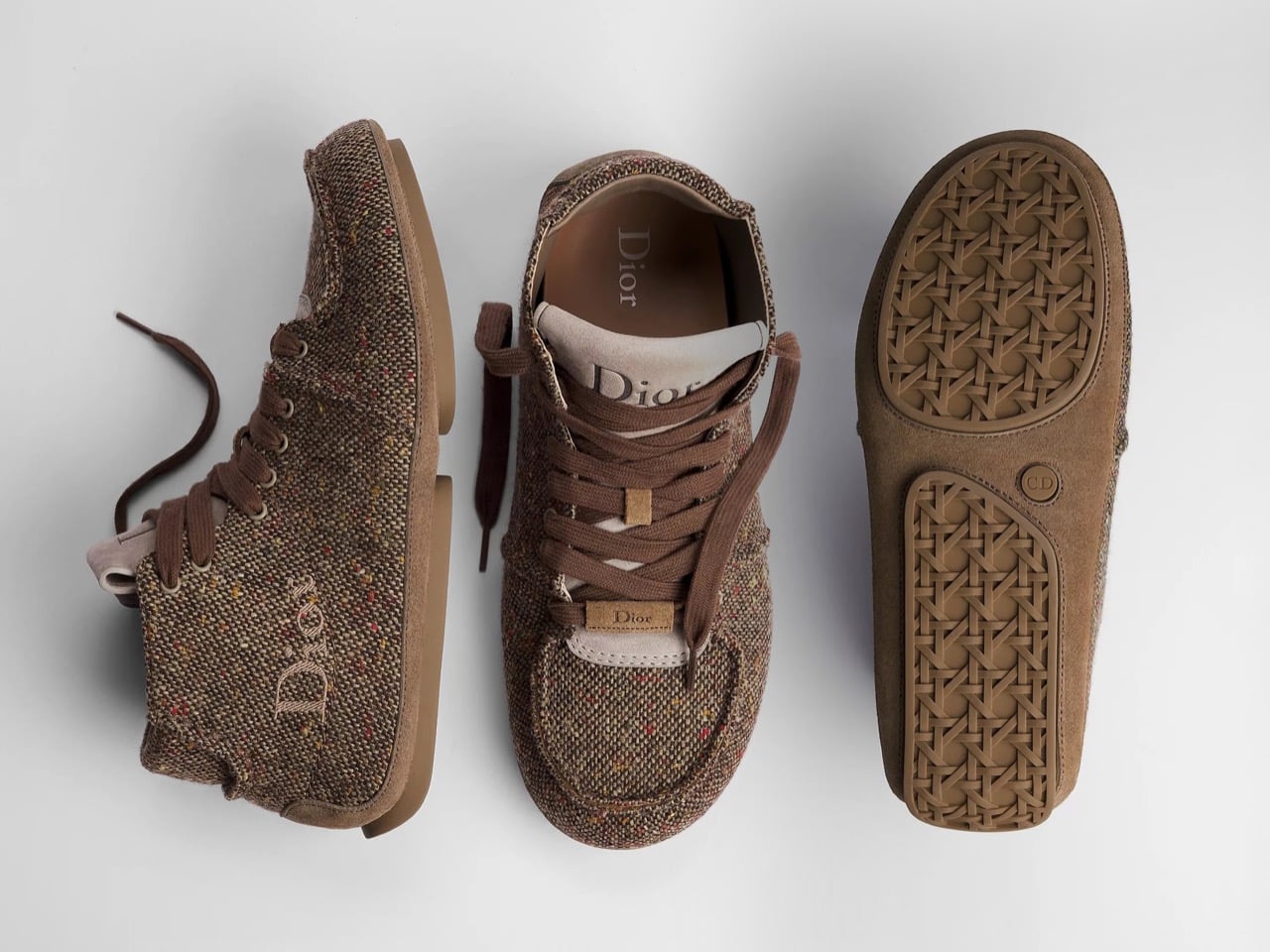
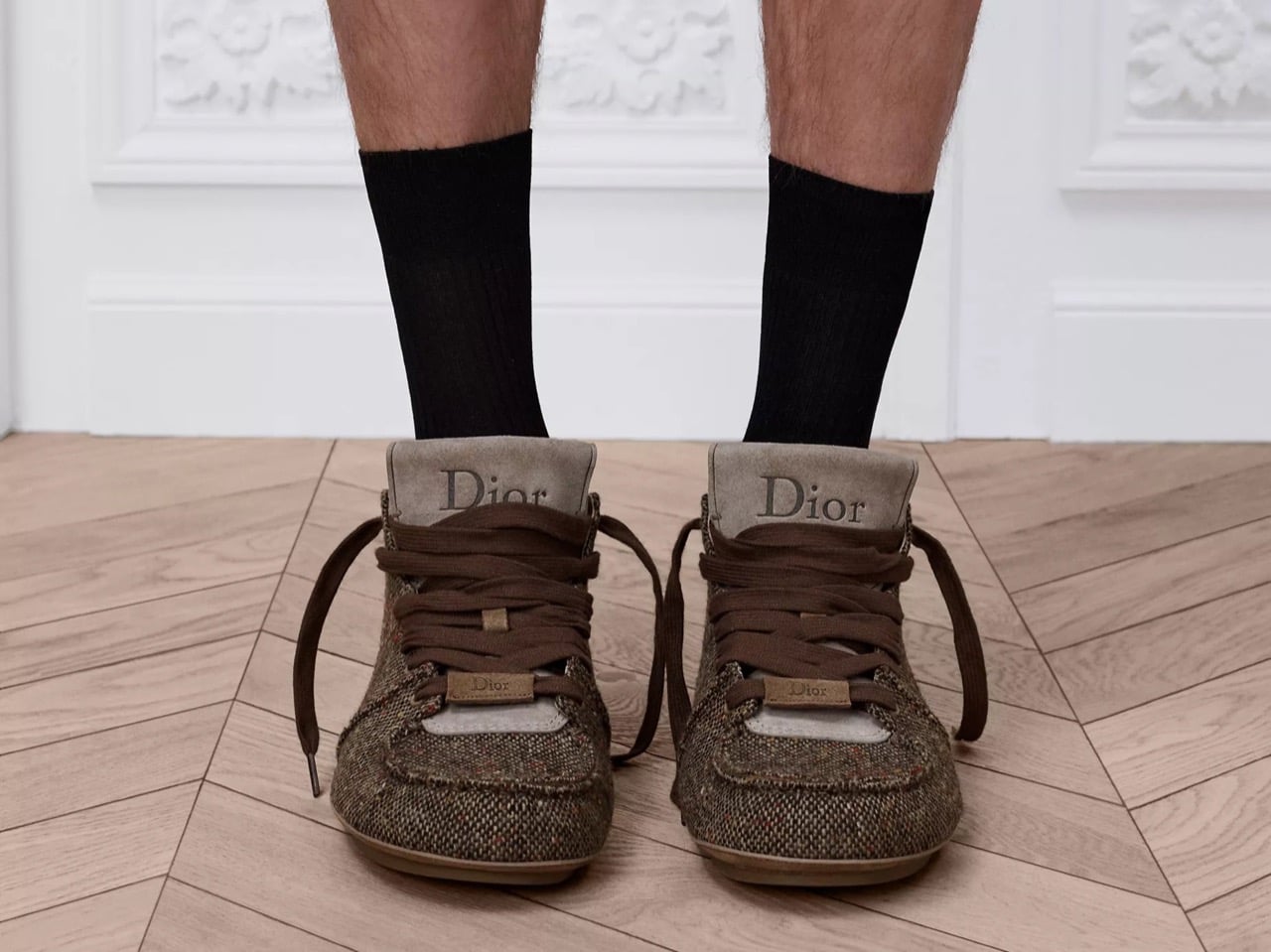
Created for the Dior Winter 2026 Menswear Collection, the Roadie takes the familiar language of the retro driving shoe and pushes it somewhere far less expected. The defining feature is its cylindrical sole, an exaggerated rubber structure that gives the shoe an almost architectural profile. It changes the proportions entirely. What could have been a rugged high-top in traditional materials suddenly feels peculiar, sculptural, and distinctly contemporary.

Designer: Dior
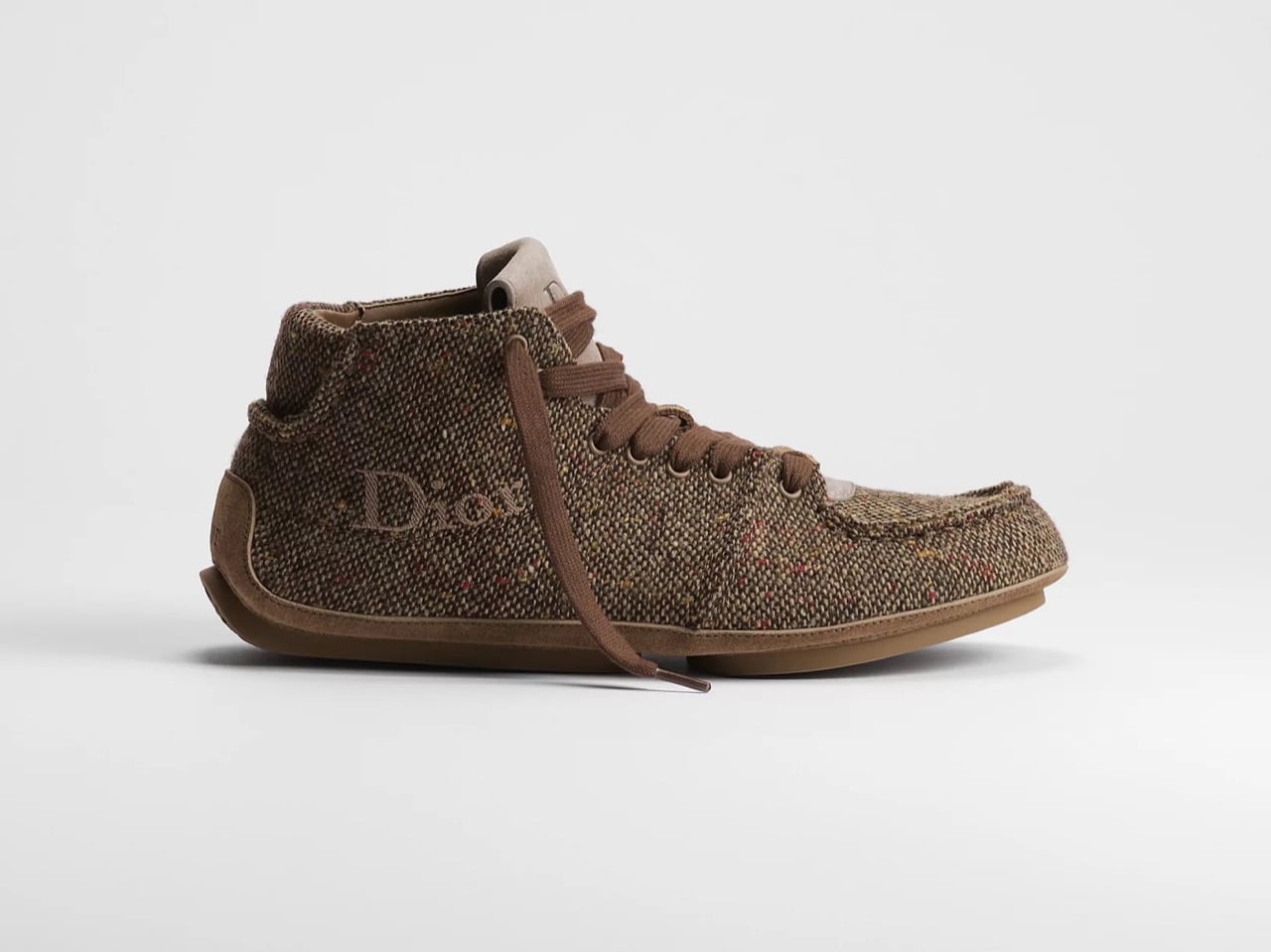
That tension is what makes the design interesting. Anderson draws from materials closely associated with his Irish heritage, including traditional Donegal tweed, here used alongside sheep wool and suede cowhide across the main body. The surface feels warm, textured, and familiar, carrying the character of something that might have existed for decades. Underneath it sits a sole that seems to belong to another design vocabulary altogether. Heritage meets experimentation without either side becoming decorative nostalgia.

The construction remains intentionally soft. Dior describes the shoe as unreinforced, allowing it to retain flexibility and comfort despite the substantial appearance of the sole. A padded collar supports the high-top silhouette, while the lining is made from sheepskin leather. Cotton laces run through leather lace loops finished with the Dior logo, adding another small point of craftsmanship to a shoe already rich in detail.
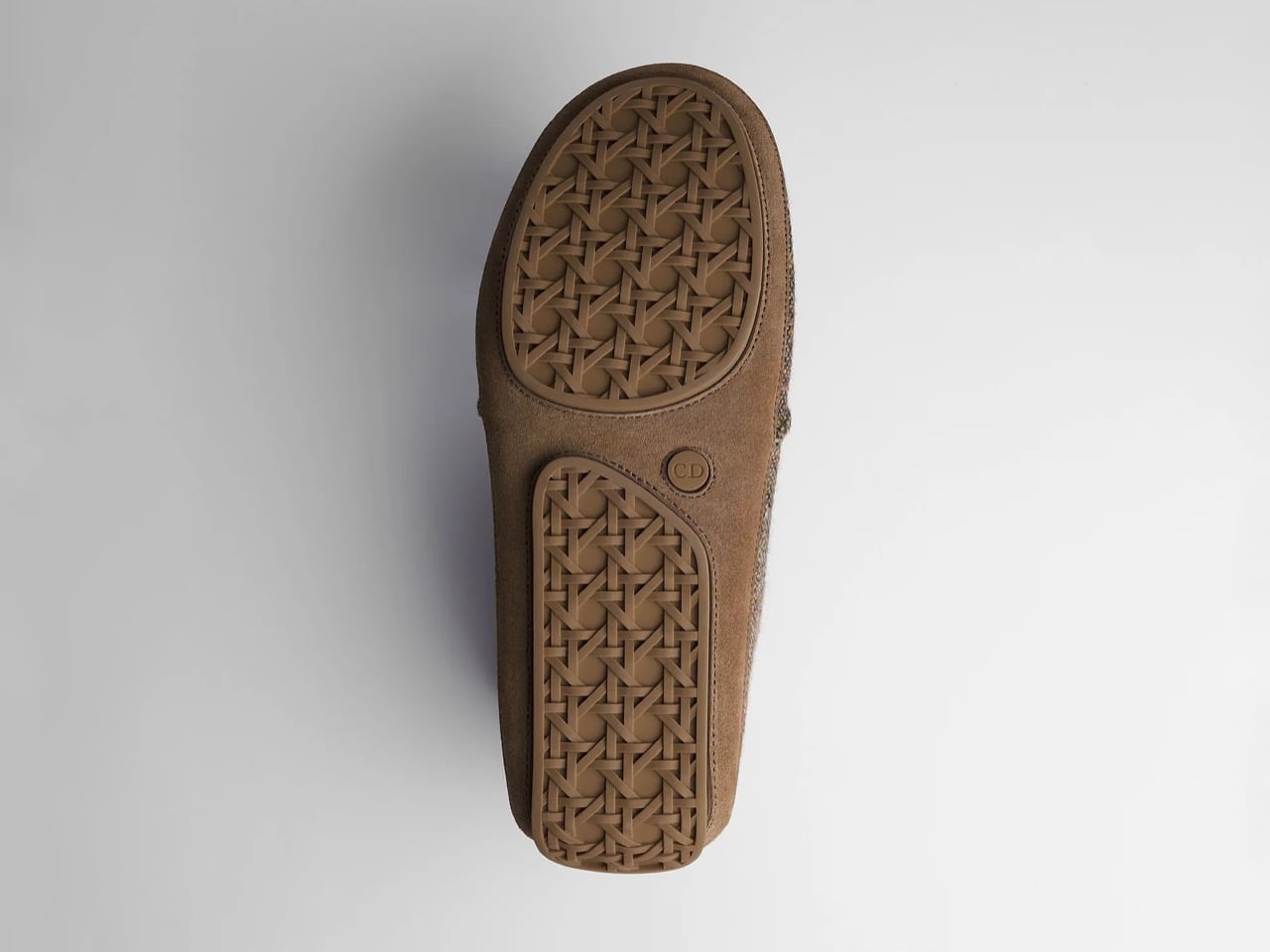
Branding is present, although it rarely interrupts the materials. Dior embroidery appears along the sides, while embossed logos are worked into the tongue and heel. The approach feels more integrated than applied. Even the sole continues the conversation. Its two-piece rubber construction features an engraved Cannage pattern with an inset CD logo, transforming a component that is usually treated as purely functional into one of the shoe’s most considered surfaces.

There is something especially satisfying about giving this much attention to the bottom of a shoe. The sole is the part that actually meets the world. It absorbs the pavement, gathers evidence of where you have been and, quite literally, leaves a print behind. Here, Dior turns that overlooked surface into a design signature. The woven effect and Cannage engraving mean that even the impression underneath carries an identity. It is a clever reminder that good design does not have to stop where visibility does.
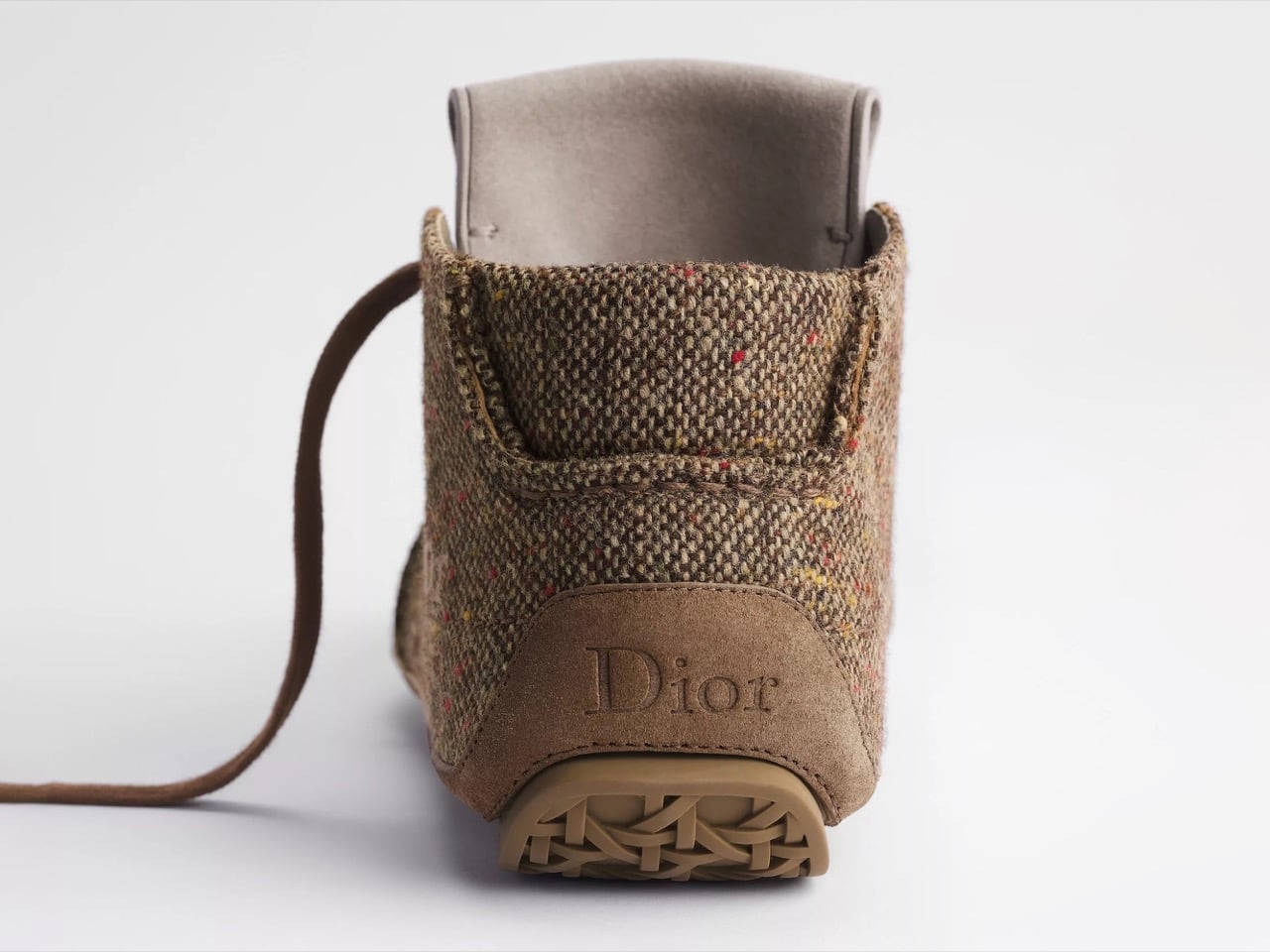
The cylindrical construction also gives the Roadie an unusual stance. From the side, the shoe feels almost inflated around the ground, with the outsole extending the visual weight of the upper rather than simply supporting it. There is humor in the proportion, but it is controlled. The result is avant-garde without becoming theatrical for its own sake.

This balance between eccentricity and familiarity feels particularly suited to Anderson’s approach at Dior. Donegal-inspired texture keeps the shoe grounded in craft and personal history, while the unusual sole pulls it firmly into the present. The Roadie does not discard the traditional codes of luxury footwear. It rearranges their hierarchy, asking the material, construction, and sole to share equal responsibility for the personality of the object.
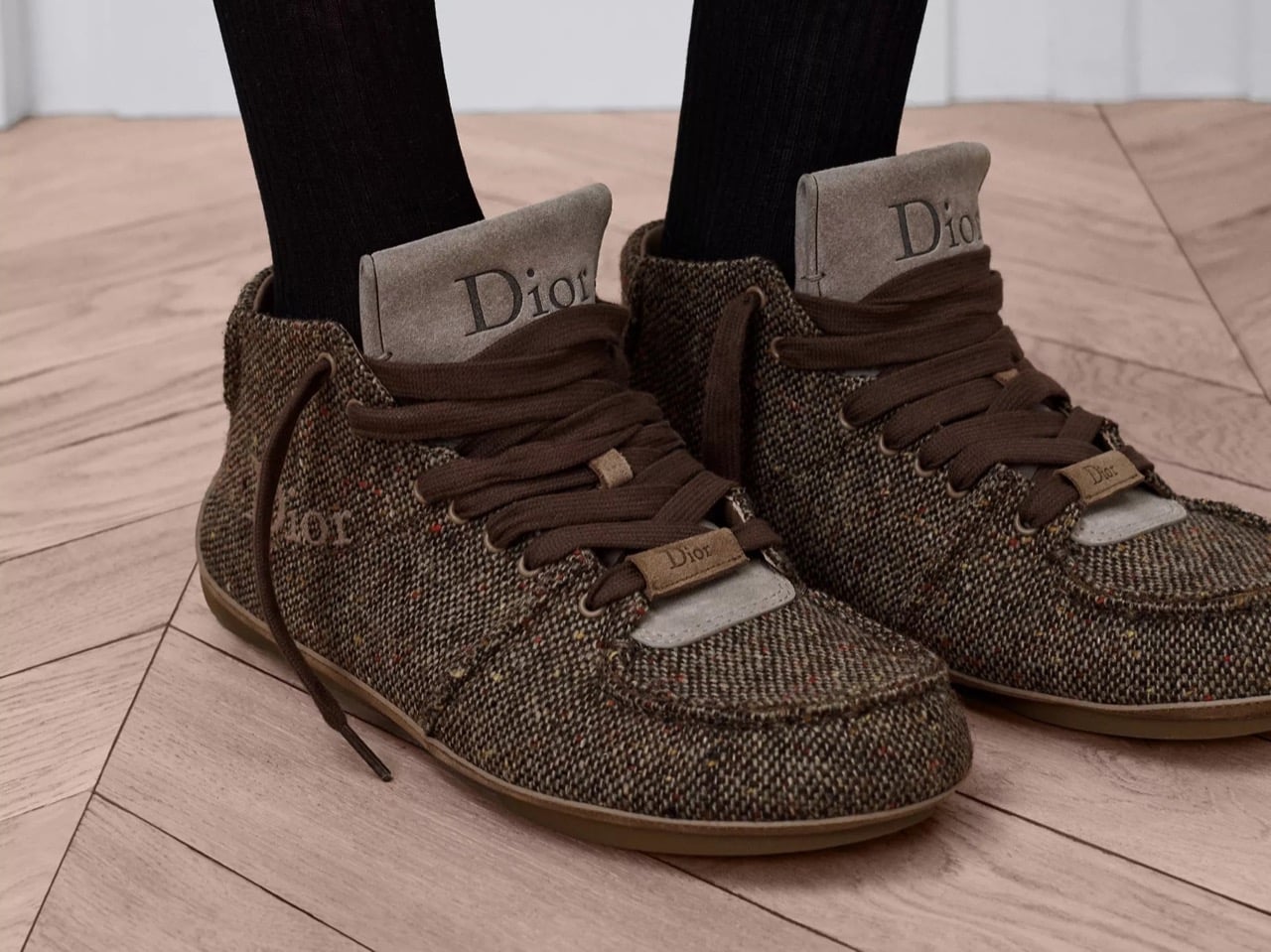
Made in Italy, the boots come with a dust bag and an additional pair of shoelaces. Dior notes that minor variations in color, sizing, material composition or appearance may occur because of technical limitations, product improvements or differences between production batches, with the physical product taking precedence over online imagery.

The Dior Roadie ultimately feels like a shoe designed for someone who notices the parts of an object that most people ignore. The Donegal textures may attract the first glance, and the unusual proportions may hold it, but the most memorable idea sits underneath. In a category where soles are so often treated as an afterthought, Dior has made one worth turning the shoe over for.
The post Dior’s Roadie Boots Turn an Overlooked Sole Into the Main Design Event first appeared on Yanko Design.
MagSafe Drone Lets You Attach An iPhone For Perfect Hands-free Selfies And Videos

Flying Gimbal Drone concept with an iPhone mounted on it

Google’s Add Me is one of the stranger things a phone has ever done. Introduced on the Pixel 9, it takes a photo of your family, then hands the phone to somebody in that photo, who takes a second shot of you standing where the gap was. The phone stitches the two together and produces a group picture that never existed, of a moment where everybody was never actually in the room at once. It works remarkably well. It is also, if you think about it for longer than four seconds, deeply odd, a family portrait assembled in post like a Marvel crowd scene.

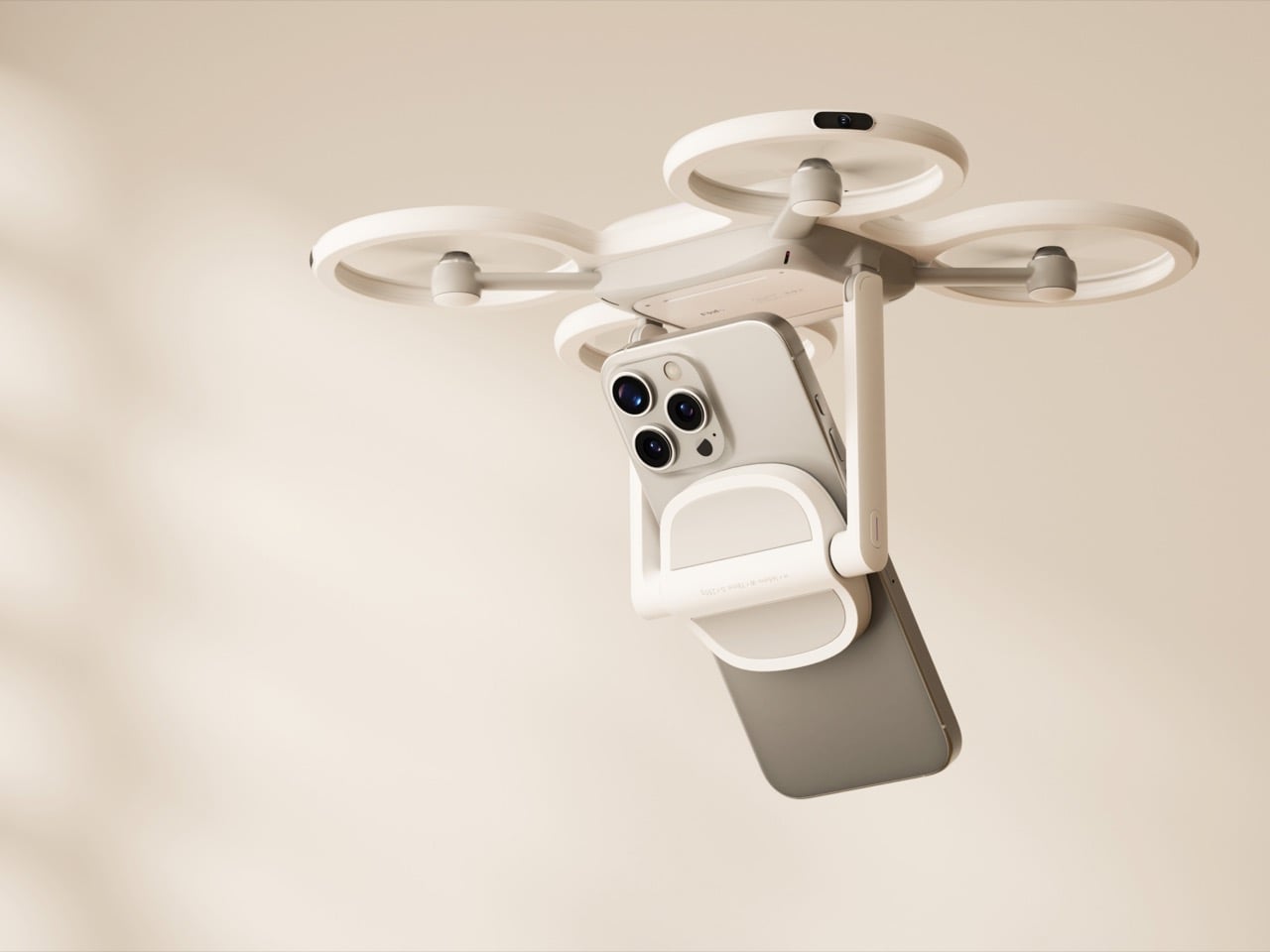
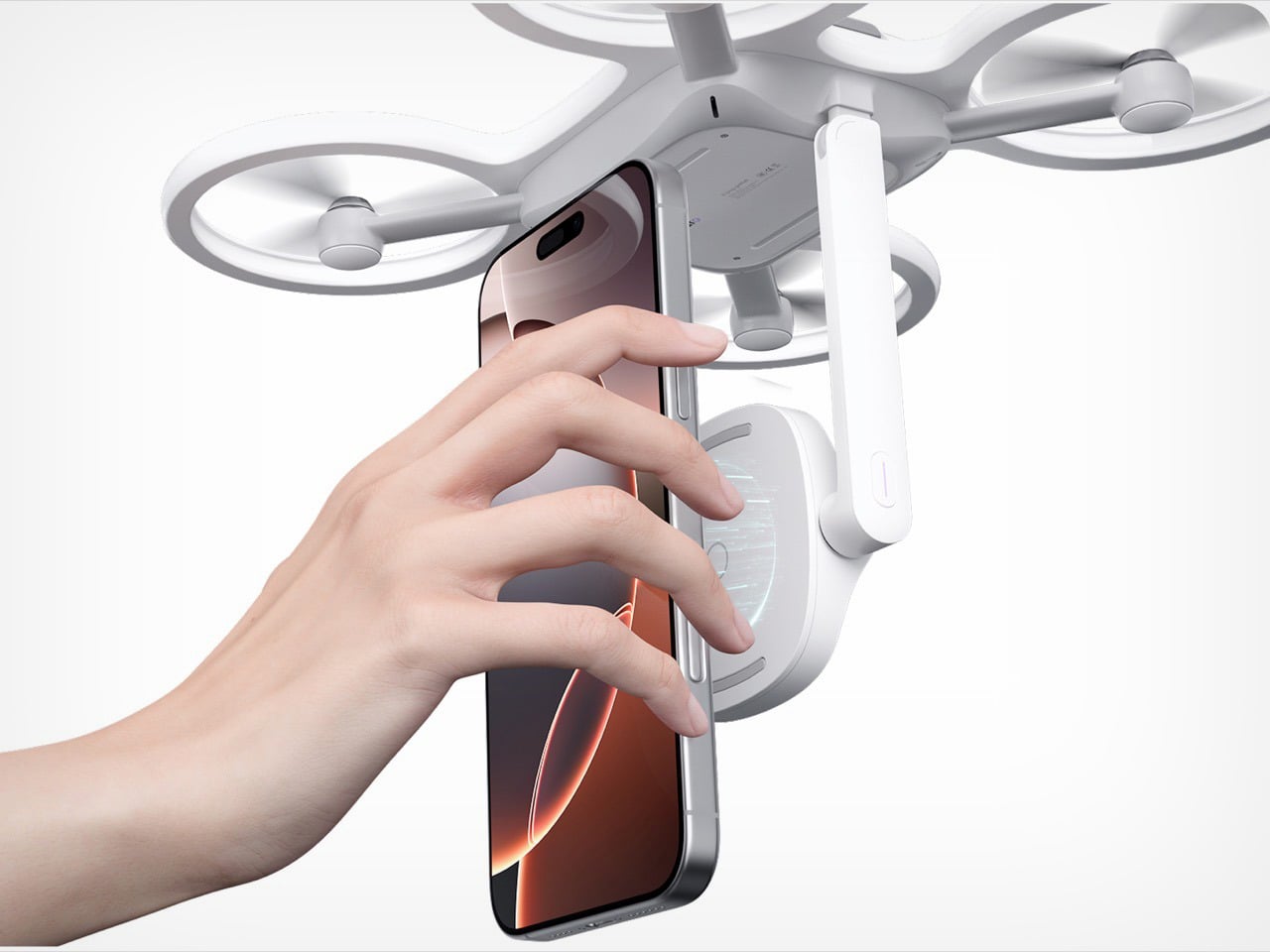
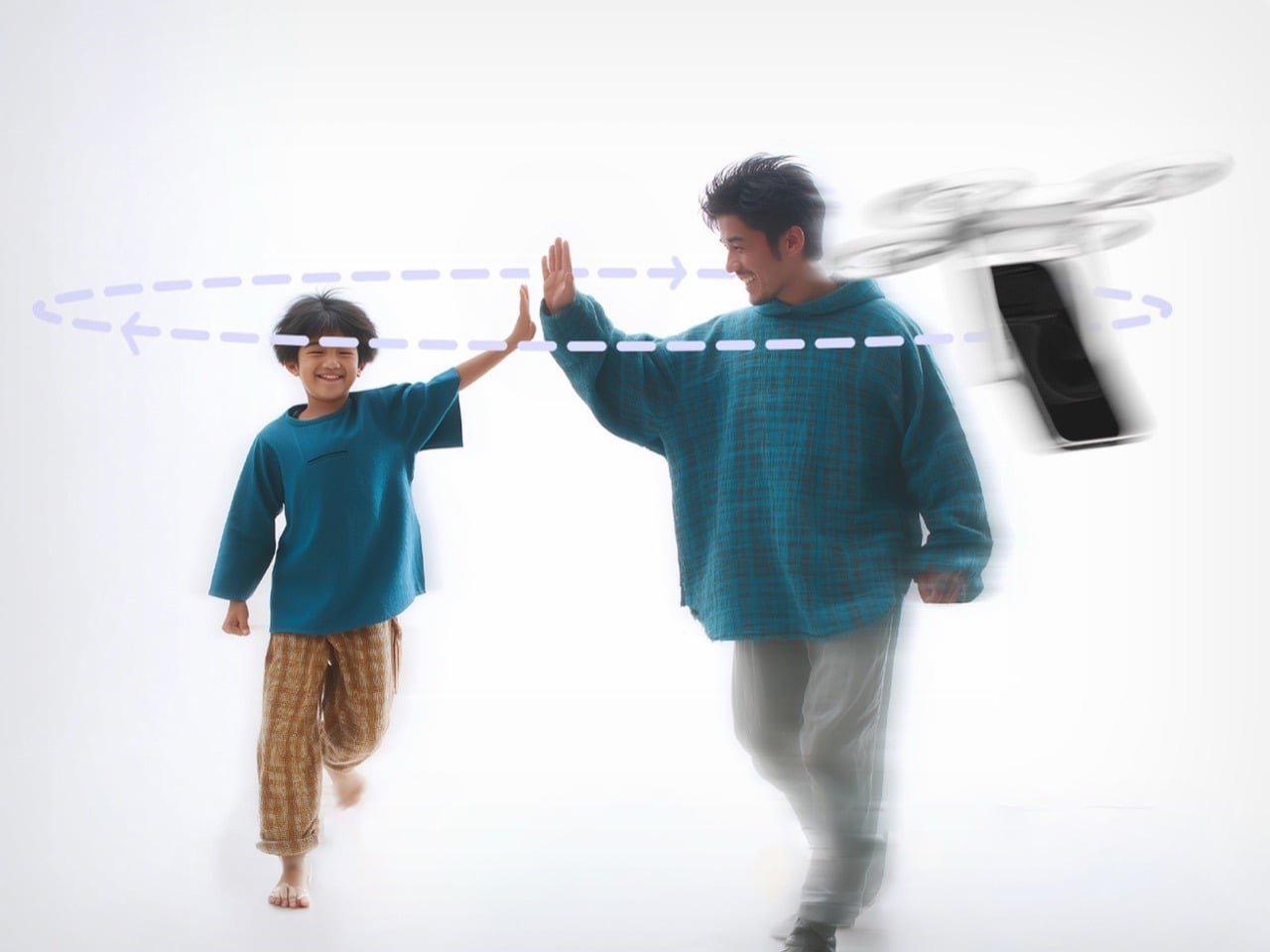
Flafa proposes the analog answer to the same question. A concept from Kaiyuan Liu and four classmates at the Guangzhou Academy of Fine Arts, it’s a small quadcopter that carries your phone into the air so the camera can hold its own position while every human stays put. The phone snaps onto a magnetic pad below four fully enclosed rotors, hangs face-out, and records while the drone flies itself. It won its category at the 2025 European Product Design Award. Same problem, opposite philosophy: Google removes the photographer with software, Flafa removes them with lift.

Designers: Kaiyuan Liu, Qiushi Wang, Yan Wang, Shiqi Liu & Xiaoyi Chen

Family posing in front of a drone with an iPhone mounted on it

Selfie drones have failed so many times that the category has a graveyard. AirSelfie tried in 2017. Snap’s Pixy launched in 2022, died four months later, and was recalled in 2024 because the batteries caught fire. They all lost for the same reason. A drone light enough to fly indoors cannot carry a camera that beats the phone already in your pocket, so you buy a flying camera, fly it twice, and quietly retire it to a drawer. Flafa declines that fight entirely by bringing no camera at all.

Mounting an iPhone onto a Drone Gimbal using MagSafe

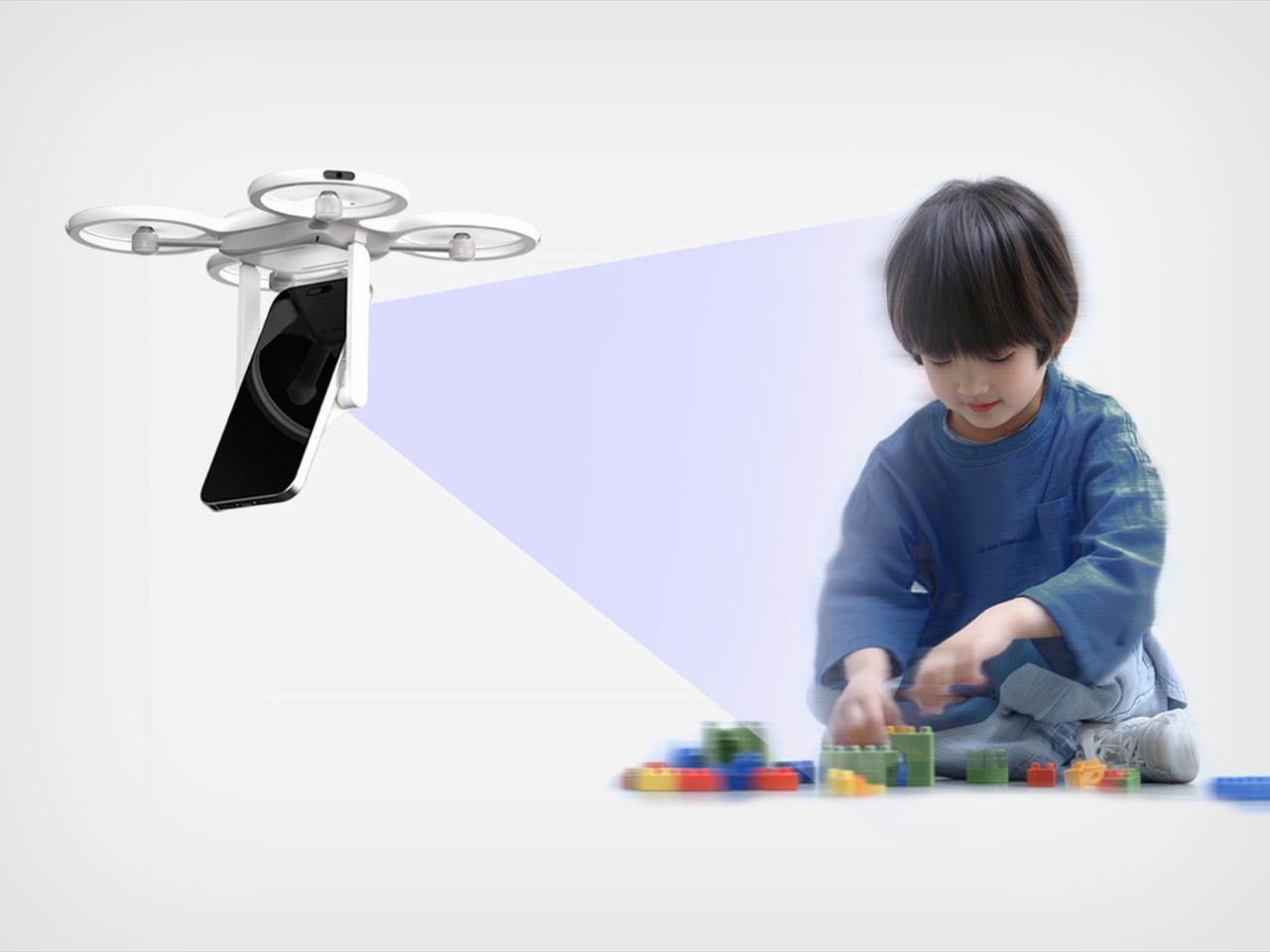
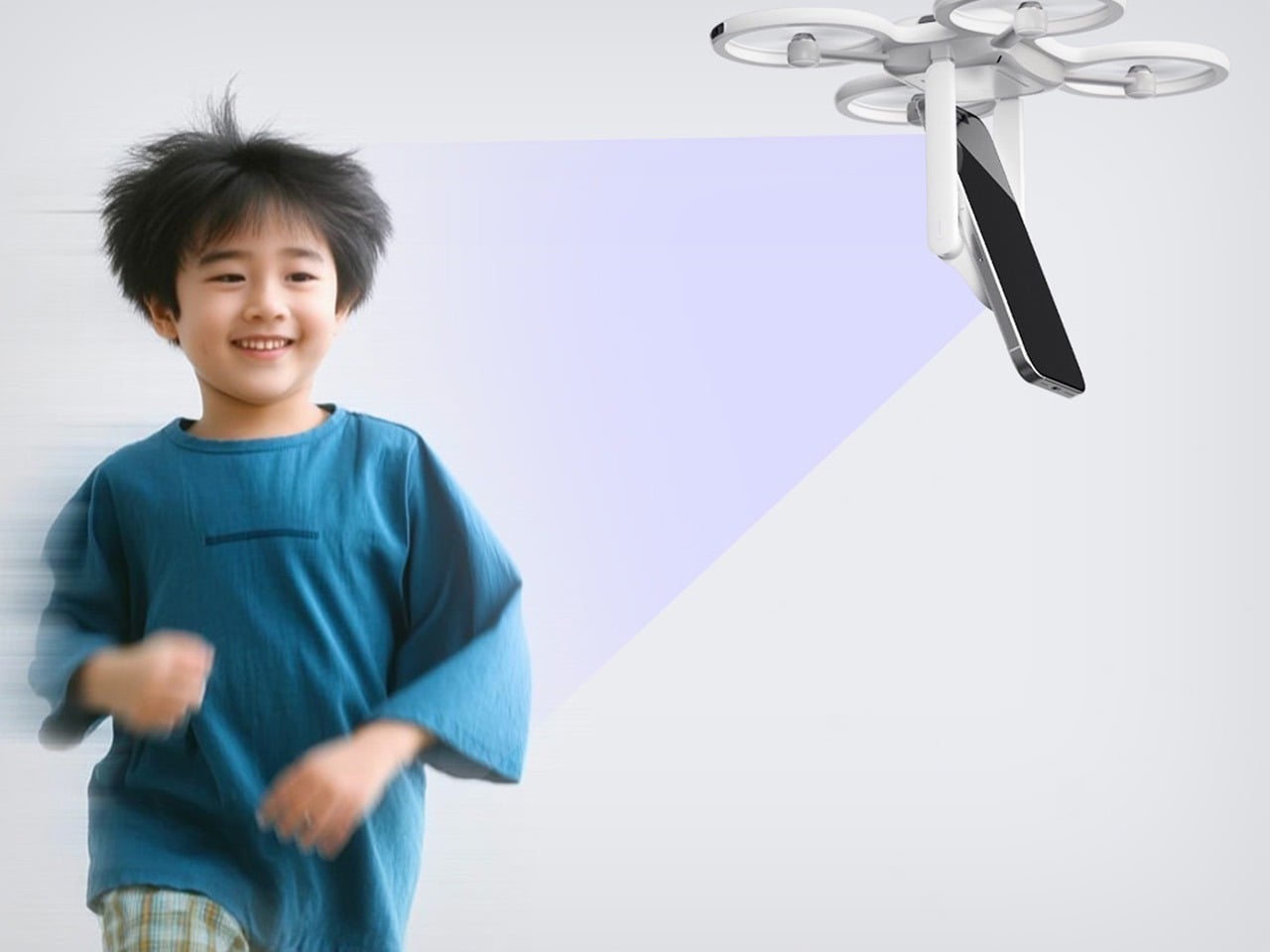
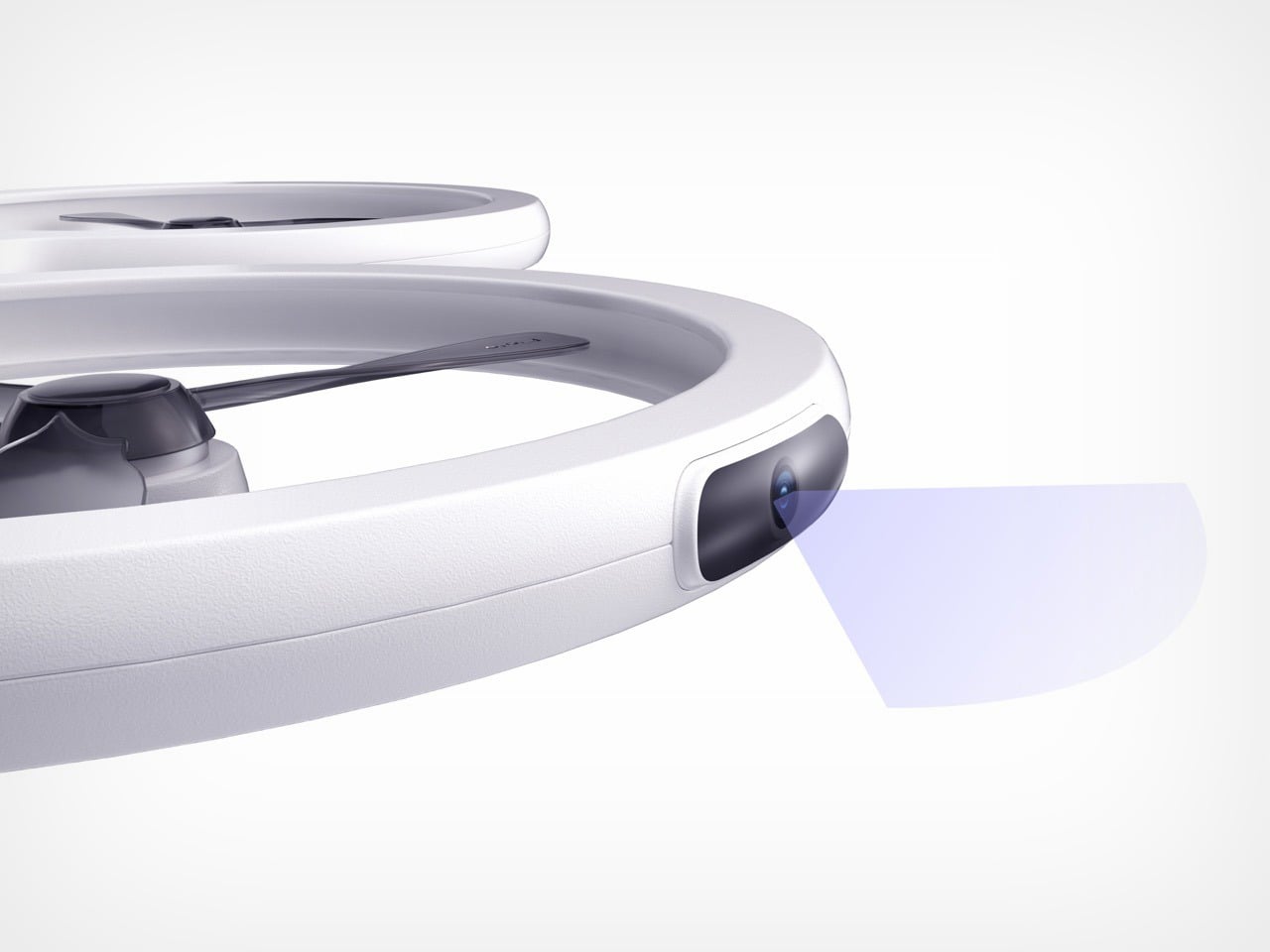
Two small sensor windows sit on the front propeller shrouds, giving the drone its own eyes for navigation while your phone dedicates itself to recording. That division of labor is the smartest thing in the whole project. Most flying cameras ask one sensor to handle obstacle avoidance, subject tracking, and image capture simultaneously, and it shows in the footage. Here the quadcopter worries about the ceiling fan and the phone worries about your kid’s face, which is roughly how you’d split the job if you had two people.

Somebody on this team understood that a drone meant to hover near a toddler cannot look like drone. The renders show warm oat cream, soft radii, matte surfaces, and not one visible screw, putting Flafa closer to a Muji humidifier than to anything DJI has shipped. Consumer drones are almost universally styled for a man in sunglasses on a cliff, all black plastic and angular vents. That grammar makes sense in a camera bag. It makes none in a living room during a birthday party.

The mount deserves credit for paranoia. A magnetic puck holds the phone, and a hinged brace folds along the handset’s edge as mechanical backup, which suggests the team thought hard about a thousand dollars of glass becoming a lawn dart. That said, the physics remains the open question. An iPhone Pro Max weighs around 233 grams, heavier than an entire DJI Neo, and hanging that mass below the center of lift makes a pendulum. The project is called a flying gimbal, but the renders show a hinge rather than an actuated axis.

Student concepts are allowed to be ahead of their batteries. What Flafa gets right is the framing of the problem, and that part is free. Every family album has one person missing, and it’s whoever picked up the camera. Google’s answer is to invent them back in afterward. This one just sends the camera upstairs for a minute.

The post MagSafe Drone Lets You Attach An iPhone For Perfect Hands-free Selfies And Videos first appeared on Yanko Design.
Alarm Clocks Buzz and Glow, Kodo Holds a Plant and Greets the Dawn

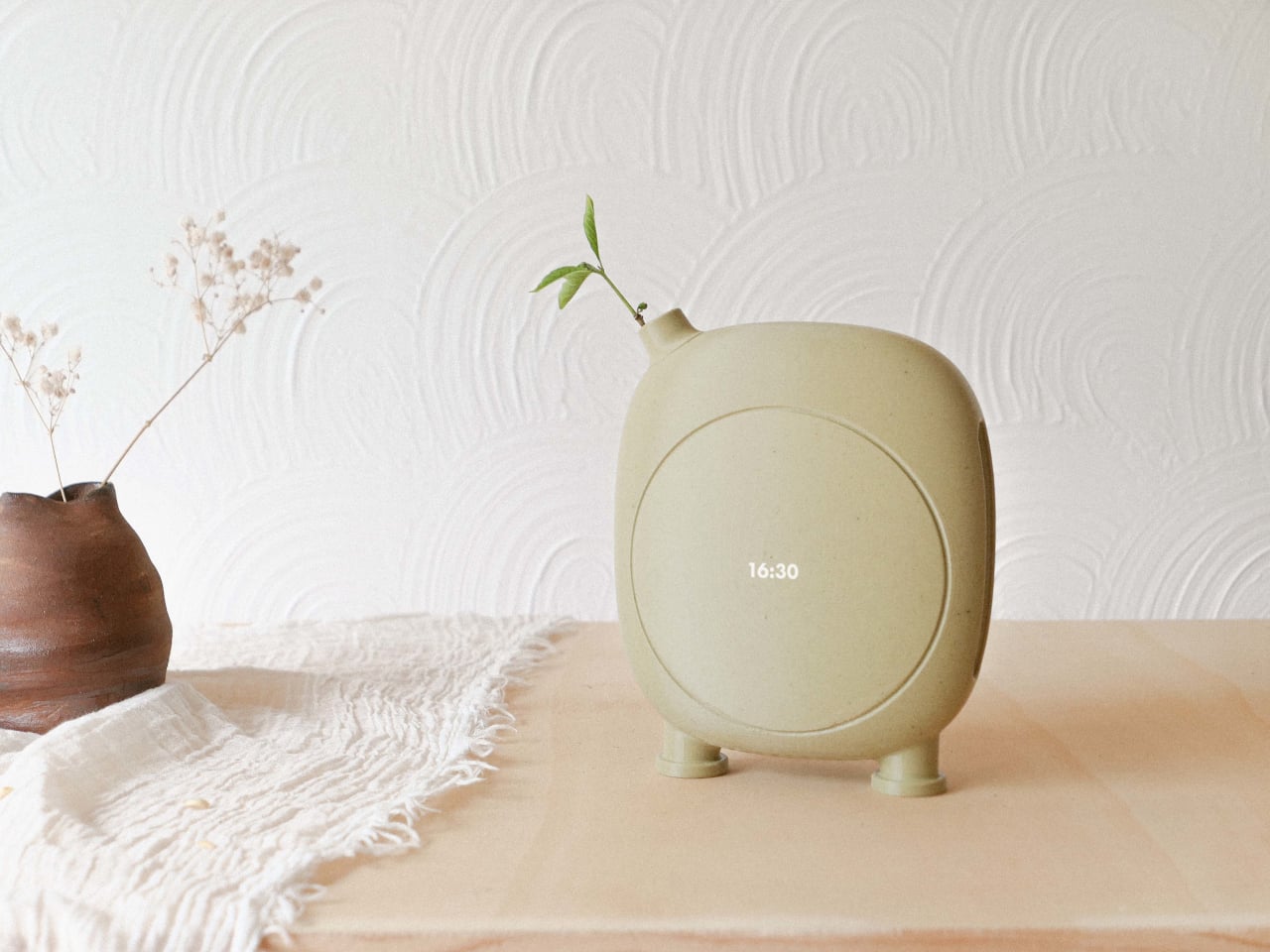
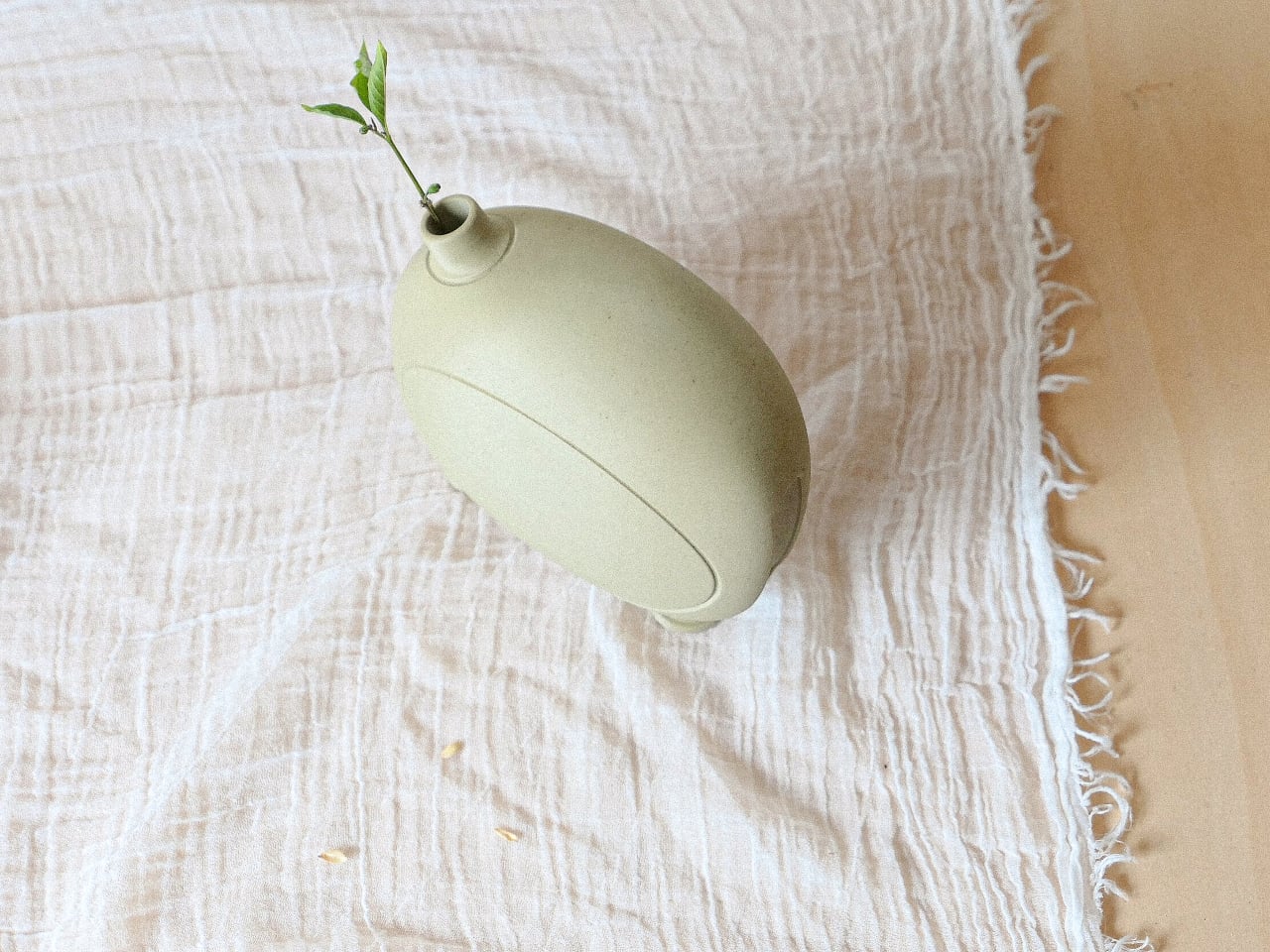
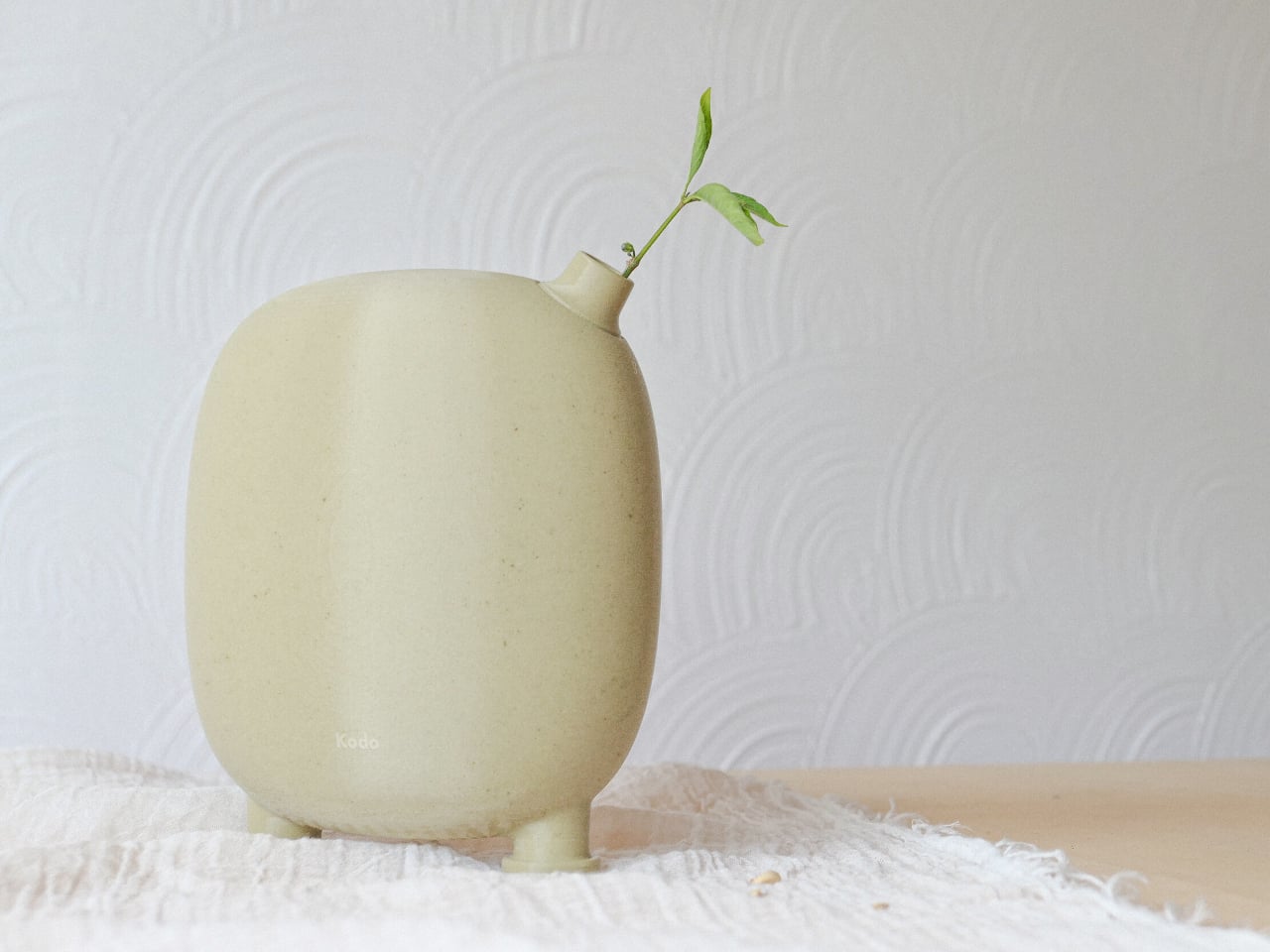
Waking up shouldn’t require staring at another glowing rectangle before your eyes even adjust to the room. Kodo, a conceptual smart alarm clock, rejects the buzzing plastic box entirely and takes the shape of a ceramic vessel instead, complete with a slender spout that holds an actual sprig of greenery. It looks like something a potter made, right up until it starts syncing with the sunrise.

That sunrise syncing is the whole point of mornings with this object. Rather than jolting you awake with a harsh beep, Kodo times itself to daybreak and layers in birdsong instead of an alarm tone, easing you into consciousness the way an open window might on a good morning. Silencing it doesn’t involve fumbling for a button either. A simple tap anywhere on its surface reads as a vibration and shuts the sound off.

Designer: Pascal Grangier

1

That tap-to-quiet gesture carries through the rest of the day as a kind of running theme. The body stays sensitive to touch and presence, responding subtly rather than lighting up with notifications or demanding attention the way a phone screen does. It’s built to sit quietly on a nightstand, doing nothing most of the time, until the exact moment it needs to do something.

Evenings get their own quiet ritual built into the same object. Before bed, Kodo gradually dims the light in the room, nudging your body toward its natural sleep cycle instead of leaving you to scroll under harsh lamp light until exhaustion wins. That single feature turns the piece from a wake-up tool into something closer to a bedtime routine, bookending the day the same way it starts it.

1

1

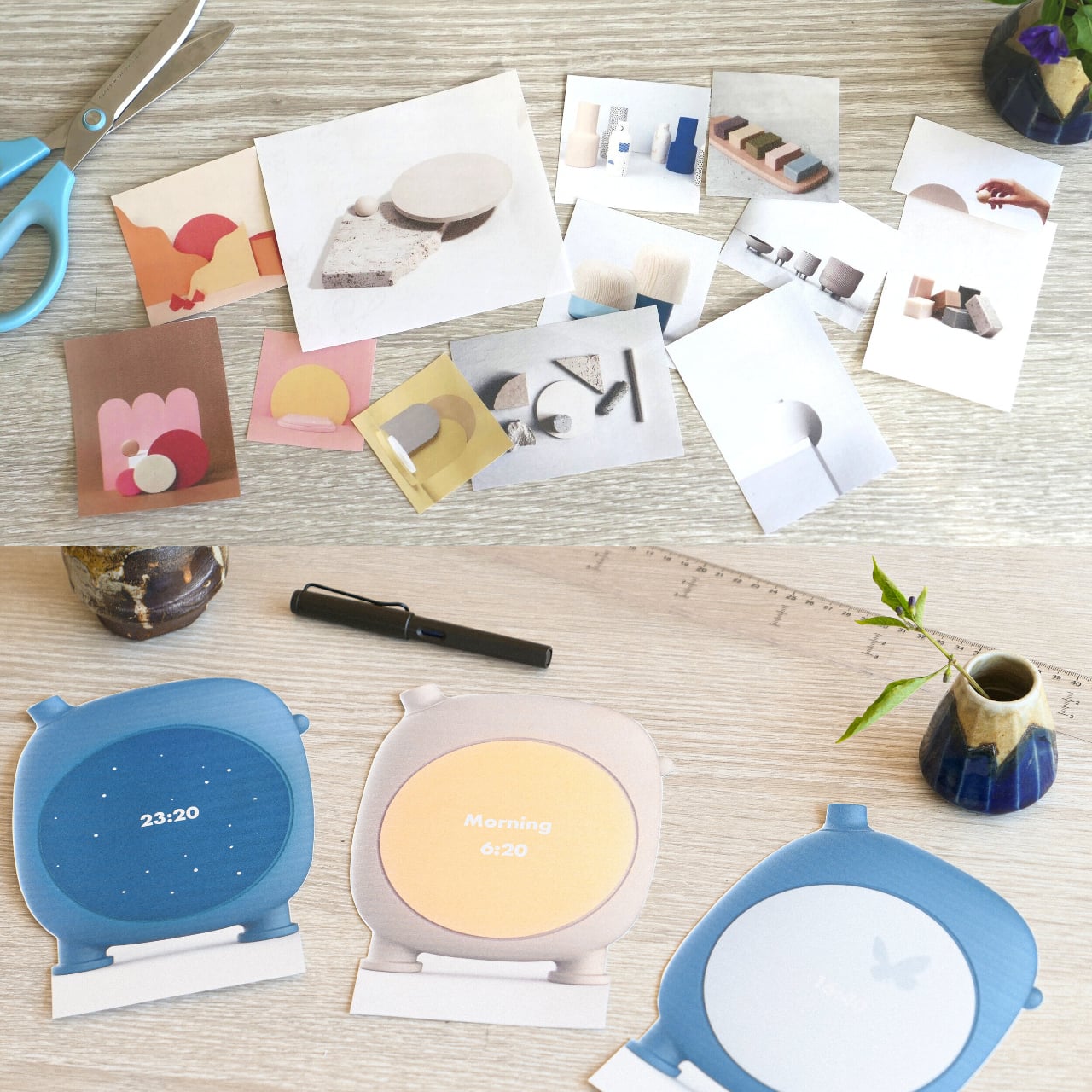
None of that would matter if the object itself felt like more screen time in disguise. Its circular face, styled after a pot’s opening rather than a display panel, shifts its entire look depending on the hour: a soft gradient for morning, plain digits at midday, a starfield glowing quietly once night falls. The clock face becomes part of the room’s atmosphere instead of a separate glowing distraction sitting on top of it.

1

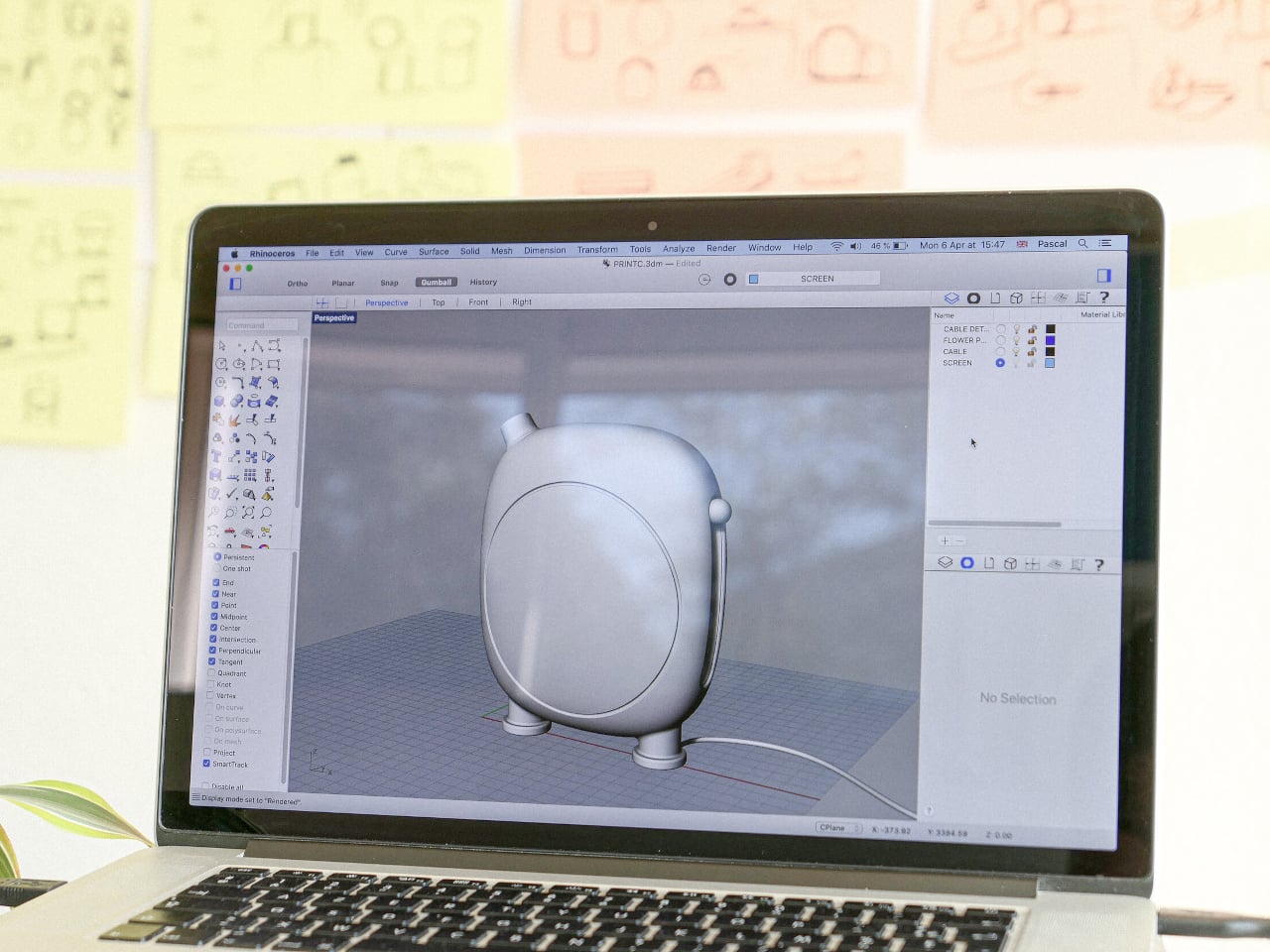
Every material choice reinforces that same restraint. The matte, sand-toned finish and rounded silhouette borrow directly from pottery, right down to stubby little feet that make the whole thing look handmade rather than manufactured. Even the vase-like spout isn’t decorative filler. It holds a real plant cutting, turning a piece of consumer electronics into something you’d want visible on a shelf even when it’s not telling time at all.

1

Objects like this argue for a different relationship with the technology already crowding most bedrooms. Kodo doesn’t compete with your phone for attention before you’ve had coffee. It just marks the hours quietly, dims the lights when it’s time to stop, and waits by the window like it always belonged there.

The post Alarm Clocks Buzz and Glow, Kodo Holds a Plant and Greets the Dawn first appeared on Yanko Design.