Ready at Dawn Studios, the game studio behind the Echo virtual reality series for the Meta Quest, has been shut down by its parent owner, Meta, effective immediately.
Android Centralreported Meta’s decision to close Ready at Dawn Studios almost a year and a half after purchasing the game studio. The news comes on the heels of a mid-July report that Meta plans to cut its Reality Labs division’s budget by 20 percent by 2026 when it is reportedly scheduled to release the Meta Quest 4 and Quest 4s, its next VR headsets.
Ready at Dawn’s reach in the gaming industry goes all the way back to the days of Sony’s PlayStation Portable (PSP). The studio released its first game in 2006 with Daxter, a PSP spinoff of the popular Jak and Daxter series. Ready at Dawn also released three titles in Sony’s God of War series for the PSP including Chains of Olympus, Ghost of Sparta and the Olympus Collection that bundled its two earlier titles. The studio made the jump to consoles starting with the PlayStation 4 in 2015 with The Order: 1886. The Victorian-era third-person action adventure became one of the year’s most anticipated titles for its boundary pushing graphics. Following a wave of mixed reviews, Ready at Dawn took a stab at a multiplayer title with a cheerier disposition in 2017 called De-Formers for the PS4, Xbox One and PC. Engadgetsenior editor Jessica Conditt described the colorful character combat competition as “cannibalism combat in a 3-D cartoon.”
The rise of and ease of access to virtual reality prompted the studio to pivot again in 2018 to the new immersive game medium. The studio released the first two VR titles in its Echo game series including the free-to-play Oculus Rift and Quest virtual sport Echo Arena and the interactive, gravity-free sci-fi adventure Lone Echo. Both found a fanbase on the all-in-one VR headset leading to sequels including the free-floating arena shooter Echo Combat in 2018 and Lone Echo II in 2021.
Oculus bought the studio in 2023 and allowed it to continue operations in its California and Oregon offices. The same year, Meta shut down its free Echo VR game due to dwindling player numbers.
Meta has slashed more than 20,000 jobs since 2023, a period that CEO Mark Zuckerberg has characterized as a “year of efficiency.”
This article originally appeared on Engadget at https://www.engadget.com/gaming/meta-shutters-its-first-party-vr-game-studio-ready-at-dawn-212212491.html?src=rss
If you still happen to have an NFT collection, TCL’s TV might just be the new way to display it.
It was probably Samsung that came up with the idea of transforming your TV into an ambient art frame when not in use, and I have to admit, it’s quite a stellar idea. The television is great when you’re watching something on it, but the minute you switch it off, it becomes an ugly black rectangle on your wall. Frame-inspired TVs are a great alternative, allowing you to turn your wall into home decor, and TCL’s jumped onto that trend with its NXTFRAME range of smart TVs. Measuring a mere 1.1 inches thick, the NXTFRAME televisions sit virtually flush against your wall, pretty much like a piece of framed art.
Ranging between 55 and 85 inches in size, the smart TVs blend right into your home seamlessly, with the QLED Pro screen mimicking the feeling of printed art really well thanks to its high contrast and clarity even in brightly lit rooms. The 4K TVs come with Google TV for watching all your streaming services, but the display’s beauty lies in TCL’s built-in curated art library as well as the ability to make and display AI-generated art. A gorgeous matte screen helps the art stand out well without any added glare from lights or nearby windows, and the TV even comes with wood-like veneers that attach onto the bezel, giving the NXTFRAME a bonafide outer frame.
As gorgeously slick as the NXTFRAME looks, its performance specs are equally impressive. With a refresh rate of up to 144Hz, it promises smooth and fluid visuals, whether you’re watching a high-action movie or playing the latest video games. The inclusion of Dolby Vision IQ ensures that the picture quality adapts to the lighting conditions in your room, offering the best possible image at all times. Additionally, the support for AMD FreeSync Premium makes it an excellent choice for gamers, reducing screen tearing and providing a more responsive gaming experience. Motion Rate 480 and MEMC motion smoothing technology further enhance the viewing experience by reducing motion blur and judder, making fast-moving scenes clear and crisp.
Under the hood, the NXTFRAME runs on Google TV, offering seamless integration with various streaming services and smart home devices. It supports Chromecast and Apple AirPlay 2, making it easy to stream content from your devices. Voice control is also well catered for, with compatibility with Amazon Alexa, Google Assistant, and Apple Home. For gamers, the TV comes equipped with Game Accelerator 240, Auto Game Mode, and AMD FreeSync Premium, ensuring an optimized gaming experience with minimal input lag and maximum visual clarity. The sound system is robust, featuring two built-in 20W speakers and support for advanced audio technologies like Dolby Atmos and DTS.
The Pro version of the NXTFRAME takes the audio experience a notch higher by including a wireless 3.1.2 soundbar and subwoofer, developed in partnership with the renowned audio company Bang & Olufsen. This combination promises an immersive audio experience, enhancing everything from dialogue clarity to the rumble of on-screen explosions. The TV also boasts four HDMI ports, including one with eARC support, allowing for easy connection of multiple devices and ensuring that audio signals remain high quality.
Pricing for the NXTFRAME series starts at $1,499.99 for the 55-inch model and goes up to $3,999.99 for the 85-inch version. The Pro versions, which include the enhanced audio system, start at $1,999.99 for the 55-inch model and reach $4,999.99 for the 85-inch model. These models are expected to be available in September 2024, along with accessories like the movable floor stand priced at $699.99 and matching table feet at $149.99. It’s unclear if the art library and GenAI art features are available along with the TV or incur an added subscription.
Venu Sports appears poised to offer a one-stop shop for streaming all kinds of athletic events. However, the extensive amount of sports content controlled by Disney (which owns ESPN), Fox and Warner Bros. Discovery, has raised questions about the upcoming streaming service. Three members of Congress have called on the Department of Justice and the Federal Communications Commission to investigate whether Venu violates antitrust laws.
"If this JV [joint venture] is permitted to proceed, competitors would be forced to negotiate with Fox, Disney, and Warner Bros. for access to over half of the major sporting licensing rights while simultaneously competing against these companies to offer the best product to broadcast or stream these programs," Sen. Elizabeth Warren (D-MA), Sen. Bernie Sanders (I-VT) and Rep. Joaquin Castro (D-TX) wrote in an open letter. They also questioned whether Venu could lead to increased prices for consumers. (And the prices for Venu are already looking pretty steep, with a launch price of $43 a month.)
This group isn't the first to question this sports streaming venture. Shortly after the joint venture between the three companies was announced, FuboTV filed a lawsuit alleging that Venu would fall afoul of antitrust laws.
This article originally appeared on Engadget at https://www.engadget.com/entertainment/streaming/senators-elizabeth-warren-and-bernie-sanders-call-for-an-antitrust-investigation-into-venu-sports-203458843.html?src=rss
New York City has implemented a new drone warning system to alert residents to hazardous weather conditions. Unfortunately, the drones need to work on their Spanish.
A resident spotted one of the new drones issuing a flood warning on Wednesday to NYC neighborhoods in English and Spanish, but the Spanish words that came out of the drones were “incomprehensible,” according to a resident who shared a video on X.
As a Spanish speaker, I can confidently say that this is incomprehensible. The city couldn’t find a single person who spoke Spanish to deliver this alert? https://t.co/uI9ERCuDmV
The drones had no problem issuing a weather warning in English as it delivered the news about an incoming batch of heavy rainfall in a clear and distinguishable tone. The Spanish message, however, sounded like a robot speaking the language for the first time.
“I’m very proud of the work our team has done preparing for this storm, but this shouldn’t have happened and we’re going to make sure it doesn’t happen again,” Iscol wrote in a reply.
The New York Times published a story on Tuesday about the new emergency alert drone system. The city sent the drones out to communities around 1 p.m. to inform residents about the heavy rainfall headed their way. Iscol told the newspaper that NYC Mayor Eric Adams came up with the idea to use drones as a new part of its warning system. Adams has instituted similar, tech-heavy initiatives during his term such as a security robot that patrolled the Times Square subway station, and the controversial “Spot Robot,” also known as the “Digidog,” for the New York Police Department to use during hazardous situations like hostage standoffs.
This article originally appeared on Engadget at https://www.engadget.com/general/new-yorks-flood-warning-drones-screamed-at-residents-in-incomprehensible-spanish-194507725.html?src=rss
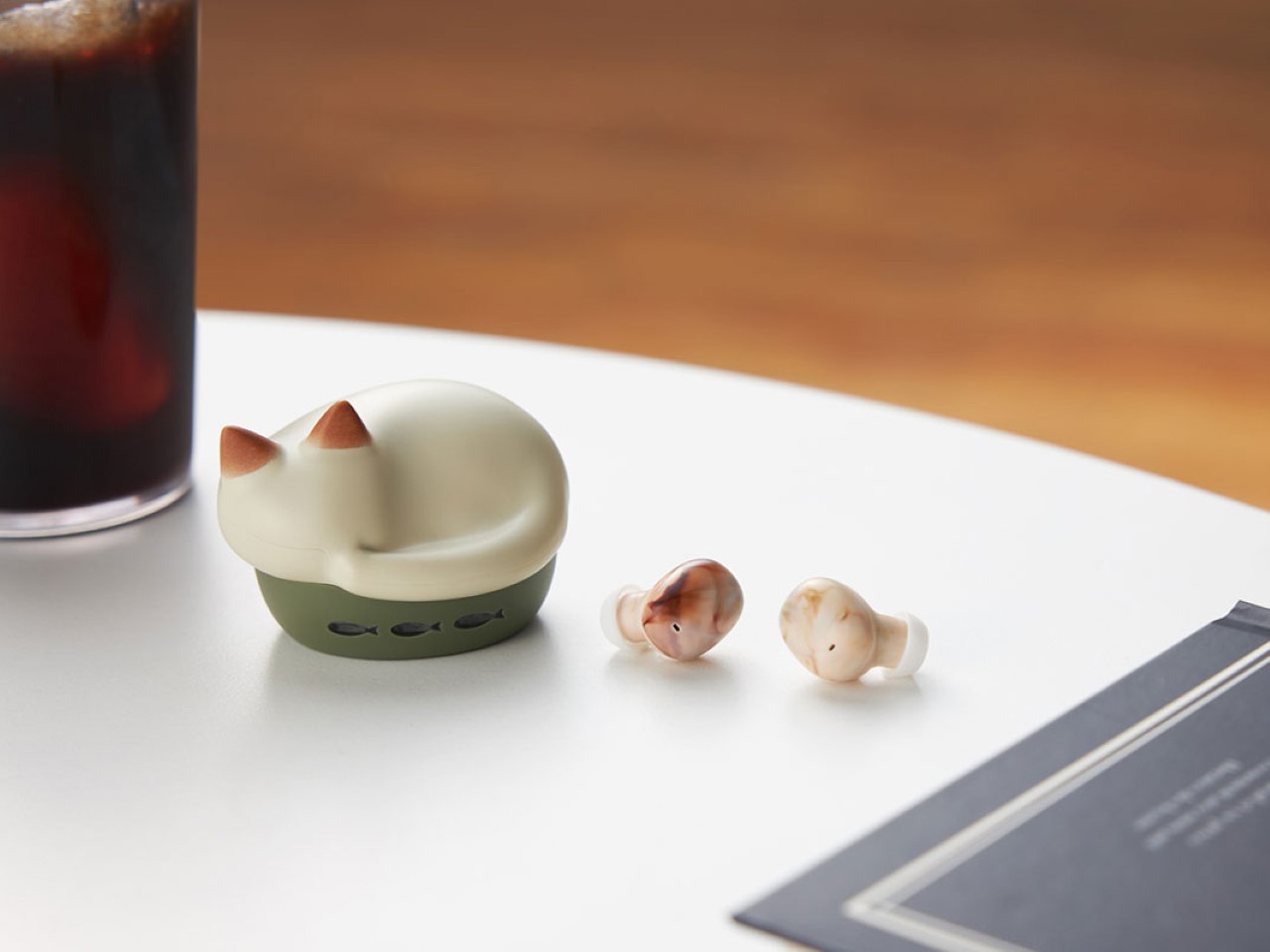
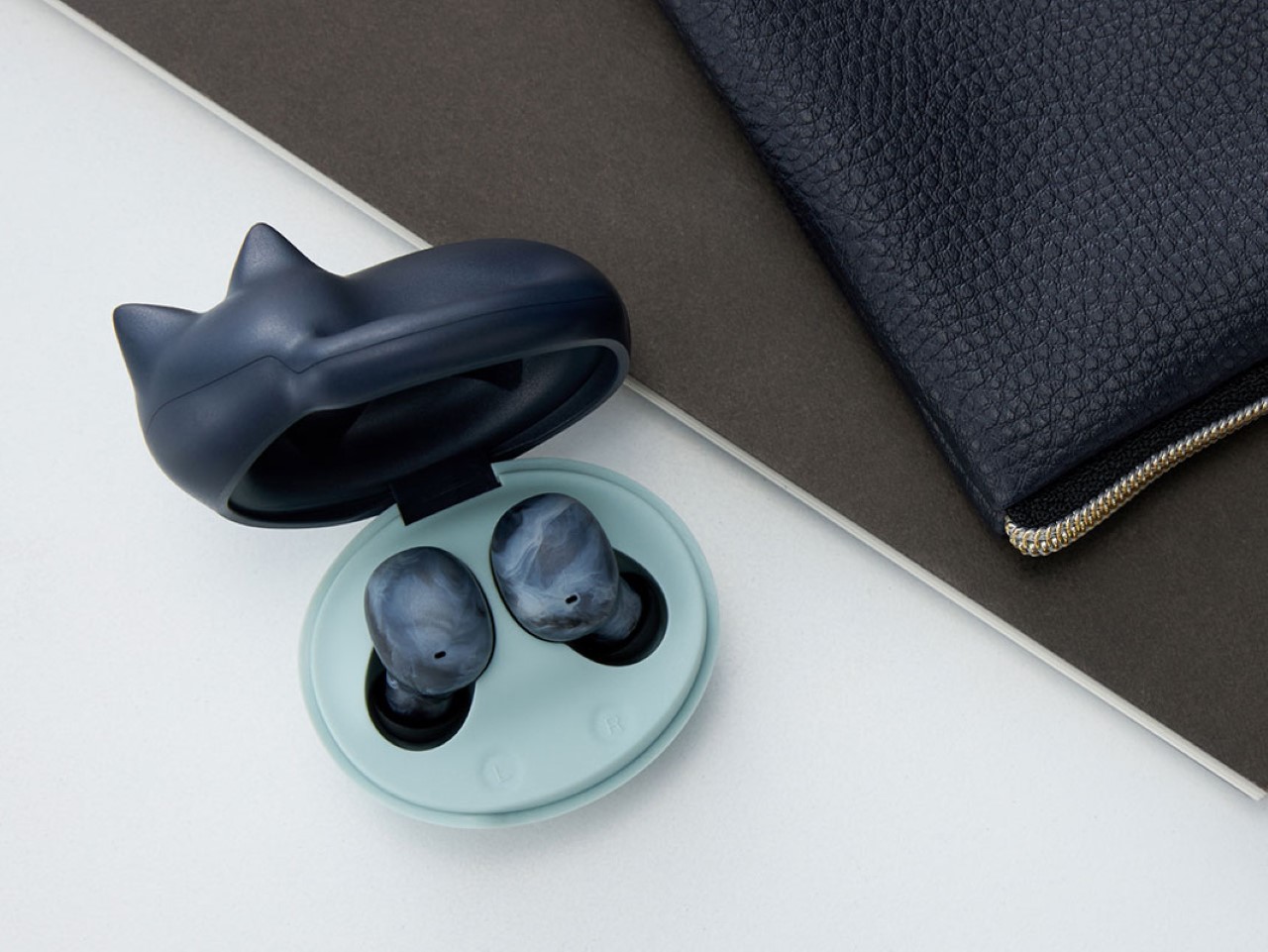
The TWS Earbuds case is perhaps the most fertile ground for design exploration. Companies have put screens on them, buttons on them, even shaped them like Deadpool or a Pokeball, and now Japan-based Radius Co., Ltd. is turning the humble earbuds case into a symbol of feline love. Dubbed the Neko Earbuds, these wearables come in a case that looks like a little cat snoozing in a cat basket. The case sports a variety of cat-themed colors, from white to beige and black, and flip the cat open and you see it casually warming your earbuds the way sometimes pets snooze on your slippers to keep them toasty!
TWS earbuds are literally a dime a dozen, and I’ll be honest, most of them have absolutely uninspiring designs. That’s where something like the Neko really catches the eye. The outer appearance is really a perfect playground for design intervention, and the folks at Ritual did an absolutely stand-up job. The Neko instantly catches the eye and melts the heart. The cat resting adorably in its cat-bed is a universal symbol of eternal cuteness. The cats come in 3 colors, the bed features fish-shaped LED battery indicators, and the inside of the case houses earbuds with a marbled plastic design, ensuring that no two earbuds look the same – sort of like how no two cats have the same personality.
Designed less to be carried in your pocket and more for WFH or tabletop audio requirements, the Neko TWS Earbuds feel almost like a desktop collectible than like tech. Sure, you can slip them right into your pocket or backpack if you want to travel, but given how adorable they look, they’re best suited kept on your table along with other toys and trinkets, etc.
As far as hardware goes, the Neko boasts pretty solid mid-level specs. You’ve got 6.1 mm dynamic drivers, a 20 Hz-20,000 Hz frequency response, Bluetooth 5.3 for up to 10 meters (33 feet) of wireless audio transmission, and IPX4 water resistance (just like cats, keep these earphones away from water). However, the product’s UX boasts a neat twist. Any announcements for calls are made in a feline voice, and tapping your earbuds 5 times activates the Neko’s ‘Purr Mode’, which gives you 3 glorious minutes of purring sounds playing directly in your ear.
The fish-shaped battery indicator is a beautiful touch, adding an easter-egg of sorts to the already adorable design. Speaking of battery, the earphones deliver a solid 3.5 hours of use, extendable to 17.5 hours when used with the charging case. Flip it over and a USB-C port on the back lets you nourish your cat-themed earphones.
The Neko TWS Earbuds were announced as a precursor to International Cat Day (on the 8th of August), for people who love to wear their feline love on their sleeve or in their ears. Priced at 8,822 Yen (around $60 USD), the earbuds garnered more than 10,000 pre-orders on the website following virality on social media (I totally understand the hype). The earbuds are due to ship starting 8th August, and a portion of the sales are also going to be donated to a rescue organization for street cats in Japan.
Humane’s universally derided AI Pin is not exactly flying off of store shelves, according to internal sales documents published by The Verge. As a matter of fact, returns seem to be currently outpacing new purchases. So many have been returned, that there are only around 7,000 units out in the wild. The company had once hoped to sell 100,000 in the first year, so that ain’t happening.
To date, around 10,000 have been sold and 3,000 have been returned, leaving the aforementioned 7,000 in the hands of consumers. This gadget costs $700, so I’d obviously have returned it after learning it doesn’t actually do anything useful. Wouldn’t you? To that end, over 1,000 pre-orders were canceled once reviews started coming in.
We called it the “solution to none of technology's problems” and struggled to understand who it was even for. This was before the charging case accessory became a potential fire hazard, which added to the image of the product being the ultimate example of tech hubris. There’s a reason, after all, why noted tech vlogger Marques Brownlee called it “the worst product” he had ever reviewed.
Humane has been, sort of, trying to turn things around, mostly by trying to find a larger company to scoop it up into its portfolio. HP has been considering a purchase, according to The New York Times. Also, the company’s allegedly been in active negotiations with investors, as reported by The Information.
Humane has taken umbrage with The Verge and its reporting, with spokesperson Zoz Cuccias claiming “inaccuracies” regarding the financial data but didn’t go into specifics. Instead, she said “we have nothing else to provide as we do not comment on financial data, and will refer it to our legal counsel.”
The Verge reports that the company has no refurbishment operation in place, which is another lost opportunity for revenue. The problem allegedly boils down to a limitation with carrier partner T-Mobile that doesn’t allow Humane to reassign one of these pins to a secondary user. The returned pins could be destined for the scrap heap, but Humane is reportedly holding onto the returns for now, in the hopes it solves the problem with T-Mobile.
The company has been releasing software updates to address user feedback, so who knows. Maybe the ship can right itself. There’s still the question of spending $700 for a secondary device that underperforms when compared to a smartphone. The same question applies to a $200 device. We’re looking at you Rabbit.
This article originally appeared on Engadget at https://www.engadget.com/ai/people-are-returning-humane-ai-pins-faster-than-the-company-can-sell-them-191523105.html?src=rss
An innovative scanner created by an NYU computer scientist is allowing scientists to digitize previously isolated fossils in remote South American regions. Claudio Silva’s PaleoScan provides a portable and affordable way to preserve and share collections of ancient impressions that may have otherwise been lost or smuggled.
Brazil’s Araripe Basin is lush with ancient fossils, some in unusually pristine condition. After a visit to the nearby Plácido Cidade Nuvens Museum of Paleontology (MPPCN), where many of them are stored, Silva saw “a labyrinth of floor-to-ceiling metal shelving units” that was “stacked high with piles of the most beautiful fossils he’d ever seen” from the Cretaceous period, as described bySmithsonian Magazine. The problem was the collection of insects, fish, turtles and pterosaurs from a distant past hadn’t been digitized. And, given the region’s limited funding, staffing and remote location (getting there requires a flight on a four-seater puddle-jumper of a plane), there wasn’t much hope for remedying that.
Another problem the museum (and others like it) faced was illegal fossil trafficking. The Araripe Basin is a prime target for the ruthless exploitation of historical resources by smugglers and wealthier nations. Digitizing the fossils could help thwart that practice — both by providing virtual scans, which help offset the risk-benefit ratio for smugglers, and by creating a global dataset paleontologists could use to trace stolen artifacts to their source.
“Empowering resource-poor museums and institutions to scan their own fossils and provide virtual versions of those fossils to the rest of the world, I think, would really help the scientific community, but also the institutions themselves,” paleontologist Akinobu Watanabe with the New York Institute of Technology told Smithsonian Magazine.
Claudio Silva / PaleoScan
Silva, an expert in graphics visualization and geometry processing, saw an opportunity. He departed the MPPCN, promising to return in two years to help digitize their collection. Given the breadth of that task, it wouldn’t have been surprising to hear some snickers or sarcastic jokes from staff after he took off on his flight back to the US.
The solution Silva created is PaleoScan, a low-cost, high-throughput scanner that he packed into “large wooden boxes” on his journey back to MPPCN in the summer of 2023. Designed to fill in the gaps between hard-to-reach fossil collections and the global community of paleontologists, the device produces high-quality 3D fossil reconstructions through cheap and relatively portable scanning.
Adaptable for different fossil sizes, PaleoScan uses a downward-facing camera on an automatic gantry. Its calibration board allows for batch scanning with simple correction for scale and offset camera positioning. The device costs less than commercial 3D fossil scanners, is more easily transportable than CT (computed tomography) scanners and is much easier to operate, even for the less technically inclined.
PaleoScan’s camera is mounted to a frame moving on two axes. It takes “thousands of individual raw photos of a fossil under controlled light conditions,” as described by Smithsonian Magazine. Meanwhile, the person operating it only needs to navigate a touchscreen (which, in videos, appears to be a repurposed mobile device).
Claudio Silva / PaleoScan
Once scanned, the photo batch is uploaded to the cloud for processing, where software stitches them together into highly detailed 3D models. The processed data can then be saved in a metadatabase and made available via an API for paleontologists around the world to study and share. (Think something like a GitHub for fossil enthusiasts.)
The researchers say the resulting reconstructions are validated as highly accurate. Museum workers can receive tutorial videos with step-by-step instructions for operating the scanner.
Over 200 unique fossils, using over a terabyte of high-quality data, have already been digitized at the MPPCN, and the response from the paleontology community has been receptive and enthusiastic. Researchers unrelated to the project were impressed with the scanner and hoped to get their hands on versions for other remote regions in Mexico and Chile. Some have requested an upgraded model with true 3D capabilities rather than the current two-axis version ideal for the Araripe Basin’s mostly flat fossils, something Silva says is already in the works.
This article originally appeared on Engadget at https://www.engadget.com/science/paleoscan-is-a-cheap-imaging-device-democratizing-fossil-research-190034334.html?src=rss
A few months back, Disney promised to further crack down on password sharing, or the practice of multiple households using the same account for a streaming service. That's set to come into effect in the very near future for many more Disney+ users, meaning that account sharers will have to pay extra or have separate subscriptions to keep using the service. Disney started targeting account sharing in Canada late last year and in June in select other countries. It's about to expand those efforts in the coming weeks.
Referring to the streaming division, "we need to basically make it a higher return, a higher margin business and a more successful business," Disney CEO Bob Iger said on an earnings call with investors on Tuesday. "And we're doing that right now. We started our password sharing initiative in June. That kicks in, in earnest in September. By the way, we've had no backlash at all to the notifications that have gone out and to the work that we've already been doing."
It's unclear how much Disney will charge US customers to share their account with someone located outside of the primary household. Netflix charges an extra $8 per month per additional household, and that strategy has paid off.
It's also worth noting that the expanded password-sharing crackdown is scheduled just before Disney increases its streaming prices yet again. Most Disney+, Hulu and ESPN+ plans are going up by $1 or $2 per month in October. The ad-supported Disney+ and Hulu bundle is going up from $10 to $11 per month as well.
Iger added that along with bolstering the programming slate, Disney+ needs "stronger recommendation engines" — something that's being worked on — and more efficient marketing to keep viewers engaged and paying for the service every month or year. To help with that, the company will soon start rolling out what it's calling "continuous playlists." These are effectively cable-style channels that will stream around the clock. The first batch includes ABC News Live and a playlist of TV shows and shorts for pre-schoolers.
Meanwhile, Disney revealed that its streaming business is now profitable. Disney+ alone reached profitability for the first time in the January-March period, while the entire direct-to-consumer (DTC) business was $47 million in the black last quarter. That's a stark turnaround from the $512 million loss Disney+, Hulu and ESPN+ collectively posted a year earlier. Disney said the business became profitable one quarter earlier than expected.
The company is also planning to roll out a fully standalone ESPN streaming service next year. Venu, a joint sports streaming venture from ESPN, Fox and Warner Bros. Discovery, is slated to go live this fall, but that service is facing an antitrust backlash from rivals and lawmakers.
This article originally appeared on Engadget at https://www.engadget.com/entertainment/streaming/the-disney-password-sharing-crackdown-starts-in-earnest-in-september-184122554.html?src=rss
Meta is making it a little easier for creators to avoid the dreaded “Facebook jail.” The company announced a new policy that will allow people with professional accounts to complete in-app “educational training” in order to avoid a strike on their account for first-time violations of the platform’s community standards.
In a blog post announcing the change, Meta notes that it can be frustrating for creators to navigate the company’s penalty system, which restricts Facebook accounts from certain features, including monetization tools, after multiple offenses. Under the new rules, creators who receive a warning for a first-time offense will have the option to remove the warning if they view an in-app explanation of the rule they broke.
Particularly serious offenses, “such as posting content that includes sexual exploitation, the sale of high-risk drugs, or glorification of dangerous organizations and individuals” are not able to be removed. Instead, the system is geared toward helping creators correct “unintentional mistakes,” according to the company. “We believe focusing on helping people understand why we have removed their content will be more effective at preventing re-offending, giving us not just a fairer approach, but a more effective one,” Meta explains.
It’s not the first time Meta has tried to reform its penalty system, which has been criticized by the Oversight Board and is a frequent source of frustration to users who may get strikes for mundane comments taken out of context. Last year, the company said it was trying to focus more on educating users about its rules rather than restricting their ability to post. Though the latest policy change will only affect creators with professional accounts to start, the company says it is planning to expand it “more broadly in the coming months.”
This article originally appeared on Engadget at https://www.engadget.com/social-media/facebook-will-let-creators-remove-account-warnings-if-they-complete-educational-training-181503330.html?src=rss
Fujifilm’s X-T30 II is one of my favorite cameras, as it offers many of the capabilities of the higher-end models for a lot less money. So I was particularly excited when the company launched the X-T50, which is like a miniature version of the $1,700 X-T5.
It shares many features, including a 40.2-megapixel sensor, 6K 30P video support and, in a first for the series, in-body stabilization. At the same time, it retains the small size and retro-cute styling of past models.
At $1,400 it’s not nearly as affordable as the $900 X-T30, though. To find out if it’s worth an extra half grand, I tested the X-T50 out in London with some professional photographer friends.
Body and handling
The X-T50 is all about portability and style, so it’s nice and light at 438 grams (0.96 pounds), just 50 grams more than the previous model. If you’re traveling with a compact lens, it can easily be slipped into a bag.
At the same time, the grip has been enlarged enough to make the camera easier to hang on to. Operation is largely unchanged, with two control dials, a shutter speed dial and an exposure compensation dial, along with a joystick and eight buttons. However, Fujifilm did introduce one new trick: a film simulation dial in place of the previous drive mode — more on that shortly.
All of that makes it nearly as easy to control as much larger cameras. The dedicated shutter dial is an unusual feature these days, so it does take some getting used to. The advantage is that you can see that setting just by looking down at the camera, a must for discreet street or travel shooting.
Like past models in this series, the X-T50 has a tilt-only display that doesn’t flip out, which is likely a bummer for the vloggers it’s tantalizing with its video capabilities. And rival models like the Sony A6700 and Canon R7 do have flip-out displays. The 2.36-million-dot electronic viewfinder isn’t super sharp, but is par for the course in this price range.
With a smallish battery like the one on the X100 VI, the X-T50 can manage just 305 shots on a charge or 390 in economy mode. That’s near the bottom in its category. By comparison, Canon’s like-priced R7 can take up to 660 photos before the battery dies.
The X-T50 has a decent array of ports, including microHDMI, USB-C and a mic jack. As before, there’s no headphone input, but you can use the USB-C slot with a 3.5mm adapter to monitor audio. It comes with a single, but fast UHS-II card slot.
Performance
If it’s pure performance you’re after, the X-T50 probably isn’t for you. Burst speeds are decent at up to 13 fps in electronic shutter mode or 8 fps with the mechanical shutter — far from the 30 fps of the Canon R7 in electronic mode. Also, the electronic shutter is only good if your subject doesn’t move too quickly, as rolling shutter distortion is very noticeable in this model.
Steve Dent for Engadget
Autofocus still isn’t a Fujifilm strong point, either. When I was shooting quick-moving subjects, it was a bit hit or miss in continuous mode, particularly when they were close to the camera. However, performance depends greatly on the lens being used.
On top of face and eye detection, Fujifilm has added subject-tracking autofocus modes for animals, birds, cars, motorcycles, airplanes and trains. This feature is completely separate from the regular eye and face detection modes, so you have to dive into the menus to switch between them, or program two separate buttons.
For the other types of photography it's designed for, the X-T50's autofocus works well, though it isn’t quite up to Sony, Canon or even Nikon’s standards.
A key new feature is in-body stabilization. With up to seven stops of shake reduction, you can get sharp photos down to about a quarter second. That’s the same as the 557-gram X-T5, which is quite an accomplishment given the size difference. It makes the X-T50 far more versatile, letting you blur motion to create interesting shots or shoot in dark environments.
Image quality
With the same 40MP sensor as the X-H2 and X-T5, the X-T50 offers a major boost in resolution over the 26MP X-30 II. On top of boosting sharpness, the extra pixels make it possible to crop in, something that’s handy for travel photography, wildlife shooting or anything else where you might not be able to get close to the subject.
In-camera treatment of JPEG files is handled well, with pleasant, accurate colors and just the right amount of sharpening and noise reduction. You can often share photos straight out of the camera, with no need for any post-processing — an advantage for street and other photographers who don’t like to mess around in post.
The 14-bit RAW photos offer plenty of room for fine-tuning, as they retain high amounts of detail in highlights and shadows. As such, I saw low levels of banding, noise and other artifacts at low ISOs in all image areas.
Steve Dent for Engadget
The higher resolution doesn’t hurt image quality much in low light, either. Noise is controlled well up to ISO 6,400, and you can go up to ISO 12,800 in a pinch. Considering that the X-T50 is an APS-C and not a full-frame camera, I was impressed with the lack of noise when shooting in bars and other dim environments.
And of course, the X100 VI offers Fujifilm’s full array of film simulation modes, and they’re easily accessible on the new dial. You can experiment with popular looks like Velvia, Eterna, Acros black and white and others. It also comes with Fujifilm’s new Reala Ace, based on one of the company’s old negative films. At the same time, you get a RAW backup in full color, so you’re not locked into a specific look.
Video
With excellent video specs, the X-T50 is a solid hybrid camera, as long as you keep in mind some caveats — particularly around cropping and sharpness.
Much like the X-T5, you can shoot 6.2K at 30 fps with a 1.23x crop, or 4K at up to 60 fps with line-skipping and a 1.14x crop. The cropping occurs because 6K video only requires 24 megapixels, and the sensor/processor combination isn’t up to the job of supersampling the entire sensor width.
Steve Dent for Engadget
The camera also offers sub-sampled 4K at up to 30p using the full sensor width, or high-quality 4K 30p with a 1.23x crop. For super slow-motion, Fujifilm also introduced 10-bit and F-Log2 settings for extra dynamic range.
At 6.2K and 4K HQ, rolling shutter skewing is pronounced so you’ll want to avoid excessive or sharp camera movements. Sub-sampled 4K is better in that area, but video is noticeably less sharp.
Video autofocus matches what I saw with photos, meaning it was decent but not ideal for moving subjects. The AI-powered AF did lock onto subjects, but again, couldn’t always keep up with birds, animals or vehicles.
Handheld video is now a realistic option with in-body stabilization. It works well if you don’t make abrupt movements, and the “boost” mode offers near tripod-like smoothness. Digital stabilization is also available, but isn’t supported with the 6K or HQ modes, and doesn’t reduce jolts when walking.
Video quality is solid for such a small camera, offering the same accurate colors I saw in photo modes. Shooting in 10-bit F-Log made it possible to adjust footage considerably in post or get creative. You can also shoot video using the film simulation modes if you want a specific look straight out of the camera.
Wrap-up
Steve Dent for Engadget
All told, the X-T50 is an awesome upgrade to the X-T30 II, with improvements in nearly every area — particularly resolution, stabilization and video. The film simulation button is a bit gimmicky, but it should appeal to fans of the brand, particularly those who love the X100 VI.
The problem I have with this camera is the price. The $900 X-T30 II was easy to recommend to buyers on a mid-level budget. However, at $1,400, the X-T50 is only $300 less than the superior X-T5, and at that price it has lots of stiff competition from the likes of the Canon R7 and Sony A6700, along with full-frame models like the Canon R8, Nikon Z6 II/Z5/Zfc and Panasonic S9.
Fujifilm likely figured that the X-T50 was nearly as capable as the X-T5 and that the 40-megapixel resolution beats out rivals — but it has priced a lot of potential buyers out of the market. If you’re looking for something that costs around the same as the X-T30 II, Nikon’s $1,100 Zfc is just as pretty and a lot less expensive.
This article originally appeared on Engadget at https://www.engadget.com/cameras/fujifilm-x-t50-review-a-big-improvement-for-a-lot-more-money-180046809.html?src=rss