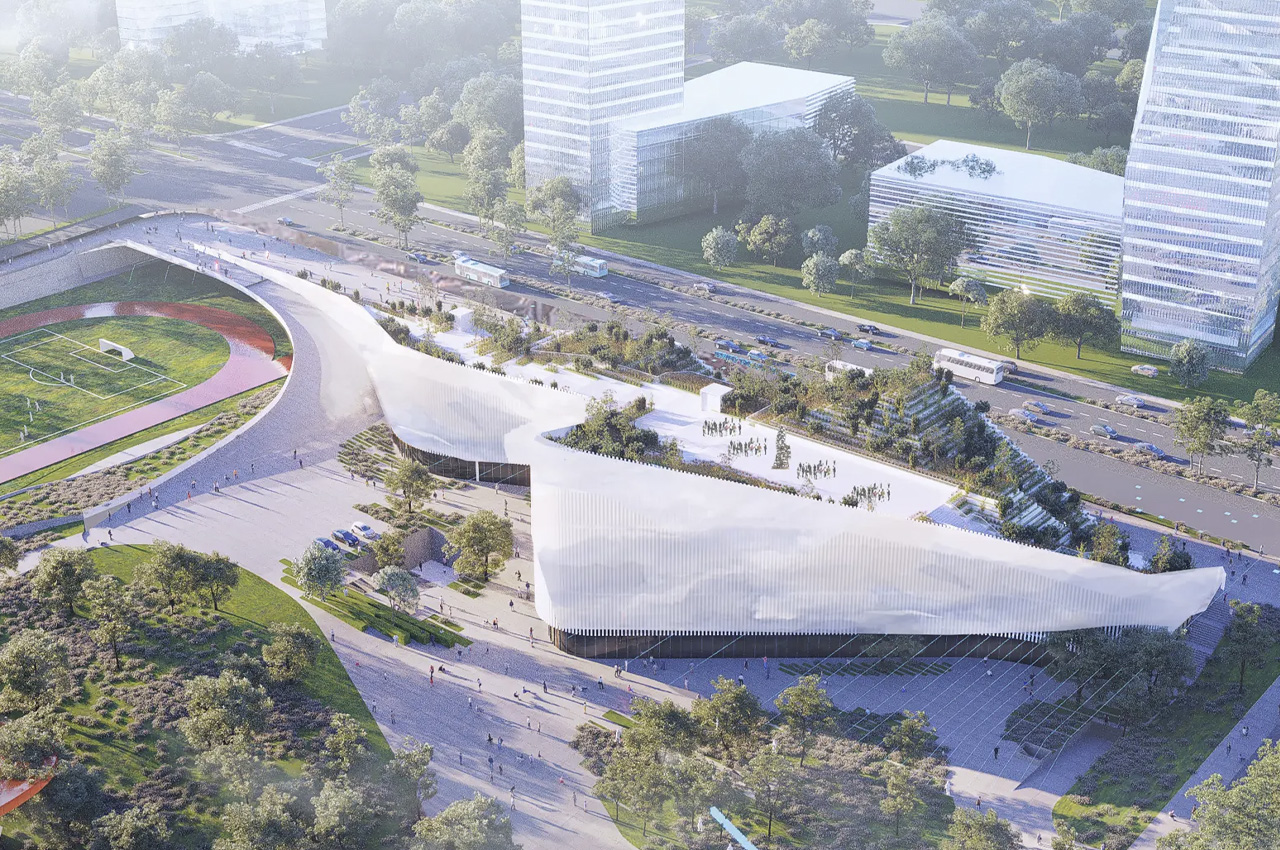
Stefano Boeri Architetti, the designer of the acclaimed Vertical Forests was commissioned to build a new technology museum in Xi’an, China. This anticipated structure will serve as a tree-covered man-made mountain, allowing visitors to explore on the top, and immerse themselves in nature in the midst of a chaotic metropolis. Dubbed the Culture CBD Modern Technology Experience Center, the building features a unique hilly form that is inspired by the area’s topography, including the mountains, rivers, and the rugged valley.
The building will have a curving concrete form amped with expansive glazing on the front-facing facade. The facade will be marked with horizontal slats for shading. The rooftop will feature a stepped exterior and include terraces and walkways, including loads of plants and trees. They will also contain different kinds of shrubs, as well as perennial herbs. Visitors can ascend to the top, and they will be welcomed by beautiful hanging gardens, as well as a massive viewing platform that offers serene views of the city.
“On the roof, the project includes a hanging garden in continuity with the park and a system of terraces that allows visitors to climb up to the building and gain a new look at the surrounding urban panorama,” said Stefano Boeri Architetti. “The green terraces accessible to citizens will be an integral part of the museum’s cultural program of events (the different areas will host screenings, activities, shows, and performances) – as well as offering citizens a new public outdoor space, with unprecedented views of the park and the city. ”
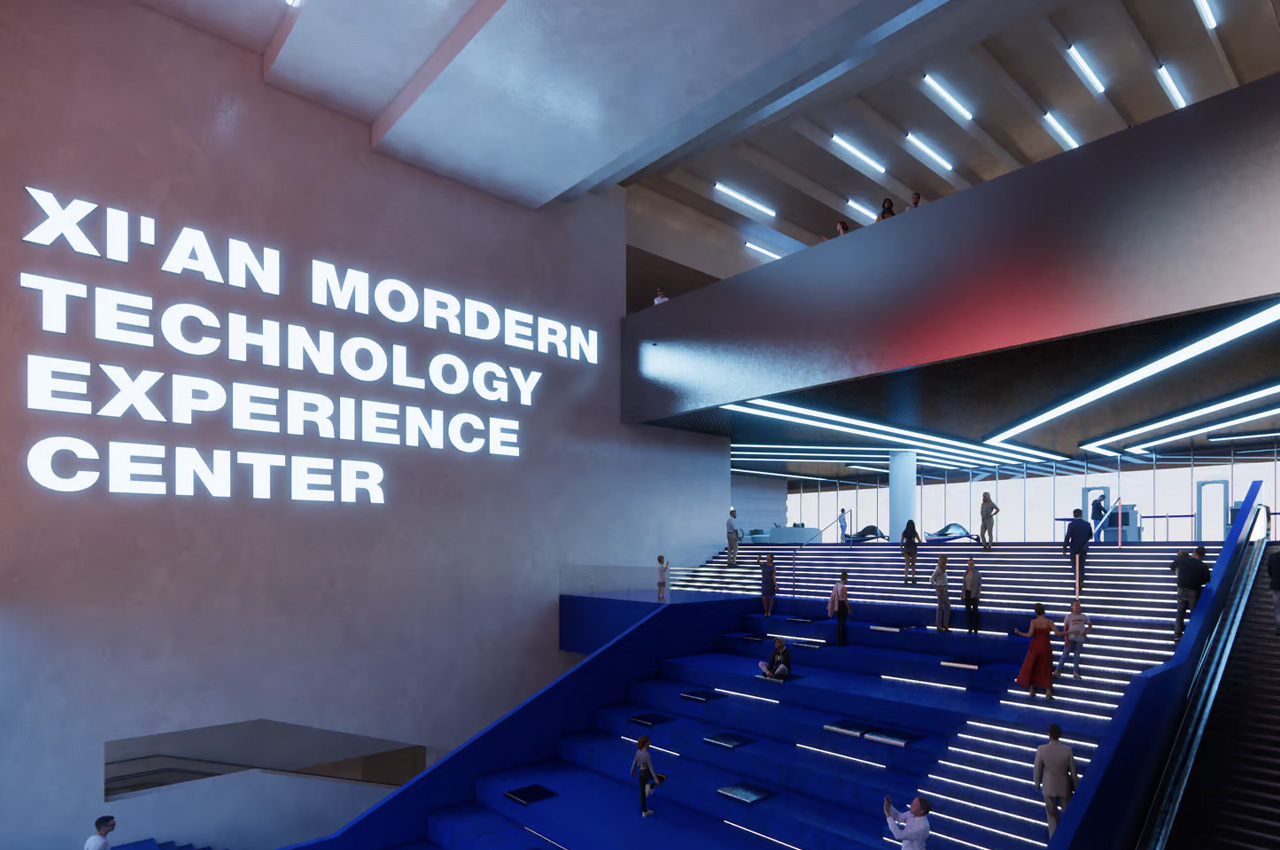
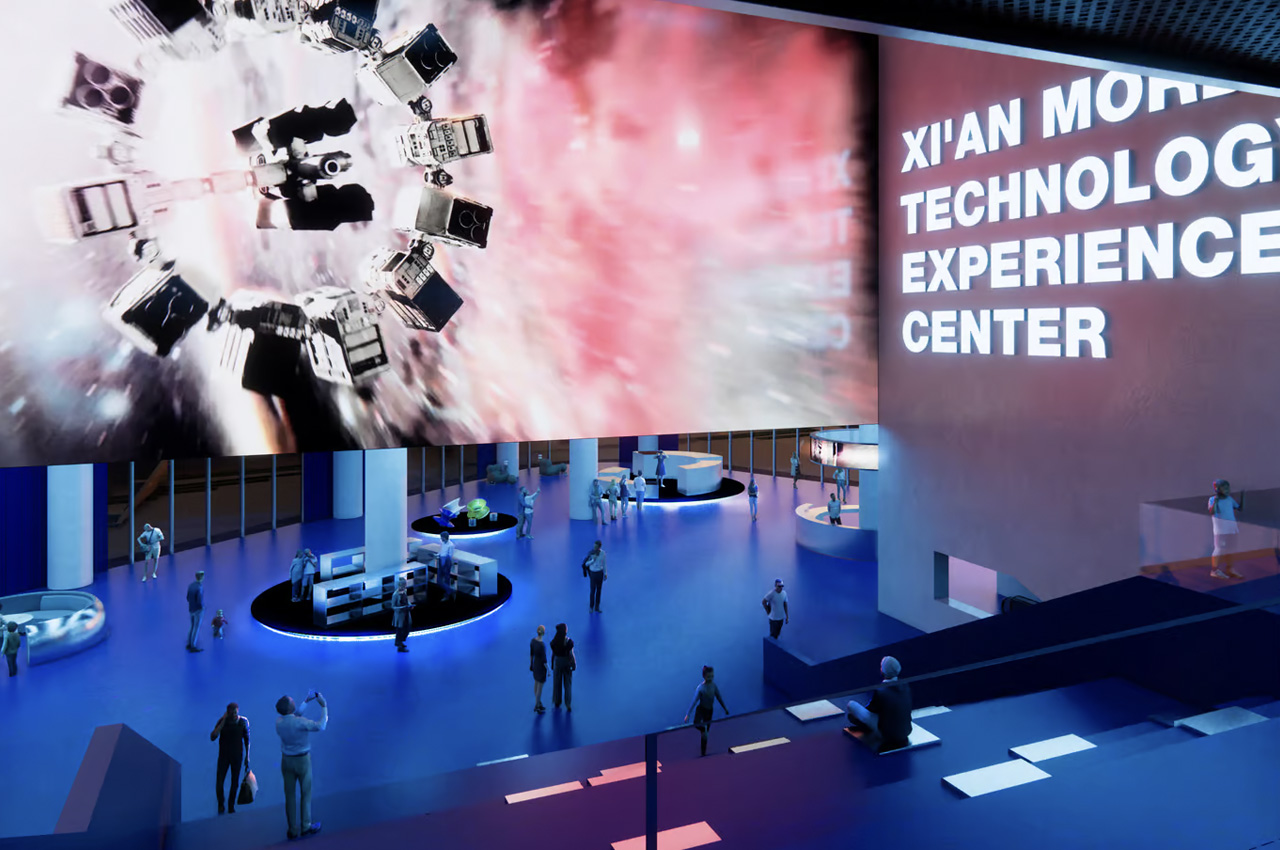
As you enter the museum, you will be greeted by four main exhibition spaces, as well as a temporary exhibition area, and multiple commercial zones. The various sections will be linked by a big double-height central atrium. The decor of the interiors will feature a vibrant and bright blue hue, which was selected on account of its significance and heavy usage in digital design and art. This is a popular choice in the world of digital design, and once you start looking out for it, you’ll find that it is quite widespread.
Currently, nature-inspired architecture in on the rise in China, and the cultural center will be another invaluable and wonderful addition. Although currently, we don’t know when it will be completed, the project is being headed by Stefano Boeri Architetti’s China-based satellite branch, instead of the main Italian studio.
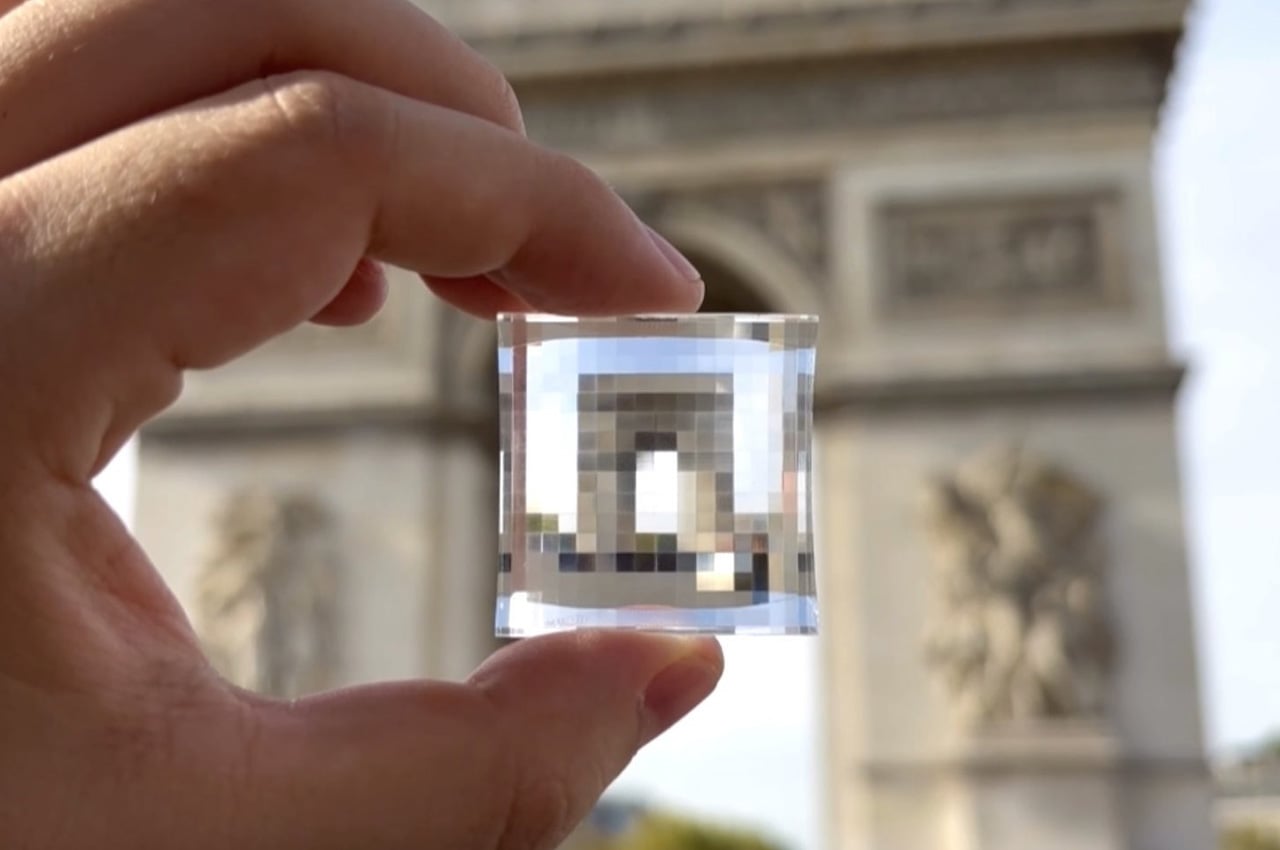
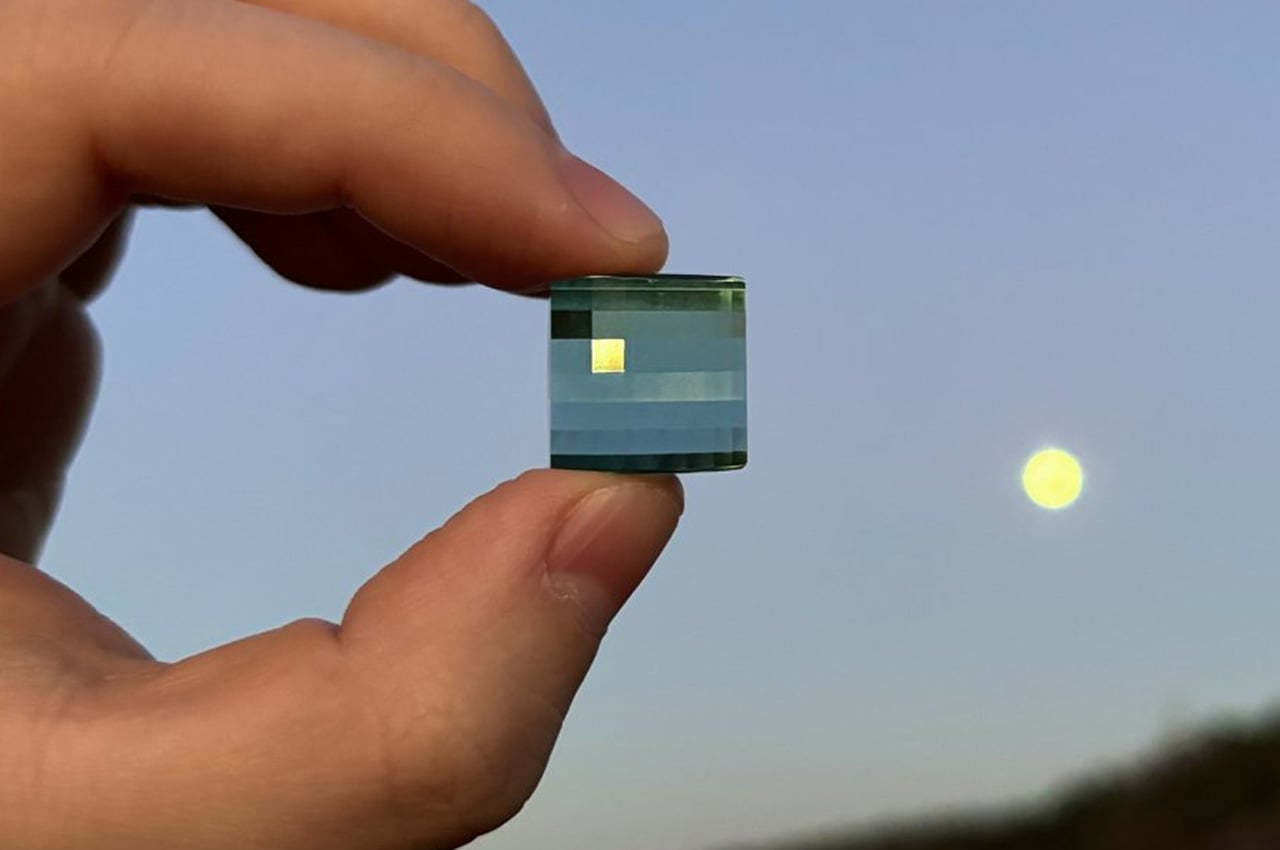
There is no denying that modern graphic resolutions have reached unachievable heights. Yet, there are many with an emotional connect to pixelated style: an art form that rekindles memories of early computers and video game graphics. If you’re one of them, who rejoices the blurring the lines between analog and digital, you can (when available) lay hands on the Pixel Mirror that creates an inverted pixel image of what’s behind it.
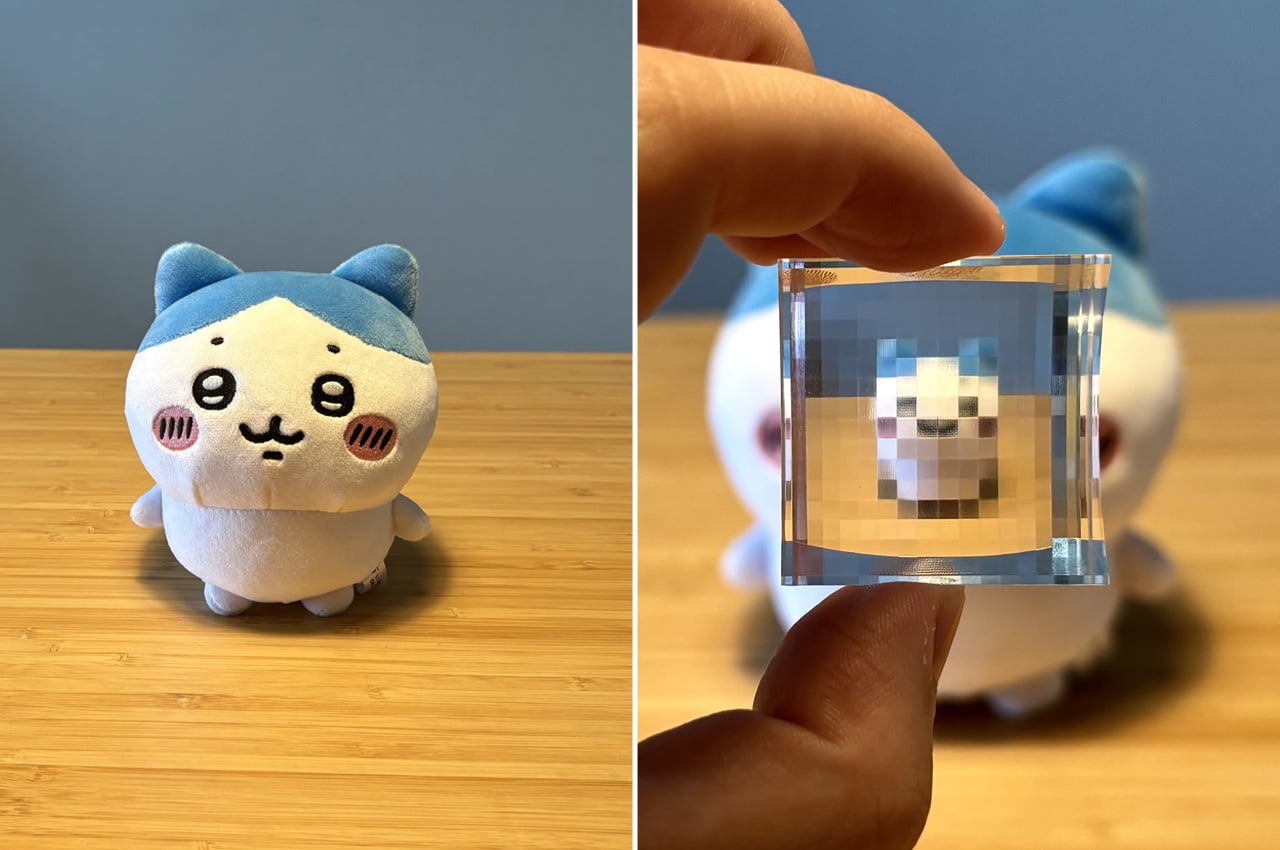
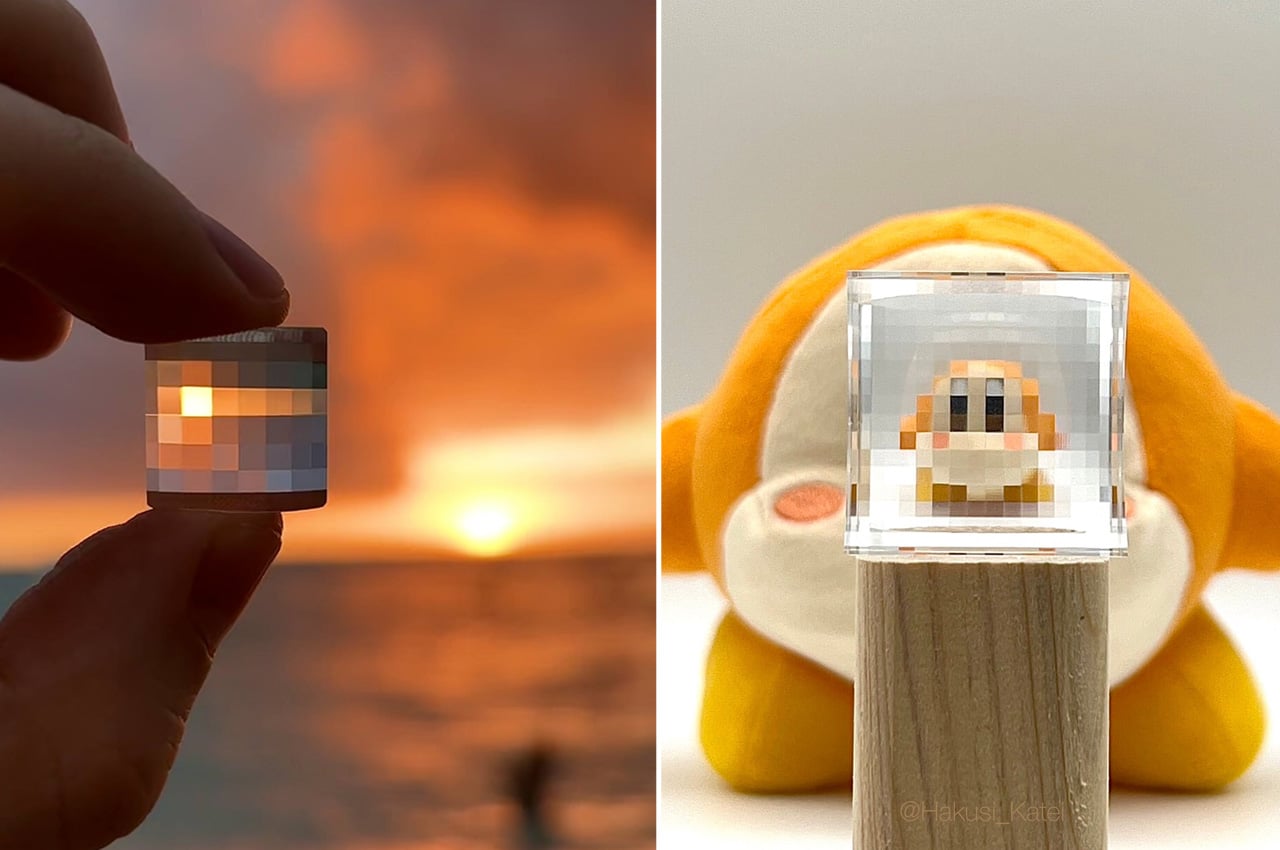
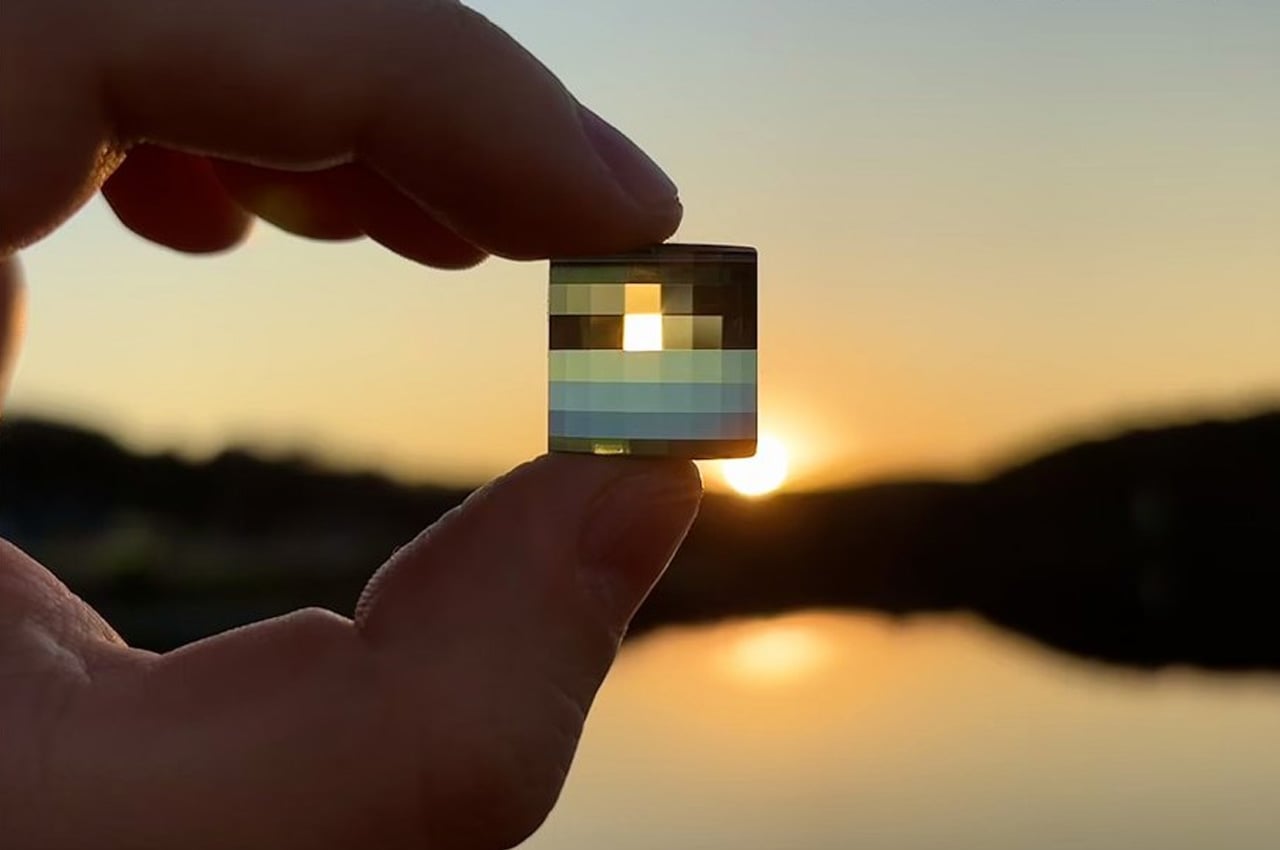
The wearable Pixel Mirror, developed by Hakusi Katei aka Monoli, a Japanese material designer and Ph.D. in engineering, is a crystal that reduces the resolution of what’s behind it – regardless of distance and movement – leaving you with a pixel art of what you are looking at.
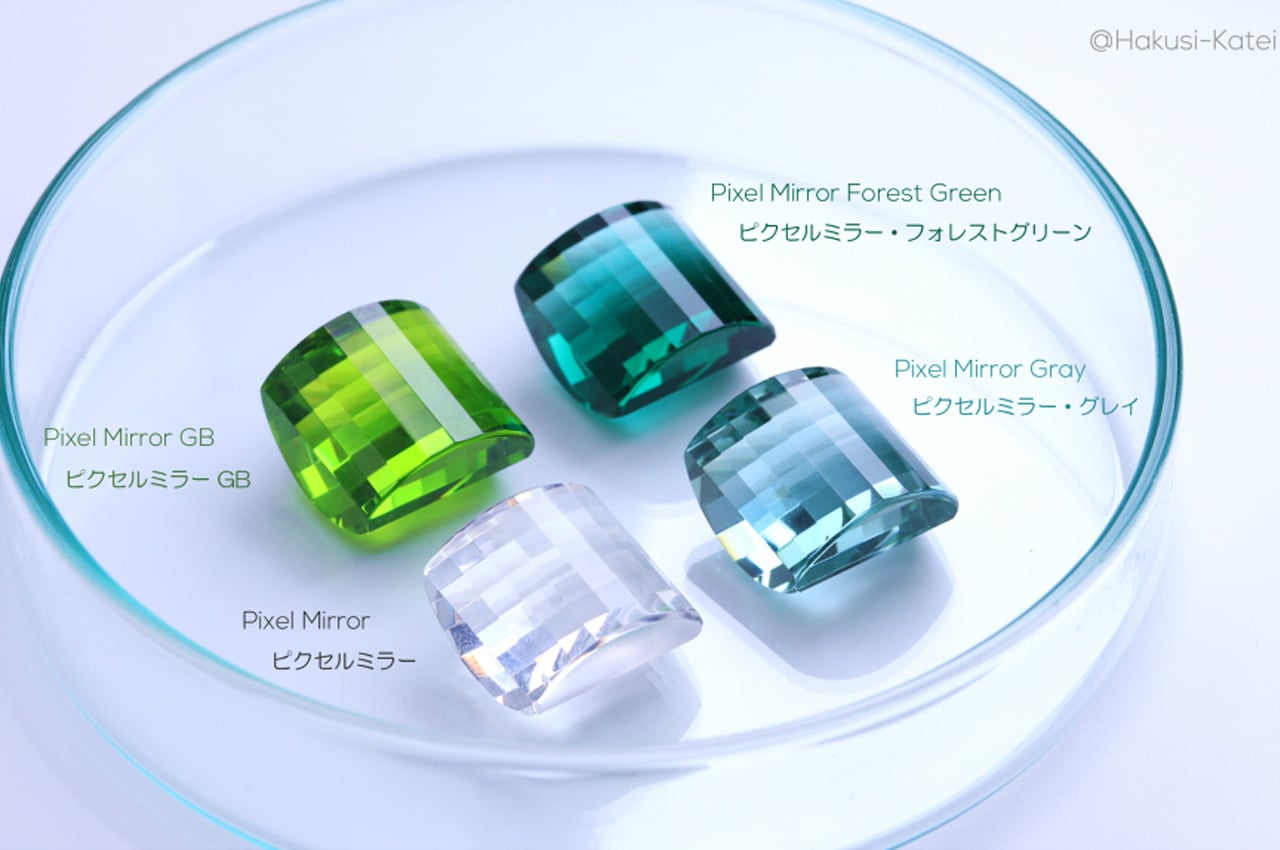
Made from light-colored transparent crystal in forest green, gray, and colorless variant, the Pixel Mirror is designed for use in bright environments. While for some of us, it’s only a gimmicky wearable (more on the aspect later) it might have real utility for artists and painters, who can leverage from the immediate, readable fat swatches of the scene behind the prism you’re looking through.
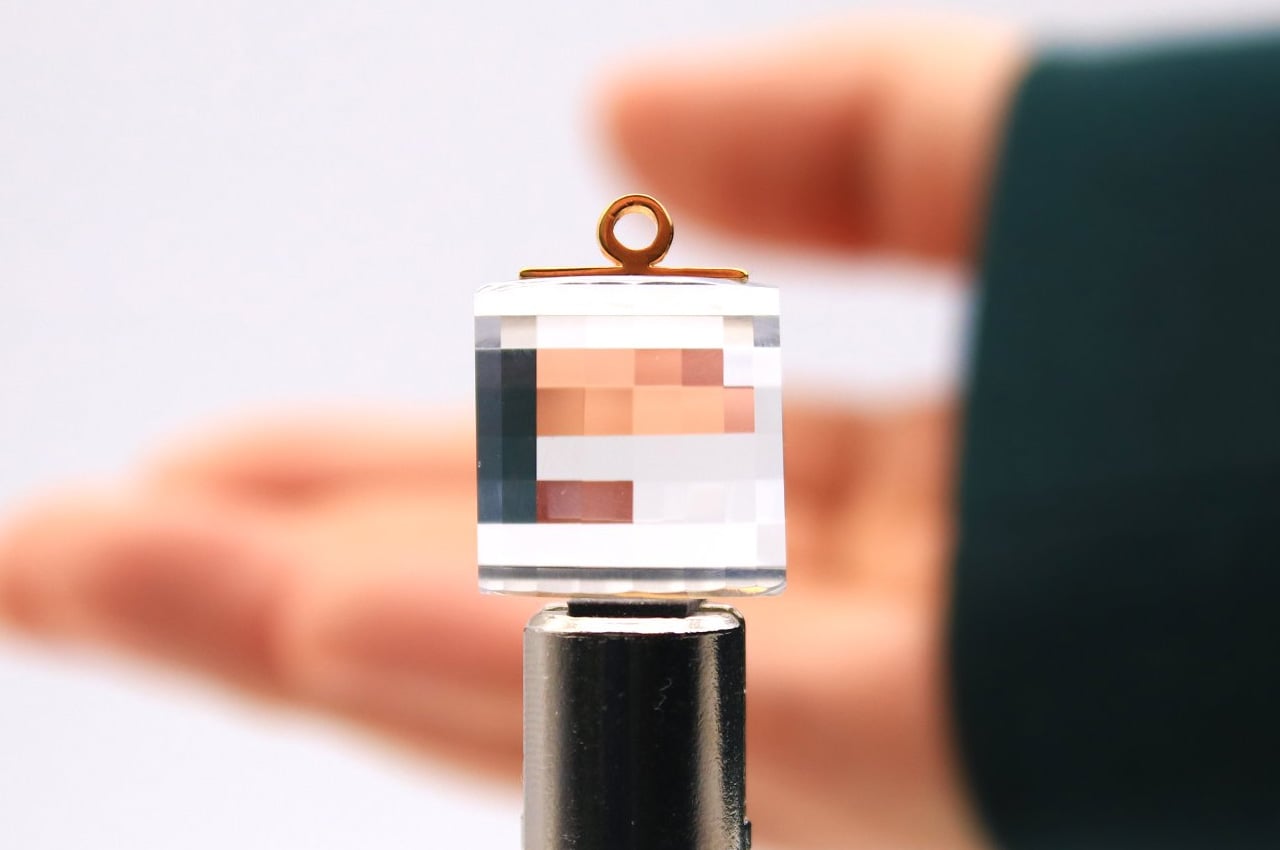
The Pixel Mirror measures 16mm x 16mm x 10mm, which means it’s small enough to be worn as a pendant in a necklace. Monoli’s series of wearable and handheld prisms are all handmade, and because of the nature of polishing natural stones, they are not perfect square “pixels”. They are handmade to suit the condition of the available stone.
After the Pixel Mirror, Monoli now has the Pixel Window in works, which as the artist puts it, “the lens minecrafts scenery without electricity.” Pixel Mirror is on sale in Japan for ¥ 19,800 (roughly $120). If you’re outside of Japan, you’ll want to keep an eye on Monoli’s tweets for information on international availability.
OpenAI seems to make headlines every day and this time it's for a double dose of security concerns. The first issue centers on the Mac app for ChatGPT, while the second hints at broader concerns about how the company is handling its cybersecurity.
Earlier this week, engineer and Swift developer Pedro José Pereira Vieito dug into the Mac ChatGPT app and found that it was storing user conversations locally in plain text rather than encrypting them. The app is only available from OpenAI's website, and since it's not available on the App Store, it doesn't have to follow Apple's sandboxing requirements. Vieito's work was then covered by The Verge, and after the exploit attracted attention, OpenAI released an update that added encryption to locally stored chats.
For the non-developers out there, sandboxing is a security practice that keeps potential vulnerabilities and failures from spreading from one application to others on a machine. And for non-security experts, storing local files in plain text means potentially sensitive data can be easily viewed by other apps or malware.
The second issue occurred in 2023 with consequences that have had a ripple effect continuing today. Last spring, a hacker was able to obtain information about OpenAI after illicitly accessing the company's internal messaging systems. The New York Times reported that OpenAI technical program manager Leopold Aschenbrenner raised security concerns with the company's board of directors, arguing that the hack implied internal vulnerabilities that foreign adversaries could take advantage of.
Aschenbrenner now says he was fired for disclosing information about OpenAI and for surfacing concerns about the company’s security. A representative from OpenAI told The Times that “while we share his commitment to building safe A.G.I., we disagree with many of the claims he has since made about our work” and added that his exit was not the result of whistleblowing.
App vulnerabilities are something that every tech company has experienced. Breaches by hackers are also depressingly common, as are contentious relationships between whistleblowers and their former employers. However, between how broadly ChatGPT has been adopted into major players' services and how chaotic the company's oversight, practices and public reputation have been, these recent issues are beginning to paint a more worrying picture about whether OpenAI can manage its data.
This article originally appeared on Engadget at https://www.engadget.com/openai-hit-by-two-big-security-issues-this-week-214316082.html?src=rss
Making a video game on any platform takes hard work, and even if a game is finished it’s still not immune to delays (see: Duke Nukem Forever, L.A. Noire and Diablo III.) A group of Italian programmers had to wait 22 years to finally see the release of their fantasy hack ‘n slasher Kien for the Game Boy Advance (GBA) — a console whose last units went into production in 2009. It's likely the most-delayed game in history, according to a feature inThe Guardian.
Kien first started its long development in 2002. A small group of Italian programmers formed AgeOfGames, the first company in the country to start production on a GBA title. Two years later, they had a finished product, but the game never saw store shelves because its publisher deemed it too much of a financial risk to release.
In the interim, AgeOfGames switched to making educational games to stay in business,and the life cycle of the GBA came and went. Then the retro gaming boom gave the Italian studio an opportunity: a new publisher that specializes in classic console games, incube8 Games, took interest. Now Kien is available in cartridge form, and playable on original hardware.
Retro gaming in general is big business these days and more accessible than ever. There are all kinds of new consoles designed to play hundreds of thousands of different titles from yesteryear. The iPhone finally began allowing apps that emulate all sorts of classic consoles in its online stores earlier this year. There’s even been a renaissance of new games using old fashioned graphics. You’re never far away from the games and experiences that defined your childhood.
Kien is available to purchase from incube8's website for the (only slightly shocking) price of $60.
This article originally appeared on Engadget at https://www.engadget.com/possibly-the-most-delayed-video-game-in-history-is-finally-available-on-the-game-boy-advance-205150837.html?src=rss
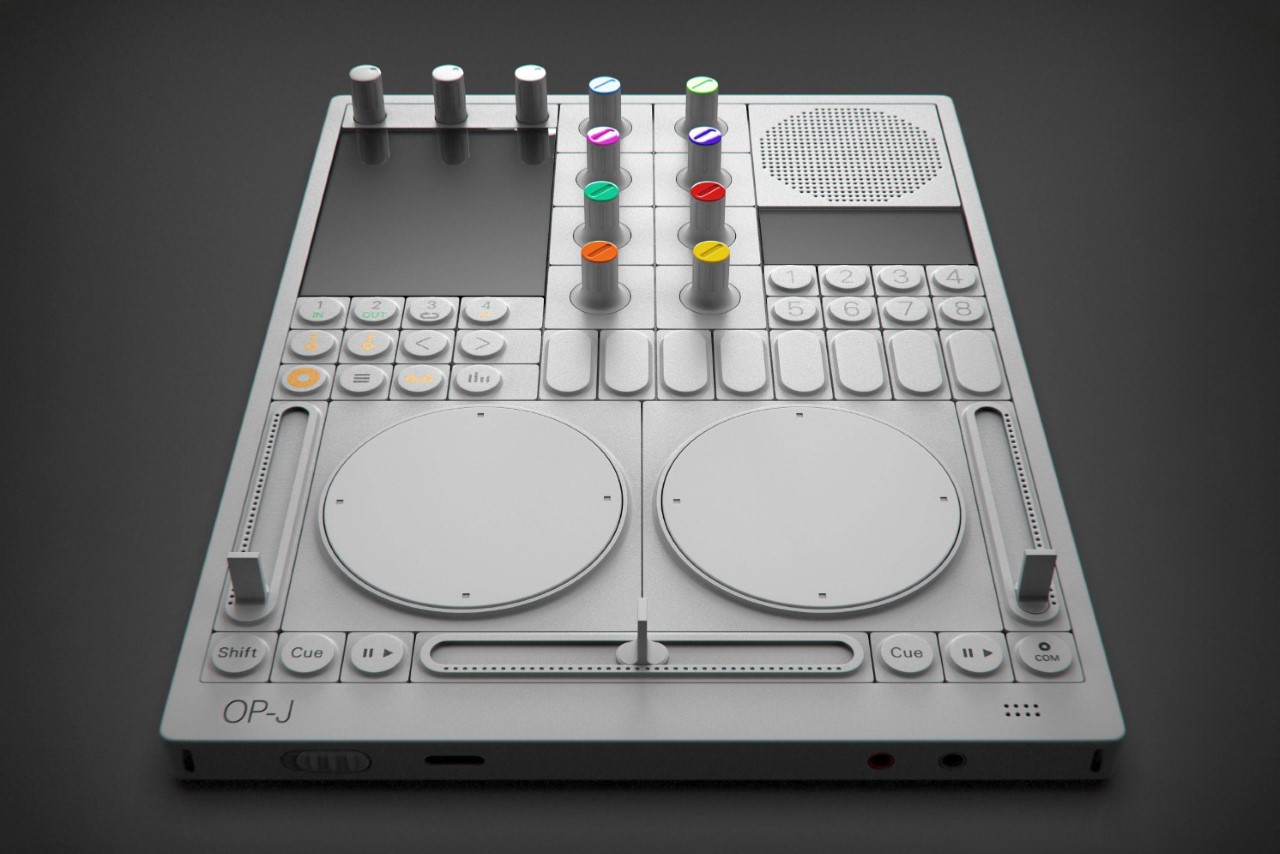
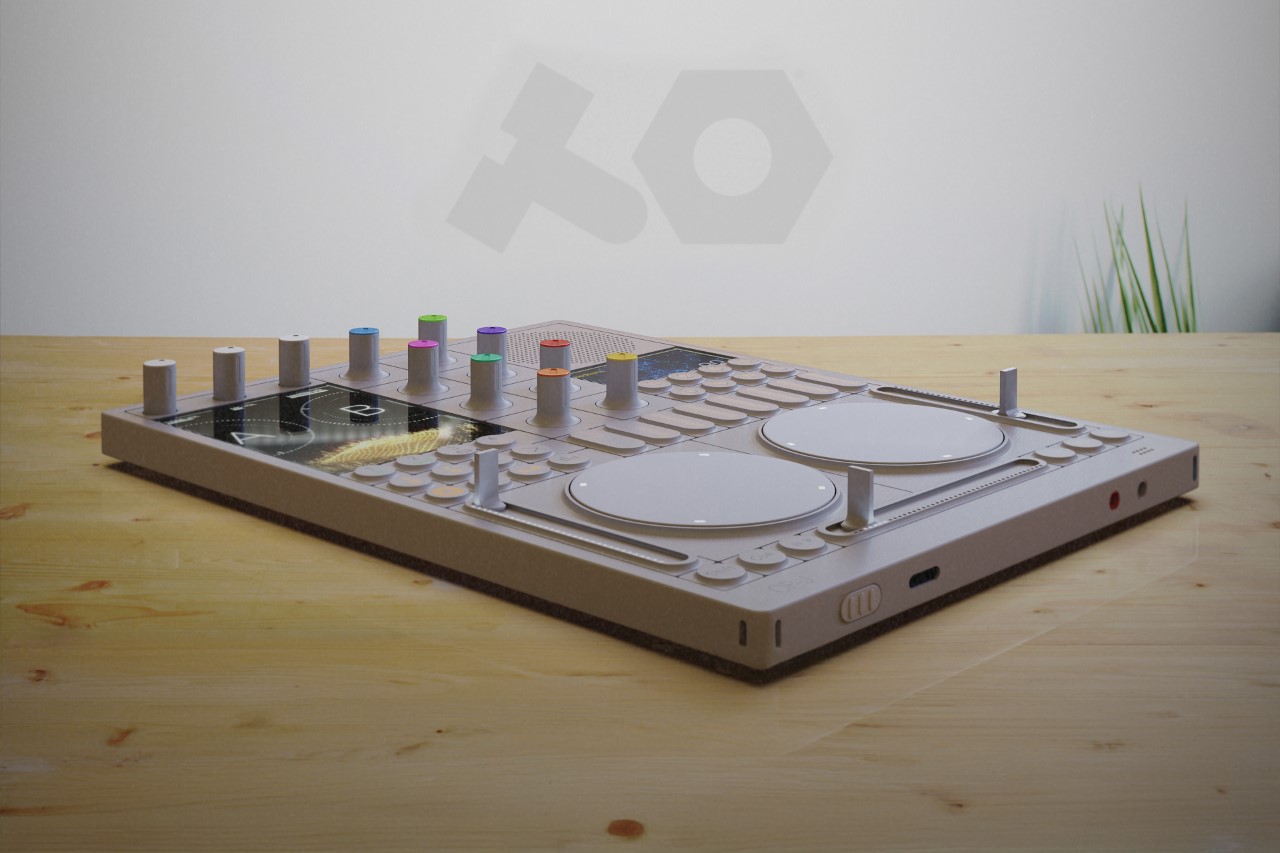
Teenage Engineering has become an inseparable part of the music community in the past decade. Ever since their OP-1 synth debuted on Swedish House Mafia’s music video for their song ‘One’, the company has been on a rise, launching Pocket Operators, recording/playback gear, turntables for children, and even venturing into phones for Nothing and the R1 AI device for Rabbit. Their position in the new-age music industry, however, remains cemented for the next few years to come – but if there’s one device missing from their music-making tech repertoire, it’s a great DJ console. While most people love making music, there’s a case to be made that if you want to connect with your listeners, you need to perform your music too – and deejay consoles help artists do just that. Designed to bridge this product gap, Chris Matthews designed the OP-J, a Teenage Engineering-inspired console for disc jockeys looking to play and remix tunes.
Designer: Chris Matthews
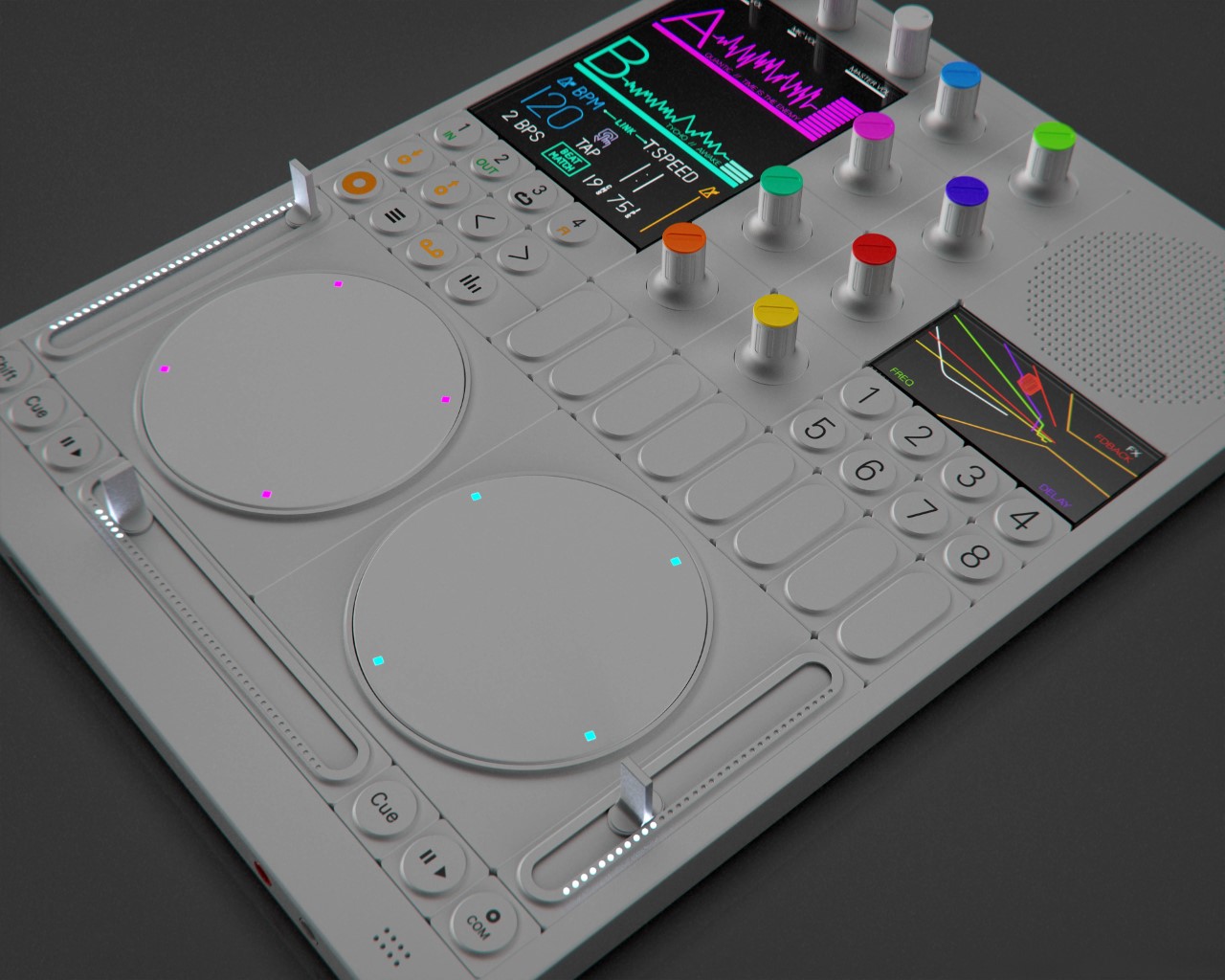
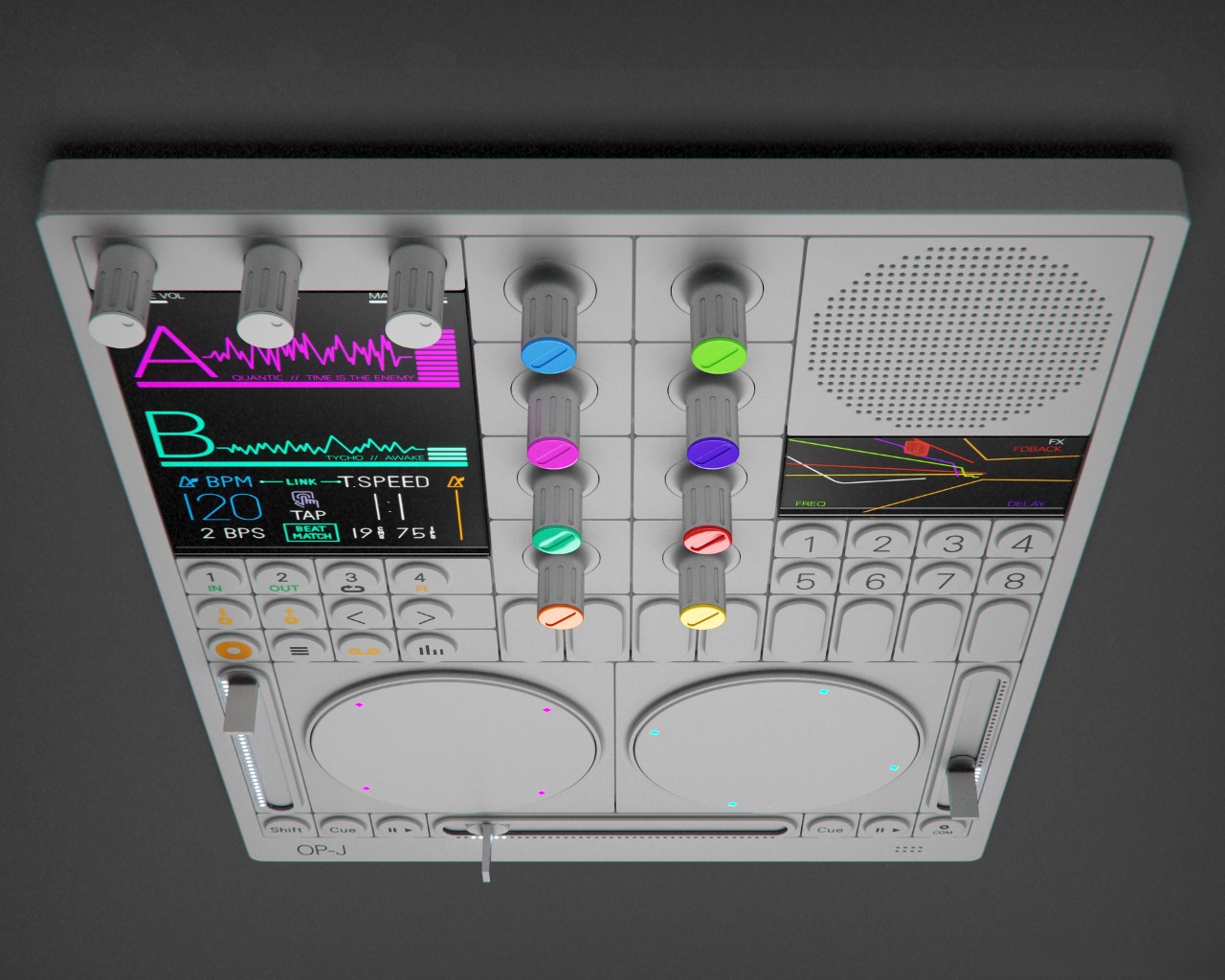
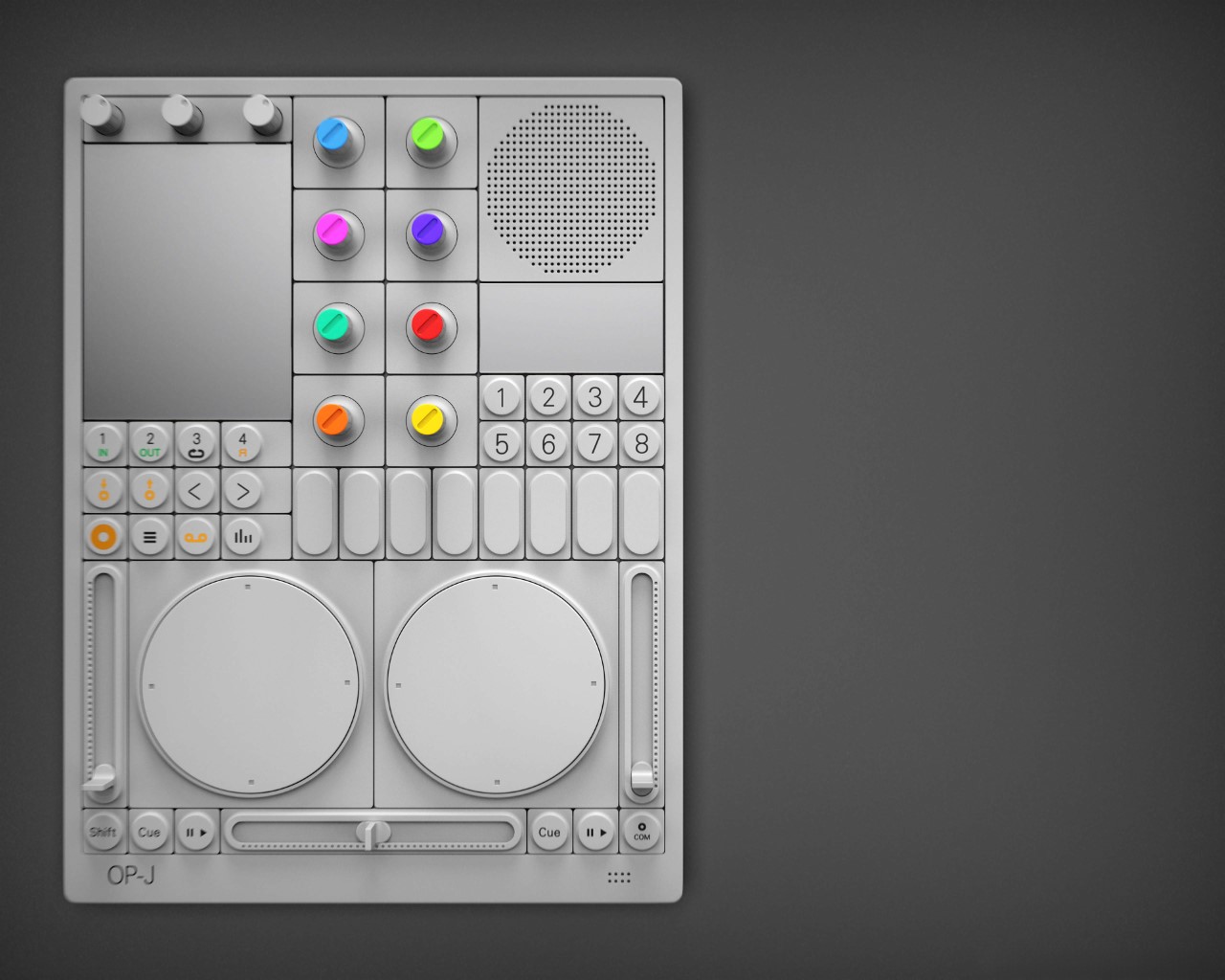
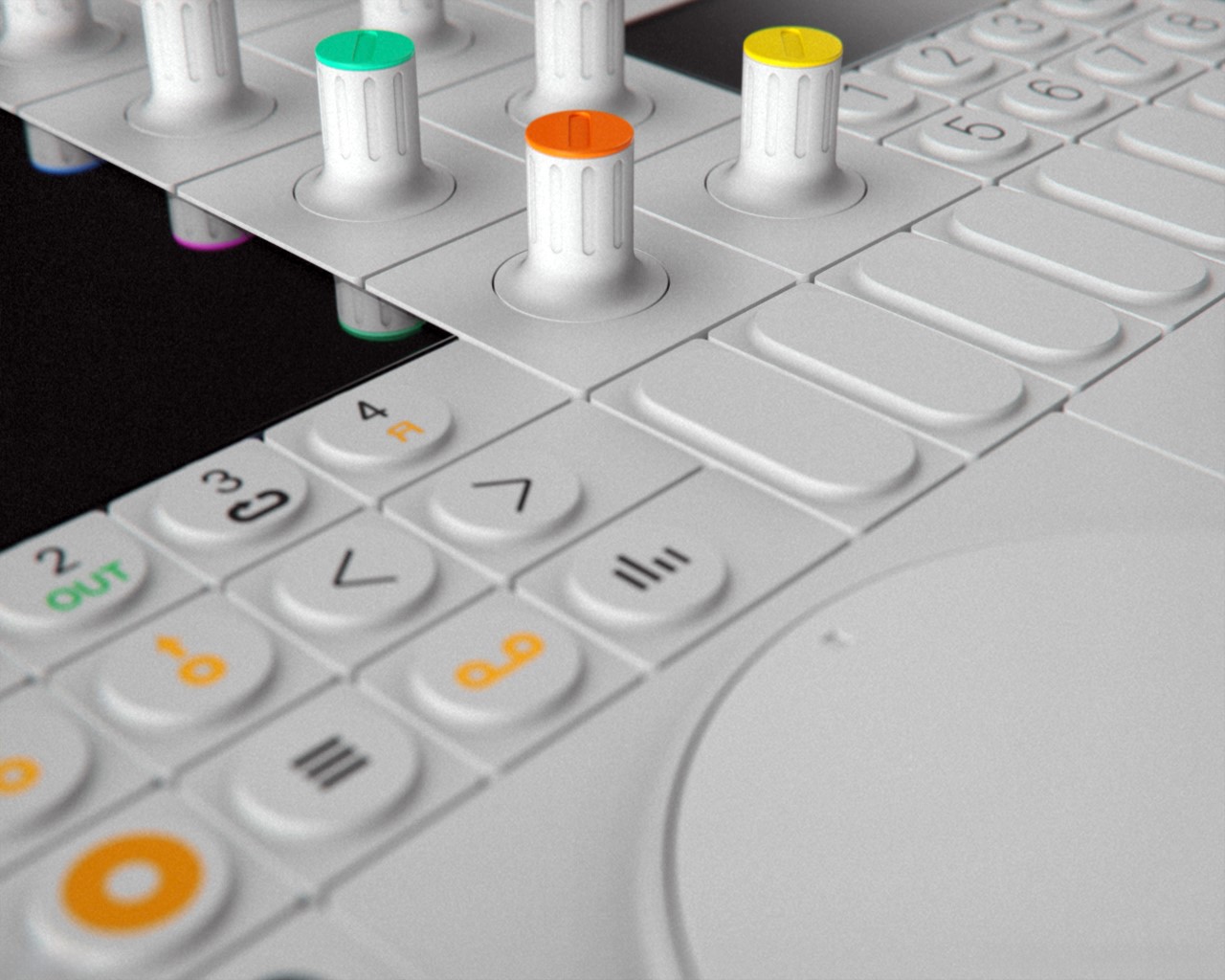
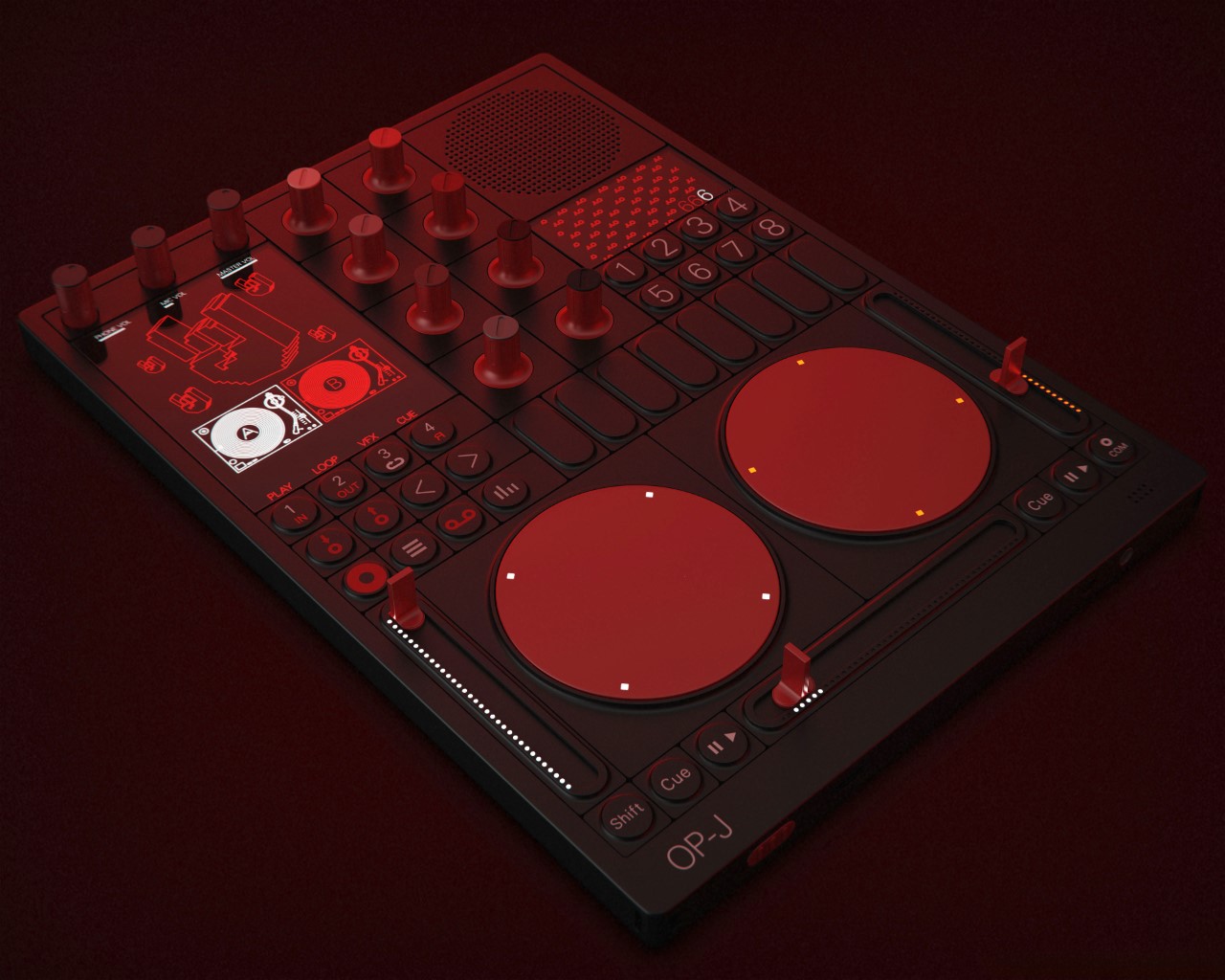
Deejay consoles don’t really need to be portable, but there’s an understated beauty to how sleek the OP-J is. It’s about as thick as its synthesizer sibling, with the same design language running through. You’ve got two rotating discs, knobs, keys, buttons, cross-faders, a speaker, and two screens that guide you through playback as well as effect settings.
Keeping in theme with the company’s focus on music creation, the OP-J allows you to do more than just play and merge tracks. Sure, it’s a pretty capable DJ console, with everything a disc jockey would need to get on stage and drop the bass… but you’ve got 8 keys and 8 more buttons to record/trigger loops, play melodies, or activate certain intros/outros to spice up your songs. Although it isn’t shown here, I wouldn’t be surprised if you could hook the OP-1 to the setup and take your performance to even higher levels.
Color-coded knobs let you control effects and envelopes, while a dedicated display just for the effects lets you monitor what you’re up to. It’s unusual for a DJ console to come with its own speaker, but just in case you want to practice in the privacy of your home or hotel room, the OP-J lets you nerd out without needing a separate speaker system. Yes, audio jacks on the bottom let you hook external speakers if you can, or headphones so you can preview tracks before cueing them.
The OP-J is just a fan-made concept for now, but if someone from Teenage Engineering reads this, we all could use an OP-style deejay console! Besides, let’s also take some time out to appreciate the Darth Vader-esque black and red version below?!
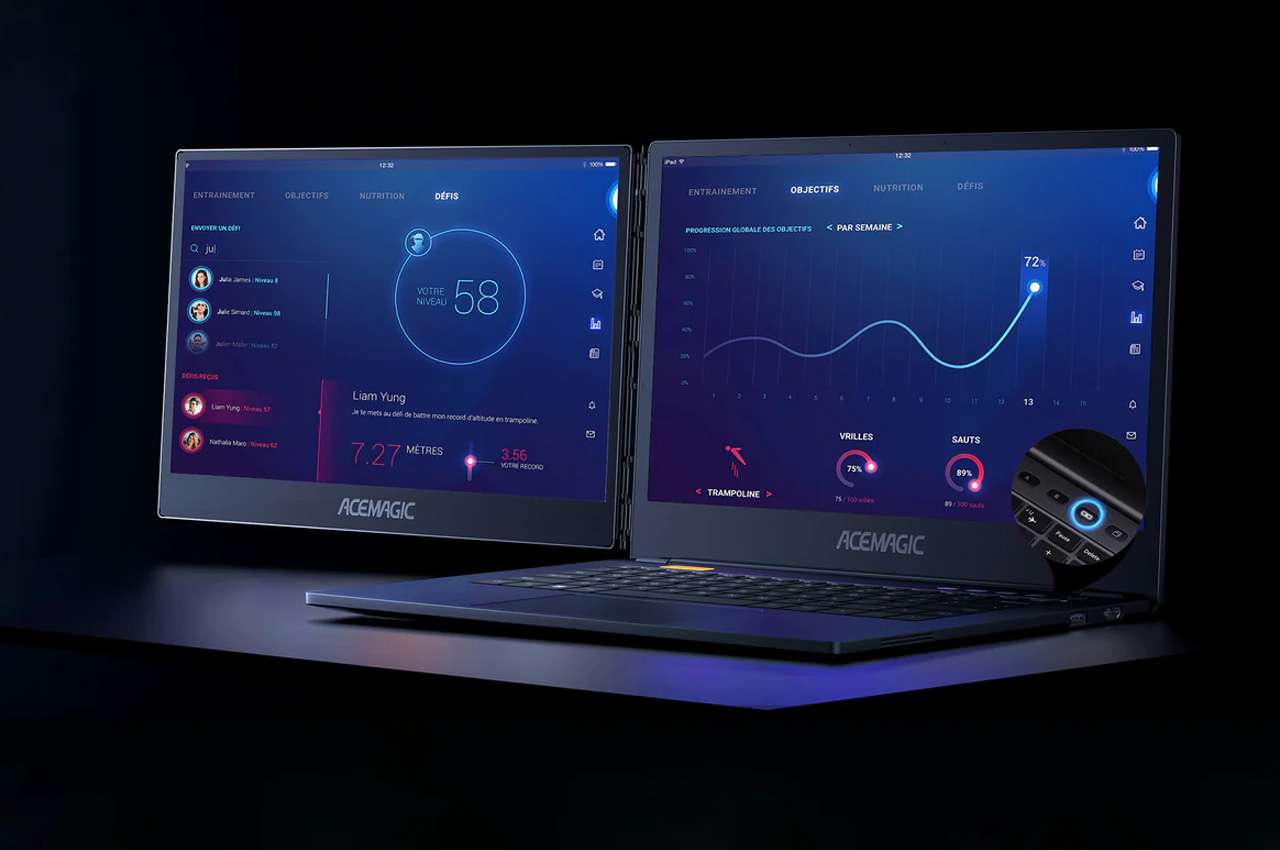
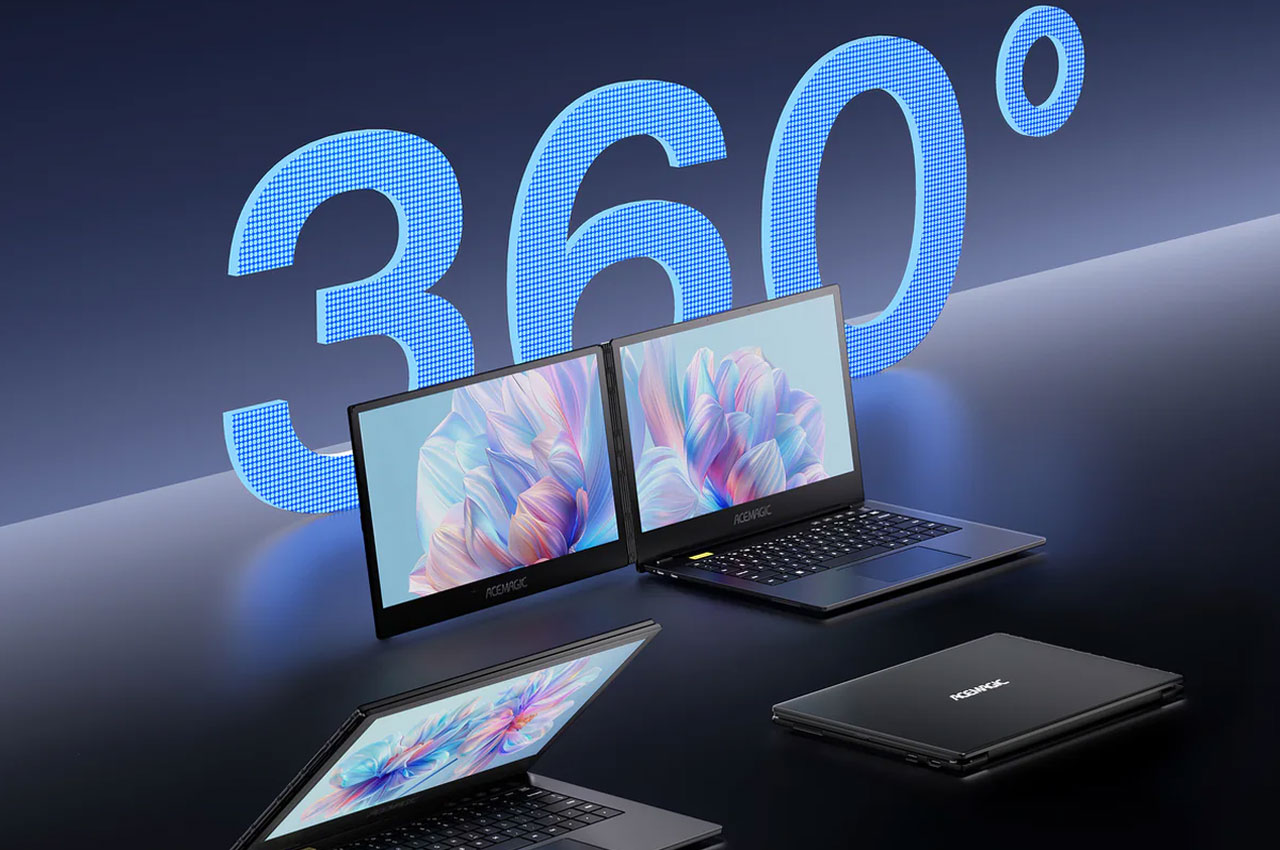
Dual screen laptops are still in their infancy. Whether there are takers for such a technology, doesn’t matter; OEMs are constantly developing laptops with multiple screens. Chinese company Acemagic is the latest entrant in the category. After having surprised us with a gaming router-esque mini-PC previously, Acemagic has now announced the X1 laptop: considered the world’s only horizontally foldable 360-degree laptop.
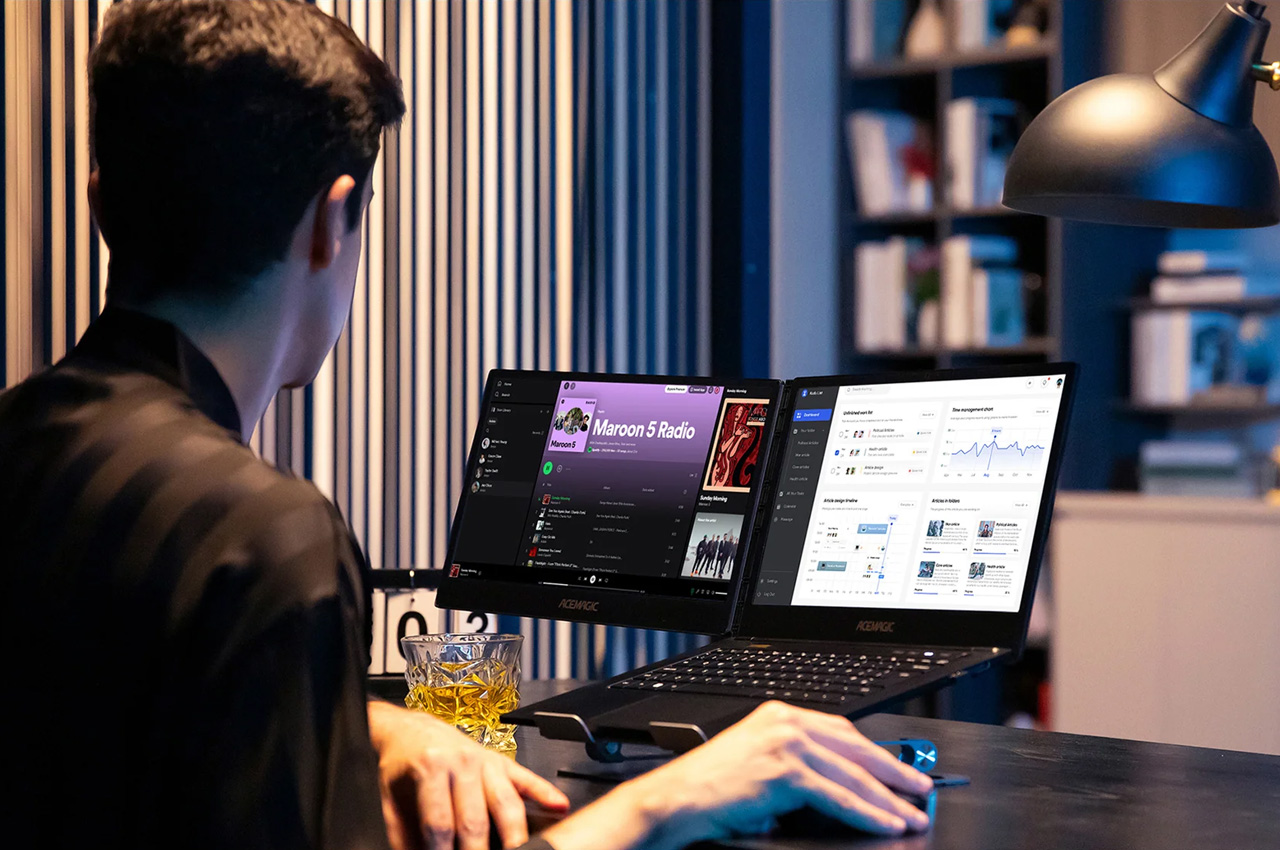
It was back at the Computex 2024 in Taiwan when Acemagic first revealed its dual screen laptop. It was then called the Z1A, but eventually now, when it was launched, it was called the X1 and it is meant for consuming different content simultaneously, working on different screens, or multitasking work without switching between screens – as I end up doing all day, with a 27-inch monitor attached to my usual single screen laptop.
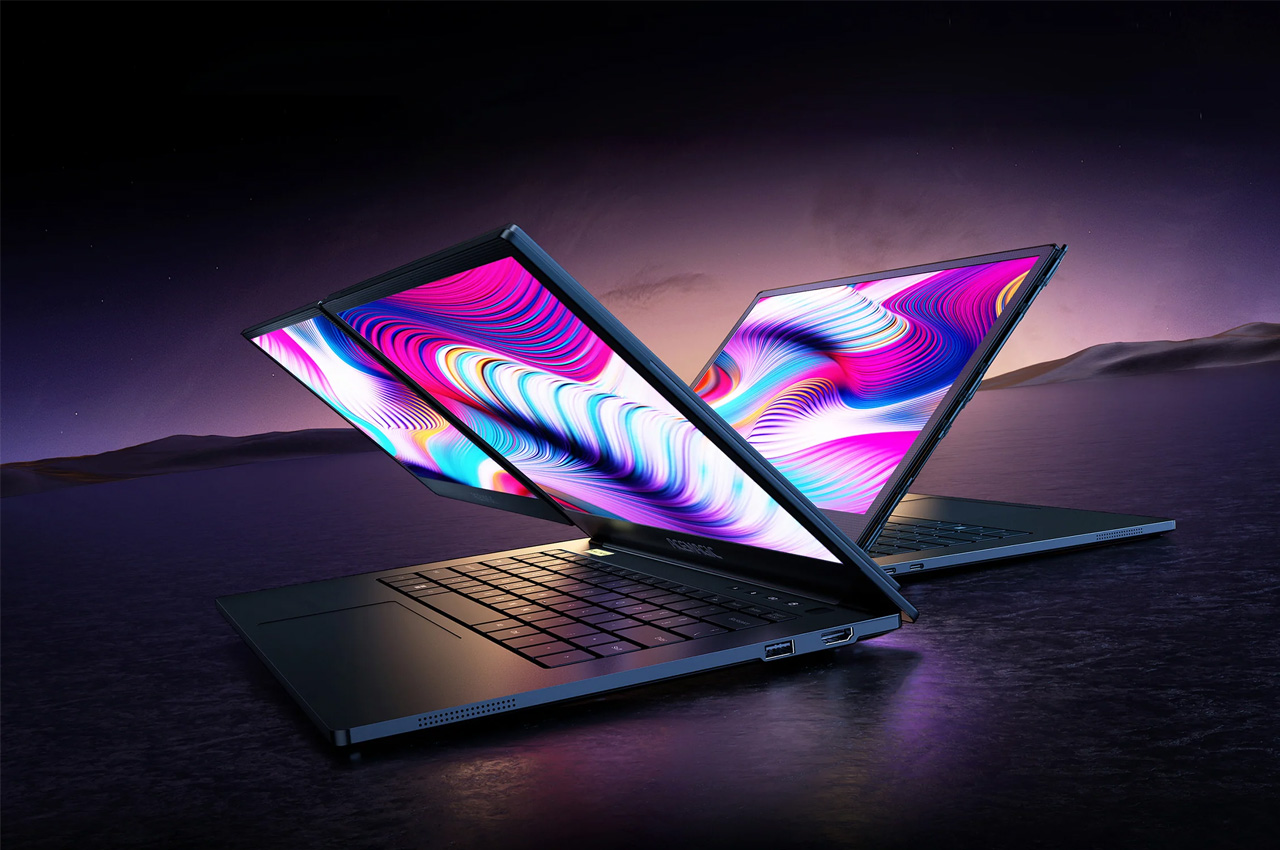
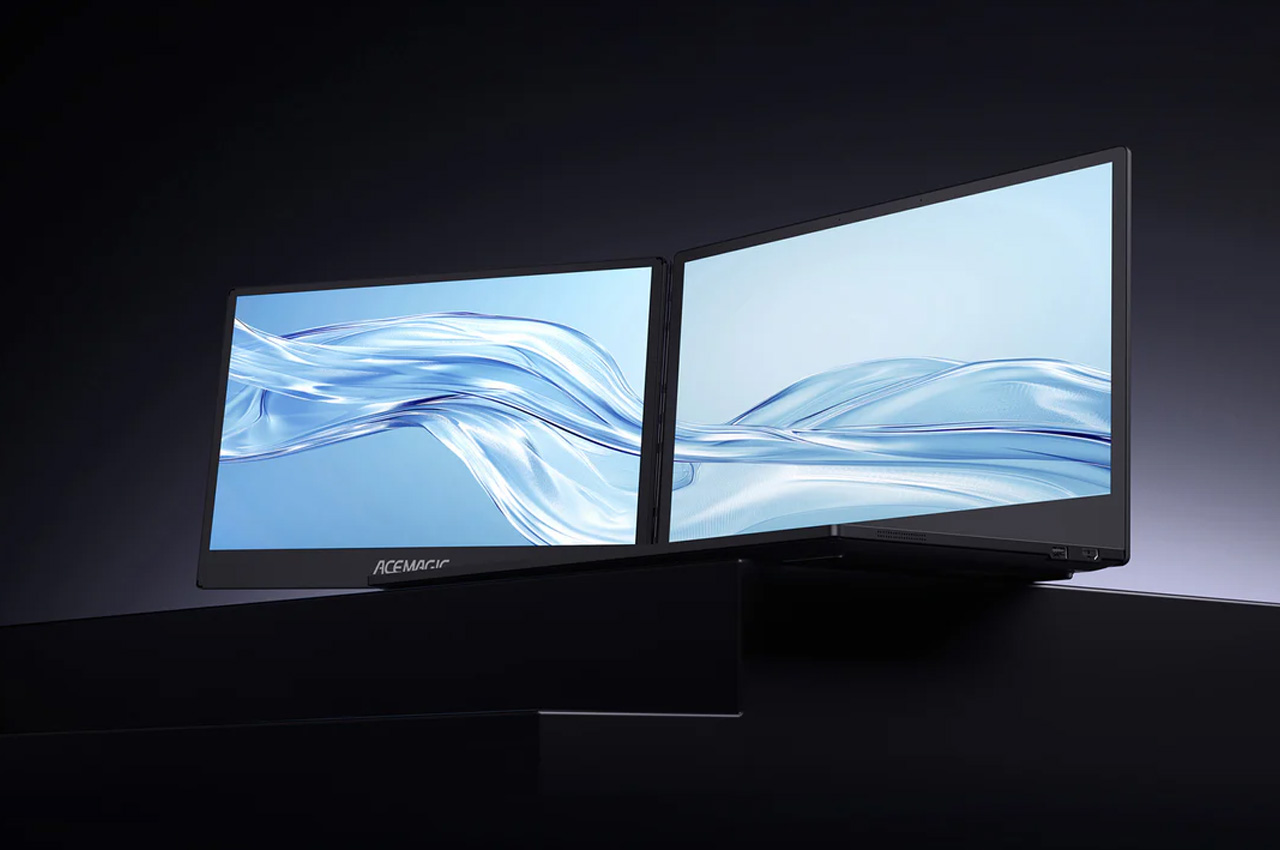
The Acemagic X1 is a usual laptop with another screen attached horizontally, which can swivel all the way back, flush against the primary display. Comprising two 14-inch 1080p displays, the laptop allows users to fold the screens down over the keyboard for use in tablet mode with one screen. Whatever the use case you choose, the 360-degree rotation and folding dual screen laptop is meant for business and productivity usage.
So, you can during work, swivel the second screen backward and present the slides to your team sitting across the table from you. Or maybe, when your little one is disturbing you while working; you can swing the additional screen all the way back to play their favorite cartoon while you continue working unhindered. There are a lot of use case possibilities, but it’s not the most powerful machine for your needs.
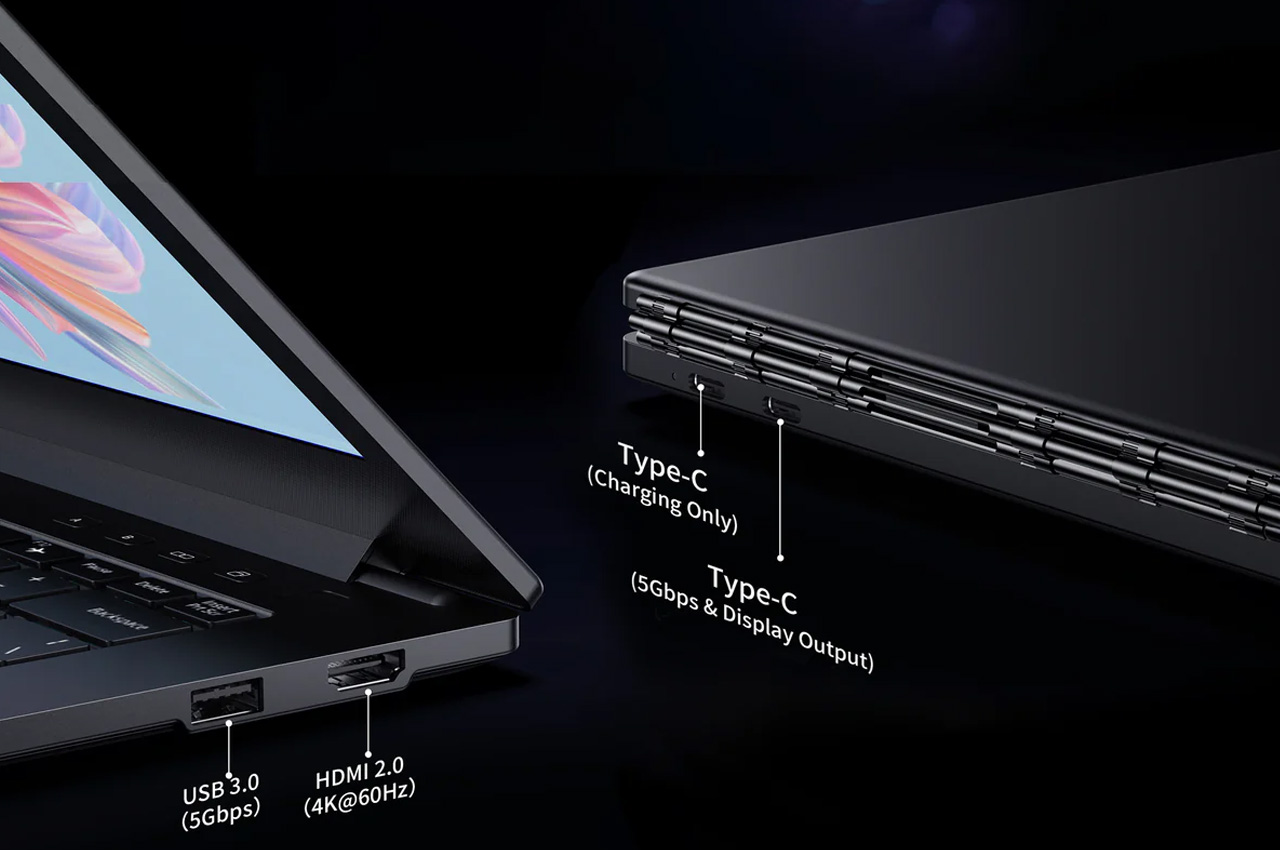
Under the hood, the Acemagic X1 dual screen laptop runs a two-year-old Intel Core i7 1255U processor. It’s paired with 1 TB 3.0 SSD for onboard storage and features 16GB DDR4 RAM. For connectivity, the laptop supports up to 5Gbps of transfer speeds and has a USB-A, 2 USB-C (one only for charging), and an HDMI 2.0 ports. With its distinctive appeal, the laptop will make a buzz but for now, we don’t have a price or its release date to share.
Earlier this year, Nintendo said it would shut down all Wii U servers, putting an end to multiplayer, co-op and other services. Now, the company has announced that it's ending Wii U repairs as well, effectively giving last rites to the loveable but not very popular console.
In May, Nintendo forewarned the end of Wii U repairs. "The period for retaining repair parts as stipulated in the repair service regulations has expired, so as soon as the current stock of parts is depleted, repair services will end," the company wrote in a service notice. The Wii U is now listed as no longer eligible for repair on an end-of-life service page, just as Nintendo previewed.
The Wii U launched in late 2012 as a successor to the Wii, but it failed to catch on with consumers, selling just 13.56 million units. It was eventually replaced by the Switch, which has gone on to more than 10 times the sales at 141.3 million units.
The defining feature of the Wii U was its Gamepad with a built-in 6.2-inch touchscreen. That allowed you to play either fully handheld or connected to a TV, a new feature at the time. The other key selling point was the first-party games like Splatoon, Super Smash Bros. for Wii U, Mario Kart 8 and Super Mario 3D World. At the time, those offered local multiplayer action you couldn't find anywhere else.
It was also just a quirky, weird and fun console that "wiggled its way into the hearts of many players, including myself," Engadget's Jessica Conditt wrote back in 2015. Nintendo is set to announce its successor to the Switch before March 2025, but if you're still playing on Wii U, you'd need to take extra good care of it now that repairs will be far more challenging.
This article originally appeared on Engadget at https://www.engadget.com/nintendo-ends-wii-u-repairs-190023430.html?src=rss
The EV market is hotter than ever in the US, but there are only a handful of options for families who need three rows of seats and tons of storage space. There's the Rivian R1S, a beautiful and well-reviewed car, but one that's firmly in luxury territory with a starting price of $75,900. Tesla's Model X is similarly pricey, and its tiny rear row isn't suited for adults (the smaller Model Y's third row option is even worse). That's why Kia's EV9 is such a big deal. It offers even more internal space than the company's massive Telluride, and it starts at a more palatable $54,900 (along with a $1,495 destination charge).
It makes sense why car makers were more focused on smaller EVs up until now. Large batteries are expensive, and many people don't really need three rows of seats. But I'm a dad of two kids still using child car seats, and we also need to travel with my two parents on occasion. So the additional room is a must. And even without rear passengers, we often need extra room to lug two kids' worth of gear to local parks (especially if we bring along our wagon stroller).
There are, of course, legitimate reasons to be wary of large EVs. Like any massive vehicle, they're more dangerous for pedestrians, especially when coupled with the near-instant torque power of EVs. They're also far worse for the environment than smaller cars, because they require those aforementioned large batteries and all the rare earth material they contain. If I lived in a city with usable public transportation, I'd give up on the EV9 in an instant. But for now I'm stuck traversing Atlanta suburbs, so the EV9 (ideally a pre-owned one in a few years) is our best worst option.
A Tesla Cybertruck parked next to the Kia EV9.
Photo by Devindra Hardawar/Engadget
Design
Like Kia’s EV6, the EV9 (available in Light, Land, Wind and GT-Line configurations) looks striking up close. It doesn't shy away from being a large SUV — its boxiness is a feature, not a bug. And what it lacks in curves, it makes up for with polygonal body panels that look futuristic without being garish like Tesla’s Cybertruck. From the front, the EV9 pairs vertical headlights with customizable LEDs. (You have to buy additional lighting patterns separately, though, a truly unfortunate choice by Kia.)
Kia didn't stray too far from the original EV9 concept it revealed in 2019, and that's a good thing. There aren't any rear-hinged suicide doors, but I don't miss them. Structurally, standard door frames are safer for passengers, especially during accidents.
Photo by Devindra Hardawar/Engadget
Interior
Upon opening the driver side door, you're greeted with an elegant setup: well-cushioned seats with comfortable mesh headrests; Kia's 30-inch "Triple Panorama Display," which features a gauge cluster, HVAC controls and a 12.3-inch infotainment screen; and tons of clean and usable space. It's similar to the EV6's setup, but a bit less cluttered since gear controls are handled by a stalk on the steering wheel, instead of a dial by the cupholders.
Even though it features a massive screen, the EV9 also has a combination of physical and capacitive buttons. You can change the temperature, mode and fan speeds with rocker switches on the driver and passenger side (rear passengers also have easily reachable HVAC controls). You can also control heating and cooling using the small display next to the infotainment screen, but I found that a bit awkward while driving. It was sometimes obscured by the steering wheel, and there wasn't much feedback when changing settings on the screen.
Kia's infotainment software is zippy and responsive, befitting the EV9's modern displays. Wireless CarPlay and Android Auto support also makes it easy to connect your phone without fiddling for cables. The EV9 has a large wireless charging pad that should fit my iPhone 15 Pro Max just fine, and there's enough room to squeeze in even bigger phones. It was a bit finicky to find the right wireless charging zone, so much so it made me wish Kia had implemented MagSafe or the newer Qi2 standard to keep my phone in place. I'd recommend always having a USB-C cable handy to take advantage of the EV9's fast charging port.
I was blown away by the GT-Line EV9's 14-speaker Meridian system, which has just enough low-end oomph (thanks to an open-air subwoofer) for music and precise clarity for voices while listening to podcasts and audiobooks. Meridian says its DSP (digital sound processing) optimizes sound for the EV9's cabin, and it also upmixes audio for 5.1 surround sound (or the equivalent with many more speakers).
The EV9 is chock full of ambient lighting at night.
Photo by Devindra Hardawar/Engadget
The company's Intelli-Q Equalization also transforms audio as the EV9's in-cabin noise changes — instead of just raising or lowering the volume, it can emphasize specific frequency ranges to cover something like tire noise. In my testing, the Meridian system sounded great during both noisy highway driving and relaxed local trips. I definitely noticed when the Intelli-Q software kicked in, but it wasn't unbearable like older cars that would just get louder on the highway. (You can also adjust the level of automatic sound equalization, and audio purists can disable it entirely.)
The EV9's second row captain's chairs are just as comfortable as the front seats, but they have cushioned headrests instead of flexible mesh. As much as I like the second row, though, my family would likely be better off with the 7-seat arrangement from Light or Wind EV9 models. Those rely on a bench seat instead of two captain's chairs, which my wife prefers when she needs to ride beside my two-year old.
Photo by Devindra Hardawar/Engadget
The EV9's third row seats are comfortable as well, but as in many three-row SUVs, most adults won't have much legroom to work with. I was able to squeeze in my 5-foot 8-inch frame, but I wouldn't call the experience ideal. Anyone riding in the EV9's last row will likely have to bargain with the person in front of them for some leg space. It's also worth noting that the second row is immovable with child seats, since they lock seat belts down. So be sure to have the second row at a comfortable spot for rear passengers before hooking up child seats.
Unfortunately, the US version of the EV9 won't have second-row seats that can swivel 180-degrees to face the third row, because they don't meet federal safety standards. That feature, which was a major part of Kia's initial EV9 publicity blitz, will be available in South Korea and other countries.
The EV9's trunk space with the third row of seats folded down.
Photo by Devindra Hardawar/Engadget
For cargo, the EV9 sports 20.2 cubic feet behind its third row seats, and a more usable 43.5 cubic feet of storage when the third row is folded flat. If you push down the second row seats as well , you can fit in up to 81.7 cubic feet of gear. There's a front trunk, or frunk, underneath the hood too, but it's not as useful as other EVs. It can hold 3.2 cubic feet in the rear-wheel EV9, and an even more minuscule 1.8 cubic feet in the all-wheel drive models. In both cases, you have just enough room to hold Kia's level 1 charging cable and a few other small items.
Photo by Devindra Hardawar/Engadget
Driving
On the road, the EV9 feels like a paradox. Similar to Rivian's R1S, it's a large SUV that's surprisingly quick and nimble for its size. I was able to effortlessly glide through local traffic, launch quickly from stoplights and pass cars on the highway with ease. It wasn't as easy to maneuver as my 2019 Volvo XC90, but I was still impressed since the EV9 is a far boxier car.
After visiting my parent's home, a 45-mile highway trip each way, the EV9 dropped from 80 percent charge to 52 percent. The AC was blasting heavily to combat Georgia's heat and humidity, so that range felt about right. Just be aware that an EV's estimated mileage can easily change depending on AC usage, external temperatures and how fast you're driving.
My wife, who hasn’t spent much time with EVs, noted that she didn’t feel like she was actually driving while behind the wheel of the EV9. On well-paved roads, it rides smoothly without much discernible road noise. My wife took a while to adjust to the EV9’s touchy brakes — it’s easy to slam the vehicle to a halt — but that’s something I’ve noticed on many EVs. You can use the EV9’s paddle shifters to adjust regenerative braking, which puts a bit of power back into the battery and doesn’t use the car’s traditional brake pads.
In its most extreme form, the EV9’s regenerative braking allows for one-pedal driving, which allows you to completely stop the car simply by lifting your foot off of the accelerator. It’s an odd feature to get used if you’ve only ever driven gas cars, but it’s one of those things that EV owners learn to love quickly.
Photo by Devindra Hardawar/Engadget
It would be nice to see Kia offer adaptive suspension on the EV9 eventually, since you can feel the impact of rough roads and large bumps far too easily. For a car that scales up to near $80,000 — like our GT-line review unit — smarter and smoother suspension should at least be an option. Without it, the EV9 doesn't feel nearly as luxurious as the Rivian R1S as driving conditions get worse.
I didn’t have much trouble parking the EV9 in most lots, but backing out of spaces could sometimes be painful. That was particularly true in locations designed for smaller cars–I’m looking at you, Trader Joe’s. It took me six bouts of reversing and precarious turning to make it out of one spot at my local Regal Cinema. Even then, I could only leave in one direction, thanks to a slew of other large cars (including a particularly ugly Cybertruck) sitting around me.
Thankfully, the EV9’s high-resolution cameras, proximity sensors and 360-degree overhead camera (on the GT Line only) helped me get out of tight spots. But even with those assists, it was still more annoying than the chunky Pacifica hybrid minivan I used to own.
Photo by Devindra Hardawar/Engadget
Charging
The Kia EV9 supports 210 kilowatt fast charging, and it’s compatible with both 400- and 800-volt chargers. Using the most powerful 800V hardware (which admittedly isn’t always easy to find), the EV9 can charge from 10 percent to 80 percent in 24 minutes. Using a local Electrify America charger, which clocked in at 150kW, the EV9 went from 21 percent of battery to 90 percent in 39 minutes.
I don’t have a Level 2 charger at home, which could completely juice up the EV9 in six to seven hours, but I was able to plug it into a Level 1 charger using a standard 120V outlet overnight. That typically added an additional 10 to 15 percent of charge after eight to 10 hours. This level of charging may not be feasible for the long term, but it’s helpful if you don’t have the ability to add a Level 2 system at home, or if you’re traveling and need to add a bit more juice to reach the next fast charger.
Photo by Devindra Hardawar/Engadget
Pricing and the competition
The Kia EV9 starts at $54,900 (not including destination charges) for the "Light" model, which includes rear-wheel drive, 215 horsepower and 230 miles of range. Leasing options start at $487 a month on average, with $2,000 due at signing for a 36-month term. These numbers could also change depending on the offers Kia makes available, as well as what local dealers are willing to charge.
The "Light Long Range'' model gets you a bigger battery with 304 miles of range for $59,200 and a slightly weaker 201hp motor. Higher-end trims are nearly twice as fast with 379hp all-wheel drive motors. That includes the $63,900 "Wind" EV9 and the $69,900 "Land" model, both of which have 280 miles of range.
At the top end, there's the flagship GT-Line model we reviewed, which starts at $73,900. It has a bit less range (270 miles) than mid-range choices, but it also has just about every feature Kia could throw in, including a 12-inch heads-up display on the windshield, 21-inch alloy wheels and the 14-speaker Meridien sound system.
While its price escalates quickly, the EV9 is still a better deal than every other three-row EV on the market. The Rivian R1S starts at $75,900, and it currently leases for $699 a month with at least $8,500 in signing fees. The aging Tesla Model X starts at $77,990. Those cars are also both significantly faster than the EV9, and they offer better ride options like adaptive suspension.
Photo by Devindra Hardawar/Engadget
Wrap-up
After eagerly awaiting the perfect family EV for years – following my time with the Rav4 hybrid, Sienna hybrid and the Chrysler Pacifica plug-in hybrid – I’m surprised it’s coming from Kia and not a more established brand like Toyota. The EV9 is spacious, more affordable than other EVs and it drives (mostly) like a dream. It charges quickly, and most models have more than enough range to deal with the occasional road trip. Simply put, the Kia EV9 is everything I’ve been looking for in a three-row family EV.
This article originally appeared on Engadget at https://www.engadget.com/kia-ev9-review-everything-i-want-in-a-three-row-family-ev-150048944.html?src=rss