Meta rolls out an updated AI assistant, built with the long-awaited Llama 3

Meta just announced a major update for its AI assistant platform, Meta AI, which has been built using the long-awaited open source Llama 3 large language model (LLM). The company says it's “now the most intelligent AI assistant you can use for free.” As for use case scenarios, the company touts the ability to help users study for tests, plan dinners and schedule nights out. You know the drill. It’s an AI chatbot.

Meta AI, however, has expanded into just about every nook and cranny throughout the company’s entire portfolio, after a test run with Instagram DMs last week. It’s still available with Instagram, but now users can access it on Messenger, Facebook feeds and Whatsapp. The chatbot also has a dedicated web portal at, wait for it, meta.ai. You don’t need a company login to use it this way, though it won’t generate images. Those recently-released Ray-Ban smart glasses also integrate with the bot, with Quest headset integration coming soon.

On the topic of image generation, Meta says it's now much faster and will produce images as you type. It also handles custom animated GIFs, which is pretty cool. Hopefully, it can successfully generate images of different races of people. We found that it struggled with this basic concept a couple of weeks back, as it seemed biased toward creating images of people of the same race, even when prompted otherwise.

Meta’s also expanding global availability along with this update, as Meta AI is coming to more than a dozen countries outside of the US. These include Australia, Canada, Ghana, Jamaica, Pakistan, Uganda and others. However, there’s one major caveat. It’s only in English, which doesn’t seem that useful to a global audience, but whatever.

As for safety and reliability, the company says Llama 3 has been trained on an expanded data set when compared to Llama 2. It also used synthetic data to create lengthy documents to train on and claims it excluded all data sources that are known to contain a “high volume of personal information about private individuals.” Meta says it conducted a series of evaluations to see how the chatbot would handle risk areas like conversations about weapons, cyber attacks and child exploitation, and adjusted as required. In our brief testing with the product, we've already run into hallucinations, as seen below. 

Meta AI makes a mistake on a recipe.
Engadget/Karissa Bell

AI has become one of Meta CEO Mark Zuckerberg's pet projects, along with raising really expensive cattle for beef in a secluded Hawaiian compound, but the company’s still playing catch up to OpenAI and, to a lesser extent, Google. Meta’s Llama 2 never really wowed users, due to a limited feature set, so maybe this new version of the AI assistant will catch lightning in a bottle. At the very least, it should be able to draw lightning in a bottle, or more accurately, slightly tweak someone else’s drawing of lightning in a bottle.

This article originally appeared on Engadget at https://www.engadget.com/meta-rolls-out-an-updated-ai-assistant-built-with-the-long-awaited-llama-3-160053435.html?src=rss



Geometric chair concept almost looks like an Escherian optical illusion

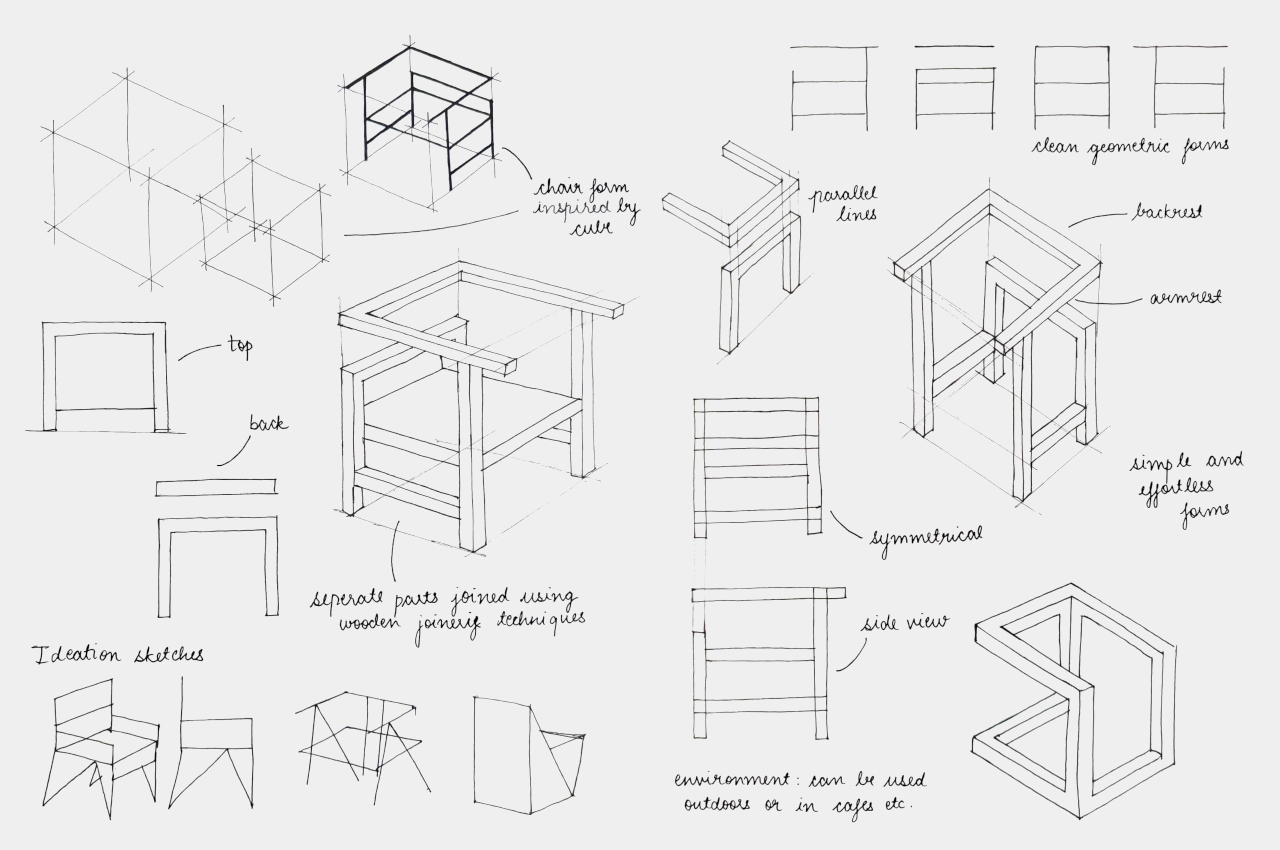
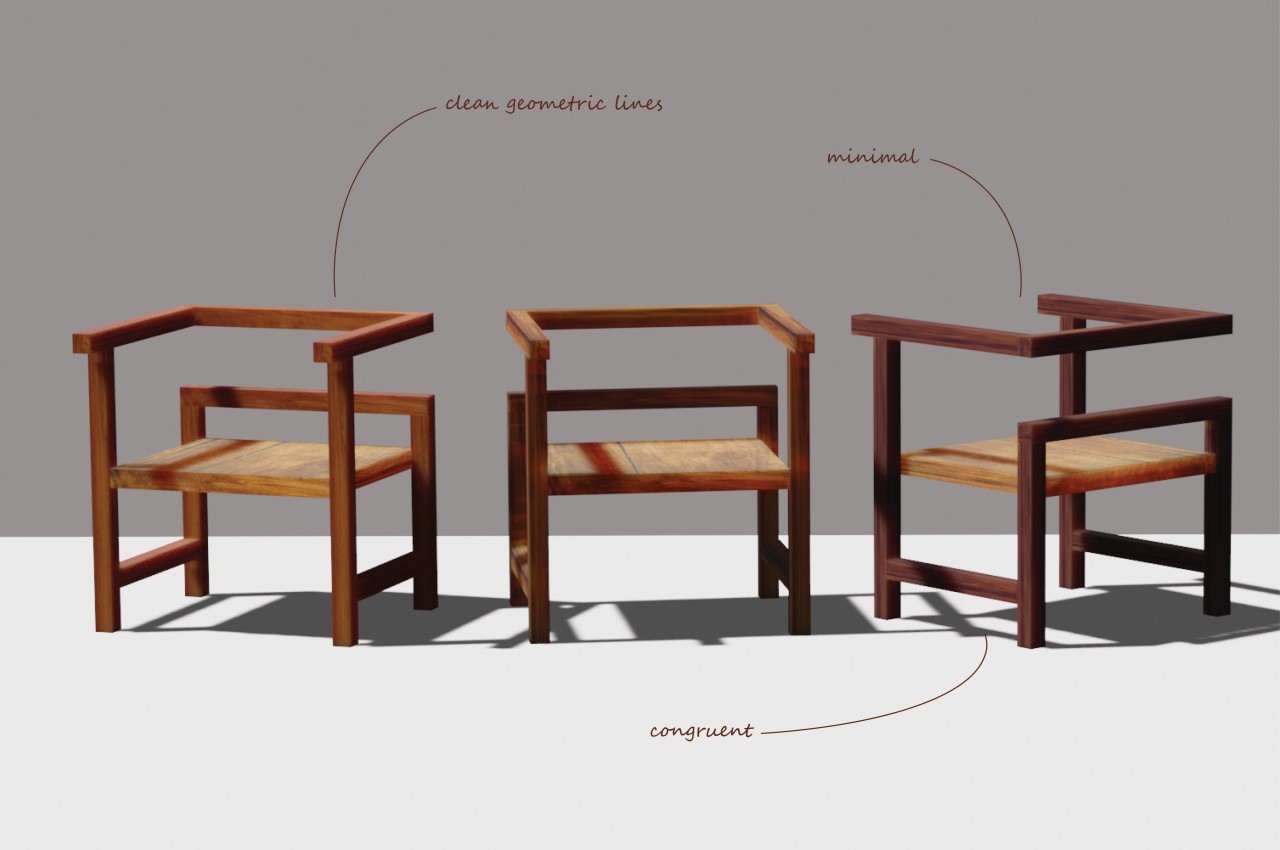
Chairs can come in all shapes and sizes. Some can take on complicated and organic forms, while others can be extremely minimalist or even brutally raw. They can range from designs that take inspiration from nature to those that adhere to simpler geometric shapes. The Euclid concept is one of the latter, aptly named after the ancient Greek mathematician. But while it draws its shape from a simple cube, its execution sparks a bit of wonder and curiosity as it resembles more the skeleton or wireframe of the shape, represented by almost unbroken lines that are reminiscent of Escher’s famed optical illusion, the impossible cube.

Designer: Sonakshi Gupta

Admittedly, it’s a bit difficult to see the Euclid chair as a cube, since most of us have this idea of a cube as having 12 lines that are all connected at eight corners to form six faces. Then again, that popular Escher object already shows an impossible depiction of that shape, and those familiar with that print might see some of that characteristic in this chair when viewed from certain angles. Overall, it creates a dynamic form that has your eyes following the lines and moving all over the place, sometimes confused about where the front and back sides are.

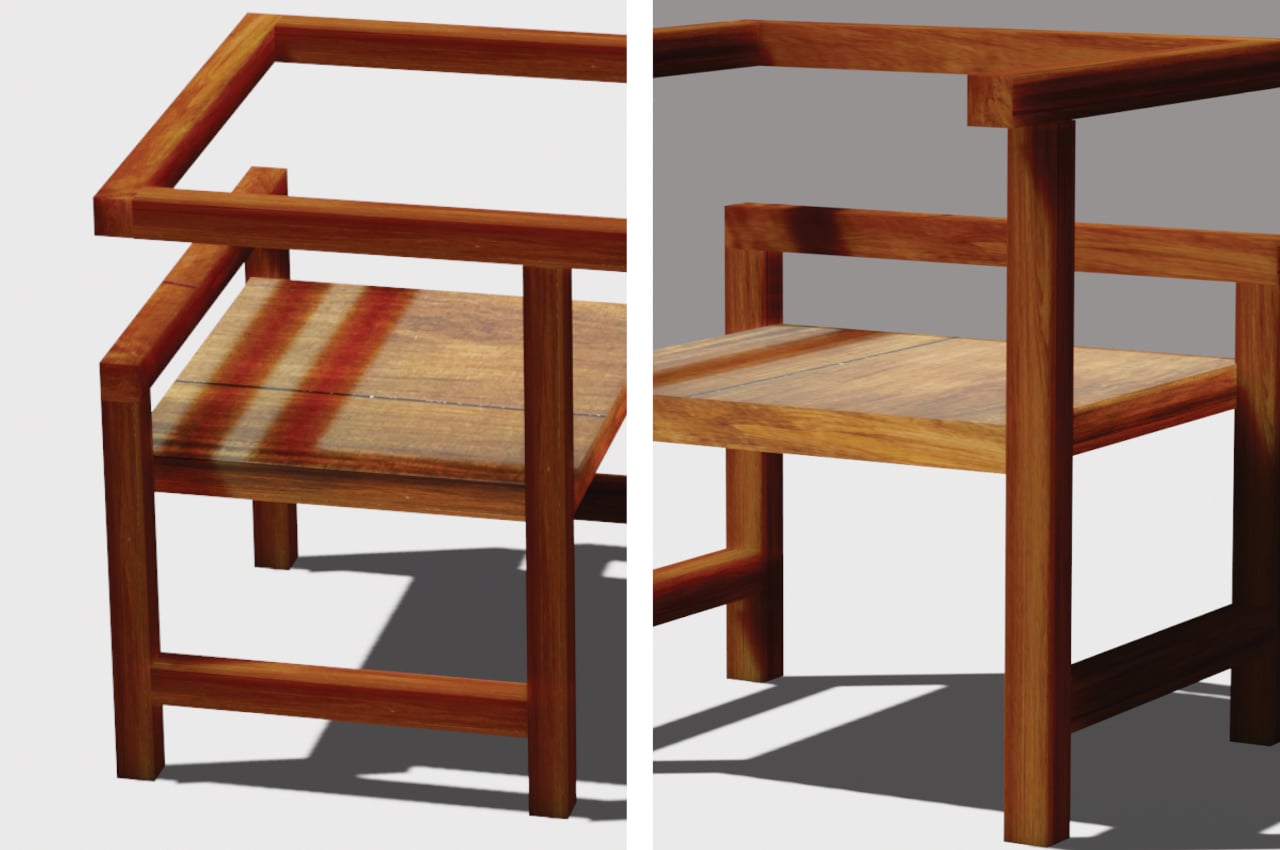
Its unique form isn’t the only notable thing about this concept, however. Its use of reclaimed wood gives it more than a sustainable character. That material, in a way, carries some history from what it was before becoming a part of this chair. Even if that past is unknown to the new owner, simply knowing it has one could give each Euclid chair its own unique charm.

And then there’s the method used to bring all the pieces together. Instead of requiring screws or even glue, a mortise and tenon joinery is used to provide stability without introducing complicated mechanisms. In theory, this could make it easy to later take the chair apart if some pieces need to be replaced, though that could also start to weaken the connection over time if done too frequently.

The Euclid concept chair offers a design that is minimalist, sustainable, and visually interesting. Whereas a cube is pretty much the epitome of symmetry, the missing edges and disconnected faces give the chair a bit more volatility. That said, it doesn’t seem like the most comfortable chair to sit on. Even if you put a cushion on the seat, the hard edges of the armrest and especially the backrest could give your body some grief after a long period of time.

The post Geometric chair concept almost looks like an Escherian optical illusion first appeared on Yanko Design.

TSMC will charge more for chips made outside of Taiwan, possibly making devices more expensive

TSMC is the world’s biggest chipmaker and its products are found in everything from phones to game consoles and computers. But devices using TSMC chips could become more expensive if manufacturers opt to buy ones that the company makes outside of its home base of Taiwan.

“If a customer requests to be in a certain geographical area, the customer needs to share the incremental cost,” TSMC CEO CC Wei said on an earnings call. “In today’s fragmented globalization environment, cost will be higher for everyone, including TSMC, our customers and our competitors.”

Talks with customers over price increases have already started. As the Financial Times points out, it’s more expensive for TSMC to manufacture chips outside of Taiwan (where over 90 percent of the planet’s most advanced semiconductors are made). But the company will be passing on those costs amid a push by companies and governments to increase chip supply outside of Taiwan, over which China is attempting to control.

TSMC has plants in Japan and is building several in Arizona, the first of which started operating this month and is expected to go into full production this year. It’s also constructing a plant in Germany.

In addition, the US government last week agreed to provide the company with $6.6 billion in funding under the CHIPS Act, which seeks to bolster semiconductor manufacturing in the country. In return, TSMC pledged to up its US investment by $25 billion to $65 billion. Aligned with that, the company announced plans to build a third US plant by the end of the decade and to start making more advanced 2nm chips by 2028.

Meanwhile, TSMC expects its manufacturing costs to increase in Taiwan. That’s because power prices there are soaring. An earthquake earlier this month is also expected to have a negative effect on the company’s profitability, as is its struggle to make the manufacturing of its most advanced 3nm chips more efficient.

Apple, NVIDIA, AMD and Qualcomm are among TSMC’s more notable customers. So if they end up buying chips from the company’s US, Japan or Germany fabs, their manufacturing costs could go up. Take a wild guess who’d end up having to eat the cost of those increased expenses so device makers can maintain their profit margins.

This article originally appeared on Engadget at https://www.engadget.com/tsmc-will-charge-more-for-chips-made-outside-of-taiwan-possibly-making-devices-more-expensive-145146879.html?src=rss

Delta Emulator on iPhone in Action (Video)

Delta Emulator

The highly anticipated Delta Emulator has made its official debut on the Apple App Store, marking a significant milestone for iOS gaming enthusiasts. This launch follows Apple’s recent policy change that now allows game emulators on its platform, opening up new possibilities for mobile gaming. Developed by the creator of the widely popular GBA4iOS emulator, […]

The post Delta Emulator on iPhone in Action (Video) appeared first on Geeky Gadgets.

Airchat is the latest app trying to make ‘social audio’ cool again

There’s a new invite-only app going semi-viral among VCs, tech execs and other Silicon Valley personalities. It’s called Airchat and it’s trying to revive the concept of an audio-first social media app.

The premise is similar to Clubhouse, the audio app that had a viral moment at the height of the pandemic in 2021 and inspired copycat features in Facebook, Twitter, LinkedIn and Reddit before gradually fading into obscurity. But unlike the original version of Clubhouse, Airchat isn’t built around live audio streams that require users to all tune it at once. It’s more like Twitter or Threads, except posts can only be shared as voice notes.

The app uses a timeline format, and automatically plays audio clips as you scroll your feed. You do have the ability to pause the playback and read text instead — each post is accompanied by an AI-generated transcript — but posts and replies can only be shared by recording an audio clip. There don’t seem to be any time constraints on how long individual clips can be, I found at least one post where a user spoke for a full hour just to see if it would work (it did).

It sounds a bit gimmicky (because it is), but the app has all the hallmarks of the kind of social apps that briefly go viral among a certain segment of extremely-online Silicon Valley nerds. It’s led by a pair of well-connected tech founders: AngelList co-founder Naval Ravikant and former Tinder exec Brian Norgard. It’s invitation-only and has drawn a number of well-known tech personalities among its early users: Y Combinator CEO and San Francisco political provocateur Gary Tan, Spotify CEO Daniel Ek, OpenAI founder Sam Altman, VC and Elon Musk confidant Jason Calacanis.

Over on X, Airchat’s high-profile user base is building hype and creating FOMO for those who haven’t been able to score an invite. (The app had to briefly shut off invites over the weekend due to “an influx of new users,” according to Ravikant, Airchat’s CEO.)

It’s not clear exactly how many users Airchat has just yet, but it seems to be in the low tens of thousands. The app has been downloaded close to 50,000 times, research firm Appfigures told Engadget, but it’s likely some of those downloads have come from people who don’t yet have an invite. Ravikant, who seems to be one of the most-followed users, currently has just over 11,000 followers in the app.

Using Airchat is, well, noisy and a bit confusing. Upon joining, the app asks to tap your contacts list to find friends who are already on the app, but finding people to follow beyond that can be challenging. The app doesn’t have the equivalent of a “for you” feed with recommended content so your only options are to manually search for users or lurk in conversations that do appear in your feed and check out other users’ posts and follows.

When I signed up, there were four people from my contacts in the app, only two of whom are actual friends. I followed them and the app’s founders and a couple other familiar names. I then began randomly following other users as conversations began to appear in my feed. This was a terrible strategy as my feed was quickly dominated by the voices of a few especially active (but not terribly interesting) posters. With so many new users all joining at the same time, at one point my feed was just a bunch of people talking about Airchat.

It’s also somewhat jarring to actually hear the voices of people you’ve followed on social media for ages but haven’t interacted with IRL. The app defaults to playing back audio at 2x speed, which tends to make people’s speaking voices sound a bit unnatural, but is also kind of necessary for long-winded posts.

The bigger issue, though, is that it’s not entirely clear what Airchat is for. There are a handful of “channels,” smaller groups dedicated to chatting about specific topics like coffee or astrology or AI or war, but conversations are disjointed and hard to follow. There seem to be some corners with spirited discussion. The “coffee” channel has 755 members and has lots of earnest discussion of pour-over techniques and photos of latte art. The channel is also “moderated heavily,” according to Ravikant (Airchat’s moderation policy is “self moderation,” which means they expect you to make good use of blocking and muting features, though an FAQ states they will remove users for “harassment, impersonation, foul behavior, and illegal content.)

More creative users are also finding ways to play with the audio-centric format. I found an ASMR group that consisted mainly of people speaking in breathy whispers that kind of gave me the ick (one person did post a nice clip of their cat purring). I listened to a few poetry readings in the “poetry” channel, but didn’t have the patience, even at 2x speed. There’s also a lot of talk of in-app karaoke, though I have yet to see it actually happen.

Some might see these kinds of gimmicks as the start of some new paradigm, where people use their voices to unlock new ways of interacting. But all I can think about is how Clubhouse, at its peak, had similar gimmicks: in-app game shows, open mic nights and (very NSFW) “moan rooms.” It was new and interesting at a time when most people were stuck at home with nothing to do, but the novelty wore off quickly.

While Clubhouse’s initial success sparked copycat features from almost every other major social media company, many of those have since shut down due to lack of interest. Even Clubhouse itself is a shell of what it once was. While the app still exists, it’s an entirely different service than the one that briefly captured the attention of bored tech workers. The company laid off half its staff in 2023 and has since pivoted to audio-centric group chats.

This article originally appeared on Engadget at https://www.engadget.com/airchat-is-the-latest-app-trying-to-make-social-audio-cool-again-140050450.html?src=rss

How to Use Google Gemini for Code Generation

Google Gemini

Google Gemini represents a significant advancement in the field of artificial intelligence, standing as an advanced large language model (LLM) that has positioned itself at the cutting edge of AI technology. With its impressive array of capabilities, Gemini has garnered considerable interest among developers, who find in it a valuable ally for streamlining their coding […]

The post How to Use Google Gemini for Code Generation appeared first on Geeky Gadgets.

Posted in Uncategorized | Tagged

AMD Ryzen PRO AI 8040 and 8000 series processors for mobile and desktop PCs

AMD Ryzen PRO

AMD’s launch of the Ryzen PRO AI processors have been specifically designed for professional environments, integrate advanced artificial intelligence (AI) capabilities directly into the Ryzen PRO series. By combining the power of CPU, GPU, and a dedicated on-chip neural processing unit (NPU), AMD is delivering unparalleled performance, efficiency, and connectivity across both mobile and desktop […]

The post AMD Ryzen PRO AI 8040 and 8000 series processors for mobile and desktop PCs appeared first on Geeky Gadgets.

Digital nomads can live and work in self-sufficient mobile home

One of the advantages of people who can work remotely (digital marketers, writers, virtual assistants, etc) is that they can work from literally anywhere. As long as there’s internet and a power source for when their devices run out of juice eventually, these digital nomads have the freedom to set up shop wherever they are and to live in things like mobile homes. We’re seeing a lot of products and concepts targeting this segment and I for one am very interested to see these come to life.

Designer: Institute for Advanced Architecture of Catalonia (IAAC)

The Mobile Catalyst, nicknamed MOCA, was developed by masteral students from IAAC. Not only is it a perfect space for those that want to work while staying anywhere with a view but it is also an experiment into sustainable and self-sufficient habitat with a digital twist. It is basically a 5.4 meter long, 2.4 meter wide, and 3.6 meter high minimalist space that gives you the basic necessities of living. Its interior is made from dowel-laminated timber produced at the IAAC itself but sustainably harvested of course.

The front part of this mobile home has the basic amenities you would need to live in it like a kitchen, toilet and shower, and electric and water systems. In the middle and the back part is the space that can be turned into an office, a meeting area, a library, a recreation room, or even a space for small events. If you need privacy or partitions and also protection from different weather conditions, there are glass doors and a water-resistant cotton fabric that slides or folds with a pulley. There are also two beds on its “mezzanine” floor and you can reach it through a movable ladder.

And of course since MOCA is designed to be sustainable, you have three light-flexible mono-crystalline solar panels on the roof and LED strips as an interior lining. The house can run on its own for around 24 hours before it needs recharging. Water is also self-sufficient as the system stores, filters, and returns the shower water into reusable water. The entire mobile home is built with digital nomads in mind so they can live, work, and play anywhere they want, as long as the trailer can move and fit in that area.

The post Digital nomads can live and work in self-sufficient mobile home first appeared on Yanko Design.

GPT-4 performed close to the level of expert doctors in eye assessments

As learning language models (LLMs) continue to advance, so do questions about how they can benefit society in areas such as the medical field. A recent study from the University of Cambridge's School of Clinical Medicine found that OpenAI's GPT-4 performed nearly as well in an ophthalmology assessment as experts in the field, the Financial Times first reported.

In the study, published in PLOS Digital Health, researchers tested the LLM, its predecessor GPT-3.5, Google's PaLM 2 and Meta's LLaMA with 87 multiple choice questions. Five expert ophthalmologists, three trainee ophthalmologists and two unspecialized junior doctors received the same mock exam. The questions came from a textbook for trialing trainees on everything from light sensitivity to lesions. The contents aren't publicly available, so the researchers believe LLMs couldn't have been trained on them previously. ChatGPT, equipped with GPT-4 or GPT-3.5, was given three chances to answer definitively or its response was marked as null. 

GPT-4 scored higher than the trainees and junior doctors, getting 60 of the 87 questions right. While this was significantly higher than the junior doctors' average of 37 correct answers, it just beat out the three trainees' average of 59.7. While one expert ophthalmologist only answered 56 questions accurately, the five had an average score of 66.4 right answers, beating the machine. PaLM 2 scored a 49, and GPT-3.5 scored a 42. LLaMa scored the lowest at 28, falling below the junior doctors. Notably, these trials occurred in mid-2023. 

While these results have potential benefits, there are also quite a few risks and concerns. Researchers noted that the study offered a limited number of questions, especially in certain categories, meaning the actual results might be varied. LLMs also have a tendency to "hallucinate" or make things up. That's one thing if its an irrelevant fact but claiming there's a cataract or cancer is another story. As is the case in many instances of LLM use, the systems also lack nuance, creating further opportunities for inaccuracy.

This article originally appeared on Engadget at https://www.engadget.com/gpt-4-performed-close-to-the-level-of-expert-doctors-in-eye-assessments-131517436.html?src=rss