One of the most essential and integral pieces of furniture in an office is an office chair since we spend the majority of our day typing away or completing tasks there. But what about a chair design or seating system that doesn’t simply focus on you and your seating requirements? What about a modern-day seating solution that serves as a comfortable and cohesive space for co-workers to sit, work, and engage with one another? The US furniture brand KFI Studios just came up with the perfect design – Dotti Seating.
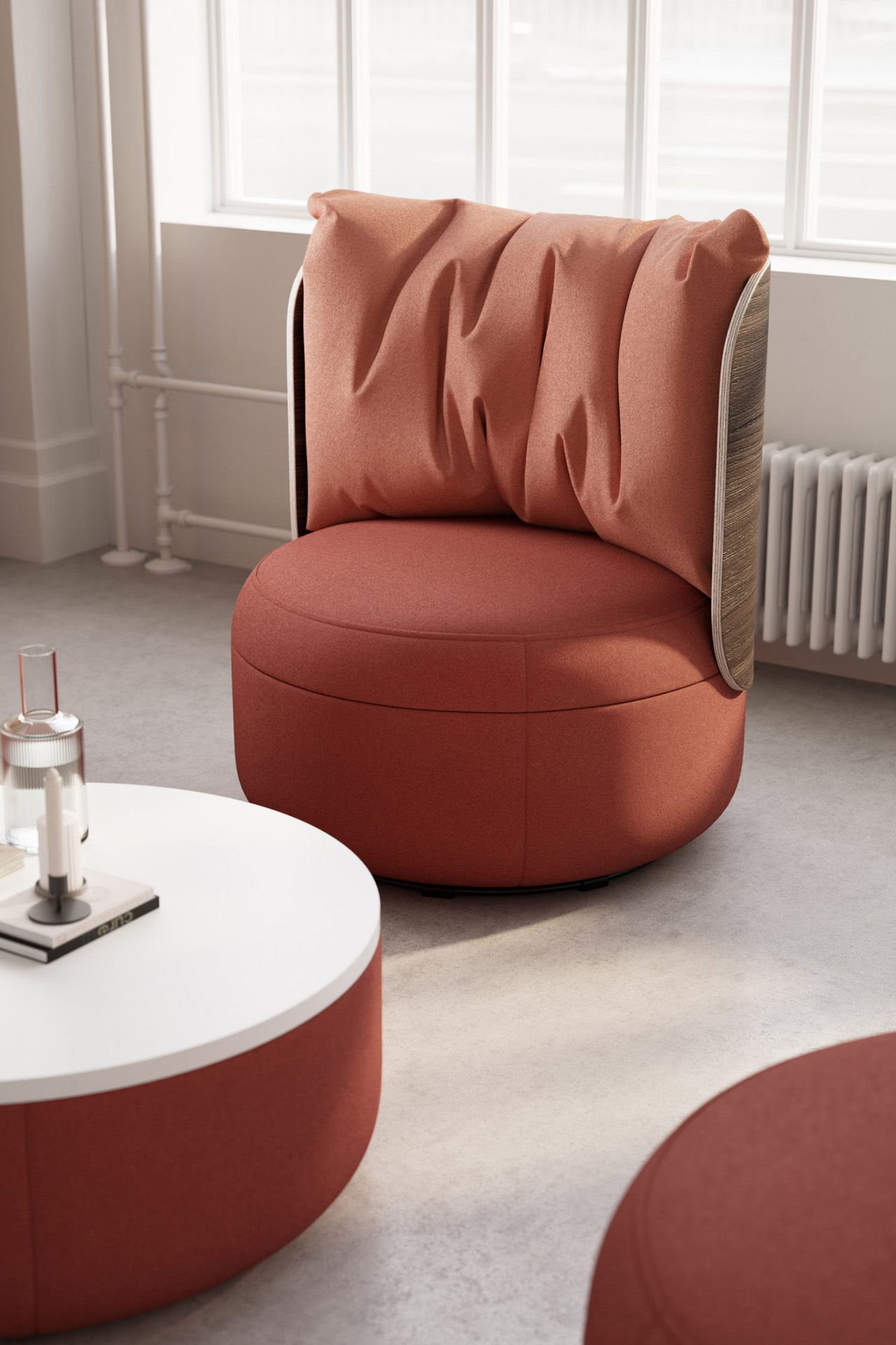
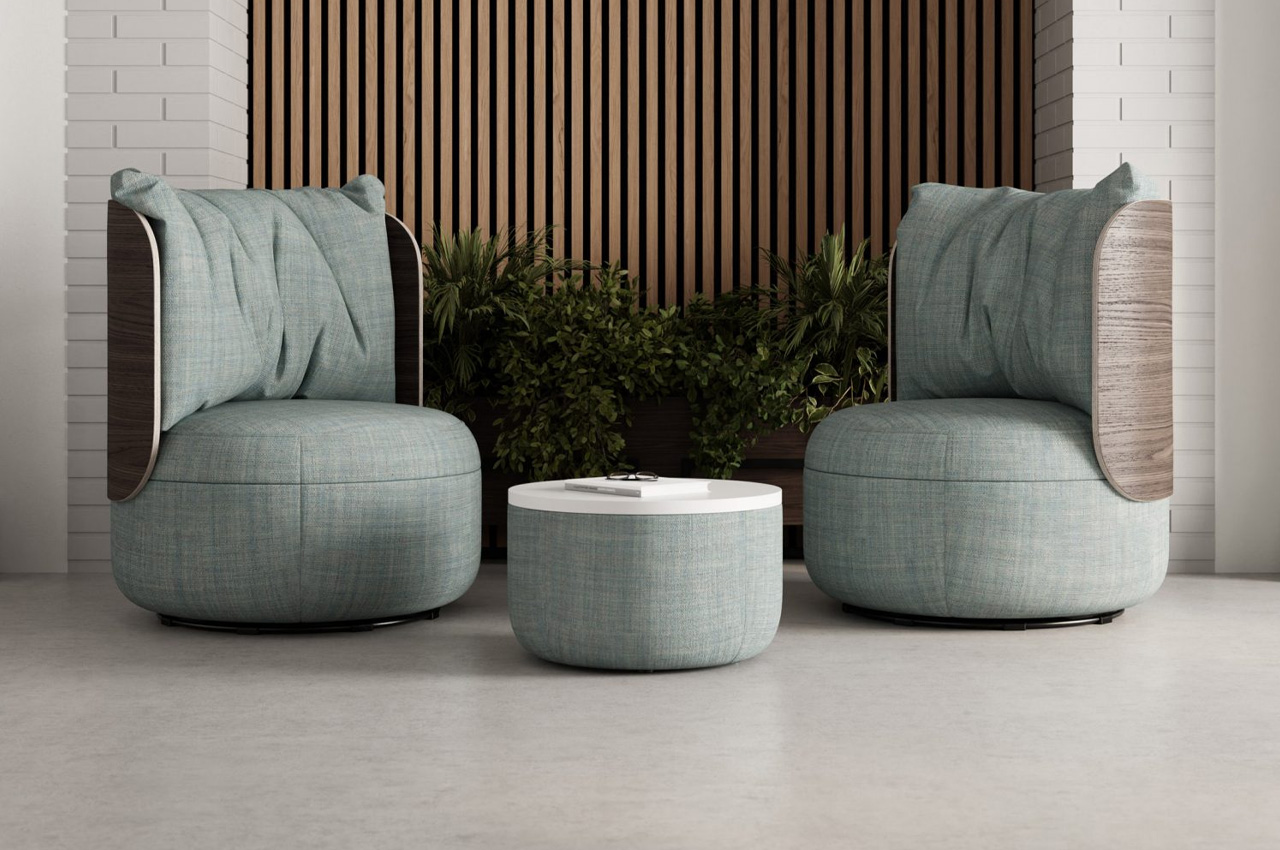
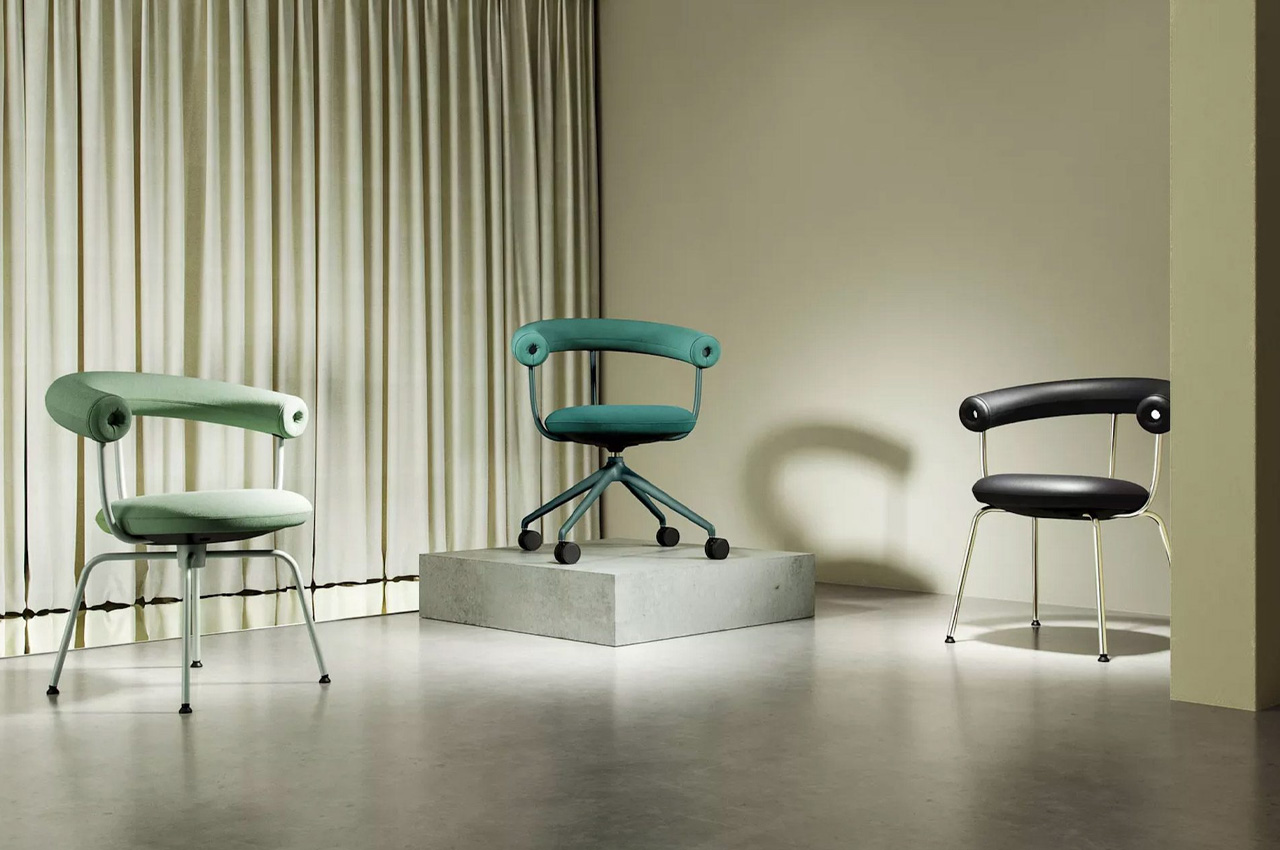
KFI Studios unveiled an upholstered seating collection that serves as a cozy and harmonious space for collaboration and relaxation. Designed by a design firm called Union Design, the Dotti collection includes a low-back lounge and a high-back lounge chair with a curved plywood back, pillows, and soft circular seats.
The lounge chairs can be customized in a fixed or swivel base and can be upholstered in a wide variety of textiles, with the choice of white, ash, European beech, or dark chestnut laminate. This offers a lot of variety and options to create a seating system that complements your modern office space well. You can pick colors and materials that create a well-designed and appealing work environment.
The collection is also made up of a circular ottoman and a pouf seating option with a leather handle for maneuverability. The ottoman and pouf can be rearranged to create a seating configuration that is comfortable and sociable, allowing co-workers to huddle together to collaborate and coordinate. The Dotti collection can also serve as a lounging space, where employees can go for a little break, to unwind from work for a bit and catch a breather. The potential and scope for the Dotti collection are endless, and versatile configurations can be created in accordance with different offices, and their diverse requirements.
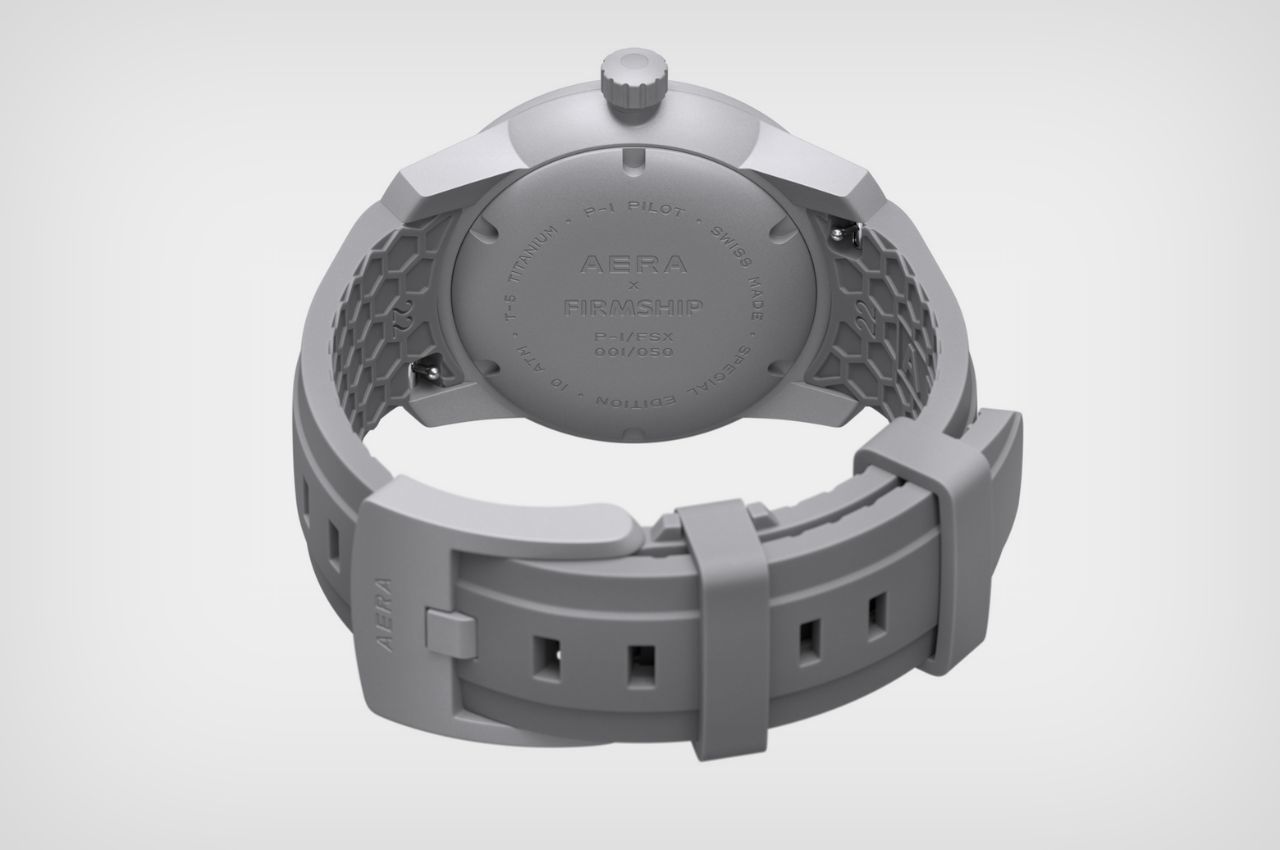
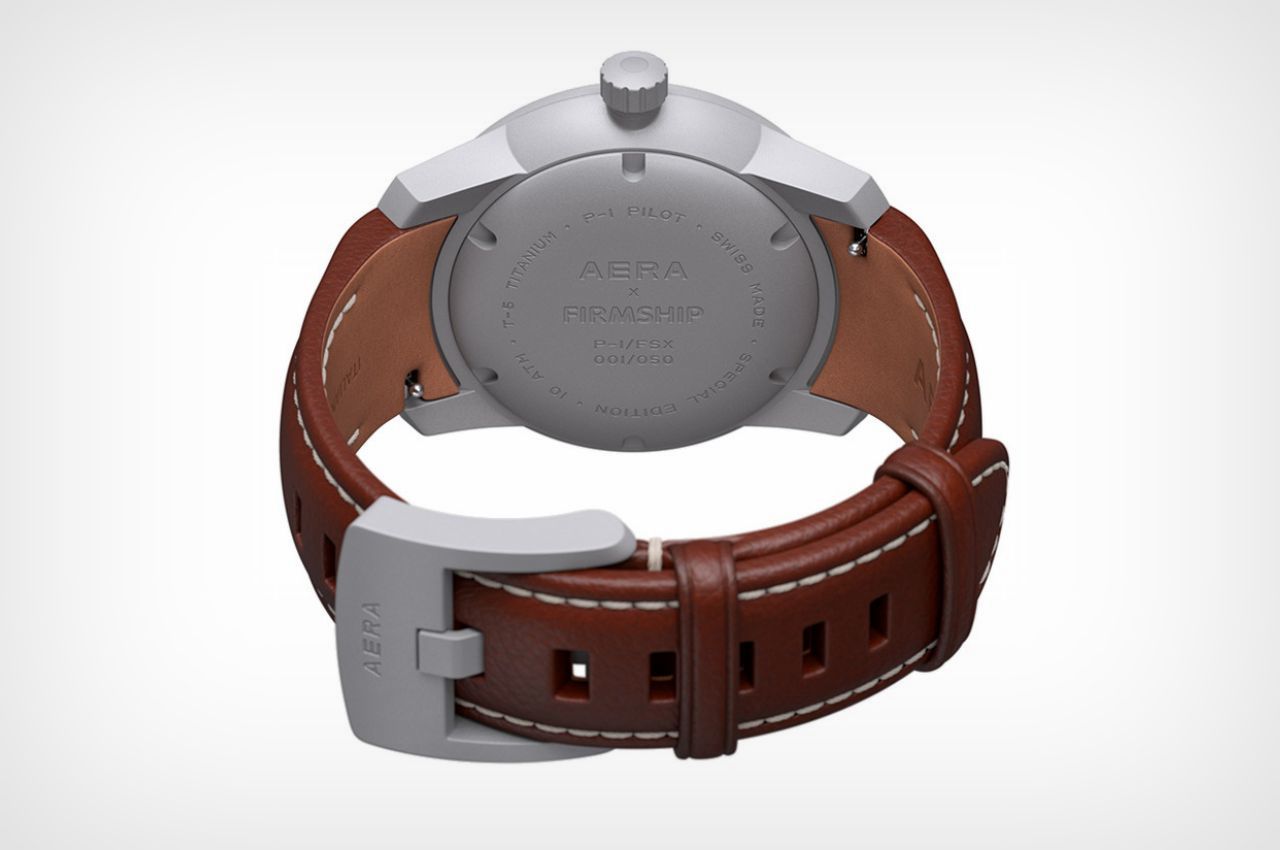
Embark on a journey through time with the Aera x Firmship P-1 Pilot – Titanium Edition, a limited-edition timepiece that’s not just a watch but a dynamic fusion of maritime elegance and contemporary craftsmanship. In a collaboration that transcends design boundaries, Yachtbuilder Firmship and Aera have crafted a timekeeping masterpiece that resonates with minimalist charm and functionality.
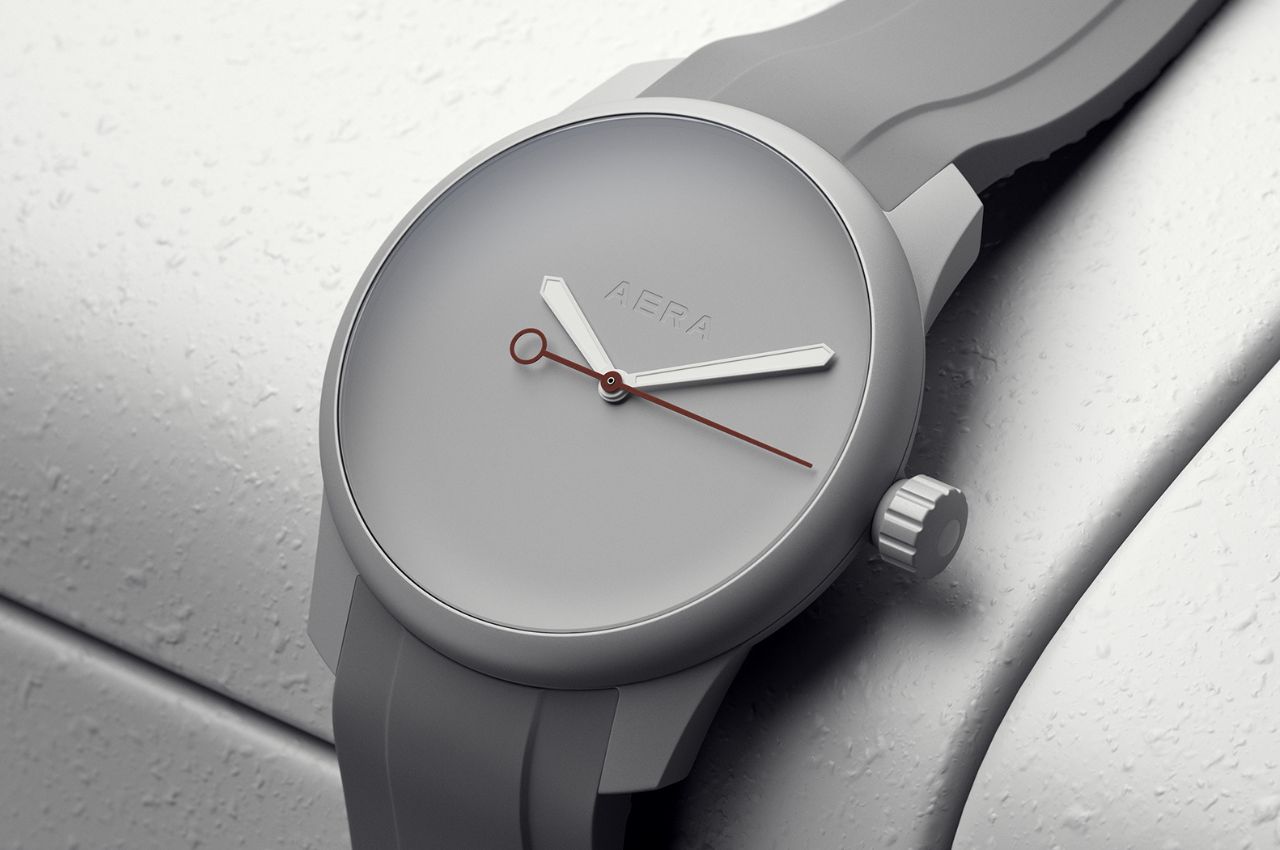
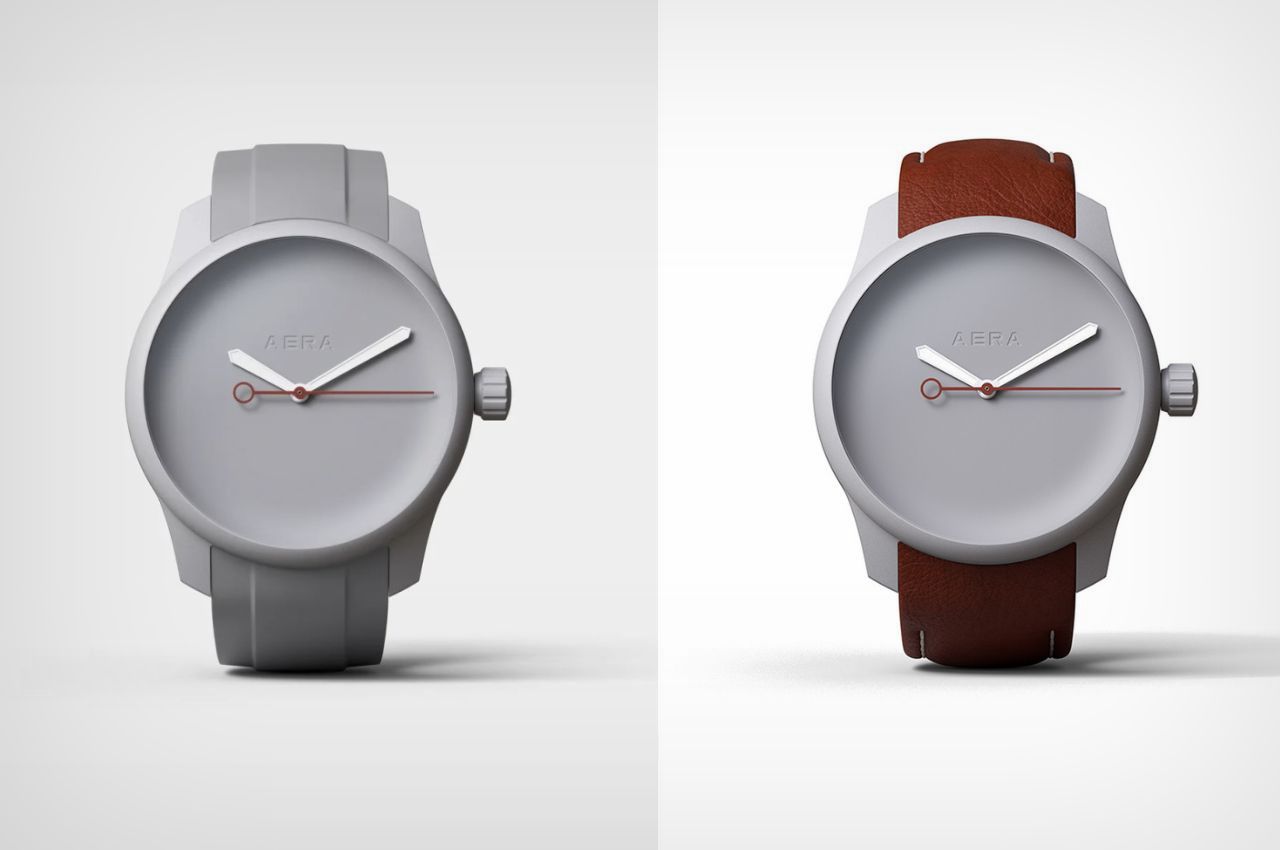
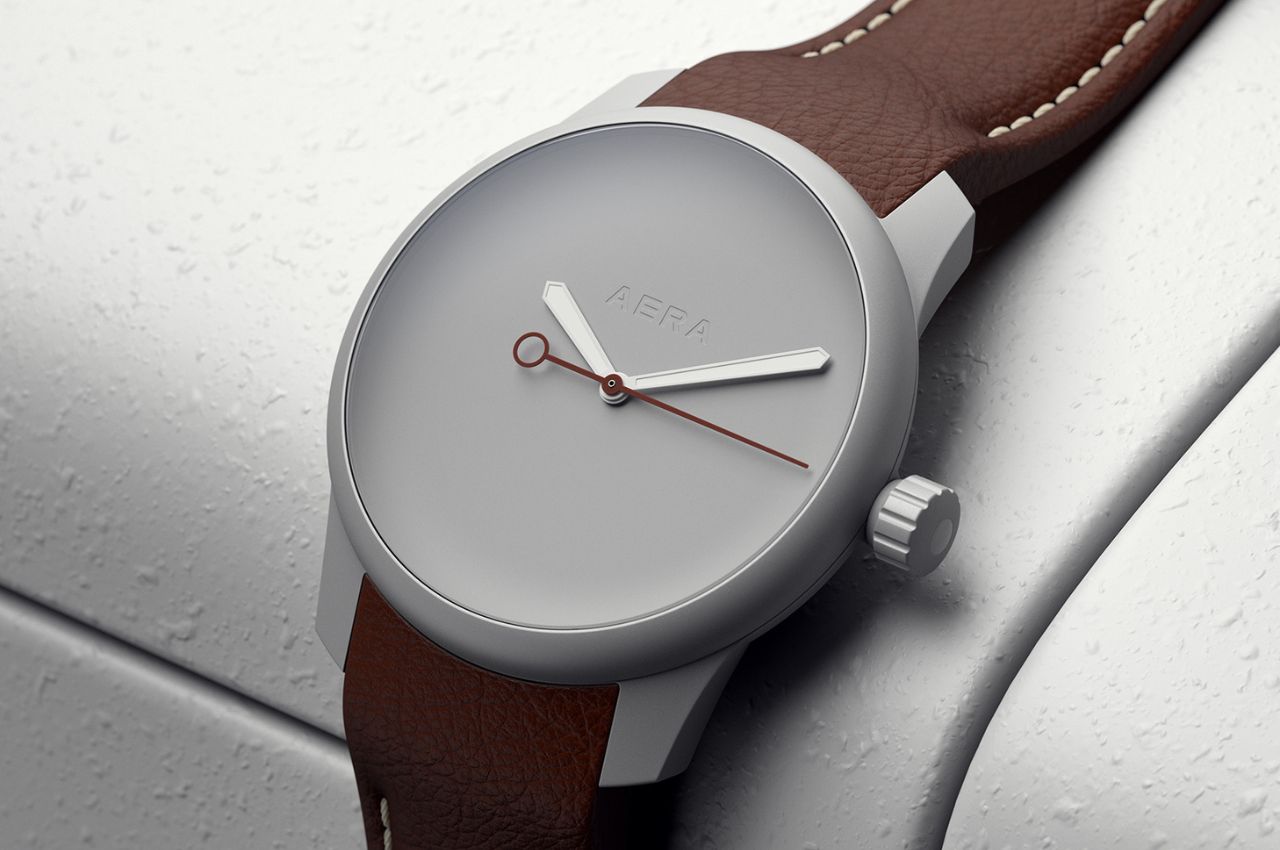
It is a T-5 Titanium case in Firmship’s signature grey, housing a dished dial embellished with a recessed Aero logo. It’s not just a watch; it’s a visual symphony. The watch’s heartbeat is the Sellita SW200-1 Elabore movement, ensuring precision, while the scratch-resistant sapphire domed crystal not only provides a clear view of time but also adds a layer of durability. Sapphire crystal is the most expensive type of watch glass as it is incredibly hard and therefore durable and perfect to protect the watch dial against shock.
The three-hand display, featuring white Swiss Super LumiNova on the hour, minute hands, and crown, transforms the classic tool watch into a contemporary marvel. This isn’t just a timekeeping device; it’s a wearable work of art.
Behind the creation of this edition are the visionary founders of Aera and Firmship, whose two-decade-long friendship has spawned this exclusive timepiece. More than a watch, it’s a shared commitment to craftsmanship and quality, etched into each piece with a collaborative logo and a unique serial number.
Included with the purchase of every Firmship Land Rover Defender, the watch becomes an integral part of the Firmship experience, harmonizing seamlessly with the silent strength of the vehicle and the sophisticated aesthetics of the Firmship 55 work ship.
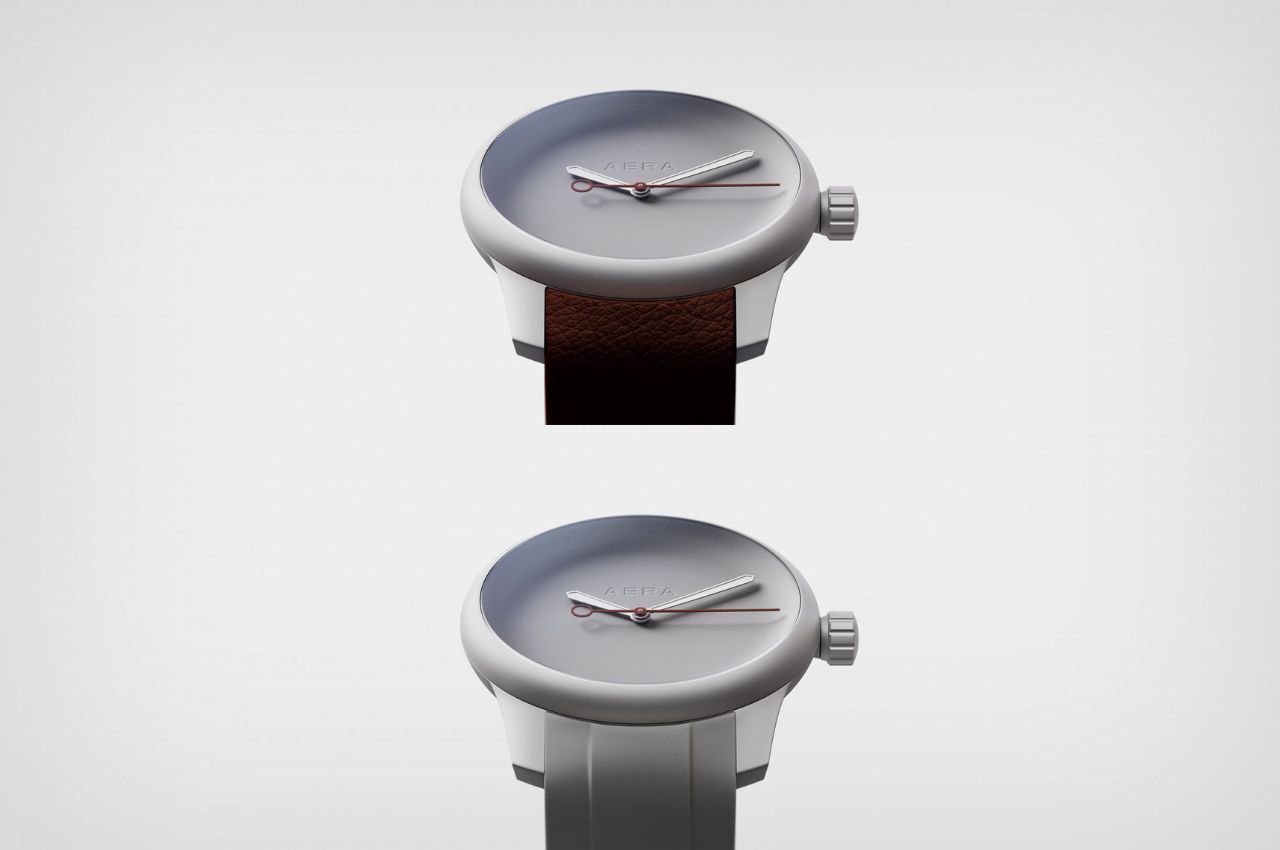
The P-1 Titanium Edition comes not with just one, but two strap options, each telling its own story. The Smooth Mahogany Leather strap, inspired by the Firmship 55 work ship’s wooden decking, exudes elegance. Meanwhile, the Battleship Grey Rubber strap draws inspiration from the Land Rover Defender’s interior, adding a touch of modernity.
The best part is a quick-release function on both straps, allowing you to switch up your style effortlessly. It’s a watch that adapts to your vibe, ensuring compatibility with a full selection of quick-release straps across the Aera range.
The Aera x Firmship P-1 Pilot – Titanium Edition isn’t just a watch; it’s an invitation to sail through time in unparalleled style. As it graces the wrists of Firmship Land Rover Defender owners, it not only tells time but also weaves a narrative of collaboration, craftsmanship, and a shared passion for design. It’s more than a timepiece; it’s a testament to the artistry of Aera and the maritime mastery of Firmship.
If we’re going to give in to our eventual robot overlords, my only hope is that they’re as adorable-looking as Doly.
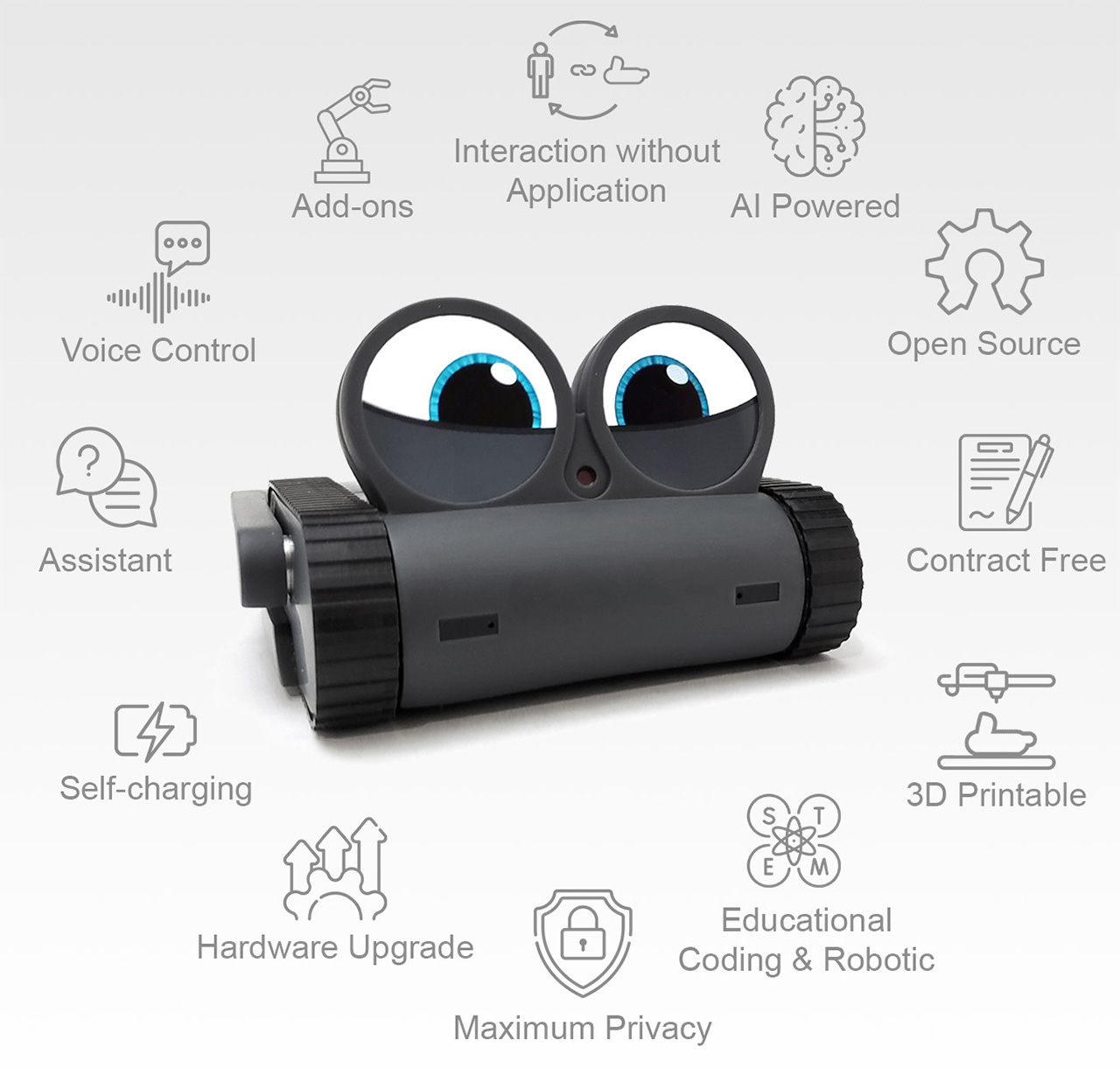
With its googly eyes and treadmill-operated motion system, Doly instantly reminds me of Pixar’s WALL-E. Designed as a robot companion with high emotional intelligence, and the ability to respond to requests, evoke joy, and even serve as a learning tool, Doly combines an open-source build with AI capabilities. The result is remarkably better than the tabletop toys you’re used to expecting. Doly is smart, sensitive, and self-sufficient, as it moves around from A to B, enriches you with interactions and those adorable eyes, and then makes its way back to its charging station when it’s low on batteries.
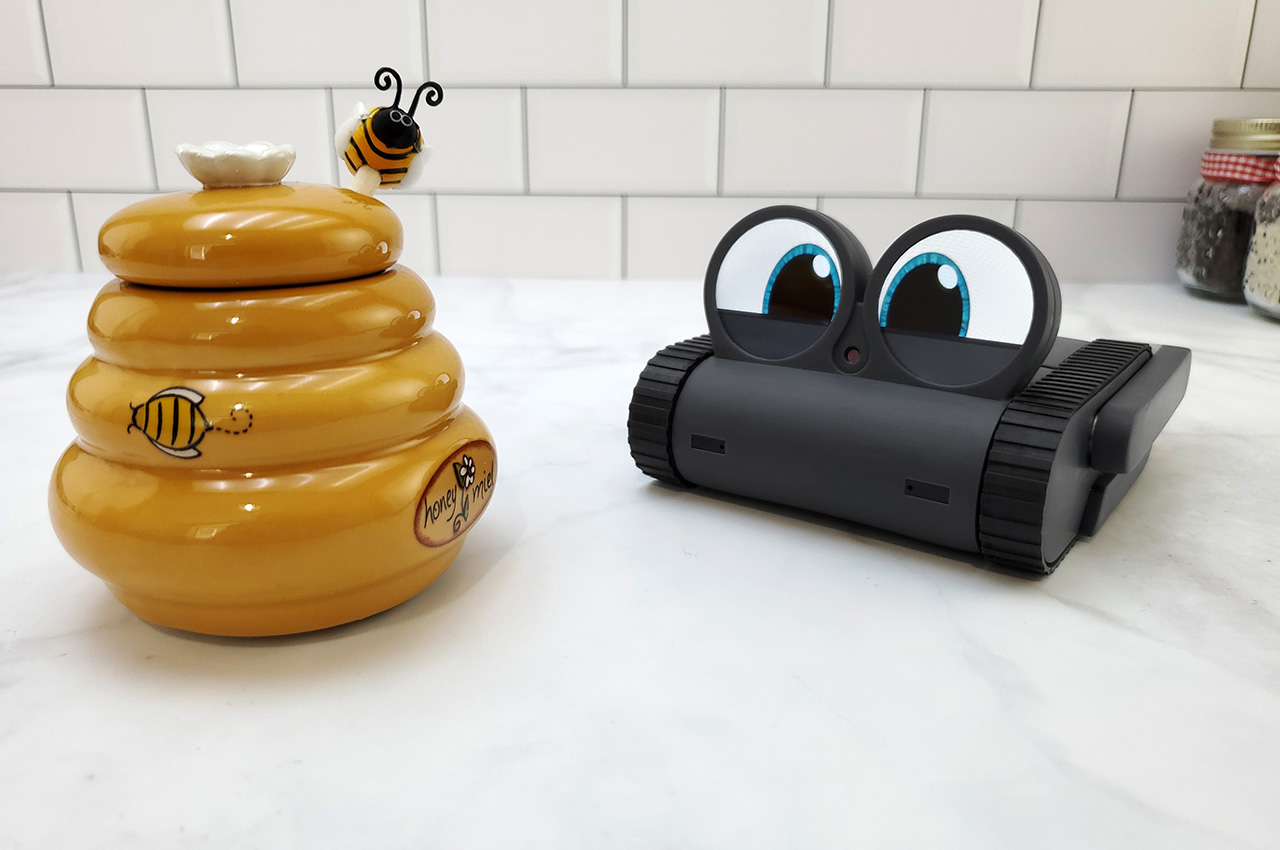
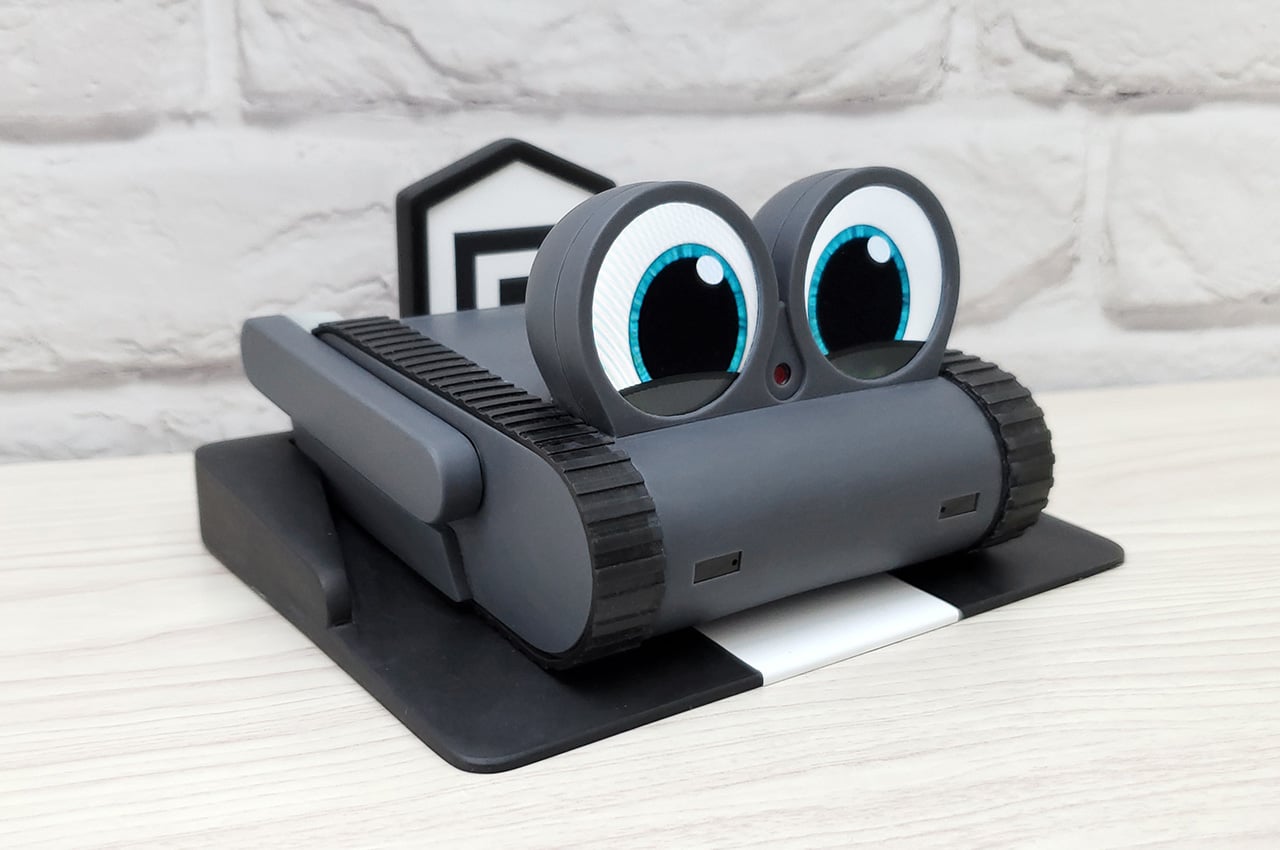
On the design front, the Doly adopts a familiar form factor, mimicking the success of WALL-E and even the Vector robot by Anki. It stands at just 68mm (2.67 inches) tall, but has a personality that’s larger than life. Nearly half that height can be attributed to Doly’s massive eyes that give it its distinct cartoonish character that instantly makes you fall in love with the robot. The eyes can look in different directions, respond to stimuli, express emotions, and can even be replaced by imagery like weather status, a clock, or a timer. Depending on Doly’s mood, or how it reacts to your commands, the eyes do most of the speaking… while voice models allow Doly to speak in any tone of your choice too.
Doly accepts touch and voice inputs, through strategically located microphones and capacitive touch surfaces located on its body. You can tap its head, pet it, tickle it, and Doly emotes exactly how you’d expect a pet to. Talk to it too, and its built-in AI responds intelligently to your queries and commands, letting you set timers, know the weather, take a photo, etc. The robot has natural language understanding, and packs an 8MP camera that lets it see the world around it, identify humans, and even recognize familiar faces. Treads on both sides allow Doly to move around too, shifting forward, backward, and even making turns, while ToF sensors on the front allow it to sense depth, and four strategically placed edge-detection sensors prevent your robot from accidentally driving off surfaces like the stairs or a tabletop (Amazon’s Astro could pick up a few lessons from Doly)
On the inside, Doly runs on a Raspberry Pi board that drives its systems and even powers the AI functions. The robot is built on open-source approach with open-hardware and open-design, allowing you to mod or customize your robot in a variety of ways through I/O ports or even by adding quirky attachments to the robot’s magnetic hands. The hands themselves are an interactive dream to begin with, allowing you fistbump your Doly , or even have it grab things, with lights inside the arms adding a rich layer of interact-ability. I/O ports on the top let you build attachments for your Doly, transforming it in a variety of ways and helping you learn robotics too.
8 MP camera allows Doly to memorize and recognize people with their names, take high quality snapshots and many more.
Doly communicates and responds you back with his own voice when you ask about the weather forecast, time, your name and many more.
To that end, Doly’s much more advanced than most other STEM toys out there. It grows with you, learning and evolving to understand you, your mannerisms, needs, etc. so that no two Doly robots are alike after multiple months/years of usage. Moreover, the robot itself encourages people of all ages to learn coding, with support for languages like C, C++, and Python that let you program your robot, and even much more intuitive block-based coding apps like Google’s own Blockly that help children grasp the basics of programming through the robot toy.
Doly relies on cameras to analyze its surroundings and recognize faces, and built-in microphones to pick up on voice commands – that’s a fair amount of data that your toy robot gathers on a daily basis (sort of like your smart camera and smart speaker combined). Coupled with the fact that Doly has a built-in AI that learns from you (which means it does gather data for machine learning purposes), data privacy can be a pretty large concern. To ensure that your data stays safe and away from hackers, governments, and data-brokers who sell data to third parties, Doly stores and processes all its information locally, oftentimes even working offline. Embedded processing power and local storage ensure that your data never reaches any remote server where it can be compromised by targeted hacks.
Other than that, each Doly comes with an app that lets you access specific features like managing settings or performing graphical programming (Doly’s creators emphasize that you don’t NEED an app to use your robot). The creators do, however, mention that the robot can be customized to wild degrees, with even the ability to swap out the Raspberry Pi module on the inside with better CM4 boards that have better RAM and storage. The Doly robot starts at $269 for a DIY kit that lets you build your own robot from scratch, or $299 for a fully assembled bionic buddy. Limitbit, the creators behind Doly, promise free lifetime over-the-air (OTA) software updates to ensure the robot is always up to date with the latest features, and are apparently even working on ChatGPT integration to make your tiny robotic friend even smarter! Just promise that you won’t turn it against humanity!
If we’re going to give in to our eventual robot overlords, my only hope is that they’re as adorable-looking as Doly.
With its googly eyes and treadmill-operated motion system, Doly instantly reminds me of Pixar’s WALL-E. Designed as a robot companion with high emotional intelligence, and the ability to respond to requests, evoke joy, and even serve as a learning tool, Doly combines an open-source build with AI capabilities. The result is remarkably better than the tabletop toys you’re used to expecting. Doly is smart, sensitive, and self-sufficient, as it moves around from A to B, enriches you with interactions and those adorable eyes, and then makes its way back to its charging station when it’s low on batteries.
On the design front, the Doly adopts a familiar form factor, mimicking the success of WALL-E and even the Vector robot by Anki. It stands at just 68mm (2.67 inches) tall, but has a personality that’s larger than life. Nearly half that height can be attributed to Doly’s massive eyes that give it its distinct cartoonish character that instantly makes you fall in love with the robot. The eyes can look in different directions, respond to stimuli, express emotions, and can even be replaced by imagery like weather status, a clock, or a timer. Depending on Doly’s mood, or how it reacts to your commands, the eyes do most of the speaking… while voice models allow Doly to speak in any tone of your choice too.
Doly accepts touch and voice inputs, through strategically located microphones and capacitive touch surfaces located on its body. You can tap its head, pet it, tickle it, and Doly emotes exactly how you’d expect a pet to. Talk to it too, and its built-in AI responds intelligently to your queries and commands, letting you set timers, know the weather, take a photo, etc. The robot has natural language understanding, and packs an 8MP camera that lets it see the world around it, identify humans, and even recognize familiar faces. Treads on both sides allow Doly to move around too, shifting forward, backward, and even making turns, while ToF sensors on the front allow it to sense depth, and four strategically placed edge-detection sensors prevent your robot from accidentally driving off surfaces like the stairs or a tabletop (Amazon’s Astro could pick up a few lessons from Doly)
On the inside, Doly runs on a Raspberry Pi board that drives its systems and even powers the AI functions. The robot is built on open-source approach with open-hardware and open-design, allowing you to mod or customize your robot in a variety of ways through I/O ports or even by adding quirky attachments to the robot’s magnetic hands. The hands themselves are an interactive dream to begin with, allowing you fistbump your Doly , or even have it grab things, with lights inside the arms adding a rich layer of interact-ability. I/O ports on the top let you build attachments for your Doly, transforming it in a variety of ways and helping you learn robotics too.
8 MP camera allows Doly to memorize and recognize people with their names, take high quality snapshots and many more.
Doly communicates and responds you back with his own voice when you ask about the weather forecast, time, your name and many more.
To that end, Doly’s much more advanced than most other STEM toys out there. It grows with you, learning and evolving to understand you, your mannerisms, needs, etc. so that no two Doly robots are alike after multiple months/years of usage. Moreover, the robot itself encourages people of all ages to learn coding, with support for languages like C, C++, and Python that let you program your robot, and even much more intuitive block-based coding apps like Google’s own Blockly that help children grasp the basics of programming through the robot toy.
Doly relies on cameras to analyze its surroundings and recognize faces, and built-in microphones to pick up on voice commands – that’s a fair amount of data that your toy robot gathers on a daily basis (sort of like your smart camera and smart speaker combined). Coupled with the fact that Doly has a built-in AI that learns from you (which means it does gather data for machine learning purposes), data privacy can be a pretty large concern. To ensure that your data stays safe and away from hackers, governments, and data-brokers who sell data to third parties, Doly stores and processes all its information locally, oftentimes even working offline. Embedded processing power and local storage ensure that your data never reaches any remote server where it can be compromised by targeted hacks.
Other than that, each Doly comes with an app that lets you access specific features like managing settings or performing graphical programming (Doly’s creators emphasize that you don’t NEED an app to use your robot). The creators do, however, mention that the robot can be customized to wild degrees, with even the ability to swap out the Raspberry Pi module on the inside with better CM4 boards that have better RAM and storage. The Doly robot starts at $269 for a DIY kit that lets you build your own robot from scratch, or $299 for a fully assembled bionic buddy. Limitbit, the creators behind Doly, promise free lifetime over-the-air (OTA) software updates to ensure the robot is always up to date with the latest features, and are apparently even working on ChatGPT integration to make your tiny robotic friend even smarter! Just promise that you won’t turn it against humanity!
Perfectly picked office furniture can truly set up a working space. It can create a comfortable and conducive environment that lets you work productively and comfortably. And one of the most important furniture pieces in an office is our chair. However, conventional office seats can be quite boring. They’re often mundane-looking, although we don’t doubt their functionality. In an attempt to spruce up typical office chairs, Scandinavian brand Fora Ferm released the Bud Chairs designed by Skogstad and Wærnes.
The Bud Chairs are a playful and whimsical alternative to the traditional office chairs we’ve probably come across all our lives. The designers wanted to create something that would support a collaborative and comfortable working environment, without being overly extravagant, or visually loud. “We wanted Bud to be able to stand alone and to function in larger numbers, without creating a wall of backrests,” said designer Fredrik Wærnes.
The chairs include a metal frame available in a variety of leg formations, including a variant with caster wheels. The frame supports a padded seat cushion and a cylindrical wraparound crafted from foam. The backrest has a spherical form accentuated with four narrow legs, that provide the seat with a contrasting yet geometrically intriguing form. It instantly stands apart from the conventional office chairs, as it seems to tether on the boundary between an office chair and a dining table chair, but somehow manages to safely stay rooted in the former group.
The different elements of the chair are available in a wide range of finishes, from a spectrum of fabrics to leather upholstery options. They can be repaired and replaced, an initiative on the part of the brand. The chair has plenty of bright color options to choose from, allowing you to add a pop of color to your work environment, breaking the monotony of a modern office space. Different colors can be mixed and matched to create a fun and vibrant office, where furniture pieces can and will serve as subtle mood uplifters.
How much do you pay for your iCloud+ or Google Drive storage to make sure your photos get backed up on the cloud? Imagine paying zero.
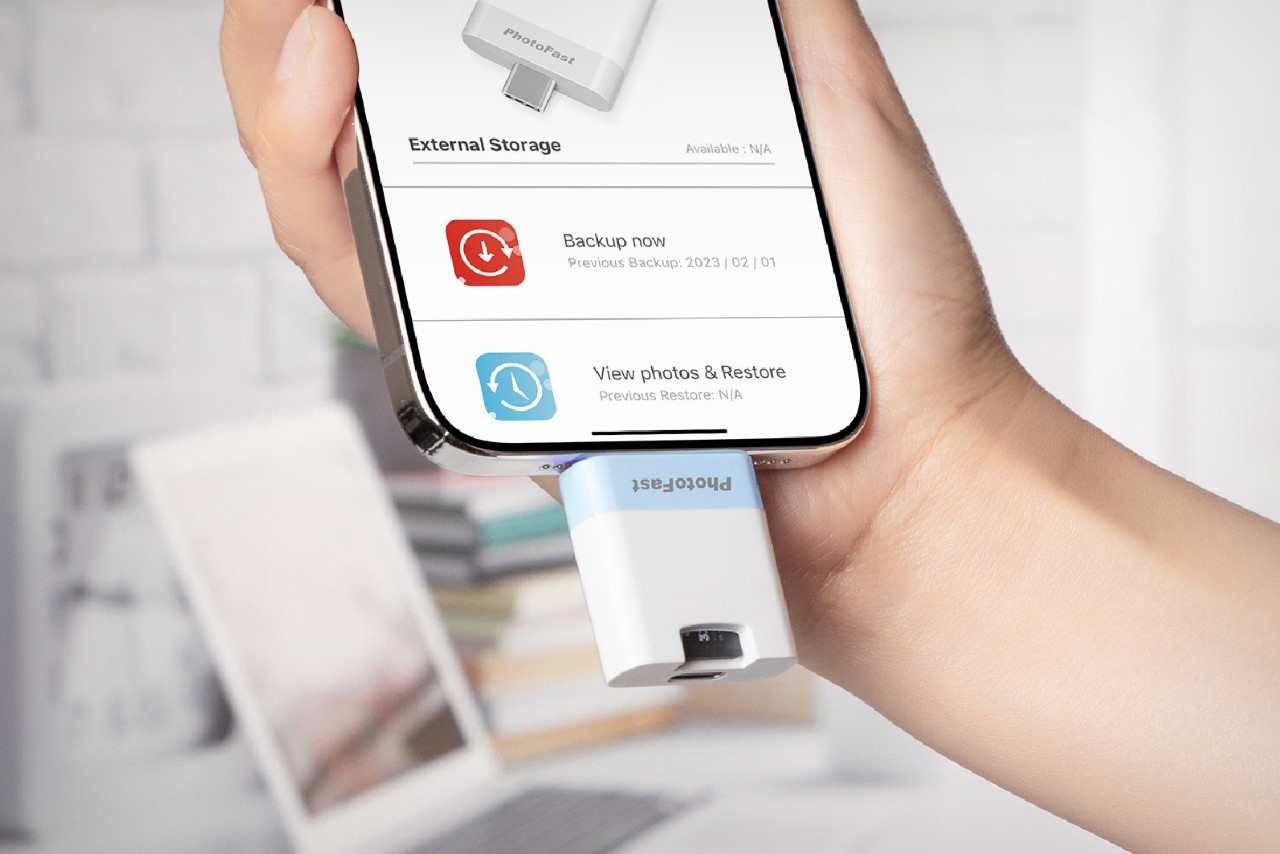
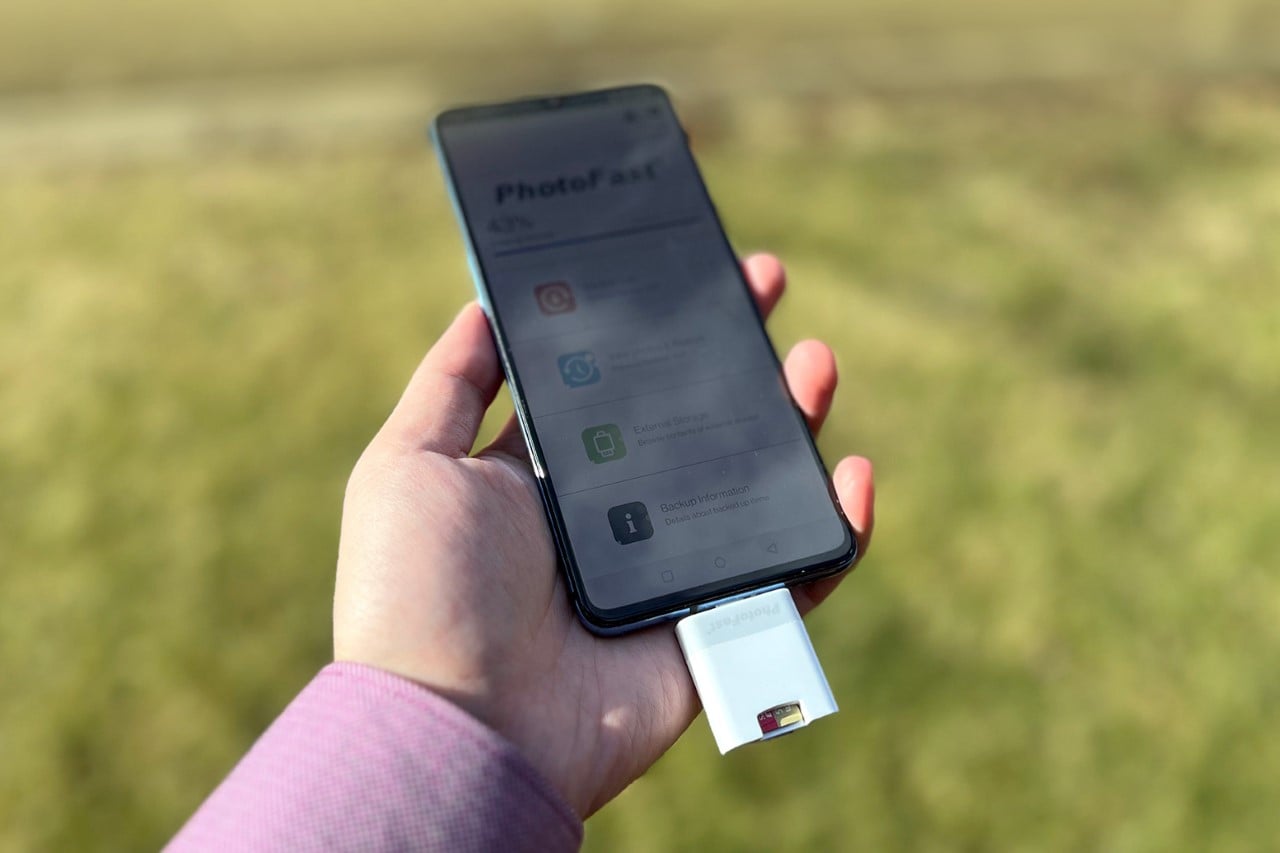
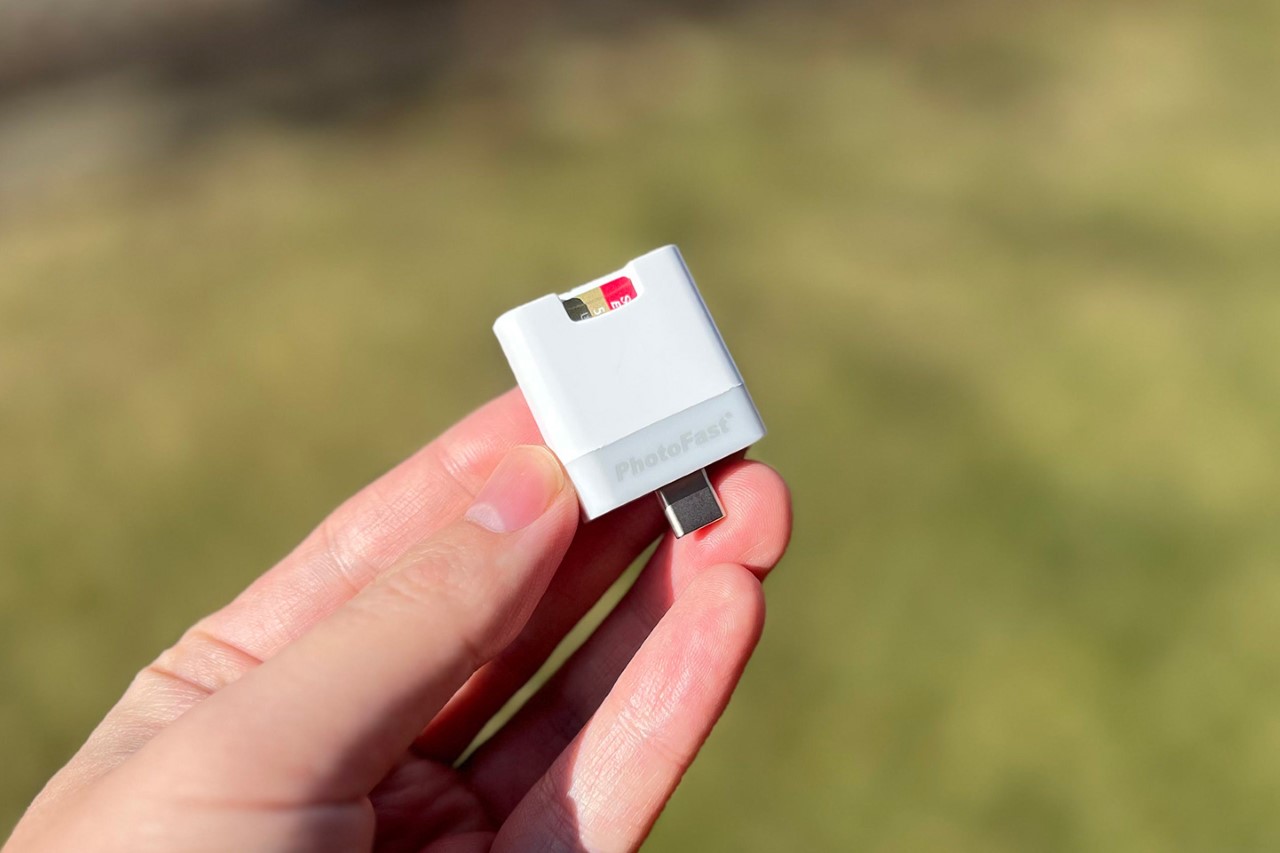
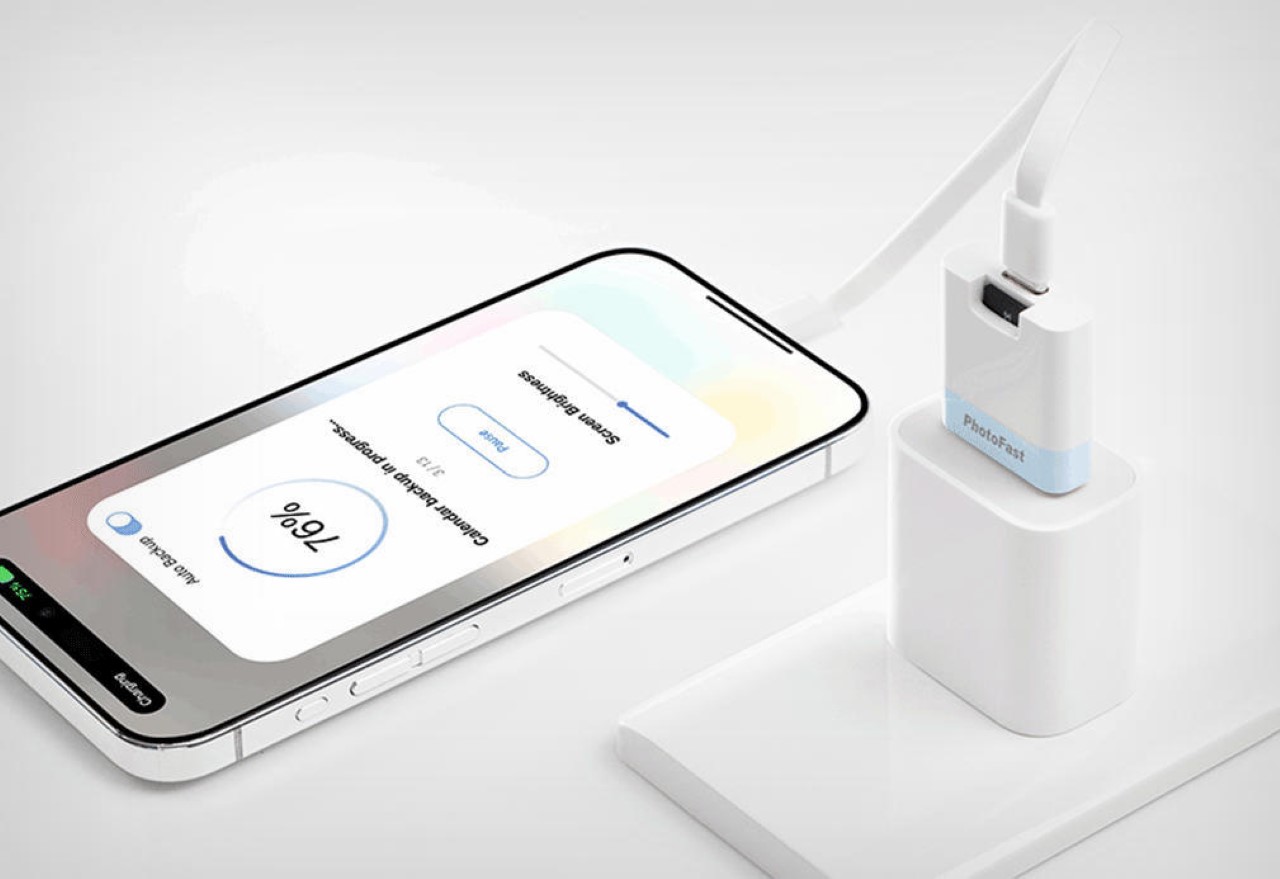
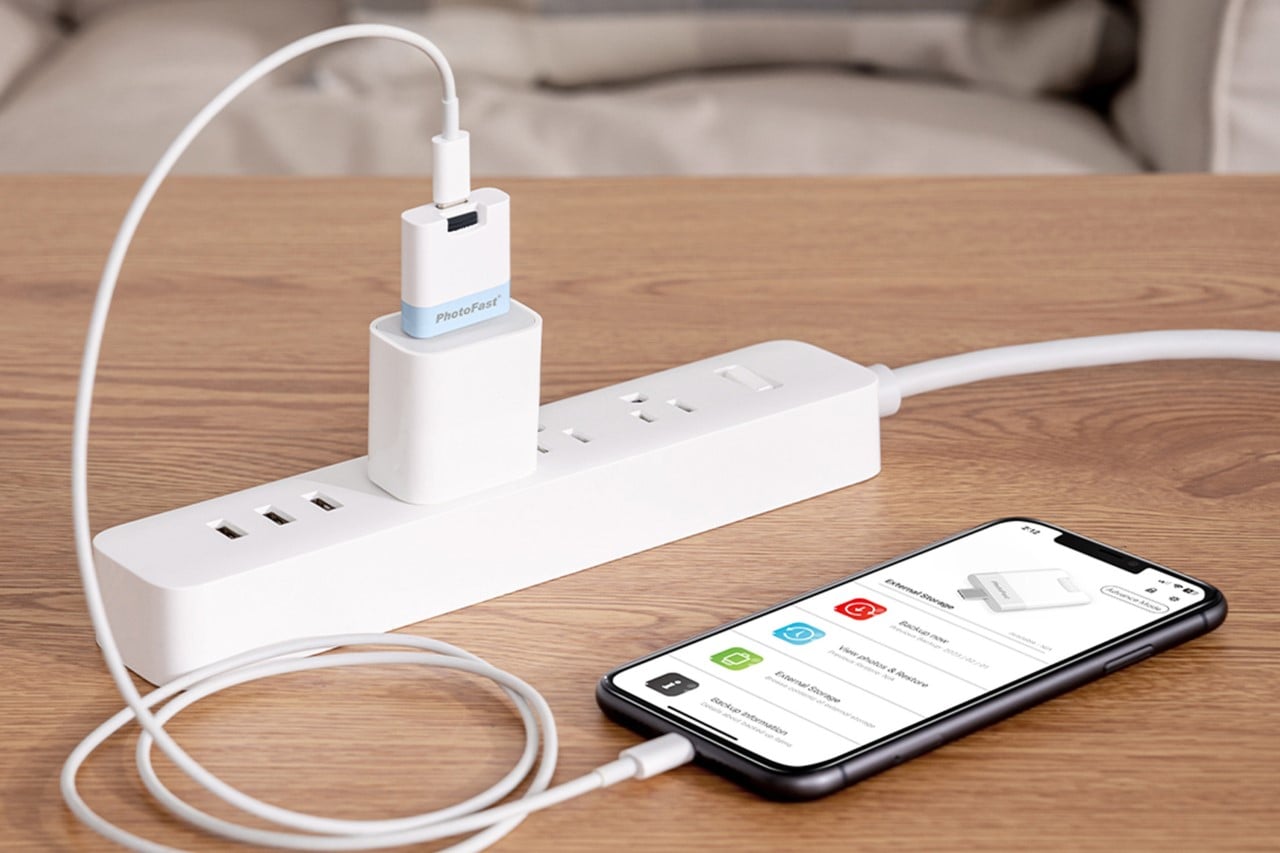
Remember a time when flagship phones came with memory card slots that let you expand storage and potentially even swap out old cards for new ones to get more storage? Sure, some phones still go as far as offering expandable storage, but for the most part, all companies have defaulted to the ‘cloud storage’ model where you pay a monthly subscription and your phone automatically backs data up without you needing to remember. It’s convenient, but it’s also costly, as you’re suddenly required to pay monthly cloud storage fees. It isn’t easy to ask phone makers to revert back to those good old MicroSD card days… but that’s where something as deviously simple as the PhotoCube PD+ comes in. Designed as a simple plug-and-play USB-C device, the PhotoCube automatically backs up your photos to an SD card for you, saving effort and money. A companion app makes the entire process as simple as clicking a button (instead of manually selecting all your images and copy-pasting them) and the PhotoCube does the rest, updating your old storage files with new ones so your photo backups are always up to date. It’ll also create separate file structures for multiple devices, letting you separately back up photos across different phones and even tablets. Your photos remain offline, so you don’t need the internet to access them – and as a result, they’re also hacker-resistant. Quite impressive for a device that just costs $55.
The reason most people prefer cloud storage is because it’s designed to be the easiest option ever. The phone backs itself up without you needing to remember, the files get stored in a safe server somewhere else, and if you ever lose your device, you can easily restore your photos if you log into your cloud storage account. What users then ignore is the fact that they end up paying hundreds (if not thousands) of dollars each year to store their photos. The PhotoCube PD+ aims at breaking that dependency with a hardware solution that’s just as easy. Plug the PhotoCube in and it literally begins backing up your photos in an instant. Photos get stored on a MicroSD card, so you can choose how much storage you want (you get 2 terabyte MicroSD cards nowadays), and it all happens offline without eating data transfer fees.
The PhotoCube device can easily be configured using an app
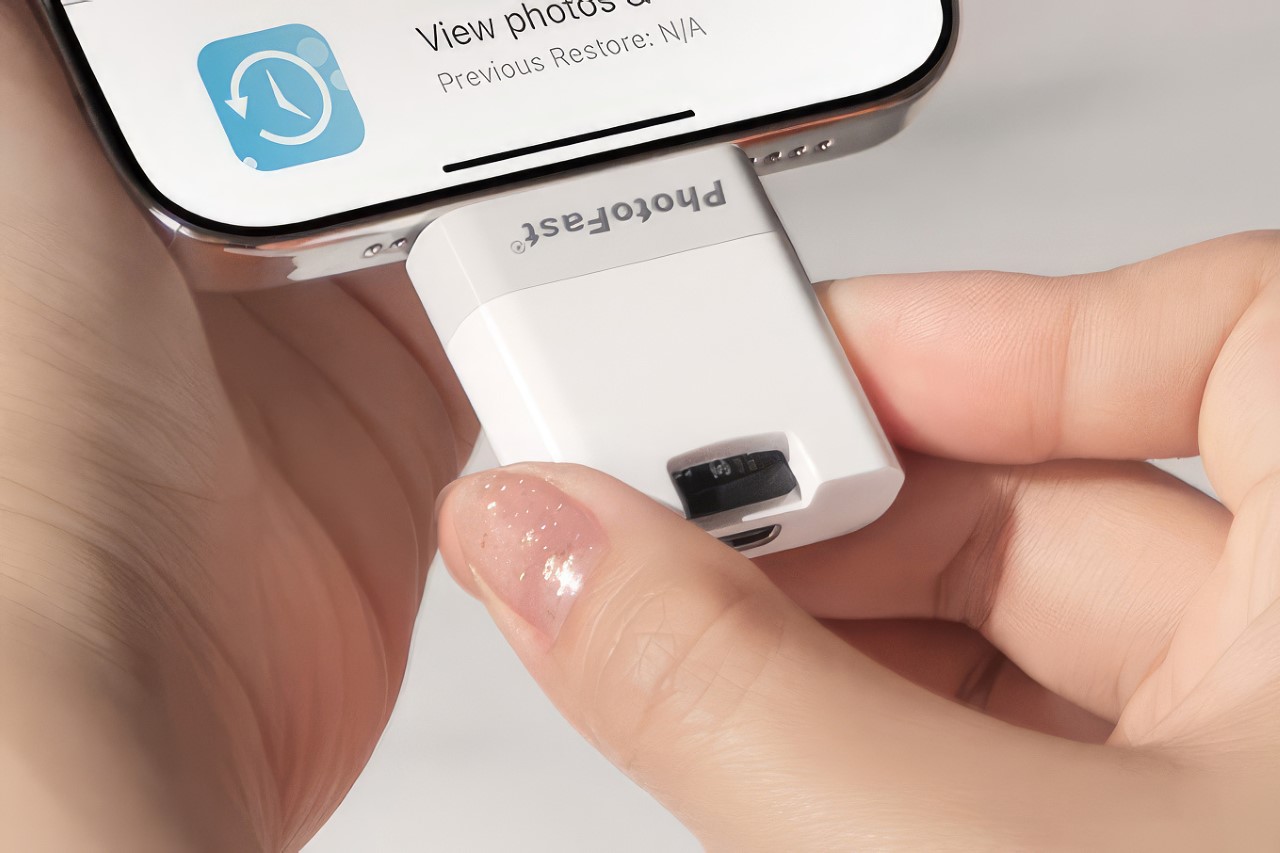
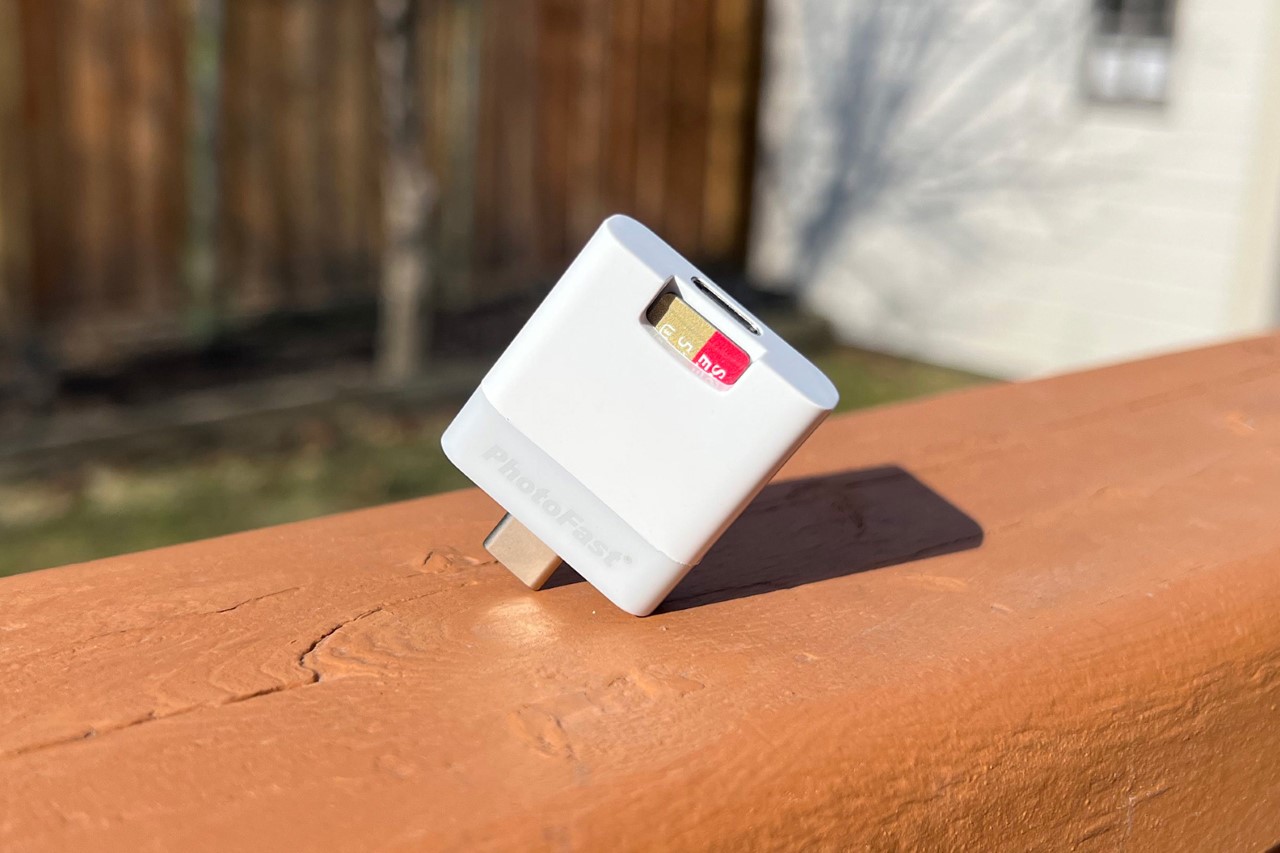
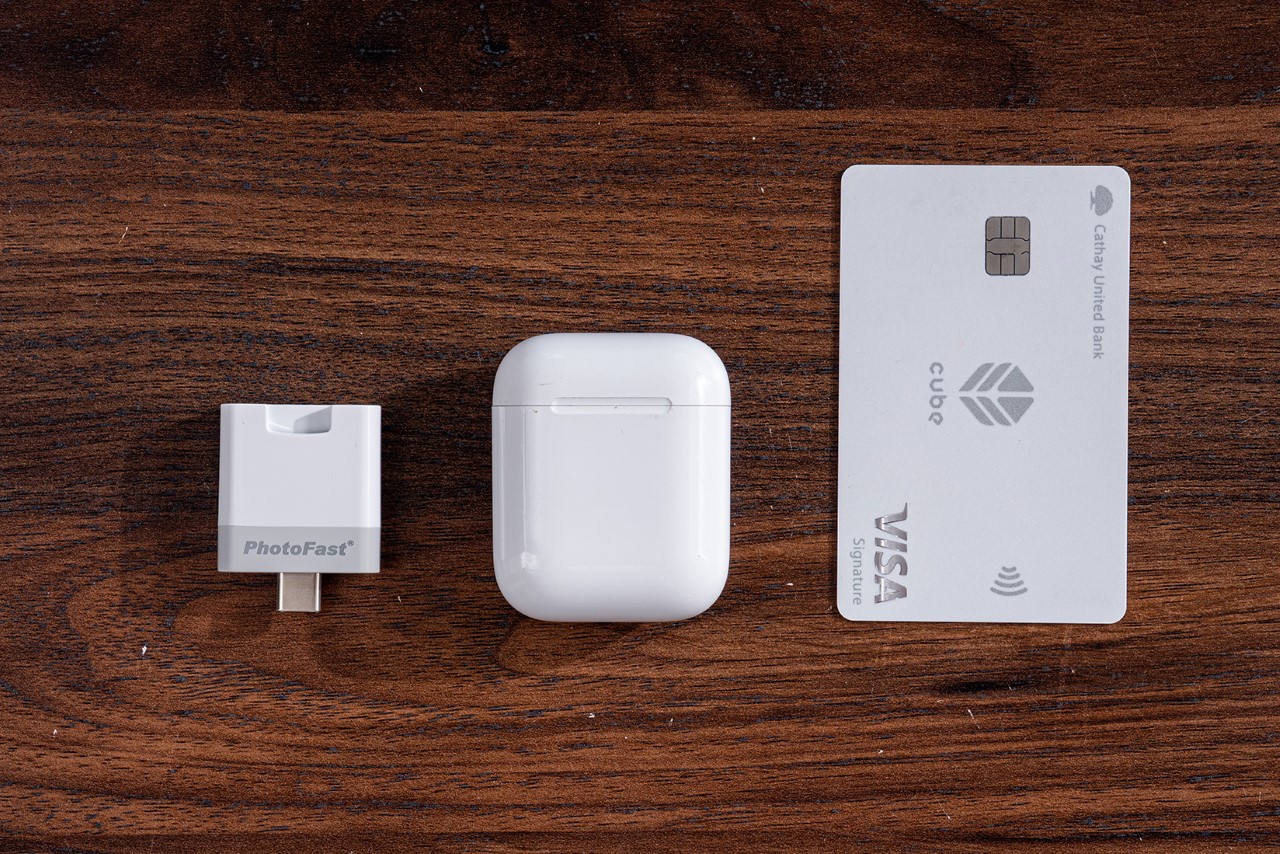
The fact that your data gets stored on a MicroSD card allows the PhotoCube to be such a ridiculously compact device. It’s no bigger than an AirTag, albeit square in shape (hence its name). A card slot on one end lets you add a MicroSD card in, while a male USB-C pin on the other end lets you plug your PhotoCube into any Android phone/tablet, any iPad with USB-C, and the latest iPhone 15 series. There’s also a female USB-C port on the opposite end (right under the card slot) that allows you to charge your phone THROUGH the PhotoCube, so you can run long backups while juicing your battery – a feature so wildly convenient it deserves a special mention.
Measuring just 30mm wide and 38mm long, the PhotoCube is smaller than even an AirPods case, but it can store up to 2TB
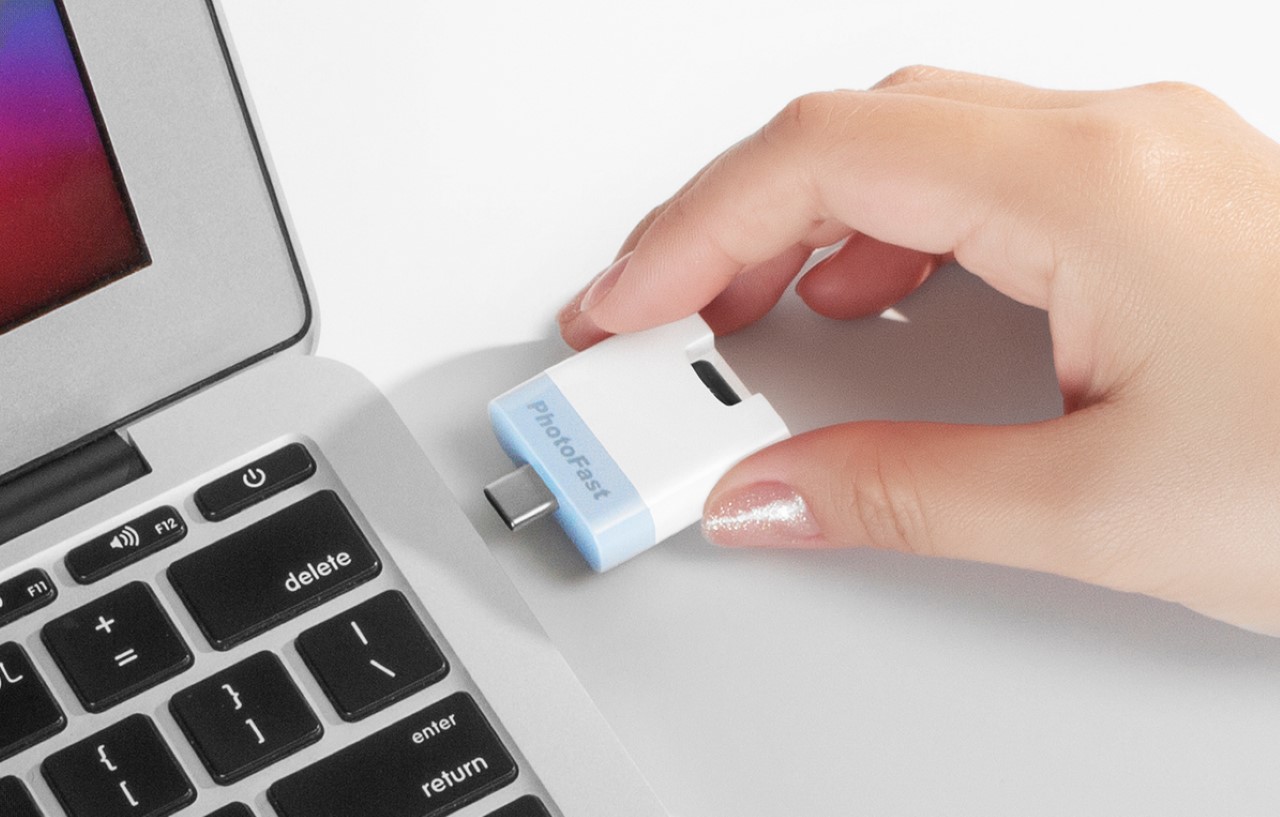
The PhotoCube’s brilliance lies in the fact that it isn’t a one-trick pony. When it isn’t backing up photos from your phone, it works as a card reader with all your devices (especially with your laptop), allowing you to read photos from your phone, drone, or DSLR on any machine. With USB 3.2 Gen 1, the PhotoCube PD+ can transfer files as rapidly as 5Gb/s, letting you swiftly back up or even access media without waiting for stuff to load.
Speaking of swift, the tiny gadget does a remarkable job of power delivery too, allowing you to charge your phone at an impressive 60W for fast-charging. The PowerCube PD+ supports pass-through fast-charging which means your backups and your charging can happen simultaneously… and rapidly.
Photo transfers happen in tandem with the PhotoFast app, which has a few impressive features. You can do more than just backing up photos and videos – the app lets you back up contacts, calendars, documents, even music (if you still believe in listening to MP3 files)… and if you’ve already paid for cloud storage, the PhotoFast app lets you download your backups from the cloud server onto the PhotoCube so you can cancel that pesky subscription and keep your files safe locally, and access them without needing to connect to the internet. The app intelligently also allows the PhotoCube to create and maintain separate backups for separate devices, so one PhotoCube could potentially store your entire family’s data, getting you off that expensive family cloud storage plan.
This isn’t maker PhotoFast’s first rodeo. Last year’s PhotoCube PD had a similar design, but didn’t support OTG plug-and-play storage (it needed a separate power source), and it wasn’t configured to work with iPhones (because iPhones didn’t have USB-C ports until September last year). The new PD+ comes with all those improvements under the hood, and now with two color options too – a simple white and grey, and a slightly jazzed up white and sky blue. The PhotoCube PD+ starts at $55 for Kickstarter backers (the original price after the crowdfunding campaign goes up to $99) and ships starting June 2024. It doesn’t come with a MicroSD card, so you have the liberty of choosing what brand/capacity of storage card you want to pair with your gadget. That’s quite a lot of flexibility for a device that fits in your pocket and also saves you money every month!
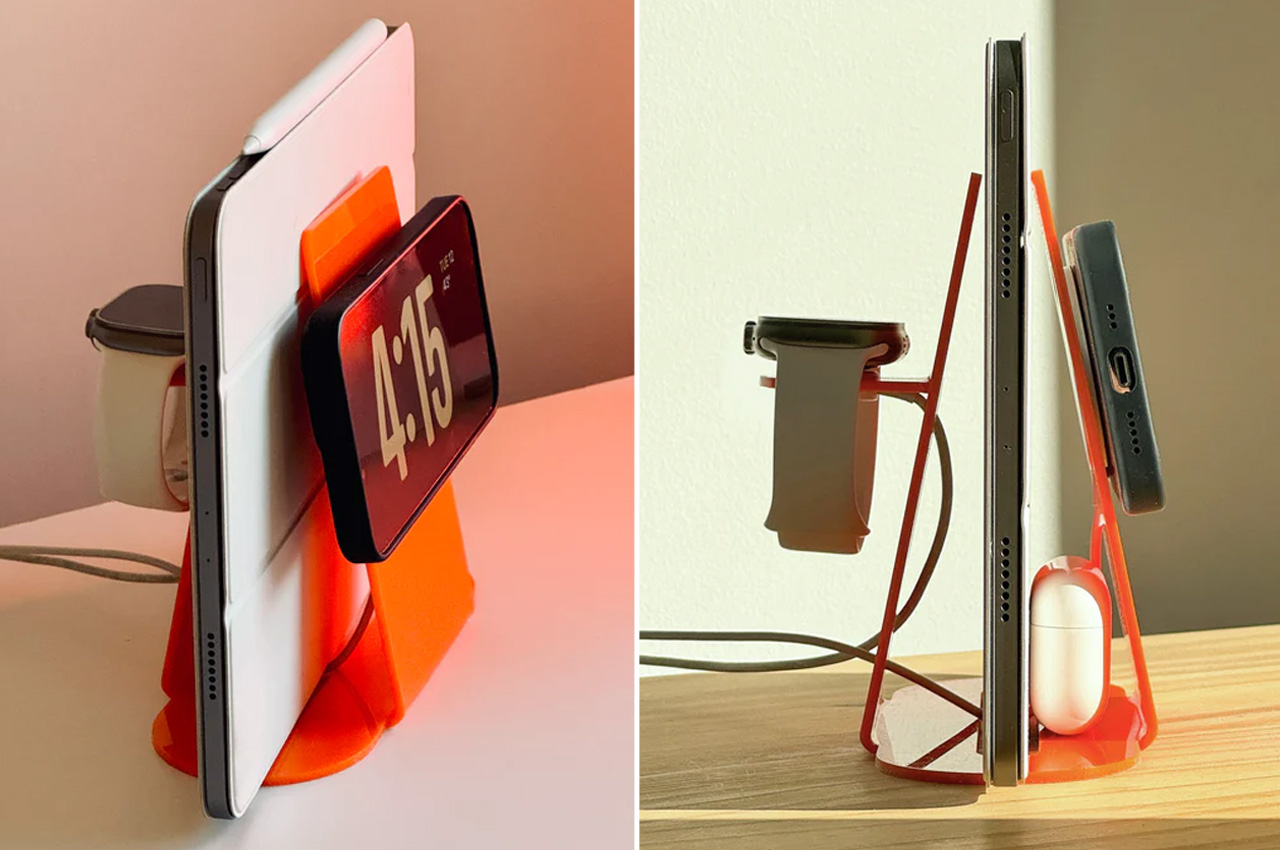
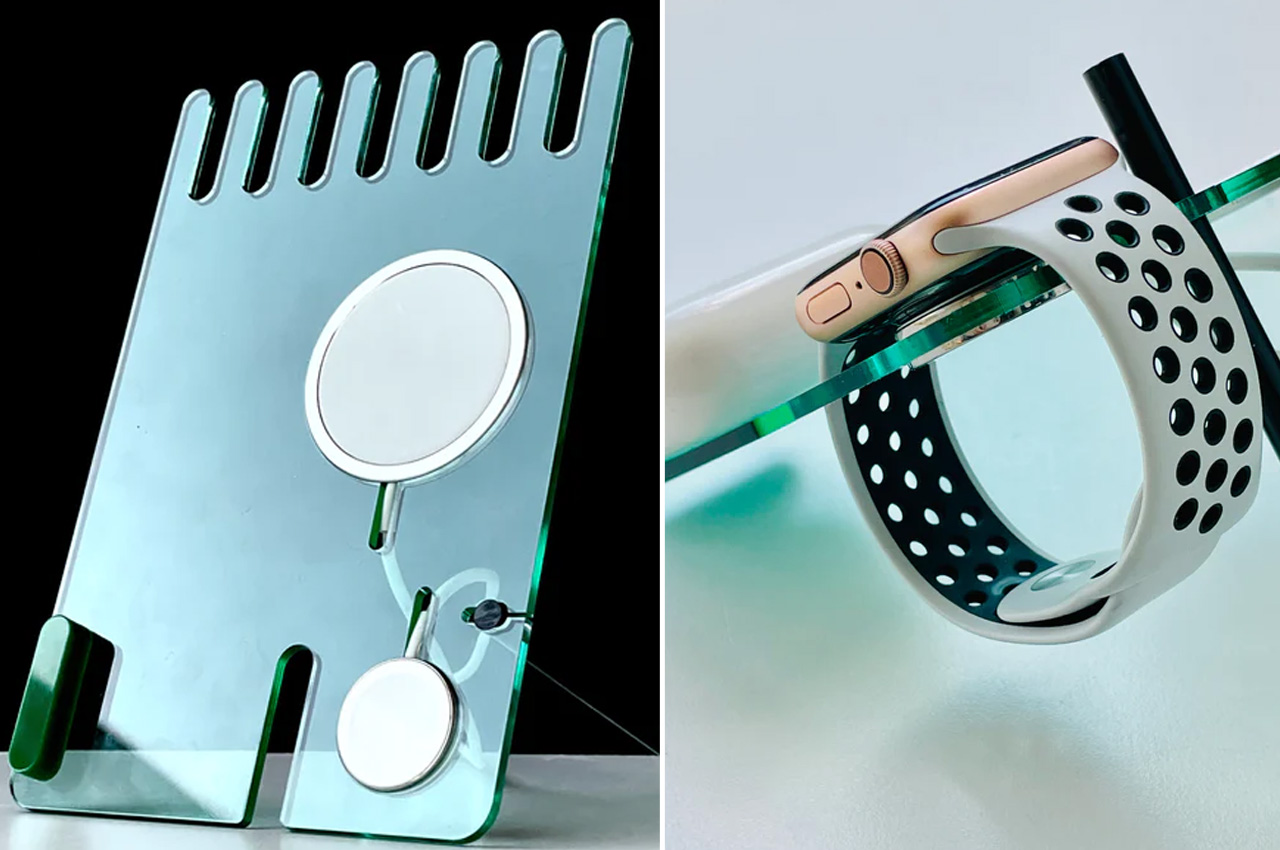
MagSafe – magnetic charging and accessory attachment technology- is arguably a big transition for smartphones. It’s an Apple prerogative and has been part of every gadget the Cupertino giant has rolled out since 2020. It is no surprise then, that there’s been an unrelenting outflow of accessories for the MagSafe-compatible iPhones, Apple Watch, and AirPods. Doing this very attractively is Leon’s Electric Trout Co., which has been designing MagSafe charger stands that are a total game changer.
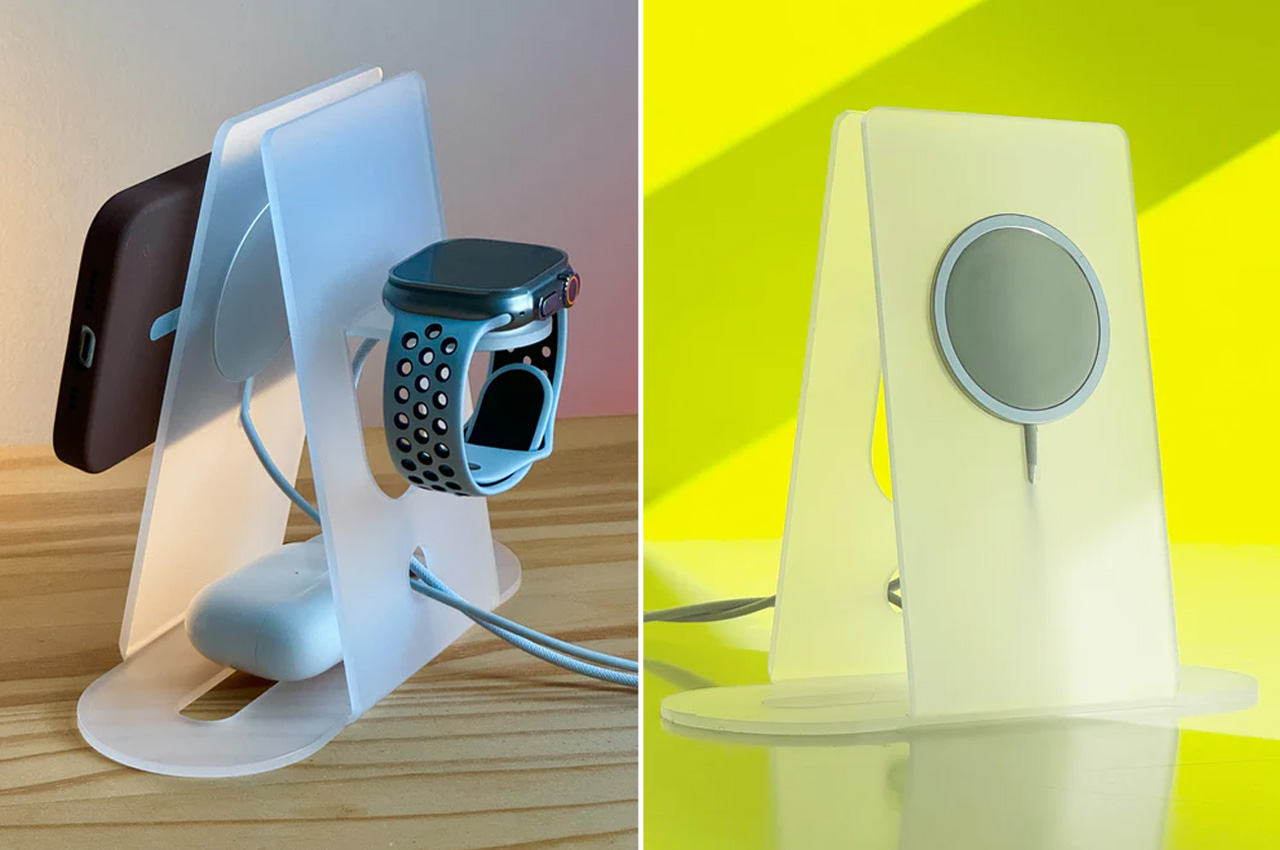
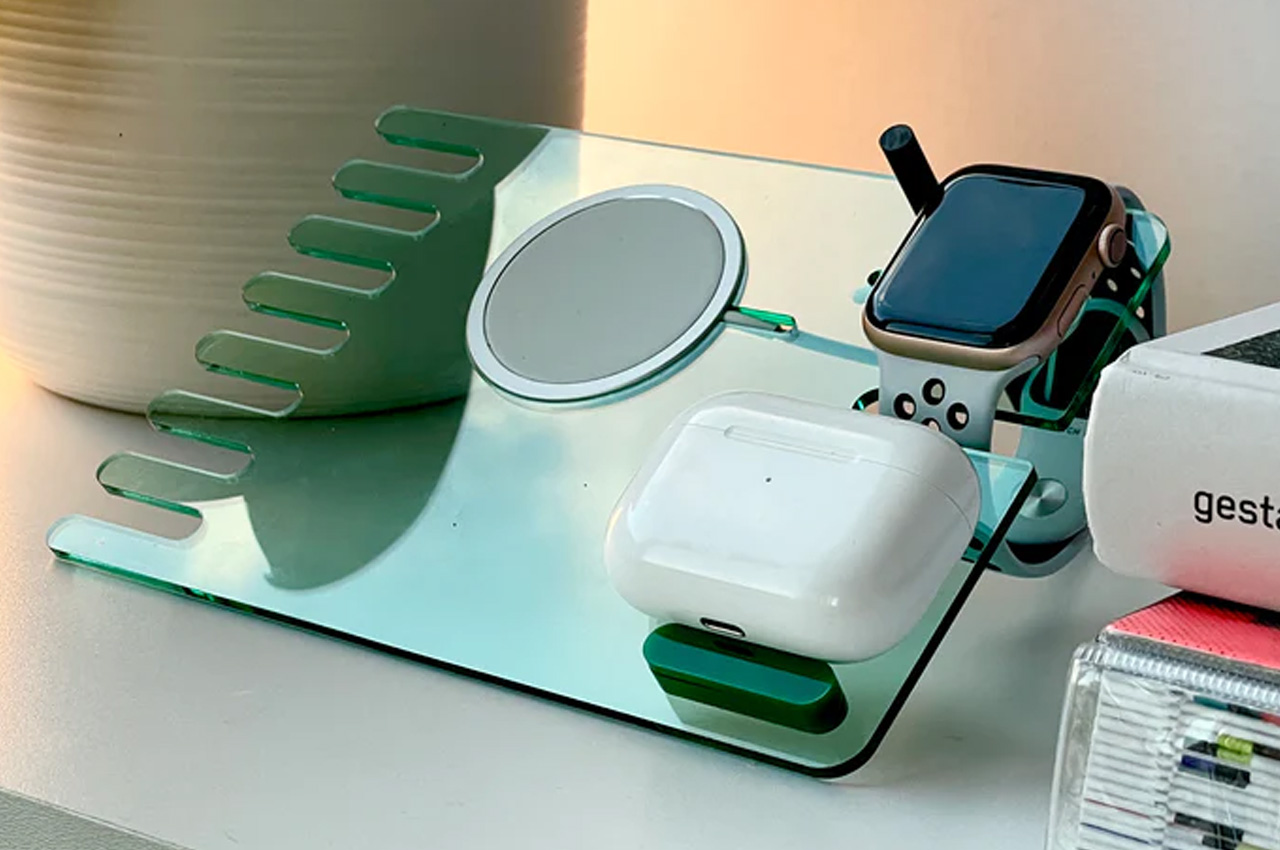
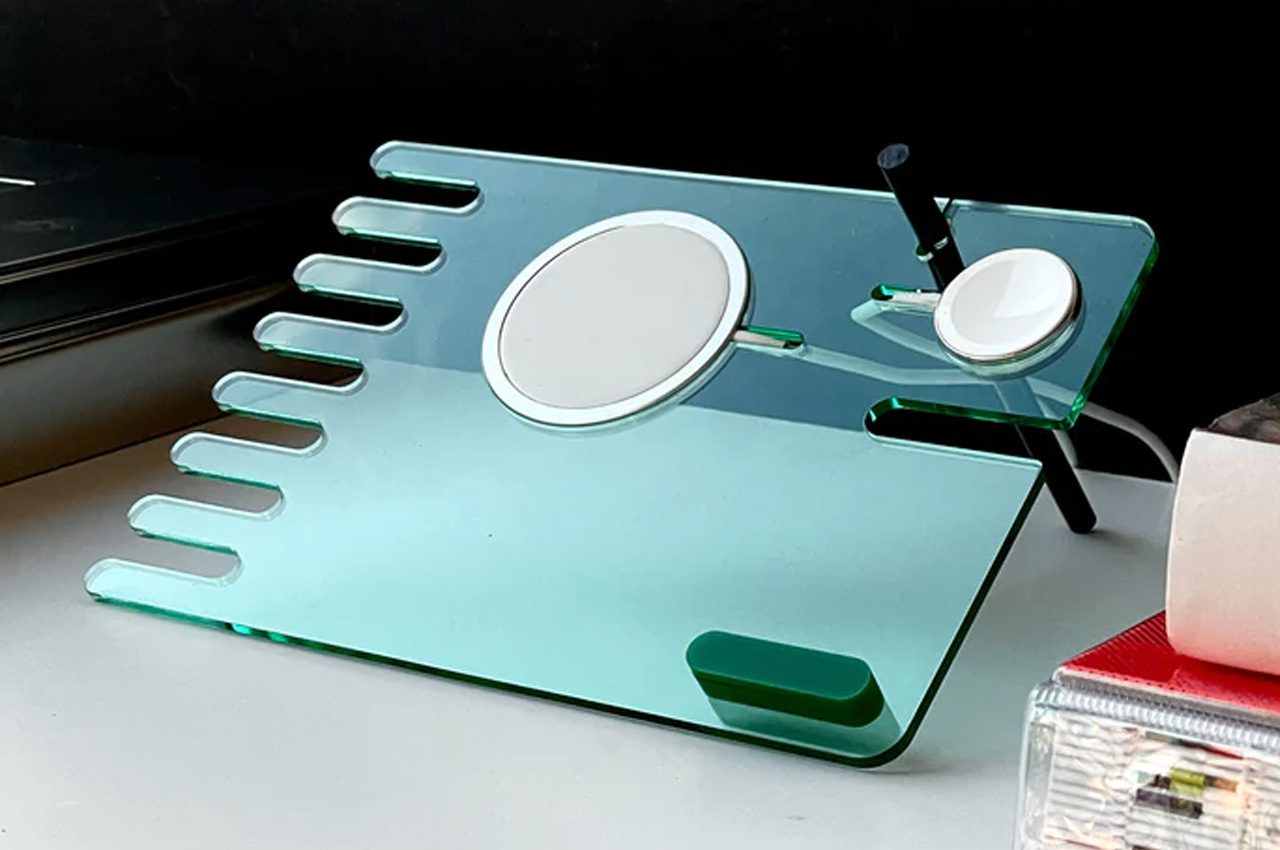
In the list of metallic and plasticky MagSafe accessories, David Stychno’s Electric Trout charging docks made from acrylic are confident newcomers. They outshine the old-school docks for all things Apple with productive and sleek silhouettes that are bound to redefine convenience and efficacy. Since Electric Trout wishes to tap a large spectrum of users, it has MagSafe-compatible charging solutions for one, two, or an entire range of Apple’s handheld and wearables.
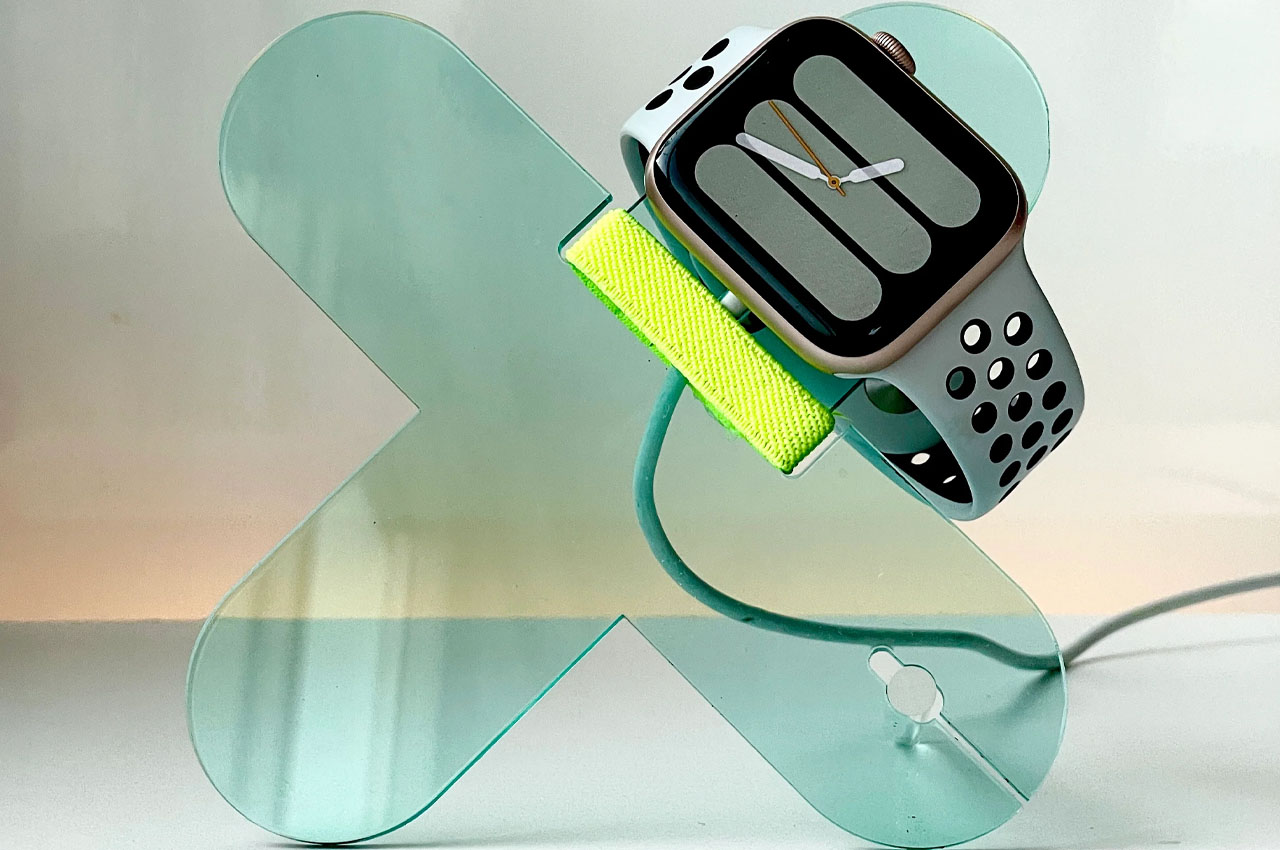
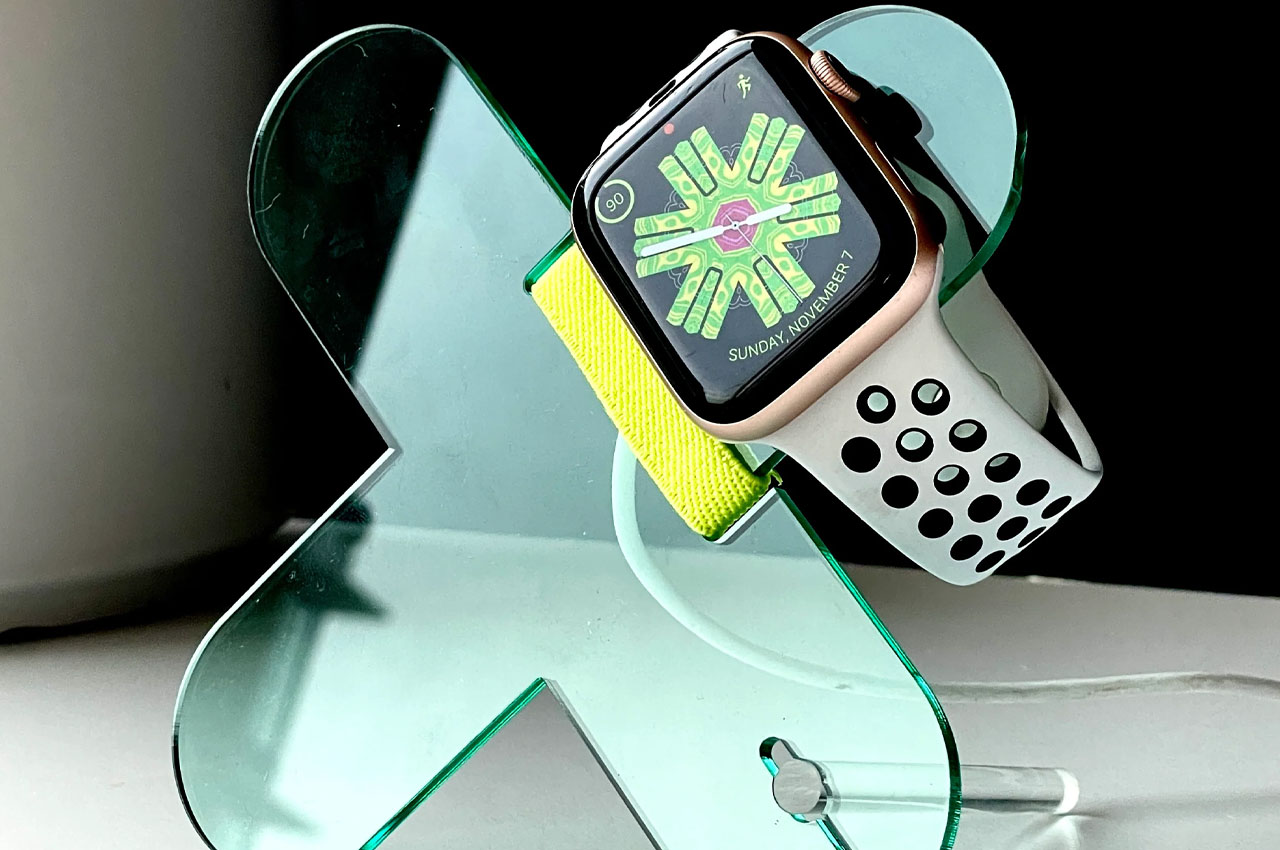
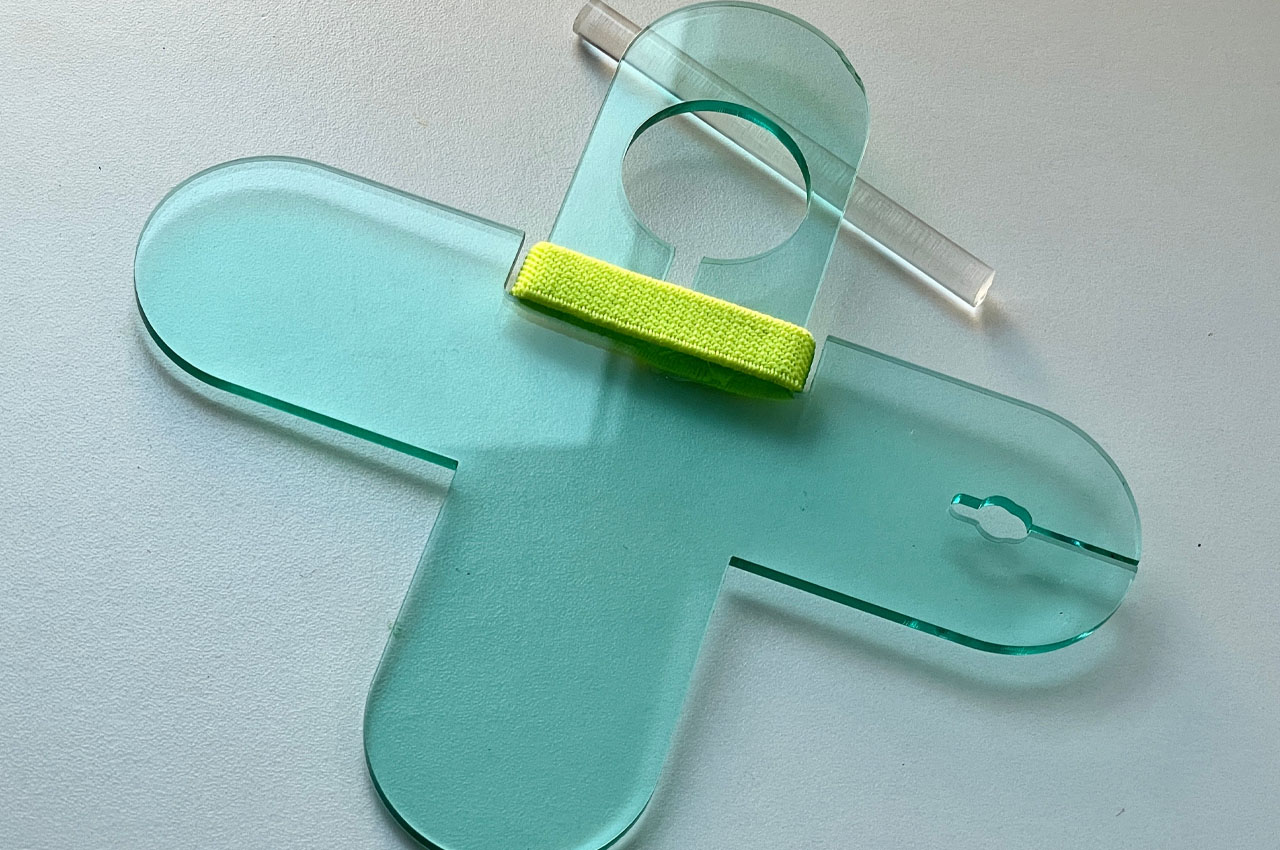
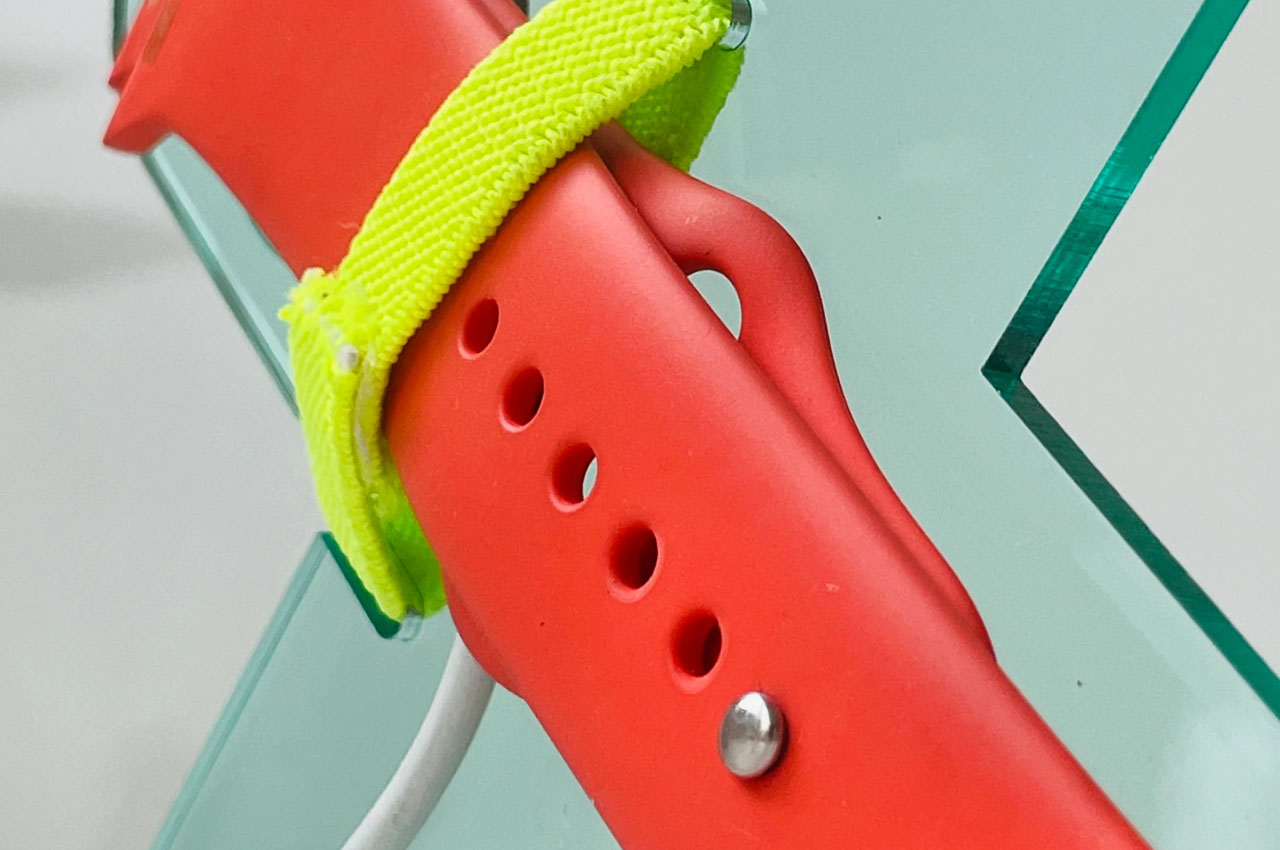
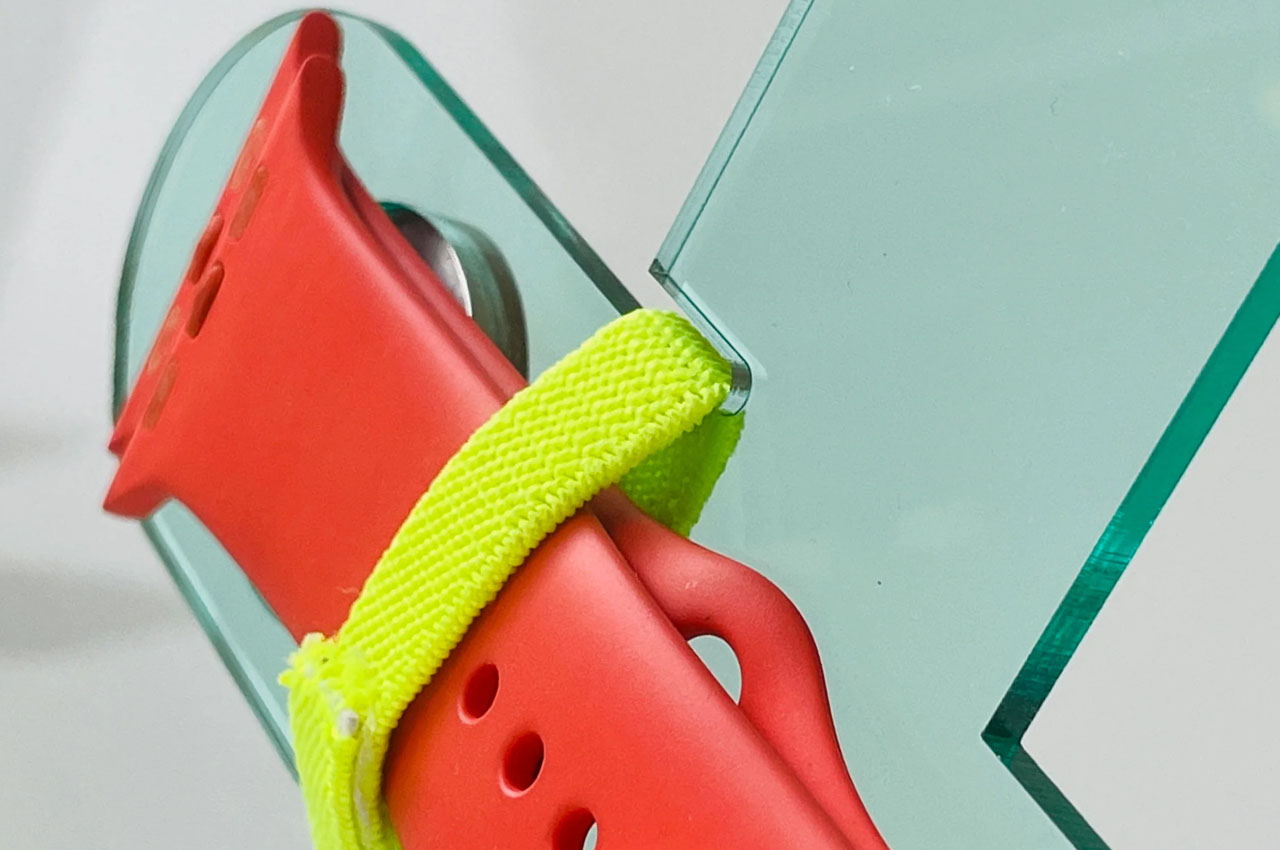
As mentioned, the stands are designed to add more character than the traditional iterations. Case in point, the $39 Expo Apple Watch charging stand with watch band storage that arrives in an ‘X’ shape. The charging dock comes flat-packed and can assemble in seconds, without the use of tools or gum. You can set the watch to charge on this acrylic stand while the extra watch bands can hang by the elastic strap, so you don’t need additional place to keep your watch accessory.
If you want a more productive accessory that does more than hold and charge your Apple Watch, David’s design house has you covered with the interestingly styled upright clip NS-3 that charges a watch and iPhone and stores a pair of AirPods for you in the base. NS-3 Clip, and the previous options in the category, can be used on the nightstand or kitchen counter. It is handmade from a single piece of laser-cut acrylic.
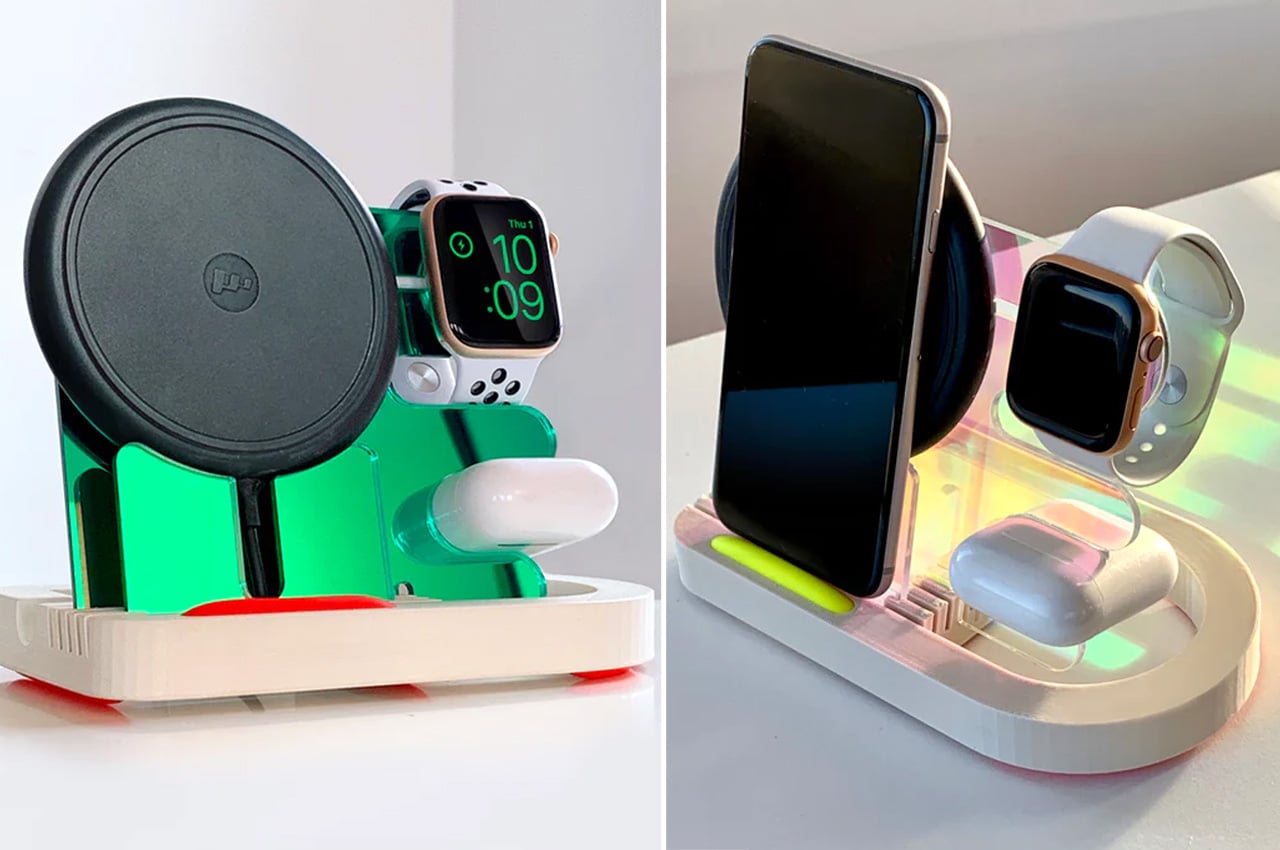
In line with the idea is the MagSafe 3-in-1 charging stand that can help charge your iPhone, Apple Watch and AirPods on a seamless sheet of acrylic. It comes flat-packed for travel, and can become your nightstand essentially with the assembly of a kickstand. The latter allows this charging stand to be used in portrait or landscape orientations to browse or take calls while charging.
The most intriguing yet is the 3D-printed Ezl-02. It is an all-in-one dock created to let you juice up your devices with the chargers you already own. Shipped with a black Mophie wireless charging pad in the box, the Ezl-02 charges and helps organize your iPhone, Apple Watch, Airpods, and extra watch bands in one place. If you have been waiting to get home a sleep charging stand for your Apple device, which won’t add clutter, but instead would look fancy, the buck stops at the Electric Trout shop!
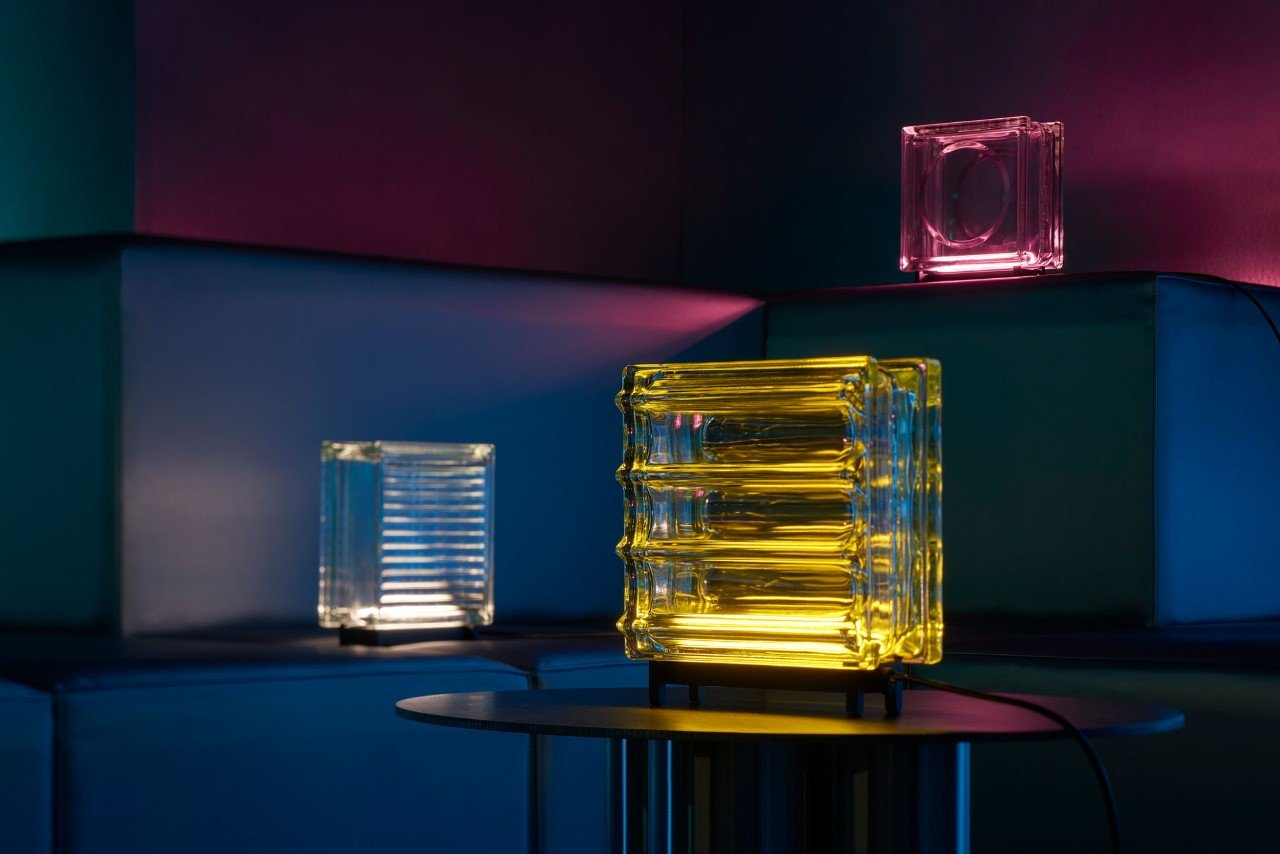
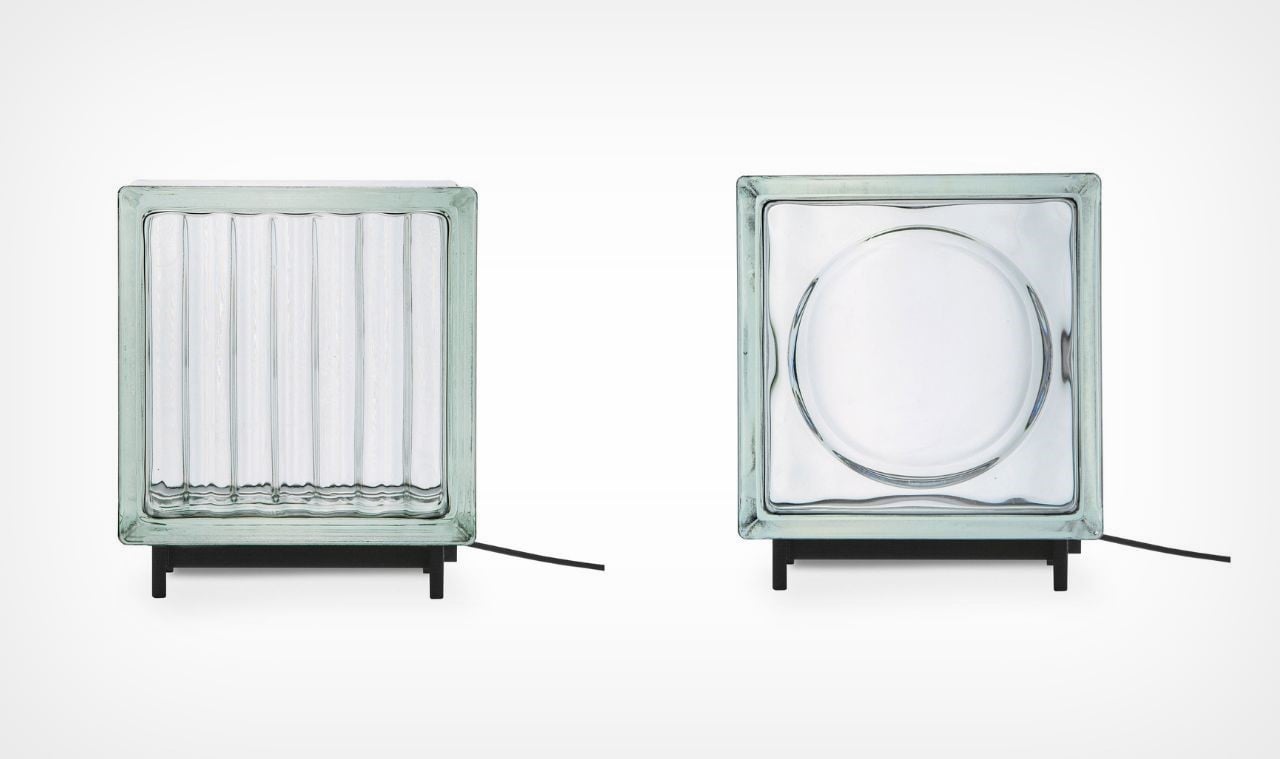
Dive into the world of cool lighting with Kismas, a Lithuanian design studio that’s turning vintage vibes into modern magic. Old-school glass blocks from the Cold War era are getting a fresh lease on life, thanks to Kismas’ playful design spirit. They’ve introduced a dreamy collection of glass brick lamps – the Vintage Line and the Modern Line. It’s like Kismas is playing matchmaker between the past and present, creating a home vibe that’s both nostalgic and cutting-edge. These lamps aren’t just illuminating; they’re time-traveling storytellers, celebrating the cool factor of vintage design. So, if you want your space to be a mix of retro charm and contemporary chic, Kismas has got the perfect lighting symphony for you!
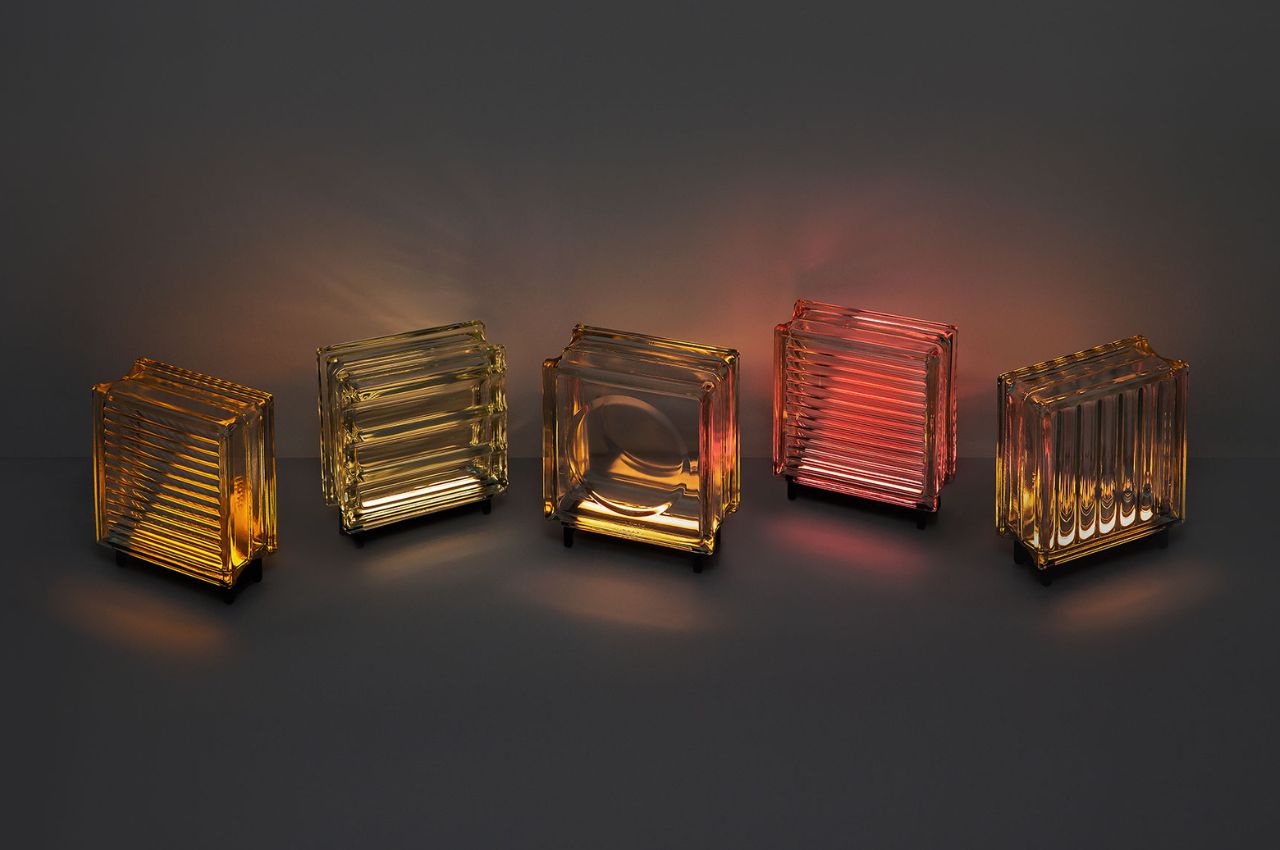
The Kismas Vintage Line brings forth a marriage of minimalist steel bases and reclaimed glass blocks, each with a unique history dating back to the fierce times of the Cold War. Salvaged from various Baltic countries, these original glass elements, deemed “imperfect” by the brand, find a new identity in Kismas lamps. The juxtaposition of sturdy yet subtle dark steel bases with the transparent glass blocks creates a striking visual interplay, emphasizing graphic patterns and corrugated edges.
Rich Green Lamp 01, a standout from the Vintage Line, showcases the deep green color characteristic of blocks used in brutalist buildings in the Soviet Union. Bearing marks, scratches, and small cracks, each lamp becomes a one-of-a-kind piece with a rich history. The Bigger Optical Lamp 01, another Vintage Line gem, features lighter green blocks from the ’70s-’80s in Lithuania, allowing for the use of filters that can change the color of the emitted light.
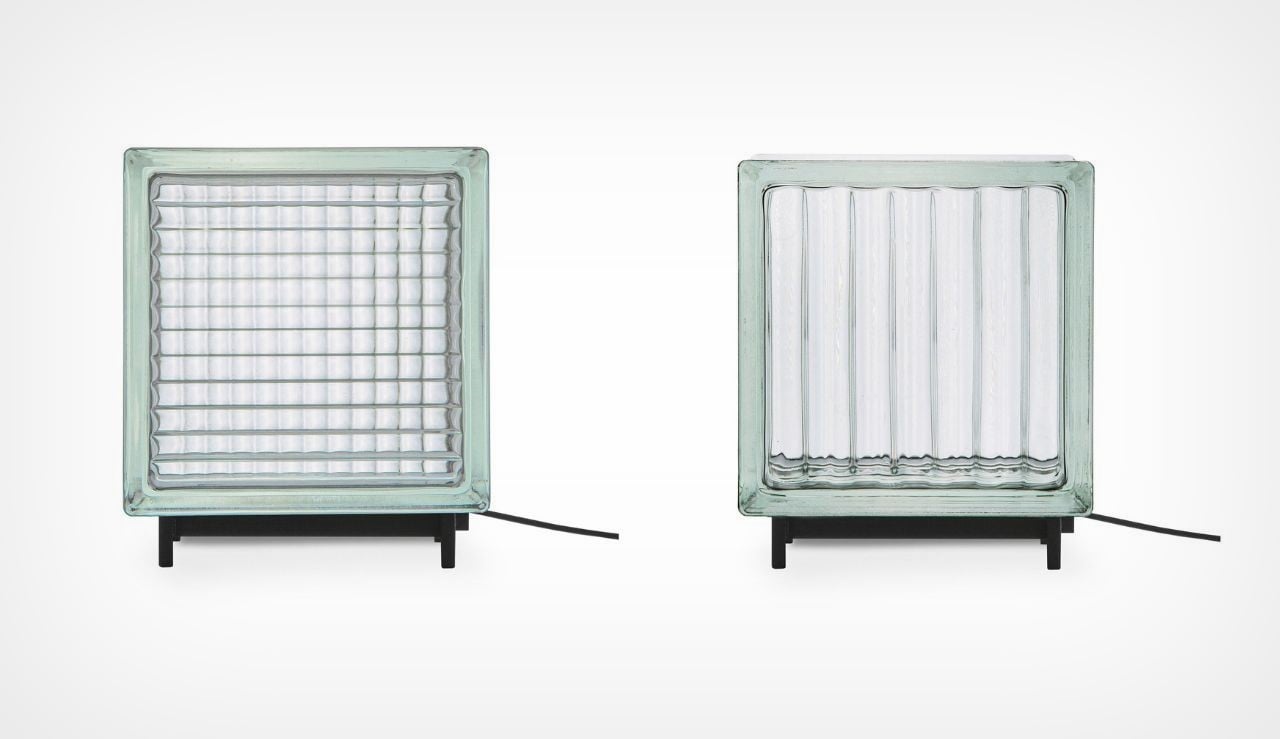
In the Kismas Modern Line, the design takes a leap forward with glass block lamps crafted by Seves Glass Blocks. Clean lines, bold patterns, and flawless clarity define this collection, paying homage to modernist architecture. The centerpiece, Doric Lamp 01, features a Doric19 glass block inspired by renowned architect Rafael Moneo, while the Linear Lamp 01 and Cross Linear Lamp 01 introduce ribbed patterns and intersecting lines for unique lighting effects. The 80s Dream Lamp 01 and Orbital Lamp 01 round out the Modern Line with a frosted surface and Maison de Verre building inspiration, respectively.
Kismas doesn’t stop at elegant design; it introduces a creative twist with light filters that can instantly transform the ambiance of a room. These easy-to-install filters come in seven hues, from the cinematic Dirty Yellow and Tokyo Blue to the subtly neon Dark Pink and Neon Green. Primary Red adds a vibrant touch perfect for lively gatherings, while Pale Rose and Aprico offer a warm and cozy glow.
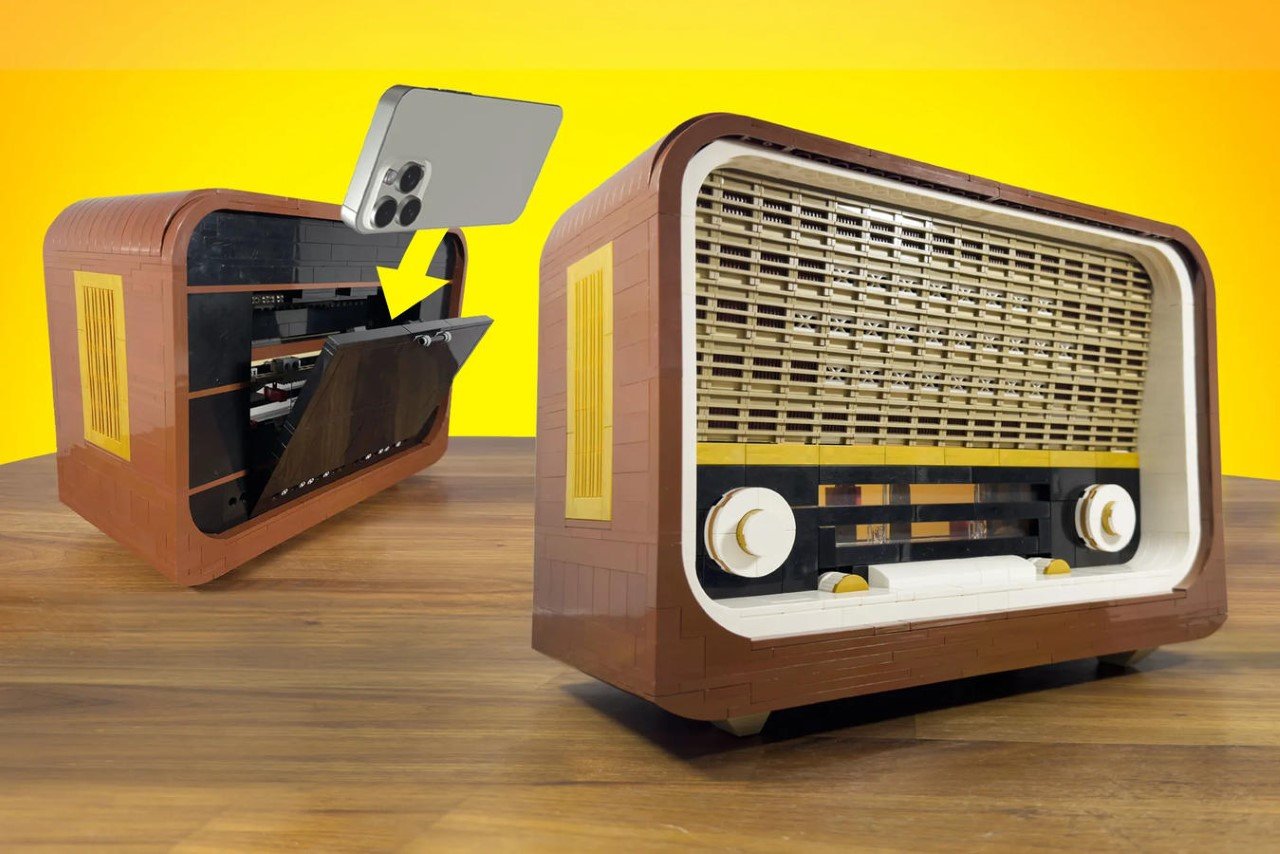
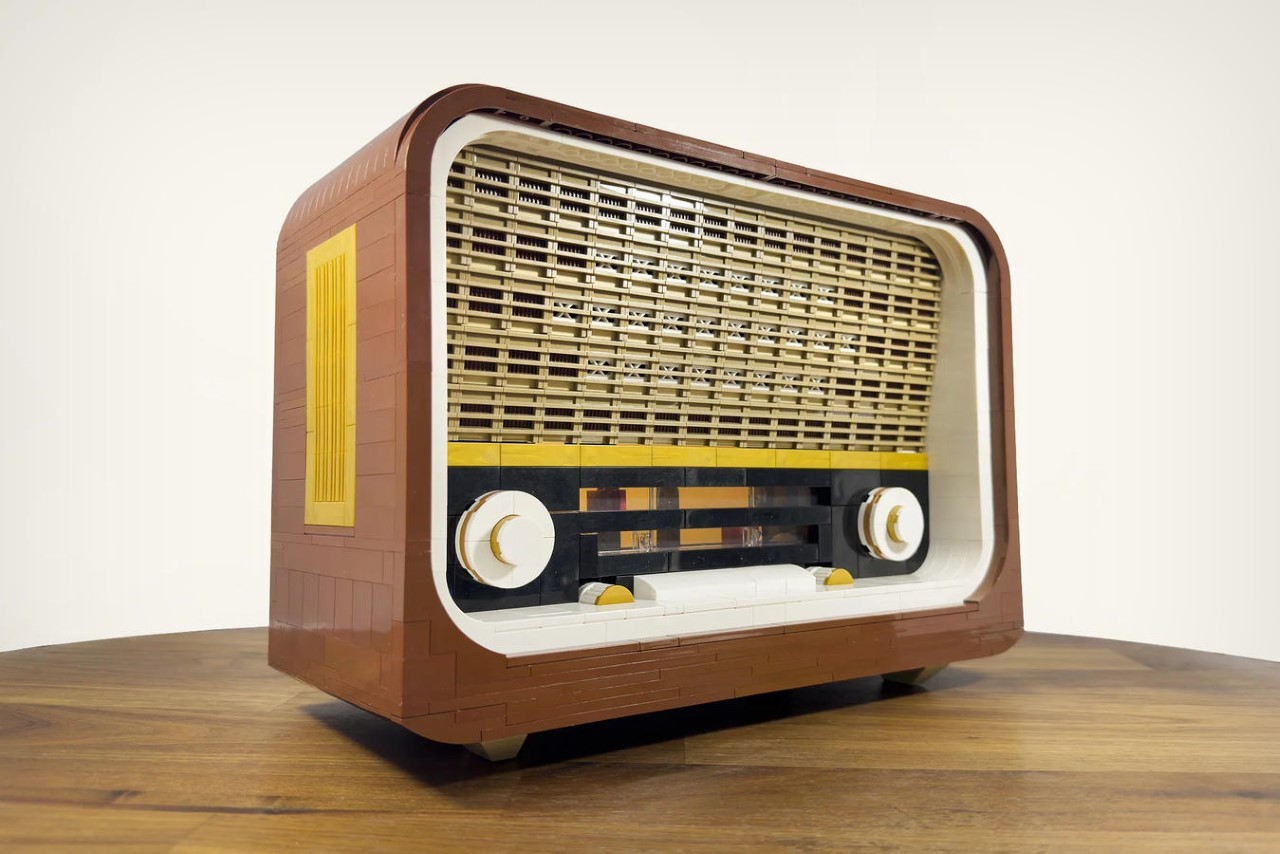
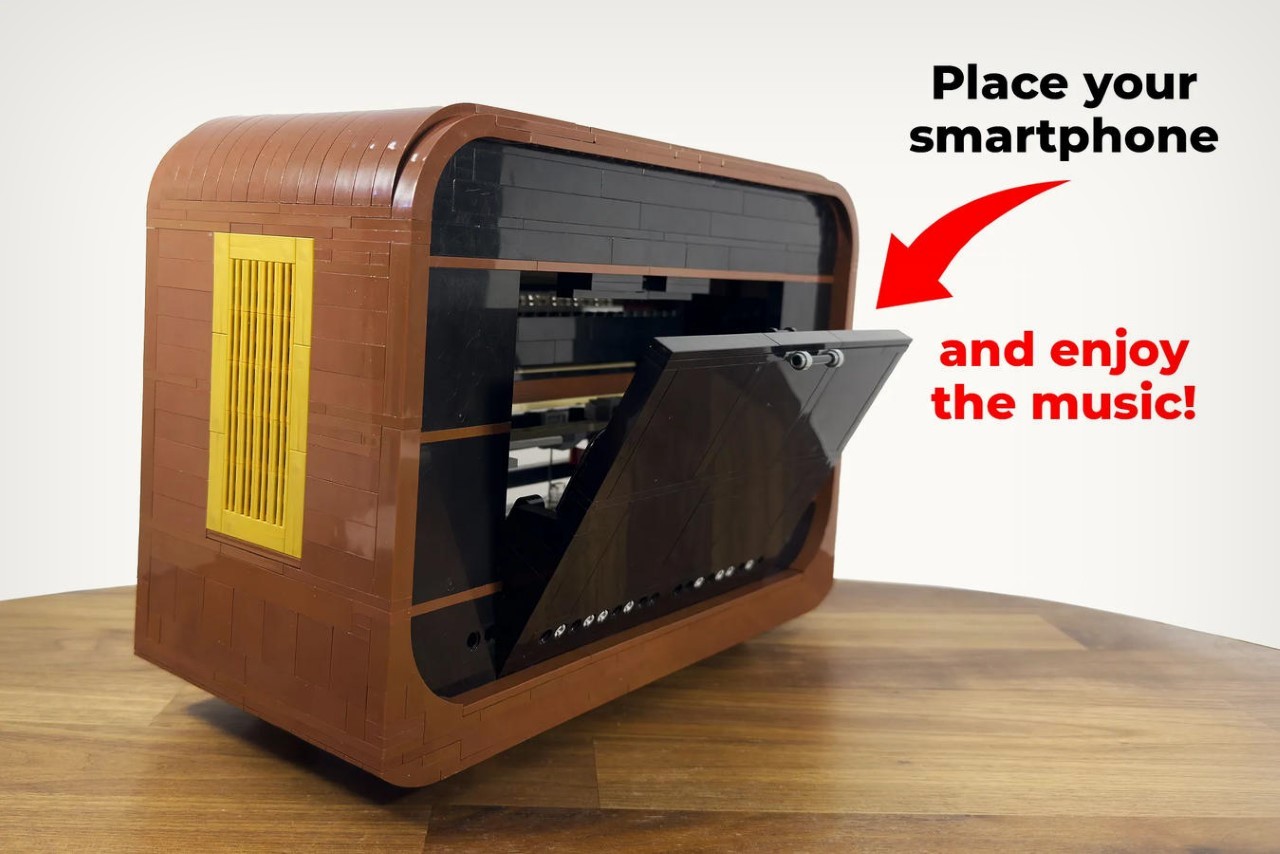
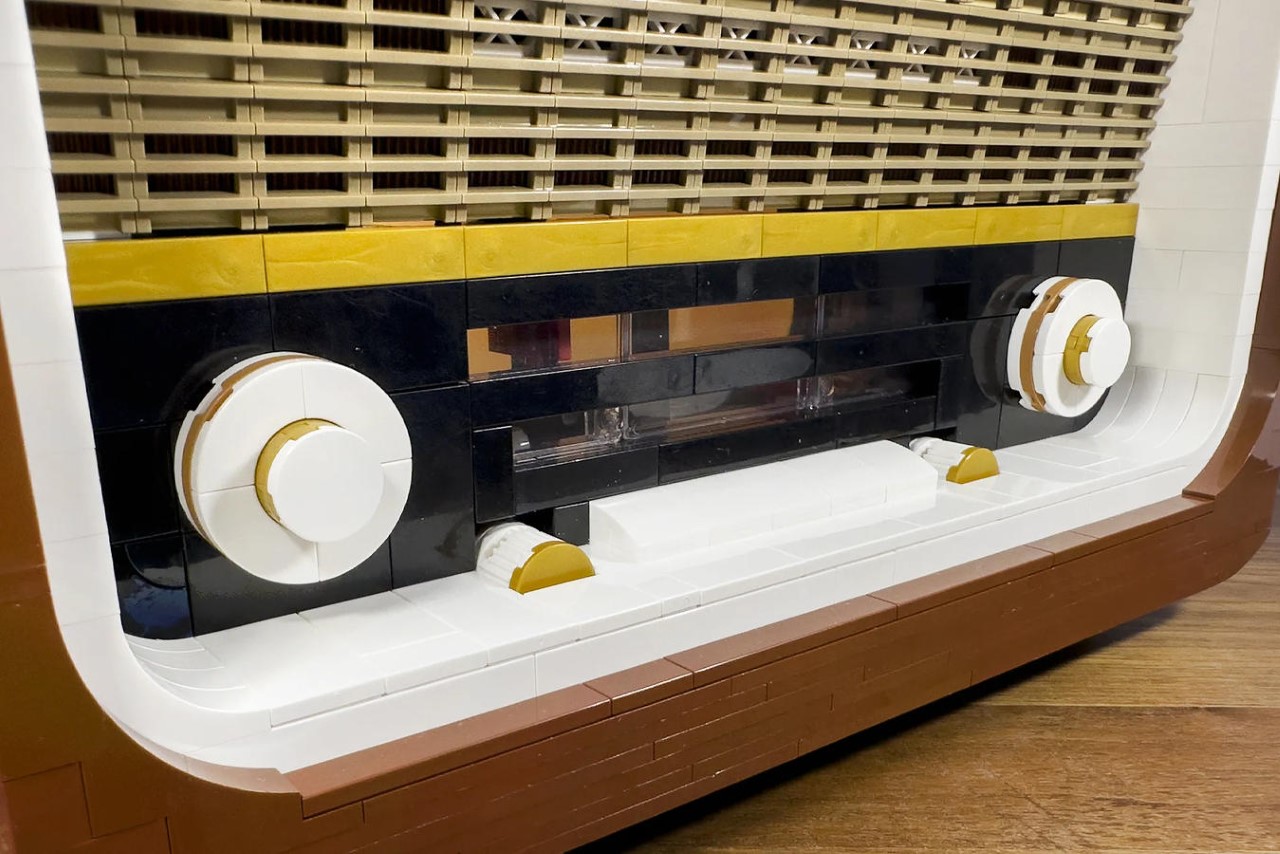
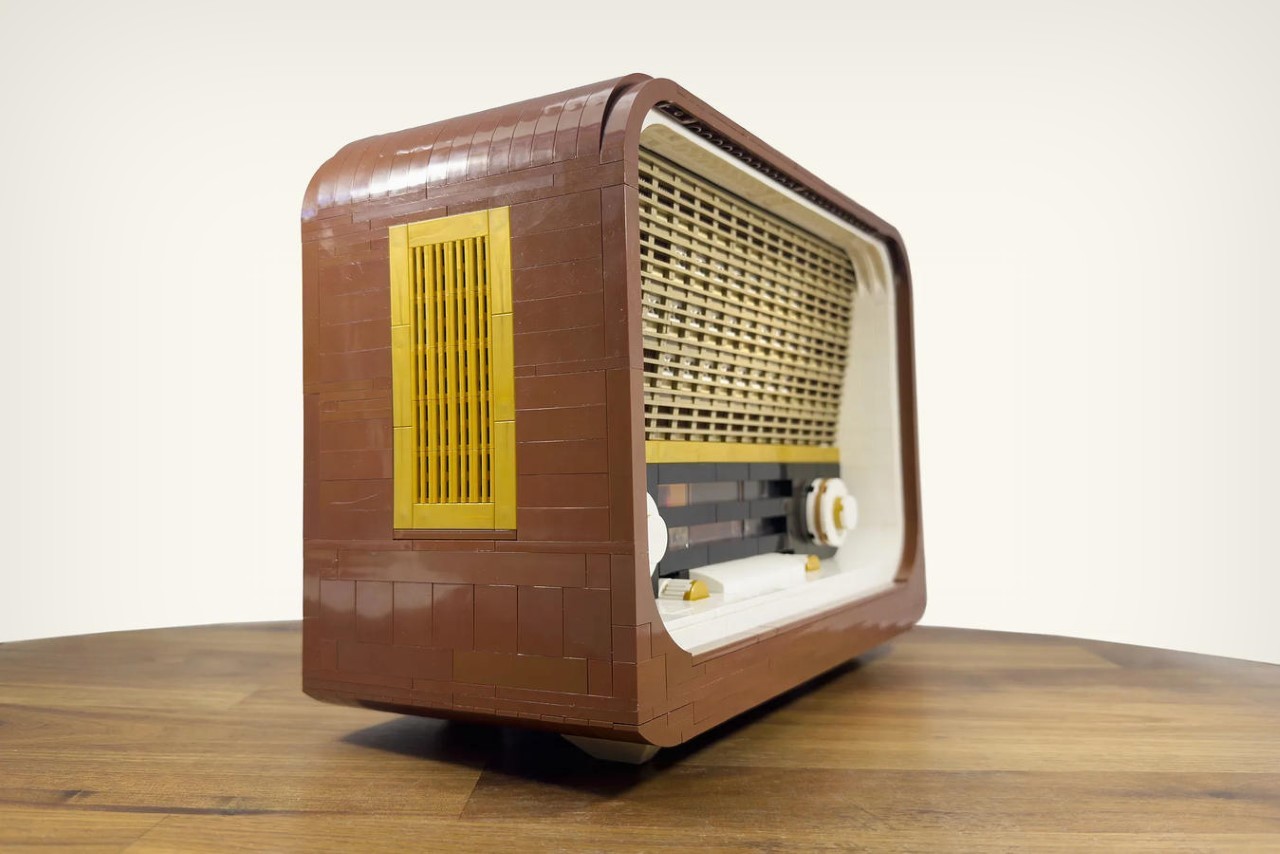
With 25 submissions to the LEGO Ideas forum (5 of which crossed the 10,000 vote mark), LEGO builder Dimexart is somewhat of a veteran when it comes to putting plastic bricks together. The brick aficionado’s latest creation combines LEGOs with the real-world in the form of a vintage radio that actually plays music. Made from over a thousand LEGO bricks, this vintage radio has a secret flap on the back that lets you slide your smartphone in. Switch on Spotify or YouTube, select your favorite track, and hit play as you pop your phone into the LEGO Vintage Radio and it recreates the feeling of having an antique radio playing your favorite tracks! The best part, Dimexart’s build comes with functional knobs and buttons that you can twist and press, moving sliders inside the gizmo just like you would with an authentic AM/FM radio.
Designer: Dimexart
Strangely enough, Dimexart made a radio back in 2021 out of LEGO bricks, and it did cross the 10,000 vote mark too, but was rejected by LEGO’s internal team. Unfazed by this, Dimexart went back to the drawing board and decided to tweak the radio to make it even better. The new MOC (My Own Creation, as it’s called in LEGO parlance) now features a flap on the back that let’s you slide any smartphone in, using the phone’s speakers and the acoustic chamber of the empty LEGO radio to create that warm, slightly twangy audio associated with radios of the past.
In Dimexart’s demo, he even uses the phone screen to mimic the warm backlight seen in most radio control panels. Given that they were sometimes used at night too, radios came with lights in their gauges so you could see which station you were on. Dimexart’s build uses light from your smartphone’s screen to create a similar experience.
The dials on the left and right are both functional and cause sliders inside to move left or right to indicate the station/frequency or the volume. There are dials/knobs and buttons on the bottom too, which are functional in that they can be interacted with – but that’s about all they do. It’s a fun interaction, however, and recreates the real tactile joy of the radio, which firmly belonged in a much more hands-on era long before touchscreens dominated our lives. The radio comes with a wood-inspired aesthetic, a rather realistic set of grills, and that gorgeous control panel on the bottom that I’m sure you won’t be able to get enough of.
Dimexart’s entry currently has 3,228 supporters as of writing this article. If you want to vote for the entry (and hopefully see it turn into a retail box set), vote for it on the LEGO Ideas website here.
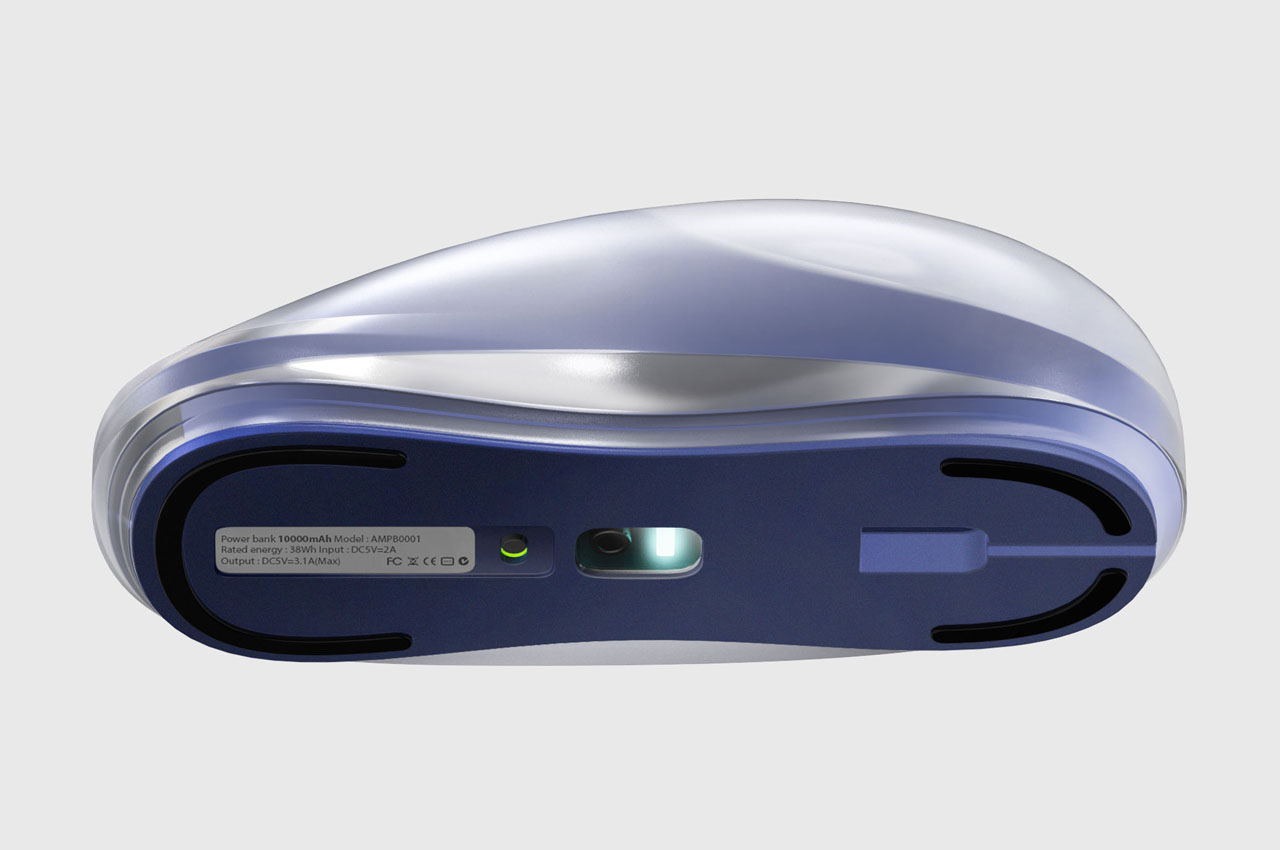
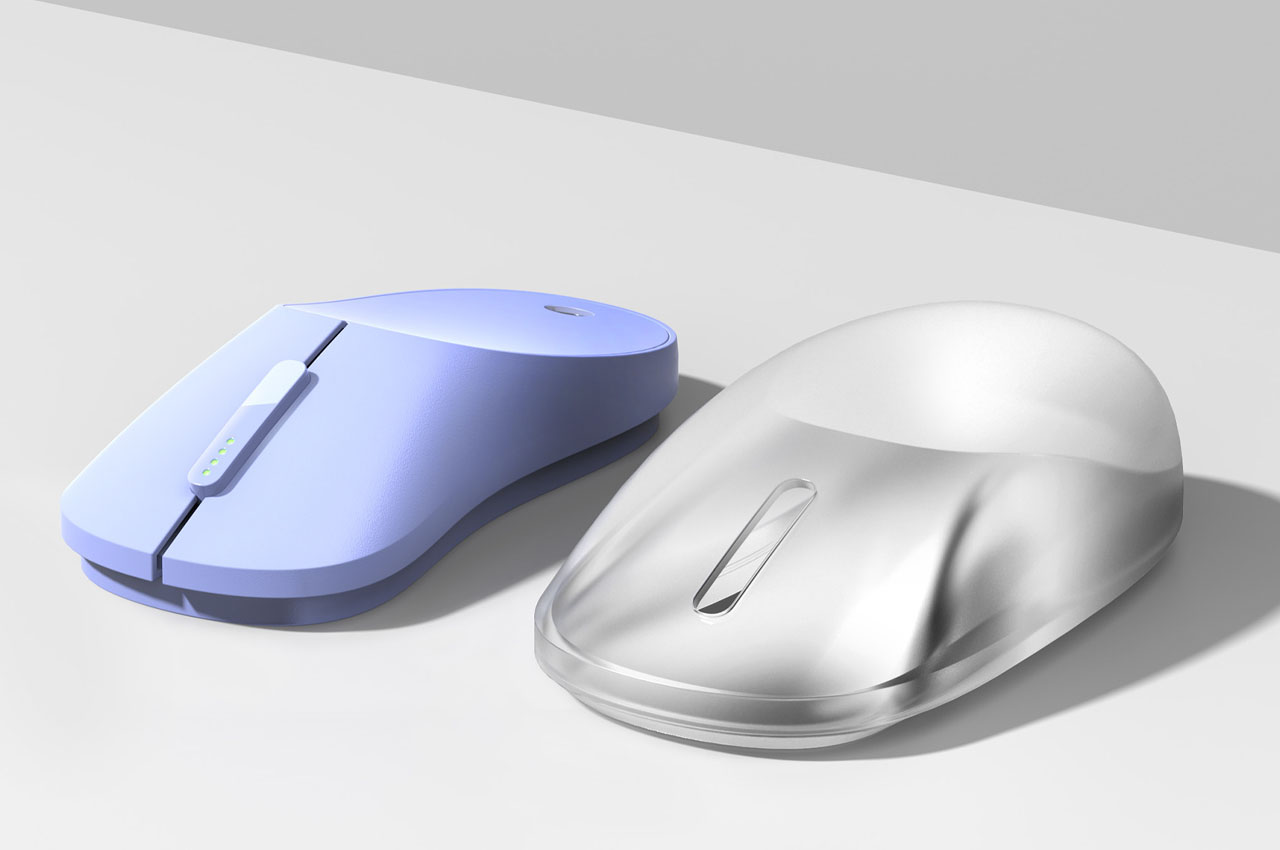
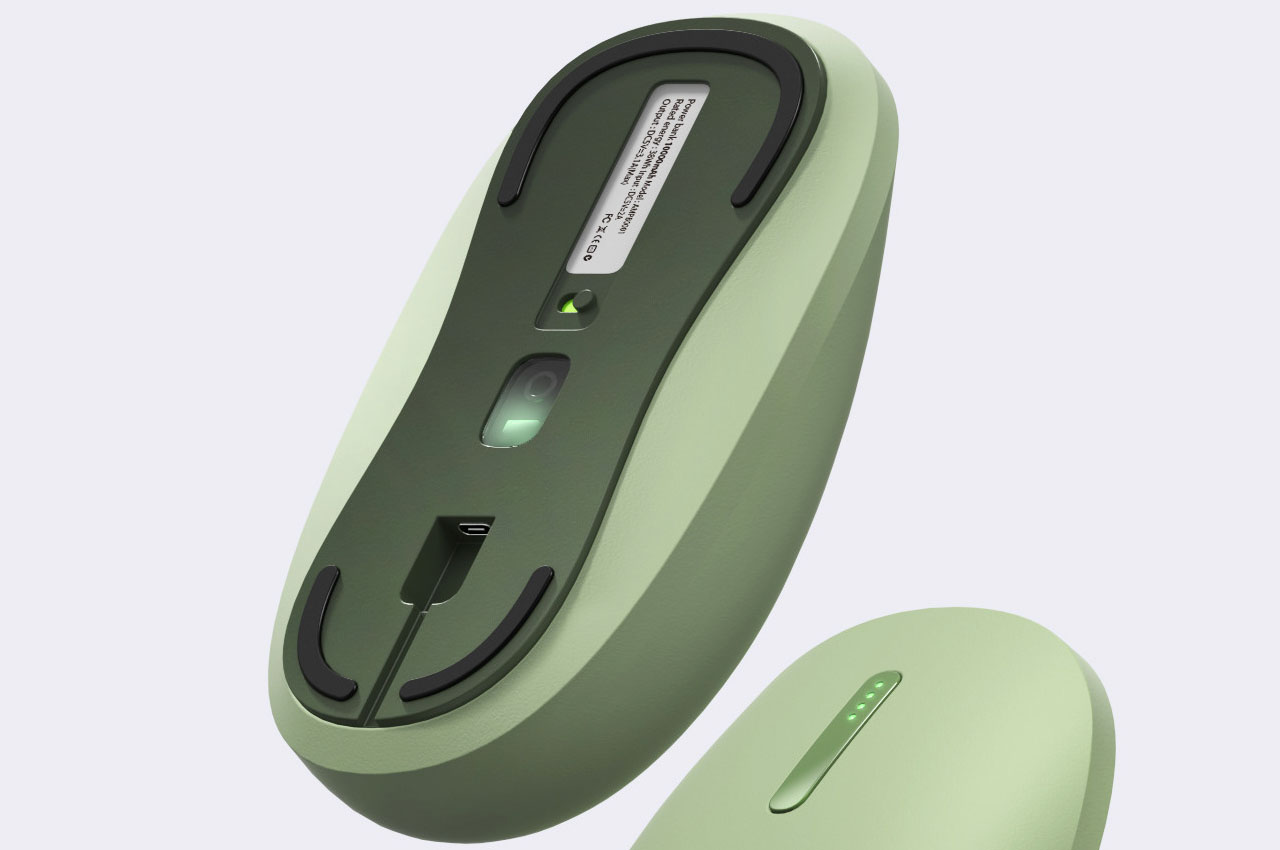
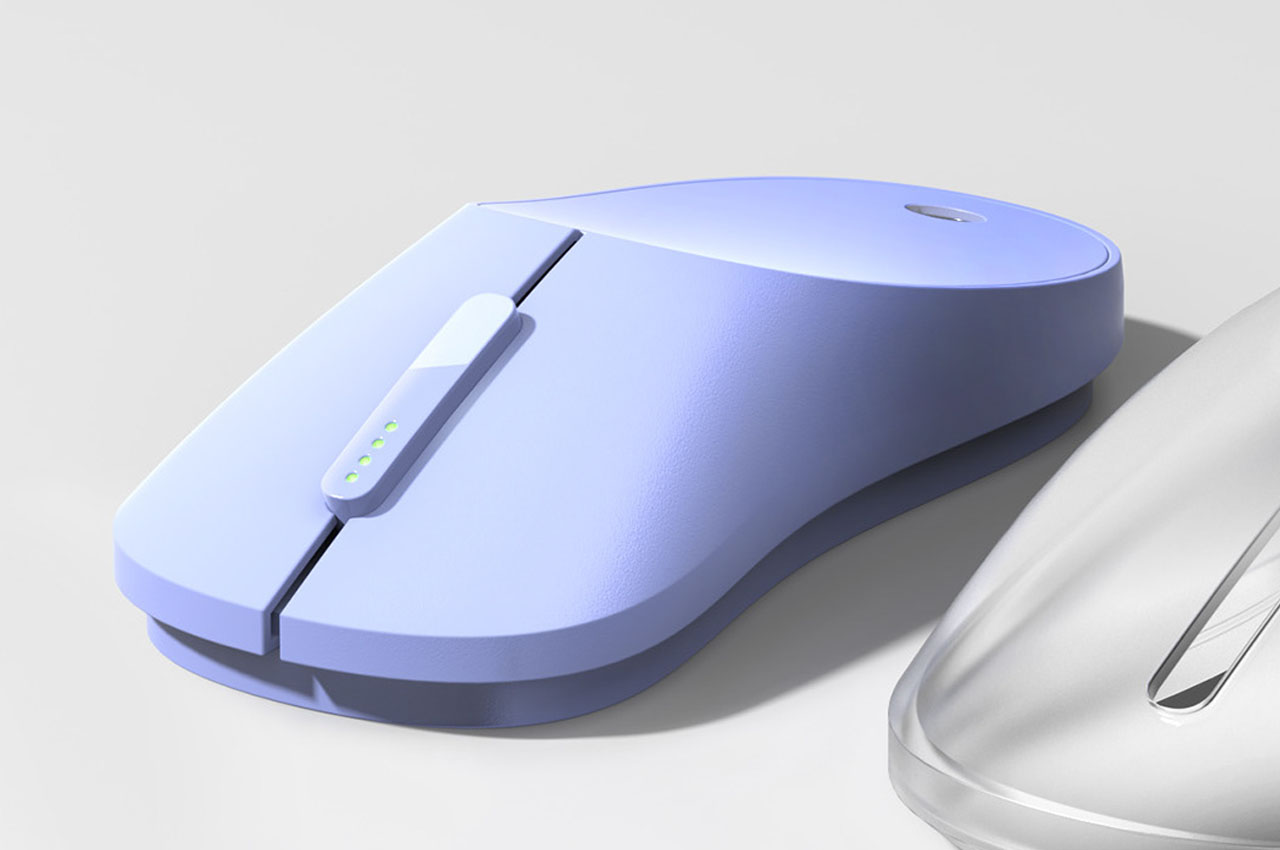
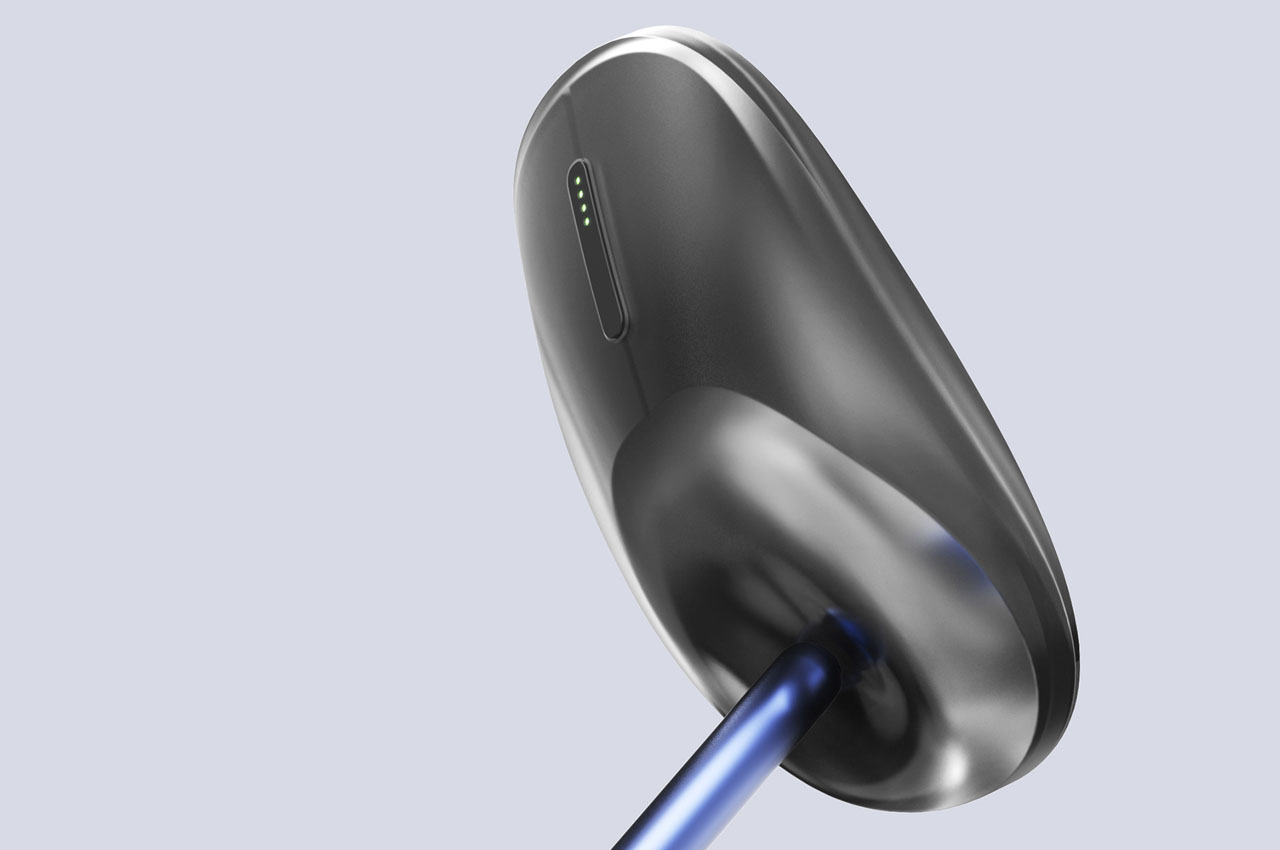
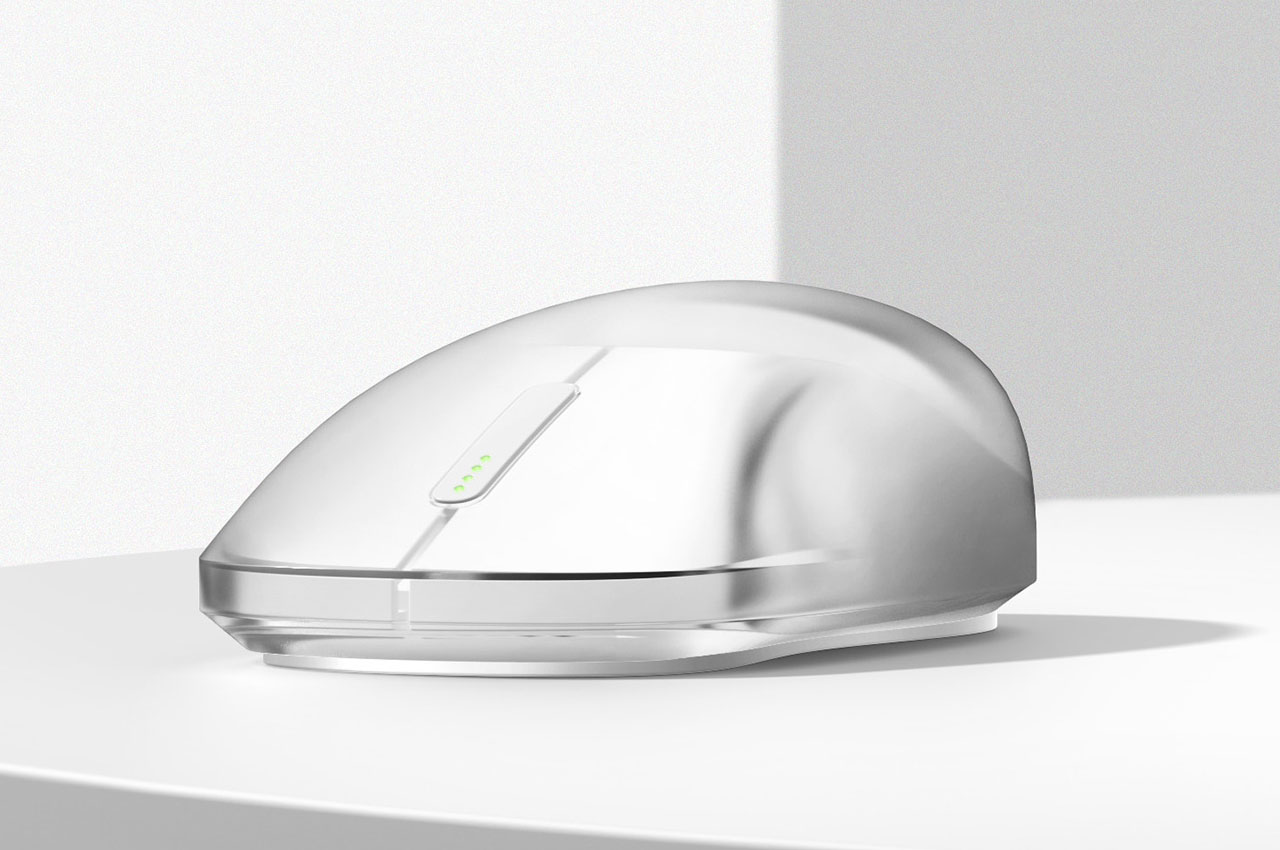
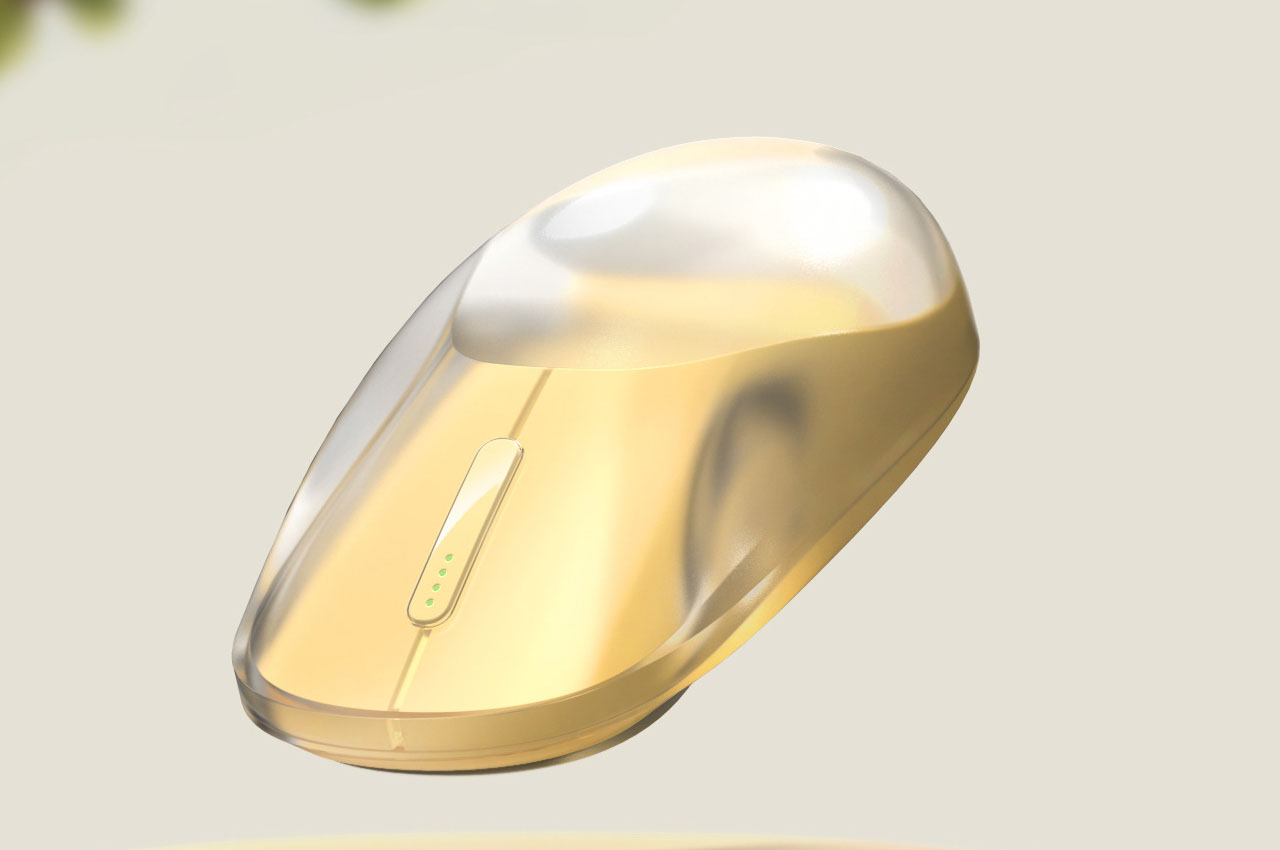
Post-pandemic, the return of the workforce to offices means the environment is stressful and tensions are high. The tolerance levels are at a new low for most, and the smallest things like an inconsistent Wi-Fi or unannounced email from the boss can get the blood pressure rising. Stress ball with its form factor helps in physical and emotional relief therapy, and now a designer believes a wireless mouse can take over and help the working professional ease their anger with a mouse press.
Negativity is not a post-pandemic symptom anyway. Amid negative emotions and intolerance, anger has always reigned supreme in humans. Anger is closely related to the development of illness and only a few remedies can help. One over-the-counter option is a stress ball that doctors and therapists advise for easy and quick anger release, and borrowing an idea from it, the Vent wireless mouse is a functional option for stressed and enraged employees.
If I remember correctly, research a few years back disclosed that a mouse (through the way a person moves the cursor at different speeds) can predict anger and frustration. But what do you do when you know you’re angry? Of course, you don’t need a mouse to predict that for you, but a wireless mouse to help you release that without breaking the screen down is a handy option.
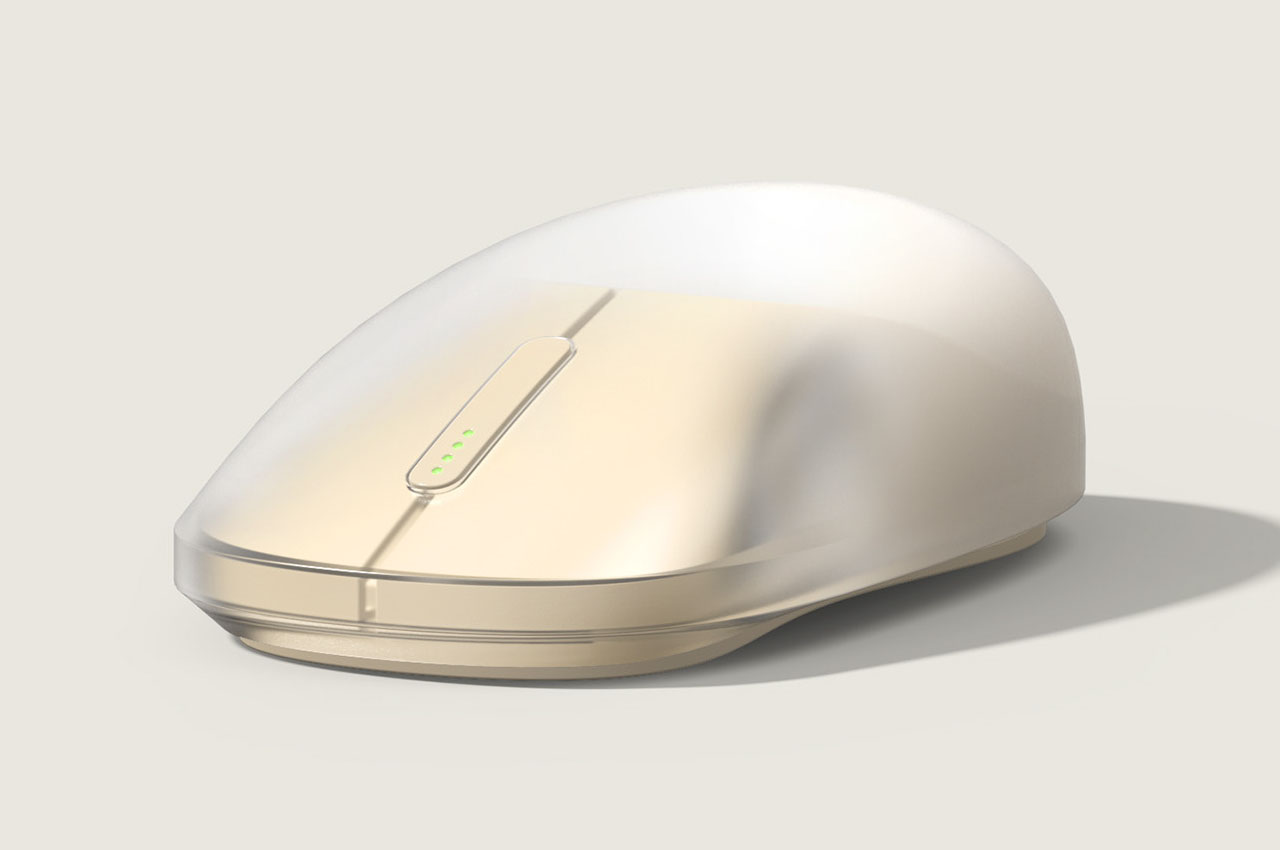
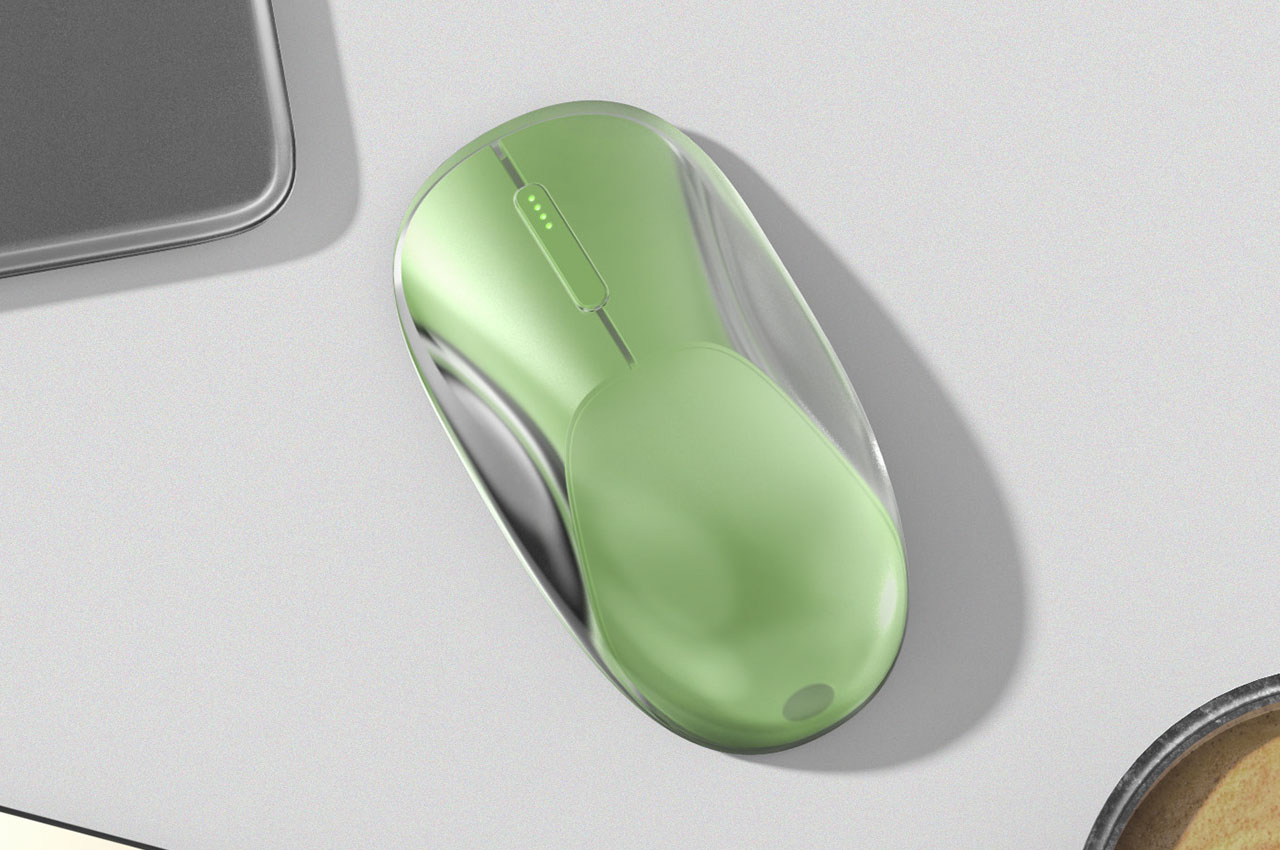
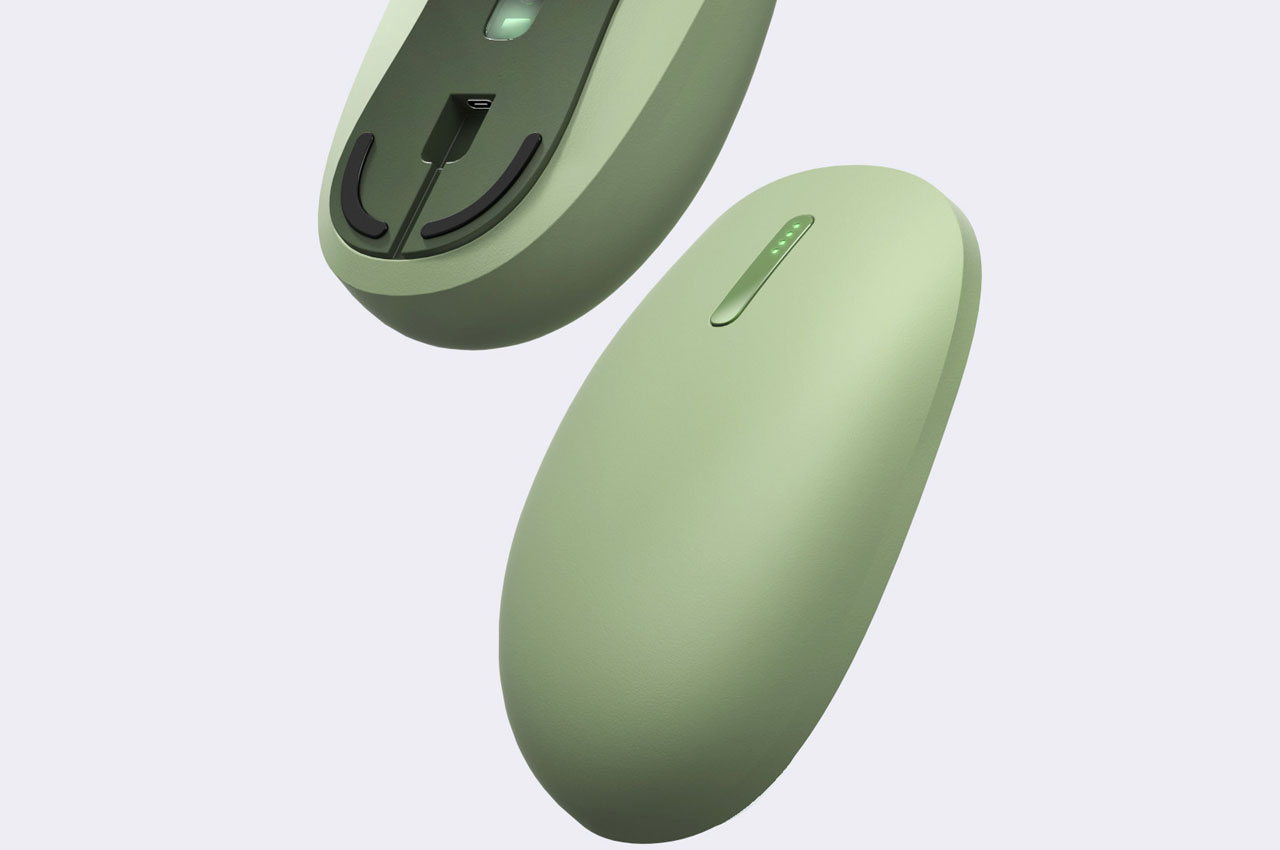
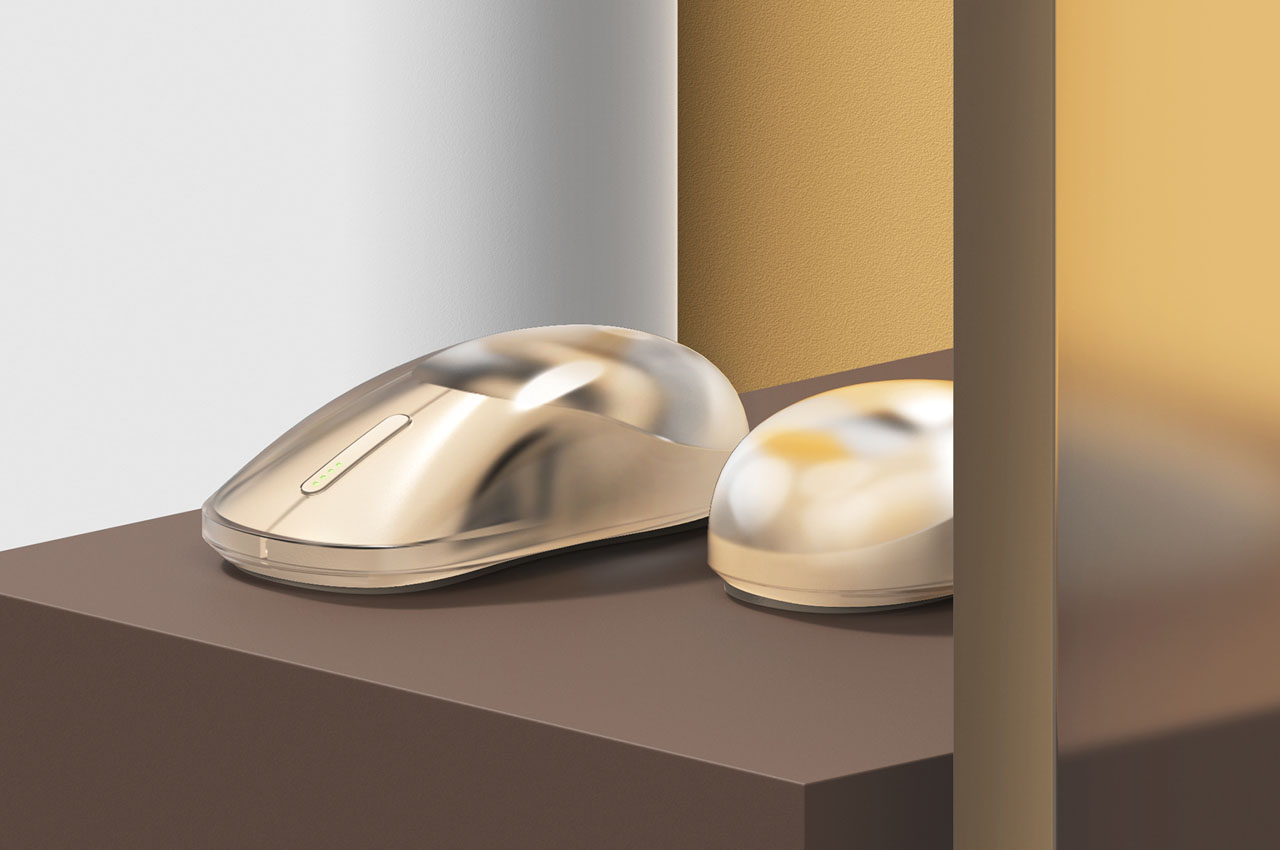
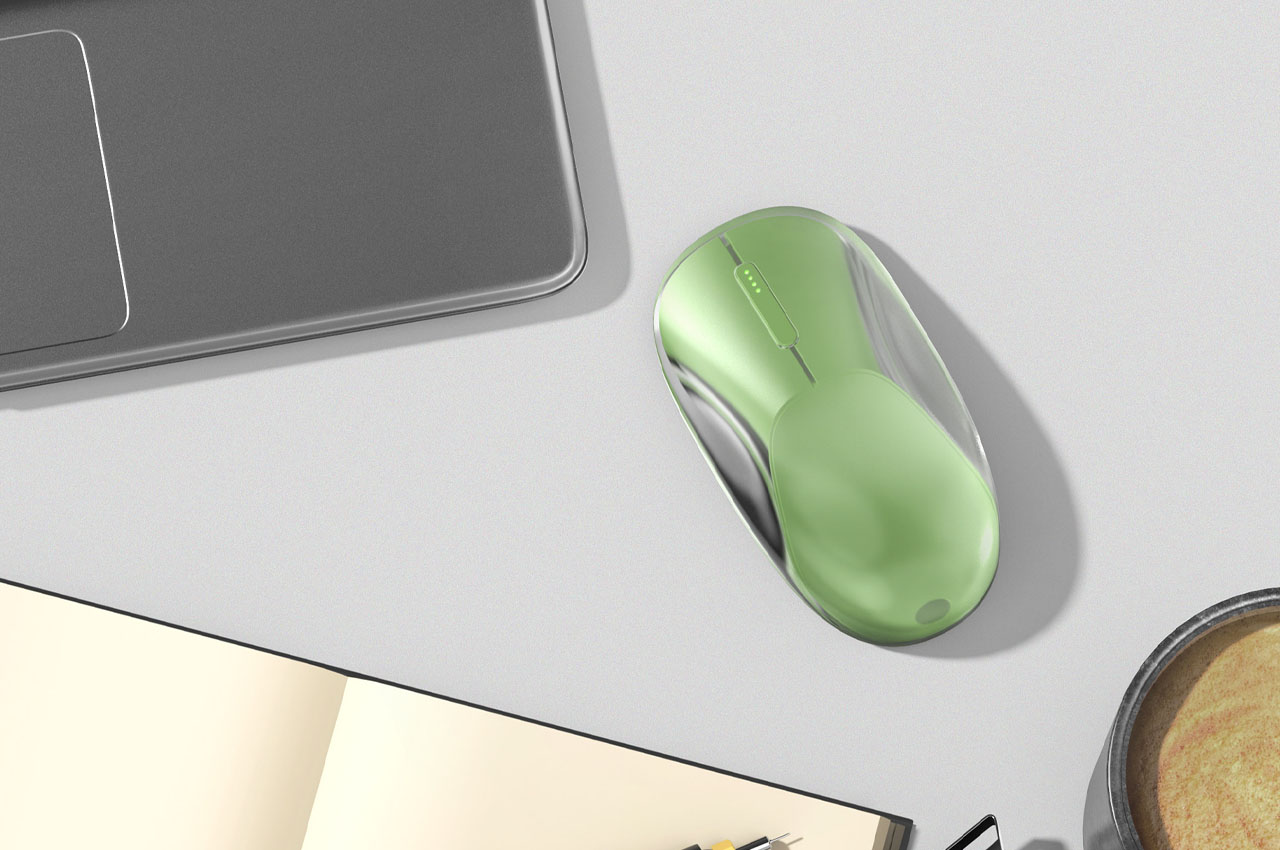
To that end, the Vent wireless mouse has been made from a silicone cover, that is made thick on the sides and back. These are parts that one holds in the palm when working. The designers believe, that when angry, the user can clinch the palm around the mouse and its soft touch can absorb the anger like the stress ball. Definitely not so much softly, but almost enough to calm you down.
With the use of silicone as its construction material, the Vent wireless mouse should be waterproof and hygienic peripheral. It can – like some previously made silicone mice – be cleaned without the risk of damaging the innards. This makes it a viable option in two ways (as an anger manager and hygienic peripheral) in this post-COVID lifestyle that we are embracing.