Ever had a charging cable but nowhere to plug it? Or a power bank but no charging cable to connect it to your phone? The IVYCable Gen2 is an oddly brilliant product that solves both those problems. Designed like a relatively thick charging cord, the IVYCable Gen2 actually has four separate power banks built into its design. They’re all connected together, giving you up to 2800mAh of storage, and boast a clever magnetic design that lets the entire cable snap into a rectangular shape for easy, tangle-free carrying no matter where you go. Either use it as a charging cable by connecting it to a power brick/outlet… or just plug the cable into the phone on its own – the IVYCable Gen2 doubles as either a pass-through charging cable, or a power bank. Isn’t that simply genius?!
The IVYCable Gen2’s design sits at the unique cross-section between cables and power banks. It’s thicker than your conventional cable, yet much thinner than any power bank, with a magnetic design that lets it snap together or apart, depending on whether you want a compact portable mass, or a long cable for charging your devices. The highlight, however, is the five mini power banks that connect together to form the IVYCable Gen2. With a Type-A port at one end, a Type-C port at another, and flexible TPU connectors in between, the IVYCable Gen2’s five power banks have a max capacity of 2800mAh – enough to charge your phone from 0-100. The magnetic snapping action of the individual power bank modules also gives the IVYCable Gen2 the appeal of a fidget toy with how effortlessly (and satisfyingly) it shapeshifts from compressed to extended formats.
The IVYCable Gen2 solves a unique problem by bridging the gap between charging cables and power banks in a fun, addictive way
This unique shapeshifting design allows the IVYCable Gen2 to be used both as a charging cord, or a power bank. As a charging cord, the IVYCable Gen2 works with both Android and iOS devices thanks to its USB-C to Lightning connector that lets you swap between the two ports depending on what device you have. The cable works as a pass-through charging apparatus, outputting 10.5W of max power. That may not be a lot compared to the kinds of superspeed cables that go as high as 120W to fast-charge your devices, but the IVYCable Gen2’s 10.5W is a comfortable balance between speed and safety, ensuring your phone’s battery doesn’t degrade too fast. Meanwhile, when used as a pass-through charging cable, the IVYCable Gen2 charges its own batteries too, knocking two birds with one stone.
Disconnect the cable from a power source and it BECOMES the power source. The IVYCable Gen2’s built-in power bank immediately kicks into action, giving you battery backup for your phone or any other device just when you need it. The magnetic snapping feature then comes in hand, allowing you to bunch the cable up into a rectangular mass that you can then carry around with your phone easily (or slip it right into your pocket along with your phone). The fact that it has its own built-in charging ports means you don’t need a separate cable (which you would with regular power banks), and the best part is its ability to extend into a ‘long’ power bank if you want to keep the IVYCable Gen2 in your handbag but have your phone in your hand.
The unique design format, however, is the IVYCable Gen2’s most impressive feature. It solves a problem that not many people ever thought of solving, by creating a charging cable with a built-in battery that also has the ability to charge your phone on its own without being plugged in. It’s convenient to carry, easy to use, and the magnetic feature works both as a great organization tool (ensuring your cable never gets bunched or knotted up) to keep your desk and bag clean, as well as a fidget toy that your hands will want to play with all the time!
The IVYCable Gen2 comes in two color options – a classic silver version, and a stealthy anodized black variant. Both start at $43 (discounted from the original $69) and ship internationally starting April 2024.
Virtually everyone who’s tried the Vision Pro has mentioned one pain-point, its external battery pack. Designed to strap to your Vision Pro like an IV drip for your headset, this battery pack isn’t particularly elegantly designed. It’s a rather heavy metal cuboid that’s tethered to your headset, and the only way to elegantly store it while in use is to slide it into your pocket – leaving a sole wire that dangles from your head to your waist, coming in the way of your hand while you move around.
It’s almost like Apple WANTS you to know that they’re great at primary products but terrible at accessories, after various debacles surrounding the questionable designs of the Magic Mouse, the Air Power Mat, the Gen 1 Apple Pencil’s charging solution, and the carrying case for the AirPods Max. The Vision Pro’s battery pack is yet another example of Apple’s questionable approach to product functionality, but it seems like ZyberVR has a better fix. The Neck Power Bank, as its name suggests, straps two lithium-ion battery packs around your neck. Perfect for spatial computing, this power bank rests naturally along the curve of your neck, and connects to your AR/VR headset via a rather short cable. It’s an elegant solution to a rather simple problem, and even allows you to move around unencumbered.
The Neck Power Bank assumes the familiar horseshoe shape of a neck pillow, a pair of sporty earphones, or one of those neck-worn air conditioners. The power bank boasts a fresh and ergonomic design that sets it apart from the rest. Featuring a flexible center frame, it simplifies the process of unfolding and wearing it comfortably around your neck. Prioritizing ergonomic principles, it skillfully redistributes weight onto your shoulders, effectively relieving neck strain. The product seamlessly conforms to your shoulder’s natural curve, ensuring a secure fit during physical activities and minimizing unwanted shaking. This cutting-edge design departs from convention, effectively eliminating the discomfort often associated with prolonged use and offering users a more convenient, stable, and enjoyable charging experience.
With a robust overall capacity of 10,000mAh, the neck-worn device ensures a seamless 2-3 hours of XR device use, freeing users from battery anxiety. Additionally, the Neck Power Bank packs a removable 5000mAh backup battery that can be hot-swapped during use. Thanks to the quick-release switch, users can effortlessly swap out a depleted battery in a matter of seconds. The removed battery can be charged independently, guaranteeing uninterrupted power and catering to the demands of power users.
A USB-C port allows you to connect the power bank to a host of AR/VR headsets like Meta’s Quest series, Sony’s PlayStation VR, or even other devices like headphones or even your smartphone. ZyberVR even boasts compatibility with Apple’s upcoming Vision Pro headset, although you’d need a proprietary connector cable that can attach to the Vision Pro (which launches February 2nd). That shouldn’t take time, as Apple would probably want third-party manufacturers to build out accessories to make the headset more lucrative. After all, if they want developers to start building a software ecosystem around the product… a hardware ecosystem would surely help contribute to the Vision Pro’s eventual success!
Touted as the world’s first power-bank with its own turbo-cooling feature, the Icemag power bank keeps itself (and your phone) breezy while charging. An ultra-silent fan moves at speeds of 8000 RPM, actively cooling the battery pack inside while the Icemag wirelessly charges your phone, preventing anything from heating up during the charging process.
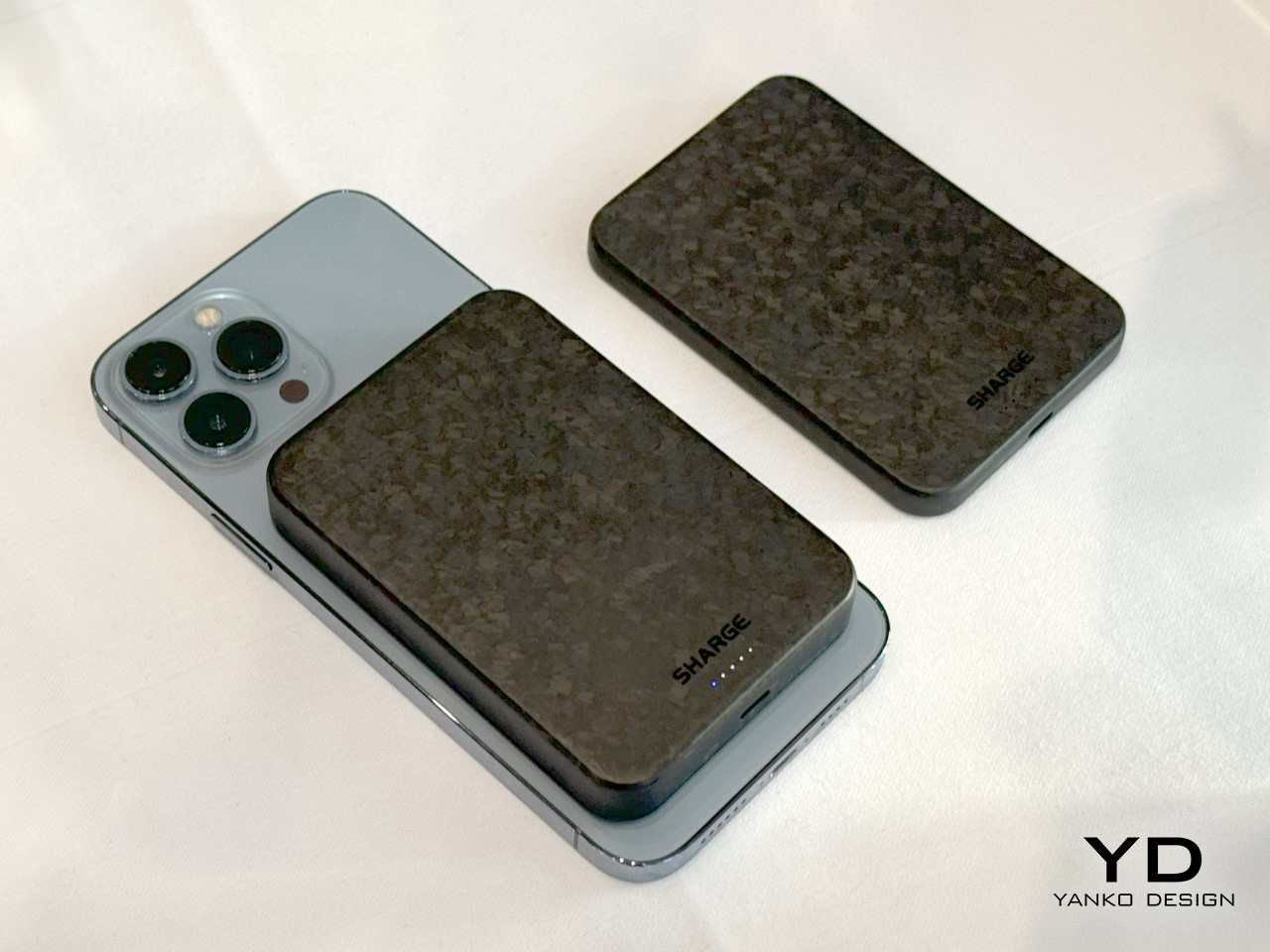
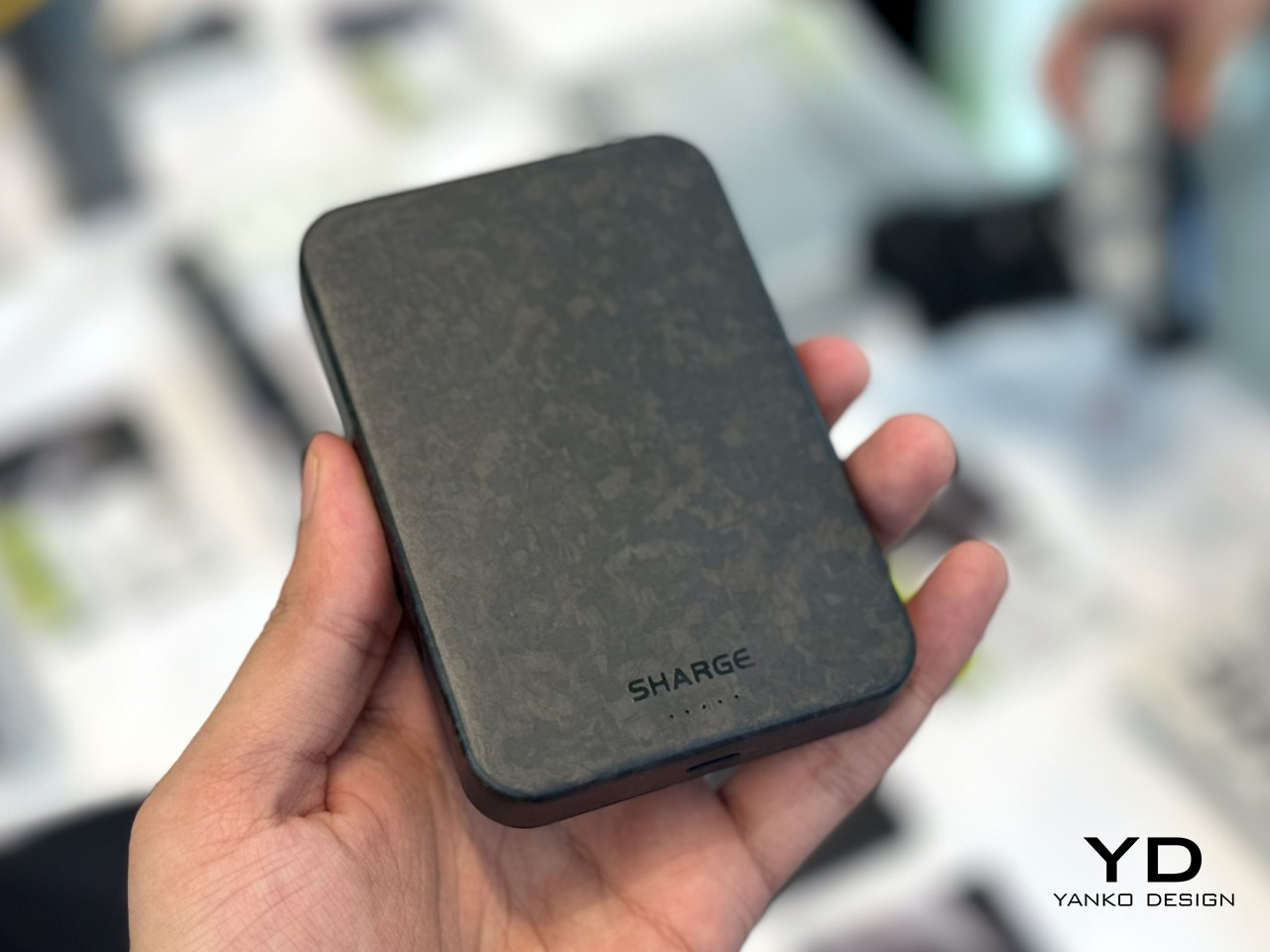
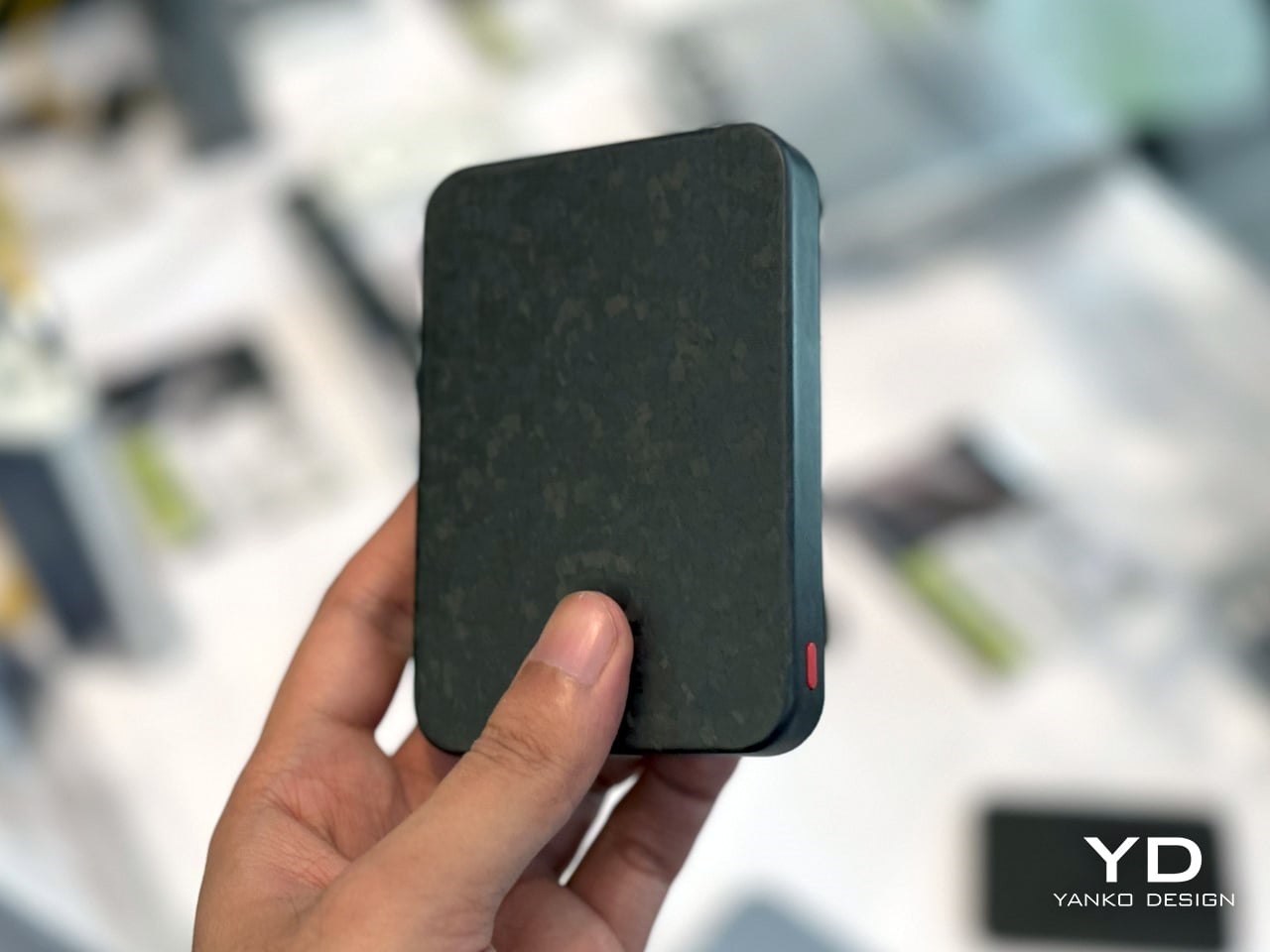
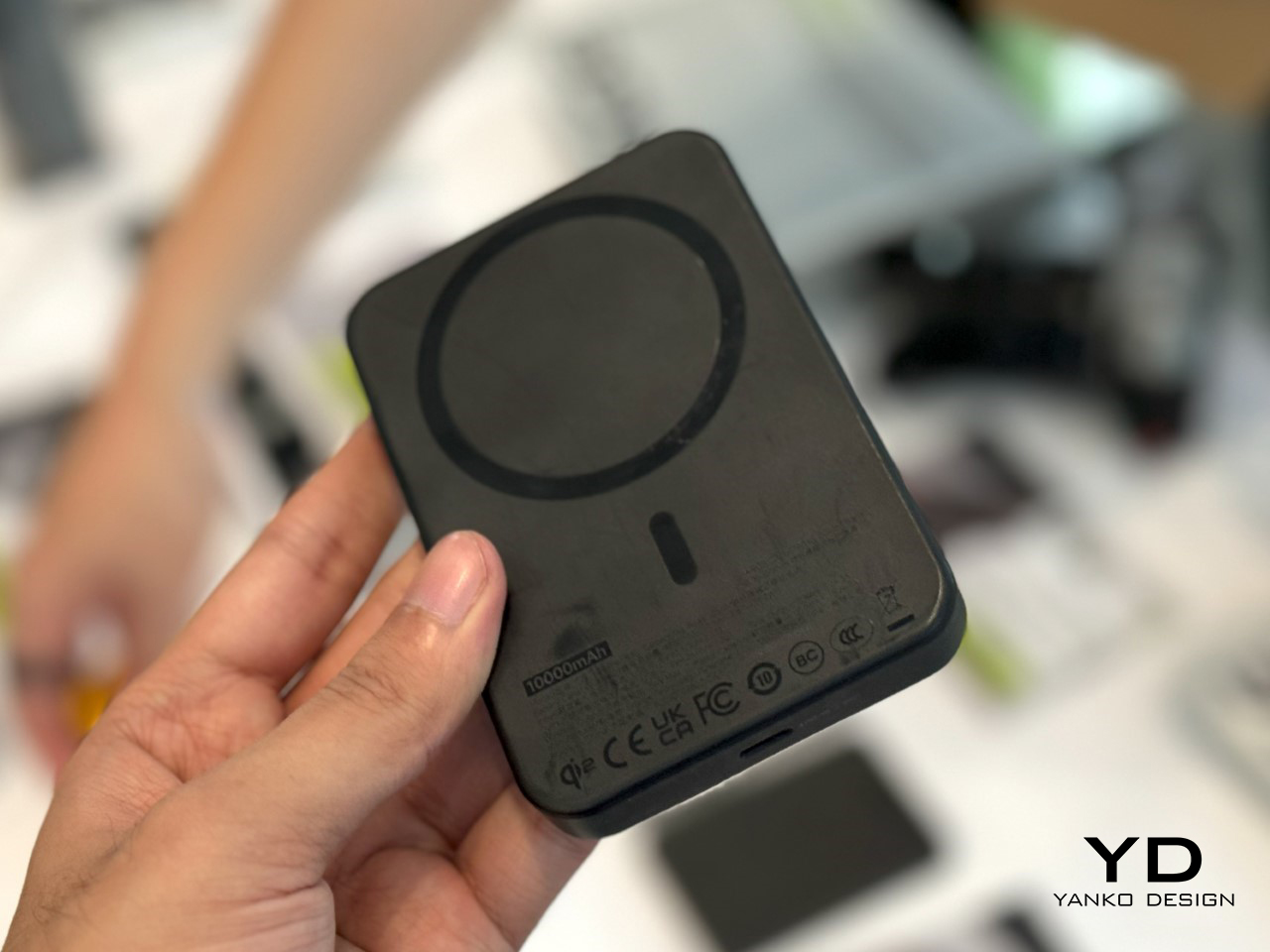
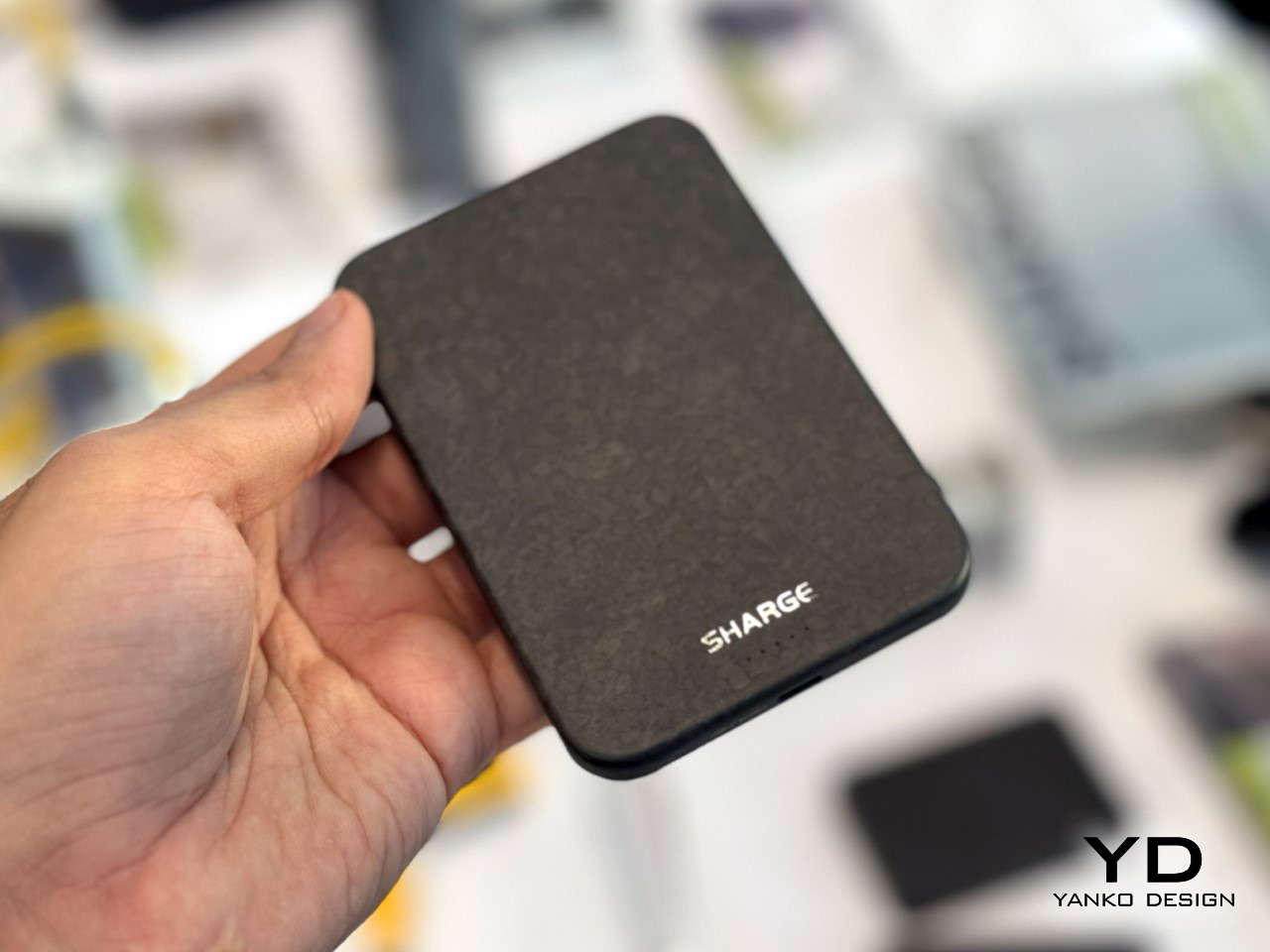
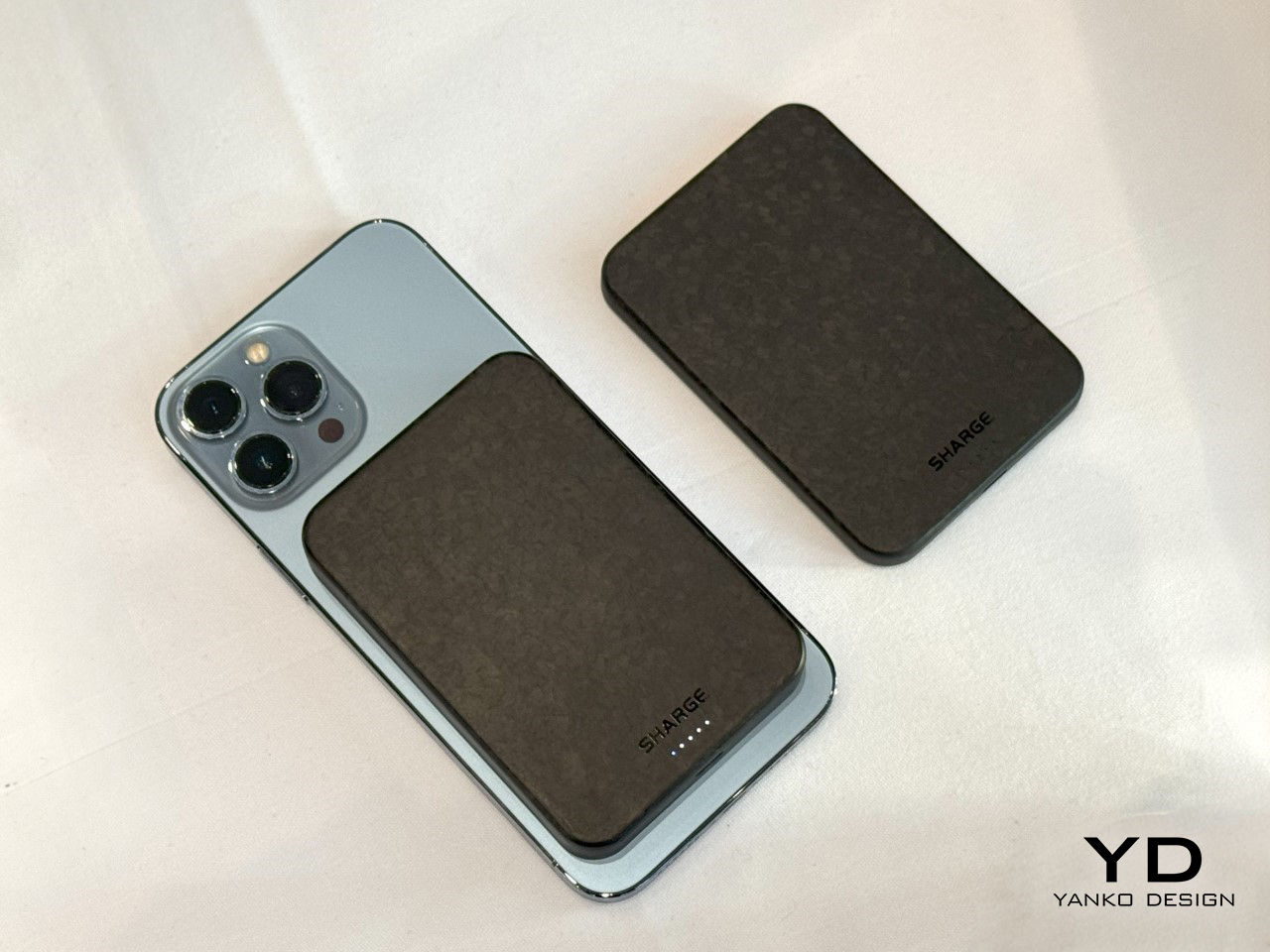
Sharge has pretty much solidified its reputation for building some of the most incredible-looking charging equipment of our time. Whether it’s the transparent 170W power bank with its own LED display, or the tiny yet indomitable Flow Mini power bank that’s small enough to blend right into your phone’s design, becoming its dedicated second battery, Sharge’s built a rather wonderful ecosystem of charging gear that’s both powerful and unmistakably eye-catching. The Icemag joins that ecosystem as a first for both Sharge and the world – the 10,000mAh MagSafe battery pack comes with its own active cooling system that pushes hot air out from around the lithium-ion battery, increasing its life and overall efficiency as it charges your phone. It also comes as a rather opportune time, as Apple silently killed its own MagSafe power bank, leaving a void in the marketplace.
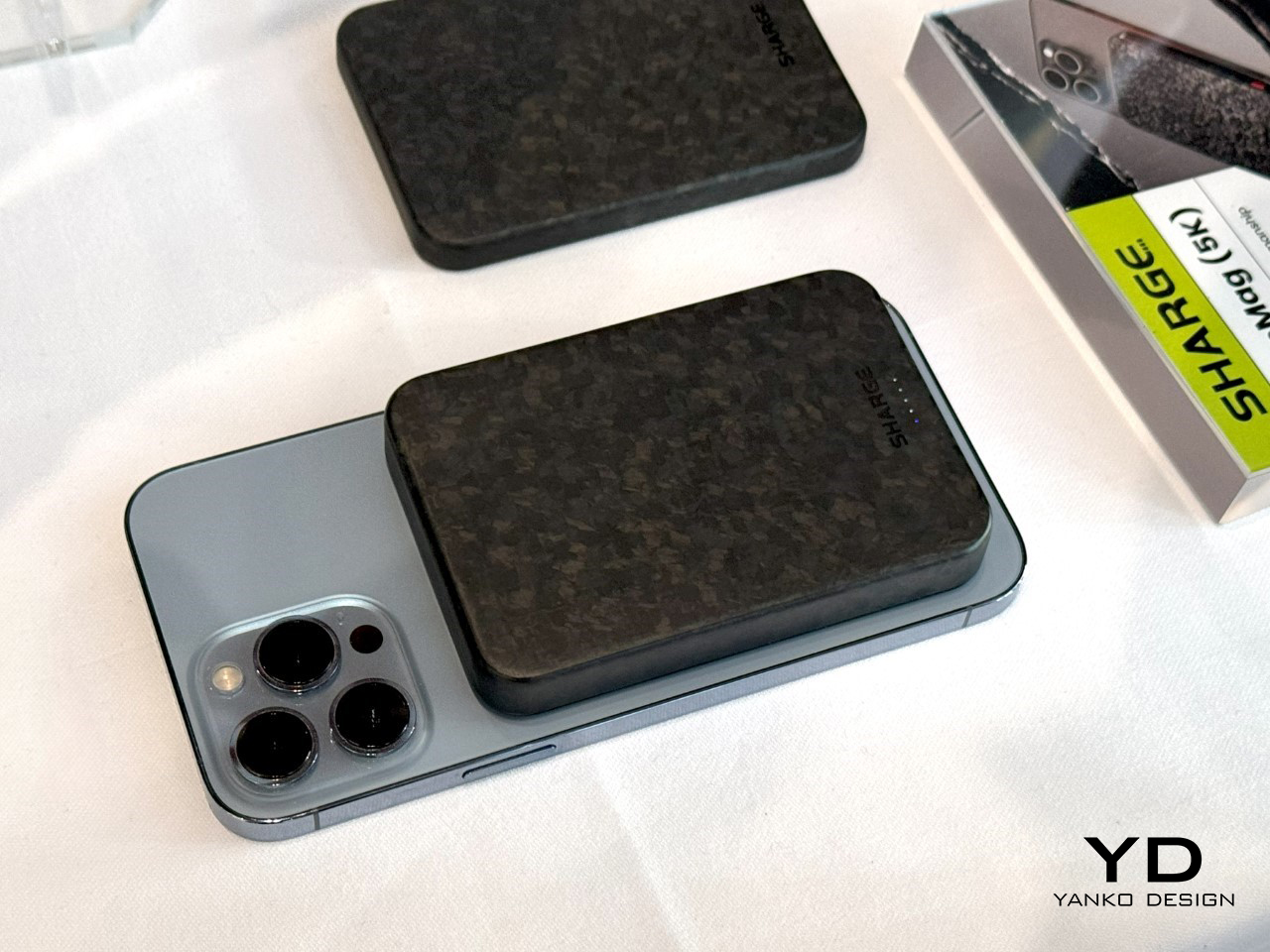
The Icemag has the same proportions as Apple’s MagSafe power bank, albeit with that aforementioned cooling system and a whopping 10,000mAh battery that charges your entire phone twice over with enough extra juice left to spare for a third charge. It sports Sharge’s unmistakable aesthetic, with a transparent panel on the front that lets you peer into the electronics inside – namely the lithium ion battery, the PCB, and that active cooling system.
The active cooling system kicks in the second the Icemag is connected to a device (whether through MagSafe or via USB-C cable). The tiny fan outputs an impressive 8000 RPM, helping circulate air within the Icemag to keep the battery actively cooled (rather than relying on a metal heat-sink like other charging apparatus). The fan operates at a deadly silent <25dB, and it was practically inaudible in the buzz and chatter of the CES floor. What was noticeable, however, was the RGB lighting around the fan that changed colors as the Icemag juiced your device. It served as a nice visual indicator of the Icemag’s activity, especially given Sharge’s tech-geek and gamer-centric audience.
The compact power bank snaps satisfyingly onto the back of your MagSafe phone, beginning the charging process instantly. An indicator on the side shows exactly how much power the Icemag’s battery still has, while a USB-C port on the base supports both power in as well as out. This means the USB-C port can be used to charge the Icemag itself or can be used to connect the Icemag to another phone to charge it conventionally (without using the MagSafe wireless charging feature). The Icemag supports pass-through charging too, letting you charge it while it wirelessly juices your smartphone, and as far as charging speeds go, the Icemag’s wireless charging coil outputs a maximum 7.5W. If you want to tap into higher speeds, connecting your phone/device via USB-C gives you an output of 20W, charging your gadgets significantly faster for when you’re in a bind.
The Icemag balances its responsibilities of being handy, eye-catching, and functional rather well. It’s compact for its capacity and weighs just 223 grams (7.9 ounces), allowing it to securely attach to the back of your phone without any problems. The 10,000mAh battery is absolutely perfect for people who blow through their phones during the day, giving you an extra battery that can support your phone multiple times. The transparent aesthetic and active cooling system, however, steal the limelight for the gorgeous nerdy-cool aesthetic they give the Icemag. The term nerdy-cool probably gets used literally in this sense because of the Icemag’s ability to keep itself at manageable temperatures as it charges your phone. I dare you to find a MagSafe power bank that’s as gorgeously functional as this one…
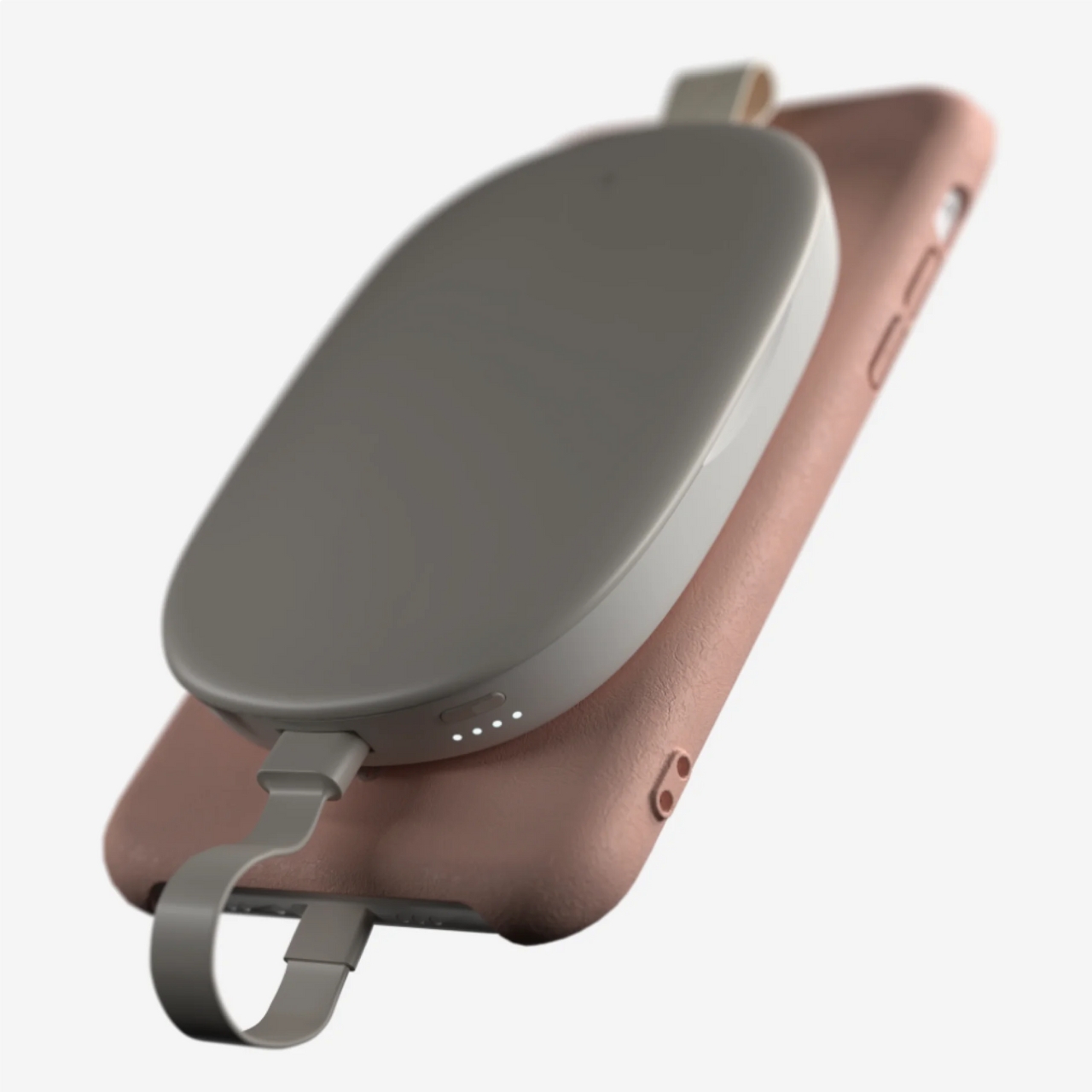
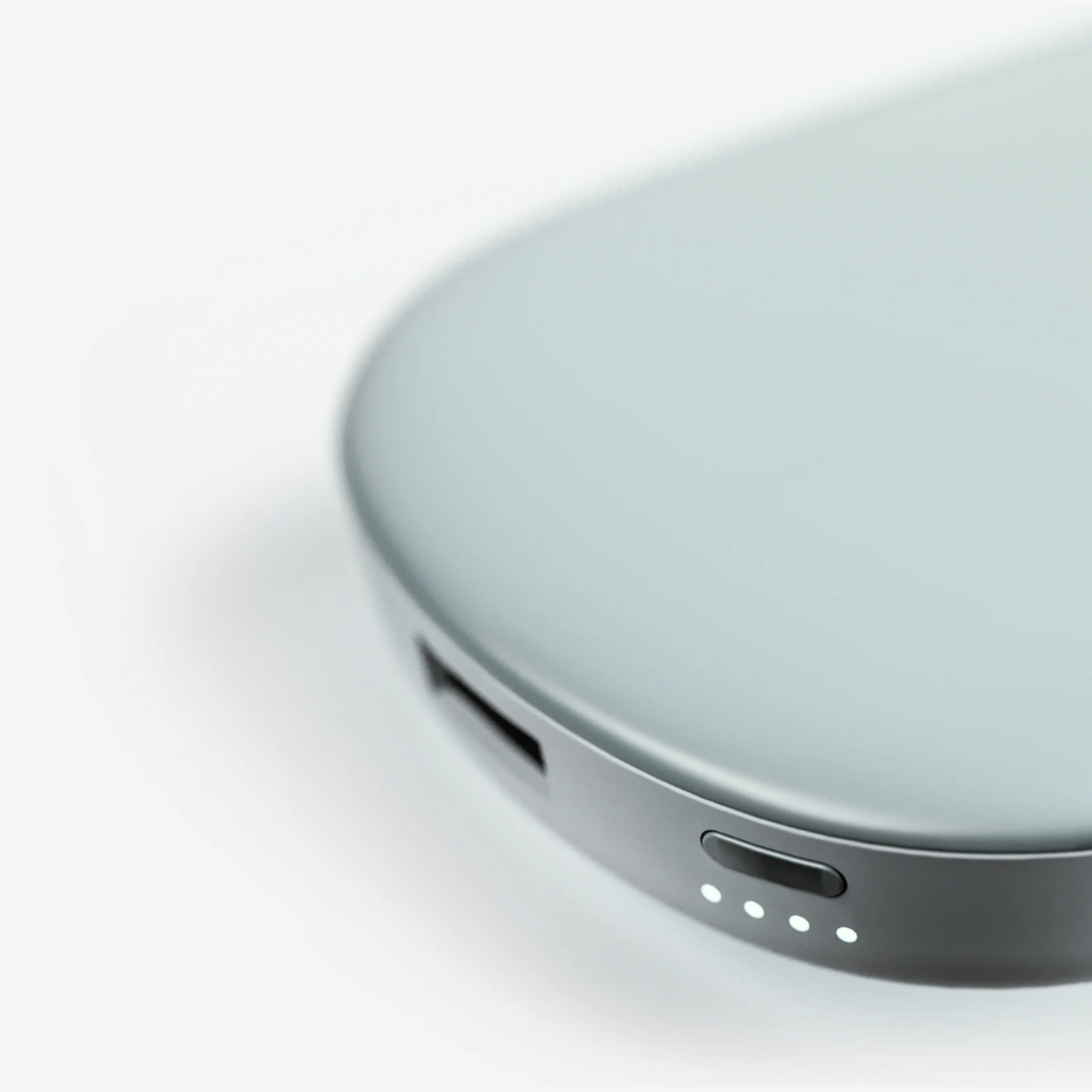
Power banks have a reputation for being bulky. Nobody really likes carrying them in their pockets given how large and heavy they can be, which often means most power banks spend all their time inside backpacks and purses. The Flow Mini, from Sharge (formerly Shargeek) has a different story to tell. It’s extremely handy, with a compact design that fits into pockets and even around your belt loop (should you choose) and a 5000mAh battery that’s enough to charge your phone. It also boasts a nifty transparent outer design that makes it the kind of power bank you wouldn’t mind flaunting to people around you. Measuring just about as wide as your smartphone, the Flow Mini practically ‘piggybacks’ onto your smartphone’s form factor, blending right into its design in ways that most power banks don’t.
Over the years, Sharge has pretty much nailed its core design DNA, focusing on functionality combined with a unique design that uses transparency to help create curiosity and a feeling of being able to see products for what they are. Sharge’s products aren’t for mere masses, they’re more aimed at people with a distinct penchant for design and power-use, as seen with their Shargeek 170, a whopping prism-shaped 170W charger with a transparent design and an LCD screen that lets you accurately measure the power output delivered to each port (along with things like battery percentage and other data-points). The Flow Mini, albeit too small to have its own display, comes with a transparent outer housing and a cylindrical base that’s reminiscent of pencil batteries or a roll of camera film (if you’re from that generation).
Designed to plug right into the base of your phone, it comes with an integrated port that lets the power bank itself attach to your device. This makes things a lot easier because you don’t need to hunt for a charging cable to connect your phone and power bank. However, the Flow Mini DOES have a cable that doubles as a lanyard or loop-grip when not actively in use.
The Sharge Flow Mini comes equipped with a tiny yet mighty 5000mAh battery that’s more than enough to take your dead smartphone from 0 to 100, or to juice your battery multiple times in the day for that extra boost.
The tiny design blends right into your phone’s overall form factor, allowing you to hold/ use your phone even with the Flow Mini attached. Perfect for people who prefer not carrying around a 10,000mAh brick along with them everywhere.
Given the fact that the world is still divided by USB-C and Lightning users (and will be for at least the next 4-5 years), the Flow Mini offers the option to alternate between USB-C and Lightning variants. The battery unit stays the same between both designs, with the only change being the primary port on the front. However, Sharge lets you detach the primary port and swap between USB-C or Lightning variants. Meanwhile, a lanyard/loop cable sits on the side, letting you charge another device simultaneously, or charge the Flow Mini itself by directly plugging it into a power outlet.
Th Flow Mini is Sharge’s smallest charger, but its size shouldn’t be taken for granted. While Sharge does make larger, powerful, and more feature-rich charging banks for the tech-nerd and power-user, the Flow Mini is perfect for on-the-go battery. In fact, the folks at Sharge call it your phone’s second battery, because plug it in place and it sits flush against your device, adding power to it without adding all that extra bulk and weight!
Have you ever seen a power bank that A. folds in half, B. comes with two wireless charging coils, and C. has a built-in SSD to take backups of photos on your phone and store other data? No? Well, neither had I until I first saw the ANX Duo. Clearly, the ANX Team looked at the power bank and realized it had so much more potential because just putting a lithium-ion battery inside a brick-shaped device is so yesterday. Designed to do much more than charge your phone, the ANX Duo has a foldable-phone-shaped avatar. It folds in half when not in use, opening up into a charging ‘mat’ that can simultaneously wirelessly charge two devices together. A total of 6 USB-C ports on the side let you connect more devices to the ANX Duo, while a 16,000mAh battery on the inside reliably juices all your devices. When your battery woes end and your storage woes begin, the ANX Duo’s built-in SSD (which starts at 128 gigabytes and goes all the way up to a cool 4 terabytes) lets you store all your photos and videos locally, saving on those pesky cloud subscriptions and their monthly fees.
Calling the ANX Duo a power bank is almost a muscle reflex at this point, but in all honesty, this device is MUCH more than just that. It charges batteries (both wirelessly as well as in wired formats), acts as a pass-through charging hub for multiple devices, stores/manages data from your smartphone, and even doubles as a card reader that wirelessly transmits files to your phone from memory cards. It also folds open when in use, and shuts to a compact pocket-friendly form factor during travel.
While most power banks are brick-shaped given the interior layout of Li-ion batteries, the ANX Duo takes on a unique bifold-like design, almost like a folding smartphone. Fold it open and you’re greeted with two wireless charging coils offering a maximum output of 15W per coil. If you want more power, however, a wired connection to one of the many USB-C ports gives you a maximum output of 60W, helping you fast-charge your phones when you’re in a bit of a hurry. The ANX Duo’s 16,000mAh overall battery holds enough power to juice all your devices, from the larger tablets and handheld gaming consoles to phones, wearables, and even the smallest TWS earbuds.
Even though it looks like a folding smartphone, its 6 USB-C ports should convince you of the fact that you’re dealing with something entirely different. The 6 ports, combined with the two wireless coils, let you simultaneously juice multiple devices at the same time… but the ANX Duo has another trick up its sleeve. Connect it to a power source using one of the USB-C ports and it enters what its creators call a “Desk Hub Mode”. In this mode, the ANX Duo goes from being a power bank to being a multi-device hub, managing power delivery to its five other USB-C ports and two wireless coils. When plugged in, the ANX Duo effectively lets you charge 7 devices at the same time, managing the energy requirements of each device right through one power source while ALSO charging itself. This pass-through charging feature means you can use your ANX Duo and a single power outlet to recharge ALL your portable gadgets at the same time… a feature you probably wouldn’t expect from any power bank on the market.
When you’re not charging devices, the ANX Duo serves as an external drive for storing and managing data. Plug your ANX Duo into your phone, tablet, or laptop and you can switch into OTG mode to access the Duo’s built-in M.2 NVMe SSD. The folks at ANX offer storage capacities ranging from a conservative 128GB all the way to a whopping 4TB. That means you can store large files, take device backups, and dump all your phone’s photos and videos directly onto your so-called ‘power bank’. A smartphone app lets you manage your ANX Duo’s data, allowing you to sort through files, transfer them to and from your phone, and even wirelessly access and transfer media from memory cards by plugging them directly into the ANX Duo. Superfast read/write speeds of 1050mbps/950mbps allow you to transfer files much faster than you would through the cloud. Plus, since the data is stored locally on your ANX Duo, you don’t need an internet connection, you don’t need to shell out subscription fees, and more importantly, your files are safe from being snooped on or breached by bad actors, governments, or large companies.
The ANX Duo measures a cool 5.3″ x 2.9″ (135mm x 75mm) in length and width when folded, boasting an overall thickness of just 0.7 inches (19mm). Open it up and you’re provided with a sizeable charging mat that’s now 5.9 inches wide (152mm) and a mere 0.35 inches thick (9mm). The entire device’s enclosure is made from aluminum along with ABS + PC polymer for durability as well as heat management, and the ANX Duo weighs a paltry 9.2 ounces (263 grams), making it perfect for travel. The multi-functional gadget starts at a discounted $69 which gets you the 128GB variant, although you can upgrade to 512GB, 1TB, 2TB, or even 4TB (which is still a steal at just $219). Each ANX Duo begins shipping as early as February 2024, and comes with a 1-year warranty on the power bank, and a 3-year warranty on the SSD.
Pink Floyd’s legendary album, “The Dark Side of the Moon,” has become something of an iconic source of inspiration among designers. The album’s innovative instrumentation and cutting lyrics changed rock music in the 70s, but the cover art itself is a treasure — one which has withstood the test of time. A beautiful yet simple piece of artwork, “The Dark Side of the Moon” album cover depicts a full spectrum of color radiating off of a single point as it passes through a triangular prism. Metaphors aside, there’s real science going on there, and thus it was only a matter of time before we’d see consumer electronics designs taking cues from the album’s minimalistic, yet far-ahead-of-its-time (and very far out) box art.
Fast forward about 50 years, and here we have the Shargeek 170. Its distinguishing transparent prism design houses a full array of internal circuitry, giving it a futuristic look. But its true value goes far beyond appearance and style; the charger itself contains some really powerful capabilities. Plus, if you’re unfamiliar with SHARGE (aka Shargeek, though they’ve switched it up now), you’re in for a treat. This storied tech designer has a long and bright track record devising uniquely gorgeous and durable yet high-performance chargers, like a tiny Retro 35W GaN Charger which looks like an old 1984 Macintosh, MacOS logo and all. That’s why the Shargeek 170, possibly SHARGE’s best portable charger to date, is so exciting.
Let’s get straight into the nitty gritty. The Shargeek 170 power bank has a maximum output of 170W thanks to its use of the PD 3.1 USB-C specification in both of its two USB-C ports. Within the Shargeek 170’s titular 170W maximum power output, it can deliver a maximum single-port output of 140W to any device which can safely charge that fast — for instance, a modern MacBook Pro. The important part of this feature is that it allows compatible devices to charge from 0% to 50% within 20 minutes. On the other hand, you can simultaneously charge the charger itself plus up to three devices across the charger’s two USB-C ports and single USB-A port, and that’s fantastic because the Shargeek 170 will actually split its output (up to 65W) between each connected device, even in passthrough mode.
Inspired by Dark Side of the Moon, Pink Floyd’s timeless masterpiece.
170W max output with PD 3.1 140W max single-port output. Powers up your devices in no time.
If you’re curious about how much power each device needs before it can finish charging, the Shargeek 170 charger features a few bells and whistles to make that easier. First, it comes with a smart display; this provides what SHARGE describes as “full visibility and control over the charging process,” and it can even set off a warning alarm if you attempt to push the charging cells outside of their maximum operating range (as in, if you try to charge too much stuff while outside in the hot sun). Second, if you need to charge your laptop and your phone plus a wearable — like wireless earbuds or a smartwatch — you’ll benefit from the Shargeek 170’s Low-current Mode, which is designed to charge those devices safely.
Packed with 2×USB-C and 1×USB-A ports, for 3-device fast charging at once.
Speaking of safety, this is easily one of the sturdiest portable power banks on the market: every type of environmental hazard you can think of is evidently protected against, including “over-current, over-voltage, overload, under-voltage, overheat, and short-circuit protections” on top of, of course, standard IP4 dust and water resistance.
Surprise with IP4 water resistance – one fewer thing to worry about!
And on top of all that, this could be the longest-lasting portable charging bank I’ve seen with fast-charging capabilities this smart. Did I mention how gorgeous it is? Its translucent prism design makes it reflect light in a beautiful spectrum wave not unlike what’s happening in Pink Floyd’s legendary box art. But, what exactly is inside of all that gadgetry hidden beneath its see-through outer shell? The answer: 24,000mAh of sheer battery power stored across six durable electric-vehicle-grade batteries. These allow the Shargeek 170 to maintain 80% capacity even after 800+ charges, and that means you can use this thing heavily for — at minimum — three years, before you ever see a dent in its performance.
So far, SHARGE has raised over $2.5 million thanks to the help of more than 23,000 backers, signaling that the Shargeek 170 is garnering strong market interest, and given how successful its crowdfunding campaign has been thus far, you’re going to want to grab one of these super-fast, super-durable chargers at their current discount price. You can still nab one for $119 via the Super Early Bird pledge tier — a 40% discount from the charger’s eventual MSRP.
AC coupling capabilities make the Anker Solix F3800 a revolutionary next step in sustainable home power, but paired with its massive 6,000W output, wide range of connections, and expandable capacity, this power station is the most future-proofed on the market.
Almost three years ago, a winter storm blew through my town, knocking out power lines and rendering roads impossible to navigate. As a result, my family and I spent a full week (well, five days) rummaging around for crackers and water, lighting candles, and wrapping ourselves in blankets for simple warmth through the duration of the total blackout. Despite keeping a decent fire going in our backyard for a couple of days, it was impossible to stay focused on anything, and working in those conditions wasn’t viable. Enduring those freezing temperatures would’ve been far more convenient with a backup power source, and I wish I’d had Anker’s newest portable power station: the Anker SOLIX F3800, which — despite being the very first of its kind I’ve ever owned — is clearly a revolutionary next step in the growing landscape of backup power solutions. It features a maximum 6000W AC output, 120V/240V dual-voltage (meaning it can do what a gas generator does, power several appliances at the same time, and even power a house!). It even supports AC coupling when pairing with the Anker SOLIX Home Power Panel, and, used sparingly, its 3.8kWh (expandable up to 53.8kWh) capacity would’ve been just enough to sustain a handful of comforts through the winter freeze.
Before we get started with the nitty gritty details about the Anker SOLIX F3800, it’s worth mentioning Anker provided a functional prototype to Yanko Design for the purpose of this review. It includes all the features of the official launch product, but its appearance and craftsmanship does not reflect the final build quality, which is supposed to be much better than the prototype shown in this review.
For a modular power station designed to provide backup power storage for homes and RVs, make solar power more accessible for all, and potentially replace gas generators — the Anker SOLIX F3800 is relatively compact. It’s also quieter than any regular gas generator, and since it doesn’t emit any smoke, you can safely run it indoors. Because of a sizable but effective fan system, you’re going to hear a little noise, around 45dB if you’re standing within a meter, but it’s no louder than a PlayStation 4 running on full blast. YMMV, but I imagine it’ll be a better fit for regular outdoor use during non-emergency situations — particularly, once summer rolls back around and I can use it to power indoor gadgets like musical instruments and gaming consoles underneath the patio rather than inside the house.
The F3800’s subdued aesthetic style — it being a big gray rectangular box on wheels with an LCD display, a pull-out handle, and visible outlets on the front and both sides — allows it to blend in naturally with other electrical equipment, but it may get in the way of any aesthetic style not complementary to dark gray. I wouldn’t stick it in a kitchen, though it’s an attractive addition to a garage, and you might get away with planting it in your office.
After all, it’s essentially a big suitcase full of electrical equipment. No, it’s not as compact as, say, the Anker 767 Portable Power Station. But it still gets the job done, and it doesn’t take up all that much space. Right now, my SOLIX F3800 is tucked in-between a coat rack and a couple of shelves in my office, where it’ll stay until I need to stroll it back out again, and I genuinely love how easy it is to set up.
Utilitarian design pervades the layout of the Anker SOLIX F3800, and, I mean, yeah — you’re definitely not getting a $3,999 power station to make a fashion statement — but what it lacks in artistic appeal, it more than makes up for in functional design. Its predominantly matte finish, easy-to-navigate exterior, exposed fan grills, and conveniently-placed handles and wheels make it exude a sense of durability and reliability.
Ergonomics/Comfort
I had a rough time getting the SOLIX F3800 off my porch and into an area where I could comfortably unbox it, set it upright, and wheel it around. Granted, I’ve been needing to hit the gym lately so my inability to carry it around without immediately wanting to place it back on the ground again could be a “me” issue. But, just so you know, this thing is an absolute unit. It’s rated to weigh 132 lbs, though the package mine arrived in was a bit heavier than that — around 143 lbs in total. If you’re planning to order one of these to your house from Anker’s online store, make sure you have a pallet or some sort of luggage dolly on standby, as well as a second pair of hands to help you transport/set it up.
At least there’s a solid handle built into the SOLIX F3800’s chassis, as well as a pull-out trolley handle that unfolds with the tap of a bright blue button. Once the pull-out trolley handle came out, this thing suddenly became a lot easier to maneuver around. This is because its 65 mm back wheels and additional front wheels are more than sufficient to push and pull the thing around on smooth surfaces, and it even seemed to have no trouble with some rocky terrain as well. If you wanted to carry the Anker SOLIX F3800 around like a cooler (if you have the physical strength, that is), you’d be in luck; there is an additional handle located on the bottom, allowing you to two-hand-carry it.
Everything important information-wise is located on the front LCD panel, though you can also connect your smartphone to the device via the Anker App. It’s a simple enough process getting it set up; all you need is an Anker account and a smartphone with Bluetooth, and you can tell the app to sync with the SOLIX F3800 as long as it’s powered on, and as long the Bluetooth mode is activated. You can do that by tapping the Bluetooth button on the front of the device itself, neatly located right next to the display. Once it’s all set up, you can watch the flow of energy coming into and going out of the SOLIX F3800 directly from the Anker App. This is a neat and convenient way to stay on top of your energy usage, especially when you need to conserve energy during a blackout.
One thing I love is how easy it is to get the Anker SOLIX F3800 set up and going as a portable generator. Plugging it into my wall outlet, getting it fully charged, and powering on the unit itself was a really simple and rather quick process. On paper, it will take less than 3 hours to charge the power station to full from a wall outlet, as long as it is getting full power and not charging under extreme temperatures. Once I was ready to use it, I only had to tap two buttons: the power button on the front of the power station next to the display, and a separate AC outlet button on its right side (conveniently located next to its array of six 120V 20A outlets and two 240V 25A plugs).
Performance
From a performance standpoint, the Anker SOLIX F3800 breaks through the ceiling and into a whole new tier. Electric portable power stations simply don’t do what the Anker SOLIX F3800 does, and before now, there’s been little reason to get rid of the gas generator altogether. If you want to use it as a backup generator, you can. If you want to expand it with the Solix Home Power Panel and make it the storage battery in a far more sophisticated power setup that balances grid and rooftop solar power through the main electrical panel, you can set it up that way as well; and it’s made even easier to manage if you use the Anker App.
Boasting a power load capacity ranging from 6,000 to 12,000 watts (the latter is only possible if you hook up a second F3800), it flies high above other portable power stations from EcoFlow or Jackery — as well as anything Anker has ever placed onto the market previously. Its 240V 25A NEMA 15-40 outlets grant it the ability to power RVs and recharge electric vehicles, making it extraordinarily versatile, and common sense indicates that if you need to power something, you probably can. This alone makes the SOLIX F3800 the heaviest-hitting portable electric power station around. The question is whether or not you can power something for a long time.
Luckily, the Anker SOLIX F3800 is also one of the most scalable power stations in existence. It comes with a base storage capacity of 3.8kWh, which is generally enough to power a 1500W space heater for about two and a half hours. Of course, that’s not enough to sustain heat throughout a multiple-day blackout like the one I experienced, but unlike other power stations, this device can be upgraded to 26.880kWh with all six expansion batteries installed. That’s at least enough to power the same heater for over a day.
If you wanna go even further and reach a staggering 53.8kWh of power storage capacity, you can go all-in and connect a second Anker SOLIX F3800 via the Anker SOLIX Double Power Hub. Alternatively, you can link two F3800 units together via the Home Power Panel. That sets the F3800 apart from its predecessor, the F2000, which had a comparatively meager capacity of 2kWh with only one slot for an expansion battery, totaling 4.09kWh. Just note you’ll need to invest in 12 expansion batteries to make the most of this system, and that could run you well into the tens of thousands.
Sustainability/Repairability/Durability
Anker is a respectable brand with a lot going for it, and that’s because it’s constantly pushing out high-quality, durable power banks and power stations. Its LiFePO4 (lithium iron phosphate) battery makes it notably longer-lasting than conventional lithium ion-based batteries used in older portable power tech; Anker promises at least 3,000 charge cycles up to 80% before this thing starts to die. That also enhances its sustainability rating by avoiding the use of cobalt and nickel. Plus, when you compare it to much larger and more expensive home power systems, it’s obviously a far more sustainable choice.
The need for separate hardware and additional batteries to get the absolute best utility out of the F3800 could absolutely be considered a drawback in terms of sustainability. But again, that’s not such a big deal when you realize a fully-upgraded Anker SOLIX F3800 system wouldn’t do nearly as much harm to the environment as legacy solutions with the same power output.
In terms of repairability, the F3800’s construction is complex and full of parts I don’t understand, and so I wouldn’t attempt to service it myself during a system failure. There are a few silver linings here: it comes with a 5-year warranty and is rated to work for 10 years or longer. Plus, it’s advertised as being simple for an electrician to set up and work with when coupling it with a house.
Value for Money
I’m iffy about making a hard call on the SOLIX’s value for its $3,999 MSRP (though there is currently a substantial discount of up to 35% off on Kickstarter on a number of Anker SOLIX F3800 deals — dropping the price of the standalone unit to $2,599, and giving excellent value on bundles including Anker’s 200W and 400W solar panels). On one hand, it’s pricier than the smaller generators, even though having the Anker SOLIX F3800 in my possession opens up more lifestyle options. The other reason is solar panels are still not widespread enough, even though you don’t really need solar panels to get the maximum value out of the F3800. Going in on an Anker SOLIX F3800 is making an investment into the future — especially since its heaviest-hitting feature is its ability to store a large quantity of solar power and convert that power into 240V AC output for home, RV, and EV usage.
While its initial price is eye-watering (at least, for me), the potential benefit of saving money over a much longer time with a fully-equipped SOLIX system, solar panels and all, could make the expenditure worthwhile. Especially for those actually living in RVs and tiny homes where utilities are significantly more important to stretch out. And, even in the much shorter term for a suburban house dweller like myself, the SOLIX F3800 is a sturdy backup power source — its base 3.8kWh storage capacity and 6,000W AC output are enough to make camping trips and natural disasters more bearable.
Even if there’s no emergency need for power, and even if you don’t plan to upgrade your Anker SOLIX F3800 with all the extra bells and whistles, you can still roll it outside during a sunny day and use it like any portable generator. Plus, you don’t necessarily need a fully-equipped SOLIX system (with the home power panel and all) to recharge the F3800 with solar energy either. The home power panel is just a tool to help the F3800 access larger rooftop solar panels, and you don’t even need that to make good use of the SOLIX system. In fact, if you bring the F3800 outdoors, as long as you also bring a portable solar panel to recharge it, you can have sustainable green power to do virtually anything you’d use power for. This is because the F3800 can be recharged by connecting to almost any rigid or portable solar panel available on the market.
Verdict
The Anker Solix F3800 is a revolutionary next step in sustainable home power, though it may not become a daily power source until you start buying solar panels. Thankfully solar is getting cheaper, and that’s certainly not the only reason you’d want to get one. This is the most future-proofed portable power station on the market right now, thanks both to its incredible portability for a home power system as well as its overwhelmingly strong performance. I love its 6,000W~12,000 and 120/240V AC output capabilities, its 53.8kWh maximum power capacity, and its ability to recharge itself via solar panels (up to 2,400W via XT-60 input) and then channel that same power into a house, an RV, an electric vehicle, or just about any appliance I can think of. That all means it meets the electricity needs of many day-to-day users, and its ability to provide a large dose of backup power during a disaster makes it a critical piece of equipment to have around. Plus, it’s simple and easy to use — requiring zero technical knowledge to charge it from a wall outlet or begin using it as a portable backup power generator. That all represents a meaningful push into the future, especially considering its first-in-class 240V AC power coupling makes it a direct competitor to home power systems that weigh significantly more and are significantly less portable. But when you want to use it like a portable backup generator, you can power it with any electricity source and it produces no emissions. That makes it a standout choice for homeowners seeking a reliable backup power source that’s both portable and versatile.