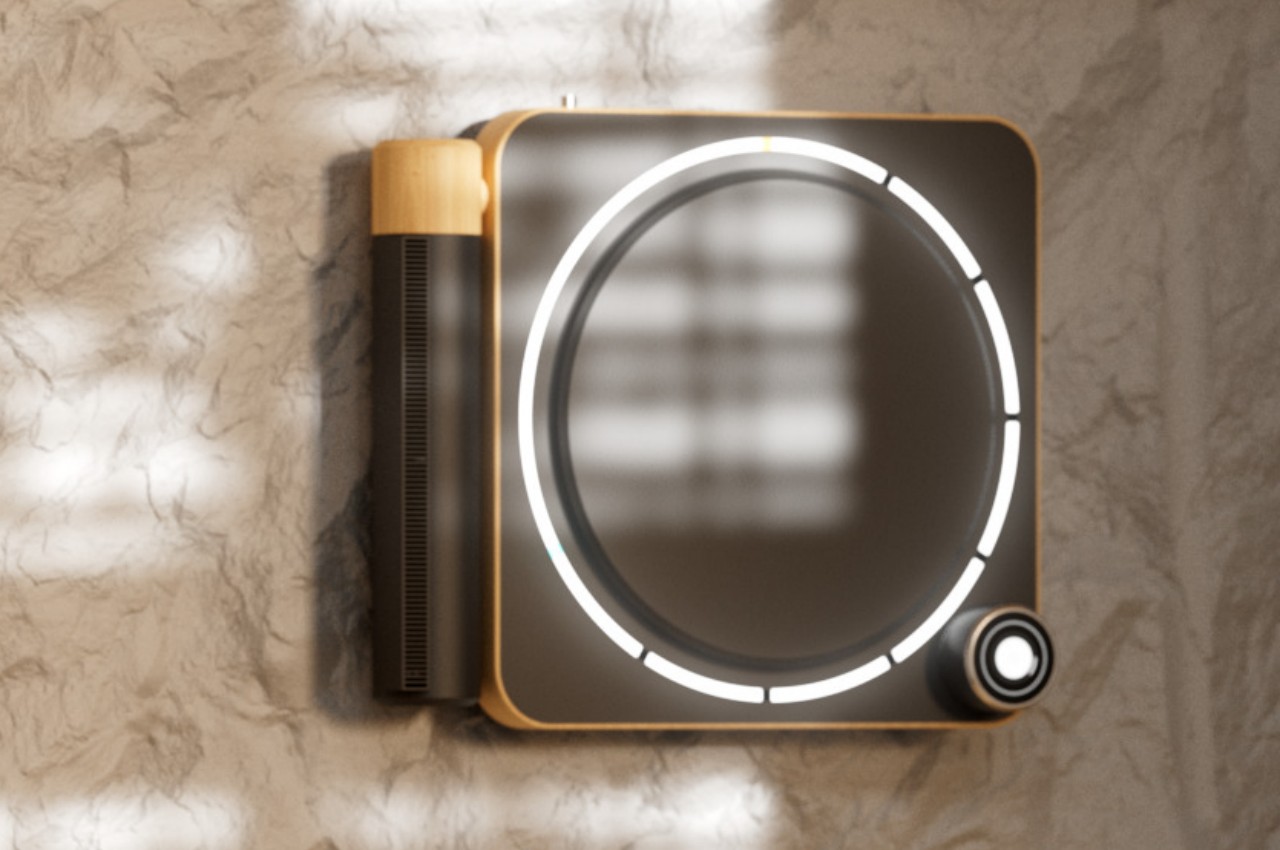
Self-driving car concept is a hotel-like sleeping pod on wheels

Autonomous vehicles are still a somewhat controversial topic these days, but even detractors and critics will begrudgingly admit that it is the inevitable future. Given a foolproof and safe implementation, it opens up plenty of opportunities for people to do more during their travels, especially over very long distances. They can be more productive with work, spend more quality time with family, or simply get a good night’s sleep in transit. The latter isn’t exactly comfortable to do with today’s car designs, but that’s only if you don’t let go of current conventions and limitations. This design concept for a mobile sleeping pod, in contrast, pulls out all the stops and demonstrates what’s possible with the right technologies, the right design, and especially the right shape.

Designer: Peter Stulz

When viewed from its profile, the Swift Pod looks more like a gigantic motorcycle, a vehicle that stands on two wheels only. It’s definitely not your regular motorbike, even disregarding the significantly larger size, because it looks more like a cross between a bike and a car from the way it has a cabin instead of just a seat. When viewed from the top, however, the vehicle is revealed to actually run on three wheels, forming an odd triangle shape instead of a typical box you’d expect from cars.
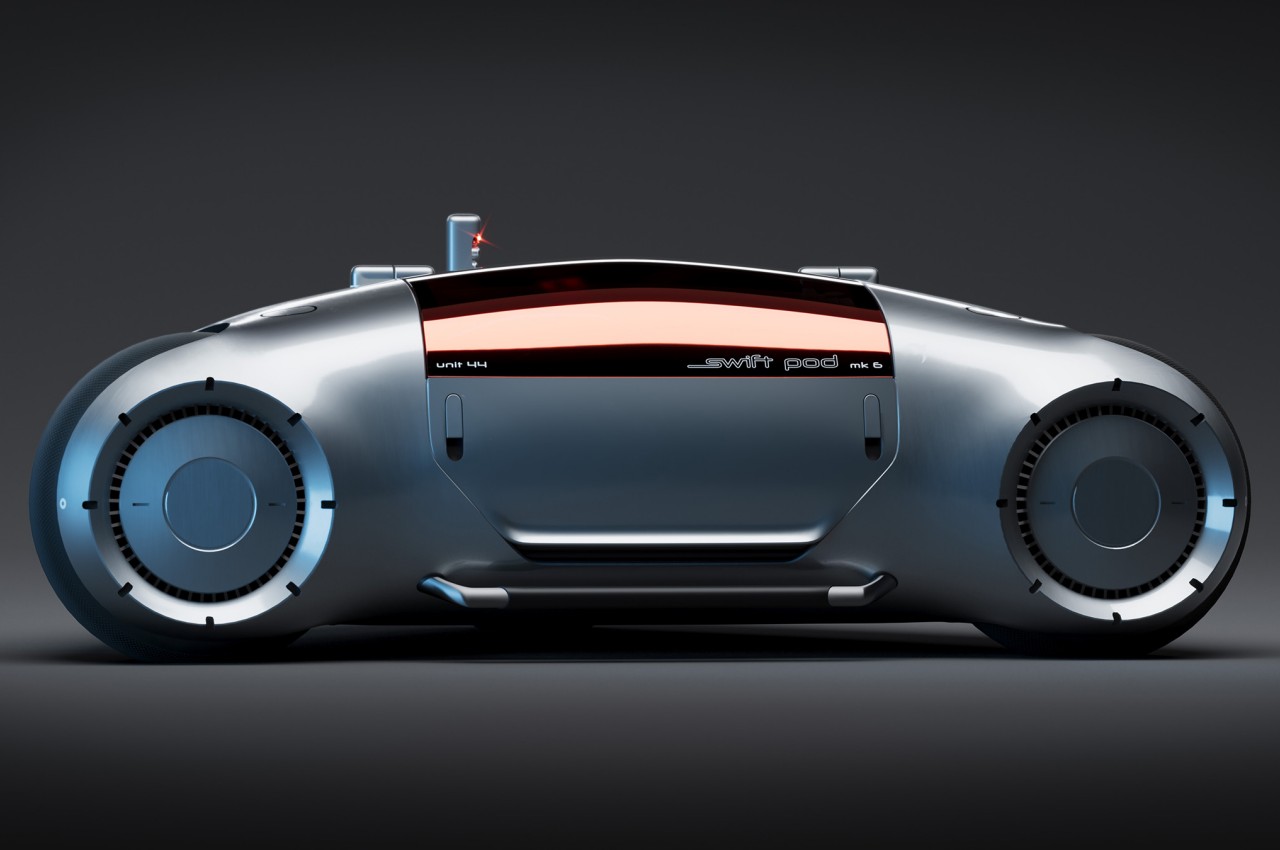
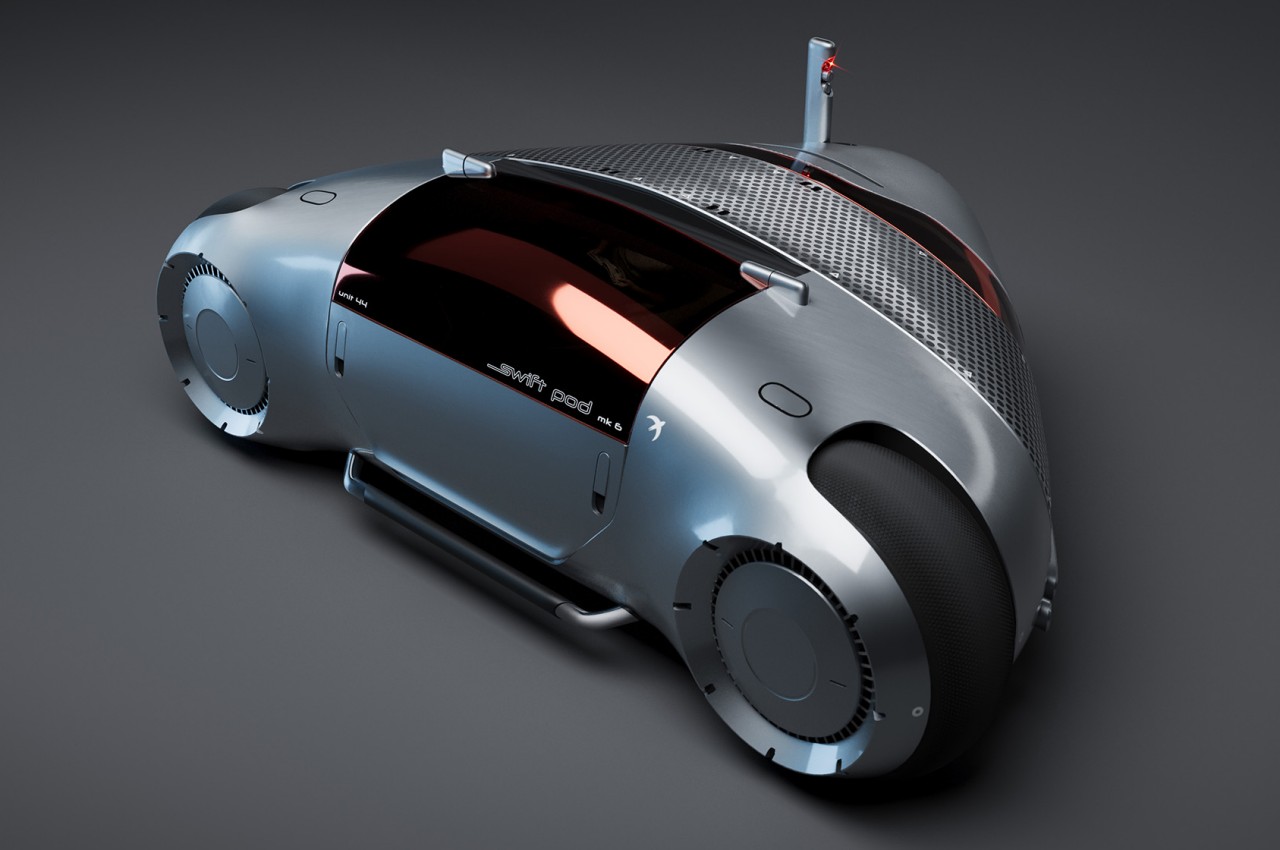
The choice of the shape isn’t for appearance’s sake, though, but was made to maximize available space inside while minimizing the vehicle’s size. After all, the Swift Pod is designed to have two adult-sized beds inside, one on each side of the triangle, in addition to two chairs, amenities, and, of course, the vehicle’s actual hardware and components. The concept, after all, is for a mode of transportation that will let you sleep through your journey, at least if you want to. There’s plenty of space for two people to do anything, including working if necessary.
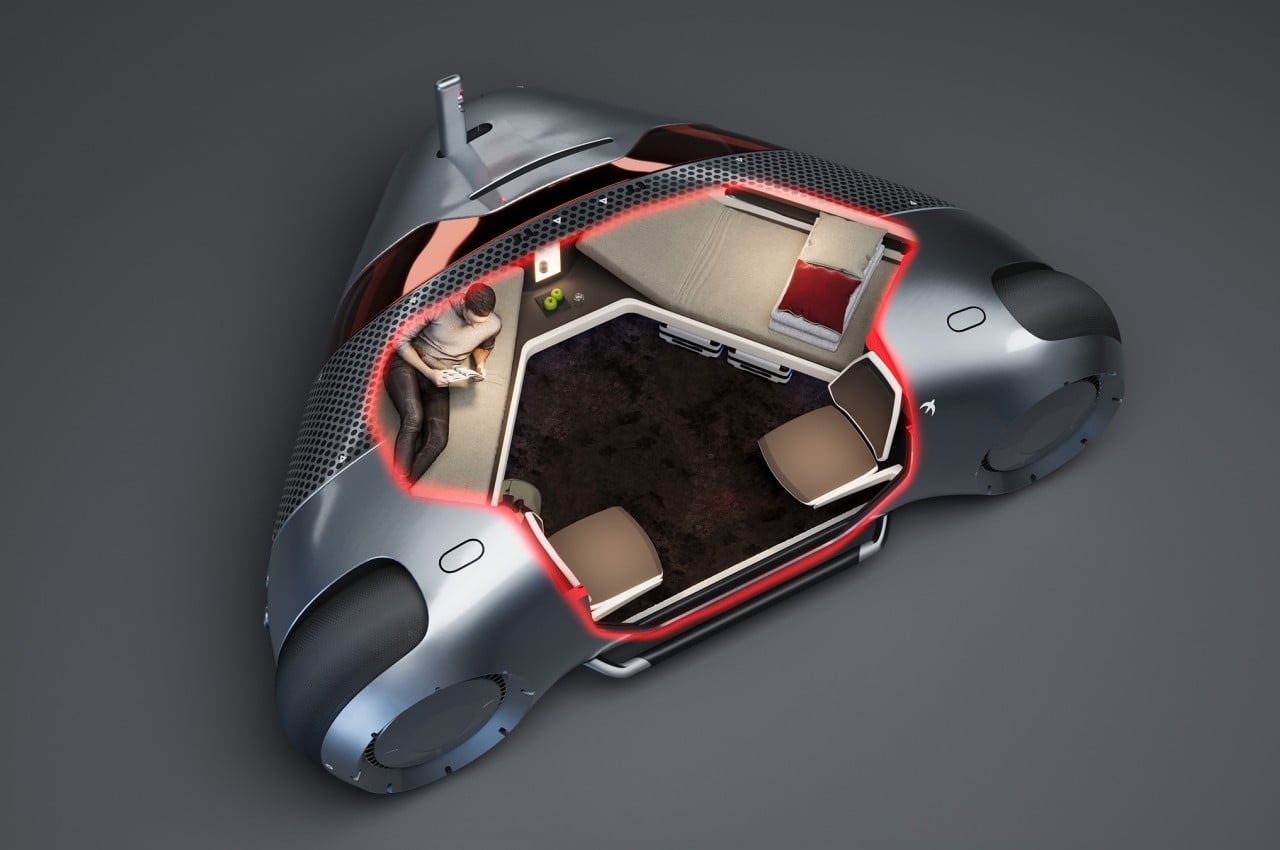
The concept was inspired by how some people are able to get a decent amount of sleep on trains and planes, and that’s without a comfortable bed or other conveniences. With Swift Pod, you not only have a comfortable place to recline but also an entertainment system, snacks and beverages, and plenty of storage for your belongings. What it doesn’t have room for is a human or physical driver.
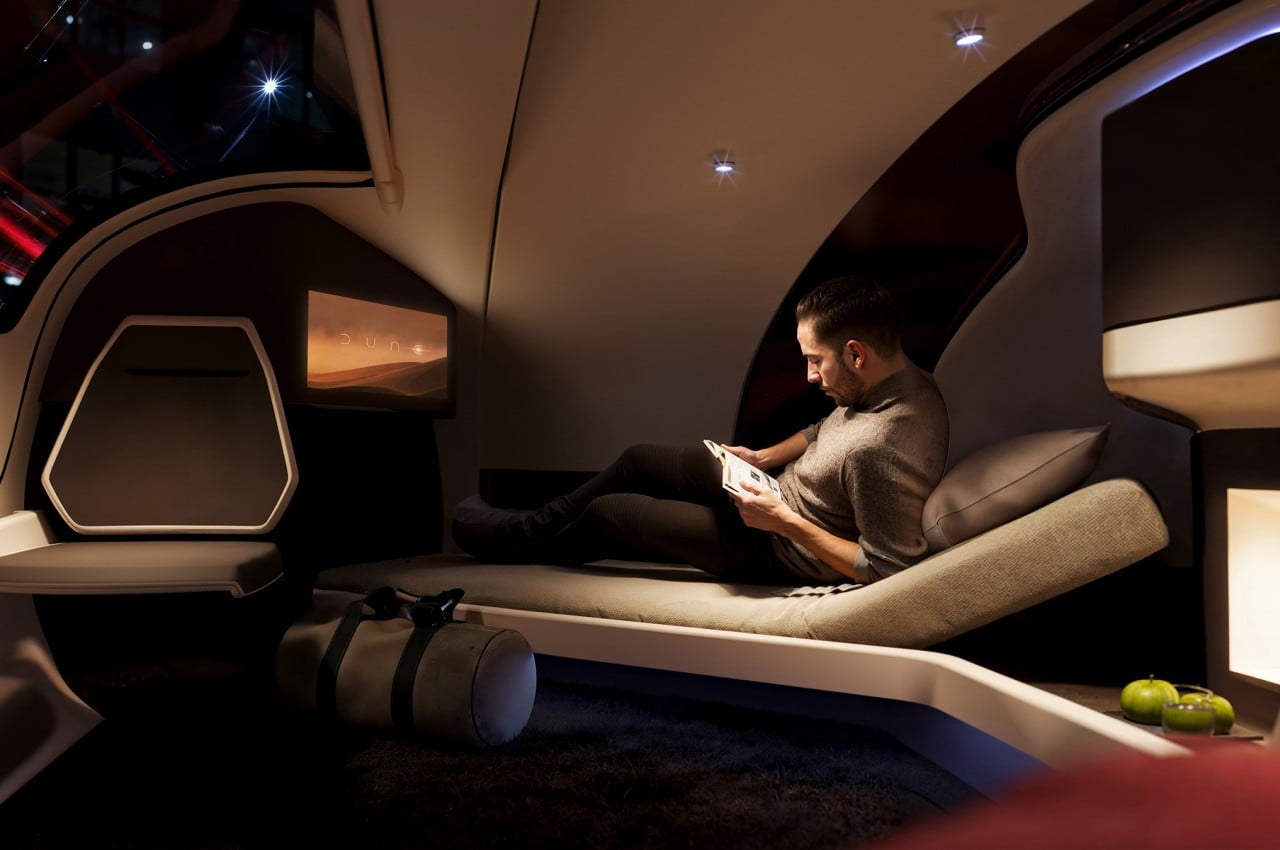
The Swift Pod concept only works if autonomous driving has reached a point where one can really entrust their safety to these invisible drivers. The design envisions an extremely smart self-driving vehicle that, after booking a ride like a taxi, would be able to determine the best path toward your destination and navigate the roads safely. While the default is to simply go from point A to point B in one go, the system also has room for stop-over breaks where you can get off, eat some heavier meals, and freshen up before you take the next leg of your journey in the comfort of a bed.

The post Self-driving car concept is a hotel-like sleeping pod on wheels first appeared on Yanko Design.
Water filtering pitcher concept wants you to slow down while pouring a drink

When you’re thirsty or you need to drink water, you just go to your ref, bring out the pitcher, or open a water bottle and just drink. You don’t really think about things like slowing down, mindfulness, staying healthy, or resting. You just need to quench your thirst or count the glasses of water that you drink. But actually if you think about it, drinking water can definitely be connected to all of that and can be your chance to take a break from your normal routine and take a few, deep breaths while drinking.

Designers: Krishna Pranav Vaddiparthi & Ria Shah

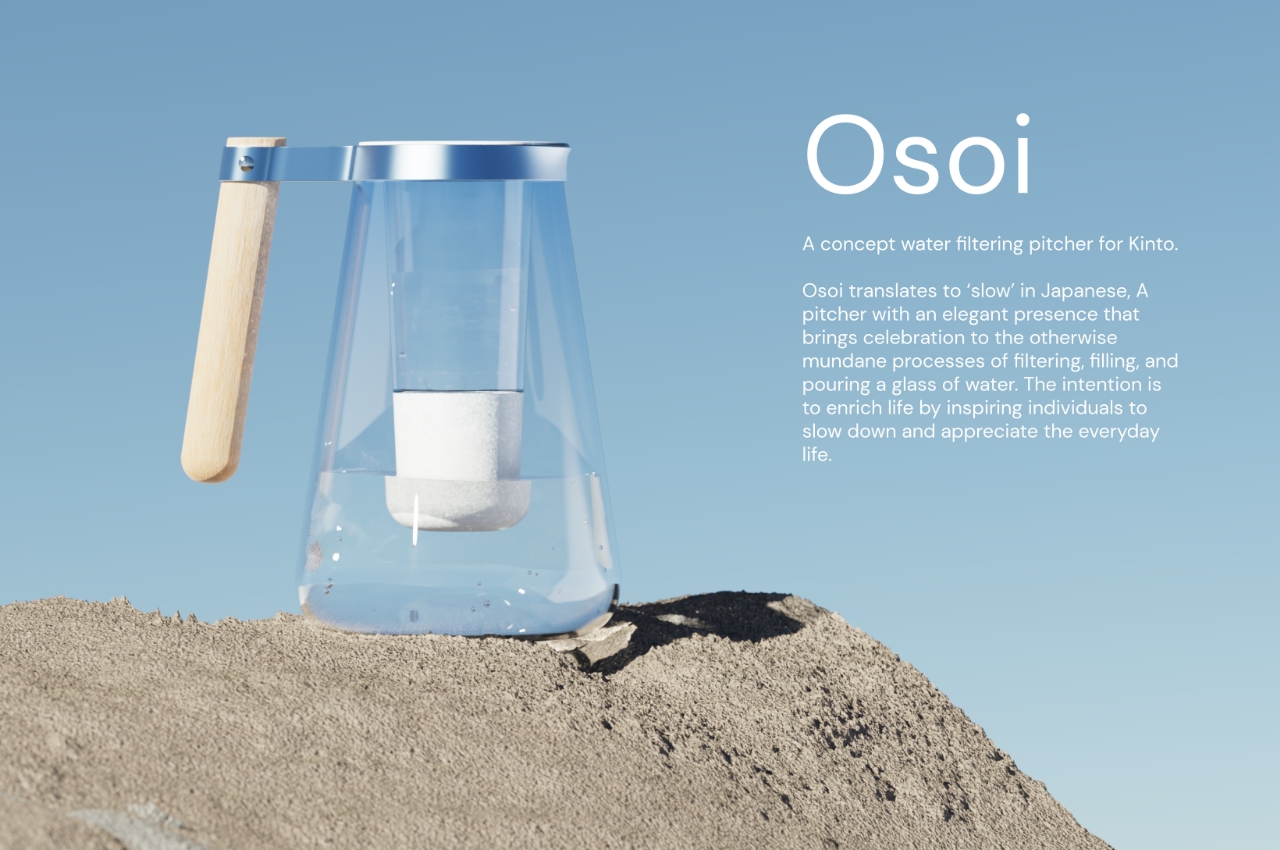
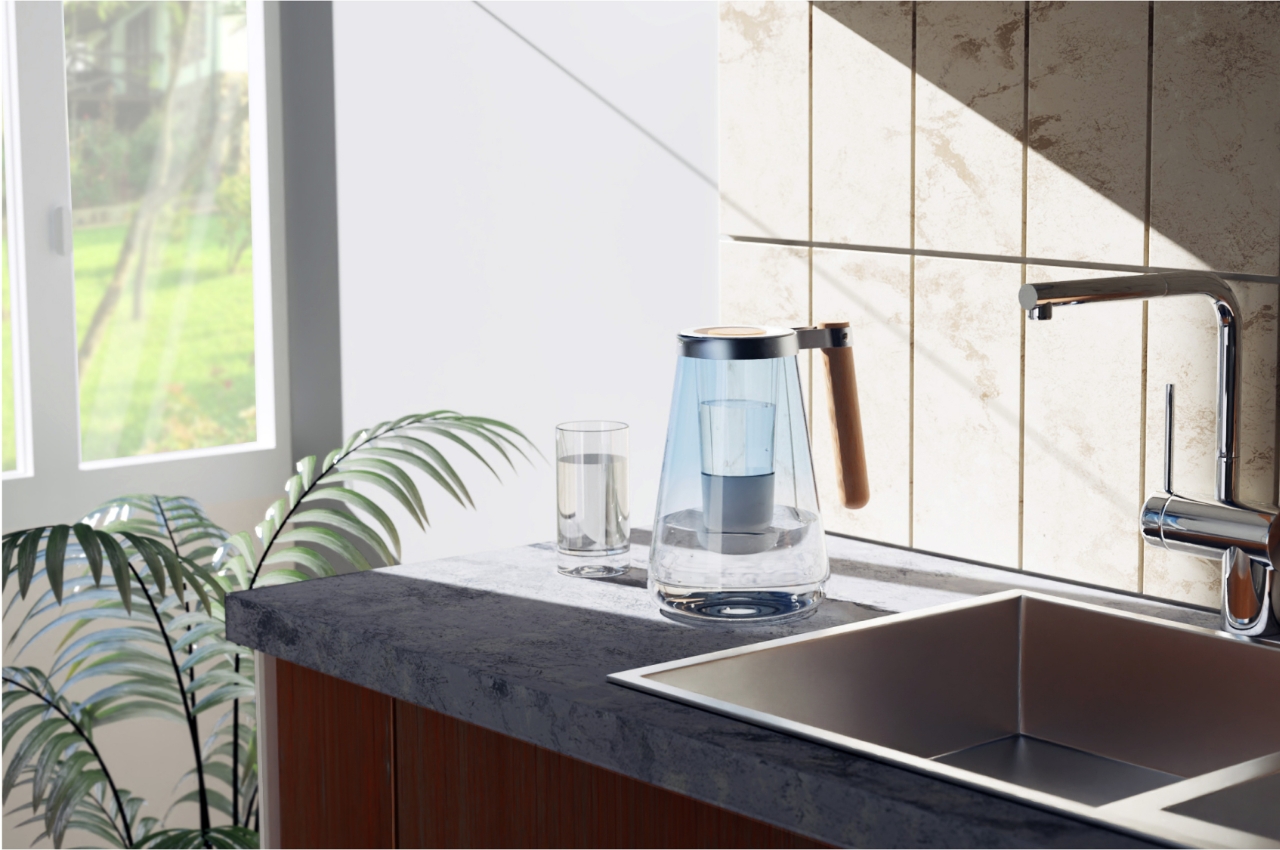
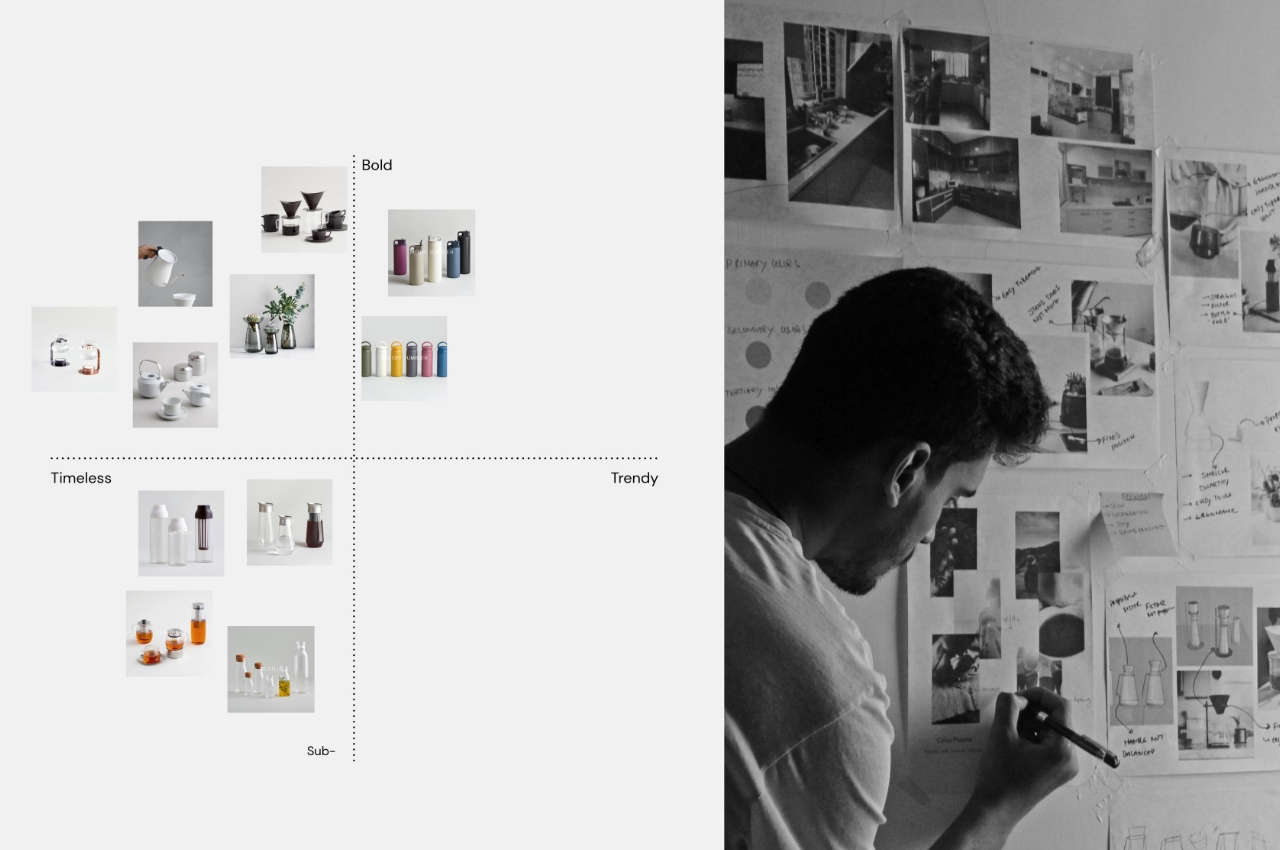
Osoi is a concept for a water filtering pitcher for Japanese tableware and lifestyle brand Kinto. The name of the product is the Japanese word for “slow” and its goal, aside from getting you to drink clean, filtered water, is to slow down while nourishing your body. The brand is the perfect inspiration as they are an advocate of using their products to “connect to life” or just taking a break from your work or studies even as you do something mundane.

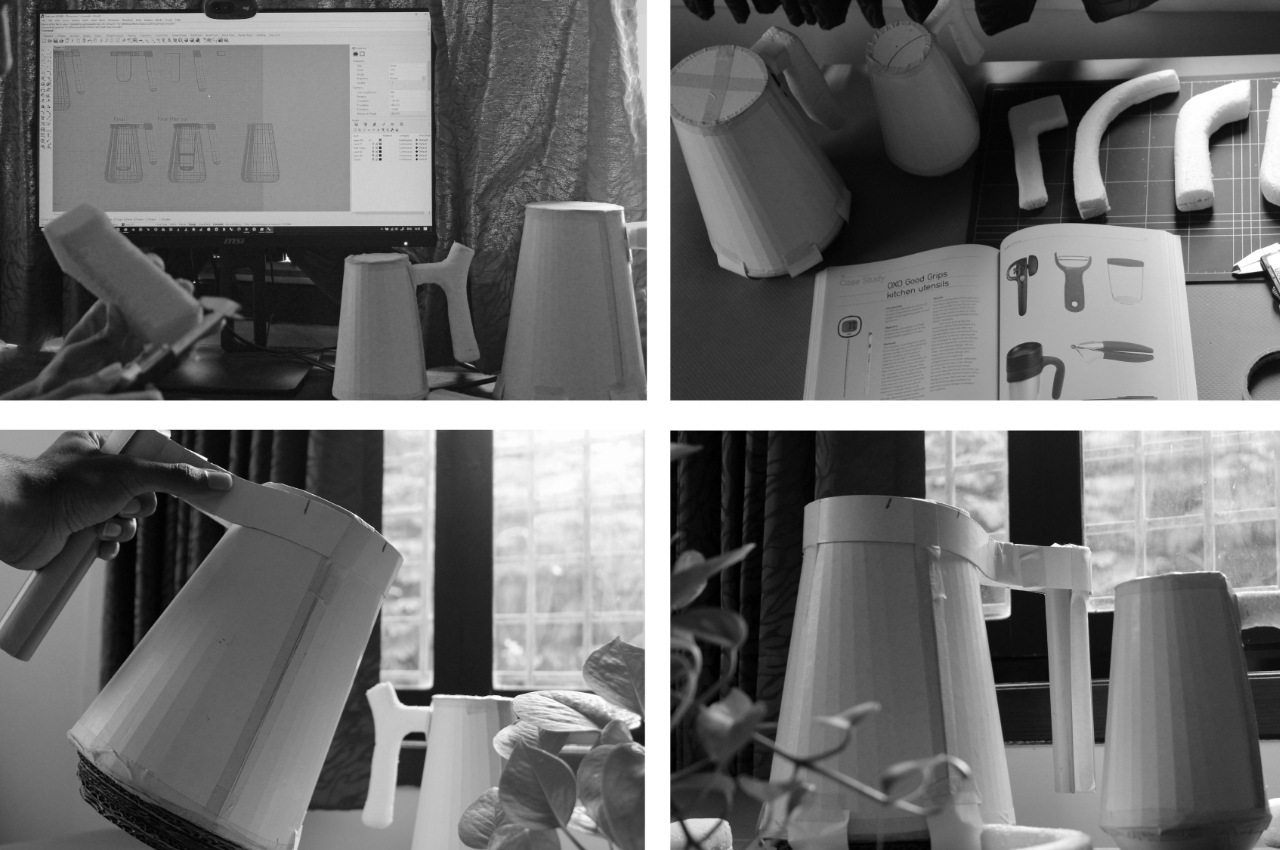
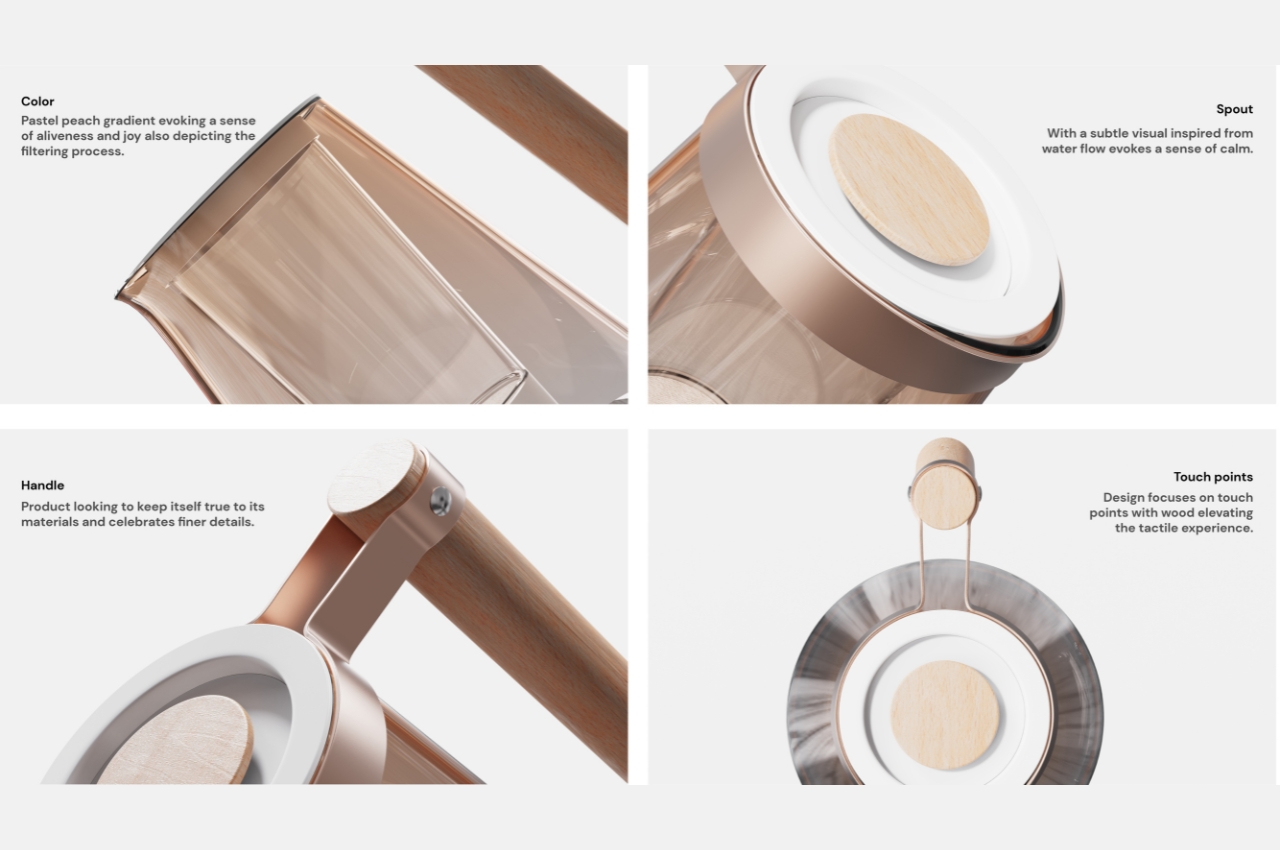
The design of the pitcher itself uses several elements that represent what it means to slow down on a functional and aesthetic level. The pastel peach gradient represents joy but is also part of the water filtering process. Meanwhile, the spout, representing the water flow, lets you pour the water ever so slowly so you’re forced to slow down and have a sense of calm. The wooden handle is supposed to “celebrate the finer details” while the few wooden parts of the pitcher gives you a more tactile experience.

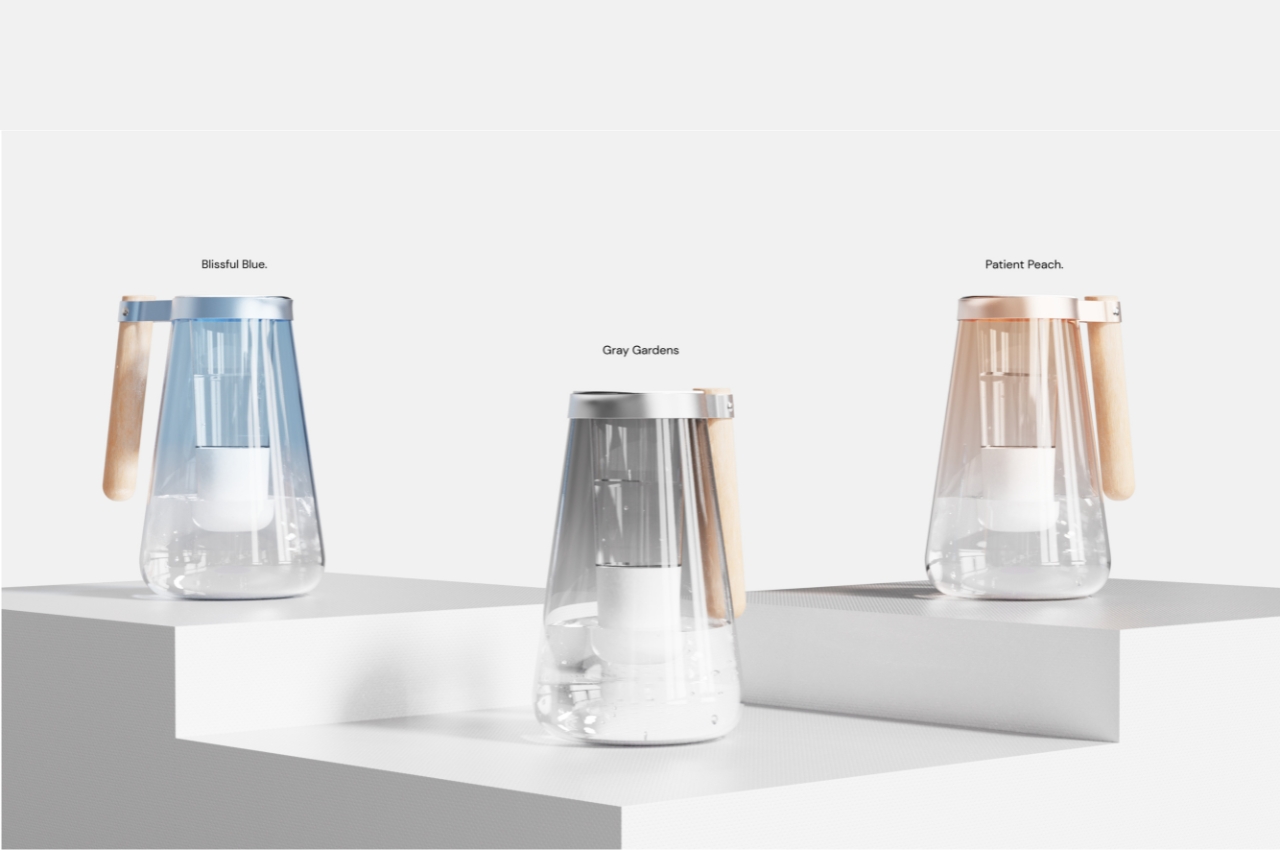
The Osoi pitcher render shows three different color hues: Blissful Blue, Gray Gardens, and Patient Peach. It’s a pretty interesting ideology to put on a mere pitcher but we all need to stop and smell the roses, or at least drink the water, every once in a while.

The post Water filtering pitcher concept wants you to slow down while pouring a drink first appeared on Yanko Design.

Air purifier concept takes a page from SMEG’s retro aesthetics

For those who live in spaces where natural air flow is a “luxury” or in cities where air pollution is a big problem, having an air purifier is a must. Well that is, if you want to breathe in good air and if you’re spending a lot of time there and you don’t want to spend a lot on healthcare expenses. But these kinds of appliances are really more functional and we don’t spend as much time on their design when choosing to buy one. If you can have something that has all the functionalities for an air purifier that you need and it is well designed and can fit in your space’s aesthetics, then that’s a bonus.

Designer: Khaavya Bhosale

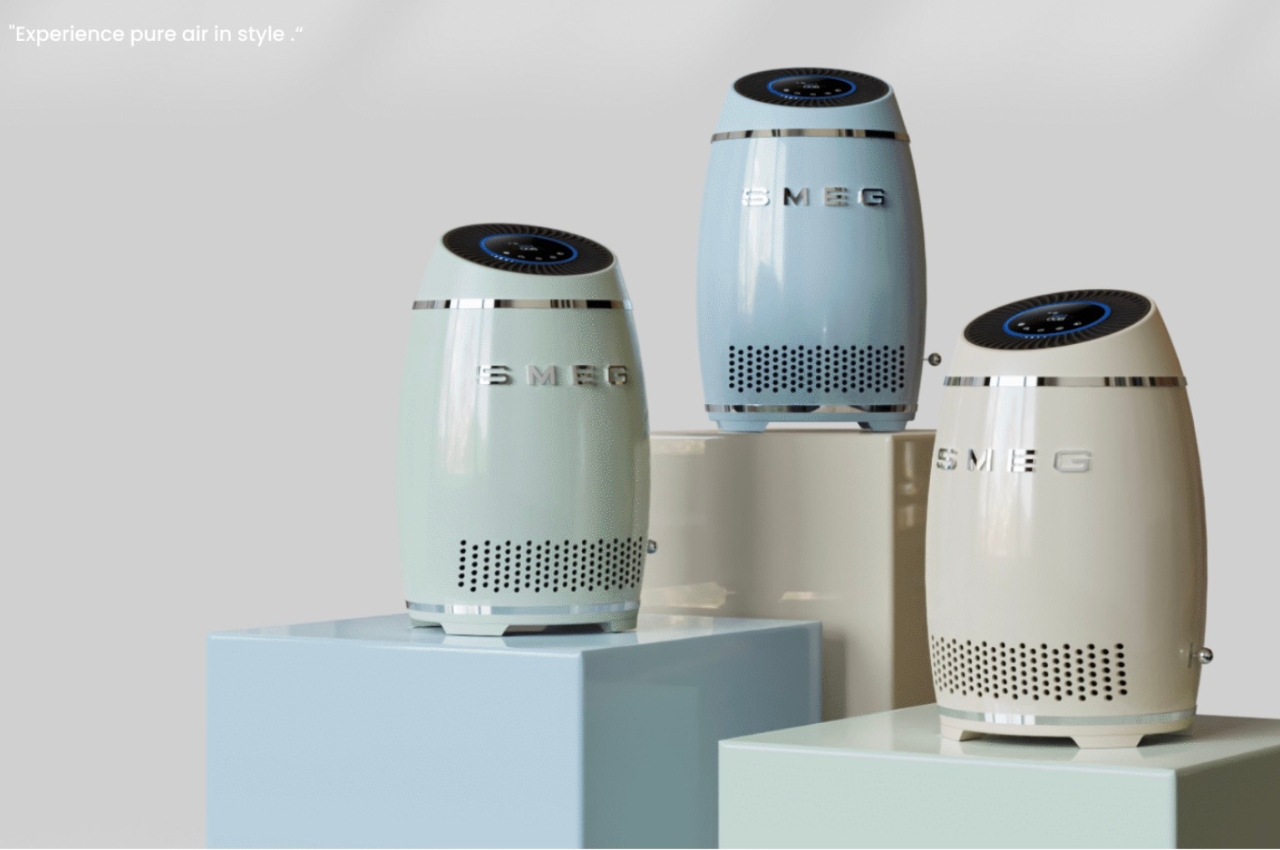
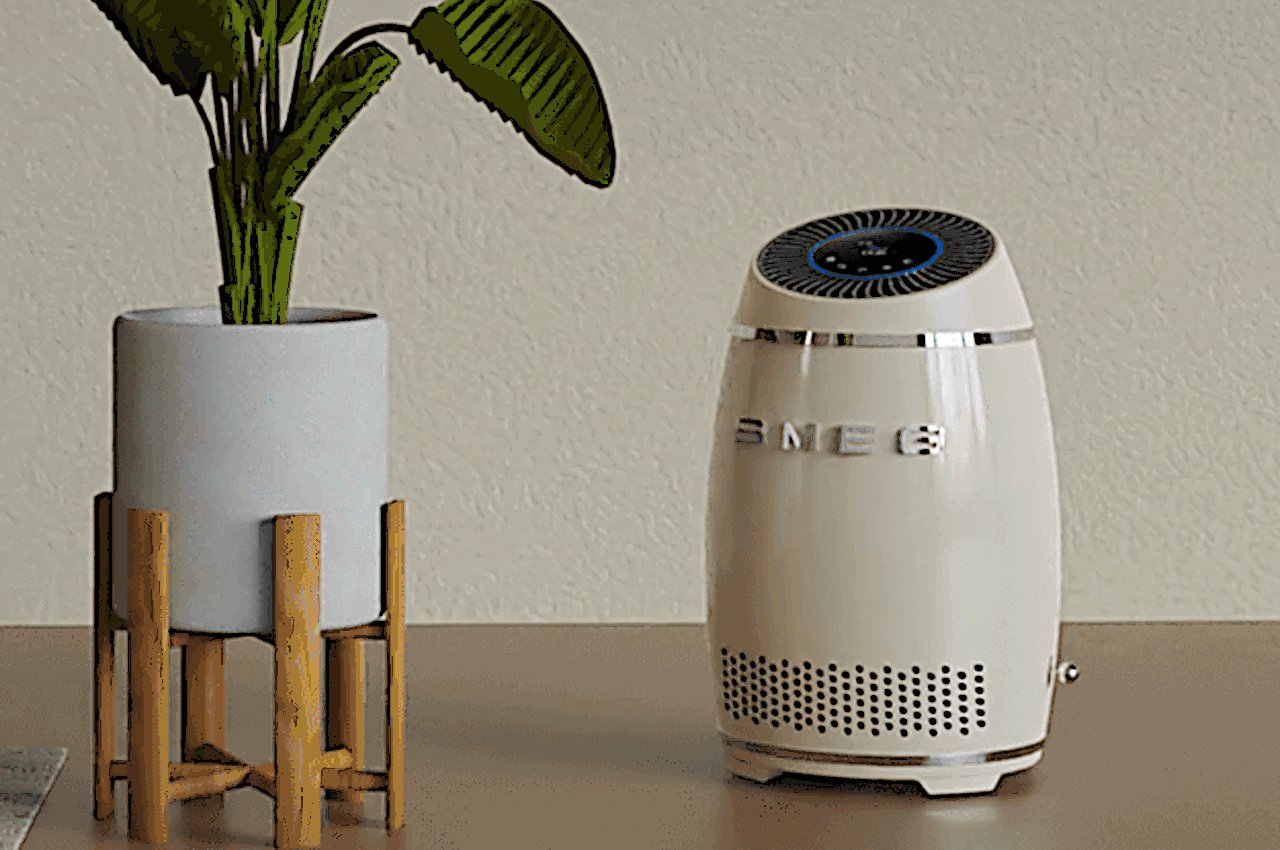
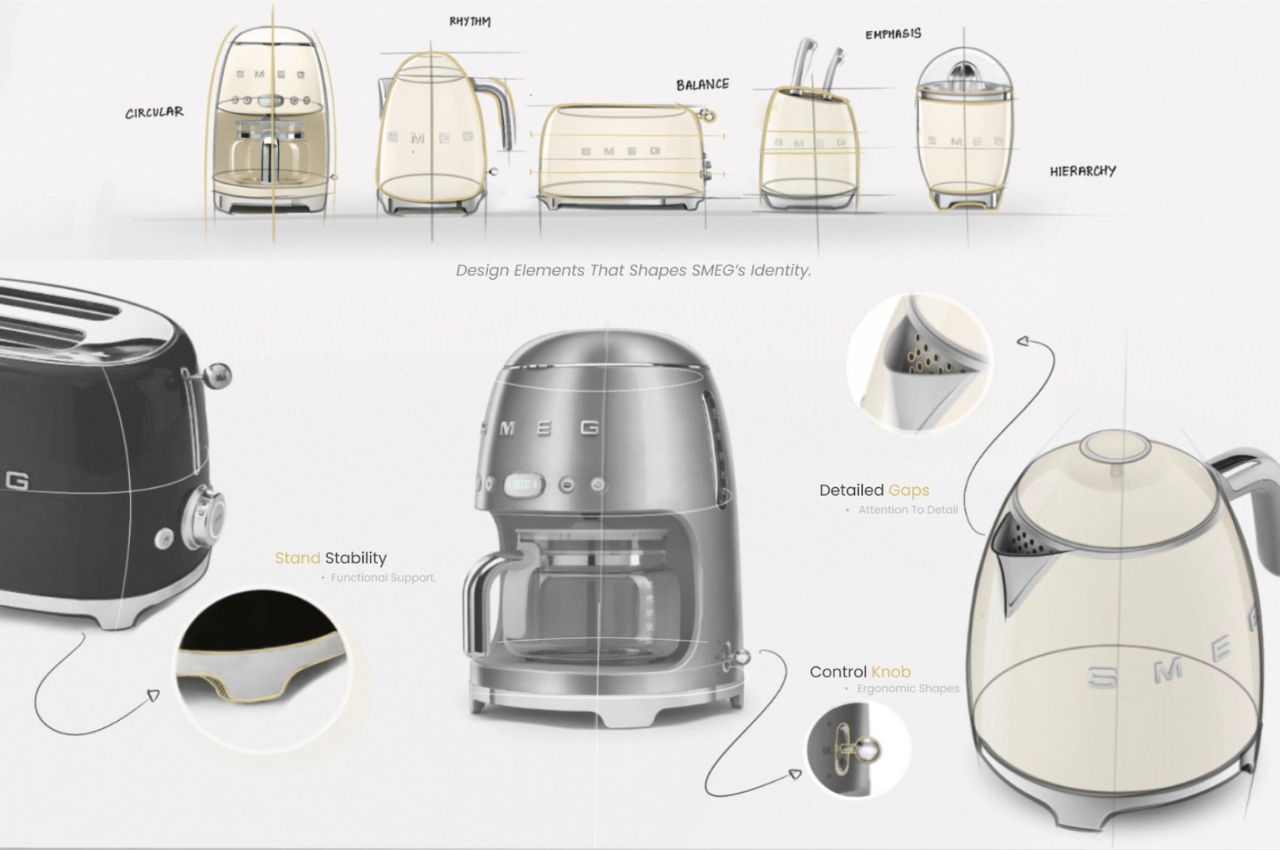
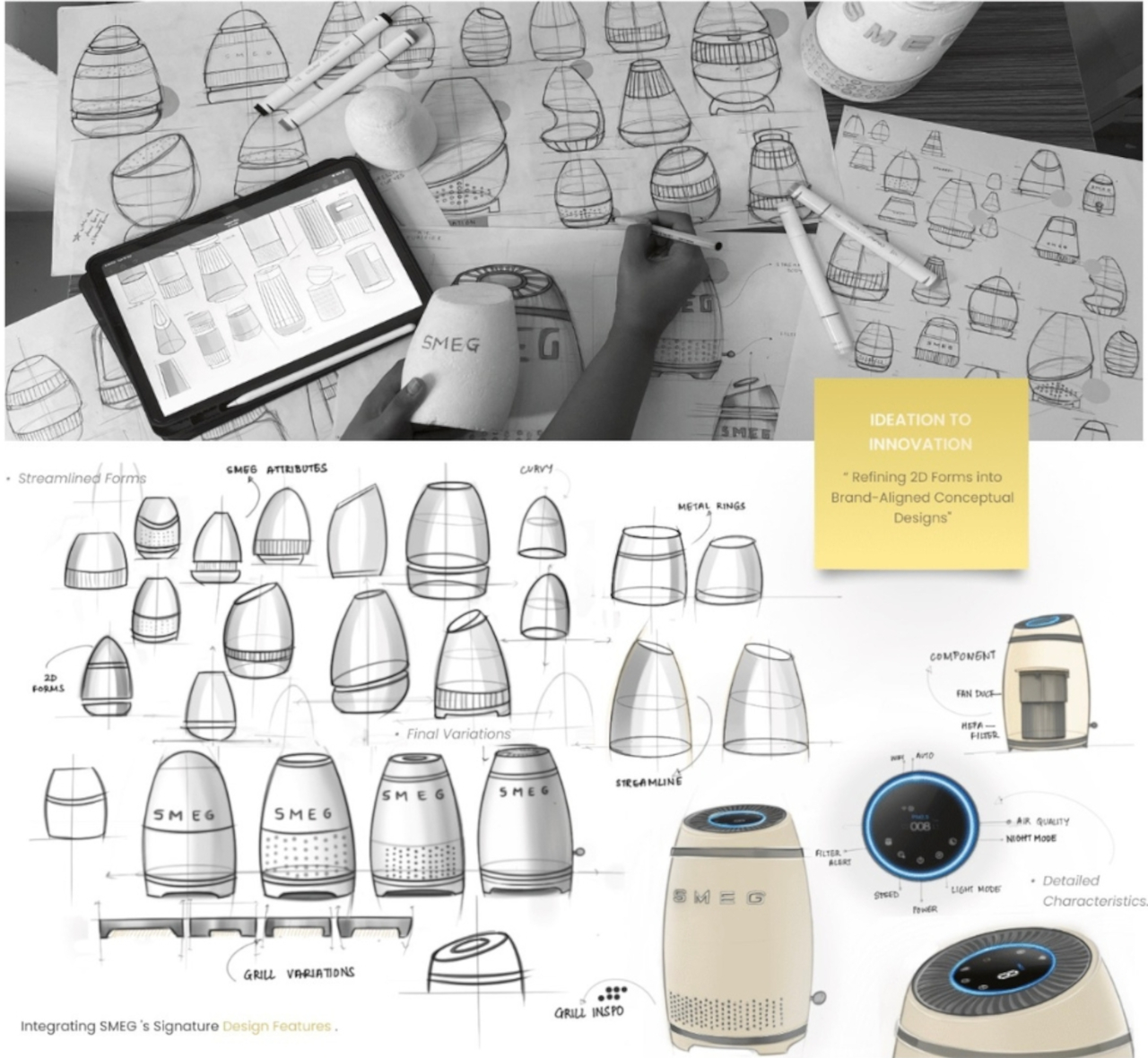
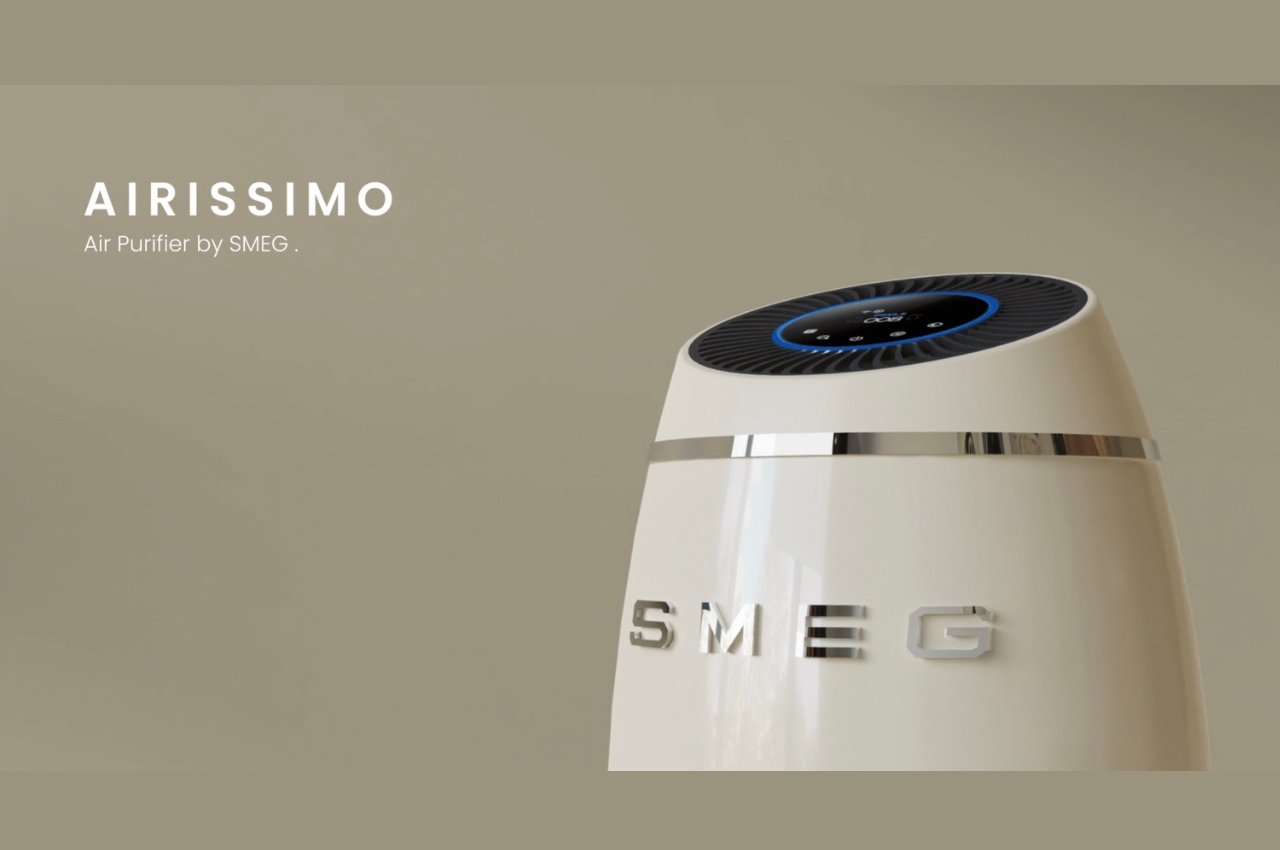
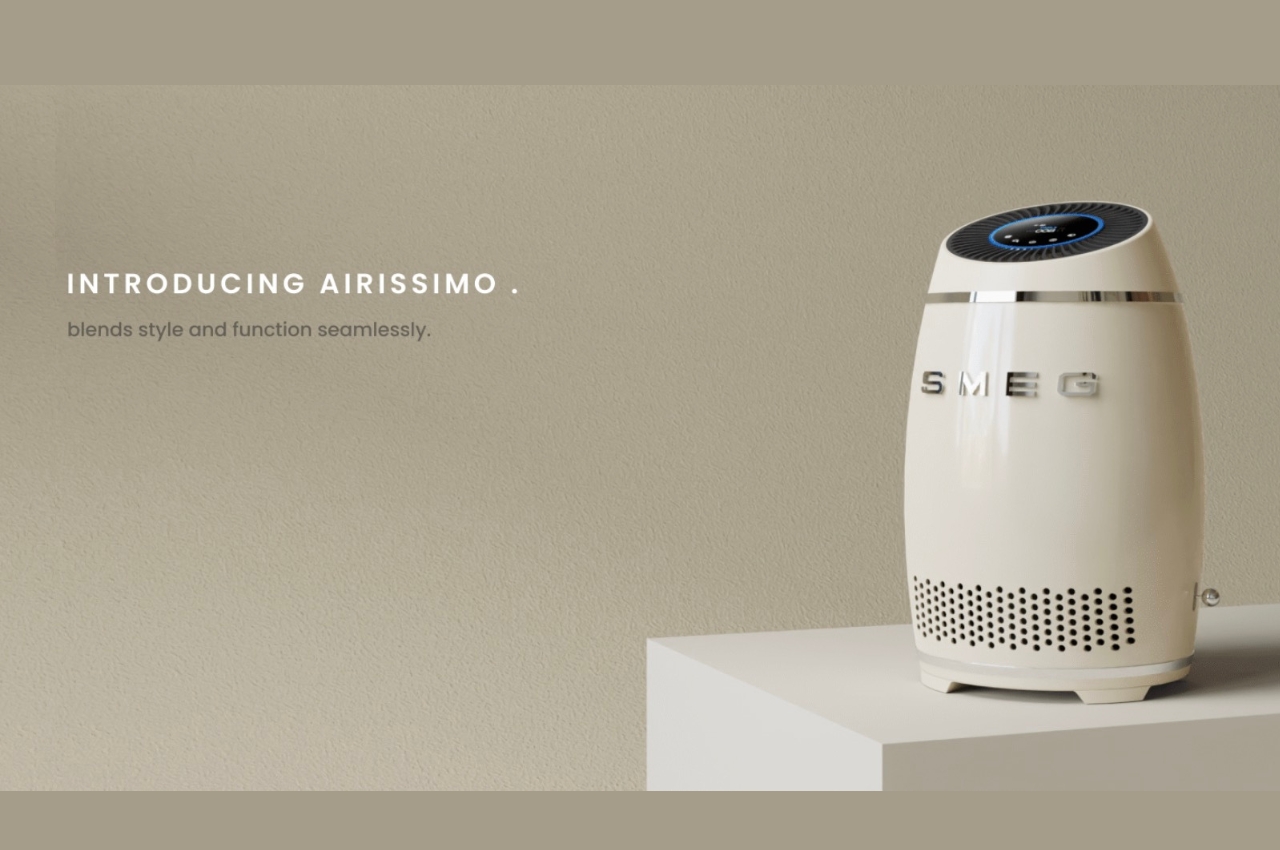
This concept for an air purifier for popular home appliance company Smeg fits in with the brand’s distinct retro style. The Airissimo aims to integrate all the most advanced technology in air purifiers into the classic design that all SMEG products have. This includes the familiar pastel colors, ergonomic control knobs, detailed gaps, and the standard stand that balances their appliances. The final renders of the Airissimo concept will definitely fit in with their current line.

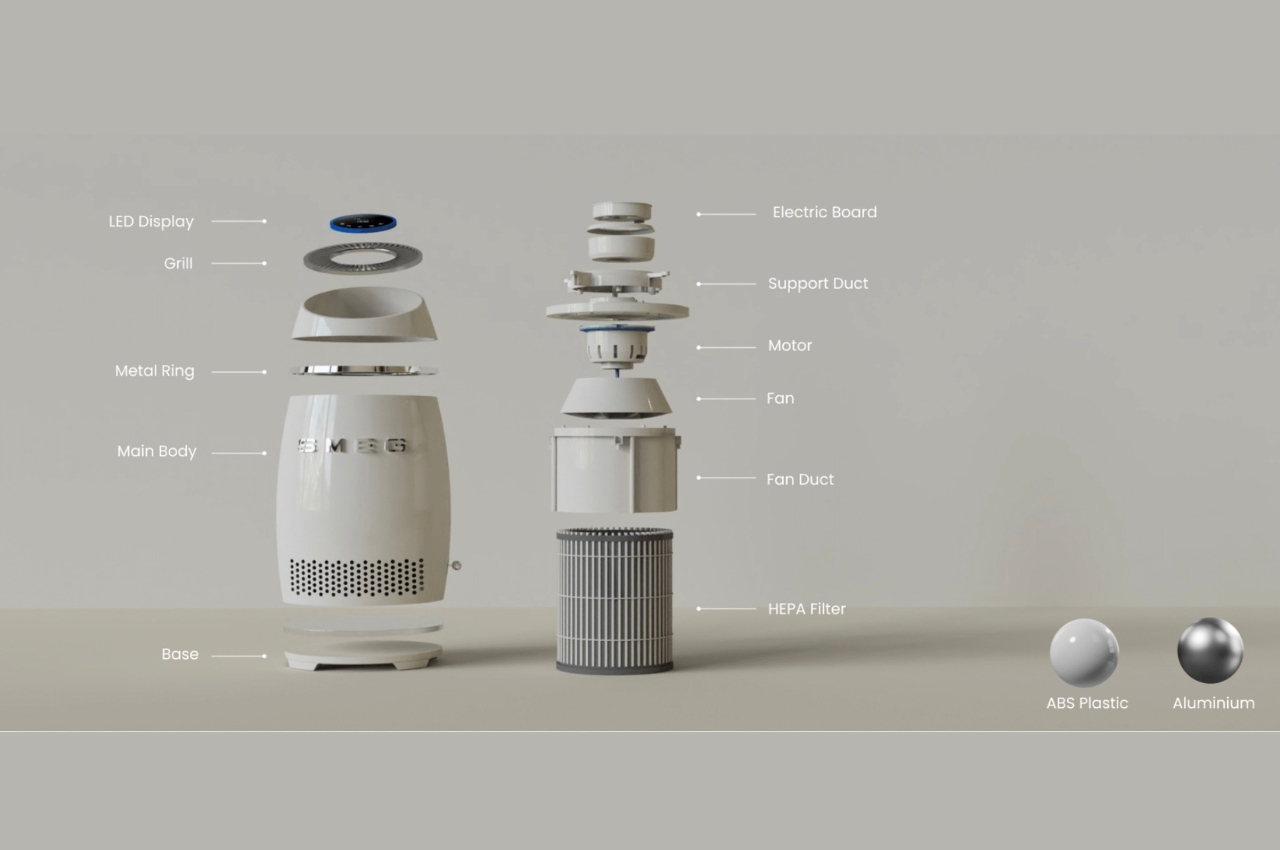
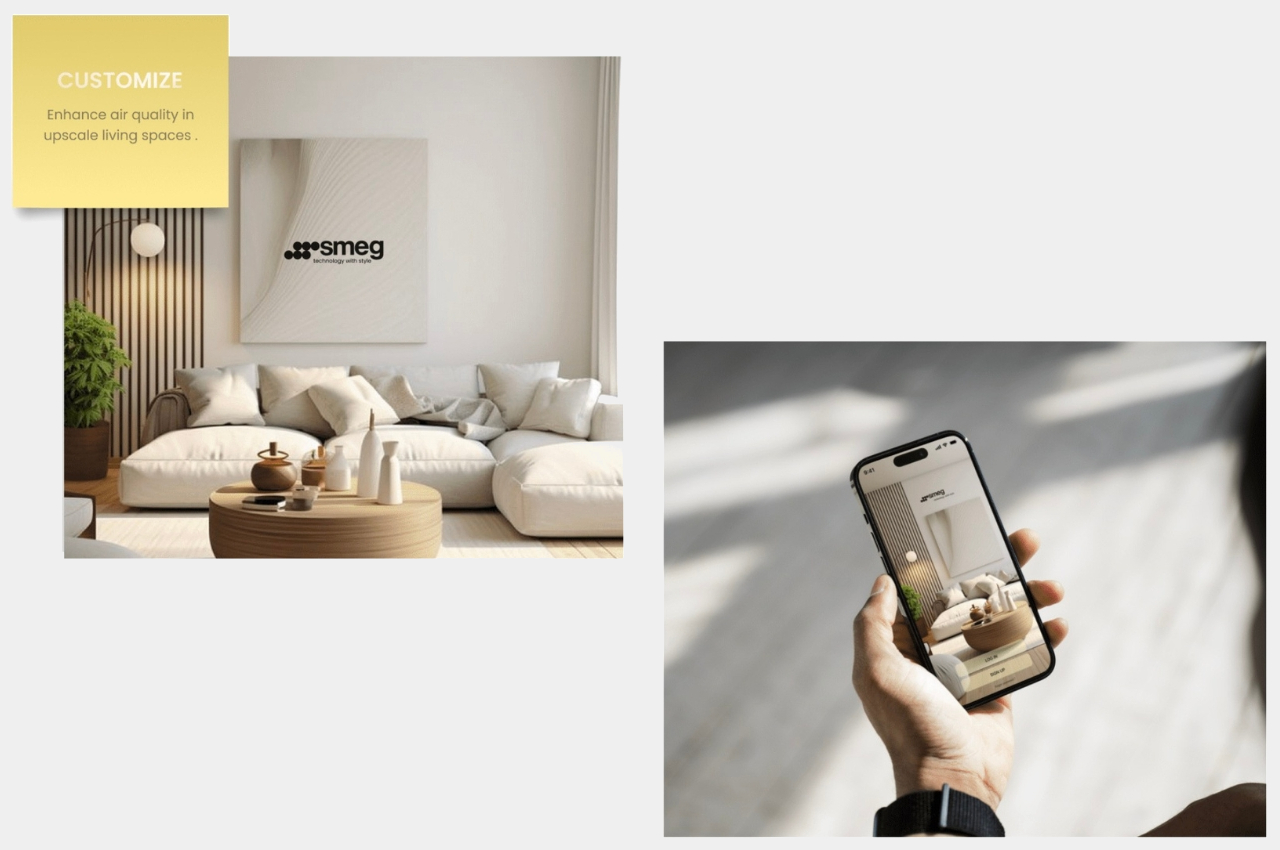
But it’s not just the look that the designer thought of, but all the functionalities and features that you need for an air purifier. It has an LED display that will show you the current air quality in your space. Inside you’ll find the electric board, support duct, motor, fan, fan duct and HEPA filter, all the necessary components for this kind of appliance. It uses ABS plastic and aluminum as its main materials. There is an app that you can connect to it to adjust the controls, to monitor air quality, and to also get reminders when you need to replace your filters.

The Airissimo looks like a huge smart hub that you’ll find in your living space or a sophisticated-looking air cooler. Most air purifiers currently in the market look like your usual air-related appliances (aircon, air cooler, humidifier, dehumidifier) so having something like this if SMEG does decide to eventually branch out into this would be pretty cool.

The post Air purifier concept takes a page from SMEG’s retro aesthetics first appeared on Yanko Design.
Interchangeable emoji camera covers give smartphones more character

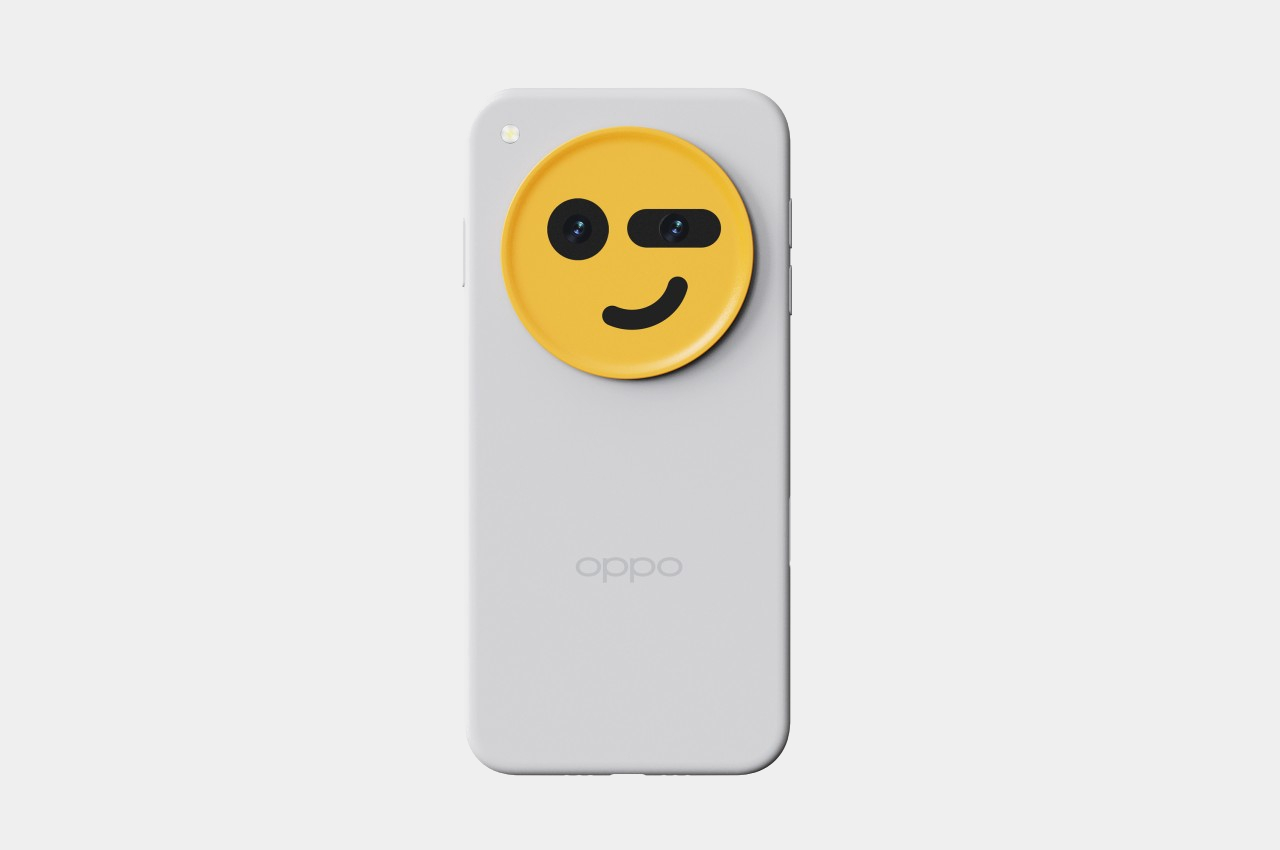
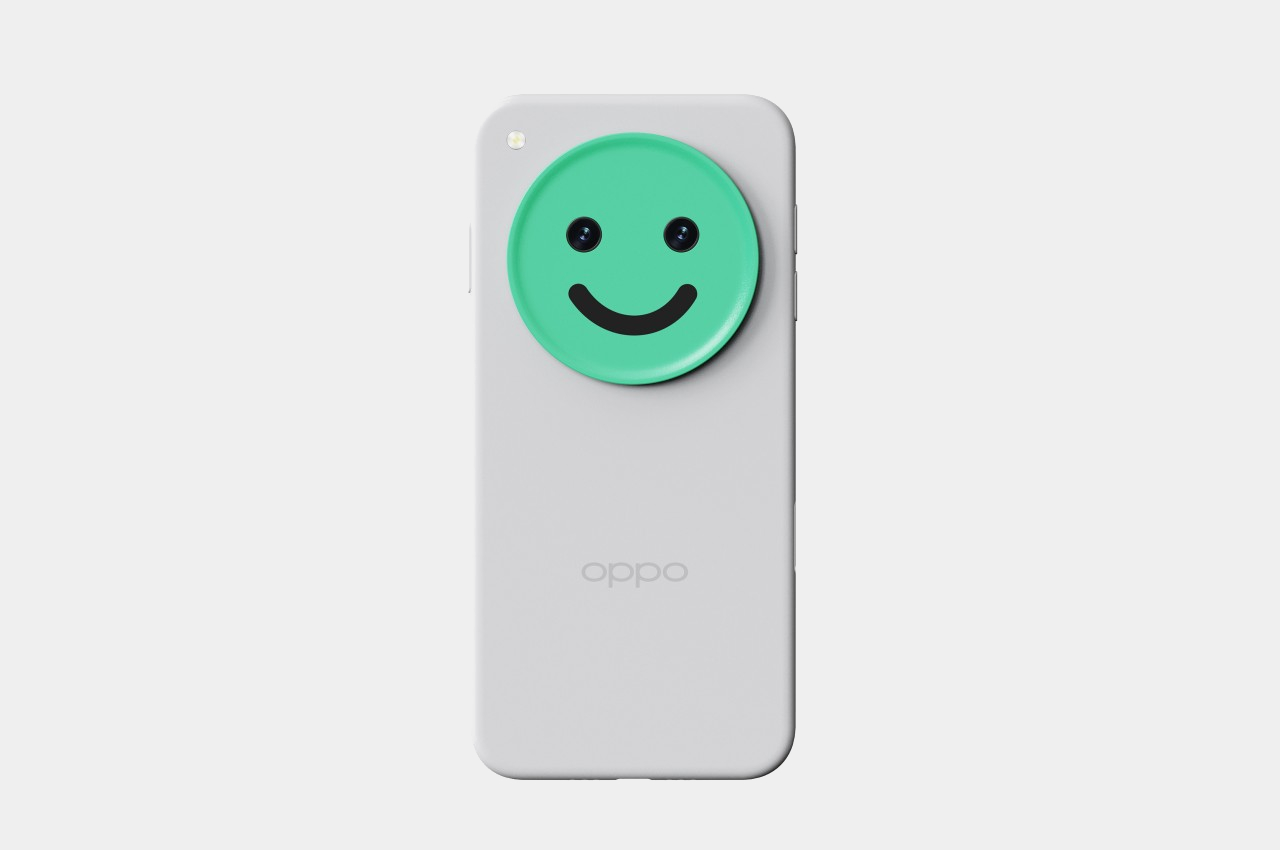
The back of our phones is always visible to the people around us, which makes it the most expressive part of the smartphone. That’s why manufacturers spend a lot of time and resources on the design of the phone’s rear, using a variety of materials for the cover and designs for the camera. Those designs, however, are decided by companies and never change once production starts. They don’t always reflect the owner’s tastes, and definitely not all the time. Being able to change your phone’s “face” to fit your mood offers a lot of freedom of expression, and it all takes is putting a different emoji on top of your camera.

Designer: Yifan Hu

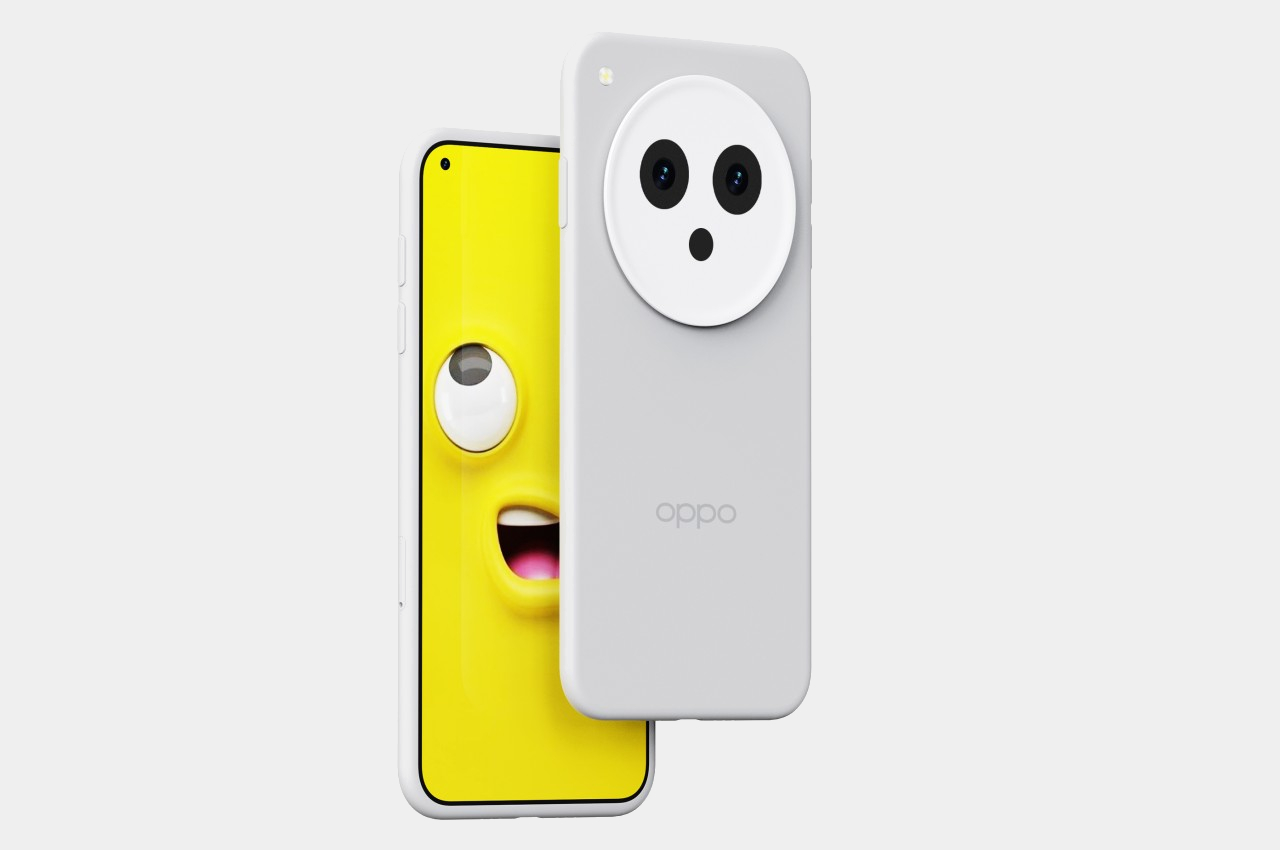
Smartphone cameras are becoming more powerful and with that power comes bigger enclosures. What were once just two eyes looking at you from the back of the phone has become a large circle that adds a face to those eyes. It’s just a metaphor, of course, but one that can actually be used to design a set of accessories that turn your mobile partner into some sidekick character, complete with a face and a personality.

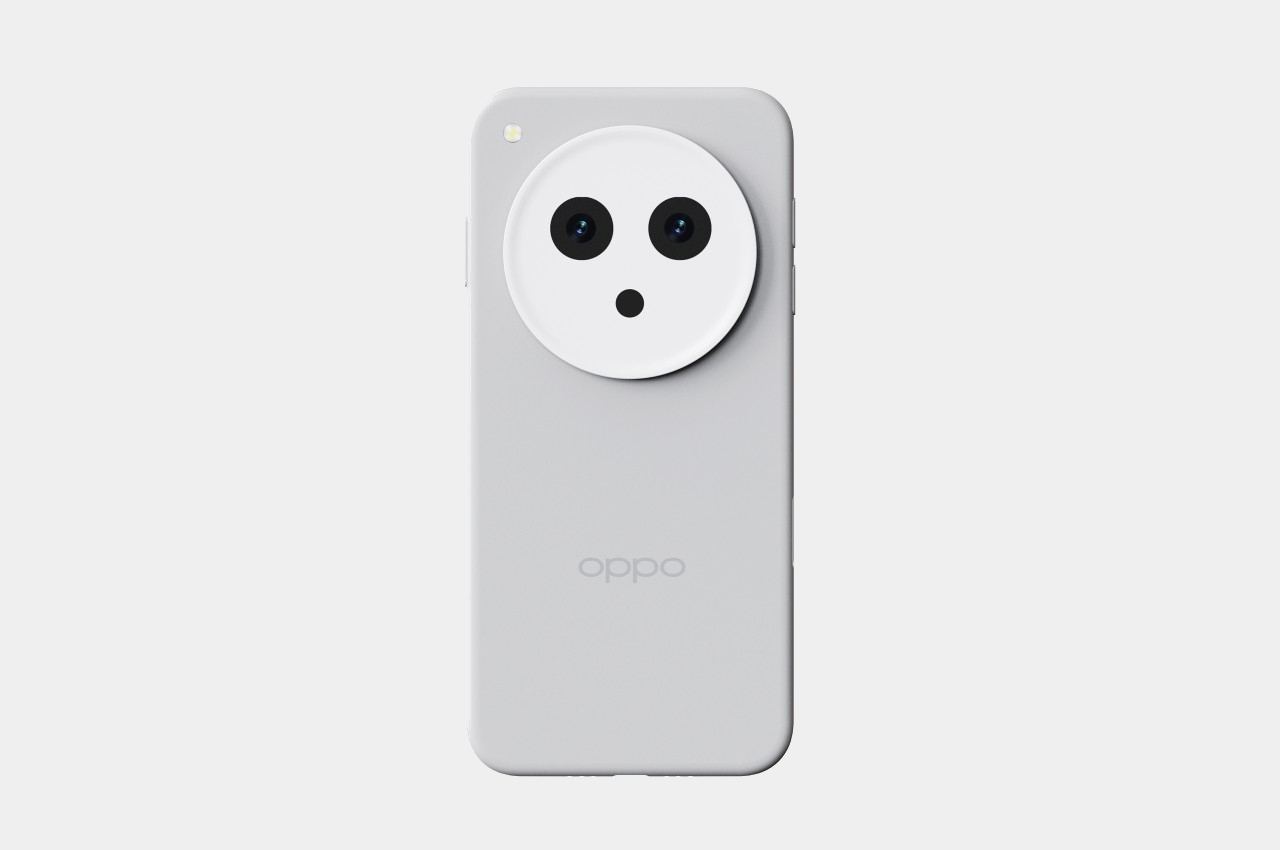
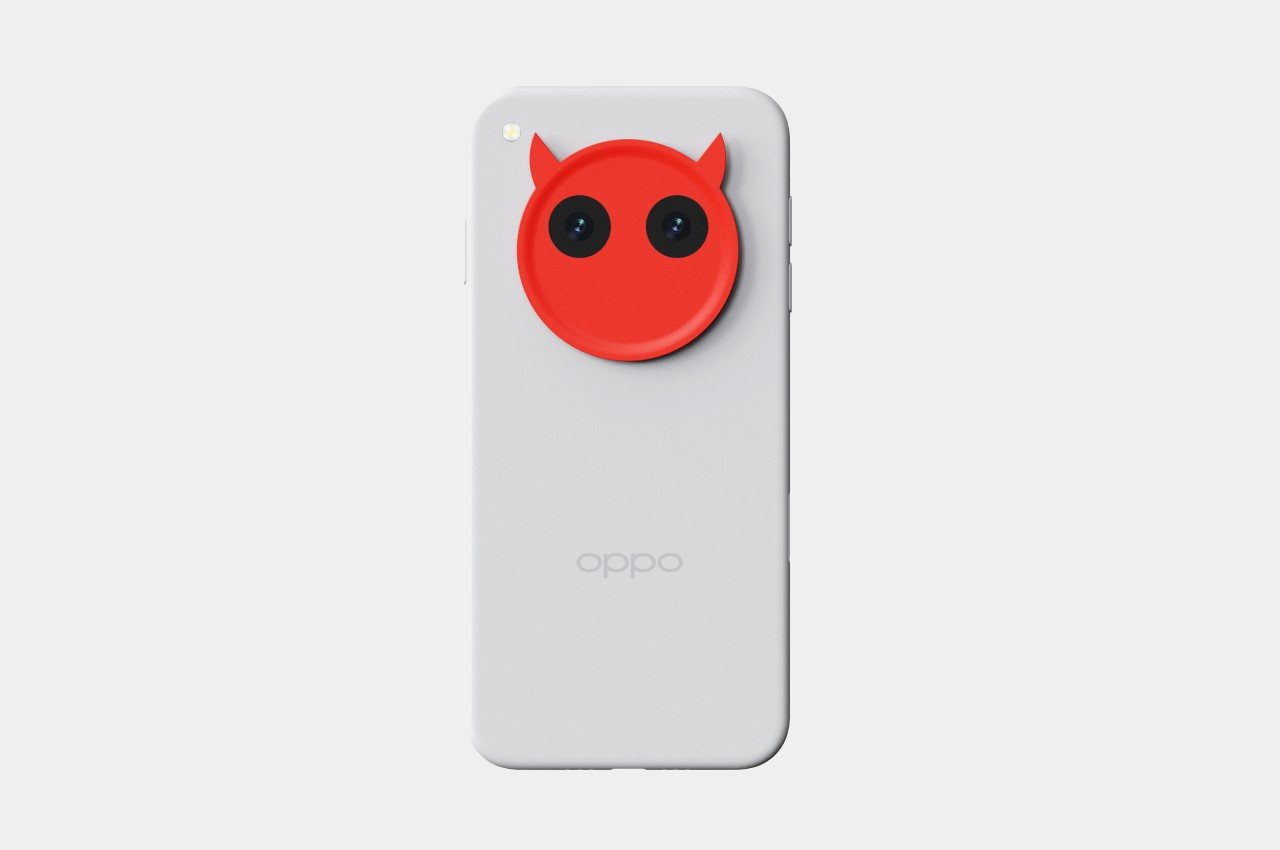
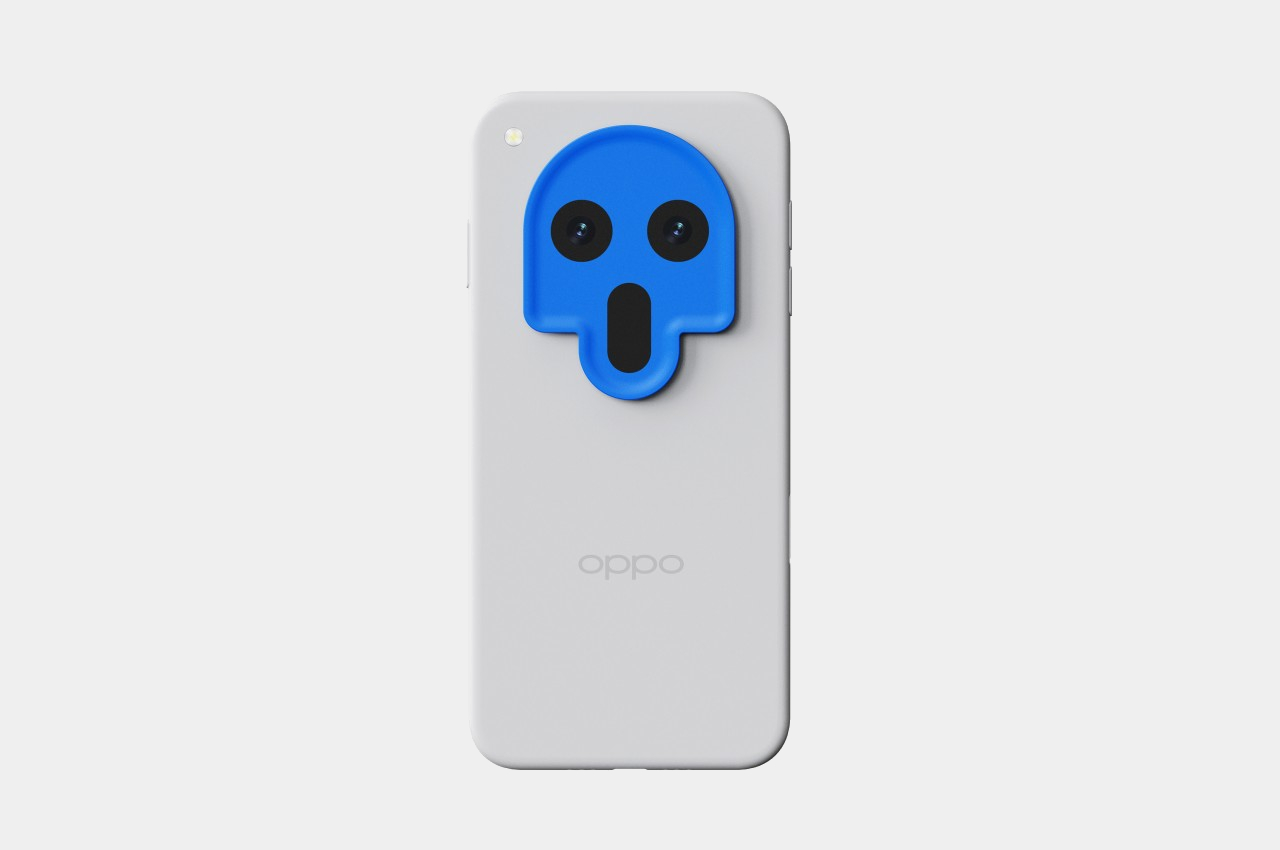
These emoji-inspired accessories simply put a smiley or one of its comical variants on top of the camera circle of a smartphone. It takes advantage of how most of these cameras are designed, with two of the cameras placed side by side and near the top of the circle. It’s a perfect location for eyes and a face, one that perhaps more accurately expresses your own personality or just your mood for that day.

1

Of course, there are obvious limitations to this design, the biggest of which is how not all camera bumps are circular. And those that are circular aren’t always located in the middle of the phone, making it a bit awkward but not entirely unattractive to put an emoji in the corner. That said, this camera design is actually becoming more popular these days as manufacturers try to figure out the best location for the growing number and sizes of cameras on a phone.

There’s also the consideration that a smartphone might have more than just two cameras, and their locations might not perfectly align with a smiley face. That simply needs a bit of creativity to design around those restrictions, like adding mouths to the face or having asymmetrical eyes that convey even more facial expressions than a traditional smiley. It’s really a simple concept that goes a long way in adding fun to the smartphone experience, while still giving you the freedom to go back to a pristine and “normal” look from time to time.

The post Interchangeable emoji camera covers give smartphones more character first appeared on Yanko Design.
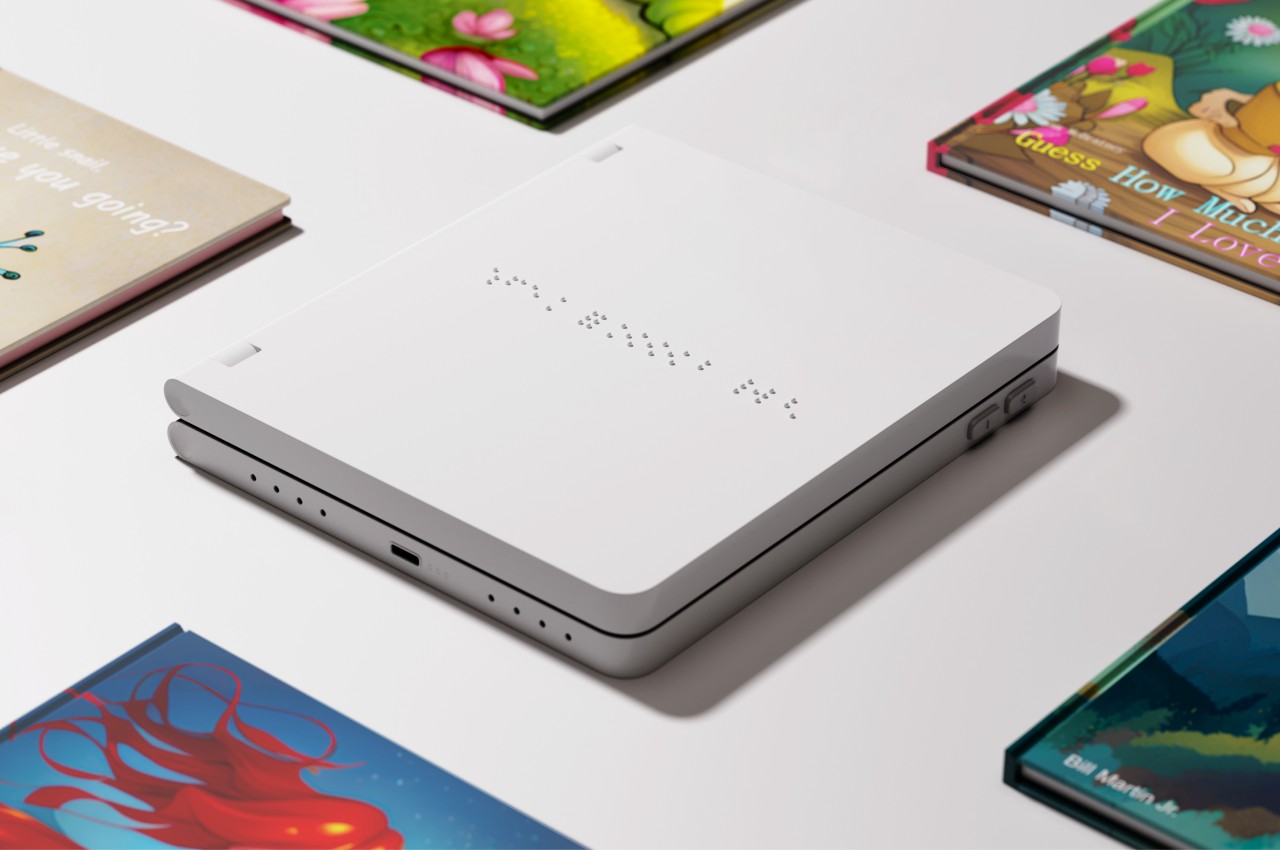
Electronic 3D book concept helps visually impaired kids feel the magic of fairy tales

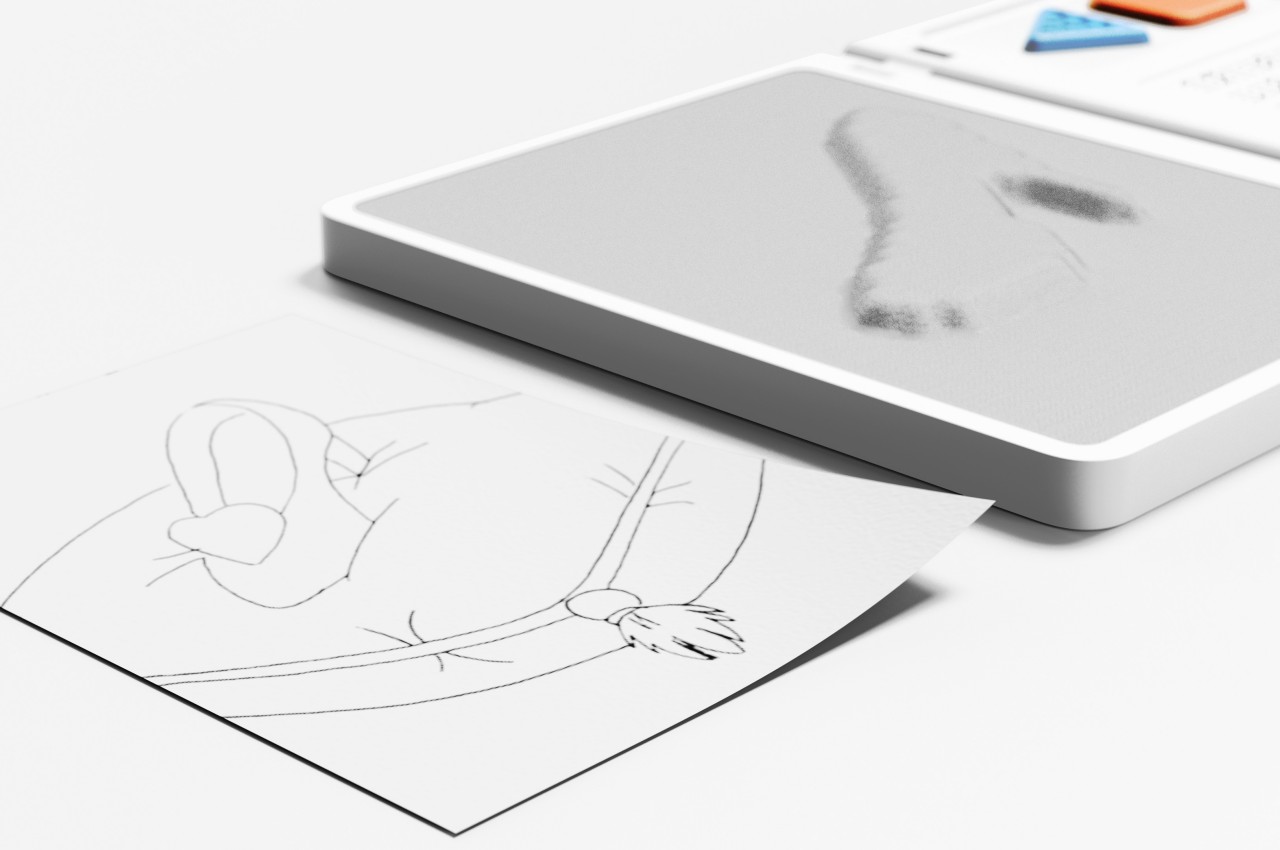
Reading is already a difficult task for people with visual impairments, but it’s especially challenging when it comes to material that involves a lot of visual elements. Adults might have not much of a problem visualizing those words in their minds, but children who are still developing their mental libraries will probably have a harder time. Fairy tales and fictional books with fantasy elements are examples of these highly visual materials, and simply hearing the narration or feeling the words through Braille feels rather insufficient to capture the emotions and magic of the stories. This electronic book concept tries to offer an equally magical experience that makes the objects and scenes pop out from the book, almost literally.

Designers: Subin Kim, Yujeong Shin, Seungyeon Lee

It’s pretty amazing how blind and visually impaired people can read a book while sliding their hands across seemingly random dots, almost like magic. But the text on a page doesn’t exactly show the images associated with the words, relying on your imagination to conjure up those associations mentally. Of course, that comes almost like second nature for those with normal eyesight, but the visually impaired, especially younger ones, need a bigger boost to help match words with shapes and objects.

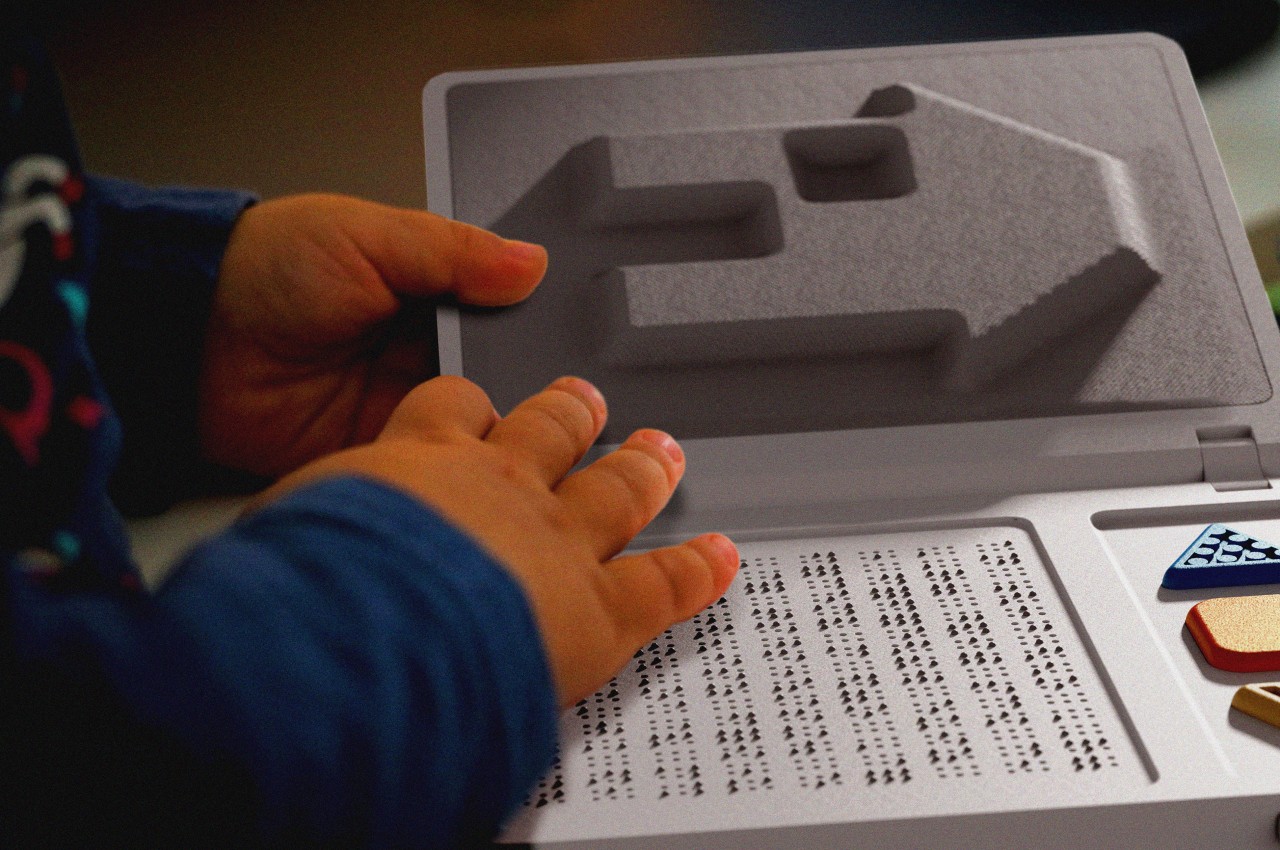
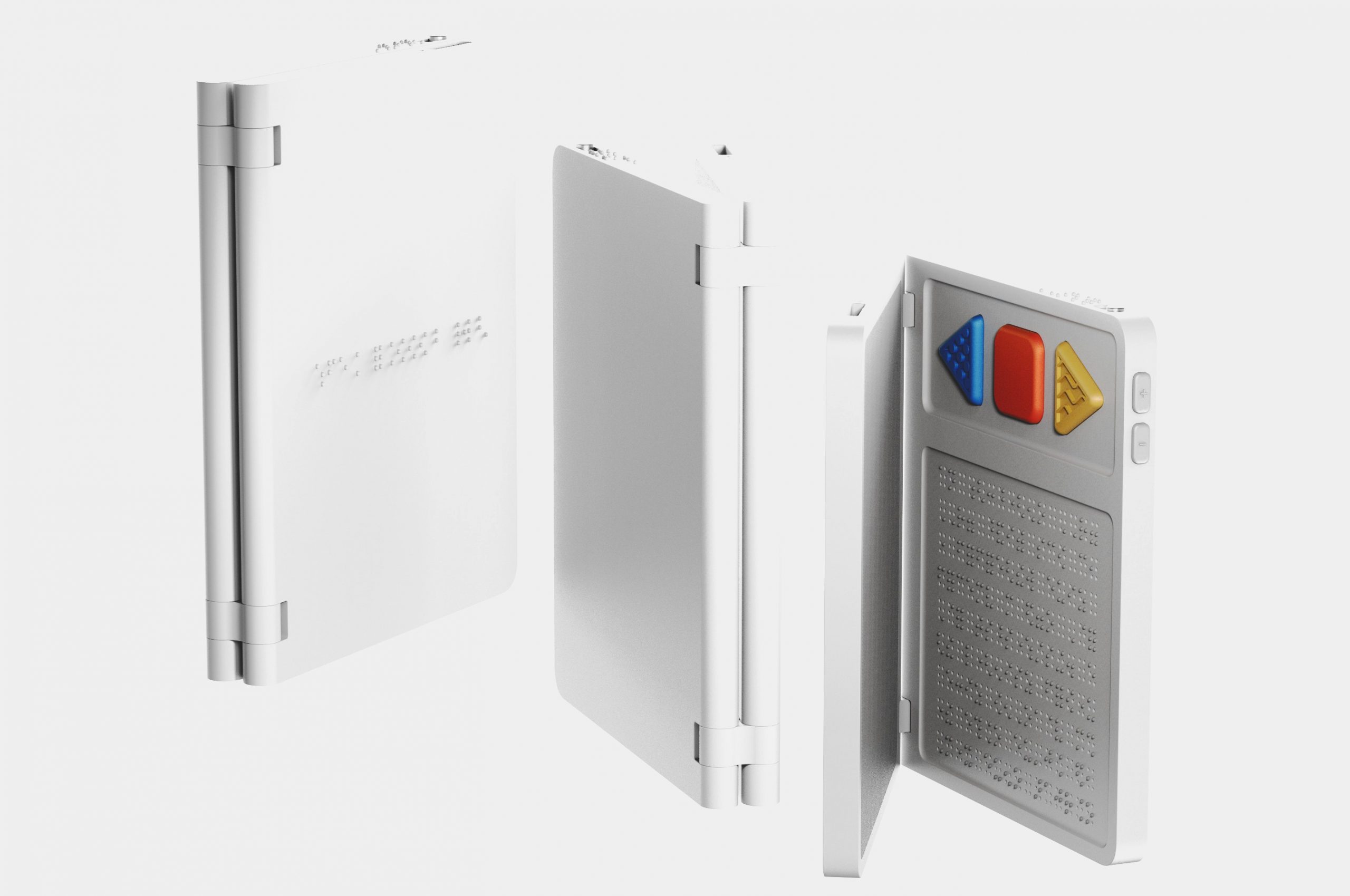
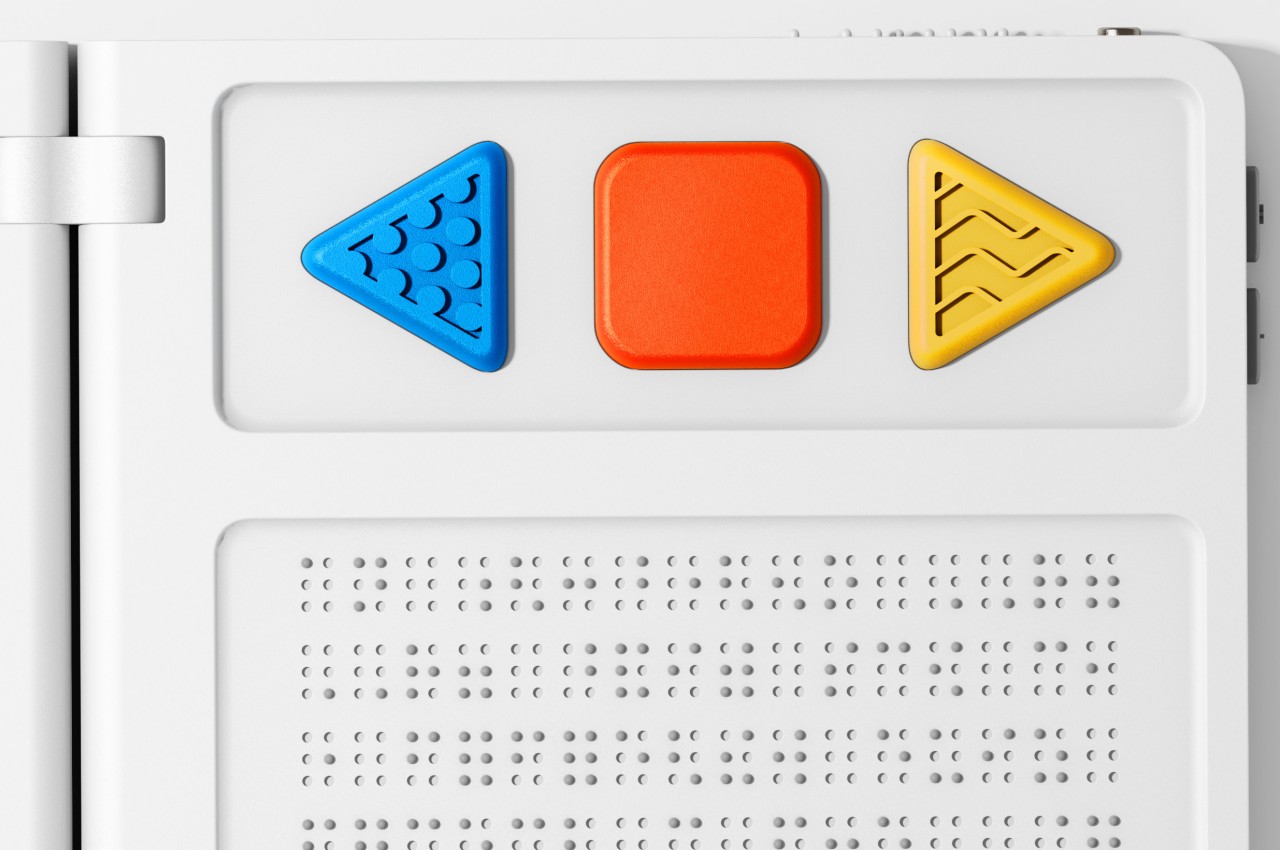
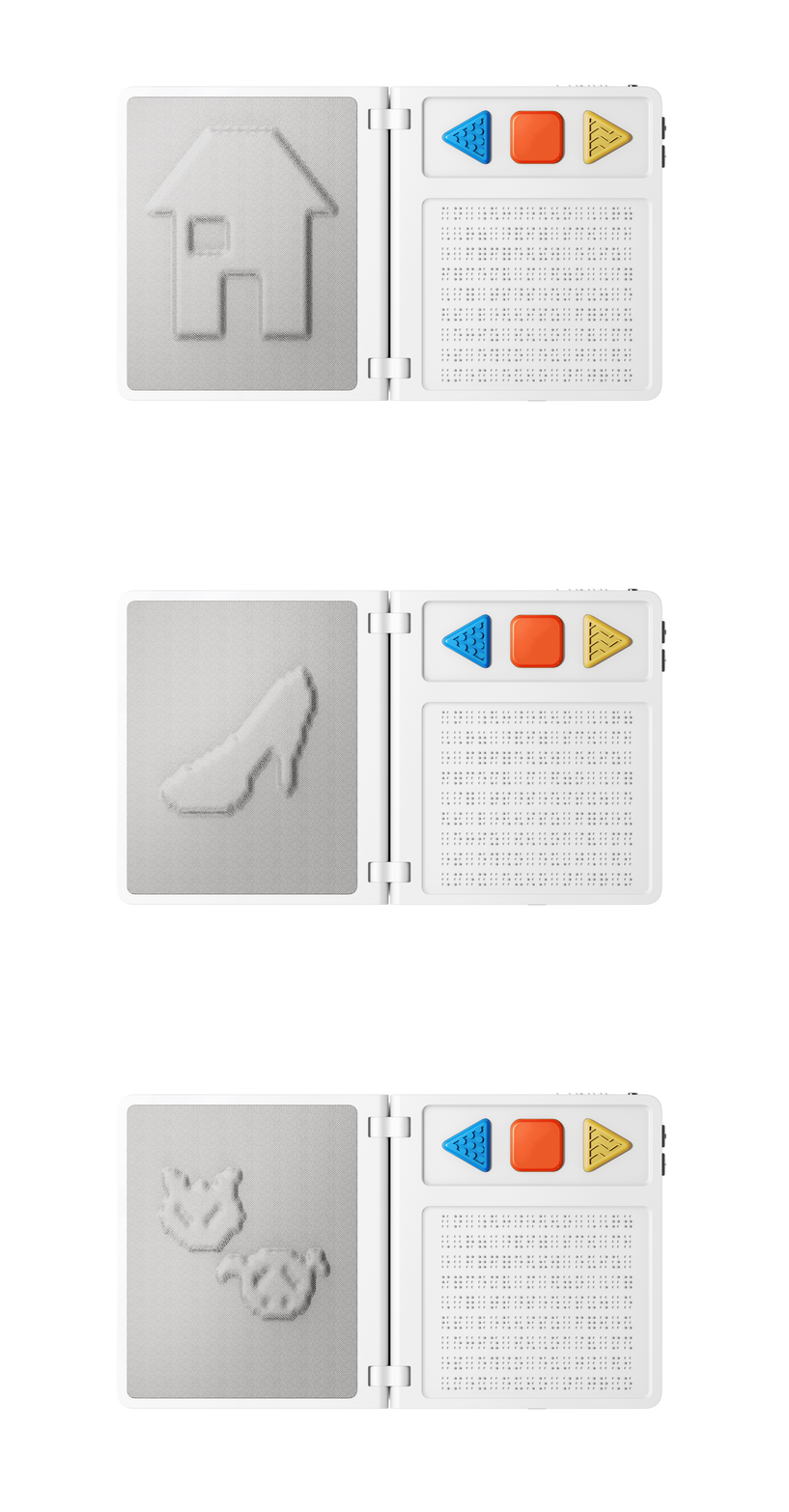
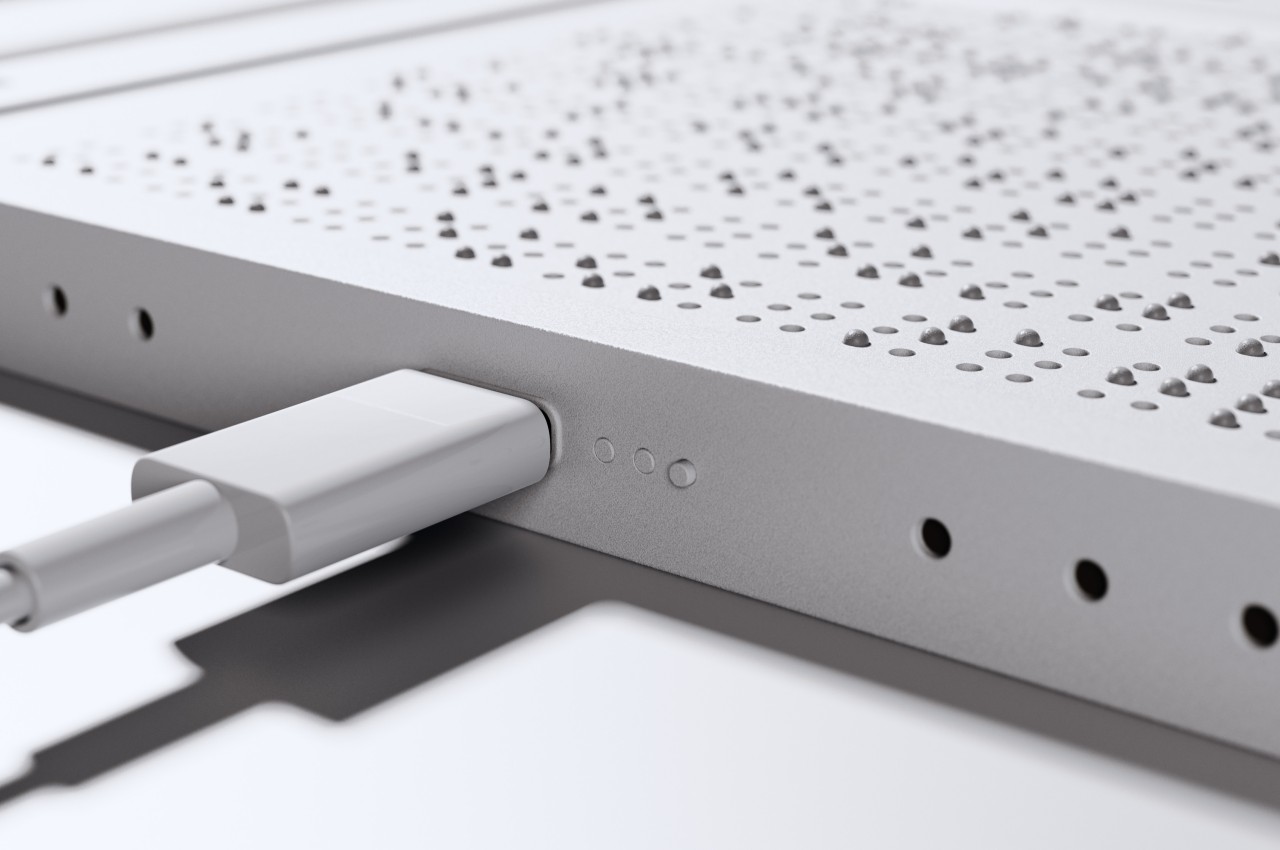
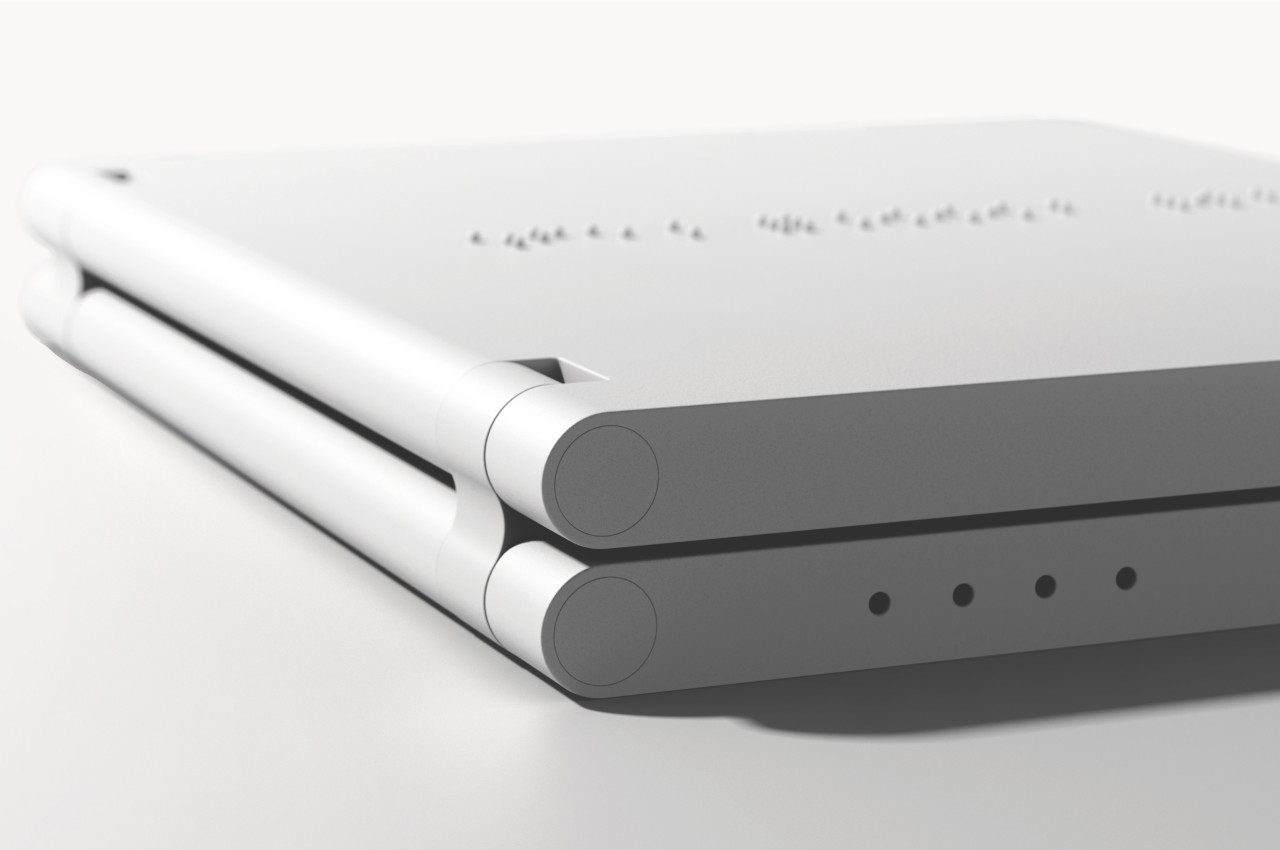
bbook is a concept for an electronic 3D book that provides all the necessary tools for a child with visual impairments to not only make sense of but also enjoy such fantastical books. It has an audio component that reads the book out loud, with large tactile buttons that let the reader skip forward or backward as desired. There’s also a dynamic Braille “page” where dots rise and sink as the words change.

1

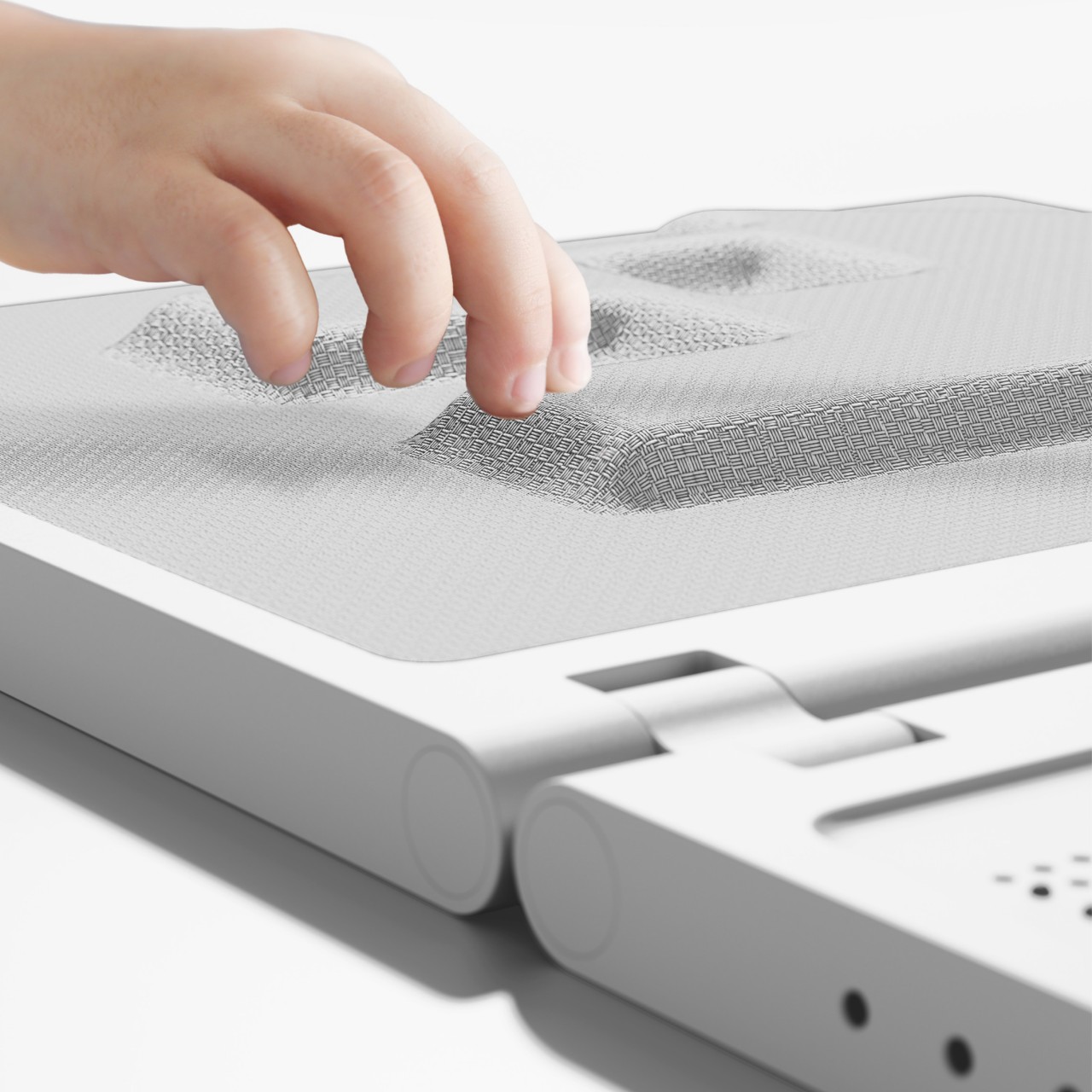
The most interesting part of the book, however, is the fabric-like material on the opposite page. This soft material would also rise to create bumps but not as words in Braille but as actual three-dimensional objects related to the story being told. It could be Snow White’s apple, Cinderella’s glass slipper, or the wolf in Little Red Riding Hood. In addition to the educational value of this feature, it also helps make the story feel even more magical.

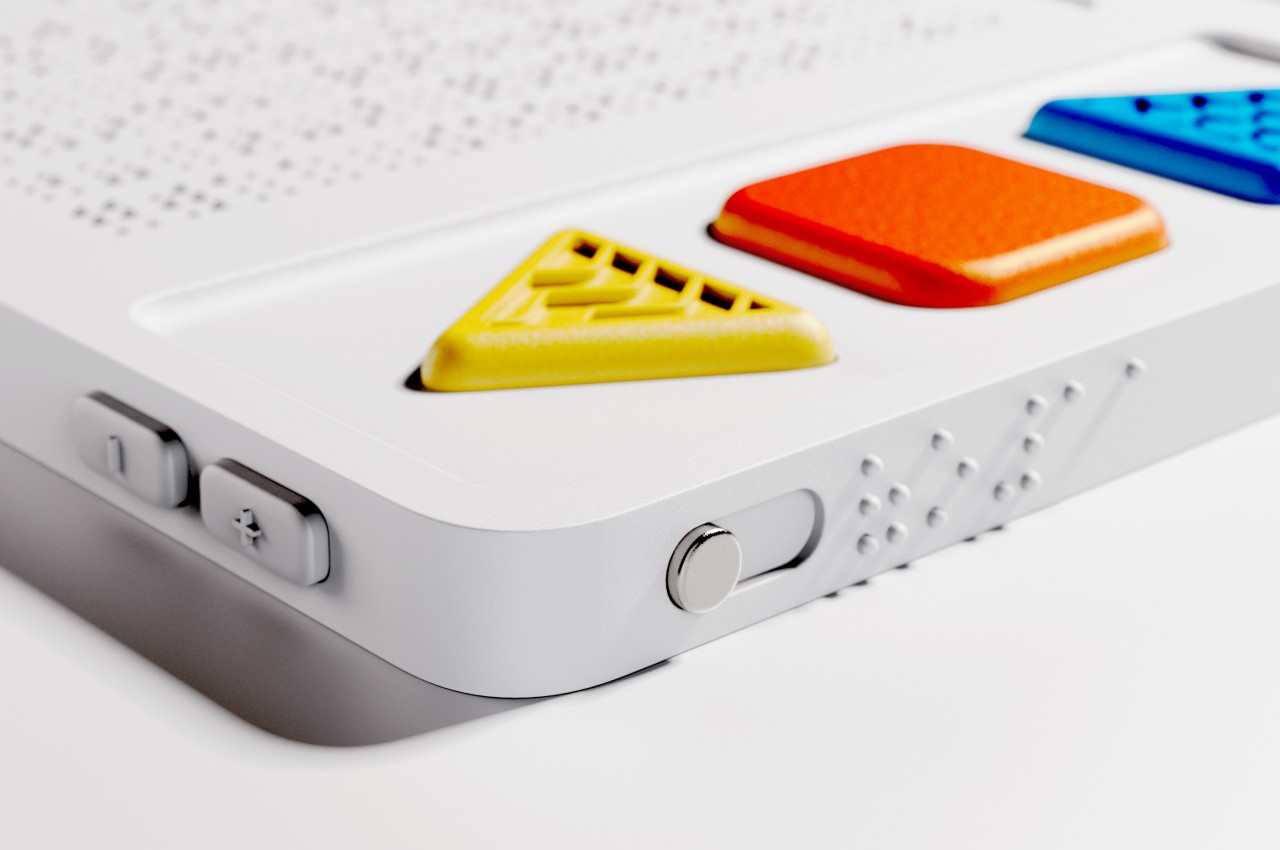
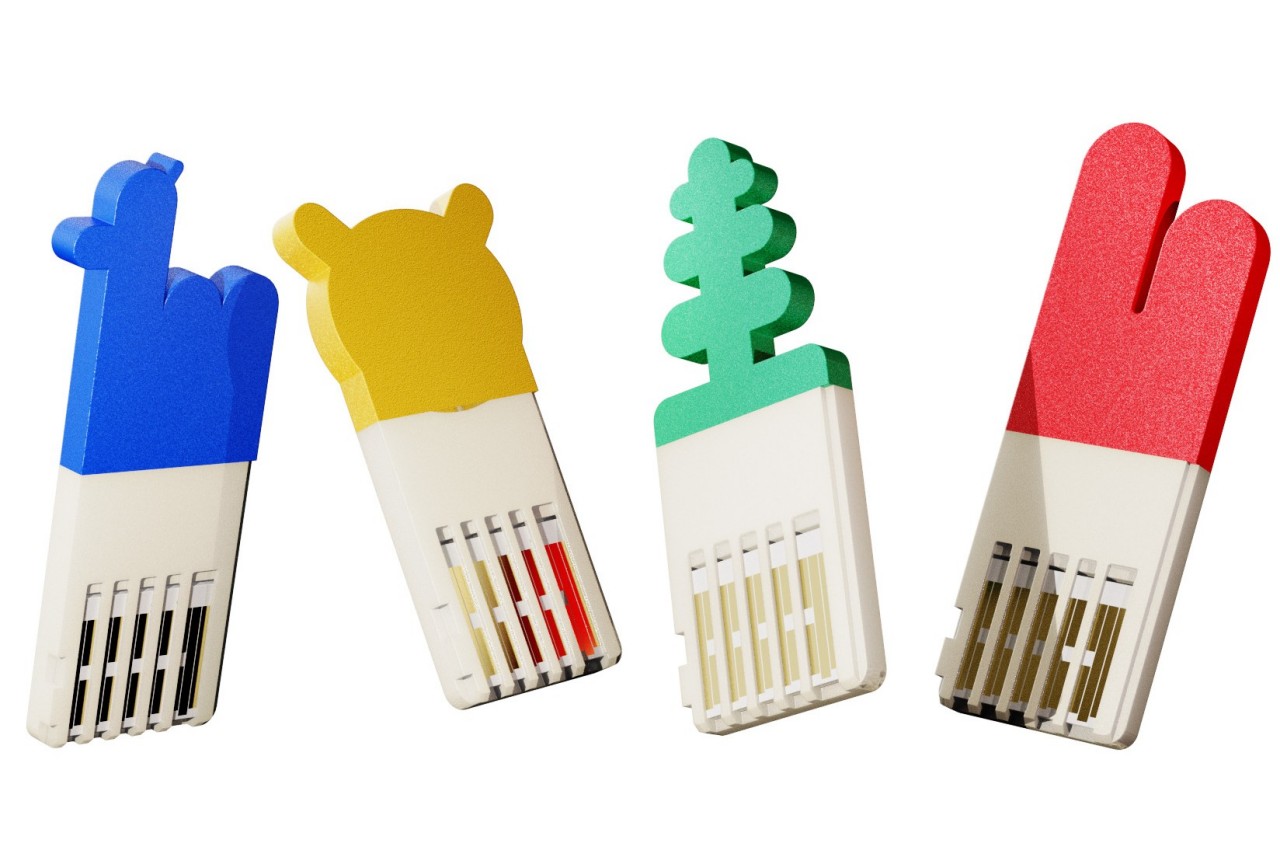
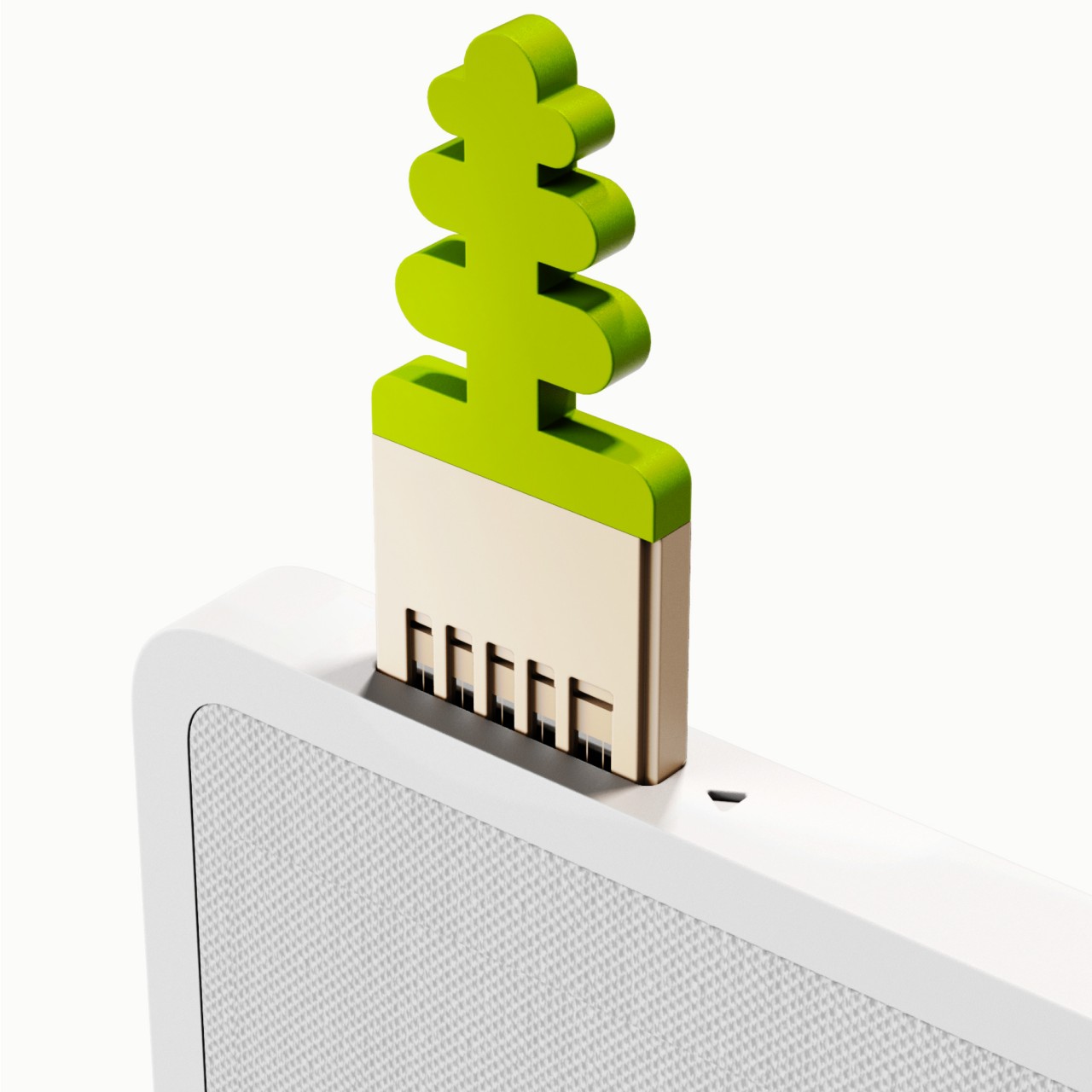
Every part of the 3D book was designed so that a visually impaired individual could use it without assistance. Even the charging indicators are elevating dots rather than LEDs so they can feel how much more time it needs. bbook also has a rather interesting feature where each individual story is inserted into the device like a USB stick, making each tale a memorable and magical experience.

The post Electronic 3D book concept helps visually impaired kids feel the magic of fairy tales first appeared on Yanko Design.
Modular instant camera concept offers a new way to create and share memories

The Polaroid brand has become synonymous with instant cameras that are experiencing a renaissance these days. But while the retro fever has people printing out square format photos again, the designs of these modern instant cameras left some things to be desired. Yes, they recreated the feeling of holding a large and chunky camera, but they might have done it too perfectly to meet the needs and tastes of today’s mobile photographers and creators. Smartphones offer more flexibility and features but at the expense of that authentic instant camera experience. This product concept tries to bring the best of both worlds together through a design that can adjust to your needs rather than the other way around.

Designers: Daphne Hernández, Paola García Higuera, Gonzalo Barba, Ricardo Zerón, Ximena Bravo Barreto, George Gonzalez, Cristian Tovar

The earliest modern instant cameras try to stay faithful to the Polaroid design by eschewing modern conveniences like LCD screens and photo editing prior to printing. On the opposite end of the spectrum, portable photo printers try to provide the same instant printing experience without requiring a separate camera from the one you already have in your pocket. But while smartphones offer a lot of powerful photo editing features, many people find the camera user experience a bit artificial or even forced because of the design of the phone and the connotations that come with it.

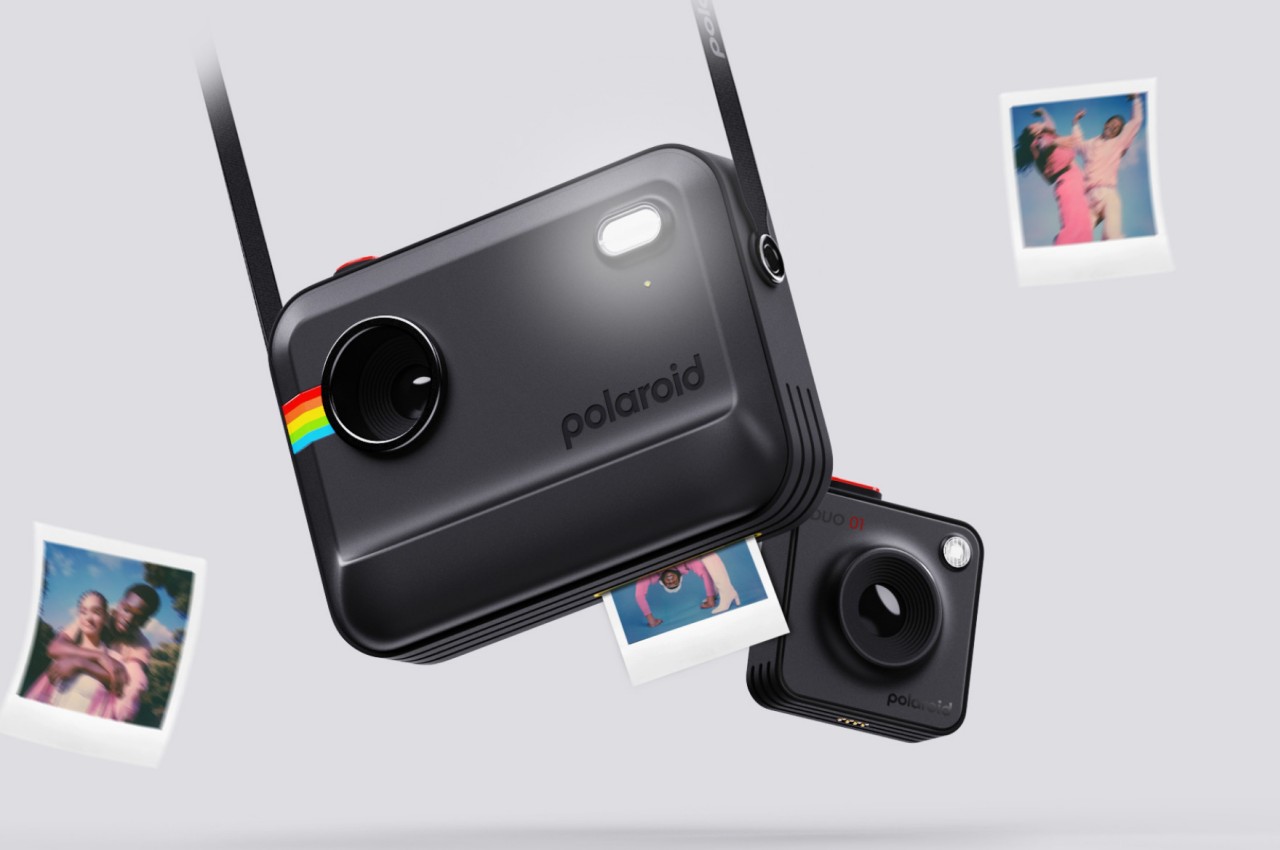
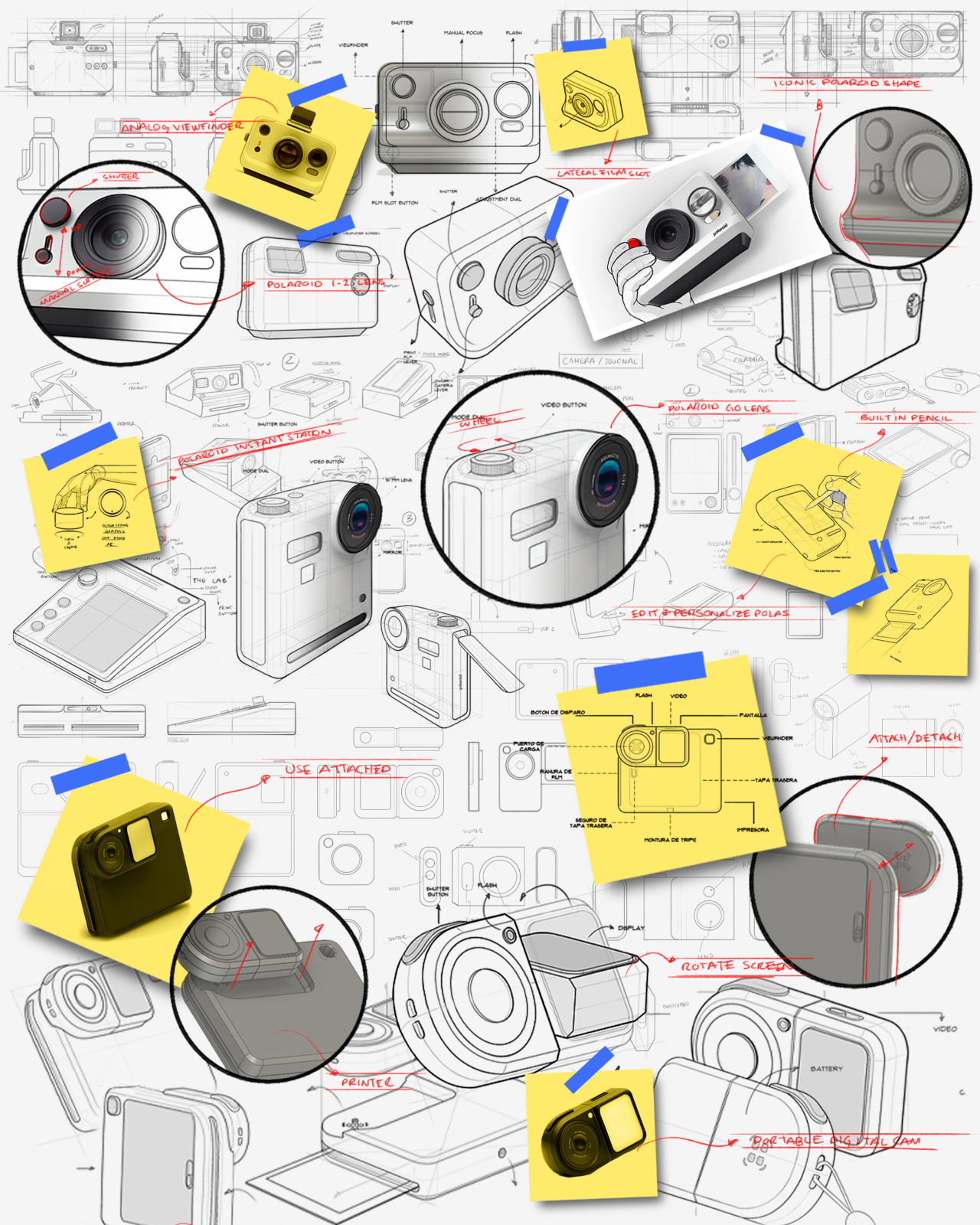
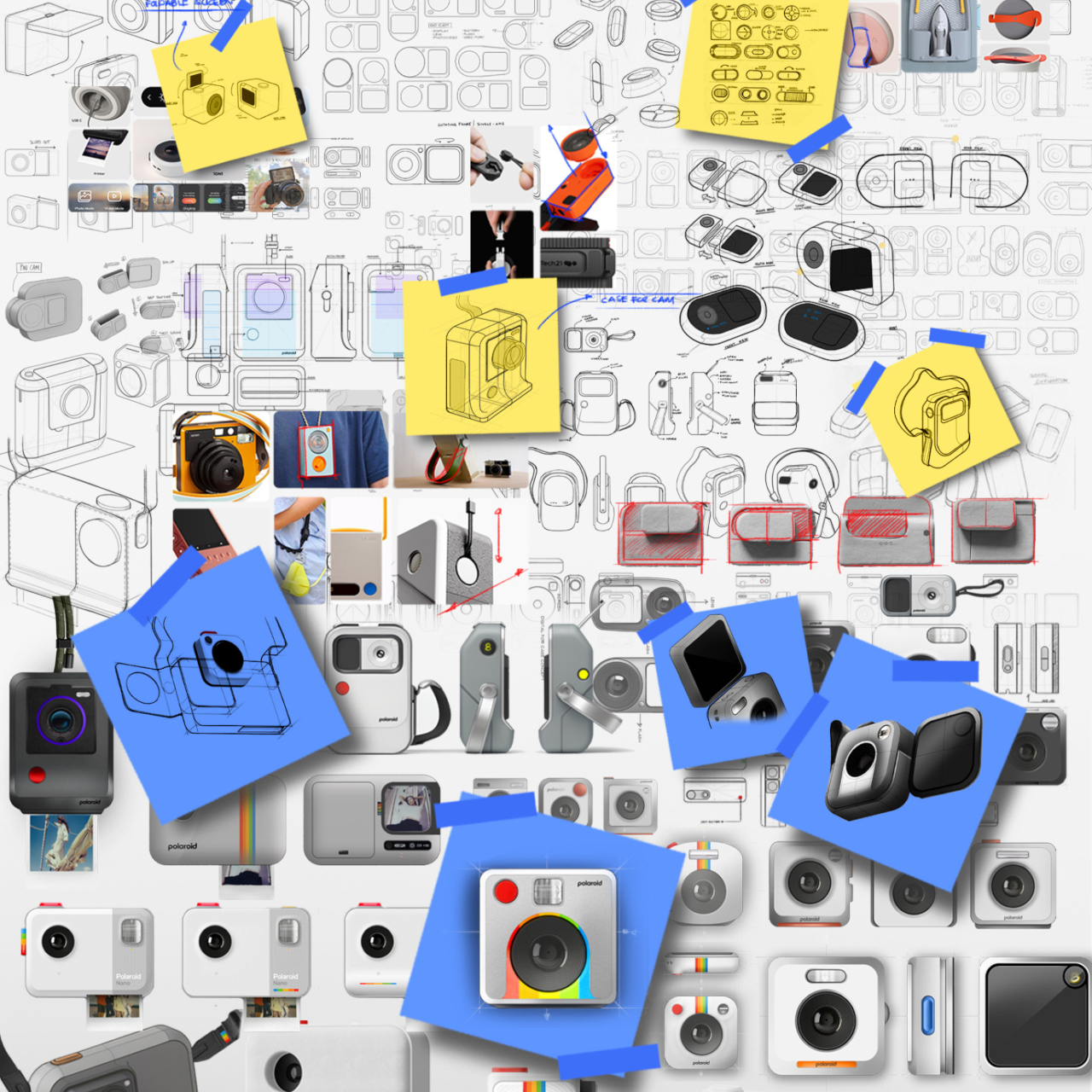
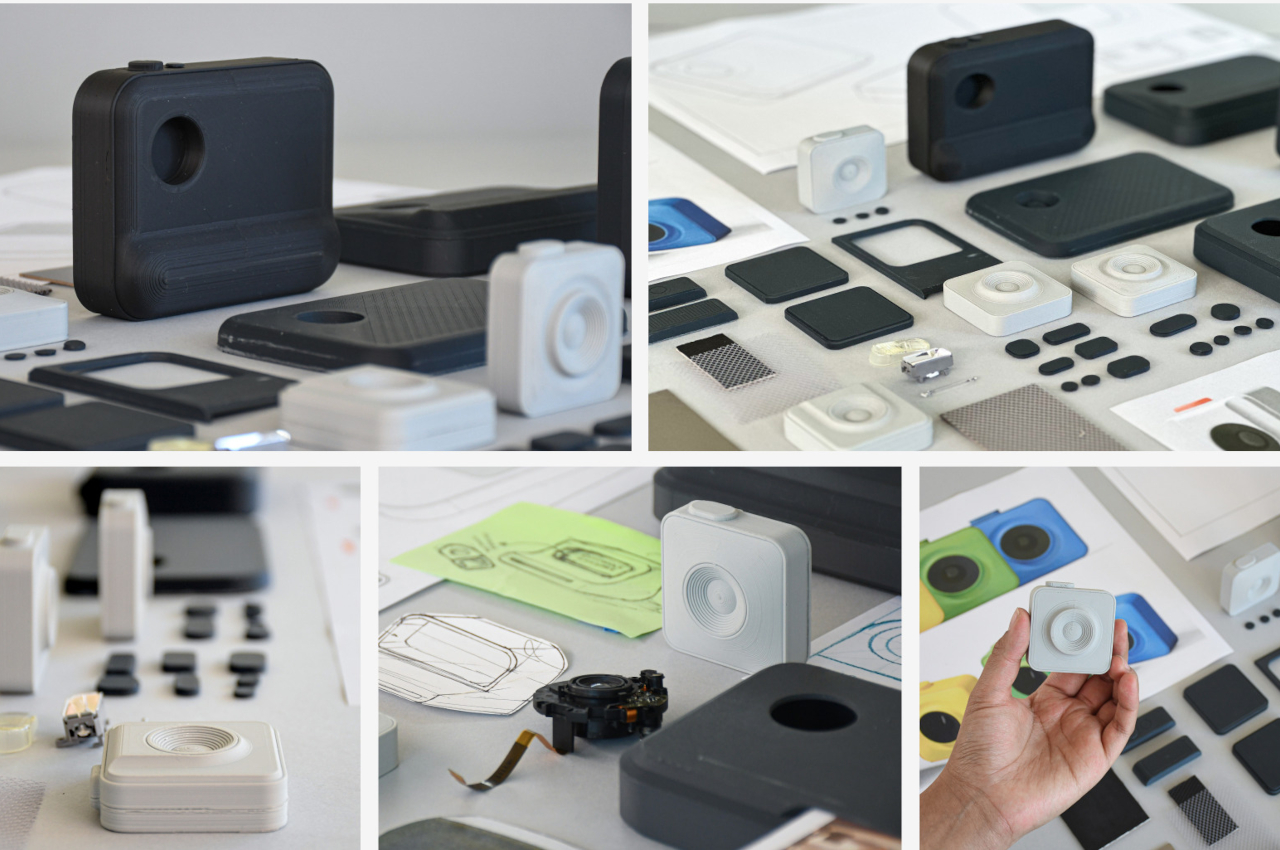
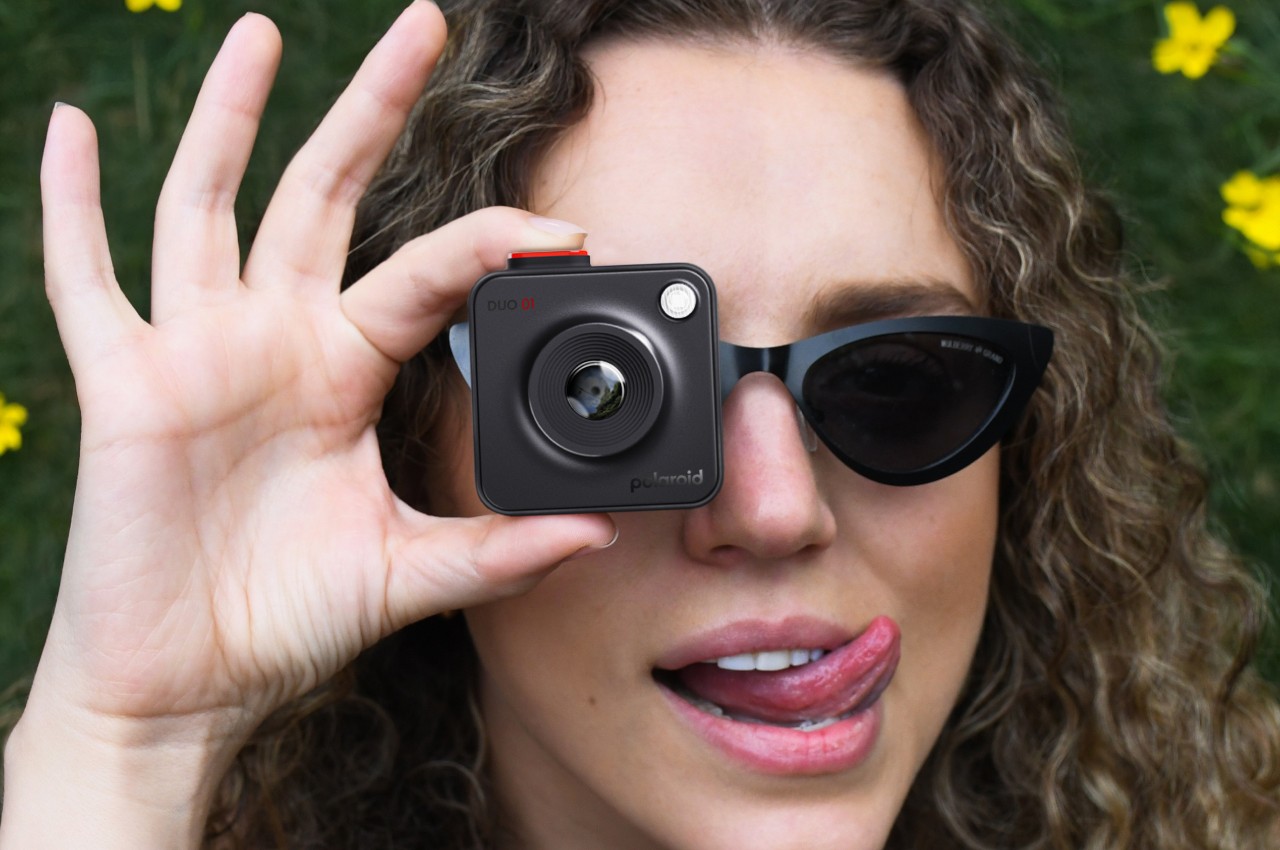
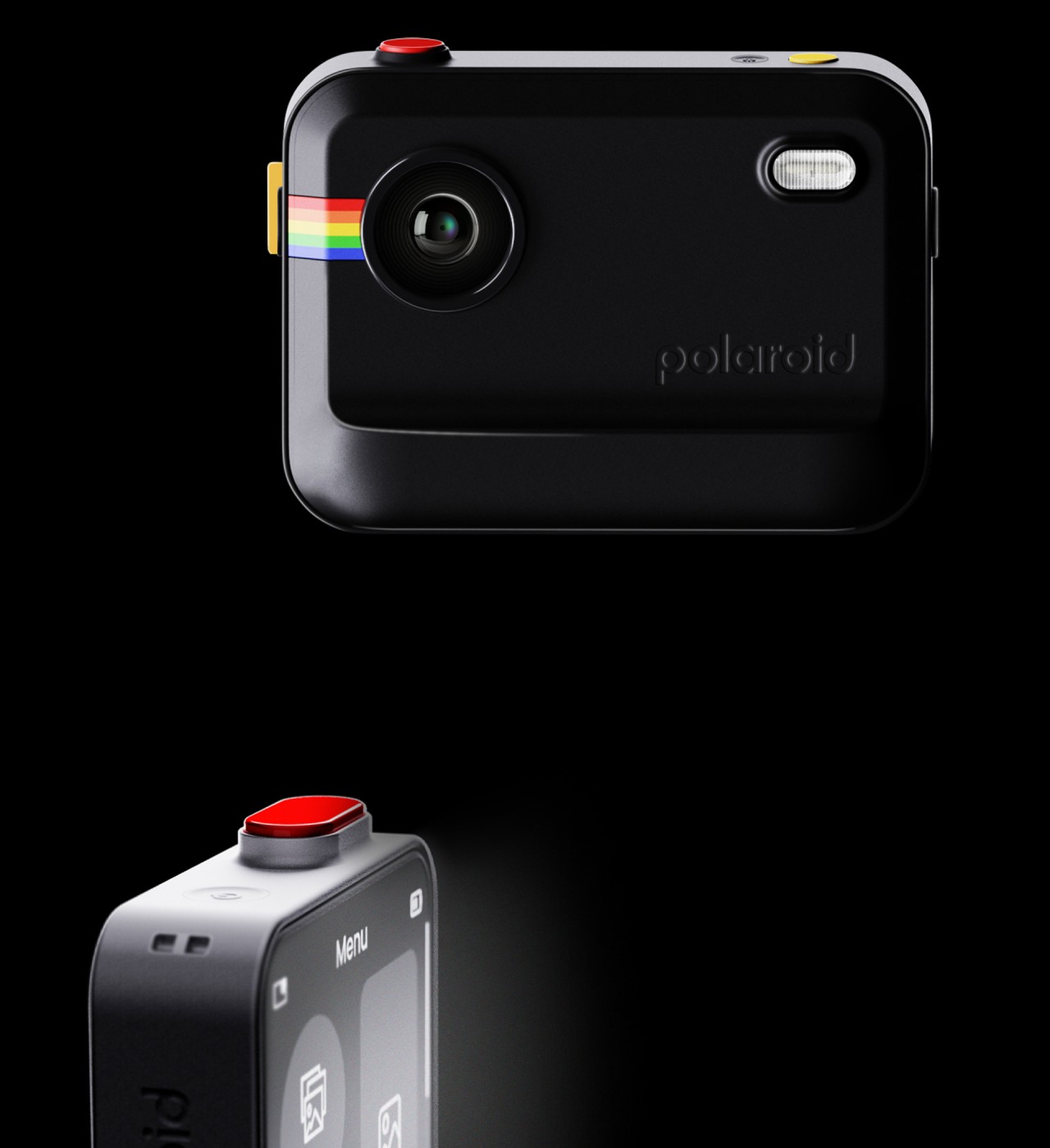
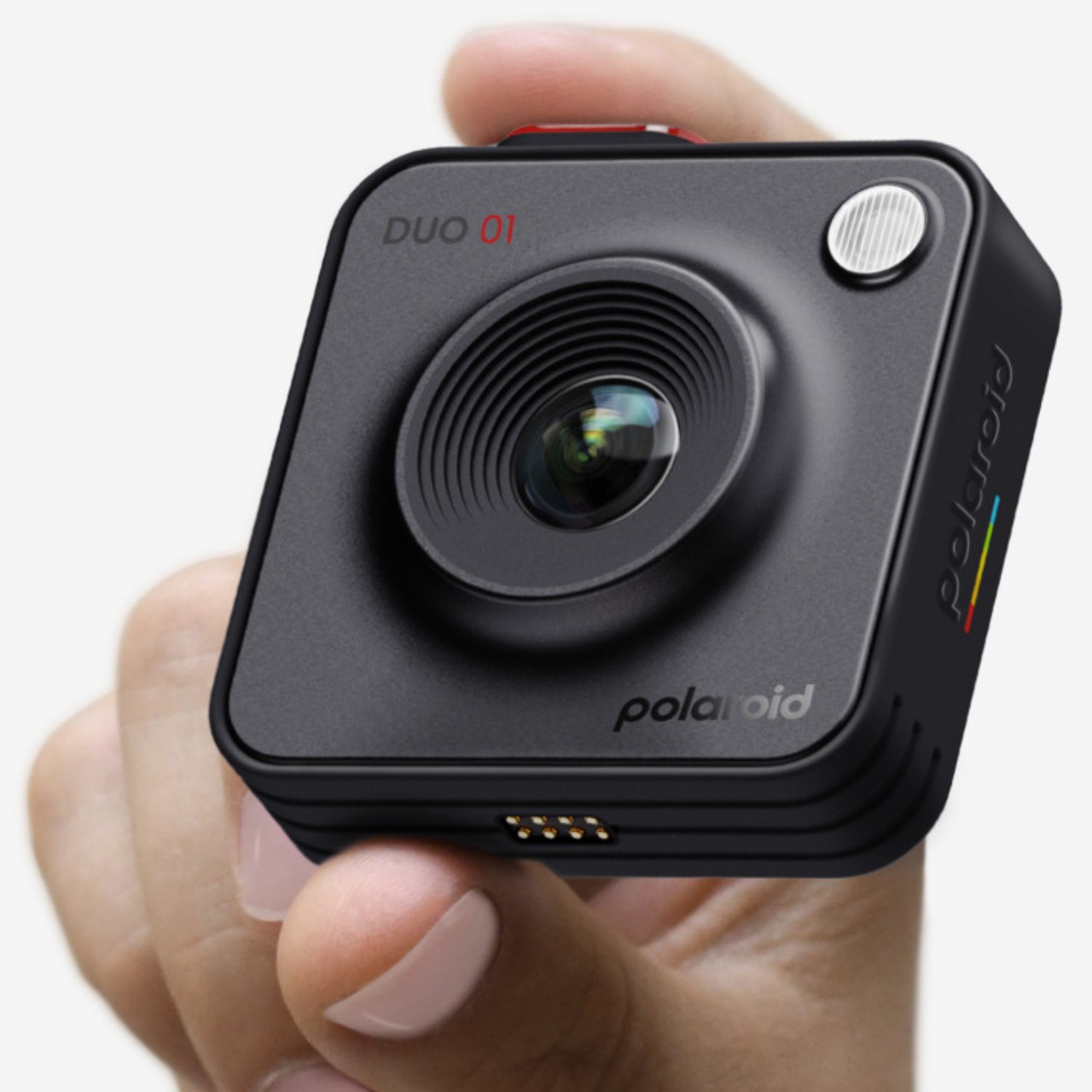
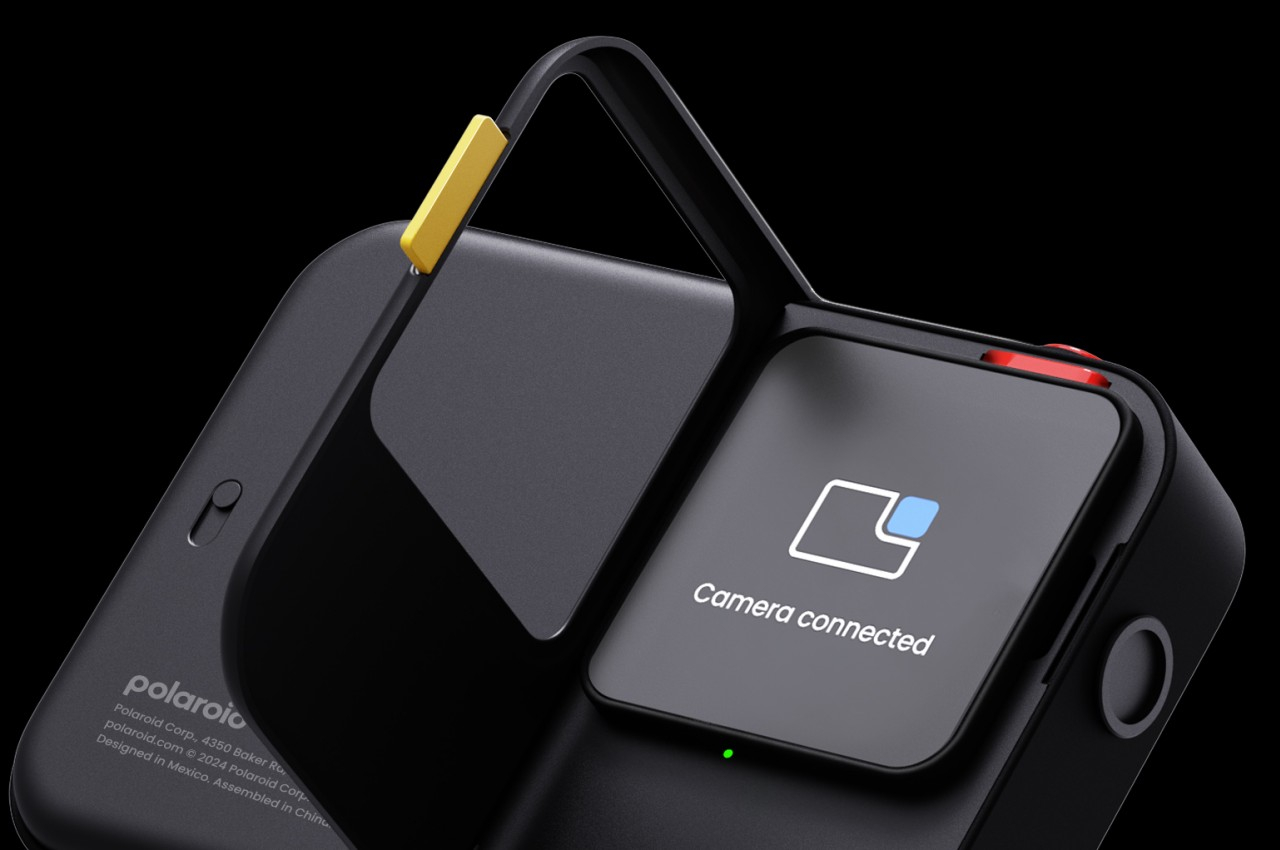
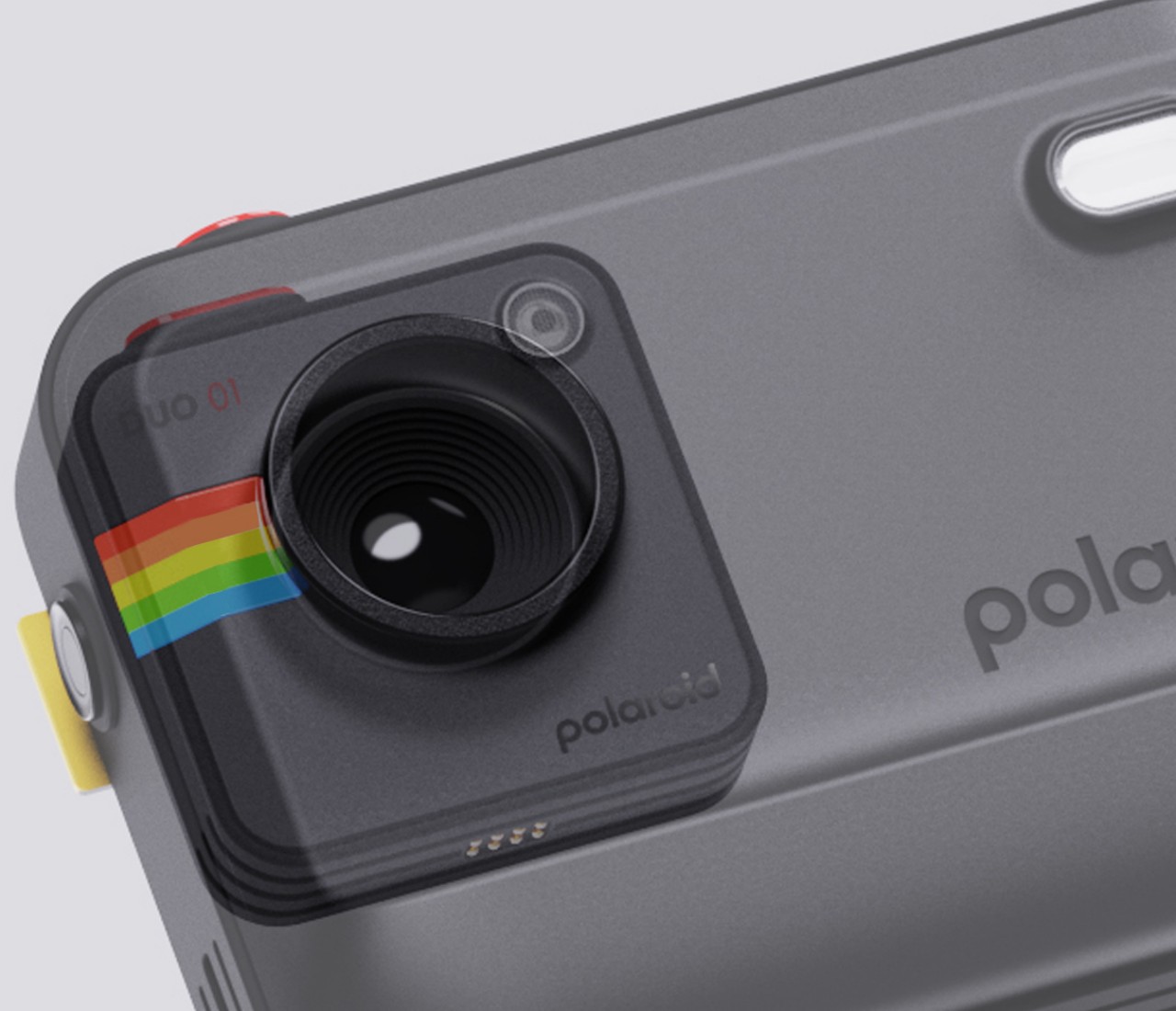
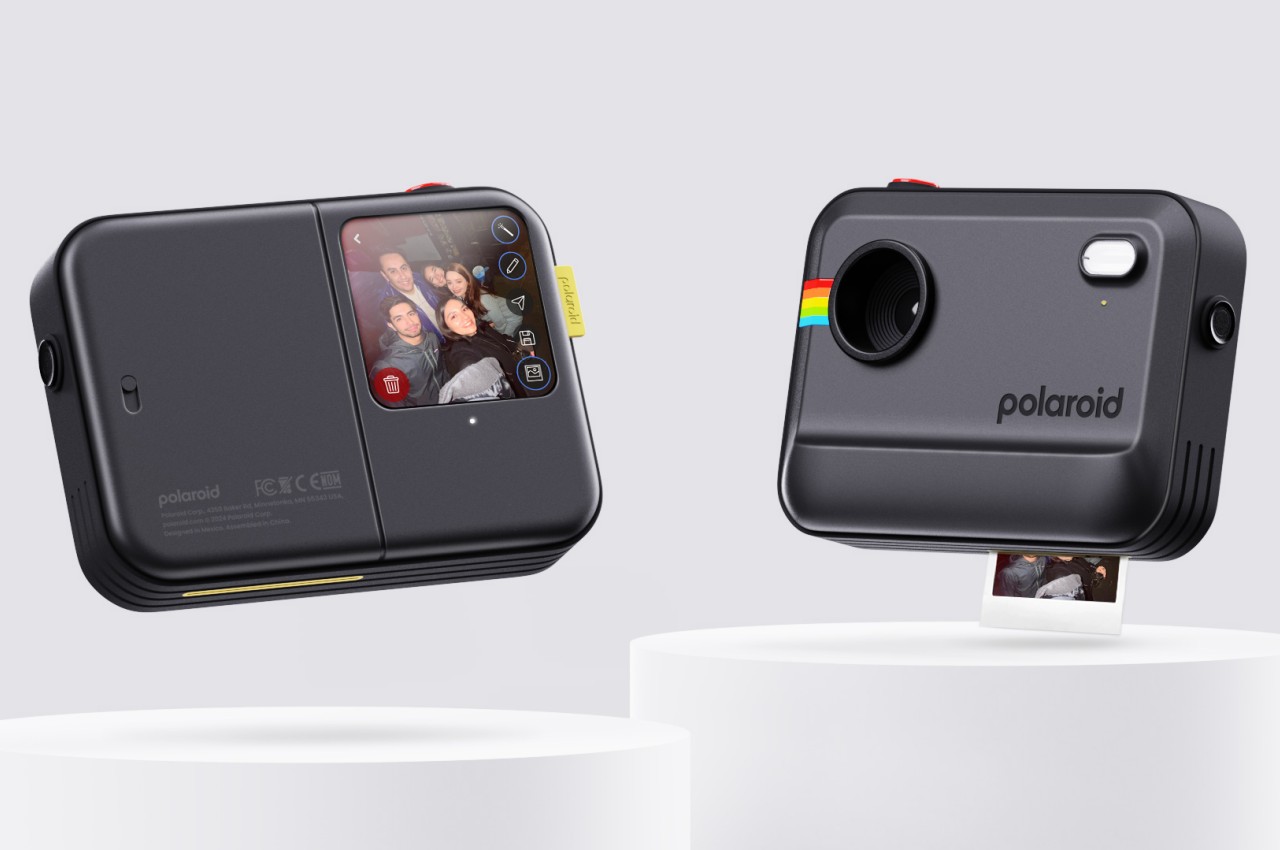
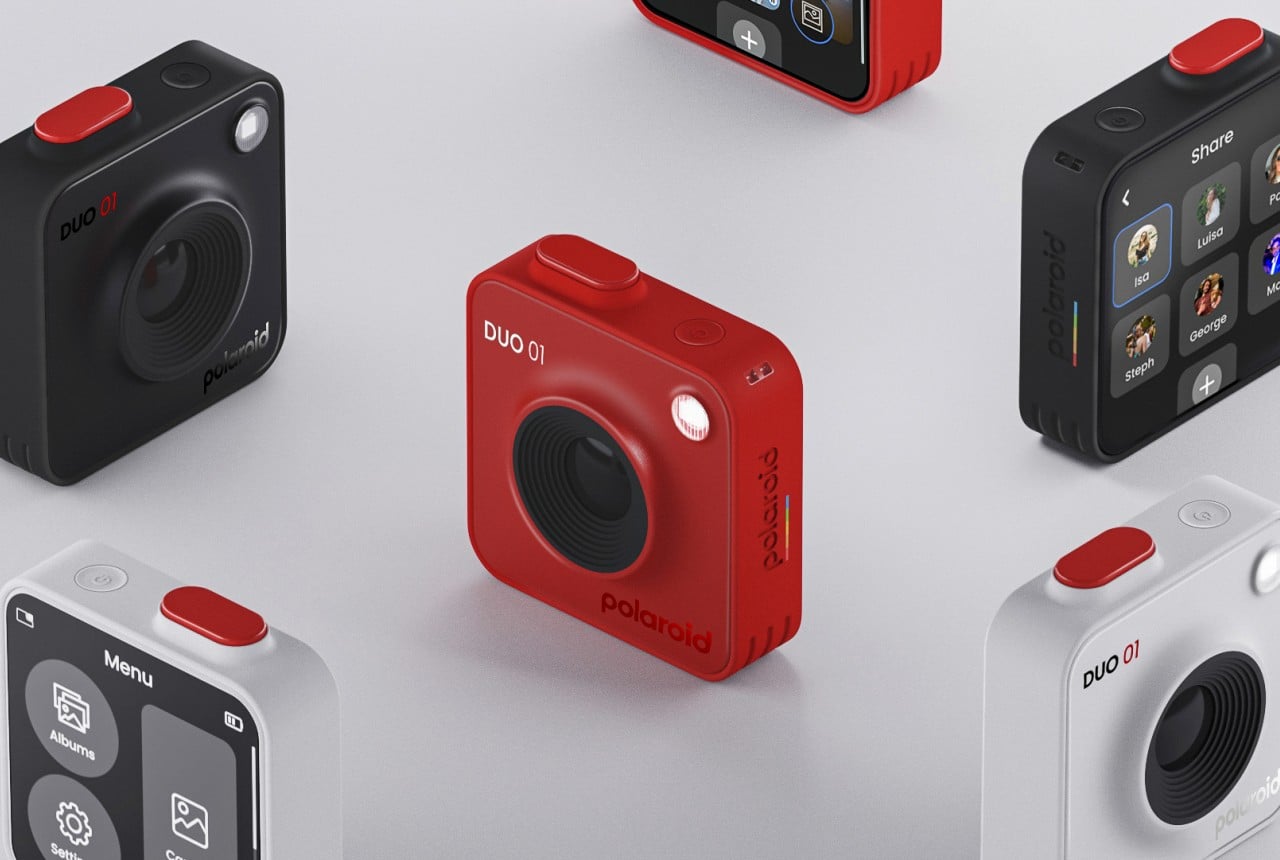
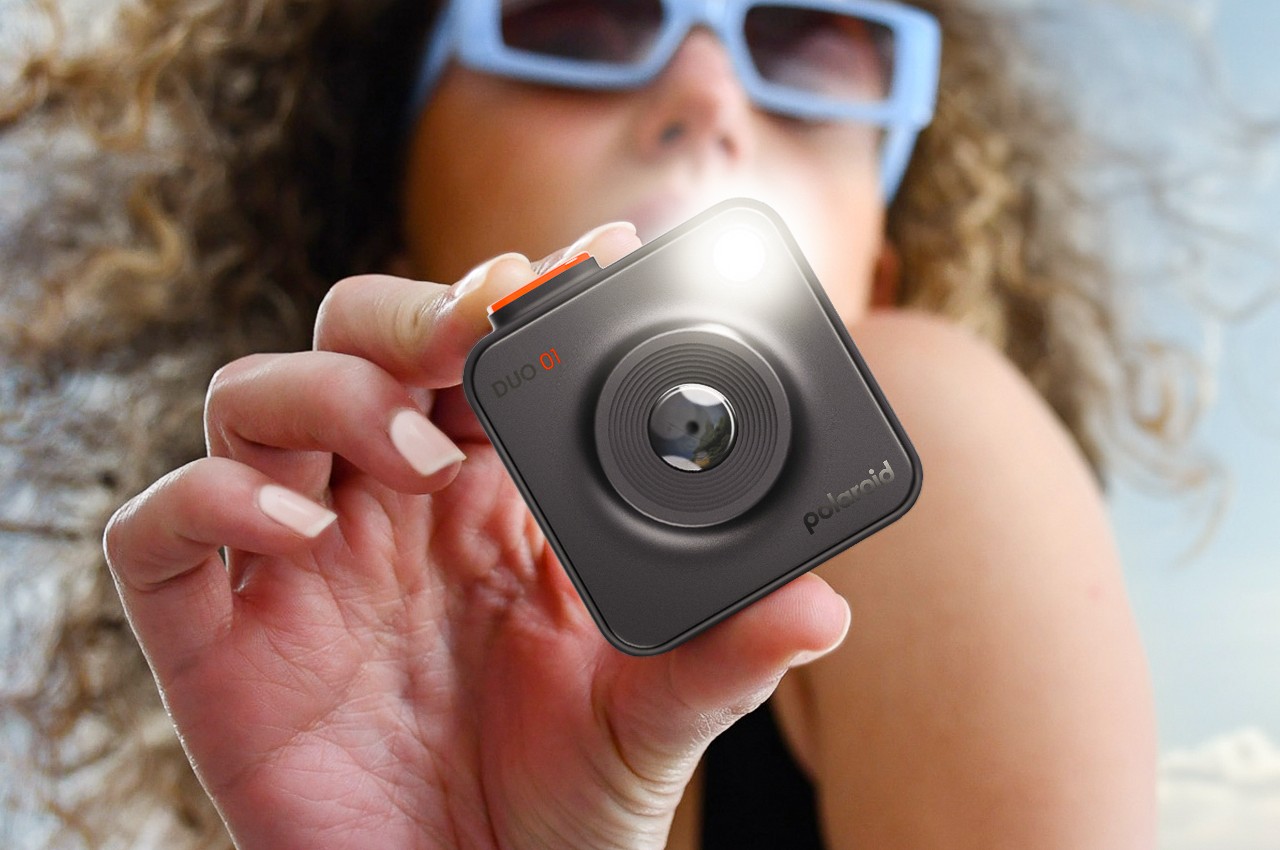
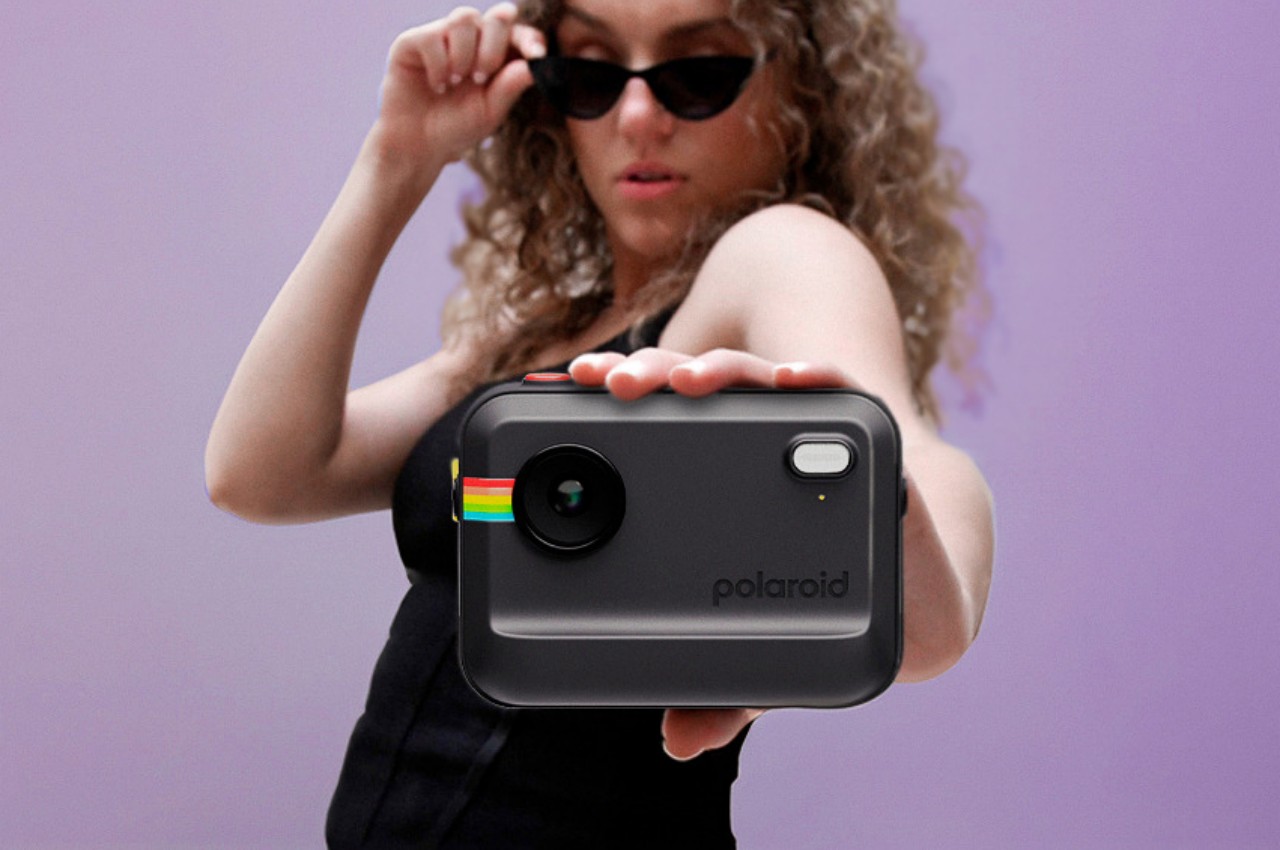
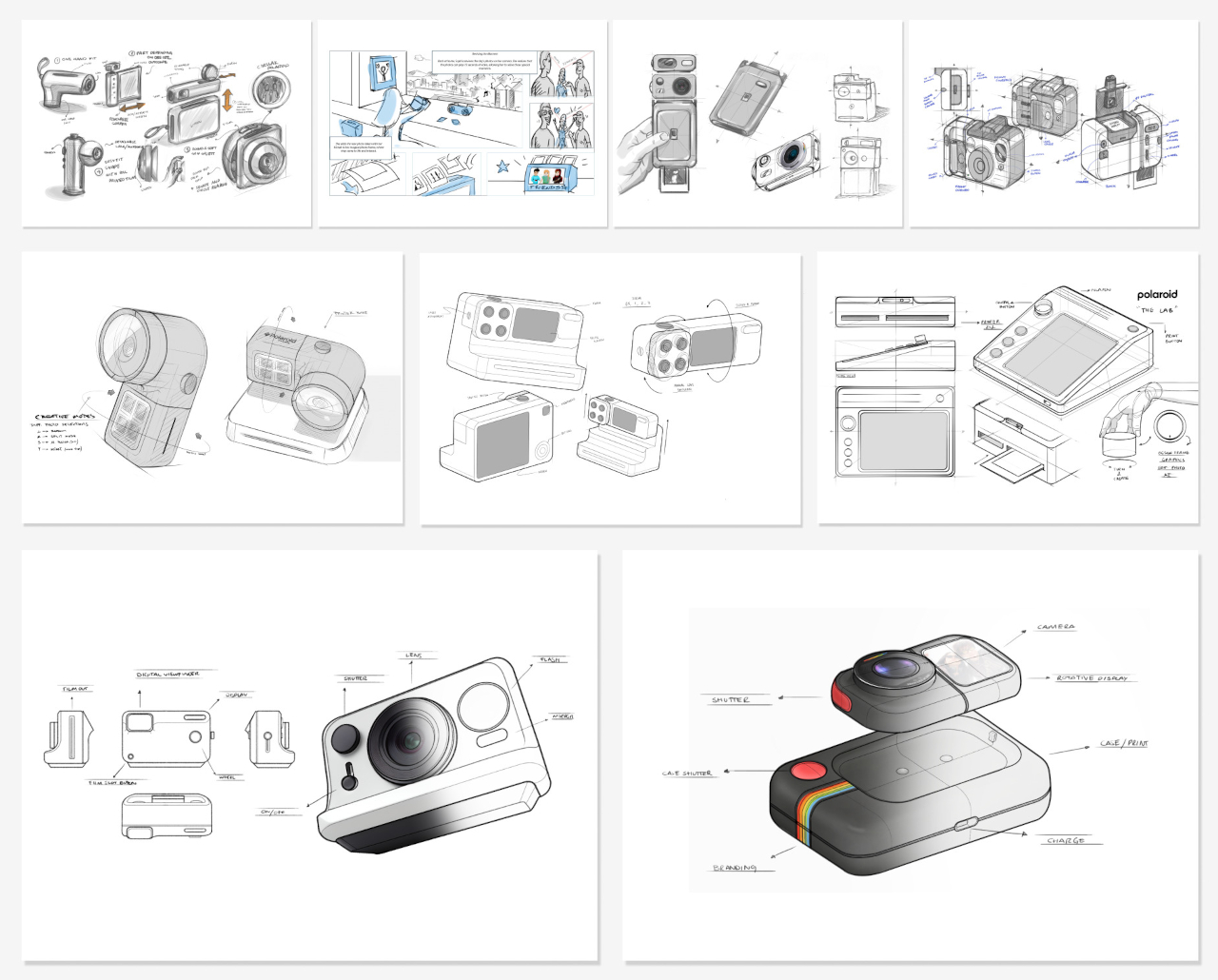
The Polaroid DUO concept solves this duality by ironically embracing it. It splits the instant camera into two distinct parts: the camera module and the printer. The camera is a small, lightweight square reminiscent of action cameras that you can attach or hang anywhere so that you’re ready to take photos or record videos anytime. The compact design, which includes a touch screen on the back to tweak the photos’ properties after the fact, offers a more engaging and fun way to take photos without being too conspicuous or flashy like a smartphone.

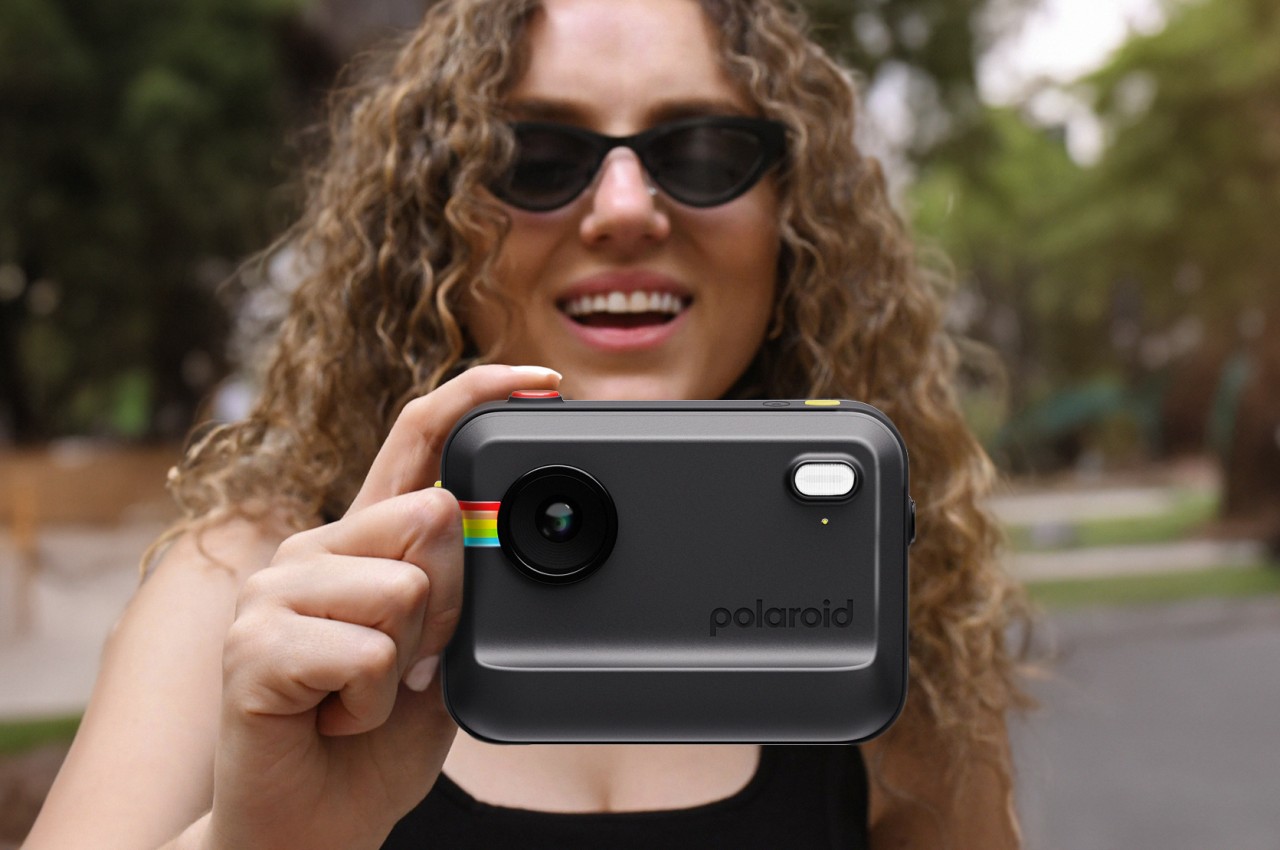
You can use the camera module on its own and print the photo later, or you can slot it into the larger printer module to make it behave exactly like a traditional instant camera. You don’t lose any of the functionality, however, since you can still access that touch screen. What you get, instead, is a unique character and the experience of holding a fun-looking chunky box up whenever you want to capture the moment and print out the memory right then and there.

Polaroid DUO is definitely an intriguing concept, one that makes you wonder why no one has implemented it yet. It combines the powerful functionality of smartphones with the elements of fun from instant cameras in a way that doesn’t sacrifice one for the other. There might be some implementation details that will need to be ironed out, but most of the technologies needed to make this design a reality are ripe for the picking.

The post Modular instant camera concept offers a new way to create and share memories first appeared on Yanko Design.
Desk accessories concepts help reduce risk of sitting at the desk the whole day

As someone who spends almost the entire working day (and sometimes beyond) at a desk and in front of the computer, you can say that I face a lot of issues when it comes to my posture, my eyesight, and my muscles. I’ve tried several ergonomic products and also exercises to help me take a break from my regular work and literal position but I’m still having some regular problems from being a desk potato. I know that there are a lot of risks that will eventually (and some have already) make an appearance in my health journey so products that can help alleviate the strain on my body are always welcome.

Designers: Haneul Kang, Dohui Kim, Dagyeong Kim, Jeongyoon Kim, Yunseo Jung

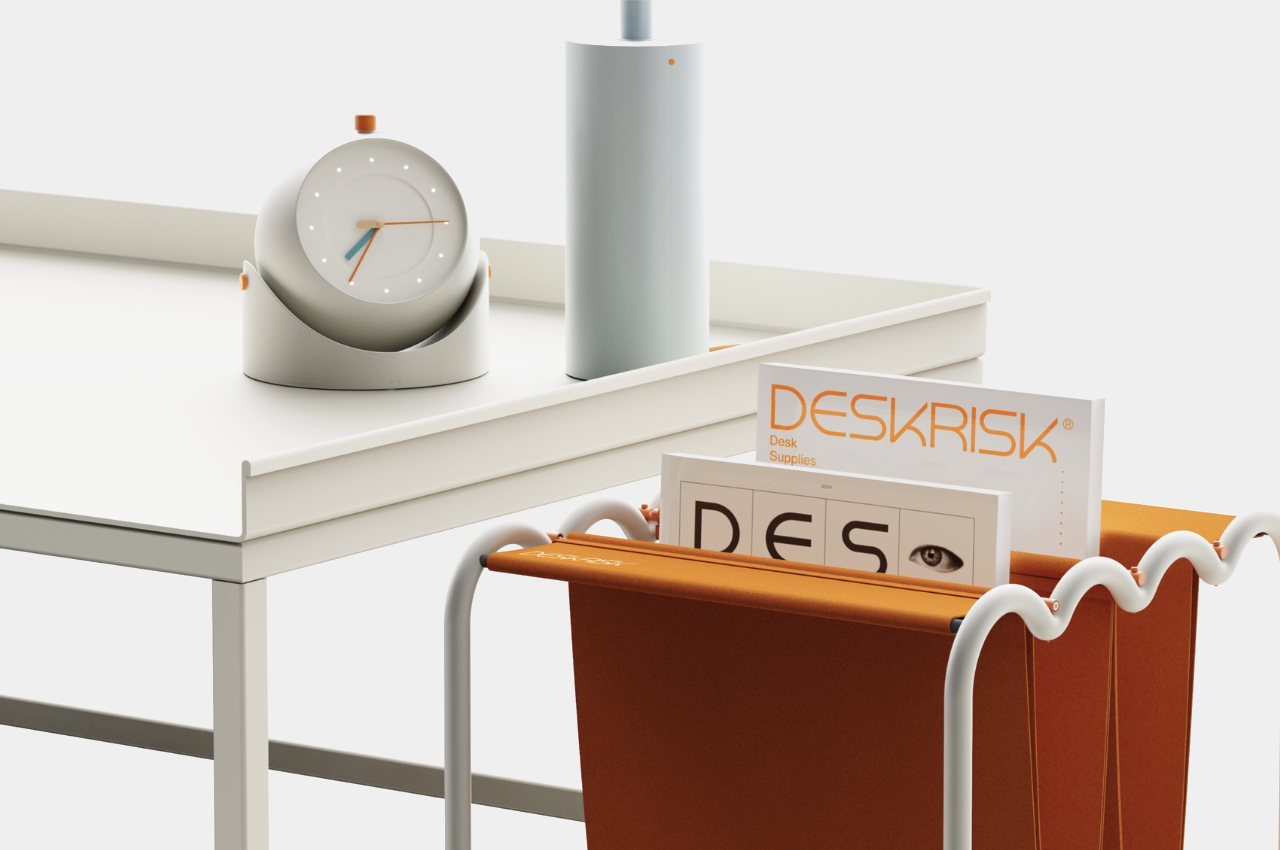
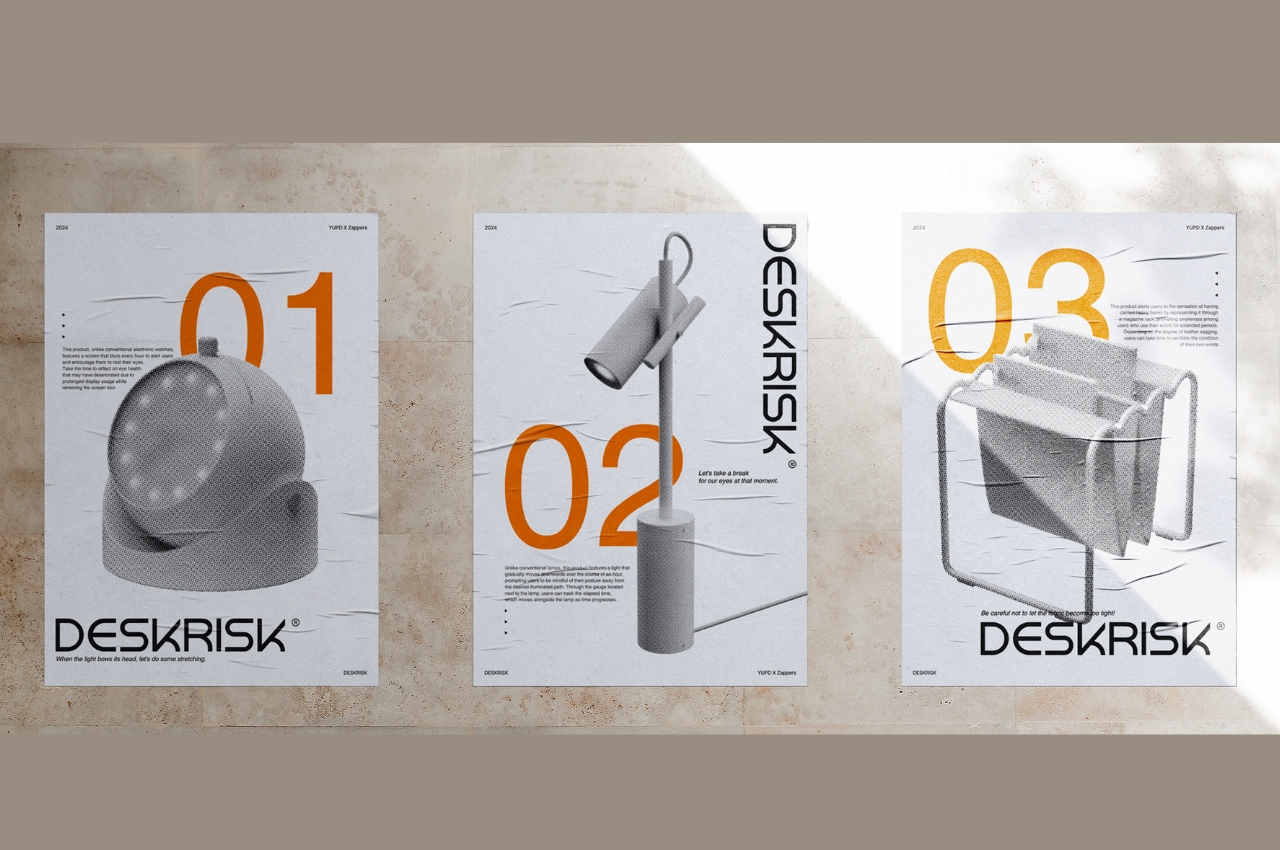
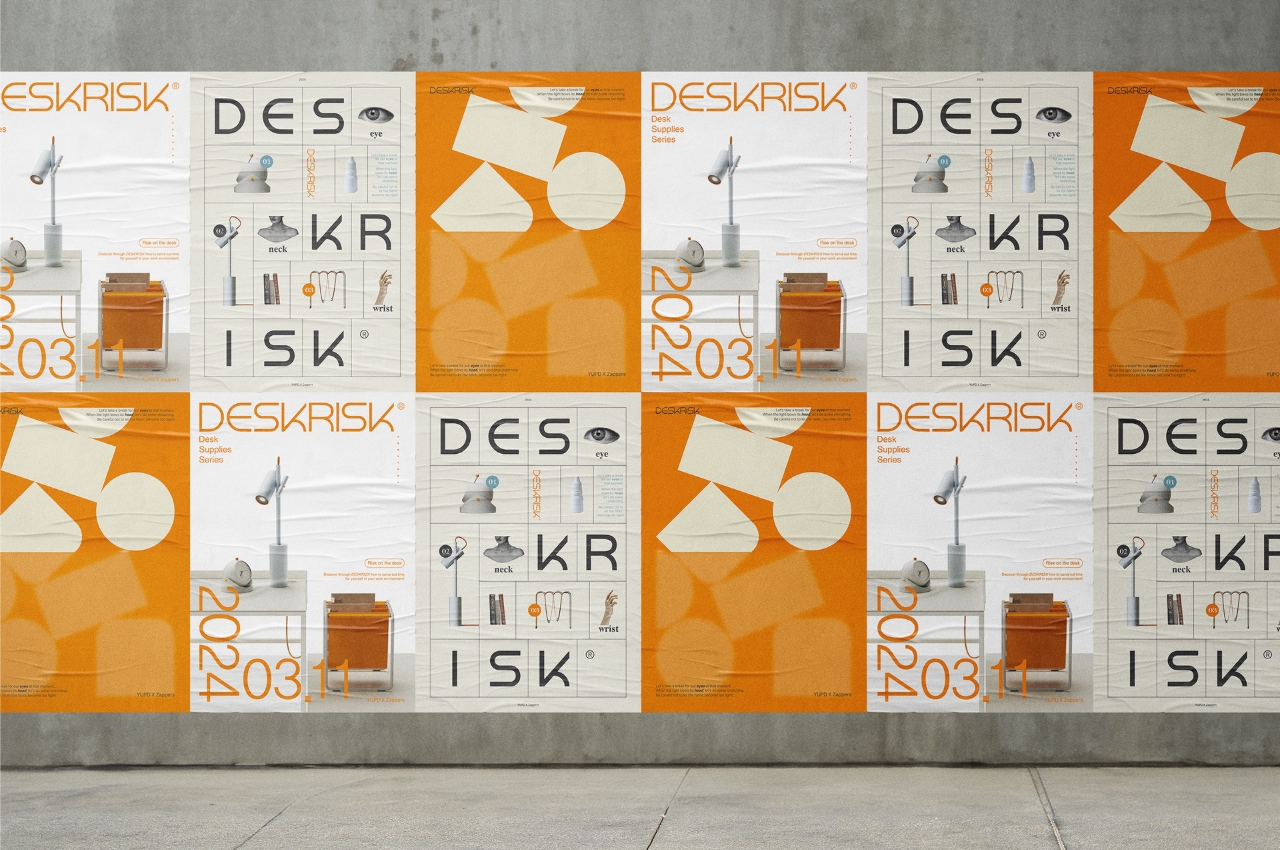
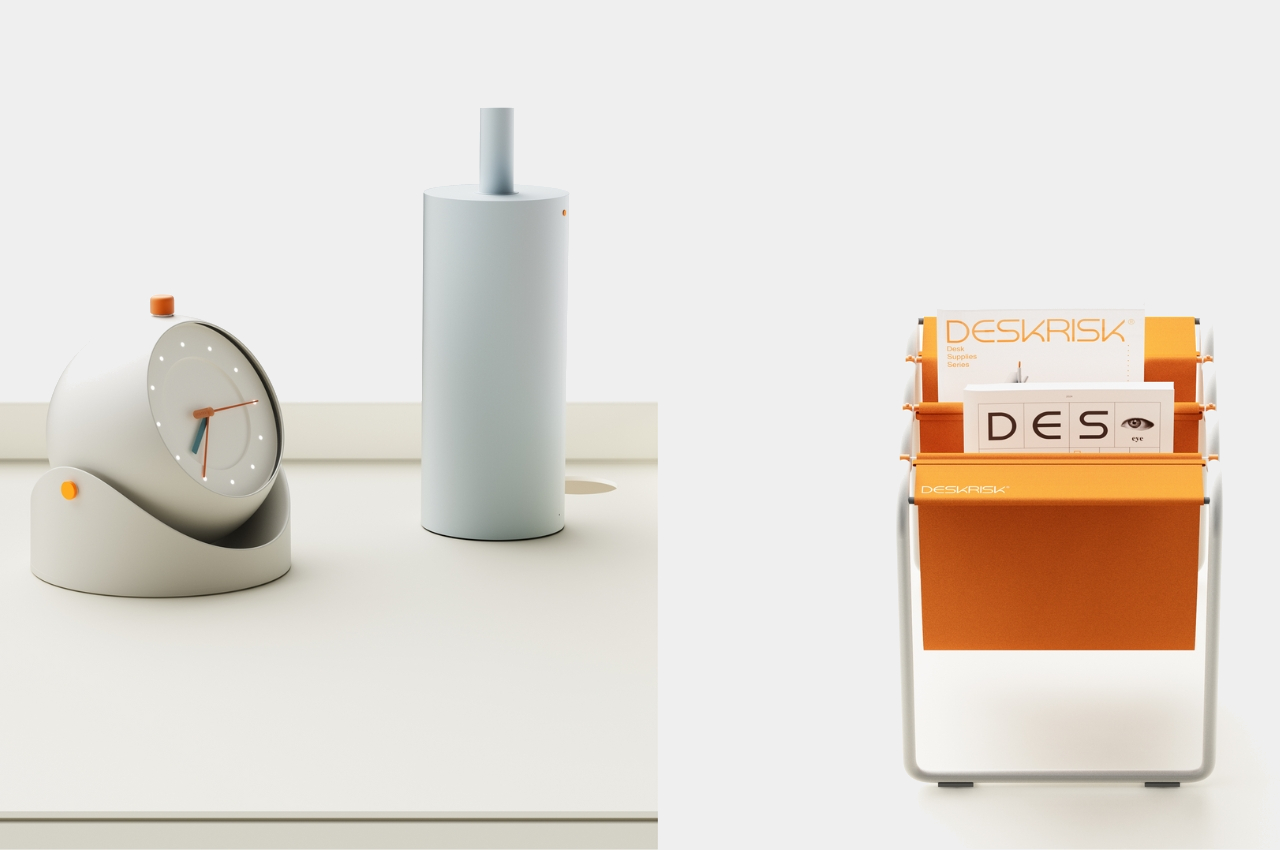
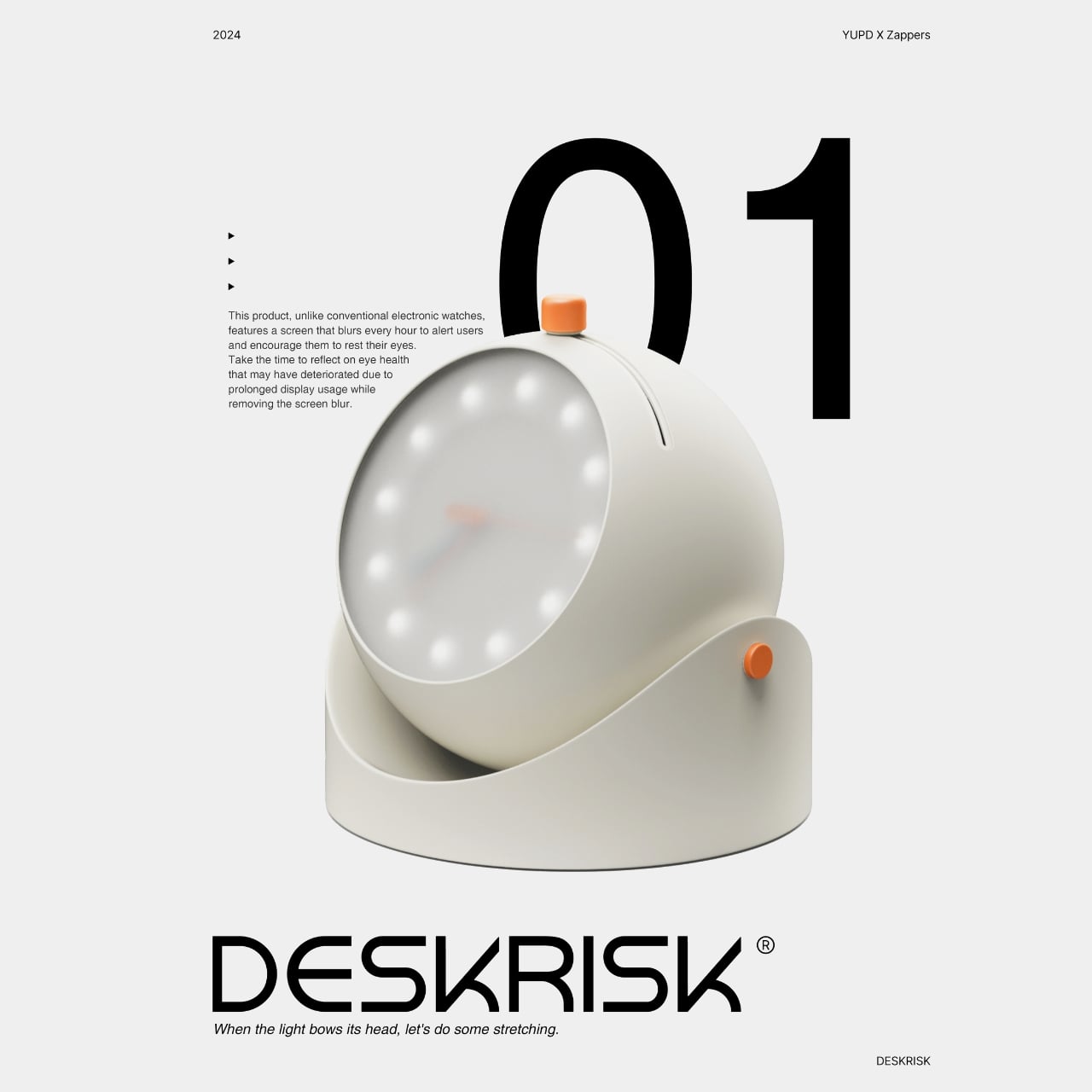
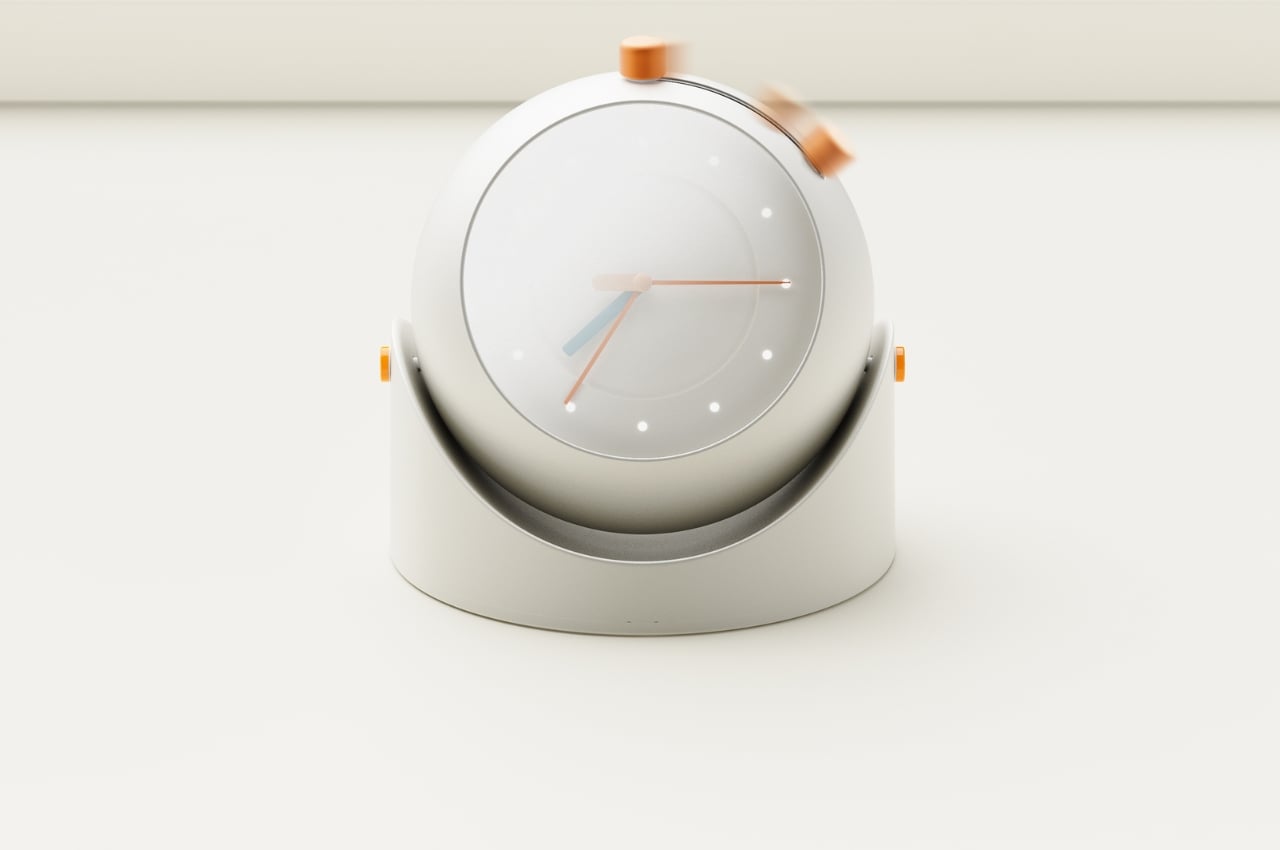
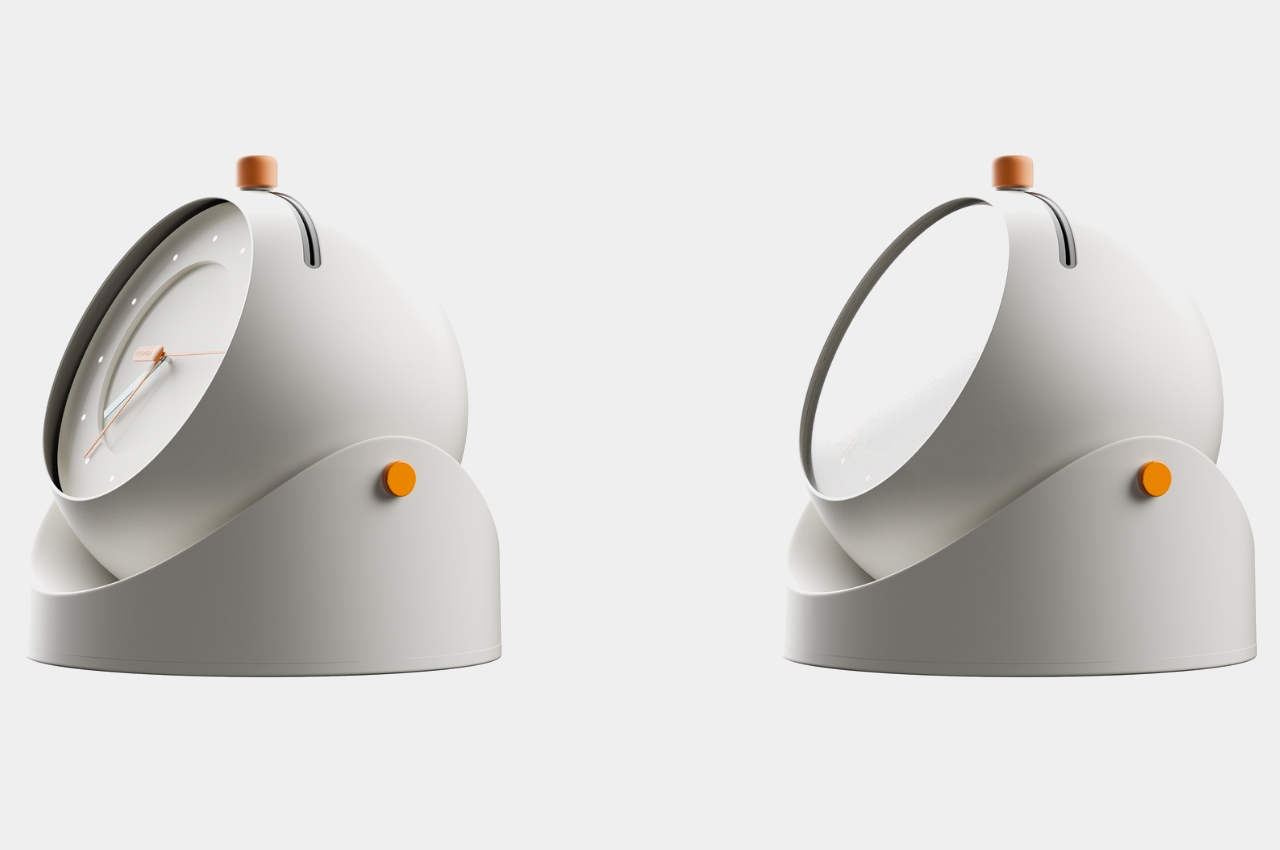
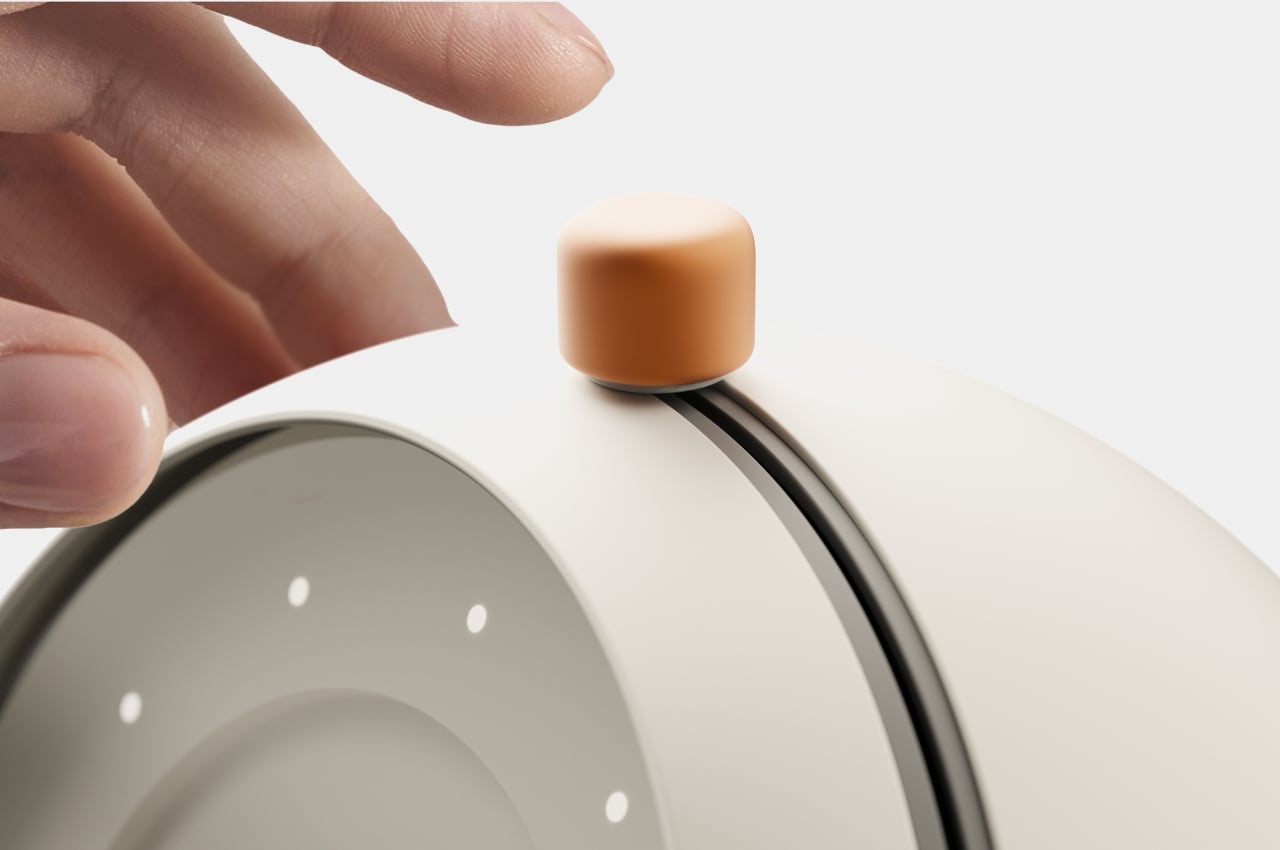
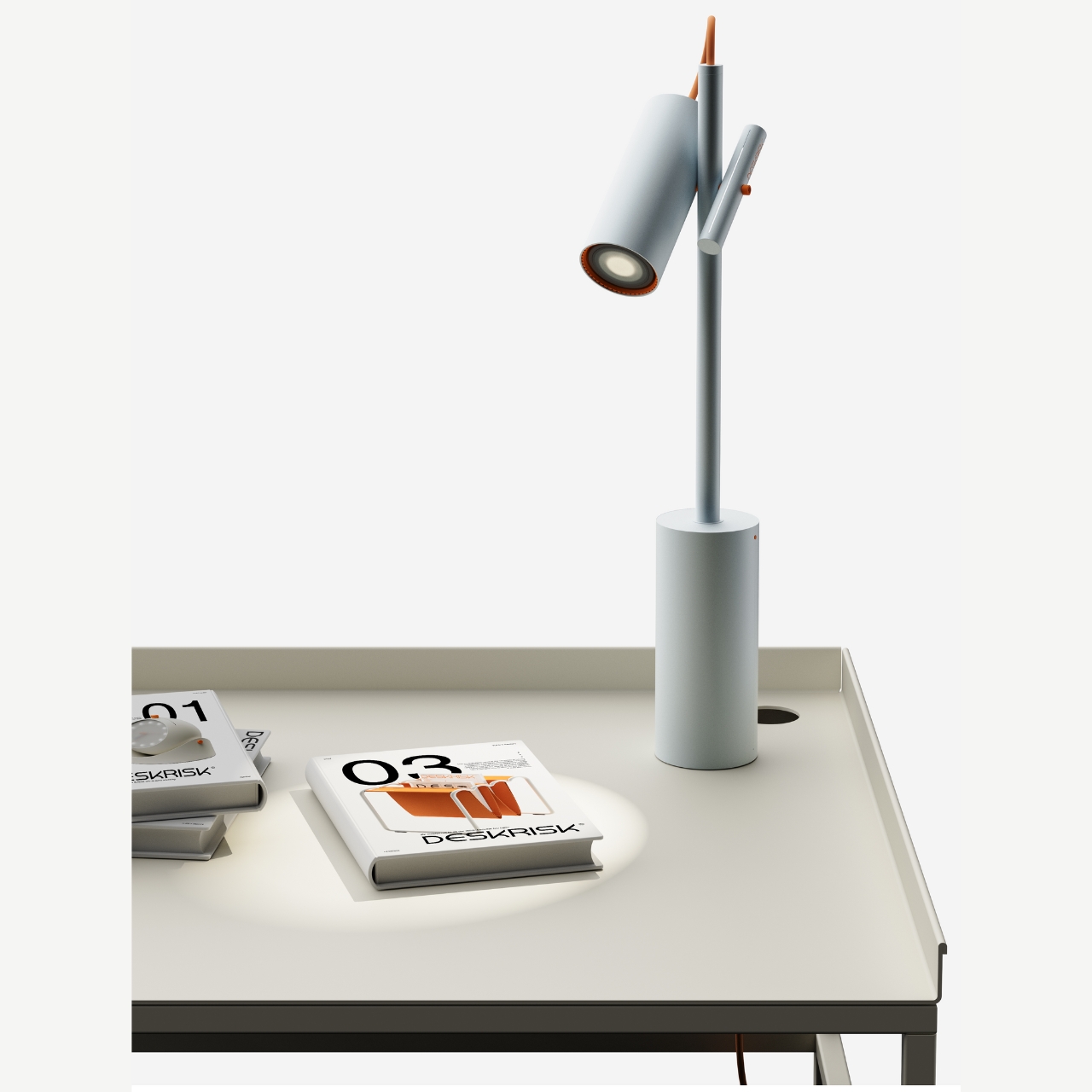
A group of designers have come up with concepts for a series of products that can help with this problem. The collection is appropriately called DESKRISK as we all know that even if we are sitting seemingly safely at our desks, we’re still exhibiting risky behavior that will eventually need some sort of intervention. The first product is a desk clock that will remind us to take a break from staring at our screens to take better care of our eyes. The screen will blur after some time which resembles the dry eyes we experience a lot of times. After you’ve rested for a few minutes, you can move the button on the clock sideways to wipe away the blur and start the countdown all over again.

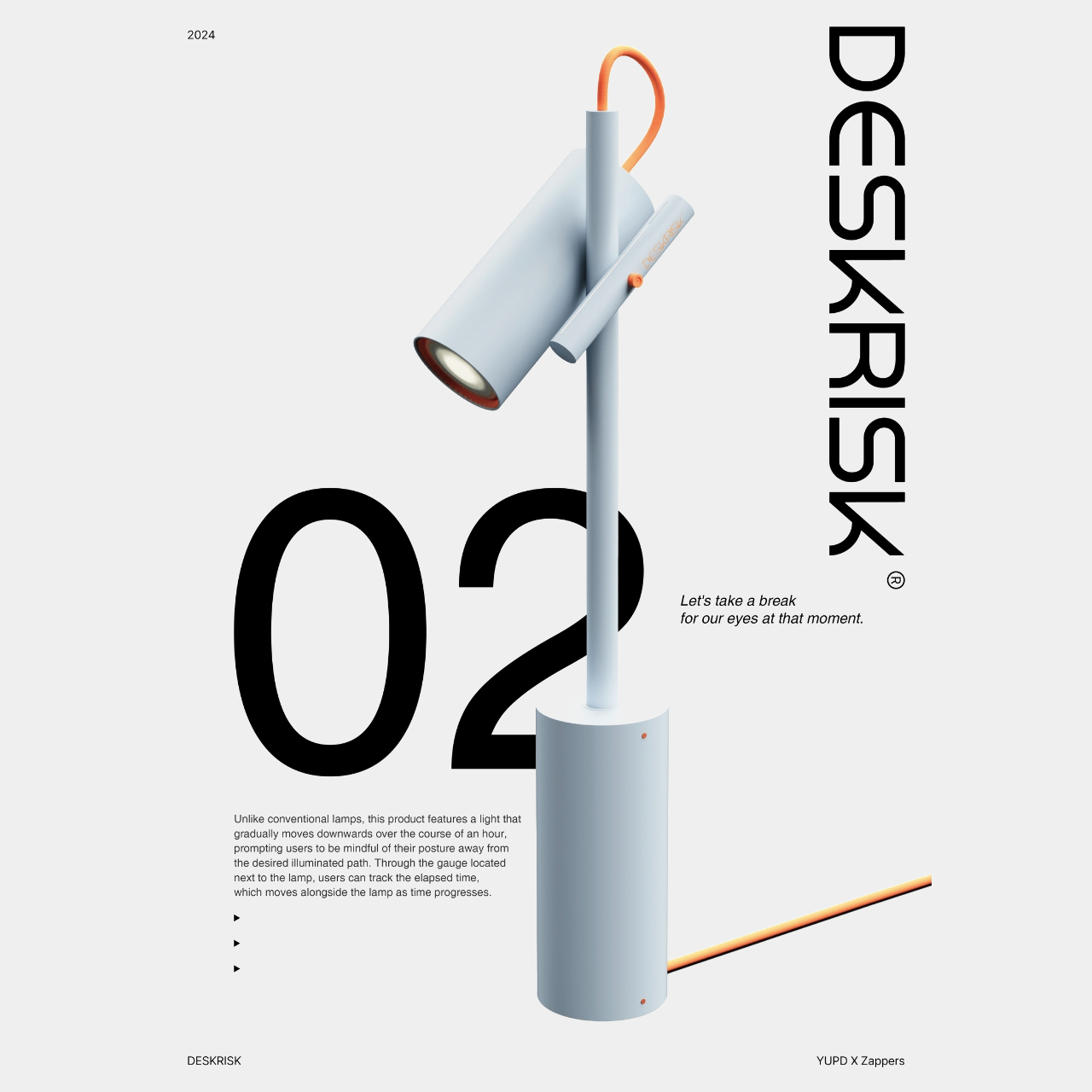
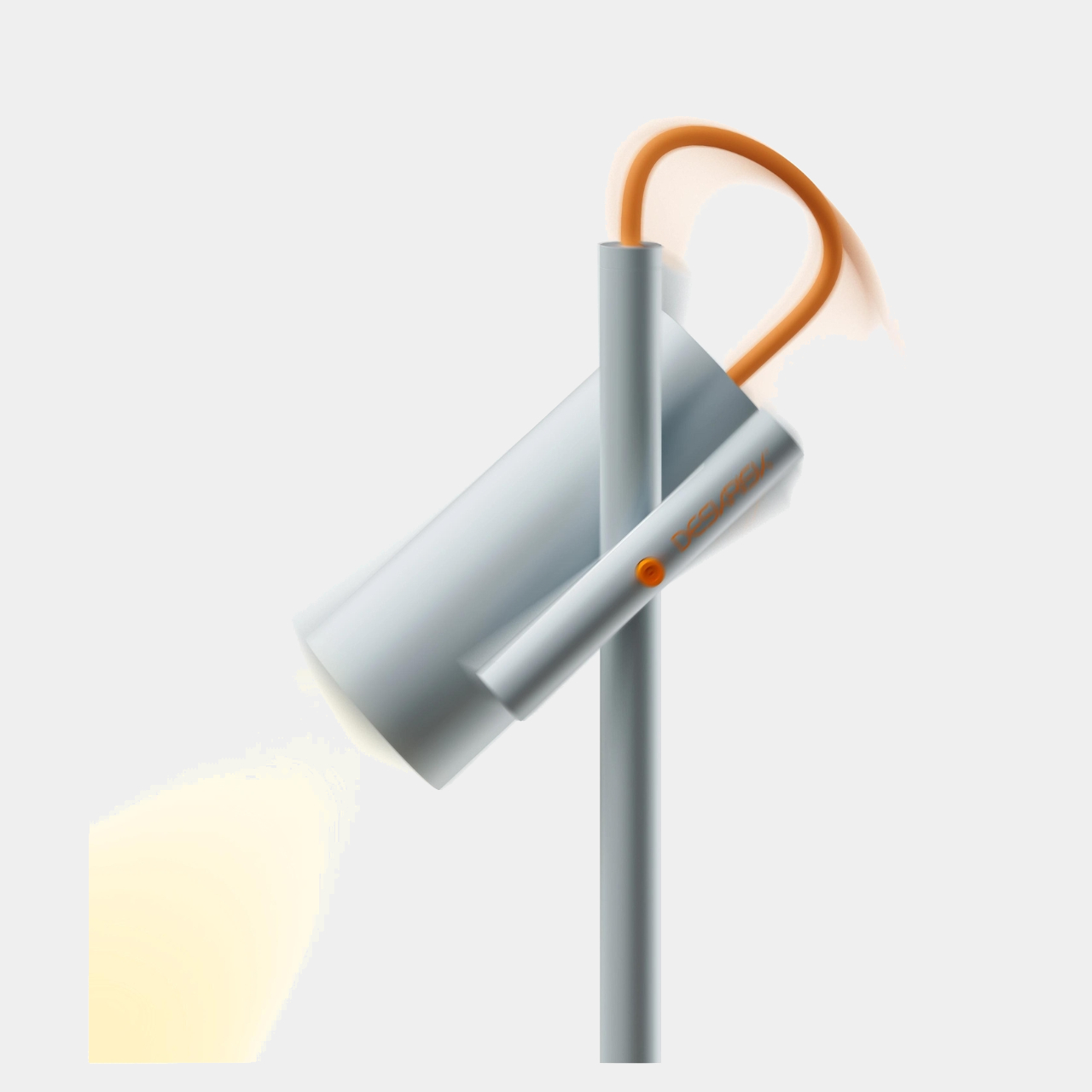
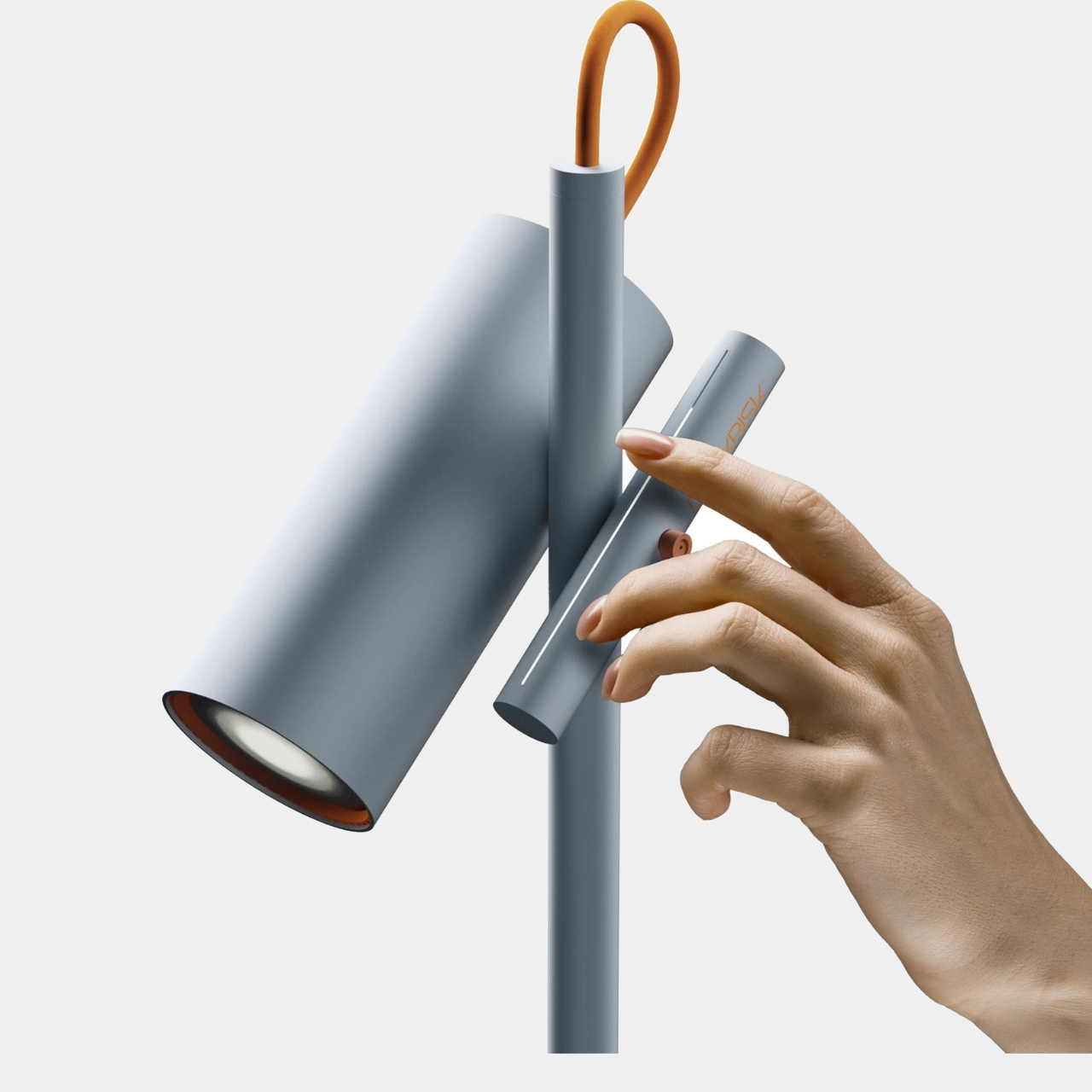
The next product is for those who need help with their posture while sitting at the desk for a long time. Well this is for if you’re using a lamp light source at your desk. The lamp has a light that will gradually move downwards from the angle you set after an hour. This way you are reminded to move along with the light source so that we’re not just bowing down towards our screens. There’s a gauge next to the lamp that also helps you track how much time has elapsed. You can also adjust and reset the angle by moving this gauge bar.

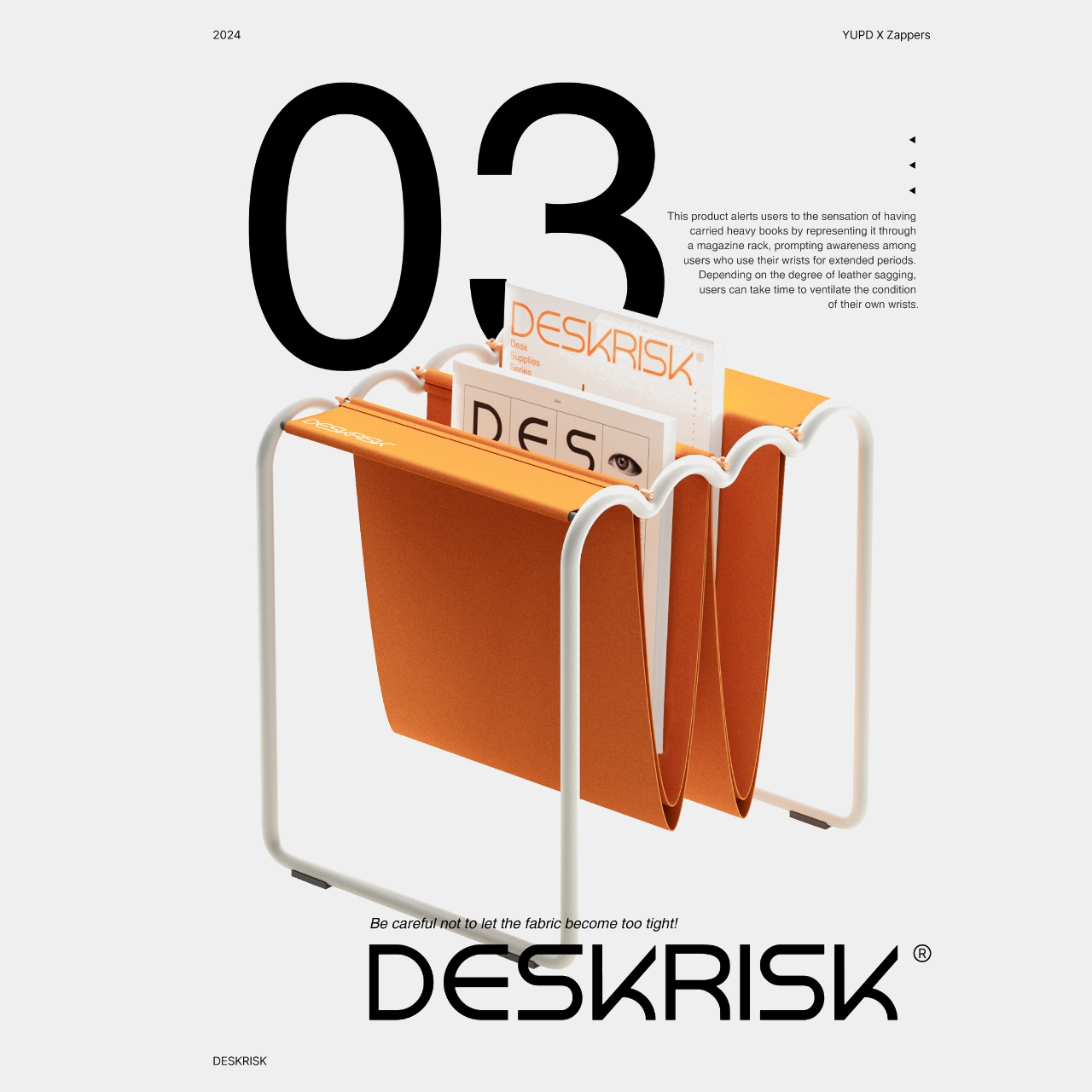
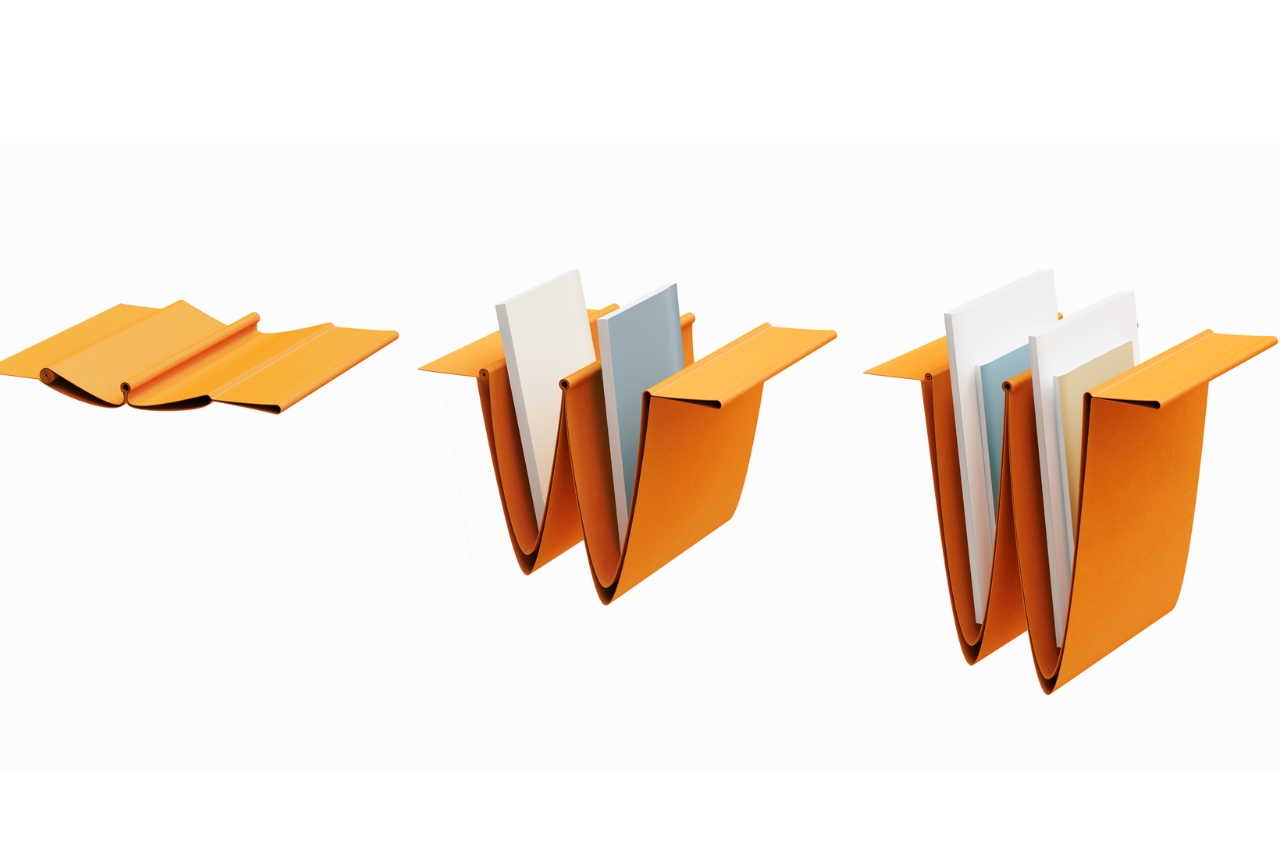
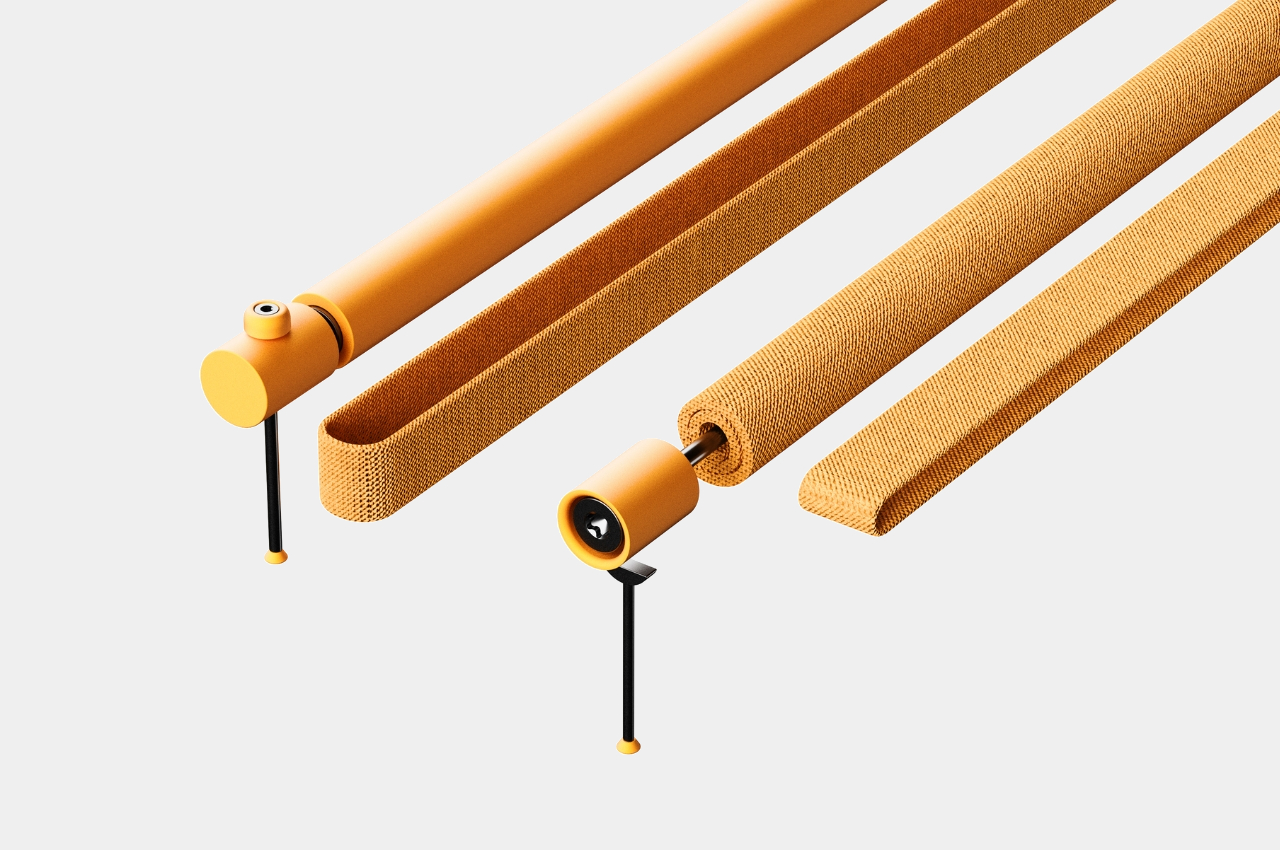
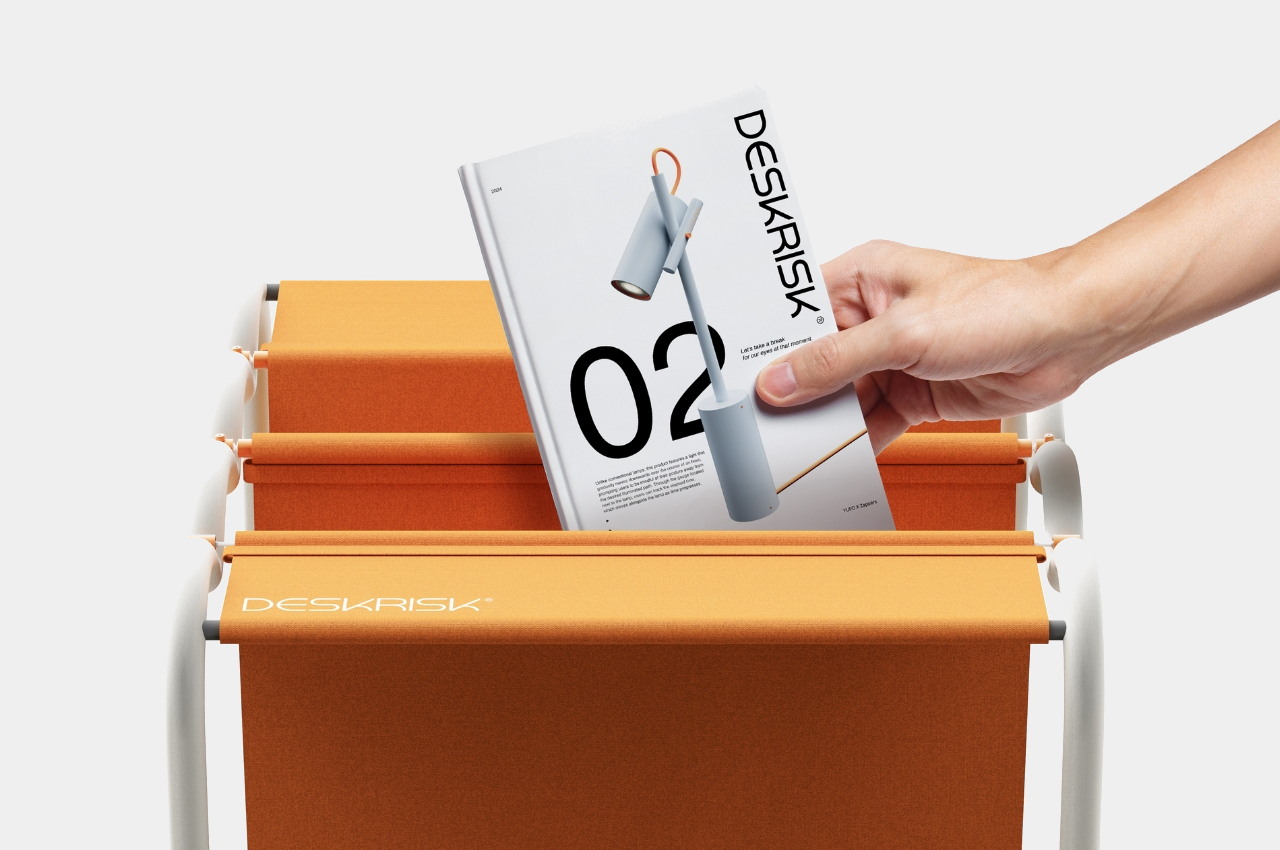
The last one may probably be the most useless for me, at least from what I understand from their product description. It’s a magazine rack that will supposedly resemble carpel tunnel syndrome or at least the overstretched wrist ligaments that come from having the same position at your keyboard for a long period of time. The sagging fabric will lengthen according to the size or weight of the books or magazines inserted. How this will help me with my wrist problem is unsure at this point. But aside from that, the other Deskrisk products are pretty useful for people like me who are at risk with the nature of our work.

The post Desk accessories concepts help reduce risk of sitting at the desk the whole day first appeared on Yanko Design.
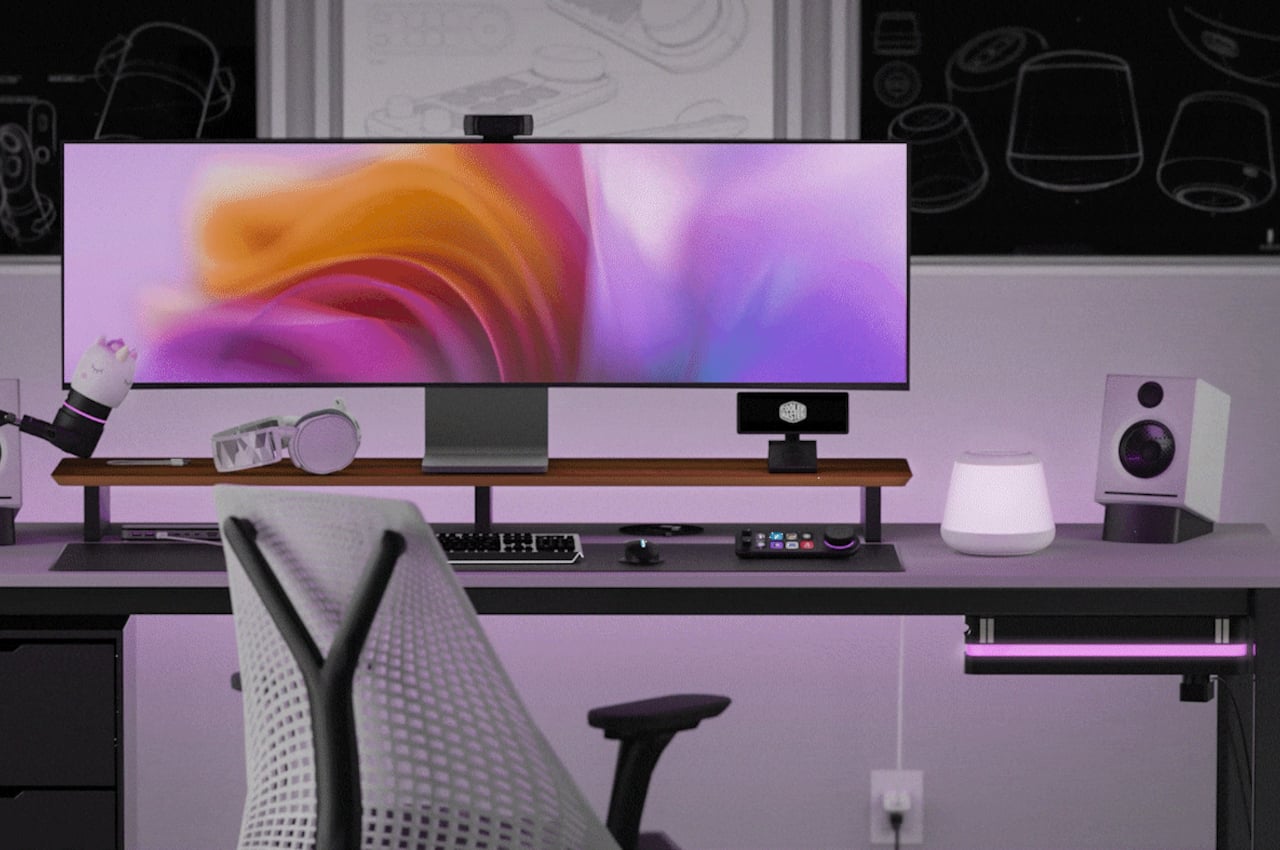
Live streaming accessories give creators the tools to elevate their content

Streaming is big business these days to the point that some kids even declare it to be their dream job. And like any other dream job, the reality is that video streaming isn’t as easy or as magical as it sounds, at least if you’re really aiming to go pro and bring in all the views. You will need to invest in quality equipment that not only makes their work more comfortable but also makes the overall experience more enjoyable. These concept products try to do exactly that, assisting streamers to make them feel more alive, whether onscreen or especially offscreen.

Designers: Mariana Aréchiga, Isaac Saldaña, Ricardo Zerón, Adriana Cruz, Jonathan Gonzalez, Alondra Alvarez, Mariana Pedroza, Juan Muciño

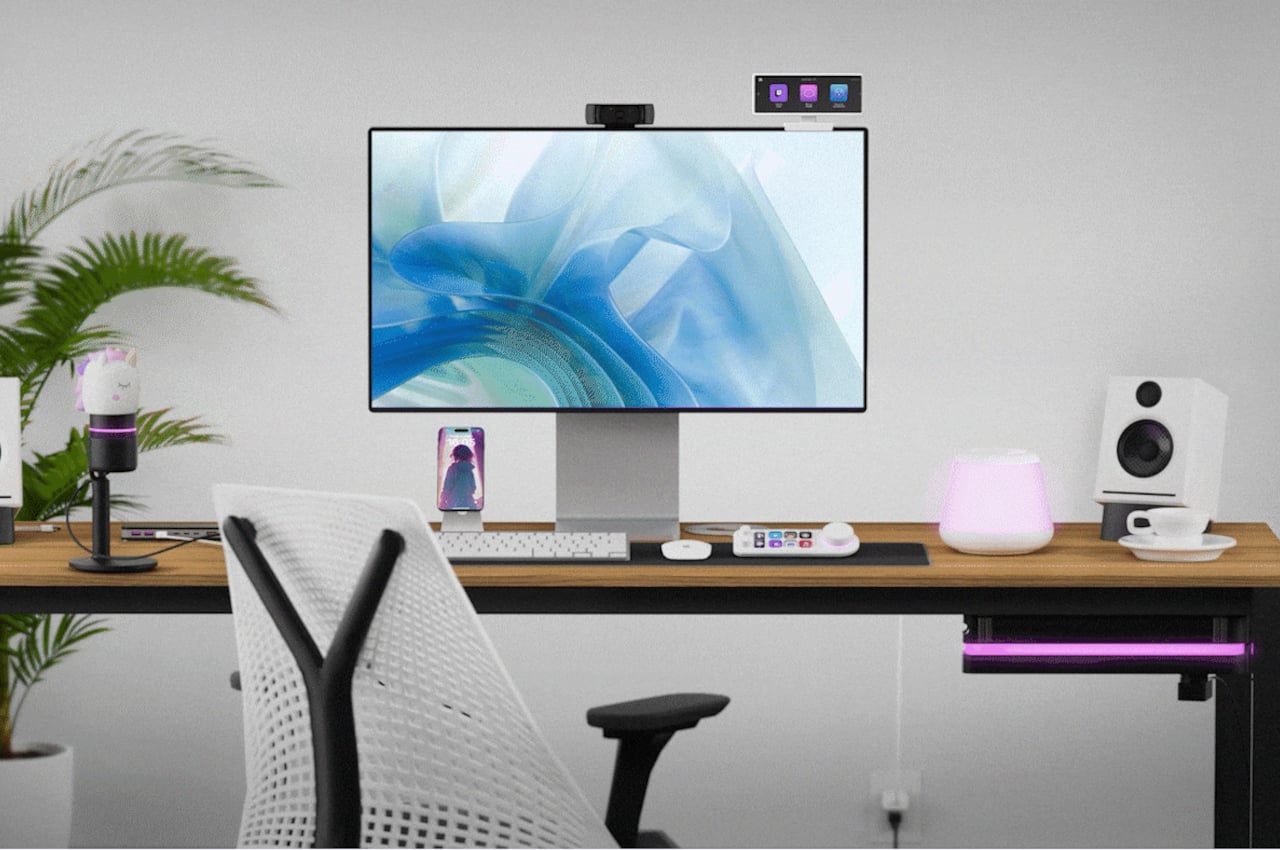
It’s admittedly easy to get started in the live streaming industry. All you need is a decent camera, a reliable Internet connection, and content that will capture the attention of the fickle masses. Going viral and staying relevant, however, requires not only hard work but also tools that will help carry you through both the good times as well as the bad. Alive is a series of product design concepts that try to elevate the streaming experience and beyond, focusing on the things that help streamers stay in control all the time.

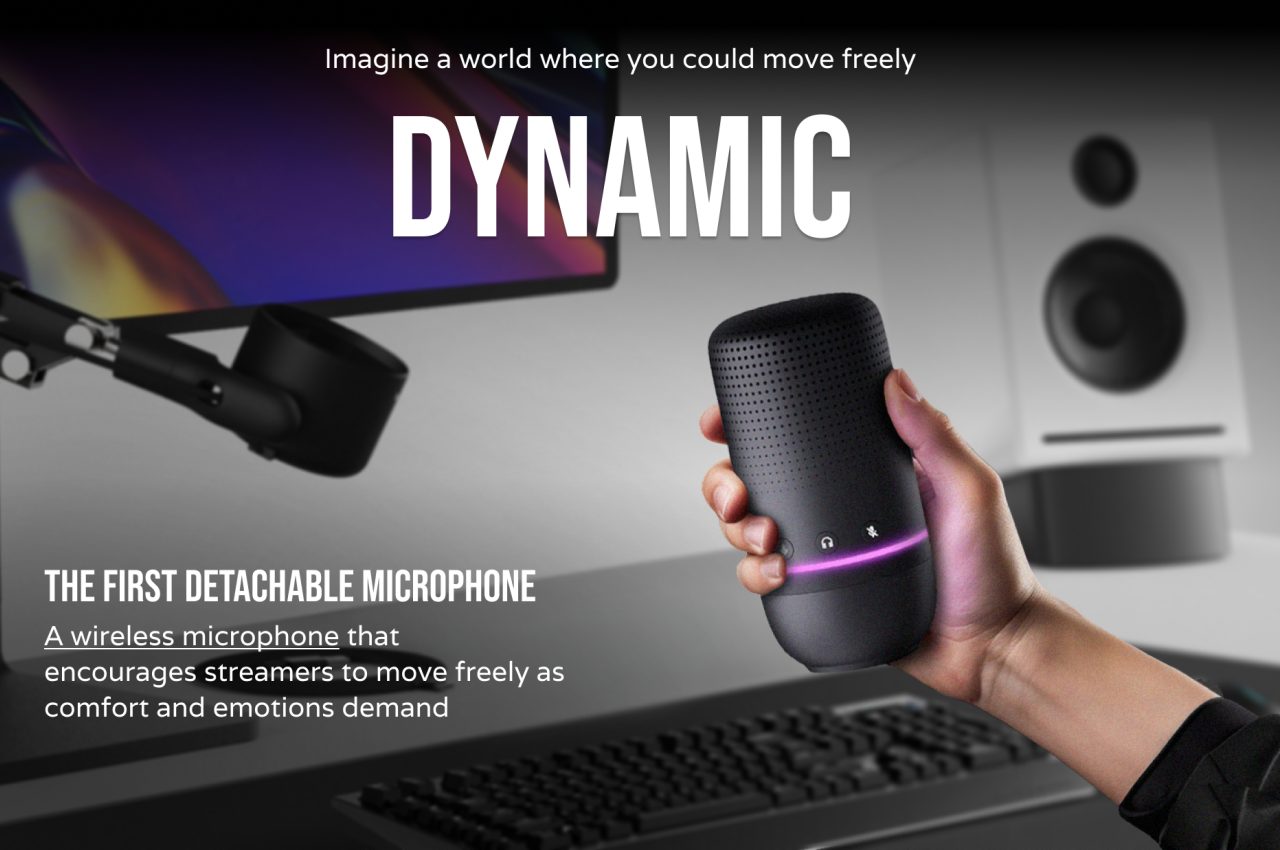
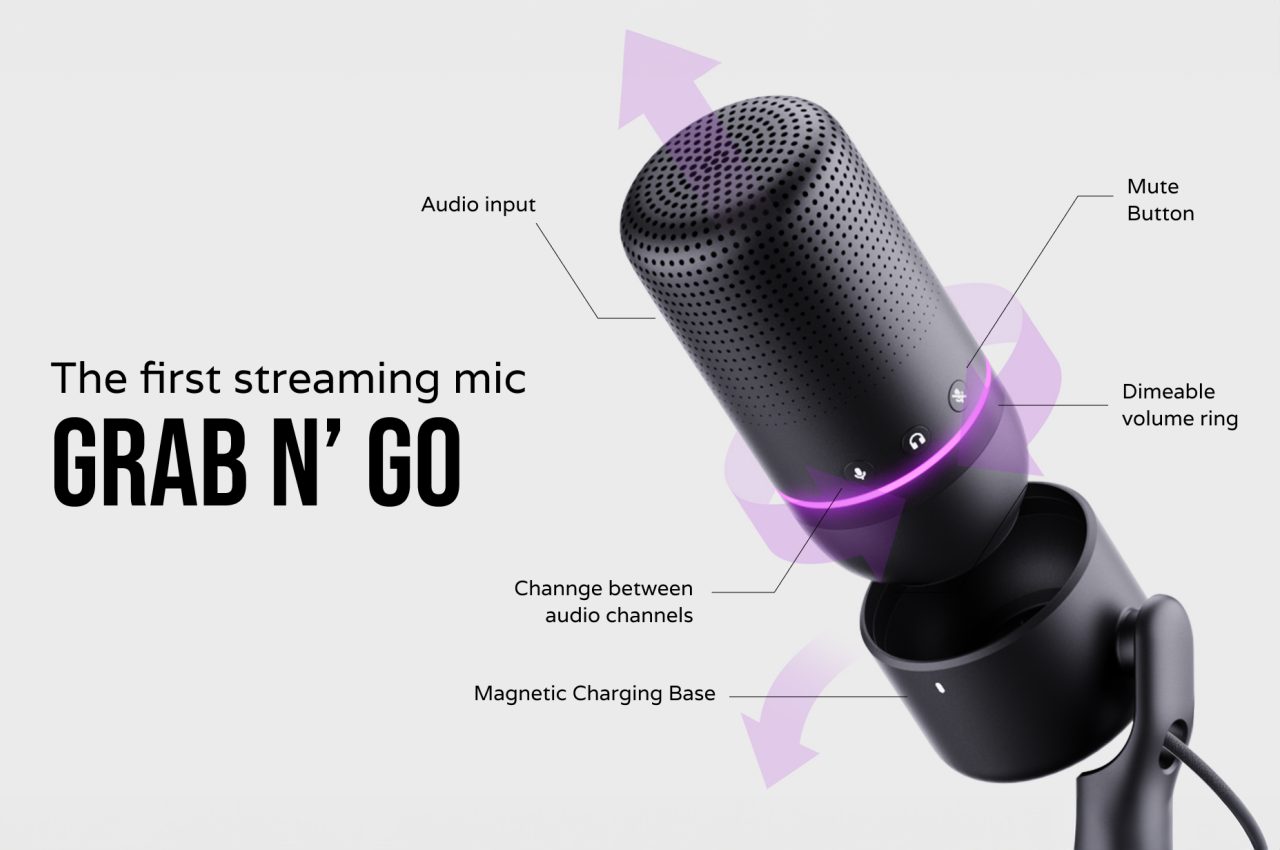
One example is a wireless streaming mic that frees you from your desk with its detachable design. While it looks like an ordinary studio mic when on its wireless charging stand, you can easily pick it up and move around without missing a beat or dropping out. It has a helpful ring indicator that quickly clues you in on the volume level without having to check your app’s or computer’s controls.

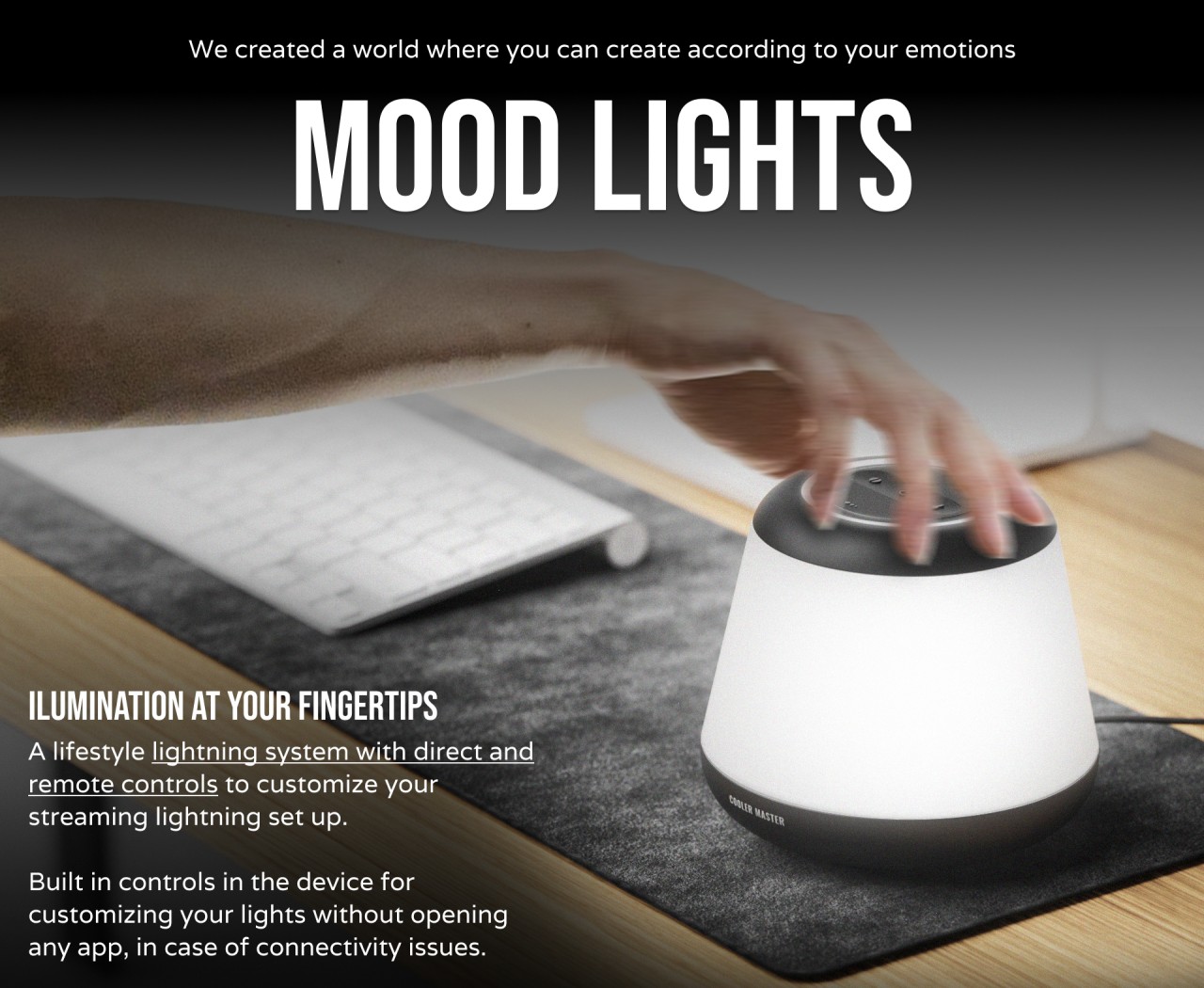
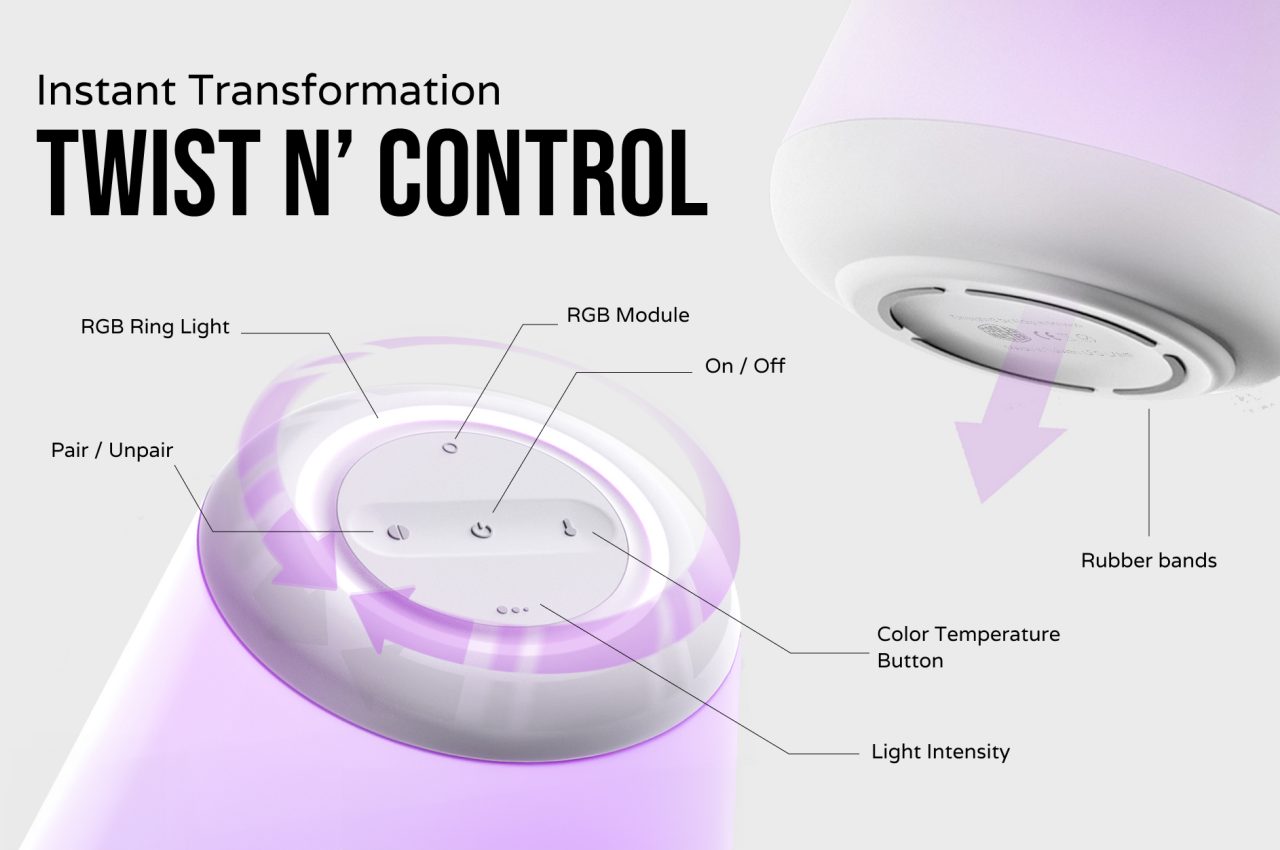
Lighting does more than just illuminate your face during streams, it can also help set the mood or even indicate your own mood. This conical desk lamp concept delivers that kind of emotional lighting but also provides direct physical controls that don’t leave you at the mercy of buggy apps and spotty network connections. Any streamer will testify to the stress and tension that occurs whenever those supposedly smart lights feel rather dumb due to those technical difficulties.

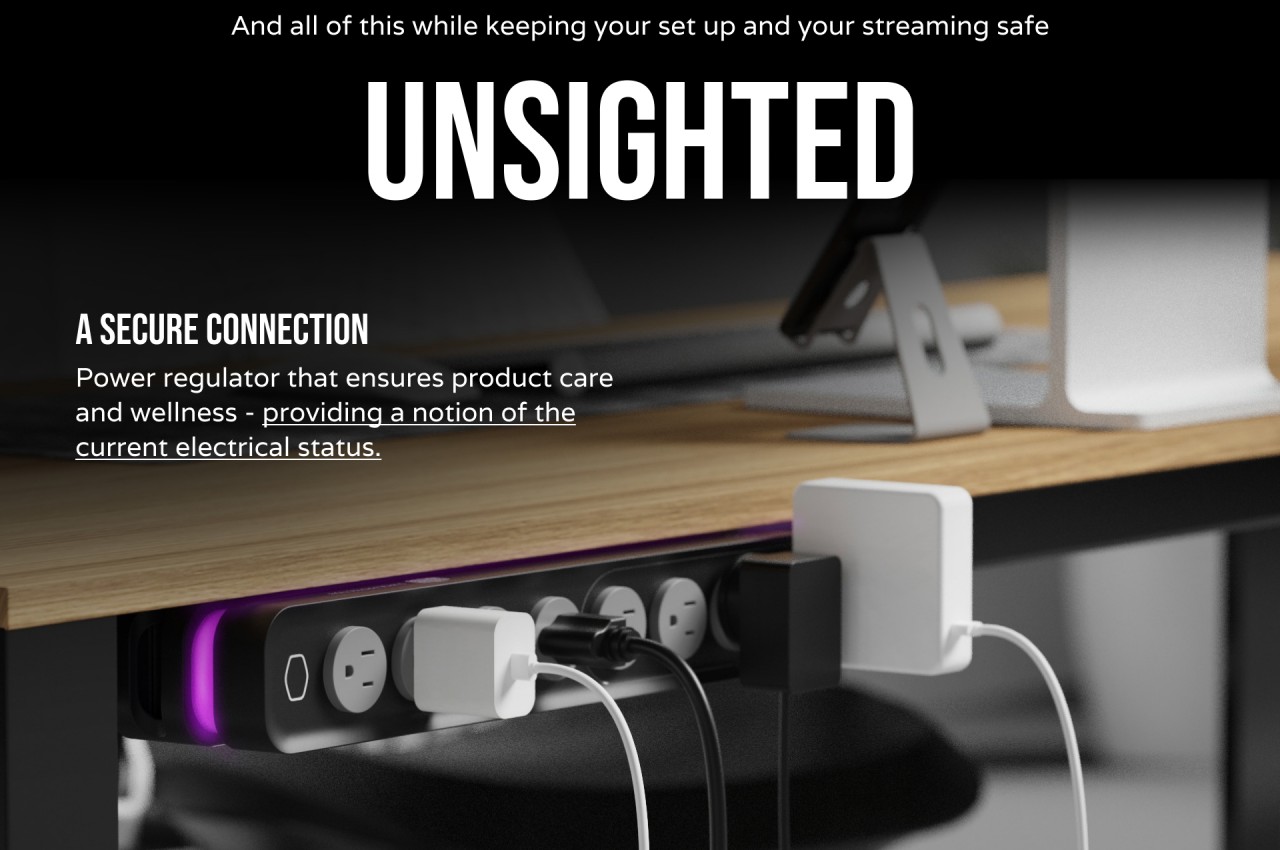
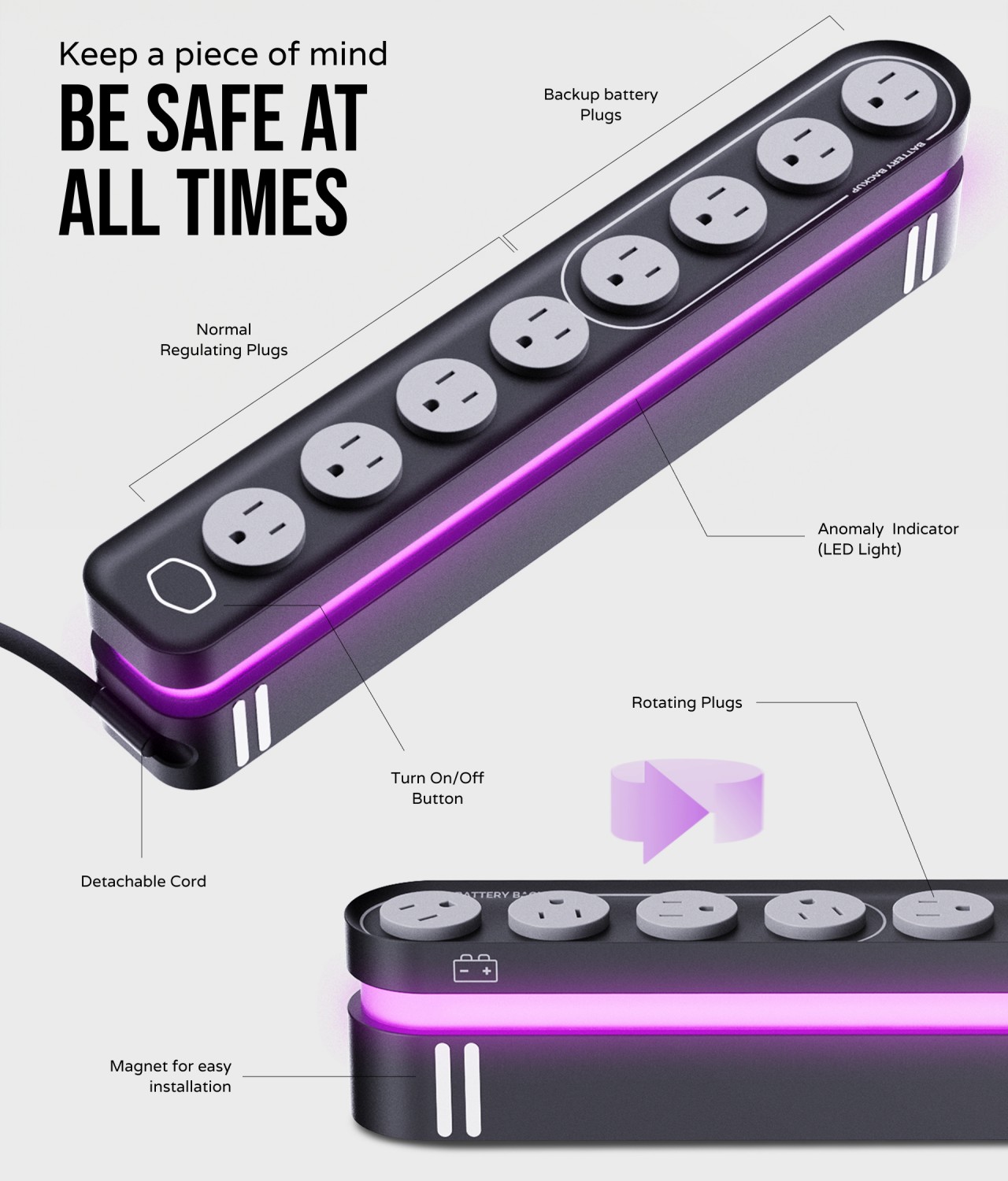
Power strips are designed to expand your wall socket, but most of them seem to still embrace the limitations of those fixed outlets. This streamer-friendly design, however, has sockets you can rotate so that they adjust to your cables and plugs, not the other way around. There’s also a section of the strip that offers battery backup to make sure critical devices stay powered up even during an emergency. These features might sound trivial, but every small thing that gives streamers peace of mind also helps them create better content.

The post Live streaming accessories give creators the tools to elevate their content first appeared on Yanko Design.
Portable Smart Induction Cooktop concept lets you cook healthy meals anywhere

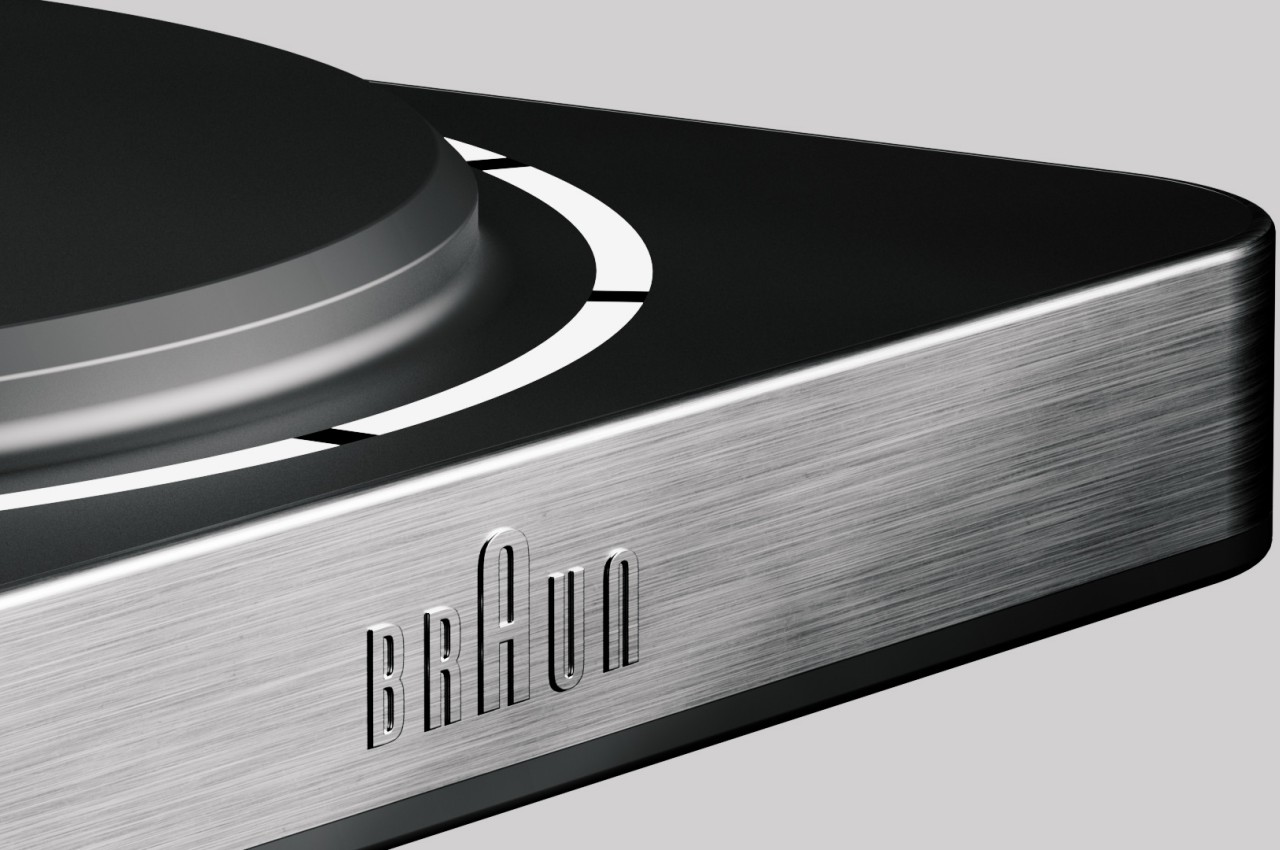
There are now several ways to get fresh and healthy meals delivered to you, but the best option is still to cook them yourself. You get to decide on the ingredients and the process, plus you can probably even save money in the long run. That said, cooking isn’t always easy or convenient, especially when you’re not at home or don’t even have access to a kitchen. Portable cooking equipment is slowly becoming an option, but many still fall short of providing convenience other than having a hot surface to cook on. This induction cooktop concept tries to address many of those shortcomings with features that help you cook smartly and safely while also borrowing the clean and minimalist aesthetic that the brand Braun is best known for.

Designer: Jenil Shah

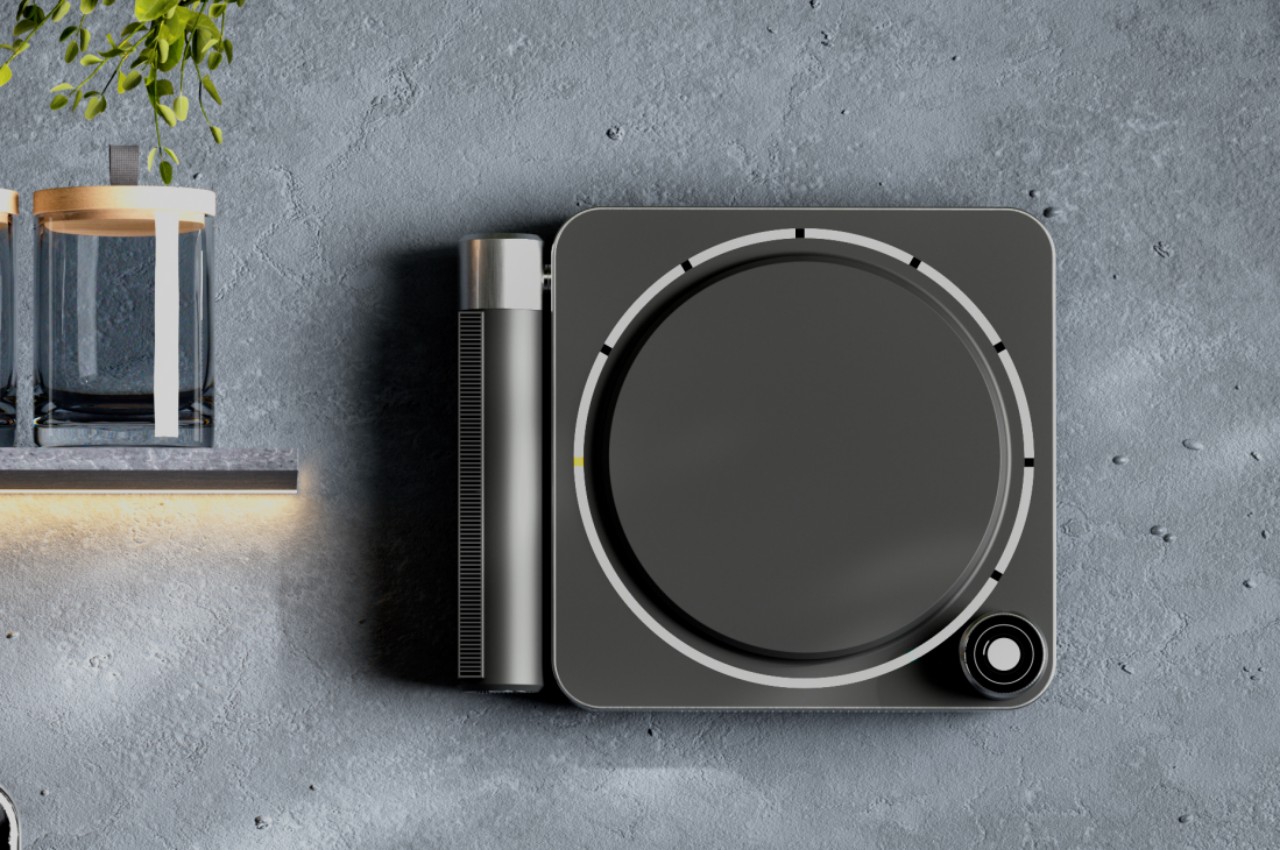
While it’s true that all you need to cook most food is a hot surface for pans and pots, that is really just the most basic cooking experience and definitely not the most convenient. There are other factors you have to consider while cooking, not least of which is the smoke that cooking produces. Keeping tabs on the food you’re cooking or even the ingredients you will be using is also part of the process, and the SY10 portable smart induction cooktop wants to make those parts as painless as possible.

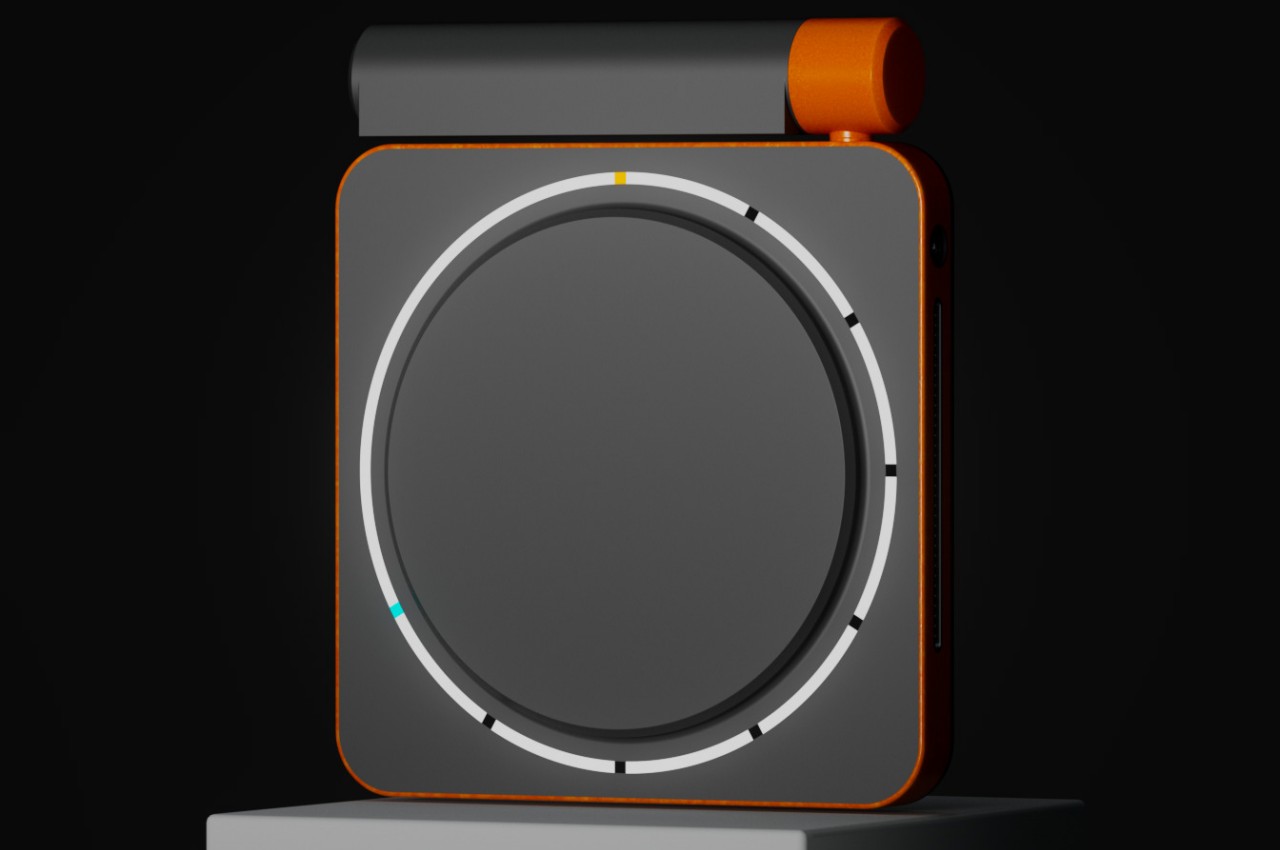
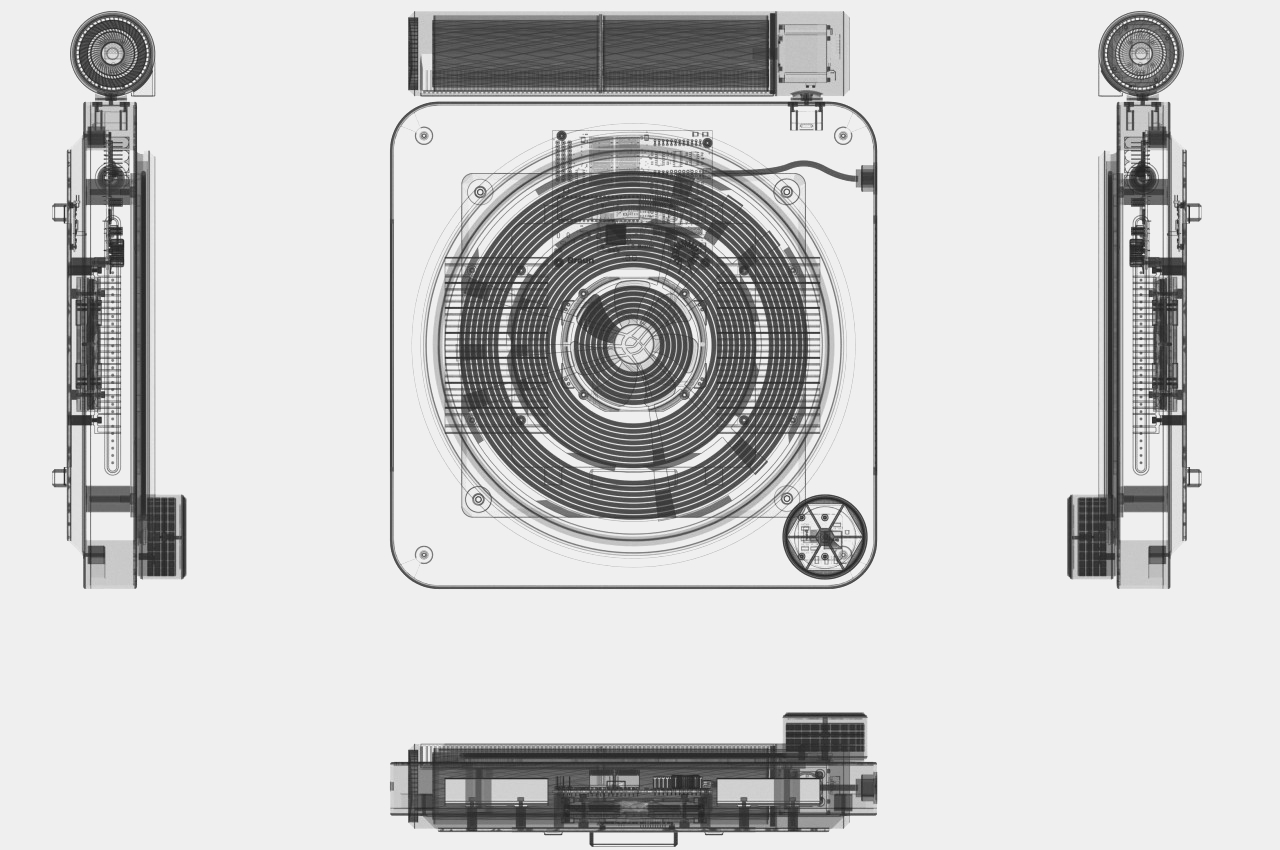
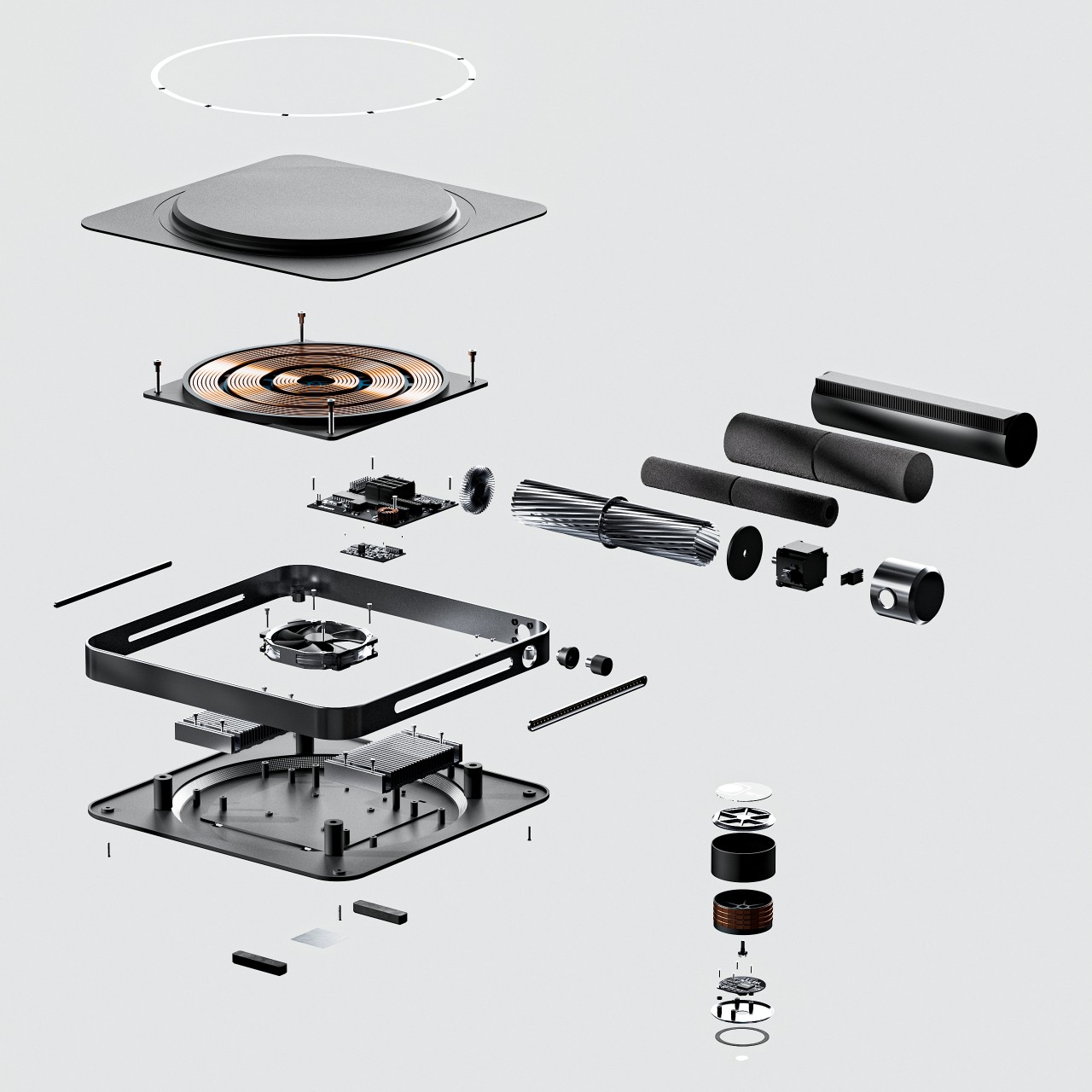
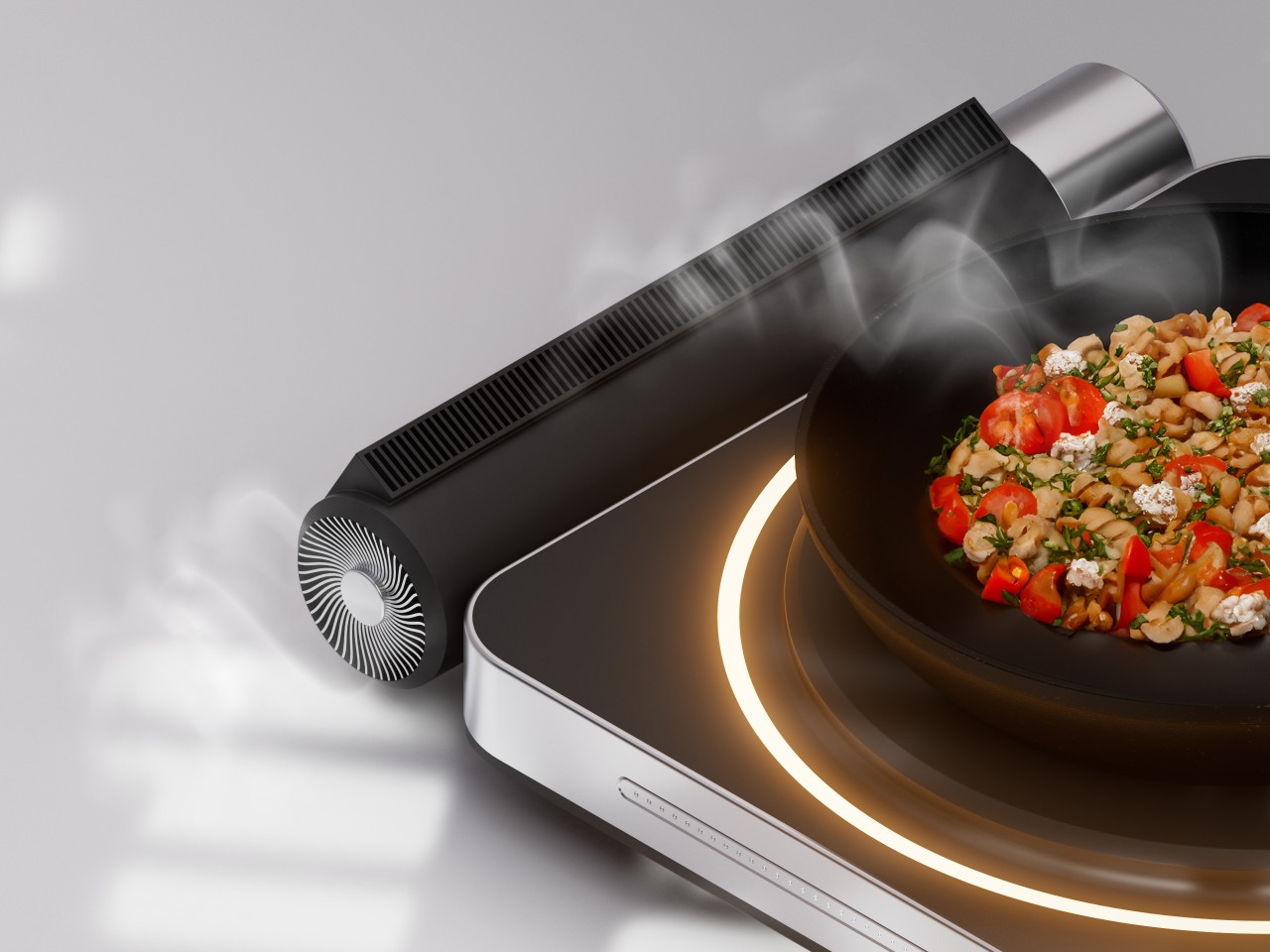
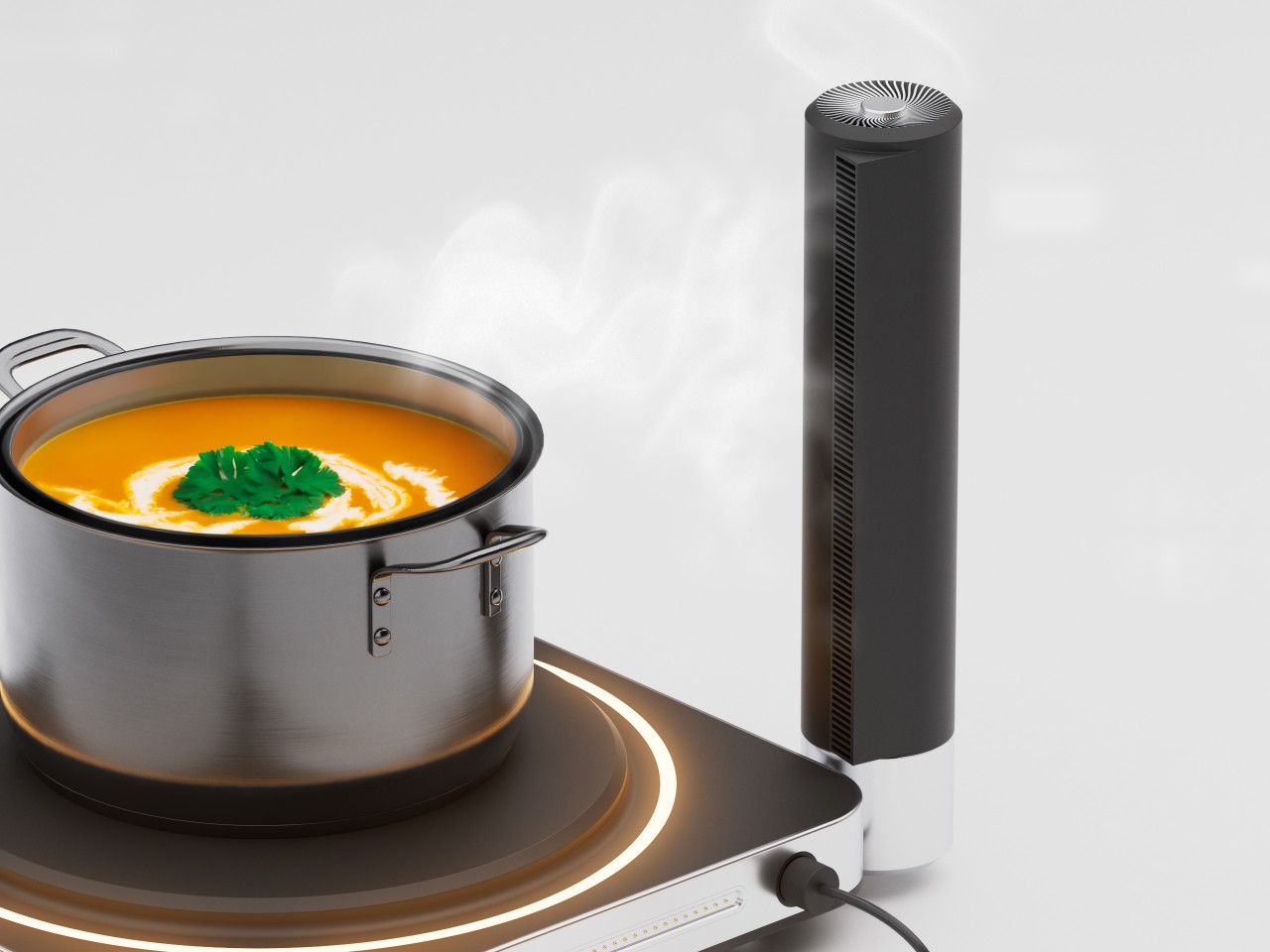
Somewhat ironically, the induction surface itself is the least exciting part of this design considering how the technology has more or less been perfected at this point. Instead, parts like the built-in Smart Air Filter offer a more interesting, especially since it’s almost invisible as part of the design. When you’re not in your kitchen, having access to a range hood with fans is almost impossible, and even at home those usually only suck up the smoke and nothing more. The SY10’s, however, uses carbon filters to remove not just harmful smoke but also odors, keeping indoor air clean without making too much noise. The filter lies horizontally right next to the cooktop, but if you have a taller pot or cookware, you can actually rotate the filter to make it stand, ensuring that no smoke escapes its fans.

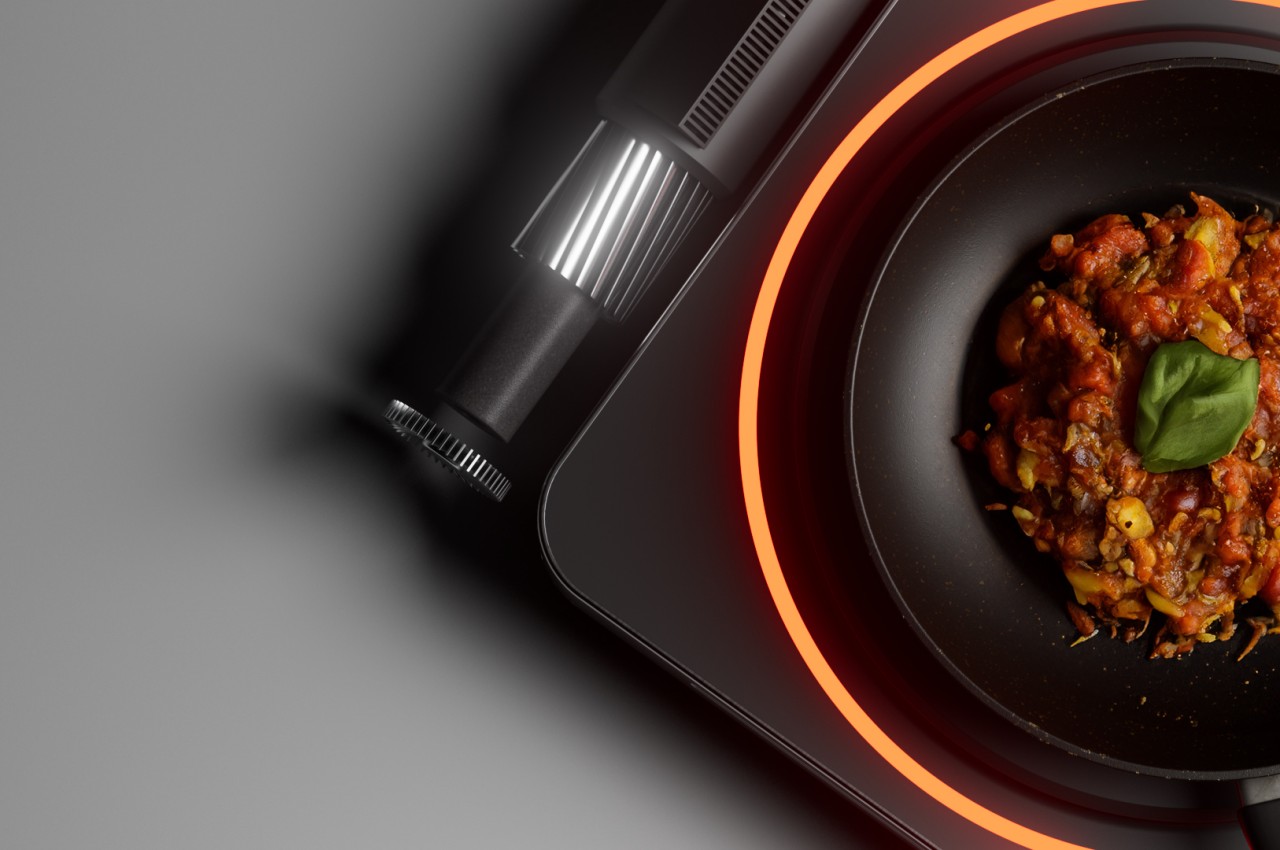
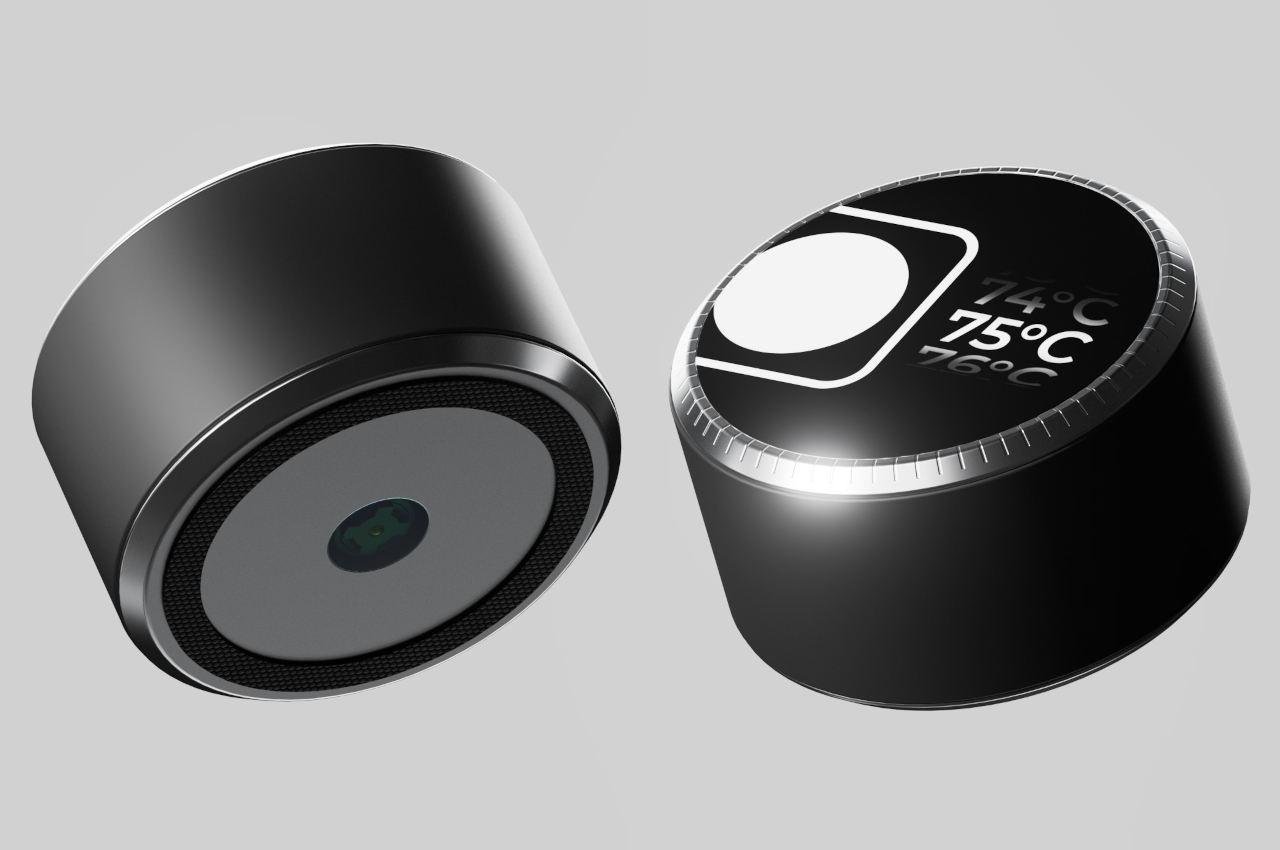
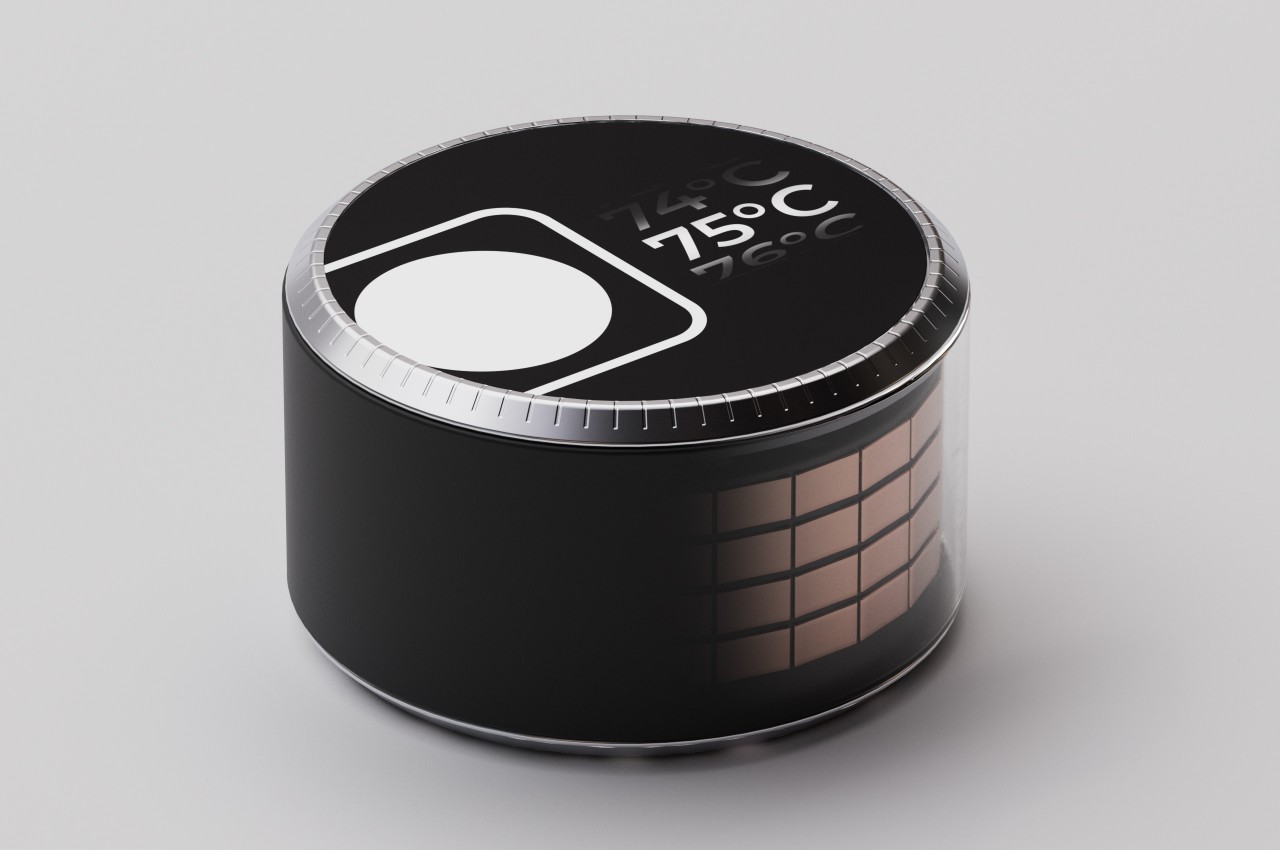
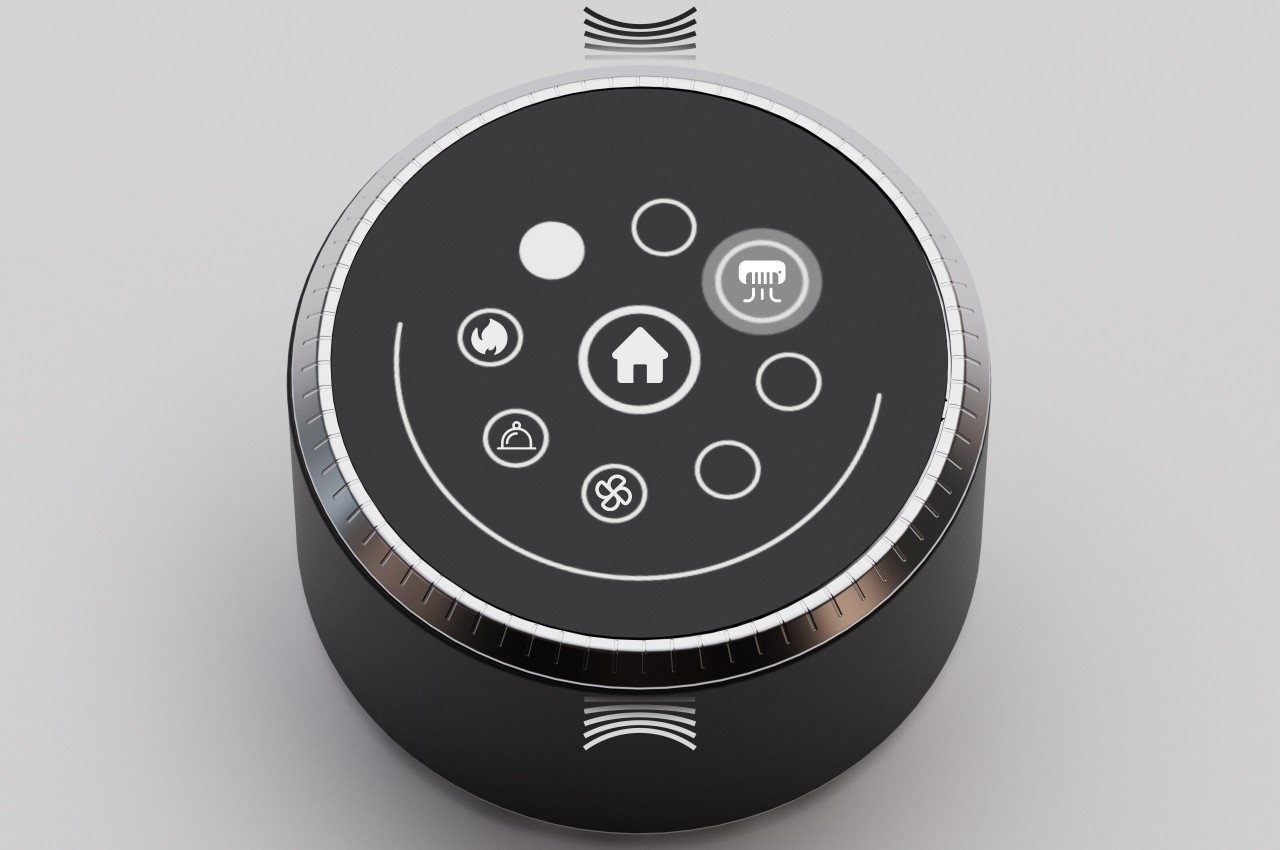
Most induction stovetops use touch-based interfaces to really capture that futuristic aesthetic, but it also makes them more confusing to handle and definitely less satisfying. The SY10’s Infinity Dial adds some good old-fashioned haptic feedback when you turn its ring, while a large circular display delivers instant information about the menus and functions you’re using. Amusingly, the dial requires you to squeeze its body to confirm an action rather than tapping that display, further emphasizing the physical dimension. Its more interesting feature, however, is a built-in camera and computer vision capabilities which allow it to look at a particular food or ingredient and determine whether it’s still good to use or if it’s going bad. And yes, that means you can actually detach the dial to use this function.

The SY10 design also includes a motherboard and other electronics to power its smart features, though its compact design might raise questions about the heat management that could affect those more sensitive parts. It does, however, need to be that compact in order to implement its portability, which would allow you to set up a small kitchen anywhere, whether indoors or outdoor, or even connect two such cooktops together. Those are important implementation details that need to be ironed out, but the concept remains an interesting one that could help take out some of the worries when cooking your meals away from home or even at home.

The post Portable Smart Induction Cooktop concept lets you cook healthy meals anywhere first appeared on Yanko Design.
Portable Smart Induction Cooktop concept lets you cook healthy meals anywhere

There are now several ways to get fresh and healthy meals delivered to you, but the best option is still to cook them yourself. You get to decide on the ingredients and the process, plus you can probably even save money in the long run. That said, cooking isn’t always easy or convenient, especially when you’re not at home or don’t even have access to a kitchen. Portable cooking equipment is slowly becoming an option, but many still fall short of providing convenience other than having a hot surface to cook on. This induction cooktop concept tries to address many of those shortcomings with features that help you cook smartly and safely while also borrowing the clean and minimalist aesthetic that the brand Braun is best known for.

Designer: Jenil Shah

While it’s true that all you need to cook most food is a hot surface for pans and pots, that is really just the most basic cooking experience and definitely not the most convenient. There are other factors you have to consider while cooking, not least of which is the smoke that cooking produces. Keeping tabs on the food you’re cooking or even the ingredients you will be using is also part of the process, and the SY10 portable smart induction cooktop wants to make those parts as painless as possible.

Somewhat ironically, the induction surface itself is the least exciting part of this design considering how the technology has more or less been perfected at this point. Instead, parts like the built-in Smart Air Filter offer a more interesting, especially since it’s almost invisible as part of the design. When you’re not in your kitchen, having access to a range hood with fans is almost impossible, and even at home those usually only suck up the smoke and nothing more. The SY10’s, however, uses carbon filters to remove not just harmful smoke but also odors, keeping indoor air clean without making too much noise. The filter lies horizontally right next to the cooktop, but if you have a taller pot or cookware, you can actually rotate the filter to make it stand, ensuring that no smoke escapes its fans.

Most induction stovetops use touch-based interfaces to really capture that futuristic aesthetic, but it also makes them more confusing to handle and definitely less satisfying. The SY10’s Infinity Dial adds some good old-fashioned haptic feedback when you turn its ring, while a large circular display delivers instant information about the menus and functions you’re using. Amusingly, the dial requires you to squeeze its body to confirm an action rather than tapping that display, further emphasizing the physical dimension. Its more interesting feature, however, is a built-in camera and computer vision capabilities which allow it to look at a particular food or ingredient and determine whether it’s still good to use or if it’s going bad. And yes, that means you can actually detach the dial to use this function.
The SY10 design also includes a motherboard and other electronics to power its smart features, though its compact design might raise questions about the heat management that could affect those more sensitive parts. It does, however, need to be that compact in order to implement its portability, which would allow you to set up a small kitchen anywhere, whether indoors or outdoor, or even connect two such cooktops together. Those are important implementation details that need to be ironed out, but the concept remains an interesting one that could help take out some of the worries when cooking your meals away from home or even at home.

The post Portable Smart Induction Cooktop concept lets you cook healthy meals anywhere first appeared on Yanko Design.