
Meta is reportedly building its own cloud business
Selling server infrastructure would put Meta in competition with Amazon and Google.

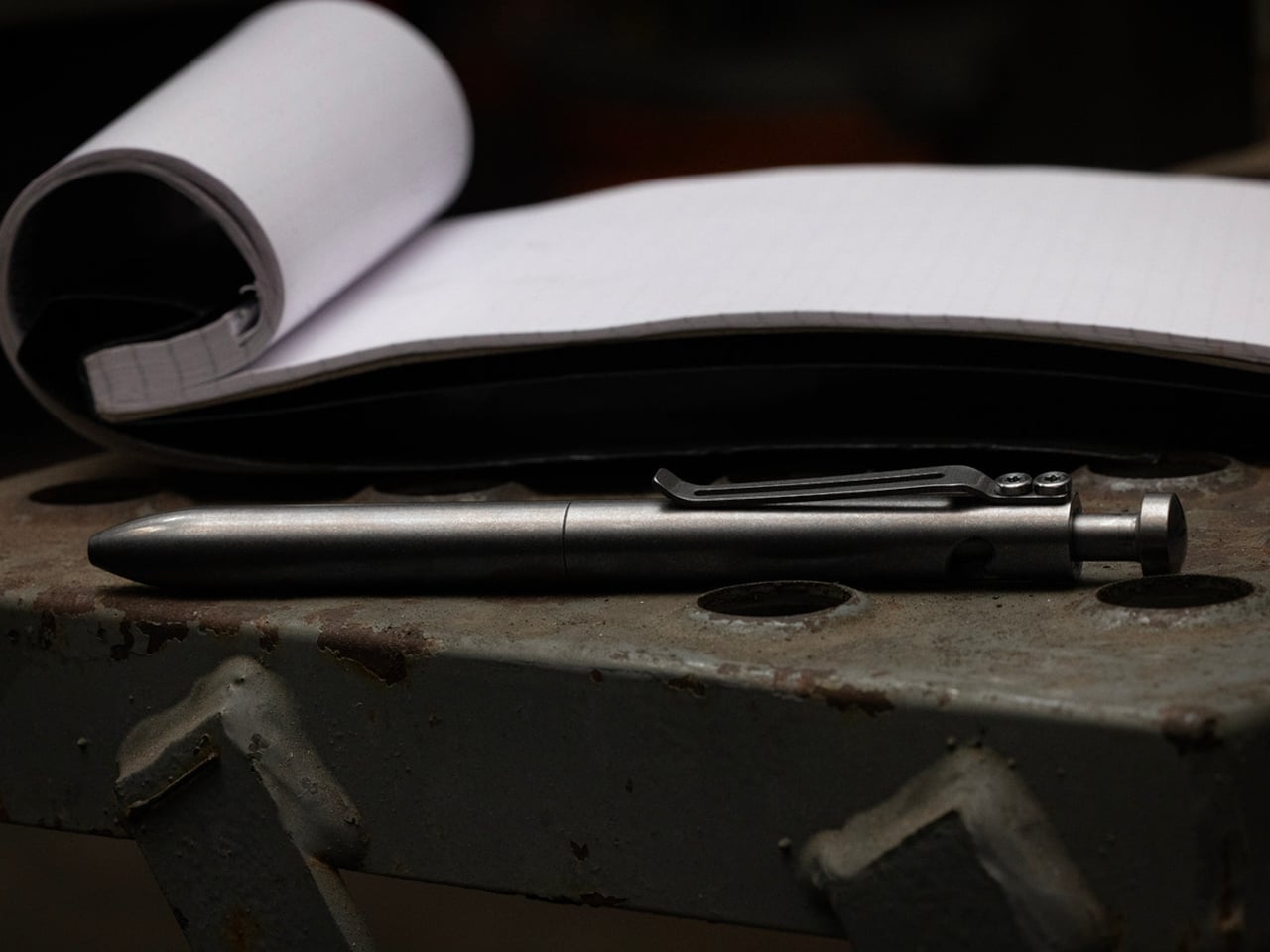
The pen used to be one of those things you’d stuff into a bag without thinking. A Pilot G2, a free hotel pen, whatever happened to be nearby, all functionally identical and equally forgettable. That changed when the everyday-carry community started treating small objects with more intention, and suddenly the pen in your pocket became something people were choosing with the same deliberateness as a wallet or a watch.
What followed is a category where boutique machinists and established brands are now building pens from Grade-5 titanium, fitting them with precision mechanisms, and treating every detail as a design decision. The seven picks below aren’t arranged by price or prestige. They each represent a different answer to the same question: what should a modern writing tool actually feel like when you carry and use it every day?
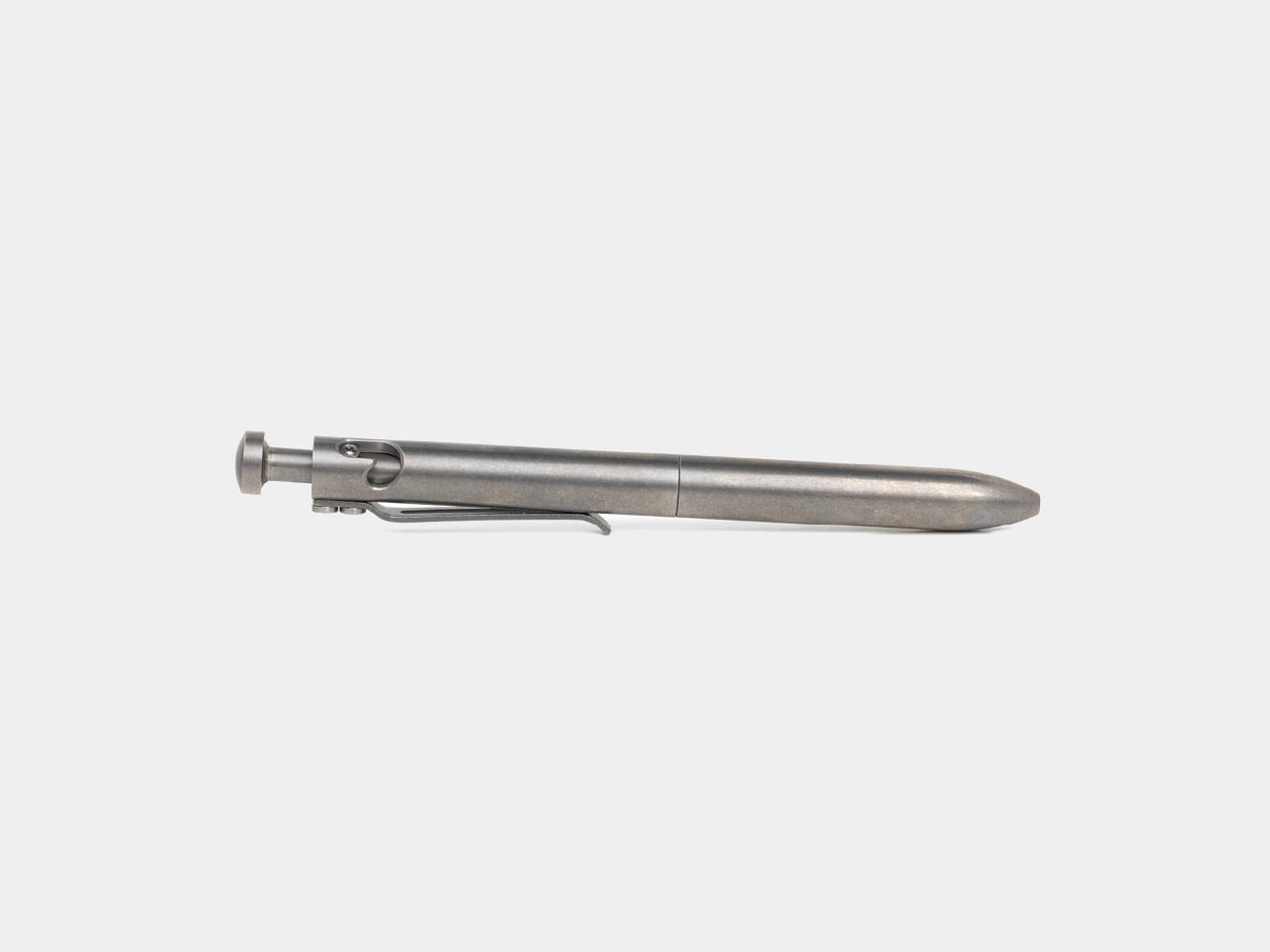
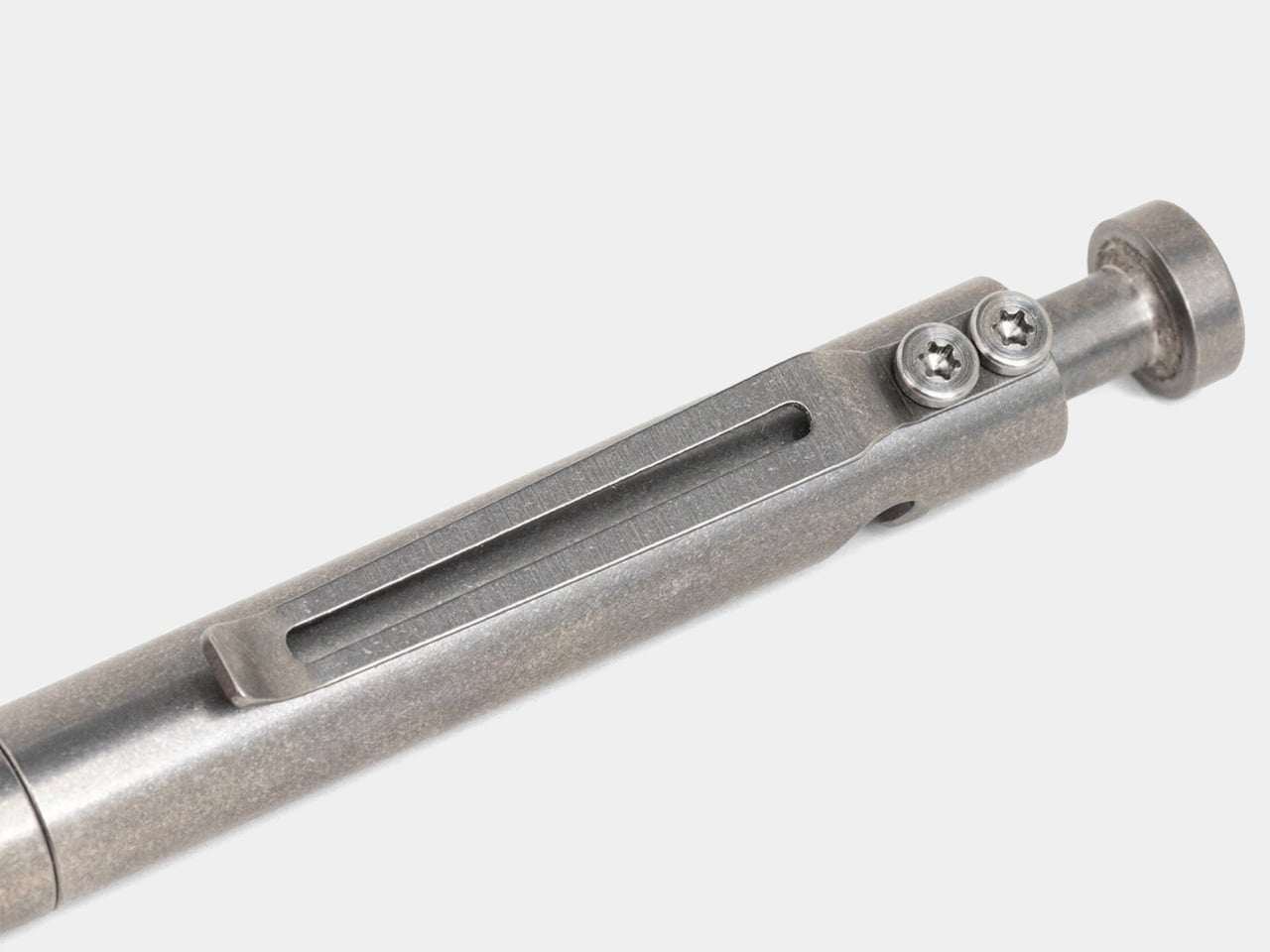
A pen on a waitlist is a telling sign. When Karas Kustoms teased its Tumbled Titanium Bolt Complete Edition in May 2026, the interest was immediate, suggesting how seriously the EDC community now treats its writing instruments. Machined in Mesa, Arizona, it pairs a tumbled titanium finish with a 3D-milled grip pattern that gives it noticeably more bite than the typical polished alternatives in this space.
Designer: Karas Pen Co
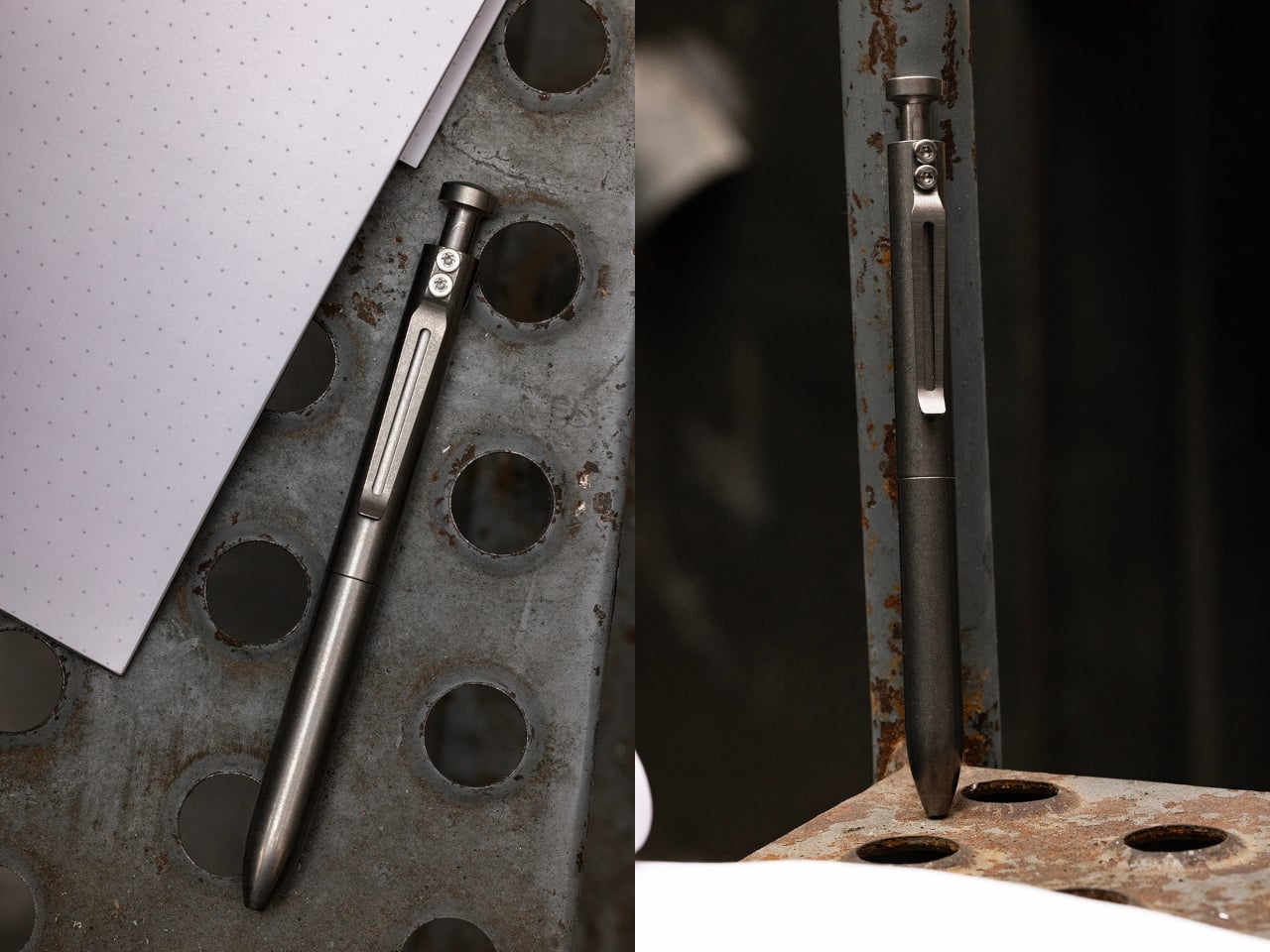
The bolt-action mechanism is the same one that made Karas famous, but the Complete Edition is its most refined iteration yet. It’s the kind of pen that wears in rather than wearing out, with the tumbled titanium developing a natural patina from daily pocket use. The Dragonskin grip pattern also gives you something real to hold onto, which makes a noticeable difference during longer writing sessions.
At just 32g, the Bullet Ant 4.0 is already worth a second look, but MeTool goes further by fitting a magnetic blade, a glass breaker, and a bit driver into the same titanium shell as the pen. None of those additions feels like an afterthought, and that’s what makes this the most convincing argument for treating an EDC pen as a miniature Swiss Army object.
Designer: MeTool Design Team
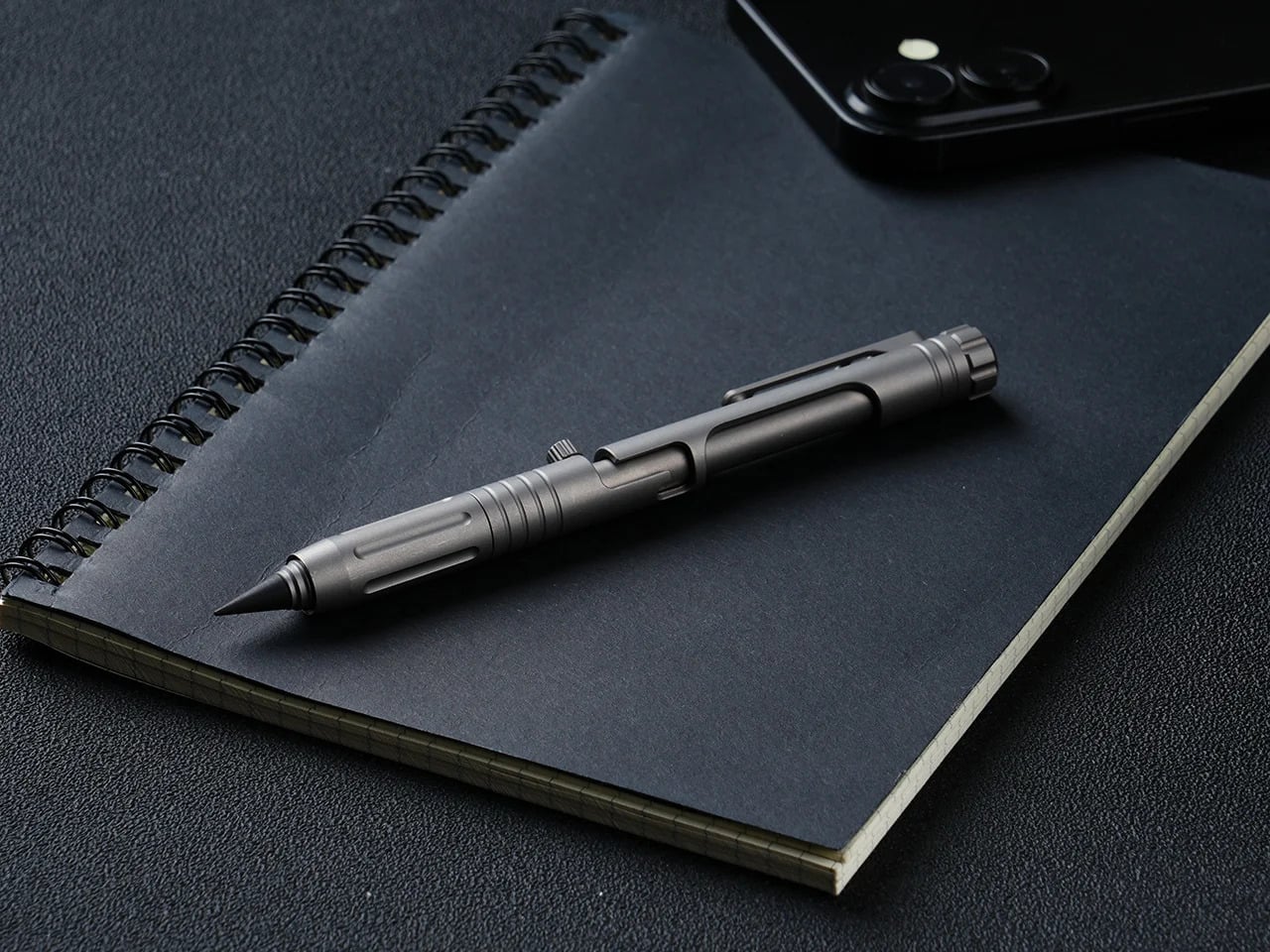
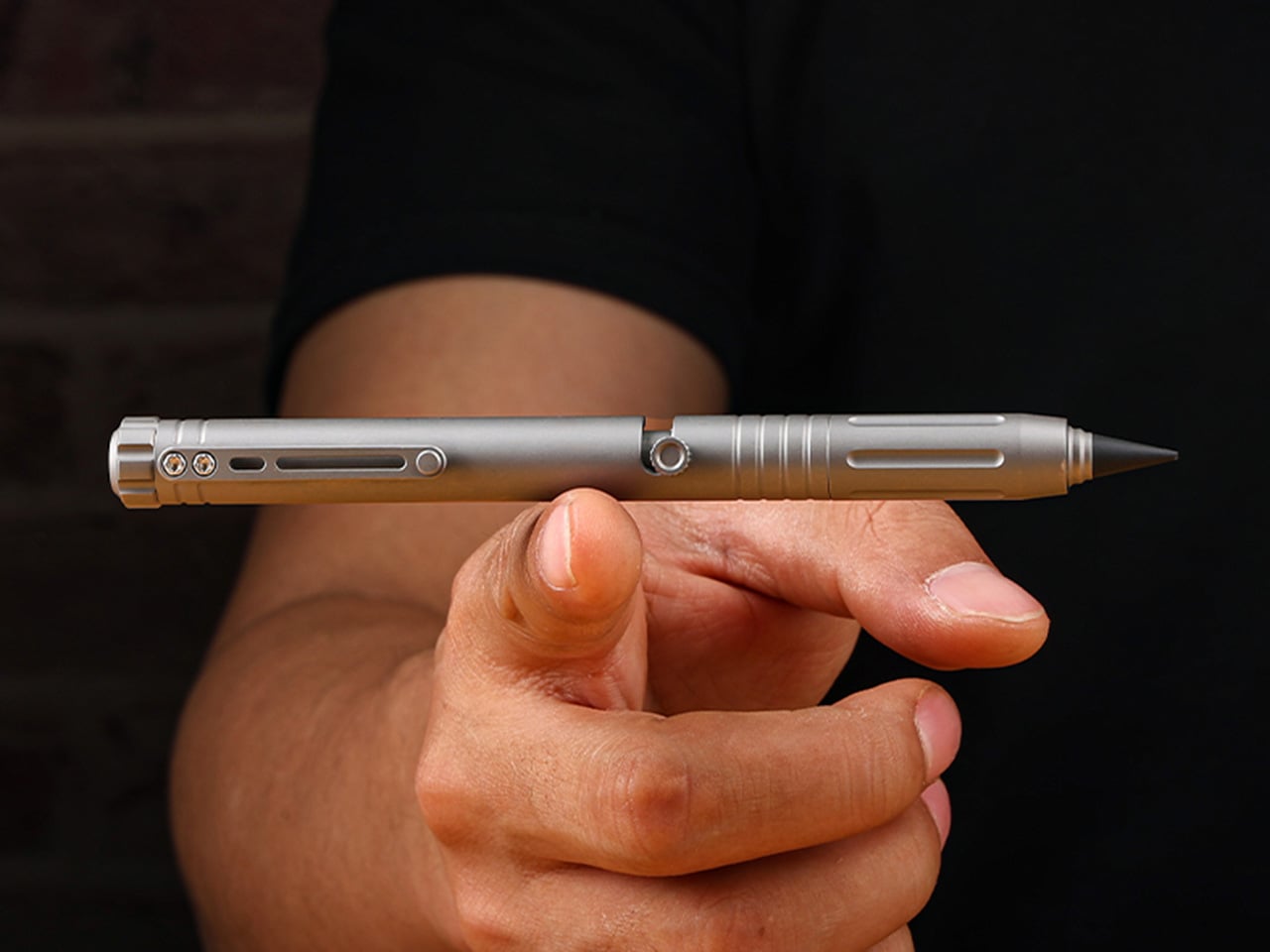
The ball-detent bolt action deploys the tip with a satisfying snap, and the pen body is balanced well enough that you’d never guess it was doing double duty as an emergency tool. Whether it ends up being used as a pen more often than anything else is beside the point. The Bullet Ant 4.0 carries the confidence of something built with precision, not just assembled to impress at a glance.
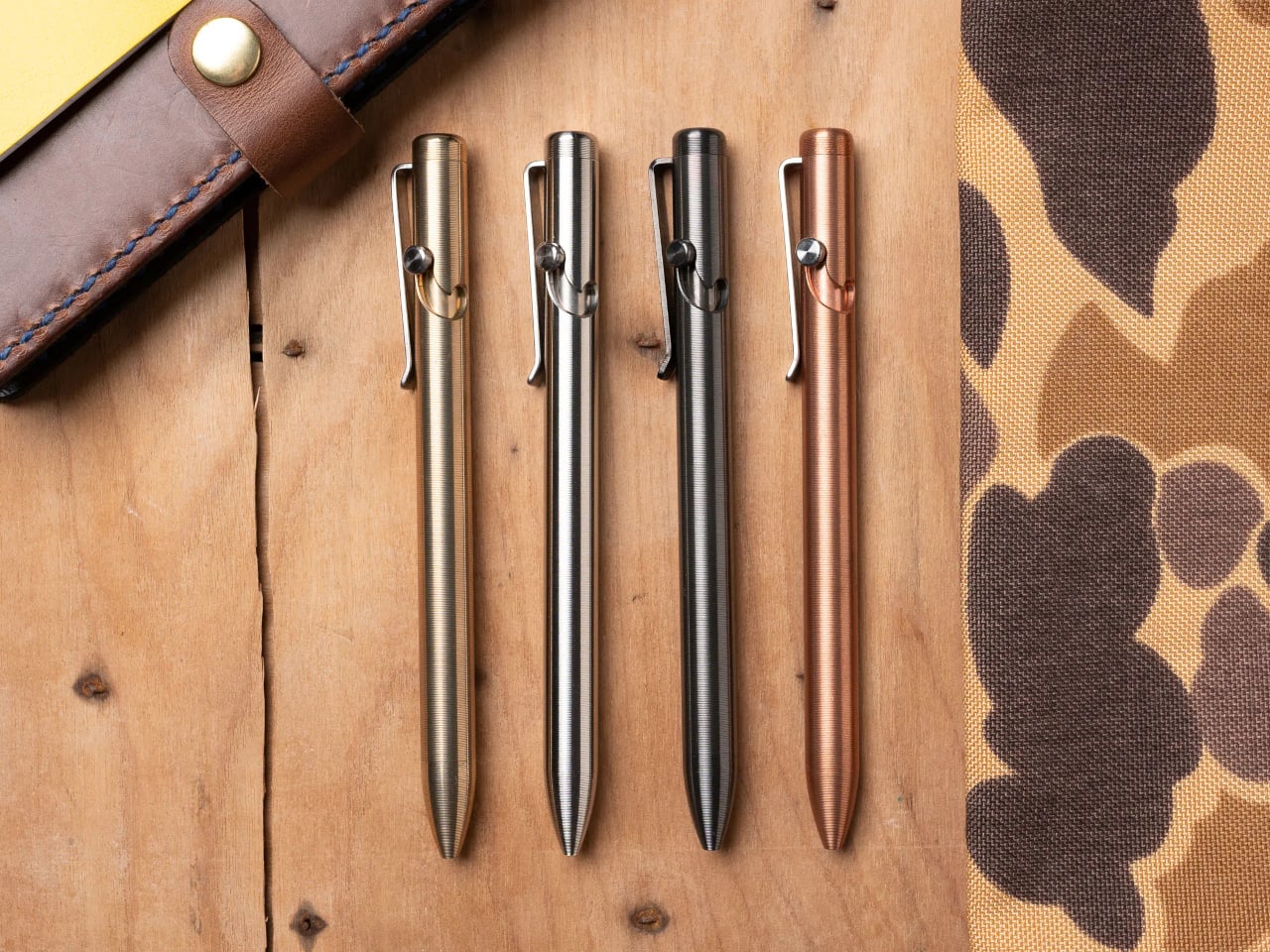
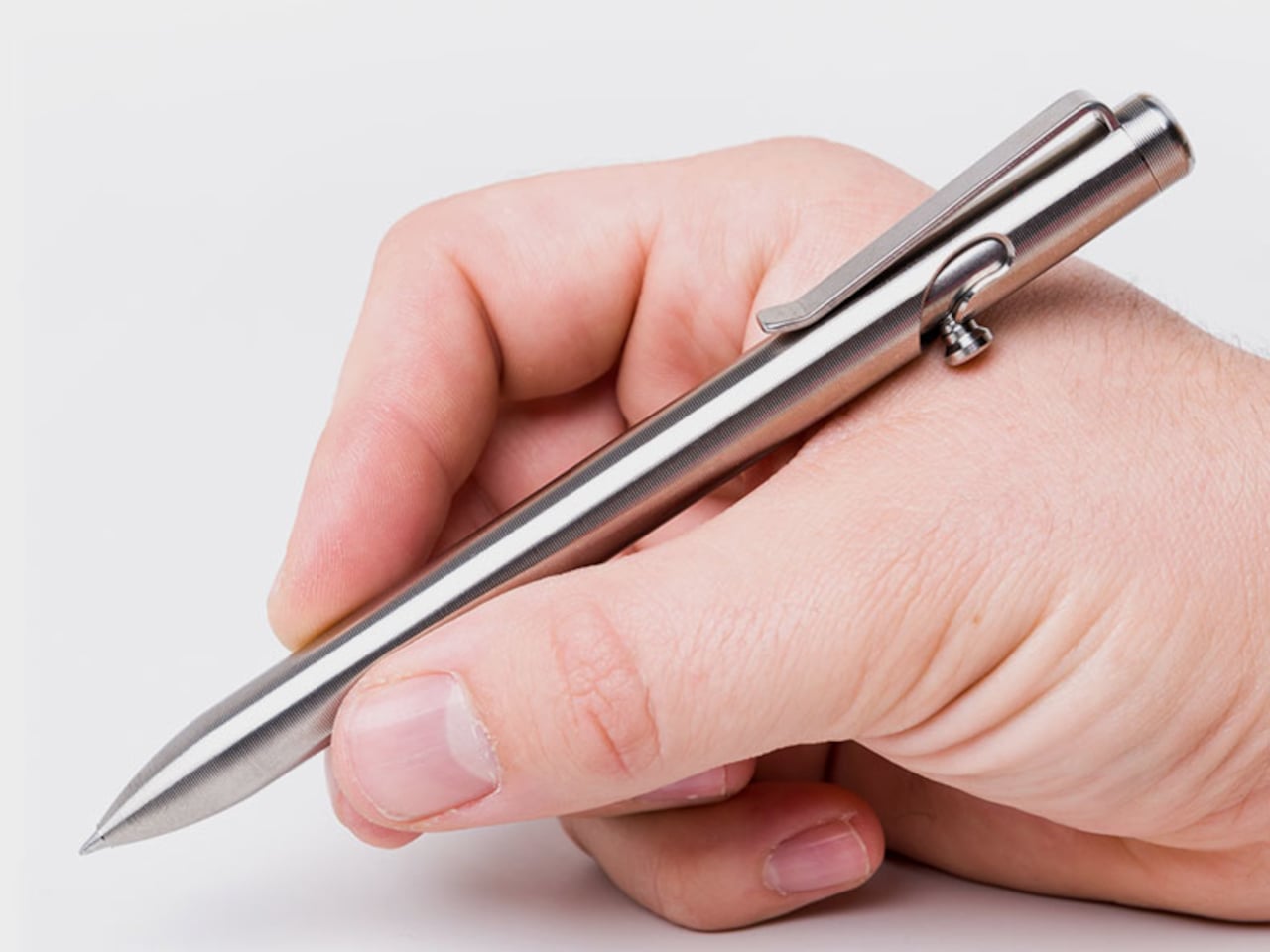
If there’s one titanium pen that helped legitimize the machined-pen category, it’s the Tactile Turn Bolt Action Pen. It comes in three sizes, with each running a different refill, from a Pilot G2 in the standard to a Schmidt EasyFlow 9000 in the shorter version. The bolt action is precise, the milling gives the grip real texture, and at $99 with a lifetime warranty, it’s still hard to argue with.
Designer: Tactile Turn
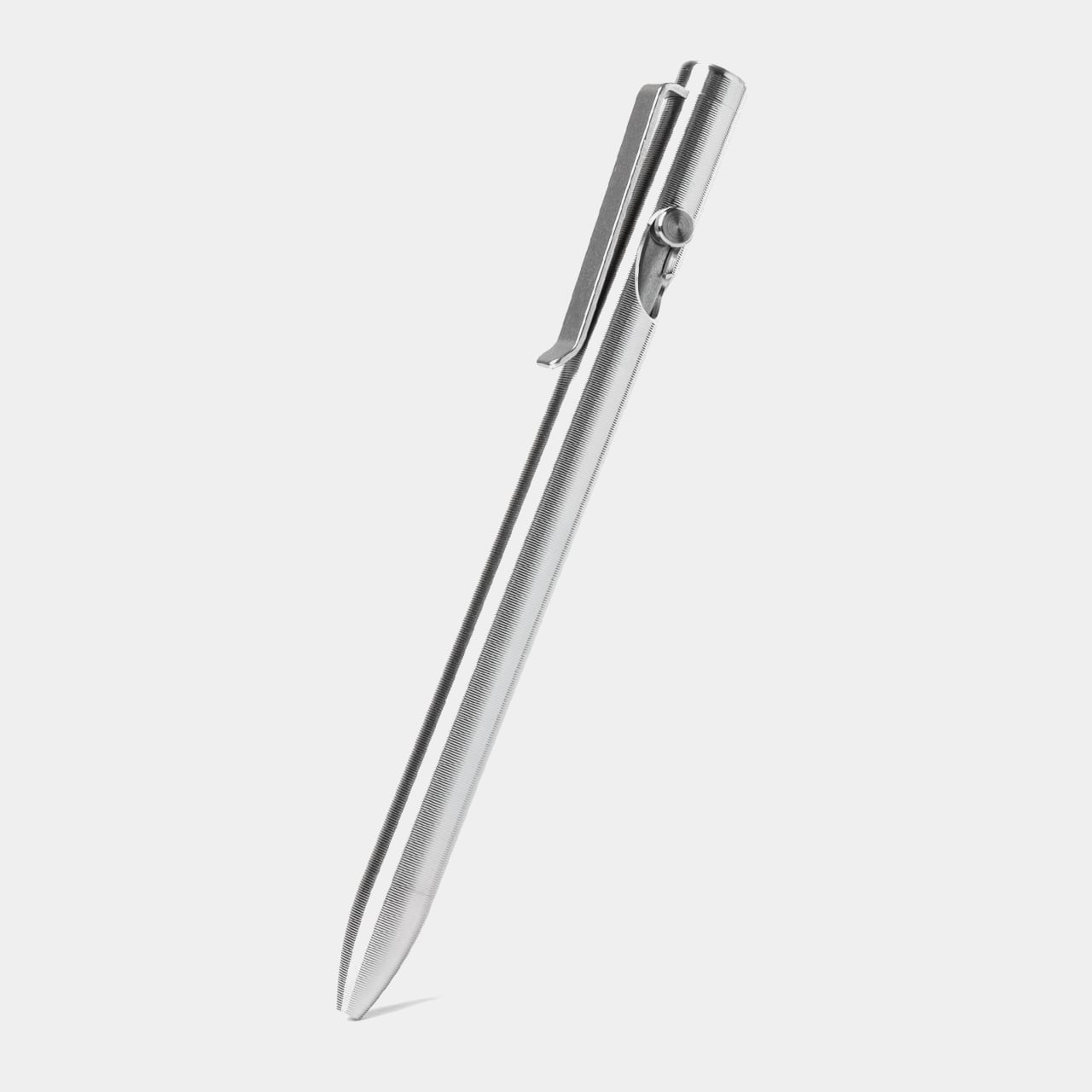
What separates it from its competition isn’t any single feature but the overall execution. The milling on the grip section is designed to be felt rather than just seen, and the J-bolt design moves with enough resistance to feel intentional without becoming tedious. It’s also one of the most refill-compatible pens in this space, which means you can dial in the writing experience without ever replacing the pen itself.
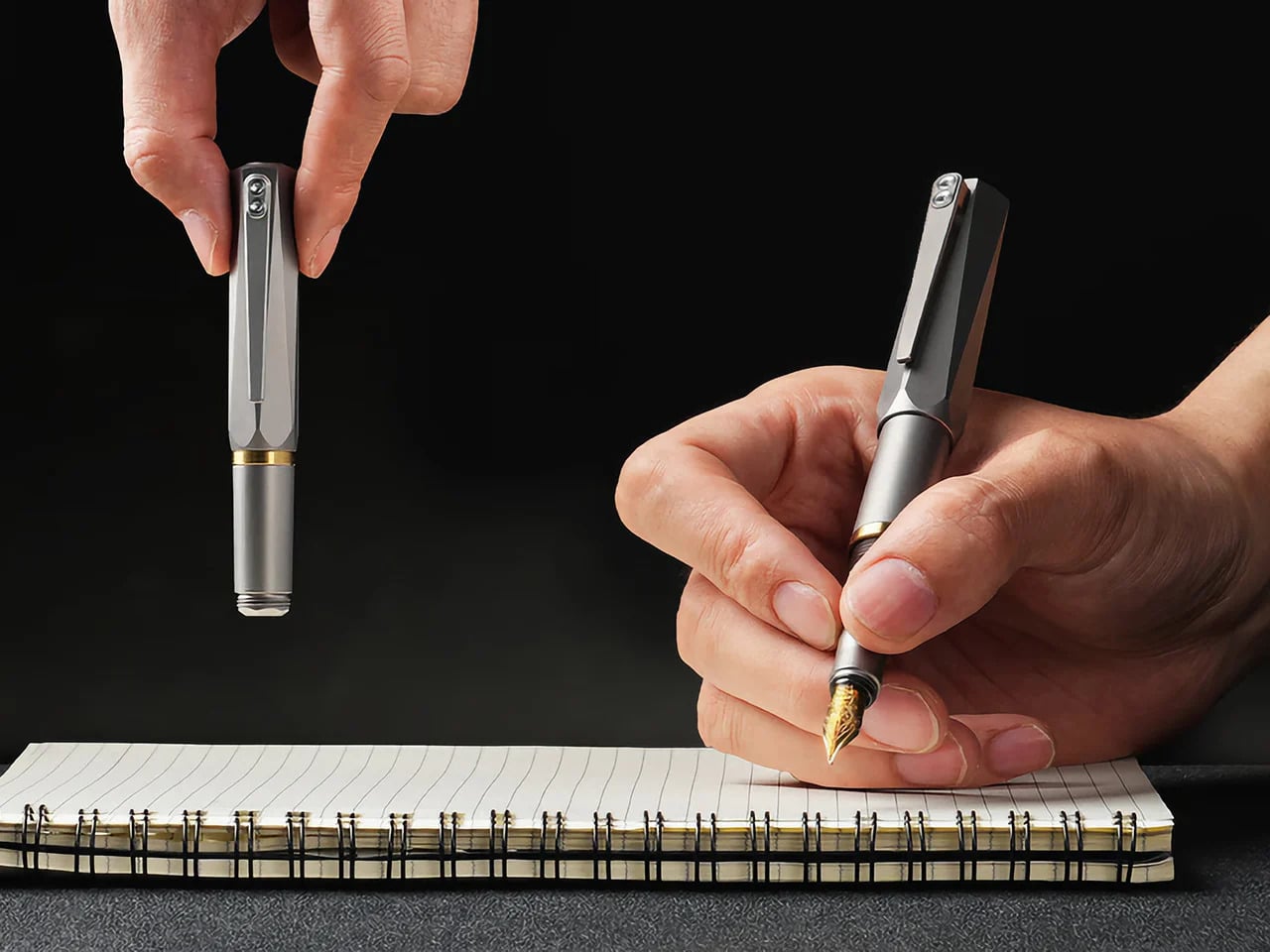
Not every EDC pen has to look like it was designed alongside a tactical flashlight. The Luminik titanium fountain pen takes a different route by folding down into a compact, pocket-friendly form that opens into a full-length fountain pen when it’s time to write. The whole thing is titanium throughout, and the design was built on the premise that a well-made pen shouldn’t need replacing after a few years.
Designer: EyeQ
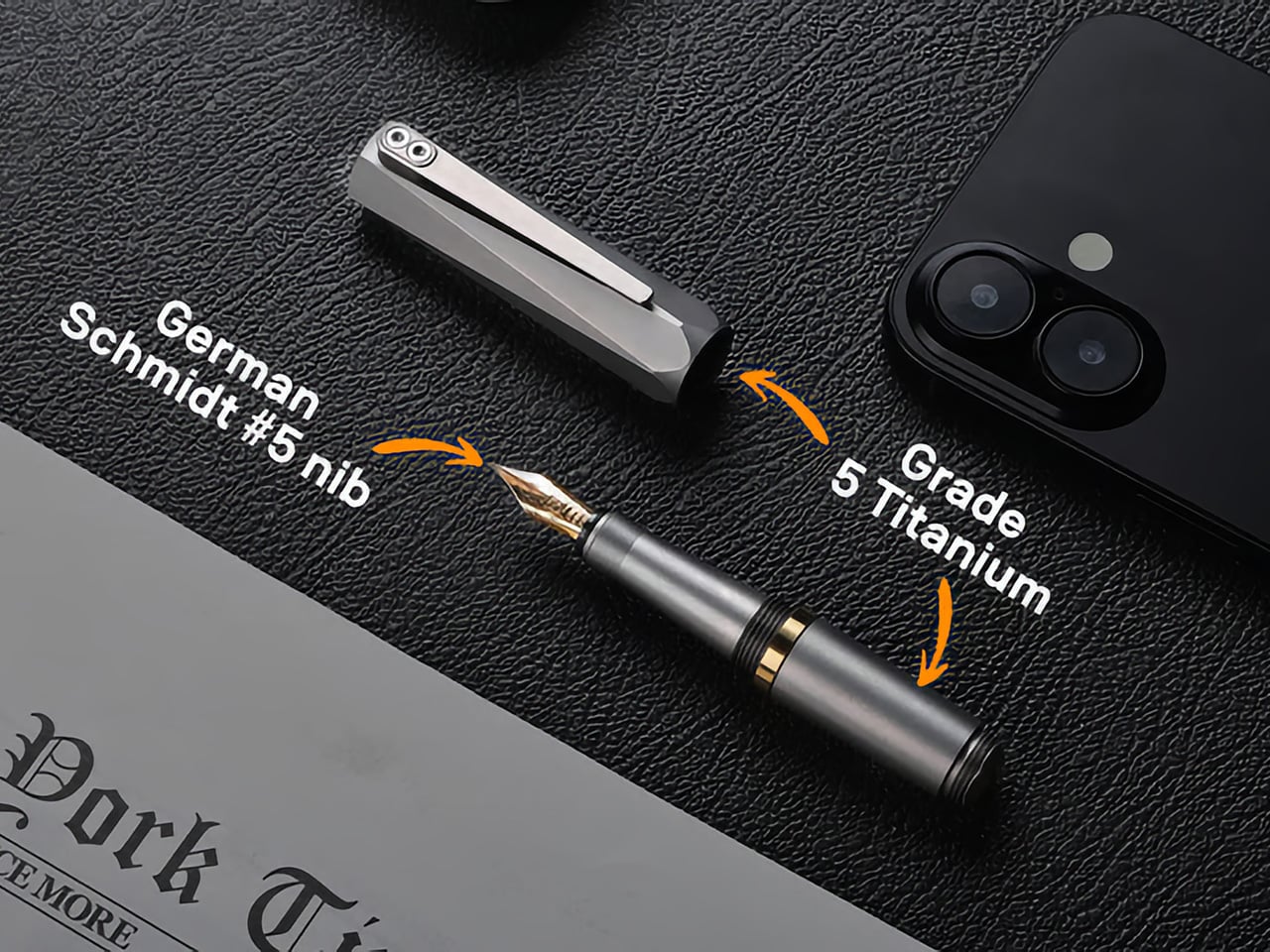
That folding mechanism also changes the entire experience of using it. There’s something satisfying about the way it comes together, like assembling a small, precise object rather than just uncapping a pen. It’s the right choice for someone who still cares about the quality of the writing experience itself, not just the mechanism or the carry, and it offers an interesting counterpoint to everything else on this list.
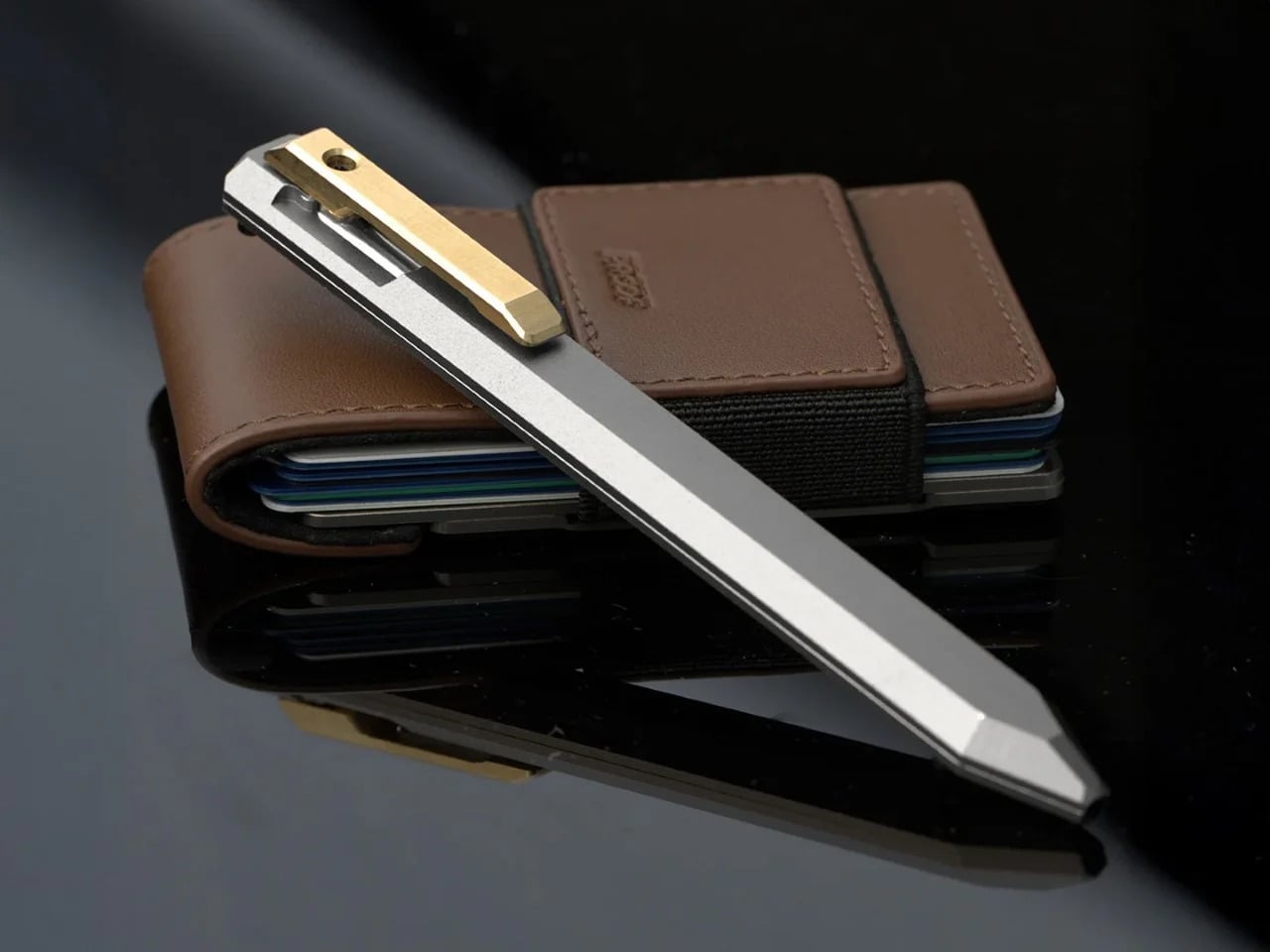
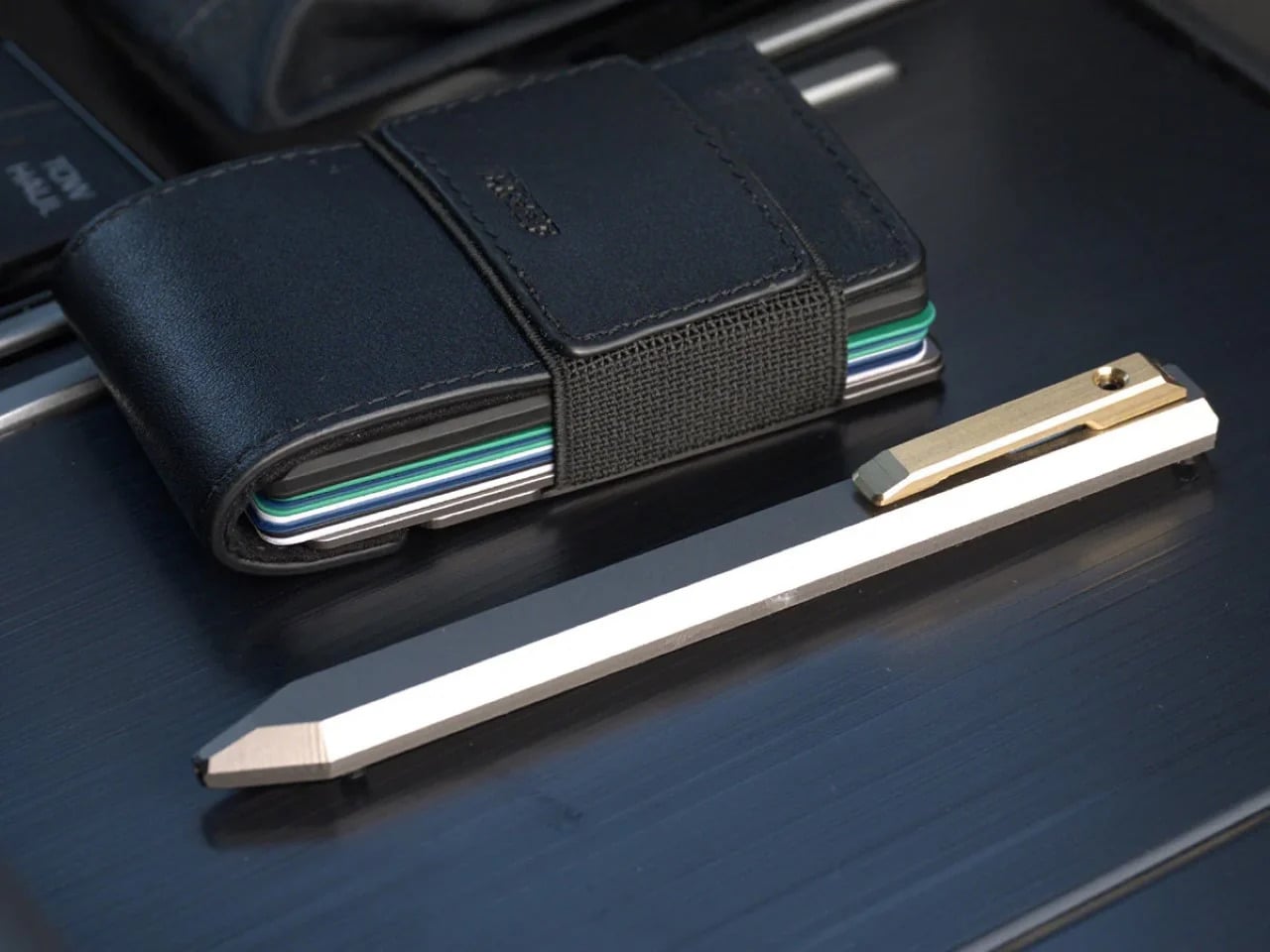
The PROOF Vanguard Pen sits where EDC utility and visual restraint meet. It’s a titanium bolt-action pen with a clean, almost architectural profile that doesn’t immediately telegraph its material or mechanism. The proportions are compact enough to sit in a shirt pocket without any awkwardness, and the overall form feels like something refined through iteration rather than styled to look impressive at first glance.
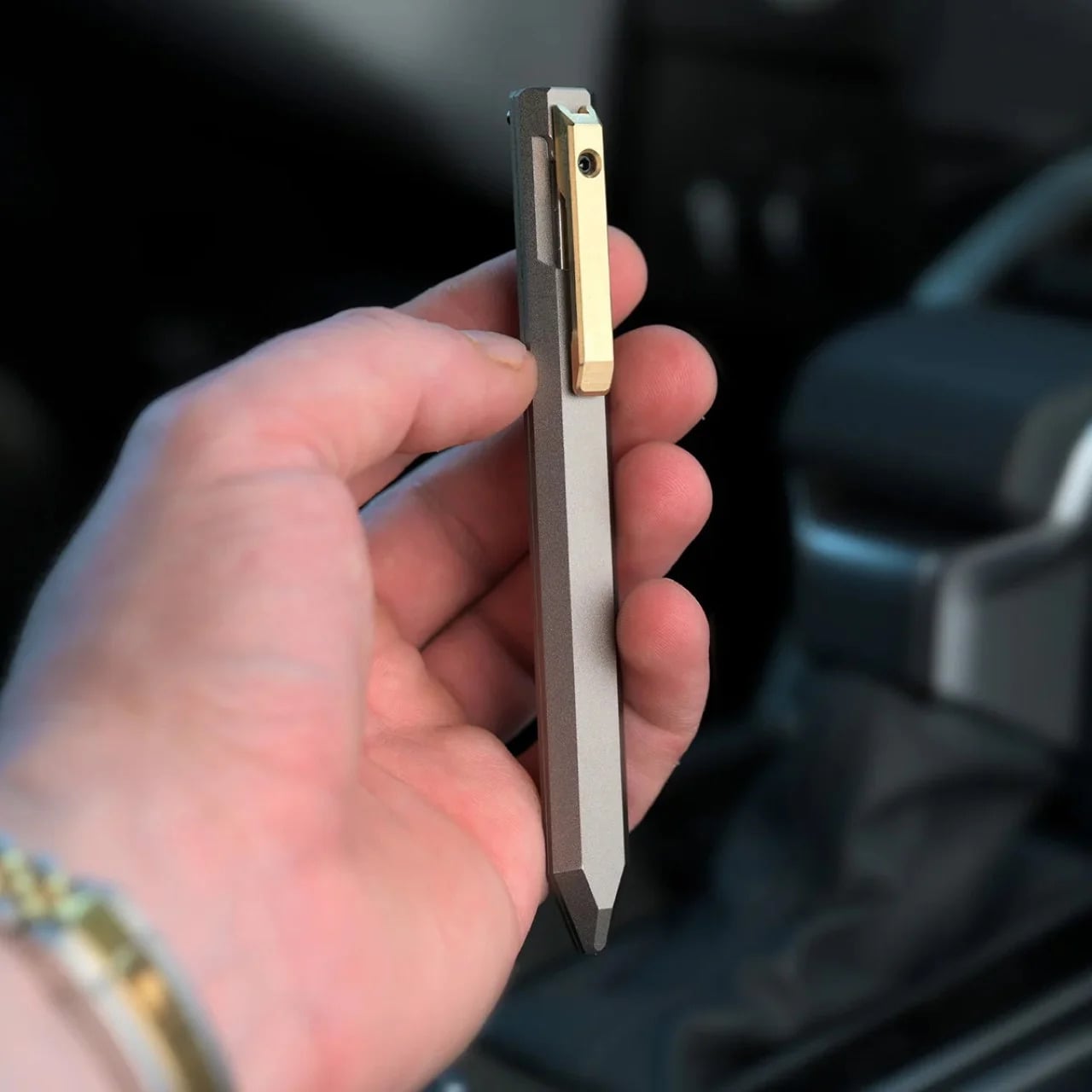
What the Vanguard offers is a pen you can hand someone in a meeting without them doing a double take, and then carry home in the same pocket as your phone without anything snagging. It also happens to be a genuinely good writing instrument, which shouldn’t be a surprise but is worth saying when so many EDC pens are more impressive closed than they are in actual use.
The Thomas Slim EDC Pocket Pen doesn’t lead with its finish or mechanism. It leads with what it can take. This pen spent 24 hours submerged underwater and still wrote for 1,500m afterward, which immediately puts it in a different conversation than pens that merely claim durability. For anyone who tends to forget a pen exists until the moment it’s urgently needed, that kind of endurance is genuinely reassuring.
Designer: Thomas Slim
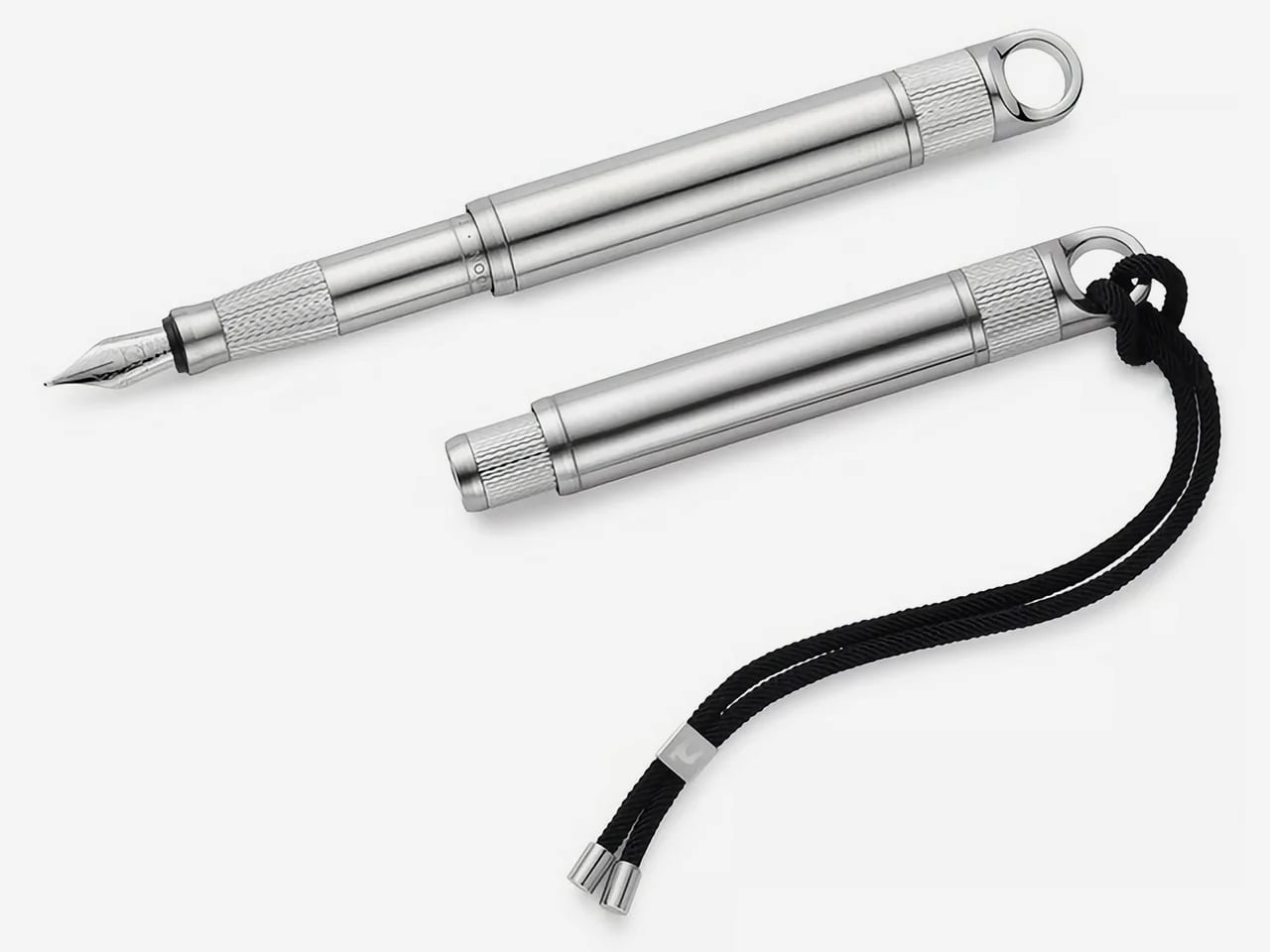
The slim profile makes it easy to tuck into a jacket pocket without a second thought, and the writing experience matches the promise of the build. It isn’t trying to signal toughness or look like a survival instrument. The Thomas Slim just gets on with its job, whether that’s a quick note in the rain or a longer writing session wherever the day happens to take you.
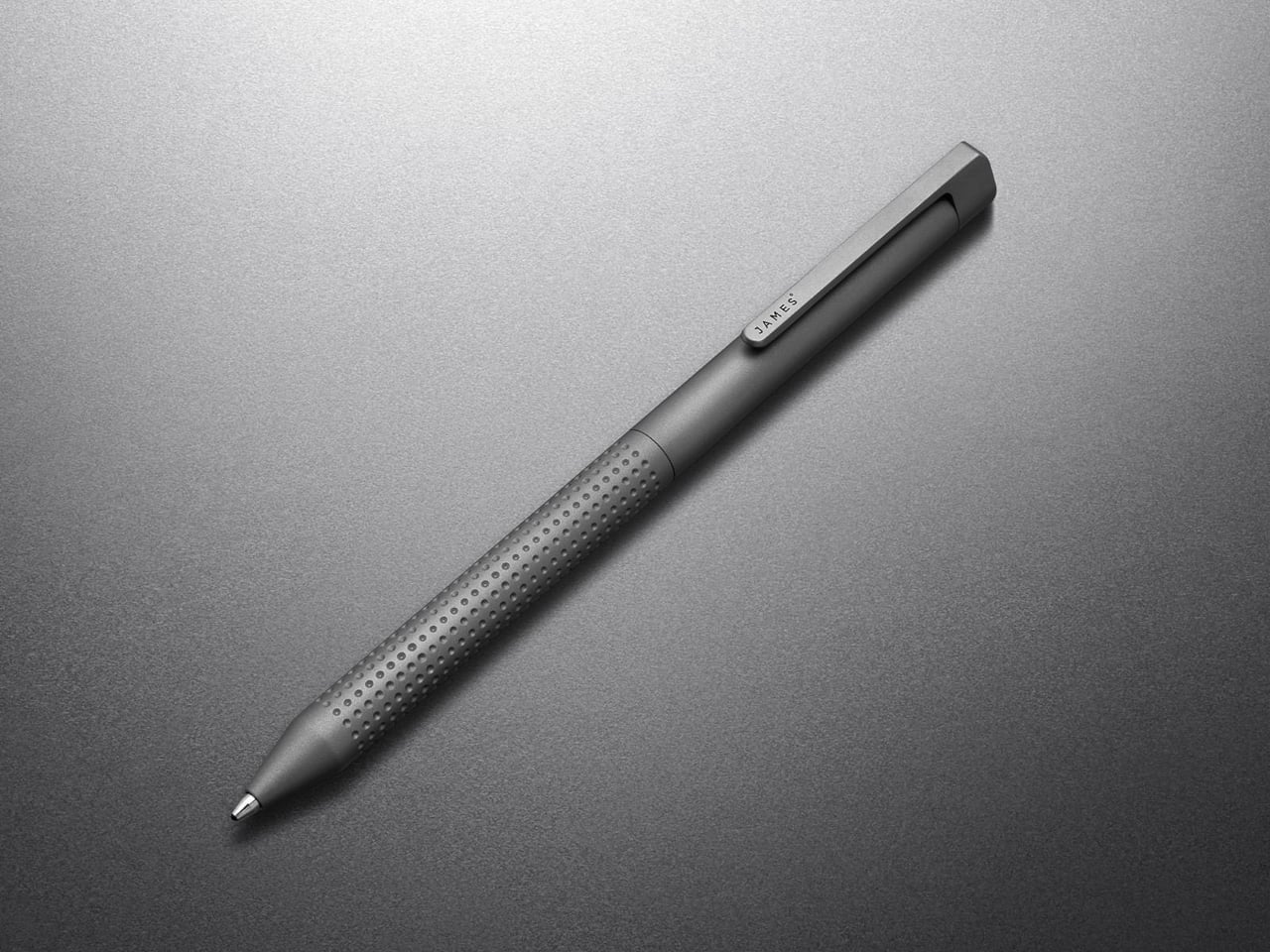
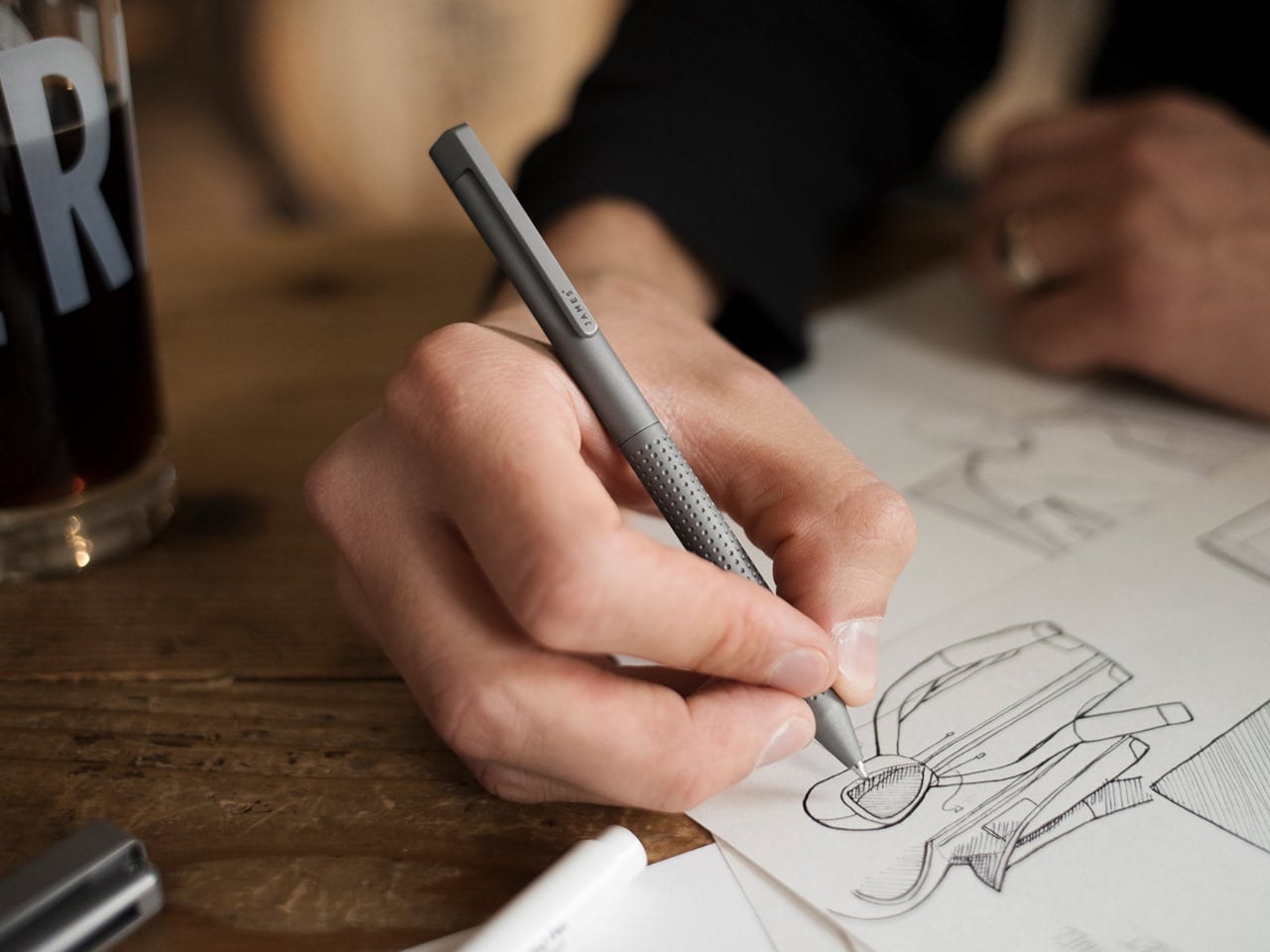
The James Brand’s Bolen makes the strongest case on this list for the twist action as a writing ritual in its own right. There’s a deliberateness to how it opens, a slow, satisfying rotation that feels intentional rather than merely mechanical. It’s titanium throughout, with a profile clean enough to pass as a conventional pen while still feeling like something more considered when it’s actually in your hand.
Designer: The James Brand
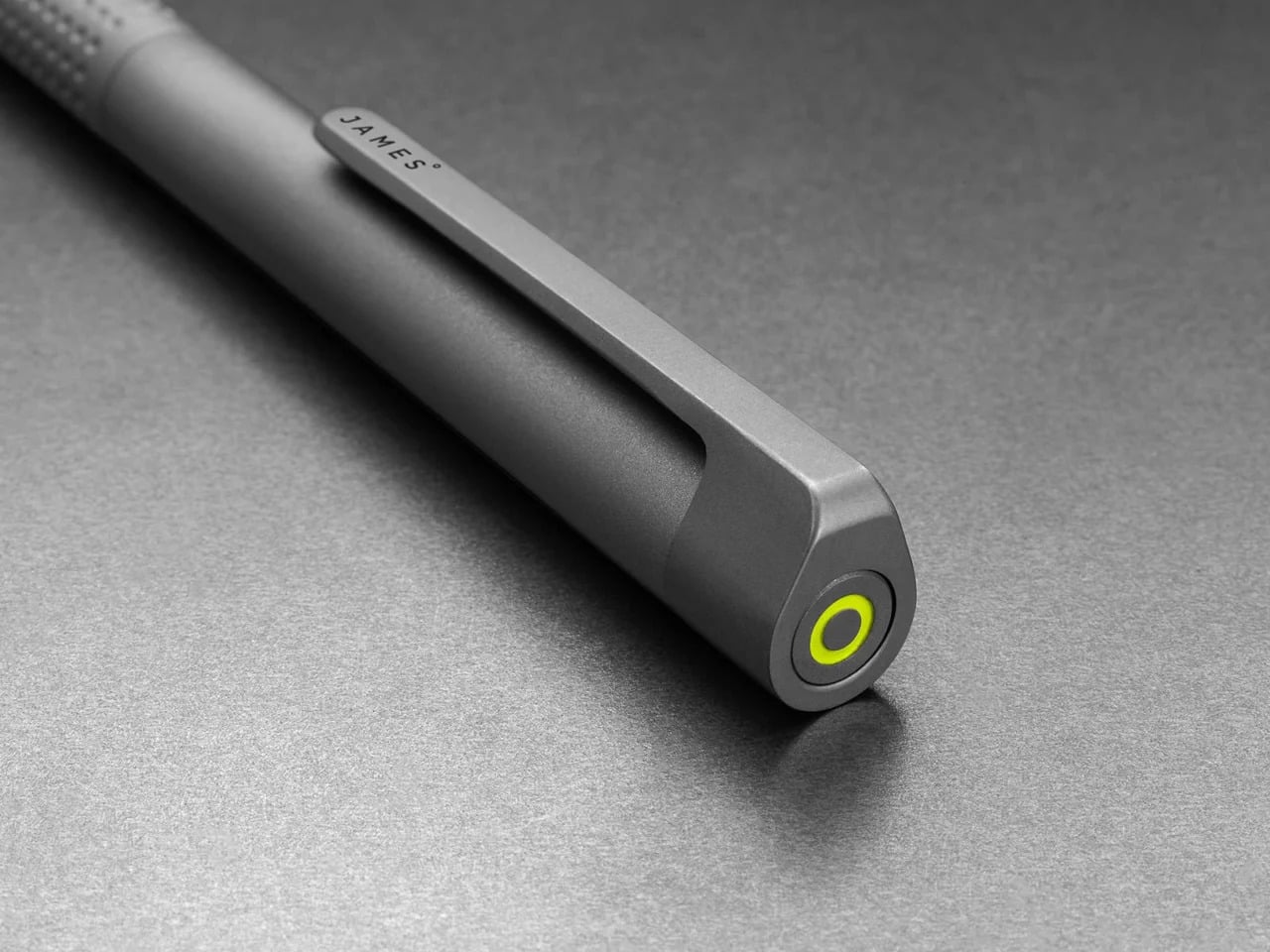
The Bolen is also the right answer for anyone who found bolt-action mechanisms a little too theatrical, or who wanted titanium durability without the tactical language that typically accompanies it. It writes well, carries unobtrusively, and doesn’t demand attention. It fits neatly into a workday and still feels like a deliberate design choice, which might be the highest compliment you can pay any pocket object.
The post 7 titanium EDC pens engineered like tiny tools: one weighs 32 grams first appeared on Yanko Design.

Most children’s toys today are remarkably good at keeping kids indoors. Between tablets, gaming consoles, and endlessly curated activity kits, the image of a child crouching in a stream, redirecting water with their bare hands, feels almost romantic. Which is exactly why Wild Wetlands, a modular outdoor toy designed by four students from Massey University’s College of Creative Arts, Cameron Murray, Corey Matheson, Jordan Gedye, and Rupert Shepherd, caught my attention.
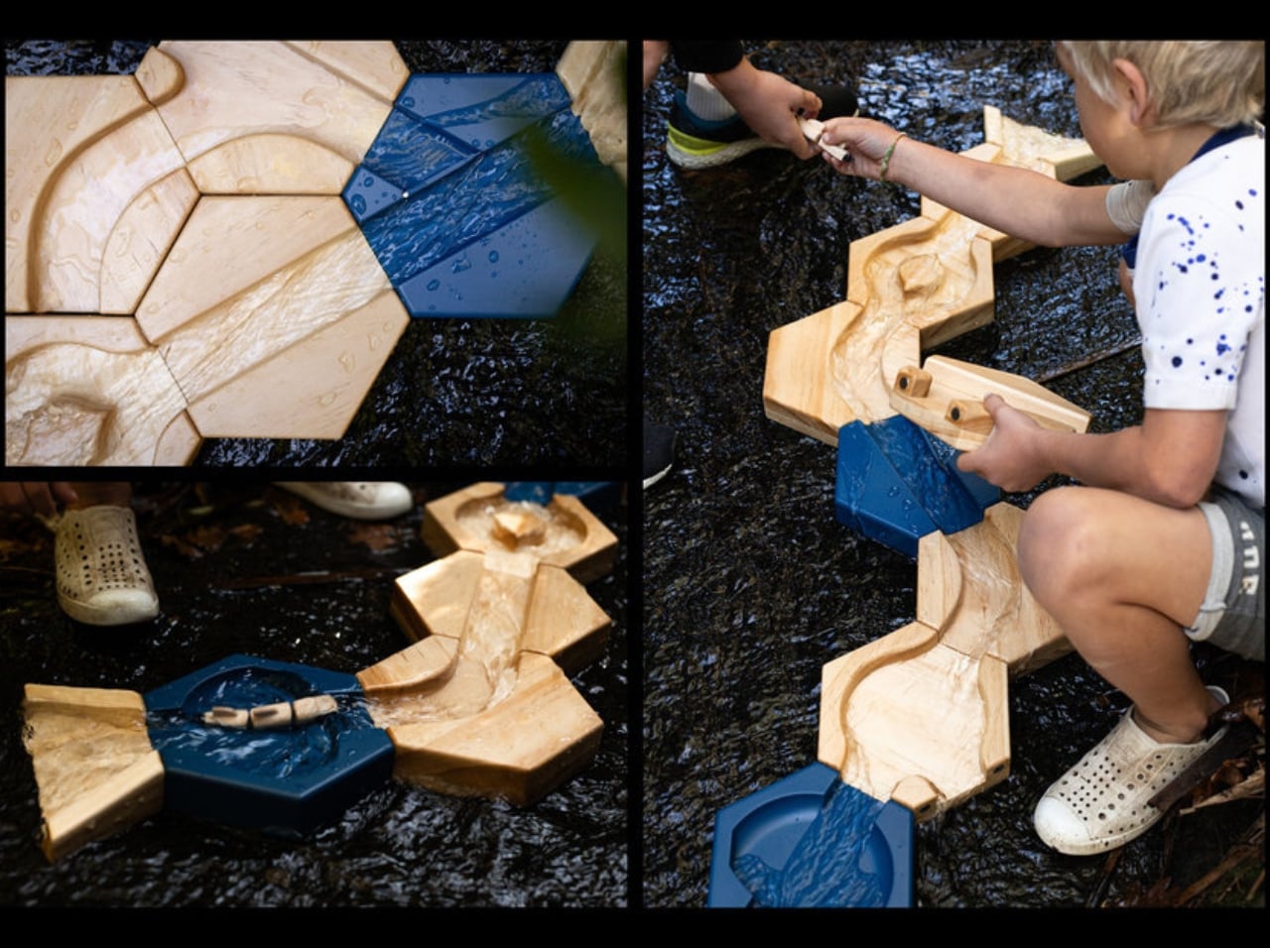
Wild Wetlands is, on the surface, a modular tile game. There are 11 different tiles that children aged 5 to 12 can arrange and rearrange to create pathways for water. The main objective is simple: get the eel, known in Māori as Tuna, from the wetland tiles through a series of connected waterways down to the ocean tile. You build the river. You control the flow. You adjust, and adjust again, until it works. But calling it simple is a bit misleading, because the deeper you look at this concept, the more thoughtful it becomes.
Designers: Cameron Murray, Corey Matheson, Jordan Gedye, Rupert Shepherd
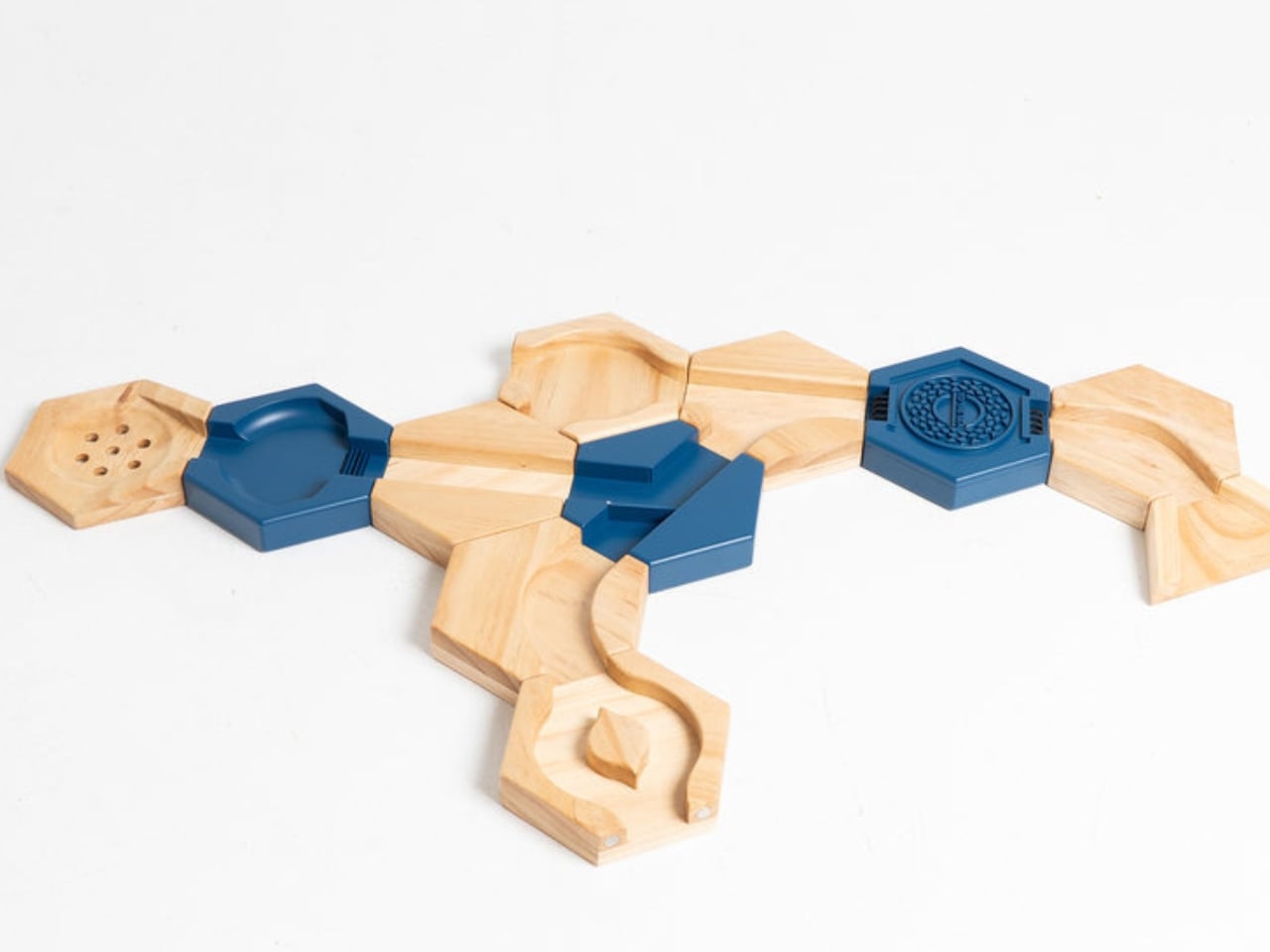
The game is rooted in a real ecological issue facing Aotearoa, New Zealand. Eels migrate from freshwater wetlands down rivers to the ocean to spawn. After hatching, young eels make the reverse journey upstream to mature in those same wetlands. It’s a remarkable life cycle, and for many New Zealand eel populations, it’s being disrupted by decades of human modification to waterways. Dams and culverts block these ancient migratory routes, and the consequences for eel populations across the country are very real.
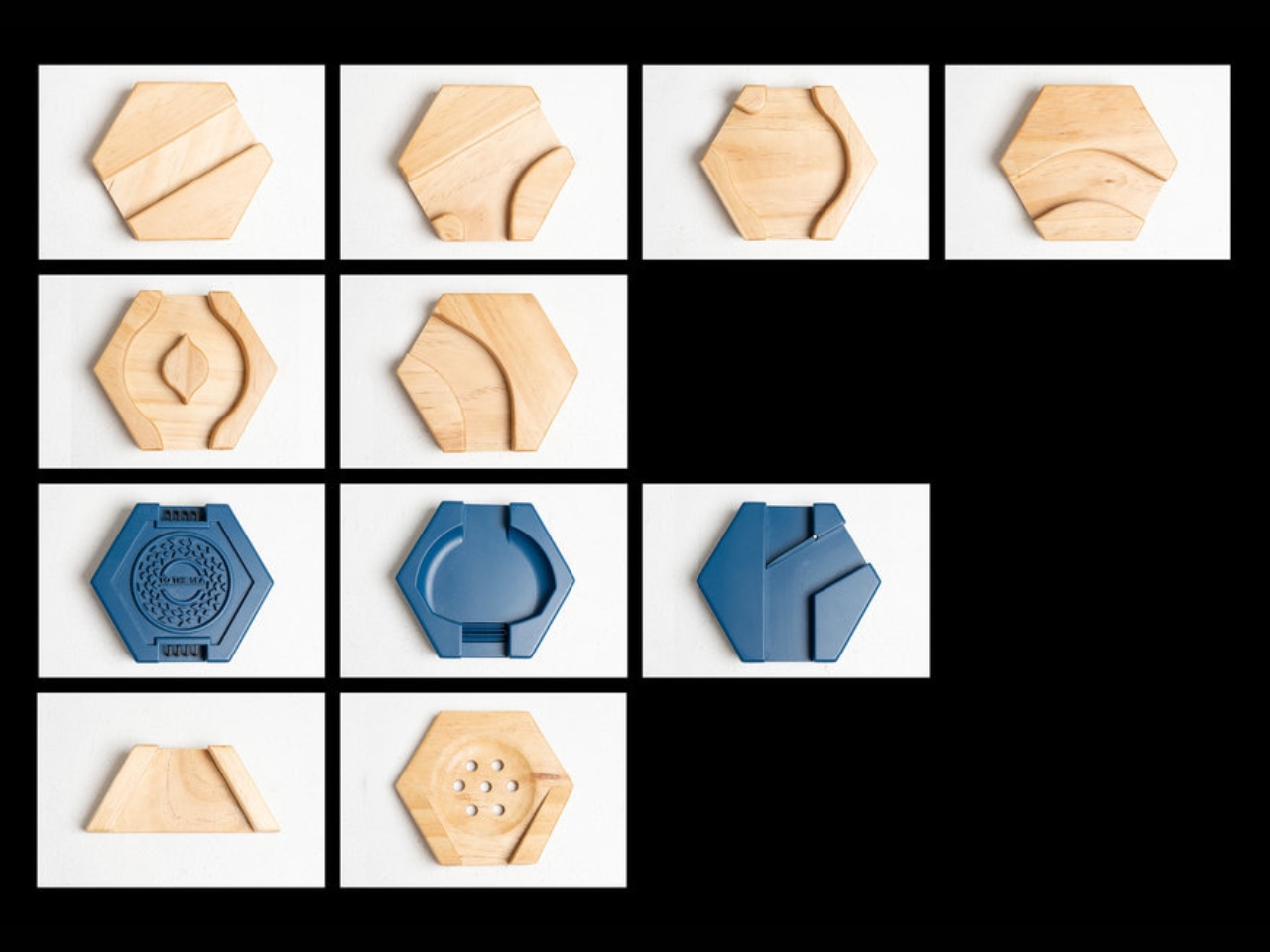
The designers translated that problem directly into the game’s mechanics. The tile set includes both natural tiles, designed to mimic the organic curves and multi-directional paths of rivers, and industrial tiles that represent human-modified waterways. Kids can configure and reconfigure these tiles to send water flowing in different directions, and they can also bring in natural materials like rocks, mud, and sticks to further adjust the flow. It’s trial-and-error play at its best, open-ended enough that no two sessions will look the same, but purposeful enough that there’s always a real reason behind the tinkering.
The materials are worth noting too. The tiles are made from New Zealand recycled pine, PLA, and neodymium magnets, finished with a polyurethane varnish designed to hold up in wet, outdoor conditions. The magnets are intentionally left visible rather than hidden beneath the surface, because the designers wanted the connections between tiles to feel intuitive. You see the connection point, you feel it click, and you immediately understand how the system works. That kind of transparency in design is something more toy makers should seriously consider.
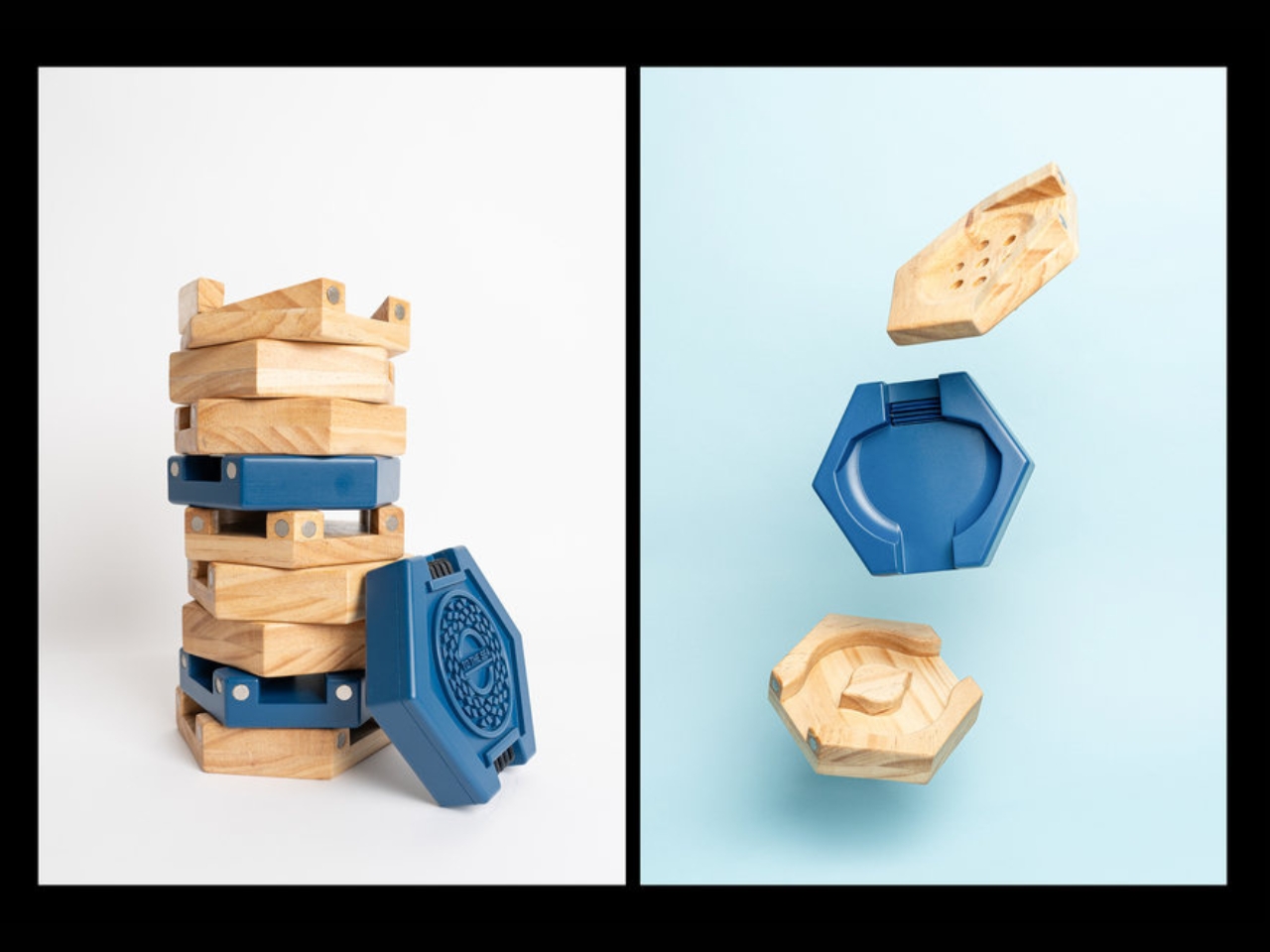
The question Wild Wetlands keeps raising for me is about how we teach kids to care about nature in the first place. Most toys built around environmental themes tend to explain the problem at you. They lecture. Wild Wetlands puts the problem in your hands and asks you to work through it. A kid isn’t told that dams block eels. They feel it when the water doesn’t flow right. They discover it when the eel doesn’t make it to the ocean. That’s a fundamentally different kind of learning, and it’s the kind that tends to stick.
The game supports one to five players and is designed to scale, with more tiles you can add for increasingly complex configurations. I love that it’s built to be played outside, near actual water, in the mud. The whole thing is made to get dirty and keep working, and somehow, that alone makes it feel more honest than most toys aimed at teaching kids about the environment.
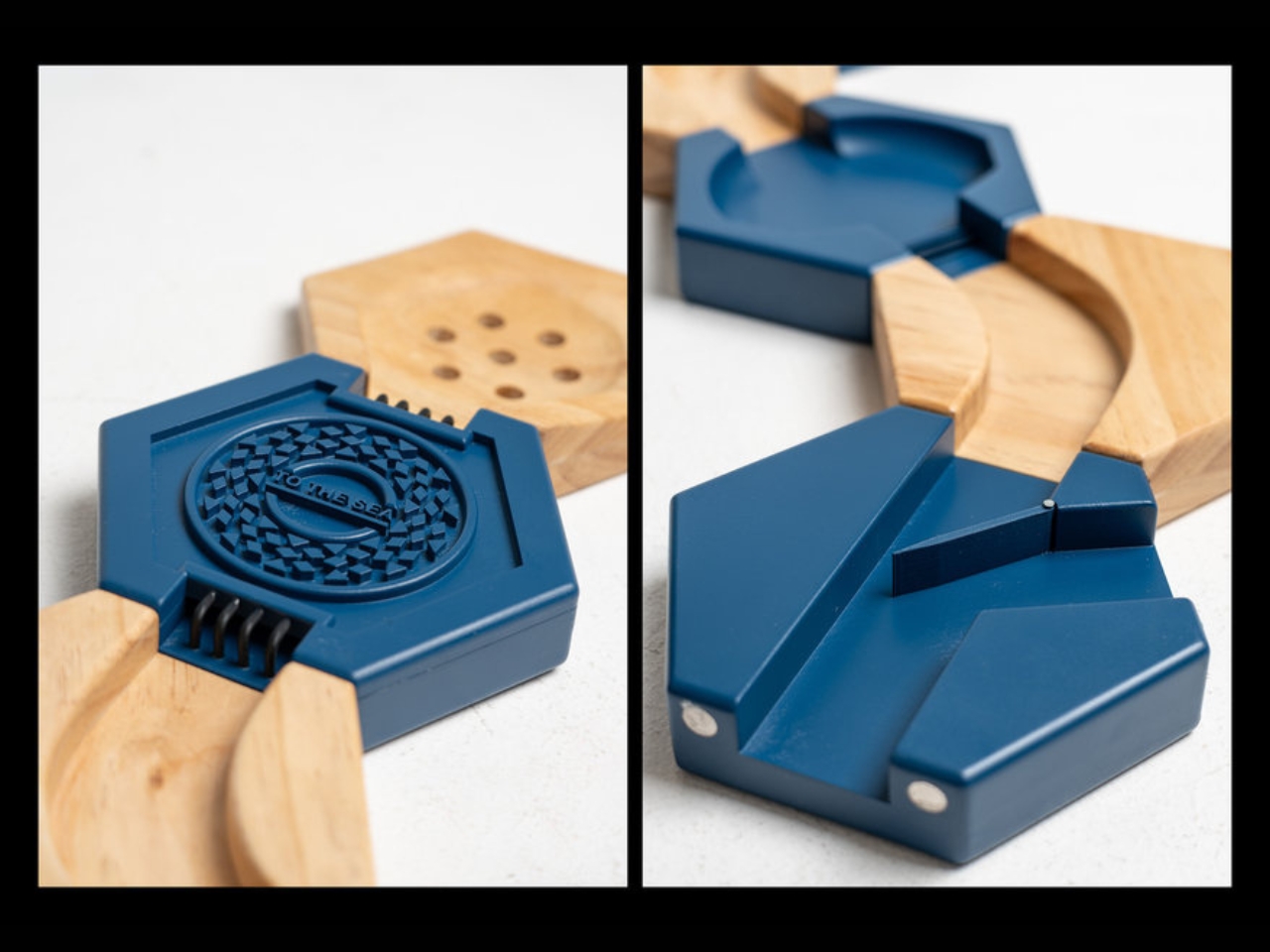
At a time when “eco-conscious design” has quietly become a marketing checkbox, Wild Wetlands feels genuinely earned. The designers didn’t just make a toy with natural materials and call it sustainable. They built a mechanic around a living ecological crisis, scaled it for a child’s hands and attention span, and trusted kids enough to let the play do the explaining. That’s good design. And it’s the kind of outdoor play we’ve been badly missing.

The post The Game Where You Build the River and Set the Eel Free first appeared on Yanko Design.

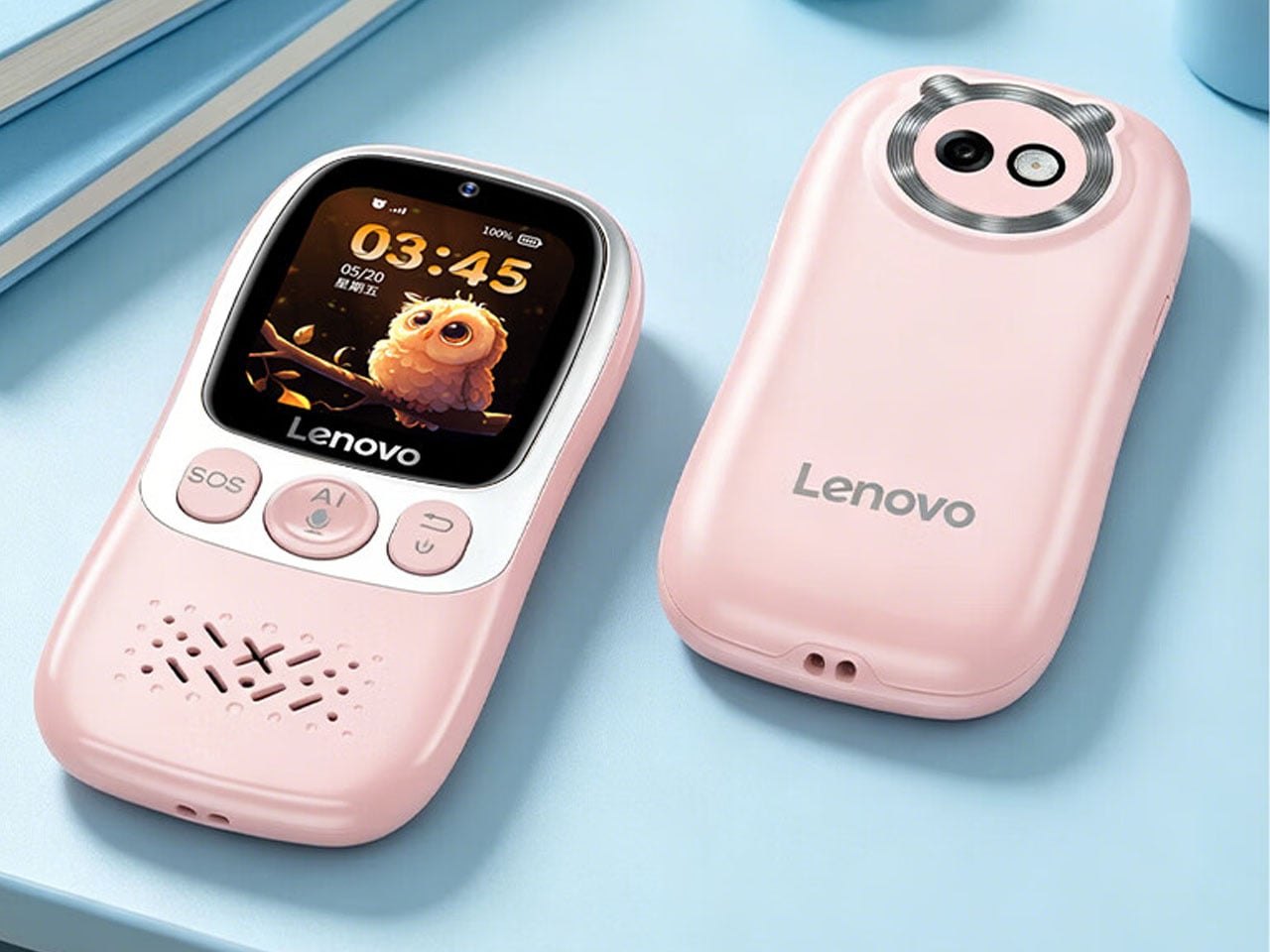
Lenovo has introduced a smartphone with a very different purpose from the devices that dominate today’s gadget landscape. Instead of chasing higher performance, better cameras, or immersive entertainment, the AI Student Phone is designed to help students stay focused on learning while giving parents greater control over how the device is used. Launched in China at an affordable price of 299 Yuan (approximately $44), the phone strips away many of the distractions associated with modern smartphones. The device instead replaces them with AI-powered educational tools and safety-focused features.
Unlike conventional Android smartphones, the AI Student Phone intentionally excludes games, web browsers, and social media platforms. This reduces digital distractions during study sessions while still allowing students to stay connected with parents and access learning resources. Rather than serving as an all-purpose entertainment device, it functions as a communication and educational companion that encourages healthier smartphone habits.
Designer: Lenovo
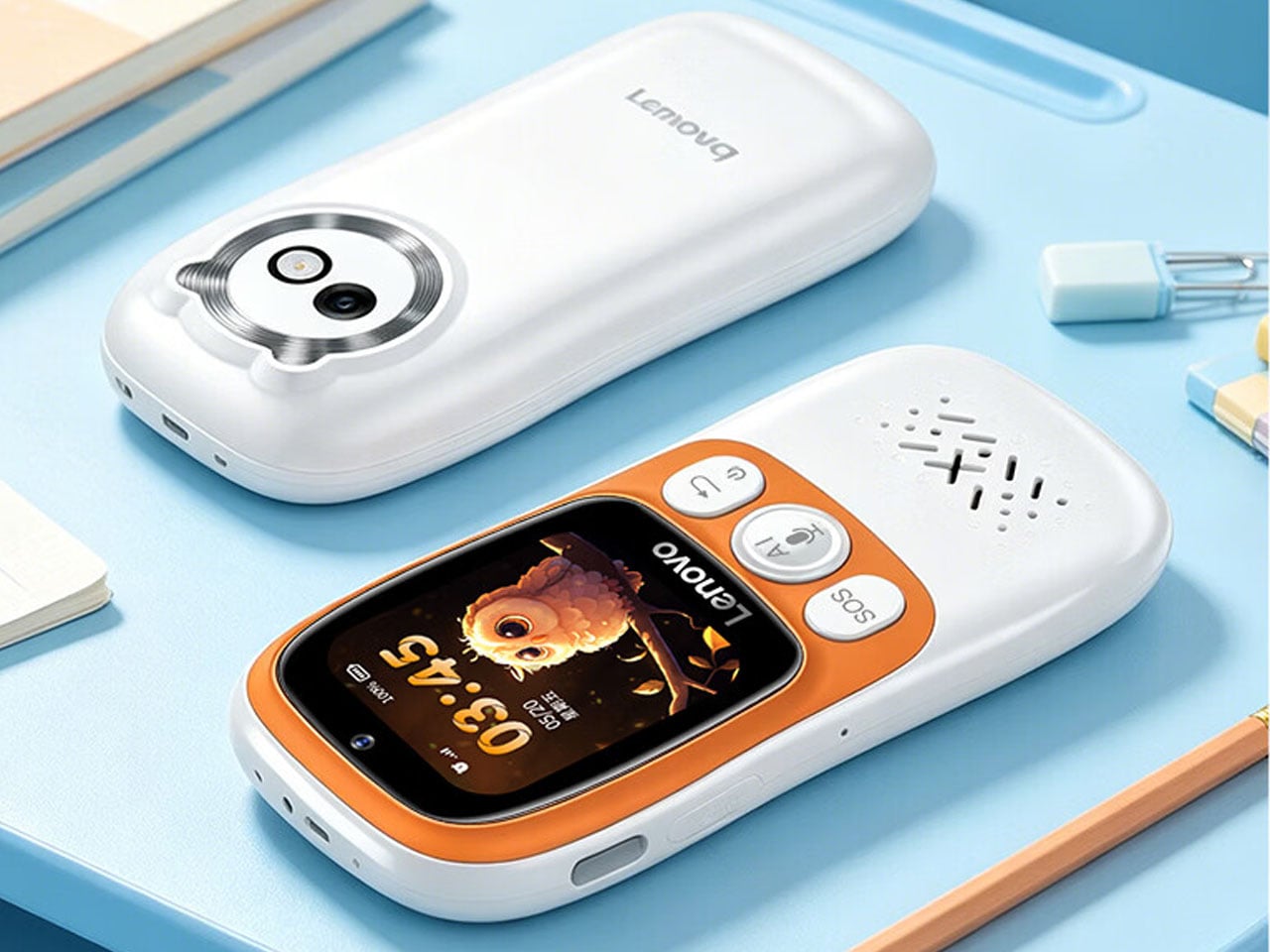
A dedicated AI button sits on the side of the phone, providing instant access to the built-in assistant. Students can ask questions using voice commands, receive explanations for school subjects, and get homework assistance without navigating through multiple apps. Lenovo positions the AI assistant as a reliable study companion that can provide quick answers while keeping interactions simple enough for younger users.

Parents receive an equally important set of features through extensive remote management tools. They can monitor the phone’s location using GPS tracking, establish geofenced safe zones, and receive notifications whenever a child enters or leaves designated areas such as school or home. The parental controls also make it possible to manage usage remotely, ensuring the device remains focused on educational activities rather than unnecessary distractions.
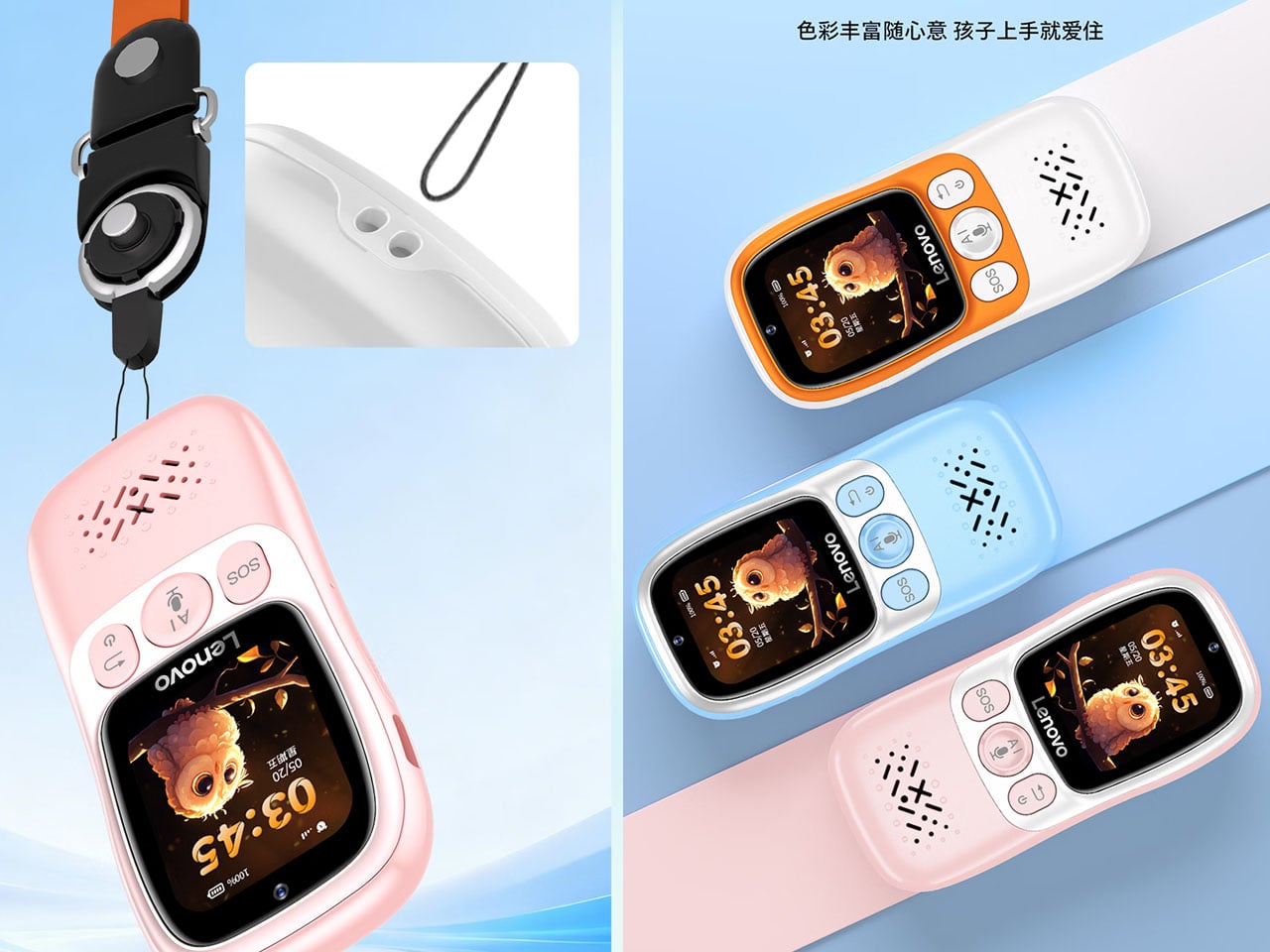
The phone includes support for voice and video calling, allowing families to stay in touch throughout the day. Despite the simplified software experience, the device still offers practical communication capabilities, making it suitable for everyday use. Lenovo has also incorporated emergency features that enable children to quickly contact family members if needed, further strengthening the device’s appeal as a first phone for younger users.
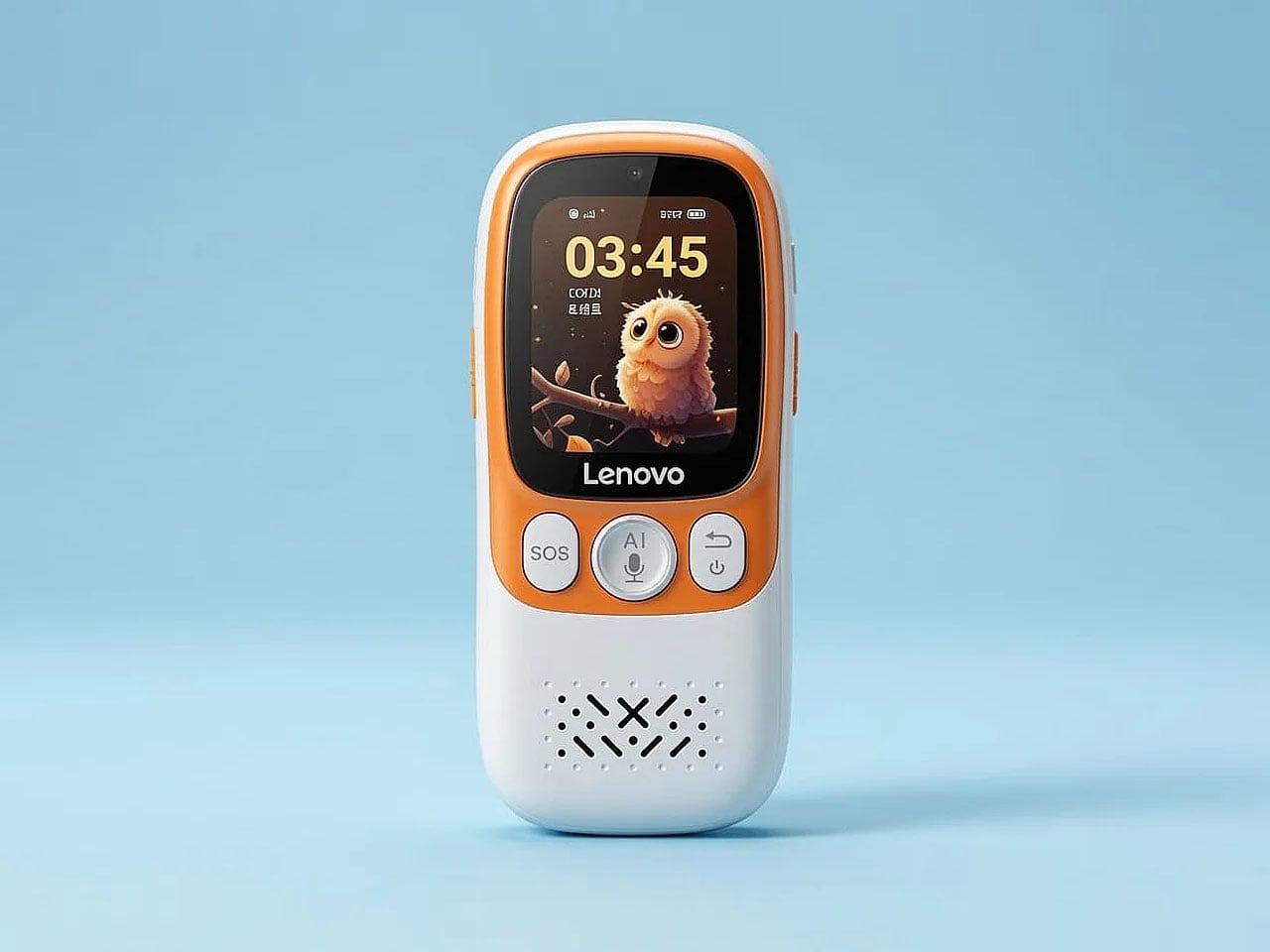
From a hardware perspective, the AI Student Phone focuses on reliability instead of premium specifications. It features a compact touchscreen display, basic cameras for communication, and sufficient battery capacity to comfortably last through a school day. The modest hardware helps keep costs low while remaining adequate for the educational tasks the phone is intended to perform.
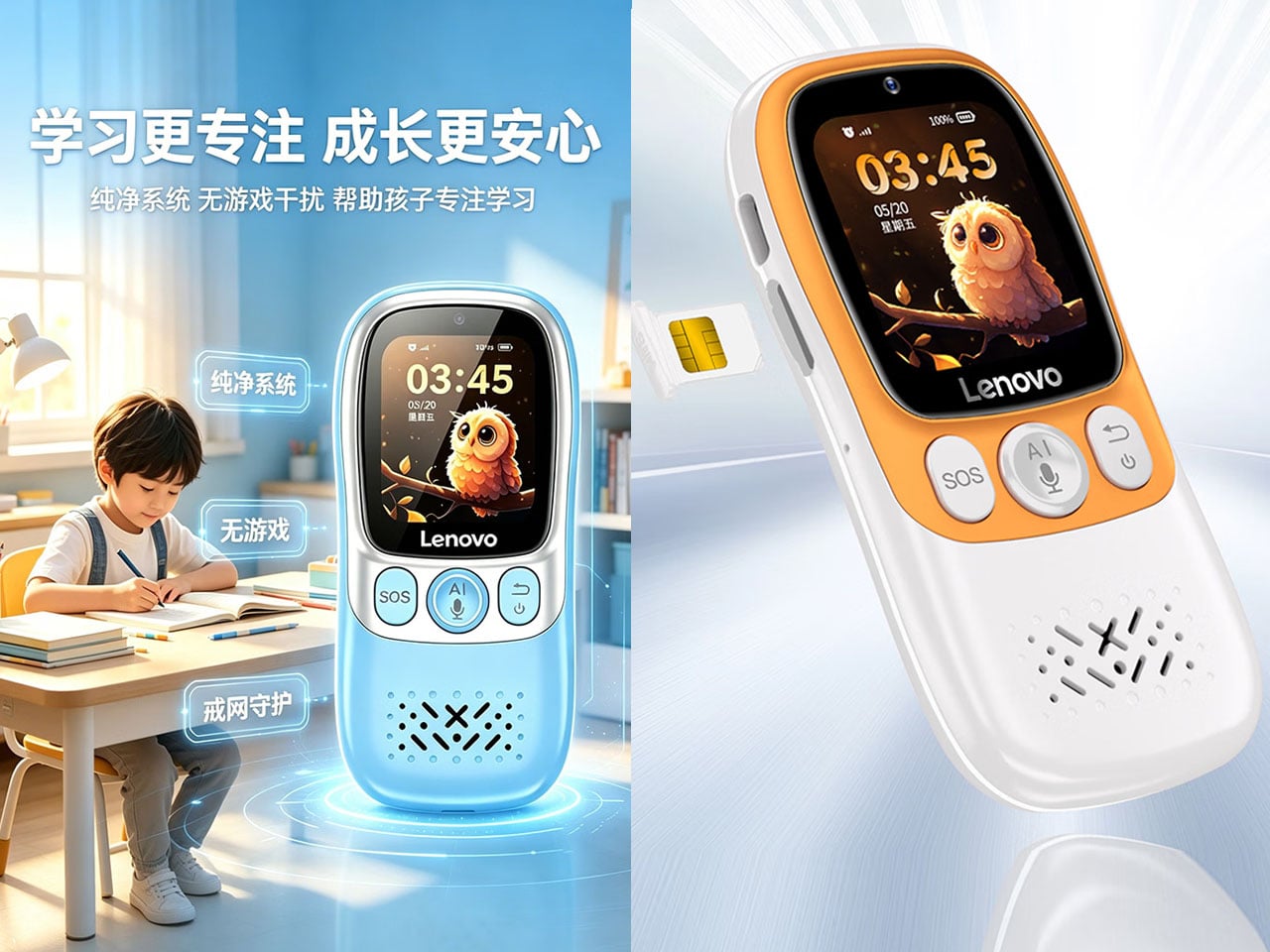
While its highly restricted software environment may not appeal to general smartphone users, Lenovo’s latest device fills a niche that many parents have been looking for. This is an affordable phone that keeps children connected without exposing them to the endless distractions of traditional smartphones. The budget-friendly AI Student Phone is a highly practical solution for families seeking a safer introduction to mobile technology for students.
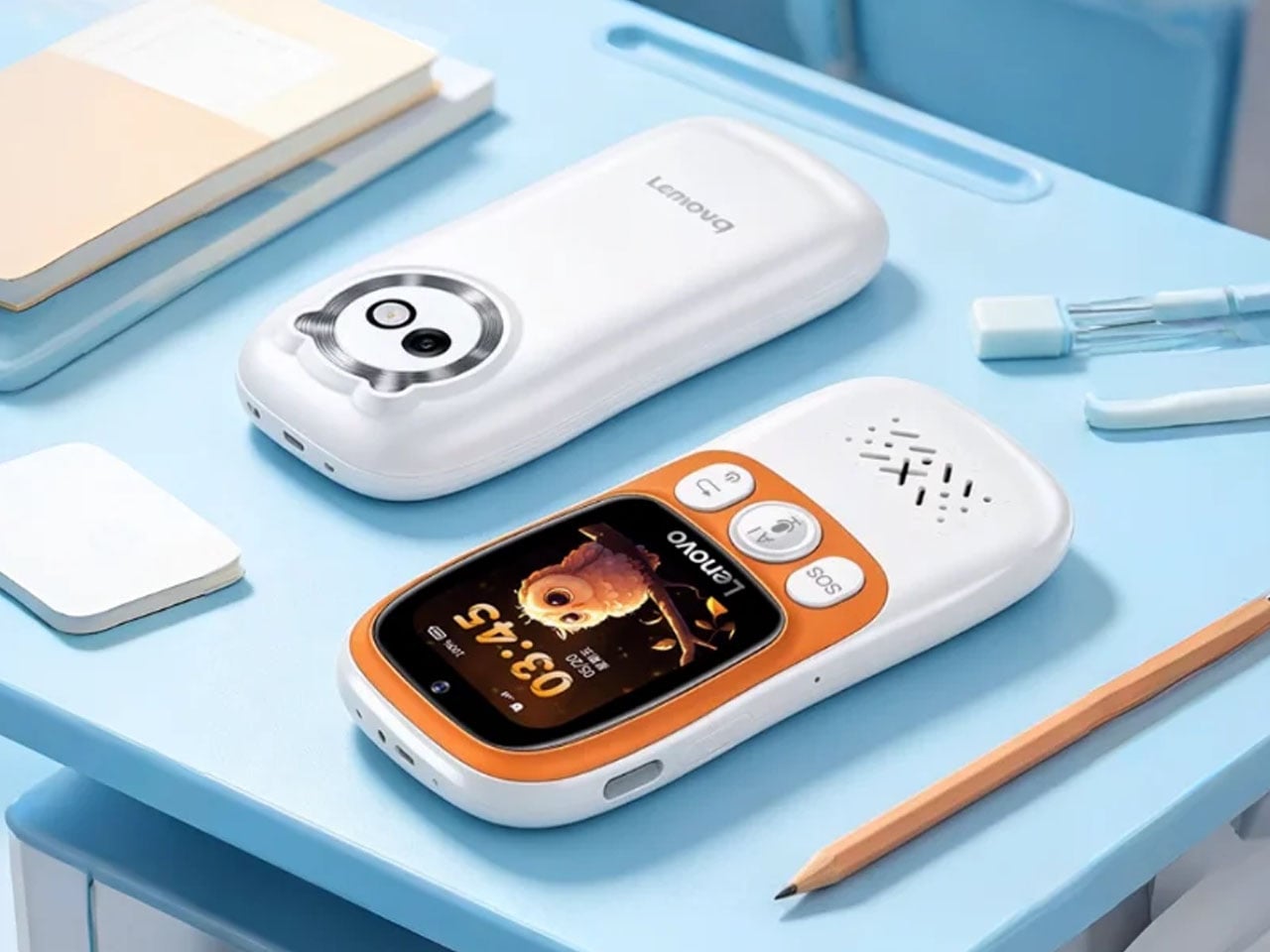
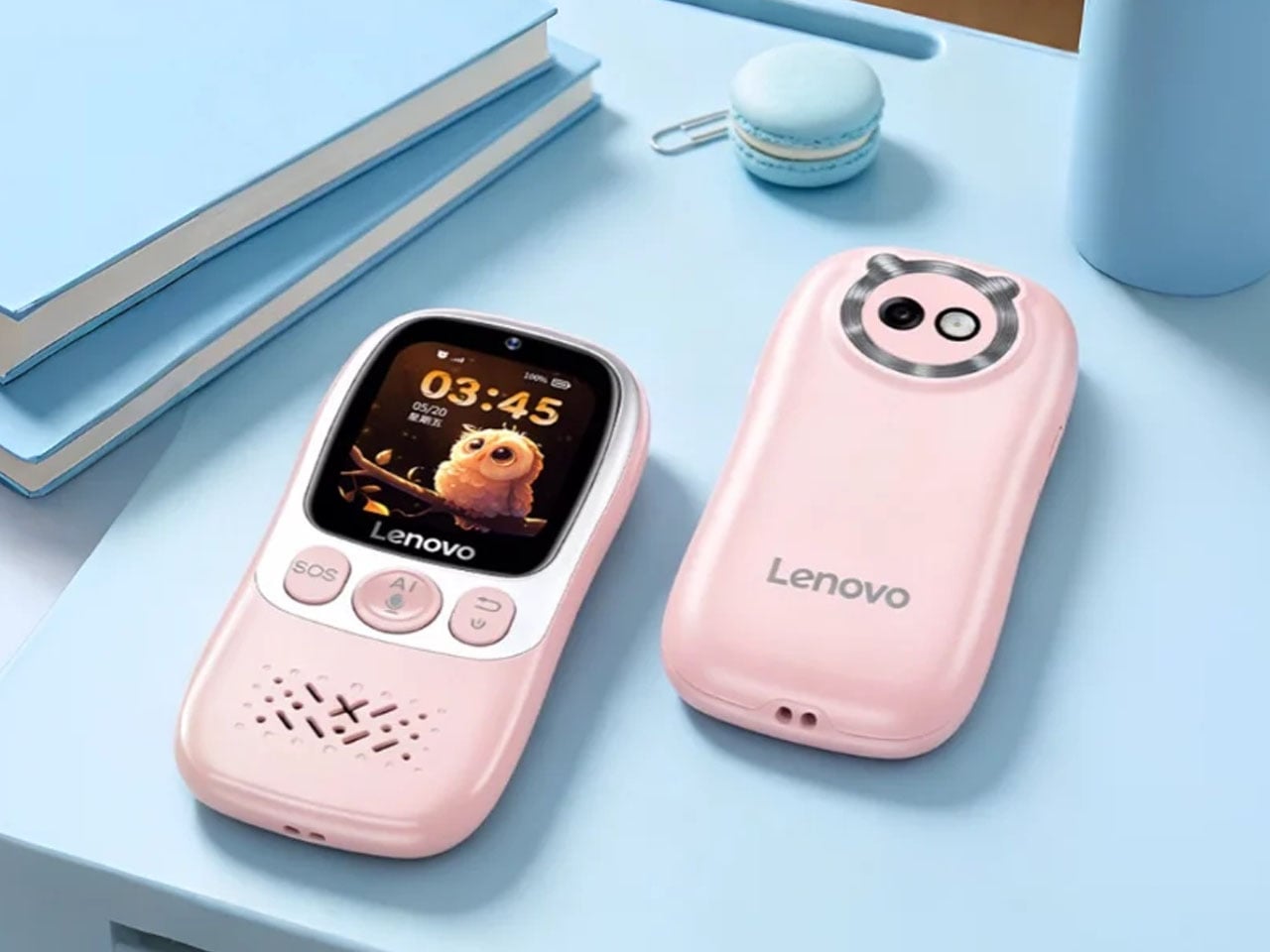
The post Lenovo’s AI Student Phone prioritizes learning over entertainment with smart parental controls first appeared on Yanko Design.

The nightstand has become a staging ground for technology. Between a phone, a white noise machine, a lamp, and whatever book you’re pretending to read before you fall asleep, it tends to get crowded. That clutter has gotten to the point where some people start their mornings already stressed from looking at the pile, which is counterproductive for something that’s supposed to help you rest.
The Divoom FlowToo works around that problem by collapsing three bedside staples into a single compact device. It’s a Bluetooth speaker, white noise machine, and alarm clock all at once, with a customizable display that rounds the whole thing out. Rather than adding another device to the pile, it’s designed to clear some of it, while actually improving on each of those functions rather than just combining them with asterisks.
Designer: Divoom
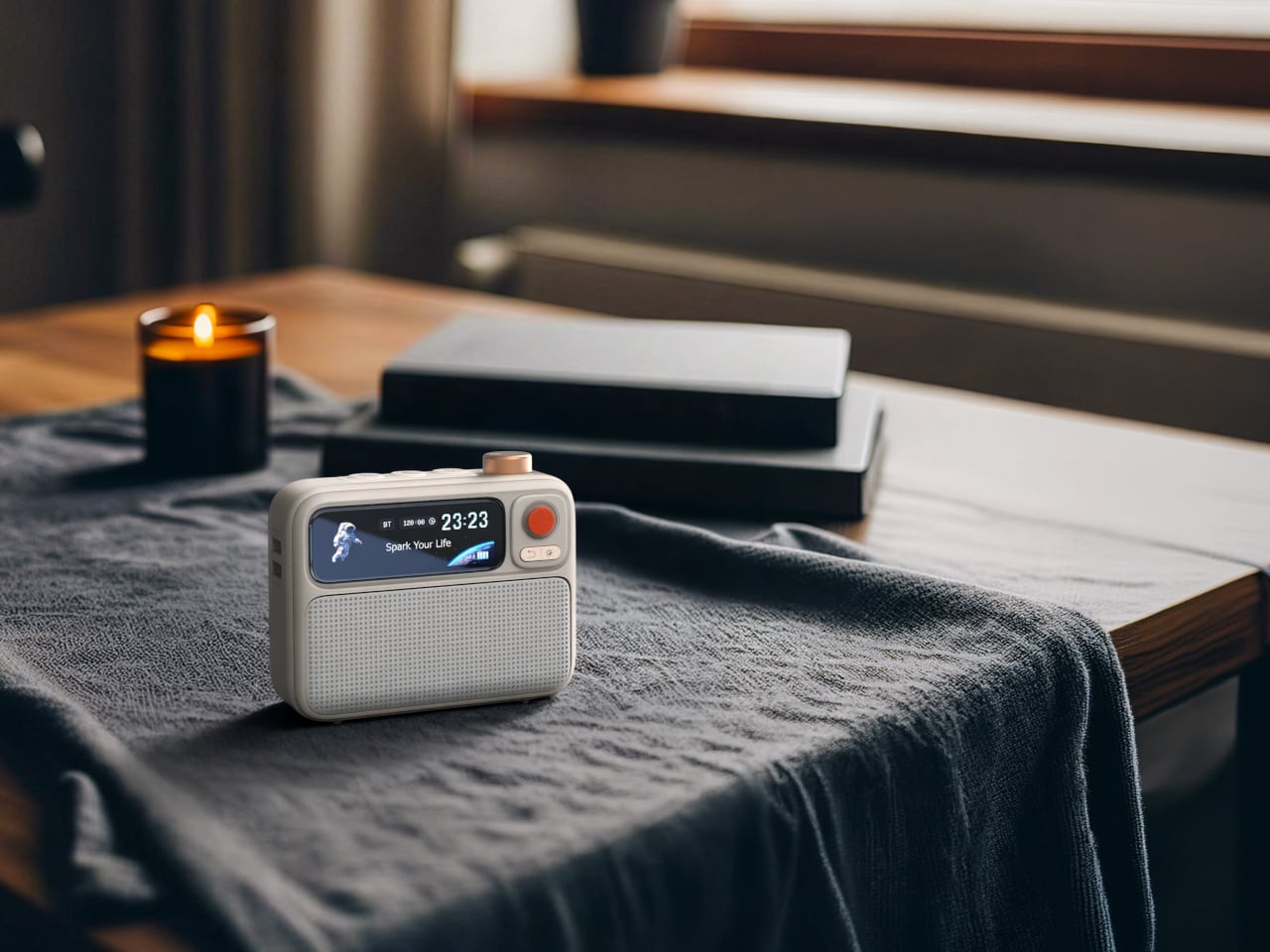
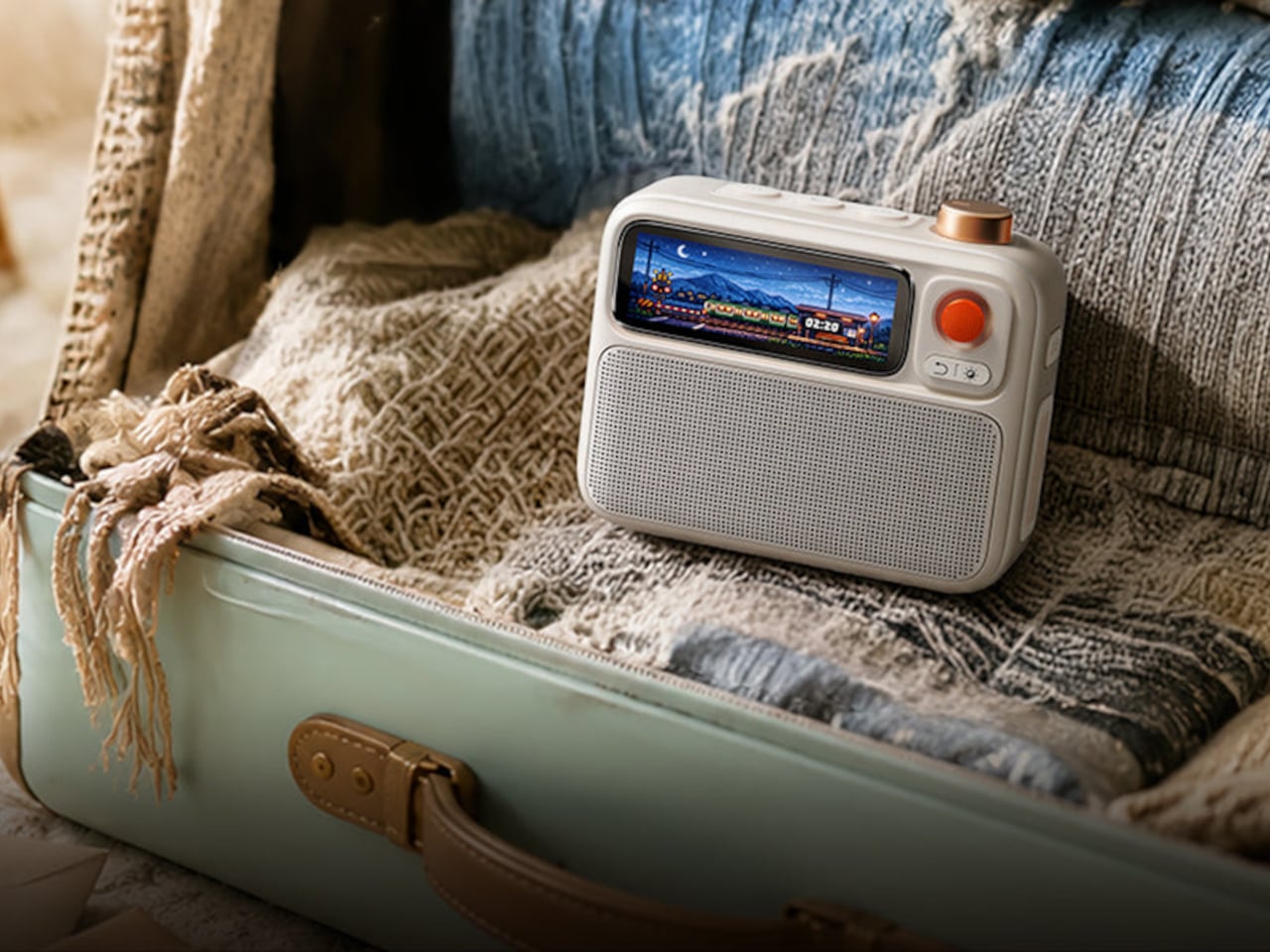
The speaker runs through a 10W amplifier and 45mm full-range driver, which makes it a genuine music speaker rather than the obligatory audio feature most alarm clocks bolt on as an afterthought. You can stream music from your phone over Bluetooth and get enough volume to fill a bedroom without things getting harsh. For a device that lives on a nightstand, that sets it apart from most of the competition.
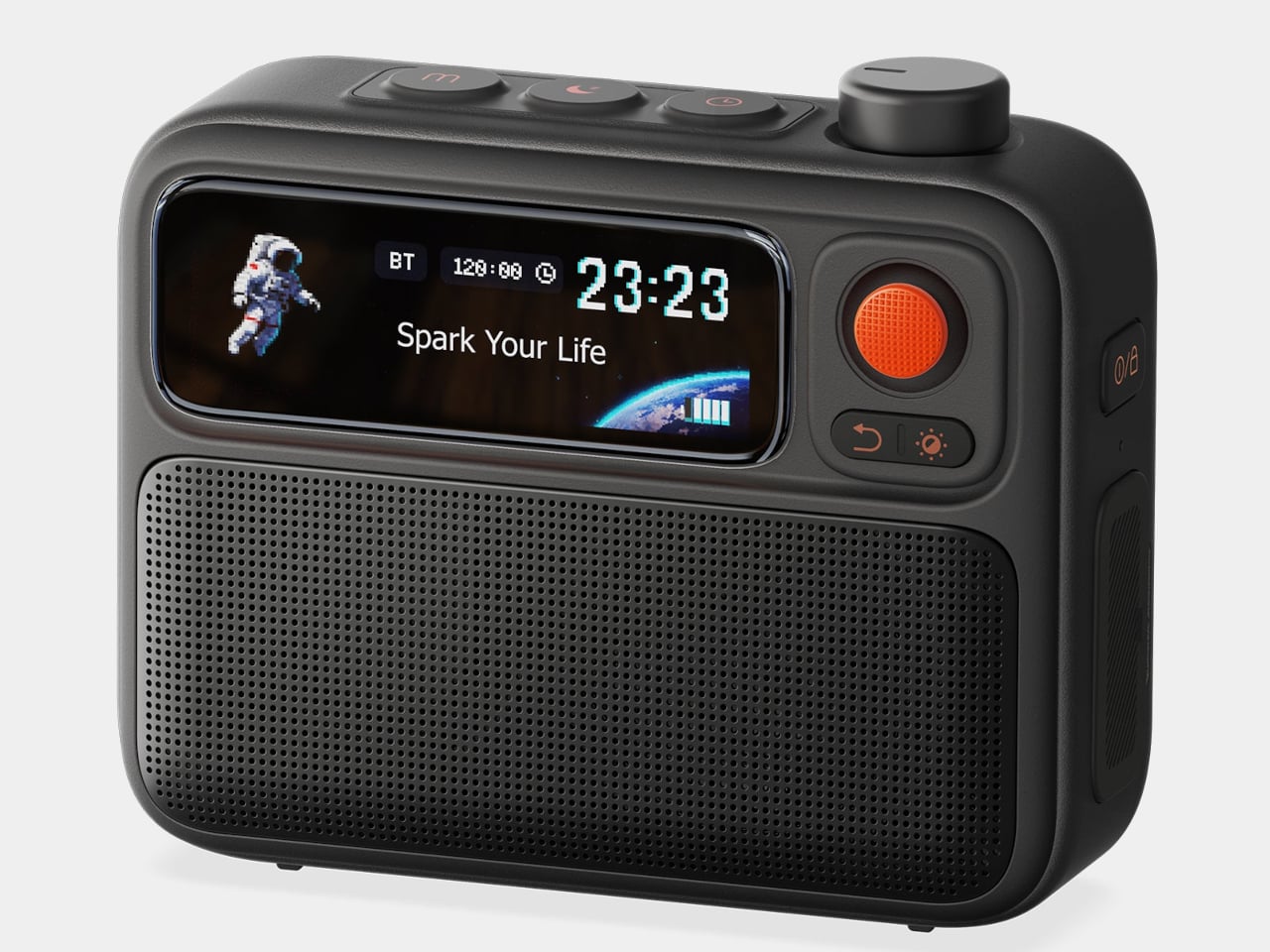
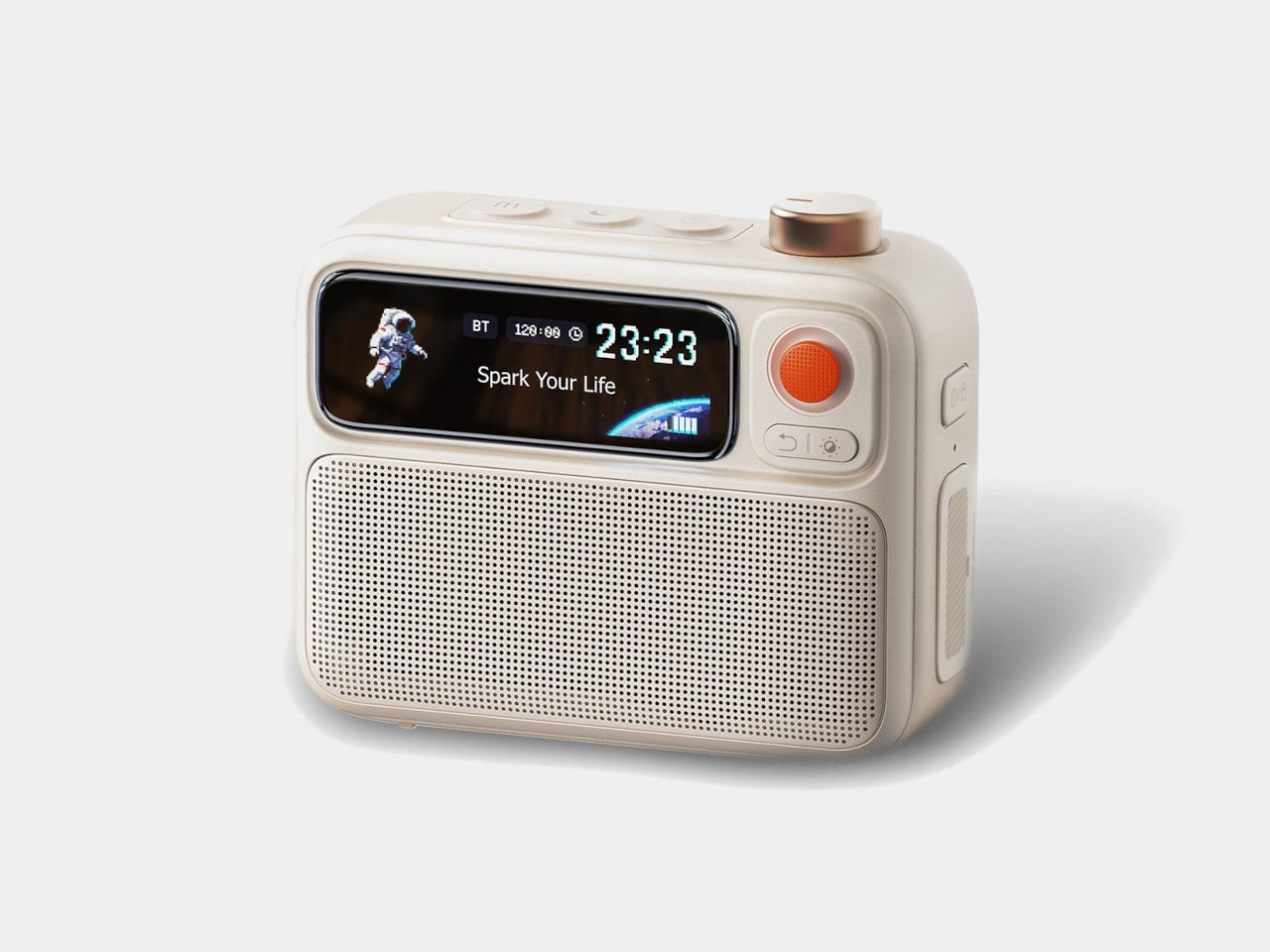
The FlowToo’s more than 90 built-in sounds cover what people actually reach for at night, from rain and ocean waves to forest ambience and other calming tones. These aren’t just sleep aids; they work just as well for focusing during the day when you need background noise that doesn’t pull your attention elsewhere. The library is large enough that finding something to suit your preference won’t take long.
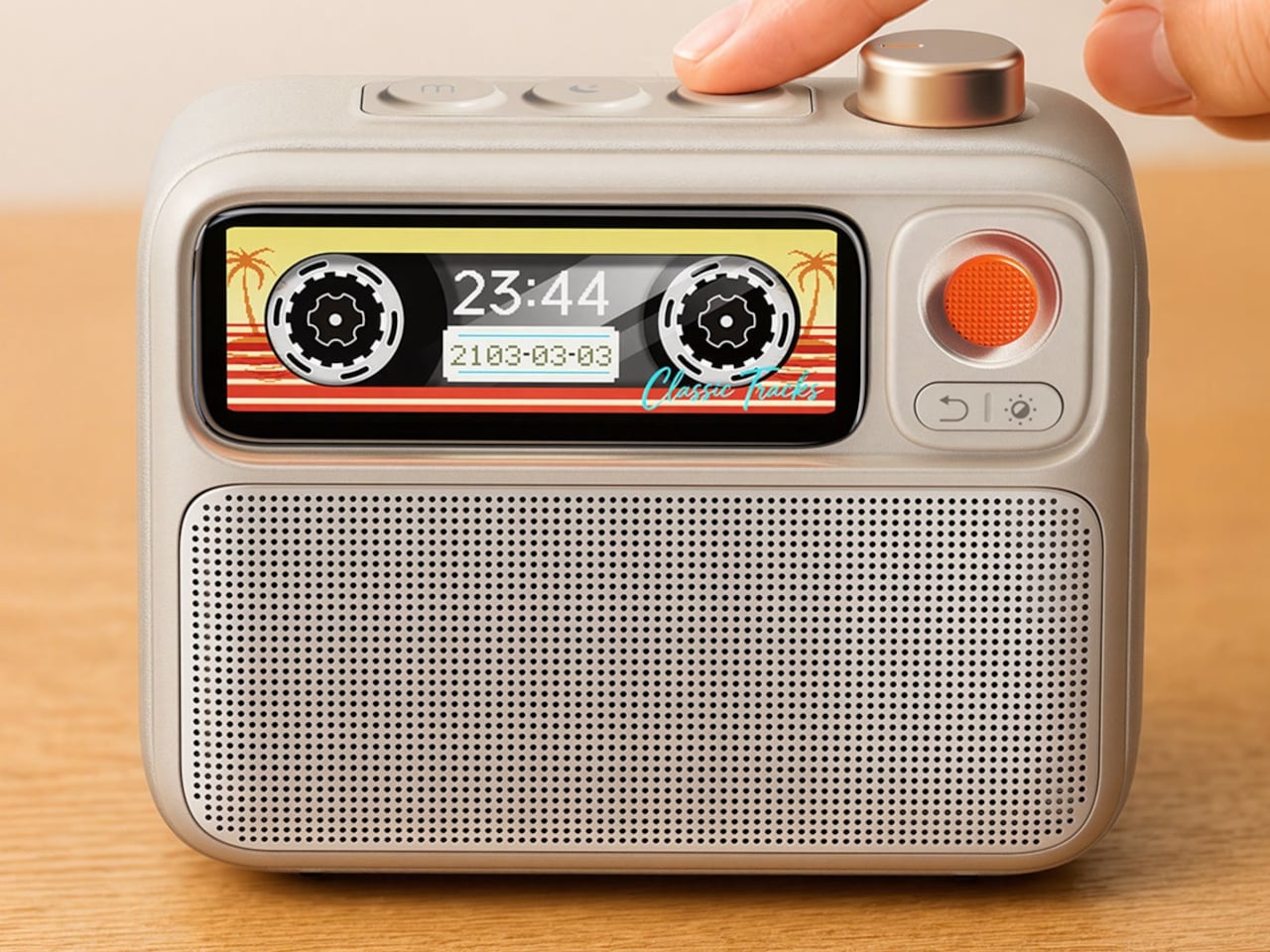
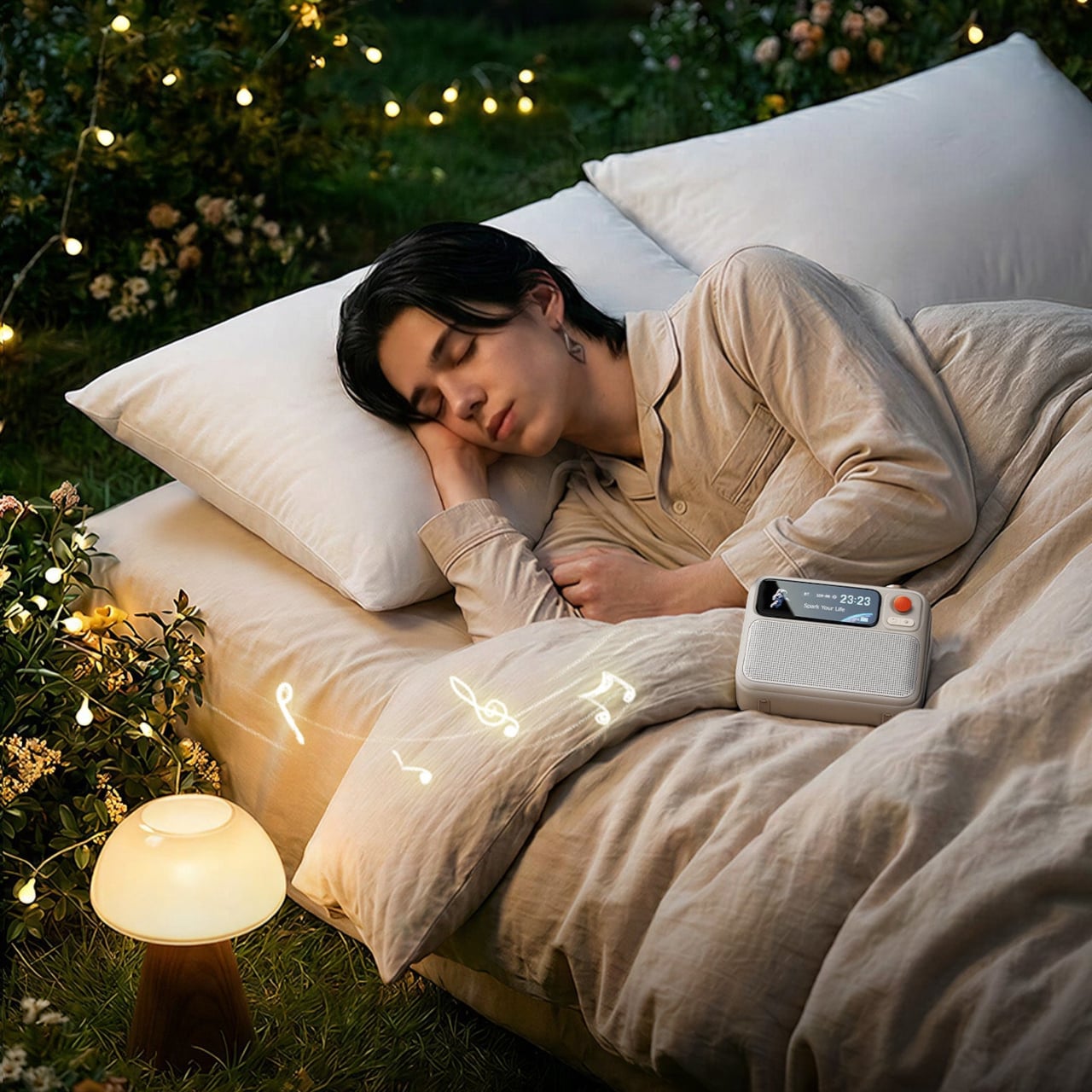
Getting out of bed is the harder side of this equation, and the FlowToo handles it carefully. Rather than a jarring alarm tone, it wakes you gradually with natural sounds that grow louder while a gentle light fills in from the display. The idea is to bring you up without jolting you out of sleep, which tends to leave you considerably less wrecked for the rest of the morning.
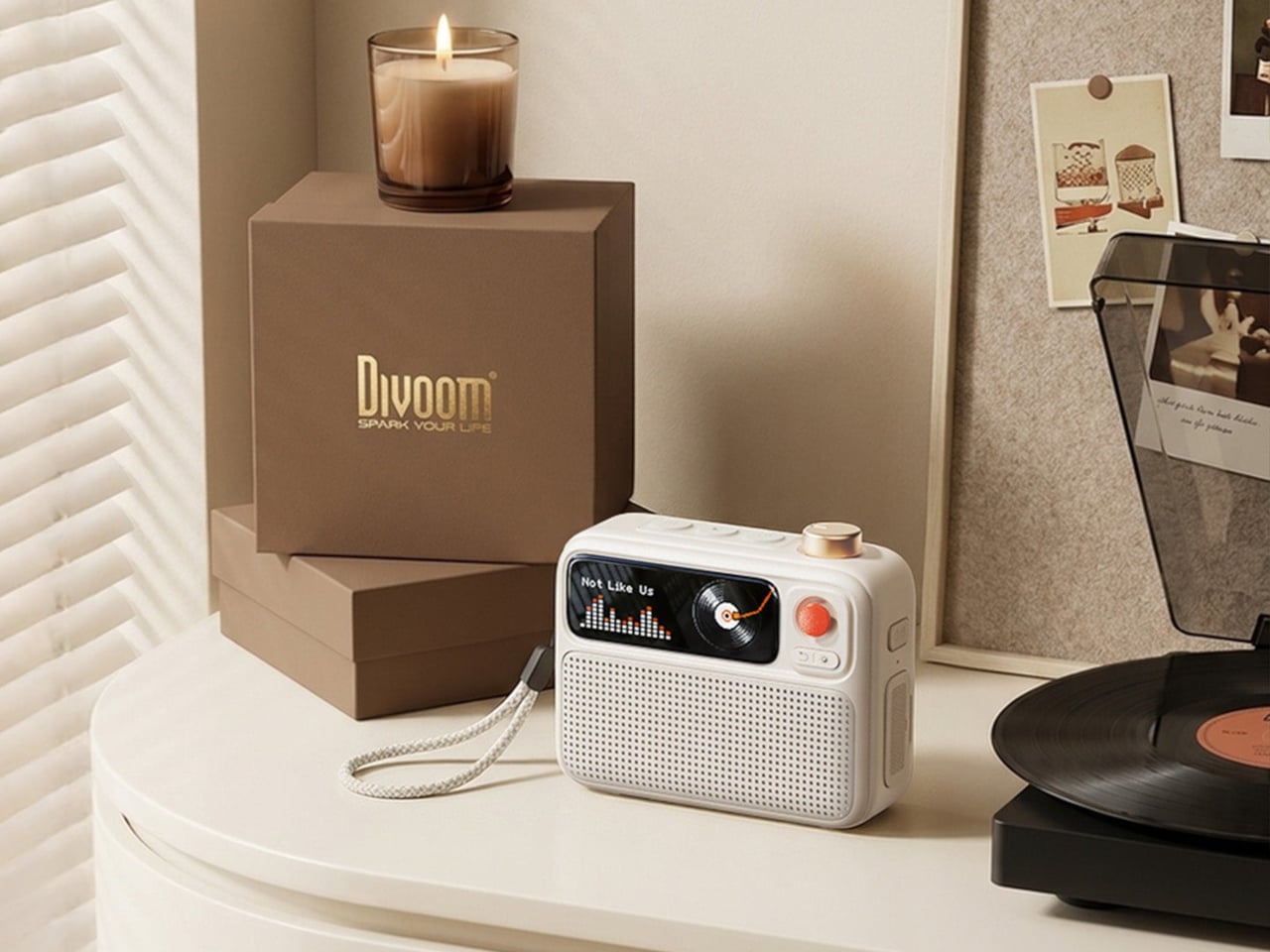
The 2.26-inch smart display is where the FlowToo takes on a bit more personality than a typical clock radio. It can show multiple clock face designs, music visualizers that react to what’s playing, sleep scene animations, and mood lighting to set a different tone in the room. The Divoom App lets you swap between these, set alarms, and choose sounds from your phone, which keeps the device simple to operate.
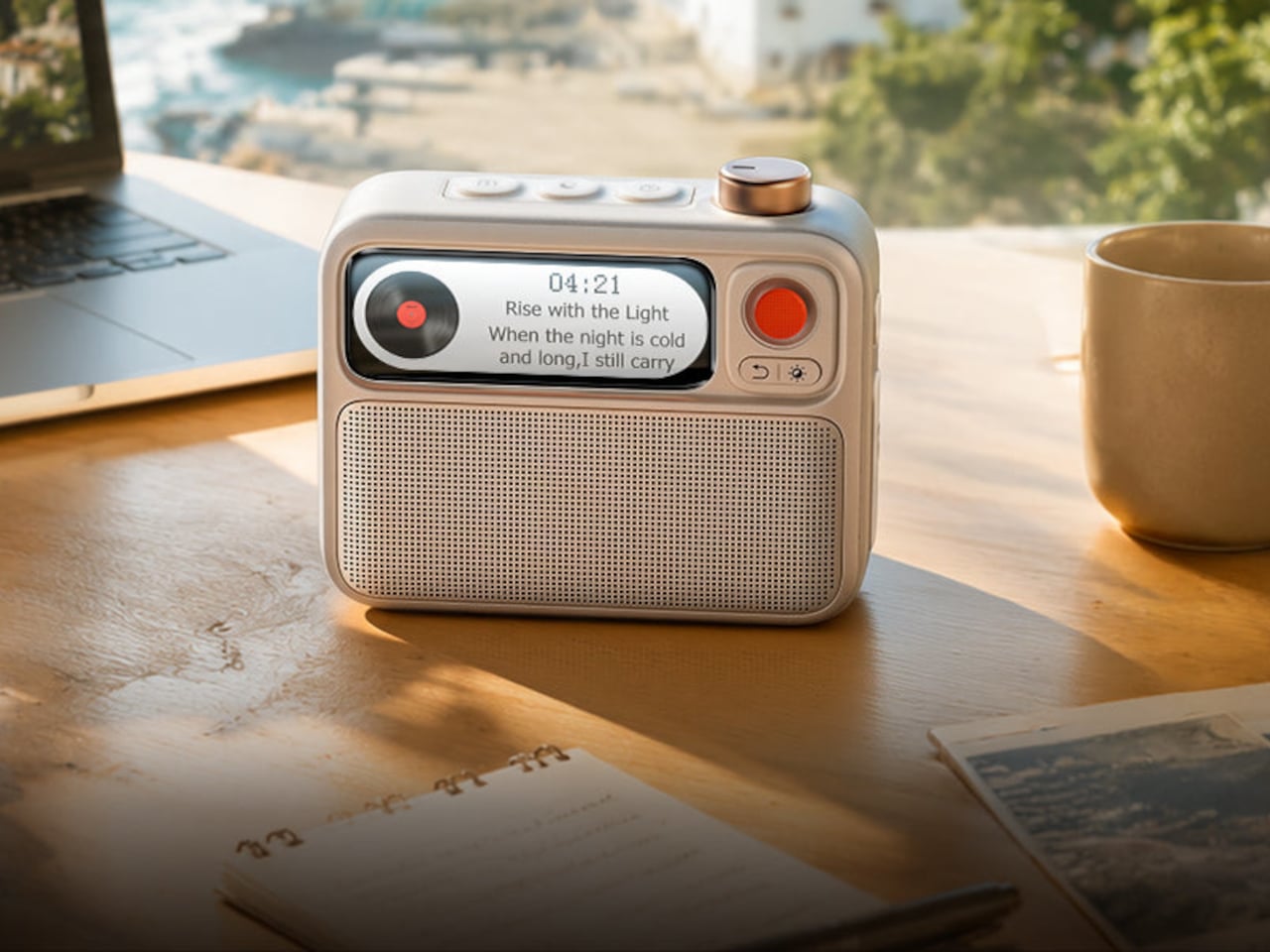
The FlowToo comes in White and Black and currently retails for $99.99. It’s compact enough to sit comfortably beside most beds without taking over the surface. The overall look is clean and rounded rather than clinical, which makes it easier to accept as a permanent bedroom addition instead of something that feels like a tech purchase trying too hard to belong on a nightstand.
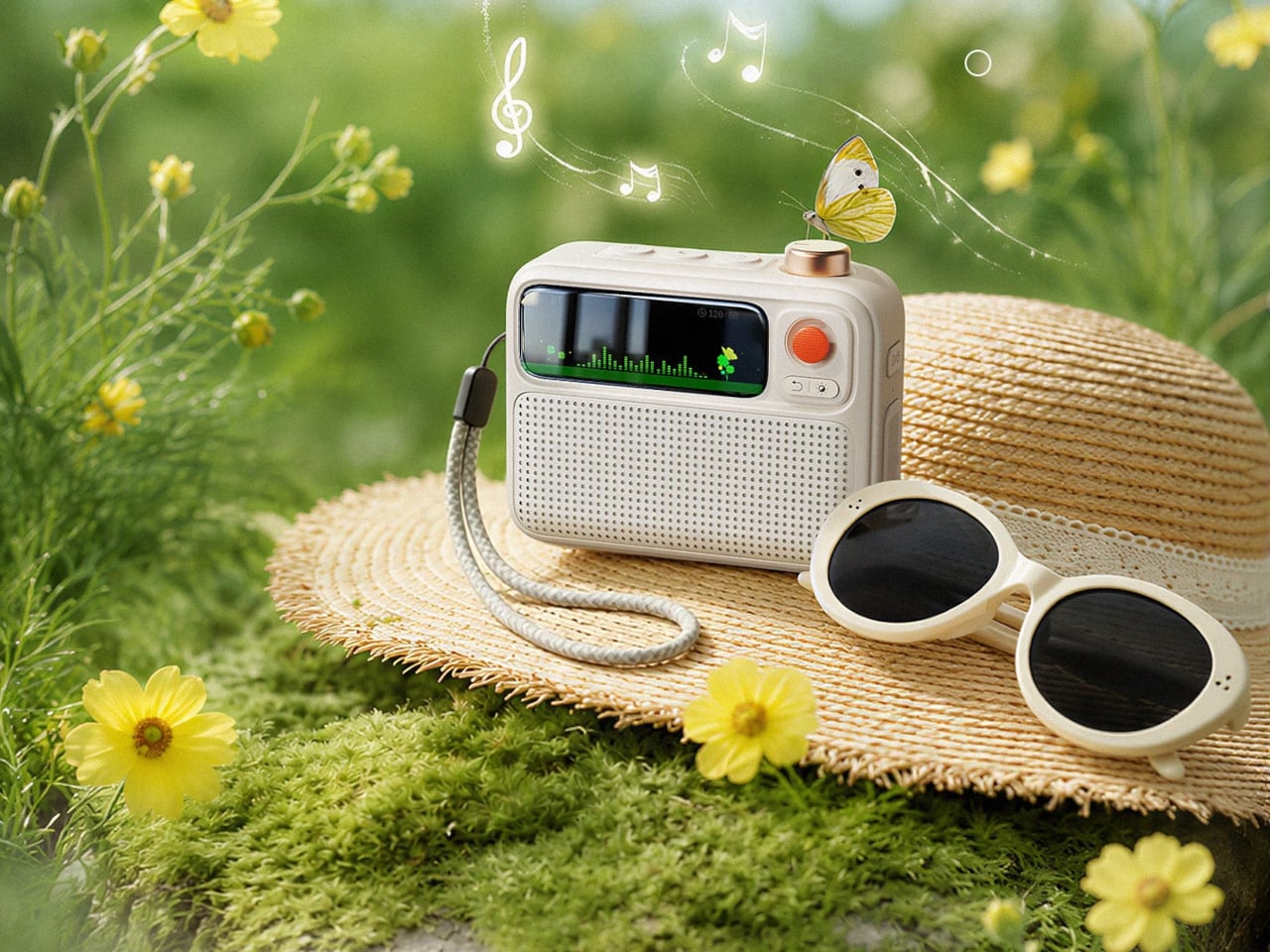
There are more focused devices for each of those individual functions, and some will argue that a dedicated white noise machine sounds better or that a standalone speaker gets louder. That’s fair enough. But most people aren’t looking for world-class performance across every category; they’re looking for something reliable and pleasant that takes up less space, starts their morning decently, and doesn’t require them to manage four different apps.
The post The $99 Gadget That Clears 3 Devices Off Your Nightstand first appeared on Yanko Design.

The Apple Watch Ultra 4 is shaping up to be the most significant evolution in the Ultra lineup since its debut in 2022. With rumors of a bold redesign, advanced health monitoring capabilities, and enhanced performance, this next-generation smartwatch could redefine wearable technology. Positioned as Apple’s flagship wearable for 2024, the Ultra 4 is expected […]
The post Leaked Apple Watch Ultra 4 Schematics Detail First Case Overhaul Since 2022 appeared first on Geeky Gadgets.