World’s first hydrogen-powered surveillance drone enters combat duty with Ukrainian Defense Forces

Hydrogen-powered unmanned aerial vehicles are not a new concept. Drones running on hydrogen fuel have been in experimental forms for over a decade, but this is for the first time, a drone has been fully designed and deployed on full-scale combat duty in an active war zone.

The drone is a hybrid version of the Raybird USA developed by Skyeton and is deployed with the Ukrainian Defense Forces. It is designed for long-endurance and perhaps is, Ukraine’s first attempt at sending a hybrid hydrogen-powered drone into an active battlefield. It has been in the war zone “since December 2025, as part of interagency testing,” Skyeton informs.

Designer: Skyeton

As a hybrid version of the Raybird, the drone is powered by an electric motor running on electricity generated by hydrogen fuel. The UAV has been reengineered to adequately distribute the space and weight of the hydrogen tank system onboard. Being hybrid, the drone is quieter in comparison to other combustion engine options, thus it makes a great surveillance aircraft.

“We have converted two years of laboratory testing into a new aircraft concept: it is the same class and weight, but a completely redesigned concept based on electric propulsion,” Roman Knyazhenko, CEO of Skyeton said. “Hydrogen fuel is a solution that allows us to combine all the advantages of an electric motor… with the long-duration continuous flight that is a hallmark of our UAV, he added.

According to Skyeton, the hydrogen-based Raybird is not armed, it instead has radar and sensors in its payload for its identified long-range reconnaissance missions. The drone is created with a wingspan of up to 15 feet, and it has a total payload capacity of 23 kgs. Being a Raybird, the hybrid drone can cruise at over 110 km/h top speed, and the UAV can function in temperatures ranging between -35°C to +55°C. It has a flight endurance of 12 hours for now, which the Skyeton engineers are determined to increase to 20 hours.

According to the company, the hydrogen-powered Raybird on war duty can fly at an altitude of up to 18,000 feet to carry out its surveillance duties. Of course, for now, the drone running on a hydrogen-electric propulsion is being used for long-range reconnaissance missions by Ukraine, but its operational efficiency and environmental benefits suggest it can be useful in a range of other applications: both civilian and defense.

For its usability in different scenarios, Skyeton says it will provide the hydrogen-powered Raybird in two variants. A drone with pre-filled tanks that can be swapped like cartridges. Or paired with a compact mobile unit capable of generating hydrogen on site as required.

The post World’s first hydrogen-powered surveillance drone enters combat duty with Ukrainian Defense Forces first appeared on Yanko Design.

Spotify Record Player brings tactile experience of enjoying vinyls to the streaming world

Enjoying music is much more than just setting up your listening gear, putting on the headphones, and getting lost in a melodic world. Spotify is currently one of the most used streaming services to enjoy music, anywhere, anytime. However, some inventive DIYers go the extra mile to elevate the experience as no one has done before. The Prestodesk Spotify desk music player by AKZ Dev is a good example.

The software engineer is back with another creation to showcase his love for Spotify and, obviously, music. To bring the tactile experience of loading and playing records via Spotify is a totally new and exciting idea. AKZ explores this with his intuitive engineering skills to add the satisfying feeling of loading a vinyl record and then playing it via the Spotify service.

Designer: AKZ Dev

At the heart of this DIY record player is a Raspberry Pi that does all the complex handling and an RFID reader that turns a simple desk accessory into something interesting. The idea struck the DIY’er when he saw the gifted miniature vinyl record coasters lying on his desk, and he presumed they could do so much more than just hold a cup of coffee. The mini records move on the coaster base (which is modified to make space for the electronics) courtesy of the stepper motor, and to detect the tonearm position, he uses a hall effect sensor that’s found in most gaming controllers.

The enclosure below the coaster stand is 3D printed for a snug fit and gives the platter a genuine record player feel. After putting everything in place, the magnet is attached to the tone arm. The stepper motor lies beneath the spindle, so that the vinyl can spin seamlessly. The next step involves preparing the vinyl records for the musical nirvana. NFC stickers are placed behind the vinyl record, and custom labels are printed to make things feel authentic. AKZ also 3D printed a record stand to showcase the whole setup on the desk.

After doing a bit of tinkering with the Raspberry Pi software and connecting it to the Spotify API, the record player is ready to rock the desk. Basically, the music does not play off the record; the RFID tag on the mini vinyl record player is detected by the moving tonearm. This triggers the playback of the associated music from Spotify’s library. Pretty nifty, isn’t it? The DIYer is kind enough to share all the project files on GitHub, and tells that the record player can be improved further with volume controls, or by integrating the speaker unit inside the main enclosure.


The post Spotify Record Player brings tactile experience of enjoying vinyls to the streaming world first appeared on Yanko Design.

Hyundai’s STARIA Electric Camper reimagines adventure beyond the grid

Hyundai is serious about its ambitions of providing off-the-grid, liveable mobility for adventure seekers, and that’s proo enough with their latest STARIA Camper concept. Based on the STARIA Electric 11-seater MUV unveiled at the Brussels Motor Show, the zero-emission camper walks right into the trails of the Lightship AE.1 electric travel trailer, Colorado Campworks NS-1 camping trailer, and the Camp365 Model T camper.

The STARIA minivan is the perfect canvas for a camper revamp, as Hyundai wants to cater to the rising demand for electric mobility for living on the road. The concept is a direct invitation for the community of travelers whose feedback will decide the fate of the camper in the European market. Depending on the demand for electric vehicles that can satisfy the everyday usability, loaded with travel amenities, the camper version of the vehicle could make it to the production lines.

Designer: Hyundai

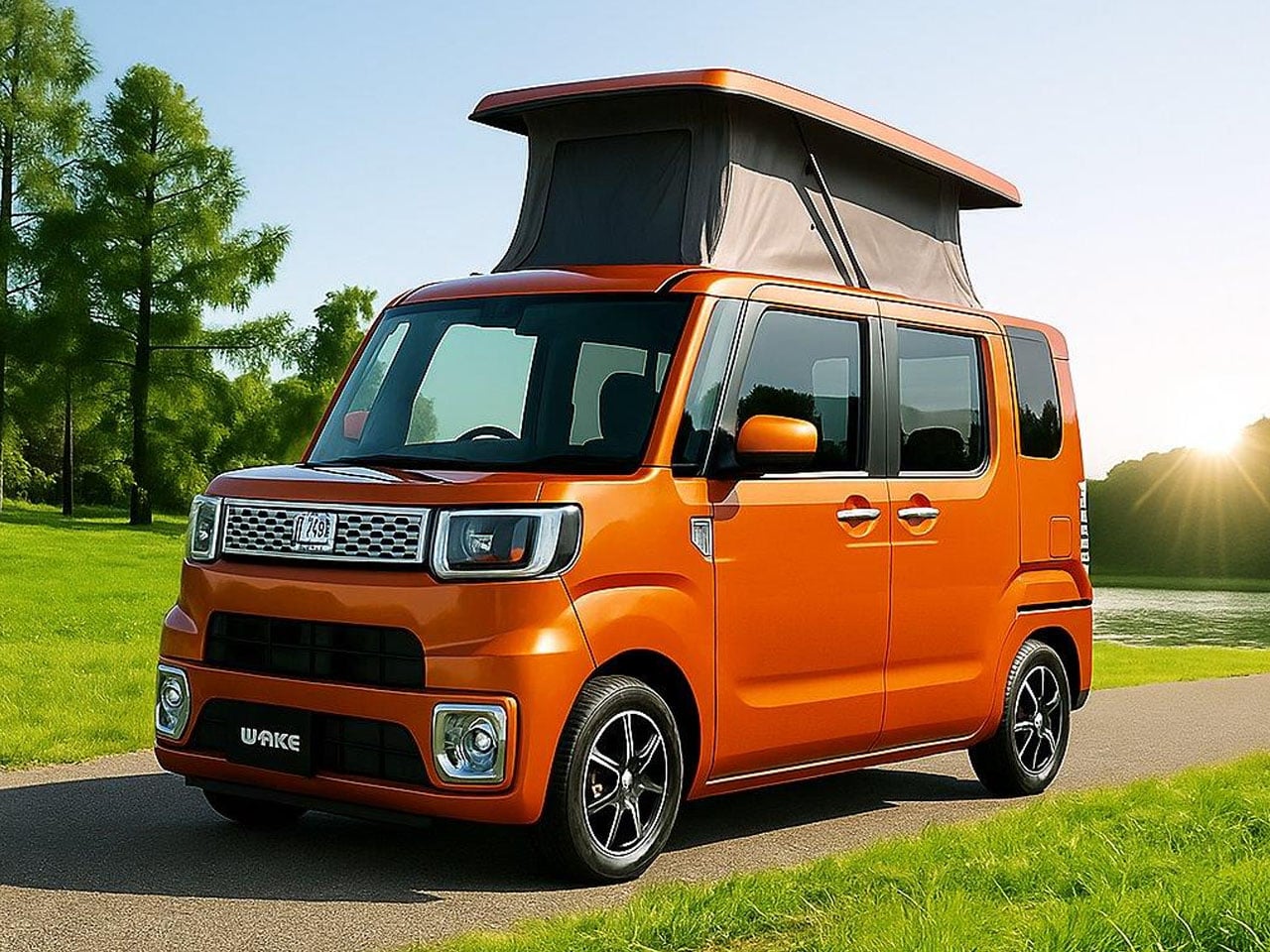
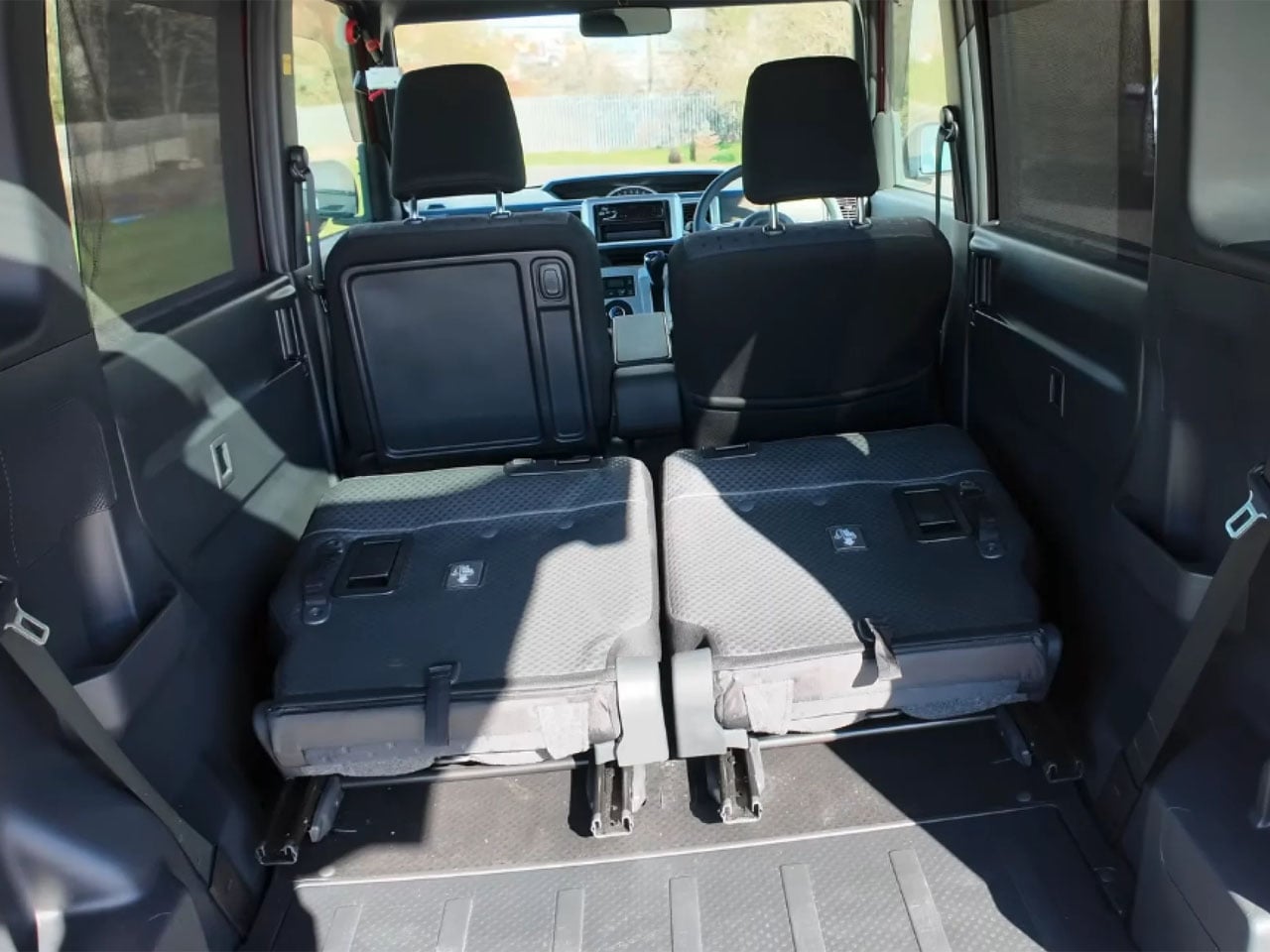
The electrically operated pop-top version of the van will trim down the capacity of the normal MUV to four people, who can comfortably make it their adventure vehicle. The South Korean giant will offer the STARIA with an extendable Fiamma awning that has built-in LED lights. The second row powered seats come with the flexibility to lie flat to make up the sleeping space. During the daytime, the hidden indoor table swings out in front of the second row seats to be used as a place to work offline or have meals.

Further back to the third row, there is another table that slides out to create an outdoor dining area. It resides in the trunk area, which doubles as a storage compartment, and also aids in loading cargo and sliding it further inside. For maximum space utilization, the space behind it hides another compartment that has a detachable shower head for on-the-go showers. On the driver’s side wall holding the kitchen, along with the sink and top-loading fridge. Over this section is a single lid that closes flat to give the riders a continuous shelf to prepare meals. There’s a portable induction cooker or a stove (Hyundai hasn’t specified clearly) that runs on the electric battery, so cooking should be sorted.

The utilitarian approach on the inside continues to the pegboard wall right above the corner section of the worktop. It is used for hanging the utensils and other everyday essentials. This section extends on the corners to make space for storing clothes and other household amenities. The additional power to run all the modern appliances comes from the 520-watt composite solar charging panel, providing 2.6 kWh of electricity. One can operate a 36-liter refrigerator, a portable shower, and the cabin temperature control system for complete autonomy for adventure seekers.

Privacy is a key feature in the STARIA Camper with electronically adjustable smart glass that’s touchscreen controlled via a module for adjusting the amount of tint. To make the vehicle more suited for heavy-duty adventure needs, it’ll have a structurally improved front and rear suspension system and sound-absorbing material. The STARIA Electric has a range of around 400 kilometers, so we can expect the camper version to hit the same numbers, given there is a solar panel that could charge the battery when not utilized by the smart electrical equipment.


The post Hyundai’s STARIA Electric Camper reimagines adventure beyond the grid first appeared on Yanko Design.

LEGO recreates iconic battle from Legend of Zelda: Ocarina of Time

The LEGO Group has carried over the momentum from last year, introducing sets that the community wants, as well as some releases that are their own brainchild. Last year, LEGO hinted at a Legend of Zelda collaboration with Nintendo, and now the official set is releasing. This one joins the likes of the three Pokémon sets and the Harry Potter set released by the group this month.

The LEGO set will replicate one of the most iconic boss battles in the title’s history, depicting the Ocarina of Time bash taking place among the ruins of Hyrule Castle Town, as Link and Princess Zelda take on the monstrous Ganon. The official set is even better than initially anticipated by community experts, adding to the numerous options LEGO fans have at their disposal.

Designer: LEGO Group

The 1,003-piece set dubbed the Ocarina of Time: The Final Battle is a faithful diorama of the most iconic arcade games for the Nintendo N64 console line-up. Ganondorf, in his final boss human form (that’s buildable piece by piece), takes up the most territory of the set, as minifigures of Link and Zelda are depicted taking on the monster. The base of the set shows Ganon’s ruined castle and damaged tower, as the rubble masks the three recovery hearts. Other inclusions of the set include the Master Sword, a couple of fabric capes, dual honking swords of Ganon, and the Hylian Shield.

When the set depicting the intense scrap in the ruins of Hyrule Castle is put together, it measures 6.5 inches high, 11 inches wide, and 7 inches deep. That makes it ideal for your gaming desk setup or work shelf to display your love for the title. If you look closely at the official pictures, the base recreates the arena of Hyrule from the N64, and has the Triforce-badged display base. LEGO has paid attention to detail in the creation, as one can spot the little elements of the Ocarina. Things like the pile of rubble, the Megaton Hammer, or Navi the fairy floating among the chaos. In fact, a hidden button activates the lid mechanism, as the ruins erupt and the super villain announces his presence for ultimate supremacy.

Compared to the 2-in-1 Great Deku Tree set, this one is smaller since it represents only a single title. The price tag of $130 is also accommodating for fans who don’t want an elaborate set to fit in their scheme of things. Ocarina of Time: The Final Battle set is up for pre-order right now, and the official launch is slated for 1st March. Even for a neutral fan who loves playing arcade games for fun, this LEGO build is one to consider.


The post LEGO recreates iconic battle from Legend of Zelda: Ocarina of Time first appeared on Yanko Design.

Airstream World Traveler 22RB Travel Trailer is specially designed for beginner RV enthusiasts

A 22-foot camper trailer is an ideal size for maneuverability. It can be compact yet have just enough space for a decent time on the road. Airstream has, therefore, gone with this comfortable living size for its new World Traveler, which the Ohio company has built from scratch to be lightweight and aerodynamic, so anyone, including those just starting with towable adventures, would want.

Billed as a “launchpad for starting your own travel adventure,” the Airstream World Traveler 22RB Travel Trailer is crafted with the similar riveted aluminum that Airstream trailers have been sustaining their image and distinction with since 1931. Its construction and size ensure the 22RB is light and compact so as to be haulable by mid-sized SUVs, crossovers, and presumably by select EVs as well.

Designer: Airstream

Arriving in 3,700lbs base weight and up to 4,500-pound Gross Vehicle Weight Rating (GVWR), World Traveler 22RB Travel Trailer is only 7.5-foot wide, maintaining a slim profile for a comfortable drive on the road. As it’s slim and not overly long, an even beginner RV adventure can easily maneuver this behind their drive.

Size may be limited, but its spaciousness is not compromised. The Airstream 22RB is prepared for a total of four persons to live comfortably, courtesy of a rear V-shaped twin bed and a convertible dinette. What the company has done differently here is that the air conditioner is relocated from the roof and placed under the bed to make the trailer appear more streamlined.

Of course, the exterior is pretty Airstream, the interior is uniquely done. The walls are white, and the woodwork is not starkly different either. The cabinetry features a light laminate finish. The minimalist interior is different from the usual offerings, and this uniqueness is highlighted by the V-shaped twin bed in the main sleeping area of the trailer. Up front, a secondary sleeping area can be instantly setup at the dinette, which converts into a bed in a jiffy.

The daytime living experience inside is naturally maintained via dual-pane acrylic windows furnished with an integrated screen-and-blind system. The side entry into the trailer leads you first into the galley kitchen, which is provided with a two-burner gas cooktop, a mini fridge, and enough counter space for preparing meals for up to four people. Adjacent is a wet bath with a shower and toilet, both separate for residents’ convenience.

Standard options like heating and cooling are taken care of with a ducted facility, while the Airstream 22RB is furnished with a 24-inch smart TV, Bluetooth JBL speaker, and internet facility. All in a comprehensive price tag of $68,300. The 22RB Travel Trailer is available now, and if you want it ready for an off-grid adventure, Airstream is providing add-ons such as a 300W solar charging system with a 2.5kWh lithium battery for power, a microwave, a backup camera, and a specialized V-shaped bedding kit for living convenience.


The post Airstream World Traveler 22RB Travel Trailer is specially designed for beginner RV enthusiasts first appeared on Yanko Design.

DarkSky One supercar lurks in the dark like a ninja with its sensible lighting

There’s something about nighttime that evokes different emotions. When driving on the expressway, the feeling is second to none. While supercars are designed to be appreciated in their full glory during the daytime, rarely has anyone thought about designing a fast four-wheeler that’s designed for the night, first and foremost.

This is DarkSky International’s take on a supercar that is designed with “darkness at the center of its vision.” Marking its debut at the Detroit Auto Show, the DarkSky One is the first-ever car that’s designed for “nighttime first.” This reminds me of While Bane’s words in The Dark Knight Rises, “You merely adopted the dark. I was born in it, molded by it.” Unlike other supercars that are focused on performance and looks, this one is inspired by the lack of light.

Designer: DarkSky International

The focus with the matte black-skinned supercar is on the lighting and how it affects the ambient environment. Maker wants to minimize light pollution with such automobiles, rather than going the conventional way of having brighter headlights shining high beam at oncoming traffic. That too, without even mentioning the auxiliary options to light up cars, making them shine out among other vehicles. According to them, the artificial light ruins the night, and the darkness helps drivers see better. It is equipped with LiDAR units that analyze the environment to adjust the headlight beam and direction to have a ninja-like road presence.

The forward lighting direction is adjusted with the All Beam Adaptive Driving Lights that toggle the brightness levels depending on the road ahead and the relative distance to other motorists. That’s an important feature as it reduces glare for oncoming traffic. The buck doesn’t stop there as the car has side lighting on doors, hood, and the side panels so that the car’s presence doesn’t overpower the ambient natural lighting. Perhaps the perfect commute for people who love to enjoy the Moonlight and stargazing on the quaint roads. Fewer beaming lights means reduced stress for wildlife as well, which is another major factor. DarkSky says that the supercar has polarization and reflection physics which are present in every “window, door and body angle to reduce specular reflection, maximizing viewability at all angles.”

DarkSky International has not mentioned any performance specifications of the vehicles yet, signaling their deep focus on DarkSky One’s muted presence. While improving visibility and consequently road safety are the maker’s prime objectives, the resulting light pollution also goes down. This is important in a world where we are gazing at bright lights even in the darkest hours of the day. Hence, this design hints at a shift towards peace and calm. The matte black color has a micro-textured pattern so that stray lights and glare from other vehicles are suppressed. As they love to exclaim that the body lines are “shaped so the night can breathe.”

The post DarkSky One supercar lurks in the dark like a ninja with its sensible lighting first appeared on Yanko Design.

Honda enters modular camper market with lightweight, solar-powered trailer

Honda has built capable off-roading and towing vehicles, but the company has not had a trailer to match. The Japanese auto manufacturer is changing that now with its own towable solar-powered trailer. Weighing under 1,500 lbs., the prototype is light enough to be towed by nearly every SUV, crossover, or EV in Honda’s lineup and even outside.

Designed to rattle the ultralight, modular camper market, the Honda trailer is customizable to make family camping more accessible and enjoyable. Dubbed the Honda Base Station, it is built to be spacious, airy and bright with a rear hatch entry, a slide-out side kitchen, and a pop-up roof that increases headroom and also creates space for additional sleeping at the campsite.

Designer: Honda

The primary objective behind designing the Base Station is to bring the camper experience to more families. In order to achieve that, Honda has kept the prototype trailer incredibly light, which means it can be towed by a wider range of vehicles, opening its accessibility to a bigger audience. The zero-emission towable Honda trailer features a fiberglass upper shell, which rests on a full aluminum cage, including the chassis.

Courtesy of the tailgate entry, an optional teardrop-style door on the side, and five huge windows around the trailer, the interior is very bright. The Base Station opens up to become spacious and packs power options to make it a capable off-grid camper. On the outside, it doesn’t have anything distinct to show, except for the color-changing LED light strip installed around the trailer’s perimeter. On the inside, it’s a whole new ballgame.

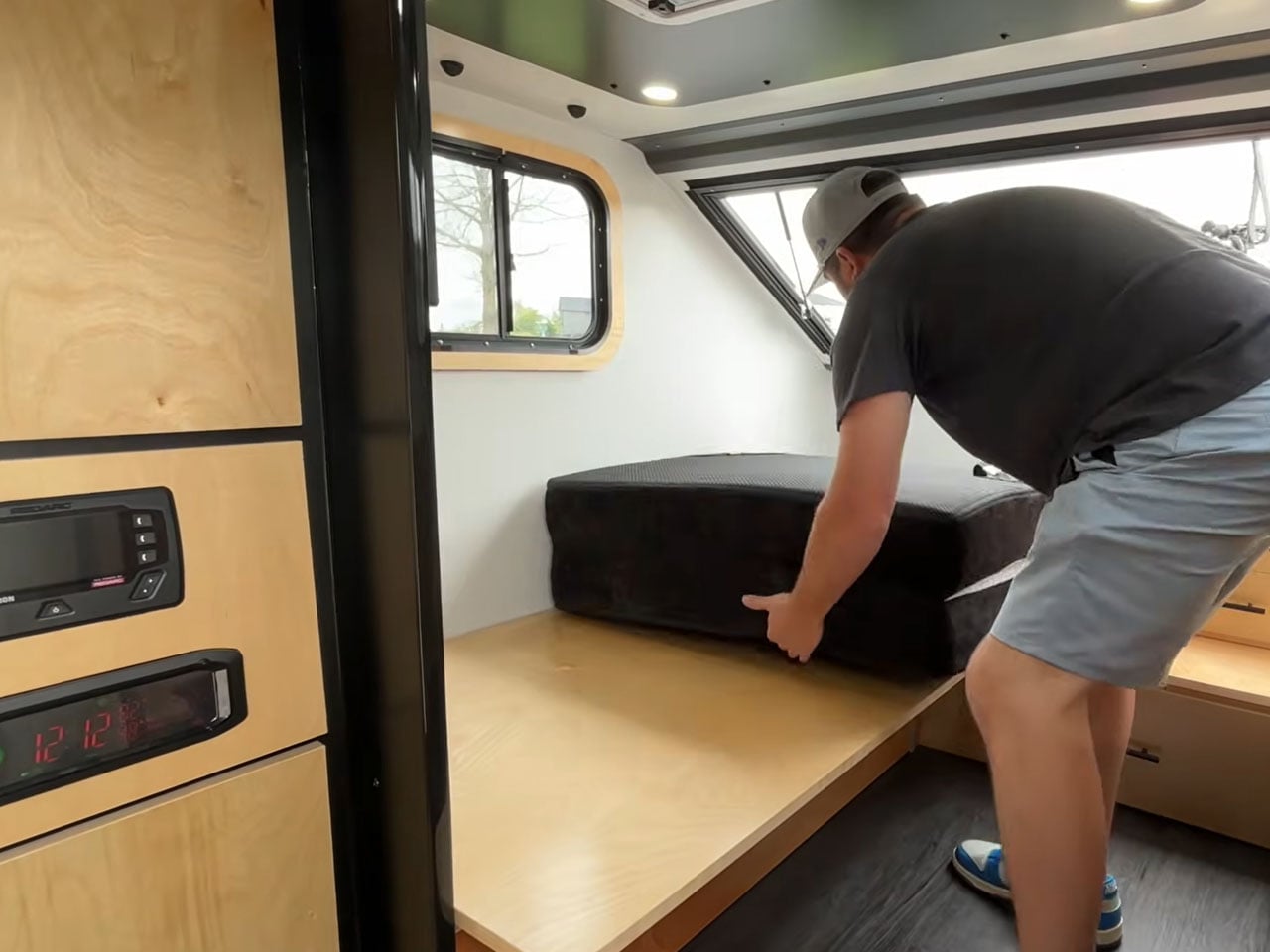
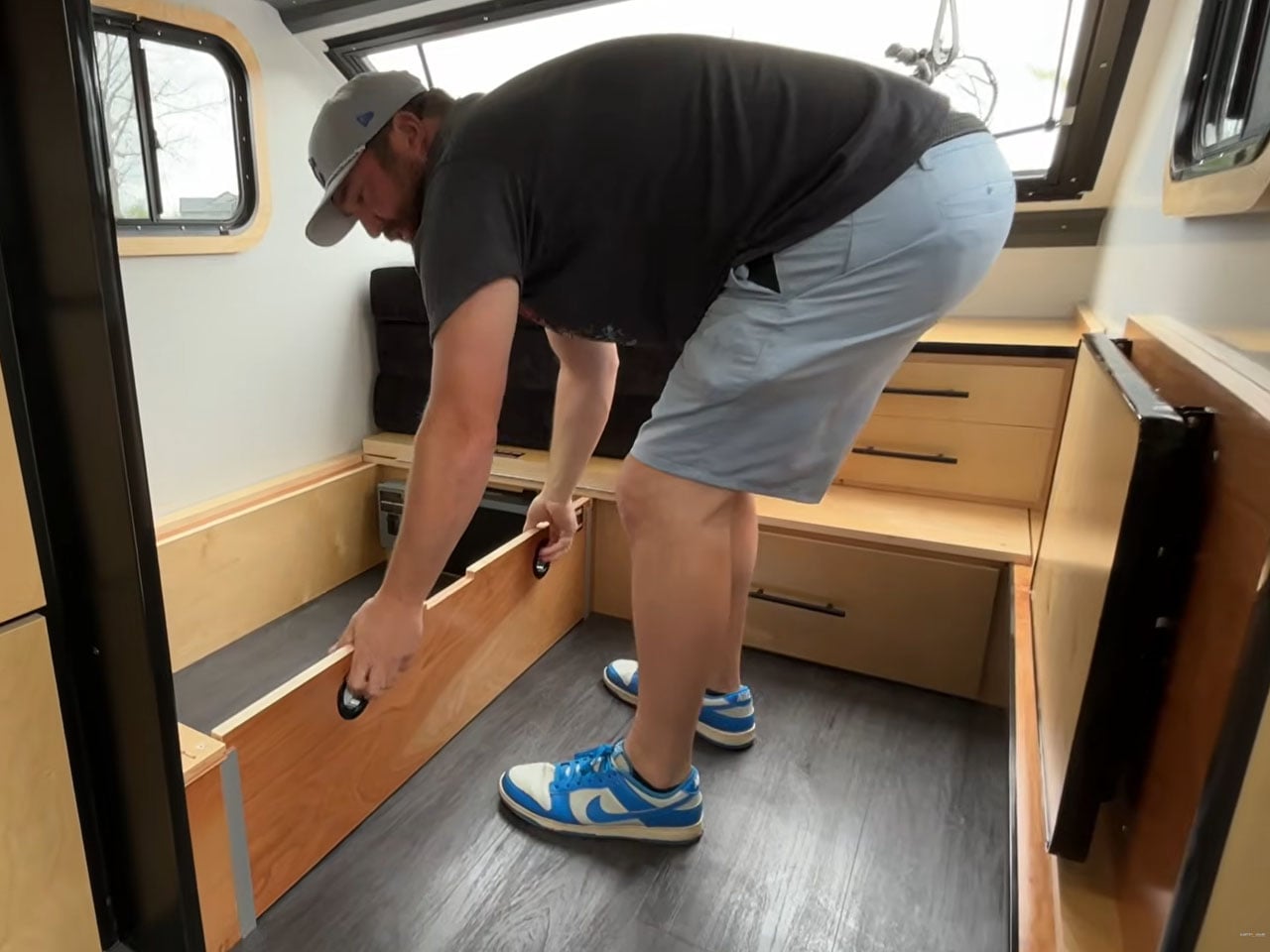
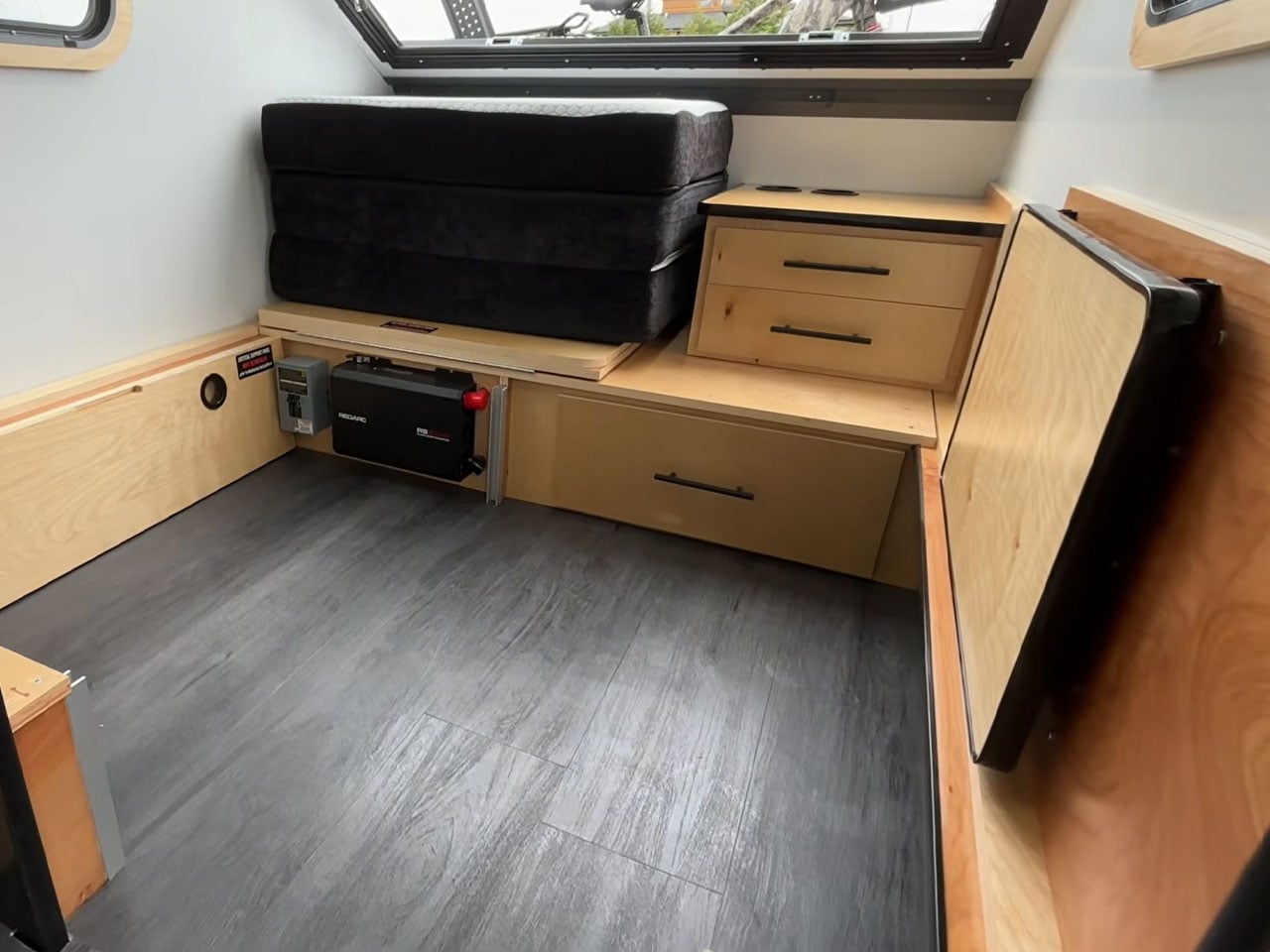
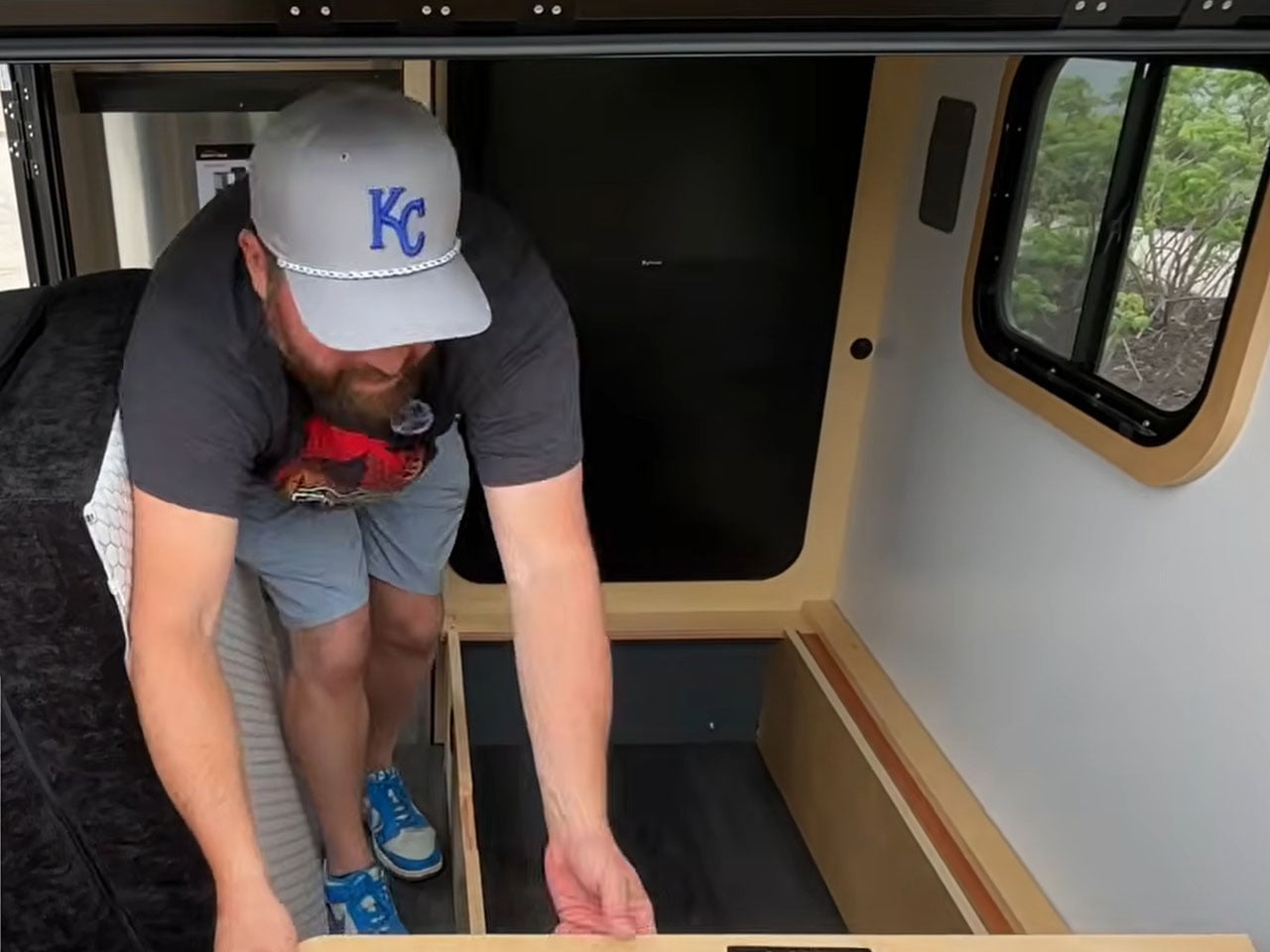
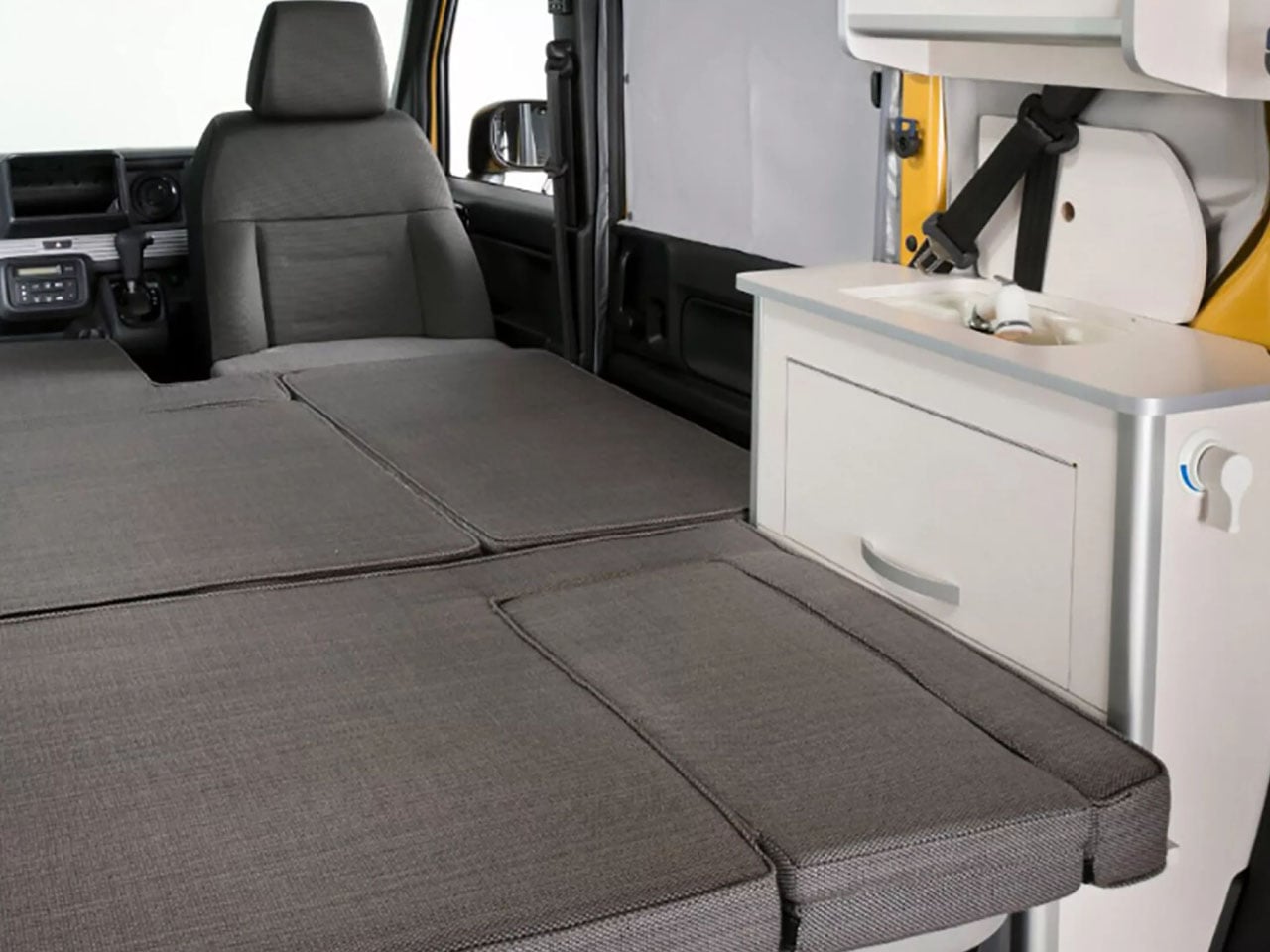
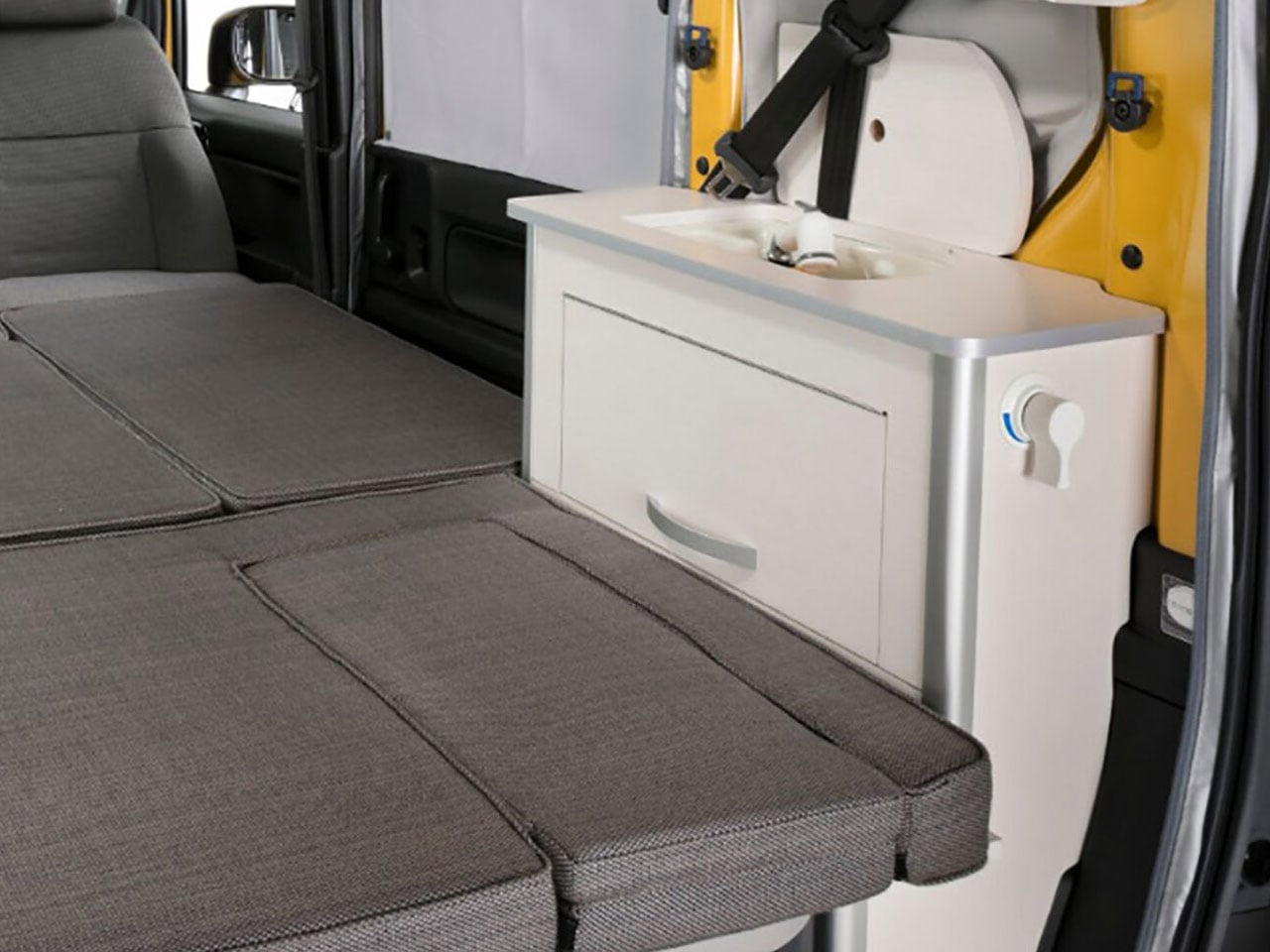
Upon entry you get a low floor, useable for storage and maybe hauling a bike. The queen-size bed on the far end folds down from a futon position to sleep a couple. Modular features allow people to use the Base Station however they want. For instance, the roof can be popped up to create seven feet of stand-up space, or use it for an optional bunk bed. The five windows on the sides can be left as they are or replaced with optional features like a slide-out kitchen, an air conditioner, or an outdoor shower, all while still keeping the overall size of the camper compact enough to fit in an average garage or parking lot.

With the additional sleeping arrangement, Honda affirms, the Base Station should have enough room for a family of four. It is designed for off-grid living; therefore, the camping trailer comes with a lithium battery installed underneath the convertible futon, an inverter for backup, and solar panels to keep the camper and its towing EV powered at all times. All of it can be managed by the Base Station App or onboard touch display indoors, Honda notes.

As mentioned, the Honda Base Station is still a prototype. There is no word on its price and availability timeline as of now, but there is a strong voice within the company that the camper should hit production in the near future.

The post Honda enters modular camper market with lightweight, solar-powered trailer first appeared on Yanko Design.

This Nintendo Switch-inspired concept morphs gaming DNA into track performance

When Nintendo introduced the Switch in 2017, it reshaped modern gaming by merging handheld convenience with living-room power in a single, modular device. Its detachable Joy-Cons, bold color accents, and instantly recognizable silhouette turned the console into both a functional tool and a design icon. That same philosophy now takes an unexpected leap into automotive design with the Nintendo Switcher, a concept car that reinterprets the Switch’s playful yet purposeful identity as a low-slung, track-ready performance machine.

Created as a concept design project, the Nintendo Switcher imagines an alternate reality where the Japanese gaming giant channels its design language into motorsports-inspired mobility. Rather than simply applying branding to an existing vehicle shape, the concept approaches the car as if it were designed from the ground up by the same team that shaped Nintendo’s hardware. The result is a vehicle that feels expressive and unmistakably influenced by gaming culture while still reading clearly as a high-performance car.

Designer: Anton Kulakov and Florin Ivan

The exterior design makes the connection immediately obvious through its use of color blocking and contrast. Red, black, and white dominate the bodywork, echoing the Switch console and its Joy-Con controllers. These colors are applied in sharp, deliberate sections rather than blended gradients, reinforcing the idea of modular components coming together to form a cohesive whole. The body itself sits low and wide, with exaggerated proportions that emphasize speed, grip, and stability, giving the Switcher the visual stance of a track-focused machine.

Aerodynamic intent plays a major role in shaping the car’s surfaces. Long, flowing lines guide the eye from the front toward the rear, while aggressive wheel arches and sculpted side panels suggest functional airflow management. The front end appears compact and assertive, with lighting elements integrated cleanly into the body rather than treated as separate components. From every angle, the design strikes a balance between sharp geometry and smooth transitions, mirroring the way gaming hardware often combines angular forms with ergonomic curves.

While interior details are presented more subtly, the concept hints at a driver-focused cockpit influenced by digital interfaces. The layout suggests a minimalist and immersive approach, prioritizing essential controls and visual clarity, much like a gaming interface designed to keep players engaged without distraction. The emphasis appears to be on interaction and responsiveness rather than luxury, reinforcing the car’s performance-oriented character.

The Nintendo Switcher is a creative exploration of how deeply ingrained product identity can travel across industries. By translating the Switch’s modular thinking, bold visuals, and user-centric design into an automotive context, the concept shows how gaming culture continues to influence design far beyond screens and controllers. Though it remains purely conceptual, the Switcher feels like a convincing glimpse into a world where entertainment brands shape mobility with the same confidence they bring to interactive experiences.

The post This Nintendo Switch-inspired concept morphs gaming DNA into track performance first appeared on Yanko Design.
This retro-modern music player revives the hypnotic spin of cassette tapes

Music is the ultimate nirvana to numb the stresses of life or derive inspiration while taking up focus-intensive tasks. The hobby of listening to music has come a long way from the dated radios to the current generation of high-resolution Bluetooth music listening gear. But then, things always come back in circles, that’s why we’re seeing a revival of old school analog media like record players, CDs, and even cassette players.

Countless companies are experimenting with the idea of infusing old-school charm into current-generation music players without losing out on the tactile feel. Teenage Engineering has been a pioneer in modern times when it comes to creating electronic music instruments with design that’s second to none. The signature TE aesthetics and color theme can be clearly seen to be inspiring designs in unrelated domains.

Designer: Jinkyo Han

For this time around, however, the concept player here stays within the audio listening gear domain; nonetheless, has clear signs of a TE-inspired design. The retro Bluetooth player is a music accessory that’s reminiscent of the classic cassette tape player design, but on the inside, it’s a modern music player that plays music wired or wireless. The aesthetics are purely for arousing the nostalgic feel of listening to music on a cassette player, while the audio is digitally played via a DAC for high-resolution output.

The mono speaker can output 10W sound with a frequency range of 80Hz – 18kHz. Clearly, in the mono speaker mode, the audio accessory is suited for casual listening. For more analytical listeners, the wired or Bluetooth mode is suited to enjoy the nuances of music. Either way, the spinning cassette player takes you back to a happy place, making the music sound more soulful than ever.

The front displays the spinning cassette player with the perforated speaker grill section. At the top, there are the big player controls to keep things minimal. Other than that, the music player follows a clean design language, which is much appreciated. The designer has not mentioned the exact dimensions of the player, but we presume it’ll be palm-sized given the reference size of the buttons.

Clearly, such a retro-modern music player is recommended for people who appreciate design and love their tunes. Revival of the analog music era is another influence that should resonate well with people who want the tactile feel of the visual elements while enjoying their favorite playlists on music services like Apple Music, Spotify, Dezeer or Tidal in high resolution.

The post This retro-modern music player revives the hypnotic spin of cassette tapes first appeared on Yanko Design.
Persistent DIYer creates autonomous flying umbrella despite years of struggle

Back in early 2024, John Tse designed a flying umbrella controlled by a remote, which seemed a completely out-of-the-box idea. However, some users pointed out that the umbrella should follow the person using it, to make it more practical, come rain or shine. The hands-free option of using a flying umbrella is far more exciting than maneuvering it while walking.

Months later, John set out to design an upgraded version of the project. The thing is essentially an autonomous drone shading you from wet or dry weather on demand. The vital addition to the rig is a tracking system loaded with a camera that comes from drone parts. That said, the build was not a cakewalk, and it took him a couple of years to achieve the intended version.
Designer: John Tse

Things started off by creating a custom frame with a central hub for the umbrella, the locking mechanism, and the hinges to have a solid structure for the camera and sensors to mount on. Most of the components are 3D printed, either made out of carbon fiber or nylon. Once the design materialized, an ordinary umbrella was mounted onto the frame, and the arms attached to the mechanism, just like a tripod. After figuring out the GPS, flight controller, Raspberry Pi function, and other electronics, it was time for the first test flight. After a few glitches with the rotational direction and the flight anomalies, the troubleshooting mode kicked on. The rig finally held stable in flight, and John attached the umbrella housing to the thing.

The next step was to align the camera, sensors, and GPS function to make the autonomous flight possible, so that the umbrella doesn’t bump into the person it’s hovering over, or other people on the street. With help from his buddy Hinsen, the idea of creating a 3D map of the people nearby, even in low light, using complex light reflection tech, came to life.  Somehow, the thing didn’t work after replacing all the old components with the new ones. Eventually, after a lot of tinkering and tuning, the flying umbrella finally moved from the initial stage to the concrete prototype stage. A project that was meant to be just a few weeks finally took more than a couple of years.

Finally, the day arrived when the project materialized, and the floating umbrella hovered over John. Even when the sun went down, the thing managed to hover over him. Thereafter, it was time for the rain to come down and test the flying umbrella in wet weather. In heavy rain, the umbrella had zero glitches, and the painstaking ritual of going through numerous roadblocks felt sweet for him. The design of the umbrella doesn’t feel like there’s something off; it just feels like an everyday object. Sure, the high-tech accessory is heavy due to all the components, still it manages to do what it was intended for. In the end, a shout out to John for his patience and persistence that ultimately materialized this project.

The post Persistent DIYer creates autonomous flying umbrella despite years of struggle first appeared on Yanko Design.