Life-size 3D-Printed LEGO Technic dune buggy turns a classic toy Into a drivable machine

What usually begins as a childhood memory of snapping LEGO Technic beams together has been reimagined at full scale by maker Matt Denton, who has turned one of the most recognizable Technic sets ever produced into a life-size, fully drivable machine. By scaling the 1981 LEGO Technic 8845 Dune Buggy more than tenfold and rebuilding every component through precise 3D printing, Denton bridges the gap between nostalgic toy engineering and real-world mechanics, creating a vehicle that not only looks like its plastic counterpart but can actually be driven off the workbench and onto the road.

This is not surprising as He’s known for turning tiny models into life-sized rigs that are drivable. Denton started with the original 1981 kit, which contains 174 pieces. Rather than simply make a large display model, he redesigned the buggy with two critical changes for practical use: he scaled it up by a factor of 10.42 times, based on 50-millimeter axle bearings, and converted it into a single-seat vehicle with a center-mounted steering wheel.

Designer: Matt Denton

Every part was recreated using 3D printing. Denton used PLA filament and a belt-driven FDM printer, employing a 1 mm nozzle, two outer walls, and 10% infill to balance strength with manageability. Because of printing limitations, large plates and panels were split into smaller sections, so they would fit in the printer and to avoid warping. All curves and joints were first modeled precisely in CAD to ensure fit and performance under load. The final assembled buggy weighs about 102 kg — not light by any means, yet still light enough for hobby use. The build process reportedly took around 1,600 hours of printing and assembly, with numerous reprints required due to failed prints and printer issues.

To bring the build to life, an electric motor was mounted on the rear axle, connected via a belt-drive system. Steering is handled via a full-sized rack-and-pinion mechanism, molded as one giant LEGO-like piece, while the rear suspension arms connect over a steel tube to deliver stability. The tires themselves are printed from TPU wrapped around PLA cores, and each one weighs around 4.6 kg. They are manufactured as four quadrants for easier assembly and transport. Despite the technical hurdles, Denton succeeded as the buggy is completely drivable. During test runs, it demonstrated performance and handling that (while modest compared to a conventional motor vehicle) surpassed expectations for what began as a giant toy. That said, limitations remain as the vehicle shows signs of structural flex under load, and the electric motor setup delivers only modest power, limiting acceleration and top speed.

This project isn’t just a playful homage to a childhood classic; it’s also a demonstration of how modern 3D printing and careful engineering can push the boundaries of what’s possible, even with humble materials like PLA and TPU. It transforms a familiar childhood toy into a functional vehicle, and in doing so rekindles the wonder of imaginative play, but at a human scale. For hobbyists and builders, Denton’s dune buggy is an inspiration, as the line between toy and tool blurs, and a dream built in plastic bricks can eventually become something you can sit in and drive.

The post Life-size 3D-Printed LEGO Technic dune buggy turns a classic toy Into a drivable machine first appeared on Yanko Design.

Reebok and fashion label STRICT-G deliver Gundam-inspired Instapump Fury 94 in two styles

Hong Kong-based phone case and accessory manufacturer CASETiFY recently launched Gundam-themed accessories. The partnership between the accessory maker and Mobile Suit Gundam reaped success during Black Friday. The festivities are far from over, and so is the consumers’ demand for anime-inspired creations. Just so that sneakerheads don’t feel left out in this time of the year, Premium Bandai’s fashion brand STRICT-G has introduced two pairs of Gundam-themed sneakers, and – if it weren’t for the franchise – I’m wondering who would need them?

My thoughts aside. STRICT-G has partnered with Reebok for the Mobile Suit Gundam GQuuuuuuX’ x Reebok Instapump Fury 94, which comes in two models, the “GQuuuuuuX” and the “RED GUNDAM.” There is no prize for guessing that these exclusive Instapump Fury 94 silhouettes are inspired by the Mobile Suit Gundam GQuuuuuuX, the latest series from the franchise.

Designer: STRUCT-G x Reebok

STRUCT-G has long been influenced and overly committed to introducing the Gundam universe to new-age fashion. Even in that breath, the Reebok collaboration really appears distinct. The level of depth and detailing on these sneakers is really beyond and above anything attempted in the footwear department in collaboration with the Japanese anime franchise before. These silhouettes don’t just wear a thematic resemblance; of course, that shouldn’t be difficult for anyone to pull off. Instead, they reimagine mobile suit aesthetics and translate them into footwear you can actually wear.

Talking of which, it’s pertinent to note that the Mobile Suit Gundam GQuuuuuuX’ x Reebok Instapump Fury 94 pairs will be available for preorder starting ¥27,500 JPY (approx. $180 USD) from December 12. The preorders, aimed at collectors and those who value their hands on exclusive merchandise before others, will be available through the STRICT-G Online Store within Premium Bandai only. For the others, the general release of the Gundam-inspired shoes is slated for March 2026, when the sneaker will also be available in physical stores and Reebok’s online shop.

The two sneaker styles centered around the Mobile Suit Gundam GQuuuuuuX theme are impressive. The anime’s signature white, blue, and red color scheme is apparent in the GQuuuuuuX pair, which features a Pomeranian logo as a playful nod to the character within the series. The second pair is inspired by the RED GUNDAM mobile suit. Here, the segmented design of the Instapump Fury 94 is finished in red and black aesthetics.

To keep the story tied to the franchise, both silhouettes feature a mobile suit’s identifying number printed near the heel, making these footwear memorabilia and a fashion statement for fans. Of course, the thematic approach creates an aesthetic impact, but the Reebok Instapump Fury 94 in itself has a long history of innovation, which should add to the number of takers for this collaborative effort!

The post Reebok and fashion label STRICT-G deliver Gundam-inspired Instapump Fury 94 in two styles first appeared on Yanko Design.

Kia Vision Meta Turismo is a sharp looking concept poised for the future

Kia always likes to celebrate its milestones with concepts that pave the way for the future of automotive design and technologies on the inside. This week is the South Korean brand’s 80th anniversary, and predictably, they’ve gone to the lengths of materializing a concept that is one of the most impressive from their design studio.
Called the Vision Meta Turismo concept, the sports sedan is not merely a design exploration; it’s their “first bold glimpse into the future of mobility.” The car was unveiled at the Kia Vision Square in Yongin, South Korea, and the future iteration of the electric vehicle (most likely it’s not going to be gasoline-powered) will be dubbed EV8. Just like the EV5 and EV6, this one is based on the Opposites United design theme, and by the look of things, is the spiritual successor to the Stinger. Vision Meta Turismo revitalizes three core experiences: performance driving, immersive driving, and spacious interiors.

Designer: Kia

Kia is categorizing the concept as a performance driving vehicle, even though they’ve not shared many technical details, we assume it is a serious contender for their premium electric lineup sometime in the future. On the outside, the car has a very sharp silhouette with soft geometric elements on the surface and natural lines. This fuses well with the aerodynamic elements like the vertical fins and embedded air channels for optimized airflow, which are inspired by the touring cars of the 1960s. A short hood is contrasted with the long, torpedo-like, elongated shape for a spacious interior that is ultra-comfy. LED strips on the front blending into the nose section edge out of the main frame, while the taillights have a more muted setup reminiscent of the current-gen electric vehicles.

On the inside, the sports sedan concept has an airy lounge-inspired cabin encapsulated in a panoramic windshield that extends to the rear like a modern fighter plane. For a dynamic look, there is a crisscross support pillar running from the A pillars that visually segments the front and the rear sections. The concept car has an upholstered driving seat, while the other seats have an upholstered off-white cloth material skin. The driver-focused interior has a matching hexagonal yoke steering wheel with gear shifters, and the dashboard is done in the same premium leather finish. The lower section of the windshield displays all the vital driver’s information in the AR Heads-Up Display (HUD). All these elements, according to Kia, “reimagine the next-generation intuitive driving interface.”

The concept has three driving modes: Speedster, Dreamer, and Gamer, which are not detailed by Kia and, in a way, are self-explanatory. Not much has been revealed by Kia, which hints that the probable EV sedan, having a long wheelbase and low profile, is going to manifest in some way as a production-ready vehicle. We are more than eager to learn more about the Vision Meta Turismo, and are sure of the fact that Kia is future-serious about this prototype.

The post Kia Vision Meta Turismo is a sharp looking concept poised for the future first appeared on Yanko Design.

Ecno Evil Unit-1 is rugged, off-road, and wood-free camper you can’t break

If you’re into pomp and show, turn back now. This camping trailer isn’t for you. But if the bare essentials are enough to make your adventures fun, read on. Before that, though, check out the video above. It’s easily the strangest promo I’ve ever seen for a trailer. Cinematically shot 4k videos of full-equipped trailers are impressive, but just wait until you see the Ecno Evil Unit-1 being smashed with wooden planks and sledgehammers. It’s one heck of a demonstration of its structural toughness.

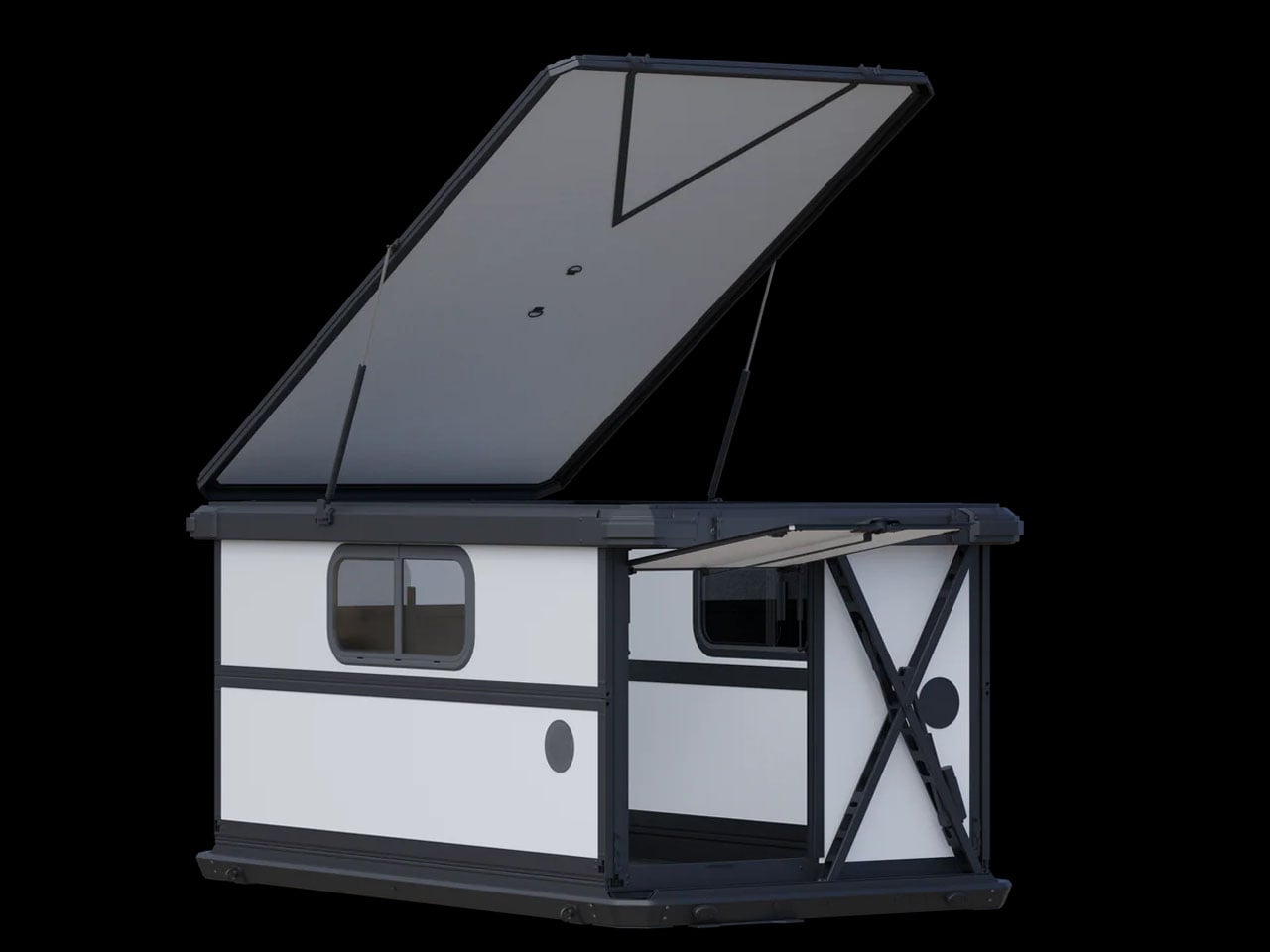
Developed by California-based Ecno Evil, the Unit-1 is a rugged squaredrop off-roader that’s built without wood, yet designed to withstand whatever you may throw at it. The HDPE (High-Density Polyethylene) construction makes the trailer absolutely durable, lightweight, and pretty cost-effective. The cost is also achieved by keeping Unit 1 to its skeleton, with subtle functionality accents only. It avoids the unnecessary camping equipment that the makers believe adventurers already own and should not be burdened further with mandatory gear in their rig.

Designer: Ecno Evil

If you stand by the thought that you should have the choice to furnish a trailer with your own stove, portable toilet, and power backup etc., then the Unit-1 meant to provide a reliable shelter out in the wilderness, should be the trailer you are looking at. Riding behind a capable tow vehicle, it can reach where you want it, providing you with an instant space with basic necessities to live out a few days in nature most conveniently. And more, if you pack it with your cooking and sporting gear.

Of course, the minimalist design and zero-wood construction are the chief highlights of the Unit-1. But you can’t take away the fact that the trailer has an external storage area in the rear, which is detached from the living area inside and makes it a feature to behold, especially for those who fail to keep the clean interior and the soiled gear separate.

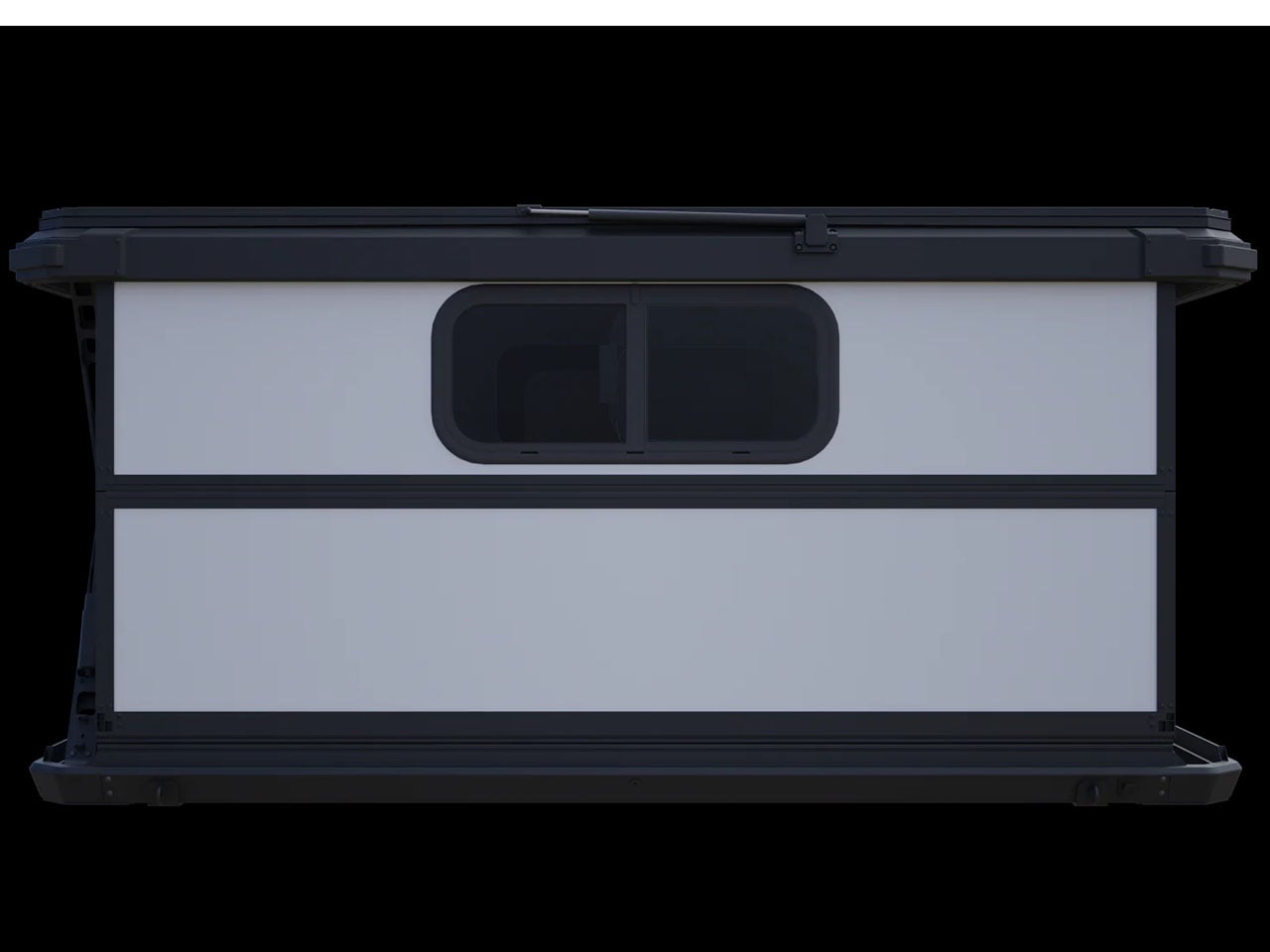
The Ecno Evil Unit-1 is not a very compact cabin; it has a 12.4-foot floor space that sits on a custom aluminum tube chassis. The body is a simple, squaredrop box without interior paneling or exterior cladding. It’s just a durable HDPE camper which, without metal or wood inclusion, is completely resistant to mold, rot, or any such durability issue. The trailer is only provided with a single door entry; the hatch is separate and has two storage units. Two windows, one with the door and the other openable just opposite, make provision of the natural lighting inside, while the 6-inch trifold mattress occupies the floor space under a roof fan and open shelves spanning the interior.

Ecno Evil makes provision for lighting both inside and outside, while providing an option 100-W solar panel and an Ecoflow power unit, if required. At its bare best, the Ecno Evil Unit-1 starts at $13,990. This would be a 4 x 8-foot floor plan. Another option is the 5 x 8-foot model, which starts at $16,490.

The post Ecno Evil Unit-1 is rugged, off-road, and wood-free camper you can’t break first appeared on Yanko Design.

Timeless rotary phone reborn as modern AI-powered companion that plays music

Who can forget the charm of rotary phones that were a lifeline in the early ’90s and ’80s? Their iconic mechanical dialling wheel with finger holes, solid build quality, and the unique clicking sound. Everything inside the machine was mechanical and wired on the inside to make communication possible. Even after their technical innovation was surpassed by mobile phones, the appeal of these robust dialers was not forgotten.

A recent re-imagining of this nostalgic device by designer Nico Tangara, who’s impressed us with the Self-Snoozing Alarm Clock shows how enduring designs can bridge analog heritage and modern digital convenience. Tangara’s project revives a vintage rotary telephone, carefully restoring original components while removing outdated elements such as the high-voltage bell and corroded wiring, to make space for low-voltage digital hardware.

Designer: Nico Tangara

At the heart of the redesign is the original rotary dial, preserved as the primary input mechanism. Rather than simply dialing phone numbers, each pulse created by turning the dial is translated into a digital signal. This allows the dial’s mechanical action to control contemporary digital functions. The transformed device blends vintage form with modern intelligence. On the inside, a small single-board computer, which was initially a Raspberry Pi 4, was later swapped for a Raspberry Pi 2 for lighter loads, handles the digital processing. The original speaker and microphone are replaced with improved audio components connected via a USB sound card, ensuring clearer playback and compatibility with the new system.

Beyond its physical transformation, the device gains new functionality: it operates as both a music player and an AI-powered voice interface. By integrating a voice-based model (e.g., ChatGPT), speech-to-text transcription (via Whisper), and text-to-speech output (via Google TTS), the retro telephone can respond to voice commands, play music, and offer interactive voice chat. Interestingly, it can do it all while preserving the tactile nostalgia of rotary dialing phones.

The project demonstrates how old objects can find new life when design respects their identity while embracing innovation. By retaining the rotary dial, handset cradle logic, and the device’s physical essence while embedding modern electronics, the hybrid telephone becomes more than a novelty. It becomes a functional link between eras, and I’m sure people will absolutely love the idea.

In doing so, the designer’s work suggests that the past need not be discarded. Instead, elements of design that once felt obsolete can offer fresh value when rethought for contemporary contexts. The resulting hybrid device stands as a tribute to the charm of mechanical telephony and an example of how thoughtful design can merge tradition with modern technology. Perhaps the ideal starting point for budding DIYers who want to create something out of the ordinary.

The post Timeless rotary phone reborn as modern AI-powered companion that plays music first appeared on Yanko Design.

Hyundai debuts a fully autonomous, production-ready droid engineered to tackle real-world tasks

Hyundai Motor Group Robotics LAB has been working on wheeled autonomous robots for some years now, with a gradual development timeline. They revealed the vision of a metamobility bot at CES 2022, which would be better than Boston Dynamics’ Spot the dog robot. The idea was just in the concept stage at the time, and coming from the South Korean giant, we knew it would be substantial when it finally arrived.

Finally, they’ve revealed the Mobile Eccentric Droid, a.k.a. MobED, a mobility robot platform tailored for a diverse range of industrial and everyday-use applications. The bot was shown off at the International Robot Exhibition 2025 (iREX 2025) in Tokyo. According to Dong Jin Hyun, Vice President and Head of Hyundai Motor Group Robotics LAB, the new robot will help “accelerate a future where humans and robots coexist.” The most exciting bit, it’ll be up for sale in the first half of 2026.

Designer: Hyundai

MobED thrives on three main pillars, which refresh our approach towards robotics. These are the Adaptive Mobility (hardware), Intuitive Autonomy (software), and Infinite Journey (applications). This makes the production-ready autonomous bot poised to reboot how robots move, navigate, and ultimately perform tasks in any setup, be it in an industrial location, unknown outdoor terrain, or narrow corridors of your home. Thereby making it perfect for a range of tasks, right from delivering your groceries and carrying gear up a mountain to acting as a golf caddy and being used for creative movie direction.

The wheeled workhorse is equipped with Hyundai’s drive-and-life (DnL) modules, which integrate steering, driving, and height adjustment into one portable unit. TI is integrated with adaptive motion technology, which eliminates any constraints that are environment-specific. All these innovations result in precise posture control to adapt to different terrains, performing difficult tasks in any kind of environment, and that too while carrying a heavy load. The modular nature of the platform makes it ultra-versatile and well worth investing in, compared to other robotics solutions that can do only a limited number of tasks owing to their form factor.

For starters, MobED will be offered in two versions: one will be a basic model that has the mobility capabilities of a current-generation bot, while the other comes with full AI autonomy and advanced navigation sensors. The latter is a pro version, and it is equipped with full AI autonomy, upgraded sensors, LiDAR, and a camera system. You’ll get a follow-me mode, so that the bot stays by your side when you are busy doing multiple tasks. Riding on four wheels doesn’t mean it is an autonomous vehicle of sorts, as it can swivel and articulate the wheels. Just like a four-legged personal bot, it can wave by cogging up its wheel. Fit on top a robotic arm, and the bot functions as warehouse personnel.

The robot is as easy to control as an RC car, since it’s equipped with a touchscreen controller. Hyundai’s robotic division has been quite serious about the future of its rolling droid development that’s been going on for quite a few years now, and the MobED Pro is now poised to change the dynamics of the robotics landscape in the near future.

The post Hyundai debuts a fully autonomous, production-ready droid engineered to tackle real-world tasks first appeared on Yanko Design.

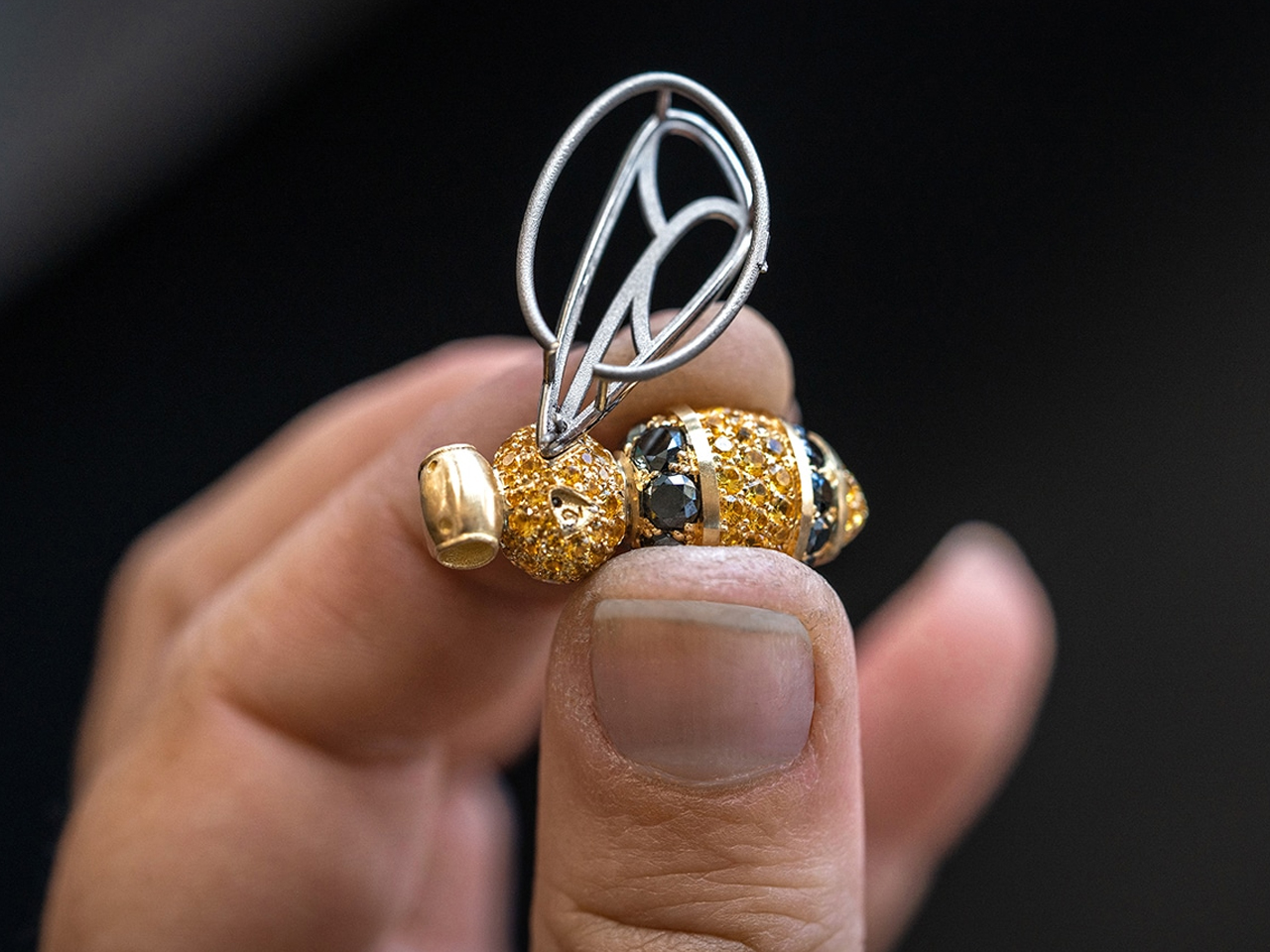
Marc Newson reimagines Ressence Type 3 into most intriguing $54k conversation starter ever

You can easily recognize Ressence, an independent watchmaker, from the crowd with its uncanny watches that make time telling unique, detailed, and exceptionally designed. For its latest iteration, the Type 3 MN, Ressence founder Benoît Mintiens has collaborated with Australian design genius, Marc Newson (a name we know from the first Apple Watch), and the result is easily the most intriguing watch in the industry.

The Type 3 MN is referenced as a result of “meeting of two design icons.” It’s a rare collective where two designers choose “to work together on one product.” Mintiens notes, “In my eyes, one plus one can become more than the sum of its parts.” And that reflects in the Type 3 Marc Newson edition, which is a true representation of the original Type 3 with nuances to behold.

Designer: Ressence

The Apple reflection

Of course, Type 3 MN is a Ressence, but unlike the Type 8 with handwoven Indigo-dyed silk dial or its sibling with geometric display and a joyful palette, it has Newson’s design approach reflected in it. Marc Newson was inducted into Apple by the good old Jony Ive. Both are known for their amazing projects at the Cupertino company, including the first Apple Watch. The duo has now co-founded a creative collective called LoveFrom.

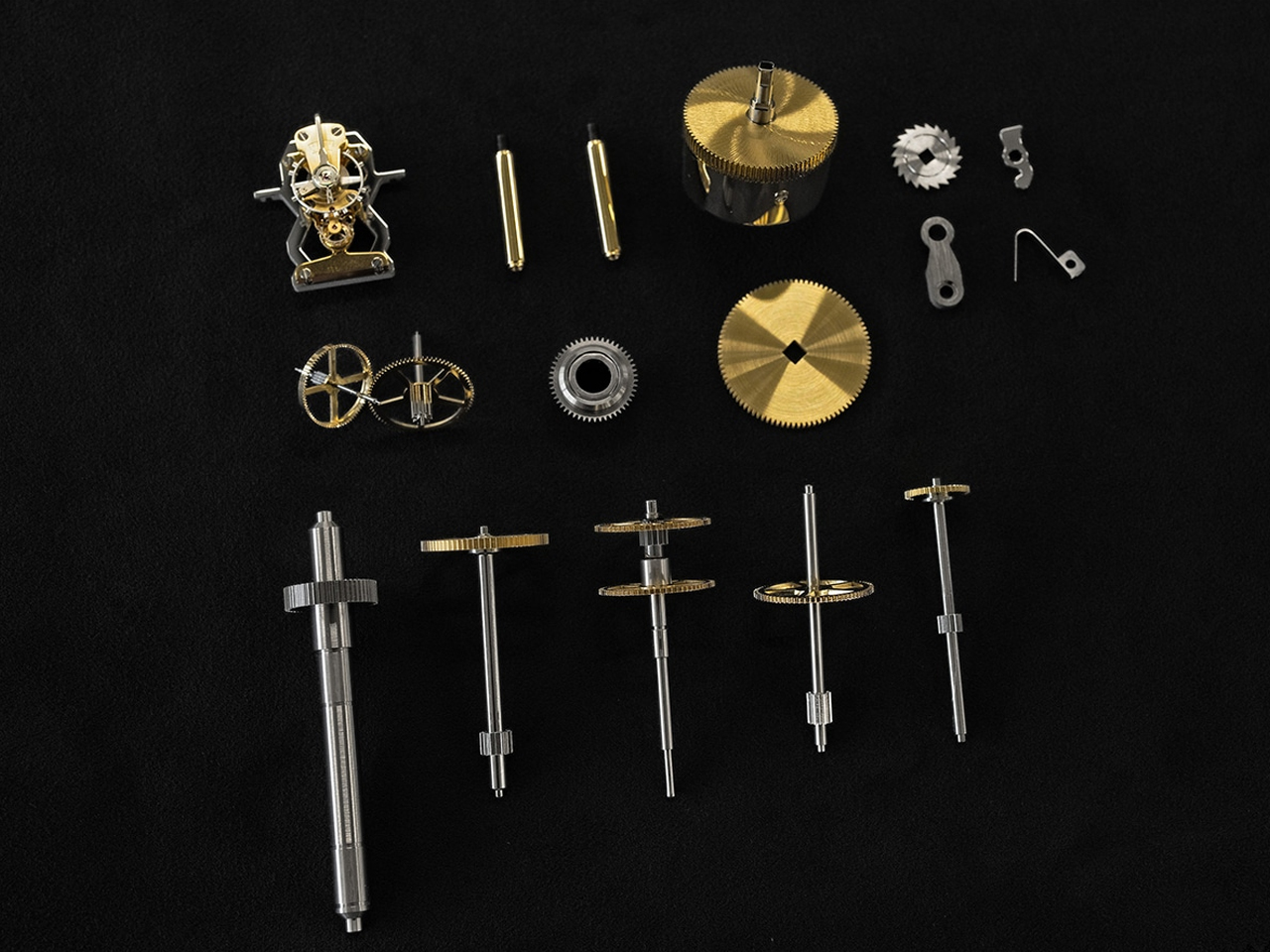
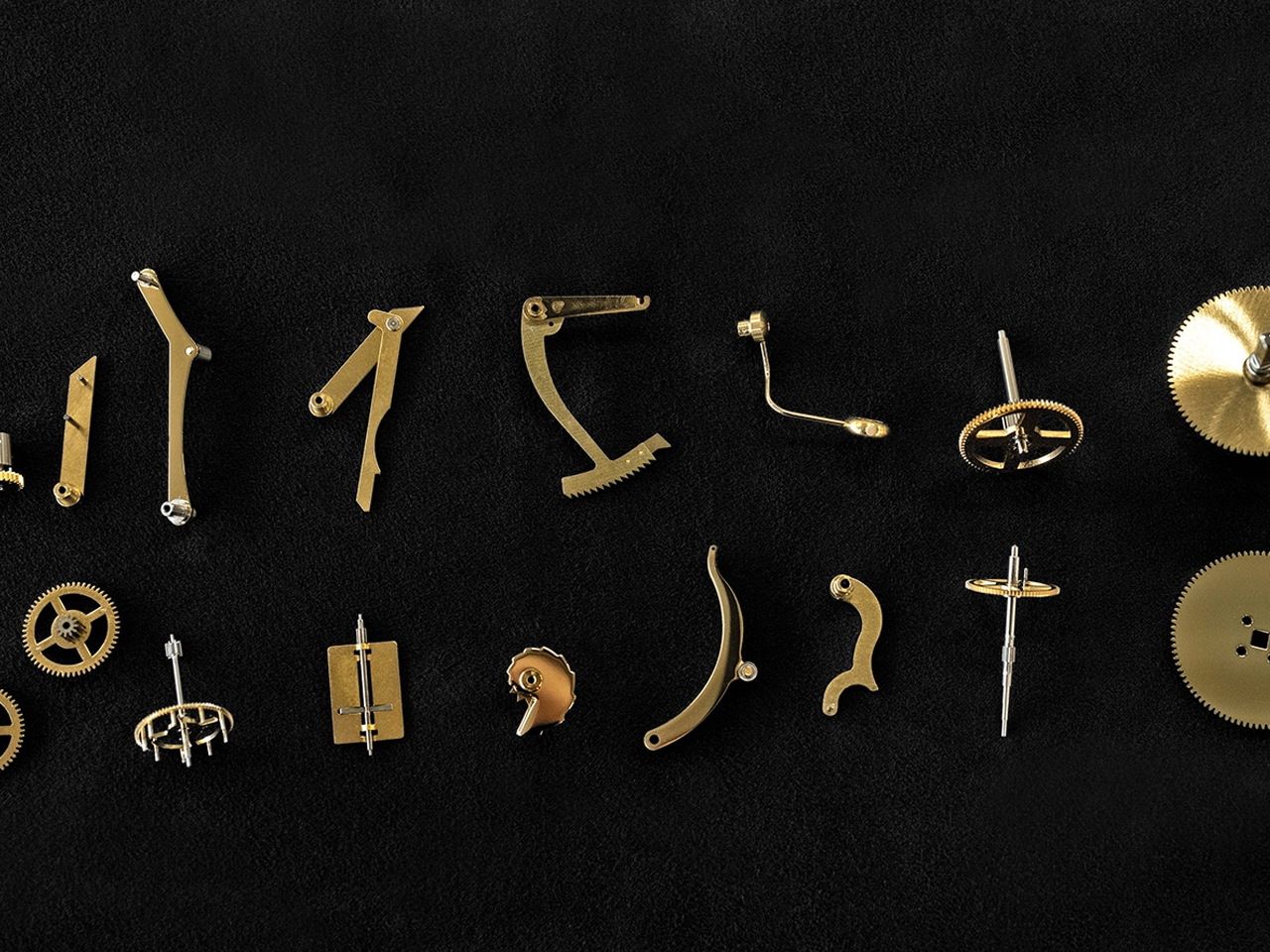
The Newson-design Type 3 has an elliptical design, a striking color palette, domed sapphire, and graphic hands all echoing Apple’s design language, which is paired with Ressence’s own oil-filled chamber dial and the ROCS-driven rotating Grade 5 titanium discs. It has a unique time-telling experience: the mechanism allows the accessory discs to revolve around the dial on multiple axis, instead of the usual hand movement.

The floating time

According to Ressence, the Type 3 MN features magnets to drive the movement of the discs. The watch separates the dial and the movement chambers, with the upper one filled with 3.57 ml of silicone oil, and the lower chamber (that holds the movement) is filled with air. Owing to oil’s capability to remove the refraction of light inside the watch, the time on the rotating disc appears closer to the domed sapphire glass, making the time appear to be floating on the dial.

The crown-less watch, Mintiens say’s is designed to connect with “those for whom purity of form, quality of material, and complex engineering” are a priority. The watch display depicts a celadon green and vibrant yellow accents under its soft elliptical silhouette, which highlights this combination watch that’s a reflection of Newson’s industrial design approach and Ressence unique time display. The Type 3 MN comes paired to a light grey silicone strap to match its dial and is limited to strictly 80 examples, going for $54,500 each.


The post Marc Newson reimagines Ressence Type 3 into most intriguing $54k conversation starter ever first appeared on Yanko Design.

This coffin made from mushrooms leaves nothing more than a cleaner future behind

Death is the only permanent truth. We all have to go on, but how we depart depends on our choices in life. Some leave behind a legacy, others their organs, but when it comes to the last rites, we all leave only carbon emissions and pollution. Dutch firm Loop Biotech wants to change that with the Living Cocoon, the world’s first mushroom-based coffin built completely emissions-free and safe for the environment after life.

A casket made from mushroom mycelium decomposes and enriches the surrounding soil in the process. The invention of a decomposable coffin is beneficial for the environment since the traditionally used velvet-lined wooden coffins are not very kind.

Designer: Loop Biotech

The wooden ones generally take decades to decompose and release toxins into the soil. The Loop Living Cocoon is believed to take roughly 45 to completely decompose and become nutrients for the soil. With the use of mycelium and hemp fibers for its construction, Loop has been able to fully eliminate the use of chemicals, glues, and metals in making the Living Cocoon. Yet, the coffin is durable and usable in all types of weather conditions.

Loop Living Cocoon is offered in a calm or wild color option and is certified for ‘natural burials, traditional burials, and cremations.’ According to Loop, it has also created an EarthRise urn from similar mycelium material, offering a biodegradable way to part with the ashes.

Loop informs that a 100 percent decomposable coffin can be sustainably grown in a week’s time. It is made in one size, measuring 85 × 30 × 18 inches, which the company says should fit 98 percent of adults weighing up to 200 kg. Storing the casket can seem tricky, but according to the FAQs on the company’s website, the Living Cocoon can remain safe “as long as it’s kept dry” and stored in a “ventilated space above the ground.” The coffin only starts decomposing when it comes in contact with the soil.

Unlike the velvet-lined wooden caskets, the Cocoon is lined with moss. Moss is the standard material, but family members have the choice to order it lined with any other natural material. The biodegradable construction also makes a considerable difference to the dry weight of the Cocoon. It weighs only 30 kg, which is almost three times less than a traditional wooden coffin.

The lightweight construction, paired with six jute handles, makes it safe and secure to lift or shoulder the Living Cocoon, which is compatible with mechanical lifts and ropes, used for lowering the coffin. Basically, using the Cocoon doesn’t require any special accommodations; it’s usable just like any traditional casket, but unlike them, it leaves nothing more than a cleaner future behind. Sustainability doesn’t come cheap. The Loop Living Cocoon is priced just under $4000.

The post This coffin made from mushrooms leaves nothing more than a cleaner future behind first appeared on Yanko Design.

Fiio DM15 R2R CD Player fuels compact disk revival with modern day functionality

The music industry is in turmoil lately, as streaming services are seeing many musicians pull their music due to dismal royalty payments and AI-generated content being pushed to listeners. Thus, direct-to-fan models are preferred by artists to at least have a livelihood. This marks a moment that is highly conducive to CD listening, which in most instances, delivers better audio quality compared to streaming services that prioritize mediocre audio delivery as the basic plan offered.

Apart from those reasons, physical media is seeing a revival for more reasons than not. Beyond the vinyl-loving crowd, the next best thing is playing your favorite albums on a CD player. Yes, CD players are again hitting popularity, and Fiio wants to serve its audiophile community with all the possible options. The DM15 R2R Portable CD Player is their modern take on a CD player, since the silver disk is seeing a serious revival in 2025.

Designer: Fiio

This one is a successor to the DM13 deck, which is also liked by the audio community. The DM15 R2R is made out of a compact aluminium chassis with a transparent top panel that displays the disc as it spins and plays your favourite tunes. To keep things wire-free, the CD player has an in-built rechargeable battery that gives you around seven hours of non-stop music. Extending the use case scenario beyond just playing your CDs, the player comes with a USB DAC, Bluetooth mode, and Hi-Fi playback with the in-built optical and coaxial ports. To extend the functionality further, it has the customary 3.5mm jack and the balanced 4.4mm line output. In the USB DAC mode, the player outputs music at up to 32-bit/384kHz PCM and native DSD256.

You can stream high-res audio to your wireless headphones or speakers as the player supports codecs including aptX, aptX HD, aptX Adaptive and aptX Low Latency. The CD player comes with an ESP (Electronic Shock Protection) switch to eliminate skipping issues. This comes really handy when travelling as the movement of the CD player can heighten this problem. As an upgrade, the CD player comes with playback and control buttons on the front panel, paired with a tactile volume dial. As suggestive of the name, the CD player employs a resistor ladder to convert digital signals into analog waveforms, which, according to Fiio, translates to a smoother, more organic style of playback many listeners prefer.”

The premium build quality, added features and useful functionality come at a higher price of $270, but they are absolutely justified given what’s on offer. The CD player will be offered in four attractive finishes with pre-orders starting now. The silver and red variants will start shipping. If you want most of the features and functions at a lesser price, the $170 DM13 is the next best thing.

The post Fiio DM15 R2R CD Player fuels compact disk revival with modern day functionality first appeared on Yanko Design.

Escape Trailer’s 13-foot fiberglass egg trailer: fun adventures in a small package

There is a little of everything in an Escape Trailer. It’s compact yet spacious and lightweight yet robust. The Chilliwack, Canada-based trailer manufacturer has been through five fiberglass “egg trailers” and now for the sixth edition, it has launched the Escape 13’, which according to the company is ‘it’s lightest and most compact trailer yet.’


With decades of experience behind their conviction and handling of fiberglass, Escape Trailer has stayed true to its signature construction style allowing it to trim the weight. For the interested, the E13 is built with 100 percent molded fiberglass creating a true one-piece shell. To the tiny camping trailer, it means a lightweight and incredibly durable body, which is fuel-efficient to tow and easy to maintain over the decades.

Designer: Escape Trailer

In the past few days (if we doubted it in any little) a couple of new compact trailers, Escape 13 included, have proven that great adventures can pack well in small packages. A little space can be tailored to feel spacious enough to live without a compromise in convenience and safety. This was substantiated recently by the Scamp X off-road trailer. The first molded fiberglass egg trailer from Scamp Trailers, a popular Minnesota–based RV manufacturer of the ‘70s.

Purpose-built to tread off-the-paved-roads, Scamp X transforms the beloved egg camper into a serious off-roader, which the Escape 13 doesn’t really match up, but the latter’s interior makes up for it. On the outside, the two trailers are molded fiberglass shells but, on the inside, the E13 is created to maximize space and ensures small-scale camping is done right. If you love the vibe, the new trailer comes in 13 different exterior colors to choose from.

At 13 feet, the aerodynamic Escape 13 measuring 13’8” L x 6’7” W x 6’1” H is built on a single 3,500 lb. axle to make towing it easier even with smaller vehicles. With its dry weight of just 1,850 lbs and a GVWR of 2,500 lbs. the camper should be towable easily by small SUVs and even crossovers.

When you hop in through a side entry you witness a small, but surprisingly spacious interior that is planned to sleep three people comfortably. For this, the trailer is equipped with a double bed, a convertible dinette, and a well-equipped kitchen area. The compact galley kitchen has a dual burner stainless steel cooktop, a sink, and a 3 cu.ft. refrigerator.

A 12,000 BTU furnace keeps the residence in a cozy temperature, while Escape Trailer provides the E13 with porta potty that hides away from sight in one of the wooden cabinets. The maple wood cabinetry and overhead compartments span almost the entire part of the interior, sufficing the users’ storage requirements. The trailer features a screen door, while the acrylic windows allow natural light to make the interior feel slightly more expansive. All of this, Escape Trailers is making available starting at CA$33,600 ($24,000).

The post Escape Trailer’s 13-foot fiberglass egg trailer: fun adventures in a small package first appeared on Yanko Design.