This LEGO Mechanical Heart Beats Just Like A Real Heart Would

A real heart beats at roughly anywhere between 60bpm or 100bpm on average… LEGO builder Anatomical_Brick’s ‘Motorized Beating Heart’ outputs 55bpm, providing a near-perfect replication of what an actual beating heart looks like. The coolest part, the entire thing is made from LEGO bricks and is powered by a set of replaceable batteries.

Designer: Anatomical_Brick

At the heart of the model lies a LEGO Technic frame equipped with two interlocking slider mechanisms and a scissor element. This ingenious design allows for dynamic adjustments to the width and height of the central structure. A flexible outer shell, crafted from interconnected segments joined by rubber bands, envelops the core frame. This construction creates a captivating illusion of movement as the structure expands and contracts. The entire model is roughly 3x in scale (to make sure the heart moves effortlessly), and is powered by a motor linked to a battery pack, bringing it to life.

“I initially wanted to make a heart for Brickvention due to my fascination in the organ and had never seen it done using LEGO pieces. When telling others about this project, the reoccurring feedback was that it should move. They were absolutely right! After many months of trial and error, I’m finally happy with the results and so were the people at Brickvention,” said Anatomical_Brick.

The final result is a marvel of technology as well as biology. Sure, LEGO bricks only get you so much realistic detail, but watching the heart beating feels nothing short of captivating, The auricles and ventricles of the heart expand and contract, simulating the effect of blood being pumped through the organ. The red part of the heart indicates where oxygenated blood passes through the organ, whereas the blue part shows the passage of deoxygenated blood.

Currently a submission on the LEGO Ideas forum, Anatomical_Brick’s MOC (My Own Creation) is gathering support from the broader LEGO community. With more than 700 votes under their belt, the submission is en-route to the coveted 10,000 vote mark, following which LEGO’s internal team will review it before turning it into a buyable box set!

The post This LEGO Mechanical Heart Beats Just Like A Real Heart Would first appeared on Yanko Design.

DON’T Buy A Container Home: 5 Reasons Why They Might Be A Bad Idea

Container homes have gained traction as a trendy, supposedly eco-friendly alternative to traditional housing. While the appeal of transforming a robust steel box into a chic minimalist abode is undeniable, several pragmatic concerns often go overlooked. These homes, once idealized as the epitome of innovative living, may not be the smart investment they’re touted to be. We’ve covered tiny homes extensively on YD, and I still stand by my opinions on micro-living being great… but as far as container homes go (and we at YD speak from personal experiences), they may look beautiful but can pose significant challenges based on where you live and how you plan on building your home. Even if you have your heart set on these homes, here are 5 things you need to keep in mind before you embark on this journey.

1. Climate Control Challenges

One of the most significant challenges of living in a container home is maintaining a comfortable internal climate. These steel boxes were designed to transport goods across oceans, not for human habitation, and their basic structure is not conducive to temperature regulation. In summer, the steel walls absorb and conduct heat, transforming the container into an oven. Conversely, in winter, the same metal walls shed heat rapidly, turning the home into a refrigerator.

Effective climate control in such environments necessitates robust insulation systems. However, the installation of these systems is neither straightforward nor inexpensive. Traditional insulation methods often fall short, requiring specialized, high-performance solutions such as spray foam, which adheres to the metal and creates a thermal and moisture barrier. Yet, even with top-notch insulation, the energy costs associated with heating and cooling a metal box can be exorbitant, as the metal’s inherent properties continuously work against these efforts.

If all that wasn’t enough, these metal containers can sometimes act as Faraday cages, completely obliterating any mobile network connectivity while indoors. Unless your container home has ample open windows that allow cellular waves to pass through freely, you may experience massive dead zones for mobile connectivity throughout the house.

2. Rust and Corrosion Problems

Shipping containers are built to withstand the rigors of sea travel, which makes one assume they can handle anything nature throws their way. However, once repurposed as homes and exposed to different environmental conditions without proper maintenance, they can quickly succumb to rust and corrosion. The protective coatings used on these containers are designed for saltwater exposure, but once breached by cuts and modifications necessary for windows, doors, and other home amenities, they become vulnerable.

The battle against rust is ongoing and costly. Regular application of rust-proofing measures, careful inspection, and maintenance are required to keep a container home in good shape. In coastal areas or places with high humidity, the rate of corrosion can accelerate, potentially compromising the structural integrity of the home over time. For instance, residents in coastal regions have reported accelerated wear and degradation, necessitating frequent and costly maintenance that eroded the initial savings from choosing a container home.

3. Structural Integrity Issues + Lack Of Modification

While shipping containers are inherently strong, the process of converting them into habitable spaces often involves modifications that can compromise this strength. Cutting large openings for windows, doors, and room transitions removes parts of the container’s load-bearing walls. To counteract this, additional structural reinforcements, such as steel beams or wooden framing, must be installed.

This modification process is not only complex but can also be more costly than expected. It requires precise engineering to ensure safety and compliance with local building codes, which are often not designed with container homes in mind. The necessity for skilled labor to carry out these modifications safely adds another layer of expense, which can surprise many first-time container home builders.

4. Acoustic Challenges

The acoustic properties of steel can turn a container home into an echo chamber, amplifying sounds within and transmitting external noises inside. This can make living in a container home less comfortable than anticipated, especially in noisy urban environments or if the home is not adequately insulated against sound.

Implementing effective sound insulation is crucial but can be tricky. Materials that can dampen sound, such as dense foam or specialized acoustic panels, must be integrated into the walls, floors, and ceilings. These materials not only add to the cost but also take up precious interior space, further challenging the comfort and functionality of the home. Moreover, the need for such insulation can detract from the aesthetic simplicity many seek in a container home.

5. Insulation and Condensation

Insulation challenges extend beyond temperature control and sound. Steel walls are prone to condensation whenever there is a temperature differential between the inside and outside. This condensation can lead to moisture accumulation inside the walls, fostering mold growth and reducing air quality. Proper insulation must therefore include a vapor barrier to prevent condensation, which is an additional cost and complexity in the building process.

For those living in climates with significant seasonal changes, managing humidity and preventing condensation are ongoing issues. Many container home residents have had to retrofit dehumidifiers and additional ventilation systems post-construction, as initial plans did not fully address the moisture issues inherent to living in a metal box.

Choosing a container home is undoubtedly an attractive idea, especially for those drawn to minimalist, sustainable living. However, the reality of residing in a repurposed steel box can be far from the idyllic life pictured in glossy magazine spreads. From battling the extremes of climate to managing rust and ensuring the structure remains sound and comfortable, the challenges are many and often costly.

If the novelty and aesthetics of a container home still appeal to you, consider these factors carefully and weigh them against more traditional building methods that might offer fewer surprises in the long run. After all, the true comfort of a home comes not just from its walls but from living in peace with one’s choices—preferably, without the constant echo of regrets.

The post DON’T Buy A Container Home: 5 Reasons Why They Might Be A Bad Idea first appeared on Yanko Design.

Quirky rocking chair’s jagged design creates an illusion of a ‘motion blur’

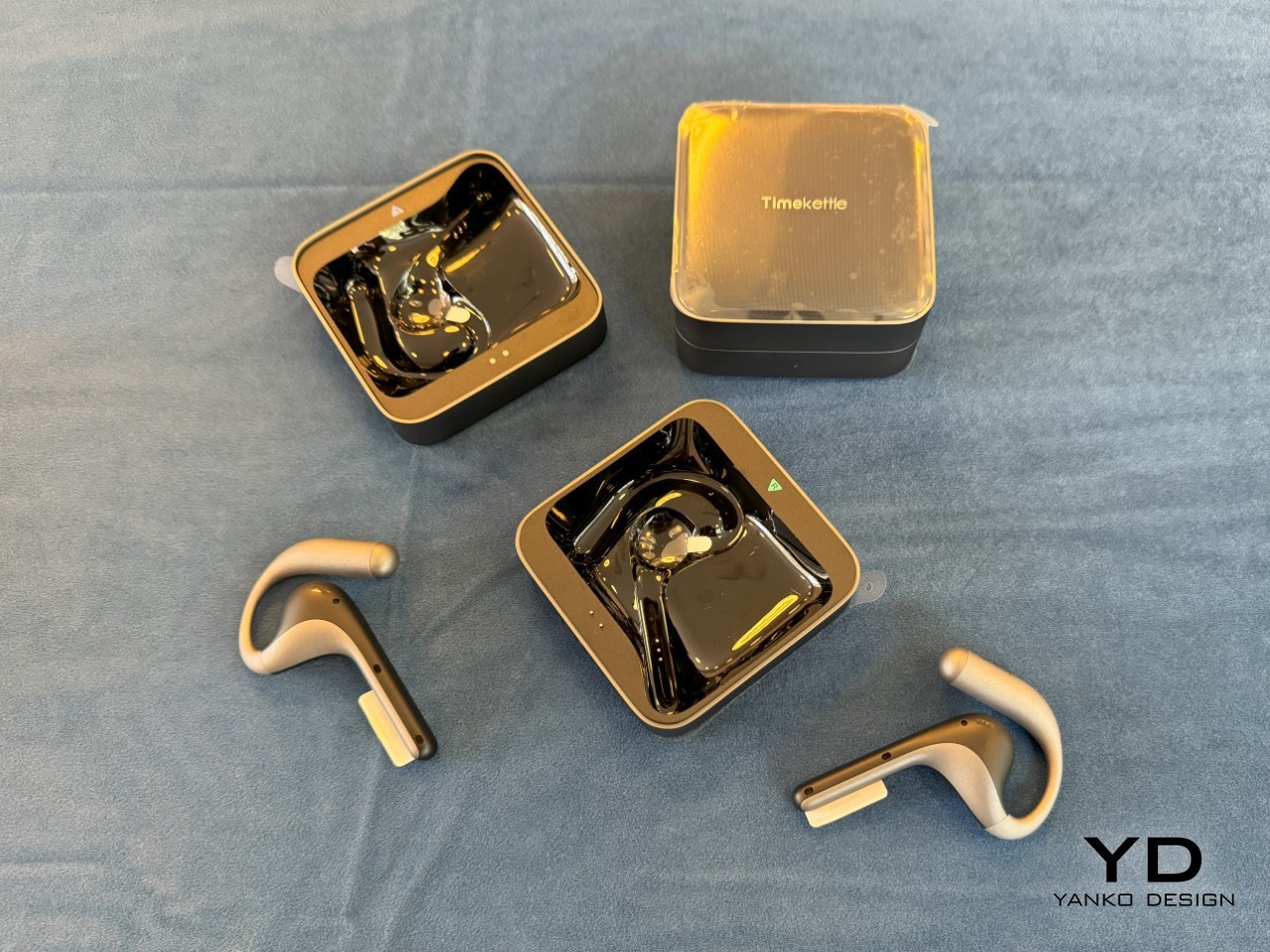
Bordering on visually uncomfortable, this rocking chair from Instagram user Muddycap has us captivated for all the right reasons! The chair has a highly unusual design, with severely jagged edges that simulate the feeling of movement. Building on the concept of visual permanence and the motion blur, this chair creates the illusion of being in constant motion, even when it’s standing still.
Designer: Muddycap

The Fast Rocking Chair, as it’s aptly called, comes crafted from Maple wood and secured with a coat of paint to hide the wood-grain which would give the illusion away. Each chair features different pieces of wood, cut using a mechanical saw to match the unique shapes, and joined together using traditional joineries. The result is a chair that looks cartoonishly fast, prompting you to spend more time looking at it. Sure, you could sit on it too – it might look jagged but it isn’t uncomfortable.

The jagged design exists only on the side profiles, so there’s really no danger of you hurting yourself while sitting on the rocking chair. The seat and armrest are flat, and the backrest has a mild corrugated design. That being said, the chair is definitely a health hazard for kids and pets who may often run around the house. While most furniture have a few sharp edges, the Fast Rocking Chair is essentially an invitation to the ER for children or pets with zoomies, or adults with ADHD.

However, the rocking chair makes for a really fun visual experiment. Muddycap’s entire Instagram profile is filled with such explorations, aiming at turning furniture into conversation pieces rather than have them stuck in the realm of hardcore functionality. The rocking chairs obviously aren’t for sale, although there’s no denying that they certainly do look rather mesmerizing.

The post Quirky rocking chair’s jagged design creates an illusion of a ‘motion blur’ first appeared on Yanko Design.

These vases were (almost) completely designed and made by algorithms and machines

From the conceptualization to the actual production, the Differential Growth Vases hardly had any significant human intervention. The vase shape was determined by a differential growth algorithm, while a 3D printer manufactured the vase. Although designer Tim Zarki orchestrated the project and came up with the very idea in the first place, the machines pretty much took over the execution of both the concept and fabrication phases, displaying two things – AI-based creativity, and the ability to have humans step away from creative roles with a fair amount of success.

Designer: Tim Zarki

Differential growth might sound like a fancy term, but it’s a way of explaining how cells multiply. The process can be understood through a series of rules that are repeatedly applied to points in space (called nodes) connected into chains by lines (edges) to form paths. In short, the cells adopt a pattern (based on their DNA) and create within that particular pattern, resulting in growth that follows a template set by previous cells. You can see this in how plant branches grow, how cells expand, how rivers meander, etc. Zarki put the same sort of algorithm to the test with the vases, setting a base shape and having the algorithm expand it. The result is nothing like any pottery you’ll ever see…

While most vases are created using a potter’s wheel, resulting in a rotationally symmetrical design, these vases have undulating designs created by the algorithm. The best way to understand how the algorithm works is to look at the shape of the base of the vase, and the final shape at the top. The vase’s vertical growth shows the transition between these two shapes, helping you understand how the algorithm works. There’s never a set final pattern, as the algorithm creates something new each time. This means each vase ends up looking unique. Zarki experimented with three overall designs, although the possibilities are quite literally endless, much like how no two plants grow the exact same way, or no two fingerprints look the same.

The final forms were then fed into a slicer software, that helps prepare them for 3D printing. The slicer creates a path that the printer’s nozzle has to follow, and once ready, the printer gets to work, slowly, but steadily printing the vase. As is evident, this entire process is nothing like the current conventional pottery methods, but with this project, Zarki hopes to challenge convention. By eliminating standard processes, and to quite an extent the human too, these vases show how oddly appealing a world would be to live in if AI designed more… obviously with humans playing a final role in determining whether the design is aesthetic or not!

The post These vases were (almost) completely designed and made by algorithms and machines first appeared on Yanko Design.

This sleek $99 health-tracking ring marks the death of bulky fitness-tracking bracelets

You know you’re doing something right when Samsung ends up launching a product to compete with yours, and it’s becoming increasingly clear that Apple plans on joining the category too. The smart ring market is seeing an undeniable rise for a bunch of reasons. Smart rings are classy, discreet, and don’t have too many components or requirements. You have ten fingers, so you can easily wear a smart ring along with your engagement ring or accessories (try wearing two watches and see people stare) and you can easily wear the ring while asleep too. Smartwatches walked so smart rings could run, and the latest runner to enter the marathon is the Kuura Ring – a sleek wearable that’s titanium on the outside, and sensors galore on the inside that tracks everything from your sleep to your stress levels and exercises. Like a fitness tracker but sleeker and frankly a little more convenient, the Kuura is yet another nail in the smartwatch coffin, affirming the fact that rings are, in fact, the future of the health wearable industry.

Designer: Kuura Ring

Click Here to Buy Now: $99 $248 (60% off). Hurry, only 62/1500 left! Raised over $190,000.

Move Smarter: your walks, runs, cycles and gym sessions and measure your heart rate, and recovery rates to plan your personal fitness goals.

The Kuura Ring looks like any minimalist metal ring, blending right in without necessarily looking tech-forward. A titanium outer shell comes in 3 colors – black, silver, and gold, while the inner surface of the ring is made from hypoallergenic epoxy, which hermetically seals all the electronics inside the ring giving it complete water resistance. The insides are lined with various sensors that can track body metrics from body temperature to heart rate and even blood oxygen, giving the Kuura Ring a wide variety of stats to help interpret different stages of your health. A 17.5mAh battery powers the entire wearable, giving it a solid week’s worth of usage so you don’t need to charge your ring every day like you would most fitness trackers.

Live Smarter: Get a clear picture of your health from over 20 biometric signals, including temperature to stress levels to help you live your best life each day.

The sensors within the Kuura capture your health in a holistic manner, working around the clock to give you stats across a variety of categories. A G-sensor captures movement, a heart-rate light reads your heart rate, HRV, and stress levels, a blood oxygen light does exactly what it says it does, and an infrared light detects when the ring’s worn, switching the wearable off when you take it off. Combined, these sensors are all the Kuura needs to analyze your well-being.

The ring does everything a fitness wearable does and maybe some more. It monitors your health, ensuring your heart rate isn’t too high or too low, captures your steps to see how much you’re moving in the day, uses a variety of stats to check your stress levels, tracks your workouts (ranging from a variety of workout styles), and at the end of the day, tracks your sleep cycle. The lack of a screen on the ring means all the data is sent to Kuura’s own smartphone app (it also means better battery performance) where you can access every single metric laid out in a well-designed UI. The app is your health dashboard, letting you see your progress as well as learn all your rooms for improvement, and even set fitness goals that you can aim for.

Sleep Smarter: Wake up to analysis about your deep sleep, light sleep & REM sleep to optimize your sleep schedules and rise feeling refreshed and ready for the day.

Different sections in the app provide their own detailed metrics. The sleep tracking page gives you a detailed analysis of your sleep across 4 stages – REM, restful sleep, light sleep, and wakefulness. The fitness tracker captures movement (distance and steps), duration of your workout, and even the kilocalories burned. The water-resistance allows you to even go swimming with your Kuura on. Finally, the overall health tracker looks at your heart rate, variability, body temperature, and stress levels to give you a score that helps you understand where you stand in your journey to a healthy life.

Available in 3 different colors, the Kuura Ring comes in 8 sizes that fit men and women of all ages and body types. Earlybird backers can grab the Kuura Ring for just $99, which also includes the ring’s contact-based charging cable, and the free Kuura smartphone app available on iOS and Android.

Click Here to Buy Now: $99 $248 (60% off). Hurry, only 62/1500 left! Raised over $190,000.

The post This sleek $99 health-tracking ring marks the death of bulky fitness-tracking bracelets first appeared on Yanko Design.

This 3000+ brick LEGO Milky Way artpiece captures the chaos of our cosmic home

The Milky Way is estimated to have anywhere up to 400 billion stars, so it only made sense that LEGO’s reinterpretation of the galaxy was a chaotic combination of thousands of bricks too, right?! Designed for ages 18 and above, the LEGO Milky Way Galaxy (#31212) is a galactic hot-mess of plastic. With over 3000 bricks coming together to make the artpiece, this box-set is as challenging as it’s beautiful. The pieces are color-coordinated and come together beautifully to create the different bands of the galaxy we call home. There’s even a specific point on the painting where a ‘You Are Here’ tag marks the general location of our solar system, and by extension, us.

Designer: LEGO

Like most LEGO artpieces, this rendition of the Milky Way comes with a level of depth that a 2D printout can never have. The galaxy quite literally pops out of its frame, with the use of different bricks from all across LEGO’s catalog, creating beauty and unity in a kind of chaos that seems emblematic of our galaxy. No star or solar system is the same, which is why all the bricks are different too, with barely a few matches. Putting this artpiece together should either feel extremely confusing or rewarding!

The entire painting comes together with a staggering 3091 bricks, featuring popular celestial phenomena such as Trappist-1, The Pleiades, The Crab Nebula, and The Pillars of Creation. Given how detailed the entire artpiece is, it’s split into five panels for easy assembly, each accompanied by a dedicated instruction booklet, fostering a collaborative assembly experience for families and friend groups. To elevate the journey, each booklet unveils a curated soundtrack filled with fascinating Milky Way facts accessible via QR code. When complete, the entire piece measures a staggering 15.5 inches tall and 25.5 inches wide.

The LEGO Milky Way Galaxy starts at $199.99 and begins shipping on May 18, 2024.

The post This 3000+ brick LEGO Milky Way artpiece captures the chaos of our cosmic home first appeared on Yanko Design.

Posted in Uncategorized | Tagged ,

The World’s First Portable Espresso Maker with its own Water Heater lets you Brew Coffee literally anywhere

Dubbed the OutIn Nano, this little flask-shaped beauty is your key to a golden cup of coffee literally anywhere. Use it indoors, outdoors, or even in the sky – the OutIn Nano Portable Espresso Maker lets you pull a shot of espresso anywhere, letting you relish your coffee whenever you want. Even equipped with its own water heater, the Nano will warm up your water as it brews the coffee, which means you really don’t need anything apart from an empty cup and a caffeine craving.

Designer: OutIn

The OutIn Nano is perhaps the only portable espresso maker that will heat your water for you. Sure, other portable espresso makers boast a compact design, but every single one of them needs you to add your own hot water. That really isn’t a concern for the OutIn Nano, which has its own heating coil that ensures you get a perfect espresso shot even if all you have is tap water or mineral water around. The vertical flask-shaped design lets you add water to the top, and either a Nespresso or Keurig pod at the bottom, or a small puck filled with your own coffee grounds. A single-button interface gets your coffee brewing, and a built-in pump extracts your espresso right into the OutIn Nano’s cap, which serves as a nifty cup.

A 7500mAh battery powers the OutIn Nano, heating up water in just 200 seconds. Alternatively, you could just add hot water the way you would with any other portable espresso maker and that should speed up the process. The battery life also significantly differs between cold and hot water, with the OutIn Nano brewing 5 cups of coffee if you add cold water and rely on the built-in water heater feature, or a stunning 200 cups of coffee on a full battery if you use pre-heated water.

The resulting coffee is deliciously authentic, with a rich crema created by heating/brewing at 92°C/198°F and passing the water through the coffee grounds at an impressive 20 bars of pressure. The entire cycle takes just 4 minutes from start to finish (if you use the water heater), giving you your espresso. The OutIn Nano holds as much as 80ml of water, which is more than enough for a double-shot, allowing you to either drink your coffee neat or turn it into an Americano or a latte by adding water or milk.

Weighing just 700 grams, the OutIn Nano was practically built for the outdoors. It comes in 5 colors, charges via USB (even working with your car charger), and ships in a soft-shell case that includes the entire coffee-making kit. Heck, the Nano even won both the Red Dot and iF Design Award last year for its impressively compact design.

The post The World’s First Portable Espresso Maker with its own Water Heater lets you Brew Coffee literally anywhere first appeared on Yanko Design.

Fan-made PlayStation 5 ‘Mini’ is 70% smaller than Sony’s Original PS5 and fits in backpacks

Even tinier than the PS5 Slim that launched in October last year, this fan-made gaming rig is small enough to slide into a backpack, has a glowing PS logo on the front, docks and charges two DualShock controllers on either side, and has a thermal performance that almost matches up to the regular PS5. Designed by YouTuber NFC, this ‘PlayStation Mini’ relies on a reimagined architecture and an external disc drive that helps cut space by nearly 70%, giving you a final console that’s merely 30% the size of its original self. No Ozempic was involved…

Designer: Not From Concentrate

When rumors of the PS5 Slim began making rounds on the internet, YouTuber NFC (short for Not From Concentrate) hoped that Sony would radically shrink the console and make the disc drive external instead of detachable. Instead, we got a marginally smaller console that had a disc drive that could only be used by snapping it onto the side of the vertical console. Not that anything’s wrong with the PS5 Slim, we think it’s an iteratively improved console, but NFC definitely found himself wanting more. The journey he embarked on is one that not all of us can take – it involved deep designing, engineering, and using CNC machines and 3D printers to build everything from new outer housings to inner thermal architectures, and even adding a logo and backlight to make it something so professional it looked like it came out of Sony’s own headquarters.

The resulting PS5 Mini is probably a one-off unit that NFC built for the YouTube video (you can watch the entire thing above), but it’s a sheer work of art and engineering. Anyone can rip circuitry off from the existing PS5 and cram it into a new plastic body… but only a few of them can do such a great job that the resulting PS5 Mini has a performance that rivals its bigger sibling. In fact, the tinier console is nearly 3.3 liters in volume, making it significantly smaller than the 10.5-liter PS5. It’s so small it fits into most backpacks and is no larger than a thick book.

The PS5 Mini comes with a construction featuring metal, plastic, and even carbon fiber parts. It has a completely new heat sink, a new chassis, outer body with massive grills on the side for air flow, a new fan, and even backlit plastic components that glow blue when the machine’s on. It also features not one but two DualShock controller docks that also charge your controllers when put in place, doing something that even the OG PlayStation couldn’t.

The new build features up to 20 redesigned components that were either made in NFC’s studio workshop on his CNC machine or 3D printer, or ordered from a fabrication website. The size of the new PS5 Mini was determined by the motherboard, which was a compact rectangular little component that served as the starting point for the console’s design. NFC uses a Black-Ridge CPU Cooler heat sink, and even a new fan and fan controller because the original PS5’s fan is a massive component that played a major role in what made the original console so big. NFC explains that Sony prioritized console ‘quietness’ with the old design, owing to the large fan size (larger fans move more air at slower speeds, creating less noise). The power supply was replaced with a smaller 250W GaN one, the front was capped off with carbon fiber that contrasted the white outer body beautifully, and NFC used the original PS5’s status LEDs to light up a new PS logo that now adorned the front.

The stand charges the controllers even when it’s switched off.

An external disc drive made sense, allowing the PS5 to be web-based when needed, and disc-based when plugged in.

Surprisingly, even the thermals match up to the original, with idle temperatures being a mere 1°C hotter, and gaming temperatures hitting a marginal but impressive 4°C hotter than the original. The way NFC did this is by literally wiring temperature probes into the different parts of the console to get a holistic reading of the console’s temperature at all times. The new fan works in theory, but NFC does point out that making everything smaller means having a marginally noisier fan. Luckily, this could easily be taken care of by placing the console near some speakers, that would wash out the fan’s sound.

The post Fan-made PlayStation 5 ‘Mini’ is 70% smaller than Sony’s Original PS5 and fits in backpacks first appeared on Yanko Design.

This Pininfarina Racing Rig Concept might be the most Gorgeous Simulator Setup ever made

The problem with racing simulator rigs are that they aren’t designed by automotive designers, they’re designed by gamers. Most sim-racers are fairly utilitarian looking, with an almost bare-basics cockpit-inspired design focusing on real-world feel. The most aesthetic part is almost always the driver’s seat, and everything else looks like a naked chassis. Not the Pininfarina Formula though… designed by Fabio Bilotta, this concept piece brings the world of automotive art and gaming together to create a rig so unique it’ll garner stares the same way a hypercar does.

Designer: Fabio Bilotta

The Pininfarina Formula combines sleek aesthetics with user-centered functionality. Paying homage to the iconic shape of the Istanbul Air Traffic Control Tower, it embodies a blend of sophistication and dynamism. The secret to the Pininfarina Formula’s sculptural beauty lies in its meticulous material selection. Carbon fiber offers a perfect balance of strength and lightness, while reinforced plywood ensures long-lasting durability. Stainless steel adds a touch of class, and genuine leather elevates the experience with a luxurious feel.

The Pininfarina Formula models itself ergonomically on Formula 1 cars, positioning the user’s feet at shoulder height for optimal control and mimicking the posture of professional racers. But it doesn’t stop there. The setup is designed to adapt to individual needs. The pedal sledge and steering wheel housing are both fully adjustable, allowing users of all heights and preferences to find their perfect racing position.

Whether you prefer the immersive world of virtual reality or the classic experience of a traditional screen, the Pininfarina Formula caters to your taste. Its adaptable design seamlessly integrates with different gaming setups, ensuring you can enjoy your favorite racing titles in the way that suits you best. The setup comes without a wheel or pedals, giving you the ability to attach your own, based on your preferences as well as your budget… although if you’re splurging on a Pininfarina-inspired rig, is money really an object for you?!

Images via Automotive Design Planet

The post This Pininfarina Racing Rig Concept might be the most Gorgeous Simulator Setup ever made first appeared on Yanko Design.

DaVinci Resolve’s latest Micro Control Panel turns your Apple iPad Pro into a full-fledged studio

Just in time for Apple’s May 7th event, Blackmagic announced the Micro Control Panel, a tiny, keyboard-sized controller that takes your iPad color grading to a whole new level. Dock your latest iPad Pro in the Micro Control Panel, fire up the DaVinci Resolve app, and this tiny rig rivals most color-grading setups. Designed for professional as well as novice videographers and unveiled at NAB 2024 this year, the new portable control panel features a mounting slot for an Apple iPad Pro, an internal battery, supports both Bluetooth and USB-C connections, and boasts an affordable $495 price tag.

Designer: Blackmagic

Standing out for its portability, the DaVinci Resolve Micro Color Panel is roughly the size of a keyboard. Don’t be fooled by its size, though. This panel packs a punch with high-quality trackballs and machined knobs for precise control over color correction. Whether you’re adjusting shadows, highlights, or saturation, the tactile feedback provided by these controls allows for nuanced fine-tuning.

Beyond color correction, the panel offers a range of transport and grading controls conveniently positioned around the edges. With these buttons at your fingertips, you can navigate your project timeline, set stills, and execute other commands with ease, significantly speeding up your workflow. Notably, some of these controls were previously exclusive to the larger DaVinci Resolve Mini and Advanced panels.

For existing DaVinci Resolve users, the Micro Color Panel offers a familiar feel. The trackballs boast a similar professional design, and the shift keys mimic the layout of higher-end panels. This ensures a smooth transition for experienced colorists while offering a user-friendly introduction for beginners.

An exciting feature for creators on the go is the integrated battery and Bluetooth connectivity. Ditch the cables and achieve wireless control over your color grading suite. This makes the Micro Color Panel ideal for location shoots or editing suites with limited space. But don’t worry, traditionalists can still connect via USB-C if desired.

The biggest perk might be the price tag. At $495, the DaVinci Resolve Micro Color Panel is significantly more affordable than its larger counterparts. This opens the door for a wider range of editors and colorists to experience the power of dedicated control panels and take their creative output to the next level.

The post DaVinci Resolve’s latest Micro Control Panel turns your Apple iPad Pro into a full-fledged studio first appeared on Yanko Design.