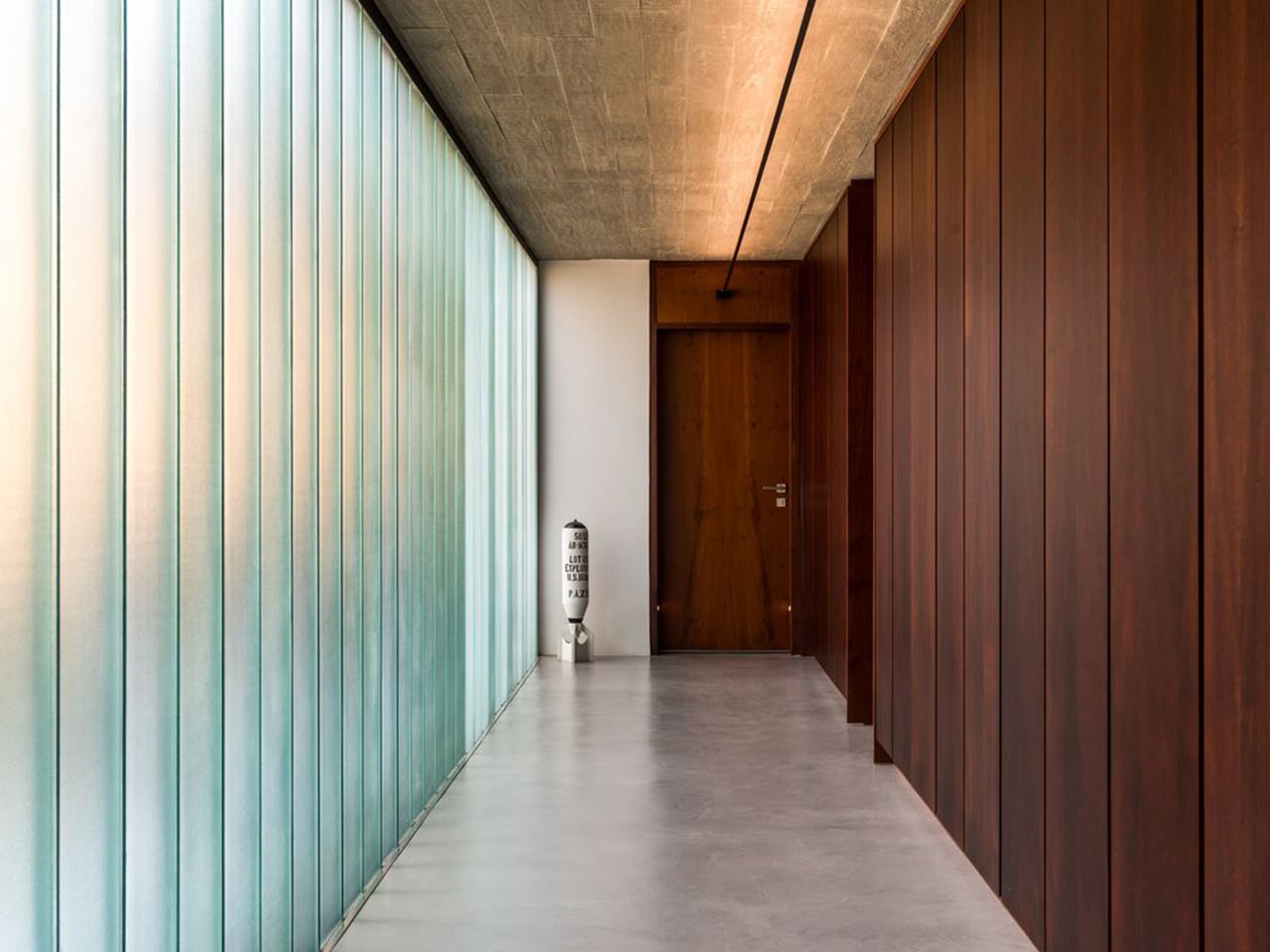
This New London Café Has a Ceiling Inspired by St Paul’s Dome, and It Sits Right on the Thames

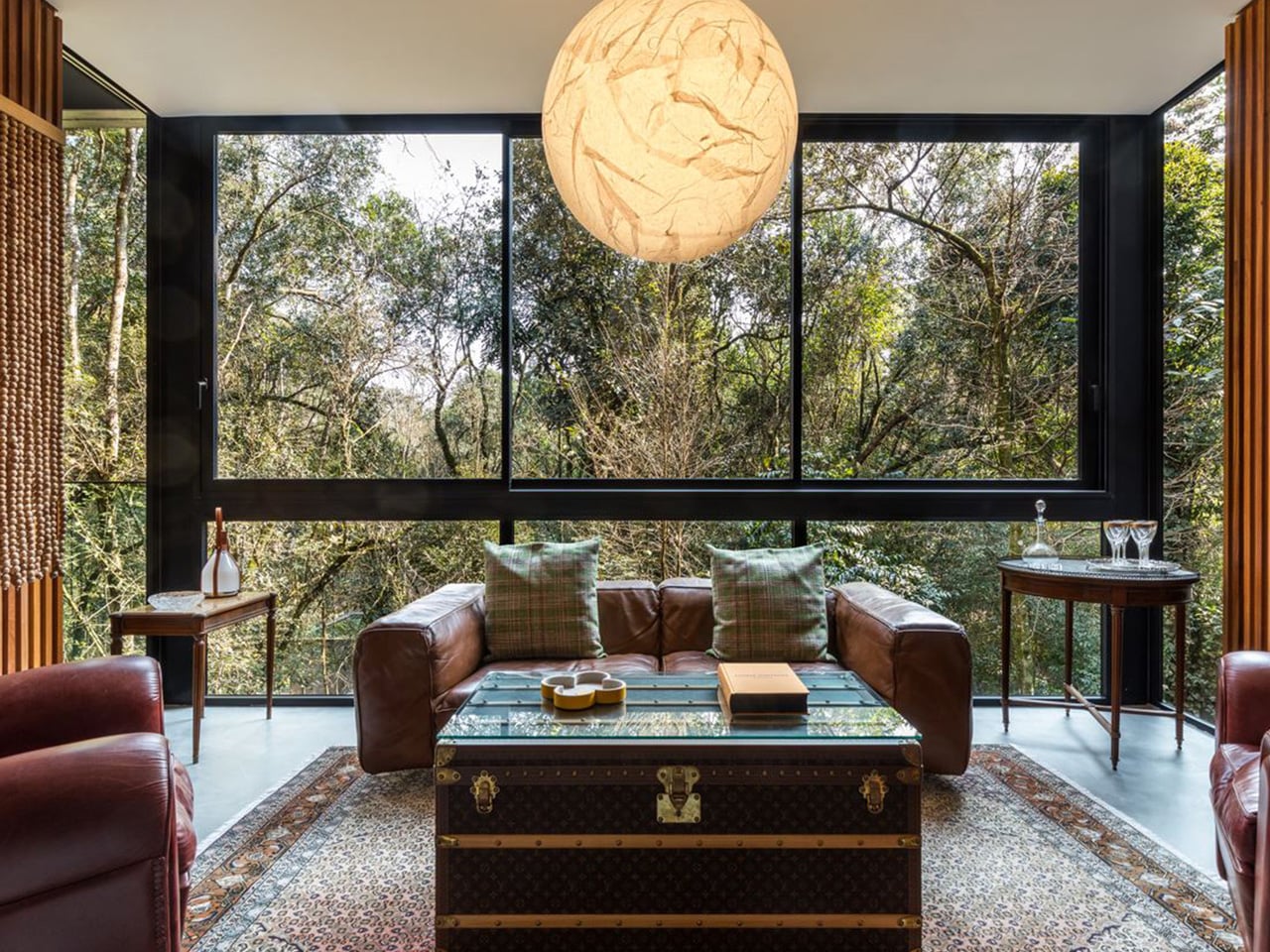
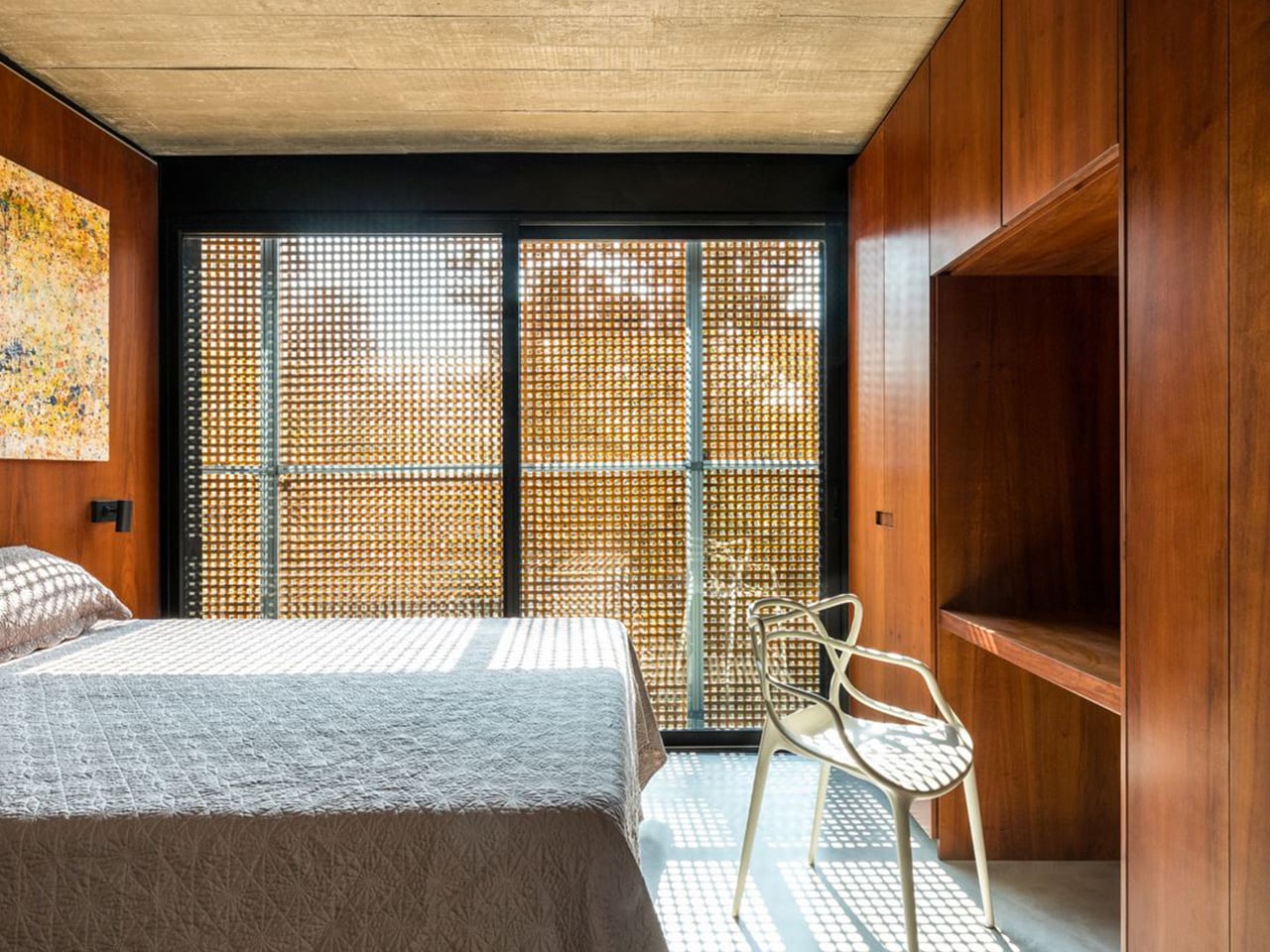
The stretch of the Thames running between Tate Modern and St Paul’s is one of those London views that never quite loses its effect — and London studio Cake Architecture made that exact backdrop the entire design brief for WatchHouse’s newest café, a 60-seat riverside space that absorbs some of the city’s most iconic architecture and folds it into something intimate and grounded.

The project sits directly beside the Thames, though it never leans on the view as a crutch. The design operates at a more atmospheric level, rooted in the tension between the monumental permanence of London’s skyline and the restless, shifting energy of the river running past it. It’s a conceptual starting point that could easily stay theoretical. Here, it doesn’t.

Designer: Cake Architecture

That thinking earns its keep through specific, well-resolved gestures. The most arresting is a dramatic circular void carved into the ceiling, a spatial echo of St Paul’s dome, translated from the sacred to the everyday. Below it, a monolithic espresso counter holds the room together, its weight and material language borrowed from Tate Modern’s industrial character and the infrastructural logic of the riverbanks themselves. Neither move is decorative. Both shift the room into territory that most café designs never reach.

The palette is handled with the same restraint. Colour is drawn from the immediate surroundings: the tonal range of the river at different hours, the bleached stone of the embankment walls, the open and often overcast London sky. Back-painted finishes introduce a soft iridescence to the surfaces, so the room doesn’t read as a fixed thing. It responds to the time of day, softening in morning light and warming as the afternoon settles in.

WatchHouse has always been deliberate about place; each of its London locations takes its visual cues from the neighbourhood it occupies, but this Thames-side outpost feels like one of the most fully resolved in the portfolio. The 60-seat space will serve rare and special coffees alongside breakfast, viennoiserie, and bakery options, giving the room both the footfall and the menu to justify the ambition behind its design. For Cake Architecture, it’s another assured project from a studio building a reputation for spaces that think carefully about where they are. Here, the scale is modest, and the mood is quiet, and it’s all the stronger for it.

The post This New London Café Has a Ceiling Inspired by St Paul’s Dome, and It Sits Right on the Thames first appeared on Yanko Design.
5 Best Desk Lamps That Light Your Workspace Better Than Any Overhead Light Ever Could

Overhead lighting was never built for you specifically. It floods an entire room without discrimination, casting flat light across everything and solving nothing in particular. A well-chosen desk lamp operates differently — it targets exactly where concentration happens, reduces strain during long sessions, and brings something intentional to a space that a ceiling fixture simply cannot. The best ones do all of this while looking like they genuinely deserve to be there.

The five lamps here approach desk lighting from genuinely different directions — one learns your habits through AI, another is cast from real tractor headlight molds, one travels anywhere on AA batteries, and another chases a color accuracy standard most manufacturers don’t bother measuring. Each solves a real problem. Whether your workspace is a compact corner or a dedicated professional studio, there is a lamp on this list worth your full attention.

1. Anywhere-Use Lamp

The Anywhere-Use Lamp is designed around one honest principle — good light shouldn’t be restricted to places with power outlets. Running on four AA batteries, it removes every dependency on wall sockets and charging cables, making it as useful in a hotel room or a garden corner as it is on a permanent desk. Six high color rendering LEDs produce warm, soft output that settles gently into a space rather than announcing itself as the primary light source in the room.

Available in black, white, and an Industrial edition with a scratch-detailed metal base that treats surface wear as character rather than damage, the Anywhere Use Lamp adapts across settings without effort. Pressing any edge of the cap cycles through four brightness levels with a satisfying haptic click that makes the interaction feel considered. The modular construction breaks down quickly enough to slip into a bag, and on a desk, it reads as a minimal sculpture — quietly impressive without demanding attention from everything around it.

Click Here to Buy Now: $149.00

What We Like

  • AA battery power gives it genuine location freedom that no rechargeable or corded lamp on this list can honestly match.
  • The Industrial edition’s scratch-detailed metal base treats material imperfection as an intentional design quality rather than a manufacturing oversight.

What We Dislike

  • Four disposable AA batteries are less sustainable than a built-in rechargeable solution would be for users who run them daily.
  • Warm, atmospheric output may feel insufficient for task-heavy environments that demand stronger, more directional illumination.

2. The Lampster

The Lampster is the most funded lamp in crowdfunding history, a record that speaks to how rare genuinely characterful lighting actually is. Its head is cast from the same 40-year-old molds used for real tractor headlights, a material fact that sits at the center of everything the lamp is. Born as a side project between an architect and an engineer, it carries the kind of specificity that only arrives when something was made first for its creators, not for a market.

Functionally, the Lampster holds 120 LEDs across warm and cool white tones, controlled by a capacitive touch button on the head that adjusts intensity without needing a phone. An RGB light source connects to a mobile app that monitors power draw, saves custom settings for reading, writing, or focused work, and syncs the lamp to music. The head rotates 360 degrees while the aluminum neck bends freely in any direction. It sits on a desk and immediately becomes the most interesting object in the room.

What We Like

  • Cast from original 40-year-old tractor headlight molds, giving it a material provenance no competing desk lamp can replicate.
  • App-controlled RGB plus adjustable warm and cool white LEDs cover every working scenario without requiring separate hardware.

What We Dislike

  • Filling the hollow body with gravel for proper ballast adds a hands-on setup step that feels slightly misaligned with a premium purchase.
  • Full smart functionality depends on a mobile app, which may frustrate users who prefer straightforward, always-available physical controls.

3. DEEP

DEEP is what happens when a lamp decides your working environment should configure itself around you rather than the other way around. Turn it on with a spinning-top-inspired power button, tell it what you are about to do — studying, coding, reading, creative work — and it adjusts both lighting and ambient sound automatically. The AI underneath isn’t a selling point bolted on at the last stage. It actively shapes your workspace conditions before you’ve had to think about them yourself.

A camera positioned at eye level monitors your focus state in real time, functioning like a built-in productivity coach without requiring a separate device. Side buttons allow precise manual overrides, and when adjustments are saved, the system builds a personal profile that becomes more attuned the longer the lamp sits on your desk. Over repeated sessions, DEEP learns the exact conditions under which you concentrate best and begins applying them without being asked — a meaningfully different relationship with a piece of desk hardware.

What We Like

  • AI-driven environment configuration learns and refines your preferences over repeated sessions, becoming genuinely more useful the longer you use it.
  • Camera-based real-time focus monitoring replaces any need for an external productivity tracking application or additional device on your desk.

What We Dislike

  • A built-in camera positioned at eye level may not sit comfortably with users who value privacy in their personal workspace.
  • As a concept-stage design, software longevity, update support, and manufacturer reliability over time remain unconfirmed.

4. Lumio Ovo

Most adjustable lamps eventually disappoint. Multiple joints accumulate play, precise positioning becomes a daily compromise, and what is marketed as flexible control quietly becomes a frustration. The Lumio Ovo addresses this by reducing the entire adjustment system to a single pivot — a seesaw-style motion that rotates a full 360 degrees around a central point and feels exact from the very first interaction. No creaking. No wobble. No accumulated looseness. Precise, repeatable directional control housed in a form that makes no apologies.

Lumio left the central pivot fully exposed rather than hiding it inside a casing, which turns the structural solution into the lamp’s most compelling visual element. At rest on a desk, the Ovo reads as a kinetic art object — the kind of piece that earns a comment from anyone who sees it for the first time. Nudge it gently, and it finds its new position with an ease that lamps carrying three times the moving parts rarely manage to deliver with the same quiet confidence.

What We Like

  • A single-pivot seesaw mechanism eliminates the joint loosening and positional drift that eventually compromise most multi-hinge desk lamps.
  • The exposed pivot transforms the engineering solution into the lamp’s defining aesthetic element, making form and function genuinely inseparable.

What We Dislike

  • Detailed light output and color temperature specifications are not widely published, making pre-purchase performance evaluation difficult.
  • The balance-based seesaw motion may not satisfy users who need a lamp to lock firmly into position without any residual movement.

5. Redgrass R9 Desk Lamp

Standard color rendering measurements evaluate eight color samples and call it accurate. Redgrass developed a methodology that evaluates 99 and achieved an extended CRI score of 98.5 — a number that places the R9 in a fundamentally different category. The practical result is light that renders color the way natural daylight does. For painters, illustrators, and anyone whose work depends on seeing accurate hues under artificial conditions, the difference is immediate and impossible to ignore.

At 1800 lumens and 3700 lux measured at 45 centimeters, the R9 delivers serious, sustained output from 96 custom-made LEDs arranged across two independently rotating bars. That dual-bar configuration isn’t decorative — it eliminates the shadows a single light source always casts across detailed work surfaces. It holds the Red Dot Best of the Best and iF Design Awards, and professional teams behind Avatar and The Lord of the Rings have adopted it as a standard studio tool.

What We Like

  • An extended CRI of 98.5 evaluated across 99 color sample sets is an accuracy benchmark that no conventional desk lamp currently comes close to reaching.
  • Two independently rotating light bars eliminate surface shadows in a way that a single light source is physically incapable of replicating.

What We Dislike

  • At $279.99, the R9 demands a meaningful financial commitment, even when the performance makes a fair and honest case for itself.
  • The clamp-based mount and larger physical footprint make it a less natural fit for compact or minimal desk setups.

The Right Light Changes Everything

Each lamp here solves something a ceiling fixture never bothered to think about. The Lampster gives a desk a genuine personality. The Anywhere Use Lamp follows you without conditions. DEEP maps your habits and builds the environment around them. The Ovo reduces all mechanical complexity to a single satisfying gesture. The R9 shows you the color the way it was actually meant to appear. All five refuse to treat workspace lighting as an afterthought worth quietly tolerating.

Good lighting doesn’t just help you see — it sustains concentration, reduces physical strain, and signals that a workspace was assembled with real intention. The difference between a desk lamp and an overhead light isn’t simply positional. One serves the room. The other serves you. Once that distinction becomes clear, returning to a fixture that has no idea what you’re working on or how long you’ve been sitting there becomes genuinely difficult to justify.

The post 5 Best Desk Lamps That Light Your Workspace Better Than Any Overhead Light Ever Could first appeared on Yanko Design.
5 Best Gadgets Every Tech-Savvy Digital Nomad Is Quietly Packing Right Now

The digital nomad bag has evolved past the obvious picks. Laptop, charger, earbuds, done. That kit worked five years ago when remote work meant answering emails from a beach hostel. Now, the people doing this full-time run dual-monitor editing setups from Lisbon apartments, take client calls from co-working spaces in Chiang Mai, and file deadlines from airport lounges without missing a beat. The gear that makes that possible is not the laptop itself but the small, clever peripherals around it, the ones that turn a single USB-C port into a proper workstation and collapse back into a carry-on when it is time to move again.

We have been tracking the gadgets that keep surfacing in nomad communities and tech-forward travel kits this year, and five products stood out for the same reason: they each solve a specific friction point that remote workers hit repeatedly. Not gimmicks, not luxury upgrades, but tools that collapse the gap between a fixed desk setup and a backpack-based office. Some are shipping now, others are in the crowdfunding stage with strong traction. All of them earn space in a bag that has no room to waste.

1. Nothing Power (1)

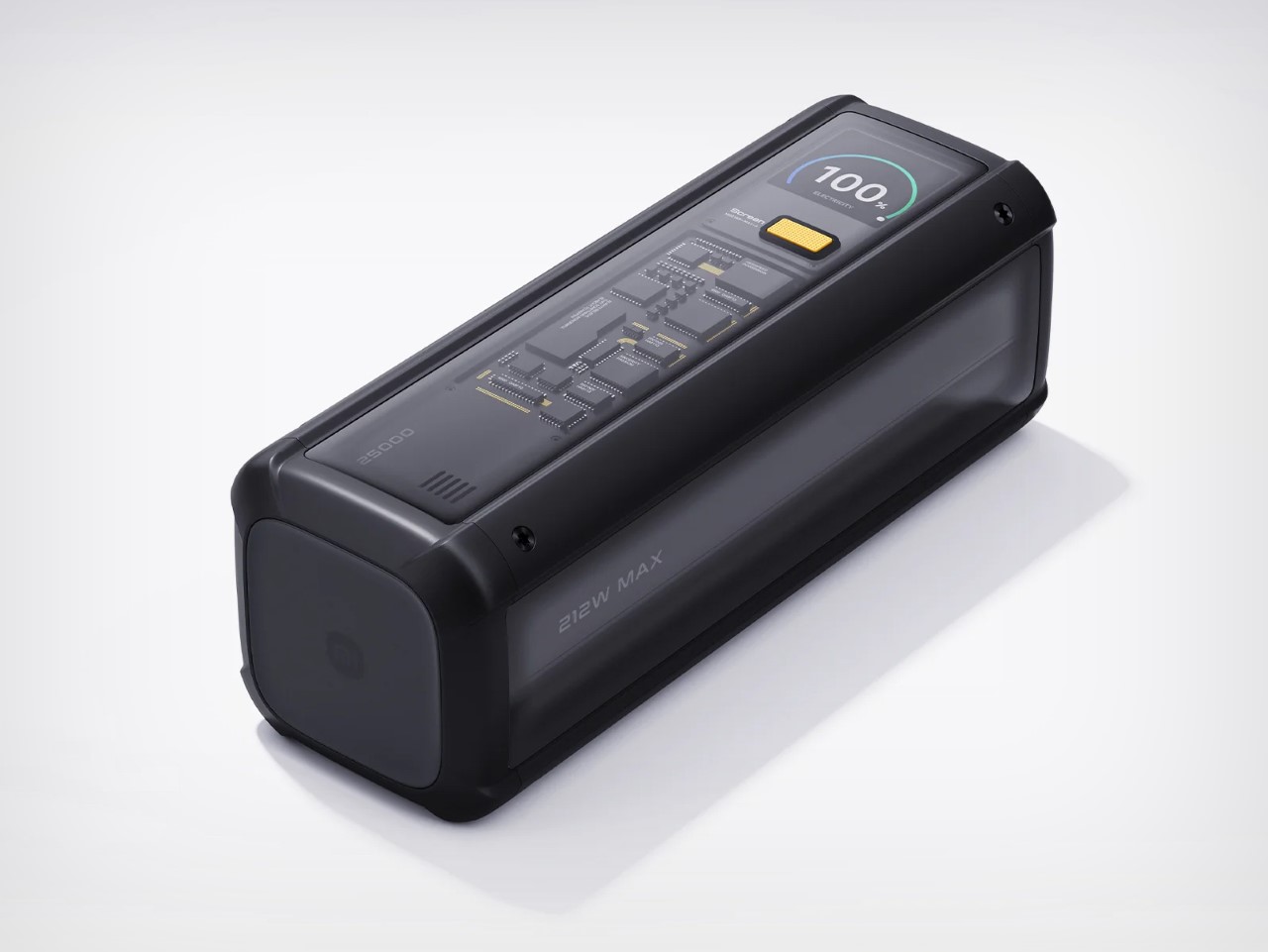
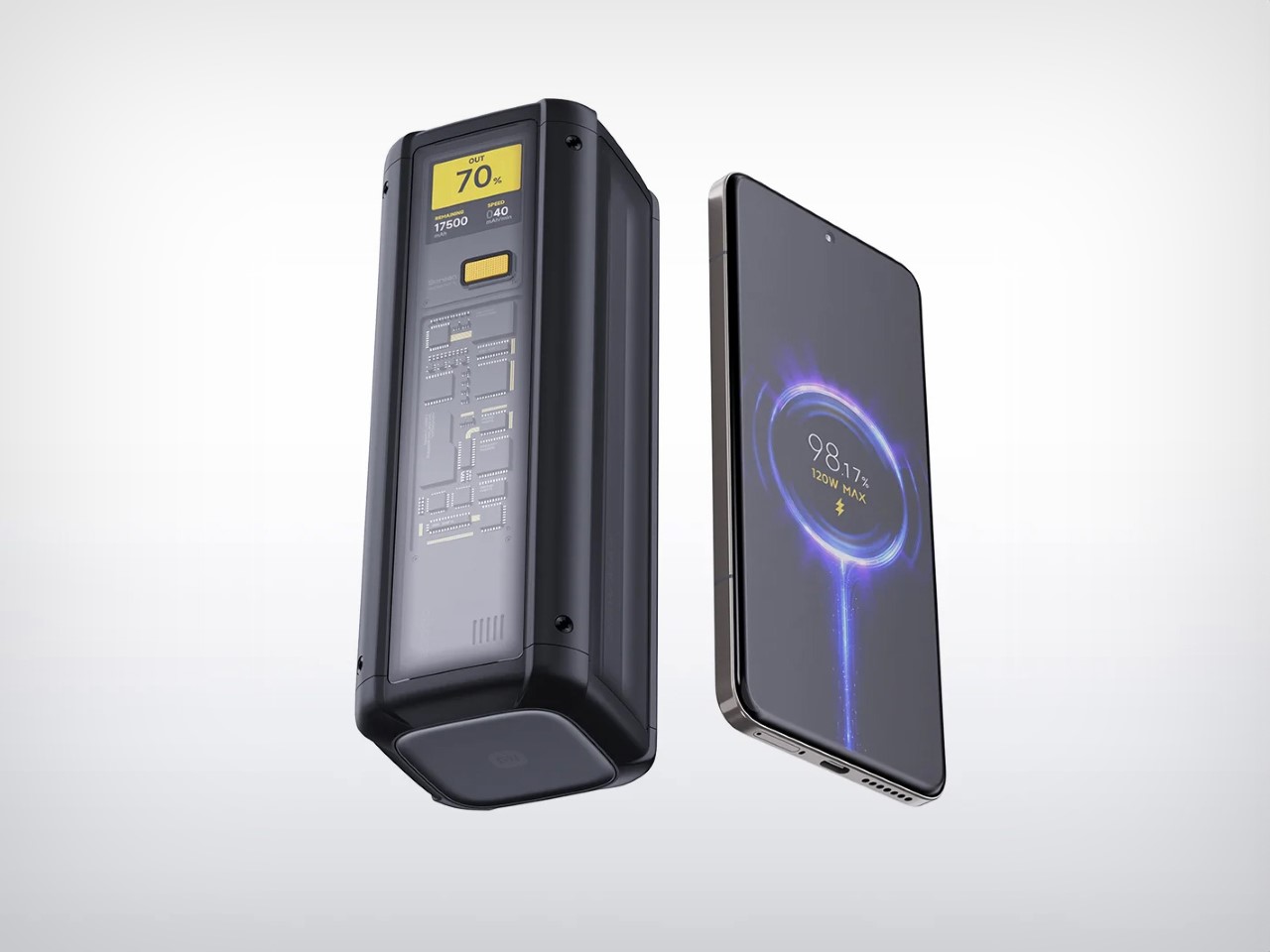
Power banks are the least glamorous item in any travel kit, which is exactly why most of them look like featureless plastic bricks. The Nothing Power (1) is a concept design that imagines what Nothing’s Glyph interface would look like on a battery bank: transparent layers, LED light paths that show charging status and notifications, and the same design language that made the Nothing Phone (1) and Phone (2) stand out in a sea of identical smartphones.

The concept proposes a 20,000mAh capacity with 65W fast charging, enough to hit 50% battery on a phone in under 20 minutes. Dual USB-C ports handle two devices simultaneously. The Glyph LEDs do more than look interesting; they provide intuitive visual feedback for charging status and battery levels without needing to press a button or check a display. Nothing actually had a power bank in development at one point, but scrapped it due to durability concerns with the transparent casing cracking on impact. This concept reimagines that idea with a cleaner silhouette and enough surface area to make the Glyph interface feel purposeful rather than decorative. For nomads who carry a power bank every single day, the idea that it could be a well-designed object instead of an anonymous slab is appealing. This is not a production product yet, but the demand in Nothing’s community forums suggests it is an idea the brand should revisit.

What we like

  • Glyph LED interface provides at-a-glance charging status without screens or buttons, which is faster and more intuitive than hunting for a tiny indicator light on a conventional power bank.
  • 20,000mAh capacity with 65W fast charging (as proposed in the concept) would cover a full day of heavy device use for multiple gadgets.

What we dislike

  • This is a concept design, not an official Nothing product, and the transparent casing durability issue that killed the original project remains unsolved.
  • Transparent construction would likely show internal wear, dust, and scratches over time, especially in a bag that gets tossed around daily.

2. KeyGo Gen2

1

Carrying a laptop, a portable monitor, and a separate keyboard creates a three-device problem that digital nomads have been trying to solve with lighter versions of each. KeyGo Gen2 collapses all three into one folding slab. It is an ultra-slim keyboard with a built-in 13-inch 4K/60Hz IPS touchscreen, CNC-machined aluminum construction, built-in speakers, and a 180-degree hinge that folds everything flat to 19.3mm thick when closed. A single USB-C cable handles video, power delivery (up to 65W), and data.

The original KeyGo raised over $185,000 in its first campaign, featuring a 720p screen. Gen2 bumps that to full 4K at 3,840 x 2,160, ten-point multitouch, adjustable brightness up to 300 nits, and a weight of about 1 kilogram (2.2 pounds). Unfold it, plug in a USB-C cable, and a laptop instantly gains a second display sitting right below eye level with a full keyboard beneath it. It works with Windows, macOS, Linux, and Android, which means it also pairs with mini PCs and tablets for people building ultra-compact travel rigs. The crowdfunding campaign has already passed $300,000 in pledges, with early bird pricing around $279 and estimated delivery in May 2026. For nomads editing video on cafe tables, managing spreadsheets in airport lounges, or running code with documentation on a secondary panel, this eliminates the portable monitor and keyboard as separate line items in the bag.

Click Here to Buy Now: $329 $658 ($329 off). Raised over $521,000.

What we like

  • Replaces a portable monitor and external keyboard with a single folding device, cutting significant weight and bag space from a travel workstation.
  • 4K touchscreen with 10-point multitouch and 300-nit brightness makes it genuinely usable for detail work like photo editing and timeline scrubbing.

What we dislike

  • At 1 kilogram, it is not featherlight, and the 19.3mm closed profile is thicker than a standalone portable keyboard would be.
  • Crowdfunding status means the product is not shipping yet, and the final typing experience can only be judged once production units are in hand.

3. TWS ChatGPT Earbuds

Wearable AI has spent the last two years stuck in an awkward phase. Smart pins looked strange. Pendant cameras felt forced. Smart glasses screamed, “I am recording.” This concept hides cameras inside TWS earbud stems, positioned near the natural line of sight, and pairs them with ChatGPT to create a visual AI assistant that lives entirely in the ears. No screen. No conspicuous hardware. Just a familiar form factor doing something new.

For digital nomads navigating foreign cities, the use cases are immediate. The earbuds can read menus in unfamiliar languages, interpret street signs, describe scenes, and guide navigation through voice alone, all without pulling a phone from a pocket. The social advantage is that earbuds are already normalized. People wear them everywhere without drawing attention, which removes the friction of face-mounted cameras that make conversations uncomfortable. Voice interaction keeps hands free for luggage, laptops, or coffee. The AI processes visual input in real time and responds through audio, creating an assistive loop that does not require staring at a screen. This is a concept at this stage, not a shipping product, but it represents the direction wearable AI is heading. For nomads who spend their weeks moving between cities and languages, an AI assistant that sees what the wearer sees and speaks directly into the ear could replace a handful of translation apps, navigation tools, and accessibility aids with a single pair of earbuds.

What we like

  • Familiar earbud form factor avoids the social awkwardness of face-mounted cameras, making it usable in meetings, cafes, and public spaces without drawing stares.
  • Hands-free visual AI assistance for translation, navigation, and scene description addresses real daily friction for nomads moving between countries.

What we dislike

  • Concept status means no confirmed specs, battery life, or pricing, so the product’s real-world viability is unproven.
  • Privacy concerns around always-available cameras in earbud stems will be unavoidable once production models enter public spaces.

4. HubKey Gen2

The typical nomad desk involves a laptop teetering on a cafe table surrounded by a small constellation of dongles, adapters, and cables fighting for two USB-C ports. HubKey Gen2 consolidates that mess into a single compact cube. It is an 11-in-1 USB-C hub with dual HDMI ports (both 4K at 60Hz), two USB-A 3.1 ports, one USB-C 3.1 port, SD and TF card readers, a 2.5 Gbps Ethernet jack, a 3.5mm audio port, and a 100W USB-C PD charging port. One cable from the cube to the laptop brings everything online.

What separates it from standard hubs is the top panel. Five programmable shortcut keys and a central control knob sit above the ports, turning the hub into a mini control surface. Volume, mute, screen lock, screenshot, display off: tasks that normally require keyboard shortcuts or menu diving can be done with a single tap or twist. The driver system offers 170 presets with full macro customization across Windows, macOS, Linux, and Steam Deck. At 7 x 7 x 3 cm, the cube disappears into a laptop bag pocket. For photographers and videographers constantly offloading cards while driving external displays, this removes the need for three or four separate adapters.

What we like

  • Dual 4K/60Hz HDMI output from a single hub means a nomad can build a two-monitor setup at any co-working space without carrying separate adapters for each display.
  • Programmable shortcut keys and a physical knob add hands-on control that standard hubs do not offer, cutting repetitive menu navigation during editing and video calls.

What we dislike

  • The compact form factor means ports are tightly packed along the edges, which can cause thicker cables or drives to crowd each other.

5. OrigamiSwift Mouse

Trackpads work fine until they do not. Precise selections in spreadsheets, long editing sessions, and detailed design work all benefit from a real mouse, but carrying a conventional one eats bag space that nomads cannot spare. OrigamiSwift solves this by folding a full-sized Bluetooth mouse down to a 4.5mm-thick slab that weighs just 40 grams (1.41 ounces). Magnetic snaps lock the two sides together in under half a second, and the mouse powers on automatically when assembled. Fold it flat again, and it slides into a laptop sleeve or even a shirt pocket.

Under the origami-inspired exterior sits a 4000 DPI HD infrared sensor capable of tracking at up to 30 inches per second, paired with Bluetooth 5.2 for stable, dongle-free connectivity across Mac, Windows, Android, and iPadOS. A 500mAh lithium polymer battery charges via USB-C and lasts up to three months on a single charge, which effectively removes battery anxiety from the equation. The vegan leather skin adds grip and surface compatibility, while mechanical click switches on the left and right buttons provide tactile feedback. A touch-sensitive scroll area replaces a physical wheel, which keeps the profile flat. At around $49 to $69, depending on the retailer, it sits in a reasonable range for a travel peripheral that genuinely disappears when not in use. The trade-off is that it is not built for gaming or high-speed precision work, but for the spreadsheet-to-email-to-design workflow that defines most nomad days; it handles everything a full-sized mouse would.

Click Here to Buy Now: $85.00

What we like

  • Folds to 4.5mm flat and weighs 40 grams, making it the most packable full-sized mouse option available for nomads who cannot sacrifice bag space.
  • Three-month battery life on a single USB-C charge means one less device to worry about charging between cities and time zones.

What we dislike

  • The touch scroll area, replacing a physical scroll wheel, takes adjustment, and some users report that it lacks the tactile precision of a traditional wheel during fast scrolling.
  • Not suitable for gaming or tasks demanding sub-millisecond response times, so users with hybrid work-and-play setups will still need a second mouse.

What the nomad bag looks like now

These five gadgets share a design philosophy that would have seemed niche a few years ago: they treat portability not as a marketing checkbox but as the primary constraint around which everything else is engineered. A hub that replaces four dongles. A keyboard that is also a 4K monitor. A mouse that folds into a credit card sleeve. A power bank that communicates through light. Earbuds that double as a visual AI assistant. Each one subtracts something from the bag while adding a capability that used to require a dedicated device.

The shift is worth paying attention to. Remote work hardware is no longer about miniaturizing desk products and hoping they survive a carry-on. The best nomad gear now starts from the constraints of movement, weight, and setup speed, then works backward to figure out how much functionality can fit inside those limits. Two of these products are concepts, two are crowdfunding, and one is shipping today. That ratio will flip fast. The bag is getting lighter, the workspace is getting more capable, and the gap between a fixed office and a cafe table keeps narrowing.

The post 5 Best Gadgets Every Tech-Savvy Digital Nomad Is Quietly Packing Right Now first appeared on Yanko Design.
5 Best Portable Bluetooth Speakers of Spring 2026 — Designed for the Outdoors, Not Your Bookshelf

Most portable speakers end up on a shelf somewhere, playing lo-fi beats while someone makes coffee. There is nothing wrong with that, but it is not what these five were made for. We picked speakers that actually want to leave the house, products built around weather resistance, battery stamina, and the kind of design thinking that considers mud, rain, and a campfire playlist as standard operating conditions. Spring 2026 has delivered some interesting options, from retro survival radios to subwoofer-equipped tanks that laugh at puddles.

What makes this list different from the usual roundup is the lens we are looking through. These are not ranked by loudness or spec-sheet one-upmanship. We looked at form factor, material durability, portability logic, and whether each speaker solves a real outdoor problem or just pretends to with an IP rating sticker. Some are brand new releases, others are designs that aged into relevance this season. All five belong outside.

1. RetroWave 7-in-1 Radio

Emergency radios tend to look like emergency radios: bulky, utilitarian, designed to sit in a basement kit next to expired granola bars. The RetroWave wraps seven functions inside a form factor borrowed from mid-century Japanese transistor radios, with a tactile tuning dial and a design warm enough to earn kitchen counter space. Those seven functions: Bluetooth speaker, MP3 player (USB and microSD), AM/FM/shortwave radio, flashlight, clock, SOS alarm, and power bank. Hand-crank charging and a solar panel provide off-grid power when outlets vanish, a capability no Bluetooth-only speaker on this list can match.

The outdoor logic differs from the rest of this roundup. The RetroWave competes on self-sufficiency, not audio fidelity. A hand crank and solar panel mean it never truly dies. The flashlight and SOS siren add safety utility for trail emergencies. Bluetooth and MP3 playback handle entertainment with respectable sound for a multi-function device, though the tuning-dial analog radio experience is where the personality lives. Shortwave reception opens up international broadcasts and emergency channels that streaming apps cannot access. As an everyday speaker, it has charm. As an emergency tool that also plays music, it is hard to argue against keeping one in a daypack. It belongs on this list not because it sounds the best, but because it is the only speaker here that could keep working days after every other device has gone dark.

Click Here to Buy Now: $89.00

What we like

  • Hand-crank and solar charging make it the only speaker here that generates its own power, a genuine survival feature for off-grid situations.
  • Seven functions (speaker, radio, flashlight, clock, SOS alarm, MP3 player, power bank) consolidate multiple pieces of outdoor gear into one device.

What we dislike

  • Audio quality does not match dedicated Bluetooth speakers on this list, as the multi-function design compromises driver space and tuning.
  • The retro aesthetic, while appealing, may feel out of place for users who prefer minimal, modern gear in their outdoor kits.

2. Marshall Emberton III

The Emberton III wraps textured silicone and metal grille construction around meaningful upgrades over its predecessors. Two 2-inch full-range drivers and two passive radiators push 360-degree sound through Marshall’s True Stereophonic system, so placement on a picnic blanket or backpack strap matters less than it would with front-firing alternatives. An IP67 rating allows submersion in one meter of water for 30 minutes, and the 32+ hours of battery life cover an entire weekend trip without an outlet. A 20-minute quick charge returns six hours of playback, the kind of math that matters when departure is in half an hour, and the speaker is dead.

Bluetooth 5.3 with LE Audio readiness and upcoming Auracast support means multi-speaker setups are on the horizon. A built-in microphone, absent from earlier Embertons, handles hands-free calls. The signature brass control knob manages volume, track skipping, and play/pause with tactile precision that wet or gloved hands appreciate far more than a touchscreen. At $159, it sits in a competitive zone against the Sonos Roam 2 and JBL Flip 6, but neither offers this battery endurance. Marshall’s sound leans warm and full at moderate volumes, though pushing past 85% introduces harshness common to speakers this size.

What we like

  • 32+ hours of battery life covers multi-day trips, and the 20-minute quick charge for six hours of playback is a practical safety net.
  • IP67 rating handles submersion, dust, and sand, making it one of the most weather-resistant speakers at this price.

What we dislike

  • Sound gets harsh at very high volumes, a physical limitation of the small driver size that DSP tuning cannot fully solve.
  • No 3.5mm auxiliary input means Bluetooth is the only connection option, eliminating wired backup for devices with dead wireless.

3. Brane X

Most portable speakers fake bass by boosting mid-bass frequencies and letting psychoacoustics fill the gaps. Brane X uses a proprietary Repel-Attract Driver (RAD) that cancels internal air pressure forces, producing real sub-bass down to 27.1 Hz from a speaker just 9.3 inches wide. Five drivers total, including a 6.5 x 9-inch RAD subwoofer, two midrange drivers, and two dome tweeters, are powered by four class-D amplifiers exceeding 200 watts combined. A 72 watt-hour battery provides up to 12 hours of runtime, and full IP57 waterproofing means rain and poolside splashes are non-issues.

Outdoors, the five-driver array creates a soundstage that holds up when listeners spread across a campsite or patio. A custom DSP engine runs 500 million EQ calculations per second, maintaining clarity at volumes where competitors distort. Wi-Fi adds Spotify Connect and SiriusXM streaming, Alexa handles voice control, and the Brane app offers custom EQ and grouping for up to eight speakers. At 7.7 pounds, it is heavier than pocket alternatives, but the acoustic payoff justifies the weight for anyone tired of thin, tinny campsite sound. A 3.5mm auxiliary port also accommodates turntables, a rare inclusion in the wireless-first portable category.

What we like

  • Bass response down to 27.1 Hz from a portable form factor is a genuine engineering achievement unmatched in this size class.
  • IP57 waterproofing combined with 200+ watts of amplification delivers serious sound in weather that would sideline most premium speakers.

What we dislike

  • 7.7 pounds limits grab-and-go spontaneity for hiking or cycling trips compared to sub-2-pound alternatives.
  • Battery tops out at 12 hours at moderate volume, less than half of what the Emberton III offers on a single charge.

4. The Harman Kardon Traveller Concept

The Traveller rethinks what a portable speaker should look like for people who actually travel with one. The form factor draws from Sony point-and-shoot cameras, producing a slab so slim it fits alongside a passport wallet. Touch controls and LED indicators sit on top, maintaining the clean design language of the Harman Kardon Esquire Mini 2. A high-density battery delivers up to 10 hours of playback, and reverse charge functionality turns the speaker into an emergency power bank when a connected phone dies mid-hike. Dual microphones with echo and noise cancellation handle calls in windy outdoor conditions.

The outdoor advantage here is not ruggedness but presence. The slimmest speaker is useless if it stays home because packing it is inconvenient. The Traveller solves that by occupying almost no space, fitting into a carry pouch alongside chargers and cables. Three planned colorways (black, silver, electric blue) suggest a product designed to be seen, not hidden. Sound quality carries the Harman Kardon name, though the slim profile necessarily limits low-end output compared to thicker options on this list. For backpackers and frequent flyers who treat portability as the primary feature, this concept points toward a smarter kind of outdoor speaker: one designed to be forgotten in the bag until needed.

What we like

  • Reverse charge functionality doubles the speaker as an emergency power bank, solving two travel problems with one device.
  • Ultra-slim form factor fits in jacket pockets and travel pouches, the most packable option on this list by a wide margin.

What we dislike

  • This is a concept design, not a production product, so availability and final specs remain unconfirmed.
  • Slim profile inherently limits bass depth and volume ceiling compared to thicker, driver-stacked competitors.

5. Side A Cassette Speaker

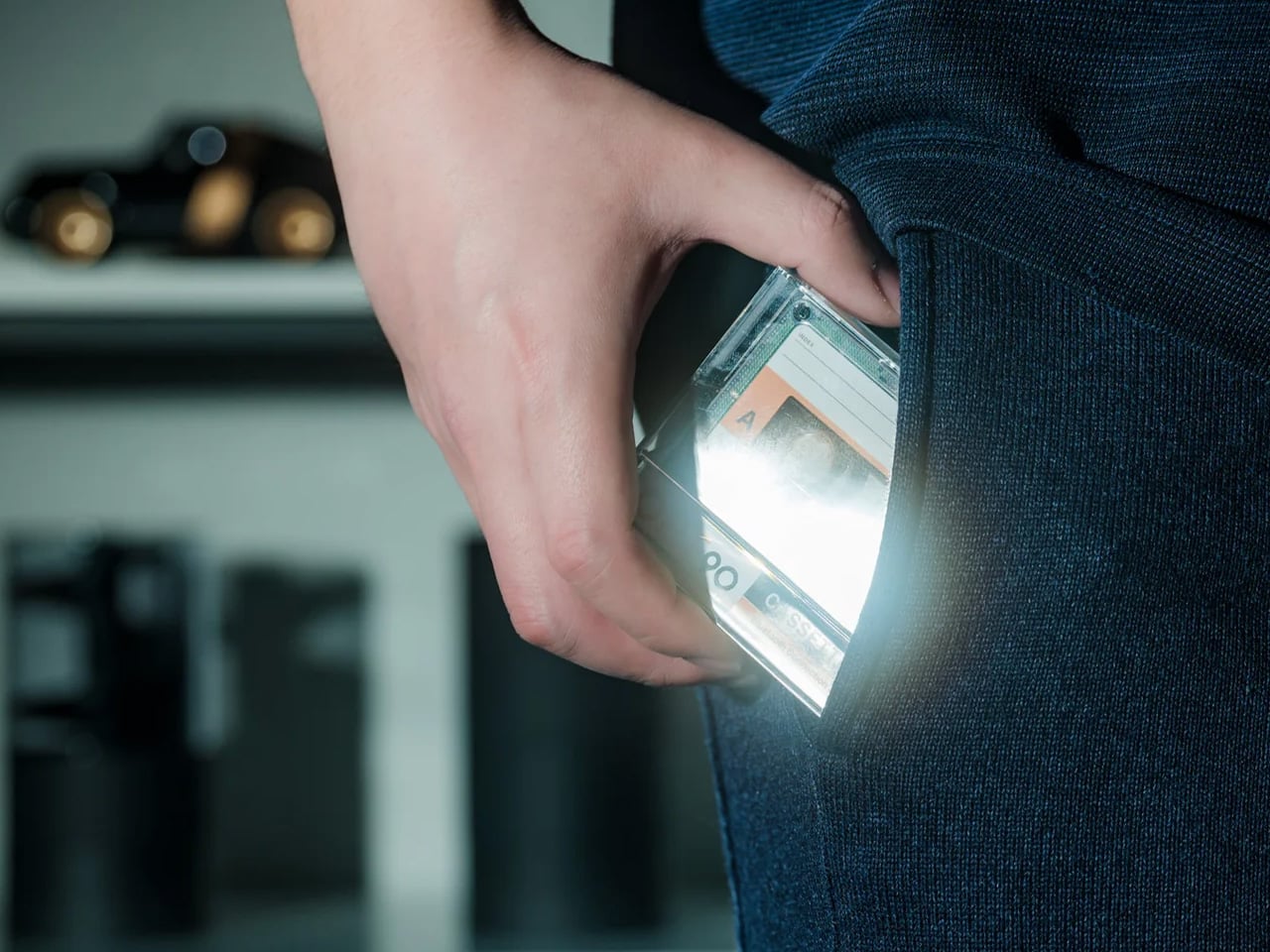
Somewhere between a novelty gift and a legitimate audio device, the Side A leans closer to legitimate than the shape suggests. Styled after a real mixtape with a transparent shell and a Side A label, it hides a Bluetooth 5.3 speaker inside a back-pocket form factor. The cassette shape forced designers to tune for warm, analog-flavored sound within the tightest enclosure possible, and the result has a cozy quality that bigger, flatter-response speakers do not replicate. MicroSD support adds offline MP3 playback, useful on trails where phone battery conservation matters more than streaming. A clear case doubles as a display stand for desk use indoors.

Outdoors, the Side A works best as a personal-zone speaker. It will not fill a campsite, but clipped to a bag or perched on a rock beside a hammock, it handles solo listening and small-circle hangouts without the bulk of a larger unit. Bluetooth 5.3 delivers stable pairing, and range holds reliably when a phone is in a tent and the speaker is by the fire. At sub-$50, it is a low-risk purchase and an easy gift for anyone nostalgic about cassette culture. The trade-off is clear: do not expect room-filling volume or chest-thumping bass. This is a speaker for people who value character and portability over raw performance, and within that lane, it delivers more than the price suggests.

Click Here to Buy Now: $49

What we like

  • Bluetooth 5.3 and microSD playback cover both streaming and offline listening, handling connectivity gaps common on outdoor trips.
  • Pocket-sized cassette form factor weighs almost nothing, lowering the barrier to actually bringing a speaker on every outing.

What we dislike

  • Volume and bass are physically limited by the tiny enclosure, making it unsuitable for group listening in open spaces.
  • MicroSD support handles MP3 files only, excluding FLAC, WAV, and other formats that audio-conscious users may prefer.

Where spring leaves us

These five speakers share one trait that separates them from the hundreds of Bluetooth speakers released every quarter: they were designed with an awareness that speakers leave houses. That sounds obvious, but most portable speaker design still optimizes for countertops and nightstands, treating water resistance and battery life as checkbox features rather than core design drivers.

The Emberton III and Brane X represent two ends of the outdoor audio spectrum, one betting on endurance, the other on acoustic performance that refuses to compromise because the ceiling is sky instead of drywall. The Traveller and Side A cassette challenge the assumption that outdoor speakers need to be chunky, proving slimness and personality coexist with genuine trail usefulness. And the RetroWave reminds us that the most capable outdoor device might be the one that never needs charging at all. Spring is for getting outside. These are the speakers who want to come along.

The post 5 Best Portable Bluetooth Speakers of Spring 2026 — Designed for the Outdoors, Not Your Bookshelf first appeared on Yanko Design.

The $5 Billion Sphere That Wants to Put the Moon in Your Backyard

A proposal to simulate the experience of standing on the Moon inside a giant spherical structure once captured imaginations before quietly disappearing. That concept never got off the ground, but four years on, the team behind it has returned with something far bigger — a full Smart City Masterplan and a vision that makes the original look modest by comparison.

Toronto-based Moon World Resorts Inc. went public with the new concept in February 2026, calling it simply Moon. Each development carries an estimated price tag of $5 billion, and while no site has been locked in yet, the company has named ten countries as candidates for regional licensees: Australia, Brazil, China, Egypt, India, Poland, Spain, Thailand, the United Arab Emirates, and the United States. Saudi Arabia, notably absent from the list, still feels like an obvious fit for something this audacious.

Designer: Moon World Resorts

The structural ambition alone is staggering. The central building would be a true sphere — 271 meters wide and 312 meters tall — making it the largest and tallest of its kind anywhere in the world. For context, Las Vegas’ Sphere, itself a marvel of engineering, measures 157 meters across and rises just 112 meters. Moon isn’t playing in the same league; it’s playing a different sport entirely.

Inside, the resort would be anchored by a 4,000-room all-suite five-star hotel, with a convention center, restaurants, wellness facilities, an e-sports hub, and a boutique hotel all occupying the ground level. The crowning feature, though, would be a simulated lunar surface and base positioned above it all — an “authentic” recreation of what walking on the Moon might feel like, reportedly capable of hosting up to two million visitors a year. The method for achieving that effect remains, for now, a mystery.

On the outside, 20 towers would ring the sphere, connected by a panoramic elevated walkway that renders suggest will be lined with solar panels along the top. Sixteen smaller spherical structures are also planned nearby, creating a campus-like complex that would reshape the skyline of whichever city claims it.

The broader development extends well beyond the sphere itself, incorporating a transit hub, heliport, vertiport, parking infrastructure, and 10,000 luxury branded residences set among generous green space. Moon World Resorts estimates construction would take around 60 months, pointing to a potential opening as early as 2032 — assuming everything moves quickly on a project that, at this stage, remains largely conceptual. Ambition is clearly not in short supply here, but the leap from striking renders to a working lunar resort is a long one.

The post The $5 Billion Sphere That Wants to Put the Moon in Your Backyard first appeared on Yanko Design.

7 Best Tiny Home Accessories That Make Small-Space Living Feel Like a Design Choice, Not a Compromise

Living small has a perception problem. Most people associate compact spaces with sacrifice, with the slow creep of clutter and the resignation that comes from owning less. But the best tiny home accessories flip that narrative entirely, turning constraints into opportunities for deliberate, considered living. The products on this list do not just fit into small spaces; they make small spaces feel intentional.

What separates a well-designed tiny home from a cramped apartment is not square footage. It is the objects inside it. Every item earns its place, or it does not belong. That principle drove our selection here: seven accessories that pull double duty, look better than they have any right to, and solve problems that only people who live in tight quarters truly understand.

1. Miniature Bonfire Wood Diffuser- A tiny bonfire that never burns out.

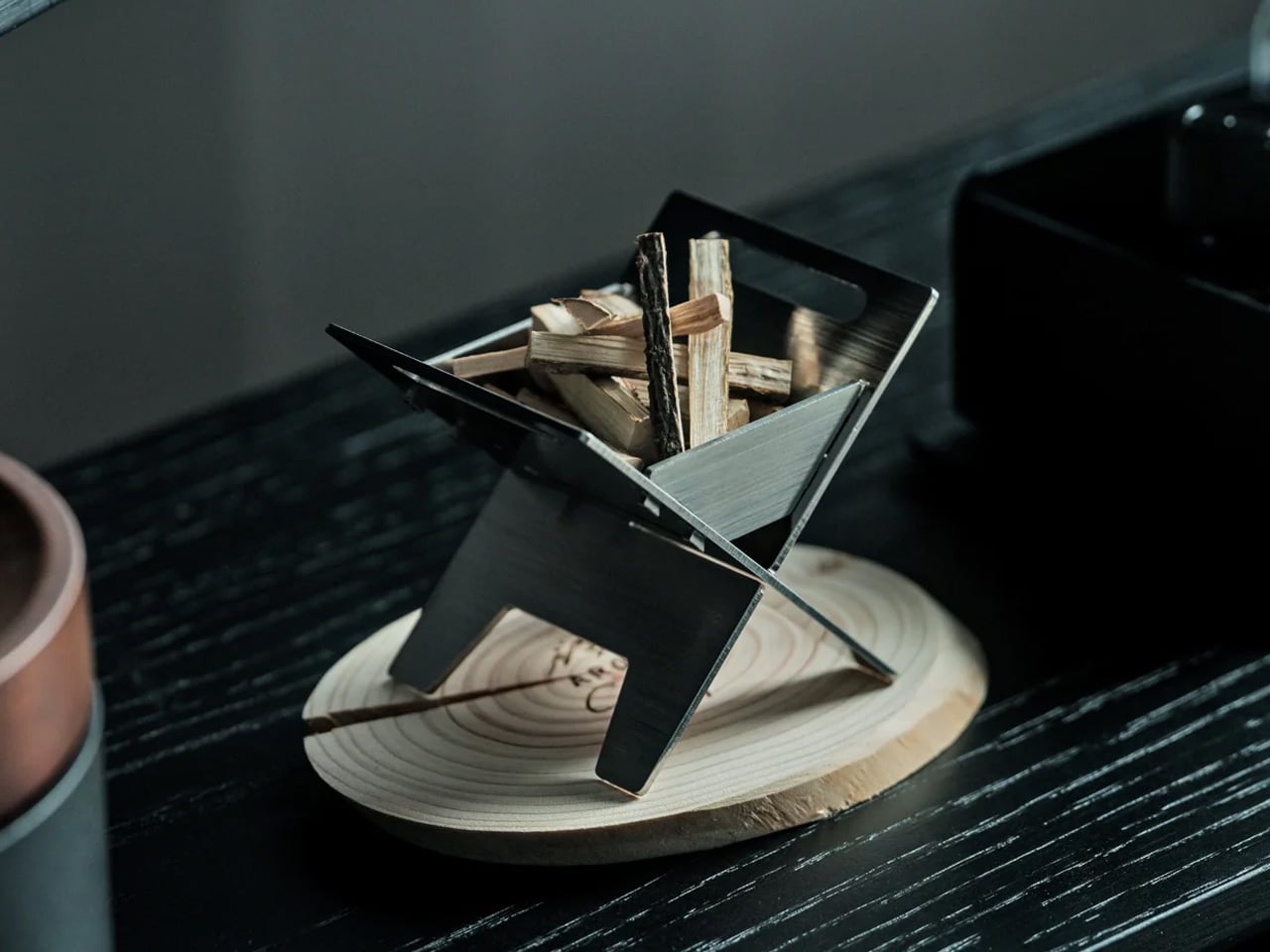
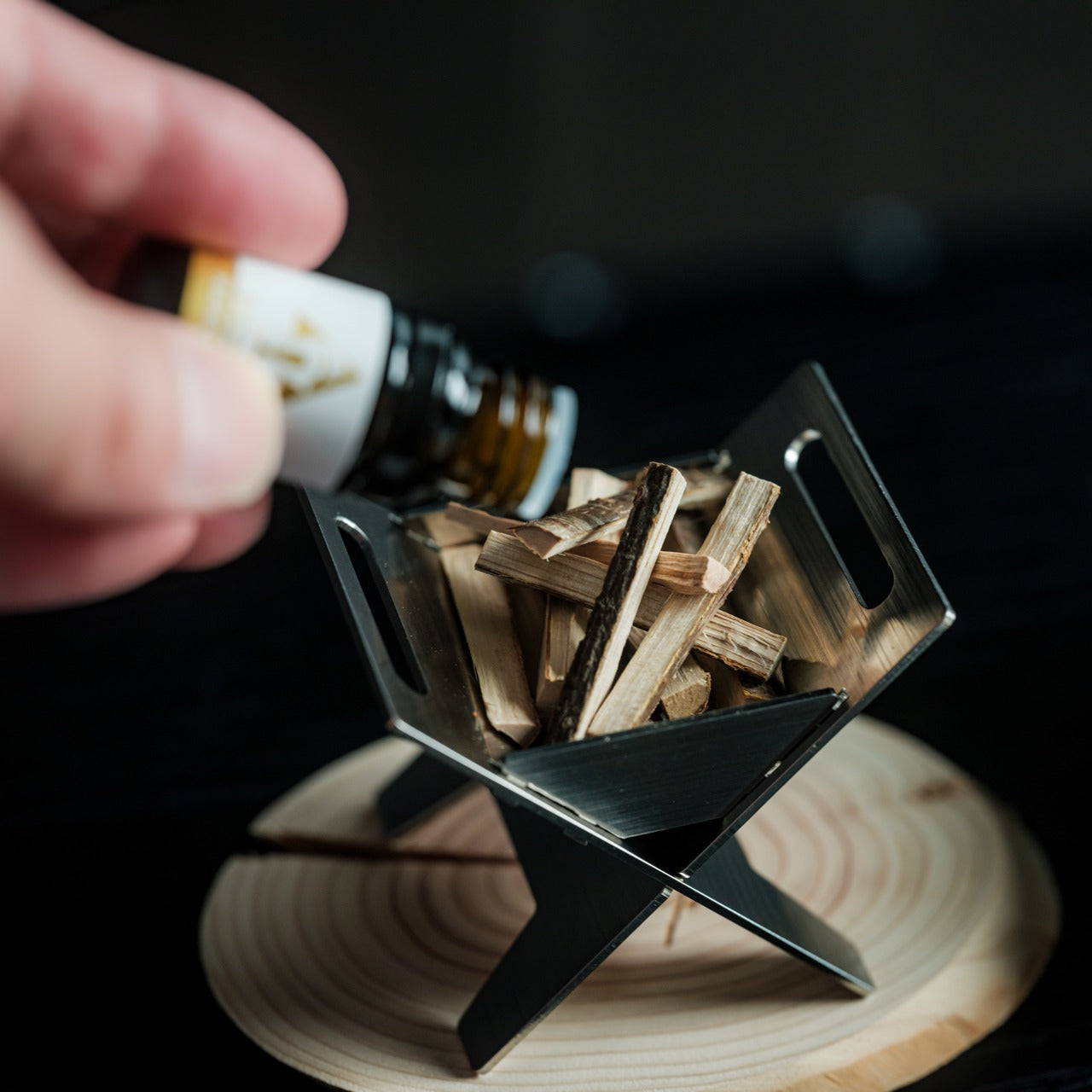
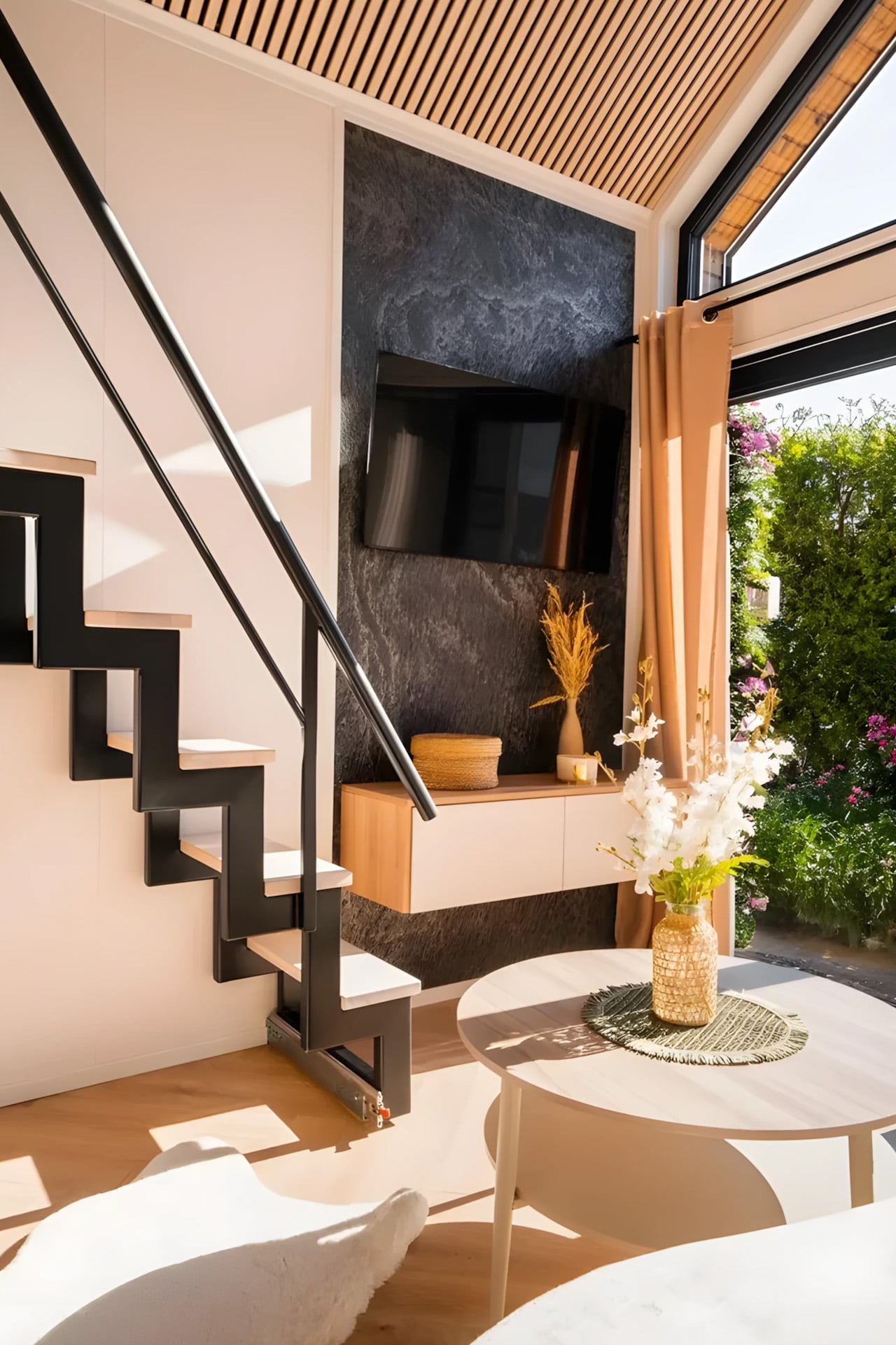
The miniature bonfire wood diffuser set does something rare for a home fragrance product: it gives you a reason to stare at it. Built from rust-resistant stainless steel, the set recreates a campfire scene at desktop scale, complete with miniature firewood bundled with a tying knot. The essential oil captures the scent of Mt. Hakusan, a Japanese mountain known for its dense cedar forests, and the firewood pieces distribute that fragrance with a slow, even release that synthetic plug-in diffusers cannot match.

In a tiny home, scent fills a room faster and lingers longer than it would in a larger space. That concentration works in this diffuser’s favor, but the real reason it belongs on this list is the trivets. Remove them from the base, and the diffuser transforms into a pocket stove capable of warming small portions of food. For anyone living in a space where every object needs to justify its existence, a centerpiece that doubles as a cooking surface is the kind of thinking that makes compact living feel clever rather than constrained.

Click Here to Buy Now: $99.00 Hurry! Only a few left.

What we like

  • Rust-resistant stainless steel construction means it ages well in humid or kitchen-adjacent environments
  • Trivets convert the decorative diffuser into a functional pocket stove, adding genuine utility to an ornamental object

What we dislike

  • The essential oil scent is specific to Mt. Hakusan, which limits fragrance variety without purchasing additional oils separately
  • The miniature scale, while charming, means the heat output of the stove is minimal to reheating rather than actual cooking

2. Lotus Clock – A wall clock that catches your keys.

The Lotus clock takes its cues from nature in a way that feels functional rather than decorative. Inspired by the way lotus leaves gather water in their gentle curves, the clock integrates a curved metal tray directly beneath its face, sized to hold keys, loose change, or other daily carry items. The wooden frame has soft, rounded corners, and the clean white face keeps time-reading effortless. Broad, flat hands coordinate with the tray’s finish, tying the clock’s two functions into a single visual statement.

Tiny homes struggle with the small-object problem: keys, coins, earbuds, and pens that scatter across every available surface and create visual noise. The Lotus clock solves this by assigning those objects a permanent home on the wall, freeing up counter and table space that compact kitchens and entryways cannot afford to lose. Available in soft gold or gentle green colorways, the piece complements different interior styles without competing for attention. The concept is a wall clock, but the execution is a storage solution disguised as one.

What we like

  • The biomimetic tray design turns a single-purpose wall object into a genuine organizational tool for daily carry items
  • Soft colorway options (gold, green) let it blend into varied interior palettes without adding visual clutter

What we dislike

  • As a concept design, availability and final production specs remain unconfirmed
  • The tray’s capacity is limited to lightweight, small items, so it will not replace a proper entryway organizer for larger households

3. Eames Hang-It-All – Fourteen hooks wrapped in wooden spheres and wire.

The Eames Hang-It-All, designed by Charles and Ray Eames, is one of those rare objects that has remained in continuous production since 1953 for a reason no one can argue with: it works. The design uses a welded steel wire frame with fourteen lacquered wooden balls in various colors, each one with a hook. The structure mounts flat against the wall and occupies almost no depth, which makes it ideal for narrow hallways and entryways where a traditional coat rack would block the path.

In a tiny home, vertical storage is everything, and the Hang-It-All exploits wall space that would otherwise sit empty. The colored spheres turn utilitarian storage into something worth looking at, which matters in a space where every object is visible at all times. Originally designed to encourage children to hang up their belongings, the playful form has aged into an adult staple that brings warmth to minimalist interiors without the heaviness of a wooden coat rack or the coldness of bare metal hooks.

What we like

  • The welded wire frame sits almost flush against the wall, consuming minimal hallway depth in tight entryways
  • Multiple color combinations available, allowing the piece to function as both storage and wall art simultaneously

What we dislike

  • The price point through Design Within Reach positions it as a premium purchase for what is, functionally, a coat hook
  • Fourteen hooks sounds generous, but the spacing means heavy coats can crowd each other and obscure the design

4. CD Jacket Player – Physical media turned into wall-mounted decor.

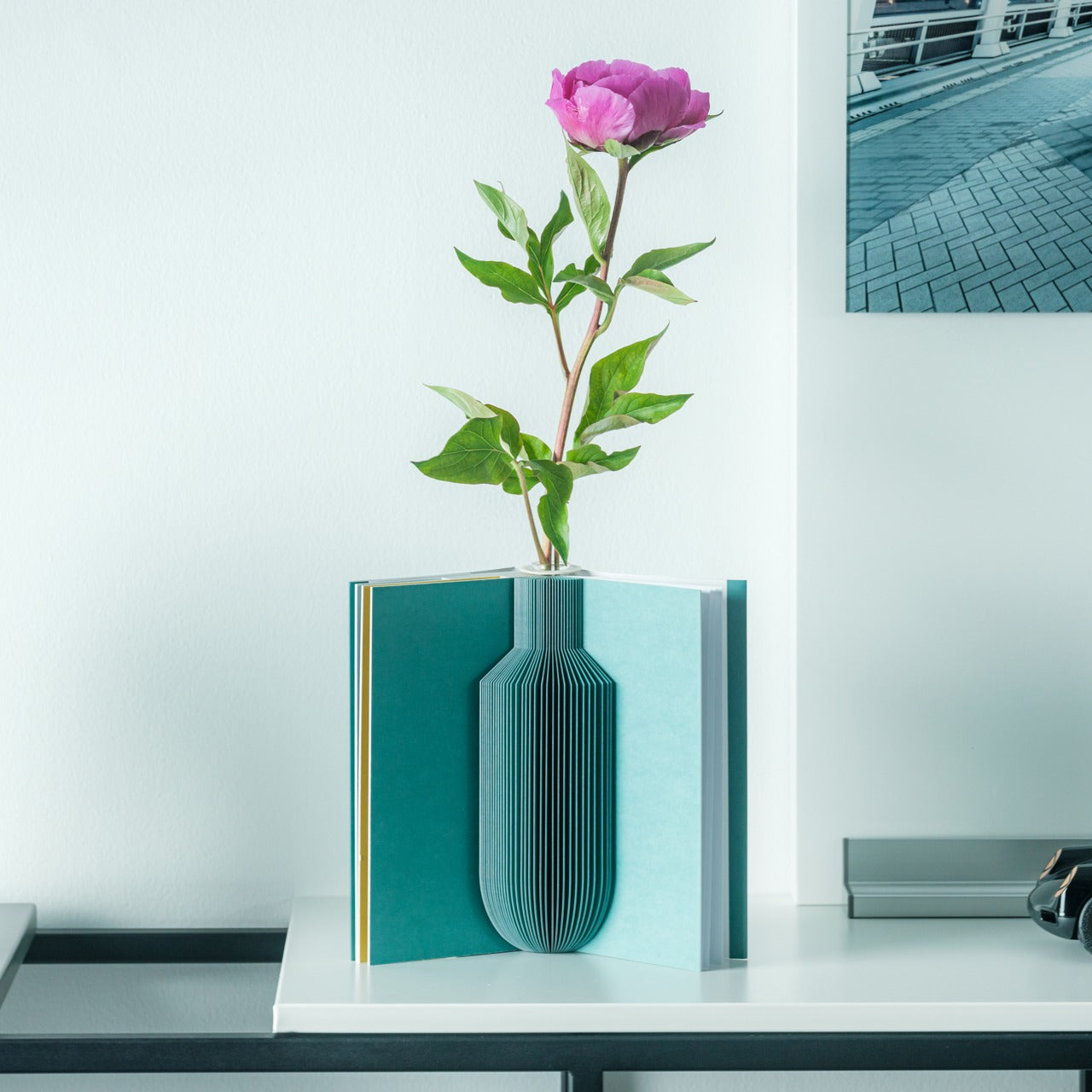
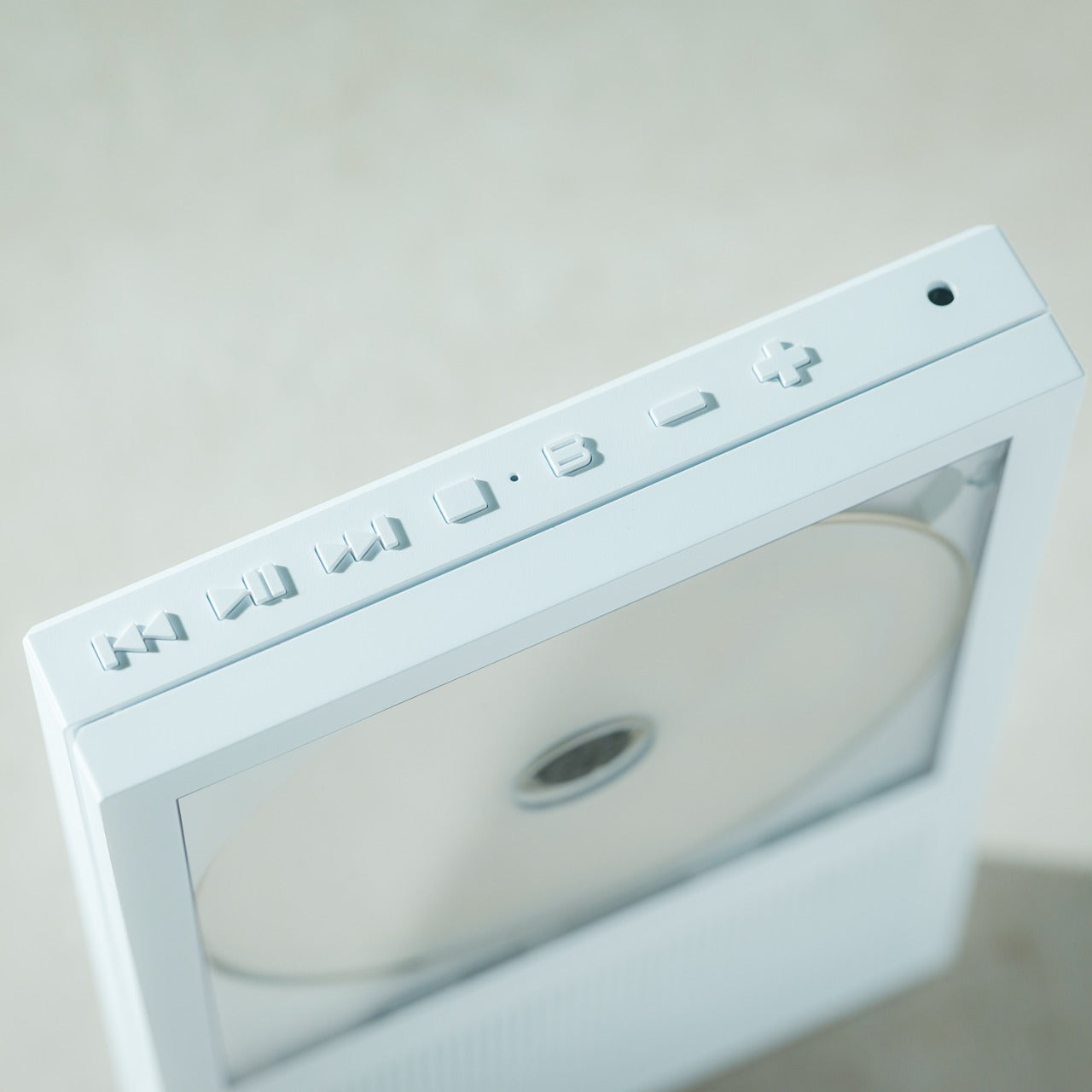
The CD jacket player does not pretend that CDs are making a comeback in any mainstream sense. Instead, it treats them as objects worth displaying, building a player around the album jacket rather than hiding it inside a drawer. The minimalist frame holds the CD’s cover art front and center, and a wall mount bracket lets the entire unit hang like a small piece of art. A built-in battery means it works on the go, and Bluetooth 5.0 connectivity lets it pair with wireless speakers and earphones.

Tiny homes demand that objects do more than one thing, and a music player that doubles as wall art earns its square footage in a way a Bluetooth speaker sitting on a shelf never could. The design acknowledges that people who still own CDs are emotionally attached to the physical format, to the artwork, and the ritual of selecting a disc. Mounting the player on the wall removes it from the counter, the nightstand, or whatever other surface it would otherwise claim. In a 400-square-foot space, that kind of reclaimed real estate adds up.

Click Here to Buy Now: $169.00 Hurry! Only a few left.

What we like

  • Wall-mount capability turns the player into displayable art, removing it from limited counter and shelf space
  • Bluetooth 5.0 means wireless pairing with existing speakers, so it does not demand its own audio setup

What we dislike

  • The audience for a physical CD player in 2026 is narrow, making this a niche purchase even among design-conscious buyers
  • Built-in battery life for portable use remains unspecified, and running both a motor and Bluetooth drains cells quickly

5. Ferm Living Plant Box – A planter that reorganizes your entire floor plan.

The Ferm Living plant box is, at its simplest, a rectangular metal box on thin legs with a powder-coated finish. But its real value in a tiny home has nothing to do with plants. The box’s proportions and height make it a room divider, a bookshelf, a toy bin, or a display surface that creates the illusion of separate zones within an open floor plan. The slim legs keep sightlines open at floor level, which is a small detail that makes a big difference in preventing a small room from feeling boxed in.

Studio apartments and single-room tiny homes rarely have the luxury of walls. The plant box fills that gap by creating what designers call “islands,” small zones of activity defined by furniture rather than architecture. Place it between a sleeping area and a desk, fill it with trailing plants or stacked books, and the eye reads two separate spaces where only one exists. The powder-coated metal is easy to wipe down, resistant to moisture, and available in black, a color that recedes visually and lets the objects inside take focus.

What we like

  • Thin legs preserve floor-level sightlines, preventing the visual weight that closed-base furniture adds to compact rooms
  • Multipurpose use as a planter, divider, bookshelf, or toy storage gives it a role in every room without redundancy

What we dislike

  • The open-top design means dust collects on whatever is stored inside, requiring regular maintenance in exposed layouts
  • Weight capacity is limited by the thin leg construction, so heavier items like large potted plants or dense book collections need caution

6. Key Holder Wakka – Neodymium magnet meets Japanese woodcraft.

The Key Holder Wakka turns the act of putting down your keys into something you look forward to. The system pairs a stainless steel, iron, and brass keyring with an elegant wooden base (available in maple or walnut). A neodymium magnet holds the ring securely in place, and separating the two produces a distinct, brisk tapping sound. That sound is the entire point. In a tiny home, where every habit compounds in visibility, a designated key spot eliminates the daily search-and-panic cycle.

The design logic here is behavioral rather than decorative. By making the act of placing keys enjoyable, the Wakka trains a habit through positive reinforcement rather than guilt. The wooden base is small enough to sit on a windowsill, a narrow shelf, or beside a door frame without claiming space that other items need. The material combination of warm wood and cool metal reads as considered rather than cluttered, which matters when every object on a surface contributes to the visual temperature of the entire room. Losing your keys in 300 square feet should be impossible, but anyone who has lived small knows it happens constantly.

Click Here to Buy Now: $45.00

What we like

  • The neodymium magnet holds the keyring firmly in place, preventing the drift that happens with open trays and bowls
  • Audible feedback when placing or removing keys creates a sensory ritual that reinforces the habit of using the holder

What we dislike

  • The system requires using the specific Wakka keyring, so existing keychains or fobs need to be transferred or replaced
  • At its core, this is a single-purpose object: it holds one set of keys, which limits utility for multi-person households

7. TUMBA Modular Shelf System – Lego logic applied to storage furniture.

The TUMBA modular shelf system addresses the single biggest frustration with flat-pack furniture: fixed dimensions. Where conventional shelving forces rooms to conform to predetermined sizes, TUMBA offers stackable modules made from recycled polymer that lock together without tools. High-strength plexiglass provides structural transparency, stainless steel connections snap securely into place, and the swirled textures in each panel carry visible traces of the material’s previous life. The bold colors and playful forms make the storage itself worth looking at.

Tiny homes change. A shelf configuration that works in January stops making sense after a furniture rearrangement in March, and traditional shelving punishes that flexibility with disassembly headaches and leftover hardware. TUMBA’s tool-free construction means reconfiguring takes minutes, and the modular format lets it grow vertically in tight corners or stretch horizontally along narrow walls. For renters in compact spaces who move frequently, a shelf system that breaks down and rebuilds without damage is less of a convenience and more of a necessity. The recycled material story is a bonus, but the real selling point is permission to change your mind.

What we like

  • Tool-free assembly and reconfiguration mean the shelf adapts to layout changes without the frustration of traditional flat-pack rebuilds
  • Recycled polymer construction gives each panel a unique swirled texture that standard particle board or MDF cannot replicate

What we dislike

  • Bold colors and playful forms may clash with more subdued or neutral interior palettes common in compact living spaces
  • Plexiglass panels, while visually light, are more prone to surface scratching than solid wood or metal shelving alternatives

Where Small Living Gets Interesting

The common thread across these seven products is not size. It is intent. Each one was designed with the understanding that small spaces do not need small thinking. They need objects that work harder, look better, and respect the reality that in a tiny home, there is no junk drawer to hide mistakes in. Every surface is a display, every object is a statement, and every purchase is a commitment.

What makes compact living feel like a design choice rather than a compromise has less to do with architecture and more to do with curation. The right diffuser, the right clock, the right shelf system: these are the decisions that turn 300 square feet into a space that feels chosen rather than settled for. And in a world that keeps building bigger, there is something satisfying about proving that less, when it is the right less, is more than enough.

The post 7 Best Tiny Home Accessories That Make Small-Space Living Feel Like a Design Choice, Not a Compromise first appeared on Yanko Design.

8 Best Travel Gadgets & Tools Men Who Fly Constantly Refuse to Leave Without

Frequent flyers develop rituals. Not superstitions, but systems, small corrections built over dozens of boarding passes and red-eye recoveries that separate a tolerable trip from a miserable one. The gear that survives this process tends to be invisible in the best sense: compact enough to vanish into a carry-on, functional enough to earn its pocket space, and designed with the kind of restraint that does not scream “gadget” at TSA.

We have spent a good chunk of this year tracking products that solve the specific, unglamorous problems of constant air travel. Not the flashy stuff that lives in a CES sizzle reel, but the tools that answer real questions: how do I sleep upright, stay caffeinated in a hotel with terrible coffee, or keep my workout intact when the gym is a repurposed storage closet? These eight picks are the ones that survived the edit, each one earning its spot through a combination of smart engineering and a refusal to waste space.

1. StillFrame Headphones – A slow, deliberate approach to travel audio.

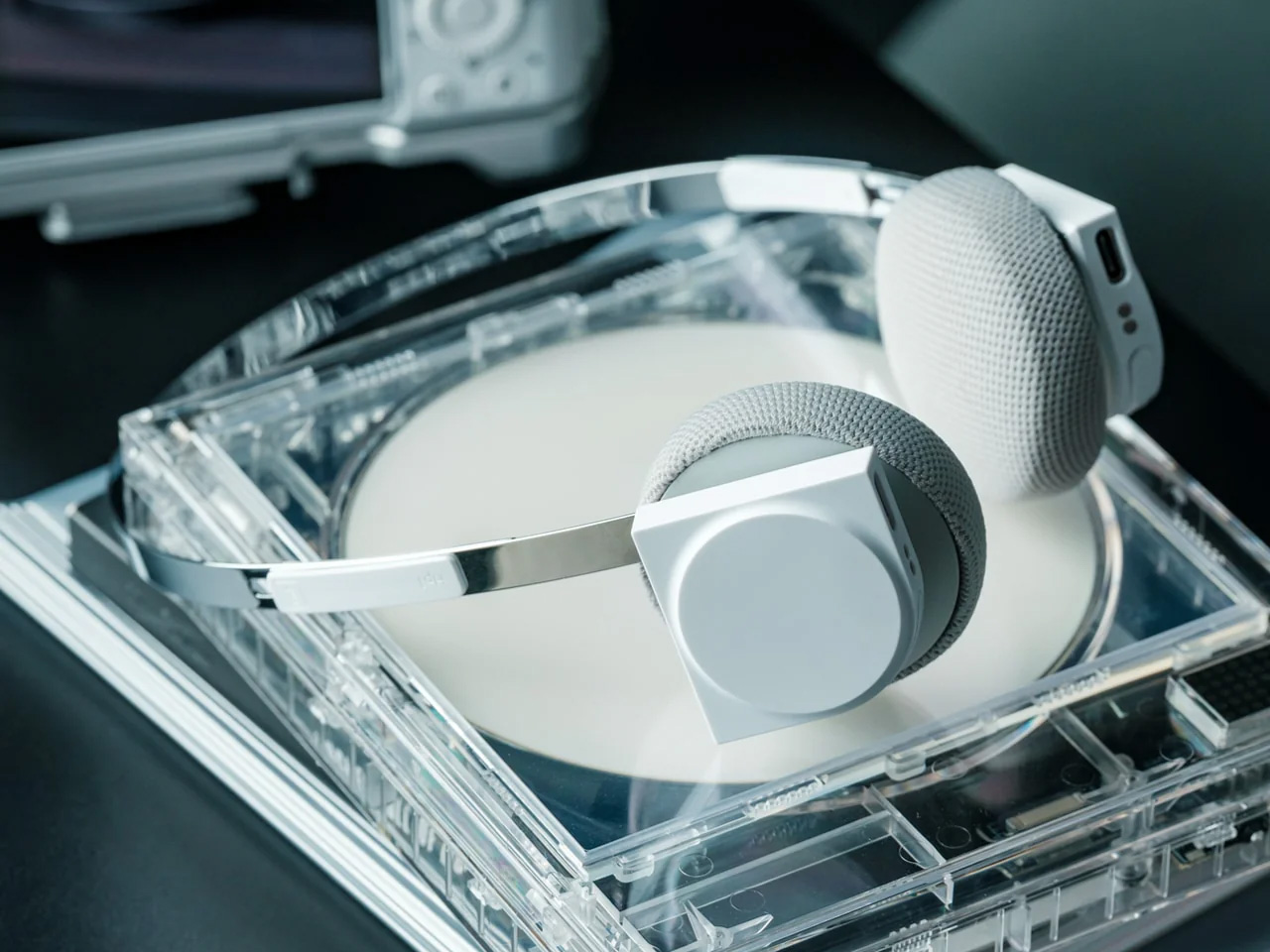
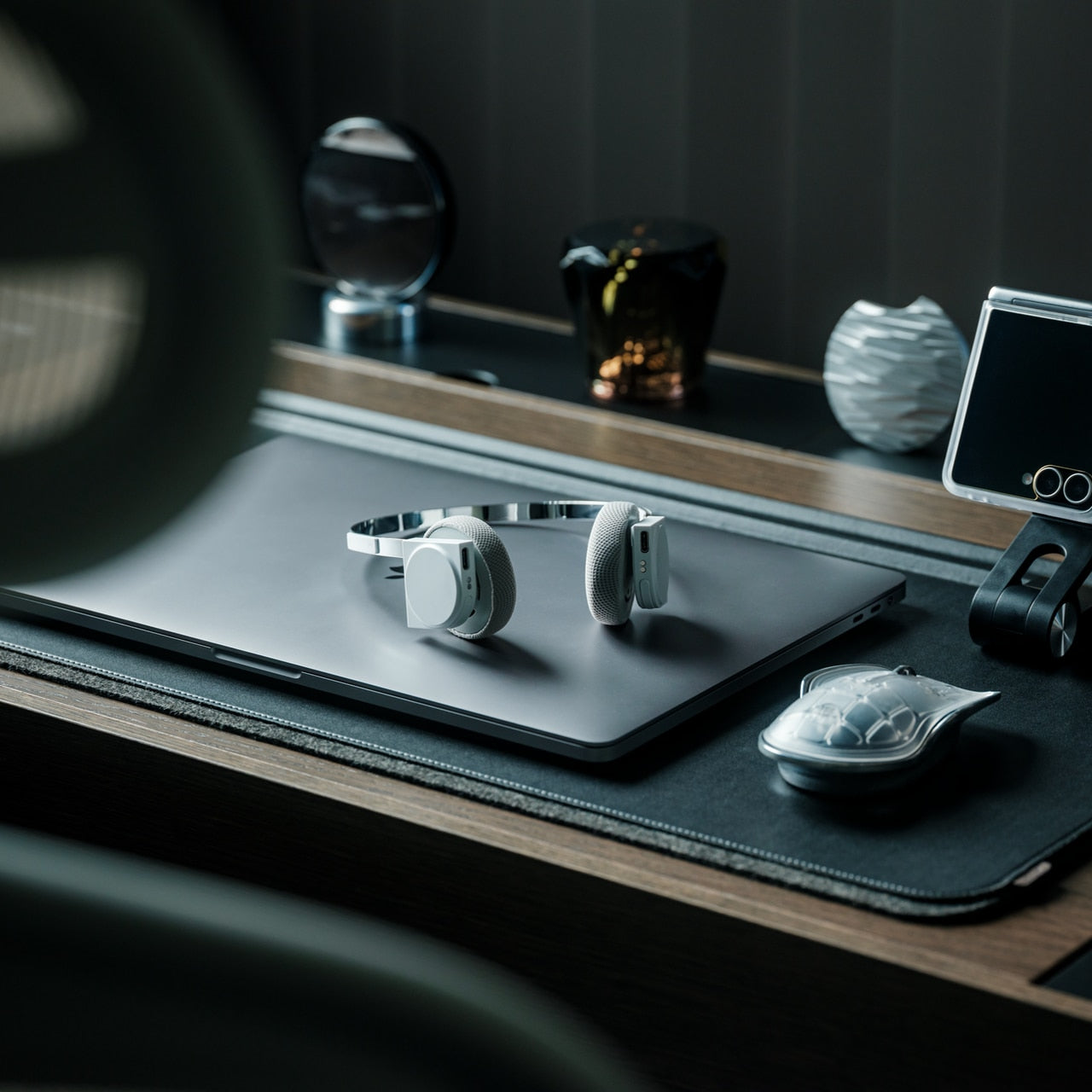
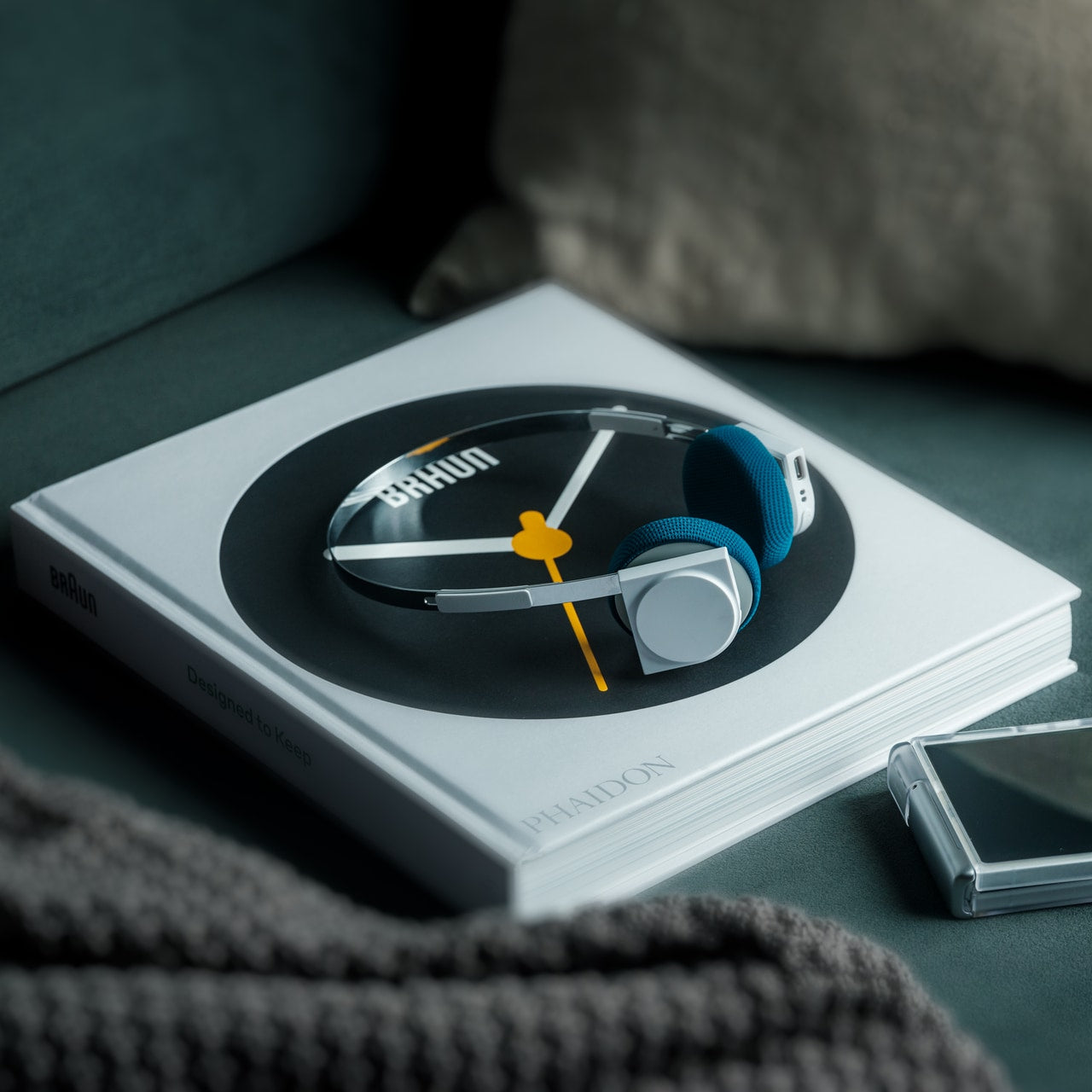
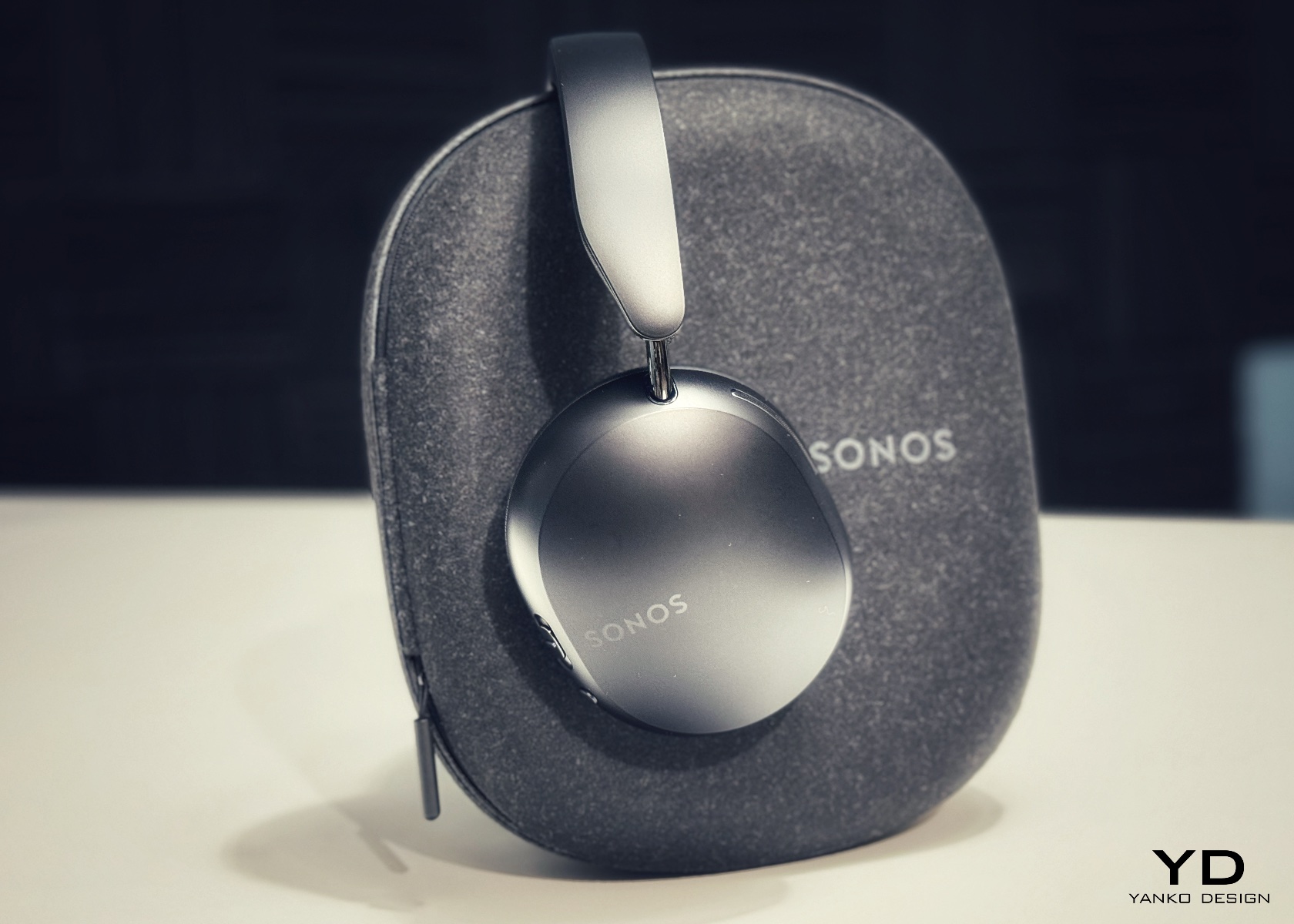
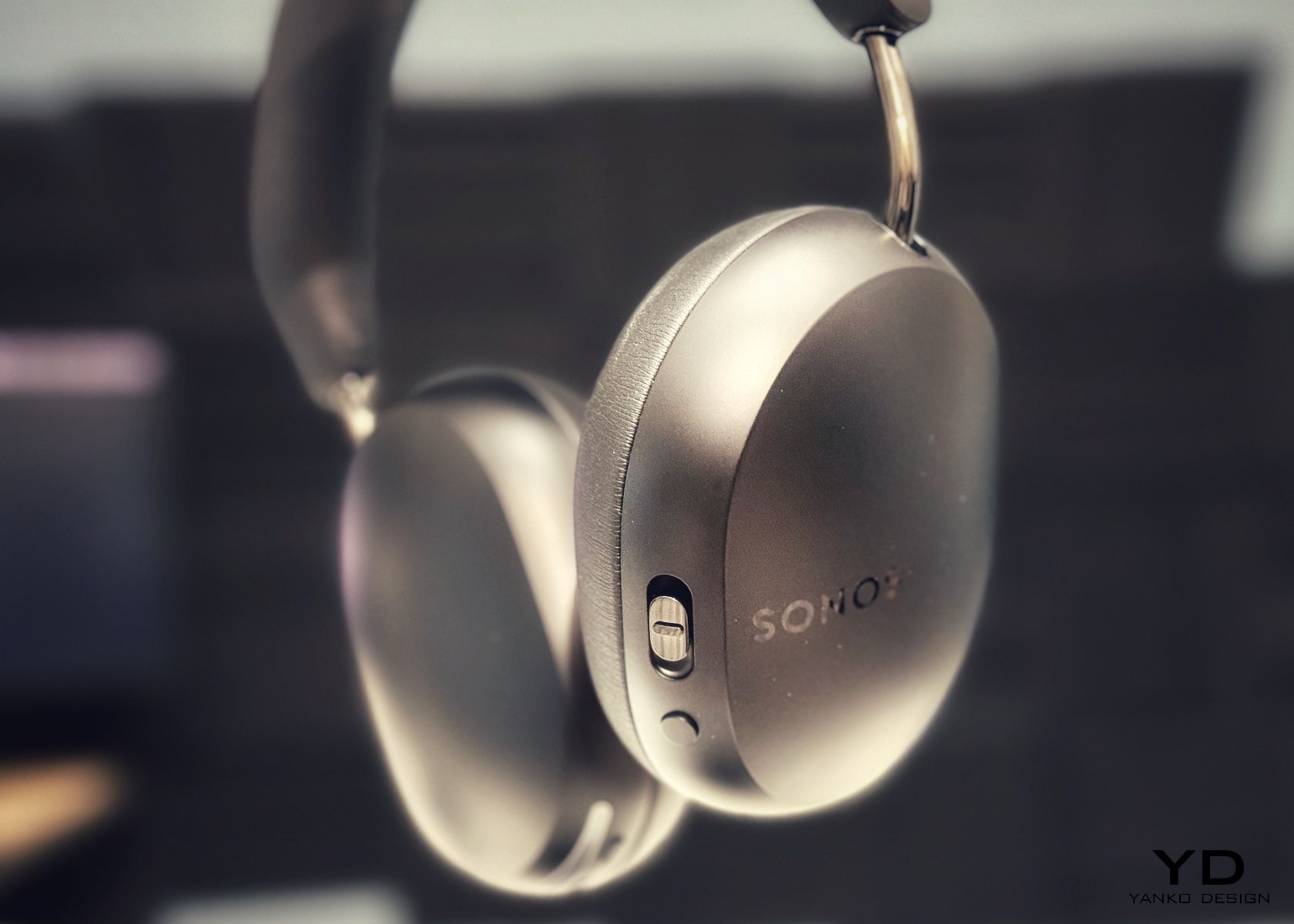
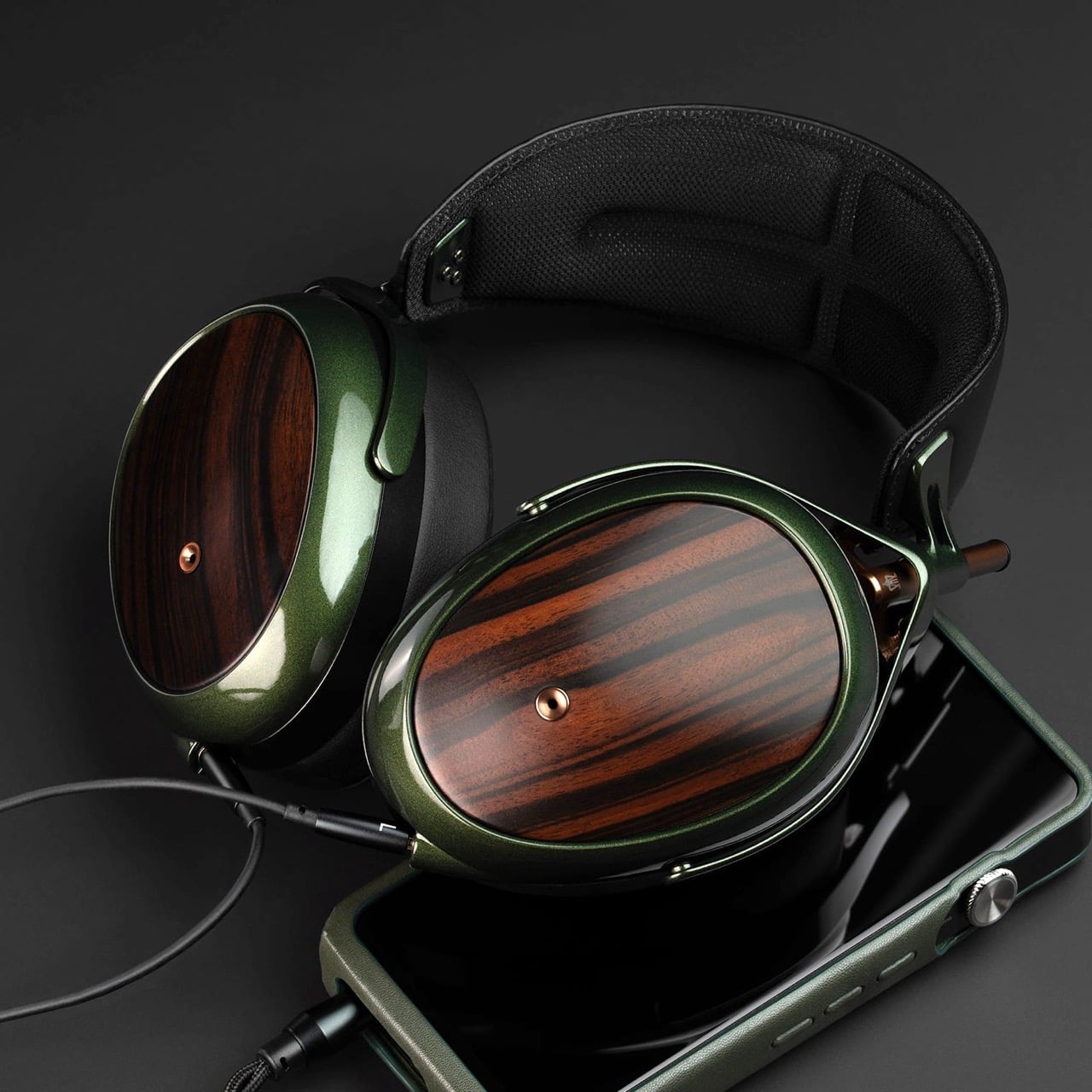
StillFrame wireless headphones took the predictable race toward bass-heavy, noise-blasting cans and went the opposite direction. The form echoes the quiet geometry of ’80s and ’90s CDs, a deliberate reference that signals intent before a single track plays. These headphones are built around the idea that listening on a plane doesn’t have to mean sealing yourself inside a foam-padded vault.

The 40mm drivers produce a wide, open soundstage that treats quiet tracks like small environments rather than compressed streams of data. Noise cancelling kicks in when isolation is needed, and transparency mode pulls the world back in with a tap. For men who fly weekly and spend hours with headphones on, the fit matters more than the spec sheet. StillFrame sits between the suffocation of over-ears and the intrusion of in-ears, offering something lighter and more sustainable for long-haul wear. That middle ground is where most travel headphones fall short, and where these headphones excel.

Click Here to Buy Now: $245.00

What we like

  • The open soundstage brings texture to quieter music that gets lost in most closed-back travel headphones.
  • Switching between noise-cancelling and transparency mode is seamless enough to use mid-conversation with the cabin crew.

What we dislike

  • The on-ear form factor will not block as much ambient noise as a full over-ear design, which limits effectiveness on louder aircraft.
  • Battery life details remain sparse, and wireless headphones live or die by how well they survive a transatlantic route.

2. Nikon 4x10D CF Pocket Binoculars – Optical clarity that fits a jacket pocket.

Binoculars feel like relics from a leather-cased era. Nikon’s 4x10D CF pocket binoculars challenge that perception by shrinking the form factor down to something that slips into a blazer without creating a bulge or demanding its own case. These are not competing with a smartphone’s digital zoom. They exist in a different category, prioritizing the experience of true optical viewing over pixel counts and algorithmic processing.

The design decision that makes these work for frequent flyers is the discretion. Traditional binoculars announce themselves. These almost disappear. The optical quality stays sharp for the size, delivering a viewing experience that feels immediate and free of the digital artifacts that plague phone-based zoom. Reading a departure board from across a terminal, catching architectural details in a layover city, or scanning a landscape from an airport lounge window: the use cases are oddly specific and consistently useful for anyone whose life involves constant movement through unfamiliar places.

What we like

  • The form factor is compact enough to carry daily without dedicating bag space or adding noticeable weight.
  • Optical viewing quality avoids the processing lag and color distortion of smartphone zoom.

What we dislike

  • 4x magnification is modest, which limits usefulness for anything beyond mid-range observation.
  • The compact size means a smaller objective lens, so performance drops in low-light conditions where larger binoculars thrive.

3. COFFEEJACK – Nine bars of pressure, zero dependence on hotel equipment.

Hotel coffee is a problem that frequent travelers have accepted for too long. COFFEEJACK, built by Hribarcain, was designed to make that acceptance unnecessary. This pocket-sized espresso maker generates 9 to 10 bars of pressure through a manual hydraulic pump, matching the extraction output of professional café equipment. The lower chamber holds ground coffee, a built-in tamper levels and packs the grounds automatically, and hot water goes into the upper chamber. Work the pump, and a crema-topped espresso appears in the field.

The engineering gap between this and other portable coffee options is worth understanding. A French press operates under 1 bar of pressure. An Aeropress or Moka pot peaks at roughly 3 to 4 bars. COFFEEJACK reaches 9 to 10 consistently, manually, without a power source. That difference is what separates hotel-lobby drip from the real thing. The entire device is made from 100% recycled plastic, making it a more considered alternative to the pod-based systems that generate single-use waste with every cup. For men who treat their morning coffee as non-negotiable (and after a 6 AM landing, it absolutely is), this earns permanent carry-on status.

What we like

  • 9 to 10 bars of manual pressure match professional espresso machines without electricity, pods, or proprietary cartridges.
  • The built-in tamper eliminates the need to carry a separate tool, keeping the kit self-contained.

What we dislike

  • Hot water is still a requirement, which means sourcing it from a kettle, hotel tap, or thermos before brewing.
  • The manual pump action requires a bit of effort and technique that takes a few attempts to master.

4. BlackoutBeam Tactical Flashlight – 2300 lumens in a body that fits a Dopp kit.

Most flashlights either look like they belong in a military surplus store or feel like cheap giveaways from a trade show. BlackoutBeam sits between those extremes with 2300 lumens of output, a 300-meter throw, and an industrial design that does not embarrass itself sitting next to a passport wallet. The 0.2-second response time means light arrives the moment the button is pressed, with no warm-up delay.

The travel case for a flashlight this capable is more practical than dramatic. Navigating poorly lit hotel parking garages, finding a rental car in an unlit airport lot, walking unfamiliar streets after dark. These are not survival scenarios; they are Tuesday nights on a business trip. The aluminum body carries an IP68 rating for water and dust resistance, so rain and rough handling are non-issues. What makes this particular light worth its bag space is the combination of output and size. At 2300 lumens with a 300-meter range, it outperforms most flashlights twice its size while slipping into a side pocket without protest.

Click Here to Buy Now: $89.00

What we like

  • 2300-lumen output with a 300-meter throw handles everything from close-range tasks to illuminating distant areas.
  • IP68-rated aluminum construction handles rain, drops, and the general abuse of constant travel without degradation.

What we dislike

  • A light this powerful will drain batteries faster than lower-output alternatives, meaning recharging becomes another travel task.
  • The tactical aesthetic, while restrained, could attract unwanted attention at security checkpoints in certain countries.

5. Comes AI travel companion – An AI assistant that sees what is around the corner.

Solo travel has a specific kind of friction that apps alone cannot solve. Comes is a small AI-powered companion device equipped with a high-performance camera that observes surroundings and offers assistance in real time. The design has a modular, detachable structure that adapts to different travel situations, functioning as a navigation aid, translator, and contextual guide depending on the moment.

The scenario it solves best is the one frequent travelers know well: arriving in a new city, stepping off a train or out of an airport, and facing that brief window of disorientation before the phone GPS loads and the bearings click into place. Comes fills that gap by walking through navigation in a way that feels supportive rather than screen-dependent. Voice interaction keeps hands free, and the camera-based awareness means it can interpret signs, menus, and spatial context without requiring manual input. For men who move through multiple cities in a single week, the device acts as a persistent local guide that does not need Wi-Fi to be useful in the moment it matters most.

What we like

  • The modular design adapts to different carry and mounting configurations depending on the travel context.
  • Camera-based awareness interprets real-world visual information without requiring the user to stop and type.

What we dislike

  • AI-powered devices in this category still depend heavily on software updates and server-side processing, which introduces latency in areas with weak connectivity.
  • Battery management across the camera, AI processing, and wireless communication will be a limiting factor on long travel days.

6. Pocket Monkii 2 – A full bodyweight training system that packs smaller than a book.

Gym access on the road is either a depressing hotel treadmill or a day pass at a facility that requires a 20-minute detour. Pocket Monkii 2 is a compact training system that packs cables, handles, a ladder, and an isometric tool into a kit small enough to throw into a carry-on without sacrificing space for anything else. The all-new package includes unlimited access to the Monkii app, which provides workout instructionals and progress tracking.

What makes this different from a resistance band tossed into a suitcase is the system design. The cables are built for durability across hundreds of sessions, and the combination of tools allows for a full bodyweight program rather than a handful of isolated exercises. The 21-Day Habit guide included with purchase pushes past the typical “use it twice and forget it” pattern that plagues most portable fitness equipment. For frequent flyers who refuse to lose their training momentum to a travel schedule, this is the closest thing to a portable gym that does not feel like a compromise or require anchoring to a hotel door frame that was never designed to hold body weight.

What we like

  • The compact kit fits inside a carry-on and provides enough variety for a complete bodyweight training session.
  • App integration with workout instructionals and progress tracking adds structure that standalone resistance bands lack.

What we dislike

  • Cable-based systems require an anchor point, and not every hotel room has a suitable door or fixture for secure attachment.
  • The learning curve for isometric and suspension-style exercises is steeper than traditional resistance training.

7. Auger PrecisionLever Nail Clipper – A century of Japanese blade-making in an 86mm package.

Grooming on the road tends to fall apart at the small details. Nail clippers are the item most likely to be forgotten, borrowed from a front desk, or purchased in desperation from an airport convenience store where the options are universally terrible. Kai Corporation, Japan’s blade authority since 1908, built the Auger PrecisionLever to make that entire cycle unnecessary.

The patented revolver-style lever shifts the pivot point closer to the blade, optimizing pressure with every press. That mechanical advantage means cleaner cuts on thicker nails with less effort and more control. The blades are crafted from stainless cutlery steel, cutting cleanly without tearing or splitting. At 67 grams with an 86mm footprint, the clipper has a weighted feel that is stable in hand while still slipping into a Dopp kit without claiming space. For a tool that gets used a few times a week and lives in the bottom of a toiletry bag, the difference between a precision instrument and a generic clipper is felt every single time. This one makes the case that even the smallest object in a travel kit deserves actual engineering.

Click Here to Buy Now: $49.00

What we like

  • The patented lever mechanism delivers more cutting force with less manual effort, especially on thicker nails.
  • Stainless cutlery steel blades cut cleanly without the tearing or crushing common in cheaper clippers.

What we dislike

  • Premium nail clippers occupy a price point that most people will not consider until they have suffered through enough bad ones.
  • The 67-gram weight, while satisfying in hand, adds up when every gram in a dopp kit is contested.

8. Loop – A neck pillow that abandoned the U-shape entirely.

The U-shaped travel pillow has been the default for decades, and it has been mediocre for every single one of those decades. The Loop Pillow rejected the template. Its infinitely adjustable loop design wraps around the neck tightly or loosely, providing lift near the shoulder to support the head at whatever angle sleep actually arrives. If the U-shape is a one-size-fits-all solution, the Loop is a continuous adjustment that conforms to the person rather than the other way around.

The construction uses thermo-sensitive memory foam that molds to neck contours over time, paired with a moisture-wicking, breathable outer cover that keeps skin dry during sleep. Two cover colors correspond to a warm side and a cool side, allowing the sleeper to choose based on cabin temperature. The pillow works whether the head rests forward, to the side, or against the back of the seat, which alone puts it ahead of every rigid U-pillow on the market. For men who fly red-eyes regularly and have accepted that airplane sleep will always be imperfect, the Loop does not promise perfection. It promises adaptability, and on a cramped overnight flight, that distinction makes all the difference.

What we like

  • The infinitely adjustable loop design works with multiple sleeping positions instead of forcing a single neck angle.
  • Thermo-sensitive memory foam and a dual-temperature cover adapt to both the body and the cabin environment.

What we dislike

  • The loop form factor looks unconventional and takes a few uses to figure out the wrapping technique that works best.
  • Memory foam retains heat over long periods, and the breathable cover can only offset so much warmth during a 10-hour flight.

Where The Suitcase Closes

These eight products share a common thread. None of them demands attention, and none of them wastes space. They are corrections to the small, recurring failures of constant travel: bad coffee, bad sleep, bad lighting, lost training days, and the slow erosion of routine that comes with living out of a carry-on. The best travel gear is the kind that disappears into the rhythm of a trip rather than creating new problems to manage.

What ties this list together is not a category or a price point but a design philosophy. Each product earned its spot by answering a specific question that frequent flyers have asked, tested, and refined through repetition. The carry-on has limited real estate. These eight justify every square inch they claim.

The post 8 Best Travel Gadgets & Tools Men Who Fly Constantly Refuse to Leave Without first appeared on Yanko Design.

New 2 World Trade Center Will Rise 1,226 Feet Over Manhattan, Finally Completing the Post-9/11 Rebuild

It has been almost 25 years since the September 11 attacks forever changed the skyline of Lower Manhattan, and now the rebuilding of the World Trade Center campus is entering its final stretch. The last major commercial tower on the site, 2 World Trade Center, is expected to break ground in spring 2026 and wrap up construction by 2031. American Express has committed to making the building its new corporate headquarters.

Getting to this point hasn’t been simple. British firm Foster + Partners was originally hired to design the tower, only to be replaced by Bjarke Ingels Group, which put forward a striking terraced concept. That plan was eventually scrapped, and Foster + Partners was brought back to start fresh. The result, based on recently released renderings, is a broad rectangular tower sheathed in glass, with three open-air terraces and six landscaped corner gardens woven into the facade to bring some greenery to an otherwise sleek profile.

Designer: Foster + Partners

The tower will rise to 1,226 feet, comfortably placing it in the supertall category and making it roughly the 11th-tallest building in the United States. It won’t overtake its famous neighbor, though. One World Trade Center still holds the title of the country’s tallest at a symbolically chosen 1,776 feet. Inside, the building will offer close to two million square feet of usable space across 55 stories, with the bulk of that dedicated to offices. When fully occupied, it could house around 10,000 workers.

Specifics are still thin at this early stage, but American Express has said the tower will incorporate smart building technology and energy-efficient systems. The project is also targeting LEED certification, which has become something of a baseline expectation for major commercial developments in recent years.

Kevin O’Toole, Chairman of the Port Authority of New York and New Jersey, called the project a meaningful milestone, both for the campus and for the surrounding region. He pointed to the tower’s role in reinforcing the World Trade Center as one of the country’s most important centers of commerce and transportation, and acknowledged just how much sustained effort it takes to deliver projects on this scale.

Silverstein Properties, the development firm that has overseen much of the site’s post 9/11 transformation, is once again at the helm. When the building finally opens its doors in 2031, it will effectively close the book on one of the most ambitious and emotionally significant urban rebuilding efforts in modern history. More than anything, it will stand as a reminder of what New York City is capable of when it commits to moving forward.

The post New 2 World Trade Center Will Rise 1,226 Feet Over Manhattan, Finally Completing the Post-9/11 Rebuild first appeared on Yanko Design.

5 Best Foldable Phone Concepts We’re Still Waiting To See At MWC 2026

MWC 2026 is arriving in Barcelona next week under the theme “The IQ Era,” and the foldable conversation has never had more momentum behind it. The worldwide foldable smartphone market is forecast to grow 30% year-over-year in 2026, and with names like Samsung, Apple, and HONOR all moving pieces on the same board, the show floor feels electric. The race isn’t just about who ships first; it’s about who ships something worth keeping.

But the most interesting foldable ideas rarely make it to the keynote stage. Some live in patents. Some debut at design expos and disappear into concept archives. Others surface on design blogs and quietly accumulate a following of people who can’t stop thinking about them. These five concepts represent everything the foldable category could become if ambition and engineering ever fully agreed with each other. Barcelona feels like the right backdrop for that conversation.

1. Nothing Fold (1) — The Foldable With a Spine That Speaks

Nothing has always understood that a phone is a surface before it is a device. The brand built its entire identity on making the invisible visible — circuit boards through glass, notification patterns through LEDs, and the Fold (1) concept carries that thinking directly into foldable territory. The Glyph Interface, Nothing’s signature grid of programmable lights, doesn’t just live on the back panel here. It wraps around the spine, and at boot, it traces the number “1” across the edge like a signature being written in real time.

Once the phone is running, the spine transforms into something genuinely new: a monochrome ticker-tape display that scrolls live notifications along the fold without requiring the user to open anything or wake a screen. Inside, an 8.37-inch display gives the Fold (1) the kind of canvas that makes a book-style foldable feel worth carrying. A MediaTek Dimensity 9400 chip handles the processing alongside a dedicated neural unit for on-device AI, while a 5,500mAh battery keeps the whole system running well past a single day. Five cameras — split across the rear, the spine-side flap, and dual hole-punches on both displays — mean no shooting scenario goes uncovered. This is a concept that treats the fold itself as a feature rather than a compromise.

What We Like

  • The spine-mounted ticker display turns passive notification delivery into an active design statement that no shipping foldable currently replicates.
  • Pairing a 5,500mAh battery with a power-efficient flagship chip gives this concept the endurance its ambitions genuinely require.

What We Dislike

  • Five cameras on a foldable form factor raise legitimate questions about thickness — the hardware demands and the slim silhouette are in direct tension.
  • Nothing OS remains a compelling but narrow platform, and its app ecosystem still asks more patience from users than mainstream Android does.

2. 0/1 Phone — The Foldable That Knows When to Go Quiet

Most digital wellness tools are built on a contradiction. They ask sthe oftware to solve a problem that the software created. The 0/1 phone cuts through that logic by putting the solution in the hardware itself. Closed, the phone presents an e-ink display — customizable with analog clock faces, a calendar, a music player, or whatever belongs in a calmer version of a day. There are no feeds to scroll, no notifications engineered to demand attention, no app icons arranged to maximize tap frequency. Just the time, and whatever you decided mattered before distraction had a vote.

Open it, and the phone becomes something else entirely. A flexible display running at 1080×2640 resolution gives full access to every app, every platform, every habit the closed state was holding at arm’s length. The transition between modes isn’t managed by a screen time setting buried in a menu; it’s a physical gesture. Closing the phone is the act of choosing focus, and opening it is a deliberate decision rather than a reflexive one. That distinction sounds small until you’ve spent a week with a phone that makes you conscious of every time you reach for it. The 0/1 concept understands that people don’t want less technology. They want better control over when it starts.

What We Like

  • Mapping distraction-free mode to a physical action rather than a software toggle is a smarter and more honest approach to attention management.
  • Customizable e-ink clock faces give the closed state genuine personality, making minimalism feel like a choice rather than a penalty.

What We Dislike

  • E-ink displays still lag on refresh rate and struggle with colour depth, which could make the closed-state experience feel dated compared to what users are used to.
  • Building a dual-display device that stays genuinely slim is a serious engineering challenge, and added bulk would directly undermine the concept’s entire premise.

3. Samsung L-Fold Patent — The Tetris Block the Industry Wasn’t Ready For

Samsung’s patent library is enormous, and most of what lives inside it will never become a product. But occasionally something surfaces that reframes what a foldable phone could look like at a structural level. The L-shaped concept — which, unfolded, mirrors the elongated corner-piece of a Tetris grid — is one of those designs. The top section of the display extends to one side and then folds back on itself like a flap, bringing the phone from an asymmetric L-shape into a more conventional rectangle. It’s a transformation that takes about a second to understand and considerably longer to stop thinking about.

What makes the concept genuinely interesting isn’t the shape — it’s what the folded flap can do once it’s in position. Facing outward alongside the main cameras, it becomes a live viewfinder, letting users frame selfies through the primary camera array rather than a secondary front-facing sensor that typically offers a fraction of the optical quality. The curved strip of display wrapping the spine edge serves as an ambient information surface — battery level, the time, notification tickers — visible without waking the main screen. It draws an obvious comparison to the LG Wing’s T-shaped swivel design, but the folding mechanism introduces a layer of versatility that the Wing could never access. The L-fold isn’t trying to be novel. It’s trying to be useful in ways the rectangle hasn’t figured out yet.

What We Like

  • A folded flap that doubles as a selfie viewfinder for the main cameras is one of the most practically useful ideas to emerge from any foldable concept in recent memory.
  • The spine-edge ambient display strips away the need to fully wake the phone for low-stakes information — a subtle but genuinely valuable interaction shift.

What We Dislike

  • Asymmetric form factors demand new muscle memory from users, and history suggests the mass market is slow to warm to anything that doesn’t fit an established shape.
  • Samsung patents ideas prolifically, and the distance between a filed concept and a retail device is wide enough that this design may never leave the archive.

4. OPPO x nendo Slide-Phone — The Triple-Fold That Earns Every Stage

When OPPO partnered with Japanese design studio nendo for the slide-phone concept, the goal wasn’t to make a foldable that could compete on spec sheets. The goal was to design a phone that understood how humans actually move through a day — glancing, then engaging, then working — and matched each state with exactly the right amount of screen. The mechanism unfolds in three progressive steps, each one surfacing a different display area calibrated to a specific type of task. Nendo described the motion as caterpillar-like, and the metaphor holds. This phone doesn’t hinge open. It extends with intention.

The first stage reveals 1.5 inches of display, enough for a notification glance, music control, and an incoming call. The second opens to 3.15 inches, suited to photography, video calls, and light gaming. The third and final stage unlocks the full 7-inch widescreen panel, wide enough to run on-screen game controllers across both flanks simultaneously or to frame a proper panoramic shot. A stylus is included, pushing the concept firmly into professional productivity territory. What distinguishes this design from every other multi-fold proposal isn’t the screen count; it’s that each screen size exists for a reason. That level of purposefulness in a concept is rarer than it sounds, and it’s exactly the kind of thinking MWC 2026 needs more of.

What We Like

  • Three screen sizes, each assigned to a specific use context, is the most functionally coherent multi-fold proposal the category has produced.
  • The OPPO x nendo collaboration brings genuine design philosophy to a product type that has historically been defined by engineering decisions alone.

What We Dislike

  • Three-fold points mean three mechanical vulnerabilities, and the durability science around multi-fold hardware still hasn’t caught up to the ambition.
  • The credit card form factor, when fully closed, is irresistible in theory, but the real-world pocketability of a 7-inch unfolded device still requires a convincing answer.

5. TCL Fold ‘n’ Roll — The Concept That Refused to Choose a Size

Every other foldable phone on this list commits to a fixed set of screen configurations. The TCL Fold ‘n’ Roll doesn’t. Using a combination of the brand’s proprietary dragonhinge folding mechanism and a rollable panel that extends from the chassis, the device starts as a 6.87-inch smartphone, unfolds into an 8.85-inch phablet, and then rolls out fully to become a 10-inch tablet. Three screen sizes. One device. No trade-off required. As a concept, it reads less like a product proposal and more like a direct challenge issued to every manufacturer in the room.

TCL was candid about the technical specifications still being in development when the concept was first revealed — an admission that actually made the idea more credible, not less. It signalled a team working through real problems rather than rendering a fantasy. The rollable display space has since moved meaningfully closer to commercial viability, and with the broader foldable market accelerating sharply heading into 2026, the engineering distance between this concept and a shippable product is closing. The dragonhinge gives the Fold ‘n’ Roll a mechanical foundation most conceptual devices lack. What it still needs is a manufacturer willing to see the build all the way through, and a Barcelona stage to announce it from.

What We Like

  • Phone, phablet, and tablet in a single chassis is the most versatile screen configuration concept the foldable category has put forward to date.
  • The dragonhinge technology gives this proposal a legitimate engineering backbone, separating it from pure speculation.

What We Dislike

  • Combining folding and rolling mechanisms in one device layers mechanical complexity that no manufacturer has yet solved at the consumer scale.
  • TCL has introduced multiple foldable concepts across several years, and relatively few have made the jump from concept to shelf, which tempers excitement with reasonable caution.

The Floor Is Set — Now Someone Has to Build It.

MWC 2026’s “The IQ Era” framing is ultimately about intelligence meeting design, and these five concepts each demonstrate what that looks like when executed with real conviction. One bets on identity and spectacle. One bets on restraint. Another bets on geometric reinvention, one on human-centric layering, and the last on sheer configurability. The foldable market expanding 30% year-over-year isn’t a coincidence; it reflects a growing recognition that the rectangle-shaped smartphone has stopped being interesting.

Not all of these concepts will ship. Some may arrive in forms barely recognizable compared to the original vision. But the questions they ask…about how a phone should behave when closed, how many screens a device actually needs, whether a hinge can carry a brand identity, are already changing how the industry thinks.

The post 5 Best Foldable Phone Concepts We’re Still Waiting To See At MWC 2026 first appeared on Yanko Design.

5 Best Android Accessories For Samsung S26 Users That Are Actually Worth the Money

The Samsung S26 has arrived with cutting-edge features that demand equally impressive accessories. Your device deserves more than generic add-ons that clutter your space and drain your wallet. The right accessories transform how you create, work, and move through your day. They protect your investment while unlocking capabilities you didn’t know your phone possessed. Smart accessory choices mean the difference between a phone that survives and one that thrives.

Finding gear that actually earns its place in your everyday carry takes research, testing, and honest evaluation. The accessories market overflows with products that promise everything but deliver mediocrity. We’ve cut through the noise to identify Android accessories that justify their price tags through superior engineering, thoughtful design, and real-world performance. These picks will enhance your S26 experience without compromise, bringing professional-grade functionality to your fingertips wherever life takes you.

1. TORRAS Ostand Q3 Air – The Case That Redefines Protection and Creativity

TORRAS, the world’s number one brand of magnetic stand cases, brings its exclusive AIR PRO-TECH™ to the S26 Ultra with design refinements specifically engineered for Samsung’s latest flagship. The Q3 Air wraps your device in precision-engineered air cushions that absorb up to 98% of impact energy with certified 12-foot drop protection. We love how TORRAS has achieved serious protection without adding bulk. The edge-to-edge airbag system cushions all four corners while keeping the profile slim enough for comfortable everyday carry.

The 360° magnetic stand is where this case really shines. That ultra-slim 2.7mm kickstand integrates seamlessly into the backplate through eight layers of precision components that enable silent, buttery-smooth rotation. TORRAS’s Tora-Hold™ technology delivers a hidden hinge with damped suspension and aerospace-grade aluminum texture that feels genuinely luxurious. The stand locks at any angle you want, with four quick-stop positions at 90°, 180°, 270°, and 360° for instant setup. The brand-new Tora-Flip™ feature lets the ring flip straight to 180° in one motion for immediate shooting angles. No fumbling, no readjusting. One flip gets you ready to capture whatever’s happening right now.

The details separate this from every other case on the market. TORRAS designed the Q3 Air specifically for the S26’s unique camera layout, with a precision raised frame that protects your lenses while keeping flash, sensors, and cameras fully operational. The dot-matrix anti-slip side stripe provides serious grip with gradient patterns that look genuinely cool. The Tora-Smooth™ coating on the back panel feels silky and resists fingerprints like magic. Strong 16N magnets hold firm to car mounts and magnetic surfaces while supporting flawless wireless charging. Two sets of interchangeable buttons let you personalize your case to match your mood or style. Swap in the bold, energetic orange buttons when you want that sporty, adventurous vibe, or switch to sleek, premium metal buttons for a more refined, professional look. The ability to change button colors means your case adapts to different occasions without needing multiple cases cluttering your space. Available in Shadow Black, Violet Surge, and Glacier Sprint, each colorway brings its own personality. The hinge survived over 30,000 rotations in testing, built to last your phone’s entire lifecycle. At $65.99, the Q3 Air transforms your S26 into a content creation studio that survives whatever your adventures throw at it.

Click Here to Buy Now: $59.40 $65.99 (10% off, use coupon code “YANKO111”). Hurry, deal ends in 48-hours! Amazon Link Here.

Why Your Samsung S26 Needs This

The Q3 Air turns your S26 into a content creation powerhouse that moves at the speed of your ideas. That instant 180° flip means capturing the perfect angle before the moment vanishes, while airbag protection ensures your creative tool survives the adventures that inspire your best work. The magnetic stand transforms any surface into a stable shooting platform, ditching bulky tripods and awkward propping. For $65.99, you’re getting protection that actually protects and functionality that enhances rather than hinders, wrapped in a design that looks as good as it performs.

That full 360° flexibility while shooting videos means nailing low-angle shots, eye-level frames, or overhead perspectives without fighting the stand. The airbag protection eliminates that gut-dropping panic when someone casually grabs your phone like it didn’t cost a month’s rent. You get total peace of mind that your phone is well-protected and preserved as you create top-notch content.

Click Here to Buy Now: $59.40 $65.99 (10% off, use coupon code “YANKO111”). Hurry, deal ends in 48-hours! Amazon Link Here.

2. Peak Design Creator Kit – Professional Mounting Without the Professional Camera

Peak Design built its reputation solving real problems for working photographers and filmmakers. The Creator Kit brings that same no-nonsense engineering to your S26, transforming it into a tool that adapts to tripods, GoPro mounts, 1/4″-20 mounts, and the Peak Design Capture Camera Clip. The SlimLink magnetic and mechanical mounting system grabs and locks your phone so smoothly that the first attachment genuinely feels like magic. Mount in portrait or landscape, then pop it off instantly with a button press. The connection stays rigid and secure through any activity, from mountain biking POV footage to time-lapse sequences that demand rock-solid stability.

The system eliminates frustration when you’re racing against changing light or fleeting action. Pop your phone onto any GoPro-style mount for helmet or chest-mounted POV video that rivals dedicated action cameras. The Arca-type tripod compatibility means your S26 integrates seamlessly with professional tripod heads for time-lapses and long exposures that showcase your phone’s computational photography capabilities. The 1/4-20″ adapter opens up vlogging rigs and video setups that used to require dedicated cameras. The Creator Kit stays invisible until you need it, then performs flawlessly when opportunity knocks.

Why Your Samsung S26 Needs This

Your S26’s camera system will rival dedicated cameras costing thousands more, but only if you can stabilize it properly and mount it where creativity demands. The Creator Kit eliminates the gap between professional mounting systems and smartphone photography, giving you access to angles and stability that handheld shooting simply can’t achieve. Whether documenting outdoor adventures, creating content for social platforms, or exploring long-exposure photography, this system ensures your phone captures the vision in your head rather than a shaky approximation. The investment pays for itself the first time you nail a shot that would have been impossible otherwise.

3. Lexon City Energy Pro – Power and Sound Without the Cable Clutter

The Lexon City Energy Pro delivers 10W Qi wireless charging with Qi certification alongside a 3W Bluetooth speaker in a compact package that clears cable clutter from your desk or nightstand. Compatible with all Qi-enabled smartphones, the charging station eliminates the daily cable hunt while keeping your S26 powered and ready. The integrated Bluetooth 4.2 speaker with 10-meter range transforms the charging station into a communication hub for hands-free conference calls, supported by environment noise-cancelling microphones that ensure your voice cuts through background distractions. Wireless charging and Bluetooth LED lights provide clear status indicators you can read at a glance.

The design balances form and function through premium materials, including PU leather, ABS, and aluminum, in dimensions that make efficient use of surface space. At 303 grams and measuring 3.11 x 1.45 x 5.51 inches, the City Energy Pro occupies minimal real estate while delivering maximum utility. The USB Type-C connection simplifies setup (cable included), though Lexon recommends pairing with a Quick Charge 3.0 Power Adapter or DC 9V/2A power adapter for optimal performance. The system streamlines your charging routine while adding audio functionality that proves surprisingly useful for music playback, podcast listening, or taking calls without reaching for your phone.

Why Your Samsung S26 Needs This

The City Energy Pro solves the modern dilemma of devices that need constant power but deserve better than a tangle of cables competing for outlet space. Your S26 stays charged and accessible, ready to grab for notifications or unlocking without unplugging. The integrated speaker means your charging station becomes a communication hub that handles calls while your phone powers up, maximizing productivity without sacrificing desk aesthetics. The wireless charging simplicity combined with conference call capability creates a seamless workflow that keeps you connected and powered throughout your day, all from a single elegantly designed device.

4. INVZI MagHub Go – Secure Storage Meets Portable Power

The INVZI MagHub Go represents a new class of everyday carry that starts with what matters most: security. The breakthrough fingerprint encryption system lets you instantly lock and unlock your storage with a single touch, protecting sensitive files, photos, and work documents from unauthorized access. This security foundation supports powerful performance through compatibility with M.2 NVMe SSD in 2230 size, transforming your SSD into a high-speed portable drive that works seamlessly across MacBook, iPhone (with MagSafe attach), iPad, Windows laptops, and Android devices, including your S26. USB-C 3.2 Gen 2 delivers 10Gbps transfer speeds while 100W PD fast charging keeps your connected devices powered.

The compact enclosure combines up to 4TB of ultra-fast NVMe storage, a versatile 10Gbps USB-C hub, and 100W of power delivery in one impossibly small device that fits in any pocket or bag. The fingerprint sensor eliminates password fatigue while providing security that feels effortless rather than obstructive. Your S26 connects directly for blazing-fast file transfers that move video projects, photo libraries, and large datasets in seconds rather than minutes. The hub functionality means adding peripherals without carrying separate adapters, while the power delivery ensures your phone charges while transferring data, maintaining productivity without compromise.

Why Your Samsung S26 Needs This

Content creators, photographers, and professionals who treat their S26 as a serious work tool need storage that matches their ambitions and security that protects their intellectual property. The MagHub Go delivers both through fingerprint encryption that secures your files without slowing your workflow and transfer speeds that move 4K video or RAW photo files faster than most cloud services can upload them. The portable form factor means your entire digital workspace travels with you, backed by security that ensures only your fingerprint unlocks your content. For professionals who create on the go, this combination of speed, capacity, and security becomes indispensable.

5. OSO AI-Enabled Earbuds – Your Meeting Intelligence Lives Here

The OSO AI Earbuds represent the world’s first true AI meeting assistant that lives in your ear, transforming every conversation into a competitive advantage. These intelligent earbuds seamlessly record, transcribe, and analyze every meeting, call, and conversation in real-time across 40+ languages while delivering crystal-clear audio through 13mm dynamic drivers with boosted bass and smart noise cancellation. The dual beamforming microphone ensures your voice cuts through background noise with clarity. Long-press and say “Hey OSO!” to instantly access personalized AI insights powered by ChatGPT-5 and Anthropic that dive deep into your recorded conversations, turning hours of meetings into actionable summaries and strategic insights in seconds.

The practical specs back up the ambitious promises. Up to 21 hours of total battery life keeps you connected through marathon meeting days, with the smart charging pod featuring built-in screen controls for quick adjustments. Bluetooth 5.2 connectivity ensures stable pairing with your S26, while secure cloud storage protects your conversations and transcriptions. The earbuds deliver 16 hours of stereo music playback or up to 4 hours of continuous recording, with the case extending recording time to 13 hours maximum. USB Type-C charging gets you back to full power in just 1.5 hours. OSO doesn’t just help you hear better – it helps you think smarter, decide faster, and stay ahead of the competition.

Why Your Samsung S26 Needs This

The S26 will pack incredible processing power, but OSO adds the intelligence layer that turns conversations into competitive advantages. Recording and transcribing meetings across 40+ languages means never missing critical details or action items buried in hours of discussion. The AI analysis powered by ChatGPT-5 and Anthropic extracts insights you’d miss manually reviewing transcripts, identifying patterns and opportunities faster than humanly possible. For professionals who live in meetings, sales calls, or client conversations, OSO transforms passive listening into active intelligence gathering that drives better decisions and stronger outcomes.

Wrapping It Up

The right accessories elevate your Samsung S26 from impressive hardware to a complete system that adapts to your creative, professional, and personal needs. These five picks justify their price tags through superior engineering, thoughtful design, and performance that holds up under real-world demands. They protect your investment, expand your capabilities, and streamline your daily routines without the compromise that defines budget alternatives.

Quality accessories pay dividends through reliability when you need them most, whether that’s capturing a fleeting moment, taking an important call, securing sensitive files, or extracting intelligence from marathon meeting sessions. The TORRAS Ostand Q3 Air, Peak Design Creator Kit, Lexon City Energy Pro, INVZI MagHub Go, and OSO AI-Enabled Earbuds represent the best Android accessories for S26 users who understand that the right tools make everything easier, better, and more enjoyable. Your phone deserves accessories that match its sophistication.

The post 5 Best Android Accessories For Samsung S26 Users That Are Actually Worth the Money first appeared on Yanko Design.