Flowers are easy. A thoughtful card is even easier. But the gifts that actually stay — the ones she sets on the counter without being asked, reaches for every morning, or pauses to show every guest — those take a different kind of thinking. They ask you to know your mom not just as your mom, but as a person with a specific eye: someone who notices when something is made well.
These five picks are for exactly that kind of mom. Each one is thoughtfully designed with intention, made from materials that justify themselves, and beautiful enough to earn a visible spot rather than get buried after the weekend. No generic spa sets, no predictable indulgences. Just five objects that a daughter with genuine taste would be proud to give, and a mom with genuine taste would genuinely want to keep.
1. ClearFrame CD Player
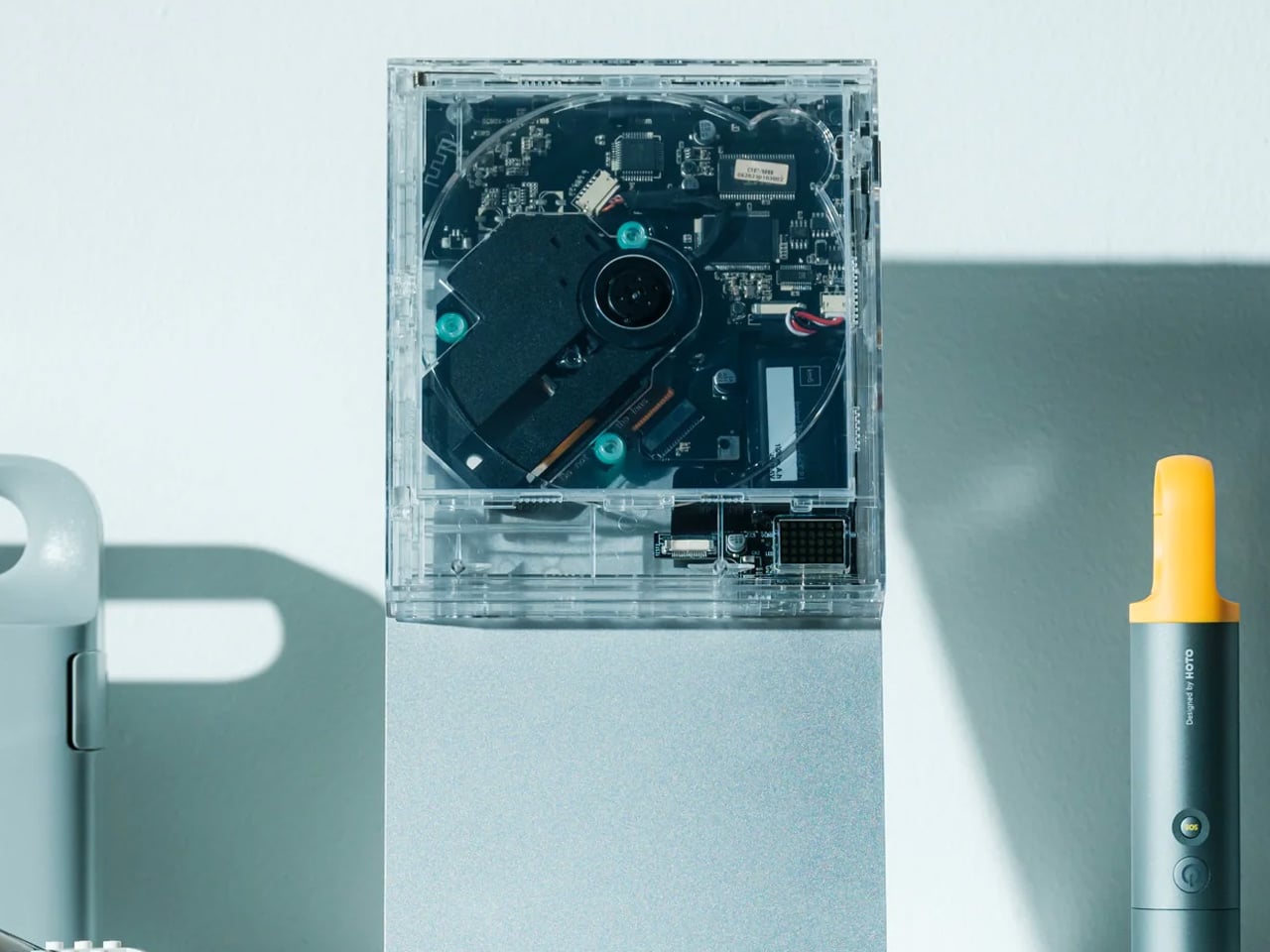
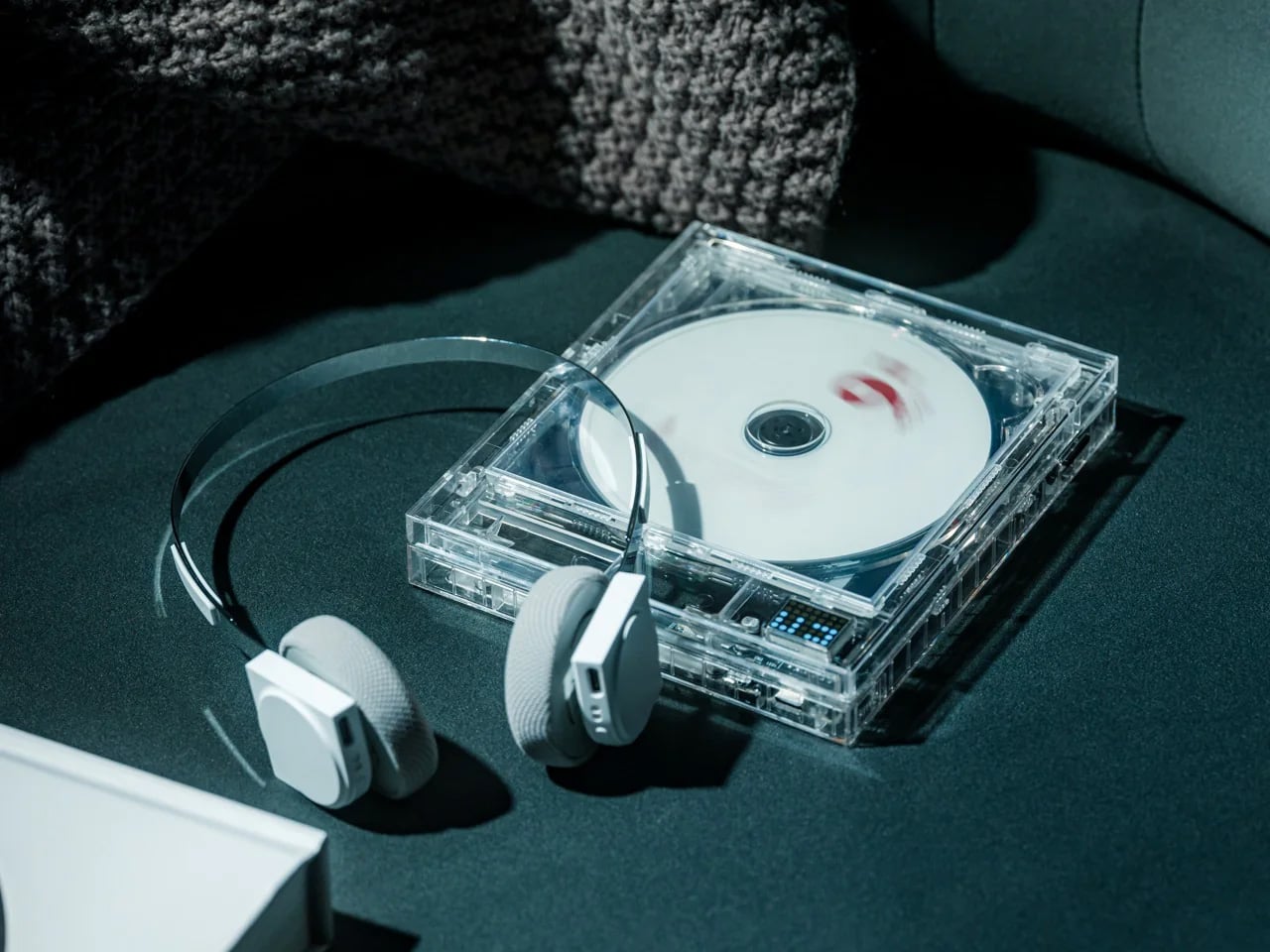
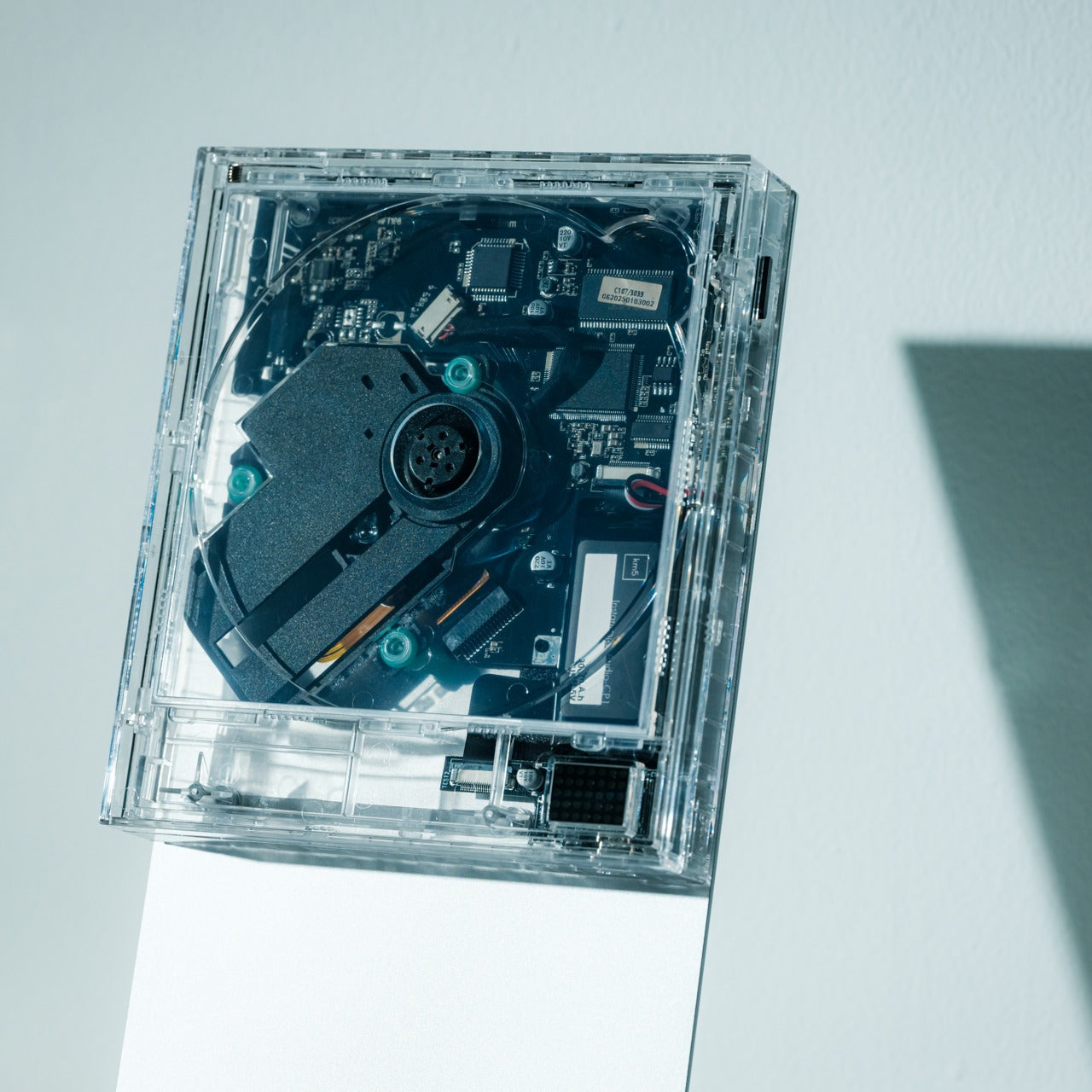
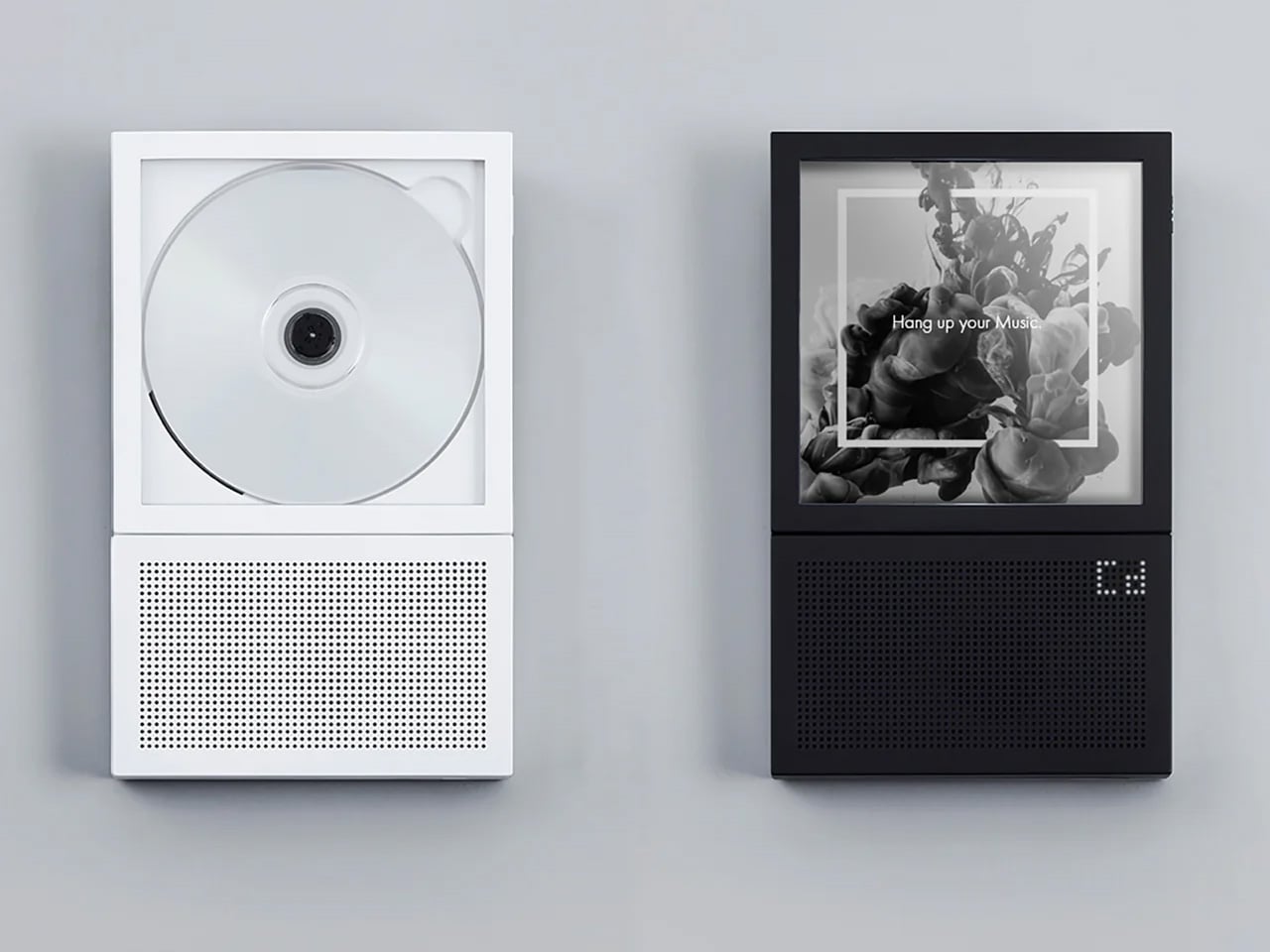
The ClearFrame CD Player earns its spot on any shelf before it plays a single note. Its crystal-clear polycarbonate body puts the circuit board fully on display, turning every glance into a small moment of discovery. Slip in a disc, slide the album cover into view, and it becomes part music player, part art object, part conversation starter. For a mom who still reaches for a physical album over a playlist, this makes that habit feel modern, considered, and completely intentional.
Bluetooth 5.1 connects it to any speaker already in the house, and a seven-hour rechargeable battery means it moves freely from kitchen counter to bedroom shelf without hunting for a cord. Multiple playback modes let her loop a single track or move through a full album the way it was always meant to be heard. It’s rare to find a piece of technology that genuinely belongs in a design-forward space. This is one of them.
Transparent body doubles as an album art display and is wall-mount ready
Bluetooth 5.1 and a rechargeable battery add genuine cord-free portability
What We Dislike:
Requires physical CDs, which may take some digging out of storage
Won’t resonate with a mom who has fully committed to streaming
2. The Penguin x MOEBE Book Stand
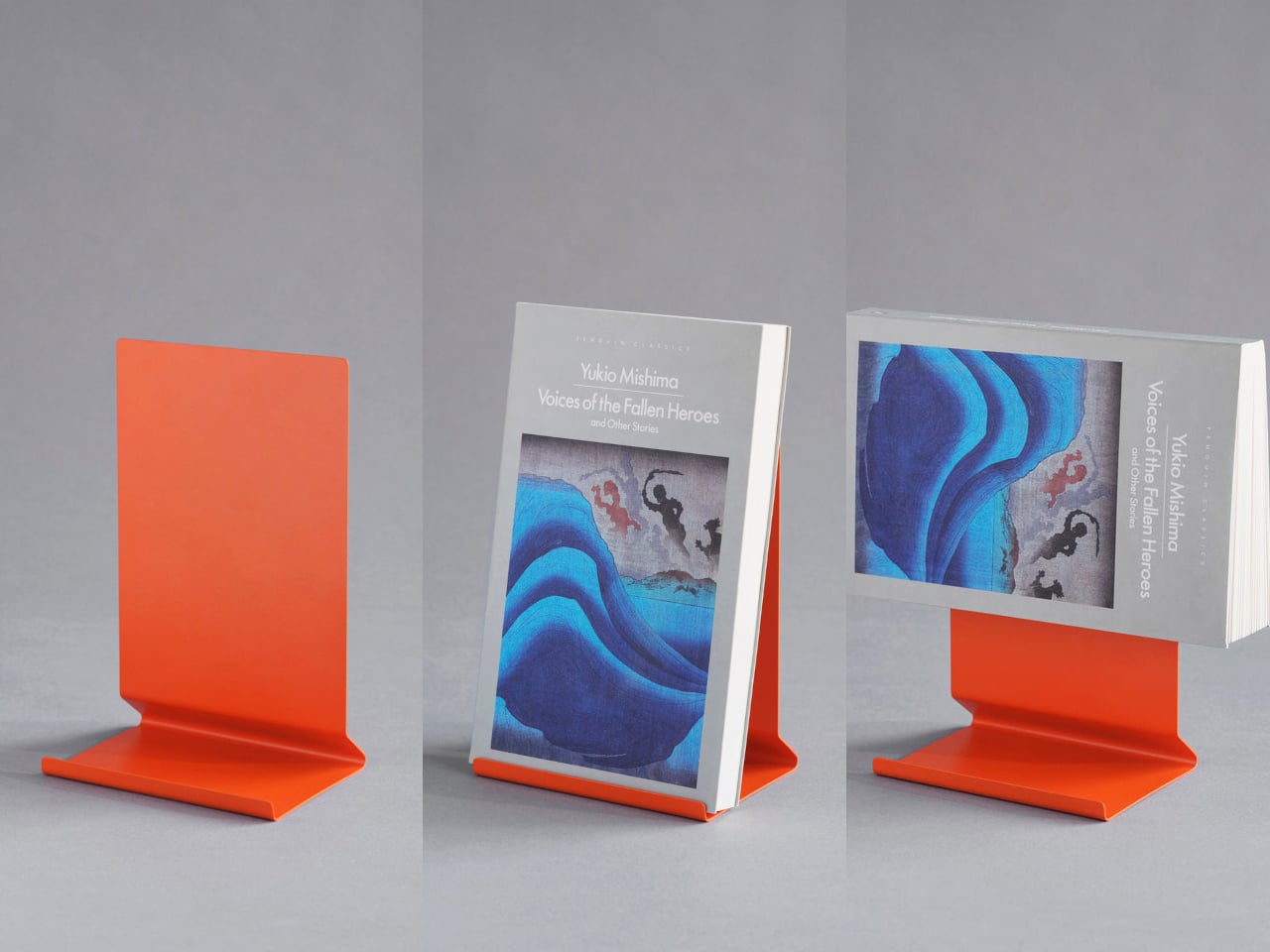
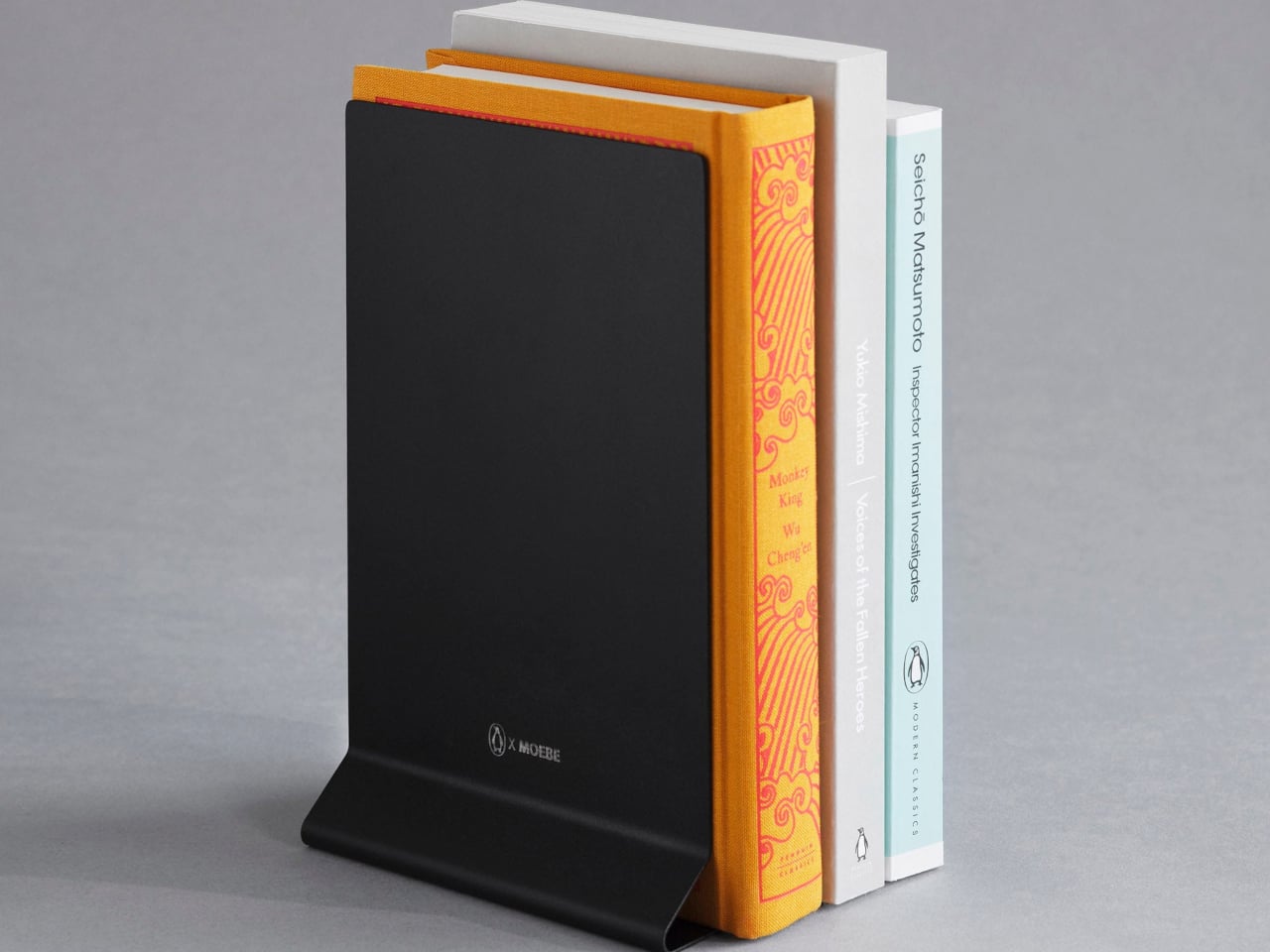
The Penguin x MOEBE Book Stand treats books as objects worth displaying rather than just storing. Created to celebrate Penguin’s 90th anniversary, it gives reading material a visible, considered place in the room — the kind that makes returning to a current page feel like a natural part of the day rather than a task. Whether she reads at a desk, on a kitchen counter, or in a dedicated reading corner, the stand fits without asking for much in return.
Its bent steel construction works in multiple configurations: holding a book open, displaying a single volume upright, or functioning in pairs as bookends. Available in stainless steel, cream, black, and Penguin’s signature orange, each version uses a single seamless sheet of bent steel with no visible fasteners and a matte finish that stays quiet without disappearing. The angled base handles books of varying thickness without wobbling, and the Penguin and MOEBE marks sit on the base where they belong — present but never in the way.
What We Like:
Single bent steel construction with no visible fasteners gives it a clean, seamless profile
Works as a book display, reading stand, or pair of bookends, depending on the need
What We Dislike:
Limited to one book at a time when used as a display stand
The signature orange colorway may not suit every shelf aesthetic
3. Emma Vacuum Coffee Jug
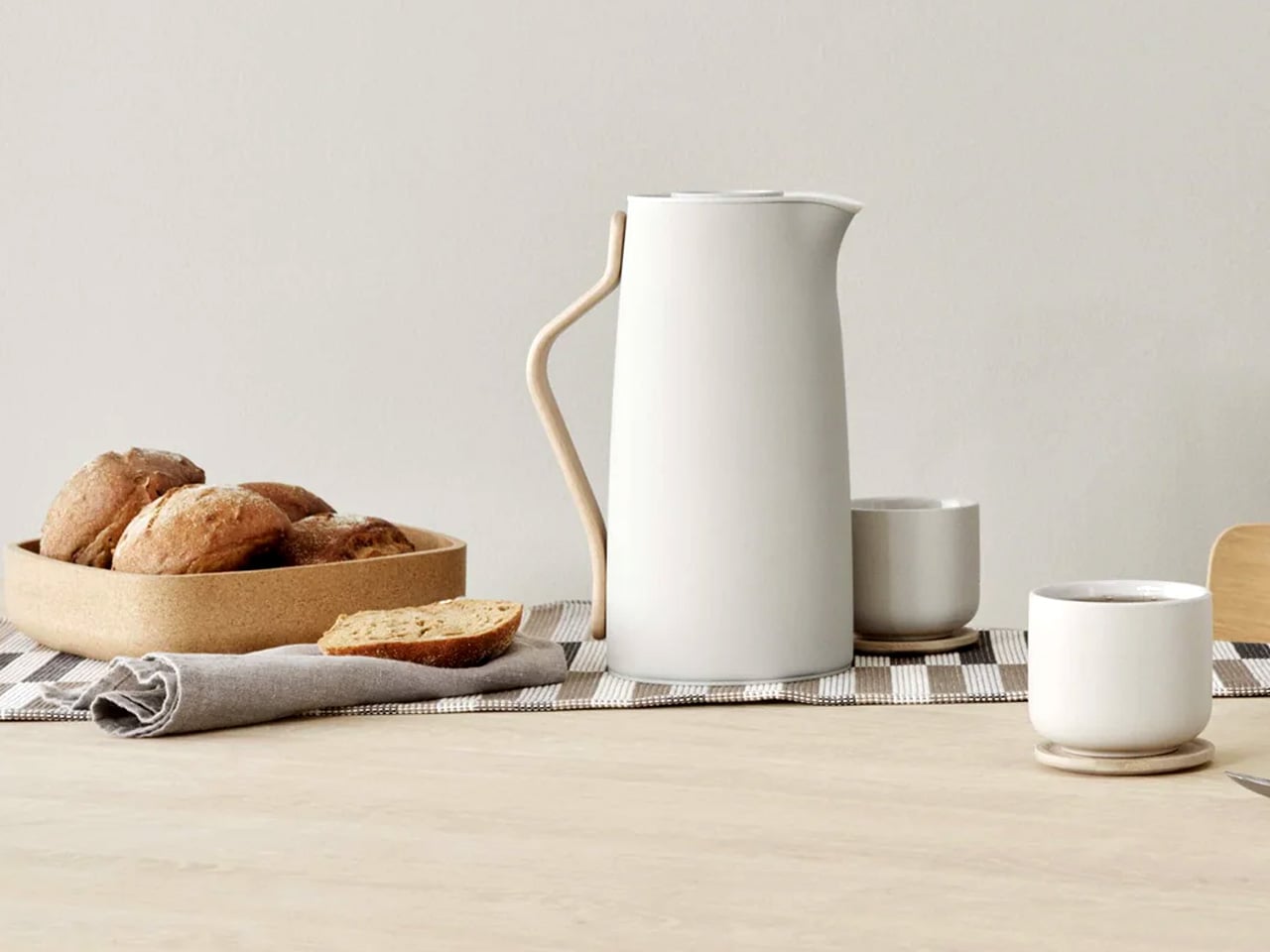
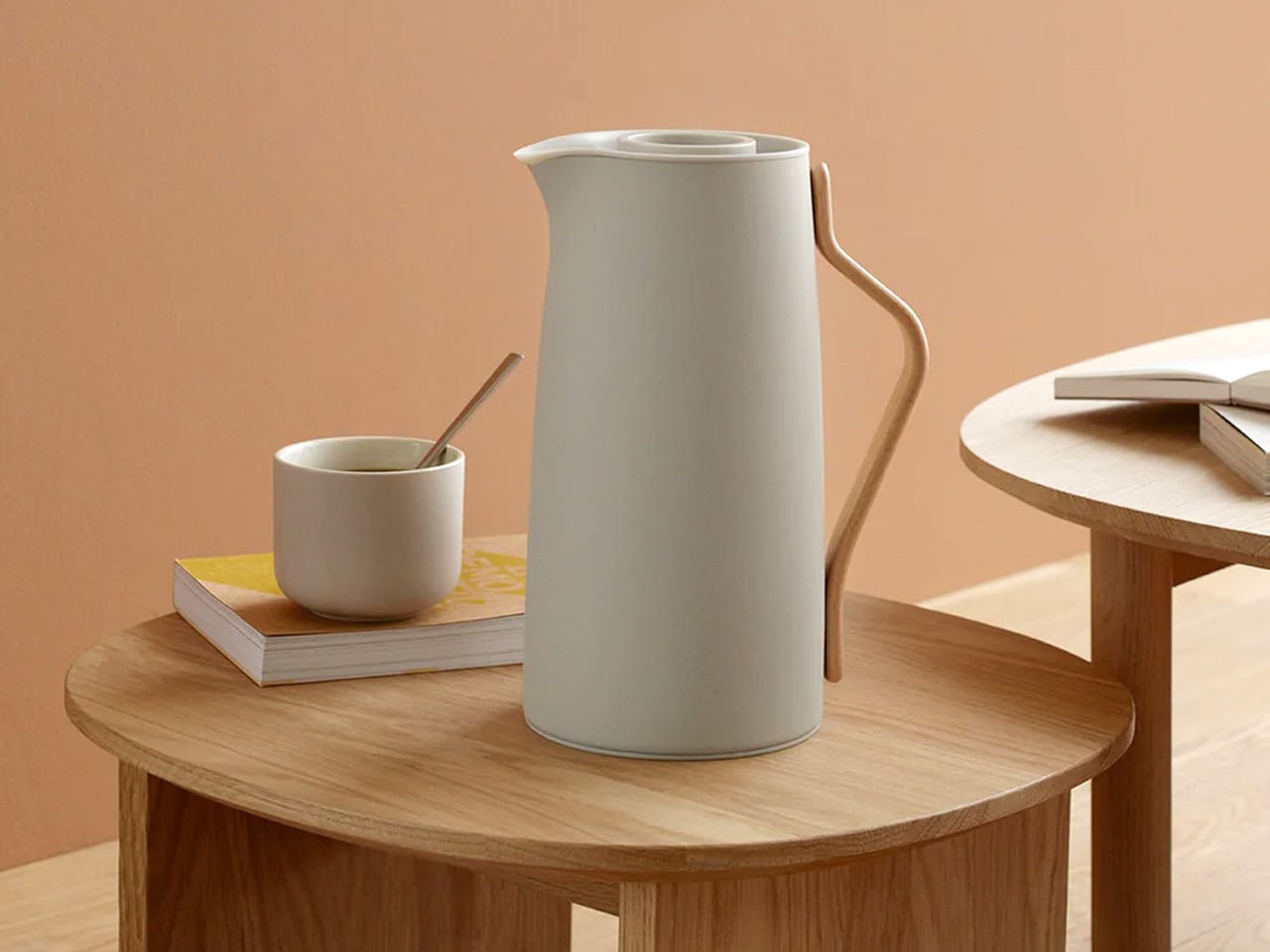
The Emma does something genuinely difficult: it makes a daily routine feel more considered without changing a single thing about it. Designed by HolmbäckNordenoft, the lacquered steel body in soft sand pairs with a Scandinavian beech wood handle, sitting precisely in that space between warm and refined where the best Nordic objects tend to live. The insulated steel interior holds 1.2 liters and keeps coffee hot for hours, which means the fourth cup of the morning is still worth pouring.
The matte-like surface reads almost ceramic, which feels unexpected for steel and earns a second look from anyone passing through the kitchen. The one-hand easy-click lid is the kind of detail that only reveals its value through daily use — unremarkable on paper, essential in practice. Traditional in function and quietly modern in form, the Emma is the kind of object that never gets put away between uses. It simply becomes part of the counter, part of the morning, part of how the day starts.
What We Like:
Insulated steel interior keeps coffee hot for hours without reheating
Beech wood handle and sand finish give it a real, lasting counter presence
What We Dislike:
The 1.2-liter capacity may be more than a single-person household needs
Requires hand washing rather than a dishwasher
4. Perpetual Orrery Kinetic Art
Modeled after the 18th-century European Grand Orrery, this kinetic piece uses wristwatch-grade gear mechanisms to animate the solar system in continuous real time. Planets trace their orbits, the moon moves through its phases, and the Tempel-Tuttle comet follows its elliptical path quietly in the background. For a mom who keeps objects that reward slow, repeated attention — who would rather look at something that genuinely moves than something that merely occupies space — this earns permanent shelf status.
What separates it from other decorative objects is that it is never quite the same twice. The mechanics are always in motion, meaning every glance catches something slightly different from the last. It earns its visual weight through perpetual movement rather than size alone, working just as naturally in a home office as it does anchoring a living room shelf. Scientific and beautiful, because to the right person, those two things have always belonged in the same sentence.
Real mechanical movement powered by wristwatch-grade gear precision
18th-century Grand Orrery aesthetic with genuine historical grounding
What We Dislike:
Requires meaningful surface space to be properly appreciated
Visual complexity may feel busy in strictly minimal interiors
5. Hasami Porcelain Small Mug, Gloss Gray
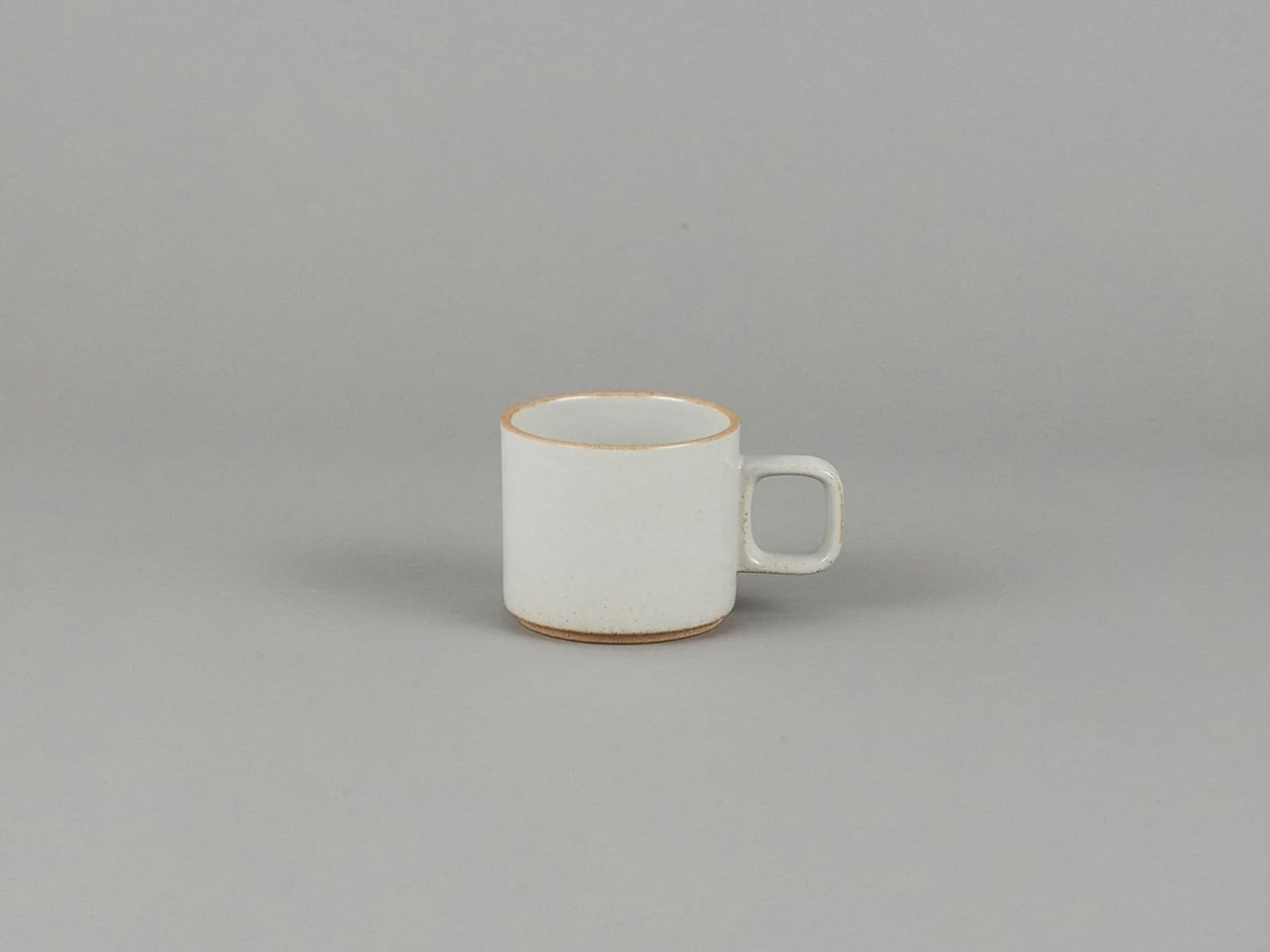
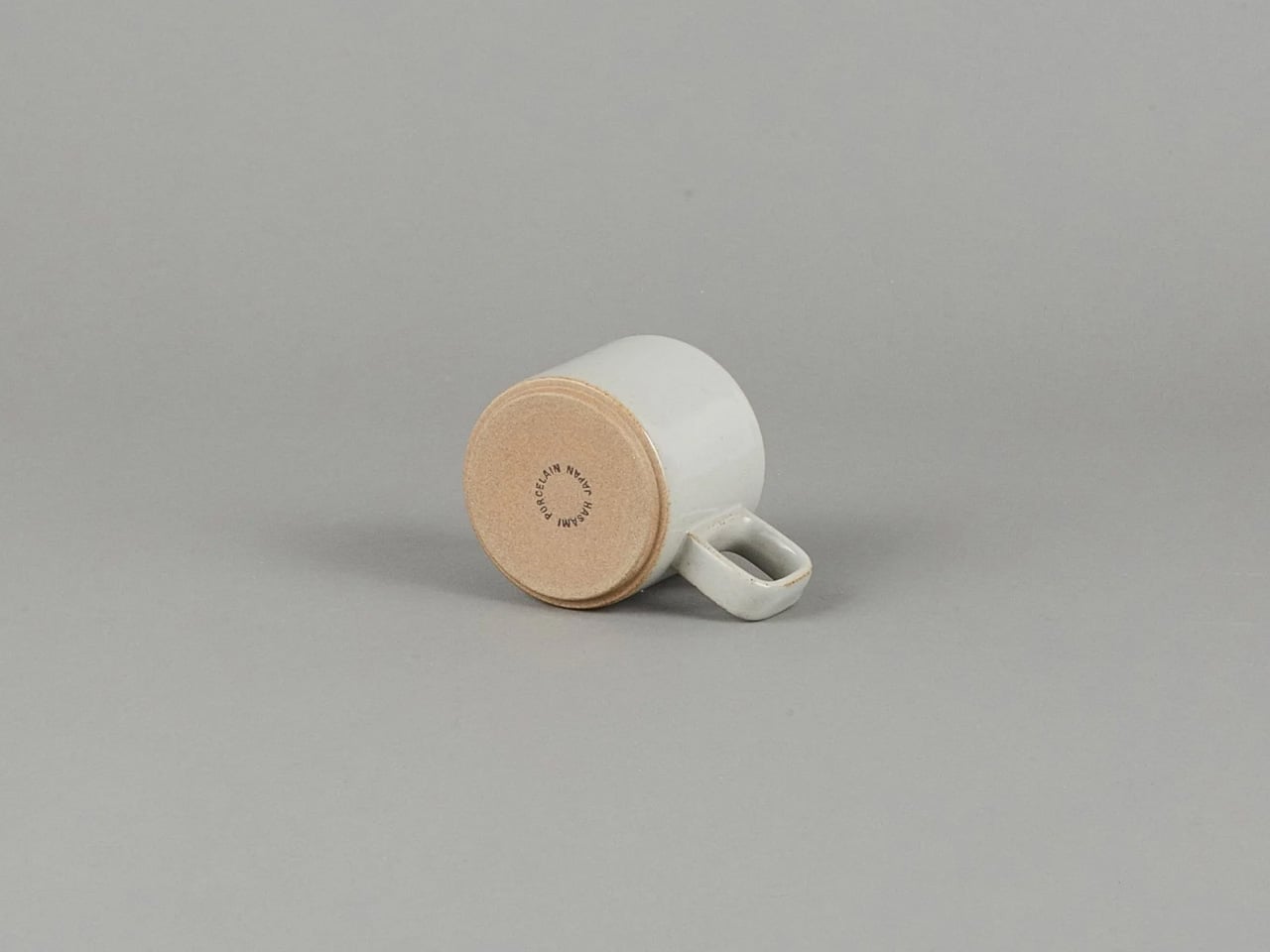
The Hasami mug doesn’t announce itself, and that’s entirely the point. Made in Hasami, Japan, from a proprietary blend of crushed Amakusa stone, it carries a ceramic lineage that the gloss gray glaze reflects without performing. Designed by Taku Shinomoto of Tortoise General Store in Venice Beach, it sits at a precise intersection of Japanese craft tradition and California restraint. The proportions feel right in the hand from the very first use, the glaze is clean and consistent, and the form looks deliberate wherever it lands.
It’s also part of a larger stackable, modular system that pairs with bowls, plates, and larger mugs as a single coherent family — something to build on over time rather than a standalone piece. For a mom who cares where things come from, who values a real material from a real place over a clever label, this mug delivers without ever showing off. Simple, precisely made, and quietly exceptional — the way the best gifts tend to be.
What We Like:
Made from Amakusa crushed stone with genuine craft heritage from Hasami, Japan
Stackable and modular, pairs with the full Hasami Porcelain collection over time
What We Dislike:
Small size may not suit moms who prefer a larger morning cup
Higher price per piece relative to mass-market ceramics
The Best Gifts Already Know Where They Belong
One last thought on presentation: the way you give something shapes how it lands. Set the ClearFrame out with a CD already loaded inside. Present the Bookstand, with her current read already propped in it, so she sees the idea before she reads a word about it. Give the Orrery real room to breathe, and wrap the Hasami mug with the same care it carries.
The best version of any gift arrives already knowing exactly where it belongs. These five were all designed with that built in — objects made to live somewhere visible and get used every day. Not what it costs or how it photographs, but whether she’ll still reach for it years from now, when the occasion is long gone, and the object has simply become hers. That’s the only standard that matters.
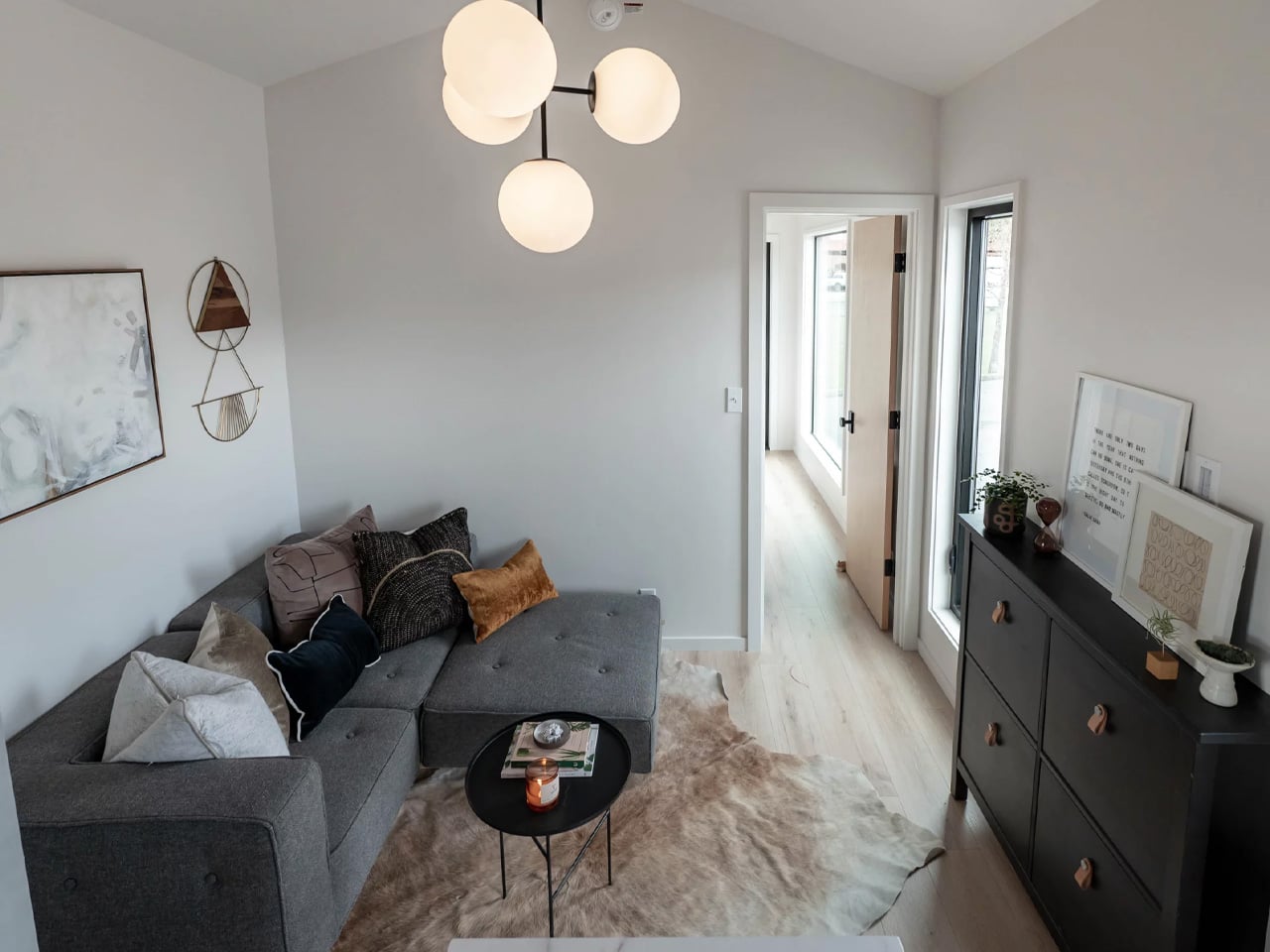
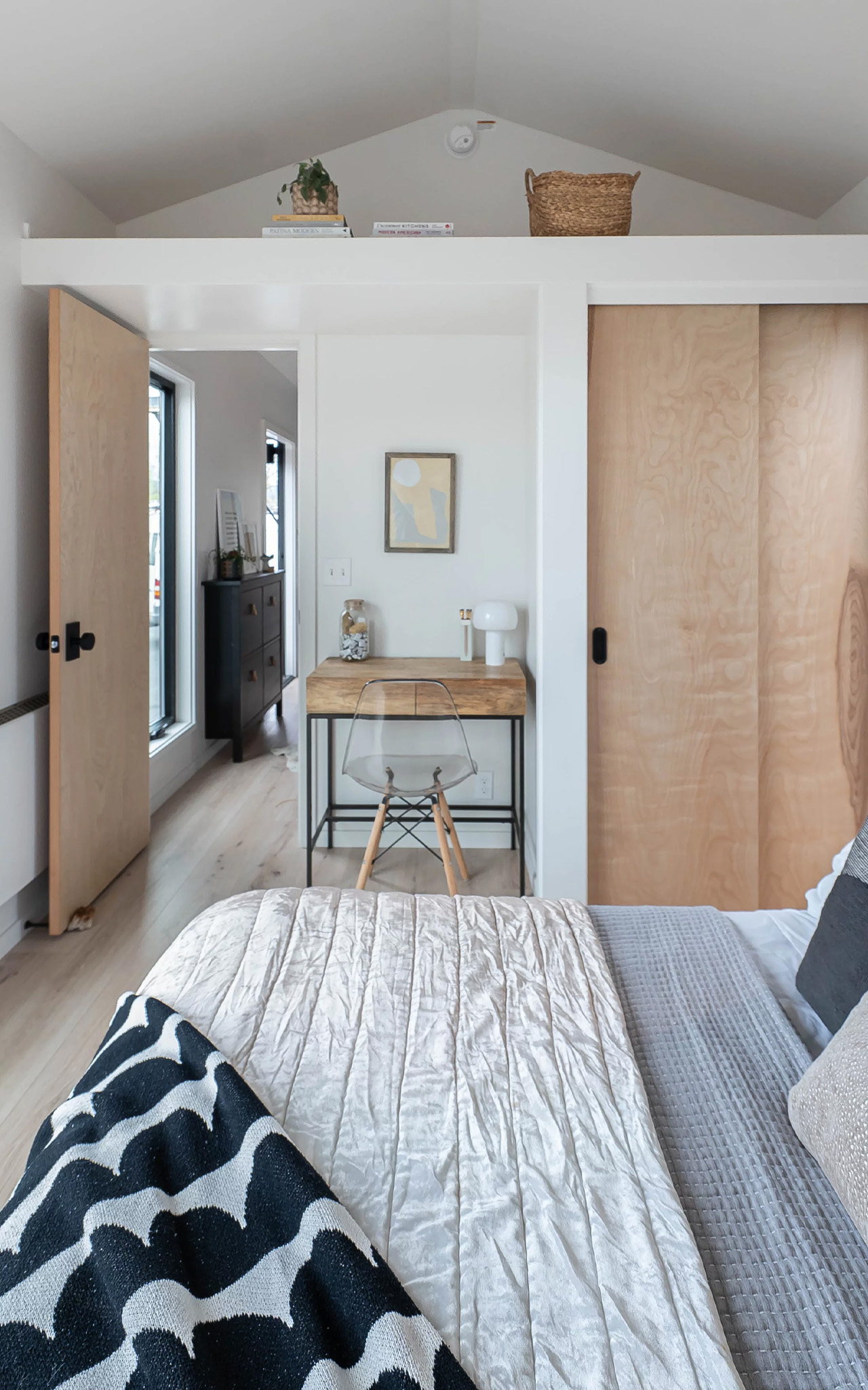
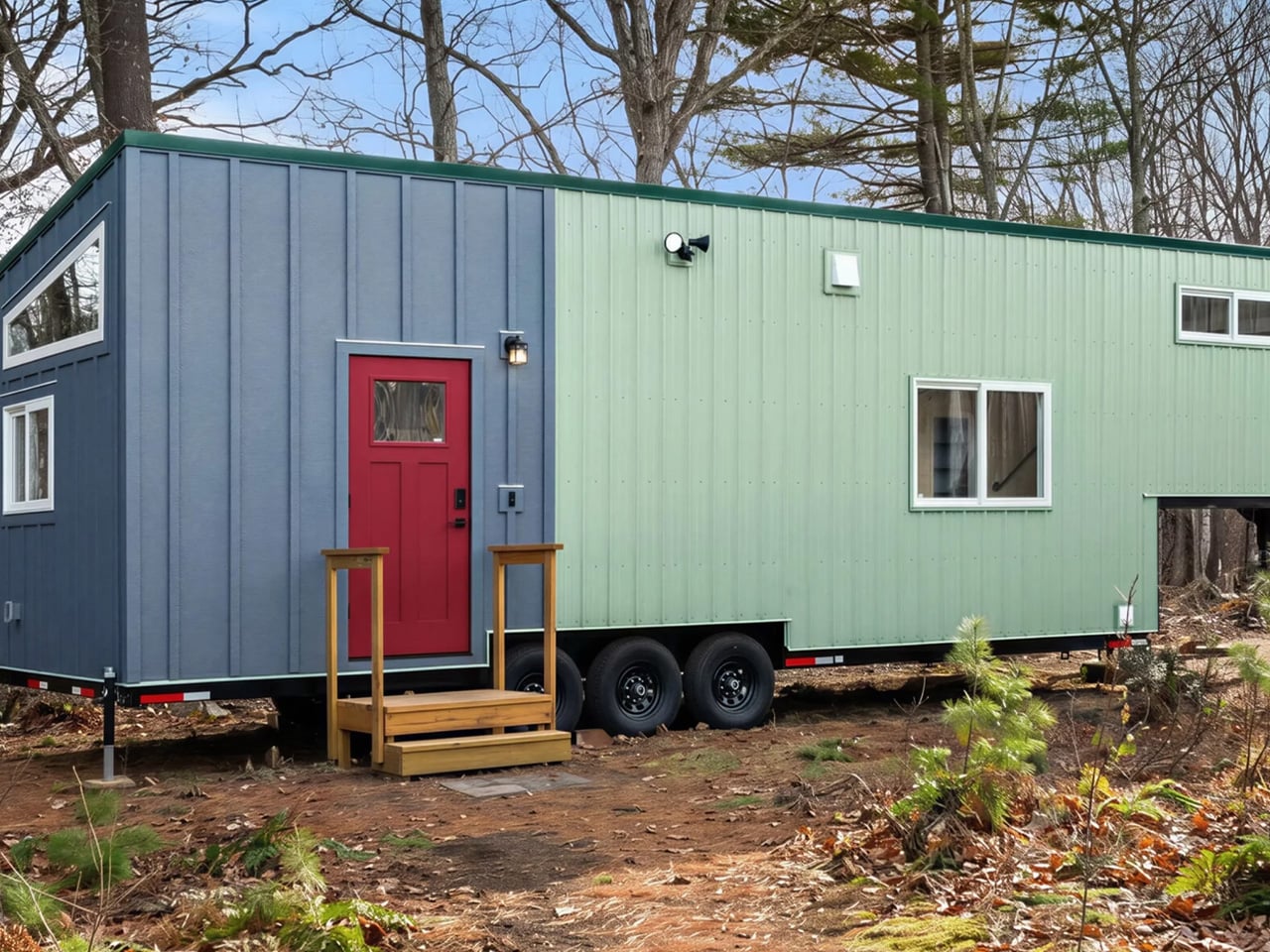
There’s a version of tiny home living that asks you to give things up…headroom, counter space, the dignity of a real kitchen. The Urban Gable Park by Tru Form Tiny isn’t that version. This is a single-level park model that leans fully into comfort, using its generous footprint to deliver something closer to a well-designed apartment than a life lived sideways.
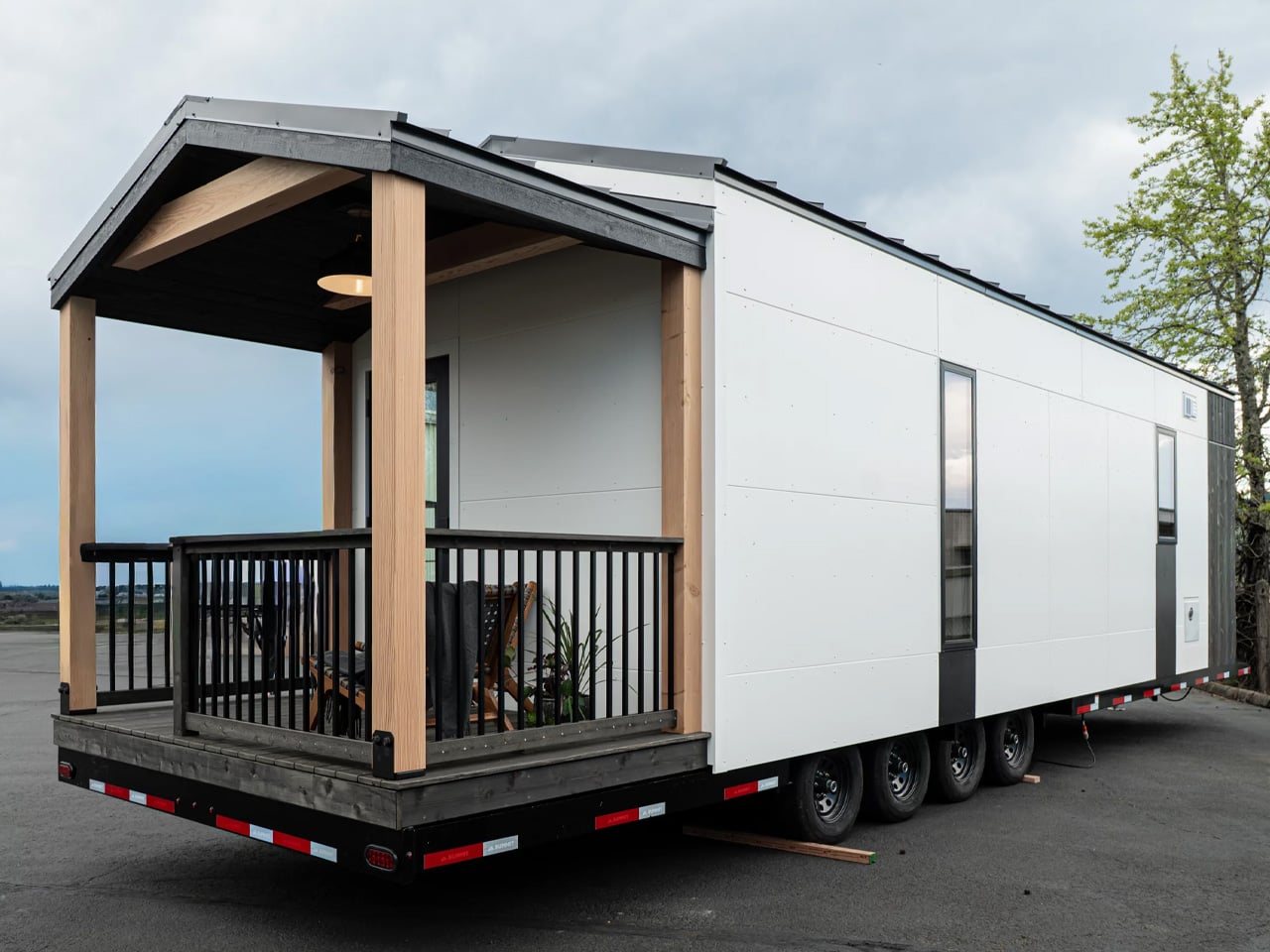
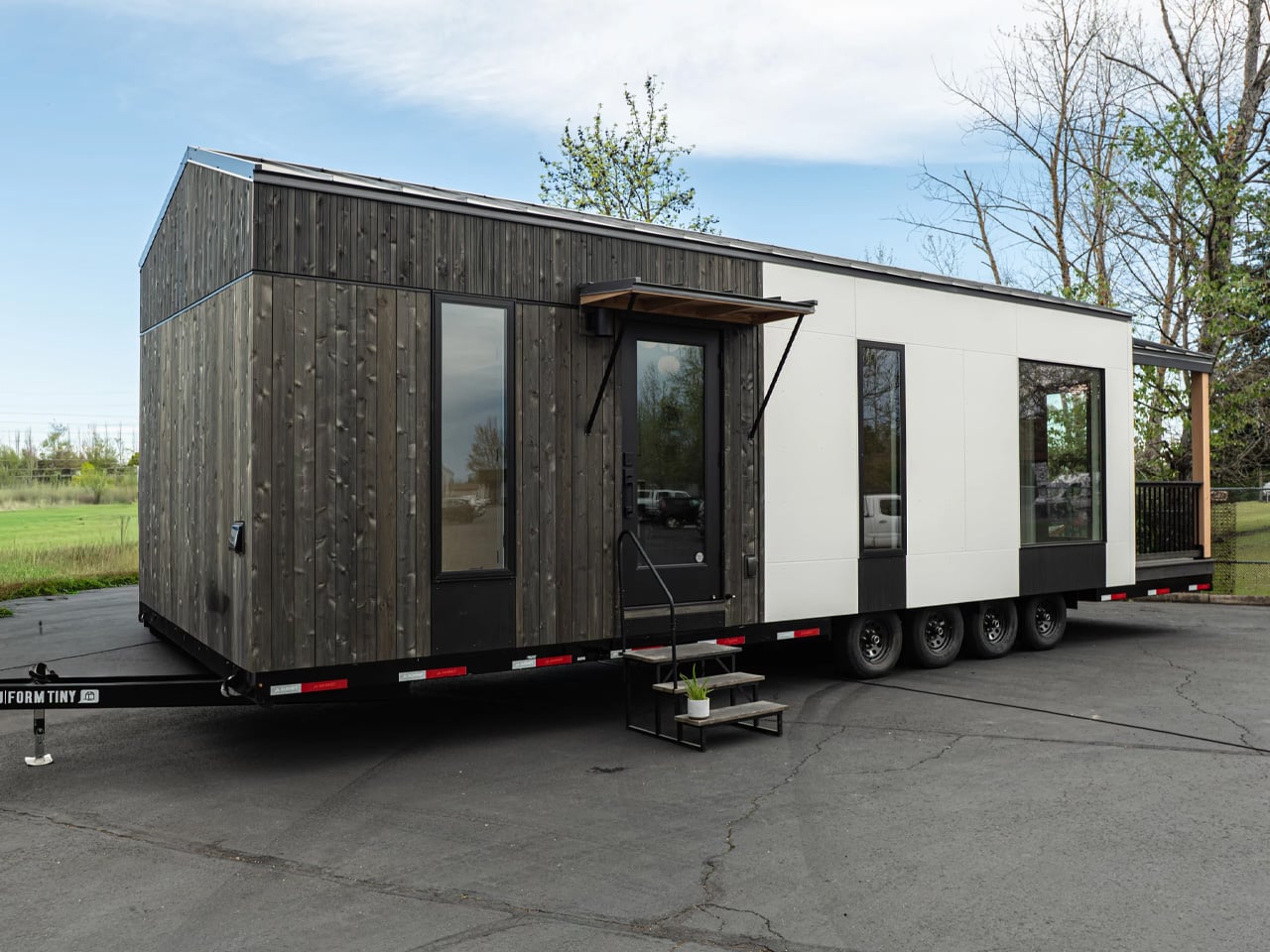
The numbers tell part of the story. At 30 ft long and 11 ft wide, the Urban Gable Park goes significantly beyond the standard 8.5 ft width found in most tiny homes on wheels. That extra width isn’t just a spec, it changes how the interior feels. Rooms breathe. The bedroom has real headroom. The living area fits an actual sofa without everything feeling like a puzzle. The trade-off is a permit requirement for towing on public roads, but given that this is a park model built to stay put, that’s rarely a concern.
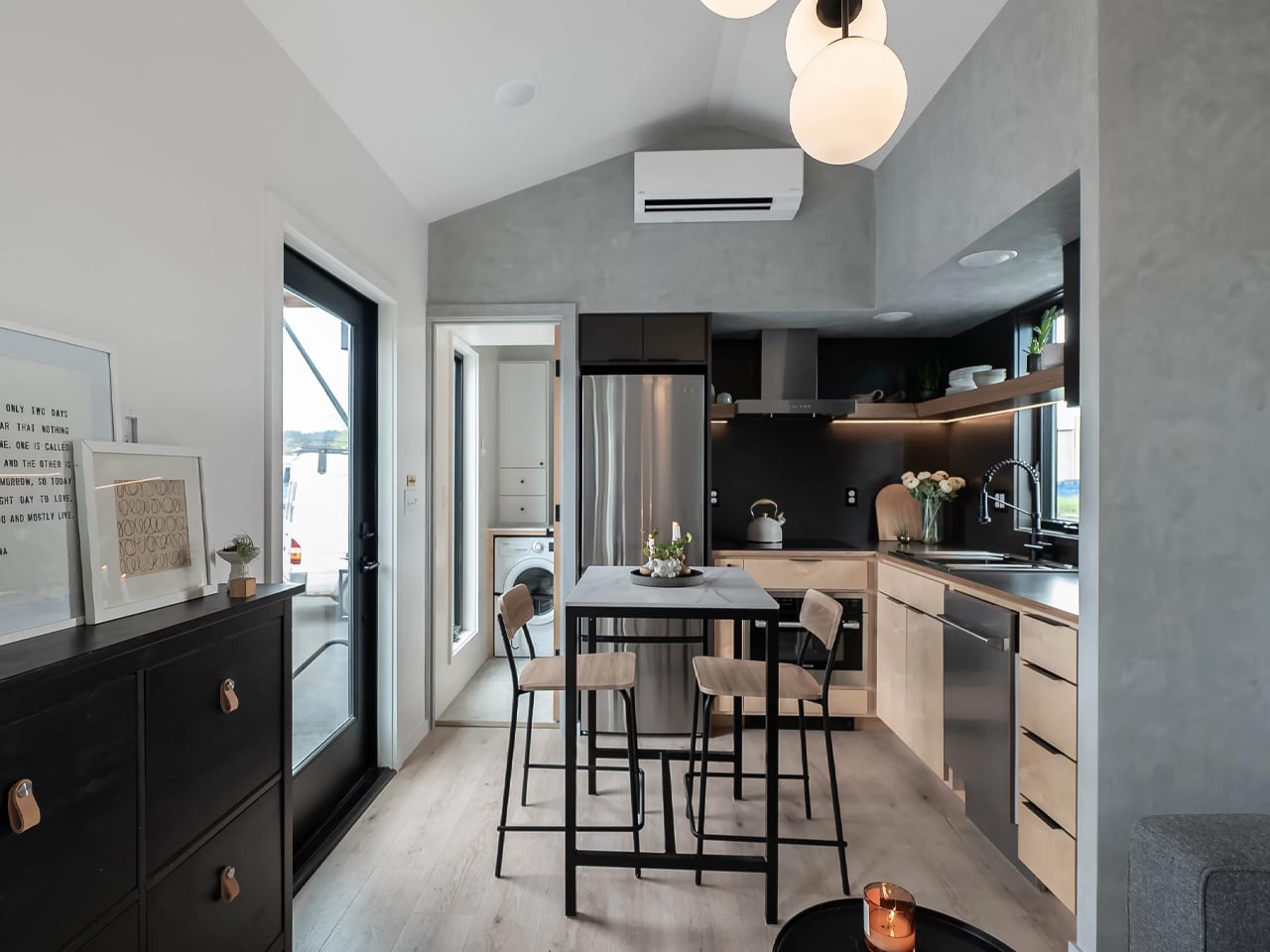
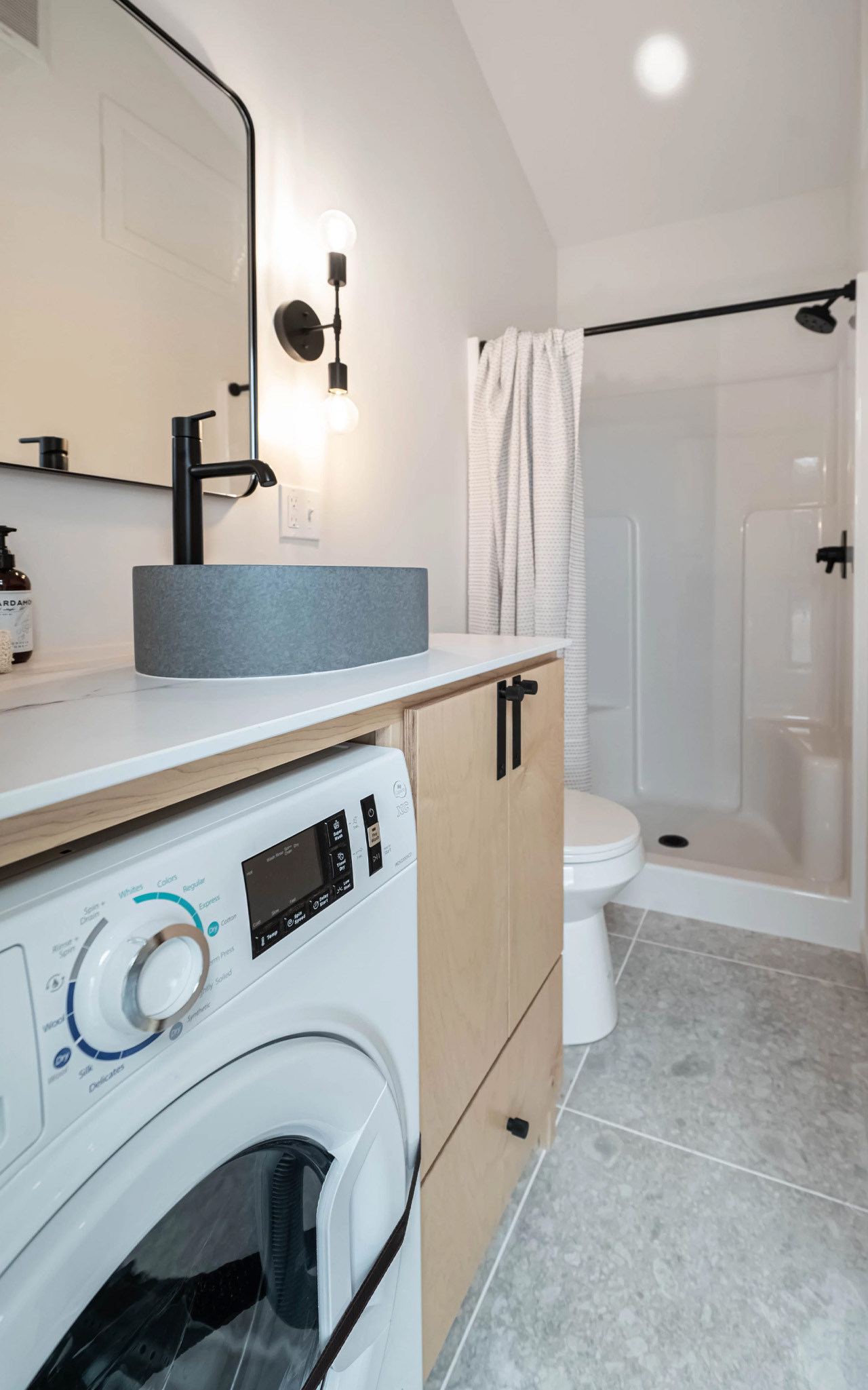
The design language throughout is clean and considered. The kitchen is fully equipped with maple slab cabinets, an induction cooktop, a full-size fridge, and a dishwasher, all tucked into a striking limewash alcove. It’s the kind of kitchen that makes cooking feel intentional rather than improvised. The bathroom holds its own too. A concrete vessel sink, terrazzo tile floors, and matte black fixtures run throughout, alongside a walk-in shower and a stacked washer/dryer. These aren’t budget compromises dressed up to look good. They’re material choices made by people who know what they’re doing.
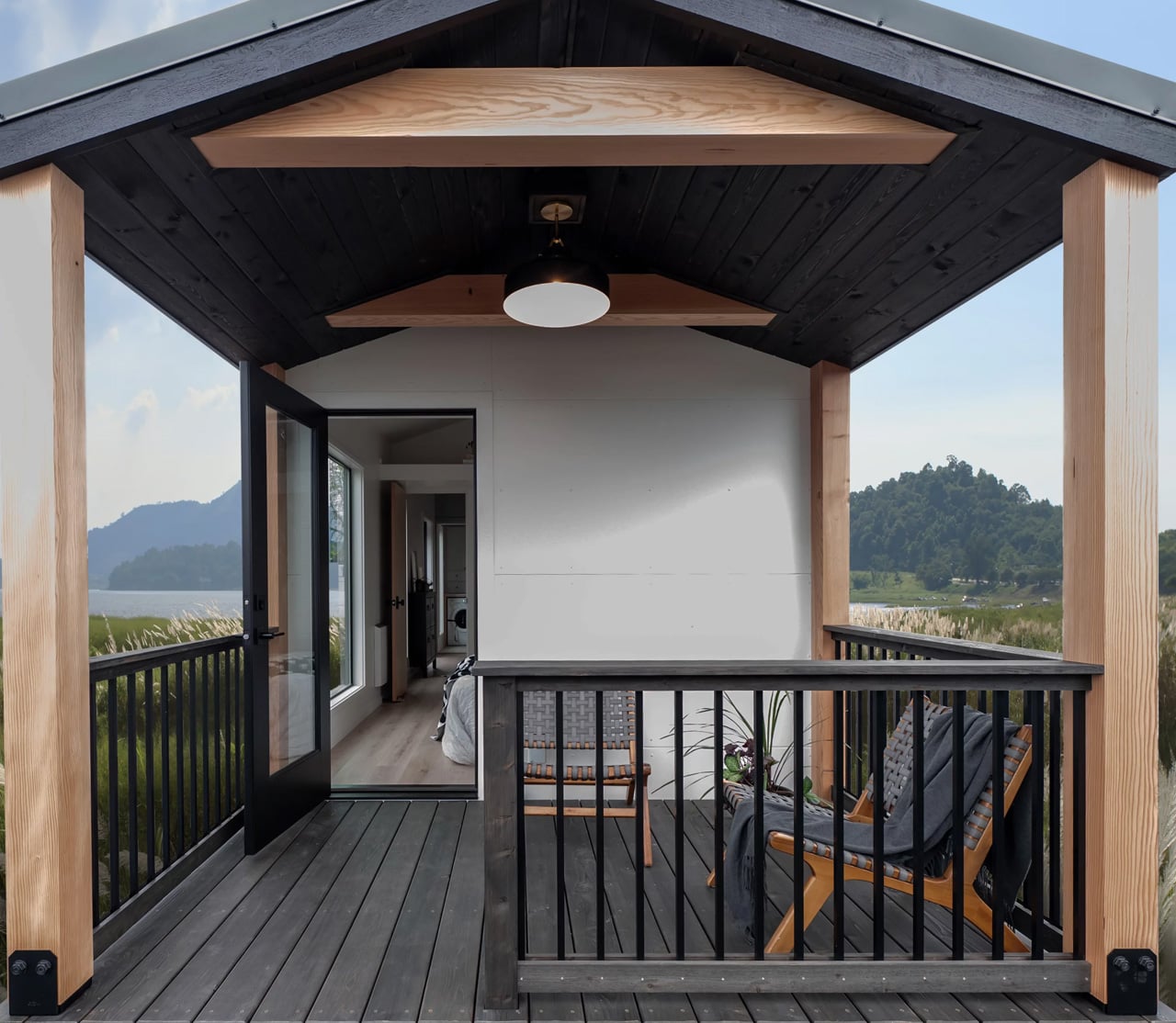
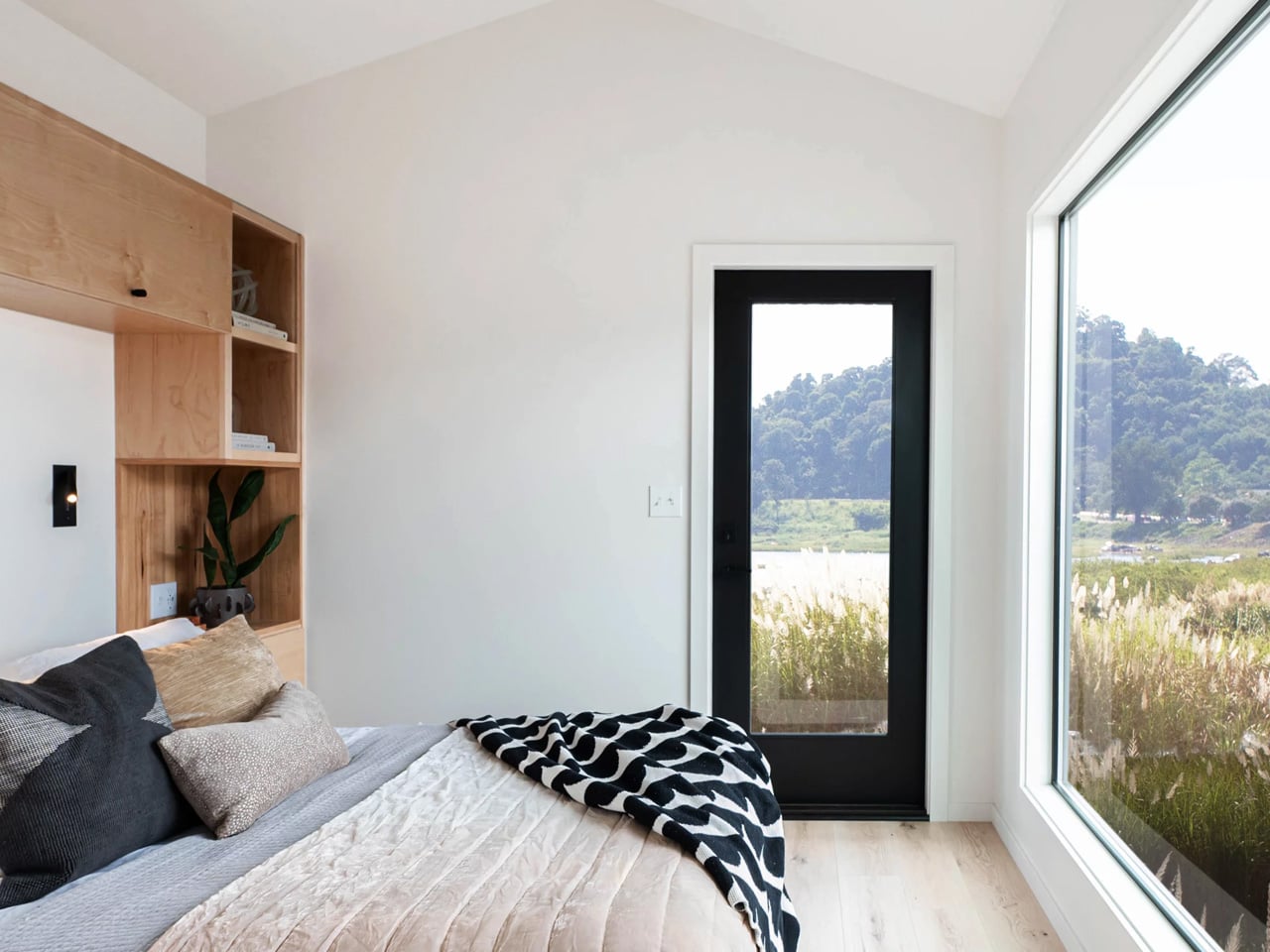
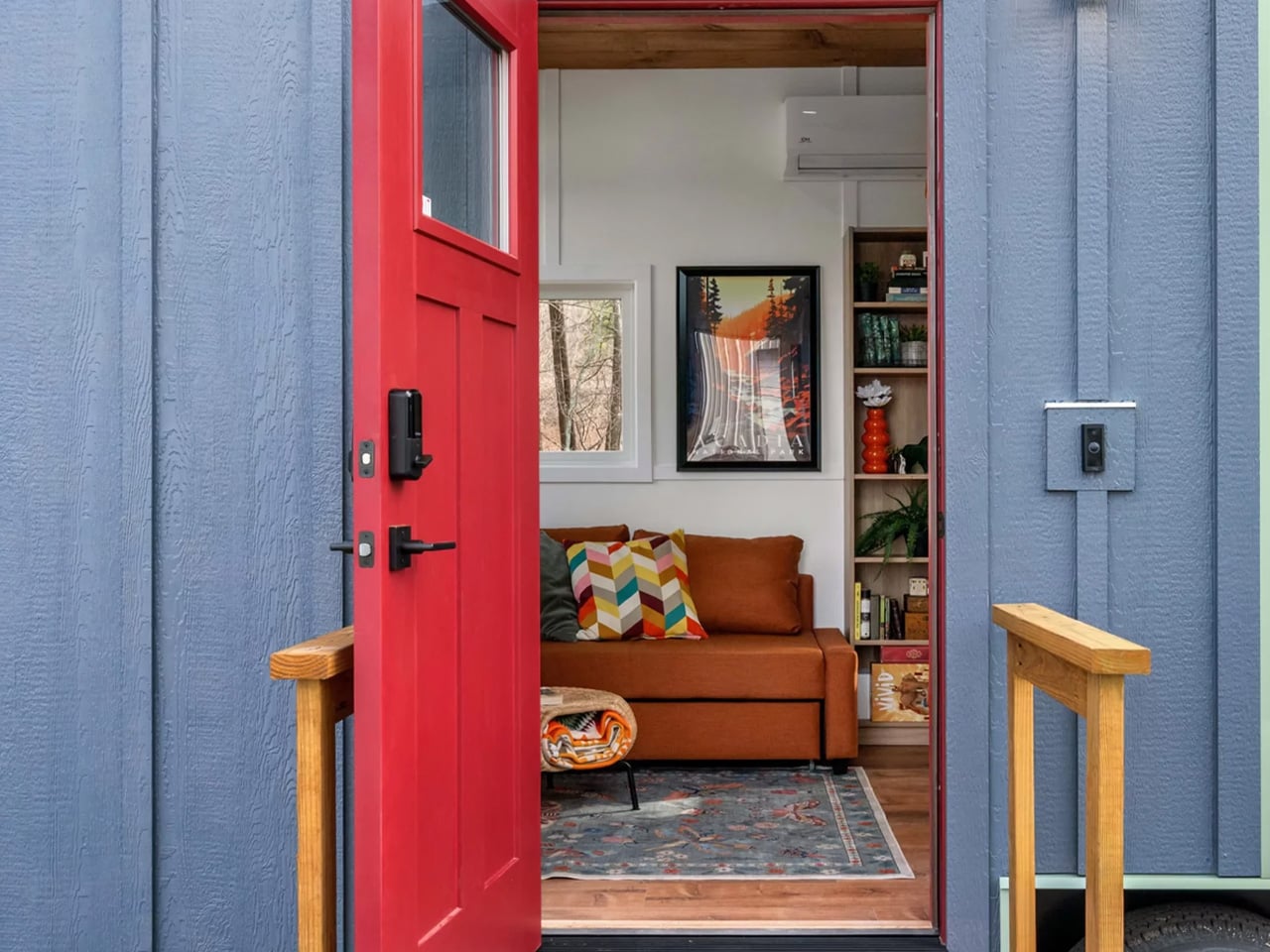
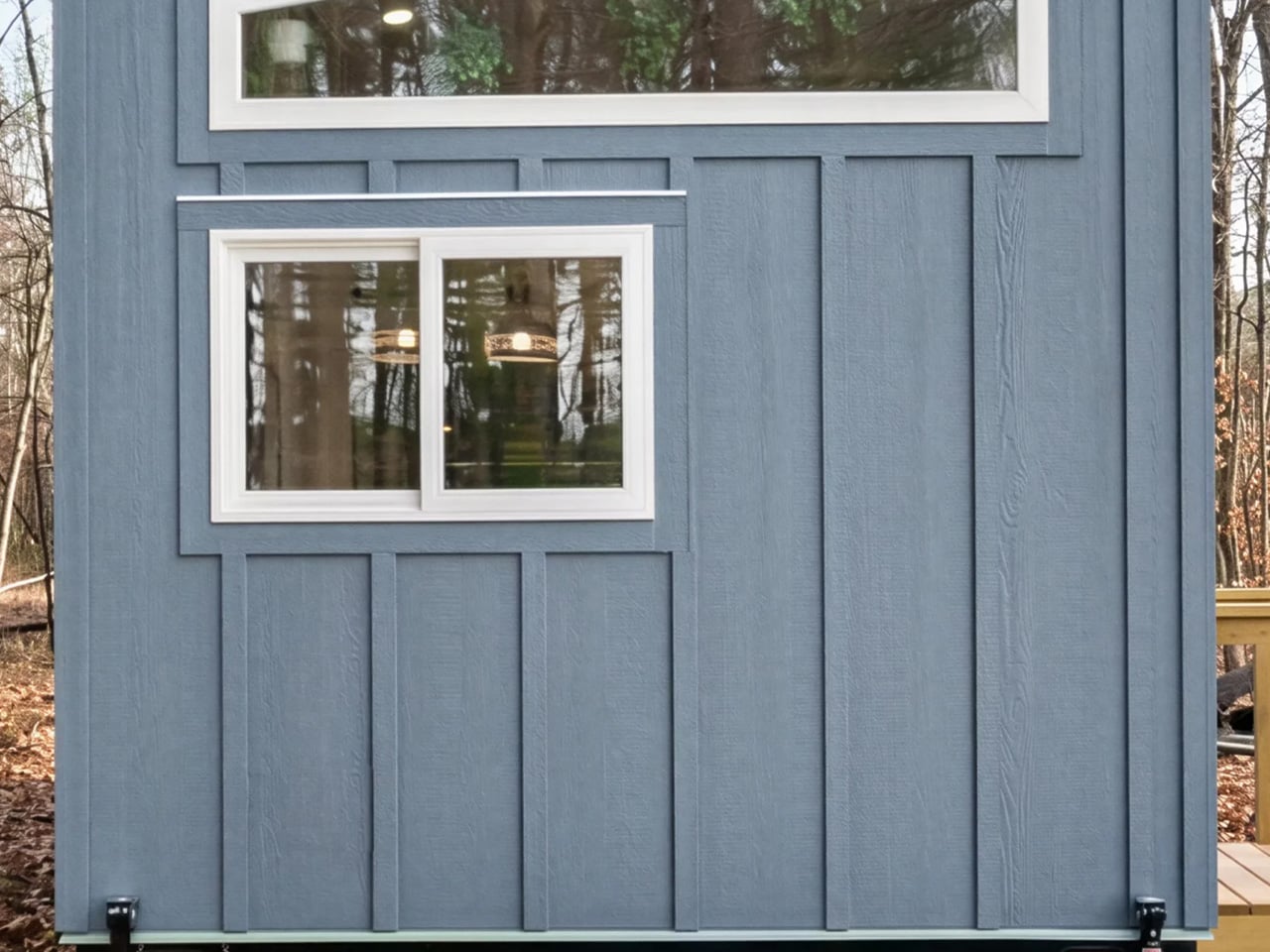
The layout is built for two. The bedroom features deck access, offering a private outdoor connection that’s rare at this scale. A full-light black fiberglass entry door anchors the exterior alongside the home’s gable roofline; simple, architectural, and confident. A covered porch rounds out the outdoor living space, giving the Urban Gable Park a residential quality that most park models simply don’t reach.
Built on a quad-axle trailer, the Urban Gable Park is currently available starting at $174,000. For a home this refined and this livable, that figure starts to make a certain kind of sense. Tru Form Tiny, now celebrating its 10th year as a builder, has always understood that downsizing shouldn’t mean downgrading. The Urban Gable Park is the clearest proof of that philosophy yet.
Tiny house living has always asked one thing of its converts: sacrifice. Less square footage, less storage, less room to breathe. The Knoll, the latest model from Backcountry Tiny Homes, pushes back on that idea — and does so with a lot of personality. Built on a triple-axle gooseneck (raised) trailer, the Knoll stretches 38 feet long and 10 feet wide, giving it 390 square feet of total living space.
That extra foot and a half of width over standard tiny homes makes a real difference inside — the layout feels less like a camper van and more like a proper apartment. It’s wide enough to sleep between one and five people, which makes it a genuine option for couples or small families who want to downsize without completely giving up comfort. The trade-off is that its width requires a permit to tow on public roads — a logistical consideration, but one most buyers seem willing to accept.
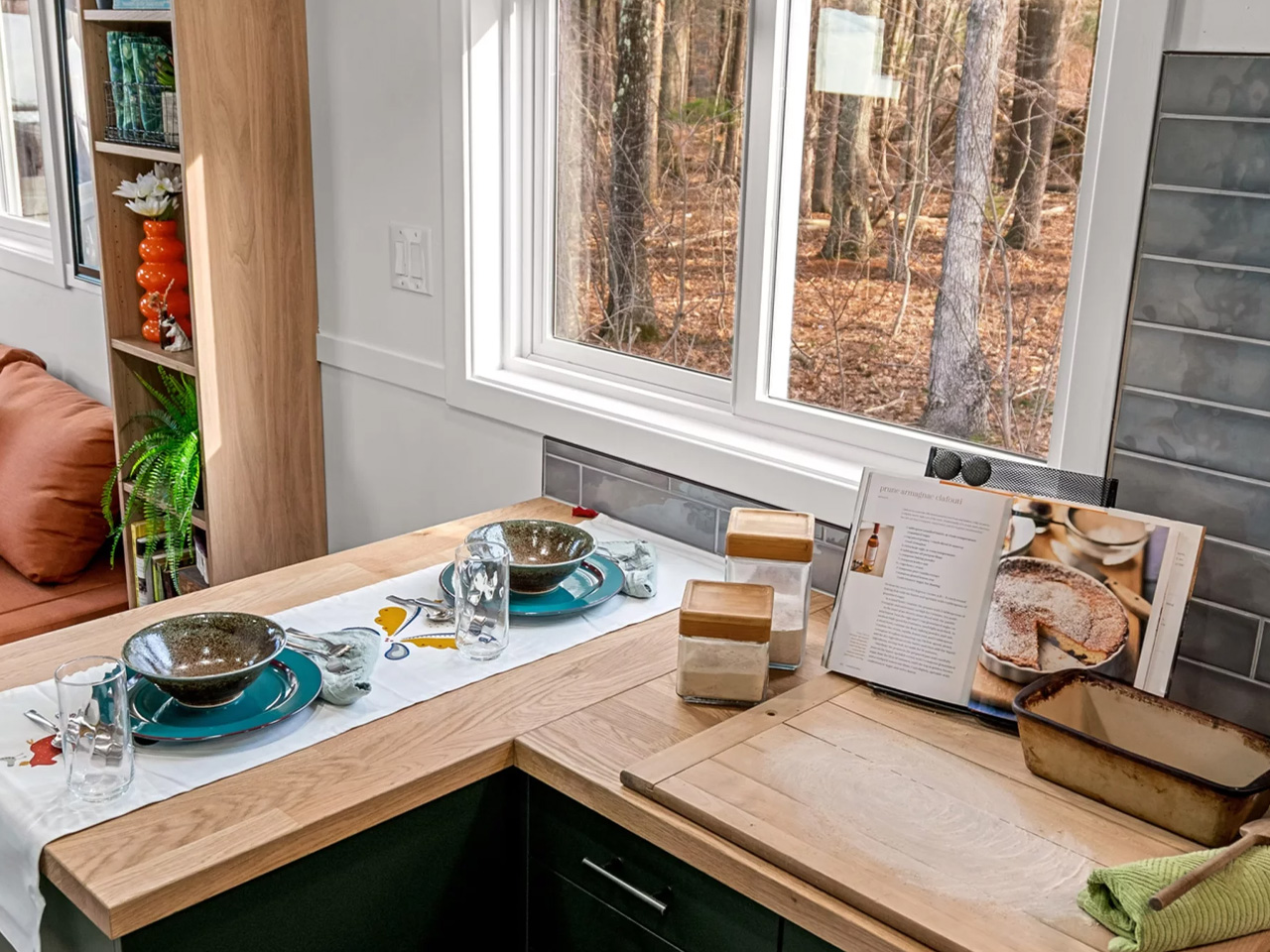
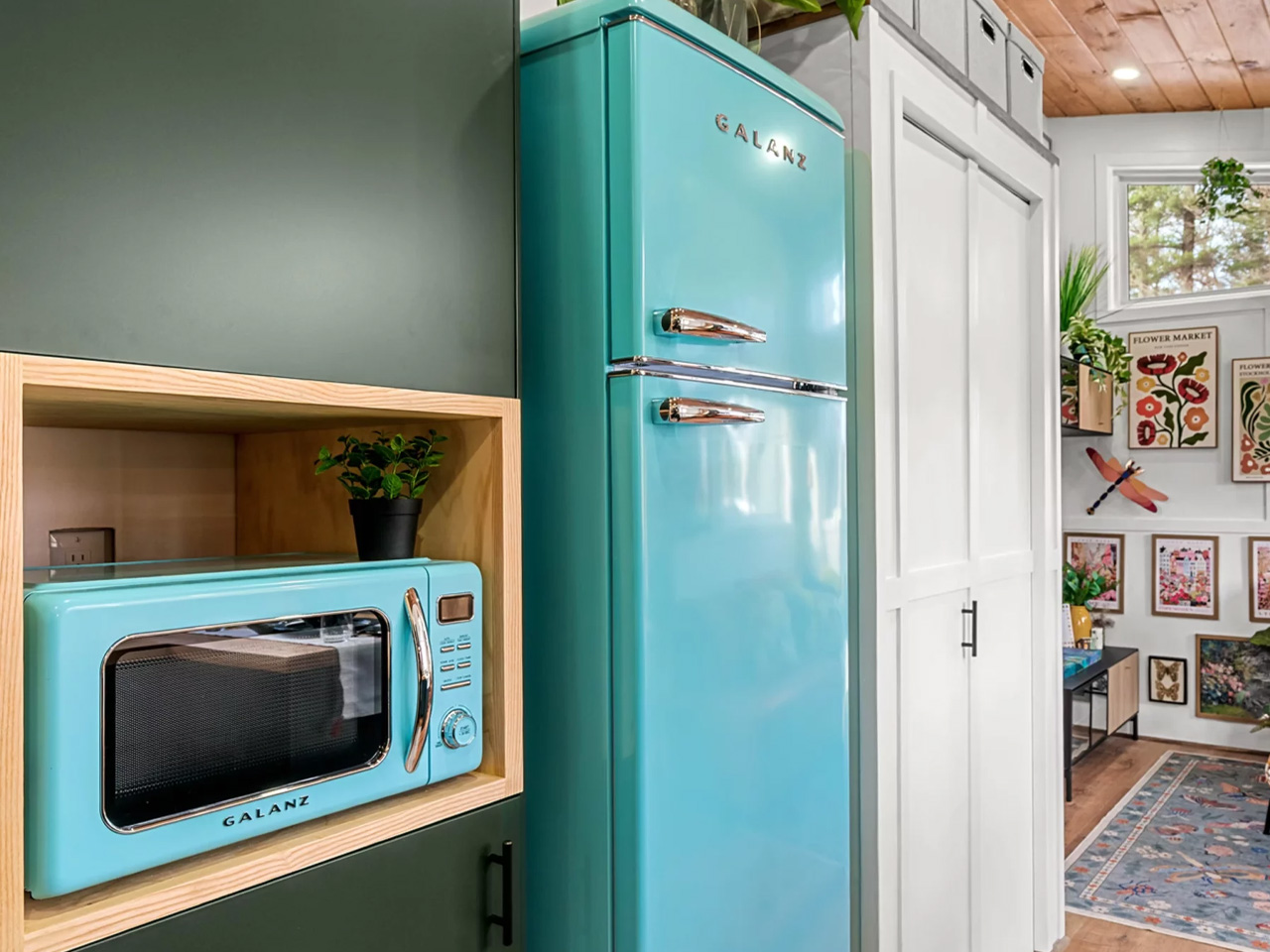
The exterior sets the tone early. A two-tone mix of metal and board and batten siding sits beneath a metal roof, giving the Knoll a sharp, modern look that reads more mountain cabin than mobile home. Inside, the design team leaned into color — boldly. The home’s interior philosophy is captured in a quote right on the Backcountry website: *”Color does not add a pleasant quality to design — it reinforces it.”* That commitment shows in every room, with rich, layered tones that make the space feel intentional rather than improvised.
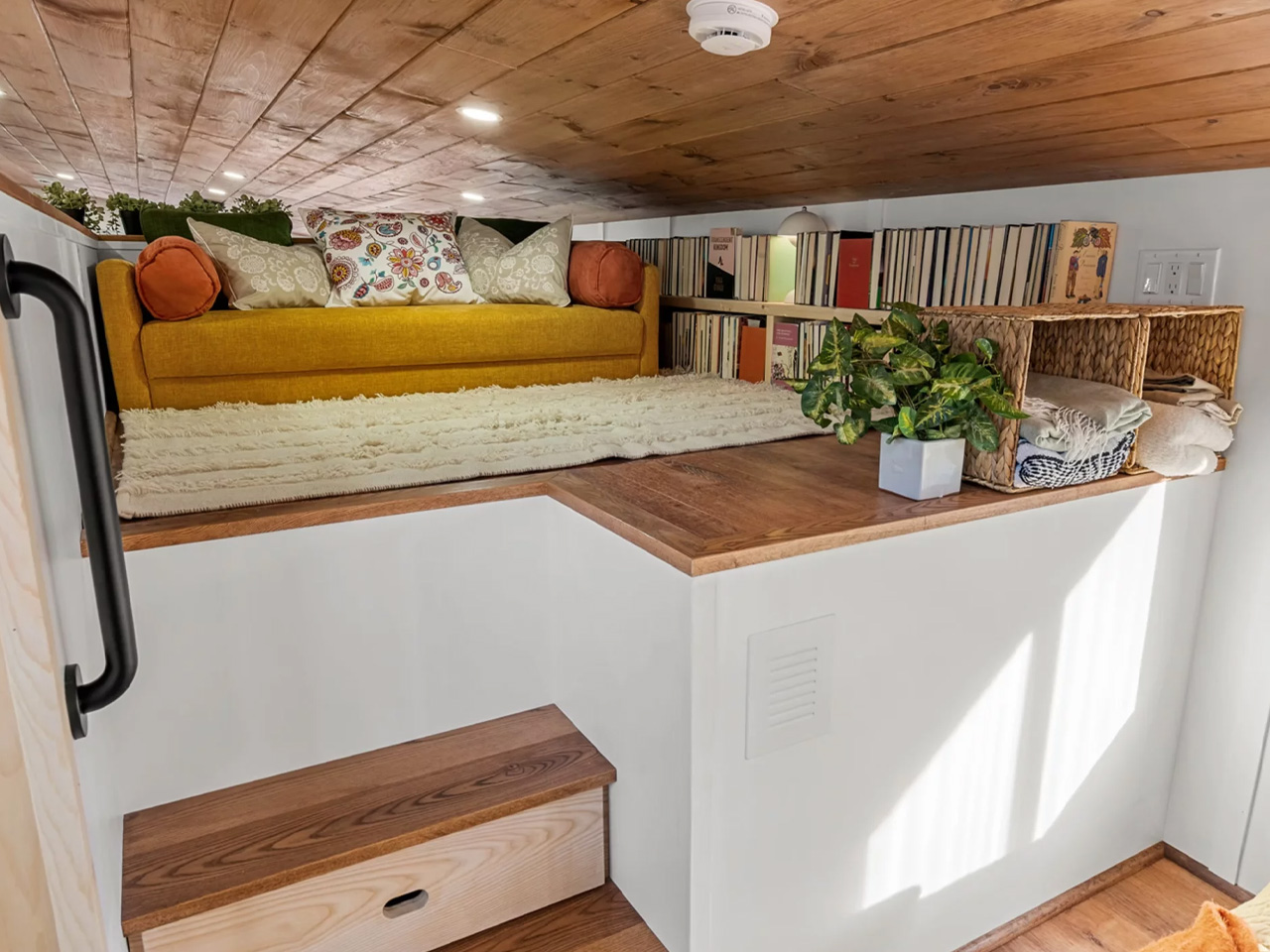
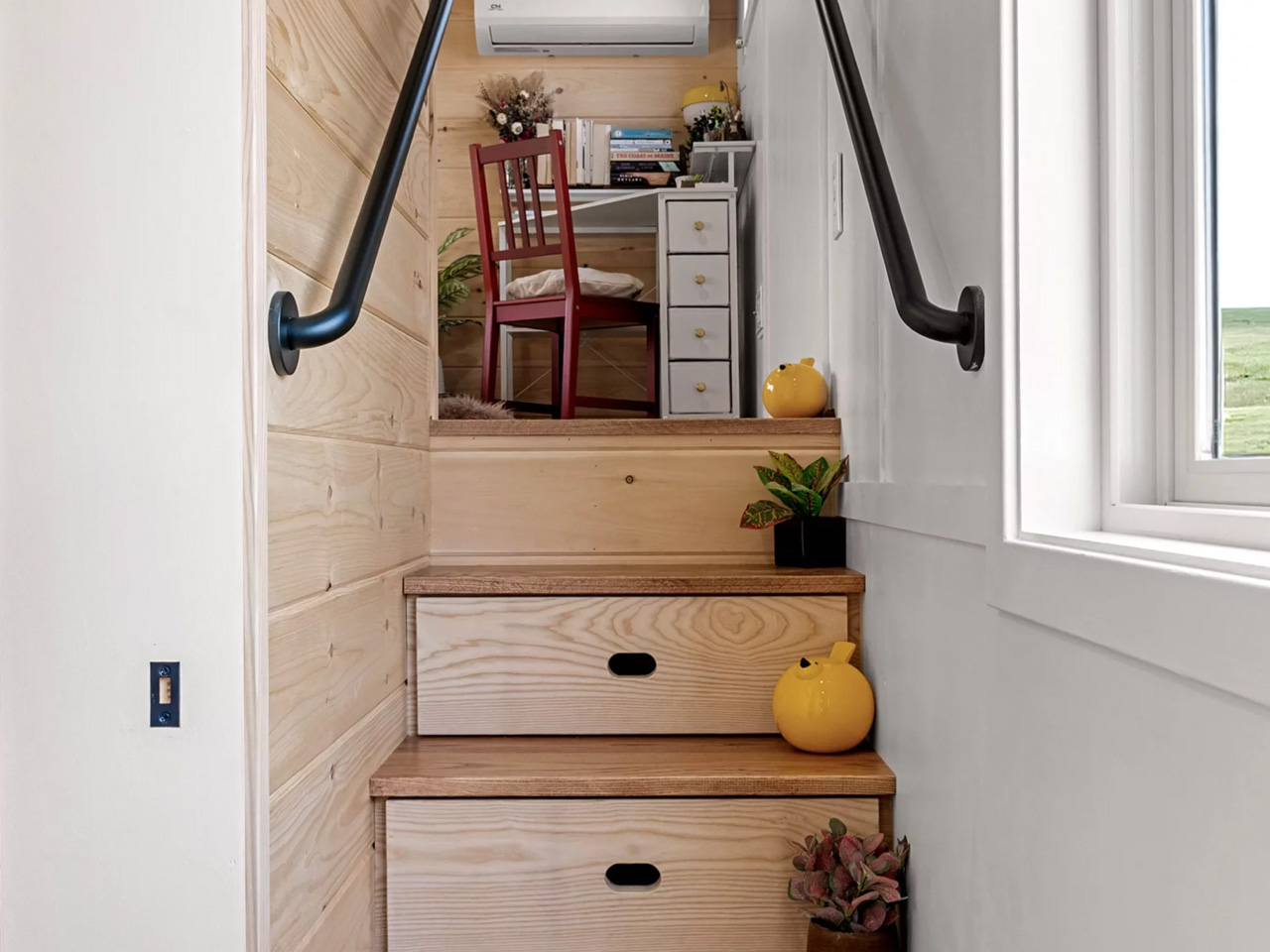
The floor plan is where things get genuinely clever. The main level handles the kitchen and living area, while the full-height gooseneck loft above serves as the primary bedroom — a queen-size bed, a desk, and a chair for working from home. From there, storage-integrated steps lead to a second, lower-ceilinged library loft, fitted with a long bookcase and a single sleeper sofa. It’s a rare thing in tiny living — a dedicated reading nook. The home also includes washer and dryer hookups, making it a fully functional permanent residence rather than a glorified weekend retreat.
All configurations come NOAH certified. Pricing runs $162,950 for the fully furnished turnkey version, $155,250 for the unfurnished option (which still includes the kitchen and bathroom), and $81,475 for the shell build for those who want to finish the interior themselves. The Knoll doesn’t try to hide what it is. It’s a small home — but it’s a real one, built for people who want to live smaller without feeling like they settled.
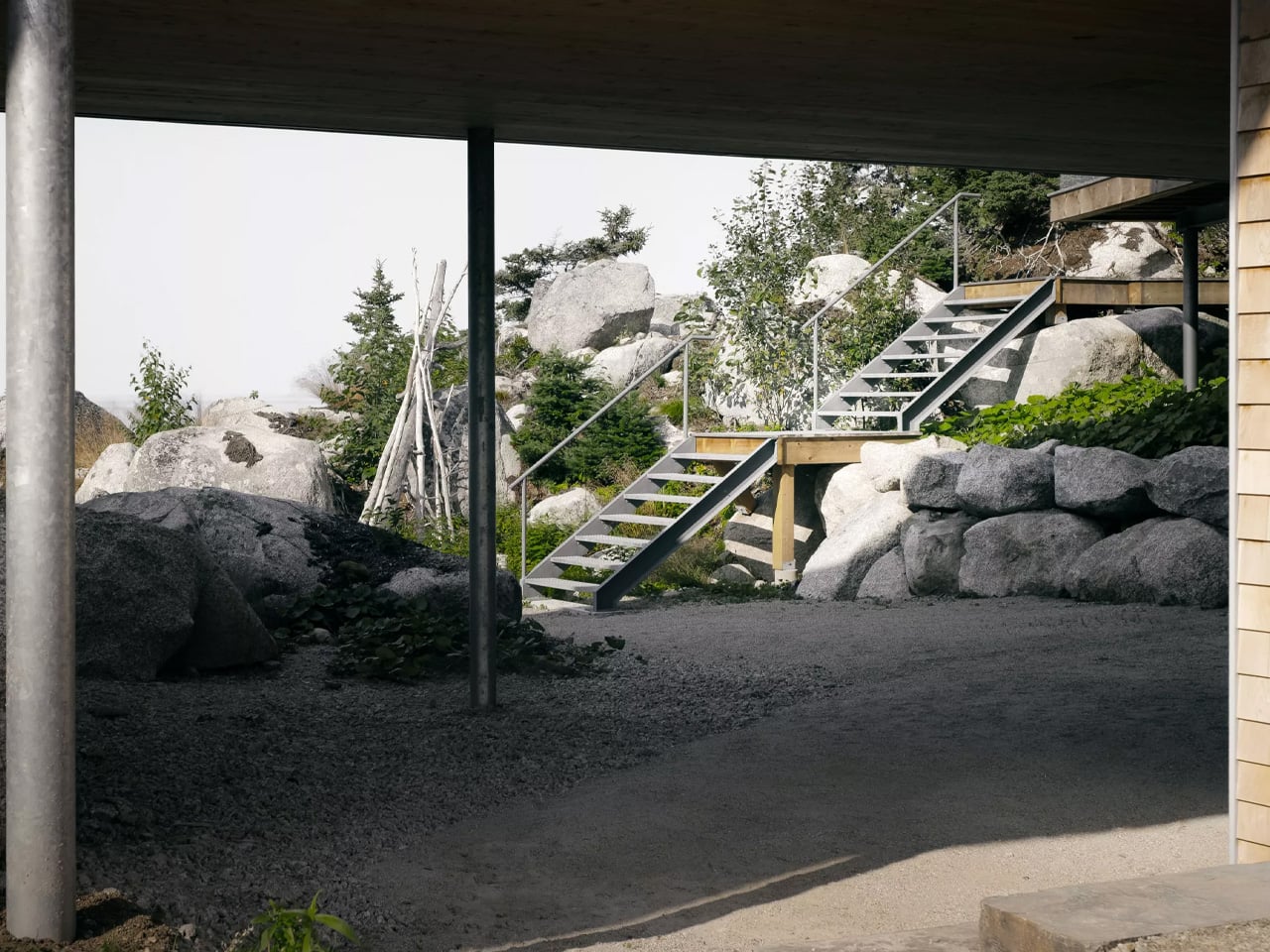
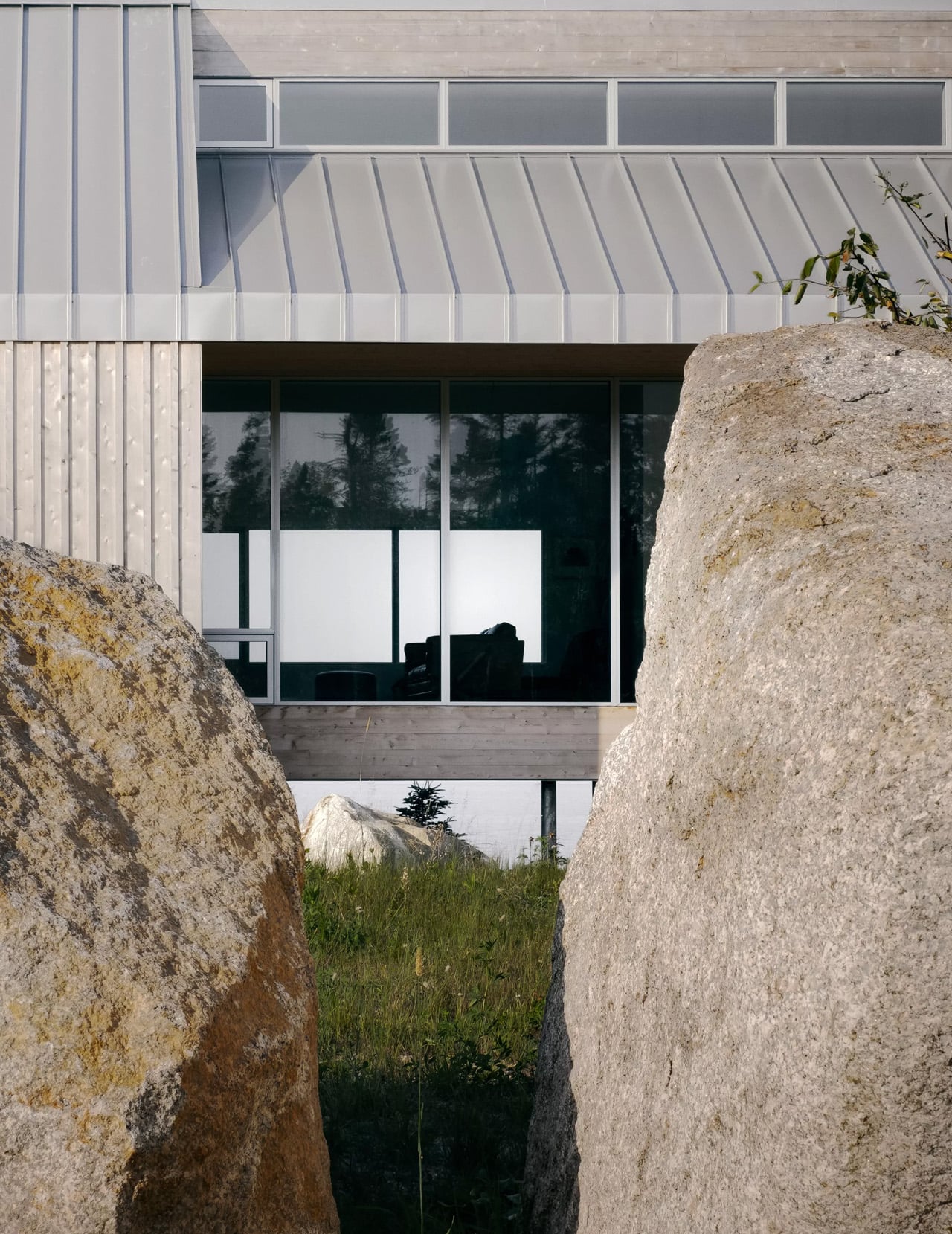
There’s a certain restraint in the decision to let a building hover. Not every architect earns that move. Along the rugged Atlantic coastline of Nova Scotia, Canadian studio Omar Gandhi Architects has completed the East River Residence — a home that doesn’t so much sit on the landscape as suspend itself above it, perched on slender steel columns that let the rocky terrain breathe freely underneath.
The project was conceived for a couple relocating from Montreal, trading city life for something quieter, more grounded, more defined by the presence of the Atlantic. On the first visit to the site, the architects followed the coastline inward through a dense stand of forest, arriving at a soft valley held between two steep, rocky inclines. That natural bowl — rather than being fought or filled — became the entire logic of the building.
The result is a home that reads like a bridge. It spans the depression between two embankments, and the terrain flows underneath it the way water would. Hidden from the shore by thick forest, the only way to encounter it is to go inland, walk along the coast, and let it reveal itself gradually — which feels entirely intentional. This isn’t a house that announces itself. It listens.
The roofline is where the architecture gets genuinely expressive. The gable follows the rhythm of the land below it — rising over the rocky outcrops, dipping low at the main living space to pull in southern light and create a sense of interior intimacy, then lifting again at the yoga studio to expand the room toward the sky. Each shift in section corresponds to a shift in how the space feels, and how the view outside changes with it.
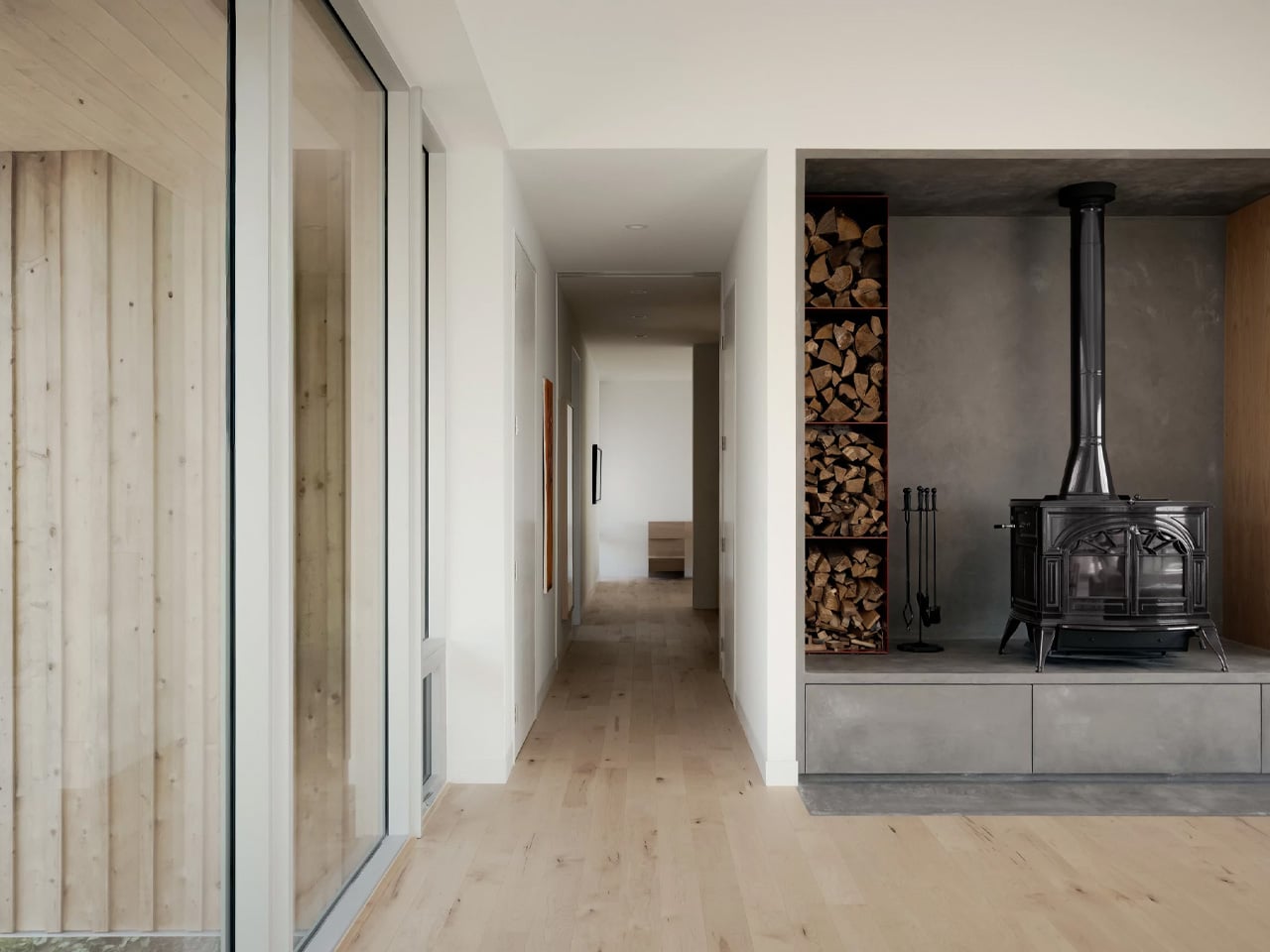
Materially, the home stays close to its coastal context. The palette is dark and restrained — chosen to disappear into the treeline rather than compete with it. Steel, wood, and shadow do most of the talking. The structure was built by Blueprint Construction with structural engineering by Design Point, and the technical execution of suspending a full residence above challenging terrain is considered as the architecture itself.
Photographed by Felix Michaud, the images capture something that most architecture photography misses: the feeling of a building that genuinely belongs where it is. The East River Residence isn’t trying to conquer its site. It’s floating above it, quietly, letting the land remain exactly what it was — which, as architectural philosophies go, is a rare and admirable one.
There’s a certain restraint in the decision to let a building hover. Not every architect earns that move. Along the rugged Atlantic coastline of Nova Scotia, Canadian studio Omar Gandhi Architects has completed the East River Residence — a home that doesn’t so much sit on the landscape as suspend itself above it, perched on slender steel columns that let the rocky terrain breathe freely underneath.
The project was conceived for a couple relocating from Montreal, trading city life for something quieter, more grounded, more defined by the presence of the Atlantic. On the first visit to the site, the architects followed the coastline inward through a dense stand of forest, arriving at a soft valley held between two steep, rocky inclines. That natural bowl — rather than being fought or filled — became the entire logic of the building.
The result is a home that reads like a bridge. It spans the depression between two embankments, and the terrain flows underneath it the way water would. Hidden from the shore by thick forest, the only way to encounter it is to go inland, walk along the coast, and let it reveal itself gradually — which feels entirely intentional. This isn’t a house that announces itself. It listens.
The roofline is where the architecture gets genuinely expressive. The gable follows the rhythm of the land below it — rising over the rocky outcrops, dipping low at the main living space to pull in southern light and create a sense of interior intimacy, then lifting again at the yoga studio to expand the room toward the sky. Each shift in section corresponds to a shift in how the space feels, and how the view outside changes with it.
Materially, the home stays close to its coastal context. The palette is dark and restrained — chosen to disappear into the treeline rather than compete with it. Steel, wood, and shadow do most of the talking. The structure was built by Blueprint Construction with structural engineering by Design Point, and the technical execution of suspending a full residence above challenging terrain is considered as the architecture itself.
Photographed by Felix Michaud, the images capture something that most architecture photography misses: the feeling of a building that genuinely belongs where it is. The East River Residence isn’t trying to conquer its site. It’s floating above it, quietly, letting the land remain exactly what it was — which, as architectural philosophies go, is a rare and admirable one.
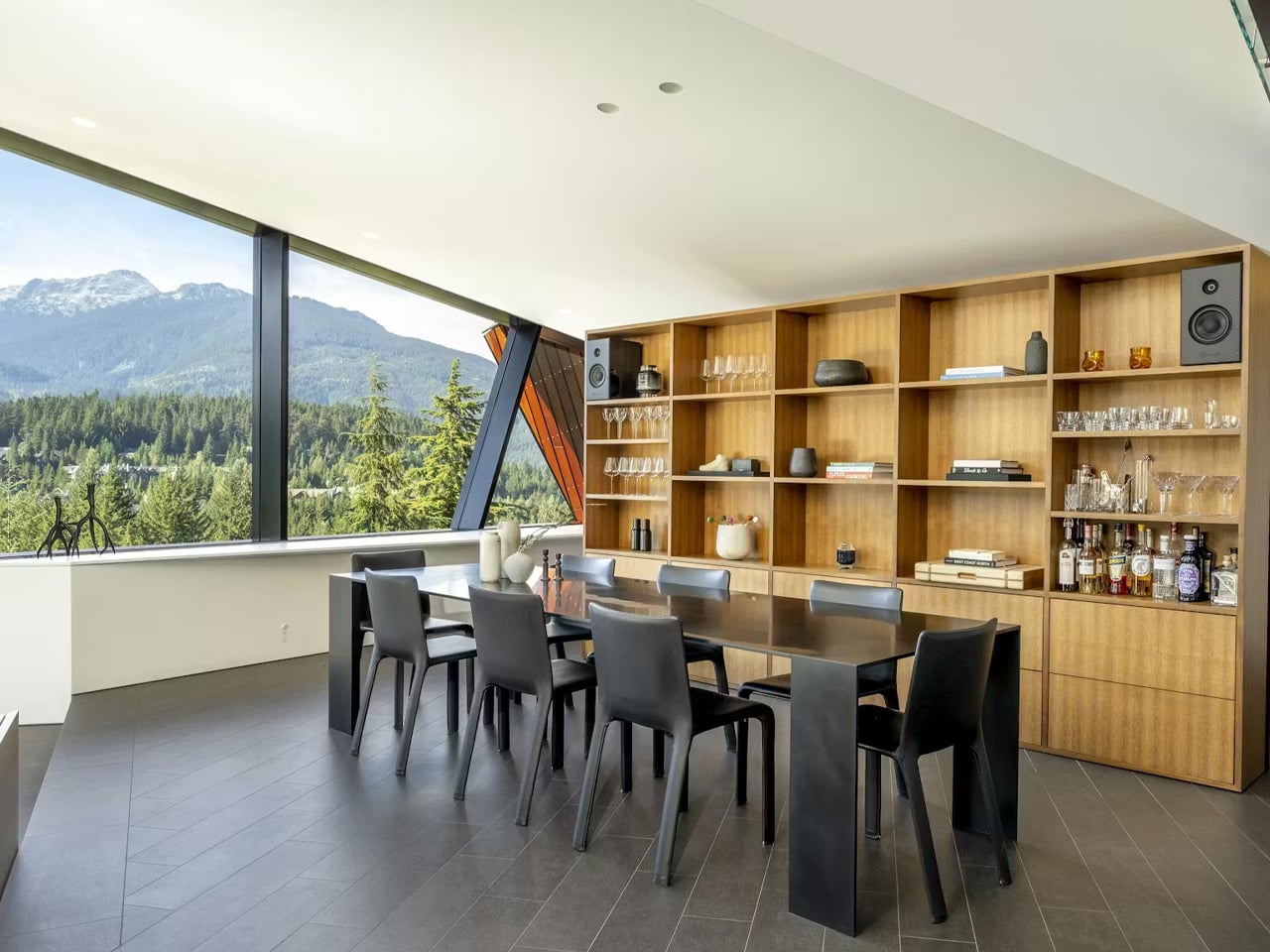
There are mountain homes, and then there is the Hadaway House. Perched on a northwest-facing slope in Whistler’s exclusive Sunridge neighbourhood, this 4,497-square-foot residence by Patkau Architects reads less like a chalet and more like a crystalline object that fell from the mountain itself — all sharp planes, acute angles, and glass that pulls the valley in from every direction.
The firm, best known locally for the nearby Audain Art Museum, pushed its own limits here. Principal John Patkau put it plainly: “We’ve done lots of geometrically complex projects, but this is the most three-dimensional that we have ever done.” It shows. The timber-clad exterior juts dramatically from the hillside, its steeply angled roof engineered not just for visual impact but for a very practical alpine reason — to shed snow. Form and function collapse into one another so completely that it’s hard to tell where the architecture ends and the landscape begins.
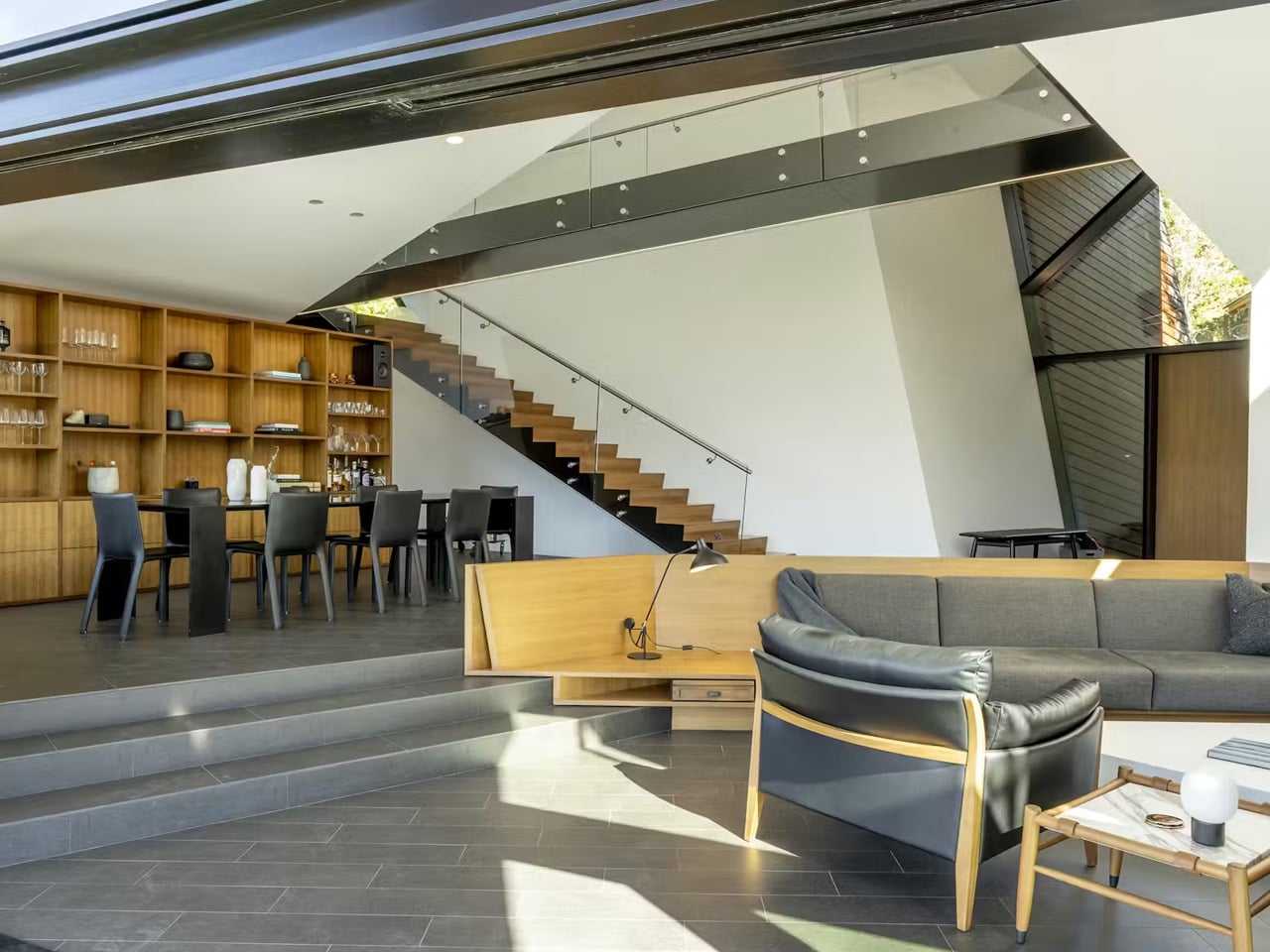
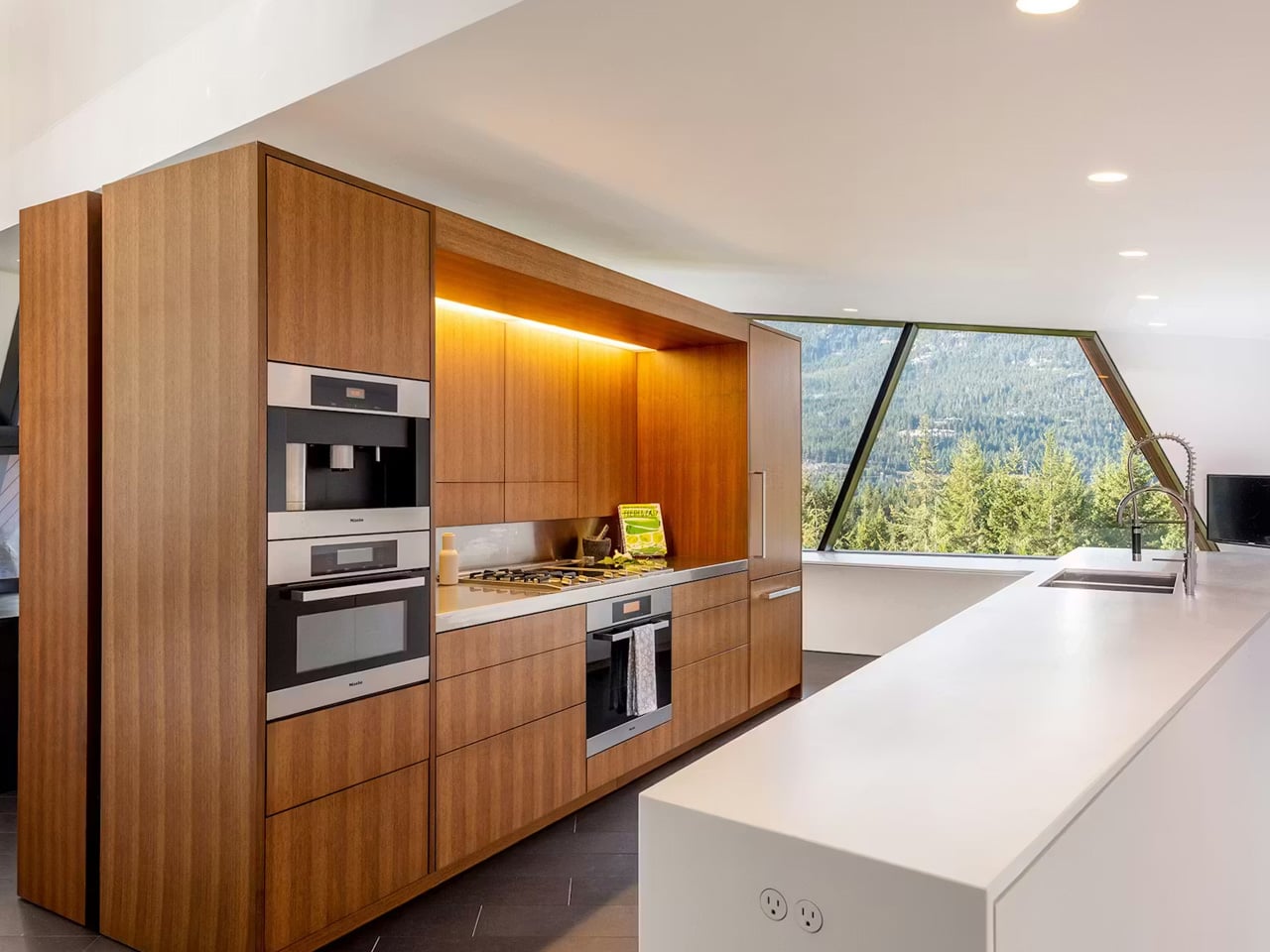
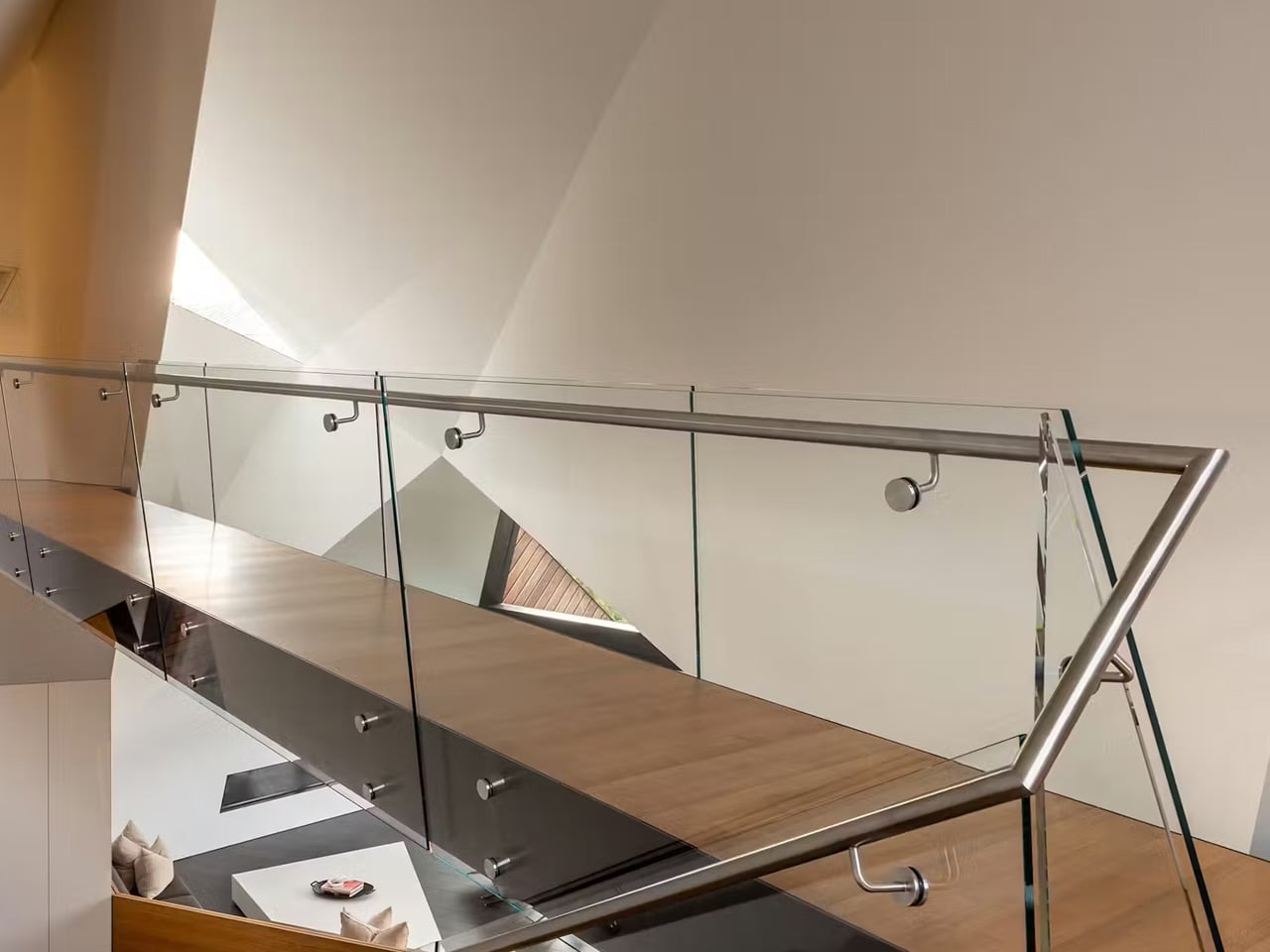
Inside, the home opens up in ways the exterior doesn’t telegraph. Soaring ceilings give the living spaces an almost civic scale, while expansive walls of glass frame panoramic views across Whistler Valley that shift with the light throughout the day. A glassy staircase rises to a catwalk above the main living area, adding a vertical drama that keeps the interior feeling animated. Glass sliders connect the living room to a large covered deck, making the boundary between inside and outside feel like a suggestion rather than a rule.
The three-bedroom, 4.5-bath layout sits on a 0.26-acre lot that sits moments from the mountain and minutes from Whistler Village — close enough to be convenient, private enough to feel removed from all of it. The Sunridge neighbourhood earns its reputation for discretion, and the house takes full advantage of that positioning. Thoughtfully designed indoor and outdoor spaces handle both intimate evenings and larger entertaining with equal ease; the refined finishes never compete with the architecture’s bolder gestures.
Completed in 2013, the house earned a Canadian Architect Award of Excellence, a recognition that has aged well. What was striking a decade ago feels, if anything, more relevant now — a period when alpine architecture is being rethought from the ground up, moving away from the rustic pastiche that dominated mountain design for so long.
The Hadaway House is currently listed at roughly $7.3 million USD by John Ryan Team at UNISON Real Estate Brokerages and Luxury Portfolio International. For a home of this architectural pedigree, in one of Canada’s most coveted mountain destinations, that number tells its own story.
There is a particular kind of Tuesday that gets you. Not Monday, which at least carries the clean energy of a fresh start. Tuesday is when the week begins to feel long before it has any right to, when the desk stops feeling like a chosen space and starts feeling like a place you were assigned. The objects surrounding you have more influence over that feeling than most people acknowledge.
Wabi-sabi, the appreciation of imperfection and transience. Ma, the intentional use of space. Ikigai, the reason to get up. These are not aesthetic trends or interior design keywords. They are deeply considered frameworks for how the material world supports a good life. The five accessories here carry those values in practical, beautiful, desk-ready form — not to impress anyone walking by, but to make every Tuesday worth being present for.
1. ZenFlow Personal Aroma Diffuser
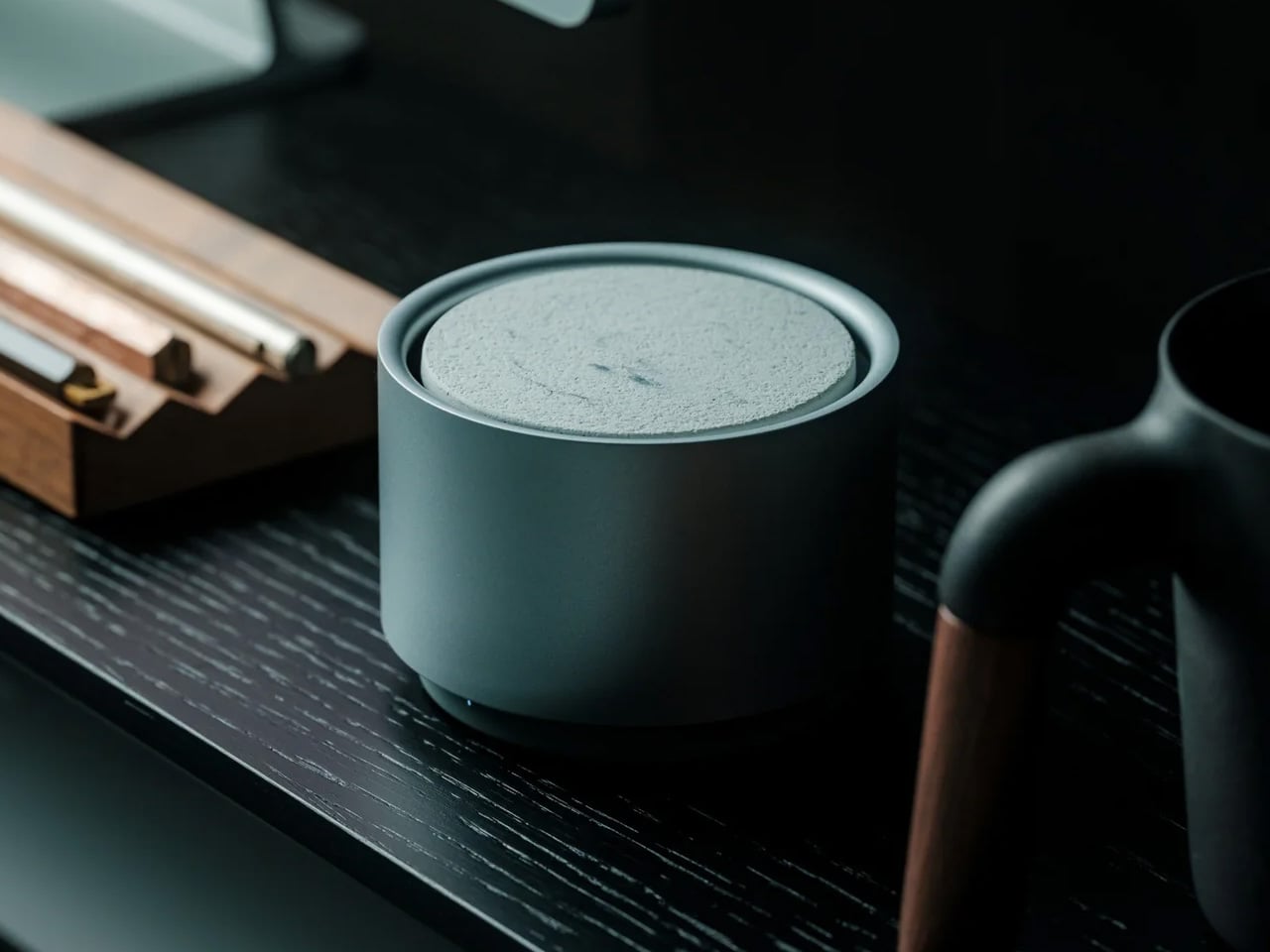
The ZenFlow Personal Aroma Diffuser earns its place on your desk through all your senses at once. It looks sculptural — a handcrafted porcelain filter sitting atop an anodized metal base in Silver, Gold, or Black — but the experience it creates is what makes it genuinely useful. The diffuser combines heat and airflow technology to evenly disperse essential oils through the air without water or mist, keeping your workspace clean and calm. It is aromatherapy without the clutter, without the fuss, and without the puddle on your desk.
For you, this means a desk environment that actively supports focus rather than merely existing around it. Switch between Normal Mode for stronger scent presence during deep work, Airflow Mode when you want subtlety, or ECO Mode for energy-efficient background relaxation throughout the day. The handcrafted porcelain filters are a product of Shibukusa Ryuzo Porcelain’s 180-year legacy, adding a layer of cultural weight to a device that already justifies itself on practicality alone. When the air around you smells intentional, the entire morning shifts slightly in your favor.
Water-free technology keeps your desk surface completely clean and mess-free
Three adjustable modes let you match the diffuser to your energy level throughout the day
What We Dislike
Essential oil refills add an ongoing cost over time
The handcrafted porcelain filter requires careful handling to avoid breakage
2. Magboard Clipboard
Paper notebooks are personal things. They carry the texture of actual thinking — the crossed-out lines, the sketches in the margins, the half-finished sentences that eventually turn into something better. The Magboard Clipboard understands this in a way that most stationery products do not. Its magnet and lever mechanism lets you bind up to 30 loose sheets without any predefined layout, order, or margin, giving your note-taking the same flexibility as your actual thought process. The hardcover construction is rigid enough to write on while standing.
What it gives you is freedom from the structure that most notebooks quietly impose. Pull out a page, reorder your notes, add a fresh sheet mid-thought, and put everything back in whatever sequence makes sense for how your brain works that day. The water-resistant surface means the board travels without hesitation — into a client meeting, a coffee shop, or a commute in unpredictable weather. For anyone who thinks with a pen in hand, Magboard removes every practical reason not to write, and in doing so, makes the act of capturing ideas feel genuinely frictionless.
Loose-sheet format lets you reorganize, remove, and add pages freely without tearing
Hardcover design supports writing without needing a flat surface underneath
What We Dislike
Loose pages can be easy to misplace if not managed with some care
The magnet and lever mechanism may feel unfamiliar to those used to traditional bound notebooks
3. Madco Table Lamp
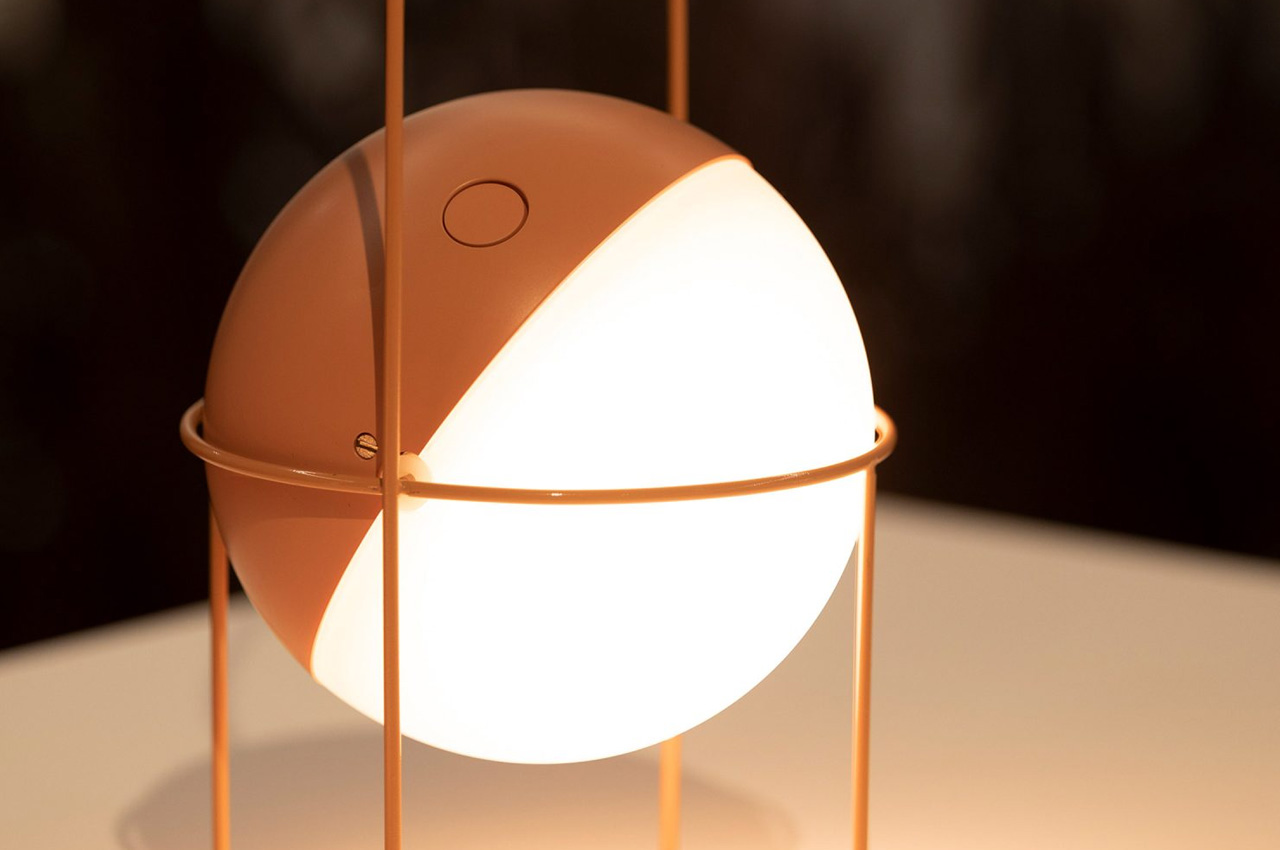
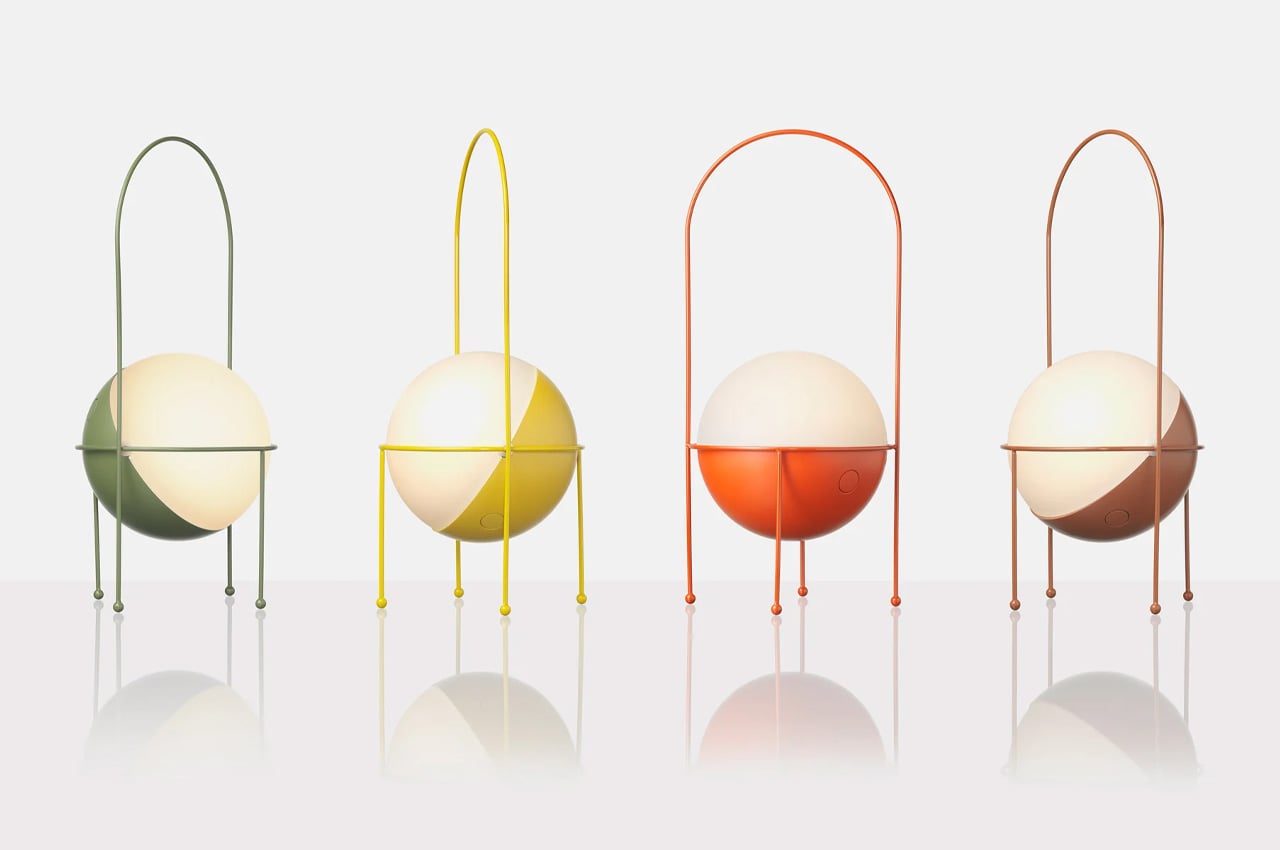
Designed by Italian designer Elisa Ossino for Japanese brand Ambientec, the Madco Table Lamp takes the warmth of a festive Japanese lantern and distills it into something small, quiet, and considered. A sphere-shaped diffuser sits suspended within a sleek metal frame, available in five colors chosen to add playful elegance without overwhelming a space. It marks the first time Ambientec introduced color into its design language, and the restraint with which they did it says everything — there is nothing loud here, only warmth and a kind of confident understatement.
For you, the Madco is the kind of light source that changes the felt quality of your desk at the start or close of a working day. It is rechargeable via USB-C, fully portable, and waterproof, meaning it moves with you from desk to balcony to garden without complaint, creating soft visual conversations with plants and outdoor textures along the way. The 360-degree rotating light source lets you direct warmth exactly where you need it. It is less a lamp and more a mood rendered in physical form — the sort of object that makes the transition into work feel like a deliberate choice.
What We Like
USB-C rechargeable and waterproof, making it genuinely portable for indoor and outdoor use
The 360-degree rotating diffuser lets you customize and redirect light output precisely
What We Dislike
Battery life will limit continuous use, particularly at higher brightness settings
Available in five fixed colors only, which may not suit every interior palette
4. Aya & Sfera Desk Organizers
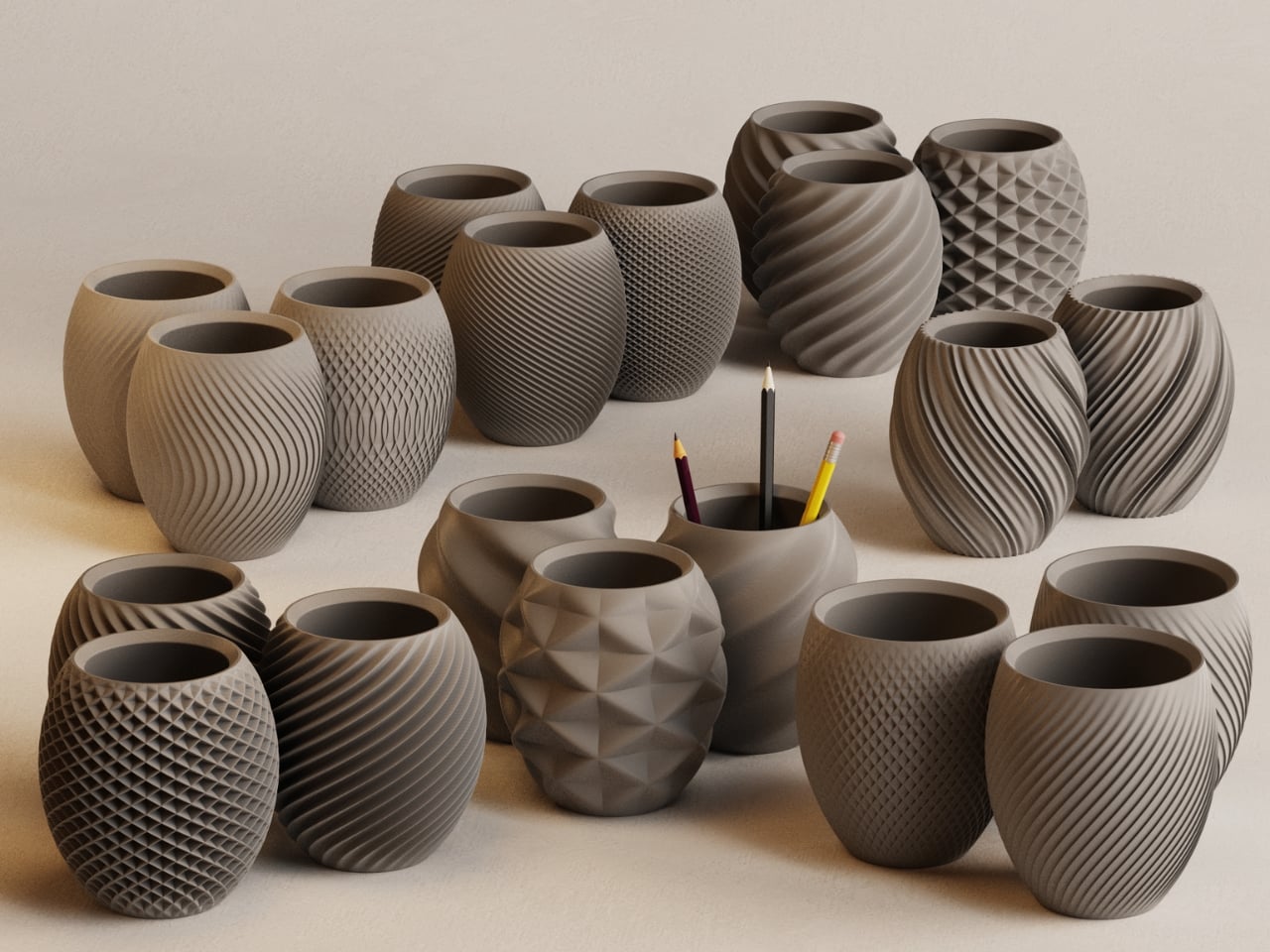
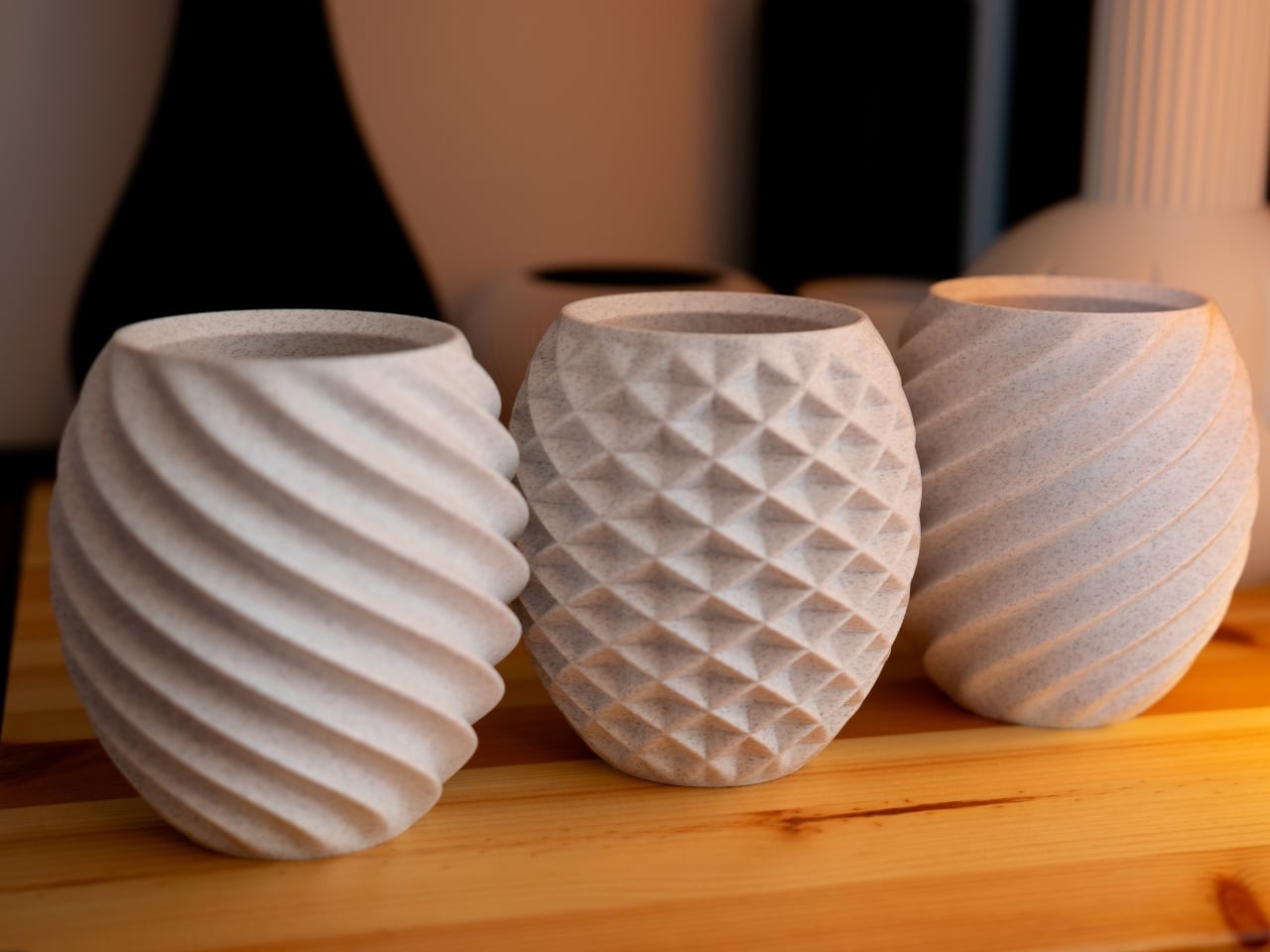
Ikigaiform describes their practice as Japanese minimalism meeting parametric design, a combination that produces objects feeling simultaneously ancient and quietly futuristic. Aya and Sfera began as full-size self-watering planters before being scaled down into desk-sized cups, carrying the same organic forms and intricate surface patterns into a far smaller footprint. The result is a pen holder — or catch-all, or shelf object — that shares design DNA with a living planter, blurring the line between the functional and the living in a way that feels entirely natural on a working desk.
What makes these organizers genuinely useful for you is the way they bring considered calm to whatever surface they occupy. Wabi-sabi aesthetics and Japandi sensibility run through every curve and surface pattern, making each piece feel deliberate rather than merely decorative. Whether you use them to hold pens, cables, a small succulent, or simply as a visual anchor on an otherwise noisy desk surface, they carry an almost-living quality that rewards closer attention. On a Tuesday morning when everything feels like an obligation, these small objects quietly remind you that your environment is something you actually designed.
What We Like
Organic forms and intricate surface textures make these genuinely rewarding to study up close
Compact size fits naturally on desks and shelves without claiming excessive space
What We Dislike
As a niche studio product, availability and restocking may be limited
The soft, organic form may not align with stark industrial or heavily geometric desk setups
5. Heritage Craft Unboxing Knife
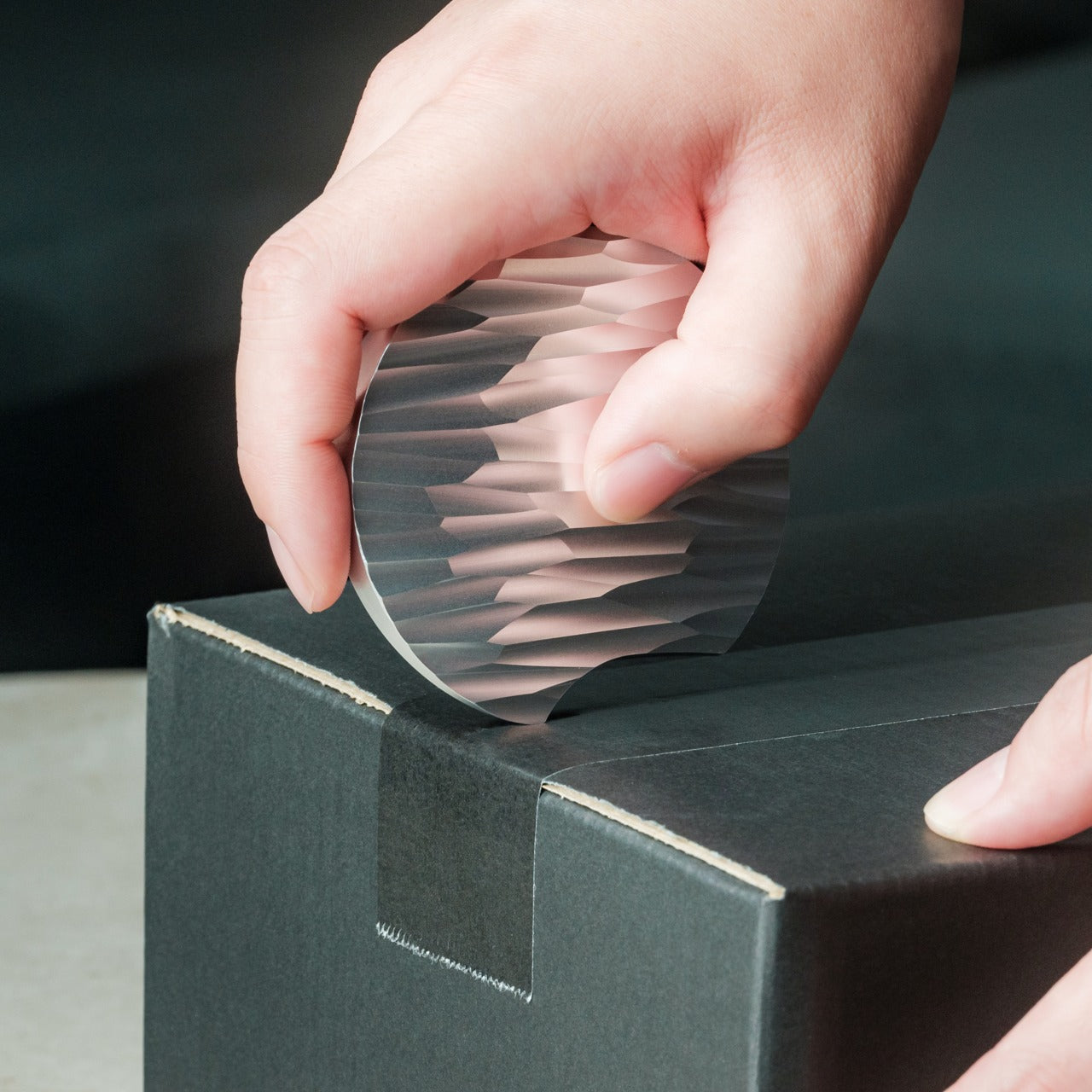
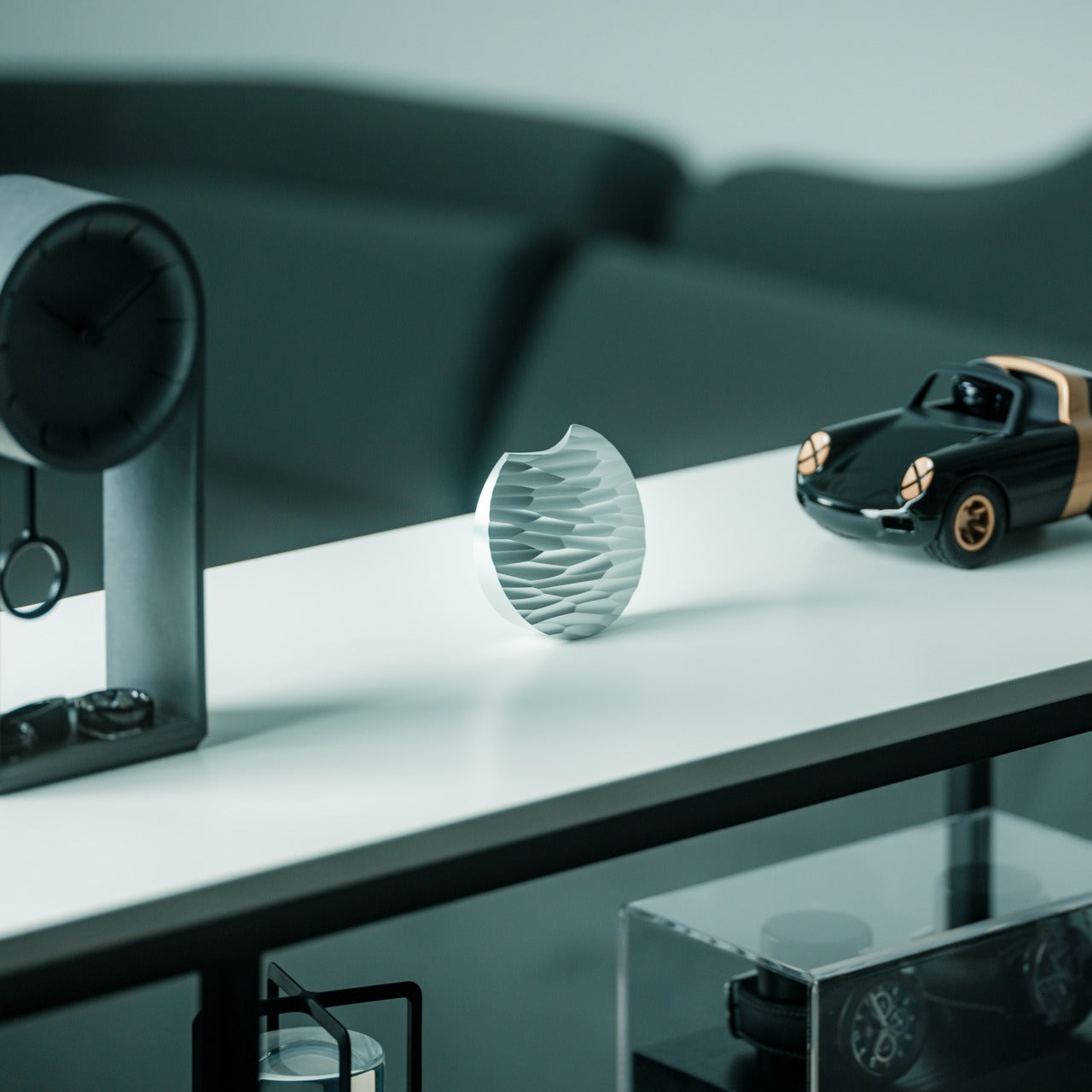
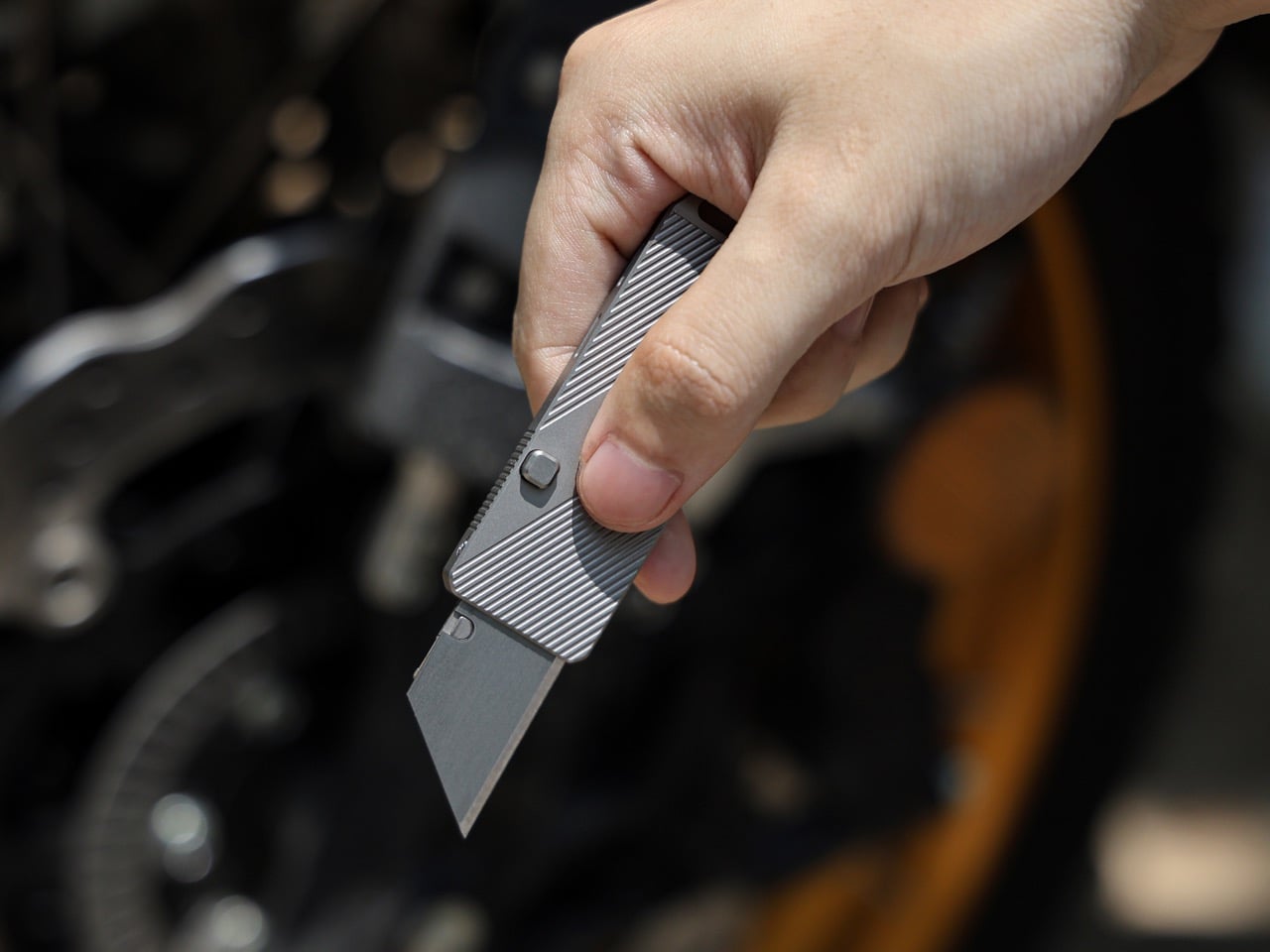
Most box cutters are purely transactional. You use them, drop them into a drawer, forget them completely. The Heritage Craft Unboxing Knife refuses that fate entirely. Carved from a block of aluminum, its circular form directly references Paleolithic hand axes, a shape carrying the entire arc of human tool-making history within it. The wave-like patterns left by precision machining are not purely decorative — they give the object grip, texture, and a visual richness that makes you want to pick it up. It is the rare tool that actively asks to be handled.
For you, this is the object that stays on top of the desk rather than inside it. It is effective — genuinely sharp for slicing tape and opening packages — but it holds its position through presence as much as through function. The tapered form sits confidently on any surface, operating simultaneously as a tool and a quiet sculpture. Japanese design philosophy holds that objects should be worthy of the attention we give them, that usefulness and beauty are not separate qualities. The Heritage Craft Unboxing Knife takes that idea seriously, and in doing so, makes even the small ritual of opening a package feel like something worth noticing.
Sculptural aluminum form means it stays visible on the desk rather than disappearing into a drawer
Wave-patterned machining provides both a secure grip and a distinctly artisanal visual quality
What We Dislike
The circular form may require a short adjustment period for those used to standard box cutters
Aluminum construction may accumulate visible surface scratches with regular daily use
The Desk Is the One Space You Actually Get to Choose
The desk is one of the few environments you actually control. Most of what shapes a Tuesday is decided before you sit down — the calendar, the emails, the inbox count. The objects you choose to keep in your immediate space are one of the last genuinely personal decisions left. These five accessories share a quality that goes beyond mere aesthetics: they each slow the eye down, just for a moment.
And in that pause, the morning becomes slightly less automatic. That is exactly what Japanese design has always understood — that objects worthy of attention gradually change the quality of attention you bring to everything else. You cannot redesign your calendar, your inbox, or your Tuesday. But you can redesign the surface in front of you. Fill it with objects that ask something of you. That, quietly, is more than enough.
Flowers are beautiful. They’re also gone by the following weekend. The best Mother’s Day gifts aren’t the ones that arrive in the most dramatic packaging — they’re the ones that earn a permanent place in her life. On the counter, hanging on the wall, slipping quietly onto her finger, or sitting on the mat she unrolls every morning. These ten were chosen because they’re designed well enough to deserve that space.
Built to last, considered in detail, and useful in the kind of way that compounds over time. A bouquet says you remembered. These say you paid attention. Each one earns its place differently — on a shelf, at the airport, on a yoga mat, in a morning coffee ritual — but they share the same quality: design that works as hard as she does, and only looks better with every passing year.
1. Portable CD Cover Player
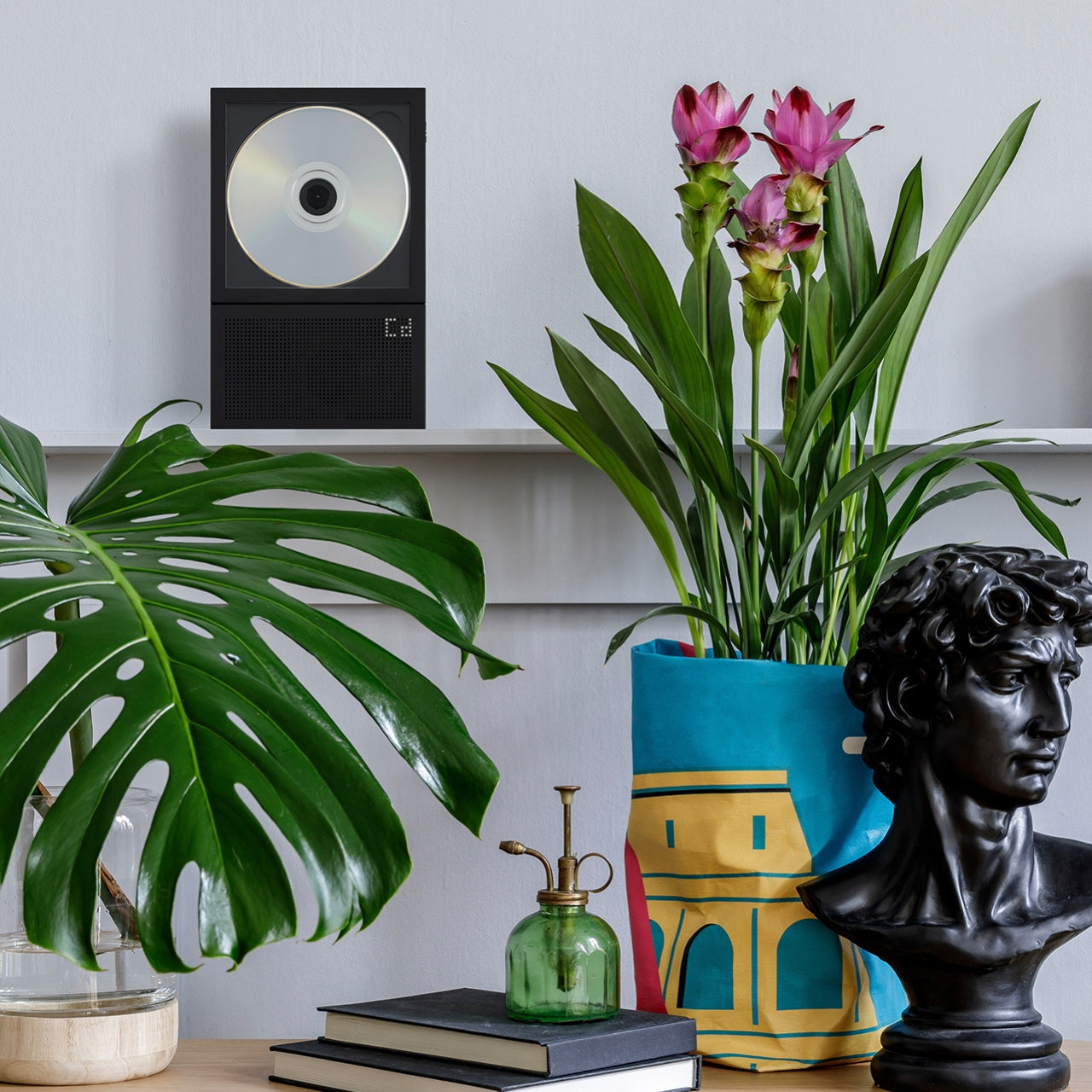
There’s a certain kind of person who still believes the best way to listen to music is the right way, not just the convenient one. The Portable CD Cover Player speaks directly to that person. It plays audio CDs through a built-in speaker while keeping the jacket art on full display in a front-facing pocket, turning the listening experience into something visual, tactile, and genuinely decorative. For a mom who connects music to memory, this is the gift that puts those memories where they belong: out in the open, where everyone can see them.
What makes it worth giving is the thinking behind the design. Most audio devices ask you to choose between portability and display. This one refuses that compromise. It runs on a rechargeable battery, so it travels freely, and its wall-mountable form lets it live as a piece of decoration when it’s not in her hands. The CD art becomes part of the room, and the room sounds better for it. A speaker that’s also an object worth looking at is rarer than it should be.
Built-in speaker and rechargeable battery deliver music anywhere without cords
Wall-mountable design doubles as a decorative display piece for any room
What We Dislike
The wall mount bracket is sold separately
Best suited for someone who still owns a physical CD collection
2. Oura Ring 4
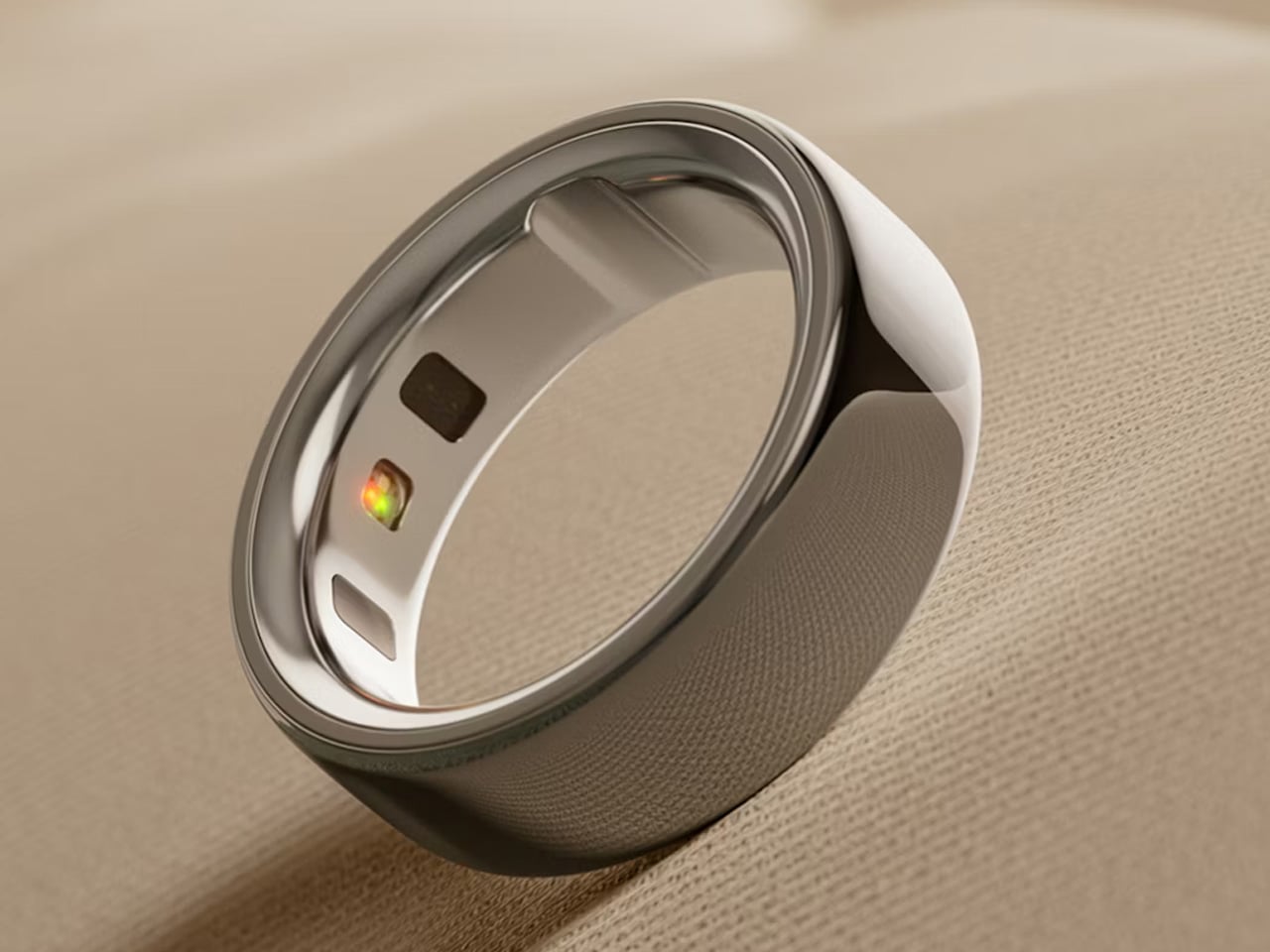
The Oura Ring 4 fits on the finger like a piece of considered jewelry and spends every hour doing something useful. It tracks over 50 health and wellness metrics across sleep, activity, stress, heart health, and women’s health, then synthesizes those into personalized insights through the app. The AI-powered Oura Advisor refines its understanding of her patterns over time, so the guidance she receives in month six is more relevant and more precise than what arrives on day one. For a mom who rarely makes time for herself, this is the gift that quietly makes the case for it.
The fully-titanium construction keeps the ring lightweight enough to forget entirely, and Smart Sensing technology improves the accuracy and depth of every reading. Battery life runs five to eight days per charge, outlasting most weekends away without needing a top-up. It comes in silver, gold, stealth, and rose gold, and reads more like a deliberate accessory than a fitness tracker. She wears something beautiful and actually understands how she’s doing. That combination is harder to find than either thing on its own.
What We Like
Tracks 50+ health metrics with AI-powered insights that grow more personalized over time
Fully titanium construction wears like jewelry with 5 to 8 days of battery life per charge
What We Dislike
Full feature access requires an ongoing membership subscription
A free sizing kit must be ordered before purchasing the final ring
3. FineLine Aluminum Chopsticks
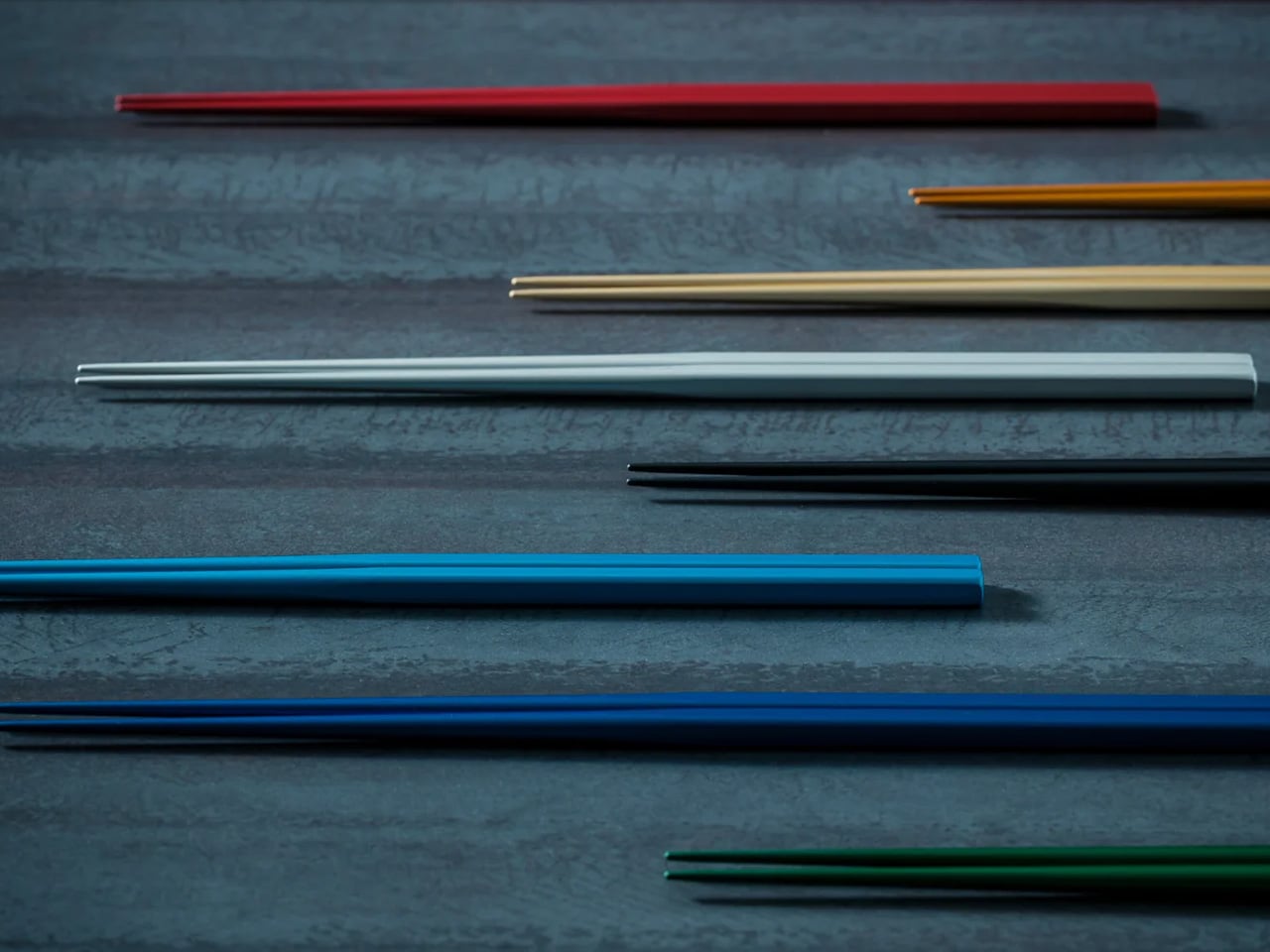
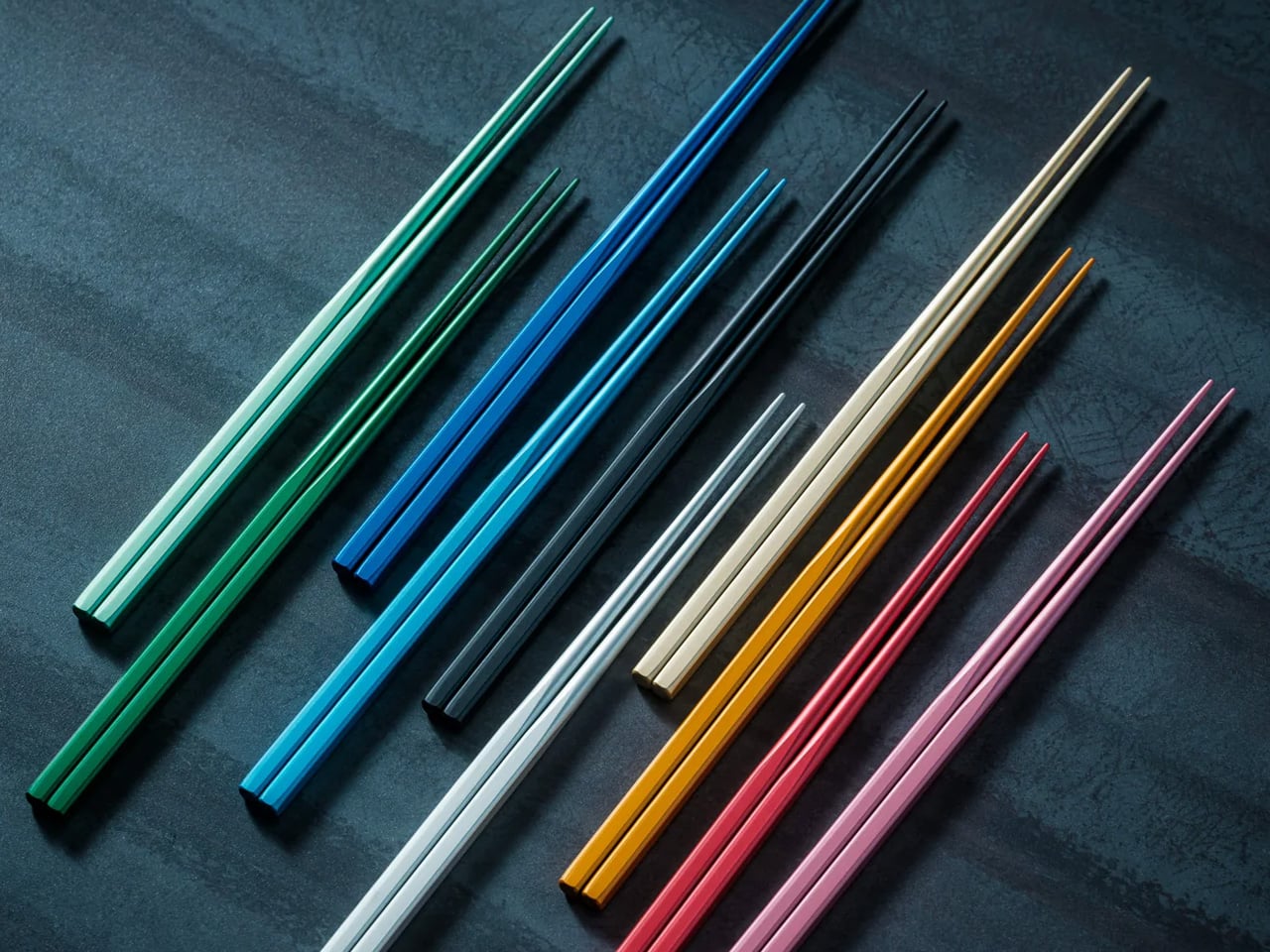
Most chopsticks are never thought about twice. The FineLine Aluminum Chopsticks earn a second look the moment you pick them up. Tapered to a 1.5mm tip, refined through repeated 0.1mm adjustments, they handle delicate food with the kind of precision that makes even a simple meal feel composed. The slim, faceted profile rests naturally between the fingers, with flat surfaces providing just enough resistance to prevent the rotation common in round chopsticks. For a mom who appreciates the way things are made, these reward that attention with every single meal.
The balance settles immediately. Tips align cleanly, the motion carries through without interruption, and nothing about the grip asks for correction once it finds its place. Sashimi holds. Noodles lift without slipping. Smaller pieces stay controlled through the full arc of the movement. Crafted from aluminum, they’re slim and lightweight enough to disappear from your awareness entirely, which is exactly the point. A utensil like this is considered and doesn’t demand to be noticed. It simply makes everything you do with it feel more precise, more deliberate, and more satisfying.
1.5mm tapered tip provides a clean, controlled grip on even the most delicate food
Faceted profile prevents rotation for a consistently secure and stable hold
What We Dislike
Aluminum construction may not suit those who prefer natural materials like wood or bamboo
Premium price point for a utensil category rarely treated as a design investment
4. Nespresso Vertuo Pop+
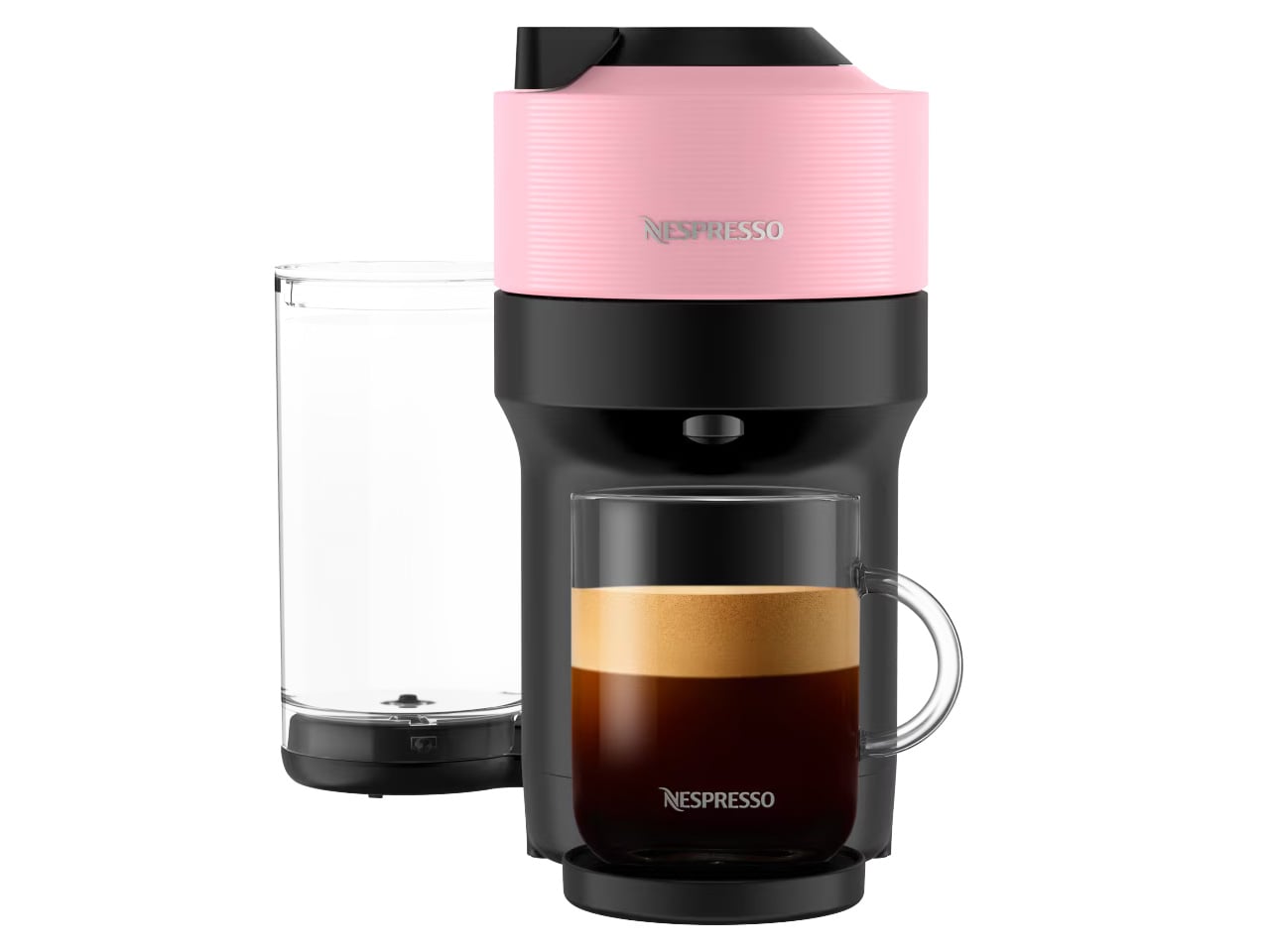
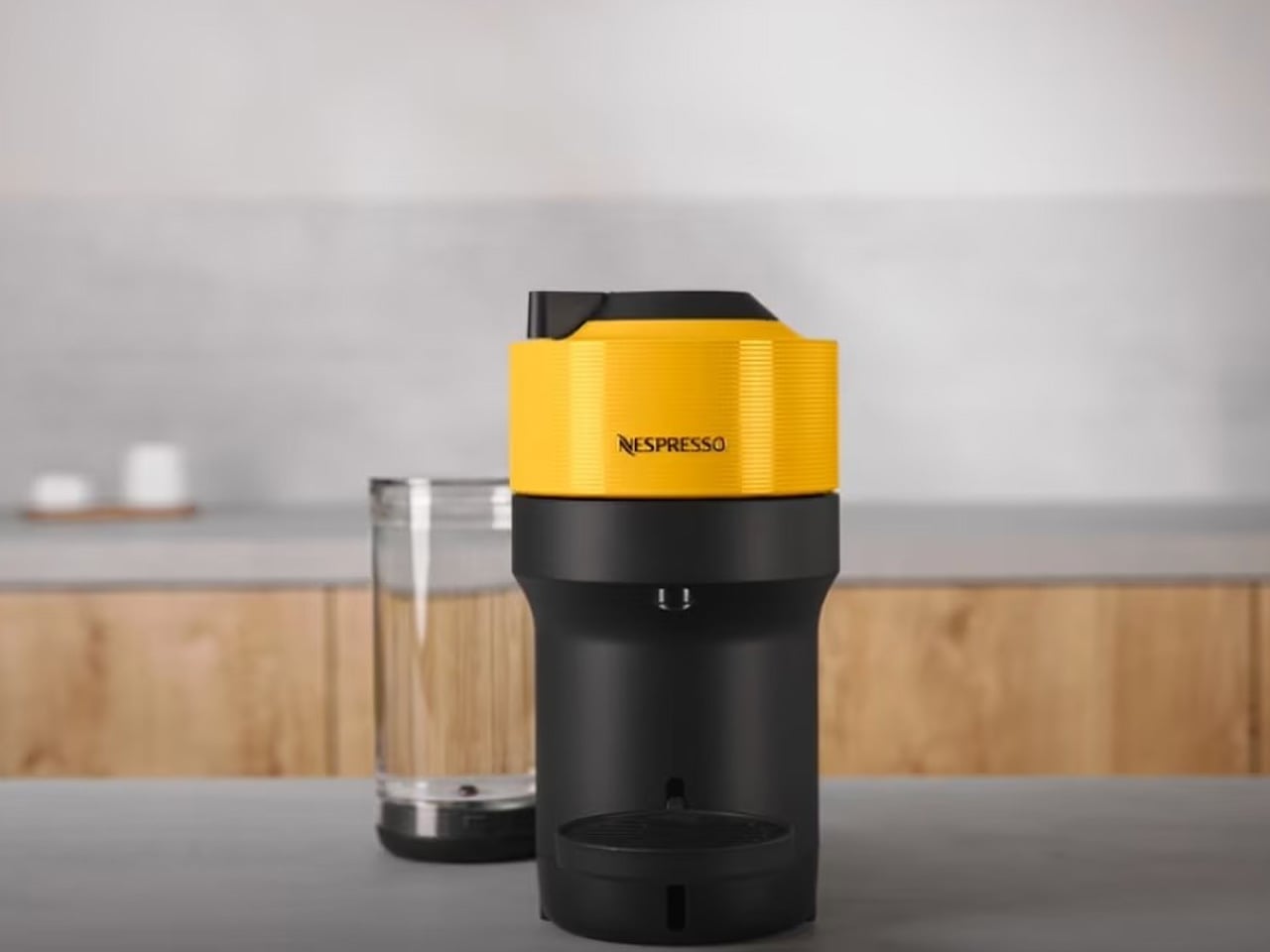
The Nespresso Vertuo Pop+ is the most color-forward machine in the Vertuo lineup and one of the most capable compact brewers at its size. It brews five sizes of coffee, hot or iced, using centrifusion technology that reads the barcode on each capsule and automatically sets temperature, volume, and spin speed. No adjustments. No guesswork. No machine is crowding the counter between uses. For a mom who starts every morning the same way, this turns that ritual into something she can feel genuinely good about the moment she walks into the kitchen.
Deluxe models add chrome accents and a larger 37oz water tank, reducing refills without changing the footprint. The color range runs from Candy Pink to Aqua Mint to Coconut White, designed to complement a kitchen rather than compete with it. It heats in about 30 seconds and keeps used capsules in a built-in container for clean, one-step disposal. It’s the kind of appliance that earns permanent counter space because it earns it practically, aesthetically, and every single morning that she uses it.
What We Like
Per-capsule automated brewing means no settings adjustments are ever required
Wide color range designed to complement rather than clash with any kitchen aesthetic
What We Dislike
Pods are proprietary to the Nespresso Vertuo range, limiting third-party alternatives
Ongoing capsule costs add up over time compared to traditional brewing methods
5. AromaCraft Clothes Brush
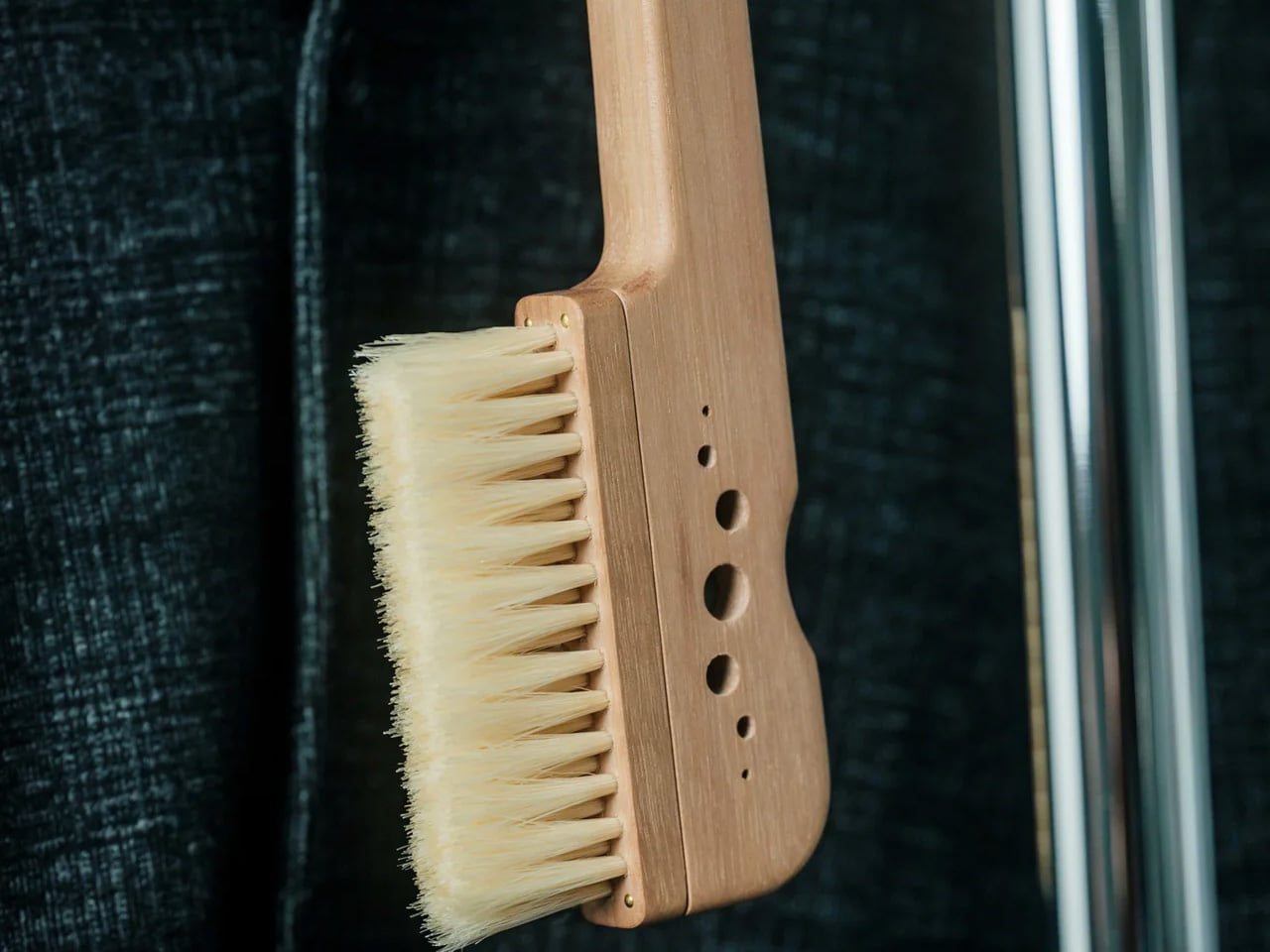
The AromaCraft comes from the Miyakawa Hake Brush Workshop, a family-owned business that has been making brushes in Japan since 1921. Each one is hand-crafted using the traditional Tsubokiri method, where every bristle is individually planted to prevent shedding and extend the brush’s working life. The bristles are white boar hair, firm enough to lift dust and pollen from deep within fabric fibers, and gentle enough not to cause damage. For a mom who takes care of what she wears, this is the kind of object that makes the act of getting dressed feel more intentional.
What separates it from a standard garment brush is the aromatic paper insert. It accepts a few drops of any essential oil, allowing a light fragrance to transfer with each stroke, so clothes come away cleaner and subtly scented. The walnut wood handle is finished with shea butter, durable in material, and beautiful in hand. It’s made to be kept, not replaced. For a gift that brings over a century of Japanese craft into a morning routine that usually goes unnoticed, the AromaCraft offers something genuinely rare: everyday luxury that doesn’t announce itself.
Traditional Tsubokiri hand-planted bristles prevent shedding and extend the brush’s lifespan
Customizable aromatic insert accepts any essential oil for a fully personalized scent experience
What We Dislike
Aromatic inserts require periodic replenishment depending on the frequency of use
Handcrafted production means availability can be limited at any given time
6. RIMOWA Original Cabin Optical
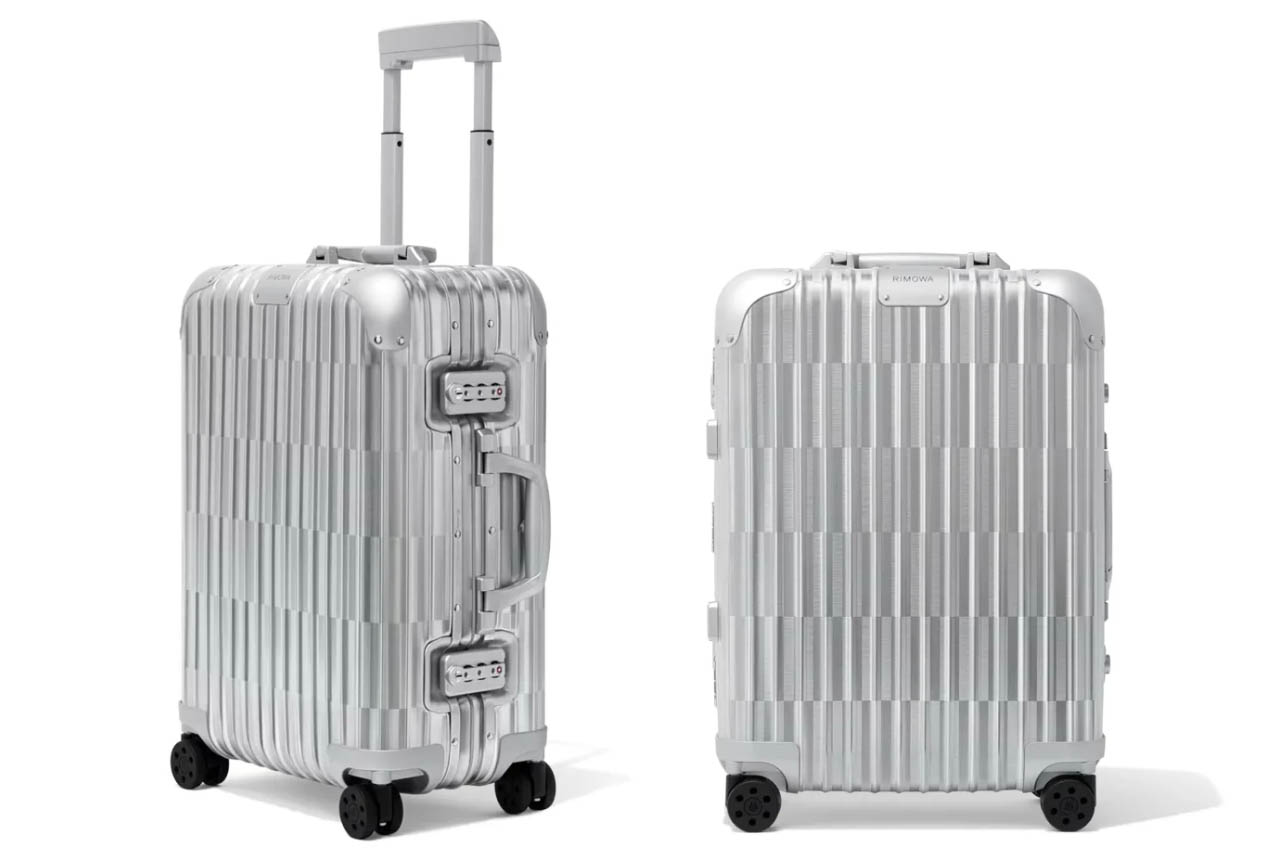
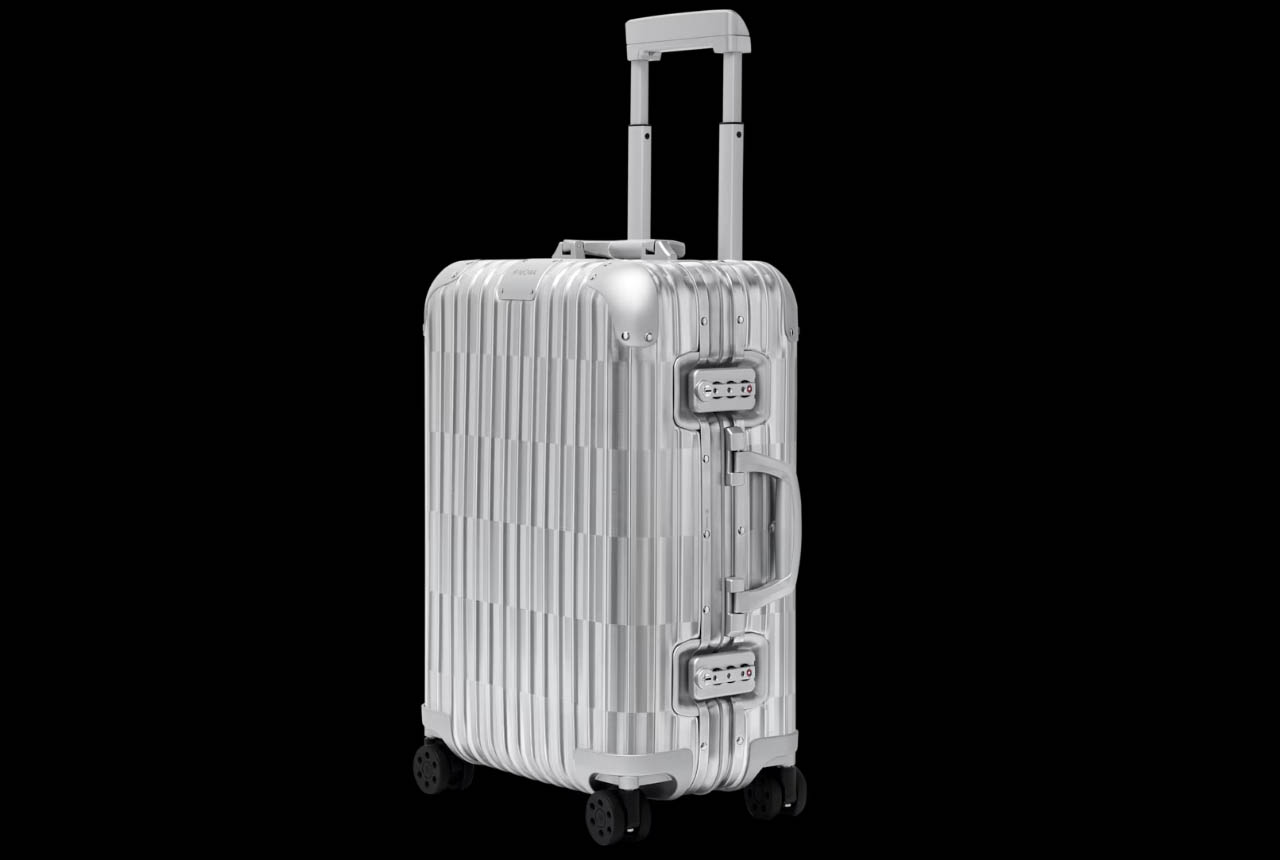
RIMOWA has been making aluminum suitcases long enough for the grooves to become iconic. The Original Cabin Optical does something more interesting than refining them. Using an alternating brushed finish on the anodized aluminum exterior, it creates the optical illusion of the grooves disappearing entirely, giving the suitcase a shimmering effect that reads differently depending on angle and light. At the airport, in a hotel lobby, or in the corner of a room, it looks like it’s in motion even when it’s standing perfectly still. For a mom who travels and understands that details matter, this is the carry-on that turns heads before a word is spoken.
The construction is the same high-end anodized aluminum RIMOWA has built its reputation on, and the Cabin Optical sits as a refined variant within the Original lineup. The optical effect isn’t a print or a surface treatment applied afterward. It’s built directly into the material through the brushing technique itself, which means it won’t fade, wear off, or lose its effect over years of use. The illusion is structural. For a suitcase she’ll carry for a decade, this offers something luggage rarely does: a design that stays more interesting the longer you look at it.
What We Like
Alternating brushed finish creates a structural optical illusion that cannot fade or wear off with use
High-end anodized aluminum construction is built to withstand years of regular travel
What We Dislike
Premium price point makes this a considered investment rather than a casual occasion gift
The optical effect reads most dramatically in directional or strong lighting conditions
7. Fire Capsule Oil Lamp
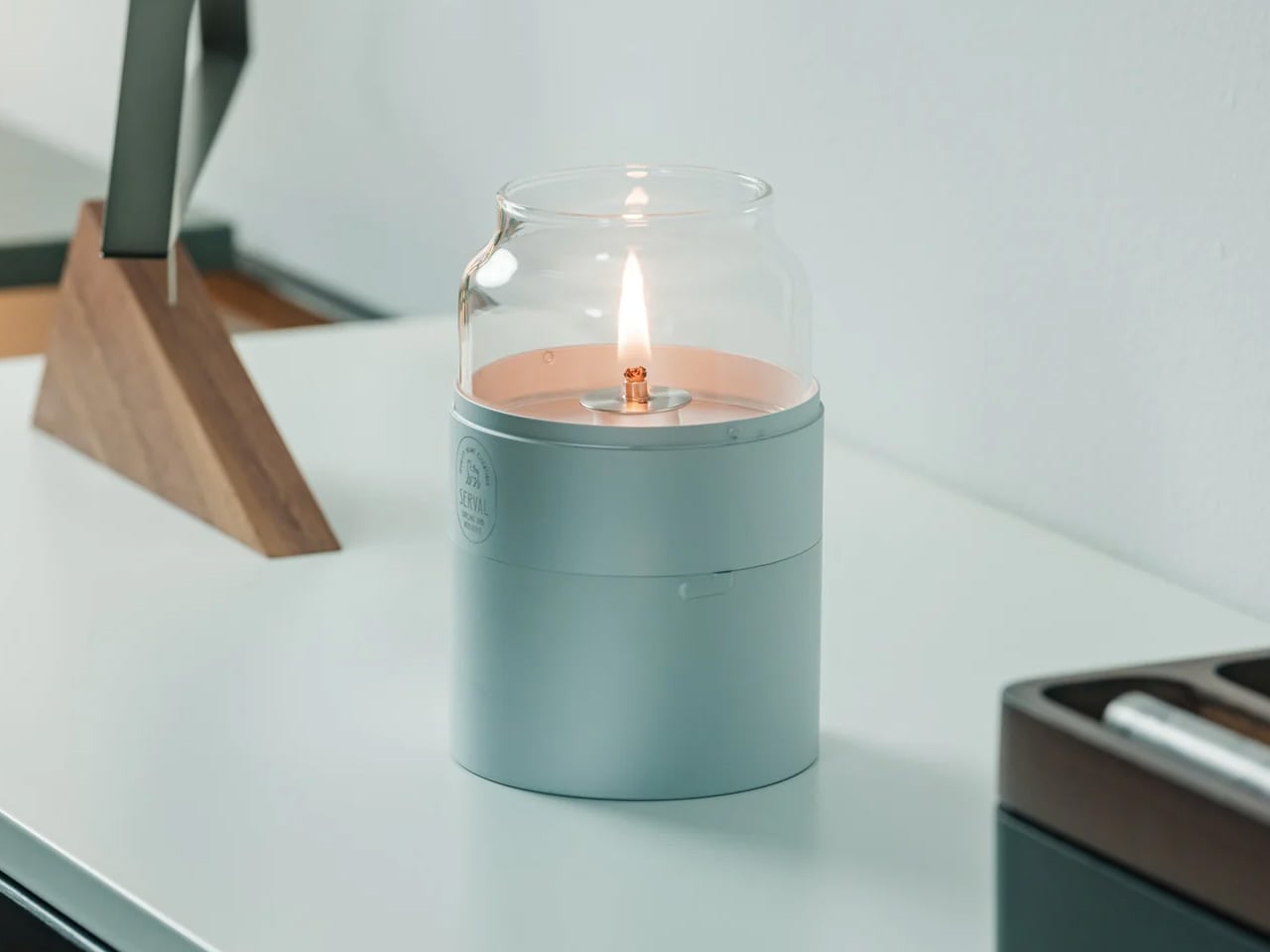
The Fire Capsule is a minimalist oil lamp designed to do something most candles and electric alternatives can’t manage together: create a genuinely warm, candle-like glow that also functions as a scent diffuser. With an 80ml capacity, it burns for up to 16 hours on a single fill. The precision-engineered lid keeps the glass chimney dust-free between uses, so it stays clear and immaculate every time it’s lit. For a mom who curates her home environment, this is a ritual object, not just a lamp, and it earns its place on any surface it occupies.
The cylindrical form is clean enough to live on a shelf, a dining table, or a bedside surface without looking out of place. Outdoors, paraffin oil with insect-repelling properties makes it useful on a patio long after dark. The flat-topped design allows for stacking, the construction travels well, and a protective drawstring pouch is included. Paraffin burns clean and odorless, which keeps the fragrance from competing with anything underneath it. The included aroma plate accepts any scent she chooses, making the light and fragrance a single, fully personalized experience every time.
80ml capacity provides up to 16 hours of continuous clean, odorless light per fill
Aroma plate accepts any fragrance, making every use fully customizable to her preference
What We Dislike
Paraffin oil requires a separate purchase and ongoing replenishment
Open flame requires careful placement in households with young children or pets
8. Polaroid Hi-Print 3×3
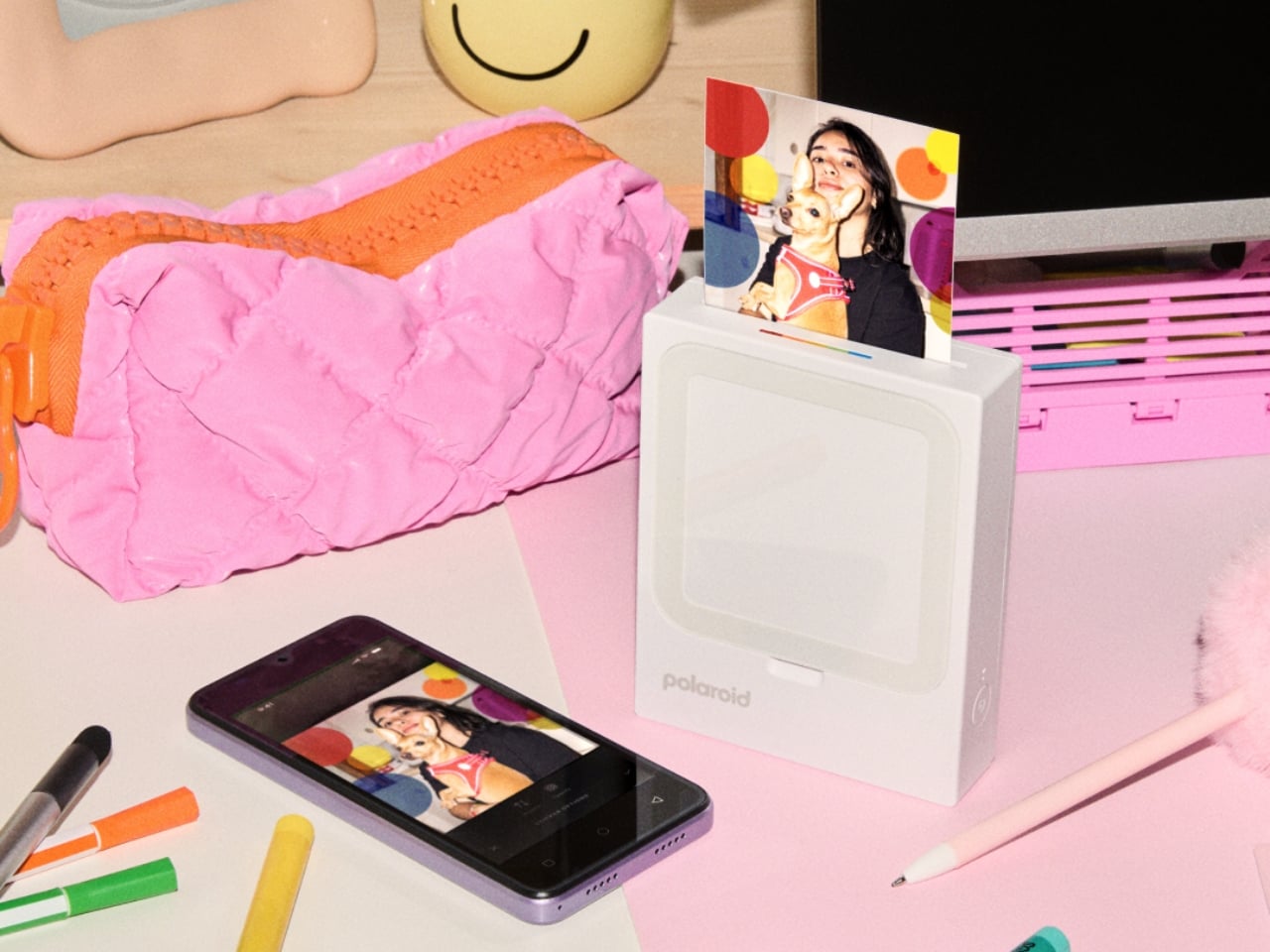
The Polaroid Hi-Print 3×3 is a compact smartphone photo printer that turns digital images into 3-inch square prints with a peel-and-stick backing. It connects to the free Hi-Print app on iOS and Android, which lets you add templates, stickers, and decorative frames before printing, so each image carries personality before it reaches the page. The prints are borderless and edge-to-edge, giving them a clean, modern look. For a mom who documents the family through her phone but never actually prints anything, this makes those images real in a way the camera roll never does.
The 3×3 format fills the space between the 2×3 pocket printer and the 4×6 desktop model in the Hi-Print family, making it particularly well-suited to square compositions. The peel-and-stick backing means prints go straight onto a wall, a journal spread, or a scrapbook page without tape, pins, or frames getting in the way. It’s for the memory books that keep getting started and the walls that stay blank because printing always felt like more effort than it was worth. This removes that friction entirely, and the results look good enough to take seriously.
What We Like
Peel-and-stick backing lets prints go directly onto any surface with no additional tools
Hi-Print app allows creative customization with templates, stickers, and frames before printing
What We Dislike
Requires ongoing purchase of Polaroid Hi-Print paper cartridges for continued use
Print quality suits creative and casual applications rather than archival or high-resolution output
9. Dyson PencilVac
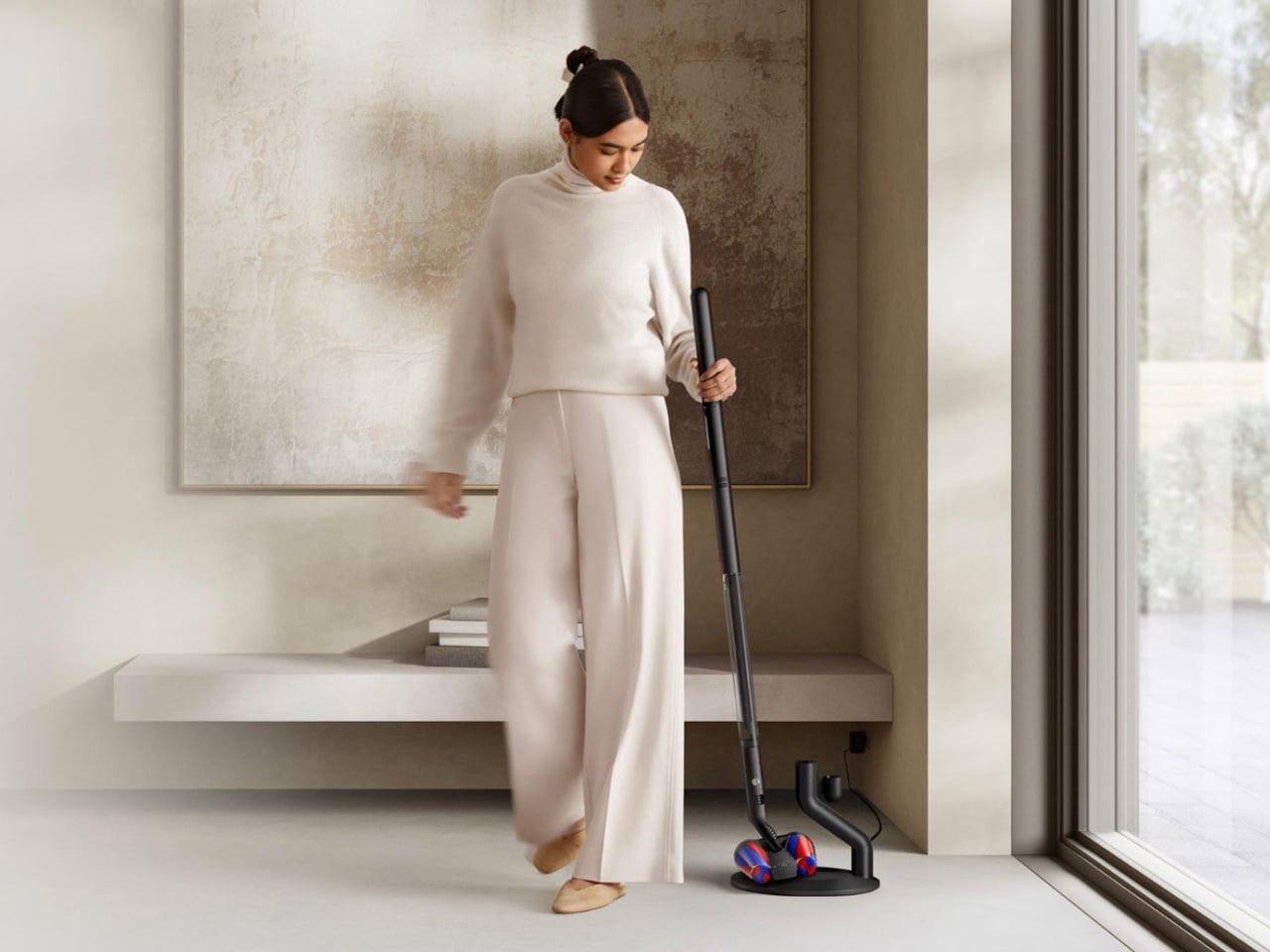
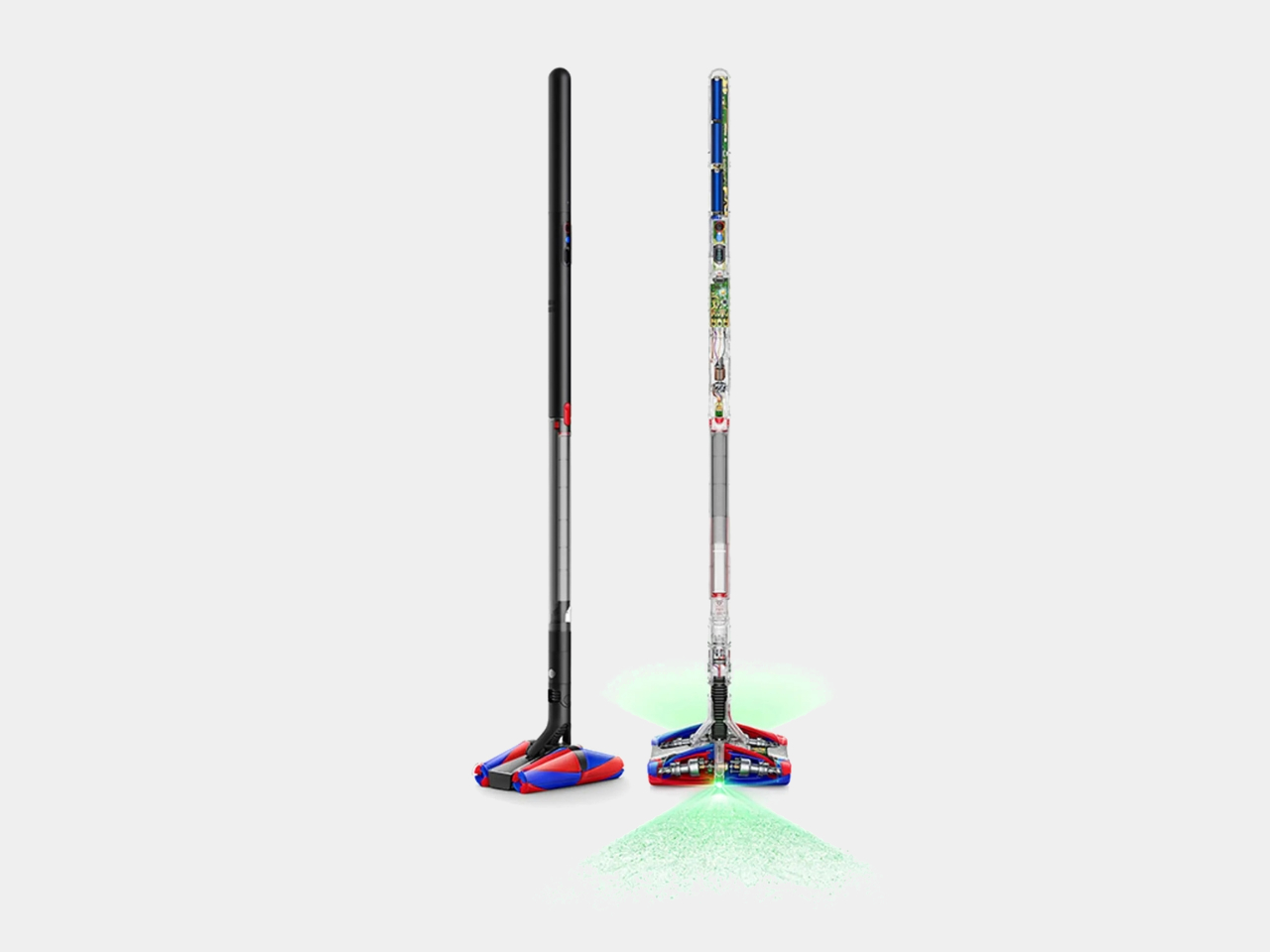
Dyson’s PencilVac is the world’s slimmest cordless vacuum cleaner, measuring just 38mm in diameter, comparable to the Dyson Supersonic hair dryer, and weighing approximately 1.8 kilograms. Inside that slim form sits the newly developed Hyperdymium motor, the smallest and fastest Dyson has produced, spinning at 140,000 RPM to deliver 55 air watts of suction power. The design lies nearly flat with an operational height of less than 10cm, reaching under furniture and into tight spaces that other vacuums cannot access. For a mom who keeps a tidy home, this is the vacuum that respects the spaces it cleans.
At 1.8 kilograms, it’s light enough to carry between rooms without it becoming its own task, and the cordless format removes the boundary between where cleaning starts and where inconvenience usually ends. The PencilVac was built for compact living spaces and for homes where form matters as much as function. It stores cleanly, moves with ease, and the industrial design holds up to scrutiny in a way most domestic appliances never attempt. The slim profile isn’t purely aesthetic. It’s what allows it to work precisely in the places that nothing else can reach.
What We Like
World’s slimmest cordless vacuum at 38mm diameter with an operational height under 10cm
Hyperdymium motor delivers 55 air watts of suction despite the ultra-compact form factor
What We Dislike
Battery life specifications are limited at launch and worth confirming for longer cleaning sessions
55 air watts may underperform compared to larger Dyson models on deep-pile carpet surfaces
10. Manduka PRO Yoga Mat
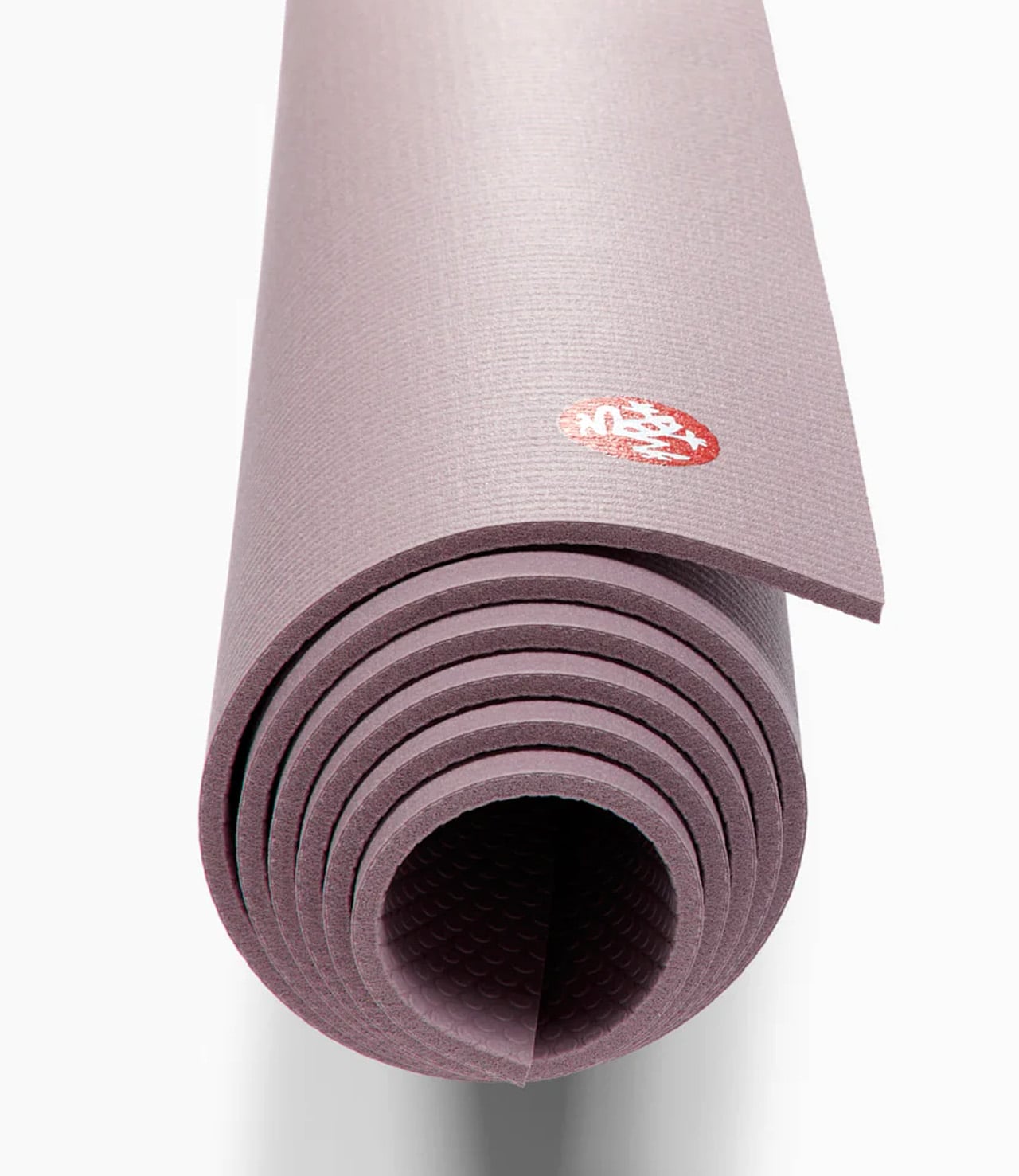
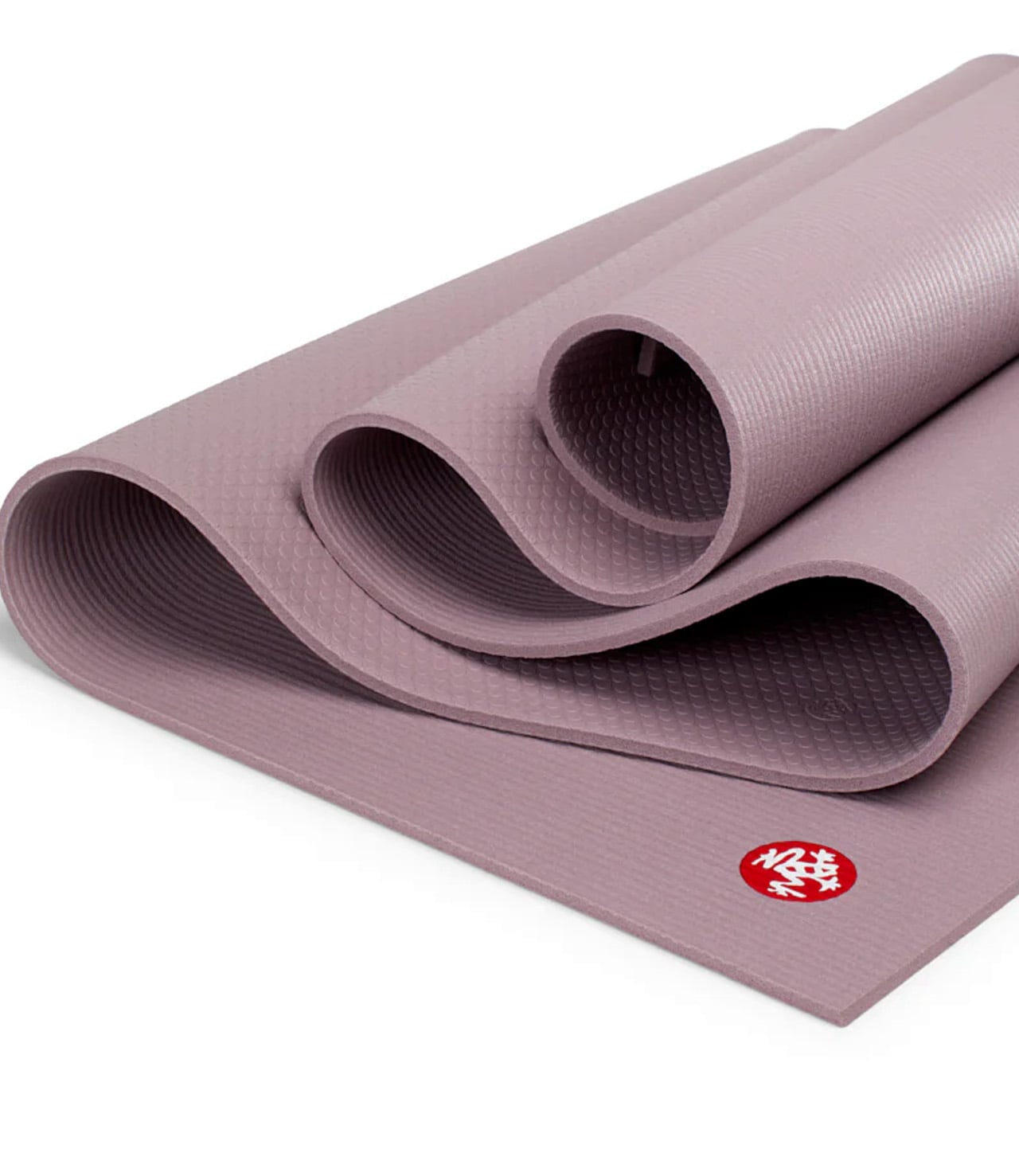
The Manduka PRO yoga mat has been crafted in Germany since 1997, and the lifetime guarantee isn’t a marketing footnote. It’s a commitment built into a high-density construction that holds its form through years of daily practice without compressing, peeling, or pilling. At 6mm thick, it delivers floor-like stability with enough cushioning to protect joints through longer sessions, and the closed-cell surface keeps sweat, moisture, and bacteria out of the mat entirely. For a mom building a home practice, or deepening one she already has, this is the mat that removes every reason to stop.
The PRO is the number one mat recommended by yoga teachers worldwide, and the reasoning is straightforward: it performs consistently whether the practice is restorative or physically demanding. Limited-Edition mats in marbled and striped colorways are hand-processed, meaning each one carries a unique pattern that won’t match the image exactly. That’s not a flaw. It’s the point. For a gift that will be used thousands of times over the years, the Manduka PRO is one of those rare purchases that costs less over a lifetime than everything it replaces, and looks better doing it.
What We Like
Lifetime guarantee backed by high-density construction that resists compression through years of use
Closed-cell surface actively prevents sweat, moisture, and bacteria from penetrating the mat
What We Dislike
At over seven pounds, it’s better suited to a home practice than a mat that travels regularly
Surface requires time to fully break in before reaching peak grip performance
The Gift That Stays
The best thing about giving something well-designed is that the moment doesn’t end when the wrapping comes off. It extends into the morning, she reaches for that coffee machine, the evening she lights the oil lamp, and the quiet hour spent on the yoga mat. These gifts don’t just mark an occasion. They become part of her routine, her space, and the way she moves through every single day long after.
That’s the real difference between a beautiful gift and a lasting one. A lasting gift still earns its place long after the occasion that inspired it. Whether it’s the ring she never takes off, the suitcase she grabs without thinking, or the mat she returns to every morning — the best gifts don’t fade. They settle in. They become hers. And years from now, she’ll still be glad you chose well.
Spending $200 on a pocket knife used to be the unofficial threshold between serious carry and serious compromise. That math has quietly shifted. A new generation of EDC blades is closing the gap between boutique craftsmanship and accessible pricing through smarter material choices, unconventional deployment mechanisms, and design thinking that prioritizes daily function over heritage markup. Premium steel, titanium frames, and ceramic bearing pivots no longer demand premium prices to be worth carrying.
These five knives prove the point, each one doing something a $200 blade would be proud of, at a fraction of the cost. They span micro titanium folders, gravity-activated mechanisms, premium Japanese steel, and desk-ready utility systems. The spec sheets read like knives nobody told about their own price tags. Whether you’re a daily carry purist or just getting started, this list changes what you expect from a budget blade.
1. ScytheBlade
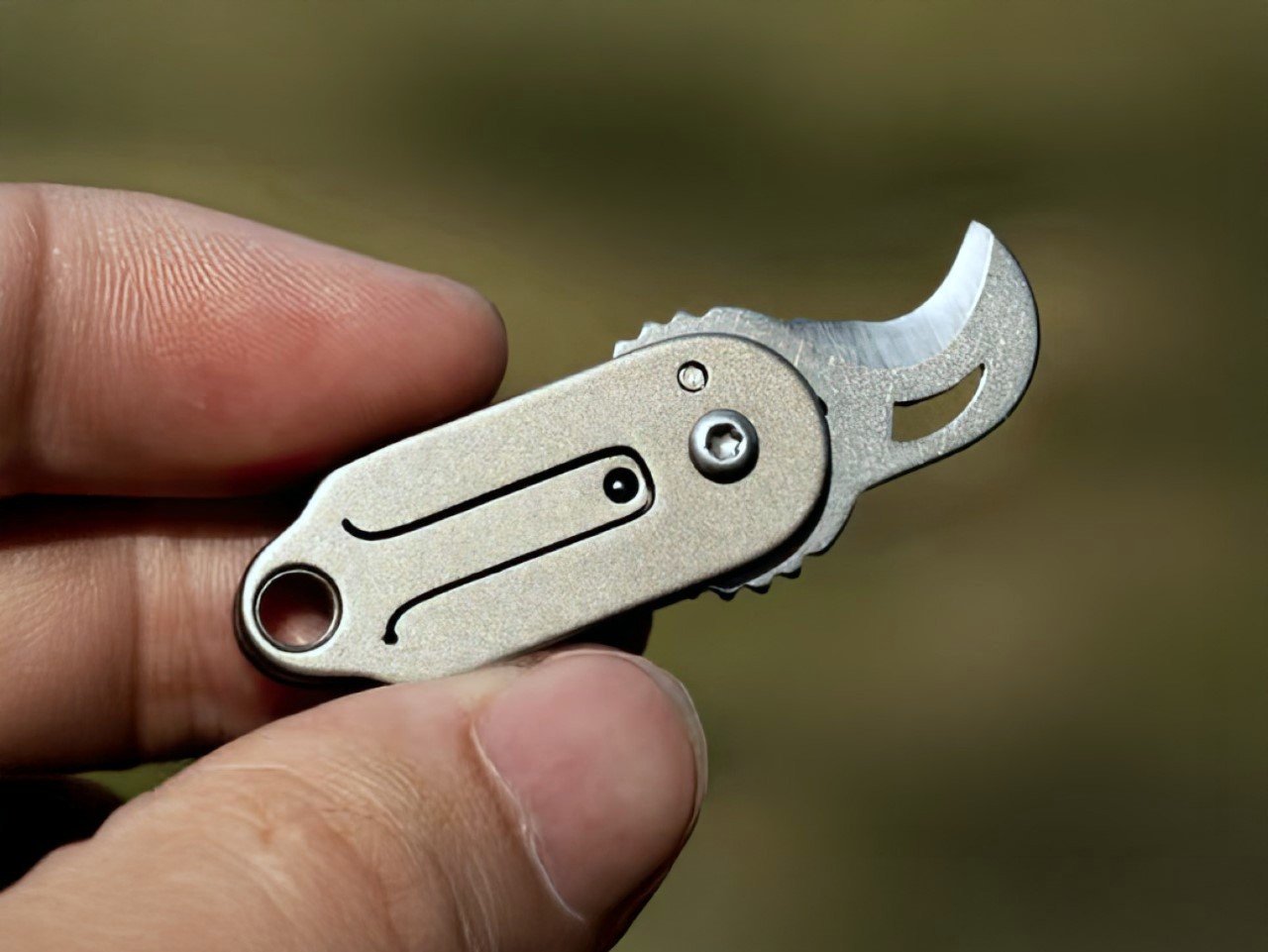
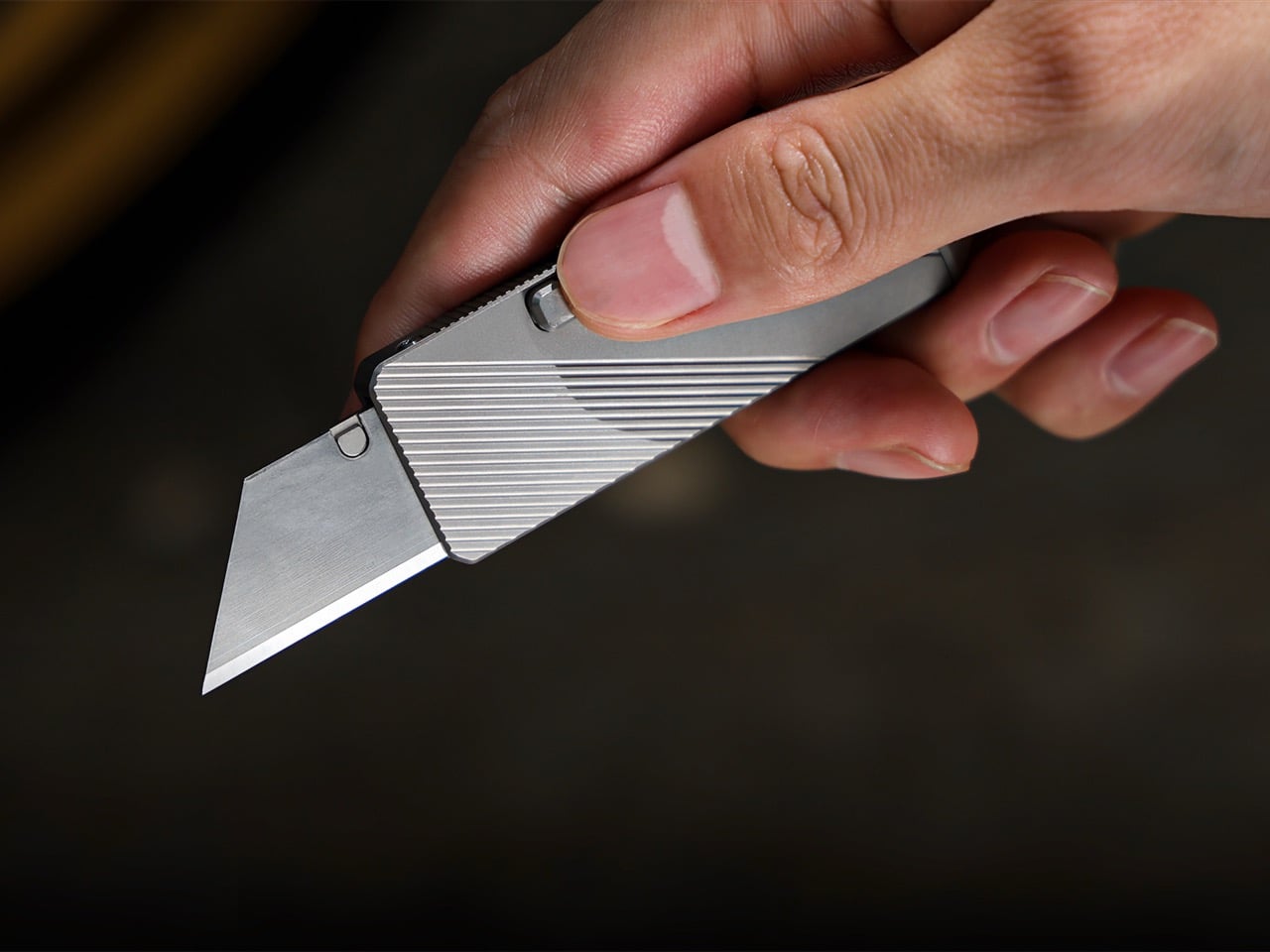
The curved blade of a scythe doesn’t seem like an obvious choice for pocket carry, but the ScytheBlade makes it work through radical miniaturization. This titanium EDC knife borrows the Grim Reaper’s iconic profile and shrinks it down to something resembling a tiger claw, creating a blade shape that looks dangerous because it genuinely is. At just 46mm when deployed, it challenges the idea that effective cutting tools need generous proportions, and the curve concentrates force in ways straight blades simply cannot match in this size class.
Titanium construction keeps the ScytheBlade at just 8 grams while delivering strength that feels disproportionate to its footprint. The material brings natural corrosion resistance without demanding constant maintenance, which matters enormously when you’re carrying something this small through varied conditions. You won’t notice it clipped to your pocket until the moment you need it — then that curved blade profile becomes immediately relevant. For anyone who values a knife they’ll genuinely forget is there until it isn’t, this is that knife.
What We Like:
Titanium build delivers extraordinary corrosion resistance at 8 grams
Curved blade geometry concentrates cutting force efficiently
What We Dislike:
46mm deployment limits the utility for heavier-duty tasks
Unconventional profile requires an adjustment period for users accustomed to straight blades
2. CraftMaster EDC Utility Knife
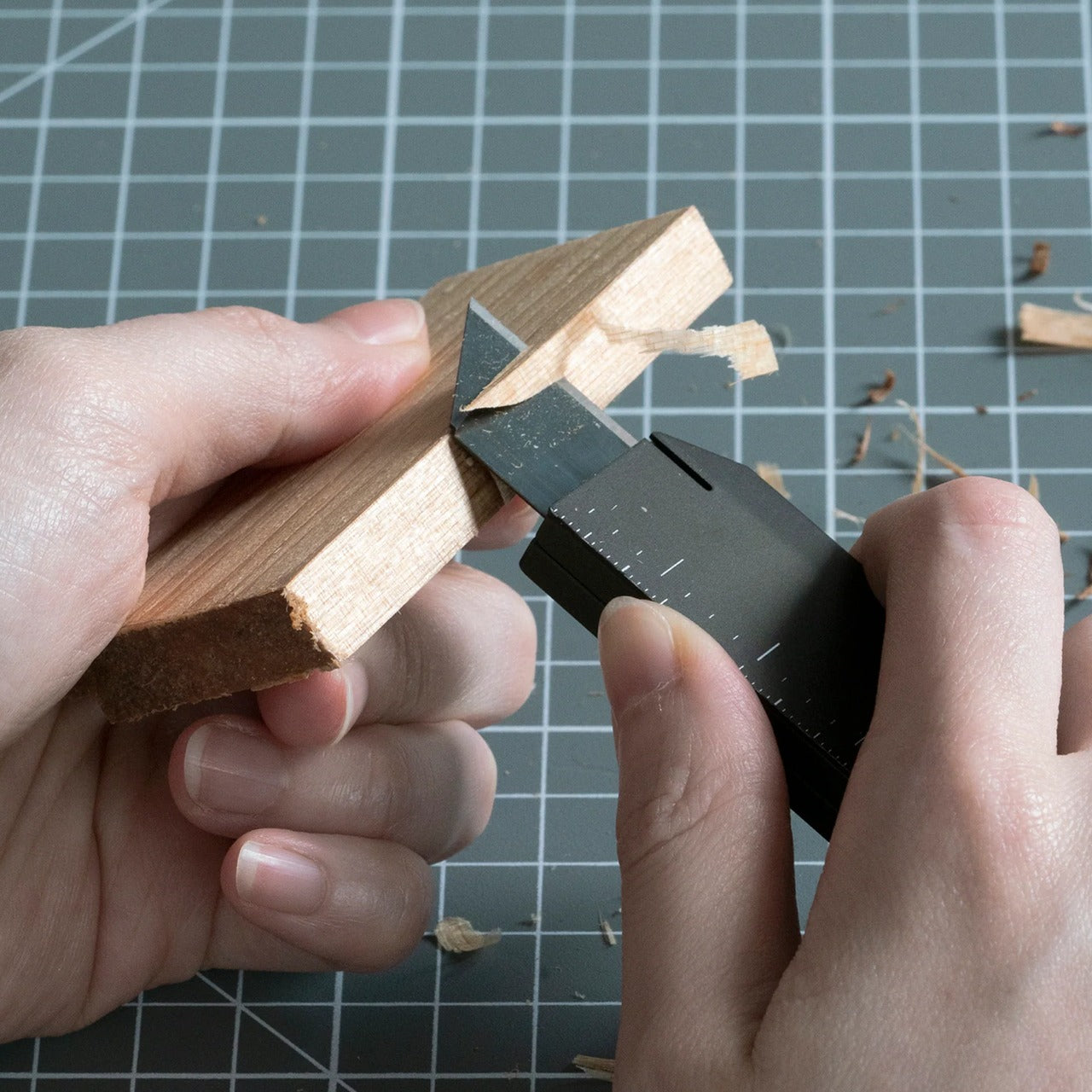
The CraftMaster reframes what a utility knife can look like, sitting on your desk or clipped inside your bag. Its clean metallic form and 8mm profile give it the presence of a precision instrument rather than a disposable box cutter, and the tactile rotating knob that deploys the OLFA blade adds a satisfying deliberateness to every draw. At 4.72 inches long, it sits comfortably in hand, and the magnetic back that docks its companion metal scale turns this into a system rather than just a single tool — the kind of considered pairing that usually costs considerably more.
The scale does real work. Dual metric and imperial markings, a raised edge for easy lifting off flat surfaces, and a built-in blade-breaker to snap off dull edges without hunting for a separate tool — every detail earns its place. The 15° curvature on the ruler protects your fingers during cuts, and the 45° inclination geometry handles box opening without risk to whatever’s inside. The OLFA blade system means you’re never stuck waiting for a replacement — just snap and carry on.
Magnetic scale docking system turns a single knife into a dual-tool carry setup
OLFA blade replacement system keeps long-term maintenance costs minimal
What We Dislike:
The utility blade format limits versatility outside of cutting and scoring tasks
The 8mm profile, while slim, may feel rigid compared to traditional folding knives
3. CIVIVI Vision FG (C22036-3)
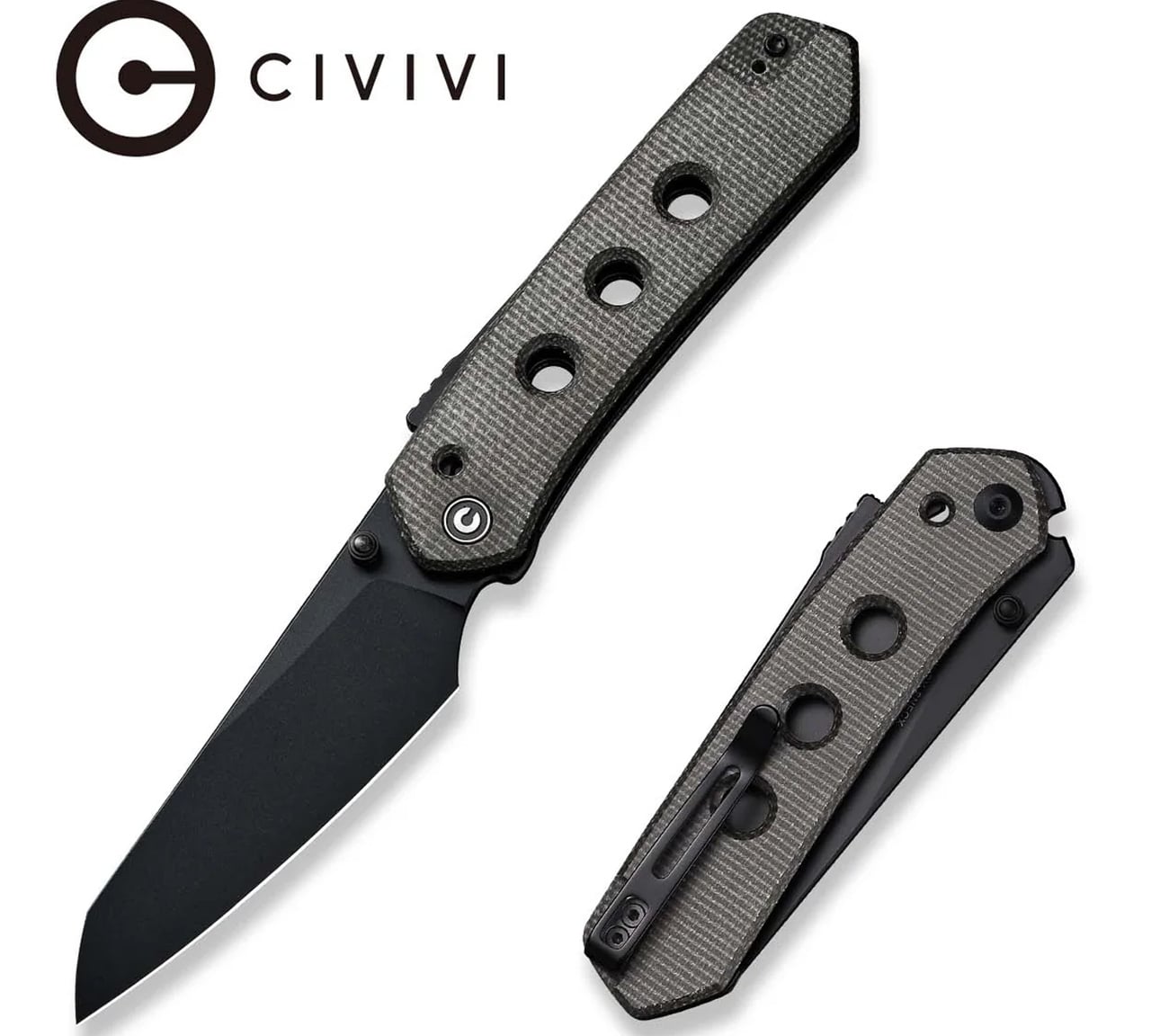
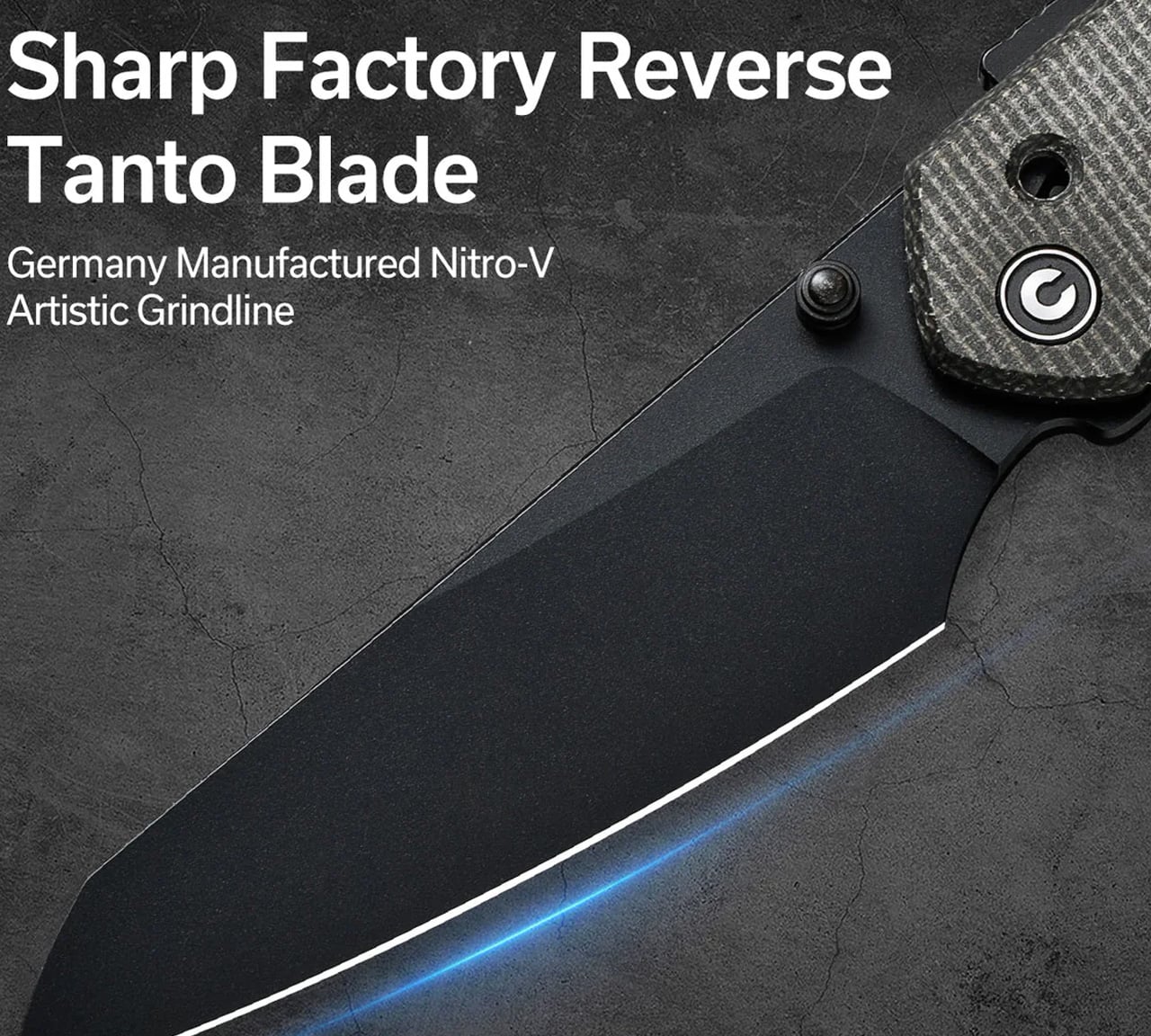
The CIVIVI Vision FG is what happens when a production knife takes fit and finish seriously at a price point that has no business supporting either. Designed by Snecx Tan, the reverse tanto Nitro-V blade hits 59–61HRC hardness and wears a flat grind that slices cleanly through almost anything you put in front of it. The caged ceramic ball bearing pivot opens with the kind of effortless arc typically reserved for knives costing twice as much, and the Superlock mechanism snaps into place with a confidence that feels overbuilt in the best possible way. At $79.90, this knife is genuinely difficult to rationalize not owning.
The dark green canvas Micarta handle is one of the most tactile grip materials in production knives at this price — it warms to the hand, develops character with use, and grips without feeling aggressive. A 4.45-inch closed length keeps carry unobtrusive, while the tip-up, ambidextrous pocket clip accommodates left and right-handed carry with equal practicality. Stainless steel liners, a black backspacer, and 3mm blade thickness round out a build specification that reads like a list from a knife twice the Vision FG’s price.
What We Like:
Nitro-V at 59–61HRC delivers excellent edge retention for daily use
Caged ceramic ball bearing pivot and Superlock mechanism punch well above this price tier
What We Dislike:
Canvas Micarta requires occasional cleaning to maintain its surface texture
4.07 oz carry weight is noticeable compared to lighter polymer-handled alternatives
4. Cubik
Knife designers typically rely on springs, flippers, or complex bearing systems to deploy blades, but the Cubik throws all of those conventions aside in favor of gravity. Press the trigger, tilt the knife downward, and the blade casually emerges. Release the trigger, and it locks securely in place. This elegantly stripped-back mechanism eliminates springs that rust, bearings that fail, and maintenance routines that accumulate over time. The Cubik works with physics rather than fighting it, and the result is a folder that feels more intuitive to use the longer you carry it.
The satisfying simplicity doesn’t compromise capability. The Cubik locks solidly enough to pierce hardwood, proving that mechanical restraint and functional strength are not at odds. The tungsten carbide glass breaker integrated into the rear of the handle transforms what reads like a gentleman’s folder into a legitimate emergency tool — a detail that elevates the Cubik from interesting to genuinely useful across situations you hope never to face. When most EDC knives chase complexity through layered features, the Cubik finds its edge by stripping away everything unnecessary.
What We Like:
Gravity-activated deployment eliminates springs and bearings that degrade over time
Tungsten carbide glass breaker adds genuine emergency utility without compromising the carry profile
What We Dislike:
Gravity deployment requires a deliberate wrist motion that takes some practice to master quickly
The novel mechanism means fewer aftermarket parts and service options compared to traditional folders
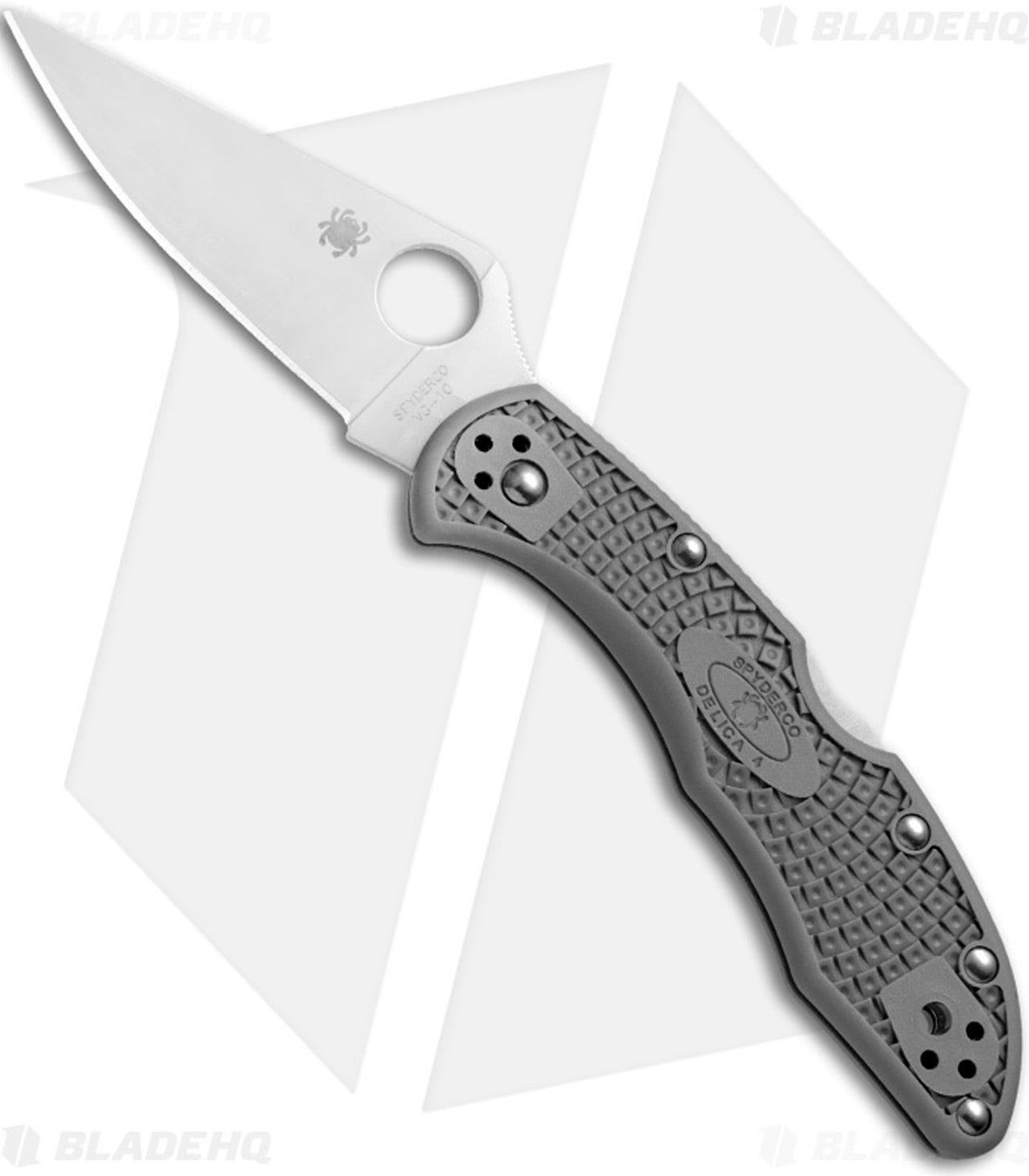
5. Spyderco Delica 4 (Gray FRN, VG-10)
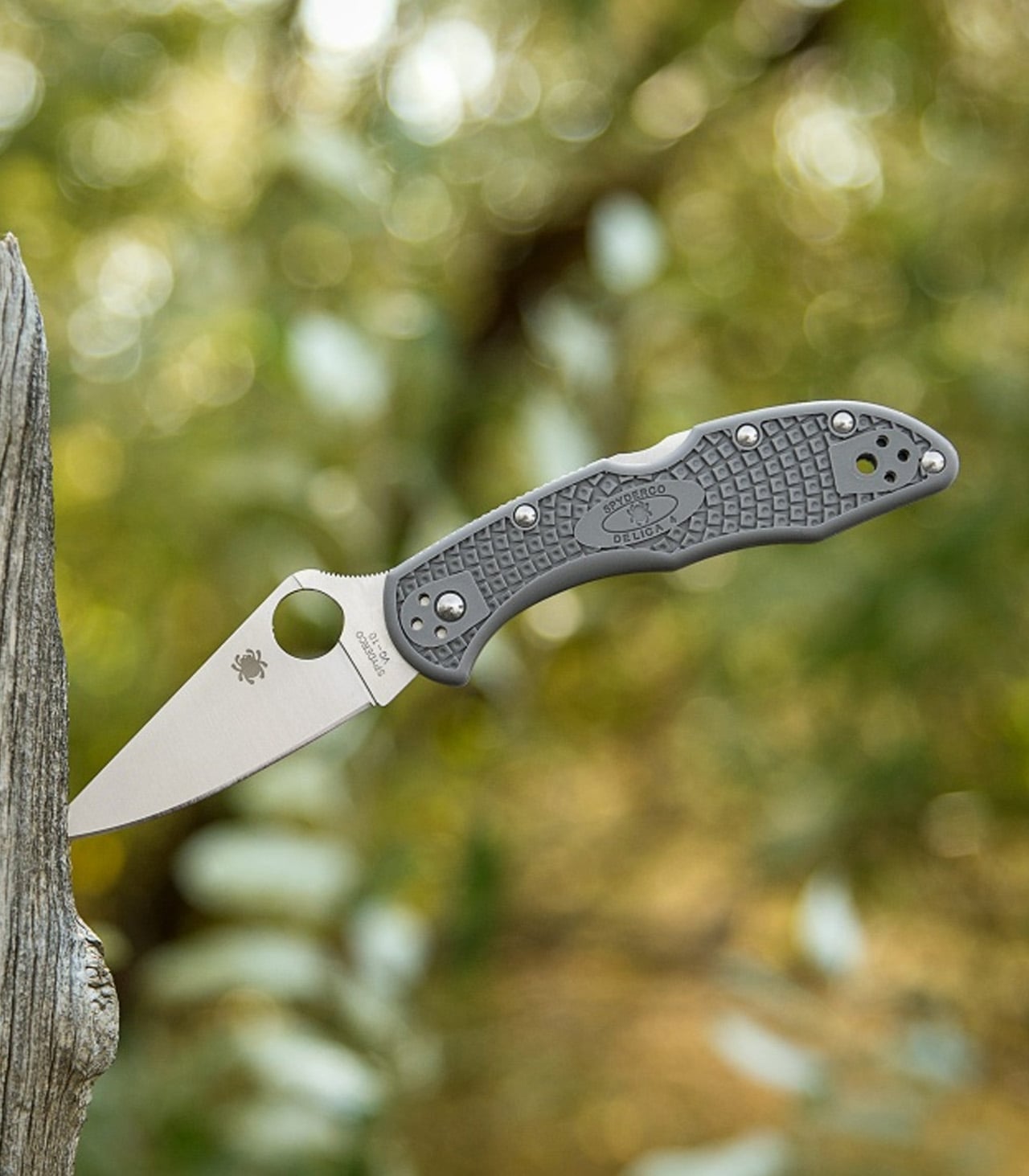
Few EDC knives have logged as many pocket miles as the Spyderco Delica 4, and the gray FRN flat-ground version remains the clearest argument for why. At $99, it sits at the very ceiling of this list’s price range and earns every dollar through a blade specification that refuses to make concessions. The full-flat ground VG-10 steel from Seki-City, Japan, slices with a thinness behind the edge that most production knives at twice the price don’t manage, and the phosphor bronze washers at the pivot produce a blade action that feels tuned rather than assembled. Ambidextrous thumb hole opening makes deployment effortless regardless of which hand reaches for it.
The FRN handle with Bi-Directional Texturing earns its keep in wet or cold conditions, where smooth handles become liabilities. Skeletonized stainless steel liners keep total weight down without compromising the frame’s integrity, and the four-way reversible pocket clip — tip-up and tip-down for both right and left carry — makes the Delica genuinely accommodating of how different people actually carry knives. Screw construction throughout means cleaning and adjustment take minutes. The Delica 4 has been in continuous production because nothing has replaced what it does at this price.
What We Like:
Full-flat ground VG-10 from Seki-City delivers premium slicing performance at a production price
Four-way reversible clip and ambidextrous thumb hole make this genuinely accommodating for any carry preference
What We Dislike:
The lockback mechanism requires two hands to close safely, which is a limitation in one-handed situations
FRN handle lacks the premium feel of G-10 or Micarta handles at comparable price points
The Takeaway
What each of these knives shares is a refusal to treat price as a ceiling on design ambition. The ScytheBlade rethinks what a folding blade profile can be and miniaturizes it into titanium. The CraftMaster turns a utility knife into a precision desk instrument with a magnetic accessory system. The CIVIVI Vision FG brings ceramic bearings, Nitro-V steel, and canvas Micarta together at a price that undercuts its own specification.
The Cubik trusts gravity to do the work springs typically handle, then adds a glass breaker for good measure. The Spyderco Delica 4 has simply been right for long enough that it no longer needs to prove anything. None of them cost $200. All of them think as they can. The best EDC knife isn’t necessarily the most expensive one — it’s the one you always reach for without thinking twice.
Hurricane season doesn’t announce itself with a calendar invite. It builds quietly offshore, gathers speed, and by the time a named storm is tracking toward your zip code, the window for thoughtful preparation has already closed. For anyone living within reach of a coastline, the months between now and June 1st aren’t a countdown — they’re a design problem. What gear do you actually trust when the power is out, the roads are flooded, your signal has dropped, and your phone is sitting at 8%?
The smartest coastal preparedness kits aren’t built around bulk. They’re built around precision. Tools that work without electricity. Radios that function when networks collapse. Lights that require no batteries, no charging, no maintenance. Blades that deploy on physics rather than springs that quietly corrode in salt air. What follows are five designs that solve real coastal emergencies without adding clutter to your go-bag or guilt to your preparation plan.
1. NoxTi Titanium Tritium Keychain Light
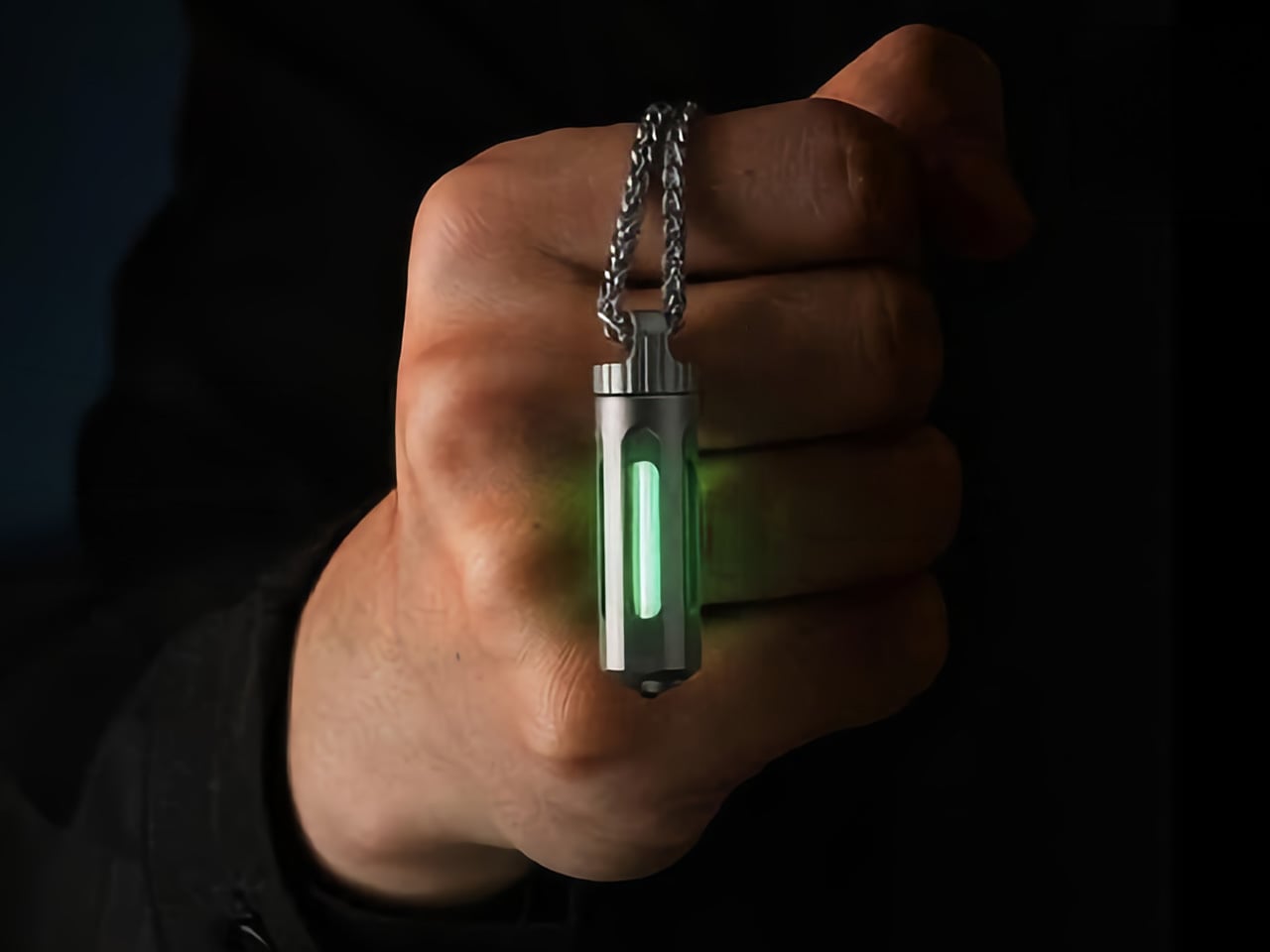
Tritium is a hydrogen isotope with a 12.3-year half-life. As it decays, beta particles strike a phosphor coating and produce continuous light — no battery, no charging, no maintenance required. The same physics used in emergency exit signs and military watches is packaged into the NoxTi: a 45mm Grade 5 titanium cylinder weighing 10.7 grams that glows reliably for 25 years. For coastal homeowners facing multi-day outages, that guarantee is worth more than any lumen count.
The tritium vial sits inside a precision quartz tube with 92% light transmission, held inside a CNC-machined body that resists salt-air corrosion. A ceramic glass breaker at one end handles vehicle-escape emergencies — one of the most critical scenarios during coastal flooding. When the vial dims after two decades, you push it out and slide in a replacement. Six color options, two titanium finishes, tritium pricing from $45.
What We Like
25 years of passive illumination powered entirely by material physics, with zero maintenance
Ceramic glass breaker turns an everyday keychain accessory into a genuine flood-escape tool
What We Dislike
The glow is intentionally faint — it orients you in the dark, it doesn’t light a room
Tritium is regulated in certain countries, worth confirming before you order
2. RetroWave 7-in-1 Radio
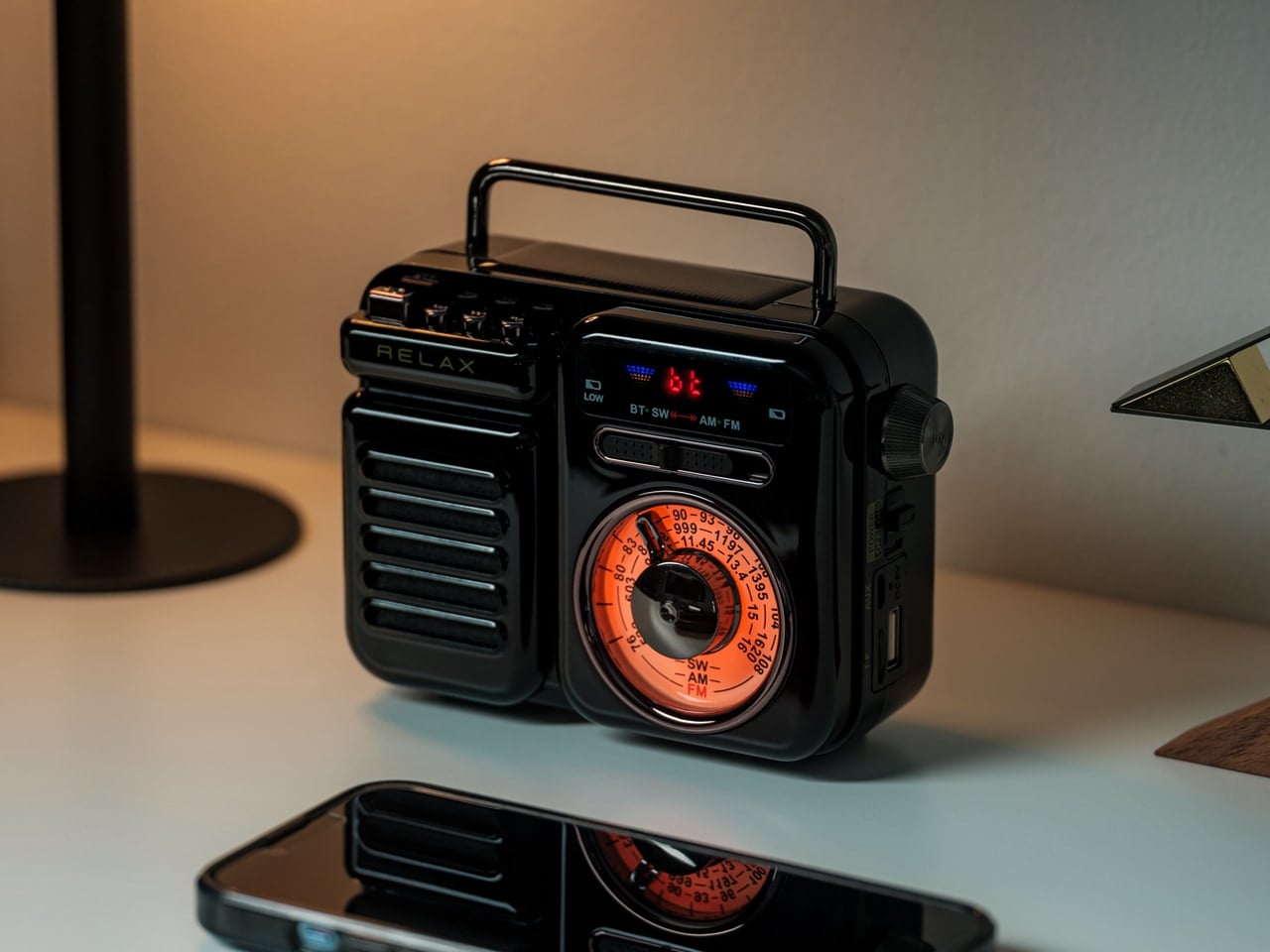
When a hurricane makes landfall, cell towers flood, lose power, or get overwhelmed. The RetroWave 7-in-1 Radio receives AM, FM, and shortwave broadcasts — infrastructure that operates completely independent of internet providers and remains live when everything digital has collapsed. Shortwave is the detail that separates it from a novelty: international emergency transmissions reach you even when every local tower in your county is offline.
Beyond its radio identity, the RetroWave functions as a Bluetooth speaker, MP3 player, LED flashlight, SOS alarm, hand-crank generator, and solar charging unit. That crank-plus-solar pairing is the decision that makes it genuinely coastal-ready. During a multi-day outage with no infrastructure in sight, a radio that generates its own energy isn’t a clever feature — it’s the only communication device in the room still working.
Hand-crank and solar charging mean it never fully runs out of operational power
Shortwave reception works completely independent of the internet and cellular networks
What We Dislike
Seven integrated functions mean a single point of failure affects the entire device
The retro aesthetic may cause buyers to underestimate it as decor rather than serious emergency hardware
3. Edgelet SpearEdge Titanium Folder
Hawks don’t cut with force — they cut with geometry. Their curved talons guide material naturally into the cutting path while the arc concentrates force exactly where it needs to land. That principle is what Edgelet has brought into the SpearEdge: a 66.3mm titanium folder with a hawk-talon blade profile built for the pull-cut motions your hand already makes naturally. Through cordage, packaging, and emergency sheeting, it demands less effort than a straight edge in a high-stress moment.
The finger ring adds slip resistance when handles are wet — a coastal reality worth designing around from the start. The titanium body resists the salt-air corrosion that quietly destroys conventional carry gear over a coastal season, and the open keyring slot at the tail means tool-free attachment to any go-bag loop.
Hawk-talon geometry reduces pull-cut effort through cordage and wet materials under pressure
Full titanium construction resists the salt-air corrosion that degrades conventional coastal carry gear
What We Dislike
The curved blade profile is a specialist shape — it won’t feel as universal as a straight edge for every task
4. TriBeam Camplight
Most emergency lighting treats light as binary. The TriBeam Camplight approaches illumination the way good design should — with modes built to match the moment. A 5-lumen ambient glow for navigating interiors without destroying night vision. A diffused camping mode for shared spaces. A focused 180-lumen beam for moving through flooded exteriors or searching in the dark. All three live inside a 12.8cm, 135-gram form factor that disappears into a jacket pocket without negotiation.
The TriBeam’s coastal value is its coherence across the full arc of a storm event. Ambient light for the final hours before landfall, flashlight mode for immediate tasks during the storm, and a 50-hour battery life that outlasts the extended outages that follow a major hurricane without a single recharge. It earns a permanent shelf position long before the season arrives, which is precisely the kind of preparedness tool that actually makes it out the door.
Three distinct modes adapt fluidly across pre-storm, during-storm, and post-storm scenarios
50-hour battery life comfortably outlasts most extended post-hurricane power outages in coastal zones
What We Dislike
180-lumen maximum output is solid for camp-scale use but limited for long-distance emergency signaling
Single-button mode cycling may slow down switching for users who need to change modes quickly under pressure
5. Cubik
Most EDC knives fail the coastal environment test quietly. Springs corrode. Bearing systems fill with salt residue. The Cubik solves this at the mechanical level: press the trigger, tilt the knife downward, and gravity deploys the blade. Release, and it locks solid. No springs, no bearings, no hidden pivot mechanisms accumulating salt. In a marine environment, removing every rust-prone component isn’t minimalism — it’s engineering honesty applied to a real problem.
The blade locks solidly enough to pierce hardwood, proving that restraint and functional strength aren’t at odds. The tungsten carbide glass breaker integrated into the rear handle adds a vehicle-escape capability inside a format most people would read as a refined daily carry — the same critical function the NoxTi covers from the keychain end. Two glass breakers across a coastal kit means redundancy, which is the structural principle every good preparedness strategy is built around.
What We Like
Gravity deployment eliminates springs and bearings — the primary corrosion vulnerabilities in any coastal carry knife
Tungsten carbide glass breaker adds a high-stakes vehicle-escape function inside an unassuming daily carry format
What We Dislike
Gravity deployment requires a learned wrist motion that takes deliberate practice to make instinctive under stress
The stripped-back mechanism may read as feature-light to buyers who equate knife quality with mechanical complexity
The Best Coastal Kit Is the One You’ll Actually Carry
Preparedness fails most often not because people lack the right gear, but because the right gear never made it into the bag. These five designs earn permanent carry not by stacking features, but by removing the ones that fail under salt air, dead batteries, and sustained pressure. The best coastal kit isn’t the most expensive — it’s the one built around tools you trust completely before the season ever starts.
Hurricane season 2026 begins June 1st, and the window for deliberate preparation is narrower than it feels from the other side of spring. Each tool on this list solves a specific coastal failure mode — lighting without electricity, communication without infrastructure, cutting without corrosion, illumination without recharging, and emergency signaling without a signal. Put them together, and you have a kit that performs at the precise moment every conventional backup stops working.