LEGO Just Turned Monet’s Water Lilies Into a $250, 3,179-Piece Set

LEGO has done something wild with Claude Monet’s 1899 painting “Bridge Over a Pond of Water Lilies.” The Danish toy company, working alongside The Metropolitan Museum of Art, just released a 3,179-piece set that transforms one of art history’s most serene moments into a brick-built experience. It’s available for $249.99 starting March 1st for LEGO Insiders, with general release on March 4th.

What makes this set stand out isn’t just that someone decided to turn a beloved Impressionist painting into blocks. It’s how they did it. The design team actually visited The Met to study the original canvas, not some digital reproduction. They needed to see how Monet’s brushstrokes caught light, how the colors shifted depending on where you stood. Then Met staffers flew to Denmark to review different versions before settling on the final design. That back-and-forth took over a year.

Designer: LEGO

The result plays with perspective in ways that feel faithful to Monet’s intentions. LEGO designer Stijn Oom explained that the team layered tiles and plates both vertically and horizontally to mimic actual brushwork. When you look at the finished piece up close, you see individual bricks, specific colors, the mechanics of construction. Step back, and those details dissolve into water lilies floating on a pond, a Japanese bridge arching overhead, trees drooping with verdant weight.

It’s the same optical shift that happens with Impressionist paintings. Monet wanted viewers to experience his garden in Giverny as atmosphere and light, not as precise botanical documentation. The LEGO version captures that same tension between detail and impression, between what’s actually there and what your brain constructs from the pieces.

The set uses an unexpected range of elements to pull off the effect. There are butterflies scattered throughout, along with flowers and fruit pieces that add dimension. The bridge itself appears in light blue rectangular bricks, while the water incorporates different shades that shift the overall tone. A diagonal band of lighter elements cuts from top right to bottom left, recreating that streak of light that structures Monet’s original composition.

Monet painted this particular scene in 1899, during a period when he was obsessed with his water garden. He’d designed the whole thing himself, importing water lilies and building that iconic bridge inspired by Japanese prints. He’d paint the same view over and over, at different times of day, in different seasons, trying to capture how light changed everything. This painting lives at The Met now, and if you visit starting March 1st, you’ll be able to see the original canvas next to LEGO’s interpretation.

The museum is taking the collaboration further. They’re installing a larger-than-life LEGO reproduction of the painting in The Met Store, complete with a photo opportunity where you can pose behind the bridge. There’s also a podcast launching with Met curator Alison Hokanson, presumably diving into Monet’s techniques and the Impressionist movement.

This isn’t LEGO’s first time turning famous art into buildable sets. The LEGO Art line has tackled everything from Andy Warhol’s pop art to Japanese landscape aesthetics. But translating Impressionism presents specific challenges. The whole point of that artistic movement was to capture fleeting sensory experiences, the shimmer of light on water, the blur of a garden in motion. How do you replicate that with rigid plastic pieces?

Oom and his team decided to embrace the contradiction. The Monet set doesn’t try to smooth over its brick-ness. Instead, it uses the geometry of LEGO to create texture that reads as organic from a distance. Those precise edges and defined shapes accumulate into something soft and atmospheric. It’s a translation rather than a reproduction, which feels more honest to Monet’s experimental spirit than a slavish recreation would be.

The set comes with a wall hanger so you can display it like actual art. At just over 3,000 pieces and a price point around $250, it’s aimed squarely at adult builders who want something meditative and museum-worthy for their walls. The build process itself becomes a way to slow down and pay attention to color relationships, spatial composition, the way small decisions accumulate into a complete vision.

The post LEGO Just Turned Monet’s Water Lilies Into a $250, 3,179-Piece Set first appeared on Yanko Design.

Game Boy-Inspired Kids’ Device Concept Fixes What Tablets Get Wrong

Tablets promised to revolutionize early learning. Instead, they delivered passive screen time, accidental in-app purchases, and kids hypnotized by algorithmically-served content they didn’t choose. The interface designed for adult fingers forces children into frustration. The endless app notifications destroy focus. The flat glass slab offers zero tactile feedback for developing motor skills.

Royal Tyagi and Aarna Mishra looked at this mess and asked a better question: What if a learning device was actually designed for how children learn, not how adults think they should learn? Their answer is Puzzle Pals, a smart interactive game concept that ditches the tablet playbook entirely and borrows from something far more effective: the chunky, intentional design of 90s handheld gaming.

Designers: Royal Tyagi, Aarna Mishra

The device sits somewhere between a Game Boy and a Fisher-Price toy, which is precisely the sweet spot it should occupy. It’s unapologetically retro in its aesthetic, with that handheld form factor that screams late 90s gaming. But here’s where it gets interesting: every design choice serves a developmental purpose. Those rounded edges aren’t just there to look friendly. They create an ergonomic grip that actually fits the way young children hold objects. The slightly curved body mirrors the natural curl of small fingers.

Look at the button layout and you’ll see thoughtful restraint. Instead of cramming in a dozen tiny inputs that would overwhelm little users, Puzzle Pals features large, well-spaced buttons arranged in a way that makes accidental presses nearly impossible. Each button has a distinct shape, supporting tactile learning before kids even understand what they’re supposed to do with them. The high-contrast color scheme isn’t a random aesthetic choice either. It’s engineered for instant visual recognition, helping children navigate independently without constant adult intervention.

The games themselves (Animal Memory and Shape Pattern) follow a similarly intelligent design philosophy. Three difficulty levels per game mean the device grows with the child rather than getting abandoned after a week. Too many kids’ tech products assume a static skill level, but Puzzle Pals acknowledges that children are constantly evolving learners. The progressive difficulty keeps them engaged without triggering frustration, that delicate balance every parent desperately seeks.

What really sets this concept apart is its approach to failure. After three incorrect attempts, the game simply provides the correct answer and moves on. No punishing sounds, no game-over screens, no shame spiral. It’s a remarkably compassionate design decision that prioritizes learning over winning. Kids continue building skills without the emotional baggage that can turn educational activities into sources of anxiety.

The reward system is equally clever. Instead of generic “great job!” messages, every correct response triggers a fun fact or informative snippet. It transforms each small victory into an opportunity for additional learning, creating positive associations between achievement and curiosity. That’s the kind of psychological design that usually requires a team of child development experts, yet it’s been seamlessly integrated into gameplay.

The physical prototype shows how the designers balanced playfulness with functionality. Available in eye-catching colors like sunshine yellow, cherry red, sky blue, deep purple, and lime green, each device looks like something a child would actually want to pick up. The matte finish and smooth curves feel premium without being precious. There’s a speaker grille up top for audio feedback, and the screen size is perfectly proportioned for the overall footprint.

What Tyagi and Mishra have articulated through Puzzle Pals is bigger than just another kids’ gadget concept. Their vision centers on making learning genuinely joyful, not just tolerable. They want to build core cognitive skills like recognition, problem-solving, sequencing, and pattern understanding while encouraging creativity and exploration. Most importantly, they aim to instill a love of learning itself, that intangible quality that determines whether a child approaches new challenges with excitement or dread.

The post Game Boy-Inspired Kids’ Device Concept Fixes What Tablets Get Wrong first appeared on Yanko Design.

This $70 Brewer Just Beat Every $200 Pour-Over on the Market

You know that friend who can’t commit to just one pair of shoes? The OREA Brewer V4 is like that, except instead of cluttering your closet, it actually makes your life simpler. This modular pour-over coffee brewer gives you four different brewing personalities in one compact design and it’s kind of genius, especially for those looking for 4-in-1 kind of devices.

The V4 comes from OREA, that scrappy British coffee brand that started when founder Horia Cernusca wanted a brewer small enough to pack into his camping gear. Working with Argentinian industrial designer Lautaro Lucero, they’ve created something that’s catching fire with everyone from home coffee nerds to world champion baristas.

Designer: Lautaro Lucer for OREA

The V4 uses a modular system with four swappable bases that completely change how your coffee tastes. There’s the Classic bottom for balanced brews, the Open bottom that focuses flow centrally for a different flavor profile, the Fast bottom that’s basically uncloggable and ideal for experimenting with finer grinds, and the Apex bottom that sits somewhere between flat and conical brewing styles. Each base manipulates water flow differently, highlighting distinct characteristics from the same bag of coffee.

The brewer comes in two geometries: Narrow and Wide. Think of them as siblings with different personalities. The Narrow version uses a 73-degree angle and brews faster, emphasizing brightness and intensity in your cup. It’s perfect for single servings up to about 28 grams of coffee. The Wide version has a 65-degree angle, offers about 20 percent more volume, and can handle up to 36 grams. It draws down about 30 seconds slower and produces cups with more body and balance.

What makes the V4 special isn’t just the modularity, though. The connection point sits high on the brewer, which means those swappable bases can actually make meaningful design changes rather than cosmetic ones. OREA tested relentlessly to eliminate unnecessary parts since every component adds cost for a small business. What survived the cutting room floor represents genuinely different brewing experiences.

The results speak volumes in competition. The V4 won the European Product Design award in 2023, chosen as the winning design in the home tea and coffee brewers category. But more impressively, world champion baristas have gravitated toward OREA brewers. Martin Wölfl won the 2024 World Brewers Cup using an OREA, following in the footsteps of 2022 champion Sherry Hsu. Elite competitors like Ply Pasarj, Paul Ross, and Matteo D’Ottavio have all made it their tool of choice.

Lautaro Lucero brought his industrial design background to bear on the V4’s aesthetics and functionality. The Argentinian designer has been crafting coffee products for years, and his collaboration with OREA extends beyond the brewers to include the Sense Collection of coffee cups. His design language emphasizes clean lines and purposeful geometry that does more than look pretty on your counter.

The V4 is made from BPA-free polypropylene approved by FDA and EU standards, paired with a stainless steel base. It’s dishwasher-safe, lightweight, and durable enough for cafe use. Coffee shops are picking up on this, with roasters like Newbery Street Coffee choosing it for their pop-ups because it’s easy to clean during busy service hours and customers can replicate cafe recipes at home with the same equipment.

Using the V4 means embracing experimentation. You can switch bases mid-week to coax different notes from the same coffee. Want more clarity? Try the Fast bottom. Craving body? Swap to the Wide brewer with the Classic base. The flexibility means you’re not locked into one brewing style, which feels refreshing when so many coffee tools pigeonhole you into a specific technique.

The price point sits around £49.99 for a complete set with one geometry and all four bases, which breaks down to about £12.50 per brewer configuration. That’s pretty reasonable considering you’re getting what amounts to four different brewing experiences without needing separate equipment cluttering your kitchen.

OREA built something here that bridges the gap between hobbyist and professional. The V4 takes the consistent, full-bodied profile of traditional flat-bed brewers and adds the clarity and speed of cone brewers. It’s the kind of thoughtful design that makes you wonder why nobody did it sooner, even though you know the execution is way harder than it looks. For anyone serious about pour-over coffee but tired of commitment to a single brewing method, the V4 delivers options without the complexity.

The post This $70 Brewer Just Beat Every $200 Pour-Over on the Market first appeared on Yanko Design.

This Bedside Lamp Remembers Everything You Forget at 6 AM

We’ve all been there. You’re running late, grab your keys, rush out the door, and three blocks later realize your phone is still sitting on the nightstand. Or maybe you left every light in your apartment blazing because your brain was already at work before your body made it out the door.

Designer YeEun Kim gets it. Her concept project, Darling, tackles the scattered morning routine with a smart bedside organizer that’s equal parts lamp, tray, and very gentle personal assistant. The design speaks to anyone who’s ever retraced their steps back home, cursing under their breath about that one essential item left behind.

Designer: YeEun Kim

The concept addresses a surprisingly common problem. According to Kim’s research, modern forgetfulness often stems from irregular sleep patterns, excessive screen time, and the kind of stress that comes with overpacked schedules. The typical advice is to take walks, get better sleep, or generally relax more. But if you’re the type of person who needs this advice, you’re probably also the type who doesn’t have time to follow it.

So Darling takes a different approach. Instead of trying to fix your entire lifestyle, it focuses on building small, sustainable habits. The kind that actually stick because they’re simple enough to do even when you’re running on four hours of sleep and too much coffee.

The design itself is remarkably soothing to look at. Kim built the entire aesthetic around soft curves and circular forms, which makes sense for something meant to bookend your day. The last thing you want on your nightstand is aggressive angles and harsh lines staring at you before bed or first thing in the morning. The lamp component arches over a shallow tray, creating this balanced, almost zen-like silhouette that wouldn’t look out of place in a boutique hotel or a carefully curated Instagram feed.

But the real cleverness is in how it works. Darling connects to your schedule and uses light cues to help you remember things. Place your everyday essentials in the tray before bed, and when it’s time to leave in the morning, the device uses flickering lights to remind you to grab what you need. It’s a subtle nudge rather than an alarm or notification, which feels refreshingly analog in our current era of constant pings and alerts.

The psychology behind it is solid too. Memory experts have long advocated for designated spots for frequently used items. When your keys always go in the same place, your brain doesn’t have to work as hard to remember where they are. Darling just makes that designated spot beautiful and adds a gentle technological reminder system to back up your muscle memory.

Looking at Kim’s development process, you can see the thoughtfulness that went into refining the concept. The sketches show dozens of iterations, each exploring different configurations of the circular theme. The prototyping photos reveal careful attention to how hands interact with the object, how the tray needs to be positioned, and how the lamp should cast light without being obtrusive.

What makes Darling particularly interesting in the broader design landscape is how it pushes back against the “smarter is better” mentality. We’re surrounded by devices that want to do everything, track everything, and connect to everything. Darling does exactly three things: it holds your stuff, it lights your space, and it reminds you not to forget. That restraint feels almost radical.

The concept also reflects a larger conversation happening in design circles about how technology should integrate into our most personal spaces. Bedrooms have become battlegrounds for sleep trackers, smart speakers, and charging stations for multiple devices. Darling suggests that maybe what we need isn’t more capability but more calm. A piece that helps us be slightly more organized without demanding we learn a new app or wade through settings menus.

Whether Darling makes it from concept to production remains to be seen. But as a design statement, it’s already doing important work. It reminds us that solving everyday problems doesn’t always require complex solutions. Sometimes you just need something beautiful that flickers at the right moment.

The post This Bedside Lamp Remembers Everything You Forget at 6 AM first appeared on Yanko Design.

This Bugle-Shaped Coat Rack Solves Your Tiny Entryway Problem

If you live in an apartment or a home with a narrow entryway, you know the struggle. Coats pile up on dining chairs. Umbrellas lean precariously against walls. Traditional coat racks with their sprawling arms take up precious floor space you simply don’t have. You need something that actually works without turning your entry into an obstacle course.

Enter The Bugle by Design by Joffey, a coat and umbrella stand that rethinks the entire concept by borrowing its form from an unlikely source: a brass musical instrument. This isn’t just clever design for the sake of being clever. It’s a genuinely smart solution to a problem that plagues anyone living in tight quarters.

Designer: Design by Joffey

The beauty of this piece is in its vertical footprint. Where most coat stands spread outward with multiple arms jutting in different directions, The Bugle stays contained within a slim, elegant silhouette. A single curved loop rises from a slender pole, mimicking the distinctive shape of a bugle, complete with a flared bell detail at the top. Everything sits on a simple circular base that keeps it stable without hogging floor space.

That curved loop is where the magic happens. It’s perfectly sized to drape a jacket or hang a scarf, while a smaller ring positioned within the larger curve holds umbrellas upright. Two storage solutions in one compact design, occupying roughly the same footprint as a single dining chair but infinitely more functional and better looking.

The proportions feel just right because they’re borrowed from something that was already thoughtfully designed. Musical instruments like bugles have curves that exist for acoustic and ergonomic reasons. Those shapes have been refined over centuries to feel balanced and purposeful. By translating that form into furniture, Joffey taps into proportions that our eyes instinctively recognize as harmonious.

What really sets The Bugle apart is its ability to be both functional and sculptural. In a small entryway, every object needs to pull double duty. This piece stores your essentials while also acting as a visual anchor that defines the space. The saturated periwinkle blue gives it presence without overwhelming the room. That matte finish adds a contemporary softness that works with almost any decorating style, from Scandinavian minimalism to eclectic maximalism.

There’s something playful about the design that makes coming home a bit more enjoyable. Instead of generic IKEA-standard furniture, you get a conversation starter. Guests notice it immediately. The bugle reference is clear enough to be charming but abstract enough to feel sophisticated. It nods to vintage Americana, summer camps, and military ceremonies without being literal or kitschy about it.

From a practical standpoint, the compact design means you can tuck it into corners or narrow spaces where a traditional coat rack would never fit. Got a skinny hallway? A weird alcove by the door? A studio apartment where every inch counts? This works. And because it stays vertical rather than horizontal, it doesn’t interfere with foot traffic or make your entryway feel cluttered.

The restraint in this design is what makes it successful. There are no unnecessary embellishments, no gimmicks, no trying-too-hard details. Just a pure, confident form that solves a real problem beautifully. In an era where product design often veers toward the overly complex, The Bugle proves that simple ideas executed well will always win.

What I love most is that it demonstrates how everyday objects can be better. Your coat rack doesn’t have to be an eyesore you tolerate. It can be something you actively enjoy looking at, something that makes your tiny entryway feel more intentional and curated rather than cramped and chaotic.

Design by Joffey gets it. Small spaces need smart solutions, and smart solutions can also be delightful. The Bugle delivers on both fronts, turning a mundane necessity into a little moment of joy every time you walk through your door. And in a tiny apartment, those moments matter more than you’d think.

The post This Bugle-Shaped Coat Rack Solves Your Tiny Entryway Problem first appeared on Yanko Design.

Camprit Just Solved Camping’s Bulkiest Problem With 5 Titanium Pieces

There’s something oddly satisfying about watching outdoor gear shed its bulk. We’ve seen tents collapse into impossibly small pouches and sleeping bags compress into cylinders the size of water bottles. Now, Camprit is applying that same minimalist philosophy to camp stoves with their TiStove, and the results are kind of brilliant.

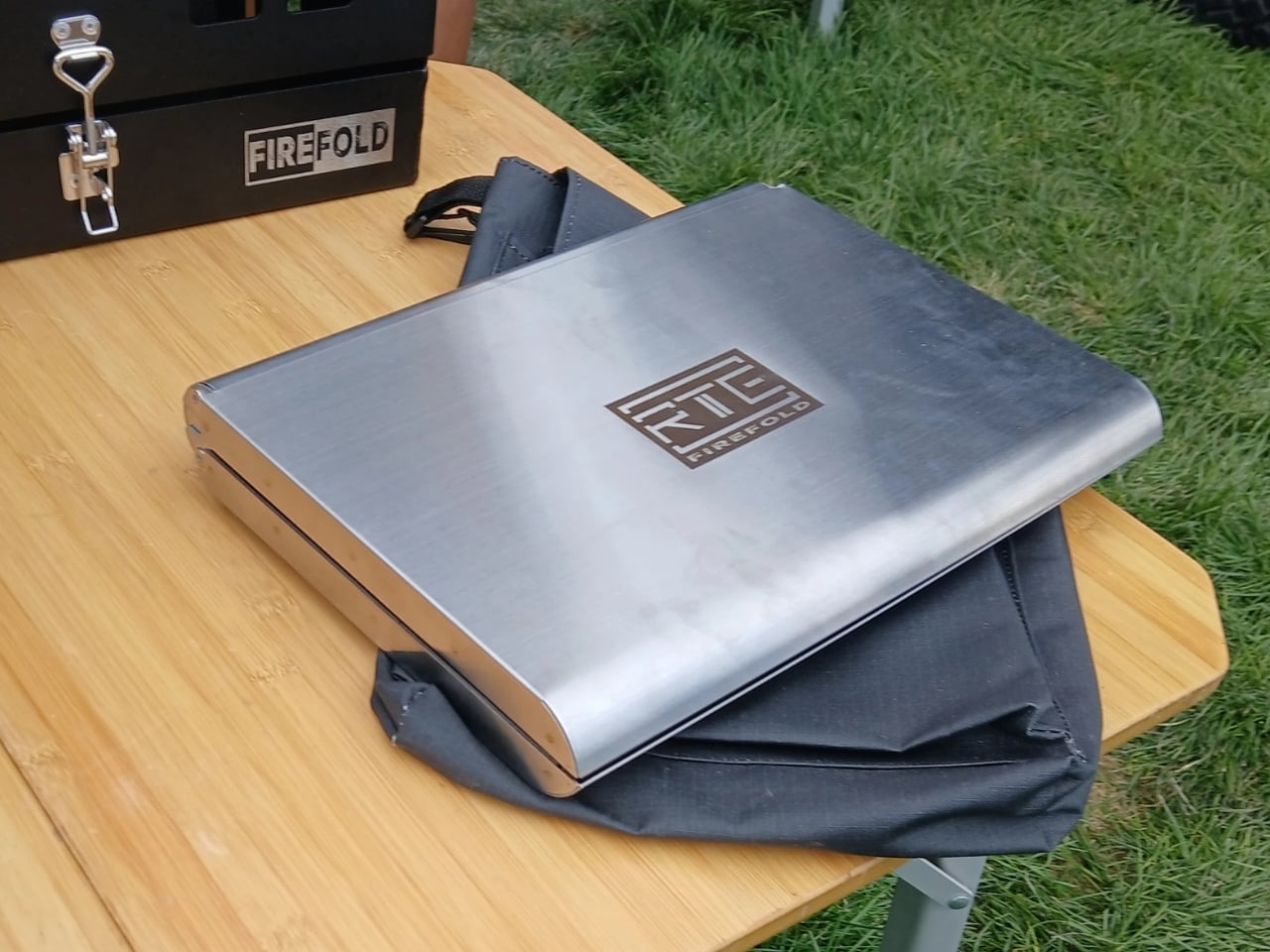
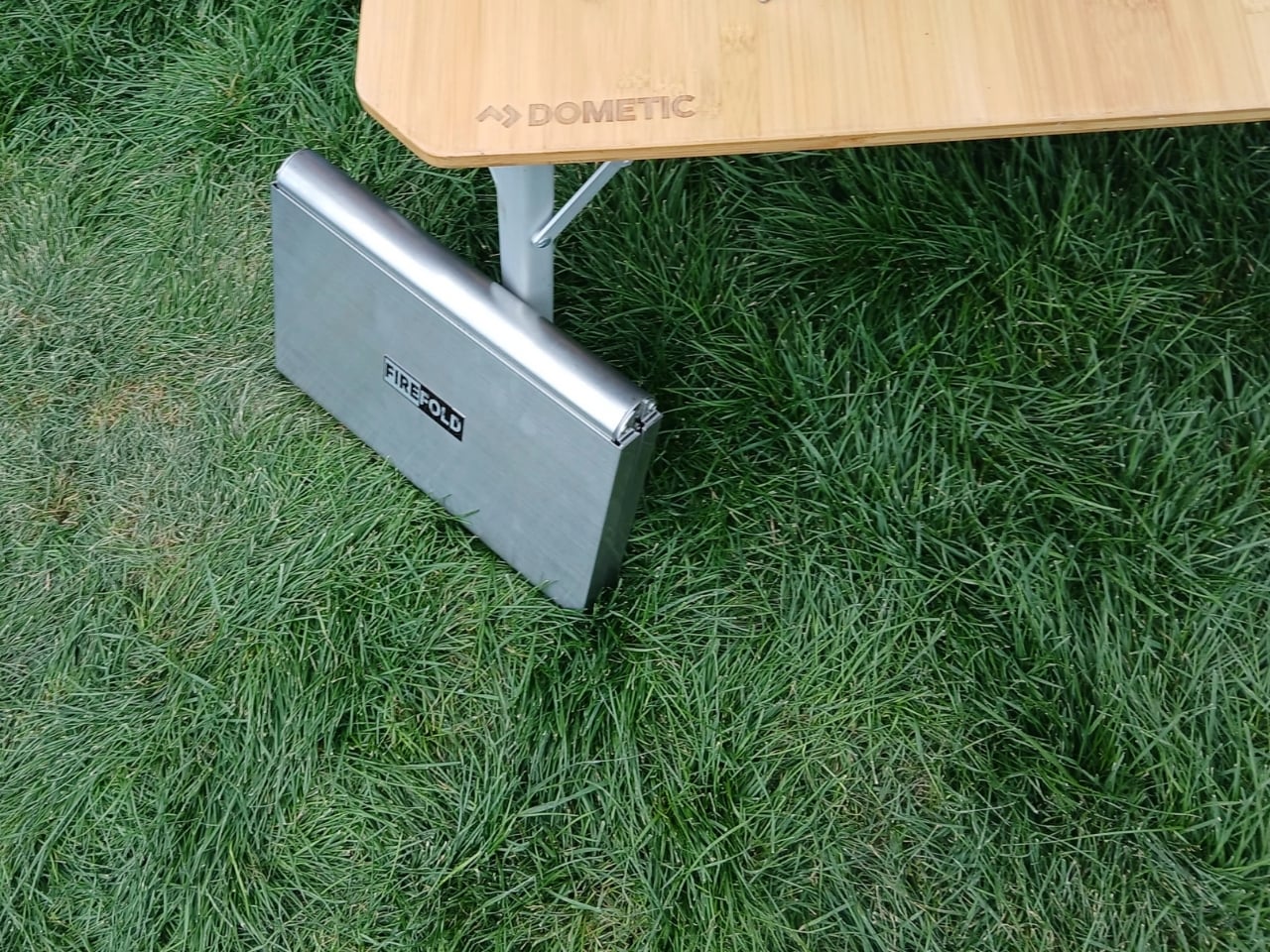
The concept is deceptively simple. Take five titanium pieces (two foldable legs and three cooking panels), make them pack completely flat, and keep the whole setup under 1.5 pounds. But what makes this more interesting than just another ultralight camping gadget is how Camprit rethought what a portable stove should actually do.

Designer: Camprit

Most camp stoves force you into a specific cooking method. You’re either boiling water for freeze-dried meals or you’re lugging around a full camping kitchen. TiStove splits the difference by giving you three interchangeable panels that transform the cooking surface. The base panel handles your standard boiling needs. Swap in the grill panel and you can cook directly on the grates. Want to sear something? There’s a panel for that too. It’s modular cooking without the usual camping compromise of eating yet another packet of instant noodles.

The titanium construction isn’t just about keeping weight down, though that’s obviously a factor when you’re counting grams in your pack. Titanium brings that combination of strength and heat resistance that makes it ideal for something that needs to withstand direct flame while remaining stable on uneven ground. The material also means the stove won’t corrode when it inevitably gets wet, smoky, or covered in whatever wilderness conditions you throw at it.

What’s particularly clever is the no-assembly approach. Anyone who’s fumbled with camping gear in fading daylight knows that “some assembly required” translates to “good luck finding that tiny connector piece you just dropped in the dirt.” TiStove unfolds rather than requiring construction, which means you’re cooking faster and cursing less.

The fuel flexibility adds another practical layer. Unlike canister stoves that leave you dependent on finding the right fuel cartridge, this system burns wood, twigs, branches, basically whatever dry combustibles you can scavenge. That’s not just convenient but also more sustainable than constantly buying and disposing of fuel canisters. Plus, there’s something primal and satisfying about cooking over actual fire rather than a blue gas flame.

Camprit isn’t new to this space. They previously launched FireNest, which followed a similar modular, flat-pack titanium philosophy. With TiStove, they’ve refined the concept into something that feels more like a complete cooking system than a single-purpose stove.

The flat-pack design also addresses one of camping’s most annoying realities: pack space is precious. When your stove collapses to basically the thickness of a laptop, it slides into spaces that bulkier gear could never occupy. That means more room for the things that actually matter, like extra food or that book you’re definitely going to read by the campfire.

There’s a broader trend here worth noting. Outdoor gear has been shedding the old “rugged means bulky” mentality for years now, but projects like TiStove show how far that evolution has come. This isn’t about sacrificing functionality for portability. It’s about questioning whether those trade-offs were ever necessary in the first place.

The Hong Kong-based company seems to understand that good design isn’t about adding features but about removing friction. Every aspect of TiStove, from the material choice to the panel system to the folding mechanism, eliminates a pain point. Can’t find fuel? Burn sticks. Pack too heavy? Here’s titanium. Tired of one-note camping meals? Swap the cooking surface.

Whether you’re a weekend warrior or someone who just appreciates clever product design, TiStove represents the kind of functional innovation that makes you wonder why it took this long. It’s not reinventing fire, just making it easier to cook over one. And sometimes, that’s exactly what good design should do.

The post Camprit Just Solved Camping’s Bulkiest Problem With 5 Titanium Pieces first appeared on Yanko Design.

Timbercraft Built a Tiny Home That Actually Feels Like Your Cozy Space

There’s something refreshing about a tiny house that doesn’t try to be everything to everyone. The Ynez by Timbercraft Tiny Homes embraces exactly what it is: a compact, beautifully crafted cottage on wheels that proves you don’t need square footage to have style.

At just 20 feet long and 8.5 feet wide, the Ynez represents a departure from Timbercraft’s usual lineup of larger, more luxurious models. But what it lacks in size, it more than makes up for in thoughtful design and rustic charm. This is the kind of tiny house that makes you reconsider what you actually need versus what you think you need.

Designer: Timbercraft Tiny Homes

The exterior strikes that sweet spot between understated and eye-catching. Engineered wood siding in a warm beige tone wraps the structure, punctuated by crisp white trim and crimson red windows that add just enough personality without veering into quirky territory. A metal roof tops it all off, giving the home a cottage-like appearance that feels both timeless and practical. There’s even a small front porch area and an exterior storage box, because even in 150 square feet, outdoor space matters.

Step inside and you’re greeted by shiplap walls and pine flooring that immediately establish the home’s rustic credentials. The Alabama-based builders clearly understand that in a space this compact, material choices carry extra weight. Every surface counts, and the warm wood tones create a cohesive look that feels intentional rather than cramped.

The layout follows a straightforward approach that works. The kitchen occupies a decent portion of the floor plan, featuring upper cabinets and a large sink that suggests this isn’t just a space for reheating takeout. Small appliances keep things functional without overwhelming the room, and there’s enough counter space to actually prepare a meal. It’s a kitchen designed for people who cook, just on a smaller scale.

Adjacent to the kitchen, the living area provides room for a small couch or a couple of chairs. It’s not a sprawling entertainment space, but it doesn’t need to be. This is where the Ynez’s philosophy becomes clear: it’s designed for people who want to live simply without feeling deprived. You can have friends over. You can curl up with a book. You just can’t host a dinner party for twelve, and that’s perfectly fine.

The bathroom deserves special mention because tiny house bathrooms can be hit or miss. This one includes a ceramic tile shower and a standard flushing toilet, housed in what is admittedly a snug space. But there’s something to be said for a real shower with real tile, rather than the cramped plastic stalls you sometimes see in tiny homes. A built-in closet on the main floor handles storage needs without eating into precious square footage.

Upstairs, the single loft bedroom accessed by ladder provides sleeping space for two with room for a double bed. The ceiling is low, as it always is in tiny house lofts, but that’s the trade-off for keeping the home easy to tow and park. This isn’t a space where you’ll be doing yoga in the morning, but it serves its purpose as a cozy sleeping nook.

What makes the Ynez particularly interesting is its positioning in the tiny house market. With a base price around $52,000, it represents a more accessible entry point compared to larger models that can easily climb past six figures. It’s small enough to tow with many standard trucks, making it practical for people who actually want to move their tiny house around rather than park it permanently.

The Ynez doesn’t reinvent tiny house living or introduce groundbreaking features. Instead, it demonstrates that solid craftsmanship and thoughtful design can create a compelling home within serious space constraints. It’s a reminder that bigger isn’t always better, and that sometimes the most interesting design solutions come from working within tight parameters rather than against them.

For anyone considering tiny house living, the Ynez offers a realistic preview of what downsizing actually looks like. It’s not about sacrifice. It’s about editing your life down to what matters most and finding a space that accommodates that vision. At 150 square feet, that’s exactly what this little cottage on wheels delivers.

The post Timbercraft Built a Tiny Home That Actually Feels Like Your Cozy Space first appeared on Yanko Design.
Nike Just Turned Air Into Team USA’s Smartest Olympic Jacket

Remember when Nike introduced the Air Milano jacket a few months back? The inflatable jacket that promised to solve the age-old runner’s dilemma of overheating mid-run? Well, it just made its official debut at the 2026 Winter Olympics in Milan, and Nike’s chief design officer Martin Lotti is making it clear: this isn’t some novelty stunt.

The jacket’s now being worn by Team USA athletes during medal ceremonies, which is pretty much the ultimate endorsement for any piece of sportswear. But beyond the Olympic spotlight, there are some fascinating new details emerging about why this jacket matters more than you might think.

Designer: Nike

Lotti explained that Nike has been working with air as a cushioning technology in footwear for half a century, but they’ve barely scratched the surface of what air can do. The interesting twist? From a design perspective, they’re working with a medium that’s completely invisible. You can’t see air, you can’t touch it in the traditional sense, yet it’s proving to be one of the most versatile materials in their arsenal.

The real game changer here is how the jacket addresses temperature regulation. According to Lotti, runners face this problem constantly. You start your morning run when it’s cold, you warm up as you go, and then what? Most of us just tie the jacket around our waist without thinking about it. It’s such an automatic response that we don’t even realize we’re settling for an imperfect solution.

With the Air Milano, that problem disappears. The jacket inflates with a small battery-powered fan through a valve on the front, and it takes about 20 seconds to go from windbreaker to mid-weight puffer. Need to cool down? Press the same valve and gradually release the air. The whole process happens while you’re moving, which means you can adjust your warmth on the fly without breaking stride or stopping to fuss with layers.

One of the most compelling arguments for this technology is the weight-to-warmth ratio. Traditional down puffers have a fatal flaw: when they get wet, they lose their insulating properties. The feathers clump together, the jacket gets heavy, and suddenly you’re wearing a soggy, useless shell. Because the Air Milano uses actual air as insulation, water doesn’t compromise its performance. It stays light, it stays warm, and it doesn’t wet out.

Nike also revealed that this jacket showcases what they’re calling A.I.R. Technology, which stands for Adapt, Inflate, Regulate. The whole design is informed by body mapping data from Nike’s Sport Research Lab and uses computational design to create those sculptural baffles you see on the surface. It’s not just about making something that looks cool; it’s about strategically placing air where your body needs warmth most.

The Team USA version comes with some exclusive touches that weren’t part of the original announcement. There are sculpted design elements, a custom ACG pump (instead of the generic battery-powered fan initially mentioned), metallic twill branding, and an interior lining graphic depicting the Garden of the Gods in Colorado Springs, where Team USA trains. More importantly, Nike built in accessibility features like interior thumb loops on the bottom hem and a magnetic zipper specifically designed to help Paralympic athletes put on and close the jacket independently.

What’s particularly interesting is that this isn’t Nike’s first rodeo with inflatable outerwear. They’ve been experimenting with this concept for 20 years, starting with the ACG Airvantage jacket and continuing with the ISPA Adapt Sense Air. But the Air Milano represents a major evolution in both technology and wearability. It’s lighter, faster to inflate, and actually solves a practical problem instead of just being a technical curiosity.

Lotti’s perspective on this is refreshing. He’s adamant that the Air Milano isn’t a gimmick because it addresses a real issue that athletes face every single time they go for a run. That’s the difference between innovation for innovation’s sake and design that actually improves how people move through the world.

The jacket is positioned as part of Nike’s broader FIT system of apparel, which includes Therma-FIT insulation, Aero-FIT cooling, Dri-FIT moisture-wicking, and Storm-FIT weather protection. It’s not meant to replace every jacket you own, but rather to fill a specific need for adaptive warmth in changing conditions.

Seeing Team USA athletes wearing these jackets on the podium in Milan gives the whole project a very different context. It’s not just a prototype or a concept piece anymore. It’s performance gear that’s being tested at the highest levels of athletic competition, which means Nike has confidence it can handle real-world demands.

The post Nike Just Turned Air Into Team USA’s Smartest Olympic Jacket first appeared on Yanko Design.

FlowSence Just Built the Coffee Scale That Teaches You to Brew

Making good pour-over coffee feels like being asked to juggle while blindfolded. You’re managing water temperature, grind size, pouring rhythm, and extraction time all at once, but you can’t actually see what any of those variables are doing to your final cup. You taste the result, shrug, and wonder if you should have poured slower or used hotter water. Then you try again tomorrow with a completely different outcome.

FlowSence, designed by Hyeokin Kwon, is built around a simple insight: brewing doesn’t have to stay invisible. Most of us learn coffee through trial and error because we lack the sensory training to connect what we taste with what we did. We might know our coffee tastes weak or bitter, but translating that into actionable changes requires experience we haven’t built yet. Tools like TDS meters offer numbers, but numbers without context just add another layer of confusion.

Designer: Hyeokin Kwon

What makes FlowSence different is that it refuses to automate your brewing. Instead, it acts like a patient coach standing beside you, translating the invisible parts of extraction into something you can actually see and understand. While you pour, it measures weight, temperature, and flow in real time, then visualizes those changes on a 4-inch round OLED display. You stay in control of the kettle, but now you can watch your pouring rhythm, notice when your flow rate drops, and start connecting your physical movements to what’s happening in the cup.

The interface starts with a rotary dial that lets you input the basics: coffee origin, roast level, grind size, water temperature, and dose. Turn to adjust, press to confirm. Once you’ve set your parameters, an AI-generated recipe appears, giving you a suggested approach based on what you’ve told it about your beans. From there, brewing begins, and the screen shifts into feedback mode.

This is where the learning happens. Instead of just showing you a timer and a weight, FlowSence tracks your pouring behavior and presents it visually. You can see whether you’re pouring steadily or in uneven bursts. You can spot the moment your water temperature drops too much. You start to notice patterns in your technique, which means you can actually correct them. Over time, your pours become more consistent, not because the machine took over, but because you’ve learned what consistency looks like.

The physical design supports this learning-centered philosophy. The machine is compact and vertical, built from aluminum alloy and heat-resistant composite materials. A cylindrical body houses the measurement tech, with a side-mounted cradle holding your brewing vessel and a weighted base that keeps everything stable. That pop of orange on the base isn’t just aesthetic, it’s a visual anchor that makes the tool feel approachable rather than clinical. The whole thing connects via Wi-Fi and Bluetooth, runs on USB-C power, and draws less than 10 watts. It’s not trying to dominate your counter or complicate your setup.

The packaging reflects the same clarity. When you open the box, the side profile of FlowSence is immediately visible, showing you its structure before you’ve even lifted it out. Components are arranged in sequence, so the unboxing process doubles as an introduction to how everything fits together.

What FlowSence really offers is a shift in how we think about coffee tools. Most brewing gadgets either do everything for you or leave you completely on your own. FlowSence lives in the middle. It gives you real-time information and visual feedback, but it doesn’t take the kettle out of your hand. The goal isn’t a perfect robotic pour. The goal is helping you understand what a good pour feels like so that eventually, you don’t need the screen anymore.

For people who’ve felt stuck in their coffee routine or intimidated by the complexity of manual brewing, that’s a meaningful difference. You’re not just making coffee. You’re learning a skill that actually sticks, supported by a tool designed to make the invisible visible. And maybe that’s the kind of coffee gadget we’ve been missing all along.

The post FlowSence Just Built the Coffee Scale That Teaches You to Brew first appeared on Yanko Design.

The Umbrella Stand That Refuses to Be Grey or Boring

There’s something quietly rebellious about a product that announces its refusal to blend into the background right there in its name. Meet notgrey, an umbrella stand from designer Joffey that’s basically the antithesis of every sad, utilitarian coat rack you’ve ever ignored in a hotel lobby.

At first glance, it looks almost like a piece of kinetic sculpture that wandered out of a modern art museum and decided to make itself useful. A slender black metal frame rises from a bold blue base, punctuated by a cone-shaped holder in that perfect burnt orange-red that interior designers are always calling “terracotta” but really just makes you think of summer sunsets and Spanish roof tiles. Perched on one of the extending arms is a warm orange dish that could easily pass for a decorative accent if it weren’t so brilliantly practical.

Designer: Design by Joffey

The genius of notgrey is how it takes something most of us barely think about and turns it into a conversation piece. Umbrella stands traditionally occupy that weird category of household objects we know we probably need but can never quite get excited about. They’re the sensible shoes of home furnishings. But Joffey has created something that makes you actually want to display your rainy day clutter.

Let’s talk about what it actually does, because this isn’t just pretty geometry. The cone holder catches your dripping umbrella without taking up much floor space. The extending arm supports a coat hook that can handle your wet jacket. That orange dish? Perfect for corralling keys, sunglasses, your phone, or whatever else you’re juggling when you stumble through the door. And at the base, there’s room to kick off your shoes, keeping everything you need for coming and going in one tidy vertical arrangement.

What makes this design particularly smart is how it maximizes vertical space. Small entryways are notoriously tricky to organize, you need storage but you can’t sacrifice precious square footage. Notgrey solves this by building up instead of out. The slender profile means it tucks nicely beside a door without creating an obstacle course, while still offering multiple functions stacked on that single pole.

The color choices feel intentional in a way that goes beyond just being eye-catching. That blue base grounds the whole piece, literally and visually. The red cone creates a focal point that draws your eye without overwhelming the space. And the orange dish adds warmth that keeps the primary colors from feeling too stark or toy-like. Together, they create a palette that feels both playful and sophisticated, which is a surprisingly tricky balance to strike.

There’s also something refreshing about a functional object that doesn’t apologize for taking up visual space. So much contemporary design is obsessed with disappearing, with being invisible and unobtrusive. Everything’s supposed to be minimalist and neutral and blend seamlessly into your carefully curated aesthetic. But notgrey takes the opposite approach. It says, if I’m going to be in your home, if I’m going to serve a purpose, I might as well look interesting while I’m at it.

This is exactly the kind of design that makes mundane routines feel a little more special. Coming home on a grey, drizzly day and having somewhere cheerful and organized to stash your soggy belongings is the kind of small pleasure that accumulates over time. It’s not going to change your life, but it might change how you feel about your entryway, which is more than most umbrella stands can claim.

For anyone who’s been looking at their cluttered doorway and thinking there has to be a better solution than a pile of wet coats on the floor and umbrellas propped against the wall, notgrey offers an answer that’s both practical and genuinely delightful to look at. It’s proof that even the most ordinary household problems deserve solutions with a little personality.

In a market saturated with beige and white and “goes with everything” neutrals, here’s a design that confidently announces its presence. And really, isn’t that exactly what you want from something whose literal name is a rejection of dullness?

The post The Umbrella Stand That Refuses to Be Grey or Boring first appeared on Yanko Design.