Gustaf Westman’s Curling Bowl Turns Olympic Gold Into Your Snack

There’s something delightfully unexpected about watching a designer take a winter sport and turn it into a snack vessel. But that’s exactly what Swedish designer Gustaf Westman has done with his latest creation, the Curling Bowl, and it might be the most charming thing to come out of the Milano Cortina 2026 Winter Olympics.

Westman, who has built a reputation for his inflated, chunky aesthetic that makes everything look like it’s been puffed up with joy, found his inspiration in an unlikely place. When his fellow Swedes, siblings Rasmus and Isabella Wranå, took gold in the mixed doubles curling event against Team USA, Westman did what any designer would do: he celebrated by creating something new. The result is a glossy, sky-blue bowl that perfectly captures the rounded silhouette of a curling stone, complete with that distinctive elevated handle.

Designer: Gustaf Westman

The Curling Bowl isn’t just a literal translation of sports equipment into home decor. It’s smarter than that. Cast in high-gloss pastel blue, the piece softens the compact mass of a traditional curling stone into something that feels approachable, almost huggable. The handle, which on a real curling stone helps players grip and release with precision, here doubles as both a functional grip and a built-in tray. It’s the kind of thoughtful design twist that makes you wonder why no one thought of it before.

What makes this piece particularly clever is how Westman transforms the essence of the sport itself. Curling is all about precision, friction, and those hypnotic sweeping gestures that look like someone’s desperately trying to convince the ice to cooperate. Westman takes that same energy and translates it into the domestic ritual of snacking. Reaching for popcorn from the Curling Bowl mimics that poised grip before a slide. It’s sport as metaphor for hosting, and it works surprisingly well.

This isn’t Westman’s first rodeo with playful design. Since establishing his Stockholm-based studio in 2020, he’s developed a signature style that’s immediately recognizable. His work features tactile curves, surprising color combinations, and shapes that look almost cartoonish in their exaggerated proportions. Whether it’s his wavy mirrors, chunky desks, or blob sofas, there’s a consistent thread of joy running through everything he creates. His pieces don’t just sit in a room; they announce themselves with cheerful confidence.

The collaboration with IKEA last year for a holiday collection showed Westman’s range. Working with pastel pinks, dusty blues, cherry reds, and emerald greens, he created tableware and home objects that challenged conventional holiday aesthetics. The collection was playful without being childish, bold without being overwhelming. It’s that same sensibility that makes the Curling Bowl work. It’s fun, but it’s also genuinely functional.

The timing of the Curling Bowl’s release feels intentional. Dropping it during the Winter Olympics taps into that collective sports enthusiasm that sweeps through social media every few years. But unlike official Olympic merchandise that often feels corporate and forgettable, this piece has staying power. It’s the kind of object that will still feel relevant long after the closing ceremonies, because it’s not really about the Olympics at all. It’s about taking something ordinary (a snack bowl) and making it extraordinary through thoughtful design and a healthy dose of whimsy.

What’s particularly refreshing about Westman’s approach is his willingness to be unserious in a design world that can sometimes take itself too seriously. There’s a playfulness here that feels genuinely joyful rather than forced. The Curling Bowl doesn’t pretend to be solving major design problems or revolutionizing how we think about tableware. It’s just a really well-designed bowl that happens to look like a curling stone and makes you smile when you use it.

For anyone who’s been following Westman’s work, the Curling Bowl feels like a natural evolution. It has his signature inflated geometry, his love of glossy finishes, and his ability to take everyday objects and inject them with personality. For those discovering him for the first time, it’s a perfect introduction to a designer who understands that good design doesn’t have to be austere or minimal to be meaningful. Sometimes it can just be fun, functional, and finished in the perfect shade of pastel blue.

The post Gustaf Westman’s Curling Bowl Turns Olympic Gold Into Your Snack first appeared on Yanko Design.

This Volcanic Stone Shelter in Sicily Reimagines 3,000-Year-Old Homes

Along Sicily’s Anapo river, more than 4,000 rock-cut tombs puncture limestone cliffs like open mouths, silent witnesses to a civilization that thrived over a millennium before Christ. These tombs at Pantalica tell us exactly where the dead were laid to rest, but offer almost nothing about the homes, the kitchens, the everyday places where life actually happened.

Leopold Banchini saw this gap and decided to fill it, not with archaeological certainty but with speculation grounded in place. His installation, Asympta, doesn’t pretend to know what was. Instead, it imagines what might have been, building a temporary shelter that speaks to the provisional, organic nature of structures that left no trace.

Designer: Leopold Banchini (photos by Simone Bossi)

Installed first in Ortigia in 2025 and traveling to Pantalica for the 2026 COSMO festival, Asympta is a deliberate act of architectural conjecture. While we have permanent records of death carved into stone, the domestic lives of those who carved them remain largely invisible. The structure acknowledges this absence by embracing impermanence.

Materials matter here, chosen not for aesthetics alone but for their connection to the geological and cultural heritage of eastern Sicily. Lava stone from Mount Etna forms the roof, its porous grey surface echoing volcanic origins. Local wood, sealed with fire using ancient techniques, creates a framework of charred beams that cast rhythmic shadows. Pietra Pece limestone and sheep wool felt round out the palette, each material rooted in the craft traditions of the region.

The form itself carries meaning in its curves. One arc references Mount Etna, the volcano that dominates the Sicilian horizon, while the other echoes the hollowed geometry of the latomie, those ancient stone quarries where limestone was extracted to build cities and monuments. This dual gesture creates what Banchini calls an asymptotic form, a visual bridge between sky and earth, between the forces above and the voids below.

But Asympta refuses to play the role of the mythical Primitive Hut, that Enlightenment fantasy of architecture’s origin story. Instead of positioning itself as some universal beginning point, it offers something more honest: a shaded gathering space that acknowledges its relationship to a specific landscape, with all its complexities. The structure doesn’t wall off the world. It frames it, creating a focal point that reorients how visitors perceive their surroundings.

There’s a vulnerability in this openness. Some materials are meant to endure, others to weather and decay. This choice reflects the fleeting quality Banchini imagines characterized the domestic architecture along the Anapo river. Early inhabitants likely used light construction techniques and organic materials that simply didn’t survive millennia of wind, rain, and time. Their shelters were provisional by necessity, adapted to the resources at hand.

The installation functions as an ephemeral landmark within the Syracusa-Pantalica UNESCO World Heritage site, a designation that typically celebrates what has survived. Asympta celebrates what hasn’t, what can’t, what was never meant to. It explores how cosmologies and architectures might emerge directly from a landscape, attuned to topography and available resources rather than imported ideals.

This approach feels particularly urgent now, when so much contemporary architecture could exist anywhere, when materials arrive from global supply chains with no relationship to place. Banchini’s project is a quiet argument for specificity, for letting landscape and history shape what we build.

Walking into the shaded interior, visitors encounter limestone seating, the play of light through scorched timber, the weight of lava stone overhead. It’s a space for gathering and reflection that doesn’t demand reverence so much as attention. The installation asks us to notice absence, to think about all the ordinary human spaces history forgot to preserve.

Because here’s the truth: we remember monuments. We remember tombs. We remember the grand gestures civilizations made toward permanence. But the places where people cooked meals, told stories, sheltered from storms? Those slip away, leaving us to wonder and imagine. Asympta gives form to that wondering, turning speculation into something you can walk through and touch.

The post This Volcanic Stone Shelter in Sicily Reimagines 3,000-Year-Old Homes first appeared on Yanko Design.
3 Designers Built the Knee Recovery Tool 40% of Seniors Need

There’s something quietly radical about designing for pain. Not the dramatic, cinematic kind, but the daily grind of chronic discomfort that shapes how millions of people move through their lives. That’s exactly what Madhav Binu, Kriti V, and Himvall Sindhu set out to tackle with Revive, a home-based rehabilitation device for knee osteoarthritis patients.

The numbers tell a sobering story. Forty percent of India’s elderly population lives with knee osteoarthritis, a condition that doesn’t just hurt but fundamentally changes how people interact with their own bodies. Between 1990 and 2019, cases in India jumped from 23.46 million to 62.35 million. Even more striking? The prevalence is 15 times higher than in Western nations, driven by lifestyle and genetic factors that make this a uniquely urgent problem.

Designers: Madhav Binu, Kriti V, Himvall Sindhu

What really caught my attention about this project isn’t just the statistics, though. It’s how the design team approached the psychology of recovery. When you dig into their research, you see they identified three core issues: limited mobility, fear of movement, and reduced independence. That fear piece is crucial. When your knee hurts, your instinct is to protect it, to move less, to withdraw. But that’s exactly what makes recovery harder.

The team didn’t just sketch concepts in a studio and call it a day. They conducted hands-on primary research, interviewing patients, observing clinical sessions, and spending time with physiotherapists. This grounded approach shows in every aspect of the final design. You can see the wall of sketched ideas in their process documentation, hundreds of concepts systematically mapped and filtered based on technical feasibility, user practicality, and rehabilitation relevance. It’s the kind of rigorous ideation that separates student work from genuinely thoughtful design.

What emerged from all that research is a sleek, minimalist device that looks more like a piece of modern home tech than medical equipment. The form factor matters here. Recovery is already mentally taxing without having intimidating, clinical-looking equipment staring at you from the corner of your bedroom. Revive’s understated aesthetic makes it feel less like a constant reminder of limitation and more like a tool for progress.

The real intelligence of the project lies in how it positions itself within the rehabilitation landscape. The team’s market research revealed a clear gap: most existing solutions are either completely automatic (requiring minimal user effort but offering less engagement) or fully manual (demanding too much from people already dealing with pain). Revive sits in the guided category, balancing lower operational effort with higher product intelligence. It’s smart enough to direct your recovery without making you feel like a passive participant in your own healing.

Working with physiotherapists Dr. Ankit Patel and Dr. Hetal Patel from Ahmedabad, the designers refined the concept through multiple iterations. The collaboration brought professional credibility to the project while keeping it grounded in real therapeutic needs. As Dr. Hetal Patel noted, the strength of the product lies in its flexibility for different stages of therapy. That adaptability is key for a four-week rehabilitation program where needs change as patients progress.

The core insight driving Revive is deceptively simple: recovery happens when users relearn movement by starting small, increasing load gradually, and engaging consistently in daily life. Long-term improvement depends on integrating these movements into everyday routines. It’s not about heroic physiotherapy sessions twice a week. It’s about making rehabilitation feel manageable enough that people actually do it.

The design process itself reflects contemporary product development at its best. Prototype, share, gather feedback, refine, repeat. Ideas were continuously tested against real use, refined through iteration, and grounded in feasibility. The final form exploration shows dozens of variations, each tweaking the relationship between the device and the human body it’s meant to support. What makes this project particularly relevant right now is how it addresses home healthcare. As medical care increasingly shifts toward decentralized, patient-directed models, products like Revive become essential infrastructure. The device offers intelligent guidance while allowing people to maintain independence and dignity in their own space.

Revive represents the kind of design work that doesn’t just solve problems but fundamentally reframes them. Instead of asking how to make physiotherapy more effective in clinical settings, the team asked how to make recovery feel less isolating and more integrated into normal life. That shift in perspective, backed by rigorous research and thoughtful iteration, is what transforms a good concept into genuinely impactful design.

The post 3 Designers Built the Knee Recovery Tool 40% of Seniors Need first appeared on Yanko Design.
A Typewriter-Inspired Calculator in Vibrant Coral Red Just Stole Our Heart

There’s something beautifully ironic about the fact that we carry supercomputers in our pockets, yet the humble calculator refuses to die. And if designer Mariana Bedrina has her way, maybe it shouldn’t. Her GIA calculator concept doesn’t just crunch numbers. It makes you want to crunch numbers.

At first glance, the GIA looks like it time-traveled from a 1960s Italian design studio, stopped briefly in 2026 to pick up some modern tech, and landed on your desk with a personality. The inspiration comes from Olivetti typewriters, those gorgeous mechanical machines that made office work feel like an art form. Remember when tools had character? When objects didn’t just function but made you feel something? That’s what Bedrina is tapping into here.

Designer: Mariana Bedrina

Create your own Aesthetic Render: Download KeyShot Studio Right Now!

The design plays with contrasts in the most satisfying way. Soft-touch plastic meets metal-edged keys, creating something that looks simultaneously retro and contemporary. The calculator has a folding stand that props up the display at an angle, giving it this almost laptop-like presence on your desk. But what really sells the concept is the attention to tactile pleasure. Each button press promises a rhythmic click, that same satisfying feedback that made typewriters so addictive to use. There’s a reason mechanical keyboard enthusiasts spend hundreds of dollars chasing that perfect keystroke sound.

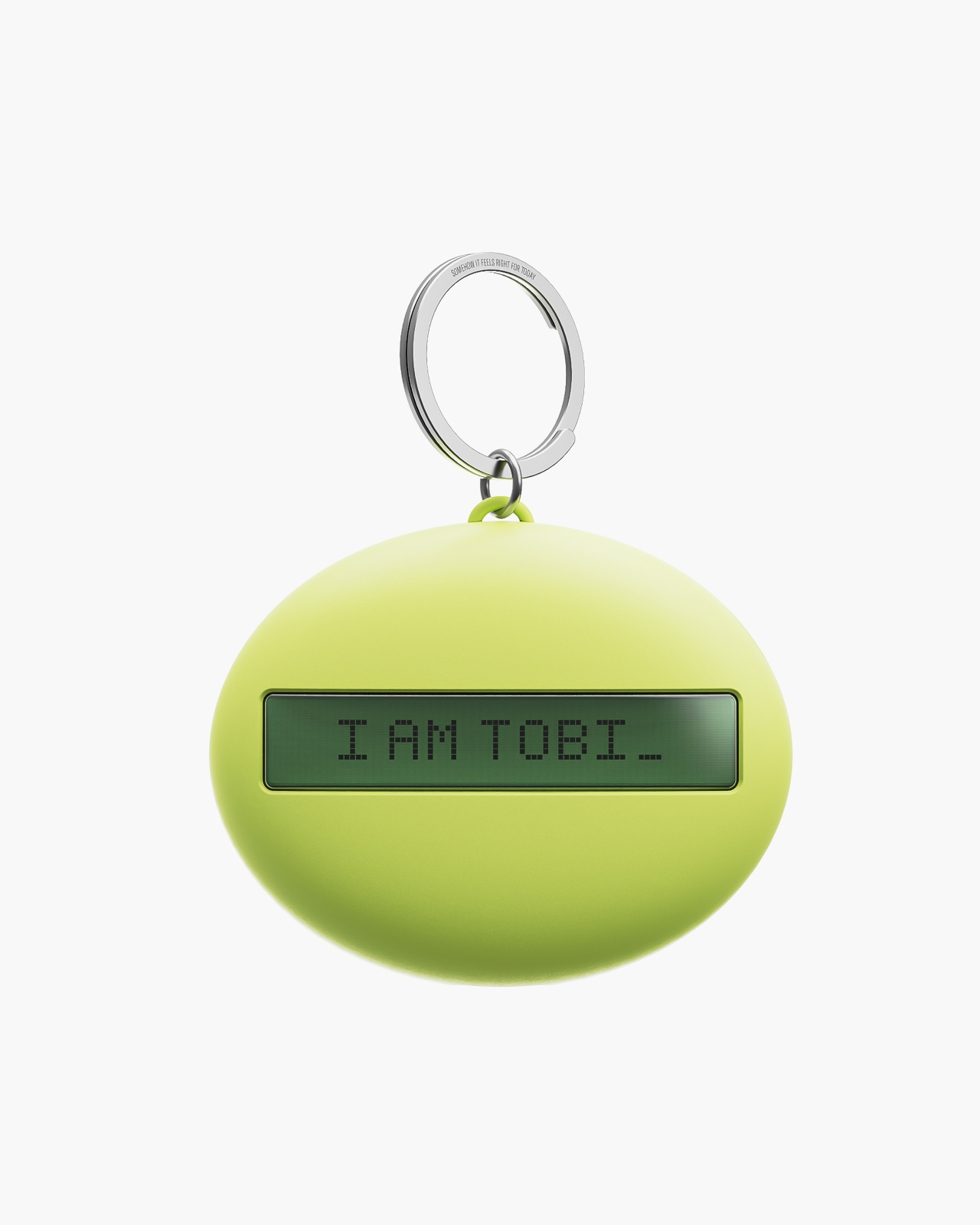
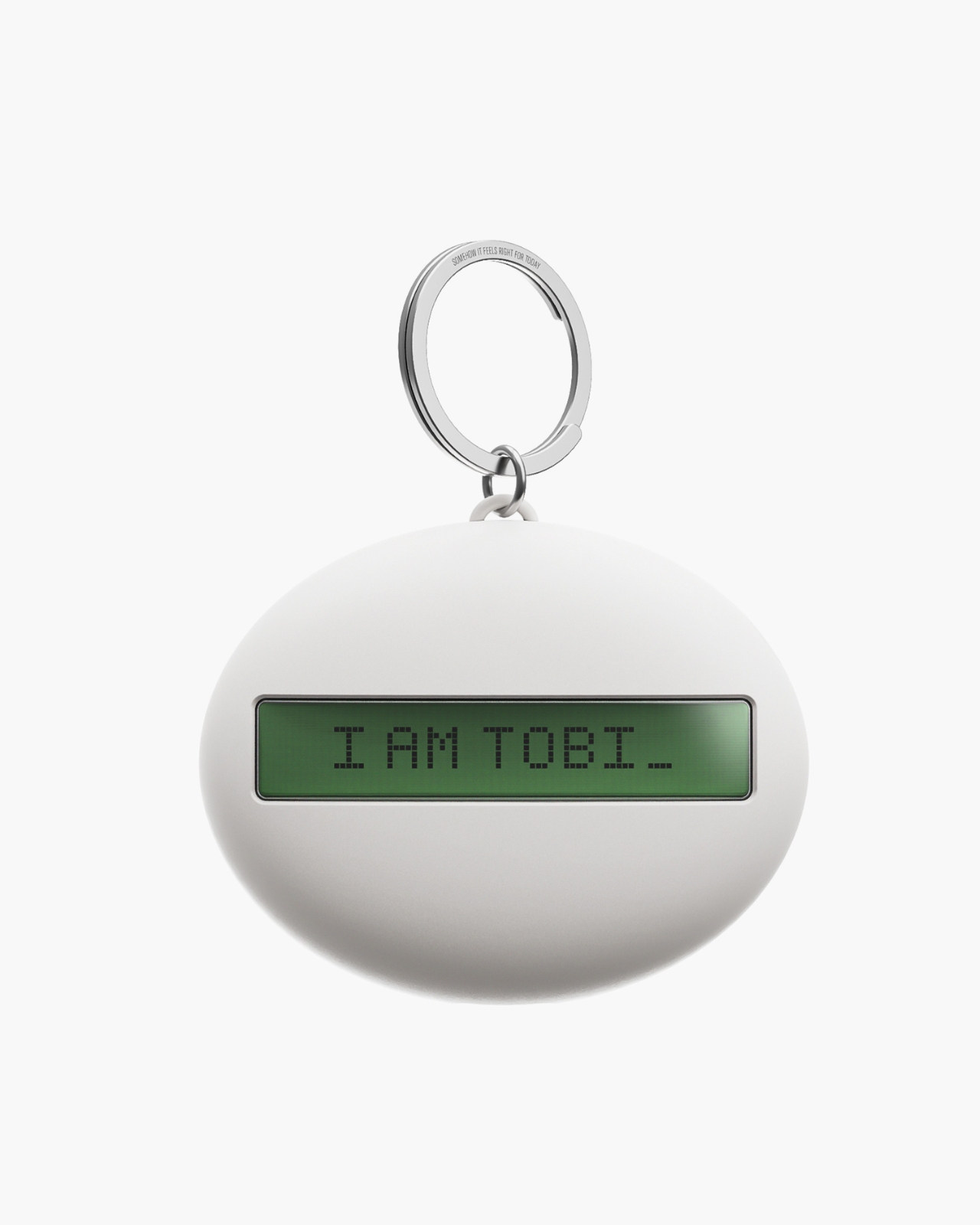
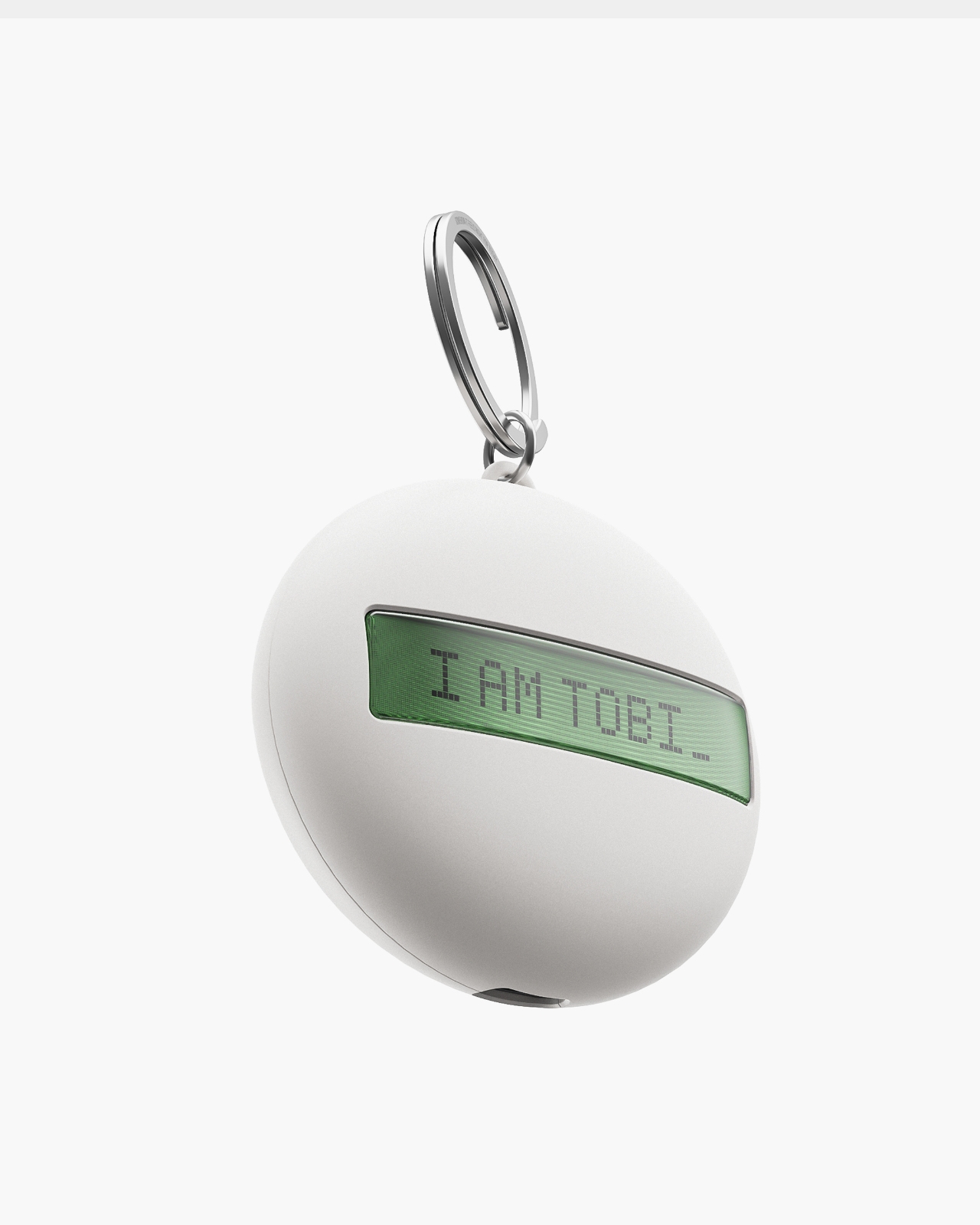
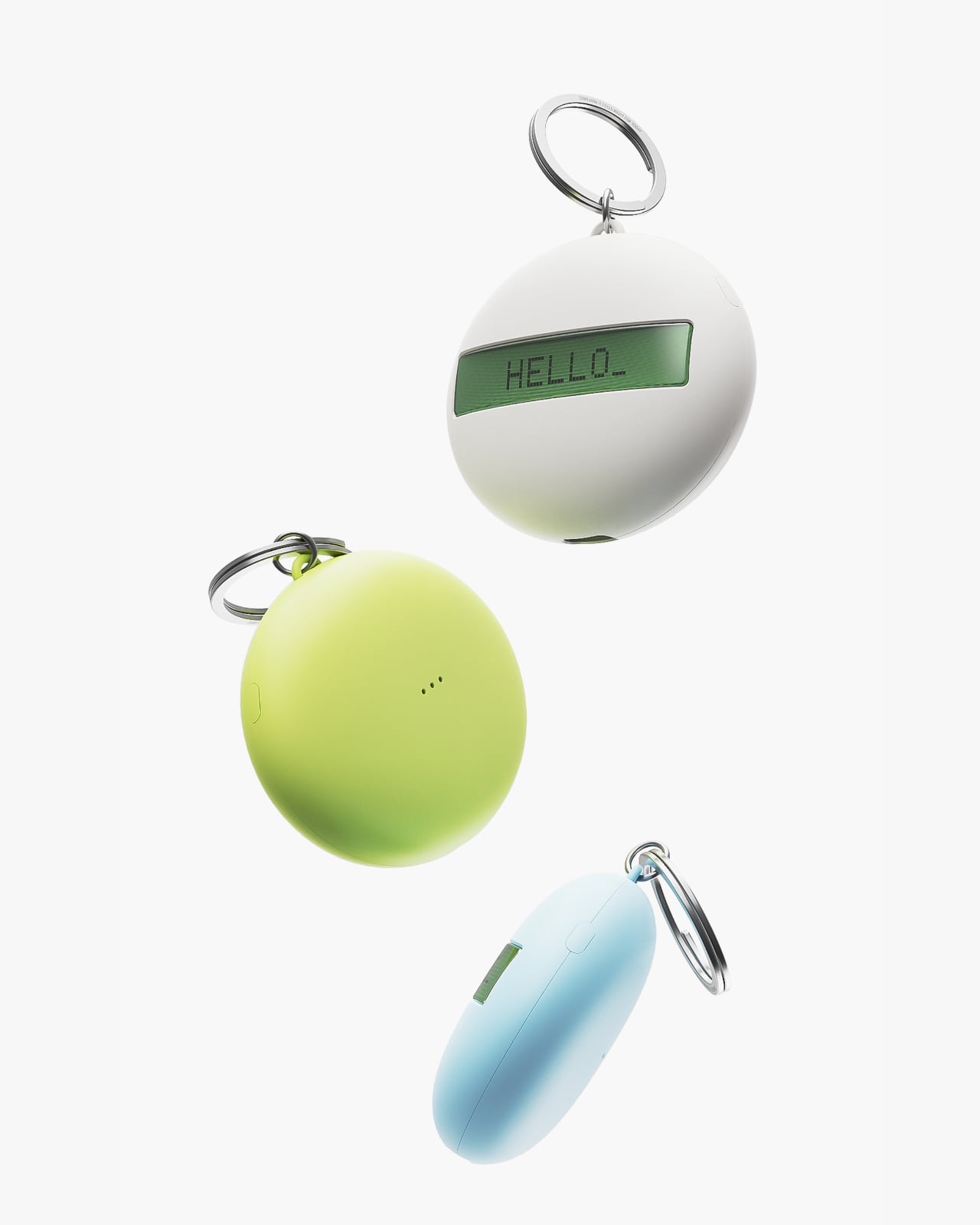
The GIA comes in a color palette that pulls directly from Olivetti’s most vibrant era. We’re talking coral red, electric blue, and that particular shade of lime green that somehow works when it absolutely shouldn’t. These aren’t the muted, “professional” colors we’ve been conditioned to accept in office supplies. They’re joyful. They’re loud. They demand to be noticed. The display even greets you with “HELLO” in a pixelated font that adds to the charm.

But here’s what makes this concept more than just a pretty nostalgic exercise. It recognizes something we’re only now starting to articulate: digital minimalism has left us craving physical objects again. We got so efficient, so streamlined, so invisible in our technology that we forgot how much we enjoy touching things, hearing things, seeing colorful things on our desks that aren’t just glowing rectangles.

The GIA positions itself as both a functional tool and a form of self-expression. Bedrina describes it as fitting equally well in office spaces and home studies, which tracks. This isn’t trying to be invisible professional equipment. It’s trying to be a conversation starter, a mood lifter, something that makes the mundane task of calculating expenses or balancing budgets feel less soul-crushing. There’s also something refreshingly analog about committing to a single-purpose device. Your phone can calculate, sure, but it can also distract you with seventeen notifications while you’re trying to figure out if you can afford that vintage lamp. A dedicated calculator keeps you focused. Add genuine design appeal, and suddenly you have an object that earns its place in your space.

The typewriter-inspired button layout is particularly clever. Those rounded keys with metal frames aren’t just aesthetic choices. They reference a specific era of design when Italian manufacturers proved that office equipment didn’t have to be boring. Olivetti’s typewriters were status symbols, objects people genuinely loved. They appeared in films, in photographs, in the hands of writers who could have afforded anything but chose these specific machines because they were beautiful.

Whether the GIA calculator will ever move beyond concept to production remains to be seen. The market for premium calculators exists but it’s niche. Yet seeing this design reminds us why concepts matter. They push against the current, question assumptions, and suggest possibilities. They ask: what if our tools brought us joy again? What if functional objects could also be emotional ones?

In a landscape dominated by minimalist design and disposable electronics, the GIA feels almost radical in its commitment to personality, color, and tactile pleasure. It suggests that maybe we don’t have to choose between functionality and delight. Maybe our calculators can have character. Maybe math doesn’t have to be boring, even when it’s just math.

The post A Typewriter-Inspired Calculator in Vibrant Coral Red Just Stole Our Heart first appeared on Yanko Design.
Belgian Designer Just Built the Alien Playground Kids Dream About

When you think of Belgian fashion designer Walter Van Beirendonck, you probably picture bold runway shows and provocative collections that push boundaries. As a member of the legendary Antwerp Six, the group that put Belgian fashion on the global map in the 1980s, Van Beirendonck has built a reputation for work that’s colorful, fantastical, and always thought-provoking. But his latest project isn’t something you can wear. Instead, it’s something you can climb, jump on, and explore.

Welcome Little Stranger, which opened at C-mine in Genk, Belgium this month, marks Van Beirendonck’s first venture into interactive play design. The installation transforms an old industrial warehouse into an extraterrestrial playground where kids can meet a mysterious alien visitor through soft-play structures, vibrant colors, and immersive environments that feel like stepping onto another planet.

Designer: Walter Van Beirendonck (photos by Selma Gurbuz)

The project is part of C-mine’s new PLAYGROUND initiative, which invites artists to reimagine what play spaces can be. Rather than traditional playground equipment, these are designed as artistic environments where creativity and physical activity merge. For Van Beirendonck, this meant translating his signature aesthetic (think neon colors, fantastical creatures, and bold shapes) from fabric and runway to foam and physical space.

What makes this particularly interesting is Van Beirendonck’s stated motivation. He wanted to create an environment that encourages imagination without screens or digital distractions. It’s a refreshing stance from someone known for addressing contemporary themes like technology and identity in his fashion work. The space invites kids to wonder about the universe, discover new possibilities, and play together without boundaries.

The alien theme isn’t random. Van Beirendonck’s fashion work has long explored ideas about identity, diversity, and what it means to be different. By framing the playground around encountering a “little stranger” from another world, he’s essentially asking kids to think about otherness, curiosity, and welcome. These are heavy concepts, but they’re delivered through climbing structures and colorful shapes rather than lectures.

The design process itself was collaborative. C-mine worked with artist Emma Ribbens, an alumna of LUCA School of Arts, to run workshops where children from Genk contributed ideas and shared their thoughts. This participatory approach meant kids weren’t just the audience for the final product but had ownership in shaping what the space would become. It’s an increasingly common approach in public art and design, recognizing that the people who will use a space often have the best insights into what it needs.

Van Beirendonck’s visual language translates surprisingly well to this new medium. His fashion collections have always featured exaggerated proportions, vibrant patterns, and elements that feel like they could belong in science fiction or fantasy worlds. Those same qualities make for compelling playground design, where safety requirements mean everything needs to be soft and rounded anyway.

The location adds another layer to the story. C-mine is a former coal mining site in Genk that’s been transformed into a cultural and creative hub. It’s the kind of post-industrial regeneration project you see across Europe, where old warehouses and factories become galleries, theaters, and community spaces. Housing a whimsical playground in what was once an industrial building creates an interesting contrast between the building’s austere past and its colorful present.

For Van Beirendonck, who’s known for work that balances playfulness with provocation, this project sits comfortably in his career arc. He’s done book illustrations, scenography, and various collaborations outside traditional fashion. Welcome Little Stranger just happens to be one you can physically inhabit rather than view from a distance. Genk’s mayor noted that the project positions the city as creative and innovative while giving families and schools from across the region a new destination. It’s the kind of cultural infrastructure that smaller cities increasingly use to attract visitors and define their identity beyond industrial heritage.

Whether Welcome Little Stranger becomes a model for future artist-designed play spaces remains to be seen. But it does suggest interesting possibilities for what happens when designers step outside their usual mediums and apply their vision to physical environments meant for pure, unstructured play. Sometimes the best design isn’t about making something look good but about creating spaces where imagination can run wild.

The post Belgian Designer Just Built the Alien Playground Kids Dream About first appeared on Yanko Design.
This 3D-Printed Headphone Celebrates Every Tangle We Hated

Remember the pocket archaeology of untangling your headphones every single time you pulled them out? That split second of dread when you’d fish them from your bag only to discover they’d somehow tied themselves into impossible knots? Designer Aleš Boem remembers. But instead of trying to solve that universal frustration, he’s immortalized it.

His project, Tangled Headphones for print, takes that chaotic mess of wires we all spent years battling and transforms it into something worth looking at. These aren’t functional headphones in the traditional sense. They’re 3D-printed sculptures that wear their tangles like a badge of honor, turning what used to drive us crazy into the entire aesthetic.

Designer: Aleš Boem

The design itself is striking. Boem has essentially frozen a moment of cable chaos in black plastic, creating headphones where the tangled cord isn’t a bug but the feature. The earcups are swallowed by loops and knots of wire, the headband twists and weaves, and even when you look at them straight on, your brain does that thing where it tries to trace the path of the cable and gets completely lost. It’s visually messy in the most deliberate, controlled way possible.

What makes this project so interesting is its timing. We’re living in the post-wire era. AirPods dangle from ears everywhere. Bluetooth has become the default. Most people under 20 probably think tangled headphones are some kind of abstract concept, like dial-up internet or waiting a week to see what your vacation photos looked like. But for everyone else, there’s this strange collective memory of the tangle struggle, and Boem is tapping directly into it.

There’s something almost archaeological about seeing these headphones styled in those moody editorial photos. The model on the subway, holding a cassette player. The vintage Sony Walkman making an appearance. It’s not just product photography; it’s visual storytelling about a specific moment in technology that’s already slipped into nostalgia territory. The fact that these are 3D-printed adds another layer. Modern fabrication technology creating a monument to obsolete problems.

The sculptural quality is what really elevates this beyond a novelty. Look at the headphones on their own, isolated on that white background, and they read as genuine art objects. The tangles aren’t random. They’re carefully designed loops and intersections that create texture and volume. The way the cable winds around itself has rhythm to it. If you didn’t know what you were looking at, you might think it was some kind of experimental fashion accessory or a piece from a contemporary art exhibition. And maybe that’s the point. Good design often involves looking at the everyday and asking what if we didn’t fix this? What if we leaned into it instead? Boem took something universally annoying and reframed it as something worth preserving. It’s a love letter to the physical quirks of older technology, the little inconveniences that somehow become part of the experience.

The project also raises questions about what we lose when technology goes wireless. Sure, nobody misses fighting with tangled cables at 7 AM while trying to catch the bus. But there was something tangible about wired headphones. They were physical objects with character. They got worn in. They had that one earbud that always died first. The cable would fray at exactly the spot where it bent coming out of your pocket. They broke, they lasted, they were real in a way that feels different from charging cases and Bluetooth pairing.

Tangled Headphones for print sits right in that weird space between functional design and art commentary. It’s too conceptual to be practical, but too grounded in real experience to be purely abstract. It’s a conversation starter, a nostalgia trigger, and a genuinely clever piece of design thinking all wound together. Whether you’d actually want to own a pair is almost beside the point. What matters is that Boem saw something everyone else was trying to eliminate and decided it was worth celebrating instead. In doing that, he created something that makes you look twice and remember a very specific kind of small, everyday chaos that barely exists anymore. That’s pretty special.

The post This 3D-Printed Headphone Celebrates Every Tangle We Hated first appeared on Yanko Design.
This Concrete Desk Clock Looks Like a 1980s CRT TV

There’s a particular kind of design intelligence that knows when to slow down. The Crydal Phantom Clock, designed by Daniel van der Liet, is one of those rare objects that rejects the frantic pace of modern consumer tech in favor of something more deliberate. It’s a desk clock, yes, but calling it just a clock misses the point entirely.

The Phantom reinterprets the visual language of cathode-ray tube displays from early computing. Not in a nostalgic way, but as a translation exercise. Van der Liet took the geometry, the mass, and the physical presence of those old CRT monitors and rebuilt them using cast concrete and raw steel. The result is something that feels both familiar and completely new, a dense, tactile object that sits on your desk with real weight and intention.

Designer: Daniel van der Liet

The form itself is immediately recognizable if you grew up around boxy computer monitors or chunky television sets. That characteristic curved screen, the cylindrical body, the industrial mounting stand. But instead of plastic housing and glass tubes, you get solid concrete and raw steel. The materials transform the reference from tech artifact into something closer to sculpture. This isn’t a replica or a throwback design. It’s a contemporary object that happens to speak the formal language of vintage electronics.

What makes the Phantom genuinely interesting is how it handles the intersection of analog and digital. The clock displays time through a traditional analog dial, the kind with actual hour and minute hands moving around a circular face. But here’s where it gets clever: that dial appears on a round capacitive display integrated flush with the concrete surface. You can switch between three chromatic modes, green, orange, or red, each one shifting the character of the clock without altering its physical form. It’s like having three different moods available depending on your space or preference.

The interface is handled entirely through that circular touchscreen. You adjust the time, you control the color mode, you modify the brightness. No buttons interrupt the surface, no dials break the material integrity. When you’re not actively using it, the clock just sits there, visually calm and minimal. It doesn’t demand attention or try to become the focal point of your desk. It exists quietly, doing its single job with focus and restraint.

This is explicitly not a smart device. The Phantom won’t sync with your phone, won’t display notifications, won’t connect to your calendar or remind you about meetings. It plugs in via USB-C for power and that’s the extent of its connectivity. In an era when every object wants to be a node in your personal network, this kind of focused simplicity feels almost defiant. The clock tells time. That’s what it does. That’s all it does.

Each Phantom is handcrafted in limited quantities, and the production process ensures that no two are exactly identical. Concrete doesn’t cast uniformly. Steel doesn’t patina predictably. These natural variations aren’t flaws to be corrected but characteristics that make each piece unique. Your clock will have its own texture, its own finish, its own subtle imperfections that come from being made by hand rather than stamped out on an assembly line.

The limited edition nature matters because it positions the Phantom somewhere between functional object and collectible. You could absolutely use this as your primary desk clock. But you could just as easily display it on a shelf in your studio or living space as a sculptural object that happens to tell time. Both approaches are valid. The design supports either use case without compromising. What appeals most about the Phantom is its refusal to be categorized easily. It’s not retro tech, though it references old technology. It’s not pure art, though it has sculptural qualities. It’s not a gadget, though it uses modern display technology. It exists in this productive tension between categories, which is exactly where the most interesting design tends to live.

We live in a market saturated with objects that prioritize convenience and connectivity above all else but the Phantom Clock offers something different. It’s heavy where things are light, analog where things are digital, focused where things are multifunctional. It’s a time instrument designed to exist quietly in your space, asking nothing from you except the occasional glance to check the hour. Sometimes that’s exactly what you need.

The post This Concrete Desk Clock Looks Like a 1980s CRT TV first appeared on Yanko Design.
This 136-Square-Foot Firehouse Has an Actual Fire Pole Inside

You know that feeling when you see something so perfectly themed, so committed to the bit, that you can’t help but smile? That’s exactly what happens when you first lay eyes on the Tiny Firehouse. This isn’t just a tiny house painted red with some fire department decals slapped on the side. This is a full-on love letter to firefighters, complete with details that’ll make you wonder if the designers secretly wanted to be heroes themselves.

Created by Beloved Cabin, the tiny house rental company based near Lake Oconee, Georgia, this 8.5-by-16-foot structure manages to pack more personality into 136 square feet than most McMansions achieve in 4,000. The exterior looks like it could roll up to an emergency at any moment, which makes sense since it was built specifically to honor firefighters and frontline heroes.

Designer: Beloved Cabin

Here’s where things get fun. The designers didn’t stop at aesthetics. Inside, you’ll find an actual antique brass fire pole connecting the sleeping loft to the main floor. Yes, you can slide down a fire pole to start your morning. Try getting that kind of drama out of your regular hotel room.

The interior design walks a fine line between themed and tasteful. There’s firefighter memorabilia throughout, but it never tips into kitsch. Large windows and skylights flood the space with natural light, making the compact footprint feel surprisingly open. The kitchen is tiny, as you’d expect from a vacation rental, with a two-burner propane stove, a small fridge, and a stainless steel sink. It’s enough to make coffee and heat up leftovers, which is really all you need when you’re planning to explore the area or just disconnect from the world.

Speaking of disconnecting, the Tiny Firehouse is part of Beloved Cabin’s 16-acre property they call the Secret Garden, a collection of unique tiny house rentals tucked into the woods. There’s no WiFi in the firehouse itself, and cell service is spotty unless you’re on AT&T. For some people, that’s a dealbreaker. For others, it’s the whole point. When was the last time you actually unplugged without feeling guilty about it?

The sleeping loft is accessed by ladder (or fire pole, going down), and features a full-size bed tucked under a low ceiling. It’s cozy in that way tiny house lofts tend to be, where you feel like you’re in your own little nest. Below, the main living area has enough room to move around without doing that awkward tiny house shuffle.

What sets this apart from other themed rentals is the attention to authentic detail. The fire pole isn’t a replica or a prop. It’s an actual antique piece that once served in a real firehouse. The floors are antique too, which is why guests are asked to remove their shoes inside. These aren’t just design choices; they’re preservation efforts for pieces of history.

The bathroom situation is where things get interesting. There’s an attached outdoor shower and a portable toilet, but guests also have access to a full bathroom in the community house about a minute’s walk away. The outdoor shower actually adds to the experience rather than detracting from it, especially during warmer months when showering under the sky feels like a luxury rather than a compromise.

Since its creation, the Tiny Firehouse has become something of a tiny house celebrity, appearing on HGTV, the TODAY show, The Rachael Ray Show, and even getting a mention on Jeopardy. That kind of media attention speaks to how the design captures something people crave: a space that tells a story and honors something bigger than itself.

The property also features trails, a creek, and an animal sanctuary where goats, pigs, chickens, and other animals wander freely. It’s the kind of place where you might find yourself sitting by the fire pit at night, listening to the sounds of the woods, feeling like you’ve discovered something special that exists just outside the noise of everyday life.

This is design with purpose. It proves that tiny living doesn’t mean sacrificing character, and that honoring a theme doesn’t require abandoning good taste. The Tiny Firehouse works because it commits completely to its concept while still being a genuinely comfortable place to stay. Plus, you get to slide down a fire pole. That alone is worth the trip.

The post This 136-Square-Foot Firehouse Has an Actual Fire Pole Inside first appeared on Yanko Design.
Seoul Just Built Wing-Shaped Shelters That Survive Typhoons

There’s something undeniably elegant about watching how birds move through the air, wings spread wide and catching the wind with effortless grace. BKID Co took that natural brilliance and translated it into something Seoul’s parks desperately needed: shade structures that look stunning and can actually stand up to a typhoon.

The Seoul Wing project isn’t your average park canopy. Sure, we’ve all huddled under those generic metal shelters that look like they were ordered from the same catalog every city uses. But these installations feel different. They’re sculptural, organic, and honestly pretty mesmerizing when you see them from above. The way those overlapping panels mimic feathers creates this flowing, almost kinetic quality even when they’re completely still.

Designer: BKID Co

What makes this design particularly clever is how BKID solved multiple problems at once. Anyone who’s tried to design outdoor structures knows the challenge: make it light enough to install without massive equipment, strong enough to survive extreme weather, and attractive enough that people actually want to use it. Most designers pick two out of three. BKID managed all of them.

The secret lies in that polyurethane mesh structure. It’s the kind of material innovation that doesn’t get enough attention because it’s not flashy, but it’s absolutely critical. Traditional shade structures either use heavy solid panels that require serious engineering support, or lighter fabrics that tear apart in strong winds. This mesh strikes that perfect middle ground. It’s resilient enough to flex during a storm rather than fighting against the wind, which is exactly what makes bird wings so effective during turbulent flight.

The installation photos tell an interesting story too. You can see the team working with surprisingly straightforward tools and methods. There’s no crane that requires blocking off half the park for a week. The modular approach means these structures can go up relatively quickly, which matters when you’re working in public spaces where every day of construction disrupts people’s routines.

Size-wise, these shelters accommodate groups of ten or more, which changes how people can use park spaces. Instead of everyone crowding under small umbrellas or hunting for that one decent tree, families and friends can actually gather together comfortably. That social aspect of design often gets overlooked in favor of pure aesthetics or technical specifications, but it’s crucial for public infrastructure.

The wind resistance feature deserves special attention. Seoul, like many Asian cities, faces serious weather challenges. Typhoons aren’t occasional inconveniences but regular threats that can destroy inadequate structures. Traditional park furniture either gets dismantled before every storm or ends up as expensive debris. The Seoul Wing design acknowledges this reality head-on. Those wing panels aren’t just decorative choices but functional elements that redirect wind flow rather than blocking it entirely.

Looking at the sketches alongside the final installation reveals BKID’s design process. Those early red-line drawings show numerous iterations exploring different angles and proportions. The final form maintains that initial inspiration while refining every detail for real-world performance. It’s biomimicry done right, not just slapping a nature theme onto conventional structures but truly understanding and applying natural principles.

The color palette keeps things simple with clean whites and grays, letting the form itself do the talking. In parks filled with green vegetation and seasonal color changes, that neutral approach makes sense. These structures become elegant backdrops rather than competing for attention, while their distinctive shapes still make them recognizable landmarks within the park. What’s refreshing about this project is how it elevates something as mundane as park shade into legitimate public art. We’re seeing more cities recognize that functional infrastructure doesn’t have to be boring. When done thoughtfully, everyday objects can enhance urban environments while serving their practical purposes beautifully.

The Seoul Wing represents where public design should be heading: solutions that honor natural systems, serve community needs, and bring genuine beauty to shared spaces. It’s not about creating Instagram moments, though these certainly photograph well. It’s about respecting park visitors enough to give them infrastructure that’s both useful and uplifting. Next time you’re sweating under some uninspired park shelter, remember these wing-shaped canopies in Seoul. Better design is possible. We just need more clients willing to commission it and more designers brave enough to look beyond the usual solutions toward what nature has already figured out.

The post Seoul Just Built Wing-Shaped Shelters That Survive Typhoons first appeared on Yanko Design.
When Zoo Design Tells the Story of Life Itself

Forget everything you think you know about zoo buildings. Bangkok-based VMA Design Studio just won first prize for a zoological pavilion that reads less like a typical animal enclosure and more like an architectural journey through Earth’s creation story.

The House of Elements, set to become the crown jewel of Orientarium Zoo in Łódź, Poland, takes the classical elements (earth, ice, water, fire, and air) and transforms them into a 6,000-square-meter narrative experience. Rather than designing a building where you walk from exhibit to exhibit, VMA created a continuous downward-then-upward journey that mirrors the evolution of life itself.

Designer: VMA Design Studio for Orientarium Zoo

Picture this: you enter the pavilion and immediately begin descending underground into Earth. From there, the path rises through zones dedicated to Ice, Water and Fire, and finally Air. Each section tells the story of how these elements have shaped life on our planet, with the animals serving as living characters in that epic tale.

What makes this design fascinating is how VMA used a single architectural seed profile that diverges and adapts throughout the building. Think of it like watching one musical theme morph and transform across a symphony. The result? A unified facade that looks like a forest of timber-clad profiles rising like tall planters, each capped with green roofs. This modular approach means the building can respond individually to different needs (enclosure, shading, circulation, landscape integration) while still feeling like one cohesive whole.

The animal habitats themselves are impressively diverse. Giant tortoises live among volcanic terrain with elevated walkways tracing along their space. Capybaras hang out near living moss walls and chrome sculptures. There’s even a sea lion courtyard and a central garden connected by a spiral path. Each zone captures the essence of its element without resorting to theme park theatrics.

VMA didn’t just think about the building in isolation either. The project establishes a new public open space that connects the zoo’s main entrance, the existing Orientarium complex (a Southeast Asian wildlife facility completed in 2022), and this new pavilion. The design includes a series of planted roof decks and ramps serving a cafe and aviary, creating multiple layers of experience both inside and outside the main structure.
There’s something particularly clever about how the building treats humans as the fifth element. Visitors aren’t just passive observers walking through glass corridors. The architecture positions people as part of the evolutionary narrative, making the experience feel less like watching nature behind barriers and more like understanding our place within it.

The competition itself attracted international attention, with architects given until December to submit proposals that included visualizations of the building integrated into the zoo’s landscape plus three floor plans showing different levels. That VMA, a Bangkok-based studio, won a competition in Poland speaks to how universal their design language became. The elements, after all, are the same everywhere.

Looking at the renderings, what strikes you most is the facade. Those timber profiles create rhythm and texture while the green roofs blur the line between building and landscape. It’s biophilic design done right, not as decoration but as fundamental architectural strategy. The structure looks like it grew from the ground rather than being imposed on it.

This project represents a bigger shift in zoo design philosophy. The best contemporary zoos recognize they’re not just about displaying animals but about telling stories of conservation, evolution, and interconnection. Architecture becomes the narrative framework that makes those stories visceral rather than abstract. VMA understood this assignment perfectly.
The House of Elements follows the completion of the Orientarium Southeast Asian wildlife complex and represents the second major development at Łódź Zoo. Together, these projects are transforming what was once a standard municipal zoo into something far more ambitious: a place where architecture, animals, and ideas converge to create experiences that stick with you long after you leave.

When the pavilion eventually opens, visitors will walk through earth and ice and fire and emerge changed, having experienced not just animal habitats but the fundamental forces that make life on this planet possible. That’s the kind of design ambition we need more of.

The post When Zoo Design Tells the Story of Life Itself first appeared on Yanko Design.