How Dave Kindig’s 1953 Corvette ‘TwelveAir’ Sets a New Standard for Custom Car Design

Dave Kindig and his team at Kindig-It Design have once again redefined custom car building with their latest creation, the 1953 Corvette “TwelveAir.” Recently crowned the Ridler Award winner at the 2024 Detroit Autorama, this Corvette is more than a reimagination—it’s a ground-up custom build that transforms a classic icon using modern design and cutting-edge technology. Every detail, from the engine bay to the leather-wrapped interior, reflects a perfect balance of craftsmanship and innovation.

Designer: Dave Kindig + Kindig-It Design

Starting Fresh with Every Part

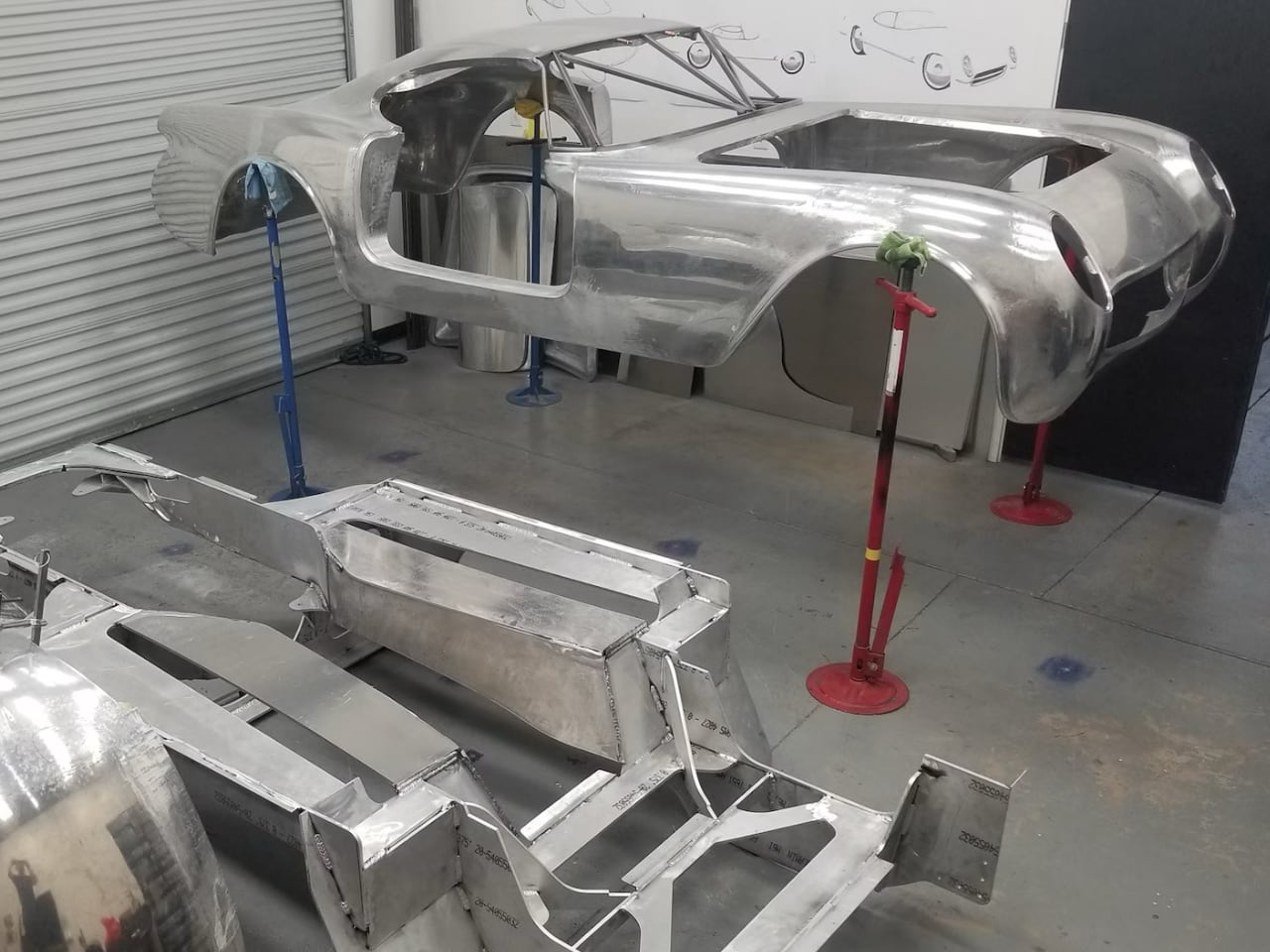
At first glance, the TwelveAir may evoke memories of the iconic 1953 Corvette, but no original parts from that car were used. Kindig’s team built every inch of this vehicle by hand or fabricated it specifically for this project. Beginning with hand-drawn sketches and quickly moving into CAD modeling, the car’s design took shape with precision and a creative vision.

What makes this build even more remarkable is the five-year process during which Kindig’s team kept everything hidden from view. They built a special room around their CNC machines to maintain secrecy, ensuring no one saw the car before its debut at the Autorama.

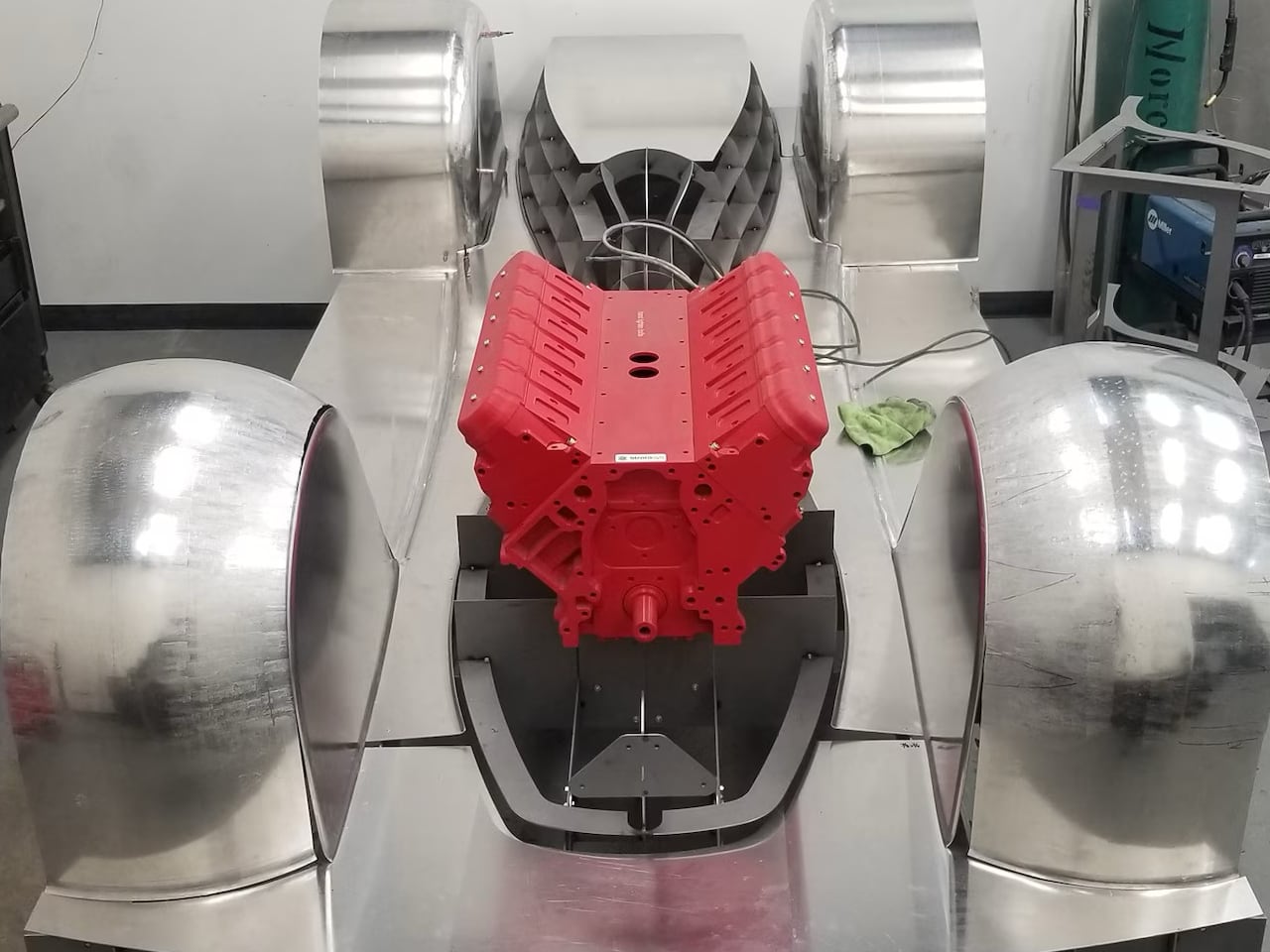
The car was constructed from scratch, including the suspension system and the engine bay—two areas where performance and design came together perfectly. The hand-formed aluminum body nods to the past, while modern tools like CAD and 3D printing allowed the team to experiment and refine every element before finalizing the build. In doing so, the TwelveAir became an utterly bespoke creation designed to push the boundaries of custom automotive engineering.

Craftsmanship Enhanced by Technology

The TwelveAir’s striking design is a product of traditional craftsmanship and technological innovation. CAD software and 3D printing allowed Kindig’s team to prototype critical parts like the engine components and suspension arms before they moved into final fabrication. These tools made testing for fit and function easier, reducing wasted materials and allowing more time to focus on the car’s performance and aesthetics.

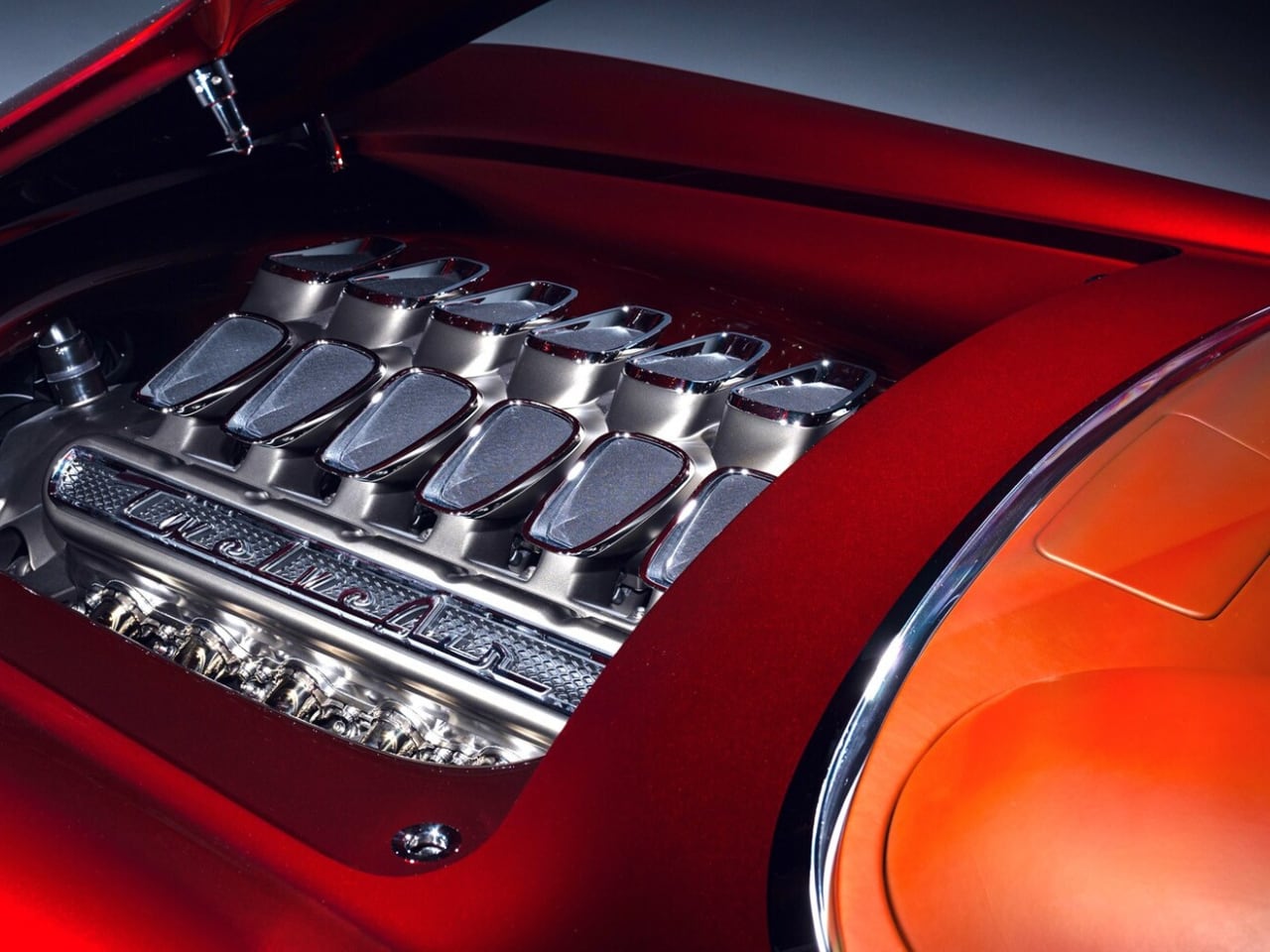
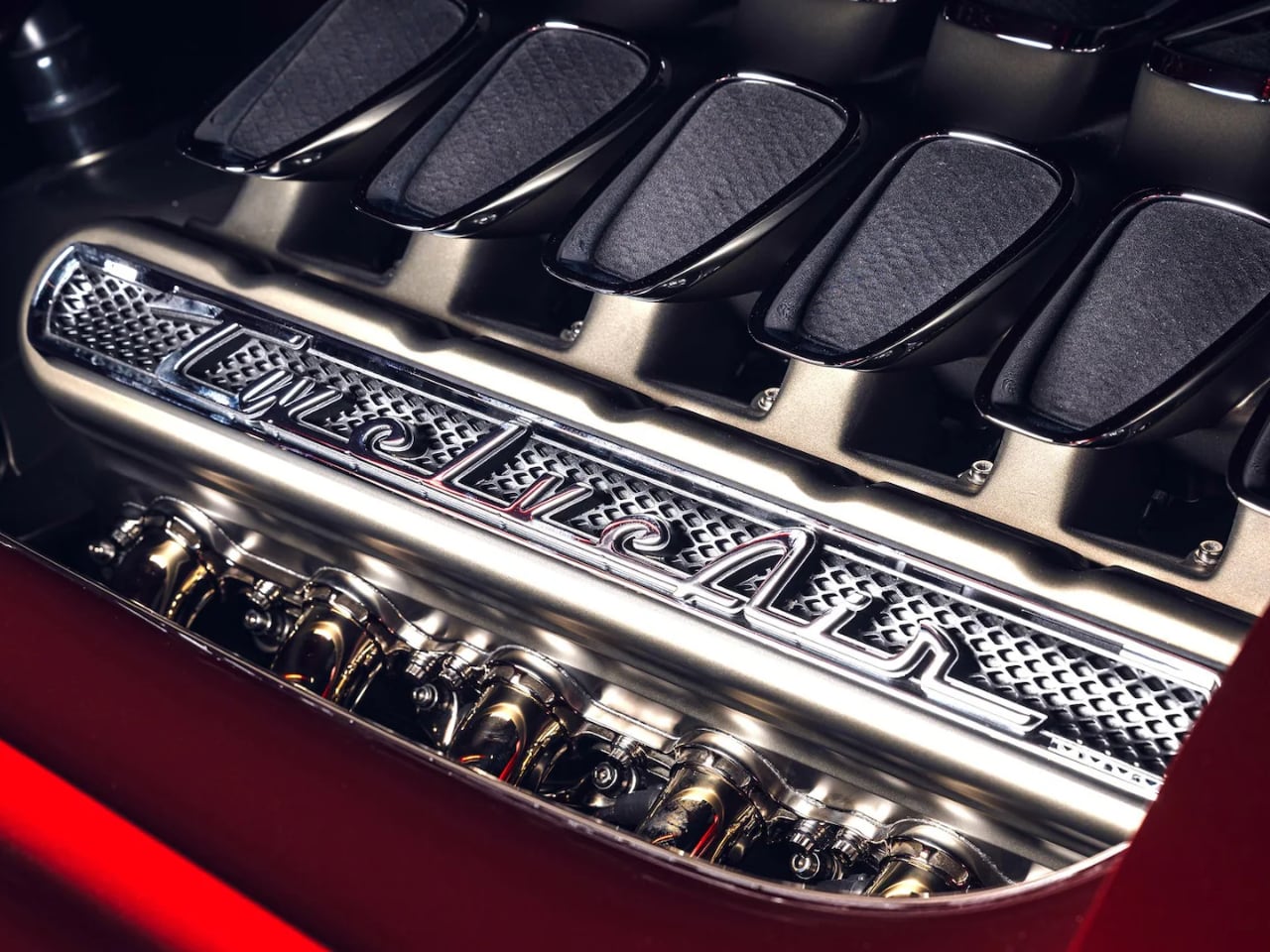
Take the engine bay, for example. The polished chrome engine covers, accented with sleek, scooped air intakes, form a visually stunning centerpiece. The engraved “TwelveAir” script on the engine block, combined with perfectly machined parts, reflects a level of precision only achievable through the blend of advanced tech and craftsmanship. The engine bay doesn’t overwhelm with excess—it strikes a balance between mechanical prowess and refined design, creating a lasting visual impact.

The suspension system is another perfect example of design merging with function. Inspired by the precision seen in Formula 1 and IndyCar designs, the suspension features a single horizontally mounted spring, which keeps the car’s stance low and aggressive while ensuring peak performance. The polished chrome suspension components hide beneath sleek, purpose-built panels, preserving the clean and minimal appearance while enhancing the car’s rigidity. This results in a visually appealing vehicle optimized for real-world performance.


The Art of Form and Function

The TwelveAir’s exterior grabs attention, but the engineering beneath the surface is just as impressive. Hidden within the car’s structure, the suspension system allows the bold body lines to remain uninterrupted. This design choice wasn’t merely about aesthetics—it also improves the car’s overall handling and strength, making it capable of harnessing the 650-horsepower V-12 engine.

Speaking of the engine, it’s a V-12 LS-based powerhouse sourced from Race Cast Engineering. With 650 horsepower, it’s more than capable of delivering high performance, especially given the car’s lightweight aluminum body. What’s remarkable is how the engine’s visual presence complements the entire design. The sleek covers and exposed components don’t dominate the build but instead, harmonize with the car’s overall aesthetic. The “TwelveAir” logo engraved on the engine block acts as a subtle but effective nod to the car’s bespoke nature.

Each element in the car works in concert. The balance of performance and aesthetics is key. Everything from the engine placement to the suspension components reinforces this philosophy, ensuring the car goes beyond being a showpiece—this is a fully functional, high-performance machine.

A Luxury-Driven Interior

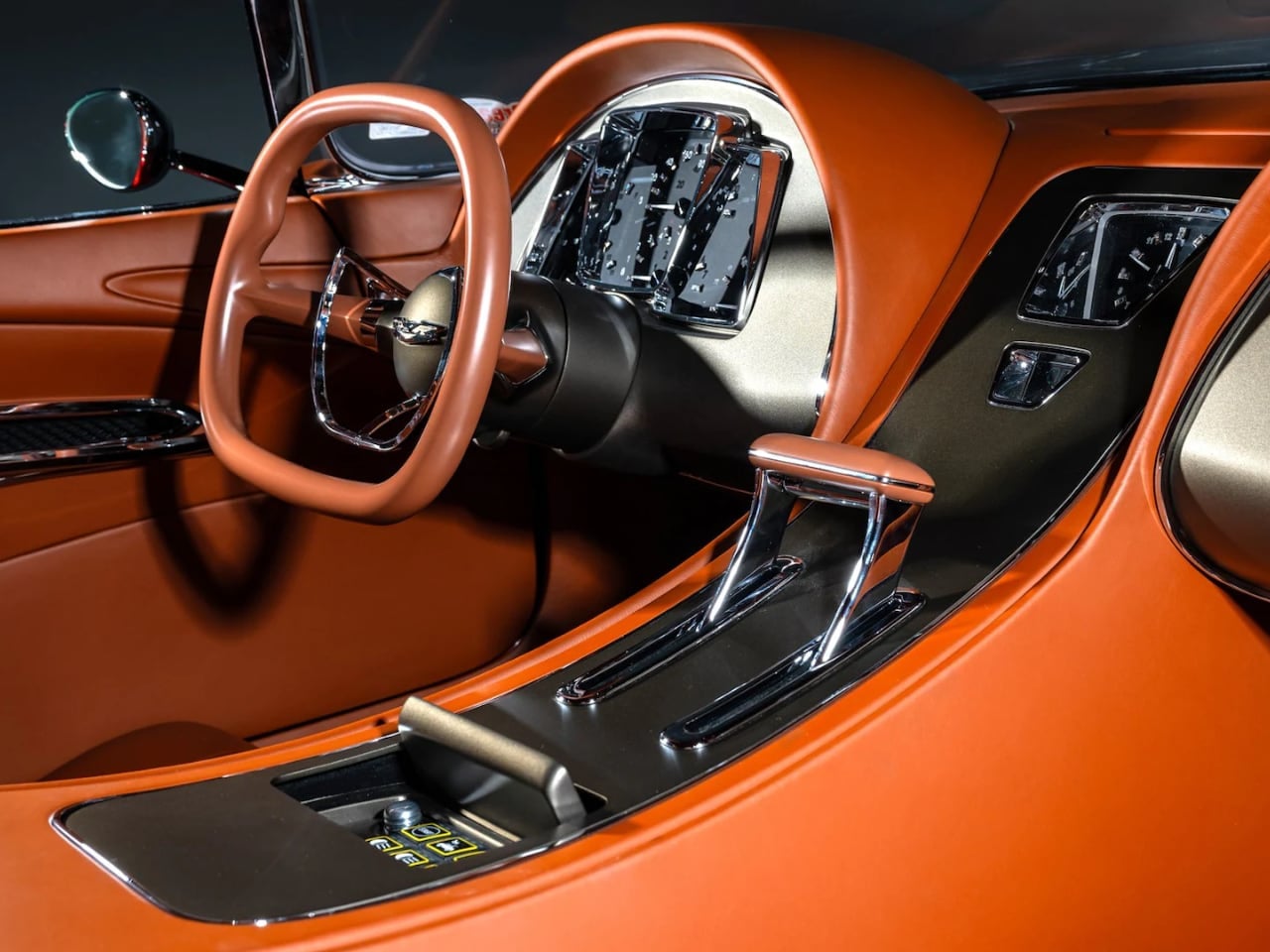
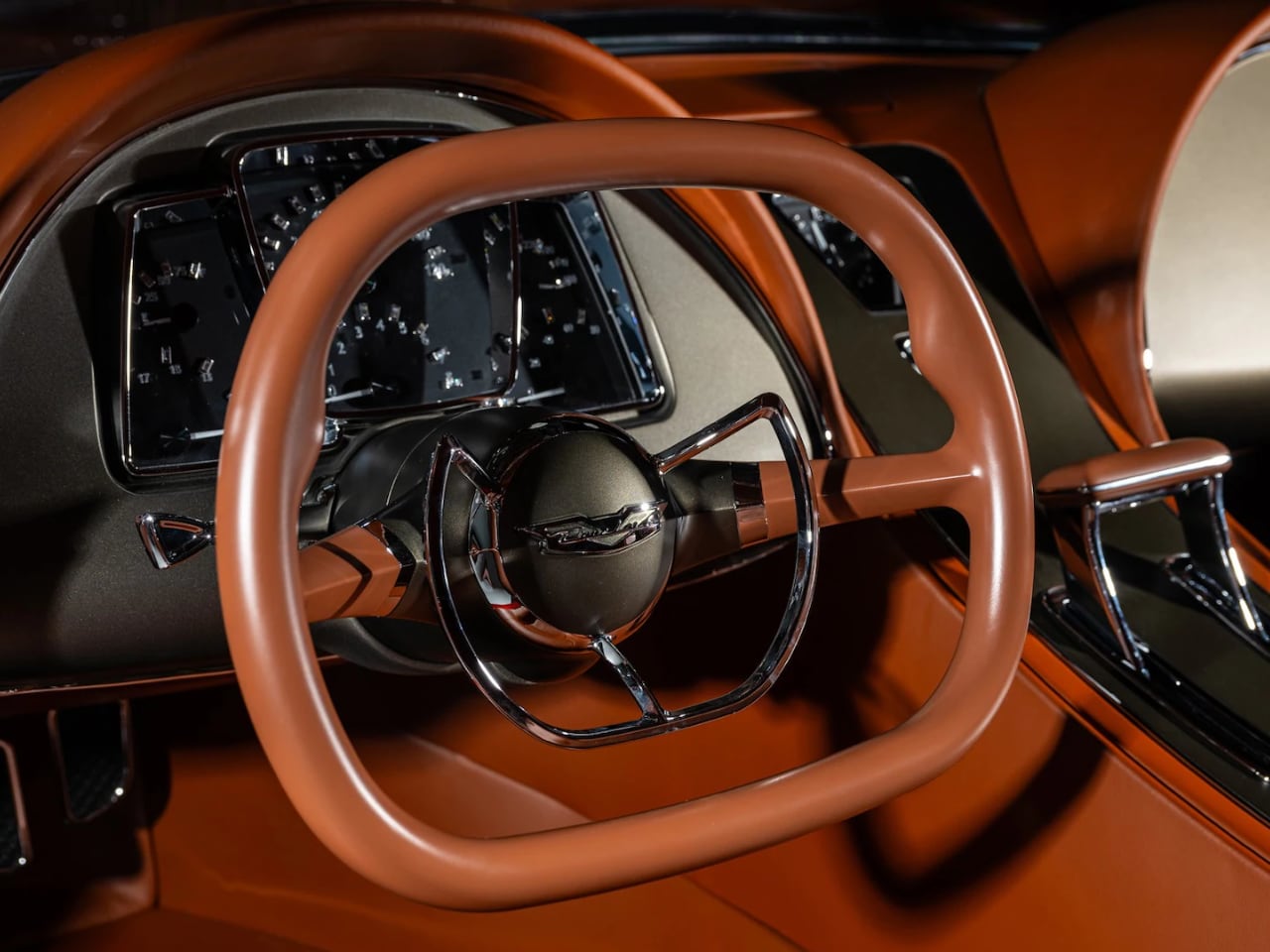
Inside the TwelveAir, the attention to detail is even more apparent. The interior, wrapped in rich sienna-colored leather, exudes sophistication and craftsmanship. The thin-spoked steering wheel, accented by chrome, offers a perfect blend of retro influence and modern design. The dashboard maintains a clean, minimalistic layout with smooth curves, polished metal finishes, and understated dials that don’t distract from the car’s interior flow.

The chrome accents, carefully placed throughout the cabin, contrast beautifully with the soft leather, creating a tactile sense of luxury without overwhelming the senses. The balance between warmth and sharpness in the materials elevates the car’s design, making the interior feel futuristic and timeless.

The console and gear lever are simple, elegant, and integrated seamlessly into the overall design. Chrome touches along the gear shift area provide a subtle yet striking contrast against the leather. Every aspect of the interior has been designed with precision and thought, ensuring that form doesn’t overtake function.

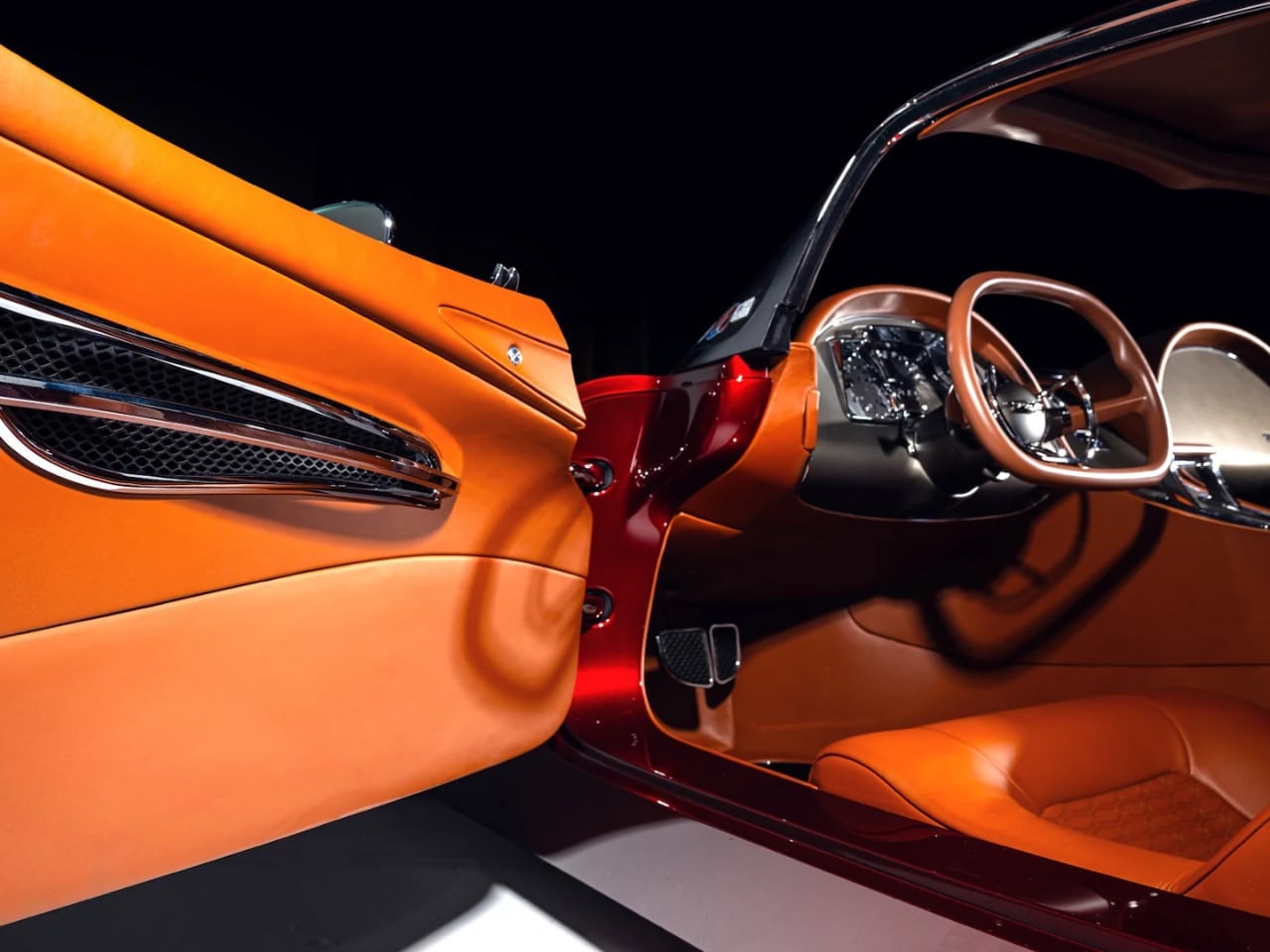
The door panels, with smooth orange leather seamlessly flowing from the exterior, showcase how carefully the designers considered every transition in the car. Even the most minor details, like the chrome trim on the door, are purposeful and consistent with the overall aesthetic. Everything from the color choices to the material feels bespoke and intentionally crafted.

A Bold Color Palette

One of TwelveAir’s most striking features is its bold use of color. The deep metallic red of the exterior grabs attention instantly. The rich and reflective paint enhances the car’s dramatic shape, creating a sense of movement even when the car is stationary. Chrome accents break up the color, providing sharp contrasts that highlight the body’s sleek lines.

The interior’s orange leather feels both bold and luxurious. Its warmth contrasts sharply with the deep red exterior, creating a cohesive visual experience that flows naturally from outside to inside. The orange, rather than being overpowering, complements the modern design language, while the chrome details and high-polished finishes add refinement.

Pushing Custom Car Design Forward

Dave Kindig’s 1953 Corvette “TwelveAir” represents a new level of what’s possible in custom car design. By integrating traditional craftsmanship with modern technology, Kindig has created a car that transforms the classic Corvette into something forward-thinking. Every inch of the TwelveAir reflects thoughtful design, precise engineering, and attention to detail that few custom builds achieve.

This car is a complete transformation, built from the ground up. Using tools like CAD modeling and 3D printing alongside traditional hand-forming techniques, Kindig shows how the future of custom cars blends artistry and technology. The TwelveAir sets a new standard for Corvettes and the entire custom car industry, perfectly balancing function and design.

With the TwelveAir, Kindig has crafted a vision of the future of automotive design. It’s a bold, beautiful, and groundbreaking example of what’s possible when you refuse to be limited by tradition.

The post How Dave Kindig’s 1953 Corvette ‘TwelveAir’ Sets a New Standard for Custom Car Design first appeared on Yanko Design.
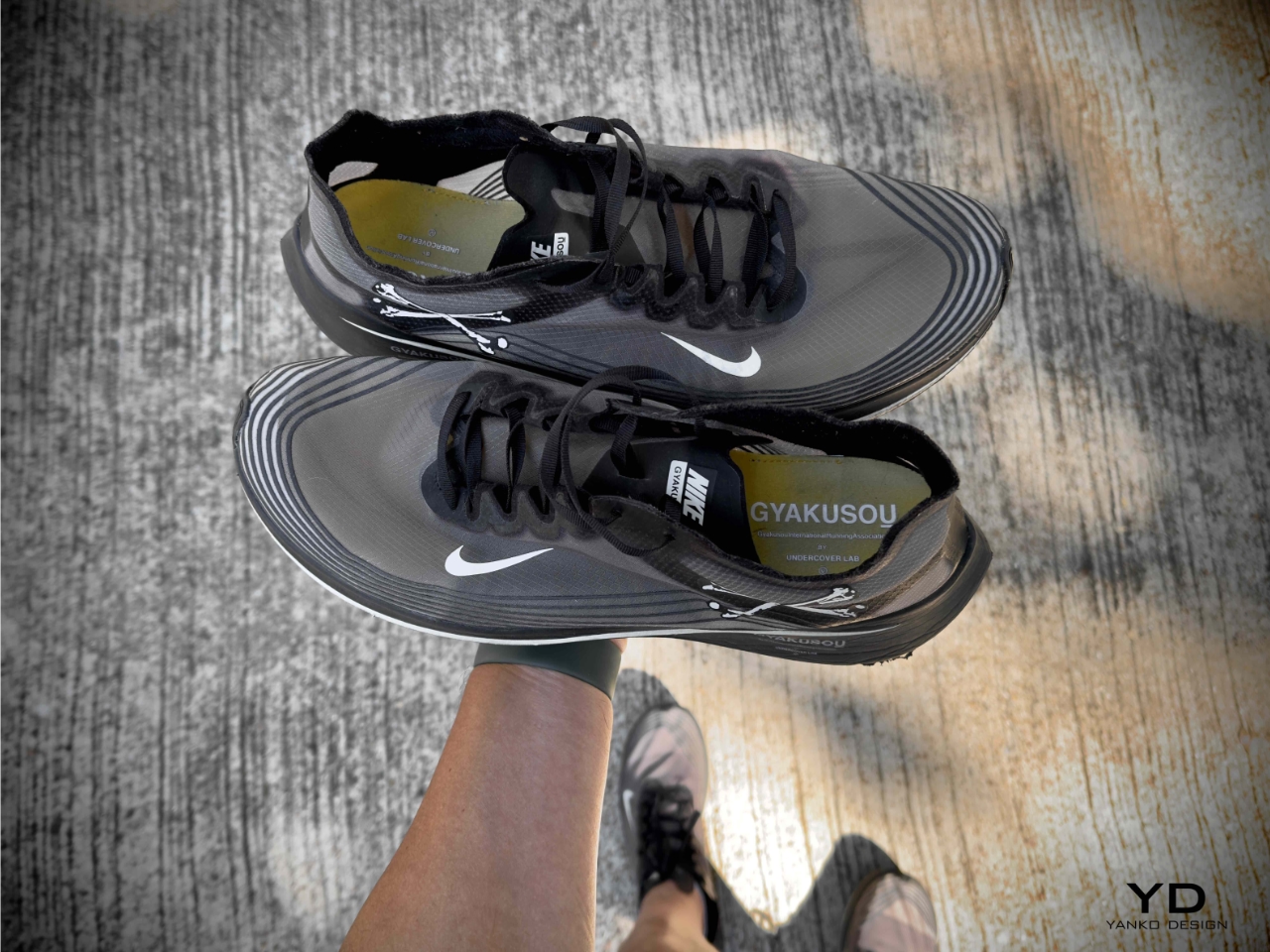
What Are Super Shoes? Exploring the Design and Technology Behind Nike’s Gyakusou Zoom Fly SP

Super shoes have become a key talking point in the running world, promising to improve performance and efficiency. These shoes are engineered to help runners go faster with less effort, thanks to innovative materials and construction. But what exactly qualifies as a “super shoe,” and how do they compare with regular running shoes? Let’s dive into what defines super shoes and how Nike’s Gyakusou Zoom Fly SP fits into this category.

Designer: Nike

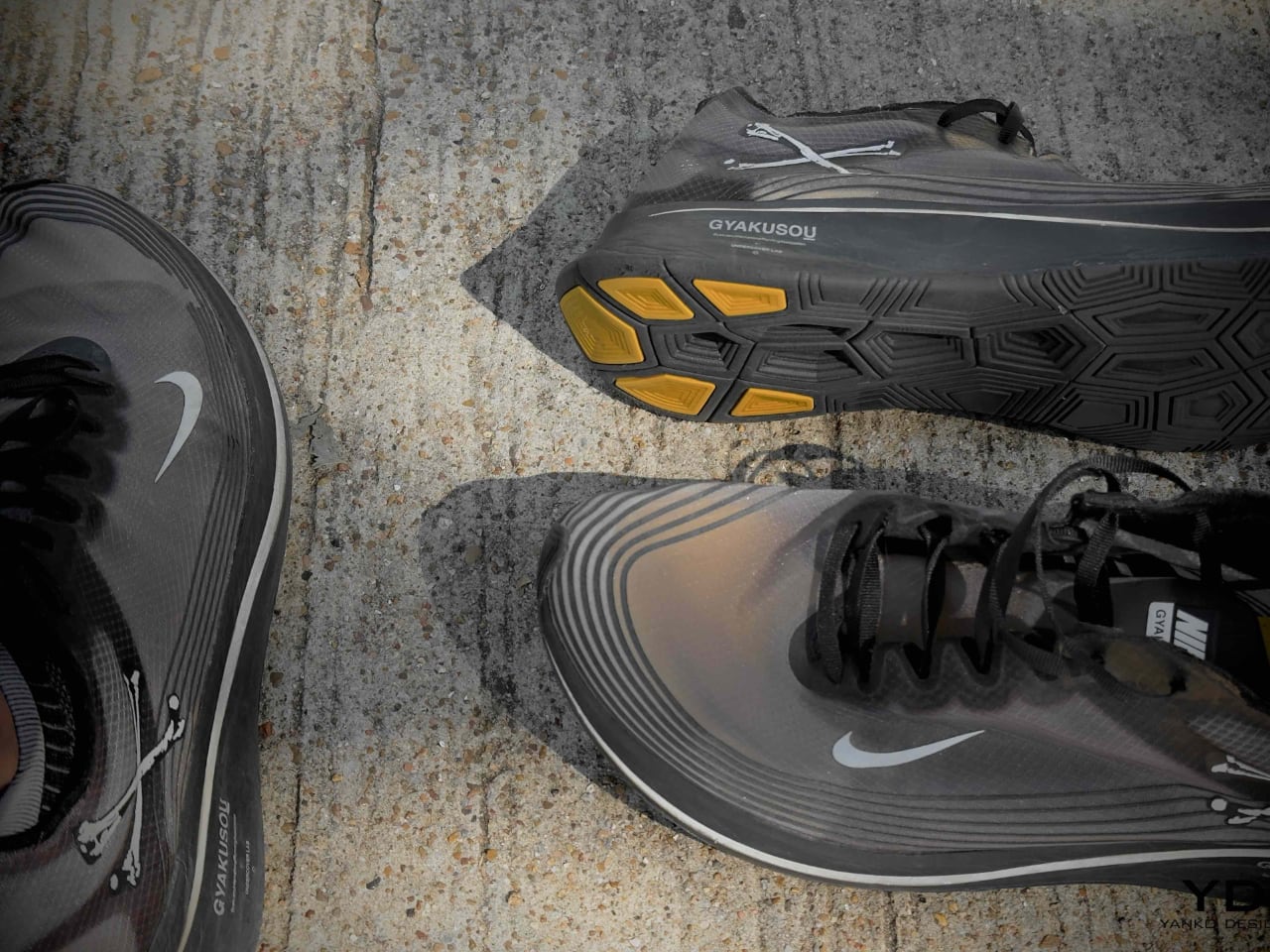
Nike Gyakusou Zoom Fly SP

Super shoes are distinct from traditional running shoes due to their combination of ultra-light materials, responsive cushioning, and a carbon fiber plate embedded in the midsole. This design creates a spring-like effect, helping runners propel forward with less energy spent per stride. The foam used in these shoes is engineered for high energy return, meaning that when your foot hits the ground, the shoe gives you a lift-off sensation. For runners looking to improve their race times, super shoes offer an advantage in both efficiency and speed.

In contrast, regular running shoes prioritize comfort, support, and durability for daily training. They focus on protecting your foot from impact and offer cushioning for long-term use, but they don’t have the same energy-boosting properties as super shoes. Instead, regular shoes use denser, heavier materials that absorb shock but lack the responsive boost found in super shoes.

The Design of Super Shoes: Nike’s Gyakusou Zoom Fly SP

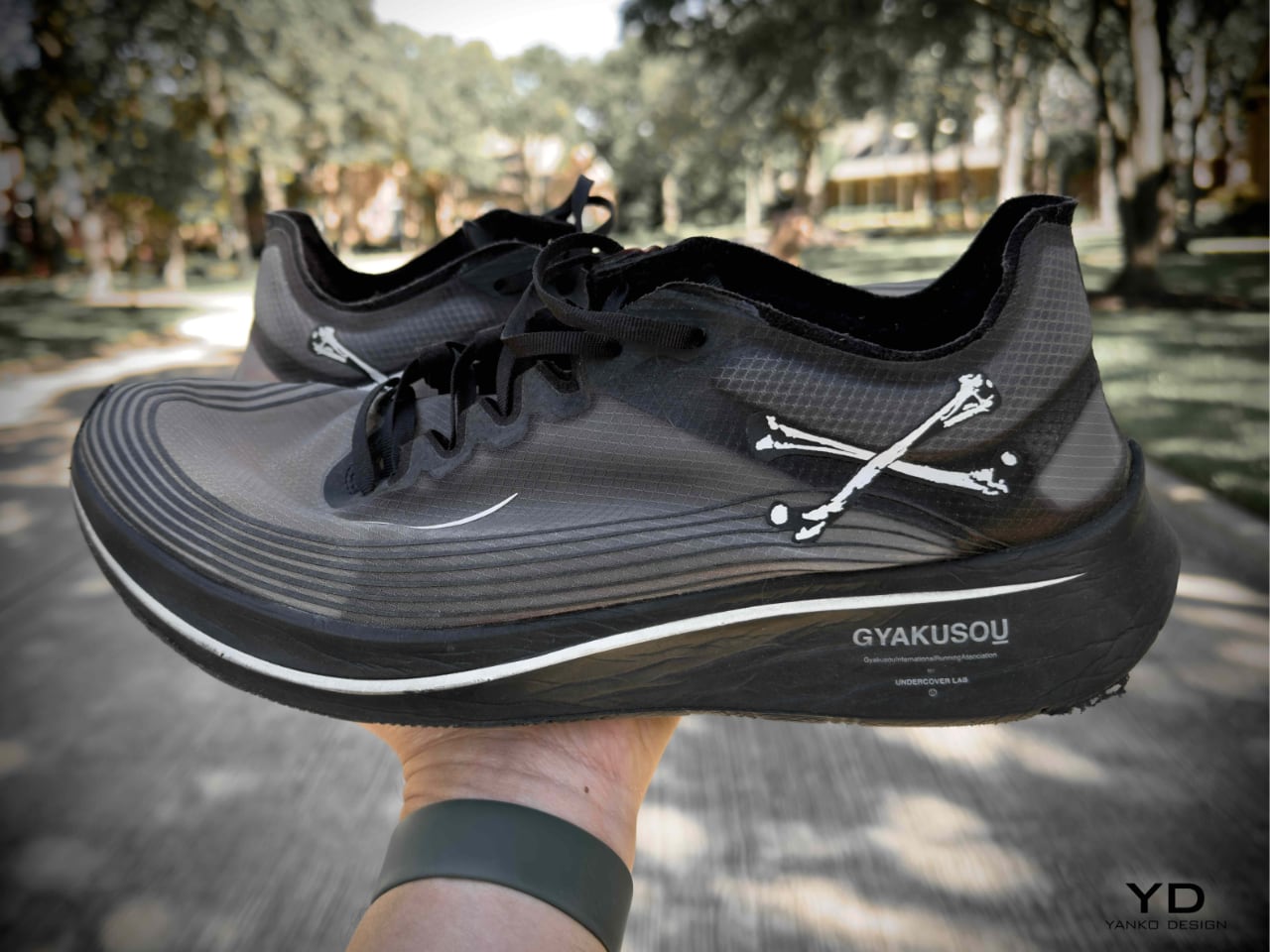
The main design difference in super shoes is their focus on making each step more efficient. Nike’s Gyakusou Zoom Fly SP, a collaboration with Jun Takahashi of UNDERCOVER, is a prime example of performance technology combined with creative design.

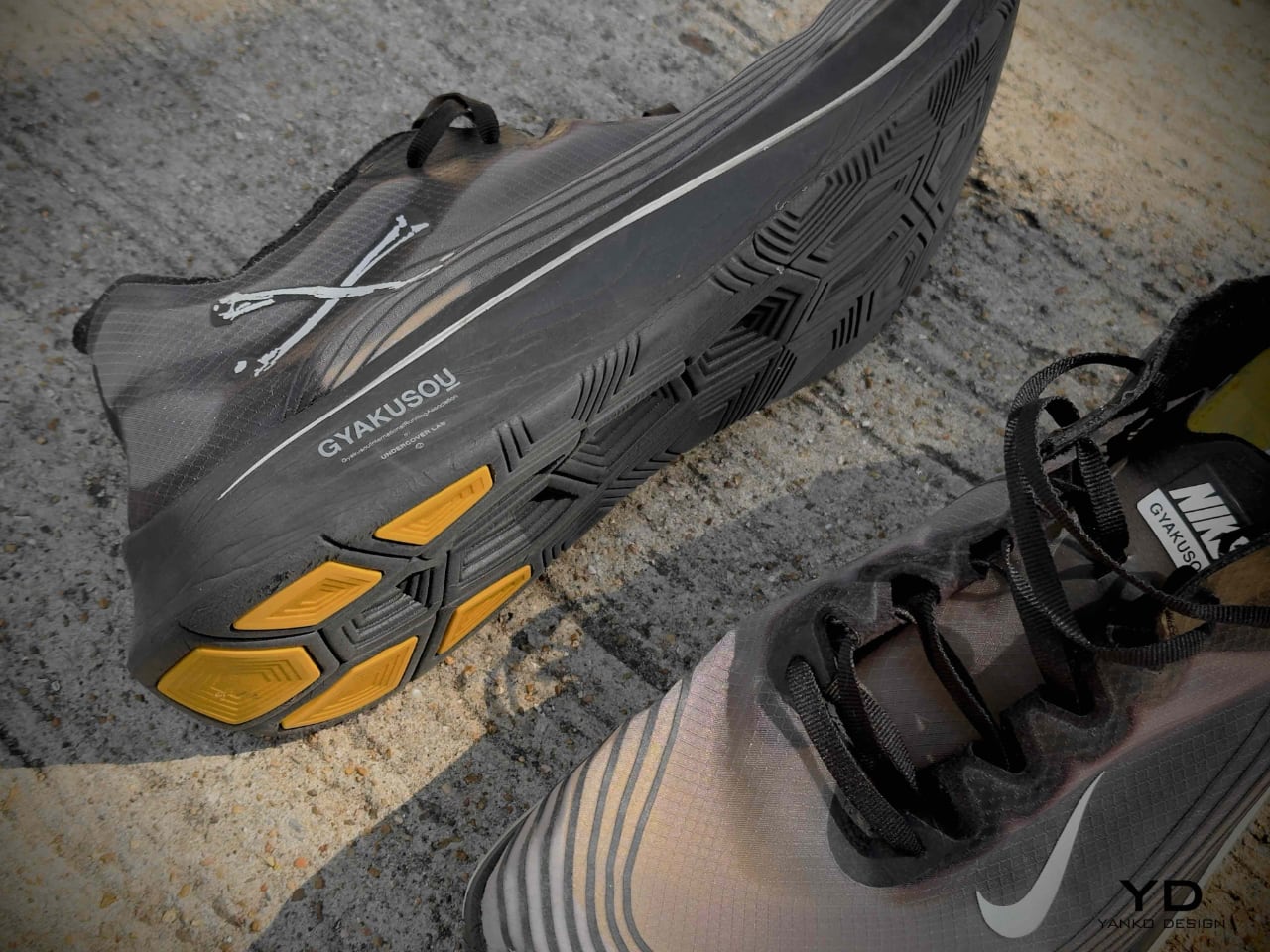
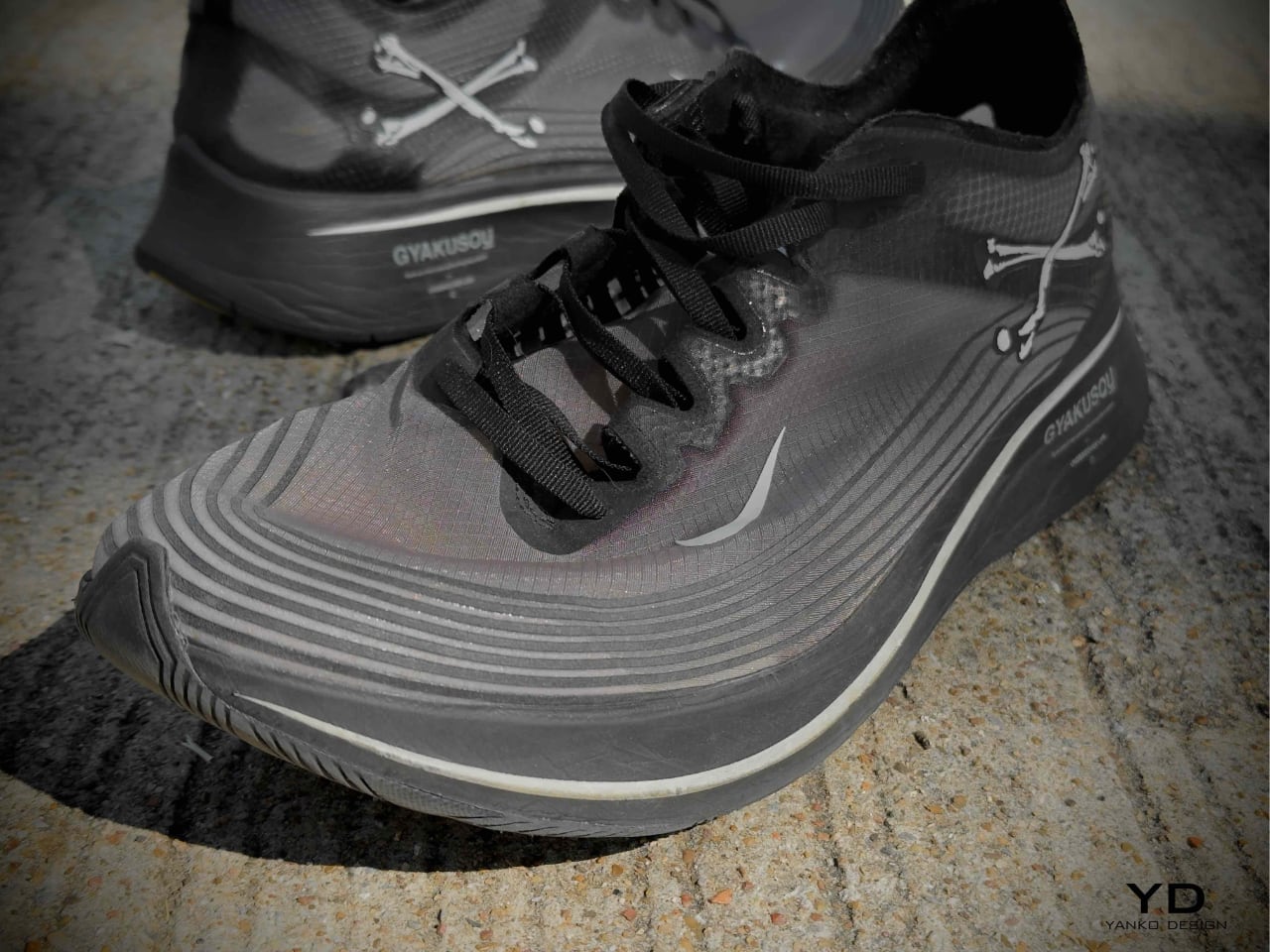
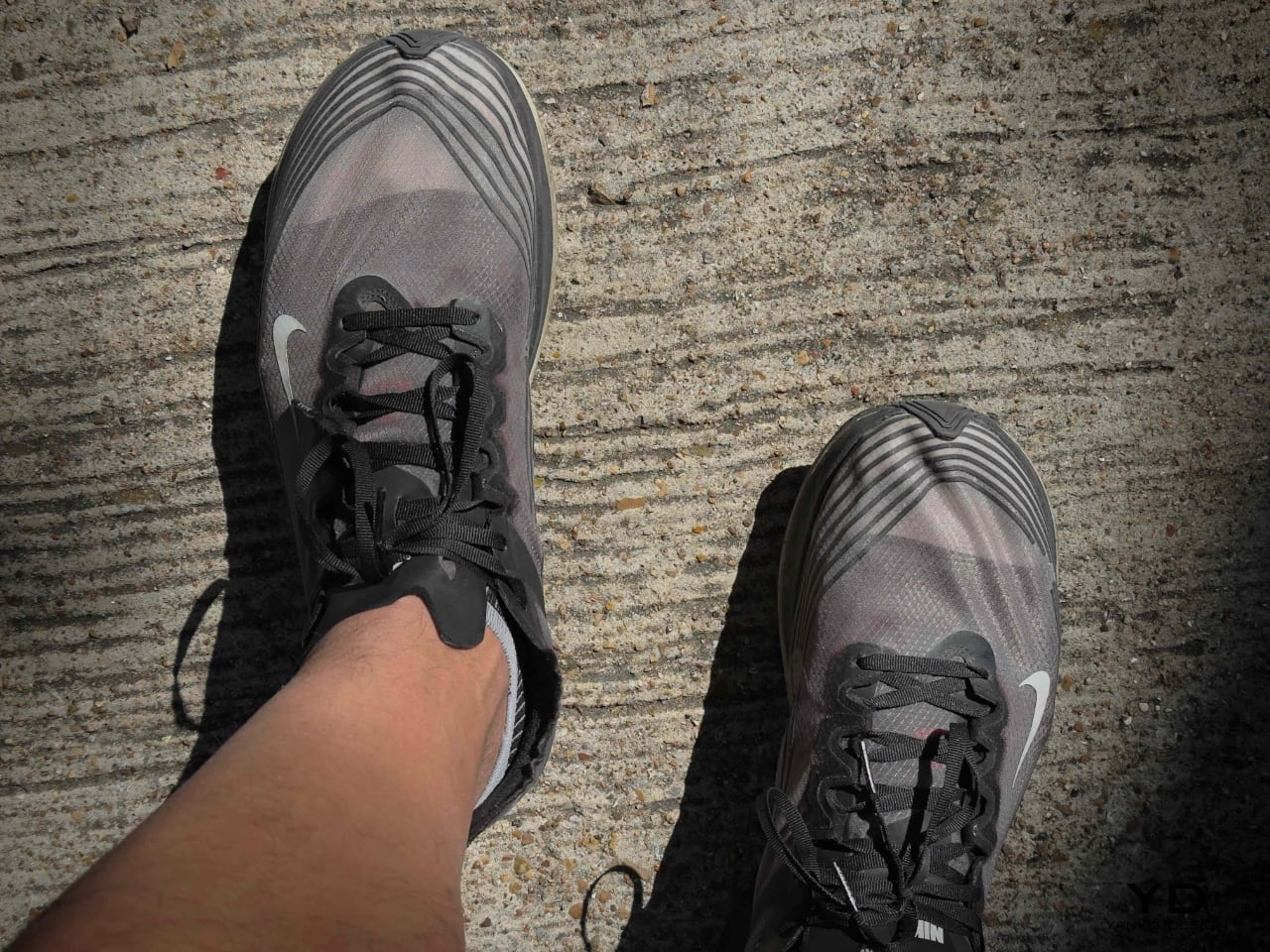
The shoe features a translucent upper that gives it a unique look and reduces weight. The upper is lightweight and breathable and provides a snug fit without the bulk of traditional materials, making it a practical part of the shoe’s performance-driven design. The reflective elements improve visibility during low-light runs, adding practicality to the design.

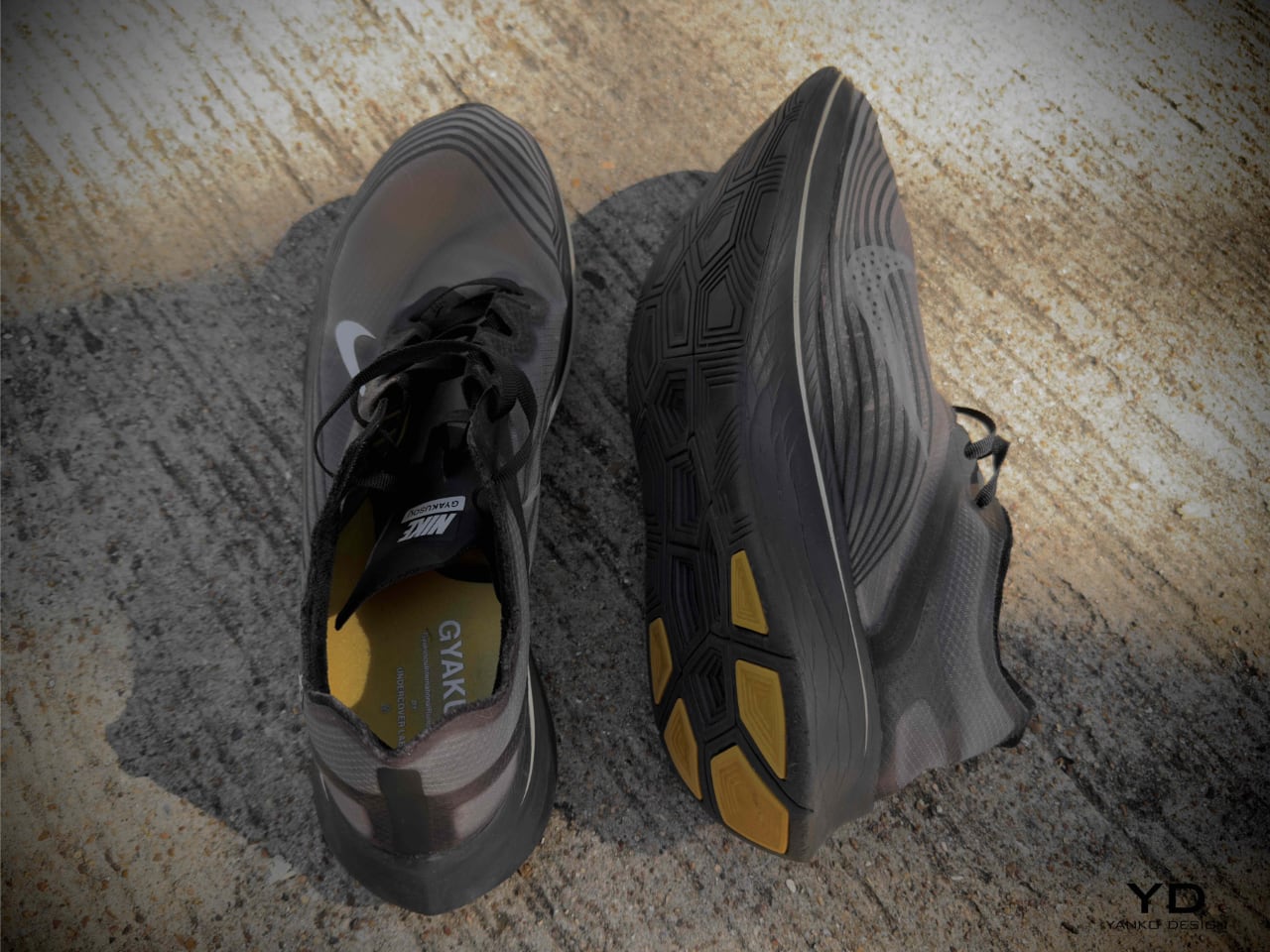
Nike’s Lunarlon cushioning absorbs impact while maintaining the bounce needed for long-distance running. The carbon-infused nylon plate in the midsole adds stiffness and responsiveness, providing smooth transitions from heel to toe and giving you that extra push during runs.

Nike Gyakusou Zoom Fly SP

Jun Takahashi’s influence is evident in the design and Gyakusou graphics. The shoe is built to perform well while offering a unique style for runners who appreciate function and design.

Key Elements of the Nike Gyakusou Zoom Fly SP

When I first tried the Nike Gyakusou Zoom Fly SP, I was struck by its lightweight and thoughtfully designed design. These shoes are engineered for performance and tell a story through their design. I quickly purchased both pairs before they sold out, and they’ve become a regular part of my running kit ever since.

The translucent upper gives the shoe a sleek, barely-there feel while keeping it breathable. The reflective detailing adds a practical safety feature for night runs. But the combination of Lunarlon cushioning and the carbon-infused nylon plate sets these shoes apart. With each step, the plate propels you forward, offering that extra boost when needed.

The Gyakusou graphics reflect Jun Takahashi’s vision of blending fashion and function. These shoes inspire confidence with bold design choices that work just as hard as the performance features.

Real-World Test: Nike Gyakusou Zoom Fly SP in Action

When I first saw the Nike Gyakusou Zoom Fly SP, I was instantly drawn to its unique design and lightweight feel. I immediately fell in love with them and bought them without realizing they were classified as “super shoes.”

Nike Gyakusou Zoom Fly SP

After hitting the pavement in them, it became clear these shoes perform as well as they’re designed to. The lightweight materials felt seamless, almost like an extension of my foot. The carbon-infused nylon plate made a noticeable difference, providing an extra push with each step, especially during long runs when maintaining pace can be challenging.

The Lunarlon cushioning kept my feet comfortable even over longer distances, offering the right balance of support without feeling too soft. There’s an adjustment period if you’re used to traditional trainers, but once you get used to the feel, the energy return feels like a natural part of your stride.

And you don’t need to be a competitive runner to enjoy super shoes. I travel frequently and often find myself sprinting through airports from gate to gate. In cities like Tokyo, Barcelona, and Berlin, where walking and public transit are common, the Gyakusou Zoom Fly SP has become my go-to travel companion. Beyond comfort, they’re also lightweight enough to pack as a second pair of shoes. Whether navigating crowded terminals or getting around new cities, these shoes make travel easier.

The Nike Gyakusou Zoom Fly SP is built for runners seeking performance and style. With its lightweight design, responsive plate, and carefully thought-out details, these shoes are perfect for anyone looking to elevate their running experience. Whether aiming for a faster time or wanting a unique design that performs, these shoes do the job well without compromising comfort or aesthetic appeal.

The post What Are Super Shoes? Exploring the Design and Technology Behind Nike’s Gyakusou Zoom Fly SP first appeared on Yanko Design.

5 Reasons Why the REDMAGIC Nova is the Ultimate Gaming Tablet

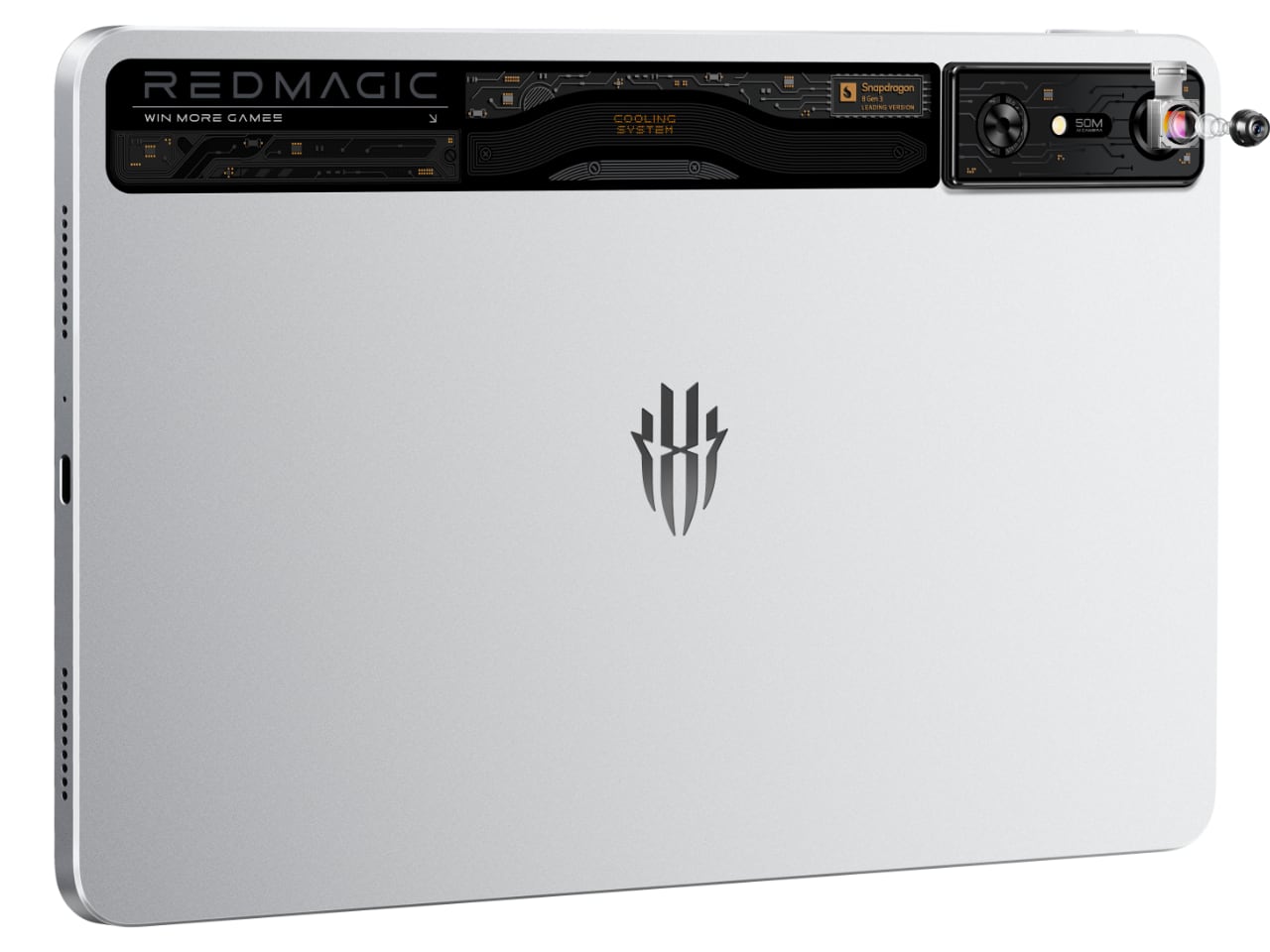
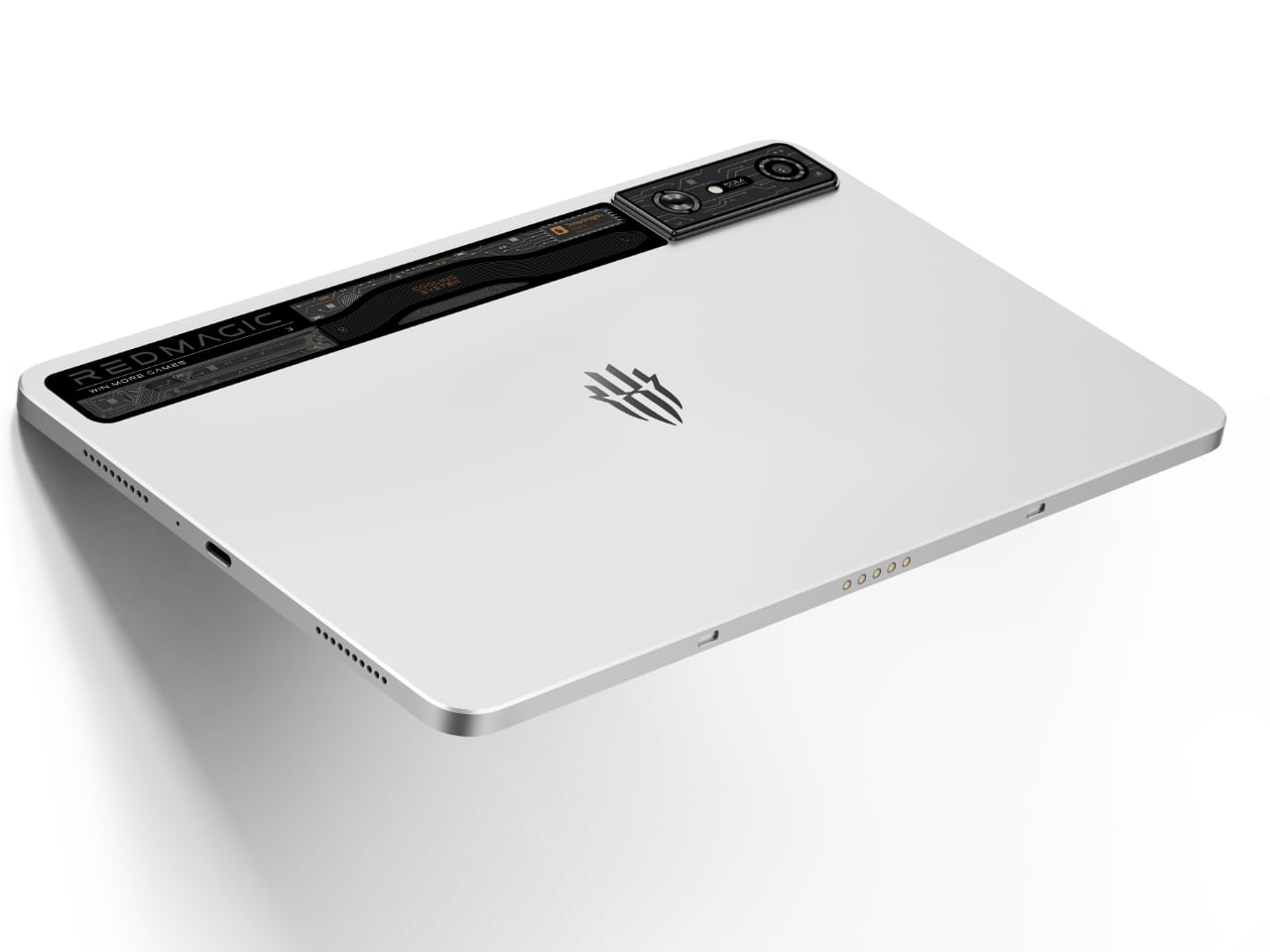
The REDMAGIC Nova Gaming Tablet steps into the market with serious intentions, built for gamers who demand peak performance from their devices. This tablet integrates the latest Snapdragon 8 Gen 3 Leading Edition processor with a sophisticated 9-layer cooling system, positioning it as a top contender for competitive gaming. Designed with both power and aesthetics in mind, the Nova ensures long gaming sessions without sacrificing style or performance.

Designer: REDMAGIC

Sleek Design Meets Gaming Durability

This gaming tablet takes a bold approach to design without overlooking the practicalities gamers need. Weighing just 520 grams, the body is crafted from aviation-grade aluminum, balancing durability with lightweight portability. Its 10.9-inch display offers a 2.8K resolution and a 144Hz refresh rate, delivering fluid, crisp visuals that enhance the immersive gaming experience.

One of the most vivid features is its transparent aluminosilicate glass section, which exposes the tablet’s inner workings, enhanced by customizable RGB lighting. This gives it a distinctive edge, combining a futuristic look with functionality. Whether you’re gaming on the go or in a competitive setting, the Nova is a visually striking device that is durable enough to withstand extended use.

Cooling System Built for Long Play

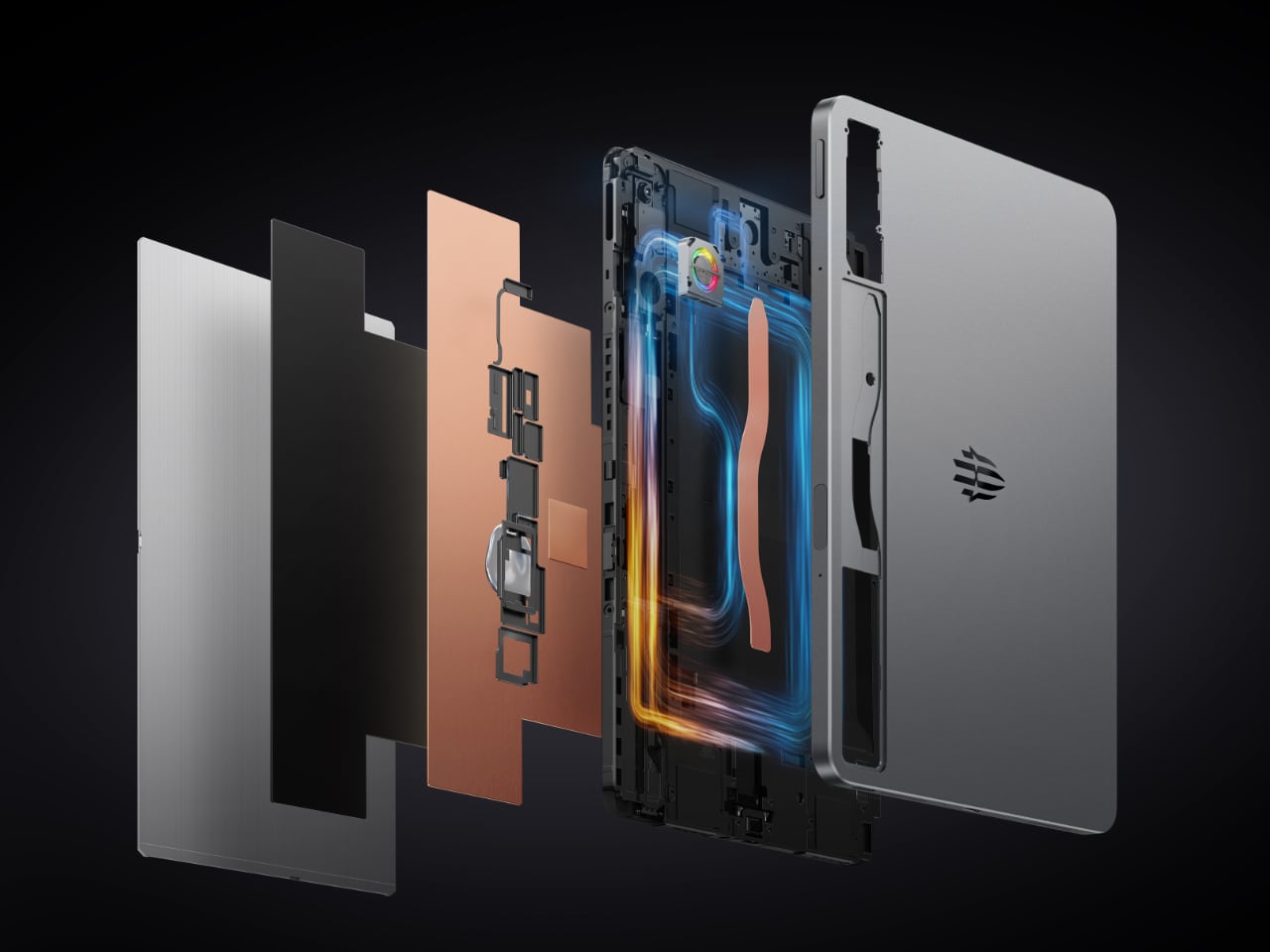
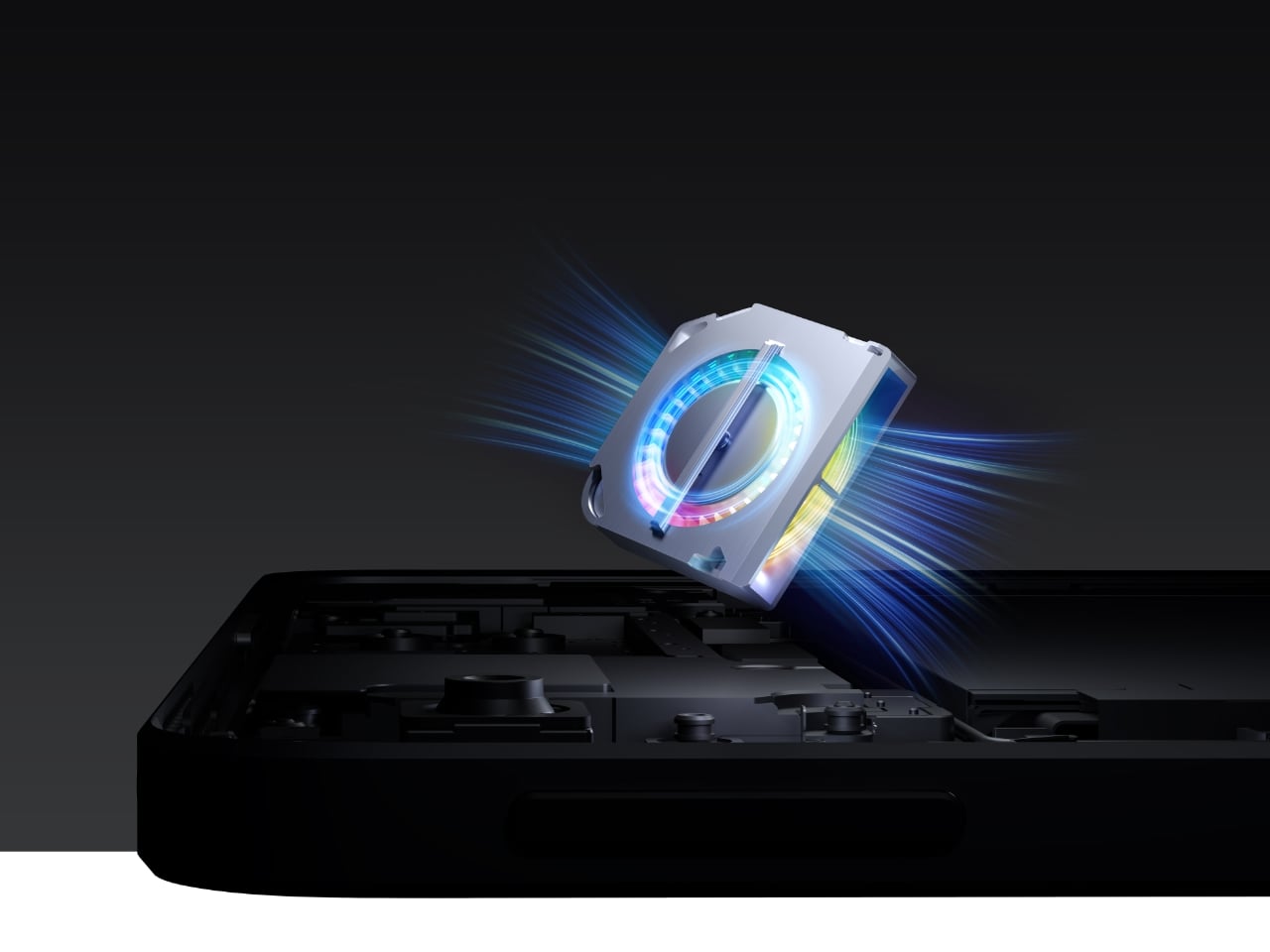
Many gaming tablets struggle with heat during extended sessions, but the Nova offers a solution. Equipped with a 9-layer cooling system and a 20,000 RPM internal fan, this tablet reduces core temperatures by up to 25°C. The result is consistently smooth performance, even when playing graphically demanding games for hours at a time.

Heat management isn’t just about keeping the tablet comfortable to hold—it directly affects in-game performance. The 3D heat pipe and internal circulation system keep the device cool under pressure, maintaining frame rates and responsiveness. Gamers no longer need to worry about overheating or lag during crucial moments in games like Genshin Impact or Fortnite.

Raw Power for Serious Gaming

At the heart of the Nova is the Snapdragon 8 Gen 3 Leading Edition processor, pushing CPU speeds up to 3.4 GHz and GPU frequencies of 1 GHz. This setup easily handles AAA games, ensuring that even the most demanding titles run smoothly without lag or performance drops. The Nova also excels in multitasking, making it a strong choice for gamers who stream their gameplay or run multiple apps while playing.

With an AnTuTu score of 2,352,902, the Nova showcases the processing power that gives competitive gamers an edge. Whether navigating fast-paced combat in Valorant or exploring open-world environments in Elden Ring, the tablet delivers a responsive, immersive experience every time. For gamers who need reliable, high-powered performance, the Nova’s specifications speak for themselves.

A Battery That Keeps You in the Game

Gaming devices often fall short when it comes to battery life, but the Nova addresses this head-on with a 10,100mAh battery that allows for up to 10 hours of continuous gameplay. For those who use their device beyond gaming, it supports up to 19 hours of regular use, making it versatile enough for work or entertainment between gaming sessions.

The 80W fast charging feature ensures minimal downtime. After just a short break, you’re ready to dive back into gameplay, a crucial advantage for gamers in the middle of competitive matches or immersive campaigns. The extended battery life and rapid charging mean the Nova will keep up with the most demanding schedules.

Gaming Display for Maximum Responsiveness

One of the key features that makes the REDMAGIC Nova ideal for gamers is its 144Hz refresh rate and 840Hz touch sampling rate. This ensures every input is registered instantly, providing a competitive advantage in fast-paced games. Whether sniping in PUBG Mobile or racing through turns in Asphalt 9, the display’s responsiveness is designed to give you the precision and accuracy needed for high-stakes gameplay.

In addition to its responsiveness, the SGS-certified blue light filter reduces eye strain, making it easier to play for extended periods. This attention to comfort, alongside its visual performance, makes the Nova a gaming powerhouse that’s easy on the eyes.

Immersive Audio for Enhanced Gameplay

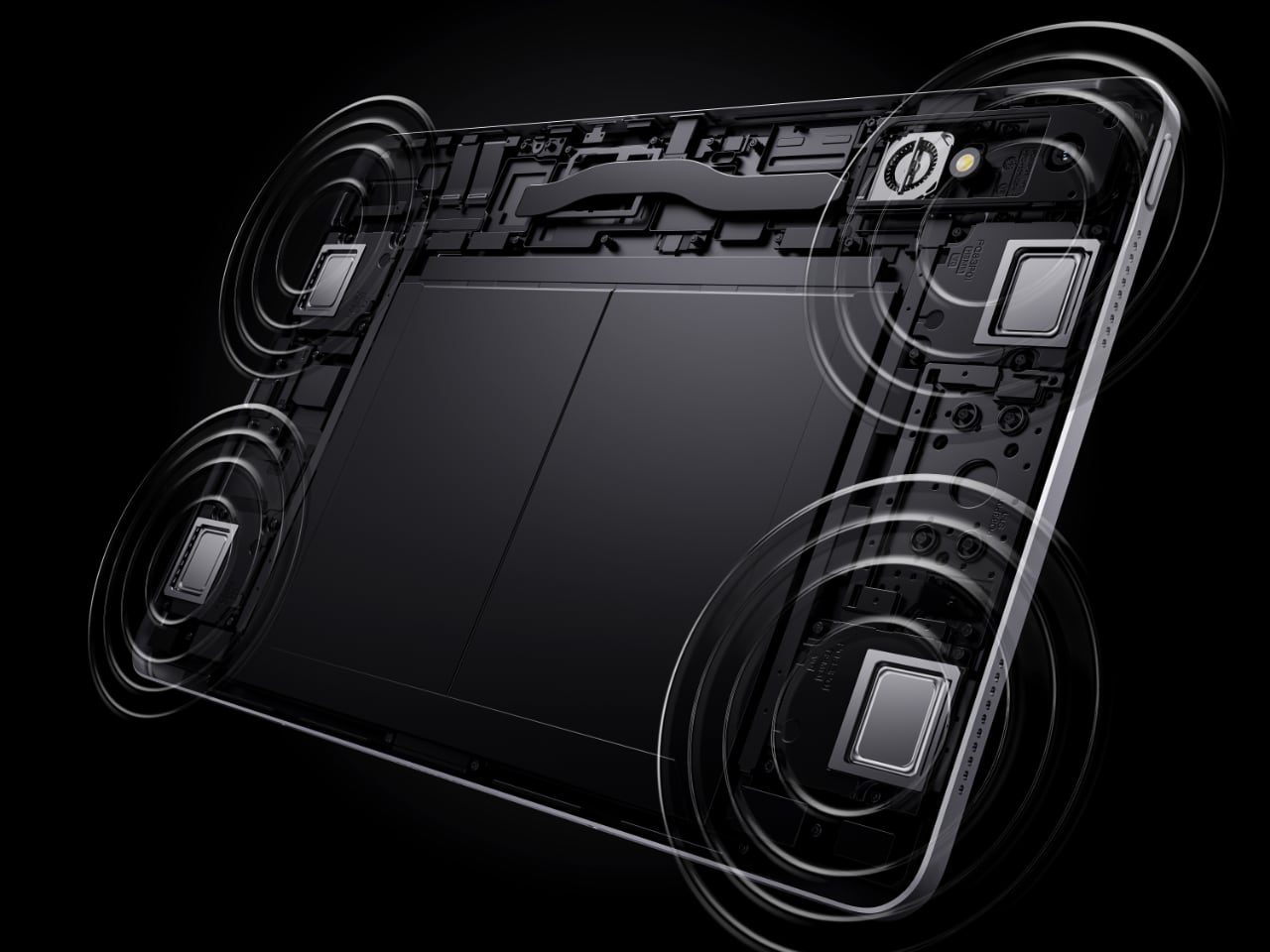
The Nova doesn’t stop at visuals and performance—it brings audio into the equation with four symmetrical speakers and DTS Ultra certification for a 3D sound experience. This feature creates an audio environment where gamers can hear every subtle detail, from enemy footsteps in Call of Duty: Mobile to atmospheric sounds in The Witcher: Monster Slayer.

Clear communication is vital in team-based games. The three built-in microphones ensure that voice chats with teammates remain crisp and clear, allowing for better coordination in multiplayer sessions. For gamers focused on immersive sound and effective teamplay, the Nova offers the tools to enhance every part of the experience.

Perfect for Hardcore Gamers

The REDMAGIC Nova Gaming Tablet doesn’t just meet the demands of everyday use—it’s built to excel in competitive and immersive gaming scenarios. With its powerful processor, next-level cooling system, and immersive audio and visuals, the Nova is a true companion for gamers who need reliability, performance, and portability.

From marathon gaming sessions to live-streaming, the Nova supports the needs of serious players. Whether pushing the limits in AAA titles or managing multiple apps simultaneously, the Nova keeps you in control. For gamers seeking a high-performance, well-designed device that delivers on all fronts, the REDMAGIC Nova is hard to beat.

The post 5 Reasons Why the REDMAGIC Nova is the Ultimate Gaming Tablet first appeared on Yanko Design.

Should you upgrade to the new Ray-Ban Meta Wayfarer Limited-Edition Transparent Model?

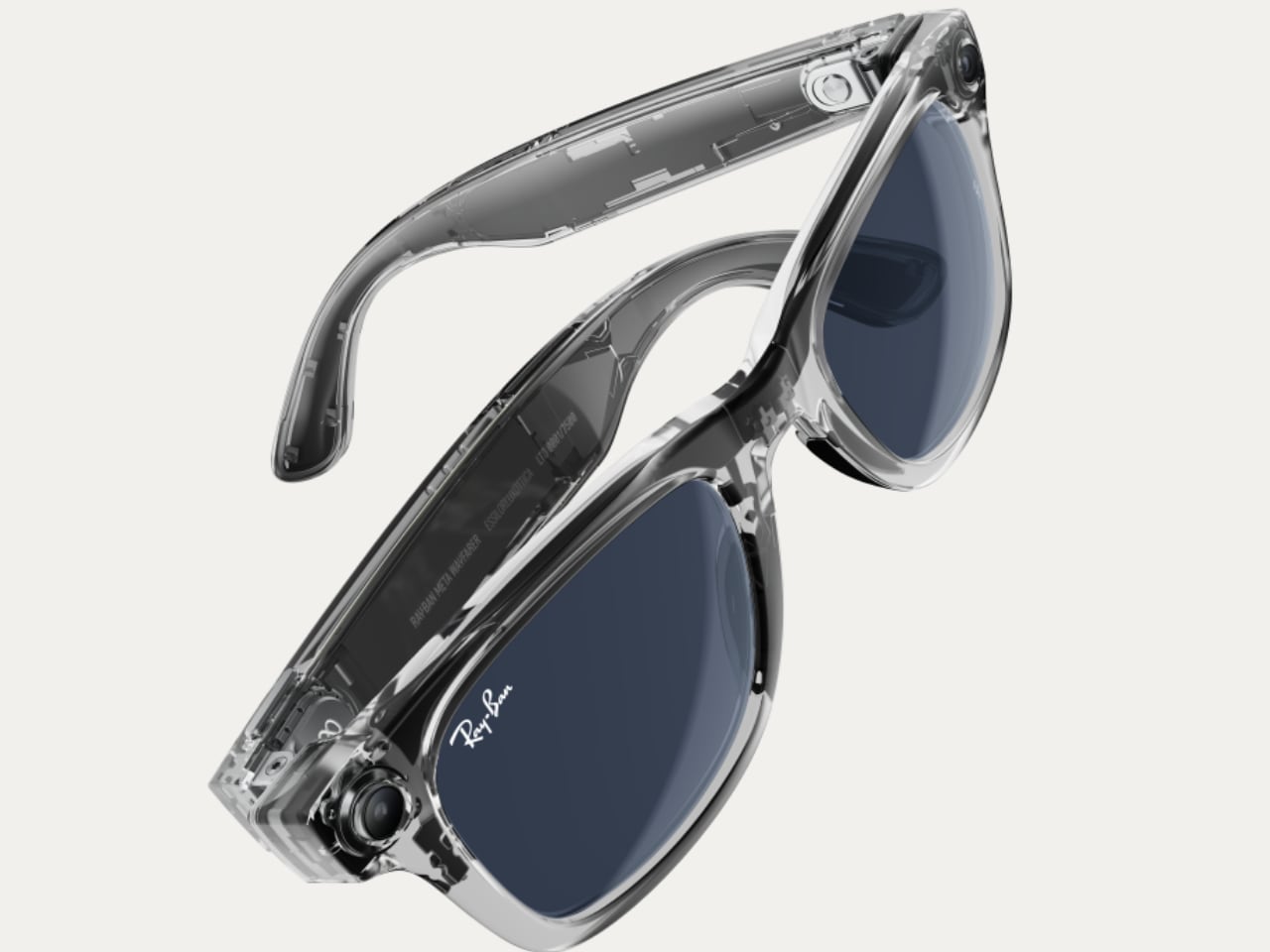
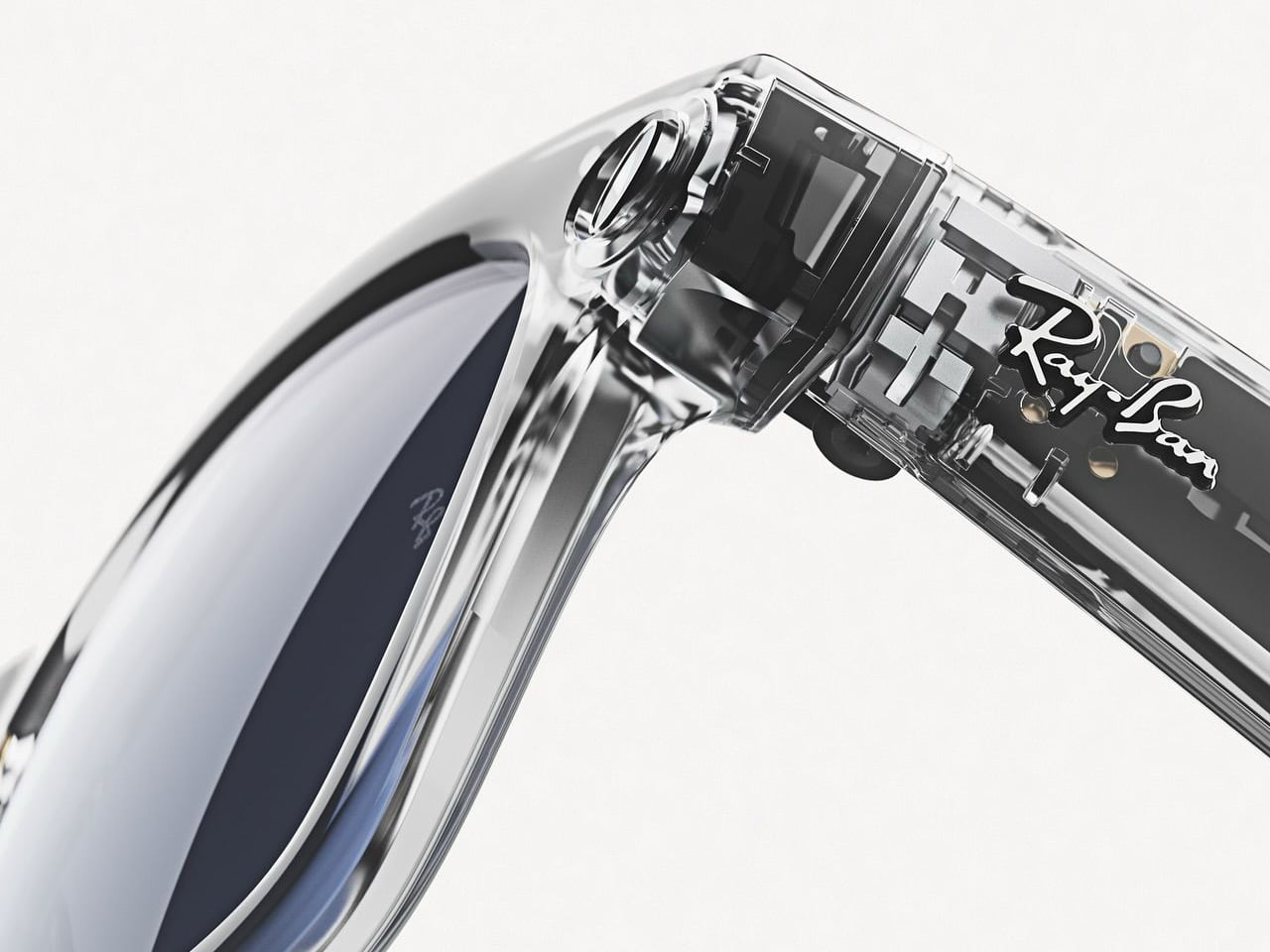
Ray-Ban’s Meta Wayfarer glasses have quickly become the intersection of fashion and technology, combining classic style with advanced smart features. Recently, Ray-Ban and Meta unveiled the new Shiny Transparent Wayfarer, featuring exposed internal components and Clear to Sapphire Transitions lenses. While this new model pushes the boundaries of what smart glasses can look like, the big question is: should you upgrade, especially if you already own a pair? Let’s break it down.

Designer: Ray-Ban + Meta

If Money Is No Object, Then Yes—Go for It

If price isn’t a barrier, the decision to upgrade is straightforward. At $429 USD, the Shiny Transparent Wayfarer offers a visually striking design that showcases the internal technology, creating a futuristic look that stands apart from the Matte Black version. The Clear to Sapphire Transitions lenses add another layer of sophistication, adapting to light conditions and giving the glasses a sleek sapphire tint when outdoors. This is an easy yes for those who enjoy staying at the forefront of wearable tech.

If You Want the New Lens Transition, It’s Worth Considering

If your current Ray-Ban Meta Wayfarer comes with standard clear lenses or basic non-adaptive sunglasses, upgrading to the new Transitions lenses could make a big difference in how you use the glasses day-to-day. The Clear to Sapphire Transitions lenses offer a smooth transition between indoor and outdoor settings, making it easier to adapt to different lighting conditions without needing to switch eyewear. When you’re indoors, the lenses remain clear, providing a natural and unobstructed view. However, once you step outside, they automatically darken to a sleek sapphire tint, adding a touch of style and protecting your eyes from harsh sunlight. For anyone who finds themselves frequently moving between environments, this flexibility could be a major convenience.

On the other hand, if you already own a pair with Clear to Green Transitions lenses, the upgrade may not offer enough of a difference to justify the change. Both lenses provide the same adaptive functionality, adjusting to light to enhance your vision while adding a color tint. The real difference lies in the aesthetic—whether you prefer the cooler sapphire tint or the more classic green hue. If you’re satisfied with the current performance and look of your lenses, there may be little reason to make the leap unless the sapphire color truly appeals to you.

If You Want a New Design with Exposed Tech, Then Yes

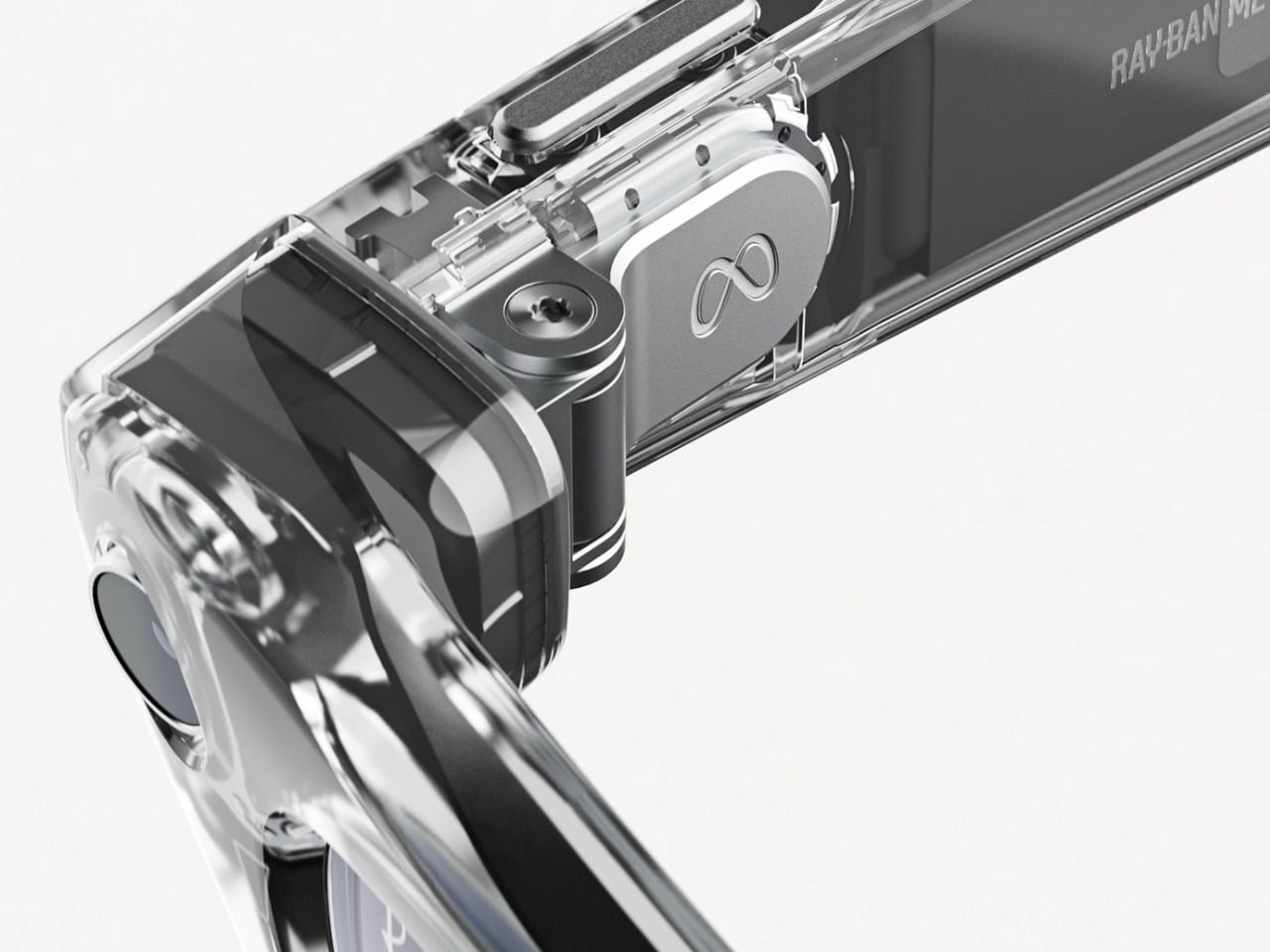
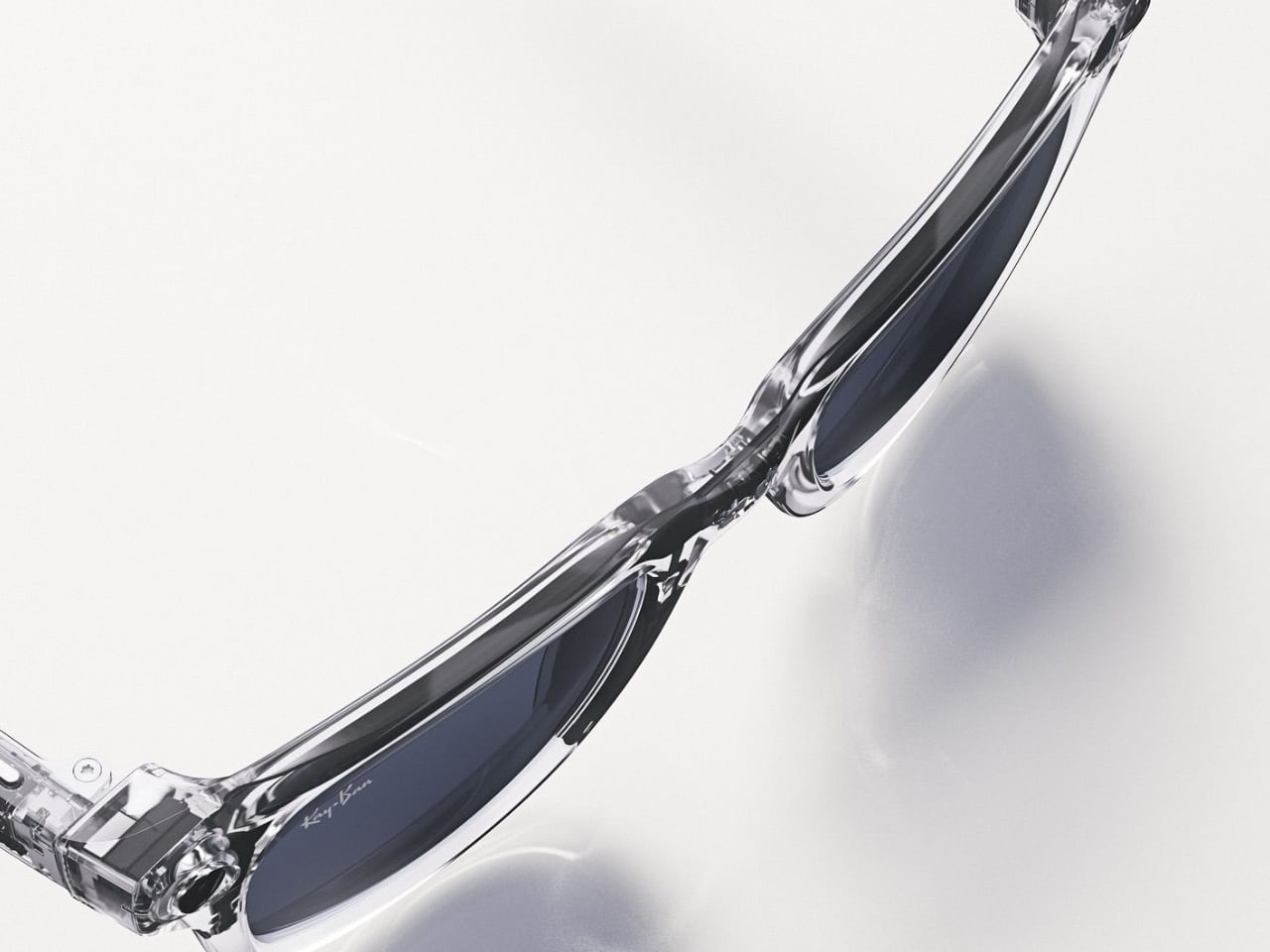
The most noticeable difference in the new model is the Shiny Transparent frame. This design exposes the inner workings of the glasses, giving them a high-tech look that contrasts with the more traditional Matte Black frame. The transparent frame brings an aesthetic shift, showcasing the cutting-edge technology that powers the glasses in a more visually pronounced way. It’s an intriguing design choice for those who appreciate a bold, futuristic look.

If you’re drawn to a more tech-forward, modern aesthetic, this new design is worth considering. The transparent frame is eye-catching and adds a fresh dimension to the Ray-Ban Meta Wayfarer collection. For those who want their eyewear to make a visual statement, the exposed components are a step forward in wearable tech design. However, if you prefer a more classic and understated look of the Matte Black Wayfarer, you might find that the new frame doesn’t offer enough reason to make the switch.

For Me, It’s a Hard No

For anyone who already owns the Matte Black Wayfarer with Clear to Green Transitions lenses, upgrading to the new Shiny Transparent model may not be necessary. Your current pair offers the same core features—AI-powered assistance, a 12MP camera, open-ear speakers, and a touchpad for easy control. The Clear to Green Transitions lenses provide excellent functionality, and if you’re happy with the design and tech you already have, there’s no pressing need to make the switch.

The Introduction of AI-Powered Features

With the recent updates, Ray-Ban and Meta have significantly improved the AI capabilities of the glasses. Now, you can use voice commands by simply saying “Hey Meta” and follow up with additional commands without repeating the wake word. The glasses can also remember important details like where you parked your car or set reminders for when you land after a flight. The ability to send voice messages via WhatsApp or Messenger while your hands are occupied adds an extra layer of convenience for staying connected on the go.

One of the more impressive AI features is real-time video assistance. Whether you’re exploring a new city or browsing the aisles of a grocery store, Meta AI can offer real-time help by identifying landmarks or suggesting meals based on the ingredients you’re looking at. Additionally, real-time language translation for Spanish, French, and Italian can remove language barriers, and future updates will likely support more languages.

Expanding Partnerships with Major Platforms

The glasses also support deeper integrations with platforms like Spotify and Amazon Music, but Ray-Ban has expanded these offerings to include Audible and iHeart as well. Now, you can use voice commands to search and play music or audiobooks without touching your phone. This makes the listening experience even more seamless, allowing you to ask questions like “What album is this from?” while on the move. These expanded partnerships deepen the glasses’ role in day-to-day media consumption.

The collaboration with Be My Eyes is another significant step in making the glasses more accessible. This app, designed for individuals who are blind or have low vision, pairs users with sighted volunteers who provide real-time assistance. The glasses’ camera allows the volunteer to see what the wearer sees, enabling them to help with tasks like reading mail or navigating new environments.

Are You Going for It?

Ultimately, the decision to upgrade comes down to personal preference and how much you value the new design and lens options. If money isn’t an issue or you’re drawn to the transparent frame and sapphire lenses, the upgrade makes sense. However, if you’re content with your current Matte Black Wayfarer with Clear to Green Transitions lenses, there’s no pressing reason to switch. The new features and design are exciting, but your existing pair still holds up as a stylish, highly functional piece of wearable tech.

The post Should you upgrade to the new Ray-Ban Meta Wayfarer Limited-Edition Transparent Model? first appeared on Yanko Design.

VS-9 Redefines Sustainable Marine Transport with Electric Hydrofoiling Innovation

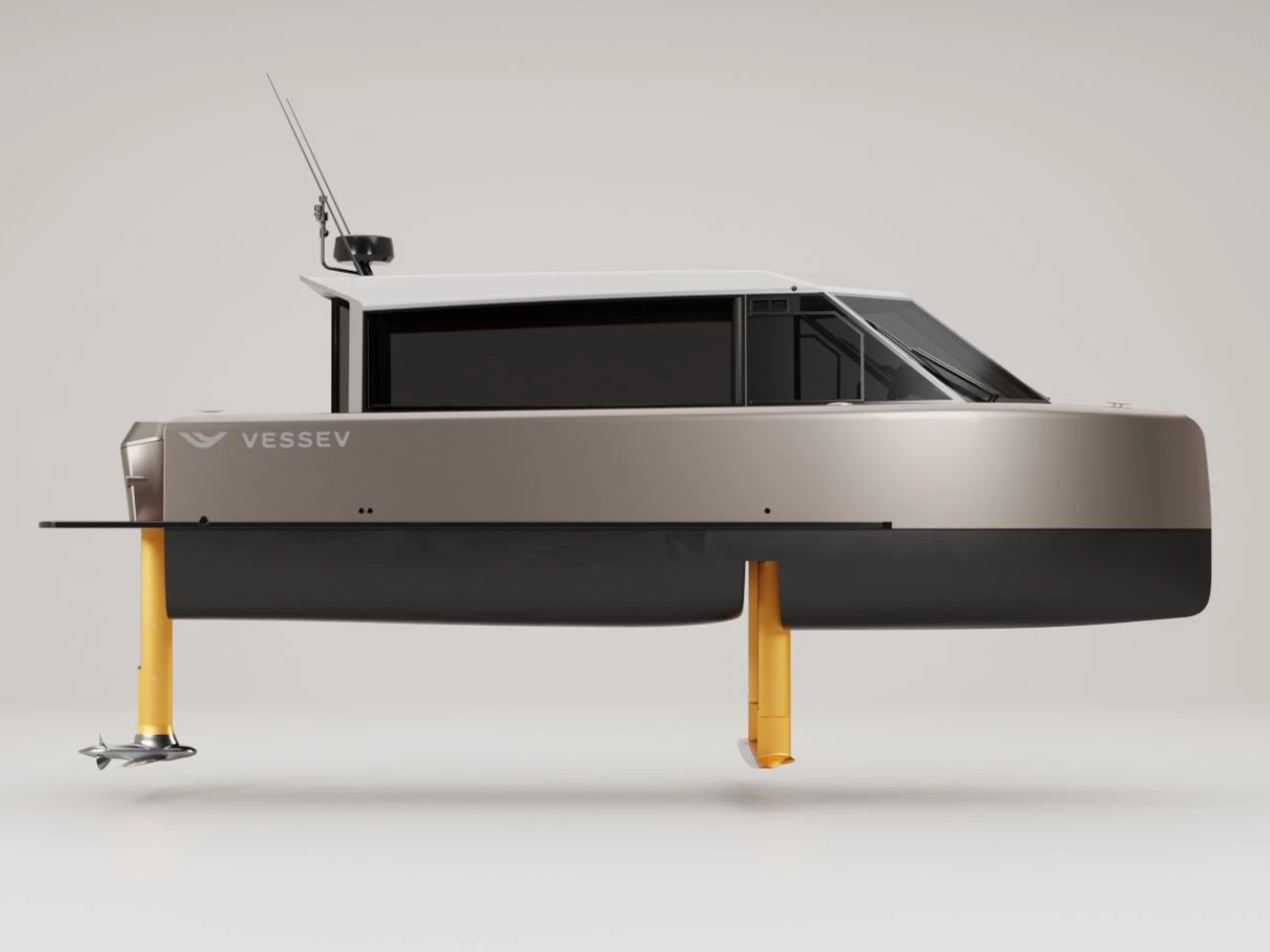
Vessev, a leader in sustainable marine technology, has launched the VS-9 electric hydrofoiling vessel, set to redefine premium water transport. By merging cutting-edge America’s Cup technology with sleek marine innovation, the VS-9 promises a smooth, quiet experience akin to flying. Designed to enter commercial service with New Zealand’s largest ferry operator, Fullers360, the vessel will begin transporting passengers later this year.

Designer: Vessev

Eric Laakmann, CEO of Vessev, highlighted the significance of this debut, saying, “This marks the beginning of a global shift toward sustainable energy in maritime transport. With 33 million vessels worldwide, only a fraction are sustainable. The VS-9 and our collaboration with Fullers360’s NetZero Maritime team are key to advancing new marine technologies.”

Transforming Water Transport

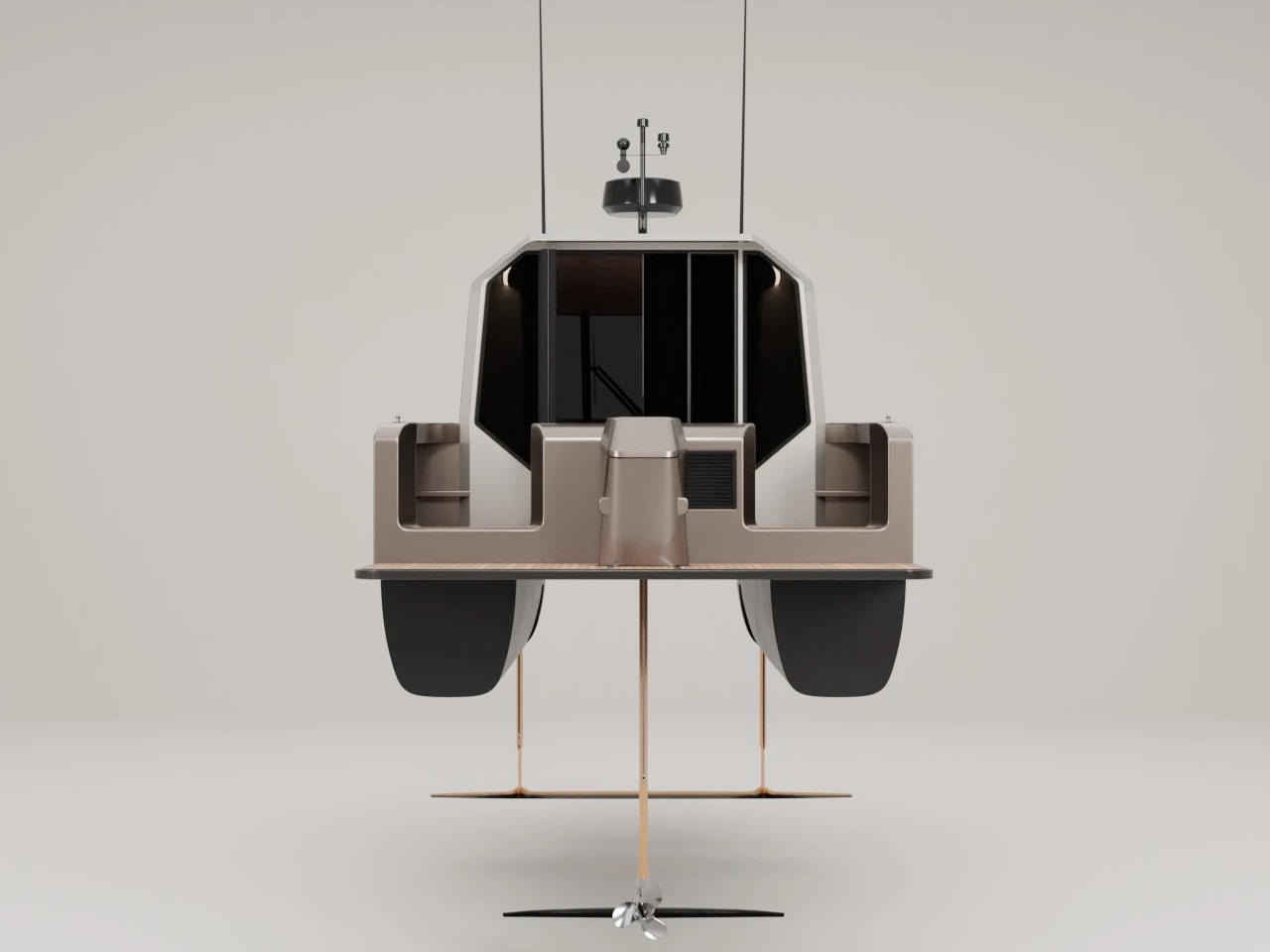
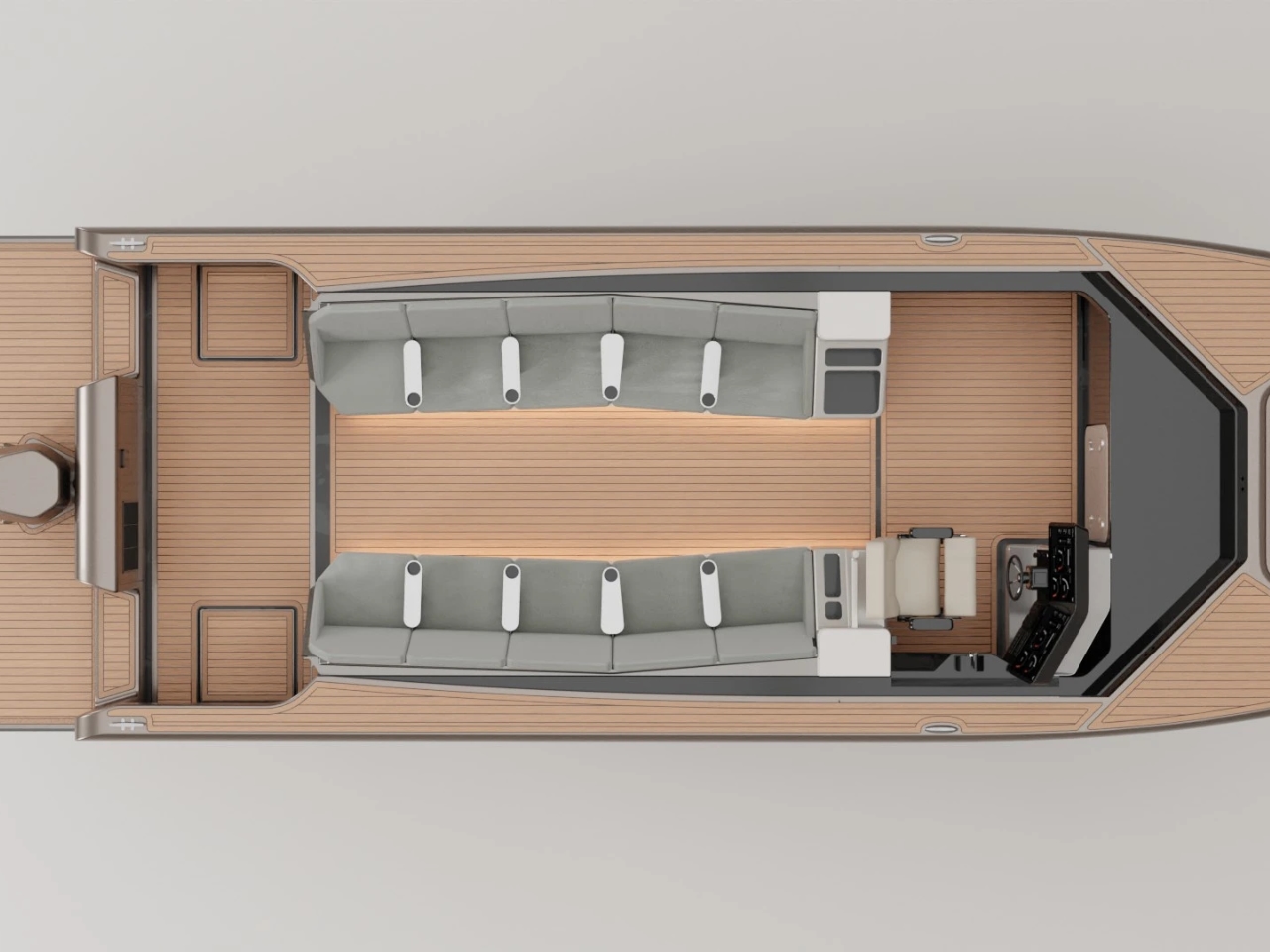
At nine meters long, the VS-9 blends state-of-the-art hydrofoil technology with passenger comfort, capable of transporting up to ten passengers at a cruising speed of 25 knots. Its retractable hydrofoils lift the vessel above the water’s surface, easily cutting through waves and creating a frictionless, smooth experience. Laakmann explained, “Flying above the waves, the VS-9 offers the comfort of a large vessel on a much more agile platform.”

The vessel’s design revolutionizes the traditional boating experience, eliminating the need for larger ships to counteract waves. The VS-9’s hydrofoils minimize this dependency, allowing the smaller, more efficient boat to provide a premium, stable ride. With its energy-efficient design, the VS-9 lowers operational costs and reduces energy consumption by up to 95% compared to fossil fuel-powered boats.

Exterior Design: Built for Performance

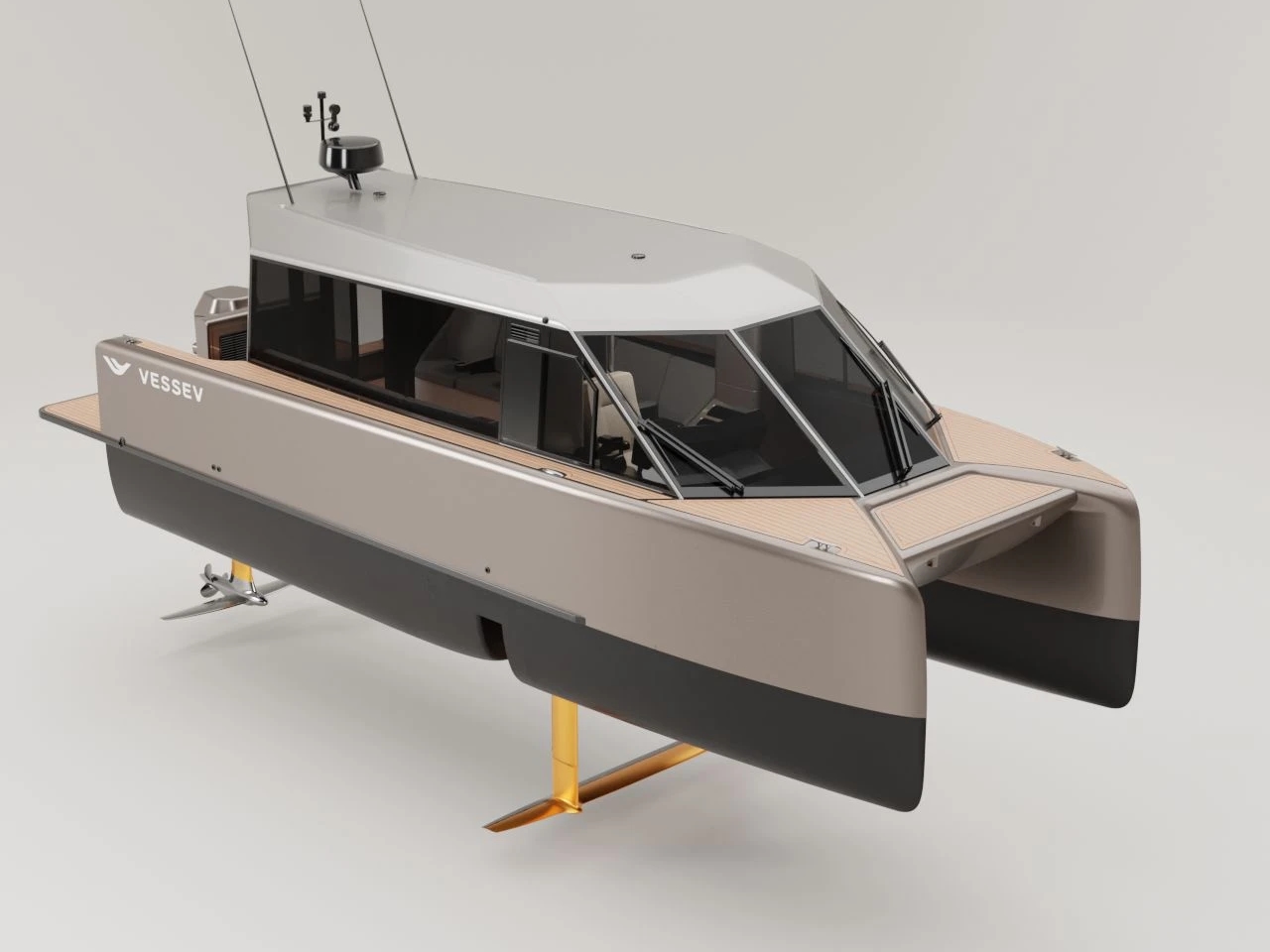
The VS-9’s exterior design emphasizes both performance and aesthetics. Crafted from carbon-fiber laminates, the lightweight hull is built for efficiency and durability. The sleek, minimalist lines flow seamlessly into the retractable hydrofoils, allowing the vessel to glide above the water or retract the foils for shallow-water navigation. Laakmann remarked, “The simplicity of the exterior is deliberate—every curve and surface has been engineered for aerodynamic and hydrodynamic performance.”

Inspired by aerospace and nautical designs, the VS-9’s exterior maintains its clean and streamlined form while ensuring real-world resilience. Whether skimming over calm bays or navigating rougher seas, the vessel’s silhouette speaks to both functionality and elegance.

Interior: Designed for Luxury

Inside, the VS-9 is no less impressive. The cabin, designed with premium materials such as leather and refined textiles, seats ten passengers comfortably in an open, spacious layout. Each seat is ergonomically designed to support long rides, while the panoramic windows offer an uninterrupted view of the water, enhancing the serene environment. The wraparound glass design ensures that passengers can enjoy the scenery without obstruction, immersing themselves in the peacefulness of the journey.

“Our goal for the cabin was to create an experience akin to private jet travel,” said Laakmann. “The wraparound glass and quiet ride make passengers feel like they are gliding above the water rather than cutting through it.”

The spacious interior combines functionality and style, providing passengers comfort and connectivity to the natural surroundings. The thoughtful design extends to the sound-dampening materials, making the VS-9 an almost silent ride, even at cruising speeds.

Advanced Technology Meets Sustainability

Vessev’s engineers, using expertise from America’s Cup-winning boats, developed a hydrofoil system equipped with high-precision flaps that adjust automatically to sea conditions, optimizing stability. This allows the VS-9 to perform reliably in larger seas. “Our hydrofoil technology gives us high control authority, making the vessel capable of handling more challenging conditions while remaining efficient,” Laakmann said.

The retractable foils allow for versatile operation in deep and shallow waters, simplifying maintenance and transport. “We designed the retractable foils to maintain pristine condition and maximum performance over time, even in varying water conditions,” Laakmann added.

Leading the Way for Future Vessels

Mike Horne, CEO of Fullers360, expressed excitement over the VS-9’s environmental and economic impact. “We aim to be 100% electric or hydrogen-powered by 2040, and hydrofoiling is a critical part of that vision. The VS-9 is the first fully electric passenger vessel operating in Auckland,” Horne said.

This technology is scalable, and Vessev is already developing the VS-18, a larger version capable of carrying 100 passengers. “The VS-18 will use the same technology but on a larger scale, opening up more possibilities for marine transport,” Laakmann revealed.

Charging Capabilities and Efficiency

One of the key advantages of the VS-9 is its ability to operate with existing electric infrastructure in most marinas. This eliminates the need for costly charging station installations. “We designed the VS-9 to work with the existing charging infrastructure. During sea trials, we’ve used a standard AC 3-phase connection for multiple test sessions daily, making it easy for operators to adopt electric vessels without added costs,” explained Laakmann.

With Fullers360 as the launch partner, the VS-9 is set to transform marine transport in Auckland and beyond. “Auckland is becoming a model for green marine technology. The VS-9’s success will influence the global adoption of sustainable hydrofoiling vessels,” Horne added.

A Revolutionary Passenger Experience

Passengers aboard the VS-9 can expect a unique travel experience, with quiet, smooth gliding across the water. The hydrofoils eliminate the typical rolling sensation of traditional boats. Horne explained, “The VS-9 delivers a feeling closer to flying than sailing, creating an unmatched onboard experience compared to conventional vessels.”

With sea trials demonstrating the vessel’s capabilities, Laakmann believes hydrofoiling vessels like the VS-9 will soon become the new standard in water travel. “Within a decade, hydrofoiling vessels will no longer be rare—they will redefine how we move across the water,” Laakmann concluded.

In every sense, the VS-9 sets a new bar for marine transport, combining eco-friendly technology with thoughtful design, making it an electric vessel that offers a glimpse into the future of water travel.

The post VS-9 Redefines Sustainable Marine Transport with Electric Hydrofoiling Innovation first appeared on Yanko Design.

Titanium Milanese Loop Review: Precision Engineering Meets Luxury in Apple’s Ultimate Watch Band

PROS:


  • Durable: Made from aerospace-grade titanium, the Milanese Loop is corrosion-resistant and built to handle tough environments.

  • Lightweight: The band remains lightweight despite being metal, reducing discomfort during extended wear.

  • Comfortable: The flexible mesh contours to the wrist, offering breathability and reducing irritation.

  • Custom Fit: Micro-adjustability down to 1mm ensures a perfect, snug fit for different wrist sizes and activities.

  • Sustainable: Constructed from 95% recycled titanium, aligning with Apple’s focus on environmentally responsible materials.

CONS:


  • Price: At $200, it's pricier compared to other Apple Watch bands.

  • Hair Pulling: The mesh design may cause slight pulling for users with wrist hair.

  • Indention Marks: A tighter fit can leave skin indentations after prolonged wear.

RATINGS:

AESTHETICS
ERGONOMICS
PERFORMANCE
SUSTAINABILITY / REPAIRABILITY
VALUE FOR MONEY

EDITOR'S QUOTE:

The Titanium Milanese Loop brings next-level engineering, rivaling Rolex's precision, durability, and seamless blend of luxury and functionality.
award-icon

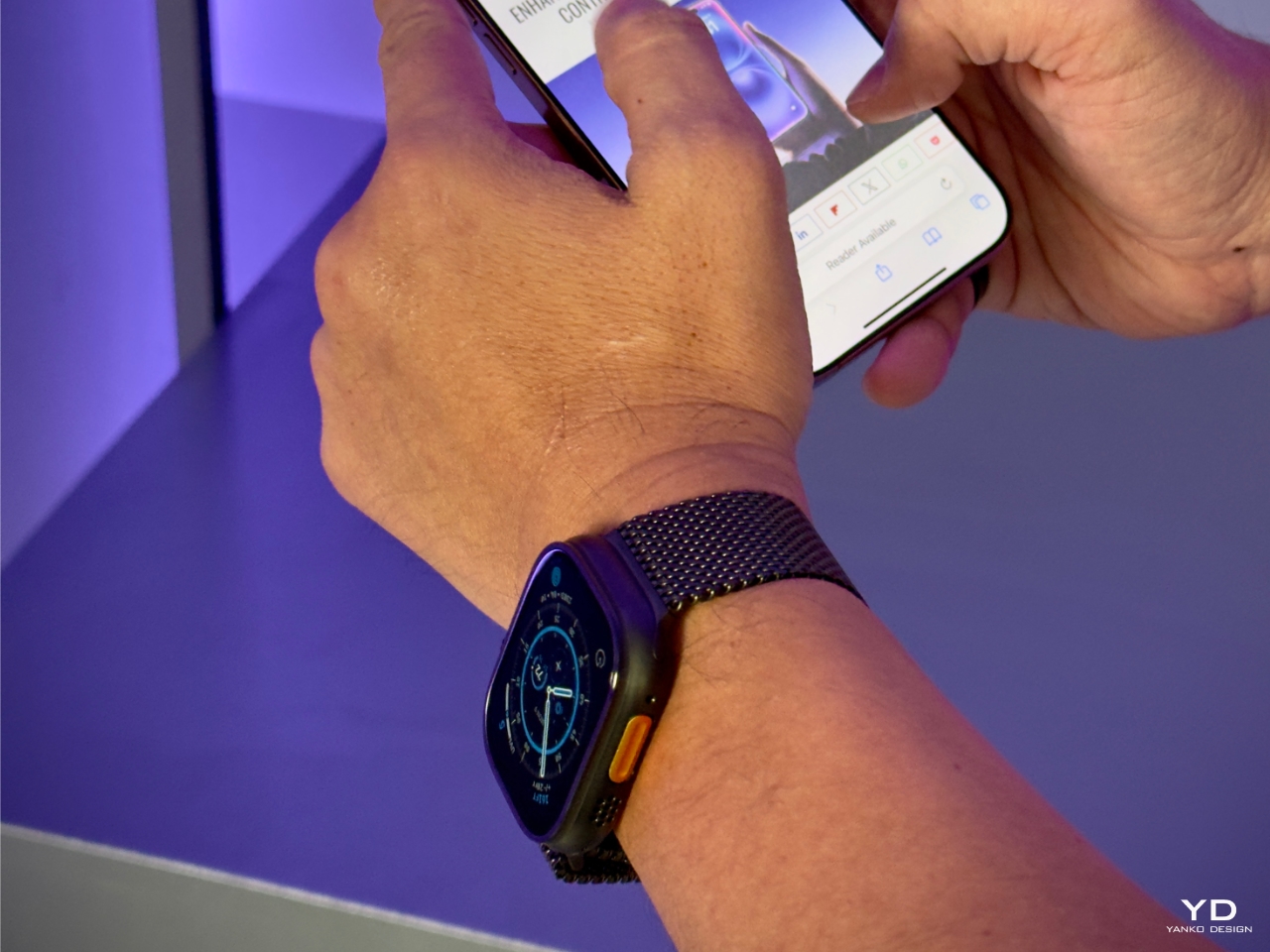
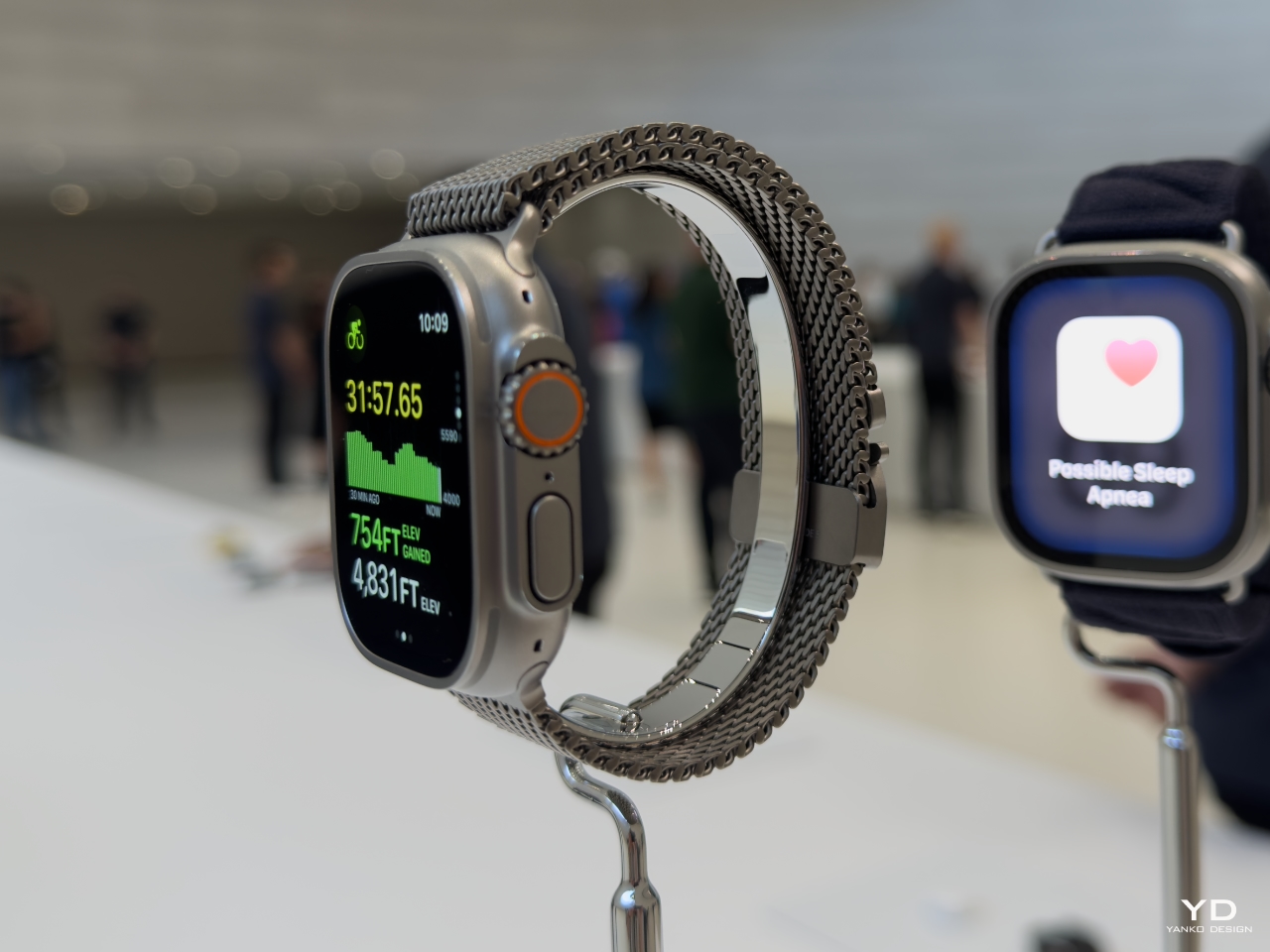
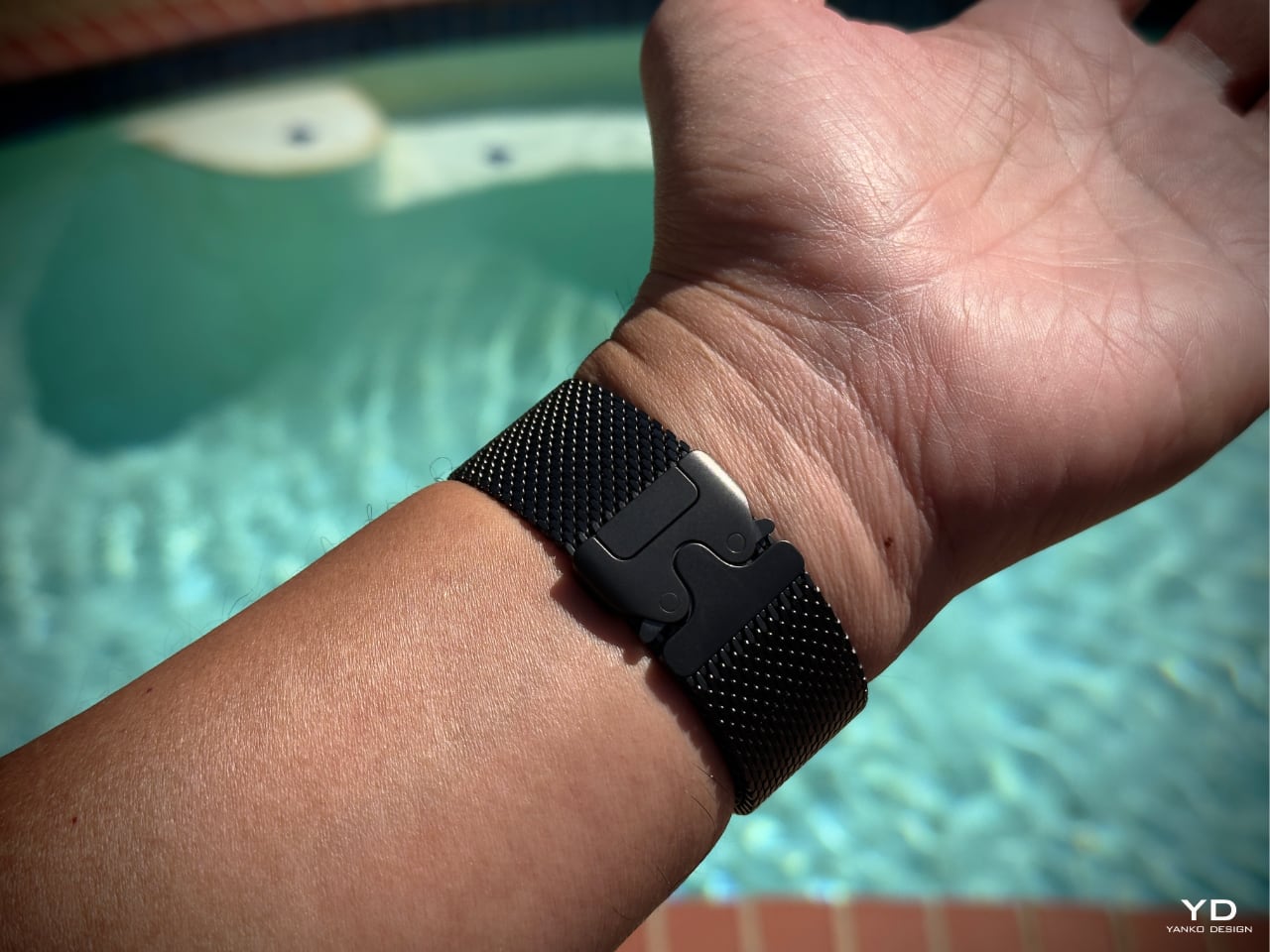
When I first saw the Milanese Loop for the Apple Watch Ultra 2 at the Apple Glowtime event, it immediately grabbed my attention as an impressive leap forward in band design. Inspired by stainless steel mesh historically used by divers, this new Titanium Milanese Loop is made from woven, corrosion-resistant titanium wire. It’s flattened and polished to a stunning satin texture that balances ruggedness and elegance. The parachute-style buckle features dual side-release buttons that close with an audible click, giving a sense of security whether exploring the ocean depths or heading out for a night on the town.

Designer: Apple

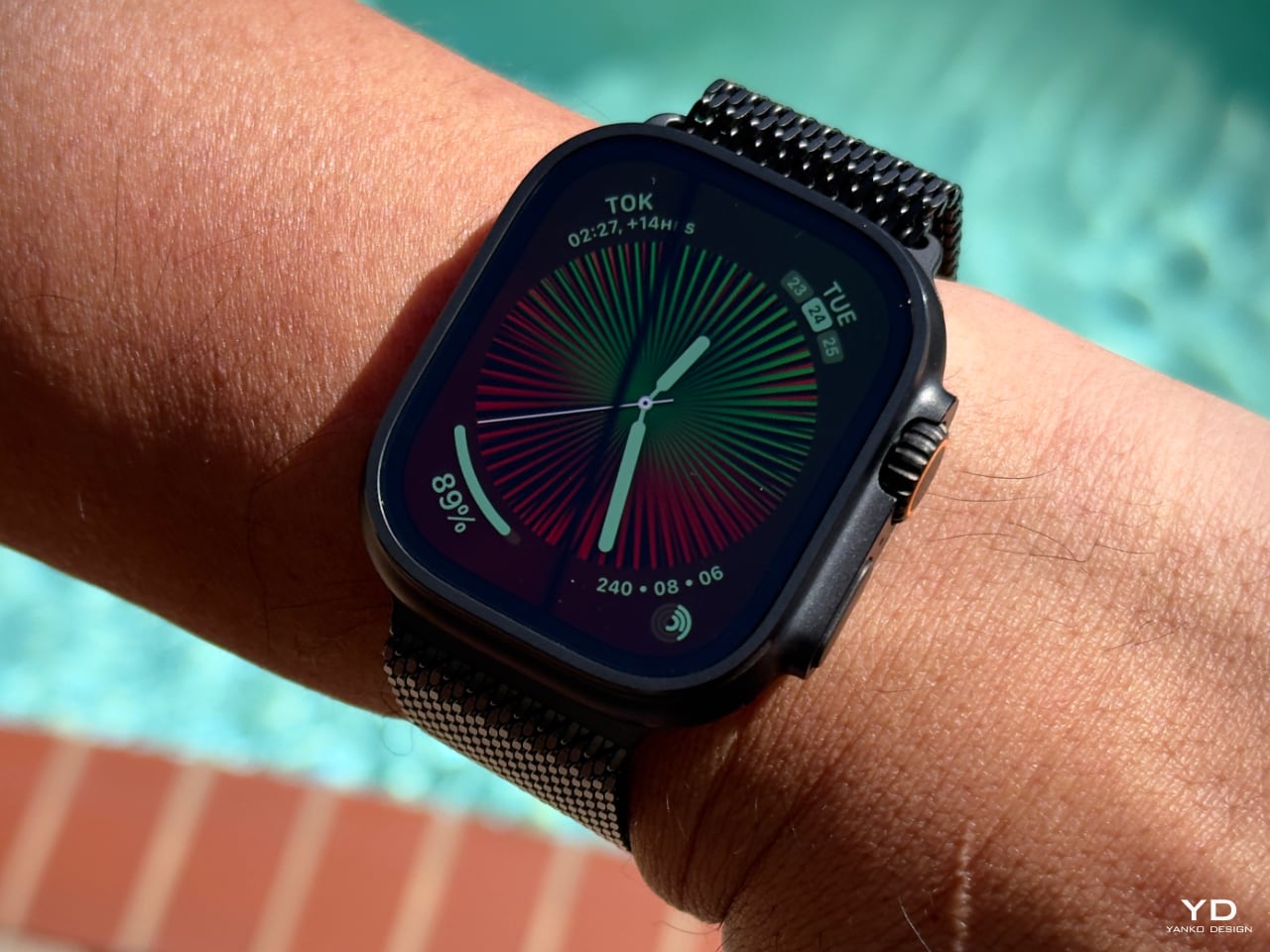
This band perfectly complements the Apple Watch Ultra 2’s rugged design, offering lightweight durability while looking refined. Whether heading into a meeting, swimming in the pool, hiking, or deep diving, I know the Titanium Milanese Loop can handle it without sacrificing style or functionality.

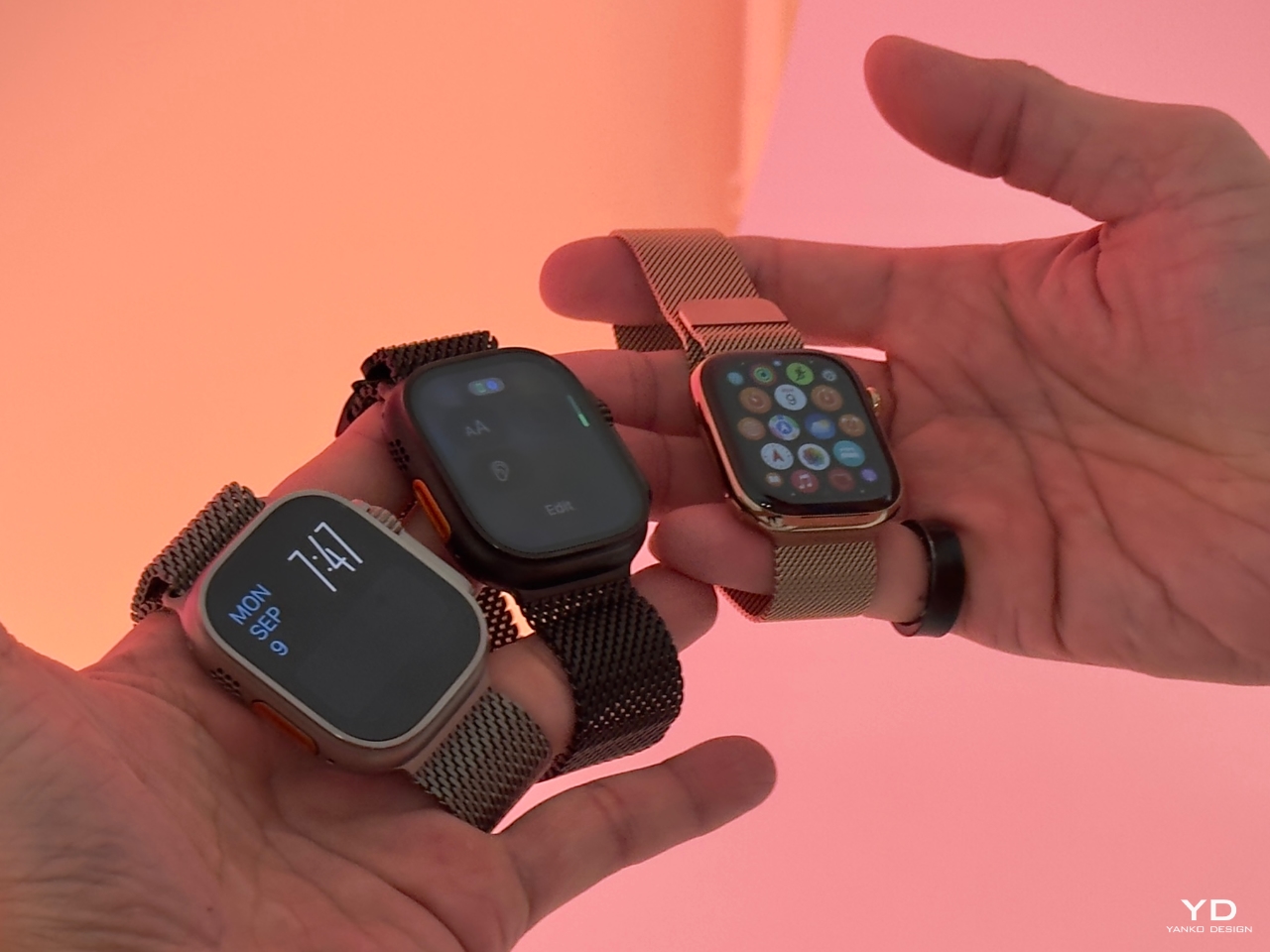
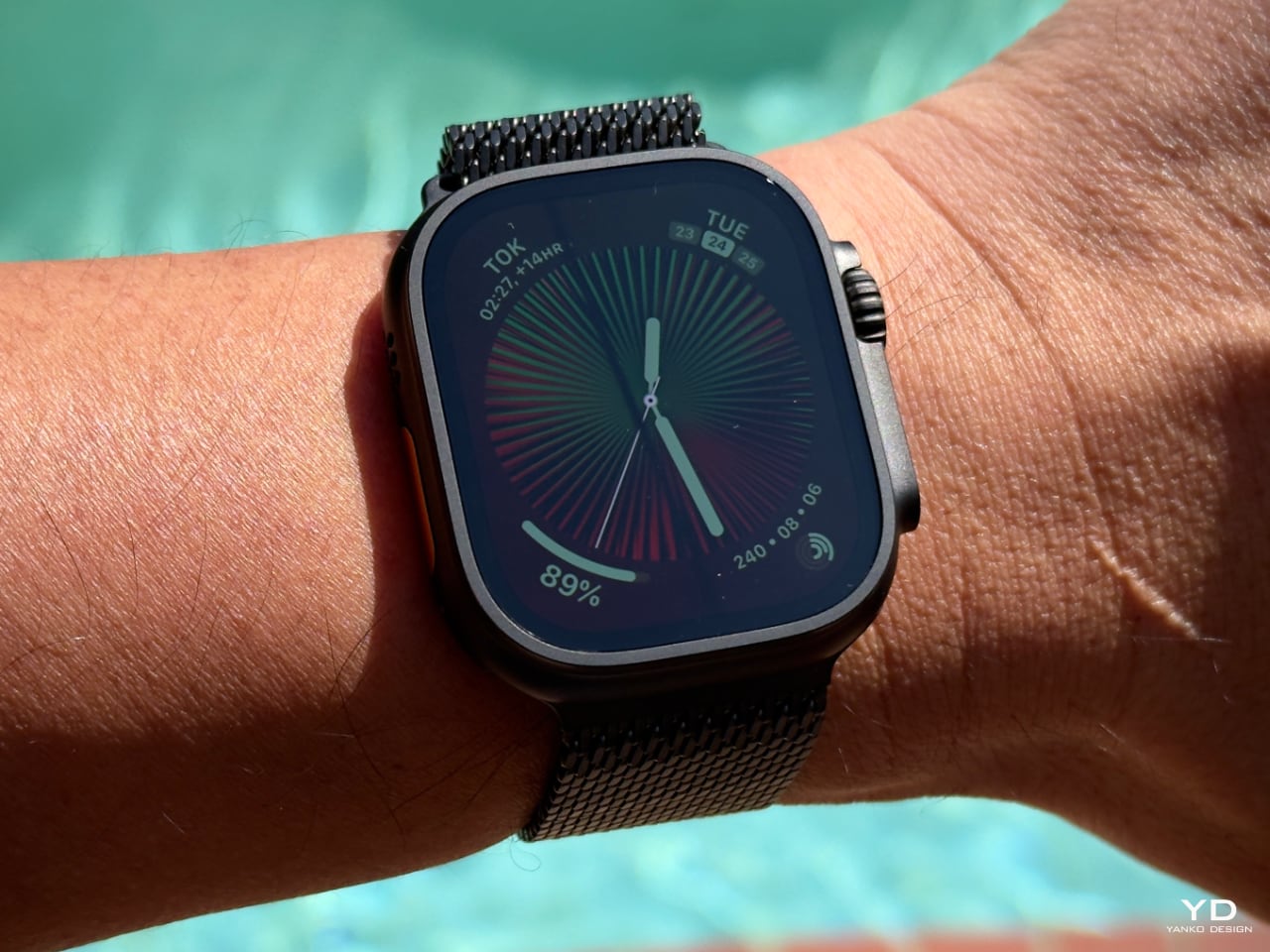
Now available in a striking new black titanium finish, the Apple Watch Ultra 2 proves why it’s the go-to choice for serious athletes and adventurers. Featuring the brightest display ever on an Apple device, the Ultra 2’s LTPO2 OLED Always-on Retina display delivers up to 3000 nits of brightness, making it highly visible even in the harshest sunlight. In comparison, the Apple Watch Series 10 offers a display brightness of up to 2000 nits and a wide-angle OLED that increases brightness by up to 40% when viewed at an angle. The Ultra 2 delivers battery life, lasting up to 36 hours during regular use and 72 hours in low power mode, compared to 18 hours of standard usage on the Series 10. Combined with the new Titanium Milanese Loop, the Apple Watch Ultra 2 represents a seamless marriage of aesthetics and performance, capable of handling the most demanding terrains while looking sophisticated enough for any occasion.

Design, Custom Fit, and Next-Level Engineering Marvel

The Milanese Loop design has a long history rooted in traditional chainmail used by divers, but Apple has reimagined it with a modern touch. The Titanium Milanese Loop, crafted specifically for the Ultra, caught my eye from the moment I saw it at the Apple Glowtime event. Made from aerospace-grade titanium, the band is lightweight and corrosion-resistant, offering strength and comfort—a perfect match for the Ultra 2’s rugged yet refined style.

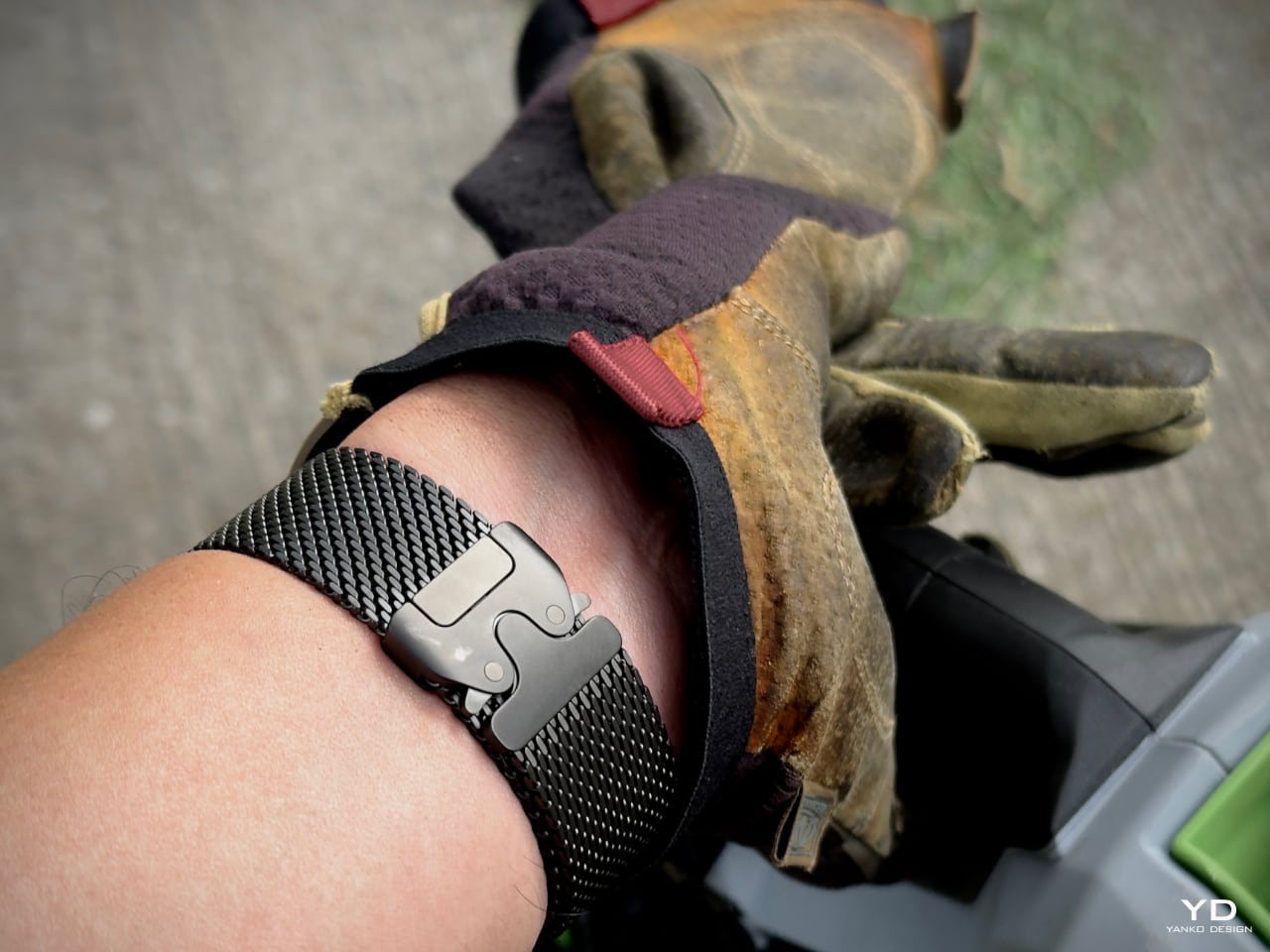
What impressed me most was Apple’s commitment to craftsmanship, as the band is created through a meticulous process of weaving, flattening, laser-welding, grinding, and finely polishing the titanium wire to form a precise, interlinking mesh that balances both strength and flexibility. This design drapes comfortably on the wrist while maintaining durability. I immediately appreciated the dual-button, parachute-style buckle, which made adjusting my wrist’s natural fluctuations throughout the day incredibly easy. Whether due to temperature changes or the ebb and flow of daily activity, I could quickly loosen or tighten the fit without needing to remove the watch. This level of adjustment, down to 1mm, truly made the band feel custom-made for my wrist.

Apple’s decision to use titanium wasn’t only about strength and practicality for everyday use. The dual-release buckle offers peace of mind, providing a secure fit during various activities without any concern about it coming undone. Whether in natural or black titanium, the band perfectly complements the Ultra 2’s new black titanium finish. Achieved through a custom blasting process and enhanced with a diamond-like carbon (DLC) coating, this finish provides excellent scratch resistance, ensuring the watch and band look as good after months of wear as they did the first day I tried them.

The Titanium Milanese Loop combines aesthetics, ruggedness, and sustainability. Made from 95% recycled titanium, this band aligns with Apple’s focus on environmentally responsible materials. In my experience, it’s a stylish, practical, and durable accessory. This blend of qualities makes it a great long-term choice for anyone seeking a band that complements the Ultra 2’s versatility and style.

Fit and Comfort: Tailored for Performance

The Milanese Loop for the Apple Watch Ultra 2 is breathable and flexible, making it a great fit for all-day wear. Depending on your personal preferences, there are a couple of things to consider. While some users with wrist hair might experience slight pulling due to the mesh design, I haven’t had this issue myself.

As someone who prefers a snug fit, I tend to wear my watch a bit tighter to prevent it from moving around, a habit formed from years of wearing traditional mechanical watches. If you wear the Ultra 2 tightly, as I do, you’ll notice a slight indentation after a long day, but there’s no discomfort associated with it. It’s more about leaving a mark than feeling any pain. This tight fit keeps the watch in place, making it feel more secure during physical activities, whether hiking, diving, or running errands.

This band’s ability to adjust down to the millimeter makes it incredibly versatile for any wrist size. It’s great to know Apple offers an extra-long tail version for those needing additional length—whether to wear over a wetsuit or simply because of larger wrists.

For me, the combination of the Titanium Milanese Loop and the Apple Watch Ultra 2 is all about striking the right balance between durability, comfort, and design. It’s the kind of band that seamlessly fits into my daily life, whether I’m out hiking, working in the yard, or tackling outdoor adventures. This band doesn’t just look good; it’s made to endure, and it pairs perfectly with the rugged nature of the Ultra 2. The thoughtful engineering and comfort of the Milanese Loop make it feel like it’s built to last, keeping up with the adventurous spirit that the Ultra 2 embodies.

Band Size and Fit

I went with the medium size for the Titanium Milanese Loop, which fits perfectly. The buckle centers squarely on the back of my wrist, which, for someone like me with a bit of OCD, brings a sense of balance that I appreciate. Wearing a watch every day is an intimate experience, and I pay close attention to how it sits—whether it’s a mechanical watch with a deployment buckle or a tang, every detail matters. The centered buckle feels right and adds to the comfort of wearing the Ultra 2 all day.

Apple Watch Ultra 2 on Titanium Milanese Loop

At the Apple event, I had the chance to try on the small size, but I could barely get the watch past my knuckle. Unless you have particularly thin wrists or plan on wearing this over a wetsuit, I’d recommend opting for the medium. It strikes the right balance for everyday wear, and it offers enough room for quick adjustments when needed.

Here are the official band size details:

  • Small: Fits wrists 130–160mm.
  • Medium: Fits wrists 155–185mm.
  • Large: Fits wrists 180–210mm.

With those ranges, the medium size should comfortably accommodate most wrist sizes. However, for anyone needing extra length—especially for wearing over bulkier gear like a wetsuit—the large size is the way to go. In my experience, getting the right fit goes a long way in maximizing the band’s comfort and aesthetics.

Value: A Long-Term Investment

Priced at $200 on its own or $100 more when bundled with the Apple Watch Ultra 2, the Titanium Milanese Loop might seem like a luxury option for an Apple Watch band. However, compared to titanium bracelets from brands like Rolex and Omega, which typically cost in the range of thousands of dollars, the value becomes clear. Apple has crafted a premium product that brings the high-end feel of titanium—usually reserved for much more expensive timepieces—into the world of wearable tech at a fraction of the price.

For someone like me who regularly upgrades their Apple Watch, the band’s value goes beyond the Ultra 2 itself. Apple’s consistent design language across its product line ensures this band will likely remain relevant with future watch models. Investing in this Titanium Milanese Loop means you’re getting a durable and stylish band that will serve you through multiple upgrades.

Another critical factor is the dual-lock system, which offers unbeatable security. Whether I’m out hiking, diving, or just going about my daily routine, I know the band is securely fastened, giving me peace of mind no matter what. Its durability, ease of use, and ability to adapt across future models make this band a smart investment for anyone who values functionality and design in their Apple Watch accessories.

Final Thoughts

The Titanium Milanese Loop for the Apple Watch Ultra 2 has quickly become one of my favorite bands. It offers that perfect mix of durability, premium design, and all-day comfort, whether in the field or just going through my daily routine. I’ve been wearing it for everything from outdoor activities to long workdays, and it never fails to deliver on comfort and style. I’ll continue to revisit this band in future articles as I spend more time with it. If you have any questions or thoughts about the band, feel free to drop me a note—I’d love to hear your feedback!

The post Titanium Milanese Loop Review: Precision Engineering Meets Luxury in Apple’s Ultimate Watch Band first appeared on Yanko Design.

Frame Your Collectibles with the Ultimate Adaptive Display System

Imagine the JudoGrid Modular Display System—a setup that grows with your passion. After years of refinement, JudoGrid has been designed to give your collectibles the spotlight they deserve. Whether it’s action figures, wargaming miniatures, or unique trinkets, JudoGrid adapts, evolves, and showcases your collection in a way that makes displaying a more active part of your hobby. Being fans and collectors, the JudoGrid team is dedicated to supporting their fellow hobbyists by providing a product that enhances the joy of collecting.

Designer: JudoGrid Team

Click Here to Buy Now: $48. Hurry, only 11/650 left! Raised over $75,00.

Built for the Future

Flexibility is at the core of JudoGrid’s design, built to grow with your collection. The system features expandable segments that allow you to easily adjust your display case’s size and depth—just picked up ten new action figures? No problem—Judo has you covered. Add or remove segments to create a display that perfectly fits your space and collection needs. JudoGrid offers a variety of shelving options, enabling you to configure your display exactly how you envision it.

The pegboard backing provides 360 degrees of customization, letting you arrange shelves, hooks, and accessories to suit every angle. This dynamic setup supports your current display and adapts to future expansions, making JudoGrid a versatile solution that evolves alongside your growing collection.

Precision in Design

Precision in design is key. The materials are chosen for both strength and visual appeal, with smooth surfaces and clean lines creating a contemporary look that enhances the impact of your display. JudoGrid goes beyond simple storage—it elevates the presentation of your cherished items, making your collection a true reflection of your style and passions.

The sleek, modern design fits effortlessly into any environment, blending functionality with style. Made from high-quality, injection-molded materials, JudoGrid ensures durability and ease of use. The solid pegboard foundation and shelves hold everything securely, supporting collections and figures of all sizes, from small and compact setups to large collector statues. JudoGrid is up for the challenge.

Customize Your World

JudoGrid is all about customization and adaptability, allowing you to organize and highlight your items precisely. With various shelves, hooks, holders, and stands, you can arrange your collection exactly how you want, and as your collection evolves, so can your display. You can choose from various color schemes, from sleek monochrome tones to vibrant hues.
Integrated LED lighting further enhances your display, allowing you to adjust the intensity and color to create the perfect ambiance—from subtle highlights to dramatic and moody lighting. JudoGrid’s durable acrylic windows provide a clear view of your collectibles while protecting them from dust and damage.

Effortless Setup, Endless Possibilities

Setting up your JudoGrid display is as enjoyable as curating it. The components snap or screw together easily and quickly, with no need for special tools. The intuitive design makes assembly simple, so you can focus on arranging your collection. Whether mounted on a wall or free-standing on your desk, JudoGrid fits seamlessly into your life. The modular components can be configured to suit your needs, maximizing wall space with a vertical display or spreading across a tabletop. The sky is literally the limit!

Who Is This For?

At its core, JudoGrid is designed for passionate collectors and hobbyists who want to give their fandoms the display they deserve. Whether you’re a miniature enthusiast, action figure collector, wargamer, or trading card slinger, JudoGrid provides a versatile solution tailored to your needs.

It’s perfect for anime figure collectors looking for the ideal showcase or hobbyists like miniature painters and D&D players who need specialized accessories to hold their 20th set of fancy dice. JudoGrid offers paint holders, brush organizers, and compartments for storing dice, miniatures, and other game accessories, ensuring your hobby stays organized and ready for action.
Looking Forward to the Future

Once the Kickstarter campaign is completed, JudoGrid will indeed come alive with the launch of its online configurator service. This innovative tool will allow collectors to build, visualize, and customize their display cases with ease, planning out every detail—from size and color to accessories—and having their personalized design shipped directly to their door.

The configurator will also make it simple to add new parts and plan future expansions as collections grow. With a continually expanding catalog of accessories, collectors will have an array of options to accent and elevate their figures, ensuring their displays evolve alongside their passions. JudoGrid is dedicated to making the showcasing experience more dynamic, personal, and user-friendly.

A New Era in Display

Finally, JudoGrid transforms display cases from mere storage into an exhilarating part of the collector’s journey. This innovative approach celebrates your collection, making the display an accentuating centerpiece of your experience. It’s a breakthrough that promises to make showcasing as thrilling as acquiring.

Click Here to Buy Now: $48. Hurry, only 11/650 left! Raised over $75,000.

The post Frame Your Collectibles with the Ultimate Adaptive Display System first appeared on Yanko Design.

Breaking Barriers: How Apple’s AirPods 4 Bring Active Noise Cancelation to Open-Ear Earbuds

There are moments when technology integrates so seamlessly into our lives that it feels like an extension of ourselves. That’s the sensation I experienced with Apple’s new AirPods 4, featuring Active Noise Cancelation (ANC). Recently, I had the privilege of delving into the creation of these groundbreaking earbuds with two of the minds behind them: Kate Bergeron, Apple’s Vice President of Hardware Engineering, and Eric Treski, Director of AirPods Product Marketing. Their insights revealed the technical marvels of the AirPods 4 and the dedication and innovation that went into bringing ANC to an open-ear design—a feat many thought impossible.

Designer: Apple

Innovation Sparked by a Global Pandemic

The journey to integrate ANC into a non-ear-tip design was anything but straightforward. Amid the COVID-19 pandemic, a time fraught with challenges, Apple’s engineering team saw an opportunity to innovate.

“Kind of like right in the middle of COVID, in a very small group, we had a demo put together by our fabulous acoustic engineers who basically tried to work ANC into a non-occluding form factor,” Kate recounted. “Of course, it wasn’t perfect because it was a little while ago, but we said, hey, we think that there’s something here and we should really work on this.”

This account highlights the team’s resilience and creativity. Despite global disruptions, they pushed forward, laying the groundwork for what would become the AirPods 4.

Designing for Universality: The Pursuit of the Perfect Fit

Apple has always focused on creating products that are aesthetically pleasing and universally accessible. With the AirPods 4, this concept takes center stage. The earbuds might look familiar at first glance, maintaining the iconic stem design that has become synonymous with Apple’s audio products. However, the fundamental transformation lies in the details—a culmination of years of ergonomic research and user feedback.

Apple AirPods 4 + ANC

“We began to educate ourselves and figure out what it is about fit and comfort that really matters to people,” Kate shared. “How do we get more conversant in the physiology and try to figure out what the best fit for as many people as possible can be?”

Creating a non-ear-tip form factor presented unique challenges. “We’re trying to make AirPods stay in your ears, and we don’t have the advantage of the compliance of the tip to help us out,” she explained. The team developed a comprehensive database of ear shapes from around the world, allowing them to model and test various designs virtually before creating physical prototypes.

Kate’s team delivered a design that feels light and natural in the ear. In my own experience, the AirPods 4 felt almost weightless. The smooth contours of the earbuds nestled comfortably in my ears, and I could wear them for hours without any discomfort. During two international trips to Berlin and London, I swapped between the AirPods 4 and the AirPods Pro 2. Despite their completely different designs, I found the comfort and fit nearly identical. Eliminating the ear tip enhances comfort and simplifies the user experience—no more fumbling with different sizes or worrying about replacements.

The Art of Minimalism: Less Is More

The AirPods 4 embody Apple’s mastery of minimalist design. The absence of ear tips allowed the team to create a smaller, more streamlined case.

“Without having to accommodate an ear tip in the width of the case, we’re able to shrink it right down,” Kate noted. “It’s our smallest case.” Indeed, the case is remarkably compact—small enough to fit comfortably in the tiny coin pocket of your jeans.

The tactile experience has been carefully considered. The hinge mechanism provides just the right amount of resistance, and the magnetic closure offers a satisfying click. Every detail contributes to an effortless user experience.

Another subtle yet impactful change is the removal of the physical pairing button. Eric demonstrated the new pairing method, explaining how tapping the case twice uses the accelerometer inside to sense vibration, simplifying the process.

Engineering the Impossible: ANC Without Ear Tips

One of the most groundbreaking aspects of the AirPods 4 is the integration of Active Noise Cancelation in a non-ear-tip design. Traditional ANC relies heavily on passive noise isolation provided by ear tips, so the team had to rethink the entire approach.

The H2 chip became essential to unlocking this performance. With its more power-efficient design, Apple was able to shrink the size of the components while maintaining the level of ANC that users expect.

They meticulously arranged the components to maximize sound quality and ANC effectiveness. “We incorporated advanced microphones both inside and outside the earbud,” Kate explained. “Adjacent to the driver is a reference microphone, which allows us to continually monitor the sound in your ear. Then, outside your ear, we use an additional microphone to monitor the outside world.”

Eric added, “It’s extremely important that the adaptive EQ mic is working very fast—up to 200 times a second—to ensure that it’s constantly monitoring what you’re hearing, both from a noise-canceling perspective and an audio quality perspective.”

The precision required for this process is astounding. Without the seal of an ear tip, external noises can easily seep in. The H2 chip’s computational power enables real-time adjustments, ensuring the ANC remains effective even as the earbuds shift slightly during movement.

Adaptive EQ, Audio Quality, and Hearing Protection

Beyond noise cancelation, the AirPods 4 delivers an impressive audio experience through adaptive EQ, which fine-tunes the sound to suit your environment and the shape of your ear. “Every ear is unique, and so is every listening situation,” Eric explained. “Our goal was to provide consistent, high-quality audio no matter the circumstances.” Whether listening to classical music or country, the clarity and richness of the sound are immediately noticeable. The bass is full without overpowering, while the treble remains crisp and clear. The adaptive EQ enhances the nuances of each track, providing an immersive listening experience.

The H2 chip plays a crucial role in this, enabling real-time processing of audio signals and allowing the earbuds to adjust frequencies dynamically. “The H2 chip enables us to maintain this level of precision,” Kate shared, highlighting how it keeps audio quality consistent across various environments.

One key advantage of this open-ear design is the ability to enjoy audio at lower volumes, thanks to effective noise cancelation. By reducing the need to increase the volume in noisy environments, the AirPods 4 helps protect hearing over time, making them a great option for users who want to preserve their hearing without compromising on sound quality or comfort.

Seamless Integration: The Magic of Connectivity

A defining aspect of any Apple product is how seamlessly it integrates within the ecosystem. The AirPods 4 enhance this experience. Switching between my iPhone, iPad, and MacBook was incredibly fast—almost imperceptible.

According to Eric, the goal was for the AirPods 4 to be something you don’t have to think about—the experience should just work, whether you’re on a call, watching a video, or switching between devices.

The seamless handoff is powered by iCloud syncing and the advanced capabilities of the H2 chip. Apple wants this process to feel completely natural, with all the complex technology hidden behind the scenes.

During our conversation, an analogy that came to mind was comparing seamless connectivity to shifting gears on a high-performance car. “To me, this is as seamless as shifting gears on a Porsche,” I said. It’s just like that dual-clutch—it’s so seamless.”

Navigating Limitations: Transparency and User Trust

While the AirPods 4 offer impressive features, Apple is transparent about their limitations. Although the open-ear design can’t match the noise isolation of in-ear or over-ear models, the AirPods 4 were optimized to deliver the best performance possible given the constraints.

This honest approach fosters trust between the company and its users. Apple remains committed to ensuring that user satisfaction remains the top priority.

Final Thoughts

The AirPods 4 with ANC represents a significant advancement in personal audio, showcasing Apple’s dedication to thoughtful design, user well-being, and seamless integration. Apple has set a new standard by overcoming the challenges of incorporating advanced features into a minimalist and comfortable form factor.

For users seeking convenience, comfort, and effective noise cancelation, the AirPods 4 is remarkable. They may not replace specialized equipment for audiophiles or professionals, but they excel as daily companions that enrich our lives in meaningful ways.

As someone who values technology and simplicity, I find the AirPods 4 perfectly incorporates these principles. From morning podcasts to evening music sessions, they have become indispensable. The comfortable design allows me to wear them for extended periods, and the intelligent features keep me connected without feeling tethered.

I was particularly impressed by their everyday convenience. “I absolutely love this after testing many other products,” I shared with Eric and Kate. Being able to take them out, use them effortlessly, and not have to fumble—that’s an everyday luxury.

As technology evolves, products like the AirPods 4 set the benchmark for what is possible when design and innovation work together. Bringing Active Noise Cancelation to an open-ear earbud is a significant leap forward, redefining expectations and opening new possibilities.

The post Breaking Barriers: How Apple’s AirPods 4 Bring Active Noise Cancelation to Open-Ear Earbuds first appeared on Yanko Design.
Design You Can Feel: ASUS Ceraluminum Blends Technology with Tactile Artistry

ASUS has long been recognized for its forward-thinking approach to technological innovation. With Ceraluminum, the company shifts focus, moving beyond performance metrics and engaging users on a sensory and emotional level. At the “Design You Can Feel” exhibition during the London Design Festival, ASUS presented this unique material in an artistic context, blending technology, material science, and human-centered design. This exhibition explored how technology doesn’t need to feel cold or distant but can foster emotional engagement and tactile experiences that draw users in.

Designer: ASUS

At the core of this shift is Ceraluminum, a revolutionary material that merges aluminum’s structural benefits with the tactile qualities of ceramic. With its four-year development, this material represents a significant leap forward in the functionality and aesthetics of ASUS’s products. Ceraluminum invites users to touch, explore, and experience their devices in a more intimate, human-centered way. It’s a breakthrough that combines art and technology, reshaping how we engage with our tech.

Ceraluminum: A Material with Presence

Ceraluminum reflects ASUS’s focus on creating materials that enhance functionality while fostering a more personal and tactile user experience. From my interpretation of their design philosophy, ASUS aims to develop materials that resonate emotionally with users, evoking a sense of warmth and connection—without suggesting metaphysical attributes like having a soul. Unlike traditional metals that feel cold and impersonal, Ceraluminum exudes warmth and tactility. It absorbs light and reduces glare while offering a textured, matte finish that invites interaction. Chief Design Officer Mitch Yang elaborated on the significance of this during the panel discussions, emphasizing that the texture and feel of Ceraluminum are key to fostering a deeper connection between users and their devices.

Developed through a unique micro-arc oxidation (MAO) process, Ceraluminum begins as lightweight aluminum and is transformed into a hybrid material through a high-voltage plasma discharge. This creates a ceramic oxide layer that maintains aluminum’s strength and lightness but offers ceramic’s hardness, scratch resistance, and tactile warmth. This unique combination gives ASUS’s devices a distinctive feel and presence, setting them apart from the sea of cold, reflective metal gadgets on the market.

Yang explained further, “Ceraluminum allows us to create devices that don’t just look good but feel meaningful to the touch. It changes how users interact with their technology, inviting them to explore the material with their hands, not just their eyes.”

SUSA: Embodying Calm Technology

At the center of the “Design You Can Feel” exhibition was SUSA, a conceptual AI-powered device designed by London-based Future Facility. This device embodies ASUS’s philosophy of calm technology, where tech is designed to be intuitive, unobtrusive, and calming rather than overstimulating. Encased entirely in Ceraluminum, SUSA represents the potential of this material to facilitate more mindful, tactile interactions with technology.

SUSA’s design is deliberately minimalist. It features a perforated screen that subtly filters its digital display, minimizing distractions while maintaining core functionalities such as photography, navigation, and calls. By encouraging users to engage with the physical object rather than becoming consumed by the screen, SUSA promotes a more intentional relationship with technology.

Leo Leitner, a designer at Future Facility, explained this during the panel discussion, stating, “SUSA is a reflection of how we can rethink the role of digital devices in our lives. By using Ceraluminum, we create a product that feels more natural and calming. It’s about slowing down, encouraging the user to focus on what’s important rather than being overwhelmed by constant notifications.”

Kim Colin, also from Future Facility, expanded on this by adding, “The tactile nature of Ceraluminum allowed us to create a product that feels inviting and grounded. It shifts the focus from what the device can do to how it feels when used. That tactile warmth is crucial to fostering a more mindful, human-centric interaction.”

SUSA is more than a concept. It represents a future where technology is integrated into our lives in ways that promote mental well-being, offering a calming influence rather than a constant source of overstimulation.

Collaborations with Global Designers: Ceraluminum Through the Eyes of Art

The “Design You Can Feel” exhibition also served as a platform for international designers to reinterpret and manipulate Ceraluminum in their own creative ways, showcasing its versatility beyond traditional tech applications. By inviting leading artists and designers to explore the material, ASUS highlighted how Ceraluminum can inspire new forms of user interaction. Each designer’s work emphasized tactile engagement and explored how material science can evoke emotional responses while remaining functional.

Giles Miller Studio (UK) approached Ceraluminum from a design perspective that blurred the lines between industrial application and artistic expression. Miller’s work focused on transforming the surface texture of Ceraluminum, turning it into a canvas for intricate patterns and reliefs. By manipulating its reflective qualities, Miller demonstrated how Ceraluminum could become a material that protects and decorates, elevating everyday technology into something more visually dynamic.

Designer: Giles Miller Studio

The studio used light to reveal hidden details in the material, inviting users to interact with their devices in new ways. Miller explained during the panel that they wanted to capture the subtle shifts in light as users moved their devices, turning a practical surface into an artistic experience. “Ceraluminum gave us the ability to create a surface that changes with the viewer’s movement, transforming the device from an object of utility into something more engaging,” Miller noted. This emphasis on the material’s light-reflecting properties invited deeper emotional engagement, making the device feel more personal.

Natural Material Studio (Denmark) took an organic approach to Ceraluminum, focusing on its ability to mimic natural textures. Their contribution aimed to highlight the material’s matte finish and tactile softness, drawing inspiration from natural elements like stone and sand. By working with Ceraluminum’s porosity, they created objects that felt grounded and familiar, offering a contrast to the typically sleek, hard surfaces of most technology.

Designer: Natural Material Studio

The goal was to craft a sensory experience that reminded users of nature. Their work emphasized the tactile qualities of Ceraluminum, offering an experience that felt like the material had been shaped by natural forces rather than human technology. “We wanted the object to feel as if it had always existed—like a pebble-shaped by the sea,” the studio shared during the exhibit. Their designs provided a sense of calm, reinforcing ASUS’s broader mission to create technology that connects users to the natural world while still harnessing advanced materials.

Nice Workshop (South Korea) explored the application of Ceraluminum in larger-scale objects with their “Aluminium Formwork Series”. Moving away from electronics, they demonstrated how Ceraluminum could be used in furniture design by applying ASUS’s ceramicization process to aluminum forms. This process resulted in furniture pieces with a textured, stone-like finish that invited touch and interaction. Founder Hyunseog Oh said their goal was to make aluminum—a traditionally cold, hard material—feel softer and more approachable.

Designer: Nice Workshop

Their work showed how Ceraluminum’s unique texture could be adapted to everyday objects, making them more inviting and user-friendly. “We wanted people to feel comfortable interacting with furniture in the same way they interact with their devices,” said Oh. This exploration of Ceraluminum’s versatility in non-tech applications expanded the material’s potential, proving it could enhance electronics and the physical spaces we inhabit.

Fernando Laposse (Mexico) brought a sustainability-focused lens to the exhibition, concentrating on how Ceraluminum could be repurposed and recycled to reduce environmental impact. Known for his work with natural fibers, Laposse saw potential in Ceraluminum’s longevity and durability. He explored how the material could be integrated into sustainable design practices, offering a responsible alternative to more wasteful production methods.

Designer: Fernando Laposse

Laposse’s work aligned with ASUS’s vision for creating long-lasting products that reduce waste and contribute to a circular economy. By focusing on Ceraluminum’s recyclability, he highlighted its potential to contribute to sustainable design efforts. “Ceraluminum’s strength and durability mean it can be repurposed, not discarded, ensuring that our devices leave a smaller environmental footprint,” Laposse explained. His approach resonated with ASUS’s commitment to sustainability, demonstrating that high-tech materials and responsible design can coexist.

Studio Furthermore (UK) embraced a more experimental approach, pushing Ceraluminum’s potential beyond the traditional limits of material design. Their contribution focused on the material’s transformation through ceramicization, exploring how different textures and surface treatments could evoke new tactile experiences. By experimenting with forms and patterns, Studio Furthermore demonstrated how Ceraluminum could serve as a medium for creative exploration, where users could discover new ways to interact with their devices.

Designer: Studio Furthermore

The studio’s work underscored how Ceraluminum is durable and capable of provoking emotional and tactile connections. By emphasizing the material’s sensory qualities, they invited users to engage more profoundly and rigorously with their devices. “We wanted to encourage users to touch and feel their devices, not just see them as tools,” the studio remarked. Through their experimental processes, Studio Furthermore showcased how Ceraluminum could foster more profound, more meaningful interactions between users and the objects they use every day.

Final Thoughts: A Sensory Future for Technology and Design

ASUS’s “Design You Can Feel” exhibition and the development of Ceraluminum represent a forward-thinking approach to how technology integrates into our lives. With this material, ASUS bridges the gap between the tactile and the technological, offering users an experience that goes beyond performance to touch the soul of design.

Ceraluminum’s durability, tactile warmth, and matte finish go beyond aesthetic choices; they reshape how we interact with devices moving forward. This material reflects ASUS’s commitment to creating devices that resonate emotionally, offering comfort, engagement, and fostering a deeper connection.

Through collaborations with global designers, ASUS has highlighted the potential of Ceraluminum to transform not just technology but how we live, interact, and engage with the objects around us. As we move forward, Ceraluminum is poised to lead a new design wave that prioritizes emotional resonance, environmental responsibility, and the fusion of art with cutting-edge material science.

The post Design You Can Feel: ASUS Ceraluminum Blends Technology with Tactile Artistry first appeared on Yanko Design.

Huawei Watch GT5 Pro Hands-On Review – Where Luxury Meets Functionality

PROS:


  • Huawei TruSense System: Advanced health tracking, including blood pressure monitoring and ECG

  • Long battery life of up to 14 days

  • Premium materials like titanium and ceramic for durability

  • Compatible with Android and iOS devices

CONS:


  • Higher price tag, especially for premium models

  • Limited third-party app support compared to competitors

RATINGS:

AESTHETICS
ERGONOMICS
PERFORMANCE
SUSTAINABILITY / REPAIRABILITY
VALUE FOR MONEY

EDITOR'S QUOTE:

The Huawei Watch GT5 Pro blends sleek design with powerful performance, effortlessly fitting into both active and professional lifestyles.
award-icon

Huawei continues to redefine what we expect from smartwatches with the Watch GT5 Pro. Building on the successes of the GT4 and GT3 Pro, this latest iteration seamlessly blends premium materials with advanced health tracking features. Whether you choose the titanium or ceramic model, the GT5 Pro caters to users who value fitness and aesthetics without compromise.

Designer: Huawei

First Impressions: High-End Design with Purpose

From the moment I strapped the Huawei Watch GT5 Pro onto my wrist, it was clear this wasn’t your average smartwatch. The sleek design focused squarely on the timepiece, exudes luxury and sophistication. I had the pleasure of testing the 46mm titanium model and the 42mm ceramic version—each leaving a distinct and lasting impression.

Huawei Watch GT5 Pro Titanium Alloy

The titanium alloy version feels robust and is tailored for those who lead active lifestyles. At the same time, the ceramic model is lighter and more polished, designed to complement any outfit—be it formal or casual. Both models showcase Huawei’s meticulous attention to detail, from the intricately designed watch faces to the seamless integration of premium materials.

Design and Build Quality: Refined Craftsmanship with Bold Details

Huawei’s design philosophy shines through in the GT5 Pro, combining cutting-edge technology with exquisite craftsmanship. The titanium alloy and ceramic models feature sapphire glass, offering excellent scratch resistance while enhancing clarity and durability.

Titanium Model: Rugged Yet Sophisticated

The 46mm titanium version strikes a perfect balance between ruggedness and elegance. Ideal for those who want a watch that can handle outdoor adventures and formal settings, the titanium case is crafted from aerospace-grade material, providing exceptional strength without excessive weight. Its brushed finish adds a touch of class, while the titanium link bracelet feels smooth against the skin and is easily adjustable for a perfect fit.

Despite its larger size, the titanium model feels light enough. Thoughtful weight distribution ensures comfort during all-day wear. The bold, masculine design transitions seamlessly from professional meetings to outdoor pursuits, offering style and durability.

Ceramic Model: Subtle Sophistication

The 42mm ceramic model is all about refinement. Building on the design language of the GT3 Pro Ceramic Edition, Huawei has perfected its nanocrystal ceramic manufacturing process. This meticulous seven-day process results in a flawless, mirror-like, durable, and eye-catching finish.

The ceramic model feels noticeably lighter than its titanium counterpart. The ceramic bezel and sapphire glass blend seamlessly, creating an uninterrupted surface that enhances the watch’s minimalist aesthetic. The white ceramic strap enhances the watch’s elegance and provides all-day comfort, making it ideal for any occasion.

Dynamic Visual Experience: Light and Shadow Effects

One of the GT5 Pro’s most striking design features is its use of geometric shapes to create a captivating light and shadow effect. Light dances across its surfaces as the watch moves under different lighting conditions, adding depth and dimension to the design. This effect is particularly pronounced on the titanium version, where the brushed finish accentuates the watch’s premium look.
The crown on both models is intricately designed with a knurled texture, providing a tactile and responsive experience when adjusting settings. These details and the nanocrystal ceramic rear case reflect Huawei’s commitment to balancing aesthetic appeal with functional durability.

Comfort and Fit: Ergonomics Perfected

Both the titanium and ceramic models are designed with ergonomics in mind. The curved cases and flexible straps ensure a snug fit without discomfort, even during extended wear. The titanium model offers a reassuring weight that balances comfort and presence, while the ceramic model is lighter and stays cool against the skin.
Strap Variety: Tailored to Your Style

Huawei has introduced a variety of strap options for the GT5 Pro, allowing users to customize the watch to match their style and occasion:

  • Fluoroelastomer straps for a sporty, durable feel.

  • Ocean-recycled nylon straps highlight sustainability with colors inspired by ocean waves.
  • Composite leather straps and Milanese straps for those seeking a more formal and fashionable look.

These options enhance the GT5 Pro’s versatility, enabling it to adapt from a casual day out to a formal evening event effortlessly.

Display and Usability: Crisp, Clear, and Responsive

Huawei Watch GT5 Pro

The AMOLED display—measuring 1.43 inches on the titanium model and 1.32 inches on the ceramic—offers a sharp 466 x 466 pixel resolution. Everything from fitness data to notifications appears vibrant and clear, even in direct sunlight. The touchscreen responsiveness is smooth, ensuring seamless navigation through the watch’s features.

The always-on display is especially useful during workouts or when quick access to time and notifications is needed. It reduces the need to wake the screen manually, making interactions more fluid and saving time.

Huawei TruSense System: Comprehensive Health Monitoring and Insights

Huawei’s TruSense System represents a breakthrough in health and wellness tracking, offering users a sophisticated approach to monitoring physical and emotional wellbeing. Built on a multi-channel optical architecture, the system significantly enhances the accuracy of core health metrics such as heart rate, blood oxygen (SpO2), and respiratory rate. Substantial investments in optical, electrical, and material sciences make this possible, allowing the sensors to overcome traditional challenges related to skin tone variations, wrist sizes, and environmental factors like temperature and humidity.

Leveraging this advanced architecture, the TruSense System monitors over 60 health and fitness indicators, giving users a holistic view of their wellbeing. A standout feature is its sophisticated sleep tracking, which offers detailed insights into light, deep, and REM sleep cycles. This in-depth analysis enables users to understand their sleep quality better and identify improvement areas. These combined features contribute to a comprehensive understanding of personal wellness, positioning TruSense as one of the most advanced systems in wearable health technology today.

By integrating physical and emotional health tracking, Huawei’s TruSense offers an unmatched combination of functionality and precision, helping users stay in tune with their bodies and minds daily.

Advanced Optical Sensing

The TruSense System integrates advanced sensors with state-of-the-art algorithms, delivering consistent and reliable readings. This precision is vital for users who depend on real-time data to fine-tune their performance and recovery. SpO2 monitoring provides swift feedback on oxygen saturation—a crucial cardiovascular and respiratory health indicator. Meanwhile, the often-neglected respiratory rate tracking offers valuable insights into how efficiently your body regulates breathing patterns across various activities.

Huawei Watch GT5 Pro

Emotional WellBeing and Management

Beyond physical health, the Huawei Watch GT 5 Series incorporates a unique emotional wellbeing assistant. This feature leverages heart rate variability (HRV) and autonomic nervous system data to assess and track stress levels. During periods of high stress, such as intense workdays or emotional challenges, the watch detects physiological changes and provides actionable insights. Whether you’re feeling happy, sad, or at peace, it records your emotional state, helping you better understand and manage your wellbeing. The built-in breathing exercises help manage stress in real time, guiding users through calming practices that restore balance.

The emotional wellbeing assistant goes beyond simple stress tracking, offering a holistic view of your mental state. By integrating daily stress fluctuations with physical indicators, the system provides a comprehensive picture of your overall wellbeing. Over time, it identifies patterns, helping you recognize triggers and develop healthier emotional habits. However, this feature is currently only available in China and isn’t offered in the European market.

Sleep Monitoring and Advanced Sleep Cycle Insights

The sleep tracking feature in the TruSense System has undergone significant enhancements. Like many competitors offering sleep data, Huawei’s system provides detailed analyses of sleep stages, including light sleep, deep sleep, and REM cycles. However, it goes beyond merely reporting sleep duration, offering valuable feedback on the quality of each phase. Whether battling insomnia or aiming to optimize your rest for better recovery, this feature delivers personalized insights and recommendations based on your unique sleep patterns.

Future-Proof Flexibility and Accuracy

Huawei has future-proofed the TruSense System by designing it to be flexible and open to iterative updates. Users can expect continued software and hardware performance improvements as the technology progresses, ensuring their devices stay at the cutting edge of health monitoring. Additionally, the TruSense System has been certified by several authoritative health bodies, offering peace of mind regarding the reliability and safety of the data provided.

Sports and Activity Tracking: Tailored for Adventure

The GT5 Pro shines in outdoor activity tracking with its dual-band GPS and support for multiple satellite systems like GPS, GLONASS, Galileo, Beidou, and QZSS. This setup enhances location accuracy and speed, making it great for hiking, running, or cycling. Huawei has taken things further with the new HUAWEI Sunflower Positioning System, which uses an adaptive algorithm to improve accuracy. The watch’s antenna adjusts itself based on your movement, ensuring it points in the right direction, whether cycling or running. This upgraded system reduces issues like distance or pace inaccuracies seen in earlier models, boosting route accuracy by 40%, distance by 30%, and pace by 20%, offering a more reliable tracking experience overall.

The running form analysis feature is particularly noteworthy. It provides detailed insights into metrics like vertical oscillation, foot contact time, and stride length. These insights help improve performance and reduce the risk of injury.

For outdoor enthusiasts, the offline maps and route back feature offer great value. Whether you’re hiking or exploring new trails, the watch provides accurate mapping and assists with navigation, helping you find your way if you lose track of your path.

Water Resistance and Freediving Mode: Dive In with Confidence

With a 5 ATM water resistance rating, the GT5 Pro is ideal for swimming and water sports. Its freediving mode supports dives of up to 40 meters, tracking depth and dive duration. I took the ceramic model snorkeling, and it performed flawlessly with no issues, even after prolonged exposure to saltwater.

Battery Life: Long-Lasting Performance

Huawei is renowned for the impressive battery life of its smartwatches, and the GT5 Pro doesn’t disappoint. The 46mm titanium model offers up to 14 days of battery life, while the 42mm ceramic model provides up to 7 days. Even with GNSS tracking, continuous health monitoring, and the always-on display active, I comfortably went several days without recharging.

When it’s time to recharge, the Watch GT5 Pro 46mm exclusively supports fast wireless charging. A quick 10-minute charge gives enough power for an entire day, making it especially convenient for those with busy schedules.

Smartwatch Features and Connectivity: Beyond Fitness

The GT5 Pro goes beyond fitness tracking by offering features that enhance daily connectivity. One standout is the keyboard input, allowing you to respond to messages directly from the watch. Though currently limited to specific apps, it adds convenience when accessing your phone isn’t an option. Music control is also intuitive, whether you’re streaming from your smartphone or playing stored songs directly from the watch. With compatibility across Android, iOS, and Huawei devices, the GT5 Pro ensures a seamless experience no matter which platform you use.

Should You Upgrade? A Worthwhile Investment

For GT4 Users:

The GT5 Pro offers significant upgrades in both materials and functionality. The introduction of premium materials like titanium and ceramic, the advanced TruSense system, and enhanced health tracking make it a worthwhile upgrade.

For GT3 Pro Users:

The GT5 Pro builds on its predecessor’s strengths. With improved GNSS accuracy, expanded health monitoring—including emotional wellbeing tracking—and refined aesthetics, it represents a solid step forward for those seeking the latest wearable technology.

Final Thoughts: A Premium Watch for the Modern User

The Huawei Watch GT5 Pro seamlessly merges style and functionality. Its premium materials, cutting-edge health features, and impressive battery life make it a standout choice for anyone looking for a smartwatch that doesn’t compromise design or performance.

Whether focused on fitness, managing stress, or simply seeking a stylish smartwatch to complement your daily attire, the GT5 Pro is an exceptional choice. It embodies Huawei’s commitment to delivering products that enhance our lives through innovation and quality, making it a worthy addition to any tech-savvy individual’s collection.

The post Huawei Watch GT5 Pro Hands-On Review – Where Luxury Meets Functionality first appeared on Yanko Design.