The next generation of Apple’s CarPlay interface has been previewed in luxury cars made by Porsche and Aston Martin. The interface, which was first announced more than a year ago at Apple’s WWDC in 2022, is expected to be released next year in select models from the luxury automakers. It builds on previous versions of CarPlay, but will notably connect with all displays in a vehicle instead of just the central infotainment screen, according to Car and Driver.
With each manufacturer partnership, there will be some matching and customization options throughout the screens. For example, the background wallpapers and knobs can mimic a car brand’s style or look. Users will be able to personalize the widgets and apps that appear on the screen, mirroring the form and functions on Apple devices. The CarPlay display will show other key elements like the speed of the car, fuel and temperature on the instrument cluster.
While Porsche and Aston Martin are the first luxury carmakers to tease their collaborations with Apple for branded CarPlay systems, there are no timing specifics regarding the launch of the tool in any specific Porsche models. Aston Martin did share that it will debut CarPlay displays on the DB12 coupe and DB12 convertible in 2024 when they go on sale. Considering Porsche is owned by VW Group, we might see a trickle-down of the latest CarPlay features into VW and Audi models down the road.
This article originally appeared on Engadget at https://www.engadget.com/aston-martin-and-porsche-showed-off-next-generation-apple-carplay-coming-to-their-cars-in-2024-220130805.html?src=rss
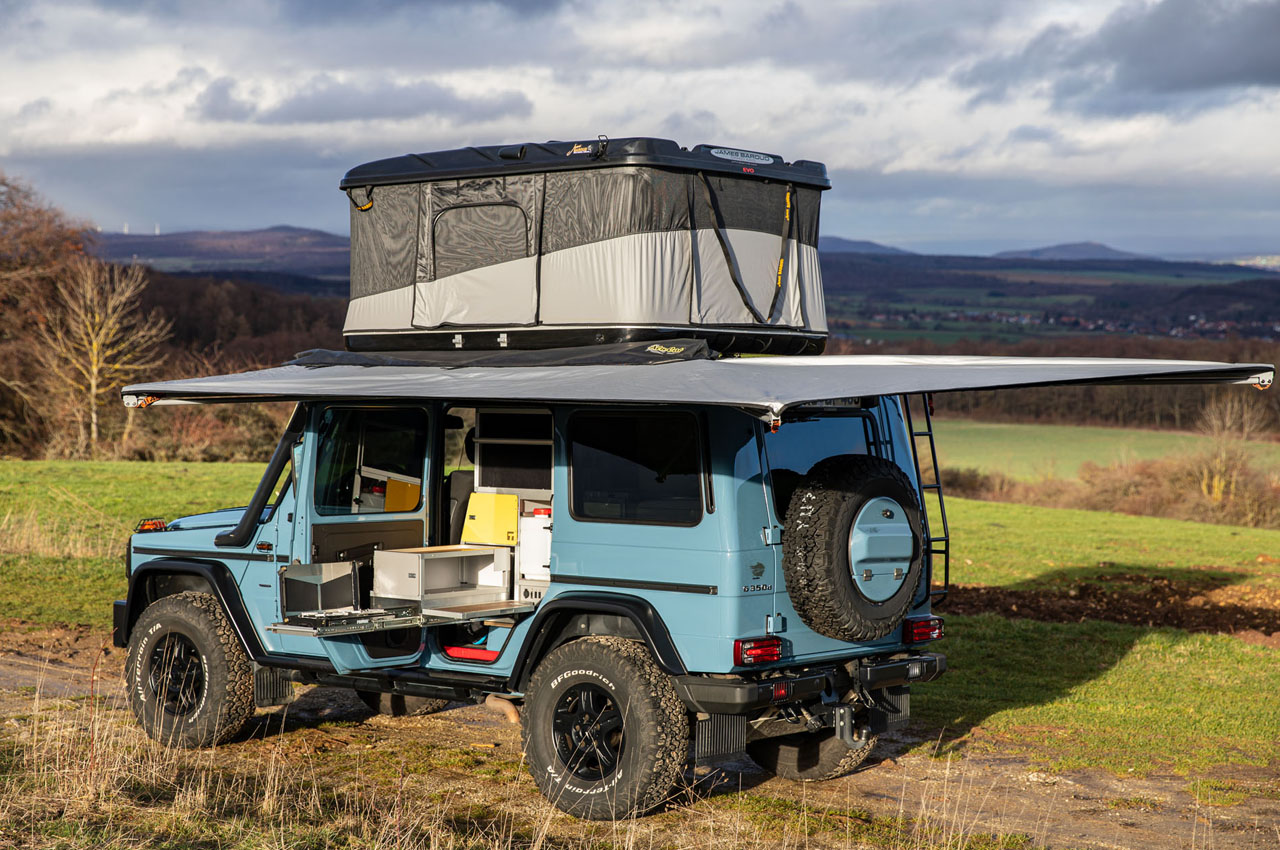
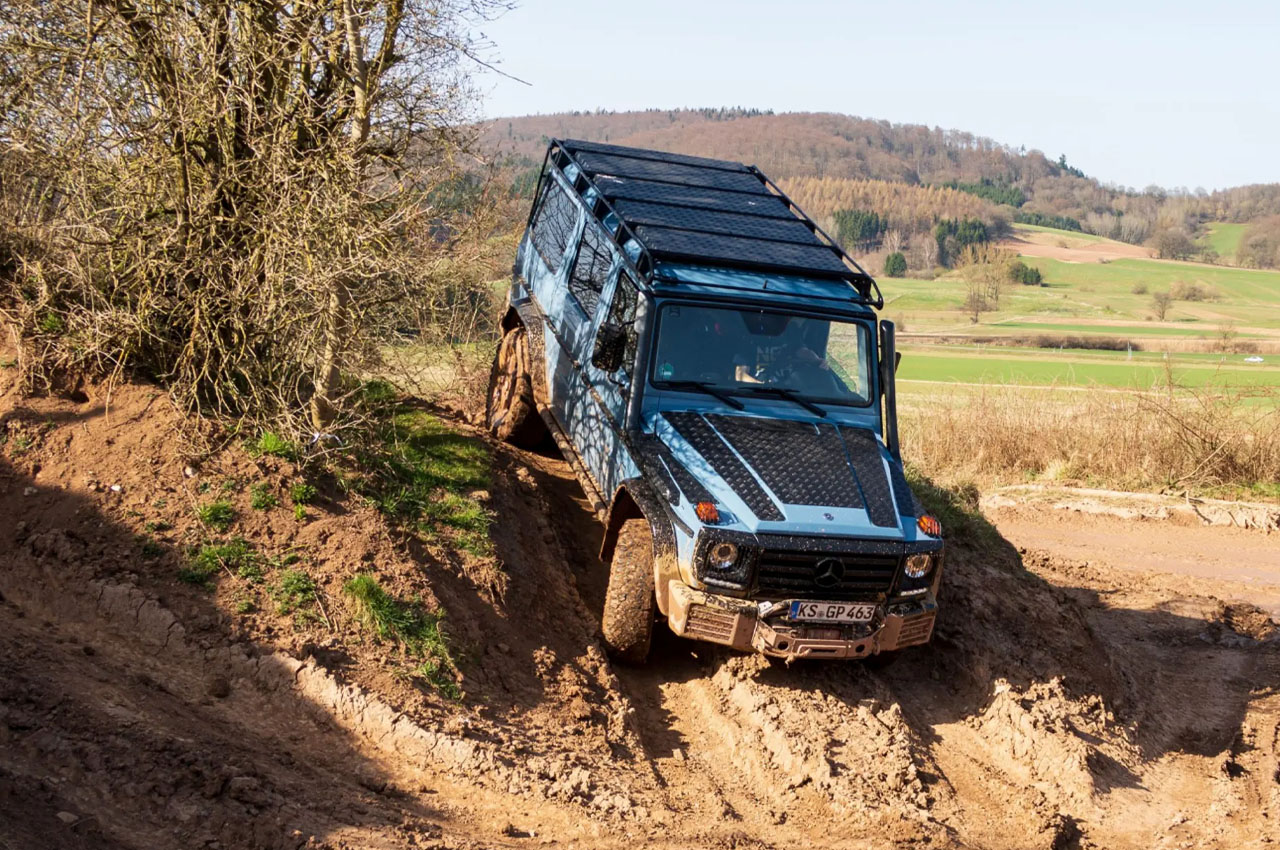
We have seen some interesting and capable camper vans through 2023. A successful year for the industry is about to wrap up but Terracamper – based out of Germany – wants it should do so on a high. It is therefore giving Mercedes enthusiasts, others of course included, the opportunity to enhance their outdoor activities this winter, and going forward into the summer, with the new Tecrawl G-Camper kit.
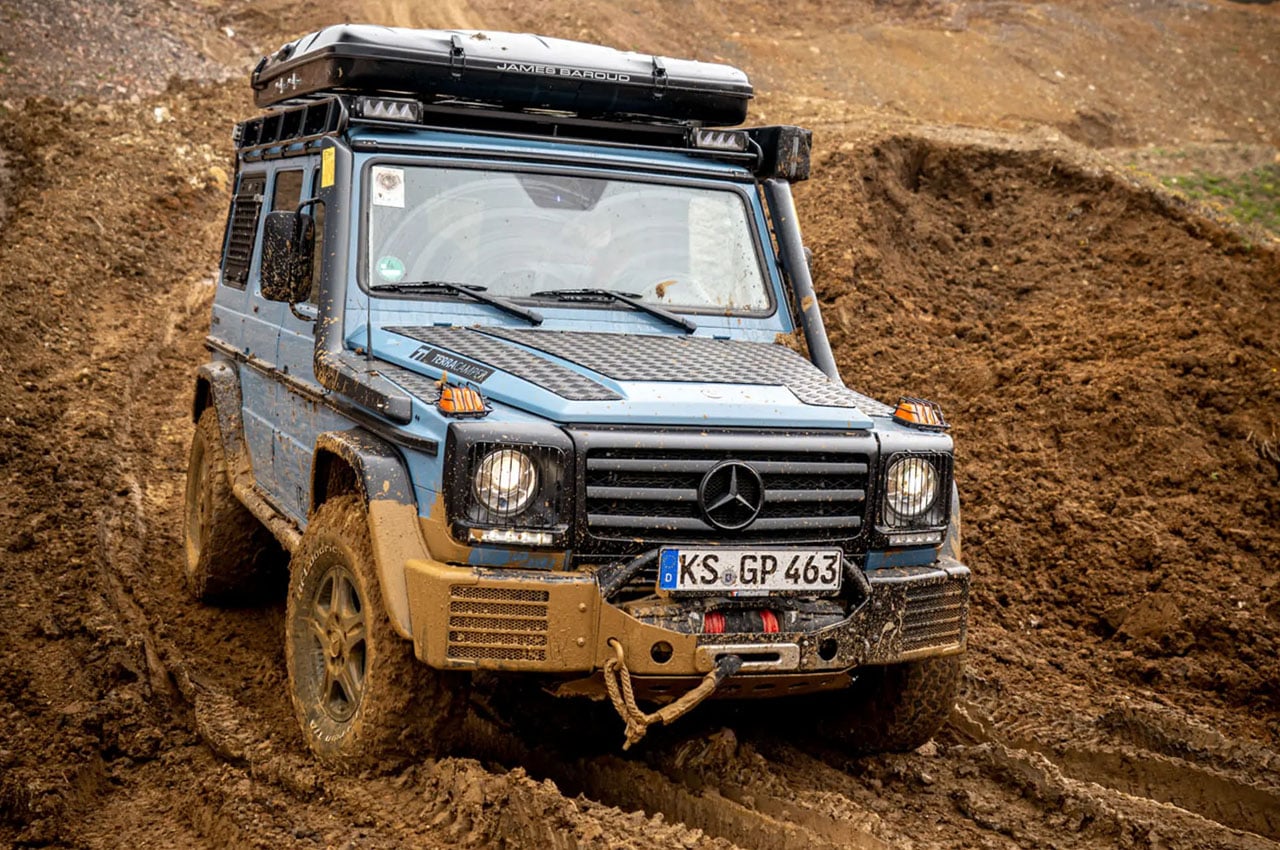
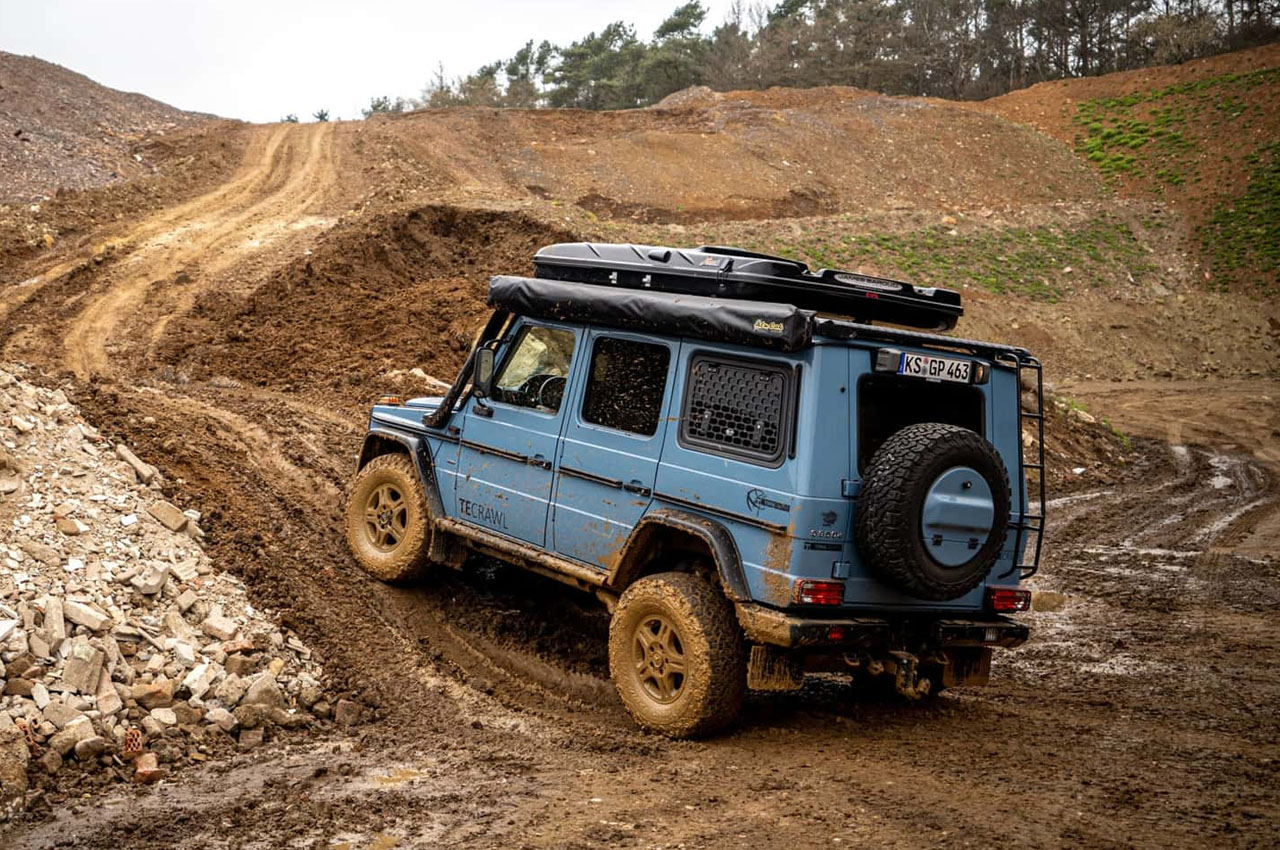
Yeah, it’s the G Wagon and not the ideal and beloved Sprinter van that forms the basis for this conversion. The 4×4 G Class Mercedes has been outfitted with a basic layout and modular accessories to make a camper van worthy of being taken out for a longer spin than a weekend.
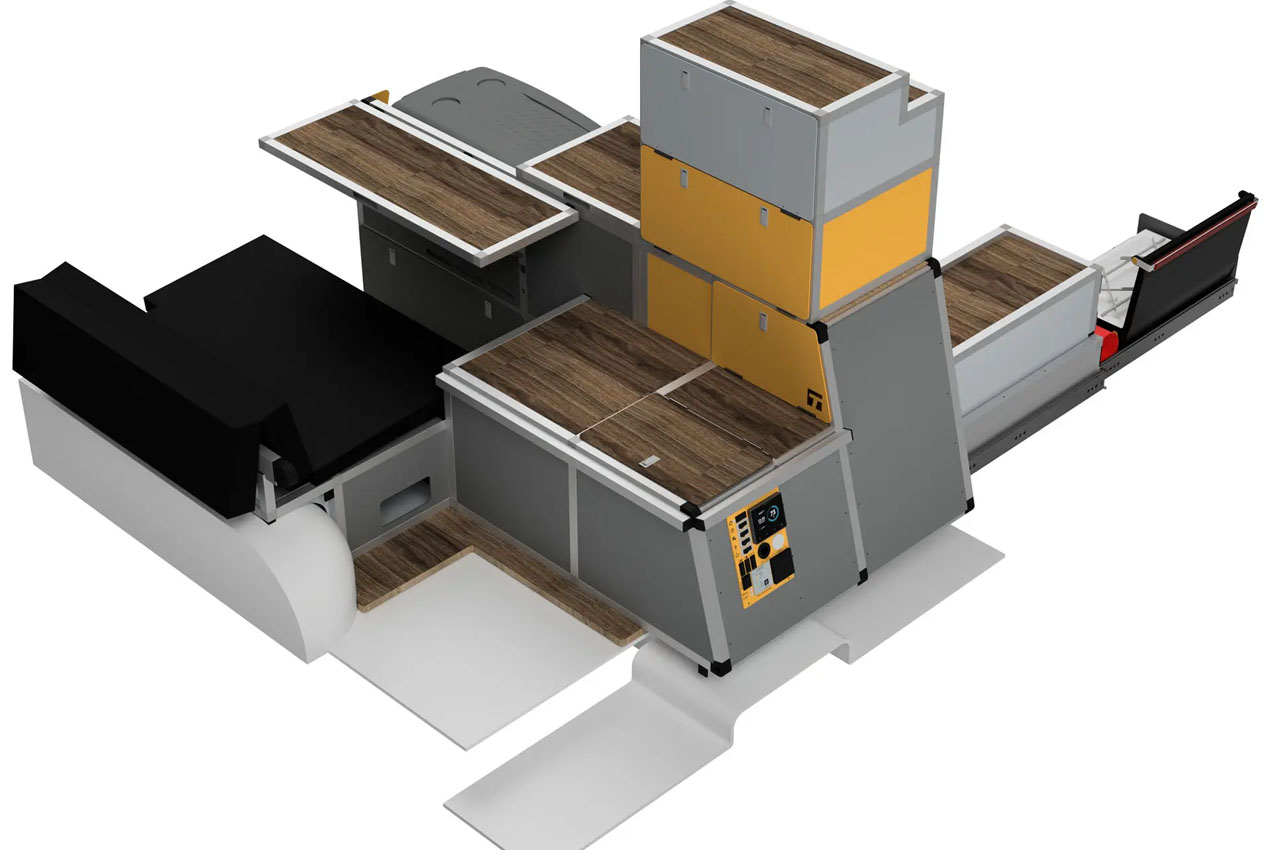
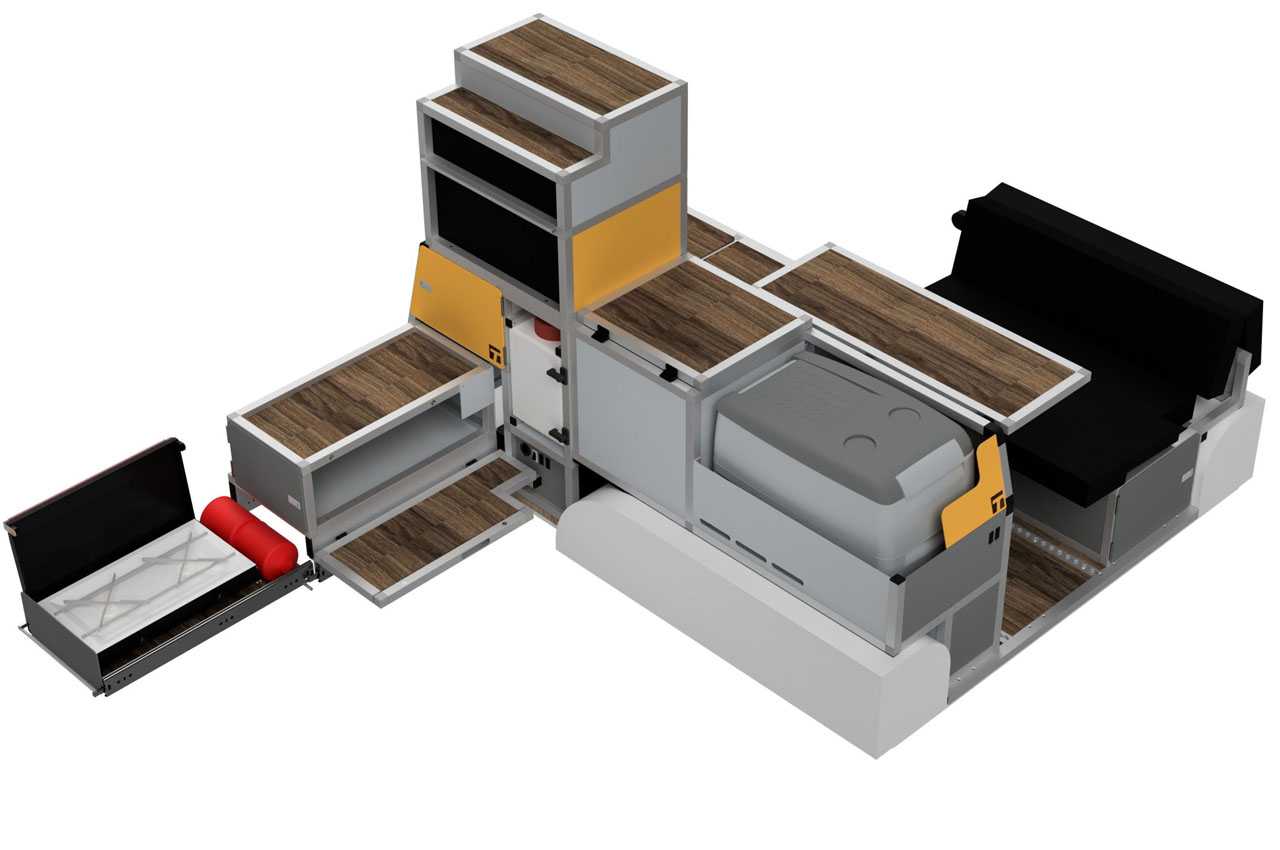
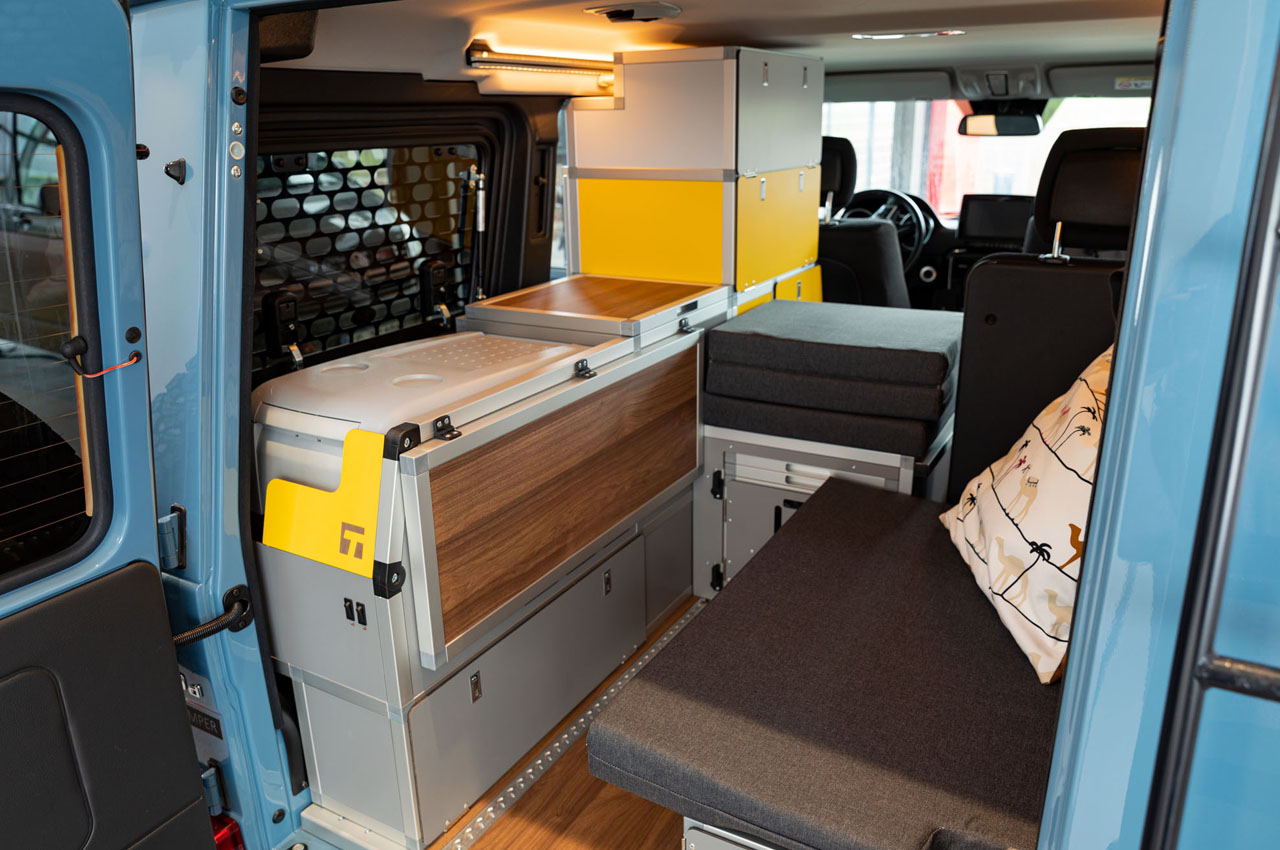
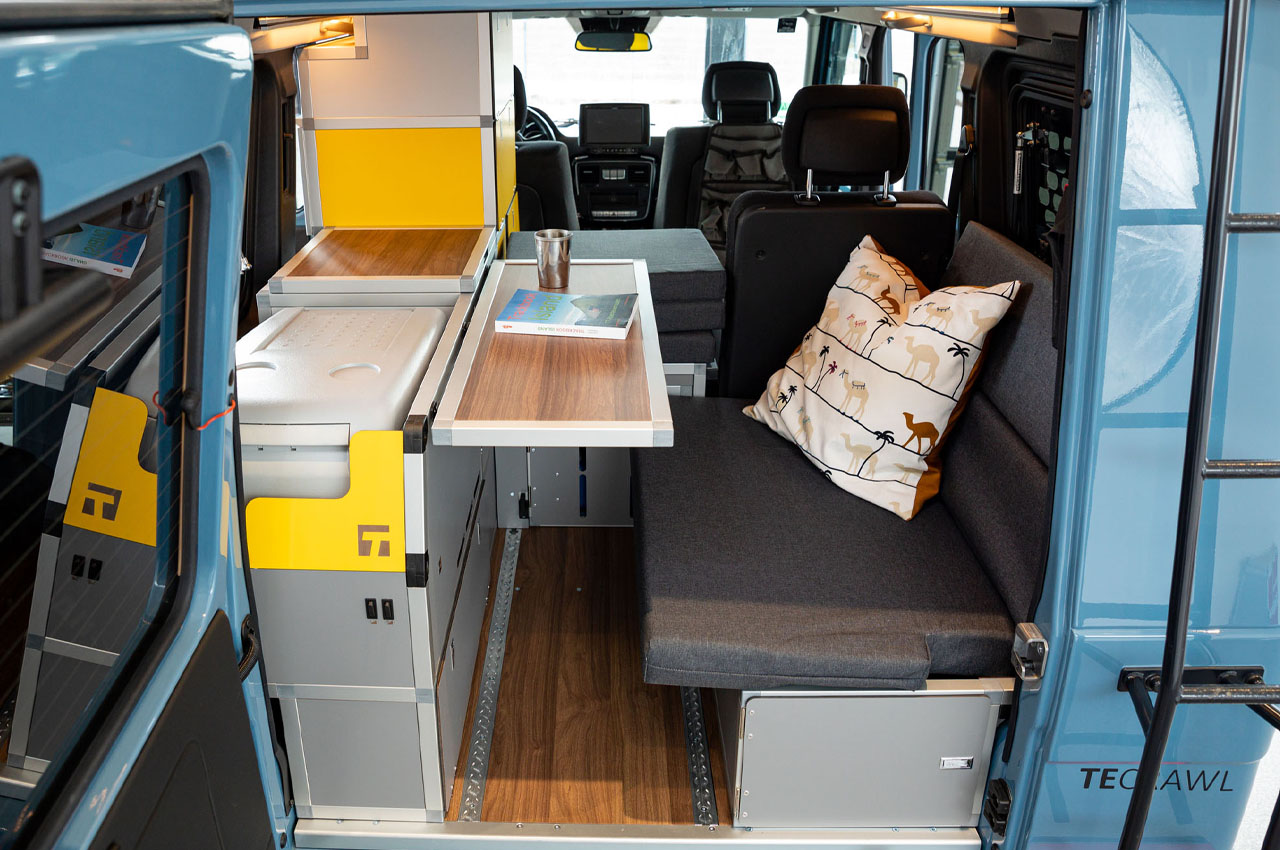
Taking of which, the German camping marque has just about done justice to incorporate the luxury a Merc may demand. The idea of the conversion kit is to keep things simple yet focus largely on utility. The Tecrawl, therefore, comes with a full thermal insulation pack for the colder months and a 31-L compressor cool box for the summery days. The power requirement is taken care of by the optional solar energy system and the integrated 150Ah lithium battery.
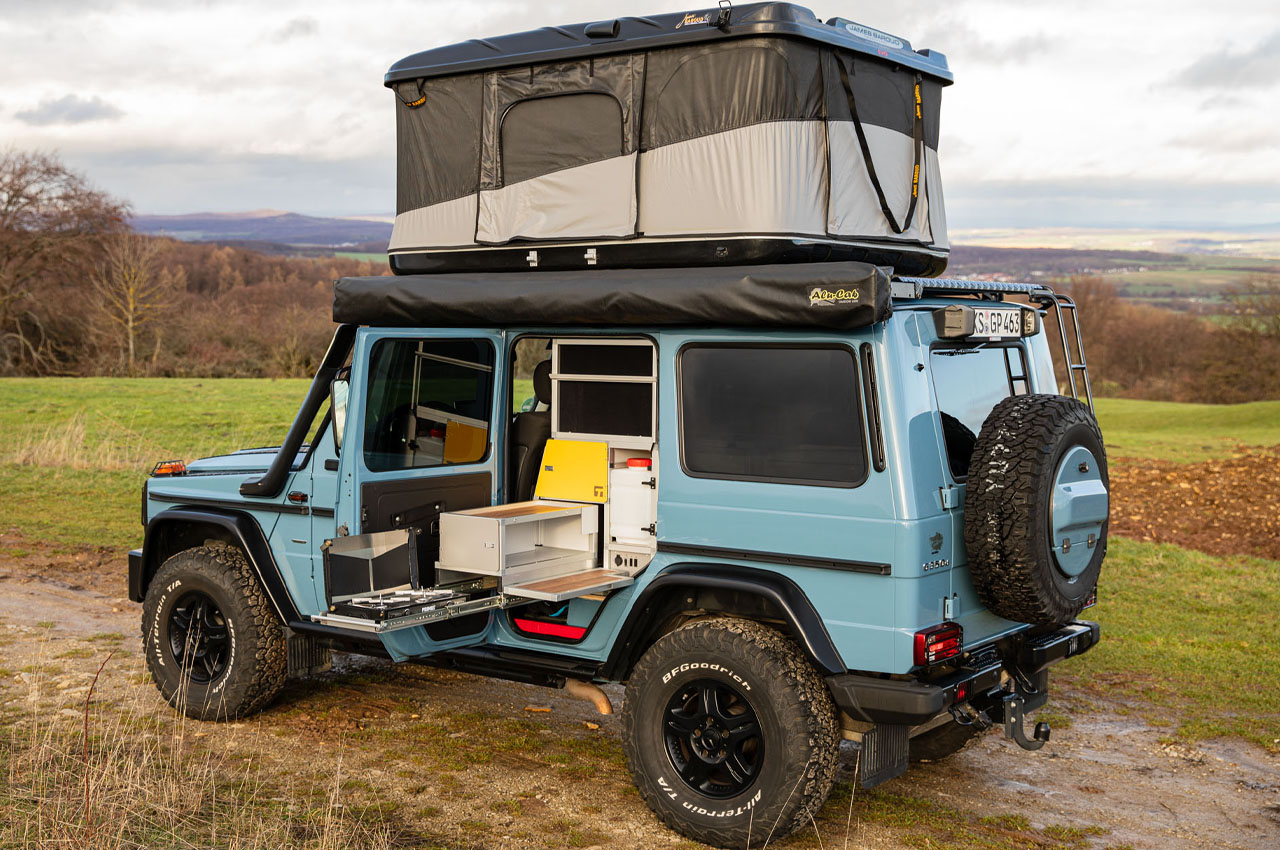
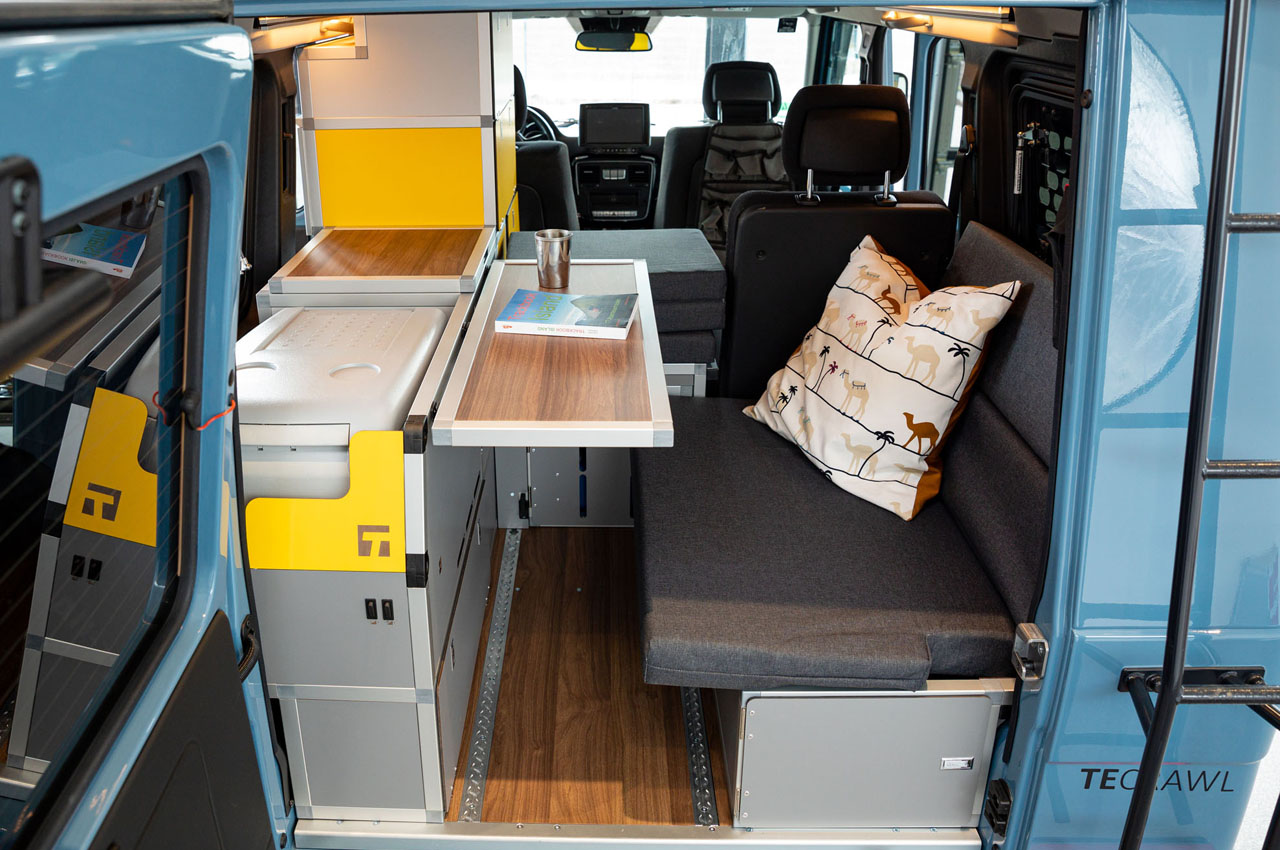
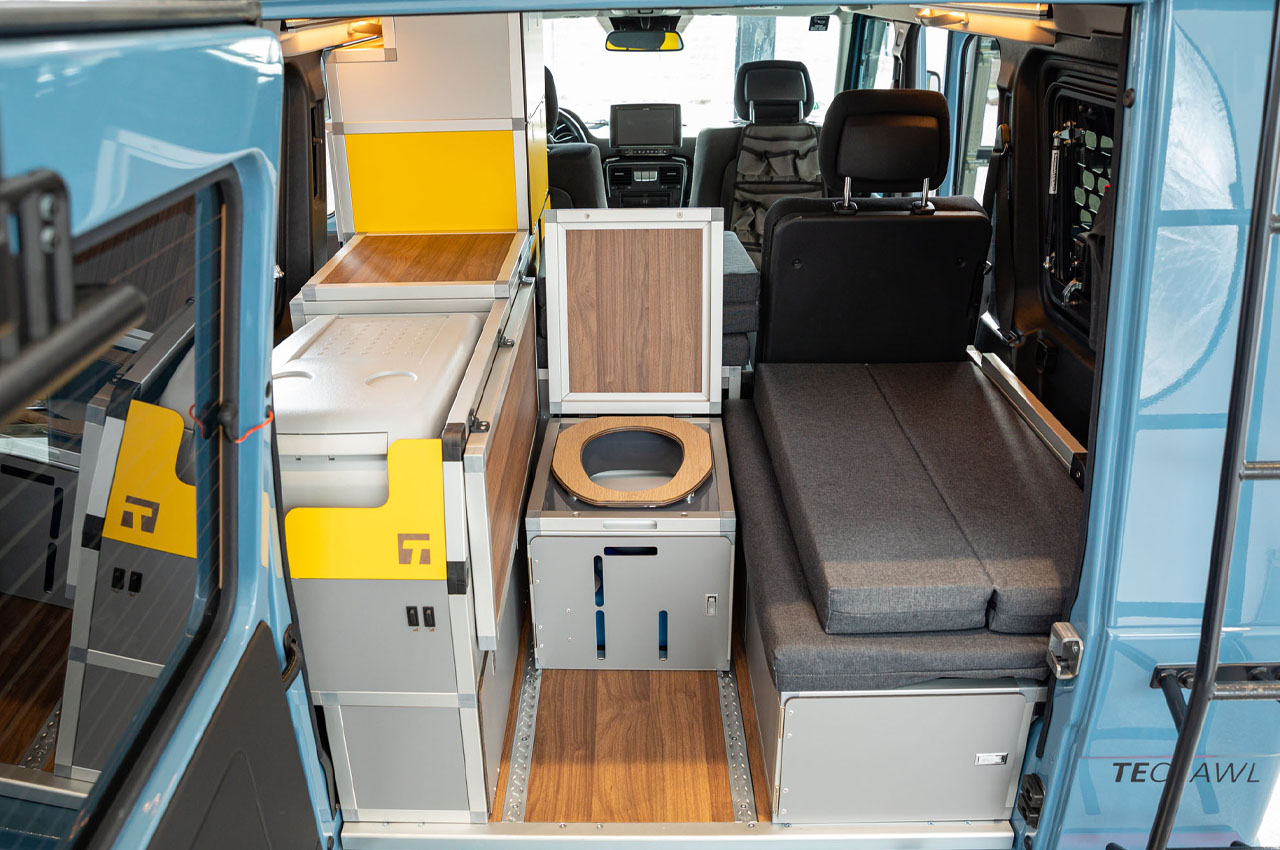
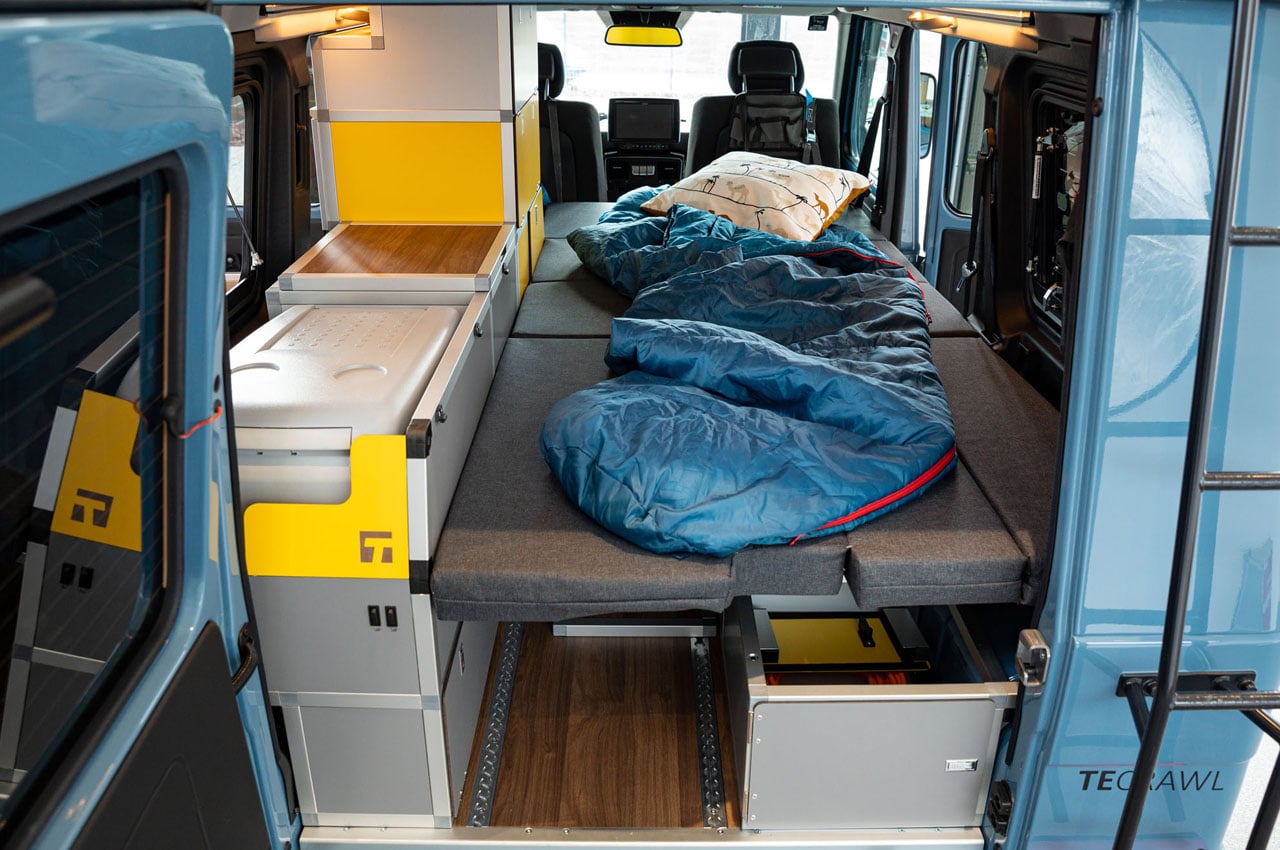
The renewable energy system renders the Tecrawl capable of camping off the grid. For comfort inside, the Tecrawl provides the G Wagon with a comfortable sleeping unit for three people. The main sleeping section is crafted in the provided rooftop tent – accessible via a ladder – while the convertible dining table morphs into a sleeper for the third person. This table also fulfills the third function: It flips into a work desk beside a side sofa ideal for the needs of a mobile workaholic.
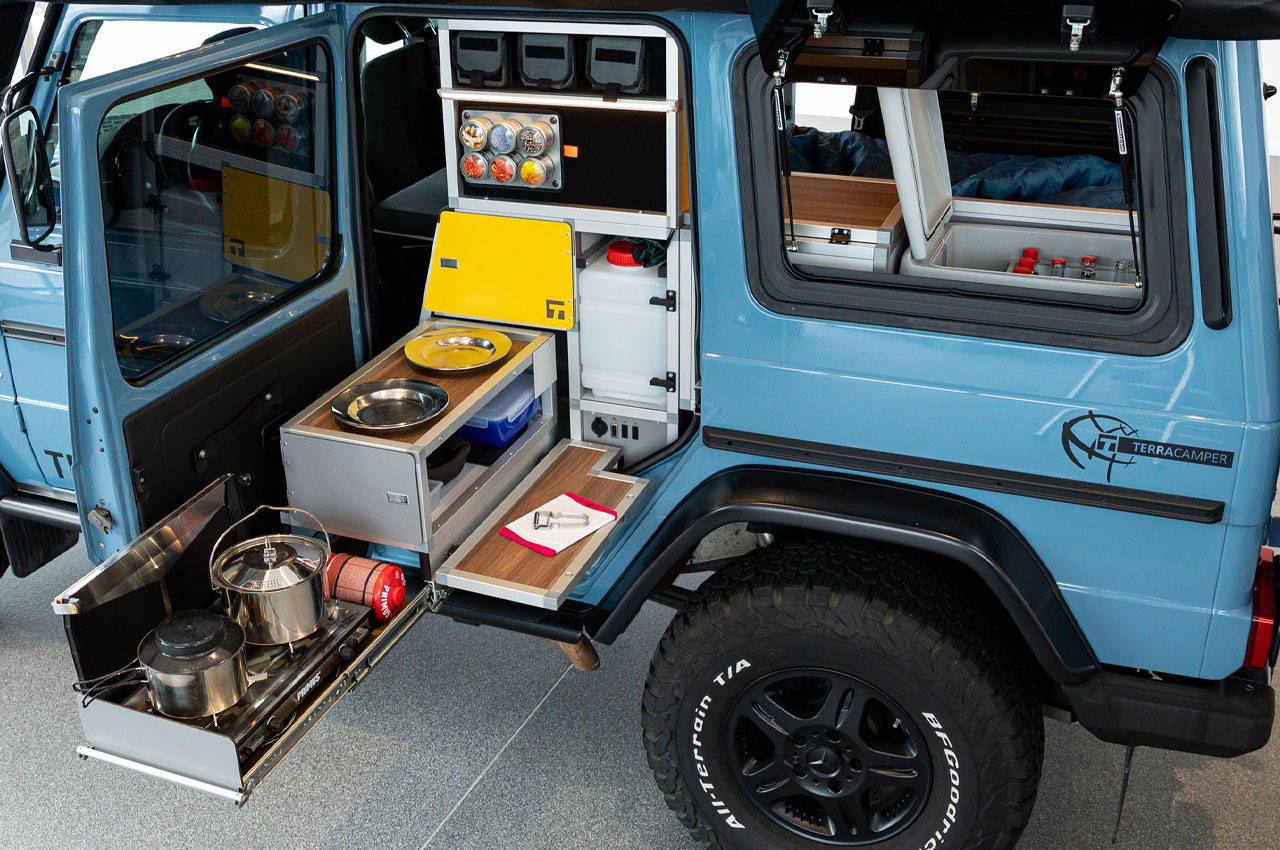
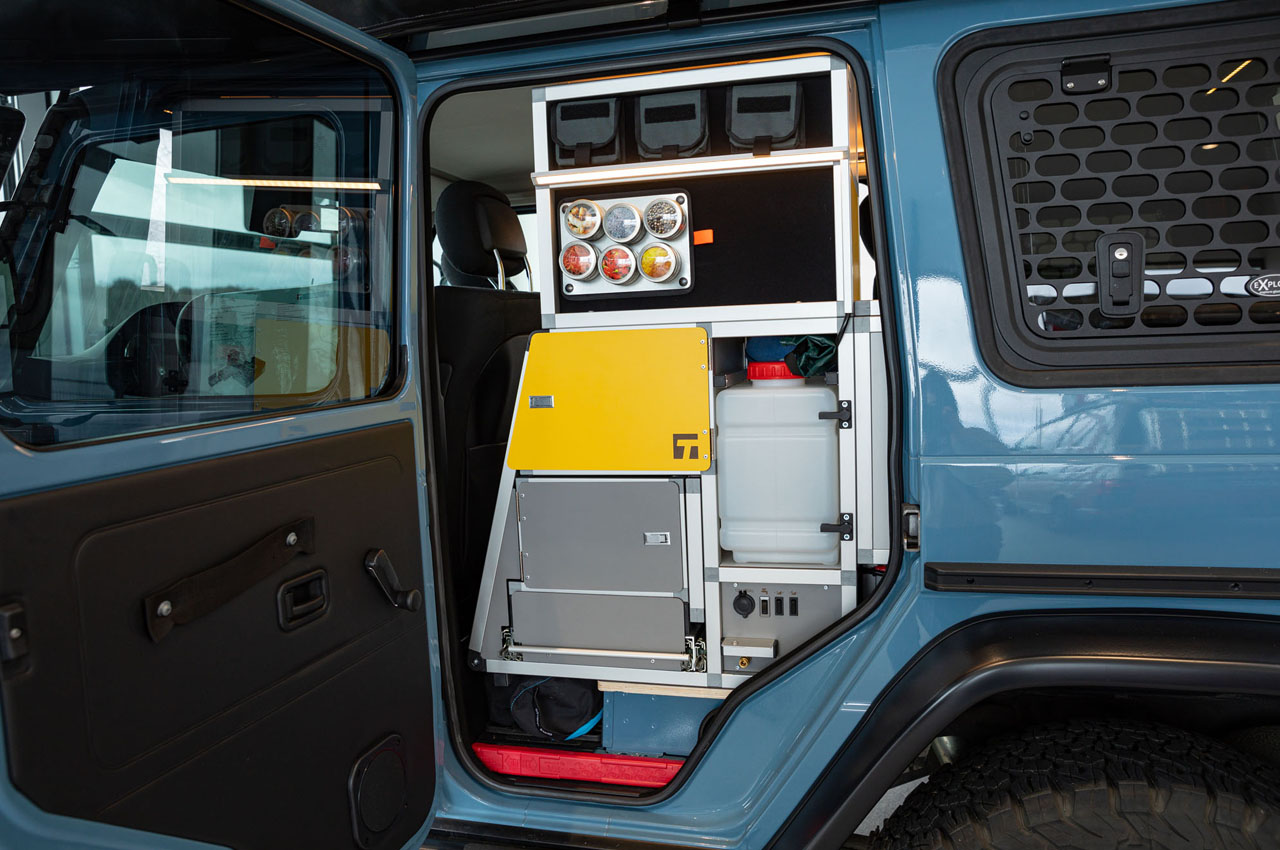
Terracamper furnishes the Tecrawl G-Camper with decent interior storage and provides a retractable awning to extend the living space when you’re camped. Here you can also pull out the kitchenette from within the camper van for the culinary requirements. The pull-out kitchen offers a two-burner gas stove, fold-out counters, a prep area, and a utility fridge. The water requirement is catered to by a removable 20-L fresh water canister and a portable dry toilet space you trip outdoors. Given its merits, the Tecrawl G Wagon camper van conversion kit starts at €11,000 (roughly $11,900).
Amazon will no longer sell donkey-skin gelatin to California residents. A report published Wednesday by Wired states the online retailer settled with a nonprofit that filed a complaint, alleging the products violated state animal welfare laws protecting horses. Amazon denied any wrongdoing and disputed the allegations. Still, it agreed to block sales of ejiao, a traditional Chinese medicine made from donkey hide, in the Golden State.
The Center for Contemporary Equine Studies, an organization devoted to protecting horses, filed the complaint in February. It accused Amazon of violating California’s Prohibition of Horse Slaughter and Sale of Horsemeat for Human Consumption Act. The nonprofit argued donkey products should be classified as horsemeat based on the law’s language.
Ejiao is a gelatin made from soaked and stewed donkey hides. Devotees believe it treats conditions related to blood circulation, insomnia and dry cough. However, apart from one published study — funded by an ejiao maker — suggesting it can be used successfully to treat anemia, scientific research doesn’t appear to support these claims.
Animal Welfare Institute
According to the Animal Welfare Institute, ejiao’s popularity is annihilating donkey populations. “Donkeys are being stolen, transported long distances without food or water, and killed under inhumane and unsanitary conditions” to fulfill ejiao’s demand, the organization wrote. Meanwhile, a report by the Donkey Sanctuary, an advocacy group, claims workers in Tanzania battered the animals with hammers to meet quotas.
The plaintiff’s attorney believes Amazon’s settlement sets a precedent for other retailers to cease ejiao sales in California. “Amazon doesn’t settle cases it thinks it can win,” Corey Page, an attorney with the firm that represented The Center for Contemporary Equine Studies, told Wired. “This is a signal that if anyone is doing this, they are doing something illegal. If a company like Amazon decides it needs to stop sending products and promoting products that violate California law, then all other retailers should do the same.”
Amazon’s settlement language reportedly agrees to “undertake reasonable best efforts” to enact “internal measures” blocking ejiao products “so that such products will not be available for sale to California addresses.”
The error message Amazon provided when trying to order ejiao for a California address
Amazon
When I attempted to use an old (but still active, according to USPS) Los Angeles address of mine to buy an ejiao product called “Ass Hide Glue Lumps” (highlighted in a previous Wiredreport from earlier this year that drew attention to the issue), it thwarted the attempt. “Sorry, this item can’t be shipped to your selected address,” the error message read in red type. “You may either change the shipping address or delete the item from your order.”
If you’re surprised Amazon sold donkey products in the first place (and still does outside California), consider some other “exotic” meats the retailer offers. These include whole-skinned alligator (only $195!), foie gras (duck or goose liver), kangaroo jerky and boneless snapping turtle meat.
This article originally appeared on Engadget at https://www.engadget.com/amazon-will-stop-selling-donkey-skin-gelatin-but-only-in-california-212555337.html?src=rss
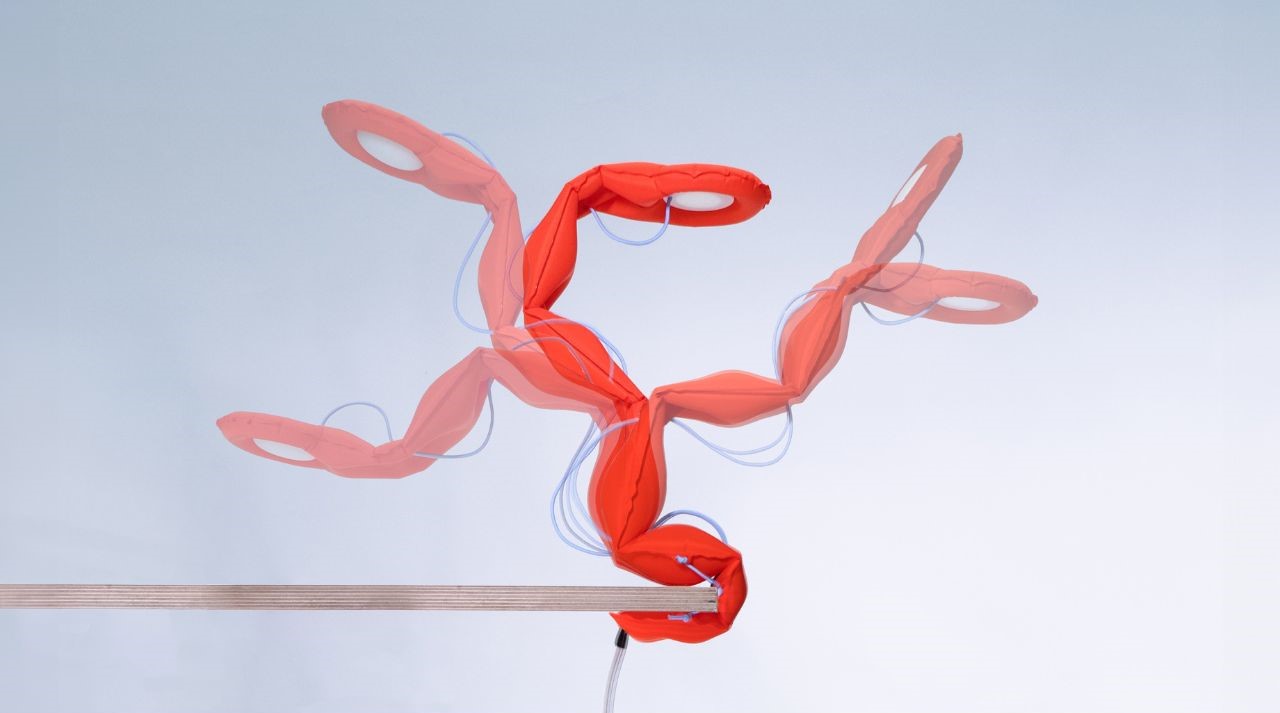
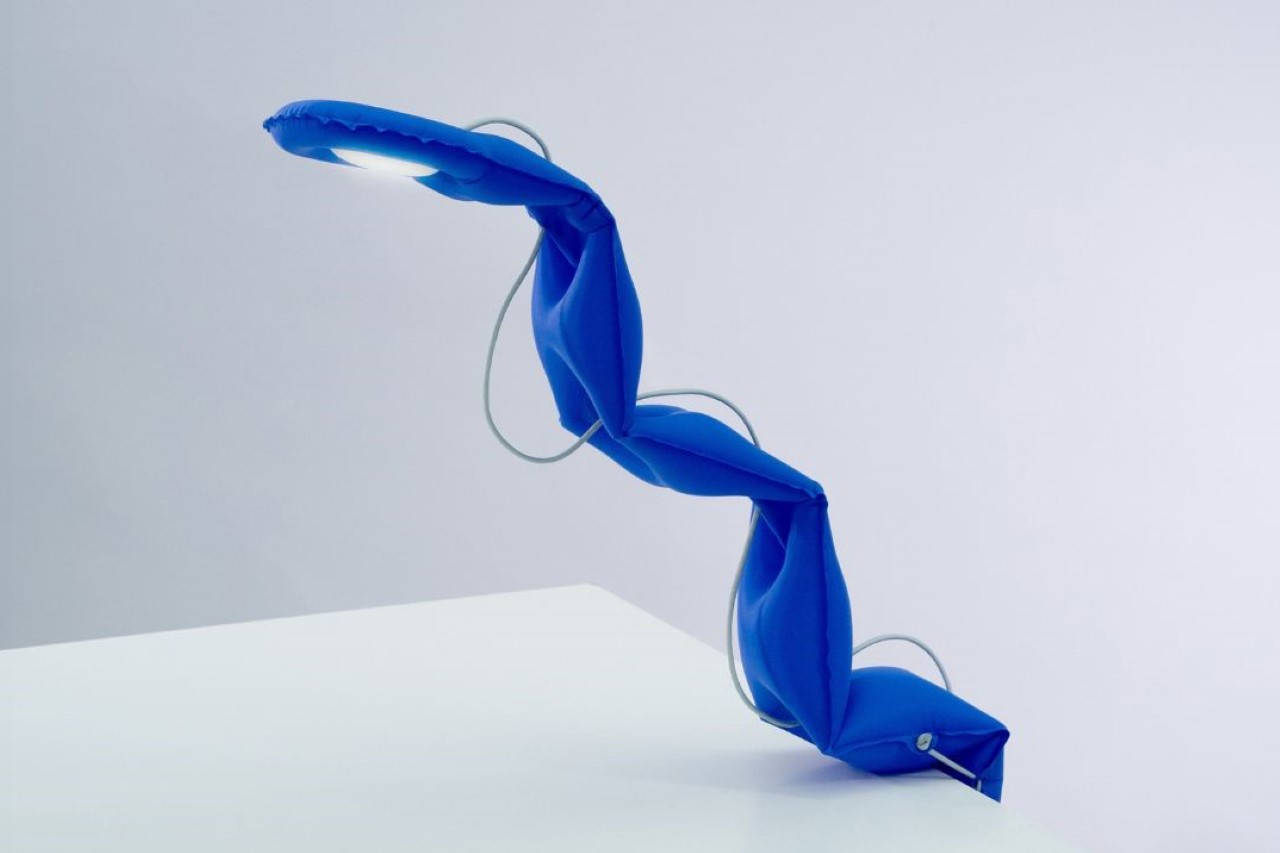
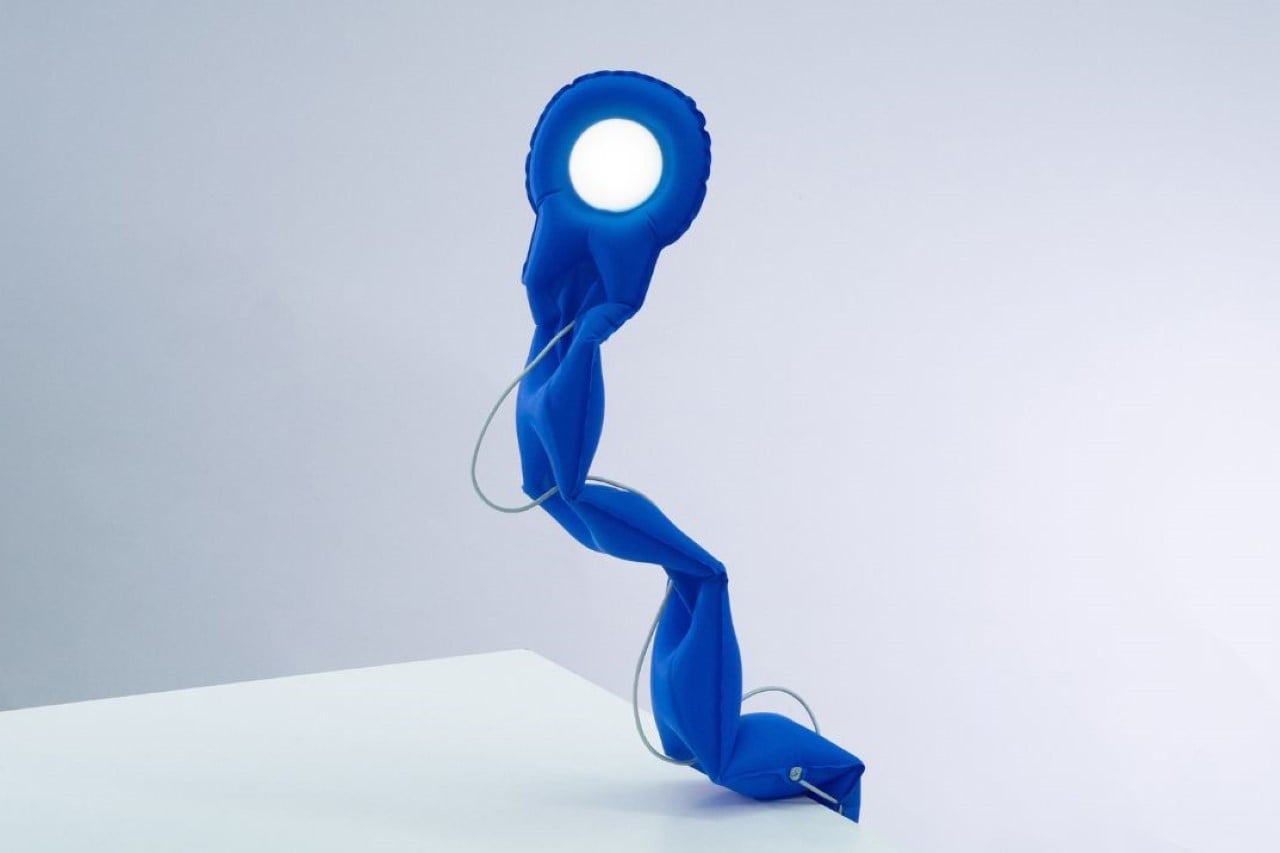
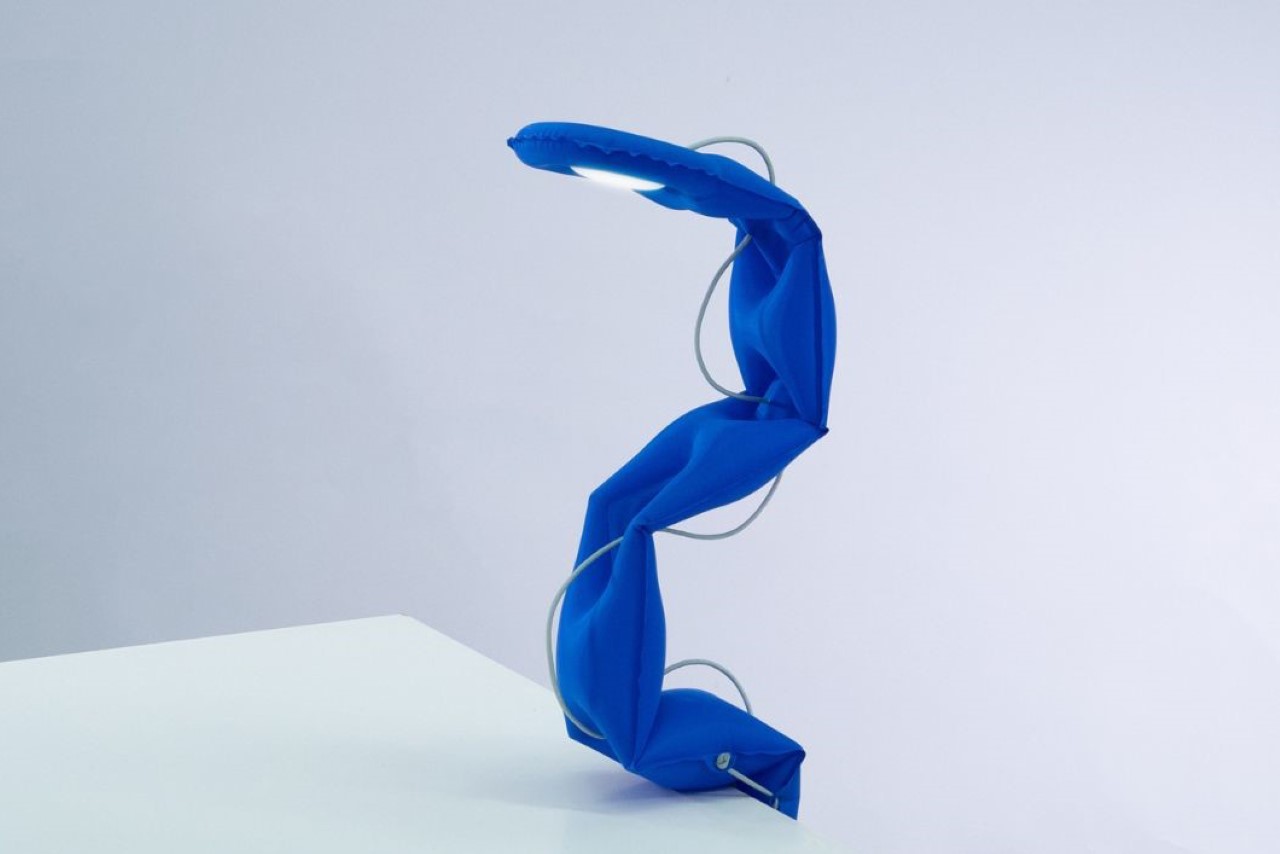
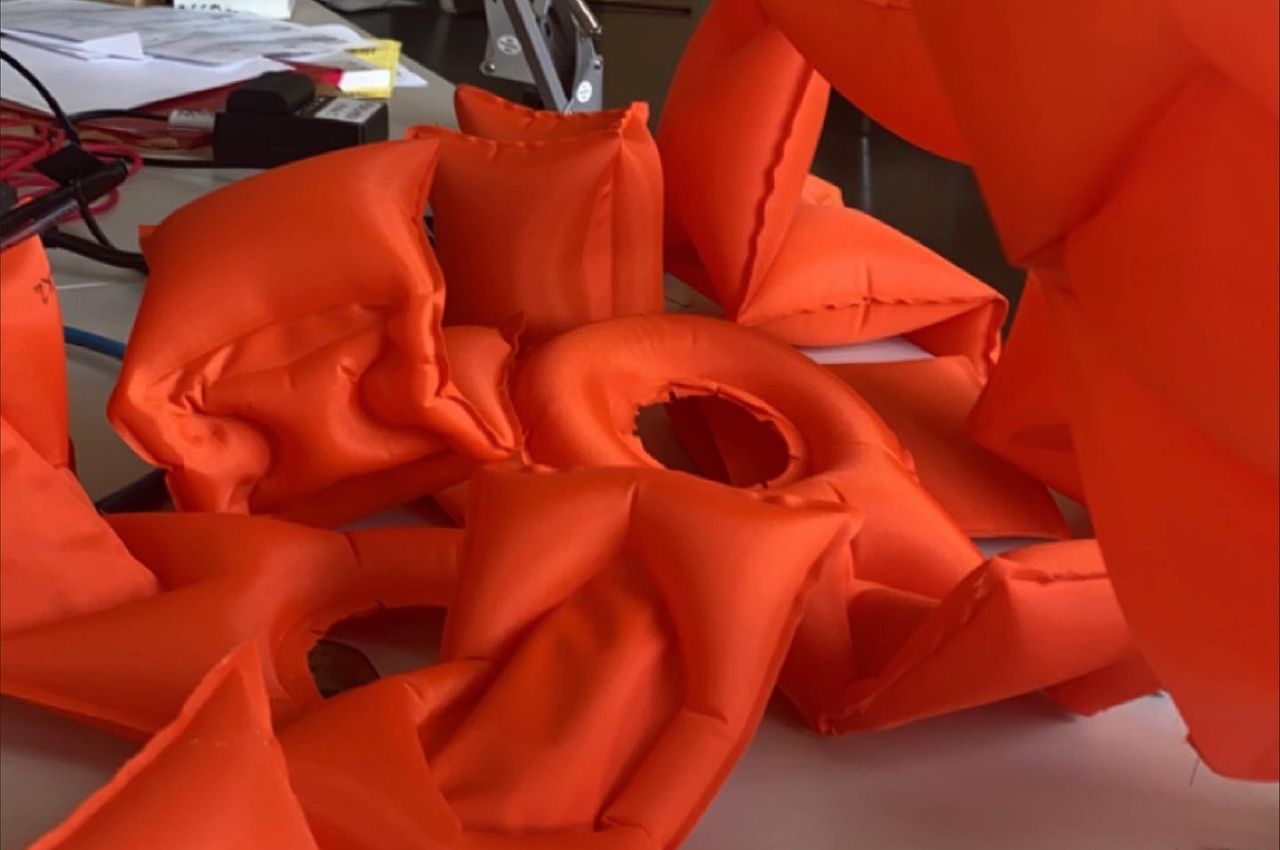
In the realm of design, creativity often finds inspiration in the most unexpected places. The SQUEEZE lamp stands as a testament to this philosophy, pushing the boundaries of conventional lighting by embracing air as a central design principle.
SQUEEZE is not just a lamp; it’s a whimsical exploration of form and function. Crafted from TPU-coated nylon, the lamp embodies a harmonious fusion of material innovation and aesthetic appeal. The choice of materials ensures constant air pressure, creating a lightweight yet sturdy structure that is both dynamic and resilient.
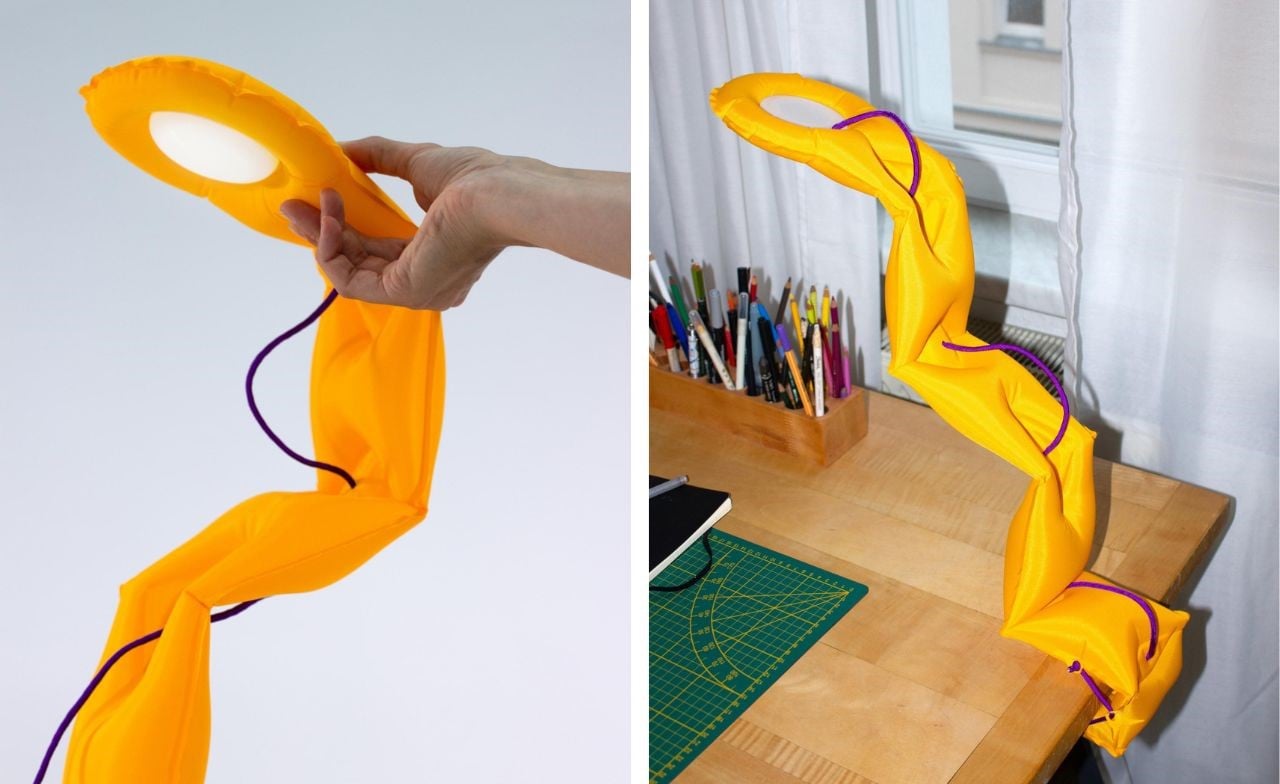
One glance at this lamp, and you might mistake it for funky home decor. This inflatable lamp is not just a source of light; it’s a conversation starter, inviting onlookers to marvel at its unique design. The lamp’s agility is owed to welded joints in the TPU-coated nylon, and the material-specific properties of the stretched membrane, allowing it to seamlessly adapt to various environments.
This lamp goes beyond mere aesthetics by integrating practical features into its design. The lamp can be effortlessly attached to the edge of a table through the pressure created between two air cushions at the bottom, demonstrating an ingenious marriage of form and function.
Adding a touch of technological innovation, squeeze features an integrated air pressure sensor to control its light. The sensor reacts to the membrane being pressed, offering a unique and interactive lighting experience. This dynamic control mechanism adds an extra layer of engagement for users, making it not just a luminaire but a tactile experience.
Sustainability takes center stage with this lamp. When deflated and folded flat, the lamp not only becomes incredibly lightweight but also minimizes transportation costs and emissions. In the context of this luminaire project, the use of air as a design element showcases its potential to create resource-saving solutions, replacing traditional material-intensive constructions.
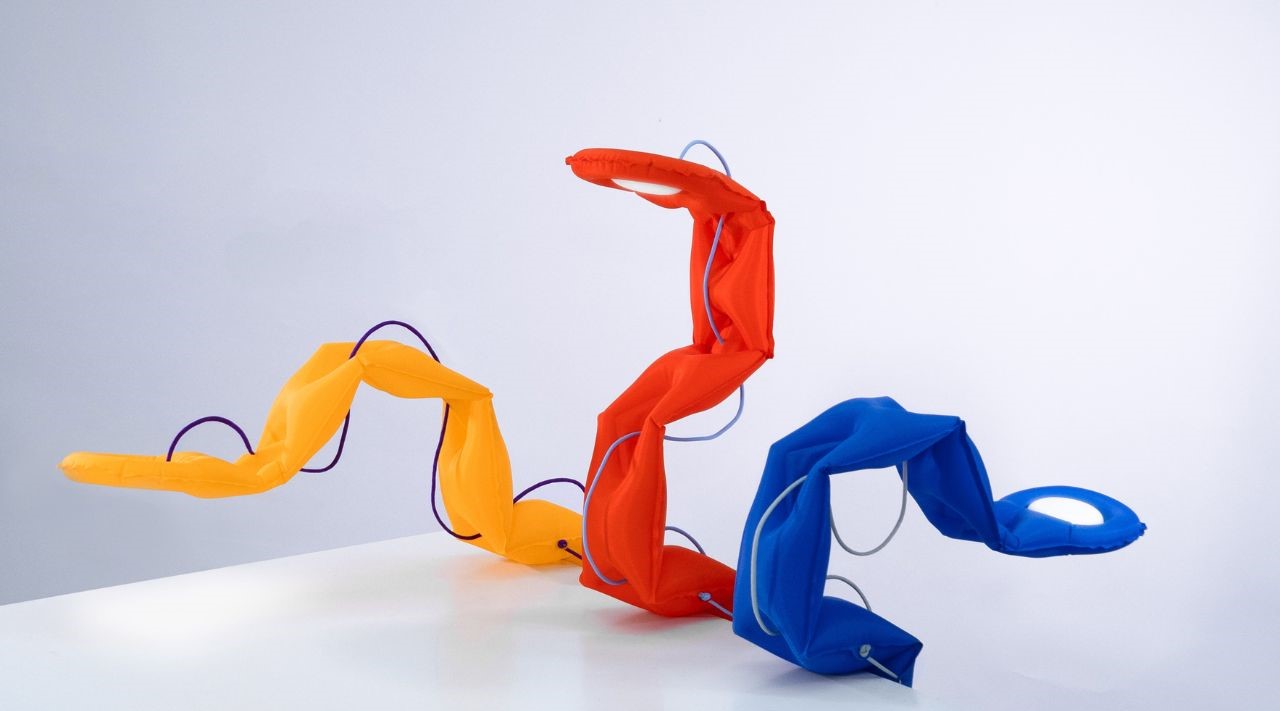
The lamp understands that personal style is diverse, offering the lamp in three different colors. Whether you prefer a subtle elegance, a vibrant pop of color, or a classic hue, Squeeze allows you to tailor your lighting to suit your individual taste and stand out in your interior spaces.
The minimalistic design of this lamp ensures that it seamlessly complements a range of styles – from modern to contemporary and minimal. Its soft geometry, combined with a splash of color, brings a playful yet sophisticated element to any space, making it an ideal choice for those who appreciate simplicity with a touch of flair.
Squeeze definitely stands as a beacon of innovation in the world of lighting design. Through its ingenious use of air as a central design principle, this lamp not only illuminates spaces but also illuminates the possibilities that emerge when creativity and functionality coalesce. It transcends the conventional, offering a unique and captivating addition to any interior.
We knew it was coming, but now we have a date: Bobby Kotick will officially step down as CEO of Activision Blizzard on December 29, 2023. Blizzard and King vice chairman Humam Sakhnini will also leave at the end of December, Activision Blizzard chief communications officer Lulu Meservey is out in January, and a handful of other executives will leave in March, according to an internal memo from Xbox head Phil Spencer published by The Verge.
Activision Blizzard vice chairman Thomas Tippl, Blizzard president Mike Ybarra and King president Tjodolf Sommestad will remain at the studio and report to Matt Booty, Microsoft's president of gaming content and studios. Otherwise, leadership teams across Activision, Blizzard and King will stay the same, according to the memo.
Kotick has been the head of Activision since 1991. At Activision Blizzard, he oversaw massively popular franchises including Call of Duty, Diablo, Starcraft and World of Warcraft, and once the company acquired mobile studio King in 2016, he added Candy Crush to that list. The company is a AAA powerhouse and it generated $7.5 billion in revenue in 2022.
Activision Blizzard was sued by California's Civil Rights Department in 2021 over allegations of systemic sexism, discrimination and harassment at the studio, and executives were accused of fostering a frat-house style culture. At the time, all top leadership roles at Activision Blizzard were filled by white men. The Securities and Exchange Commission filed a separate, related lawsuit against the studio a few months later. In November 2021, The Wall Street Journal reported Kotick had long ignored and helped cover up instances of sexual harassment at the studio. In response, workers at Activision Blizzard held walk-outs and demanded Kotick's resignation, but a shareholder vote in 2022 kept him in place.
Microsoft announced its intent to purchase Activision Blizzard in early 2022, lawsuits and all. The deal was valued at $69 billion, and considering the scale of both companies involved, it faced intense scrutiny from regulators in the US and the UK. The acquisition was approved in October, after 21 months of legal arguments and concessions. Microsoft is now the third-largest video game studio in the world by revenue and it's the face of the ongoing consolidation craze tearing through the industry.
Once Microsoft's purchase went through, Kotick said he'd stay on through the end of 2023. According to Bloomberg, Kotick is set to make $375 million from the acquisition, and he's expecting a golden parachute of $14.6 million.
This article originally appeared on Engadget at https://www.engadget.com/bobby-koticks-reign-at-activision-blizzard-ends-december-29-2023-194225817.html?src=rss
Reuters published an explosive investigative report Wednesday chronicling Tesla's alleged patterns of deliberate neglect and shifting blame onto customers for parts failures. The damning exposé accounts the Elon Musk-led company’s alleged long-running tendency to claim vehicle owners had engaged in “driver abuse,” charging them for repairs over failures caused by parts the company discussed internally as being flawed. The issues are often related to suspension and steering. Externally, Tesla’s portrayal of the problems has ranged from flat-out denial to partial acknowledgment.
Several accounts in the story document Tesla owners who were told their car's issues stemmed from prior damage or driver abuse. In some cases, they had just bought the vehicles:
One of the drivers Reuters interviewed, Shreyansh Jain, suffered a suspension collapse in a 2023 Tesla Model Y he had owned for less than 24 hours. When the automaker told him a lower control arm separating from the steering knuckle caused the failure, he expected Tesla to cover the repairs. A service rep who inspected the car said they found “no evidence of any external damage,” as revealed in a text message.
About a week later, Tesla sent a letter to Jain, skirting blame and citing “a prior external influenced damage to the front-right suspension” as the cause.
Jain said he was the only person to have driven the car on its first day of ownership, and he hadn’t had an accident before the suspension failed. “I was like, ‘Bloody hell, how can metal just snap like that when I know for sure the car has not hit anything?’” he said to Reuters. Three months later, the repairs were complete, and Jain paid a $1,250 deductible (with his insurance covering the rest). He says his rates then spiked dramatically on another car he owned.
Tesla CEO Elon Musk stands behind the Model Y at its 2019 unveiling.
Tesla
Cincinnati surgeon Trace Curry paid $110,000 for a 2016 Tesla Model X. He replaced the SUV’s control arms twice, once covered by warranty and a second time at his expense. After the warranty ran out, Reuters reviewed invoices showing Curry paid around $10,000 for failed suspension and drive-axle parts. Then, in 2018, he replaced the front half shafts (under warranty); he replaced them again (at his own cost) for $1,500.
Reuters’ investigation suggests Tesla knew that many of the parts that required replacing in Curry's Model X — control arms, suspension and front half shafts — had high failure rates.
Andrew Lundeen was driving his wife’s 2018 Model 3 in August when the car’s power steering failed while driving over a speed bump. The Santa Rosa, California, resident told Reuters a Tesla service manager told him a power steering connector had corroded — and attributed it to a car wash, which the employee cited as a known problem.
Lundeed paid $4,400 out of pocket to replace the steering rack and a wiring harness, allegedly thanks to his bold decision to visit a car wash. “This is the only car I’ve ever heard of where a car wash can damage the wiring,” he told the Tesla manager. Lundeed described the employee as saying, “All I can tell you is we’re not a 100-year-old company like GM and Ford. We haven’t worked all the bugs out yet.”
Tesla's Model 3
Photo by Roberto Baldwin / Engadget
The investigation also documents Tesla’s can-kicking and inconsistent responses to part recalls in different regions. For example, the company’s engineers identified the aft link, part of the suspension, as having snapped in several incidents while owners drove at low speeds (similar to Jain’s account). A former Tesla employee “with direct knowledge of the matter” told Reuters that between 2016 and 2020, Tesla “resolved” around 400 aft link complaints in China — either through in-warranty repairs or through “goodwill repairs” if they were out-of-warranty.
The Musk-led automaker delayed a recall for four years, only agreeing to one after Chinese regulators applied pressure. The country’s State Administration for Market Regulation described a “risk of accidents” as part of the rationalization.
However, despite global reports of failures, Tesla never recalled the part in the US and Europe. The company told US regulators the problems resulted from “driver abuse.” Reuters also viewed a 2019 “talking points” memo urging service centers to blame “vehicle misuse,” like “hitting a curb or other excessive strong impact,” as the culprit. “Abuse” and “misuse” are conditions in the Musk-led company’s contract, giving the automaker leeway to reject in-warranty repairs for incidents it labels as such.
The National Highway Traffic Safety Administration (NHTSA) has been investigating Tesla since 2020 for the fore link (a suspension part) in Model S and X, and it began looking into power steering failures in the 2023 Model 3 and Model Y in July. Reuters’ nearly 5,000-word report is worth a read, especially if you’re a Tesla owner who has paid for repairs out of pocket. The NHTSA will likely find it an equally compelling read.
This article originally appeared on Engadget at https://www.engadget.com/tesla-knew-some-of-its-parts-had-high-failure-rates-but-reportedly-blamed-drivers-anyway-184957494.html?src=rss
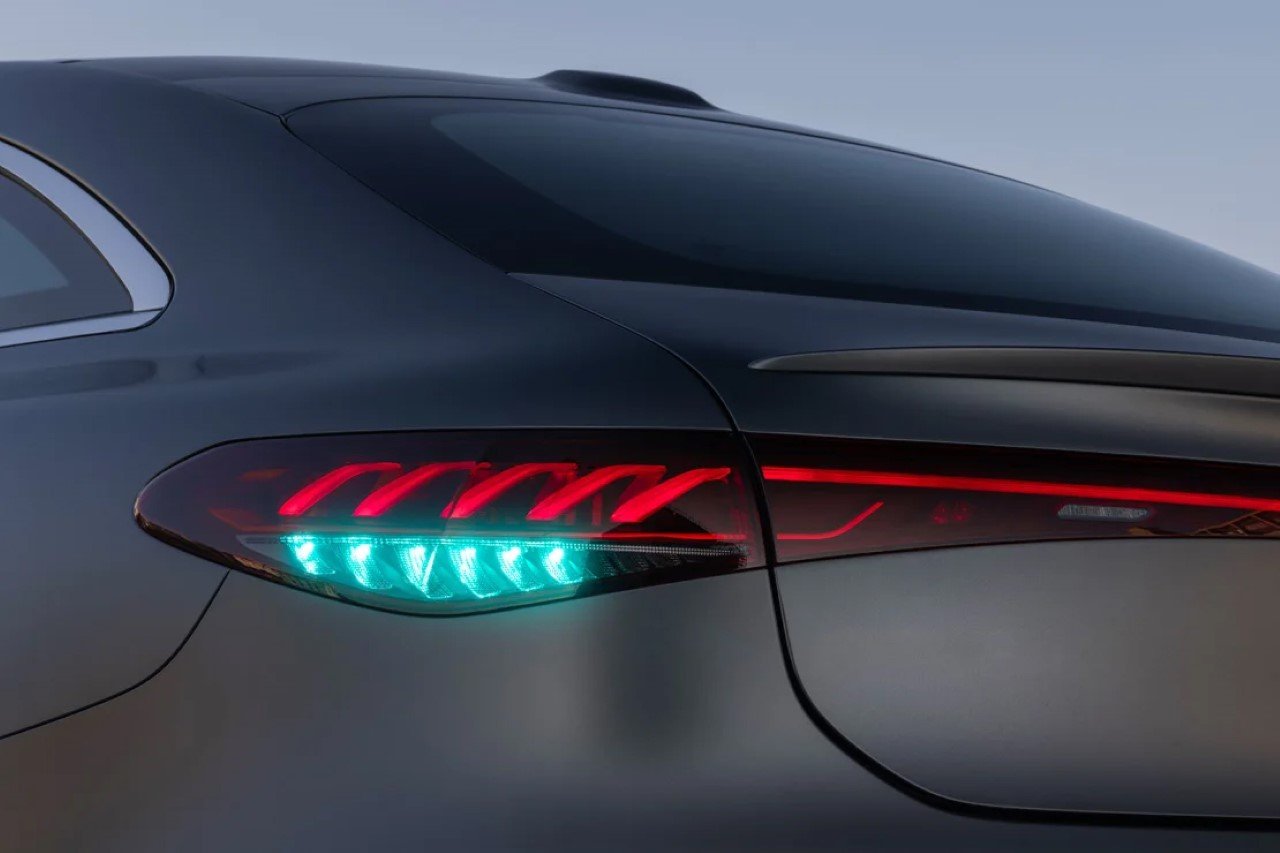
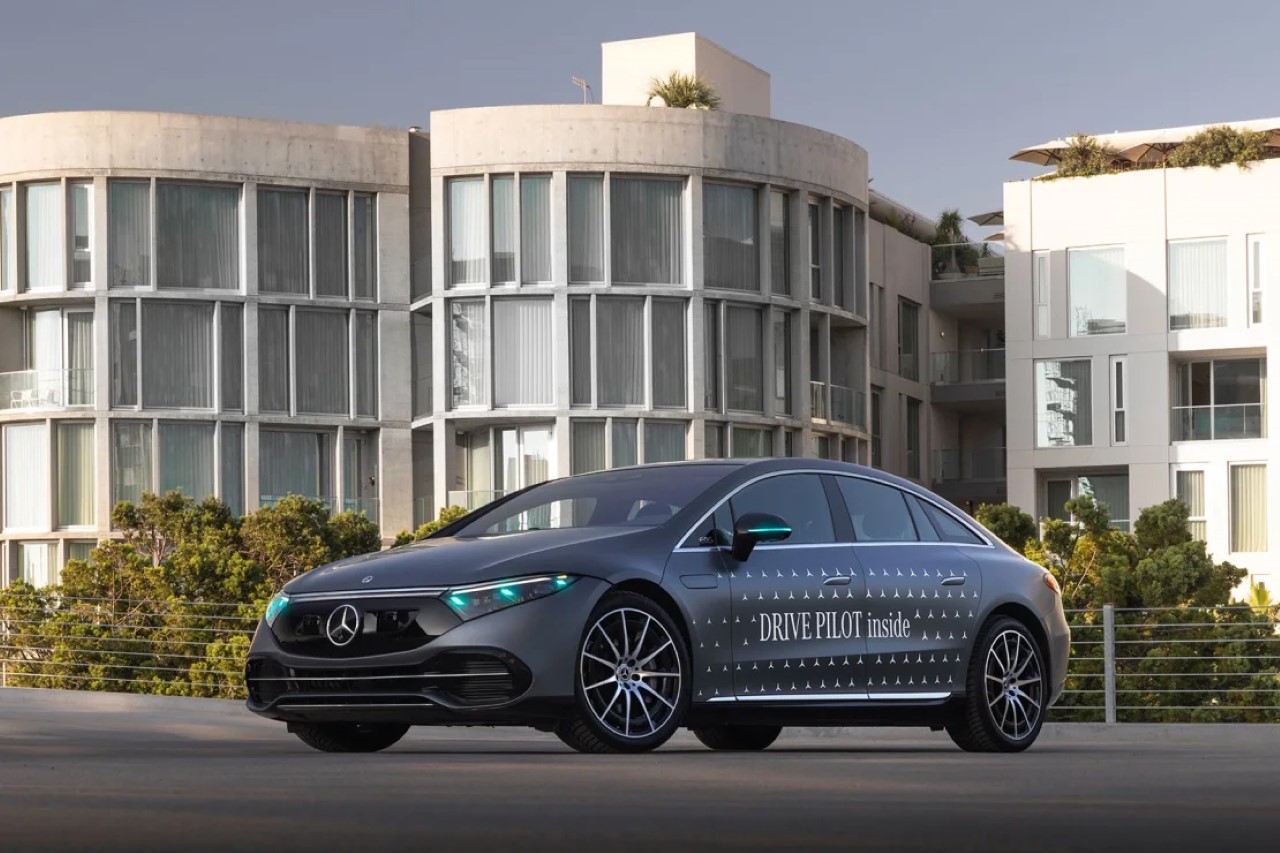
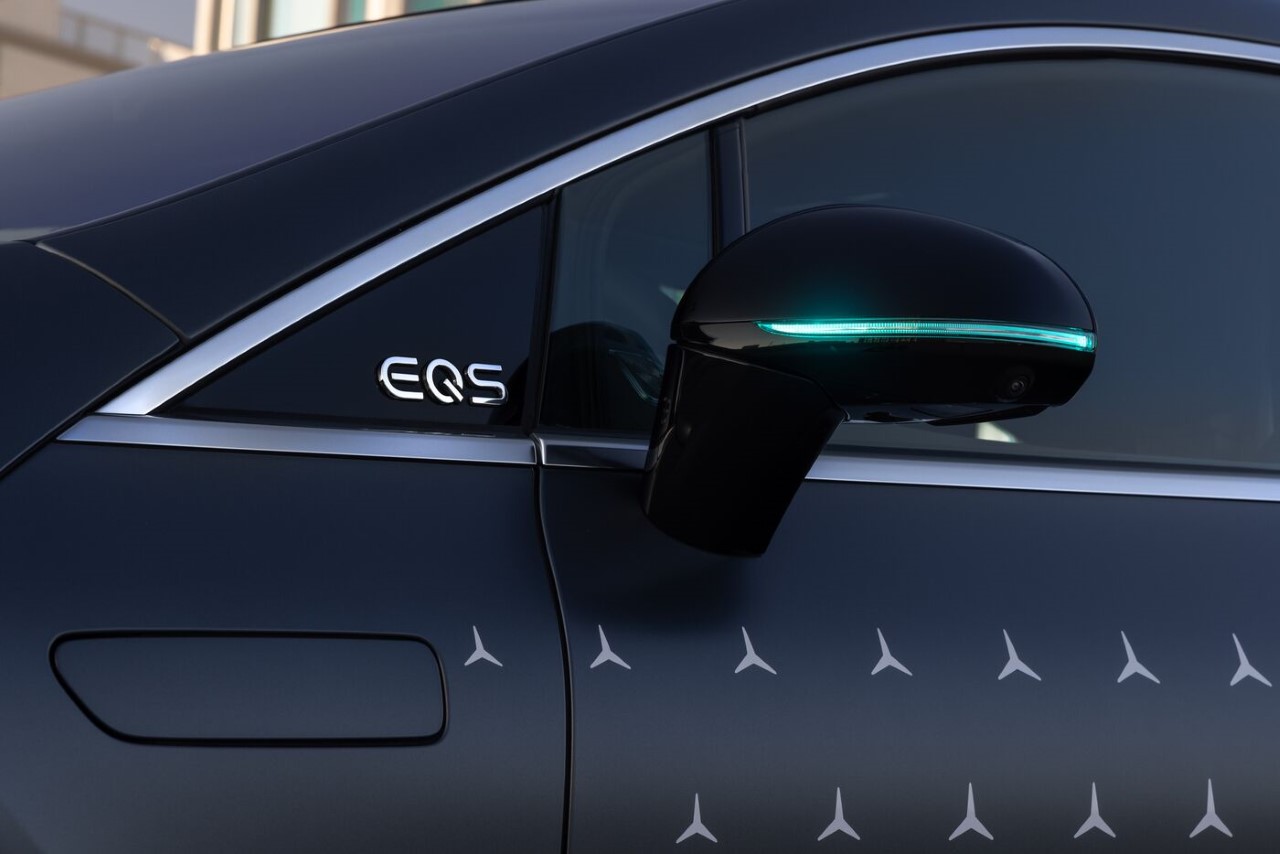
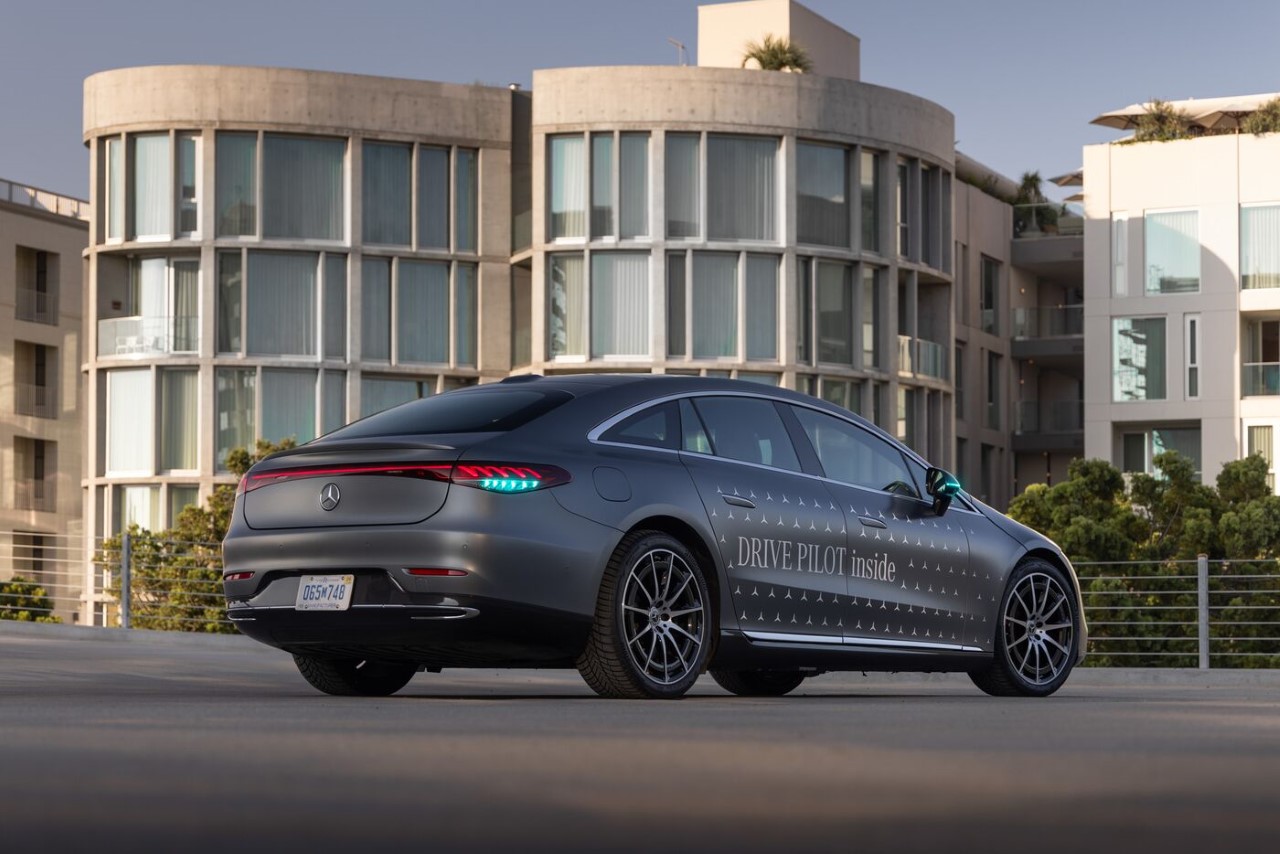
Even though it’s been nearly a decade since self-driving tech made it to our cultural forefront, we’re still in the process of figuring out how to make the technology safer, how to implement it in current urban setups, and more importantly, how to successfully legislate it. There’s always a moral conundrum with who is to blame if a self-driving car hits a pedestrian (the driver or the algorithm), but Mercedes-Benz approached this problem laterally by asking the question: How can pedestrians tell if a car is driven by a human or an algorithm? The answer comes in the form of a colored light. Regulators in California and Nevada have approved Mercedes’ use of a turquoise blue indicator (on the front, sides, and back) to help pedestrians and other cars know when the vehicle is being controlled autonomously.
Designer: Mercedes-Benz
Let’s paint the picture: currently, U.S. cars typically sport three light colors – white for headlights and reverse lights, red for brake and rear lights, and amber for turn signals. Enter Mercedes-Benz, breaking the mold with its turquoise blue lights, a feature that will activate when their cars are driving autonomously.
The lights are part of Mercedes’ “Drive Pilot” system, a conditionally autonomous technology. It’s legal only in California and Nevada for now, where it’s been tested. The system allows drivers to relax a bit more in traffic jams on certain highways, even letting them take their eyes off the road when the vehicle is moving at speeds below 65 km/h. This is a leap from other driver assistance systems, like Tesla’s Full Self Driving or GM’s Super Cruise, which require drivers to remain vigilant.
The choice of turquoise blue is no accident. It’s distinctive, ensuring no confusion with existing car light colors, and it’s different enough from the darker blue used by police and emergency vehicles. This selection is backed by the Society of Automotive Engineers, though Mercedes is the first to receive approval for its use. This innovative color will make its appearance around the taillights and headlights of the vehicles equipped with it.
But why go to all this trouble for a color? It’s all about clarity and safety. The turquoise blue lights serve as a clear signal to other road users and law enforcement that the vehicle is under full automated control. This is crucial in situations where the driver might not be looking at the road, ensuring that onlookers don’t mistakenly think something’s amiss. Starting early 2024, this system will be available in Mercedes S-Class and EQS models in Nevada and California, but not beyond these states just yet.
Samsung has added a new medication tracking feature to its Health app and it's expected to launch in the US when the app updates later this week. Using the new feature, you can set up alerts to remind yourself when to take medications and get reminders for when to request refills from your doctor.
When you enter a new medication into the app, you can log the shape and color of the pill, information about your prescribed dosage and the time you are scheduled to take the medication. The tool, which competes with the likes of GoodRx and Apple’s Medication app, will give you an overview of a drug’s use and possible side effects, including warnings about potential contraindications. Samsung says the information found within the app is backed by evidence-based content licensed from Elsevier, a publishing company that specializes in medical content.
To start using the new medication tracking tool when it launches, you need a smartphone with at least Android 8.0 and your Samsung Health app version needs to be updated to version 6.26 or later. The feature’s availability also might vary by device.
This article originally appeared on Engadget at https://www.engadget.com/samsung-adds-medication-tracking-to-its-health-app-174053413.html?src=rss
CyberRunner is a Labyrinth marble game modified to be played by autonomous AI, using two motors as hands, a camera for eyes, and a computer for its brain. It does not have a sense of humor though, and clearly became frustrated when I kept replacing its marble with a piece of chewed gum.
After six hours of model-based reinforcement learning, the robot was able to complete the full maze in just 14.69 seconds — within a second of the human world record. That’s impressive… and with only 6 hours of practice! Imagine what it could do with a full week.
During the robot’s learning, it found several shortcuts it could take to bypass part of the maze, but the humans behind the project stepped in to force the robot to follow the whole path. Me? I always try to jump the ball straight from start to finish in one violent leap.
Vizio has released a software update for its Home platform across all current models in its lineup, which makes the new interface respond faster than before. The company says TV sets that receive the update will power up twice as fast, while apps will now load instantly. This improvement in speed also leads to quicker switching between apps so that moving from one streaming service to another doesn’t affect people’s viewing experience.
In addition, the latest version of the OS is meant to surface recommendations and return search results in both voice and text formats much faster than its predecessor. The hope is that users would benefit from the upgrade by spending less time looking for content and more time actually watching them. The updated Home platform also comes with a new left-side navigation menu, as well as hierarchy sorting, to make it easier to browse for new shows and movies.
When Vizio rolled out its redesigned Home interface in June, it already had features created to make it easier and faster for viewers to find new things to watch. They included new navigation tools, recommendations and a reworked onscreen keyboard. According to a Vizio representative, the new update will roll out in the coming weeks and will include "all 2021 and newer model year VIZIO Smart TVs and select TVs from the 2020 model year.”
This article originally appeared on Engadget at https://www.engadget.com/vizios-latest-smart-tv-update-enables-faster-startups-and-app-switching-170043935.html?src=rss