The Sims 4’s Lovestruck expansion lets you dive into a steamy polyamory sandbox

The new Lovestruck expansion pack for The Sims 4 gives the decade-old sequel a shot of life by turning it into a full-fledged dating sim — including non-monogamous WooHoo-ing for the first time. In addition to polyamory, the $40 DLC adds an in-game dating app, an encounter-planning system, turn-ons and turn-offs and a swanky singles club where Leisure Suit Larry (apologies for the dated reference) would feel right at home.

The expansion pack takes your Sim to Ciudad Enamorada, “a gorgeous city in love and the perfect place for all of your romantic encounters.” It includes three neighborhoods for all the dangerous (if you’re into that) liaisons your Sim’s gibberish-speaking heart can handle.

Your Sim can meet, flirt, spark romance or even rent a room at “Beso Rápido” for a quickie WooHoo. They’re no longer boxed into monogamy, letting you set up dates with as many partners as your Sim wants.

A person in a bedroom looks at their fun while three bubbles show various options.
EA

The Cupid’s Corner app (in the game, not on your phone) lets your Sim snap selfies, create a profile and set preferences for compatible partners. Potential connections will appear in the app’s Matches tab, where you can tap a heart to save and spark a chat.

The date planner lets you craft a night to remember with customizable date types, venues, group invites (ha-cha-cha), activities and goals. When you meet your match for the date, you can test the chemistry by playing games, chatting over a picnic, sharing food or cuddling (or something like that) in bed. Most importantly, EA added new options for kisses, sultry dances and three new WooHoo spots... because variety is the spice of life.

The expansion adds four romance types that will vary depending on the partners: wholesome, steamy, strained and unpredictable. Your Sim can level up their romance skills as they mingle and unlock spicy new interactions.

Still from the Sims 4 Lovestruck expansion. A bed with (unseen) people under the covers, with a heart emanating from above. Swanky bedroom.
EA

The Sims’ representation has evolved significantly since the base game’s inception. EA added gender customization in 2016, followed by Pride-themed content three years later. The ability to change your Sim’s sexual orientation finally arrived two years ago, not long after EA incorporated a pronoun customization option.

The Lovestruck expansion for The Sims 4 costs $40 and launches on July 25. Those who pre-order the DLC will get digital bonuses like a Cry Me a River Eyeliner (it wouldn’t be dating without a few broken hearts), Herbert Heart Plushie and, everyone’s favorite, the Basic Breakup Double Bed.

This article originally appeared on Engadget at https://www.engadget.com/the-sims-4s-lovestruck-expansion-lets-you-dive-into-a-steamy-polyamory-sandbox-193545470.html?src=rss

Meta changes its labels for AI-generated images after complaints from photographers

Meta is updating its “Made with AI” labels after widespread complaints from photographers that the company was mistakenly flagging non-AI-generated content. In an update, the company said that it will change the wording to “AI info” because the current labels “weren’t always aligned with people’s expectations and didn’t always provide enough context.”

The company introduced the “Made with AI” labels earlier this year after criticism from the Oversight Board about its “manipulated media” policy. Meta said that, like many of its peers, it would rely on “industry standard” signals to determine when generative AI had been used to create an image. However, it wasn’t long before photographers began noticing that Facebook and Instagram were applying the badge on images that hadn’t actually been created with AI. According to tests conducted by PetaPixel, photos edited with Adobe’s generative fill tool in Photoshop would trigger the label even if the edit was only to a “tiny speck.”

While Meta didn’t name Photoshop, the company said in its update that “some content that included minor modifications using AI, such as retouching tools, included industry standard indicators” that triggered the “Made with AI” badge. “While we work with companies across the industry to improve the process so our labeling approach better matches our intent, we’re updating the ‘Made with AI’ label to ‘AI info’ across our apps, which people can click for more information.”

Somewhat confusingly, the new “AI info” labels won’t actually have any details about what AI-enabled tools may have been used for the image in question. A Meta spokesperson confirmed that the contextual menu that appears when users tap on the badge will remain the same. That menu has a generic description of generative AI and notes that Meta may add the notice “when people share content that has AI signals our systems can read.”

This article originally appeared on Engadget at https://www.engadget.com/meta-changes-its-labels-for-ai-generated-images-after-complaints-from-photographers-191533416.html?src=rss

$88 Sony PlayStation Portal knockoff runs an Emulator with over 3000 built-in games

Sony’s lawyers better get their ceases and desists in order – a sub-$100 knockoff of the Sony PS Portal is available online with arguably better specs than the original. While Sony announced the PlayStation Portal as purely an accessory to the existing PS5, this carbon copy dubbed the M25 actually runs as a standalone device, running LINUX and EmuELEC but with support for more than 25 other emulators, and space for more than 3000 games so you can play anywhere instead of being relegated to just your PS5. Is it a shameless ripoff? Absolutely. Are we surprised? A little, at the audacity for sure!

When compared face to face, there are distinct differences between Sony’s version and the M25. For starters, the latter has a much smaller 4.3-inch screen that fits into the controller’s form factor instead of being a tablet attached onto the controller like in Sony’s design. This also means the M25 is a little more compact than its inspiration, making it easier to carry with you. That being said, the PS Portal wasn’t designed to be carried anyway, given that it needs to be tethered via WiFi to your PS5 at all times, eliminating any possibility of mobile gaming. The M25, on the other hand, has storage of up to 128Gb, letting you store and play games pretty much anywhere you want. It’s more like a Nintendo Switch Lite than like the PS Portal, in that regard.

Just on the design front, the M25 is a total ripoff of the DualSense controller, with a modified form that fits an HD screen (or so they’d have you believe) in between the two halves of the controller. A Quad-core processor on the inside runs the M25’s experience, with 4GB of RAM and up to 128GB of internal storage (expandable with a TF card). A 3000mAh battery powers the entire device, and the display maxes at 480×272 pixels, which does feel like being shortchanged, but then again what did you expect for $88?

The M25 runs Linux and the EmuELEC emulator. You can sideload any other emulator of your choice, and the storage should allow you to play and save a dizzying 3000 games. Sure, it doesn’t compare to playing AAA titles like Assassin’s Creed or GTA 6 (if and when it releases) on a handheld device, but if you want to game on a subway without splurging on a Nintendo Switch, the M25 may just be your best bet. Better still, if you want a budget gift for a spoilt kid who wants the PS Portal, hand them this one and see if they notice! It’s available on Geekbuying, and ships from China, so don’t expect to be able to follow up on any warranty…

The post $88 Sony PlayStation Portal knockoff runs an Emulator with over 3000 built-in games first appeared on Yanko Design.

Apple’s AirPods Pro 2 is My Everyday Carry I can’t live without

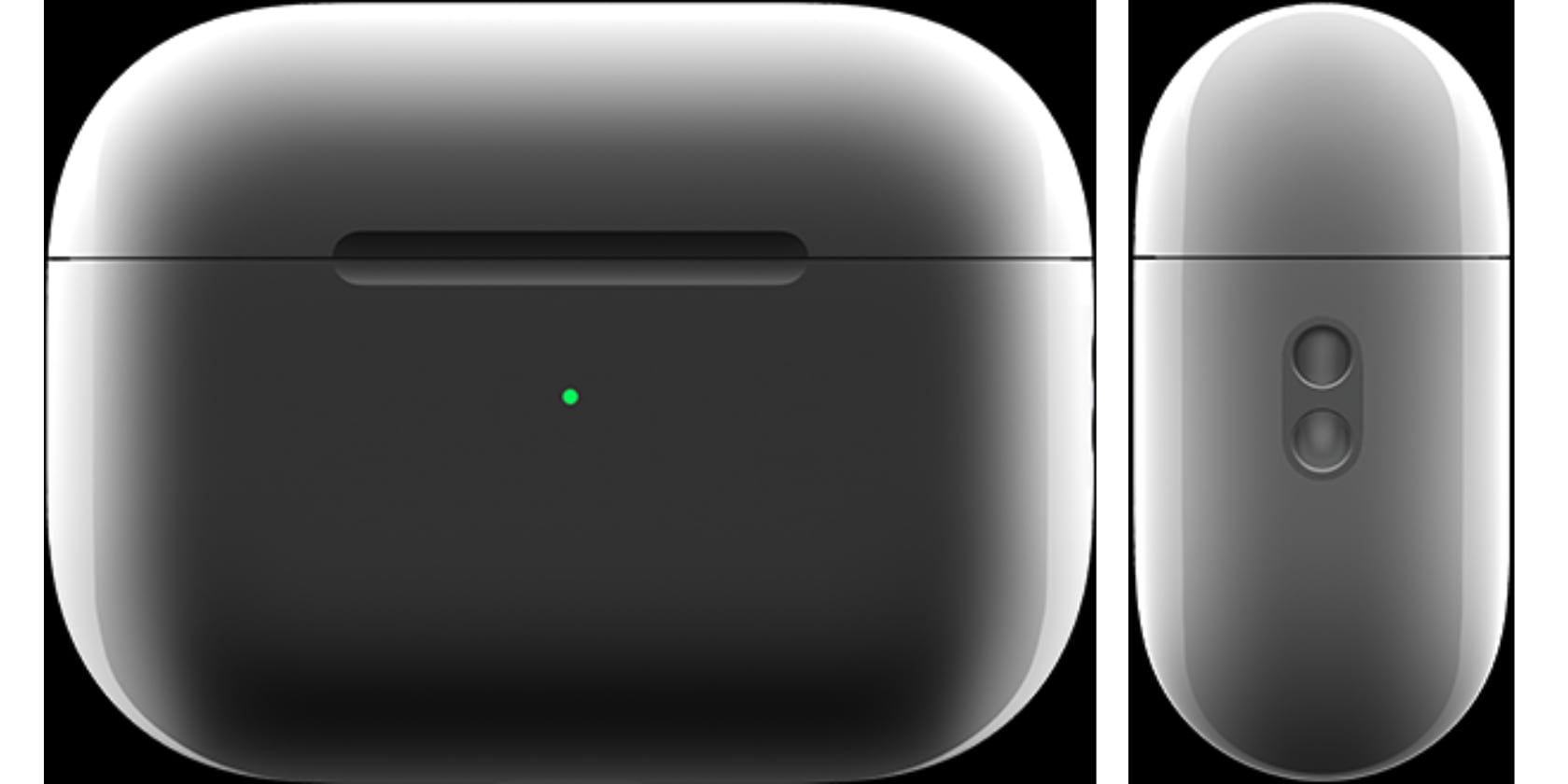
Apple’s AirPods Pro 2 is my go-to everyday carry (EDC). At Yanko Design, we typically think of EDC items as tools like a knife, screwdriver, or flashlight—all rolled into one neat package. However, for those of us who need great audio for music, conference calls, and more, the AirPods Pro 2 are perfect. Their design is sleek and compact, fitting comfortably in the ear with different ear tip sizes to get the right fit. The charging case is genius—small enough to slip into the coin pocket of your jeans, making it super easy to carry around.

Designer: Apple

I gave my AirPods Pro to my 11-year-old, thinking I could get by with other brands of earbuds or headsets. That was a big mistake. Nothing else matched the seamless experience of switching between my iPhone, iPad Pro, MacBook Pro, and MacBook Air. The AirPods Pro just work, no fuss.
With the new H2 chip, the sound quality is top-notch. Enhanced Active Noise Cancellation and Transparency modes let you dive into your music or stay aware of your surroundings. The Adaptive Transparency mode even adjusts to loud noises on the fly. Plus, the battery life is impressive—up to six hours with ANC on and up to 30 hours with the charging case. No more constant recharges.
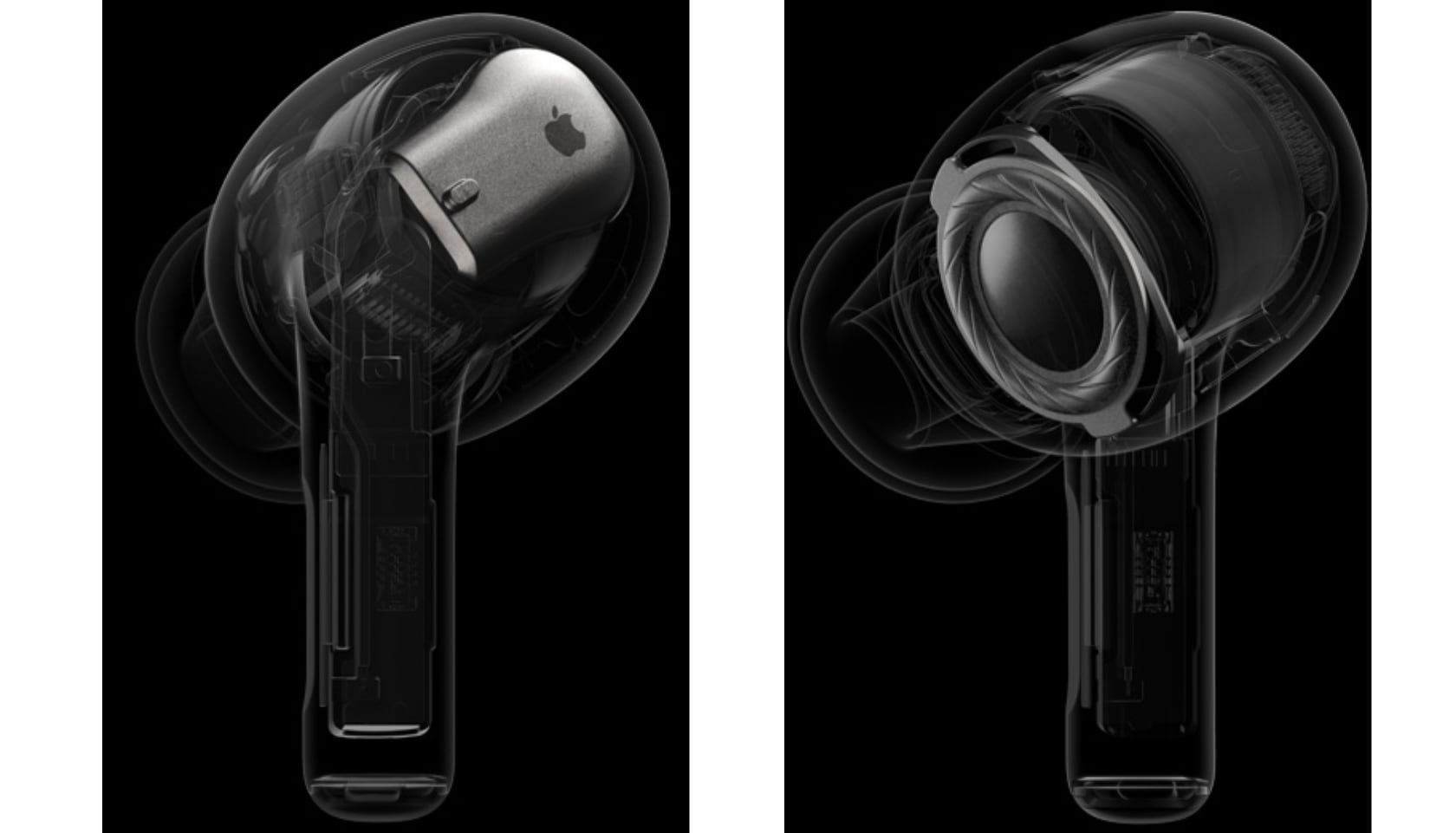
AirPods Pro 2: H2 Chip + custom-built driver and amplifier

The Personalized Spatial Audio feature, with dynamic head tracking, makes listening feel unique to you. The new touch controls on the stems are super handy for adjusting the volume on the go. Thanks to their stealth design, one could even use them as earplugs for sleeping on an airplane. I enjoy doing yard work, so they work amazingly well at blocking out the loud sound of a lawnmower and weed wackers.

I missed my AirPods Pro so much that I took them back, ordered a new pair for my kid, and snagged them at 20% off on Amazon. They’re just that good.

For anyone in the Apple ecosystem, it’s tough to recommend anything else. The seamless integration, amazing sound quality, and smart design make them an essential part of daily life. These little gems combine functionality, style, and tech into one awesome package.

Looking Forward to What’s Next

At WWDC 2024, Apple announced exciting updates for the AirPods lineup, aiming to make them even better for daily use and gaming. One cool new feature is interacting with Siri using head movements. Exclusive to AirPods Pro, you can nod or shake your head to answer or dismiss calls, manage notifications, and interact with messages silently. The H2 chip’s machine learning makes this hands-free experience seamless.

AirPods Pro also got a voice isolation upgrade. This tech reduces background noise during calls, making sure your voice comes through clearly, even in noisy or windy places. Apple introduced a new API for game developers to optimize games for AirPods. This means better dynamic head tracking and reduced audio latency, making the gaming experience on Apple devices more immersive. Latency is way down, making these earbuds great for gaming. AirPods Pro, paired with the iPhone 15 Pro Max, offers Apple’s best wireless audio latency ever for mobile gaming.

With support for 16-bit, 48kHz audio in games, your voice will come through crystal clear to teammates and other players. Perfect for those intense multiplayer sessions. These updates show Apple’s drive to make AirPods even better. The new features and enhancements will be available as a free firmware update this fall, with the developer beta available now for Apple Developer Program members.

Why Choose the AirPods Pro 2 Over the Original AirPods Pro and Regular AirPods?

On this Mobile Monday, we’re focusing on the AirPods Pro 2, and here’s why they stand out compared to the original AirPods Pro and regular AirPods. When it comes to wireless earbuds, Apple’s AirPods lineup offers several options, but the AirPods Pro 2 is the clear choice for several compelling reasons.

First, the AirPods Pro 2 feature the new H2 chip, which significantly enhances audio performance. The sound quality is richer and more immersive, with deeper bass and clearer highs. This is a noticeable improvement over both the original AirPods Pro and the regular AirPods, making your music, podcasts, and calls sound better than ever.

While the original AirPods Pro introduced Active Noise Cancellation (ANC), the AirPods Pro 2 took it to the next level. Enhanced ANC means you can block out more ambient noise, allowing for a more focused listening experience. The new Adaptive Transparency mode also dynamically adjusts to sudden loud noises, protecting your ears while still letting you stay aware of your surroundings.

Battery life is crucial for wireless earbuds, and the AirPods Pro 2 delivers. With ANC enabled, they offer up to six hours of listening time, and the charging case extends this to up to 30 hours. This is a significant improvement over the original AirPods Pro and regular AirPods, which means less frequent charging and more time enjoying your audio.

One of the standout features of the AirPods Pro 2 is Personalized Spatial Audio. This technology tailors the audio experience to the unique shape of your ears, providing an immersive, theater-like sound. Combined with dynamic head tracking, it creates a more engaging and personalized listening experience, which is a step up from what the original AirPods Pro and regular AirPods offer.

The AirPods Pro 2 supports Bluetooth 5.3, ensuring a more stable and efficient connection with your devices. The new touch controls on the stems are intuitive and allow you to adjust volume with a simple swipe, making them easier to use on the go compared to the original AirPods Pro and regular AirPods.

The AirPods Pro 2 comes with additional ear tip sizes, ensuring a more customized fit for a wider range of users. This improves both comfort and the effectiveness of noise cancellation. The regular AirPods, with their one-size-fits-all design, can’t match this level of personalized fit.

With updates announced at WWDC 2024, the AirPods Pro 2 is set to receive even more features that enhance usability. From head movement-based Siri interactions to improved voice isolation for clearer calls, these upcoming updates make the AirPods Pro 2 a future-proof investment.

The post Apple’s AirPods Pro 2 is My Everyday Carry I can’t live without first appeared on Yanko Design.

Google invests in Taiwanese solar company to boost green energy

Google is investing in a Taiwanese solar company with plans to build a 1 gigawatt (GW) pipeline of sustainable energy in the region. The company is placing a stake in New Green Power (NGP), part of BlackRock’s investment portfolio, for the project. The move could help Google and Taiwan move closer to their climate goals while stabilizing green energy production in one of the most crucial semiconductor hubs of our new AI-infused world.

Google already has a significant presence in Taiwan, including a data center. According to Amanda Peterson Corio, Google’s global head of data center energy, fossil fuels currently generate nearly 85 percent of Taiwan’s power grid. “To help overcome these obstacles, companies can play a pivotal role in finding new strategies to grow the supply of available renewable energy sources and promoting emerging technologies that enable the full decarbonization of regional electricity systems,” she wrote.

Google expects to use up to 300 megawatts of solar capacity to power its data centers in Taiwan. In addition, Peterson Corio says the company “may offer a portion of this clean energy capacity to [its] semiconductor suppliers and manufacturers in the region.” She said that would help its partners meet their green energy goals and reduce indirect (Scope 3) emissions from Google’s supply chain partners.

“A significant share of our Scope 3 footprint can be traced back to the electricity grids that power our suppliers and users, which is why broad decarbonization — and partnerships like this — continue to be core to our net-zero goal,” Peterson Corio wrote.

Regulators haven’t yet approved the deal. Google hasn’t said how much it’s investing in NGP.

This article originally appeared on Engadget at https://www.engadget.com/google-invests-in-taiwanese-solar-company-to-boost-green-energy-171231205.html?src=rss

Sega’s new Crazy Taxi reboot will be an open-world MMO

Sega’s upcoming Crazy Taxi reboot is going to be an open-world massively-multiplayer online (MMO) game, according to a developer interview on YouTube. The interview includes both quotes from Sega’s team and some brief instances of game footage.

Series producer Kenji Kanno confirmed that the reboot will be playable by many people at once, though the company is still testing the game mechanics. The goal, according to a translation by Automaton, is to maintain the feel of the original franchise entries while incorporating MMO elements. To that end, the footage shows multiple yellow taxis racing one another with police cars in pursuit. Oddly, the police cars are convertibles.

It also looks like the map will be inspired by California, which makes sense given the previous entries, and will include “theme park-like” elements. The reboot has previously been described as a AAA title, so Sega is putting a whole bunch of resources behind it. Based on one job recruitment page, the game is being developed in Unreal Engine.

The idea of an open-world Crazy Taxi makes perfect sense, as it already was basically a precursor to GTA and the like. The MMO aspect, however, could be annoying or it could be amazing. We won’t know until it comes out.

This reboot is just one of Sega’s upcoming visits to the nostalgia well. The company recently announced that it’s breaking out many dusty IPs to work on modern versions. These include Crazy Taxi, of course, but also Golden Axe, Jet Set Radio, Shinobi and Streets of Rage. It’s worth noting that the company continues to ignore what the people really want, a modern take on the horrifying talking fish nightmare simulator Seaman.

This article originally appeared on Engadget at https://www.engadget.com/segas-new-crazy-taxi-reboot-will-be-an-open-world-mmo-155456136.html?src=rss

Supreme Court remands social media moderation cases over First Amendment issues

Two state laws that could upend the way social media companies handle content moderation are still in limbo after a Supreme Court ruling sent the challenges back to lower courts, vacating previous rulings. In a 9 - 0 decision in Moody v. NetChoice and NetChoice v. Paxton, the Supreme Court said that earlier rulings in lower courts had not properly evaluated the laws’ impact on the First Amendment.

The cases stem from two state laws, from Texas and Florida, which tried to impose restrictions on social media companies’ ability to moderate content. The Texas law, passed in 2021, allows users to sue large social media companies over alleged “censorship” of their political views. The Supreme Court suspended the law in 2022 following a legal challenge. Meanwhile, the Florida measure, also passed in 2021, attempted to impose fines on social media companies for banning politicians. That law has also been on hold pending legal challenges.

Both laws were challenged by NetChoice, an industry group that represents Meta, Google, X and other large tech companies. NetChoice argued that the laws were unconstitutional and would essentially prevent large platforms from performing any kind of content moderation. The Biden Administration also opposed both laws. In a statement, NetChoice called the decision “a victory for First Amendment rights online.”

In a decision authored by Justice Elena Kagan, the court said that lower court rulings in both cases “concentrated” on the issue of “whether a state law can regulate the content-moderation practices used in Facebook’s News Feed (or near equivalents).” But, she writes, “they did not address the full range of activities the laws cover, and measure the constitutional against the unconstitutional applications.”

Essentially, the usually-divided court agreed that the First Amendment implications of the laws could have broad impacts on parts of these sites unaffected by algorithmic sorting or content moderation (like direct messages, for instance) as well as on speech in general. Analysis of those externalities, Kagan wrote, simply never occurred in the lower court proceedings. The decision to remand means that analysis should take place, and the case may come back before SCOTUS in the future.

“In sum, there is much work to do below on both these cases … But that work must be done consistent with the First Amendment, which does not go on leave when social media are involved,” Kagan wrote. 

This article originally appeared on Engadget at https://www.engadget.com/supreme-court-remands-social-media-moderation-cases-over-first-amendment-issues-154001257.html?src=rss

Vertical car concept is designed for narrow lanes and cramped spaces

The majority of concept designs that we see for future automobiles seem to revolve around self-driving vehicles cruising along wide and nearly empty highways. Given our present reality, however, the future might not be as idyllic as those images try to conjure up, at least in terms of traffic volume. There is a higher probability that there will be even more cars in the future, self-driving or otherwise, and people will be competing for even less space on roads. This concept, in contrast, bucks the trend and imagines a car that not only has to be driven manually, it is also tall and narrow enough that clearance doesn’t become a problem, allowing it to deftly navigate through traffic and tight spaces, today and tomorrow.

Designer: Rishav Kumar

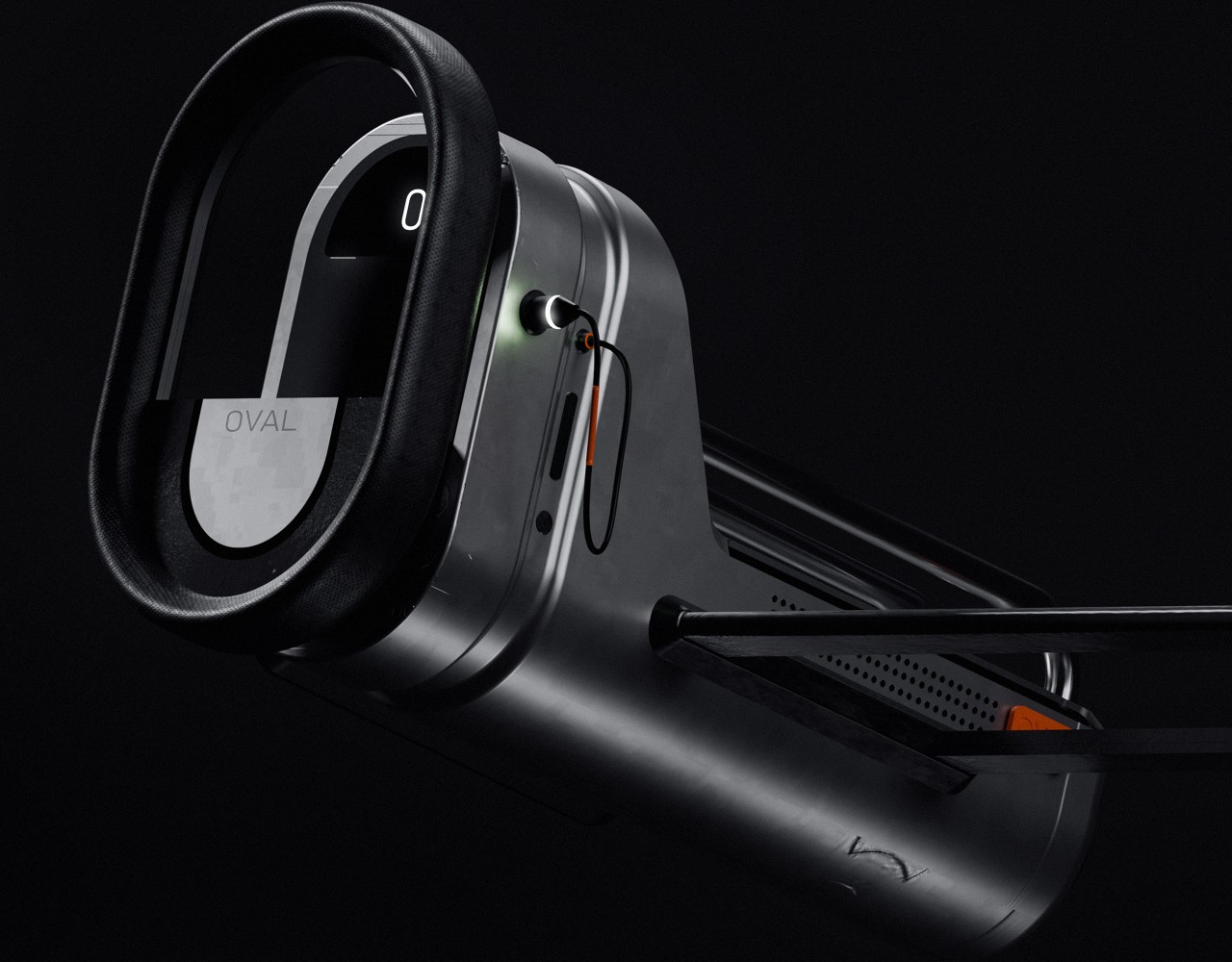
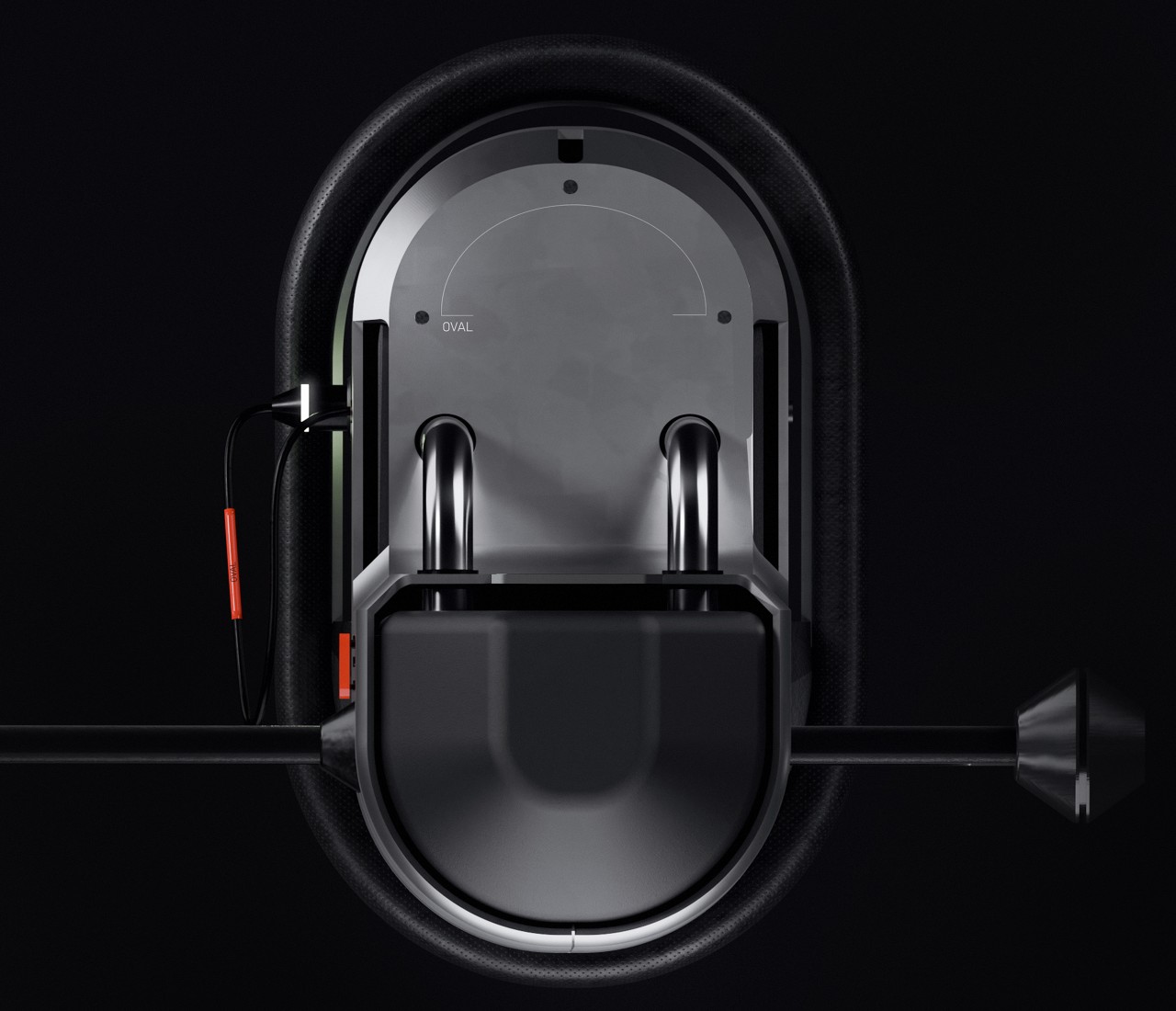
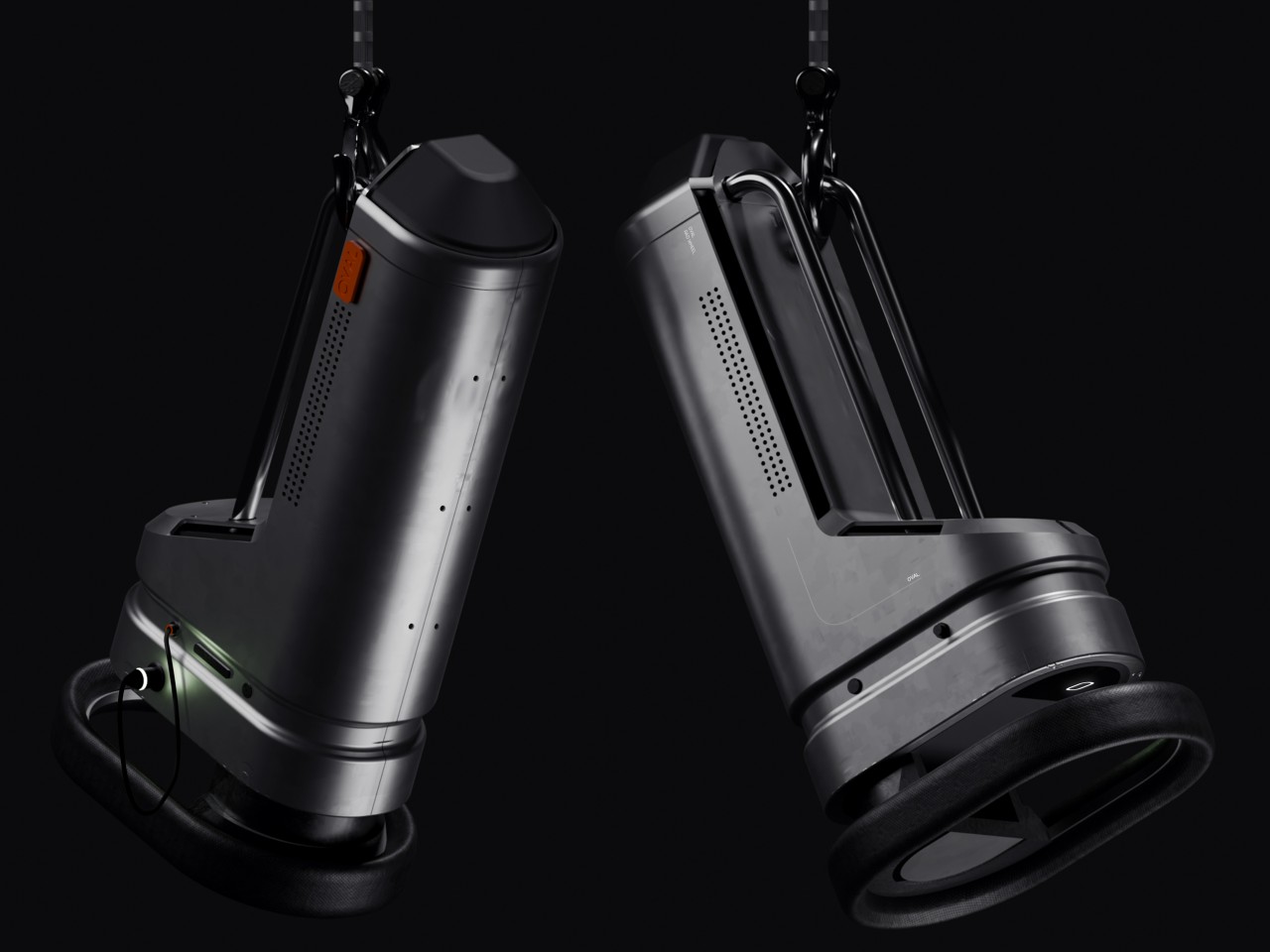
The Project OVAL concept is actually made of two parts, both embracing the idea of a more vertically oriented design. On the one hand, there is a vertical oval for the steering wheel which, along with matching the general shape of the vehicle itself, also saves space inside the cabin. The steering mechanism is attached to the side of the car, almost as if it’s floating, since the vehicle practically has no front, let alone a dashboard for the steering wheel to connect to.

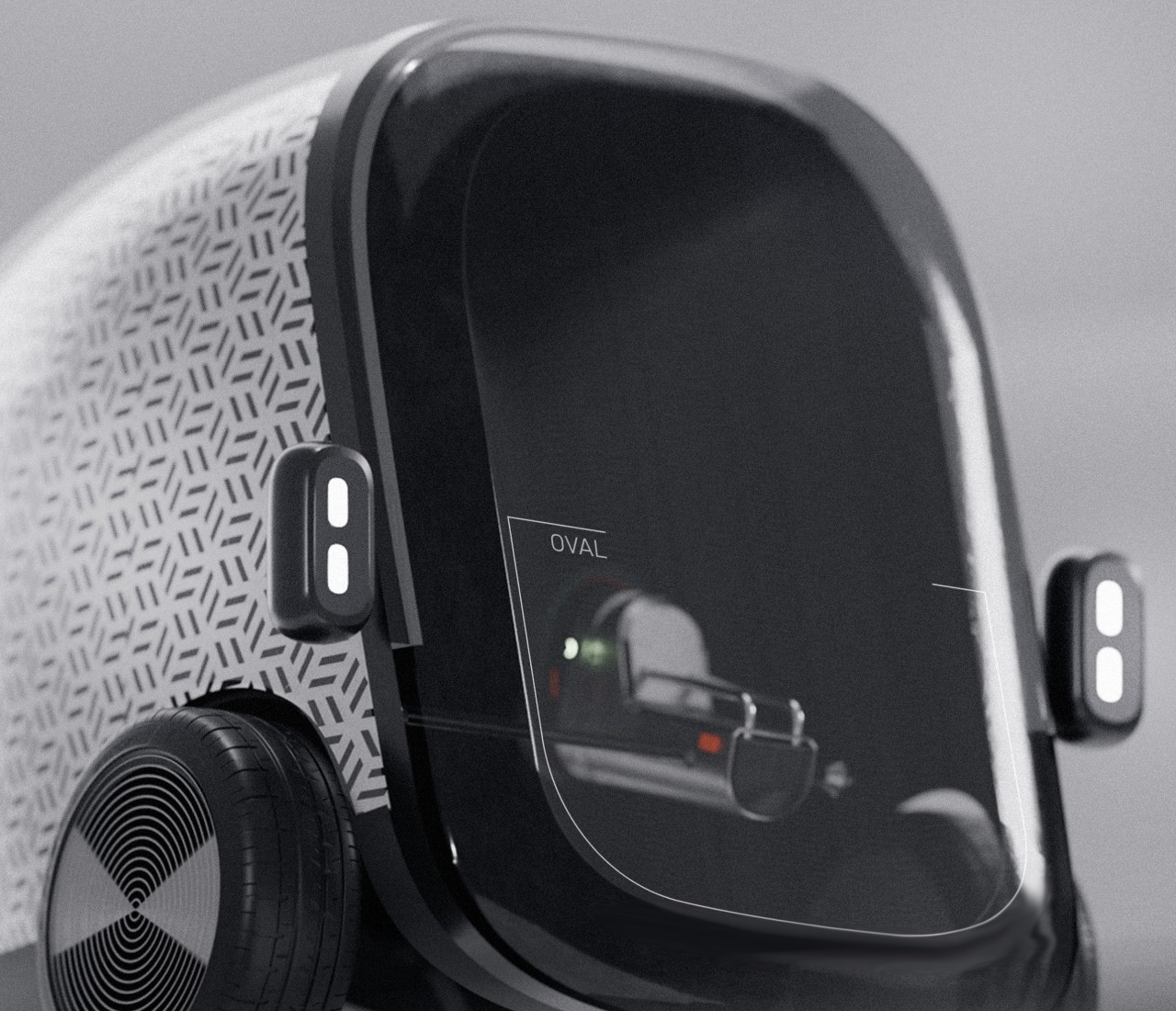
The car, on the other hand, is a rather unique spin on a two-person vehicle that prioritizes the economy of space over anything else. There is practically nothing in front of the driver and side passenger save for that oval steering wheel and two pedals. There is space behind the seats for baggage and, presumably everything else that makes the car run. Save for the pillars, the sides and roof of the vehicle are transparent, as is the front, giving passengers a panoramic view of the world around them.

This ultra-minimalist car is designed to easily navigate narrow city roads which will presumably be even more packed in the future. The slim and narrow body is also a boon for parking spaces which are already a rare commodity today. By also removing everything in front of the passengers, the car also gives more freedom of movement and comfort, even though it might feel a bit cramped as far as the width goes.

Project OVAL doesn’t preclude some self-driving mechanism, especially given how there’s no instrumentation panel to inform drivers of the car’s current state. It is entirely possible that the front glass will have a transparent display that makes all that visible as well, creating a rather dramatic futuristic visual. An autonomous system will definitely help save even more space if you remove the steering wheel and pedals, but such manual controls might be even more necessary if highways become even more congested in the future.

The post Vertical car concept is designed for narrow lanes and cramped spaces first appeared on Yanko Design.
There’s still time to get half off one year of Paramount+ with Showtime

Between price increases and Netflix cutting people off their neighbor's sister's dog sitter's account, affording streaming accounts has become a lot harder. So, we're thrilled that Paramount+ with Showtime annual subscriptions are still available for half off. The yearly cost is $60, down from $120 — as long as you pay the entire sum up front.  

Paramount+, formerly CBS All Access, is a great streamer for Star Trek and sports fans — among a few others. It offers originals like Star Trek: Discovery and Star Trek: Picard, while being a hub for watching soccer. The streamer has aired NWSL soccer matches and the UEFA Champions League and Europa League

Showtime is home to a huge range of television shows that cater to just about every taste. The streamer offers its customers massive hits like Yellowjackets, Billions and Dexter. Paramount+ with Showtime is available for half off until July 14. If you opt for the deal, remember to set a calendar reminder for a year from now or you're going to get a frustrating bill when it doubles. 

Follow @EngadgetDeals on Twitter and subscribe to the Engadget Deals newsletter for the latest tech deals and buying advice.

This article originally appeared on Engadget at https://www.engadget.com/theres-still-time-to-get-half-off-one-year-of-paramount-with-showtime-145514463.html?src=rss

This Little Retreat In The Australian Wilderness Offers An Off-The-Grid Yet Luxurious Weekend Getaway

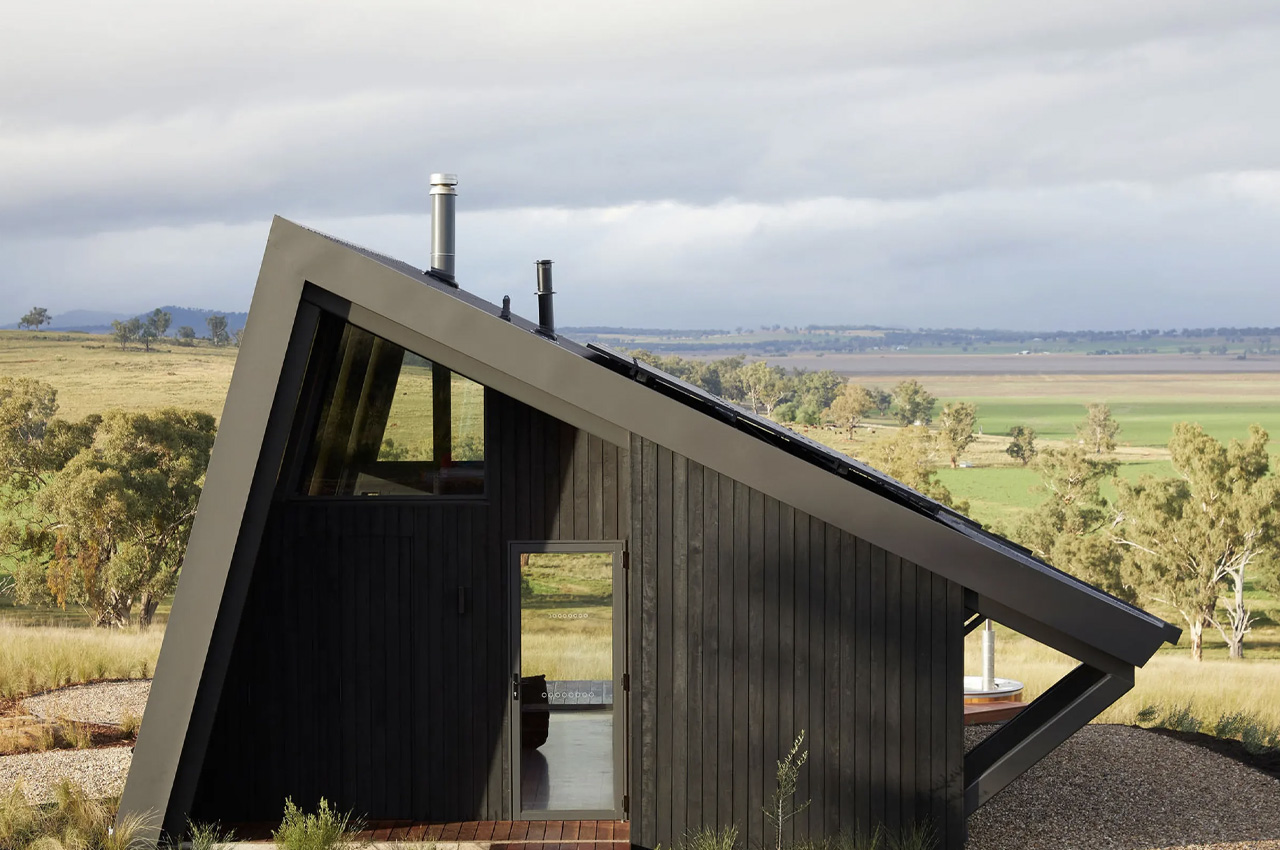
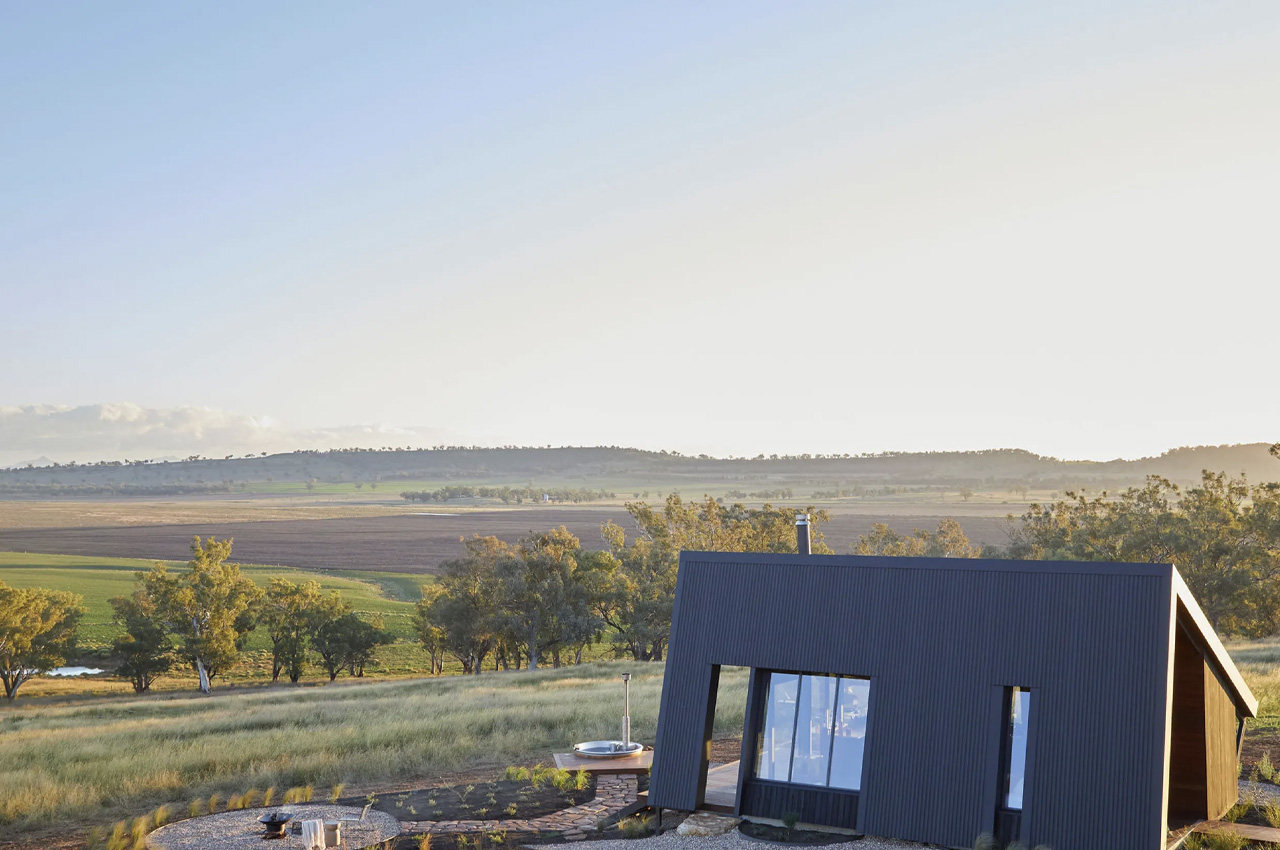
Named the Gilay Estate, and nestled in the rural landscape of New South Wales, Australia, this tiny retreat does look like an old hut or an agricultural shed from afar. But, it is in fact a cozy home designed to offer a luxurious and comfortable off-grid living experience. Designed by Cameron Anderson Architects, the home is built outside the small town of Quirindi, which consists of a population of only 2000 people. The retreat features a visually appealing exterior which includes a sloping sheet metal roof with massive overhangs to protect from the harsh sun.
Designer: Cameron Anderson Architects

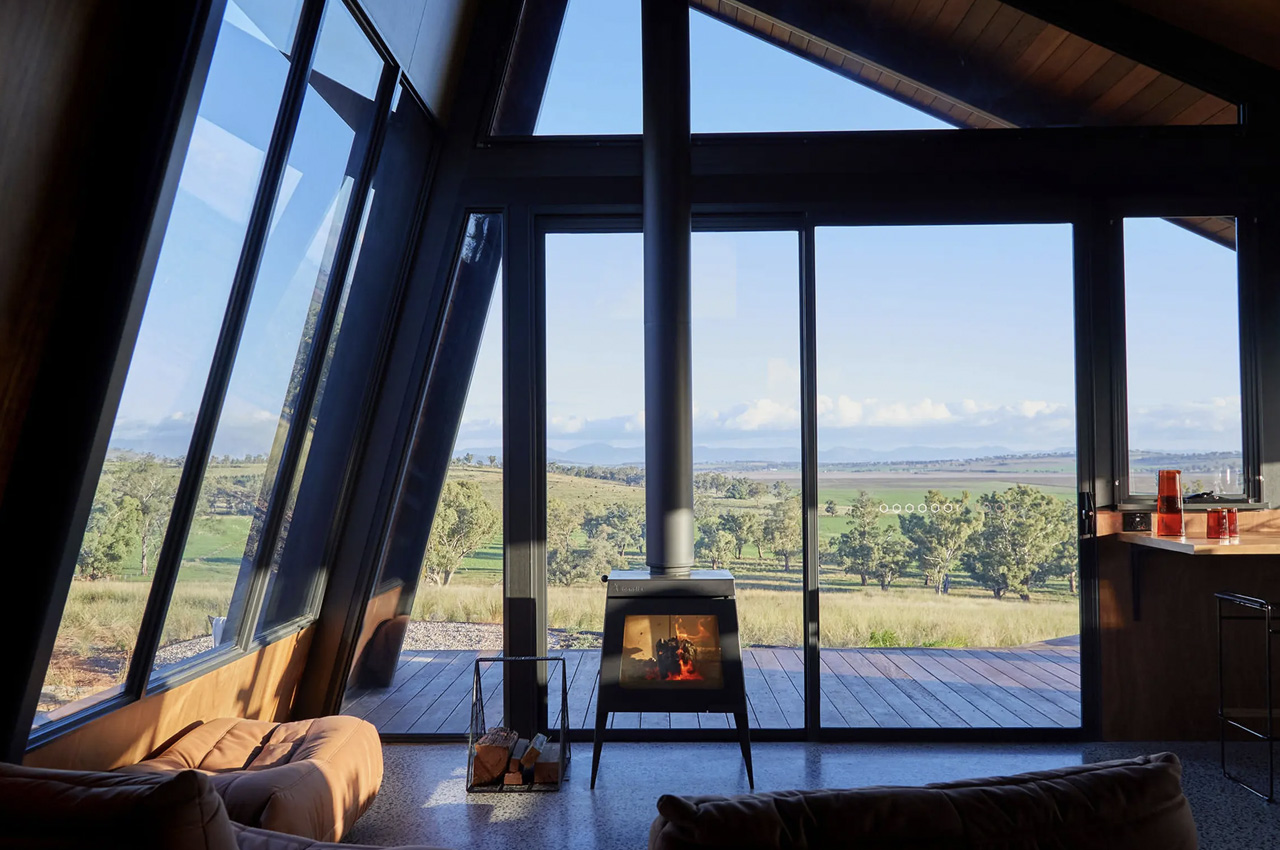
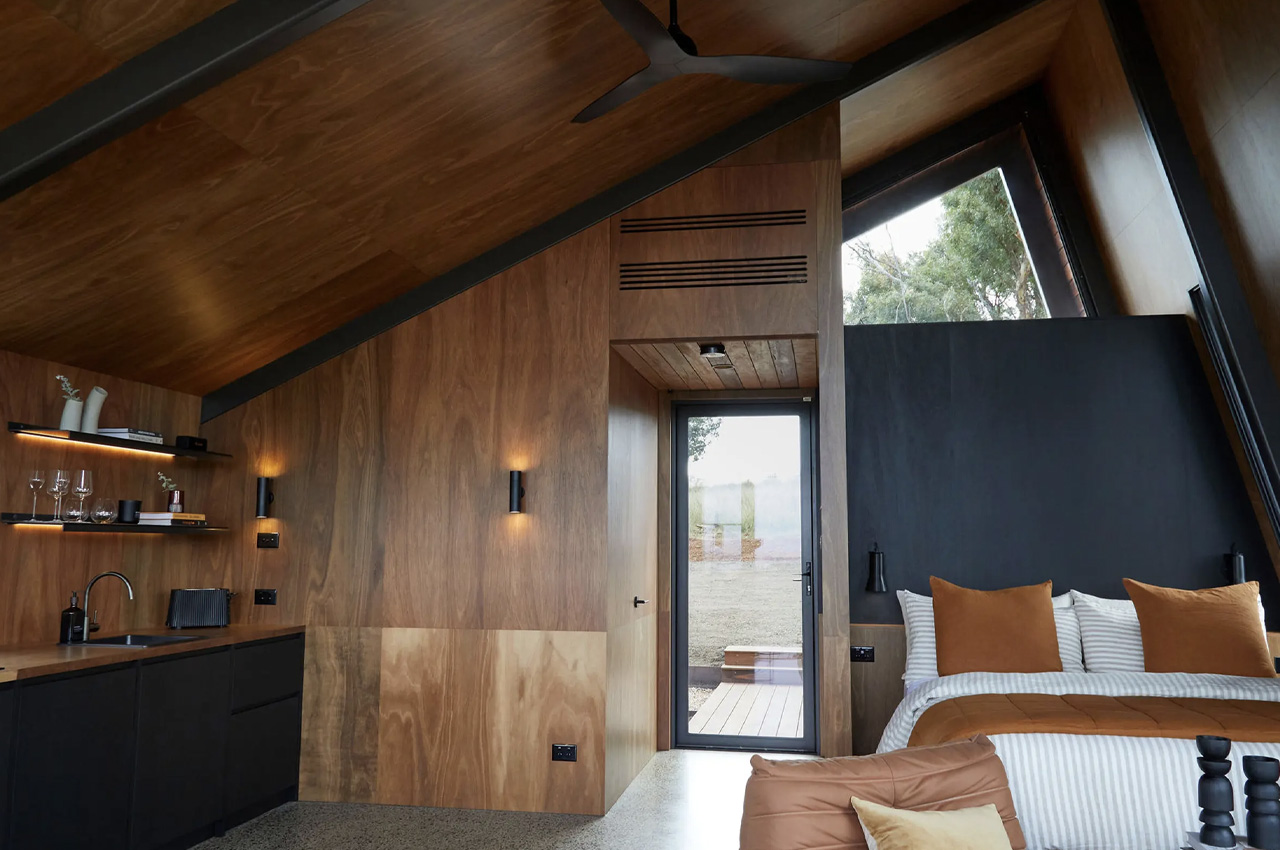
The Gilay Estate also includes charred timber cladding which encapsulates the traditional fire management techniques employed by the Indigenous Australians. The interior of the home measures 40 sq m, all within one floor. The interior is mainly occupied by an open living area which contains a wood-burning stove for warmth, seating, a king-sized bed, and a kitchen. It also includes a breakfast bar/desk area for having your meals, and also working from home. The retreat also features a bathroom with a shower, sink, and toilet.

The comfy estate includes a couple of additional amenities as well, such as a deck area, a little wood-fired hot tub, and a fire pit. These extra features make the retreat even more appealing and luxurious, offering sophisticated options to pass the time. Besides these lovely touches, the home is equipped to support an off-the-grid lifestyle. It is powered by a roof-based 6.4-kW solar panel array and 11.4-kW battery storage, whereas the water is supplied by a 60,000-liter (roughly 15,800-gal) rainwater collection system. The Gilay Estate is quite independent in providing electricity and water, so visitors do not need to depend on external sources.

The Gilay Estate is available for short-term rent on Airbnb, you can check it out for a quaint off-grid vacation if you’re in the mood to reconnect with nature!

The post This Little Retreat In The Australian Wilderness Offers An Off-The-Grid Yet Luxurious Weekend Getaway first appeared on Yanko Design.