Huawei Wi Fi 7 Mesh Router Turns Connectivity into Sculptural Lighting

Most mesh routers exist to be hidden. They sit behind television consoles, inside media cabinets, anywhere out of sight. Huawei’s Wi-Fi 7 Mesh Router rejects that premise entirely-it was designed to occupy a shelf the way a sculptural lamp or a blown-glass vase might, demanding visibility rather than tolerating it. The system ships as a main router paired with up to two extenders, and every unit in the family brings aesthetic presence to a category that usually hides function. Whether that ambition translates into livable design depends on how much visual weight a room can absorb.

Form and First Impression

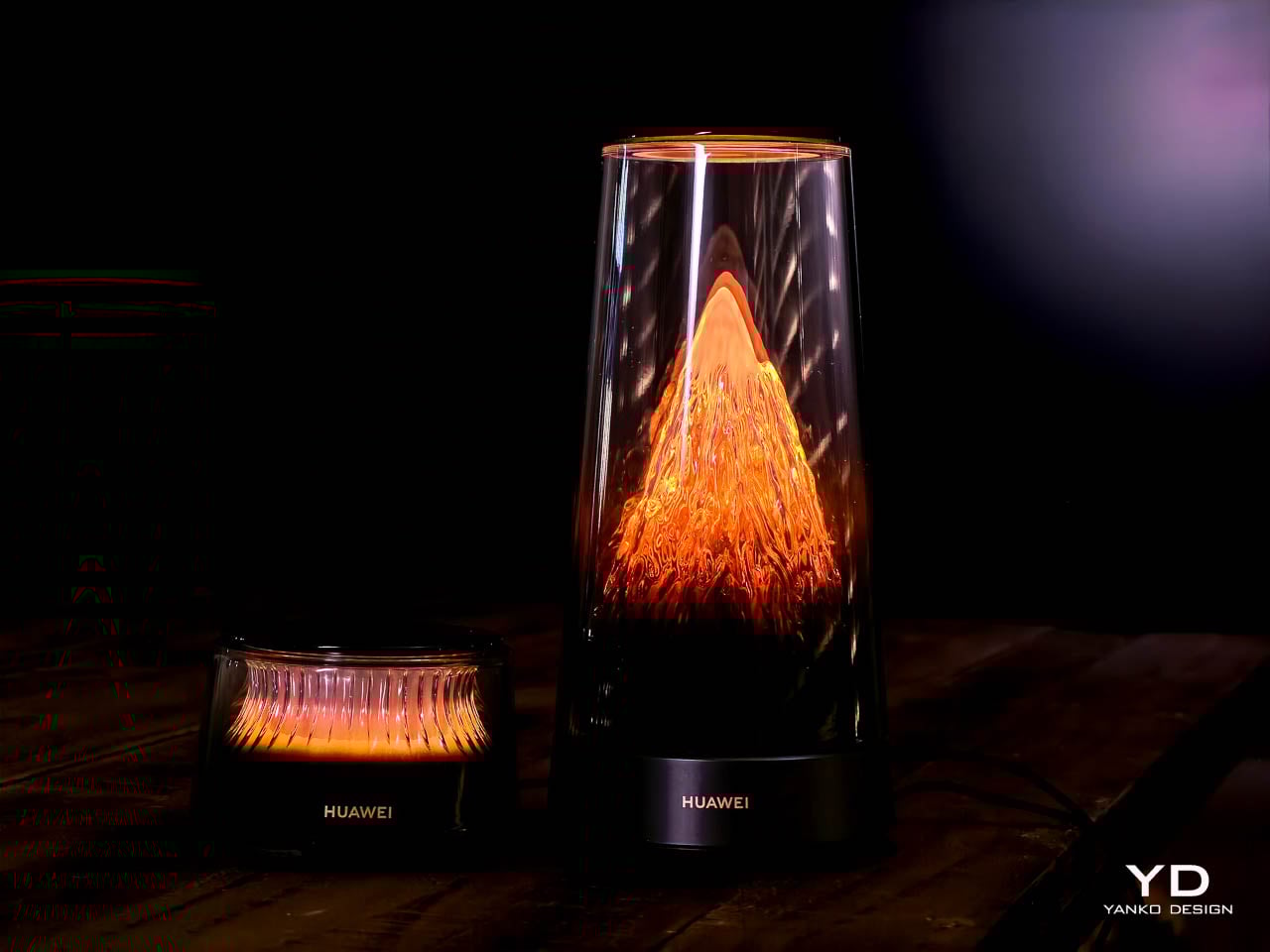
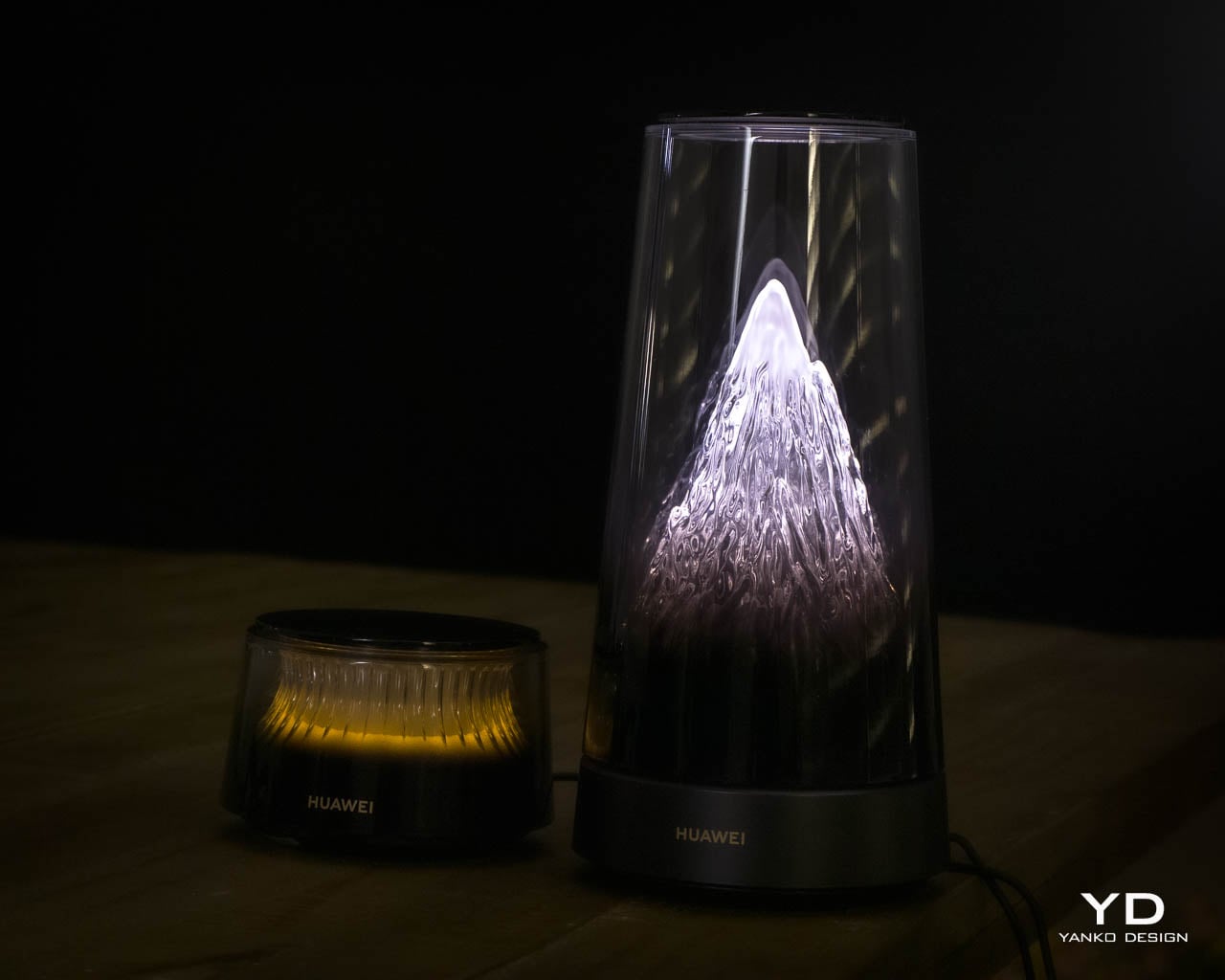
The main unit rises vertically under a tall transparent dome, and the first impression lands somewhere between illuminated glassware and a miniature architectural model. A sculpted cone sits inside the chamber, channeling warm LED light upward through fine vertical ribs that stretch the glow into elongated streaks. The gradient begins deep amber at the base, fades toward soft cream near the midpoint, and dissolves into near-invisibility at the dome’s crown. Under morning sun the dome reads as a sculptural artifact with subtle internal texture; under evening lamps it becomes a warm, glowing presence that anchors an entire corner of a room.
That visual prominence carries a trade-off worth acknowledging early. The dome’s height and luminosity demand attention in a way that softer network hardware does not. In quieter rooms-bedrooms, reading nooks, minimalist spaces-the persistent glow may feel like a permanent nightlight rather than a subtle accent. Huawei leans fully into the decorative category, and the result works best in spaces that already embrace statement objects.

Material Language

Huawei appears to use a dense transparent polymer that mimics the refraction and clarity of hand-blown glass. Close inspection reveals the material catches daylight differently than it catches artificial light, giving the object a living quality that shifts throughout the day. Fine vertical channels line the inner cone and catch the LEDs, stretching them into long streaks that resemble molten glass rising through a chimney. The effect positions the router closer to ambient lighting than consumer electronics.
Placement matters here. The design reads best on open shelving in a living area, a console table near an entryway, or a display ledge in a modern kitchen. Treating it as background hardware-tucked beside a television or wedged into a media cabinet-misreads the intent entirely.

Hidden Engineering

Functional elements remain invisible by design, but the engineering underneath is anything but minimal. Ports sit inside a recessed cavity on the underside, tucked into the dark base, so cables disappear the moment the device rests on a flat surface. The separation between glowing dome and utilitarian base gives the impression of a clean floating cylinder even though Ethernet, power, and every technical connection remain accessible.
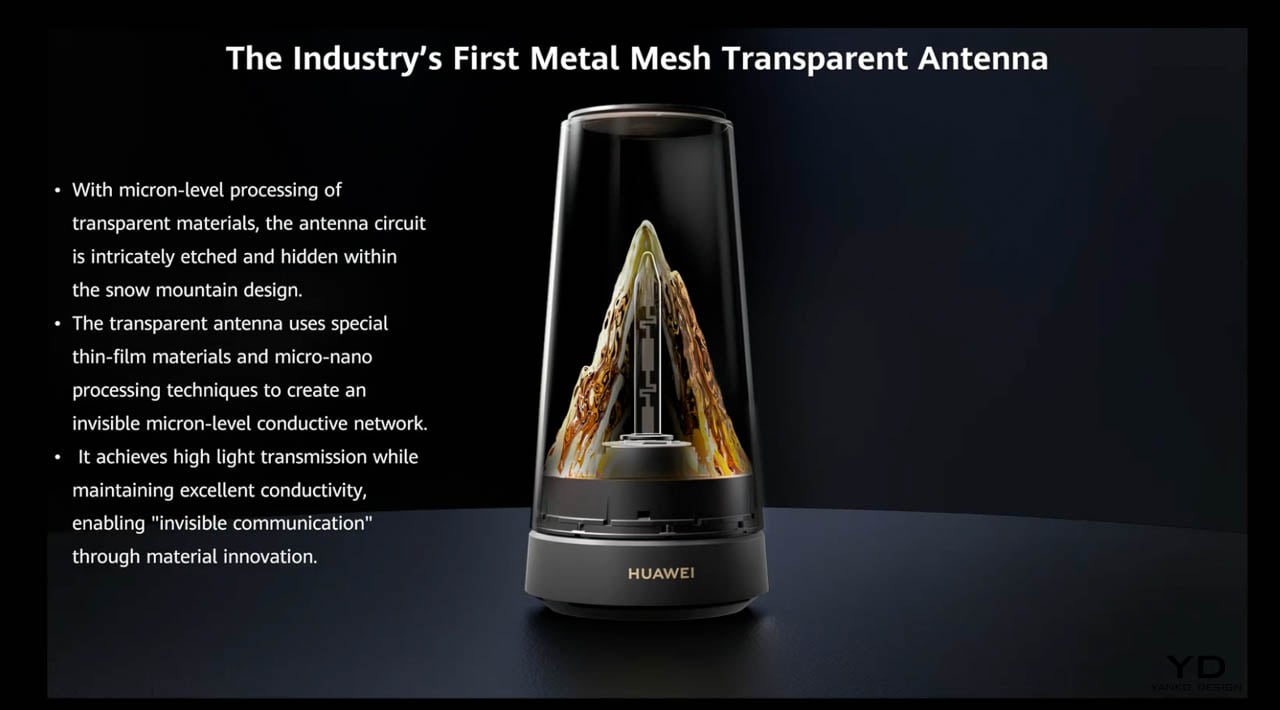
Weight distribution pulls toward the base-intentional, since the main router includes active cooling with a built-in fan for high-throughput scenarios. That engineering decision affects form directly: the base must accommodate thermal management, which explains the unit’s footprint relative to passive competitors. The dark matte finish stays quiet, letting the luminous chamber dominate, but the chassis is doing real work underneath.

One detail that rarely survives the translation from engineering to marketing: Huawei literally etched the antennas into the sculpted mountain shape inside the dome. Six antennas-three for 2.4GHz, three for 5GHz-run along the contours of the internal cone, hidden in plain sight. The design team integrated signal hardware into the decorative structure rather than bolting it on as an afterthought. That level of form-function synthesis is rare in consumer networking equipment, and it suggests the industrial design team had genuine authority over the final product rather than decorating an engineering prototype.

The Satellite System

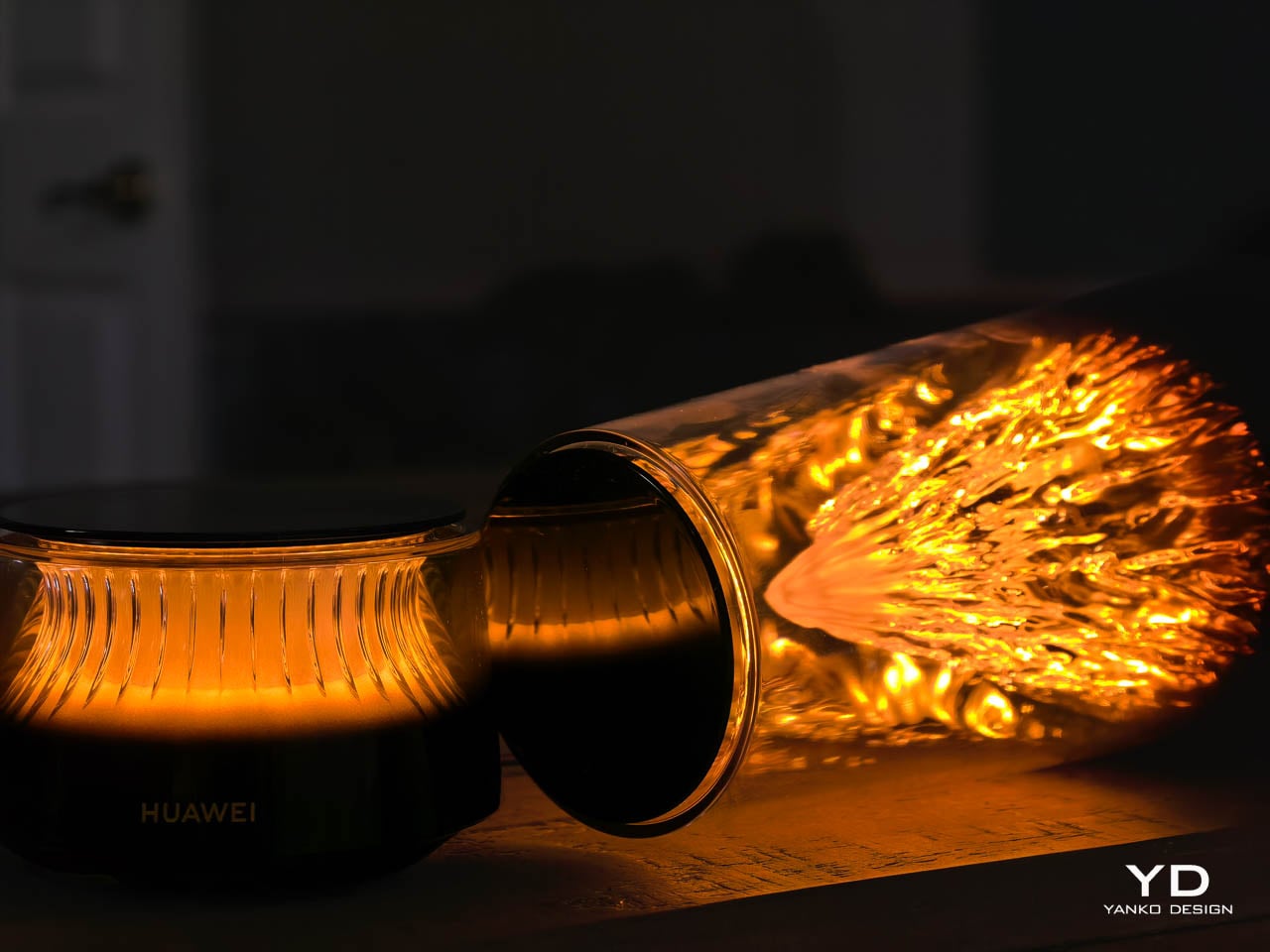
Satellite extenders interpret the same visual language in a shorter, more restrained form. Huawei’s briefing compared them to elegant whisky glasses-a fair analogy. Each unit features smoked outer walls with spaced vertical ribs that break the internal gradient into a soft, pulsing glow. The warm tone matches the main router but feels more intimate, less theatrical.
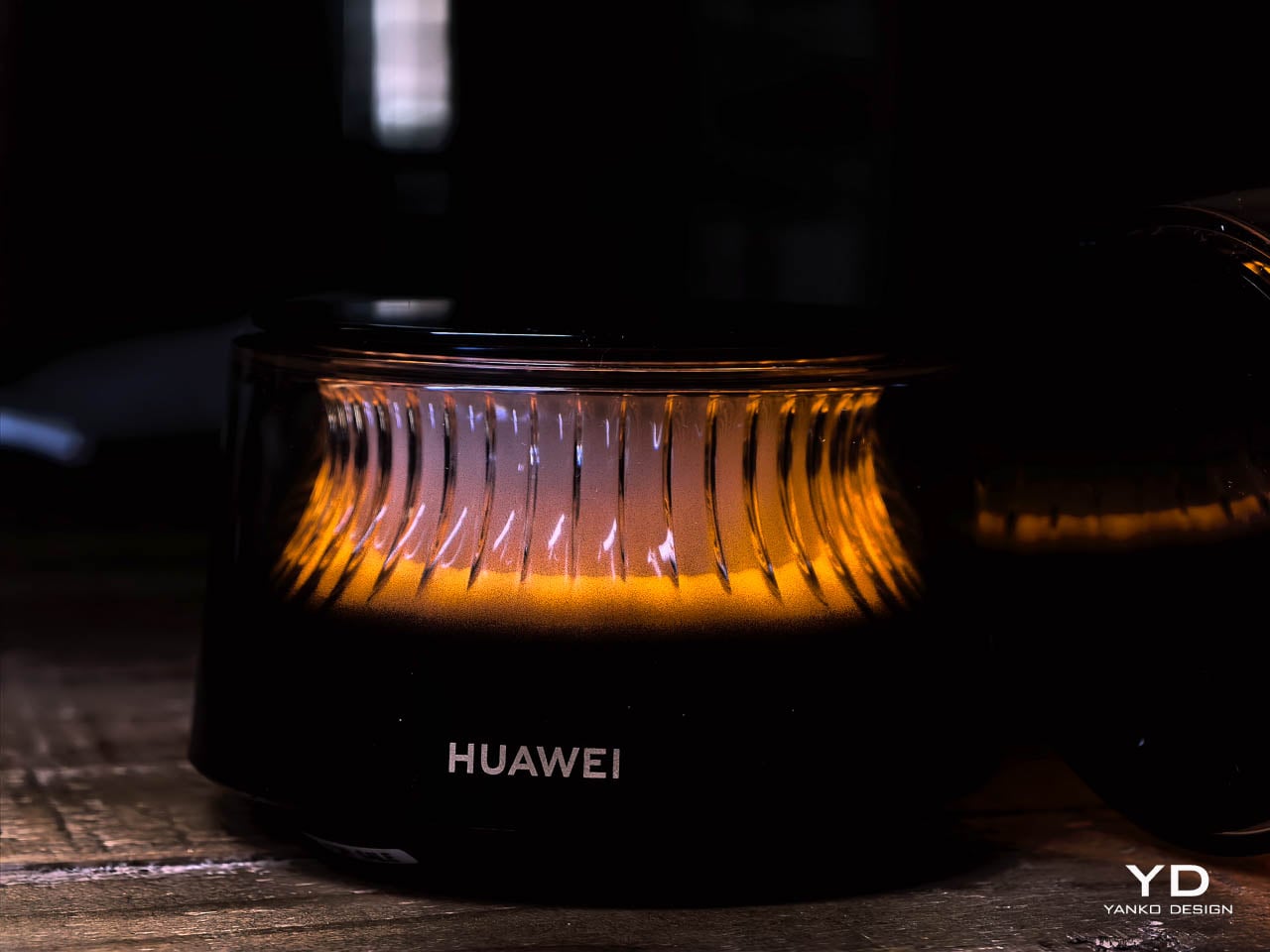
These units read as decorative accents on a shelf rather than technical equipment. No protruding antennas, no plastic ventilation grilles, no indicator LEDs screaming status codes from across the room. A candle holder or compact speaker would sit just as naturally in the same arrangement. The restraint here is notable-Huawei resisted the temptation to differentiate the satellites through size or brightness, which keeps the family identity coherent.

Interaction Design

Both the main router and each satellite include a flush touch surface on the top, letting users adjust lighting modes directly from the device. The touch panel sits flush with the rim, preserving the cylindrical outline-no buttons, no visible interface elements, no mechanical disruption. The top surface remains dark and reflective when inactive, reinforcing the contrast with the illuminated body below.
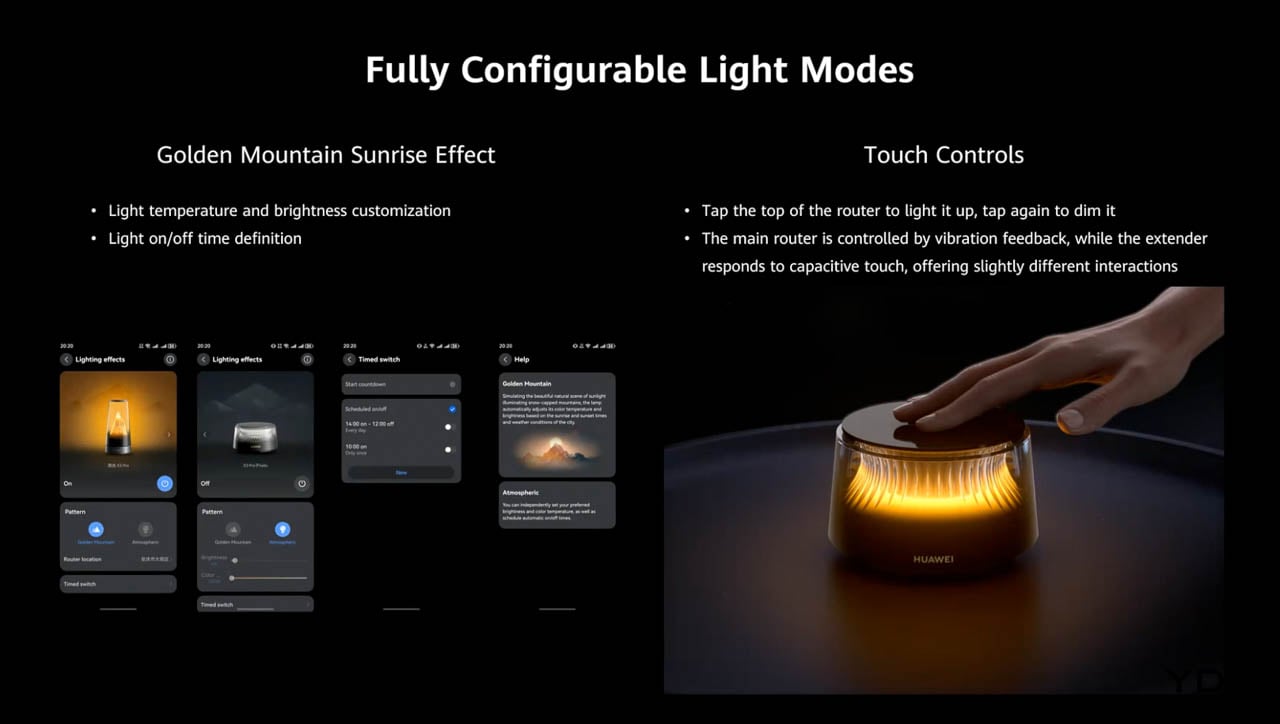
That restraint suggests confidence in the form itself. Huawei trusts the design enough to let it speak without interface clutter. The interaction layer exists, but it never competes with the sculptural presence.

The Placement Tension

The system’s visual cohesion raises a practical question that Huawei’s marketing sidesteps. Mesh networks exist to blanket a home in wireless coverage, which means placing extenders in locations optimized for signal propagation-hallways, stairwell landings, rooms far from the main router. Huawei designed units beautiful enough to display prominently, but optimal placement for aesthetics rarely aligns with optimal placement for coverage.

A living room shelf may showcase the extender perfectly while delivering weaker signal to a home office two walls away. Buyers should expect to choose between form and function in at least one placement decision, and that tension deserves acknowledgment. The router rewards homes where signal-optimal spots happen to be visible spots-and punishes homes where they don’t.

System Coherence

Material consistency across the system reinforces the family identity in ways that most mesh systems ignore. The polymer domes, the dark matte bases, the warm LED gradients, and the vertical rib detailing all repeat across main unit and satellites. Nothing about the extenders looks like a compromise or an accessory-they read as intentional companions rather than technical necessities.
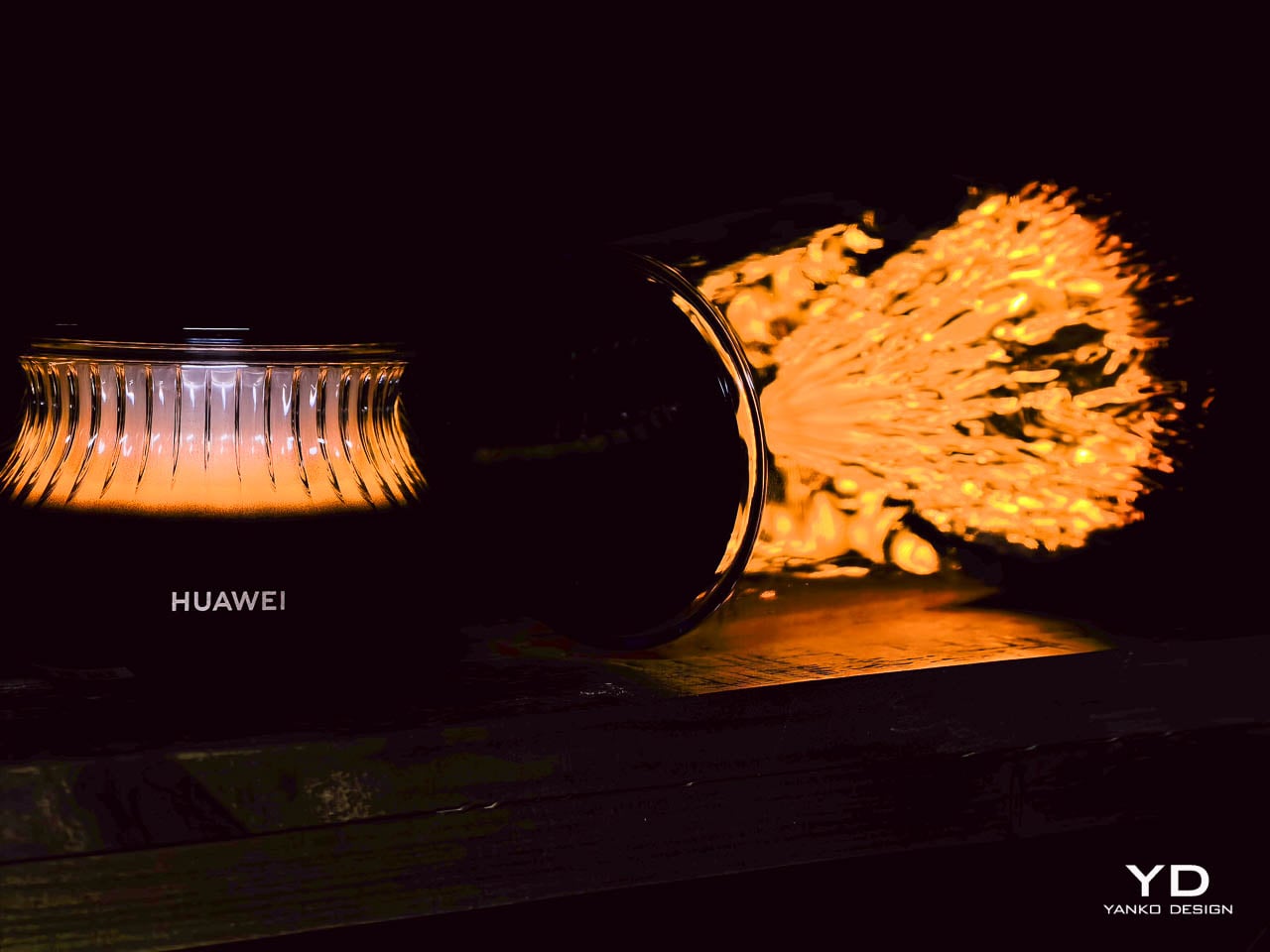
That coherence reflects a design philosophy that treats network hardware as a coordinated interior collection rather than a primary device surrounded by lesser satellites. The approach borrows from furniture design, where a sofa and matching armchairs share fabric and form language. It’s an unusual strategy for networking equipment, and it pays off visually.

Design Verdict

Together, these choices carve out a new category for consumer networking equipment. Huawei positions the Wi-Fi 7 Mesh Router not as infrastructure but as decor, borrowing visual cues from glass art, ambient lighting, and sculptural furniture rather than traditional electronics. The approach invites users to display their network hardware rather than hide it-a genuine inversion of the category’s usual logic.
That ambition has limits worth naming. The design rewards specific interiors-modern, curated, comfortable with statement objects-and punishes others. A room already crowded with visual noise may find the router’s glow overwhelming. A household that treats connectivity as invisible utility may resent paying for aesthetics they plan to hide. The placement tension between signal optimization and display value will frustrate anyone expecting both without compromise.

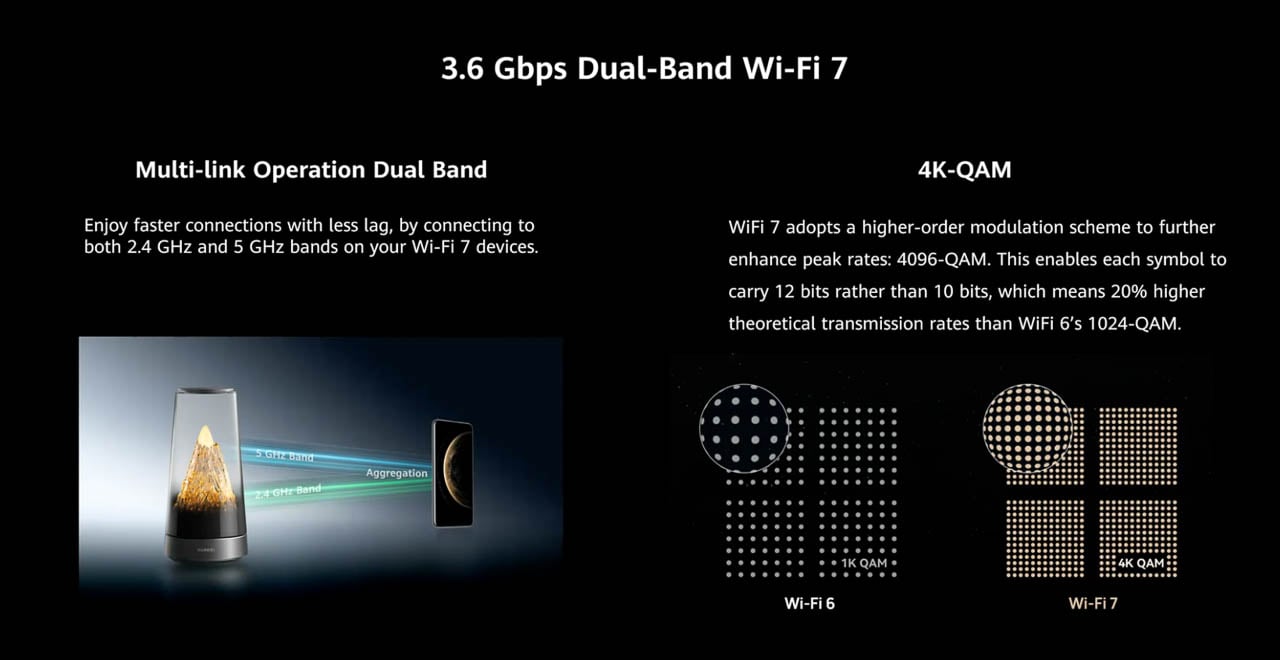
Huawei built a router for people who want their home network to carry emotional weight through form and material alone. The system achieves this without abandoning its technical identity: Wi-Fi 7 support, six integrated antennas, active cooling, and mesh scalability all remain intact beneath the decorative surface. For everyone else, the category’s quieter options remain available.

The post Huawei Wi Fi 7 Mesh Router Turns Connectivity into Sculptural Lighting first appeared on Yanko Design.

Amazon’s AI-generated recap tool didn’t watch Fallout very closely

Amazon's plan to offer AI-generated recaps of Prime Video shows isn't off to a great start. The company's recap of the first season of Fallout features multiple errors, GamesRadar+ writes, including basic facts about the plot of the show.

You can watch the recap yourself in the "Extras" section of Amazon's Fallout season two listing in Prime Video. Besides being somewhat dry, the AI-generated recap incorrectly identifies the time period of the show's Los Angeles-set flashbacks as being the 1950s, when they're actually 2077 (the Fallout franchise is set in an alternate history that diverged from our real one after 1945). As Gizmodo notes, the recap also seems to misunderstand the ending of the first season, which sets up season two's partnership between vault dweller Lucy and The Ghoul, an irradiated wastelander with a personal connection to the mystery at the heart of the first season.

While the recap suggests Amazon's AI system can successfully combine clips, music and dialogue into a coherent video, it apparently lacks an understanding of the details. The inaccuracies in this recap won't prevent anyone from enjoying the second season of the show, but they don't exactly inspire confidence in Amazon's tool either. It also seems like a problem that could have been easily solved by having a human employee who's watched the show review the video before it was uploaded.

Unfortunately, Amazon's lack of AI quality control extends beyond recaps of its shows and into the dubs for the shows themselves. The company pulled AI-generated voiceover tracks for Banana Fish and other anime because of how bad they sounded earlier this week. It wouldn't be surprising if this recap gets pulled, corrected and re-uploaded, too. As Amazon adds more AI-generated content to its platform, users are bound to discover more ways it comes up short. The company's audience is too big, and AI is apparently still too unreliable for it to be avoided.

This article originally appeared on Engadget at https://www.engadget.com/ai/amazons-ai-generated-recap-tool-didnt-watch-fallout-very-closely-215712958.html?src=rss

Anicorn x PlayStation’s $780 Mechanical Watch Is The Wildest 30th Anniversary Flex Yet

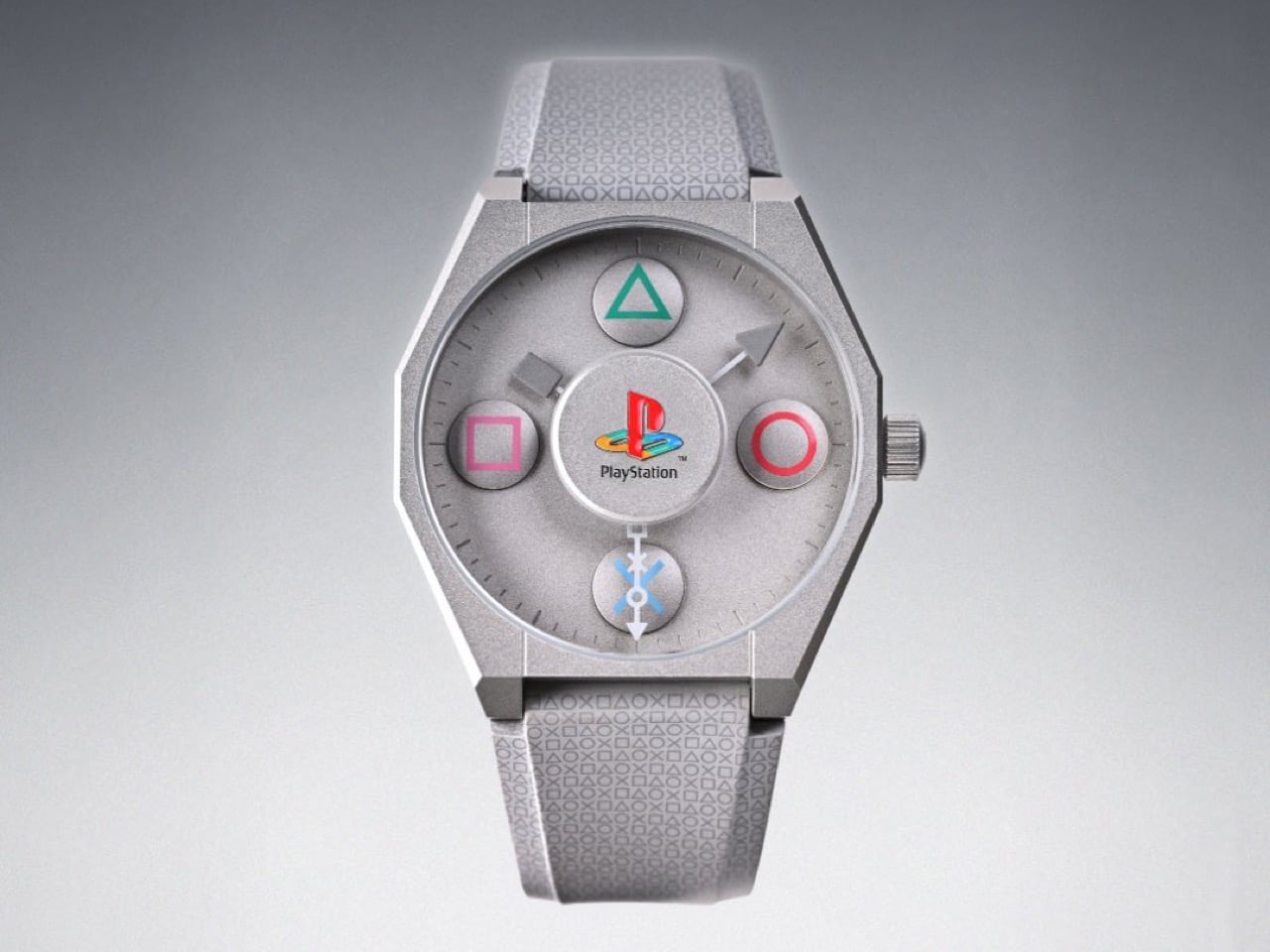
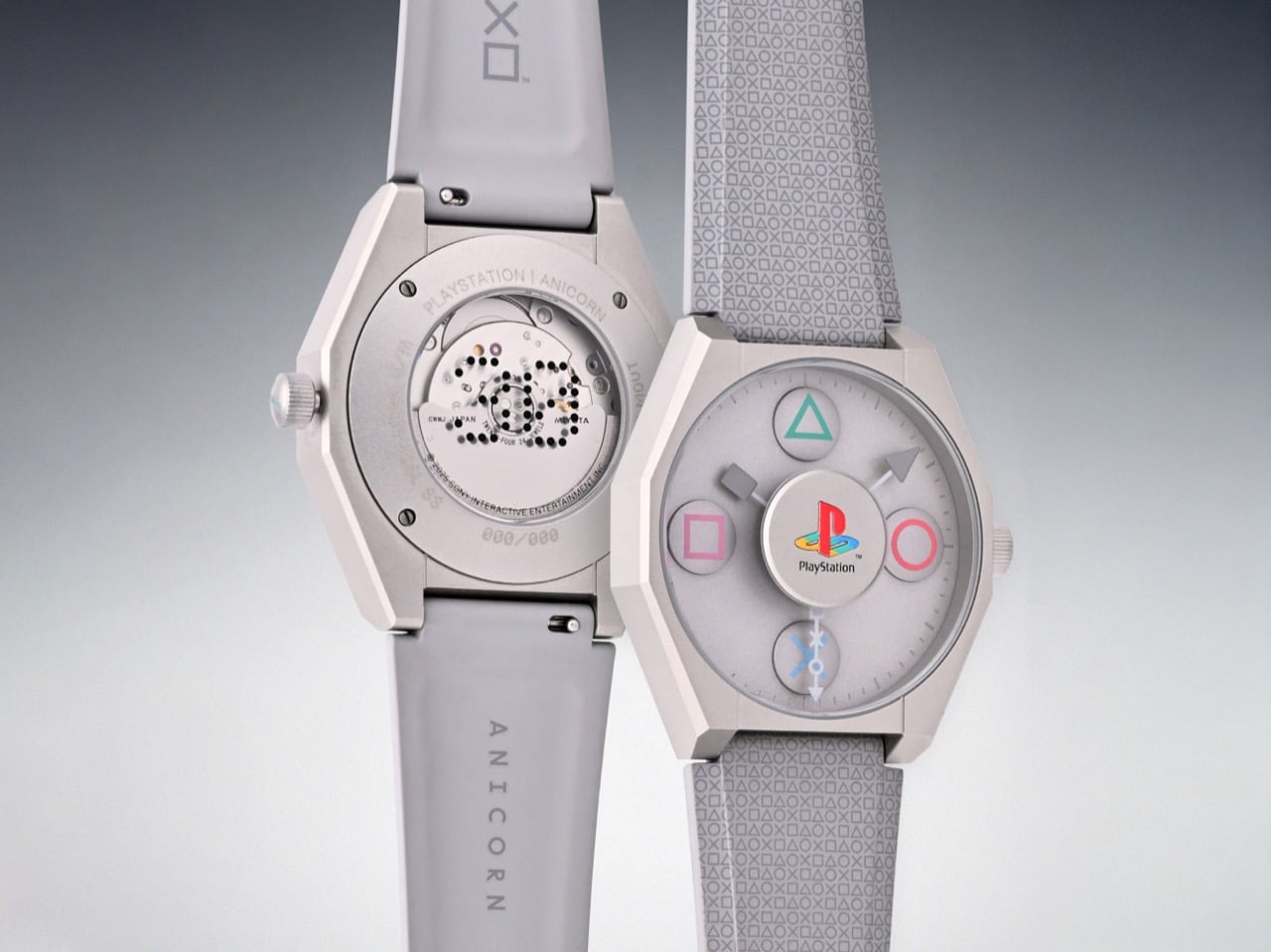
Anicorn and Sony just dropped a fully mechanical PlayStation watch, and the fact that it exists at all feels like a minor miracle in a market drowning in lazy licensed quartz. Limited to 300 numbered pieces and priced at $780, the PlayStation 30th Anniversary watch launches December 19th with a Miyota automatic movement, a custom rotor, and enough thoughtful design touches to justify the “limited edition” label beyond artificial scarcity. The caseback alone, with its exhibition window and engraved numbering, shows more restraint and craft than most gaming collabs bother with.

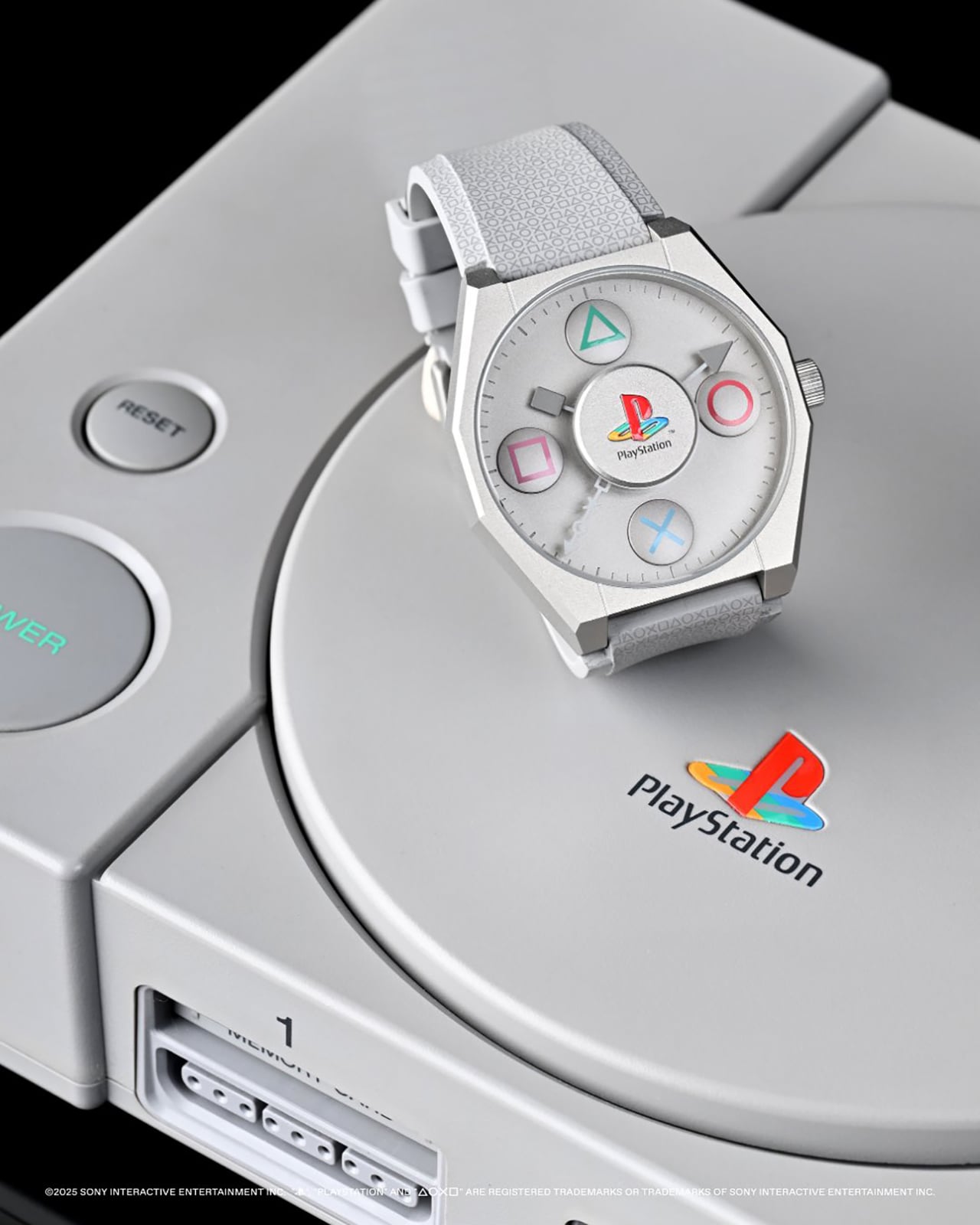
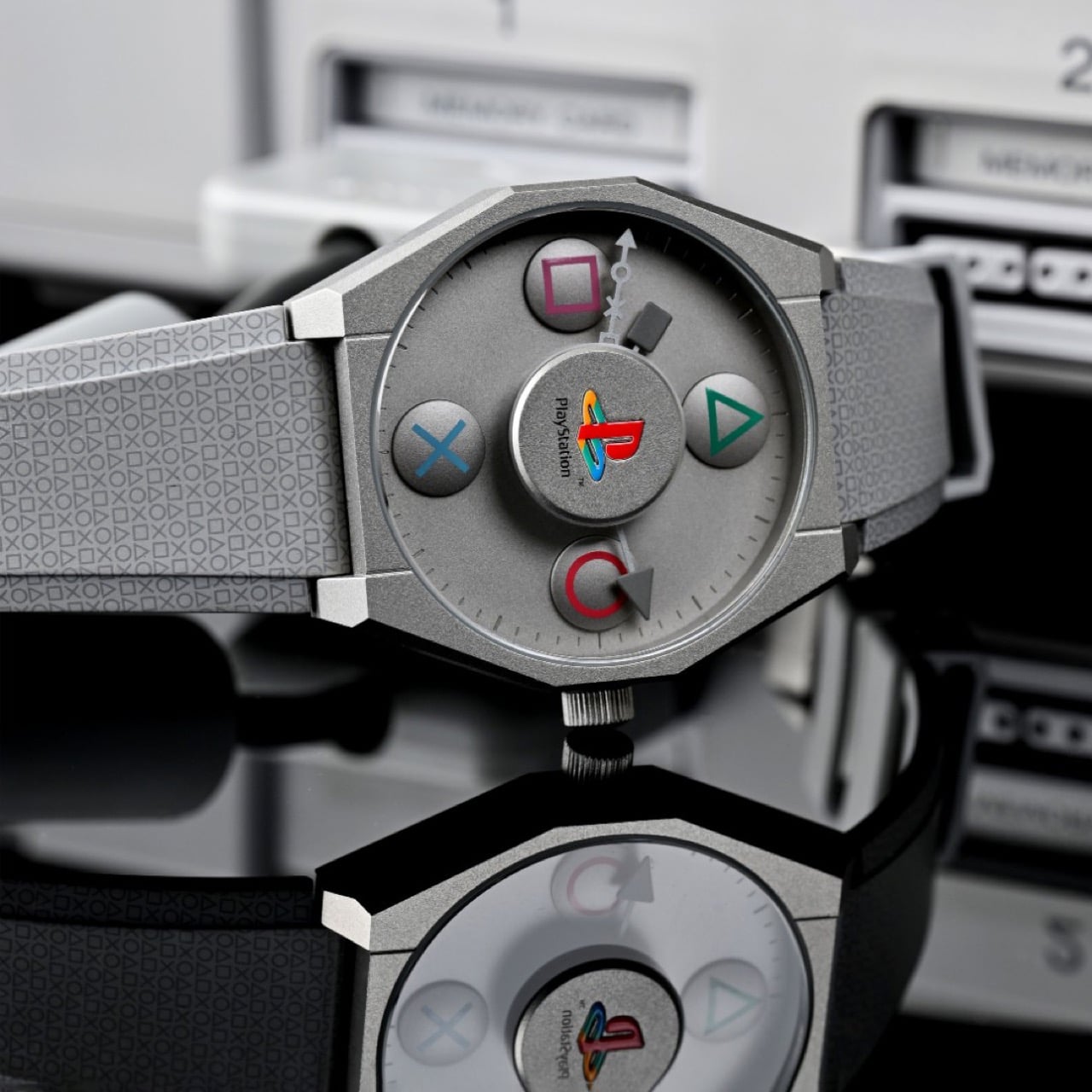
What makes this interesting beyond the usual merch cycle is how seriously they treated the design language. The △○×□ symbols sit at 12, 3, 6, and 9 o’clock as three-dimensional applied elements, not flat prints. The PlayStation logo occupies a raised central medallion, and the hands are modeled after the original controller’s Start and Select buttons, which is the kind of nerdy detail that separates fan service from actual design work. The case mirrors the faceted geometry of the 1994 console hardware, finished in that unmistakable matte grey, and the rubber strap carries the button symbols all the way down. It feels like someone actually cared about making this coherent as an object of sheer nostalgia, not just profitable as a limited drop.

Designer: Anicorn

Miyota movements get dismissed sometimes by the Swiss snob crowd, but here’s the thing: they’re reliable, serviceable by basically any competent watchmaker, and when decorated properly, they do the job without drama. The rotor visible through the exhibition caseback gets custom perforation work that echoes disc drive aesthetics, which is a subtle touch that could have easily been skipped in favor of a plain rotor with a logo slapped on. That kind of restraint shows up throughout the design, actually. The dial could have been a chaotic mess of branding and colors, but instead it uses that soft grey finish with selective pops of color on the applied symbols. Legibility takes a backseat to theme, sure, but you buy a watch shaped like a PS1 controller for the vibe, not to check train schedules.

Pay special attention to the case shape. Those faceted, near-octagonal edges are a direct reference to the original PlayStation’s industrial design language, which was all hard angles and serious electronics aesthetics back when consoles still tried to look like they belonged in an A/V rack. Anicorn could have gone with a standard round case and called it a day, but the geometric approach makes the whole thing feel intentional rather than opportunistic. The integrated strap design, with that all-over micro-print of controller symbols, reinforces the “this is a device” impression rather than trying to split the difference between jewelry and gadget. You wear this and people either get it immediately or think you’re wearing some kind of fitness tracker. There’s no middle ground, which is exactly how it should be.

Three hundred pieces worldwide means this will sell out in minutes, probably to a mix of serious PlayStation collectors who still keep mint PS1 longboxes and watch nerds who appreciate limited mechanical releases with actual design thought behind them. The memory card-shaped authenticity cards included in the packaging are pure fan service, but they work because they commit to the bit completely. At $780, you’re paying for scarcity, licensing, and that Miyota movement wrapped in very specific nostalgia. I can almost hear the PS booting sound as I look at this watch! Don’t lie, I’m sure you can too.

The post Anicorn x PlayStation’s $780 Mechanical Watch Is The Wildest 30th Anniversary Flex Yet first appeared on Yanko Design.
Disney’s deal with OpenAI is about controlling the future of copyright

This morning Disney and OpenAI announced a three-year licensing agreement: Starting in 2026, ChatGPT and Sora can generate images and videos incorporating Disney IP, including more than 200 characters from the company's stable of Star Wars, Pixar and Marvel brands. To say these companies make for strange bedfellows is an understatement.  

The agreement brings together two parties with very different public stances on copyright. Before OpenAI released Sora, the company reportedly notified studios and talent agencies they would need to opt out of having their work appear in the new app. The company later backtracked on this stance. Before that, OpenAI admitted, in a regulatory filing, it would be "impossible to train today's leading AI models without using copyrighted materials." 

By contrast, Disney takes copyright law very seriously. In fact, you could argue no other company has done more to shape US copyright law than Disney. For example, there's the Sonny Bono Copyright Term Extension Act, which is more derisively known as the Mickey Mouse Protection Act. The law effectively froze the advancement of the public domain in the United States, with Disney being the greatest beneficiary. It was only last year that the company's copyright for Steamboat Willie expired, 95 years after Walt Disney first created the iconic cartoon.

On the face of it, it's unclear OpenAI is getting much value out of the deal. As part of the pact, Disney will host a "curated" selection of Sora-generated videos on its streaming platform Disney+, legitimizing the medium of AI-generated video in a way it hasn't been before, but it would appear Disney has the option to spotlight as much or little of it as it sees fit.

Additionally, the $1 billion Disney agreed to invest in OpenAI is a drop in the ocean for a company that's expected to burn through more cash in five years than Uber, Tesla, Amazon and Spotify did combined before they became profitable. If anything, the addition of Disney characters is likely to make operating ChatGPT and Sora more expensive for OpenAI; the company will now need to pay a licensing fee on top of the cost of running its servers to generate images and videos. At this stage, it's also hard to put a value on Disney's pledge to use OpenAI's APIs. The company has said those tools will "enable new products, tools and experiences," including some found inside of Disney+, but beyond that it hasn't shared specifics.

Bob Iger might be feckless, but he's not stupid. Sometime this week or soon after, President Trump is expected to sign an executive order that makes good on part of his AI Action Plan from July. Specifically, the president has promised to fight against "burdensome" state-level regulation of AI. According to CNN, a recent draft of Trump's order calls for the creation of an AI Litigation Task Force to challenge and preempt state AI laws in favor of the president's own more lax regulatory regime. 

It's unclear how successful the administration will be in that effort, but clearly Disney is thinking ahead. It's banking on the fact that this time it won't be able to count on the federal government to shape copyright law in its interest, so instead it's making a deal with an industry pushing the boundaries of intellectual property rights as we know them. More importantly, it has partnered with the one AI company it can actually leverage. 

As I argued in a recent piece, OpenAI is in a far different and more precarious position now than it was at the end of 2022 following the release of ChatGPT. The company is just one AI provider in a sea of competition, and you can't even argue its models are the best, based either on benchmarks or user feedback. Moreover, OpenAI has yet to turn a profit, and has adopted an extremely risky investment strategy. In recent months it has signed more than $1.4 trillion worth of infrastructure deals, hoping to outmuscle the competition that's already beating it through scale.  

It's not an accident Disney sent a cease-and-desist letter to Google a day before its agreement with OpenAI became public. OpenAI might be the most valuable private company in the world, but Alphabet, Google's parent company, is worth more than $3 trillion. In any negotiations between the two, at best Disney would be on equal footing, and certainly not in a position where it could demand some amount of control over Google's AI projects. 

And yet by accounts it won exactly that from OpenAI. According to Axios, the deal gives Disney a fair amount of control over how its intellectual property is used. The two will form a joint steering committee designed to monitor the content users create on ChatGPT and Sora. As you surf the web today, you'll likely see a lot of opinions on how this legitimizes AI video. And while that's true, far more important is the fact Disney has secured a seat at the table to decide how the technology evolves over the coming years. 

Much like with news publishers, OpenAI and other chatbots concerns took a stance of begging forgiveness rather than asking permission towards copyright. It seems to have paid off. Most of the highest-profile news organizations have signed licensing deals to at least be paid a little rather than be ripped off until reaching an uncertain verdict in court. Disney seems to be signalling that the same speculation rush is about to begin for audiovisual licensing, and it may have already secured the most favorable terms. 

This article originally appeared on Engadget at https://www.engadget.com/ai/disneys-deal-with-openai-is-about-controlling-the-future-of-copyright-213009504.html?src=rss

’47 Ronin’ director found guilty of defrauding Netflix out of $11 million

A director who was charged with defrauding Netflix out of millions of dollars has been found guilty, Business Insider reports. Carl Rinsch, director of the 2013 Keanu Reeves movie 47 Ronin, now faces up to 90 years in prison.

Rinsch began filming the project, White Horse (later renamed Conquest), around 2017. (Its premise: A scientist creates an organic humanoid species that turns on its creators.) The director completed six short-form episodes with his own money and investor funds. He then used those episodes to pitch studios for the money to complete the first season. Netflix ended up buying the rights for over $61 million.

In 2020, after spending $44 million of Netflix's money on the series, Rinsch petitioned for another $11 million to complete the season. The company agreed.

Then things got weird. Instead of using Netflix’s investment to finish the series, Rinsch transferred the funds to personal accounts. Within two months, he lost over half of it on seven-figure stock trades. He spent the rest on cryptocurrency.

Then, lo and behold, Rinsch got a second chance: The crypto trades turned a profit. Did the director seize the opportunity to right his ship and finish the series? No, he didn't. Instead, he used the crypto profits to go on a $10 million shopping spree. According to prosecutors, he spent nearly $4 million on furniture and antiques, $2.4 million on five Rolls-Royces and a Ferrari, almost $1 million on mattresses and linens and $650,000 on luxury watches and clothes.

The series was never completed. By 2021, Netflix had canceled the project and written off over $55 million in costs.

Rinsch's charges included one count of wire fraud, one count of money laundering and five counts of engaging in monetary transactions in property derived from specified unlawful activity. During the trial, he took the stand in his own defense, claiming that Netflix's millions were intended as reimbursement for the personal funds he invested in the series.

After less than five hours of jury deliberation, Rinsch was found guilty on all seven counts. Although he could face up to 90 years, he's expected to receive a much shorter sentence.

This article originally appeared on Engadget at https://www.engadget.com/entertainment/streaming/47-ronin-director-found-guilty-of-defrauding-netflix-out-of-11-million-205519293.html?src=rss

New York passes law requiring ads to disclose the use of AI performers

New York is taking steps to regulate the use of AI in the state's entertainment industry. NY State Governor Kathy Hochul passed two pieces of legislation on Thursday that forces certain productions to disclose the use of AI-generated performers, and defines rules around how someone's likeness can be used after their death.

Assembly Bill A8887B, now known as S.8420-A, specifically covers the use of AI performers in advertisements. Per Hochul's announcement, the law "requires persons who produce or create an advertisement to identify if it includes AI generated synthetic performers." S.8391, meanwhile, "requires consent from heirs or executors if a person wishes to use the name, image, or likeness of an individual for commercial purposes after their death."

“By signing these bills today, we are enacting common sense laws that will ensure we are fully transparent when using images generated by artificial intelligence and also prevent the unauthorized commercial use of a deceased individual’s name or likeness," Governor Hochul said in the announcement. "In New York State, we are setting a clear standard that keeps pace with technology, while protecting artists and consumers long after the credits roll."

The use of AI performers and deepfakes made using the likenesses of actors were major focuses of the contract SAG-AFTRA won during its strike in 2023. The union ultimately agreed to allow for the use of things like digital replicas and AI-generated performers, with some key carveouts. For example, actors have to give their explicit consent for a digital replica to be made in their image. They also have to give their consent each time the replica is used and are supposed to receive a pre-negotiated rate every time the replica appears in a production.

New York's new regulations put further safeguards around both practices, and join a growing collection of state AI laws that have passed or are currently being considered this year. Because of the close relationship between tech companies and the Trump administration, though, multiple attempts have been made to prevent such laws from existing at all. A decade-long ban on state AI regulation was included in early drafts of the Big Beautiful Bill, and David Sacks, venture capitalist and White House Special Advisor, has reportedly gone to great lengths to try and get President Donald Trump to sign an executive order banning state AI regulation. The effort may have been worth it: The president posted on Tuesday that he would sign a new executive order focused on AI this week.

This article originally appeared on Engadget at https://www.engadget.com/ai/new-york-passes-law-requiring-ads-to-disclose-the-use-of-ai-performers-202619826.html?src=rss

Citroën’s ELO Concept Car Transforms Into a Mobile Camp With Inflatable Beds and Built-In Power

French automaker Citroën just unveiled a concept that treats your car like a Swiss Army knife for modern nomads. The ELO is an electric vehicle that doubles as a bedroom, triples as an office, and moonlights as a power station. We’ve seen plenty of concepts that promise versatility, but most end up being vaporware with a nice press kit. This one actually has me convinced someone at Citroën has spent time living out of their car.

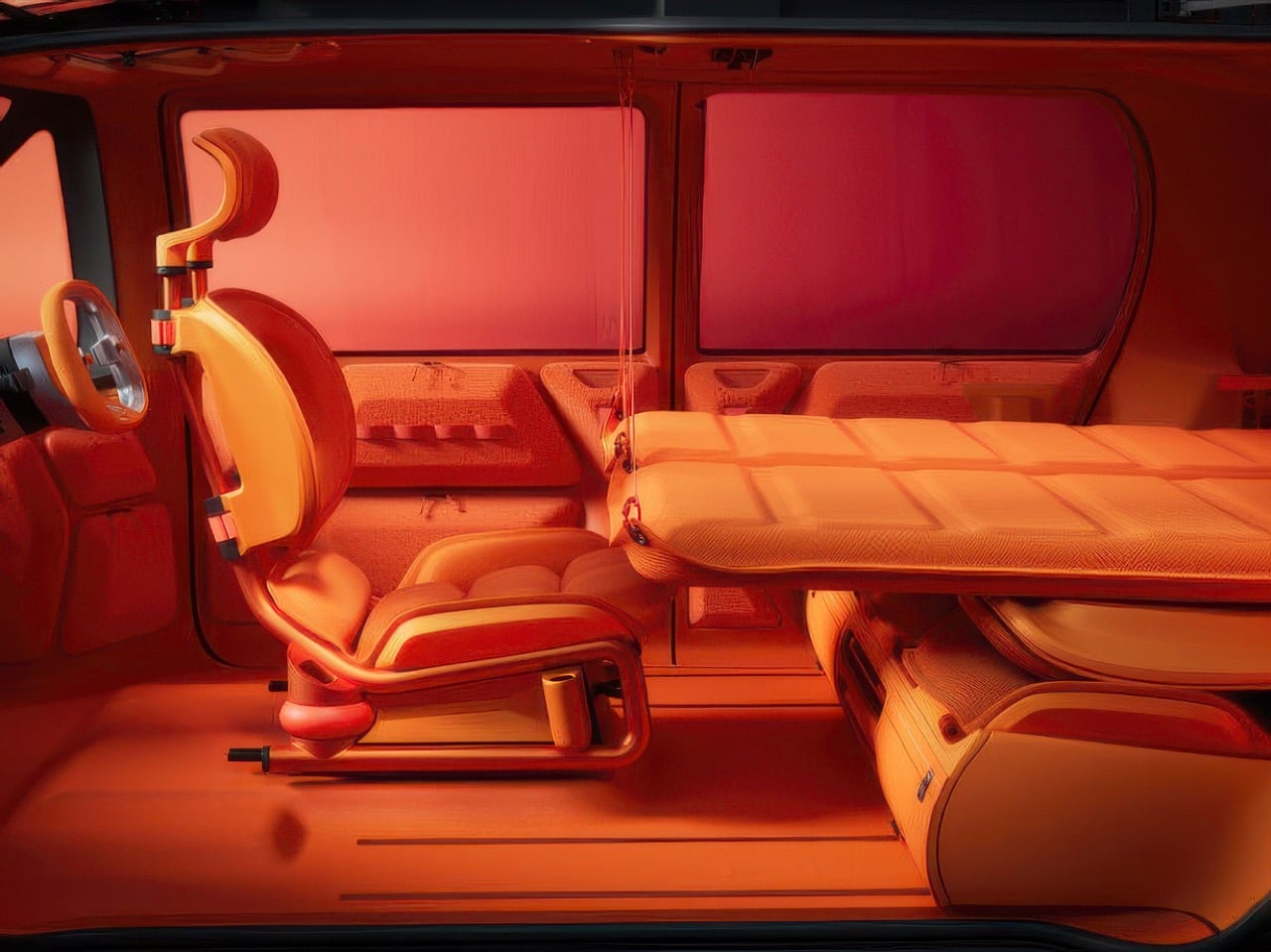
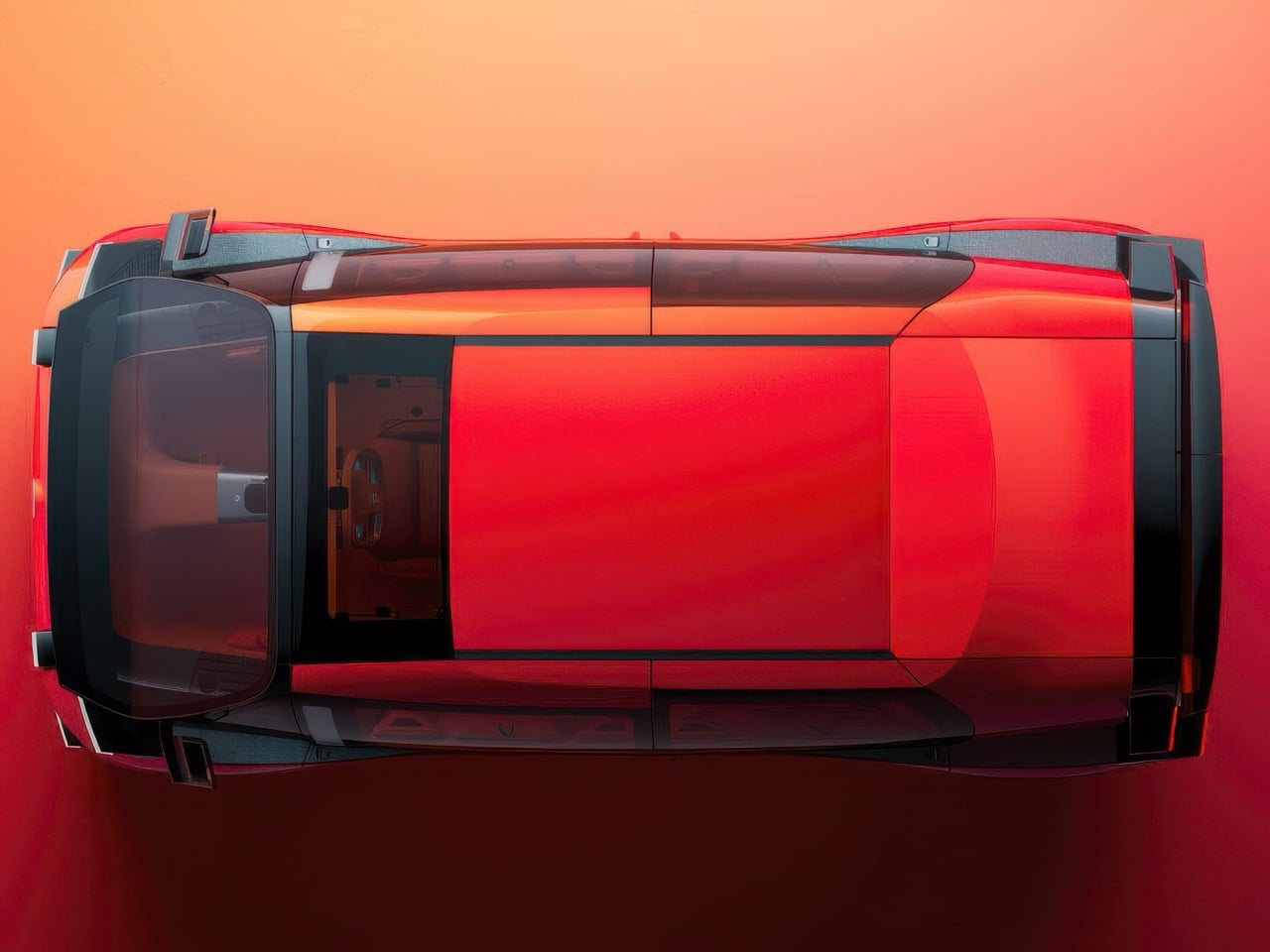
Two inflatable mattresses live in the rear cargo area, and they deploy using the car’s built-in compressed air system. You’re not wrestling with a manual pump or some finicky electric one you bought off Amazon. The mattresses fill the entire rear space to create an actual sleeping area for two adults. The roof slides open so you can stargaze without getting eaten alive by mosquitos, and the side lamps flip into bedside light mode. There’s a projector mounted inside with a pull-out screen for outdoor movies. Citroën partnered with Decathlon for the storage systems, which explains why everything feels less “auto show prop” and more “gear you’d actually use.”

Designer: Citroën

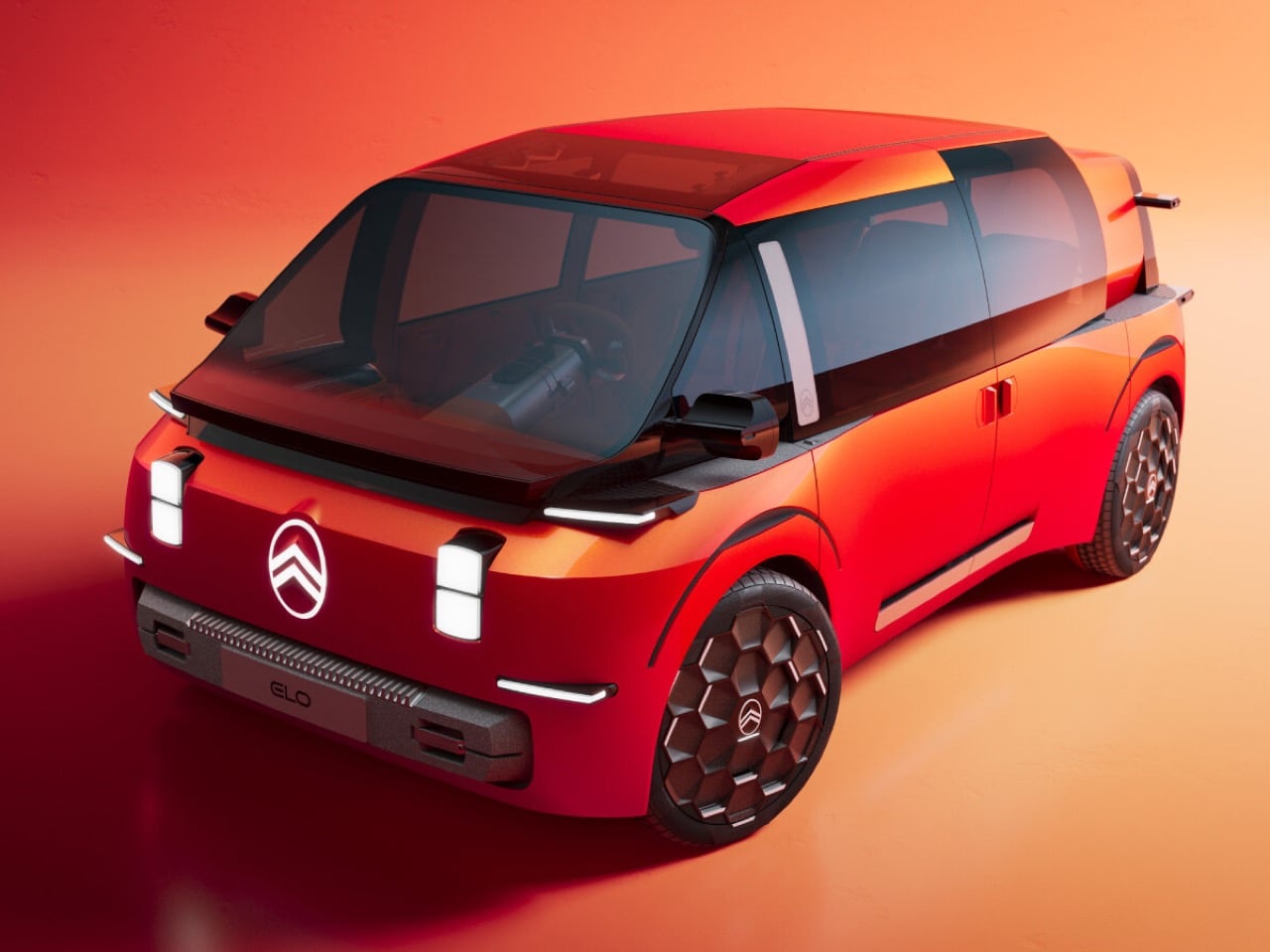
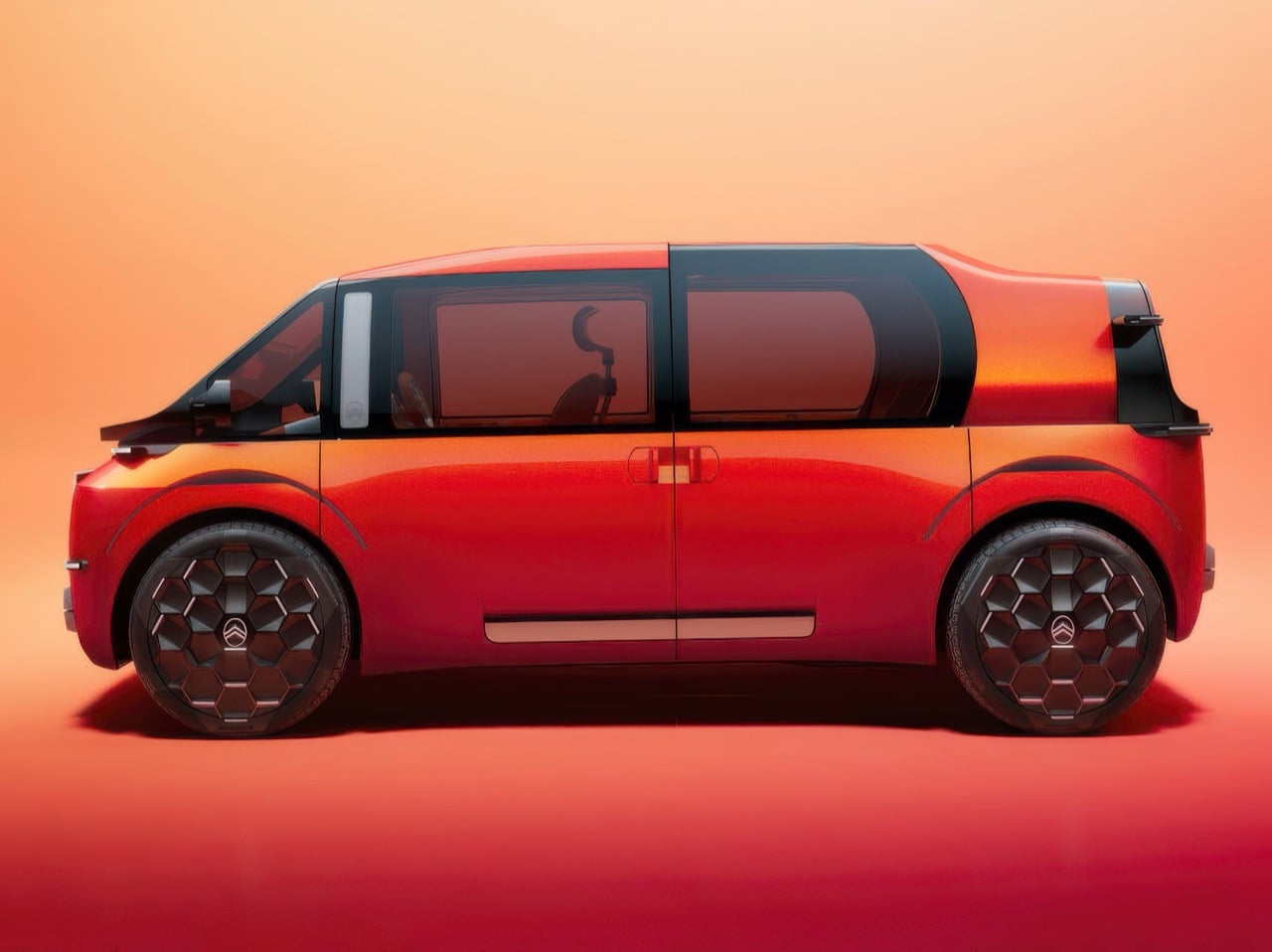
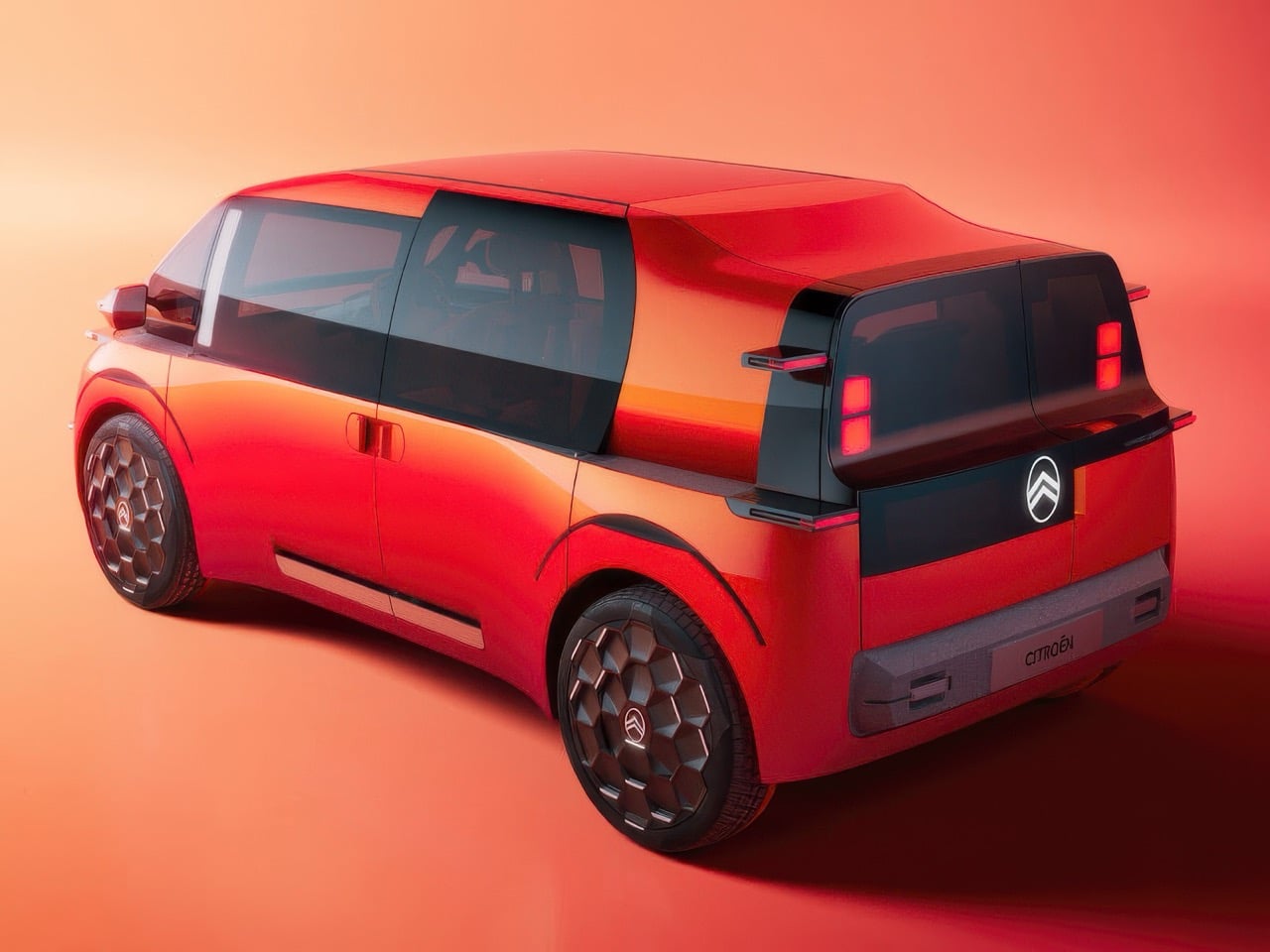
The exterior looks like Citroën told their designers to prioritize function over flash and actually meant it. The body is boxy and van-like, painted in a bold coral-orange that screams “adventure vehicle” without trying too hard. Those honeycomb wheel covers aren’t just styling exercises – they integrate the Citroën chevron logo and protect the wheels while looking distinctive. The front is minimalist with vertical LED strips flanking the badge and a textured grille pattern that’s more utilitarian than aggressive. Large glass surfaces dominate, including that massive windscreen and the sliding panoramic roof section. The doors open wide with no center pillar, making entry and exit genuinely easy instead of the usual concept car gymnastics. Above each wheel arch sits a flat platform for storing small items when parked – the photos show pétanque balls, because of course the French put boules storage on their concept car. The proportions are short and tall, maximizing interior volume without making the thing a nightmare to park in European cities.

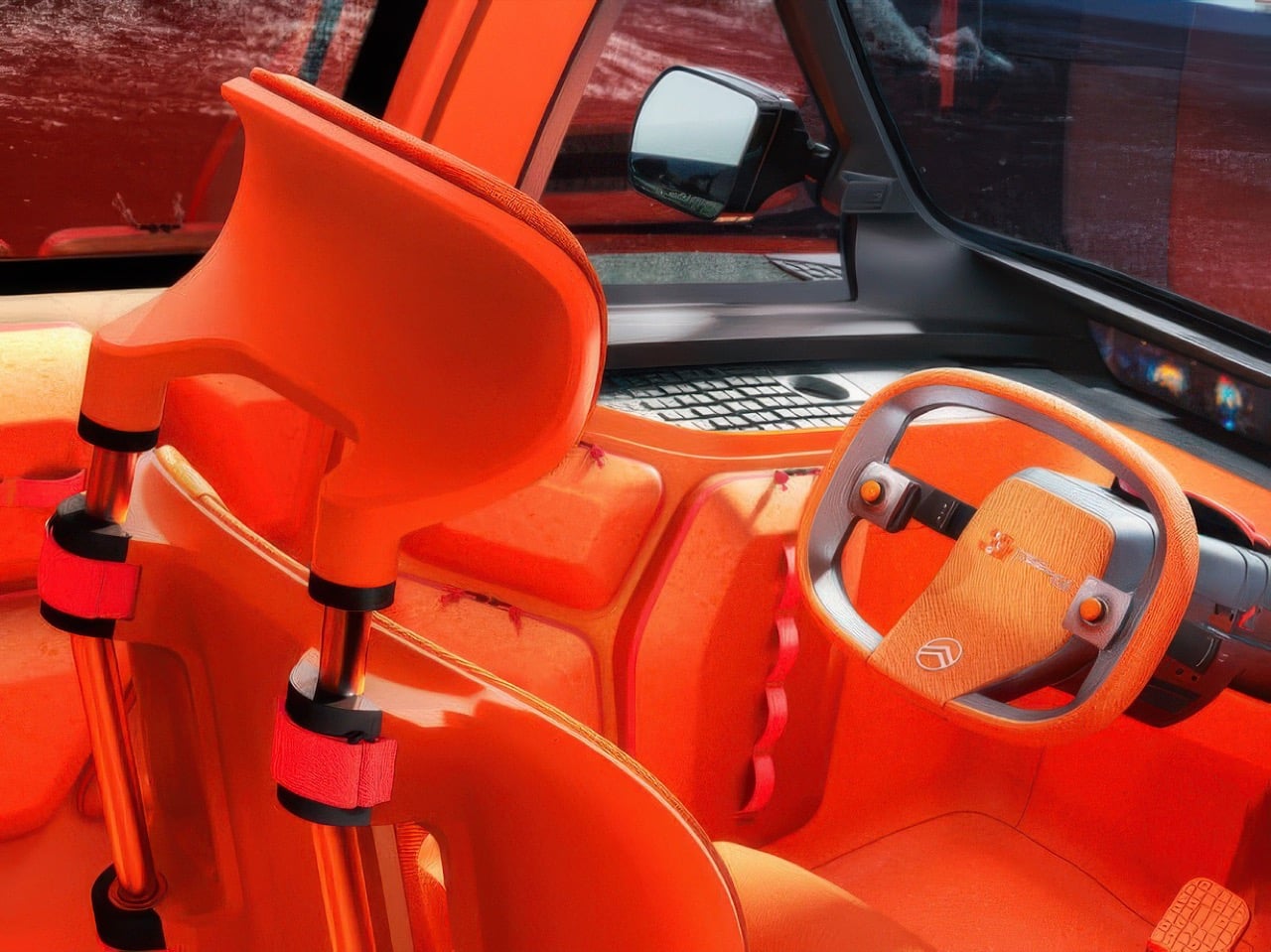
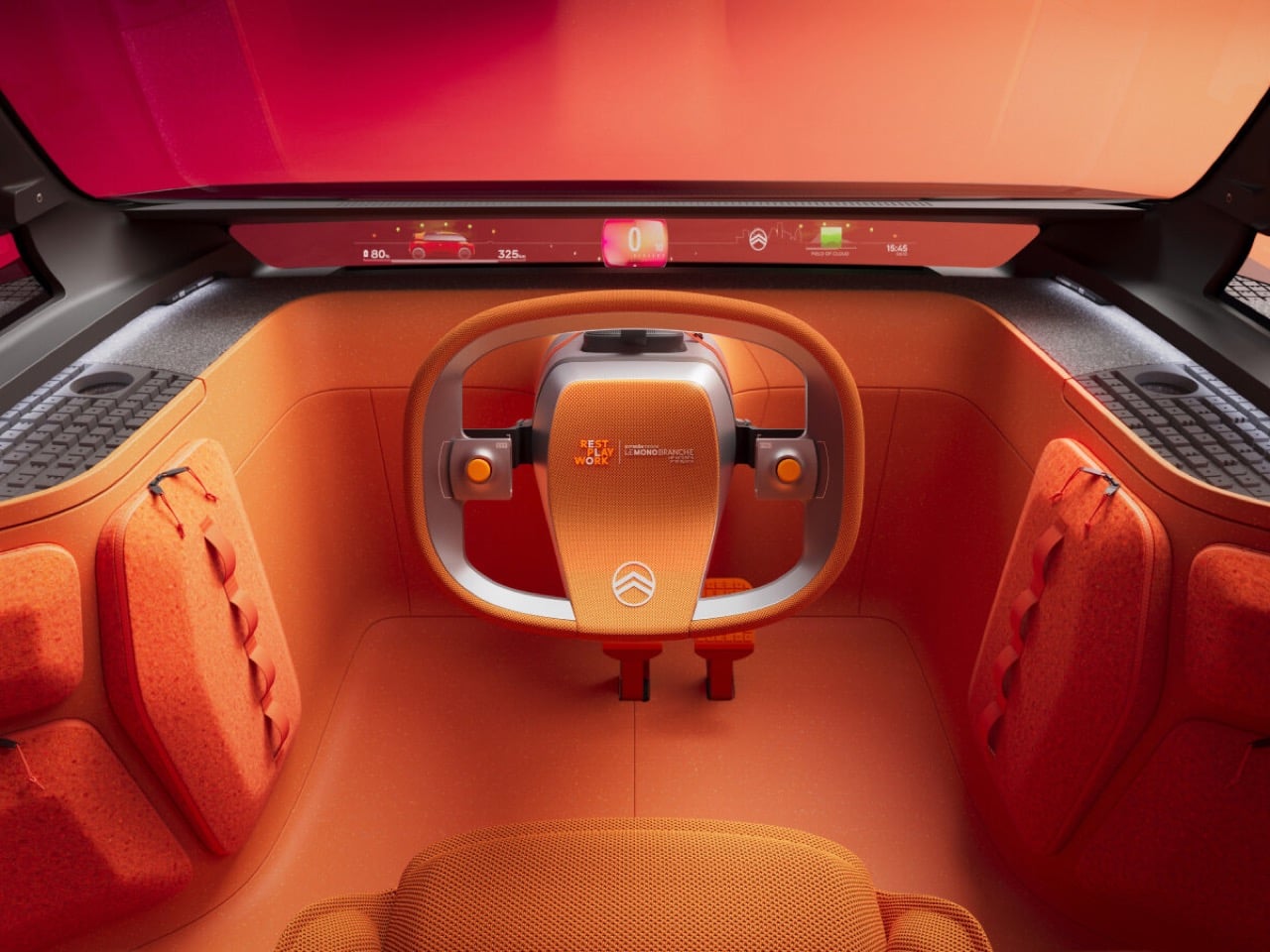
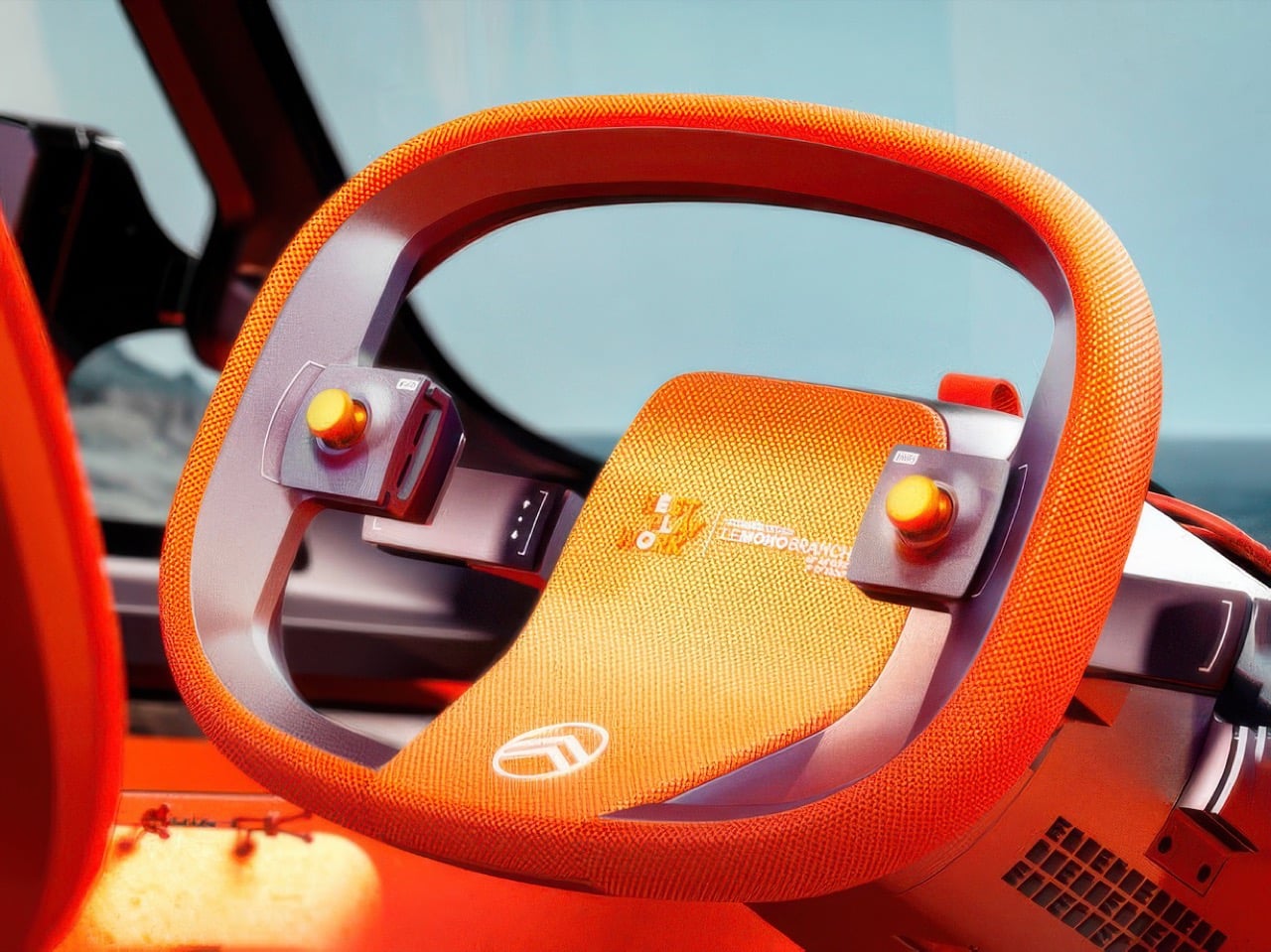
The driver sits in the center of the front row instead of off to one side. This isn’t some McLaren F1 tribute. It’s purely functional, giving you an unobstructed view through what is genuinely one of the largest windscreens I’ve seen on a vehicle this size. The steering wheel has a single spoke design with a massive opening in the middle, and Citroën ditched the traditional dashboard entirely. Everything projects onto a transparent strip across the windscreen. Two joystick controls sit on the wheel within easy reach of your thumbs. The interface is stripped down because this car needs to work when you’re tired, when you’re working, and when you’re just trying to get somewhere.

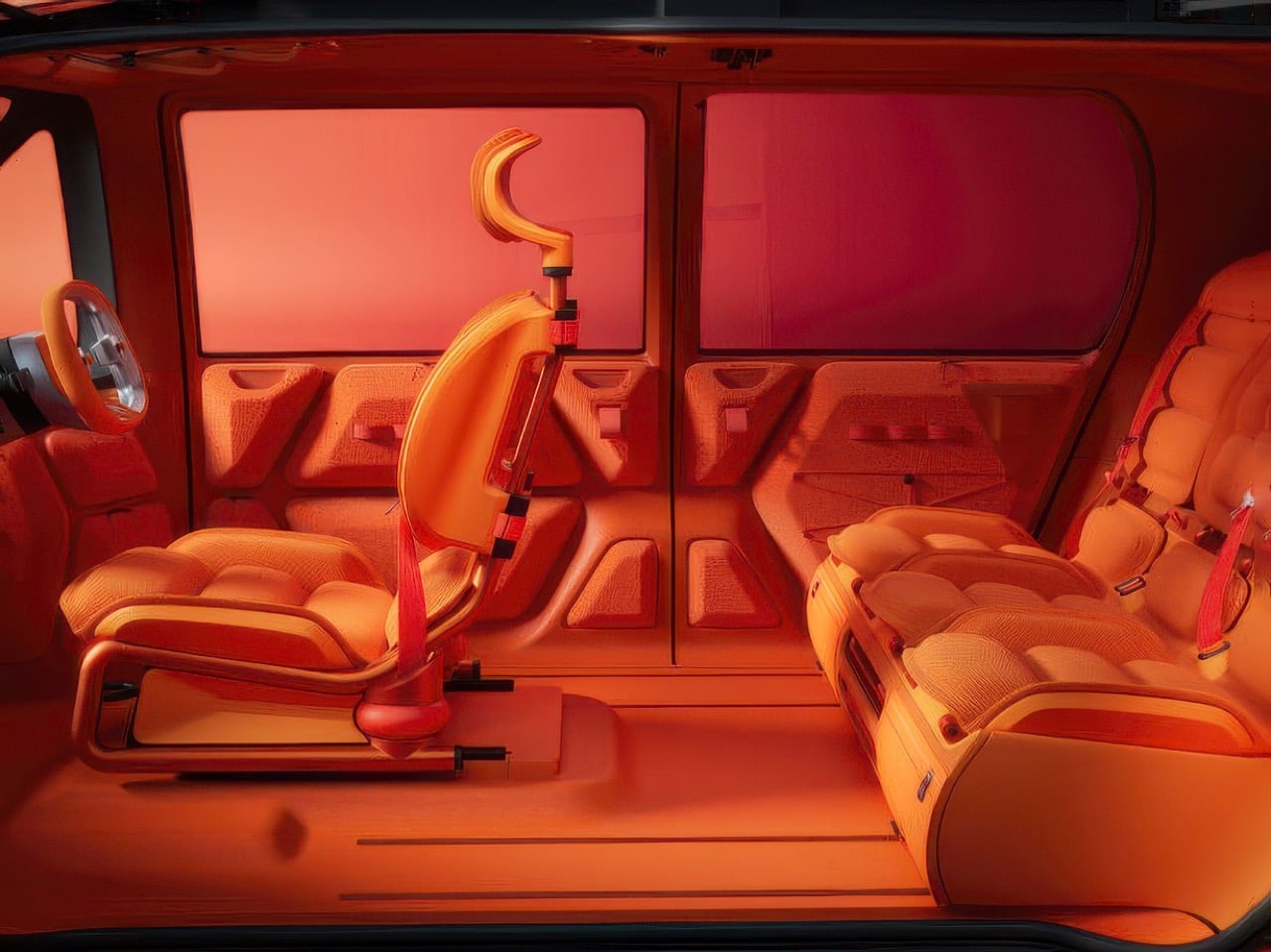
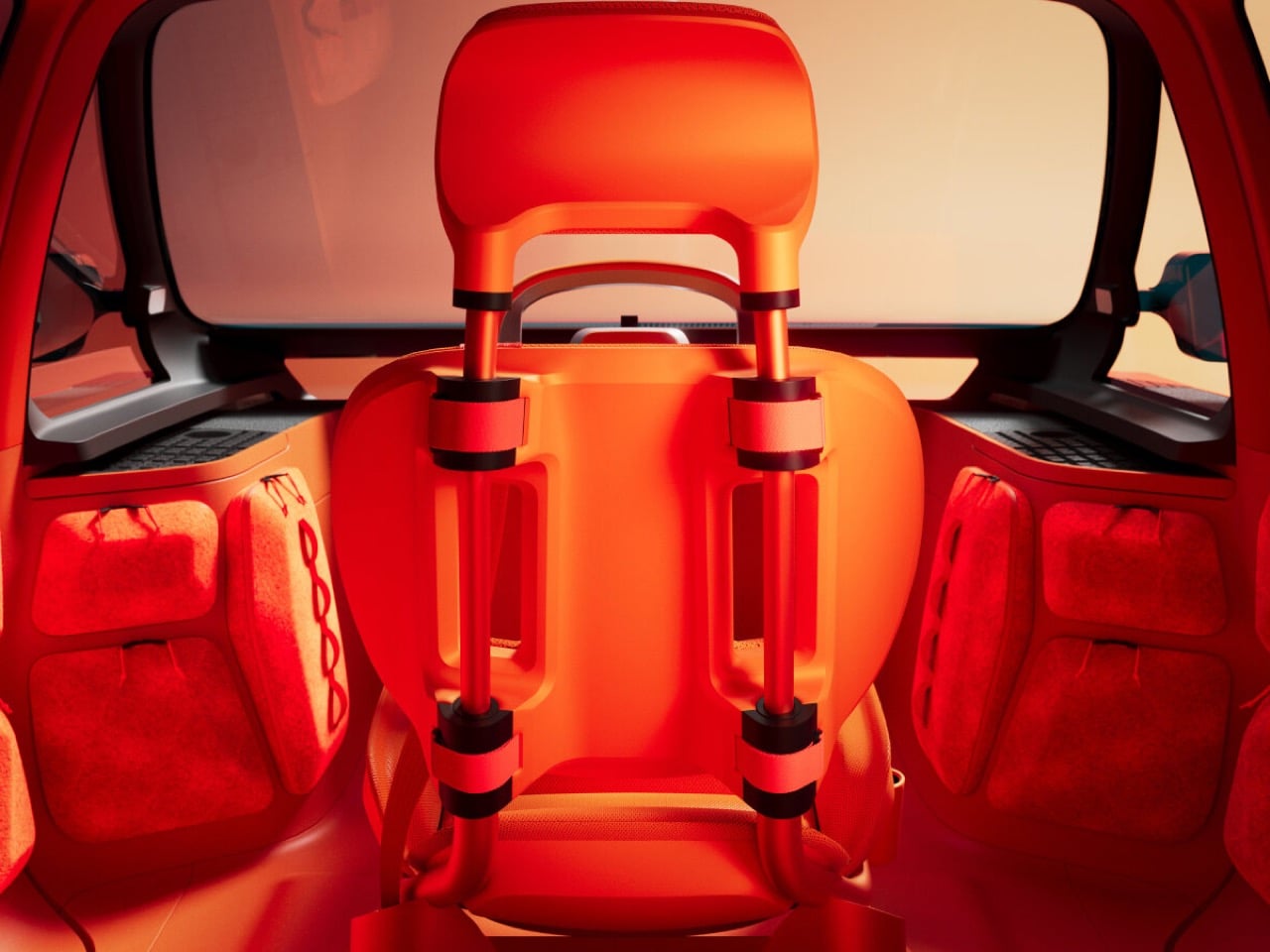
Modularity usually means “kind of adaptable if you spend twenty minutes reconfiguring things.” Not here. The second row has three identical seats that fold flat and detach completely. Use them as camp chairs. Two extra seats hide under the side seats, so you can haul six people when needed. Even with all six seats up, there’s cargo space left over. The driver’s seat spins 180 degrees to face backward. A work table folds out from under the center seat in the second row. If you forgot your laptop, the projection system works for video calls. The wheel arches have cutouts that hold phones and headphones.

Expanded polypropylene keeps weight down and recycles easily. Same stuff they use in bike helmets. Felt sections come from recycled fabric scraps from other Citroën projects. The second-row seats have water and wear-resistant covers because obviously you’re going to trash them. The exterior stays simple with huge windows and wide doors that have no center pillar. Front and rear bumpers are identical to reduce parts count.

Power options go beyond the drive battery. The V2L system lets you run speakers, charge devices, or power cooking equipment. A built-in compressor handles paddleboards, bike tires, whatever needs air. Hooks on all four doors mount a large awning for covered outdoor space. You could genuinely set up a small basecamp without bringing any extra equipment.

Citroën calls this a mobility study, which is corporate speak for “we’re not committing to production yet.” But unlike most concepts that feel like design school fever dreams, the ELO solves real problems for people who work remotely, chase outdoor activities, or just refuse to stay in one place. It’s compact enough for cities but functional enough for extended trips. Whether this becomes a real product or just influences future designs, someone finally built a car for people whose home, office, and garage are increasingly the same place.

The post Citroën’s ELO Concept Car Transforms Into a Mobile Camp With Inflatable Beds and Built-In Power first appeared on Yanko Design.
Fortnite is back on the Google Play Store

Epic Games has spent a lot of time in court over the past several years, but it seems the company's litigious era may be winding down. The company announced today that its game Fortnite is back on the Google Play mobile store in the US. Fortnite's return to Android devices means Epic's popular hit is now available on just about every gaming platform following five years of arguing antitrust lawsuits. 

Epic took both Google and Apple to court over their policies for mobile payment systems back in 2020. The gaming company has been successful on the whole in its challenges, most recently reaching a settlement with Google in November. The companies agreed to a modified version of the order US District Judge James Donato originally placed on Google regarding fees charged to developers and handling of in-app payments and third-party billing systems. 

The same saga unfolded earlier this year with Apple. US Judge Yvonne Gonzalez Rogers also sided with Epic Games in May, ordering Apple to stop collecting commissions on purchases made outside its own App Store. After a bit of back and forth, Fortnite finally returned to iOS in the US a few weeks later.

This article originally appeared on Engadget at https://www.engadget.com/gaming/fortnite-is-back-on-the-google-play-store-195507458.html?src=rss

Clover Emotion Tracker Turns Small Happy Moments into a Daily Desk Ritual

People are more stressed than ever, yet still find it hard to talk honestly about how they feel, even with therapists or friends. Most mental health tools live inside apps that want you to rate your mood on a slider or fill out forms about your day, which can feel clinical or like homework you forgot to do. Clover is a concept that tries to make emotional check-ins gentler and more tangible, focusing on collecting small moments that went right instead of cataloging everything that went wrong.

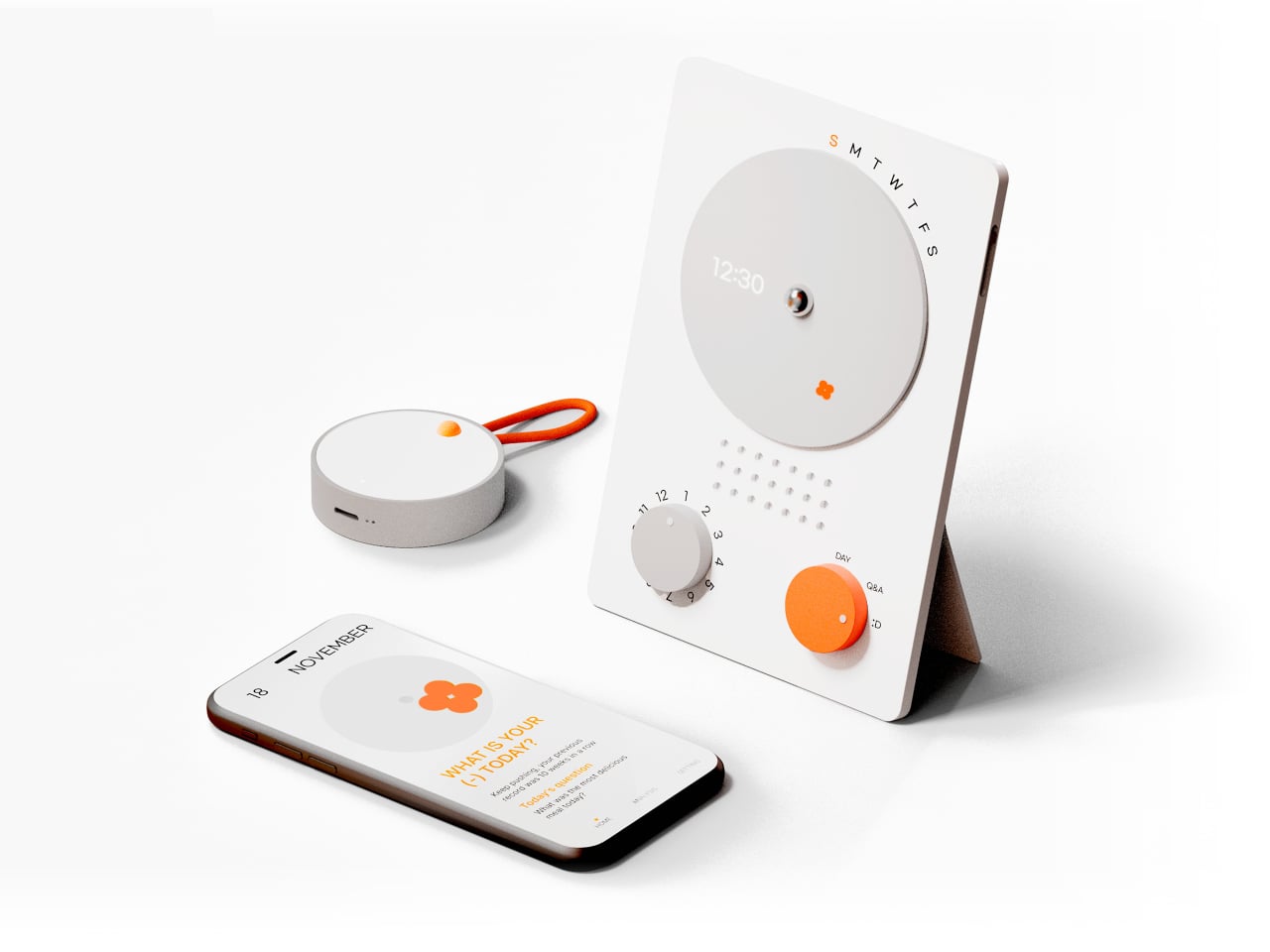
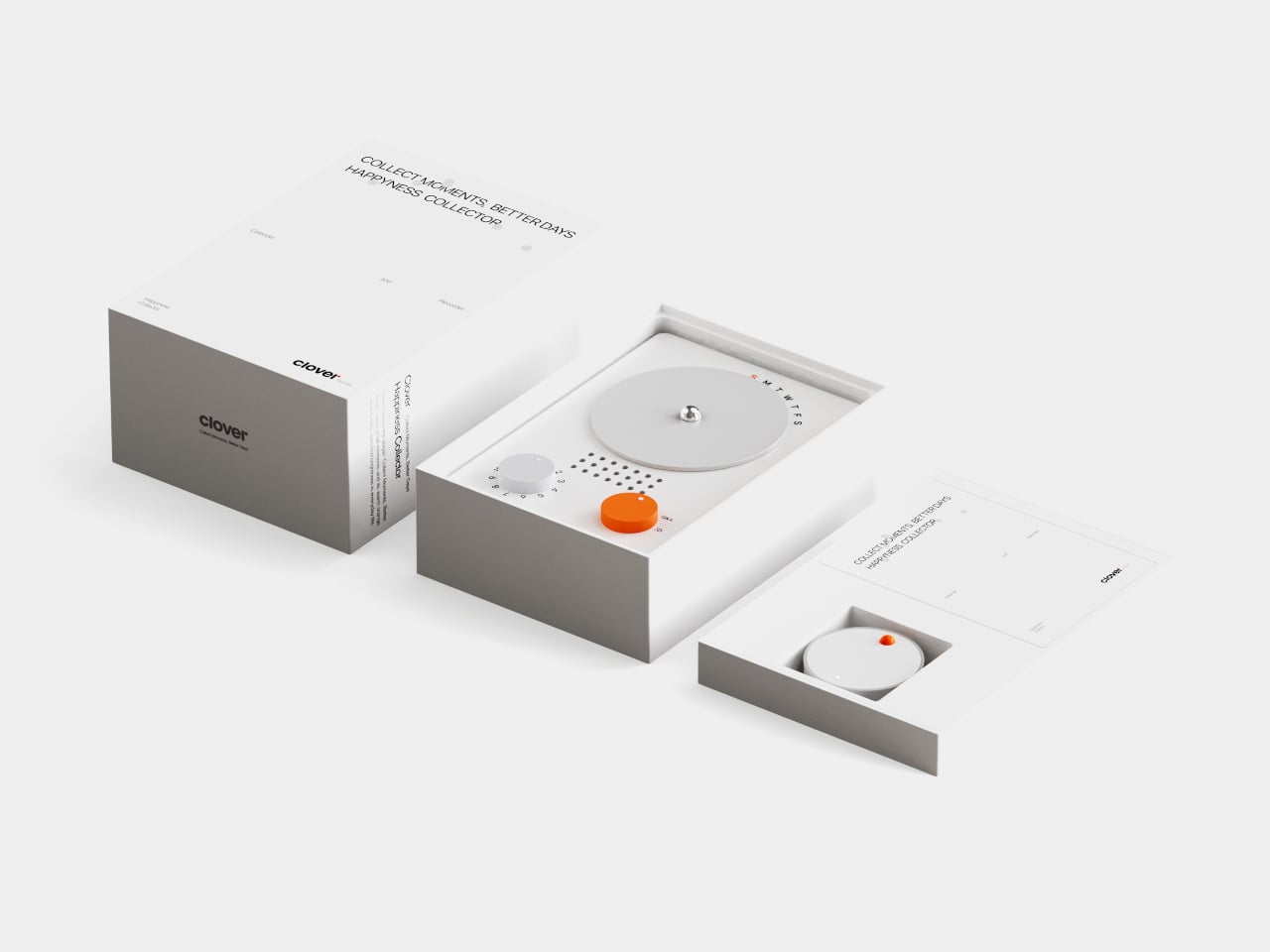
Clover is a small ecosystem built around three pieces: a pocketable voice recorder, a desk-calendar device, and a companion app. Instead of logging stress or symptoms, you press a button and record short voice notes whenever something makes you genuinely happy. Those moments are then visualized on the calendar and analyzed in the app, turning your week into a kind of happiness log that quietly reframes how you see your days.

Designers: Seyeon Park, Bhin Son, Yu Jin Song, Jiwon Park, Jinya Kim

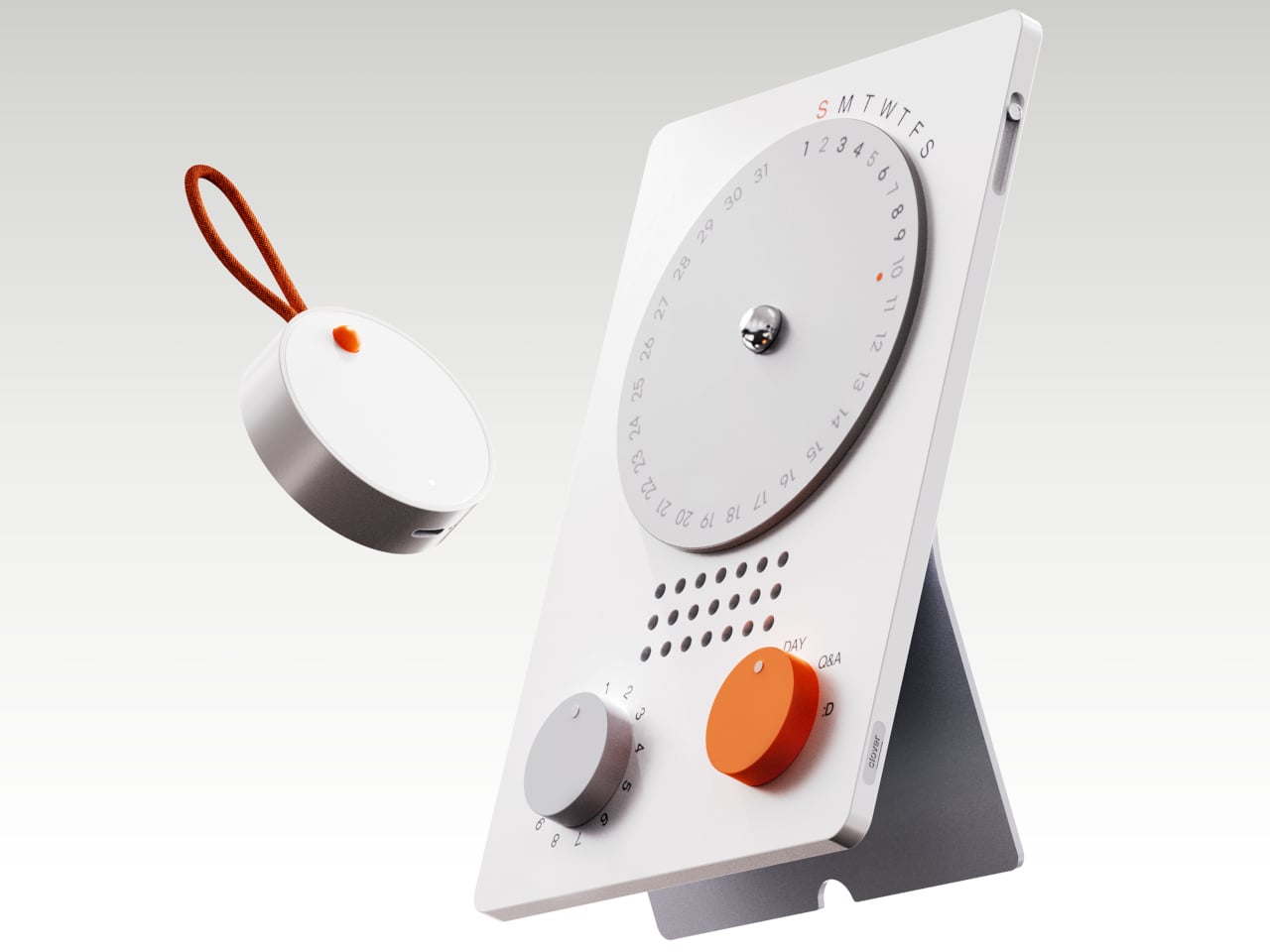
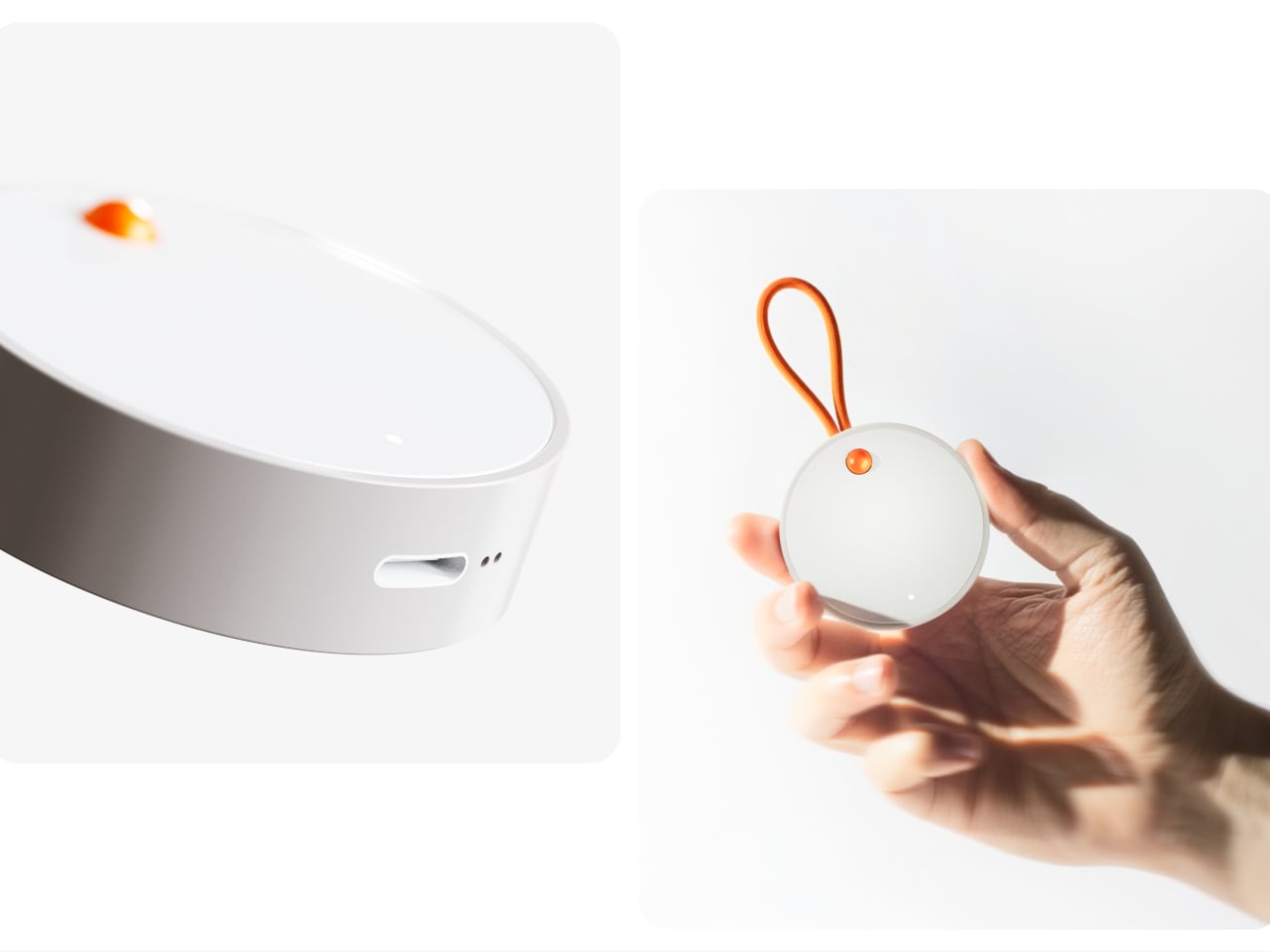
The recorder is a small, circular object with a single orange button and a loop strap, designed to be grabbed and pressed quickly. It is meant for capturing tiny, specific moments, sunlight on your desk, a good cup of tea, a joke from a friend, in your own voice. The goal is to lower the friction so much that recording a positive moment feels as easy as taking a photo, no unlocking, no tapping through screens, just press and speak.

1

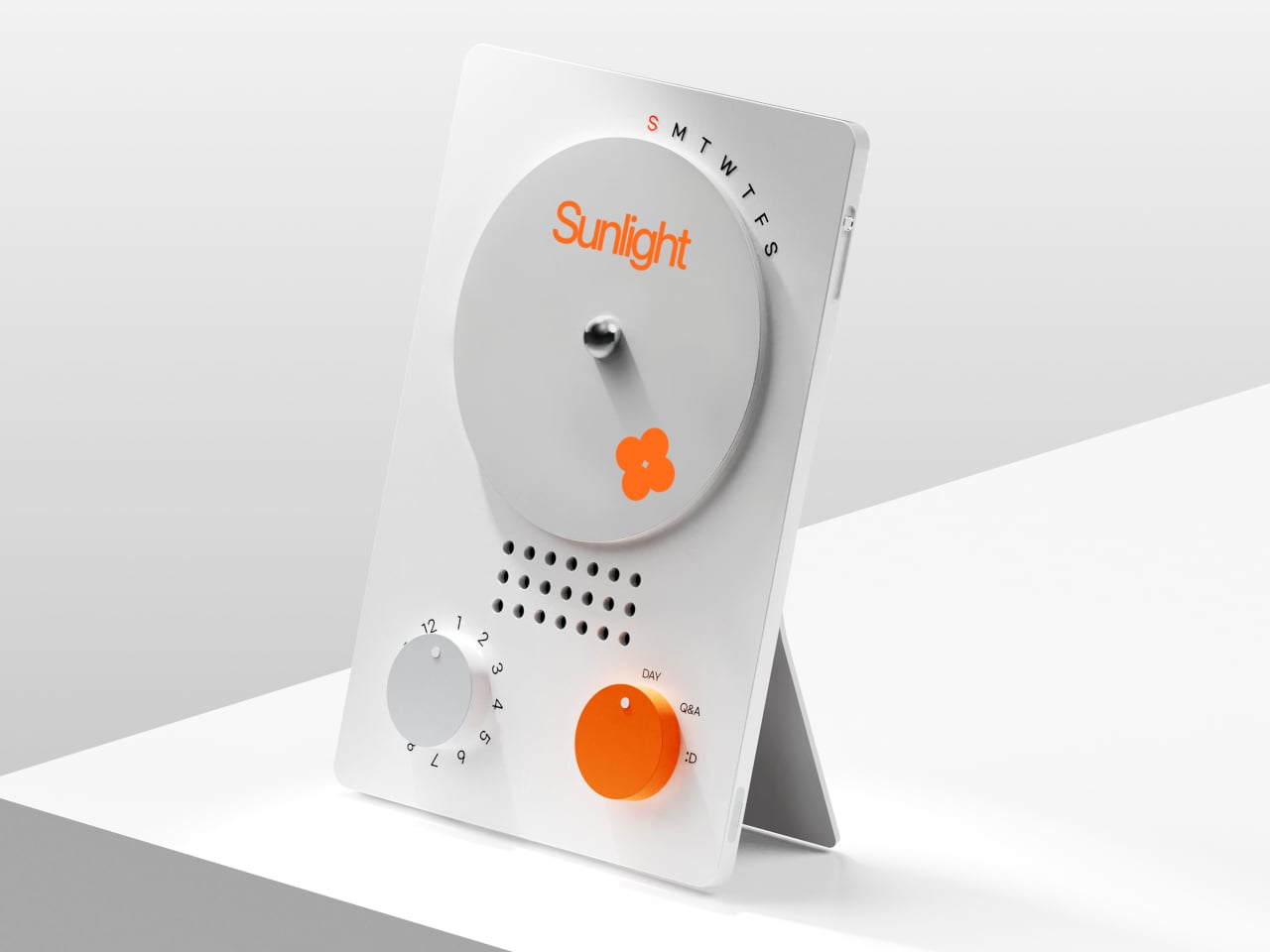
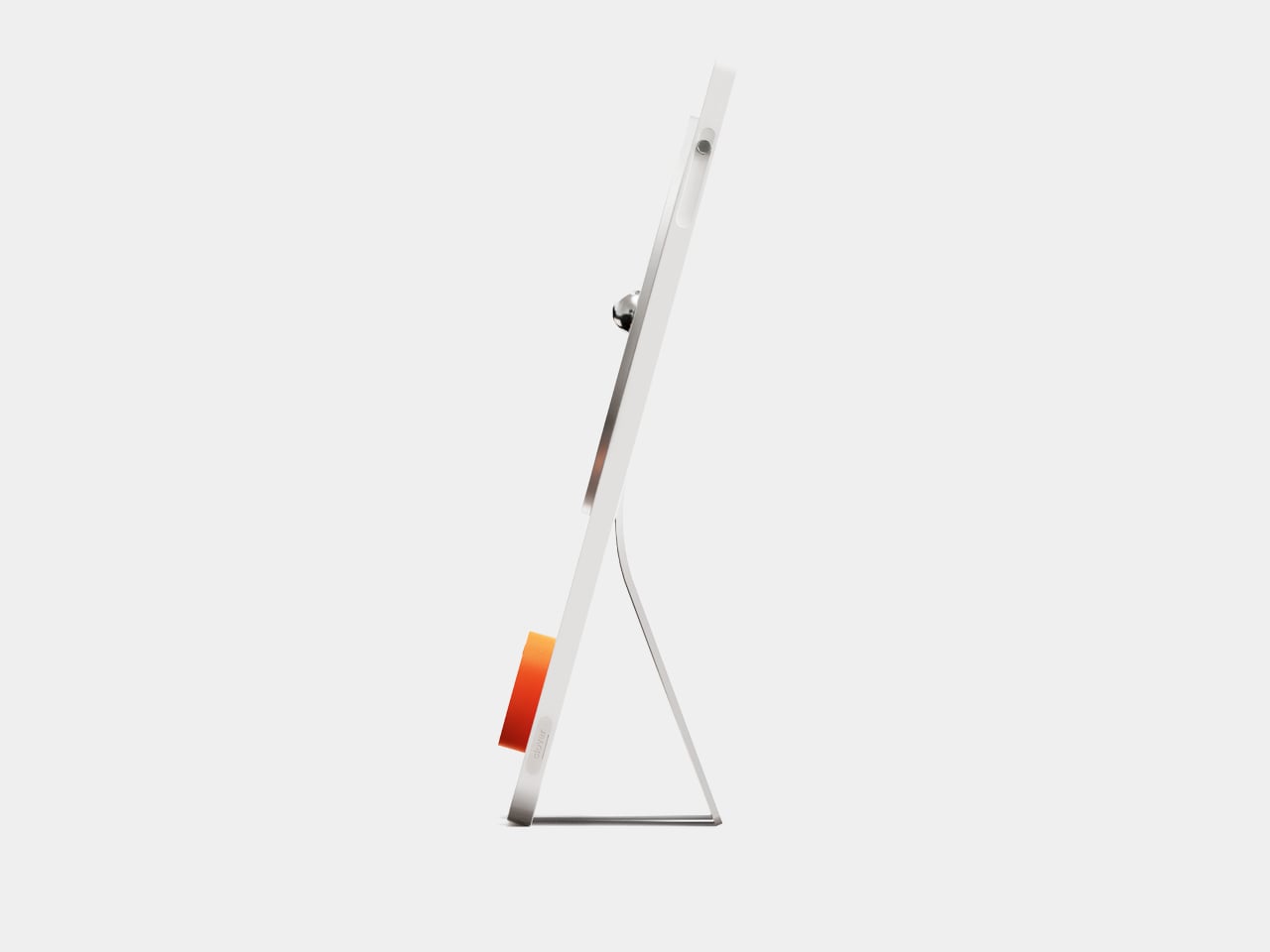
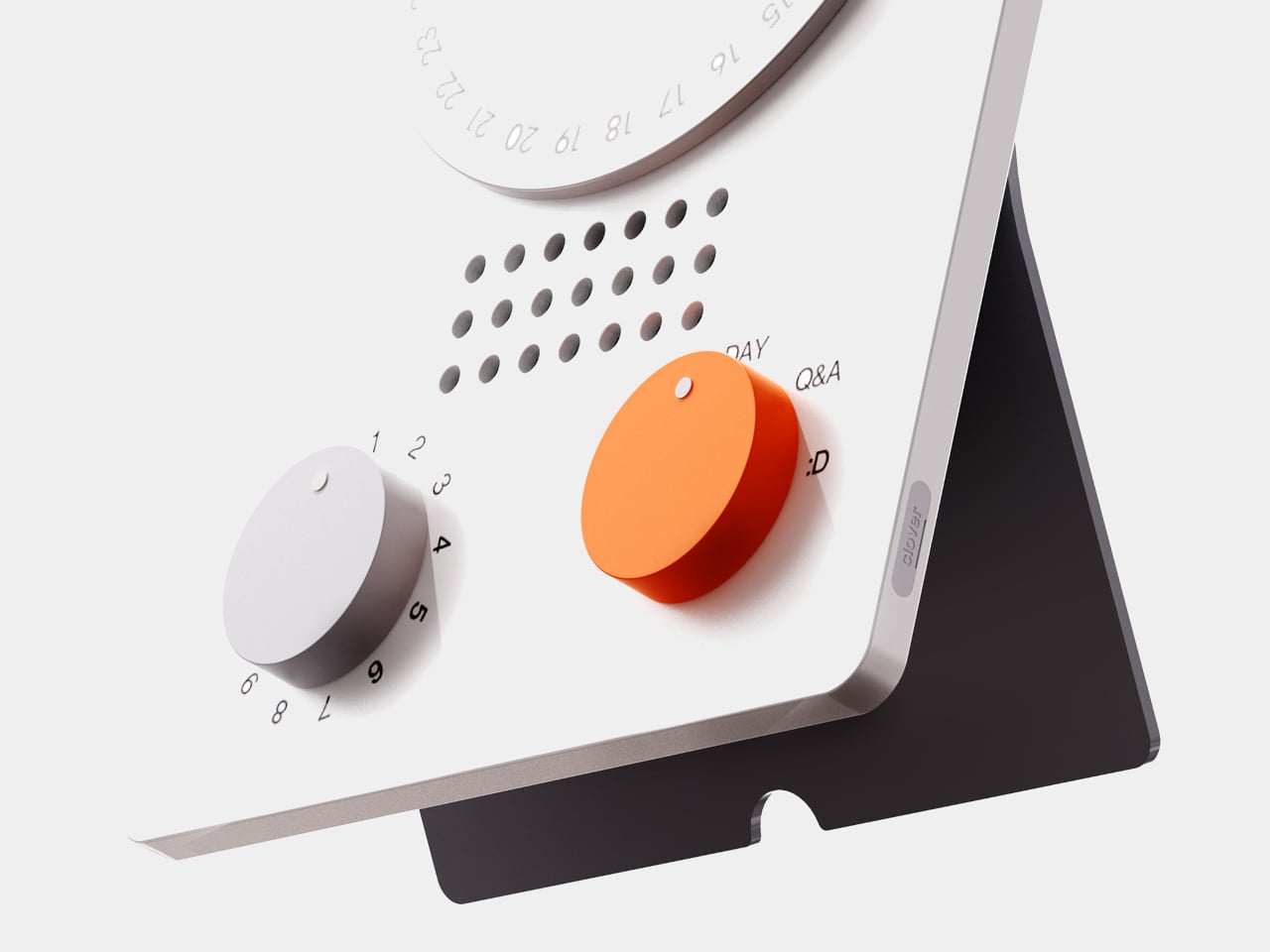
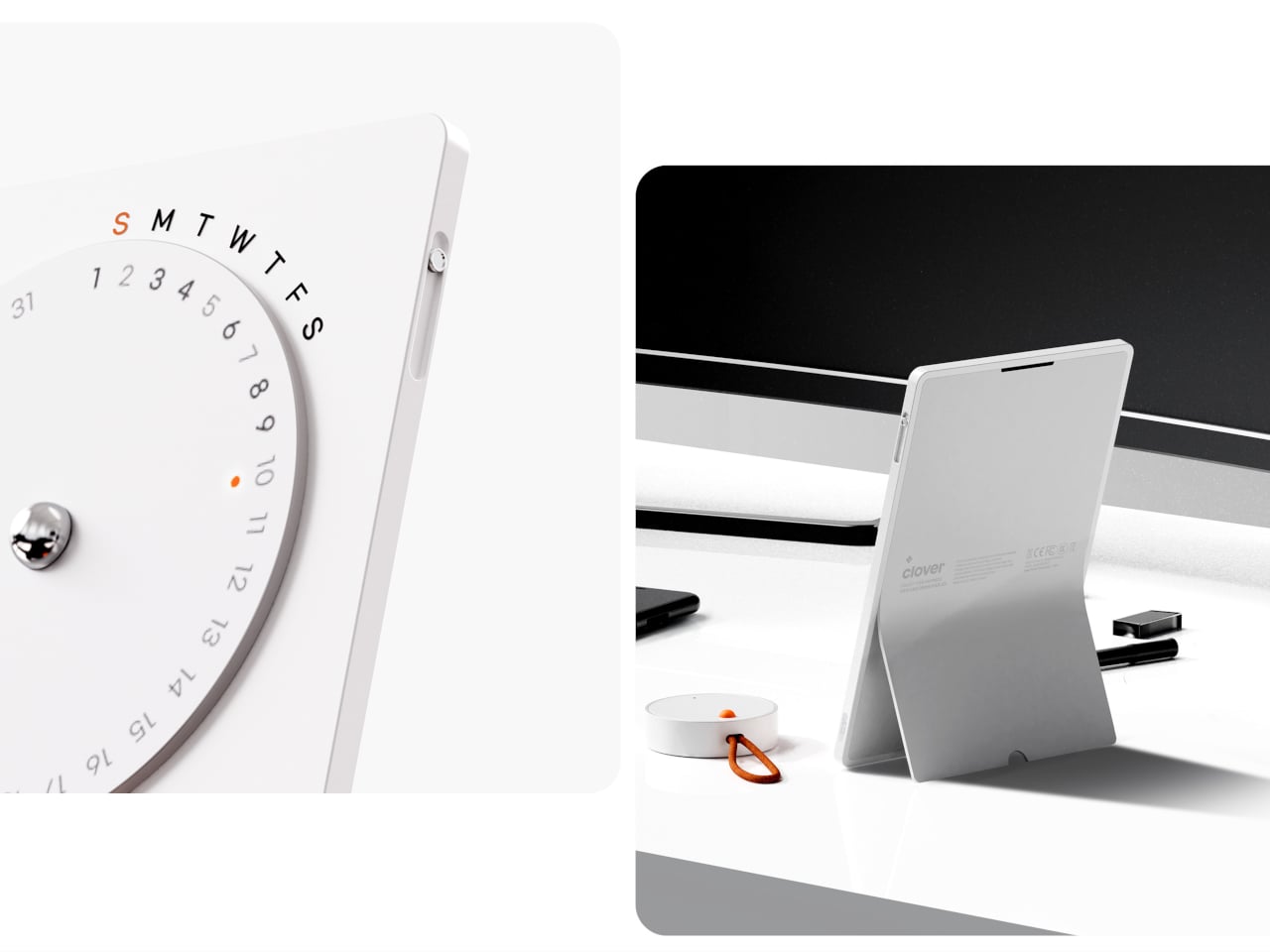
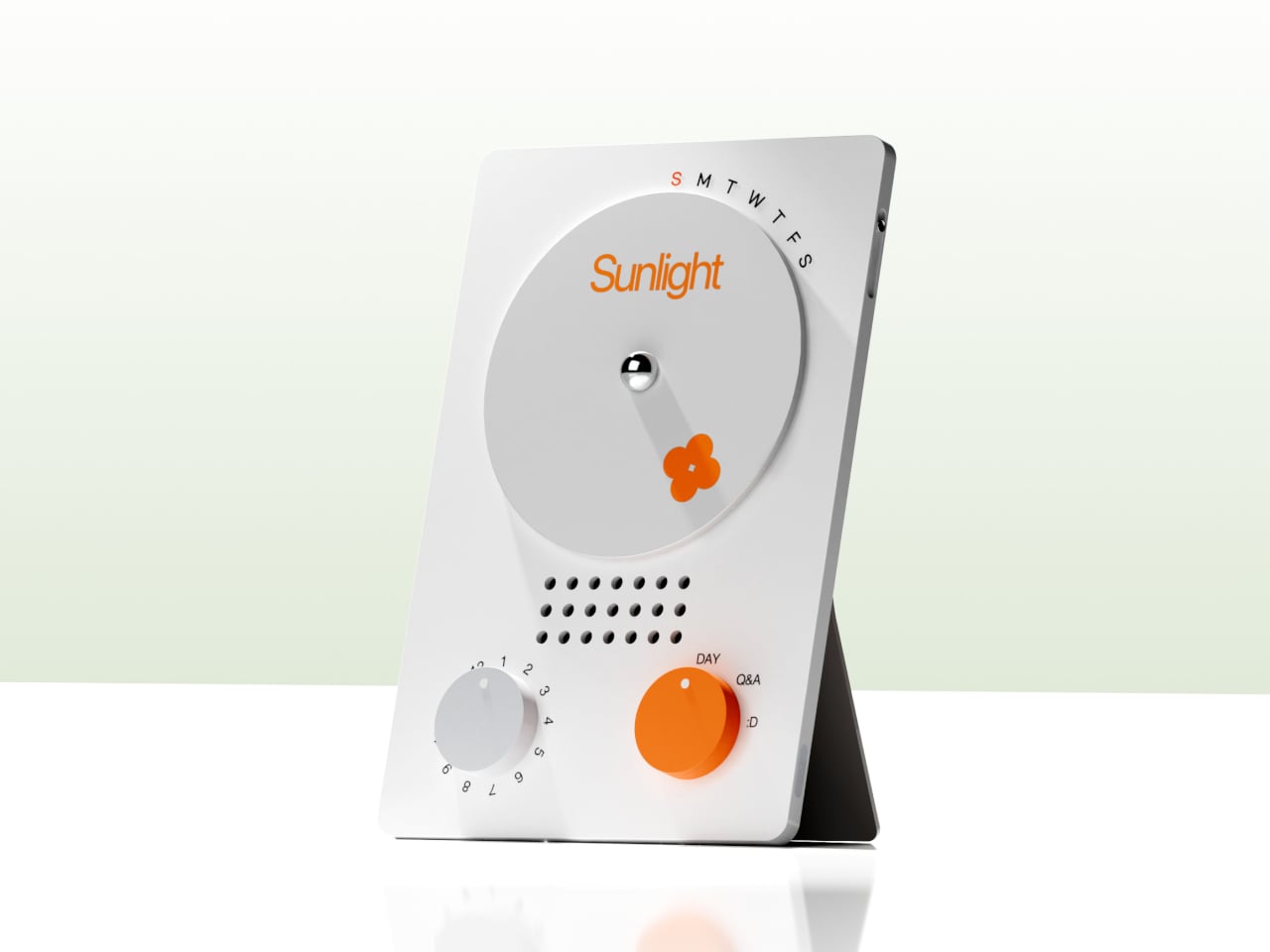
The desk calendar is a tilted white slab with a large circular dial labeled with days of the week and a small screen that displays words like “Sunlight” or “Spring.” It plays back or summarizes your voice recordings by day, and turning the dial lets you move between Day mode, Q&A mode, and long-term overview modes. Checking your emotional log becomes a physical ritual, more like flipping through a calendar than scrolling a feed or staring at another glowing interface.

1

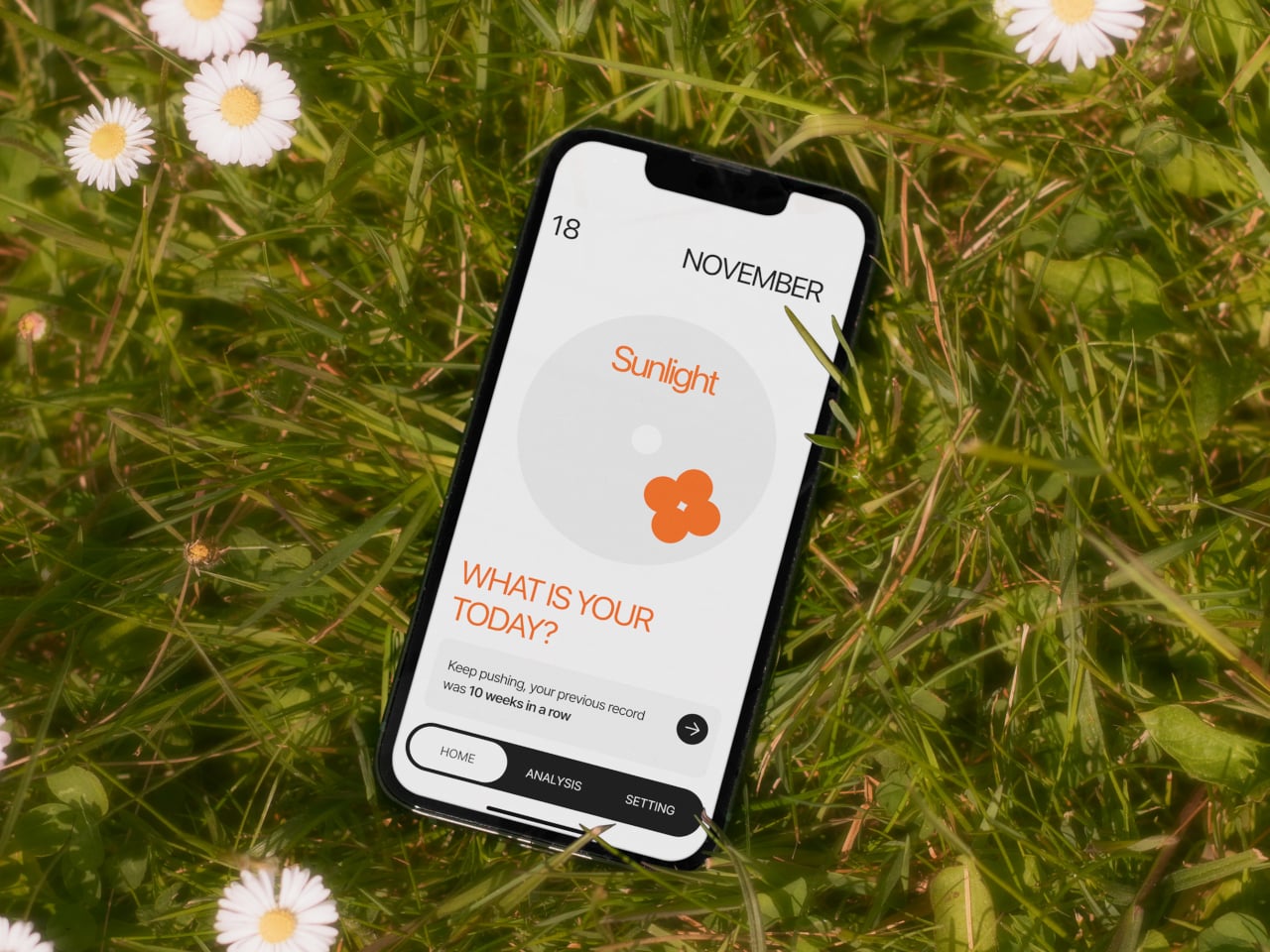
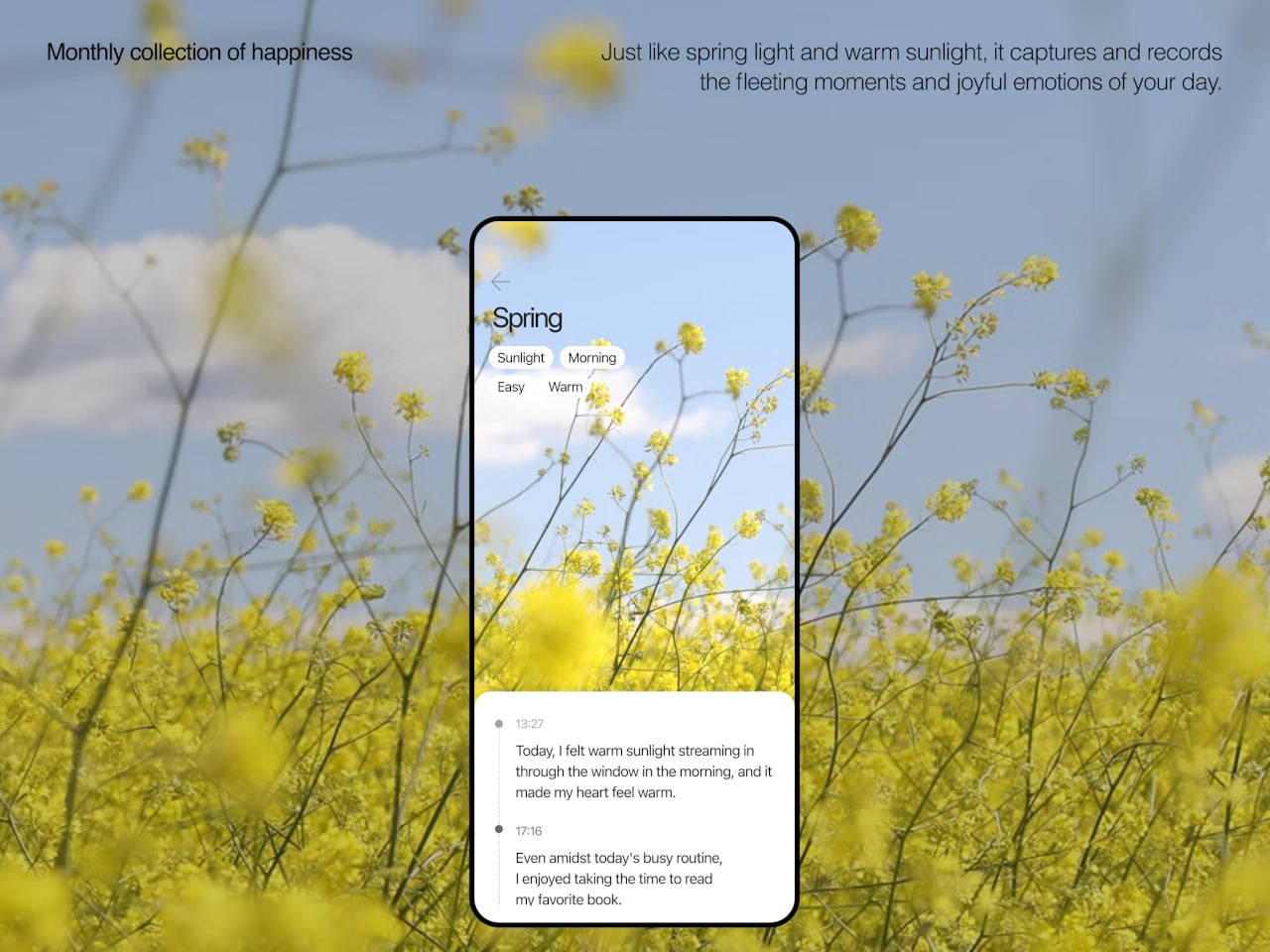
The app brings everything together, with daily cards asking “What is your today?”, weekly and monthly views full of dots and bars, and simple text insights that highlight recurring themes. You can tag entries by time, category, or keywords, and later see which people, places, or activities show up most often in your happiest moments. The analysis stays gentle, showing patterns without drowning you in numbers or making you feel like you failed when a week looks sparse.

1

Clover’s visual language, white and grey surfaces with orange accents, soft typography, and a clover icon that appears on hardware and UI, keeps the system from feeling like medical equipment. The core values, self-honesty, emotional balance, and everyday positivity, are baked into how it looks and behaves. It frames itself as a friendly desk object and app you would not mind seeing every day, not a reminder that something is broken.

Clover quietly flips the usual tracking script. Instead of asking you to monitor symptoms or productivity, it asks you to notice and collect small good things, then shows you that they happen more often than you think. For people who are tired of mood sliders and habit streaks, the idea of a physical recorder and calendar that simply help you remember what felt right might be the most calming part of the concept.

The post Clover Emotion Tracker Turns Small Happy Moments into a Daily Desk Ritual first appeared on Yanko Design.
OpenAI releases GPT-5.2 to take on Google and Anthropic

OpenAI's "code red" response to Google's Gemini 3 Pro has arrived. On the same day the company announced a Sora licensing pact with Disney, it took the wraps off GPT-5.2. OpenAI is touting the new model as its best yet for real-world, professional use. “It’s better at creating spreadsheets, building presentations, writing code, perceiving images, understanding long contexts, using tools, and handling complex, multi-step projects,” said OpenAI.

In a series of 10 benchmarks highlighted by OpenAI, GPT-5.2 Thinking, the most advanced version of the model, outperformed its GPT-5.1 counterpart, sometimes by a significant margin. For example, in AIME 2025, a test that involves 30 challenging mathematics problems, the model earned a perfect 100 percent score, beating out GPT-5.1’s already state-of-the-art score of 94 perfect. It also achieved that feat without turning to tools like web search. Meanwhile, in ARC-AGI-1, a benchmark that tests an AI system’s ability to reason abstractly like a human being would, the new system beat GPT-5.1’s score by more than 10 percentage points.

OpenAI says GPT-5.2 Thinking is better at answering questions factually, with the company finding it produces errors 30 percent less frequently. “For professionals, this means fewer mistakes when using the model for research, writing, analysis, and decision support — making the model more dependable for everyday knowledge work,” the company said.

The new model should be better in conversation too. Of the version of the system most users are likely to encounter, OpenAI says “GPT‑5.2 Instant is a fast, capable workhorse for everyday work and learning, with clear improvements in info-seeking questions, how-tos and walk-throughs, technical writing, and translation, building on the warmer conversational tone introduced in GPT‑5.1 Instant.“

While it's probably overstating things to suggest this is a make or break release for OpenAI, it is fair to say the company does have a lot riding on GPT 5.2. Its big release of 2025, GPT-5, didn't meet expectations. Users complained of a system that generated surprisingly dumb answers and had a boring personality. The disappointment with GPT-5 was such that people began demanding OpenAI bring back GPT-4o.      

Then came Gemini 3 Pro — which jumped to the top of LMArena, a website where humans rate outputs from AI systems to vote on the best one. Following Google's announcement, Sam Altman reportedly called for a "code red" effort to improve ChatGPT. Before today, the company's previous model, GPT-5.1, was ranked sixth on LMArena, with systems from Anthropic and Elon Musk's xAI occupying the spots between OpenAI between Google. 

For a company that recently signed more than $1.4 trillion worth of infrastructure deals in a bid to outscale the competition, that was not a good position for OpenAI to be in. In his memo to staff, Altman said GPT-5.2 would be the equal of Gemini 3 Pro. With the new system rolling out now, we'll see whether that's true, and what it might mean for the company if it can't at least match Google's best.     

OpenAI is offering three different versions of GPT-5.2: Instant, Thinking and Pro. All three models will be first available to users on the company’s paid plans. Notably, the company plans to keep GPT-5.1 around, at least for a little while. Paid users can continue to use the older model for the next three months by selecting it from the legacy models section.

This article originally appeared on Engadget at https://www.engadget.com/ai/openai-releases-gpt-52-to-take-on-google-and-anthropic-185029007.html?src=rss